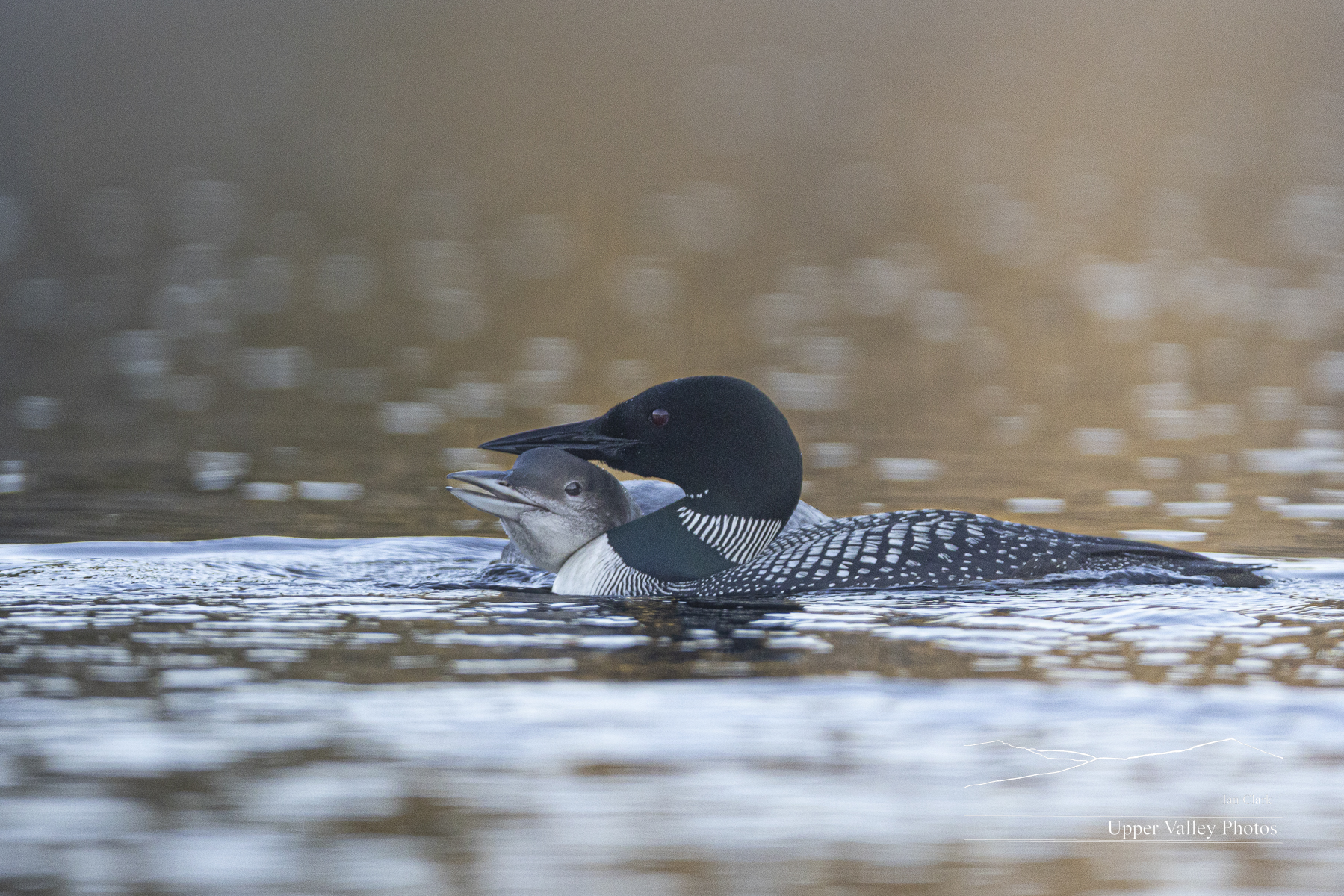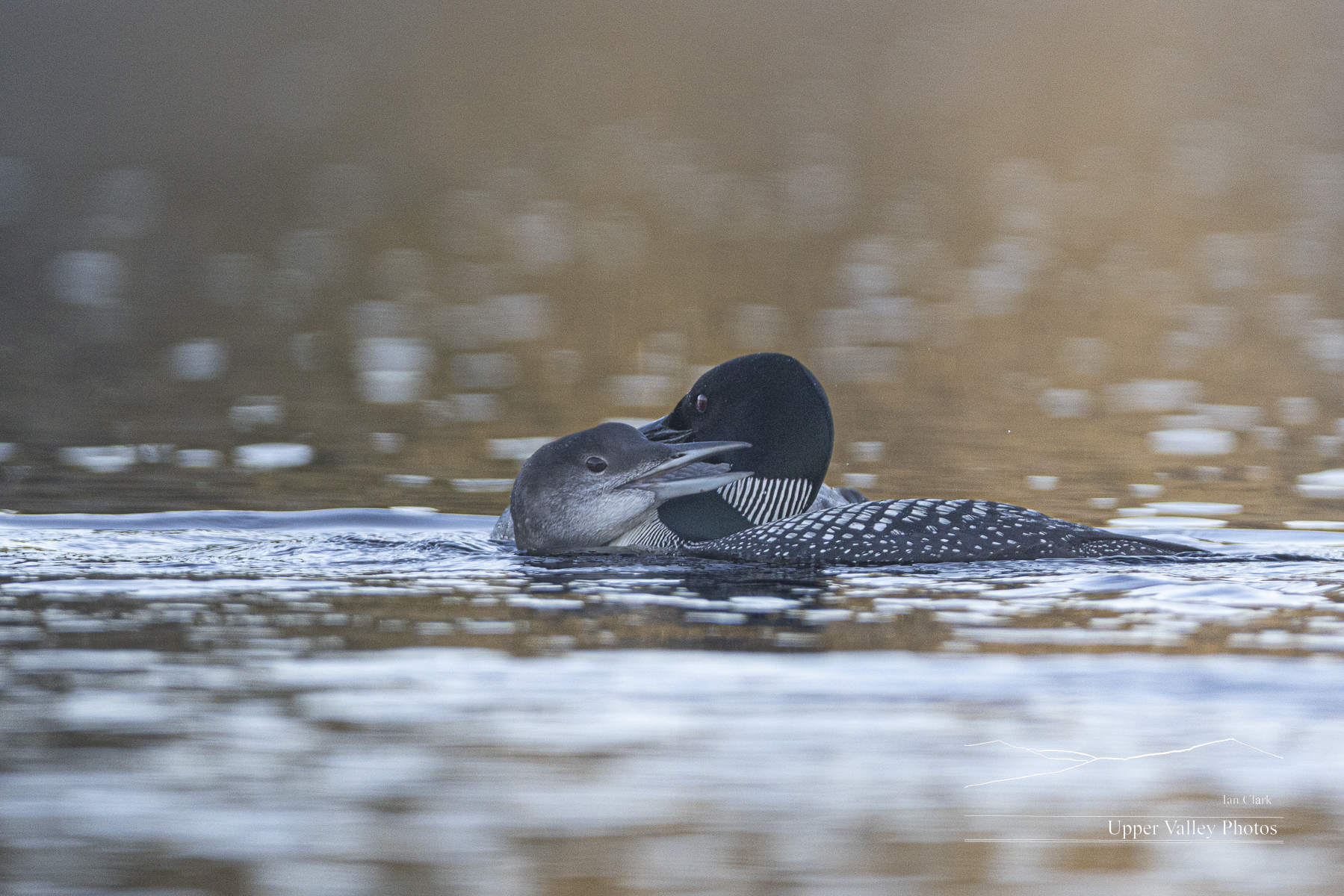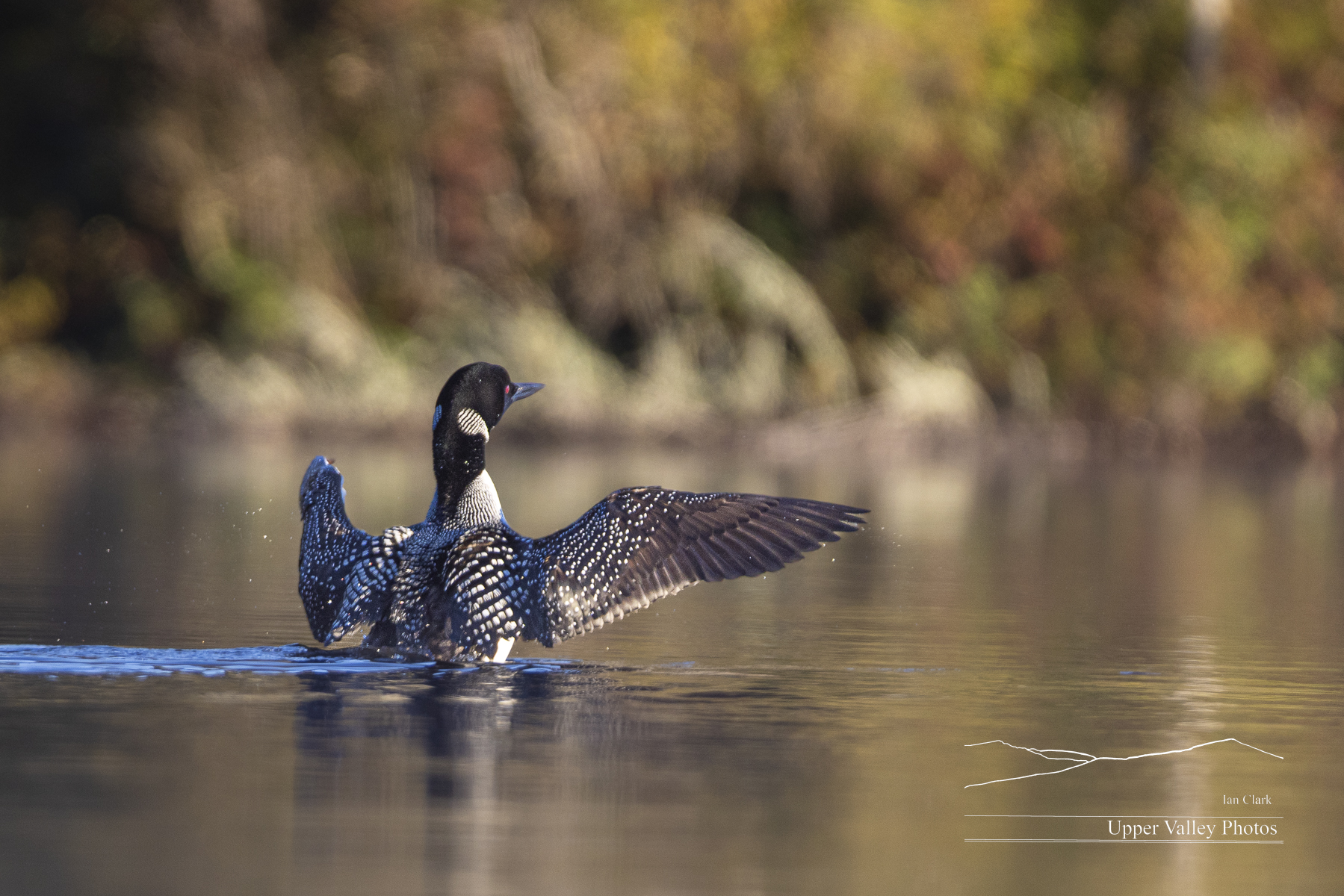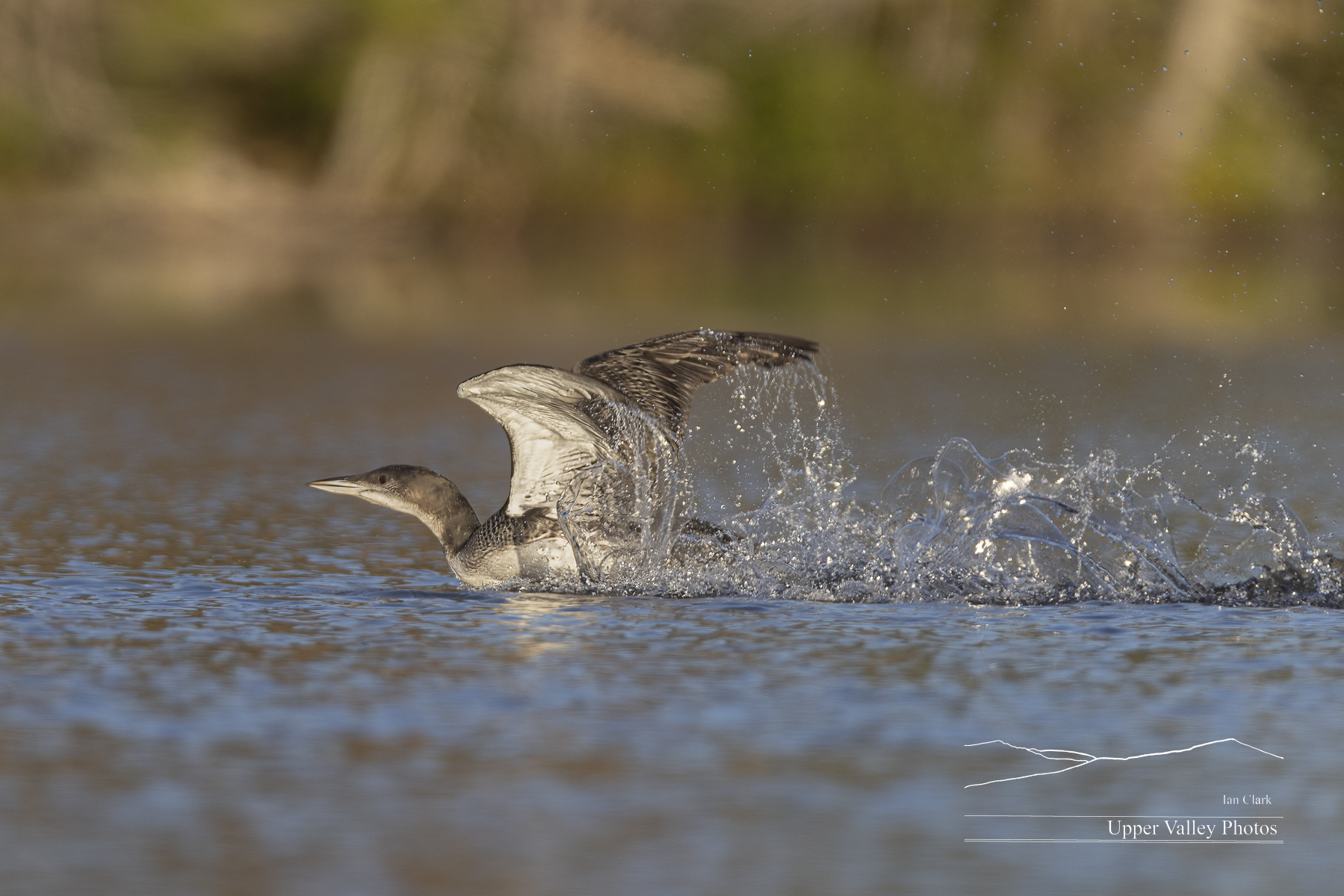
Posts in Category: Shorebirds

A Busy Week for the Critters

With a week with mostly nice weather, I was able to get out and visit both the Middletons and Westons as well as the heron rookery and a couple fox dens.

This week, you’ve got two chances to see my slideshow, Travels with Ian 2025, with some of my favorite images from last year. We’ll see lots of wildlife around New England and lots of brown bears from Alaska – including Brown Bear no. 925 who made ursine history last year. There are even images of a steam locomotive working in the incredible scenery along the White Pass & Yukon Route Railway.

The first show will be at the Bugbee Center in White River Jct. Wednesday May 27 at 1:30 pm. The second presentation will be at the Blake Memorial Library in Corinth, VT Friday May 29 at 6 pm. The Library would appreciate an RSVP sent to khotellingbml@gmail.com. Both are free and open to the public.

And I’ll be exhibiting at the Berkshires Art Festival in Great Barrington, MA on July 3, 4 and 5. I’ll have note cards and prints large and small for sale. Please come by and have a look.

A week ago Saturday, I called on the Westons. One was feeding at the south end of the pond, the other turned out to already be sitting on the nest towards the north end of the pond. I wandered off to see who else might be around.
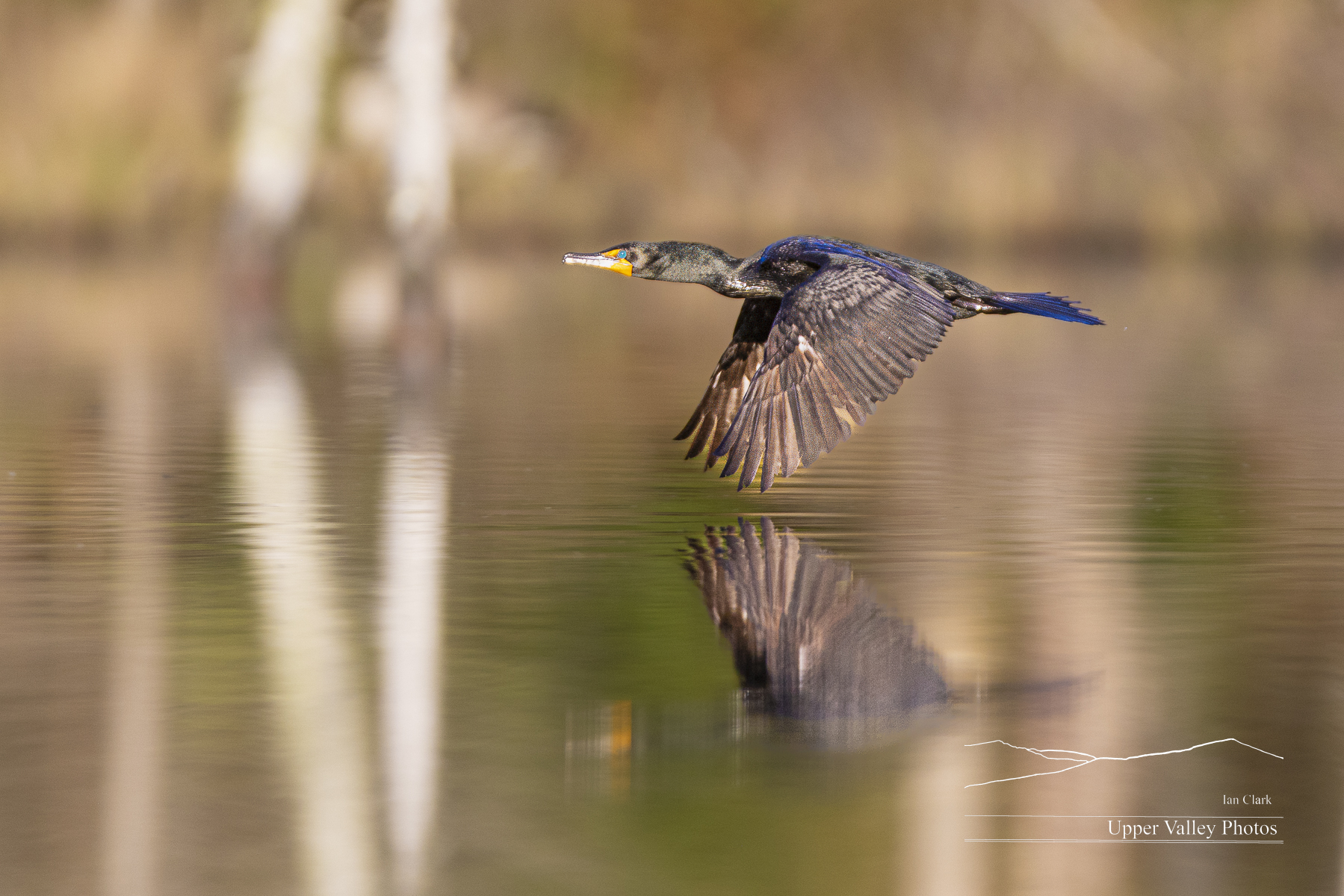
About the only excitement – if cormorants can be exciting – was this double-crested cormorant who finished breakfast and departed.

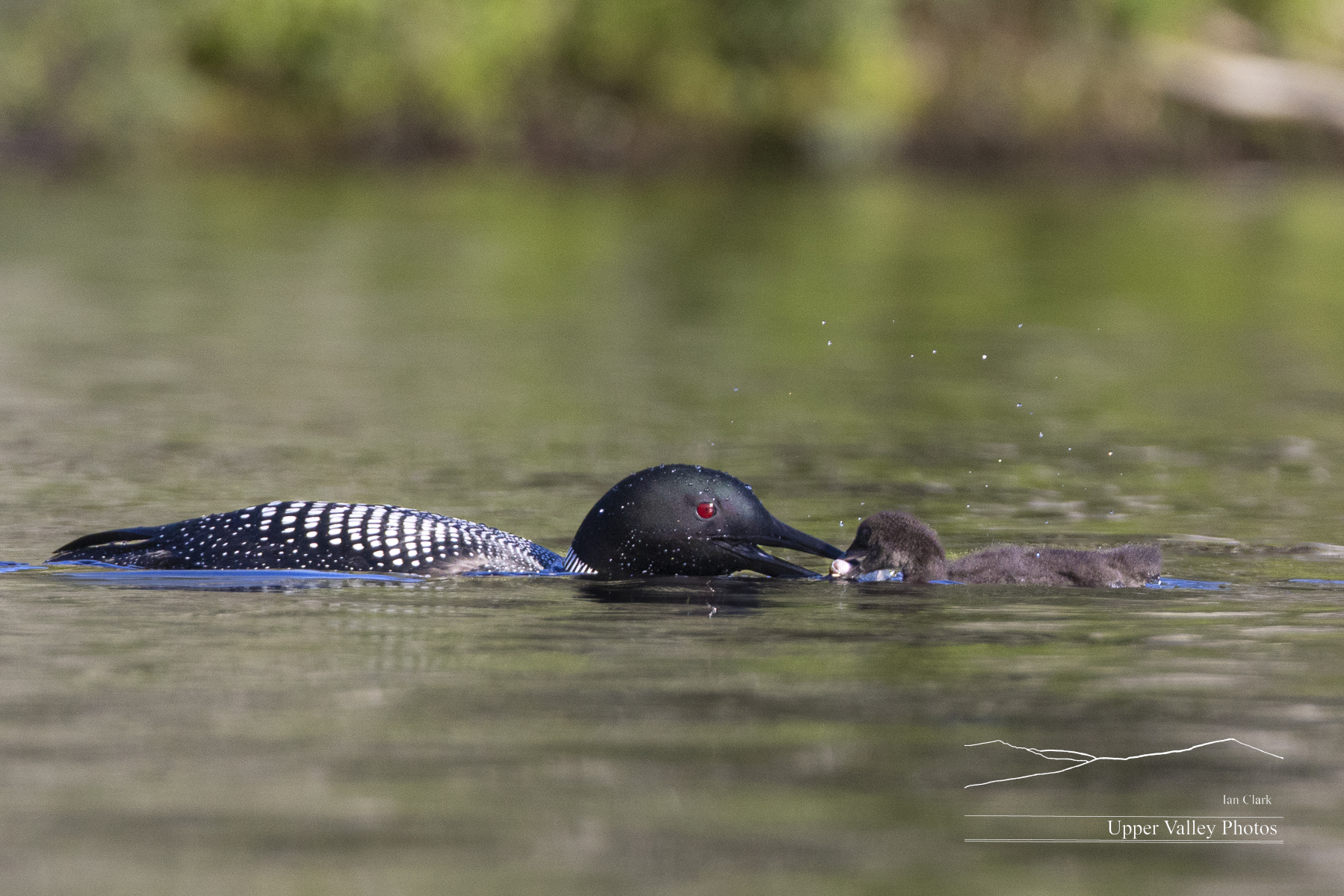
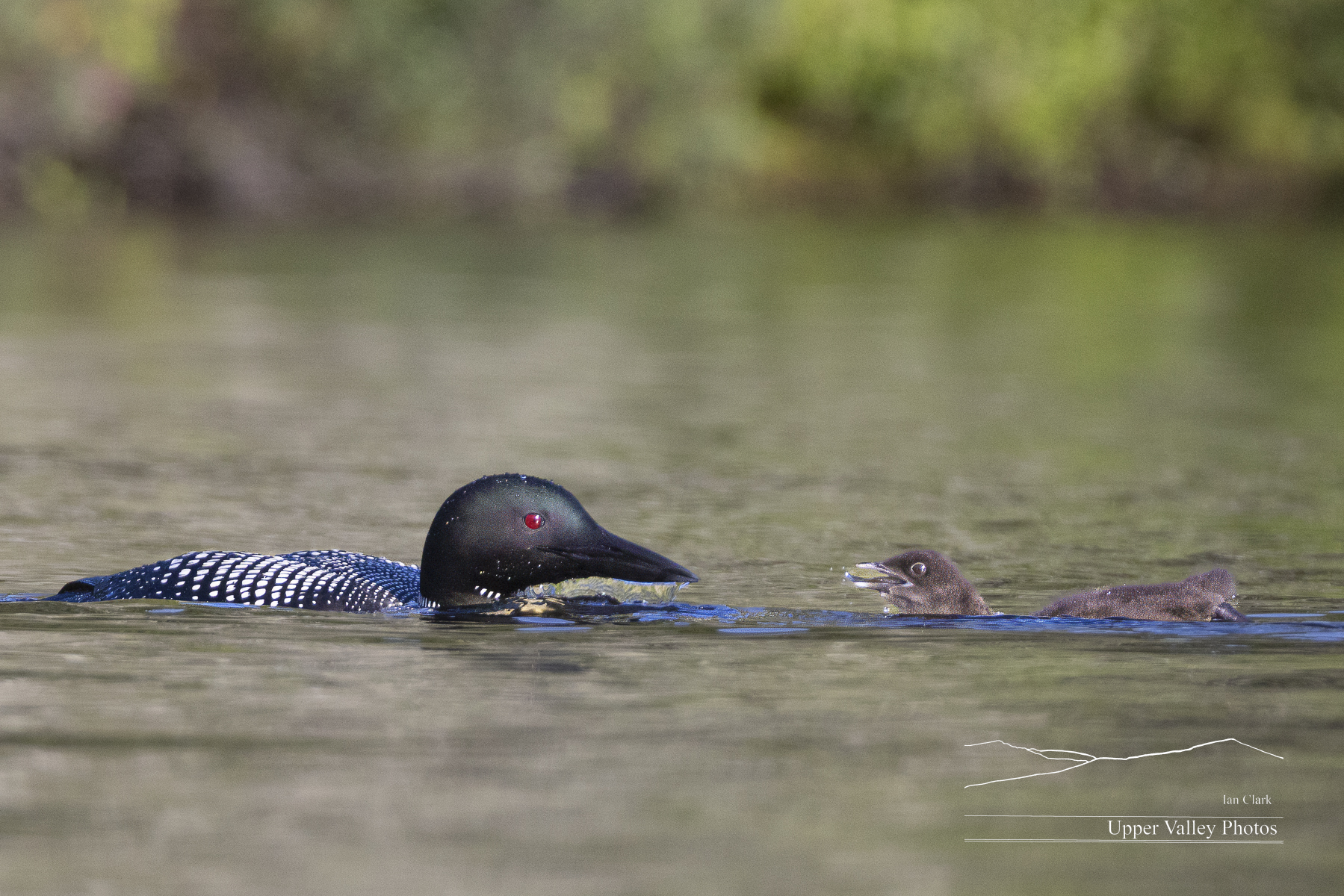
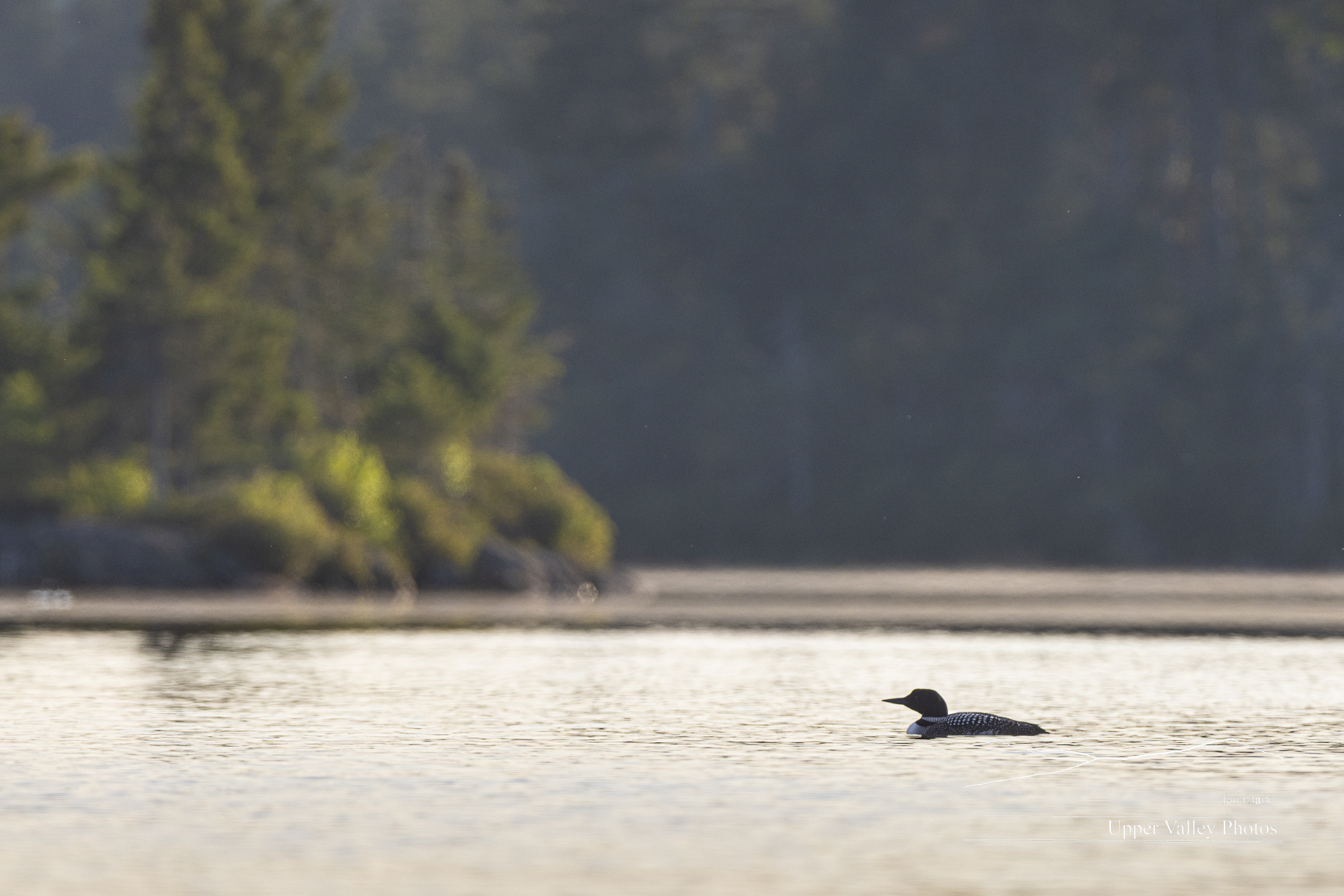
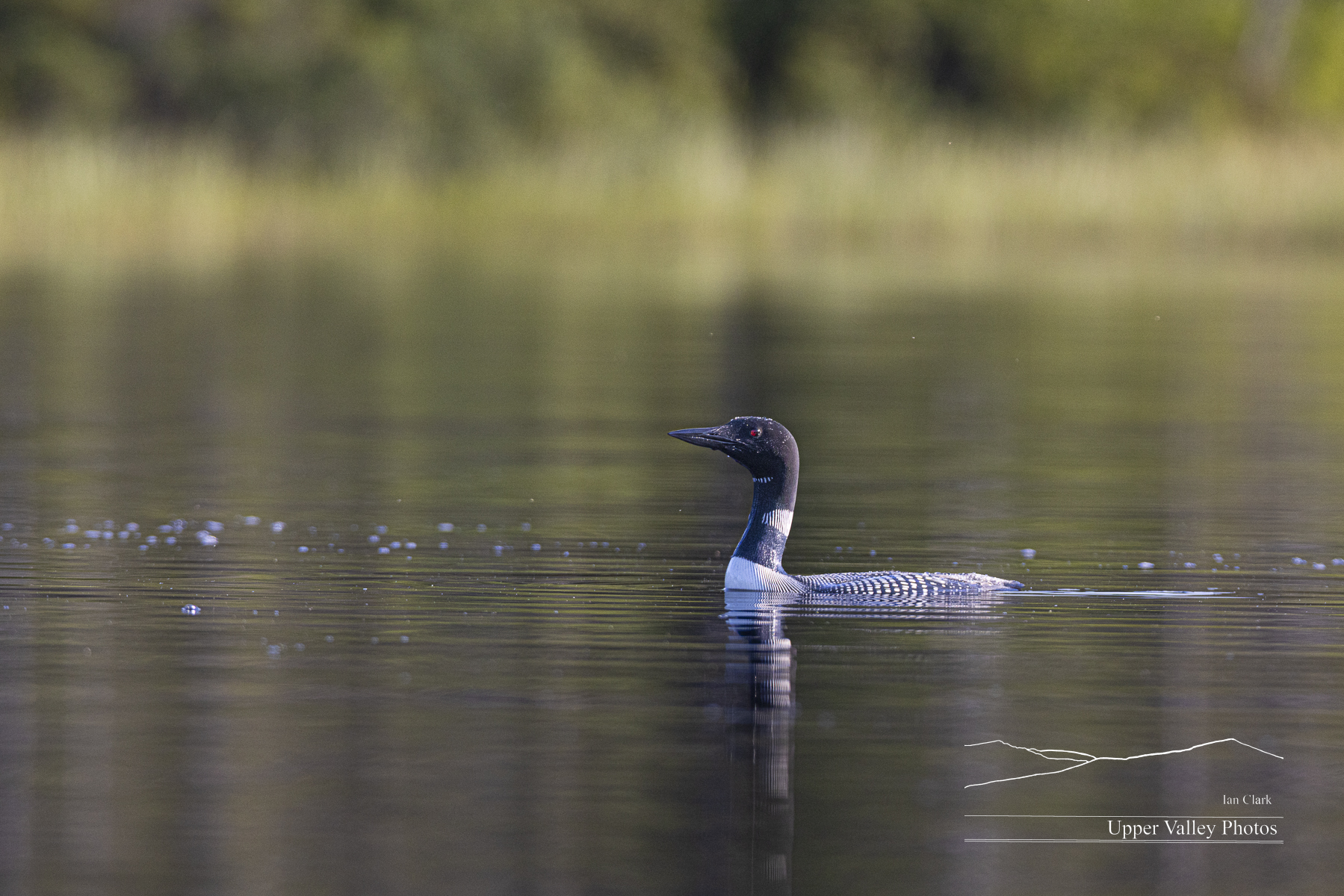
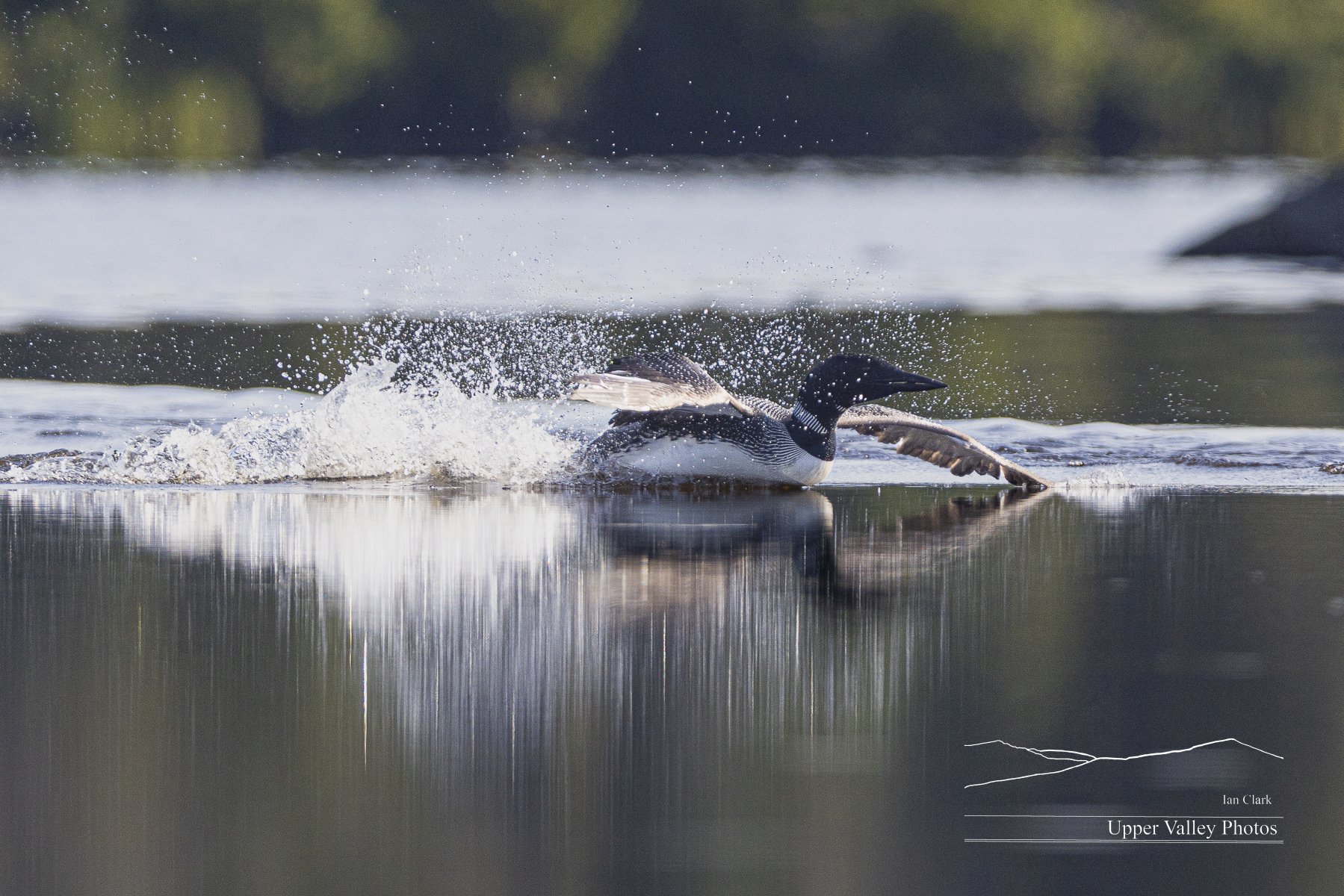
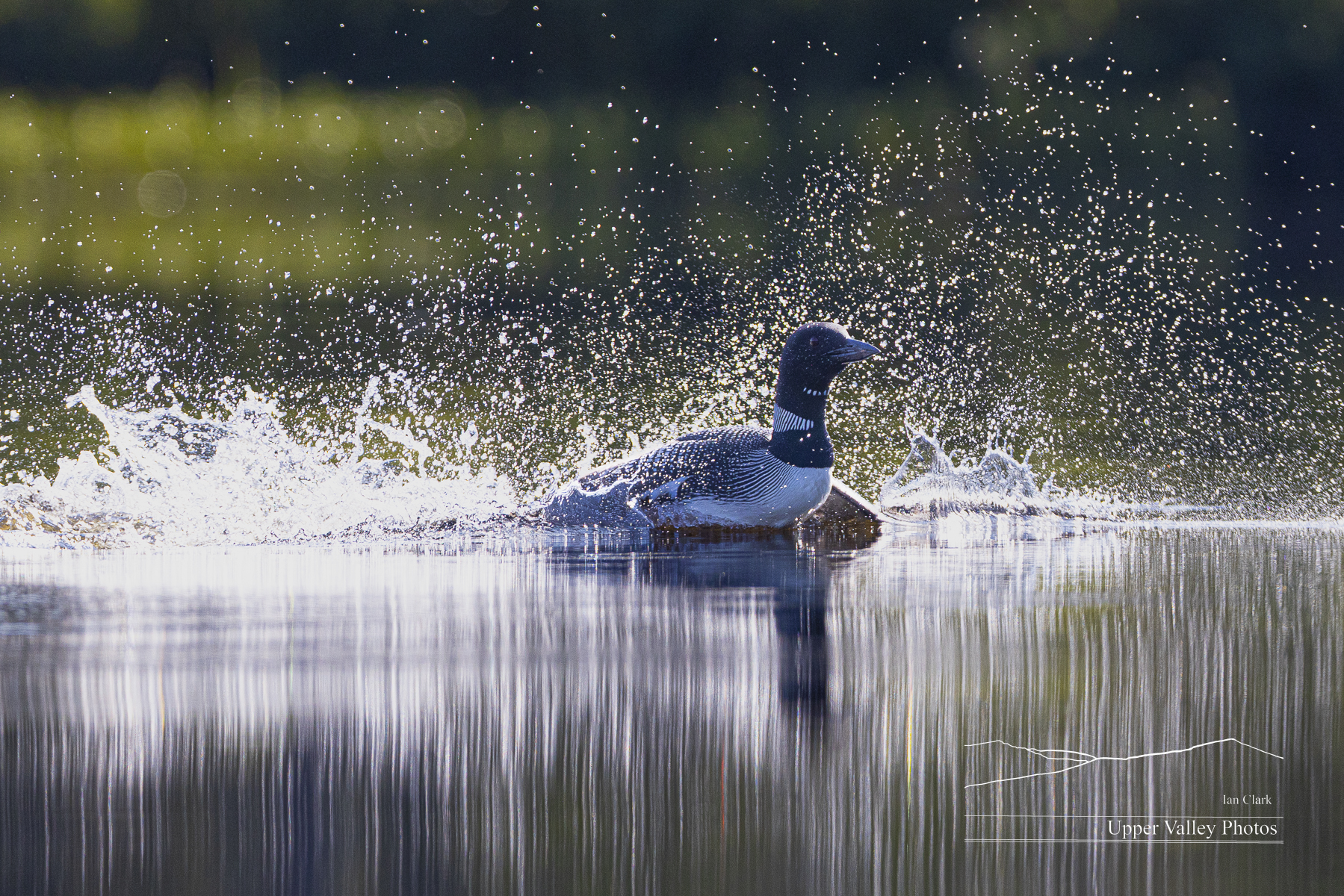
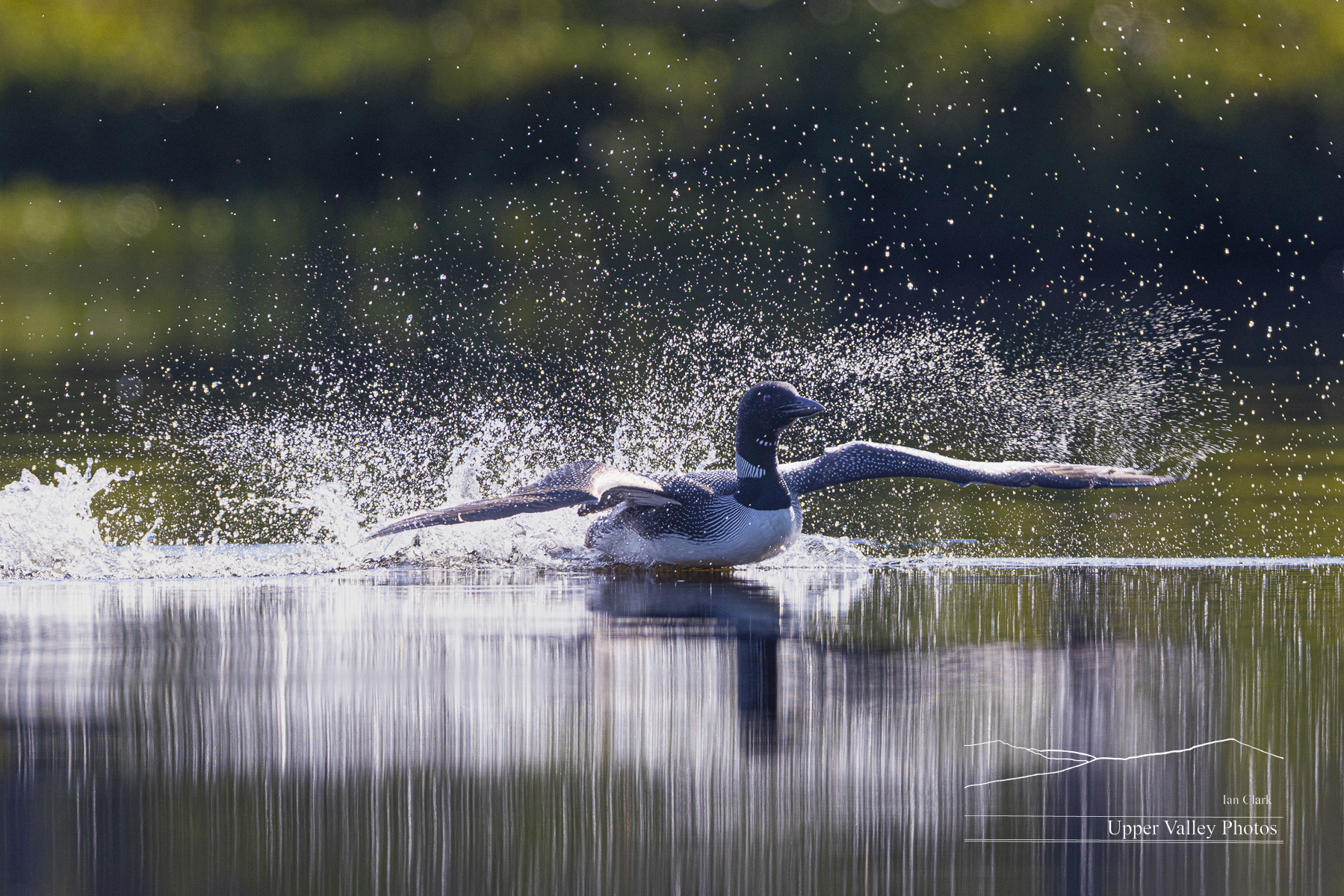
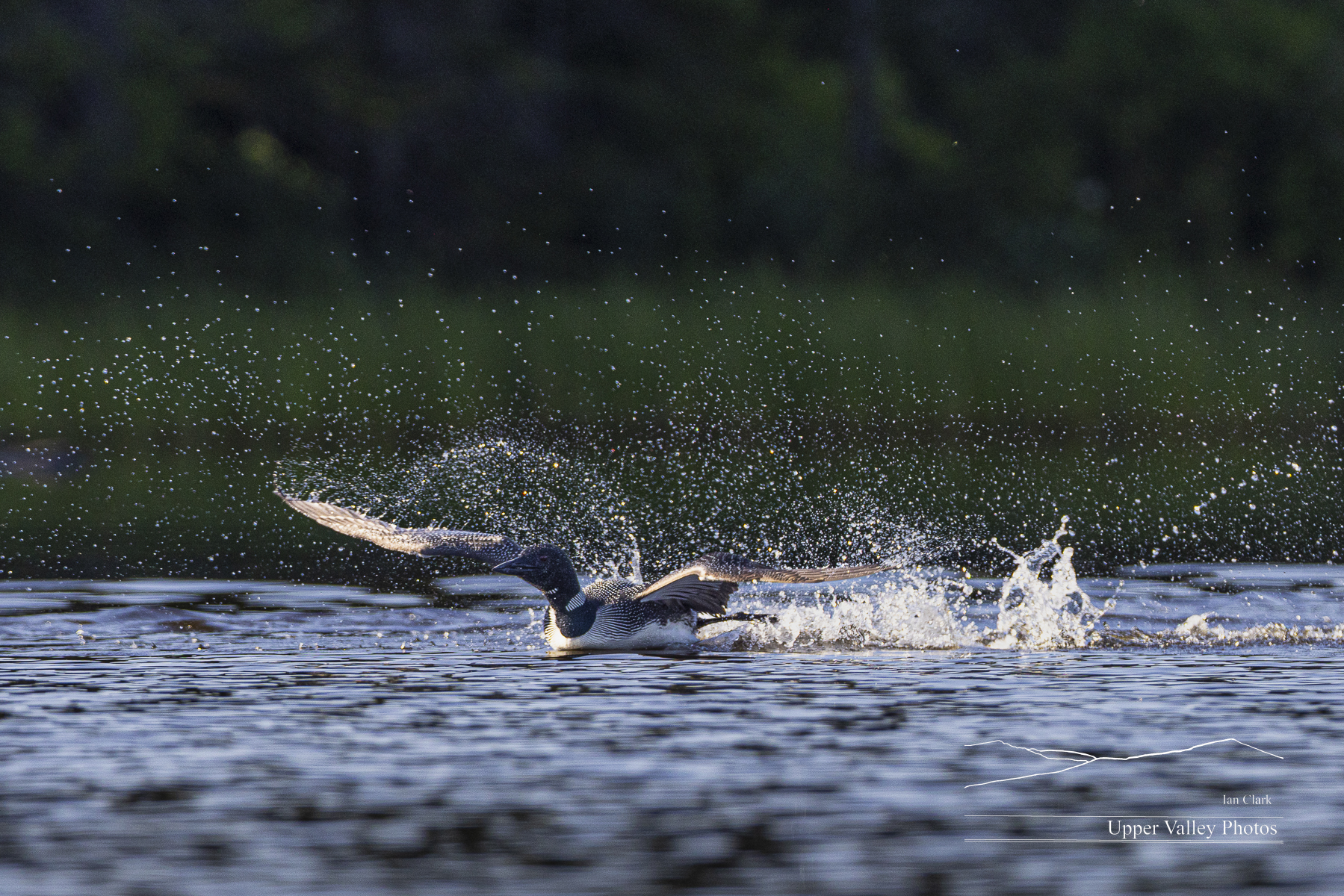
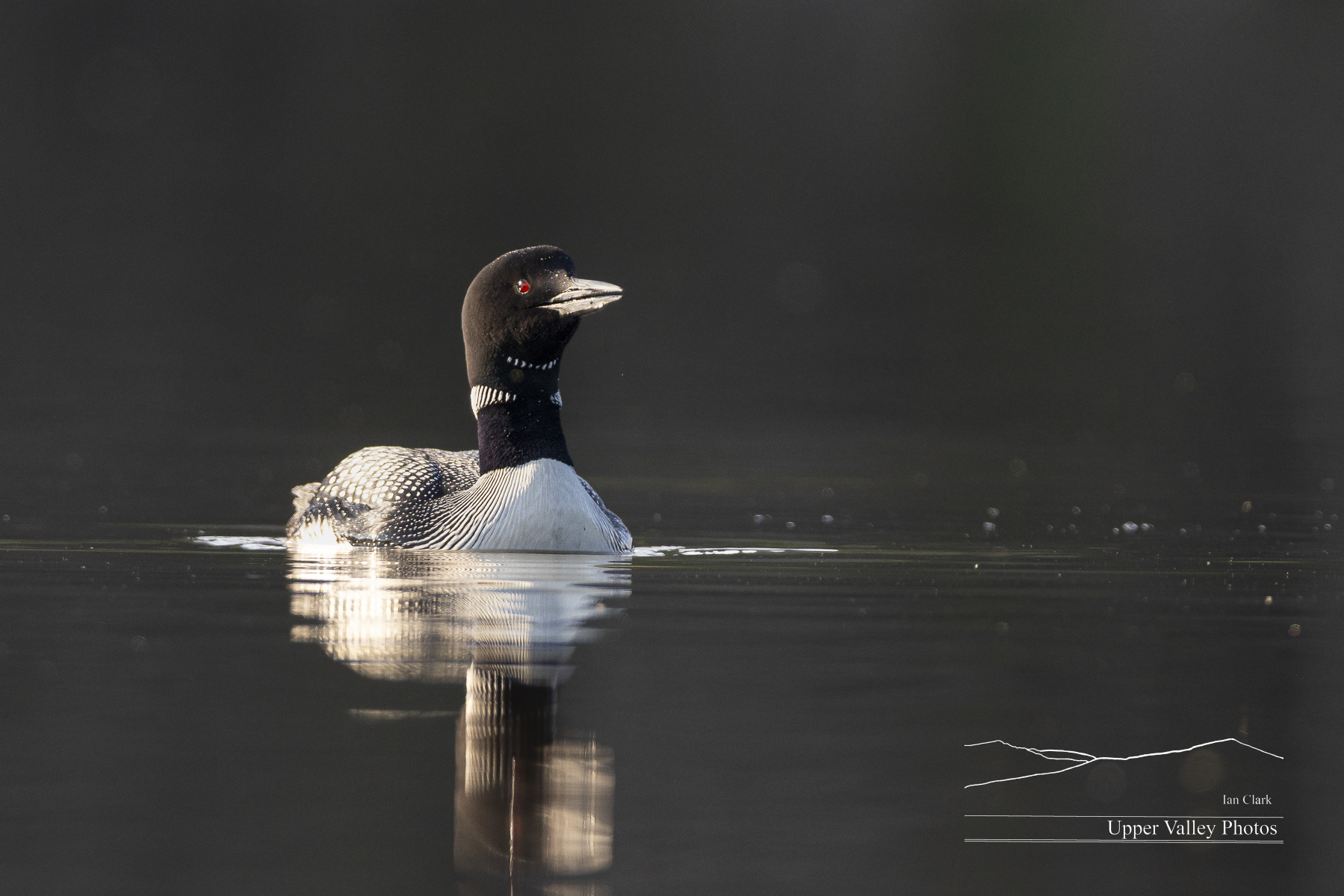
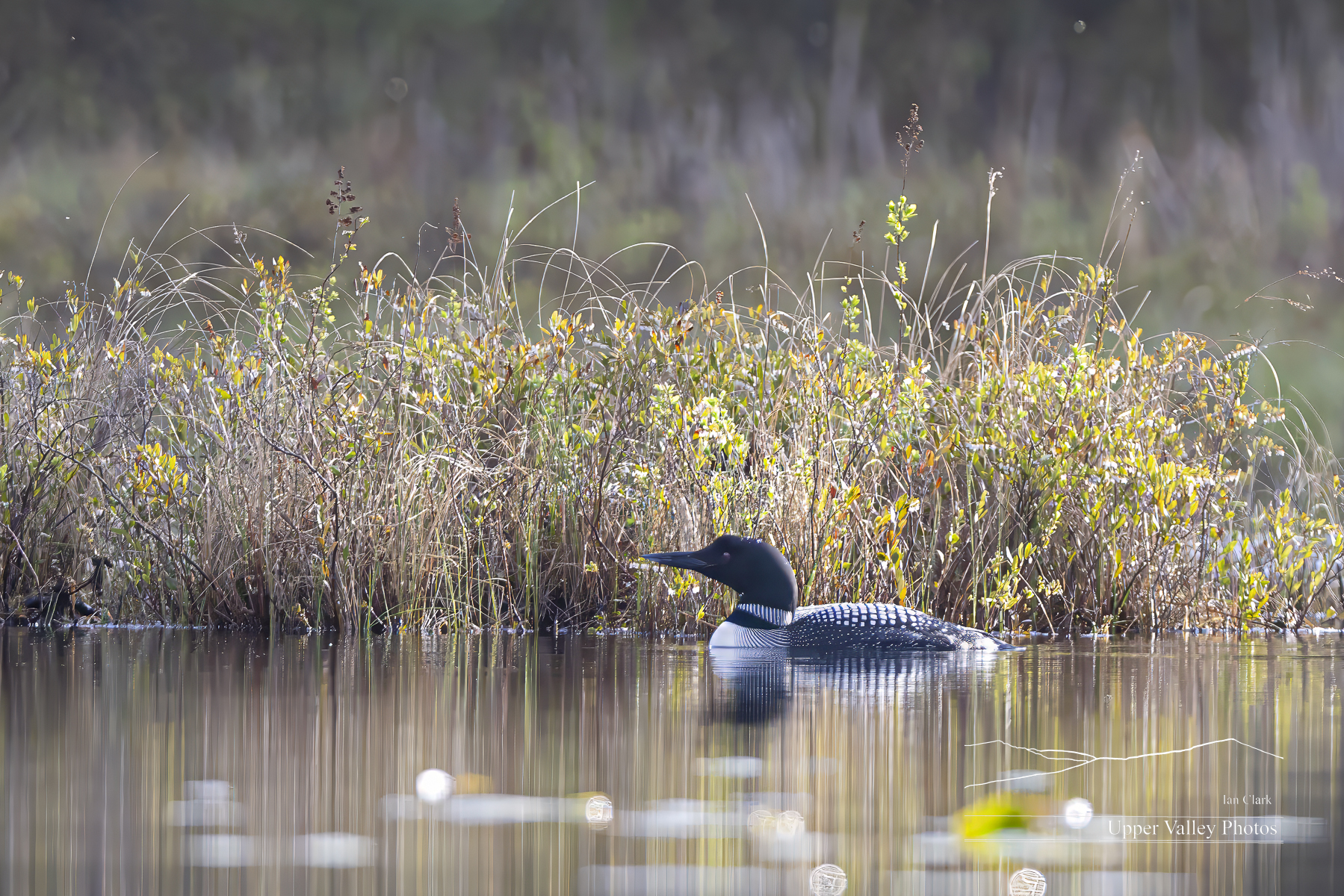
Our off-duty loon finished at the buffet and headed towards the nest for a shift change.
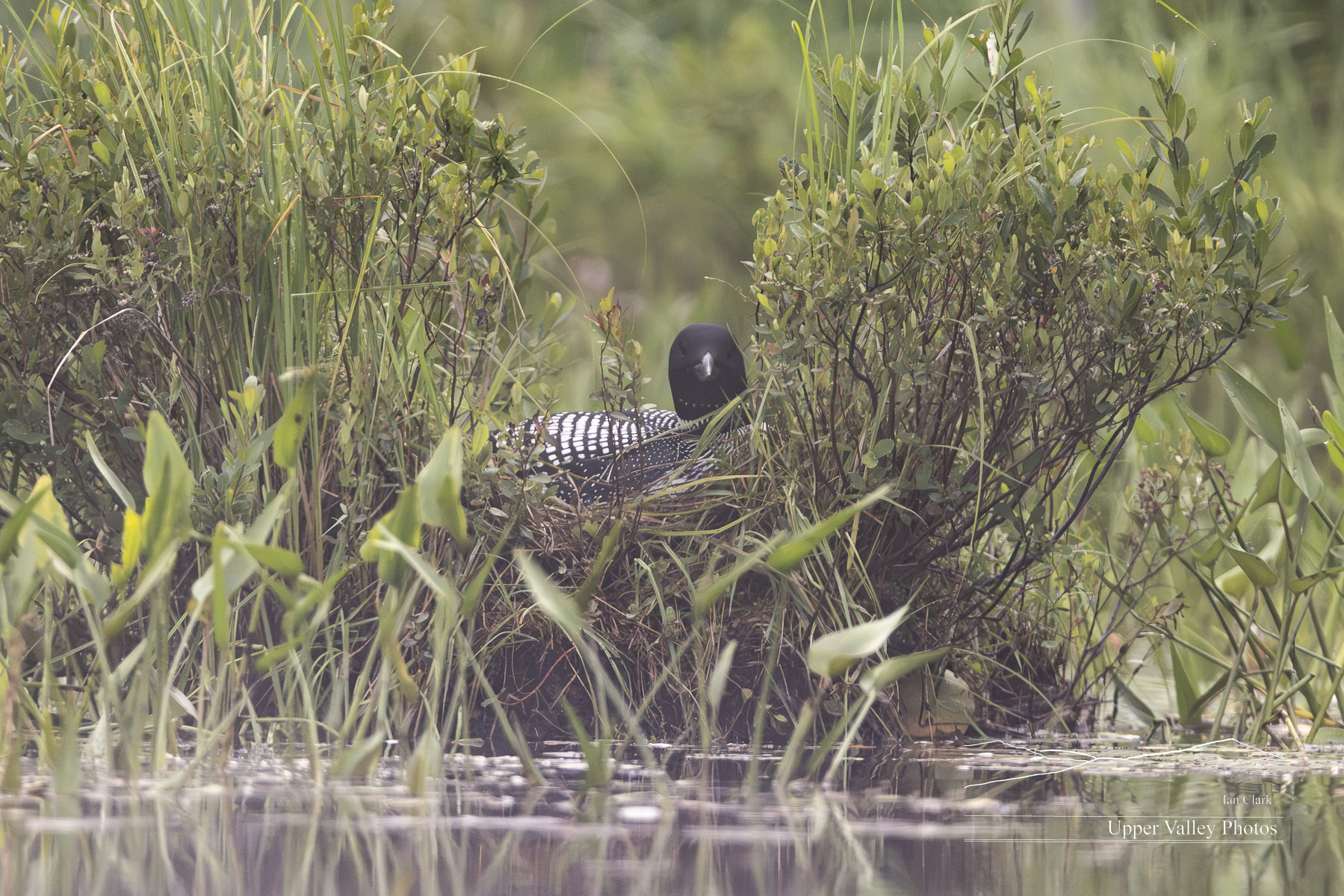
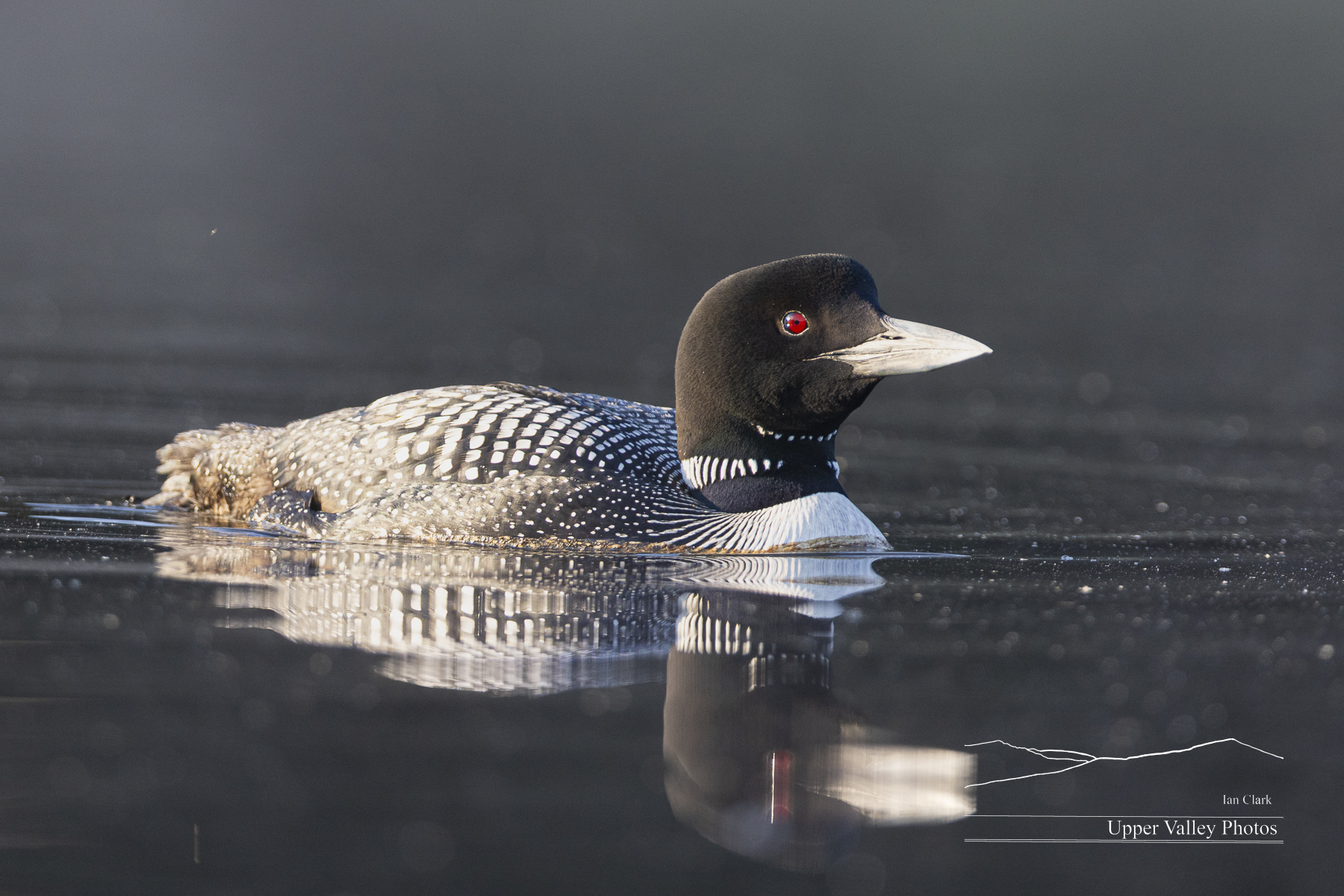
Both loon parents share sitting on the eggs. Our off-duty loon finished at the buffet and headed towards the nest for a shift change. This turned out to be Mom. Dad is banded and I could ID him when he came off the nest.
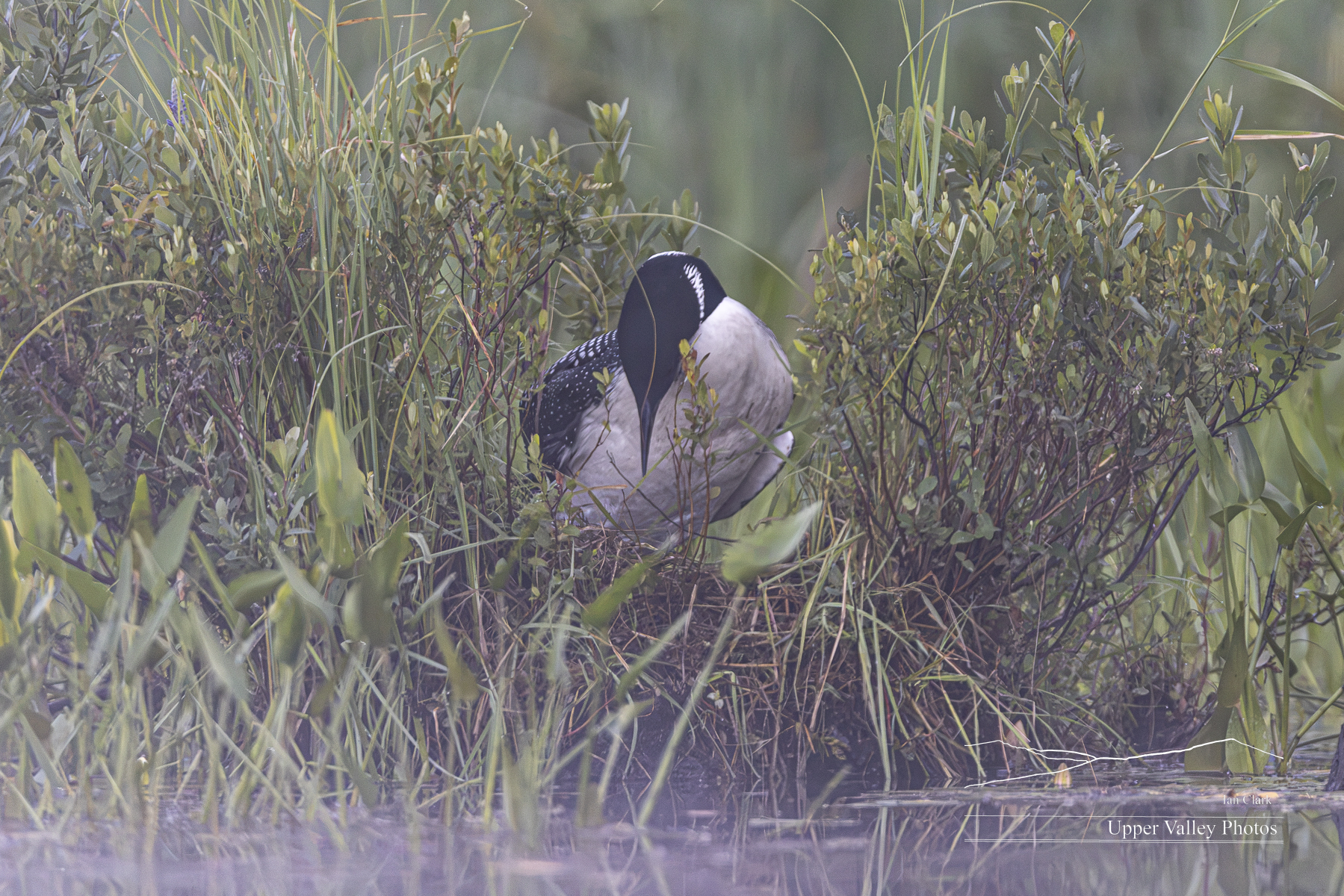
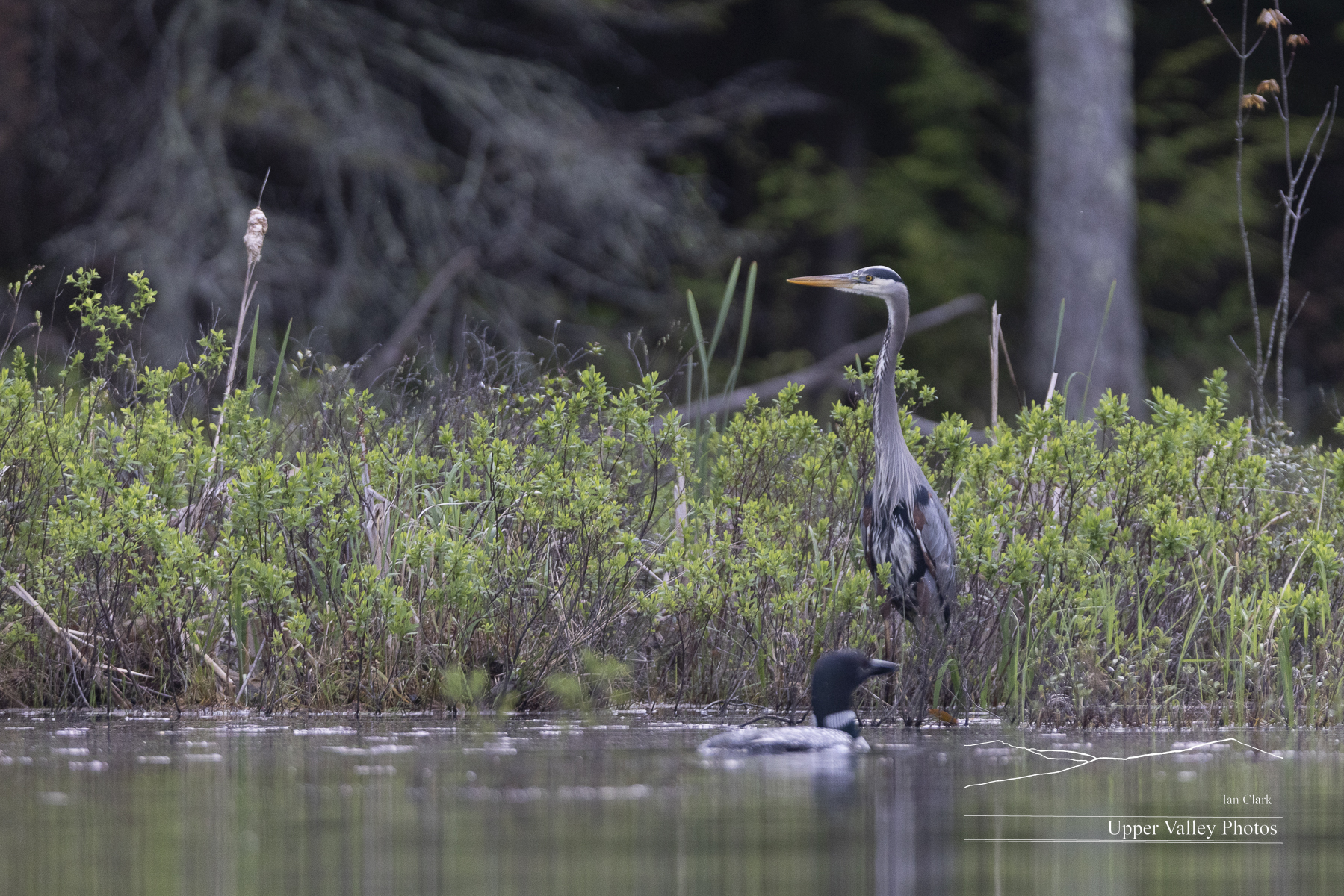
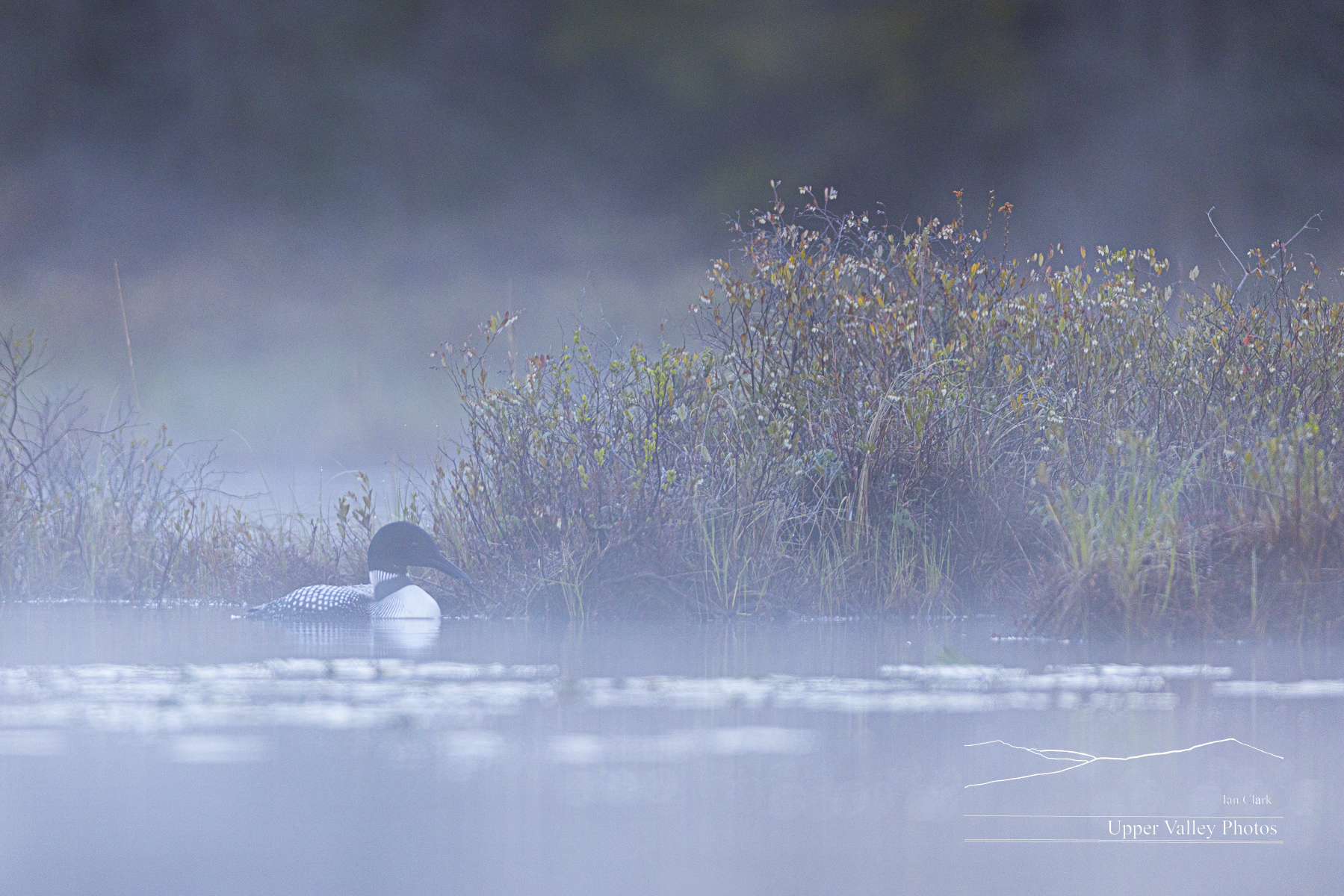
Dad is hidden in the brush. His head is the dark spot in the brush above mom’s head.
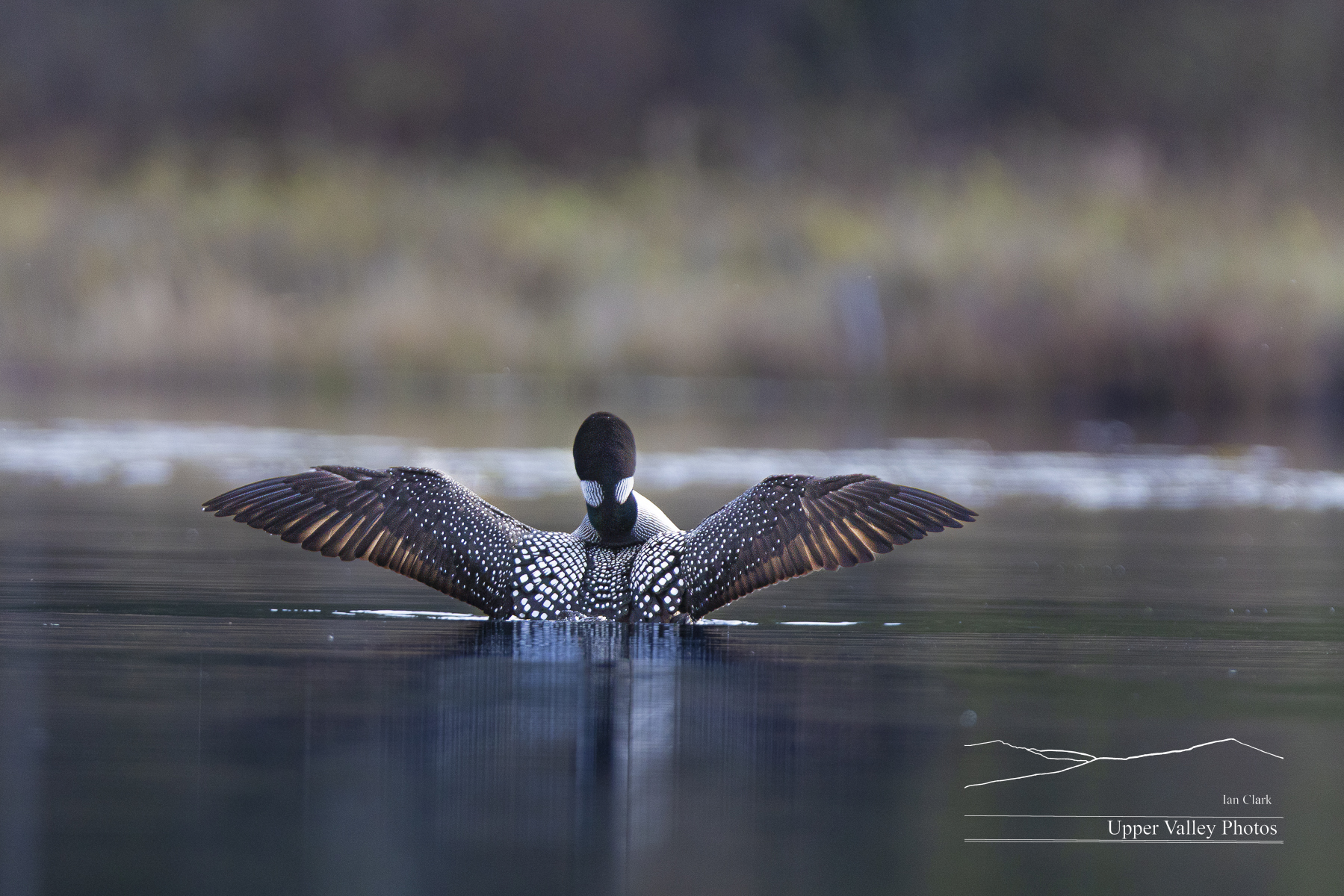

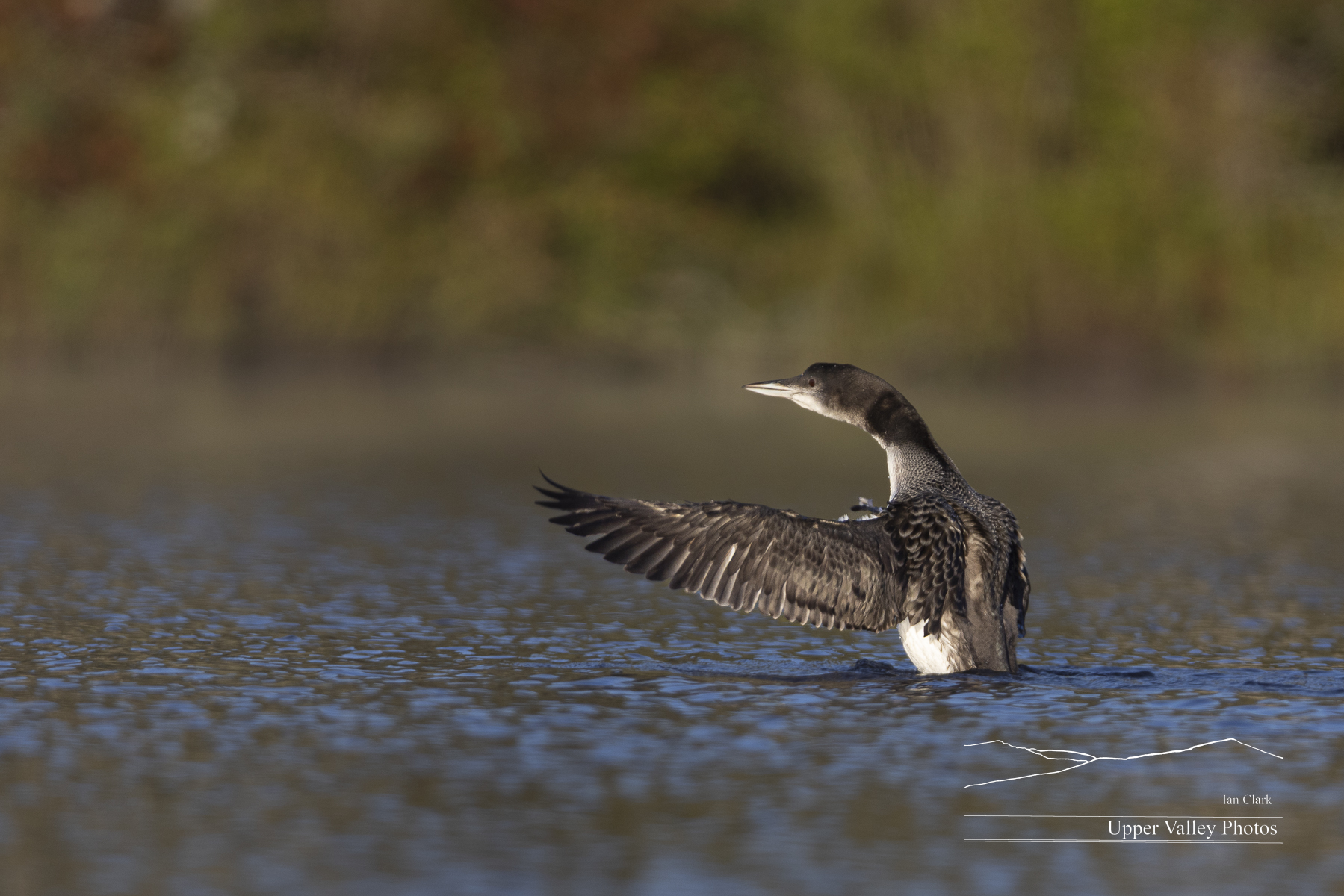
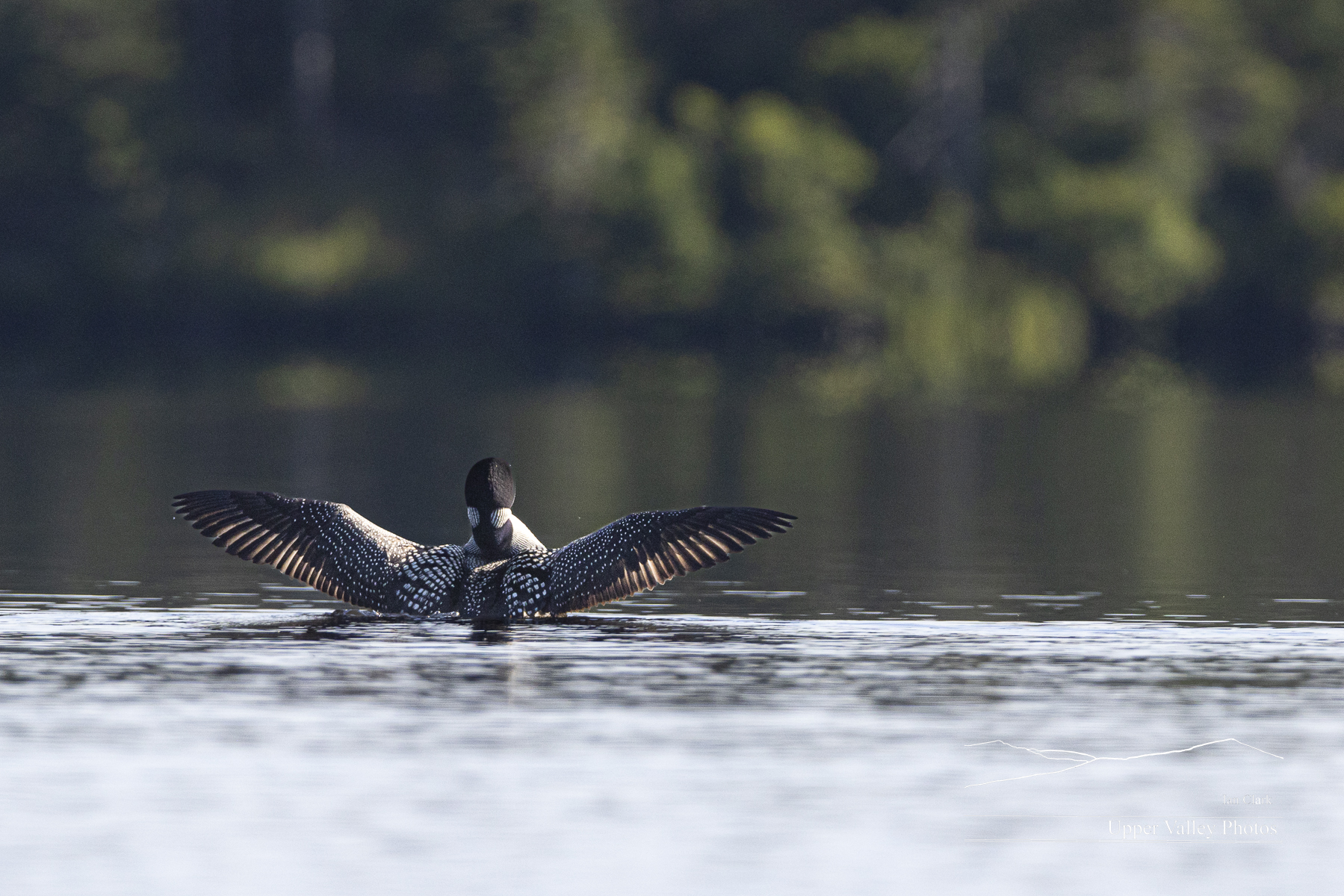
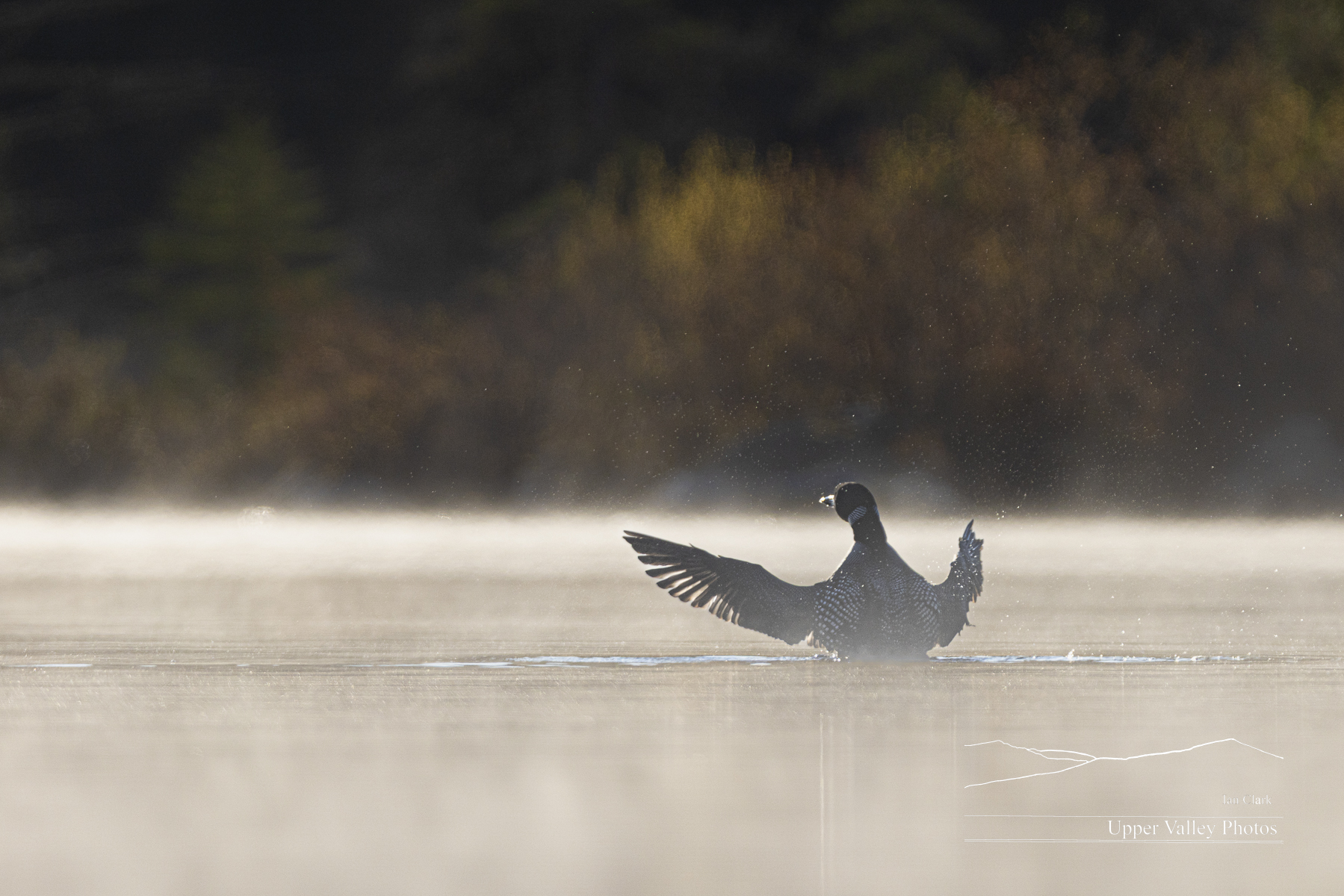
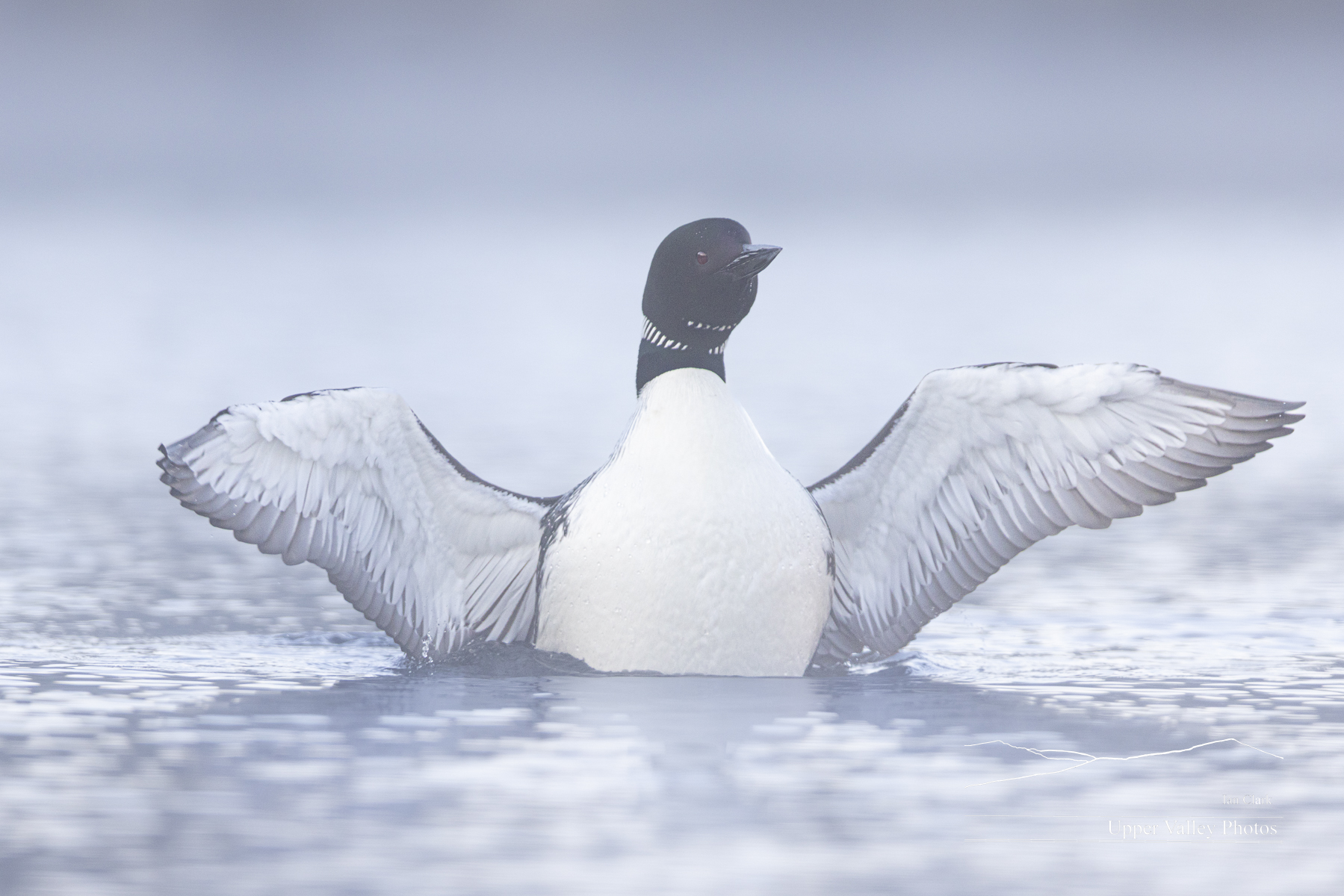
Mr. Weston came off the nest and stretched as Mrs. Weston settled in on the nest.

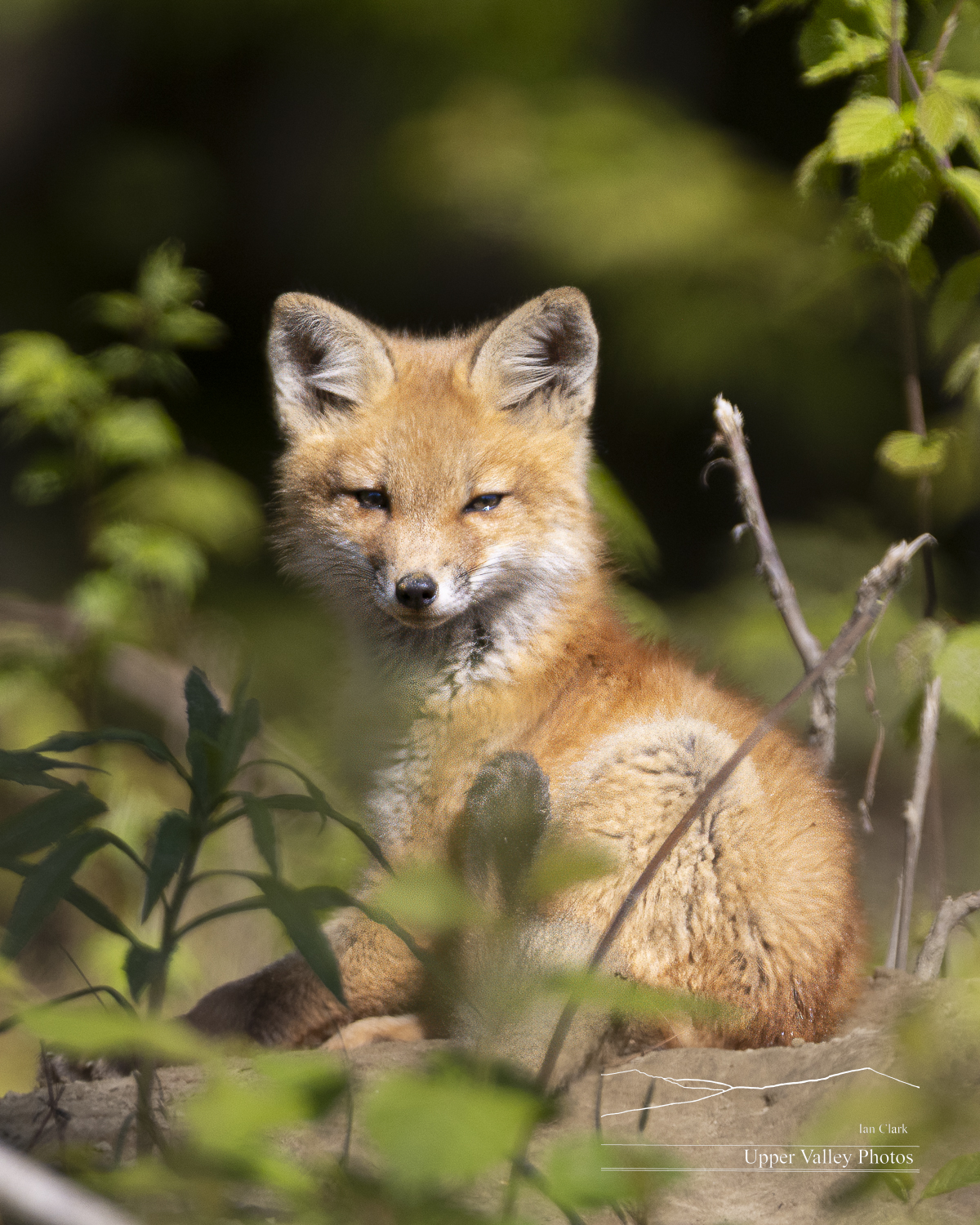
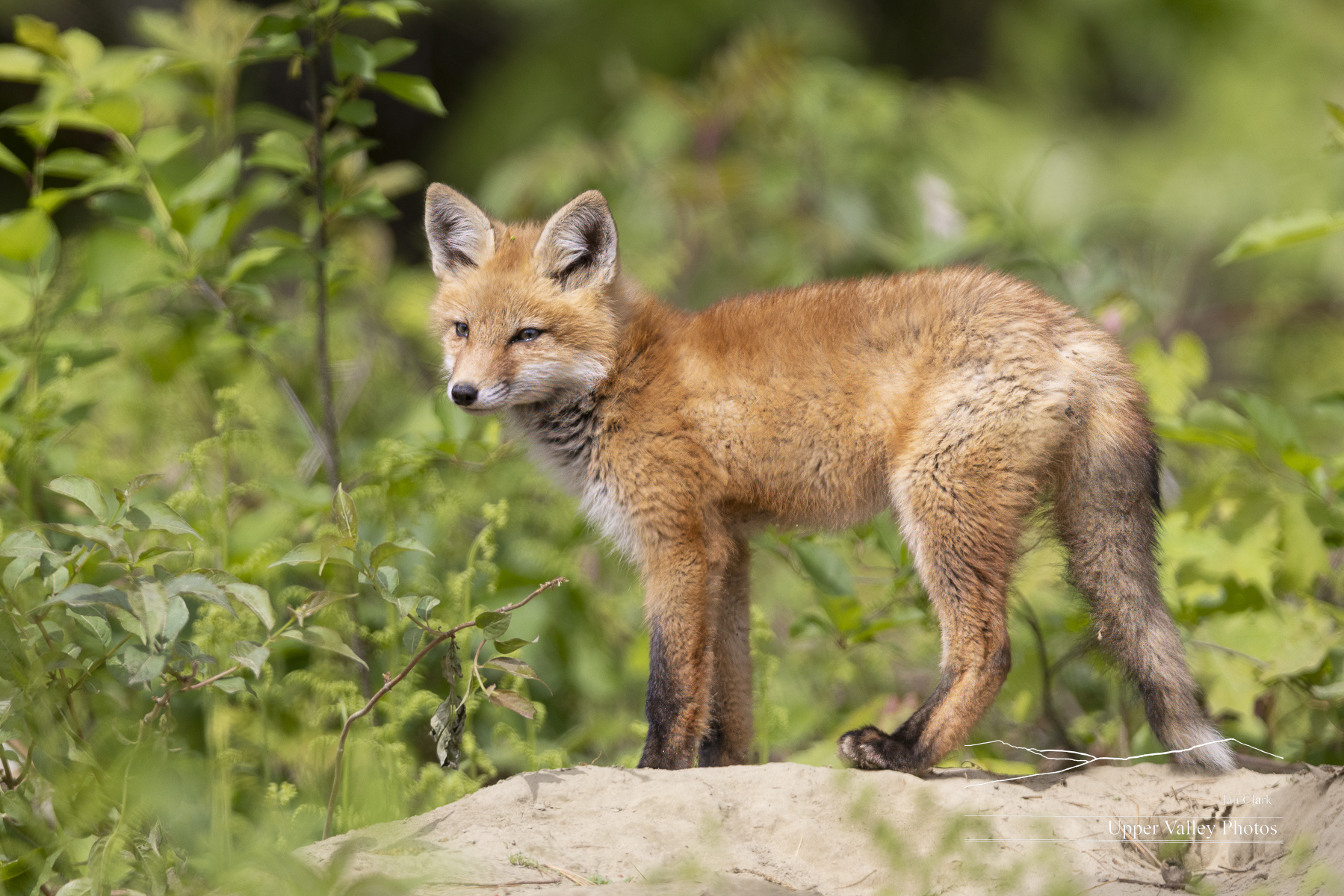
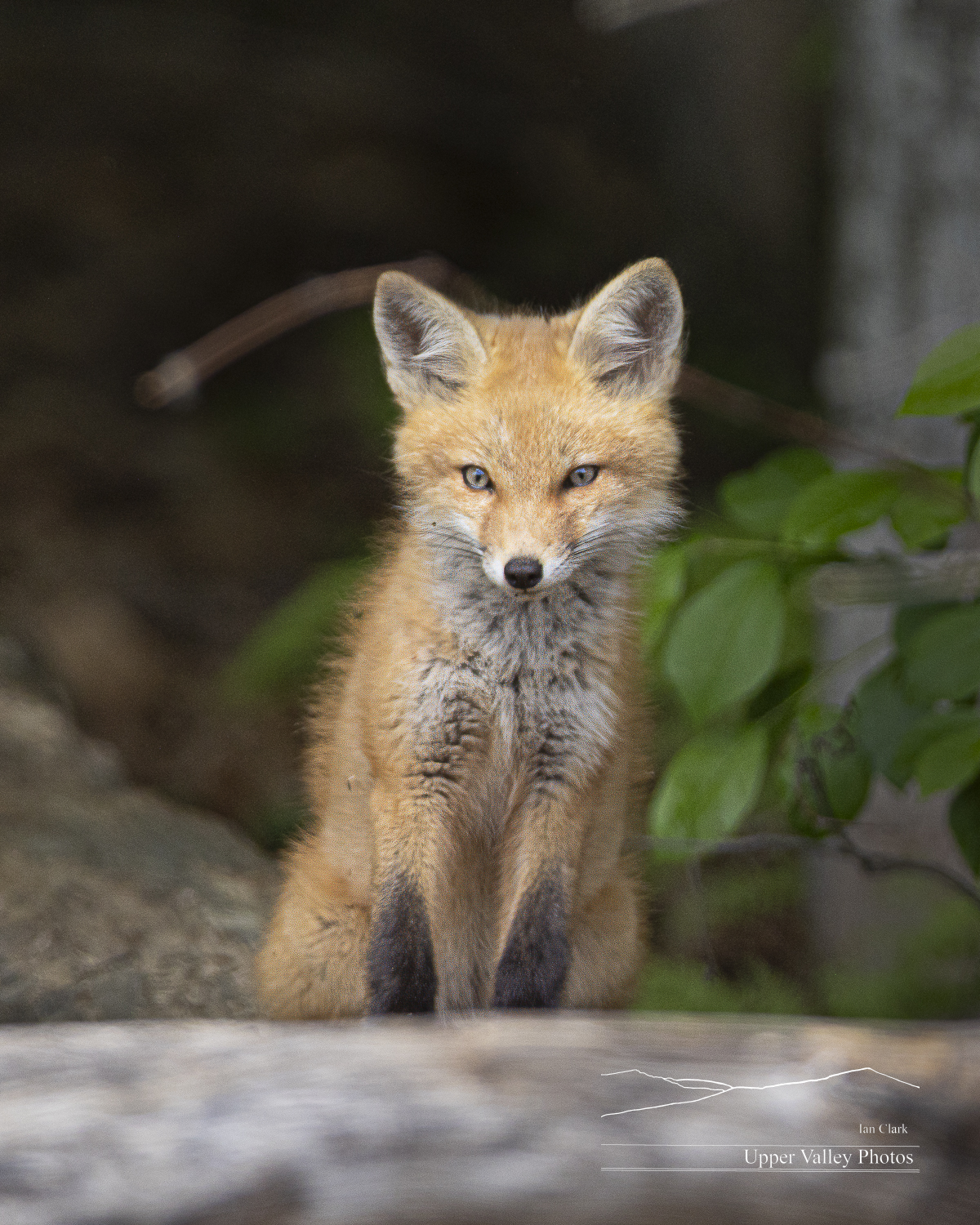
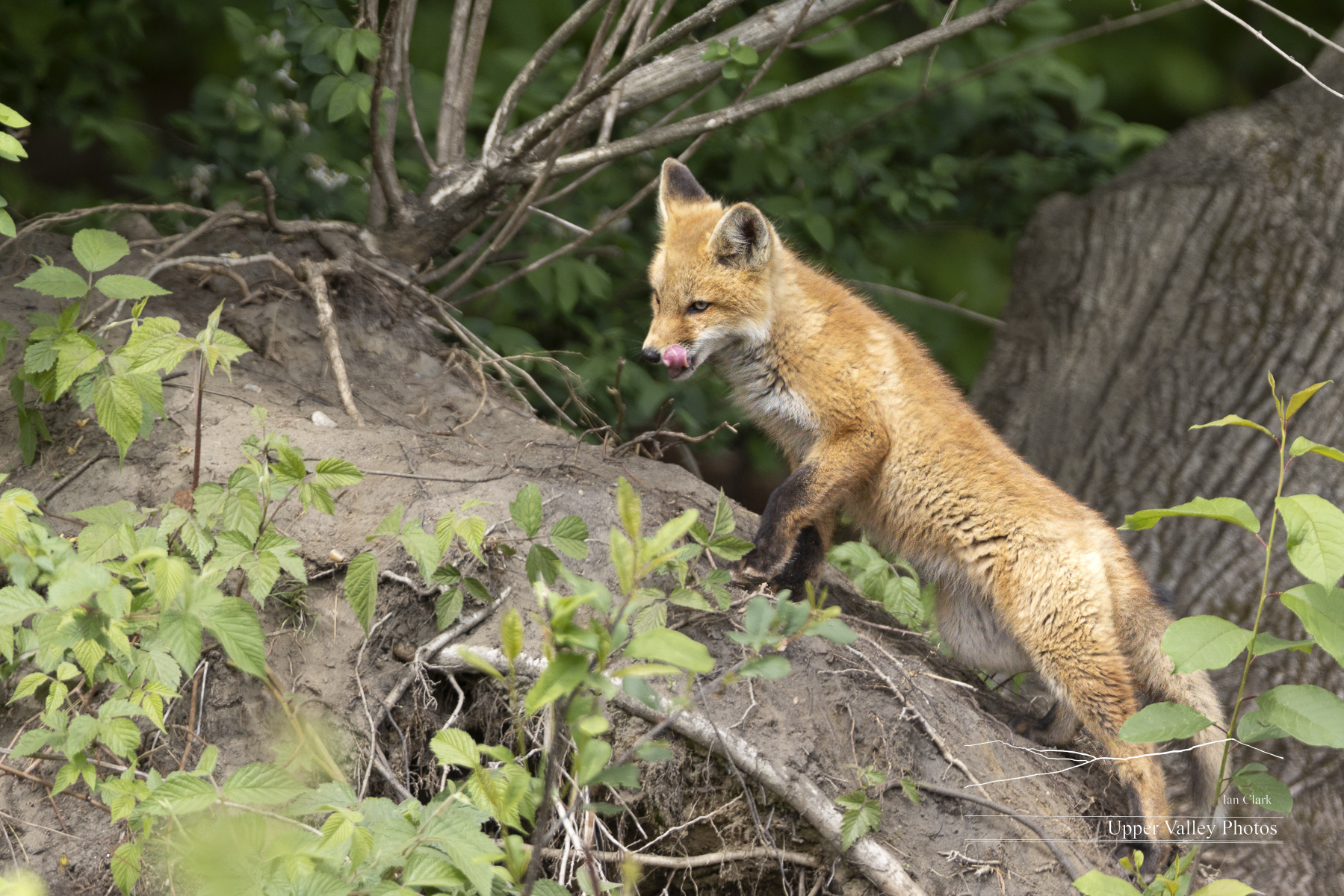
A friend tipped me off to a fox den, I headed down Monday morning to see if I could find it. There are supposed to be seven kits. Mom has been busy. So far I’ve found five of her holes. Without knowing where anyone was, I sat and watched the wrong hole for a time. This guy popped out of one of the holes down the field, and I gave up on what may have been an empty hole.

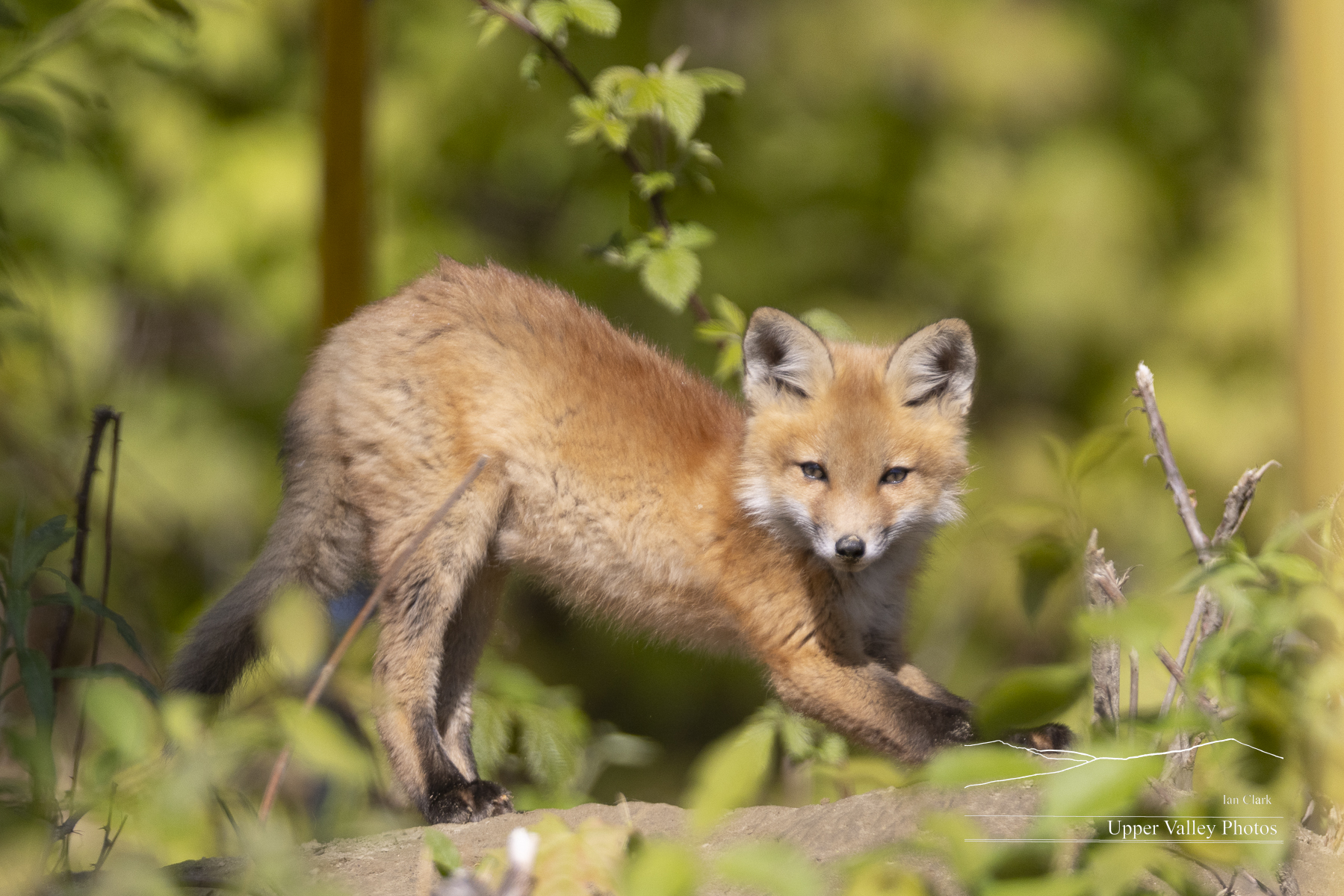
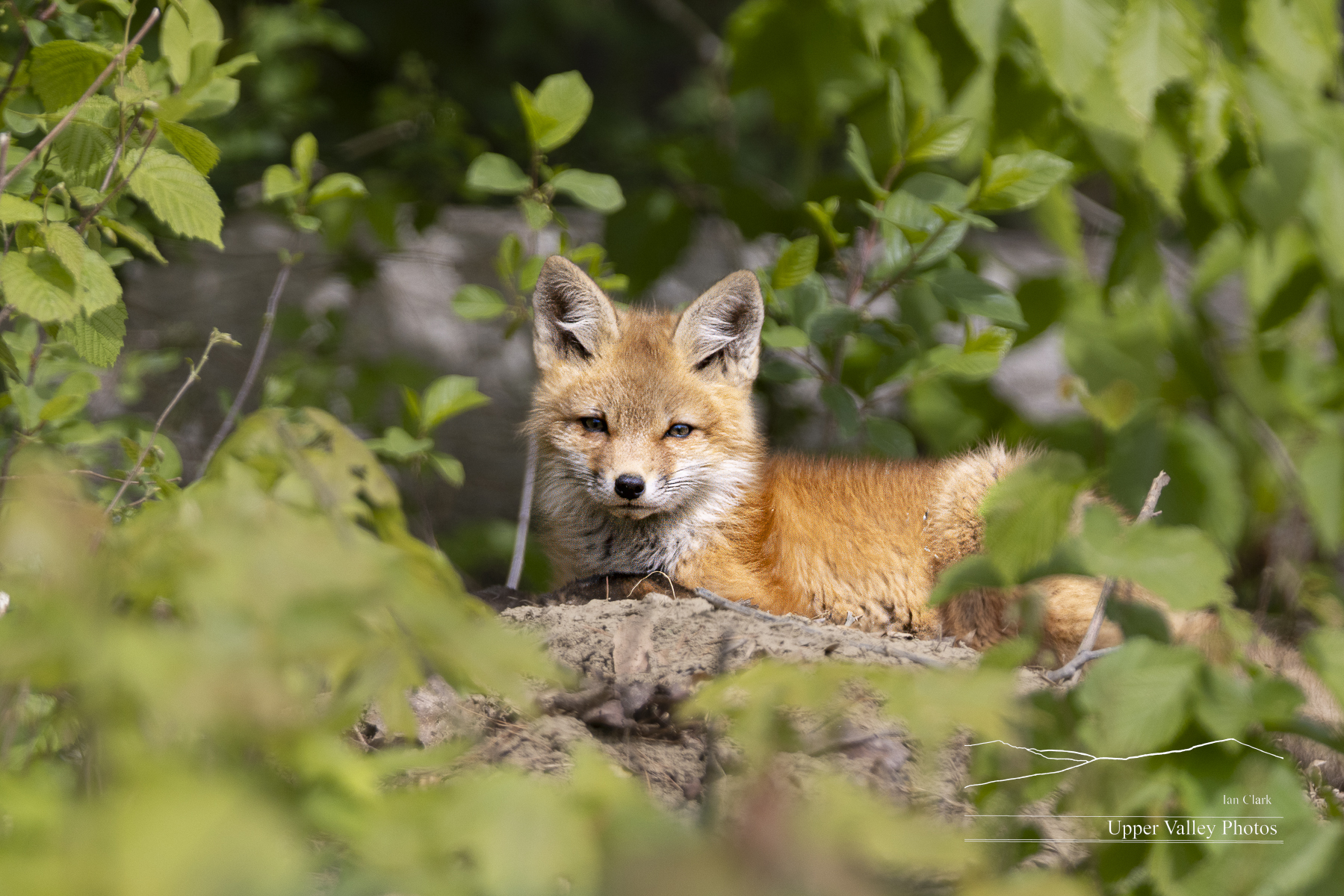
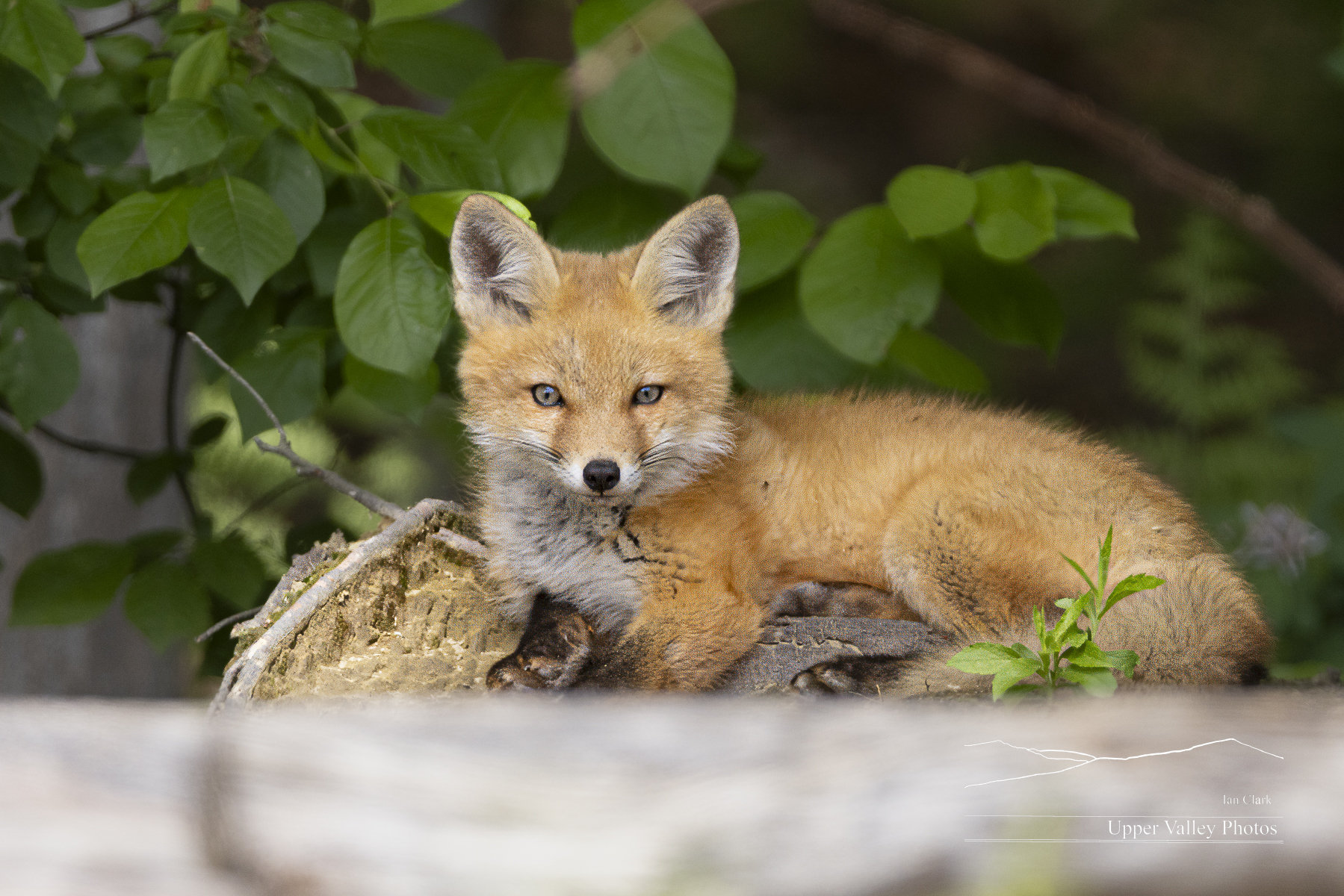
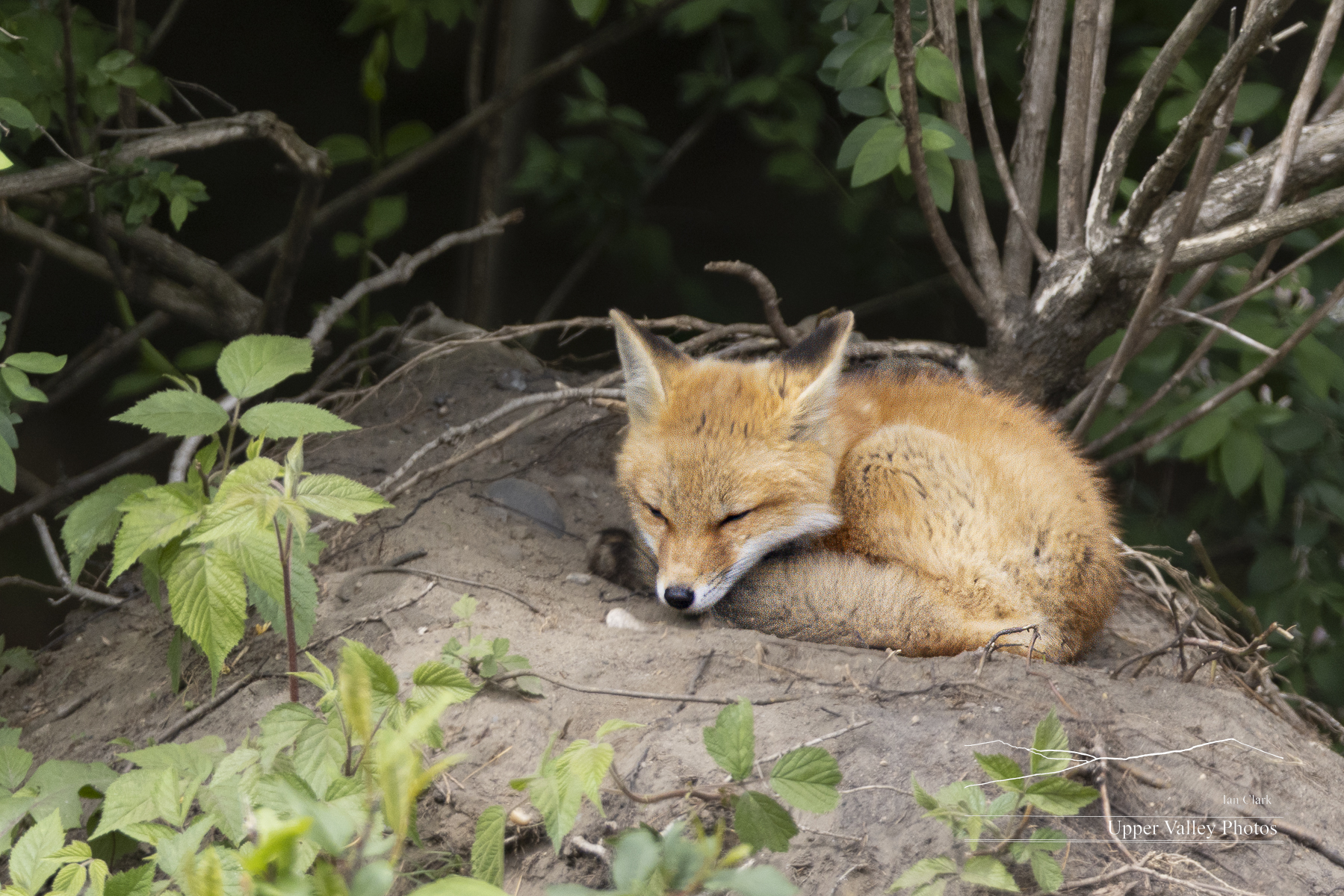
This sibling joined the first kit and both stretched out to enjoy the sun – after moving far enough back in the brush to keep me from getting more photos.

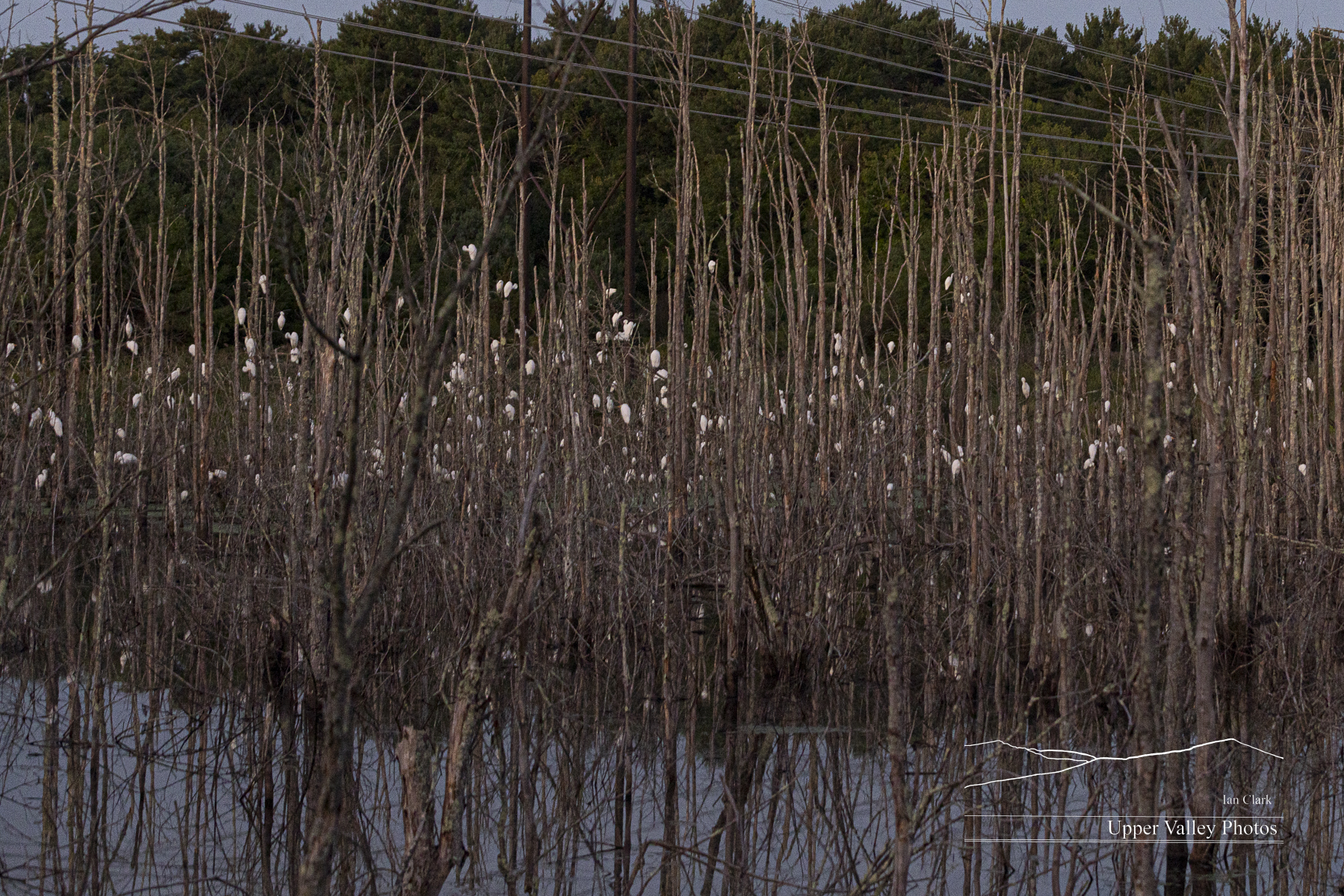
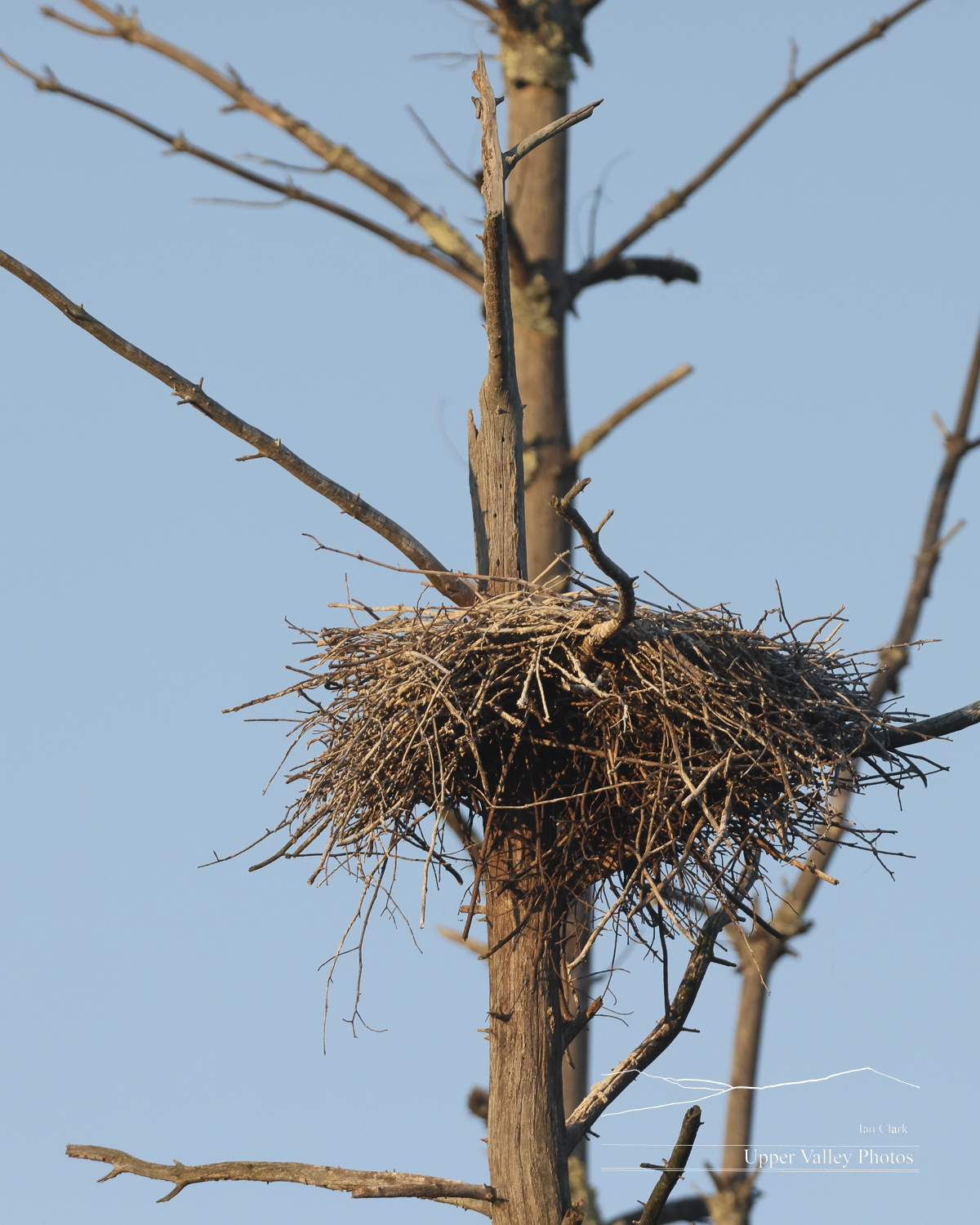
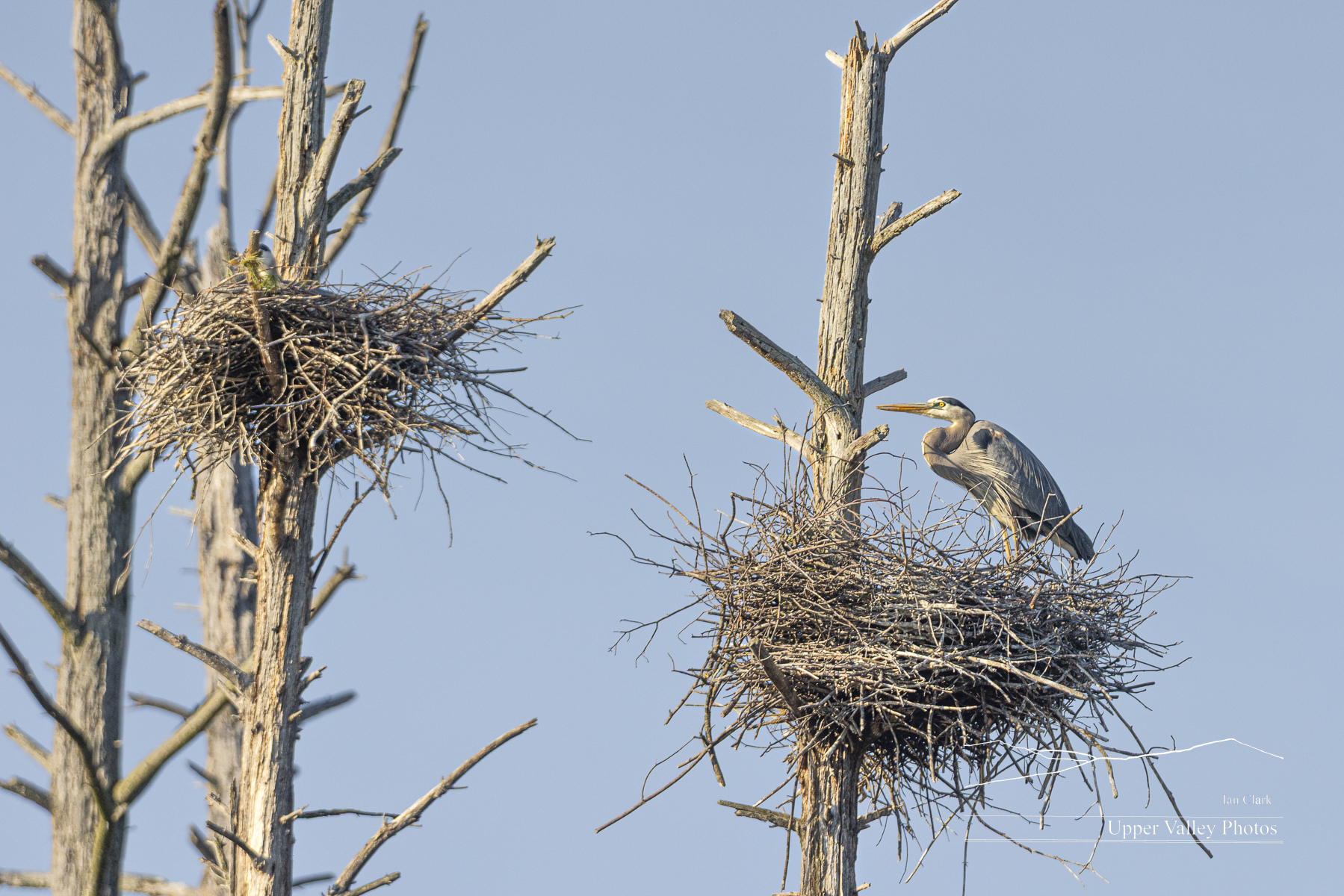
Tuesday morning, I was on the road early to visit the heron rookery. I missed when they started sitting on the nests. I was hoping for chicks. No such luck, the latest they should hatch is early this week.
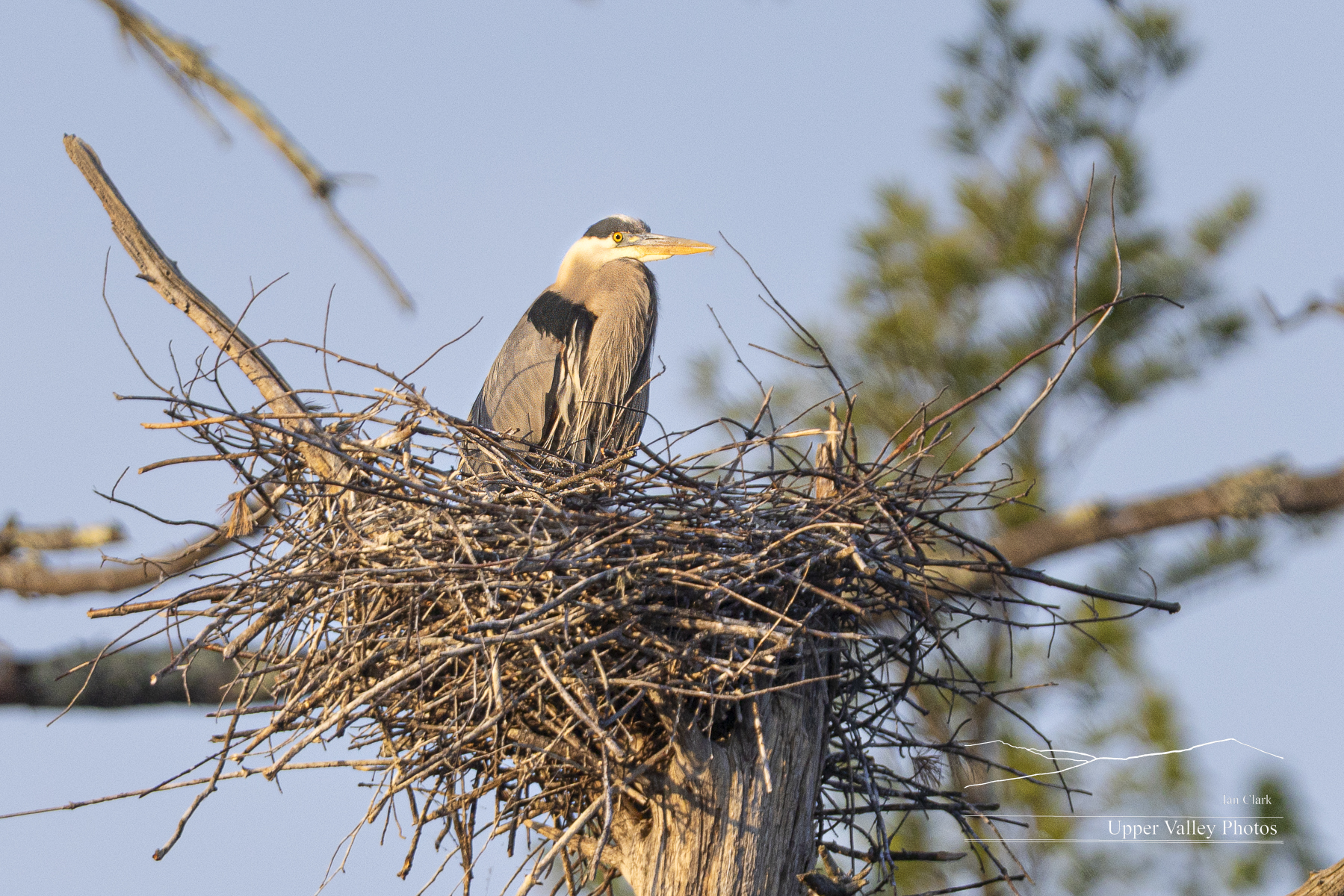
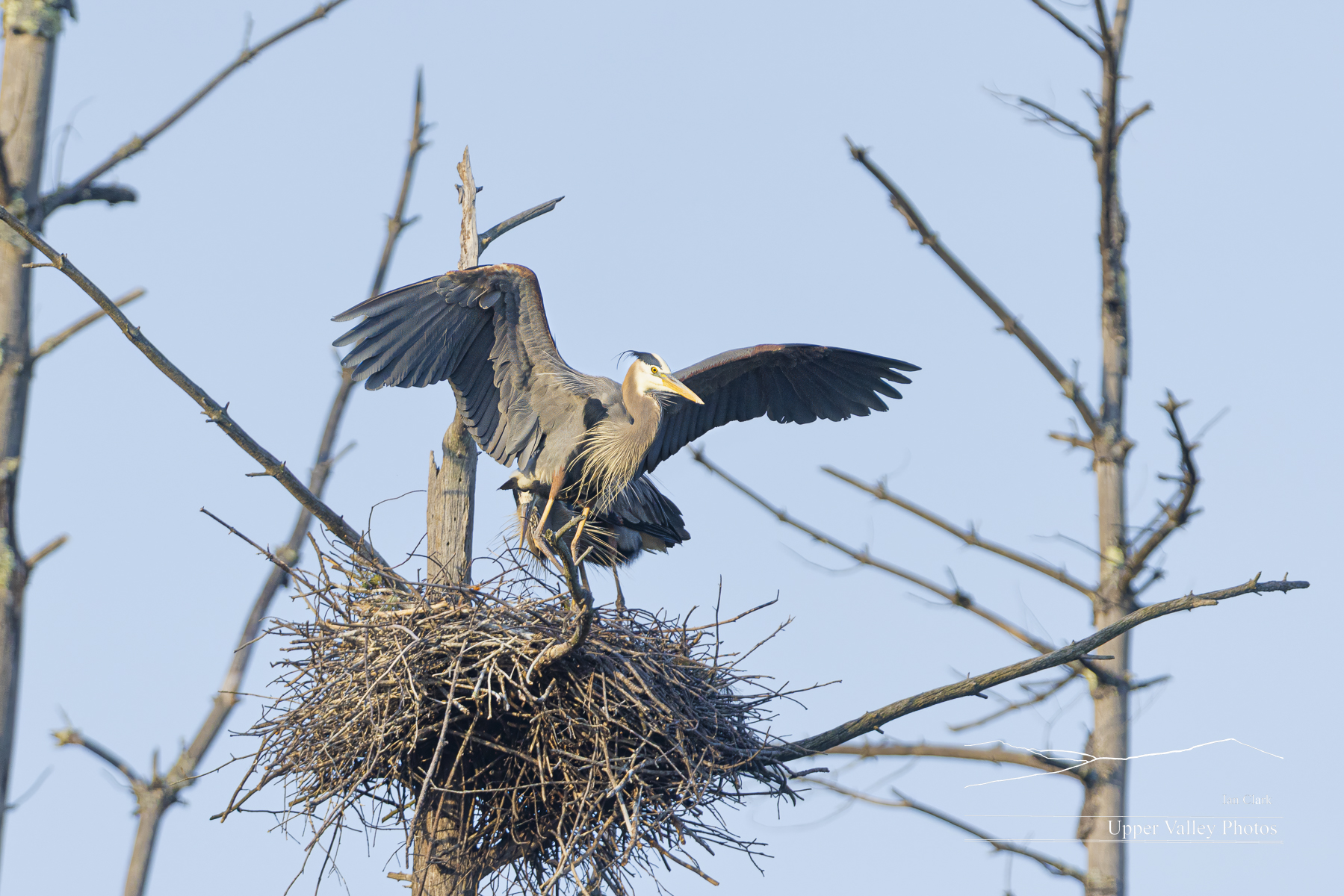
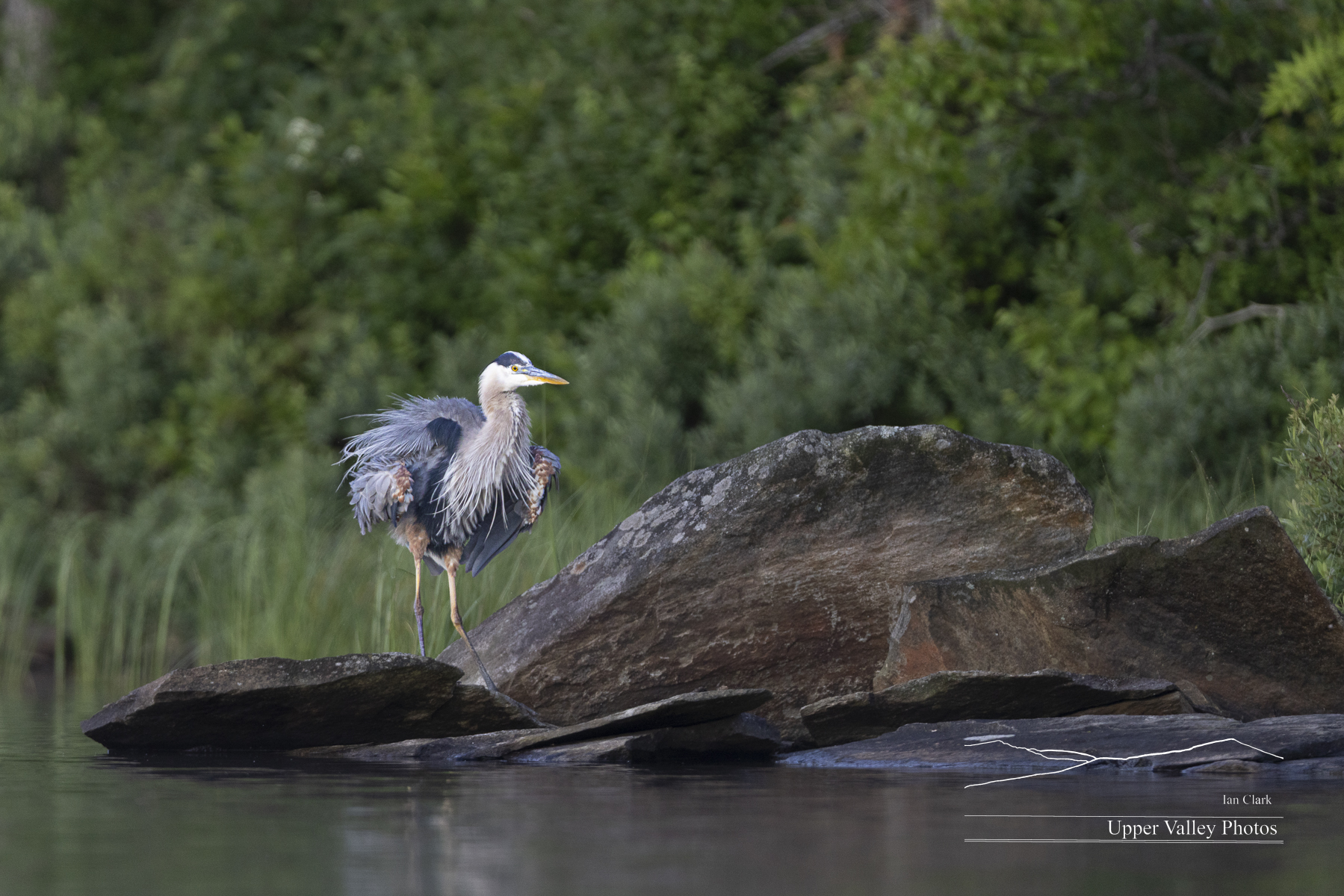
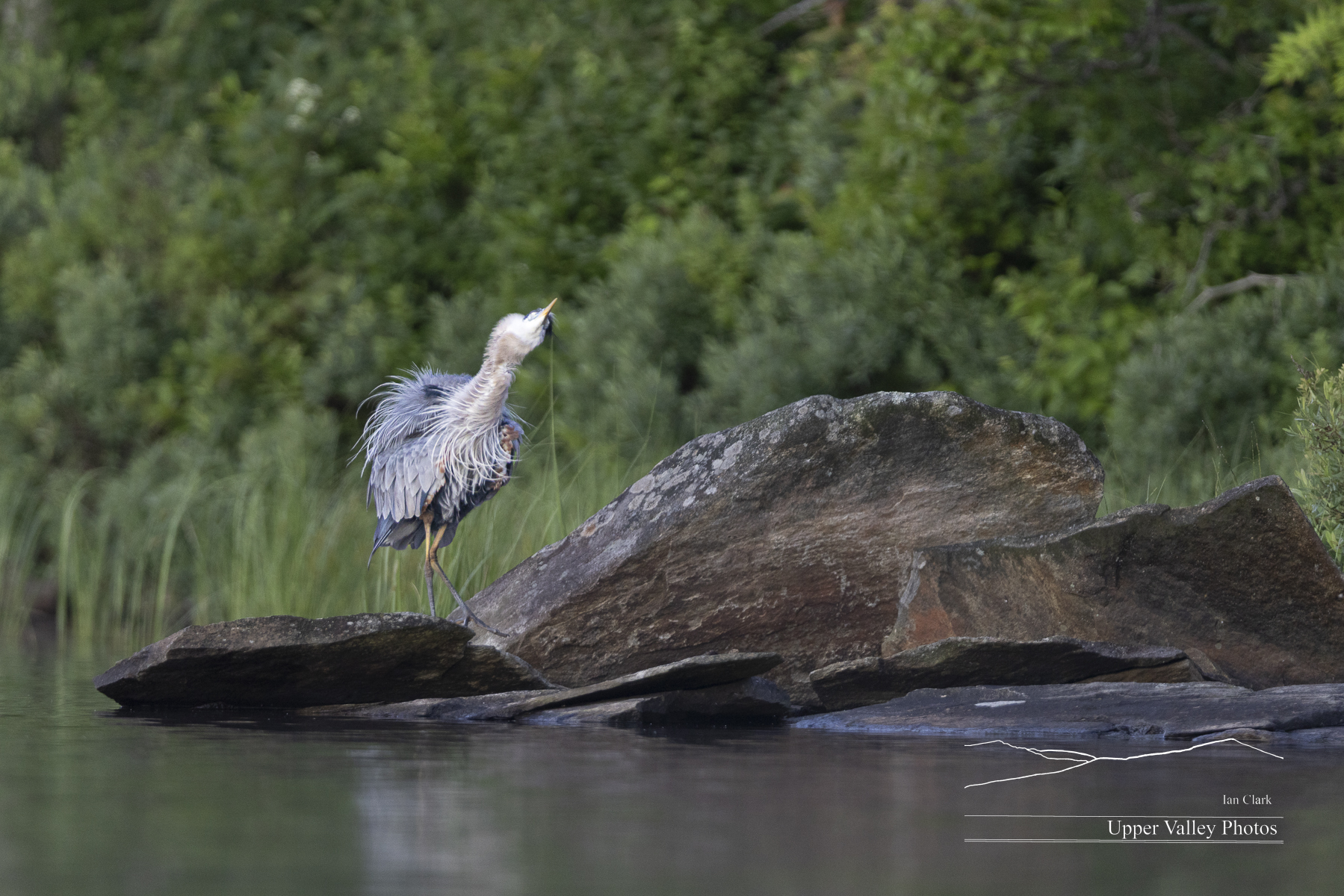
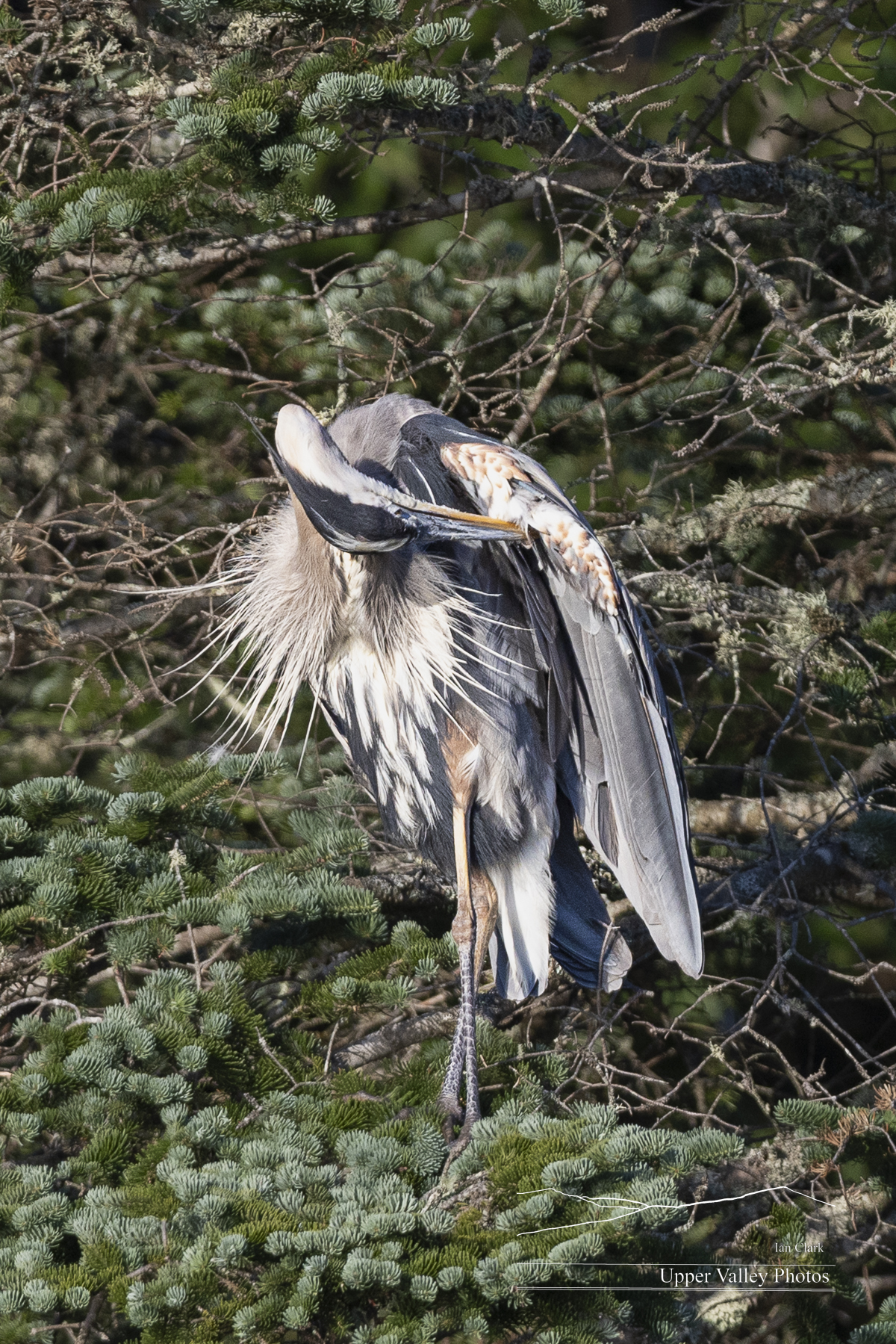
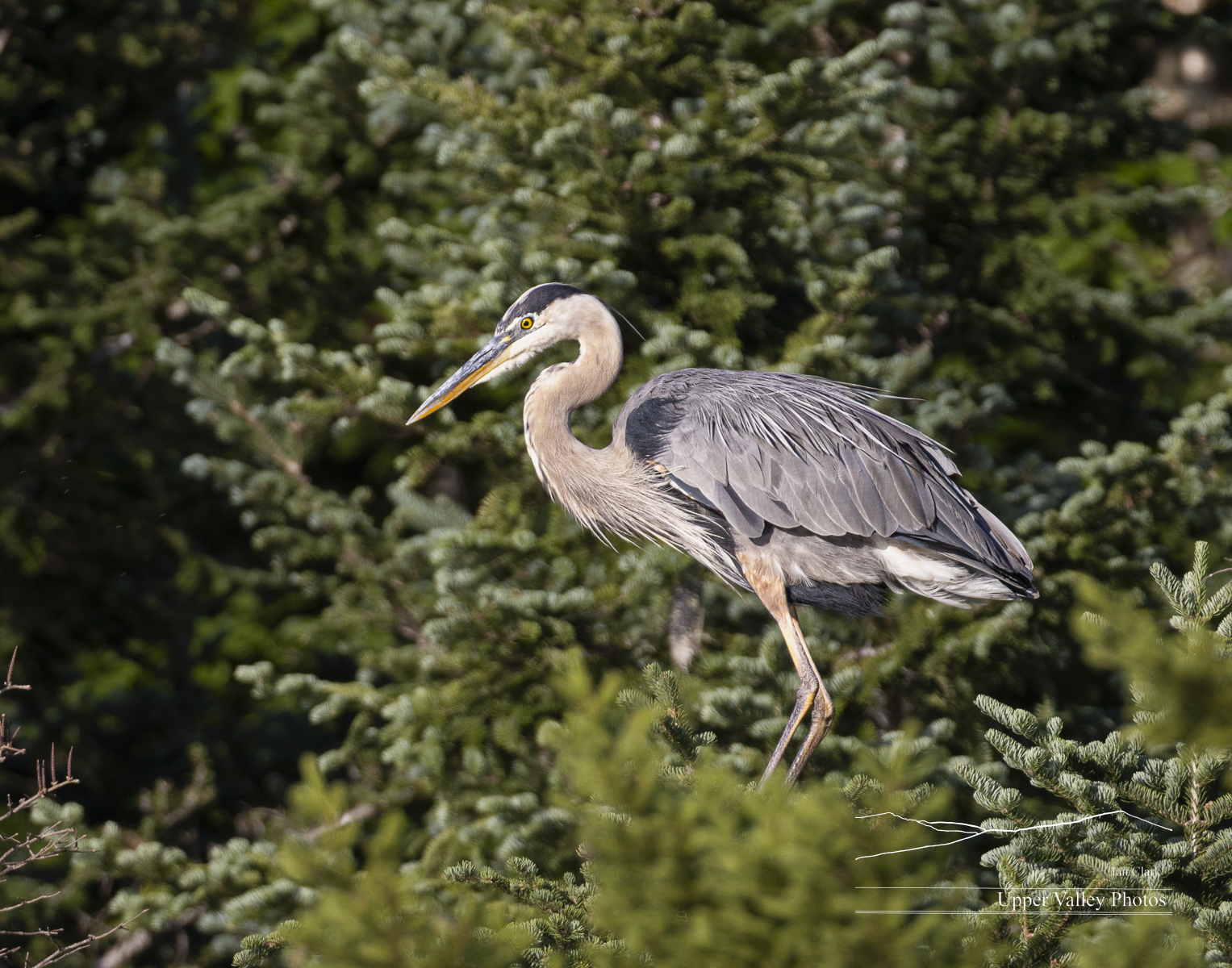
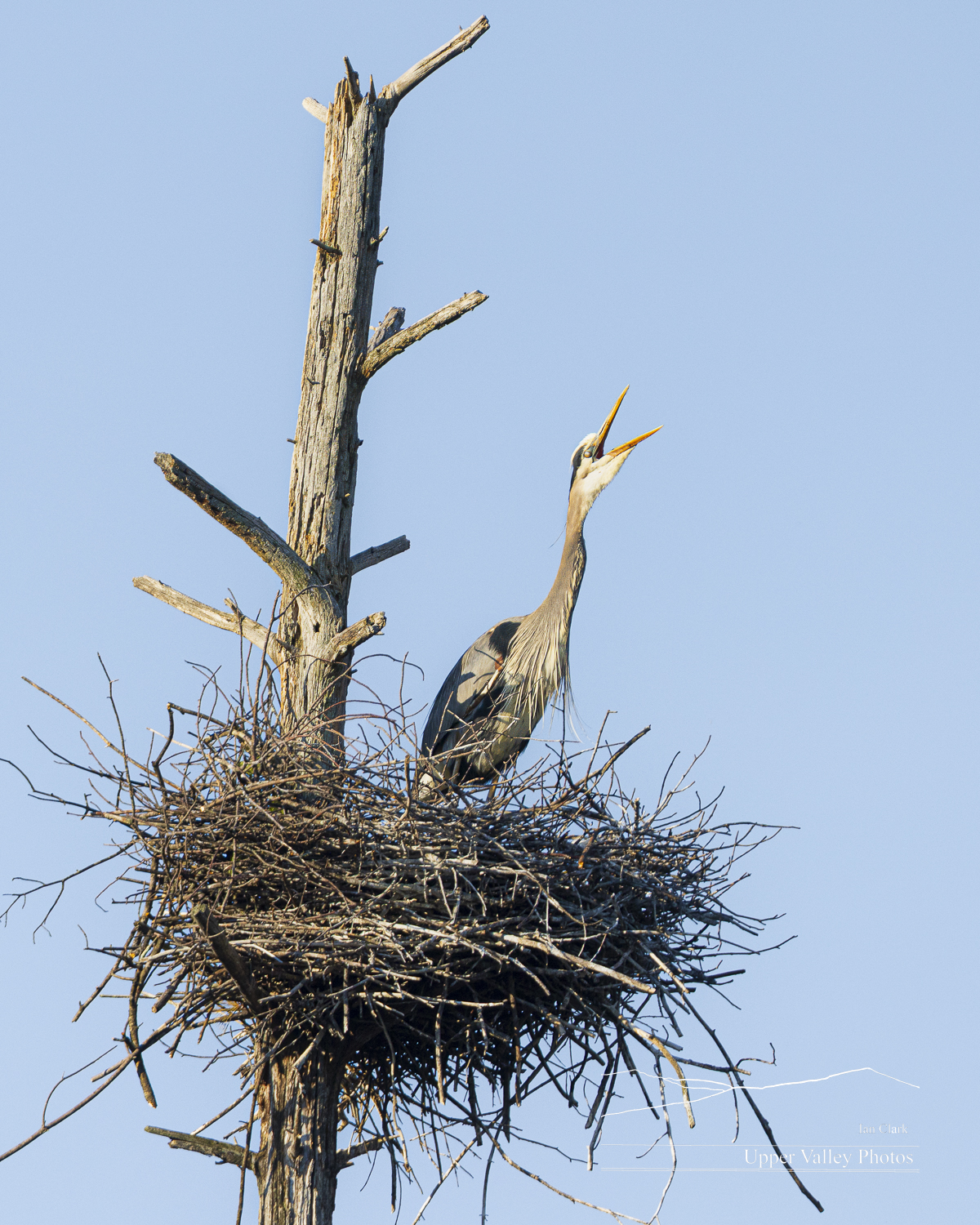
It was a warm morning and most of the herons on nest duty were standing up in the nests. Both heron parents take turns sitting on the nest. The last time I visited, the bird on duty at dawn was still on duty when I left about 9:00.

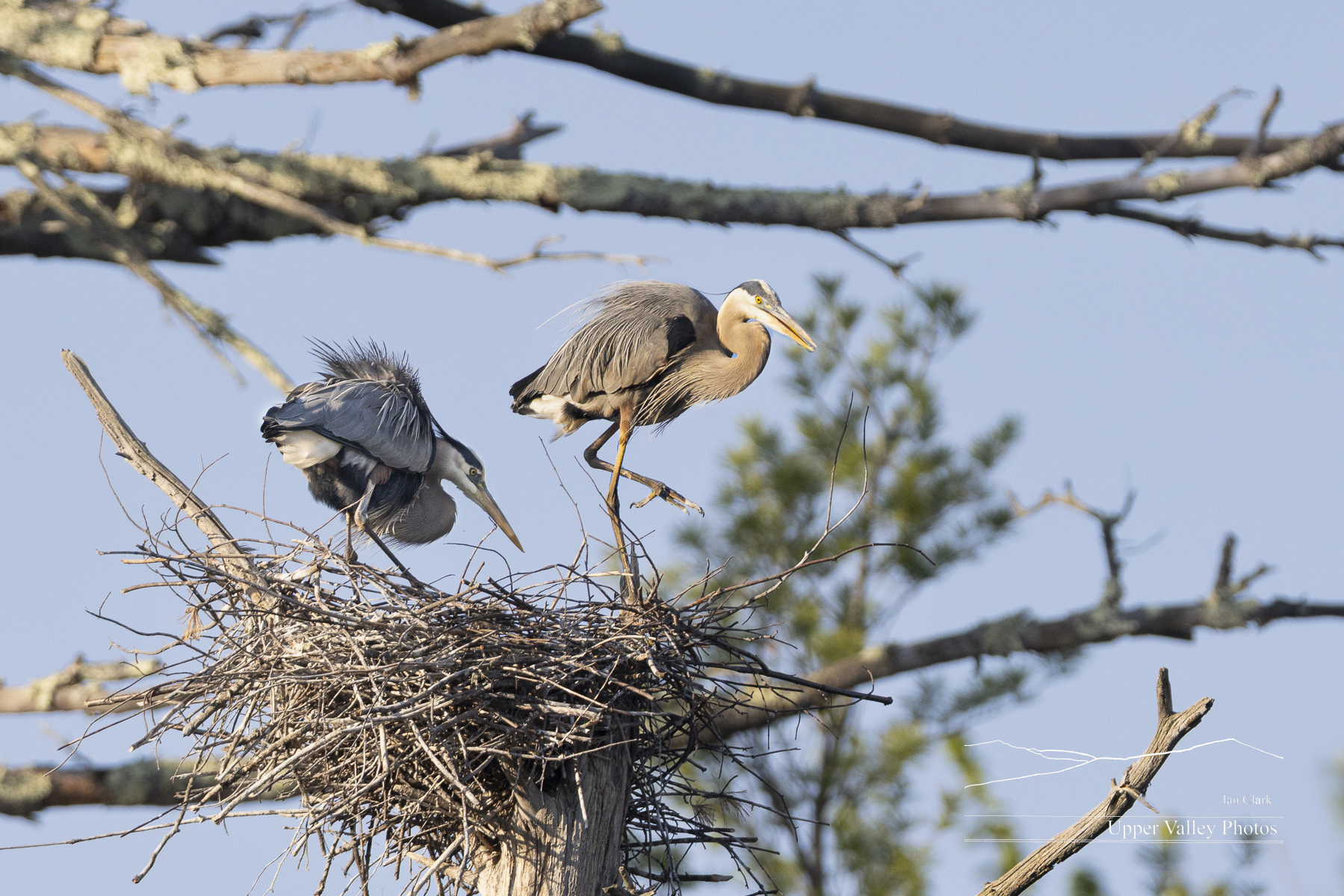
This morning, all of the off-duty birds returned early to relieve their partners. The shift change comes with a “nest relief ceremony.” The partners stretch their necks and/or raise the plumes on their crest. They may preen each other and sometimes exchange sticks. But, the bird that’s just been relieved doesn’t stick around long.

This heron’s mate has just returned to the rookery and is perched in a tree to the left of the nest. The birds stretched and clapped their bills at a distance before a quick exchange at the nest.

Another pair making a nest exchange.


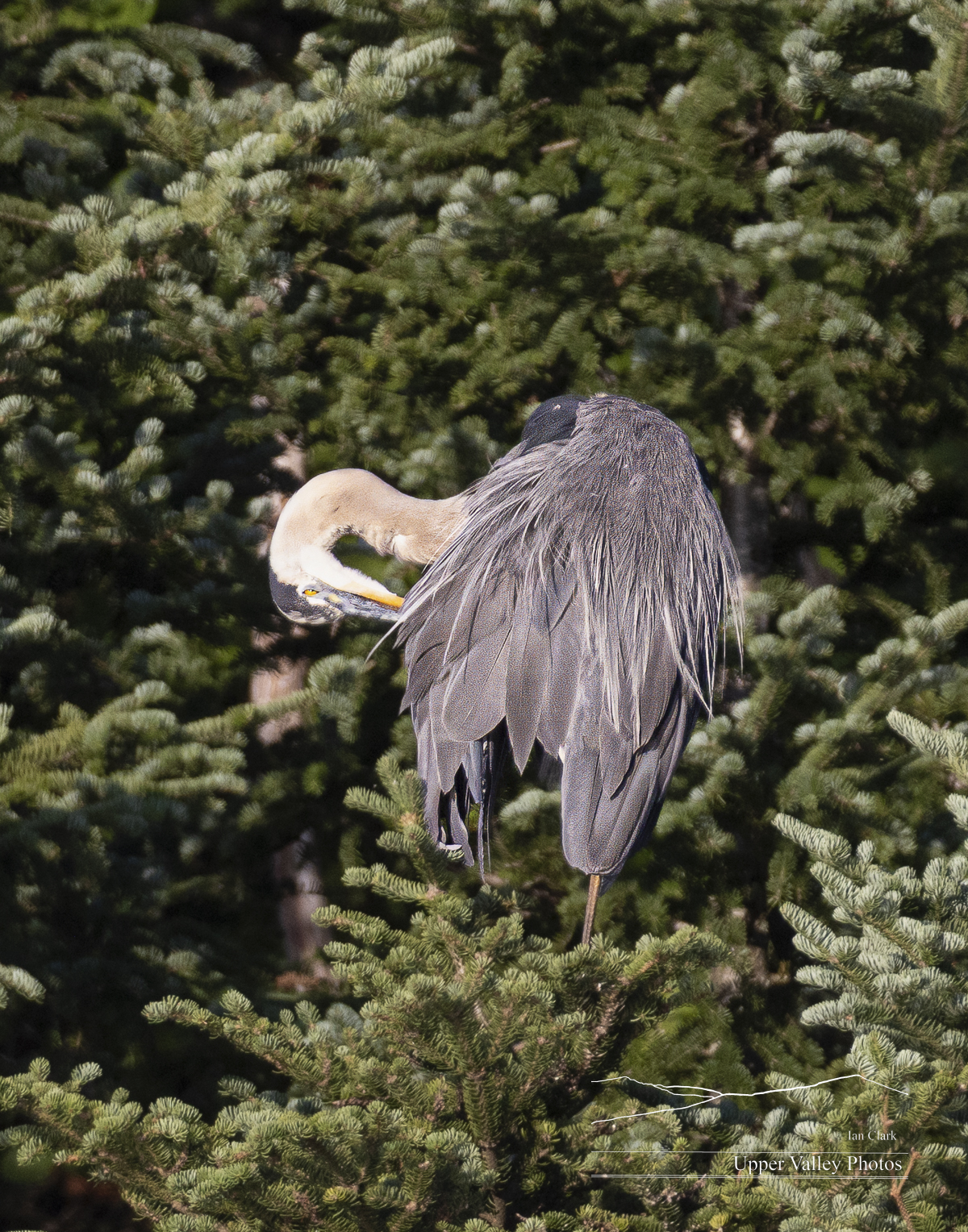
The birds reporting for duty all spent several minutes tidying the nest.


When the nests are in order, the birds settle in and catch up with their neighbors.

On the way home, I stopped to visit the foxes again. They weren’t to be found.

The next morning I headed out to see what the Middletons were up to. They’re sitting on their nest. They’ve moved from where the nest has been for several years. They’ve found a new spot on a hummock deep in the brush and are well hidden. I didn’t see the nest until Mrs. Middleton relieved Mr. Middleton.
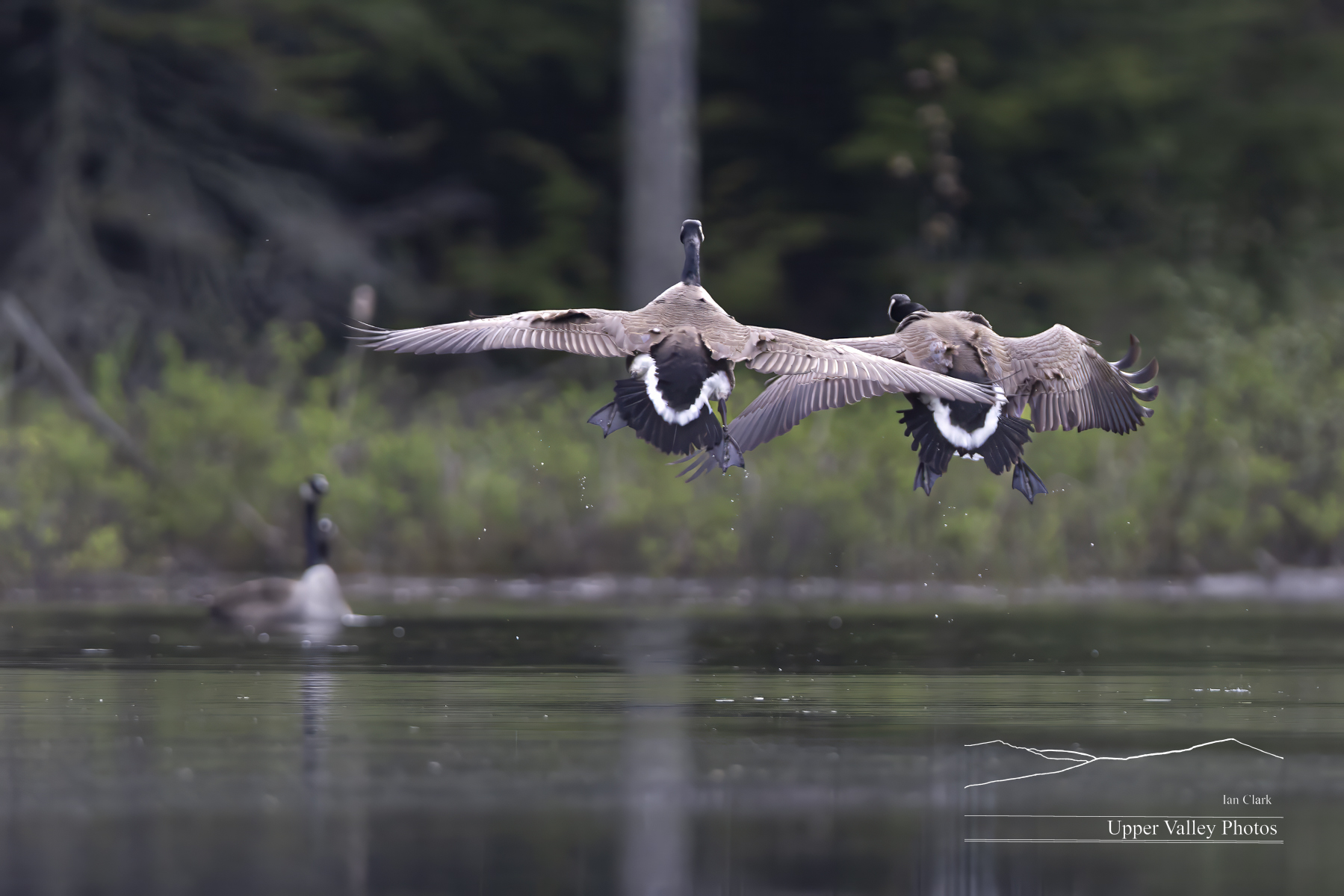
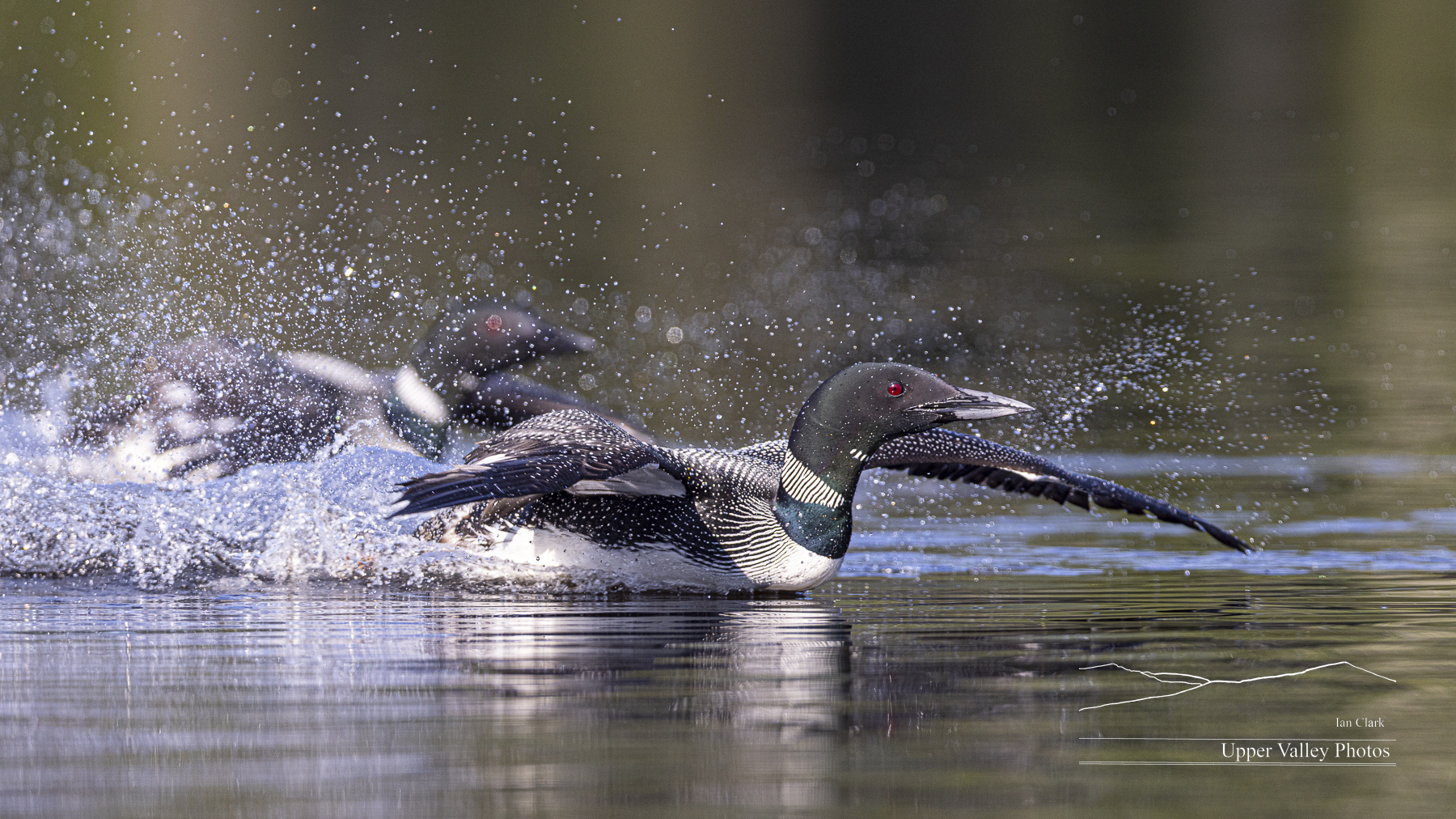
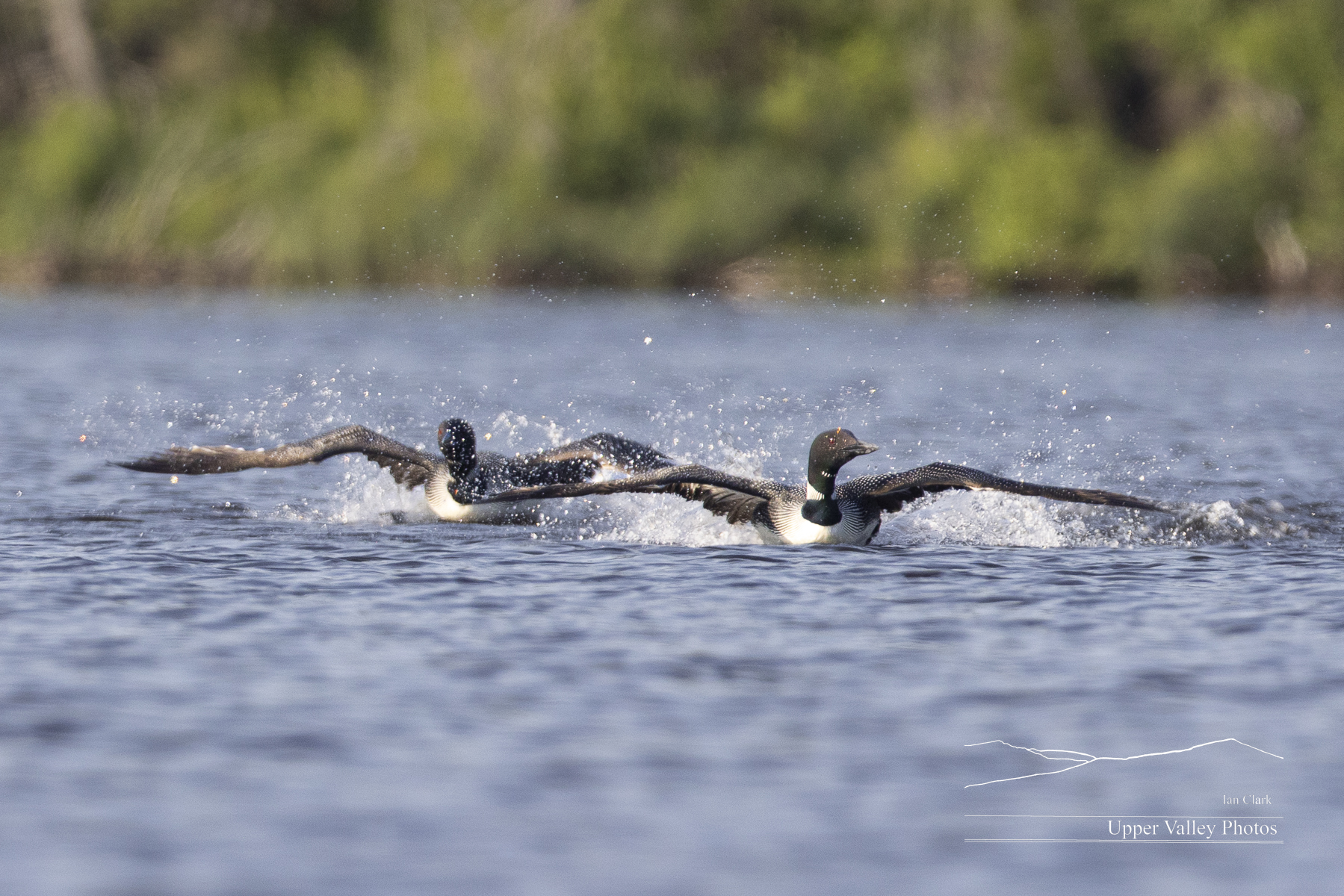
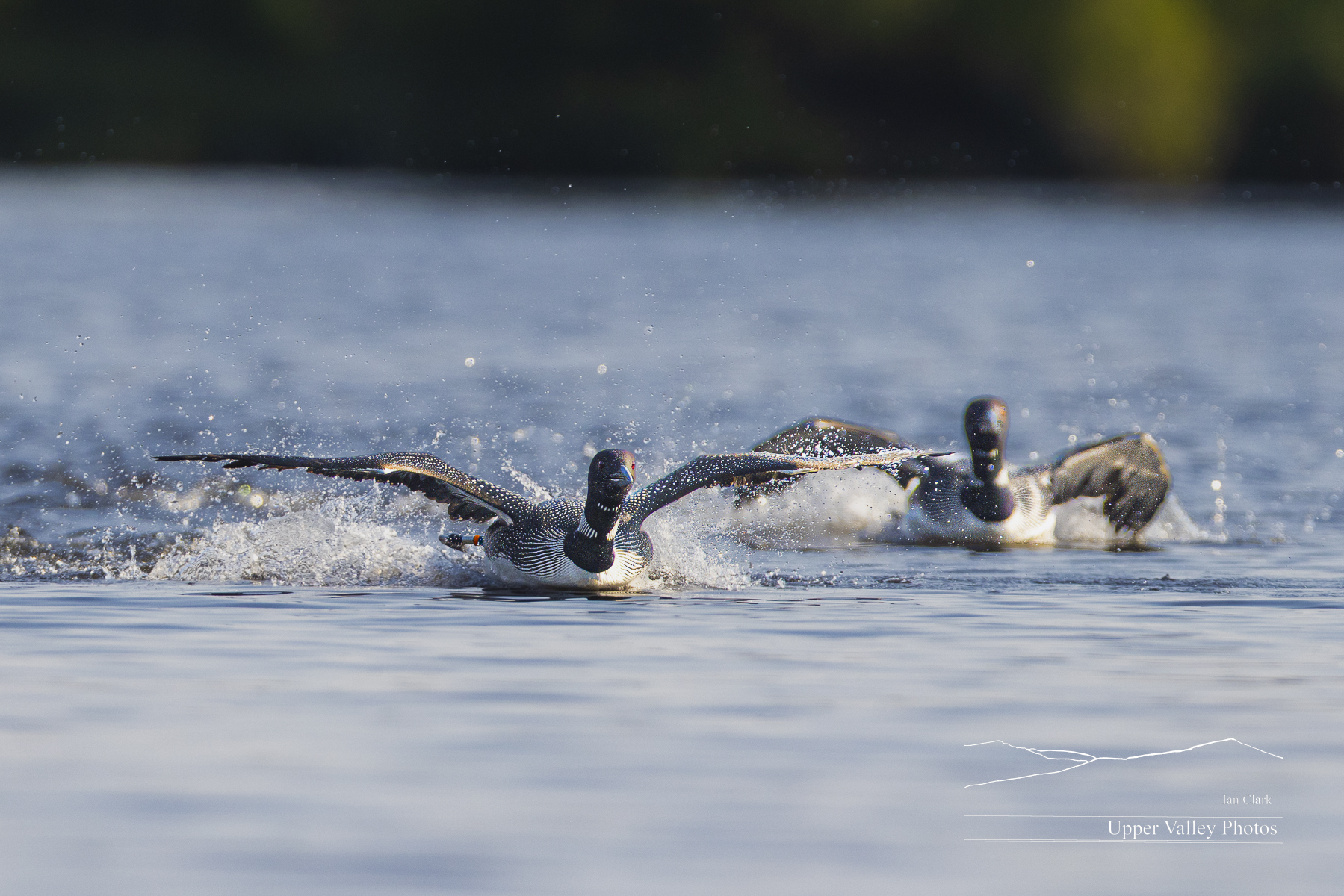
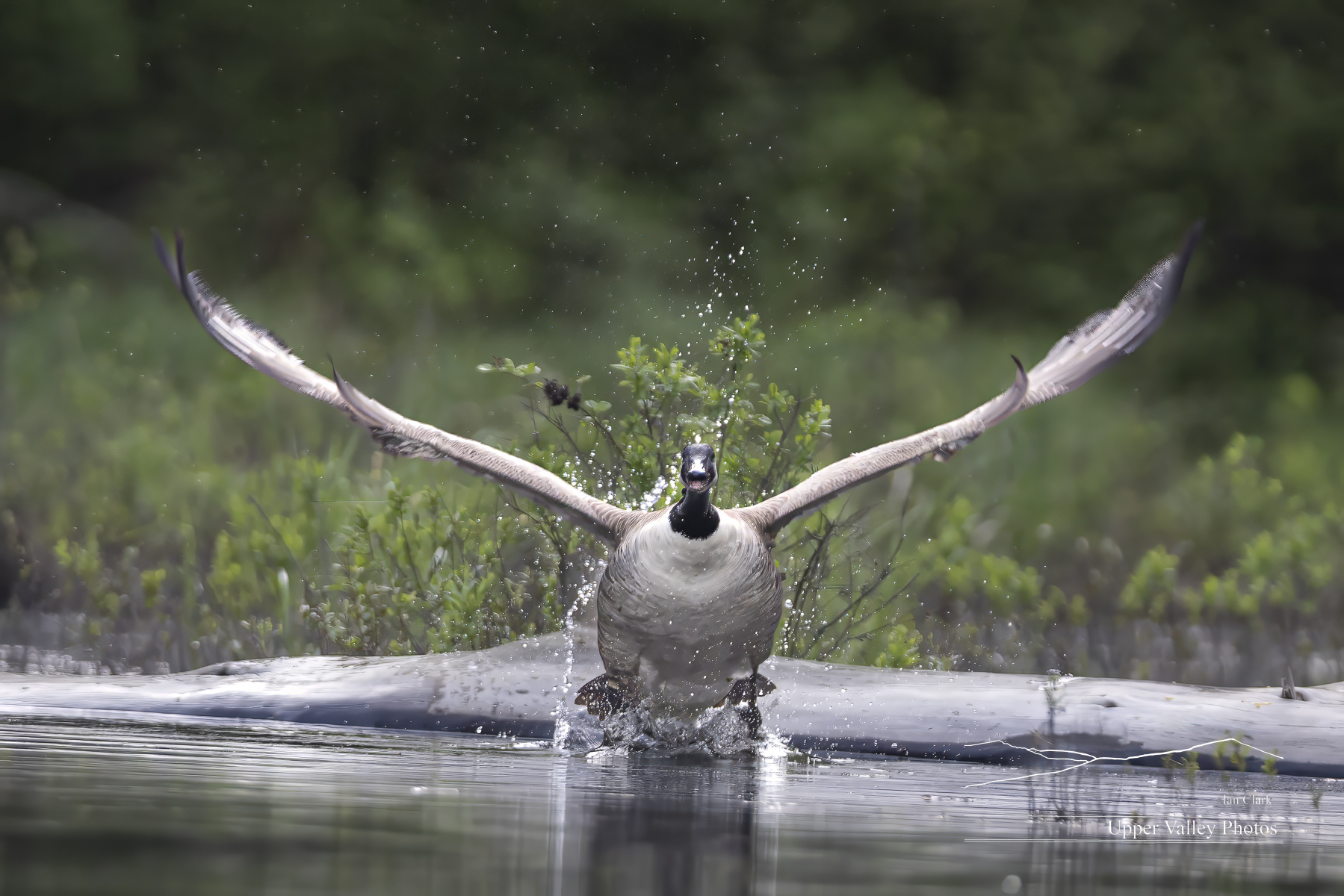
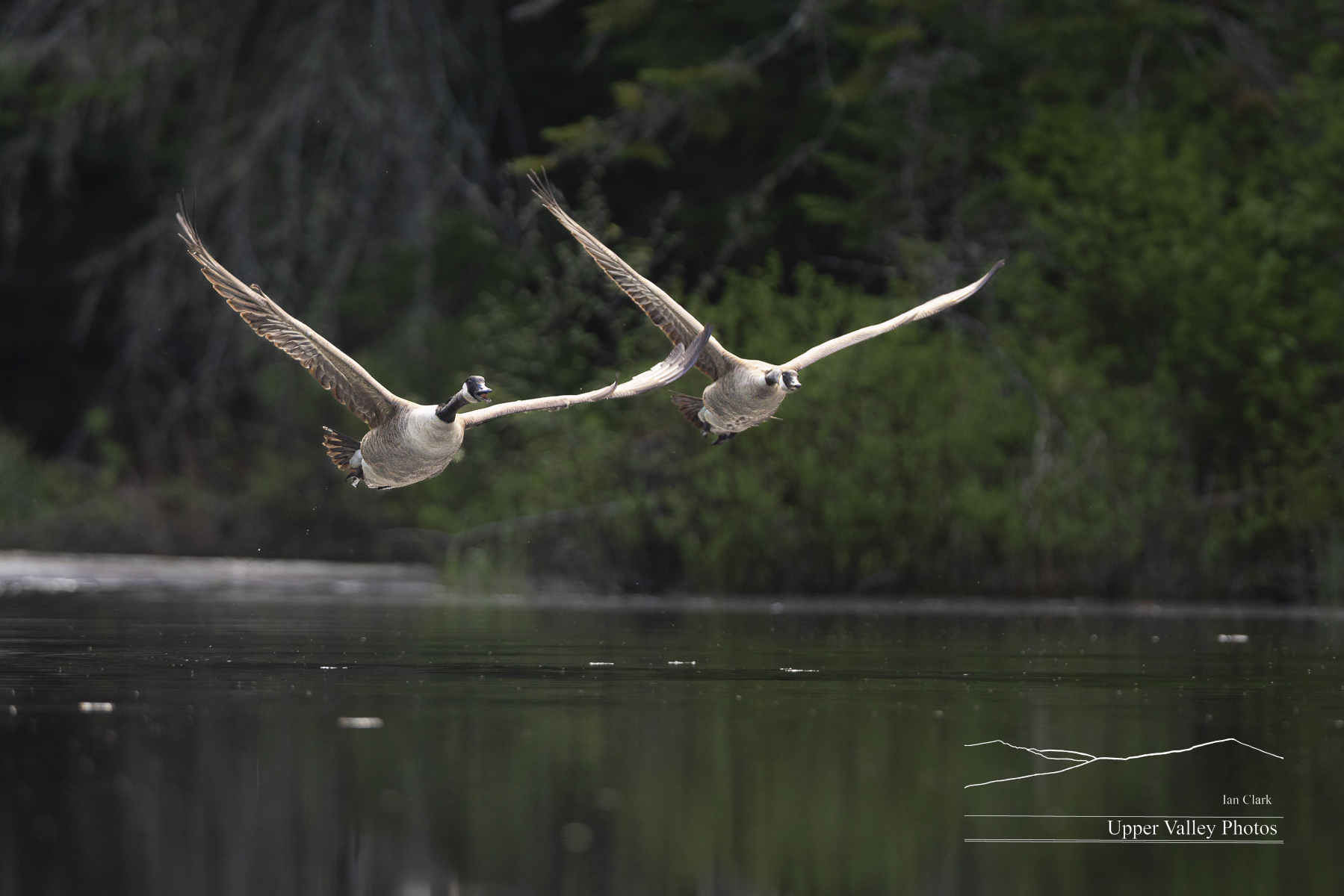
As Mr. Middleton left his cove, a pair of Canada geese flew into the pond and landed not too far from the loon’s nest. That pair of geese was rapidly challenged by another pair of geese that flew across the pond to object to the newcomers.

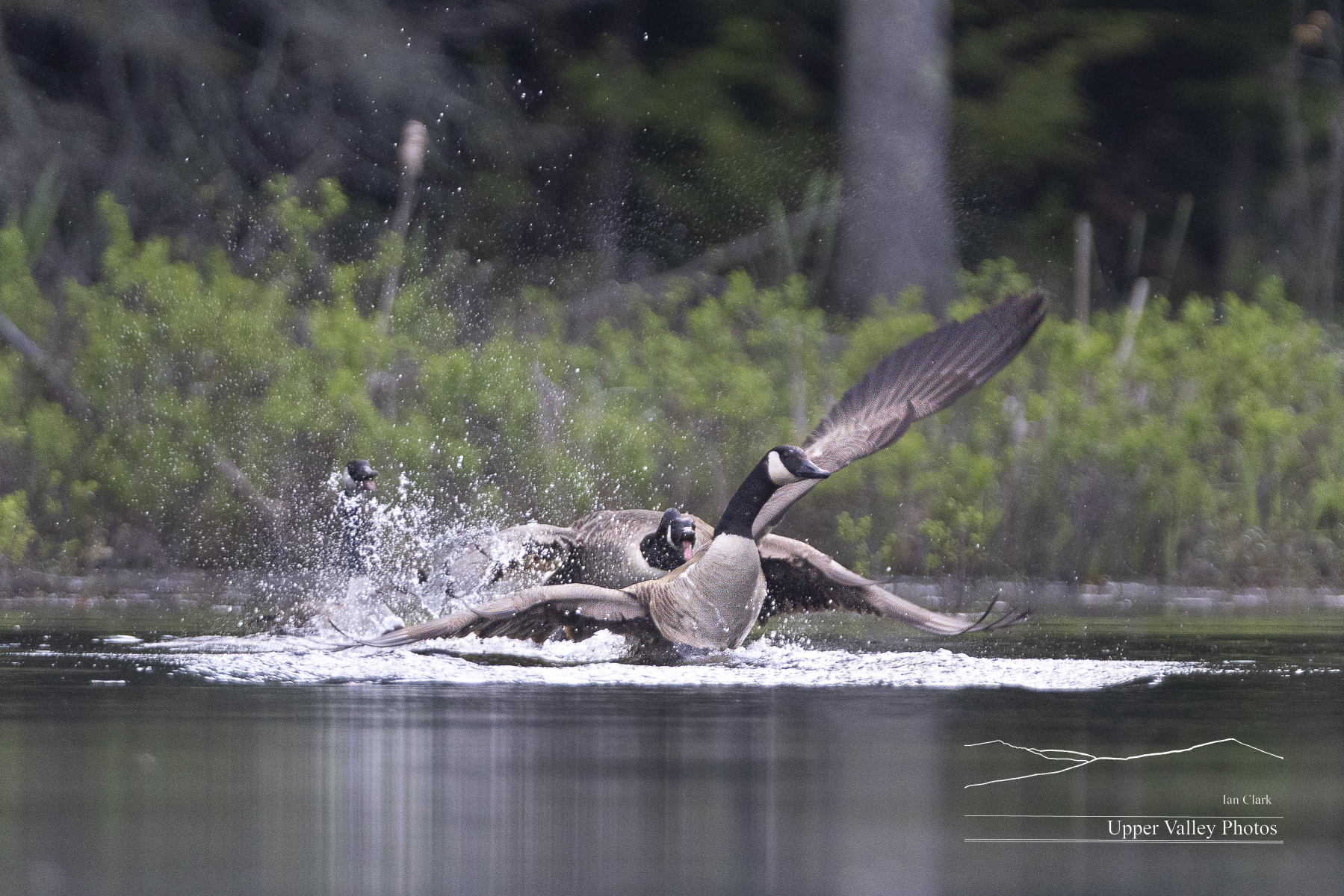
The newcomers objected right back and went after the second pair of geese.

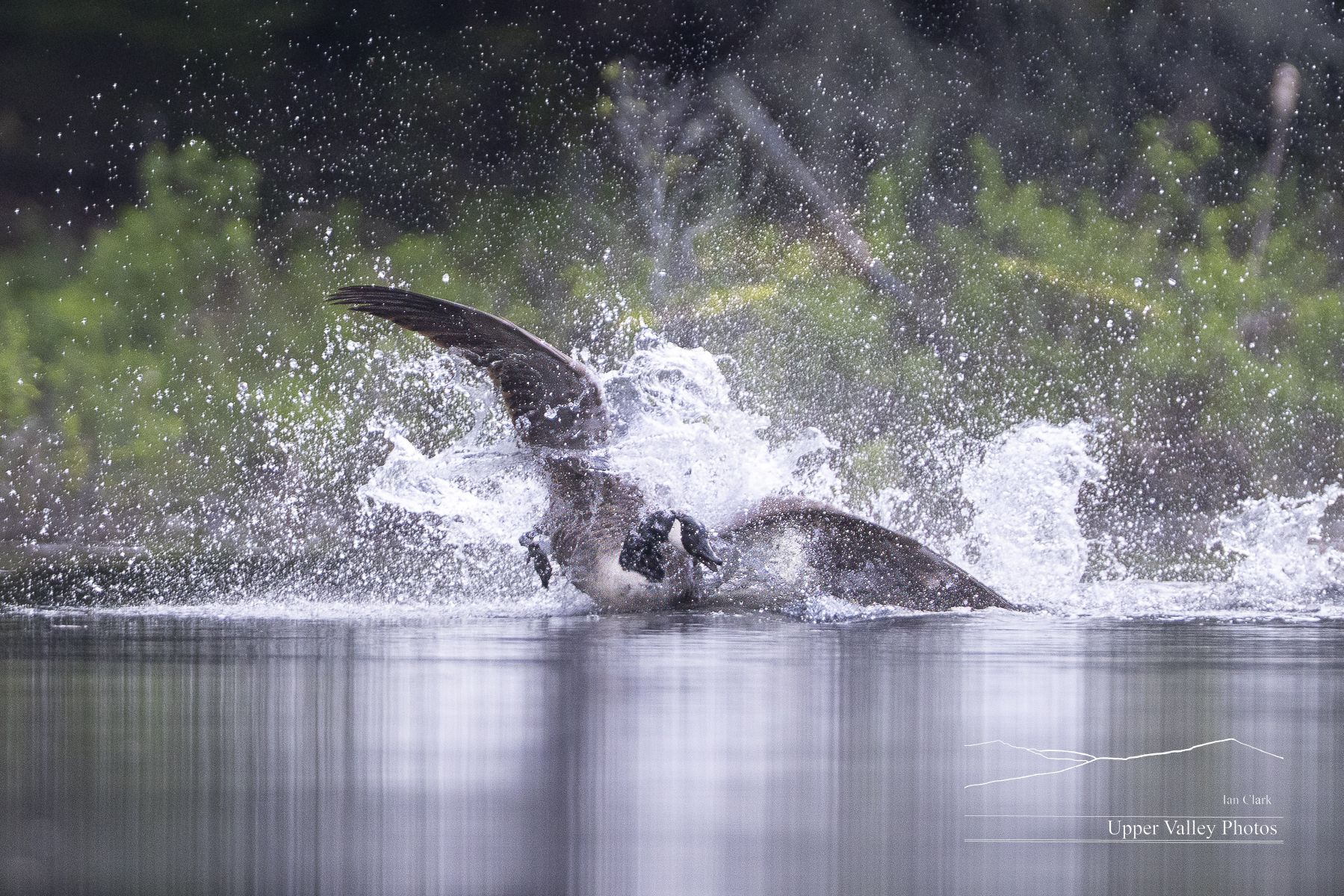
It was a serious fight, with geese biting and striking with their elbows – the joint in the wing.

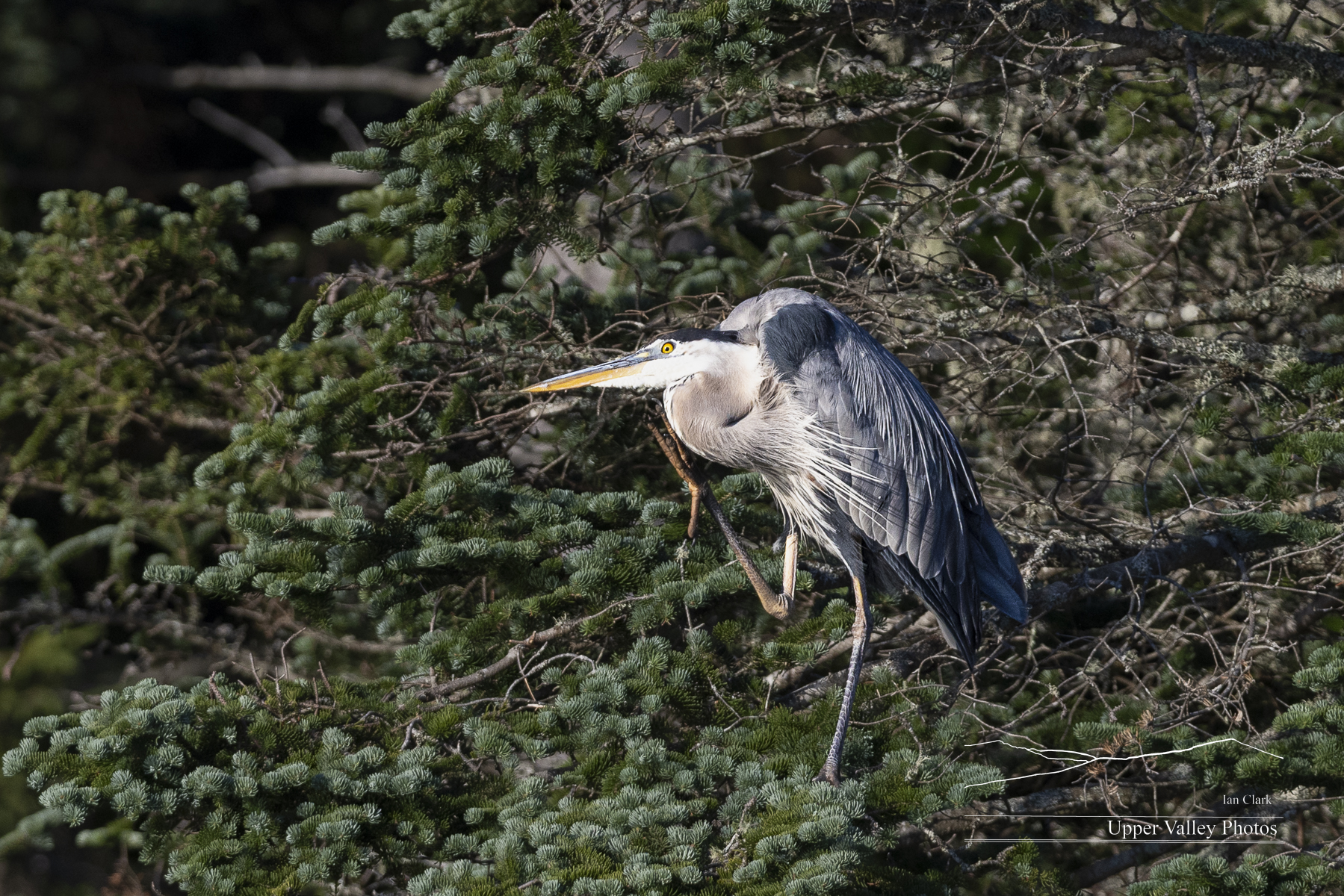
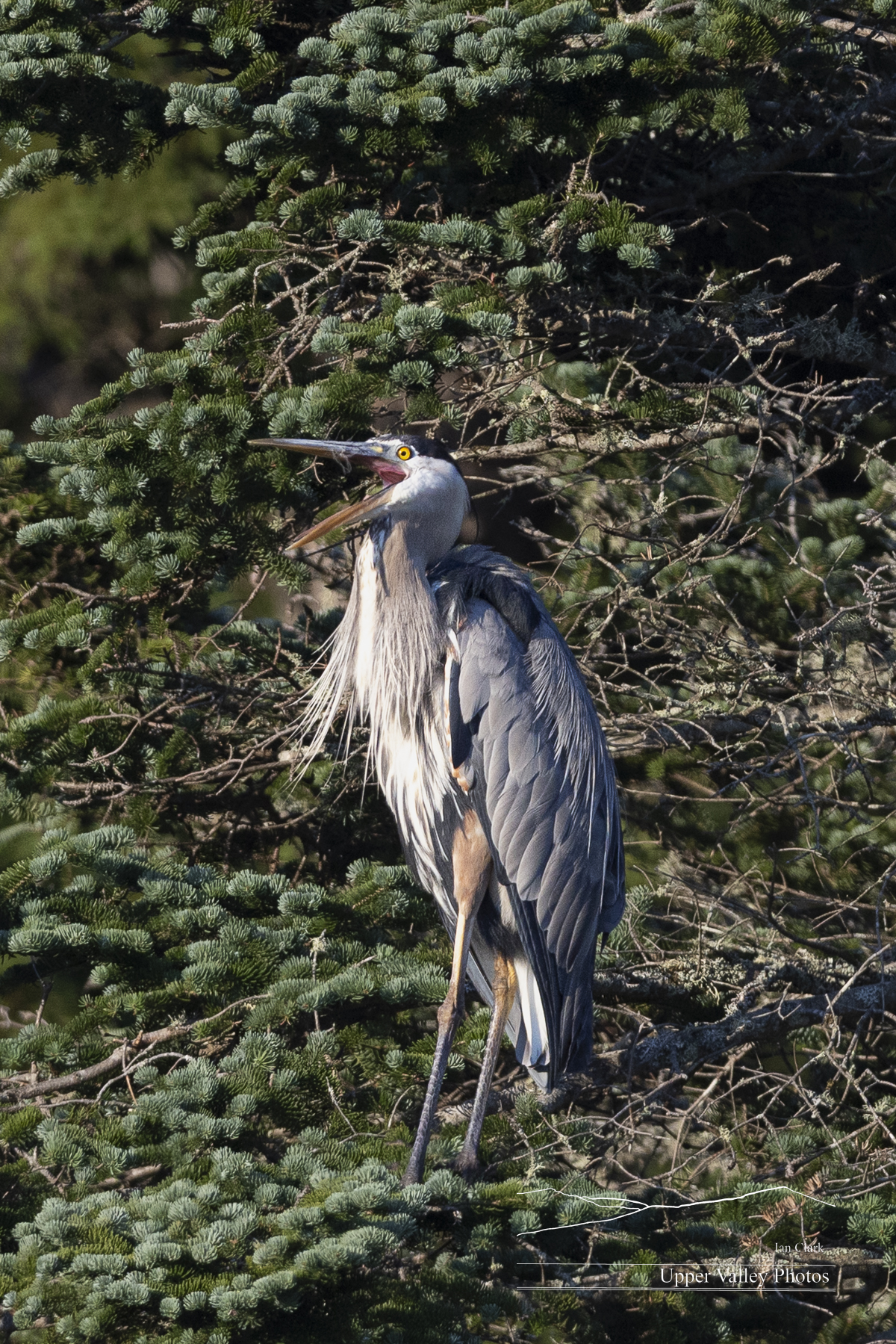
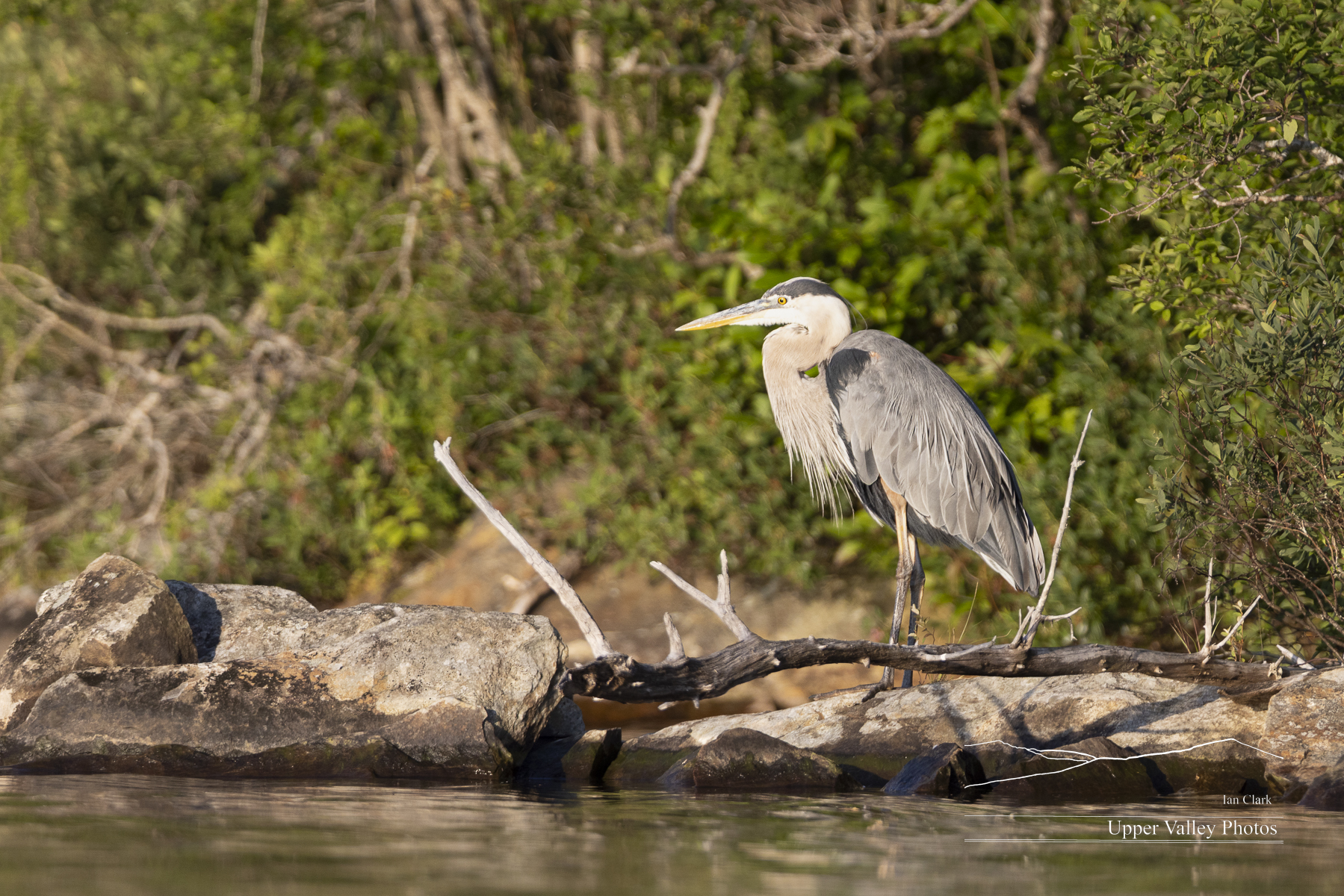
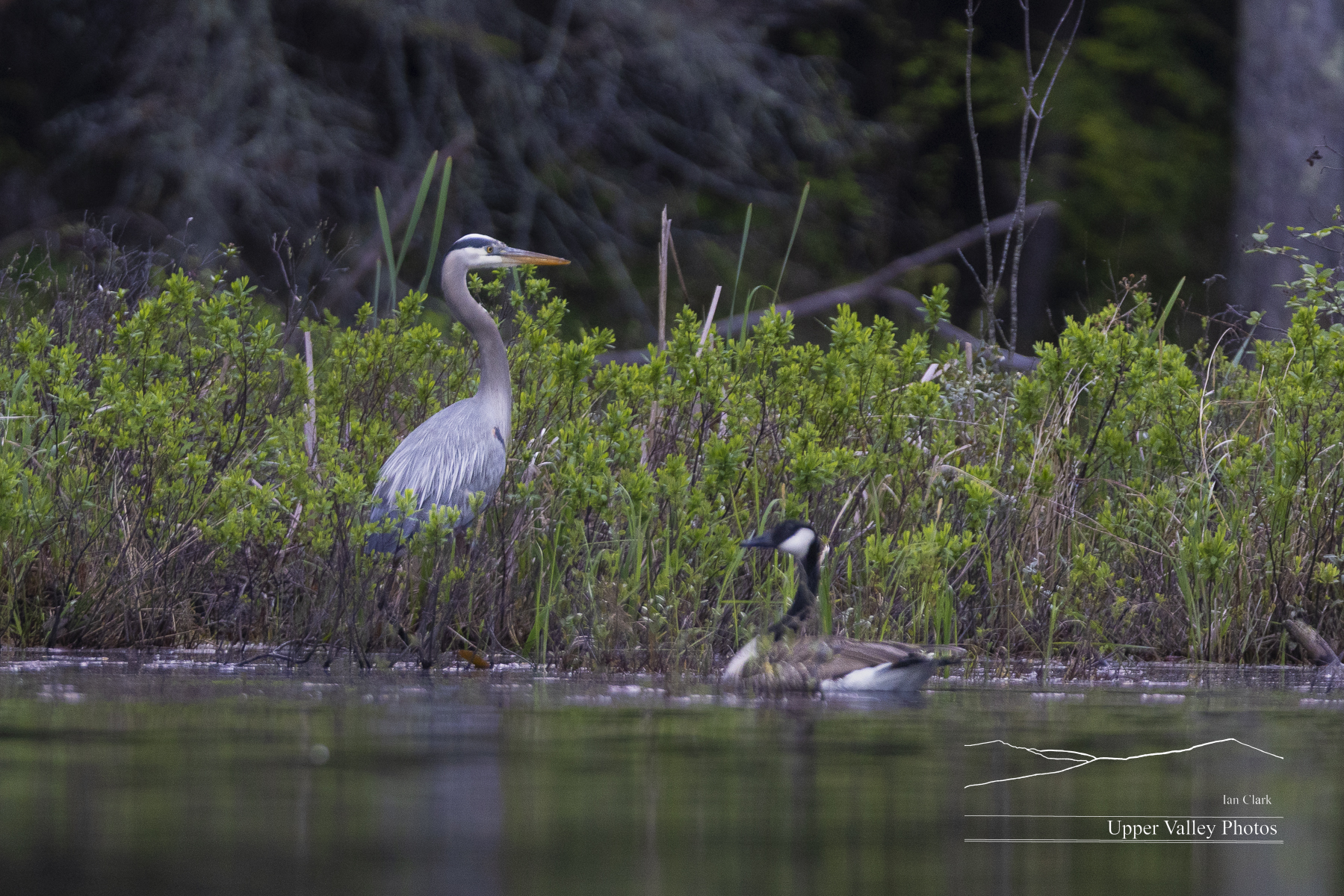
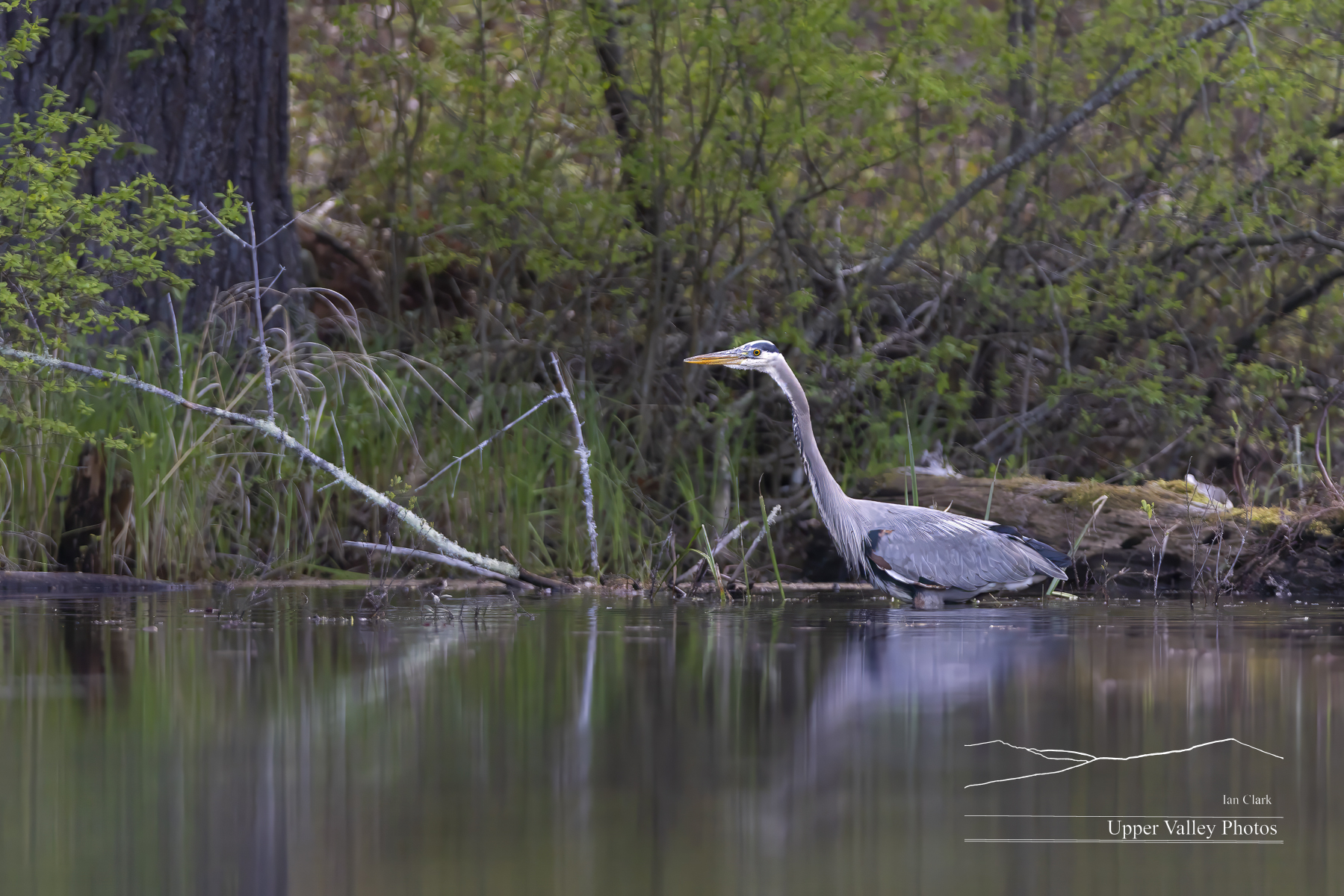
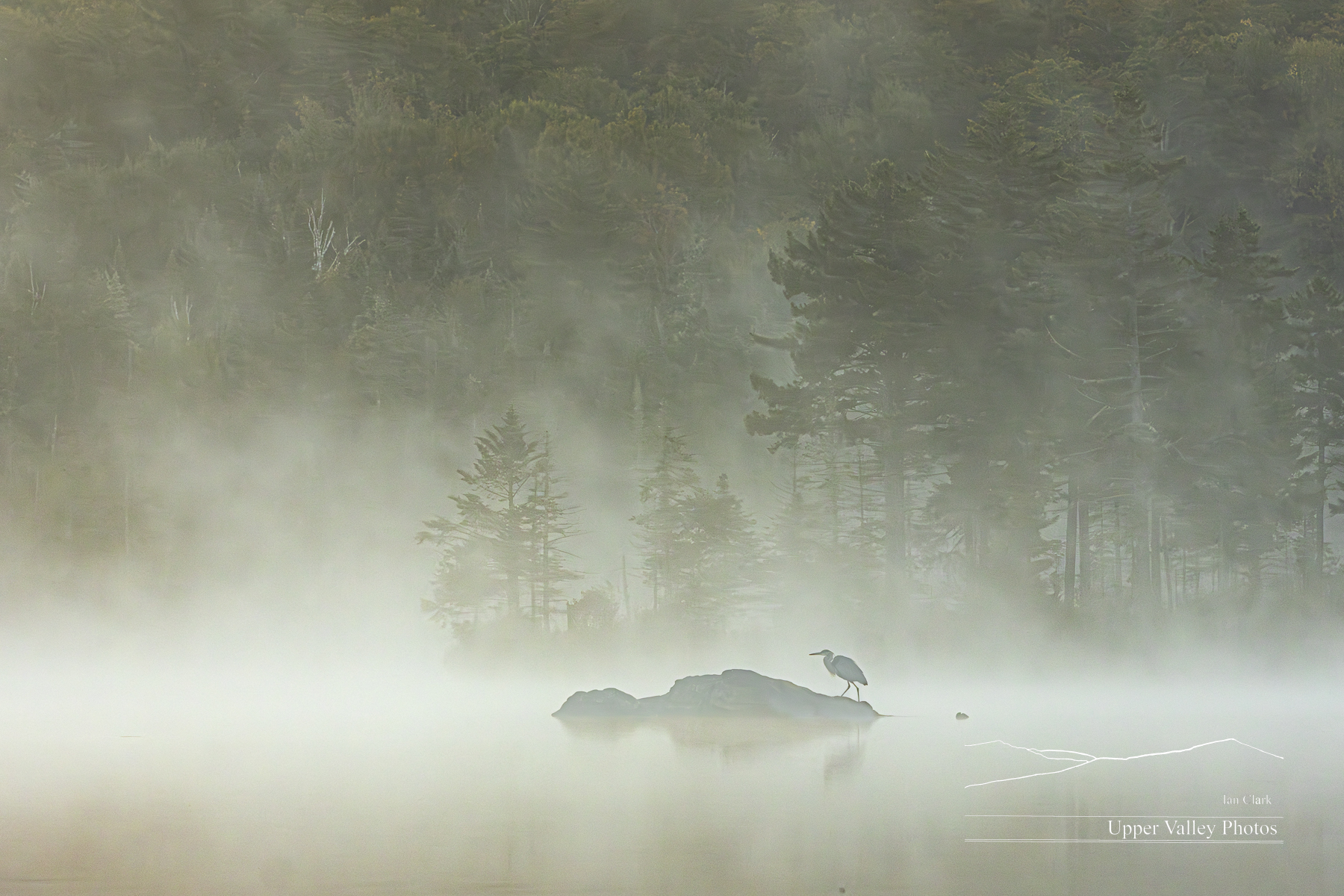
In the midst of the fight, Hank Herron flew in right where the geese were fighting and staked out his position.

One of the geese chased Hank off his log into the brush nearby. Then appeared to go over and converse…..

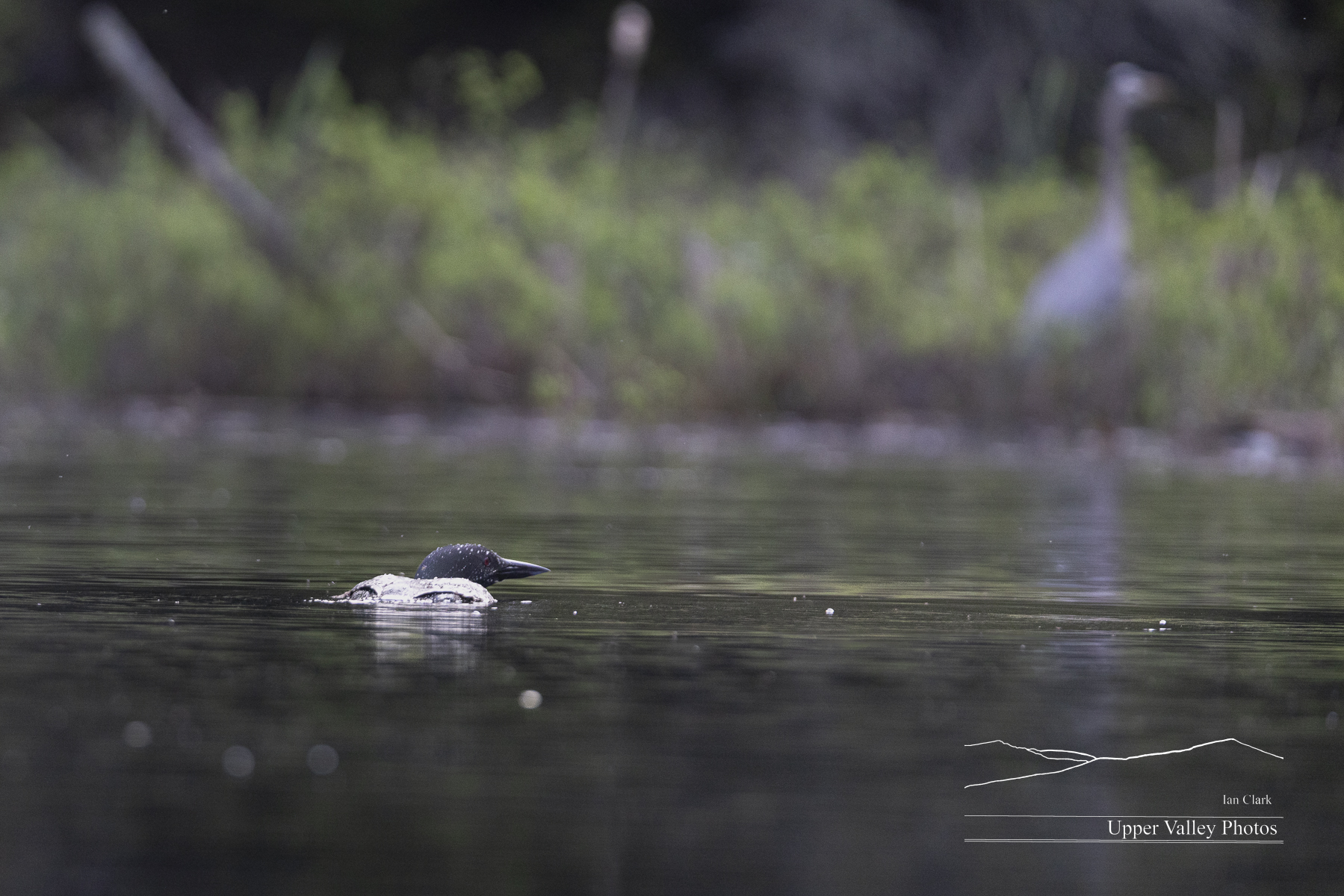
Mr. Middleton returned, keeping low in the stalking pose. He’s checking the battlefield – notice Hank in the back right.

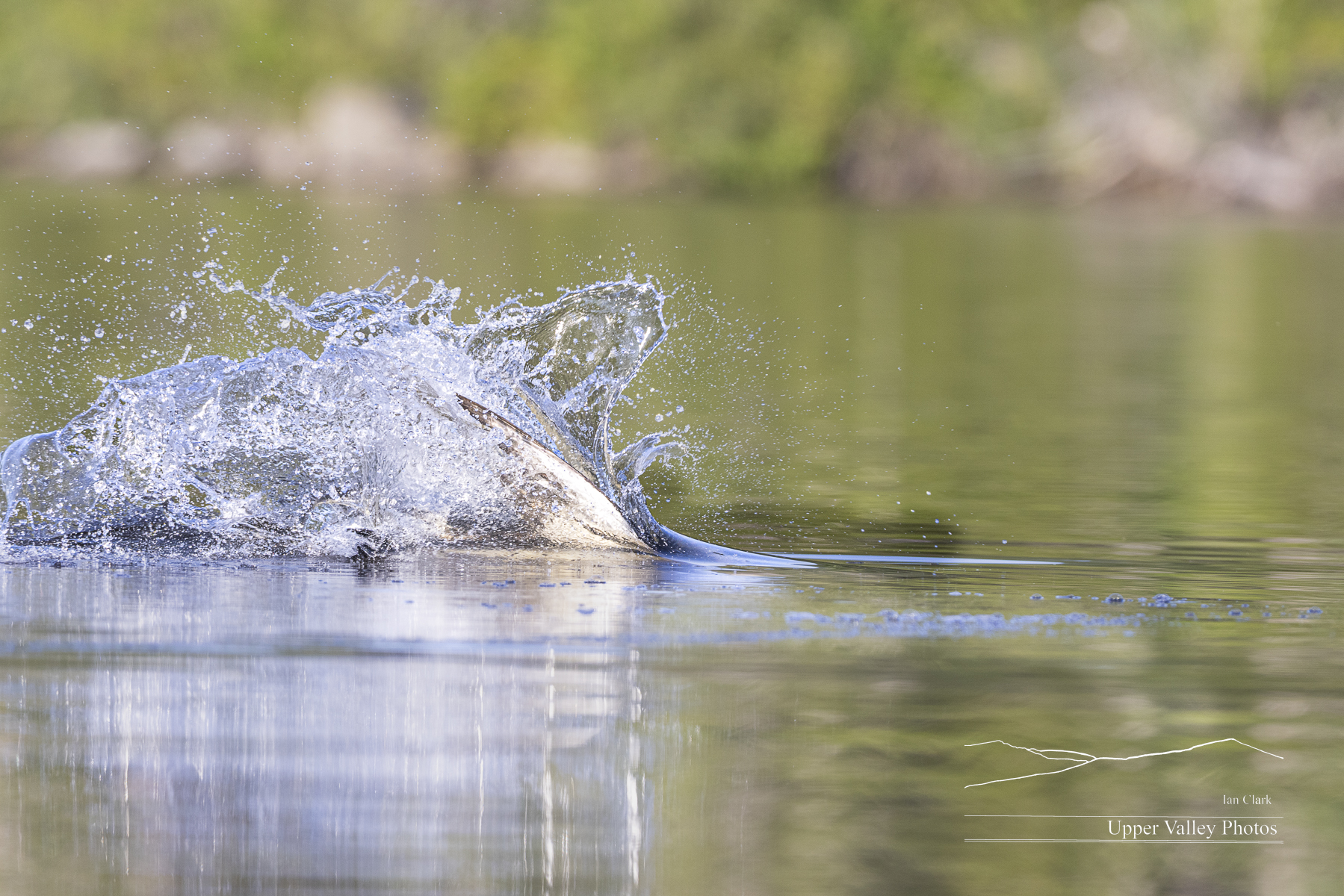
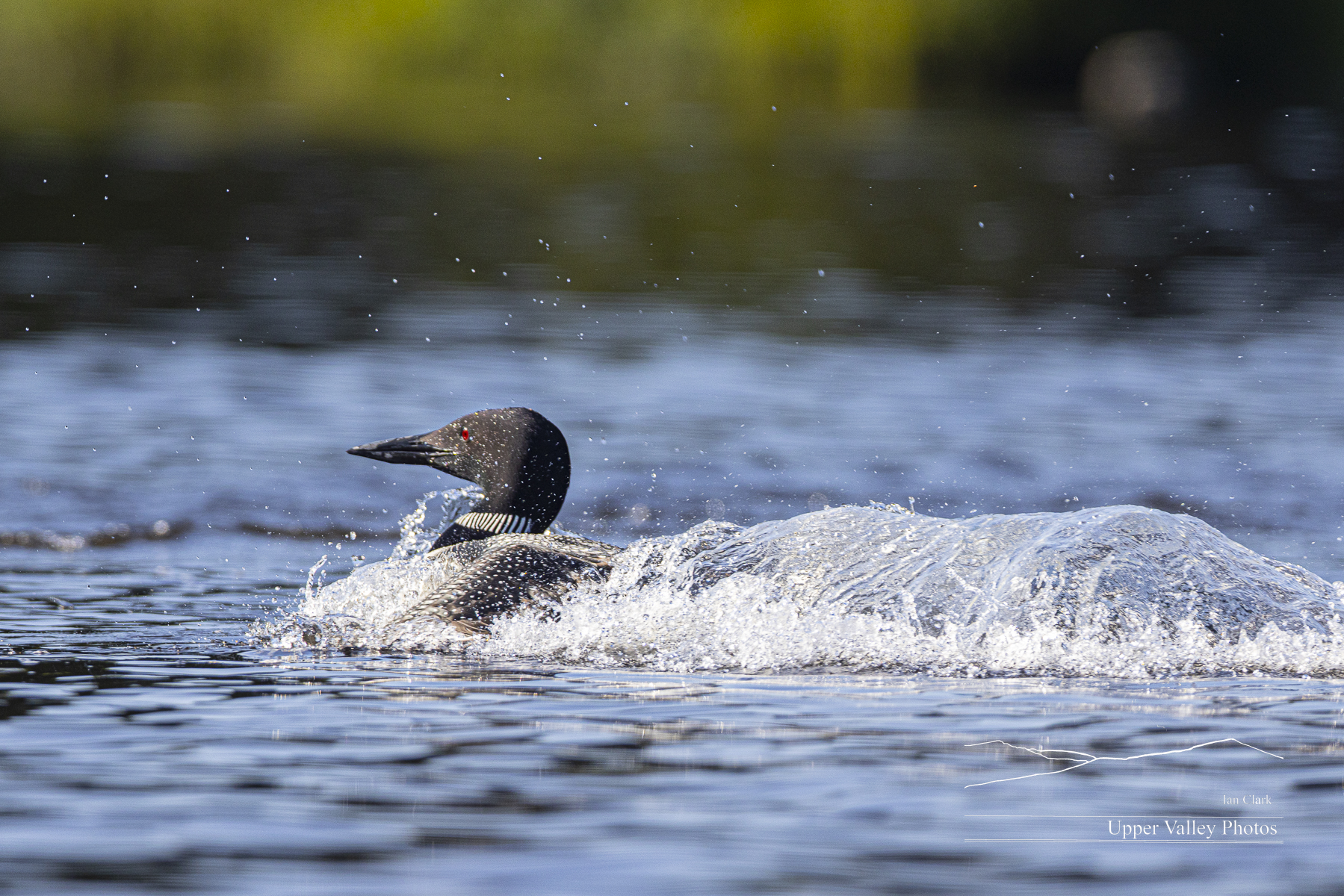
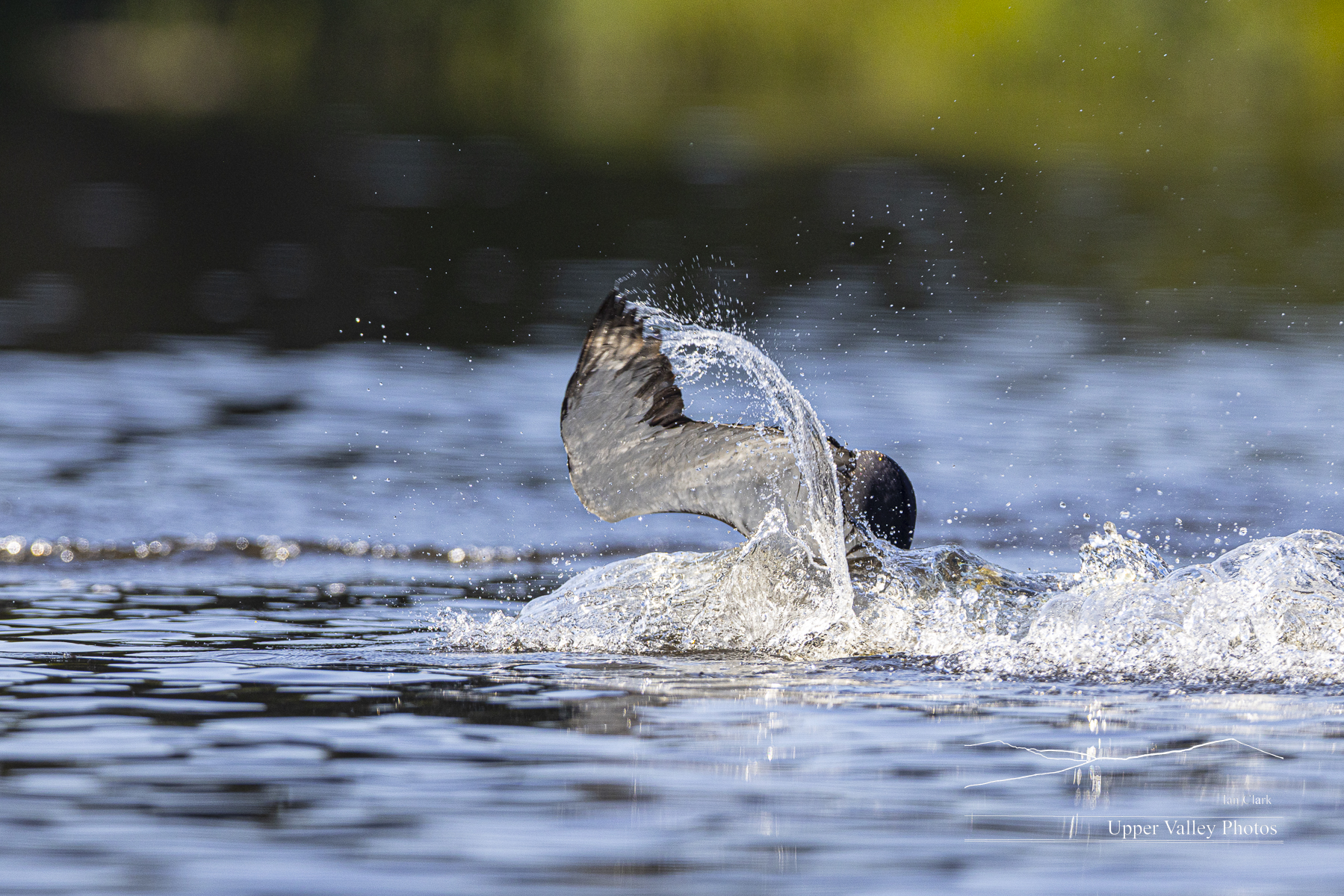
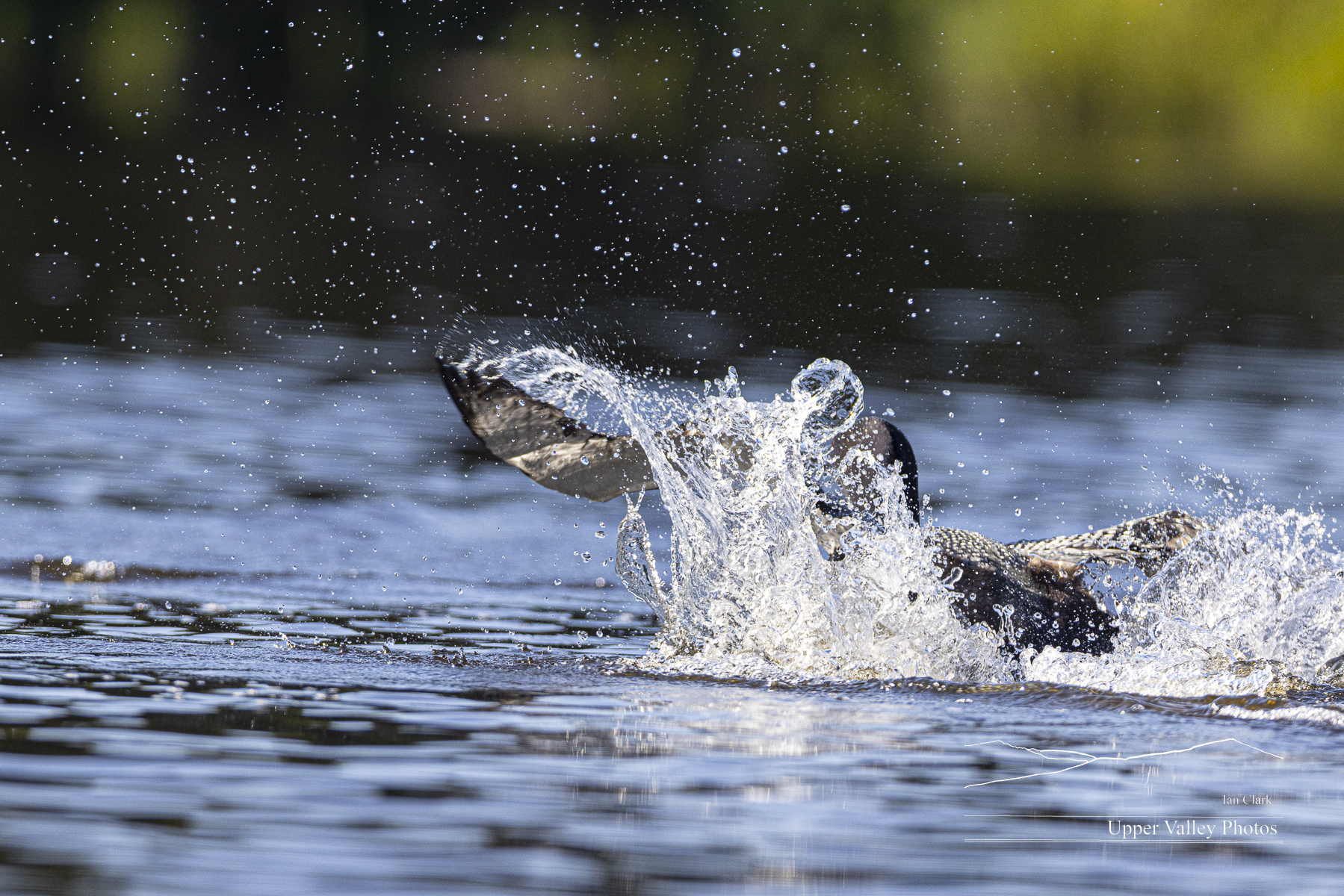
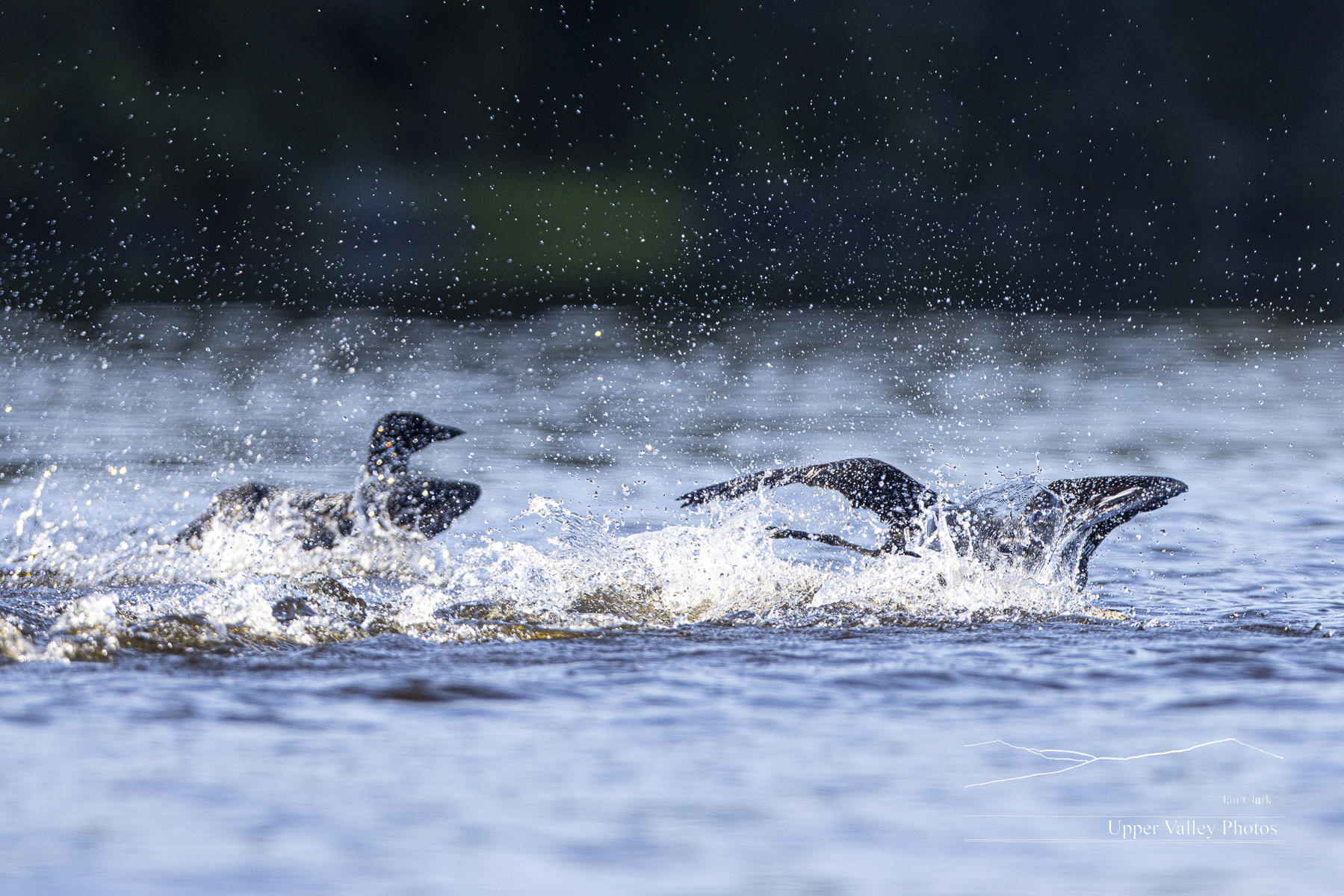
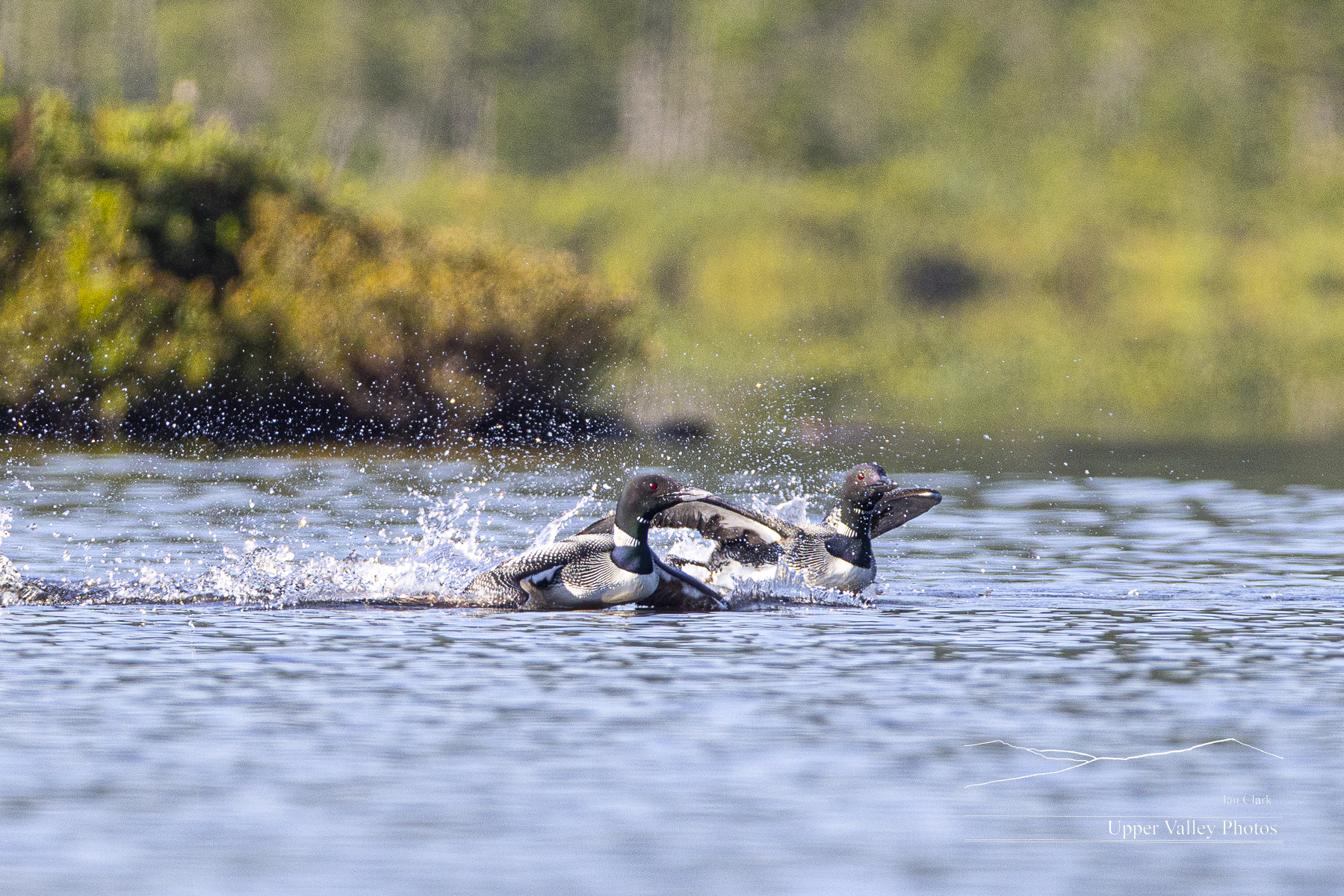
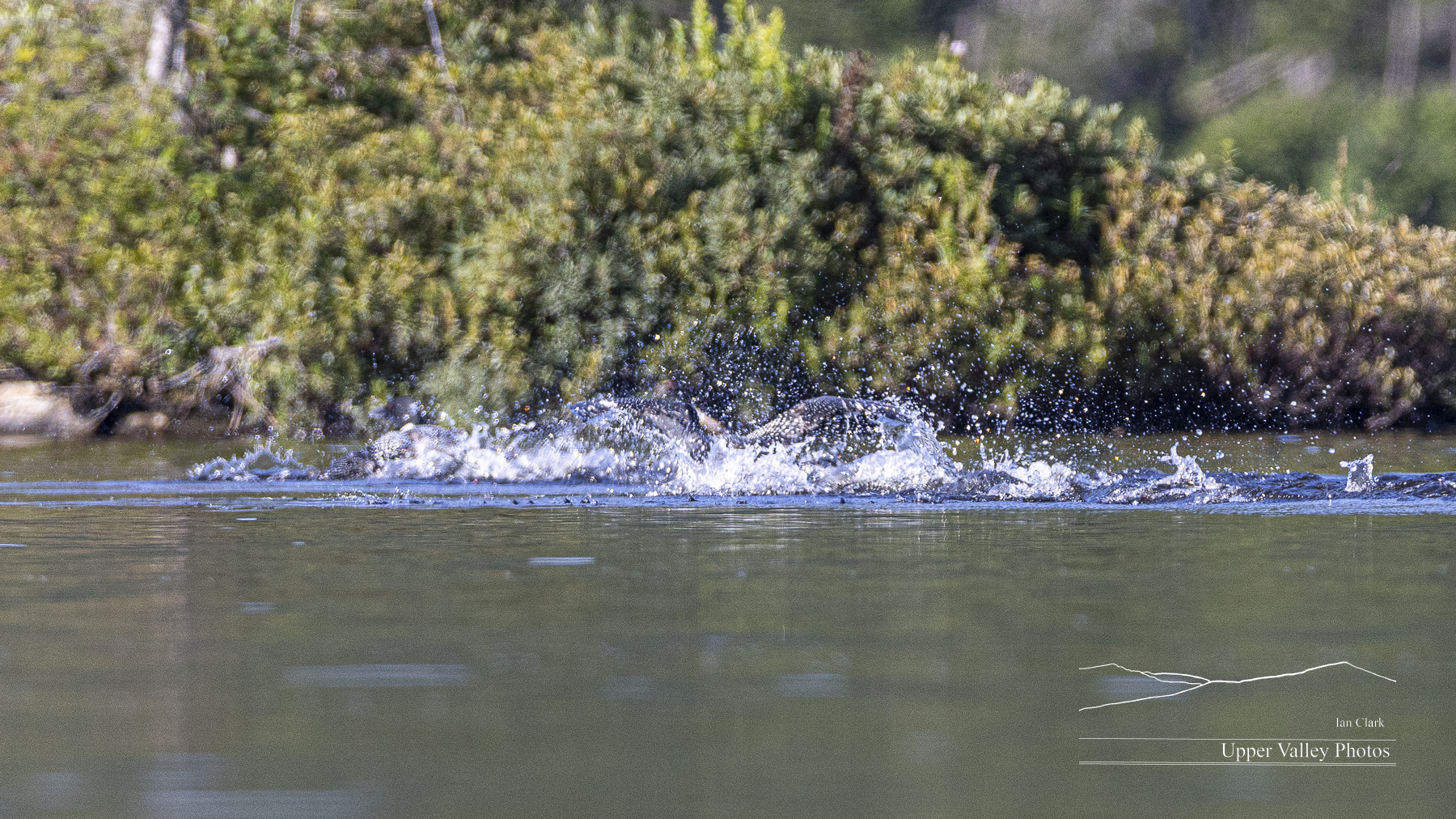
Mr. Middleton went over to see what Hank was up to. One of the pair of geese got out of the water and stood on the log near where the whole shebang started. Mr. Middleton dove…..

I’m not sure if Mr. M actually goosed the goose, but he made it clear that the goose had to go.

Hank seemed unfazed by the hullabaloo and went off to see what was for breakfast.

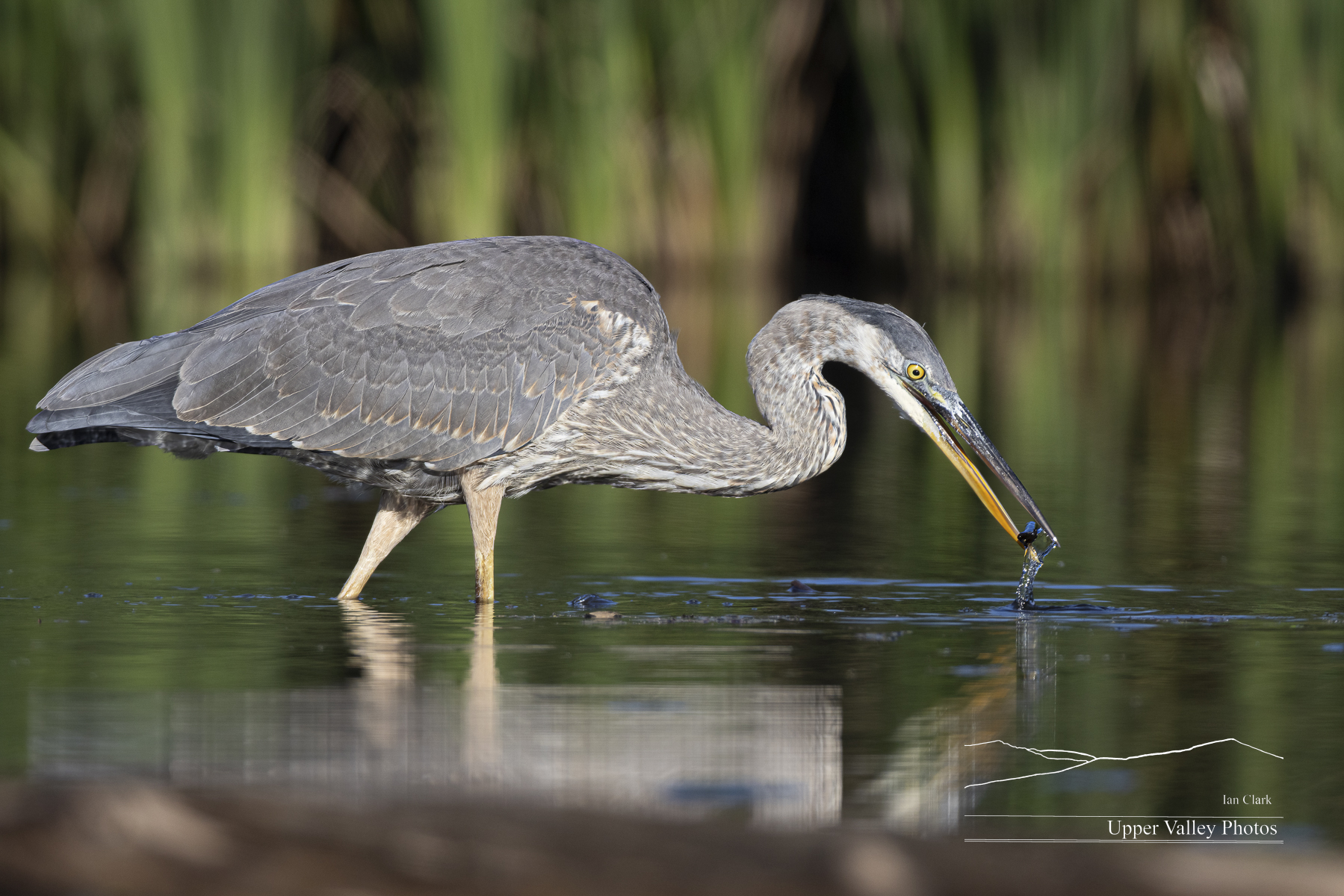
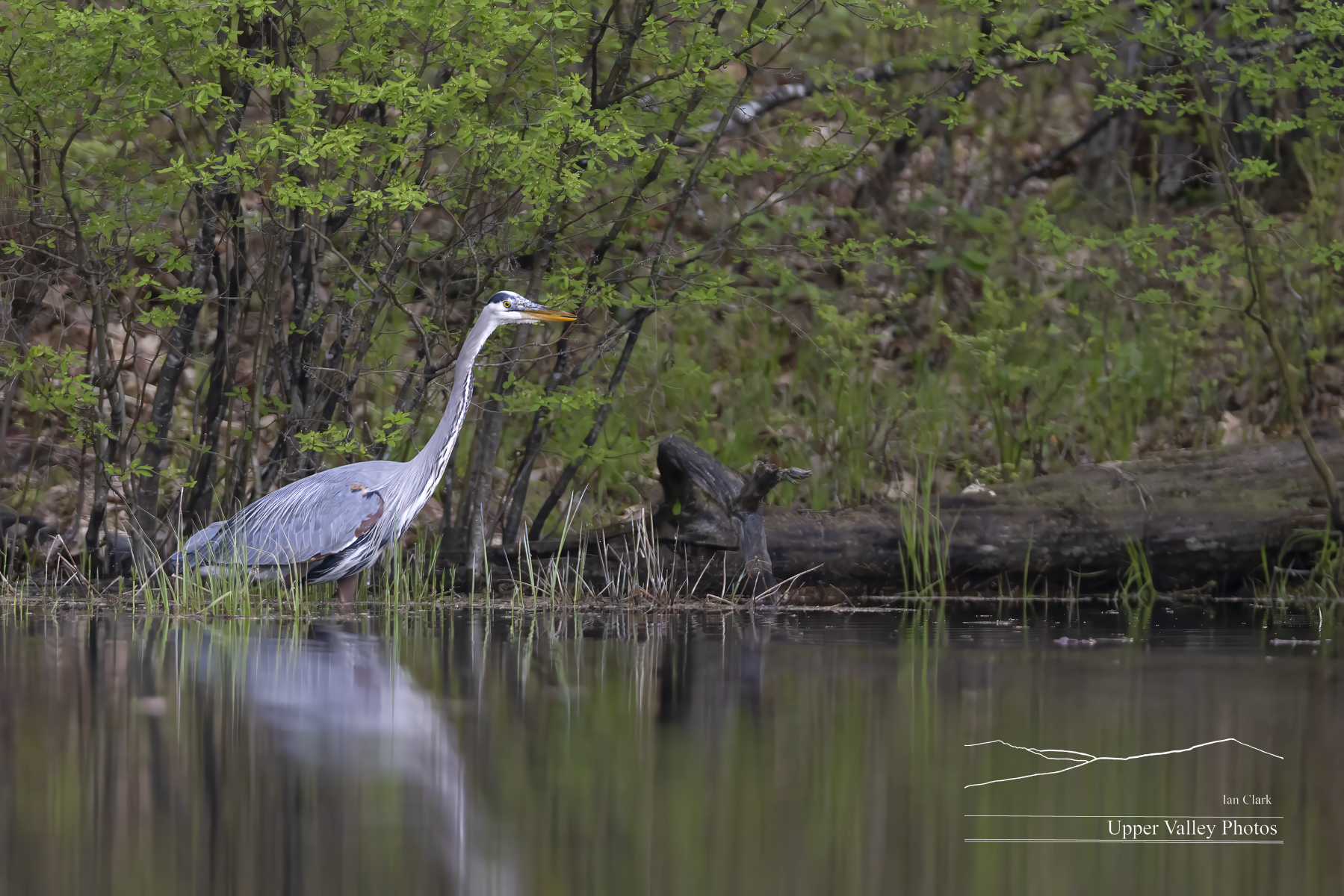
There didn’t seem to be anything appetizing nearby, so Hank waded off.

After some more skirmishing, one pair of geese convinced the other to go away. Quiet returned to the cove. Mr. M headed back out to get busy with his day.

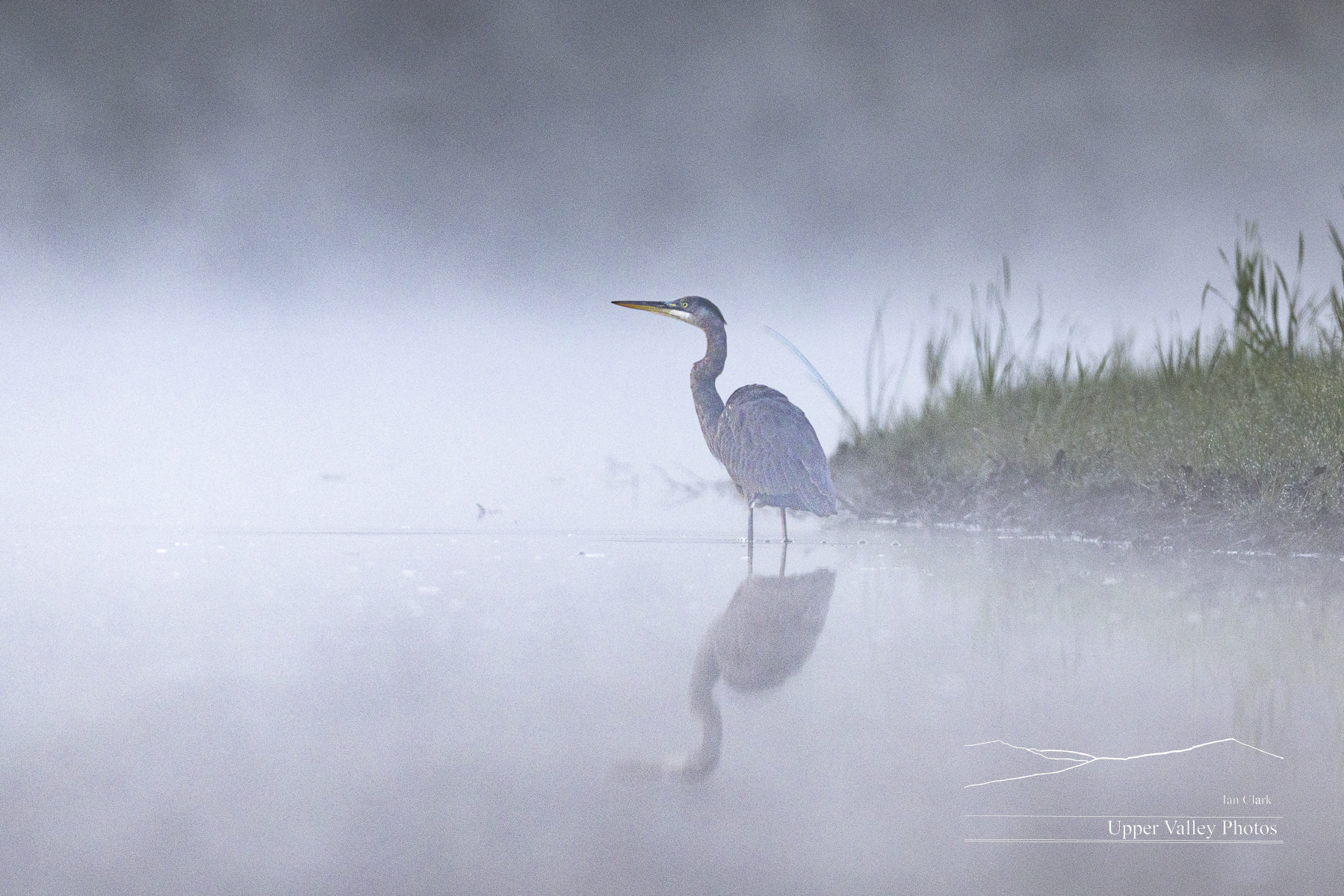
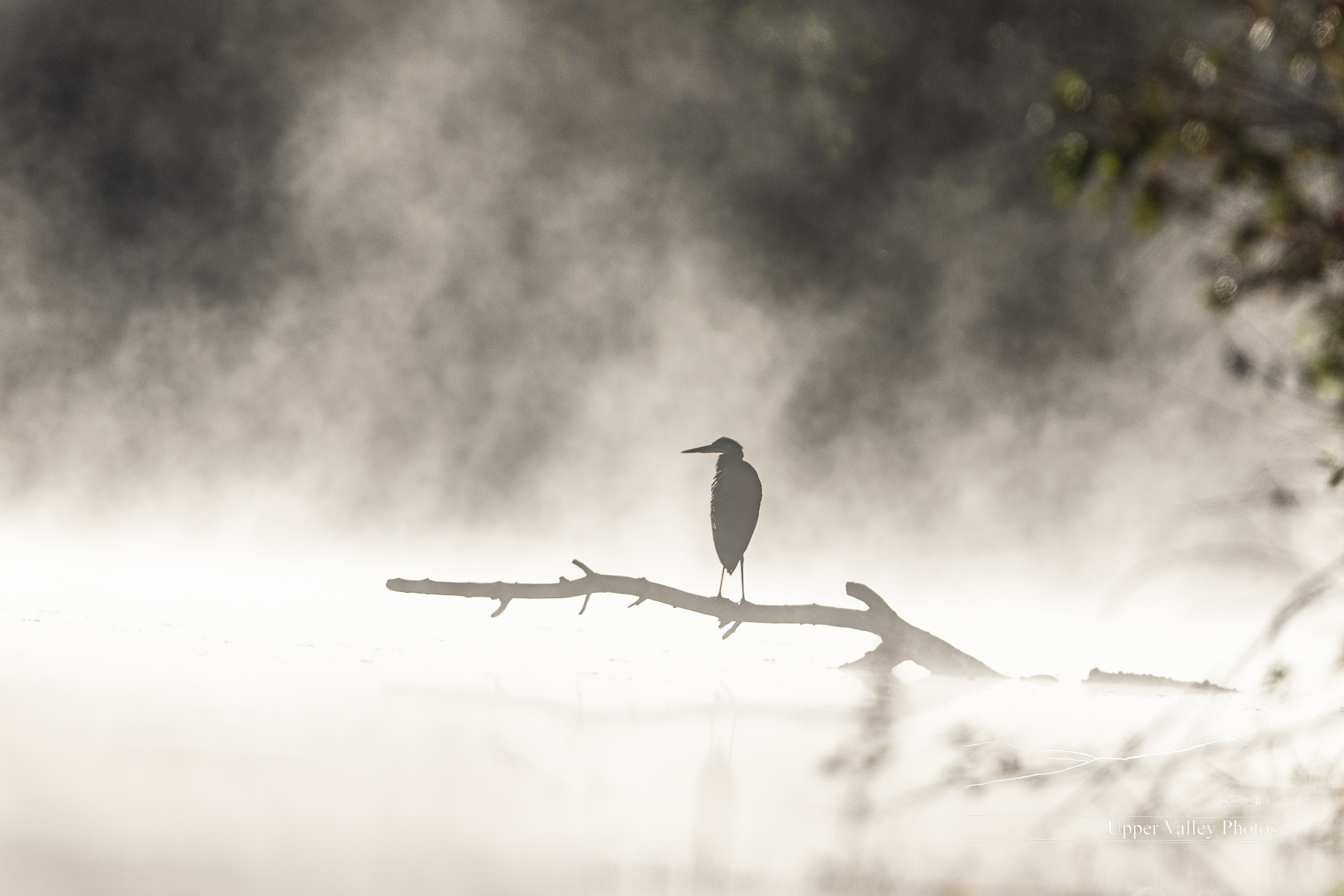
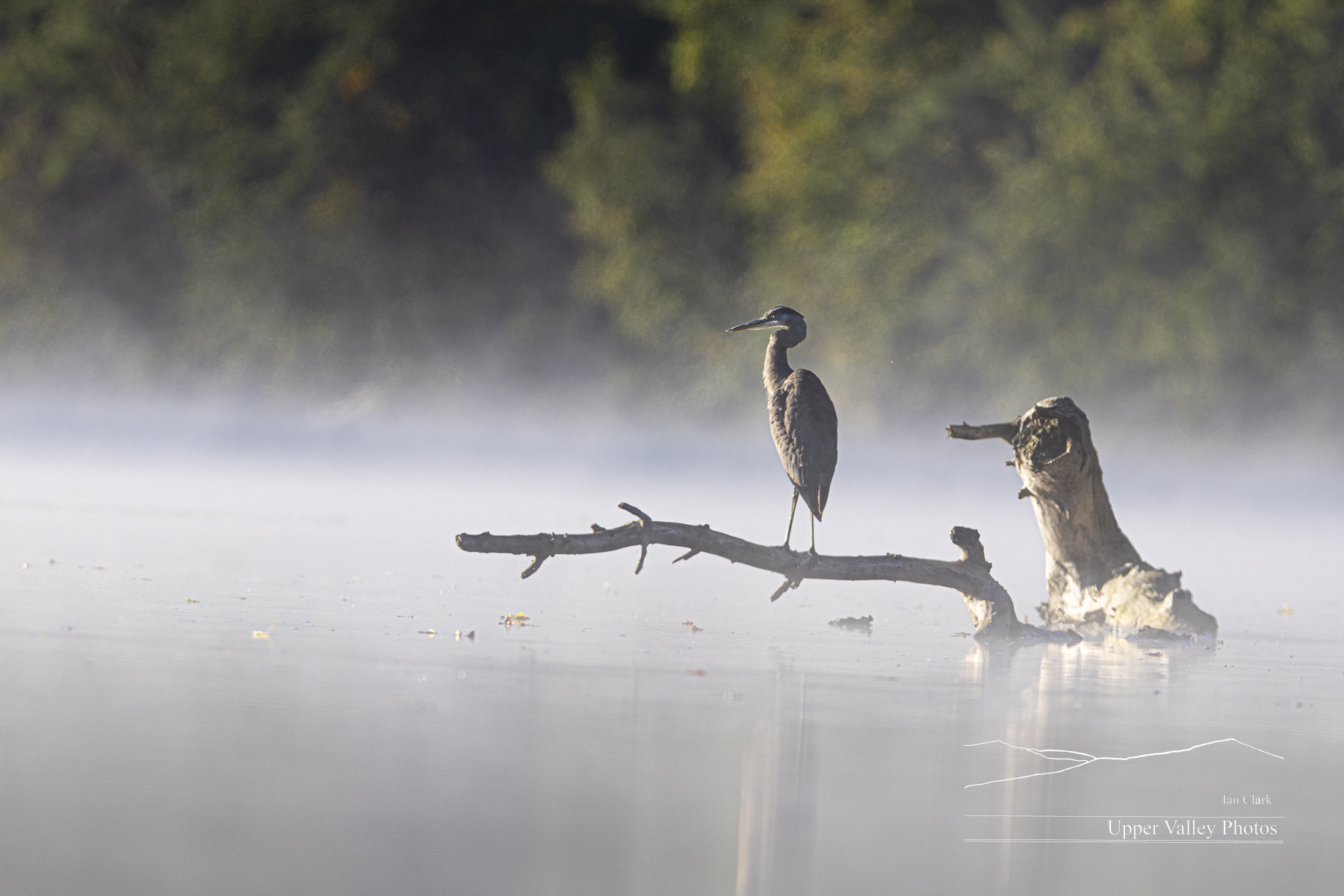
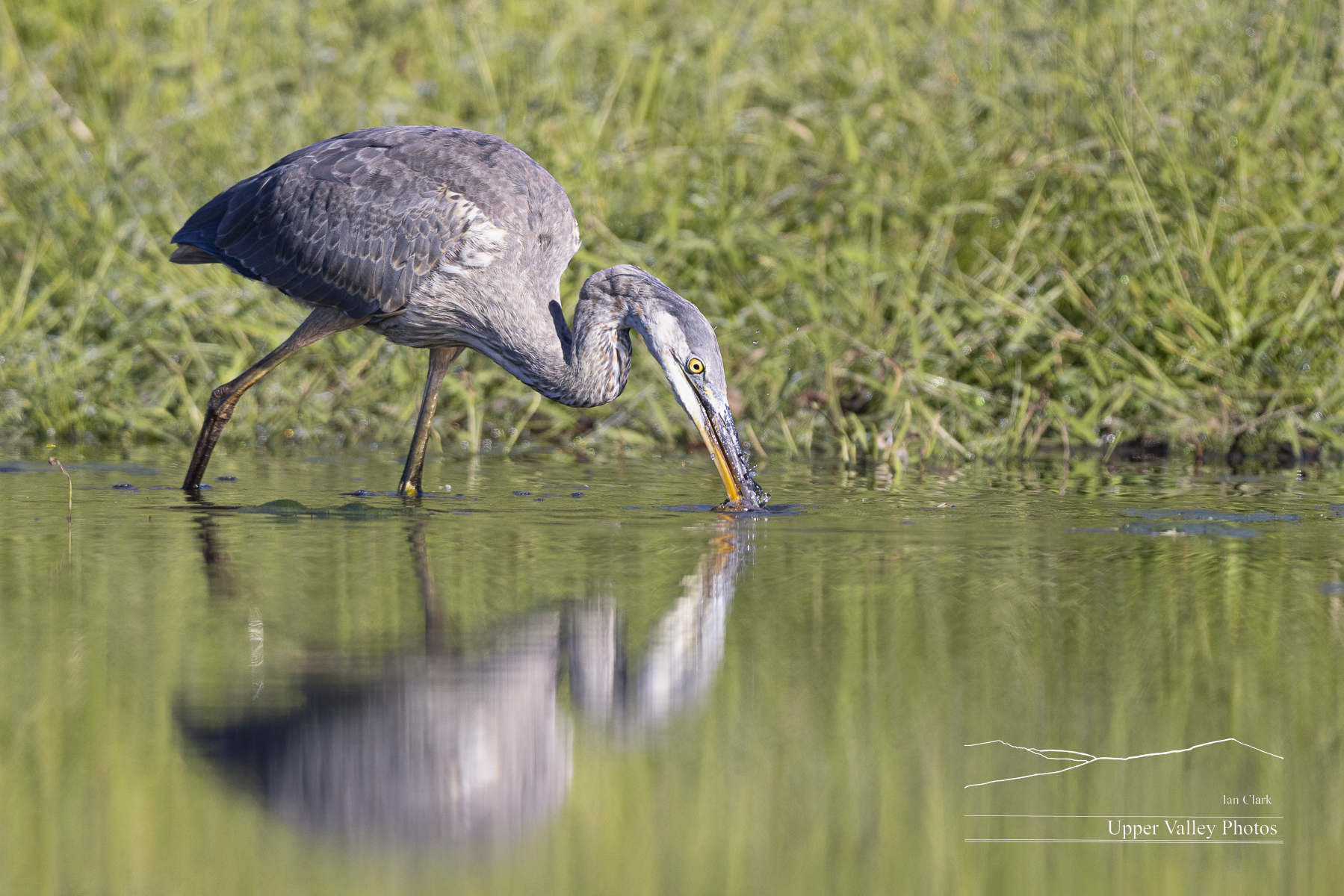
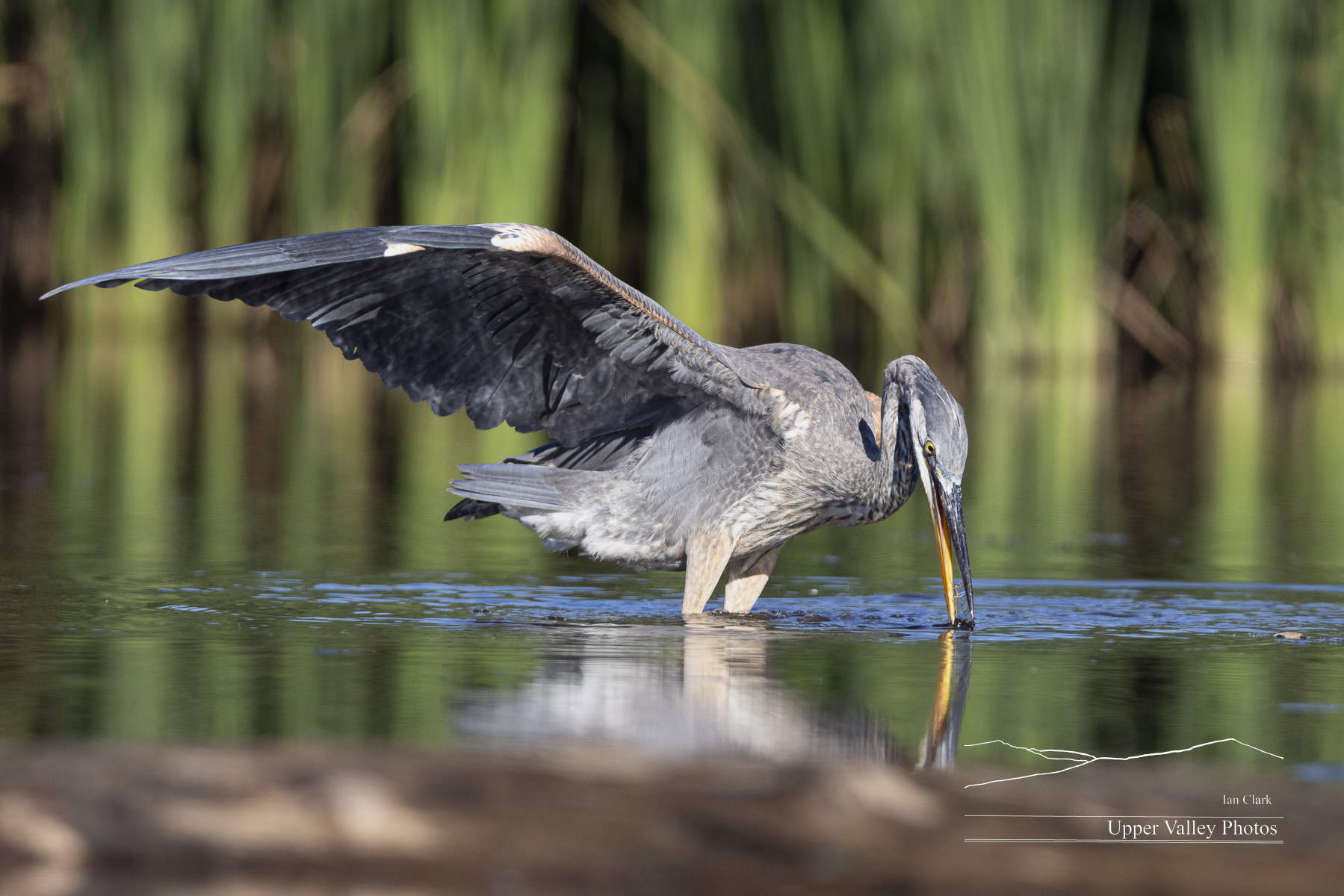
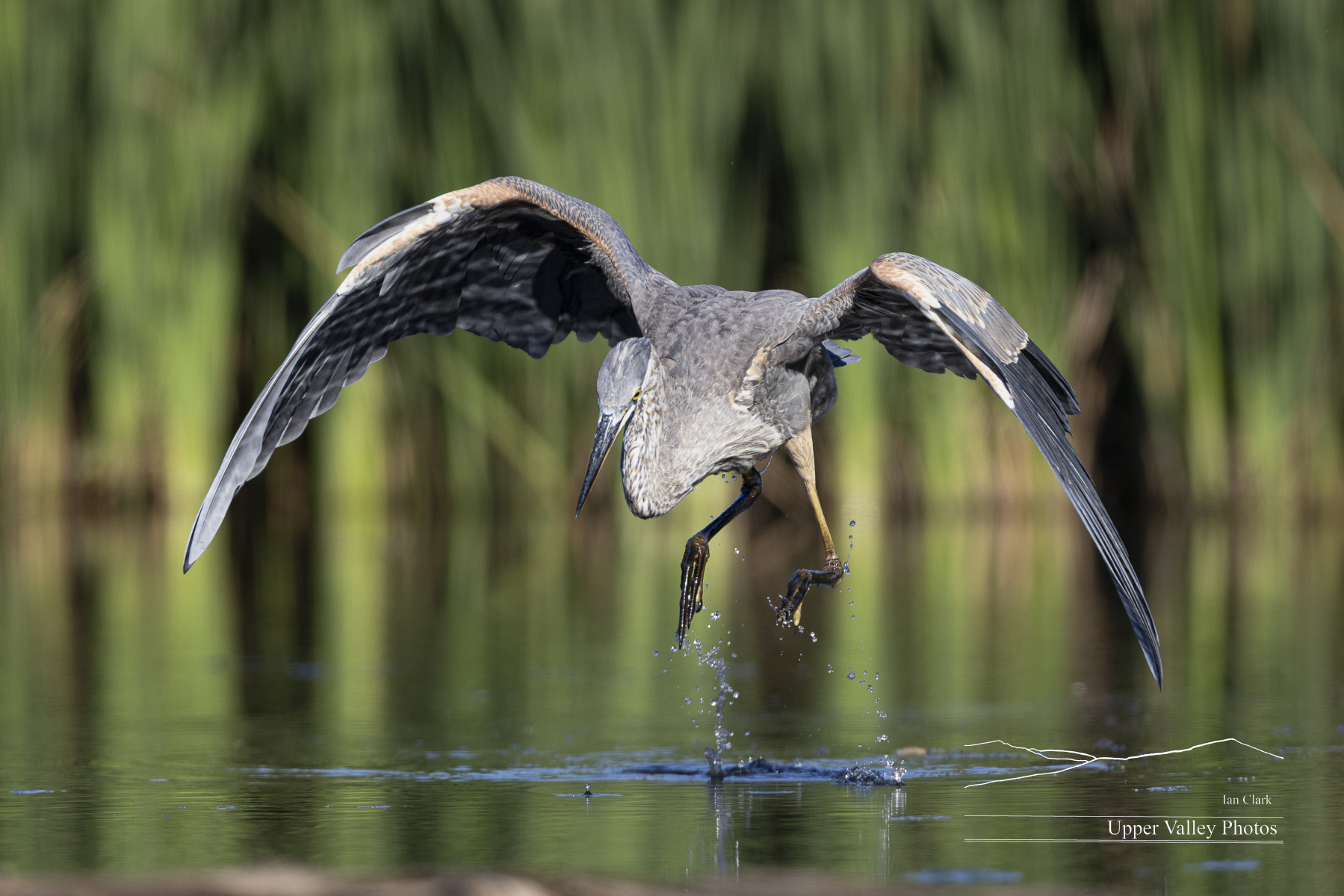
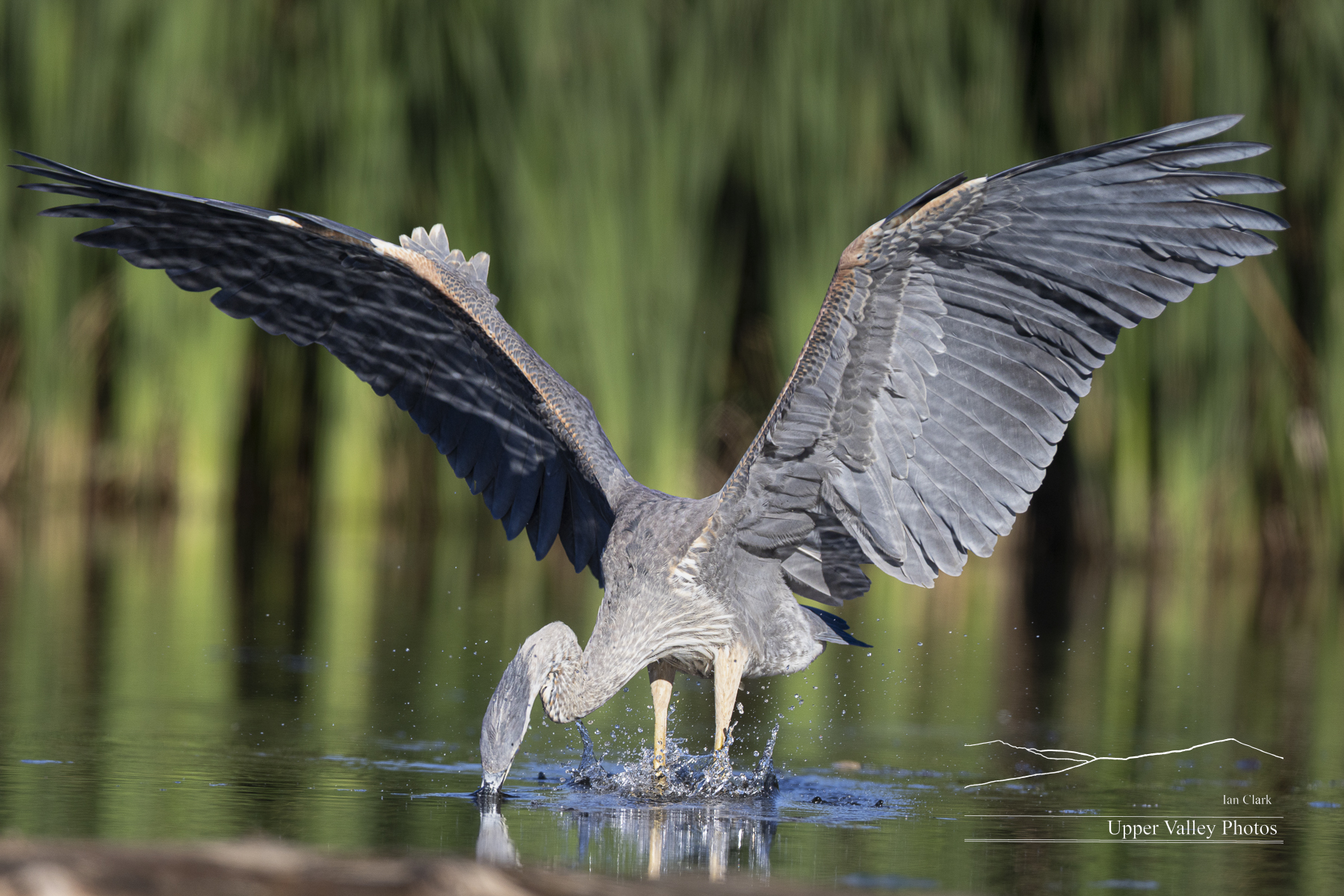
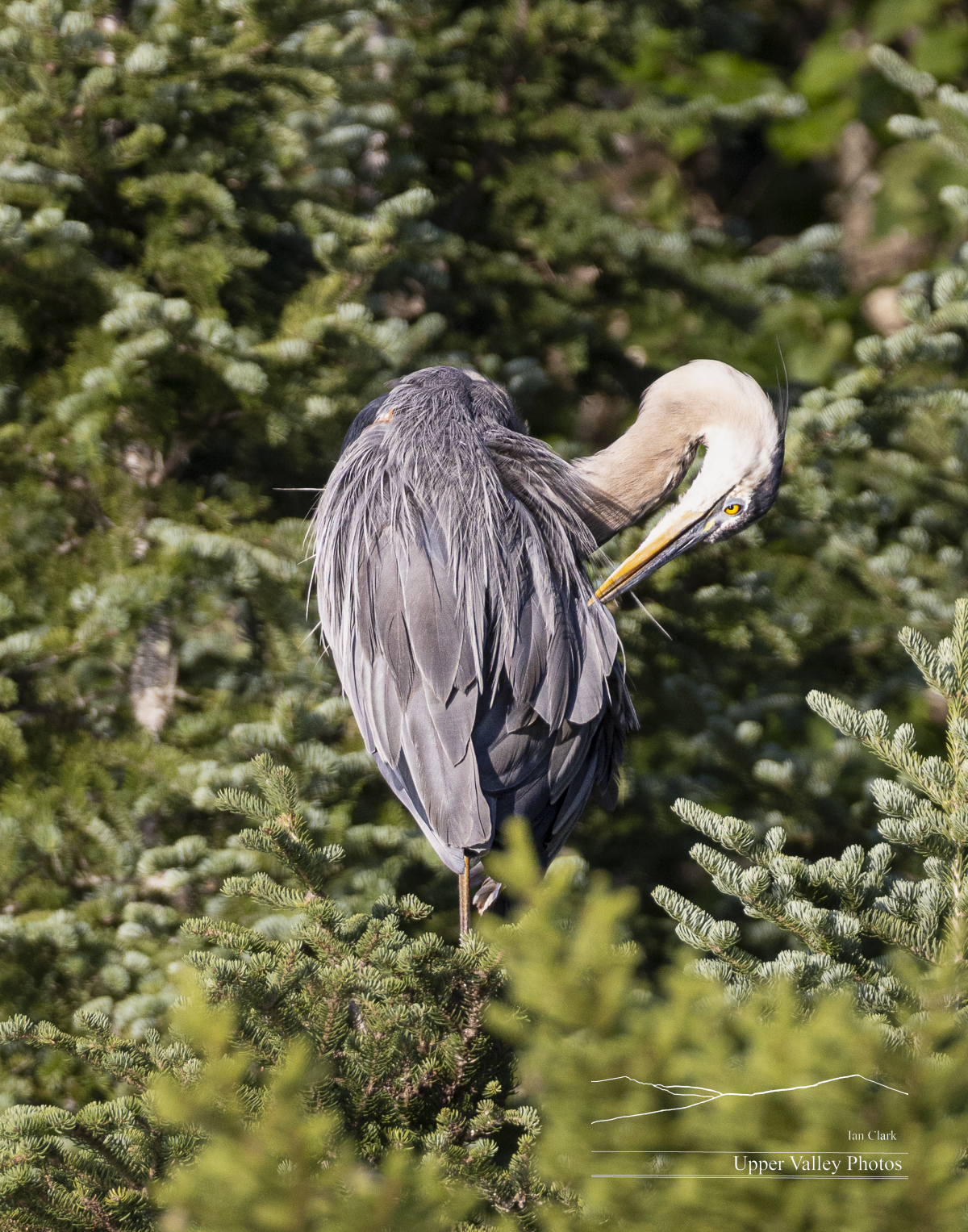
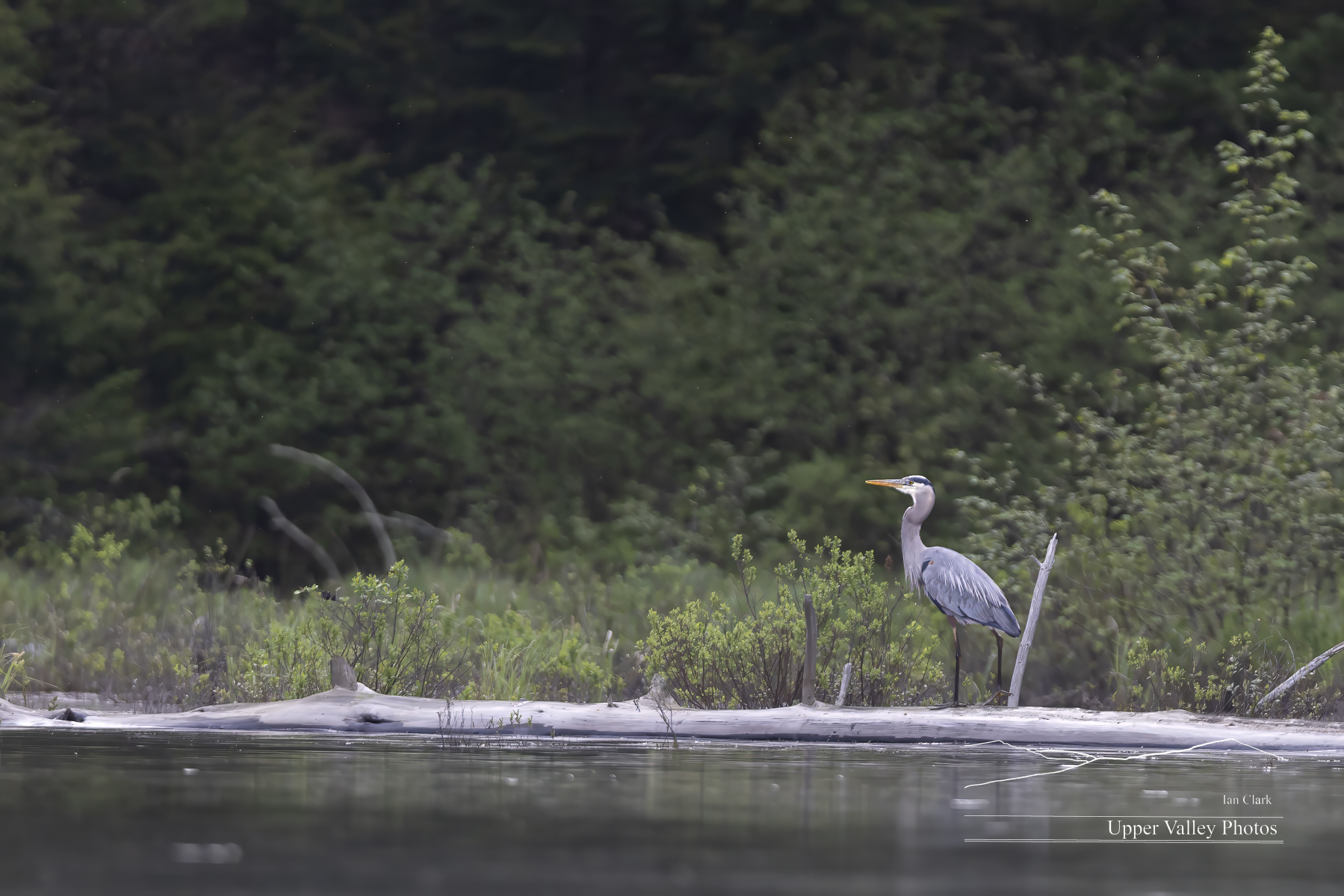
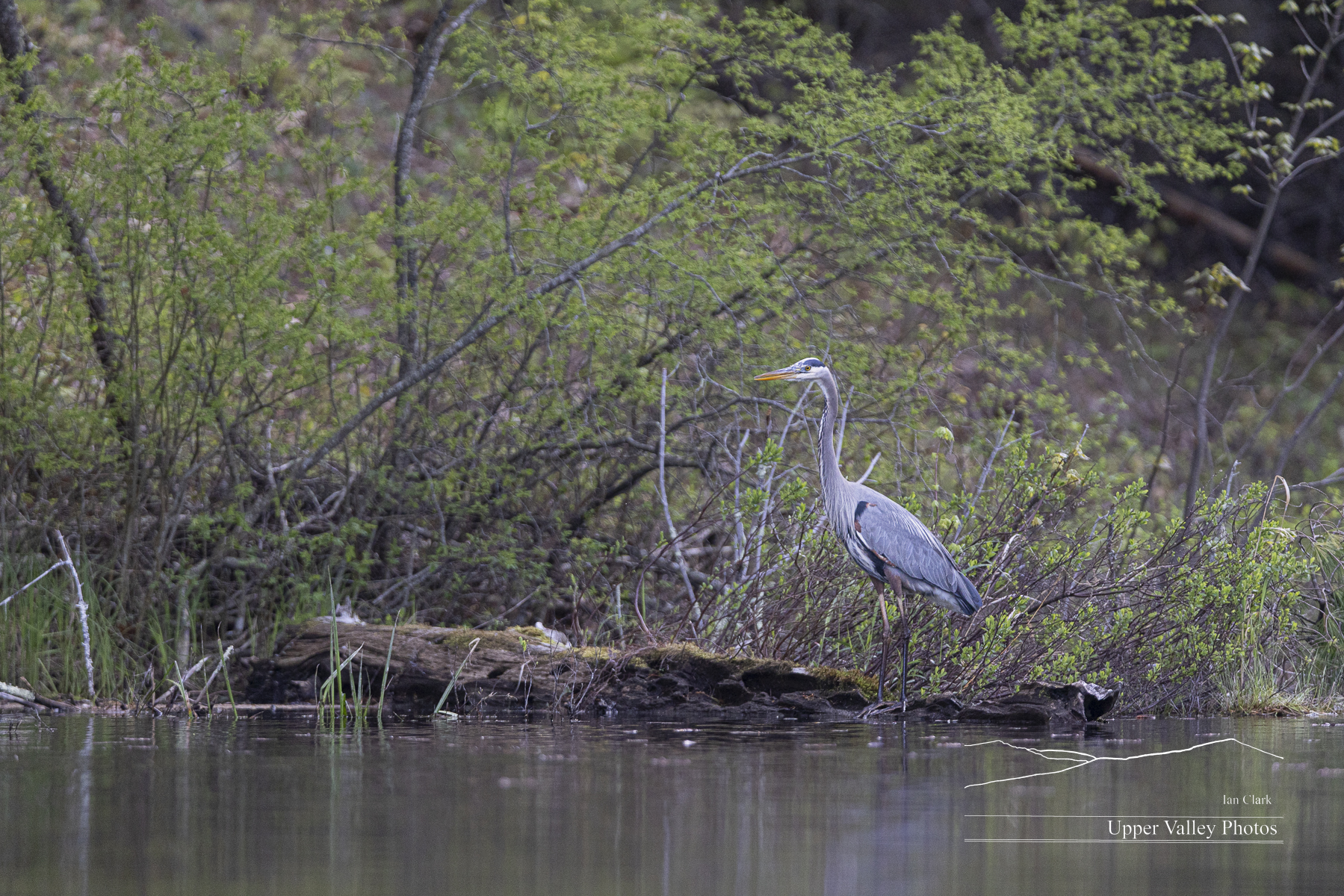
And Hank took up position waiting for a meal to swim by. I headed home.

A chilly Friday found me paddling down the Waits River before dawn.
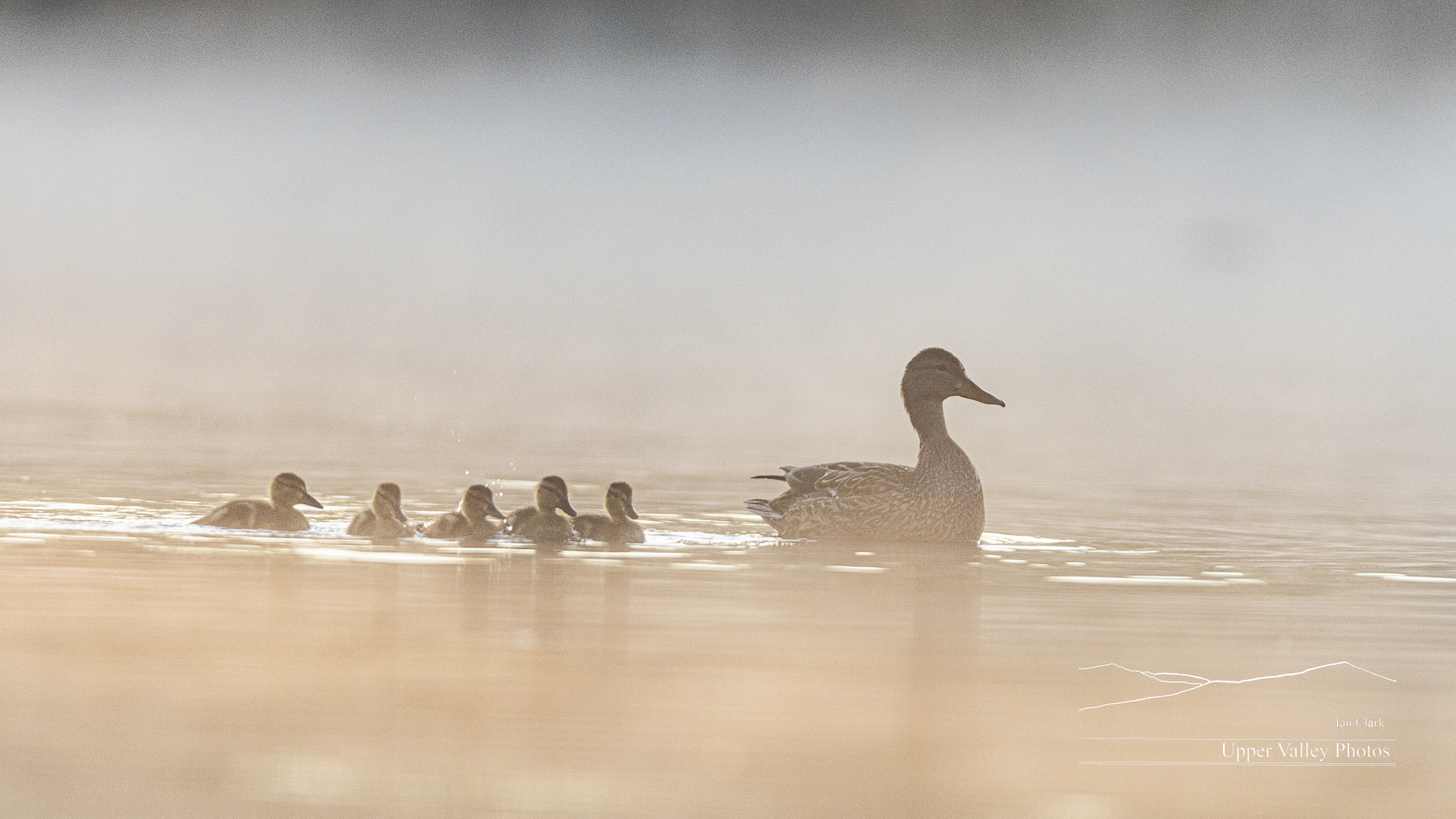
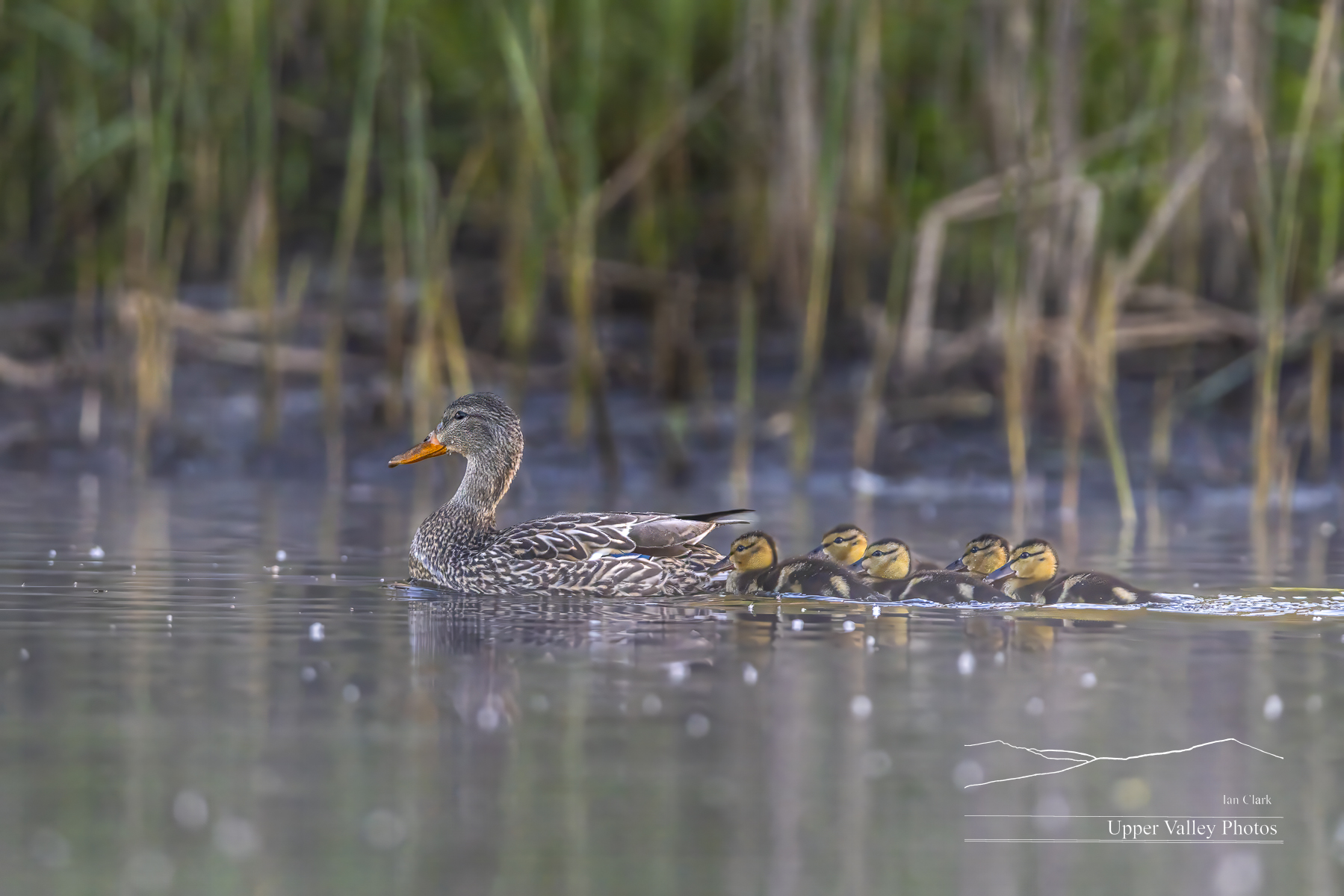
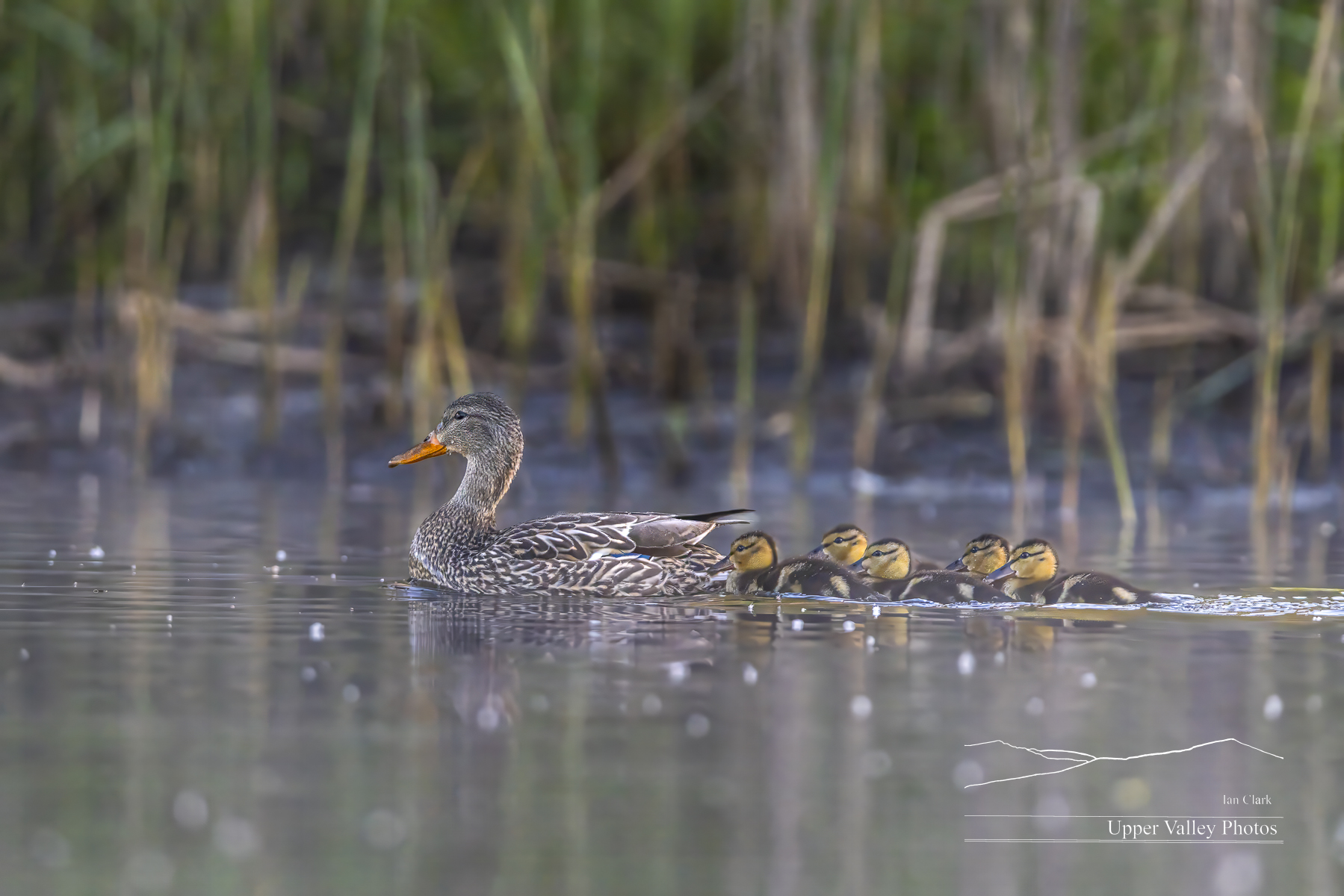
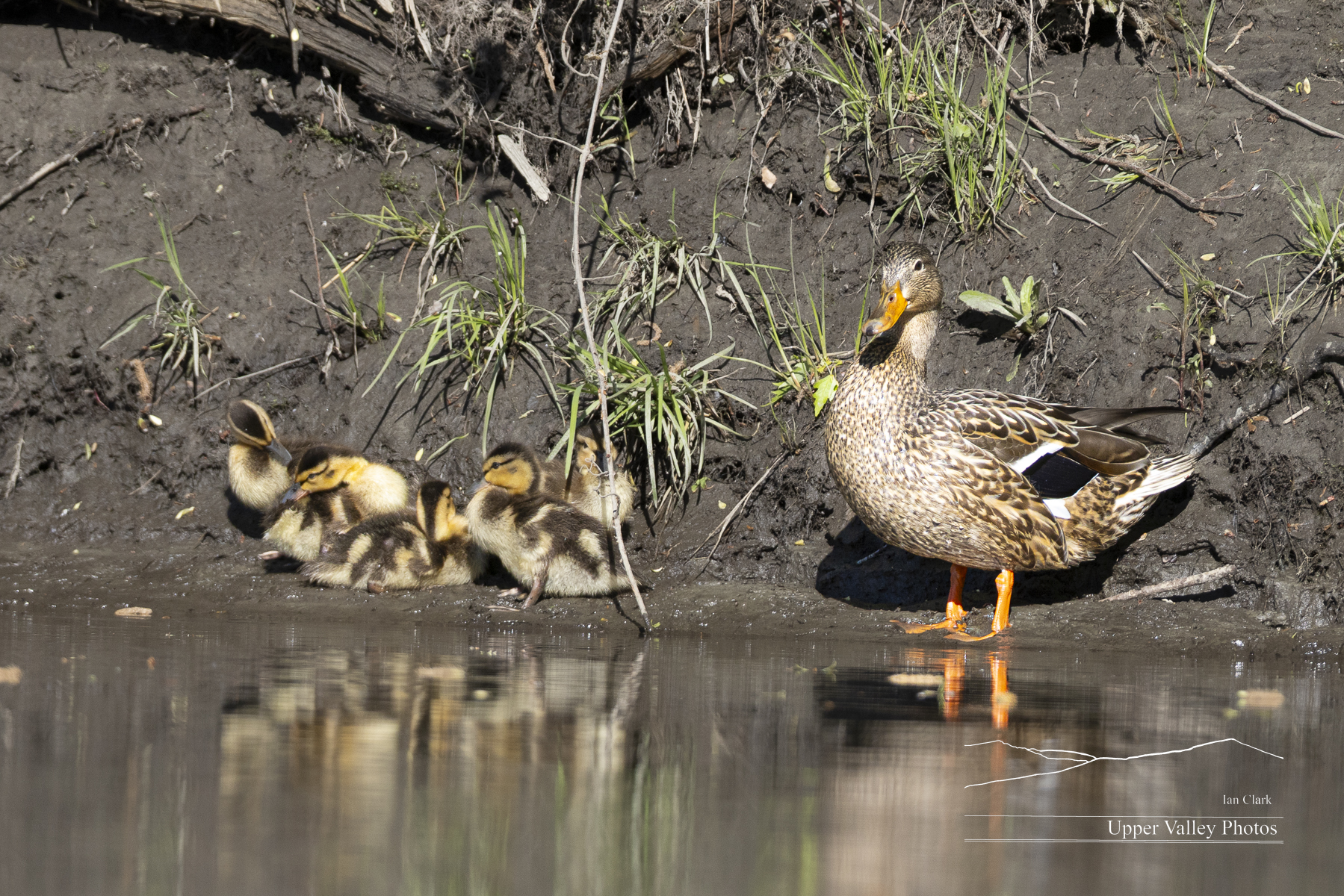
Where I met Mrs. Mallard and her brood paddling upstream.

I had to make way for ducklings as she lead her brood past.

A large flock of sandpipers – called a fling, a bind, a cluster, or a contradiction of sandpipers – was spread along the banks and islands. Most of them were least sandpipers with others mixed in.

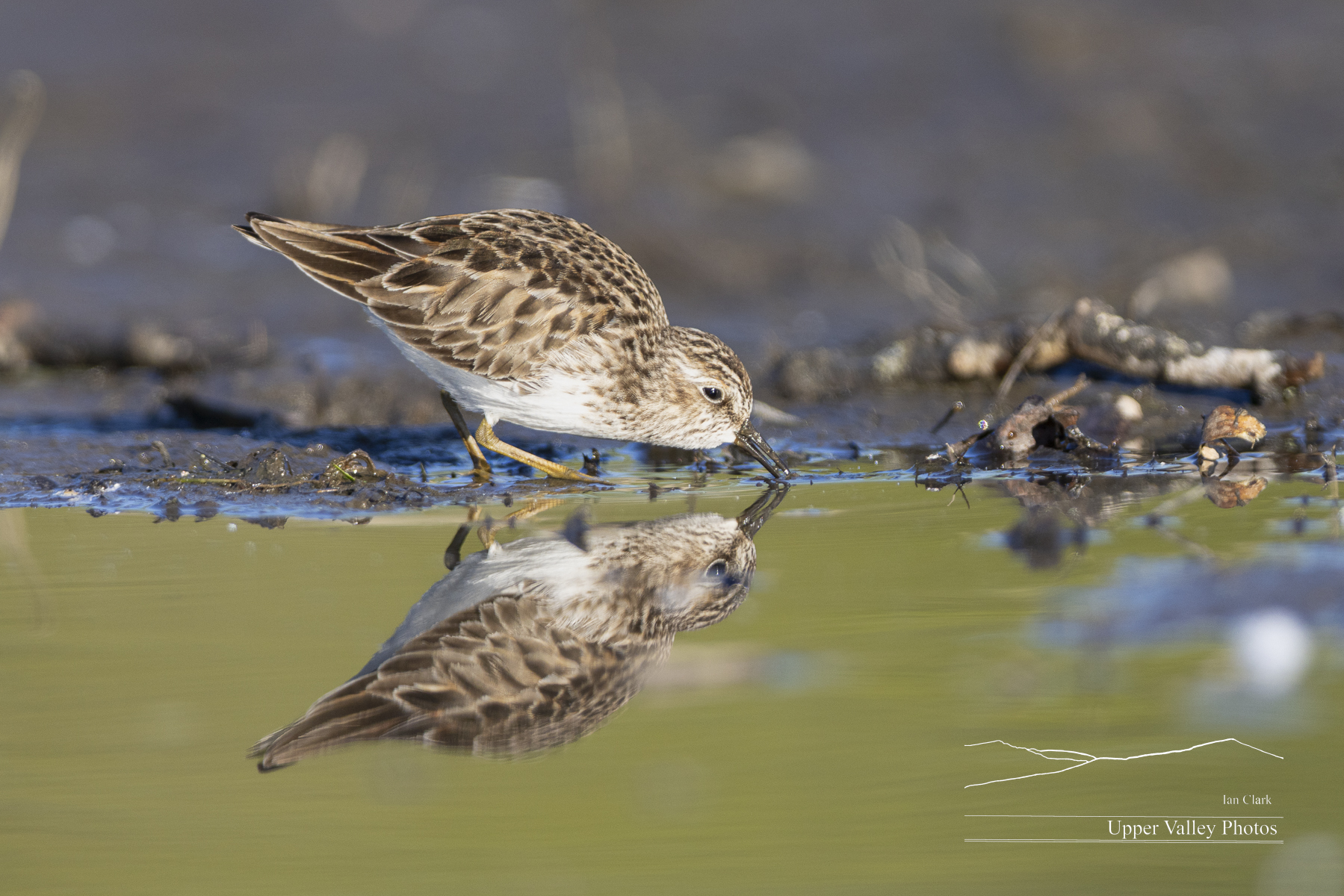
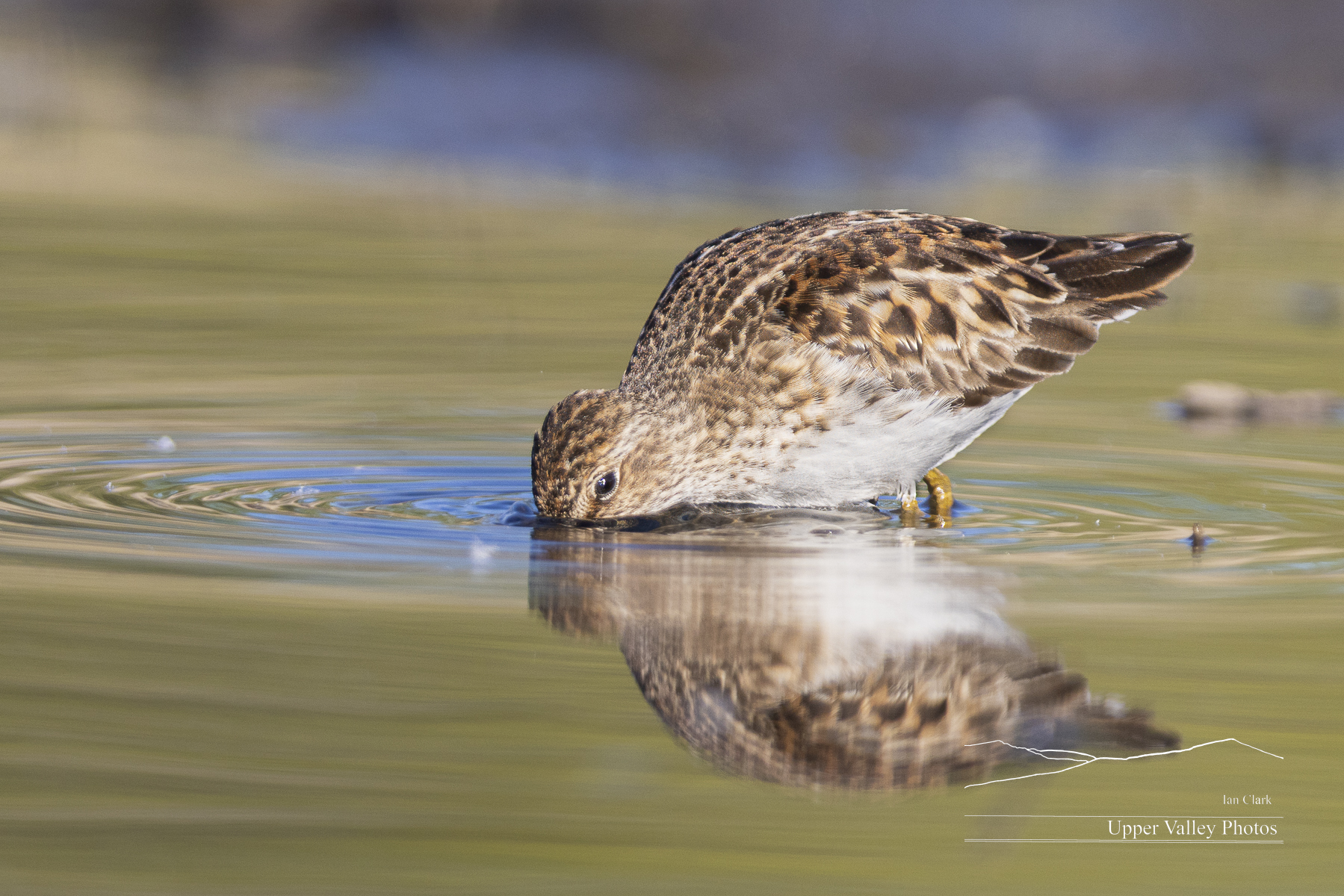
Sandpipers eat insects and their larvae, small crustaceans and other invertebrates like snails. They forage in and near the river, happily poking their bills into the muck to find the tastiest snacks.

They forage with rapid movements. And often seem to think the menu is better somewhere ‘over there.’

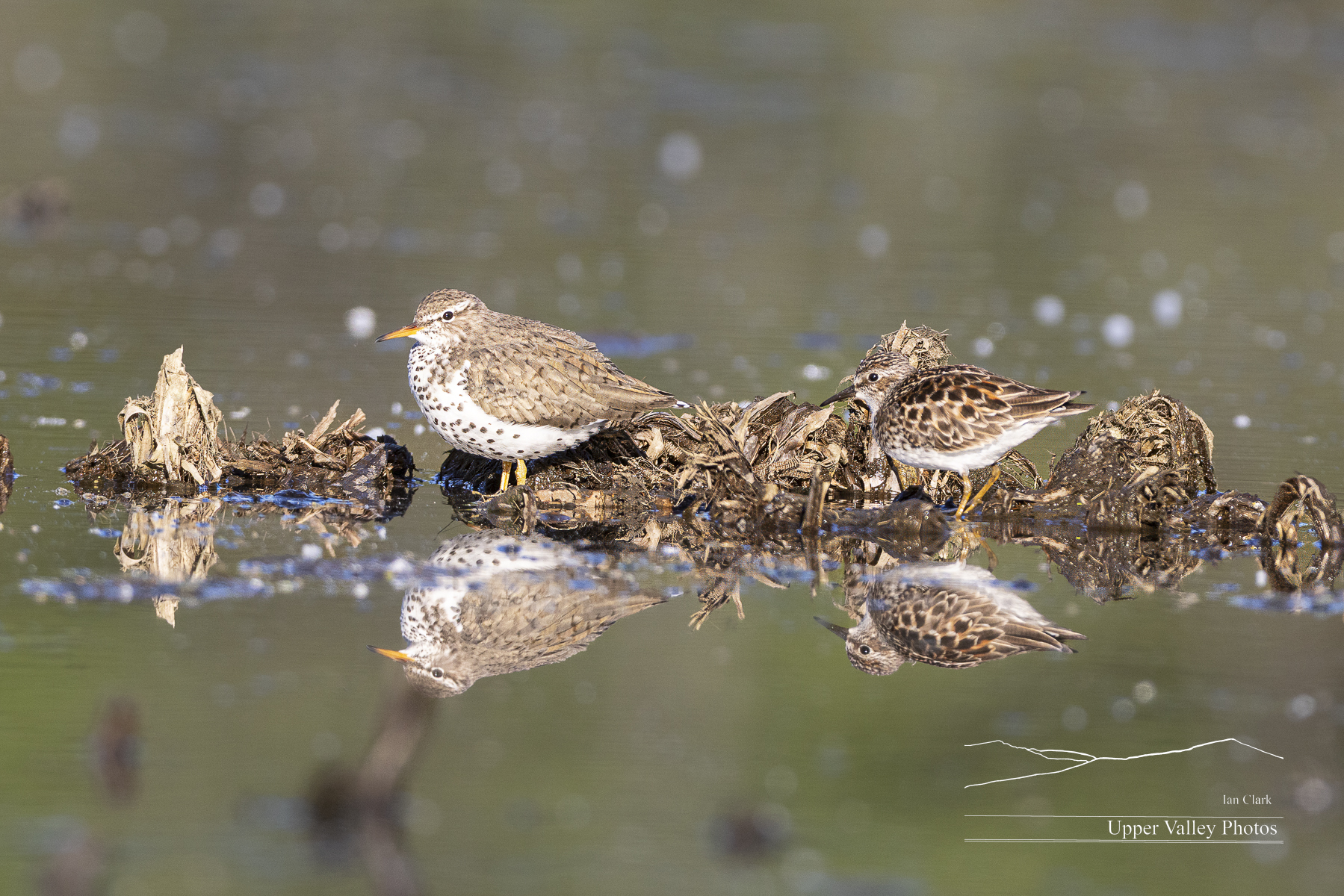
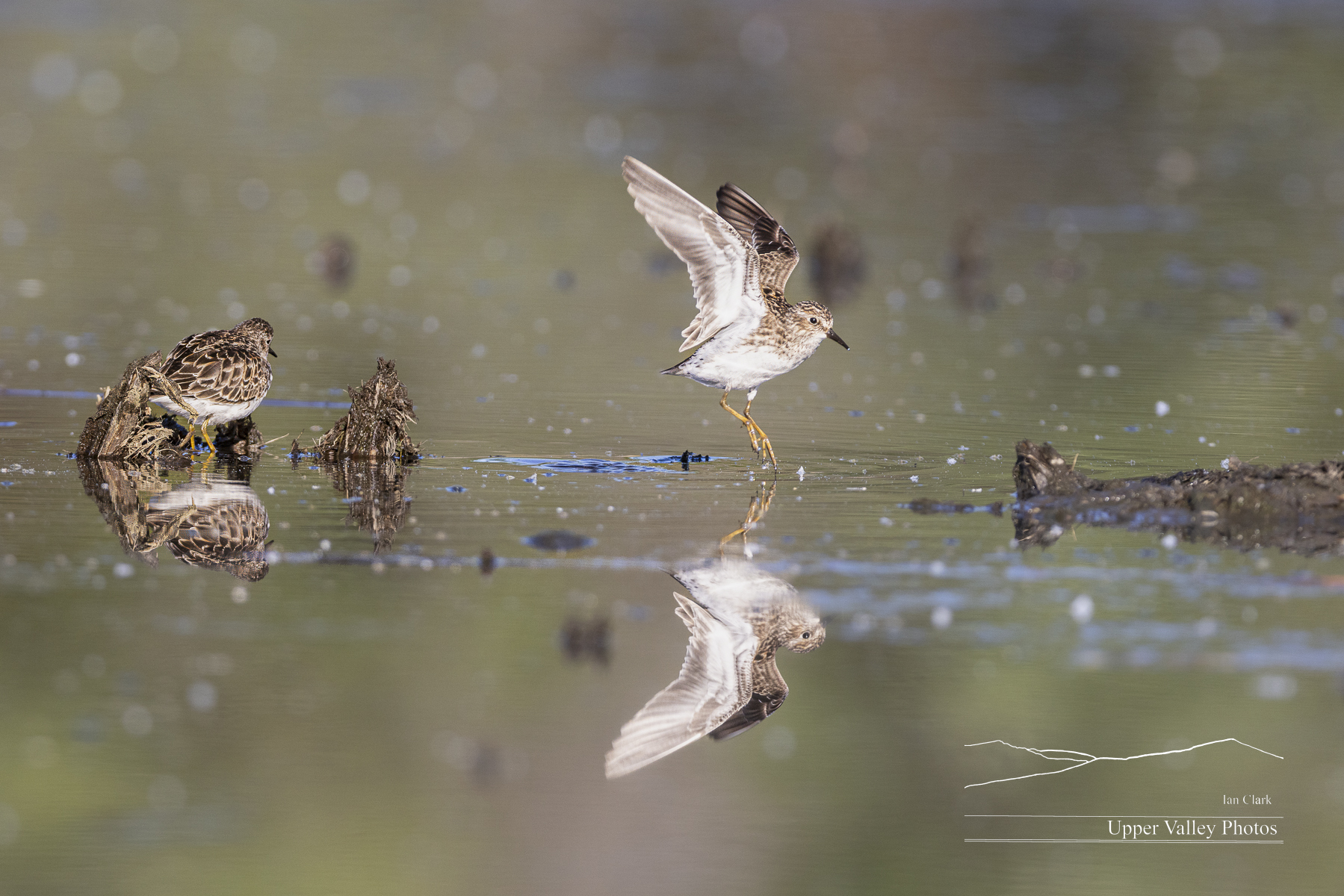
Here I found a few least sandpipers – the bird on the right – foraging alongside a spotted sandpiper.

One of the least sandpipers heading to the next bit of mud to check out what’s on the menu there.

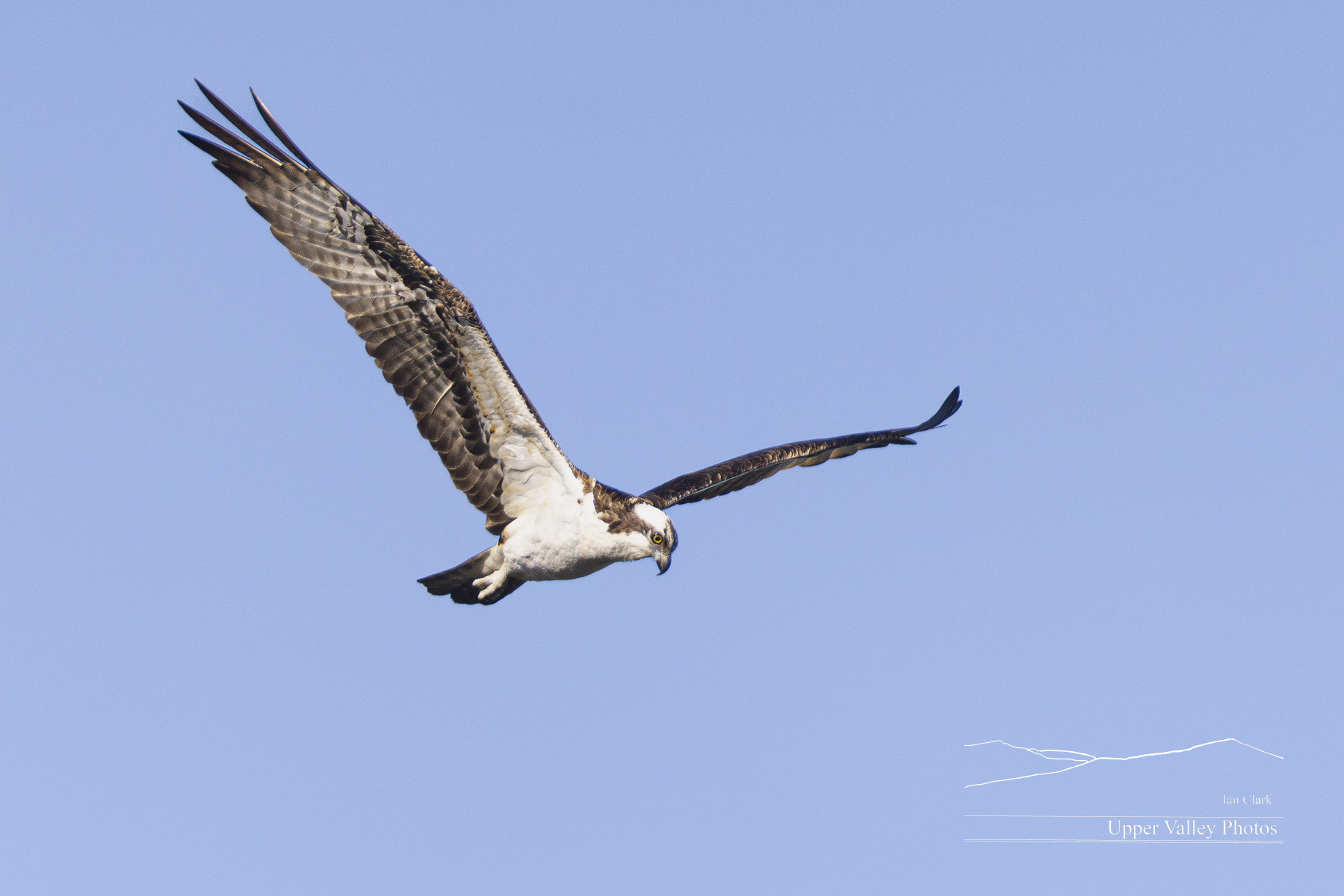
An osprey circled overhead a few times before looking like he’d spotted his meal below.

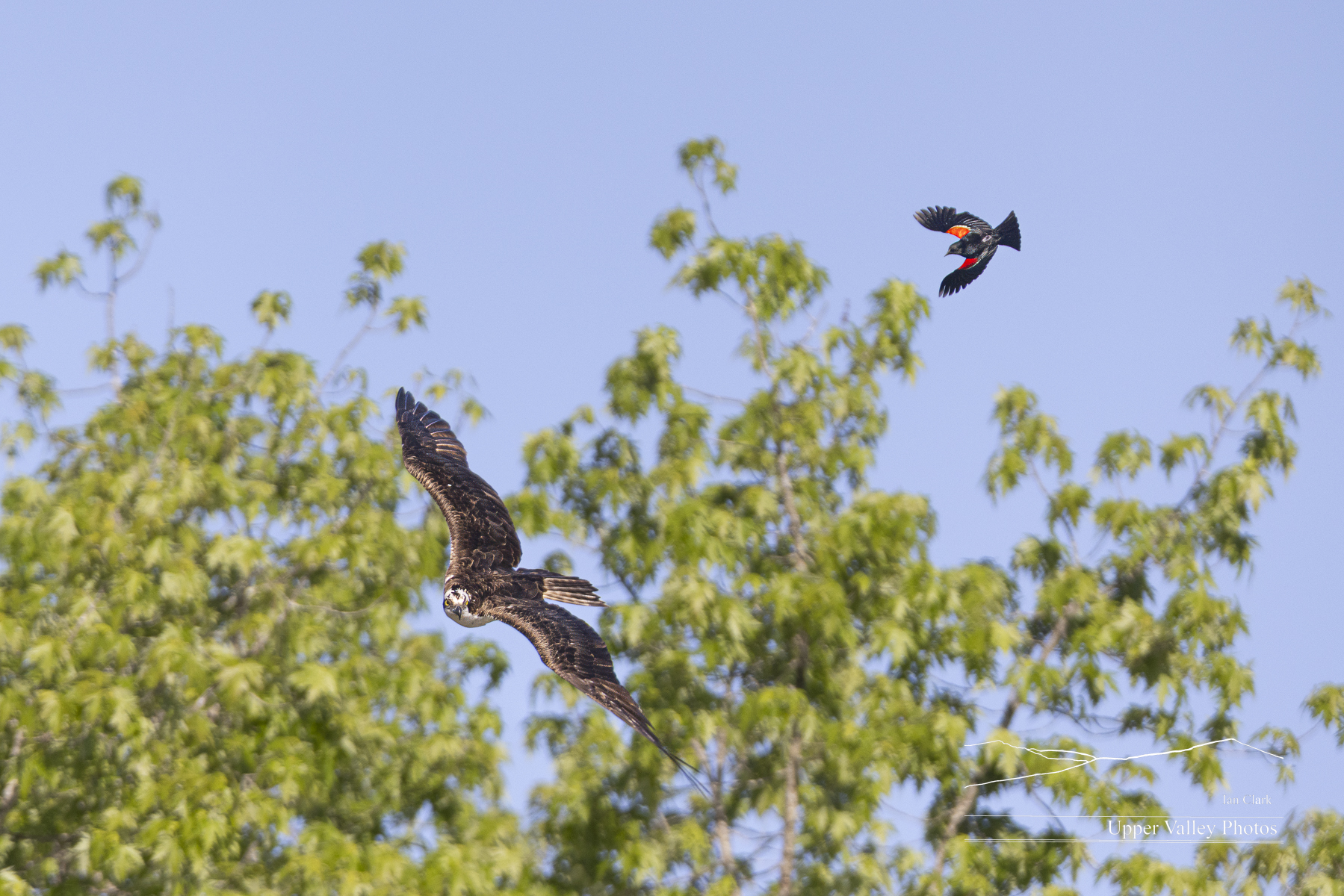
A male red winged-blackbird didn’t like the osprey in the area and flew up to challenge him. The osprey spent a few minutes dodging the blackbird before the blackbird gave up. I’m a little surprised that the red wings challenge the osprey. Osprey eat almost exclusively fish (I have seen a video of one grabbing a snake from the water.) Birds usually know who is a threat and who isn’t. Loons can tell the difference between eagles and osprey at a considerable distance. They alert and call at the eagles and ignore the osprey. I wonder why red-wings object.

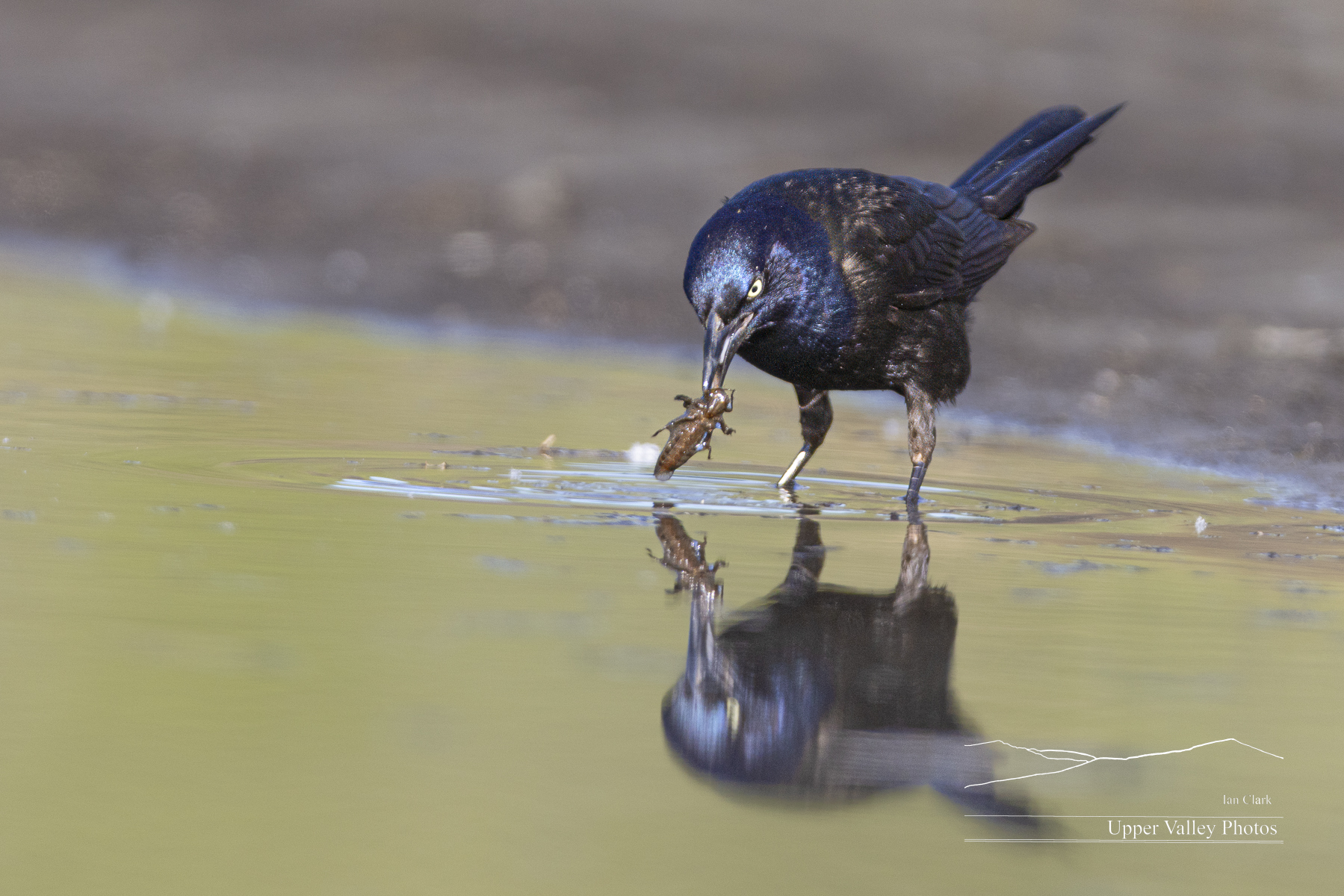
A common grackle joined the sandpipers looking for breakfast. I can’t identify what the grackle caught. But it wasn’t to his liking. He carried it up on the bank and abandoned it.

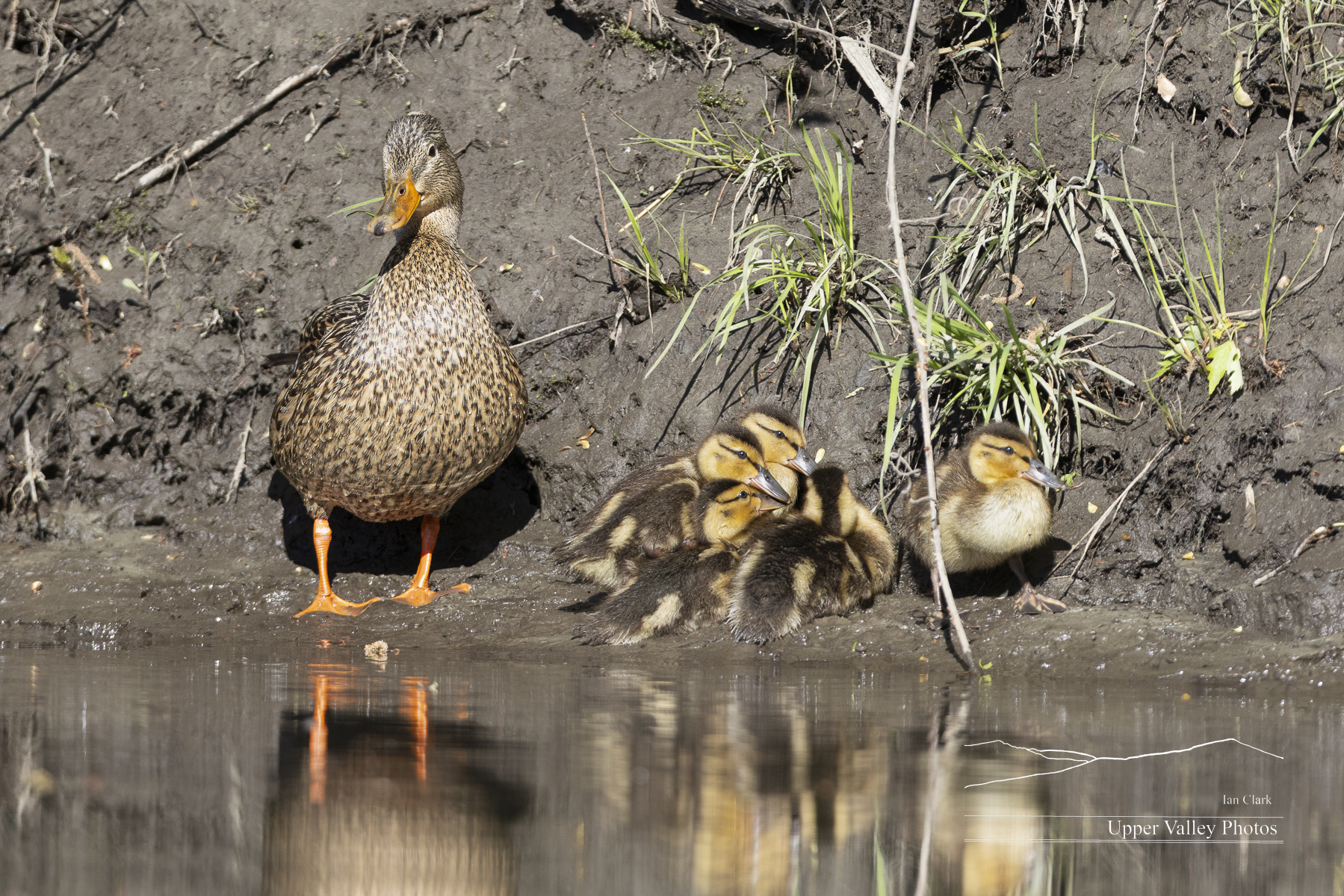
As I was heading back to the boat launch, I caught up with the mallard family again. Mrs. Mallard had the ducklings out of the water to preen. Dad was paddling nearby.

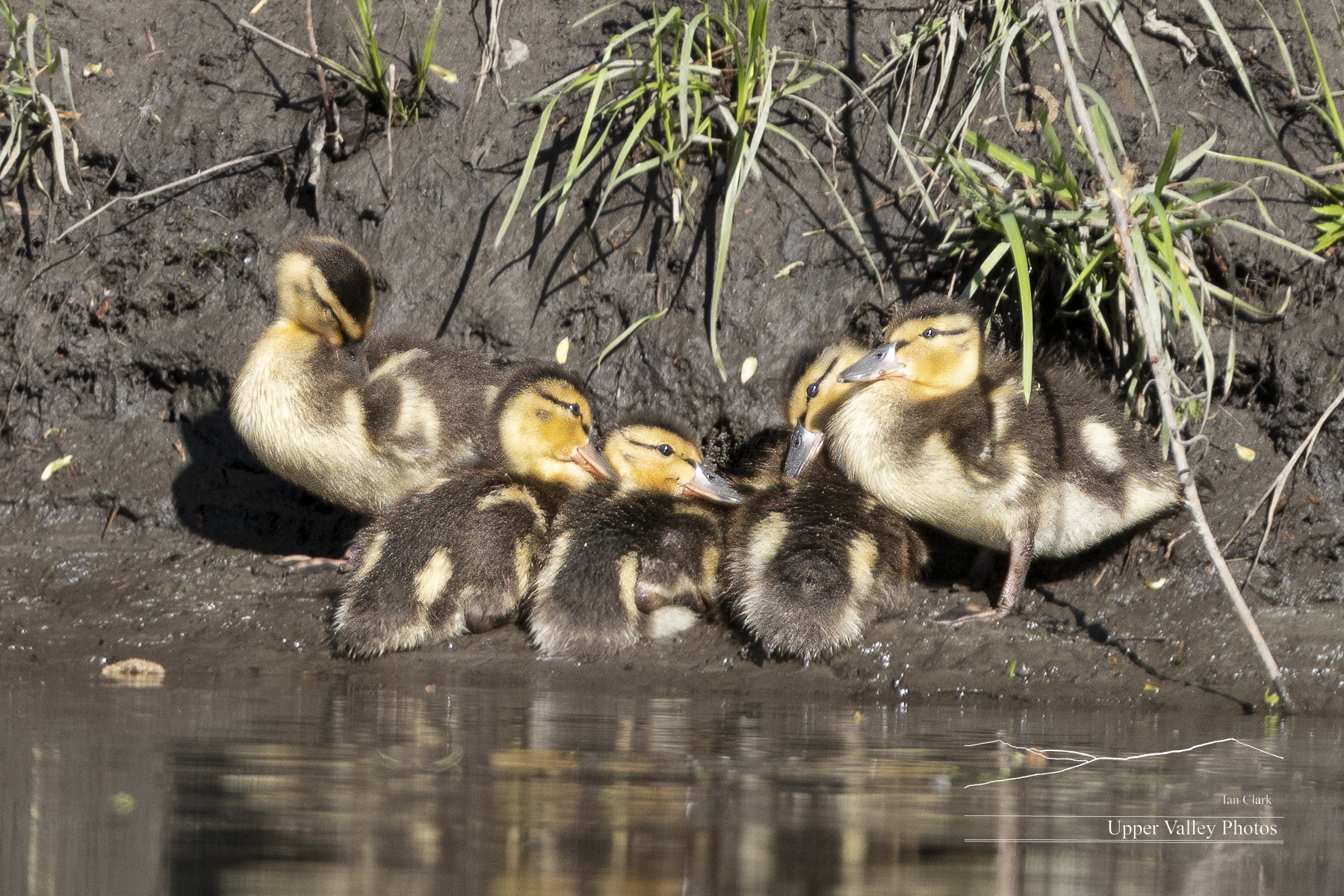
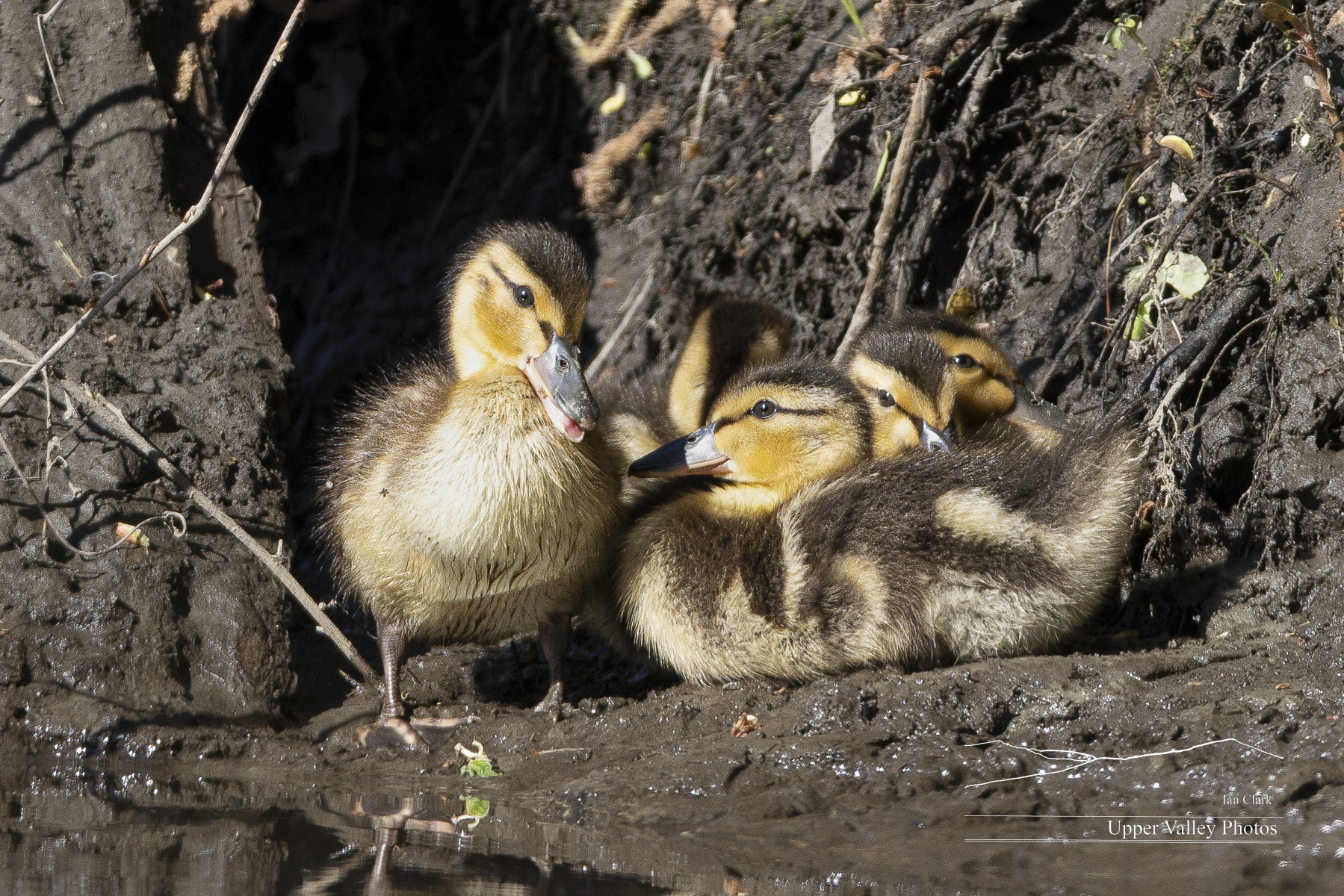
The ducklings finished preening and settled in for a nap.

Mom kept an eye on them as they huddled – she seems to think the little guy on the right is up to something….

An eagle appeared flying downstream. Mom gave a sharp call and the ducklings took cover under a nearby log. They hid for several minutes before remerging to huddle for their nap. I headed home.

Yesterday I headed back to check on the fox kits.
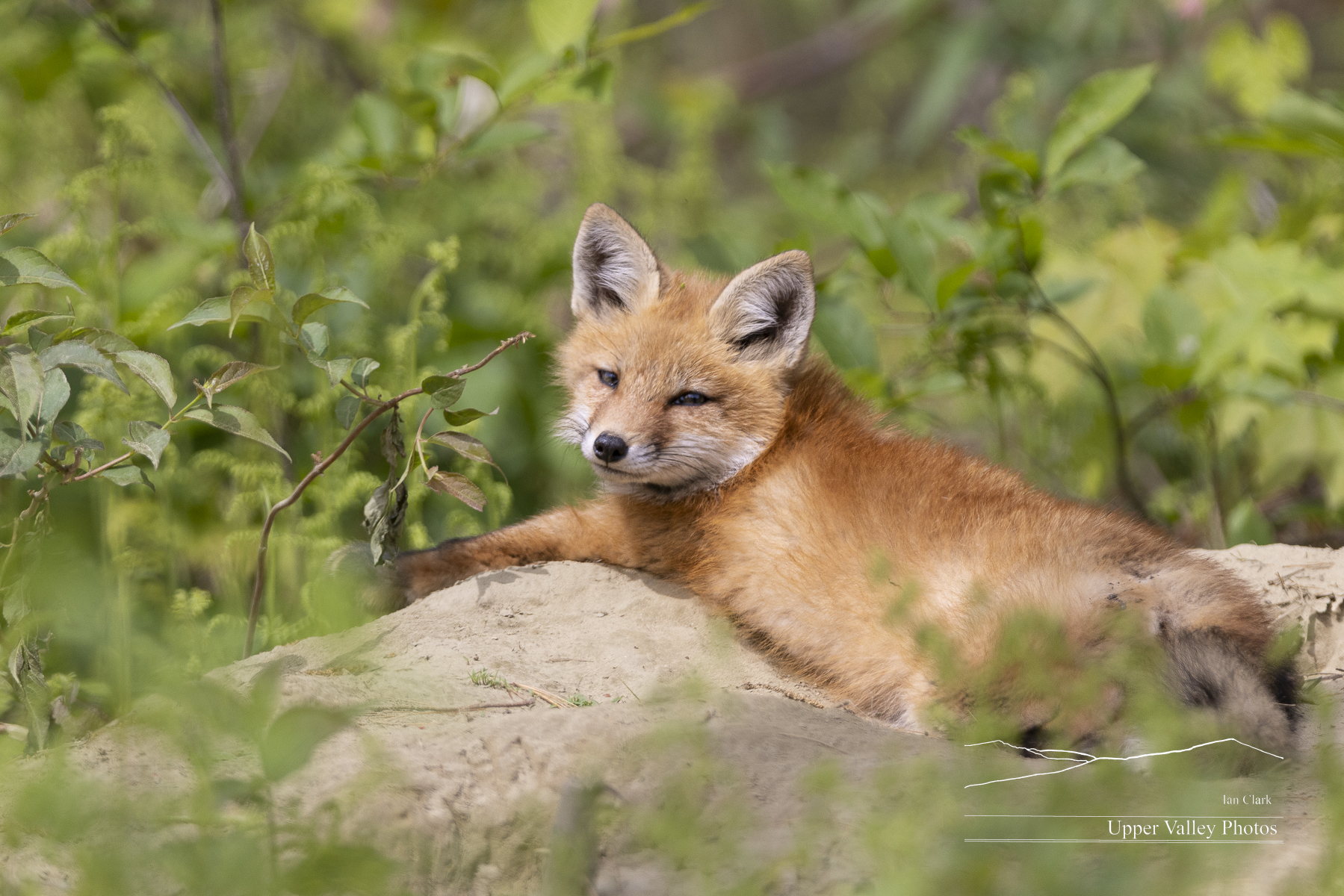
I quickly found one resting directly on top of the den’s hole.

Something caught his attention and he stood to look things over.

A false alarm! He settled back to nap in the sun.

A ways up the field, another kit was lounging near another of their holes.

This guy was laying in the brush at the edge of the woods.

With yet another sibling nearby.

Another kit was snacking on something near yet another of their holes. He’s finished and is off the the next item on the agenda. The parents will bring food to the den and if the kits aren’t out, the parent drops the food and leaves.

The next agenda item was a nap.

The clouds were moving in rapidly and the light was fading, I headed home.

You can sign up below to get an email when I add a new post. I won’t sell or share your info, all you’ll get is the occasional note that I put up a post. And, if you enjoy my posts, please share them with your friends and on your social media. Thanks!
Birds of May

A quick post with some of the birds I’ve found out and about in May.

I’ll be giving my slideshow, Travels with Ian 2025, of my favorite shots from 2025 twice before the end of the month. There’s lots of wildlife from around New England and shots from my trip to Alaska to see brown bears and the steam locomotive on the White Pass & Yukon Route Railway. Both are free and open to the public. The first show will be at the Bugbee Center in White River Jct. Wednesday May 27 at 1:30 pm. The second presentation will be at the Blake Memorial Library in Corinth, VT Friday May 29 at 6 pm. The Library would appreciate an RSVP sent to khotellingbml@gmail.com.

And I’ll be exhibiting at the Berkshires Art Festival in Great Barrington, MA on July 3, 4 and 5. All the details here: https://americanartmarketing.com/blogs/news/berkshires-arts-festi-val-2025. I’ll have note cards and prints large and small with me. Stop by and take a look.

Back on May 8, I went out to visit the Westons and their neighbors. The Westons slept in and I went looking to see who else might be around.
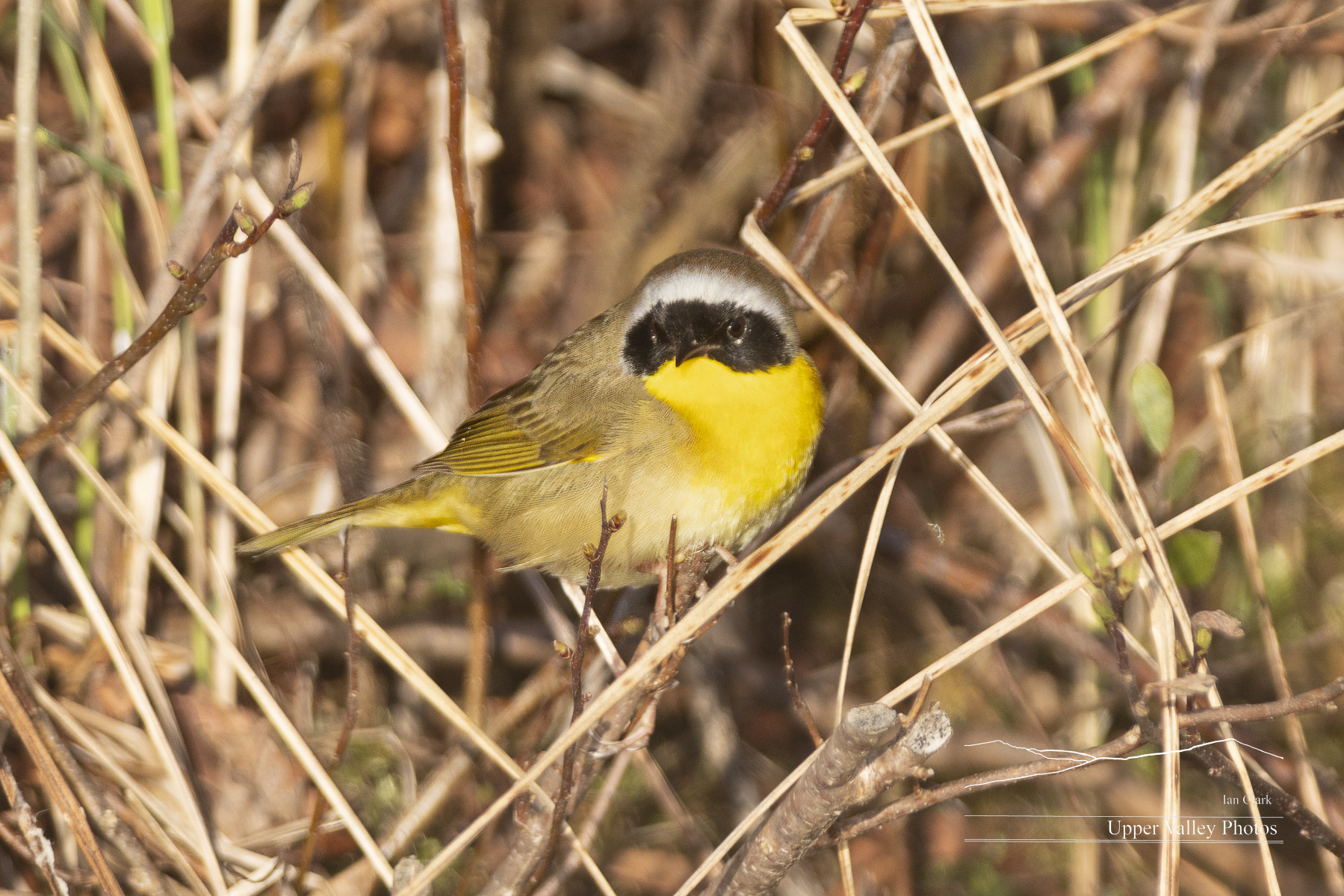
Warblers are back and there was a good-sized flock foraging along the shore. Most were too high in the trees for good shots, but this common yellowthroat was working just about water level.
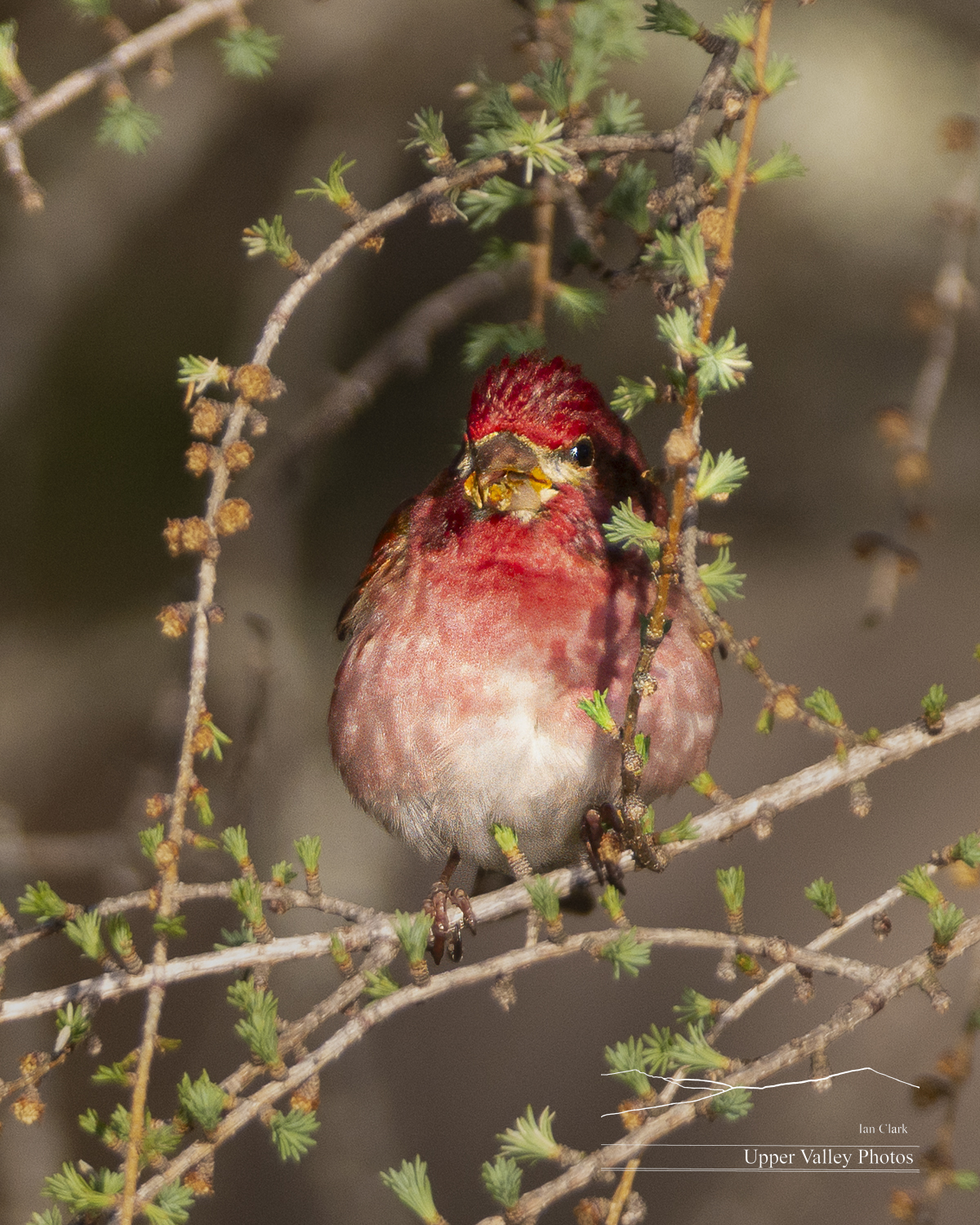
This purple finch (Harold, he says my number came up) was eating tamarack seeds.
The Westons finally stirred and one gave a nice stretch before heading off to the far end of the pond for breakfast.

I went back to visit them again the next day.
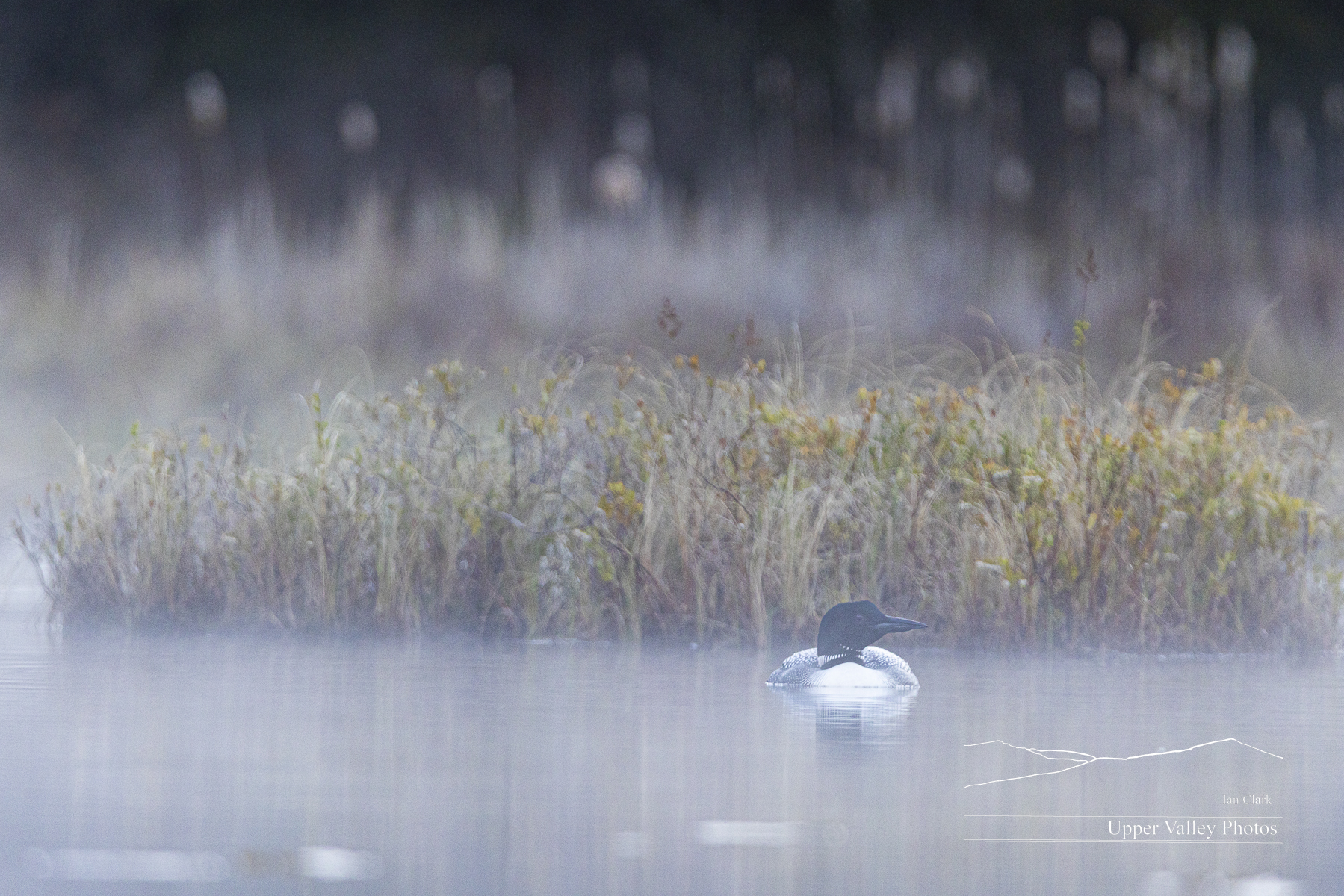
They were up before the dawn and checking out the real estate looking for a nesting site. They discussed the spot where the nest has been for the last several years but didn’t seem to come to a conclusion. The literature says the male picks the nesting site. But, watching it seems to be a joint decision. Much like how I decided on the colors to paint the kitchen.
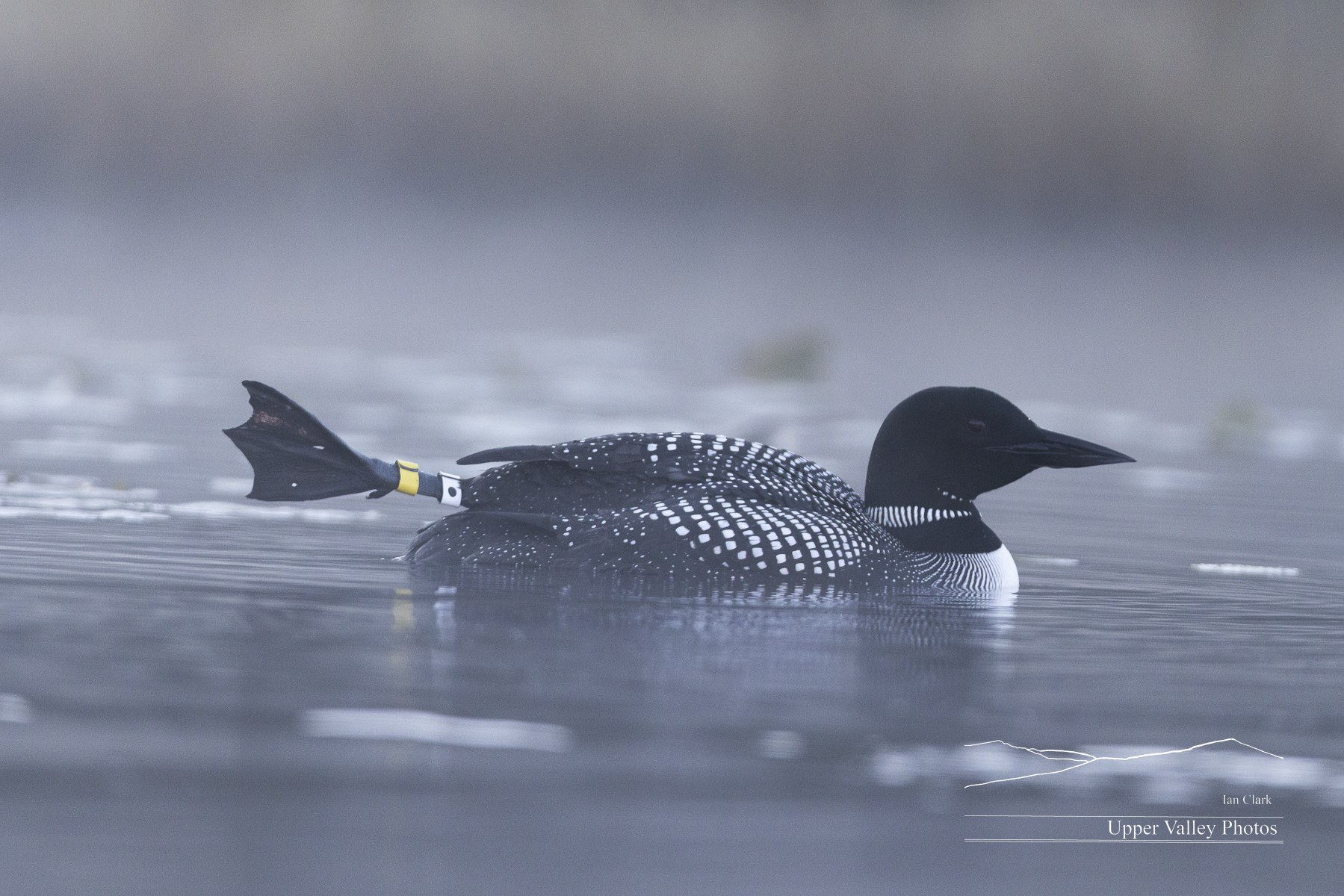
One of the birds stretched a leg and showed he was banded. Last year, the female disappeared from the pond in early August and wasn’t seen again. I suspect that wasn’t good news, that’s early for her to have left voluntarily. The male stayed on the pond and faced off against a challenger every time I visited. My first thought was we had a new female on the pond. I reported the banded bird to the Vermont Center for Ecostudies, Vermont’s loon researchers. They told me that the banded bird was a male that had landed in someone’s driveway. The Center sent someone to rescue the bird. They banded him and released him in a pond without a nesting pair of loons. We’ll never know if it was Mr. Weston or the challenger that was chased off the pond. I’m hoping this is the same bird that I’ve likely been watching for years.
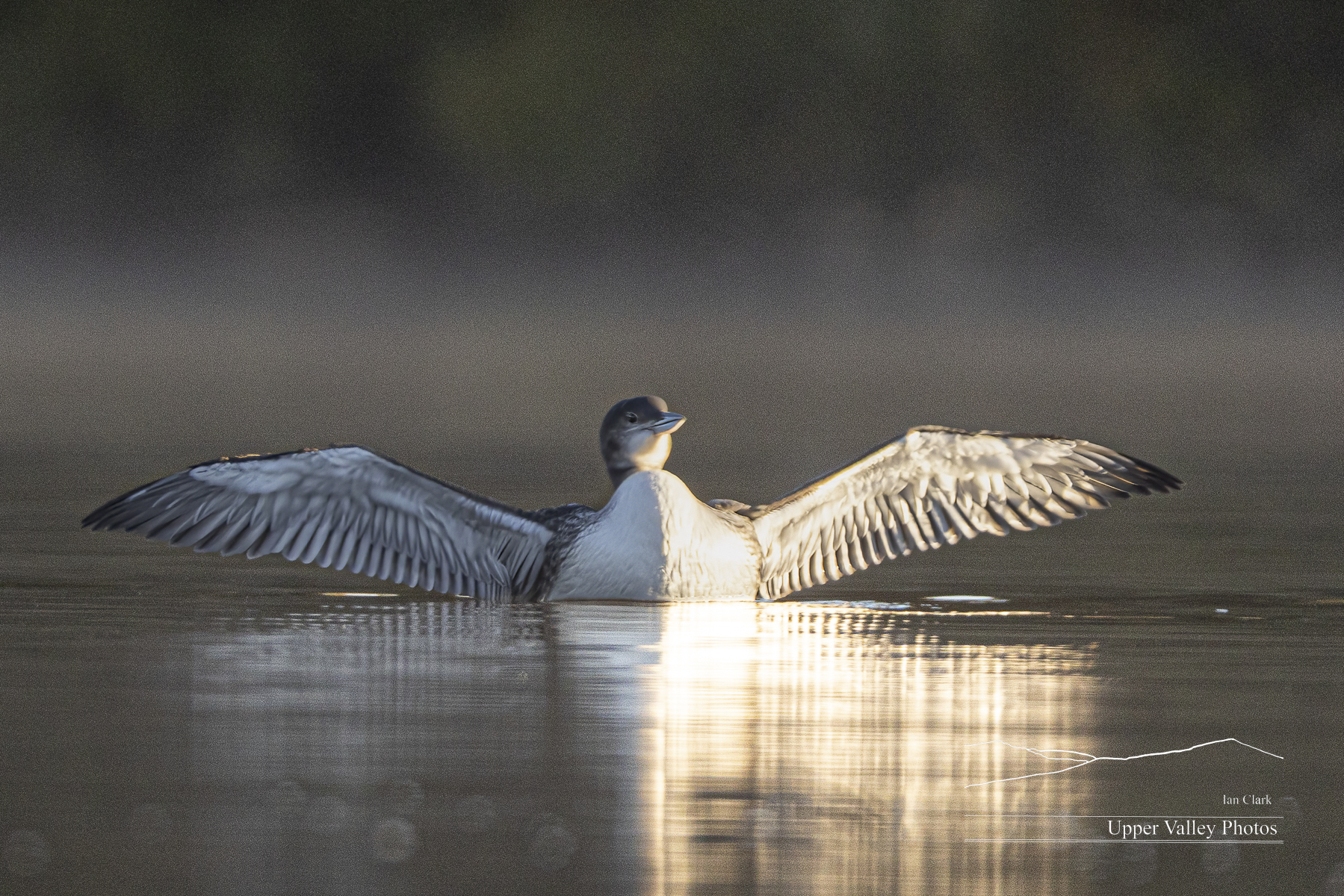
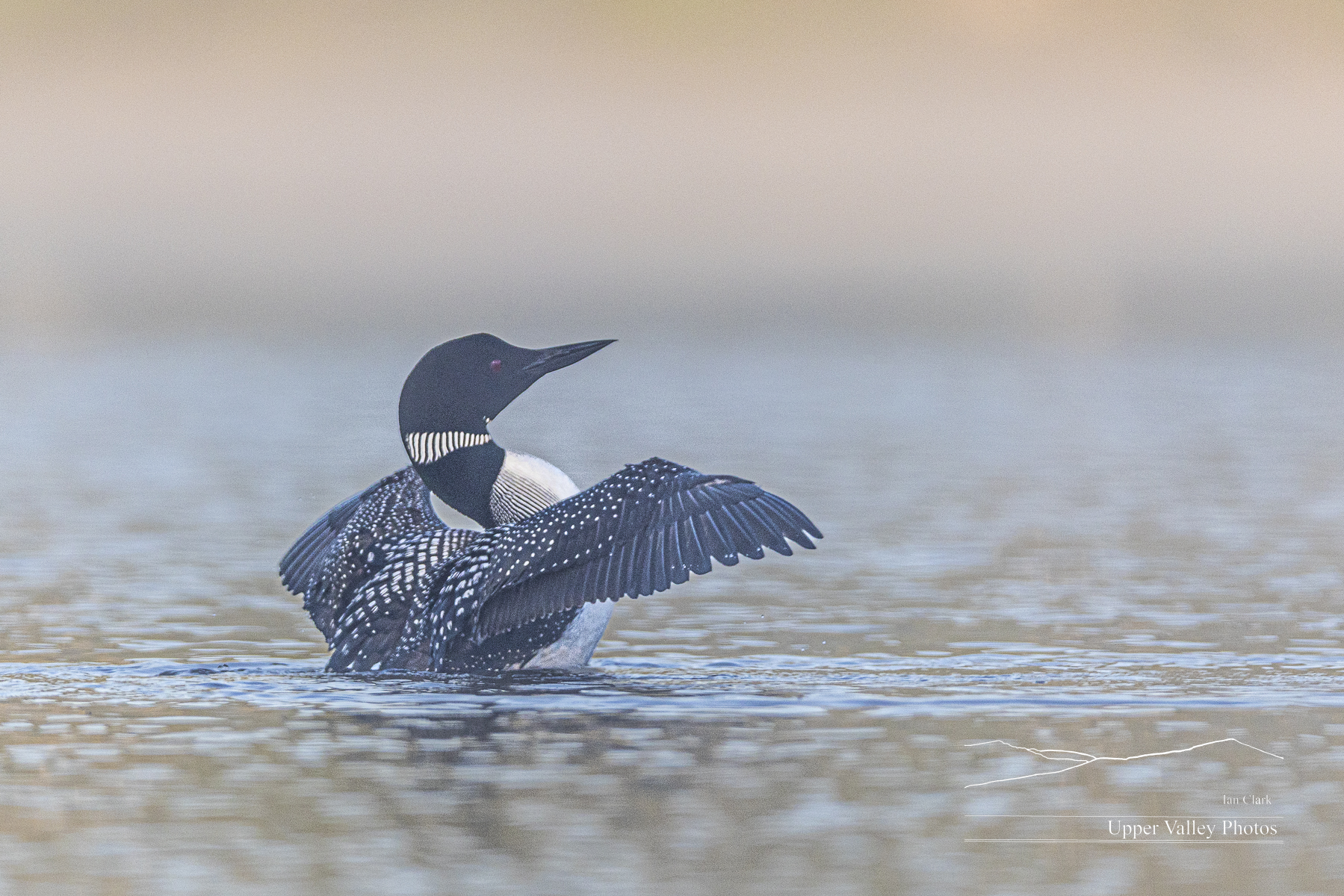
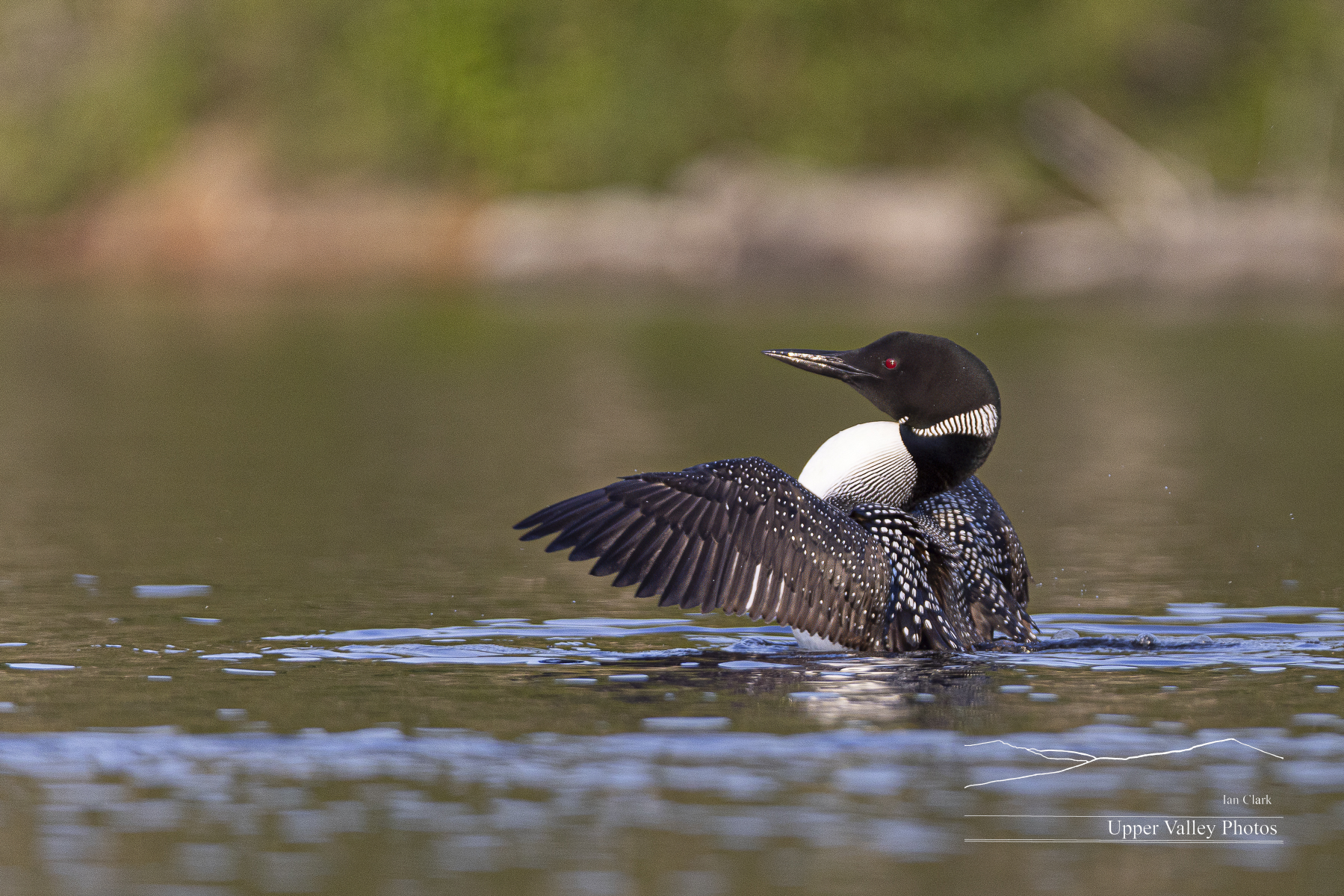
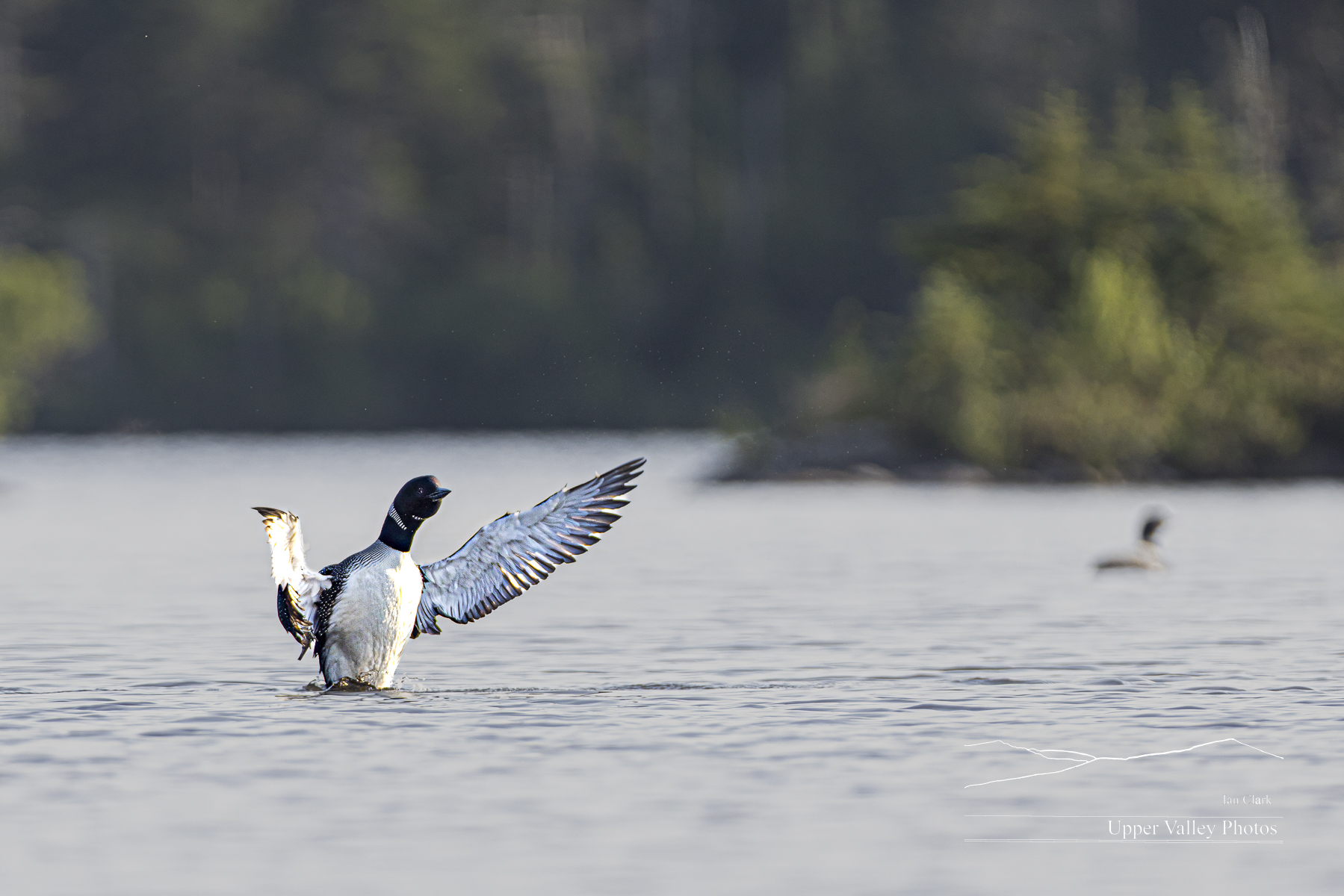
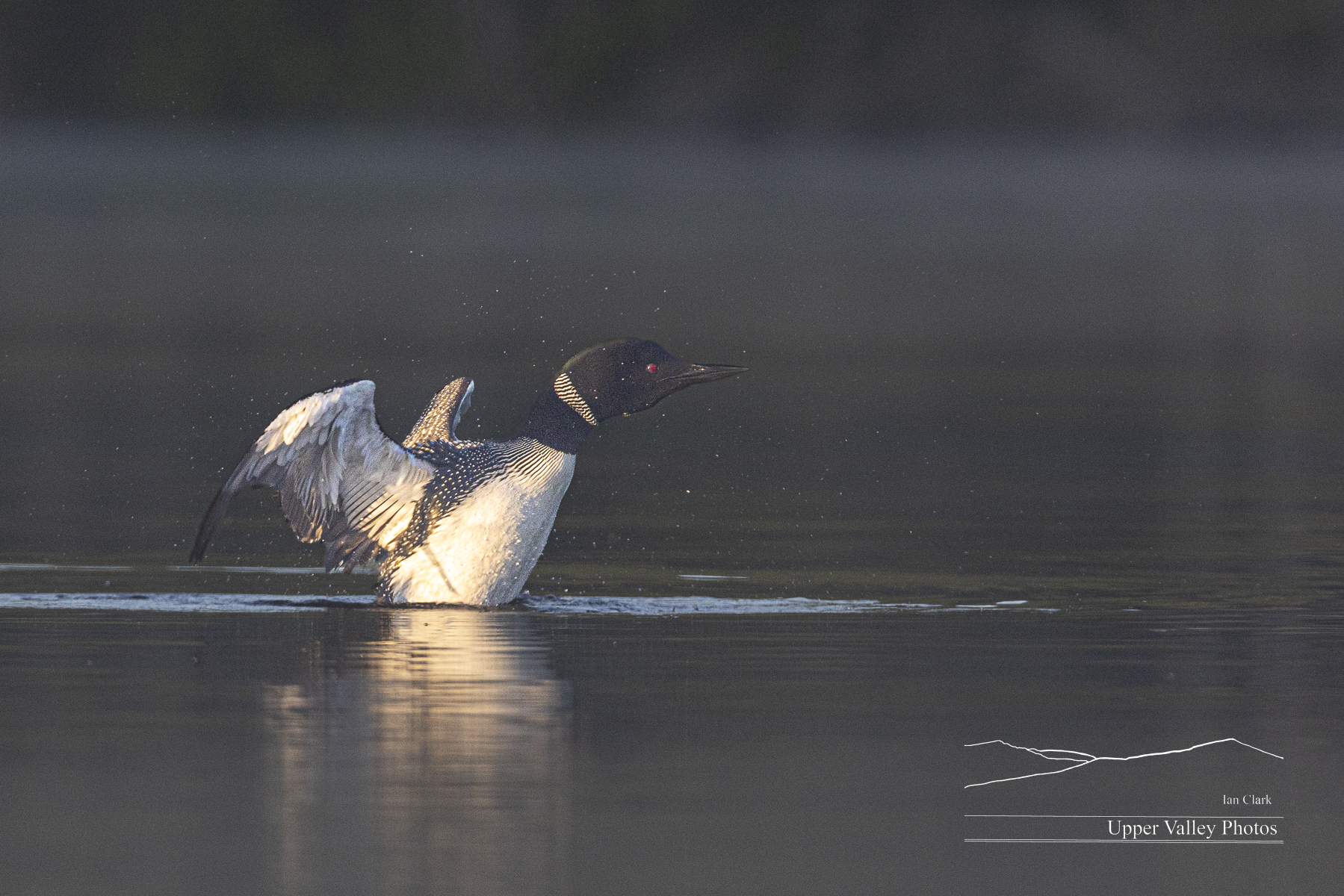
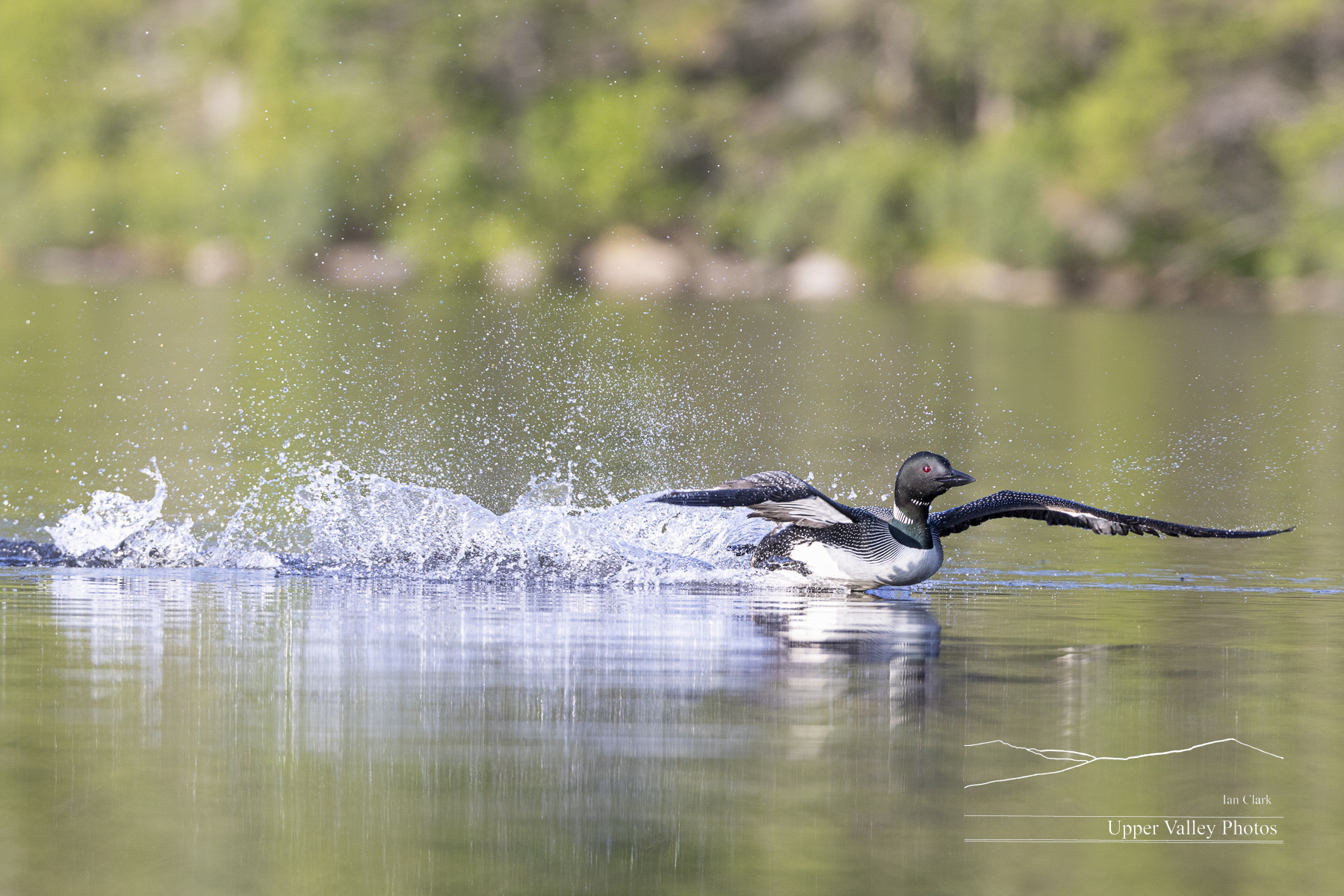
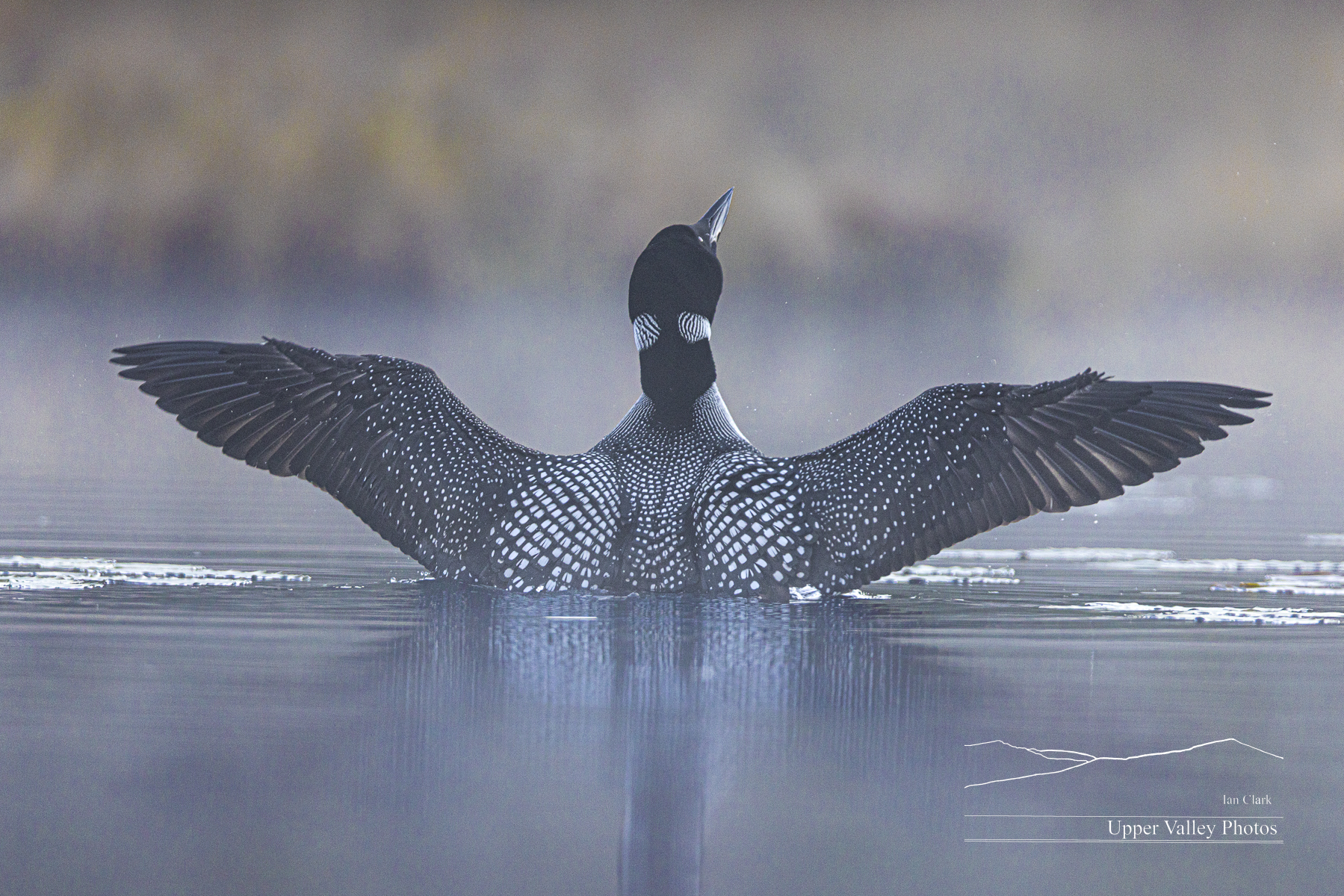
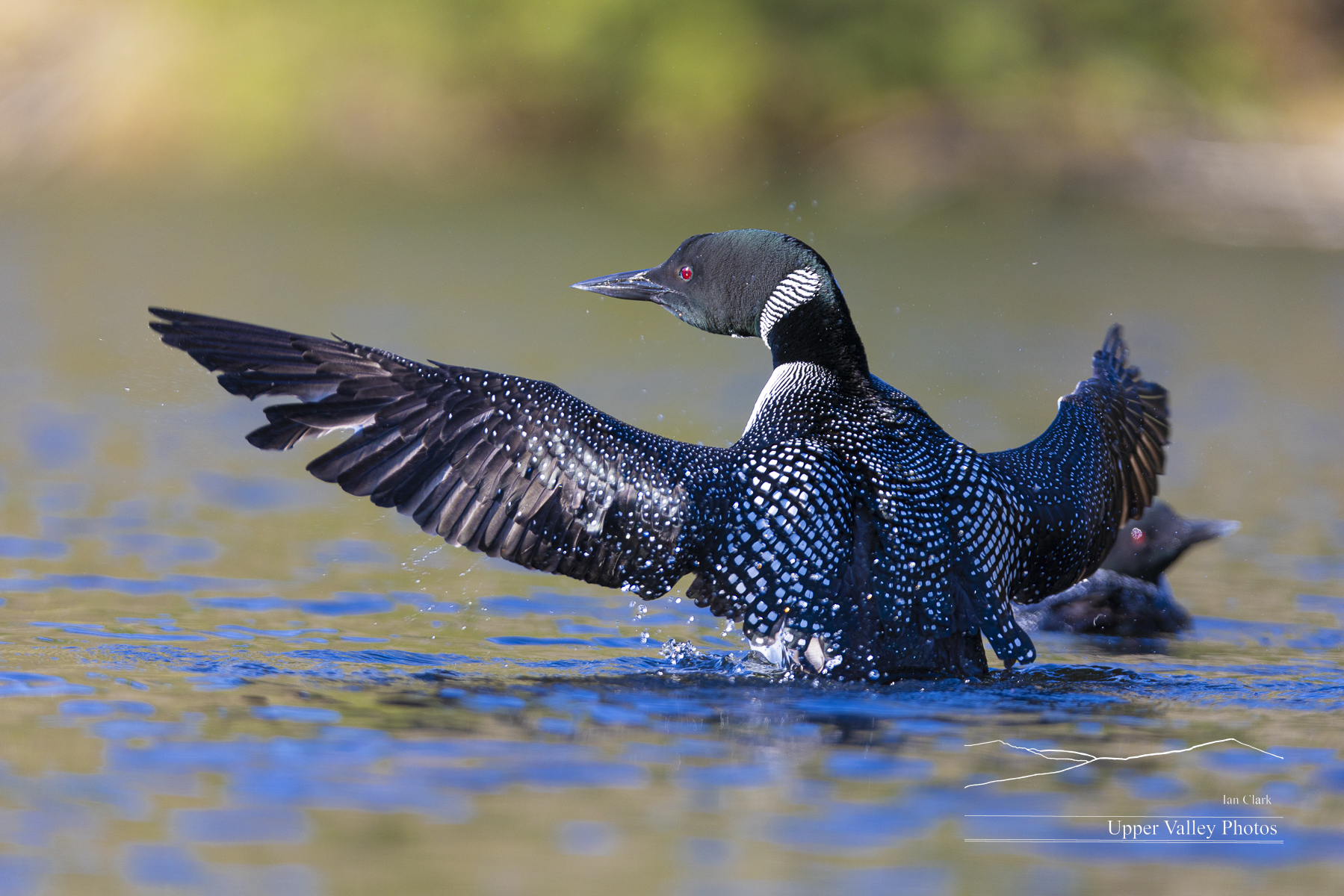
Mr. Weston gave me a nice stretch. Or he was throwing his wings up in frustration….
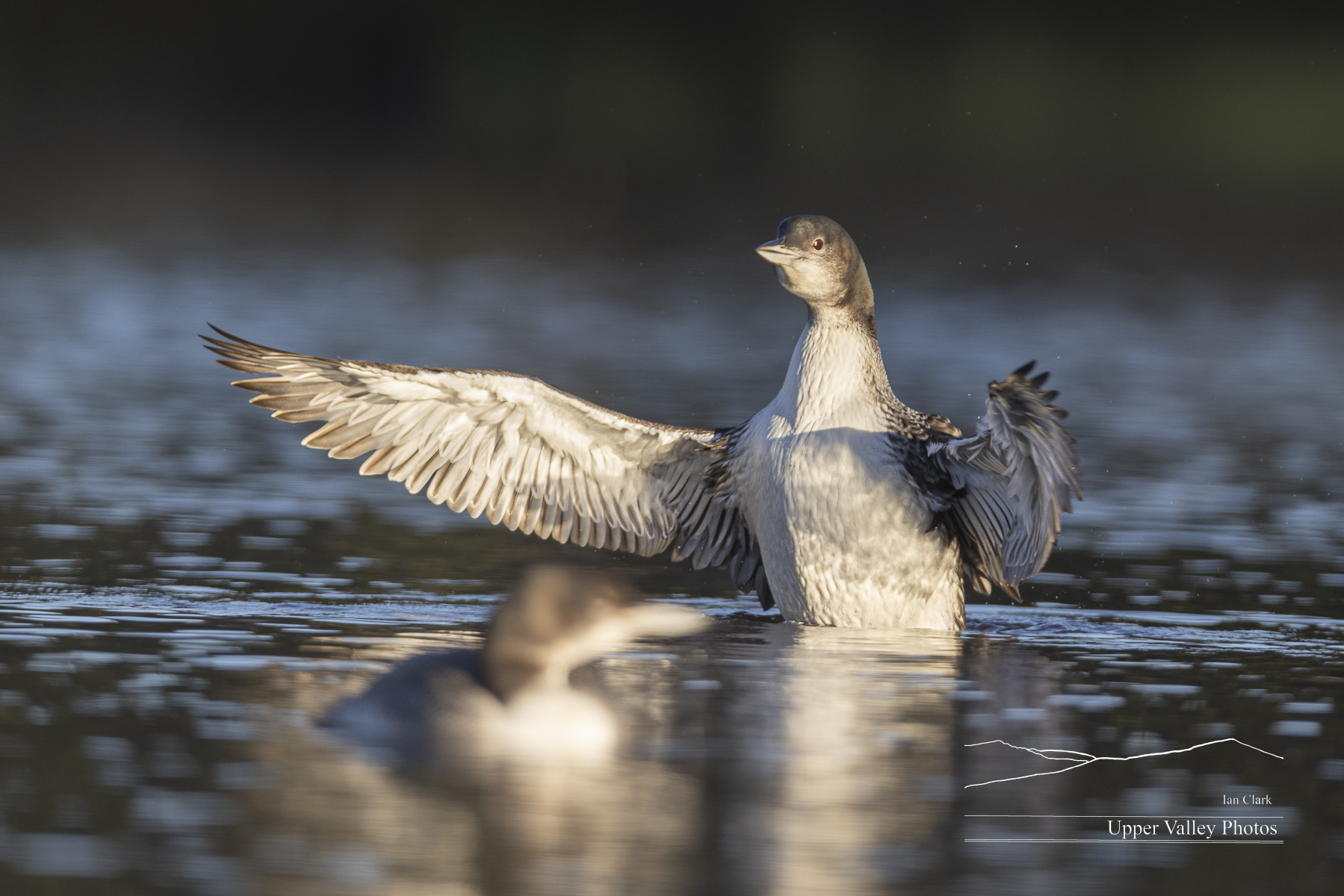
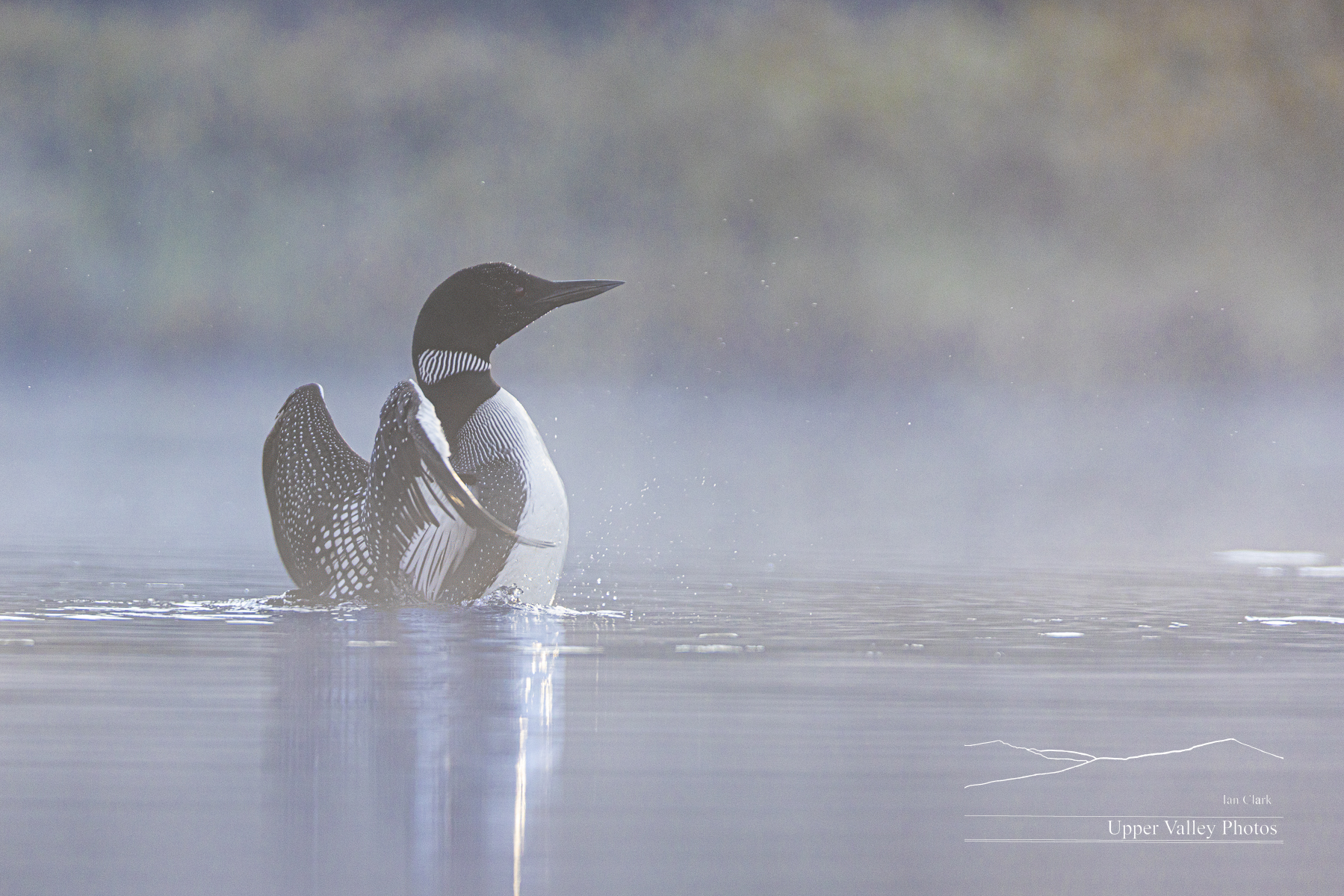
Mrs. Weston answered with her own stretch.
Then they resumed the search for a nest site.
It didn’t look like they came to a decision on where to nest. Mr. Weston stretched again and they headed out for breakfast.
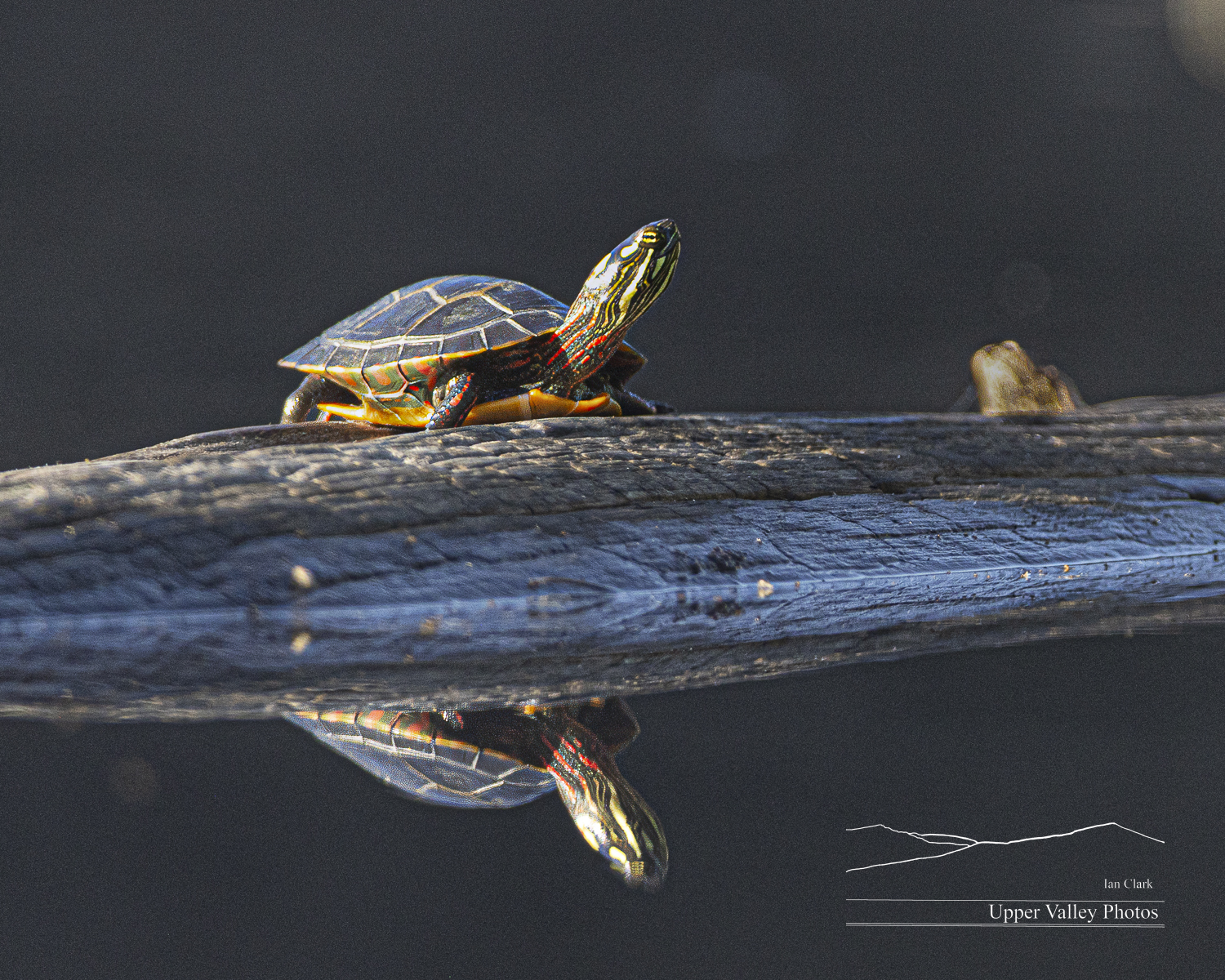
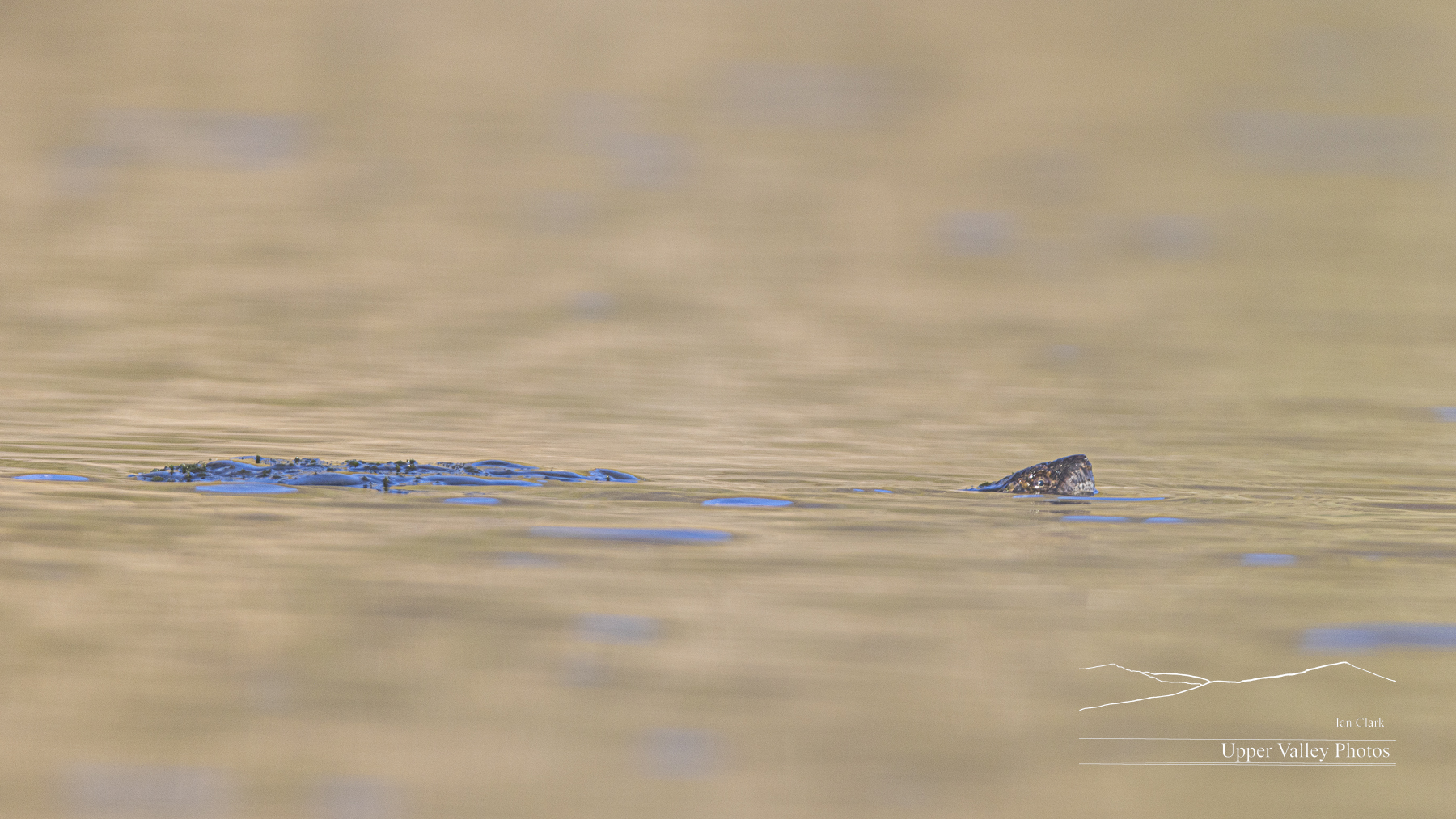
The Westons’ pond has a good population of snapping turtles. I’ve had three great looks at turtles in shallow water so far this year. All three turtles were large, but nowhere near the size people claim they’ve seen. They actually top out with a carapace – the upper part of the shell – about 20″. This turtle appears to be basking. Snappers like to stay in the water rather than climb out to bask. They’ll float along with their head and top of their shell exposed.
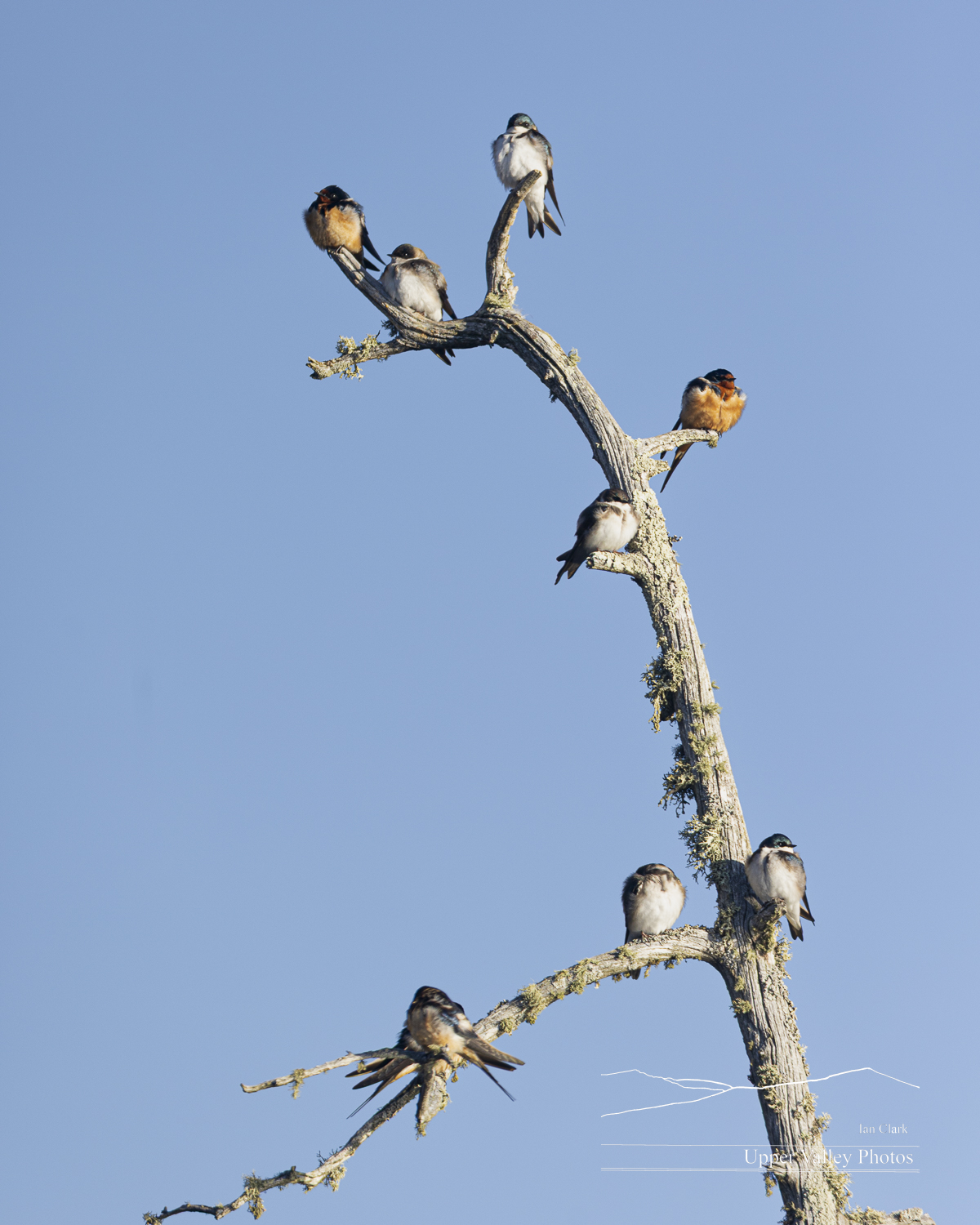
The tree swallows and barn swallows were back on their favorite perch, waiting for the insects to get out and about.
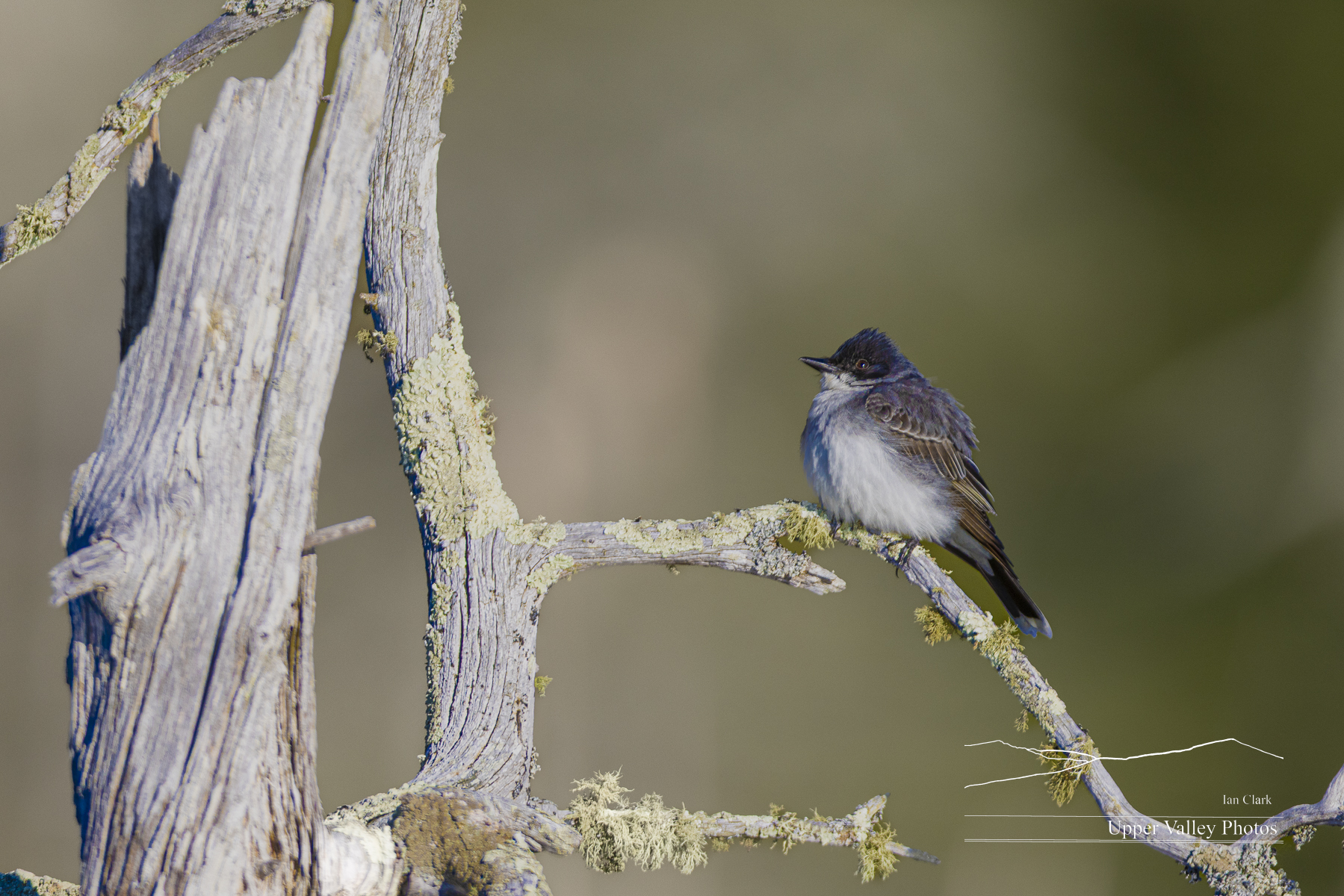
Eastern kingbirds (Elvis, the King) are back and paired up. They seem to prefer dragonflies for their diet. Dragonflies are scarce in the early spring, kingbirds feed on smaller insects until the dragonflies return or emerge. Some dragonflies migrate, in other species the adults die out in the fall leaving larvae to survive overwinter.
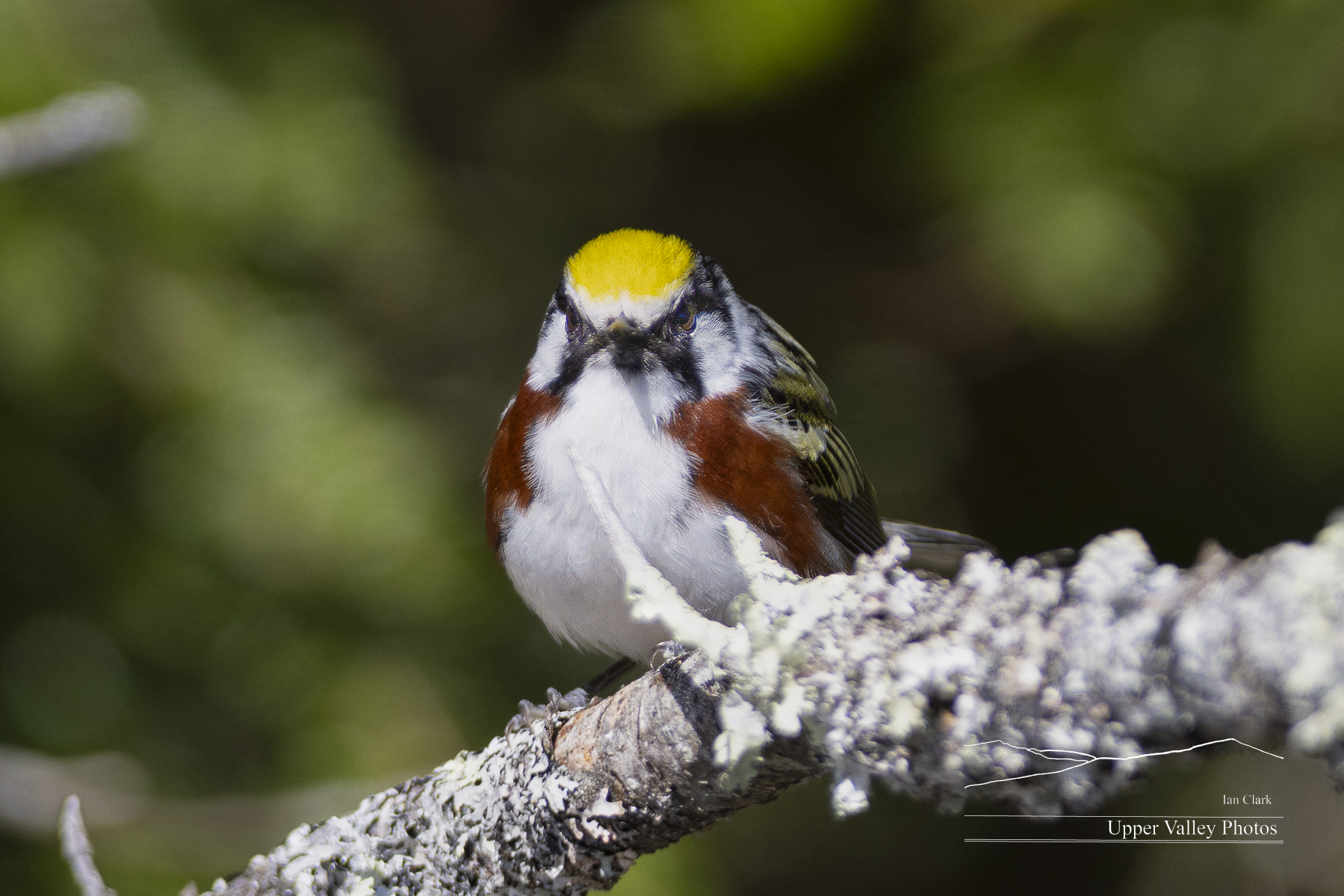
I spent some more time trying for the warblers. This chestnut-sided warbler teased me for several minutes before pausing in the open for his photo.
One of the Westons gave a stretch as I head out for the morning.

On May 11, I put the boat in the Waits River in Bradford, VT to see who might be around.
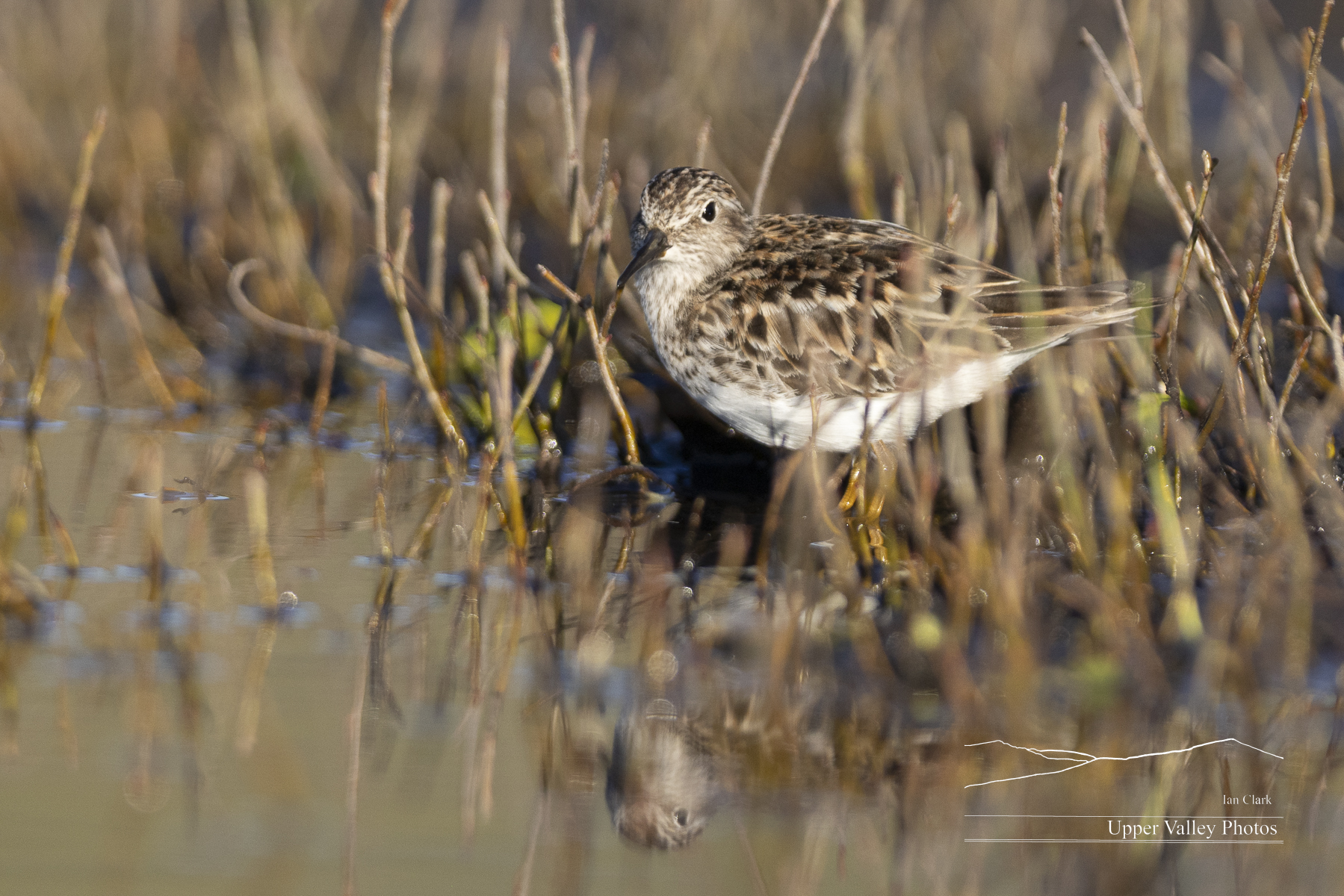
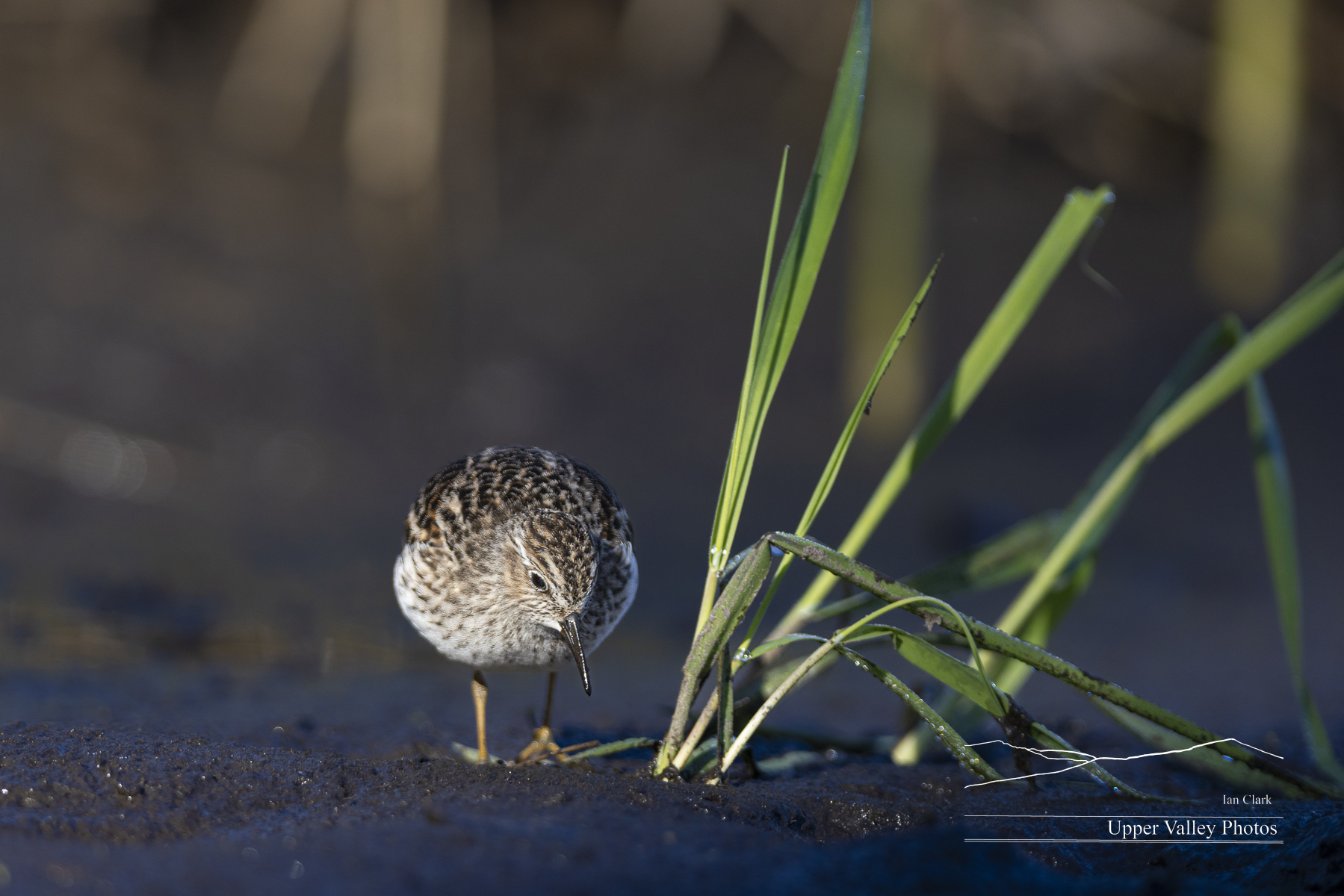
There were a couple dozen sandpipers around, this least sandpiper was foraging for breakfast in the reeds along the shore.
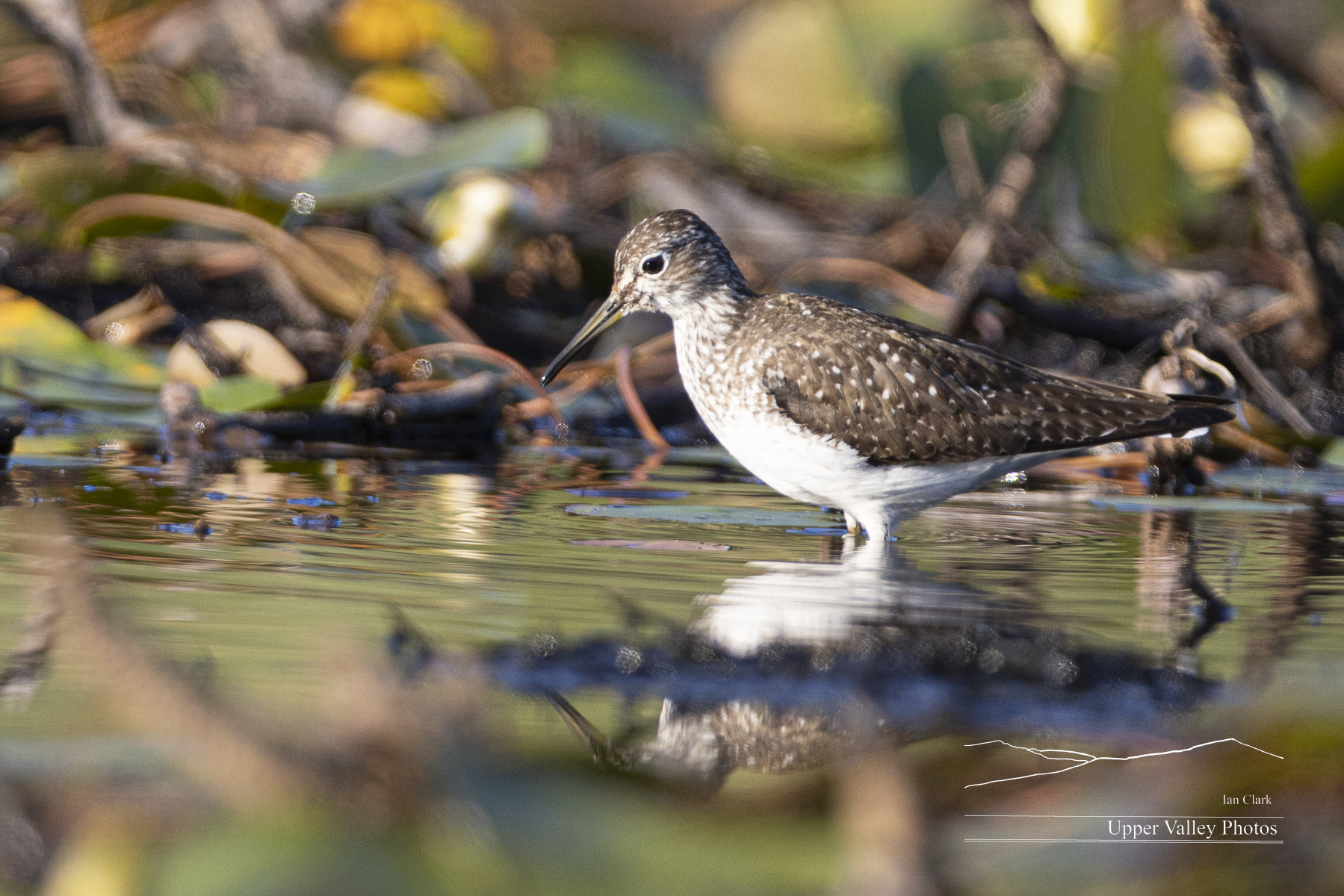
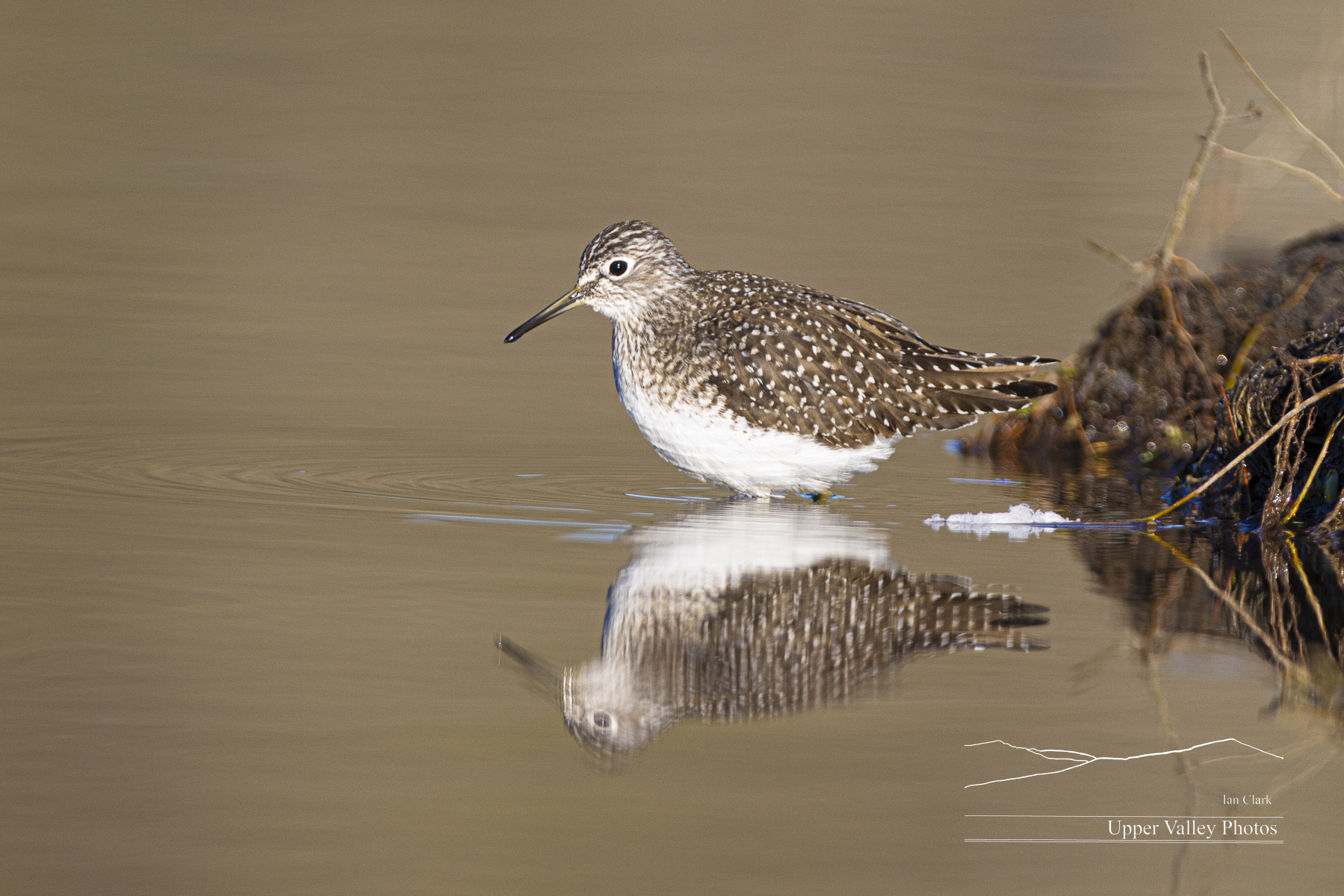
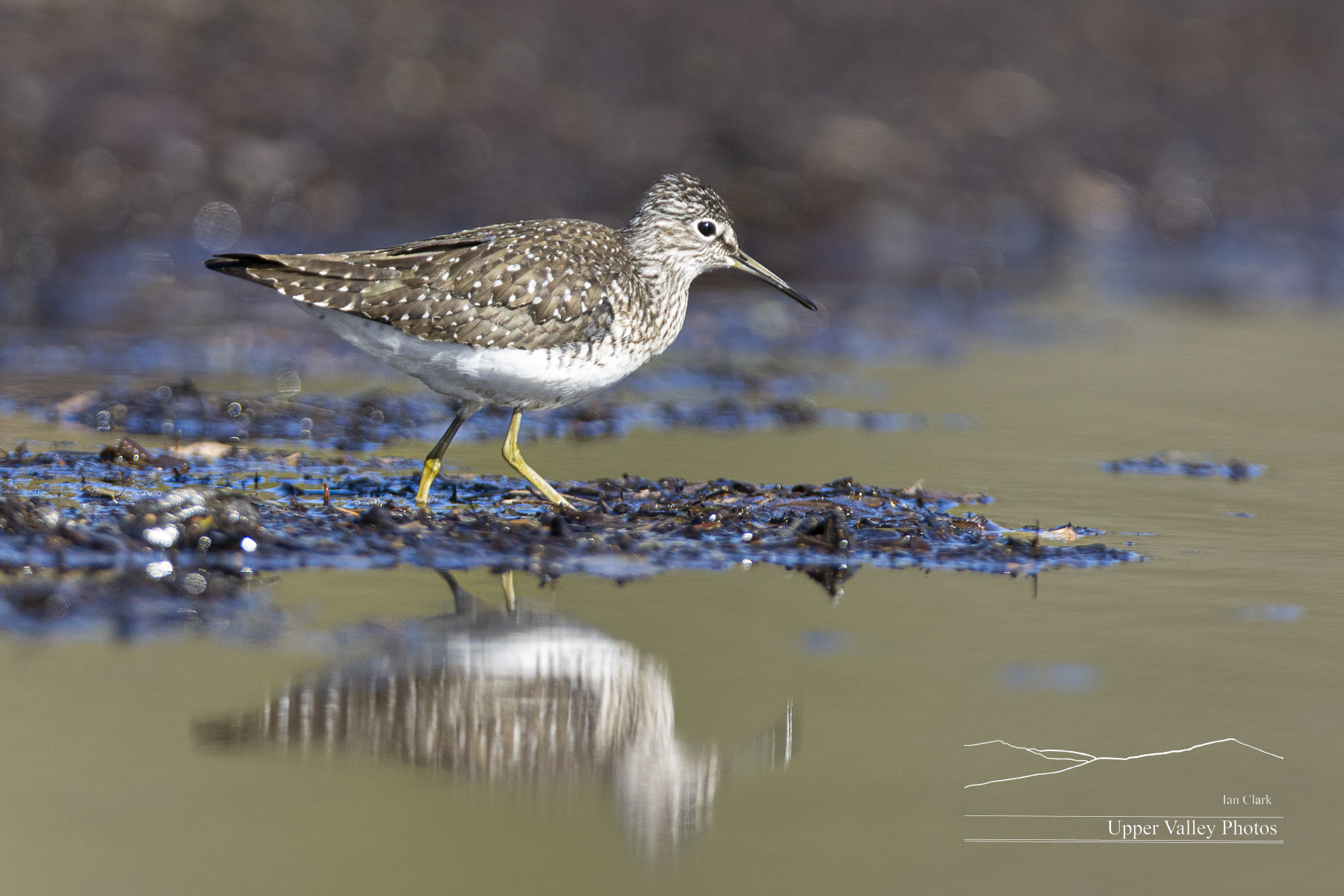
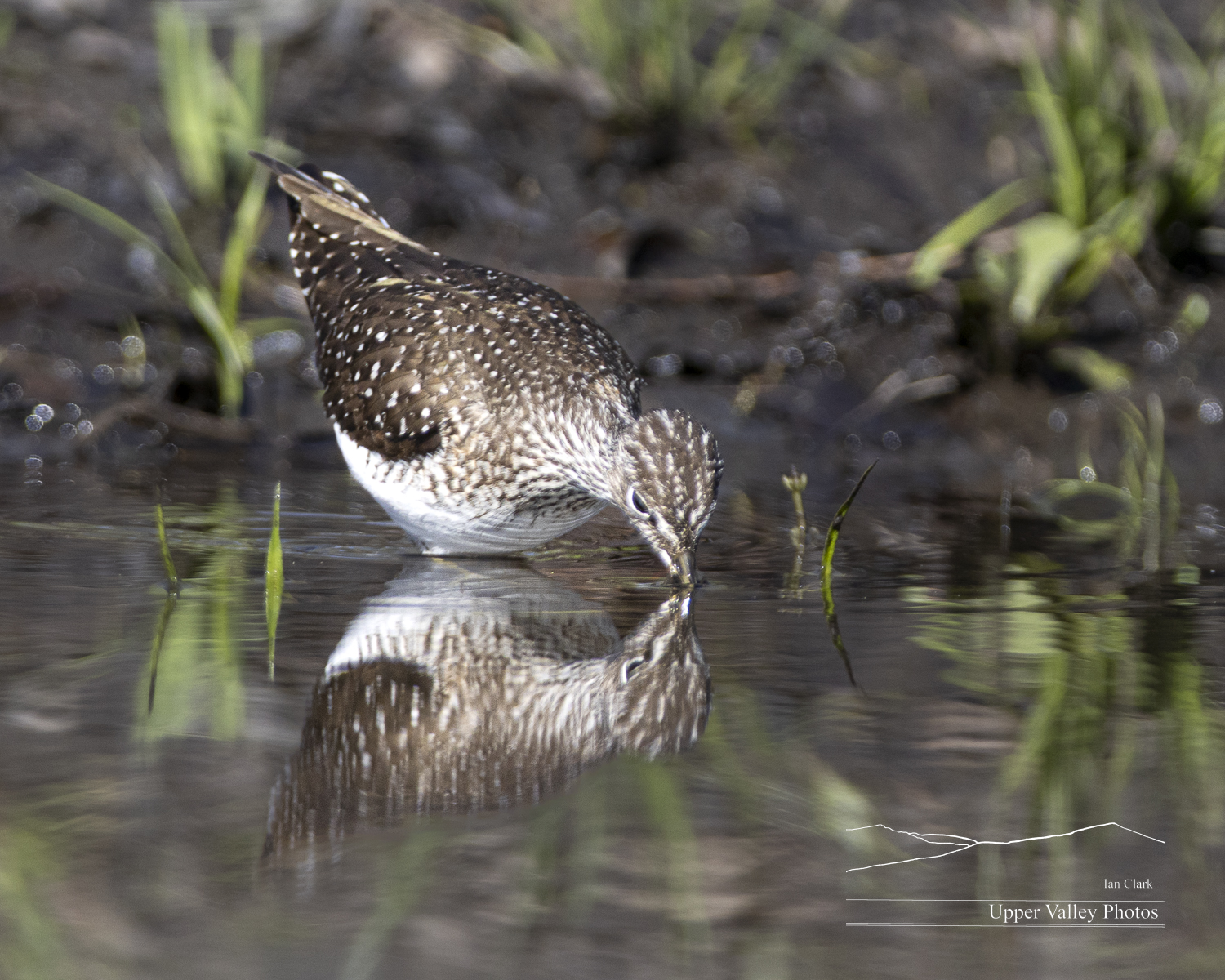
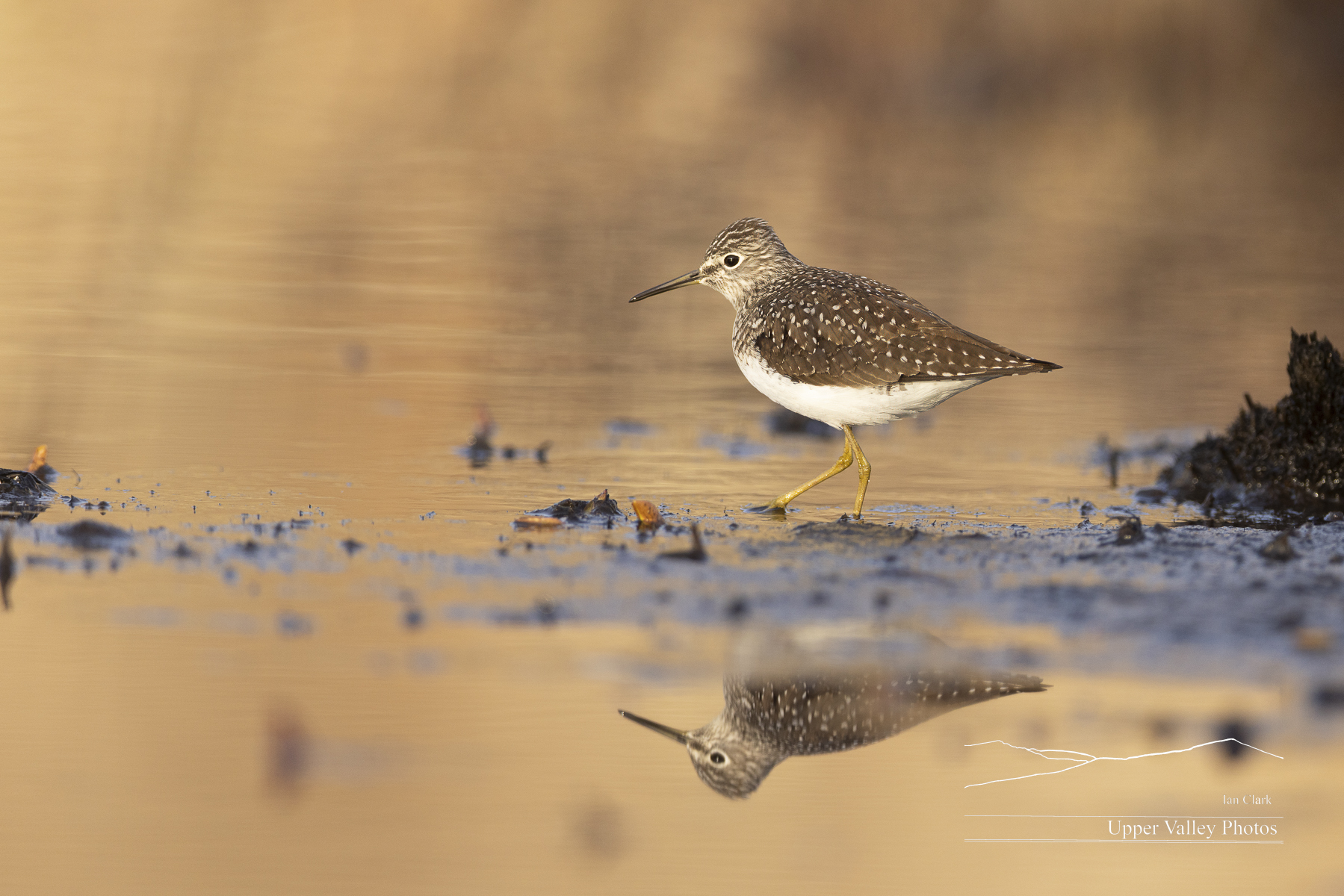
There were several solitary sandpipers foraging as well.
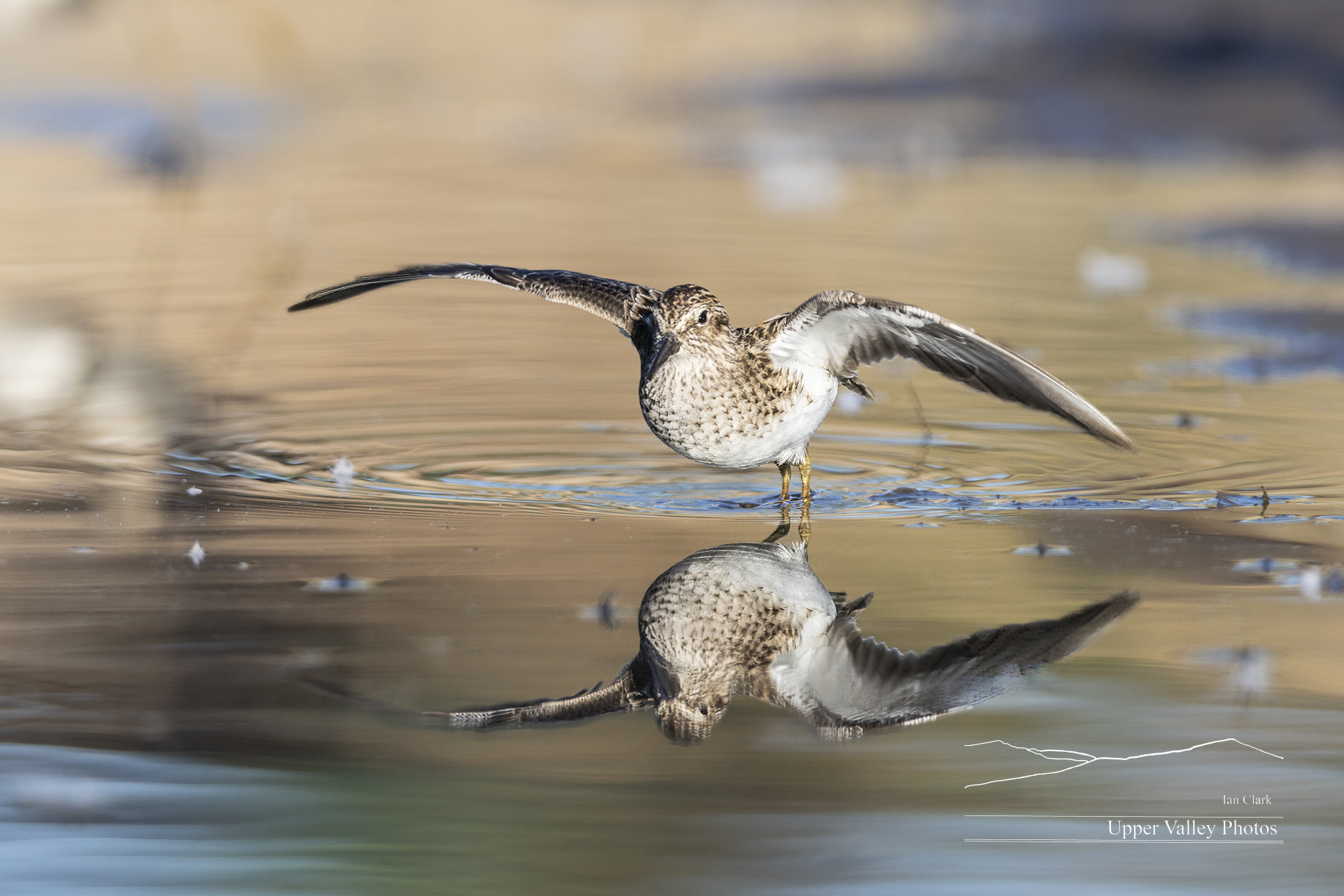
Another least sandpiper. Least sandpipers are allegedly the world’s smallest shorebirds. They’re often called ‘peeps’ for their size and call.
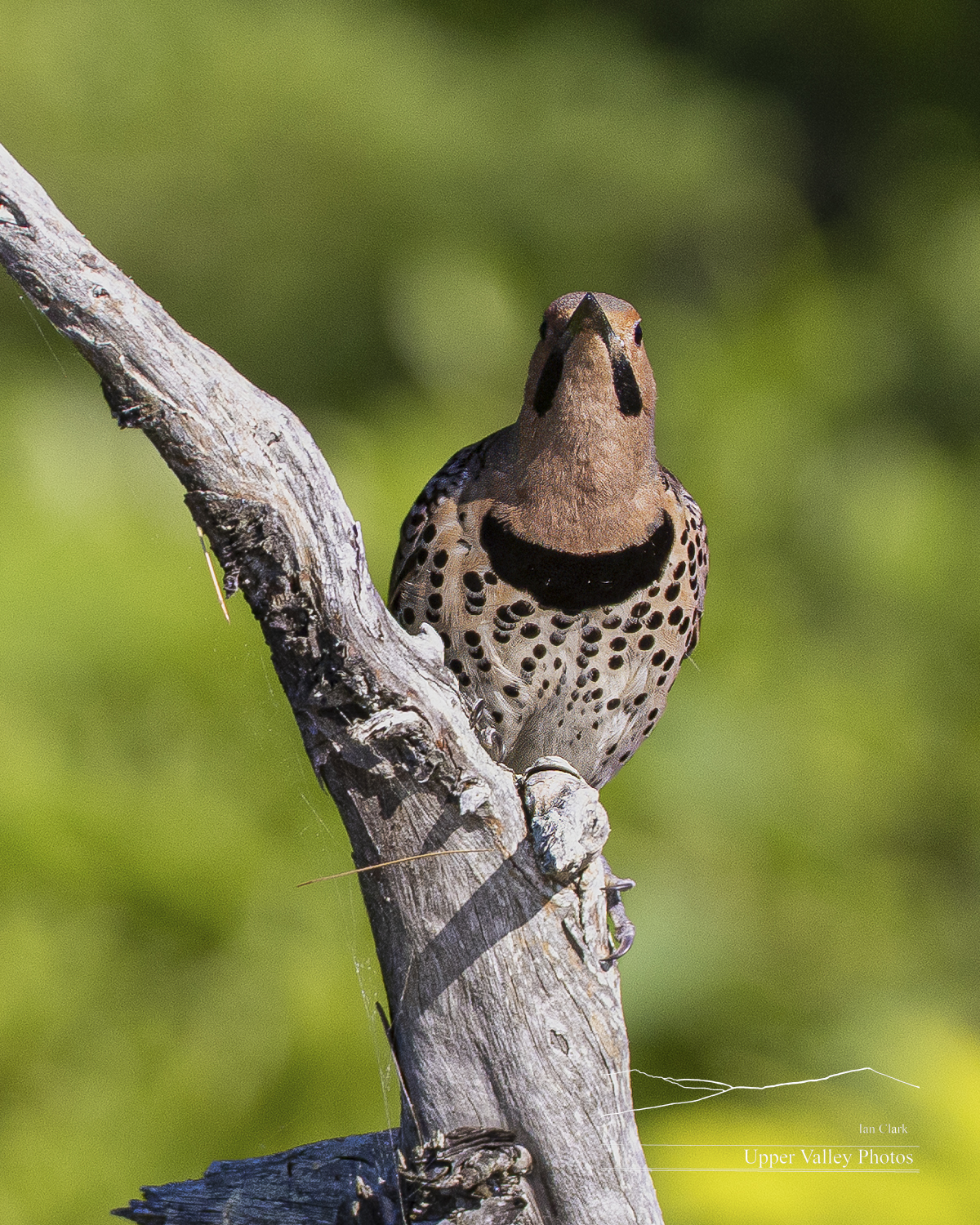
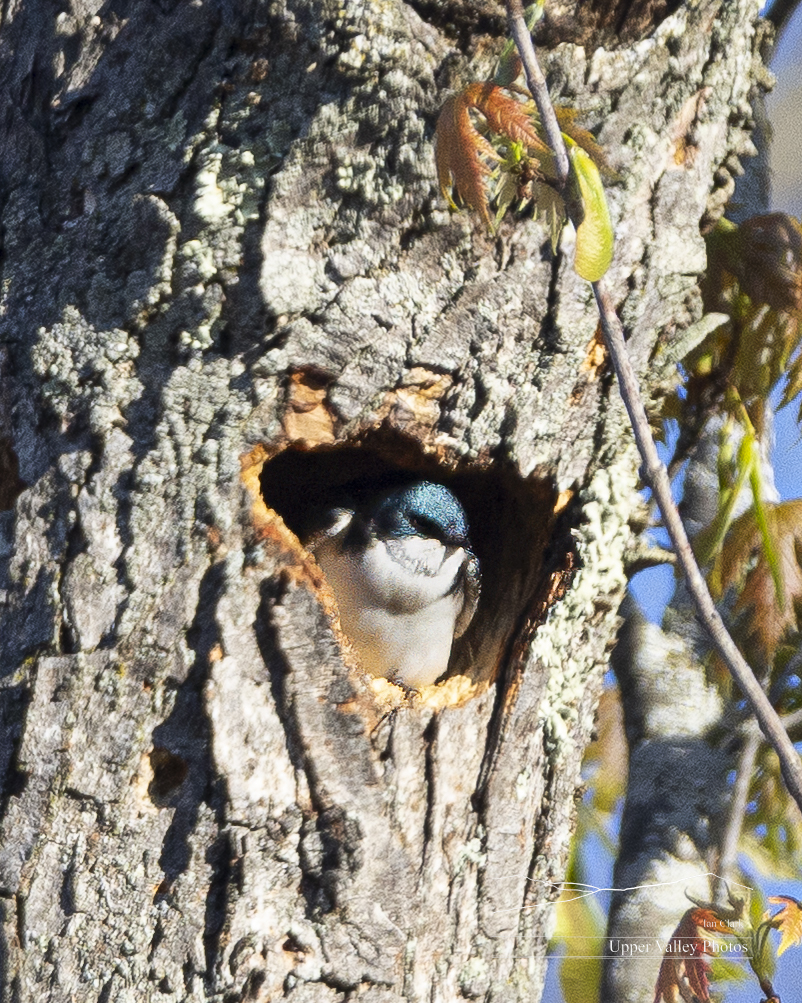
As I floated by, I checked to see how our northern flickers were doing. Only to be surprised to see a tree swallow in the nest the flickers had been working on. There were flickers calling in the area, but I don’t know where the couple from the last post settled.
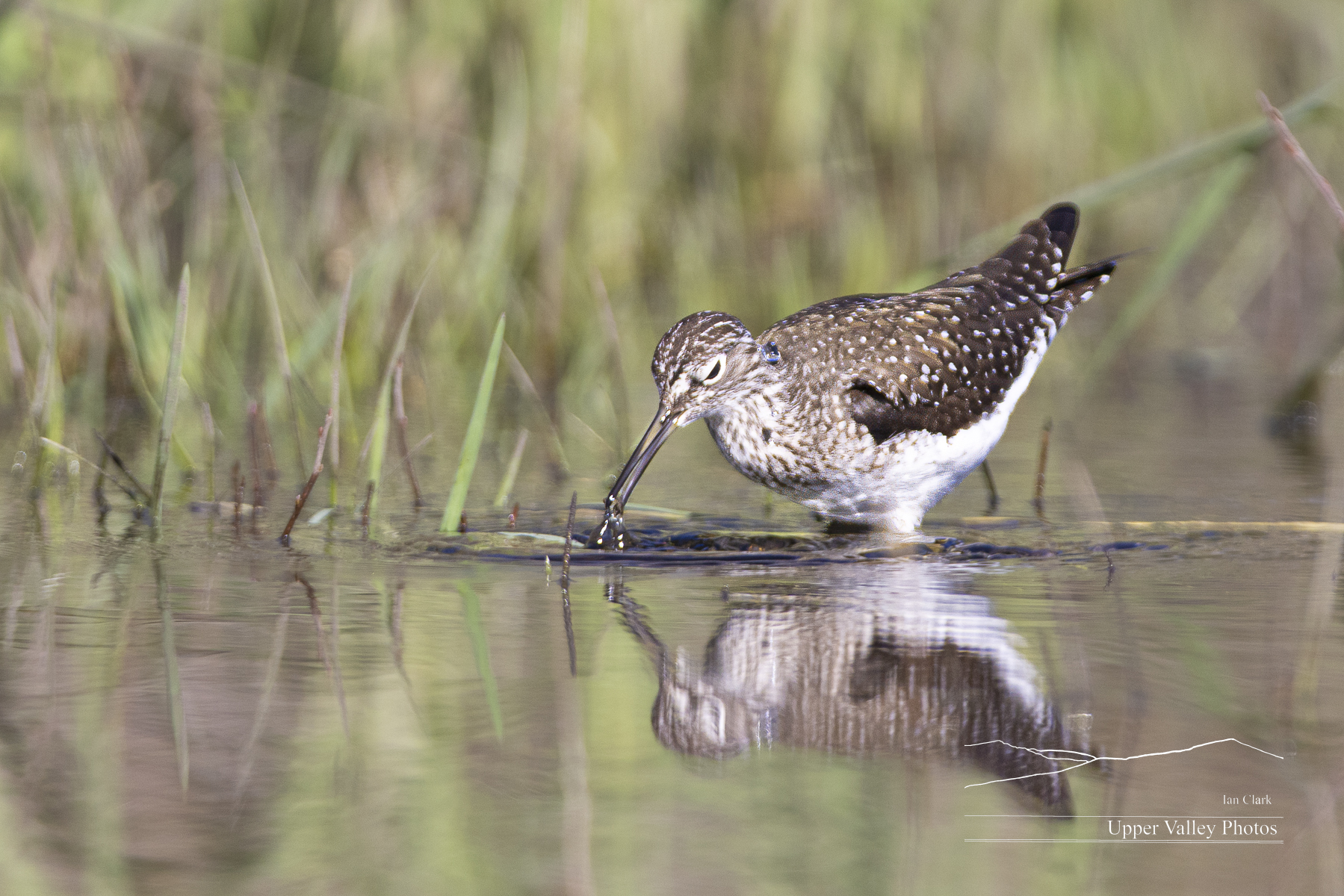
I beached the boat and watched this solitary sandpiper foraging for some time.
The same sandpiper finding a snack.
And the same bird with another catch.

I’m watching the weather, looks like we’re going to have a nice weekend, I’ll be back out early.

If you enjoy my posts, please sign up to get notified when I add a new post. I won’t sell or share your email, you’ll just get an email when I add a post. And you can do me a favor by sharing my blog with your friends by email or on social media. Thanks!
My 2025 Favorite Photos

Here’s a roundup of my favorite photos from my adventures in 2025.

I’ll be showing my slideshow on visiting the puffins on Machias Seals Island at 2:30 pm on Sunday March 22 at the Tenney Memorial Library, Route 5, Newbury, VT. Free and everyone welcome. And, stay tuned, the Piermont, NH, Library wants me do a slideshow of the best of 2025. We’re checking the dates the hall is available. It should be one of the first three Sundays in March.

And it is last call for my 2026 Wildlife Calendar. I’ve got only a few left, you can get yours on my site here. There are lots of images available in many sizes from note cards to wall art.

OK, the critters….

Last winter, I took several trips to the Maine, New Hampshire and Massachusetts coasts. The goal was to find owls.

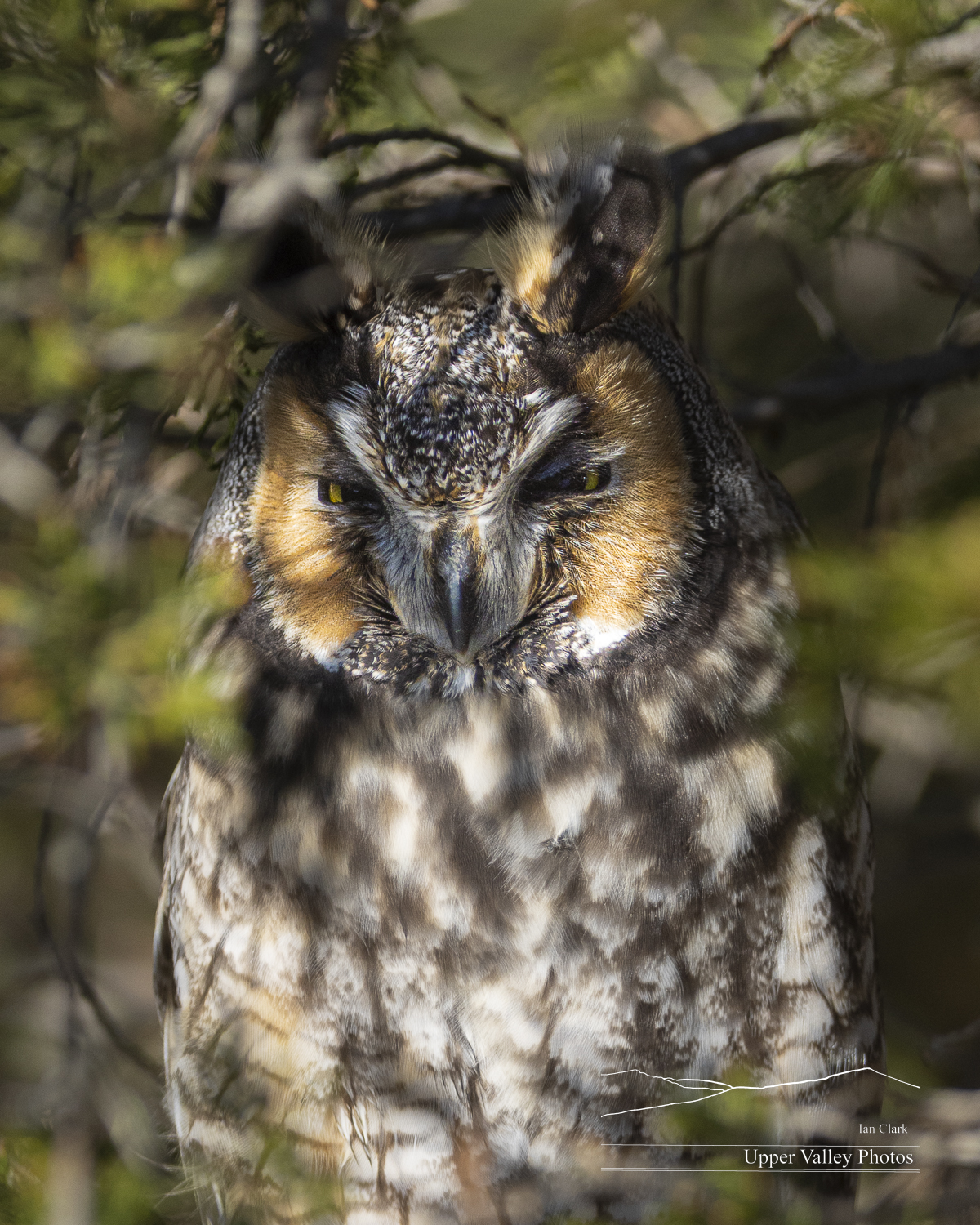
This is Leo, the long-eared owl. He’s on my list. There were three long-eared owls living in about half an acre of trees alongside a parking lot. Even in that small a hideout, they were discouragingly hard to find. I spent about 40 hours waiting for them to move out to sun themselves. Without success. And, it didn’t help that every photographer east of the Mississippi would stop by to show me shots they’d taken of all three owls sitting together in perfect light in the open. This was the clearest shot I could get.

There were several snowy owls around the coast. They all seemed to have found perches that kept the crowds at a distance.

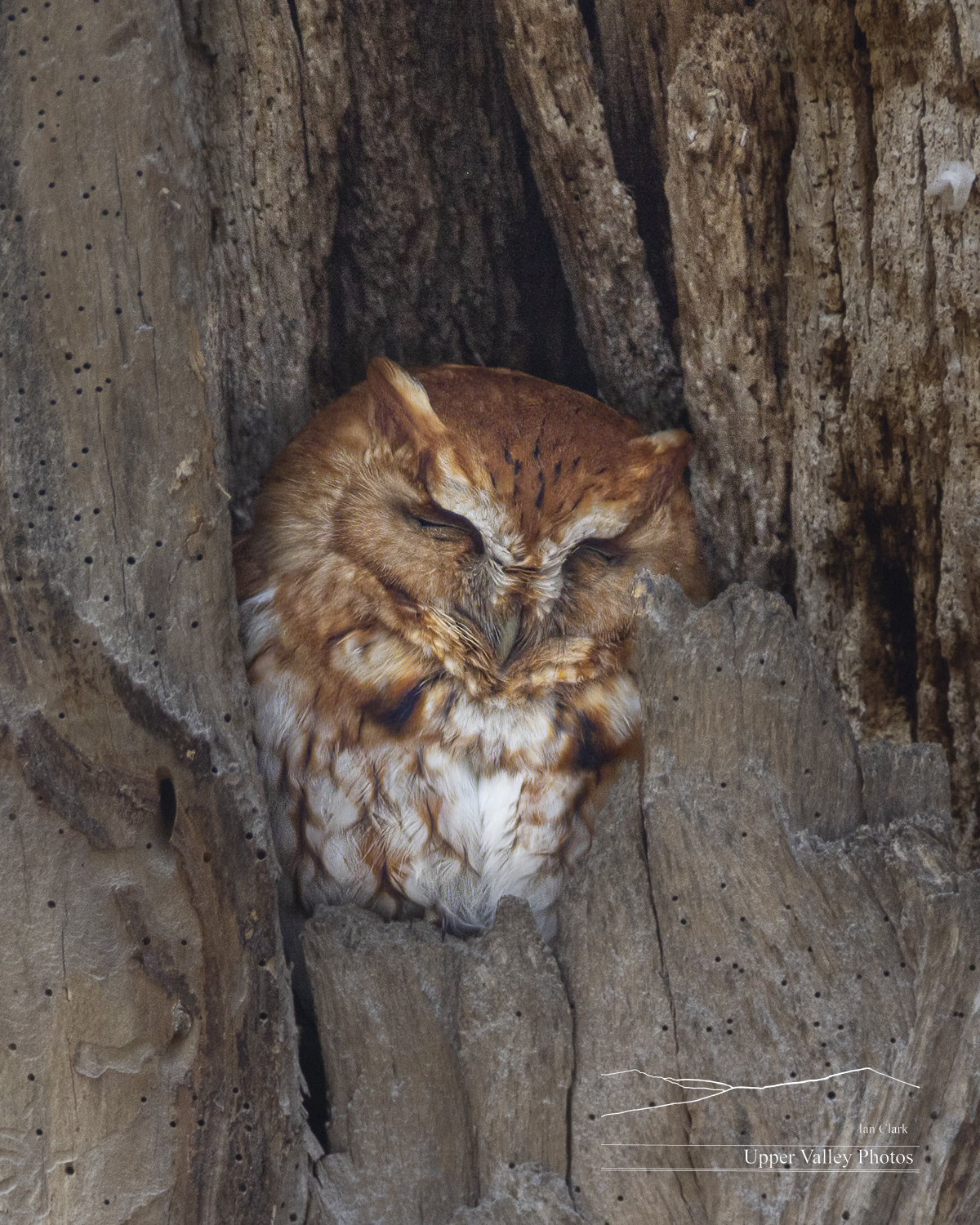
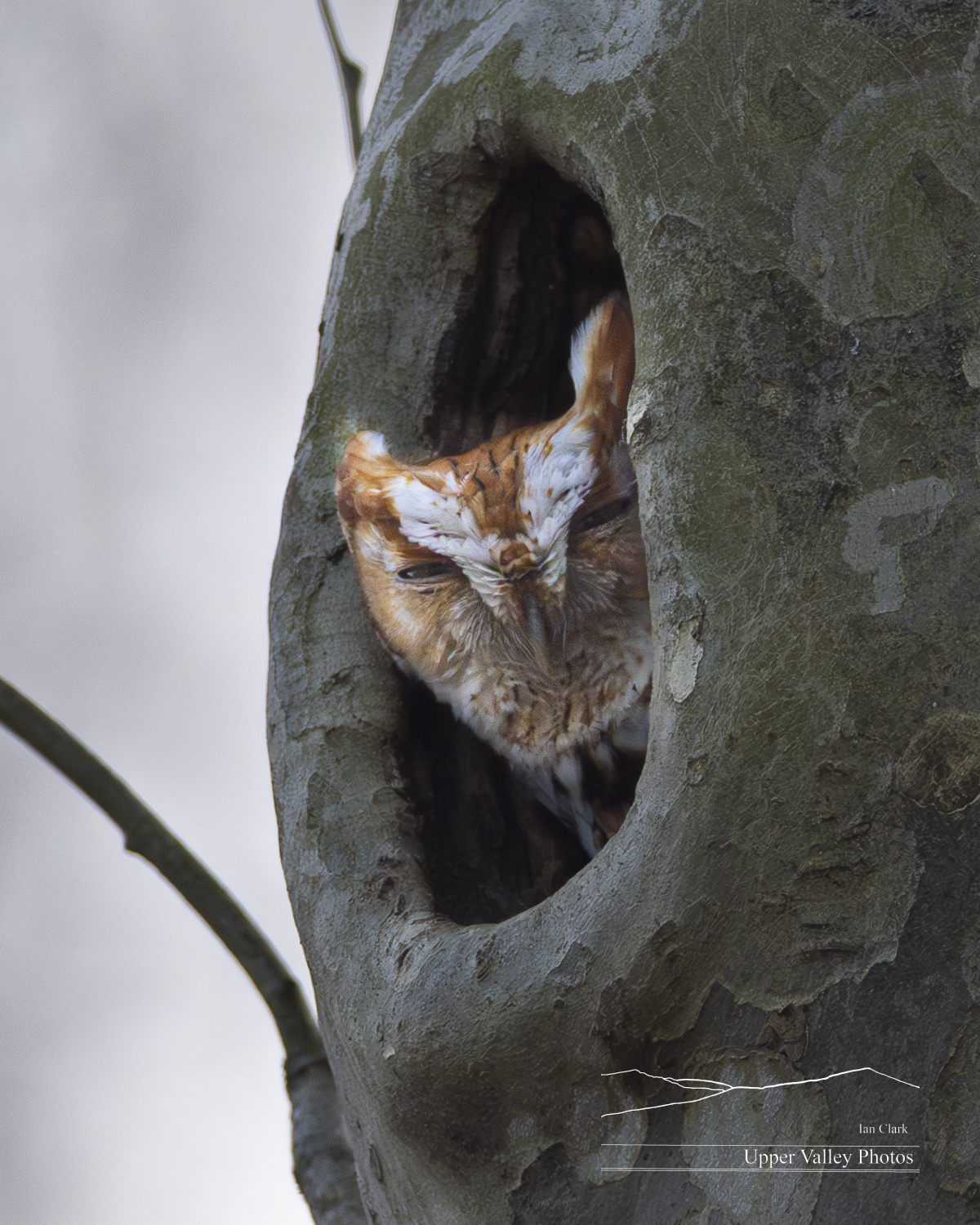
There are a couple screech owls that have gained fame with the photographers. They were more kind, snoozing in openings of their nests.

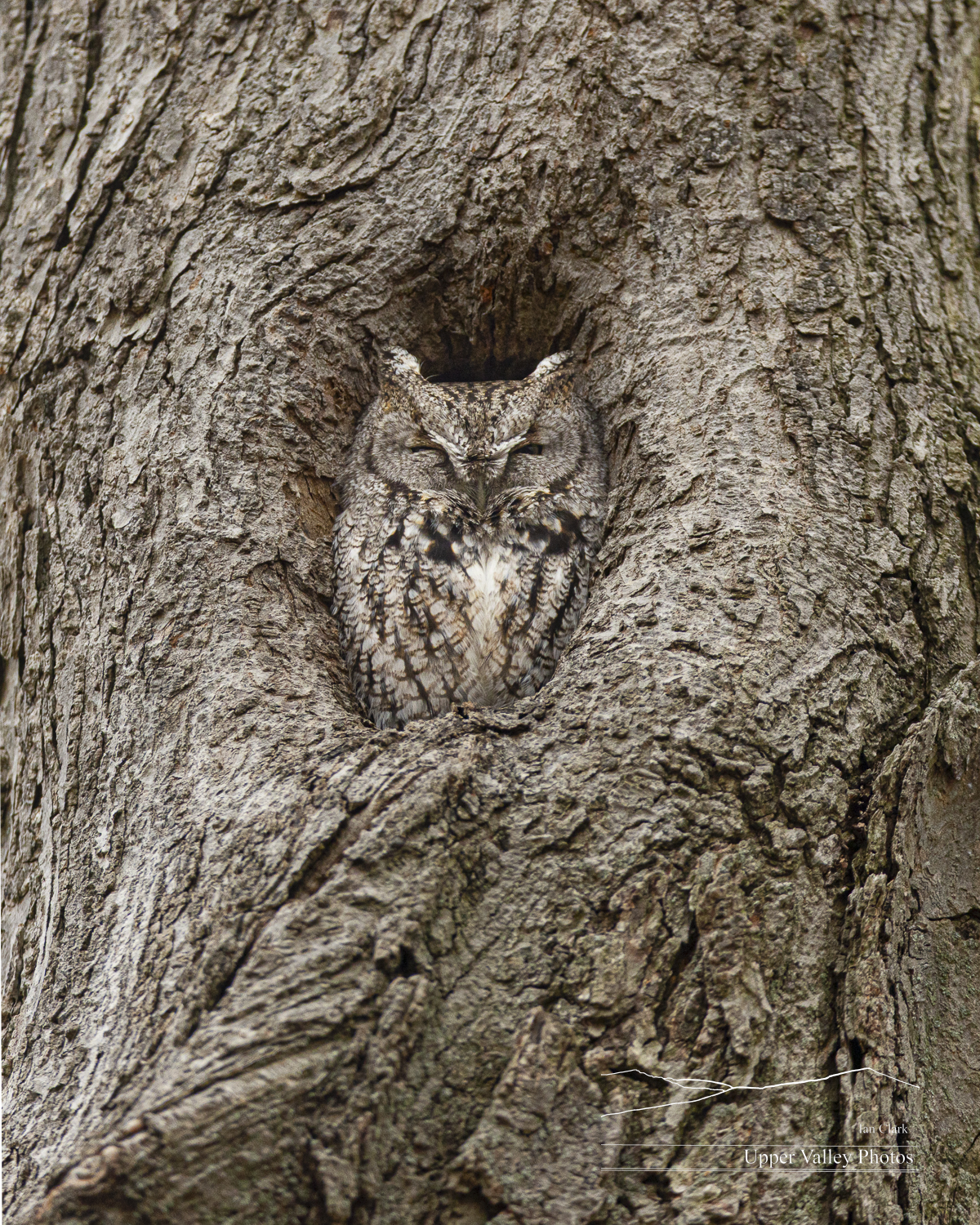
Another screech owl snoozing in his doorway.

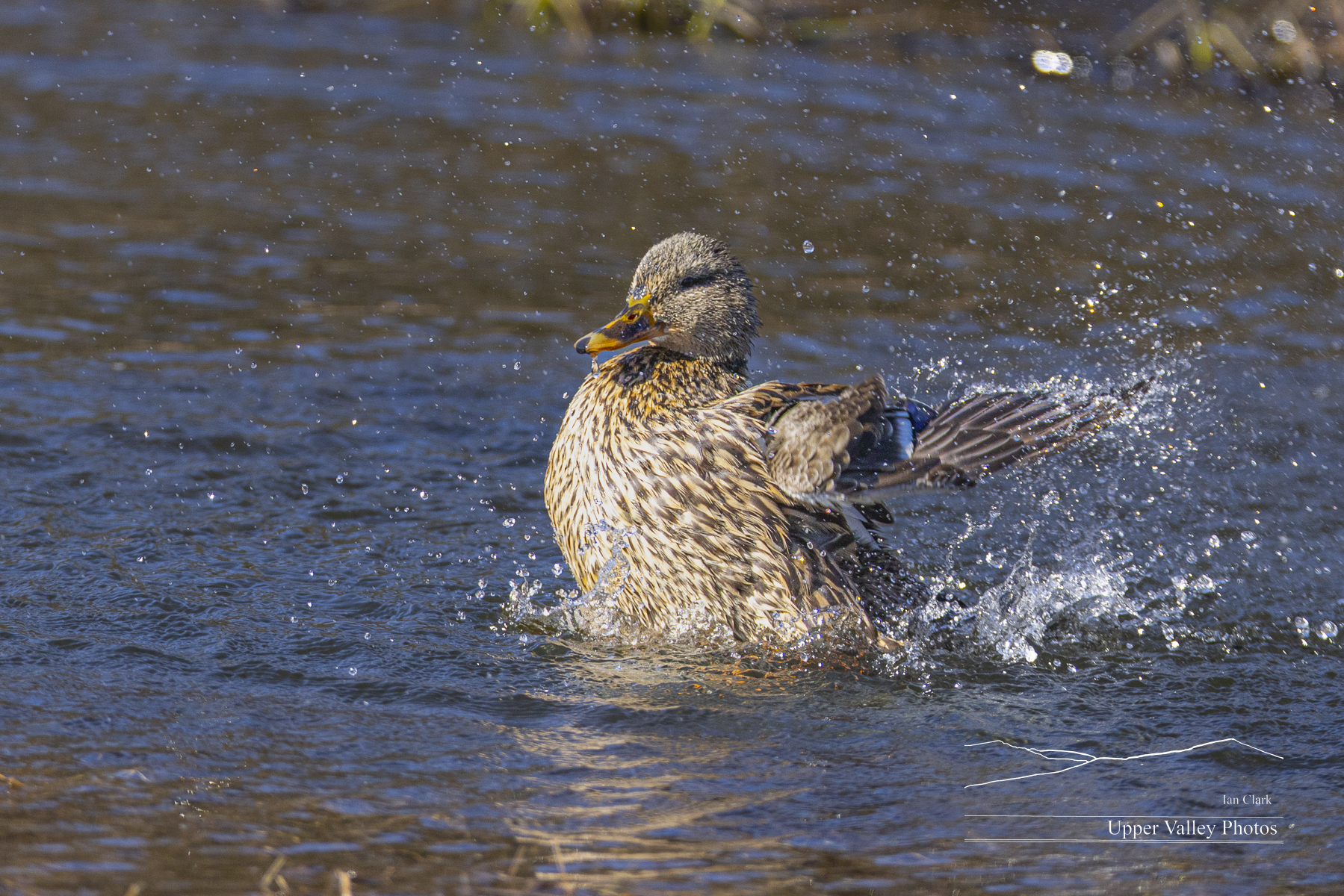
My first few excursions out in the spring found the early ducks returning. Here’s Mrs. Mallard taking a bath.

And Mr. Mallard got a little too rambunctious while bathing…..

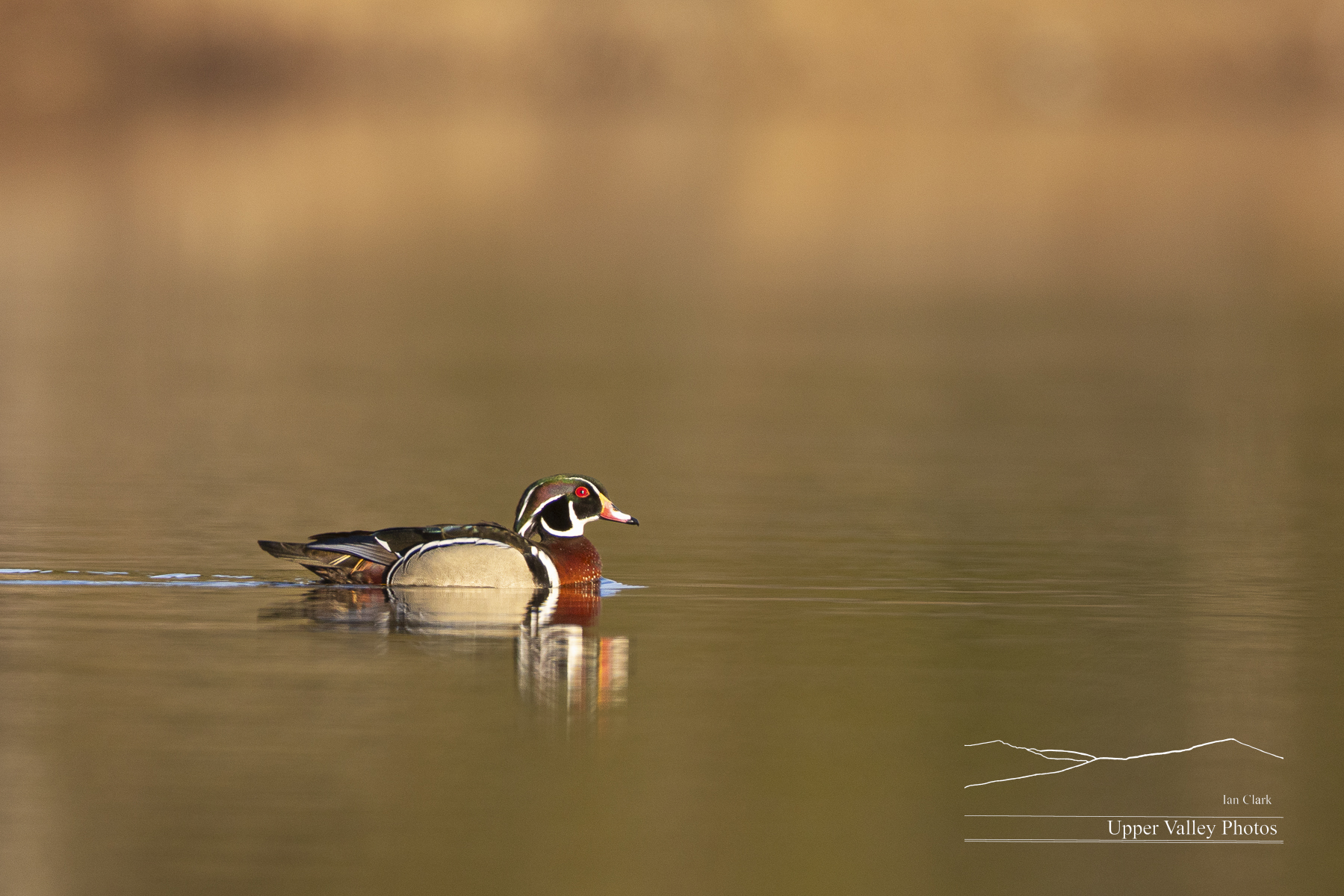
Wood ducks are always a treat to photograph.

Another screech owl, this time peering out as he gets ready for an evening out.

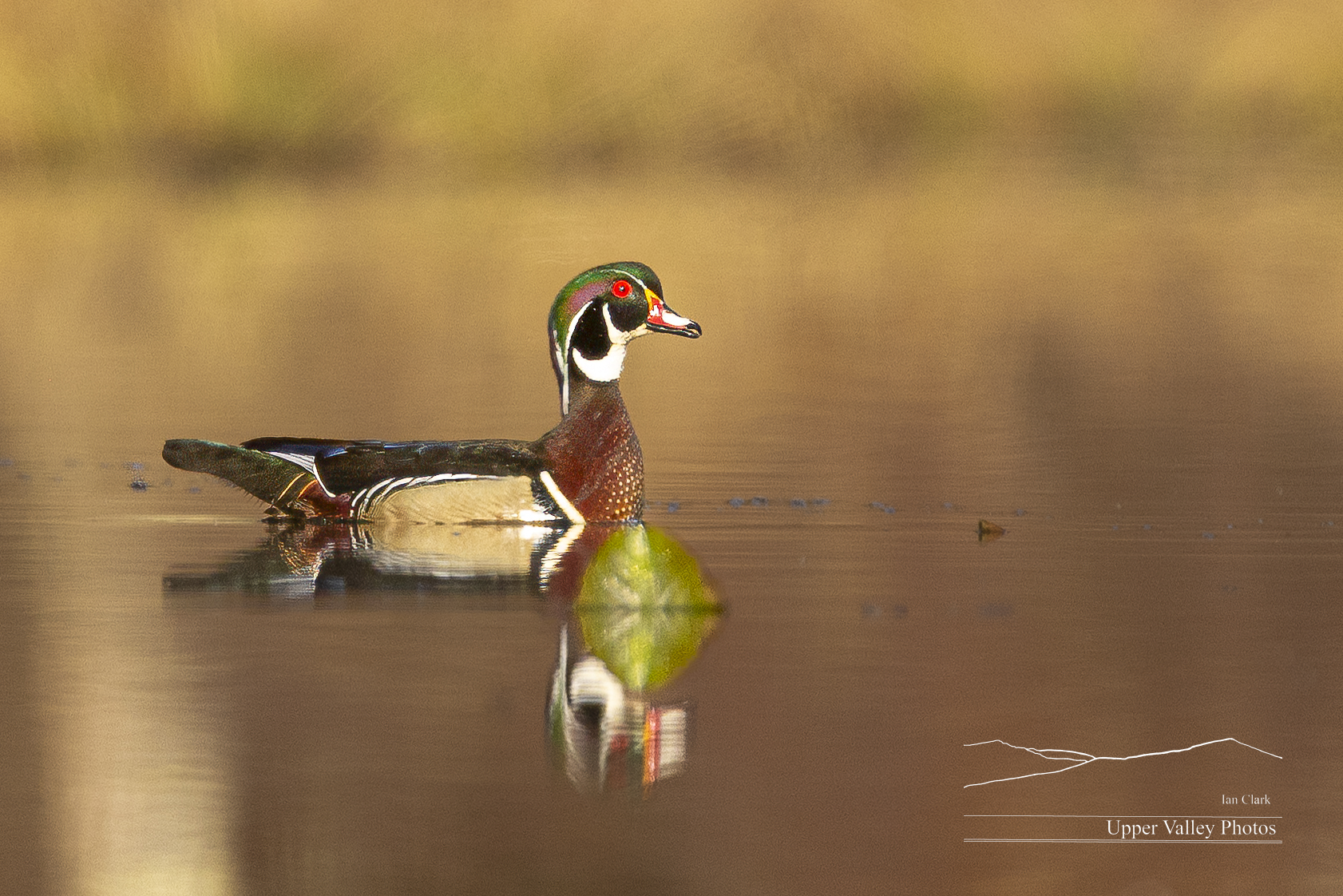
Another trip out found another wood duck.

And a solitary sandpiper.

Sometimes you don’t even need a cute critter to make a nice photo.

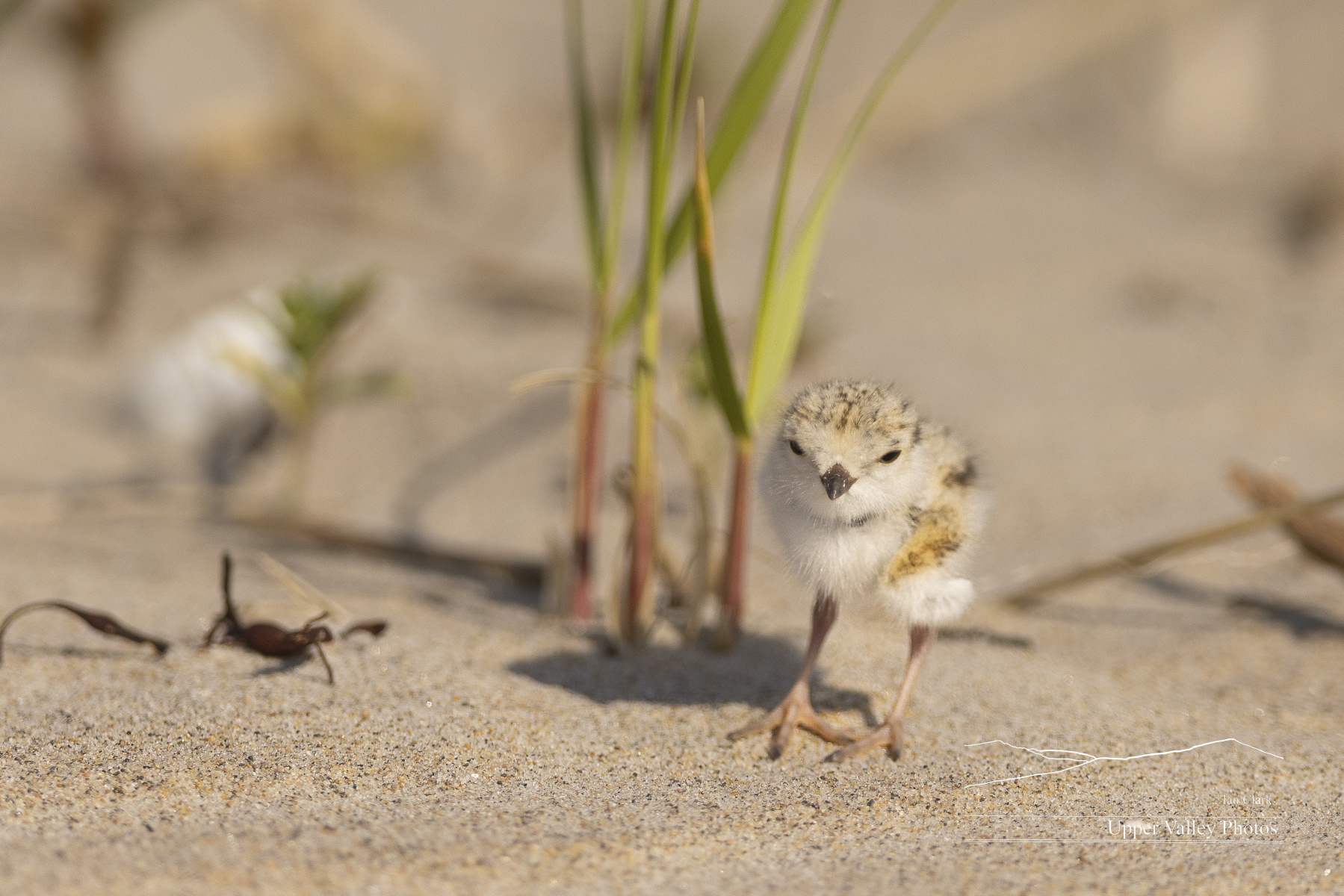
In early June, I retuned to the shore, just in time to catch the first piping plover chicks hatching. These chicks are one day old.

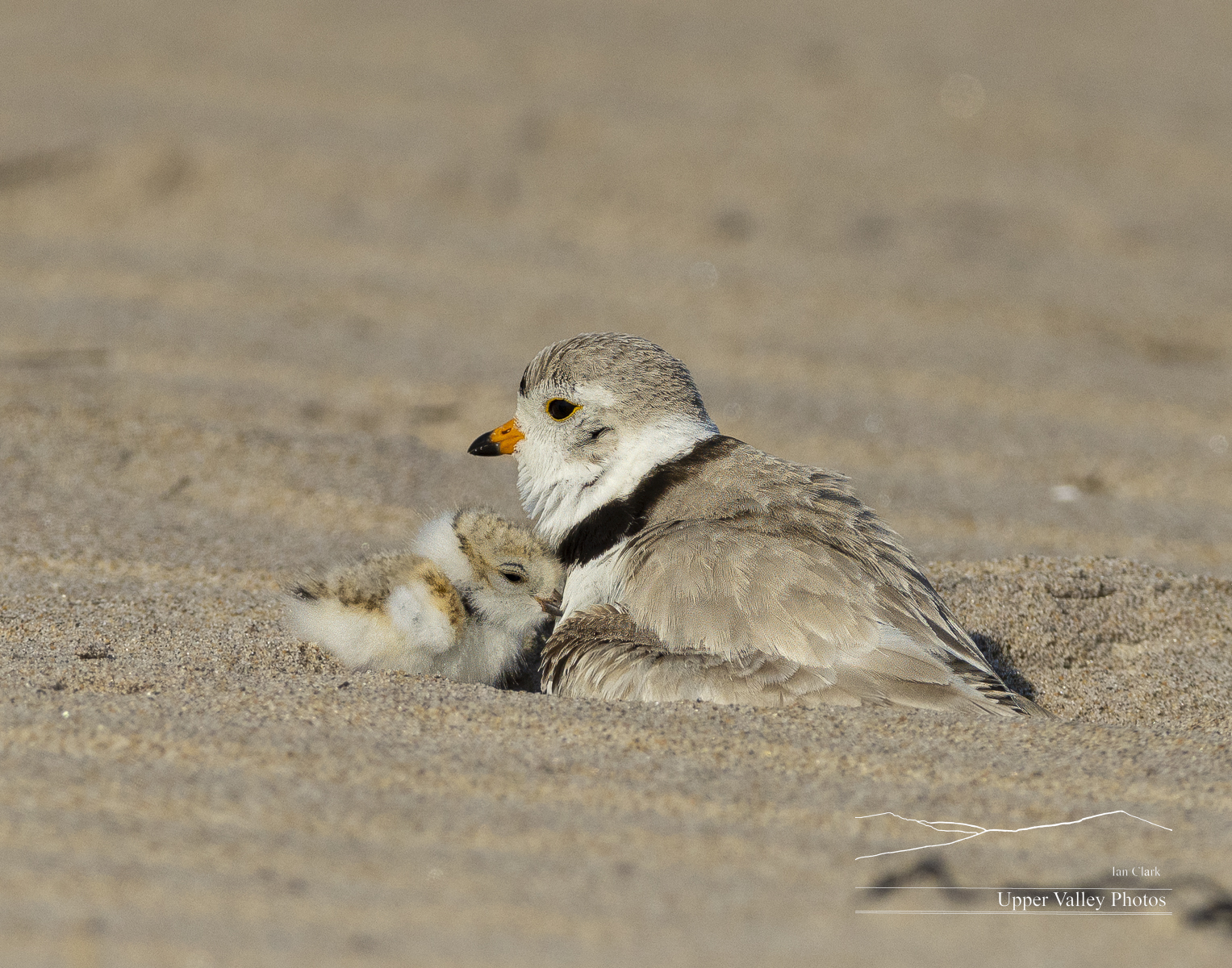
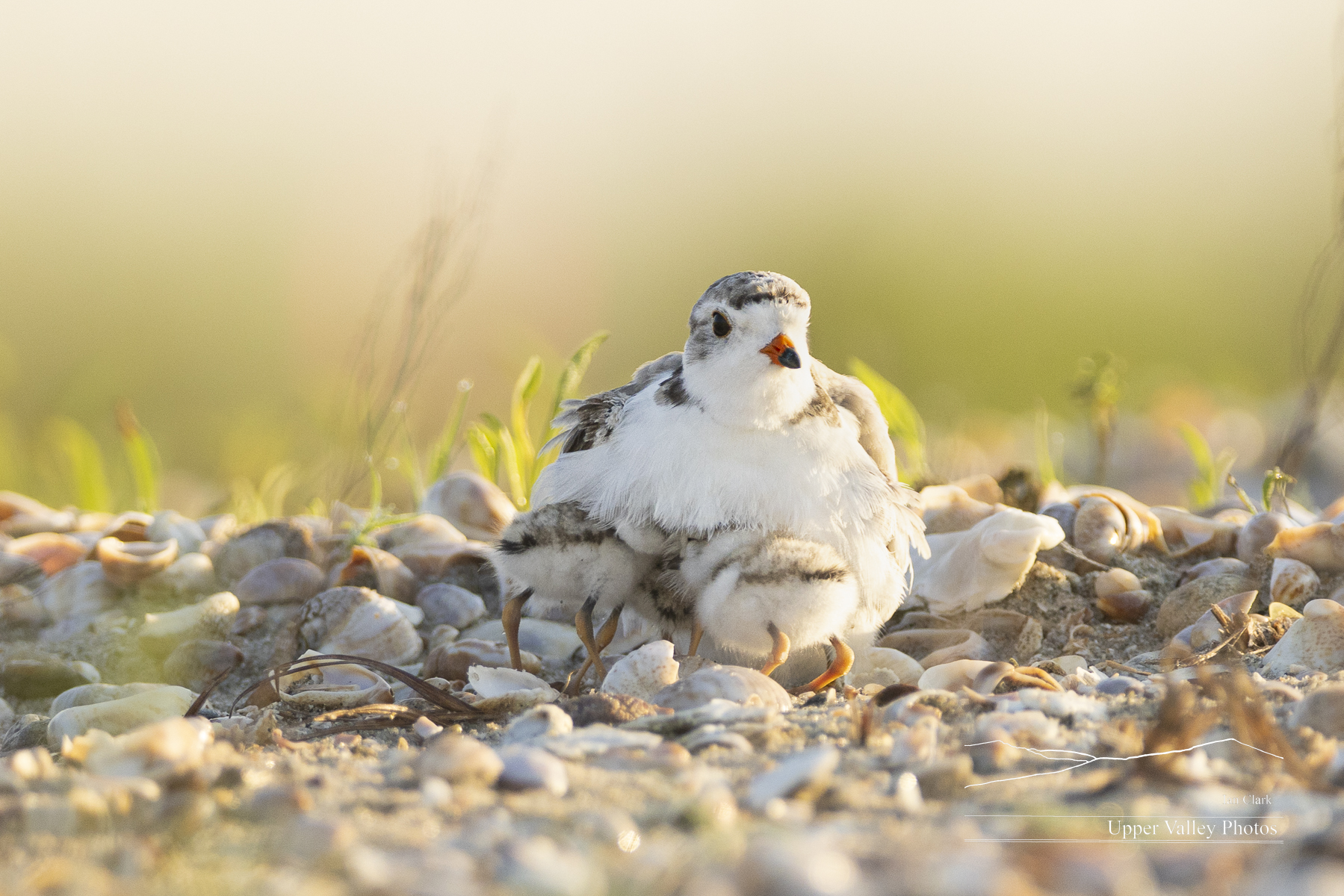
The chicks hide under their parents for protection and to keep warm.

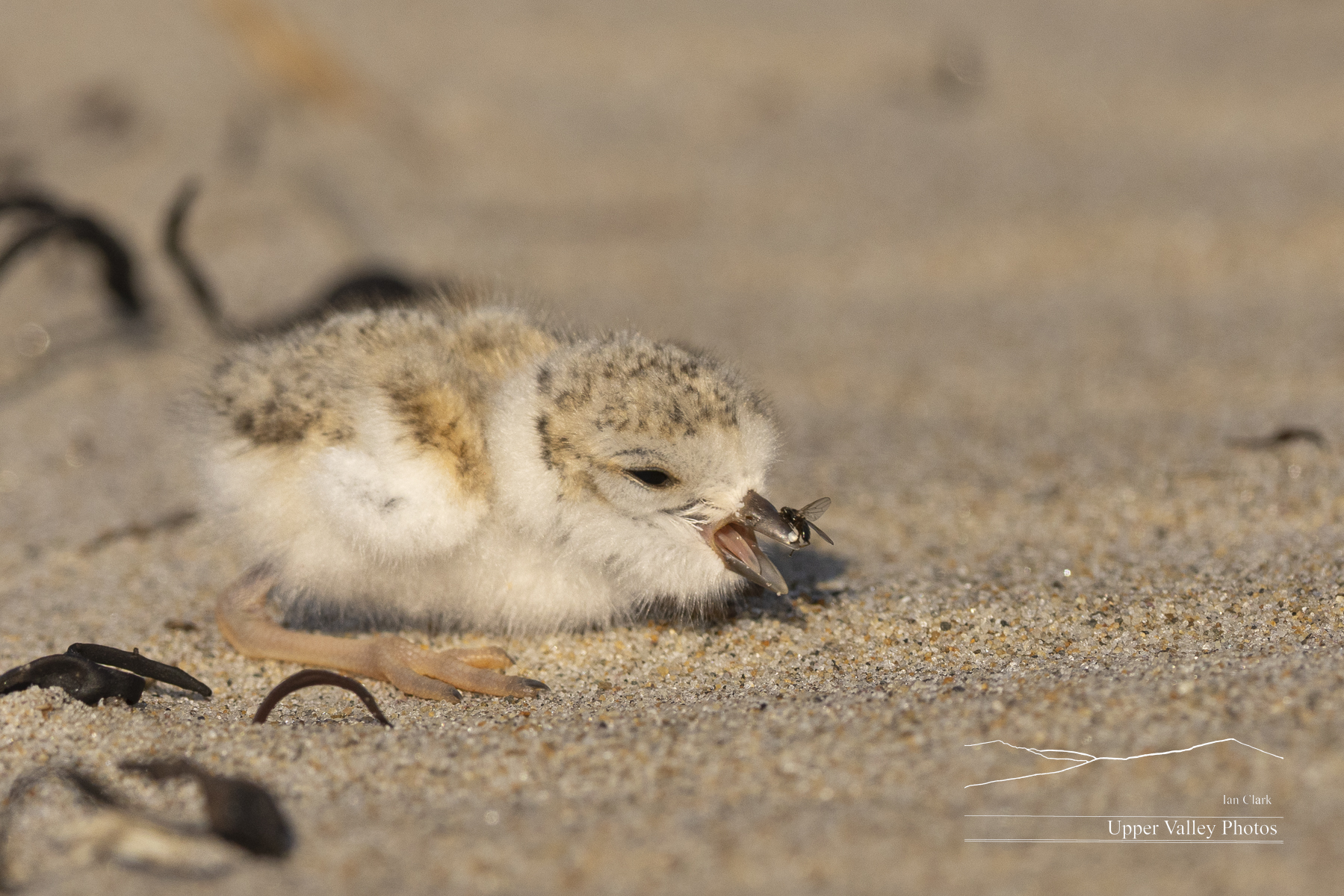
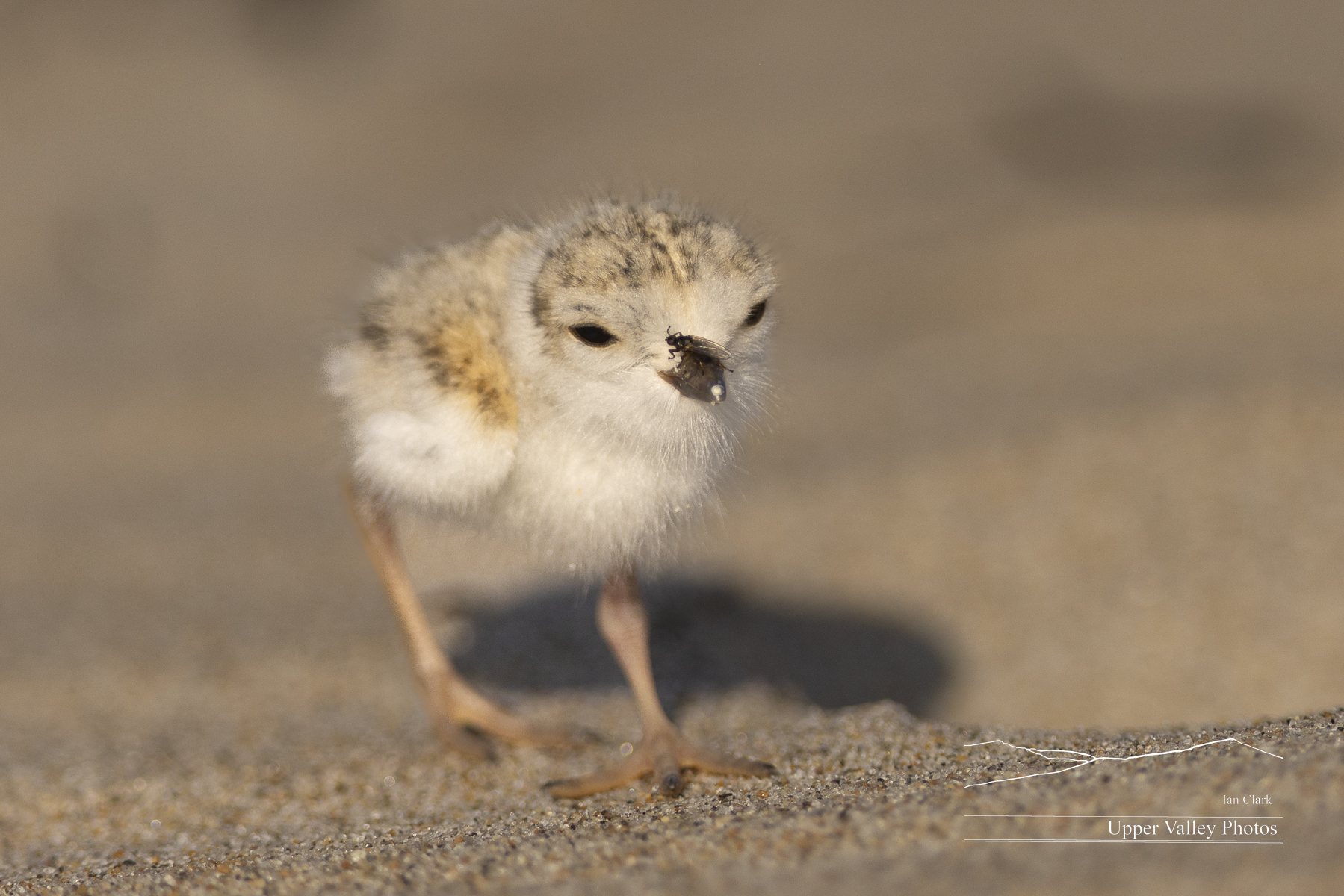
But they’re capable of foraging by themselves. This chick attempted to nab a fly. The fly was lucky, and managed to climb atop the chick’s bill. The chick wore the fly around a bit before the fly took off to live to fly another day.

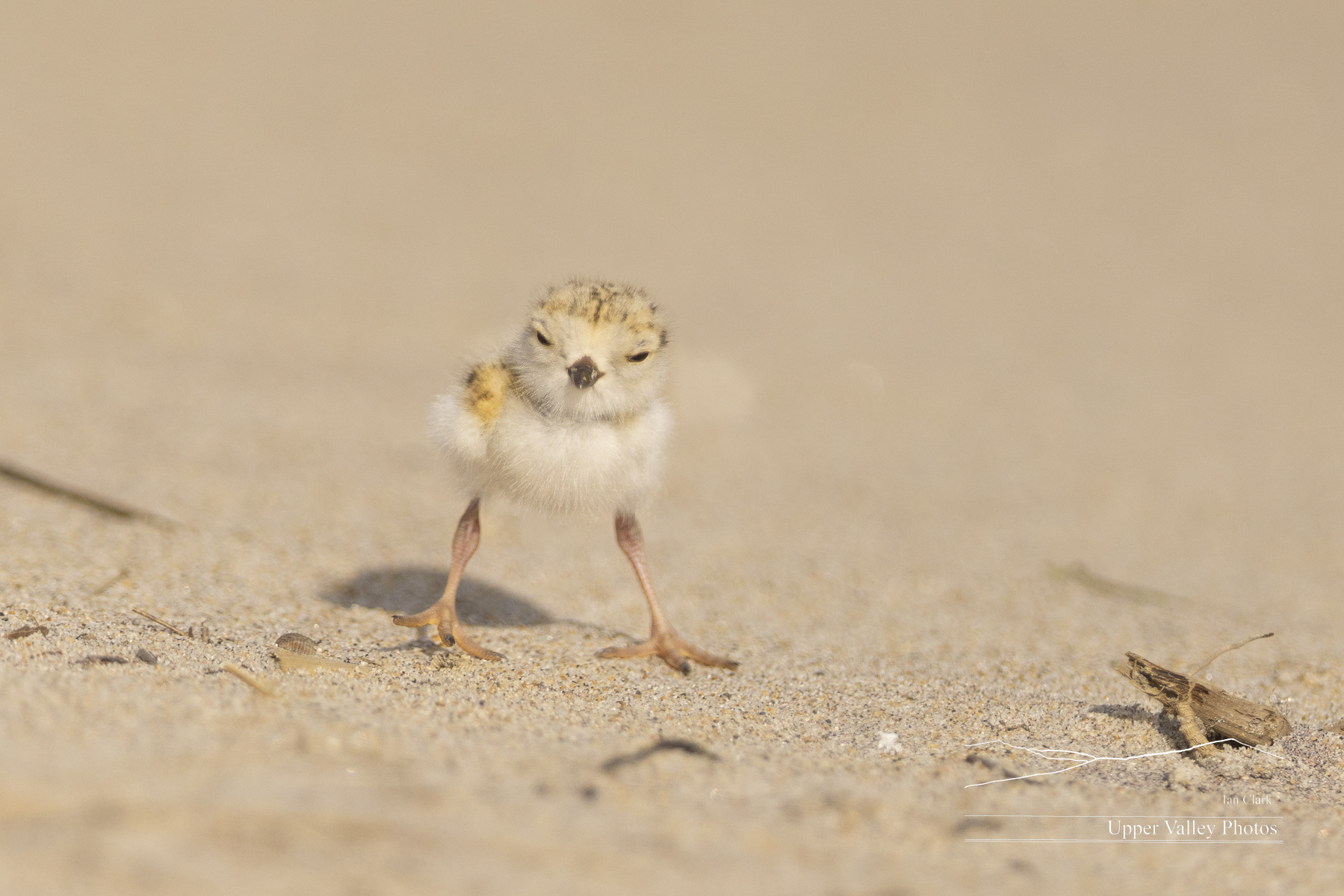
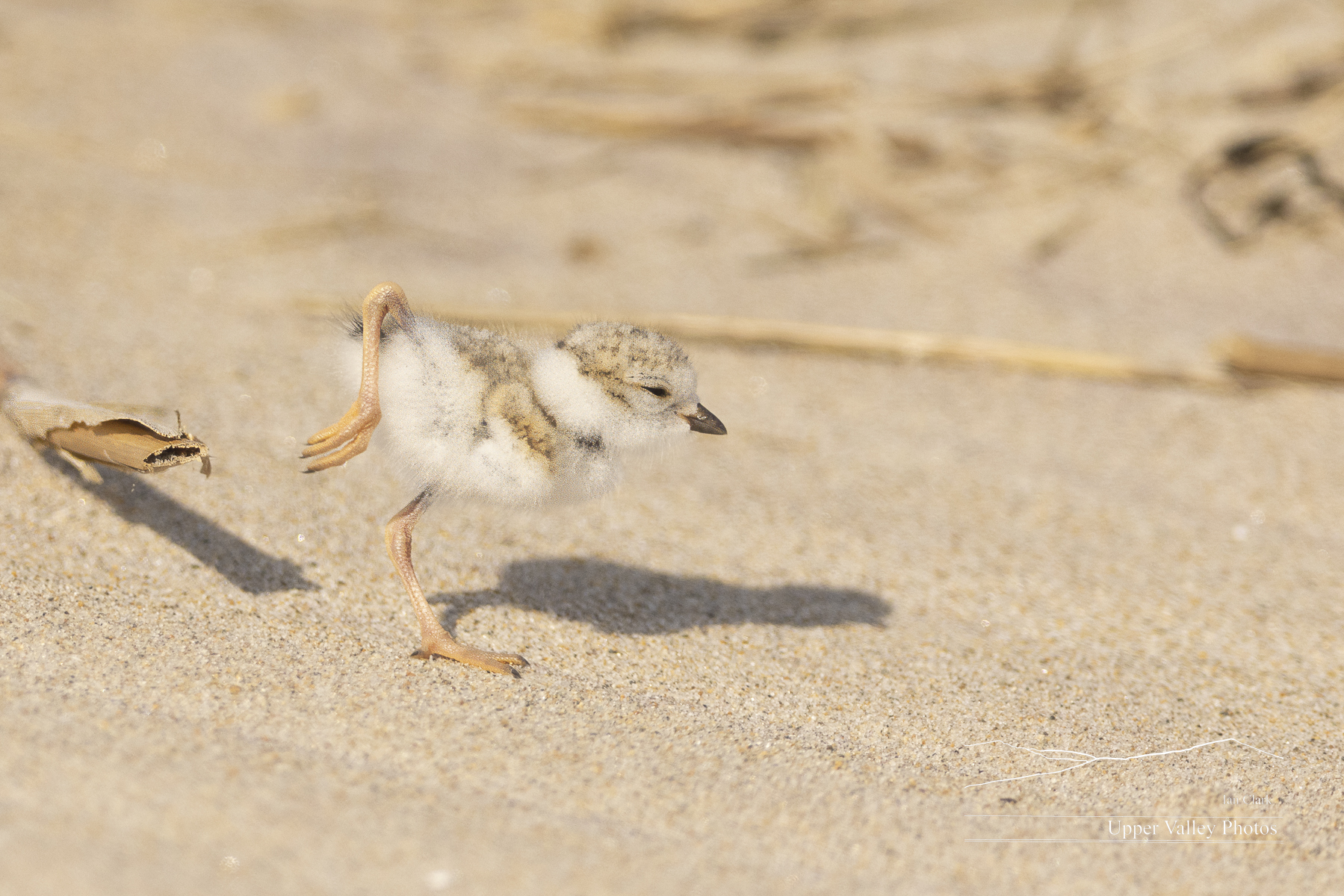
The chicks are only about the size of cotton ball and don’t seem to fit their legs. They’re capable of short bursts of speed but often look awkward when they’re walking.

He’ll soon get the hang of this walking stuff….

This guy looks like he’s got it down..

The chicks scoot along the beach using the grass as cover.

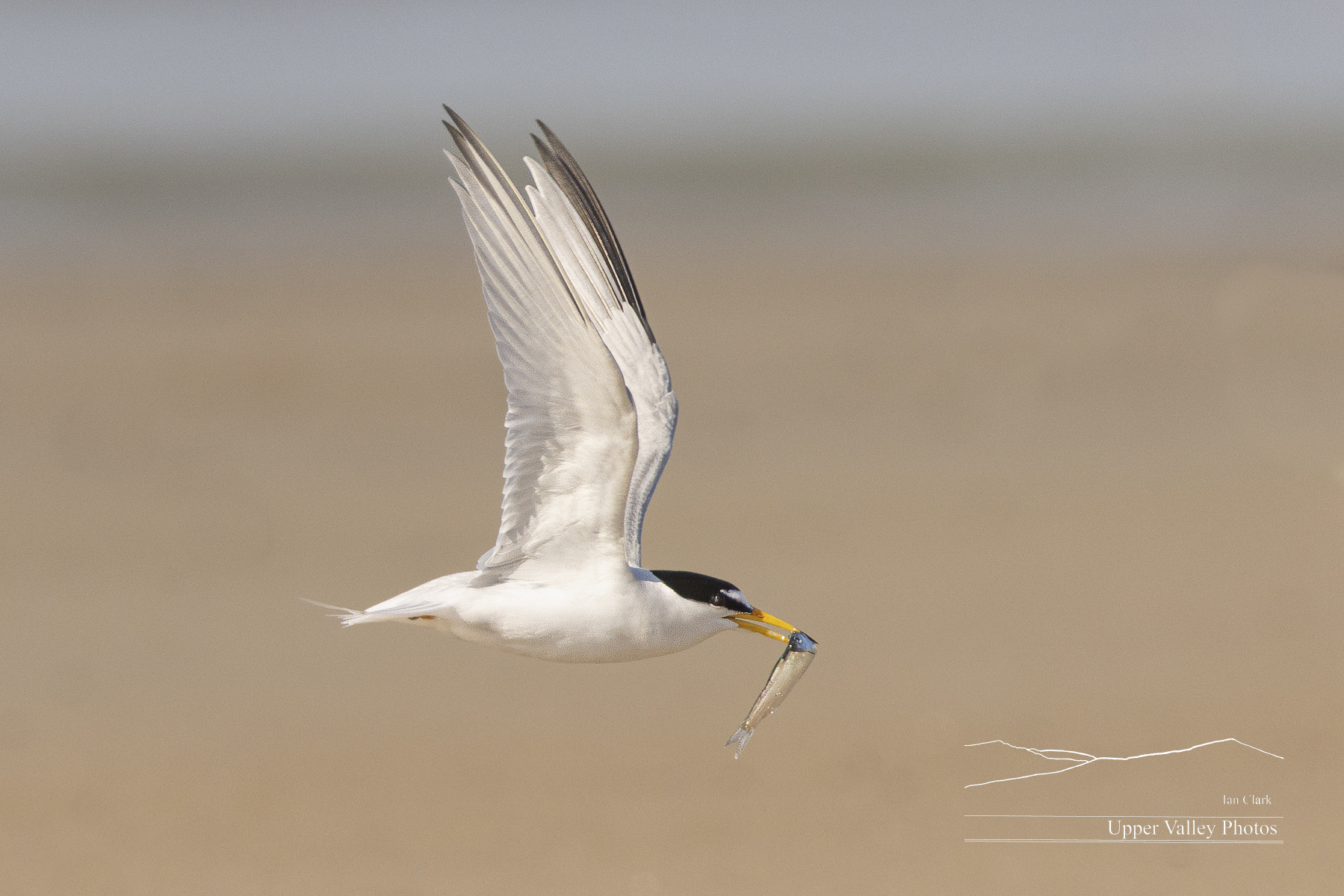
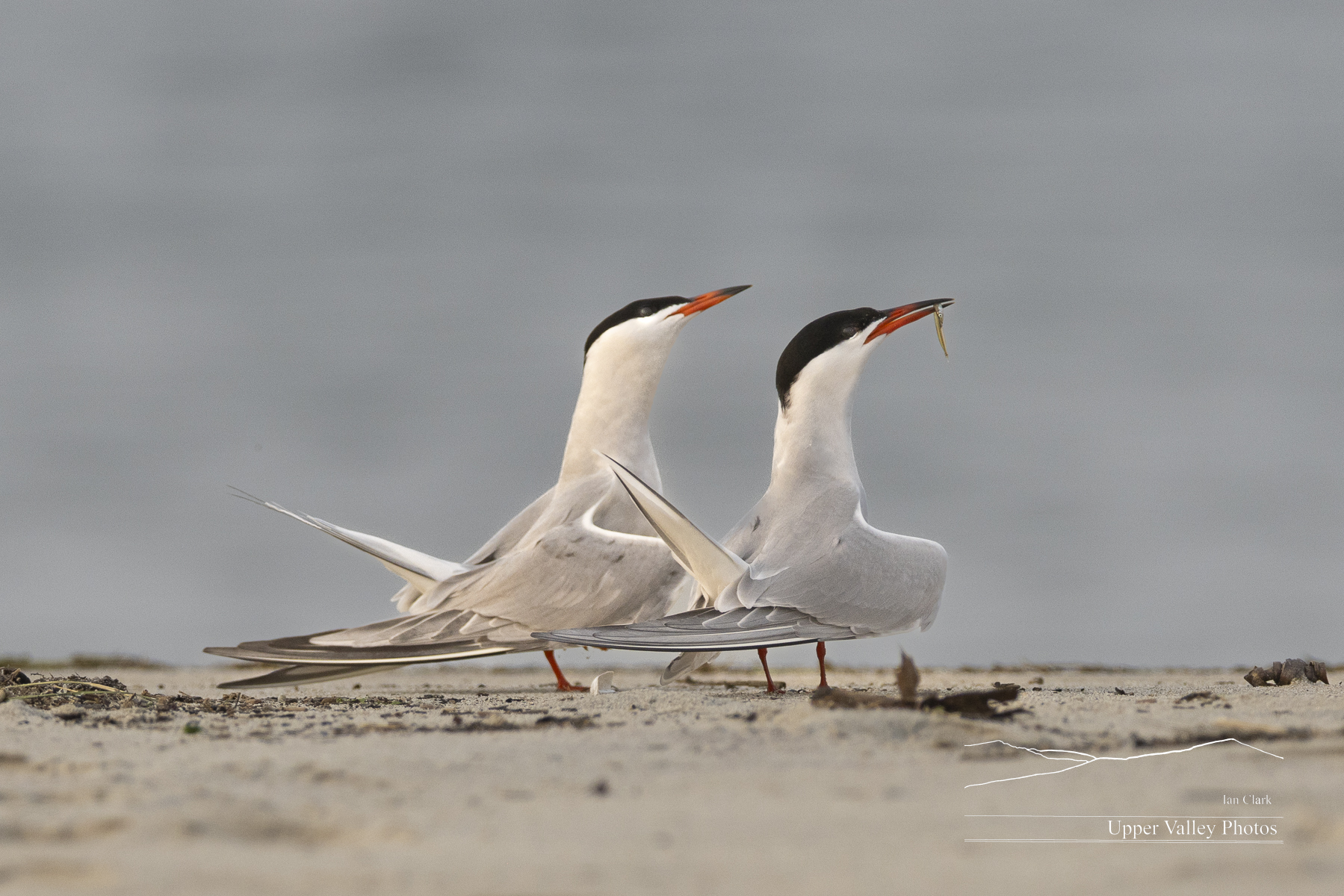
The beach also had a large colony of common and least terns. They’re constantly coming and going. And, they’re not shy about dive bombing anyone that disturbs them. The males carry fish around to present to the ladies. If the lady accepts the fish, they become a pair for the season.

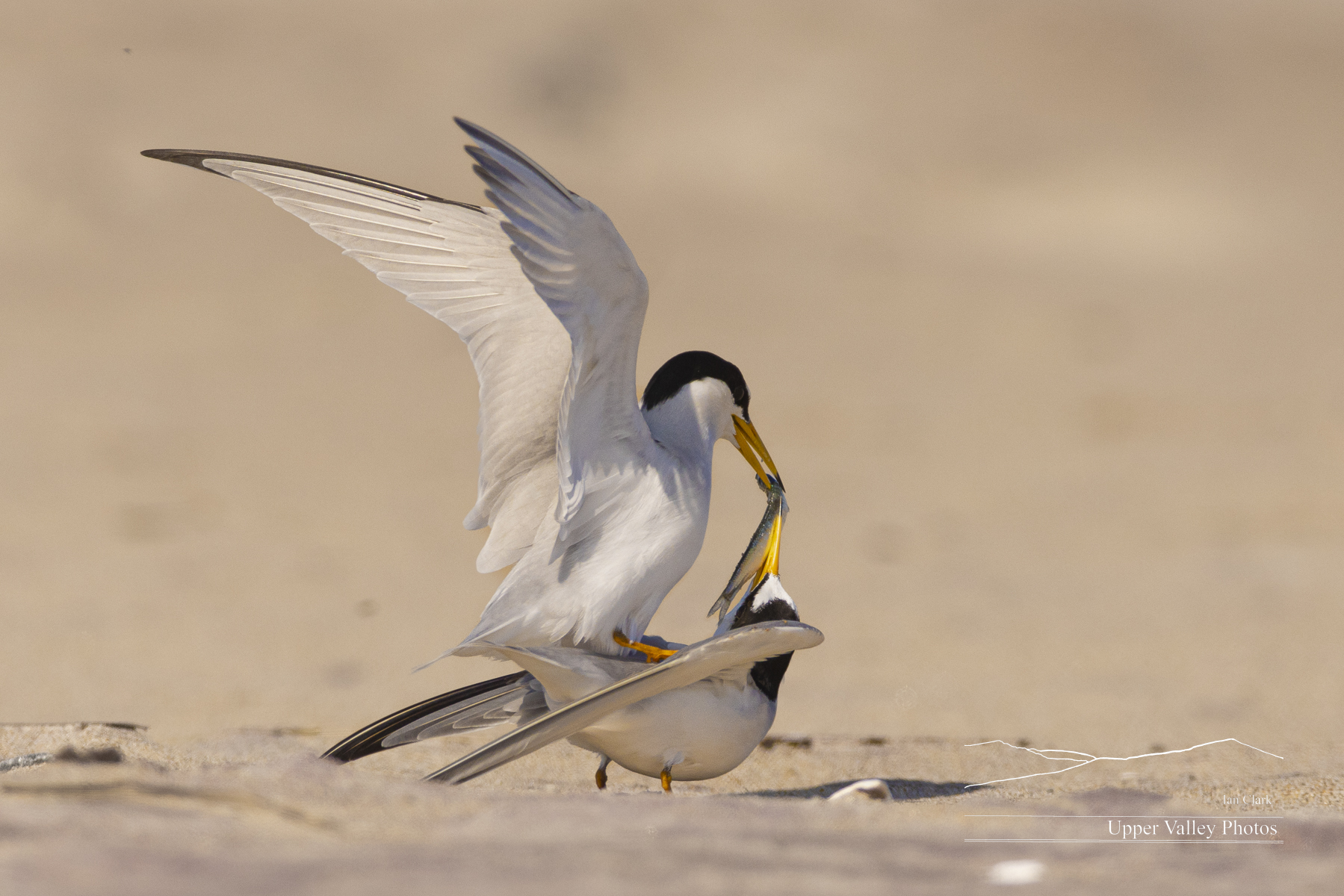
This may be the world’s most inept male tern. He presented the fish to his lady and she showed she was receptive. But the male didn’t catch on for some time, with the female presenting and chirping away until he figured it out.

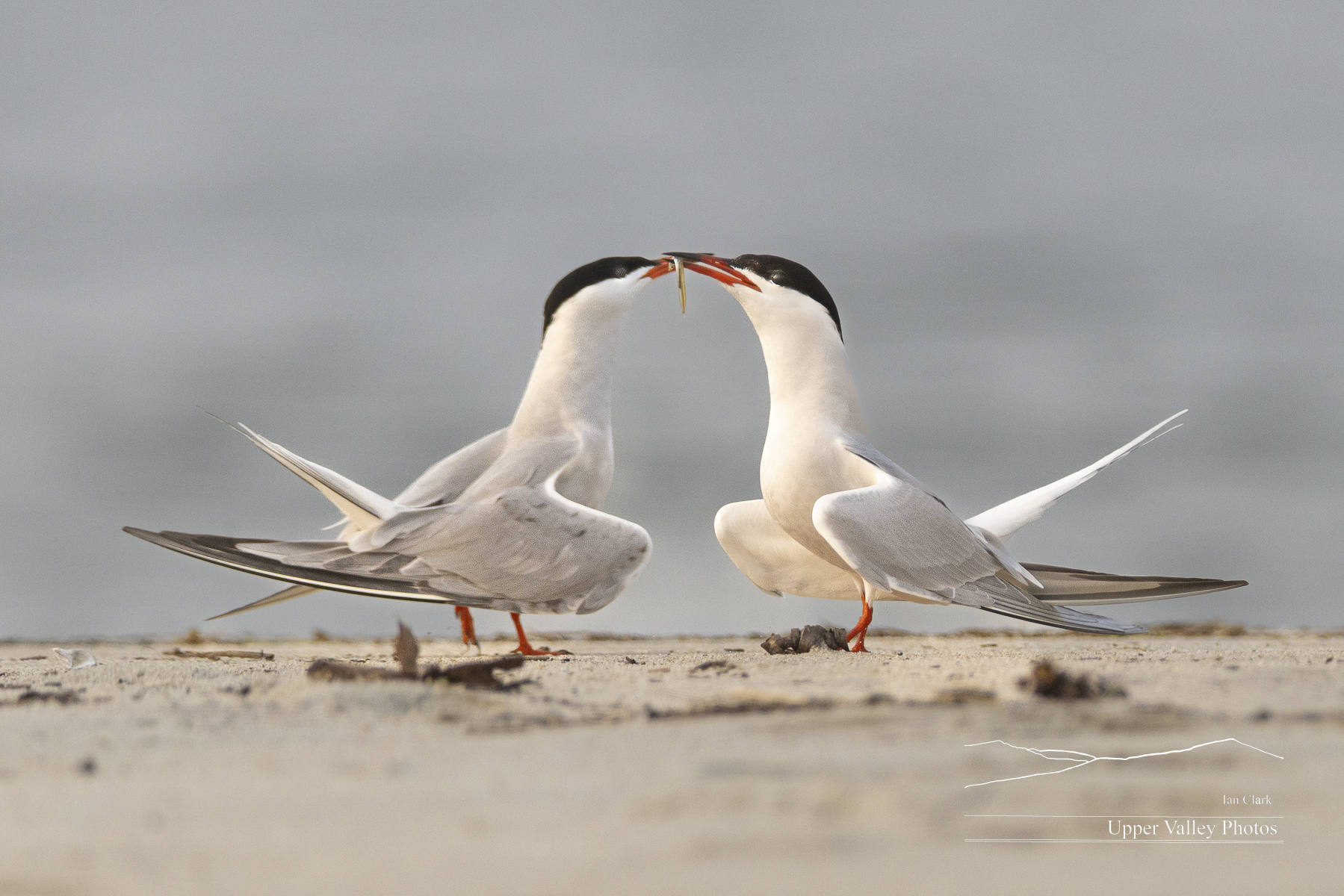
Here’s a pair of common terns doing a synchronized dance as a courtship display.

And more dancing…

And completing the dance just before mating.

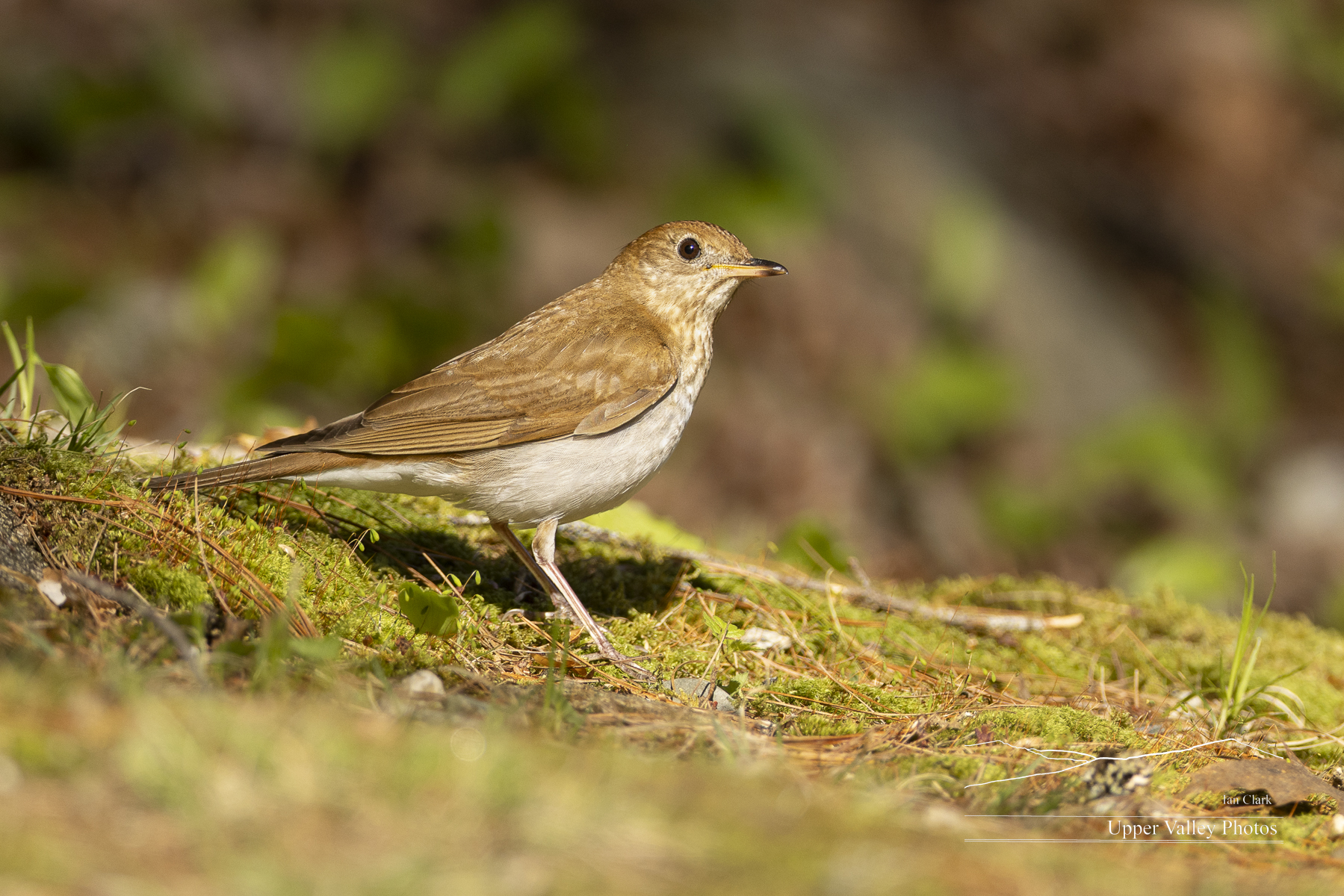
On one of my early trips out in the kayak, this veery showed up as I was loading up. He? sat on a branch that was overhanging my car, just about at eye level. He was unperturbed when I put the boat on the roof, and soon was foraging almost underfoot. I took the hint and got the camera back out.

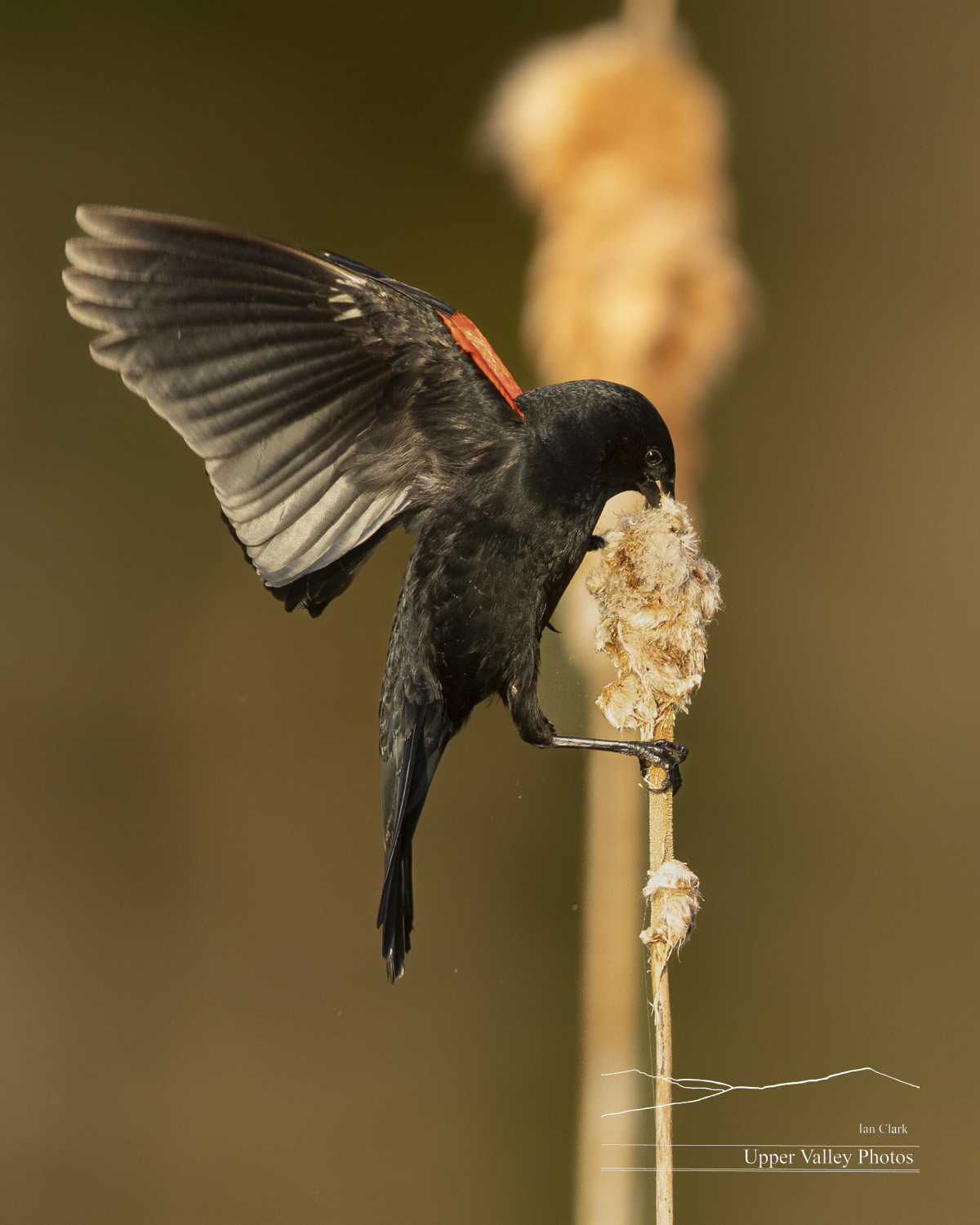
Male red-winged blackbirds are early arrivals. They’re easy to spot before the reeds grow up. This guy was finding small bugs in last year’s cattails.


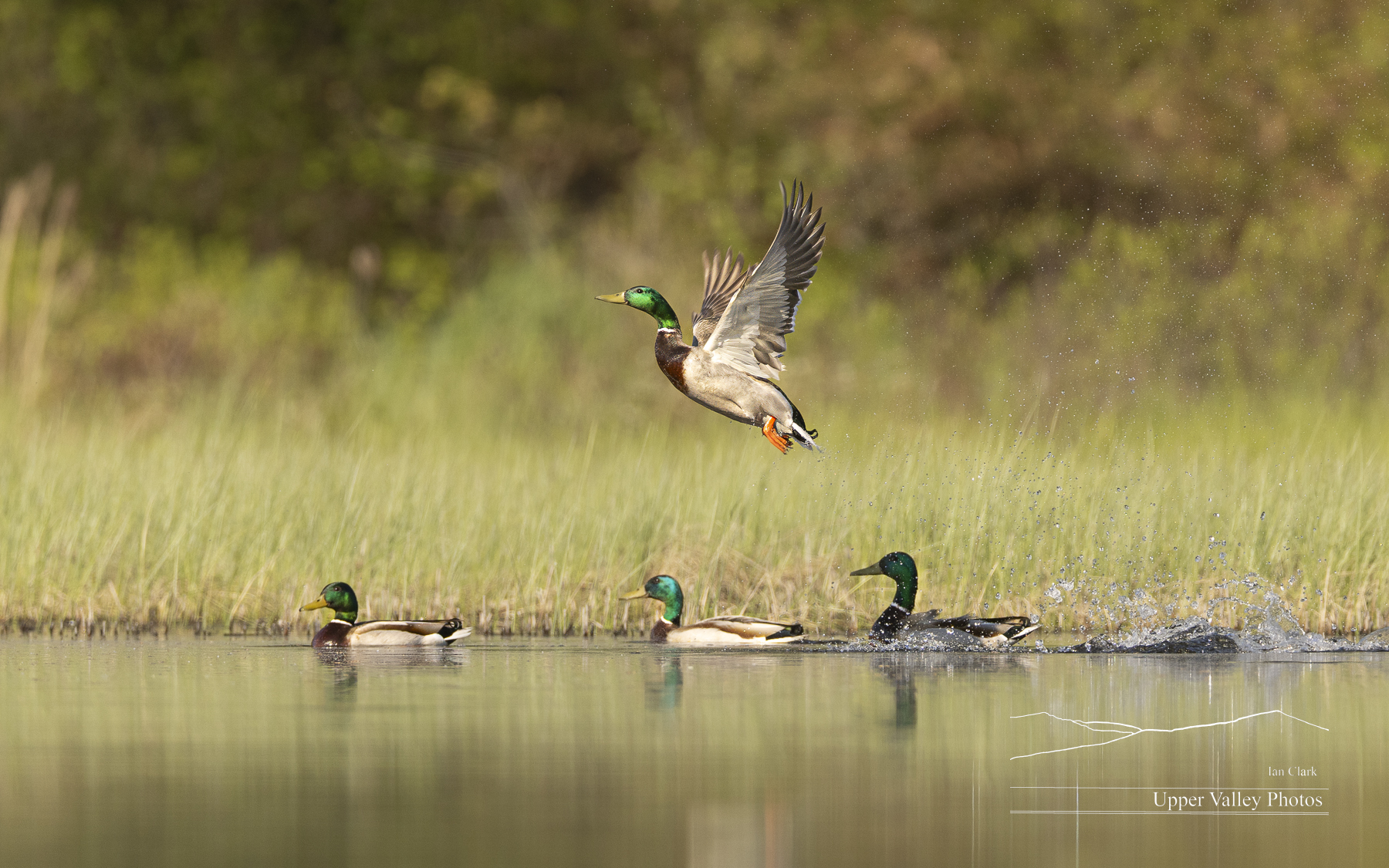
And, just when I thought I had my ducks in a row…..

I watched a fox den for a time in the spring. There were two or three kits, but usually only one would come out at at time.

A little later in the summer, I explored some of the beaches along the Connecticut shore and found more piping plover chicks.

And several northern diamondback terrapins out laying eggs above the high-water mark.

There were several pairs of American oystercatchers on the beaches. The oystercatcher banders are good at banding – I couldn’t find one that wasn’t banded.

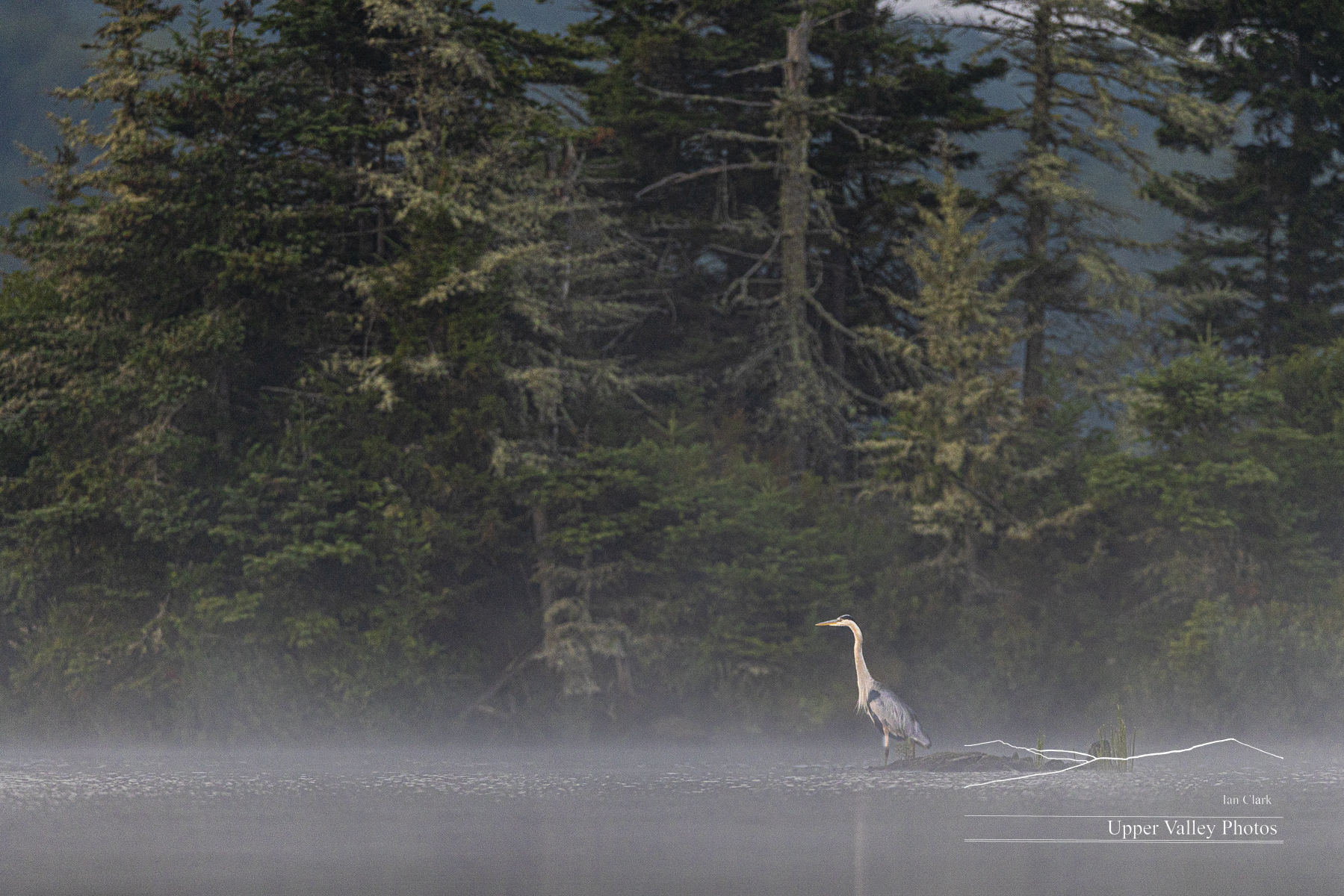
Hank heron made himself scarce in the spring, but by early summer he was back at his post along the loons’ pond.

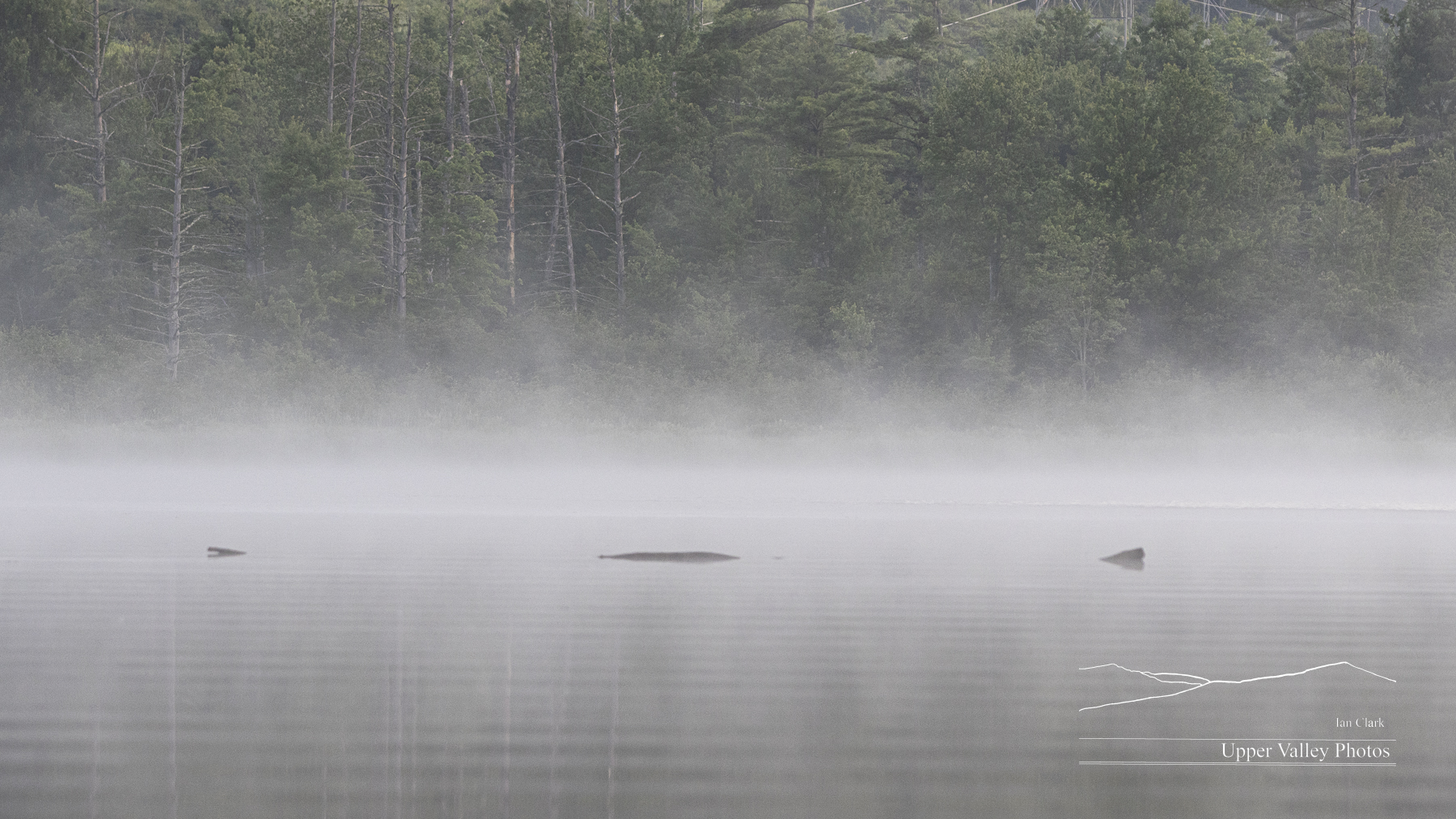
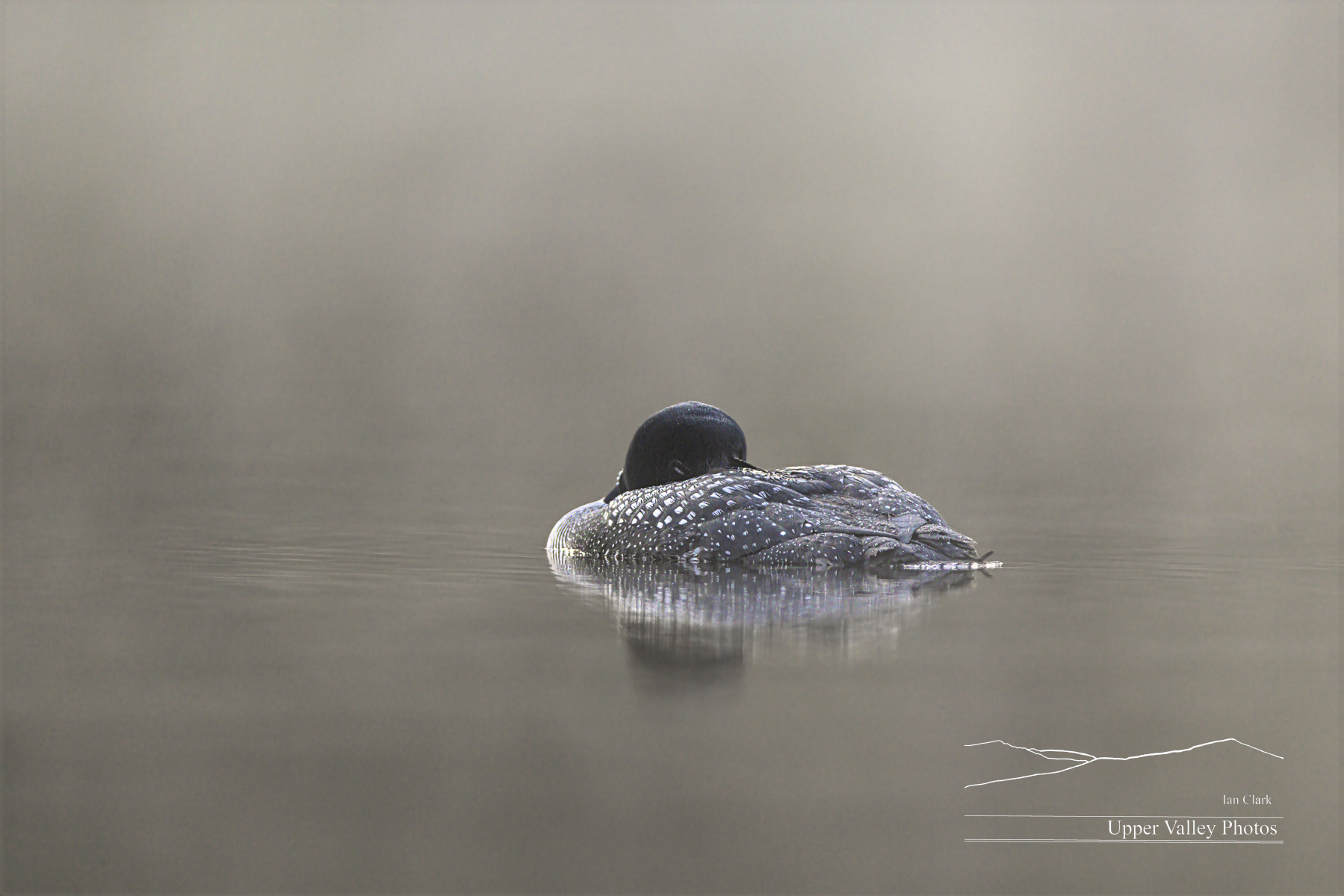
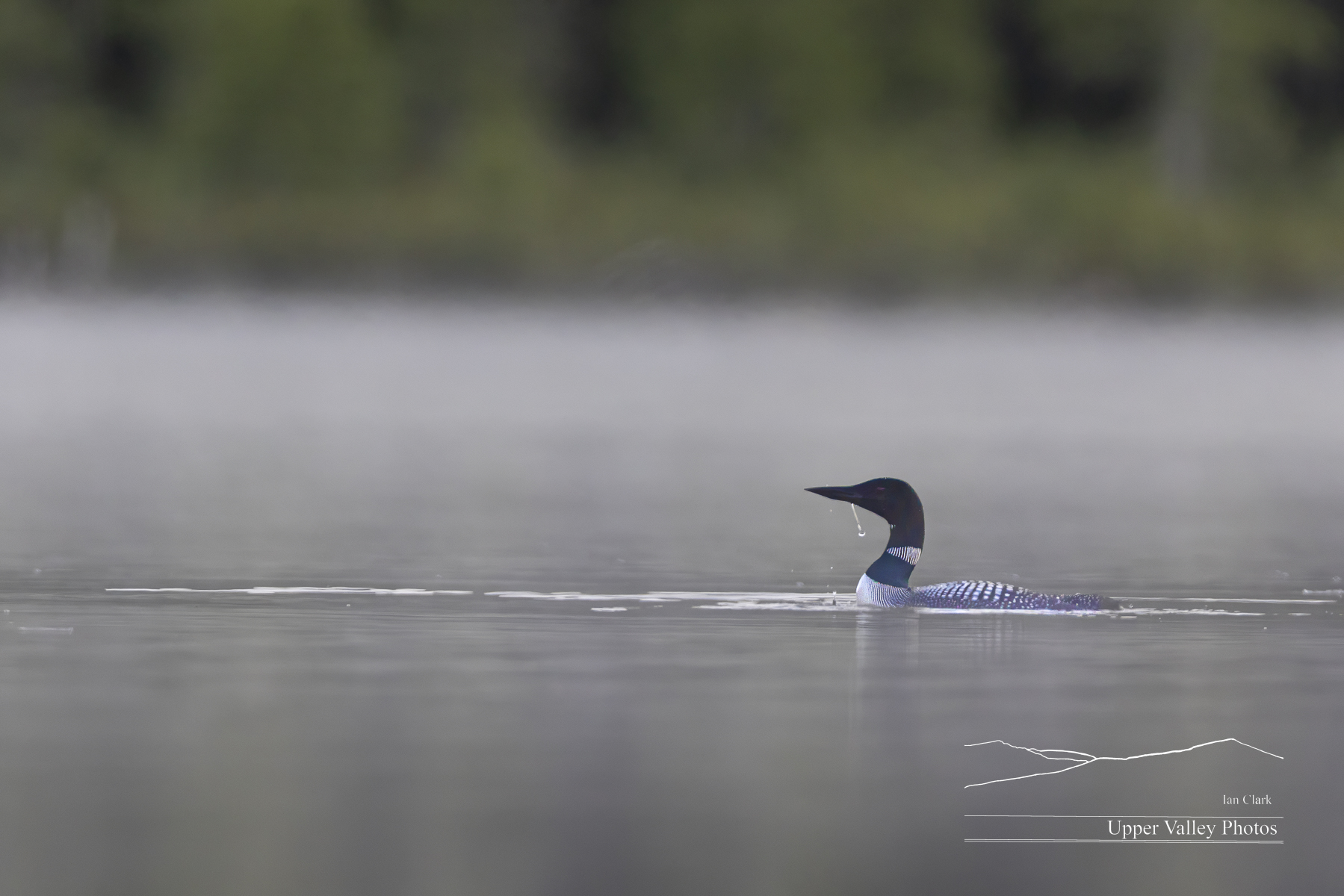
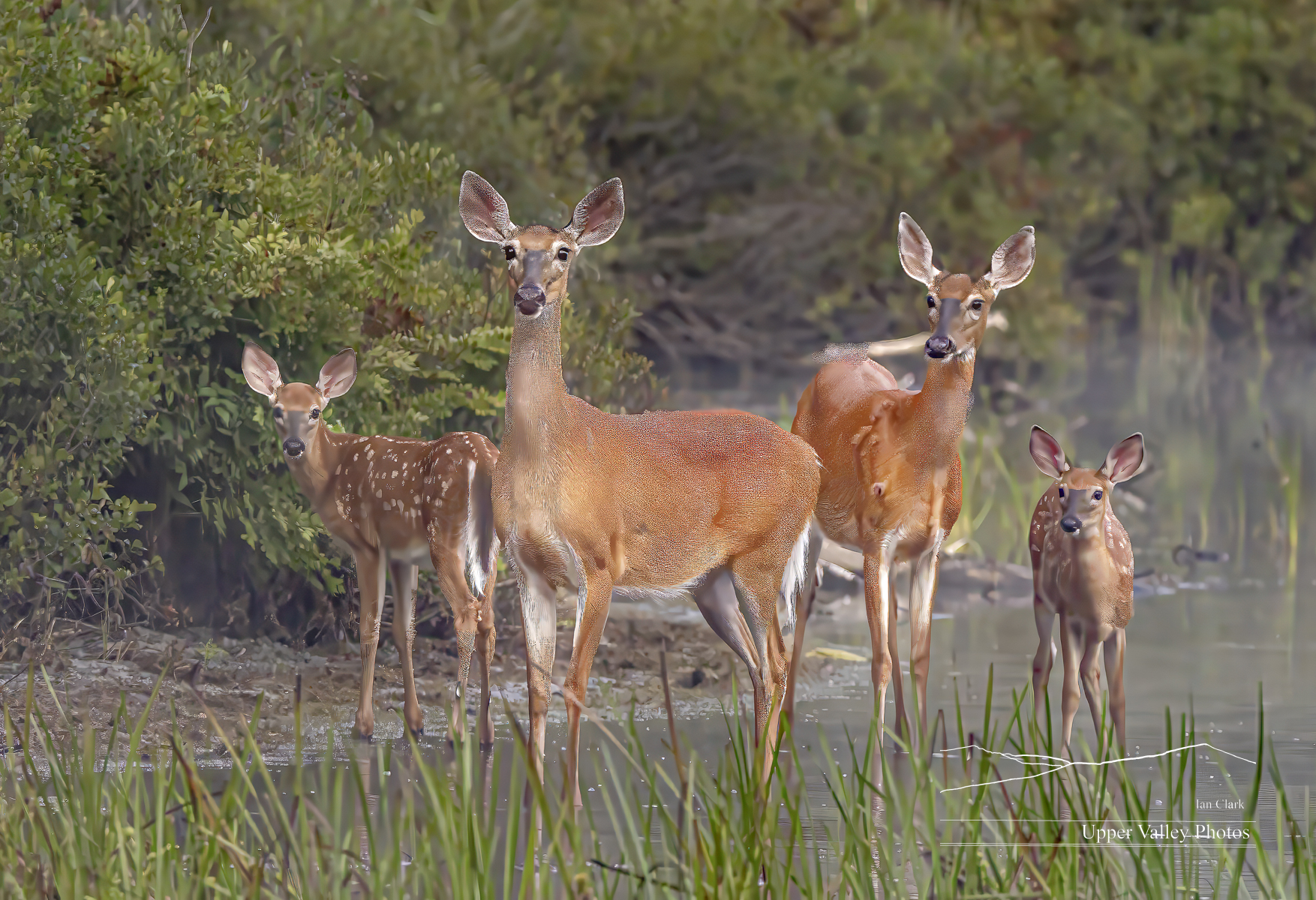
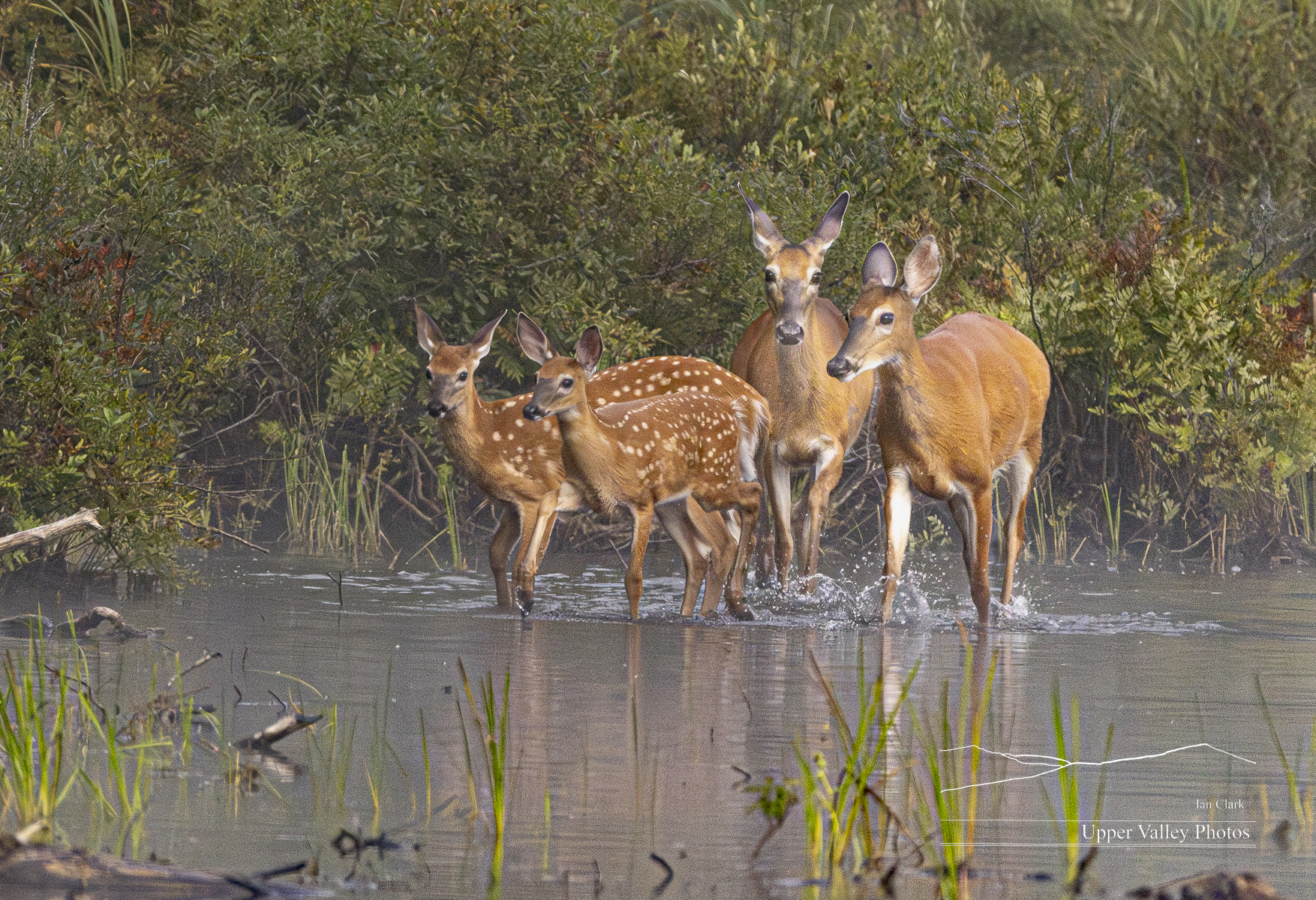
One foggy morning, I took just a couple photos of the loons through the thick fog. I pulled the boat out and had it atop the car when I noticed these deer had come out of the brush along the shore. I’m amazed they hadn’t spotted me in the open. I ducked behind the car and had about 20 minutes watching them forage and frolic before they finally did spot me.

I think the fawns are twins, and a second doe was traveling with the family.

Another morning finds Hank again posing nicely.

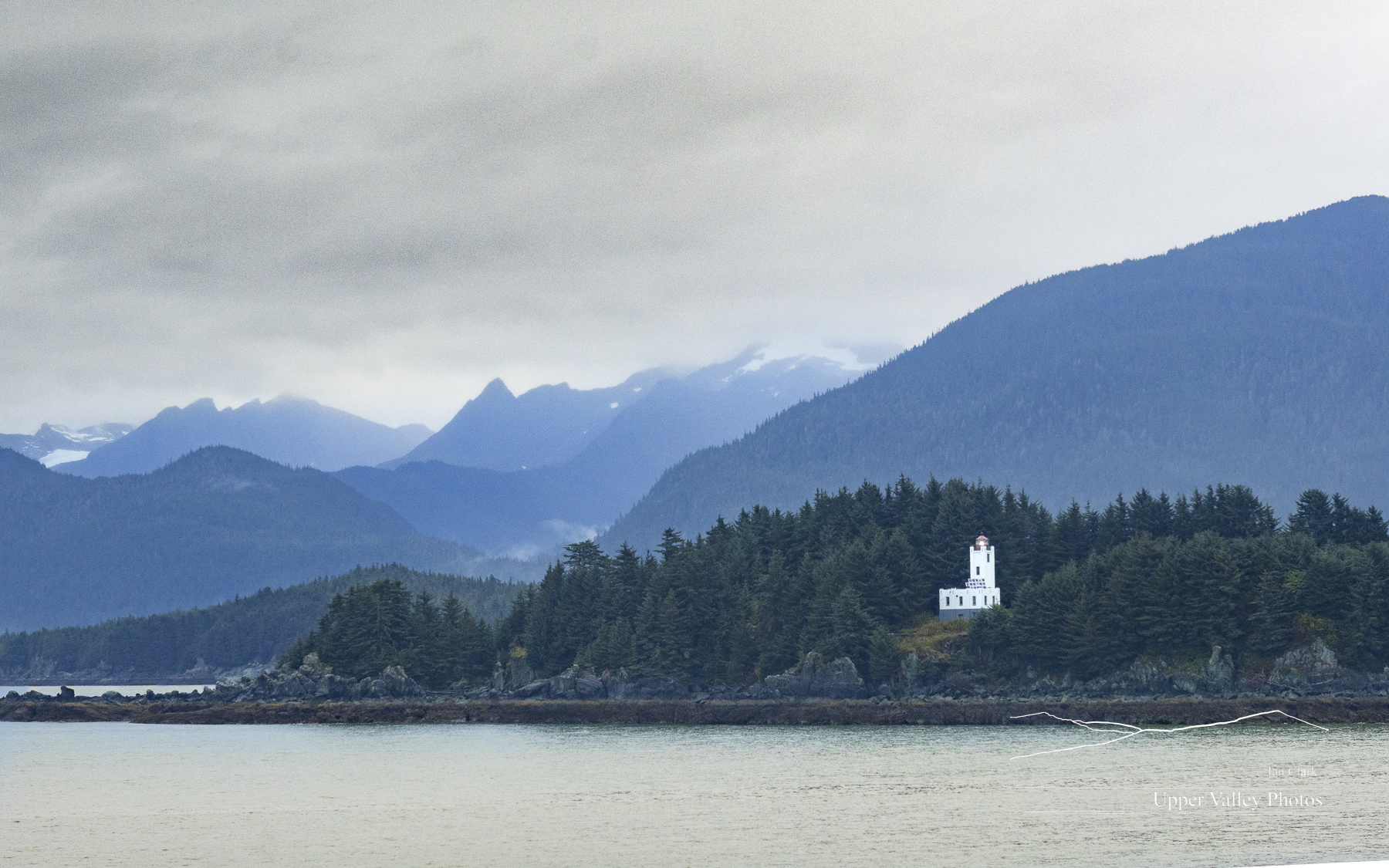
In September, I visited southeastern Alaska. I took the ferry from Juneau to Haines before going on to Skagway. The scenery from the ferry is amazing. Here’s the Sentinel Island Lighthouse we passed north of Juneau.

The attraction in Haines is the brown bears. I was able to spend four days – four rainy days – along the Chilcott River watching the bears fishing for salmon.

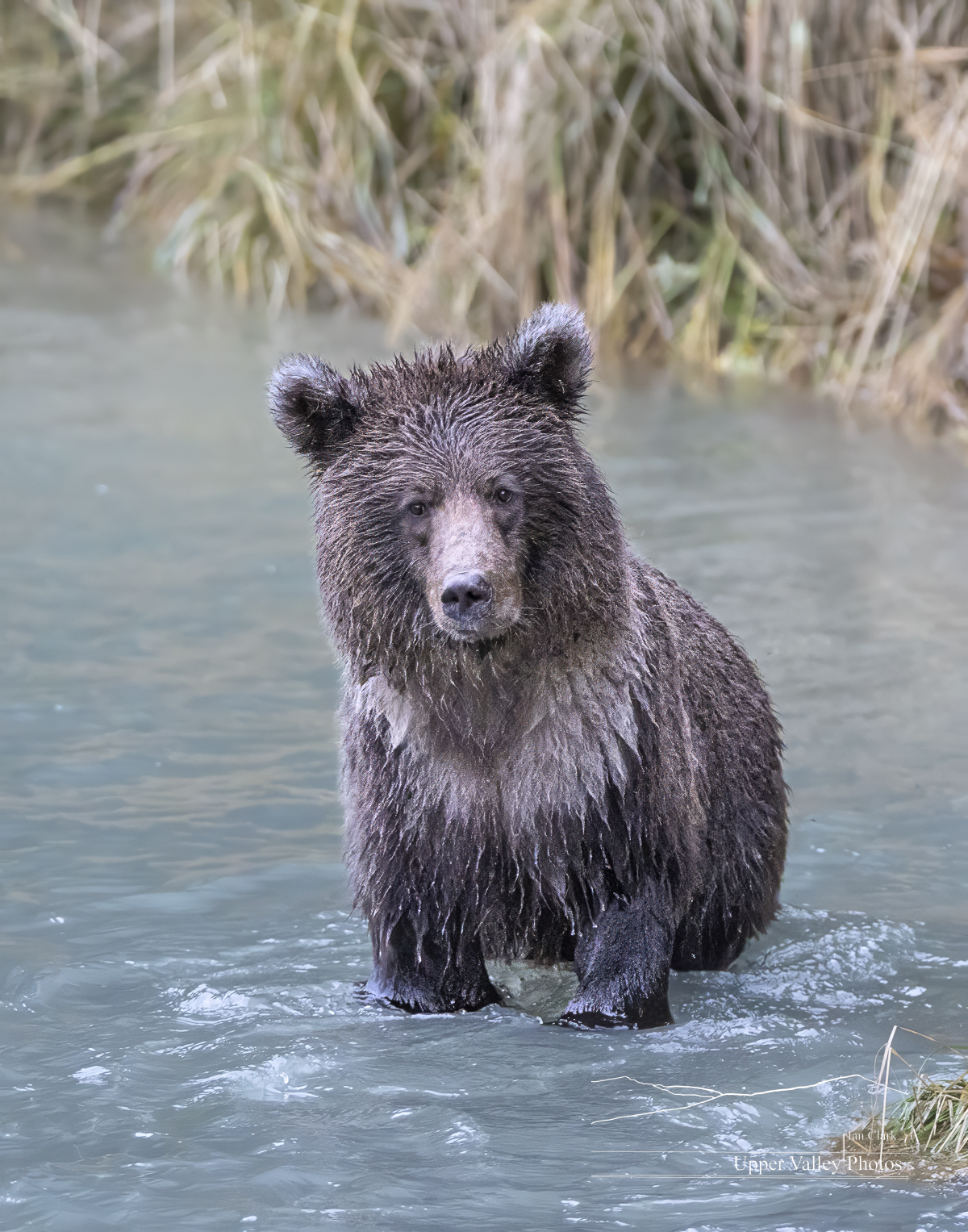
This is a first-year cub. One of a litter of four, a real rarity for bears.

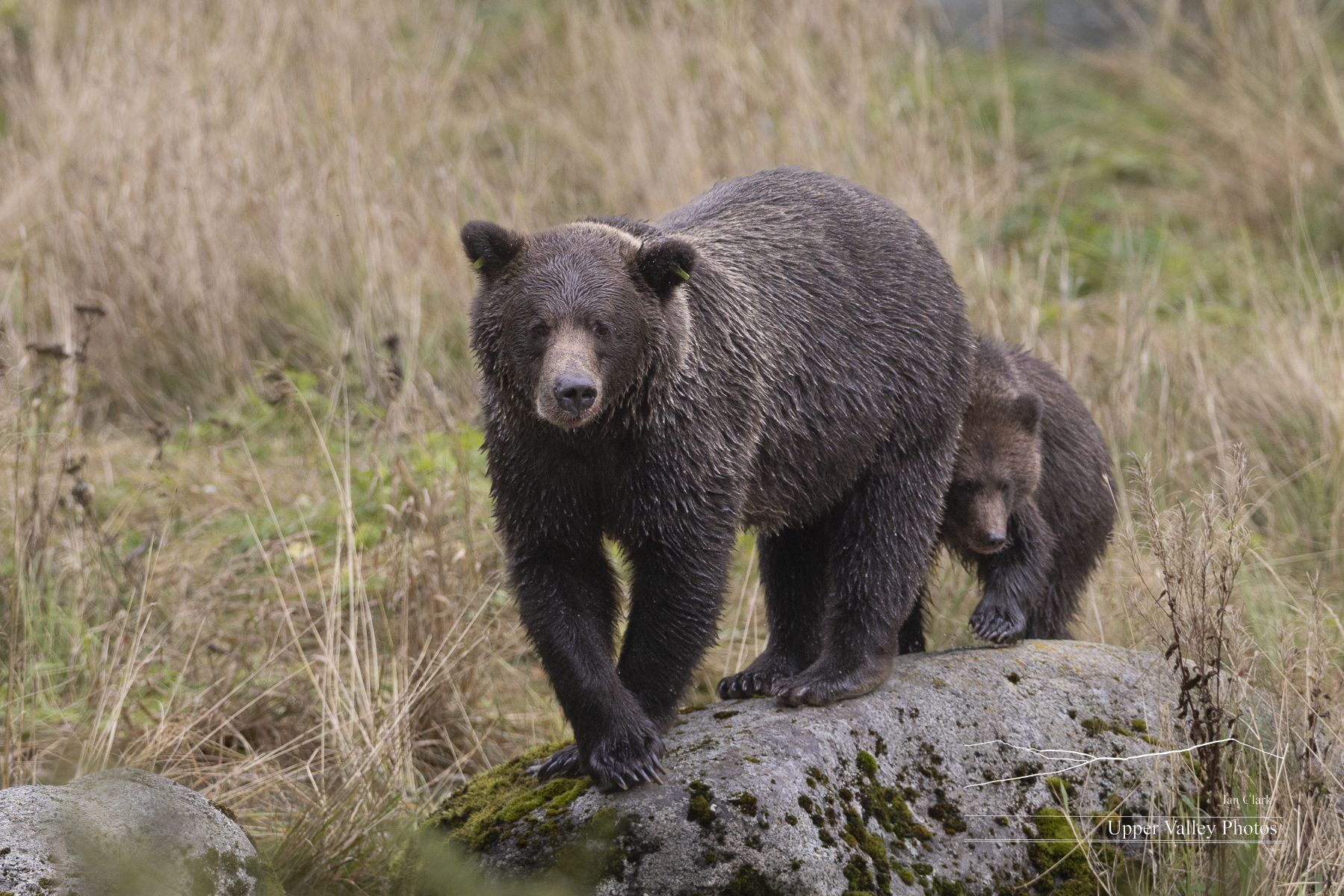
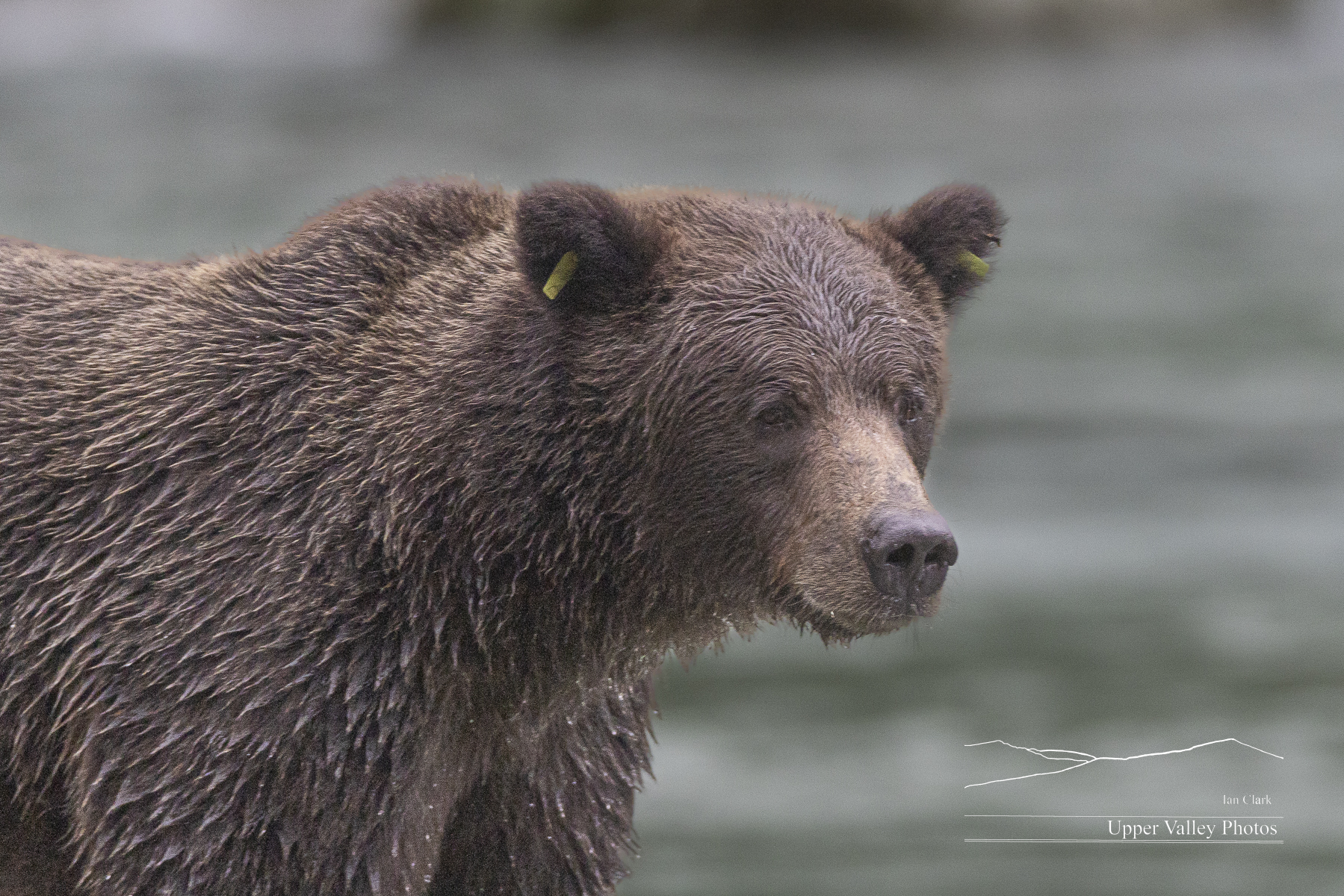
This is brown bear 925 to the Alaska Fish and Wildlife Department’s biologists. Her friends call her Lulu. She’s the mother of the four cubs.

There were several families around, Lulu with her four cubs, another mother with three second-year cubs and at least three mothers with twins. This is a second year cub. Still traveling with mom, but getting ready to head out on his own.

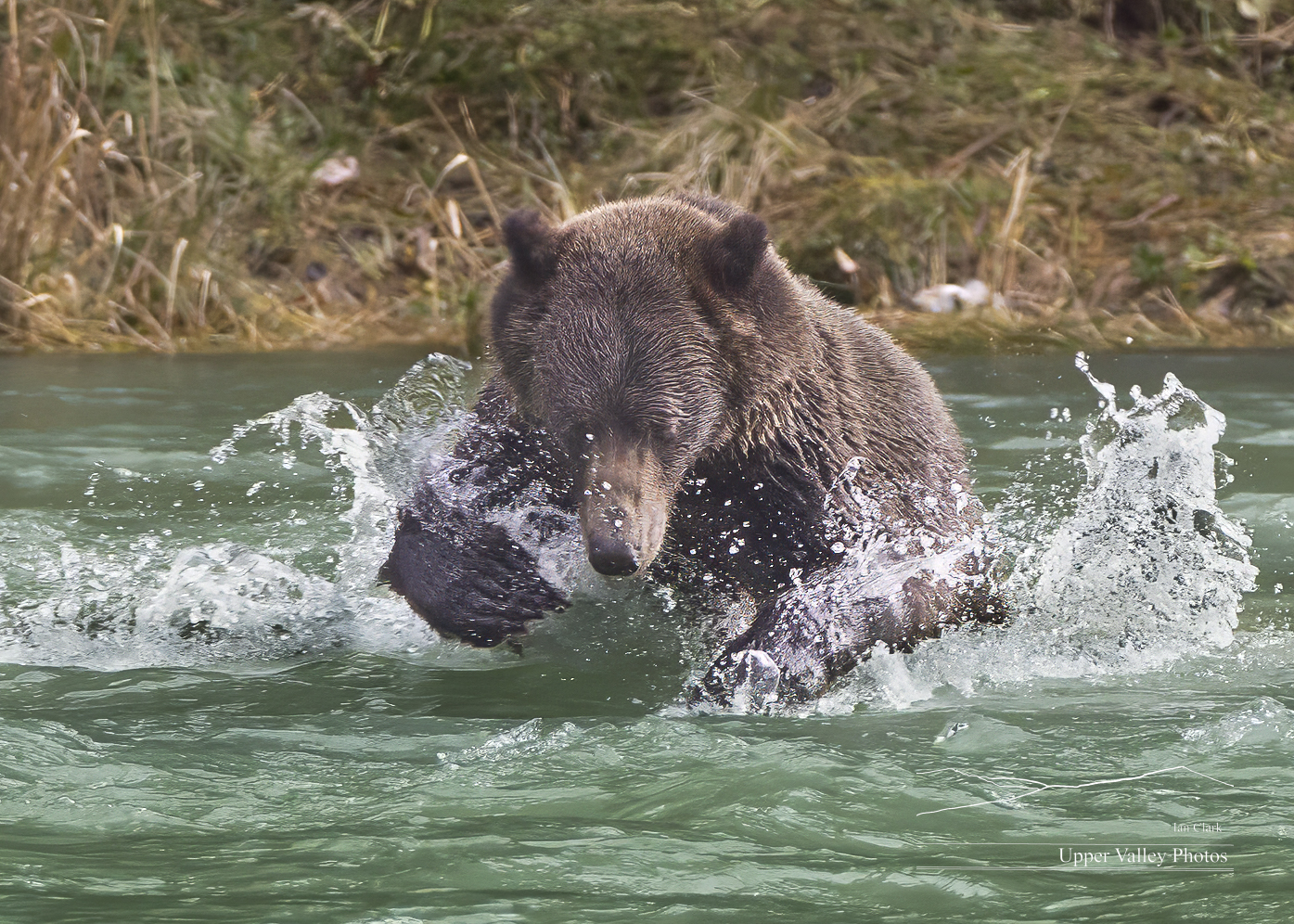
One of the mothers chasing down a salmon in the river.

And one of the mom’s with her catch. I double-dog dare you to try to take it away from her.

One of the second-year cubs chases after a salmon.

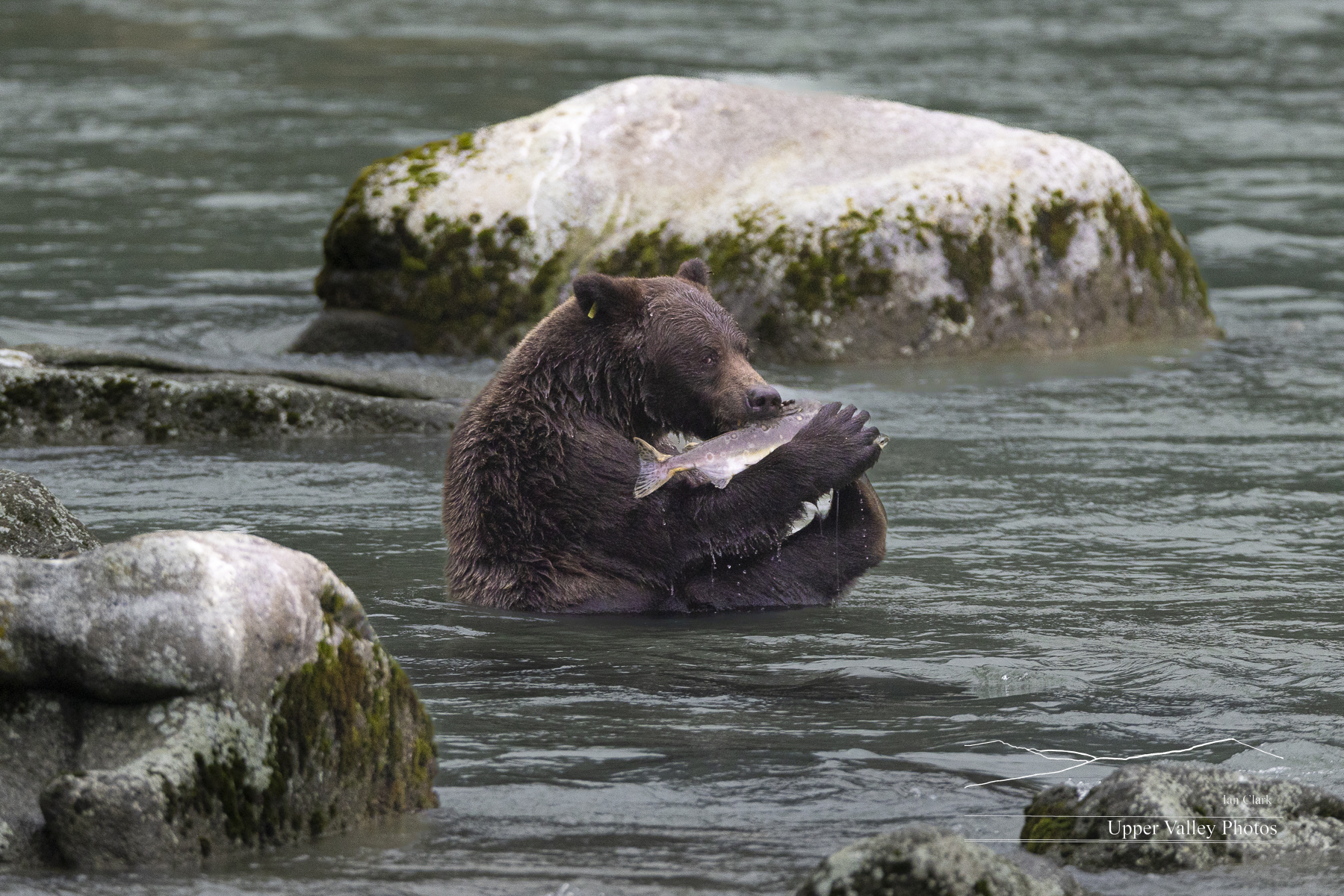
Lulu enjoying her catch while sitting in the river. I love that the fish is big enough that she has to use her back leg to help hold it up.

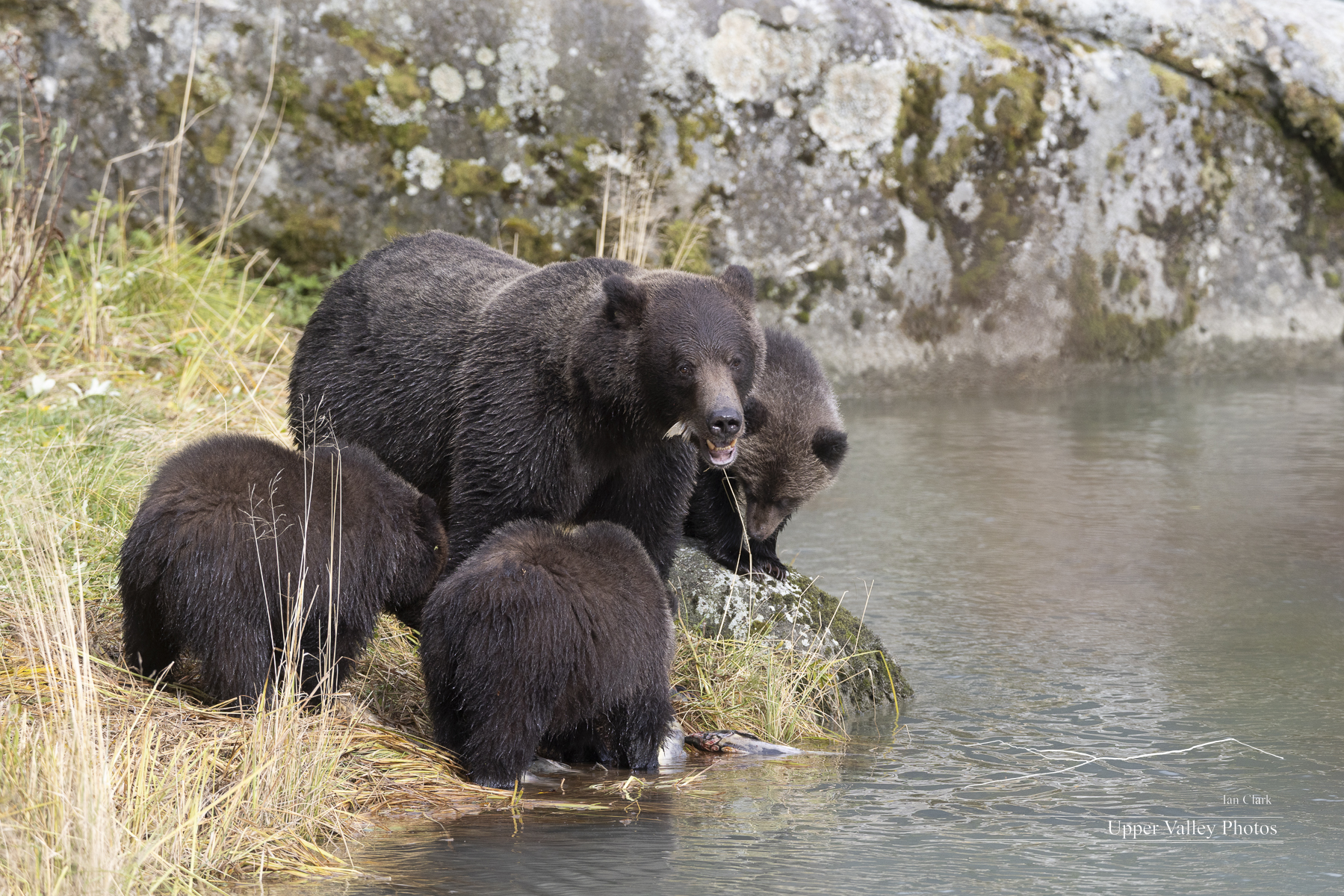
Lulu with her four cubs.

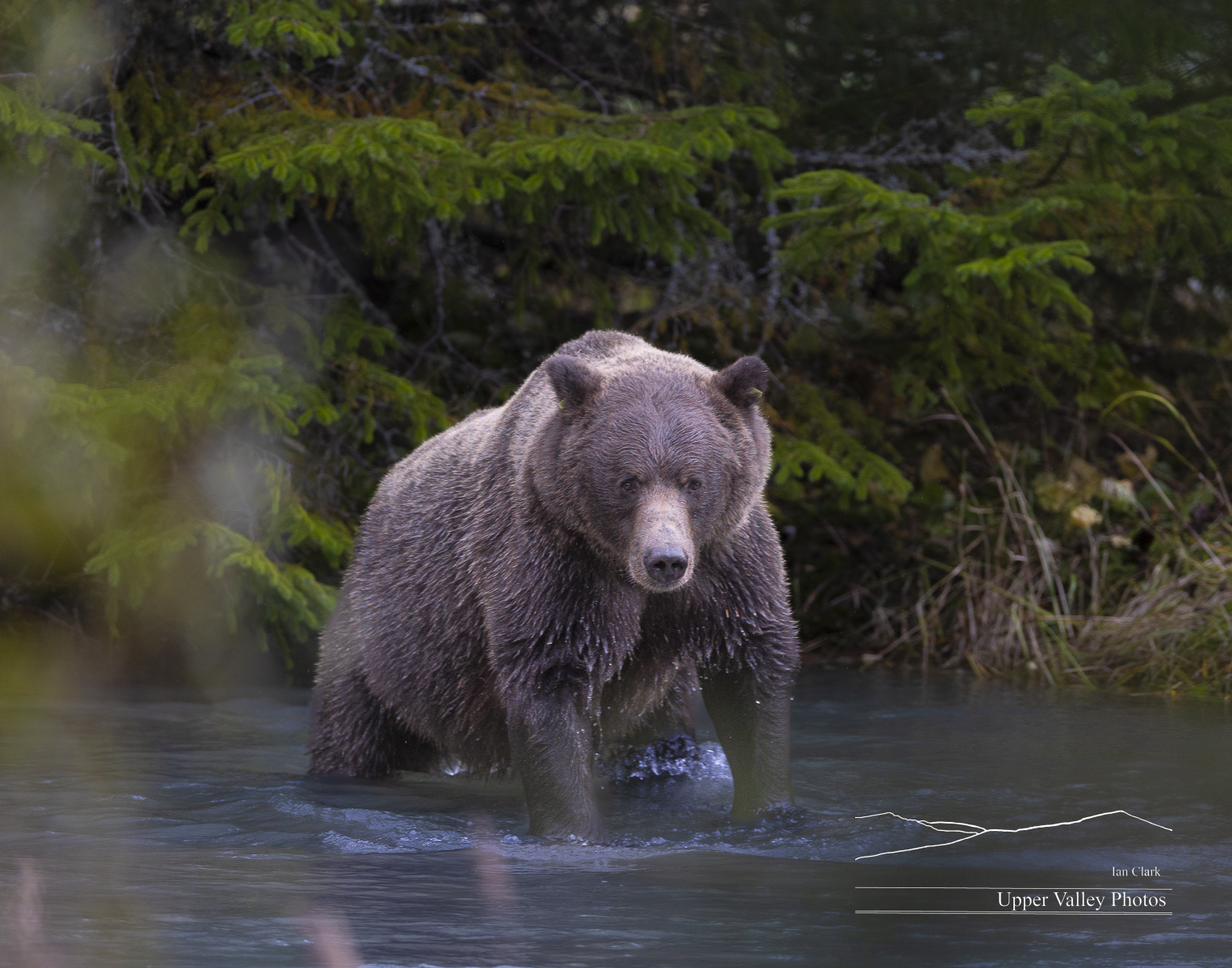
Another mom heading out to go fishing.

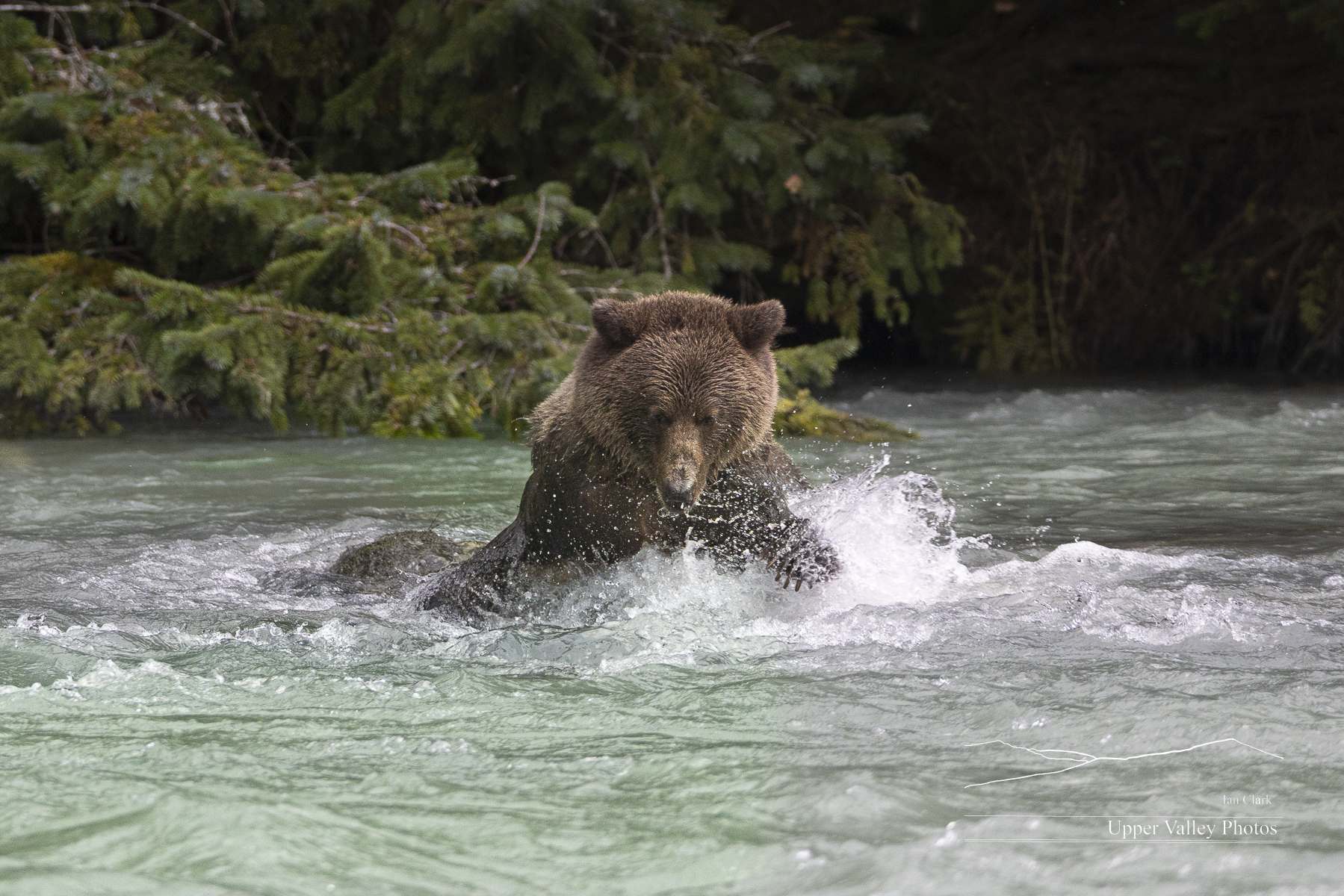
And one of the moms in action in the water.

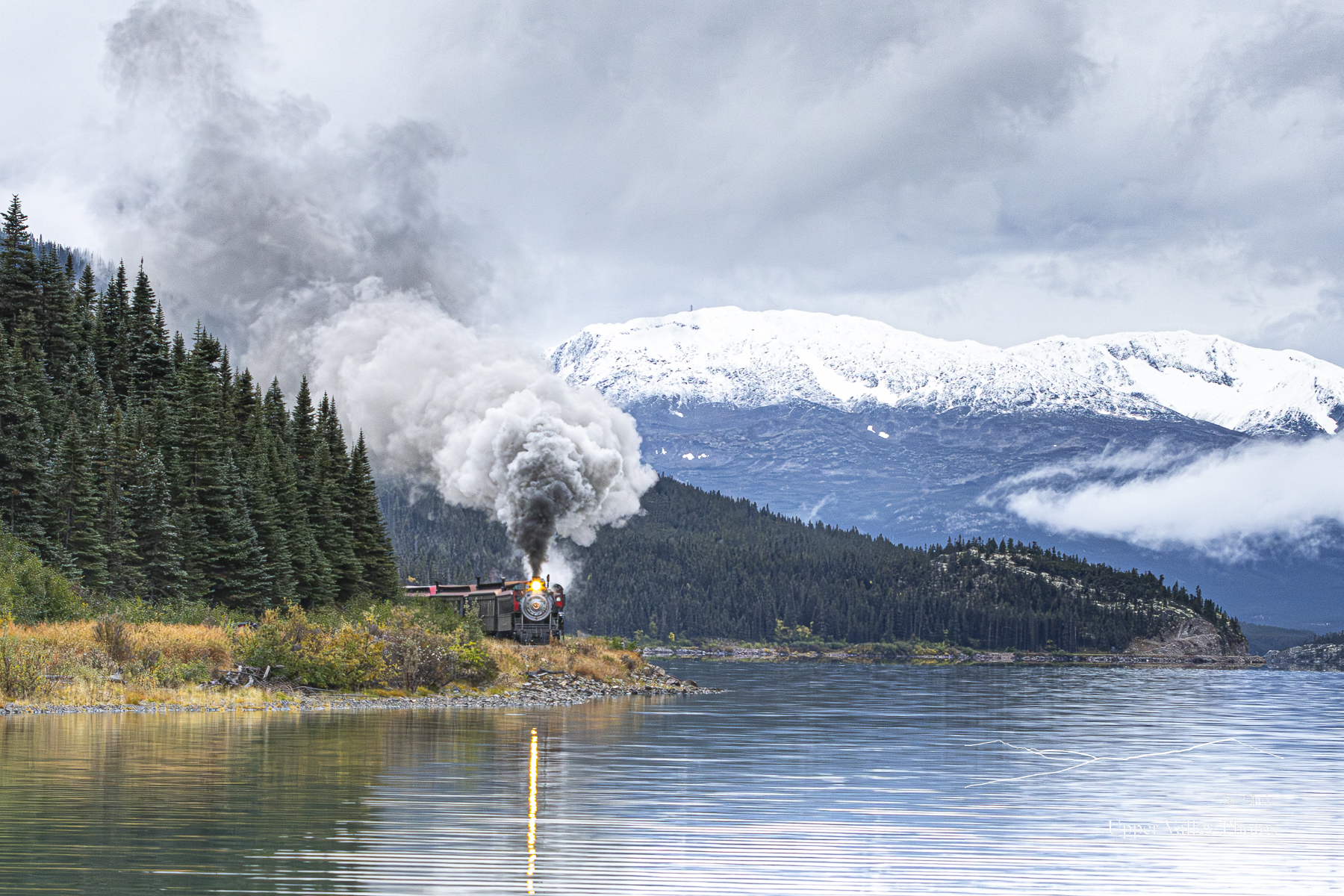
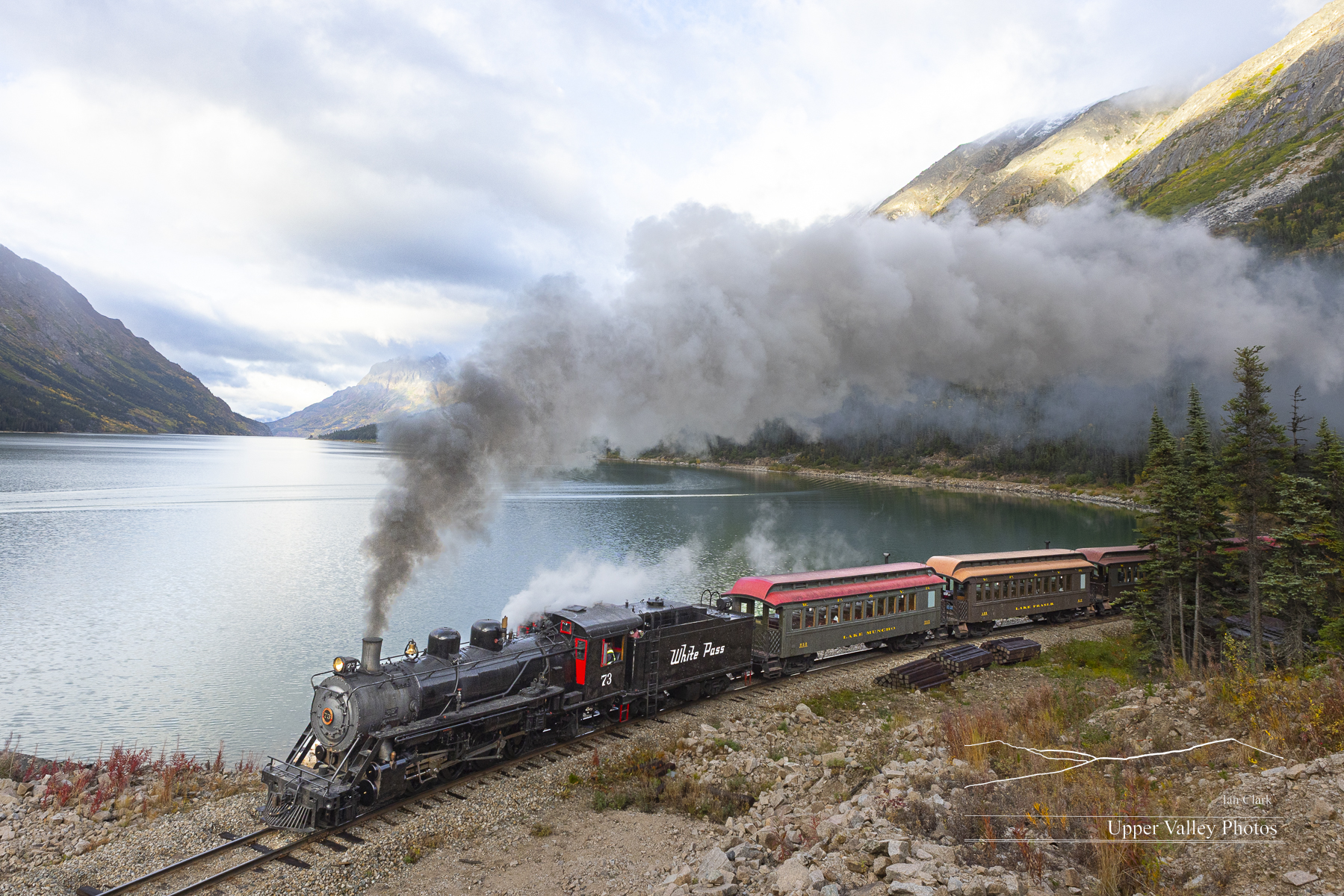
Moving on to Skagway, I spent four days photographing the White Pass & Yukon Route Railroad. The have a working steam engine, 2-8-2 no. 73. No. 73 is a three-foot gauge Baldwin, built in Philadelphia, Pennsylvania in May 1947. The railroad put on quite a show for us. Here we’re in Pennington, British Columbia, along Lake Bennett.

Still on the WP&Y, this time in Bennett, BC.

The next day, again at Bennett, BC, with Lake Bennett in the background.

This time in Fraser, BC with Teepee Peak and Jack Peak in the background.

And back in Skagway, crossing the East Branch of the Skagway River.

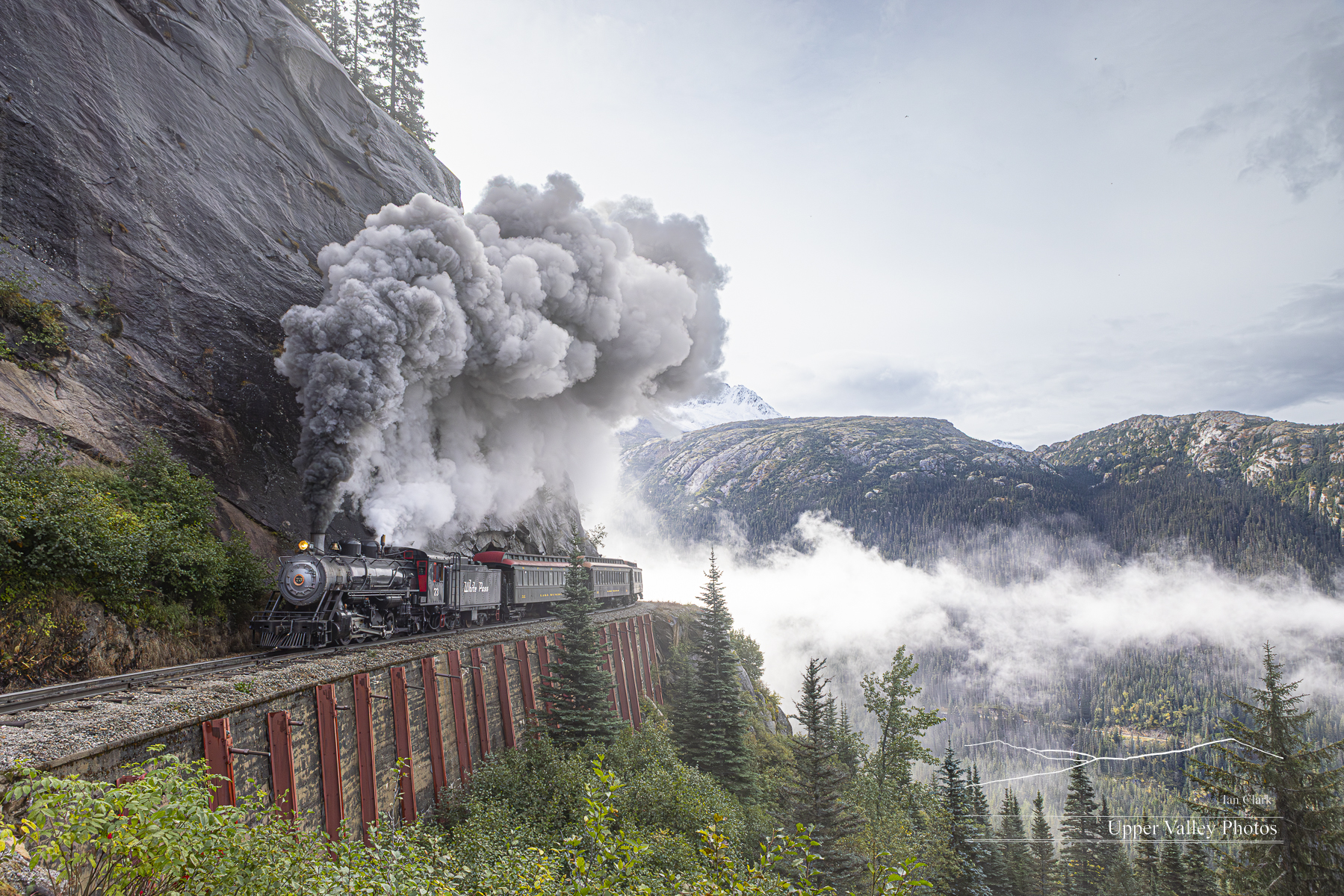
And no. 73 clinging to the Mountain at Inspiration Point in Skagway.

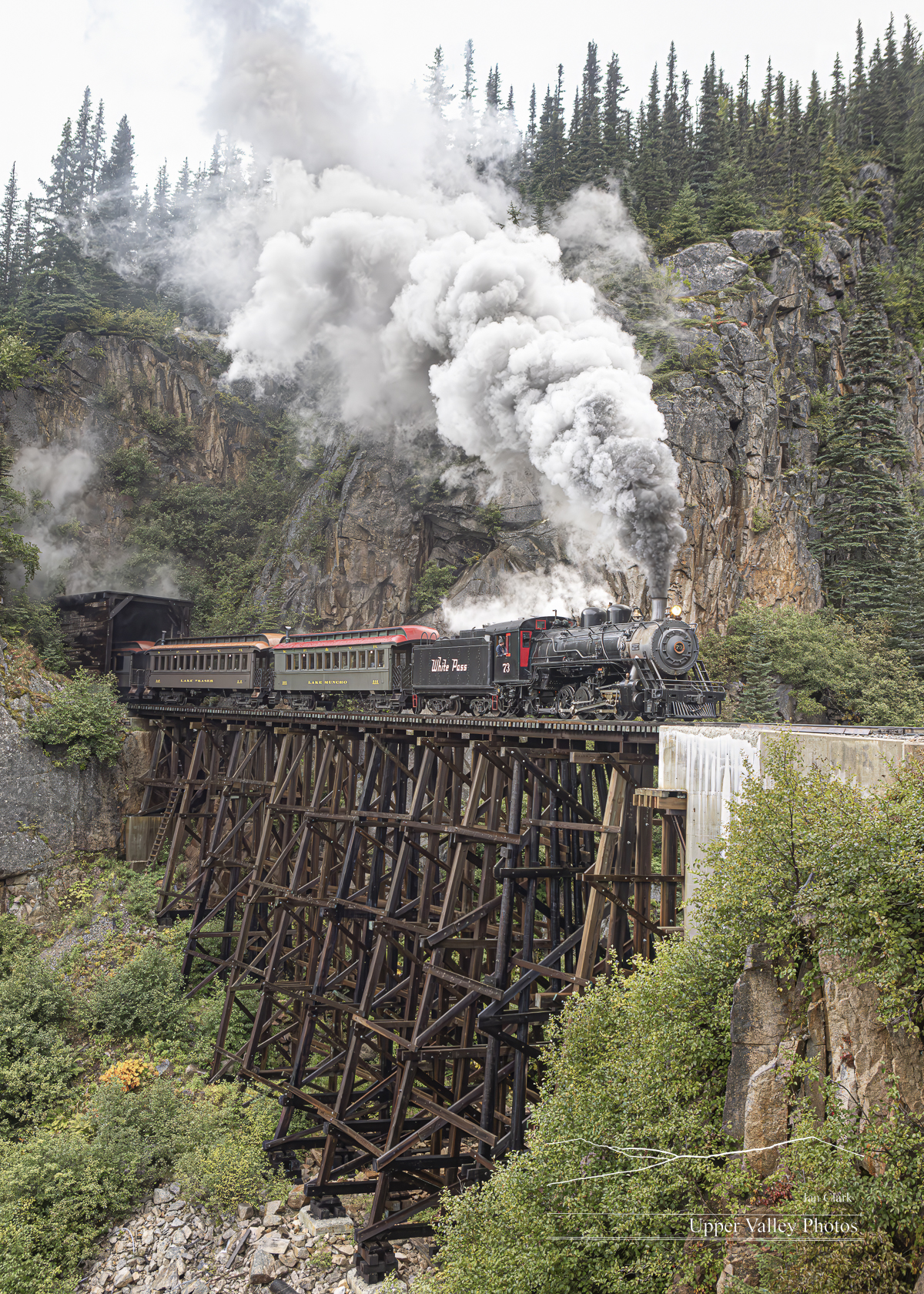
And in a classic shot, we’re back in Skagway with the train coming out of a tunnel and crossing a beautiful trestle.

Heading back to Juneau and my flight home, the ferry passed passed Eldred Rock Lighthouse.

And we had a beautiful moonrise not long before we reached Juneau. There was a great display of the northern lights later that night – so I hear. With an early flight out, I was tucked in bed.

Back in Vermont, I again headed to the coast to hunt for owls.
Leo had just returned for the winter. He still wouldn’t cooperate. I’m not giving up….

Happy New Year! Best wishes for 2026!

Along the Connecticut Shore

Back on July 3, Chris Roberts, who runs the great Vermont birding – PLUS Facebook group, offered to show me some of his favorite spots along the Connecticut Shore. They were all well west of what little Connecticut Shore I’d explored.

Chris is a serious, hardcore birder. Meaning he’s nuts. I offered to drive and asked how early we’d have to leave to get to the shore for sunrise. He was game for me to pick him up at 0300. That’s cool, unfortunately I was going to pick him up some 80 miles south of me. Hitting the road at 0130 to be on location for sunrise isn’t all it’s cracked up to be.

Along the way to pick him up, I got my closest ever look at a black bear. I didn’t get to enjoy it as much as I’d have liked, I was too busy standing up on the brake pedal. The bear sauntered onto route 91 and stopped in my lane to see what was coming. I managed to stop with 20 or 25 feet to spare. The bear had a good look at me and continued on his errand.

We arrived at the beach as the sun rose and set out to see what we could find.

There were a number of piping plovers with chicks ranging from just a few days old to near-adult sized juveniles. There is already at least one chick under this parent as two more tuck under.

We found seven northern diamondback terrapins out on the beach looking for a spot to lay their eggs or already laying eggs. They come ashore at high tide to make sure their nests will be well above water level. They’re listed as a vulnerable species and this was my first sighting of them. They live in the brackish tidal marshes along the east coast.

Another northern diamondback terrapin along the shore. I didn’t get close enough to tell if she was laying eggs or just sitting.

American oystercatchers were on my to-see list. I haven’t seen any since I got serious about wildlife photography, these are the first photos I’ve gotten of them.

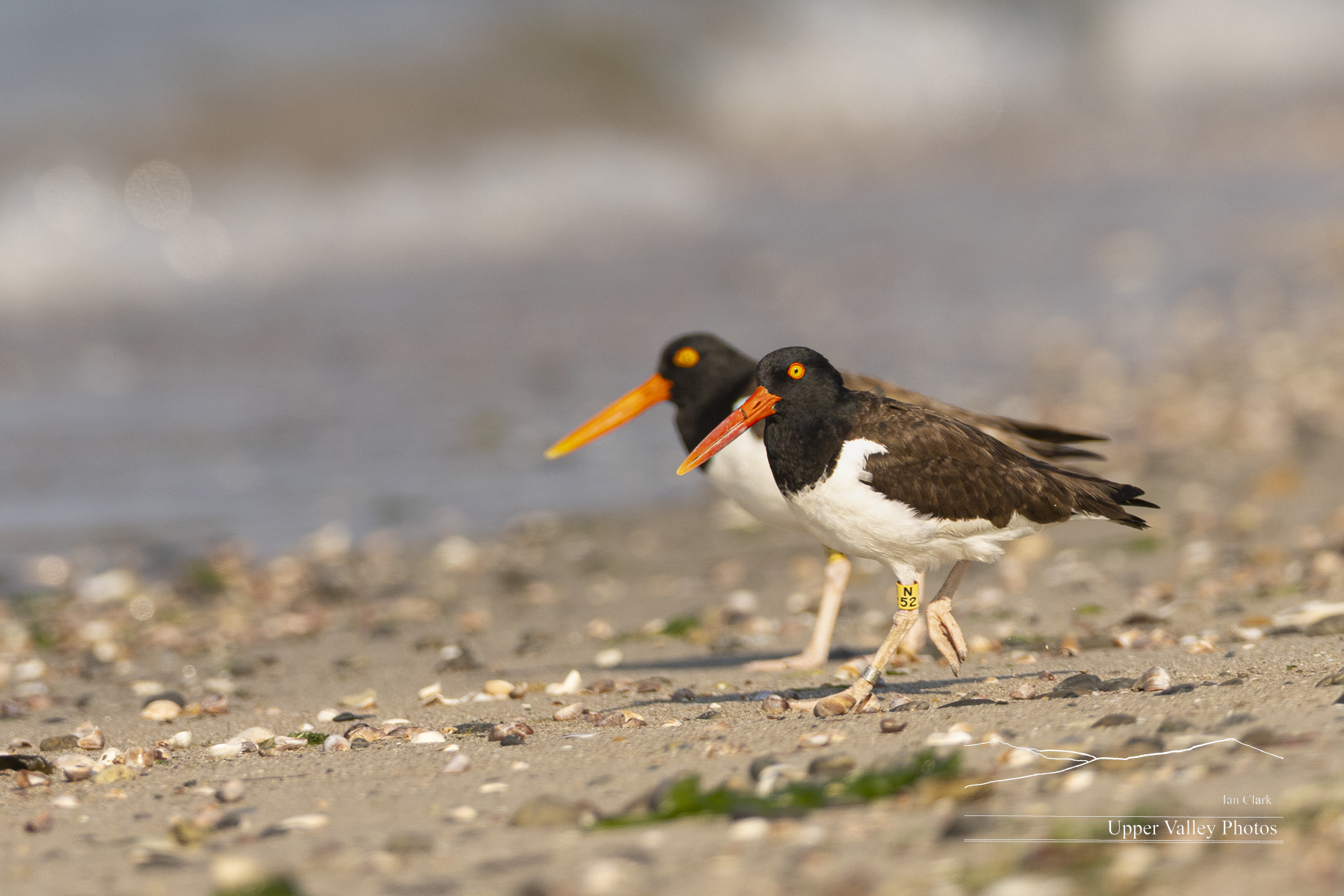
Oystercatchers are cool looking birds. Their orange eye adds some pop to the photos. Whoever is in charge of banding Connecticut’s oystercatchers is doing an outstanding job. Almost all of the oystercatchers we saw were banded. Likely recently, we found several breeding pairs with consecutively numbered bands. Here’s ole N51 who, along with N52, had a nest on the beach.

As you’d guess from their name, they feed on oysters, along with mussels, clams and other invertebrates. They search for shellfish with their shells partly open. When they find one, they stick their bill inside and severe the muscle that lets the shellfish close their shell. (I had to go look up the difference between clams, muscles and oysters. They’re all ‘bivalves,’ meaning they have two half shells they can close to protect themselves. Learning maybe more than I needed, bivalve comes from the Latin “bis” – meaning two – and “valvae” from the leaves of a door. The differences are their shapes, their type of habitat and their flavor, which I didn’t take time to compare.
Watching the piping plovers, we saw a parent doing the ‘broken-wing’ display. They’re like killdeer and when they sense a threat to their chicks, they feign injury and make a big deal about it. The idea is to get the predator to chase them and lure the predator away from the chicks.

A small flock of gulls had landed on the beach near this bird’s chicks. The chicks had frozen in place and were hard to spot. The parent tried to draw the gulls’ attention away from the chicks. It worked this time.

This section of beach was covered in a few feet of abandoned shells. This proved to be very good camouflage for the plovers. When I’ve seen plover chicks on the sandy beaches in Maine, Massachusetts and New Hampshire, I’ve often wondered how any of the chicks survive, they seem to stand out clearly on the sand. They’re much, much harder to see against the shells.
The shells are several feet deep along the beach.

A parent and chick blending in nicely against the shells.

And the chicks are just adorable.

The plover chicks scoot along in short bursts, constantly changing direction.

Another chick, this time on a sandier spot.

And a chick just being cute.

This chick went right down to the water’s edge before heading back up the beach.

Our buddy N51 reappeared and started down to the water.

N51’s mate, N52, showed up and went foraging along side. I’ve reported the bands and when I get the confirmation, we may be able to tell who is who from that. There’s no way for people to tell by looking at them.

It was time to head on to the next location and we headed back to the parking lot. There were several horseshoe crabs in the shallow water. A flock of gulls had dragged this on up on the beach and were trying to flip it over as we approached. We spooked the gulls and the crab headed back to the water.

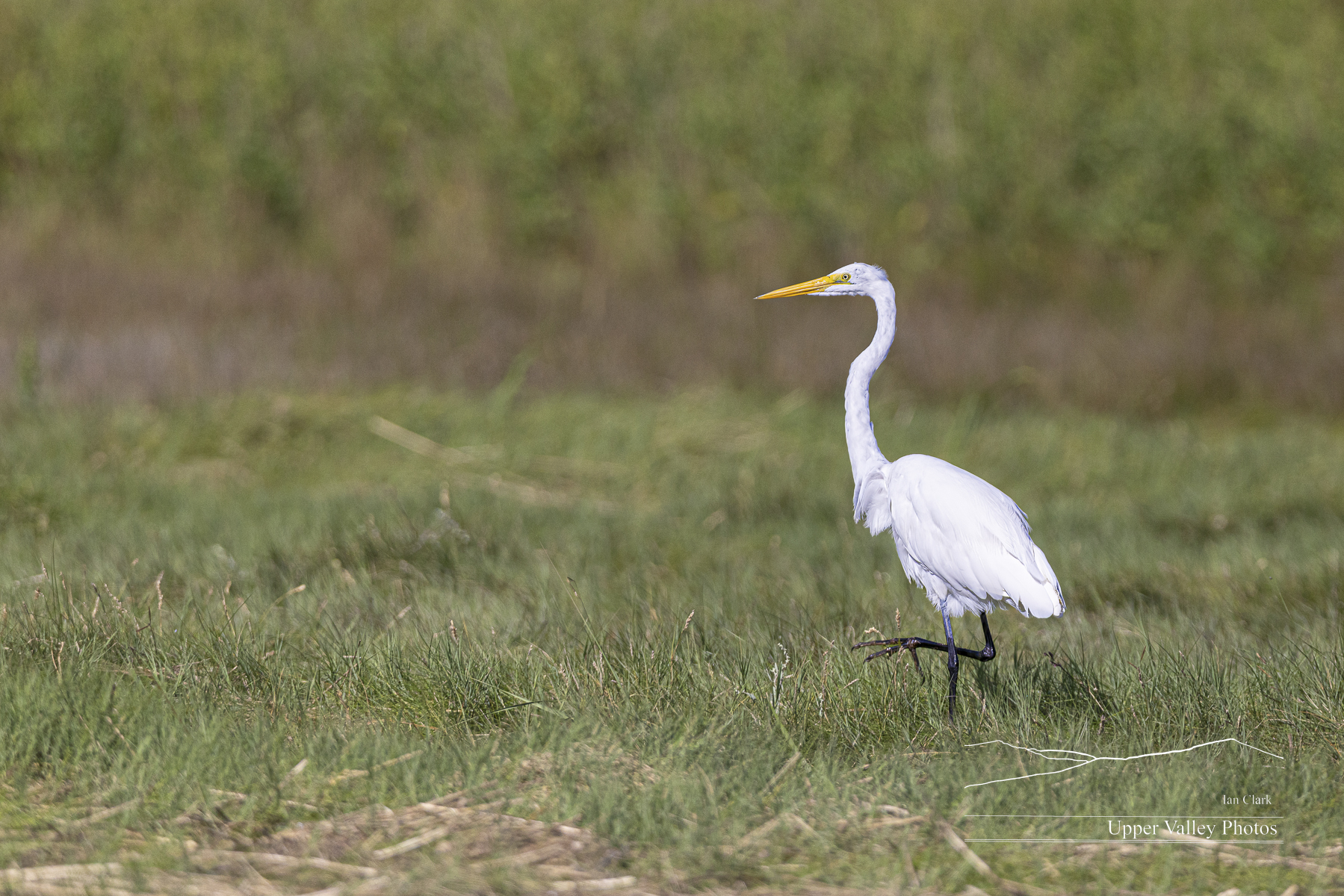
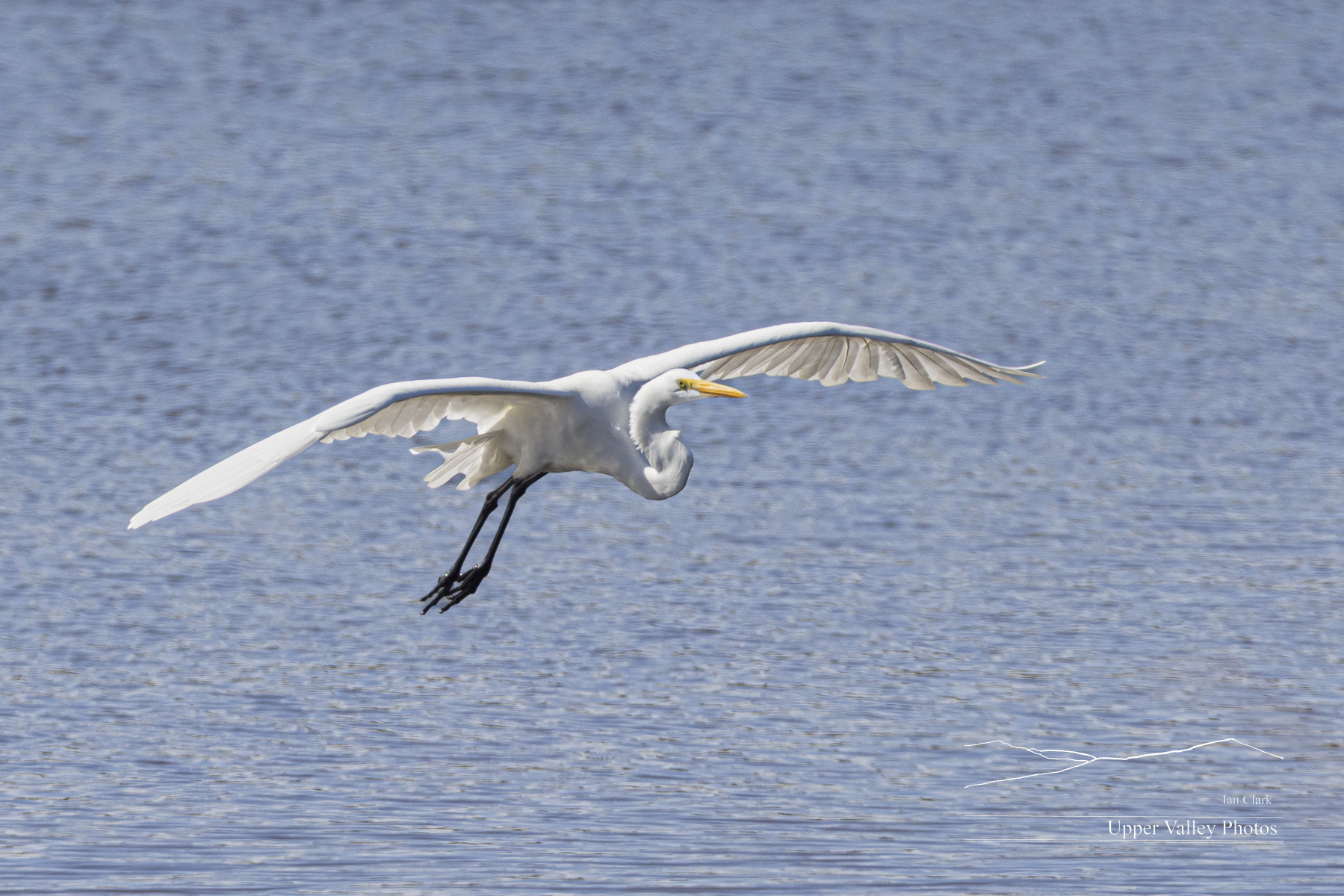
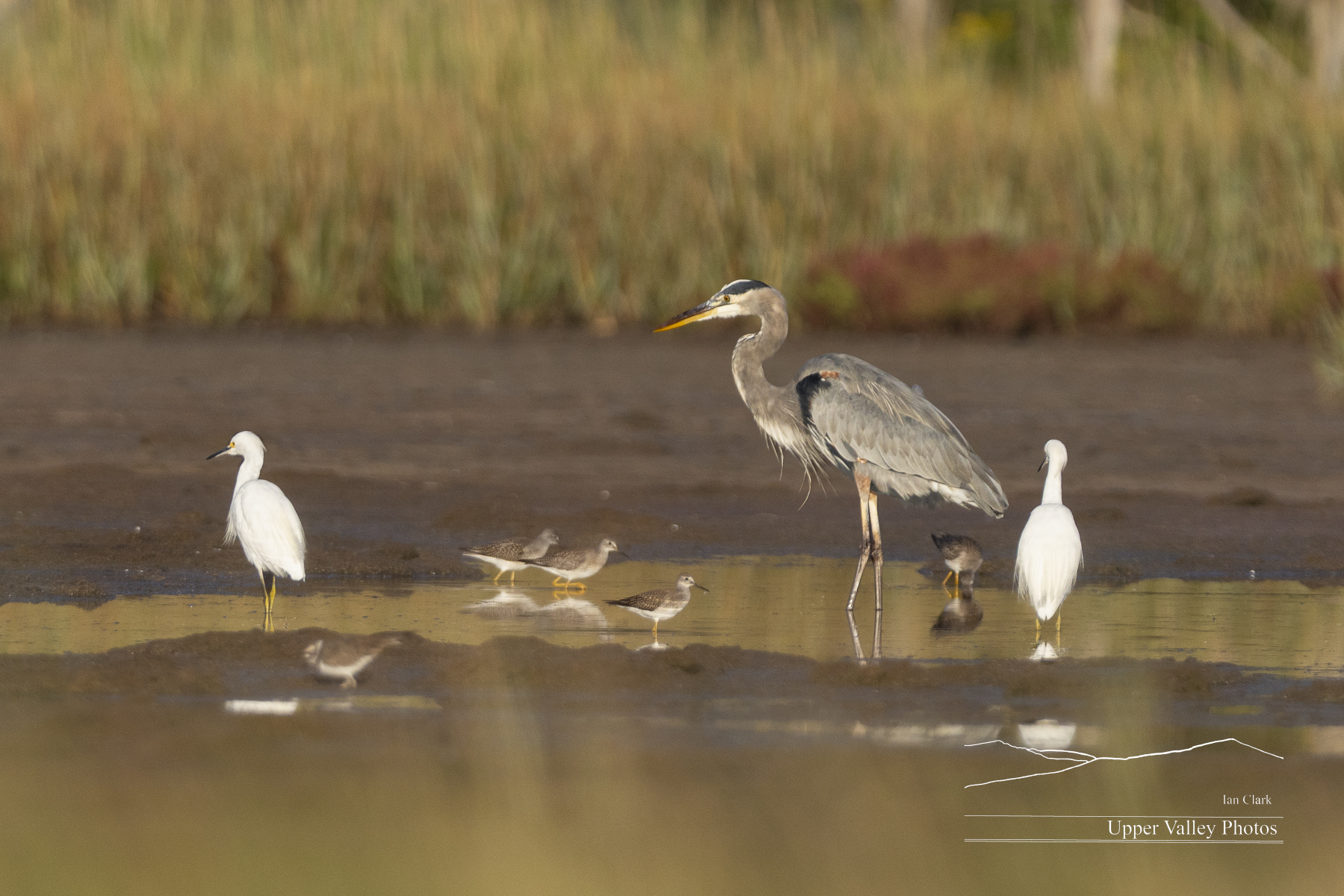
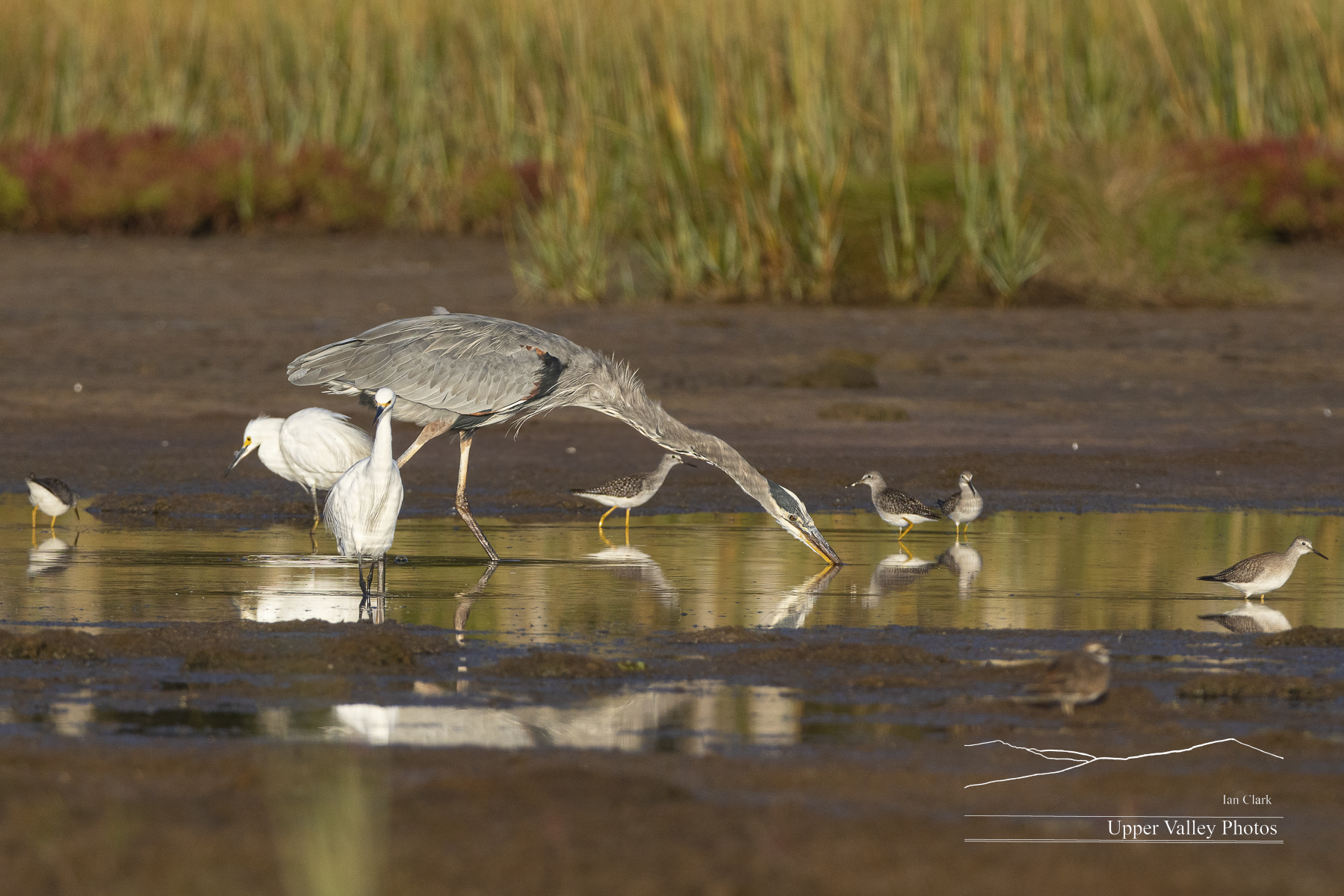
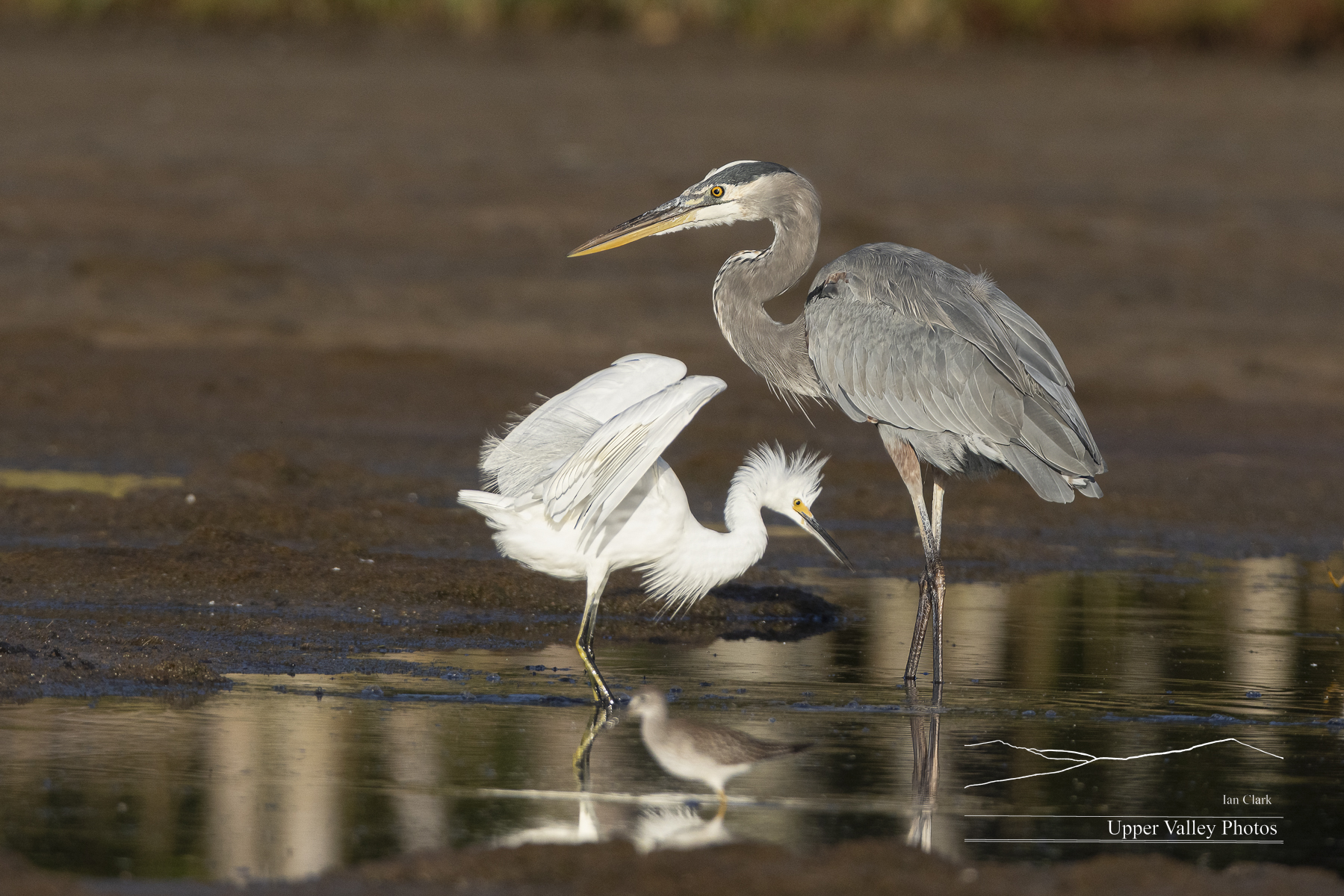
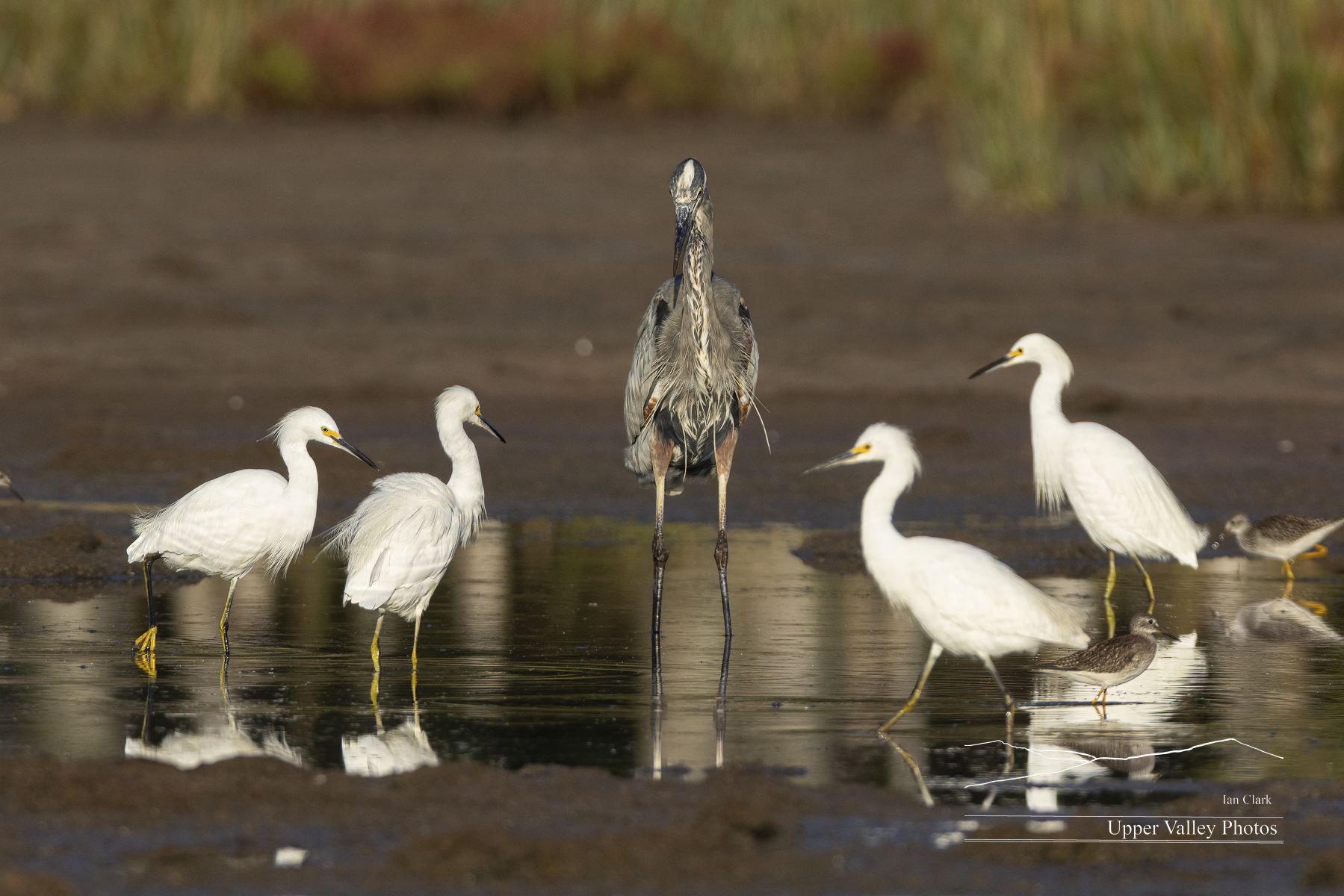
At the next spot, we found a pool with several herons and egrets. Chris spotted a tricolored heron, I saw a clump of brush. We moved on.

Next up was another oystercatcher. Meet N00. We soon found N99 and I suspect they were banded in relatively quick succession.

There were a few willets foraging in the shallow water.

Our timing was right to watch the Atlantic sand fiddler crabs emerge from their burrows. They live in colonies with each male claiming a territory. When the tide recedes, they come out of their burrows. And display their large claw – both to warn off neighboring males and to attract females. Only the males have the size difference between their claws, females have two similarly sized claws. There were several dozen males waiving their claws around.

They have interesting markings on their backs.

And they look like they mean business if you try to interfere with them.

There was also a colony of least terns along the beach. A small flock came down to the shallows to preen. And to have the guys carry fish around to impress the ladies.

Turning around from the last photo, I discovered a piping plover had crept up to me while my back was turned.

There were more piping plover chicks that couldn’t have been more than a week old out foraging on the beach.

Another plover chick that stopped briefly to look around.

Well above water level, the beach is roped off to protect the plovers and terns nesting spots.

This guy is a little late in the game. He was still looking for a lady to commit his entire season to. He was industriously displaying his fish to the passing ladies.

Here’s a tern stretching. I think. He might be showing off his disco moves to attract a lady.

We were able to spot a couple of young chicks. They were well hidden chicks hiding under some plants.

There were three juvenile oyster catchers foraging on the beach just above the waves.

And a parent delivering a meal to one of the juveniles.

Lots of interesting critters to watch and photograph. I’m looking forward to getting down there again for a longer stay.

Shorebirds Courting, Nesting and Chicks

Early this past Tuesday morning, I again started questioning my sanity. Getting up and around to be on the road by 2:30 just doesn’t seem to have the thrill I once thought it might. At least traffic was light until I got into Massachusetts. I headed down to look for shorebirds and whatever else might appear. My timing proved to be pretty good.

A little housekeeping before we get to the photos. Several of you have emailed with tips or sightings. It looks like I’m having trouble getting messages through to Gmail addresses. I’m working on figuring out why. I try to answer all the messages I get. If you use Gmail and sent an email that didn’t get a reply, I’m sorry. I was able to track down a few people by phone, but couldn’t find numbers for everyone. If you didn’t get a reply, please send another email with a way to contact you that isn’t Gmail.

Want to learn to take your own wildlife photos? I’ll be speaking to the Upper Valley Camera Club at the AVA Gallery, 11 Bank Street, Lebanon, NH next Tuesday, June 10 at 6:30 pm. The talk is aimed at folks with a 35mm camera with interchangeable lenses. The wildlife we’re going to talk about is almost all within reach of a day trip from the Upper Valley. Sorry, no lions, tigers or elephants. Hopefully, I’ll have lots of useful tips. Free and everyone welcome, but they request you register beforehand at https://avagallery.org/event/june-monthly-meeting/.

And one more, I’ll be at the League of New Hampshire Craftsmen’s Fair a the Mount Sunapee Resort in Newbury, NH  August 2-10, 2025 with lots of new prints, cards and 2026 calendars. I’m planning on traveling for much of the fall and will miss many of the shows I usually do. The League has a number of amazingly talented craftspeople, the Fair is worth a visit just to gawk.

OK, OK, you want photos.

One of my goals for this spring is to get some cute photos of cygnets – baby swans. With all the rain, I’m ever more behind tracking critters down. I hoped to find some swan families on this trip.

I found two swan families that stubbornly stayed well out in the marsh. I’d left the boat at home, they seemed to know exactly how far to stand off to keep me from photographing them.

Next I went looking for piping plovers. Their chicks start hatching along the New England Coast early in June. I got lucky and found two families each with four chicks that had hatched the day before.

Piping plovers are handsome shorebirds, they’re roughly as big as bluebirds, albeit stockier. They’re endangered – estimates range from about 7,600 to 8,400 piping plovers left. They nest in the grass just above the sandy part of the beach and forage in the grass and along the beach. The chicks weigh something like one-fifth of an ounce (less than three dimes) when they hatch and stand about 2 inches tall – about the size of cotton ball. The little buggers are fully prepared to forage on their own. They scoot along the beach, stopping for just a couple seconds before scooting off several feet or yards in any direction at something like 25 mph.

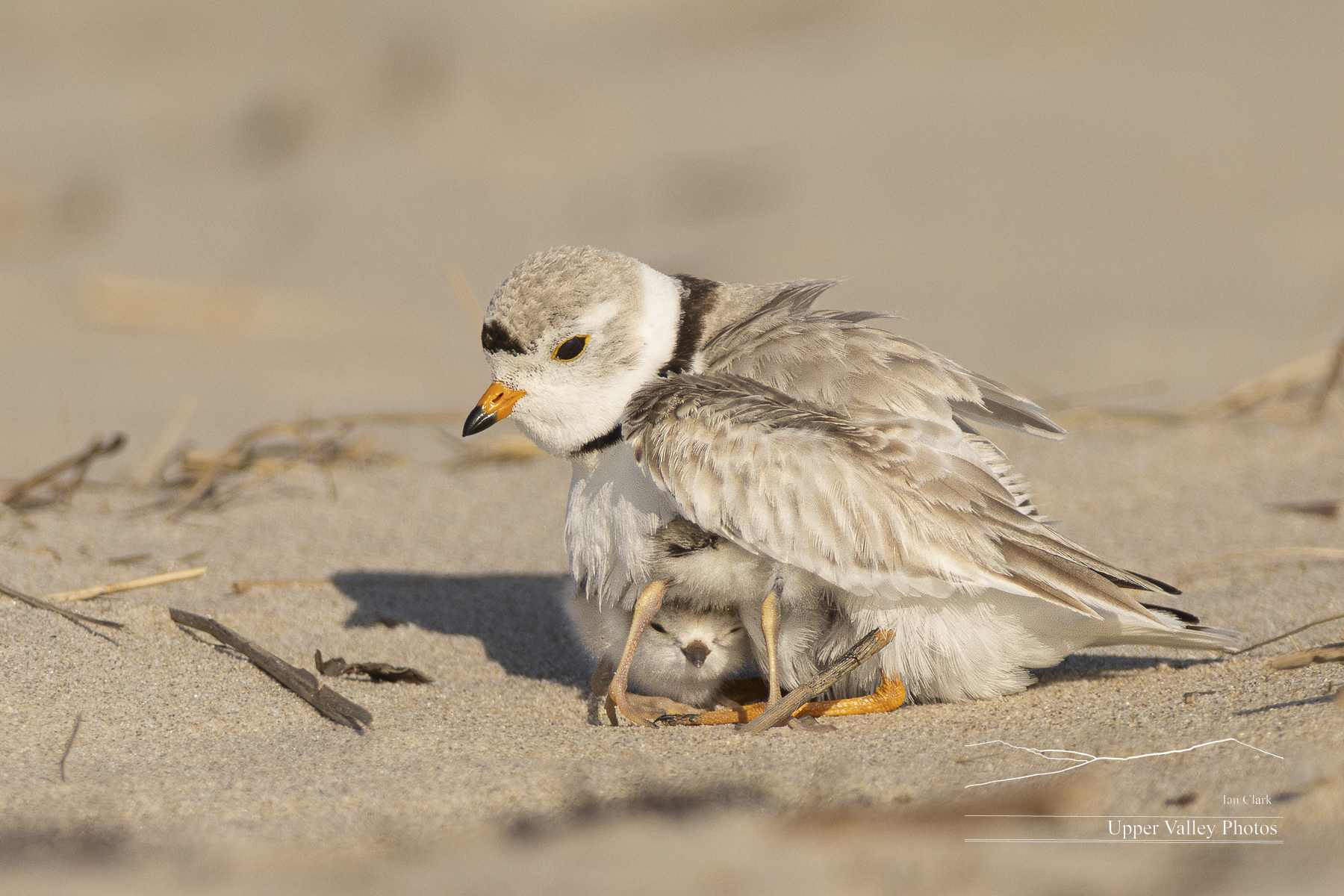
Both parents tend the chicks, such as they do. The parents watch the chicks as they scoot about and call them to take shelter under either parent for warmth or protection. If the chicks aren’t tucked under and the parent senses a threat, the parent will display like they’re injured. They flare their tail and walk clumsily while peeping to attract attention away from the chicks. This brood has four chicks and there are already at least two tucked under this parent.

This is a very rare photo of a chick taking cover under a parent. My extensive research has proven that 99.99% of the time, they disappear under the parent with their butt towards the photographer.

Some sources online suggest you can tell mom from dad by the size of the black stripe on their head, with the male’s being longer and thicker. Other sources suggest the female is drabber. Others say they’re indistinguishable. So, with that solid reference, this may be mom.

And this may be dad. Or I might have them backwards.

When the coast is clear – literally – the plovers will go down to the water’s edge to forage in the debris the tide left.

The chicks seem very tiny on the open beach. They’re easy to lose track of as they scurry about. Being flat on my belly trying to follow them with a long heavy lens is not the ideal way to keep track of them.

I’m amazed any of the chicks survive – they can travel better than 100′ from the parents and would seem to be an easy meal for anyone walking or flying by.

When they pop out from under a parent, they head out to explore the world. They’re smart enough to know they have to find their own food, but it takes a while before they learn what is and what isn’t edible. Dried reeds went in the not edible category.

Here our chick has scooped up a fly of some sort. This would seem to be in the edible category. But not so fast….

The fly manages a double-reverse back flip and gets out of the chick’s mouth…..

Our chick seems to be pondering this turn of events……

I think it was the fly’s lucky day. It was last seen riding the chick’s bill as the chick zipped away.

And a few more shots of the chicks as they explored, just because they’re adorable.

Exploring in the grass at the edge of the beach.

Pausing and plotting a new course.

Star Wars fans may see the design of the Empire’s walkers in the chick’s build.

The long legs seem to take some learning before they’re mastered.

Still looking a bit wobbly.

The plovers share their nesting area with least terns. They’re also handsome birds, longer and sleeker than the plovers. They’re inclined to go about their business directly up sun from photographers.

They aren’t great at building fancy nests. They lay their eggs in a shallow depression in the grass at the edge of the sand.

This nest was built about halfway between the high tide mark and the grass, out in the open on the beach. Audubon has volunteers that patrol the beaches trying to keep people away from nests and chicks. There were stakes and a rope fence set up around this nest and along the grass for protection.
And, they’re fiercely protective of their territory – which seems to include all of New England according to them. They’re quick to dive at whatever they think is a threat. They’re fast and agile fliers. There are always a few in flight over the colony. They chatter constantly about whatever needs to be said.

Sometimes the colony comes to a consensus and many of the adults will fly off to the water’s edge together. There’s no way to tell how many remain hiding in the grass, but there were several dozen in flight several times.
Courtship consists of the males delivering fish to a lady. Meet Leroy, the world’s most socially awkward tern. He has a fish and has worked his courage up to present it to this pretty lady.

She finds him attractive and turns away from him to present – encouraging him to mate.

Leroy didn’t seem to have thought his plan through to the point of figuring out what do to should she accept him. He spent better than ten minutes waving the fish around while circling her. She patiently kept turning to urge him to get on with it.

He finally got the hint and got down to business.

He delivered the fish as they carried on with the matter at hand.

The guys don’t seem to have a lady in mind when they set out with their fish. They land near a lady and offer the fish. If the lady isn’t interested, she’ll rebuff him – often chasing him off. The guys seem undeterred and move along to the next lady. It turns out a lot of the chatter is actually ‘come here often? Can I buy you a fish?’

When the guys arrive to present the fish, they’ll often make a nifty swoop and fluttering landing.

This lady emphatically declared she was not interested, thank you very much. Buzz off creep!

Here, a couple of guys have spotted a pretty lady and are racing to get to her first.

They also do a little dance together while courting. They flare out their wings, circle each other and mirror each other’s posture.

And around we go….

And a fish for you, my dear.

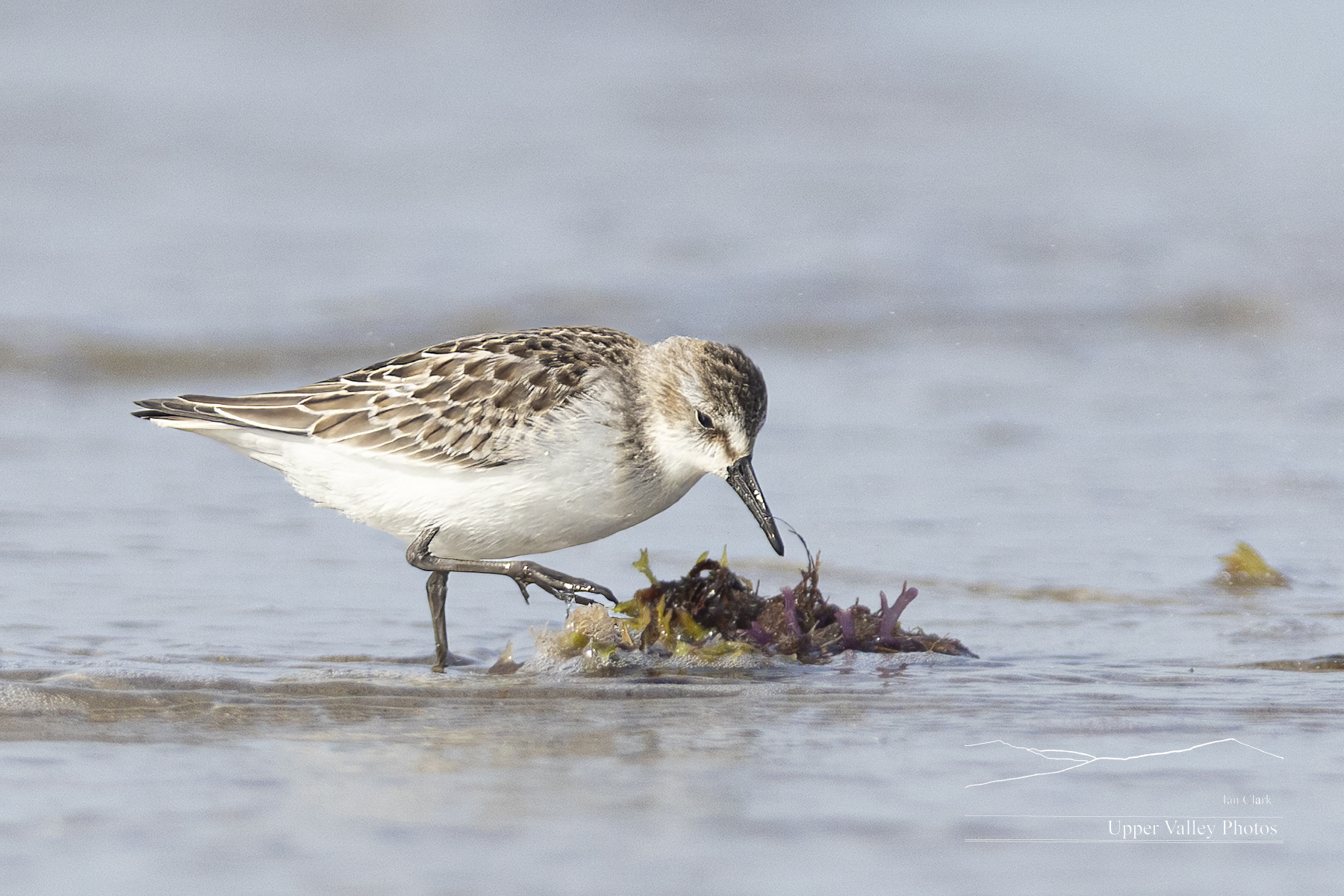
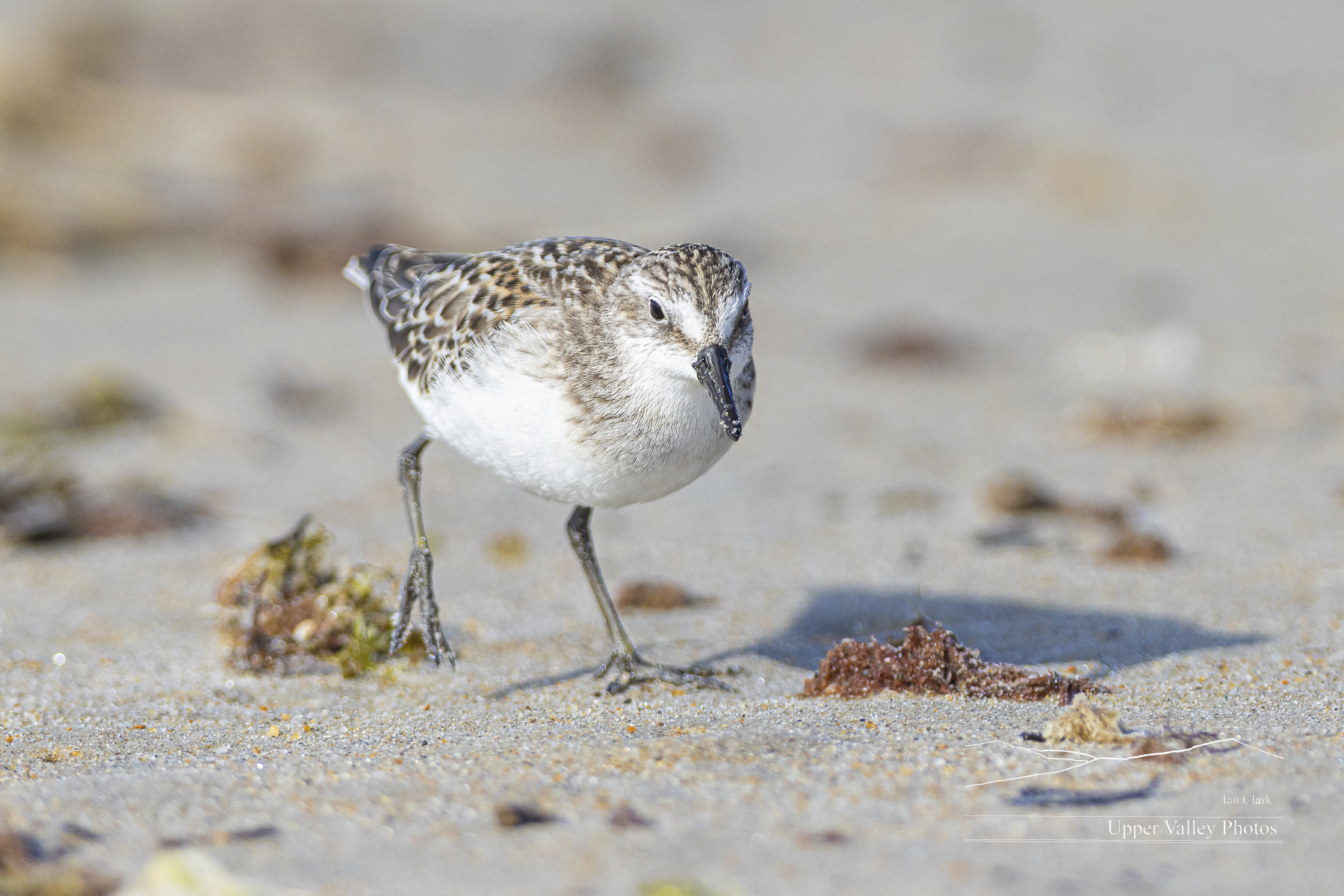
There was also a small flock of semipalmated sandpipers that were traveling along a large stretch of beach.

Two more semipalmated sandpipers foraging in the debris.

Our tree swallows are holding onto the box the wrens drove the bluebirds from. Mom is sitting on five eggs. The wrens must be sitting on eggs too, but I don’t have a camera in their box. They enjoy perching just outside my window. Wrens never, ever, ever stop chattering. I’ll admit I’m not finding it as cute as it was a couple weeks ago. I’ve been collecting video of the swallow’s box and promise to get around to editing and posting some.

I got out to visit the Middleton loon family yesterday and will post an update on them shortly as well.

If you’re enjoying the blog, please consider passing the link along to some friends. Thanks!