Tall Ships In Boston
A little different topic this time. I went to Boston to watch the tall ship Parade of Sail for Sail Boston, a celebration of the US’s 250th anniversary. Friends and I set up on Castle Island in South Boston to watch the ships enter the Harbor. It was a miserable setup for photography – it was hot and hazy day, we couldn’t move about easily and there were boats of all sizes coming and going in the sightline of the tall ships. Ship happens. The ships are beautiful and they have interesting histories. It was a great event.
The 93rd Annual League of New Hampshire Craftsmen’s Fair kicks off next Saturday, August 1 and runs through August 9, 10 to 5 daily through Sunday August 9 at the Mount Sunapee Resort in Sunapee, NH. I will NOT have a booth this year. Nine days – not counting set up and knock down – is just too much for me anymore. I will have my 2027 Wildlife Calendar, lots of note cards and a few prints available in The Shop At The Fair. And even if I’m not there, there will be lots of wonderful craftspeople exhibiting amazing work.
My 2027 calendar has arrived. This year with over 200% more bears! The cover and September images are from my trip to Alaska to photograph the brown bears in the Chilkoot Valley last fall. There are also otters, a mink, fox kits and more. They’re $25 and shipping is $4.50 per order.
Onto the ships….
Sail Boston 2026 was organized by Sail Boston, Inc. as part of America’s Semiquincentennial celebration. They organized over 50 tall ships for the event. The ships sailed into Boston Harbor on July 11.
Along the way, I had to learn some of that nautical type talk to learn about the types of ships. Tall ships are sorted by the number of masts they carry and the type of sails on the masts.
A ‘full-rigged’ ship has three or more masts, with ‘square-rigged’ sails. That means they’re hung from horizontal yards perpendicular to the centerline of the ship. Yards are the horizontal crossbars on the masts.
A barque also has three or more masts, but only the after-most mast – the ‘mizzen’ mast – is ‘fore-and-aft’ rigged. That means the sails run lengthwise along the centerline of the ship. The other masts carry square-rigged sails. Apparently this is better for sailing into the wind.
Tall ships are traditionally-rigged sailing vessels that are mainly distinguished by the number of masts they carry and the type of sails set on those masts. A full-rigged ship has three or more masts, all of them square-rigged (sails hung from horizontal yards). A barque also has three or more masts, but only the aftermost (mizzen) mast is fore-and-aft rigged while the others carry square sails.
A barquentine reverses that arrangement. The forward mast is square-rigged and the remaining masts are fore-and-aft.
Brig and brigantine ships are both two-masted. Brigs have both mast square-rigged. Brigantines have the foremast square-rigged and the mainmast rigged fore-and-aft.
Schooners have two or more masts that are fore-and-aft rigged. Often the forward mast shorter than the ones behind it. Schooners may also have square topsails.
And woe to he who calls the cannons onboard cannons. To sailors, they’re ‘guns’ or ‘great guns.’
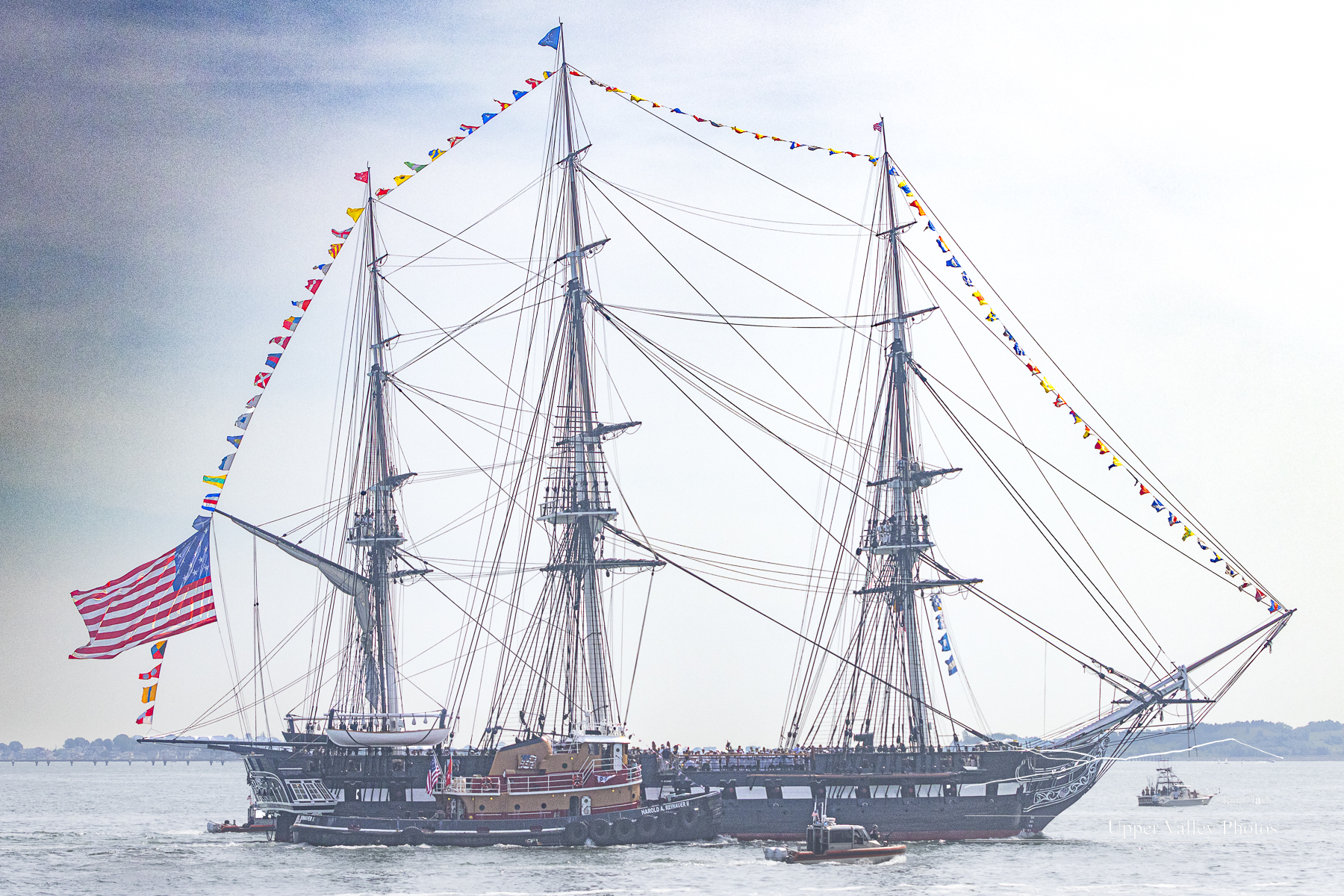
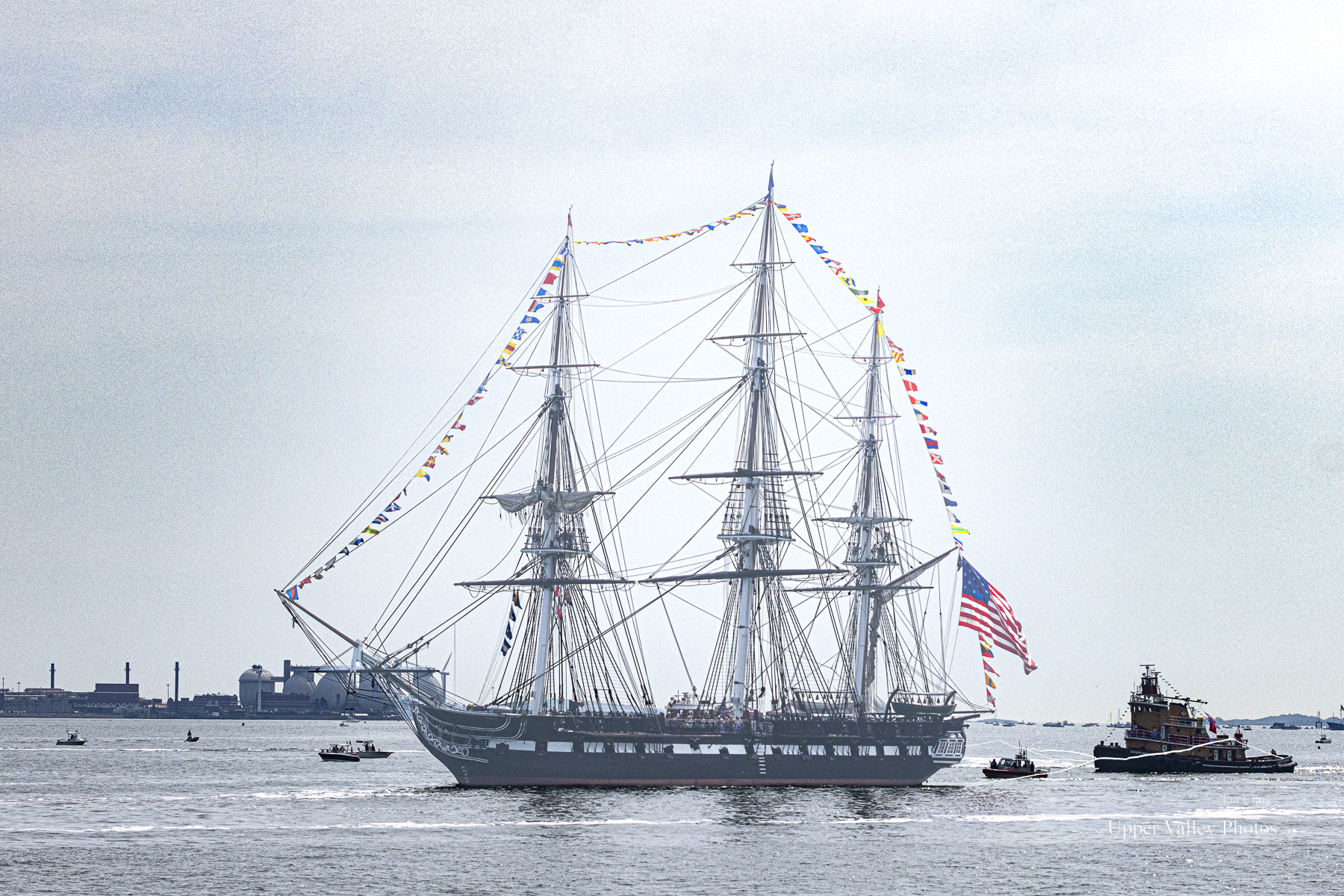
The Constitution is the oldest commissioned warship still afloat. (The British HMS Victory is older and still commissioned but is in permanent drydock.)
The Constitution was launched in 1797 and saw service against the French in the undeclared war from 1798 to 1800, the First Barbary War, the War of 1812. She was a training ship in the US War Between the States. She earned her nickname on July 17, 1812, in the War of 1812 when the HMS Guerriere fired her guns at the Constitution and the shot deflected off the Constitution’s side.
She’s a museum piece now, semi-permanently tied up in the Charlestown Navy Yard, Boston, MA. To keep the wear even on her hull, she is turned yearly on the Fourth of July in Boston Harbor. The strain of sails on her masts may be too much for them, so these days she’s escorted by tugs. For this event, the Zachery Reinauer and the Harold A. Reinauer II escorted her out in the harbor and turned her.
To kids growing up in greater Boston, she was a regular field trip destination for schools and scouts. I went aboard on several tours in the late 1960s and 1970s.
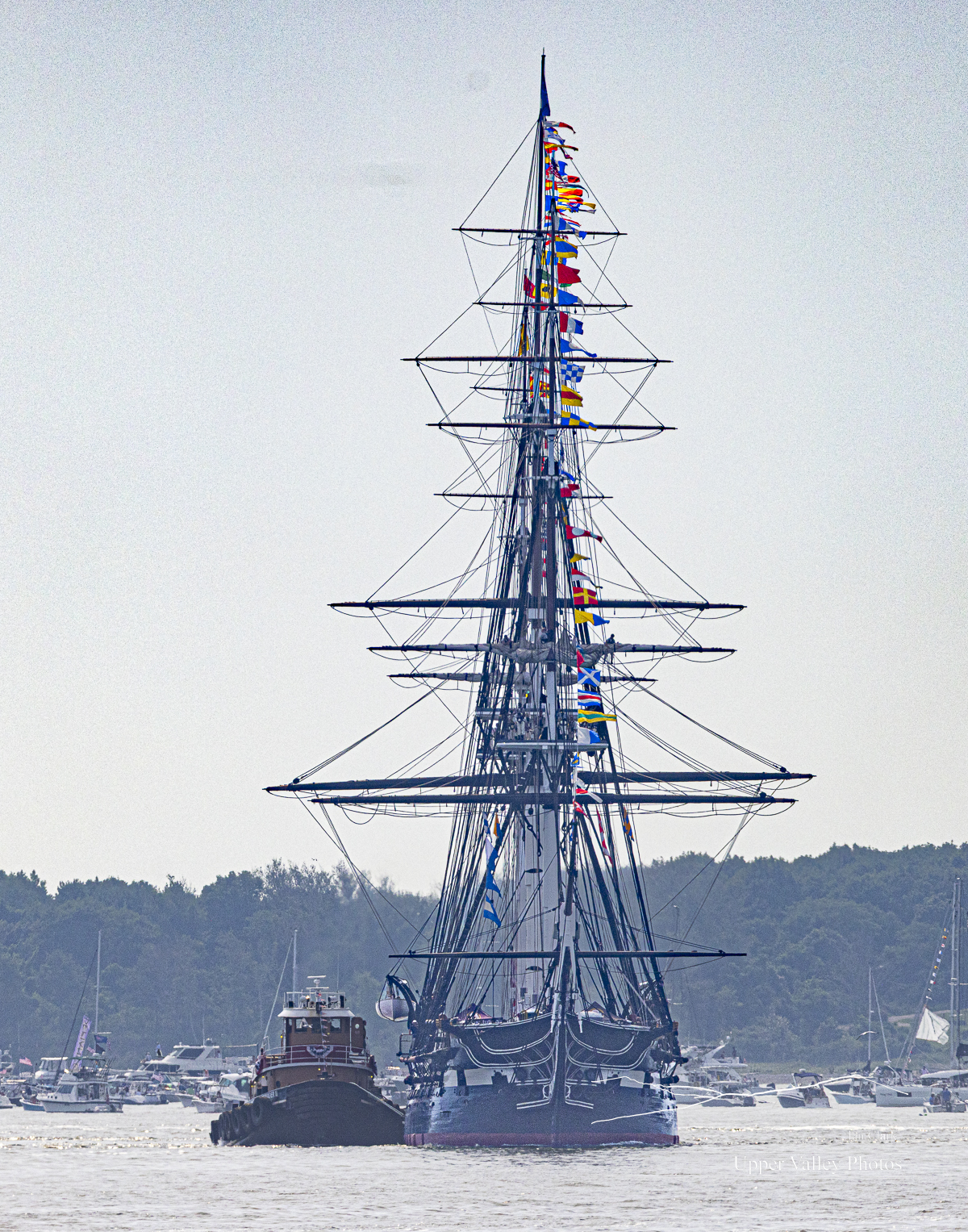
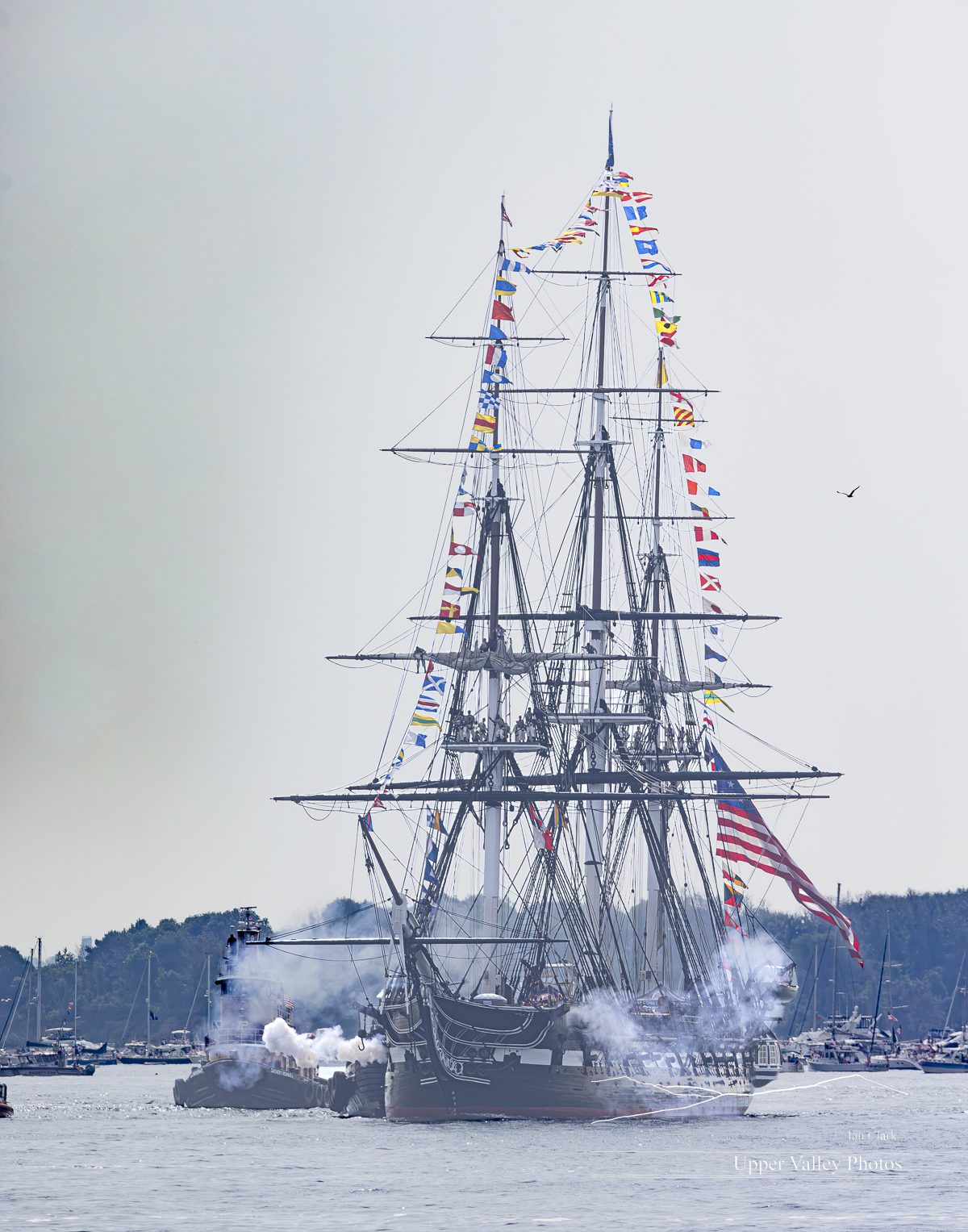
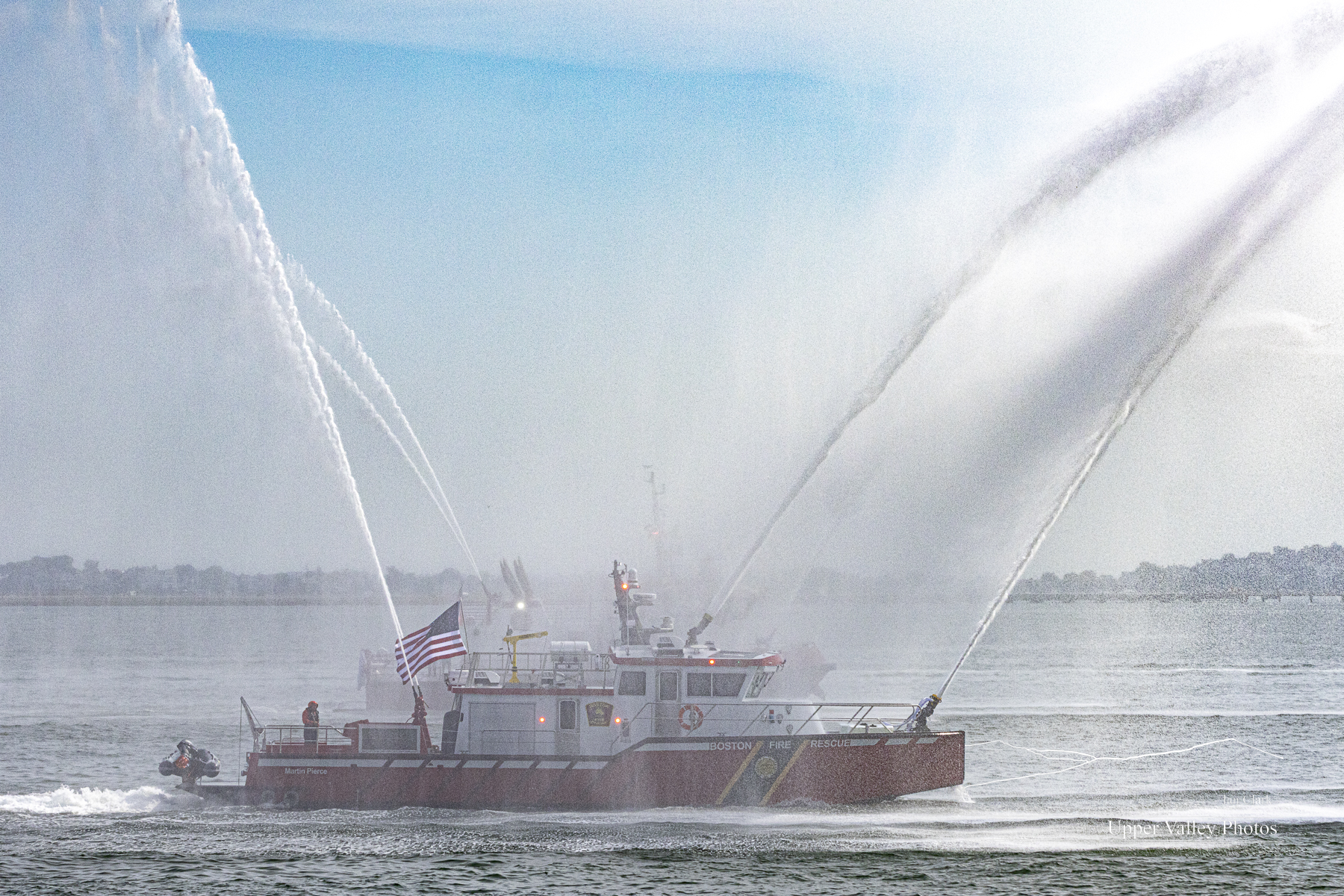
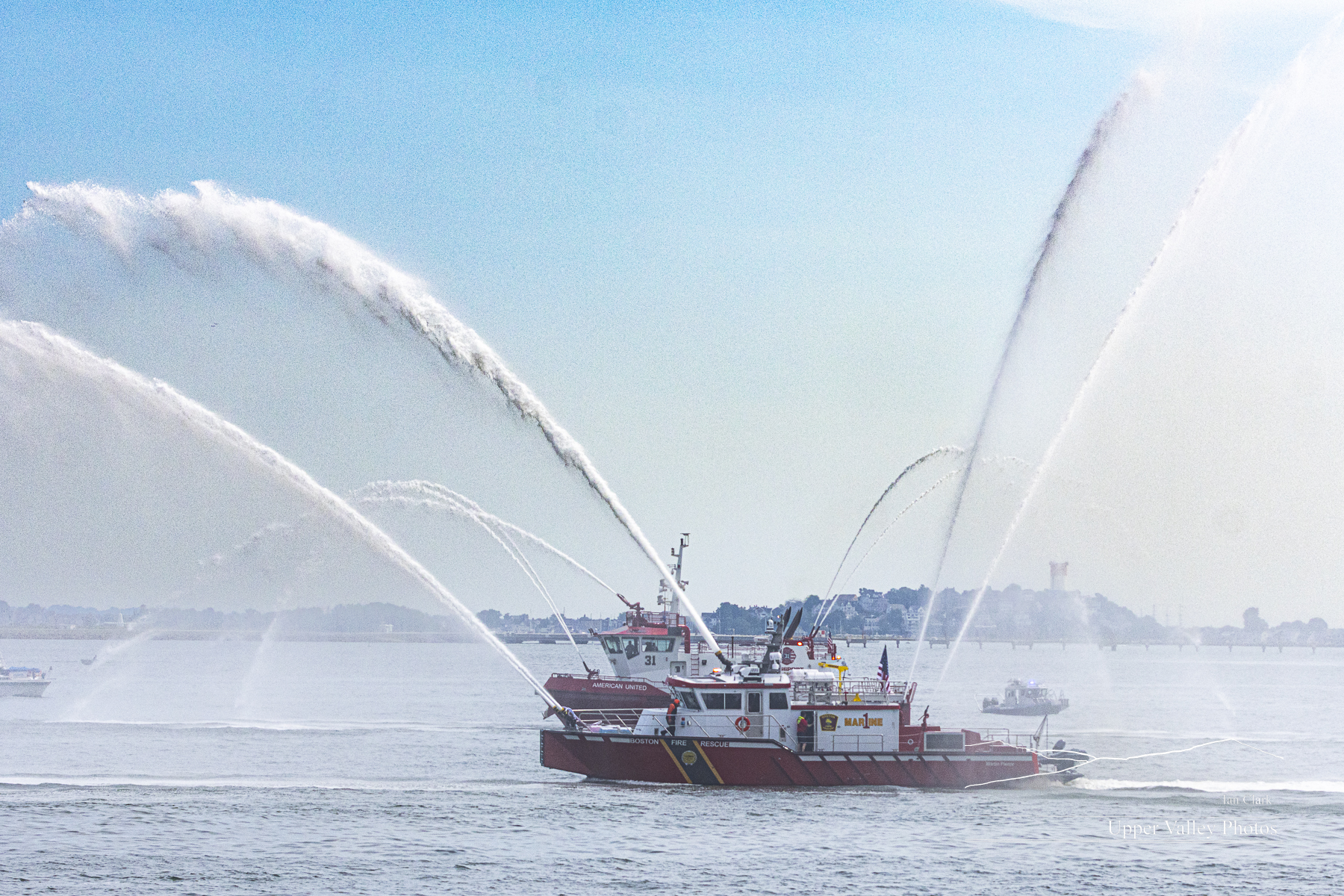
The Martin Pierce is the Boston Fire Department’s newest primary fireboat. She’s a 2026 Metalcraft Marine 70-foot high-speed aluminum vessel that serves as the flagship of the department’s Marine Unit.
She’s 70’ with four 1,000 HP Caterpillar turbo-diesel engines with jet drives and capable of pumping about 12,000 gallons per minute for fighting fires.
She was built by Metalcraft Marine, Inc. in Kingston, Ontario. She was delivered by sailing her through Lake Ontario and Lake Erie to the Erie Canal and across New York to the Hudson River.
The boat is dedicated to both Firefighter Martin Pierce Sr. and his son, former Fire Commissioner Martin Pierce Jr. Martin Pierce Sr. joined the Boston Fire Department in 1943 and served 37 years on Ladder 17. Martin Pierce Jr. joined in 1969, rose through the ranks, and served as Fire Commissioner in the 1990s.
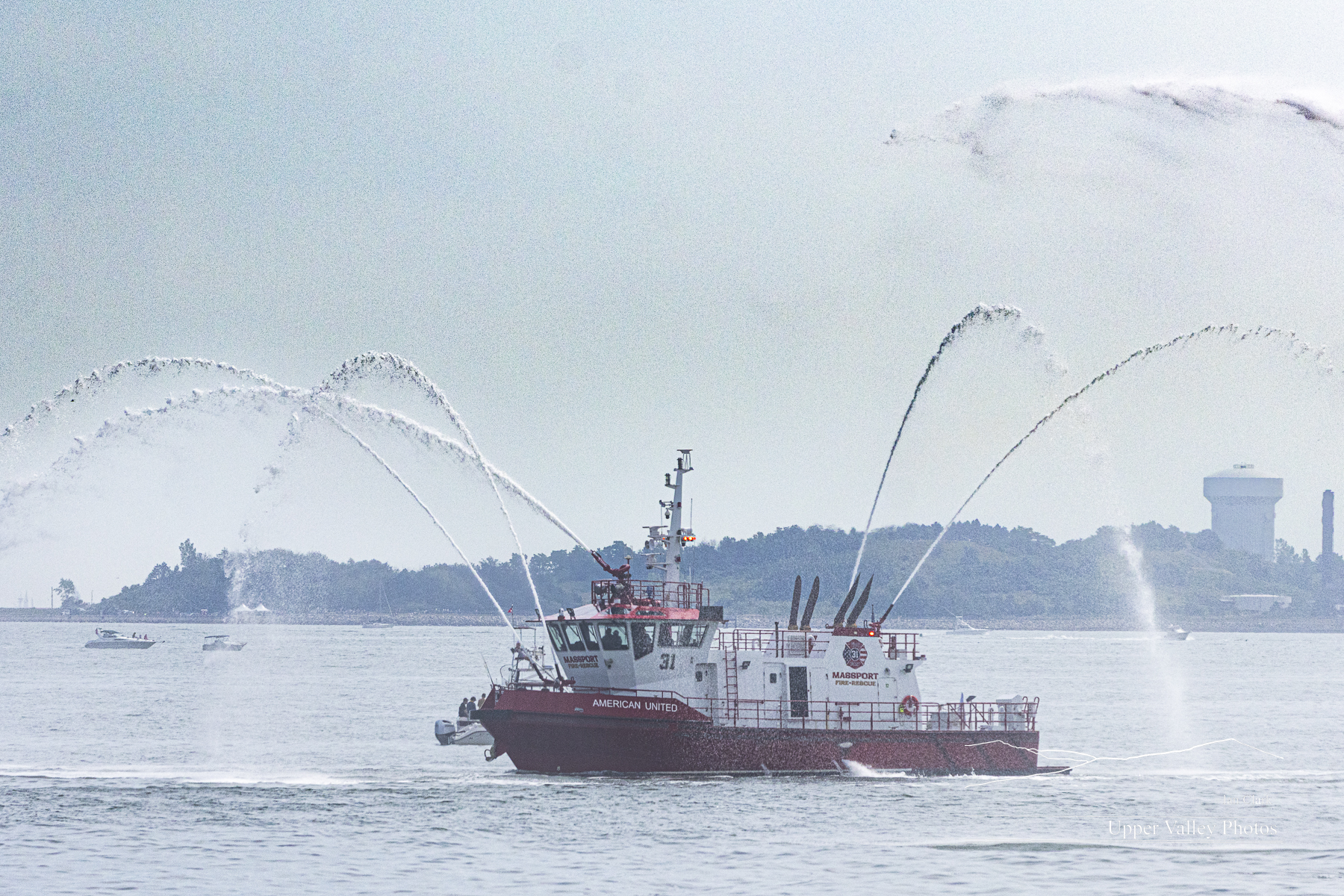
She’s 79’ long, built in 2011 by A.F. Theriault & Son Ltd. In Meteghan River, Nova Scotia. She has four Caterpillar diesel engines, two 1,450 HP and two 873 HP. She can do 24 knots and can pump 6,000 gallons per minute to fight fires.
She’s named as a tribute to the passengers and crew of American Airlines Flight 11 and United Airlines Flight 175—the two planes that departed from Logan Airport on September 11, 2001, and struck the World Trade Center. The vessel includes a memorial piece of steel from one of the towers inscribed “Never Forget!”
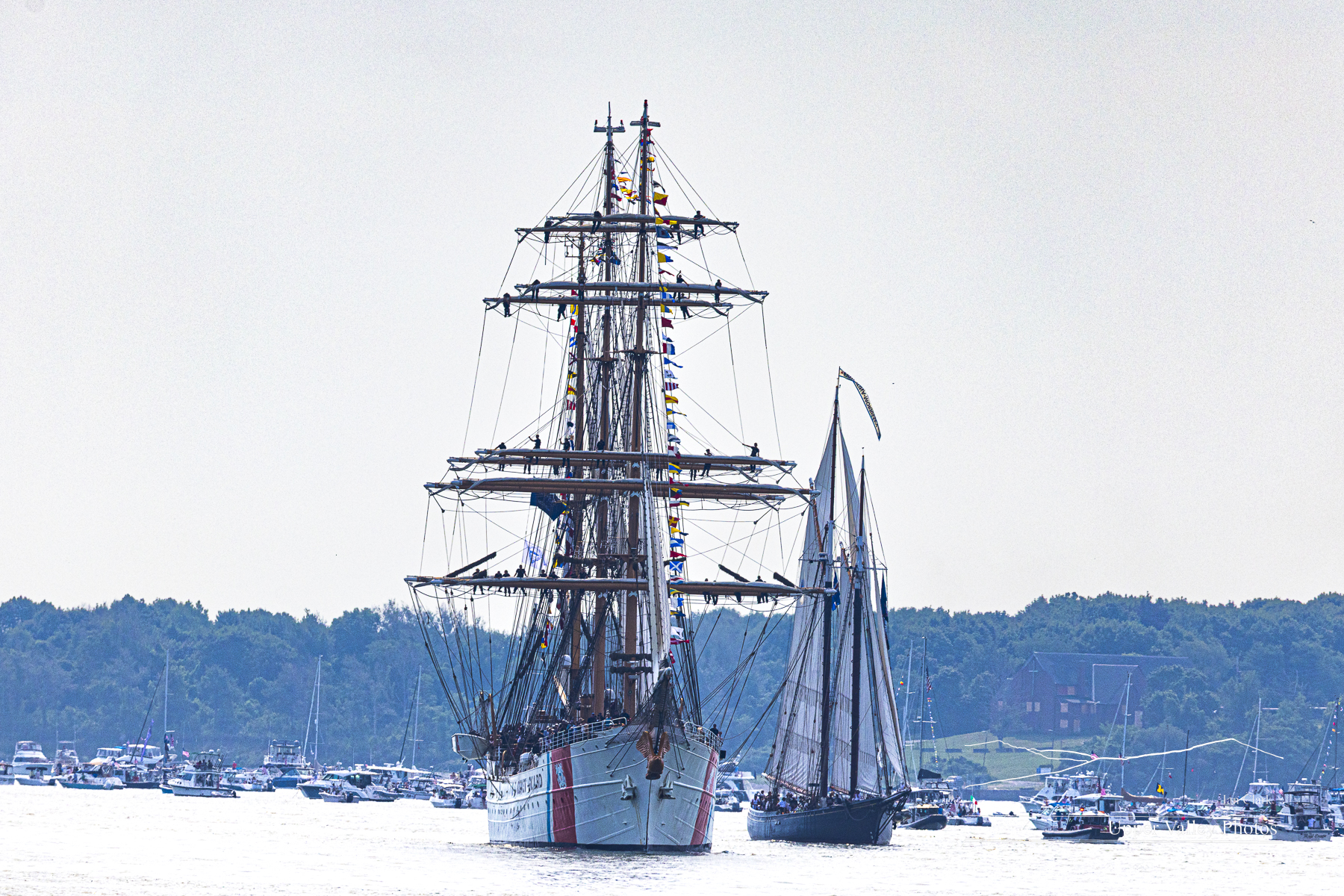
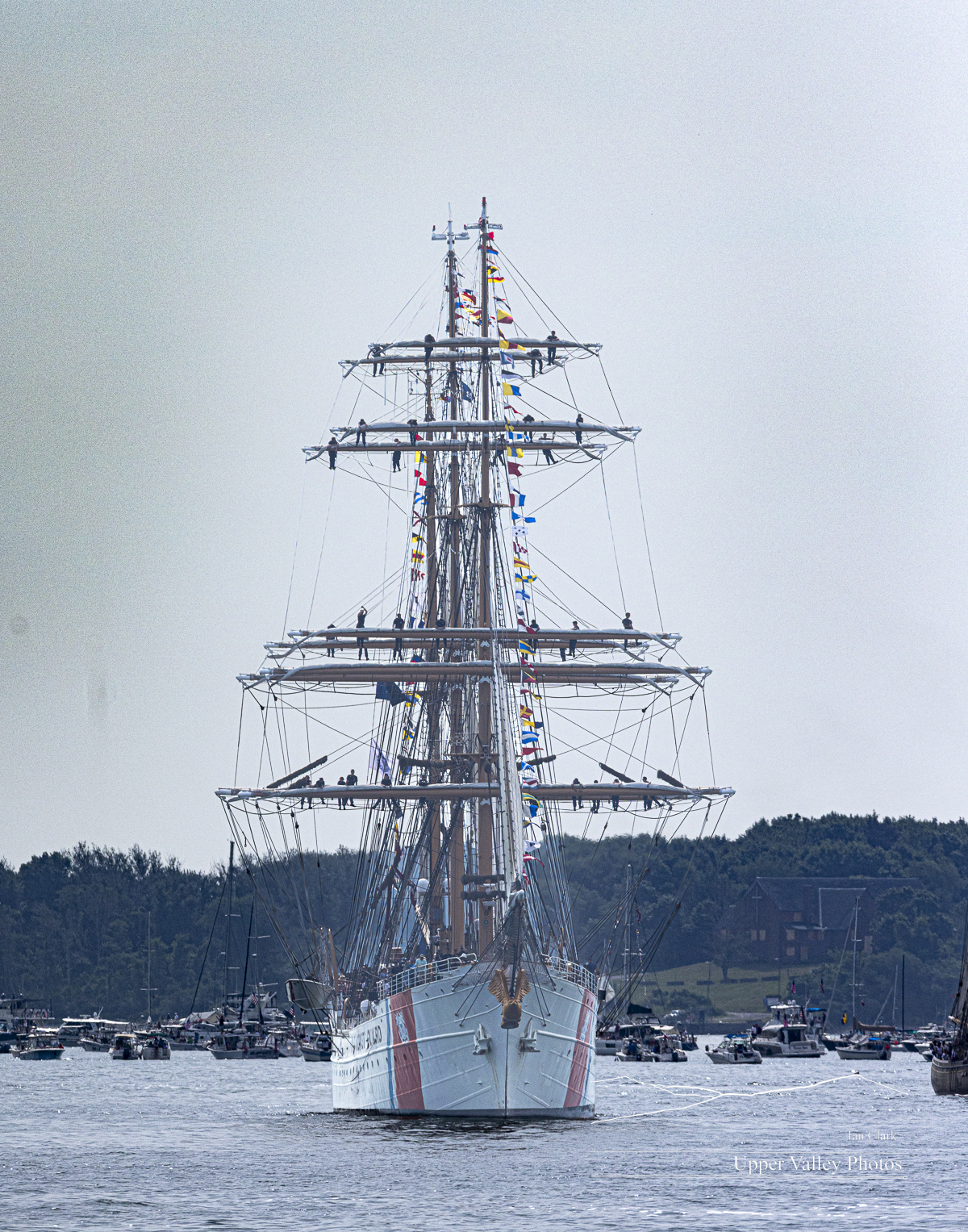
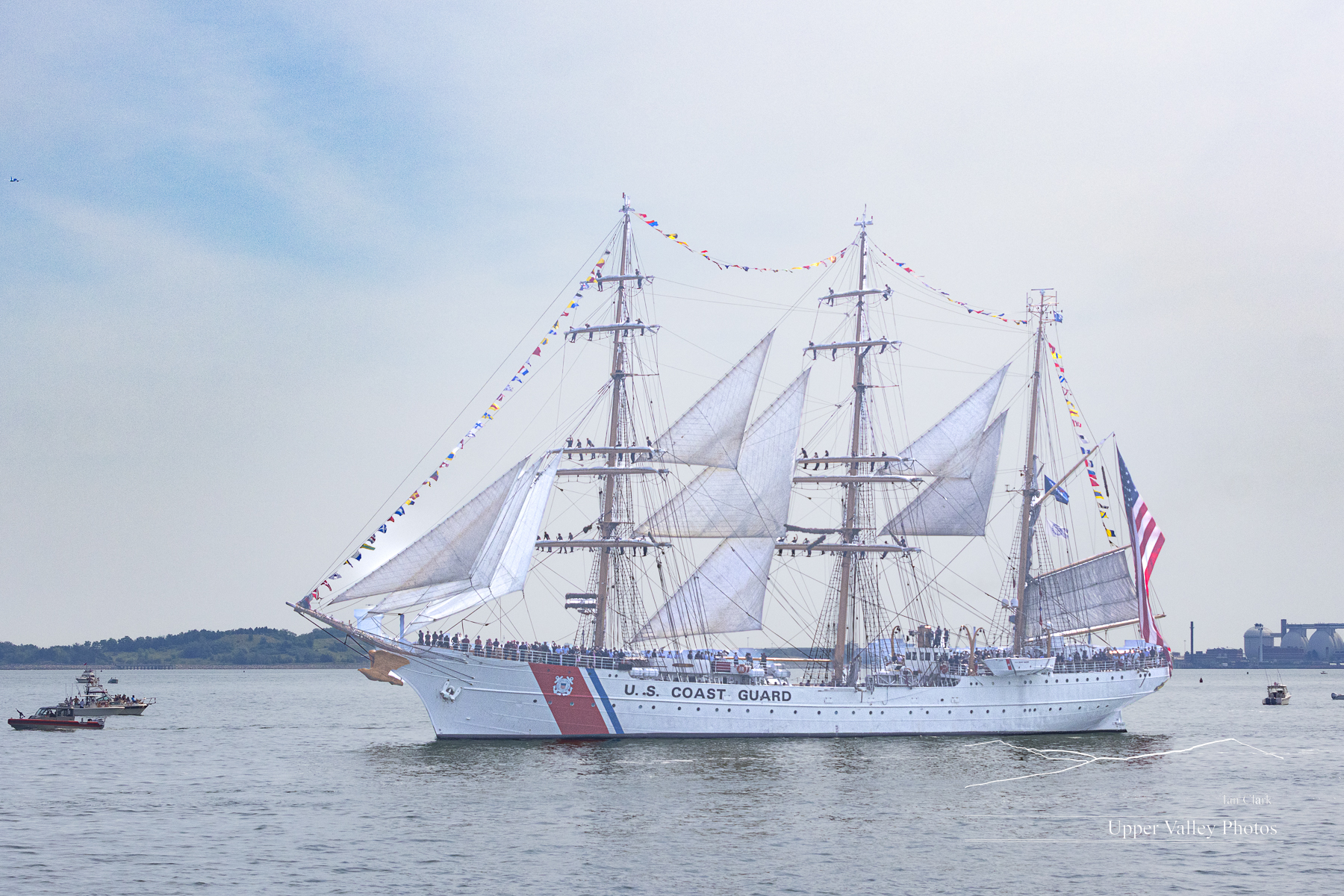
The Eagle is a Coast Guard training ship, serving as a seagoing classroom for cadets. In addition to training cadets, she serves as a goodwill ambassador, calling in foreign ports.
The Eagle was built in Germany as the Horst Wessel in 1936, to serve as a training ship for the German Navy. She was decommissioned by the Germans in 1939, just before the start of WWII. In 1942, she was recommissioned. The Germans added anti-aircraft guns to her and pressed her into service. She survived the war and was taken by the United States as war reparations.
In April 1945, she fled Germany with a group of refugees aboard. She made it to the port of Flensburg in the German State of Schleswig-Holstein, which was under British control. She surrendered to the British there.
After the War, she moved to the German port of Bremerhaven, tied to a pier and had much of her equipment stripped. The Allies drew lots to determine who would take each of the remaining German ships.
The ship the Russians won was stripped of her sails, masts and other equipment to repair the Eagle. She was commissioned into the Coast Guard as the Eagle on May 15, 1946. She sailed for America in June 1946 with a Coast Guard crew assisted by the German Kapitänleutnant Schnibbe and some of the German crew. She had an eventful voyage, weathering a hurricane before arriving in Orangeburg, NY.
She’s 295 feet long, her tallest mast is about 150 feet tall – about as high as a 15-story building. She has 23 sails with a total area of 22,227 square feet that require six miles of rope for her rigging. She can make about 17 knots (20 mph) under sail. And she’s beautiful.
That’s the Ernestina-Morrissey alongside the Eagle.
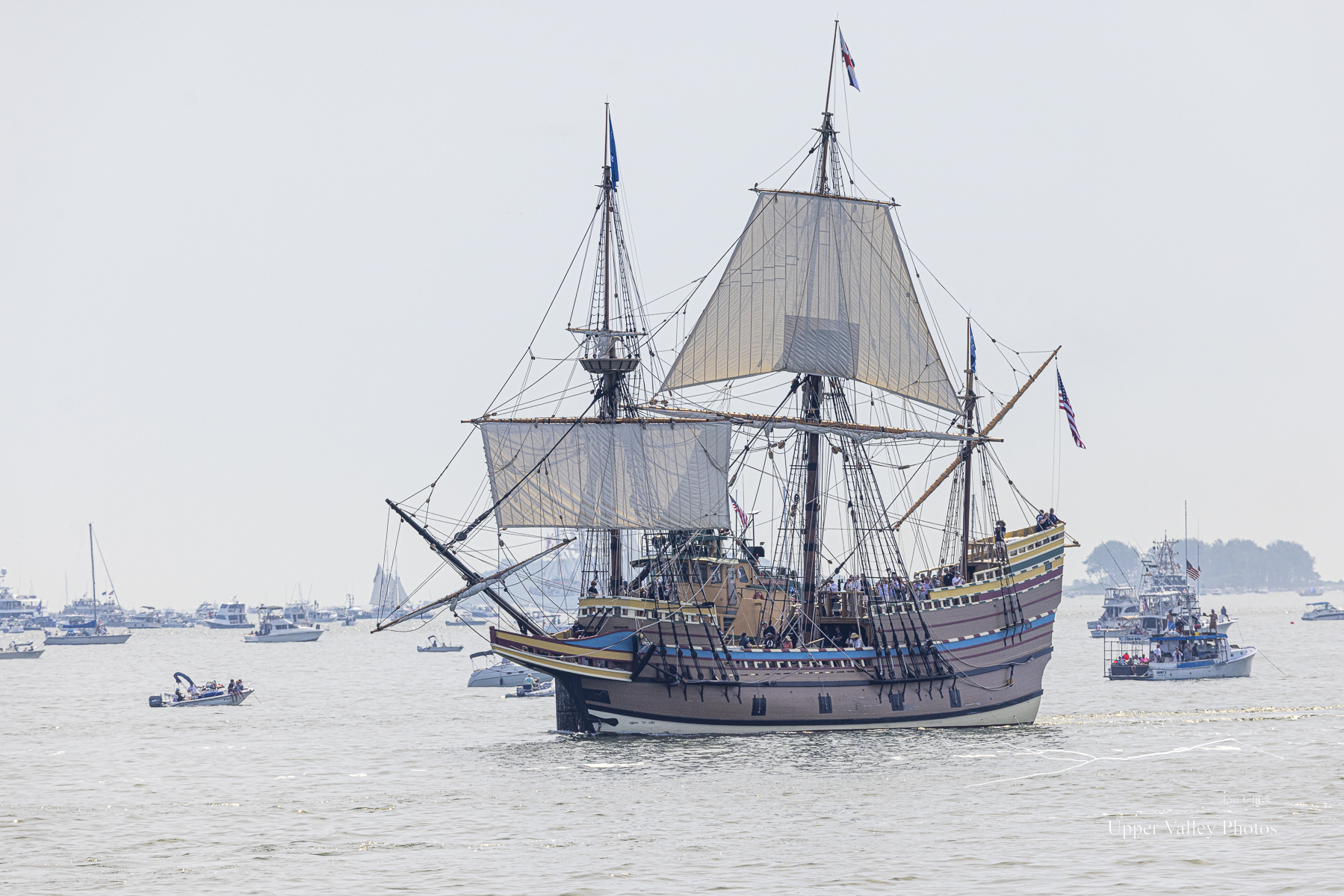
The Mayflower II is a full-scale, historic reproduction of the 17th-century merchant ship that carried the Pilgrims to America in 1620.
She was built in 1955 and 1956 using traditional materials and methods by English shipbuilders at the Upham Shipyard in Brixham, England. She sailed across the Atlantic in 1957 and was given as a gift to the U.S. She’s now owned by Plimoth Patuxet Museums in Plymouth, Massachusetts. Her home berth is the State Pier near Plymouth Rock in Plymouth, MA.
She seems far too small to be sailing about in the Atlantic. She’s only about 25 feet wide and 106 feet long.
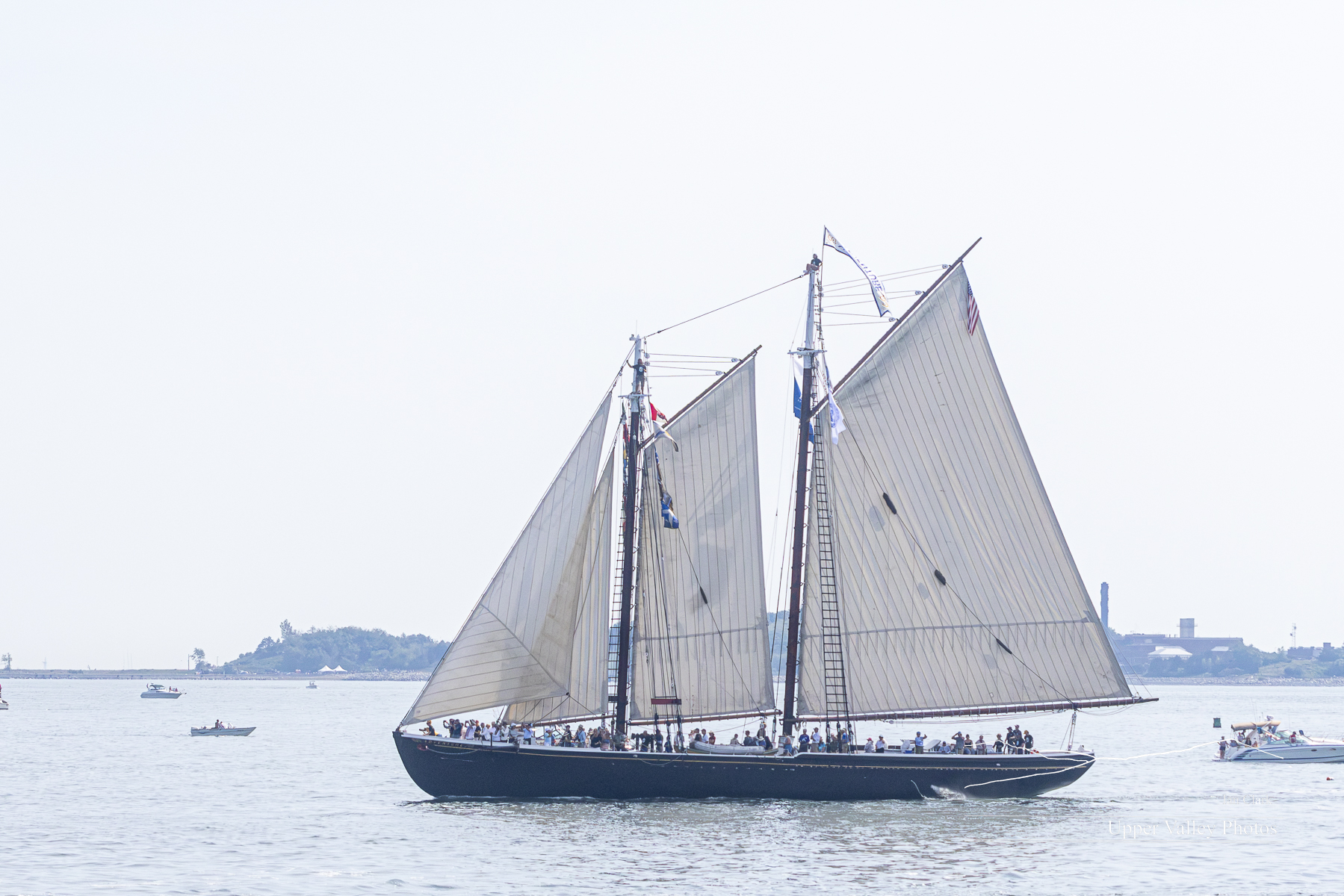
Ernestina-Morrissey was built in 1894 at the James and Tarr Shipyard in Essex, MA. Originally named Effie M. Morrissey, she was a hardworking Gloucester fishing boat fishing for cod and halibut from the North Atlantic until 1924.
In 1924, she was purchased by famed Arctic explorer Captain Robert Bartlett. She made dozens of expeditions to the far North for institutions like the American Museum of Natural History and the National Geographic Society and even surveyed the Arctic for the U.S. government during WWII. She got as close as 600 miles to the North Pole.
In 1947, she was sold to Cape Verdean Captain Henrique Mendes, she was renamed Ernestina and spent decades plying the transatlantic waters, carrying goods, supplies, and immigrants between Cape Verde and New England.
In 1982, the Republic of Cape Verde gifted the vessel to the people of the United States. She was brought home to be restored and was named the official State Ship of Massachusetts. She was renamed to Ernestina-Morrissey in 2014.
She’s now managed by the Massachusetts Maritime Academy. Her home berth is the New Bedford State Pier in Massachusetts. She serves as a sail training and educational ship for the Academy.
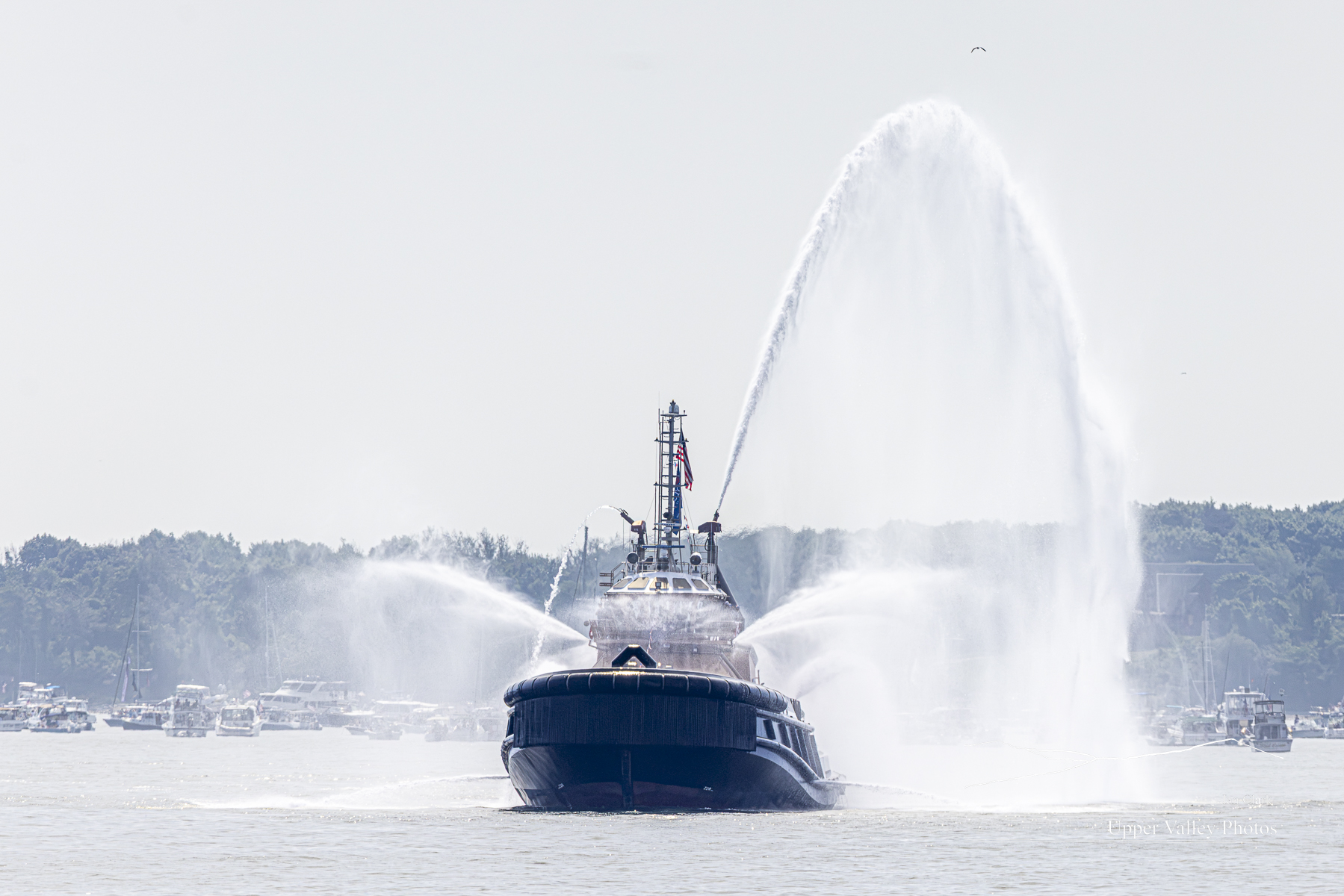
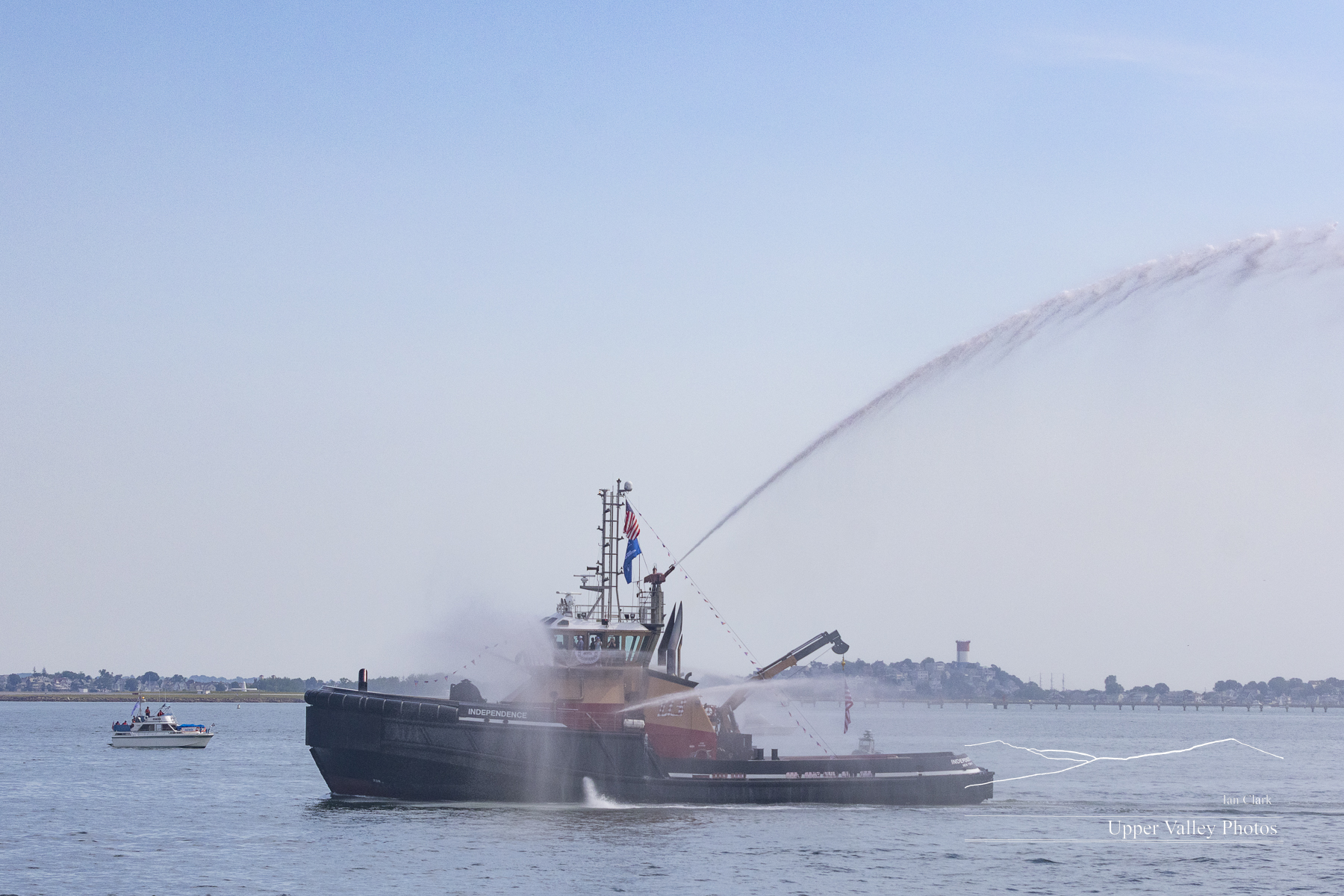
She was built in 2009 by the Derecktor Shipyards in Bridgeport, CT. She’s powered by two 16-cylinder Rolls-Royce MTU diesel engines delivering 5,400 HP.
She usually works handling ships in the Harbor or towing along the coast. She’s also equipped to handle salvage work and is a Class-1 fire-fighting boat capable of pumping 5,200 gallons per minute. She seems to be what we land-lubbers call ‘a big sucker.’
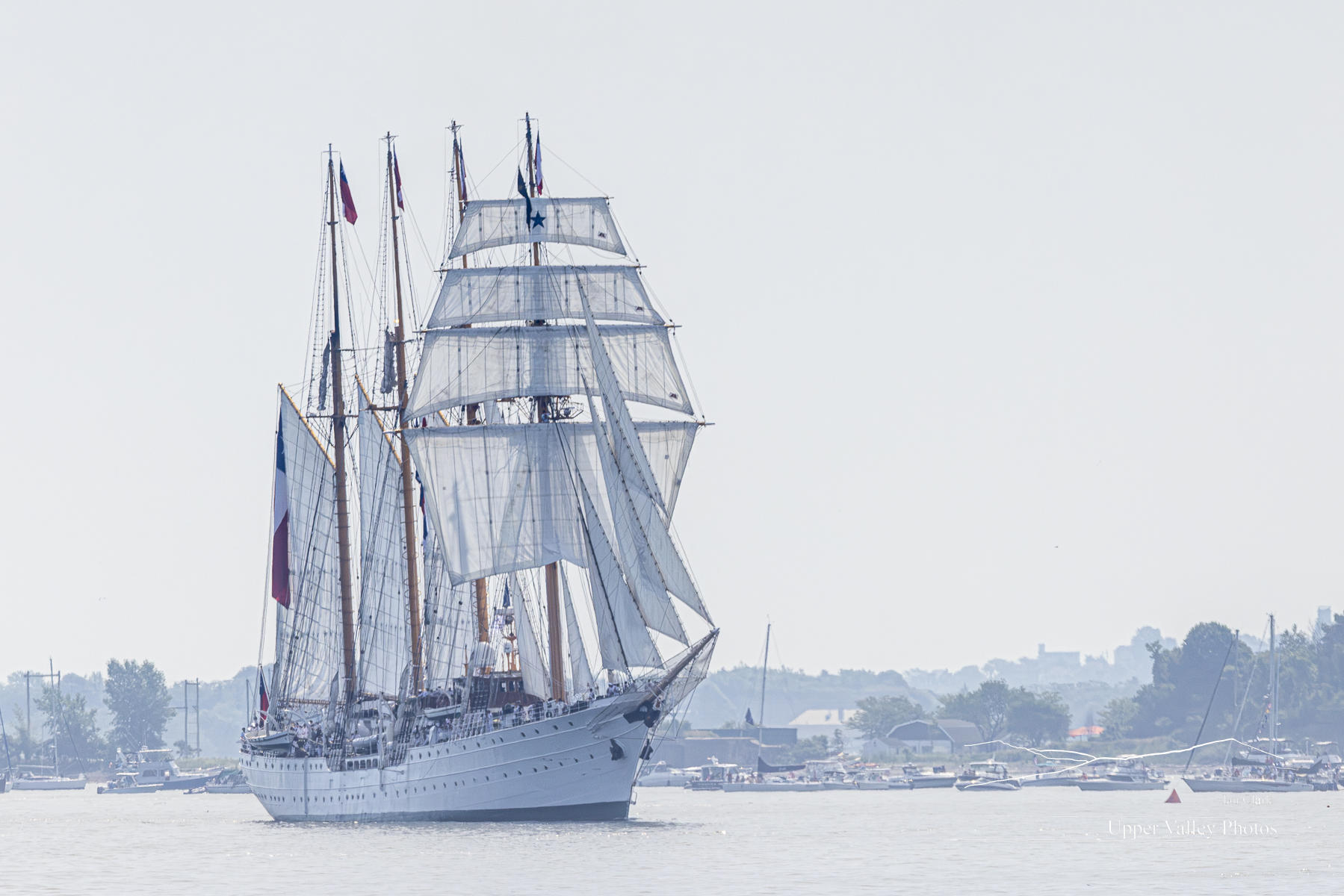
The Esmeralda is a 371-foot, steel-hulled four-masted barquentine that serves as a sail training vessel for the Chilean Navy. Affectionately known as the “White Lady,” she is the third-tallest sailing ship in the world and carries a crew of nearly 400 people.
She’s 371’ long, with a beam of 43’ and a draft of 23’. She displaces 3,673 tons. She has 21 sails, covering 30,892 square feet.
Construction began on her in Cádiz, Spain, in 1946. She was initially designed to serve as Spain’s national training ship, Juan de Austria. Tragedy struck in 1947 when a massive explosion devastated the Cádiz shipyard. The explosion severely damaged her hull and left the construction company on the verge of bankruptcy.
In 1950, Spain offered the unfinished ship to Chile as part of a debt settlement from the Spanish Civil War. Work on her restarted under the new owners and she was launched on May 12, 1953, in Cádiz, Spain. She sailed to her homeport of Valparaíso, arriving in September 1954.
Following the coup by General Augusto Pinochet on September 11, 1973, the Chilean Navy joined the military junta. The Esmeralda was put to use as a prison. Over 5,000 political prisoners were detained onboard.
After Pinochet stepped down, she transitioned back into her training role. She has visited over 300 ports in more than 60 countries. She set world speed records for her class, averaging 16 knots over a 24-hour run.
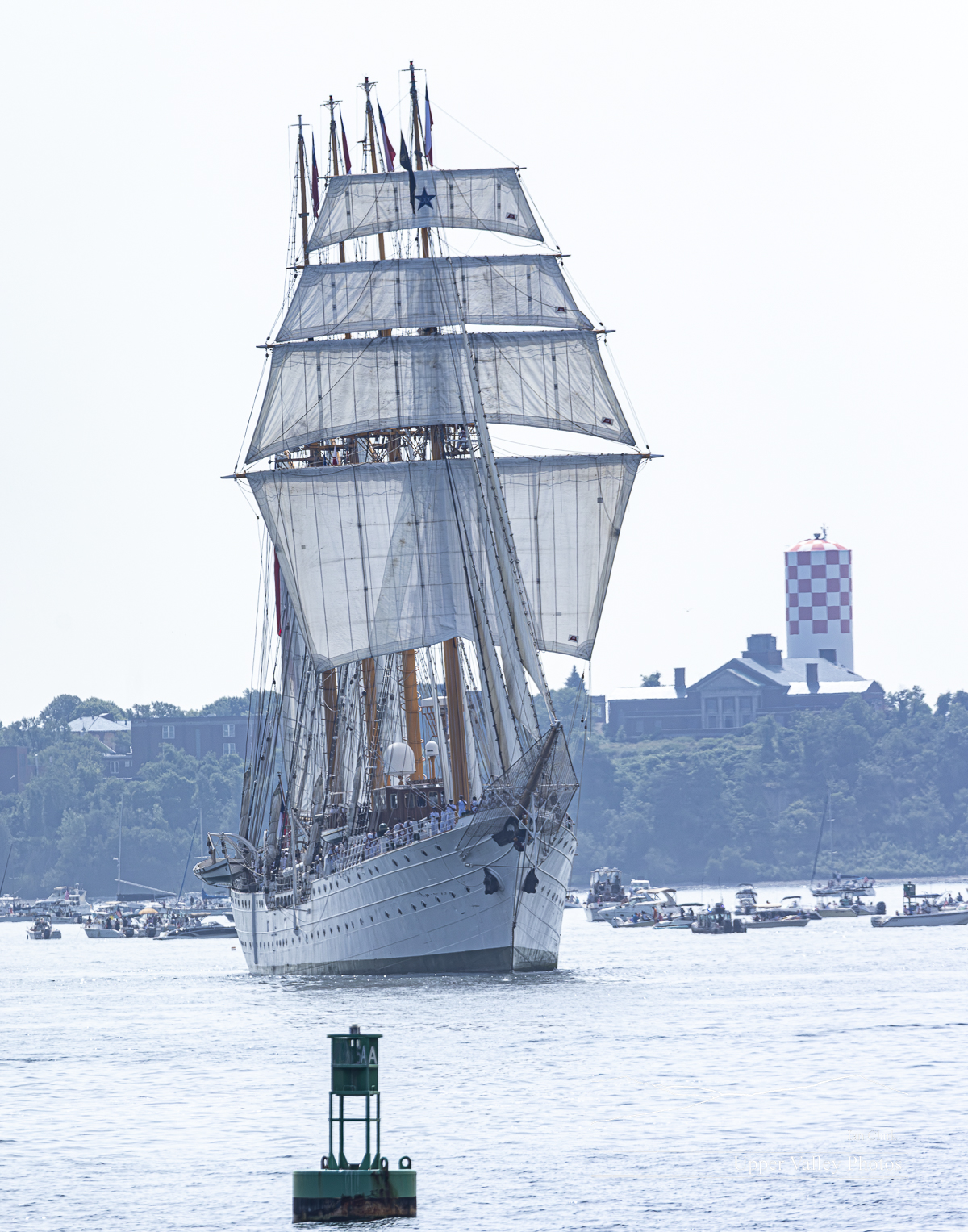
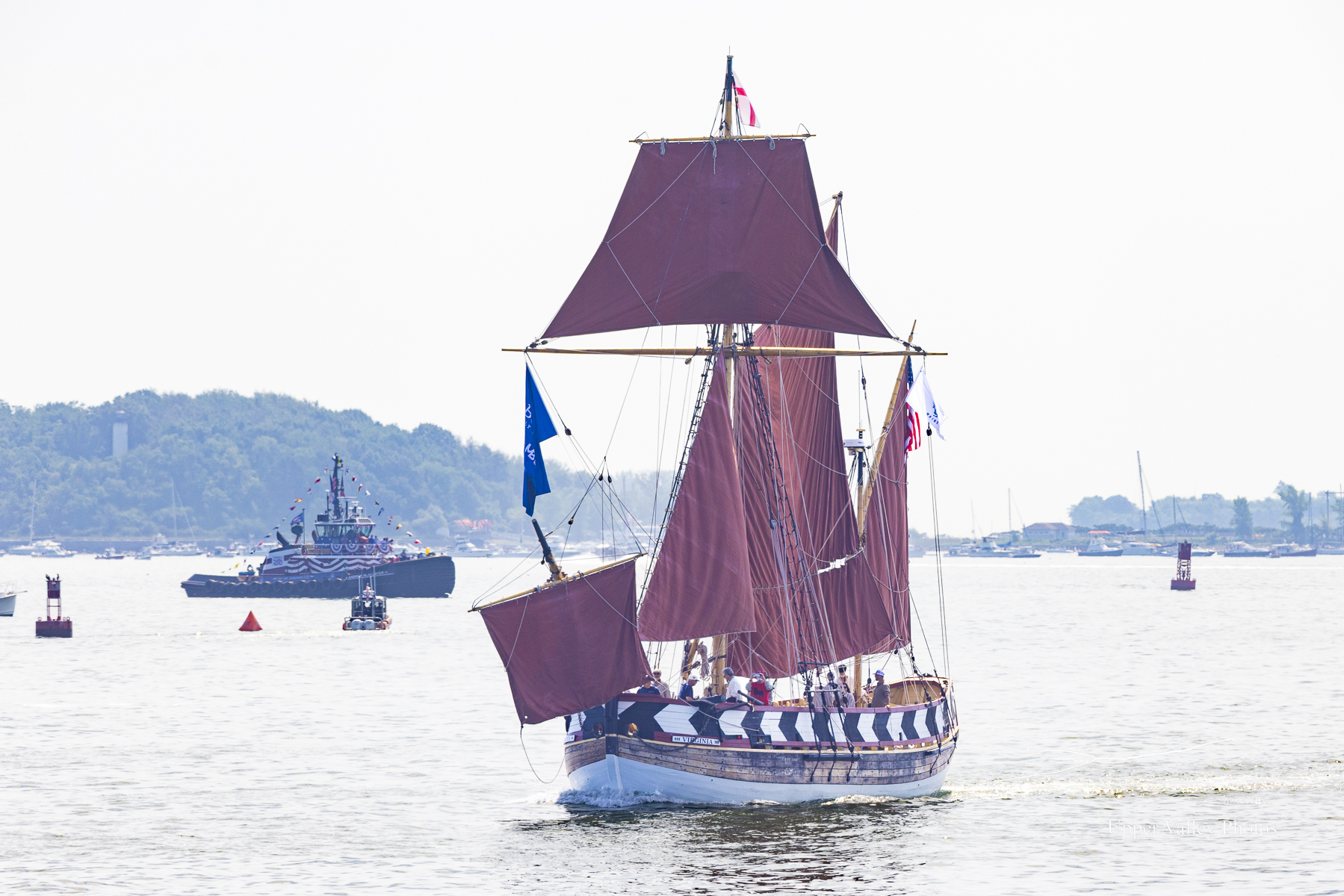
A former London shipwright, Mr. Digby, built the Virginia. She was originally designed as a fishing boat. But when the Colony was abandoned, she returned some of the colonists to England. She was then sold to the Jamestown Colony and recrossed the Atlantic.
A group of volunteers built the replica Virginia in Bath, ME, launching her on June 4, 2022. She’s 51’ long – which seems much too small to be crossing oceans if you ask me.
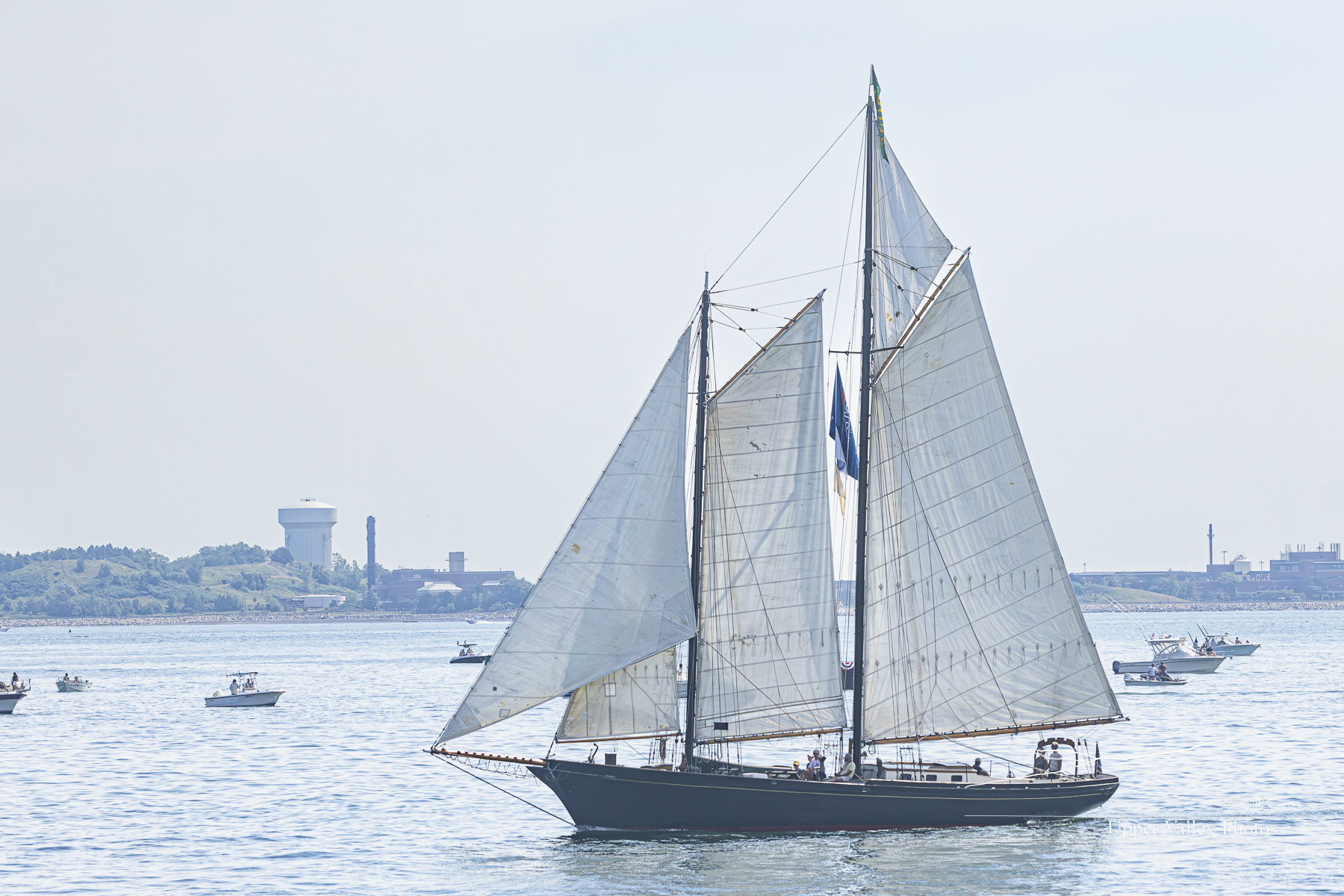
The story goes that Patton intended to sail the schooner around the world with his wife “when and if I return from the war.”
When and If remained in the harbor at Manchester-by-the-Sea in Massachusetts and was passed down through Patton’s family. Frederick Ayer Jr. donated it to the Landmark School in Beverly, MA in 1972, where she was used for sail training programs for children with dyslexia.
Due to the School’s financial difficulties, arrangements were made to share ownership with Jim and Gina Mairs. However, in 1990 she broke loose in a gale and was wrecked. Originally assessed as a total loss, she was successfully salvaged and towed to the Gannon & Benjamin shipyard in Martha’s Vineyard. After a three-year rebuilding process, she was re-launched in 1994.
Purchased by Captain Seth Salzmann in 2015, she has been a part of Tall Ships Festivals in both 2015 and 2016, and in 2017 When and If sailed with Sail Training International to Bermuda, Boston and on to all corners of the Canadian Maritimes. Her home port in the winter is now Key West.
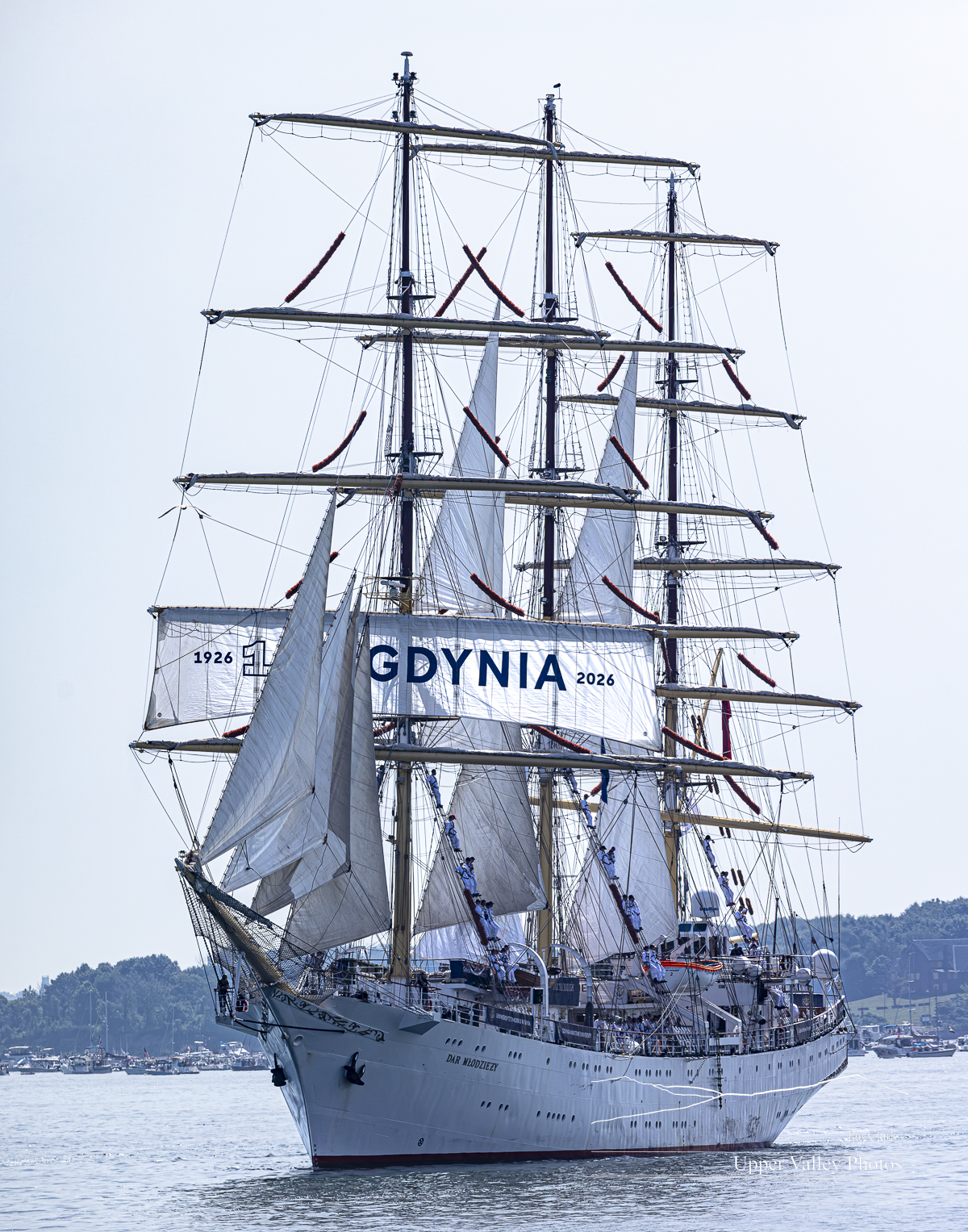
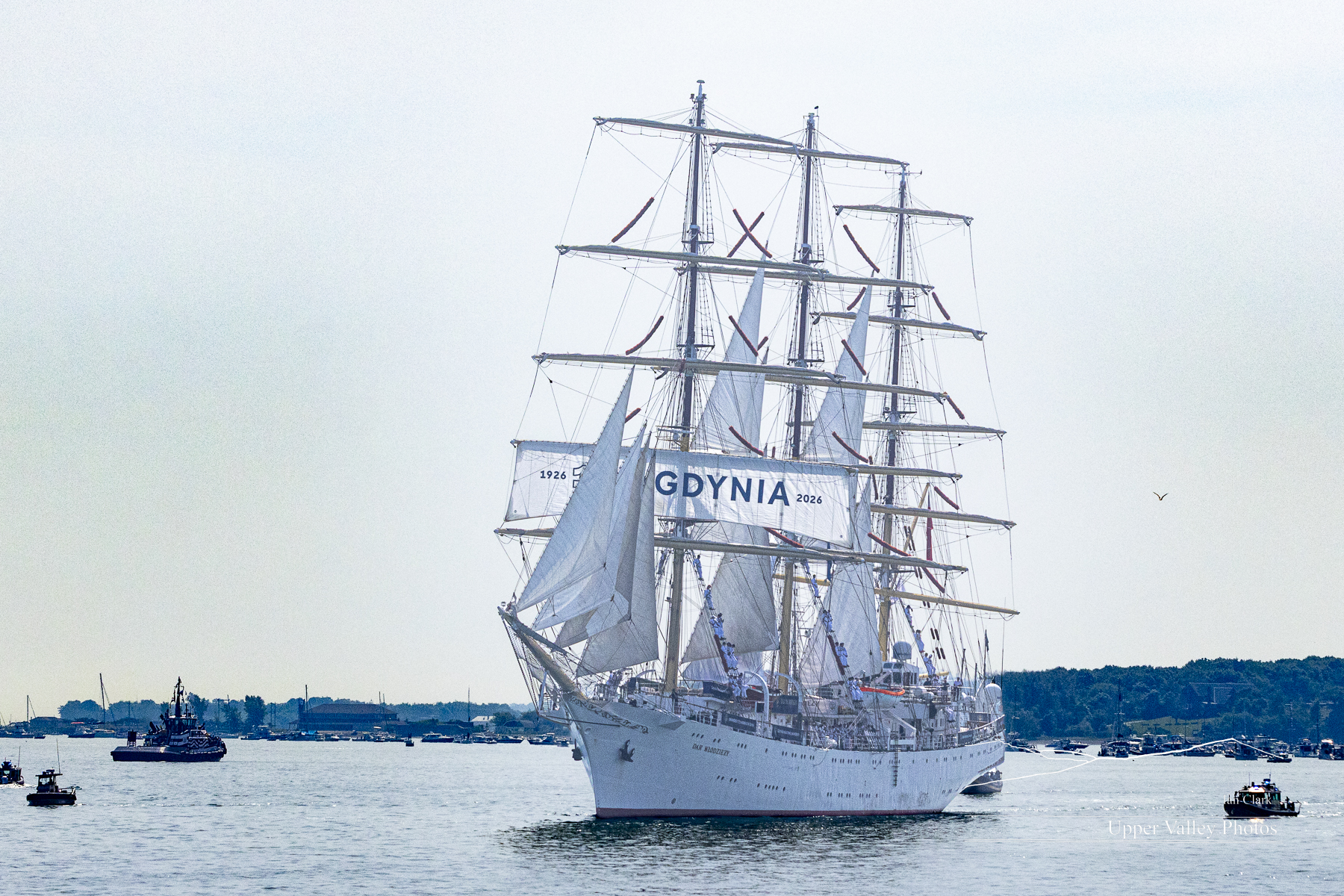
Built in 1982, she serves as a training ship for Polish sailors. She’s the first tall ship built in a Polish shipyard. She serves as a sail training ship.
She was launched in November 1981 at the Gdańsk, Poland, Shipyard and commissioned for service in July 1982 at her home port of Gdynia, Poland.
She’s 311’ long and 205’ tall. She has a sail area of 32,000 square feet.
In 1987-88, the ship was invited to take part in a great rally for the 200-year anniversary of the settlement of Europeans on the Australian continent. It was decided that the ship would extend its journey to a complete circumnavigation of the globe. Over 274 days, the ship sailed a total of 36,352 nautical miles. In 2018-19 she again circumnavigated the globe to commemorate Poland’s 100th anniversary of independence.
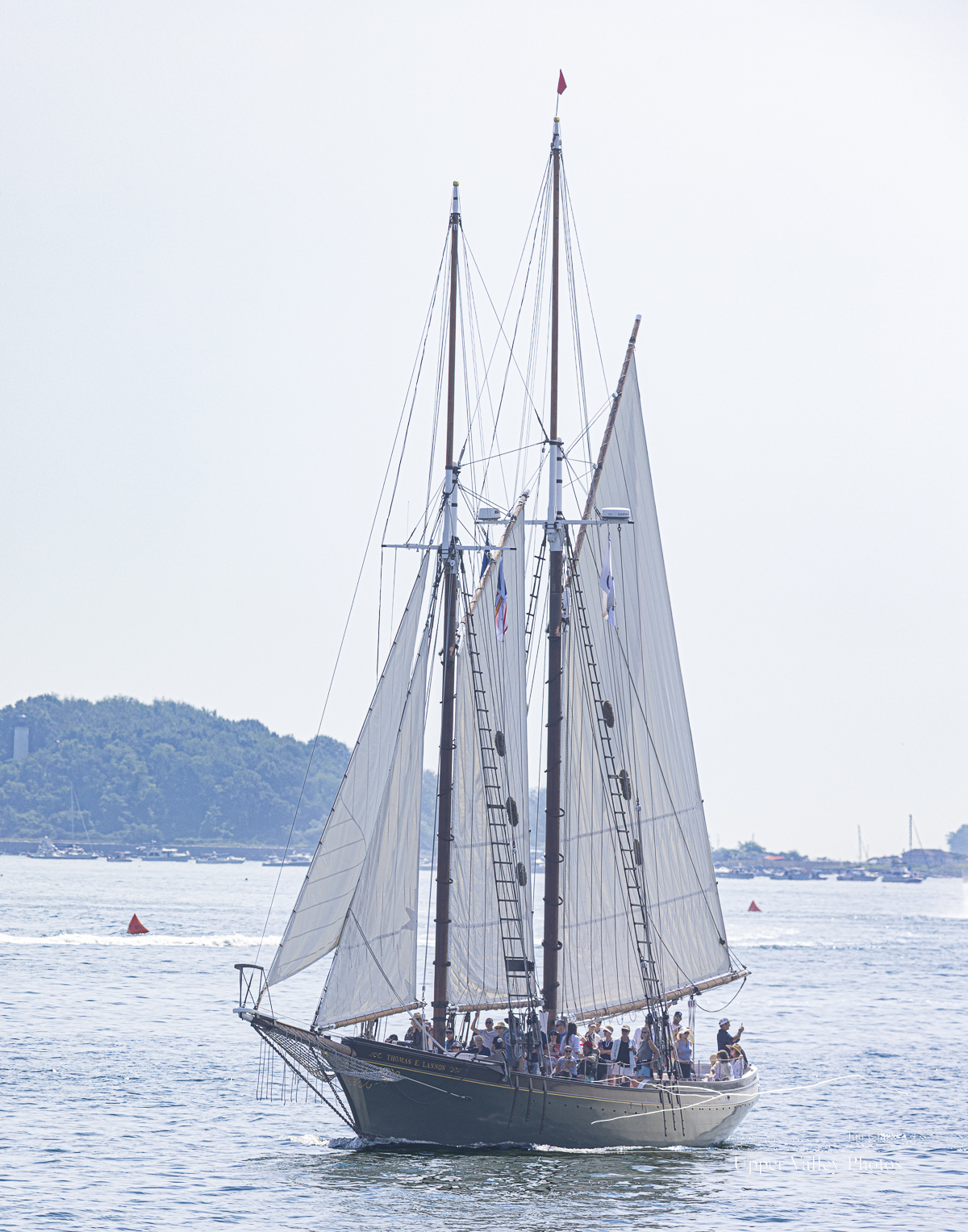
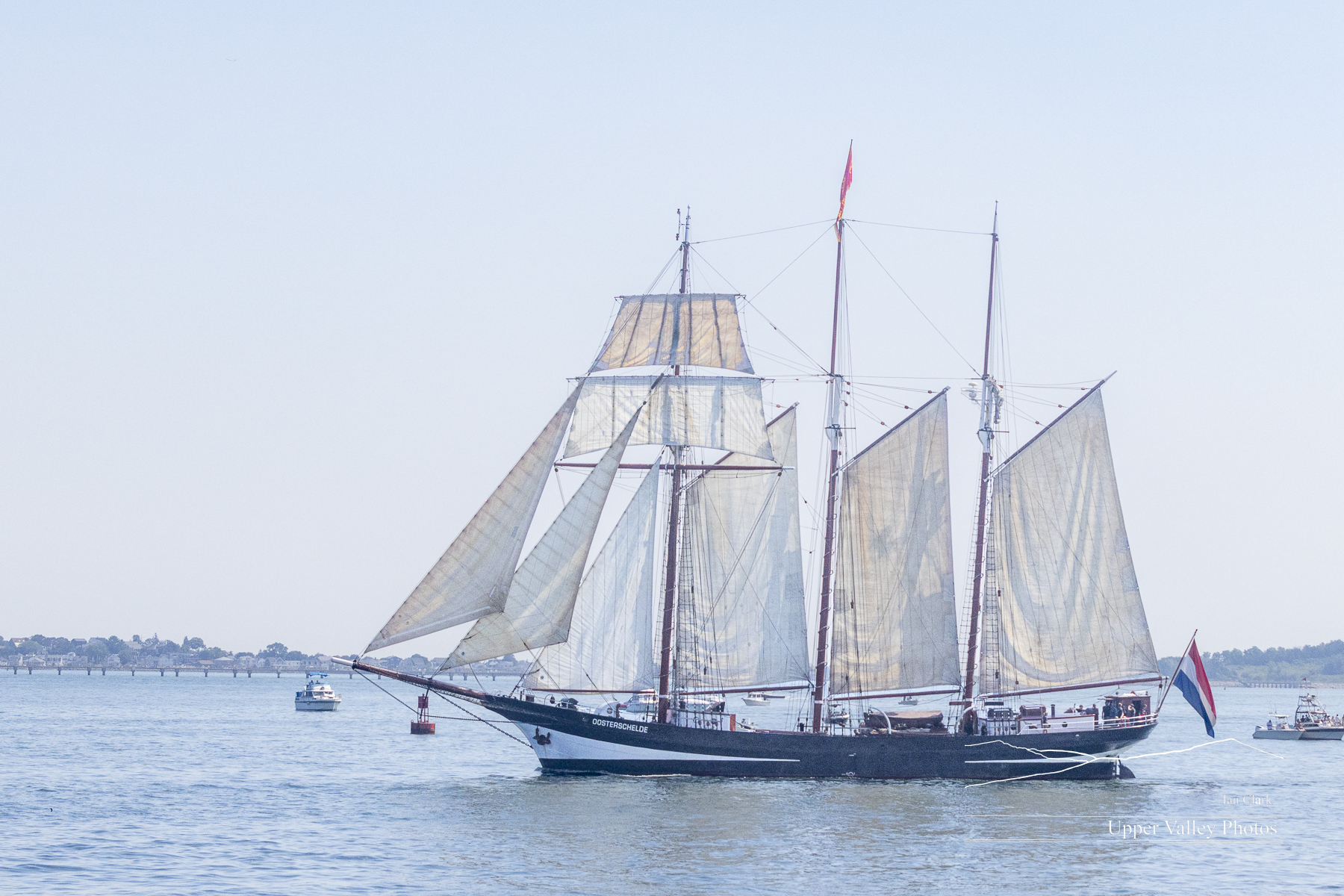
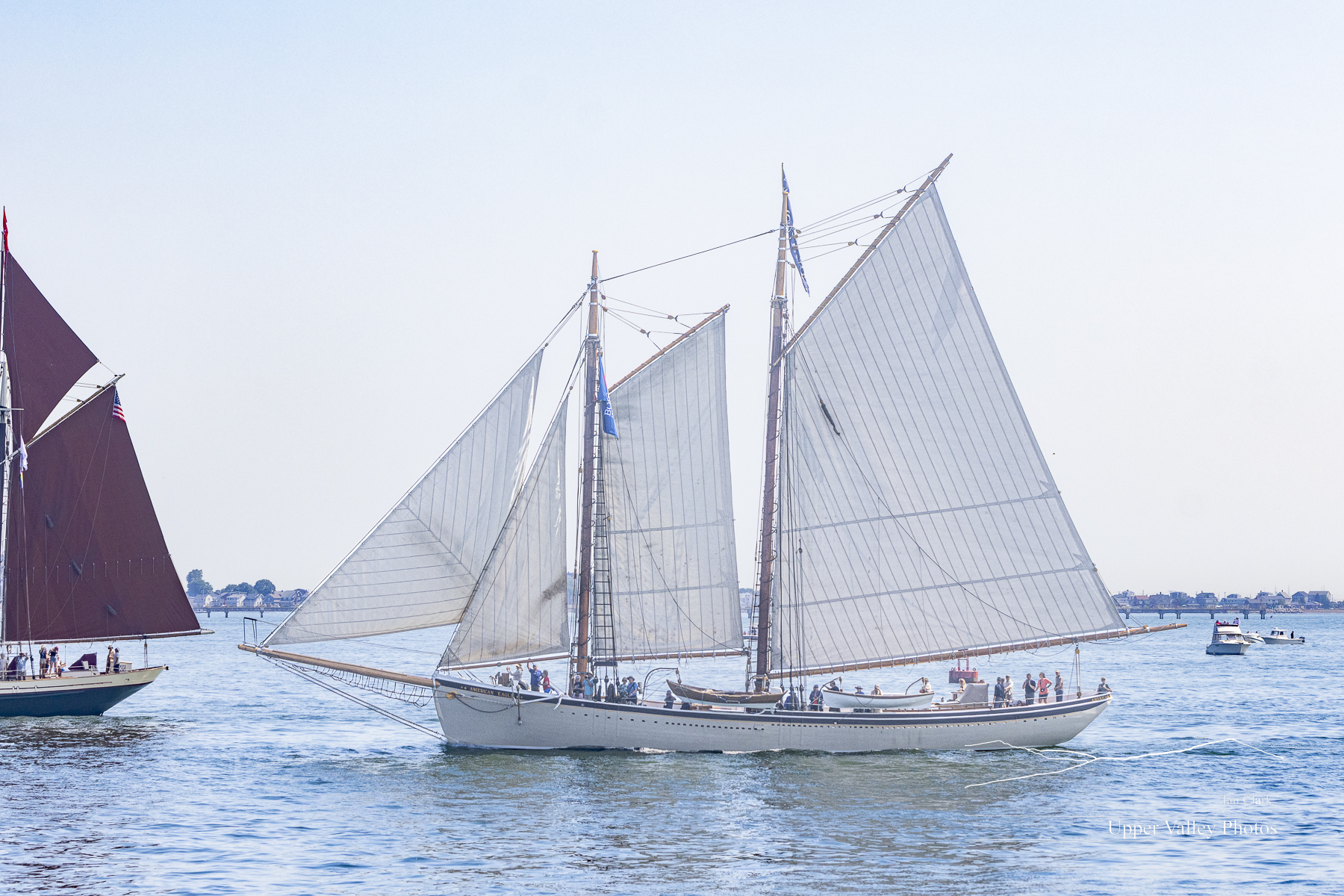
She’s 123’ long and her home port is Rockland, ME.
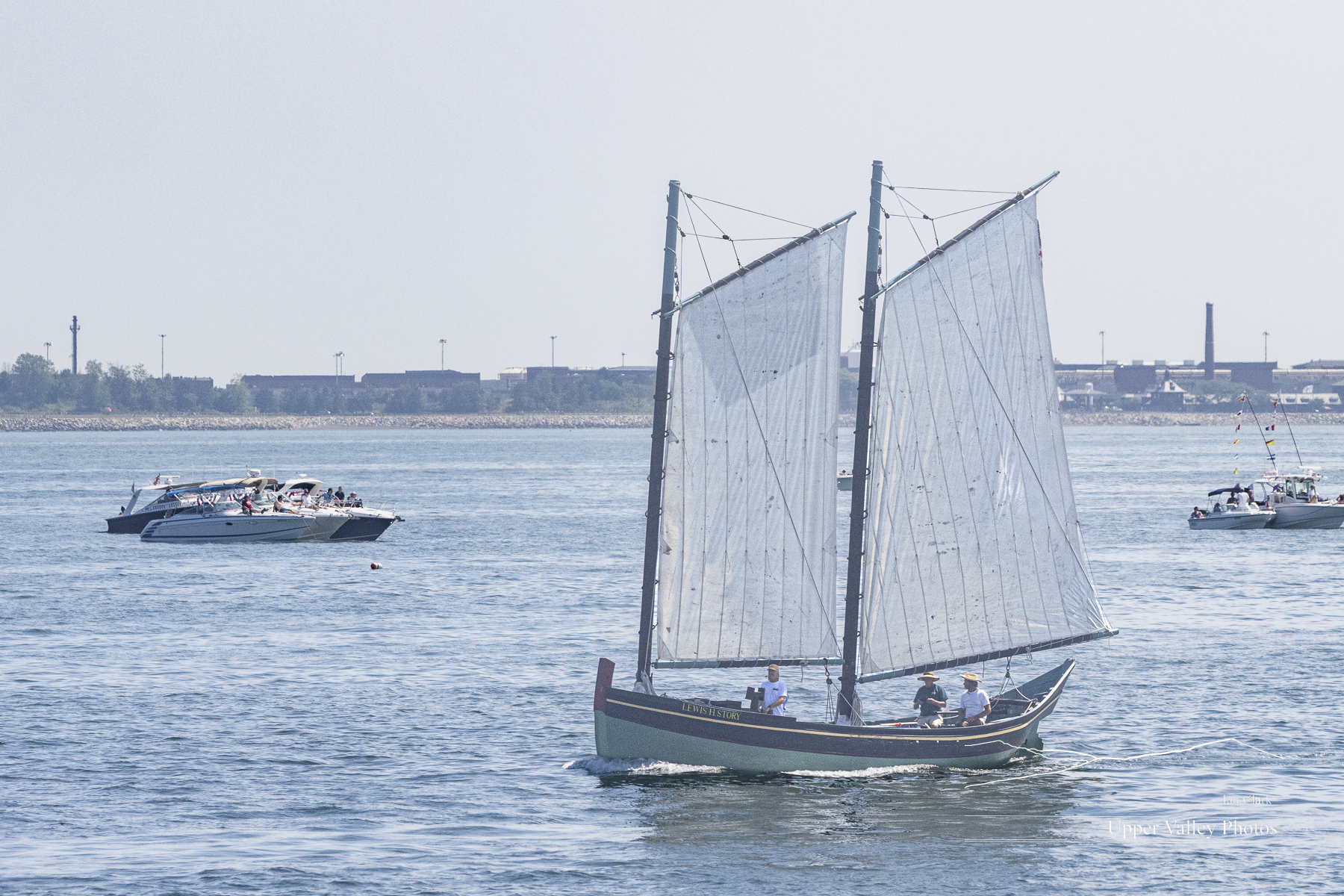
In 1998, the Essex Historical Society and Shipbuilding Museum commissioned Essex shipwright Harold Burnham to construct a Chebacco boat to serve as the museum’s flagship. It measures 30 feet on deck and its hull, deck arrangement, and rig are typical of post-Revolutionary War inshore fishermen. The Story is named in honor of Essex shipwright, carver, designer, modeler, researcher and the town’s foremost maritime historian, Lewis H. Story, 1873–1948.
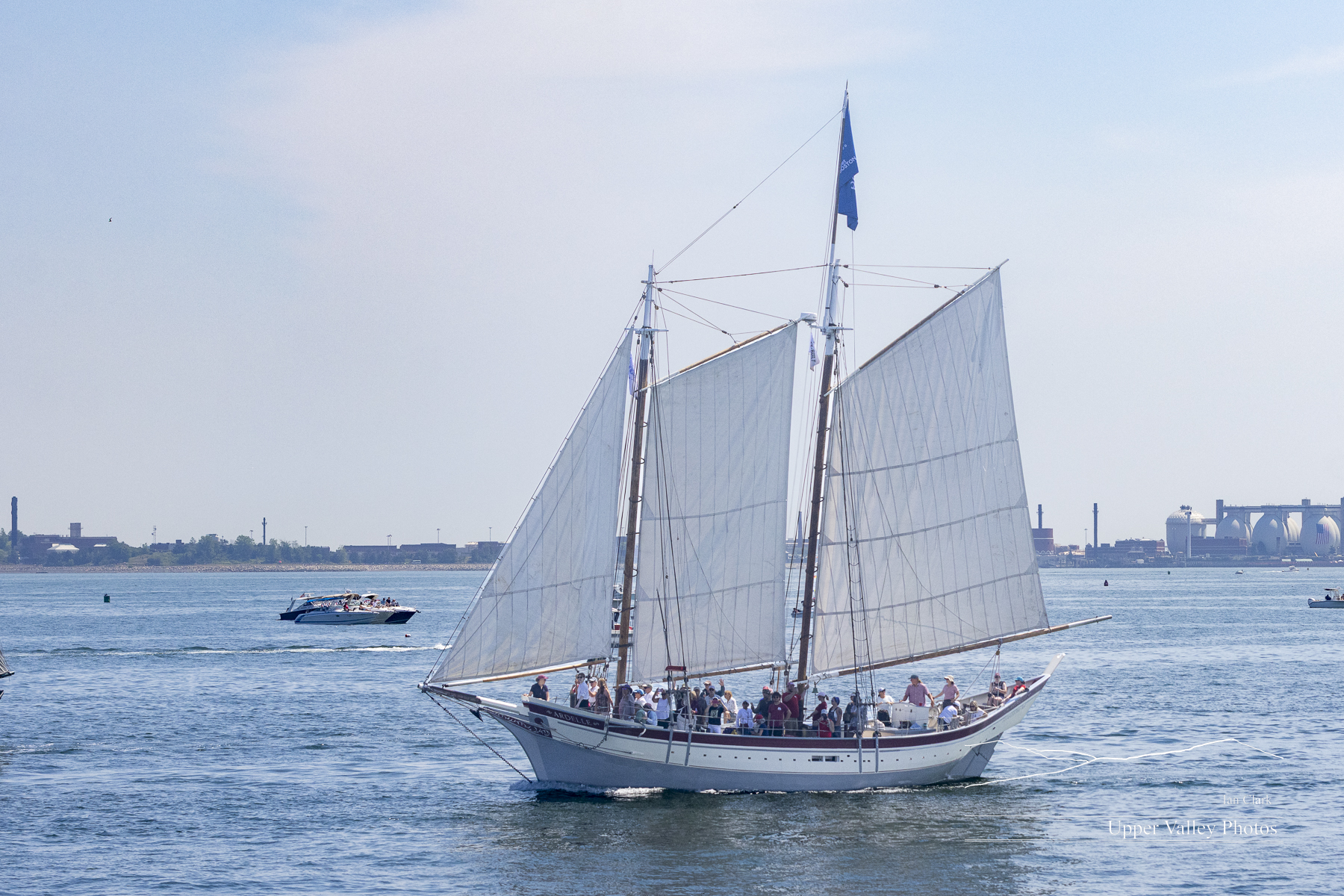
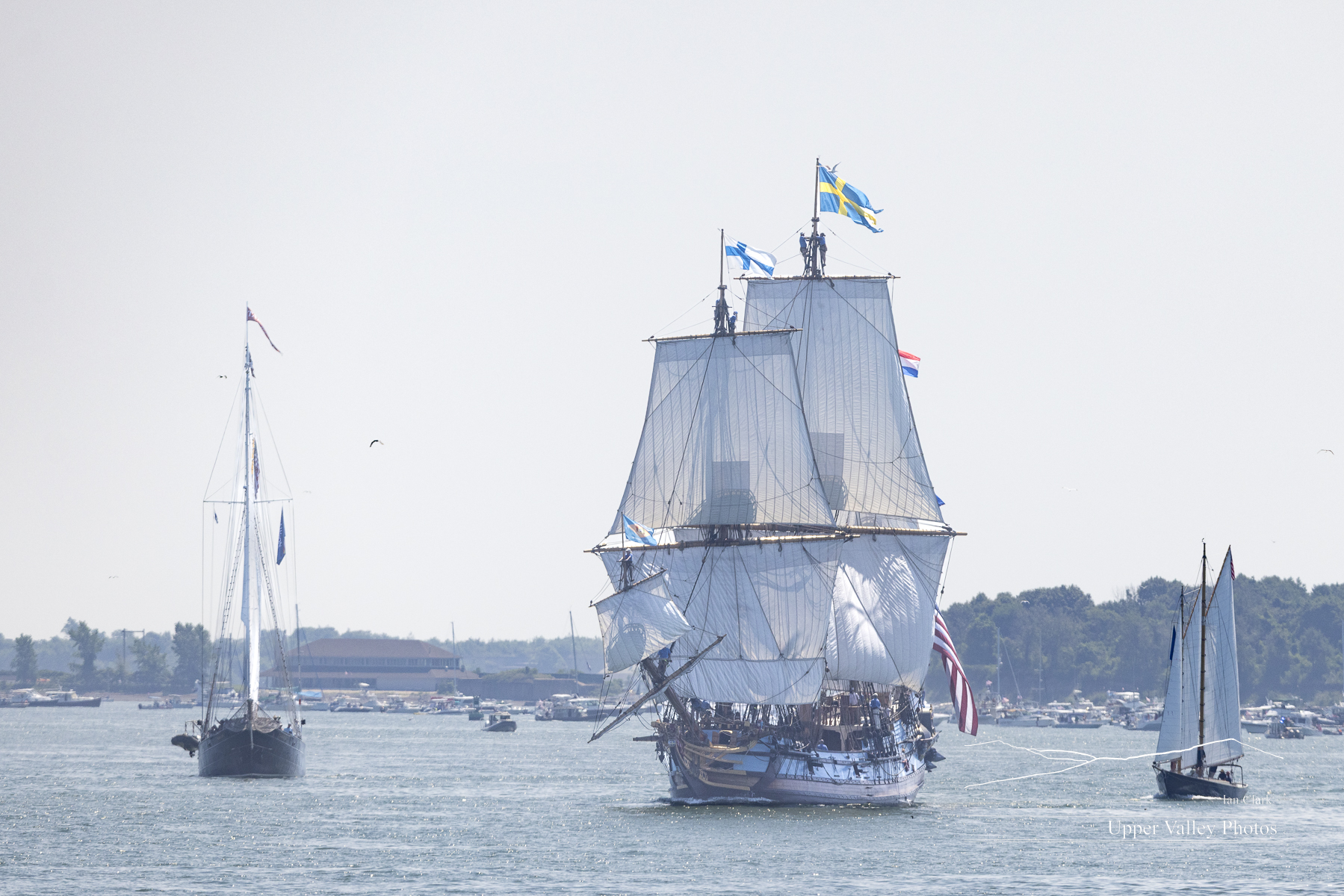
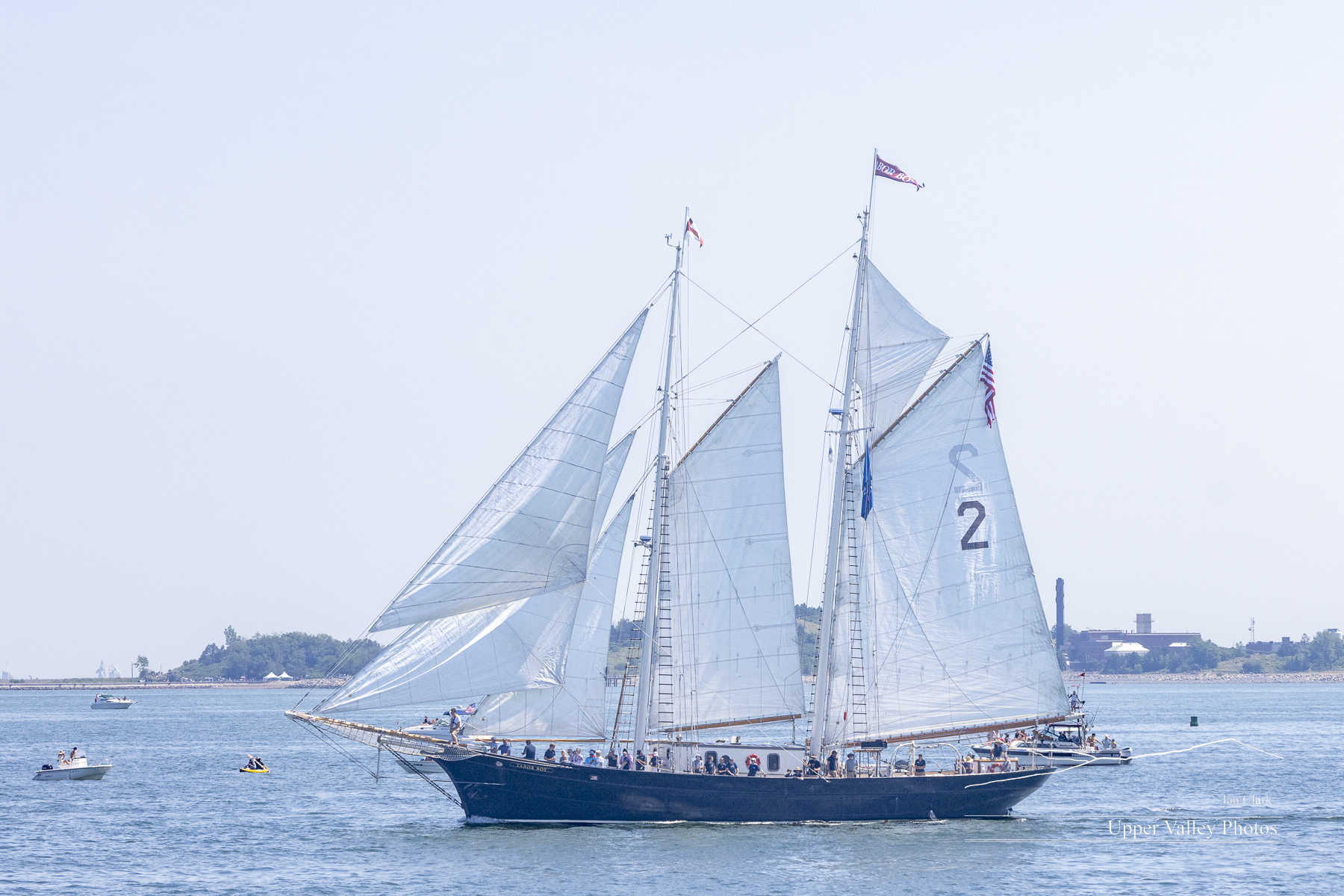
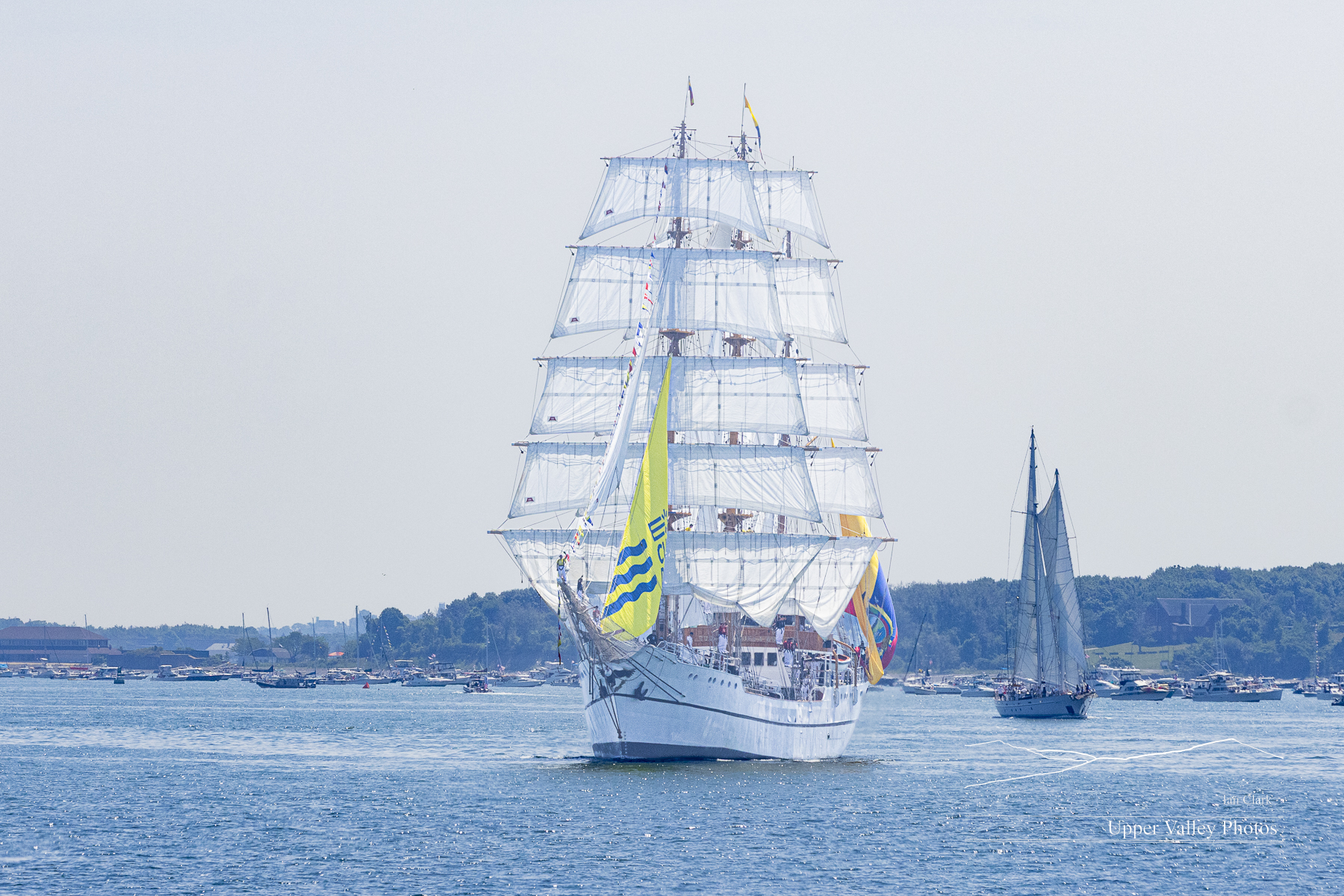
There were more ships to come, but it was time we headed home. We had a fun day and hope to go back in 2076 for the Tricentennial.
I’ve been out to check on all three loon families and the heron rookery. I’ll have another post up in the next couple days with the news.
If you enjoyed this post, you can subscribe to get an email when I add a new post with the form below. And, you can help me out by sharing my blog with your friends or on your social media. Thanks!
For all the comments about the sky I would say you
did a tremendous job; both through your lens and as a teacher. Wonderful work!
Thanks!
Fantastic and entertaining photos and writeup!
Thanks!
love the descriptions of the ships. educational.
Thanks!
Love your images and your comments!
Thanks!
Thanks for posting this. I loved your photos and descriptions of the ships.
Thanks!
Thank you for the marvelous photographs and your narrative.
[…] moose returned and an few of our other friends. Thanks to everyone for all the kind words on the Tall Ships post. Perhaps I should give up on the critters and take up marine […]
Your Tall Ships blog was so entertaining and educational. I forwarded it to my nautically-inclined siblings…
Your nautically informed siblings will probably suggest I stick to the critters 😉 Thanks!
Your Tall Ships blog was so entertaining and educational. I forwarded it to my nautically-inclined siblings…
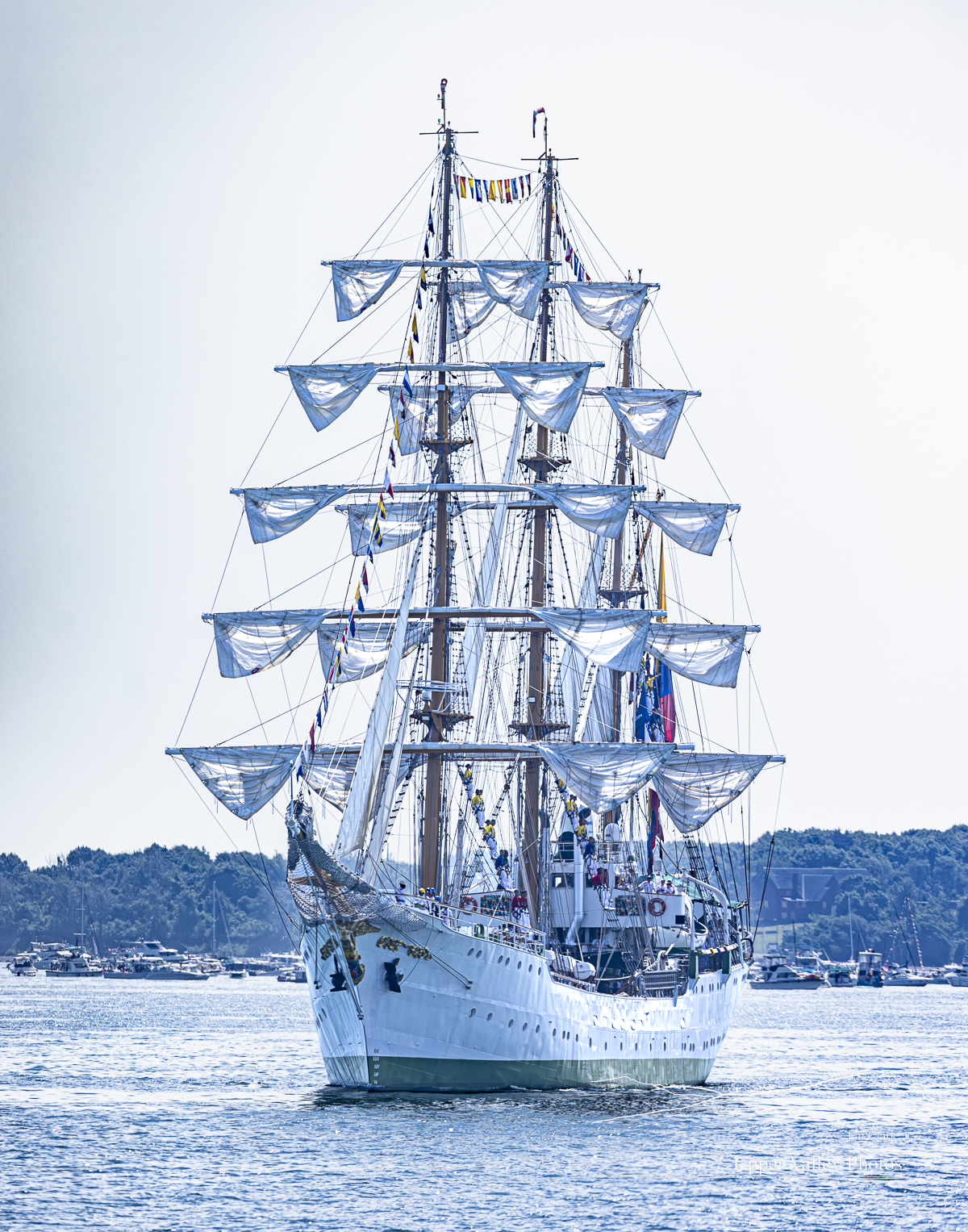
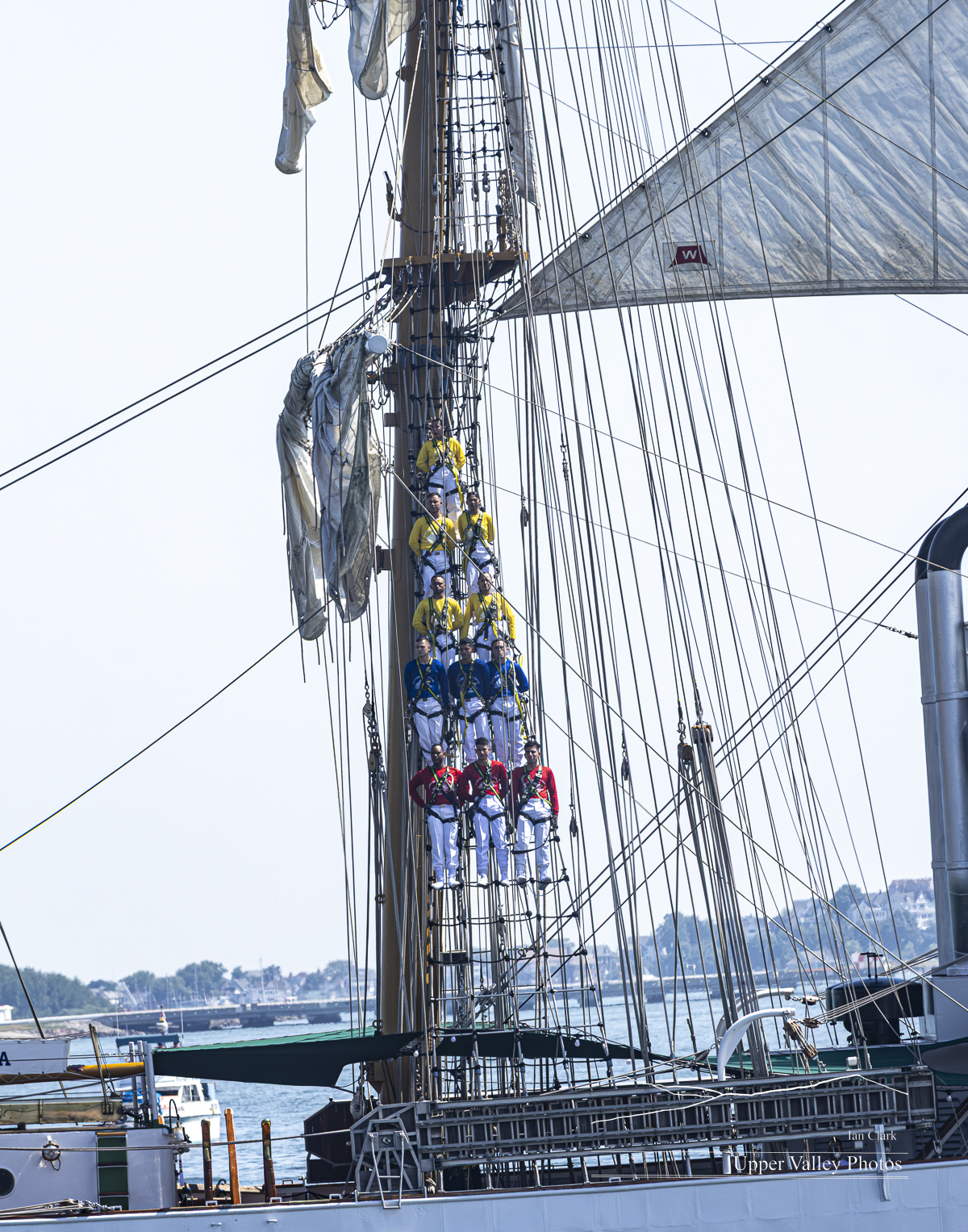
About the ARC Gloria: Yellow above blue above red: the colors of the Colombian flag!
Thanks for a great overview of that wonderful event.
This is a fantastic post. Thank you for the wonderful photos and the great narrative.
Thanks, glad you enjoyed them.