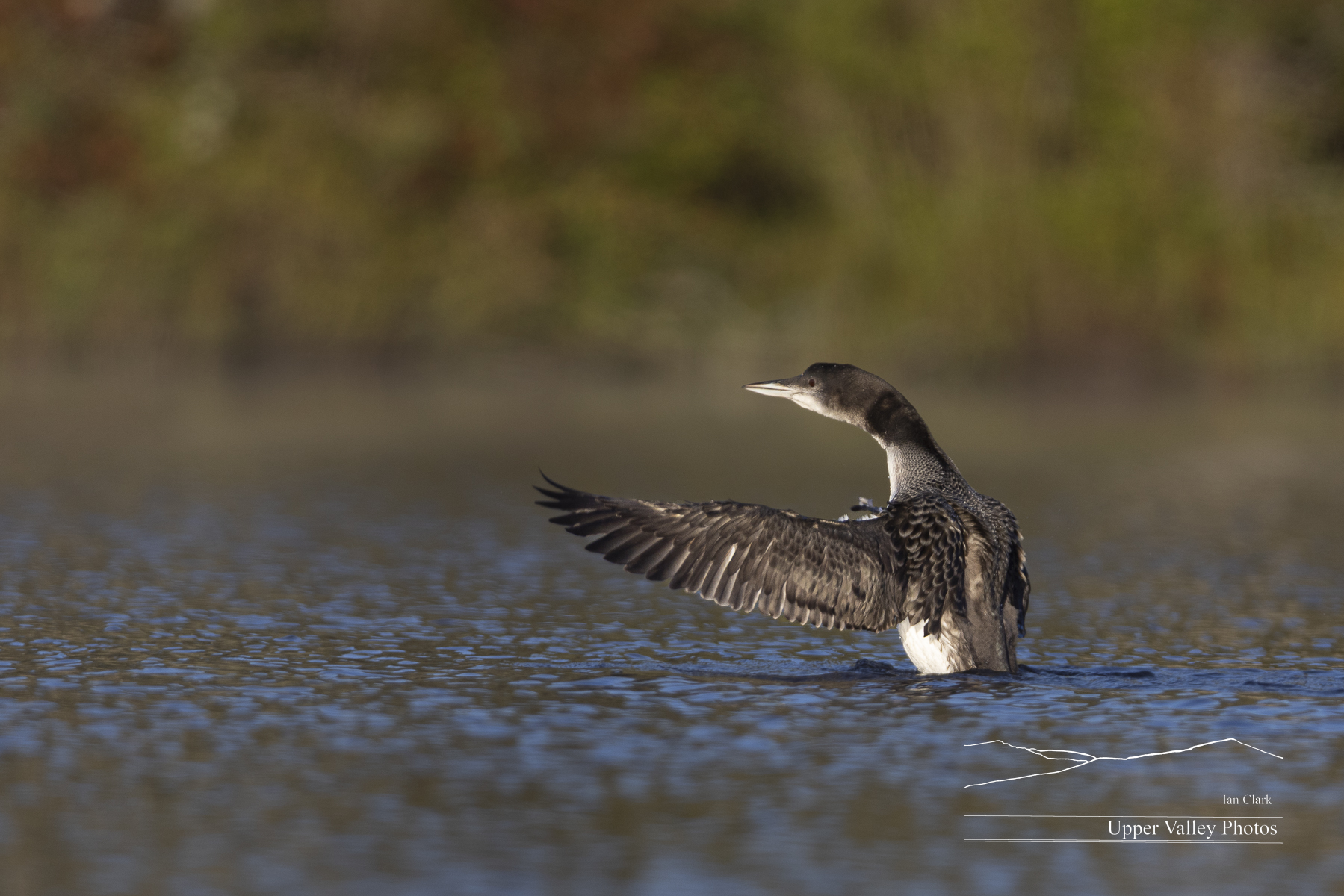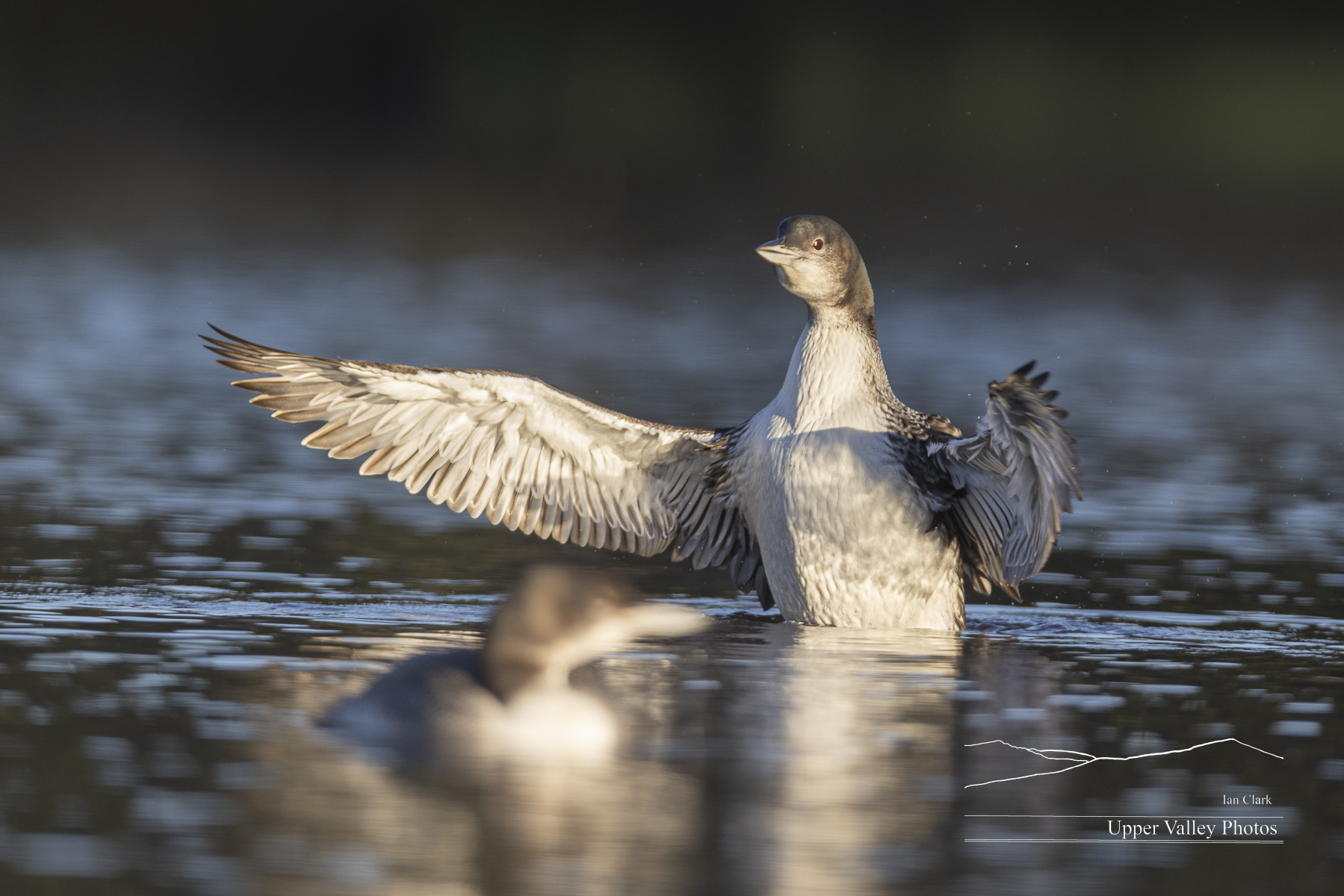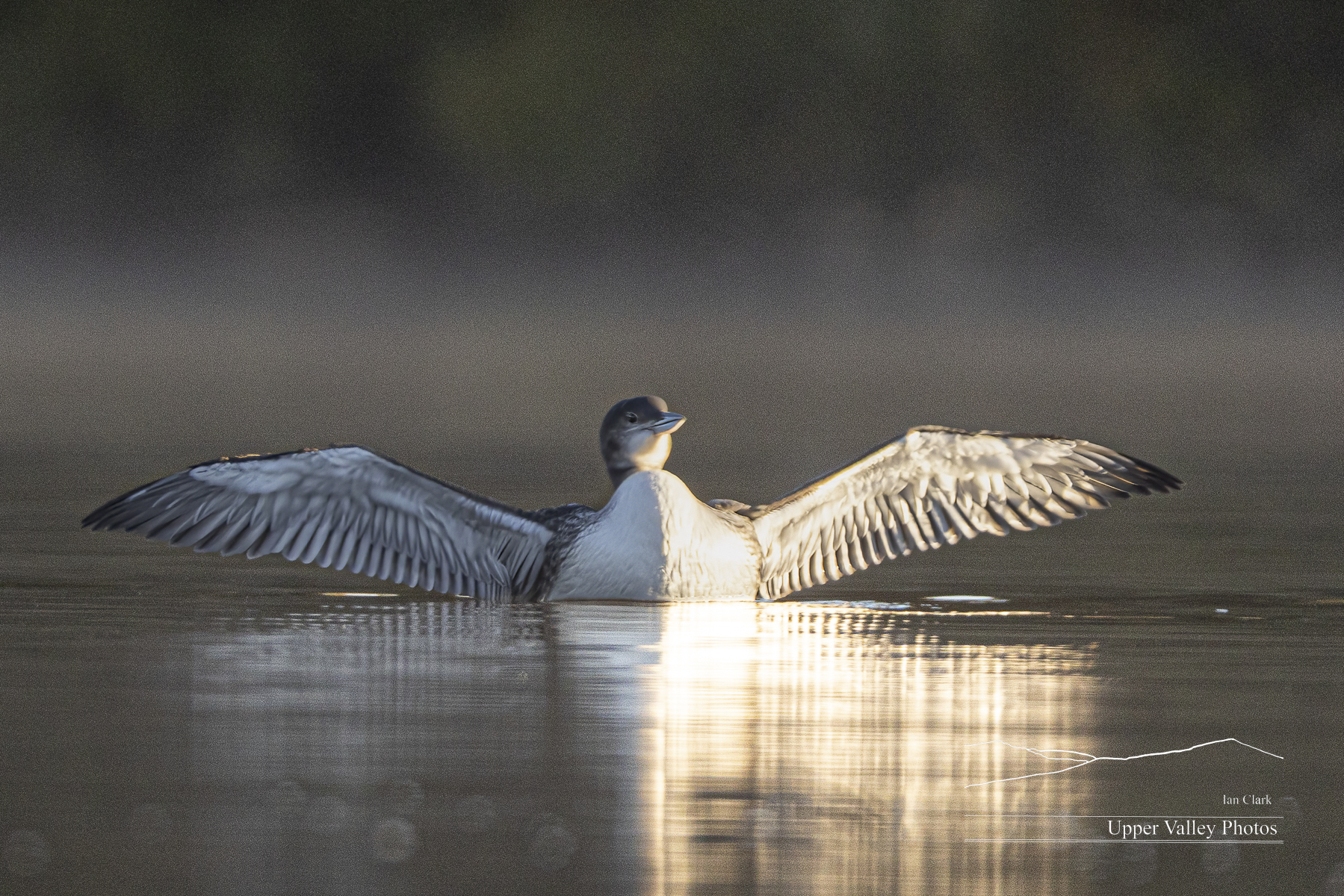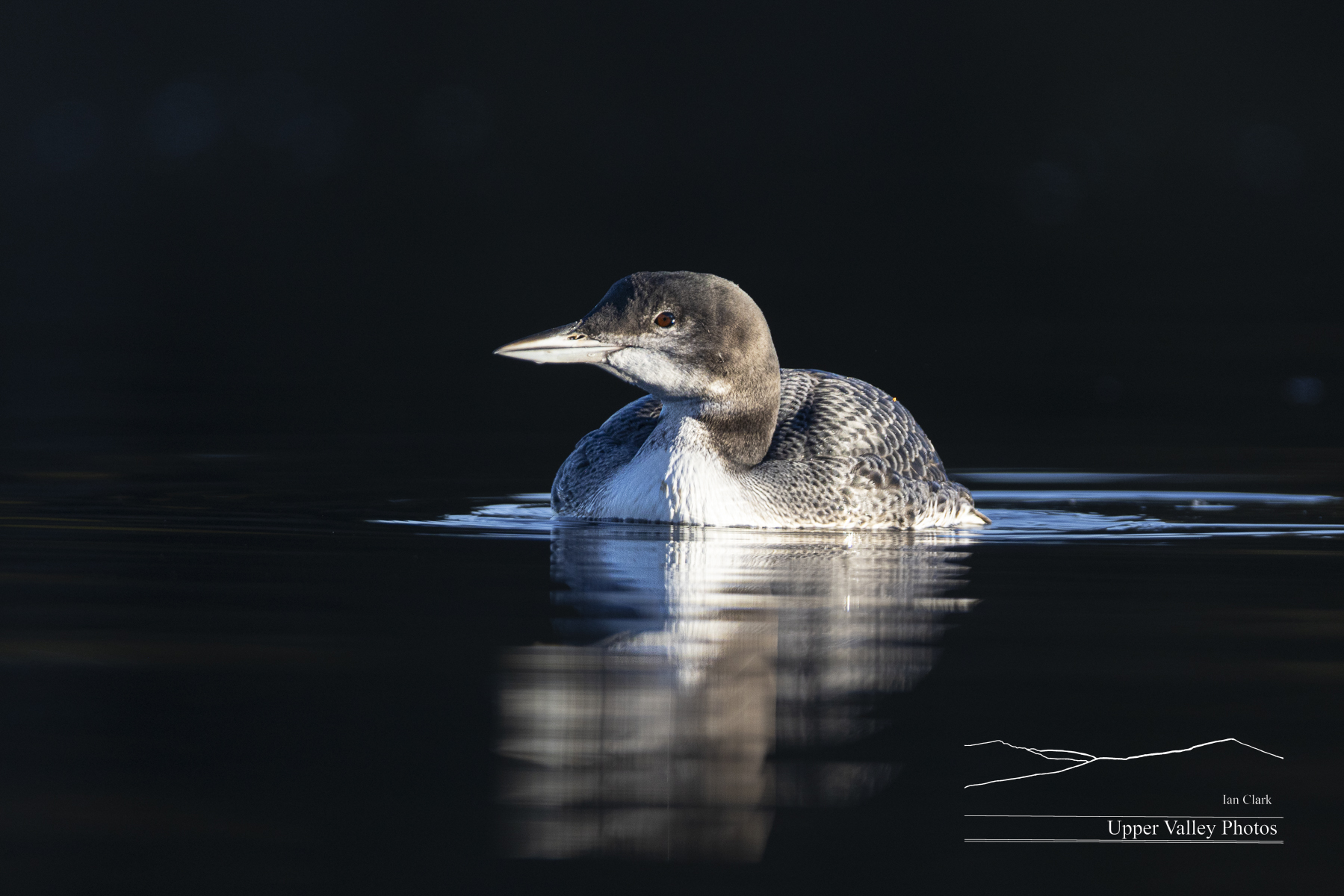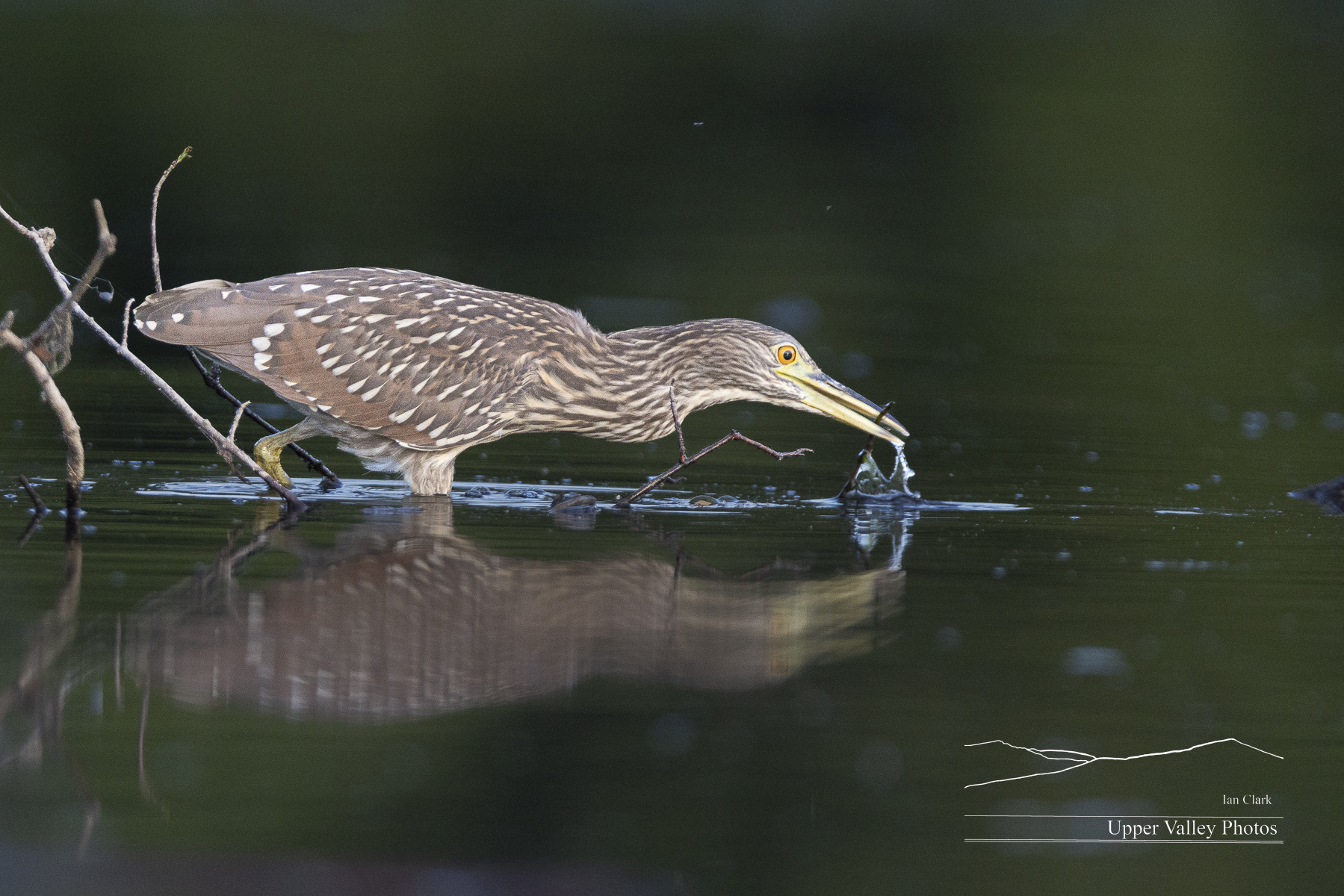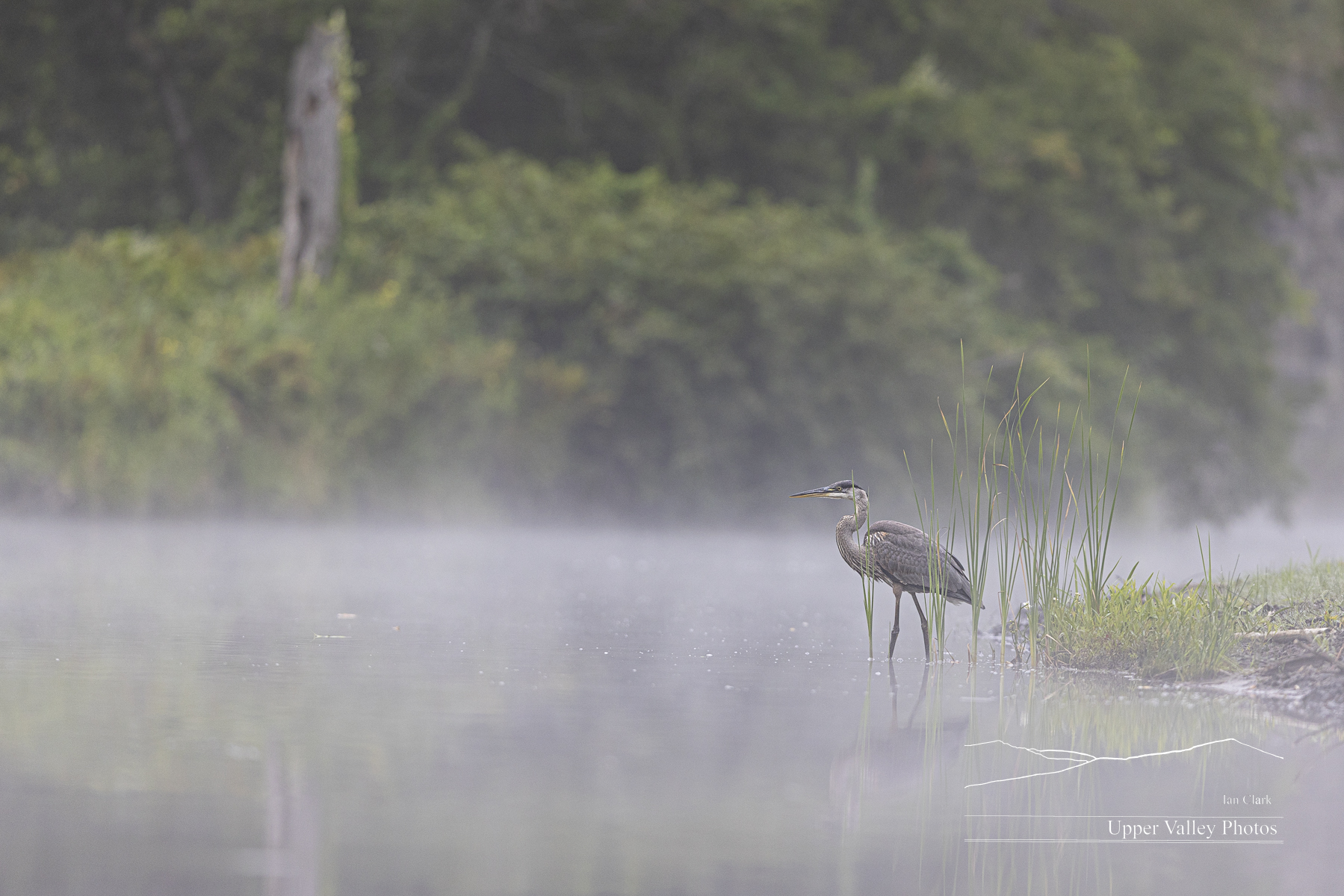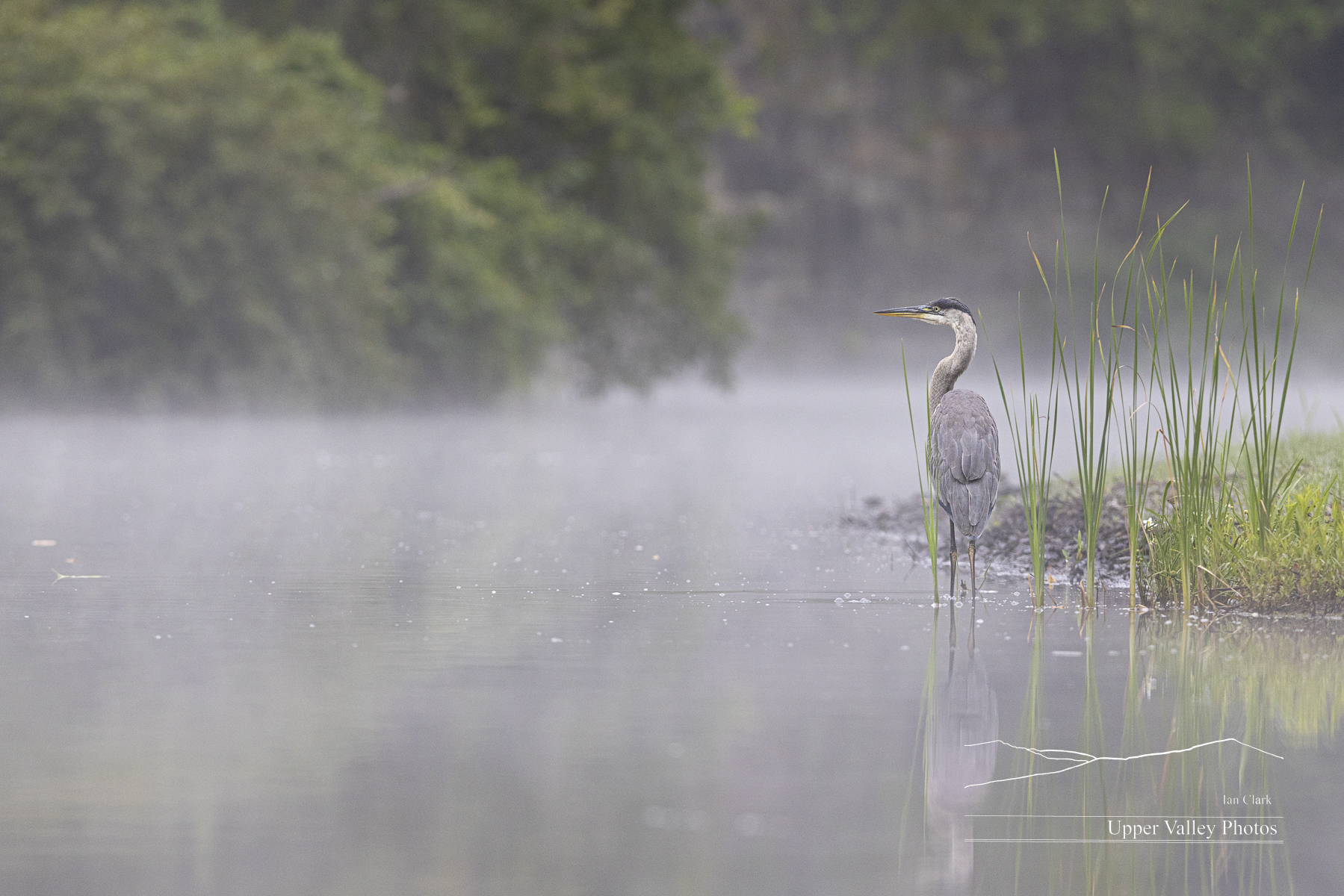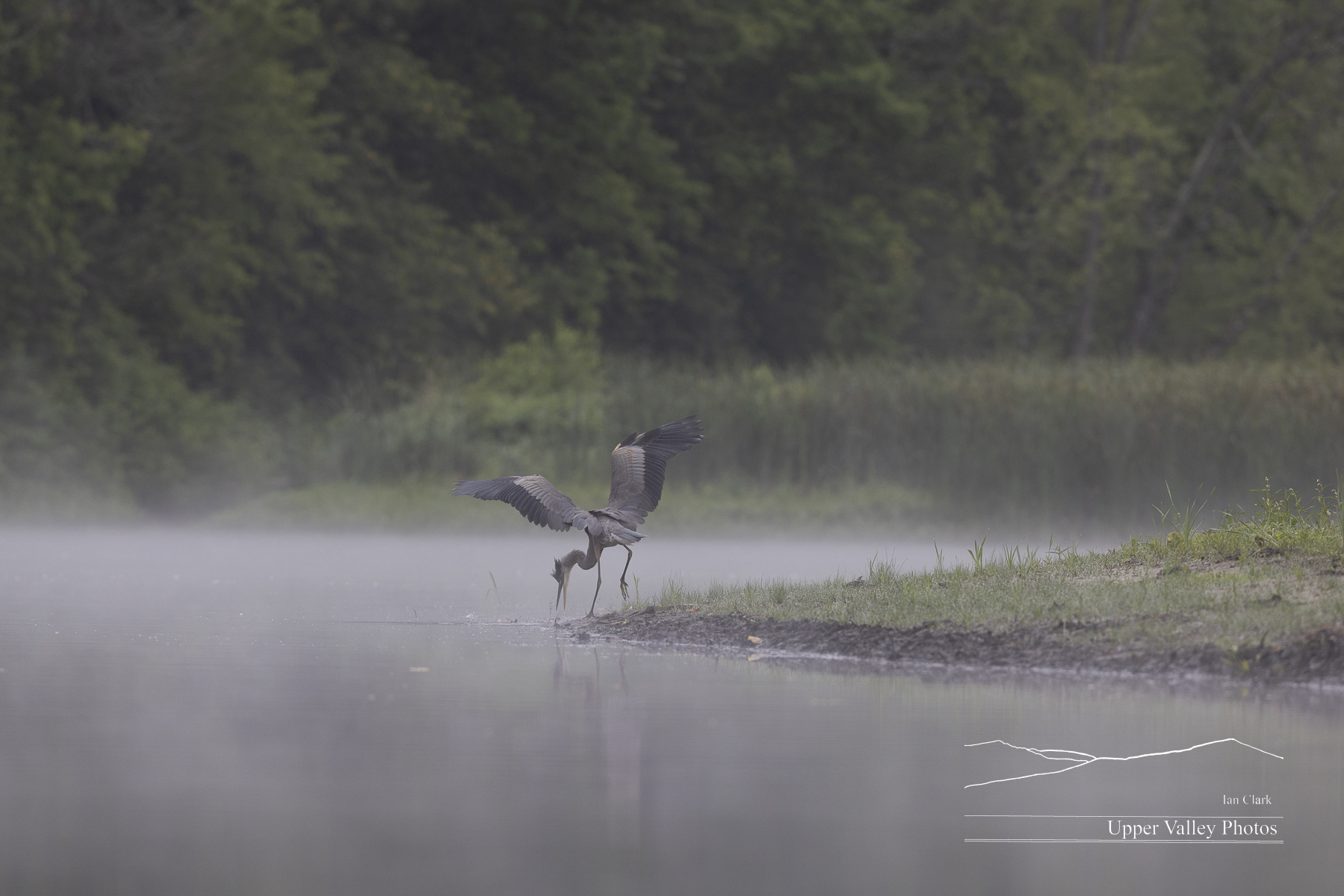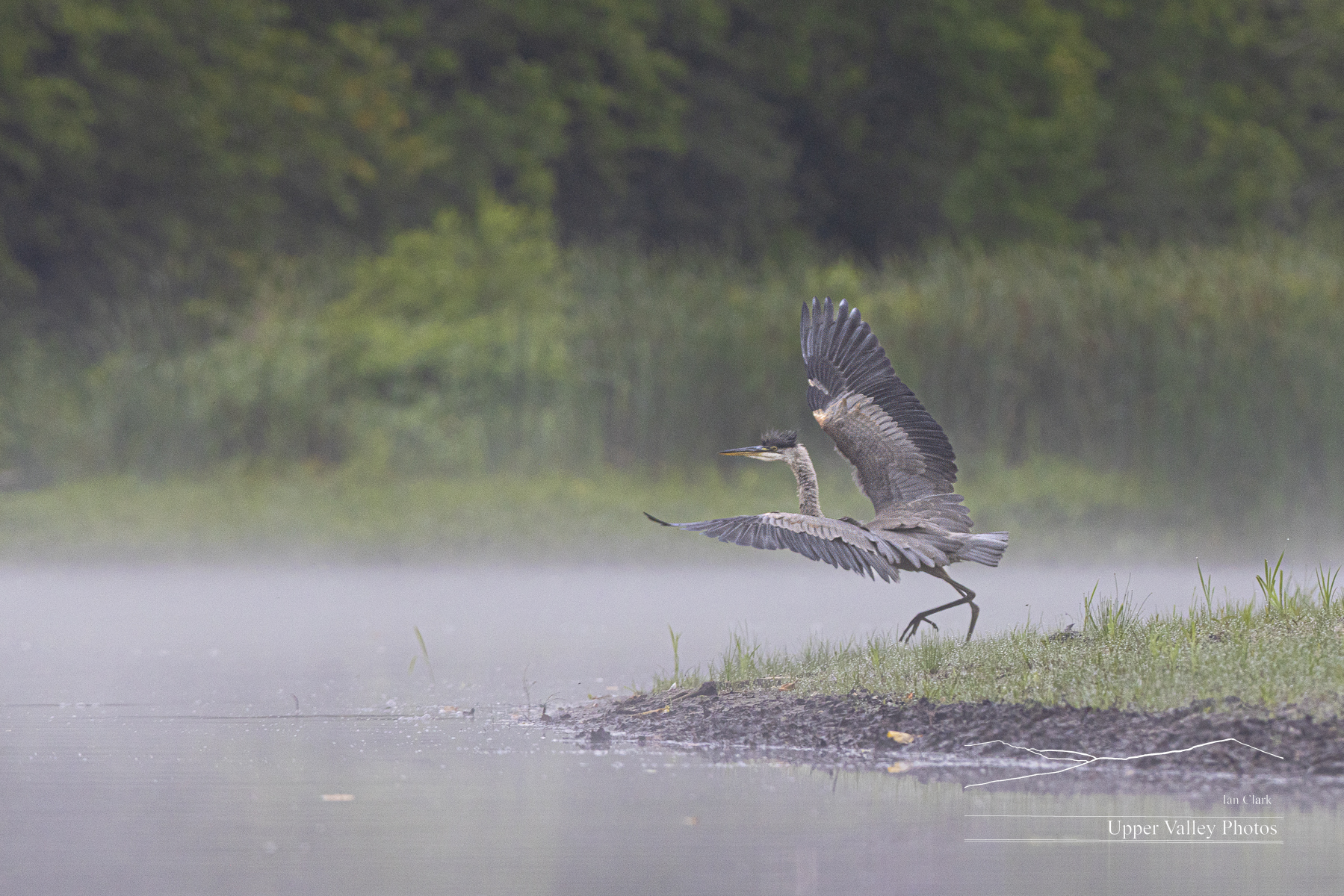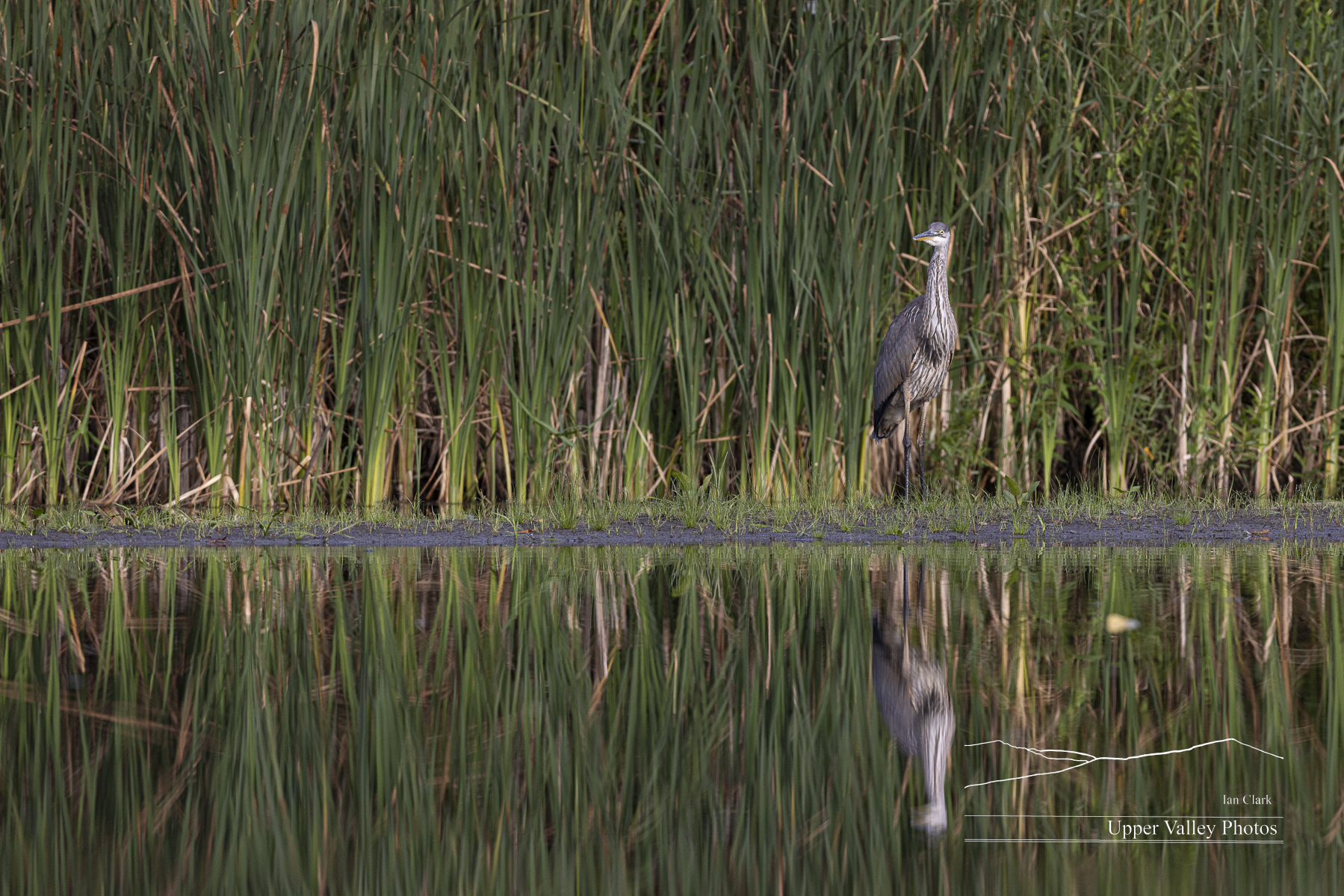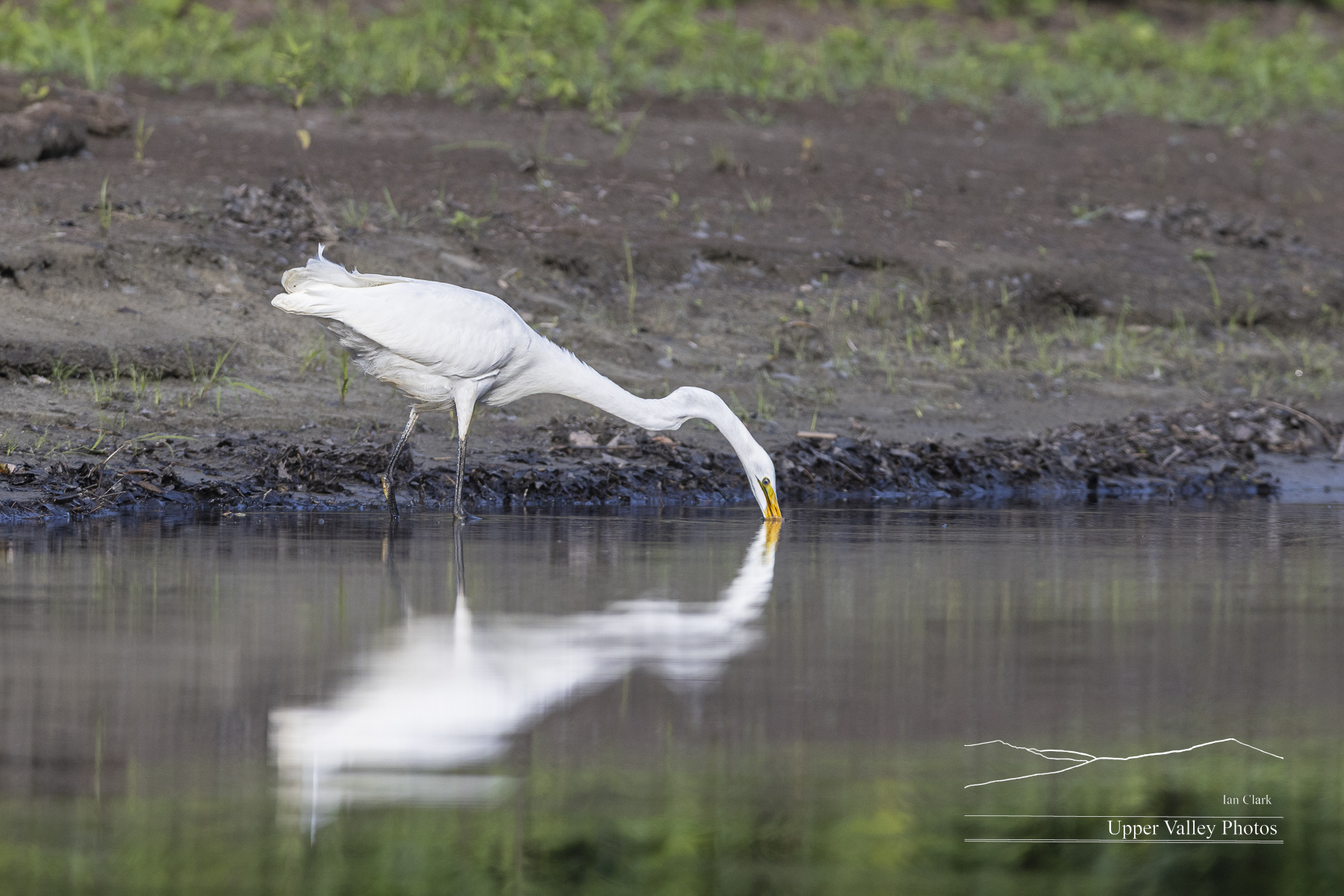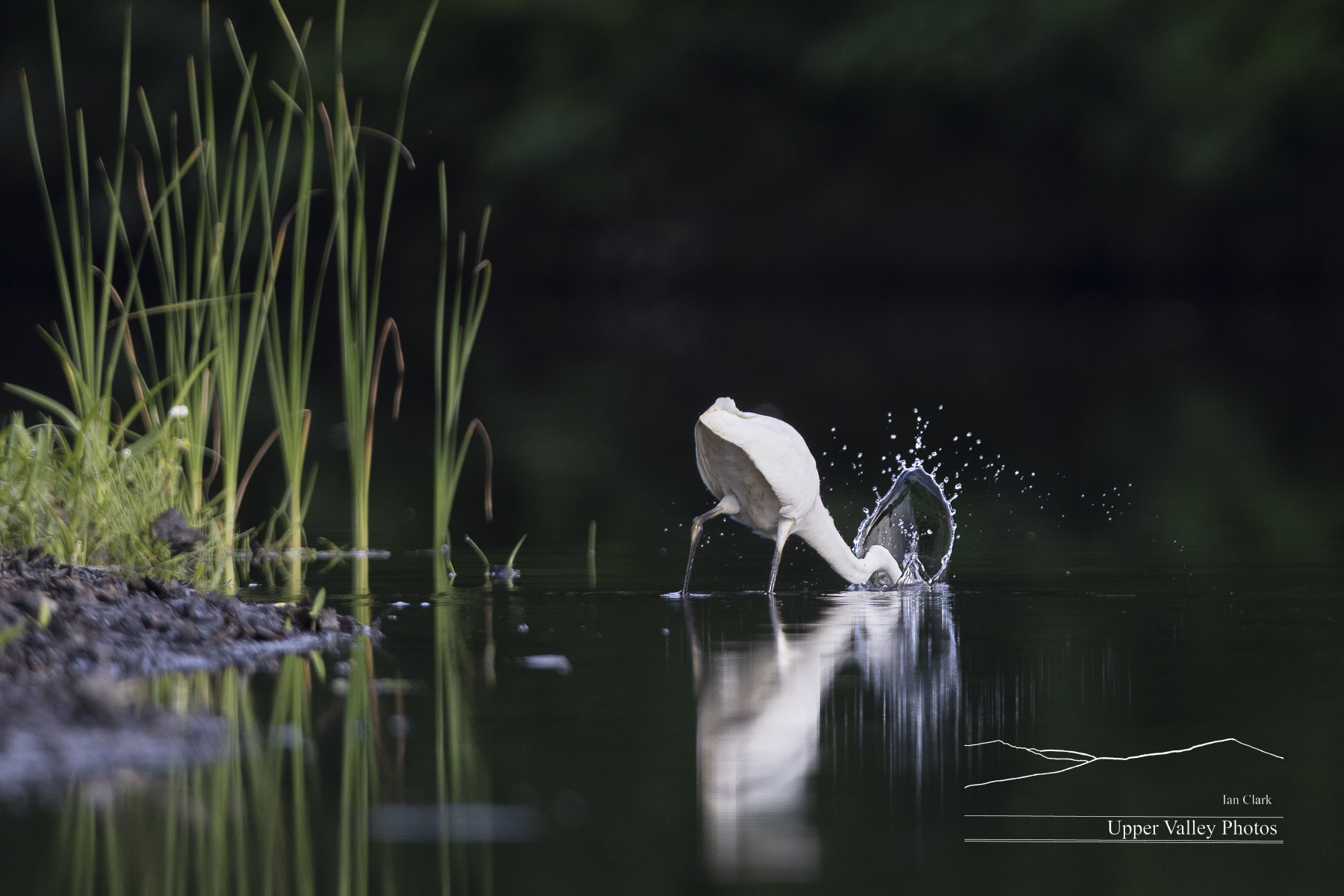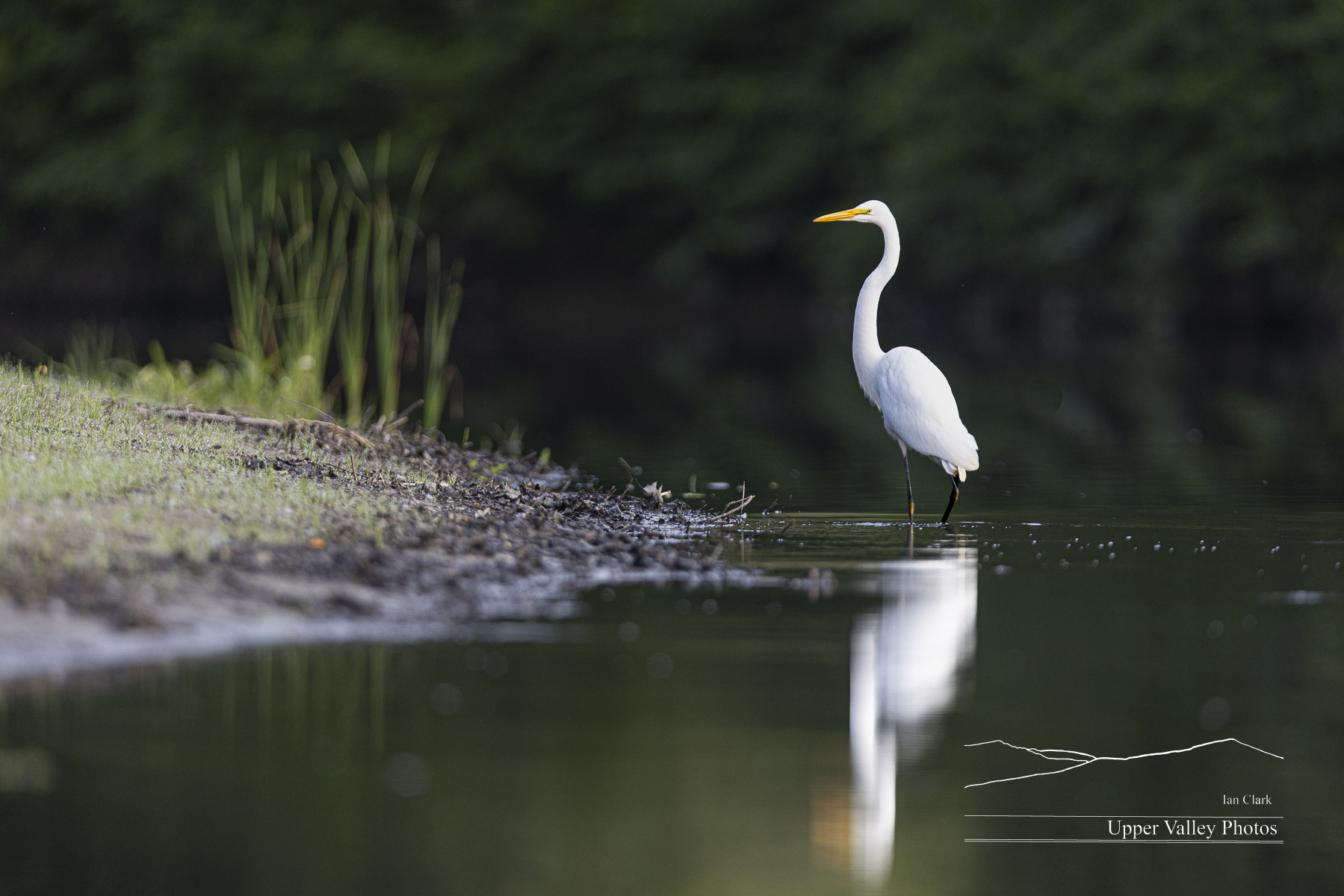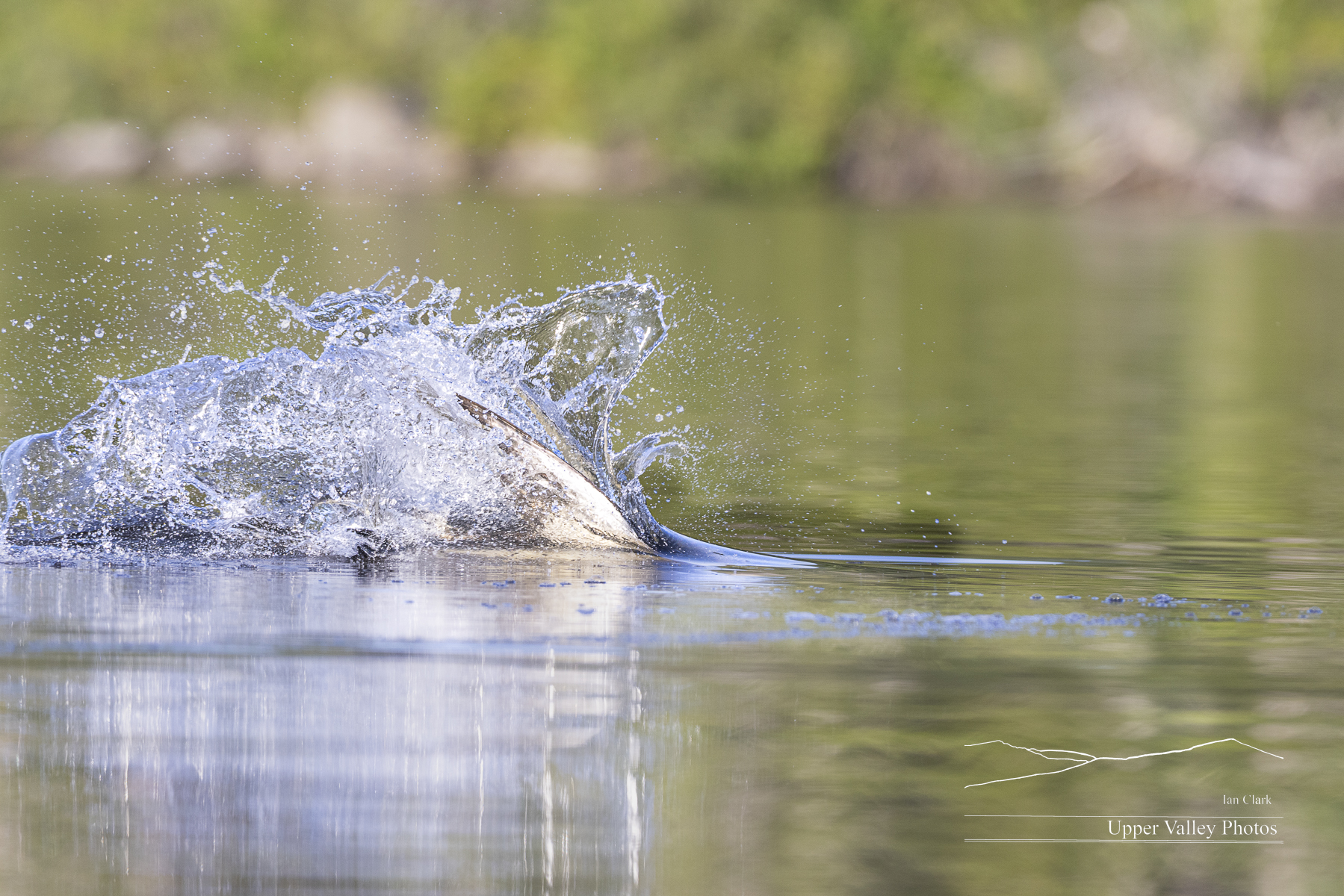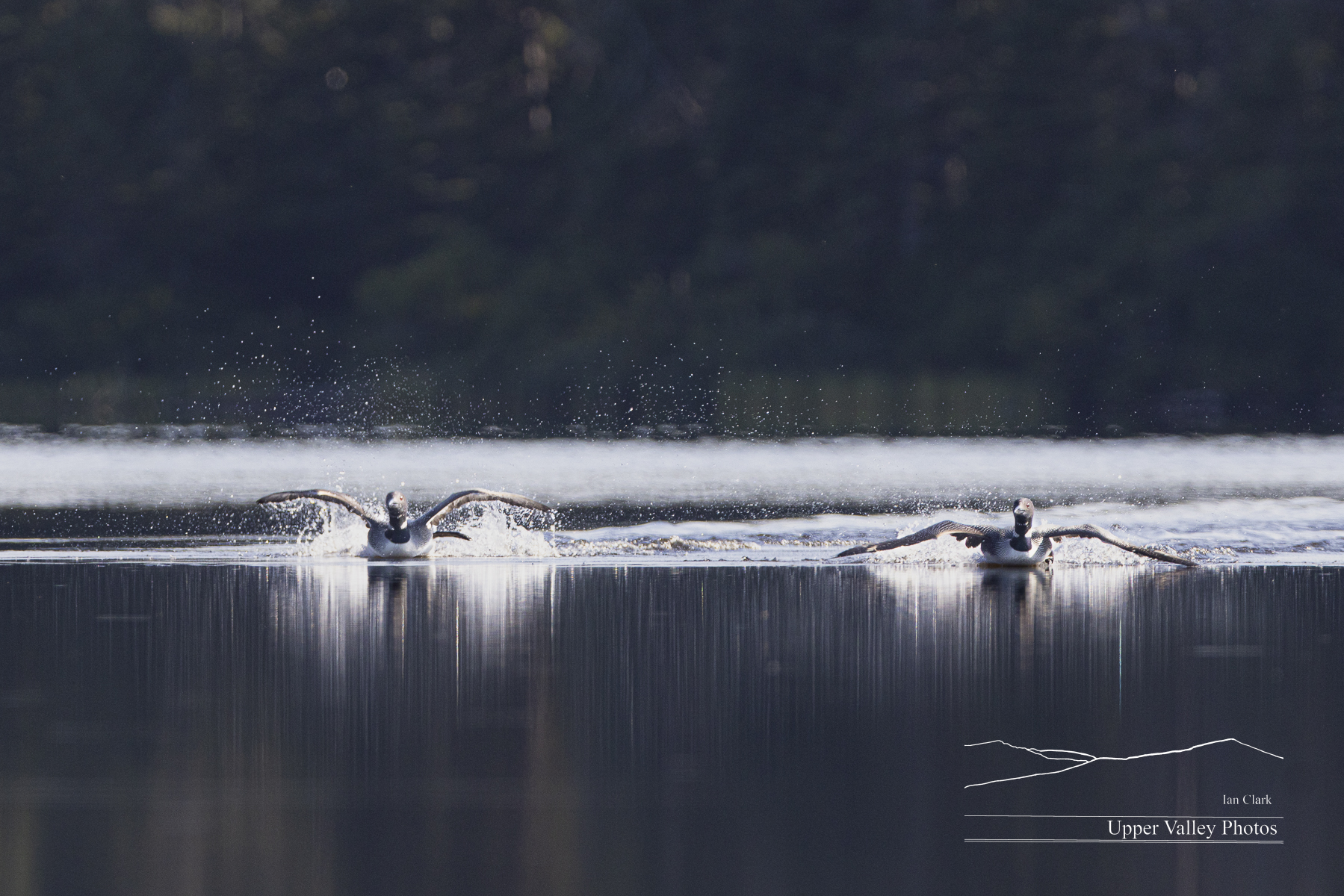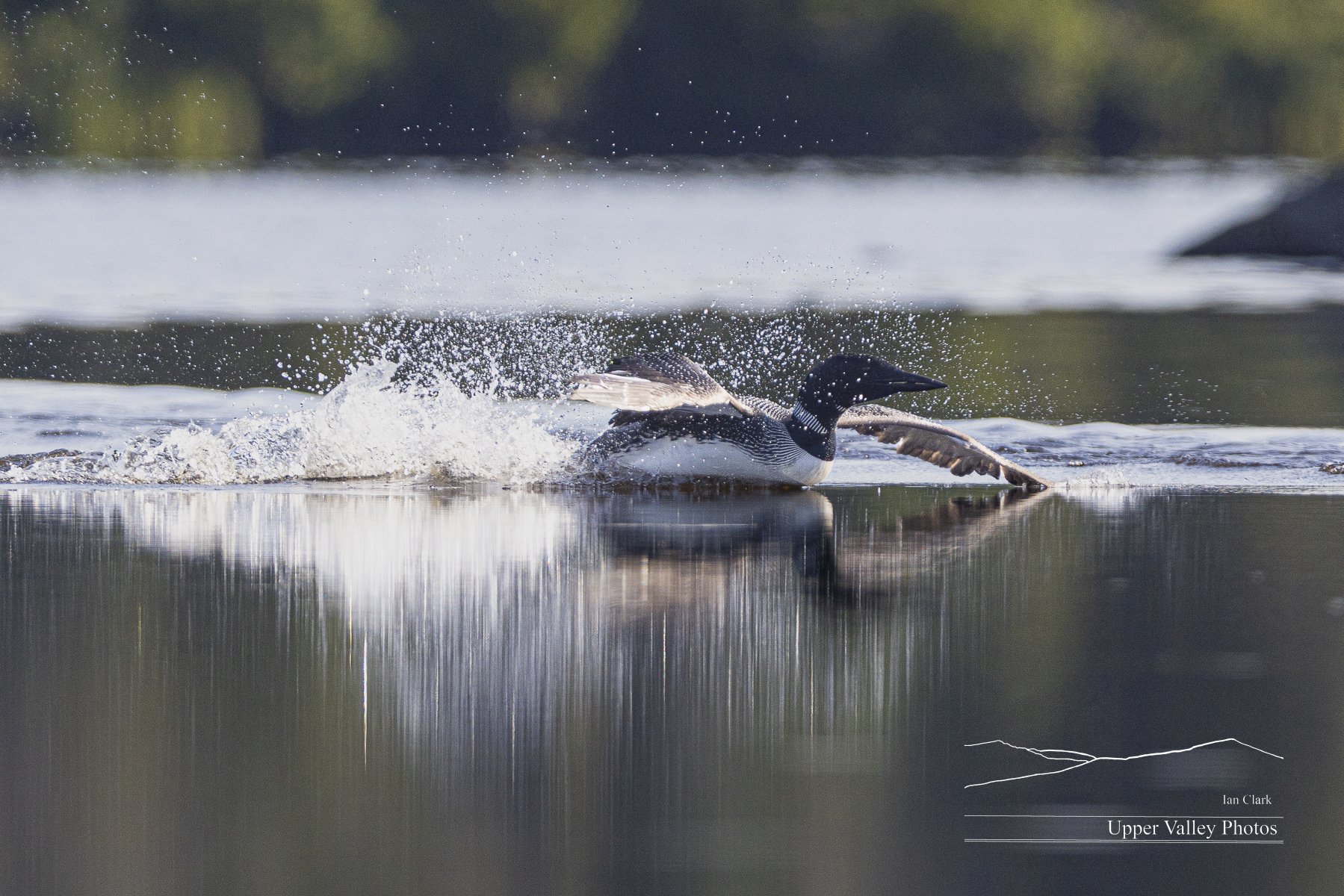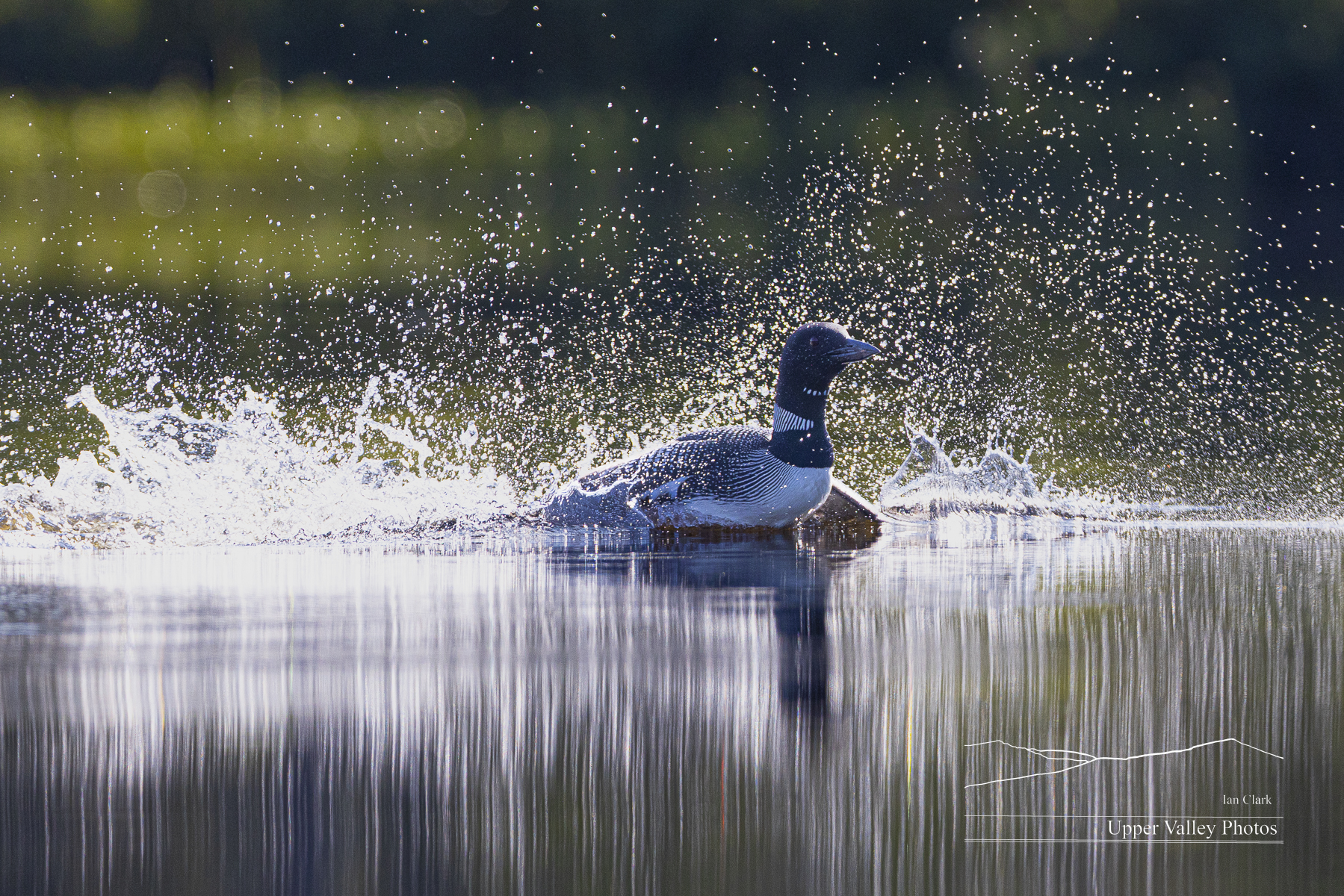
Posts in Category: Herons

We Have Loon Chicks, Heron Chicks Getting Big

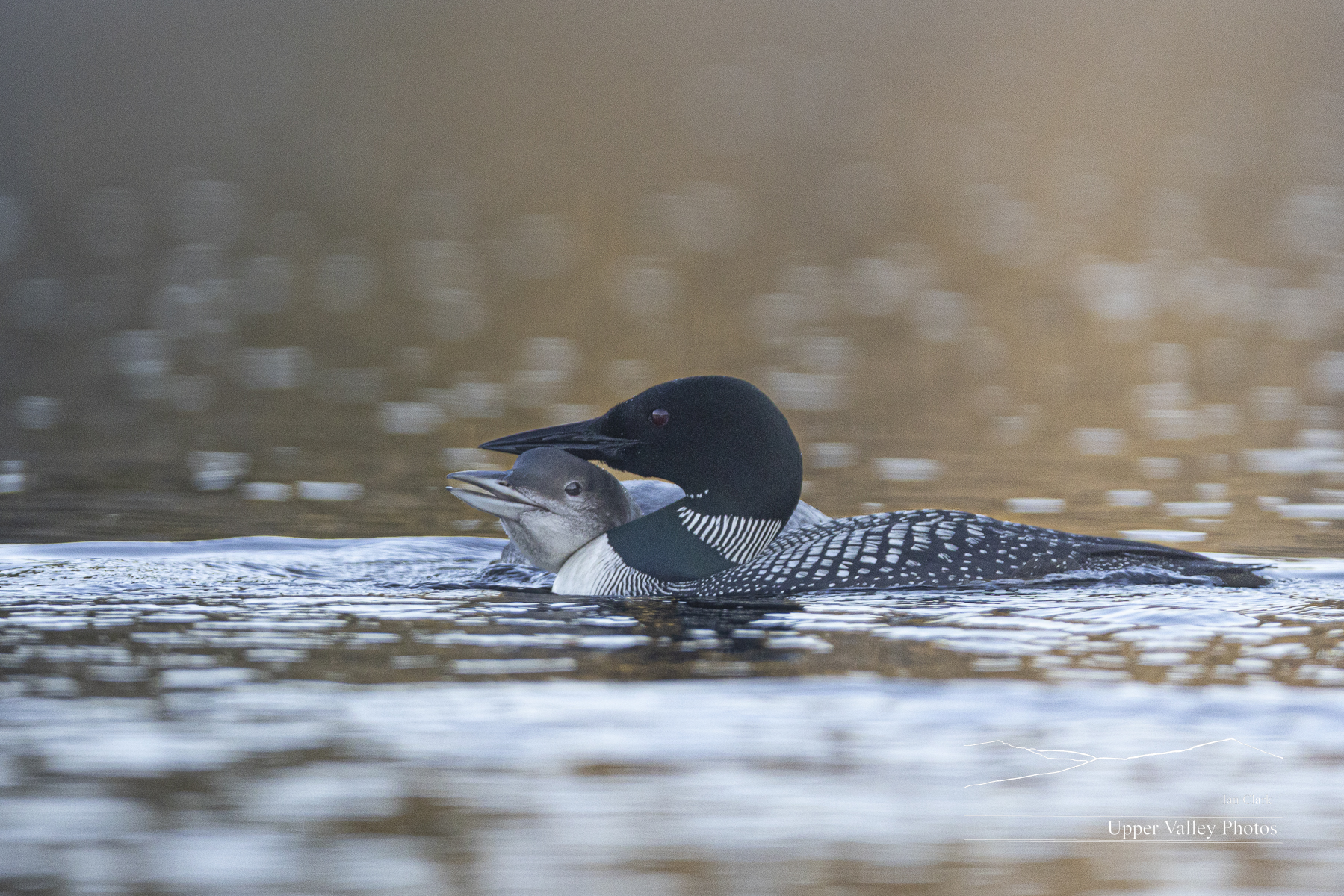
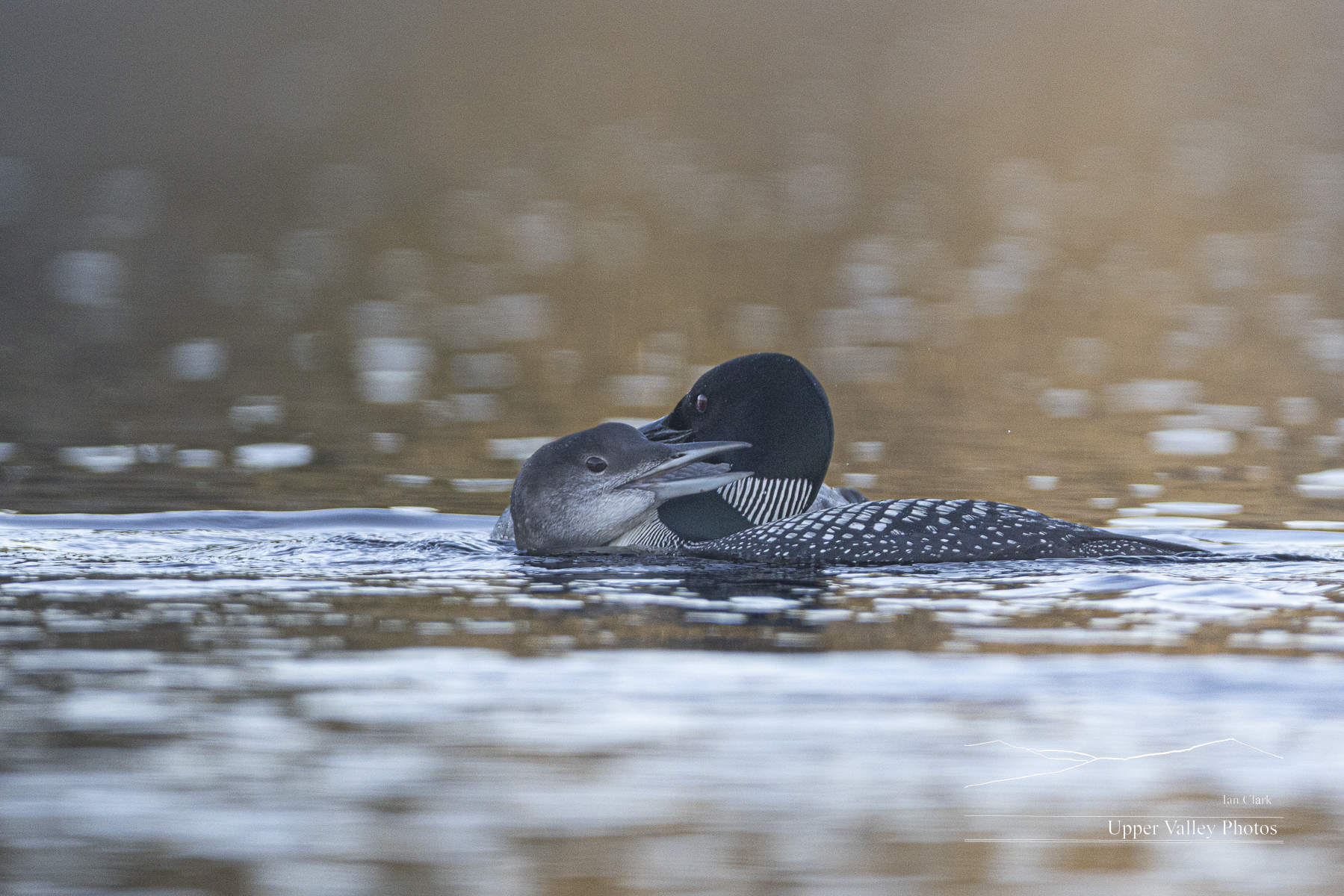
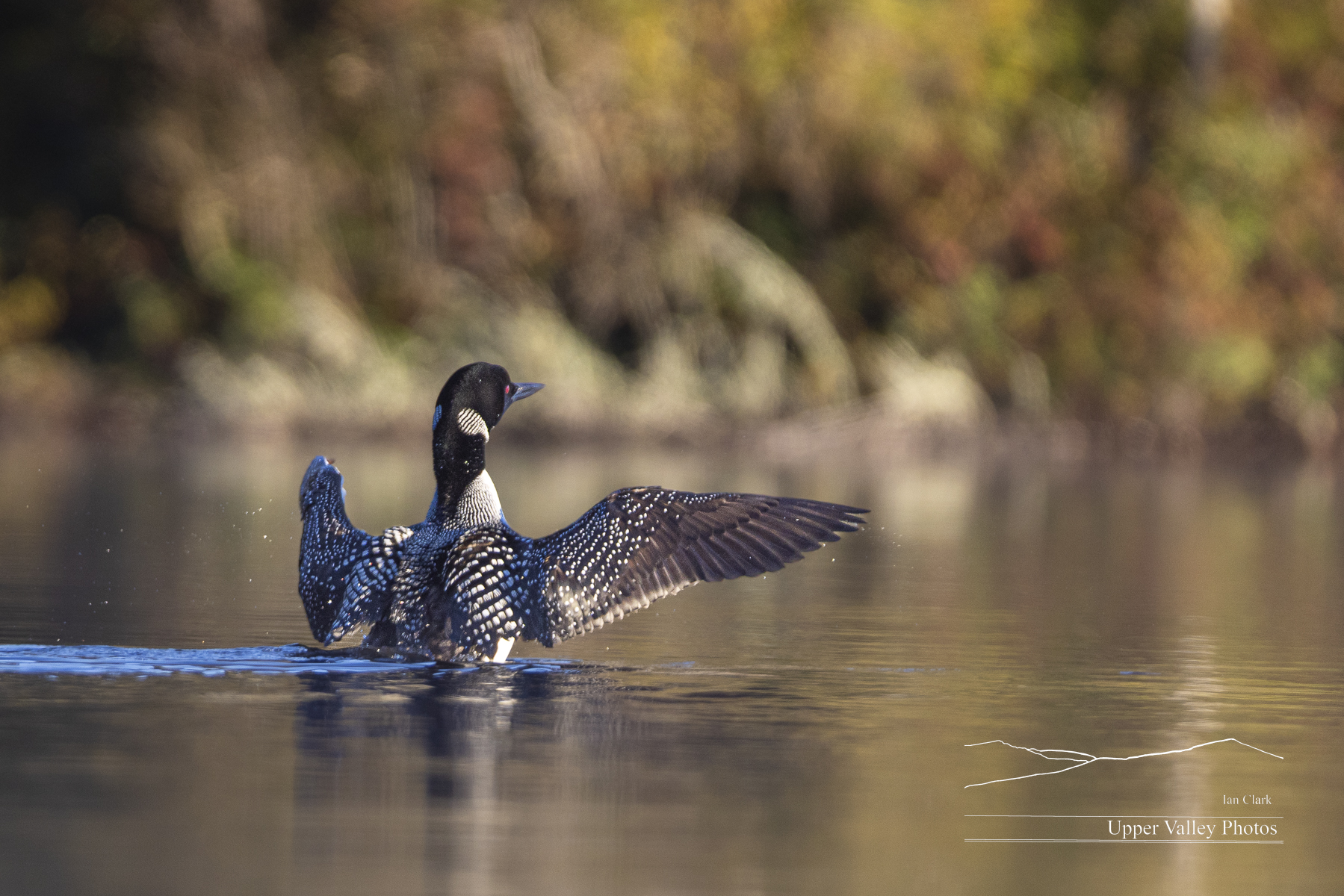
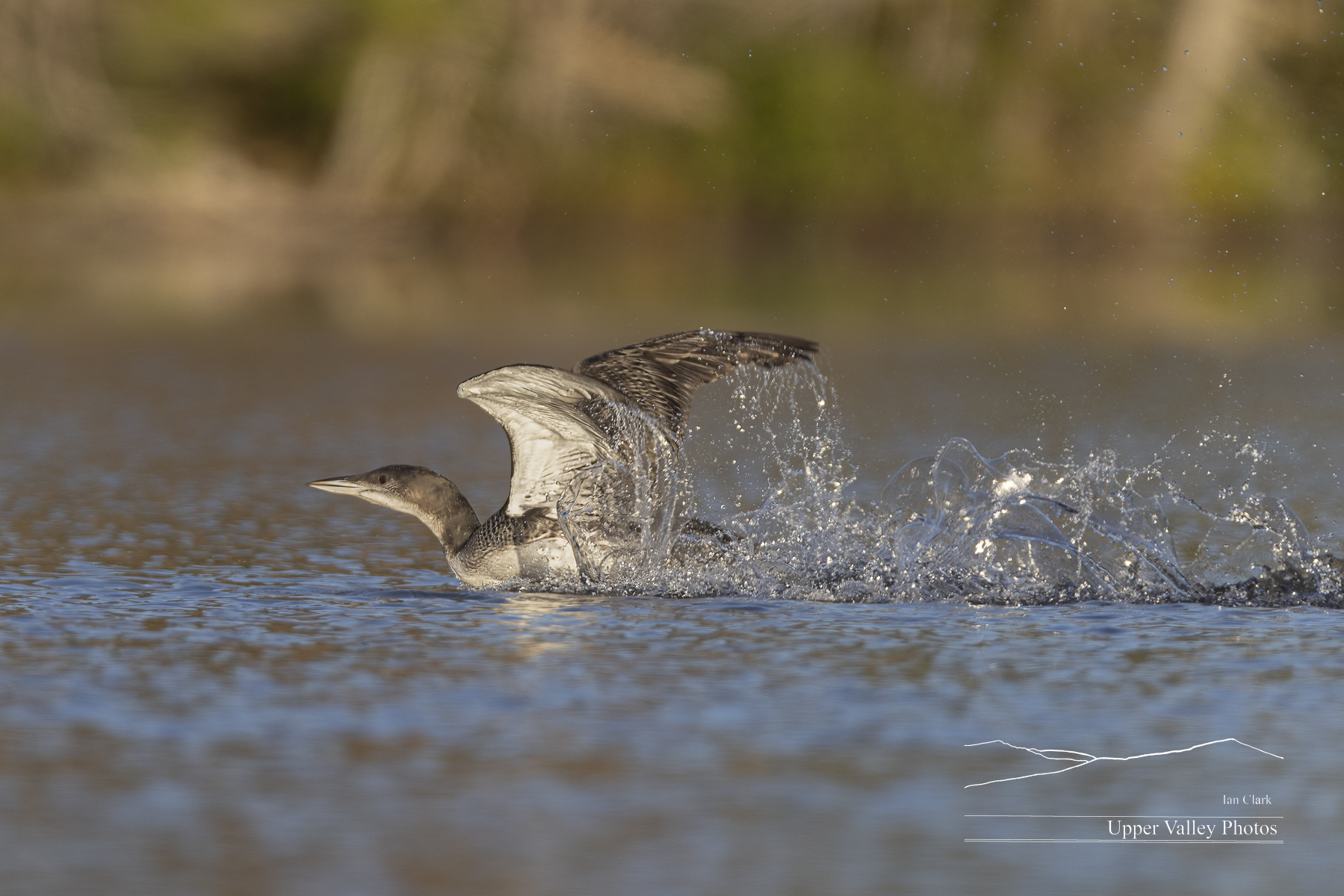
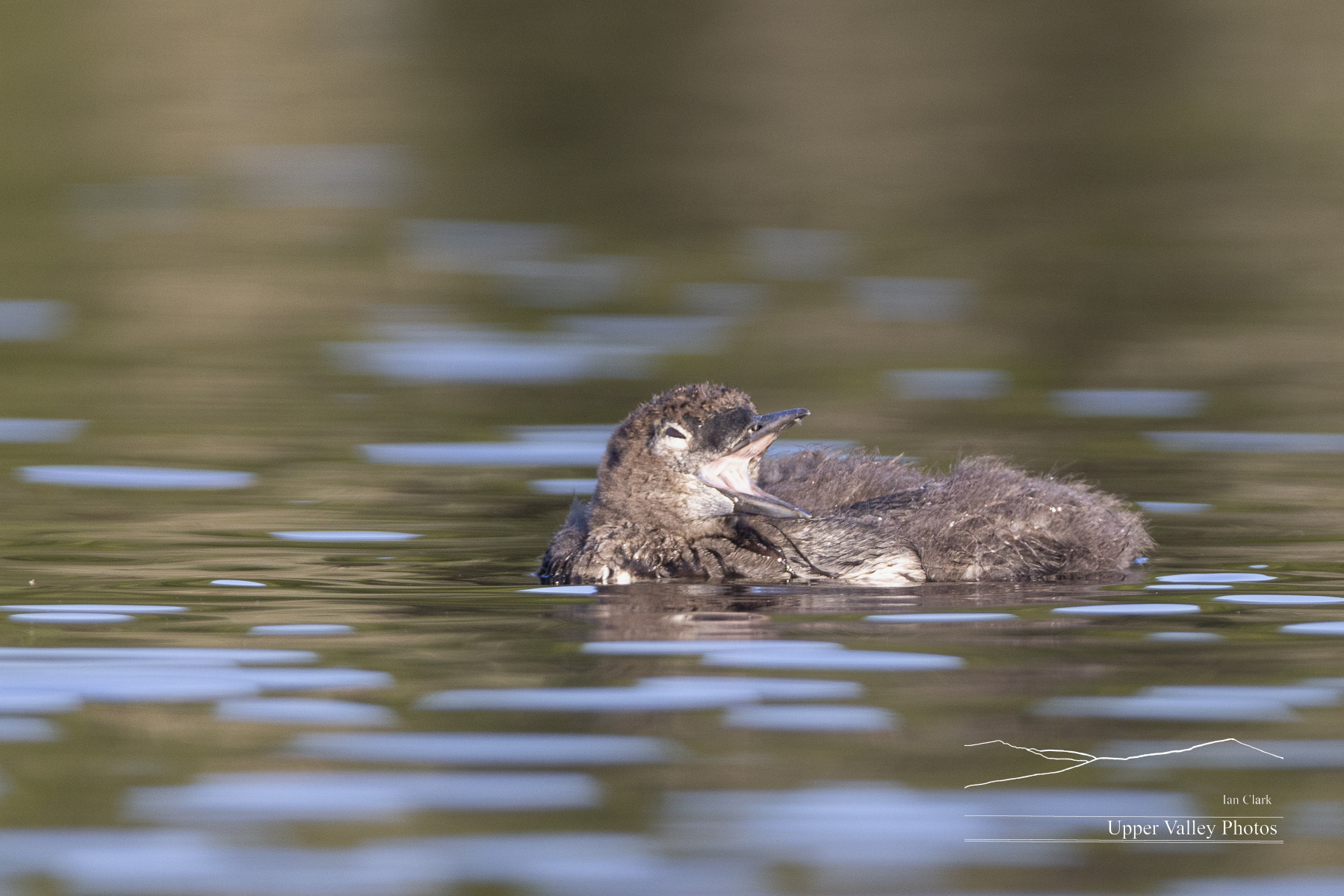
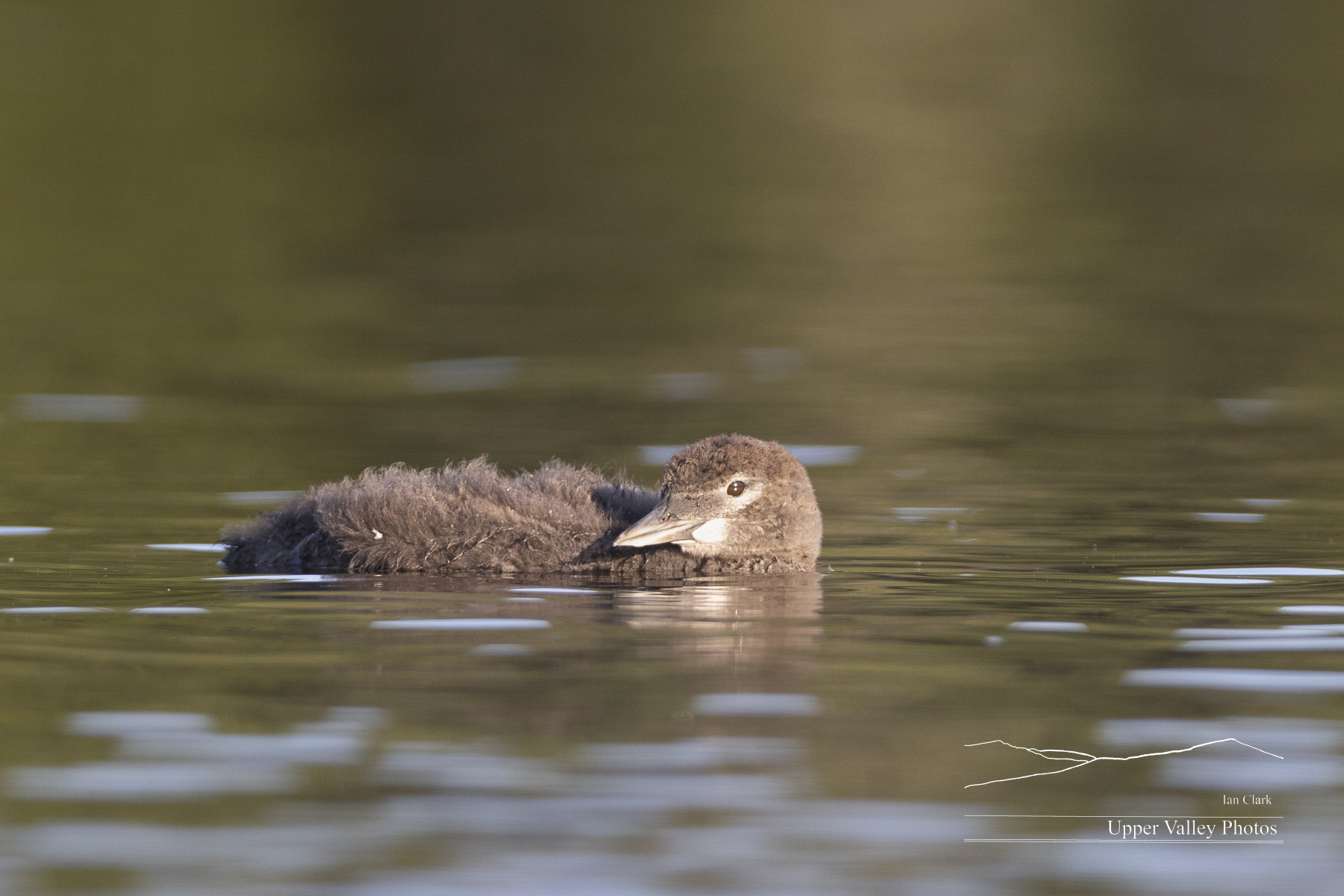
Another busy week visiting all three loon families and the heron rookery. The Westons’ chicks have hatched, the Eastons are sitting on their nest, the Middletons continue to look for a new spot. And the heron chicks are getting big. Very big.

The Berkshires Art Festival is coming up in Great Barrington, MA on July 3, 4 and 5. I’ll have note cards and prints large and small for sale. I’ll be in booth 212 in the Upper Lodge. Please come by and have a look. My 2027 Wildlife Calendar went to the printer. If all goes well, I’ll have them at the show.

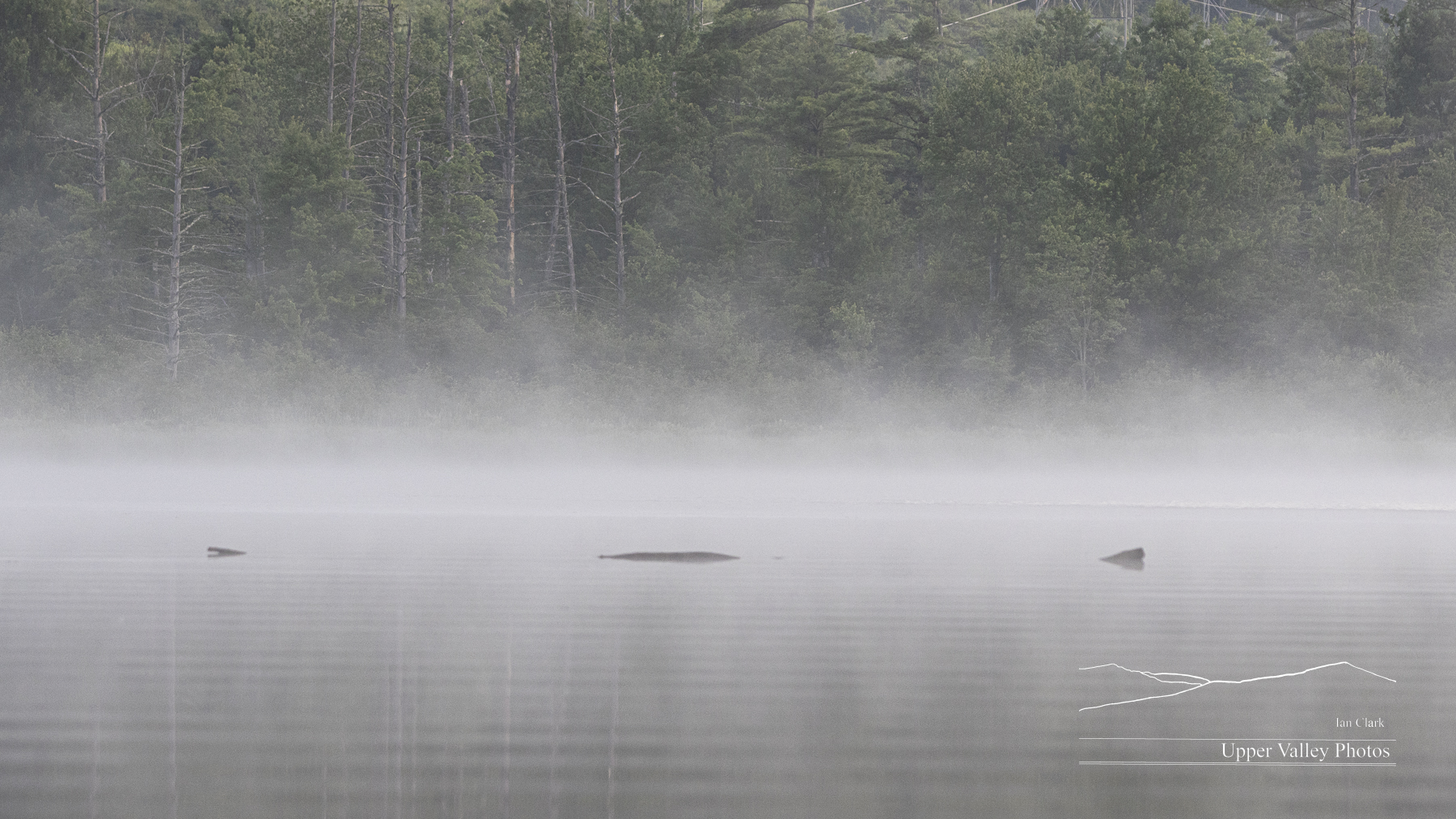
The Westons laid their eggs sometime during a week I couldn’t visit. I’d expected the eggs to hatch last weekend. Monday morning I headed out early and found the pond in thick fog. I paddled up the pond and back down before running into Mr. Weston on his own. Mrs. Weston was still on the nest. And squirming regularly. (Dad is banded in this pair. When I can see a leg, I can tell who is who.)

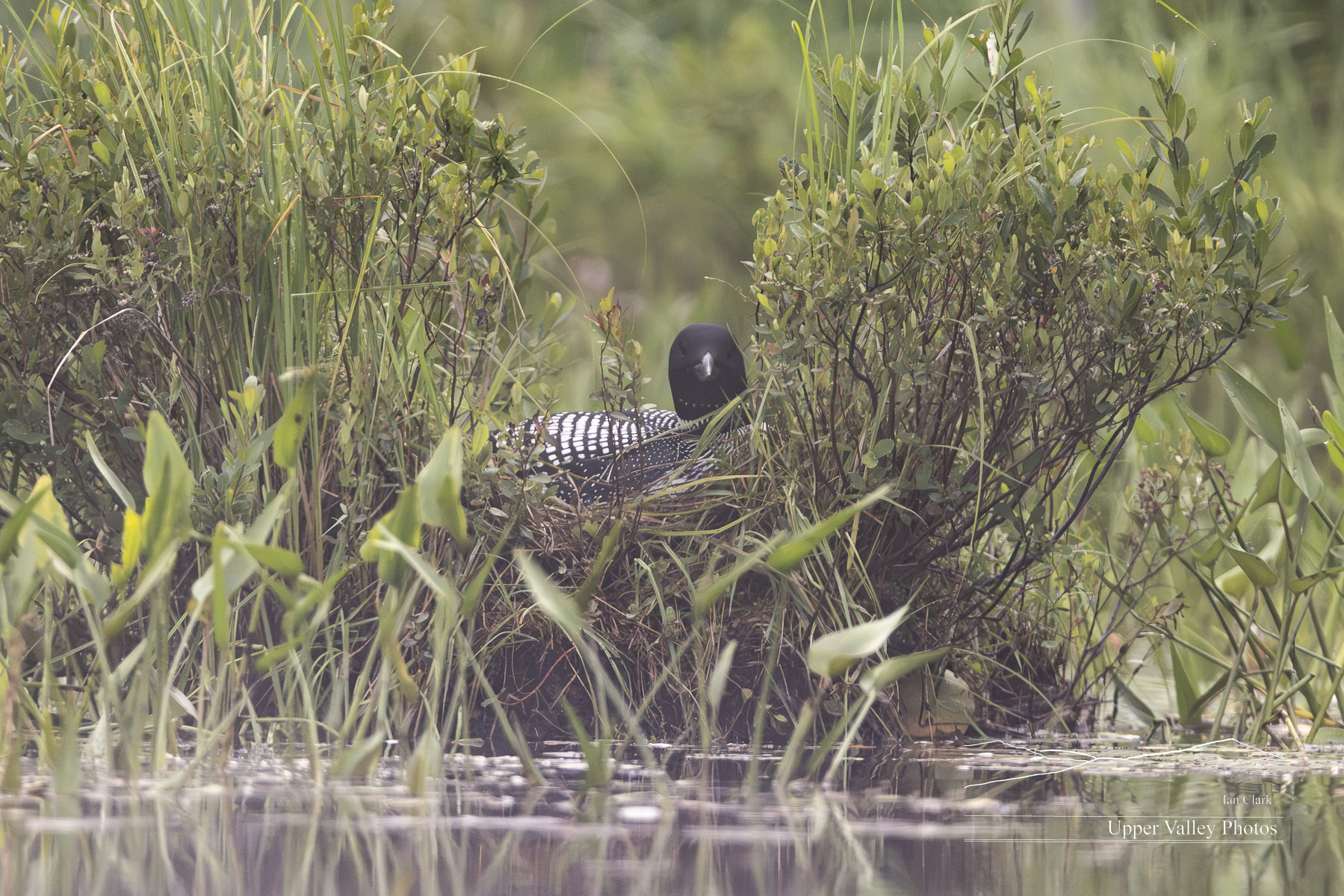
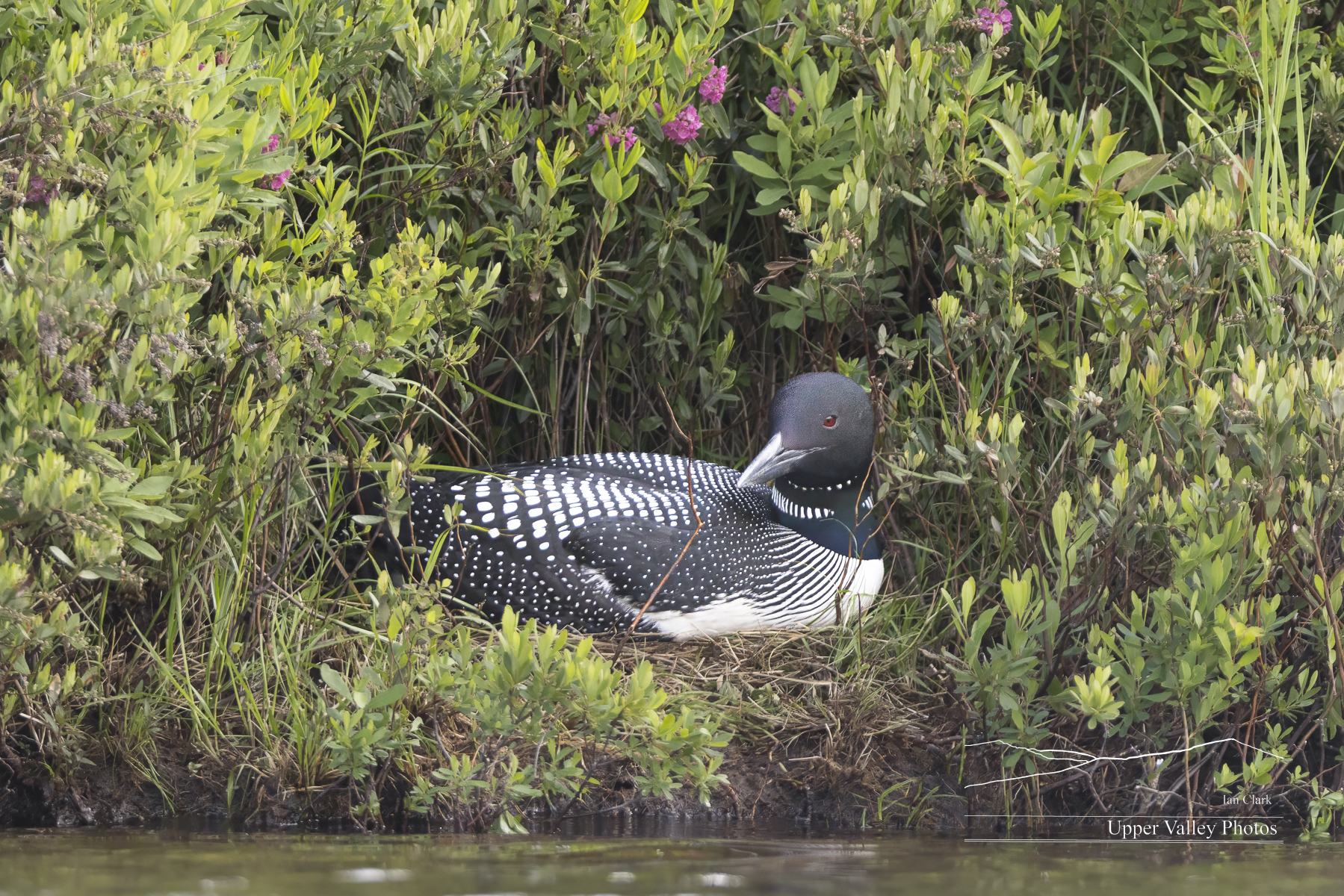
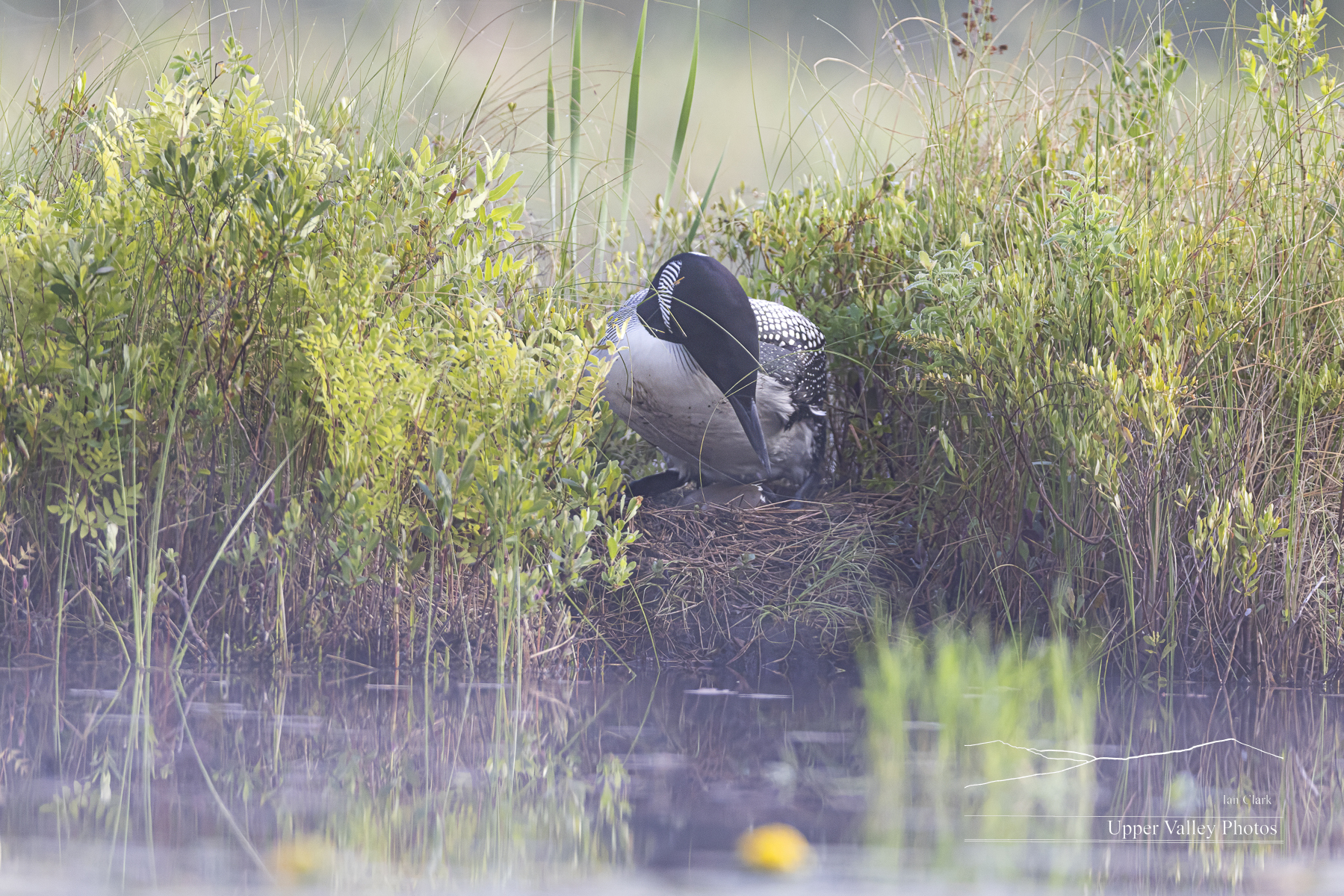
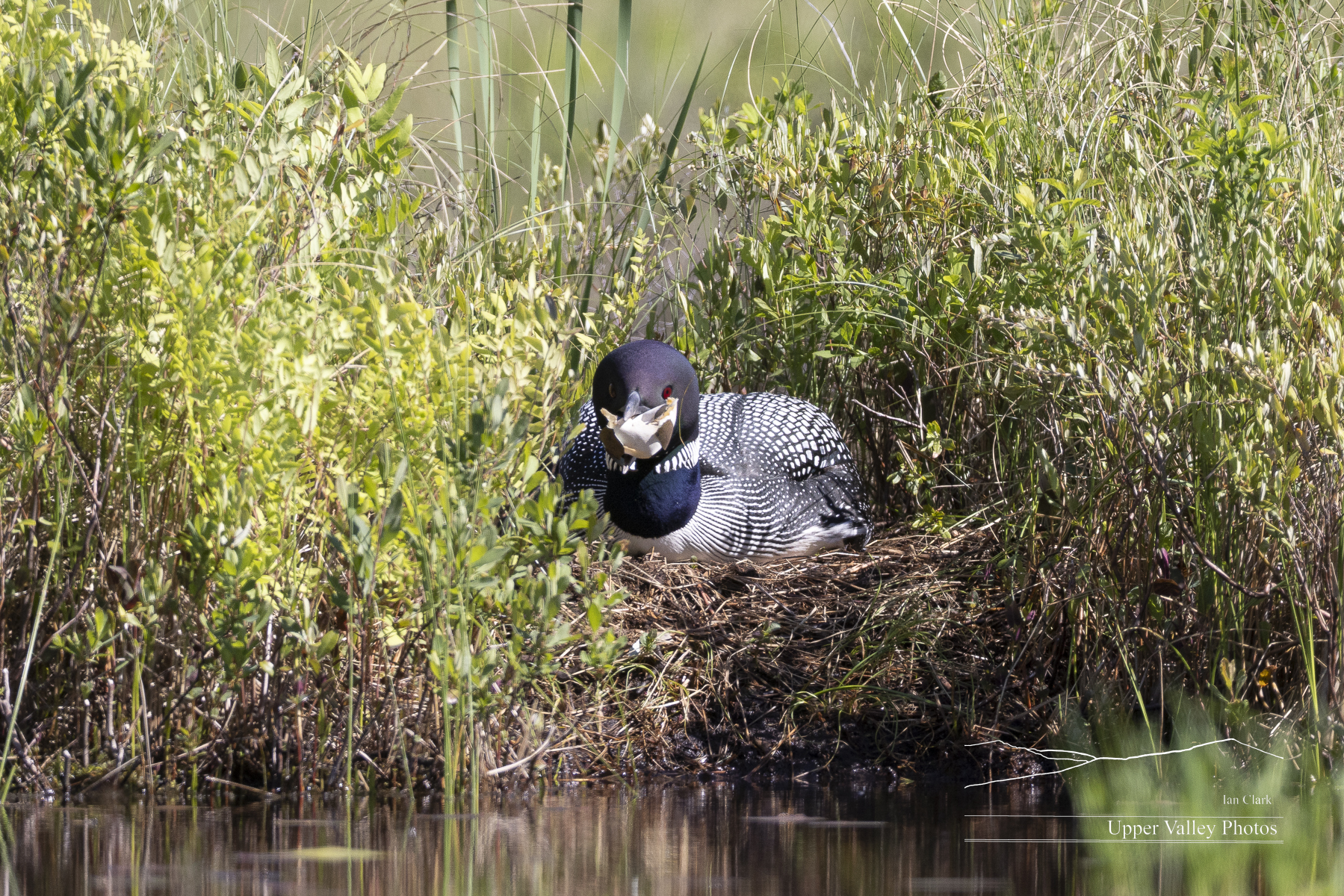
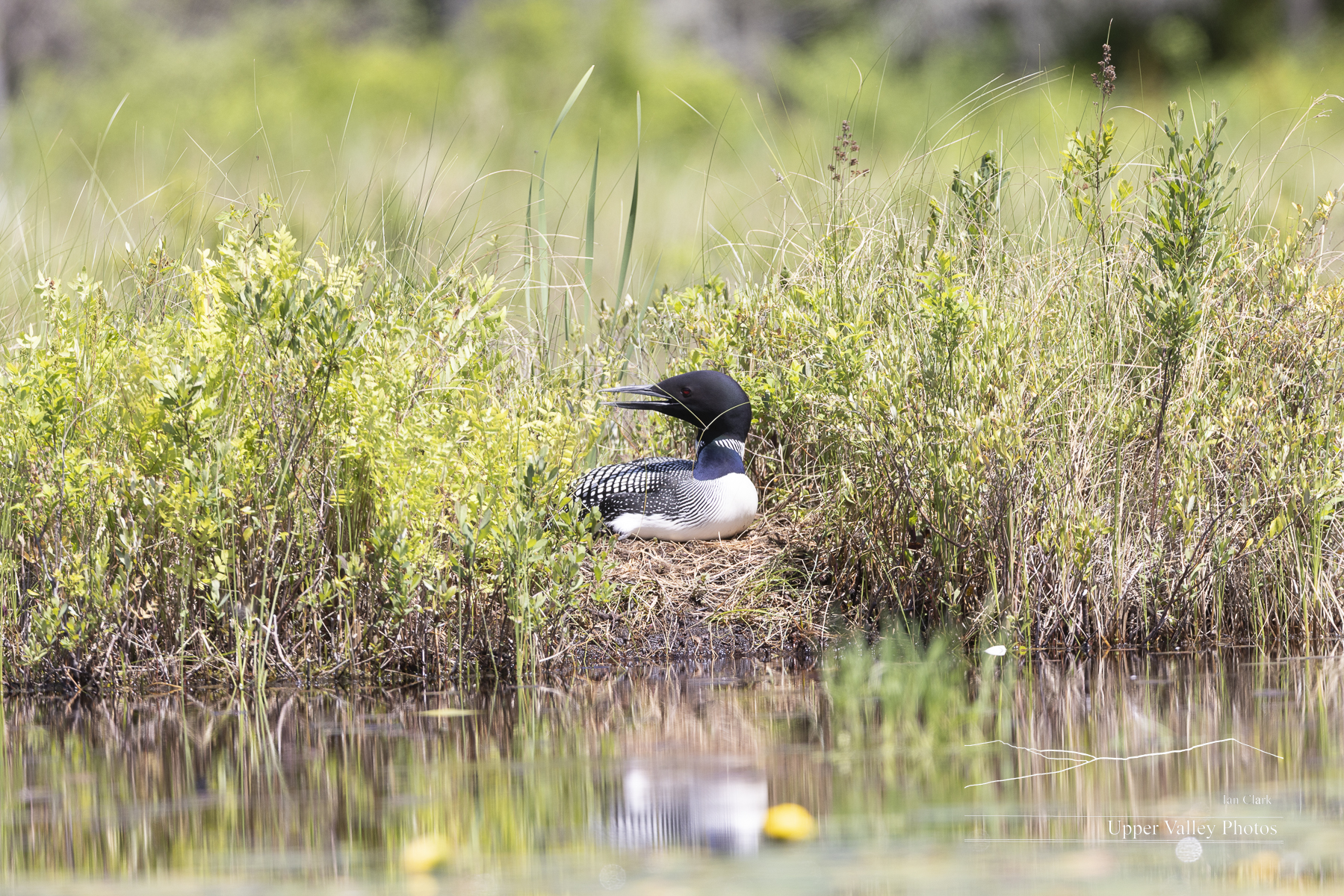
I parked the boat and waited. After a bit, Mrs. Weston stood up to see what was going on downstairs. The chick has broken the end of the egg off and his? head is exposed. Mrs. W seemed satisfied with the chick’s progress and sat back down.

Every spring, I get questions about my camera gear. I’m using a Canon EOS R5 with an 800mm f5.6 lens. 800mm lets me sit well back from the loons – and most of the images in my posts are cropped.
About two and a half hours later, Mom stood up again to see what was happening. I could see the chick’s head, but he was behind the brush. Mom collected the empty eggshell and tossed it overboard. It fell just in front of the nest and she hooted at it a few times, but it refused to go away.

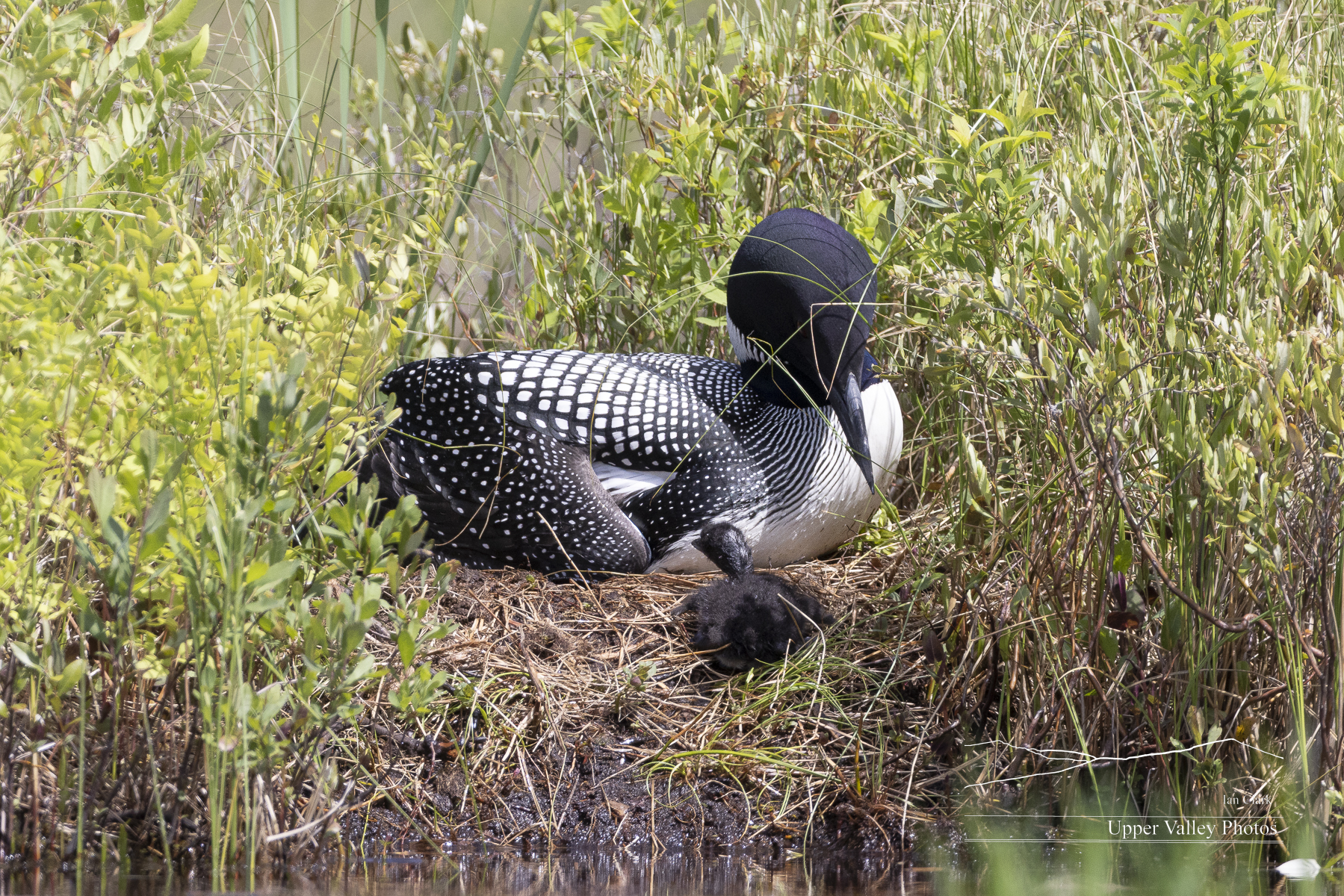
About four hours after the first picture, Mom took the chick into the water and found him several small meals. Mom climbed back up onto the nest and the chick followed. Mr. W was still on on the main part of the pond, enjoying his last morning of peace for the season.

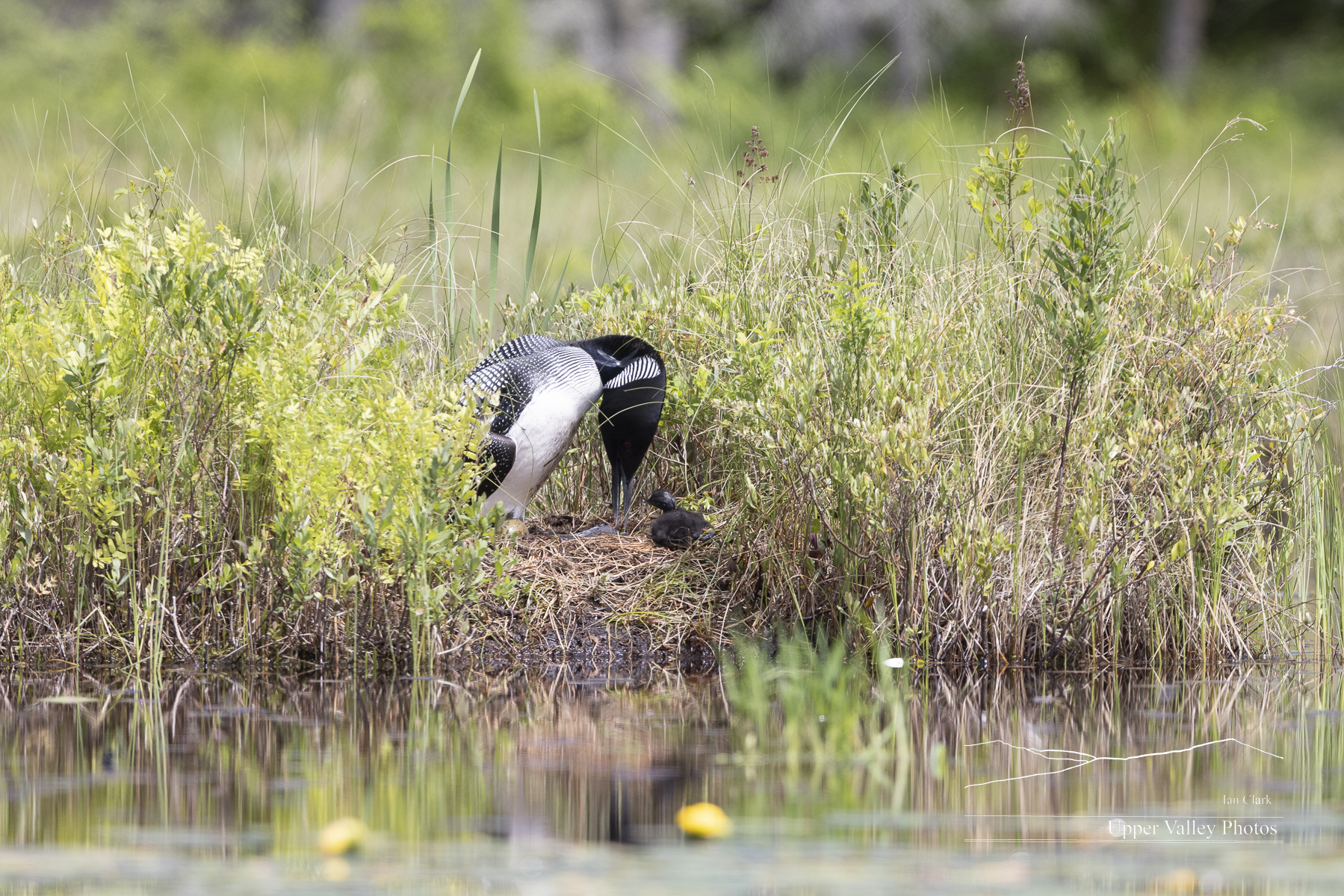
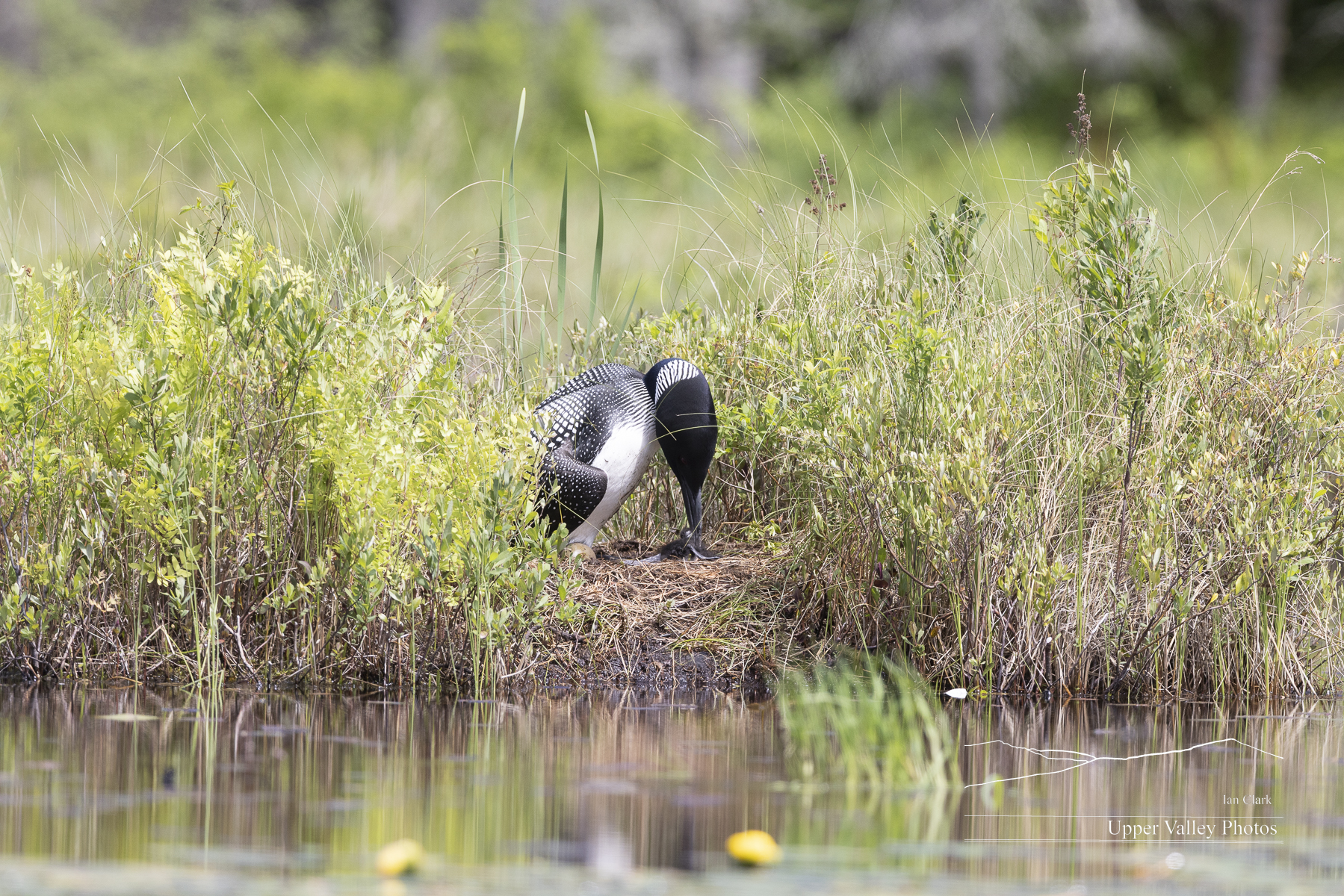
Mom turned the remaining egg as the chick looked on.

Mom herded the chick back into the nest.

And went back to sitting. I hadn’t expected to be on the pond very long that morning. I left a couple hours after my butt went completely numb from the kayak seat and with a nice sunburn.

I went back Tuesday morning to see if I could meet the second chick. The fog was thicker than the day before.

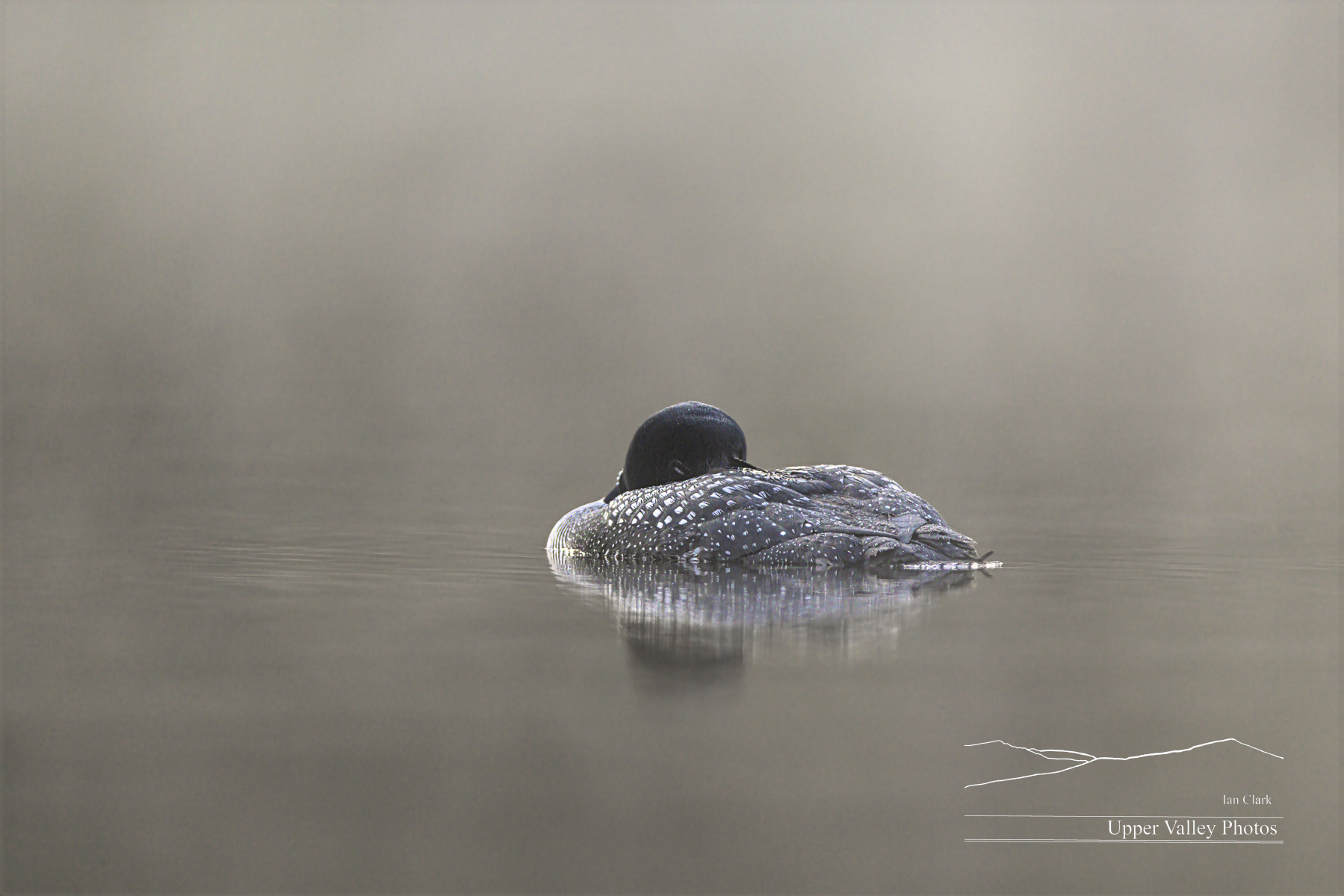
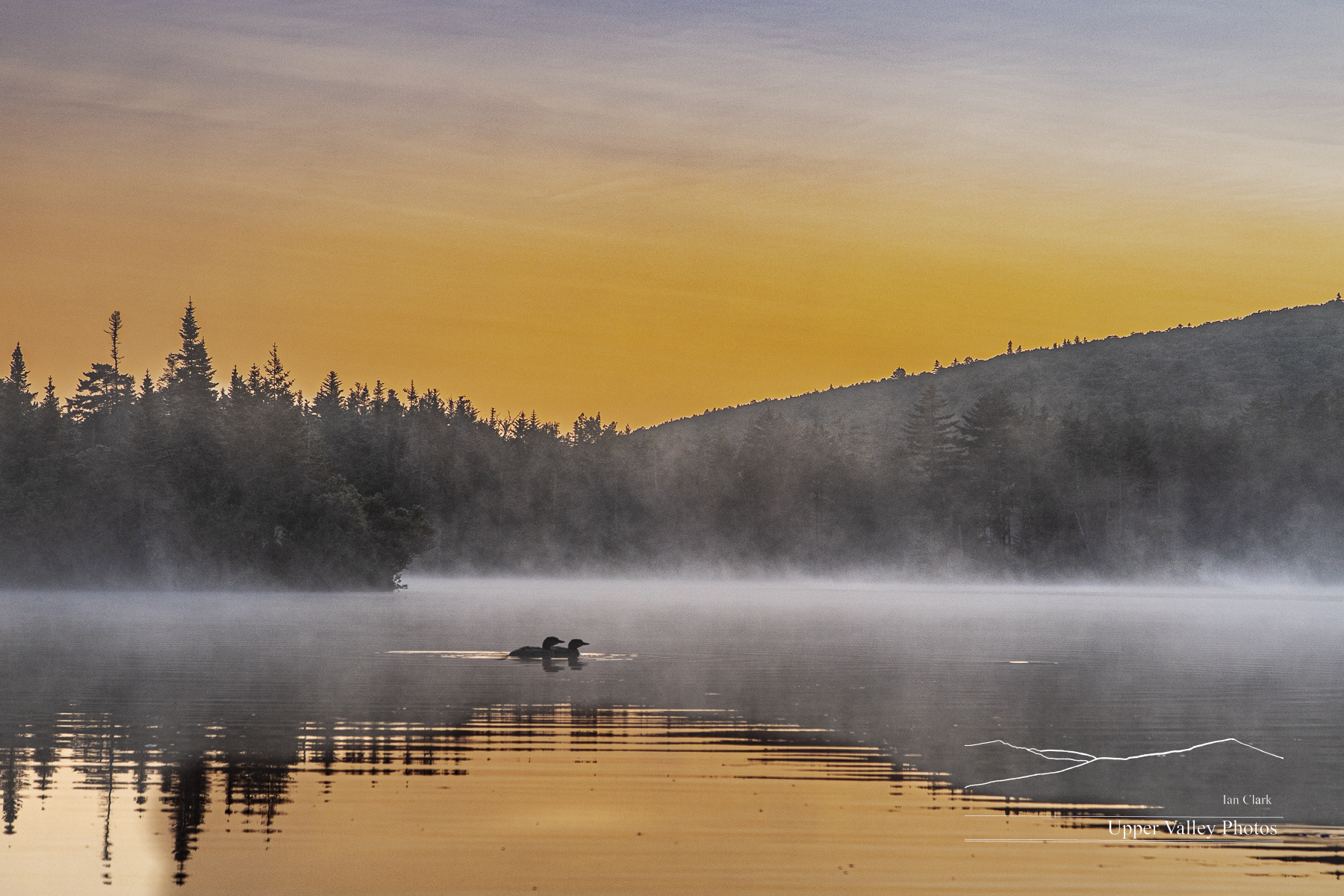
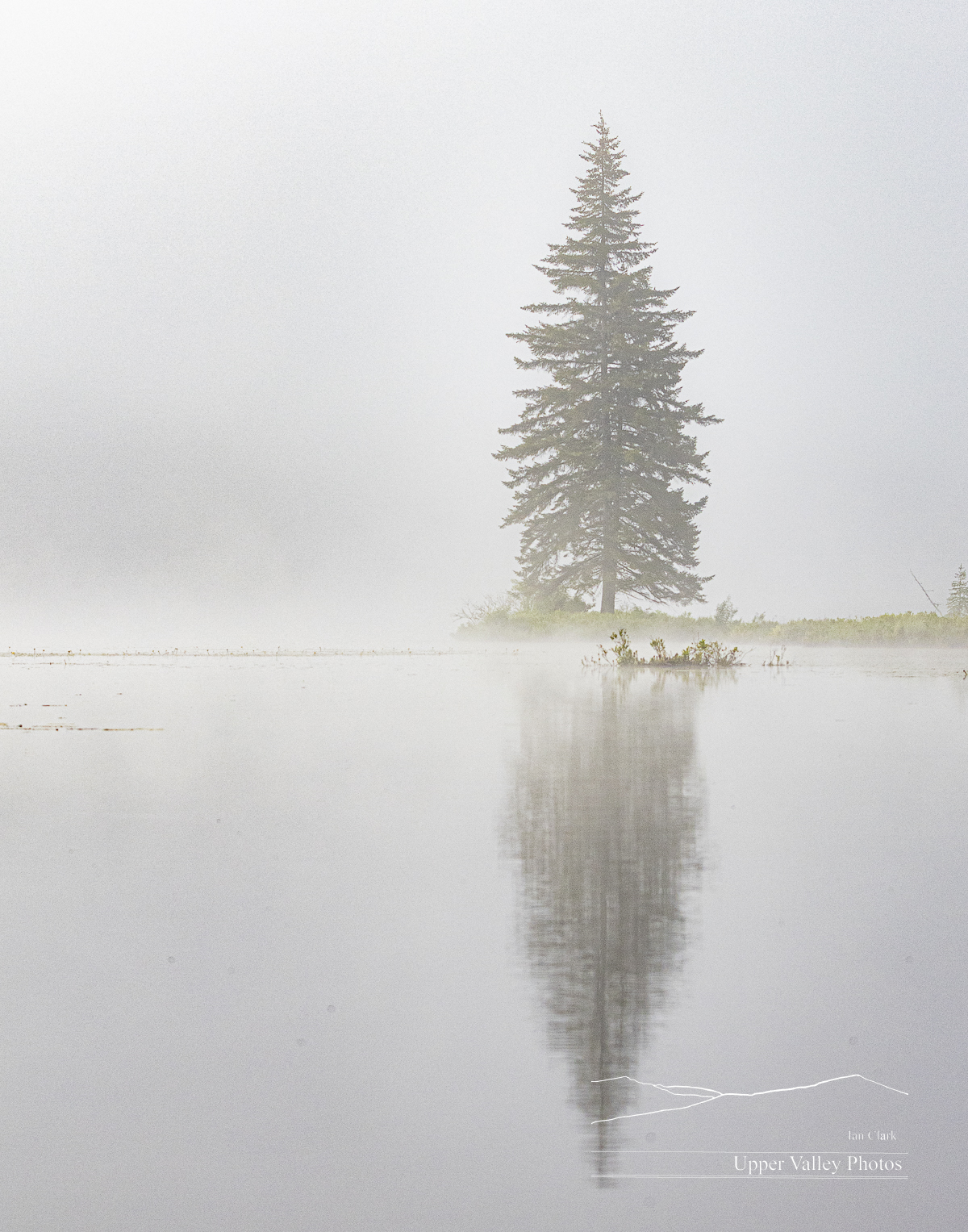
It was foggy enough that I couldn’t see the chicks without getting too close. I tried to make the best of the time waiting for the fog to lift and amused my self shooting foggy morning shots.

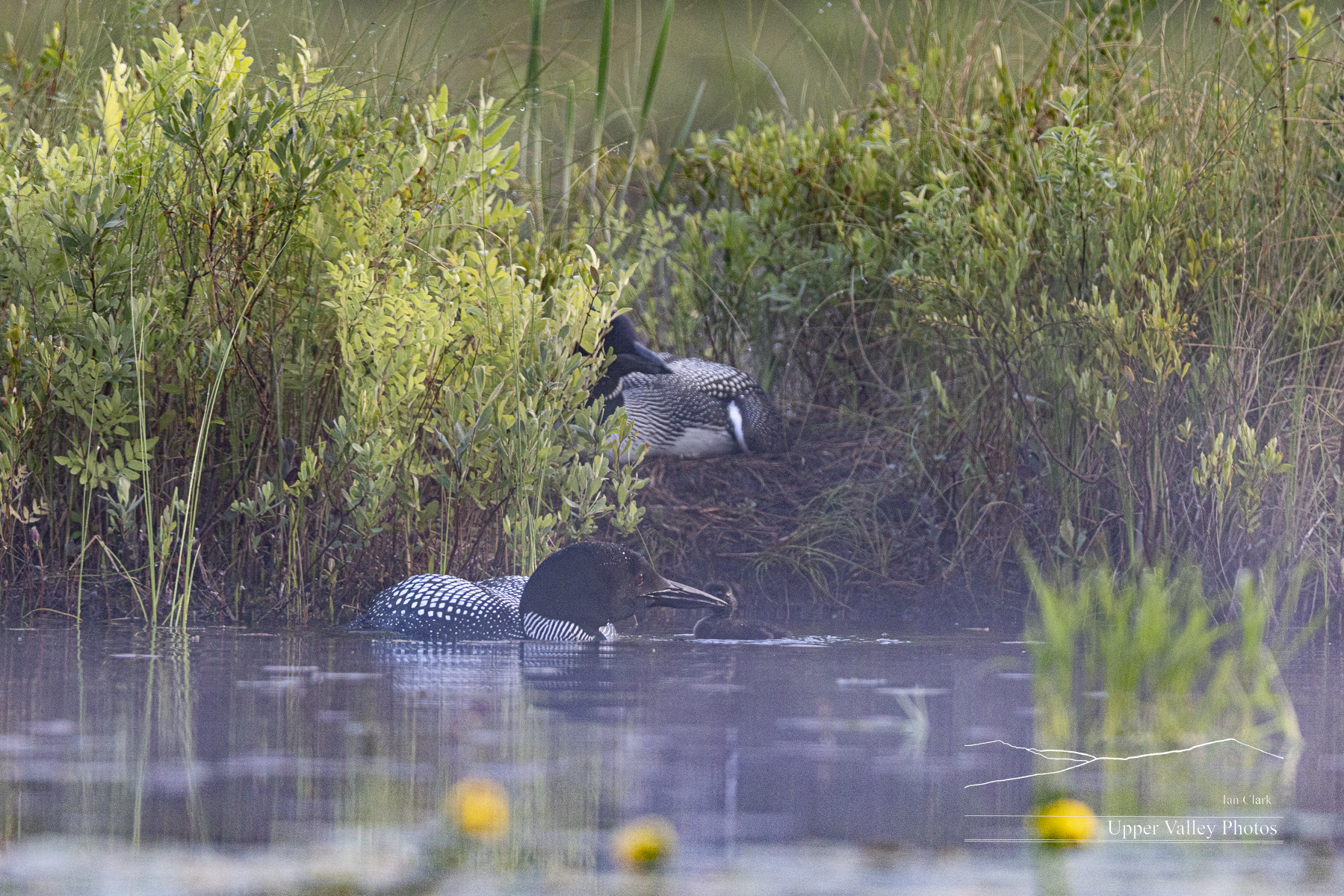
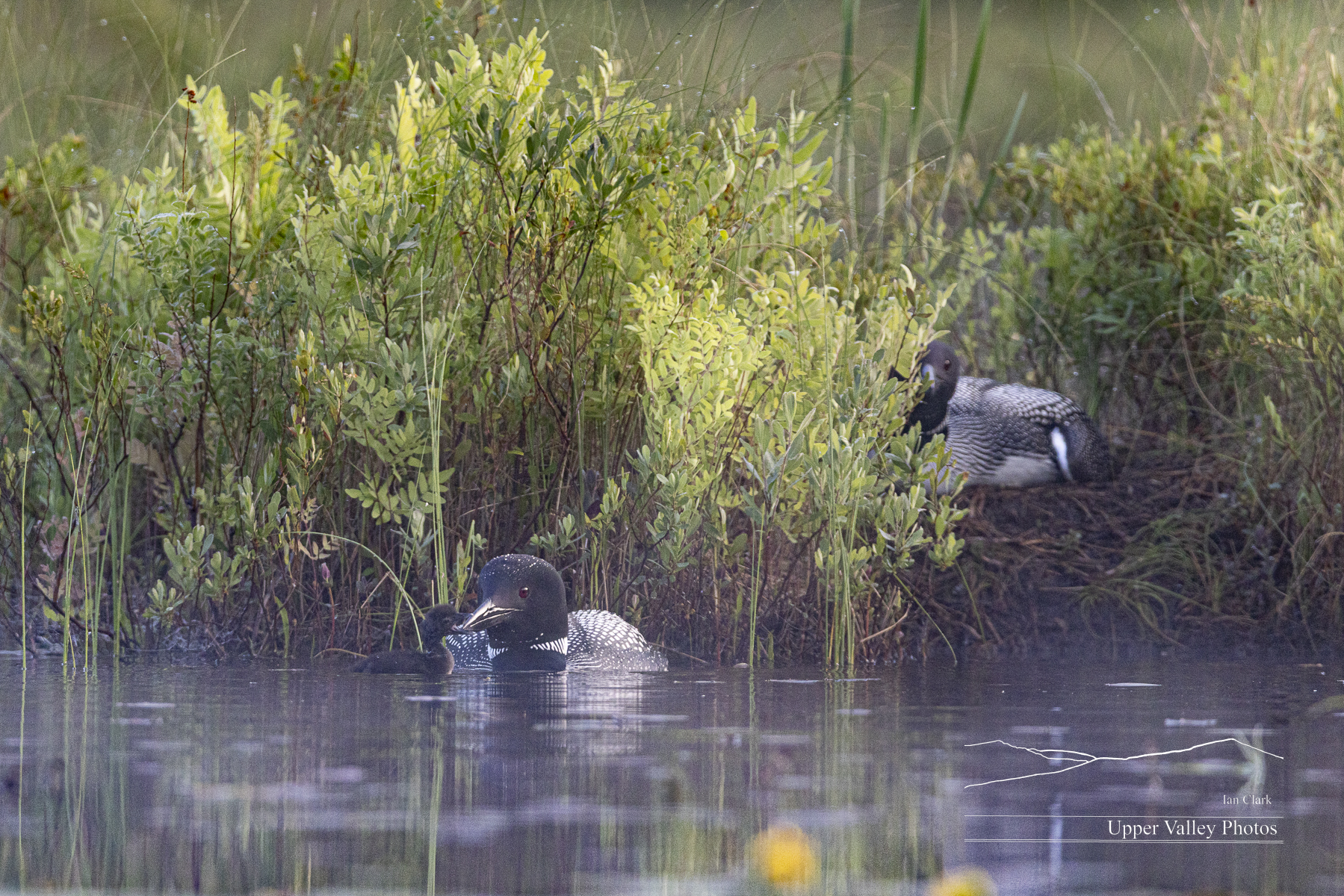
By about 0600, the fog had lifted a bit and I went to check on the nest. Mom was sitting, Dad was feeding the chick by the nest.
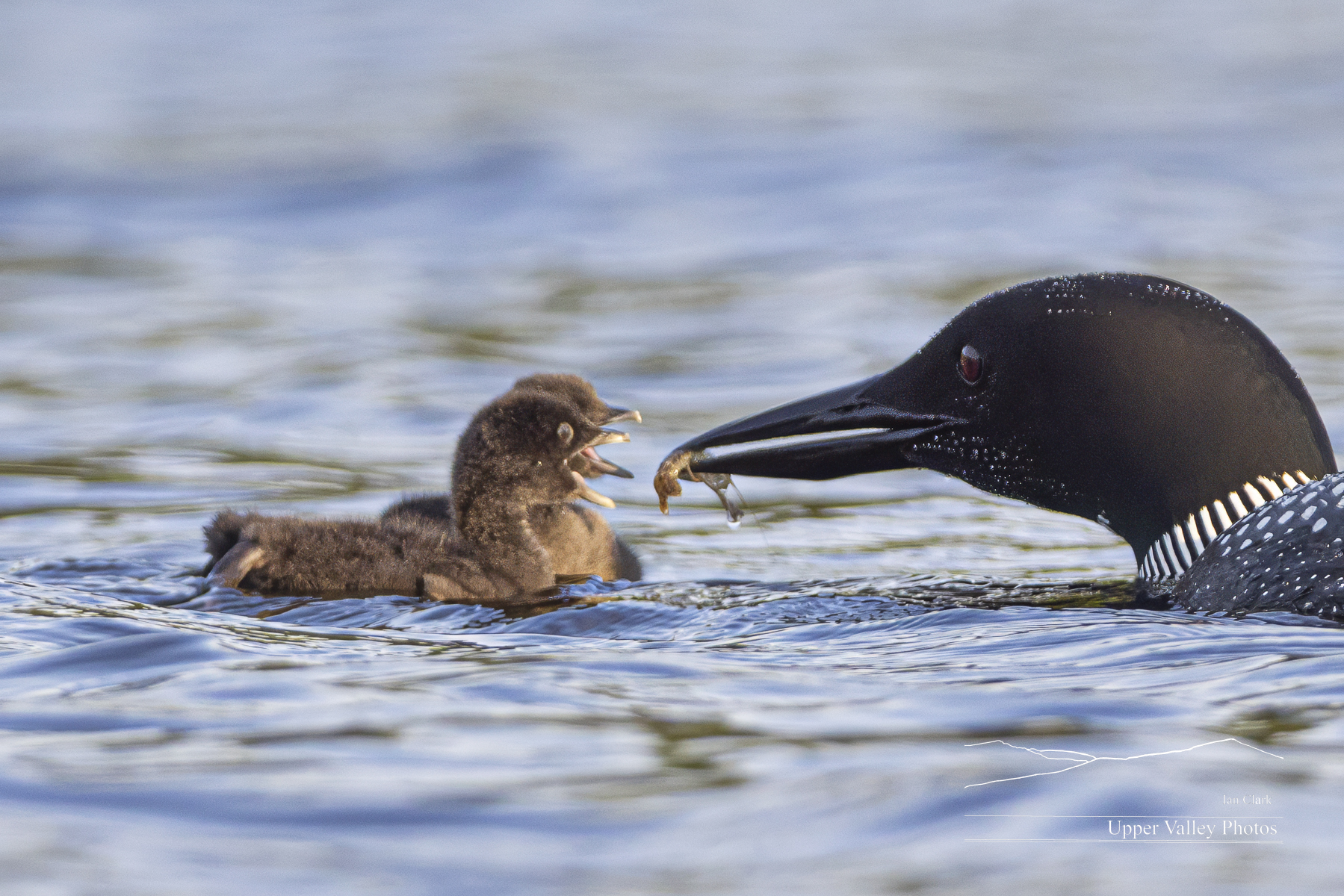
The little guy caught on fast. Dad found several small fish and a crayfish for the chick before returning him to the nest.


The Westons have always pretty much ignored me until about time for the chicks to hatch. Then, everyone has to go. They’ll wail at people, beavers, any large bird flying over and even lots of small birds in the brush along the pond.
After tucking the chick back into the nest, Dad grabbed the eggshell Mom tossed overboard the day before and took out the trash.

After Dad fed the chick, he started back to the pond. As he passed, he stopped and displayed his wings at me. I took the hint and gave up my spot. I left the cove with the nest. Dad circled the cove a couple times wailing at the red-winged black birds, grackles and kingbirds.

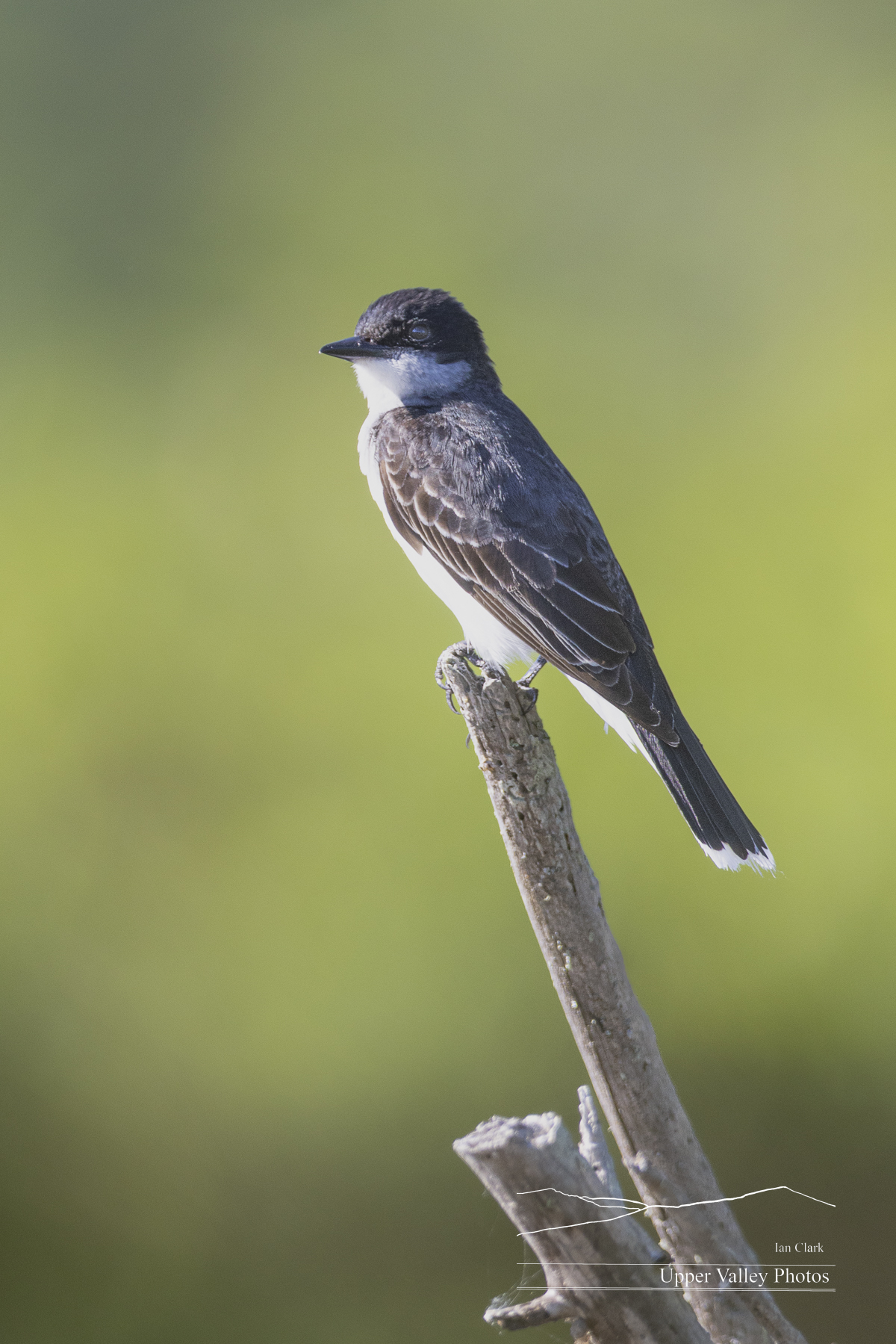
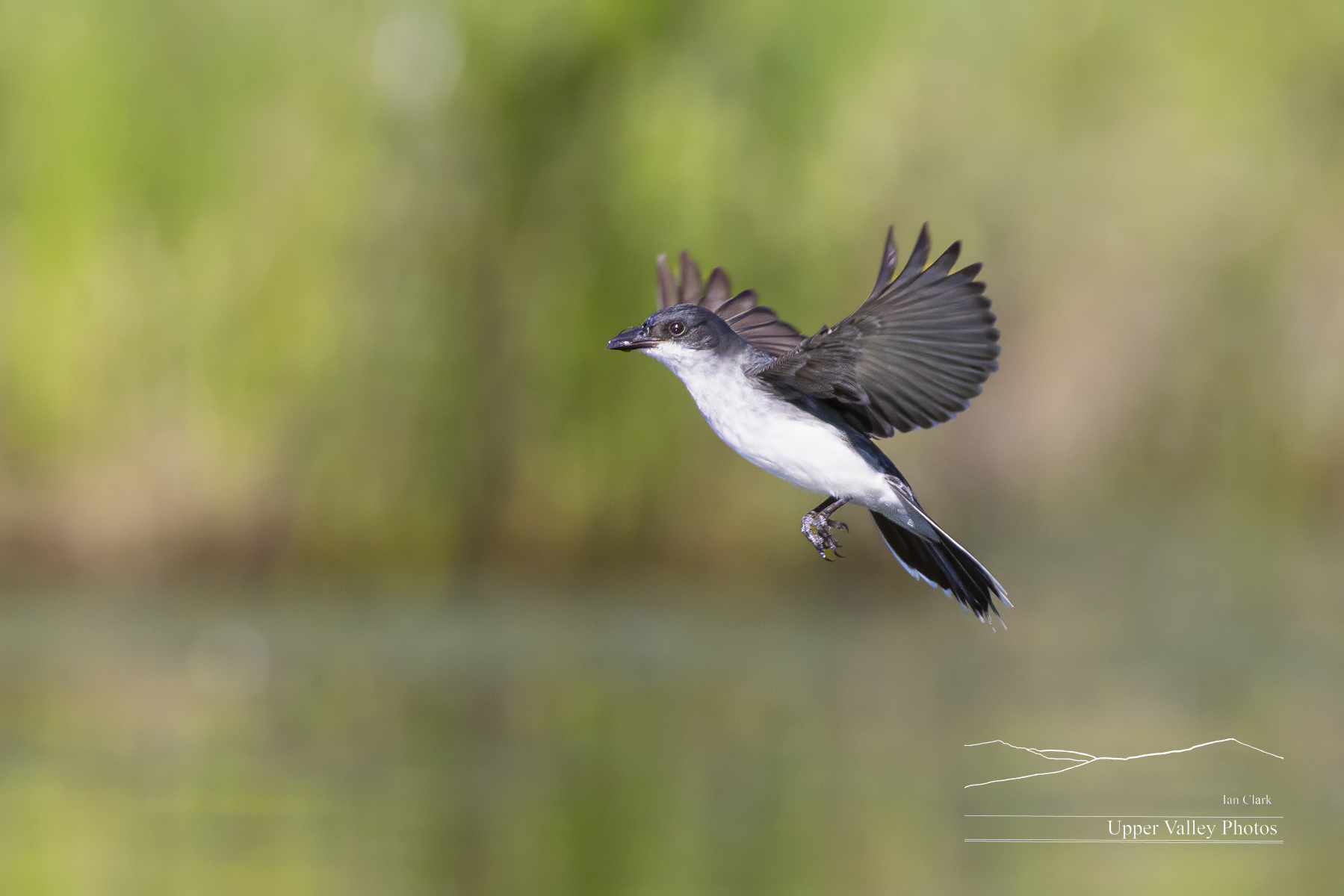
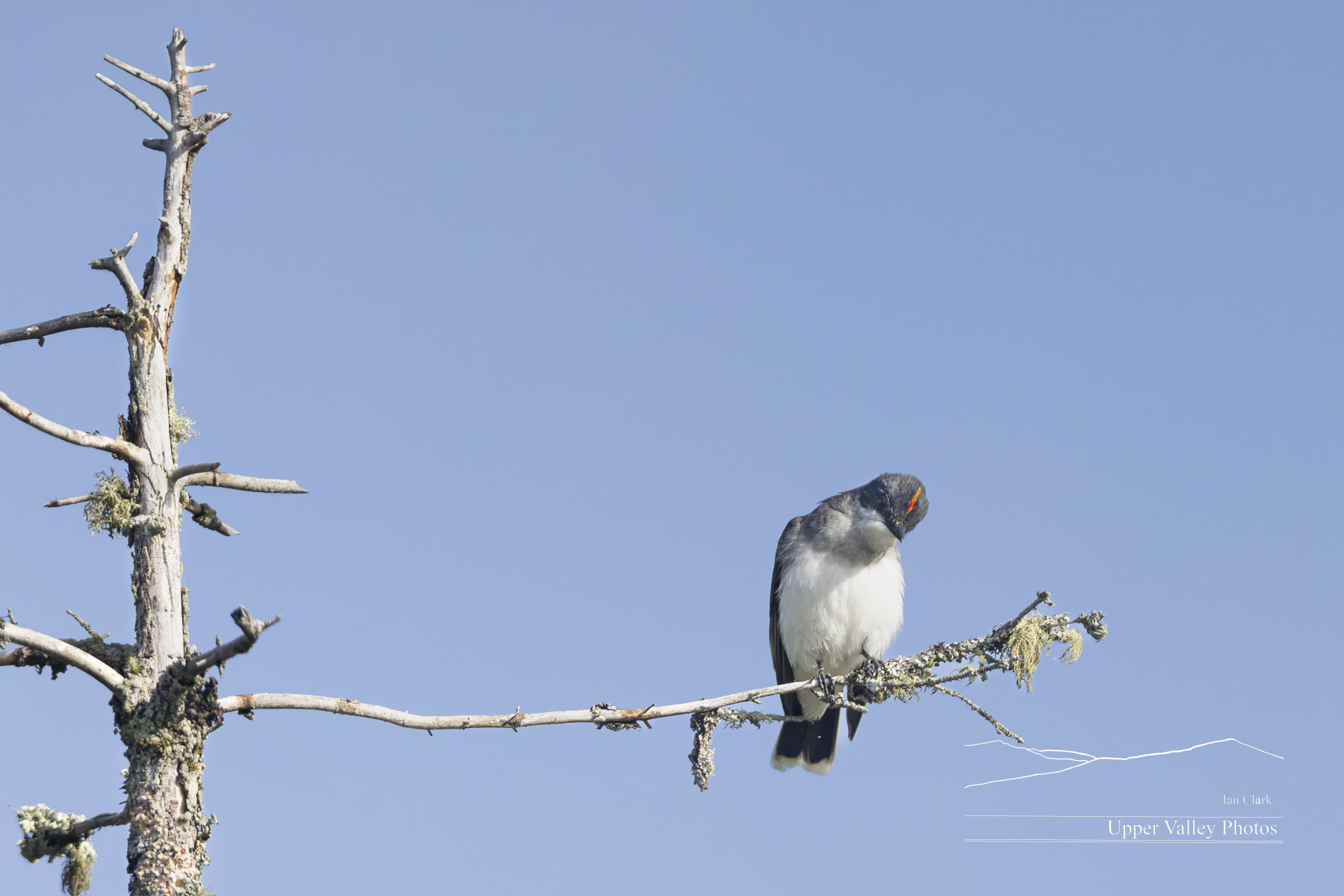
As I was heading in, I passed an eastern kingbird sitting along the water. When the kingbird lowered his head, I could see the ‘crown’ – a patch of red feathers. They use the crown to attract mates and as a warning to predators.
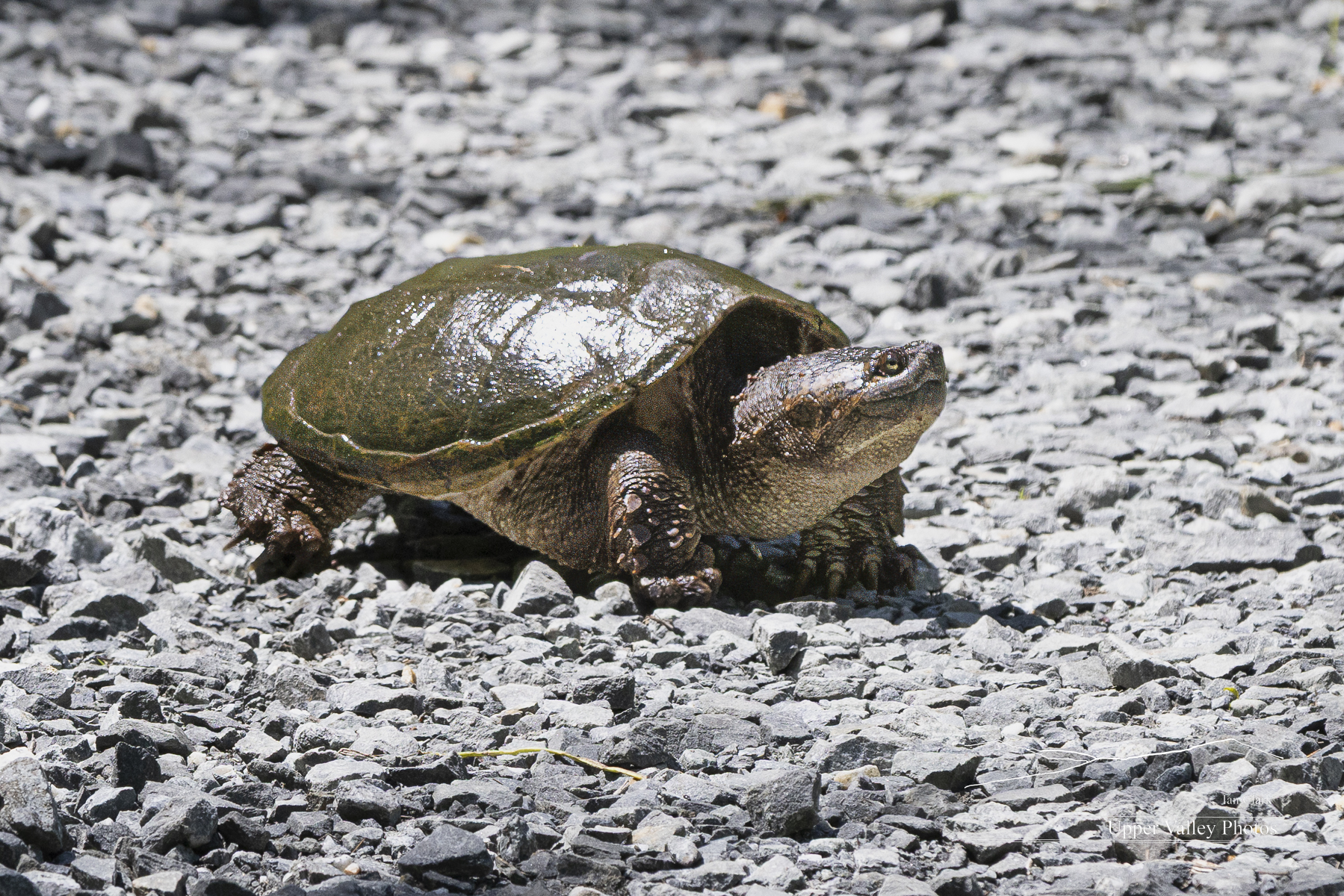
As I left the pond, I had to encourage a snapping turtle to get out of the road. Female turtles are out of their ponds looking for nesting sites.

Wednesday morning I headed to visit the Middletons. On my last visit, I discovered they’d abandoned their first nest and were looking for a site to try again.

After a bit of searching, I found the Middletons testing out a possible nesting site. Mr. M was tossing vegetation up on the bank as Mrs. M looked on.

After a bit, he gave up and went to find a snack. Mrs. M tossed some vegetation herself before deciding a snack sounded good.

After finishing the snack, the pair checked another possible site. And found Hank the great blue heron at the breakfast buffet.

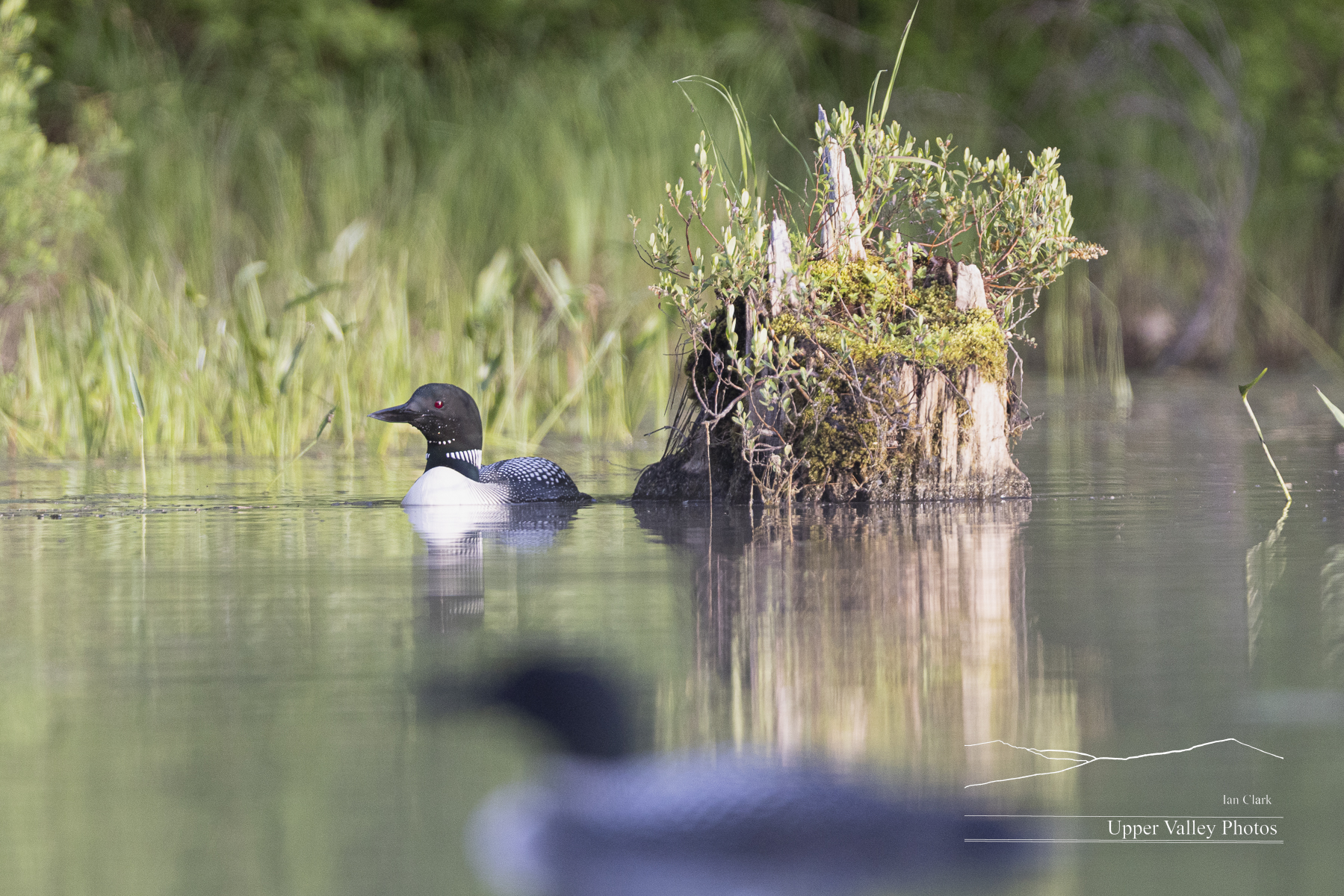
That site wasn’t what they wanted. They continued looking around the cove. Mrs. M tried to promote this stump as a good place to build. Mr. M wasn’t buying it. They kept looking, I stayed with Hank.

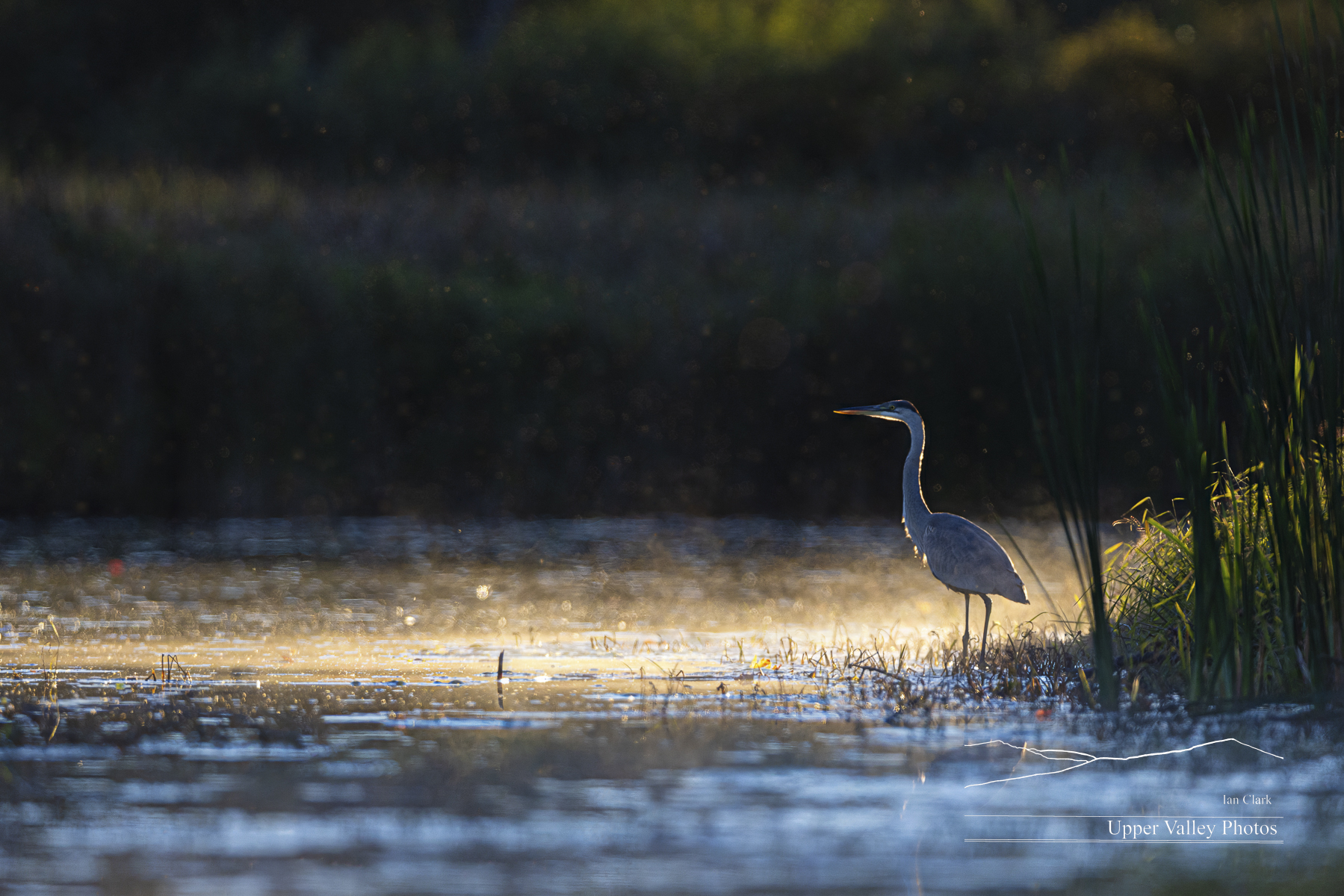
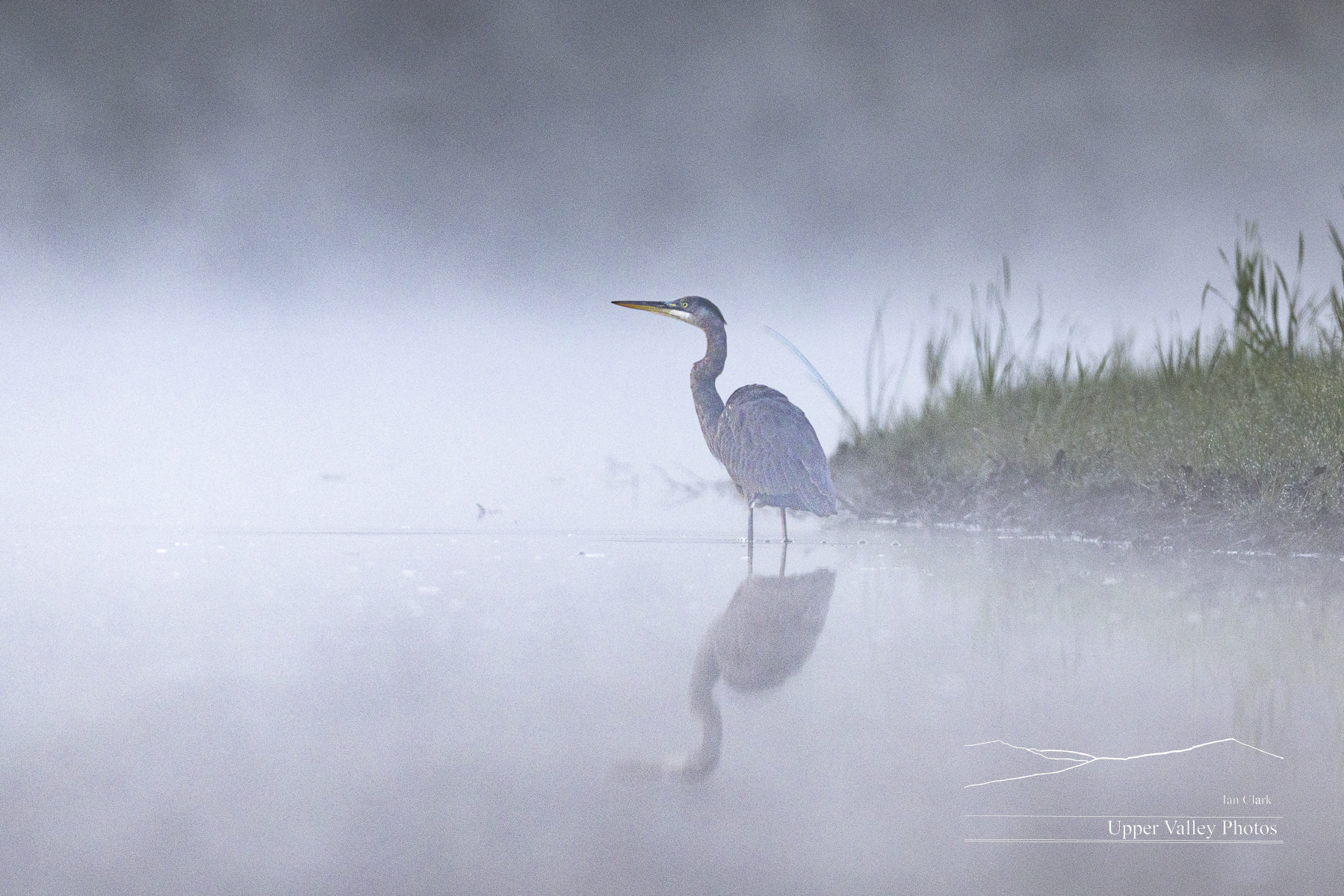
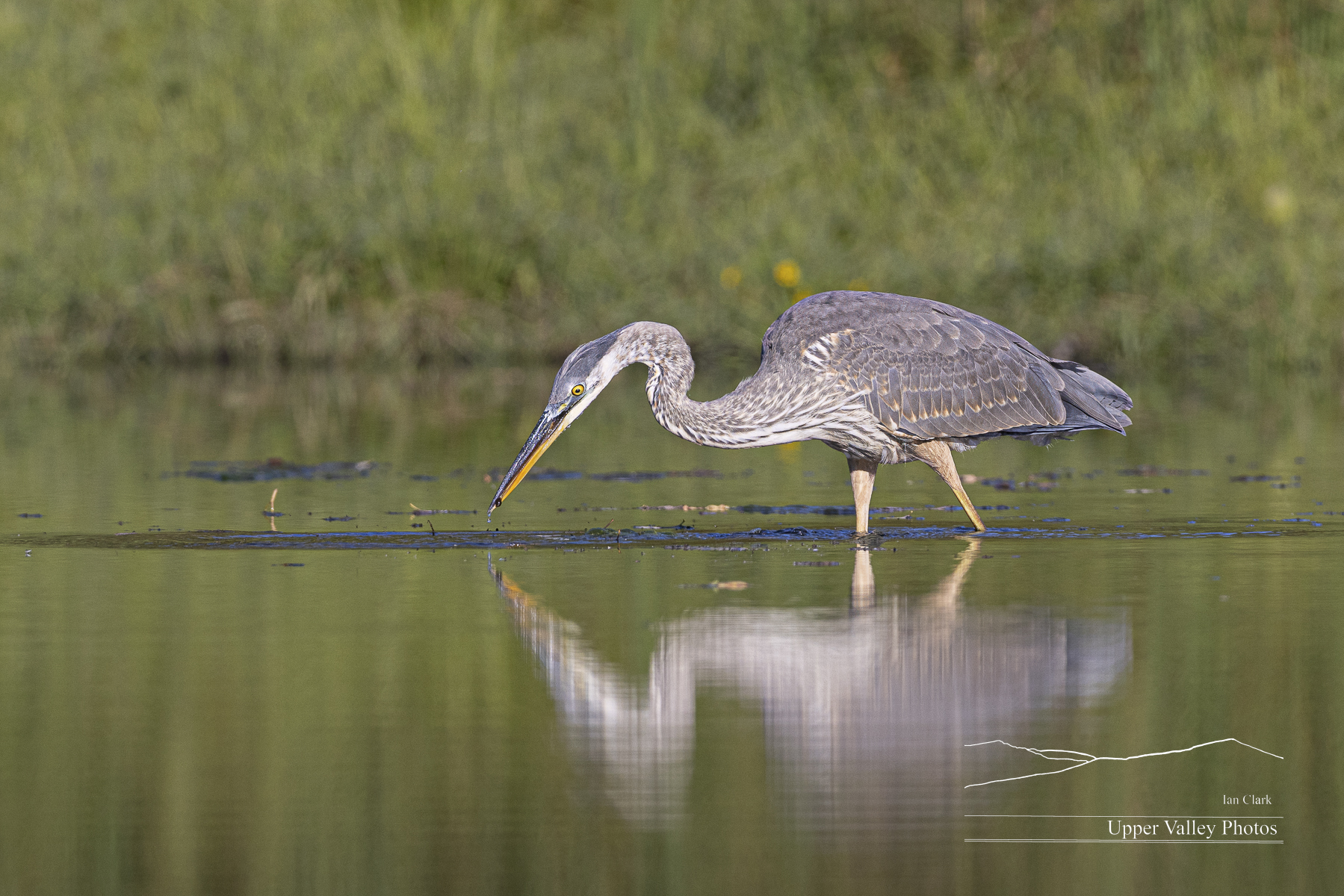
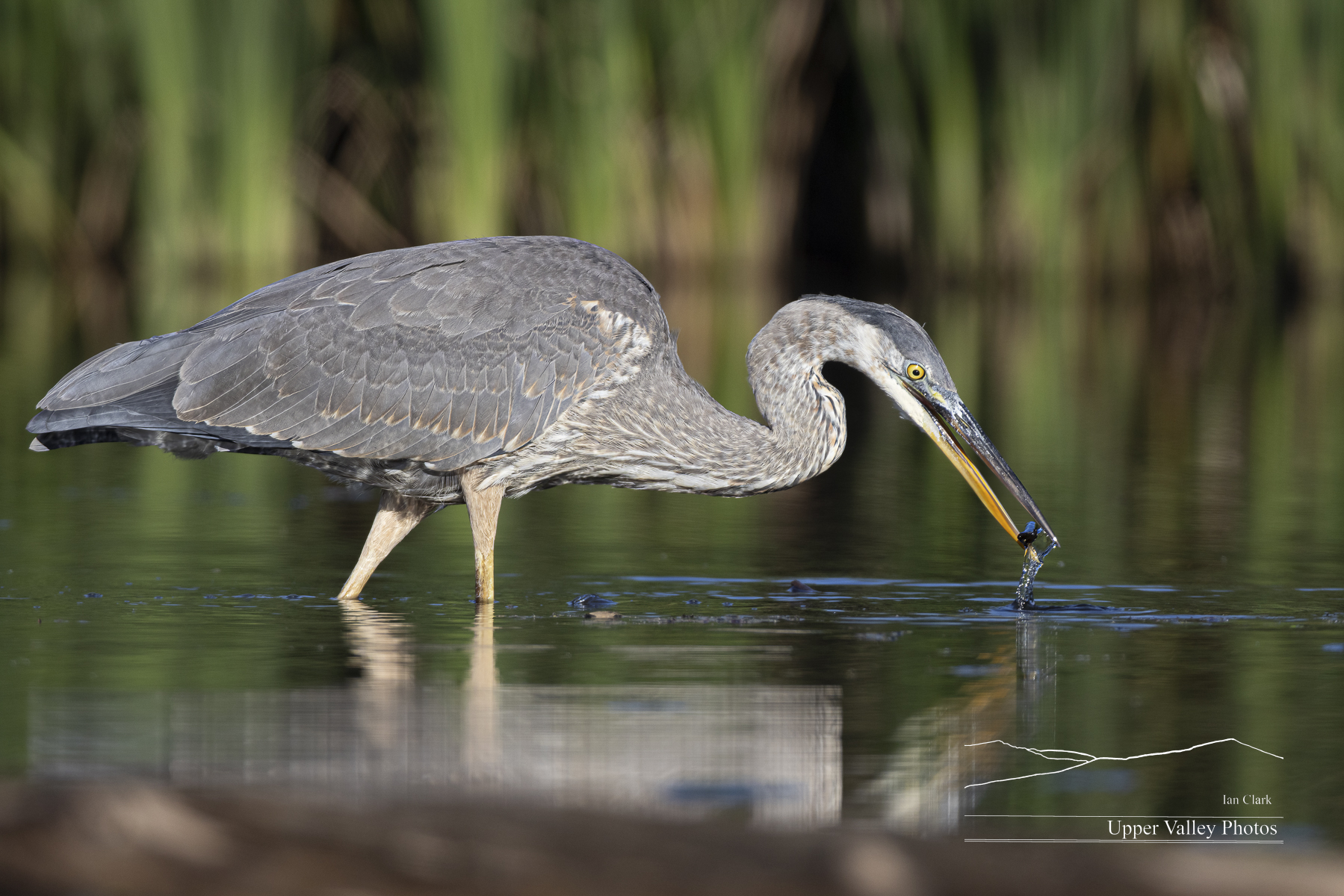
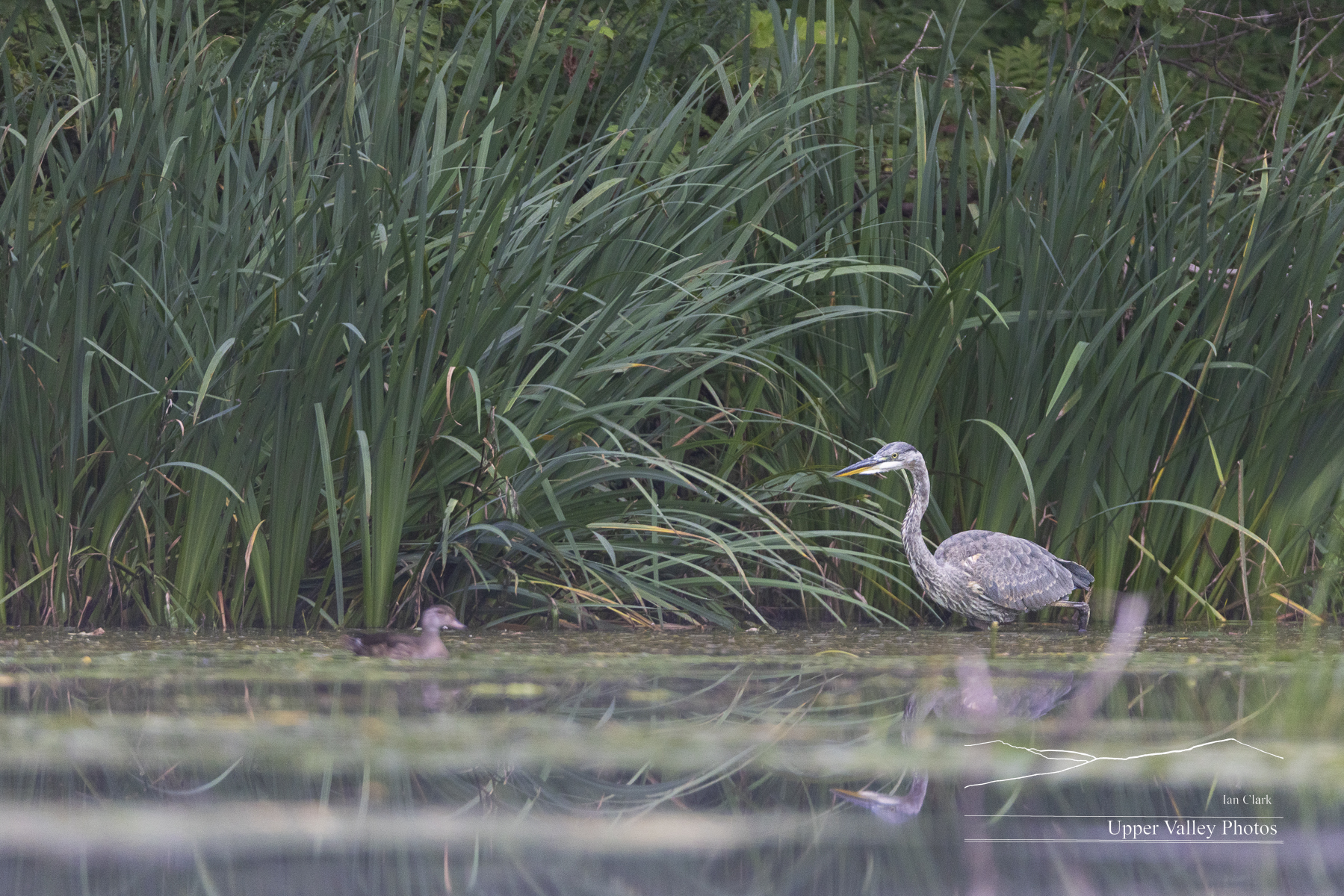
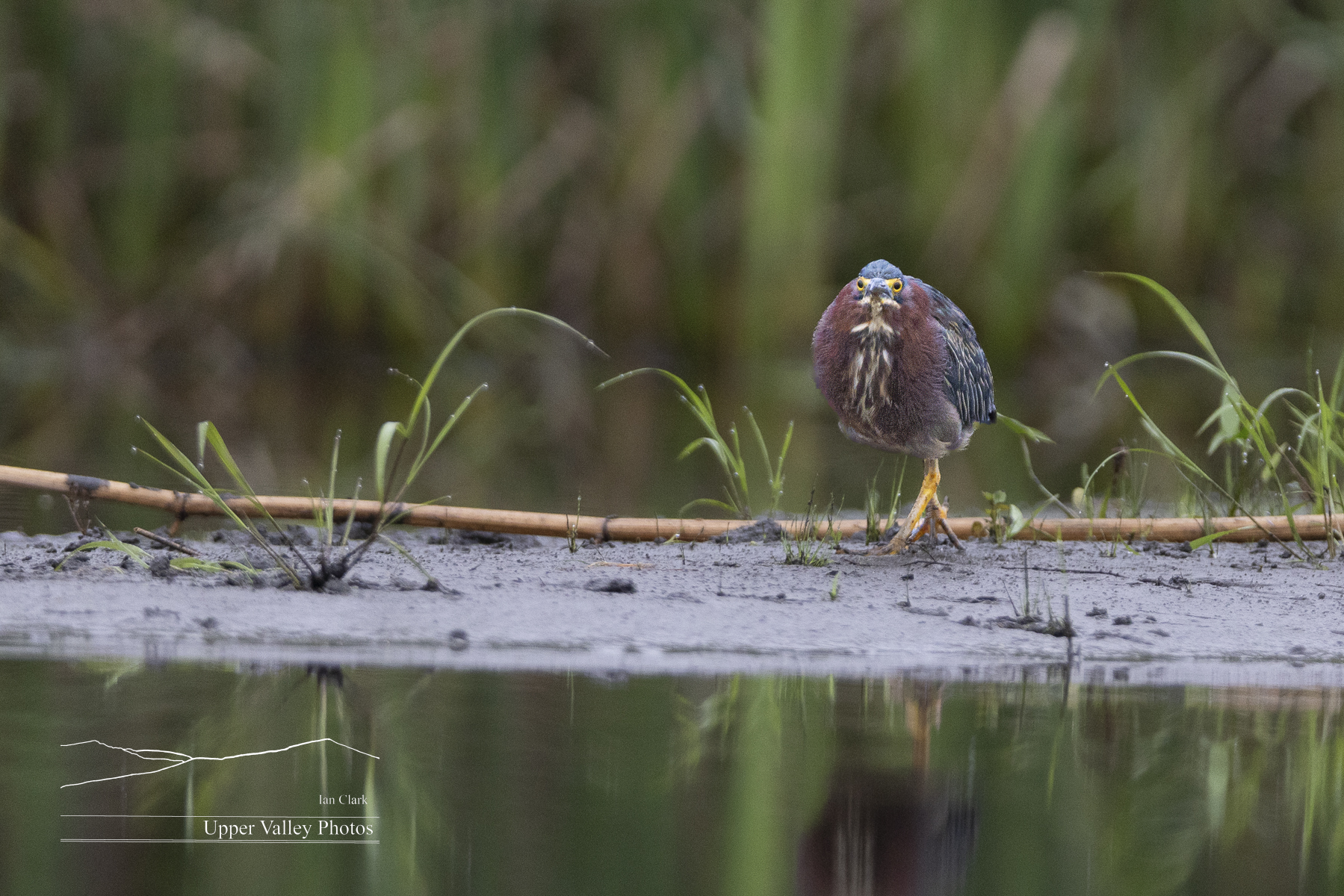
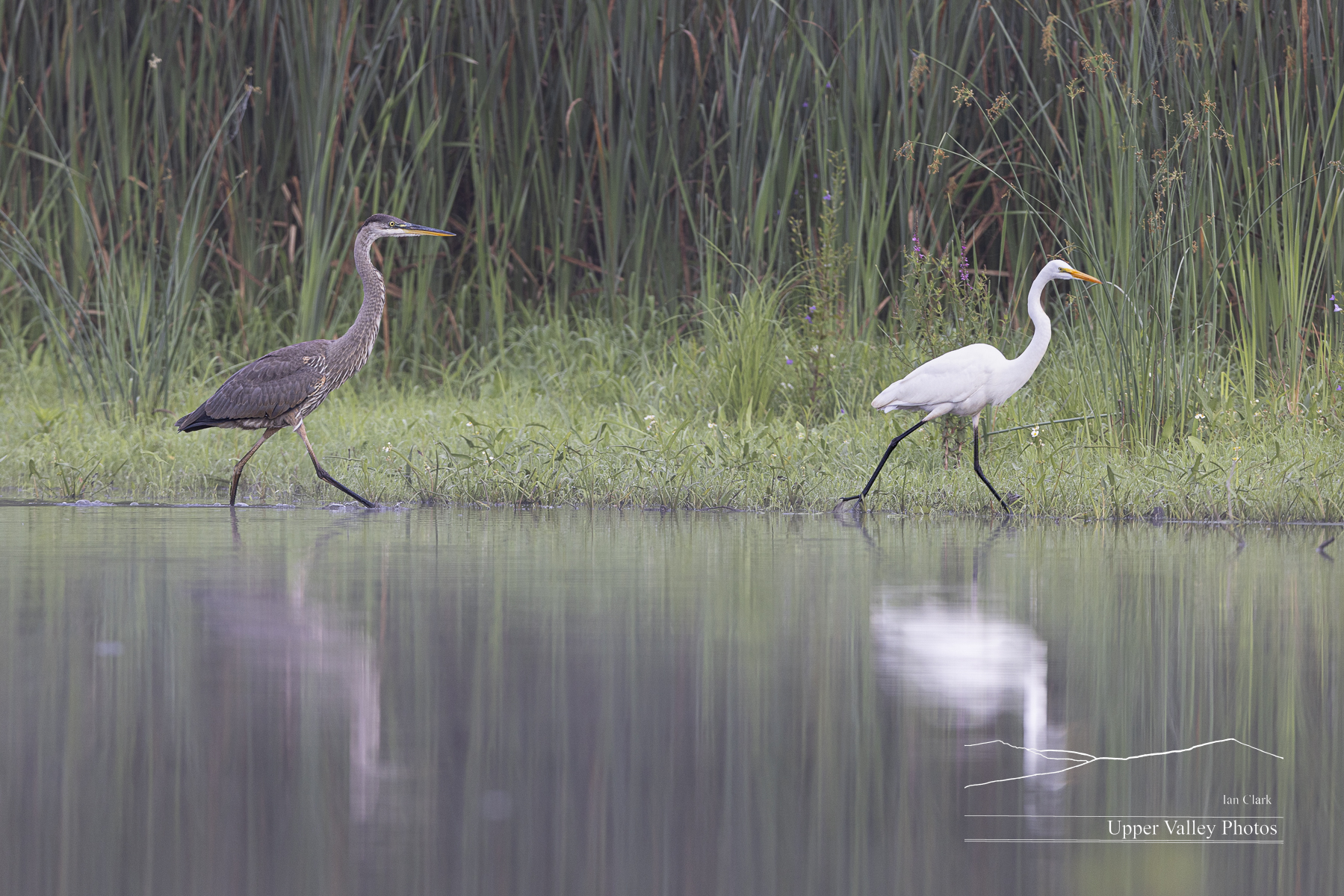
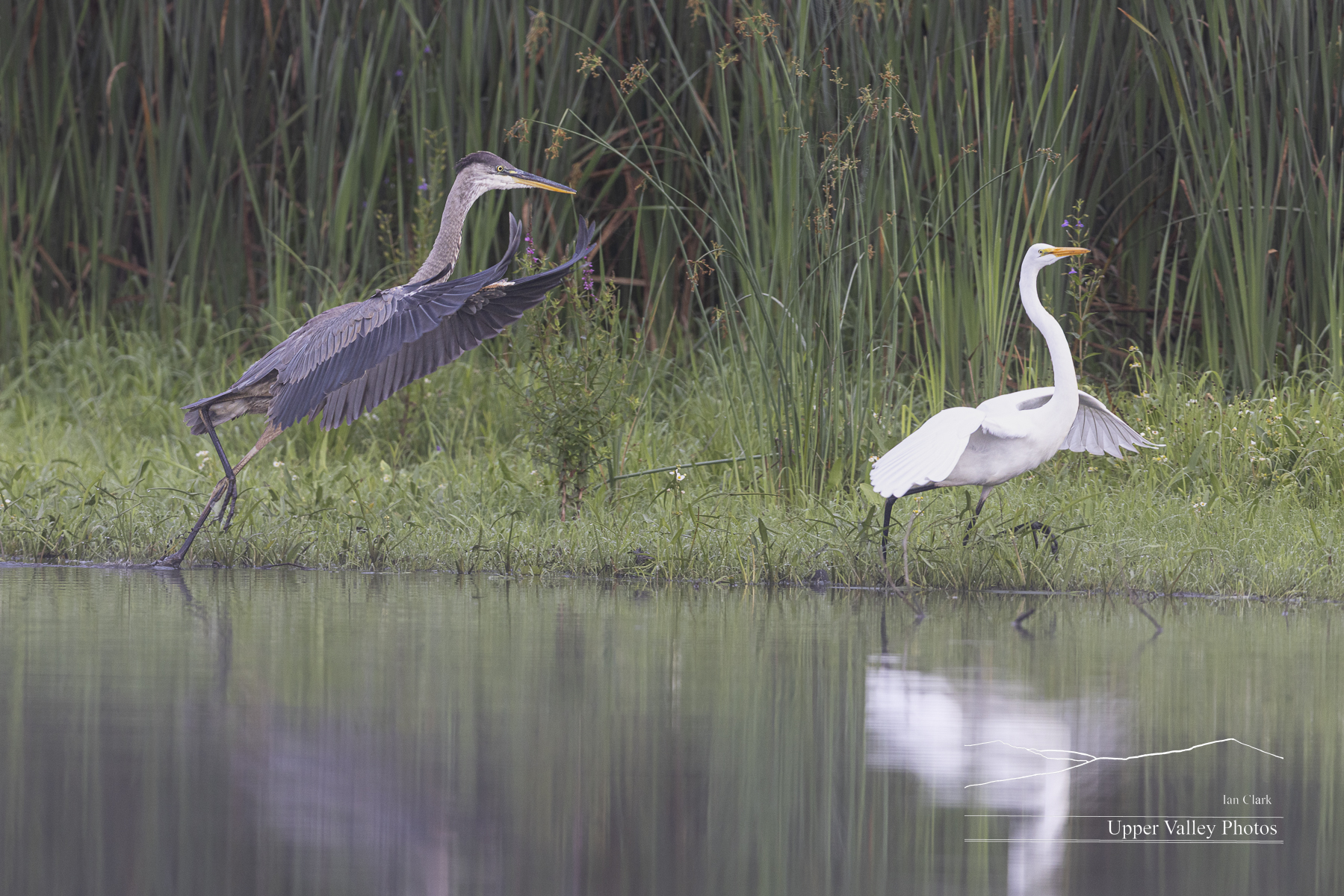
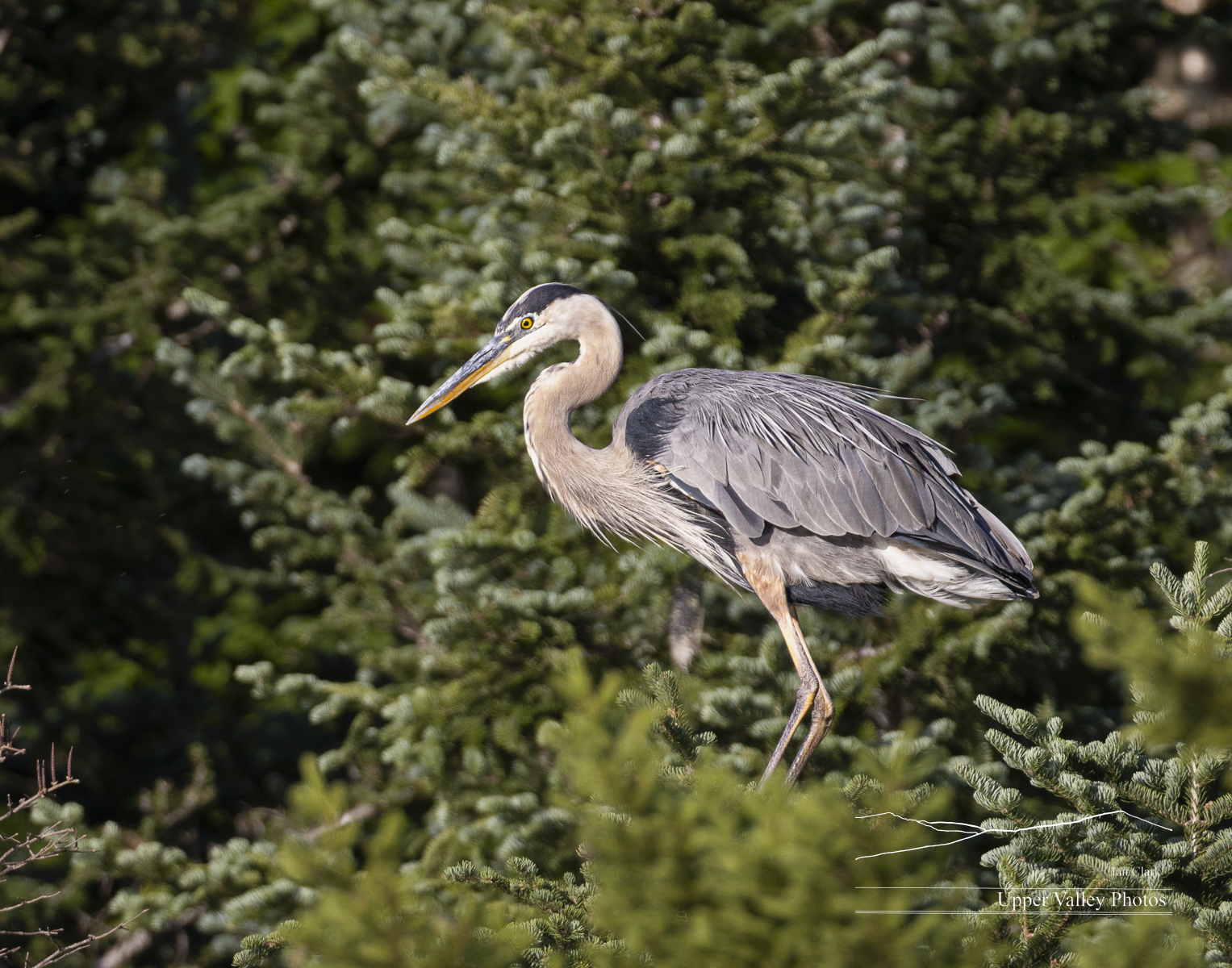
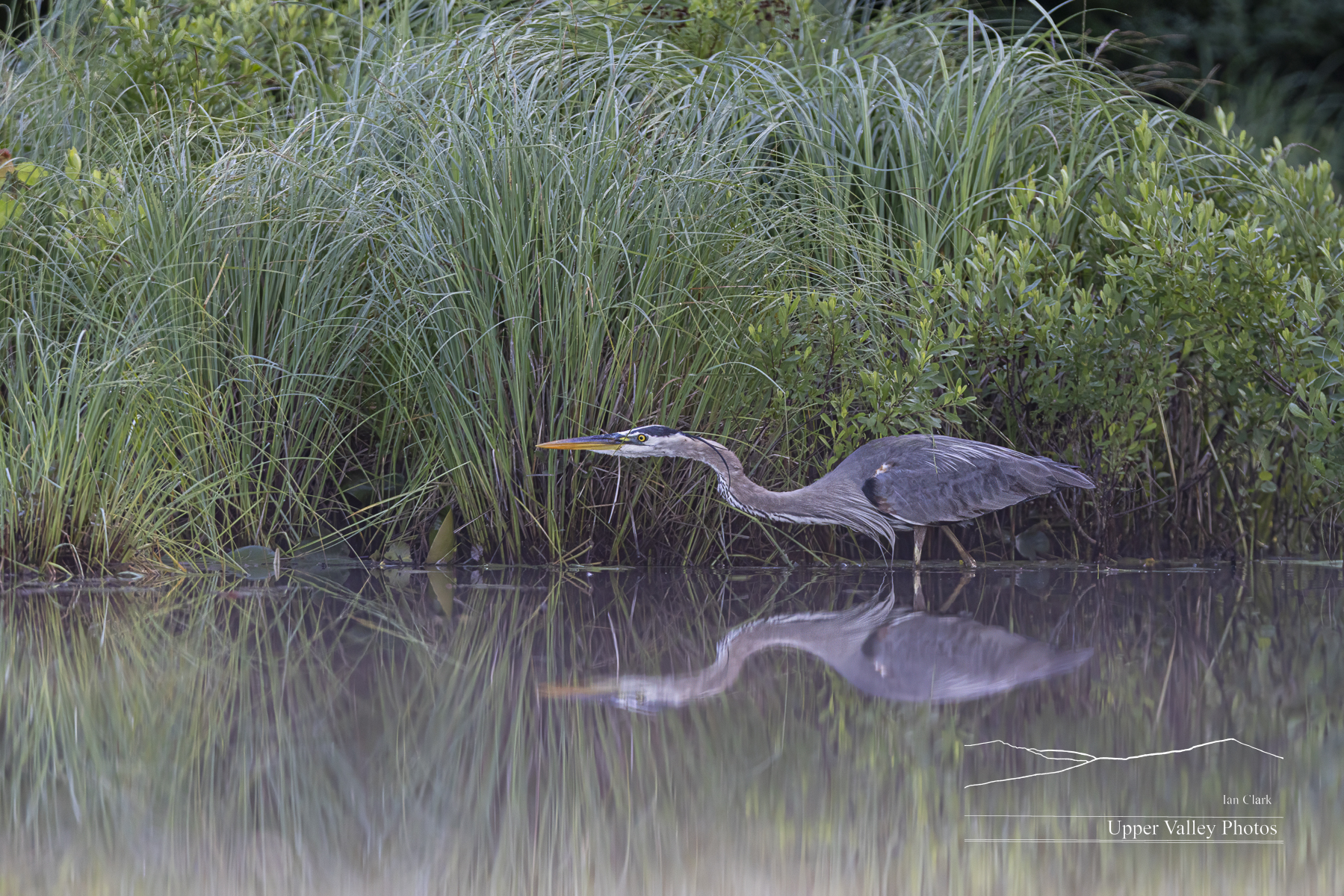
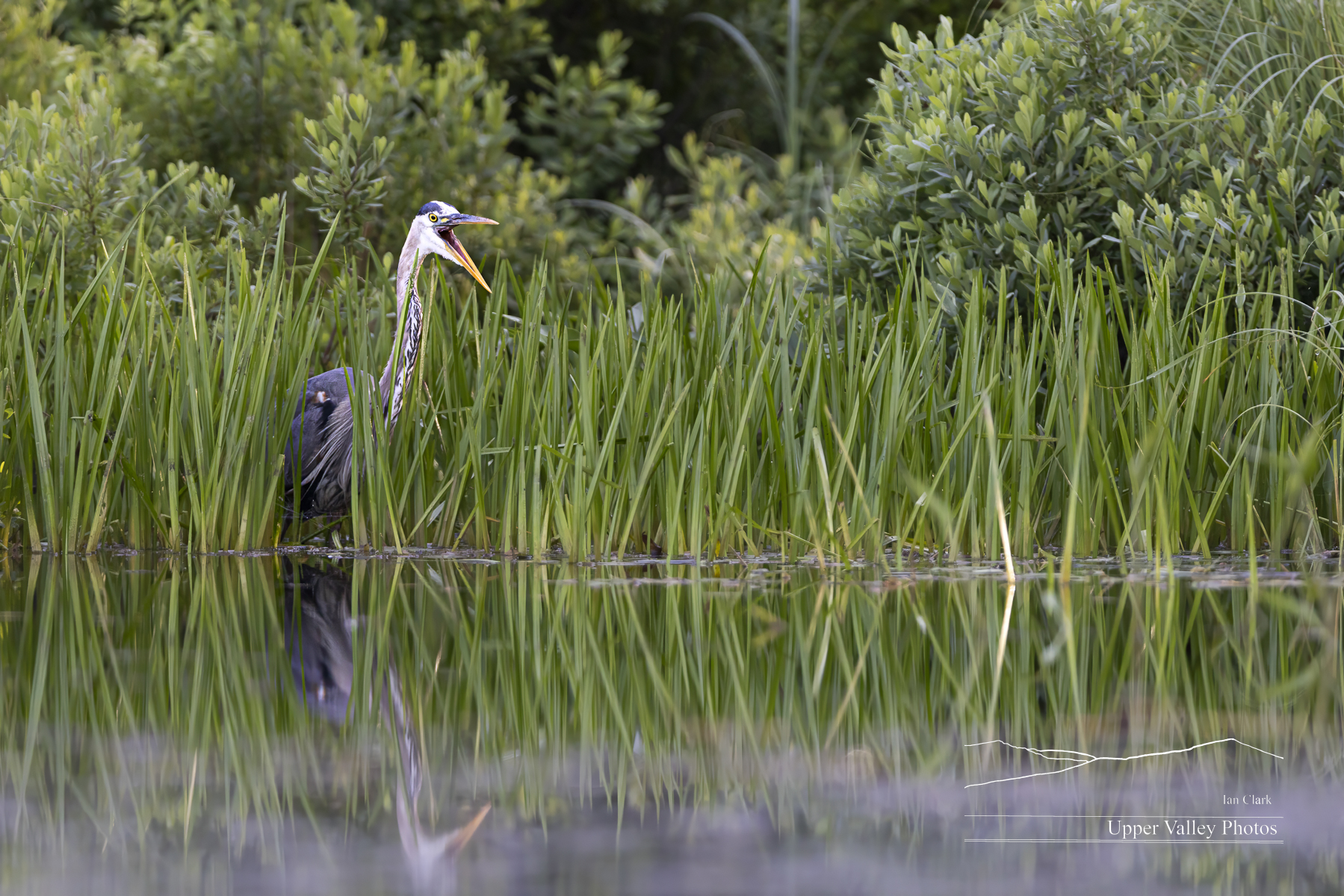
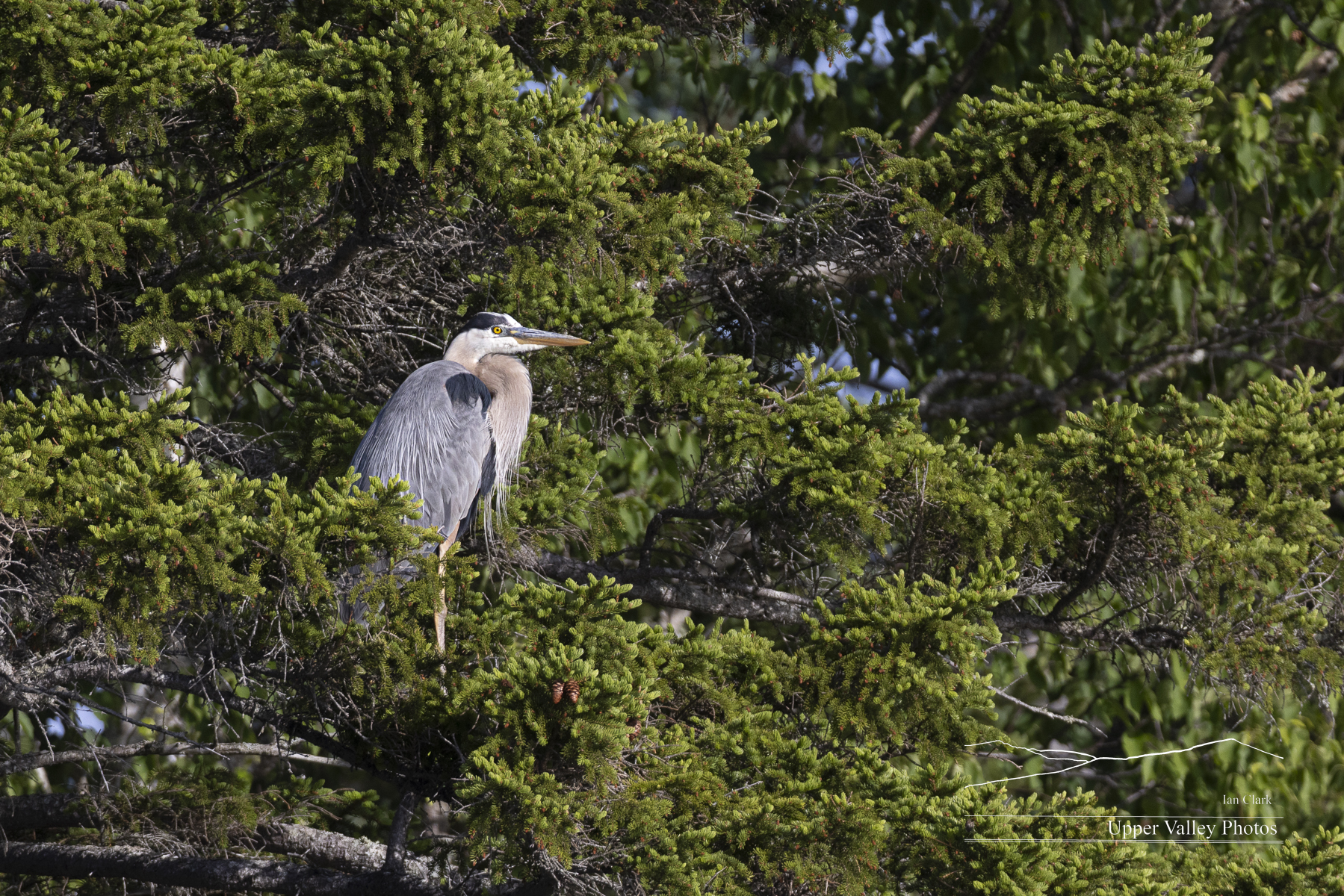
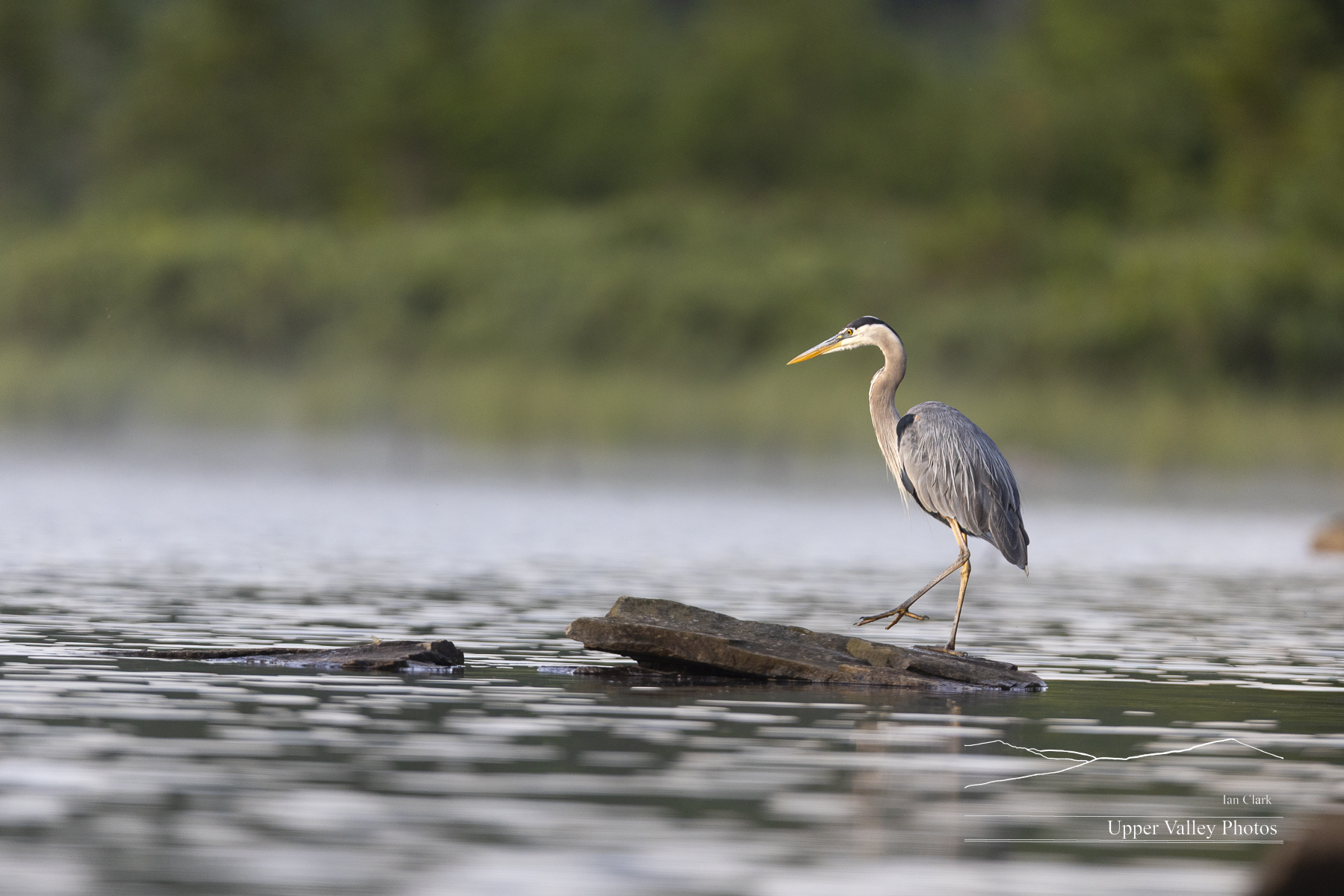
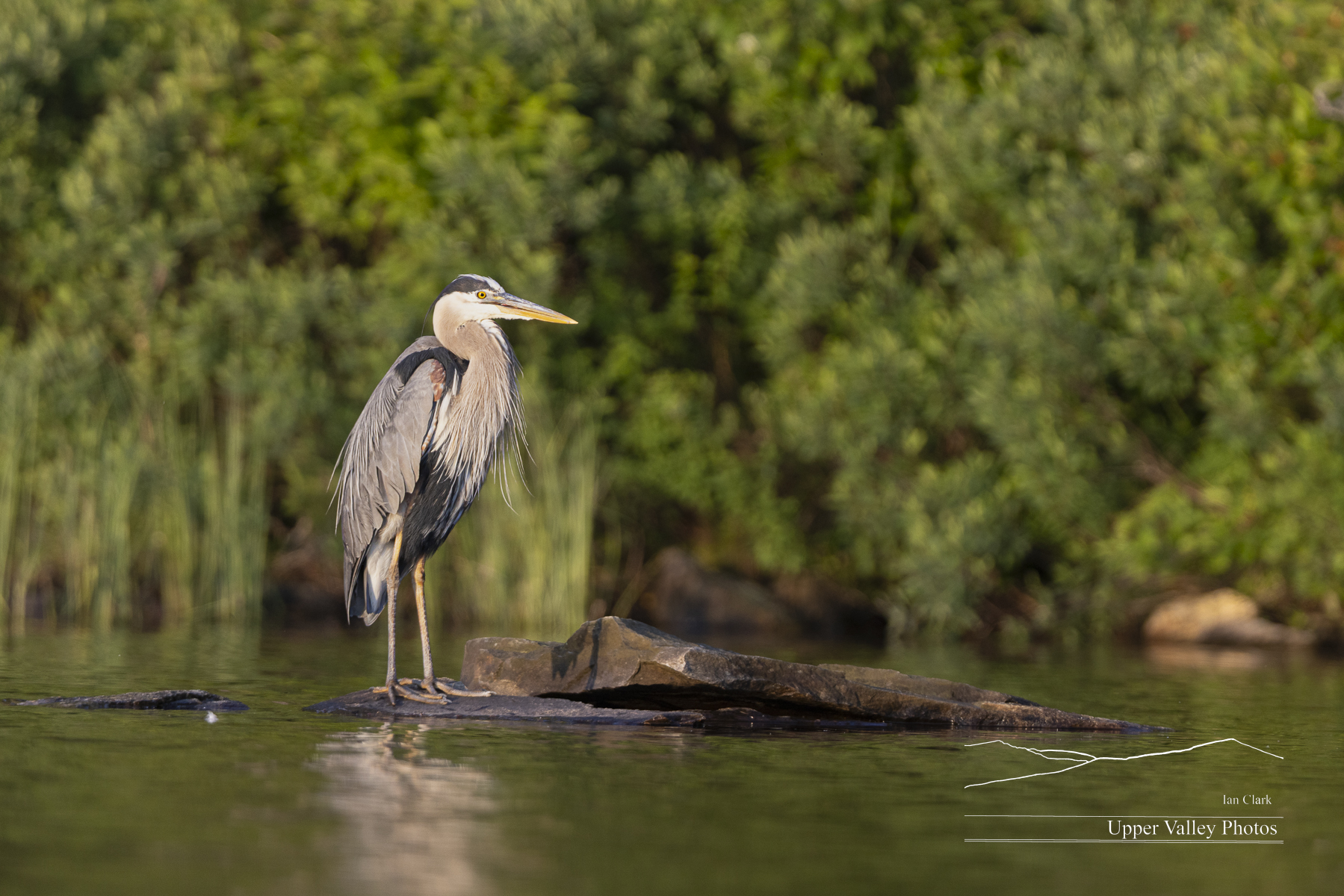
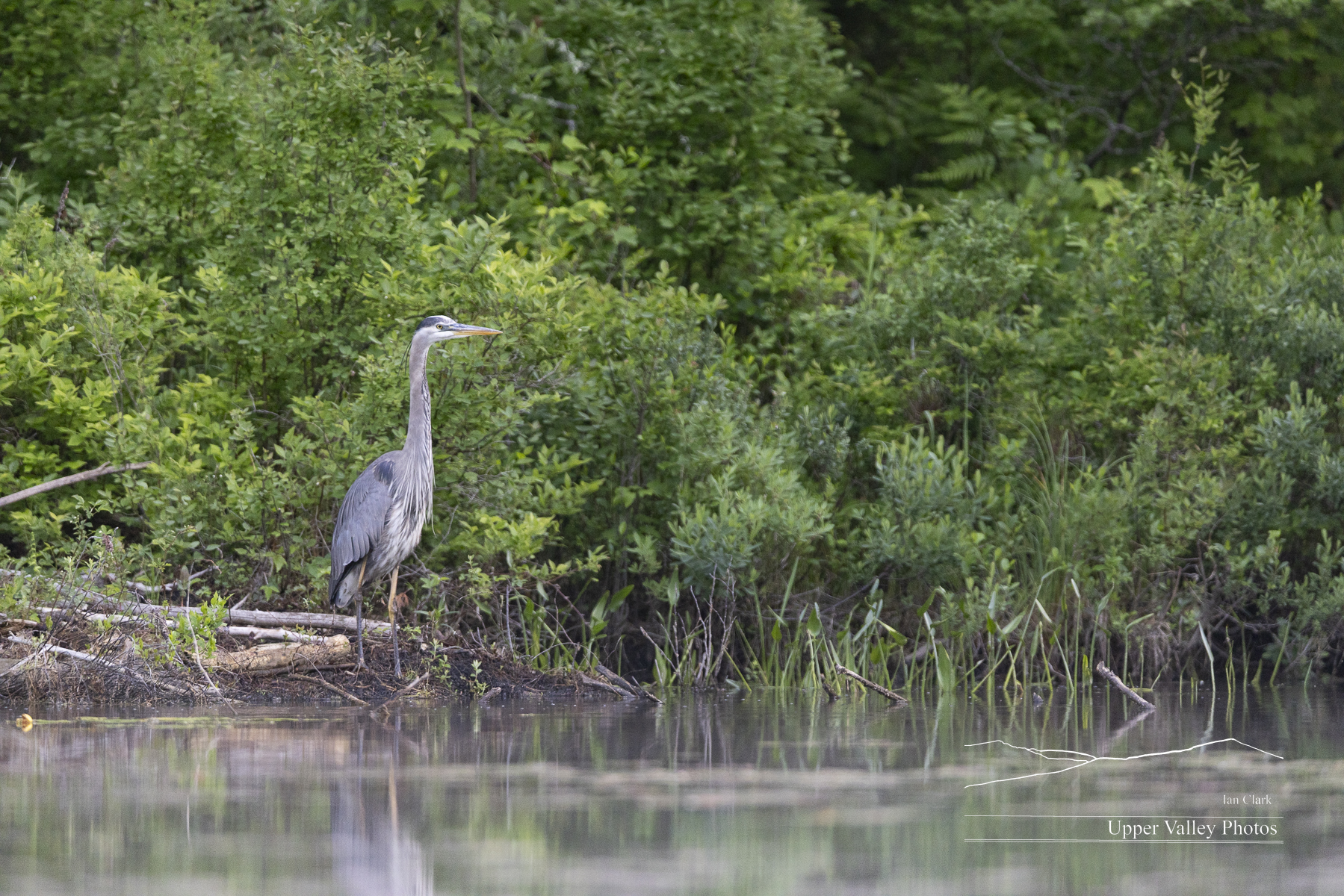
Hank stood pondside, waiting for breakfast to appear.

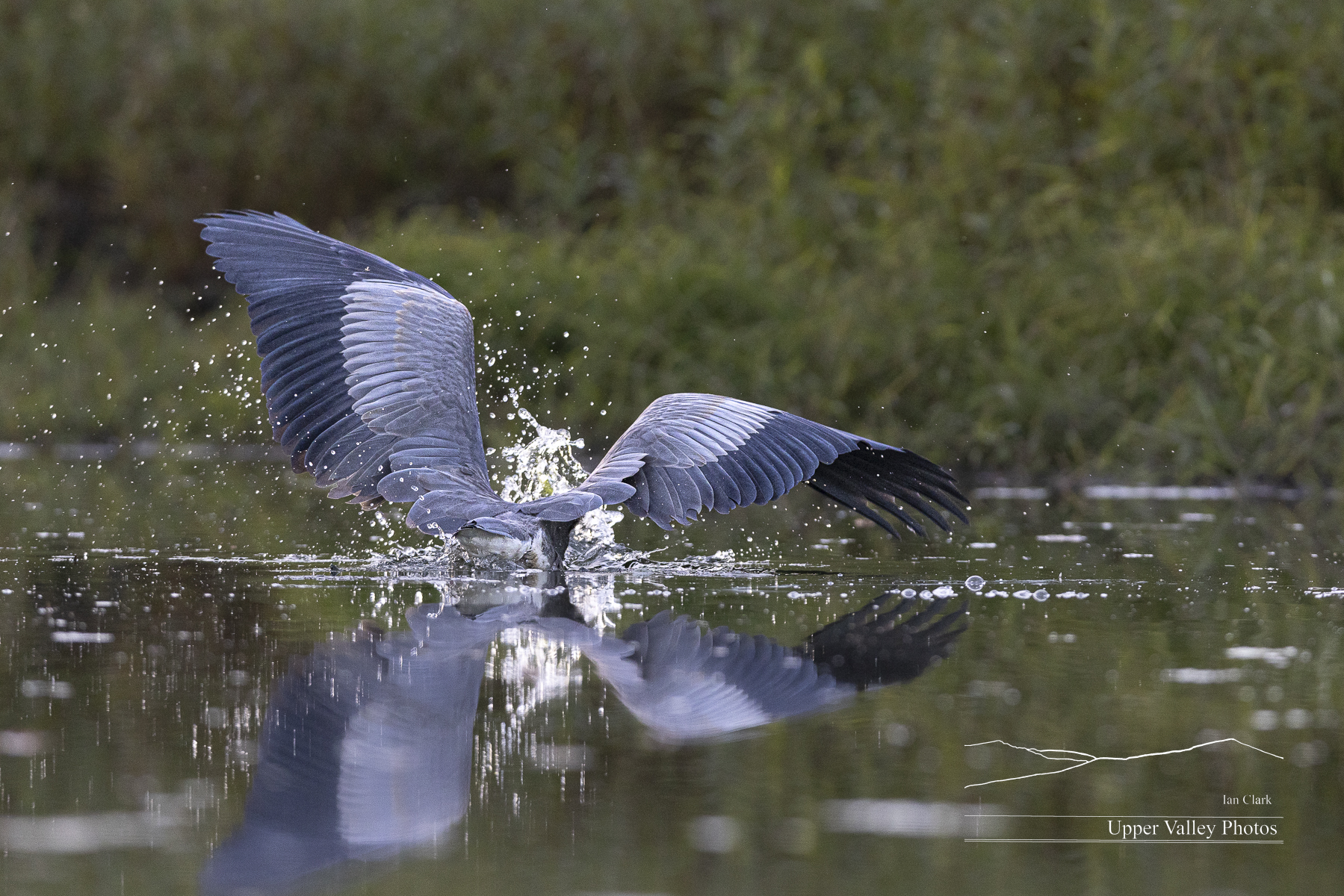
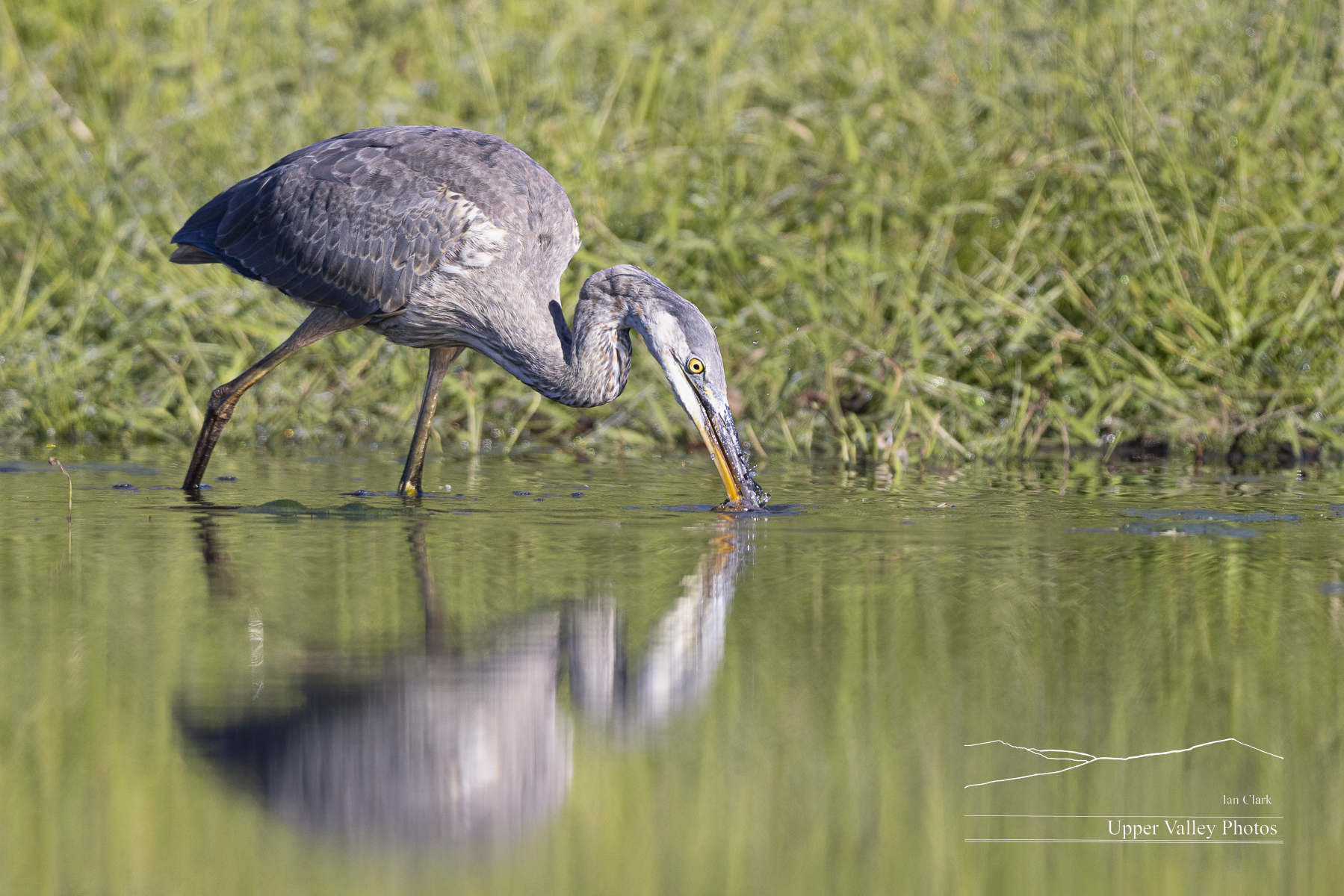
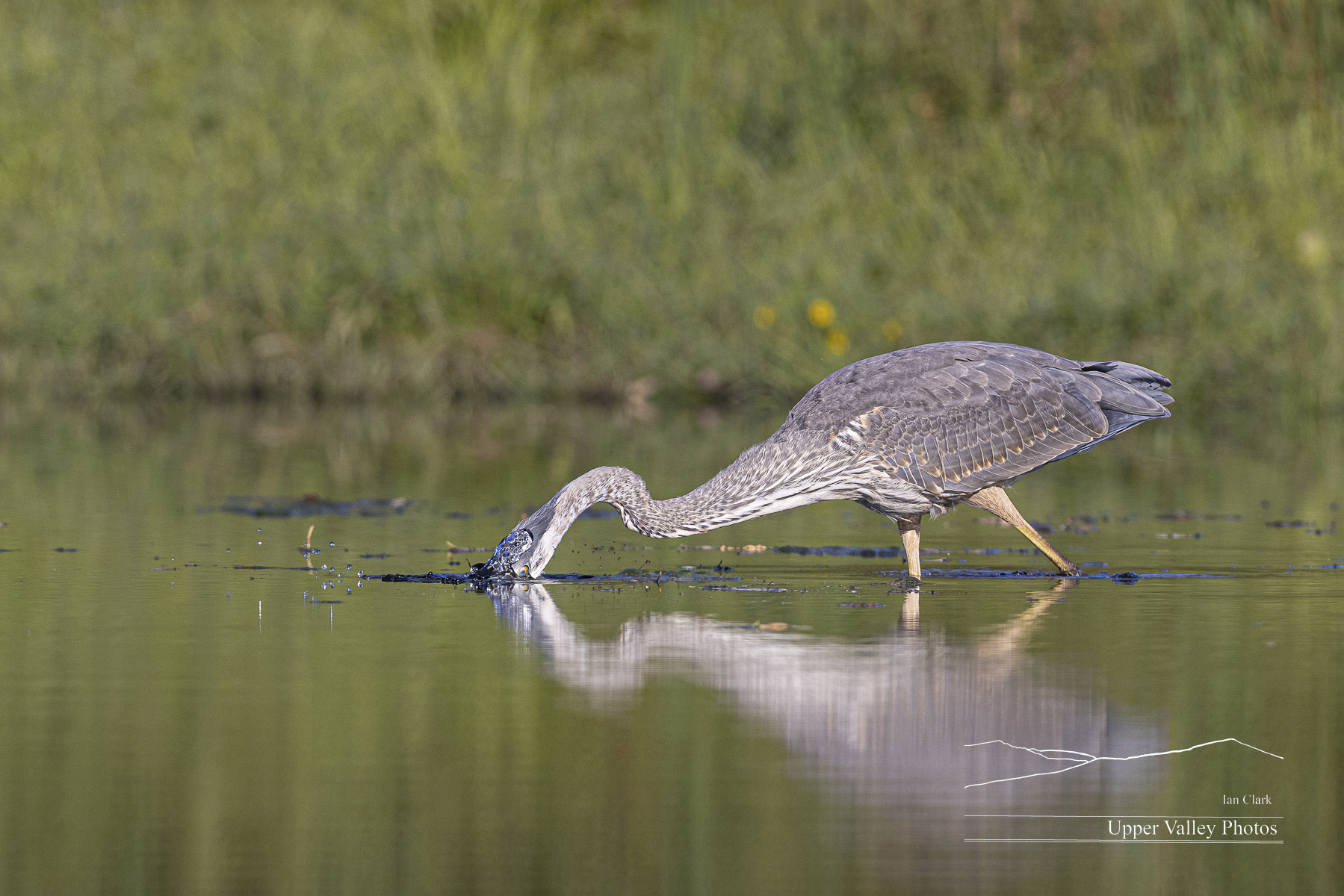
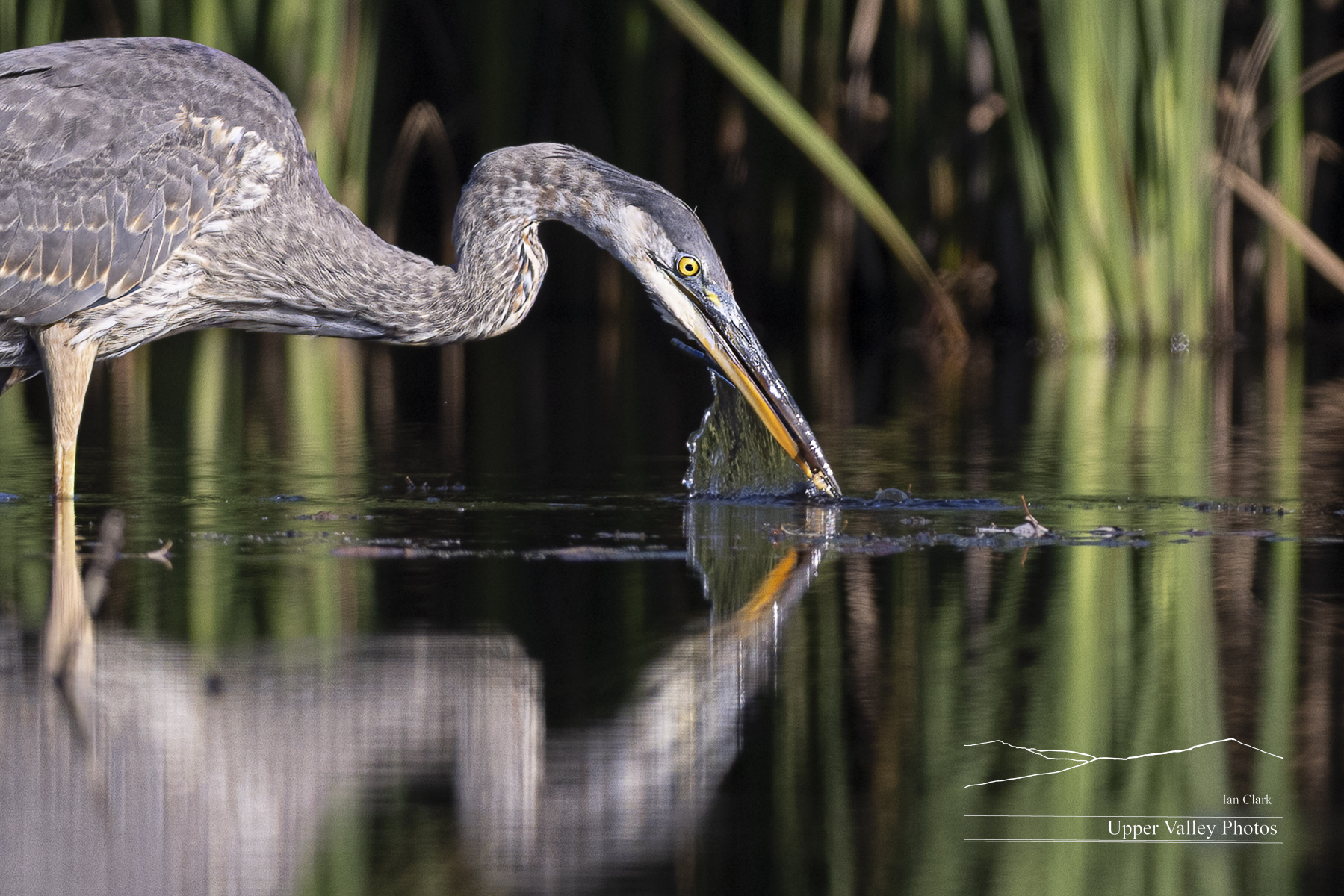
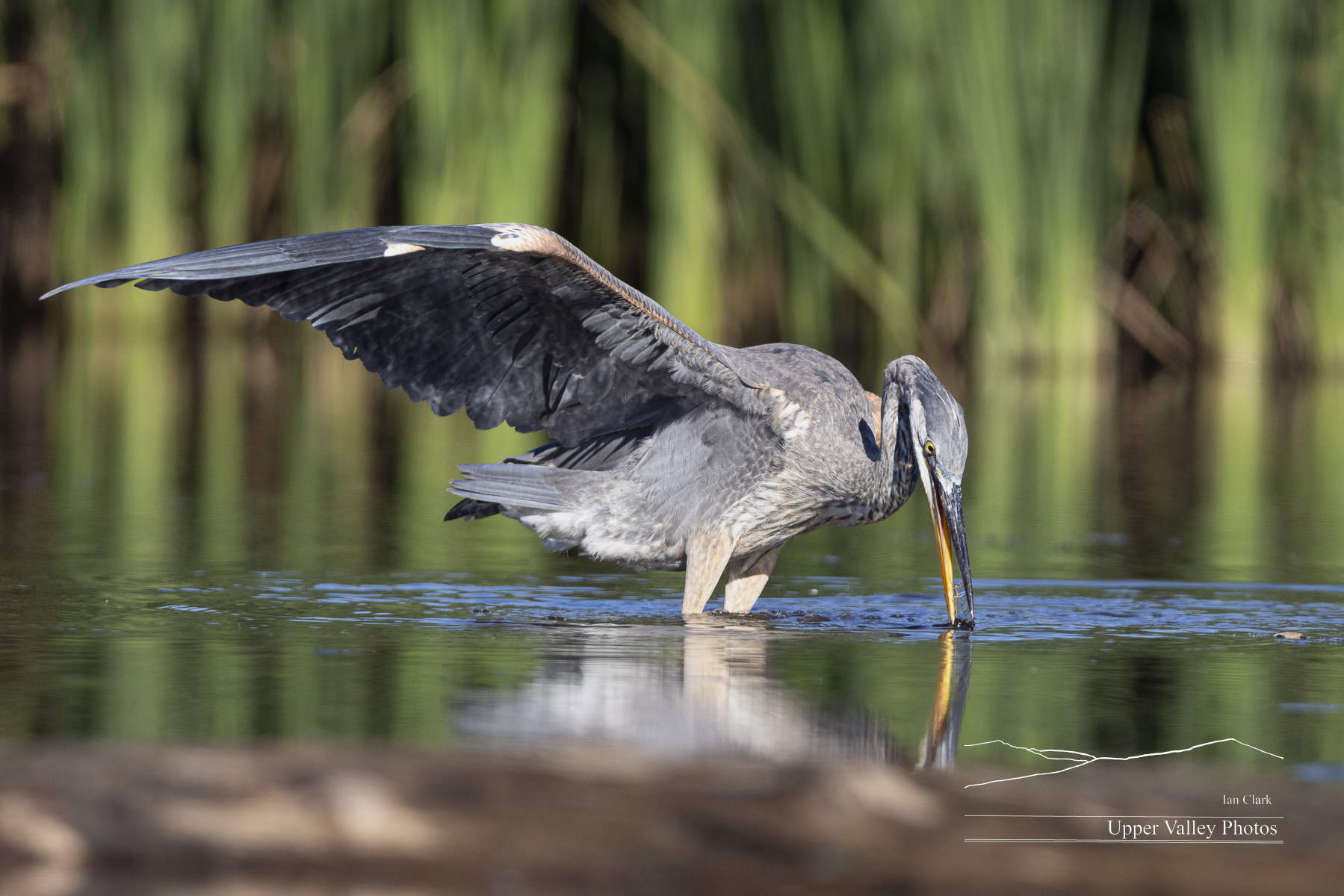
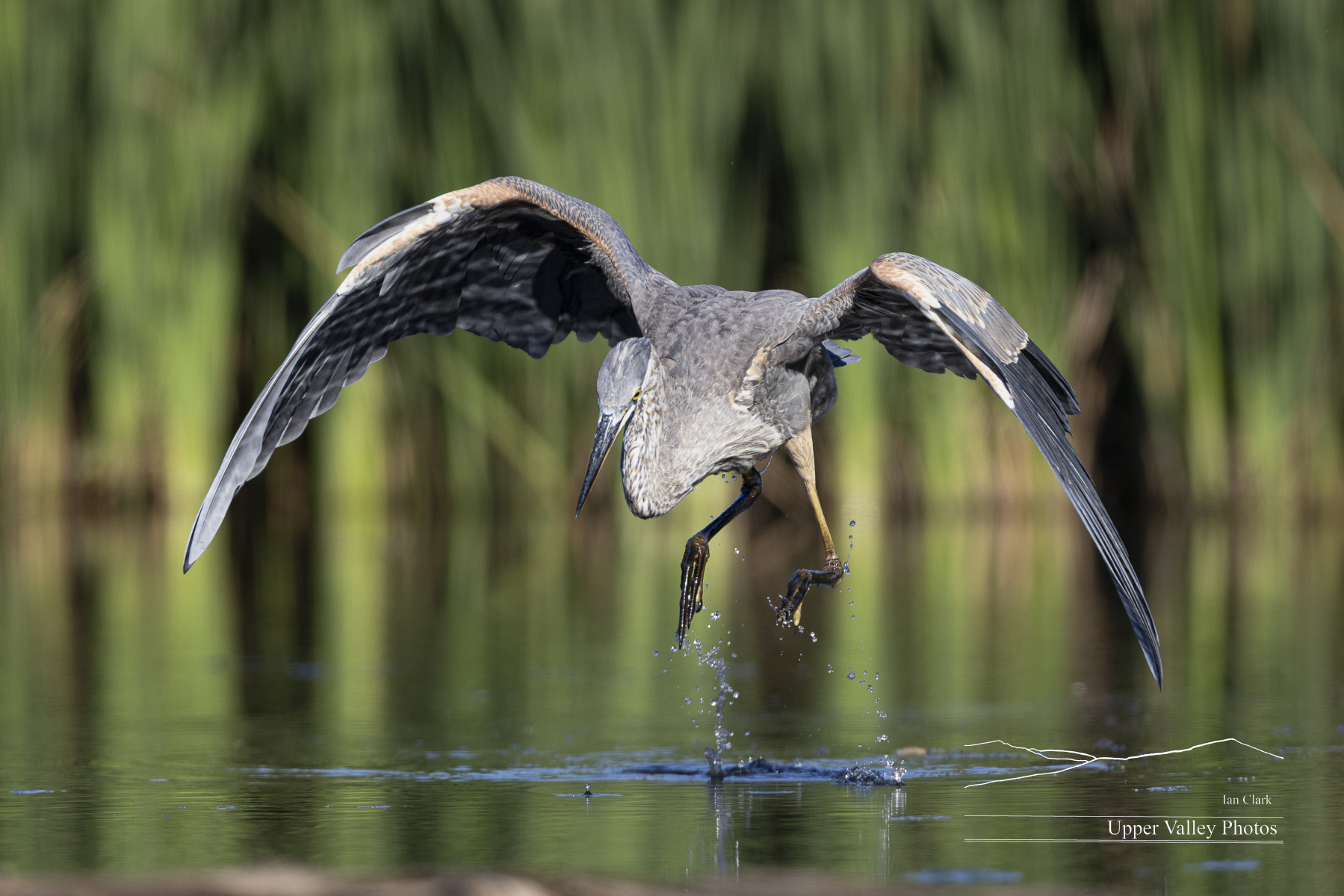
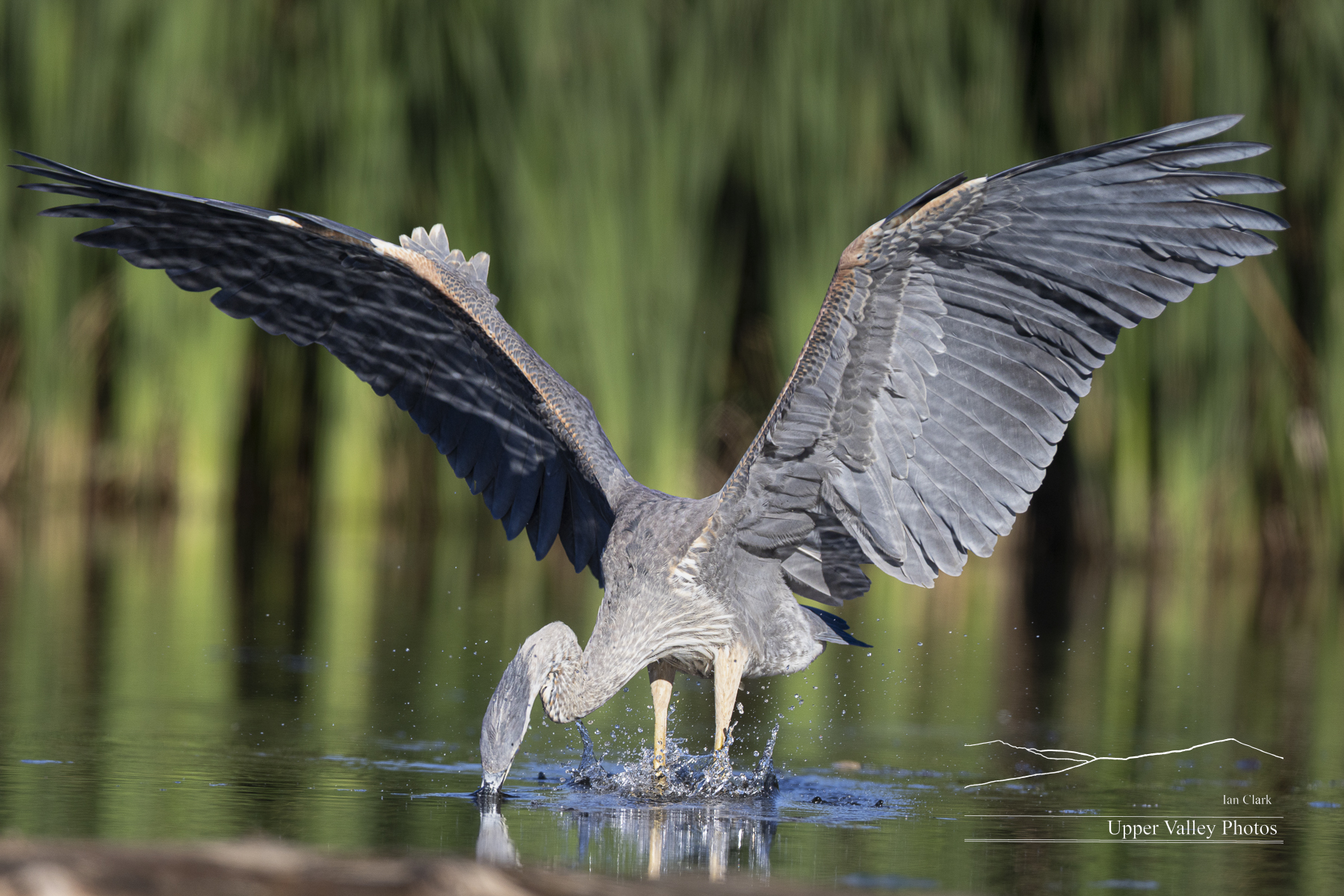
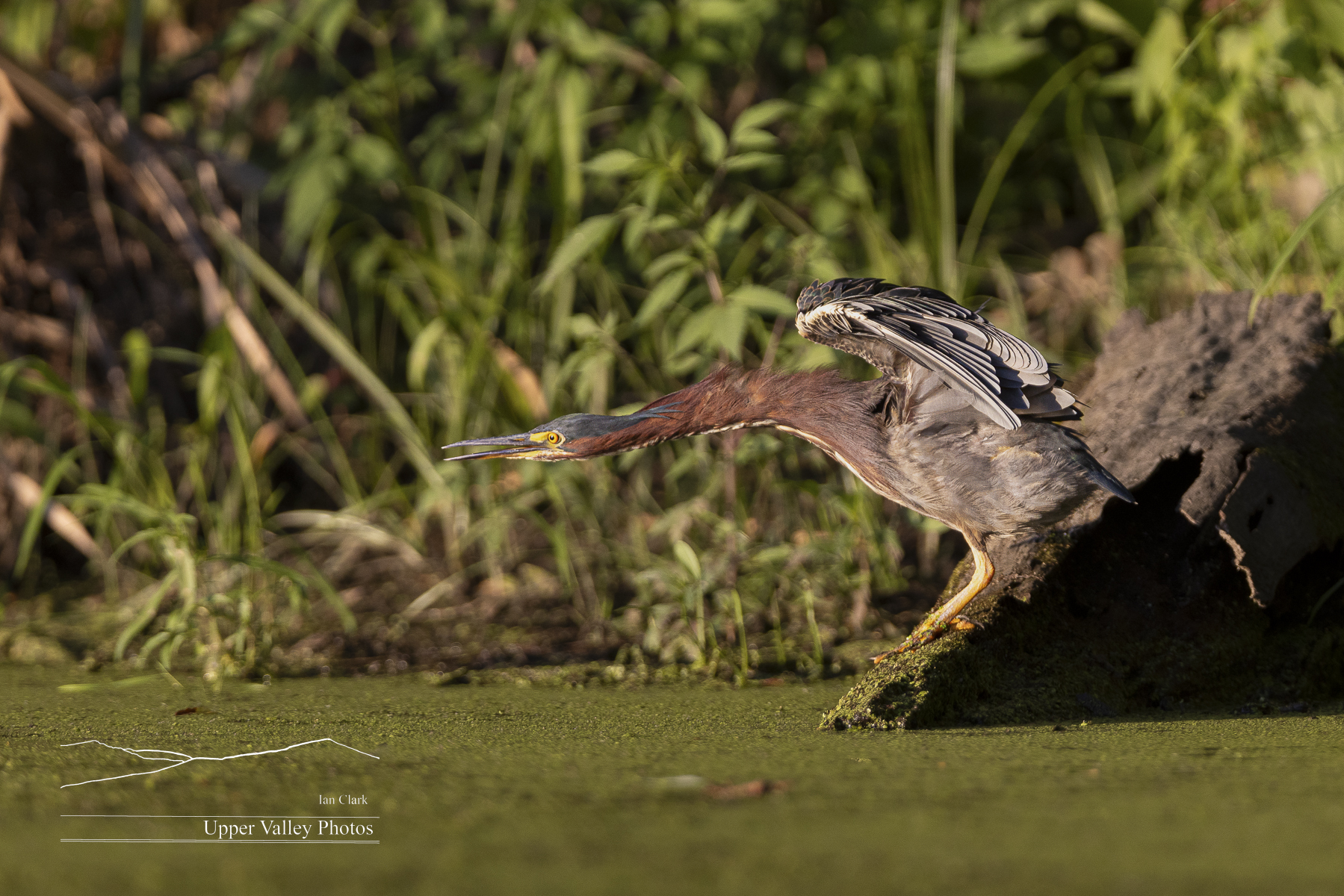
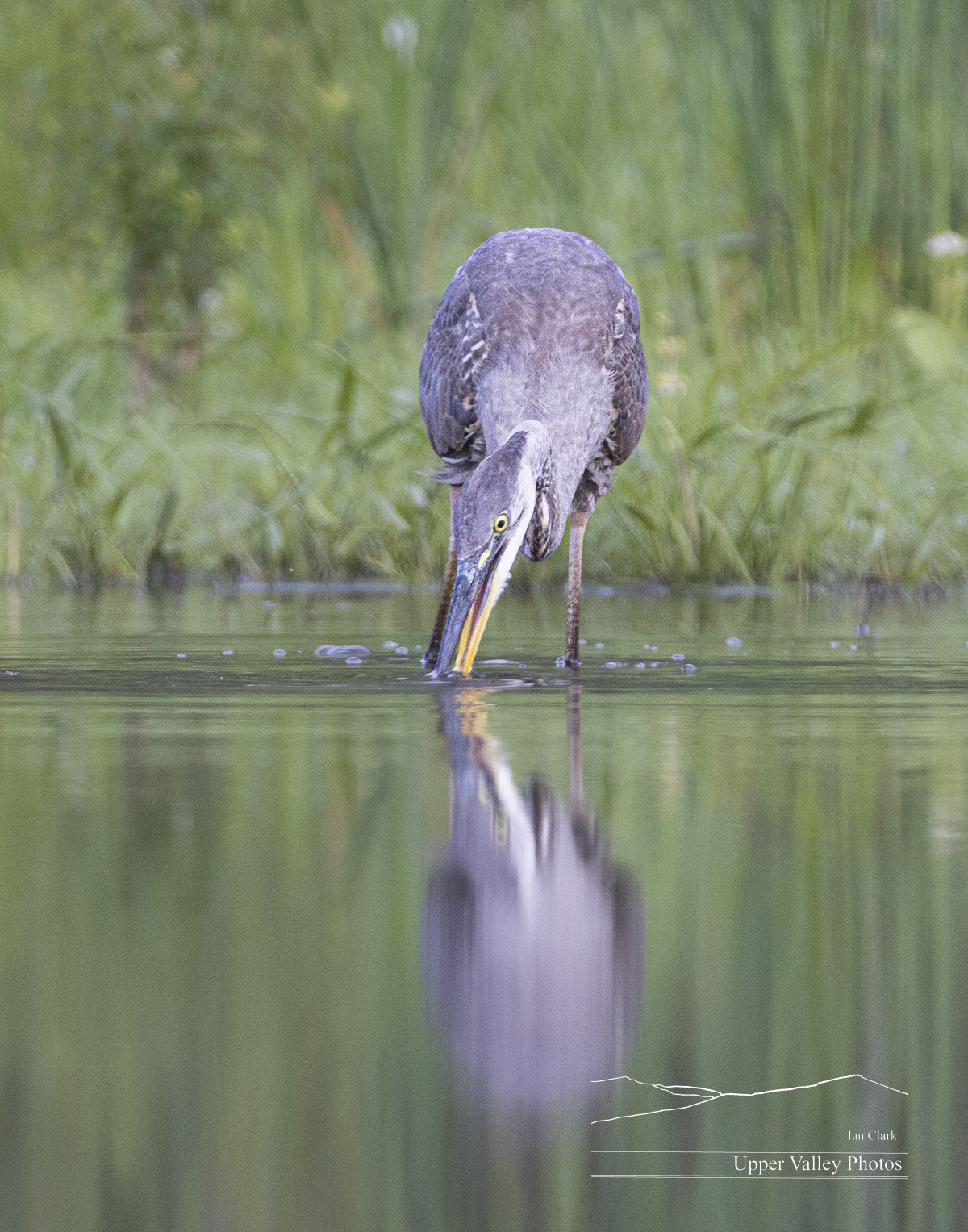
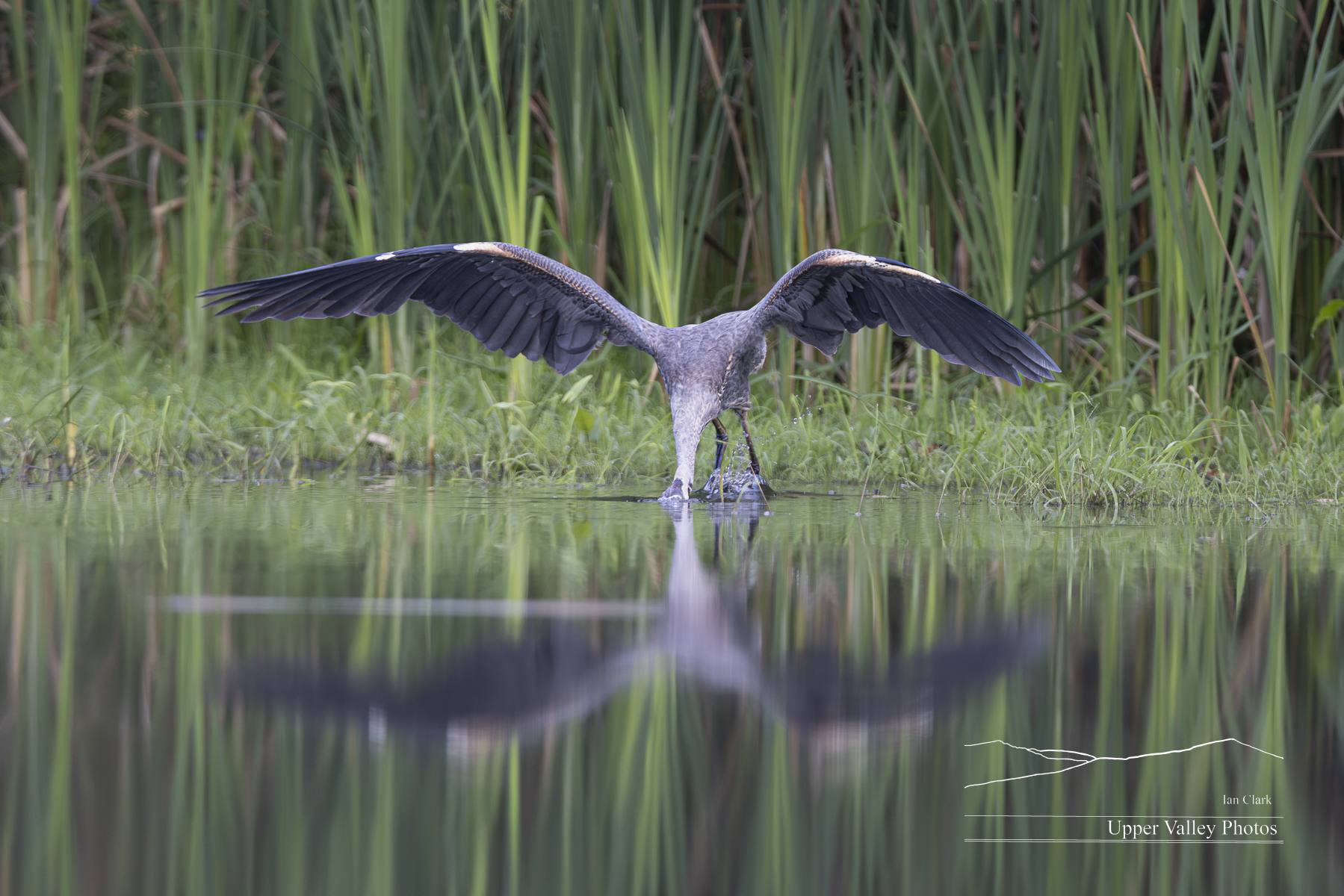
Oh! What’s this? Could this be breakfast over here? Hank crept into the water and dove at something behind the weeds.

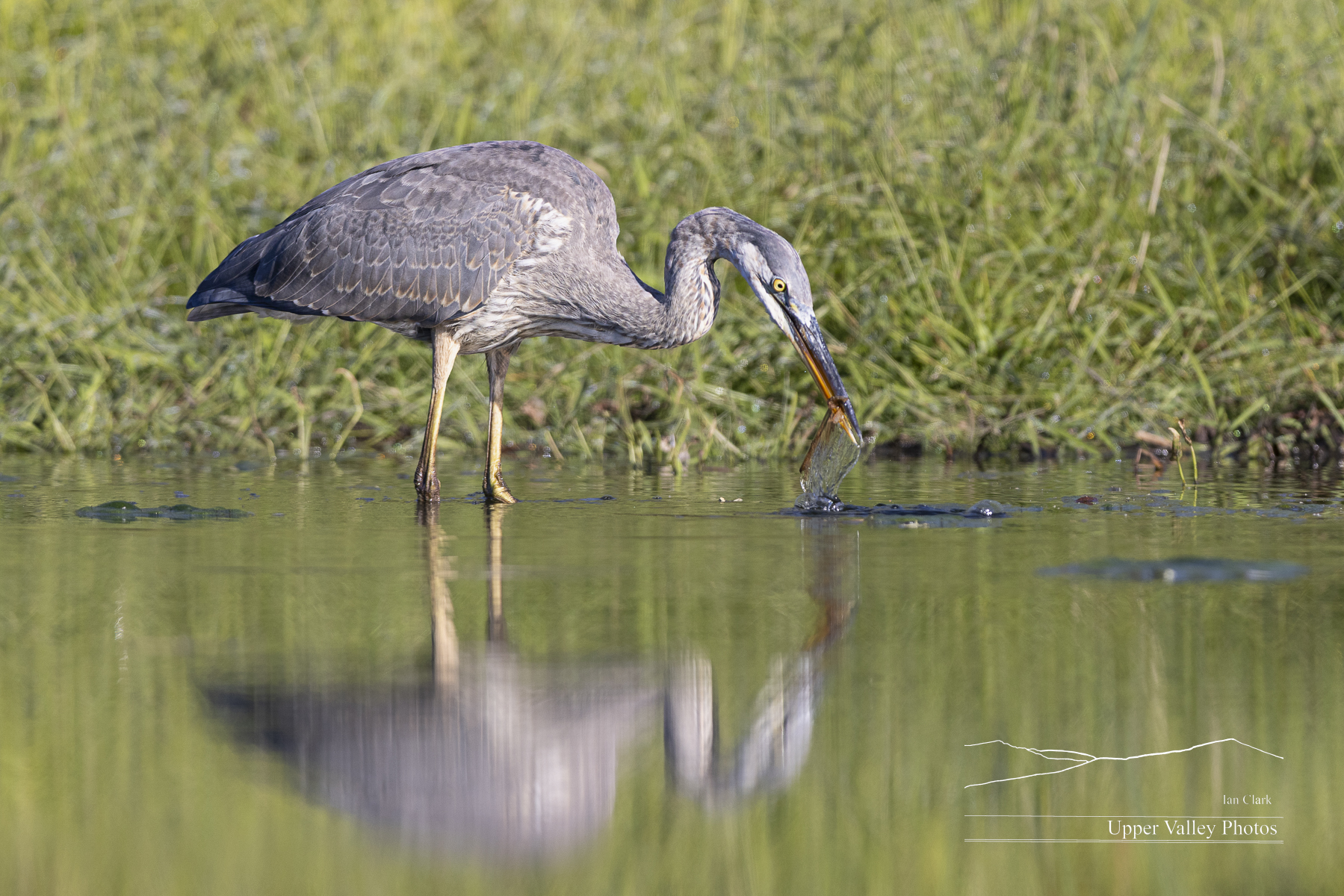
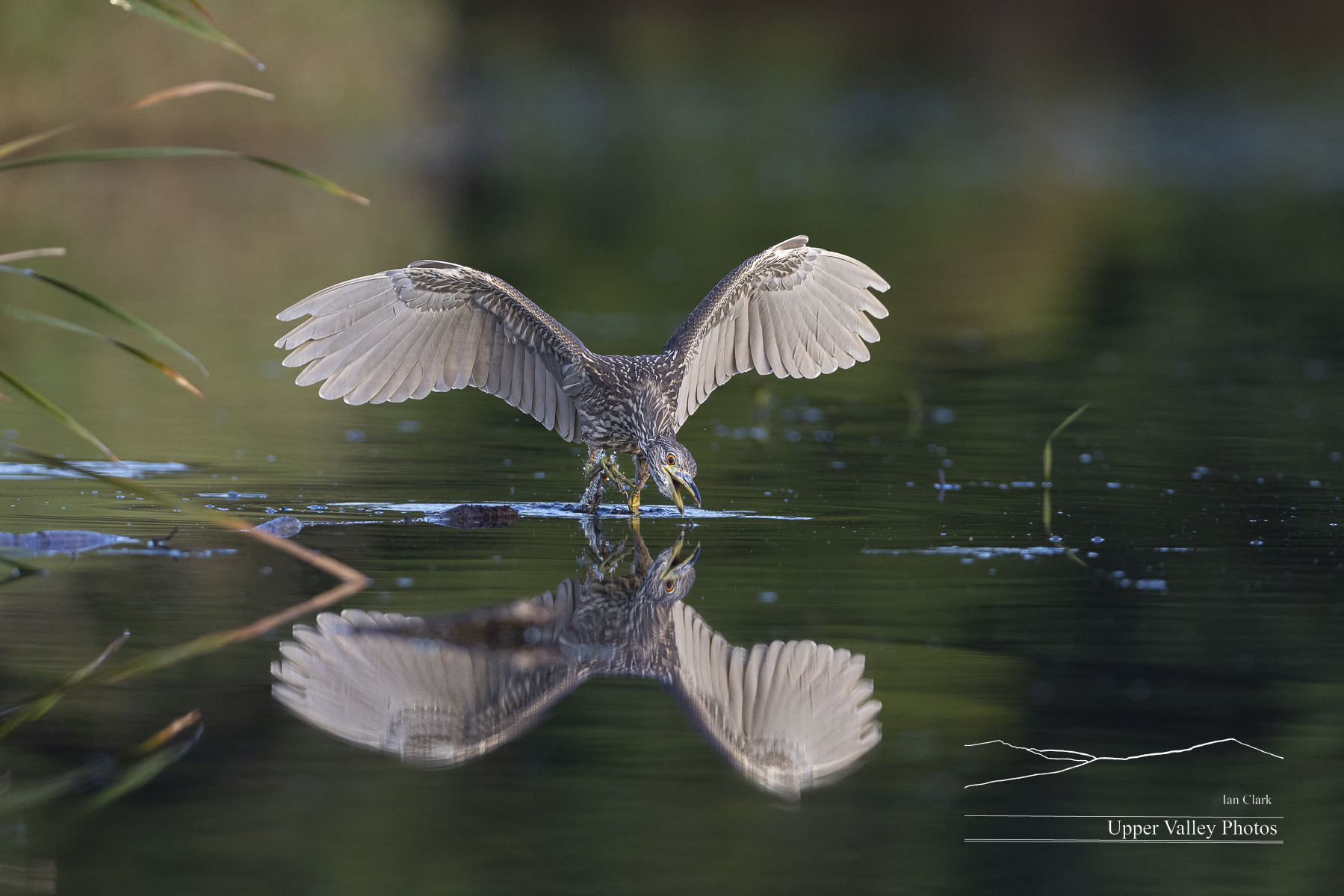
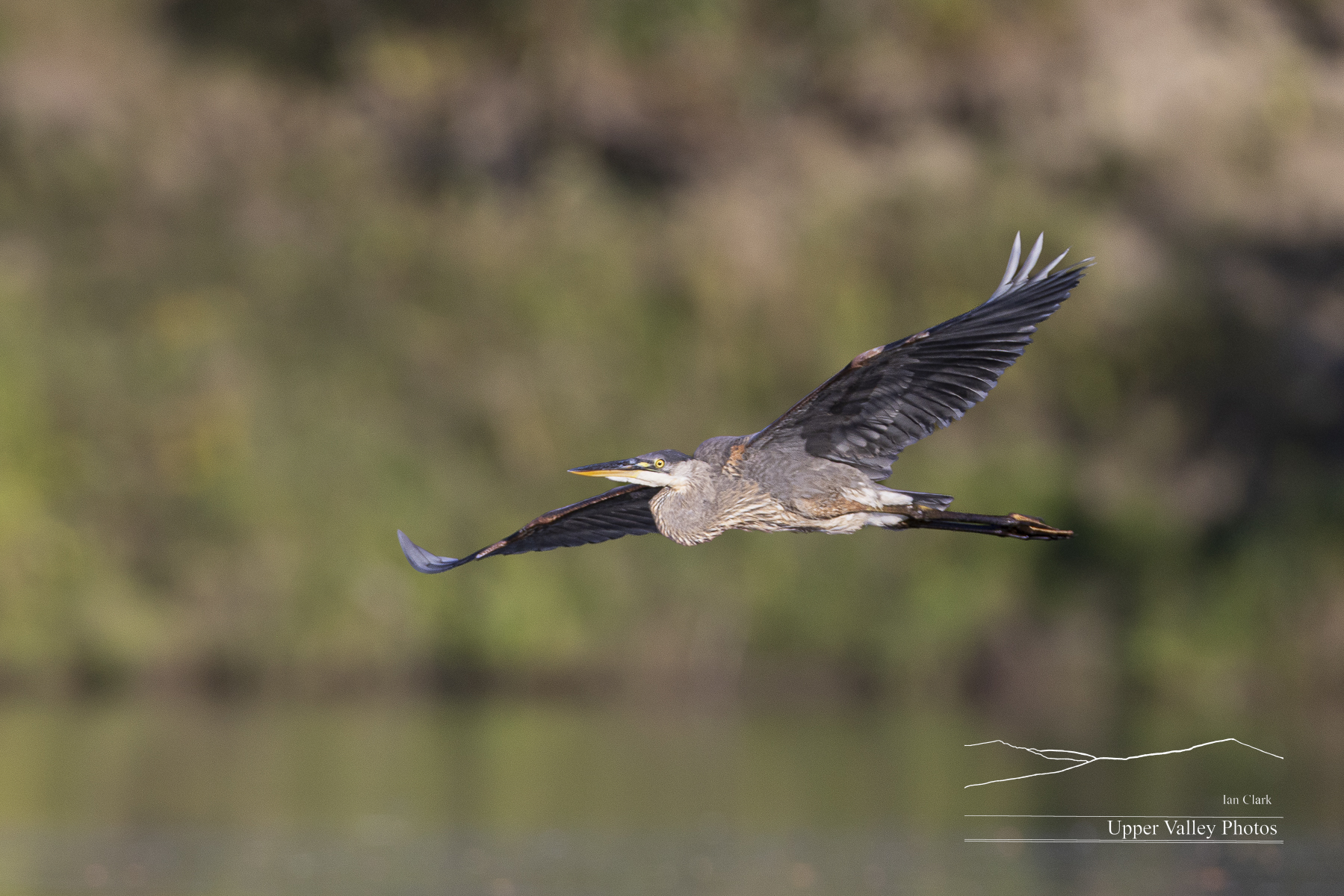
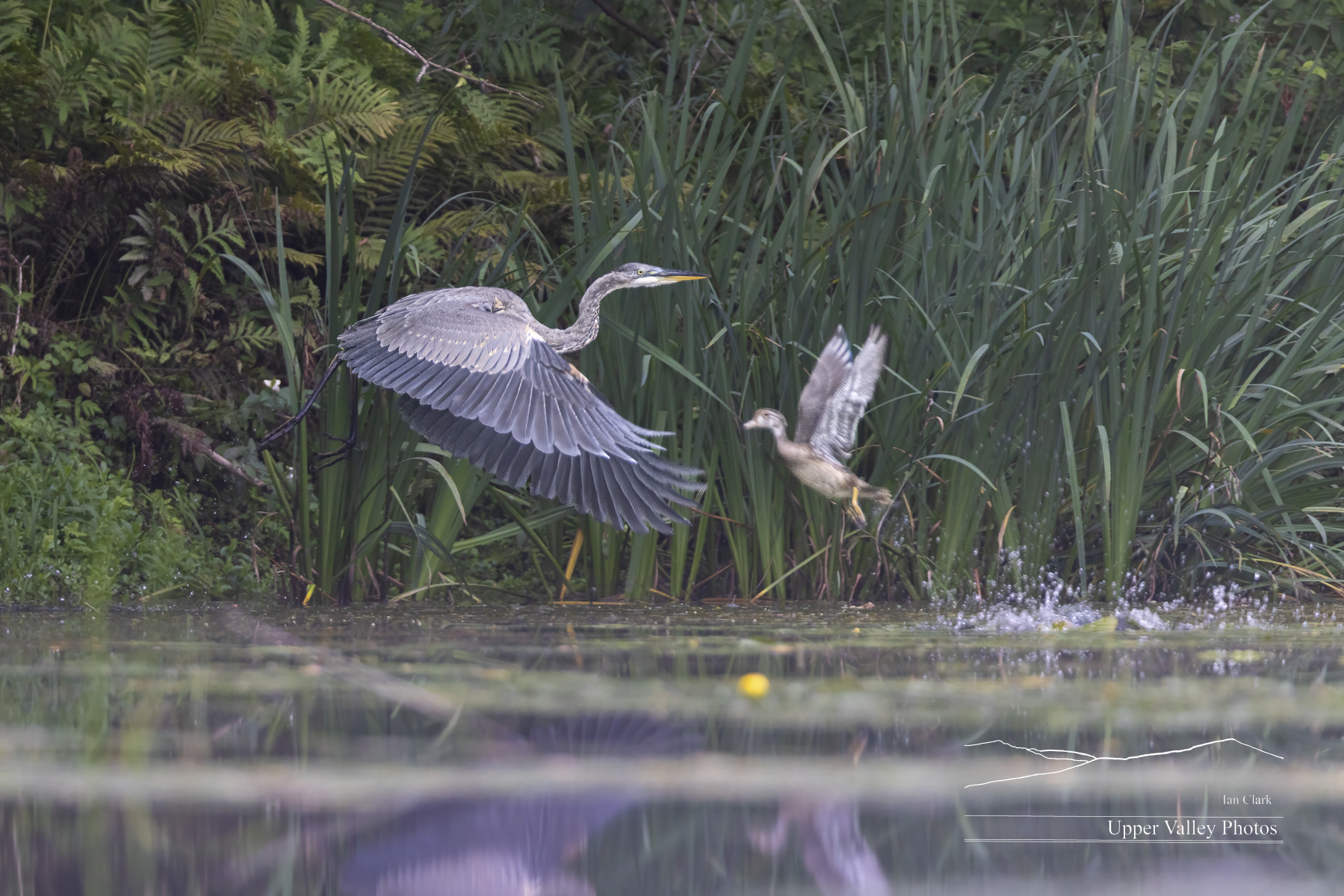
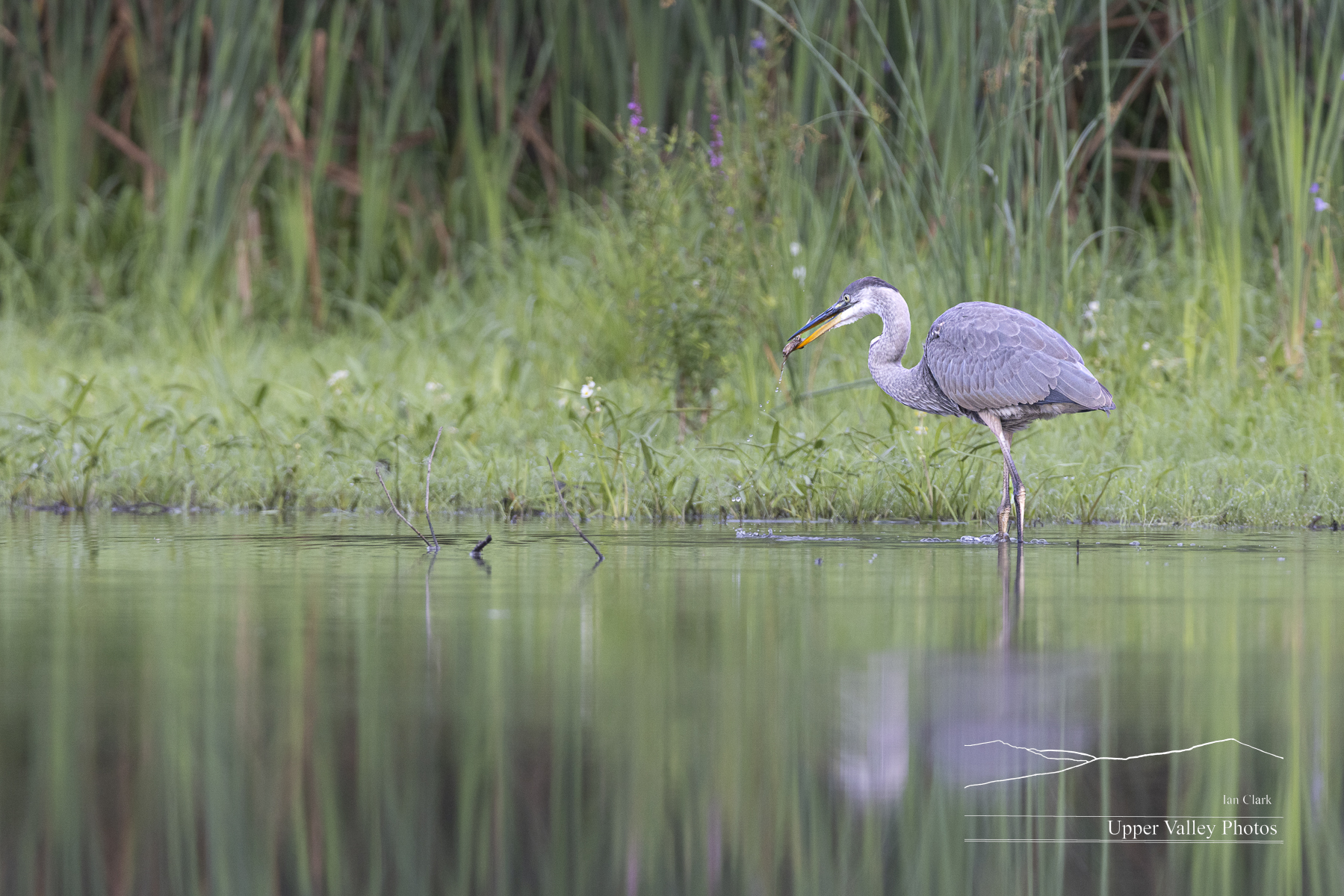
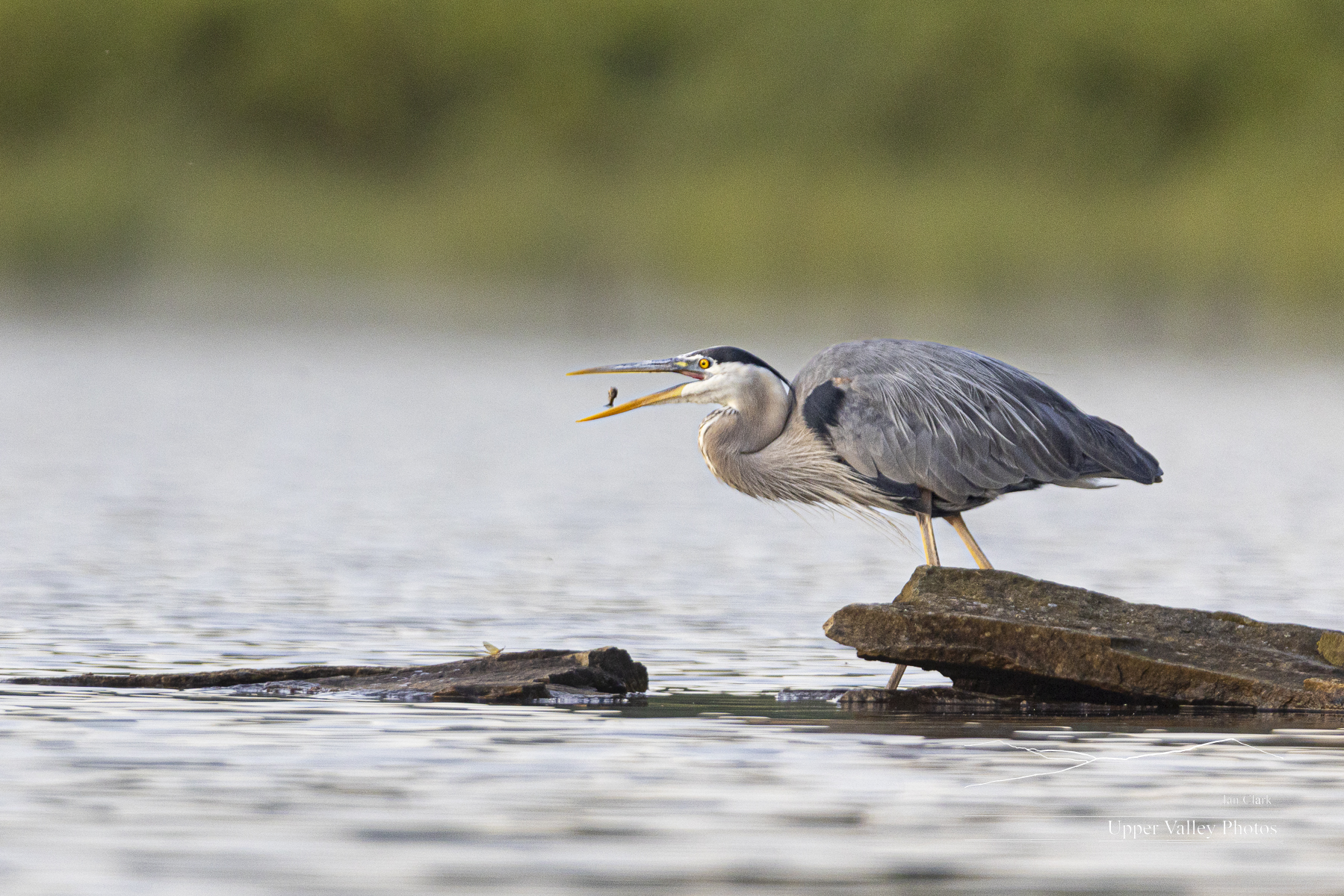
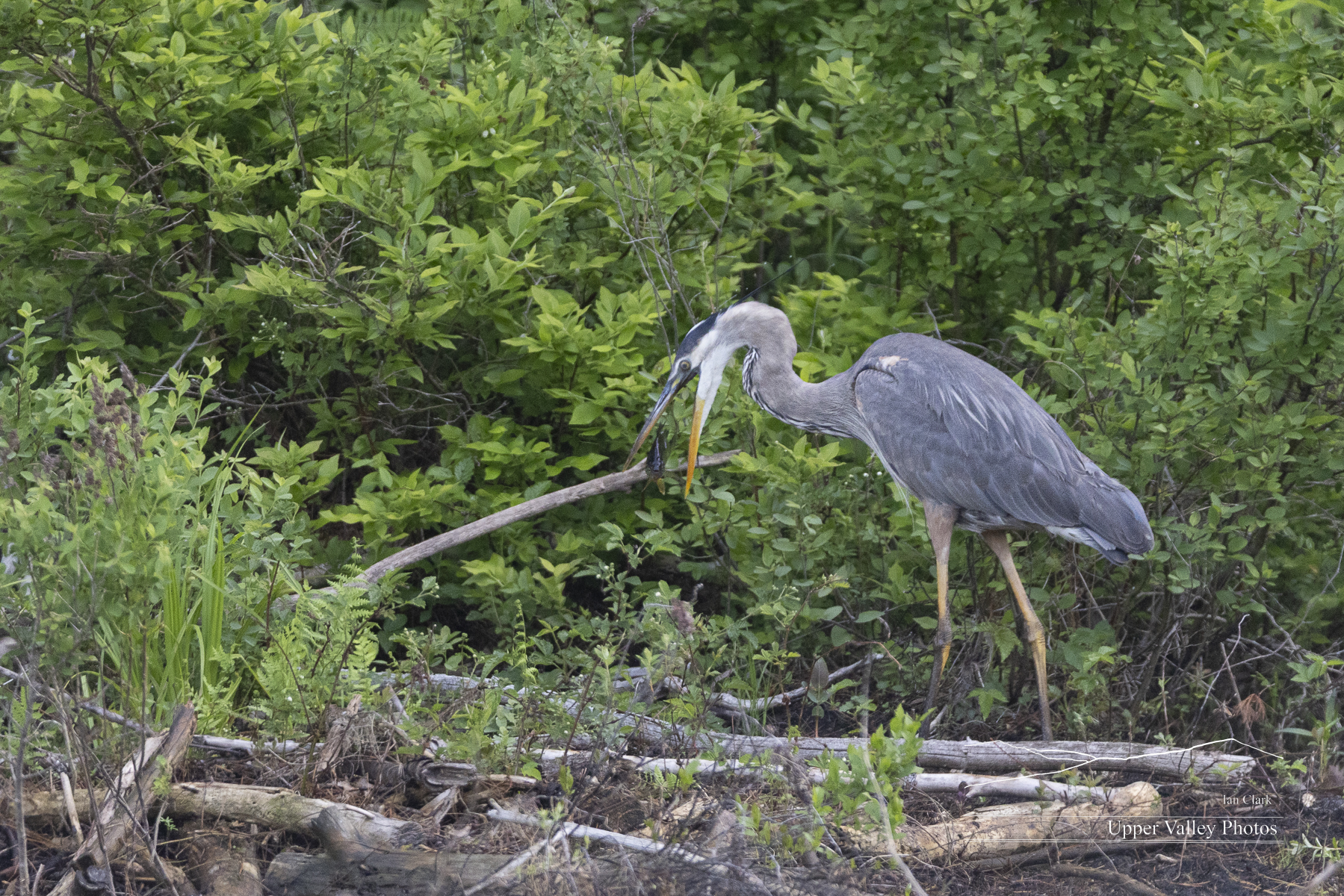
He caught a sunfish when he dove. The caught it broadside to his mouth. Herons swallow fish head first. Hank was smart enough to walk back up on the beaver lodge away from the water before flipping the fish into position.

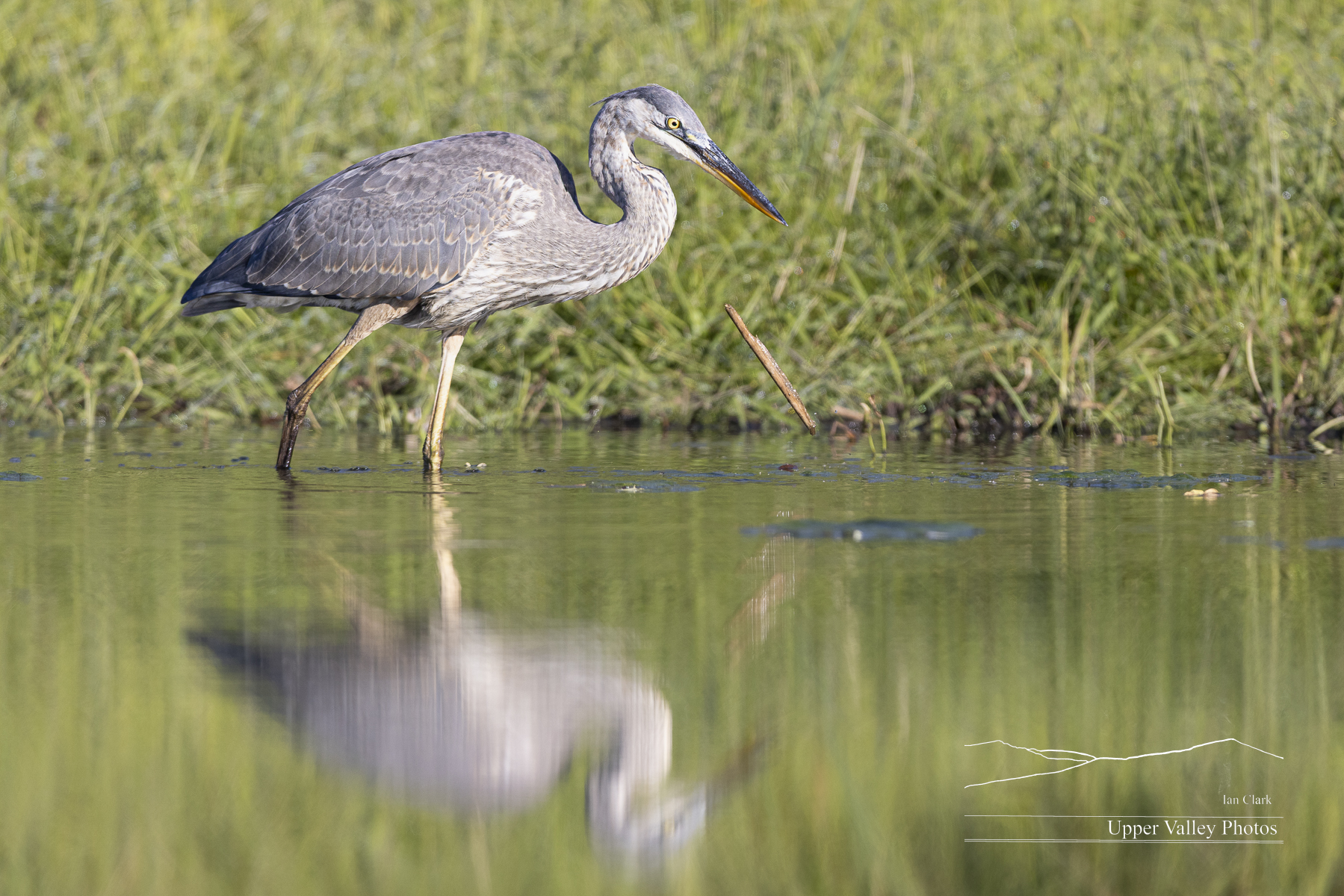
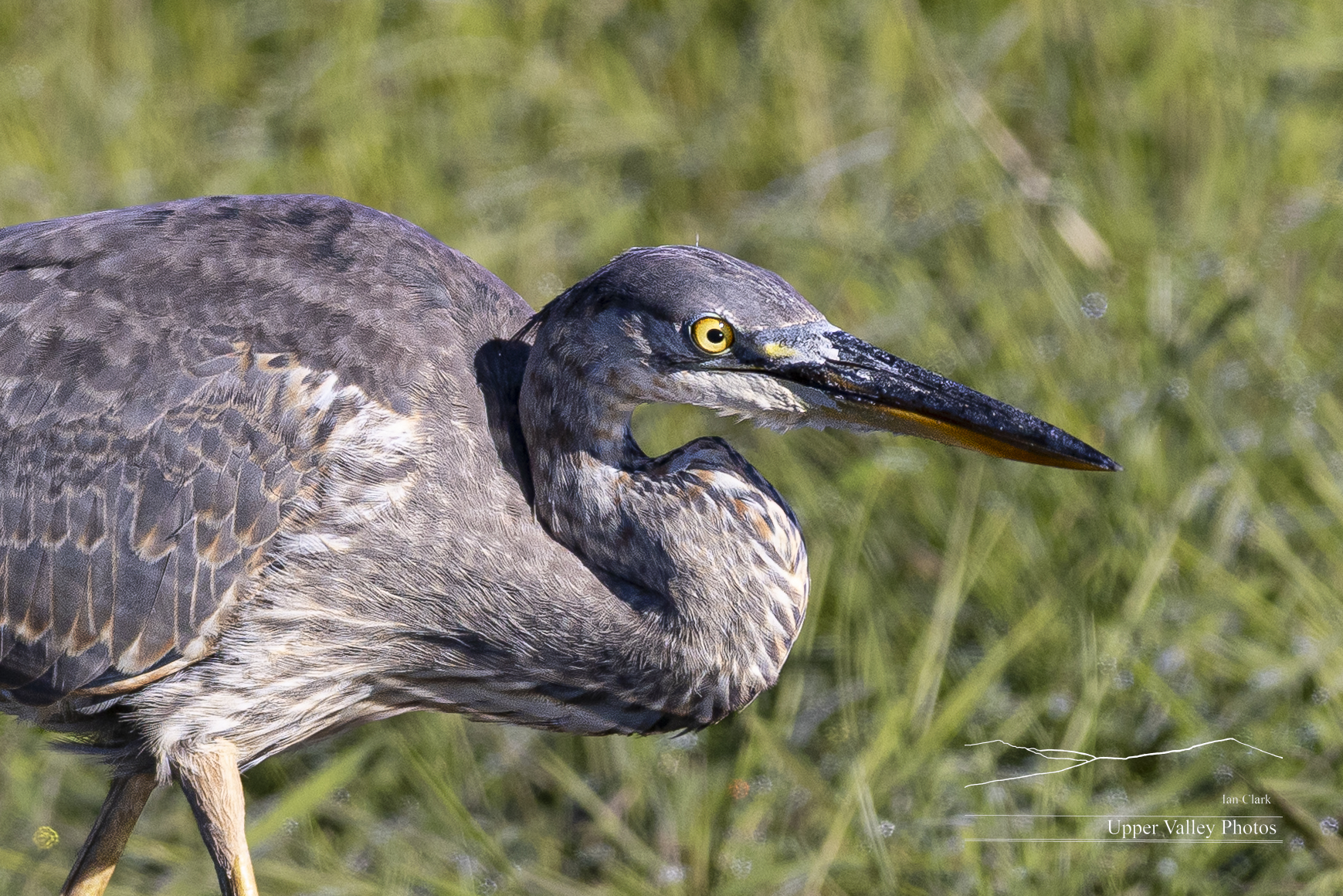
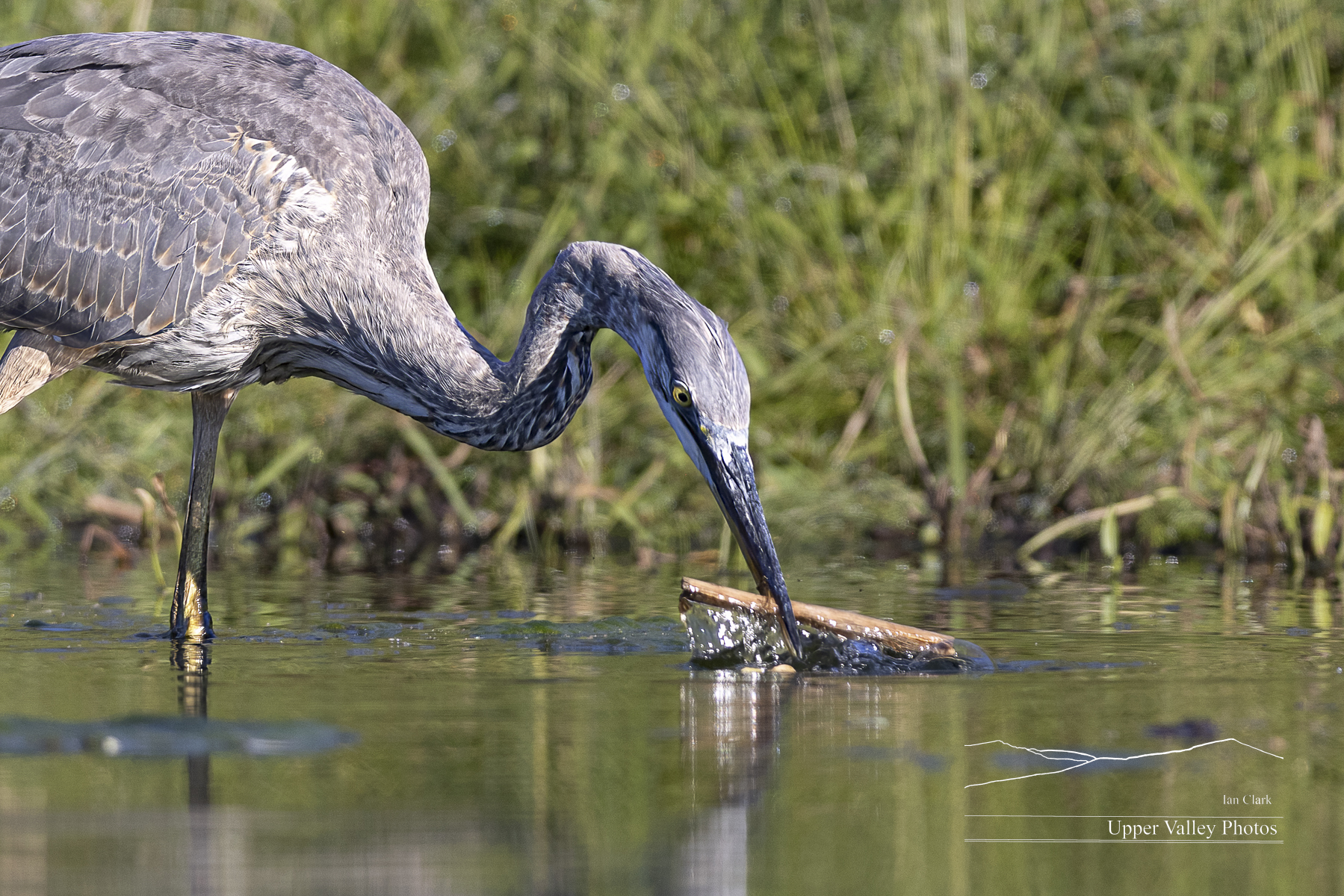
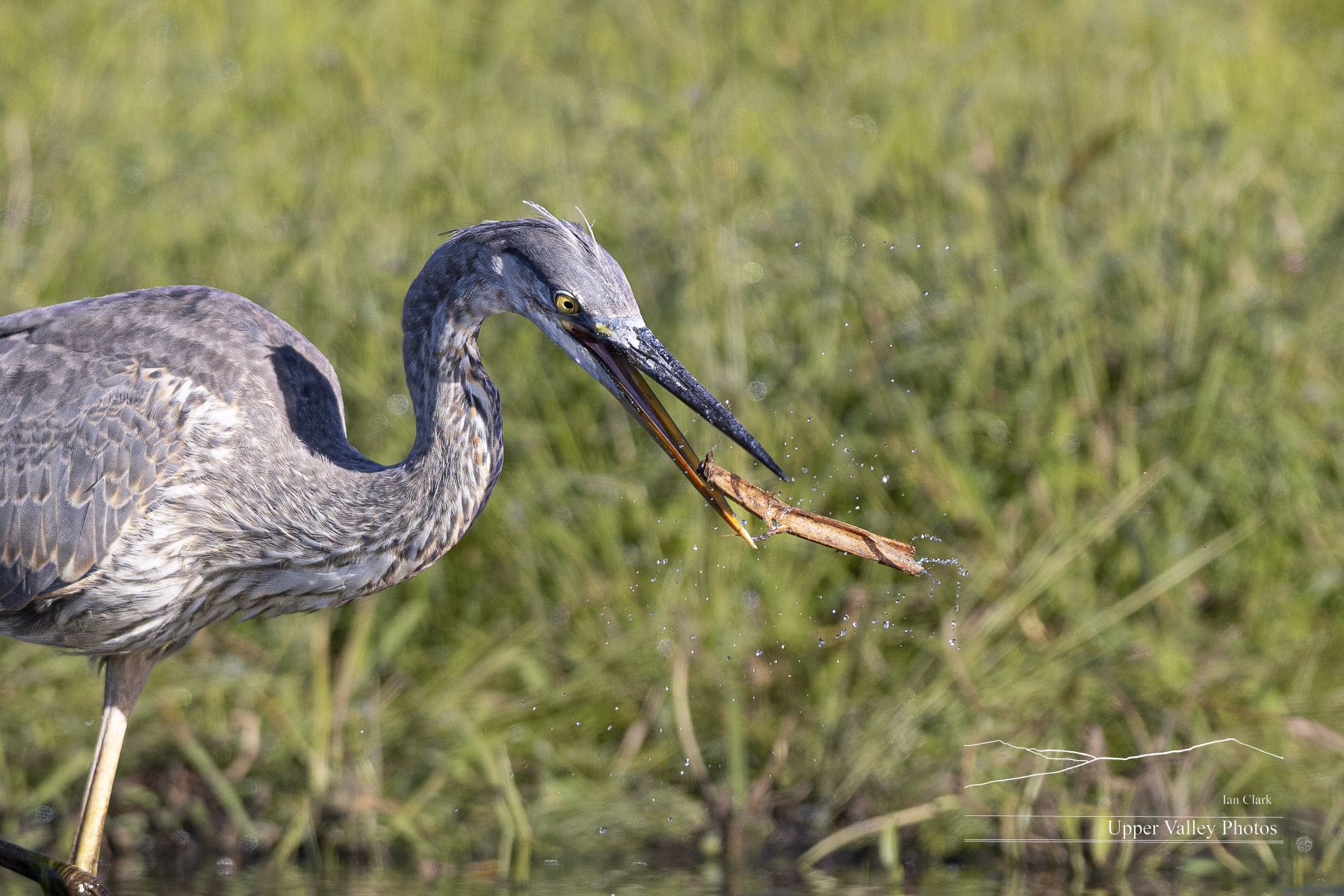
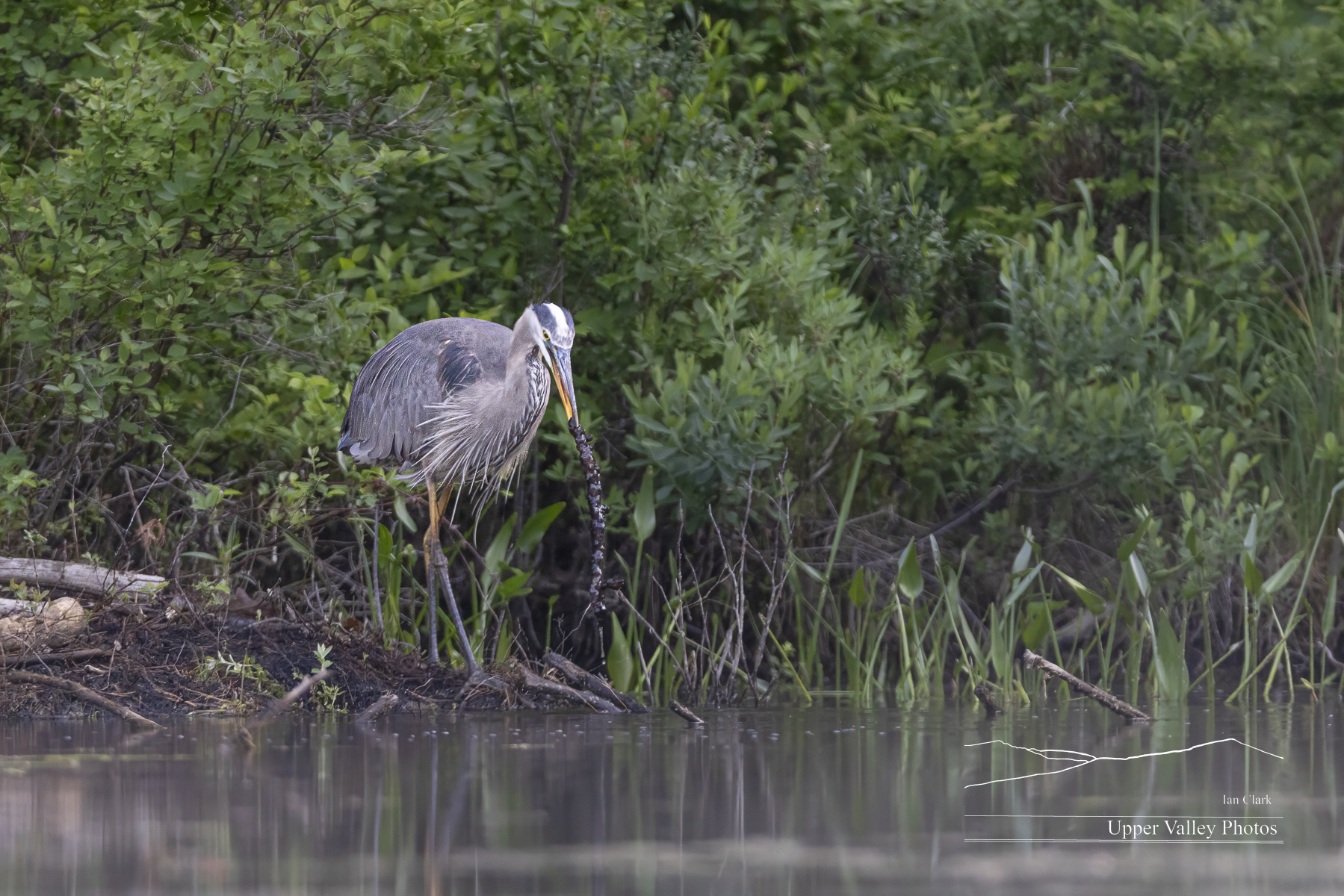
Hank went back to find more food. He dredged up what looks like a root of some kind. He waived this around a few times before tossing it back. He broke off a smaller piece and waived that around before tossing that back. Herons don’t eat plants, I’m not sure what he was doing.

I went to check to see what the Middletons were up to.

They’d gone back to the first possible nesting site I’d found them on. This time, they were both dredging up vegetation and tossing it.

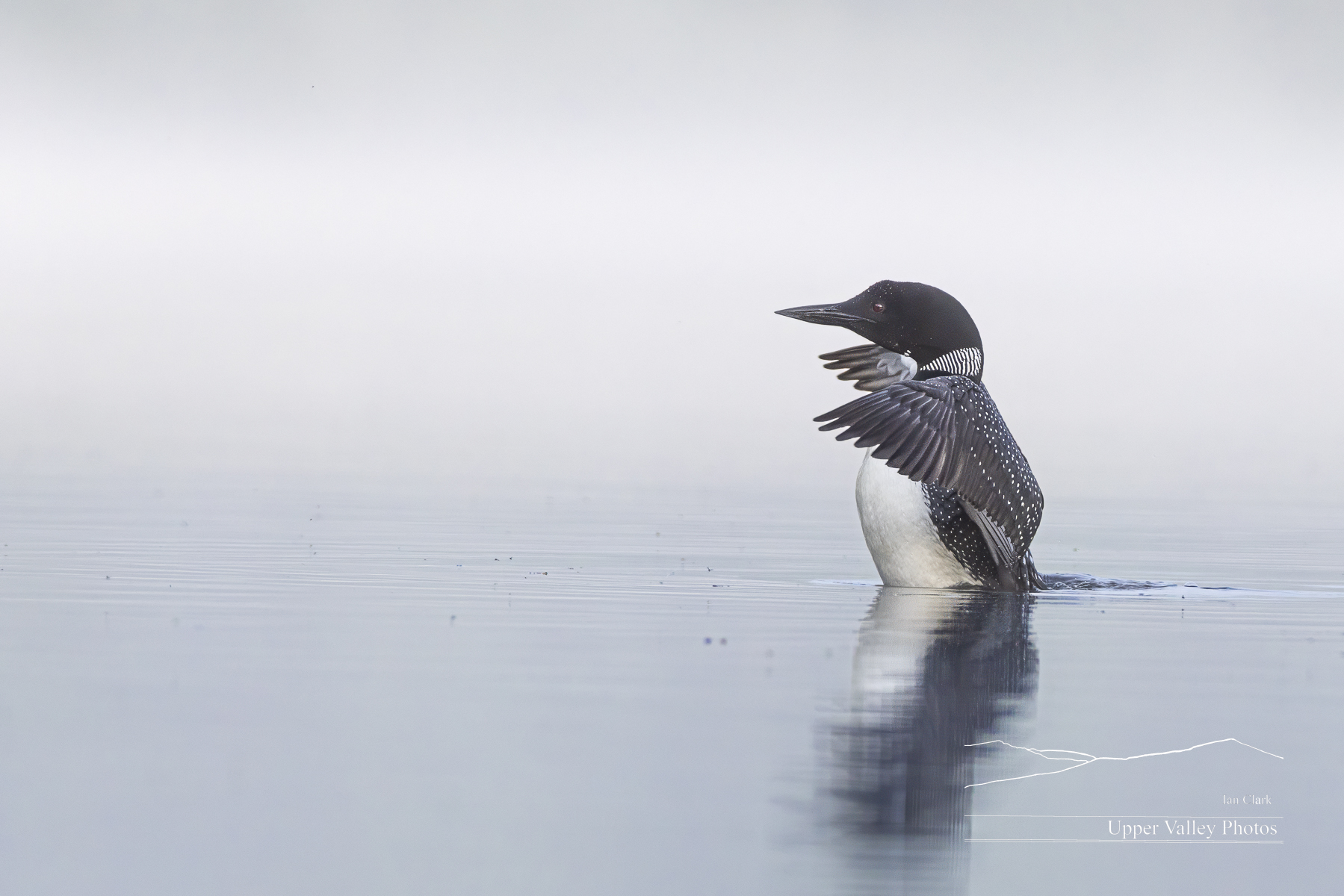
They gave up after a time and headed out into the main part of the pond. Mr. M gave a nice stretch. I went back to check on Hank.

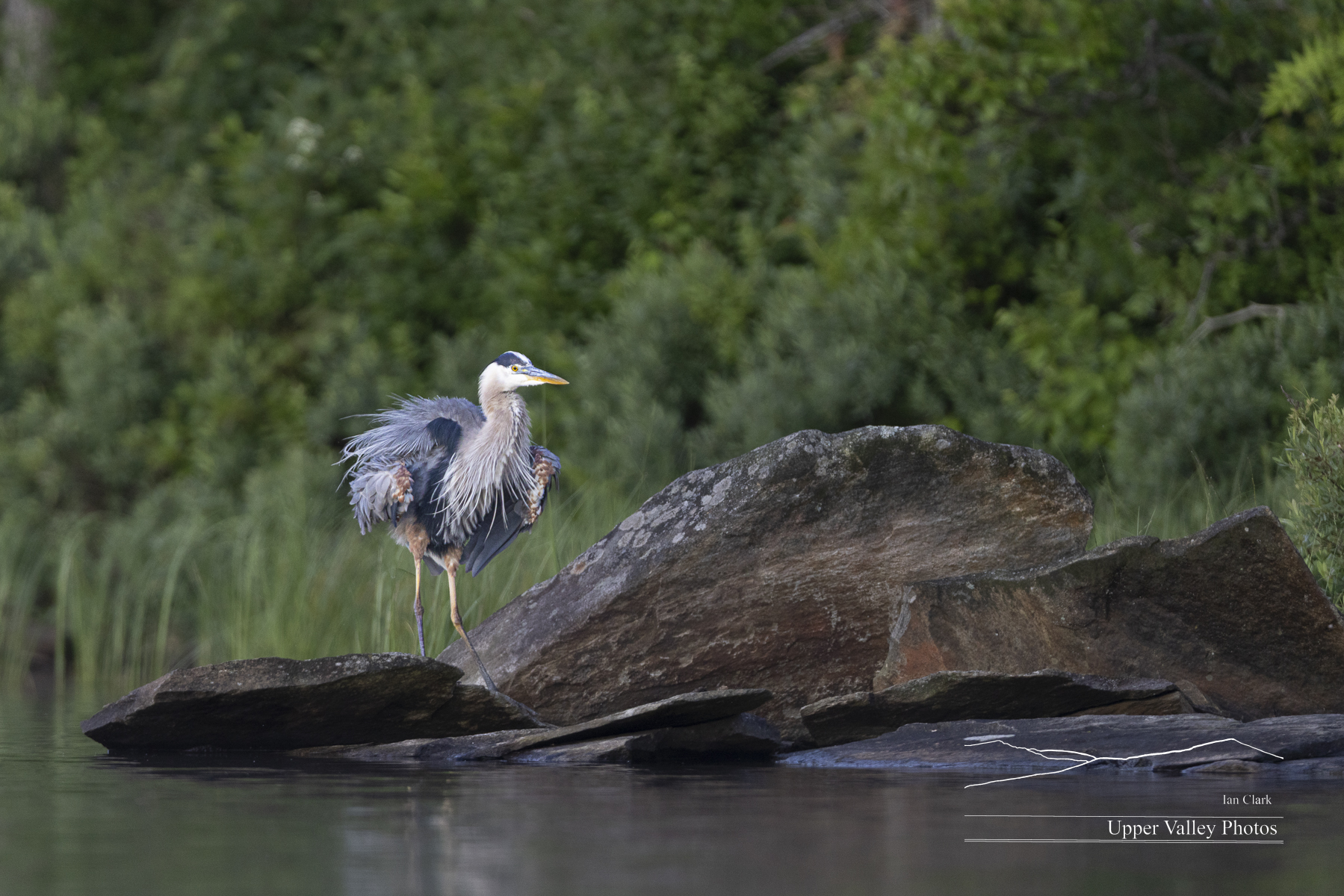
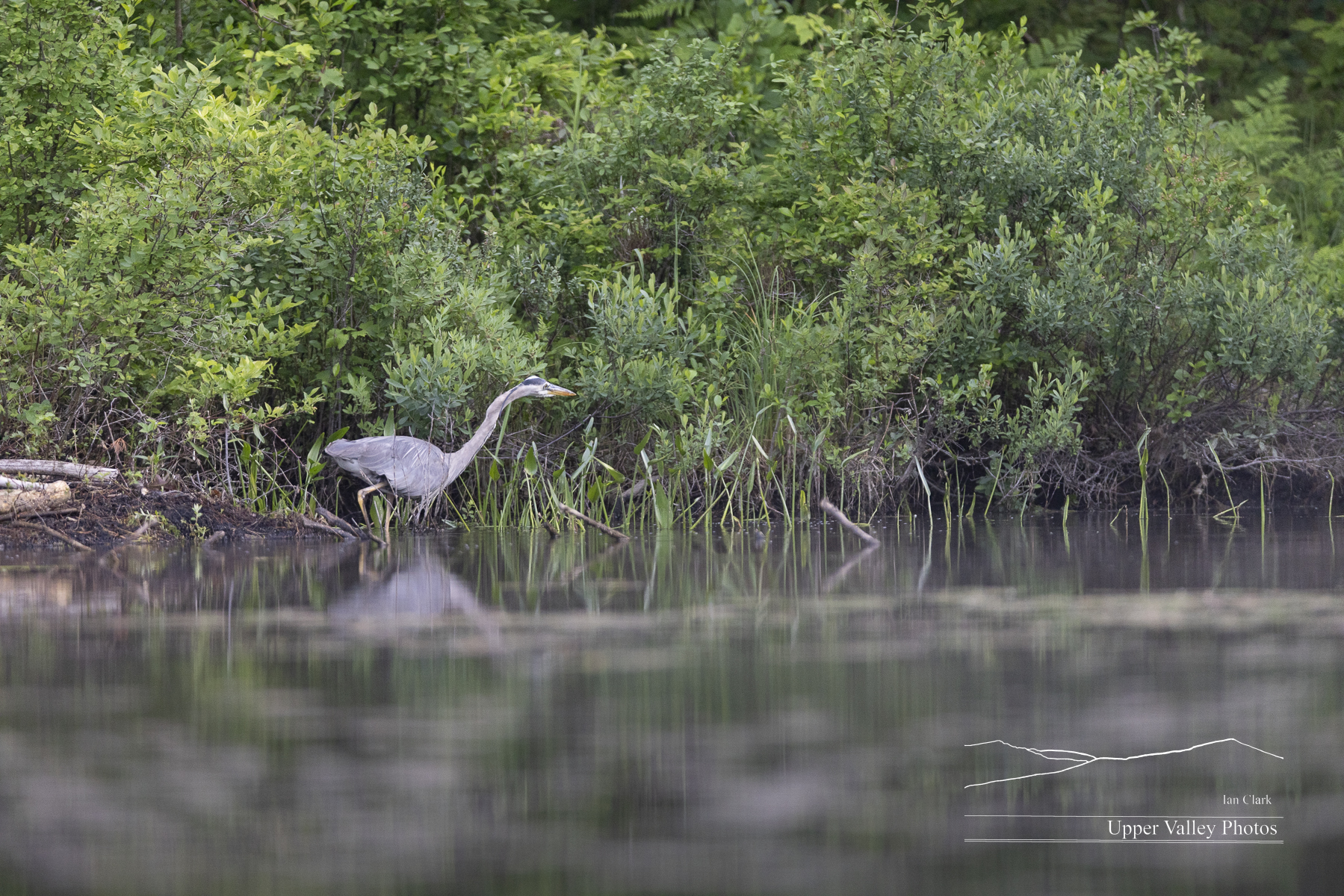
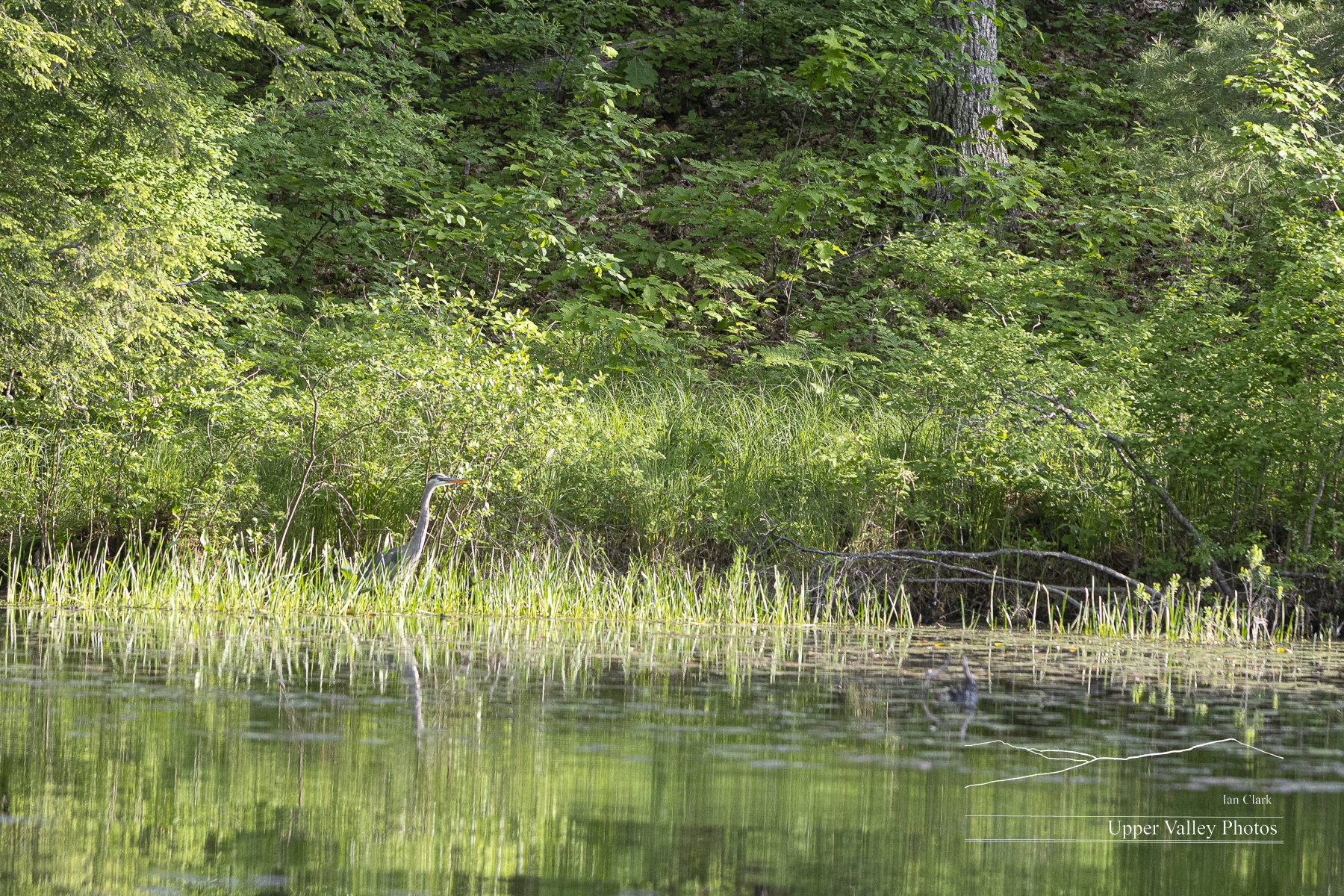
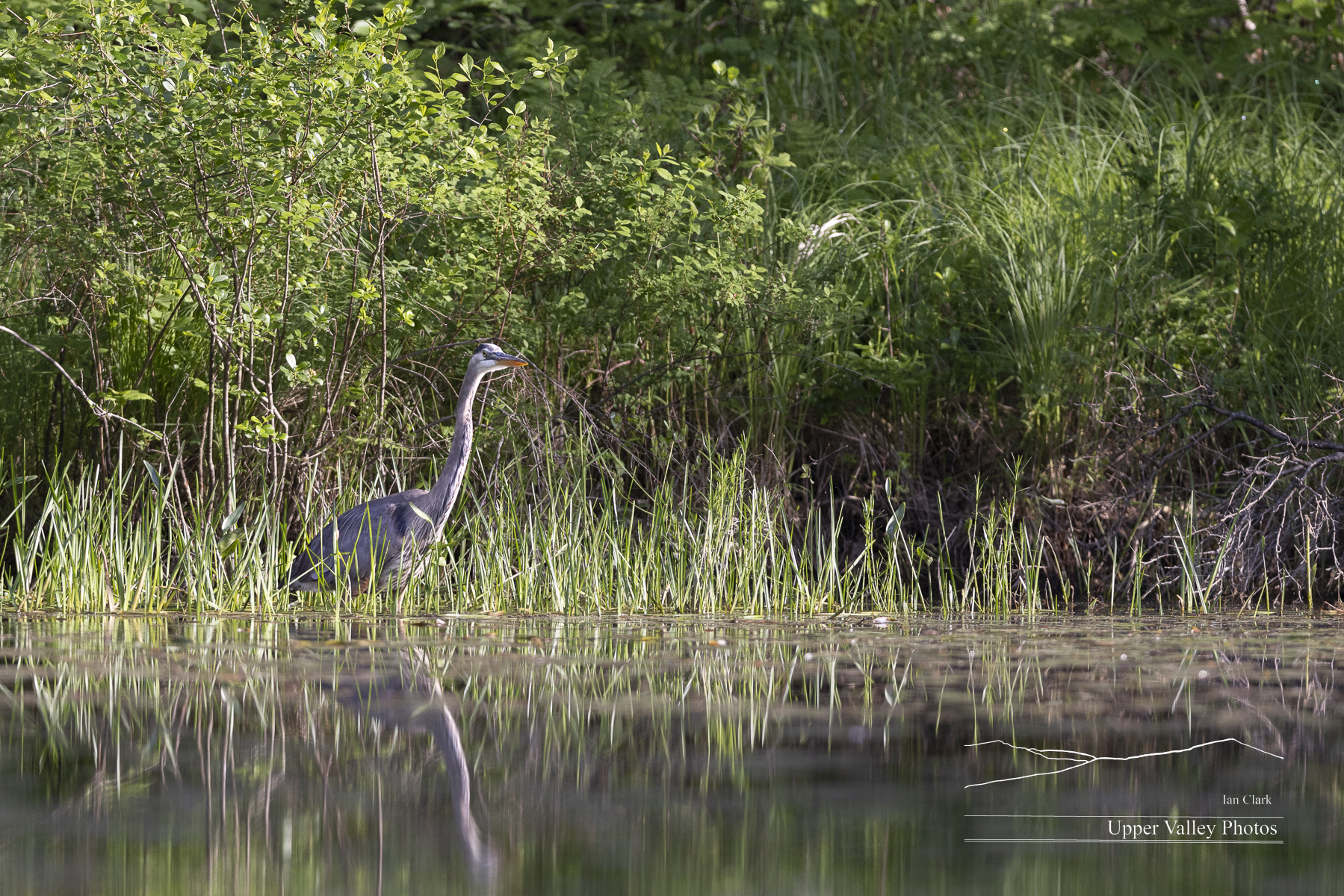
Hank had moved down the shore to a sunny spot. His camouflage seems to work pretty well. He’s in the brush about a third of the way in from the left side of the photo.

There he is. Watching herons fish can often be very boring. This was one of those mornings. I didn’t see Hank catch anything else before I had to go.

Yesterday morning I called on the Eastons. On my last visit there appeared to be a pair of loons defending a nesting spot with a banded loon challenging one of them for the territory. The Mr. Easton we’ve been following since 2019 wasn’t to be found. Mrs. Easton isn’t banded, she may be back.

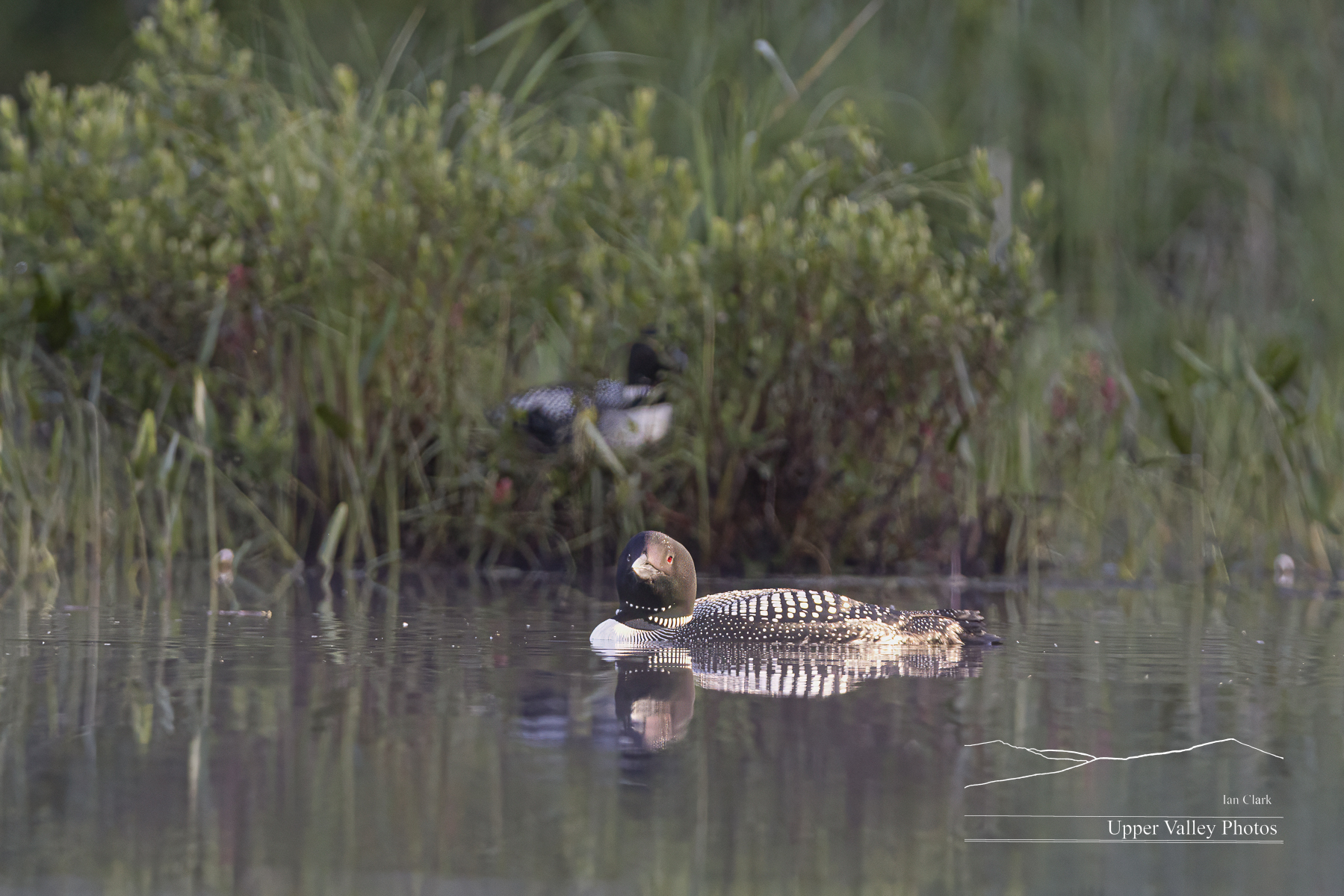
Saturday morning found a pair of loons with a nest. The banded loon I’d seen the last time has taken over the territory. There was at least one challenger on the pond. After a brief skirmish, the challenger departed.

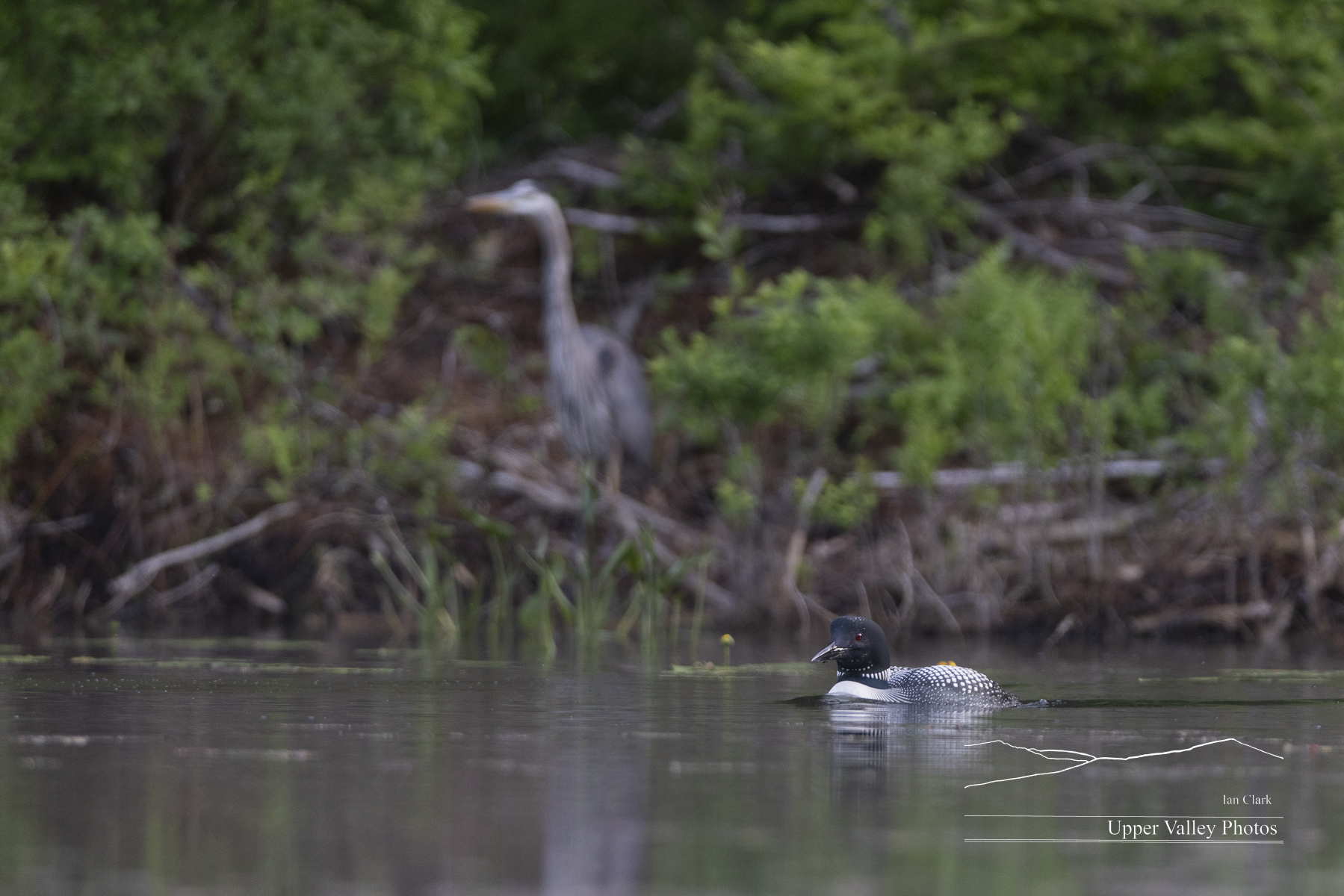
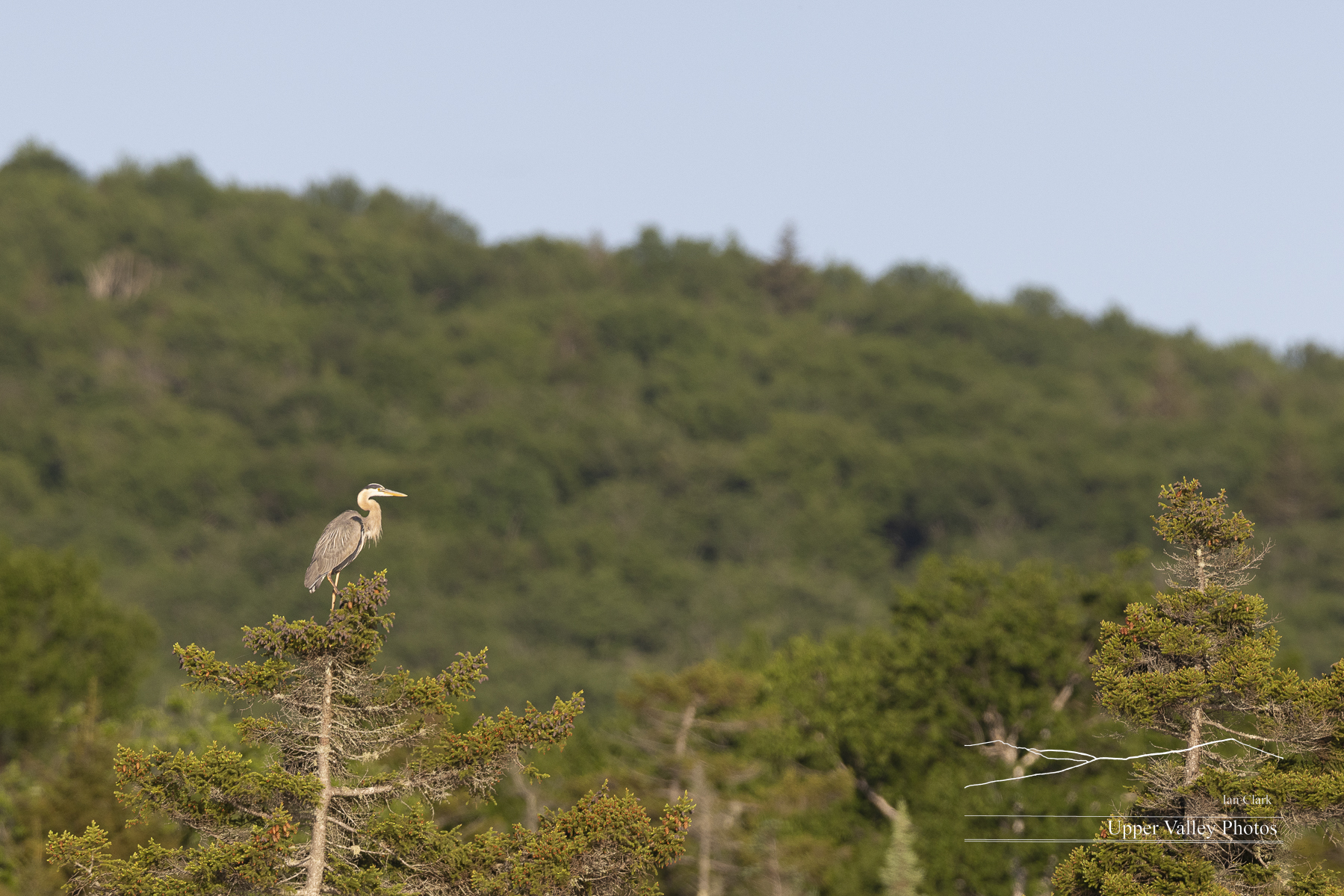
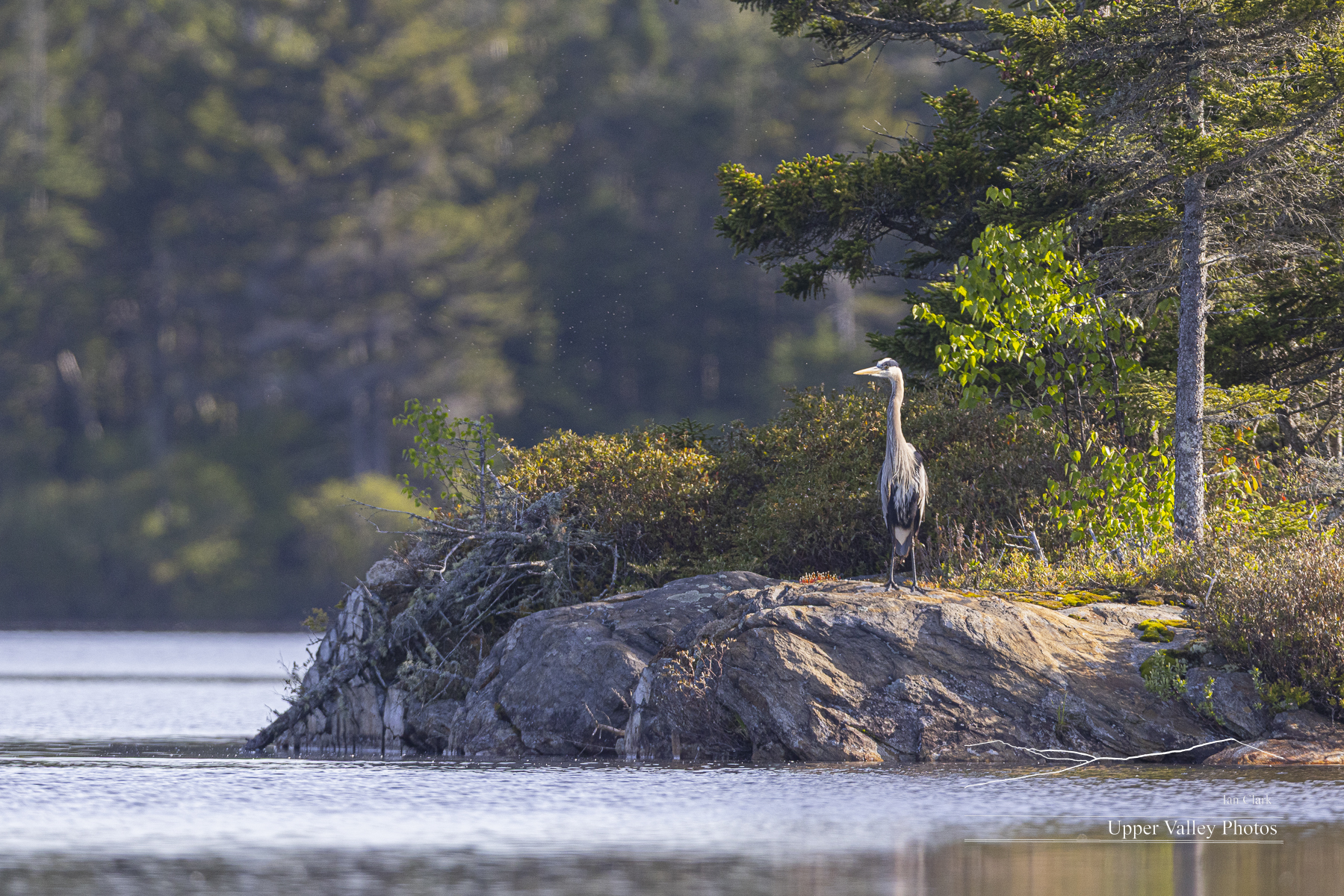
Hank, or his cousin, was looking over the pond.

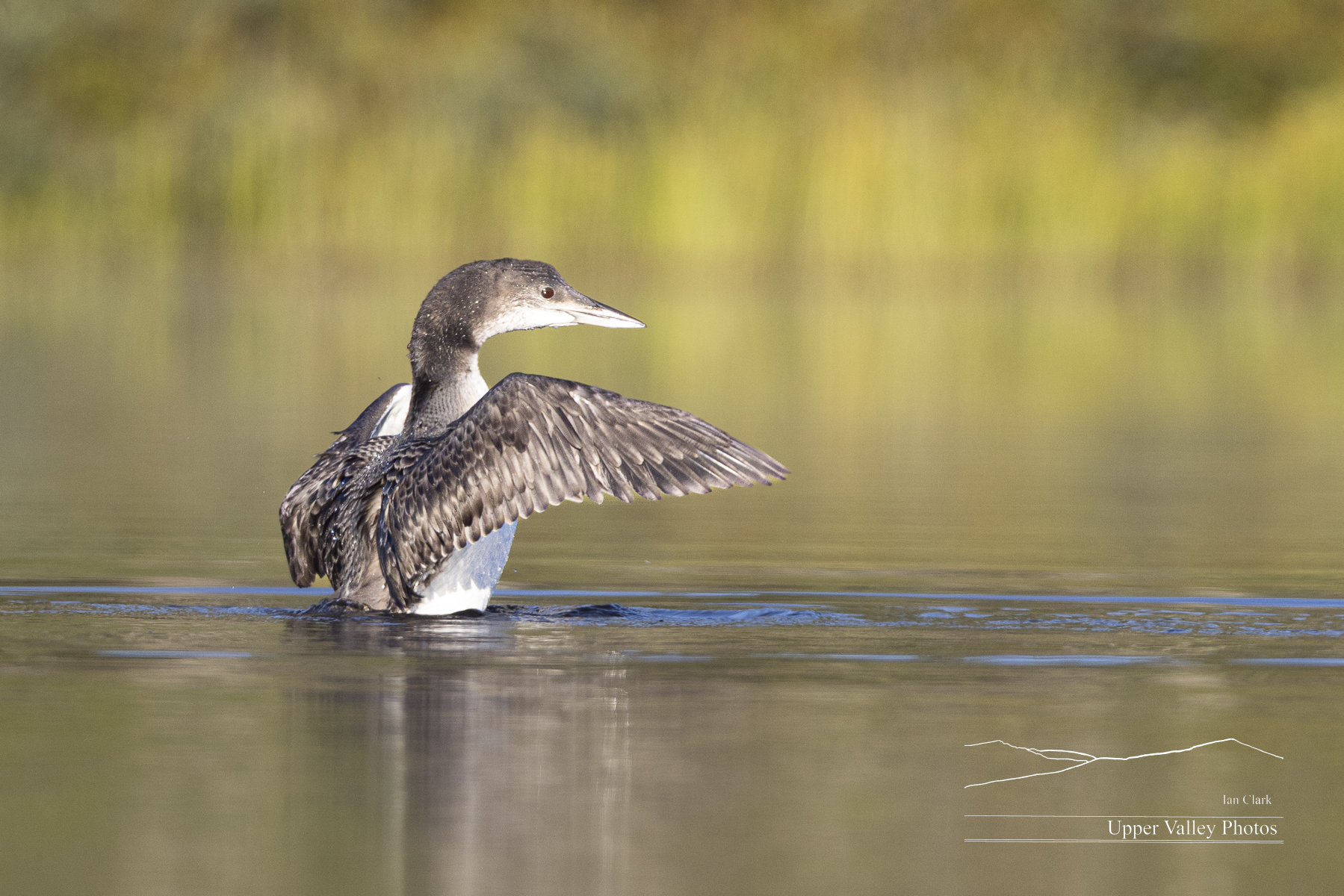
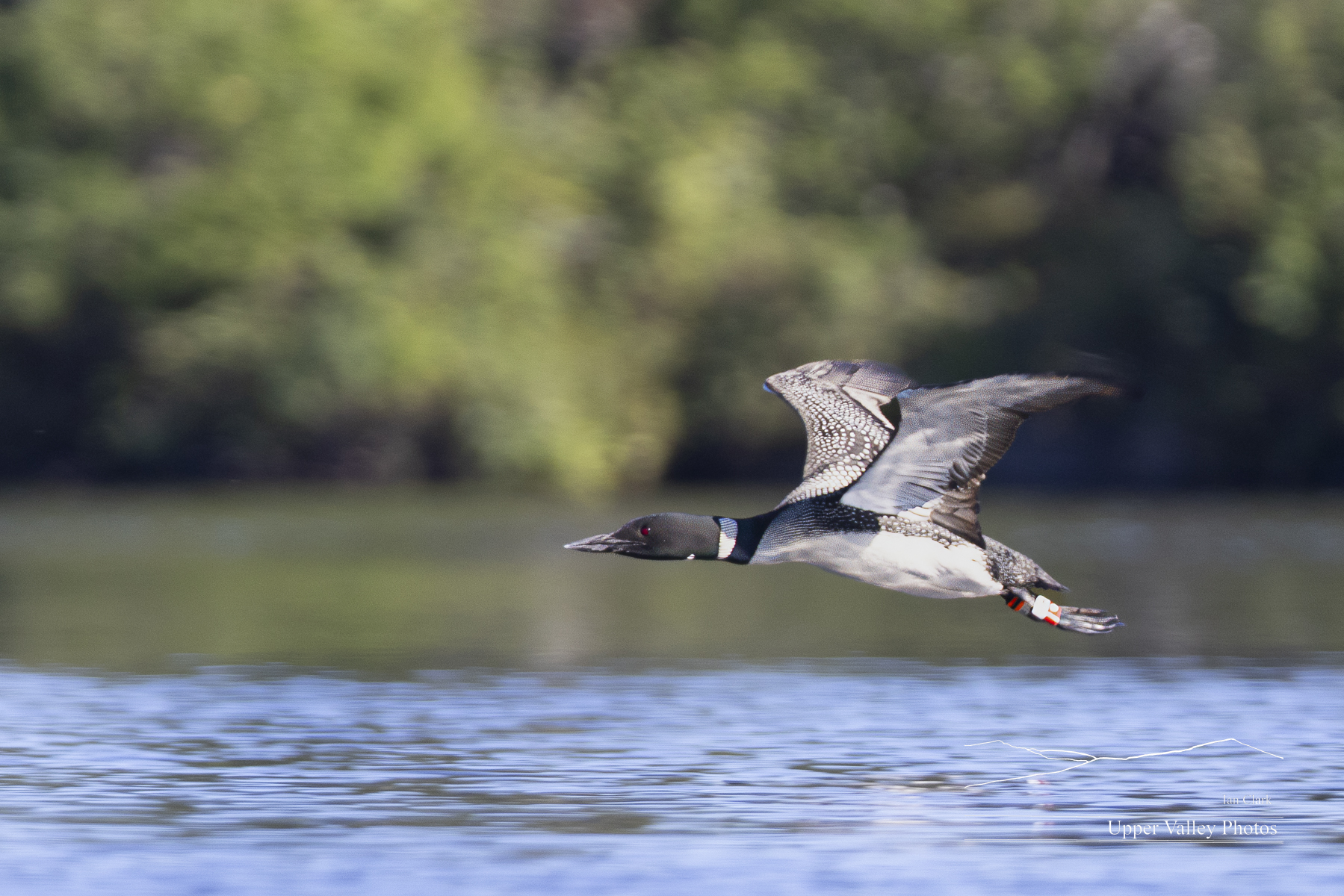
I followed the banded loon for a time, trying to get a good look at both his legs. He was happy to wave his left leg. I only needed to see it once to see the tags. He must have waved the left leg 10 times before breaking down and showing me the bands on his right leg. I reported the band info, we may get to learn about the bird’s history.

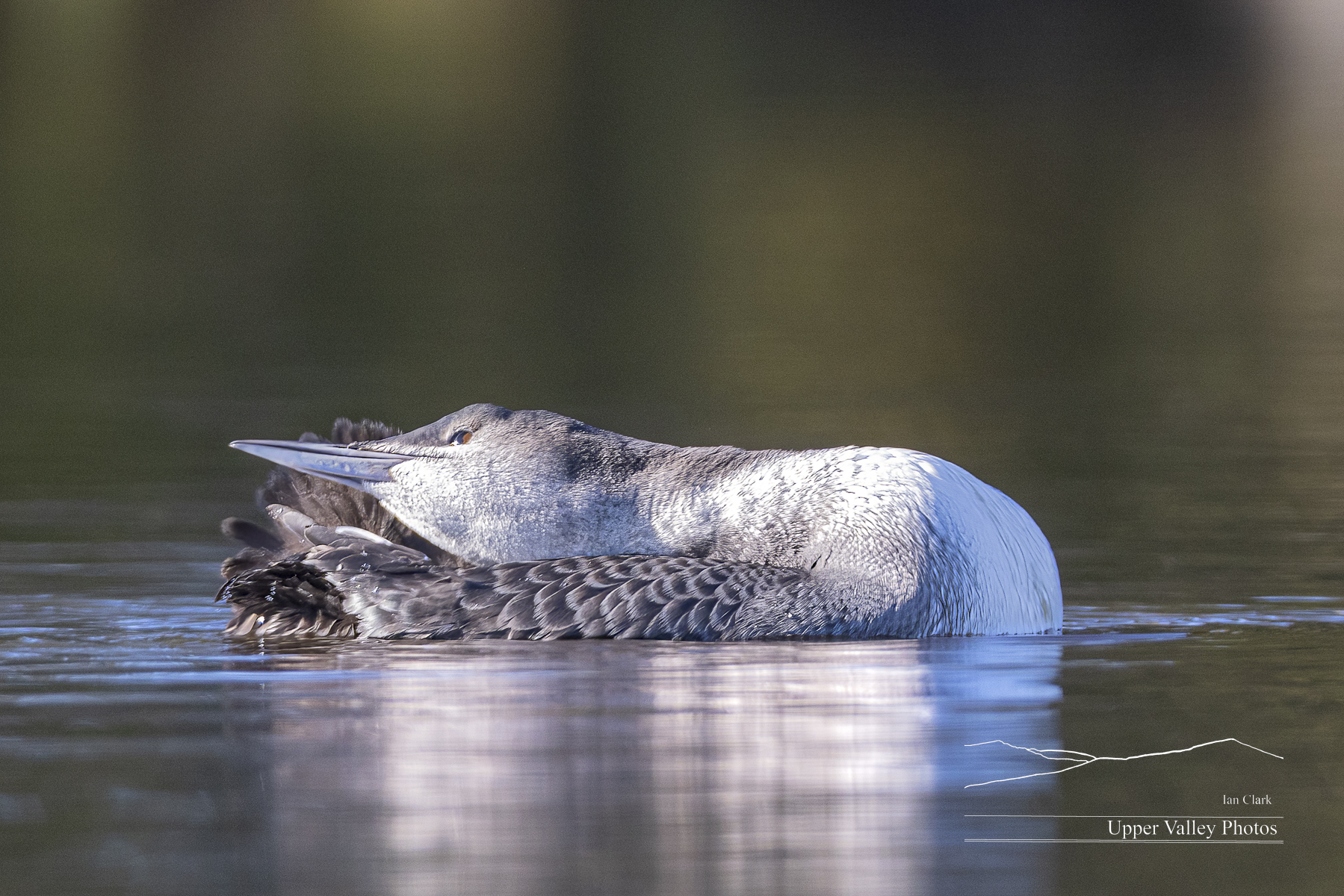
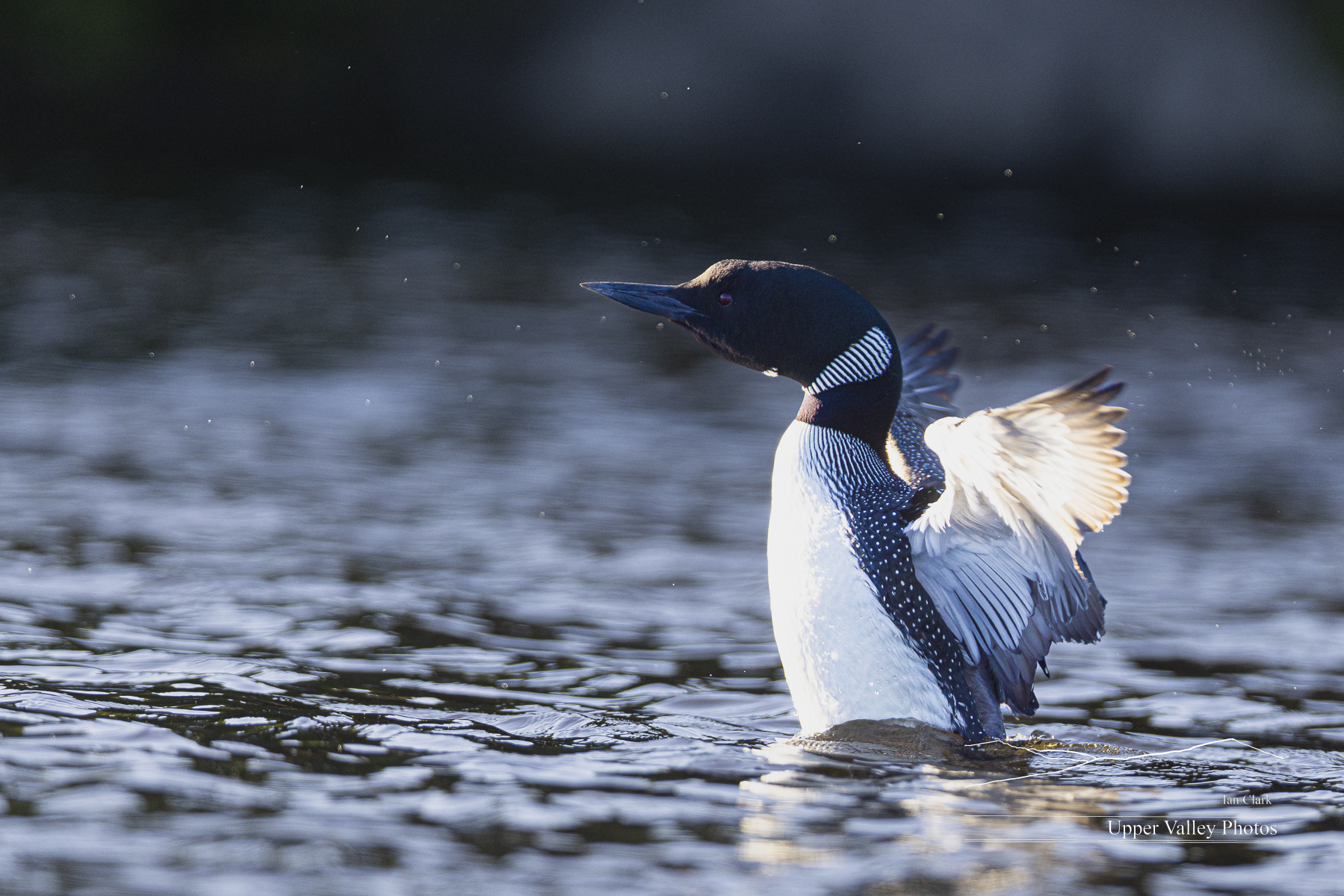
There was a good breeze and the water was fairly choppy. The banded bird stretched while I was waiting to see the right leg.

The intruder returned and drew both of the home team to the far end of the pond. I snuck a look at the nest with my binoculars and they’ve got two eggs.

The intruder promptly left the pond.

One of the home team returned to sit on the nest. I headed home.

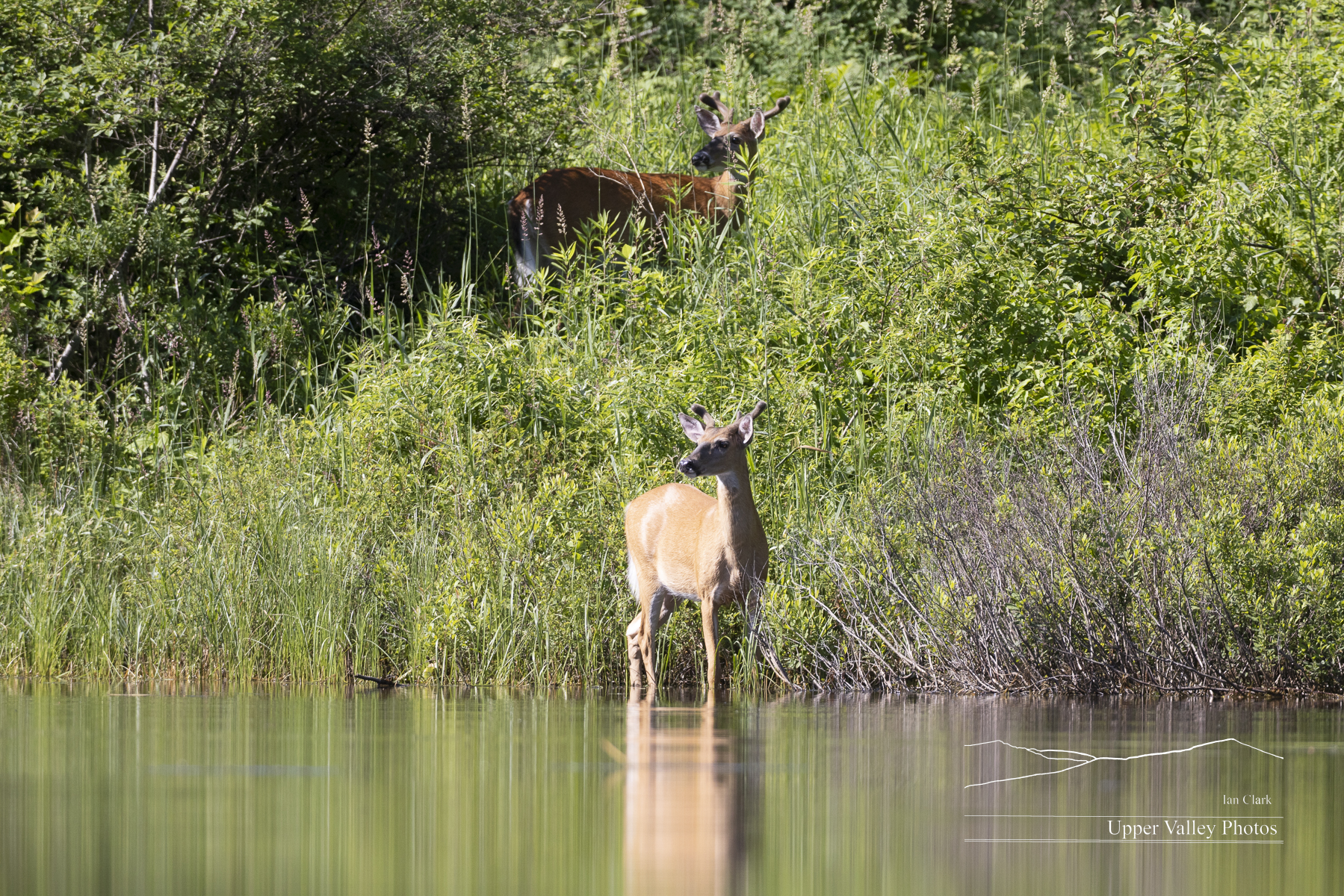
I expect to dodge wildlife on the road in the early hours. This past week, I’ve seen bears, foxes, a racoon and an opossum along with deer, more deer and even more deer. To change things up this morning, I met a horse trotting west as I was going east.

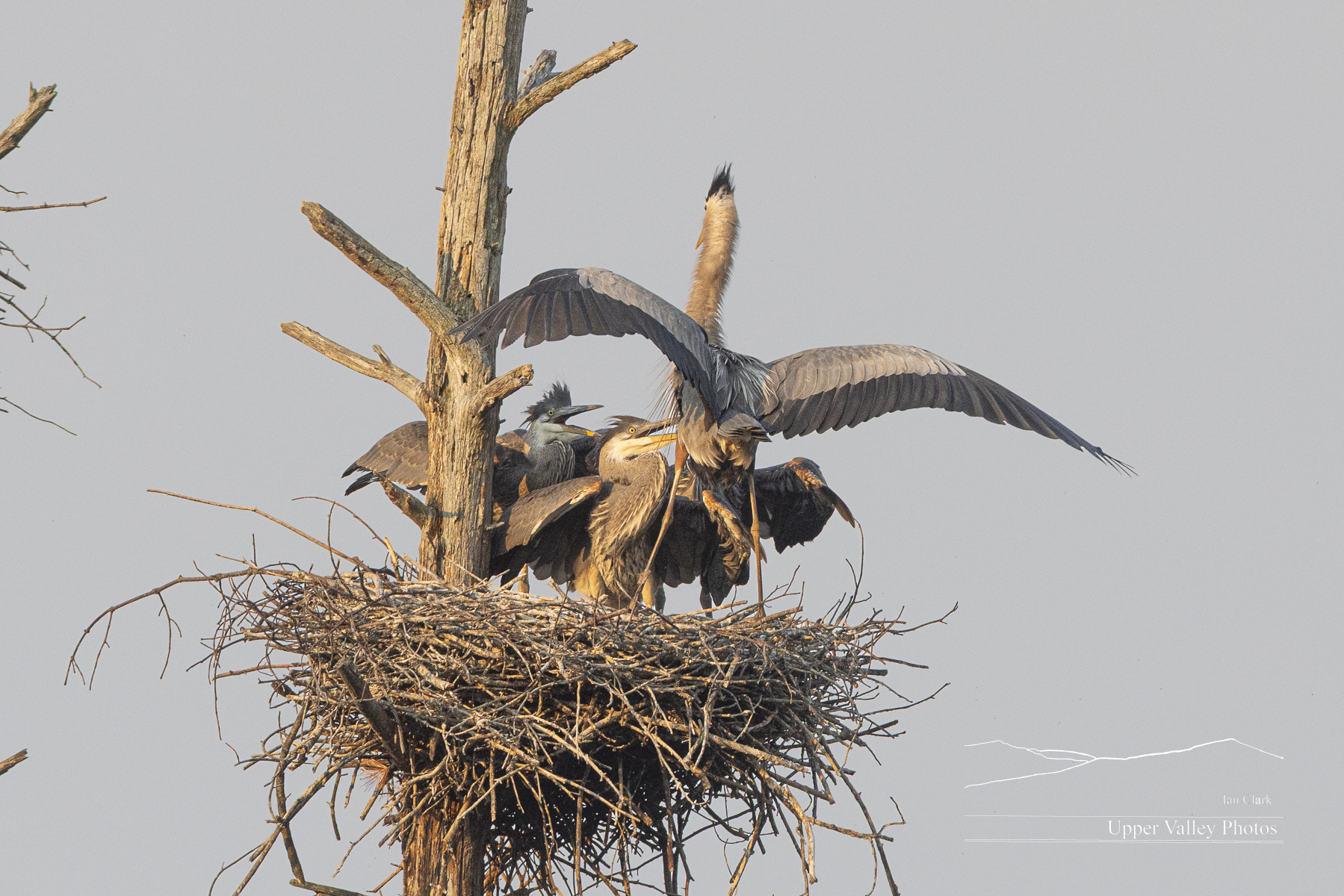
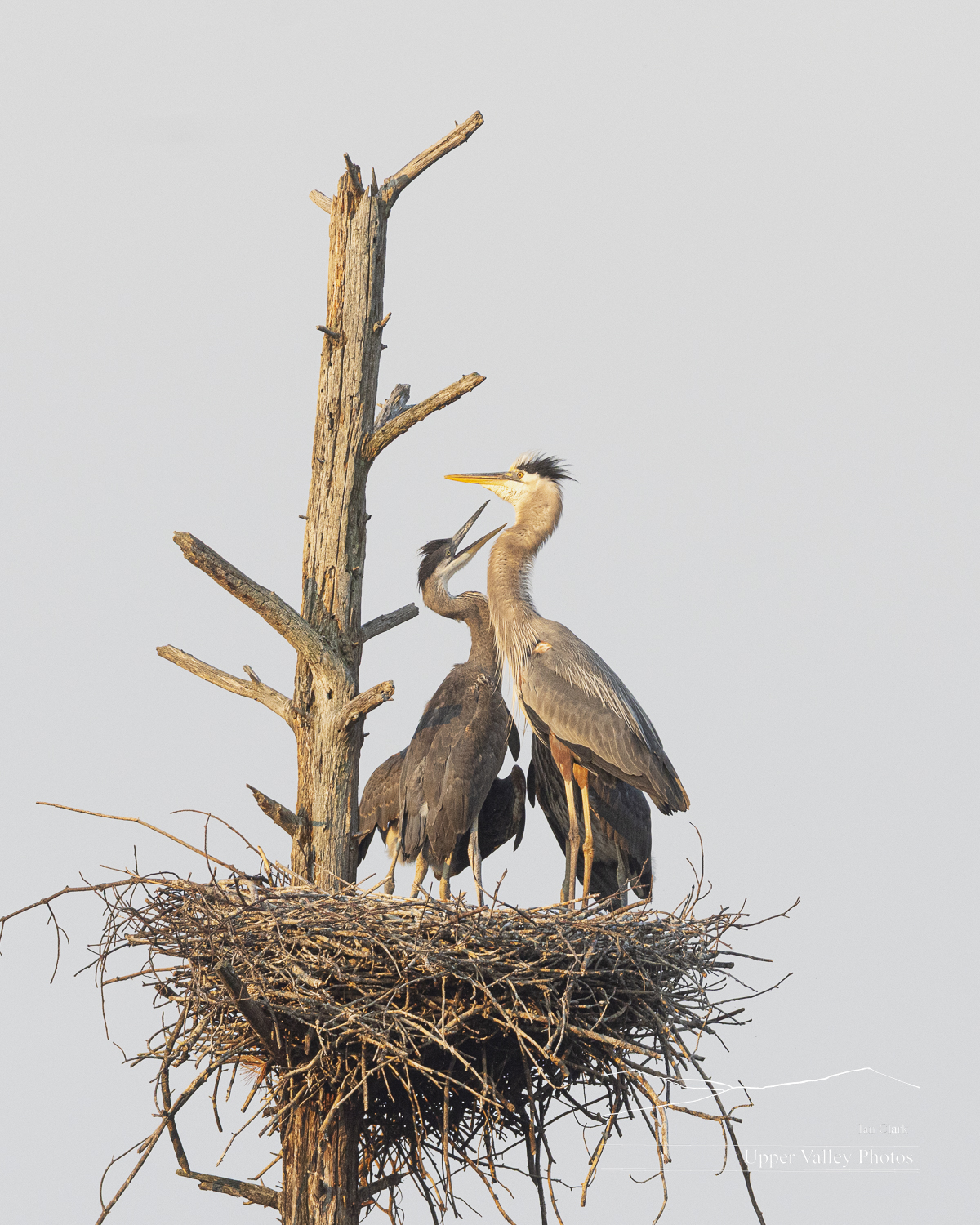
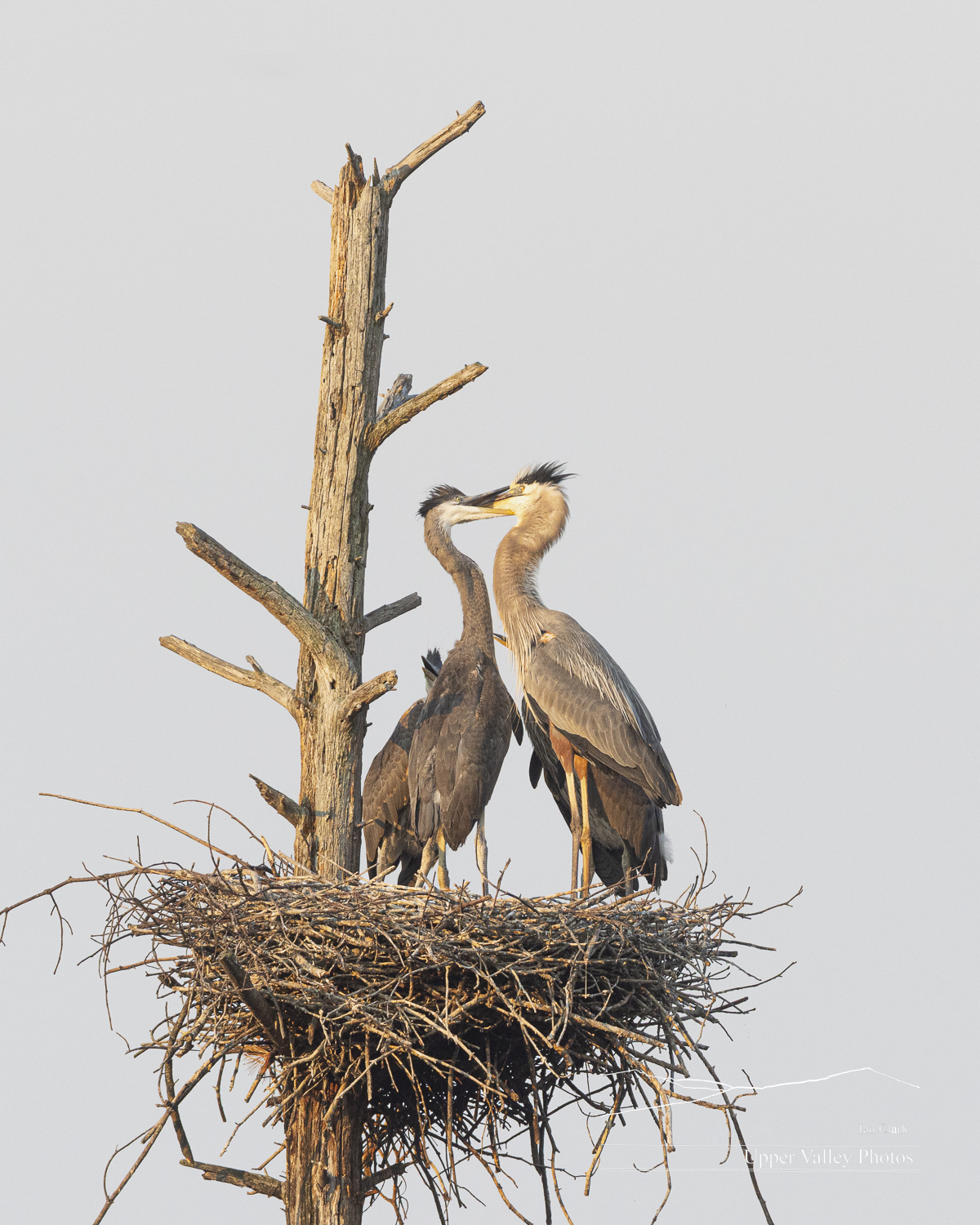
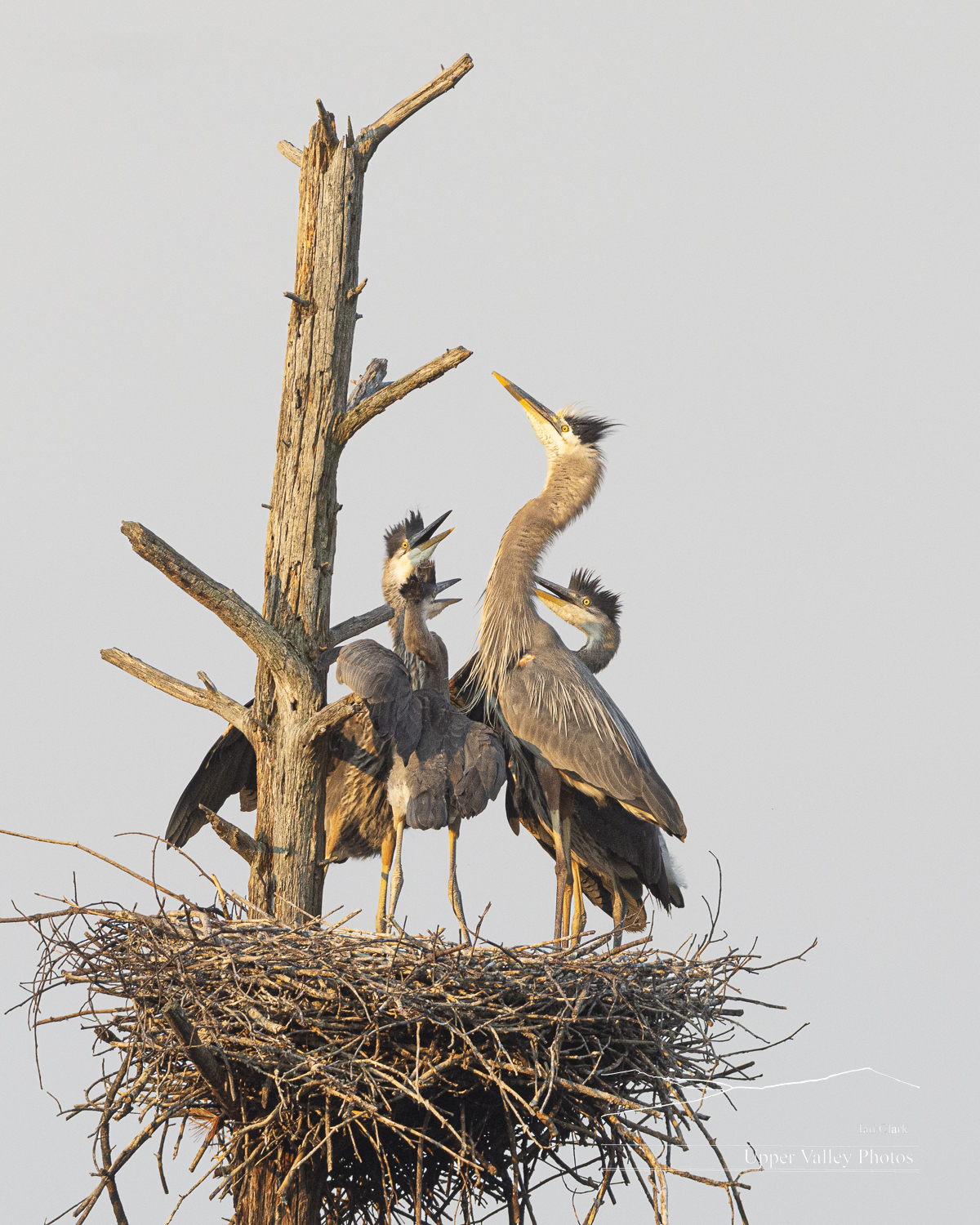
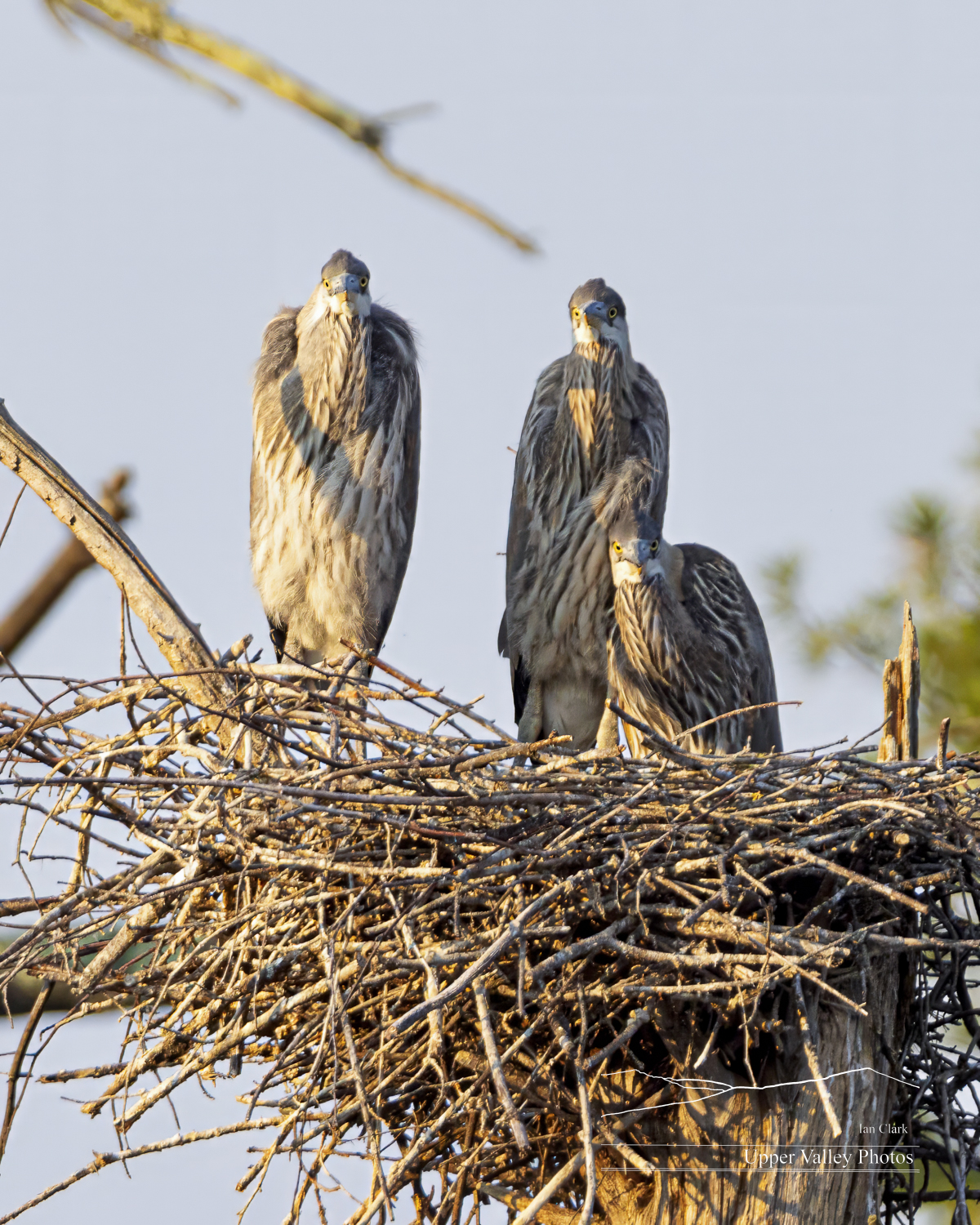
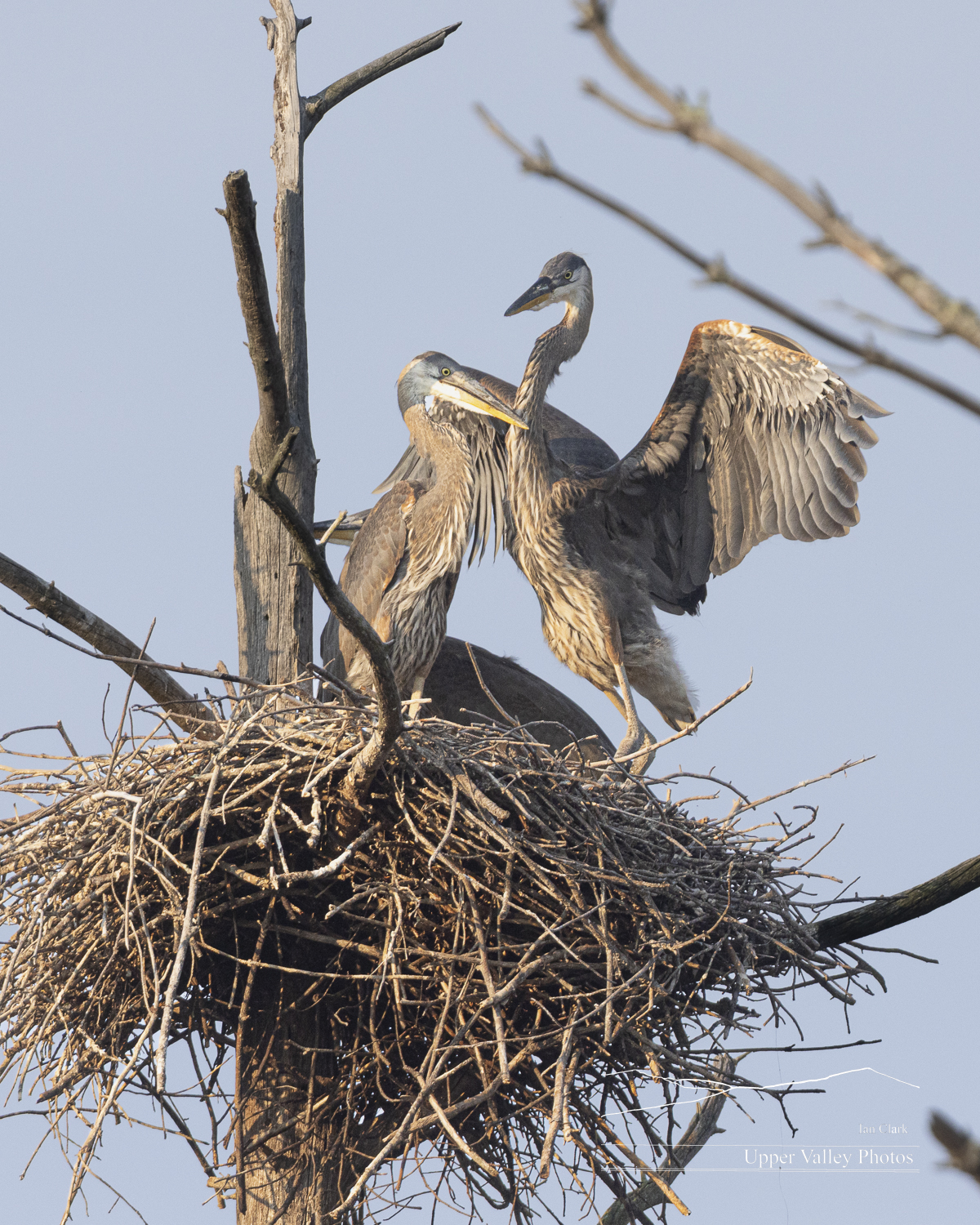
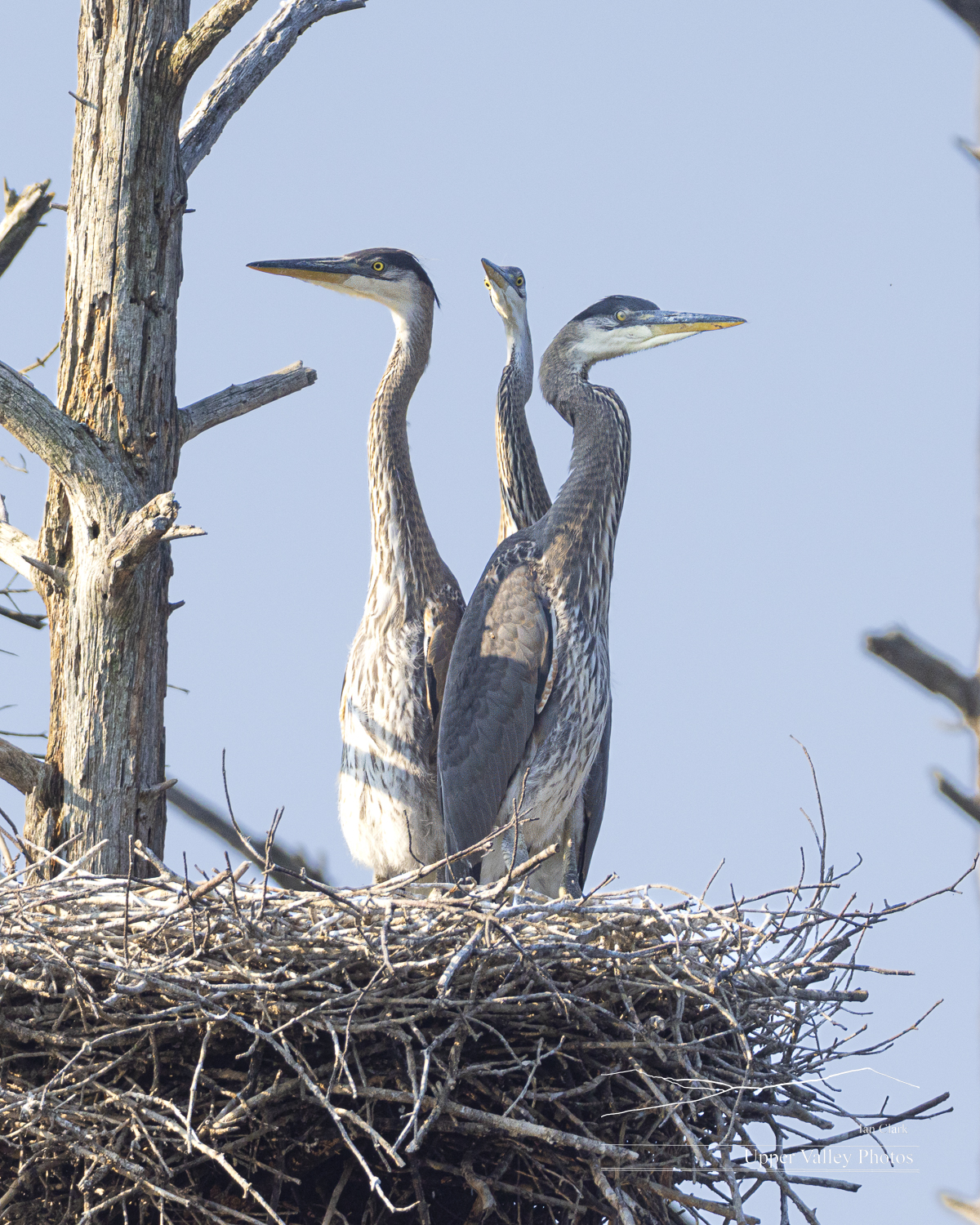
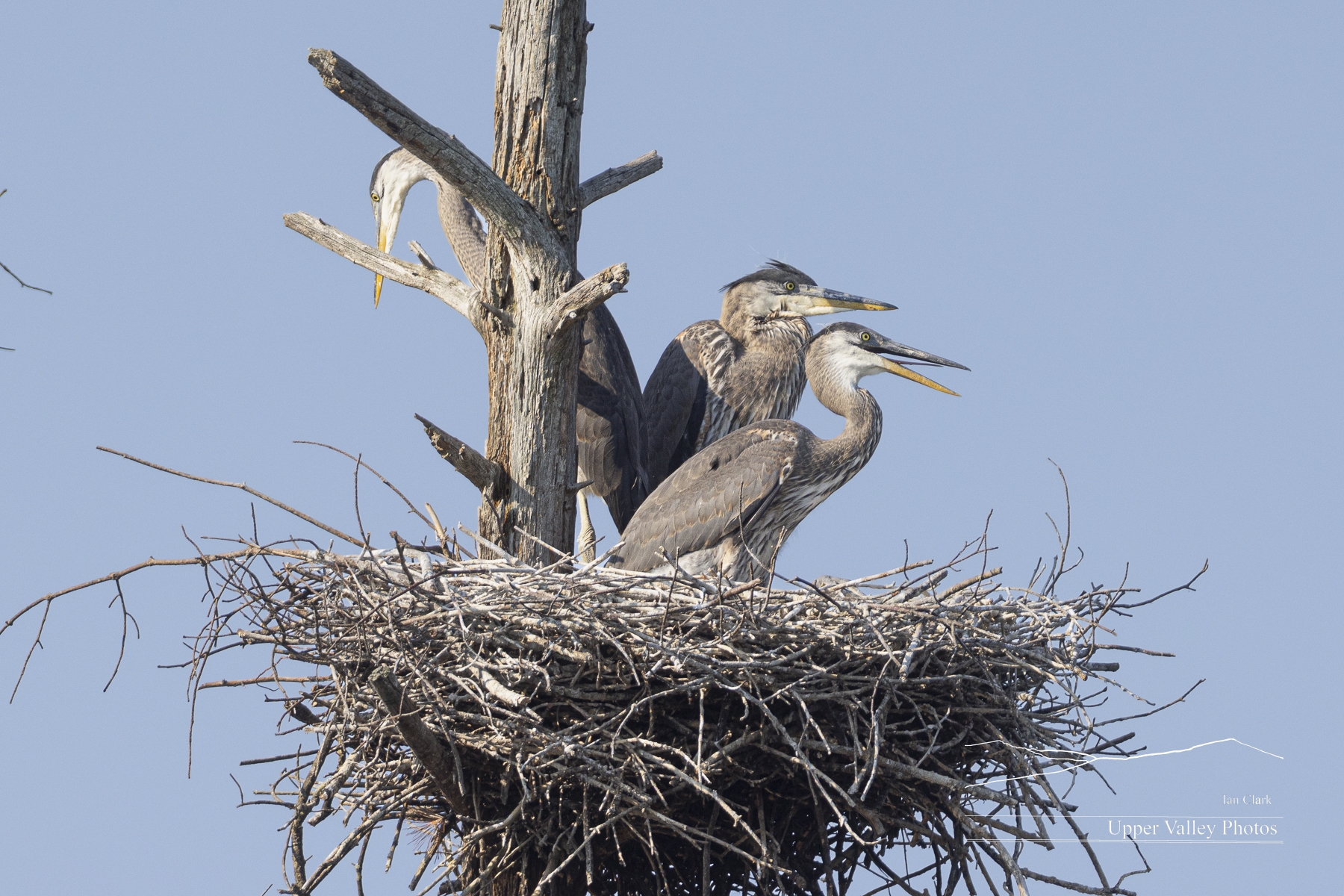
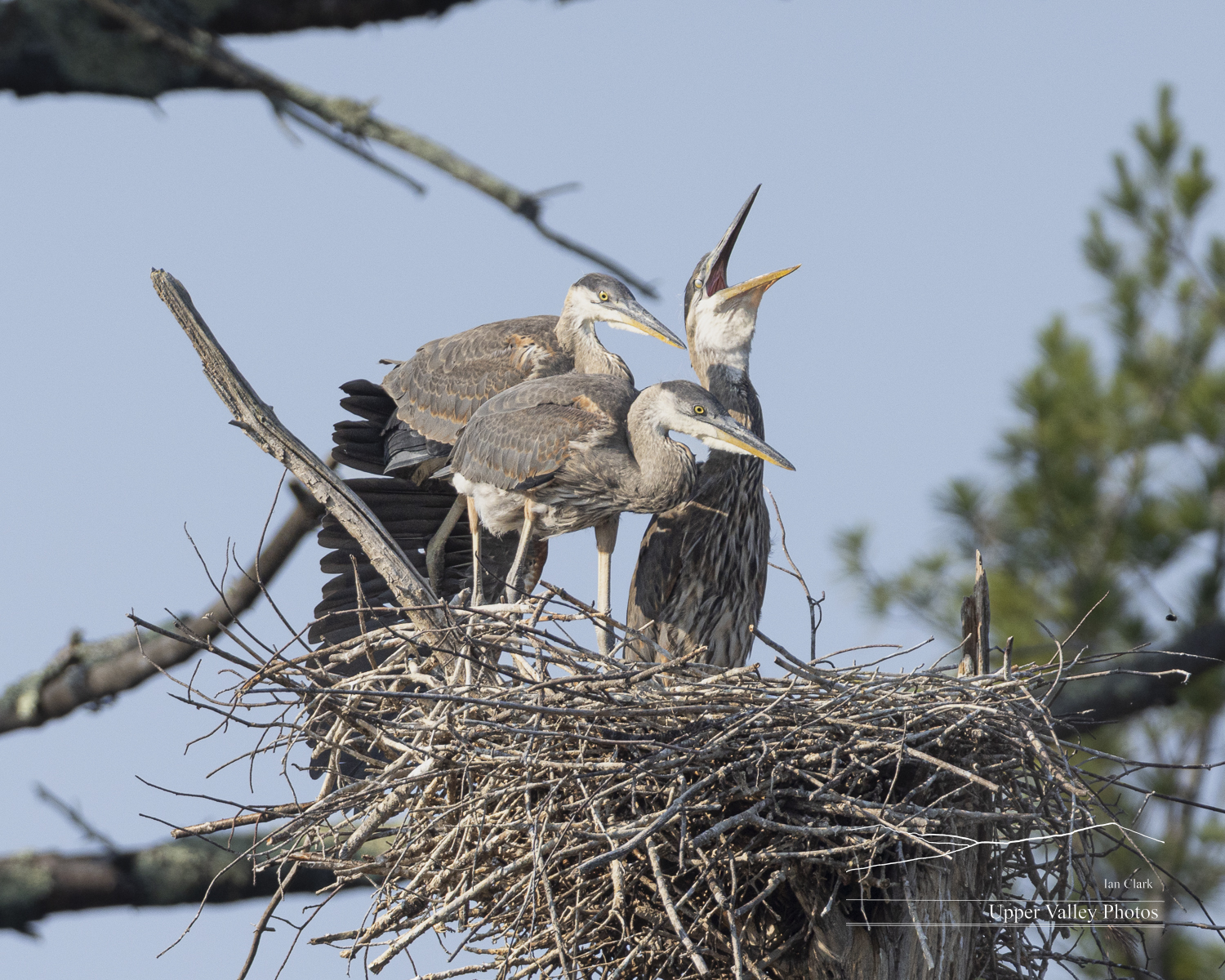
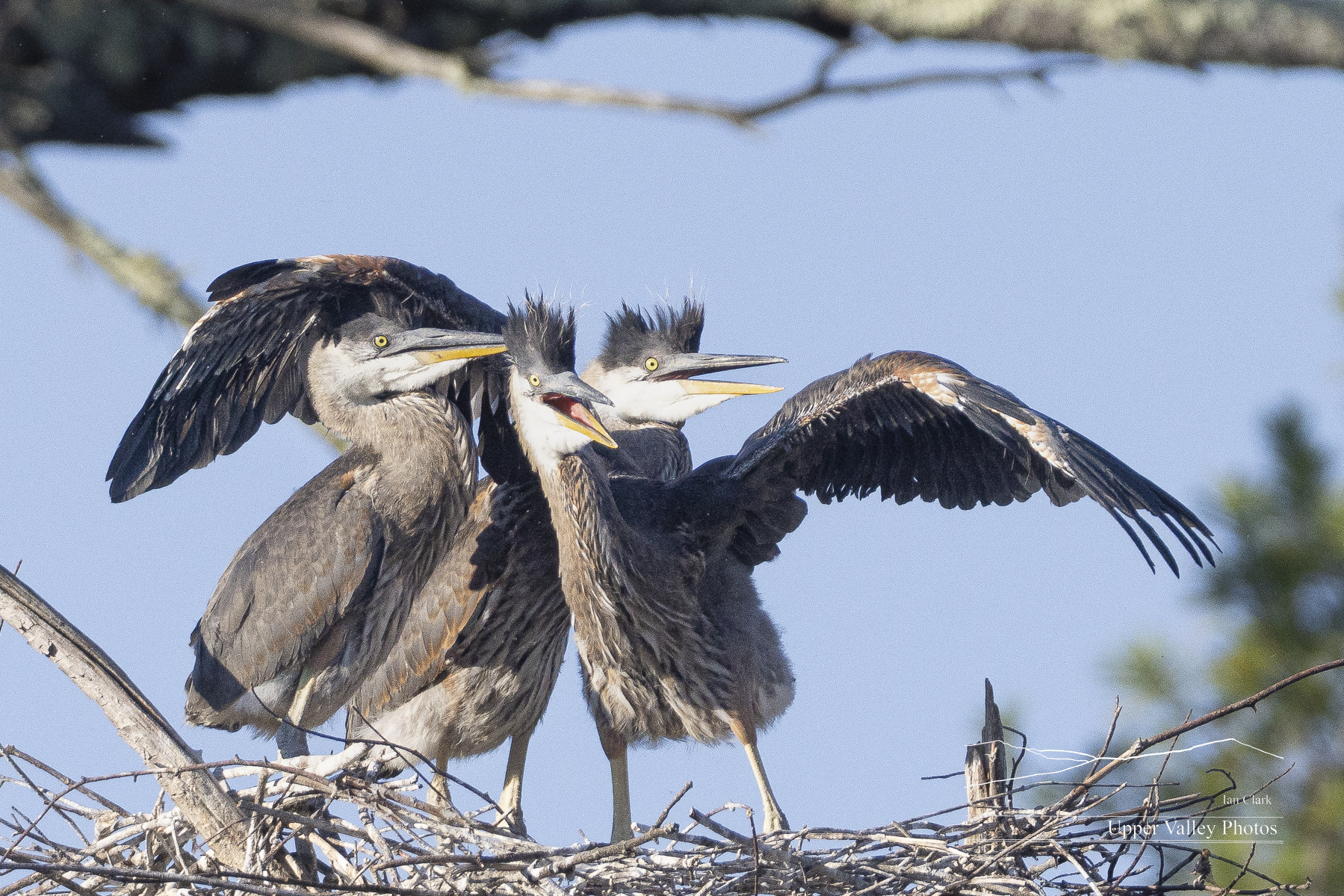
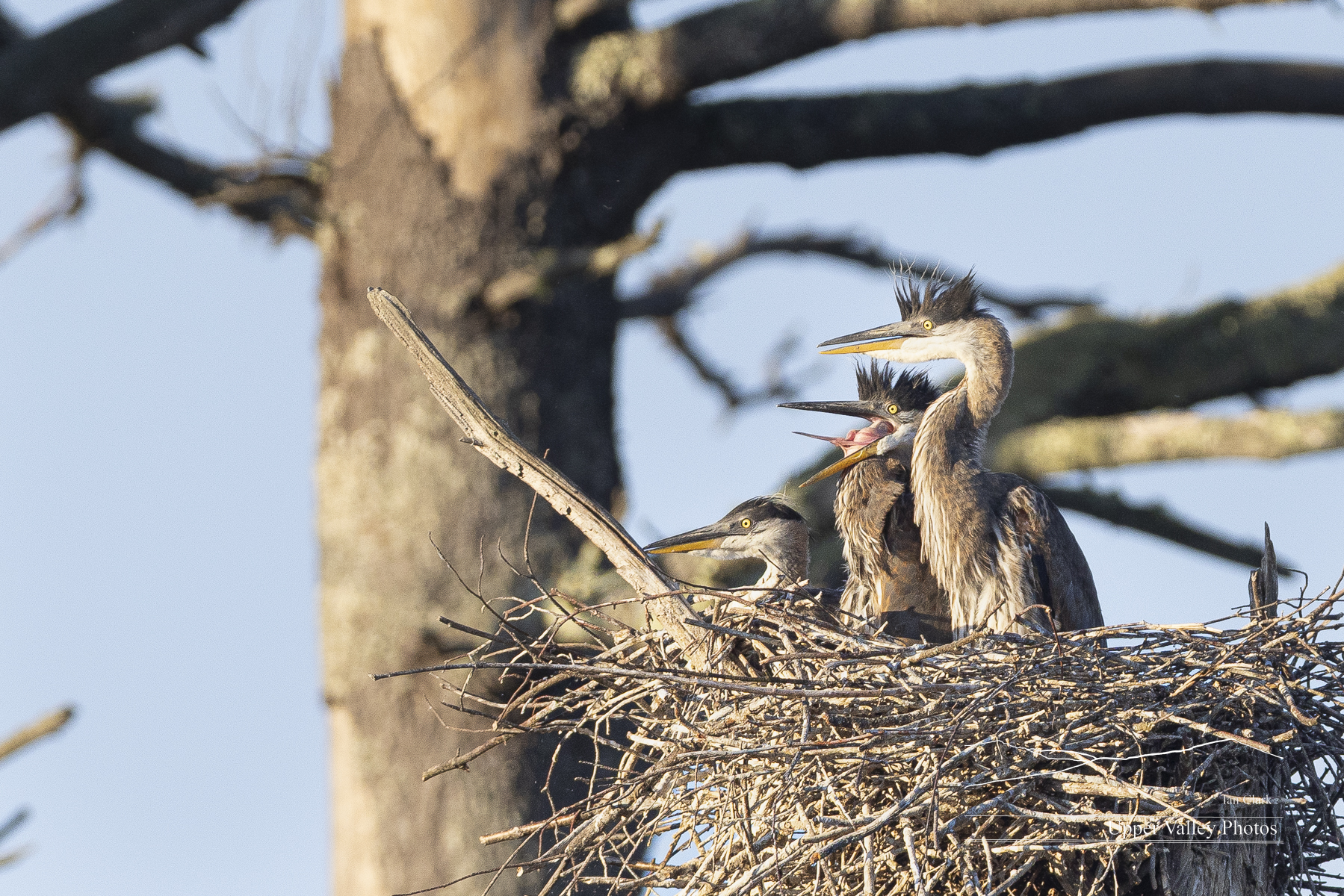
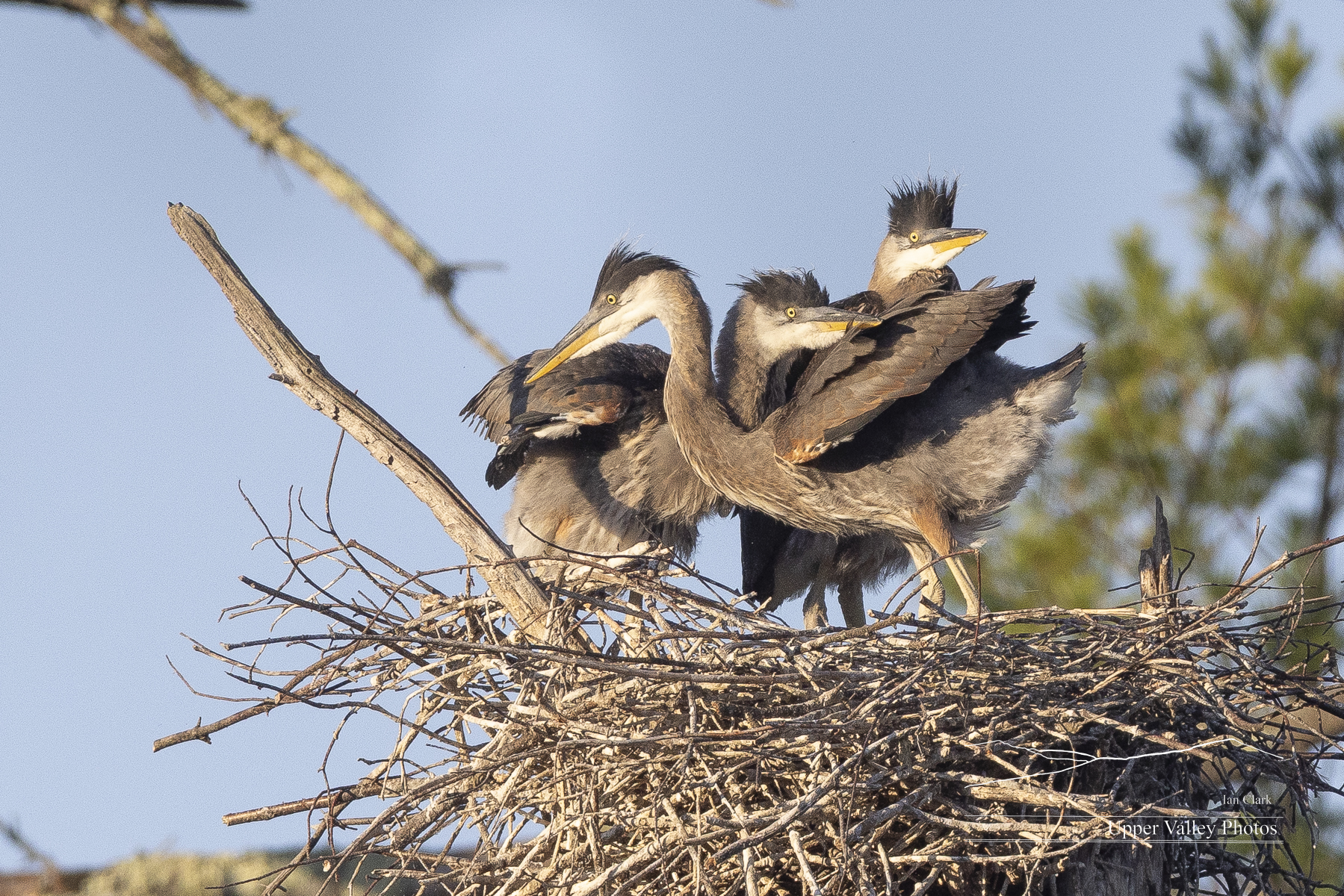
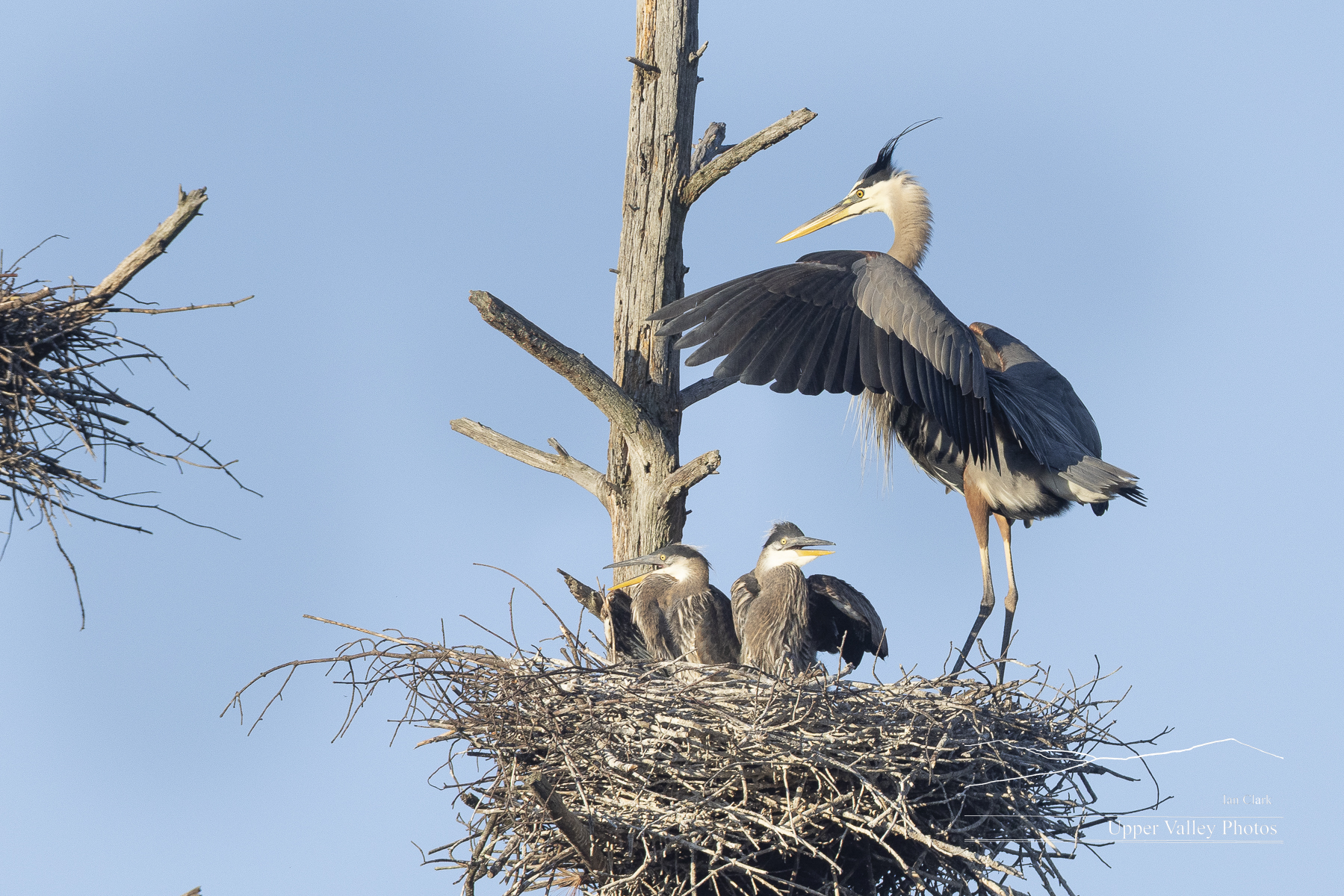
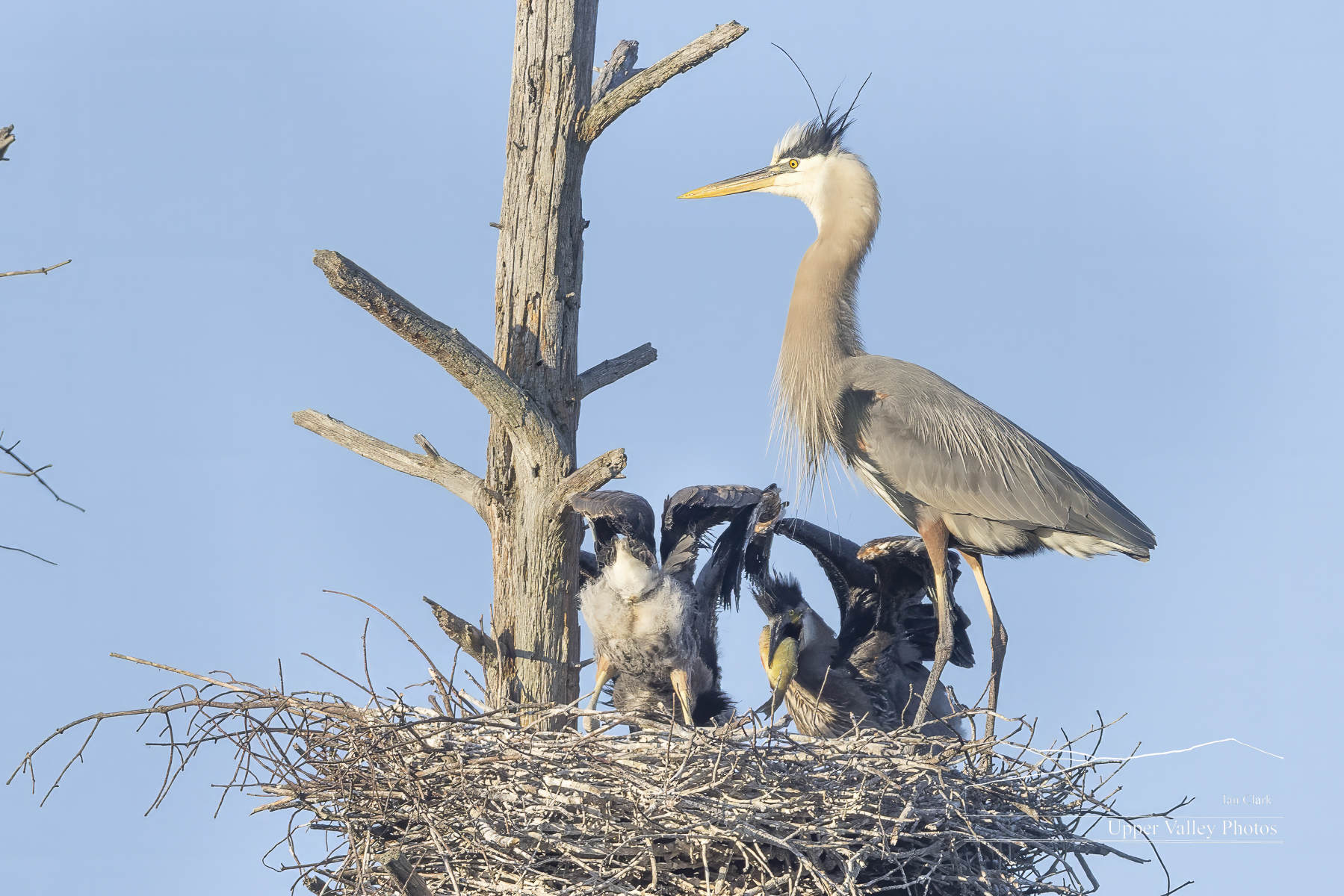
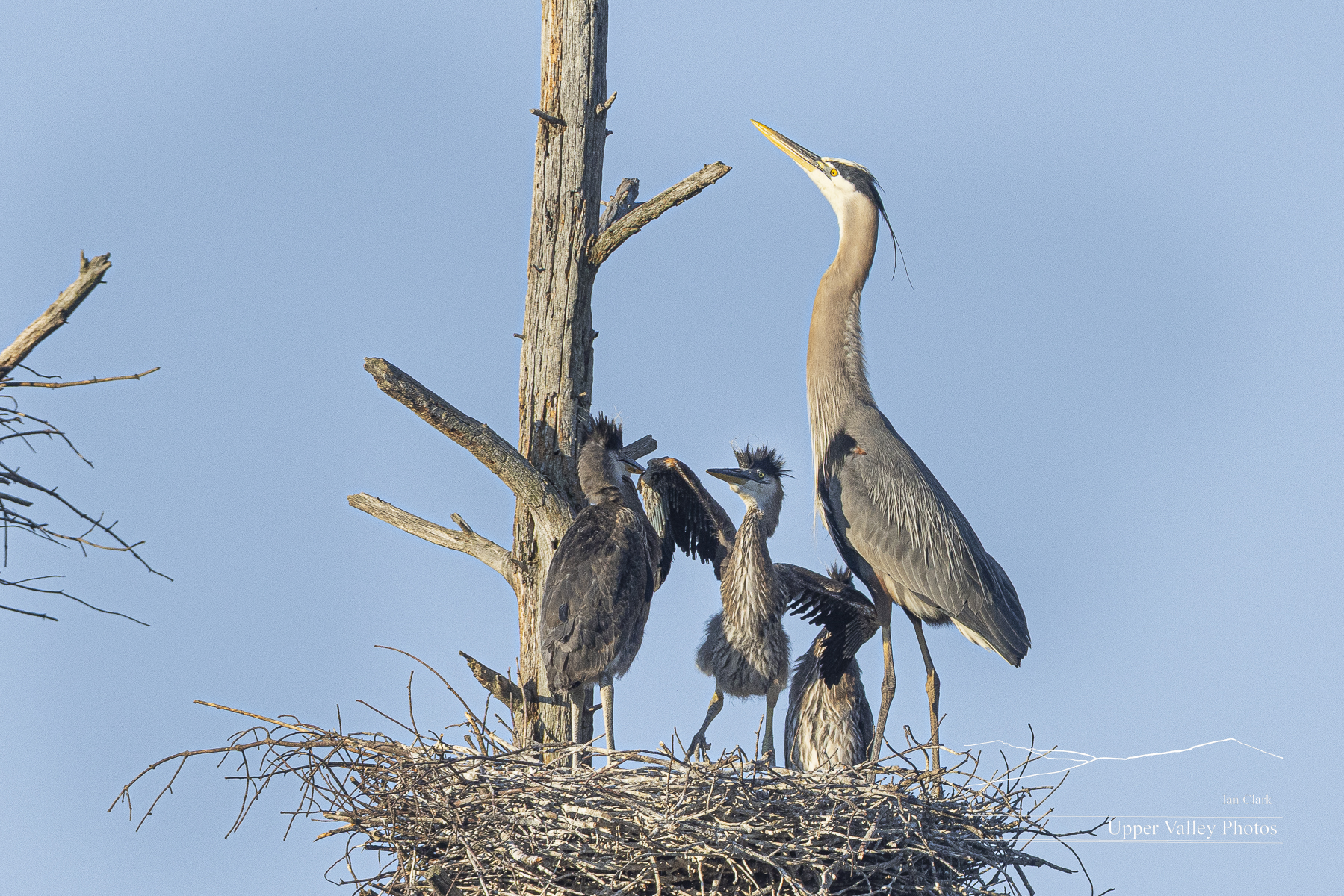
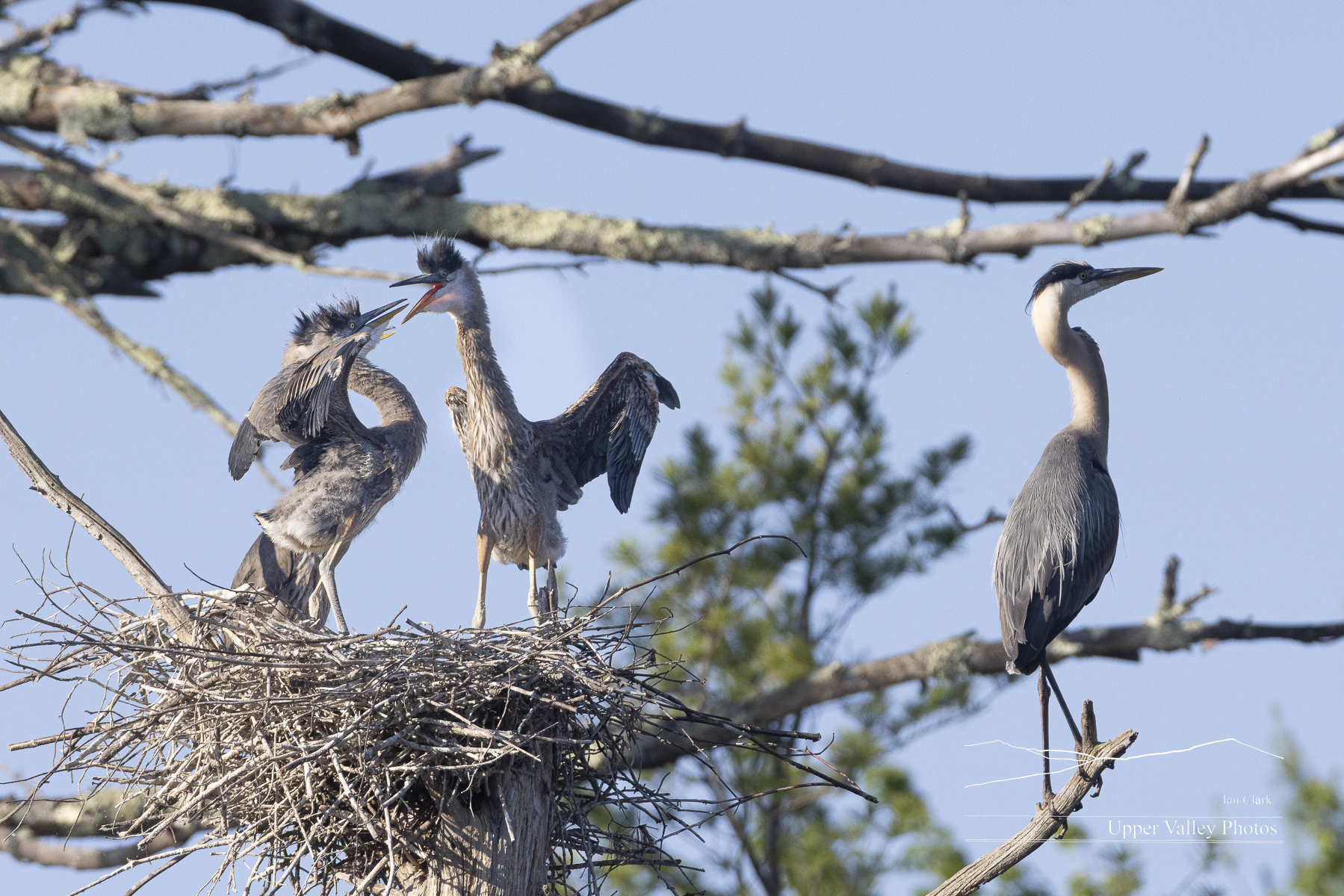
The chicks have grown remarkably since my last visit. These three chicks seem to be the biggest – and probably oldest – in the rookery. They live in what I’ve taken to calling Nest One. It is the furthest on the left and I need some way to keep them straight. They were up and acting up most of the morning. They’re very vocal and called most of the morning.

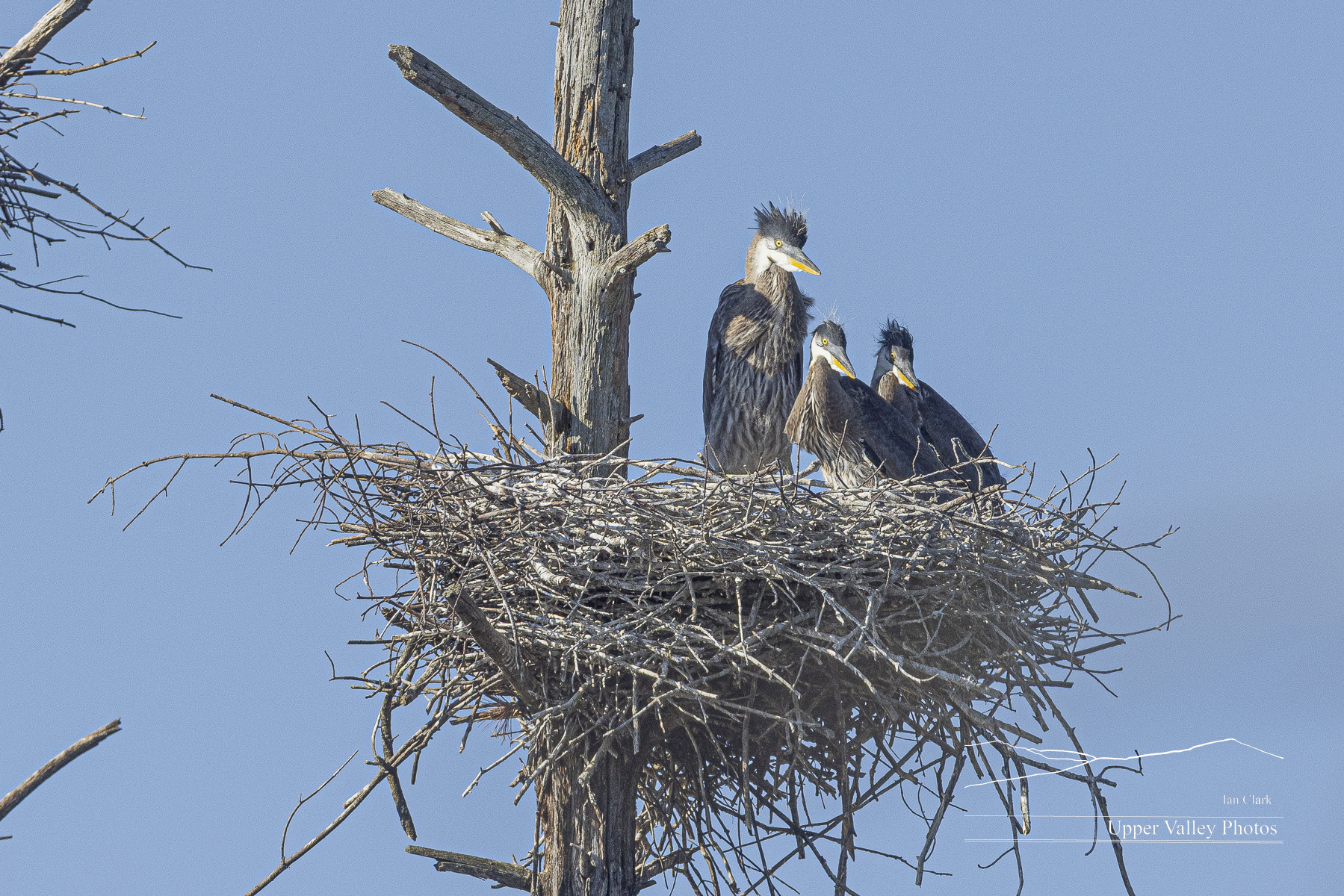
Nest One is getting small for them. Getting photos where we can see all three faces was a challenge all morning. Most of the time there’s usually at least one butt pointed in my direction.

Personal space is not really a thing in a heron nest.

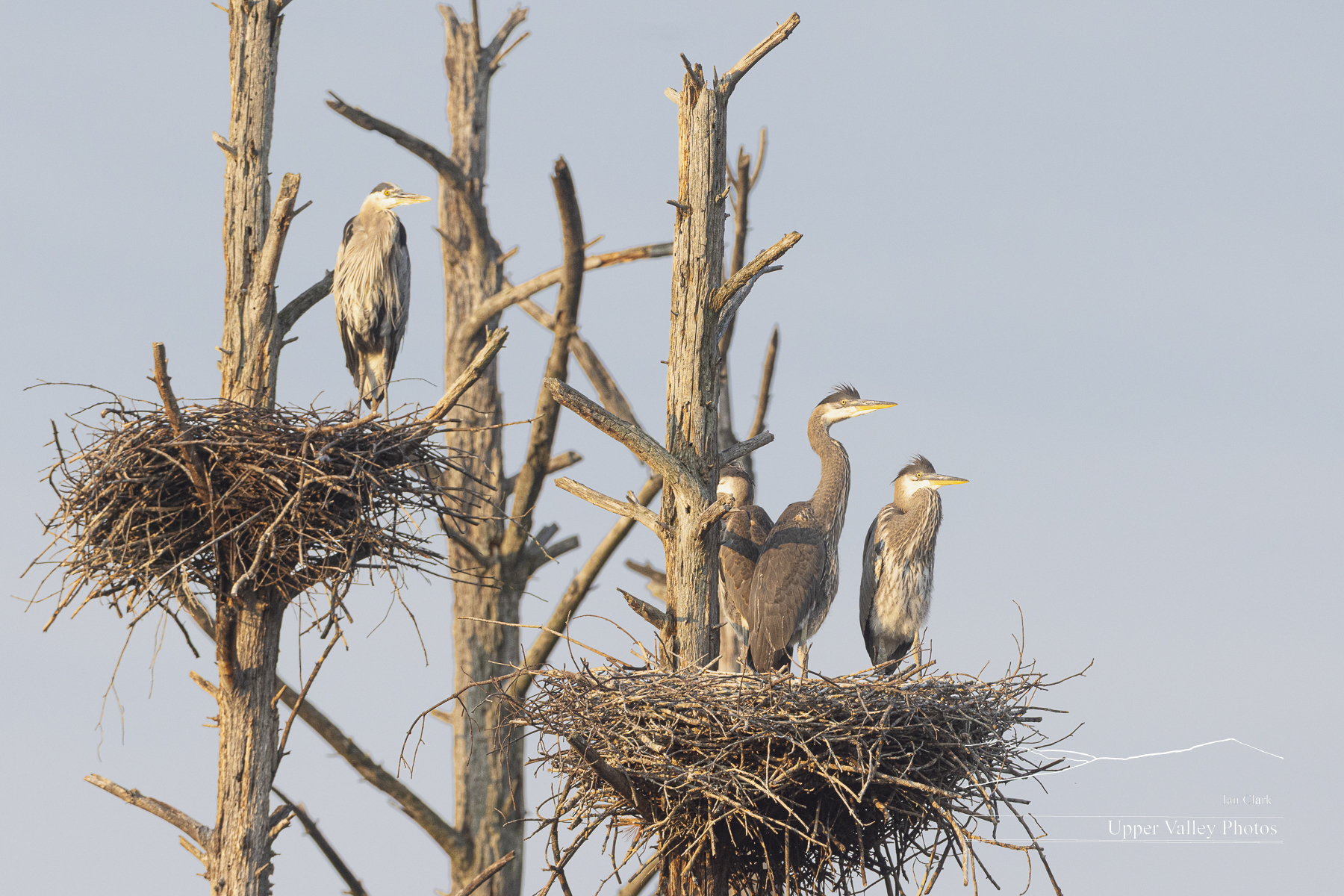
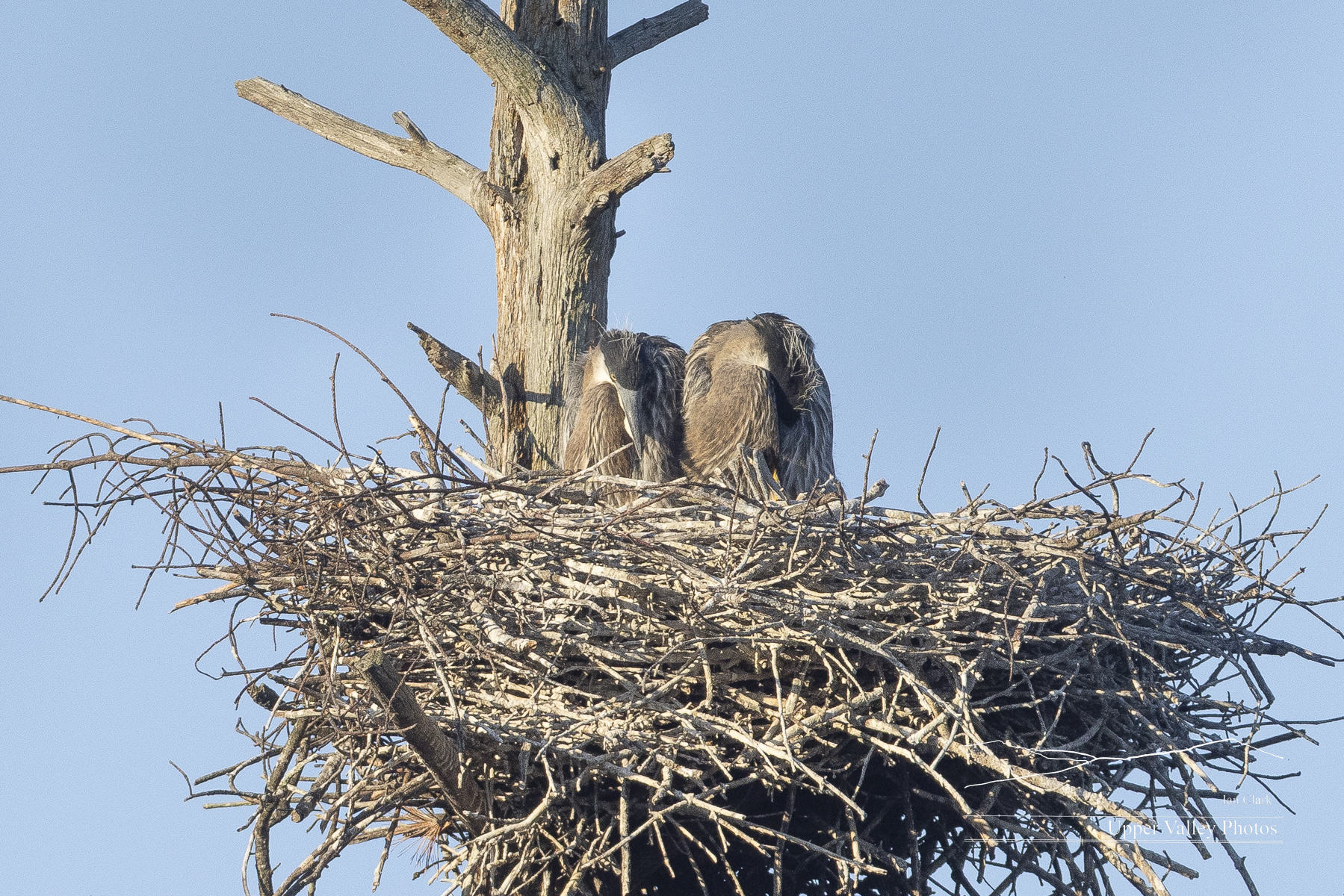
The chicks in Nest Two – the second from the left – were tucked in for a nap.
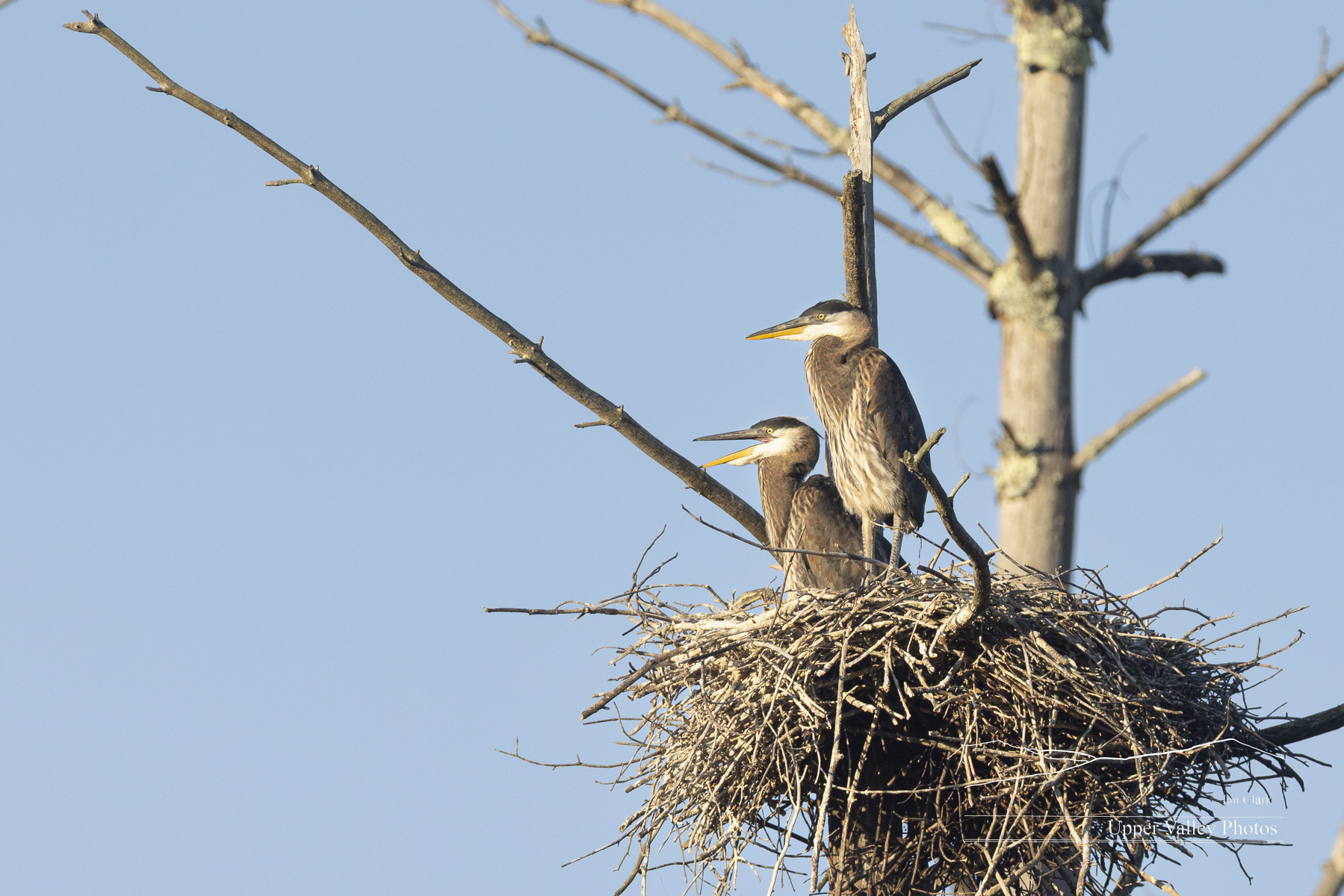
In Nest Three – stay with me here, the third from the left – found these two were sitting up waiting for breakfast. There’s a third with his? head just barely visible.

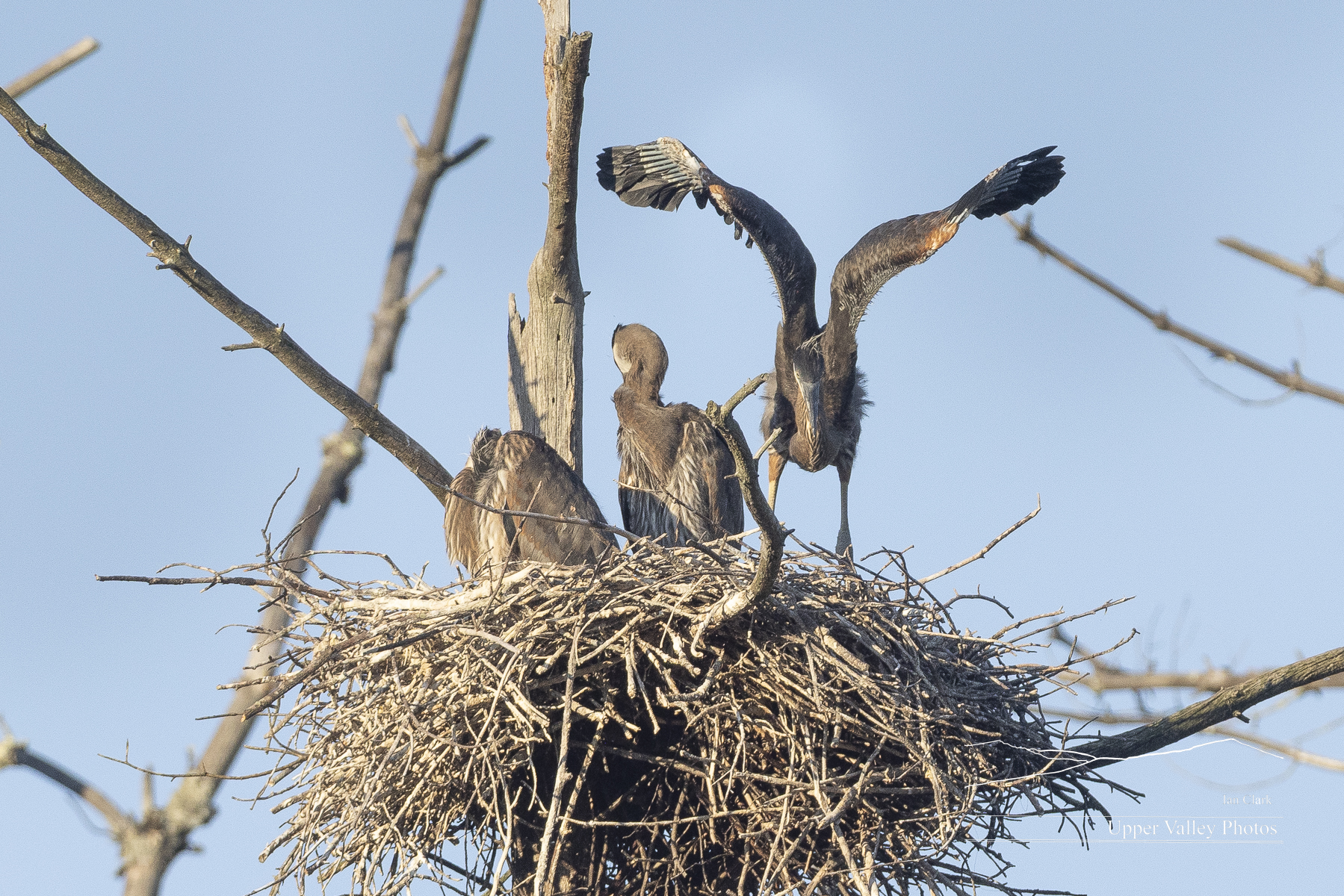
Nest Four found two chicks preening and one doing whatever it is the guy on the right is doing.

One of the parents returns to Nest Two with breakfast. Both heron parents tend the chicks and we can’t tell them apart by looking.

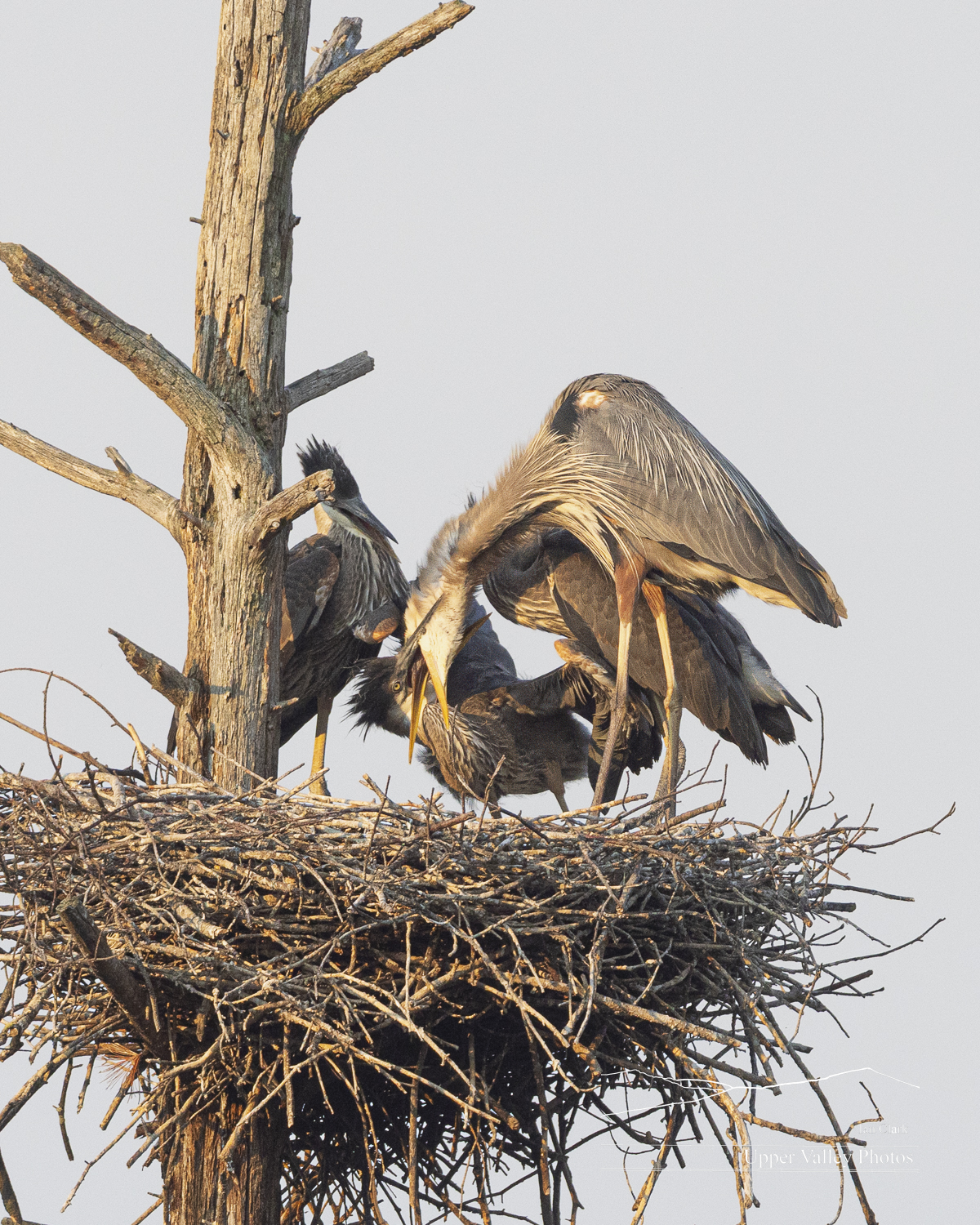
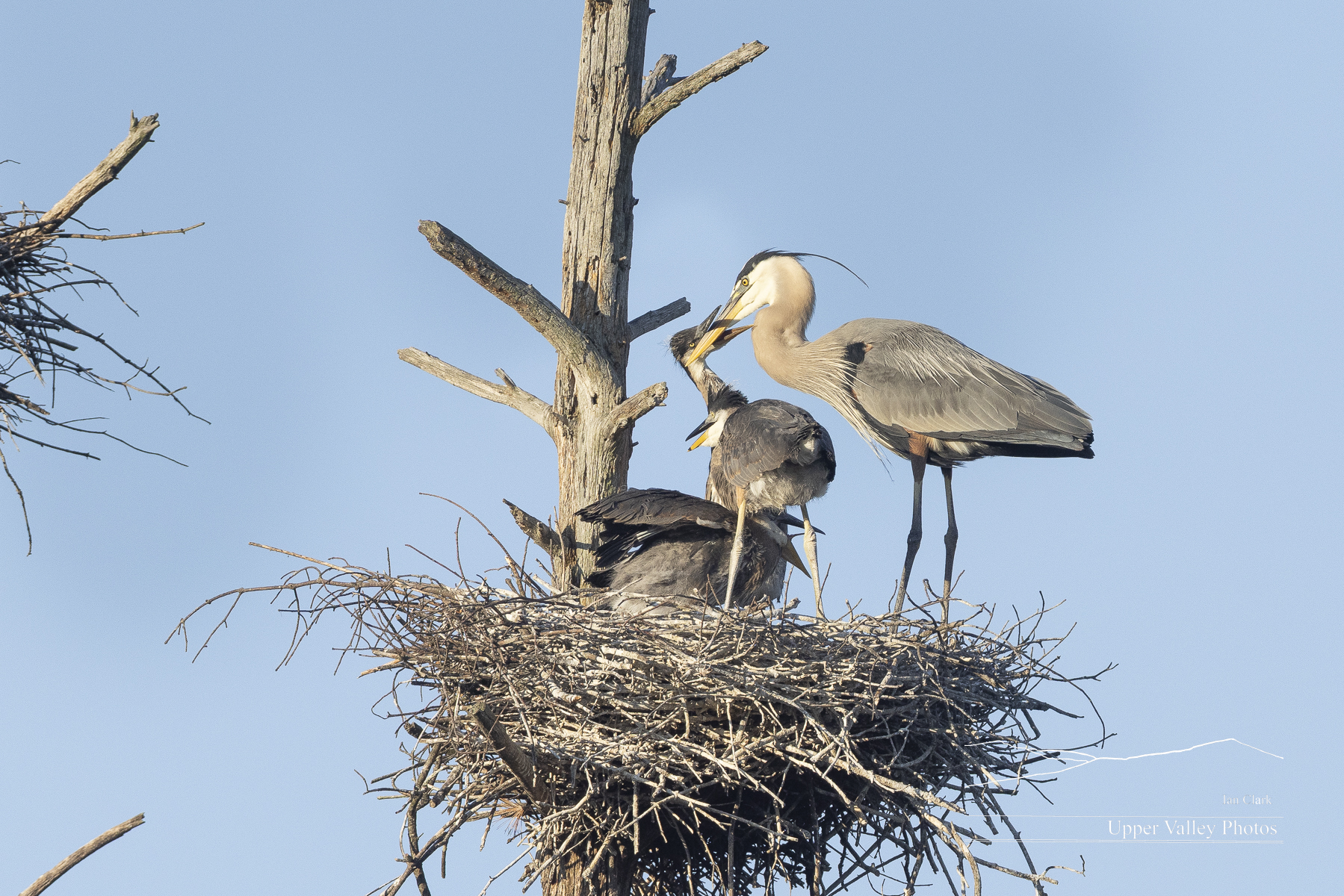
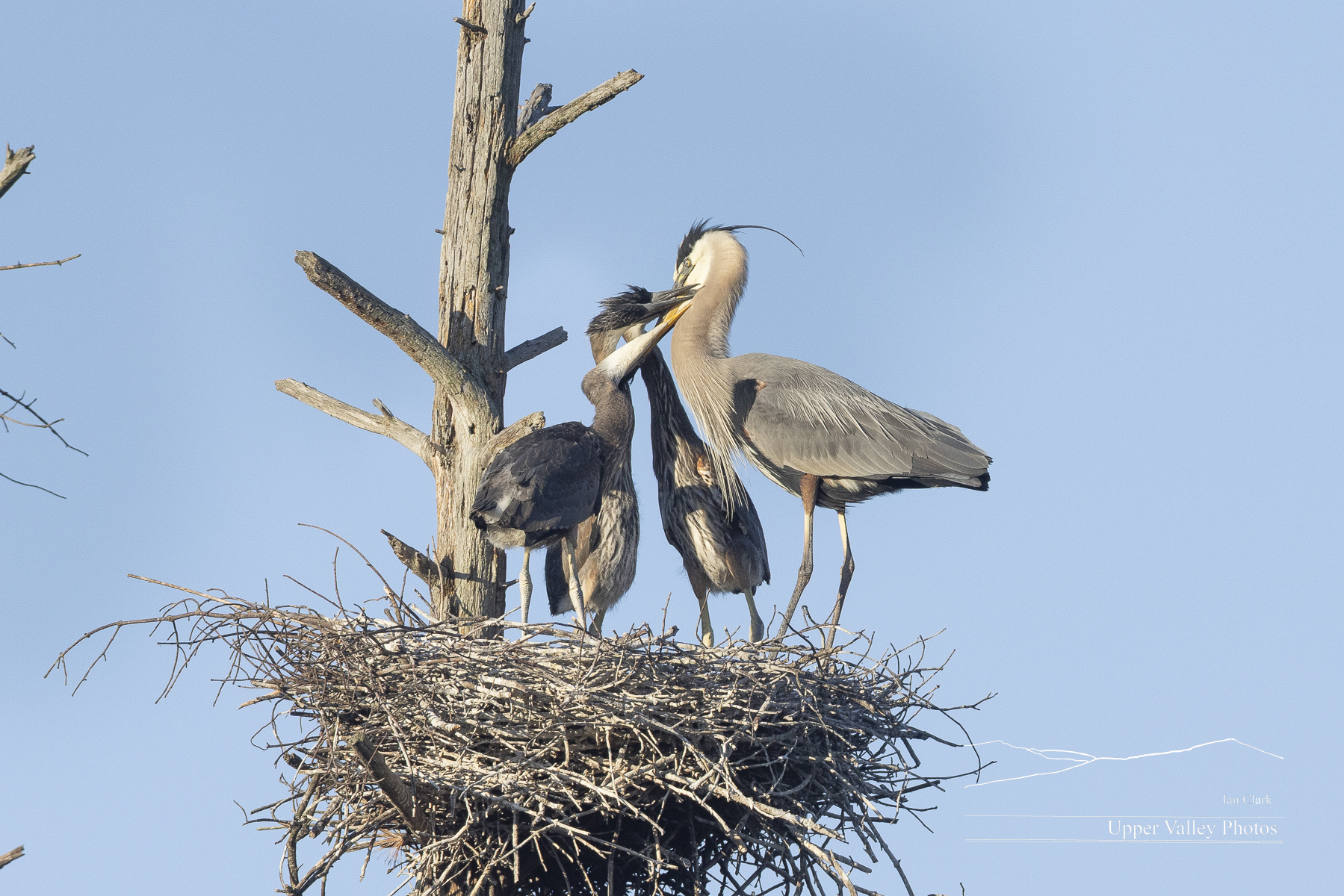
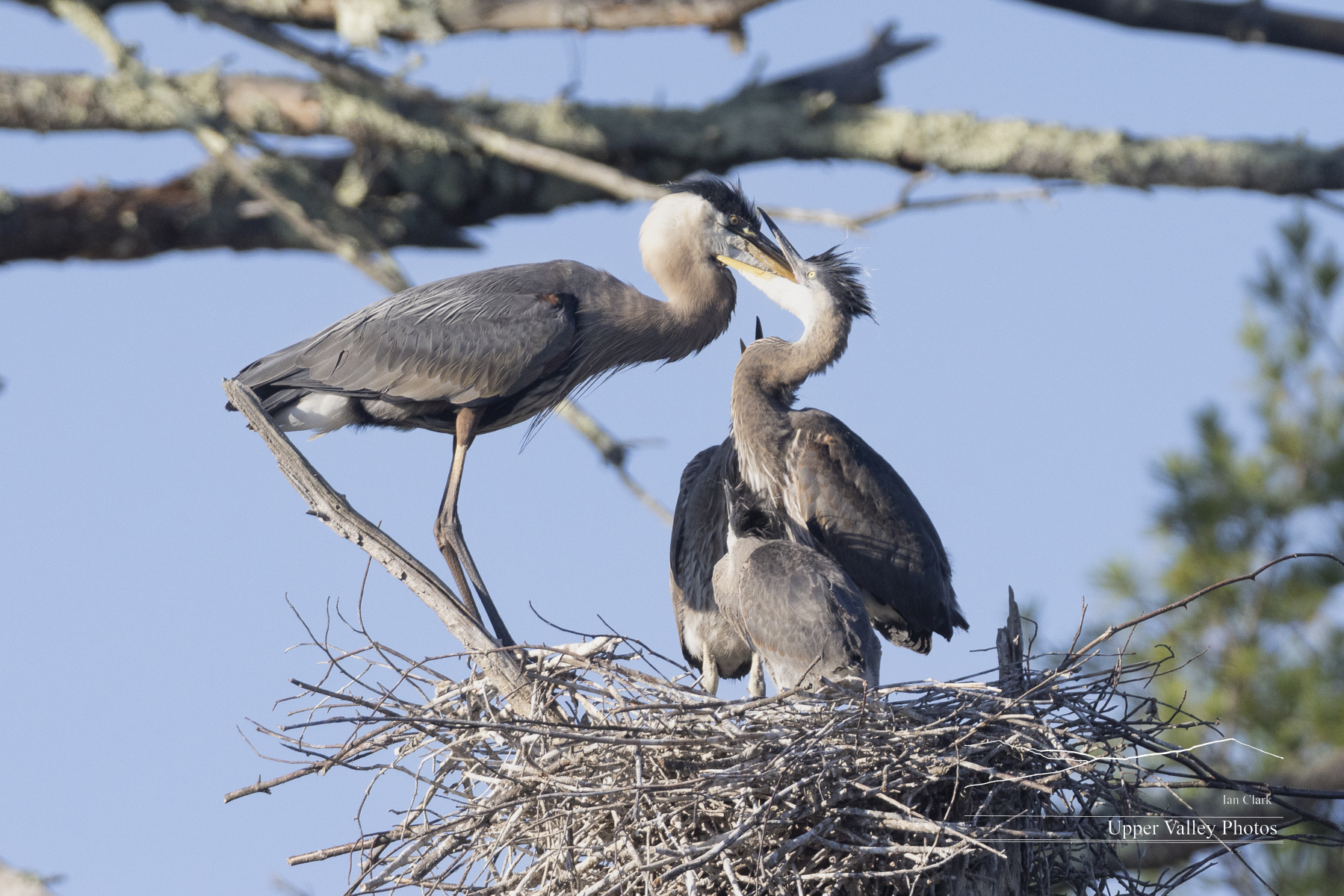
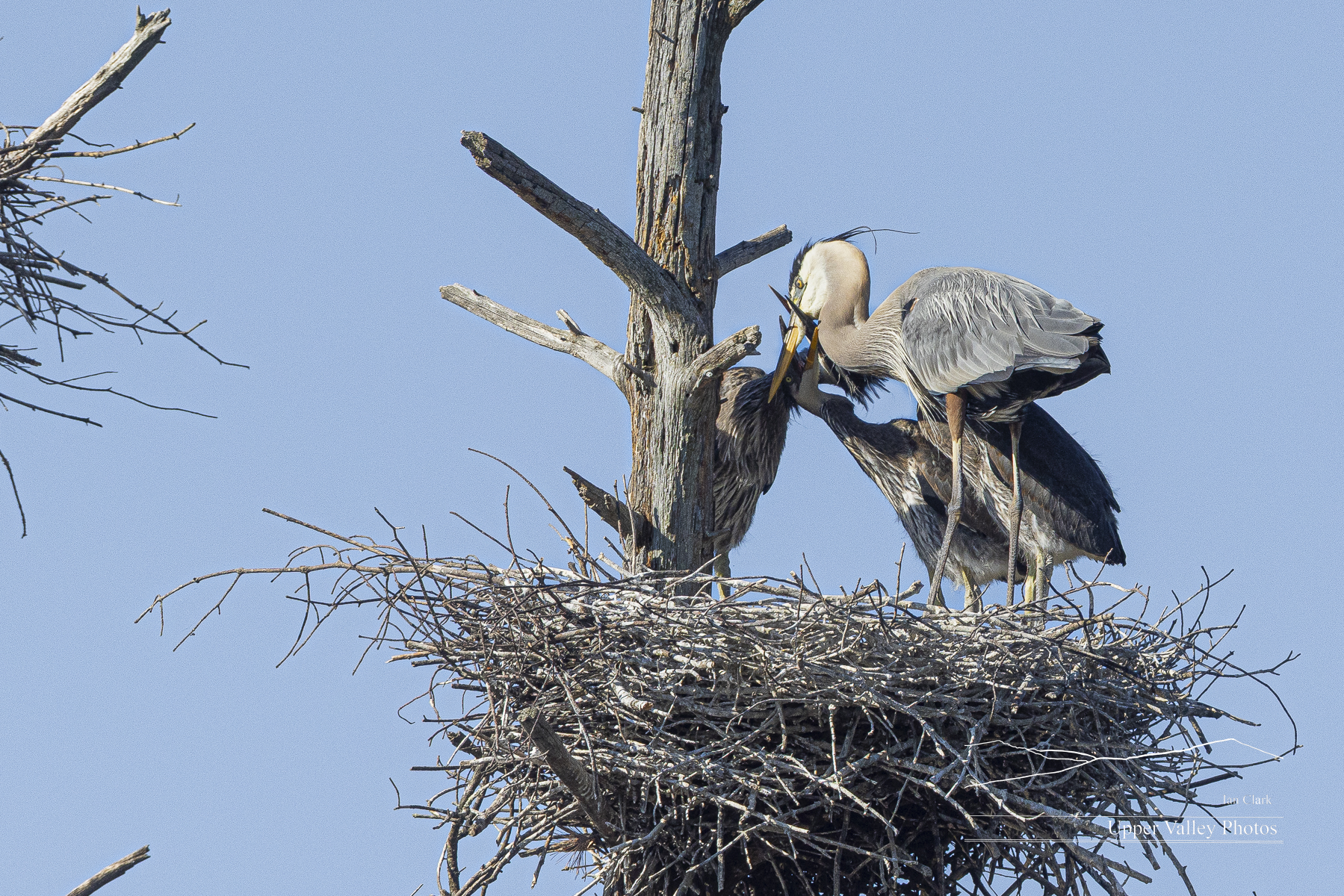
When the chicks are young, the parents feed them by regurgitating food into their mouths. As the chicks get bigger, the parents bring food back and regurgitate it into the nest and let the chicks grab it. Looks like this chick isn’t ready to give up being fed.

And neither are the siblings. They’re all grabbing the parents bill. It looks like this is counter productive. The parent can’t bend over to regurgitate the food while the chicks are holding his bill.

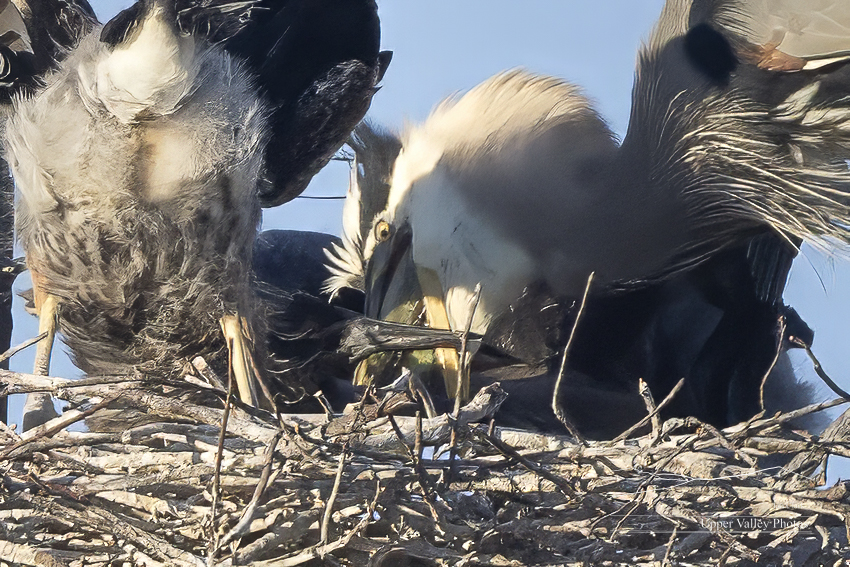
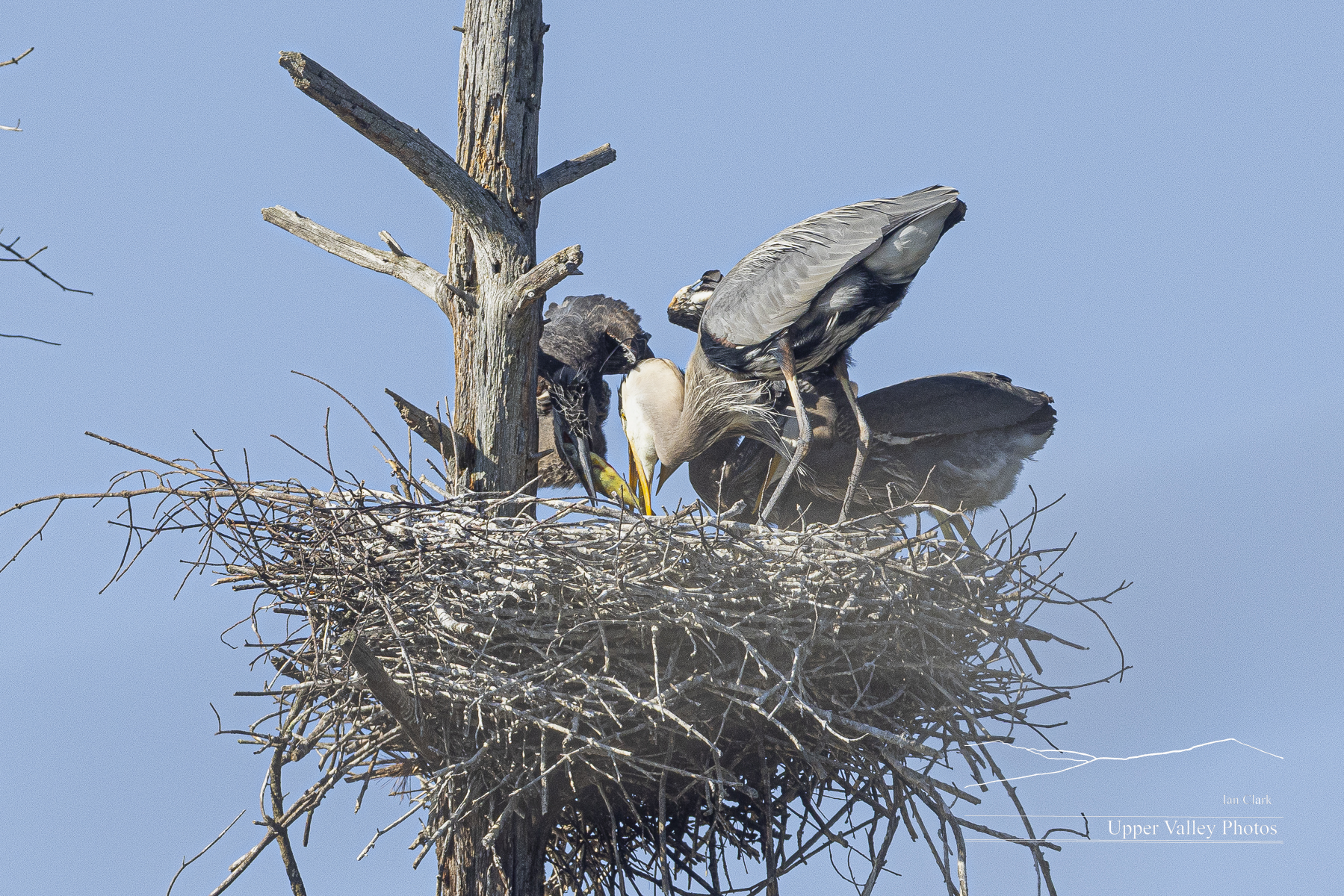
After several false starts, the parent was able to bend over and is regurgitating what looks to be a perch into the nest. That’s a crazy crop, I was probably 130 feet from the nest.

The chick in the middle was able to grab the fish.

And the chick that nabbed the fish sure seemed to do an in-your-face-dance for the siblings.

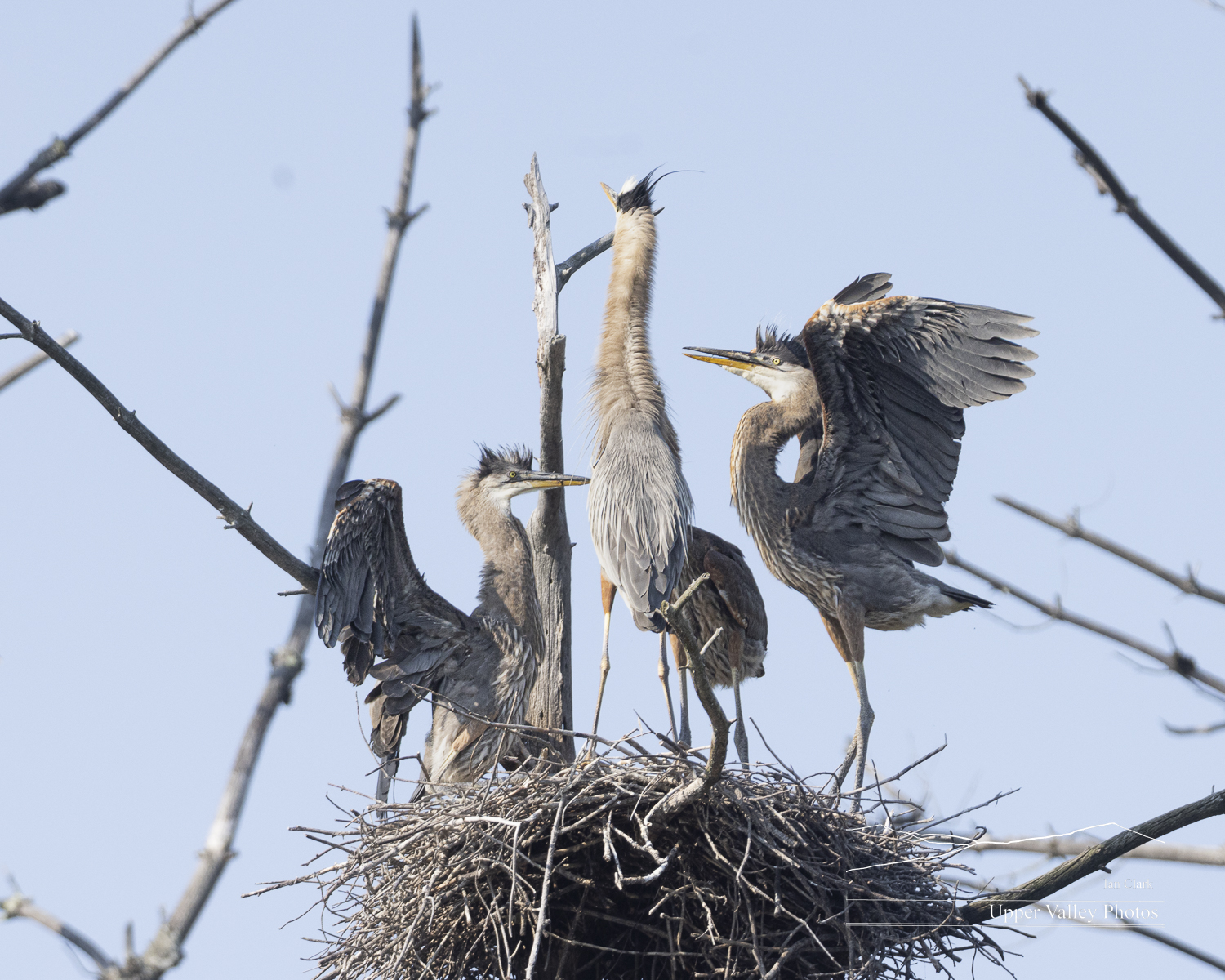
A parent arrived back in Nest One. The chicks here also tried to grab the parent’s bill. This shot looks like the parent is putting food directly into the chick’s mouth. The parent had food for all three chicks. After dropping the rest of the food, the parent hopped to a branch about 10 feet from the nest.

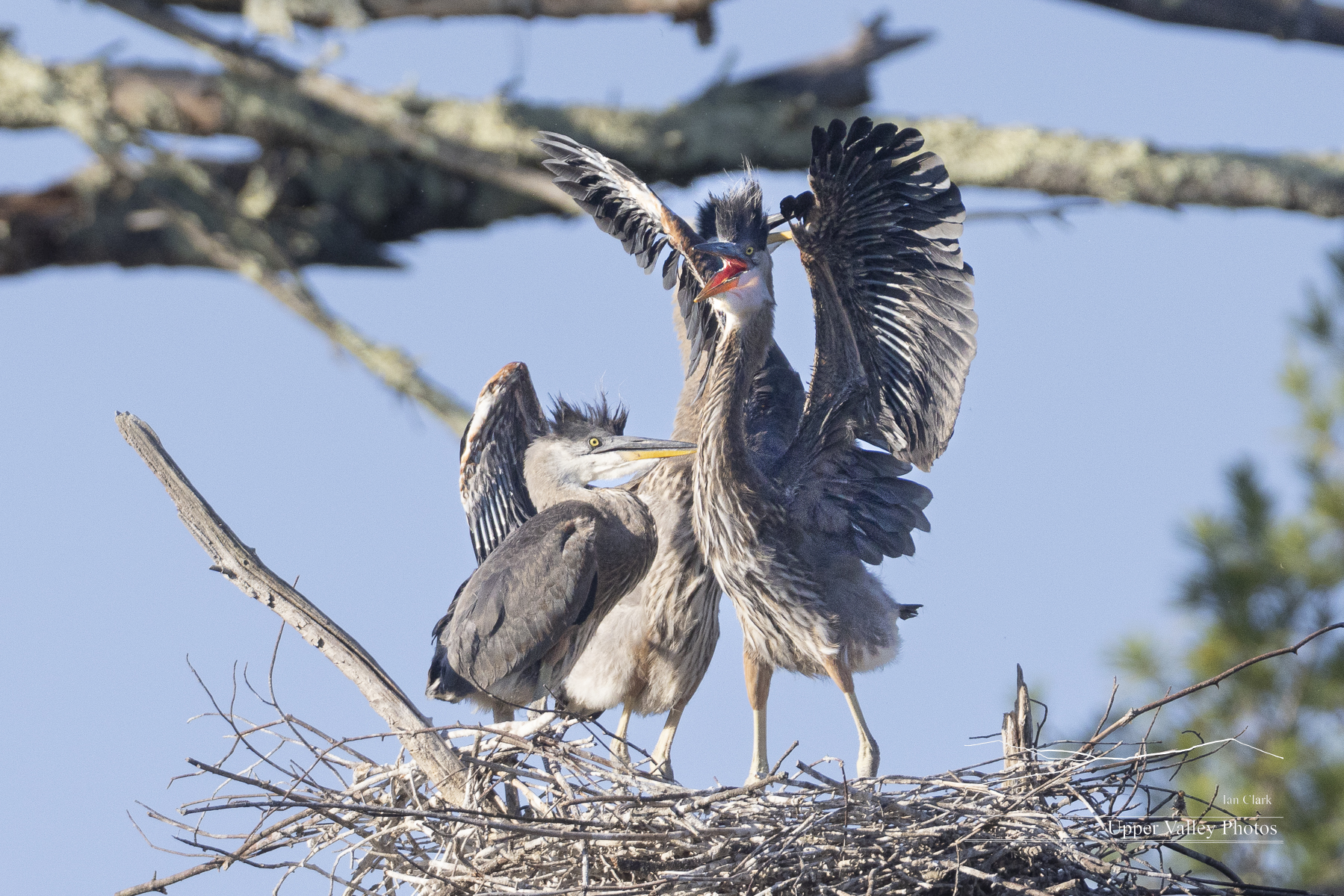
The chicks started throwing a tantrum, trying to convince the parent they were starving. The parent ignored them. The chicks acted up for several minutes.

Mom! Mom! Mom! Look! Mom! Look at us! We’re starving! Mom! Mom! Mom!

The parent didn’t want to hear it.

The other parent has arrived back at Nest Two. Only to have the chicks all go for his bill.

The parent drops what looks like another perch into the nest where a chick immediately grabs it and swallows it.

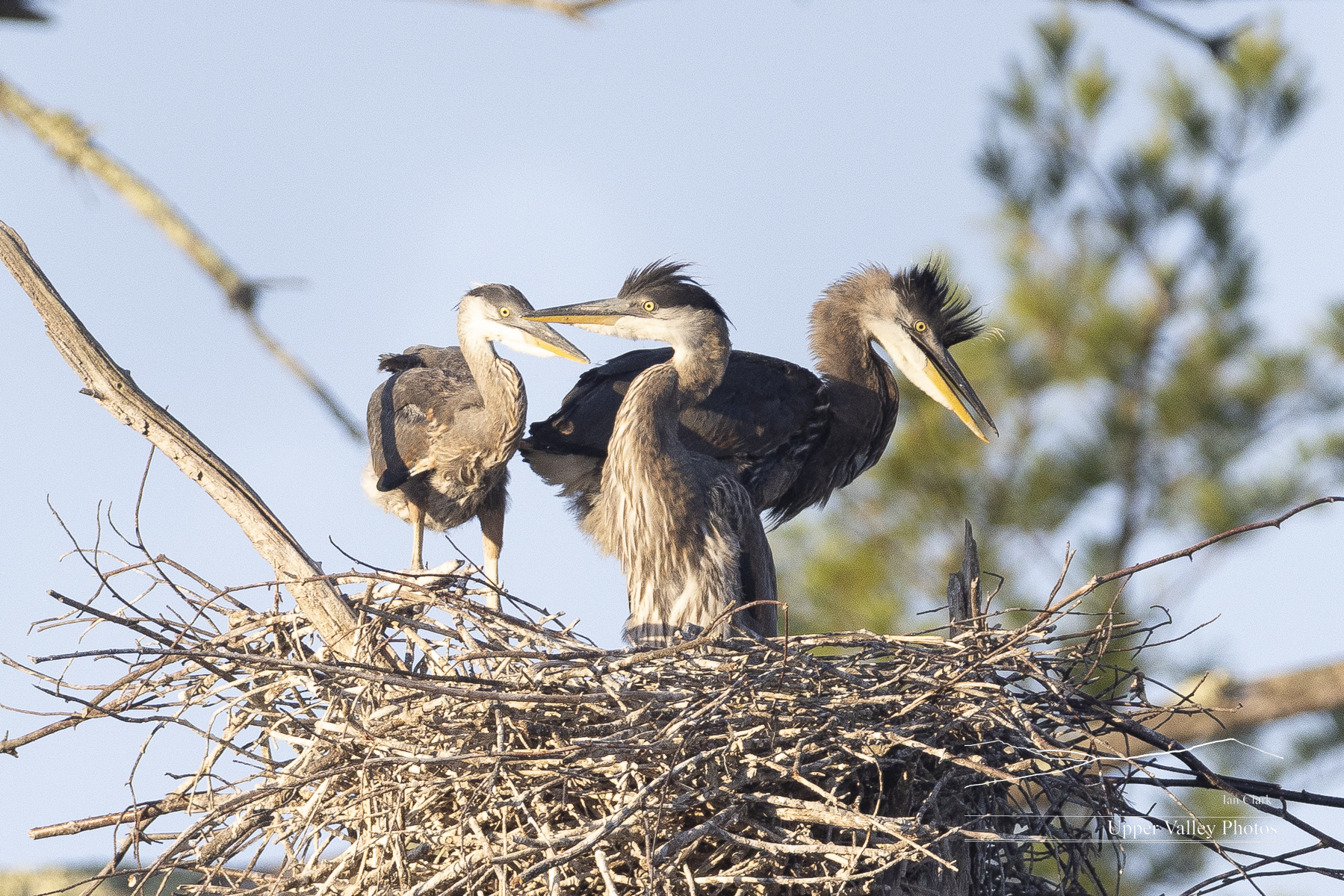
After the parent left Nest Two, the chicks posed nicely. The chicks in Nest One were still putting on a show….

Last week, it looked like a wren had taken over the bluebird box where they raised a family earlier this year. In the last couple days, the bluebirds have reappeared. Ownership of the box appears undecided. I’m kinda rooting for the bluebirds. The wren’s song was cute the first couple days, but she over does it.

If you enjoyed this post, please subscribe to get notified of future posts with the form below. I won’t share or sell your info, you’ll just get an email when I add a post. And you can help me out by sharing this on social media or with your friends. Thanks!
News from the Eastons and Middletons

The road to the Easton’s pond is again more or less passable and I got out to visit them and I made a call on the Middletons a couple days later. Let’s see what they’ve been up to.

And I’ve been printing and framing new images for the Berkshires Art Festival in Great Barrington, MA on July 3, 4 and 5. I’ll have note cards and prints large and small for sale. Please come by and have a look.

Local folks, I’m doing a calendar fundraiser for Oscar’s Memorial Dog Park – the park behind the Newbury Veterinary Clinic. I’m looking for volunteer dogs to photograph. I need about half an hour in the park with you and your dog. You get to have fun playing with your dog while I take some photos. I’ll send you printable jpgs of the best shots and your dog may make it into the calendar. Let me know if you’re interested.

Tuesday morning well before dawn, I headed out to visit the Eastons. I’d stopped by the pond the last time I went past. The dirt road is passable, but grading would be a big help.

On my way to the pond, I passed a bear and her cub enjoying a meal from a curbside trash can. I’m not sure curbside trash pickup and bears are a good mix. The story won’t end well for the bears if they get used to finding breakfast in the trash.

There were three loons on the pond when I paddled out. Two were defending a territory on one of the islands, the intruder was holding back a bit. There were skirmishes throughout the morning.

One of the pair defending a good looking nesting site.

The loons were doing a lot of aggressive diving. Aggressive diving is a challenge to the other loon(s). Someone asked once how you could tell when the dive is aggressive. The best answer I can come up with is you can tell the same way you judge your wife’s mood by the way she closes a door.

There was also a fair bit of wing rowing – another challenge.

After I got a good look at all three loons I saw that last year’s Mr. Easton wasn’t on the pond. He’d been challenged regularly late last season. He may have been driven off the pond or something may have happened to him over the winter. He may yet reappear on his pond, or another pond. He’s banded so it is possible we can find out if he’s spotted. This is one of the pair defending the territory coming over to check me out. He? decided I could stay.


The dispute moved down the pond. Each loon was displaying how big and tough they are – certainly not loons you’d want to mess with.

Oh yeah? You want a piece of THIS?

You don’t mess with me pal! The dispute was unresolved when I had to head in.

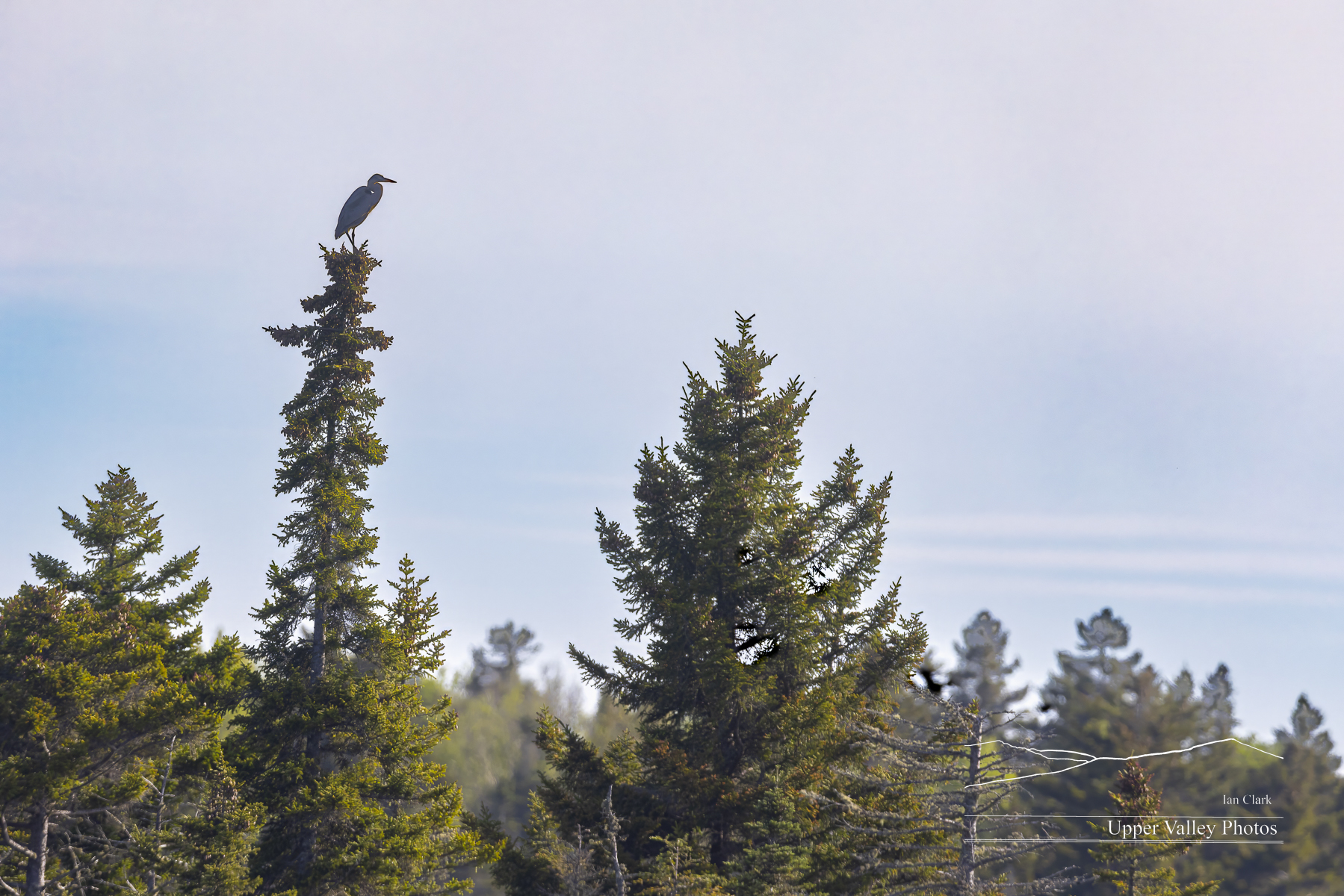
While the loons were skirmishing, Hank the great blue heron and his friend Charlize T. Heron flew in. Hank got a good spot to look over the pond. He moved on after a time, I suspect he discovered the fishing wasn’t very good from there.

Charlize T. Heron claimed a spot in the sun on an island. I headed home.

Sometimes I get lucky and have a critter make photos easy. Wednesday, my dogs were out back and started making noise. That’s not surprising, they’re huskies and feel the need to talk about almost everything. I let them in and happened to look out the window.
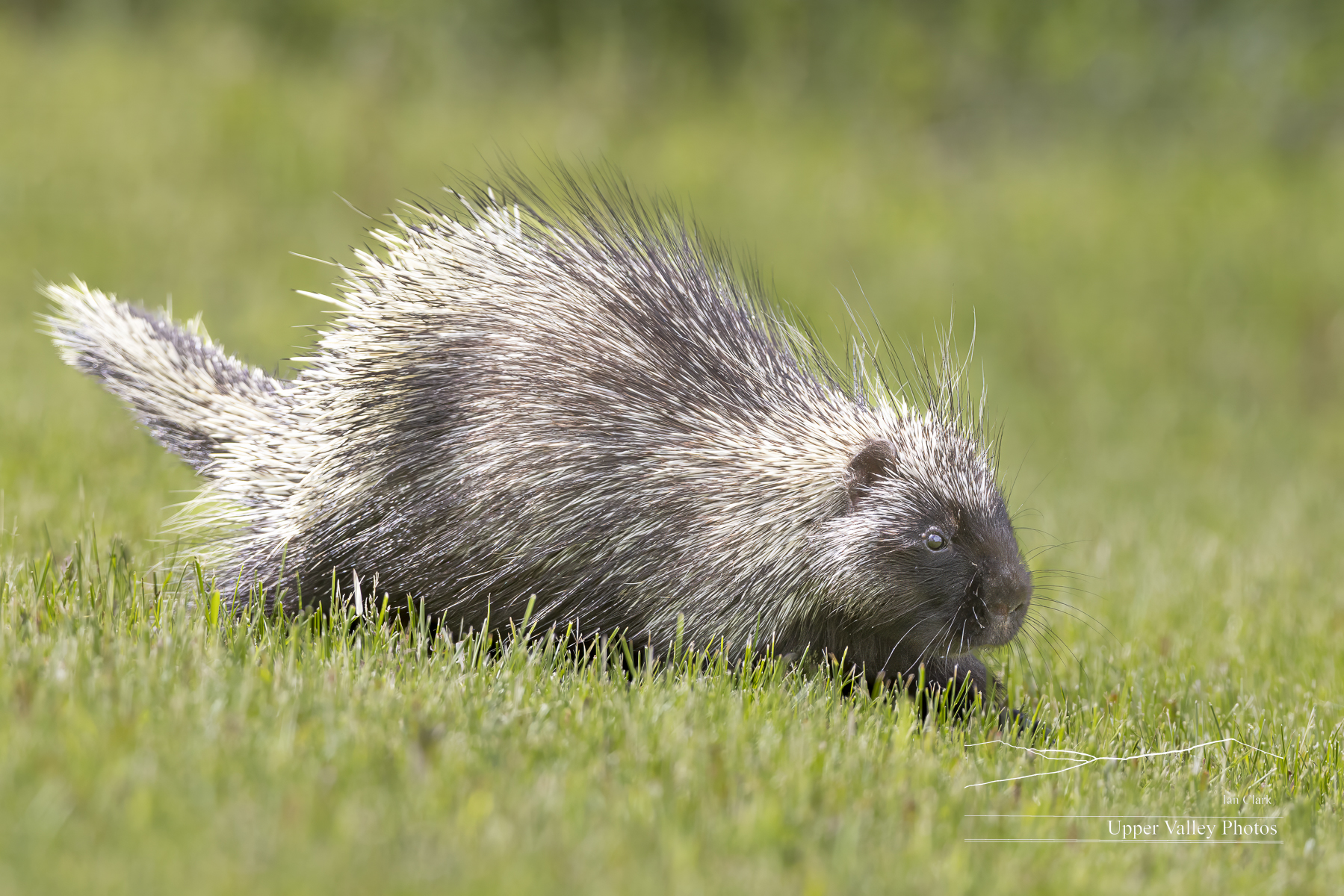
Quill Smith the porcupine was sauntering across the lawn. He checked out the blackberry bushes and wandered off.

Thursday morning I was on the Middleton’s pond before sunup. On my last visit, they’d been sitting on their nest. A friend on the pond had messaged saying she was seeing both loons together for long periods on the pond. When I arrived, I discovered they’ve abandoned their first nest. The water level has dropped several inches since my last visit. They probably don’t have enough water to come and go from the nest underwater and decided to give up on it.

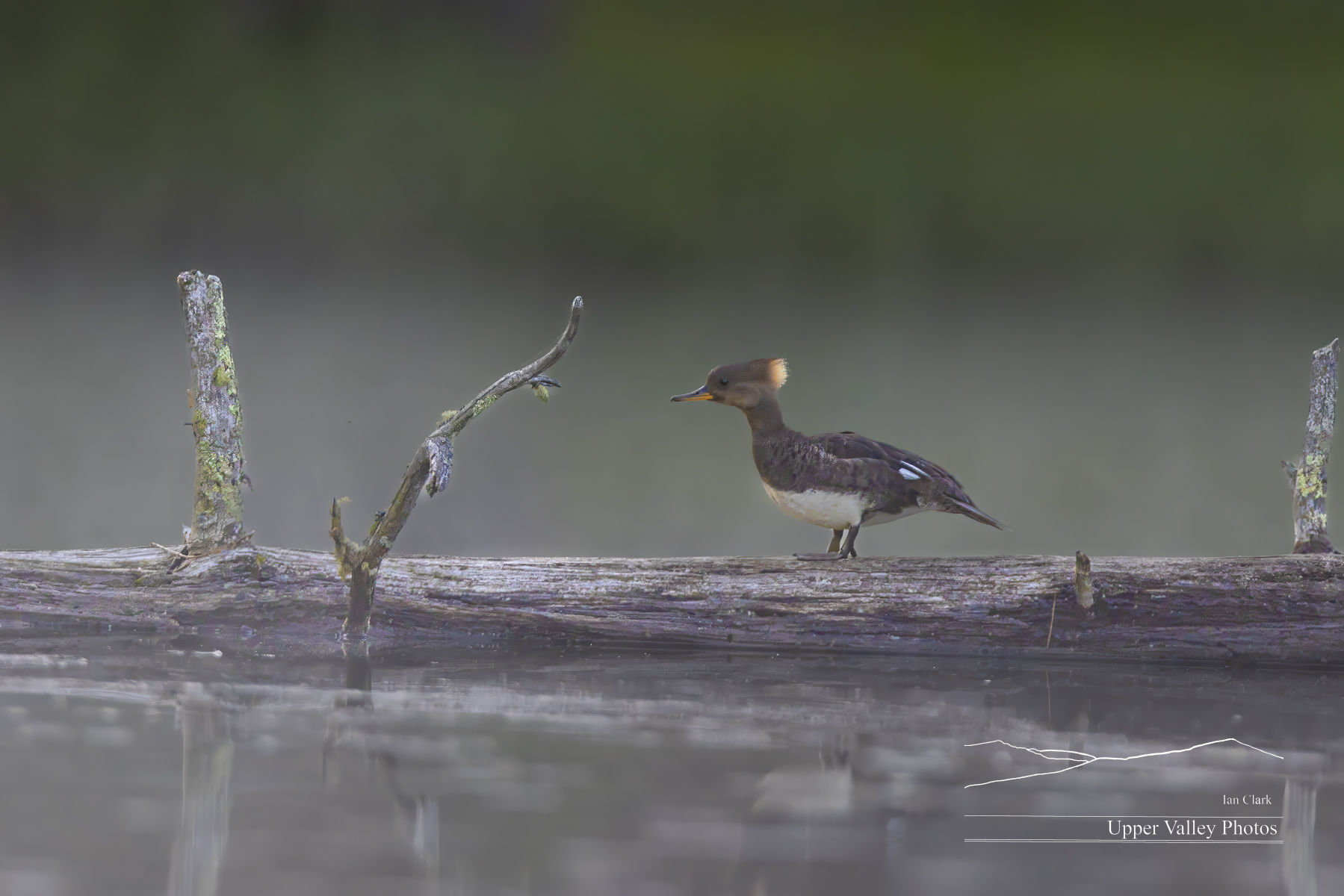
Mrs. Merganser was just getting up and around for the day when I passed.

The Middletons seem intent on trying again. They were scouting new nest locations. This is Mr. M, promoting the spot he’s used for the last few years.

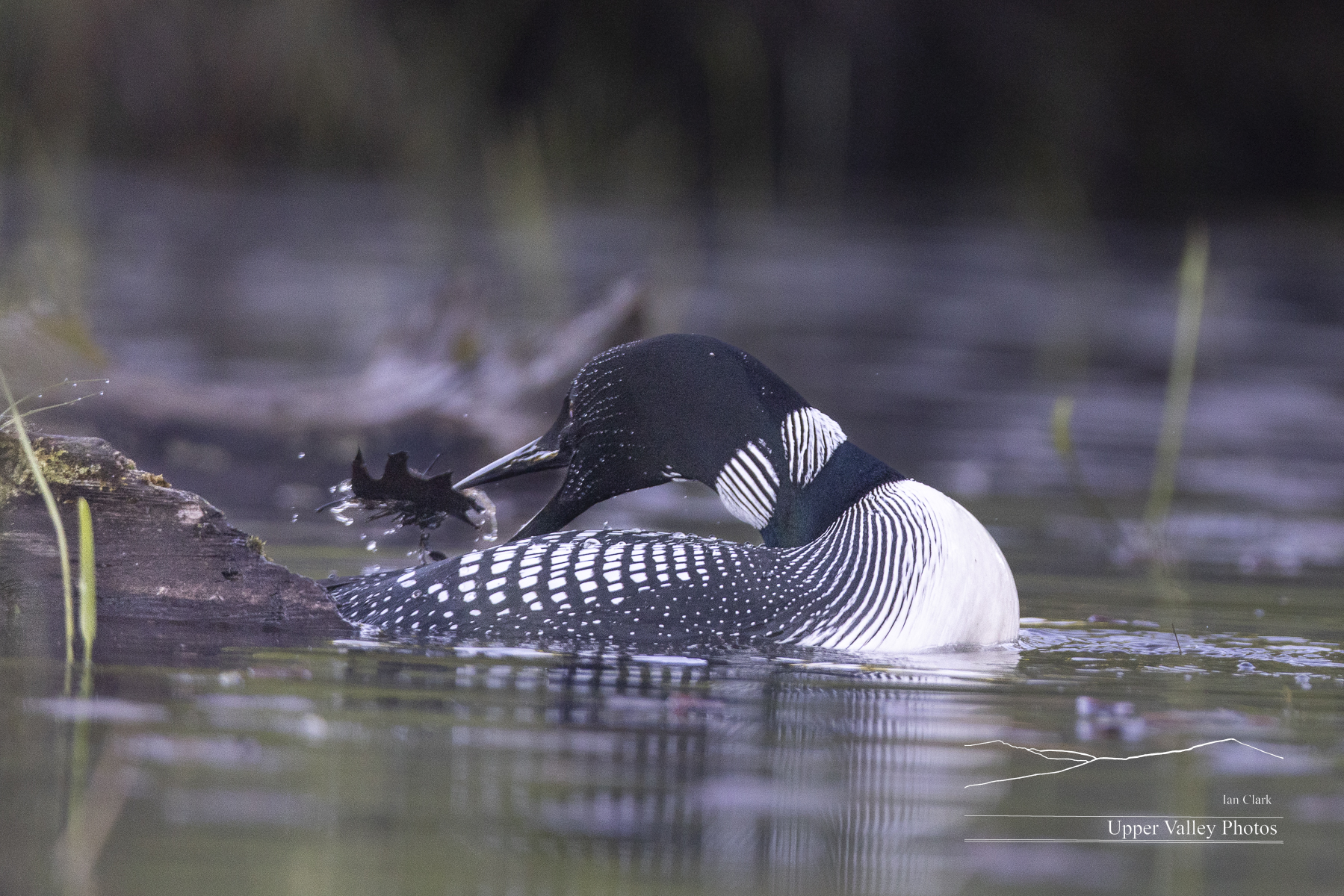
Mrs. M considered the spot, going so far as to dredge up some nesting material and toss it sort of near the nest. Loons aren’t great builders. They often dig up material to build up the nest and just toss it. Sometimes on the nest. Sometimes into the water in the same ZIP code.

Mrs. M wasn’t sold on the spot and they moved on to check out other possibilities.

Mrs. M climbed out on this small island to check things out.

She wanted to see what the spot looked like with a few improvements.

That spot wasn’t selected either. Mrs. M came off the island and stretched.

They moved along and discussed a few spots in the reeds.

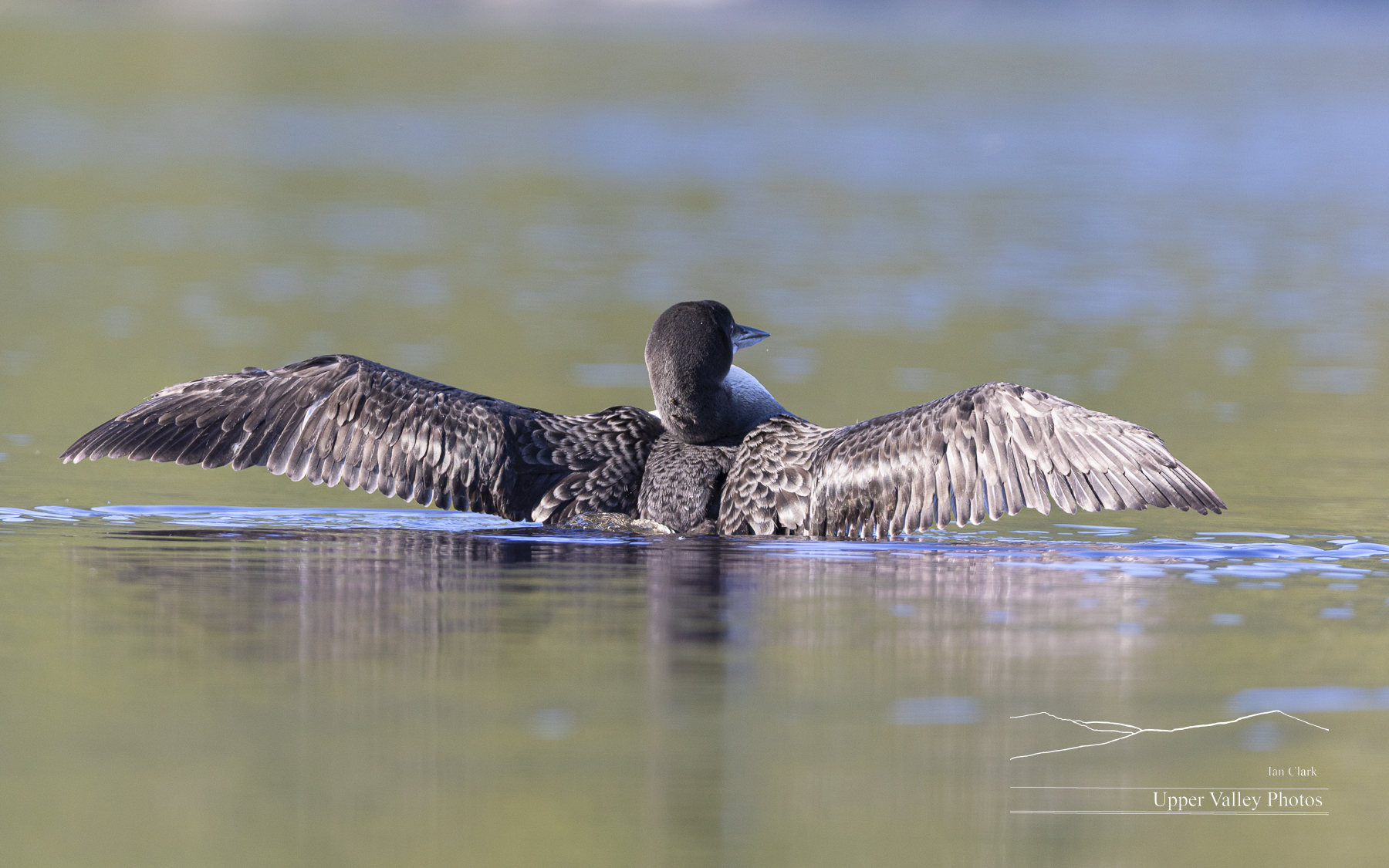
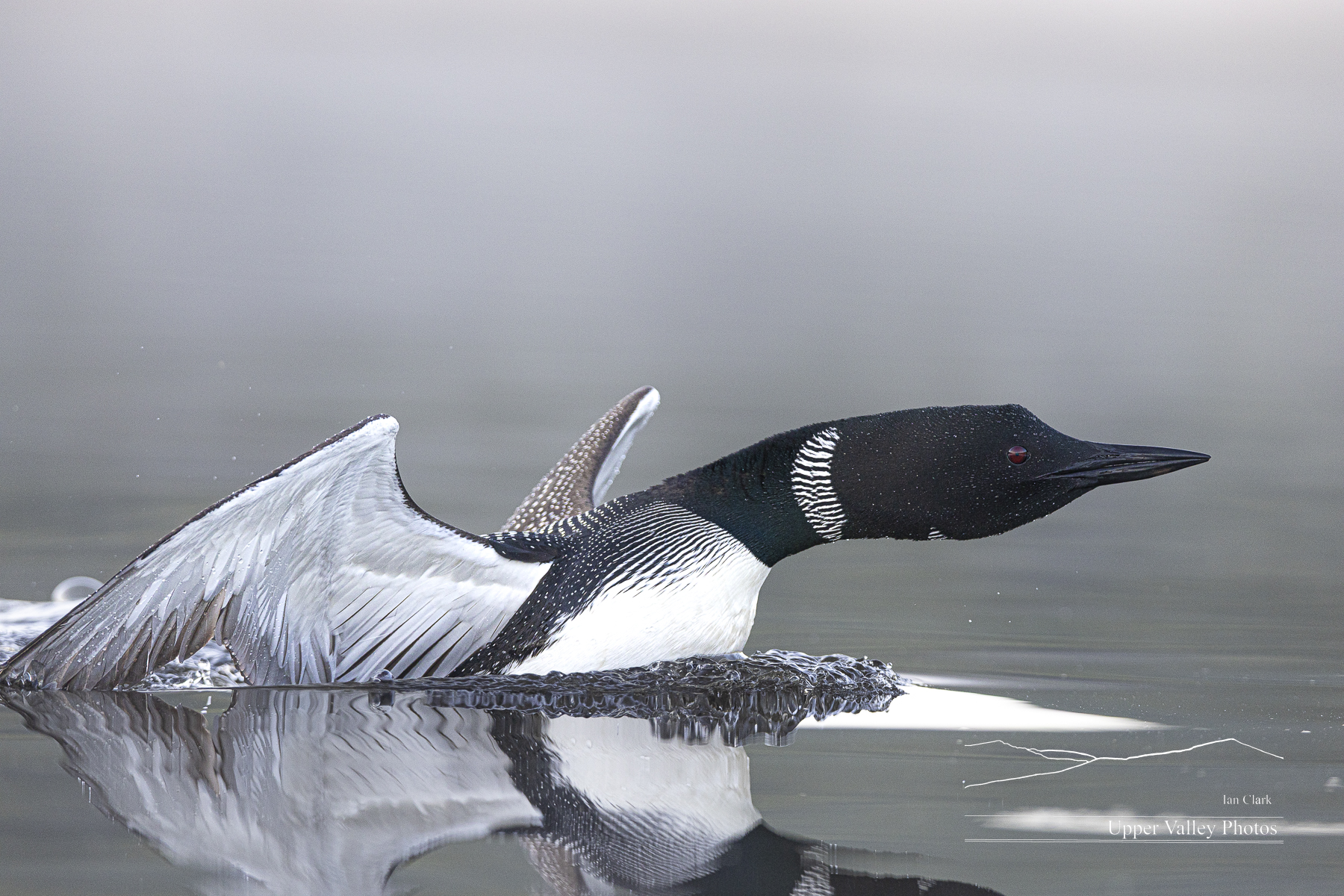
After a few minutes exploring the reeds, Mr. M tossed up his wings. In frustration? He wouldn’t say.

It didn’t look like they settled on a new spot. They headed out for breakfast, a quick preening and a stretch before settling in for a nap. I headed home.

The Weston’s chicks should have hatched this weekend. I’ll be off to visit as soon as we get a nice morning.

Our bluebirds are around the yard, keeping busy feeding the fledglings. A wren is working in their box this morning.

If you enjoy my posts, please sign up below to get notified when I add a new post. I’m not going to share or sell your email, you’ll just get an email when I add a post. And you can help me out by sharing my blog on your social media or directly with your friends. Thanks!

A Visit to the Westons and Heron Chicks

A slower week this past week. I had a chance to visit the Weston loon family on a foggy morning and visited the great blue heron rookery.

I’ll be at the Berkshires Arts Festival at Ski Butternut in Great Barrington, MA on July 3, 4, 5. I’ll be in booth 212 lots of prints and note cards. Stop by and have a look.

Tuesday morning found blue skies over the hill in West Newbury and the Weston’s pond in deep fog.

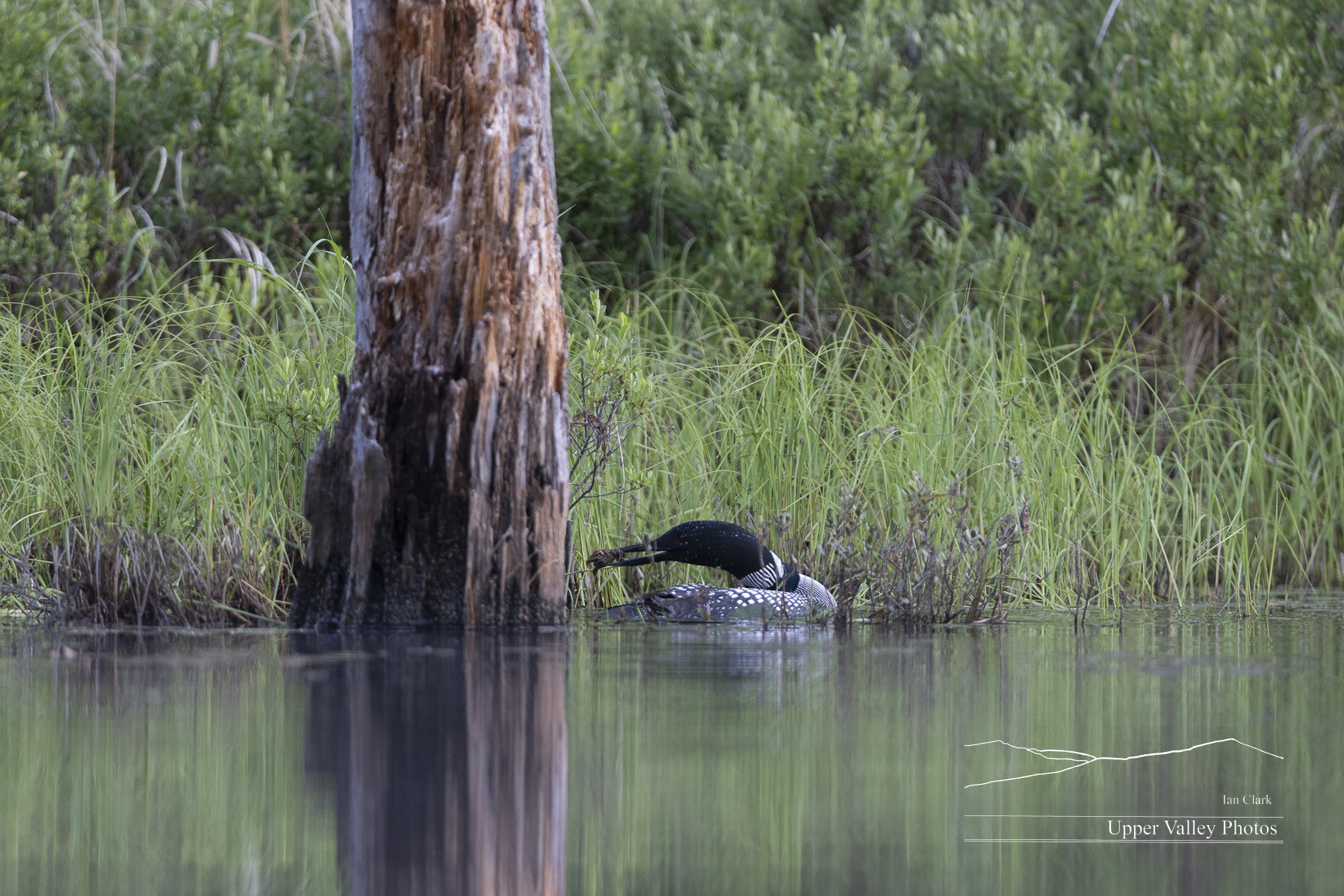
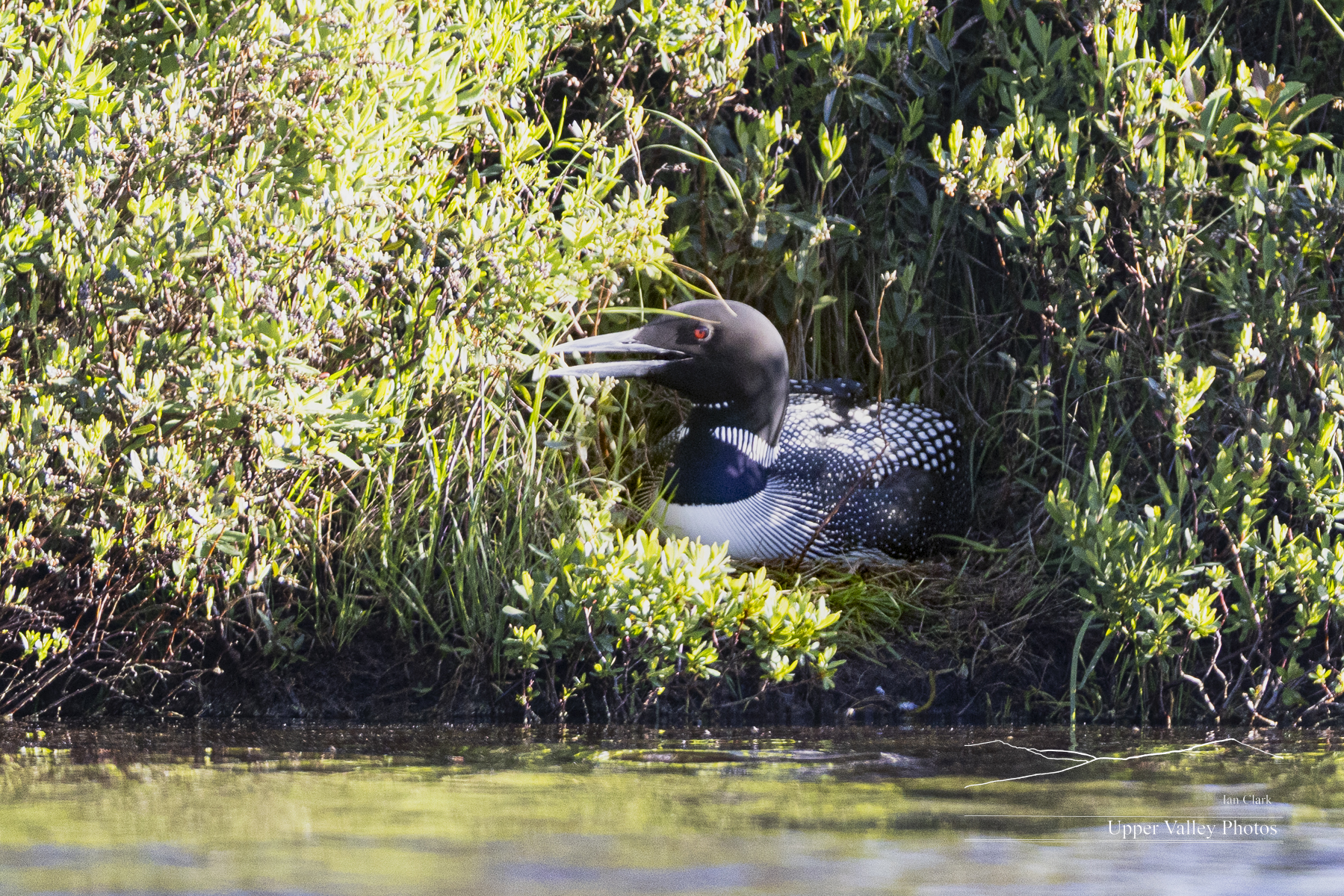
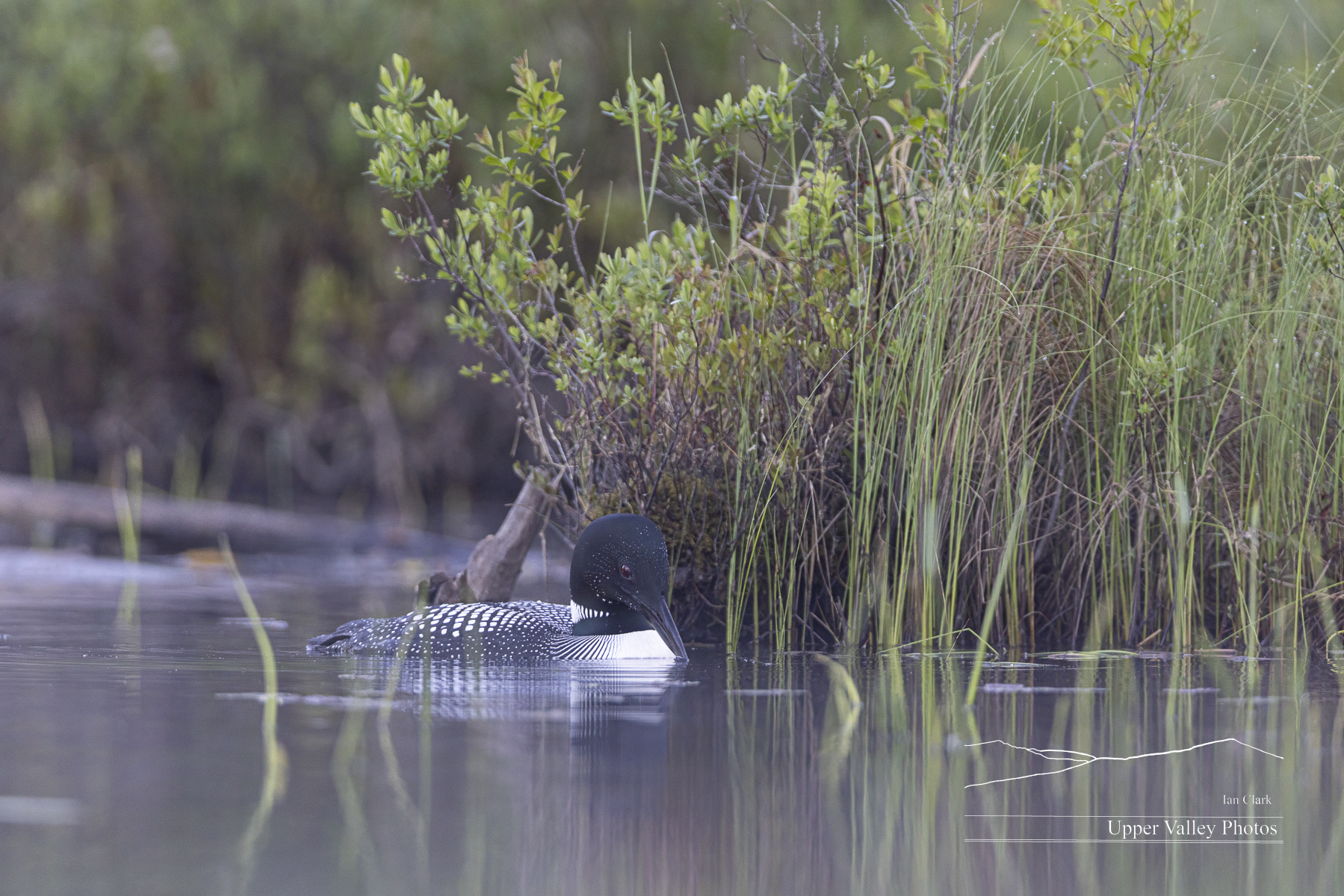
The Westons weren’t to be found on the main part of the pond. I continued on to the cove where they nest. The off duty loon was promoting a shift change. You can see the loon on the nest at the far right hidden in the brush. I never did see their legs; without seeing the bands – or lack of them – I couldn’t tell who was who.

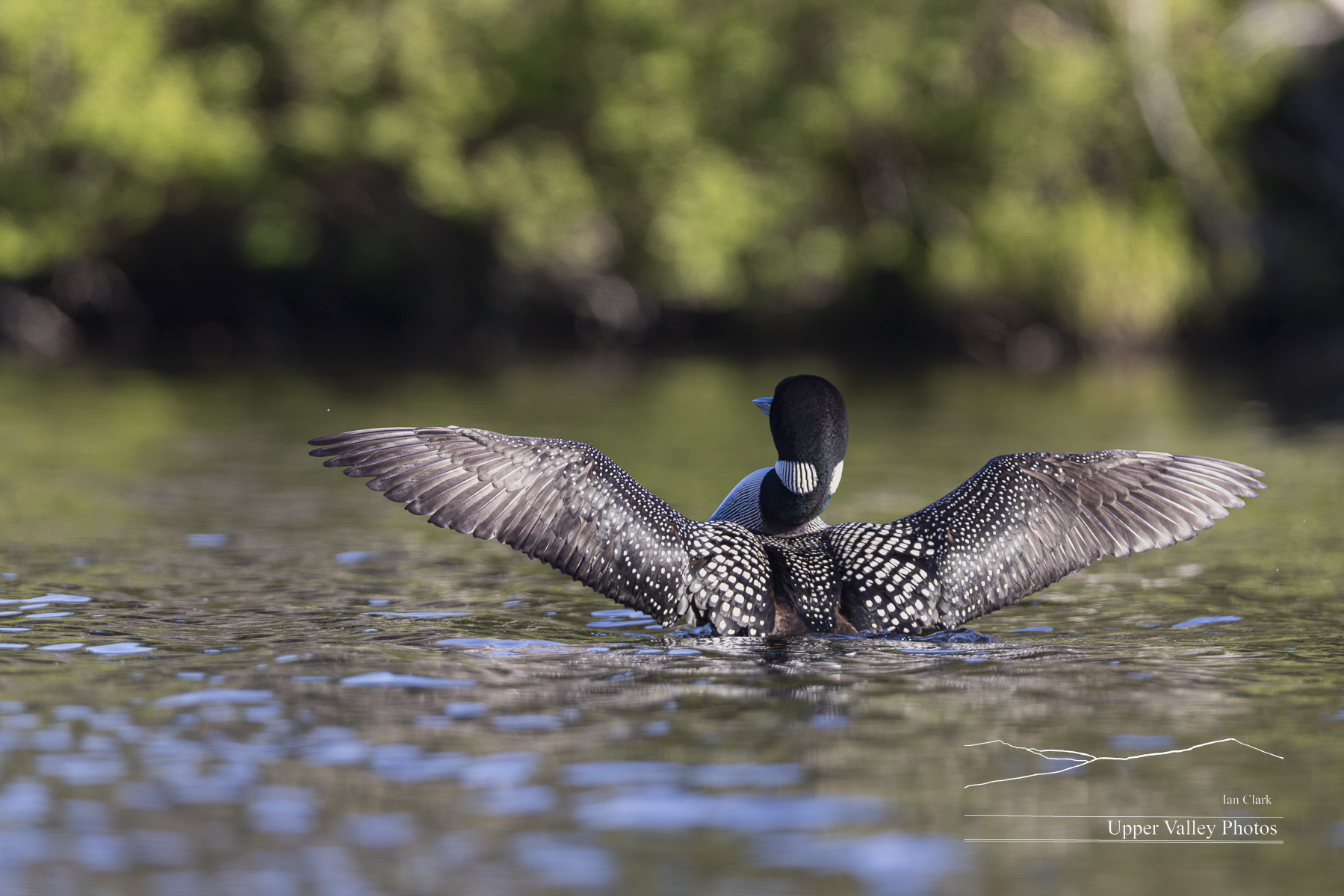
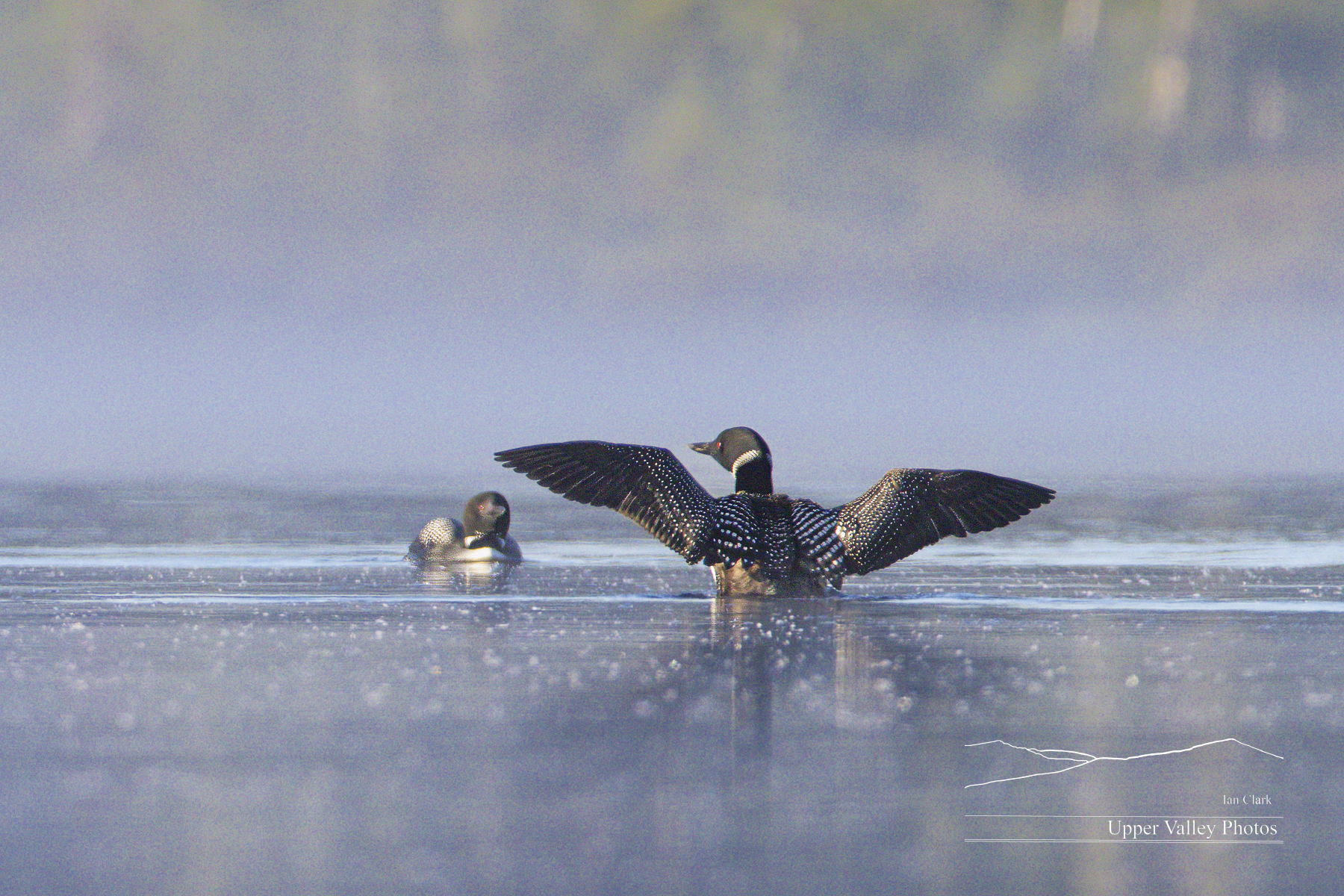
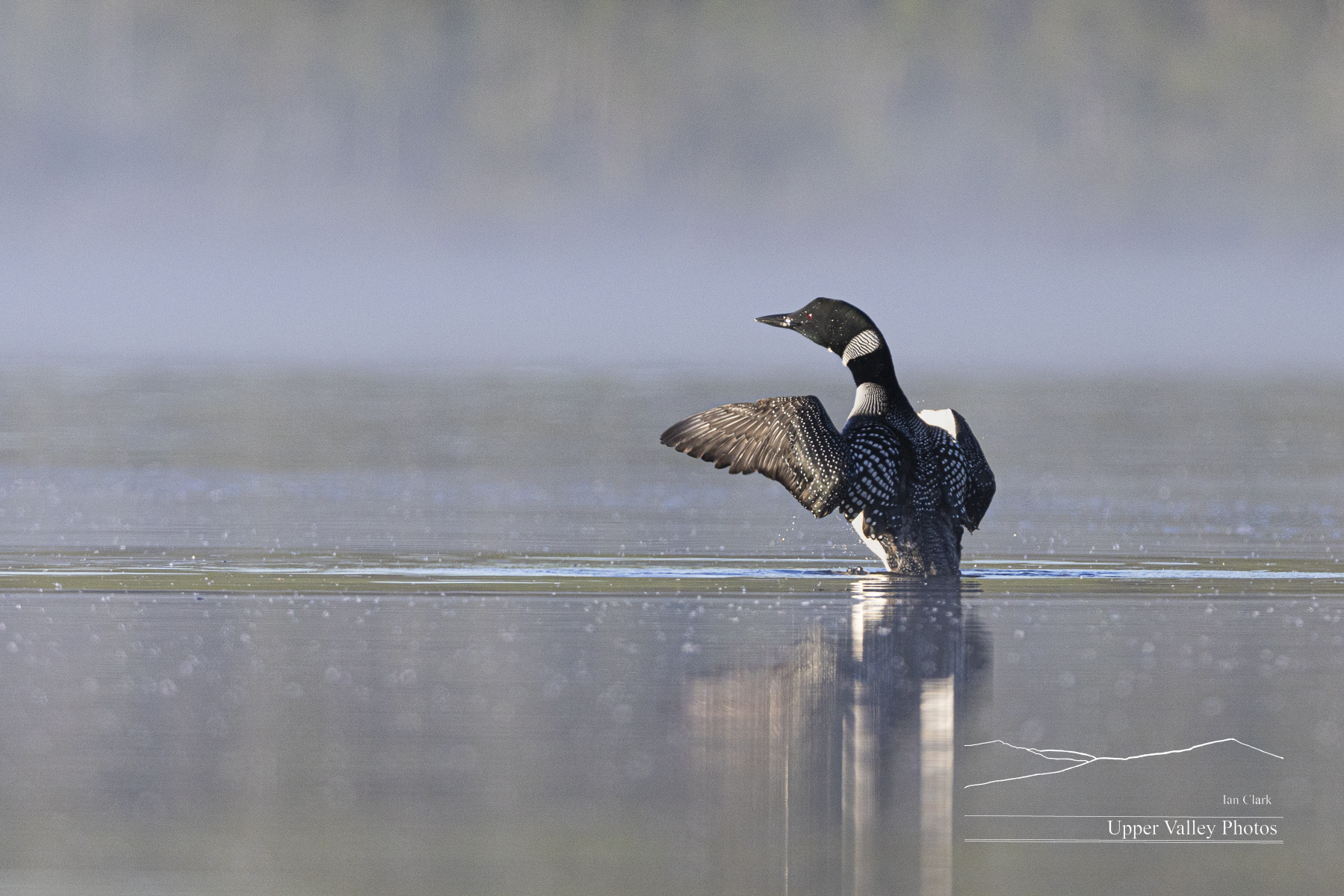
They did the nest exchange after a few minutes and the loon coming off duty stretched.
And then set out to find some breakfast. Looks like he? came up empty this time.

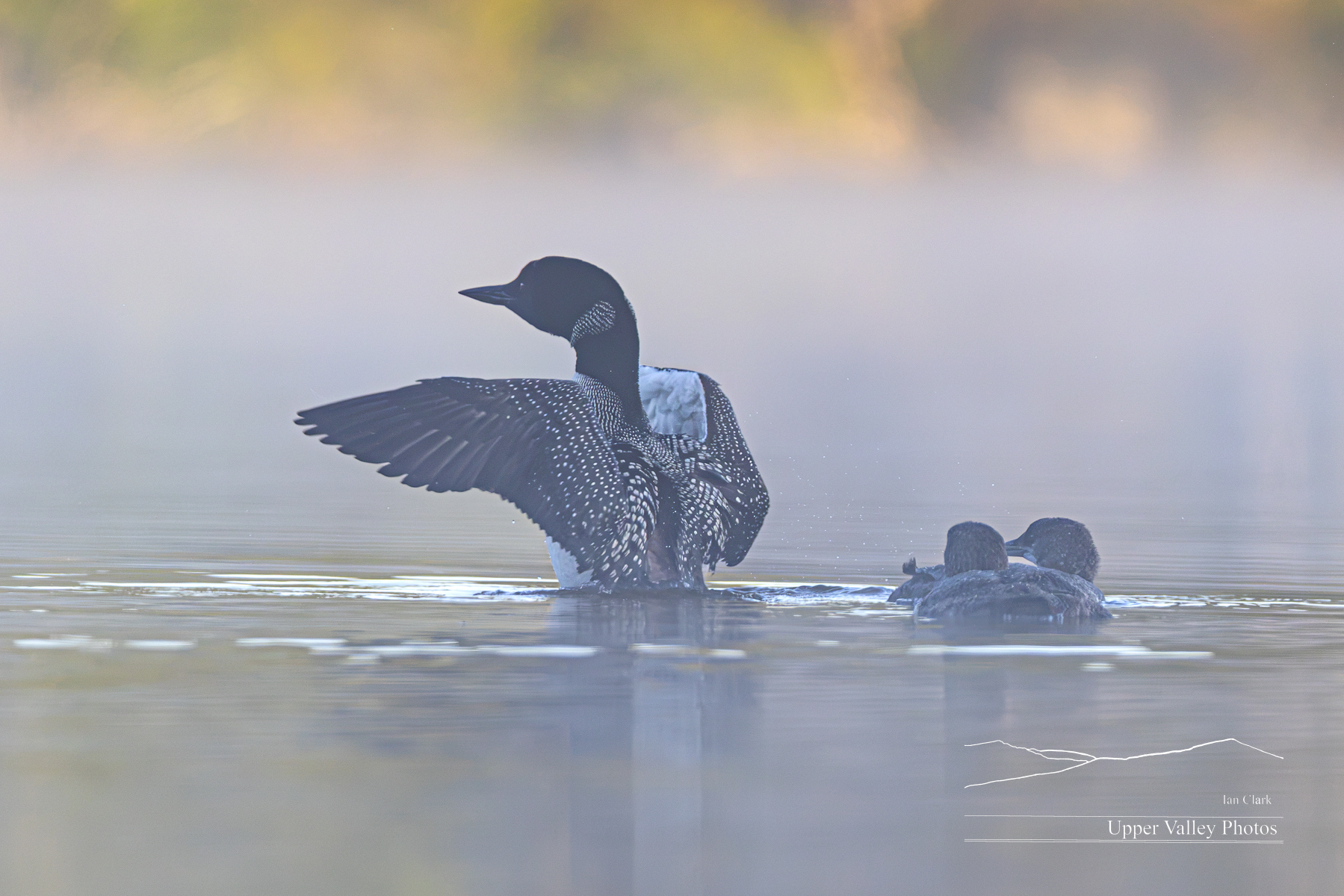
An outsider loon flew over and called which set the Westons to tremoloing. The outsider flew on and the pond quieted. Very quiet. I paddled around looking for photos. Seems most of the critters had taken the morning off.

After a time, I found a red-winged blackbird out and about.
He alternated foraging with calling out to announce his presence.
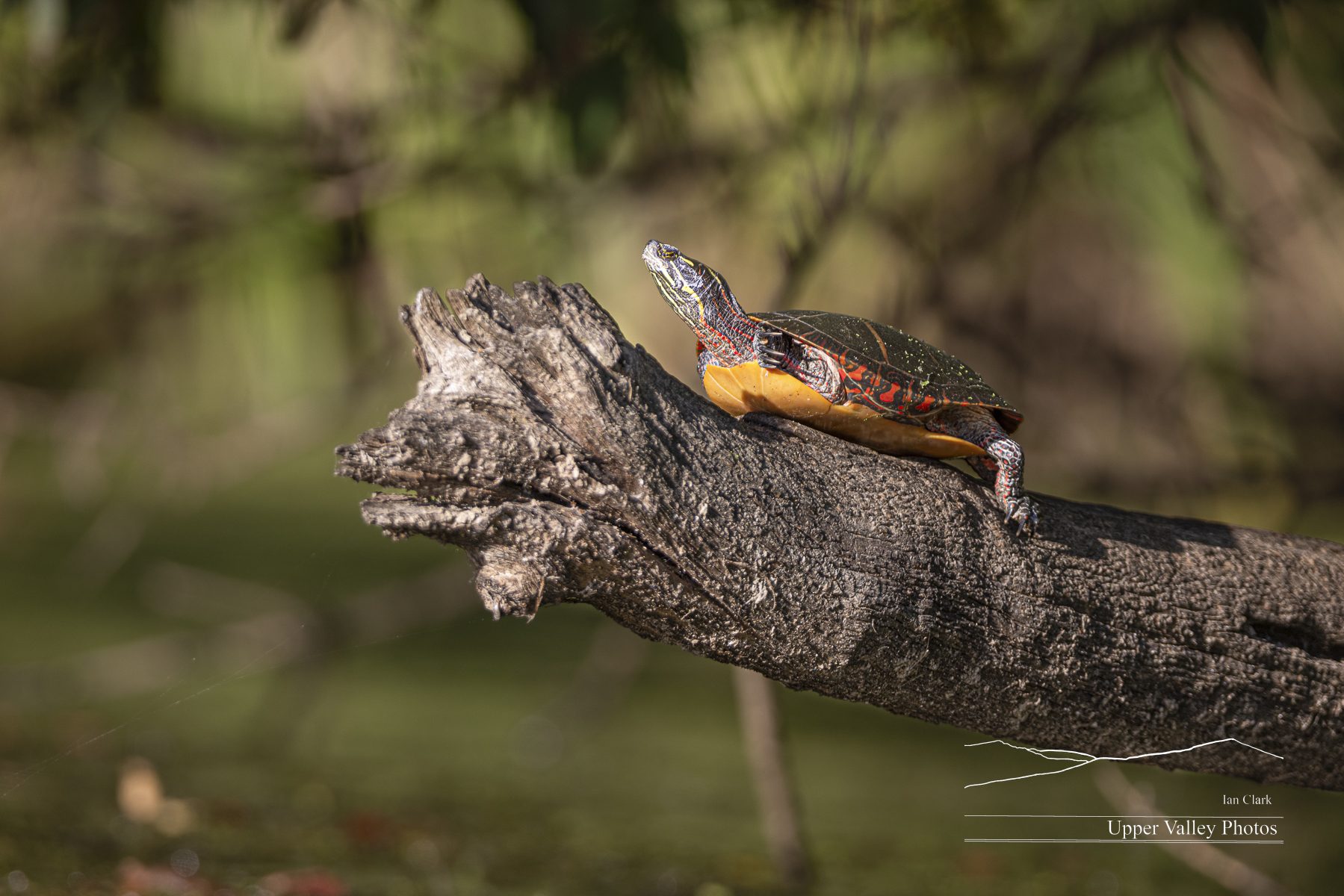
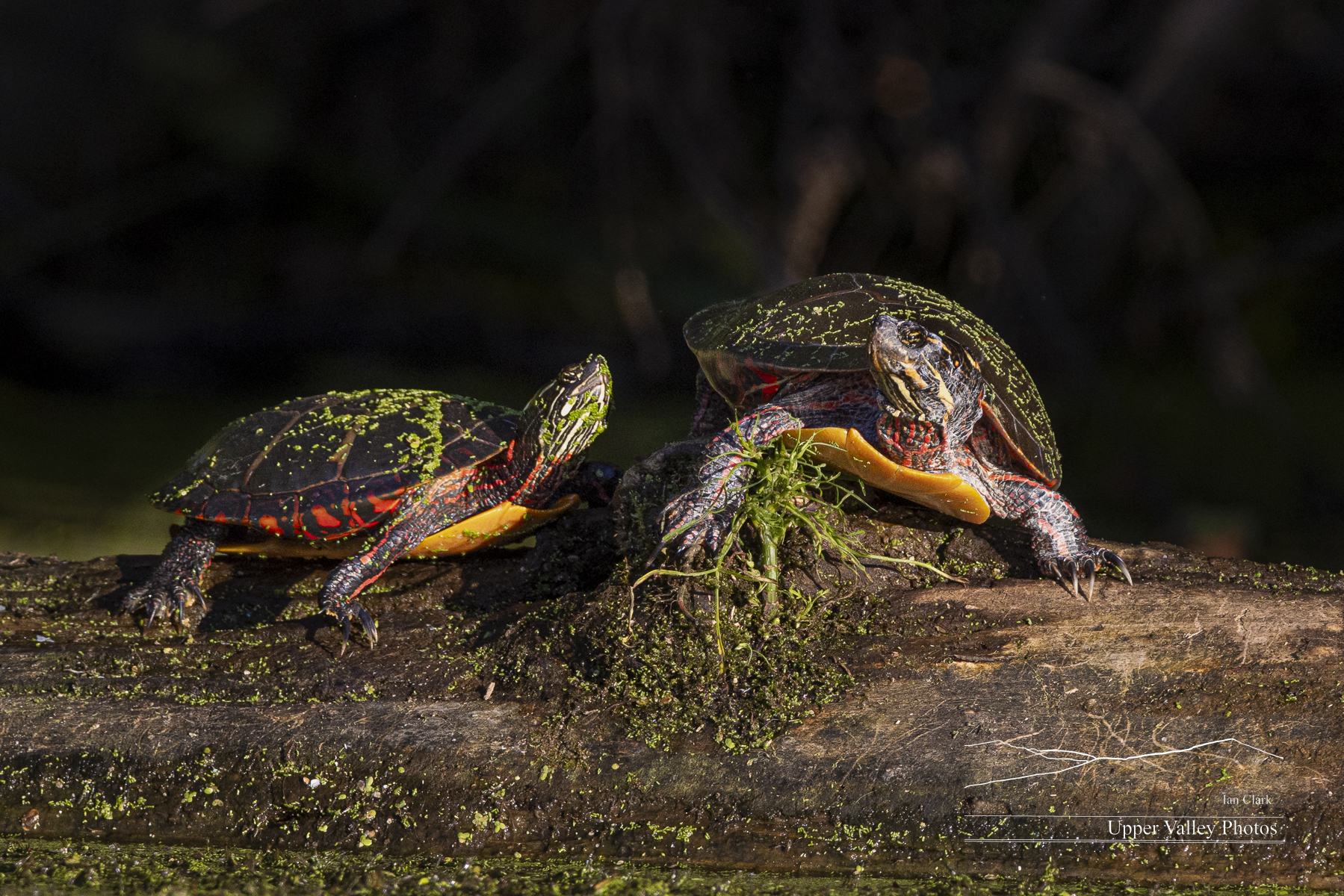
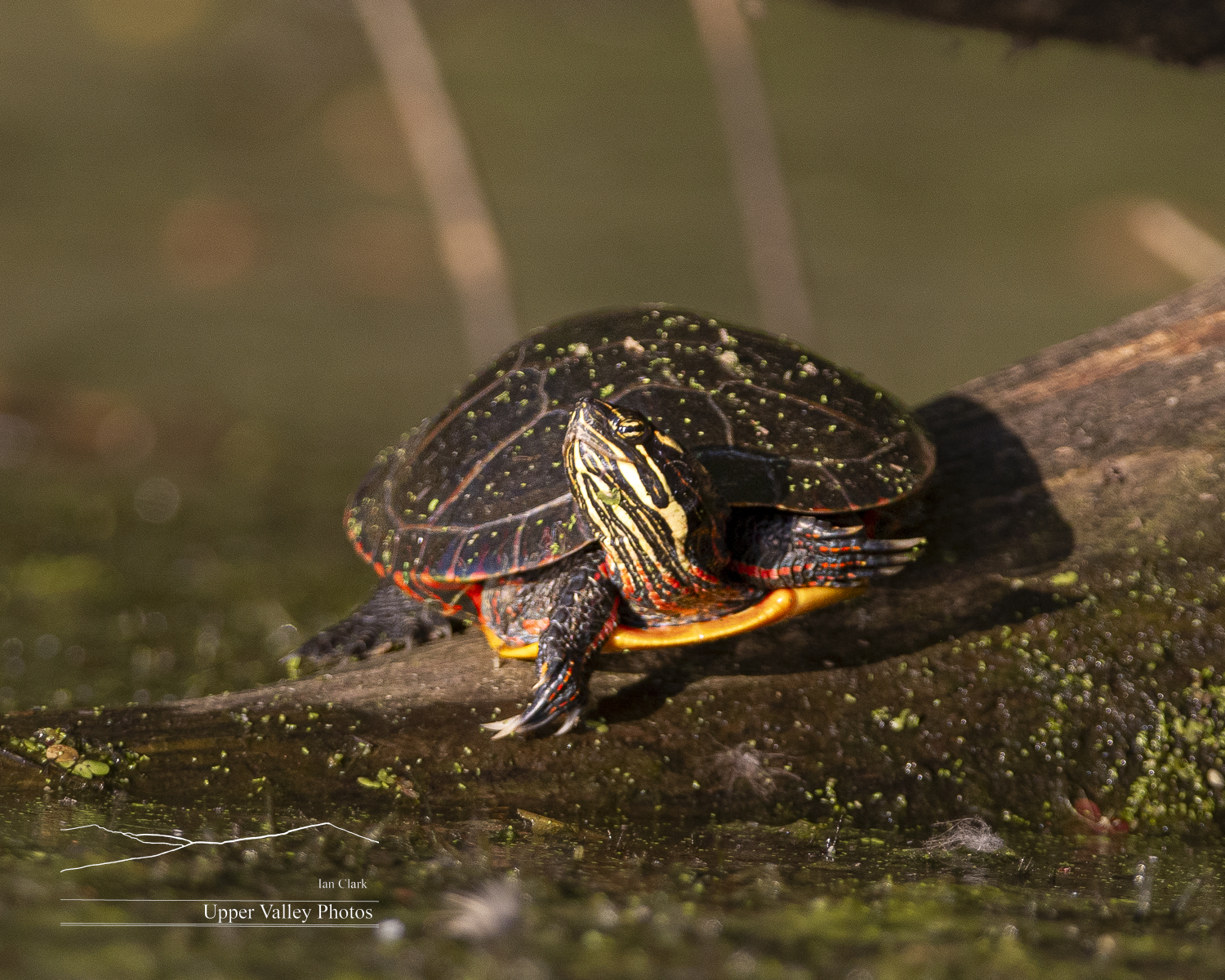
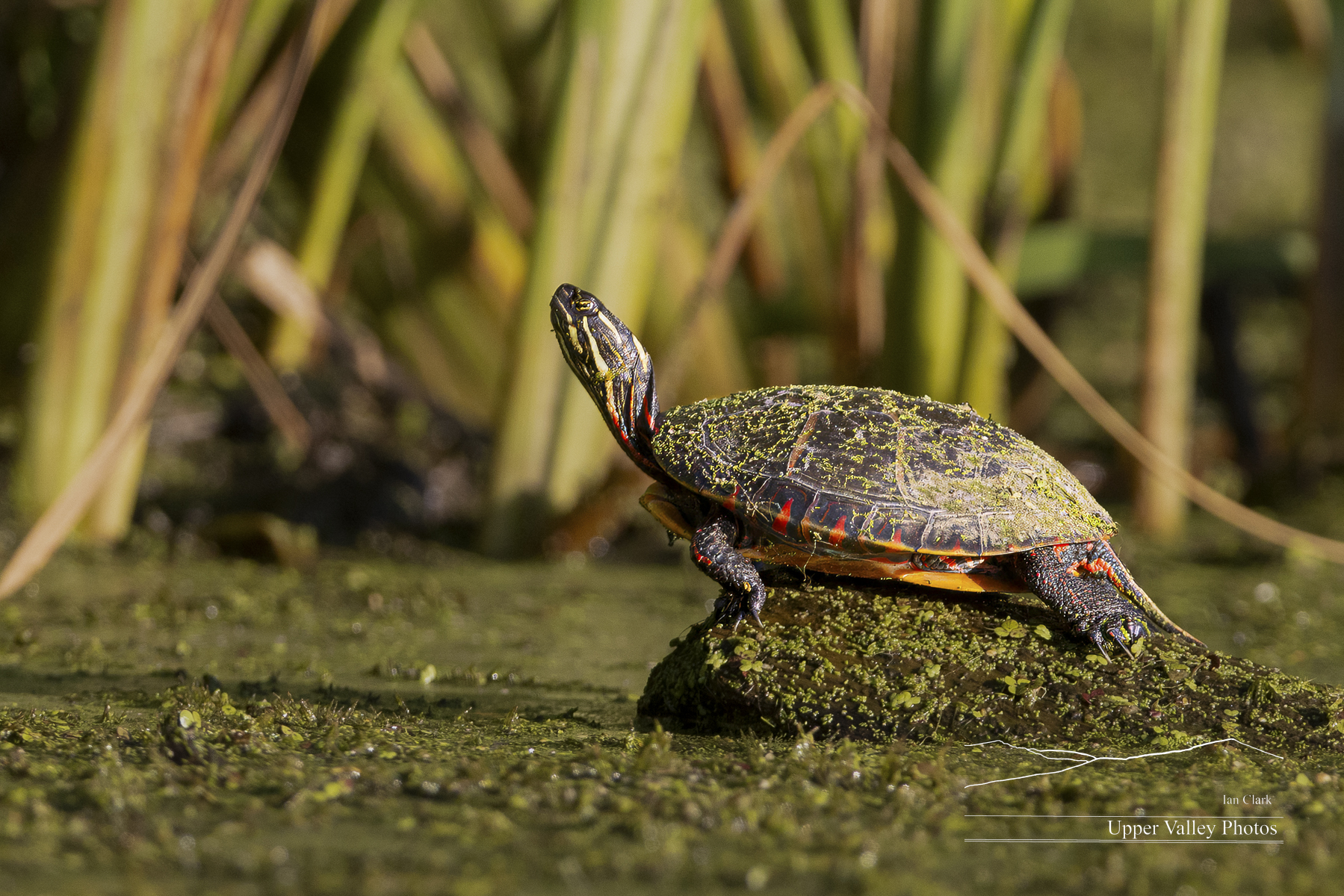
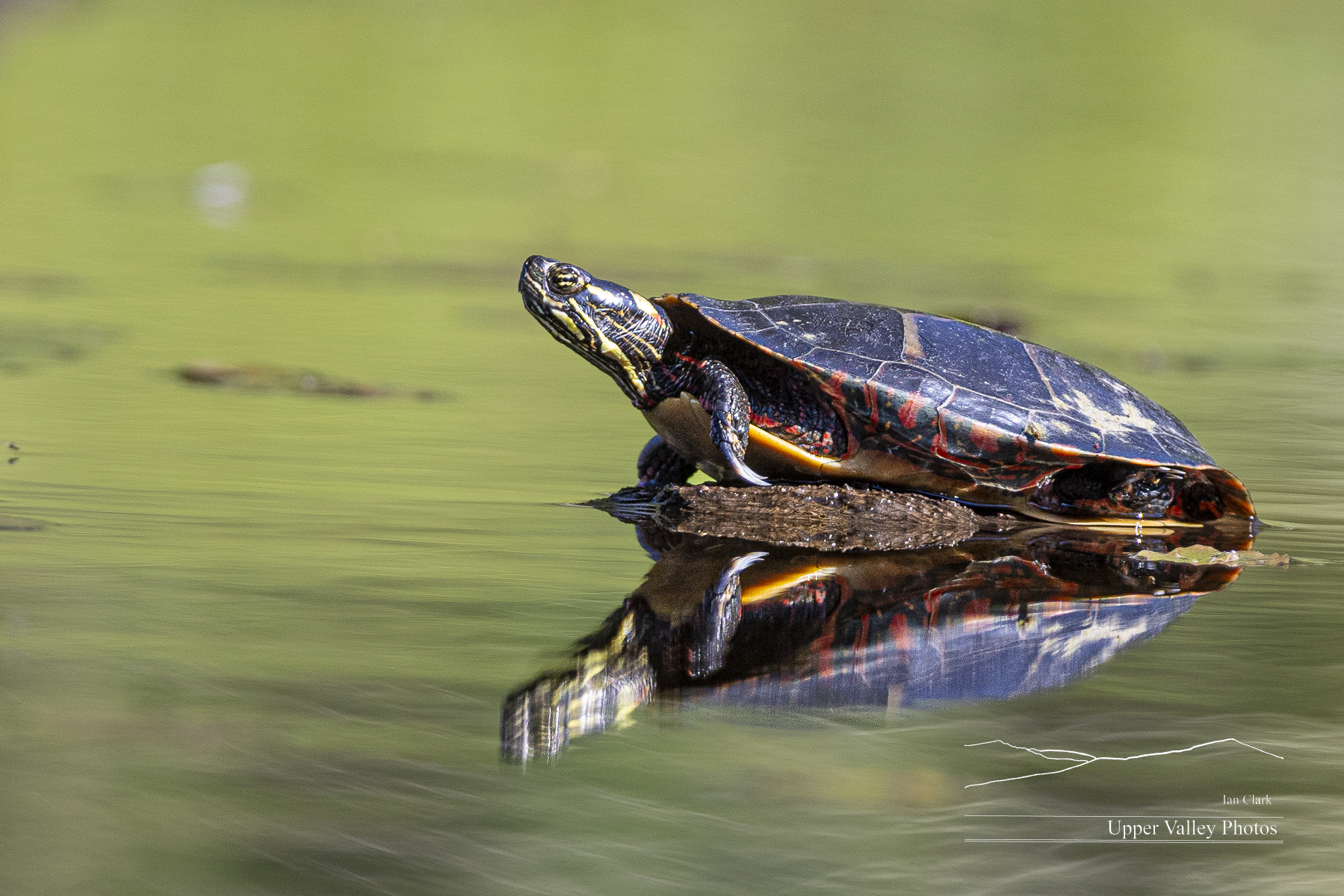
As the fog lifted, painted turtles started climbing out of the water to bask.

The outsider loon returned and landed well up the pond. All three loons started calling. The loon on the nest left the nest to join the other home team loon on the main part of the pond. They were well separated from the intruder. I snuck back into the cove with their nest to see if I could see how many eggs they have. I took a quick look to find two and turned around to leave the cove.
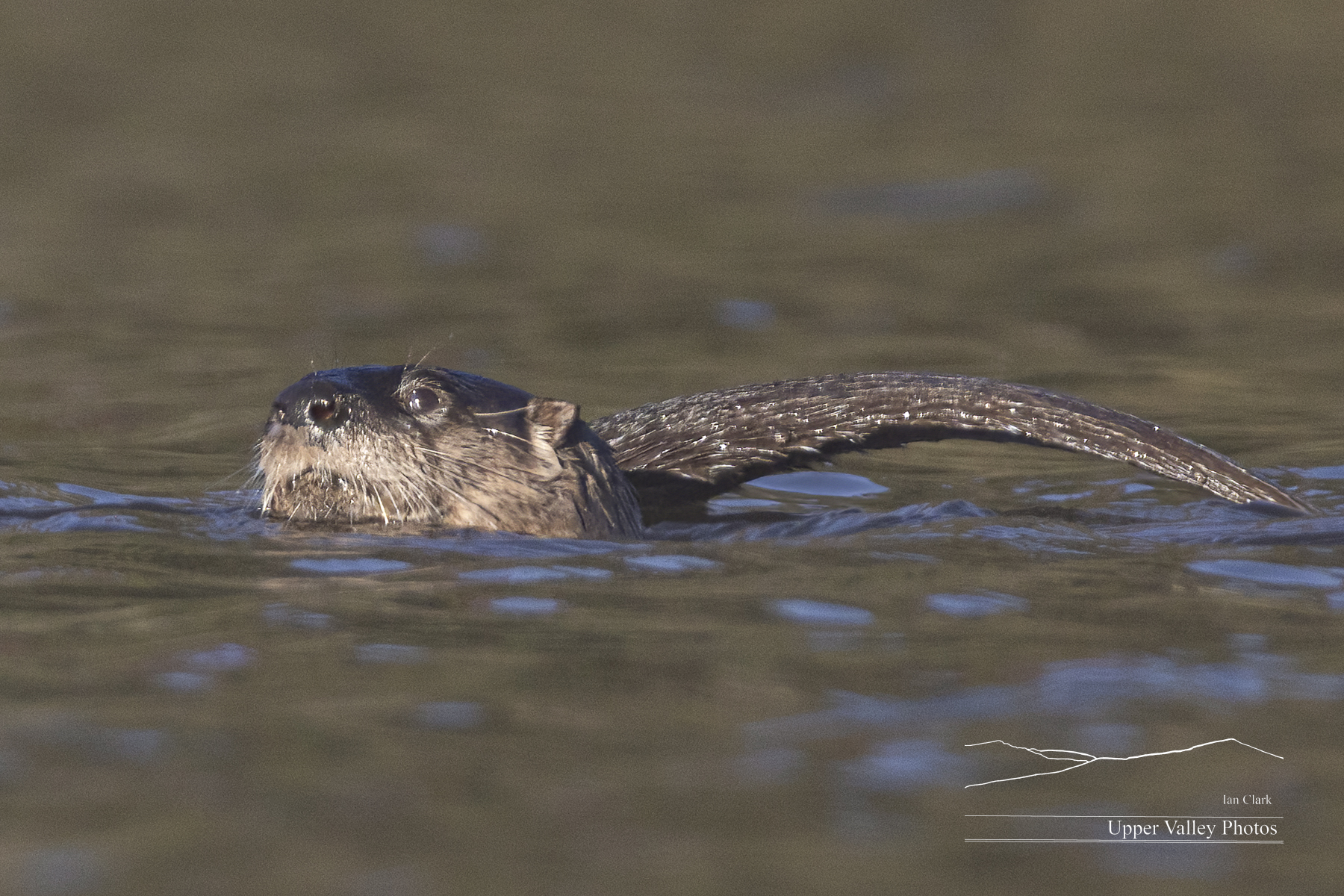
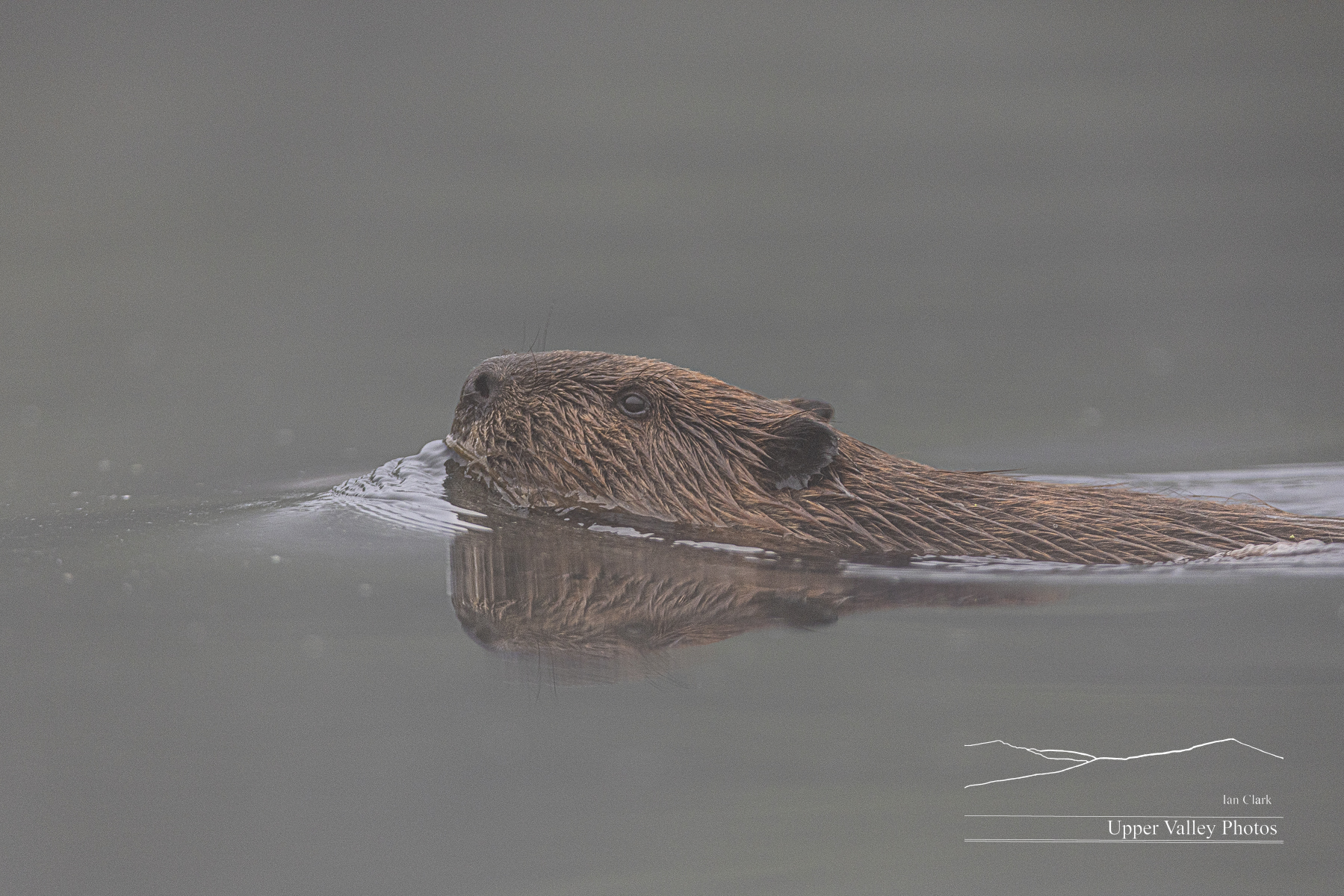
Only to find Slappy Gilmore the beaver entering the cove. He? circled the entrance to the cove, slapping regularly. If he’d gotten out of the way, I’d have left……

Here’s his tail making contact for the slap.

And each slap pushes his butt up out of the water. You can see his webbed feet clearly here.

The loons mostly called at each other before a brief skirmish with some wing rowing before the intruder departed.

Thursday morning, I was up early and headed to see the great blue heron rookery. I’ve been inundated with requests for the location of the rookery. I think I’ve answered everyone. I’m reluctant to share locations with folks I don’t know. Most are likely to be responsible, but the internet has more than a few bad apples.

On three of the four nests with herons, an adult was standing on the edge of the nest. The fourth had a heron still sitting.

After watching for a time, chicks started stirring. The three nests with adults standing guard all have at least three chicks. The chicks are still small enough that they can’t be seen when crouched down in the nest. They appear, then disappear fairly quickly, keeping me on my toes.
The chicks are funny-looking gawky birds whose body parts all seem to come from birds of different sizes. I suspect they were designed by Jim Henson.

Two of the chicks in another nest.
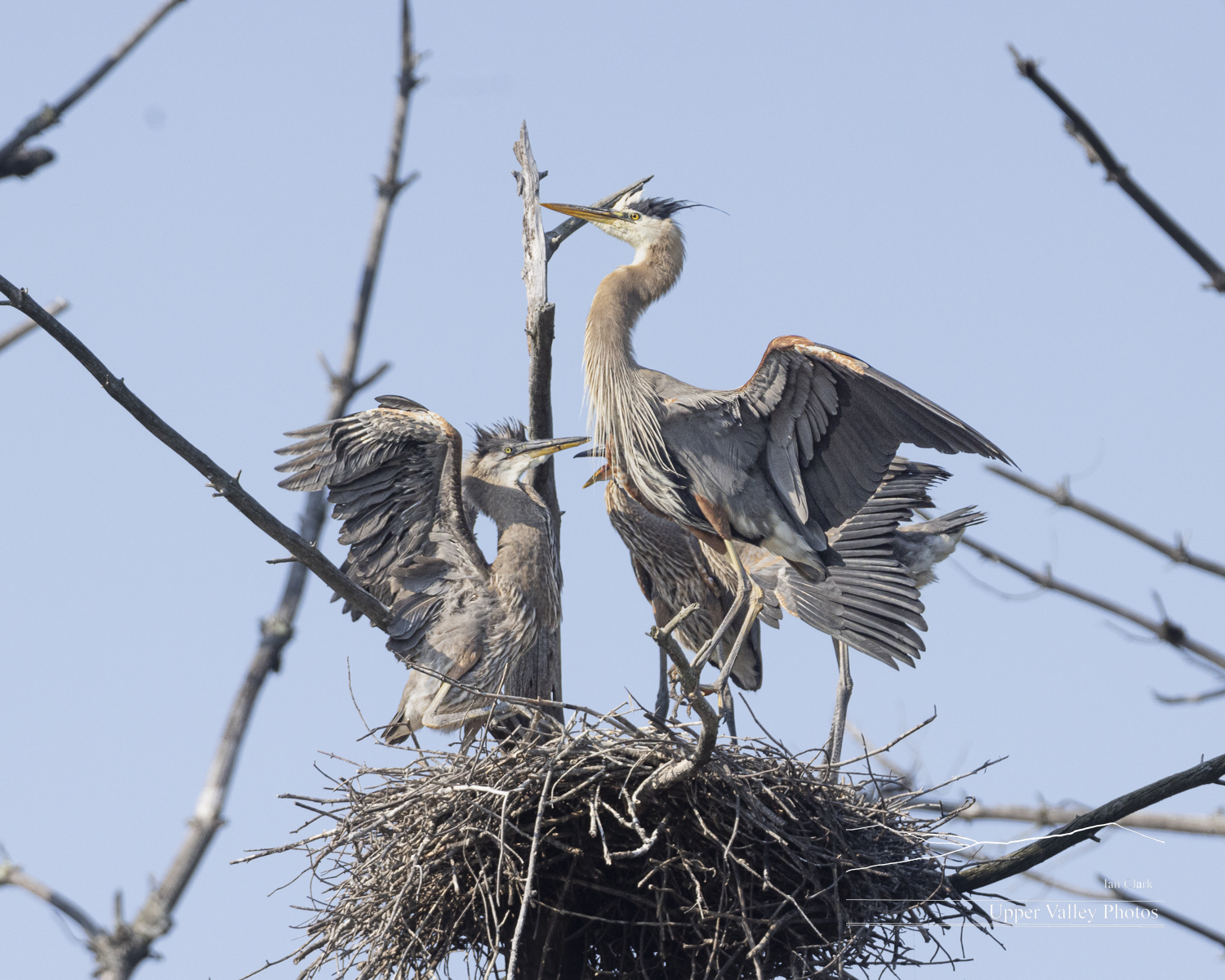
Here’s a shift change on the first nest. Both herons will birdsit the chicks and bring food. When one returns to the nest, they go through a ceremony where they stretch and bob their necks to each other.
The returning parent brought back a sunfish which would seem to be much too large. The chick in back put it away without effort.
Back at the second nest, the chicks were getting restless…
This guy seems to be thinking that if breakfast isn’t delivered promptly, he’ll have to go get it on his own.
Poking their parent, and pulling feathers, didn’t speed things up.

The parent alerted to something….
The mate returned. The parents swallow the chick’s food and regurgitate it for the chicks when they return. As the chicks get bigger, the parents will bring in larger food that they haven’t swallowed.
The parent that had been on duty wasted no time heading off.
The chicks have been fed, time for everyone to settle back in.
And a returning parent feeding the chicks in the third nest.

The fourth and fifth nests had parents return, but I didn’t see any chicks. Guess I’ll have to go back.

And we’ve hosted bluebirds in one of the boxes on our deck again this year. I haven’t been posting, it seems like many people have cameras in their bird houses now. And, something is amiss with mine, the video quality has degraded. But, here’s a clip of the chick’s final few minutes as our guests before they fledge.


If you enjoy my posts, please sign up to get notifications when I add a new post. I won’t sell or share your info. You just get an email from me when I add a post. And you can do me a favor by sharing my blog with your friends by email or on social media. Thanks!

A Busy Week for the Critters

With a week with mostly nice weather, I was able to get out and visit both the Middletons and Westons as well as the heron rookery and a couple fox dens.

This week, you’ve got two chances to see my slideshow, Travels with Ian 2025, with some of my favorite images from last year. We’ll see lots of wildlife around New England and lots of brown bears from Alaska – including Brown Bear no. 925 who made ursine history last year. There are even images of a steam locomotive working in the incredible scenery along the White Pass & Yukon Route Railway.

The first show will be at the Bugbee Center in White River Jct. Wednesday May 27 at 1:30 pm. The second presentation will be at the Blake Memorial Library in Corinth, VT Friday May 29 at 6 pm. The Library would appreciate an RSVP sent to khotellingbml@gmail.com. Both are free and open to the public.

And I’ll be exhibiting at the Berkshires Art Festival in Great Barrington, MA on July 3, 4 and 5. I’ll have note cards and prints large and small for sale. Please come by and have a look.

A week ago Saturday, I called on the Westons. One was feeding at the south end of the pond, the other turned out to already be sitting on the nest towards the north end of the pond. I wandered off to see who else might be around.

About the only excitement – if cormorants can be exciting – was this double-crested cormorant who finished breakfast and departed.

Our off-duty loon finished at the buffet and headed towards the nest for a shift change.
Both loon parents share sitting on the eggs. Our off-duty loon finished at the buffet and headed towards the nest for a shift change. This turned out to be Mom. Dad is banded and I could ID him when he came off the nest.
Dad is hidden in the brush. His head is the dark spot in the brush above mom’s head.


Mr. Weston came off the nest and stretched as Mrs. Weston settled in on the nest.

A friend tipped me off to a fox den, I headed down Monday morning to see if I could find it. There are supposed to be seven kits. Mom has been busy. So far I’ve found five of her holes. Without knowing where anyone was, I sat and watched the wrong hole for a time. This guy popped out of one of the holes down the field, and I gave up on what may have been an empty hole.

This sibling joined the first kit and both stretched out to enjoy the sun – after moving far enough back in the brush to keep me from getting more photos.

Tuesday morning, I was on the road early to visit the heron rookery. I missed when they started sitting on the nests. I was hoping for chicks. No such luck, the latest they should hatch is early this week.

It was a warm morning and most of the herons on nest duty were standing up in the nests. Both heron parents take turns sitting on the nest. The last time I visited, the bird on duty at dawn was still on duty when I left about 9:00.

This morning, all of the off-duty birds returned early to relieve their partners. The shift change comes with a “nest relief ceremony.” The partners stretch their necks and/or raise the plumes on their crest. They may preen each other and sometimes exchange sticks. But, the bird that’s just been relieved doesn’t stick around long.

This heron’s mate has just returned to the rookery and is perched in a tree to the left of the nest. The birds stretched and clapped their bills at a distance before a quick exchange at the nest.

Another pair making a nest exchange.


The birds reporting for duty all spent several minutes tidying the nest.


When the nests are in order, the birds settle in and catch up with their neighbors.

On the way home, I stopped to visit the foxes again. They weren’t to be found.

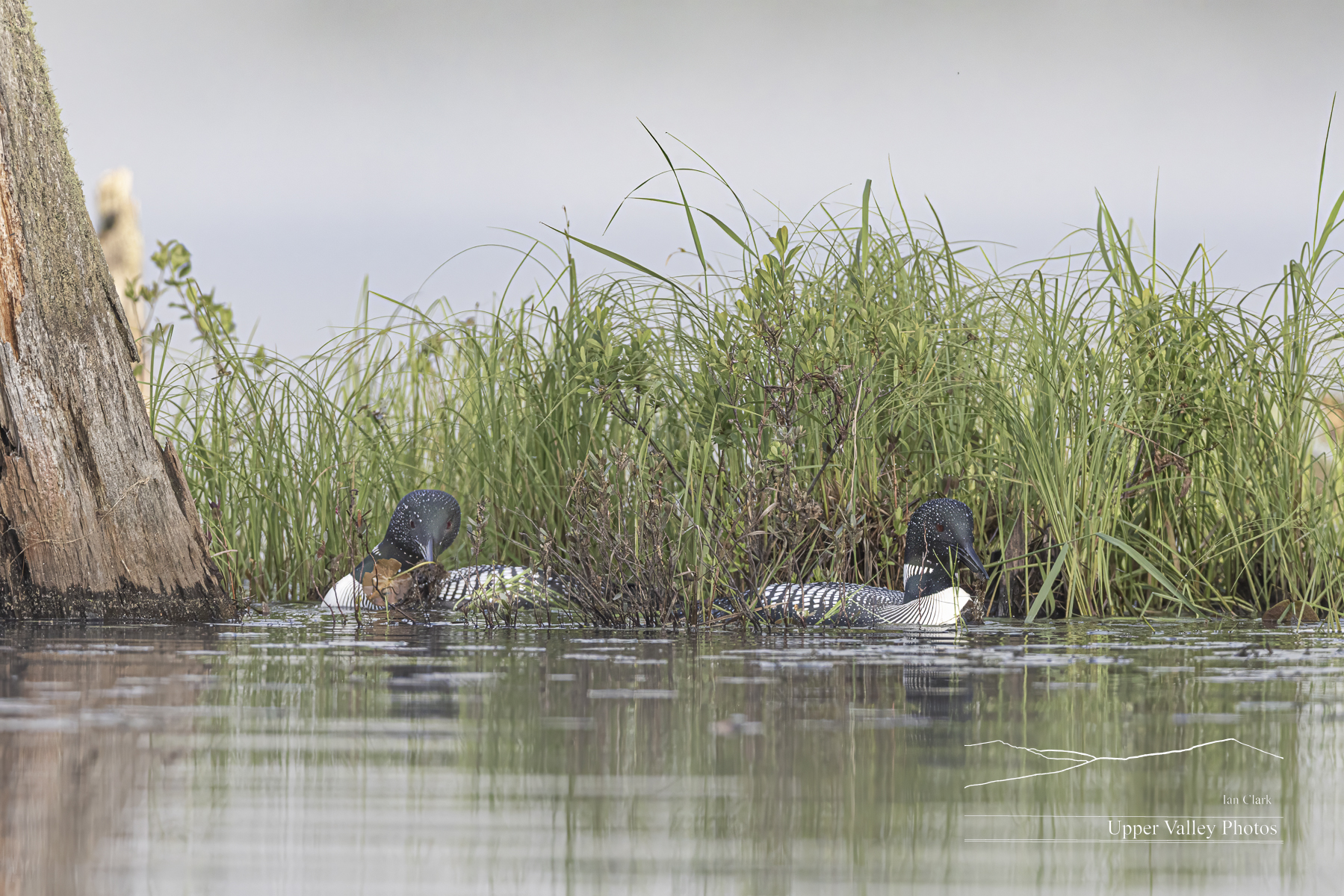
The next morning I headed out to see what the Middletons were up to. They’re sitting on their nest. They’ve moved from where the nest has been for several years. They’ve found a new spot on a hummock deep in the brush and are well hidden. I didn’t see the nest until Mrs. Middleton relieved Mr. Middleton.
As Mr. Middleton left his cove, a pair of Canada geese flew into the pond and landed not too far from the loon’s nest. That pair of geese was rapidly challenged by another pair of geese that flew across the pond to object to the newcomers.

The newcomers objected right back and went after the second pair of geese.

It was a serious fight, with geese biting and striking with their elbows – the joint in the wing.

In the midst of the fight, Hank Herron flew in right where the geese were fighting and staked out his position.

One of the geese chased Hank off his log into the brush nearby. Then appeared to go over and converse…..

Mr. Middleton returned, keeping low in the stalking pose. He’s checking the battlefield – notice Hank in the back right.

Mr. Middleton went over to see what Hank was up to. One of the pair of geese got out of the water and stood on the log near where the whole shebang started. Mr. Middleton dove…..

I’m not sure if Mr. M actually goosed the goose, but he made it clear that the goose had to go.

Hank seemed unfazed by the hullabaloo and went off to see what was for breakfast.

There didn’t seem to be anything appetizing nearby, so Hank waded off.

After some more skirmishing, one pair of geese convinced the other to go away. Quiet returned to the cove. Mr. M headed back out to get busy with his day.

And Hank took up position waiting for a meal to swim by. I headed home.

A chilly Friday found me paddling down the Waits River before dawn.
Where I met Mrs. Mallard and her brood paddling upstream.

I had to make way for ducklings as she lead her brood past.

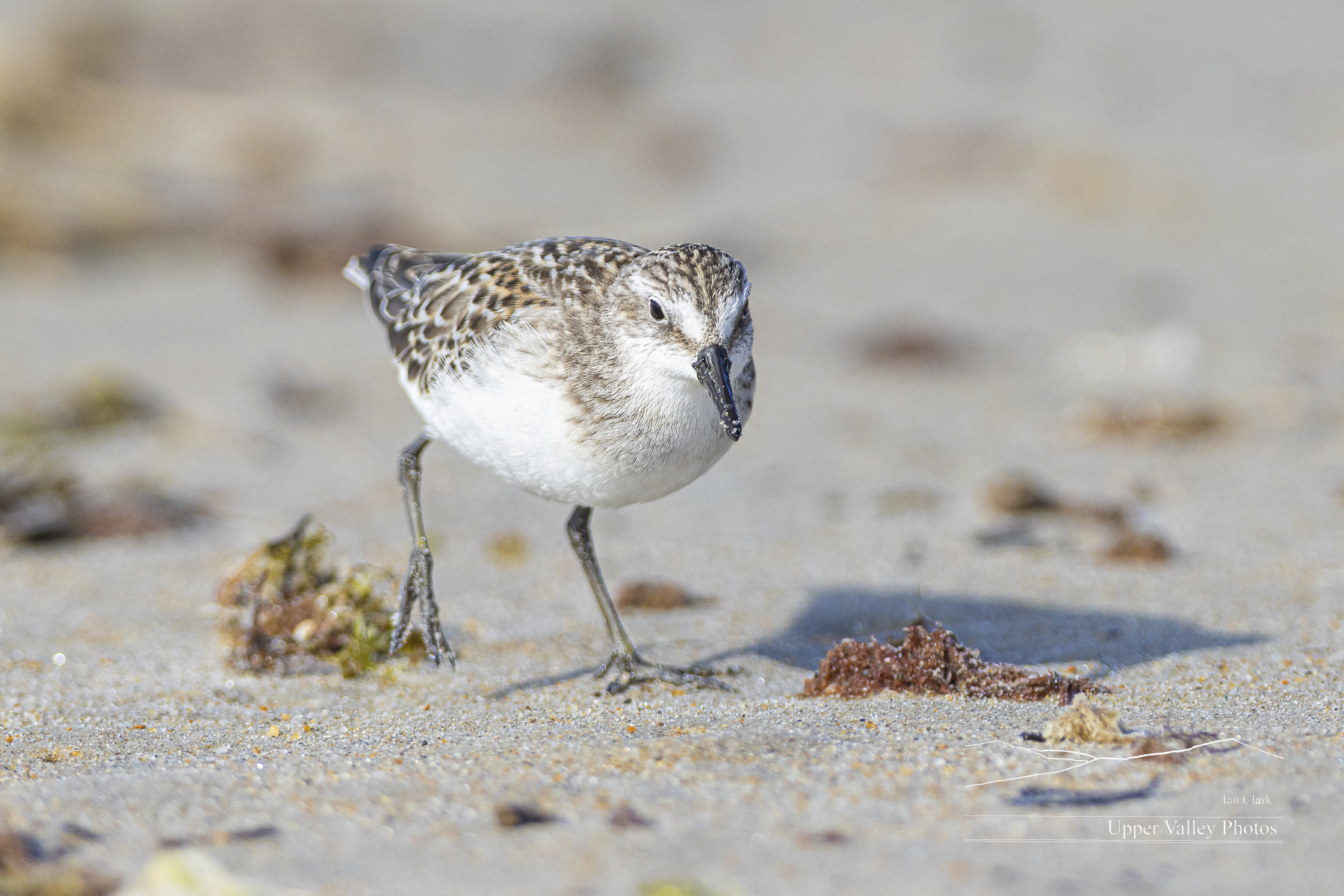
A large flock of sandpipers – called a fling, a bind, a cluster, or a contradiction of sandpipers – was spread along the banks and islands. Most of them were least sandpipers with others mixed in.

Sandpipers eat insects and their larvae, small crustaceans and other invertebrates like snails. They forage in and near the river, happily poking their bills into the muck to find the tastiest snacks.

They forage with rapid movements. And often seem to think the menu is better somewhere ‘over there.’

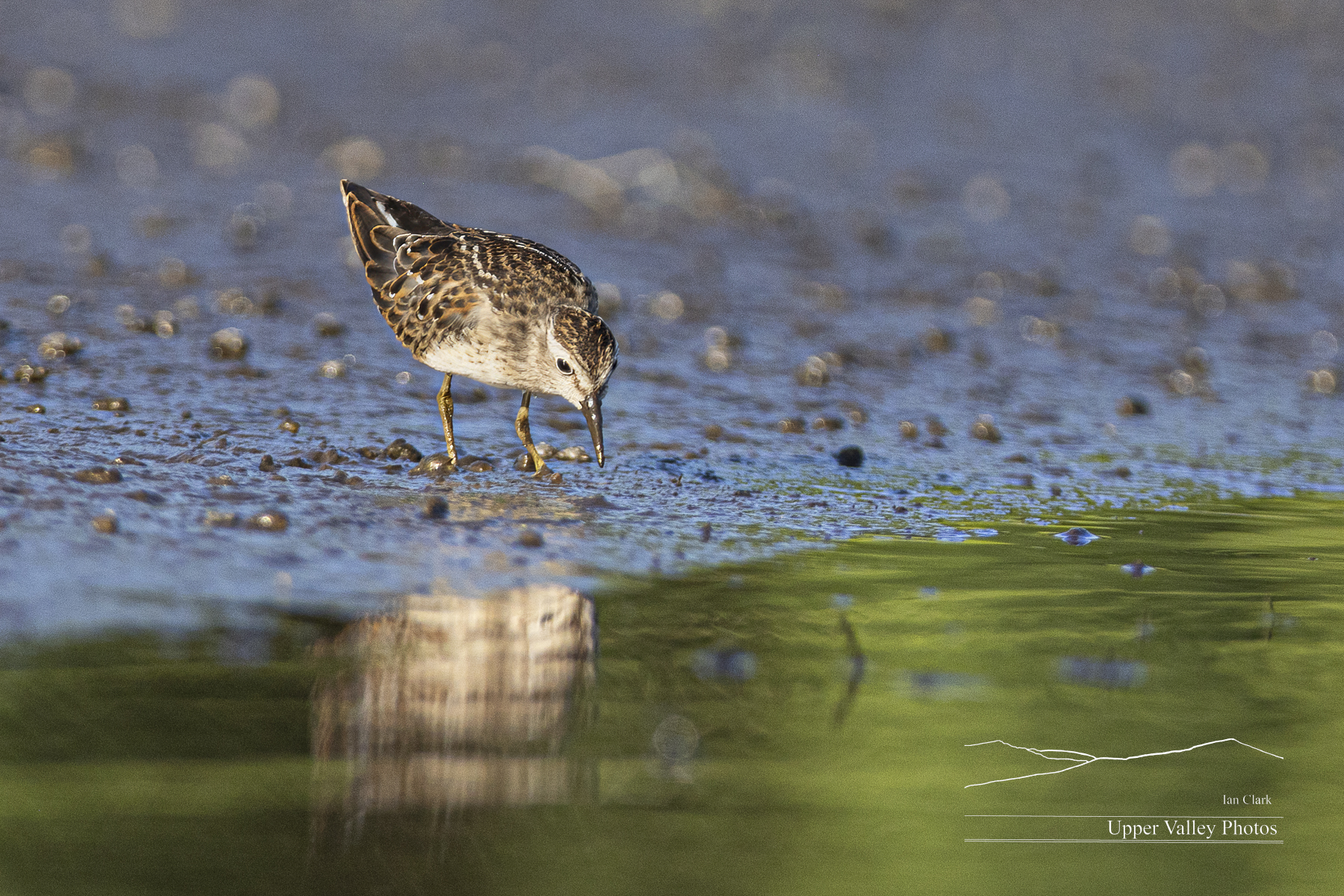
Here I found a few least sandpipers – the bird on the right – foraging alongside a spotted sandpiper.

One of the least sandpipers heading to the next bit of mud to check out what’s on the menu there.

An osprey circled overhead a few times before looking like he’d spotted his meal below.

A male red winged-blackbird didn’t like the osprey in the area and flew up to challenge him. The osprey spent a few minutes dodging the blackbird before the blackbird gave up. I’m a little surprised that the red wings challenge the osprey. Osprey eat almost exclusively fish (I have seen a video of one grabbing a snake from the water.) Birds usually know who is a threat and who isn’t. Loons can tell the difference between eagles and osprey at a considerable distance. They alert and call at the eagles and ignore the osprey. I wonder why red-wings object.

A common grackle joined the sandpipers looking for breakfast. I can’t identify what the grackle caught. But it wasn’t to his liking. He carried it up on the bank and abandoned it.

As I was heading back to the boat launch, I caught up with the mallard family again. Mrs. Mallard had the ducklings out of the water to preen. Dad was paddling nearby.

The ducklings finished preening and settled in for a nap.

Mom kept an eye on them as they huddled – she seems to think the little guy on the right is up to something….

An eagle appeared flying downstream. Mom gave a sharp call and the ducklings took cover under a nearby log. They hid for several minutes before remerging to huddle for their nap. I headed home.

Yesterday I headed back to check on the fox kits.

I quickly found one resting directly on top of the den’s hole.

Something caught his attention and he stood to look things over.

A false alarm! He settled back to nap in the sun.

A ways up the field, another kit was lounging near another of their holes.

This guy was laying in the brush at the edge of the woods.

With yet another sibling nearby.

Another kit was snacking on something near yet another of their holes. He’s finished and is off the the next item on the agenda. The parents will bring food to the den and if the kits aren’t out, the parent drops the food and leaves.

The next agenda item was a nap.

The clouds were moving in rapidly and the light was fading, I headed home.

You can sign up below to get an email when I add a new post. I won’t sell or share your info, all you’ll get is the occasional note that I put up a post. And, if you enjoy my posts, please share them with your friends and on your social media. Thanks!

Rounding Up the Usual Suspects

The run of nice mornings let me get out several times since my last post. I’ve called on the Middletons and the Westons, visited the falcons and the heron rookery as well as paddled in the Connecticut. This is a roundup of what I saw.

I’m still looking for fox, coyote and bobcat dens. And other mammals bigger than a squirrel. If you’ve got them hanging around where I won’t be in the way photographing them, I’d love to know.

I’ll be giving my slideshow An Uncommon Look at the Common Loon at the Rockingham, Vermont, Library this Saturday May 2, at 11 am. Free and everyone welcome. And I have prints of some of my favorite loon photos hanging in the Library now. Stop in and have a look. Later in the month, I’ll be doing my slideshow of my favorite shots from 2025 at the Bugbee Center in White River Jct. at 1:30 pm on Wednesday May 27 and again at the Blake Memorial Library in Corinth, VT at 6:00 pm on Friday May 27. On to the critters…

I’ve managed to visit the herons twice. The first visit found some herons sitting on their eggs and the others putting the finishing touches on their nests.

The rookery with a heron inbound.
They take great care in how they place the sticks. I suppose if you know you’re going to be sitting on them for a few weeks, you want to make sure all the pointy bits are well tucked away.

Finishing up the details on the nest. There’s a heron sitting on the nest to the upper left.
The mate showed up as the first bird was finishing up. You can’t tell him from her by looking, and both birds are involved in building the nest and incubating the eggs.
The member of the pair that flew in as the work was finishing up stretched in a courtship display.
Another heron sat just outside the rookery and provided commentary.
One of the males with a nest in the rookery arrived with the very stick they needed for the nest. The males gather the sticks and deliver them to the nest. The females will nod if they find the stick worthy of being added to the nest.
The female of the pair wasn’t around, so the male stashed the stick near the nest.
He took a few minutes to preen, which seems a challenge standing on a small branch.

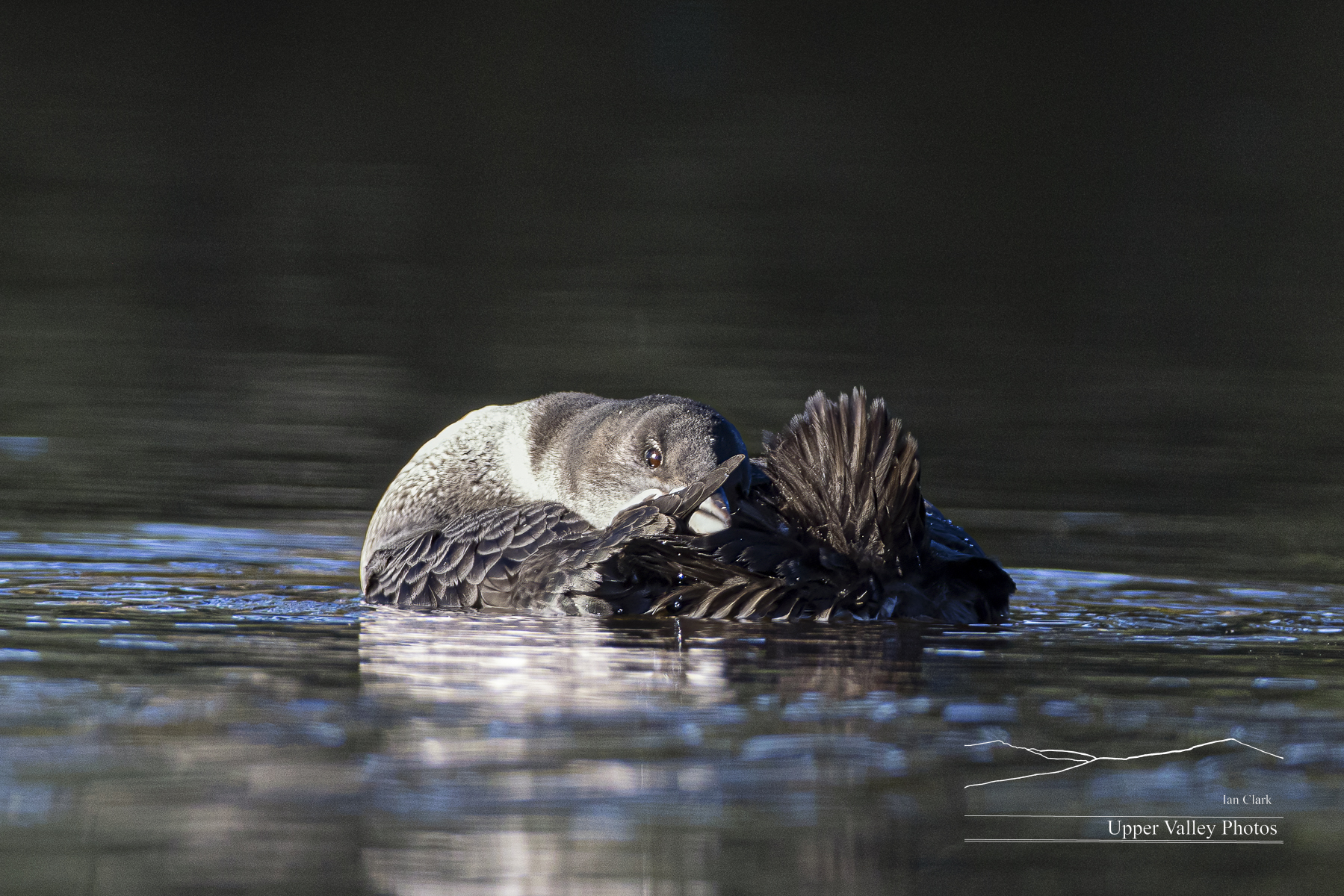
The next trip had me visiting the Middletons. There were two loons on the pond. Somewhat embarrassingly, I caught up with them before they finished their ablutions. Mr. Middleton waved his leg, letting me see his bands telling me he was who he claimed to be.

Mr. Middleton greeted me with open wings.
And this appears to be the new Mrs. Middleton. The previous Mrs. Middleton died shortly after being driven from the pond by a female challenging her for the territory. Neither the challenger nor this bird were banded, so we can’t tell for sure, but it is likely this is the challenger from last year.

I typed too soon in the last post when I said there didn’t seem to be many Canada geese around. They’re back in force.

The Middletons finished breakfast and tucked in for a nap. You can see Mr. M’s bands on his leg.

The next couple outings took me to the Weston’s pond. The Westons are often not in the mood for visitors and keep their distance. I try to respect their moods and keep my distance when they want to be left alone. There was a pair of loons on the pond. Mrs. Weston disappeared in early August last year and wasn’t seen again. We probably have Mr. Weston back with a new mate.

There was a flock of about 35 swallows – mostly tree swallows with a couple barn swallows for color. They were using this tree for a perch. They’d – more or less – settle for a bit before something got them going and they’d depart en masse. They’d fly out a ways before promptly returning to the tree. I couldn’t spot what got them going but suspect that one had spotted a tasty looking insect and went to nab it – with everyone following along.
Quick! Breakfast! Over there!

Flocks of birds never completely settle. Someone is always looking for a better spot.
And there were at least a couple of couples intent on making little swallows in the mix.
Off for another meal!
And settled back in for a quick nap.
Mr. Mallard had some place elsewhere he needed to be.
Warblers are back. Here’s the first yellow-rumped warbler (aka butter butt) of the season.

And what appears to be a disapproving palm warbler.

The next trip out was to visit the Middleton’s pond again.

One of the Middletons was up and ready to get going at dawn. They were covering lots of ground while foraging for breakfast. I wandered off to see who else might be out and about.
One of the resident beavers was as busy as himself and was making a quick improvement to the roof of his lodge. He dragged this stick to the lodge and pulled it out of the water.
Carefully adjusting it for the proper pitch and angle.
With his chores done, he stopped for some breakfast. Beavers eat the bark off of branches and trees. That’s why I’ve named this guy – wait for it – Chewbarka.
One of the Middletons gave a good stretch as I was heading out.

The next morning found me checking in on the falcons.

They’re sitting on their eggs, so there wasn’t much going on to photograph. The on nest duty bird did peer out above the lip of the shelf with the nest.

The mate sat in a tree above the nest, mostly preening and snoozing.
There is a brave pair of eastern phoebes nesting on the cliff about 20 feet below the falcon’s nest. I’m surprised at the number of song birds in the area. Steering clear of where falcons frequent would seem to be a good idea. The smaller birds in the area must know the falcons are there. The small birds seem to keep low and close to the cliff – making it impossible for the falcon to stop before hitting the ground if it went after them. I thought of J.R.R. Tolkien’s advice, “It does not do to leave a live dragon out of your calculations, if you live near one.”

And the next morning found me back at the rookery.

All the nests had birds sitting on their eggs. Again not an exciting morning watching birds just sitting. This heron did pop up several times to adjust the sticks in the nest.
Sticks back in their proper place, the bird settled back in.
Someone’s mate came back from his favorite watering hole and stood guard at the edge of the nursery.

The Waits and Connecticut Rivers have been too high for me to be comfortable paddling. Earlier this week, it had dropped enough for me to venture out. When I got out Wednesday morning, the water had dropped to the point where navigating anywhere but the deepest part of the Waits was difficult.

There were several killdeer out foraging along the mud at the water’s edge. There were lots of grackles and red-winged blackbirds and a few ducks around. A murder of crows mobbed a red-tailed hawk every time he dared fly over. With the low water, I saw several large snapping turtles foraging.
A pair of northern flickers were cleaning up a nesting hole. Tree swallows looked like they were going to move in downstairs in the same tree.

The flickers took a break to make little flickers and share a moment afterwards.
There was a bit of a close call when rounding a curve in the river, I surprised a croc basking on the riverbank.
The killdeer were creating a ruckus calling and flying around. After a time, I found four of them in a kerfuffle. I couldn’t figure out the cast. There was at least one female that presented repeatedly. There were at least two that would charge her when she did. Often one or both would take a short flight, often with an attack while in air. Sometimes it appeared the kerfuffle was two on two and sometimes three on one.

Three of the killdeer disagreeing on something.
Someone has just charged the flying bird causing it to take flight. The bird in the back right seems to be presenting.
A midair skirmish.
Pretty clear this is ‘get outta here!’
Which led to another midair skirmish.
The midair skirmishes seemed to be mostly threatening, without any actual contact.
The kerfuffle came to some conclusion I couldn’t figure out. The lady that had been presenting throughout took time for a bath and all the birds wandered off.

If you enjoy my posts, you can sign up to get a notification when I add a new post. I’m not going to share your info, I just use it to let you know I’ve got a new post up. And, you can help me out a bit by sharing your favorite posts with friends or on social media. Thanks!

Spring Brings Everyone Back to the Upper Valley

I’ve managed to get out a couple of times this spring, finding mixed success. Let’s see who’s out and about.

It is that time of year again where I ask for help finding critters. I’m always looking for mammals bigger than squirrels. I’m still looking for a fox den and would love to find coyote or bobcat dens. If you get a bear showing up daily when they get fully up and around, I’d love to know. Owls and a woodpecker nest are on my list too. If you’ve any of them showing up regularly where I can come and go without disturbing them or you, I’d love to know.

I’ll be giving my slideshow An Uncommon Look at the Common Loon at the Rockingham, Vermont, Library Saturday May 2, at 11 am. Free and everyone welcome. And I have prints of some of my favorite loon photos hanging in the Library now. Stop in and have a look.

Regular readers will know that I’ve been trying to get a good shot of the long-eared owls down on the coast. There have been three of them wintering there for the last several years. They hang out in what can’t be more than half an acre of trees. I’ve made several trips down to try to catch them where they can be seen. To make things worse, every photographer east of the Mississippi seems to have a nice shot of all three posing nicely together in the clear – and they all stop by to show you their shot on their phone….. I tried again in March.

Success again eludes me… One owl was visible through a tiny gap in the trees. The queue of photographers were actually polite about sharing the one spot where you could see the owl. I waited for him to open his eyes…. no luck.

Success again eludes me... One owl was visible through a tiny gap in the trees. The queue of photographers were actually polite about sharing the one spot where you could see the owl. I waited for him to open his eyes.... no luck.
When he did open his eyes, he leaned forward – right behind that &%$@#$& branch….

There’s always next year….

One of the projects I’d like to try is to follow a family of swans through the season. Yes, yes, I know they’re invasive. And aggressive. But they’re here. We either have to live with them or hunt them all down.

I went searching for a likely couple. I ventured down to the Fannie Stebbins Memorial Wildlife Refuge. They’ve hosted families the last few years. There were two swans to be found – and apparently not a couple.

The first swan I found was looking for handouts and wouldn’t back up far enough to get a photo of all of him?

The other swan spent the afternoon swimming slowly around his pond, doing swan things.

Fannie Stebbins may not be where I find the family, I’ve got some other spots to check out.

There was a good-sized flock of ring-necked ducks relaxing on the pond.

The male wood ducks were out paddling their stuff to impress the ladies.

And there were several hooded mergansers, mostly swimming in pairs – but too far apart to get both in a shot.

On the way home, I found two loons on the Connecticut River, a hopeful sign.

My next outing was to check on our local peregrine falcons. They spent most of their time away from the nest on my first visit.

The next time I had a chance to visit, there was a falcon sitting on the nest. And one supervising.

This gives a good idea of where falcons like to nest. Can I name this guy Cliff?

The bolts in the rocks are rock bolts drilled into the cliff to keep rocks from falling.

My next outing was to visit a great blue heron rookery. It is on the small side for a great blue heron rookery – only seven nests. The good news is they’re relatively low for heron nests, we should be able to see the chicks from the ground when the time comes.


The nests are all in dead trees over a small pond.

Most of the herons spent their morning standing in the trees near the nests.

Sometimes they seemed to be chatting with the neighbors.

The heron on the right has just returned to the nest. The herons did some head bobbing and weaving in a quick courtship display.

One bird found time to make some nest improvements.

While the mate sat nearby pretending to be busy.

I’ve been checking on the Middleton’s pond – usually the first to ice out in the spring. Last Saturday afternoon there was a loon snoozing on the pond. I went home and got the boat ready to go.

Dawn on Sunday found me on the pond. But no loon. It was probably on a scouting mission to see if his pond was open and he’d just stopped off to rest a bit. Other pond residents were out and about.

The morning started off foggy, but pleasantly warm for an April paddle – 28° when I launched. A wood duck posed as I headed down the pond.

I did find several ring-necked ducks promenading on the pond.

There was a pair of eagles that sat watching the pond. I suspect they were thinking that duck would make a good breakfast.

A loon showed up again on the Middleton’s pond on Wednesday. I made it out this morning.
I soon found a lone loon on the pond. I think I saw a flash of color from his bands, but never got a really clear look at his legs. My guess is Mr. Middleton is back.

Hank the great blue heron was working the reeds for breakfast.

Before retreating to a tree.

There seem to be fewer Canada geese on the pond this year. But the ones that were around were happy to make noise and fly around.

The red-winged black birds seem fewer also. There were several males and the first female I’ve seen this year out foraging.

And as the fog lifted, painted turtles started appearing on every handy log along the shore.

This log is almost at capacity.

Back on the home front, Charles, our resident whistle pig has reported for pillaging duty.

You can sign up below to get notifications when I add a new post. I’ll never share your info, you’ll get the new post notifications and nothing else.

My 2025 Favorite Photos

Here’s a roundup of my favorite photos from my adventures in 2025.

I’ll be showing my slideshow on visiting the puffins on Machias Seals Island at 2:30 pm on Sunday March 22 at the Tenney Memorial Library, Route 5, Newbury, VT. Free and everyone welcome. And, stay tuned, the Piermont, NH, Library wants me do a slideshow of the best of 2025. We’re checking the dates the hall is available. It should be one of the first three Sundays in March.

And it is last call for my 2026 Wildlife Calendar. I’ve got only a few left, you can get yours on my site here. There are lots of images available in many sizes from note cards to wall art.

OK, the critters….

Last winter, I took several trips to the Maine, New Hampshire and Massachusetts coasts. The goal was to find owls.

This is Leo, the long-eared owl. He’s on my list. There were three long-eared owls living in about half an acre of trees alongside a parking lot. Even in that small a hideout, they were discouragingly hard to find. I spent about 40 hours waiting for them to move out to sun themselves. Without success. And, it didn’t help that every photographer east of the Mississippi would stop by to show me shots they’d taken of all three owls sitting together in perfect light in the open. This was the clearest shot I could get.

There were several snowy owls around the coast. They all seemed to have found perches that kept the crowds at a distance.

There are a couple screech owls that have gained fame with the photographers. They were more kind, snoozing in openings of their nests.

Another screech owl snoozing in his doorway.

My first few excursions out in the spring found the early ducks returning. Here’s Mrs. Mallard taking a bath.

And Mr. Mallard got a little too rambunctious while bathing…..

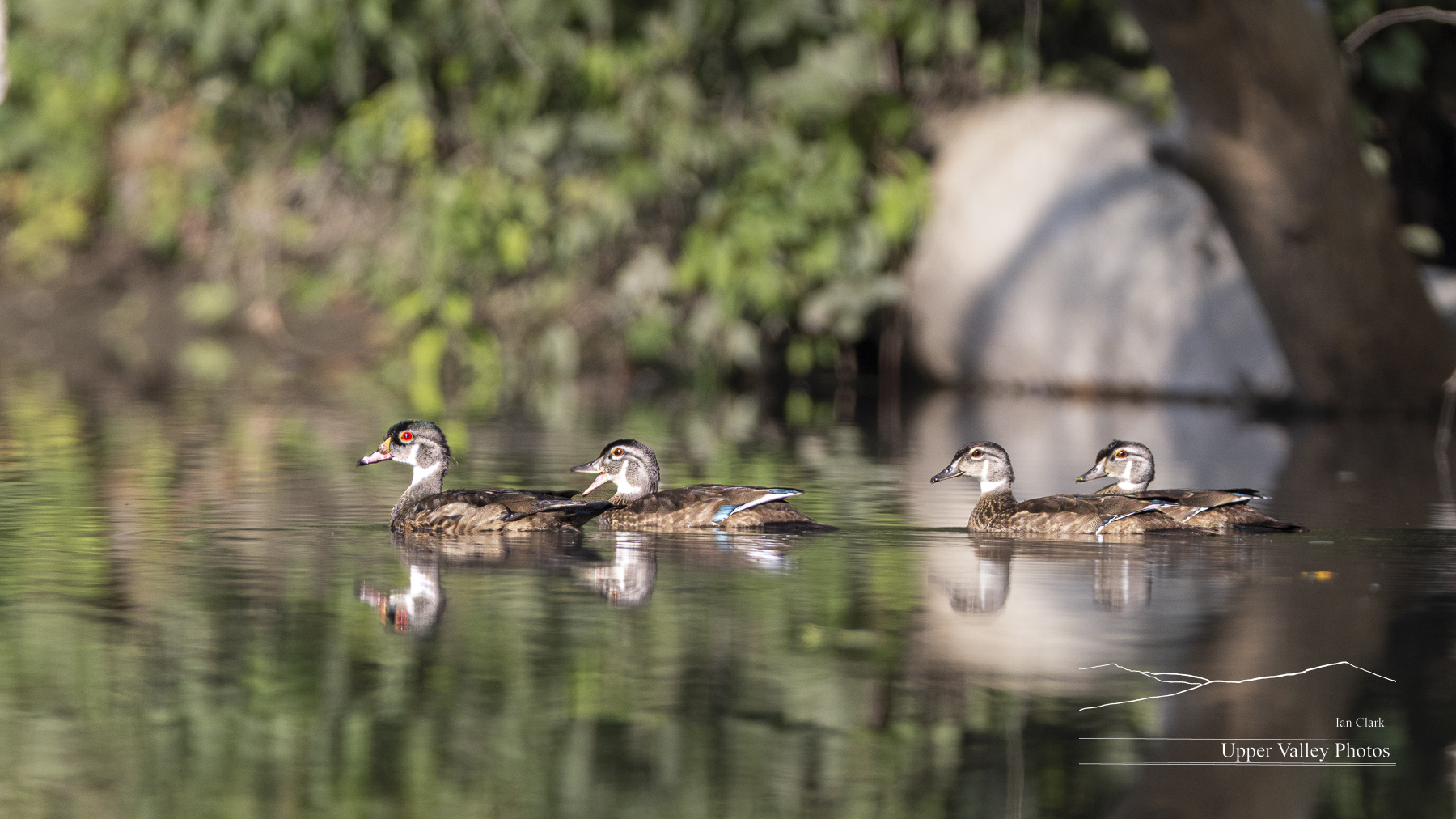
Wood ducks are always a treat to photograph.

Another screech owl, this time peering out as he gets ready for an evening out.

Another trip out found another wood duck.

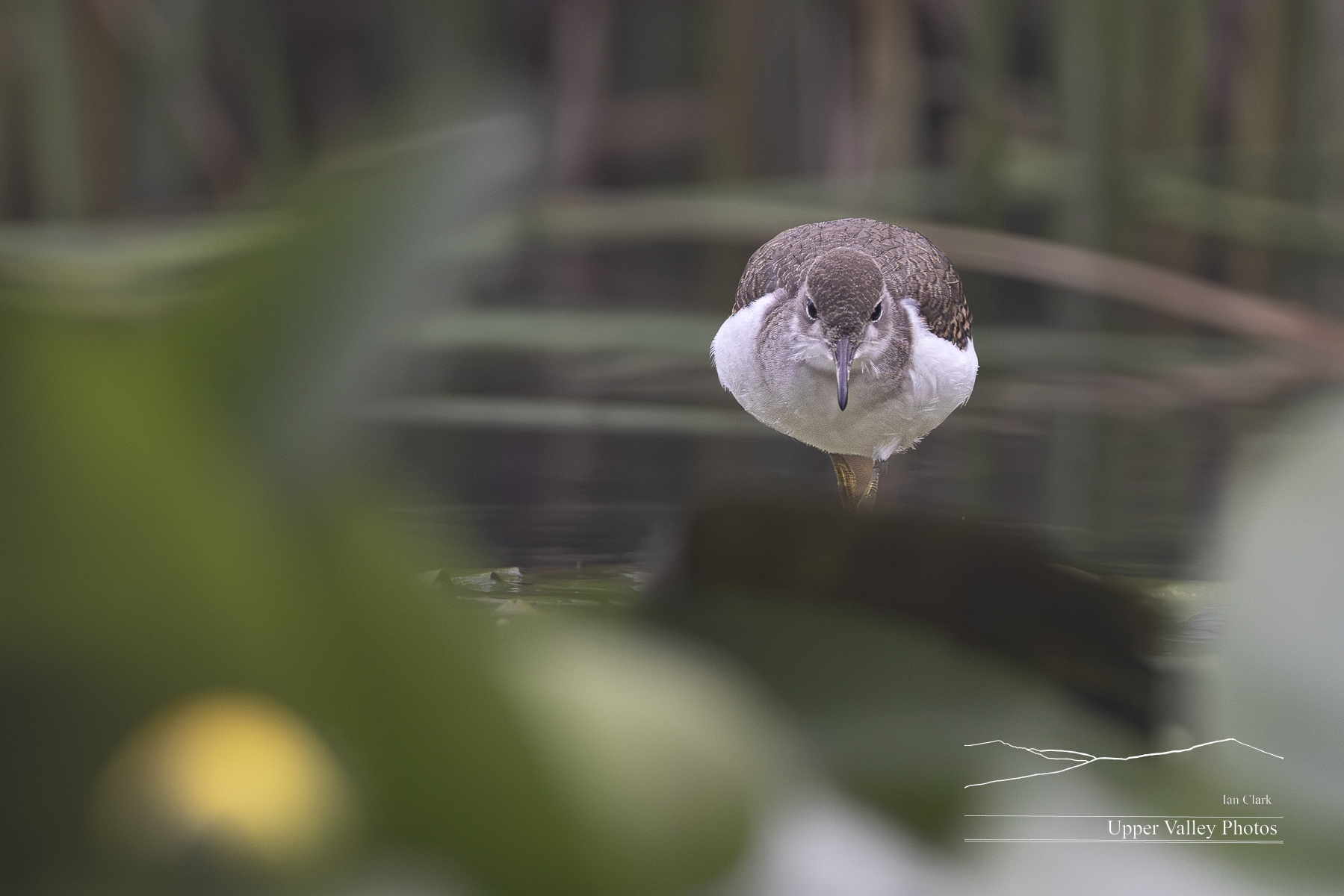
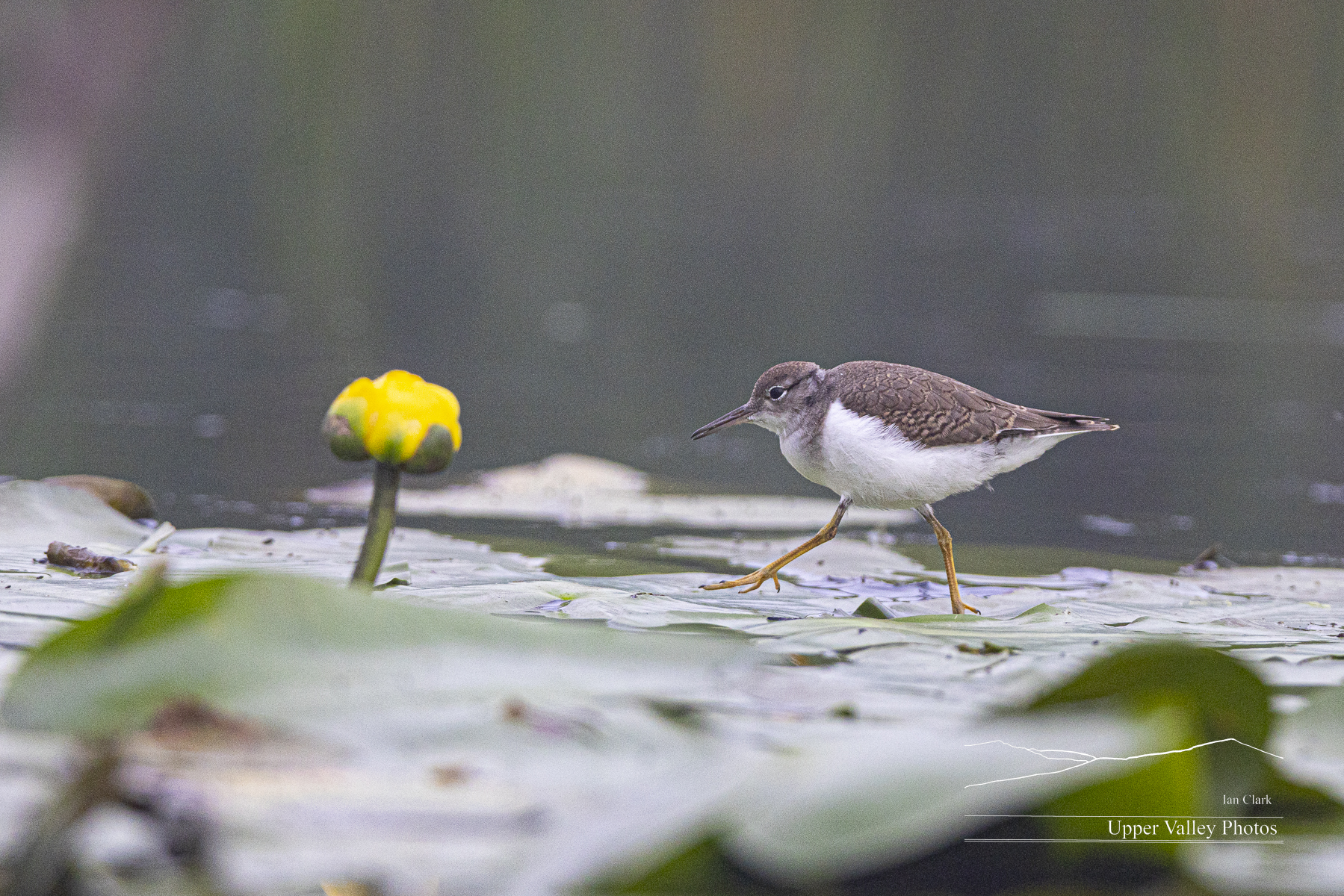
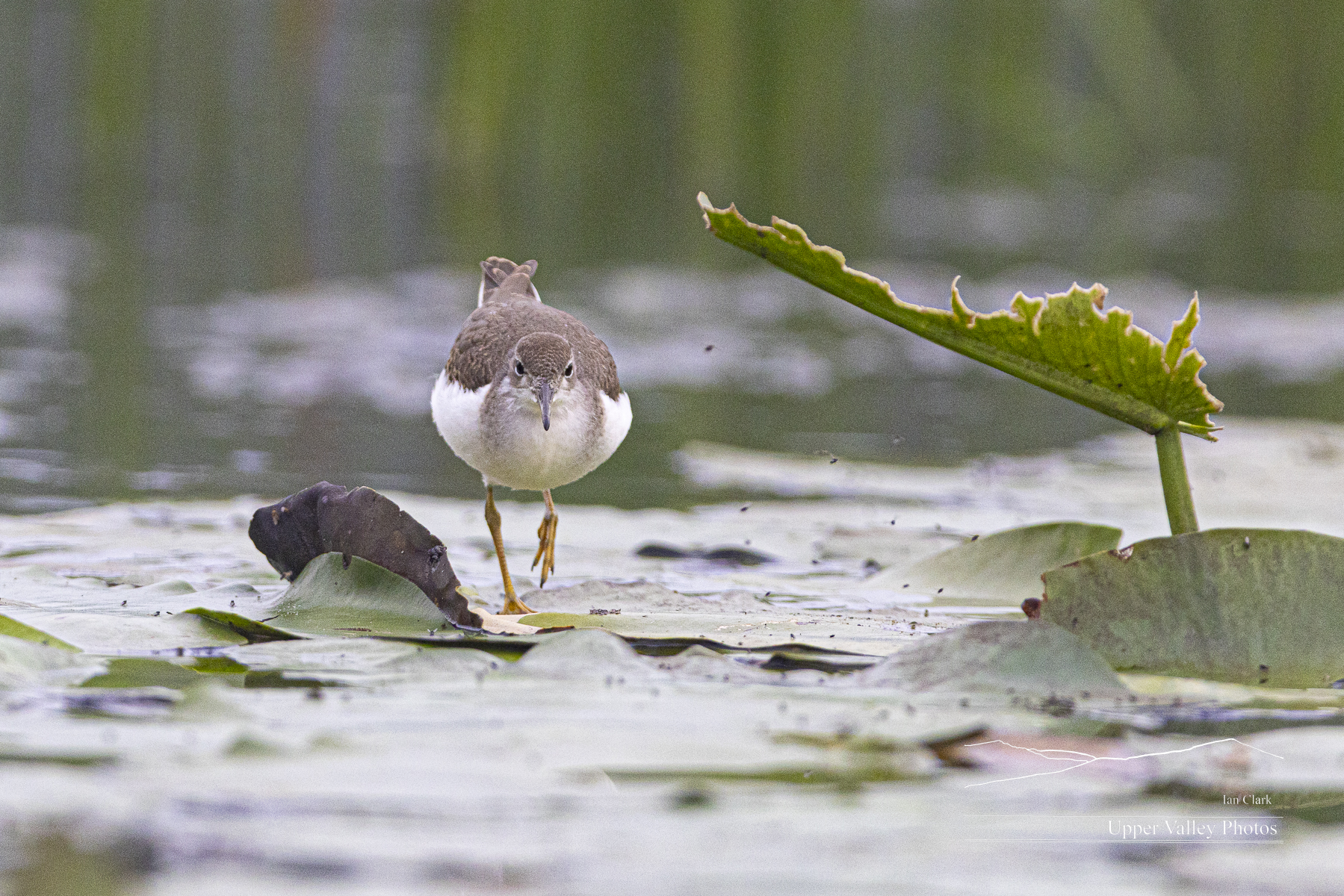
And a solitary sandpiper.

Sometimes you don’t even need a cute critter to make a nice photo.

In early June, I retuned to the shore, just in time to catch the first piping plover chicks hatching. These chicks are one day old.

The chicks hide under their parents for protection and to keep warm.

But they’re capable of foraging by themselves. This chick attempted to nab a fly. The fly was lucky, and managed to climb atop the chick’s bill. The chick wore the fly around a bit before the fly took off to live to fly another day.

The chicks are only about the size of cotton ball and don’t seem to fit their legs. They’re capable of short bursts of speed but often look awkward when they’re walking.

He’ll soon get the hang of this walking stuff….

This guy looks like he’s got it down..

The chicks scoot along the beach using the grass as cover.

The beach also had a large colony of common and least terns. They’re constantly coming and going. And, they’re not shy about dive bombing anyone that disturbs them. The males carry fish around to present to the ladies. If the lady accepts the fish, they become a pair for the season.

This may be the world’s most inept male tern. He presented the fish to his lady and she showed she was receptive. But the male didn’t catch on for some time, with the female presenting and chirping away until he figured it out.

Here’s a pair of common terns doing a synchronized dance as a courtship display.

And more dancing…

And completing the dance just before mating.

On one of my early trips out in the kayak, this veery showed up as I was loading up. He? sat on a branch that was overhanging my car, just about at eye level. He was unperturbed when I put the boat on the roof, and soon was foraging almost underfoot. I took the hint and got the camera back out.

Male red-winged blackbirds are early arrivals. They’re easy to spot before the reeds grow up. This guy was finding small bugs in last year’s cattails.


And, just when I thought I had my ducks in a row…..

I watched a fox den for a time in the spring. There were two or three kits, but usually only one would come out at at time.

A little later in the summer, I explored some of the beaches along the Connecticut shore and found more piping plover chicks.

And several northern diamondback terrapins out laying eggs above the high-water mark.

There were several pairs of American oystercatchers on the beaches. The oystercatcher banders are good at banding – I couldn’t find one that wasn’t banded.

Hank heron made himself scarce in the spring, but by early summer he was back at his post along the loons’ pond.

One foggy morning, I took just a couple photos of the loons through the thick fog. I pulled the boat out and had it atop the car when I noticed these deer had come out of the brush along the shore. I’m amazed they hadn’t spotted me in the open. I ducked behind the car and had about 20 minutes watching them forage and frolic before they finally did spot me.

I think the fawns are twins, and a second doe was traveling with the family.

Another morning finds Hank again posing nicely.

In September, I visited southeastern Alaska. I took the ferry from Juneau to Haines before going on to Skagway. The scenery from the ferry is amazing. Here’s the Sentinel Island Lighthouse we passed north of Juneau.

The attraction in Haines is the brown bears. I was able to spend four days – four rainy days – along the Chilcott River watching the bears fishing for salmon.

This is a first-year cub. One of a litter of four, a real rarity for bears.

This is brown bear 925 to the Alaska Fish and Wildlife Department’s biologists. Her friends call her Lulu. She’s the mother of the four cubs.

There were several families around, Lulu with her four cubs, another mother with three second-year cubs and at least three mothers with twins. This is a second year cub. Still traveling with mom, but getting ready to head out on his own.

One of the mothers chasing down a salmon in the river.

And one of the mom’s with her catch. I double-dog dare you to try to take it away from her.

One of the second-year cubs chases after a salmon.

Lulu enjoying her catch while sitting in the river. I love that the fish is big enough that she has to use her back leg to help hold it up.

Lulu with her four cubs.

Another mom heading out to go fishing.

And one of the moms in action in the water.

Moving on to Skagway, I spent four days photographing the White Pass & Yukon Route Railroad. The have a working steam engine, 2-8-2 no. 73. No. 73 is a three-foot gauge Baldwin, built in Philadelphia, Pennsylvania in May 1947. The railroad put on quite a show for us. Here we’re in Pennington, British Columbia, along Lake Bennett.

Still on the WP&Y, this time in Bennett, BC.

The next day, again at Bennett, BC, with Lake Bennett in the background.

This time in Fraser, BC with Teepee Peak and Jack Peak in the background.

And back in Skagway, crossing the East Branch of the Skagway River.

And no. 73 clinging to the Mountain at Inspiration Point in Skagway.

And in a classic shot, we’re back in Skagway with the train coming out of a tunnel and crossing a beautiful trestle.

Heading back to Juneau and my flight home, the ferry passed passed Eldred Rock Lighthouse.

And we had a beautiful moonrise not long before we reached Juneau. There was a great display of the northern lights later that night – so I hear. With an early flight out, I was tucked in bed.

Back in Vermont, I again headed to the coast to hunt for owls.

Leo had just returned for the winter. He still wouldn’t cooperate. I’m not giving up….

Happy New Year! Best wishes for 2026!

The Loons Are Moving On

We’re coming to the end of the season with the loon families. It looks like I’ve had my final visit with the Westons and Littleton is likely to leave soon. This may be the last loon post for the season. I’m going to try to get out a couple more times. But, I’m preparing to depart for an adventure next Thursday. One that – hopefully – will get enough photos for a few posts.

I’m still promoting my 2026 Wildlife Calendar, they’re available online at https://www.ianclark.com/product/2026-9-x12-wildlife-calendar-of-ians-photos/554?cs=true&cst=custom or if you’re local, I’ve got a supply in the car.

Ian’s 2026 Wildlife Calendar.

On to the loons, et al.

Back on the fourth, I dropped in to visit the Middletons. Dad wasn’t to be found (we lost mom in August) and Littleton was on his own. Dad has likely moved to a nearby pond for some rest and is likely to come and go from his pond for a couple more weeks.

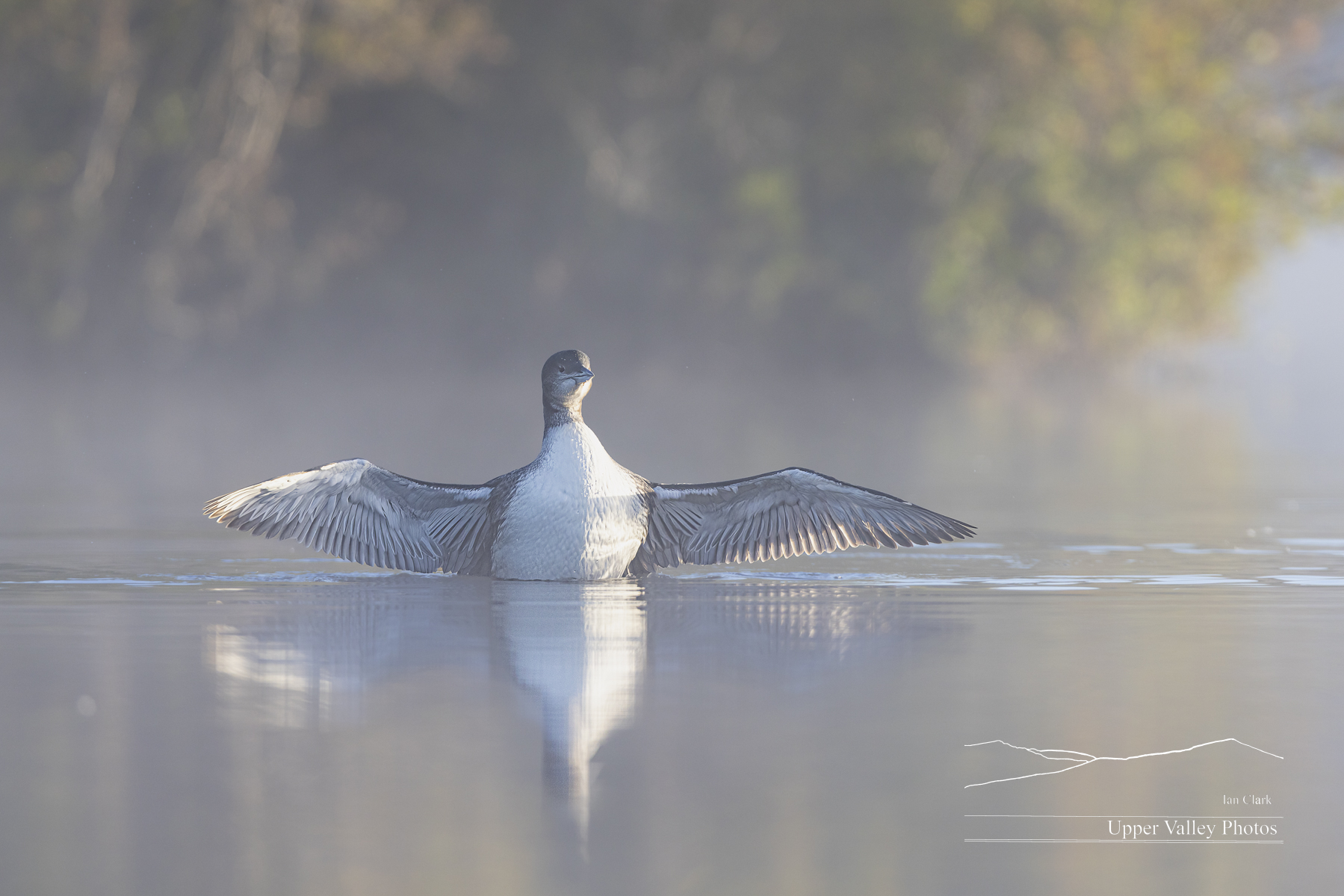
I found Littleton in the fog, he greeted me with a nice stretch.
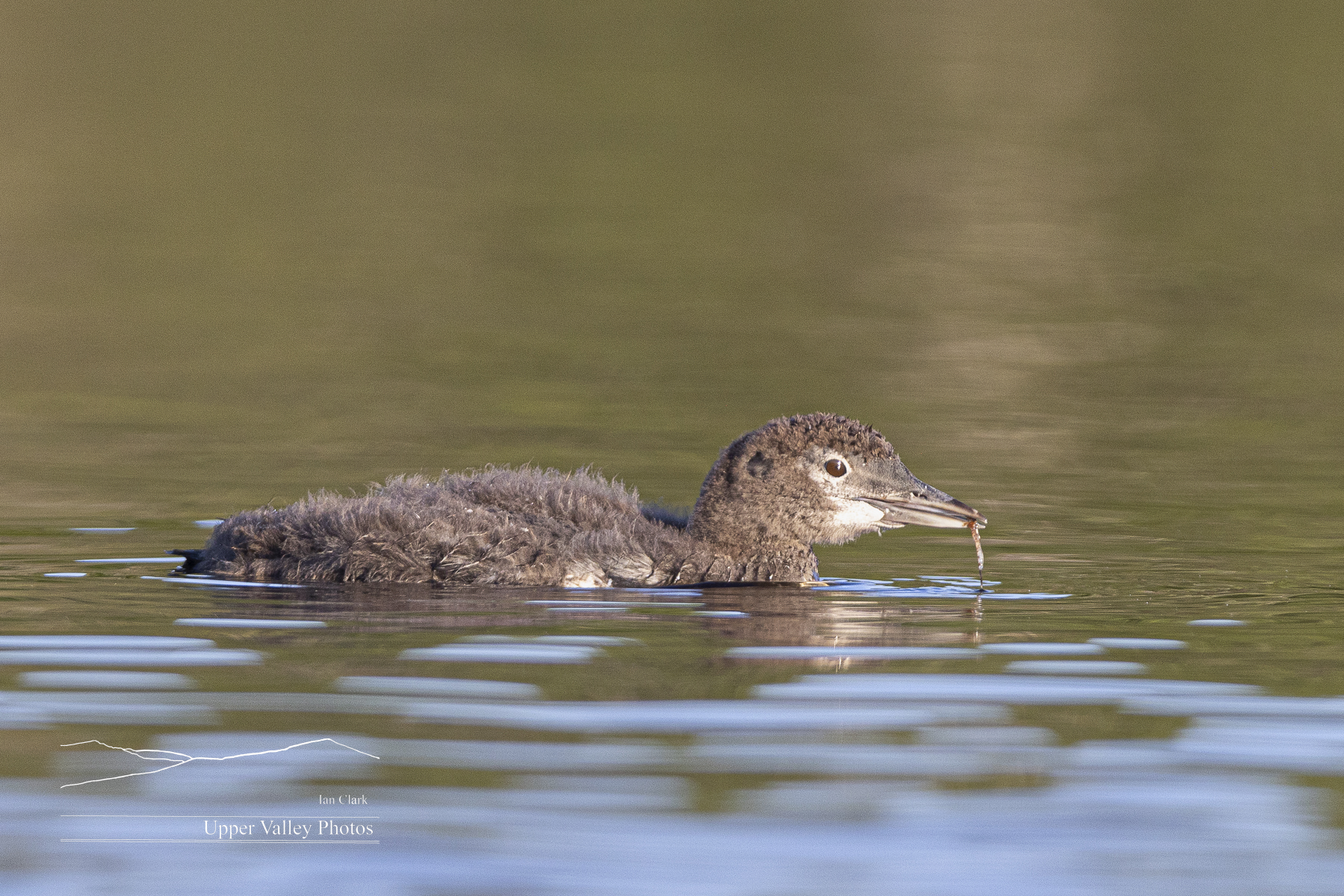
Loon chicks have to learn how to be an adult loon. That requires practice. Here’s Littleton practicing his? wail. The first couple tries in the morning sounded more like a subway car screeching through a sharp curve than a loon. He got better as the morning progressed.

Littleton also made a few attempts to fly. His first of the morning was pathetic – he made it about 10 feet before appearing to trip over something and splashing down. He wasn’t deterred and kept trying throughout the morning.

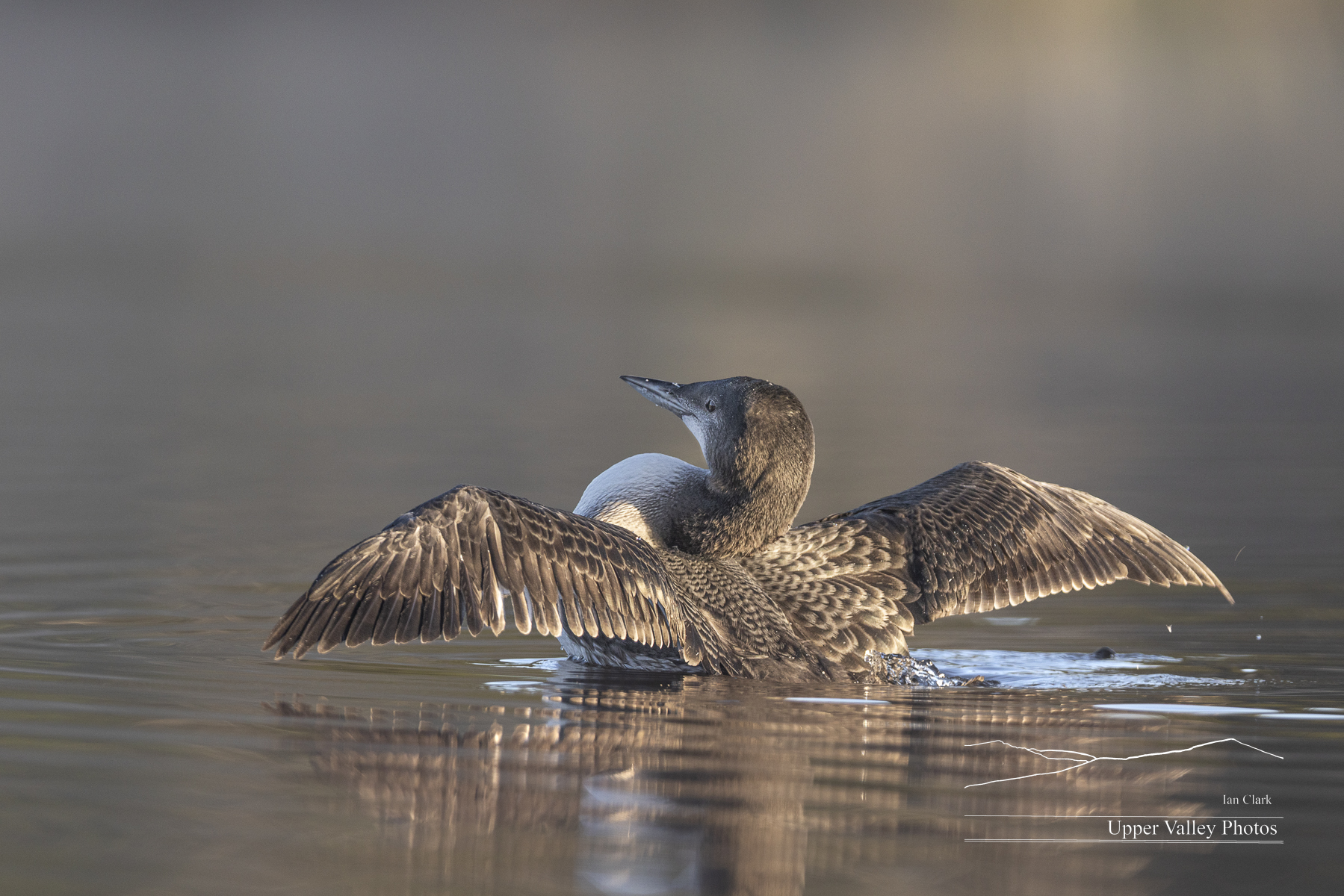
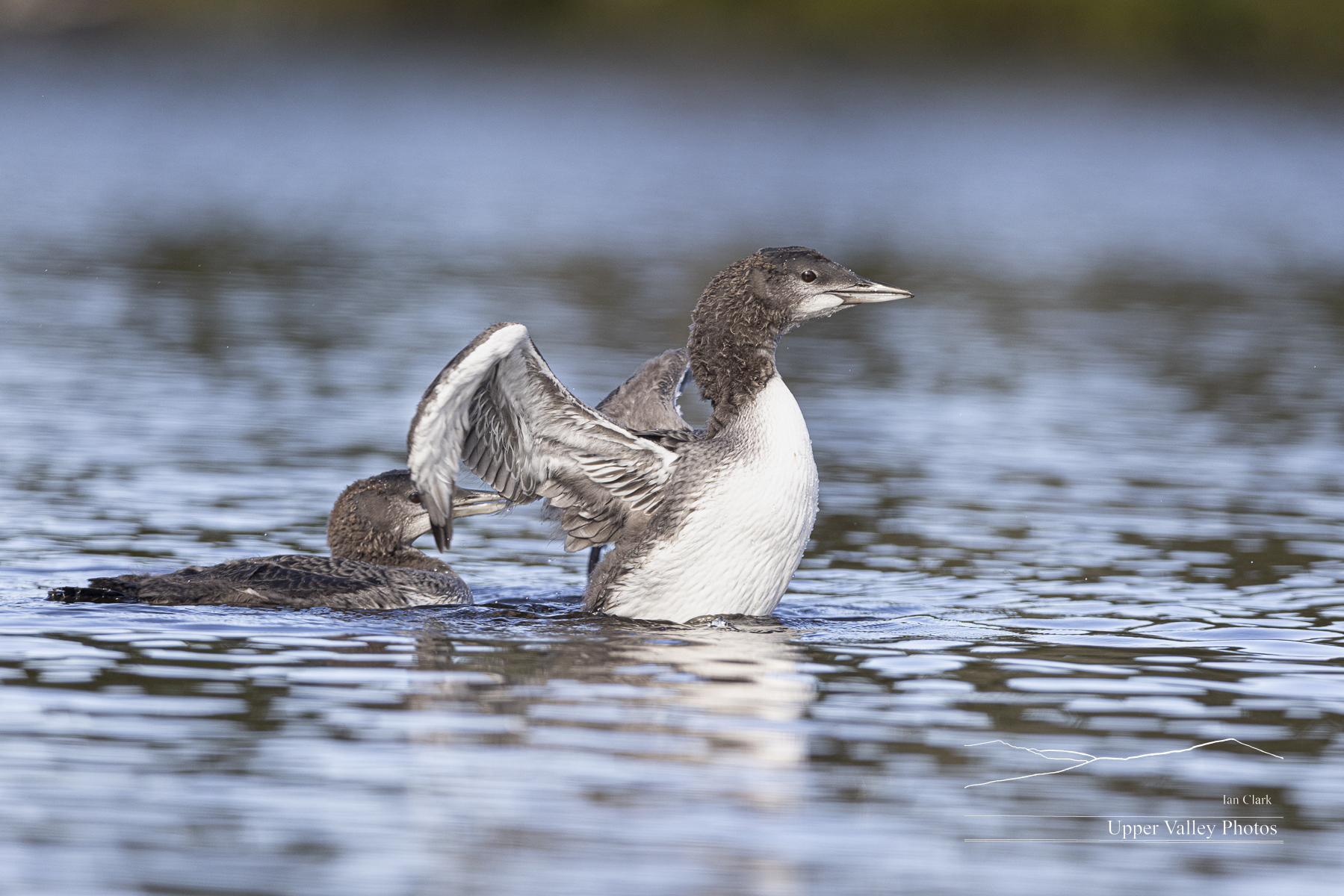
Littleton took a break from foraging for a quick stretch.
And another stretch…..
One more stretch….

Littleton moved further away to forage. I drifted through the one sweet spot on the pond that has cell service and took a second to check my messages.
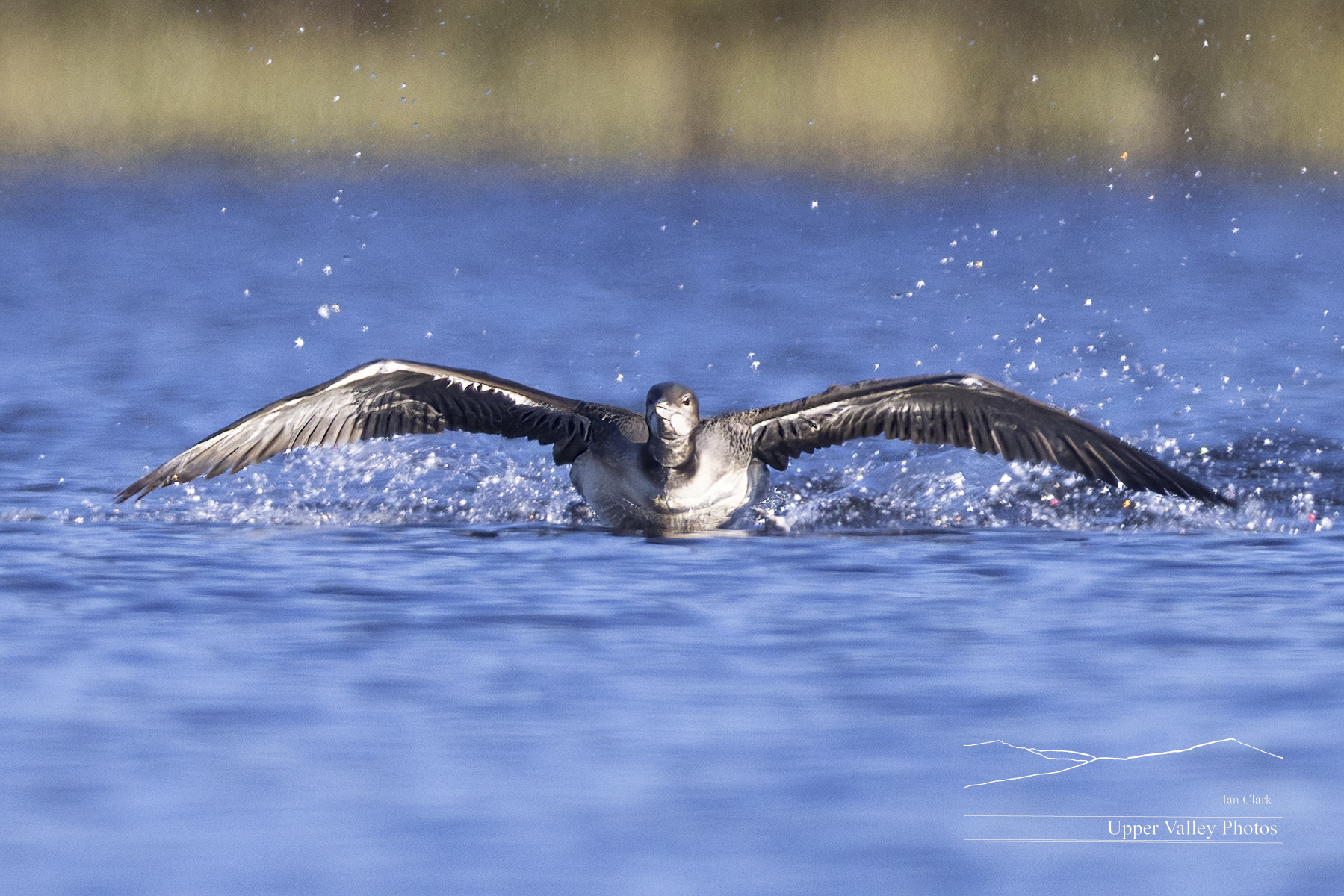
While looking down I heard Littleton start a run to try to fly and looked up. He was headed directly at my boat. And was getting close. Very close! VERY CLOSE! Close enough for me to yell at him to watch out. He finally put the brakes on and skidded to a stop. I cropped some from the top and bottom of this shot, but side to side is the whole image as shot. After a quick stretch, he headed off to find more breakfast. I went off to see who else was still around.

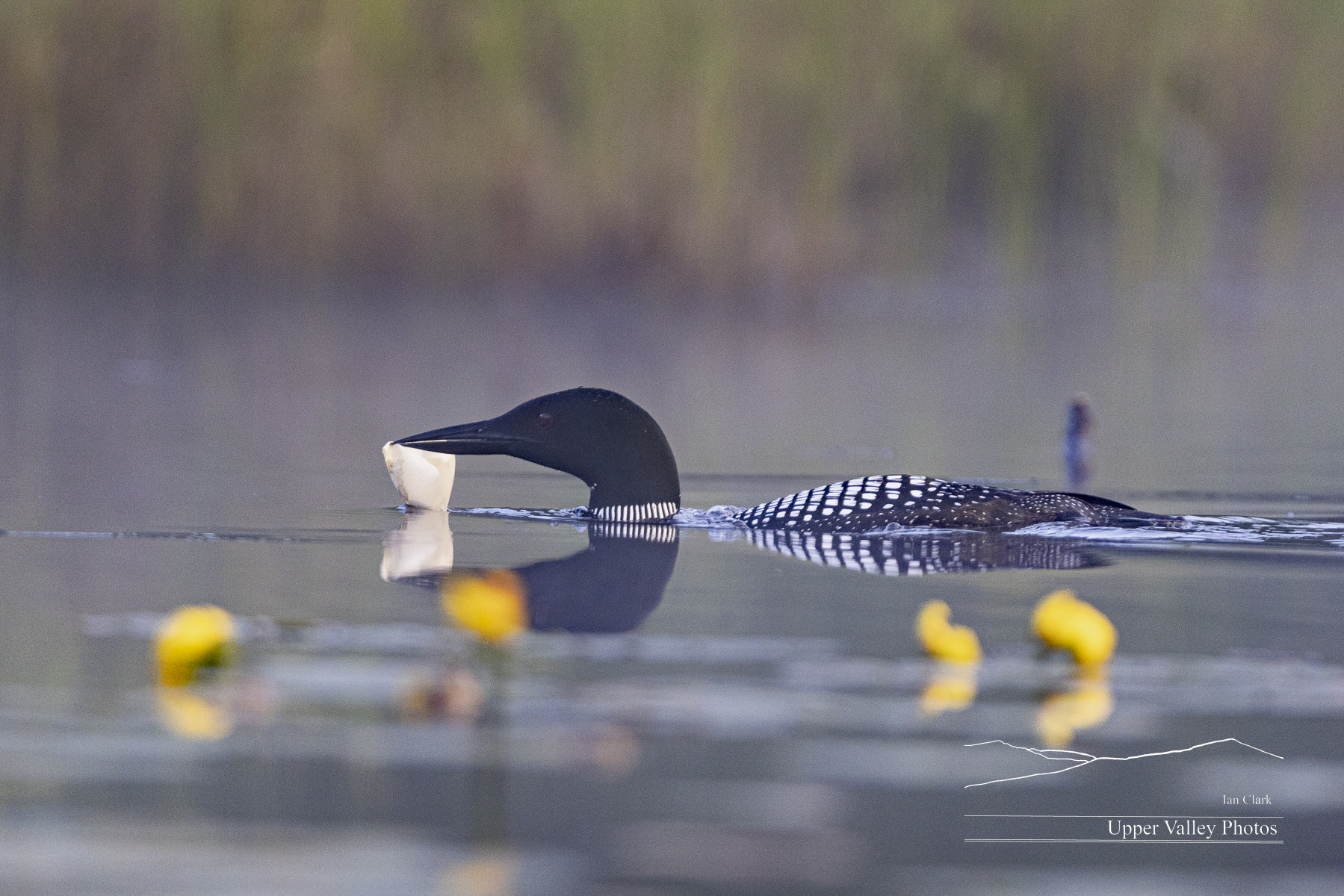
The lily pads have been covered with small bugs for a couple weeks. This morning, the yellowjackets were out, apparently eating the bugs. Does anyone know what they are?

On the eighth, I headed up to visit the Eastons. It was a delightful 38° when I put in with fog coming off the pond. Mom wasn’t to be found. She has a history of scooting early and leaving dad to tend the chicks.

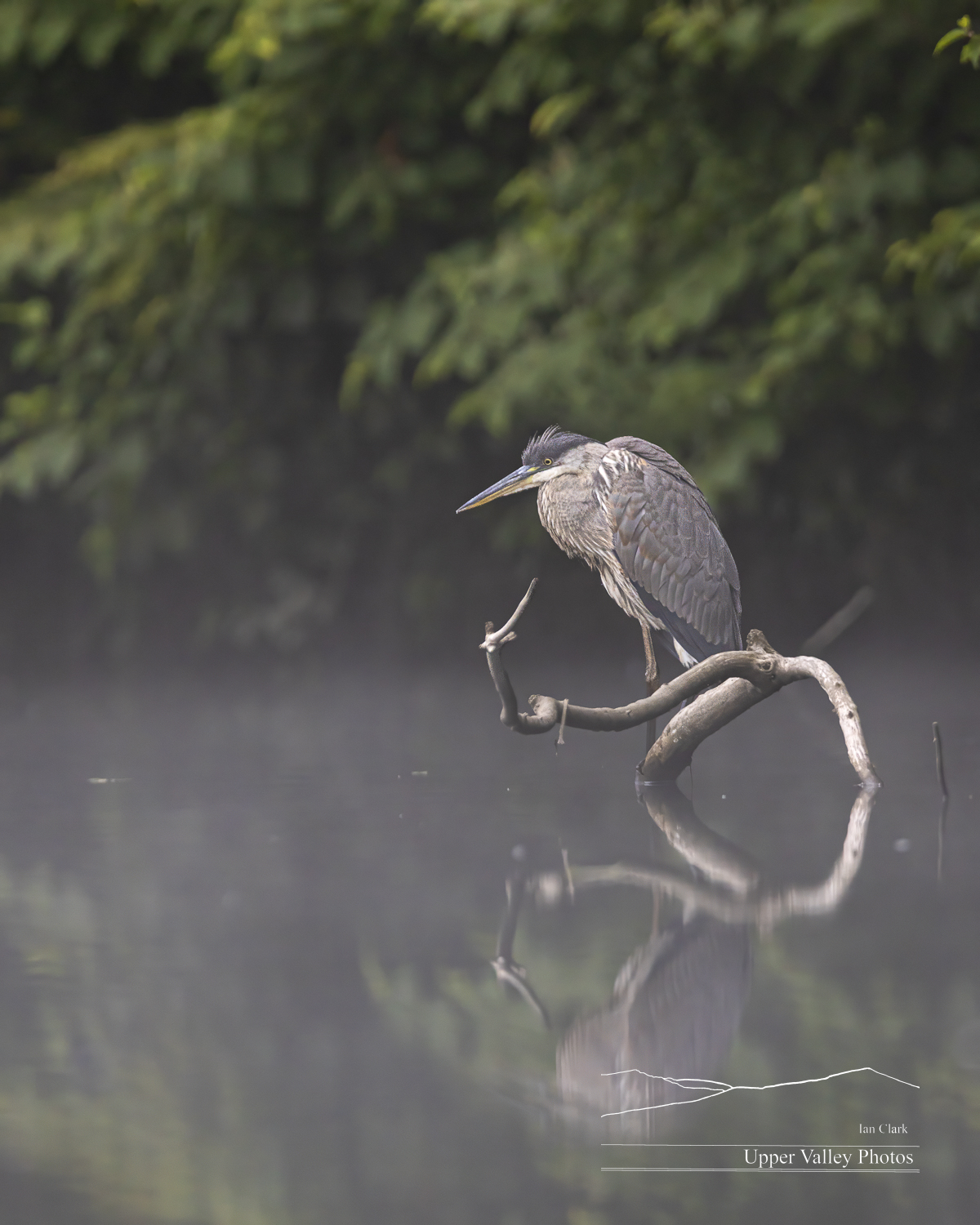
As I started down the pond, I passed Hank heron sitting on a small island. He was fluffed and huddled against the chill. I parked the boat, hoping he’d wait until the sun came over the hill to light the trees behind him. He had other ideas and took a few steps up the island before flying off to do heron things.

Dad and Leaston were at the far end of the pond. Leaston was demanding that dad provide breakfast. He did do a little foraging on his own when dad was slow with the next course.
Leaston waiting patiently for dad to deliver. The rim light shows the very last of Leaston’s down on the top and back of his head.
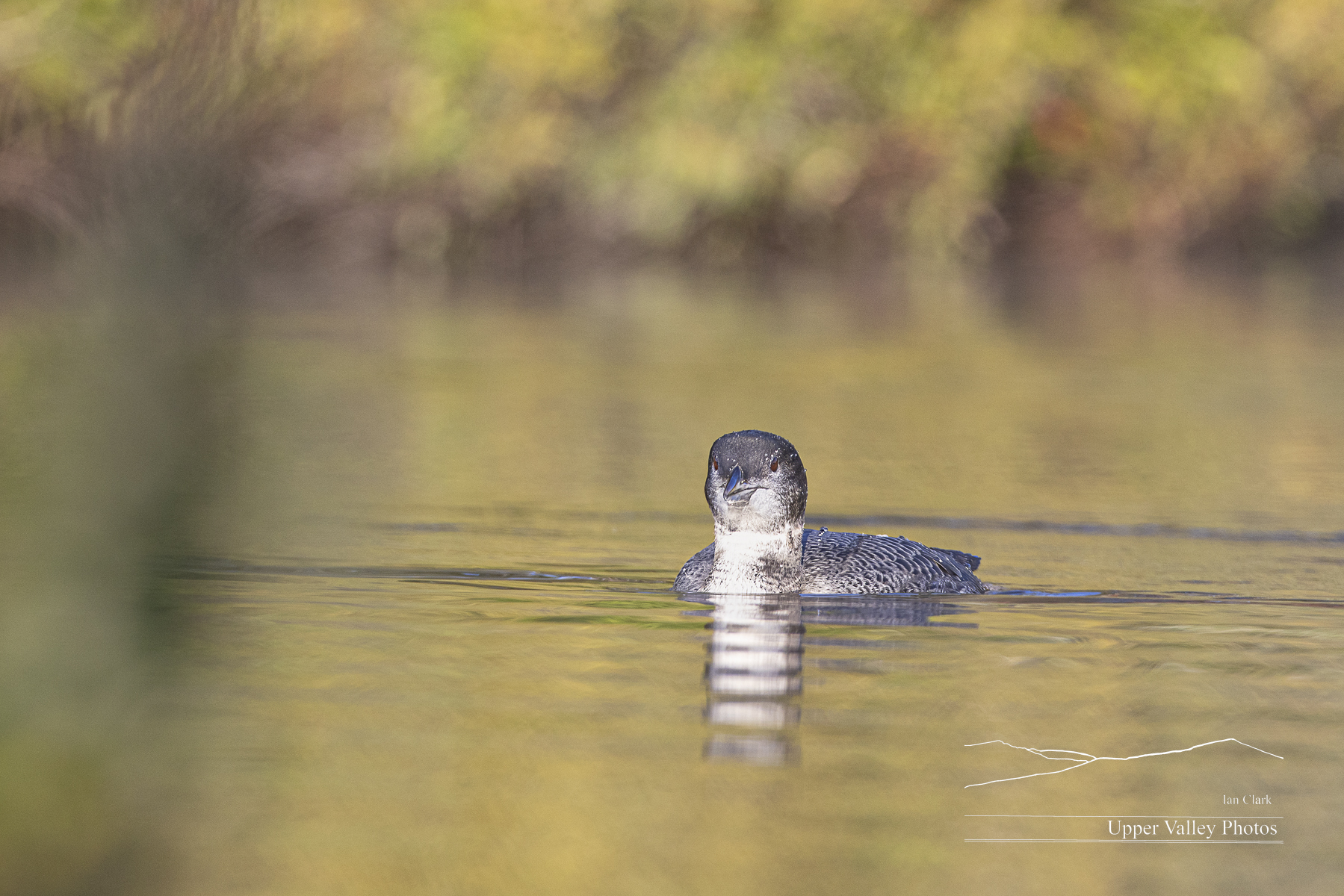
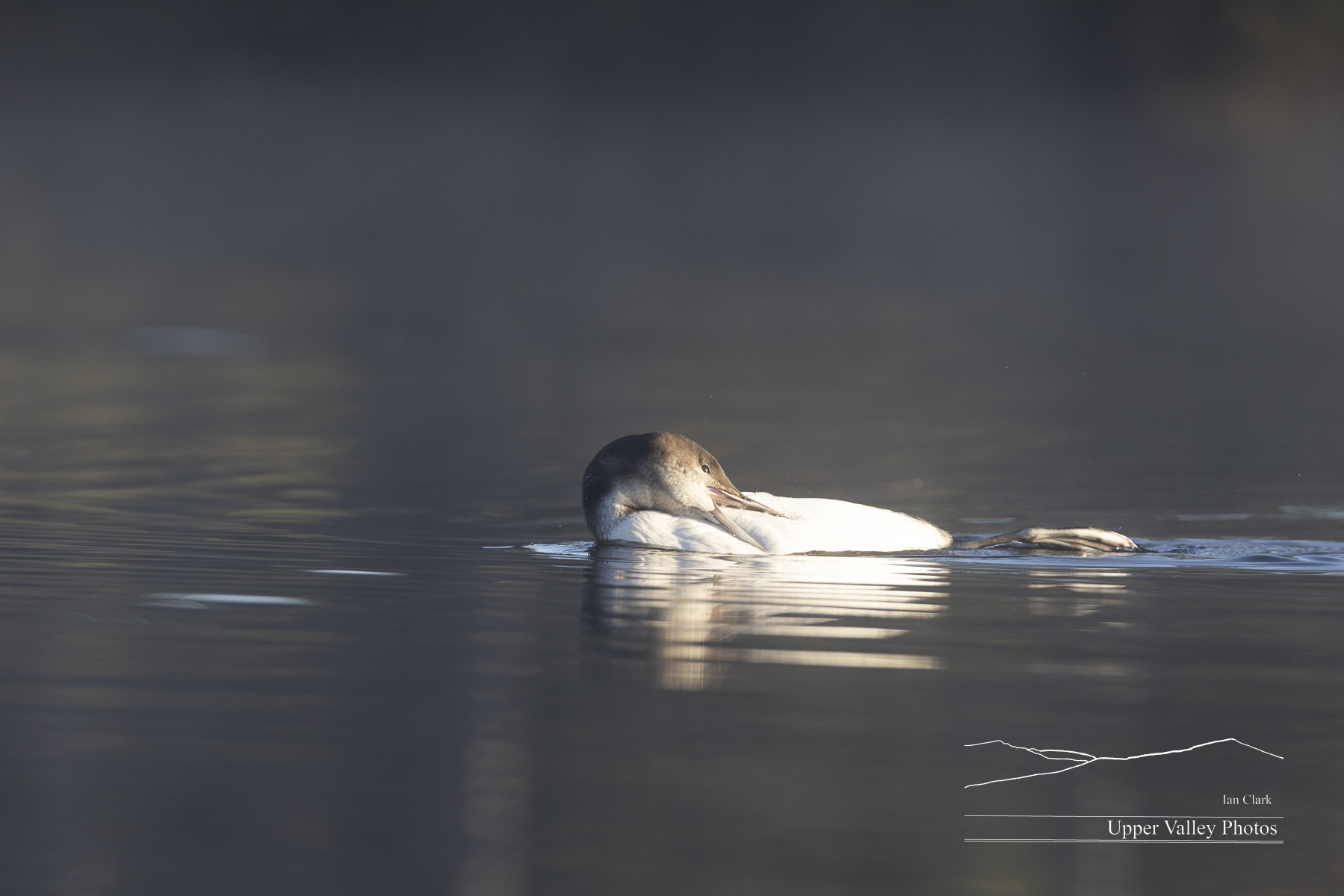
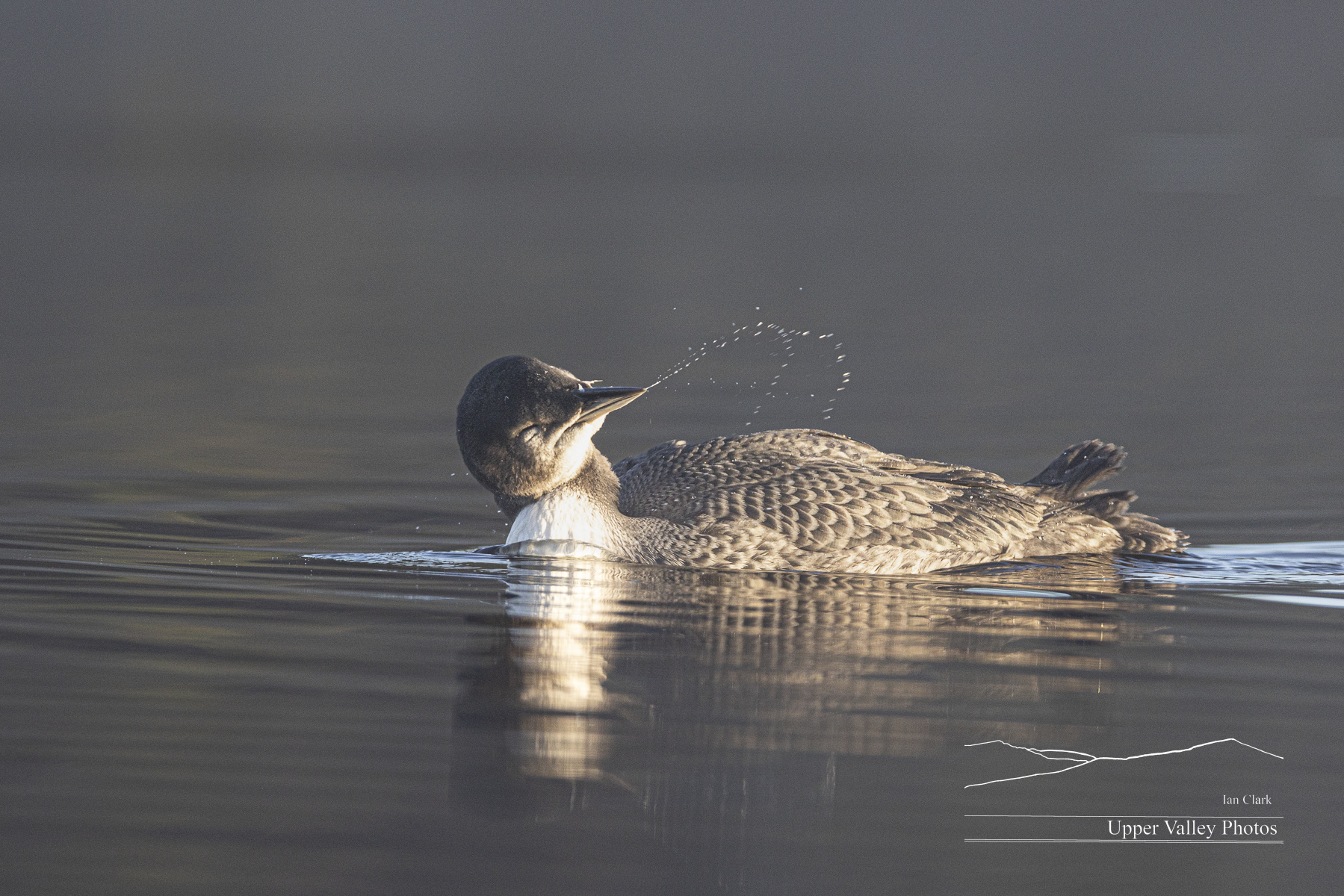
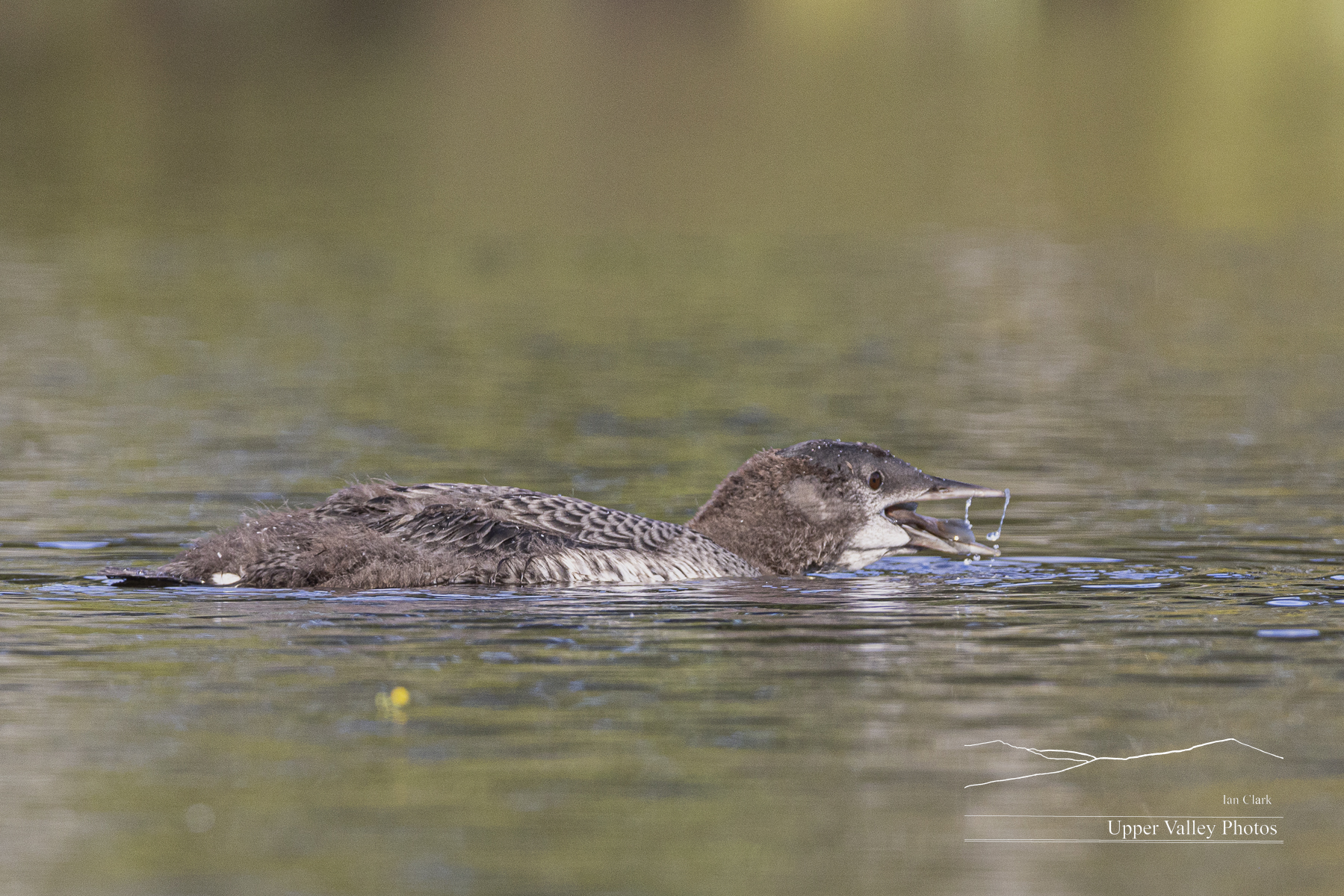
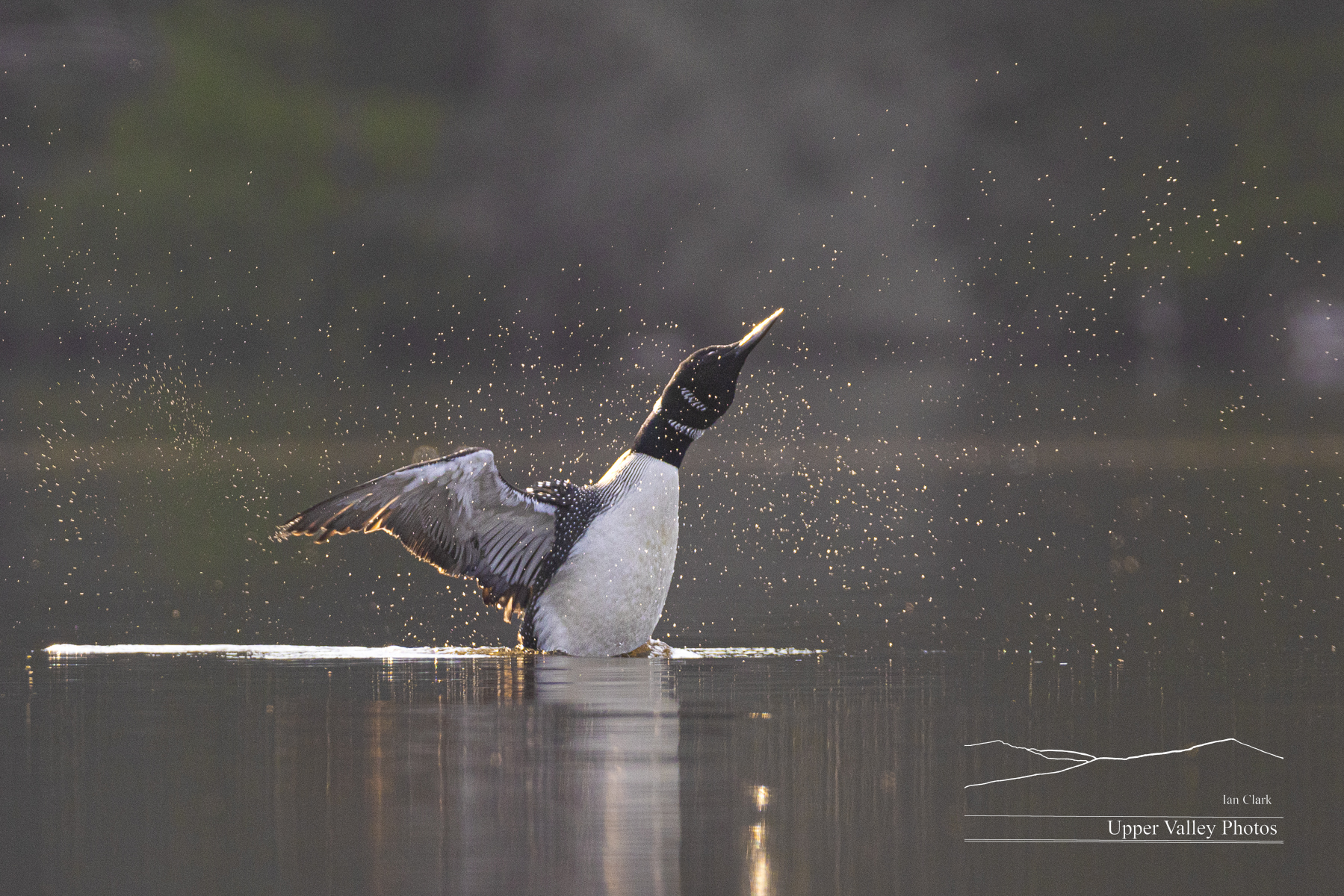
Loons will often dip their bills in the water and snort – I think they’re blowing their nose. Afterwards, they often give their head a shake – sending droplets flying.
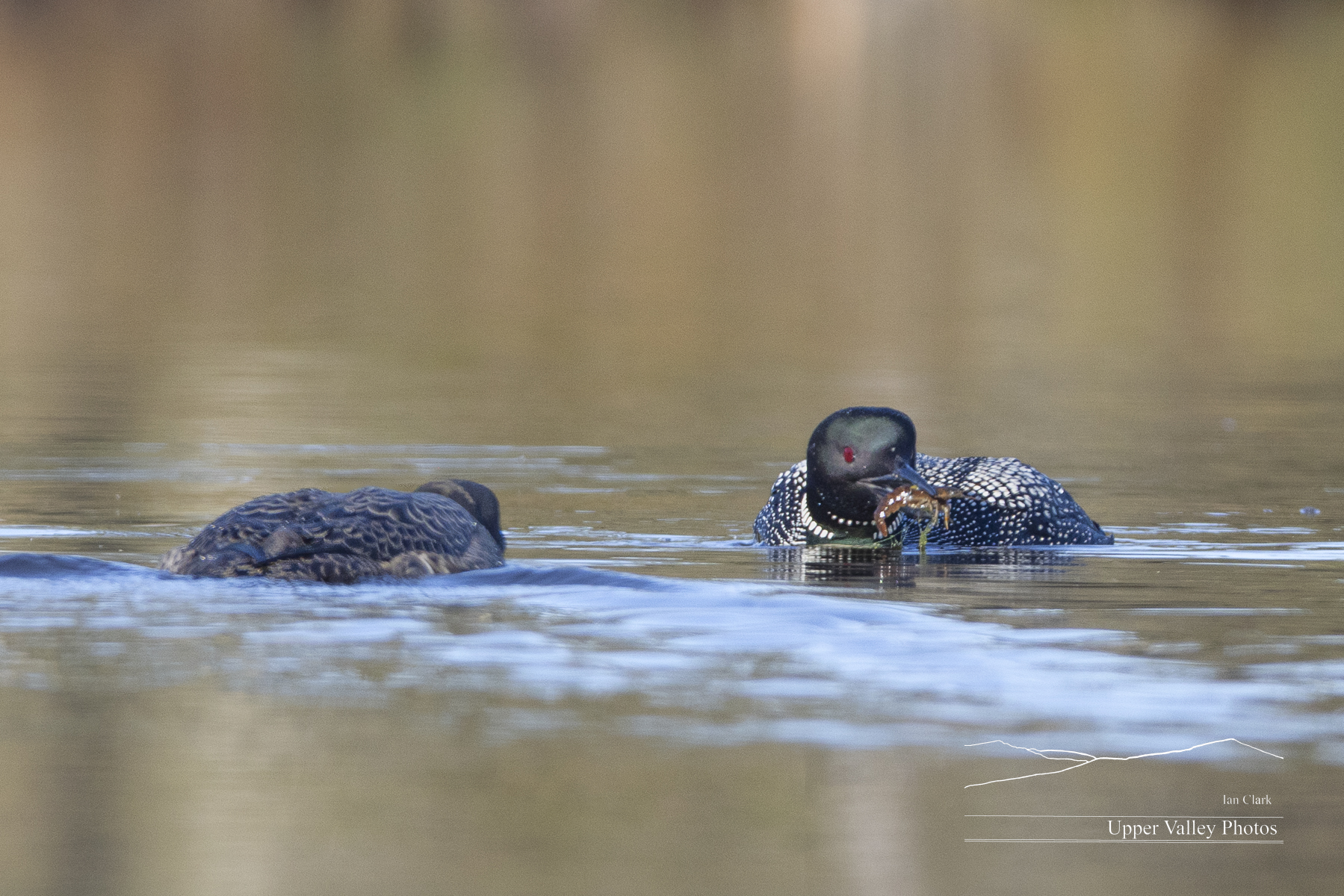
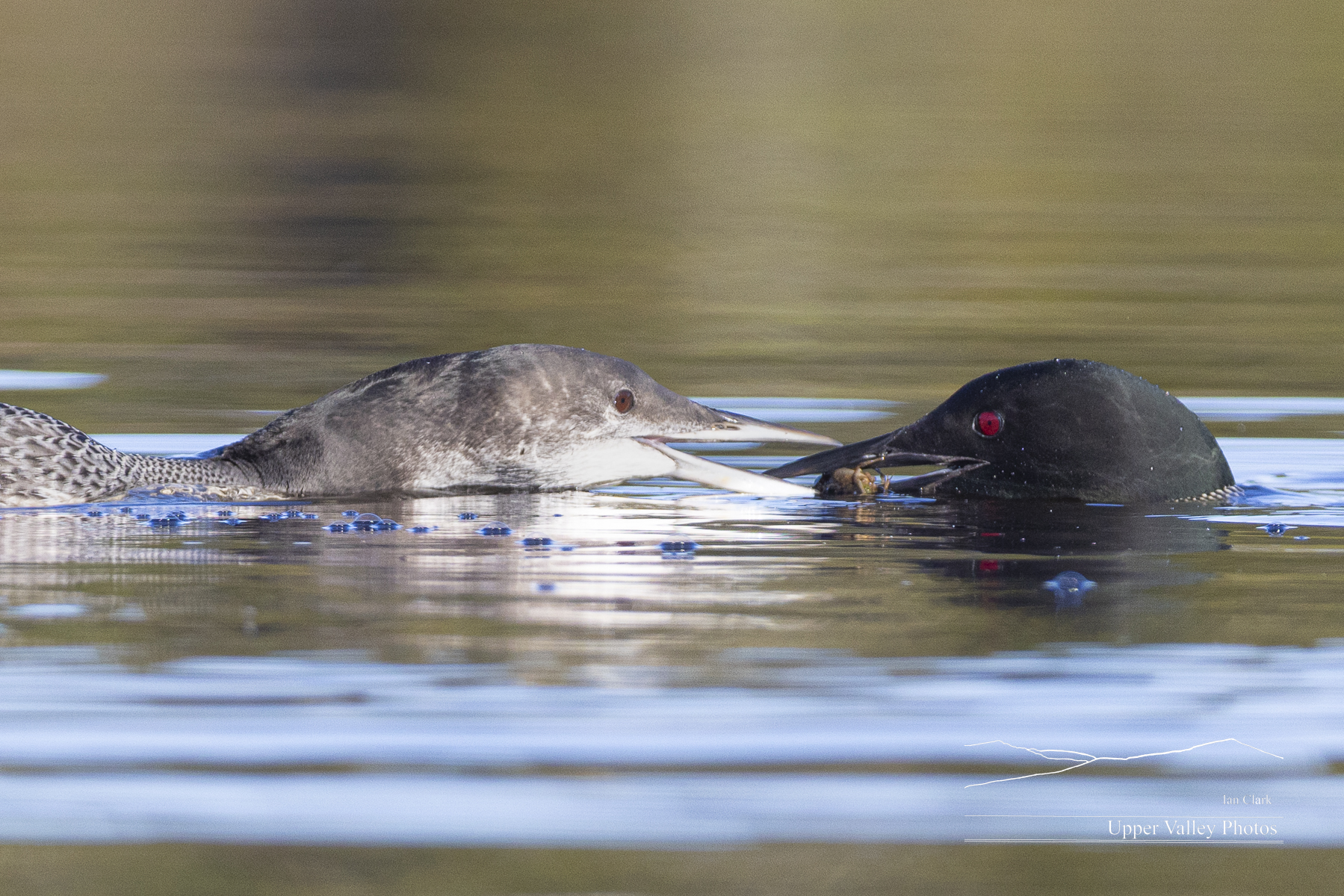
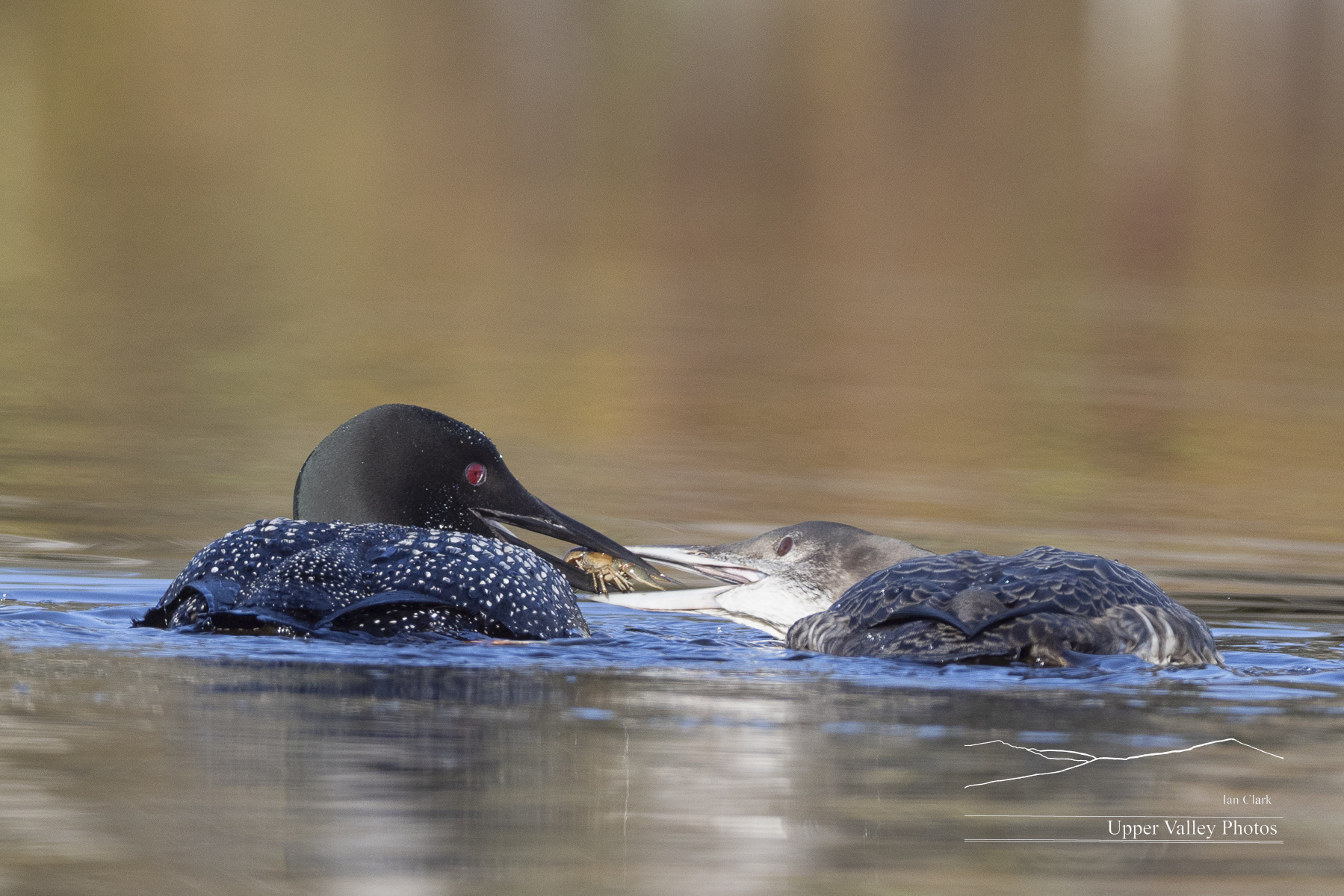
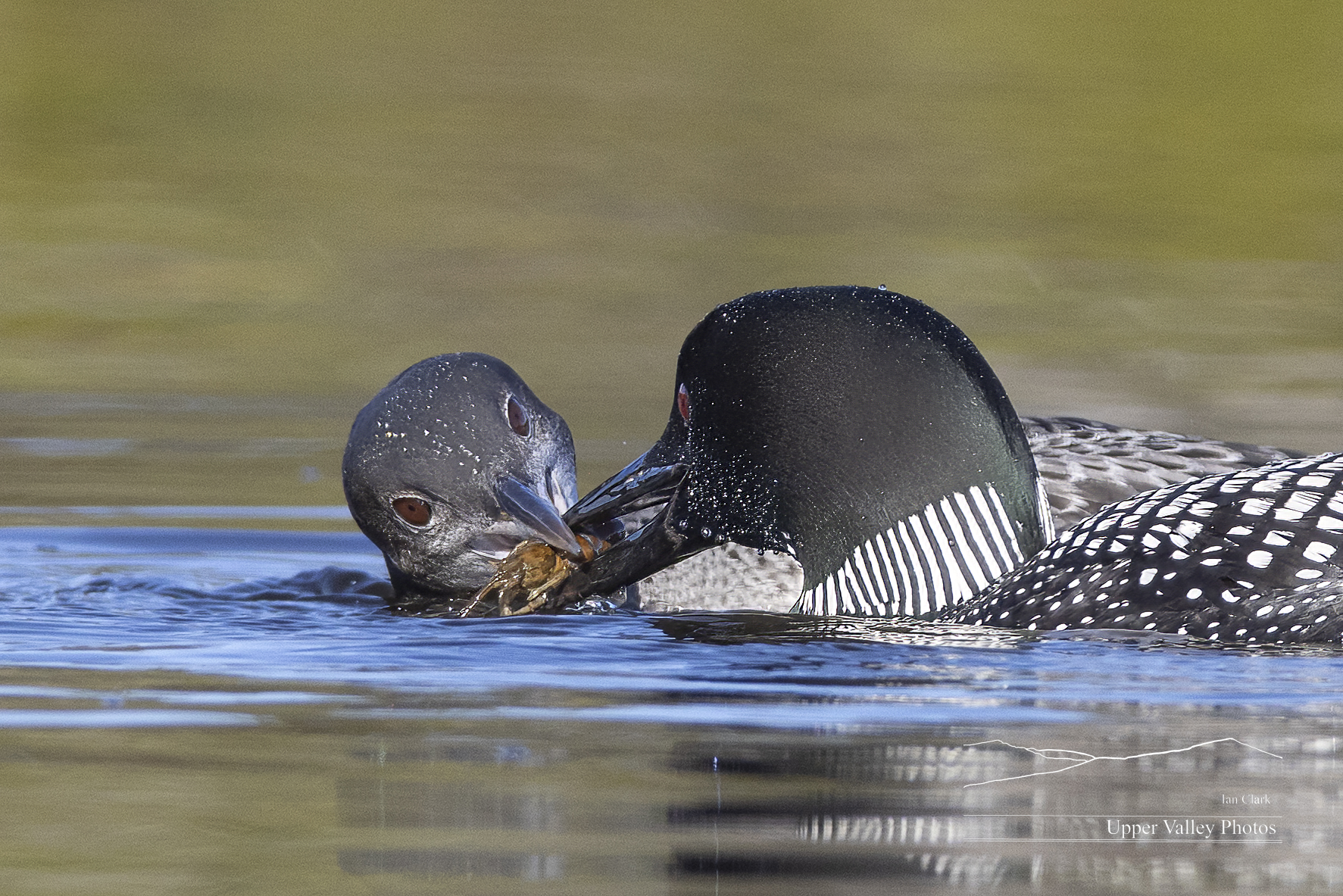
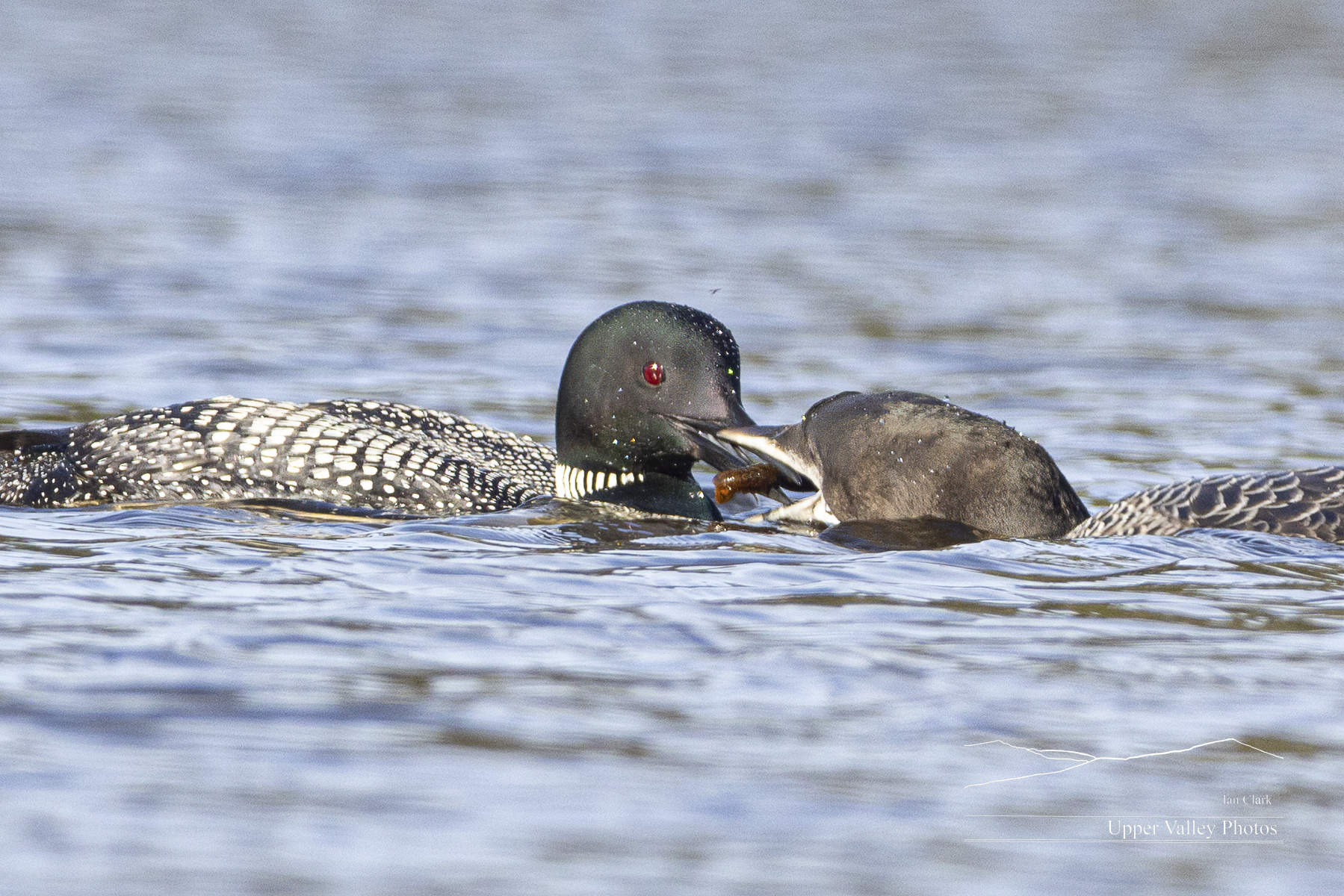
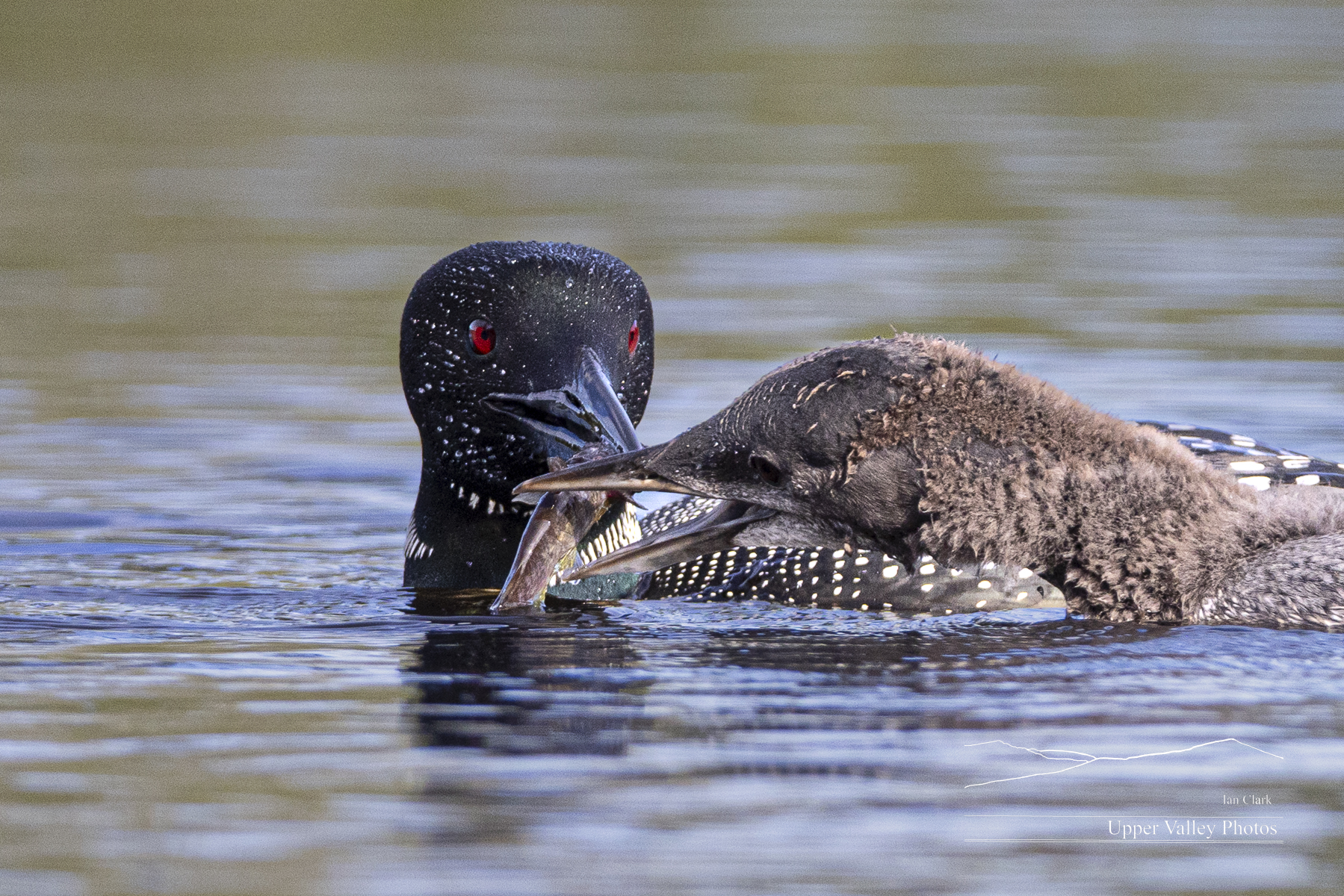
Dad delivered a good-sized crayfish. Loons swallow them tail first – I assume they’re easier to swallow that way and less likely to pinch. This crayfish wasn’t cooperating.
Littleton held the crayfish by the claw and gave it a good thrashing.
Littleton was left holding the claw when he launched the crayfish straight up. He retrieved it and got it down.
And repeated the process with the next crayfish dad delivered.

Littleton should start to try to fly this week. I’m going to try to get back to see how he’s? doing.

Tuesday was a beautiful morning on the hill, with fog hugging the Connecticut below me. I headed off to check on the Westons.

And found their pond in thick fog. But it was chilly and there was a cold breeze, giving me the opportunity to hate the trip. I decided to wait a bit to see if the fog would lift. It started to thin and I headed up the pond to find the loons. And the fog thickened. I did find one loon – briefly – in the fog. This scenario repeated a couple times.
Eventually the fog thinned enough for me to find the loon. There was only one loon on the pond and it wasn’t one of the Westons. This loon was banded, neither of the Westons are. This is probably a loon from a neighboring pond that found a quiet spot to rest for a bit. I was able to get one photo that morning. With that touch of color, it shows the season is winding down.

Yesterday, I went back to visit the Middletons. Again, I found only Littleton on the pond. He? seemed restless, swimming around and back and forth on his pond. He disappeared off into the fog, I went looking to see who else might want to be photographed.

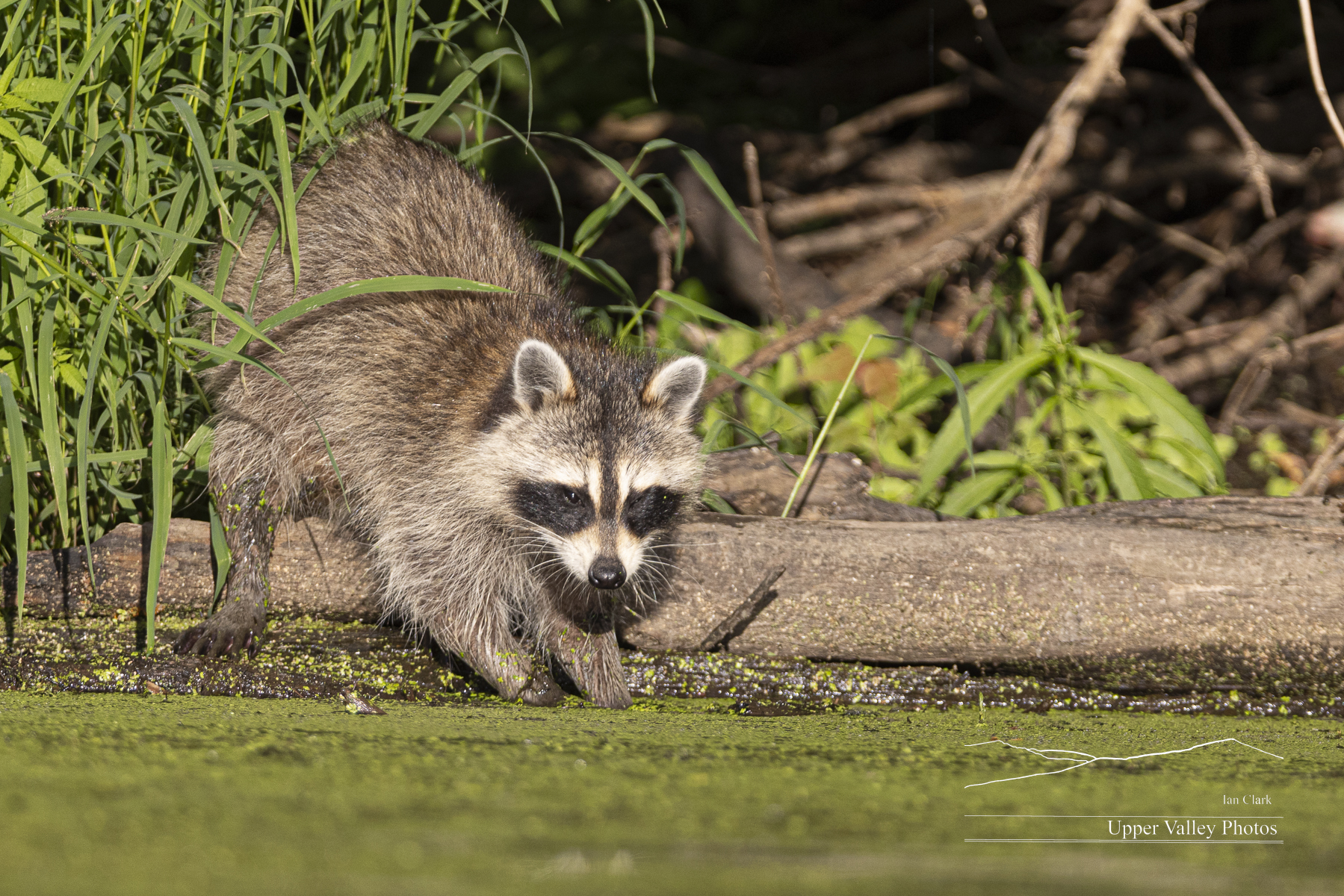
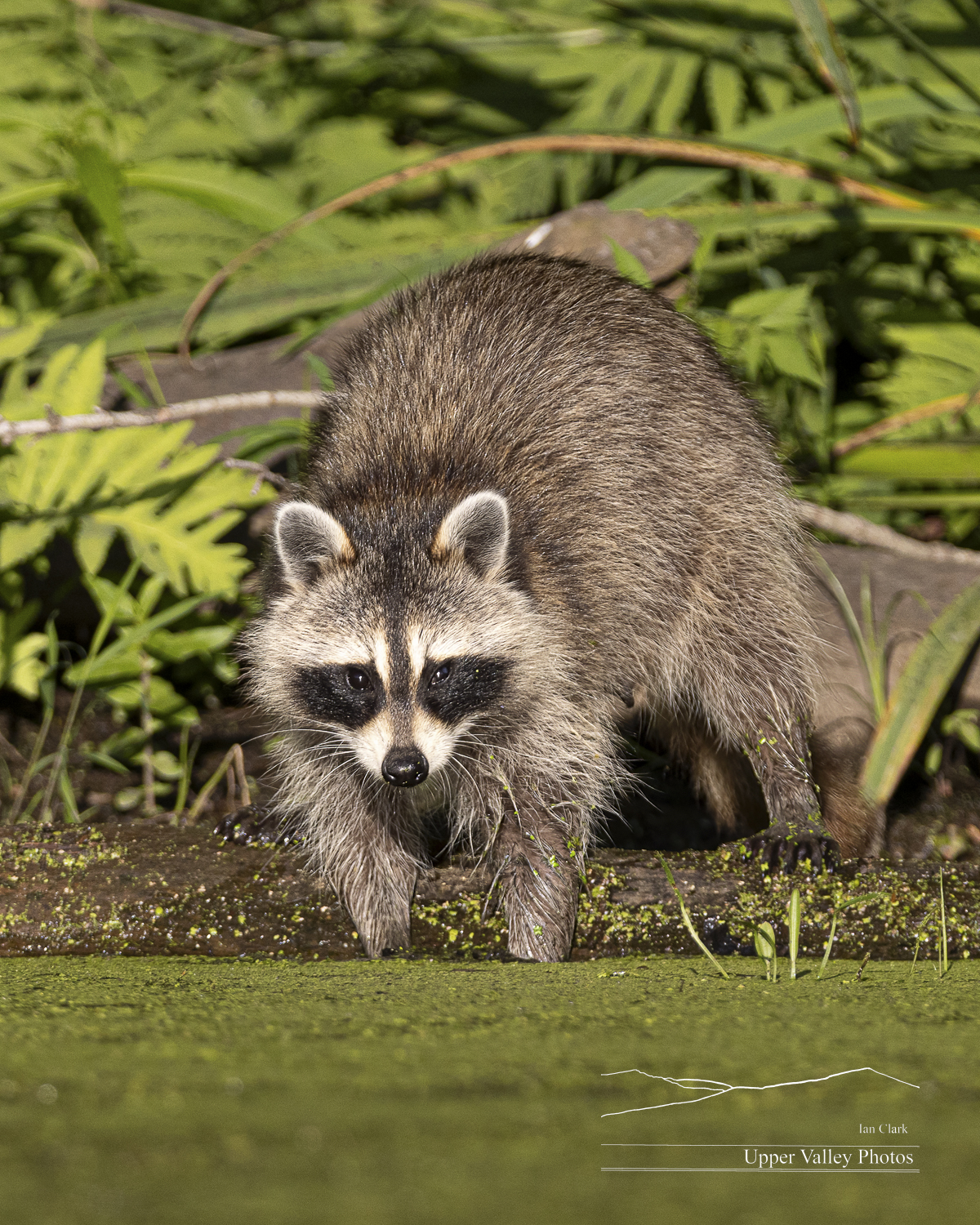
I headed into one of the coves on the pond and heard something sizeable splash into the water. Too big for a turtle, too small for a deer. As I continued on, a soggy racoon appeared out of the brush, chattering at me. I have no idea what the chatter meant, but I’m fairly certain there’s now a curse on my family.

A doe and a pair of fawns were in the brush along the shore, poking their heads out randomly, never long enough for me to photograph. A pair of pileated woodpeckers worked the trees along the shore – staying hidden or in deep shadows.

Eventually, a pair of what I think are first year wood ducks appeared and spent some time foraging.

I heard Littleton make a few practice flights, getting as far as flying most of the way across the small pond. I headed down the pond to another cove that has an easy way to let me ground the boat and get out and duck behind a tree… Littleton was out on the main part of the pond when I pulled in. When I got back in the boat and got turned around, I was looking for him in the pond. It took me a few seconds to realize he’d followed me into the cove. I backed up and grounded the boat to watch.

Littleton came into the cove and set to foraging in the weeds in the shallows, bringing a few up with him when he surfaced.
Not every loon looks good wearing a weed crown, but Littleton has a certain savoir faire that let’s him pull it off. It was getting time for me to head in, so I set sail out of the cove.
Littleton came with me. We can’t know what wild birds are thinking, but the next few minutes made me suspect that Littleton was lonely and wanted some company.
Another shot of Littleton as he followed me.
After hanging out near my boat for several minutes, he headed off along the shore again.

A few minutes later, an adult loon flew relatively low over the pond and made a tight loop overhead over Littleton. Littleton let out a wail – a good, adult sounding wail. The other loon didn’t answer and continued on his way. He was too far away for me to see any bands. Could this have been dad checking on him? Maybe encouraging him to try to fly? Or just a random loon on the way to somewhere else?
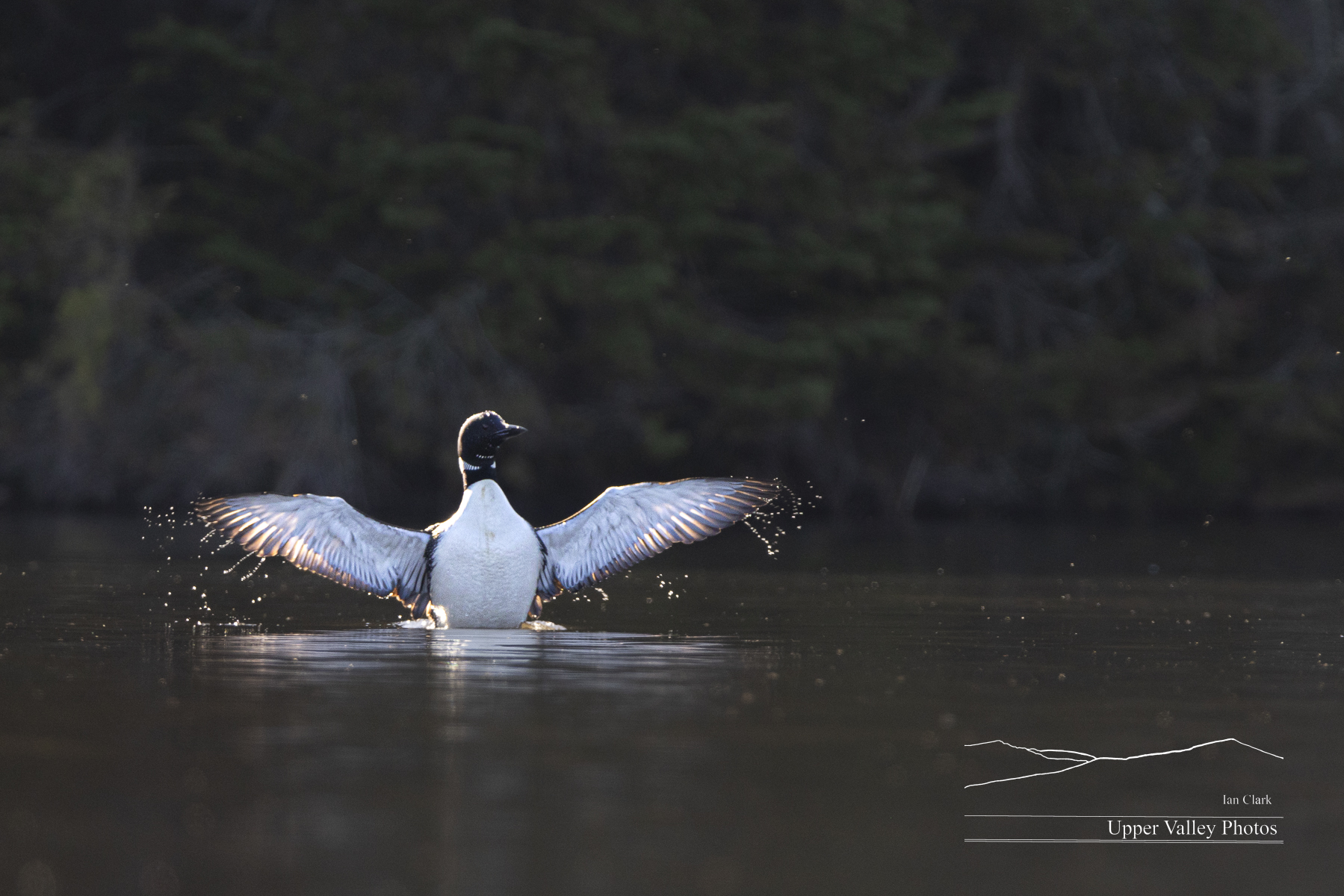
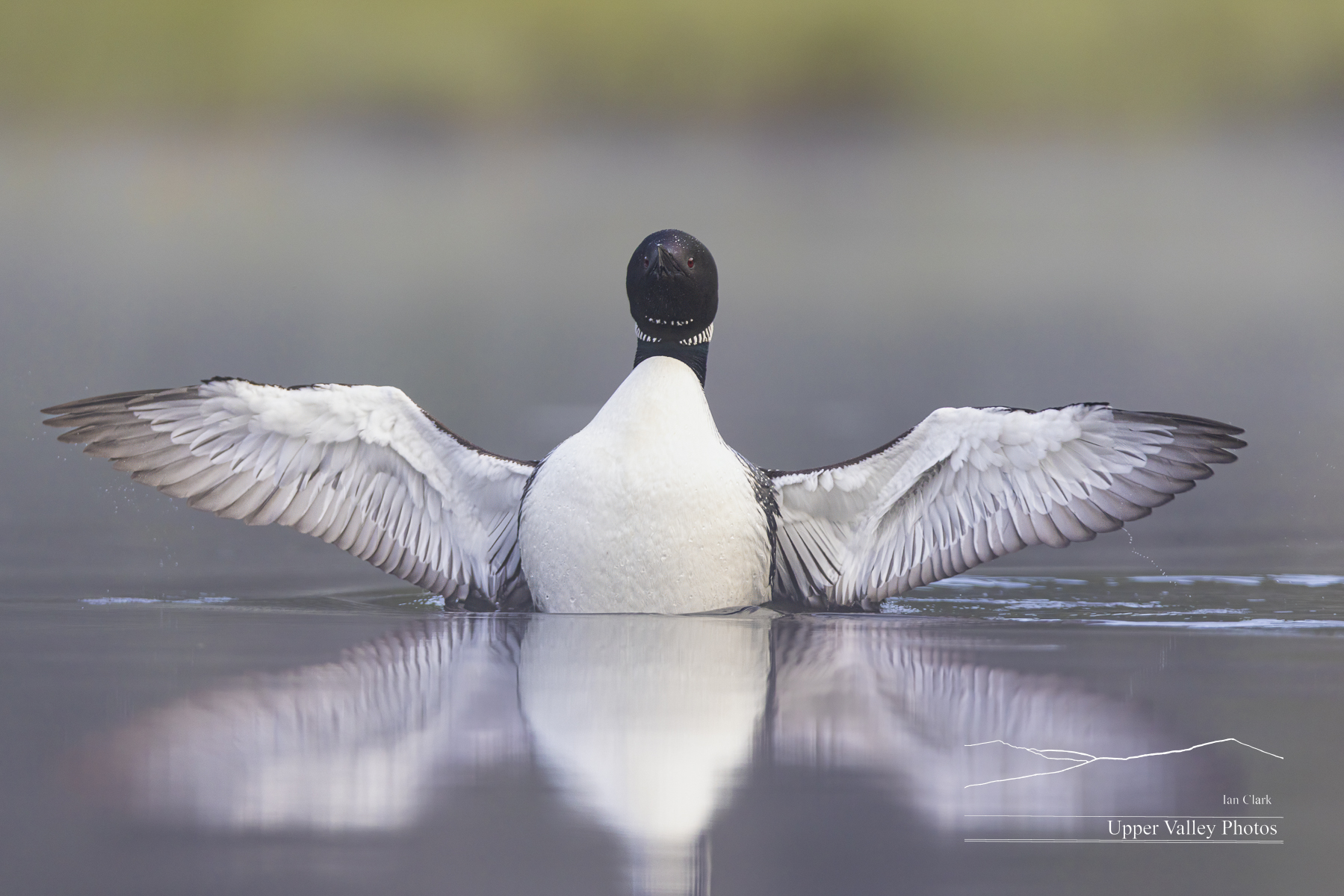
Littleton headed back my way and gave a nice flap.

Littleton sat 20-25 feet from my boat for a bit before diving and swimming a couple circles under my boat. I had my GoPro – packed in my backpack. I cursed myself for not having it out and having missed the encounter. But, I didn’t get the camera out. Littleton repeated the dive and circling under the boat. I may have used strong words. And then I got the camera out. The next time Littleton dove, I was ready. And the next….

He surfaced close to the boat, and stayed a couple minutes before swimming downwind across the pond.

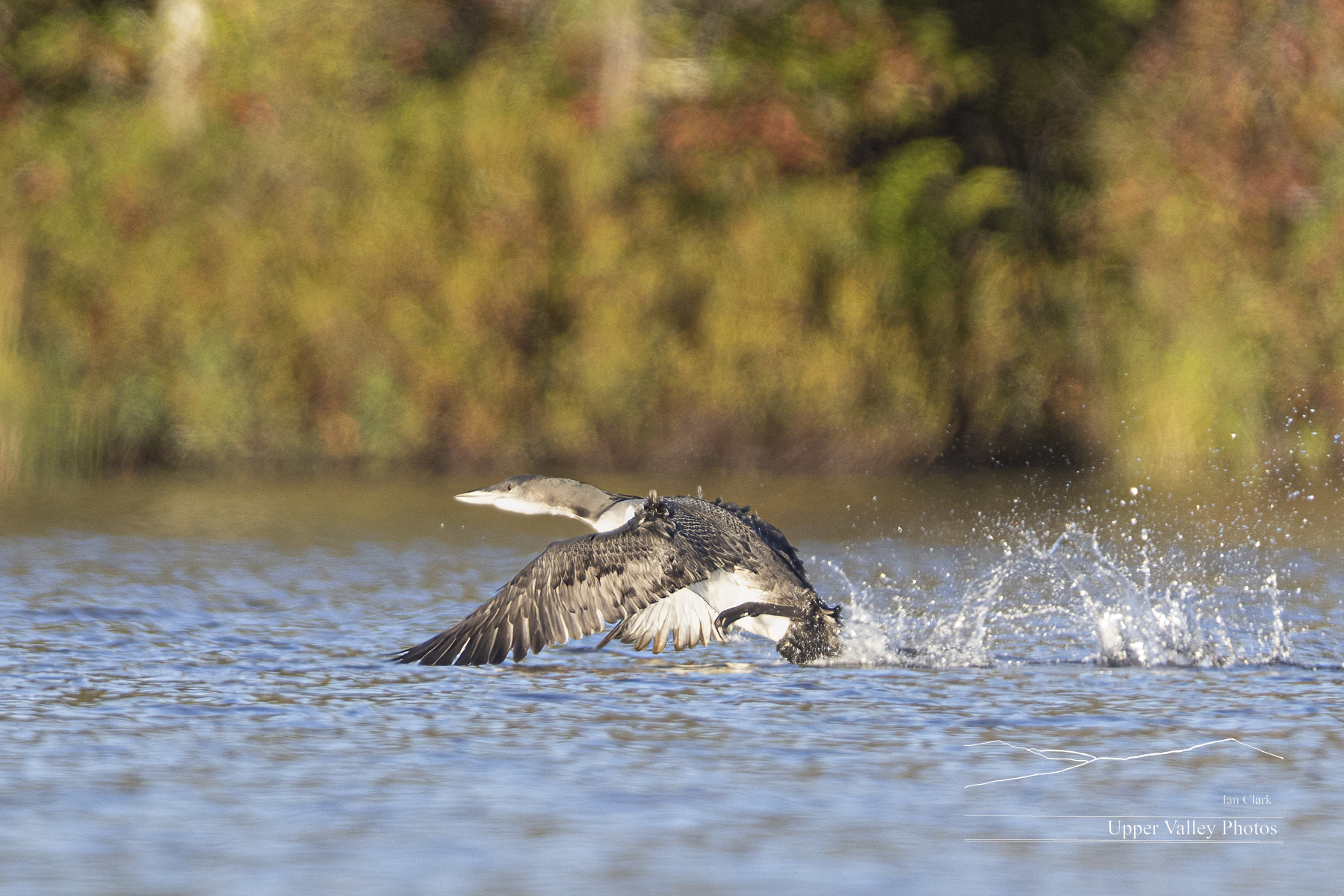
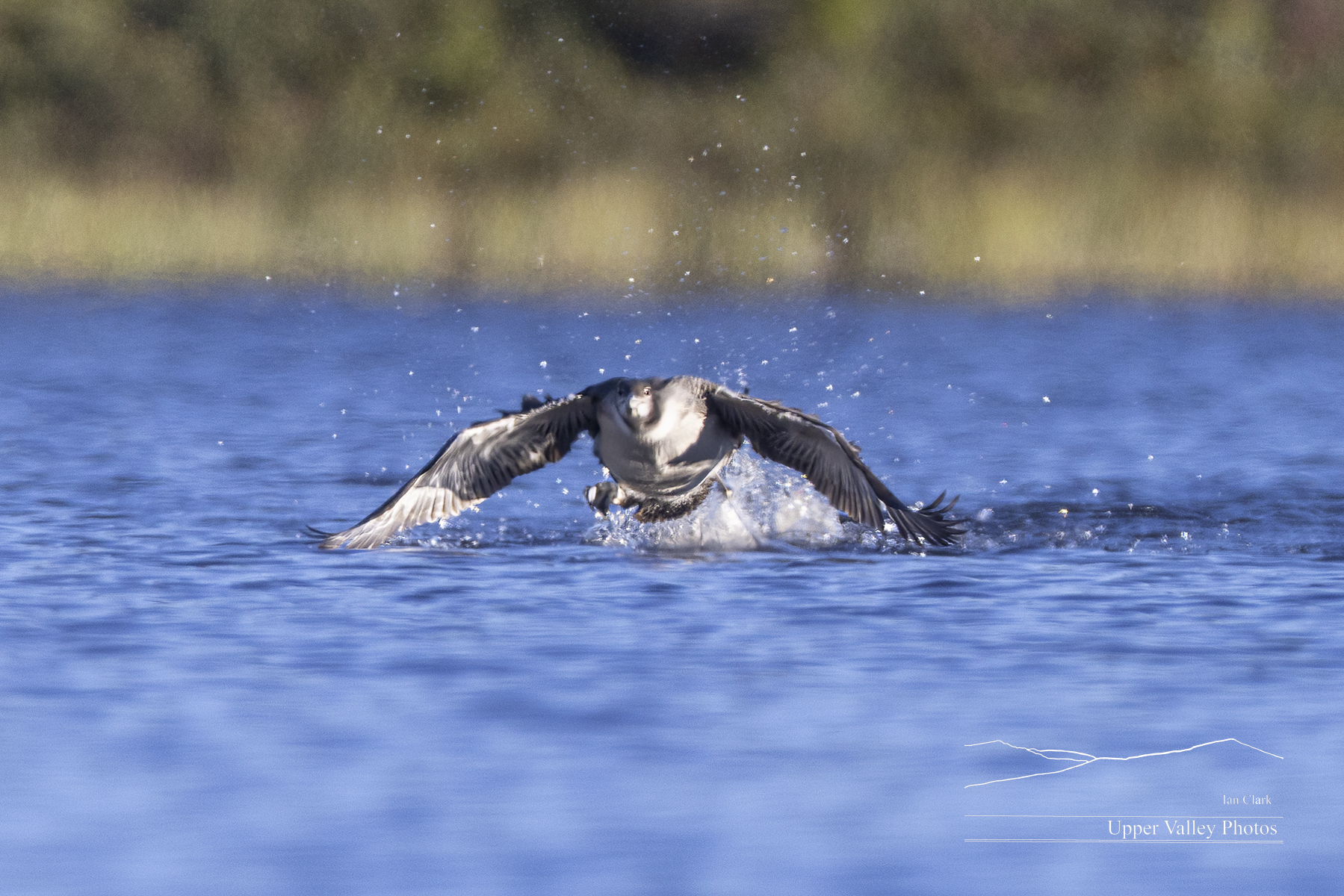
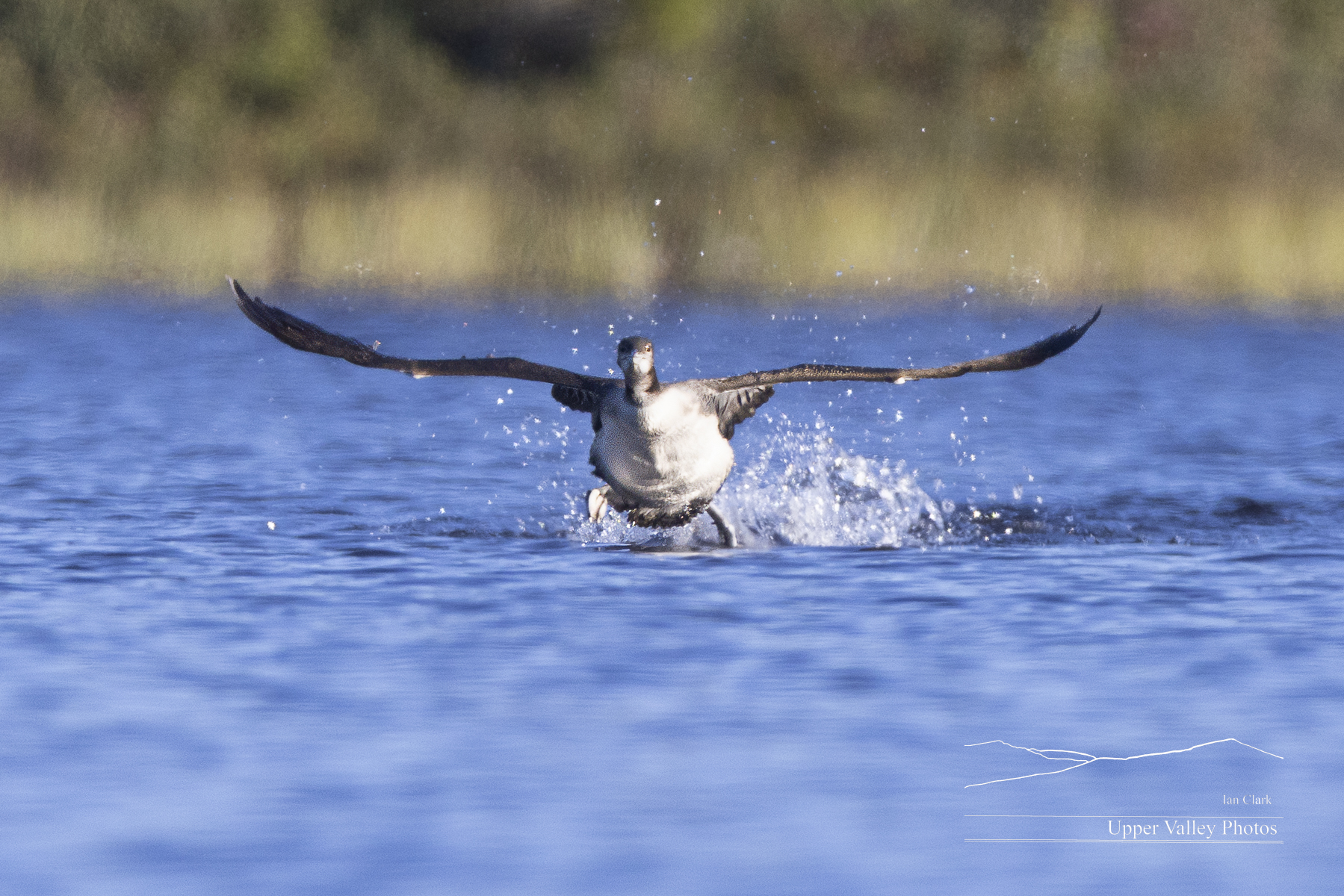
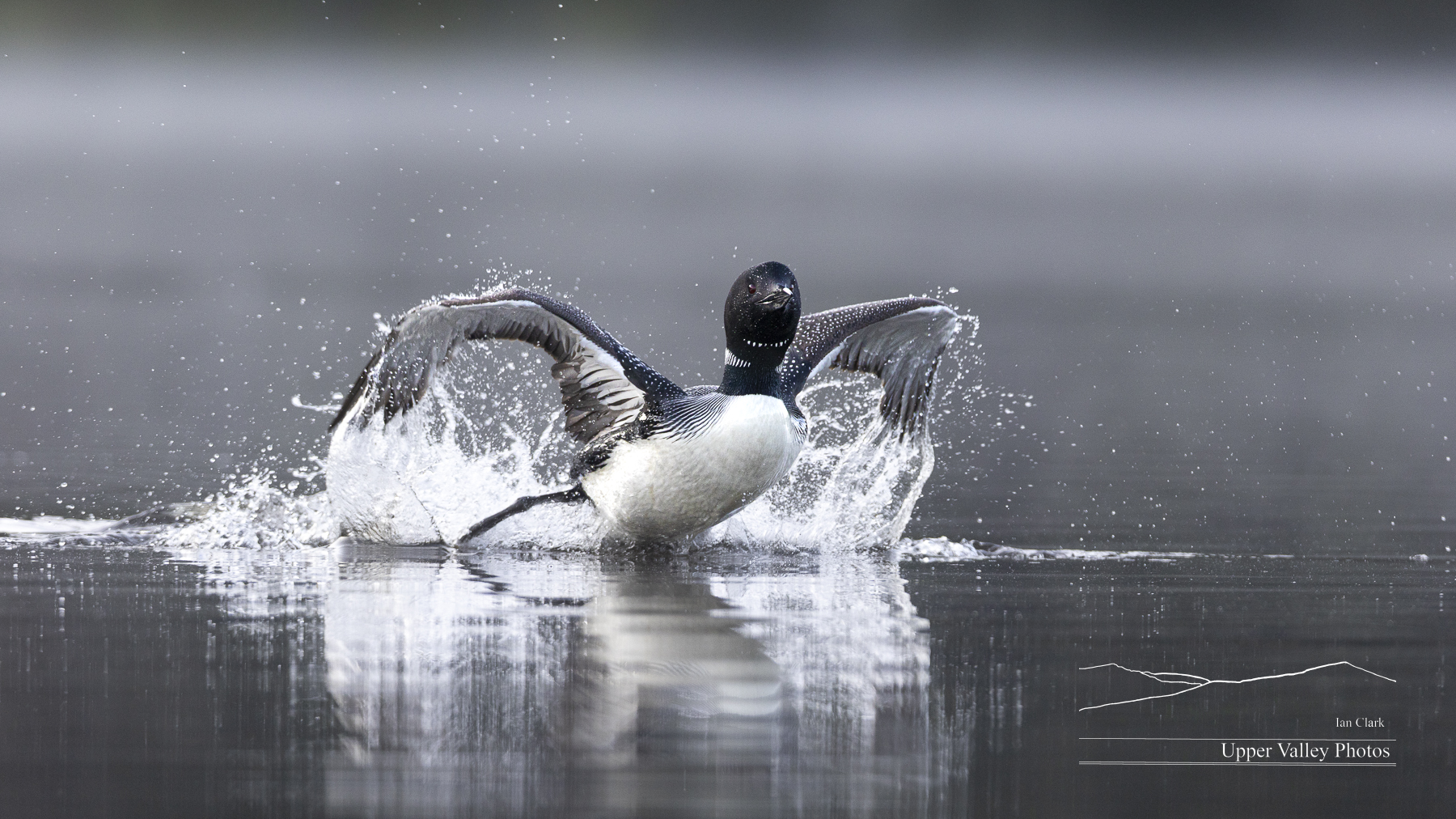
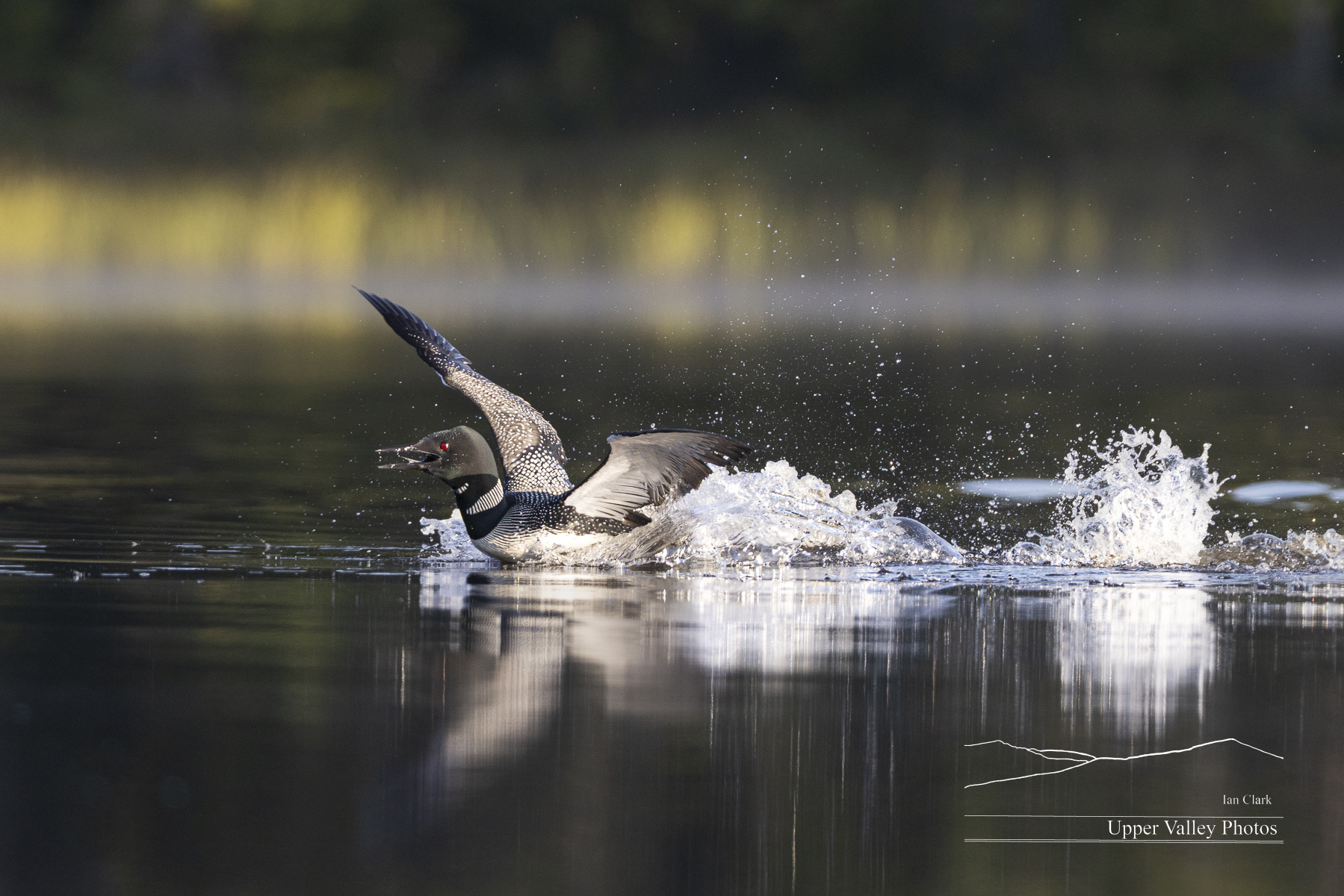
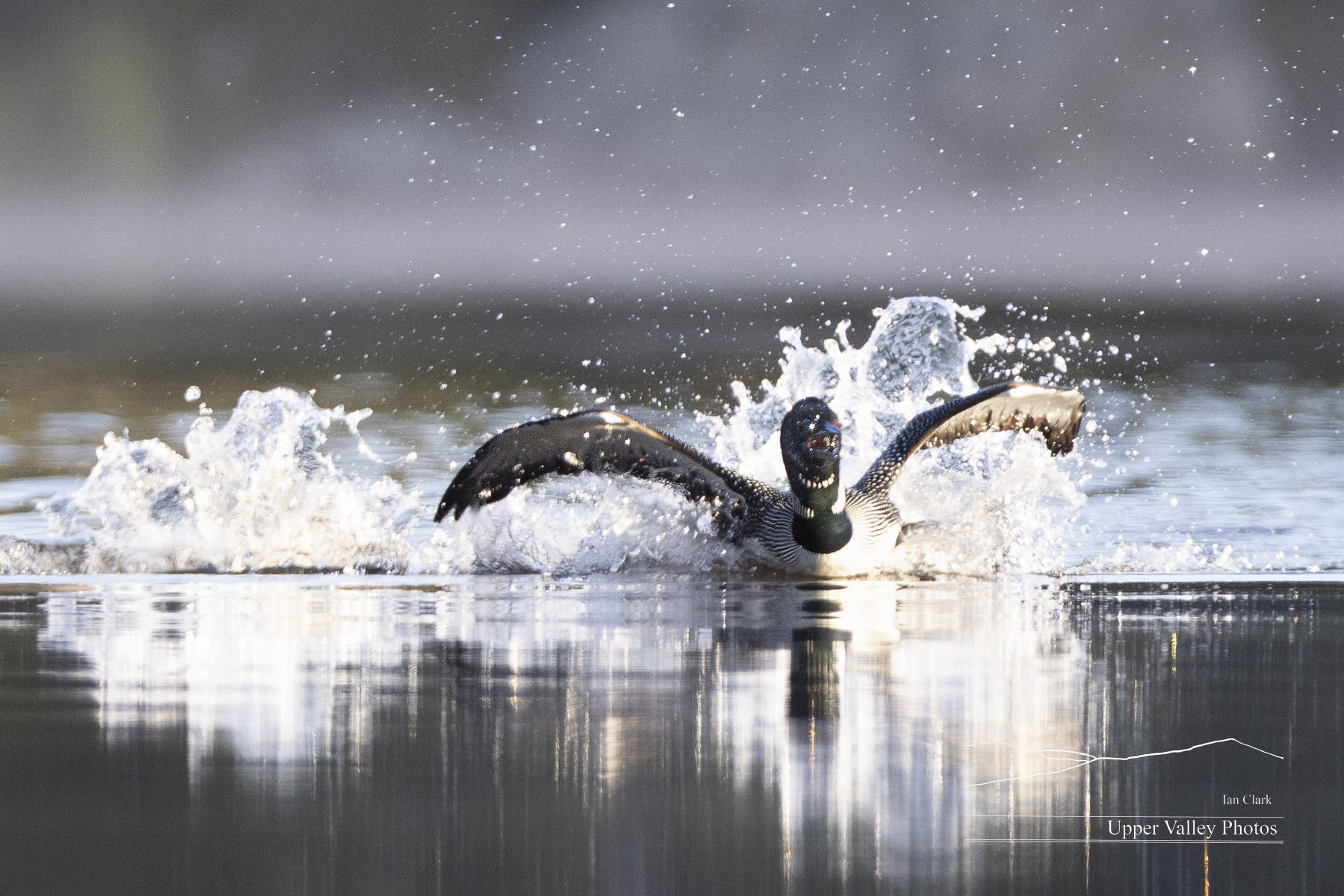
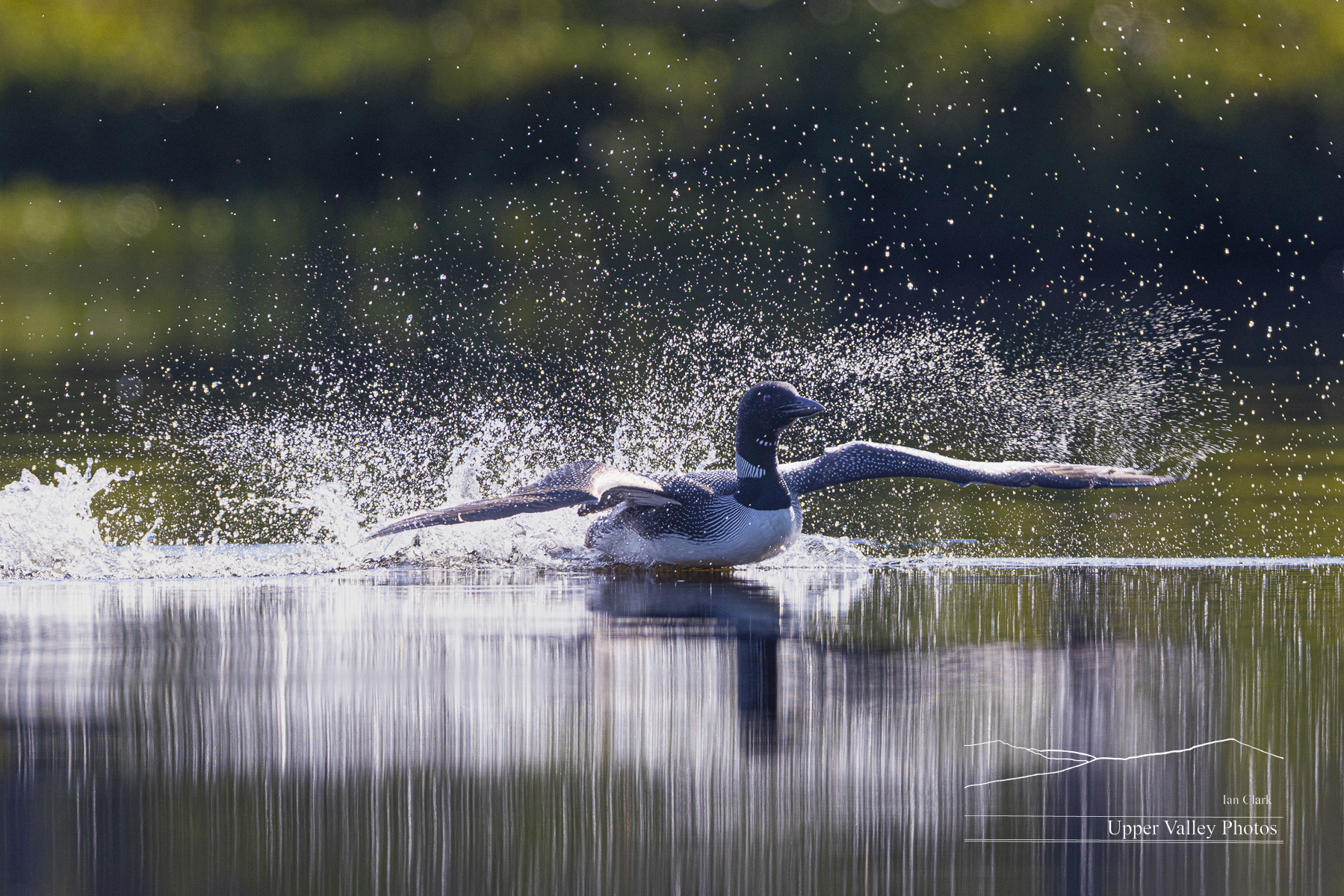
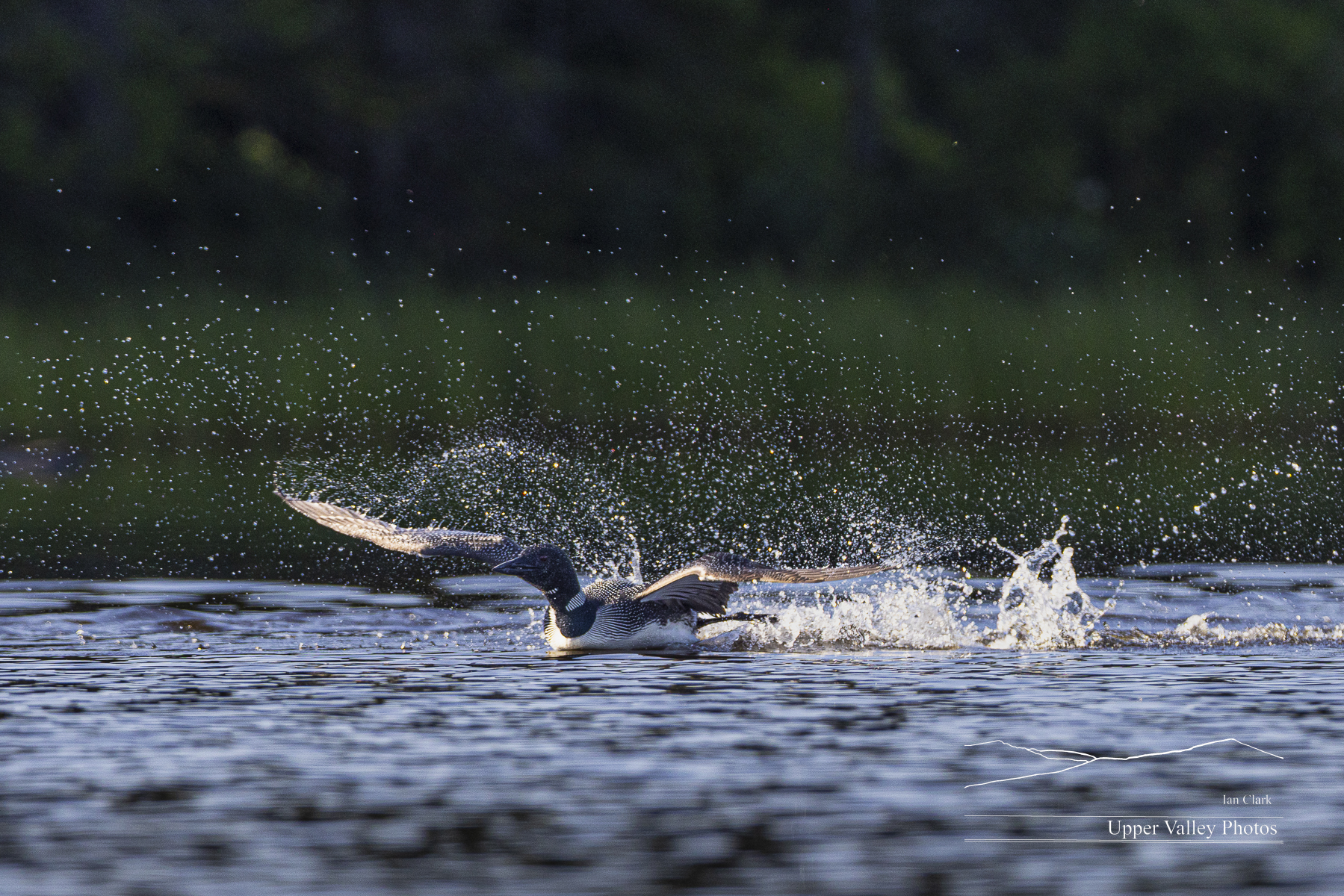
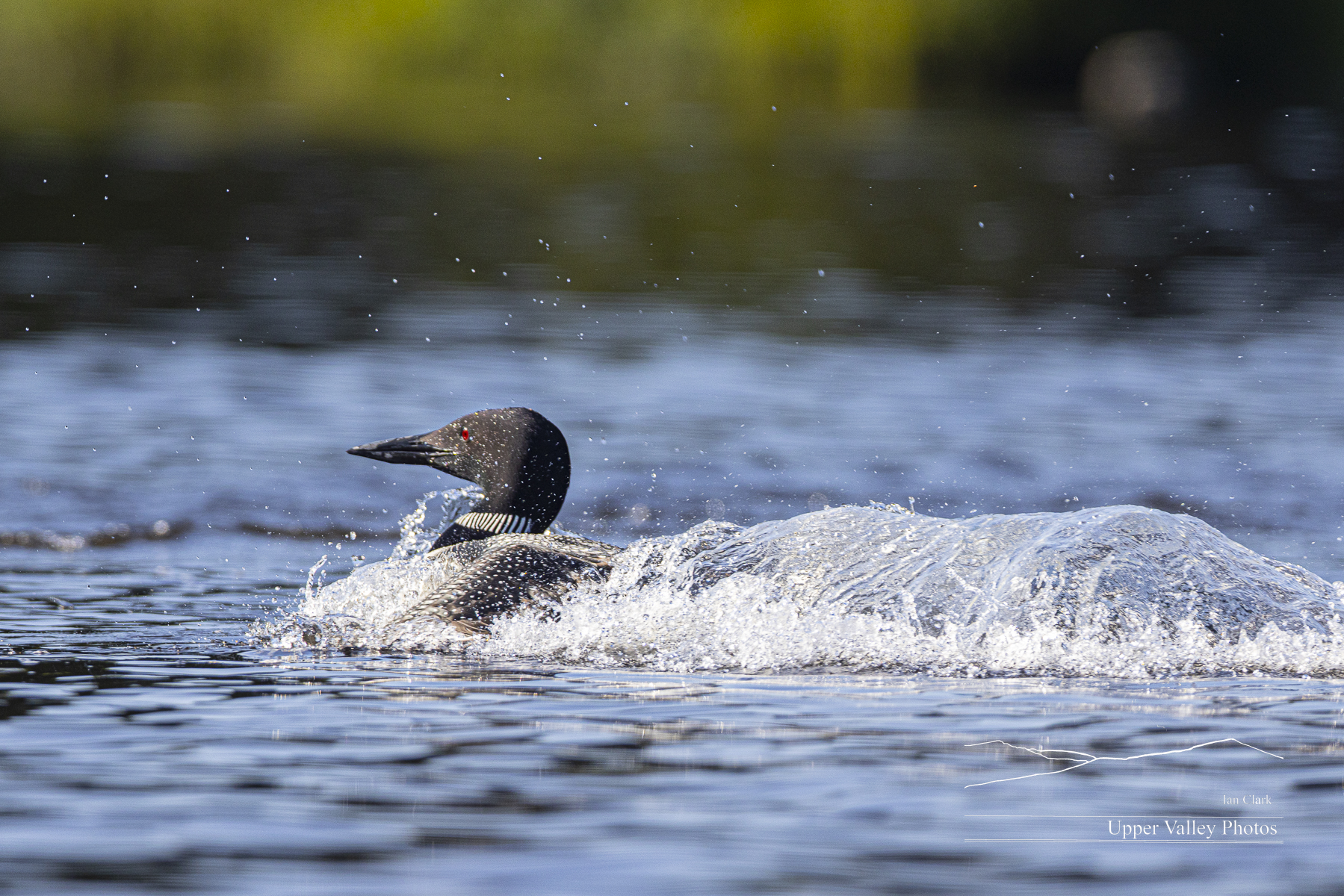
Once on the far side of the pond, he turned into the wind and started running…….he’s almost up!
One last step…

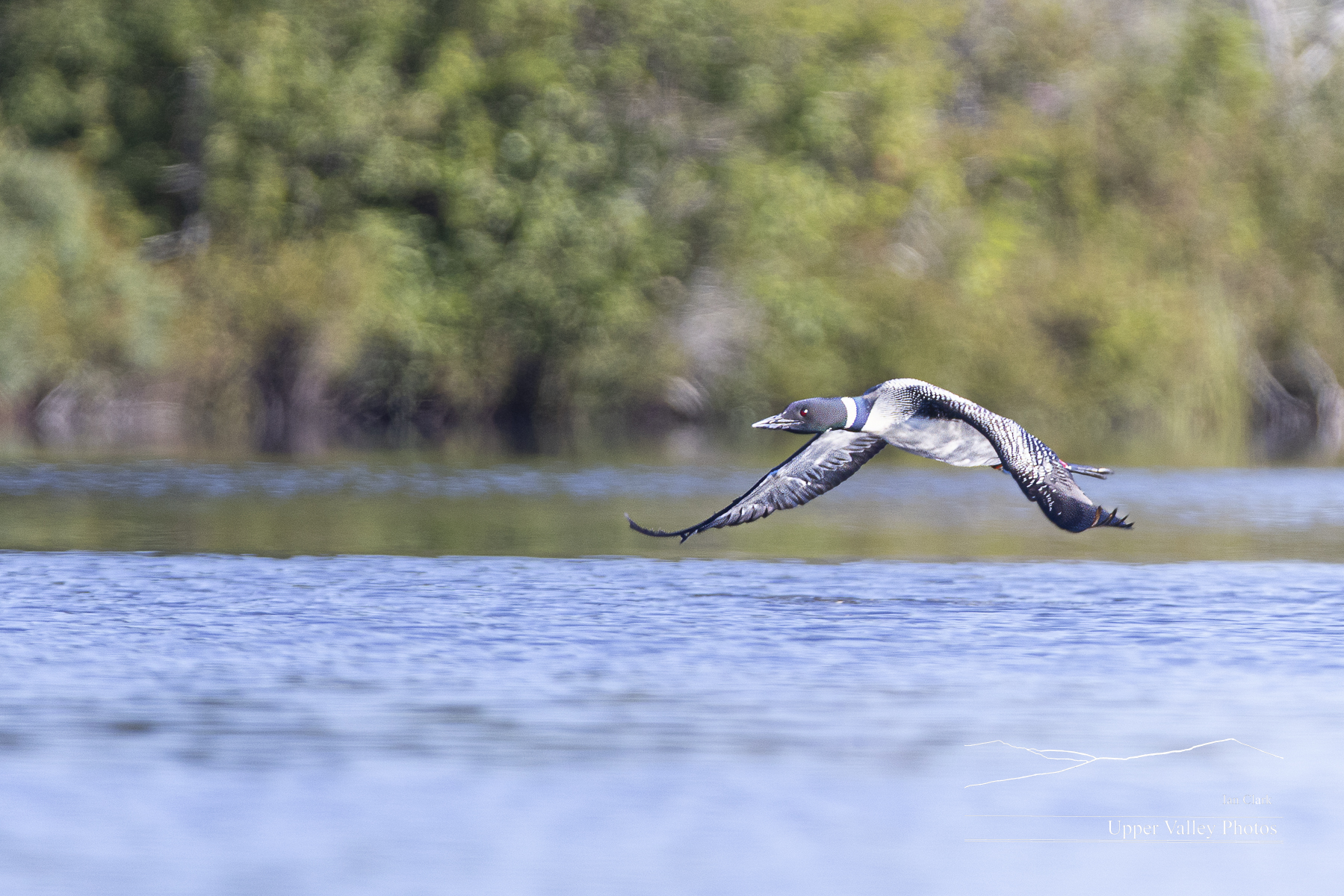
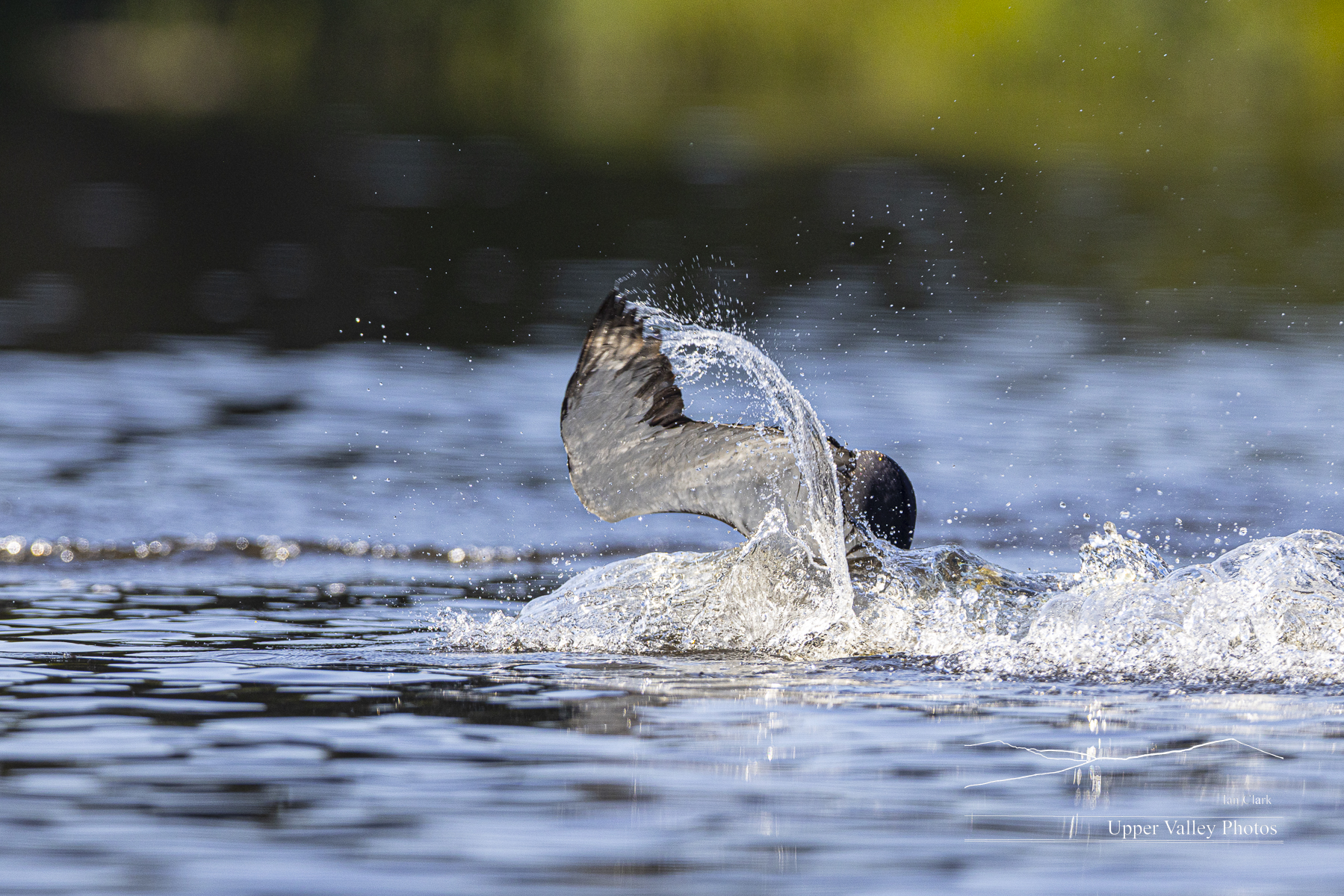
He’s up! He made a strong flight around the pond. He was able to get up to treetop level of the trees around the pond. A good start, but he’s got to get higher to get over the hills around the pond. He’ll be able to do that very soon. Even more impressive than the flight was the smooth landing with a skid to stop.

The adult loons in our neighborhood usually stick around, more or less, on their territory until the last week of September or the first few days of October. I suspect they’ll show up now and then until the end of the month. The chicks usually move on about a week or 10 days after the parents leave. Most of New England’s loons will make their way to the Atlantic for the winter. Most will stay between Cape Cod and Maine. Some will venture down further south. And, there are always a few that are adventurous and can show up anywhere.

I’m going to try to call on the Eastons again before I head out, but this is likely the last of story for this season.

Updates from the Eastons & Middletons

The Eastons and Middletons are doing well. I had a couple chances to visit the Eastons and one opportunity to visit the Middletons.

This will be my last post until mid-August. I’ll be at the League of New Hampshire Craftsmen’s Fair at the Mount Sunapee Resort in Newbury, NH Saturday August 2 through Sunday August 10. The Fair is open 10-5 daily. My 2026 calendars are scheduled to arrive this Wednesday and I’ll have them at the Fair. I’ve also got new note cards and prints, along with some favorites from past years. I’m in booth 718, please come by and take a look. If you can’t make it to the Fair, you can purchase my work through my web site at www.IanClark.com. All the details about the Fair are on the League’s site and you can buy your tickets at a discount online here.

Ian Clark's 2026 wildlife photography wall calendar
My 2026 Wildlife Calendar, with large 9″x12″ full color, 12-month calendar with 13 of my favorite wildlife images.

There are a few more of the images I’ll have at the Fair at the bottom of the post. On to the loons….

On July 22, the Eastons’ pond was a pleasant 48° and foggy when I put the boat in.

My buddy Hank Heron was on a pile of rocks near the boat launch to greet visitors.


The Eastons were having a calm morning, foraging lazily.


With time to sit and contemplate whatever it is loons contemplate.


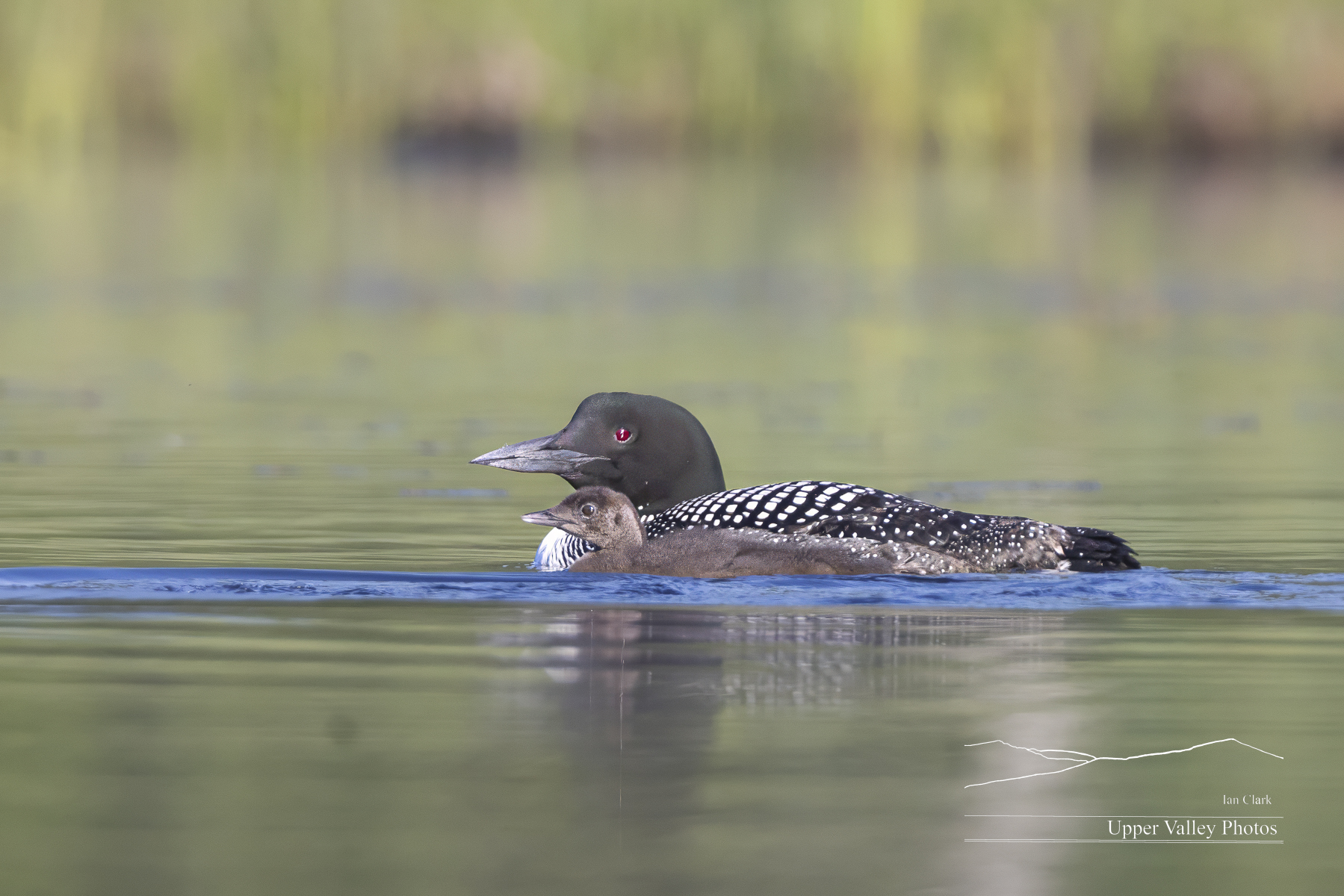
Baby Easton – Leaston – spent much of the morning on dad’s back.

Sometimes snoozing, sometimes stretching. And occasionally reminding dad that loon chicks really love food.

And a big yawn.

Mom and dad set to work to deliver breakfast. Dad scored a horned pout larger than Leaston.

And swam by the boat to show off his catch.

Dad handed the fish over to Leaston…

Leaston was willing to give it a try. Dad sat by watching closely, ready to grab the fish if it slipped away.


Leaston dropped the fish, both mom and dad were ready to recover it. Mom did and gave it back to Leaston.


Leaston gave it another try before dropping it again.

Dad had been at the ready and quickly recaptured the fish. He handed it back to Leaston. Who promptly dropped it again.

Dad figured out that meals have to be smaller than the chick and ate the fish himself.

The parents went back to finding chick-sized meals and that worked much better.

With both parents underwater, Leaston reacted to a threat I couldn’t see. Loon chicks’ defense is to flatten out on the water to make it hard to see them.

The threat soon appeared – an intruding loon coming in for a landing. The last two times I visited, there had been fairly intense skirmishes with an intruder before the intruder was forced off the pond.

In the previous skirmishes, dad had gone to fight off the intruder. Studies of banded birds suggest that most territorial fights are between loons of the same sex. This time mom went out to challenge the intruder. A different intruder? Mom was closer to the intruder when he landed and dad was closer to the chick. Maybe they were just being practical and let the closest loon handle it. Either way, there was a brief period of displaying before the intruder departed.

Mom took a victory stretch when the intruder was gone, then headed back to join the family.

As the chicks grow, you can often see that they’re watching their parents and copying the parent’s behavior – good practice for how to be an adult loon. Here dad and Leaston share a leg stretch.

Or maybe they were just waving goodbye as I gave them best wishes and headed for home.

The next morning dawned with clear skies above home, with fog down in the Valley. I headed down to visit the Middletons, hoping the fog would lift.

No such luck. The fog stayed thick.

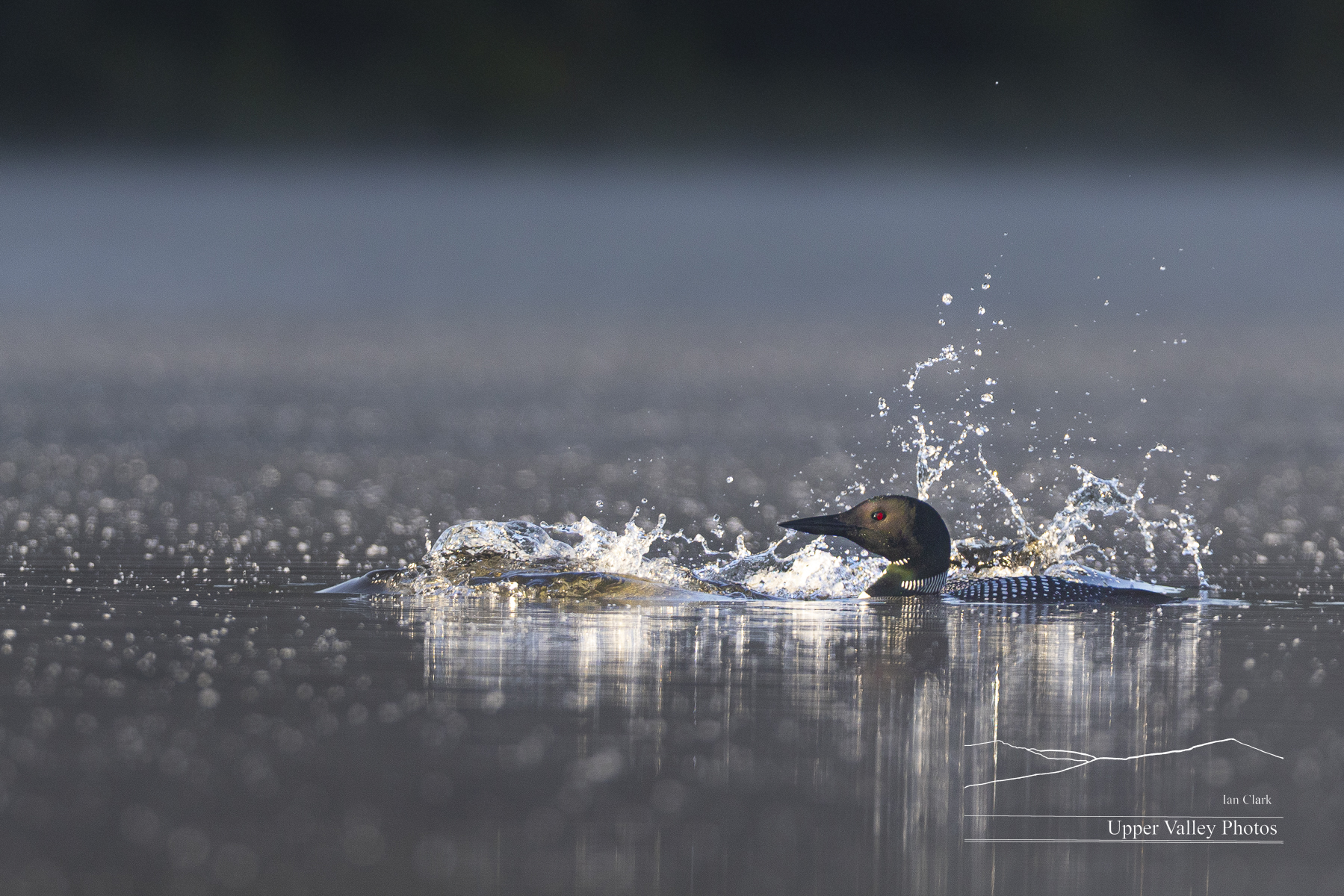
The Middletons spent about half an hour foraging in their favorite breakfast cove. Without appearing to catch anything. At least nothing they surfaced with. The parents seemed to get agitated at the lack of success. When loons are foraging, they usually dive and surface gracefully, not making much of a splash. When they’re agitated as when there’s an intruder, they dive more aggressively with large splashes. This morning as they foraged, they started kicking up large splashes.


Mrs. Middleton swam close by my boat. I could see her coming and had a chance to get my GoPro in place. The bubbling sound is air bubbling out of my cheap selfie stick.


The fog lifted enough that dragonflies came out to forage. And the kingbirds came out to hunt the dragonflies.

I gave up and headed home. Along the way back to the boat launch, I passed a very optimistic turtle trying to bask. All those black spots on the water are water bugs.

Yesterday morning, my wife joined me as we headed back to check on the Eastons.

The Loon Preservation Committee had invited me to accompany them to band Mrs. Easton on Thursday evening. I couldn’t make it and was curious to see if they’d been successful catching and banding her.

Hank Heron was again awaiting sunup on some rocks where the sun would first hit the pond. We spooked him and he flew off to a spot along the shore.

It took a little while to locate the loons at the far end of the pond through the fog. Dad gave their location away by stretching.

Just after stretching, dad dove. I assumed he’d gone downstairs to find some breakfast. But soon there was fast moving wake headed my way. Dad was just under the surface and making good time.

He surfaced just behind me, keeping low to stalk something. He dove again and again surfaced keeping low. I couldn’t see what he was after.

After dad dove again, Hank squawked and came flying down the pond. Dad had come up in the shallows at his feet, encouraging him to move along. This is the first time I’ve seen loons go after a heron. I’ve occasionally wondered how they tolerate herons nearby when the chicks are young.

Hank eventually settled on the sunny side of the pond.

And set about getting some breakfast. The loons didn’t bother him again while we were there.

We caught up with the loon family. Mom soon showed us she is indeed wearing some LPC bling.

The Loon Preservation Committee manages to band something like 30 loons every summer. With a population of roughly 750 loons in New Hampshire, they’re getting a sizeable portion of the population banded. That lets them study things like how many of the loon pairs stay together year after year, how old the loons are when they’re observed doing things like nesting. There’s lots to be learned from LPC’s work.

Mom delivering a crayfish for breakfast as dad looks on.

Things didn’t go well for the crayfish.

Mom gave a nice stretch as we headed out.

And a few more of the images I’ll be exhibiting at the League Fair:

Wing Low, Sweet Chariot This is an intruder that has shown up regularly on the Middleton’s pond this year. I suspect she’s the female that was keeping company with Mr. Middleton early in the year before Mrs. M returned. Mrs. M has just chased this loon off the pond and this loon is almost airborne.

Seen But Not Herd

A pair of Guernsey cows greet visitors to their pasture.

First Light at Portland Head The first light of dawn breaks over the Portland Head Light on Cape Elizabeth, ME. The light is on the headland at the entrance to Portland Harbor in Casco Bay in the Gulf of Maine. The light was commissioned by George Washington and was completed and put in service in 1791 making it Maine’s Oldest lighthouse.
A Tranquil Morning

A favorite from past years. This is dad Easton resting with the chicks as the sun rises over their pond. This image is offered in a limited edition of 12 prints.


There Are No Owls Here

A great gray owl shows off his camouflage against a tree. Great grays are rare visitors to New England, this one visited Newbury, VT in 2018.

Sunrise at Dead Creek There’s a nice reflection on a poll in Dead Creek as the sun rises in Addison, VT

I’ll have lots more images along at the fair, including lots of loons. Come have a look.

The Eastons Have a Chick, Littleton Getting Big

I made it up to visit the Eastons Tuesday morning and met their chick. Wednesday found me back visiting them and yesterday I dropped in on the Middletons.

The League of New Hampshire Craftsmen’s Fair is coming up quickly. We’ll be at the Mount Sunapee Resort in Newbury, NH from Saturday August 2 to Sunday August 10. I’m in tent seven with note cards, my 2026 calendar and lots of prints. I’m busy printing new images including loons, herons, owls, a lighthouse and more. Stop by and have a look.

Owl Be Looking at You
Owl Be Looking at You – one of the new images I’ll be exhibiting at the Fair.

The Eastons got off to a late start this spring. The Middletons did too. I wonder if all the rain delayed their plans? The Eastons hatched their chicks the third weekend in June for several years. Last year, they lost their first clutch of eggs, the second clutch didn’t hatch until the third week of July. This year they laid two eggs, one didn’t hatch.

When I arrived, mom was foraging near the boat launch. She disappeared while I was unloading the boat.

Paddling down the pond, I found mom had retreated to the far end. Dad was floating nearby. Mom greeted me with a stretch. I couldn’t see any sign of chicks.


Mom spent some time preening before stretching again.
Shortly after that, she went over to join dad. And a chick appeared on dad’s back. If I named baby Middleton ‘Littleton,’ should baby Easton be ‘Leaston?’ Yes, my mind does wander when I’m sitting in the boat.
Mom dove to find breakfast, Leaston settled in to wait. The male in this pair is banded and has a growth under his bill allowing me to tell them apart.

Ah fish! What a great breakfast.

Just a reminder, I’m using a 600mm lens and sitting well back to avoid bothering the loons. This image is heavily cropped.
After a couple helpings, Leaston settled in for a nap.
But, more breakfast is always a reason to get back up. This serving looks like a giant water bug, aka ‘toe-biter.’ Dad wanted his own breakfast and turned Leaston over to mom and headed out.
Dad took time for a quick stretch before heading off.
Leaston climbed aboard mom and tucked in.
Dad had a quick breakfast and came back to reclaim Leaston. With this pair of loons, dad is the more attentive parent. If there’s only one parent with the chick(s) when I arrive on the pond, it is almost always dad. If they’re both feeding the chicks, mom will often scoot before the chicks are full and dad finishes the meal.
Leaston was keeping an eye on things. Probably trying to figure out what role I played in this adventure.

Even at a just a couple days old, the chicks are on the lookout from threats in any direction – including overhead.
And another shot of the chick riding just because he’s so darned cute.
The wind picked up and I had things to get done so I headed in for the day.
Wednesday morning I headed back up to the pond. I hadn’t seen the great blue herons that usually summer on the pond yet this season. It was a nice surprise to find Hank out in the fog. The herons are smart enough to know where the sun will first hit the pond. Overnight the temperature dropped to a very pleasant low-60s. Hank was stationed to warm in the first sunlight. I wanted another angle for my photo and tried to maneuver to the right. Along the shore, a beaver and I were both startled to find each other so close. The beaver set to an impressive bout of tail slapping and Hank disappeared down the pond.
In low light with a little fog and the breeze ruffling the water, loons floating quietly can be hard to spot at a distance. Mom let me know where she was when she stretched.
Mom was tending the chick. The chick wanted to come aboard and gave a mighty flap of his? wings.
It took swimming around to mom’s port side to find the handle to climb aboard.
Once aboard, he made himself comfortable.

Dad was staying away longer than usual, he was back up the pond somewhere near the boat launch. I figured I’d see him on my way out.

As headed in, I saw what I thought was dad at a distance. He was low in the water – stalking something. I had only a brief glimpse before he dove. A few seconds later, there was a loon in another direction. It seemed like he’d moved very quickly – likely too quickly. I looked around where I’d seen the low riding loon. While I was looking behind me, a ruckus broke out in front of me!
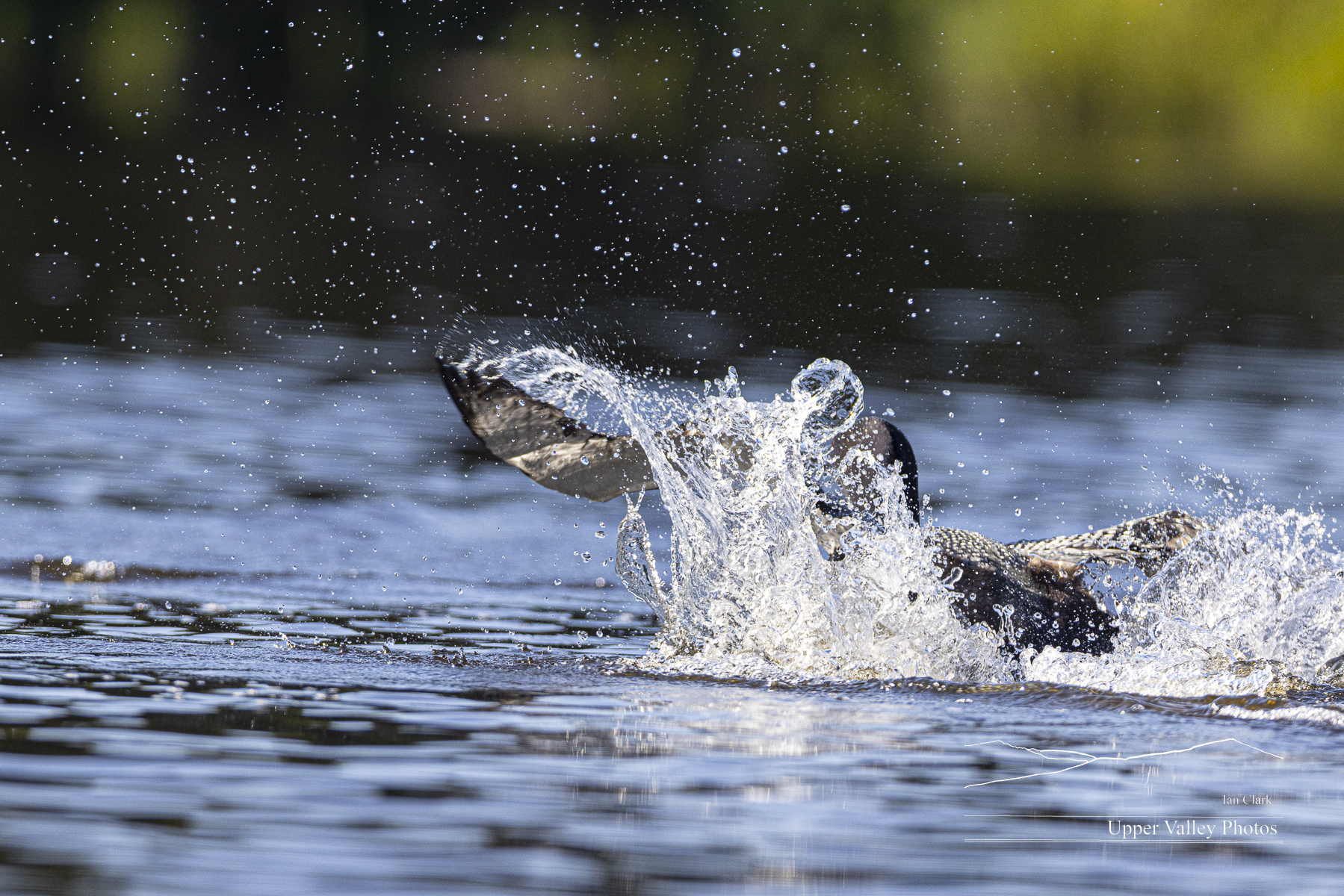
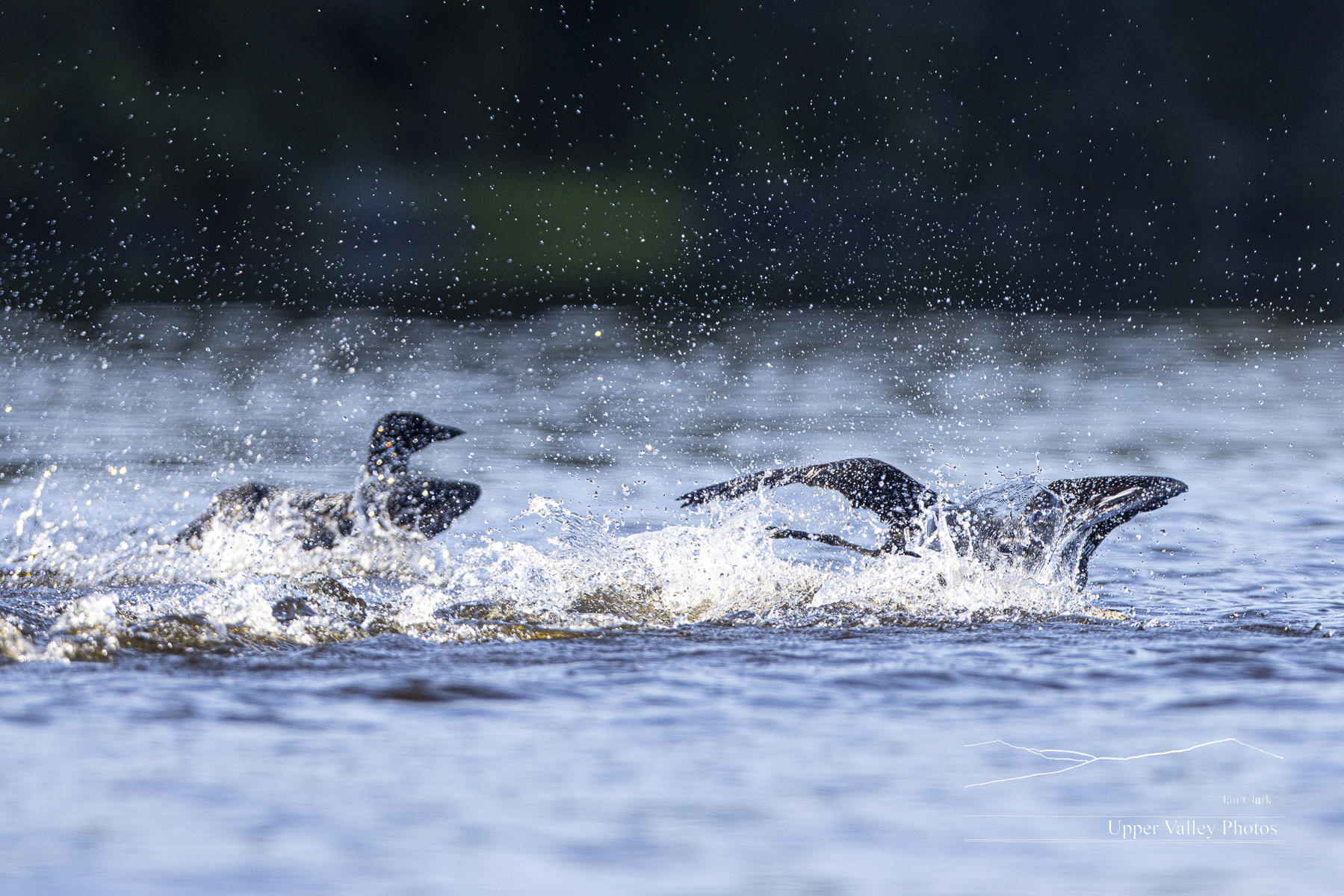
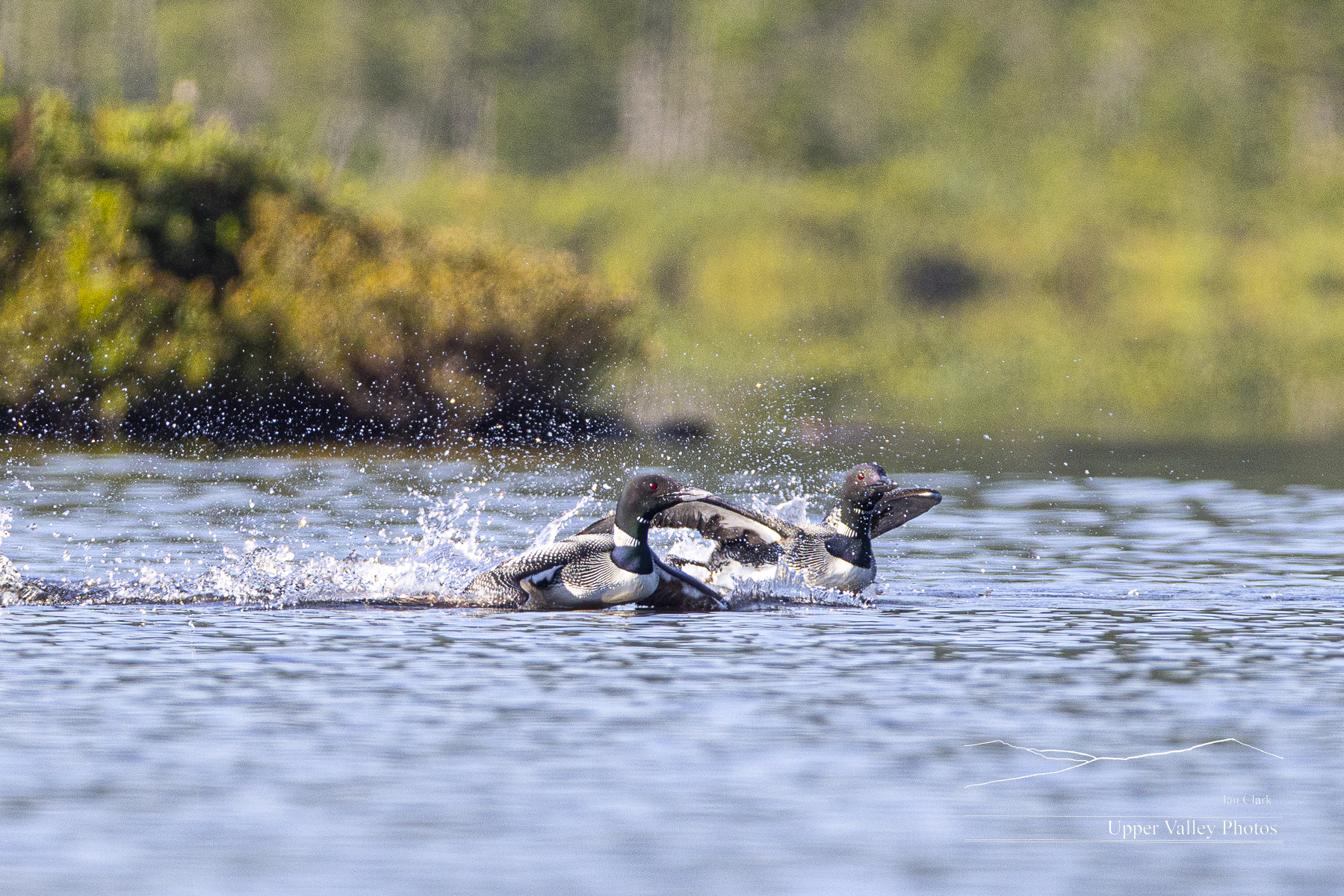
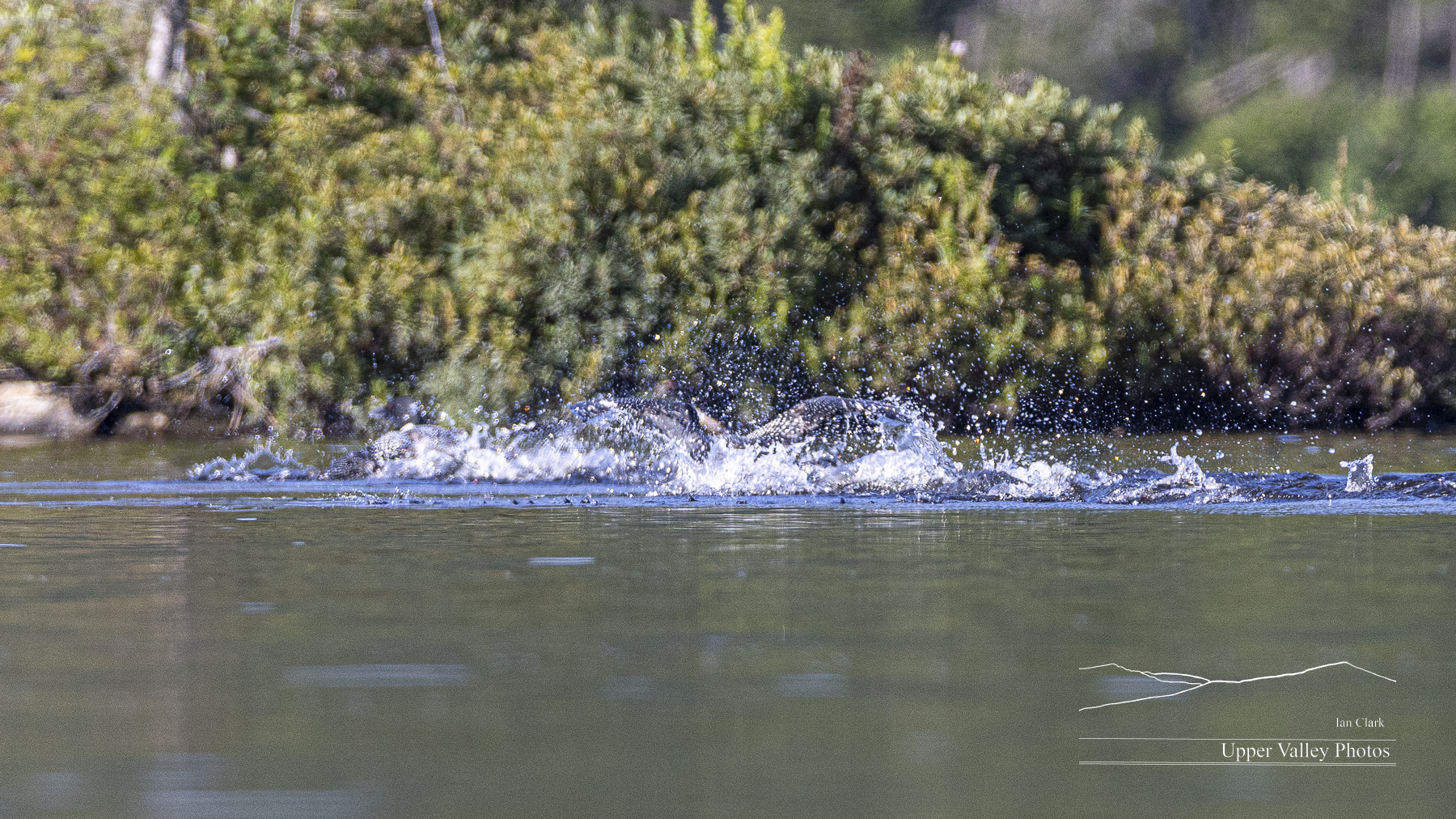
Dad was up out of the water doing the penguin dance in front of an intruder! The intruder went wing rowing away. They repeated that a couple of times.
The intruder eventually made a wing rowing run that brought him close to the boat and I was able to get a series of photos. I love the patterns in the water coming off his right wing.
Another shot of the intruder wing rowing past my boat.

A closer shot – check out the patterns in the water again.

And putting on the brakes… the intruder has dipped both wings deeper into the water to slow down.

The intruder hid behind my boat for a few moments before diving. Dad dove too and I lost track of both of them. Over the next half hour, I got brief glimpses of both surfacing – staying low – stalking each other. They hadn’t come to any conclusion by the time I had to leave.

Yesterday’s forecast was for thunderstorms at dawn. When I got up and looked out, we had clear skies with some fog down in the valley. I headed out to call on the Middletons. I found the family foraging in their favorite breakfast cove well before sunup.

Mom dove. I thought she was just foraging. She popped up outside the cove. That was a bit unusual.

Shortly after, Littleton flattened out – a chick’s defense against threats.
Looking up, I saw an intruder coming in for a landing. Mom and dad went out to challenge her. I’m assuming this is the same female that was keeping company with Mr. Middleton early in the season. Assuming it is her, she has come in to challenge for the territory each time I’ve visited. The Middletons – the two on the right – circled her and stared her down.
The intruder retreated, wing rowing away down the pond. The Middletons followed, swimming after her.
Before the Middletons caught up with her, she departed.
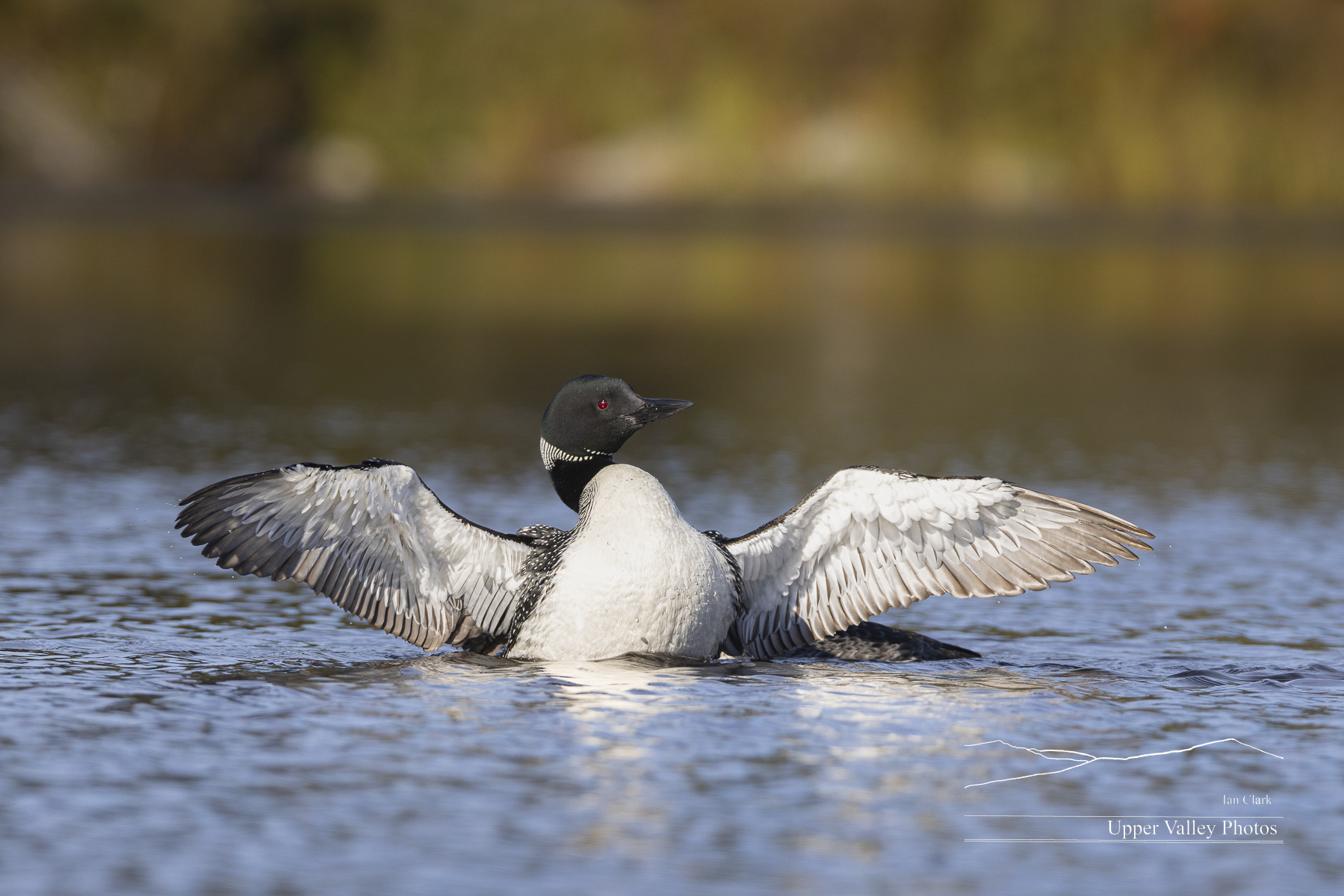
Dad took time for a celebratory stretch as the intruder circled the pond one last time calling as she went. Both of the resident loons are banded, allowing me to tell who is who.
Both Middletons headed back to catch up with Littleton, who swam out of the cove to greet them.
Dad decided first breakfast was over and it was time for a nap. Littleton went along with the plan.
But, Littleton soon decided he had other priorities. He gently nudged dad to remind him it was time for second breakfast.
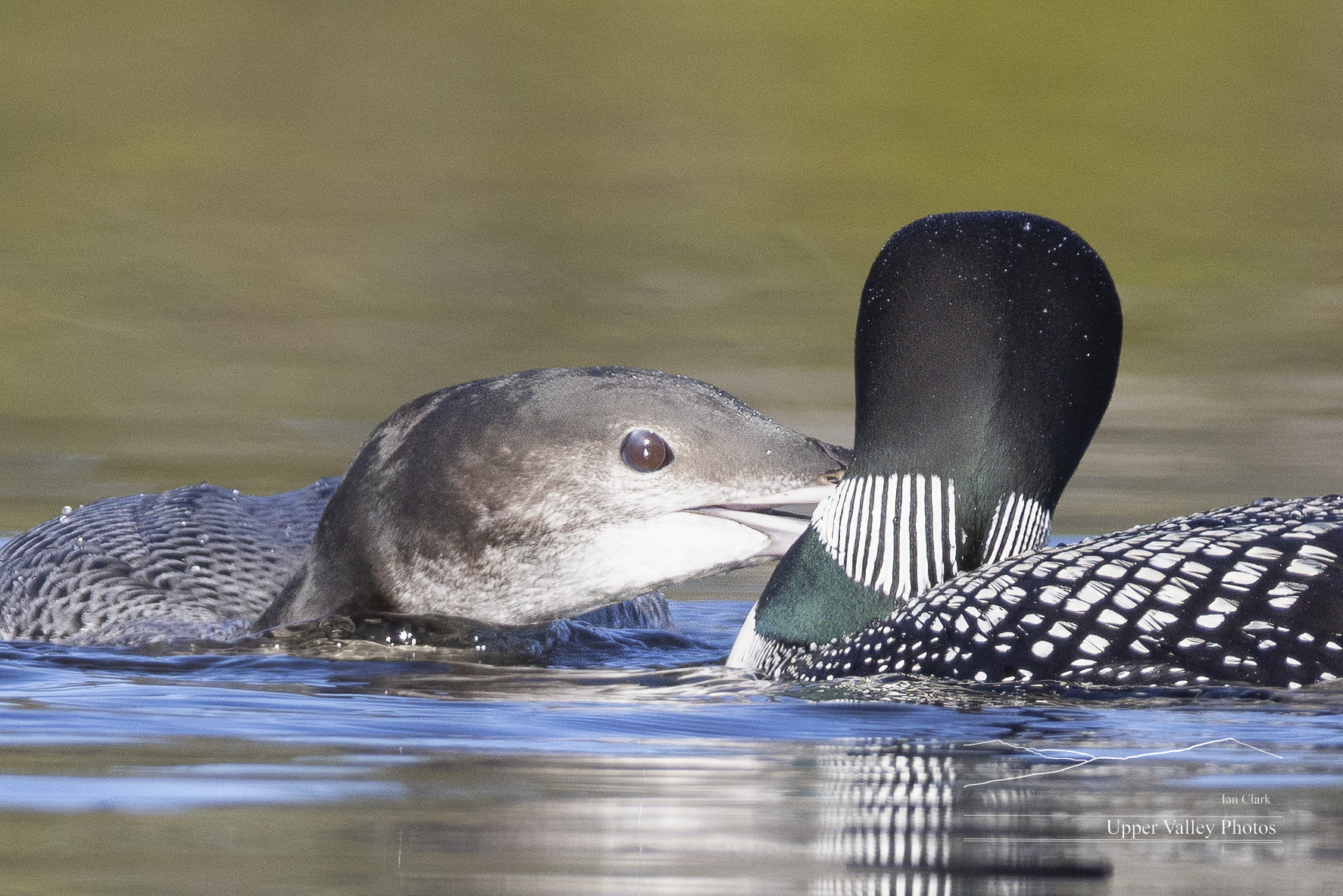
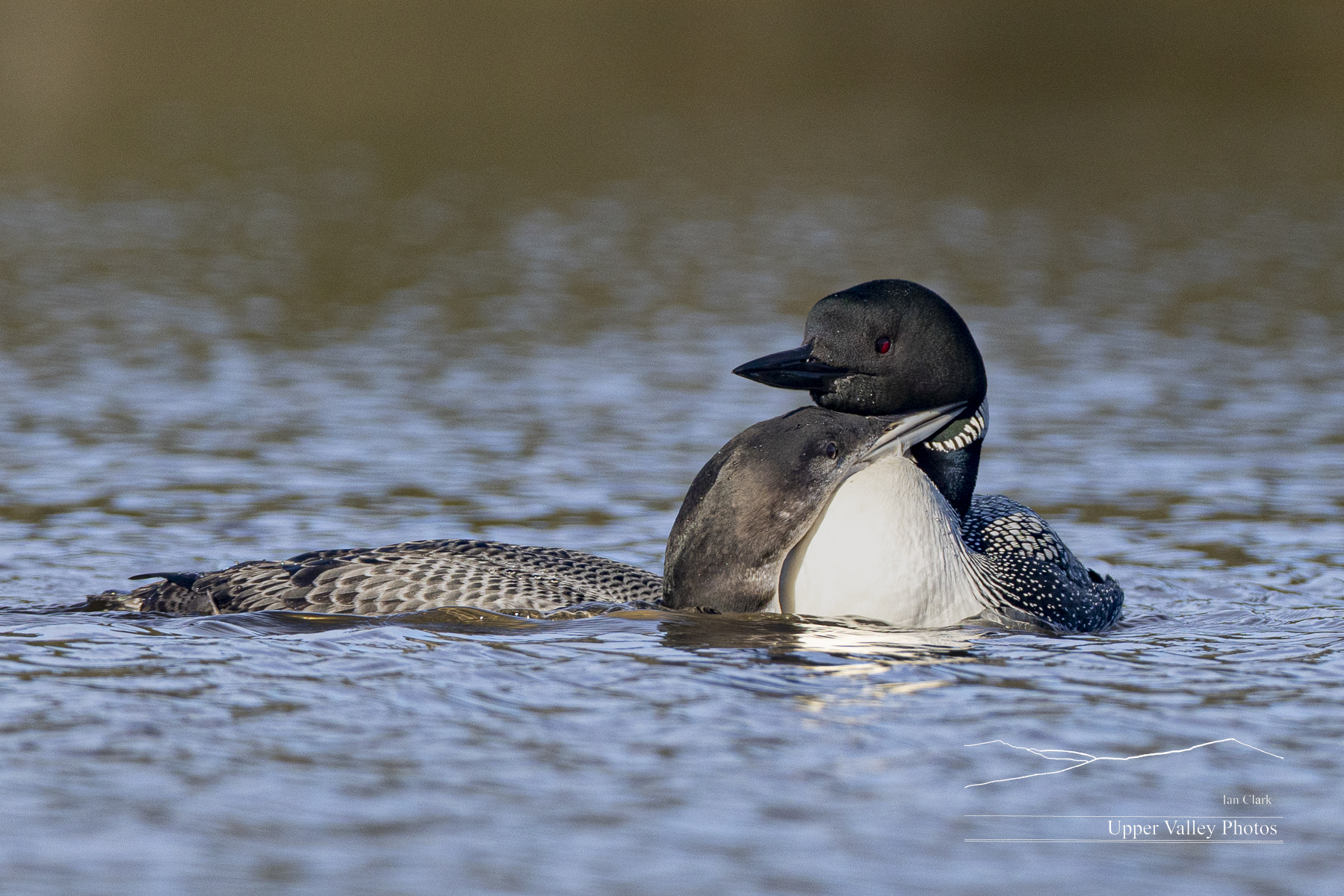
A gentle nudge wasn’t sufficient to get dad moving. Littleton upped his game and nipped dad’s neck.
Dad woke up and explained that he’d provide breakfast when he was good and ready. Then tucked back in to nap.
But Littleton was insistent, as loon chicks are. He nudged and pushed dad for a bit. Dad stayed tucked in, and Littleton pushed him in circles for a bit.
Littleton circled around to see if pushing on dad’s other side would get some action.
Littleton eventually took the hint and wanted to climb aboard. He’s too big these days, he only got his head under dad’s wing.
Dad eventually gave in and headed off to round up mom to get more breakfast. Littleton tucked his head under dad’s other wing and let dad tow him along.
Mom stretched as they approached. The parents set to rounding up some breakfast.

The clouds were moving in and the wind came up. I headed home to get to work.