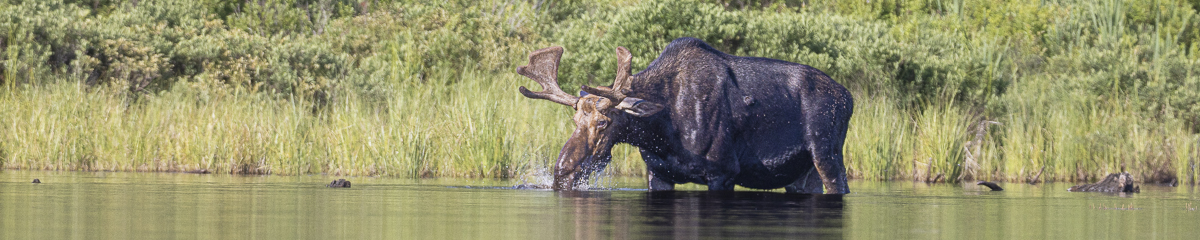
Posts Tagged: great blue heron
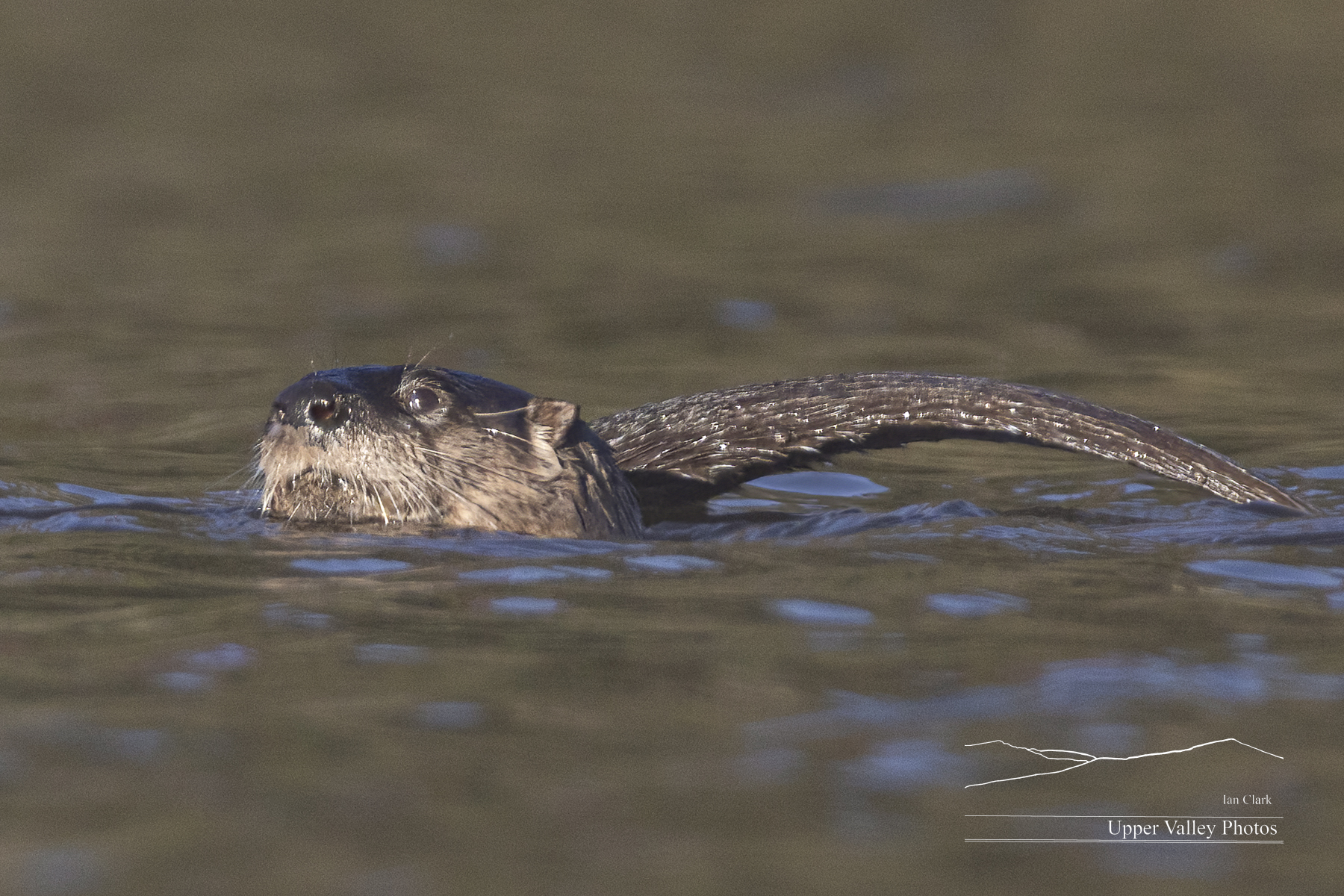
Hank Comes Through, Otters Romp, and a Late Look at the Eastons
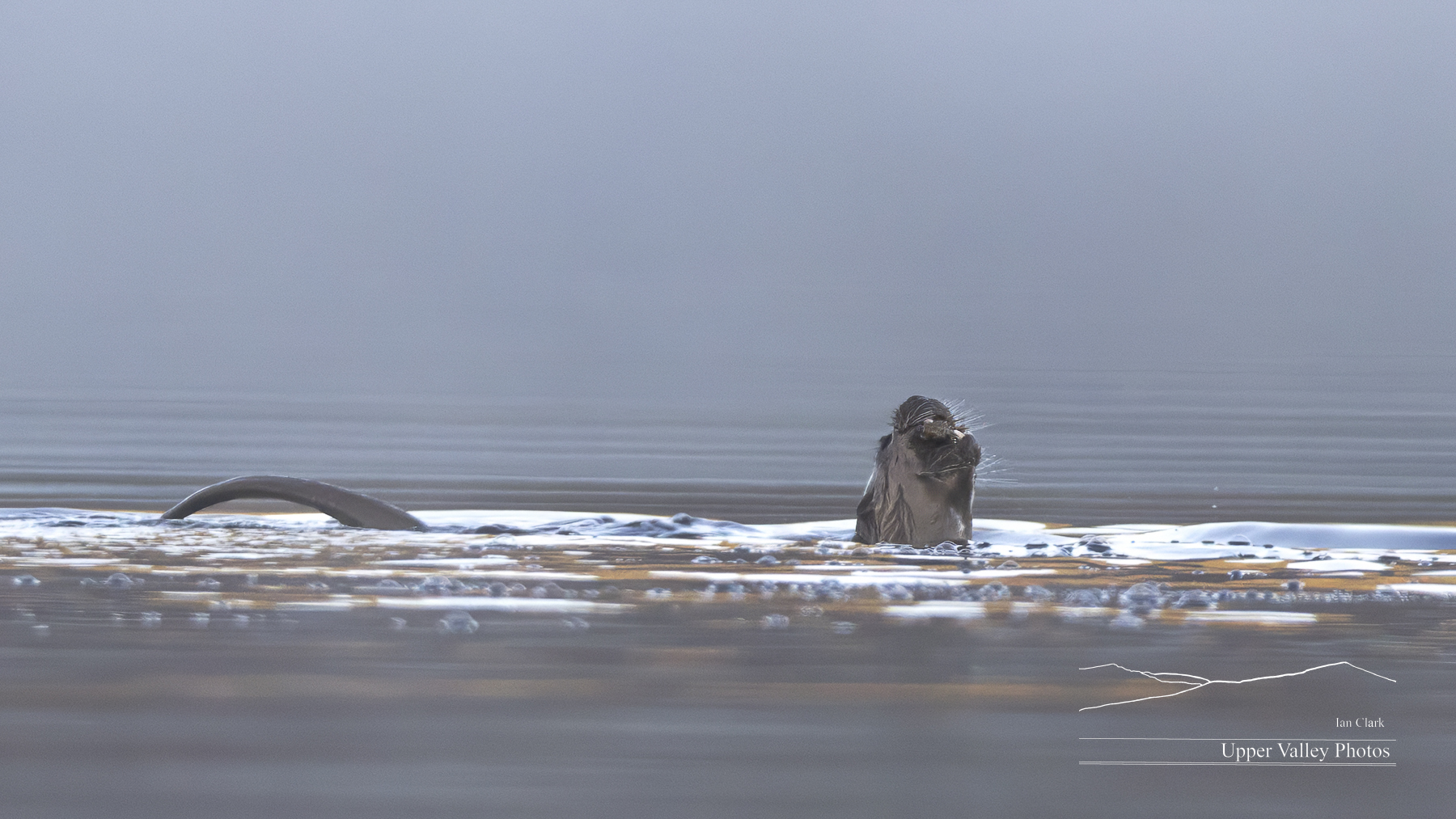
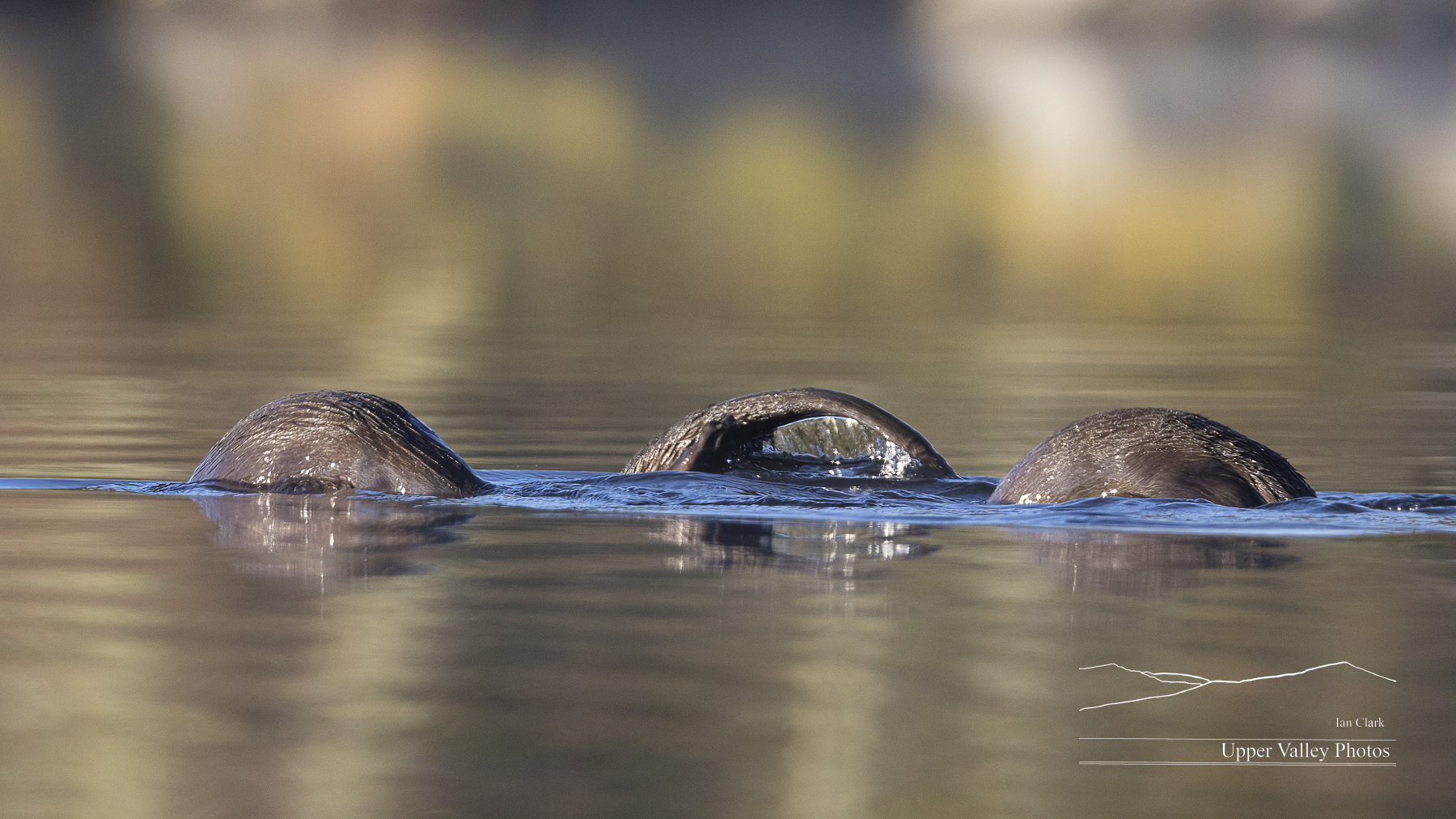
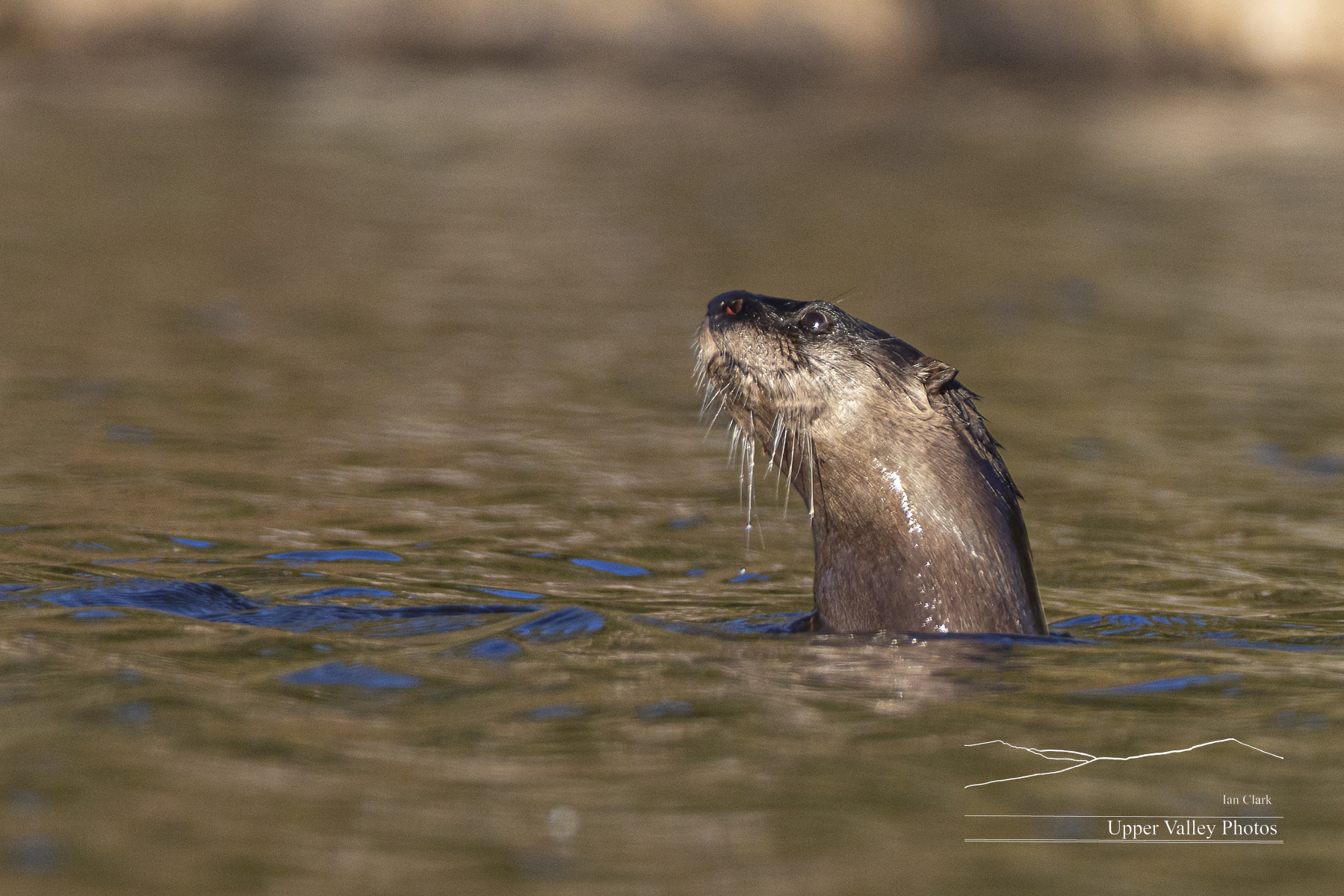
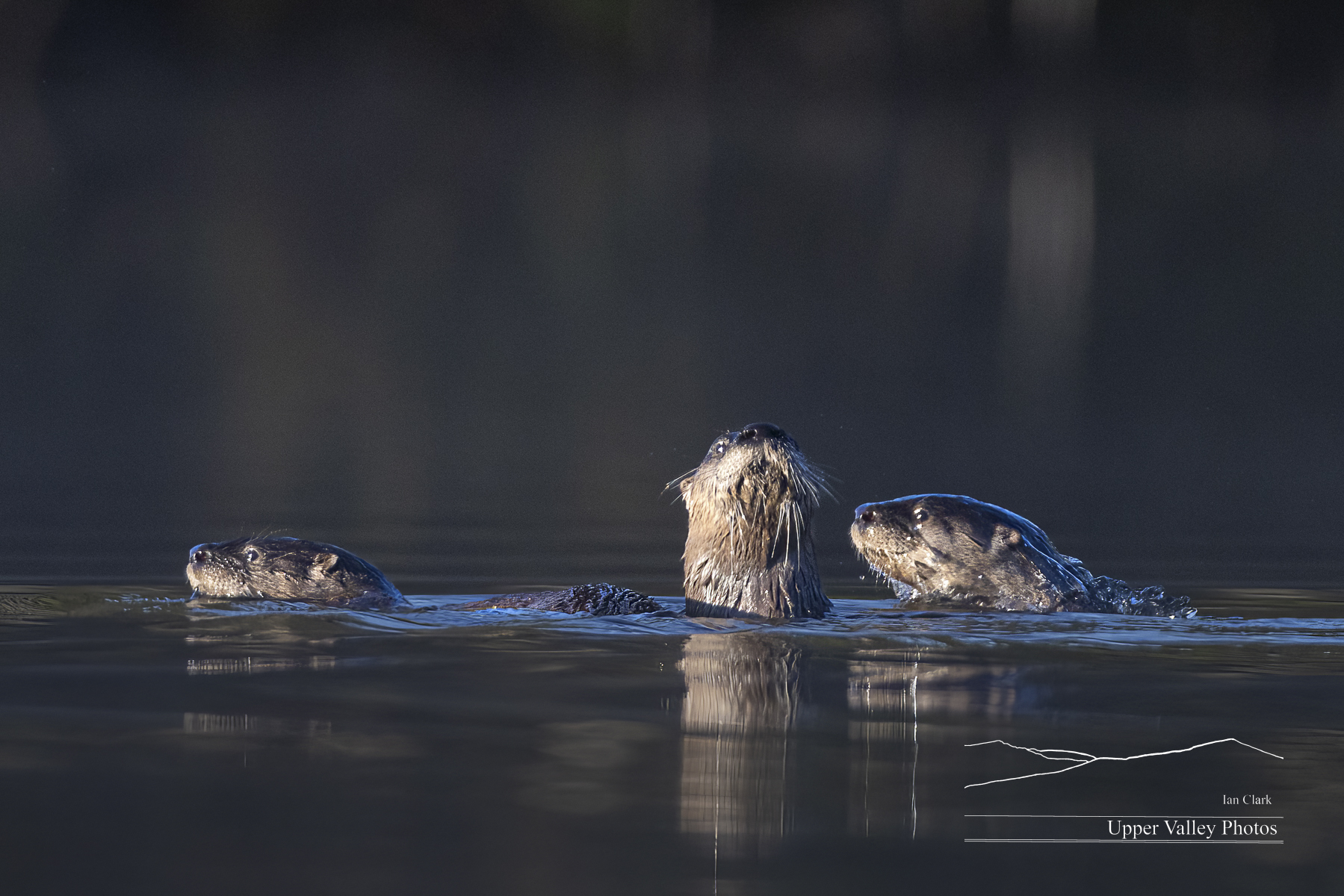
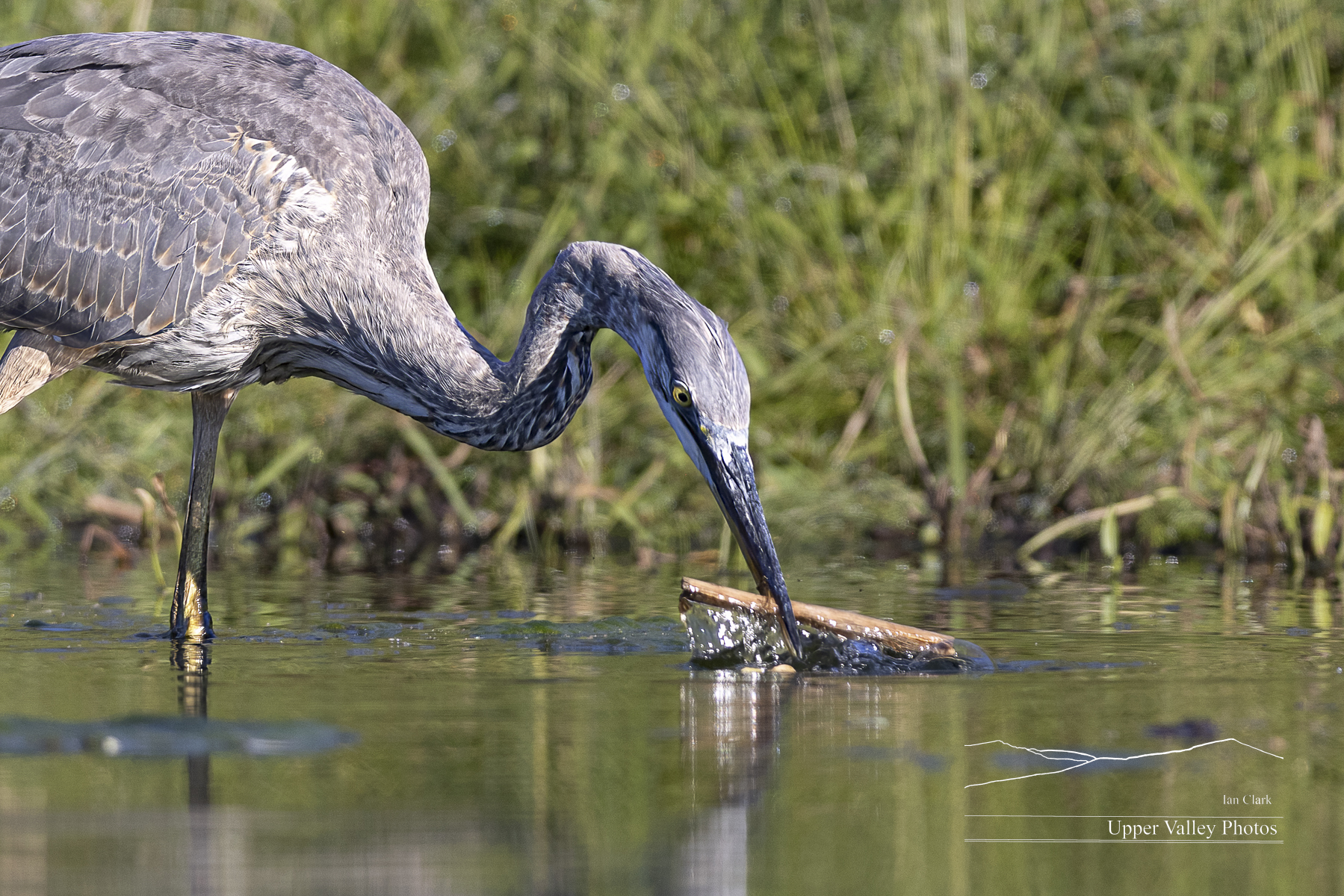
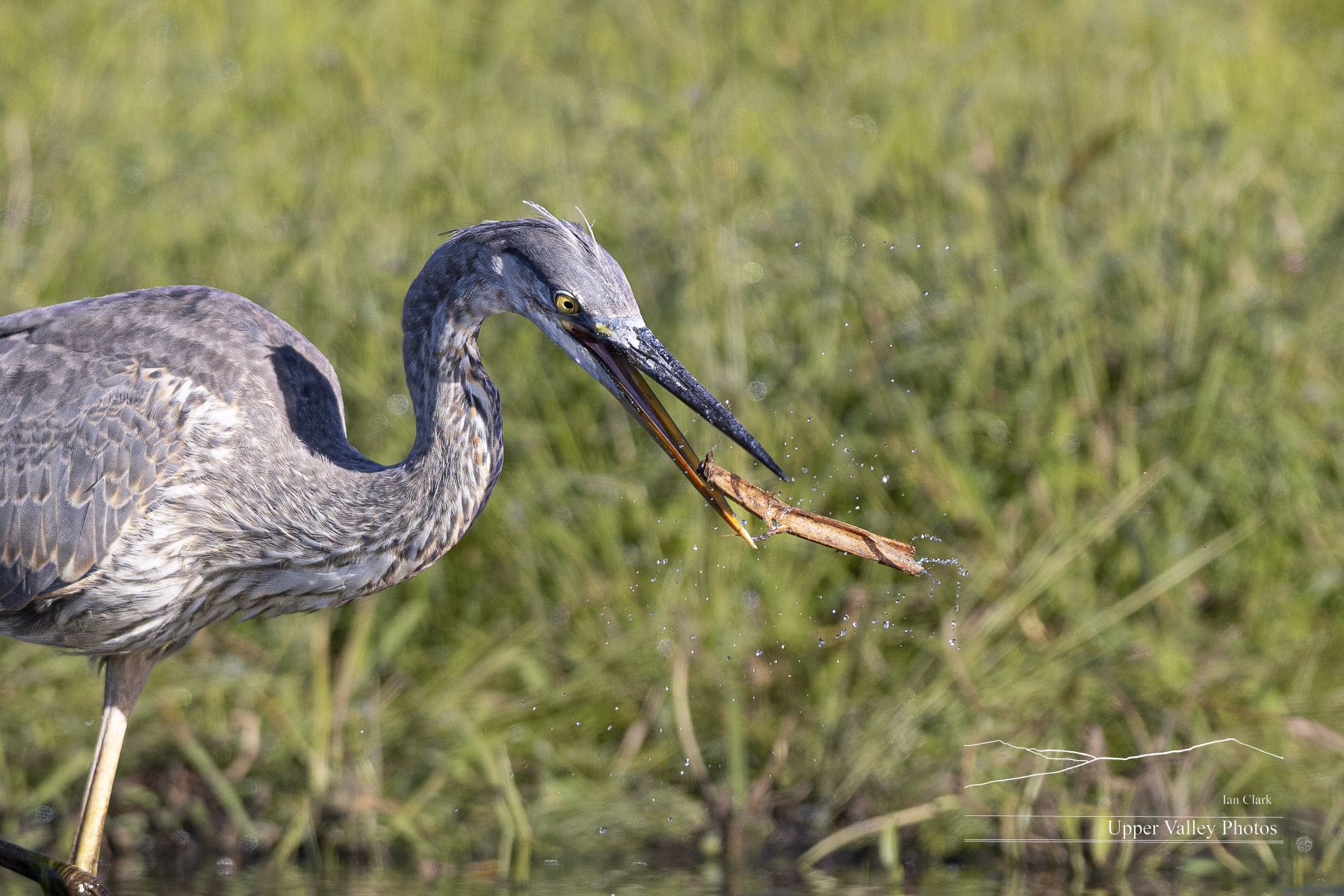
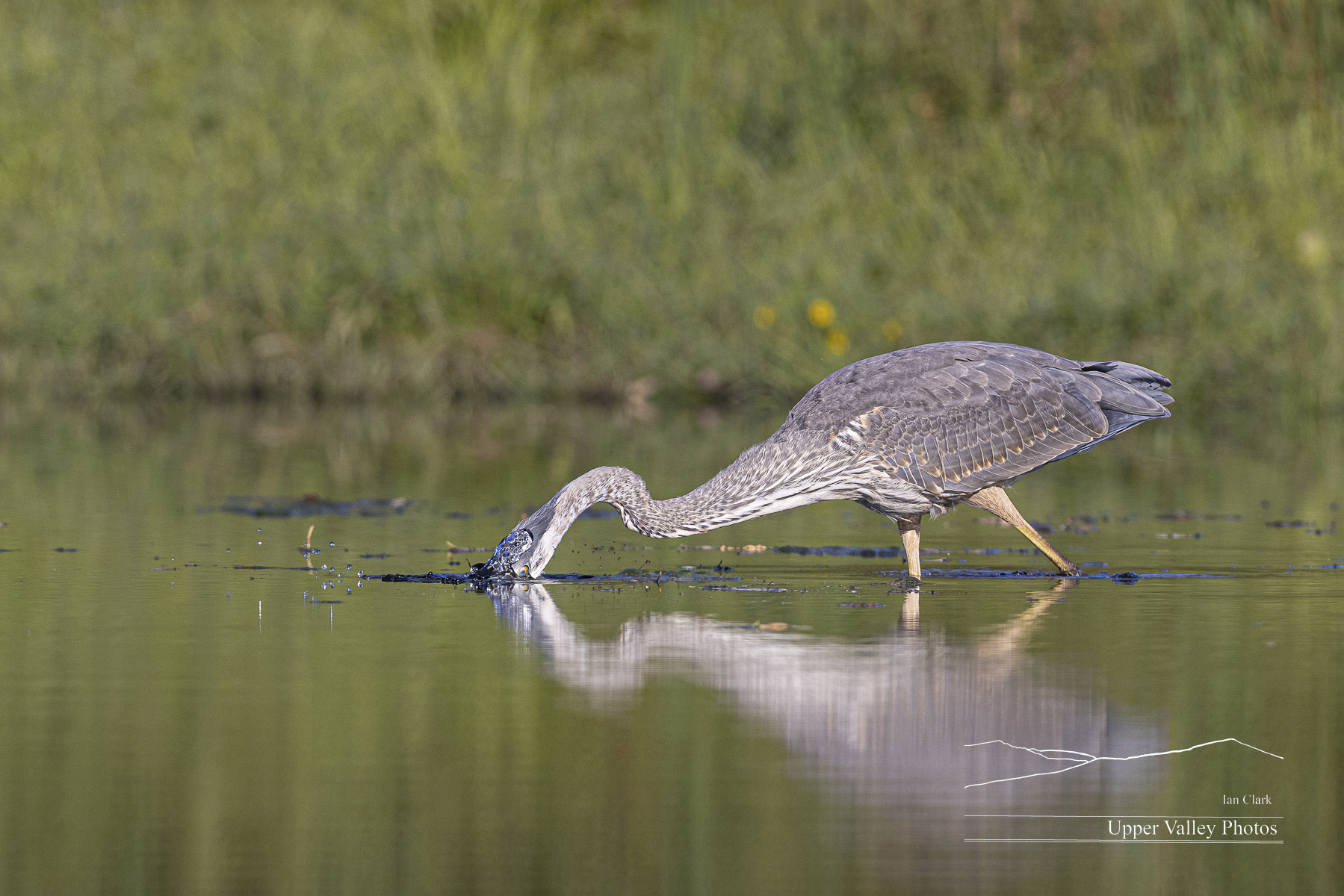
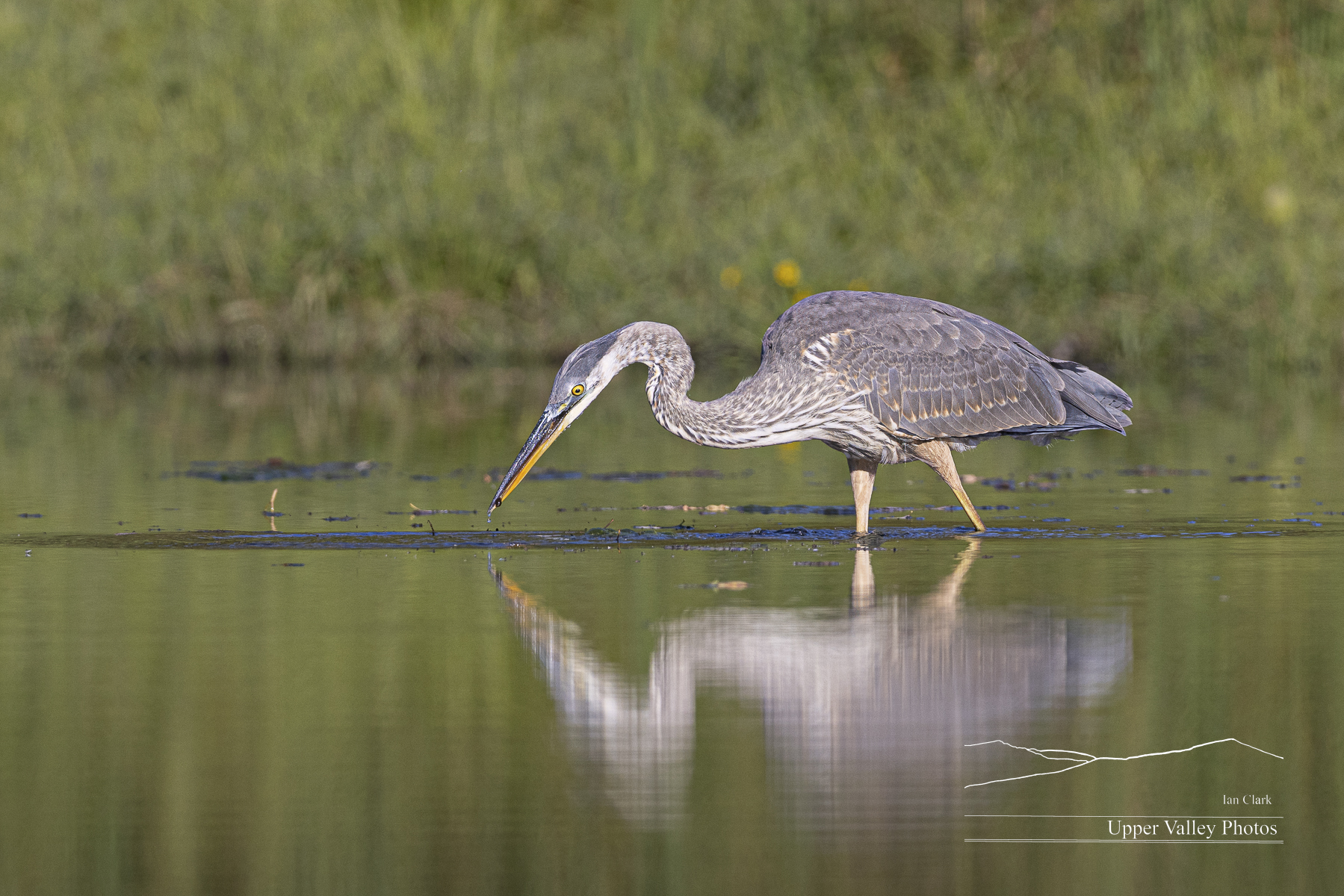
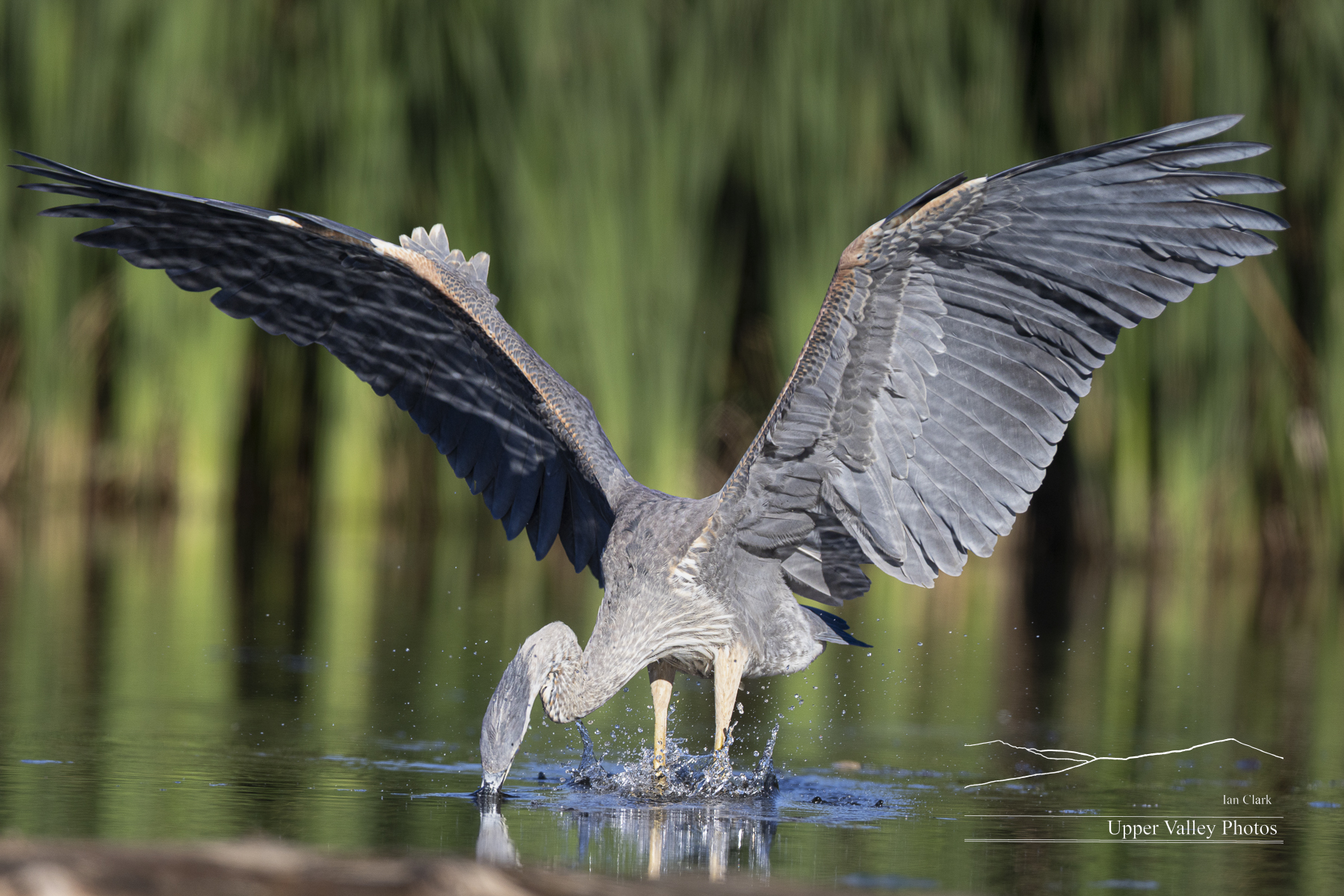
Hank teased me along the river this week. And when I went to visit the Eastons, the otters were romping around the pond.
The Vermont North By Hand Tour is coming up fast. Artists around the Upper Valley will be exhibiting. Some in their studios. Those of us without a proper studio have to make other plans. I’ll be set up at Sue Martin’s Farm on Route 5 on the Bradford – Fairlee town line. The tour map online still isn’t updated, but trust me, that’s where I’ll be. Sue will be showing off her stained glass and Carole Kitchel Bellew will be set up with her ceramic art. The map of the other artists is here. The tour is a great way to spend the day. Hope to see you there.
Wednesday evening I wasn’t feeling very energetic. It seemed like a nice evening to sit on the deck and finish my book. But one of the downsides of being a photographer is that you have to get going and, well, photograph things. The weather was perfect and I couldn’t come up with a good enough excuse to not go visit Hank, et al.
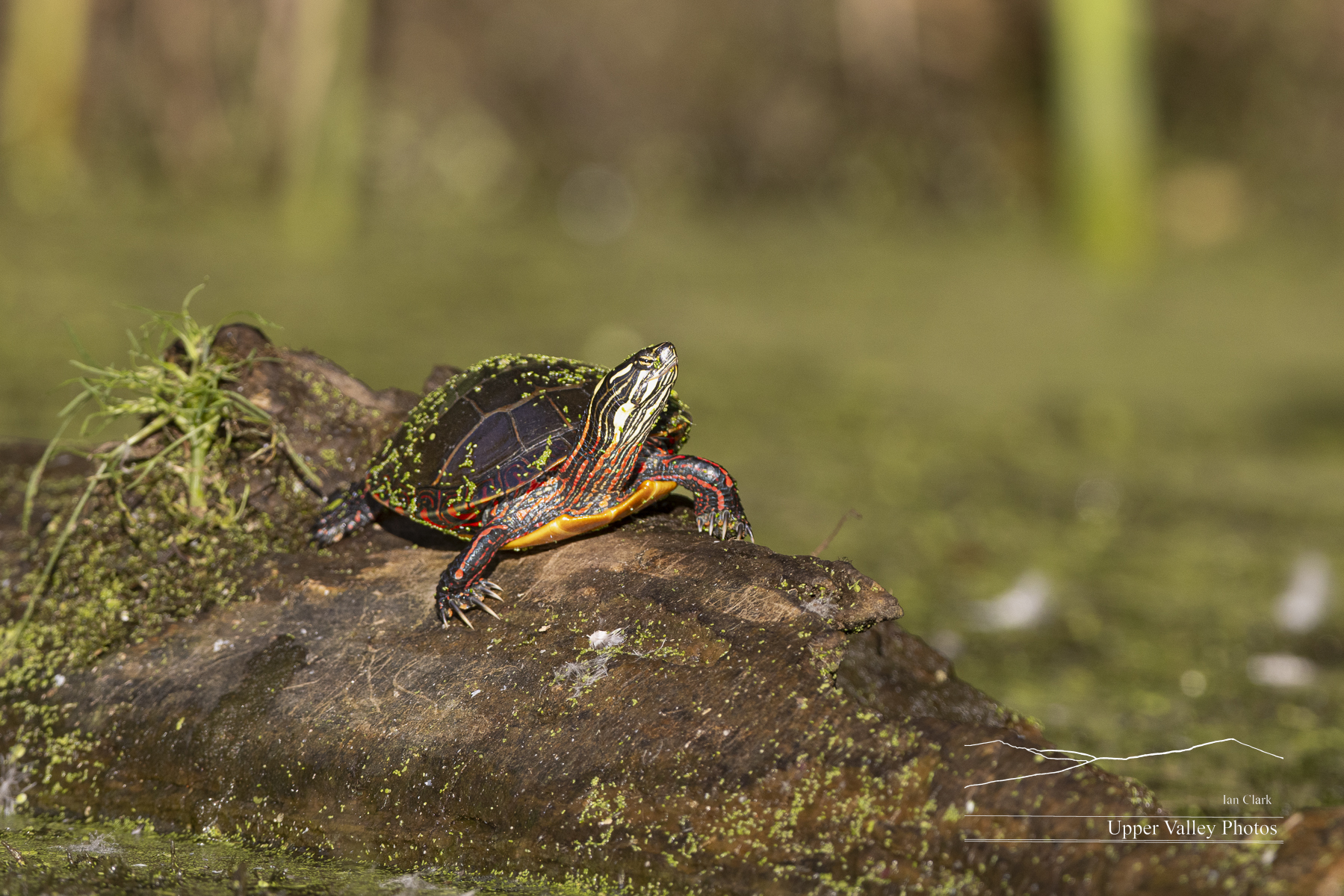
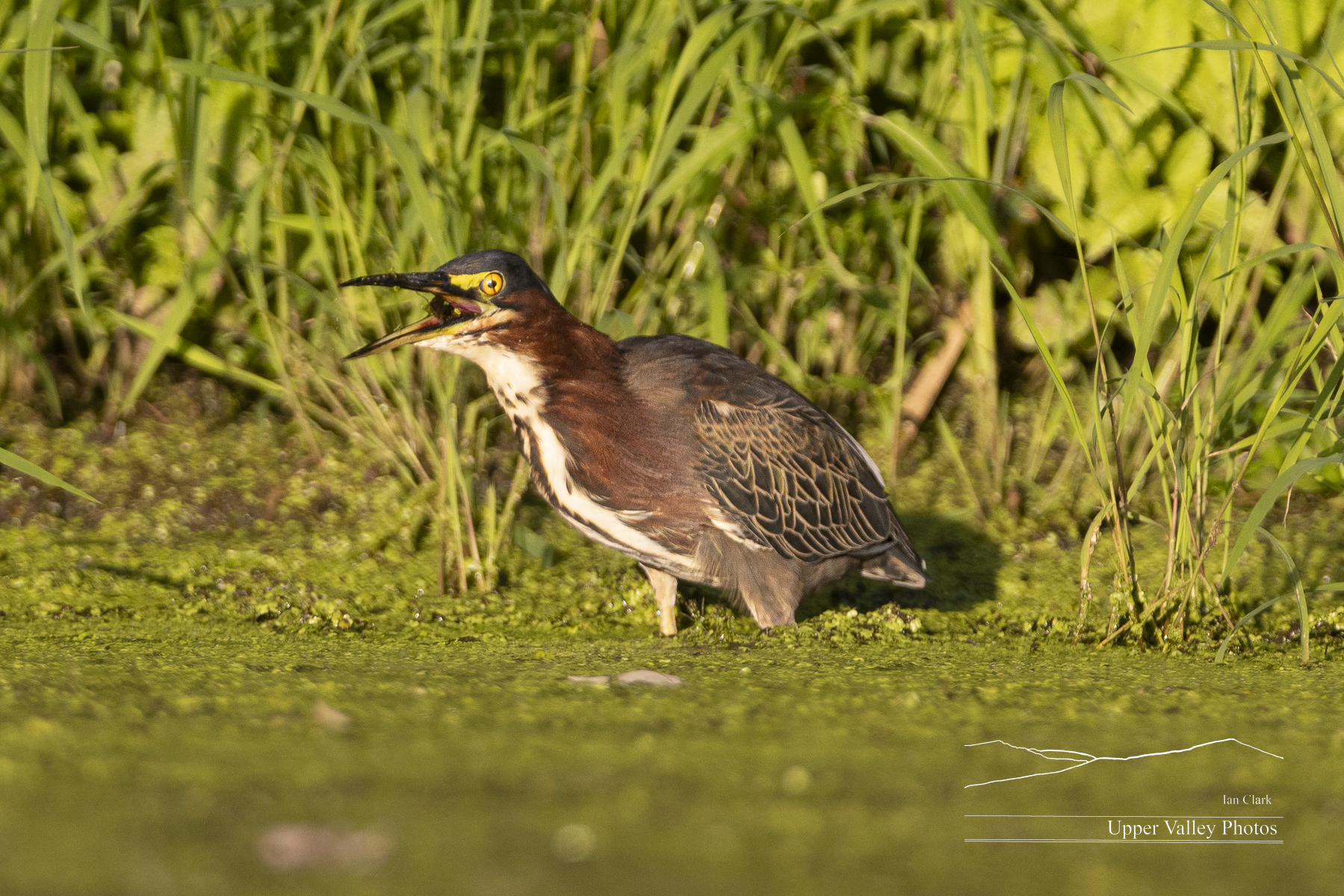
As I was putting the boat in the river, a lady paddled upstream. She said Hank was ‘just around the corner.’ He’d moved on by the time I made it around the corner. The river was pretty quiet. A couple northern flickers were chatting. And a green heron flew downstream, squawking as he went. I took the boat into the marsh to the section of shore that I’ve had such great luck finding the herons. There were a couple painted turtles basking. And starlings everywhere in the reeds. But no herons.
I sat and waited a bit. Still no herons. There was a cloud on the horizon and the sun was heading behind it. There was still time to work on that book. I headed home.
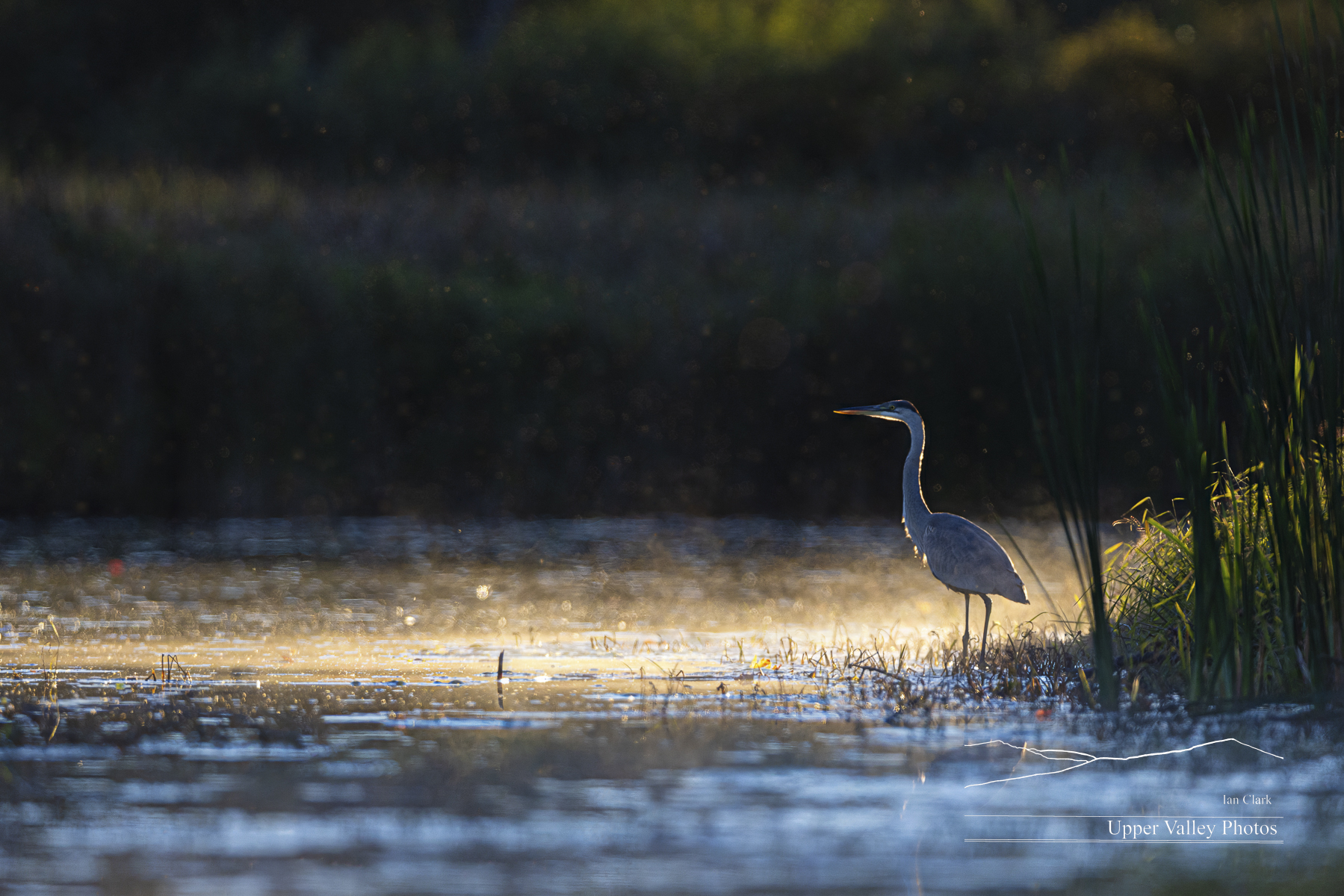
As I got back to the river, Hank flew in and landed in the shadows just upstream. There was a patch of sun along the shore between us and another upstream where the shore juts out a bit. I figured the odds were low of Hank cooperating and moving into the sun. But I waited. The sun came back out – barely above the hill. Hank did the inscrutable heron thing and stood stock still staring into the water.
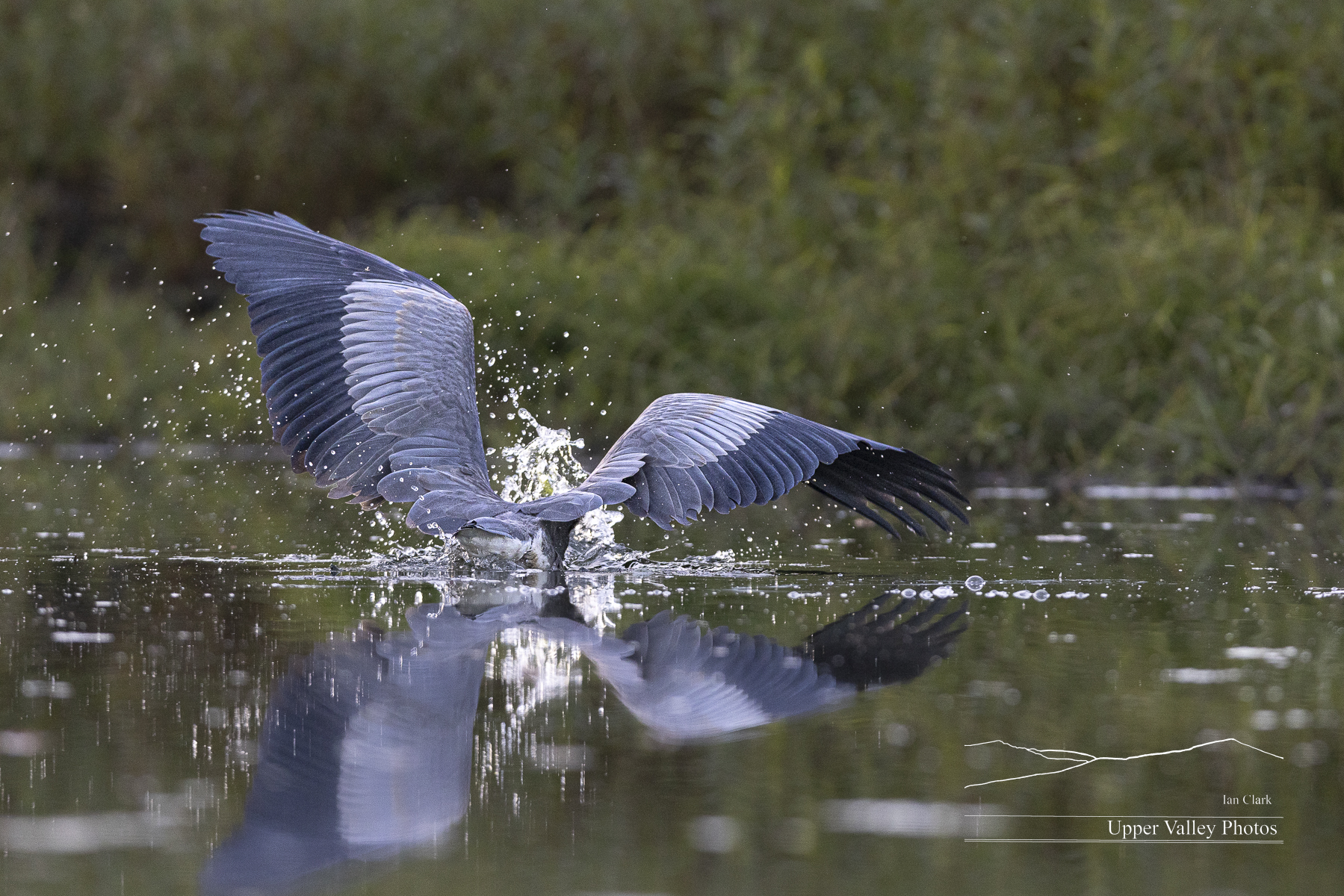
Thursday was another nice evening. As I tossed the boat on the car, I noticed bees working on the last of the asters along the drive.
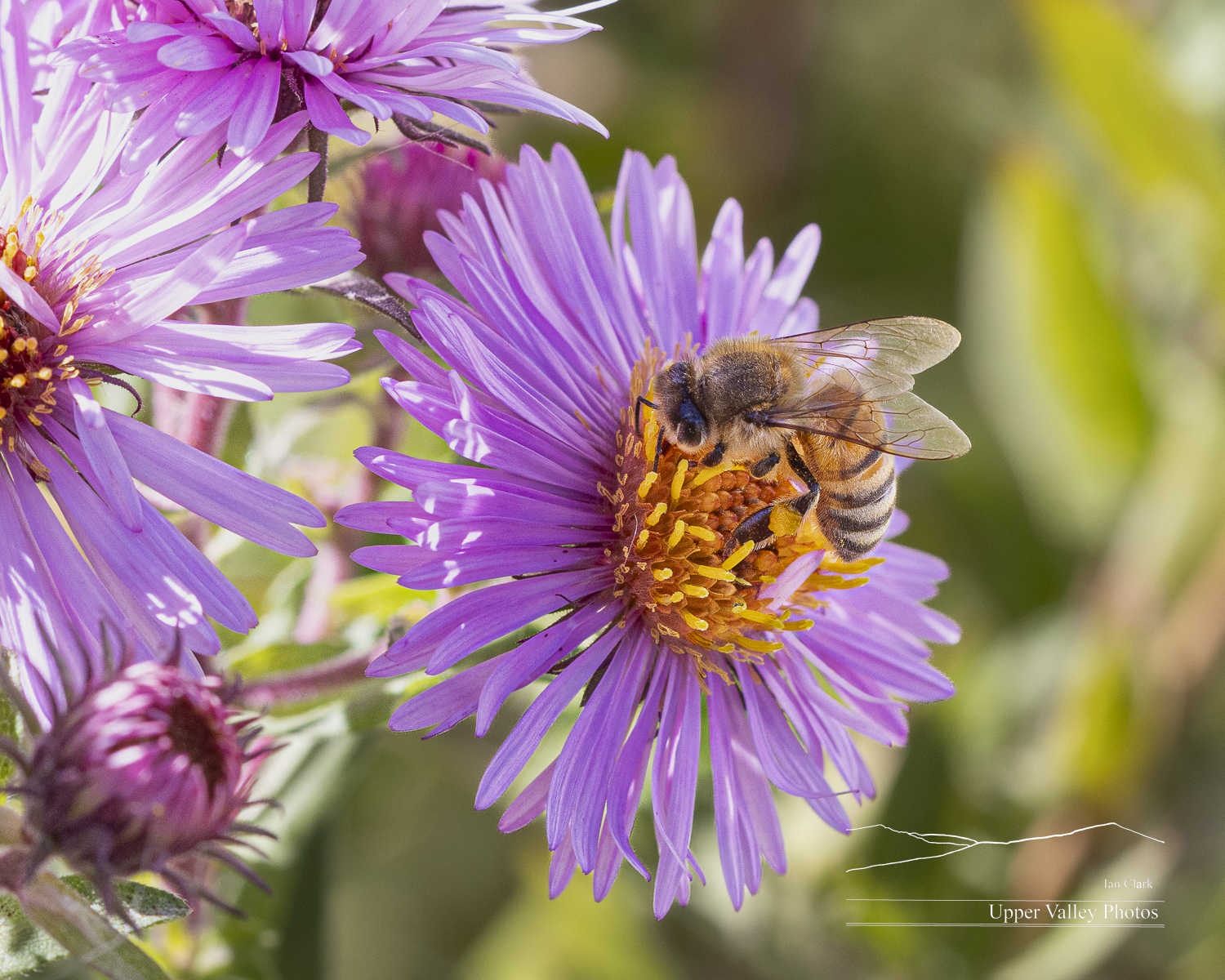
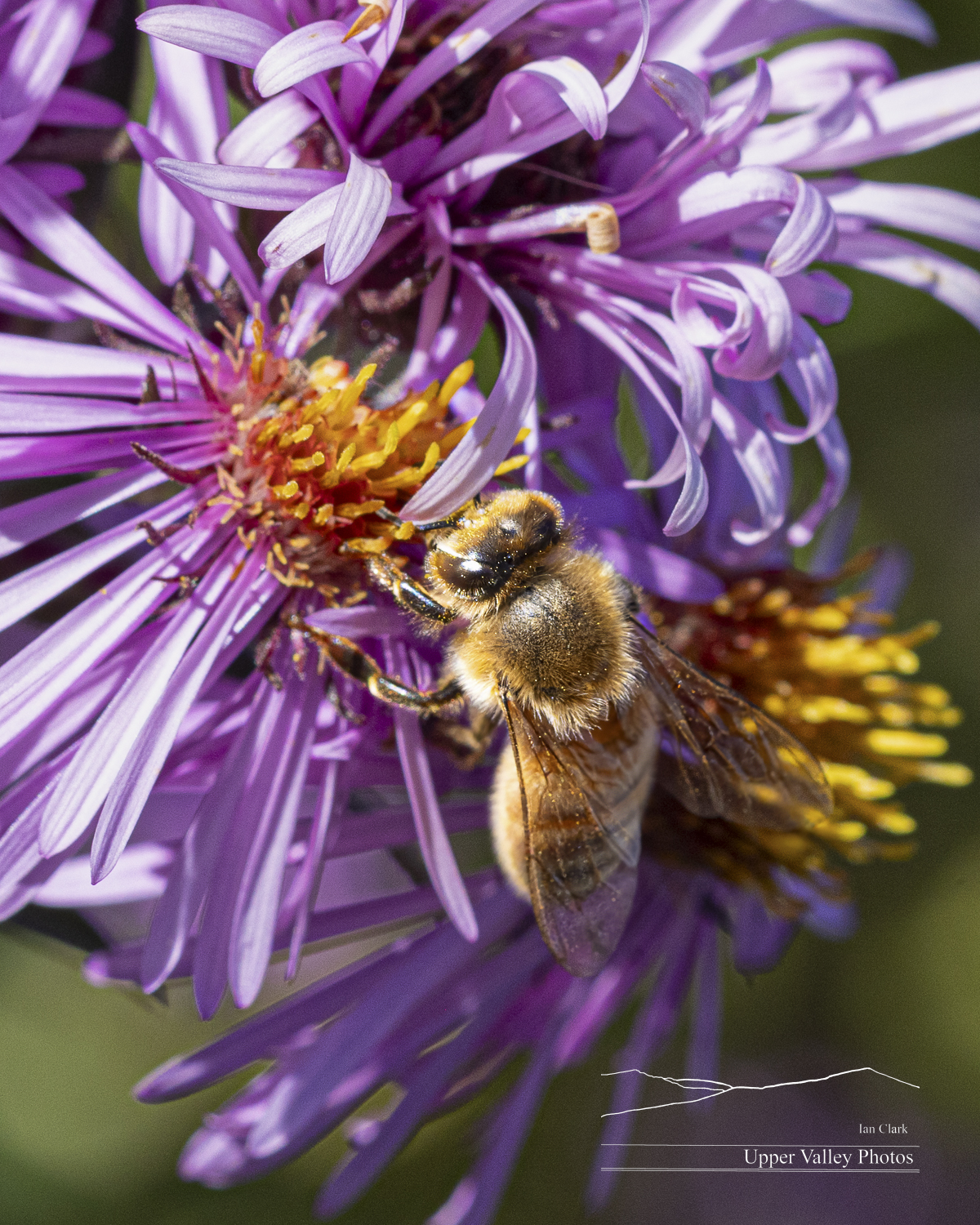
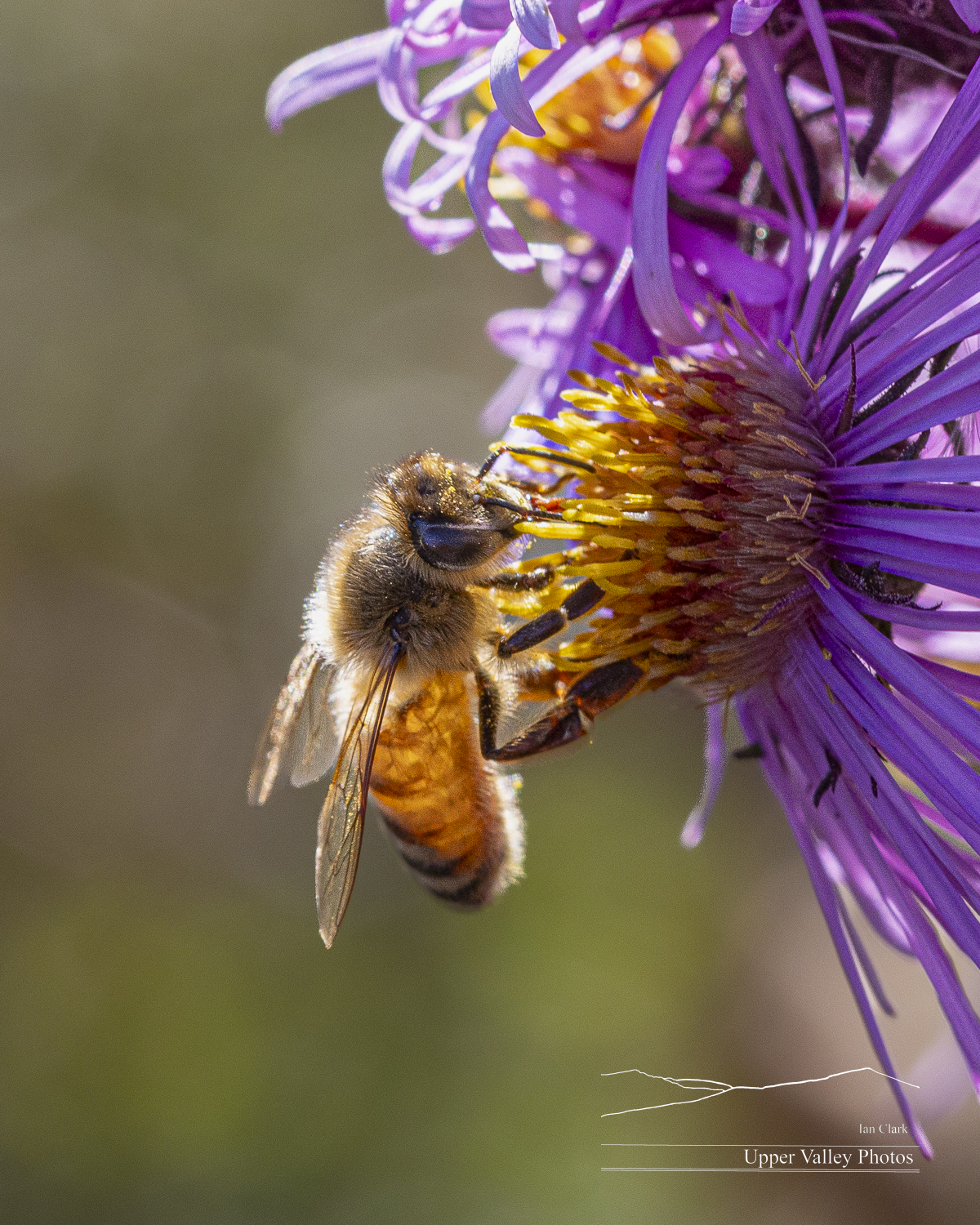
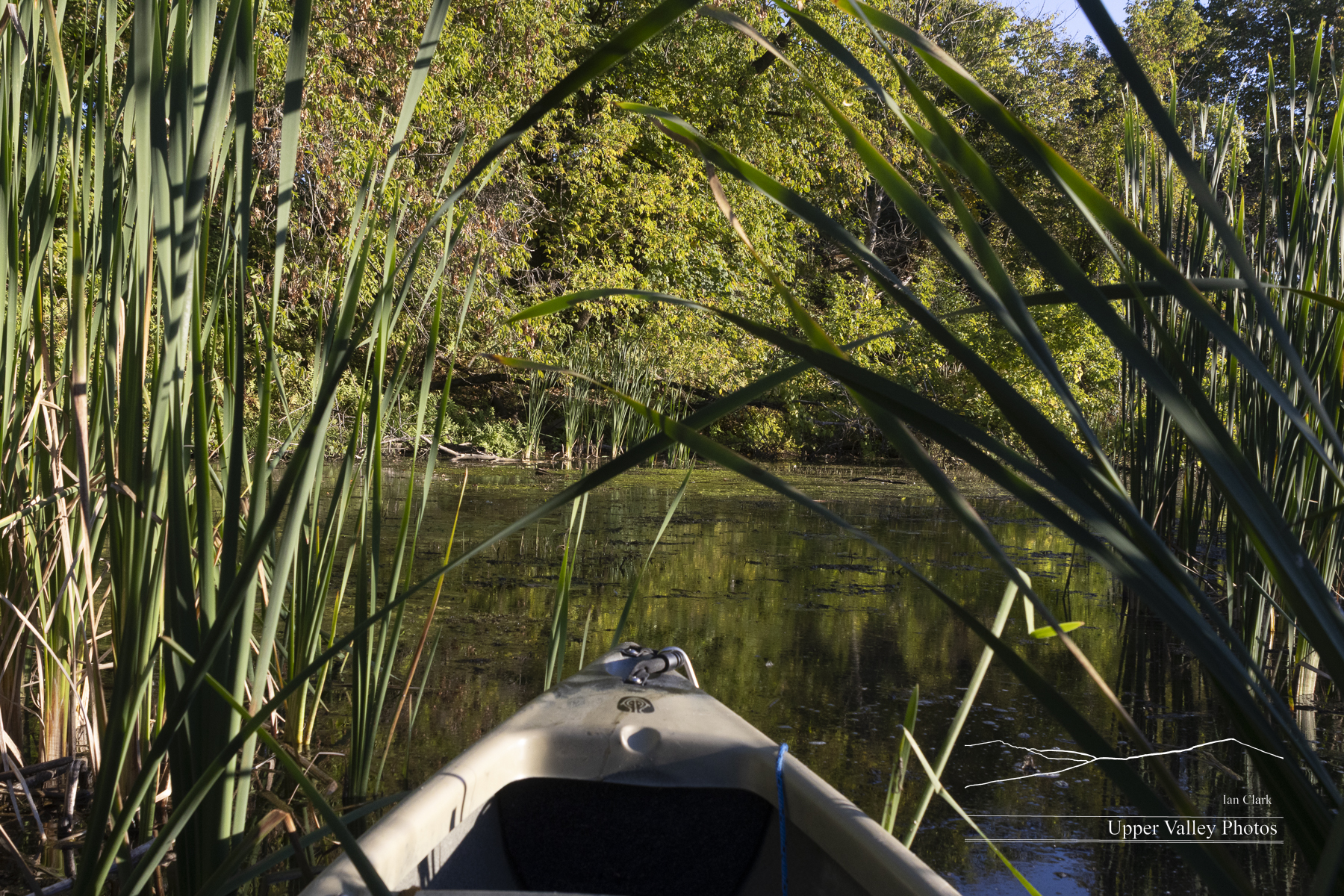
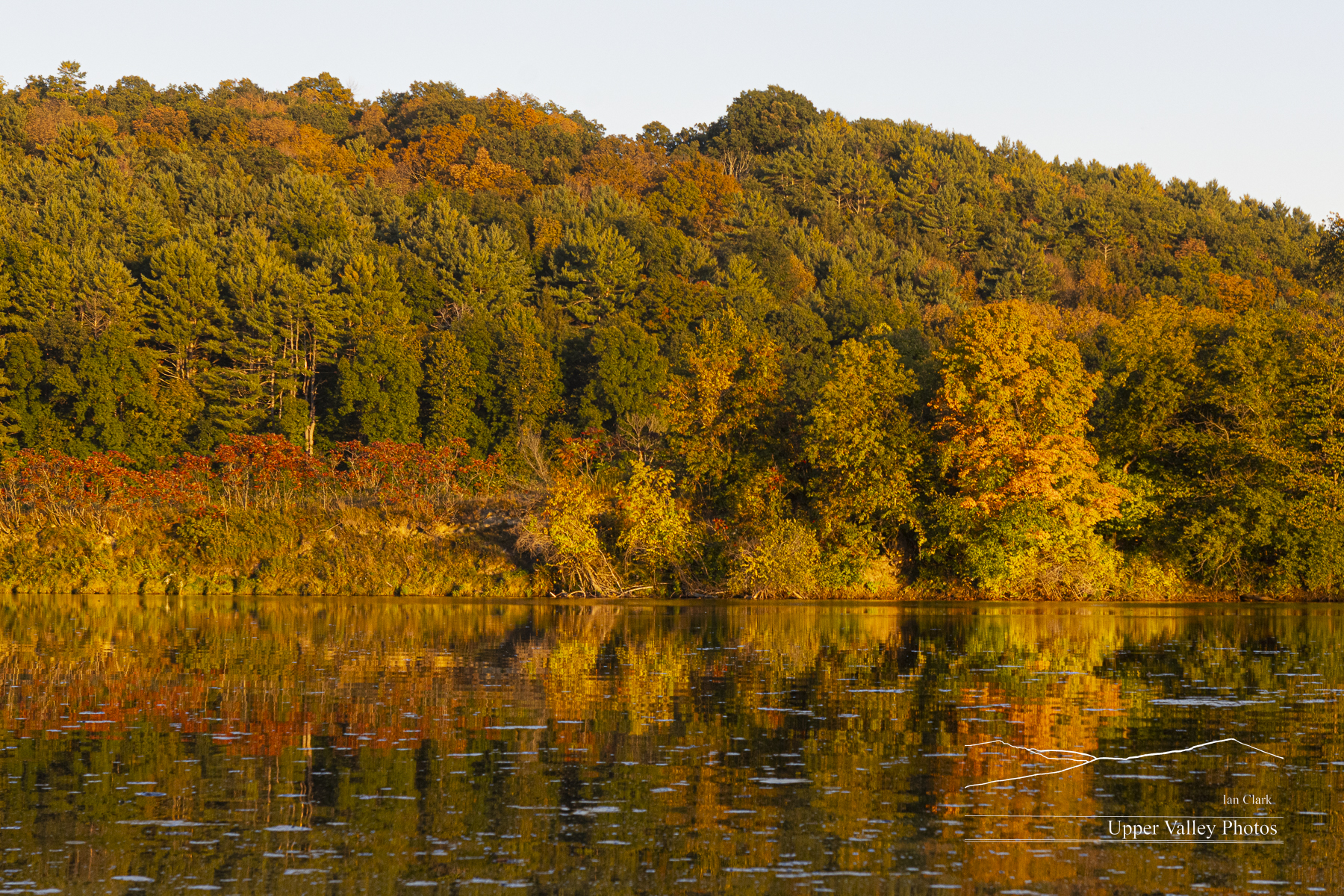
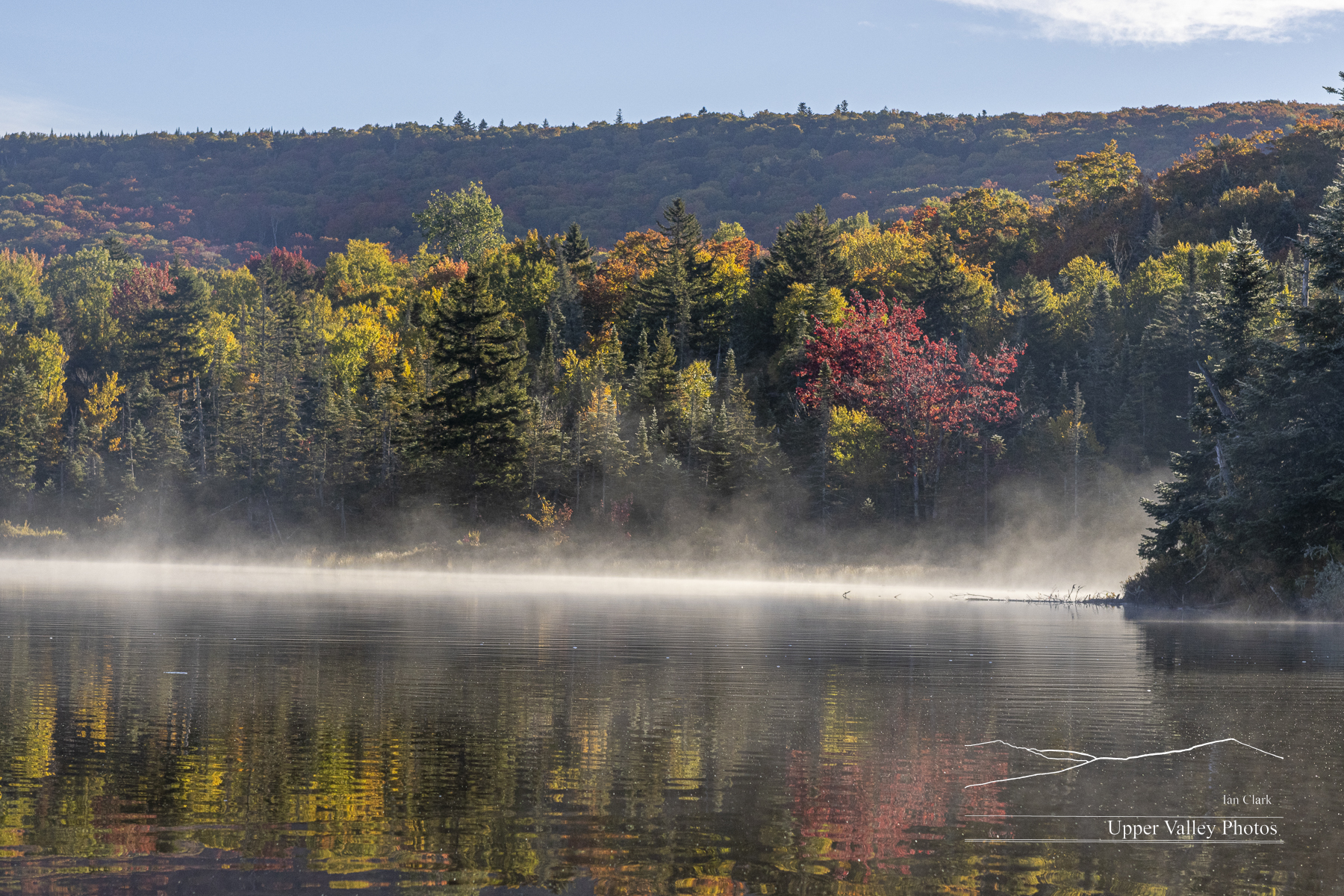
Friday morning I headed up to visit the Eastons. It was an invigorating 38° when I put the boat in the water. It is getting time for the adults to move on.
I paddled down the pond without seeing any loons. I turned around and came back up the pond. Without seeing any loons.
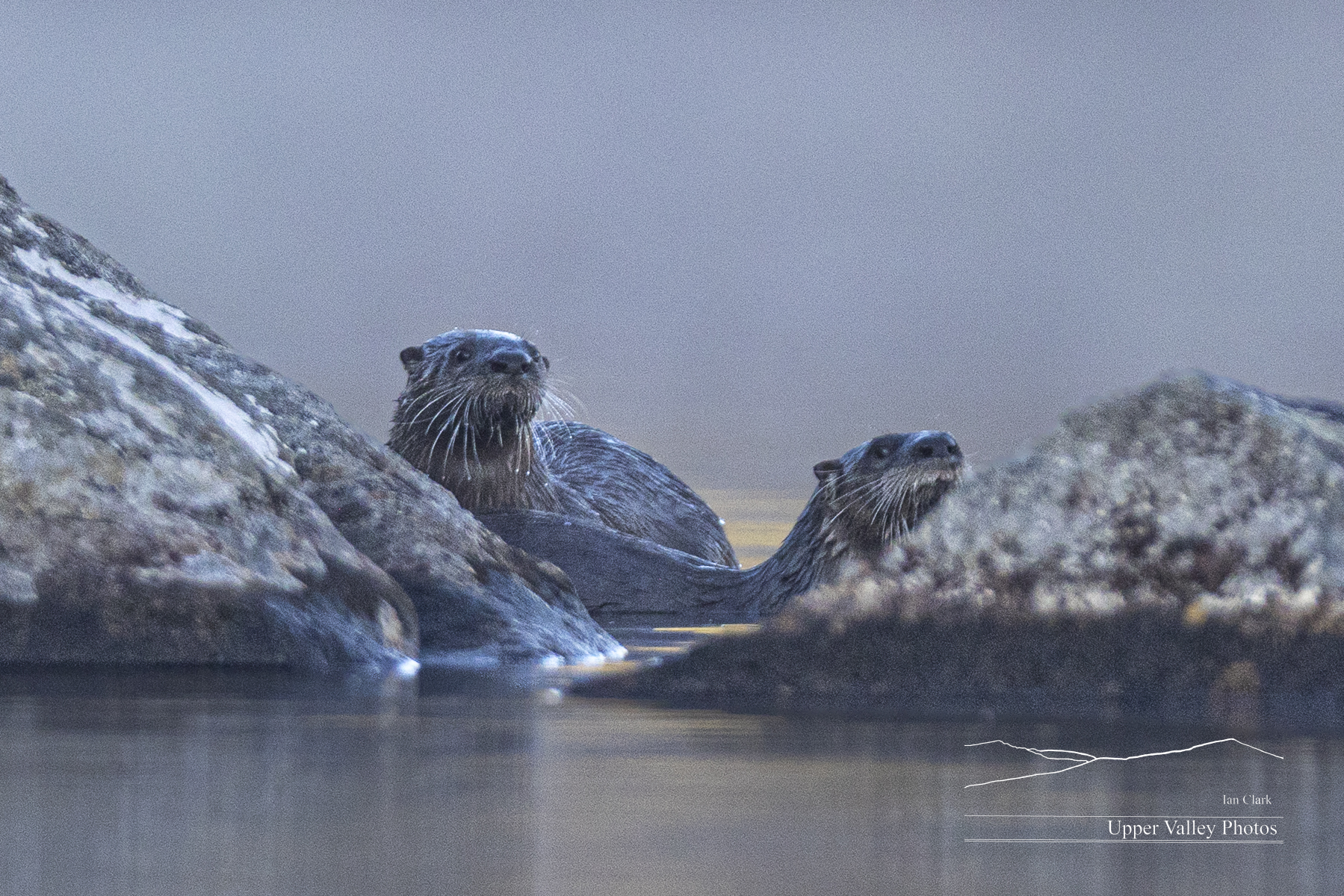
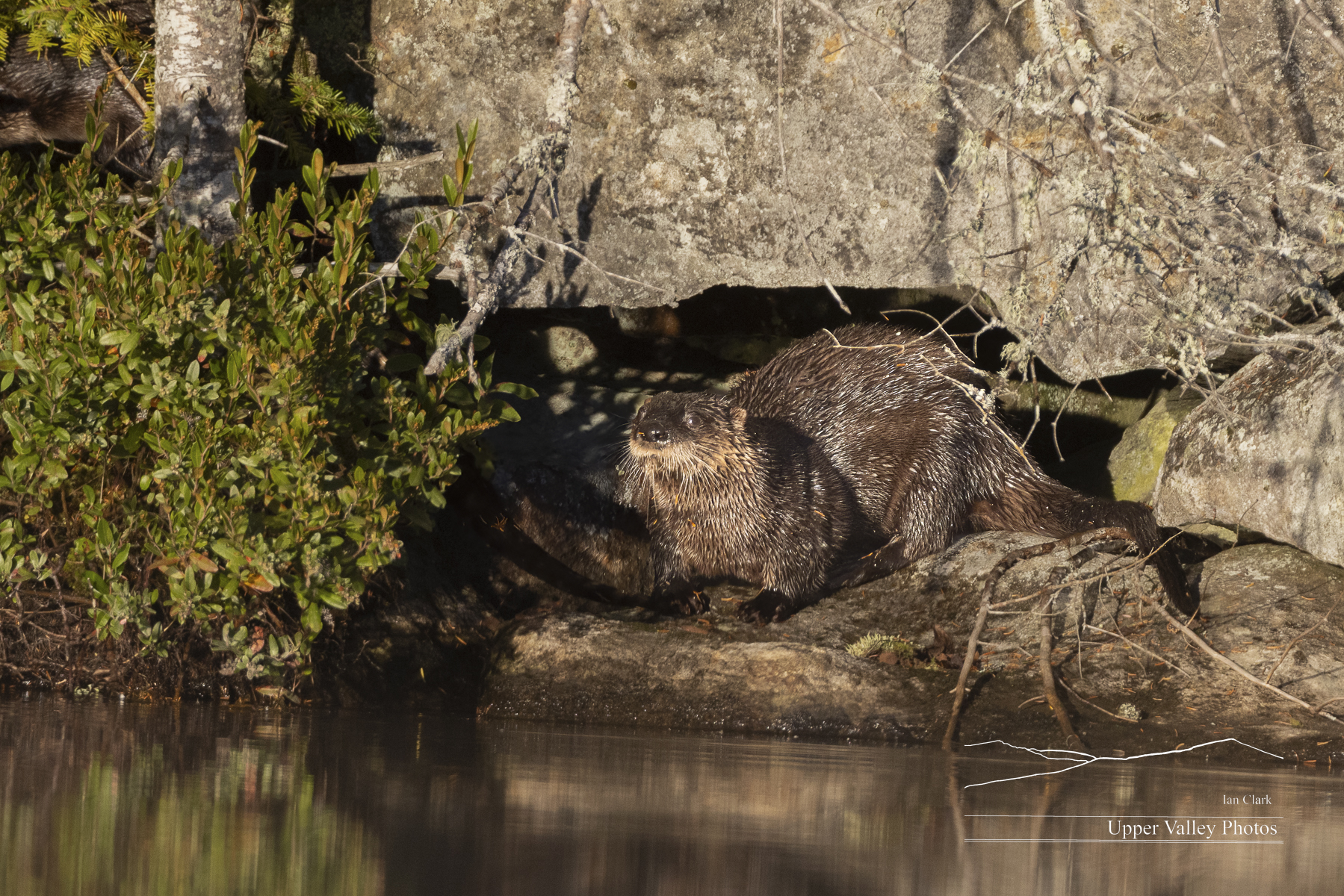
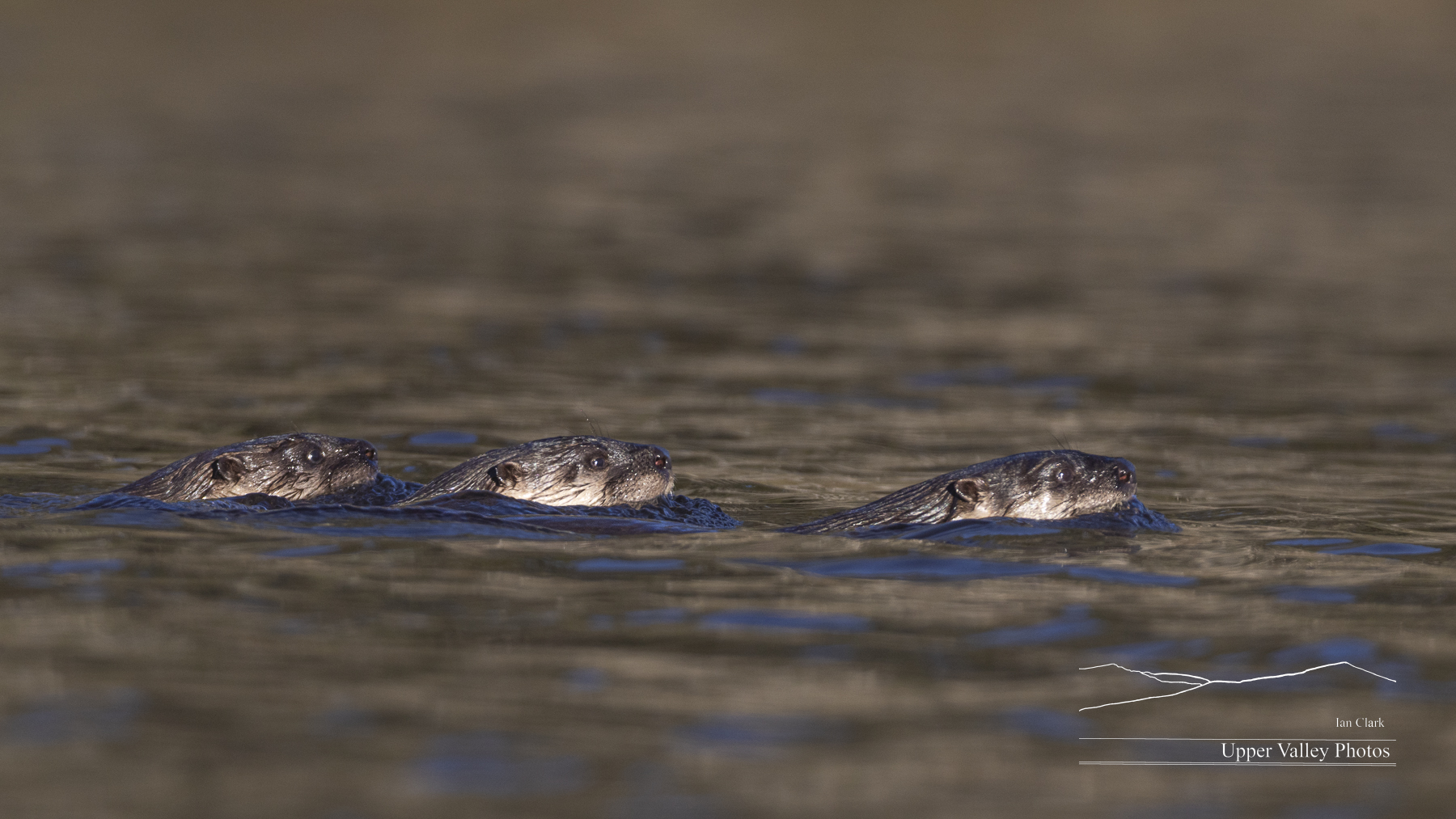
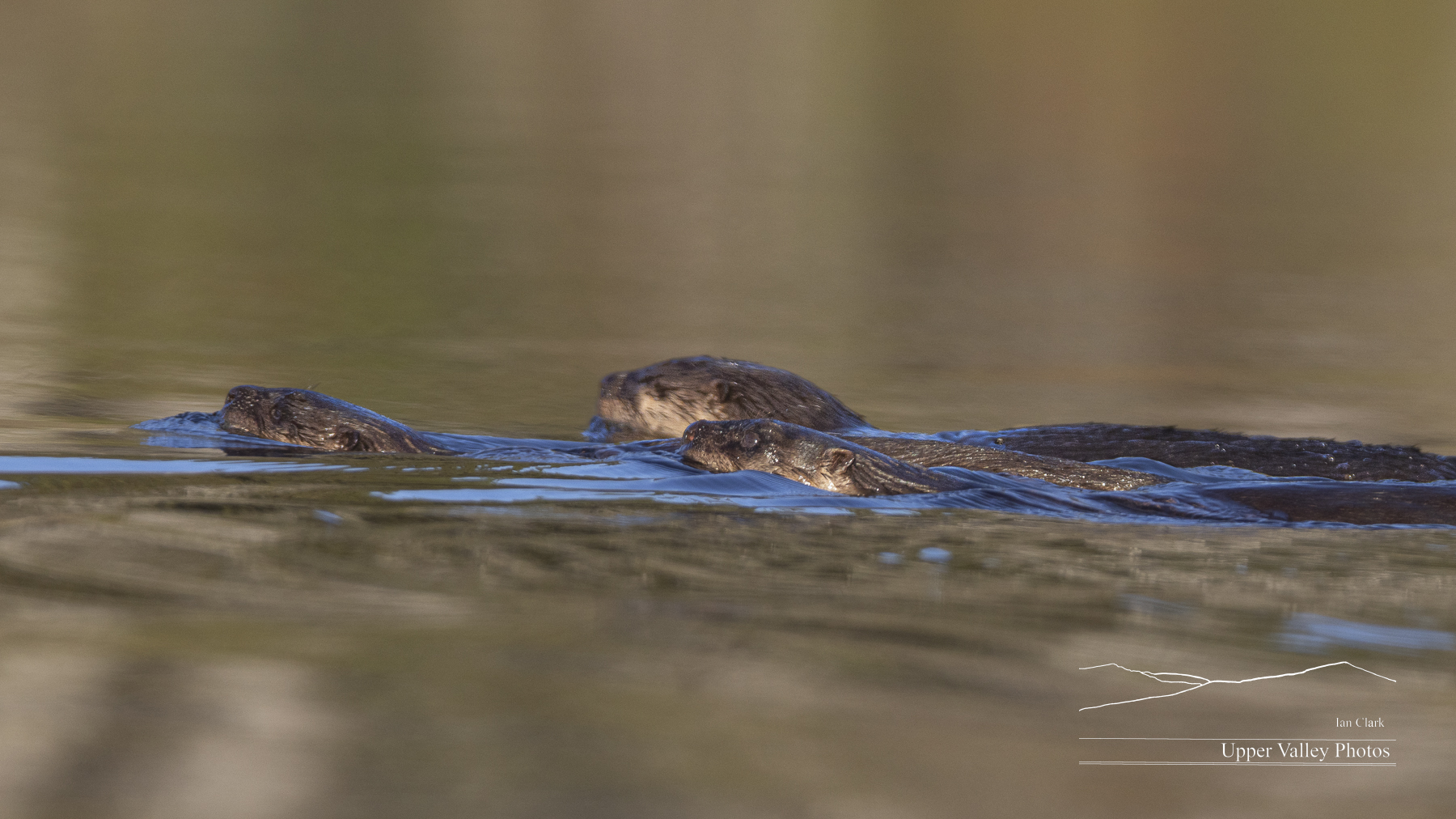
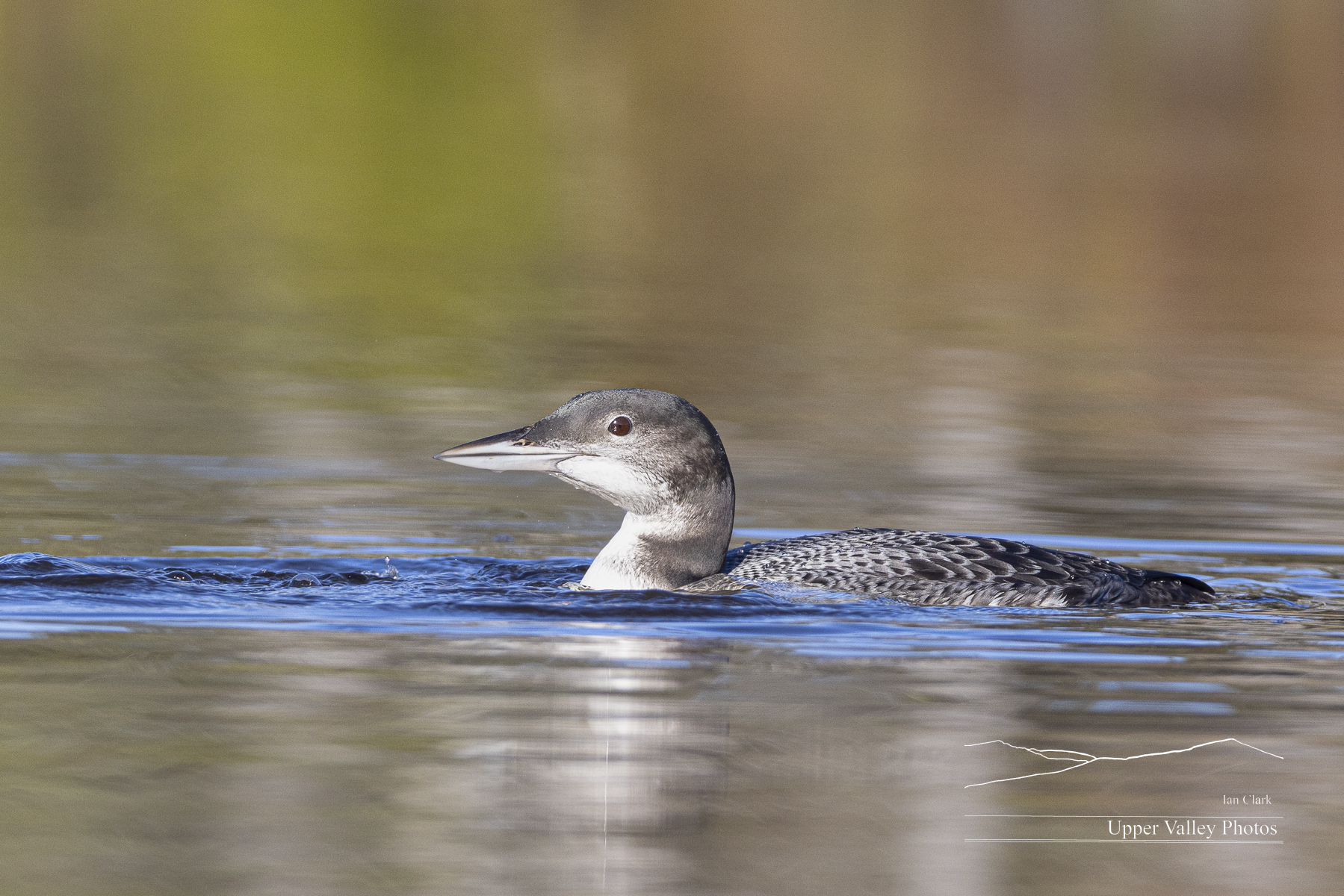
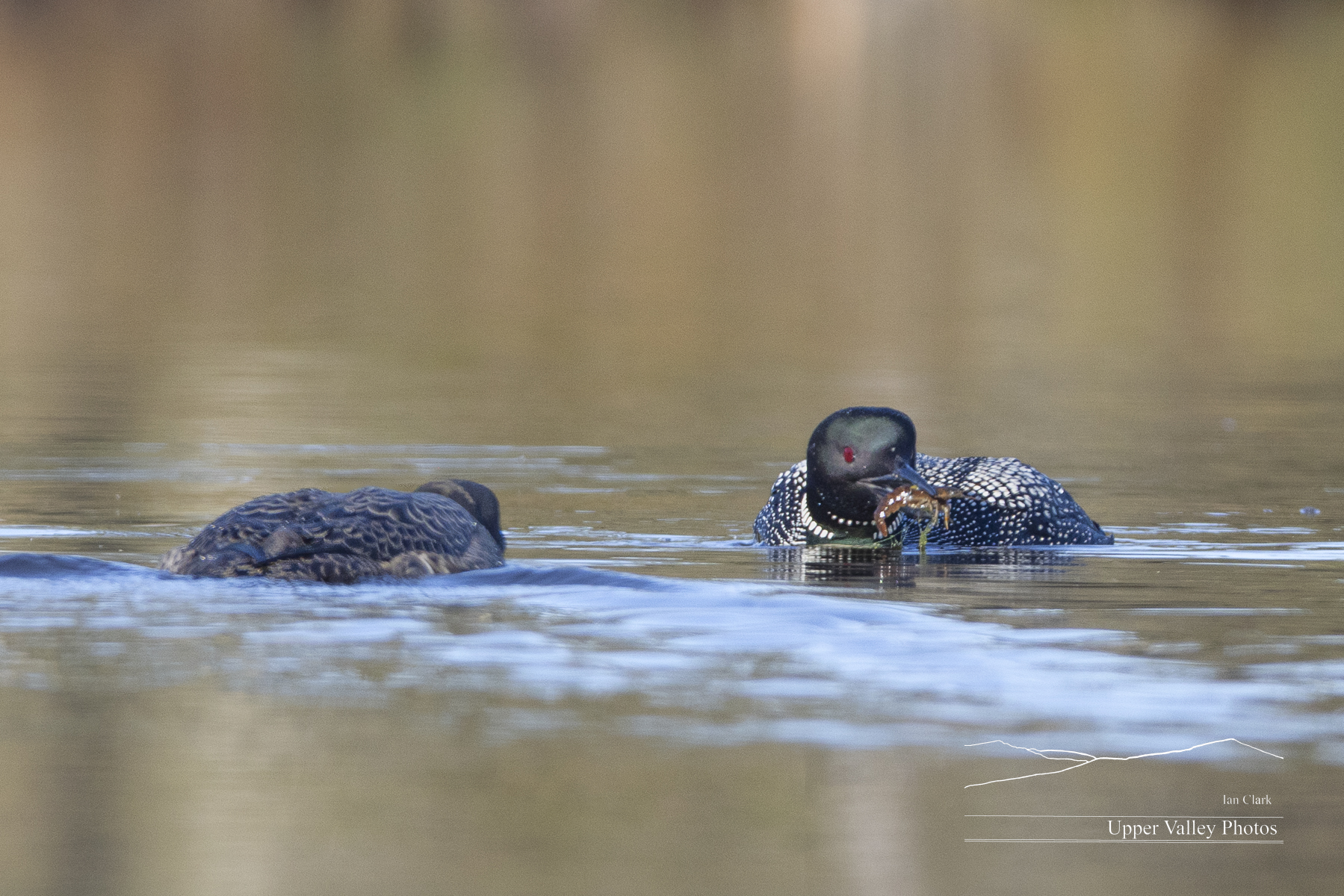
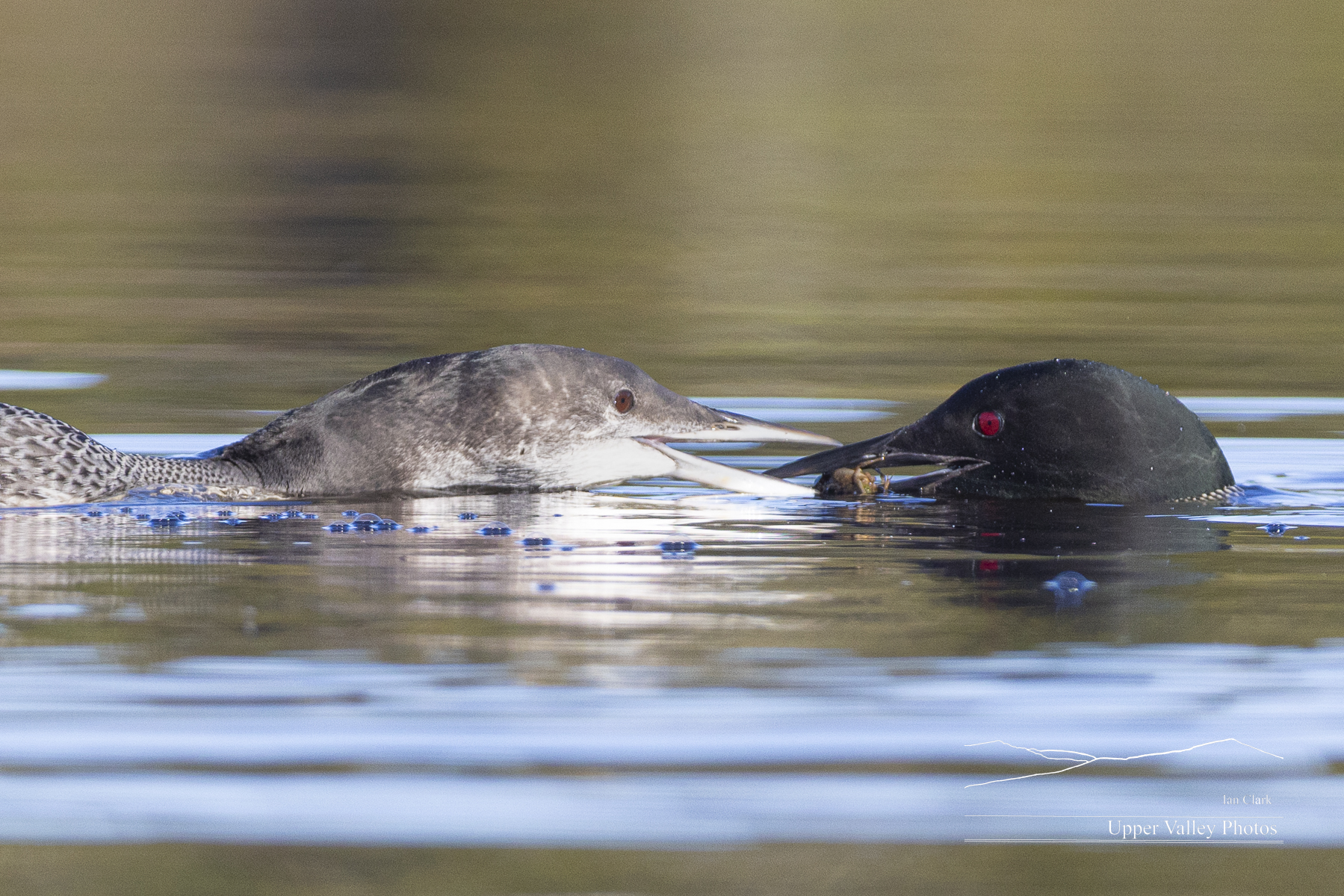
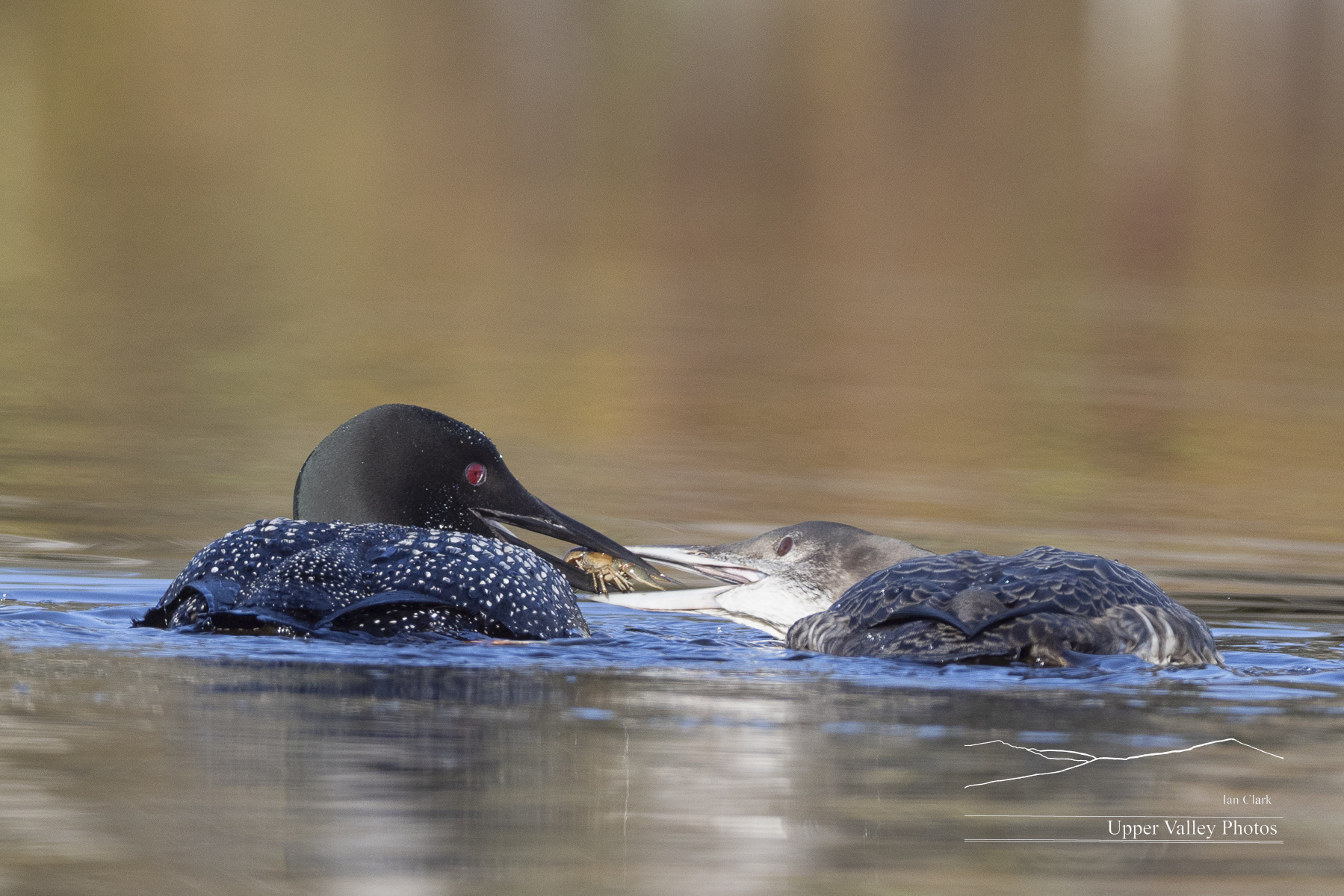
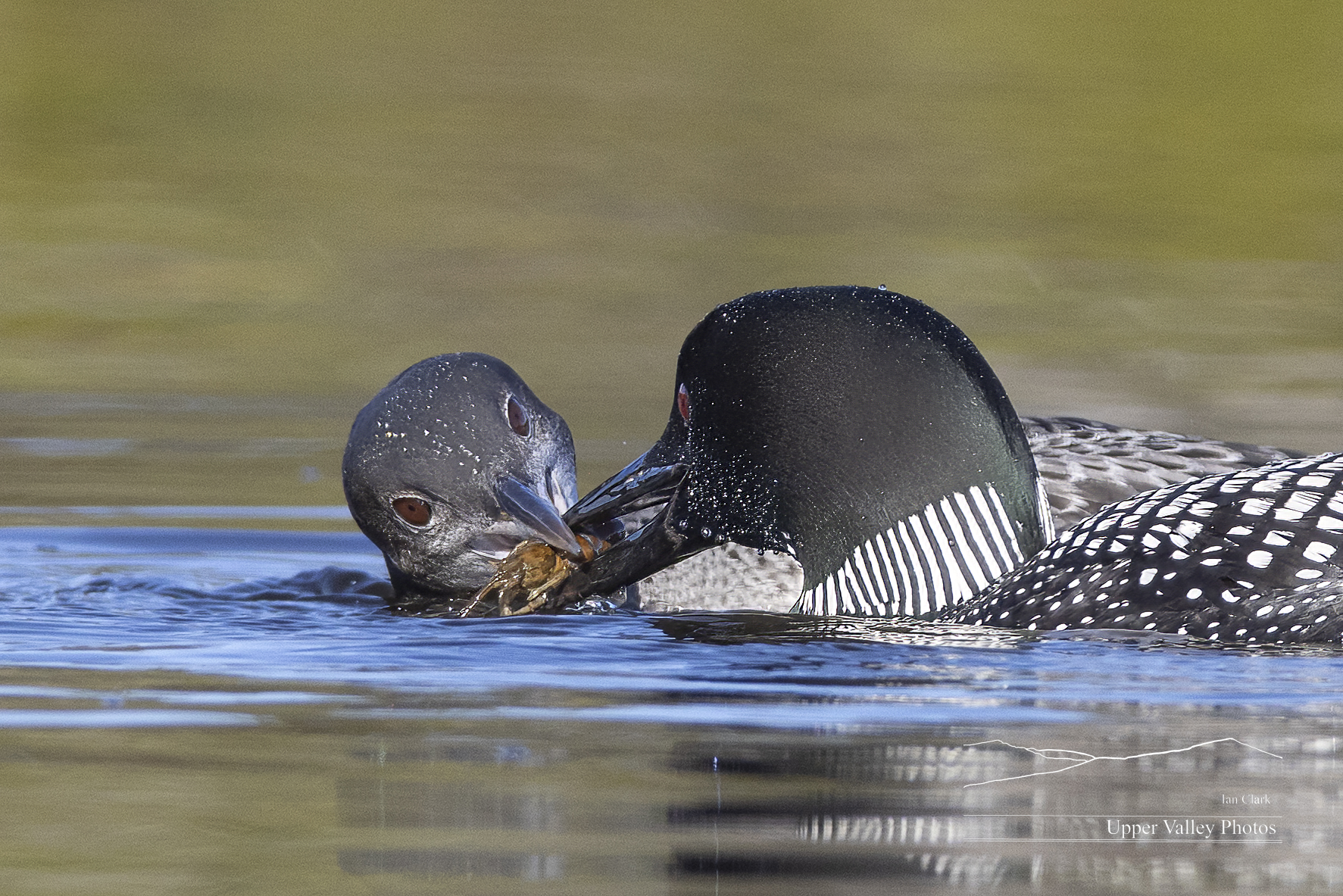
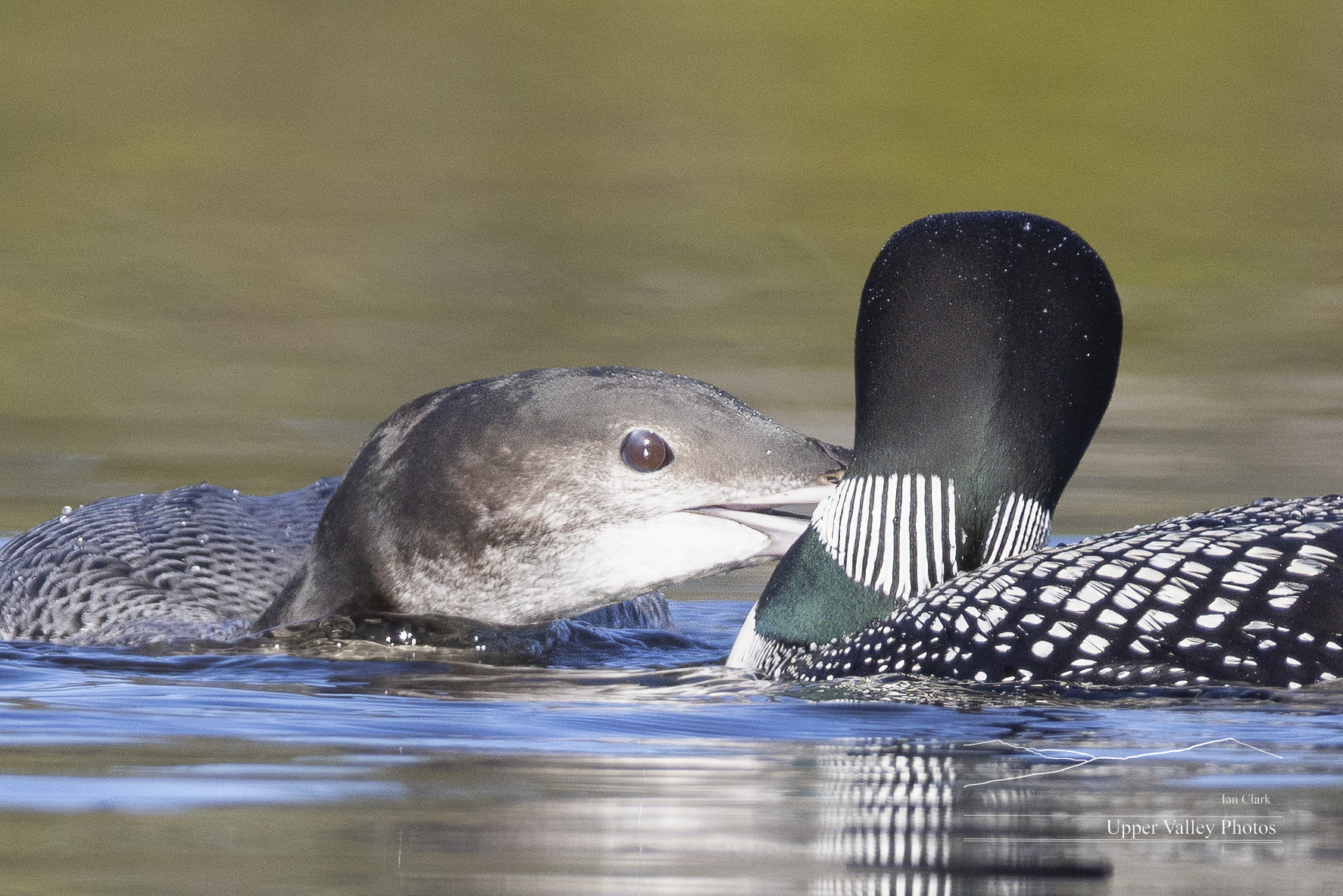
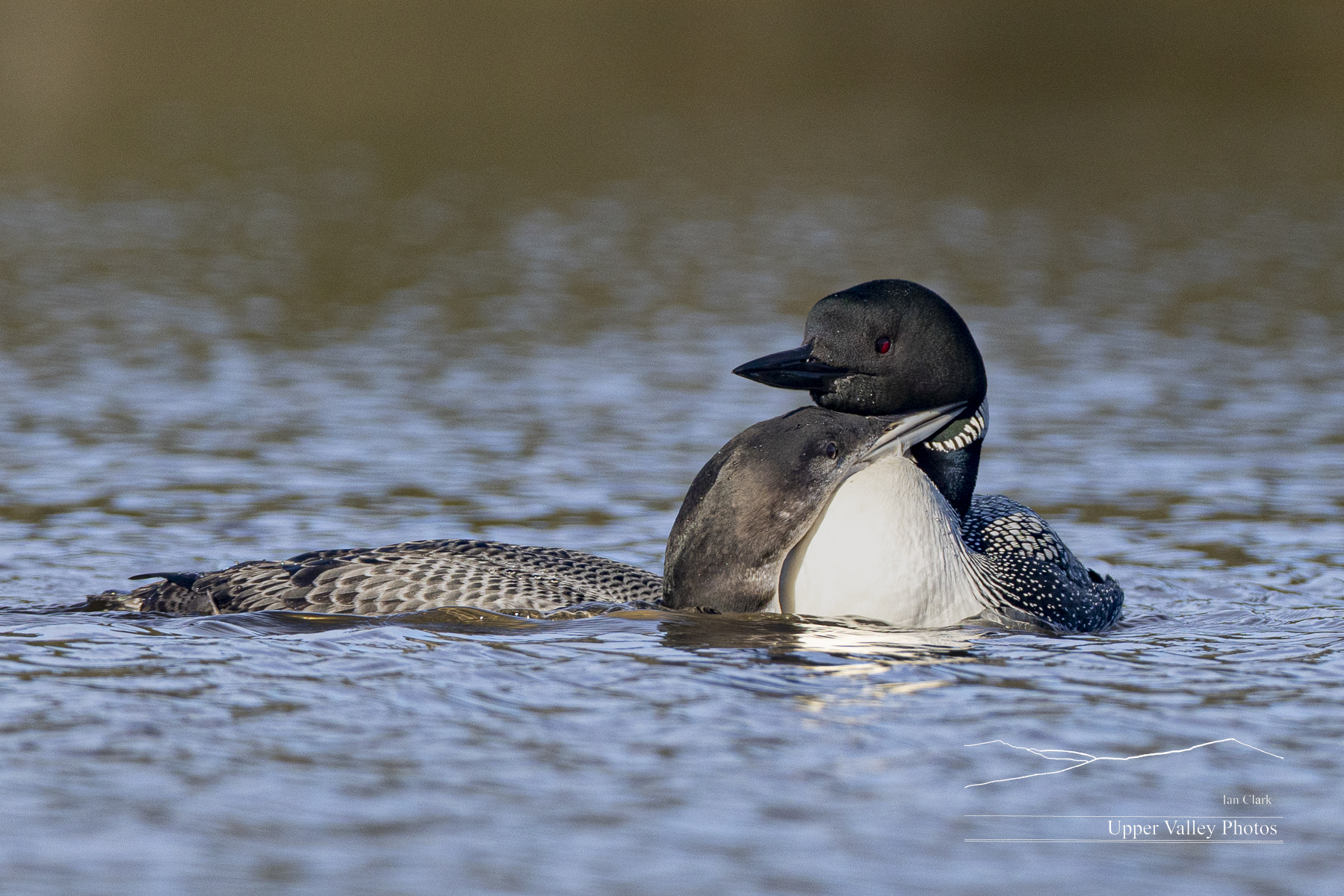
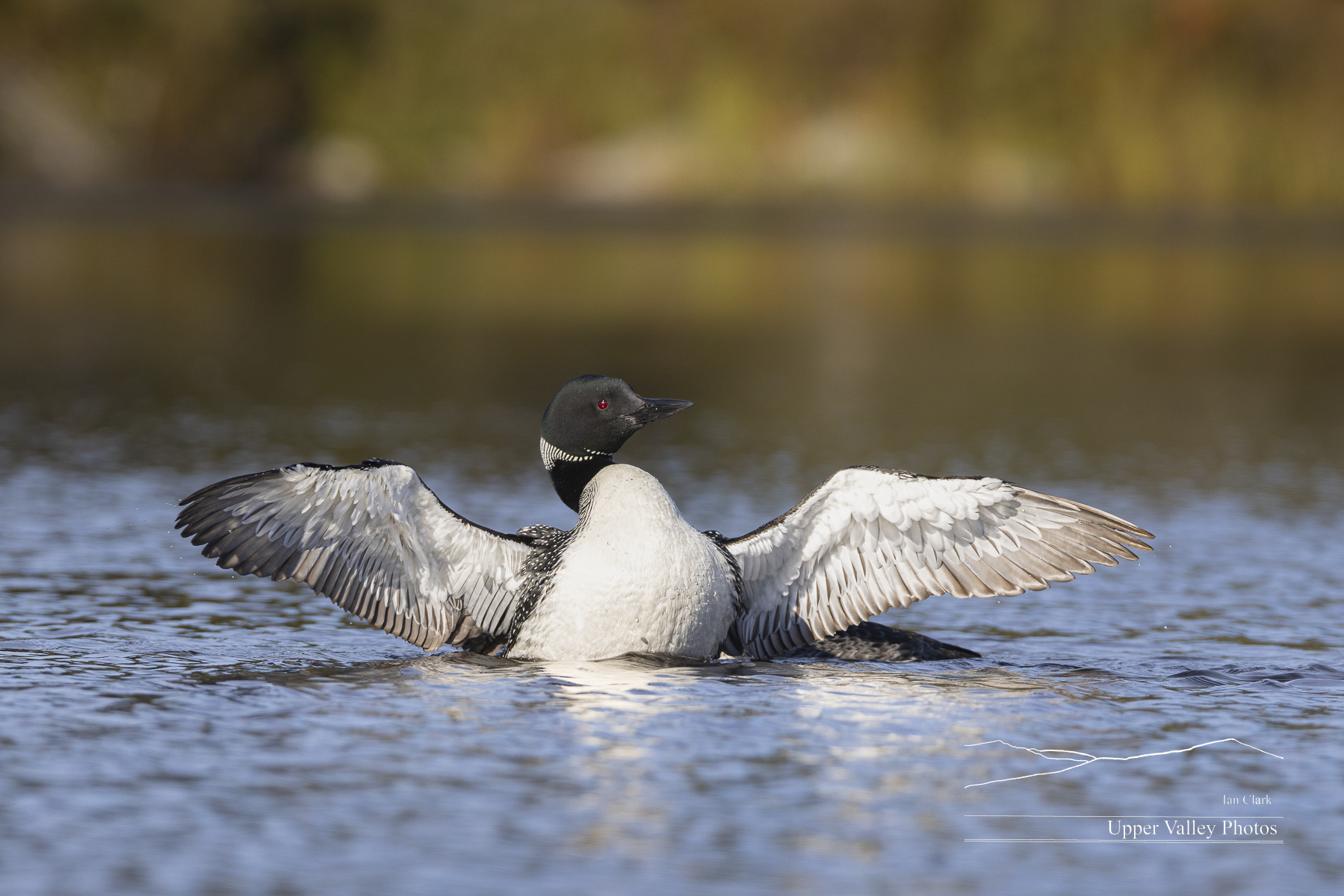
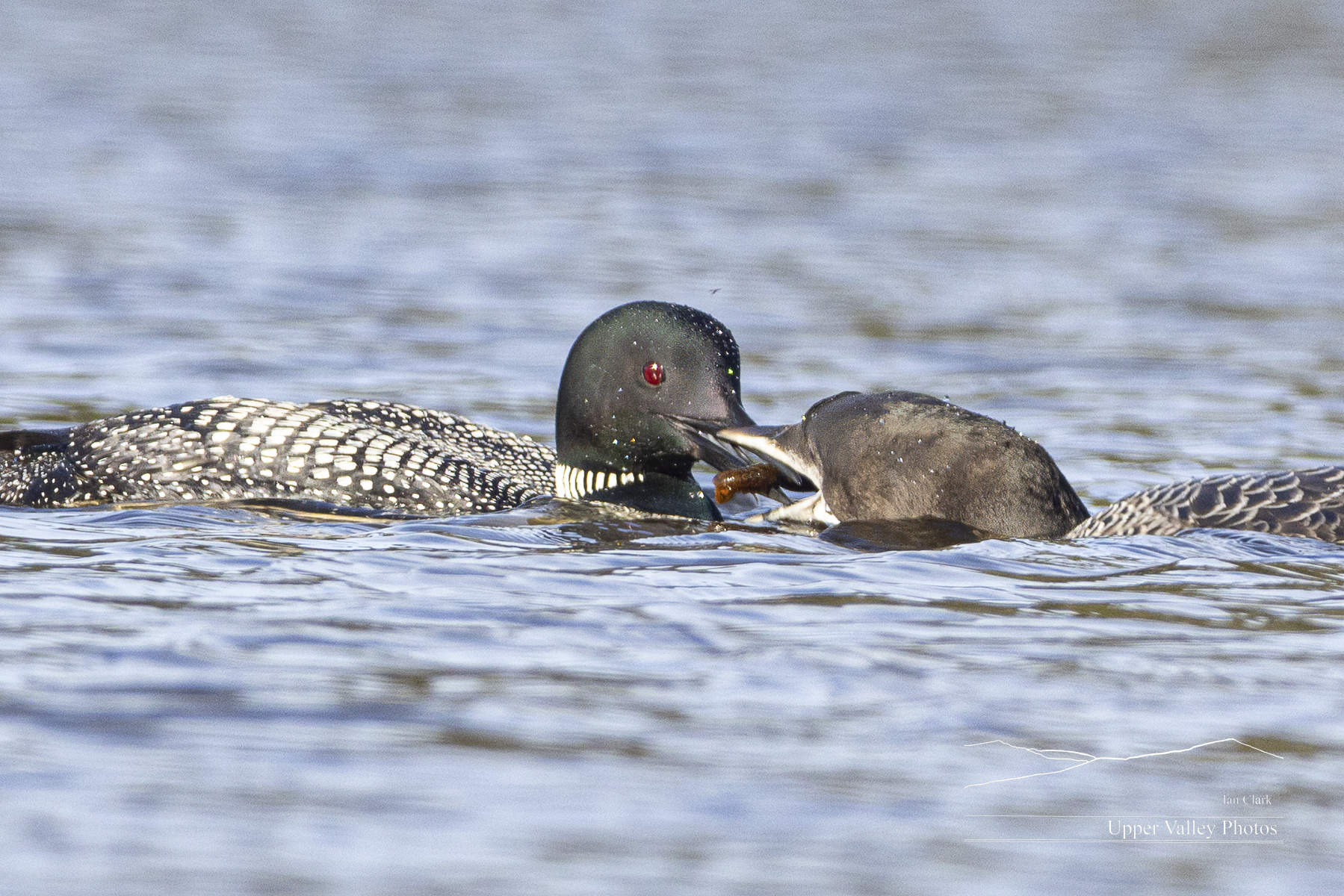
I hope everyone is well above water level. The nor’easter can’t decide if it is going to do much in Vermont or not. The wind picks up and dies down and we’ve had a few sprinkles. So far, not much to talk about. Hopefully it stays that way for everyone.
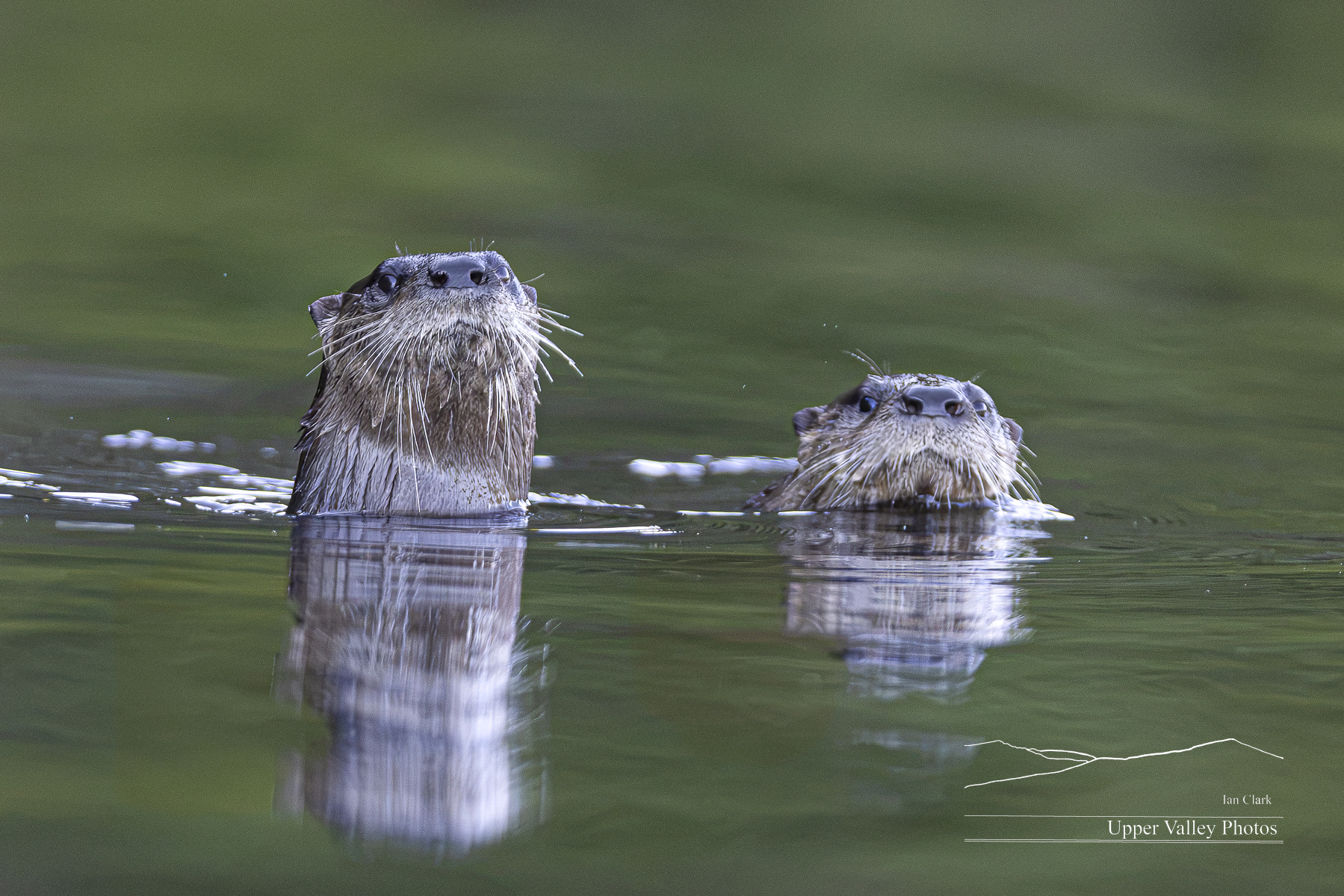
Easton Chicks Try to Fly, Herons Here & There
The Easton chicks have decided to fly and I visited the coast to see what I could find.
The Vermont North By Hand Open Studio Tour is coming up. The tour will be on October 10 & 11 from 10 to 5 each day. My tiny office isn’t much to see, so Sue Martin – the stained glass maker – has offered to let me set up at her farm. The Martin Farm is on Route 5, right on the Bradford – Fairlee town line. The VTNBH map isn’t yet correct, but here’s a map to Sue’s: Martin Farm Bradford, VT. Please stop in to check out Sue’s stained glass and my set up.
The calendars for Oscar’s Memorial Dog Park will be going to the printer soon. We’ve been using Printing Center USA for our calendars. Give them a look.
Last weekend, I headed down to the coast. I caught up with a friend and our first stop was the egret roost in Seabrook.
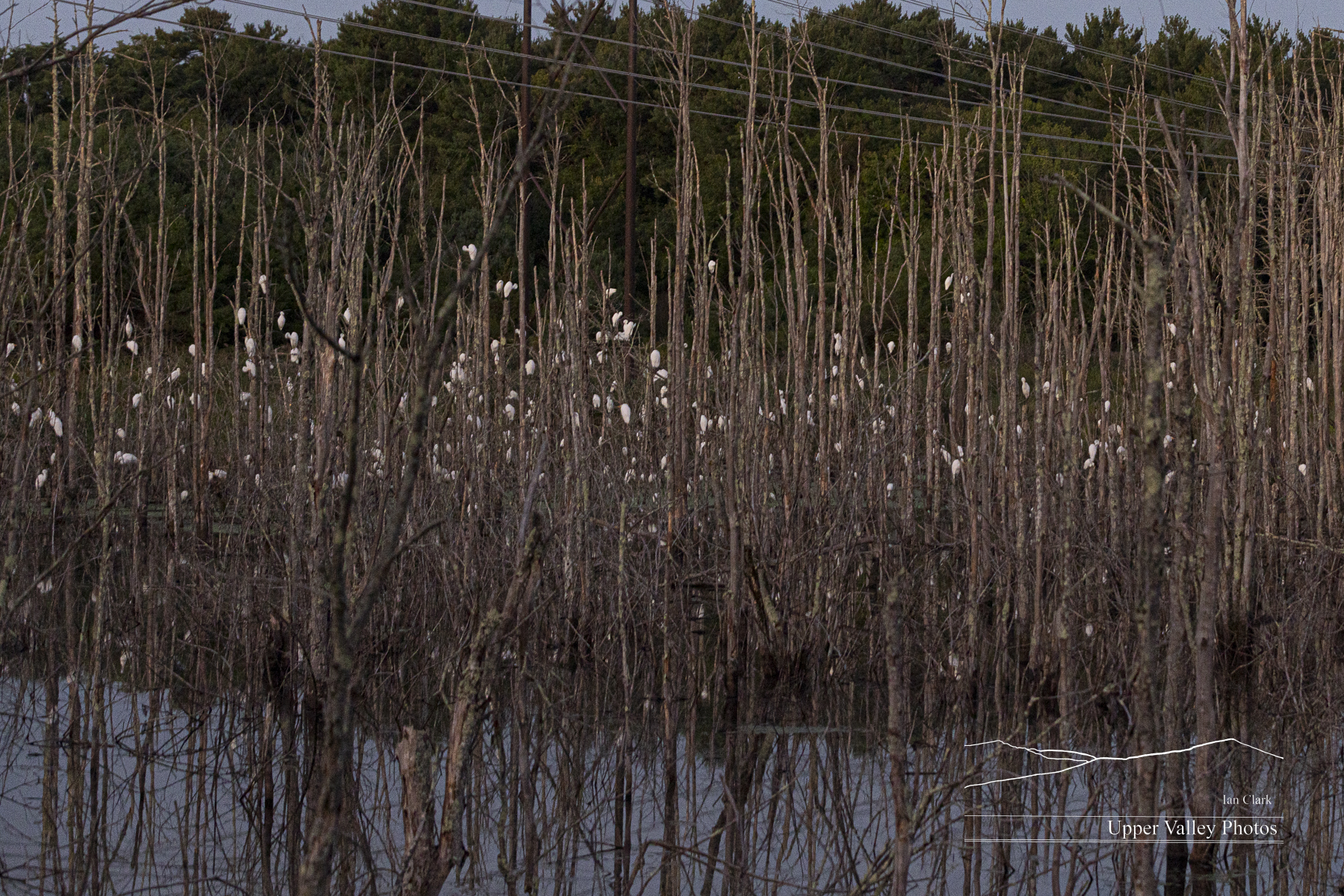
The roost isn’t a great way to photograph the birds; they arrive after the sun starts setting and get on their way before it rises. And they’re back far enough in the swamp to be hidden by the trees.
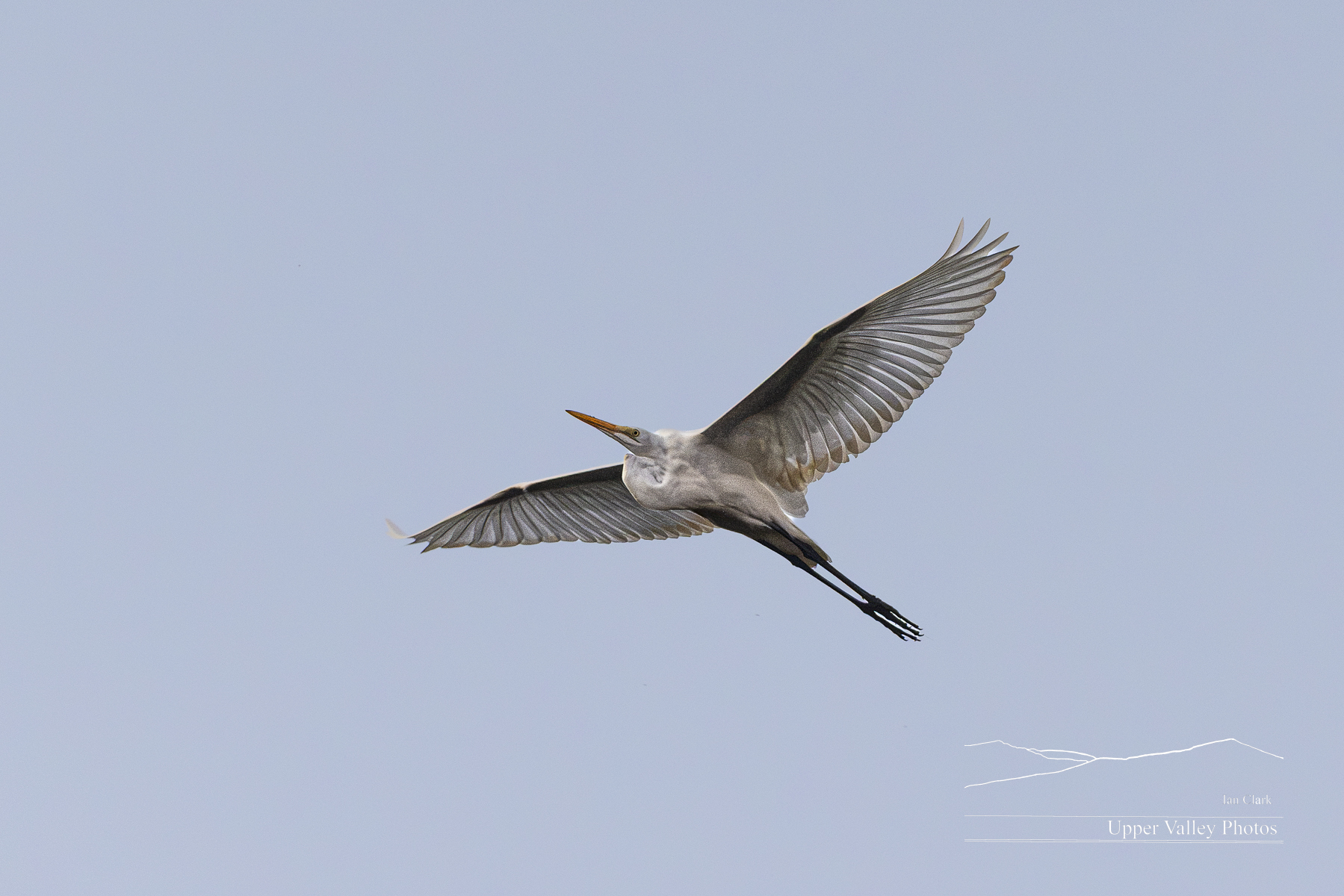
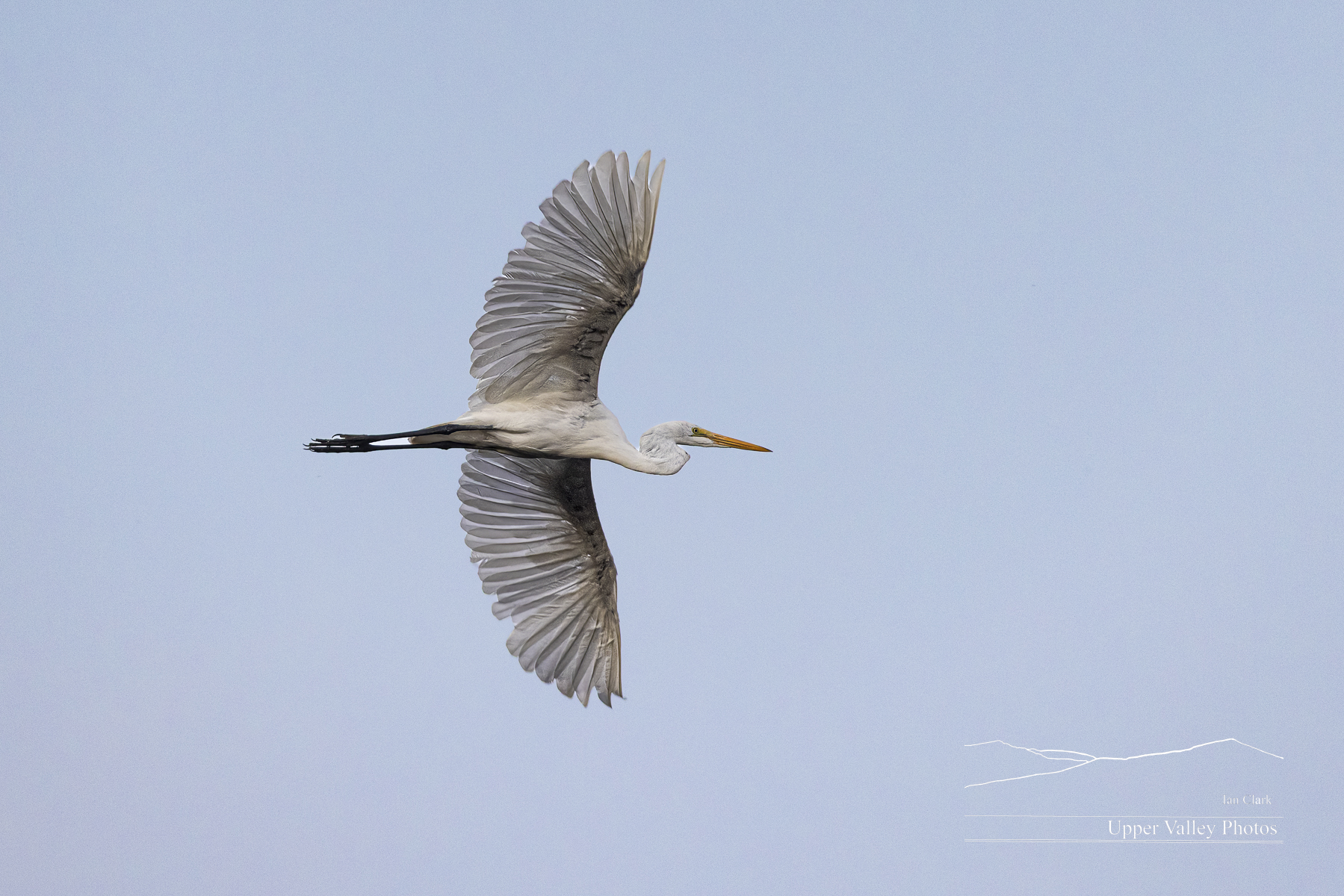
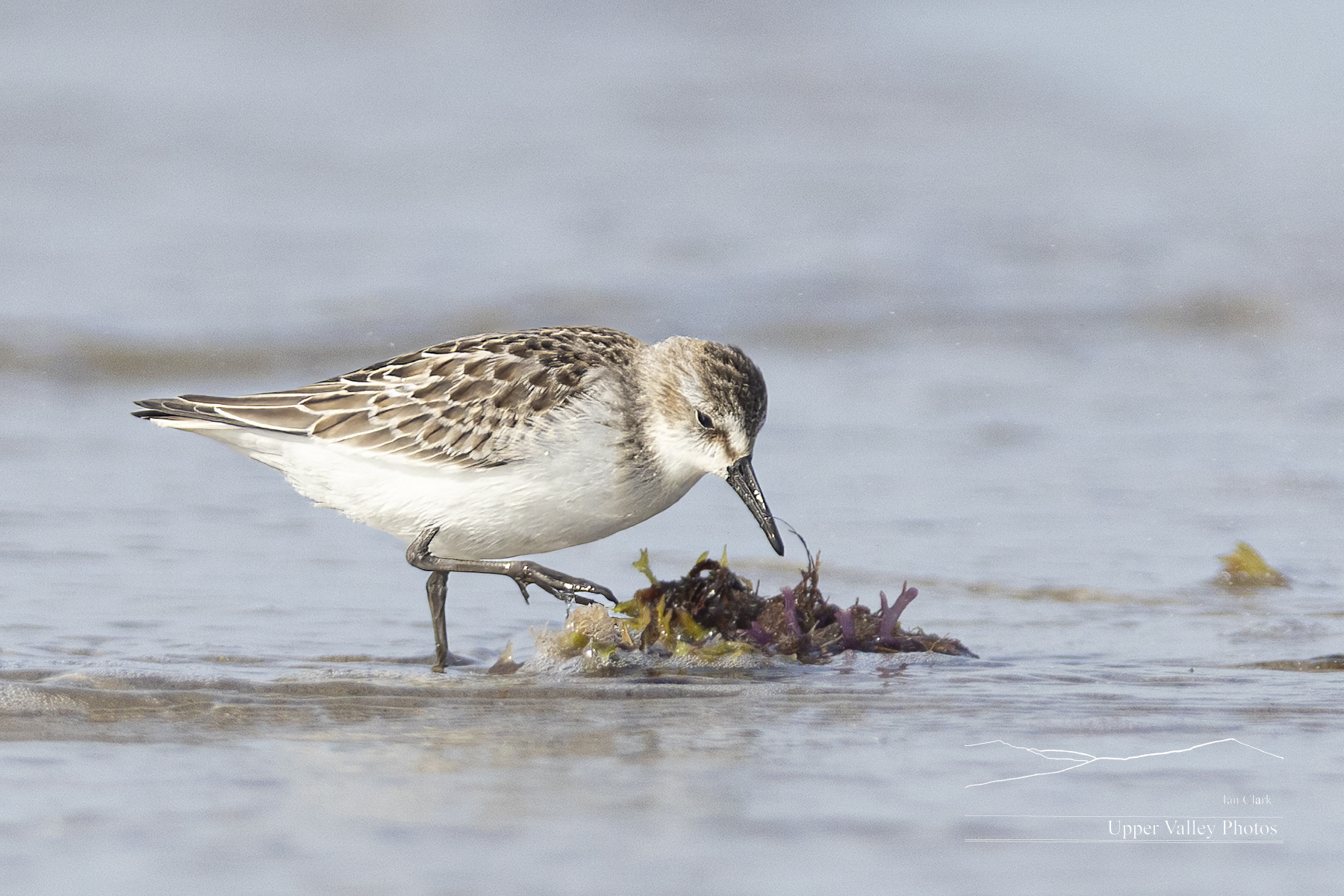
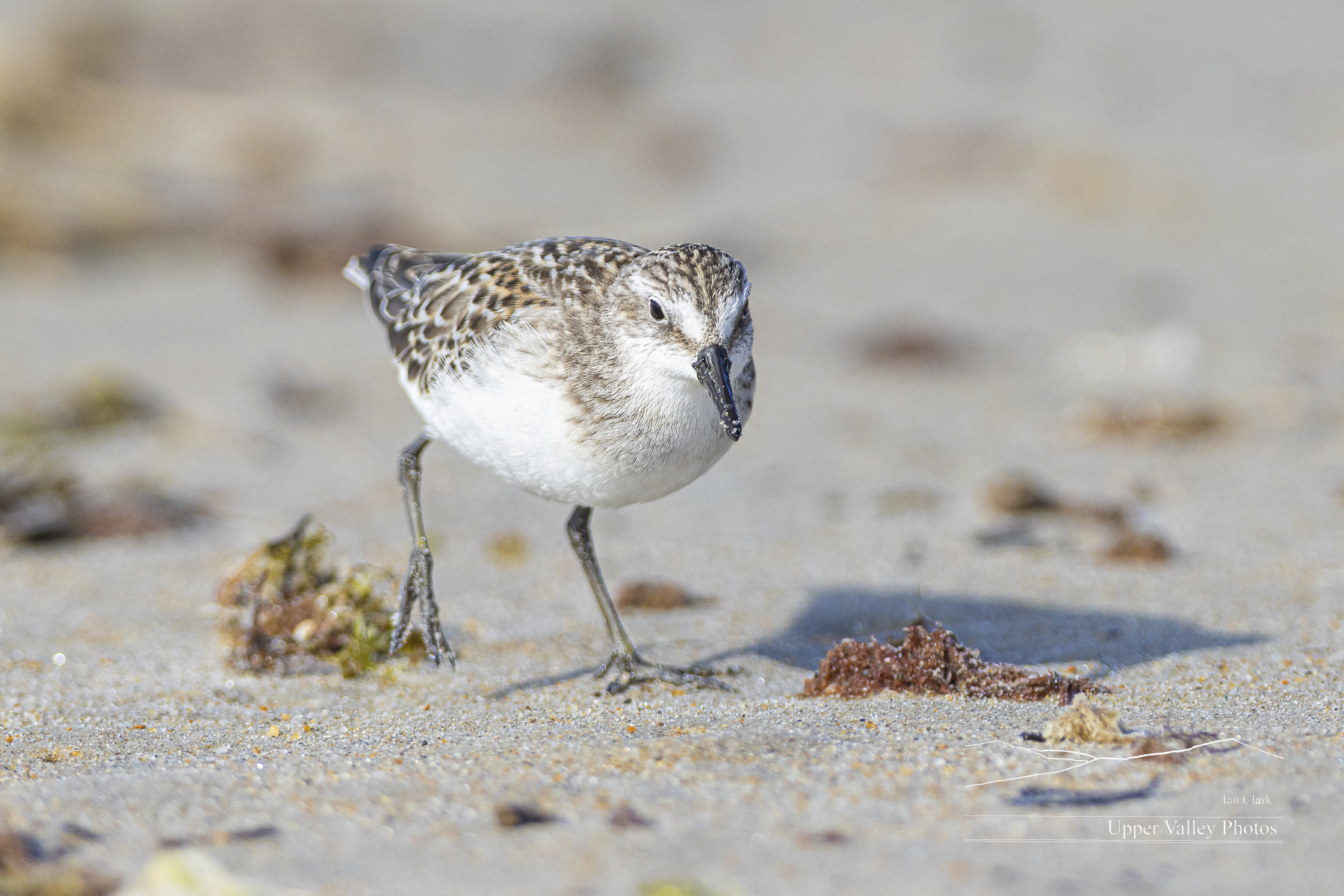
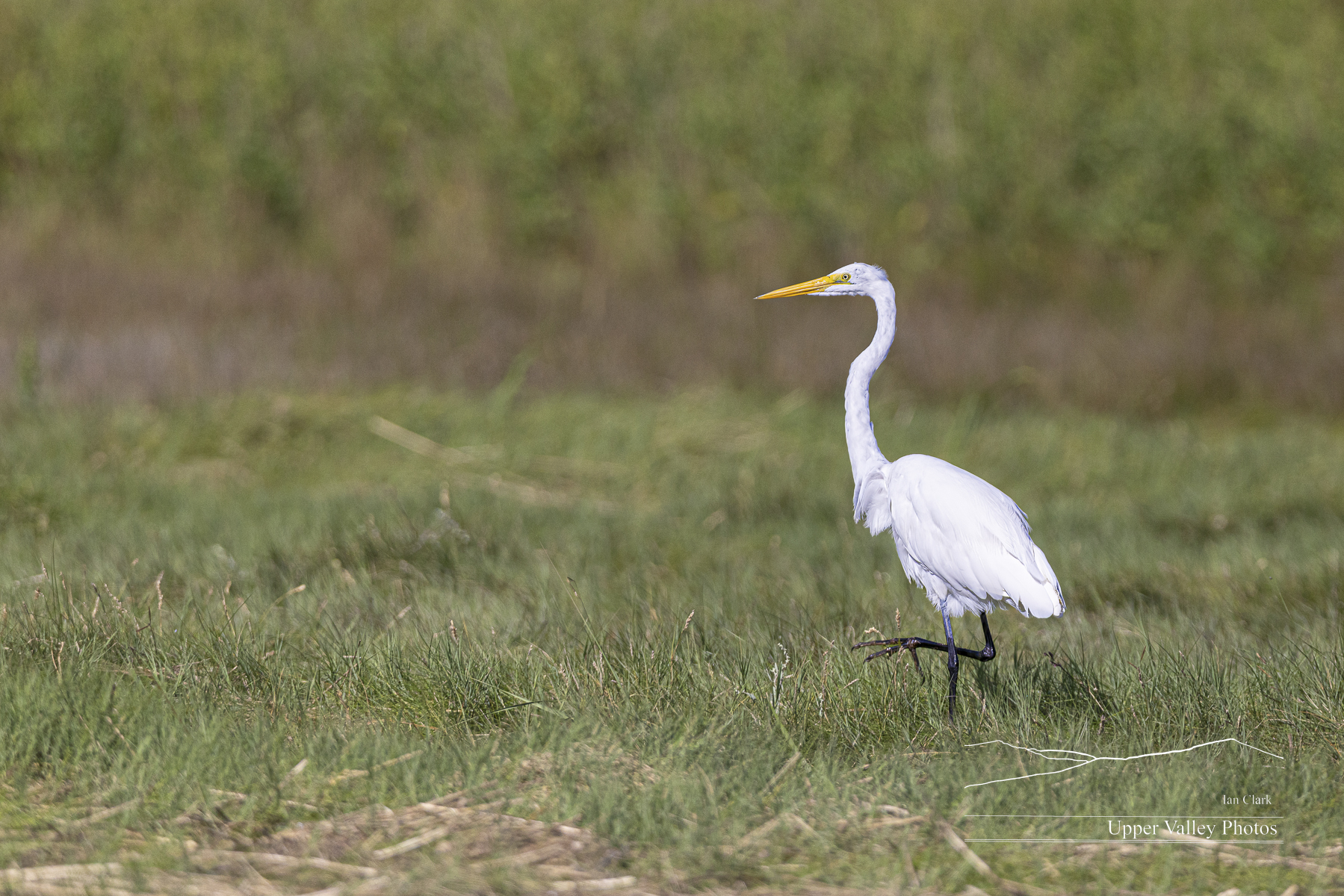
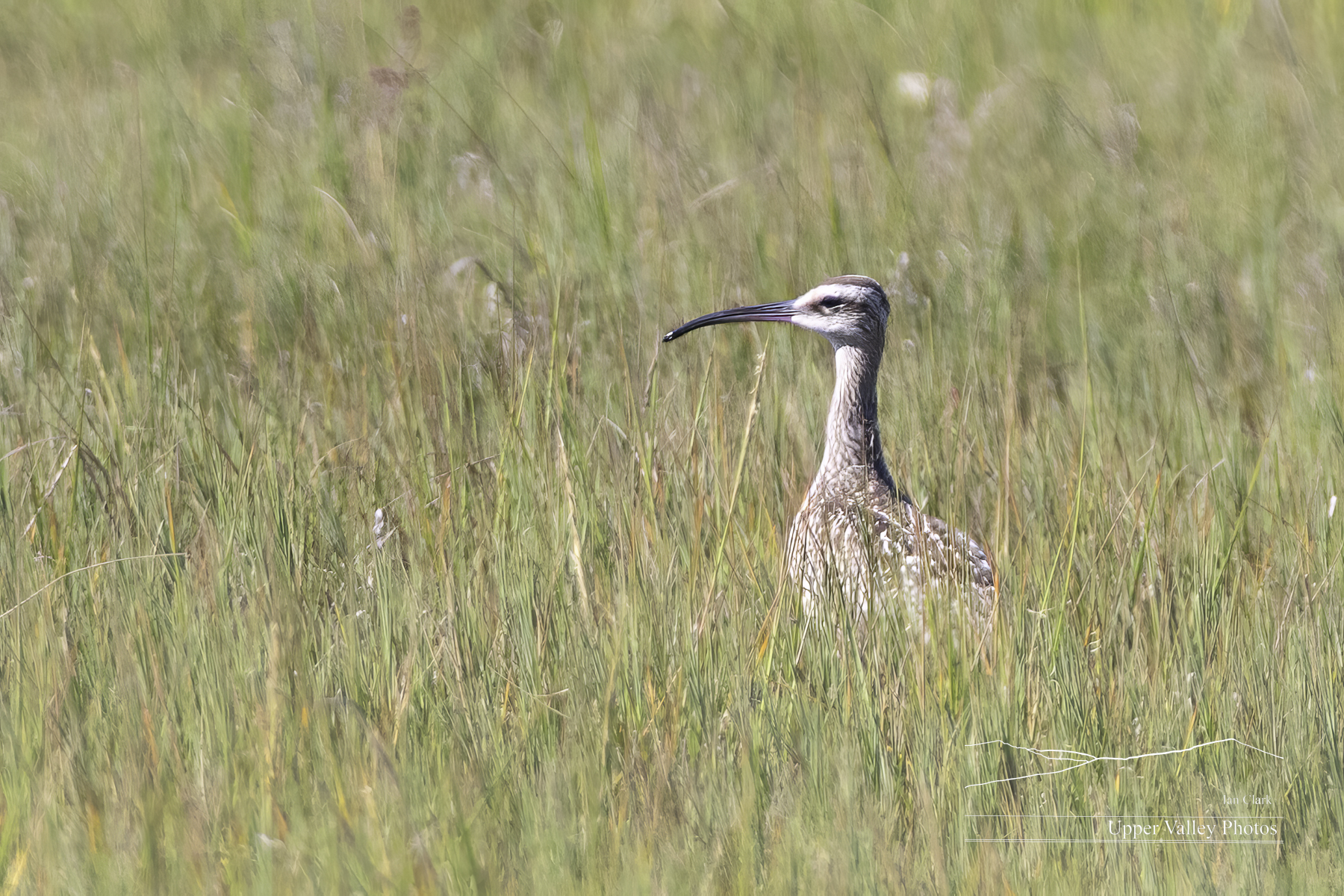
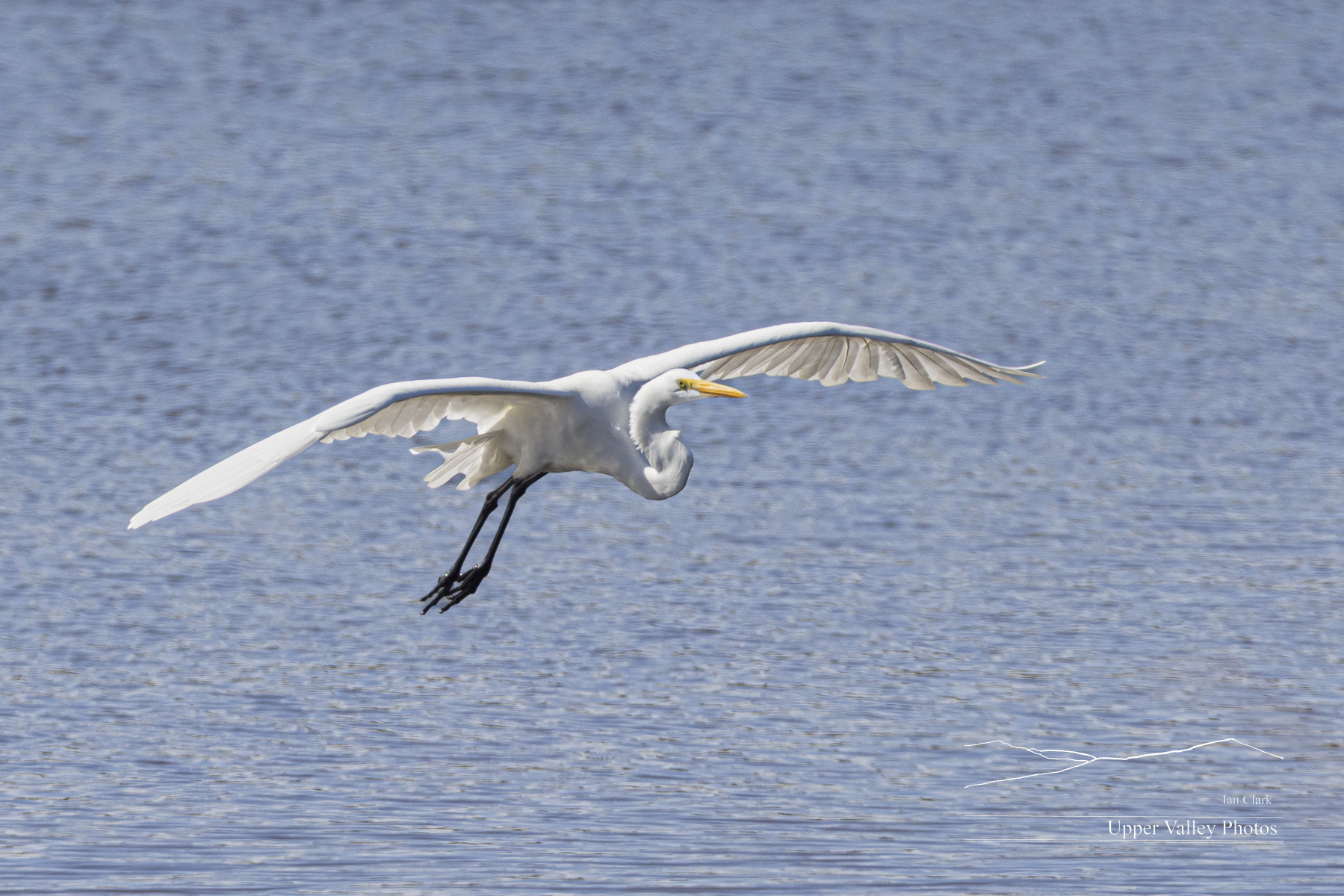
We headed north to check out the Maine Coast. We got some nice walks in, but found nothing to photograph.
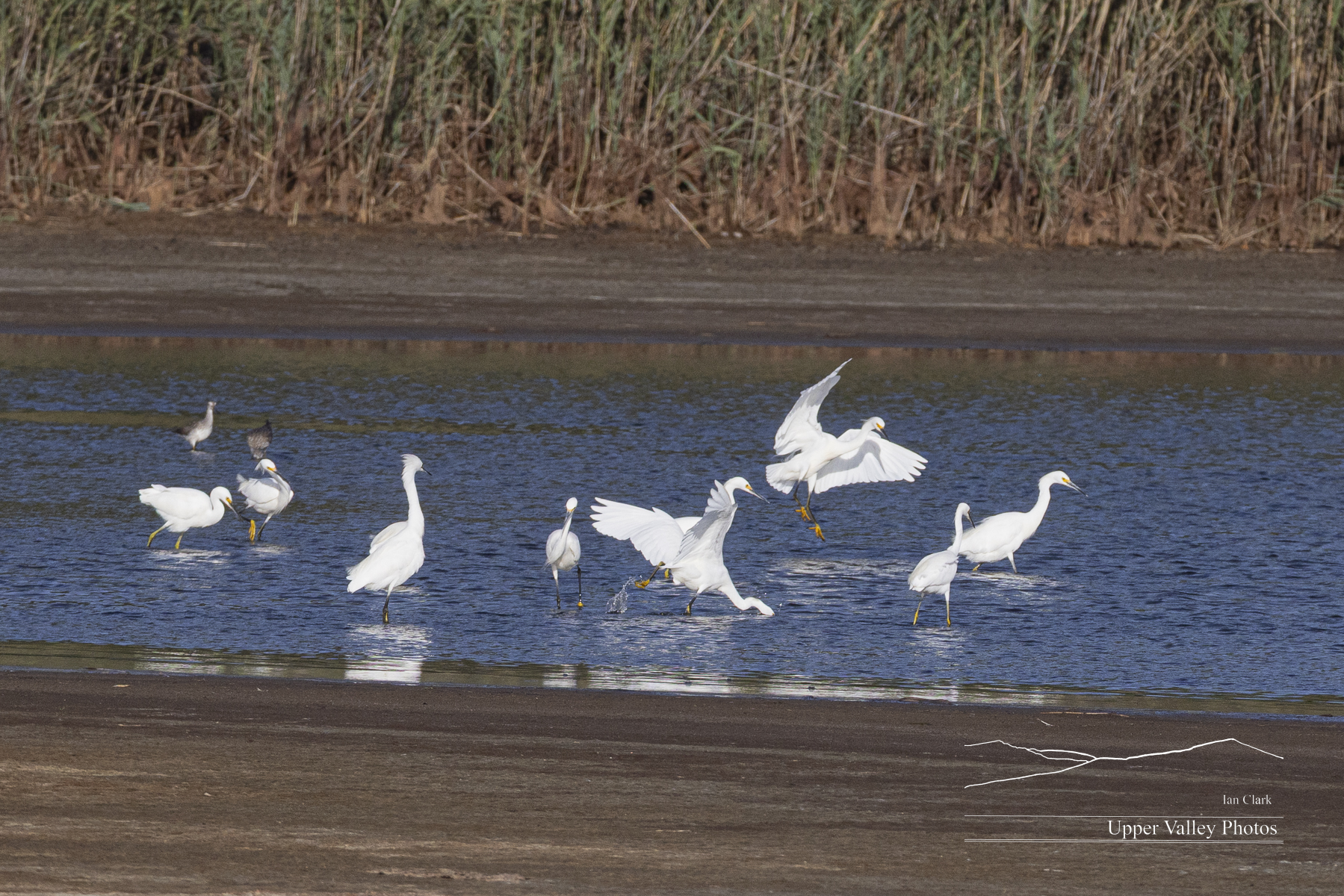
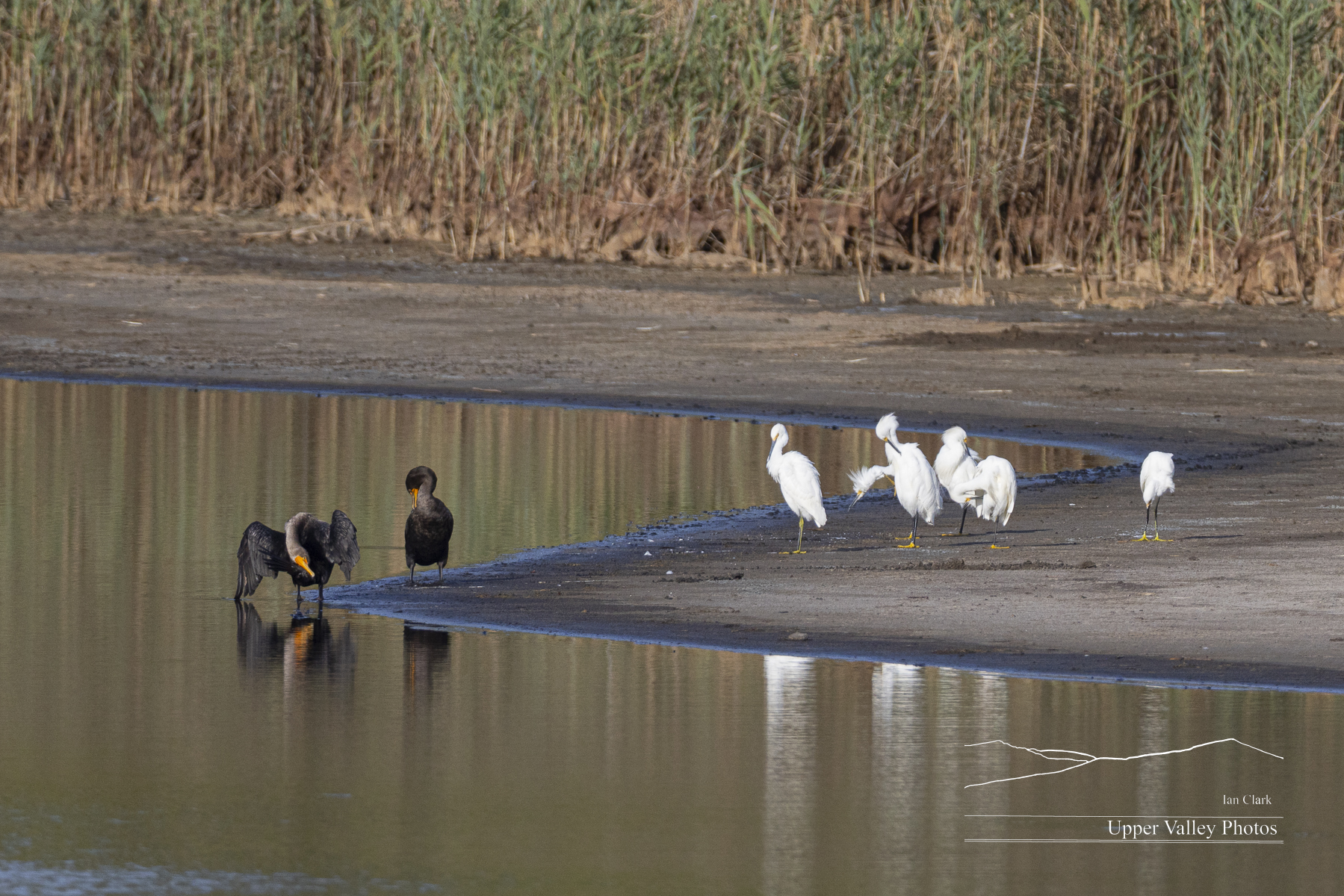
The next morning, I visited the egret roost again before wandering up the coast. In Rye, I found Hank Heron and a small flock of egrets and a larger flock of lesser yellowlegs foraging in a shallow tidal pool.
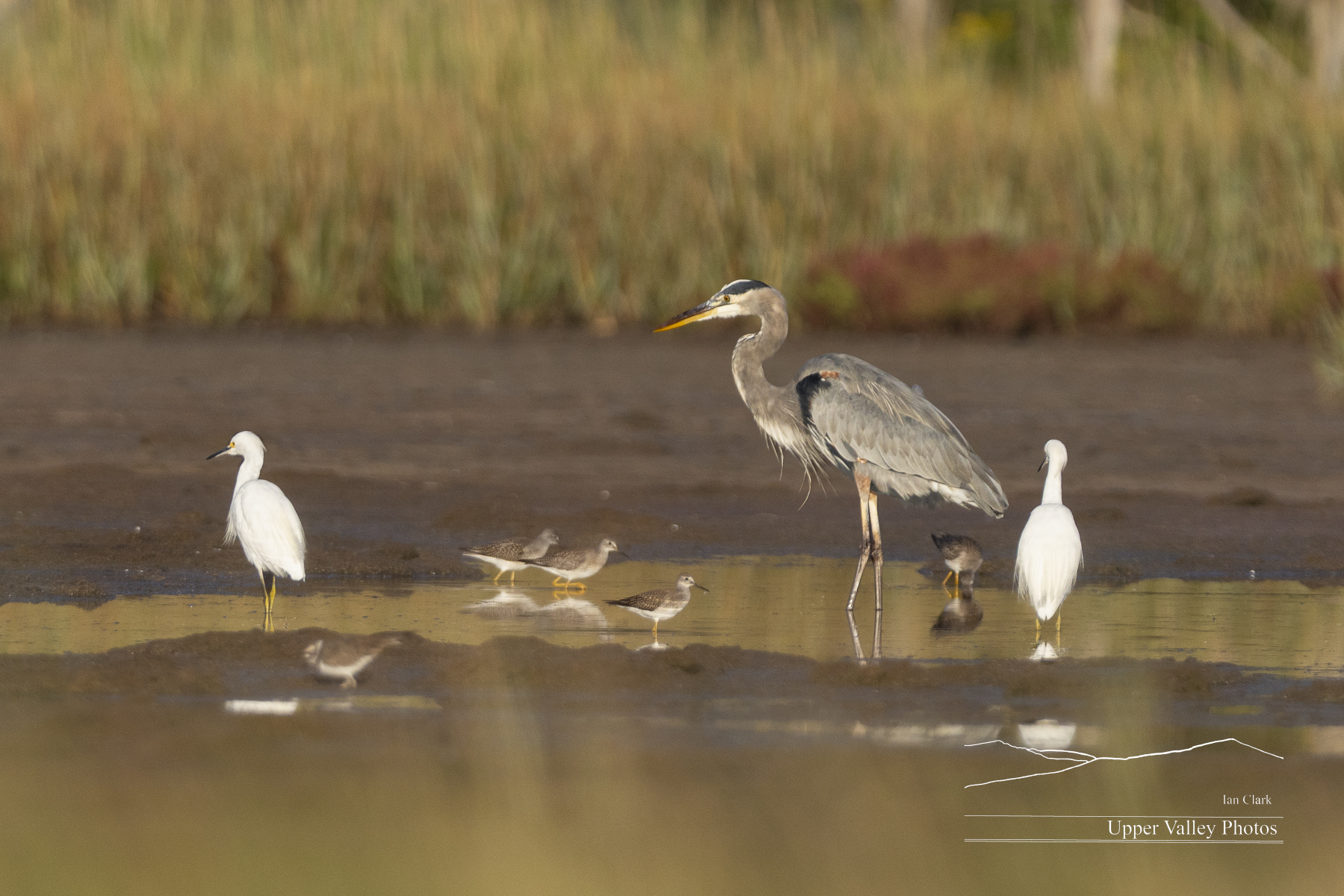
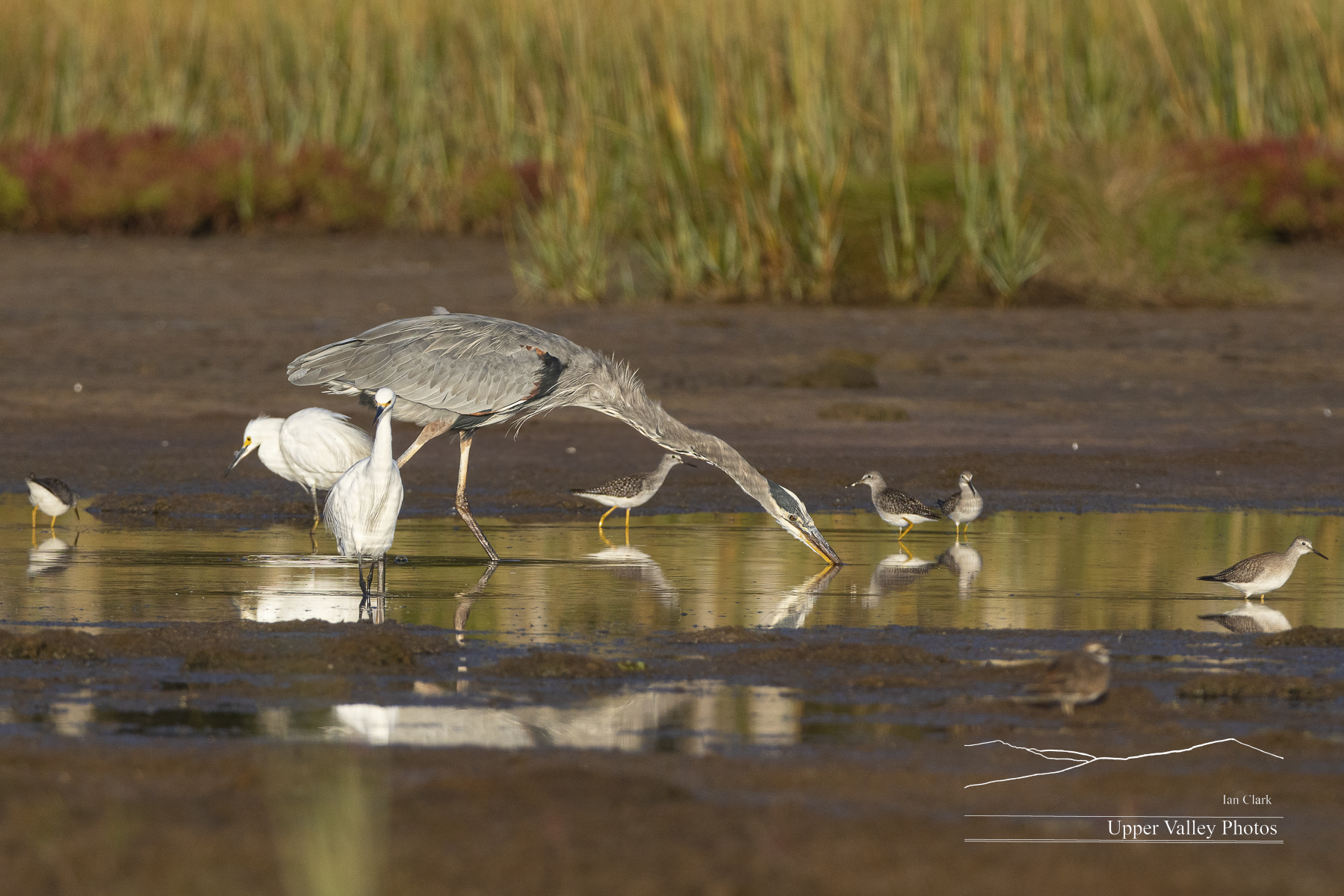
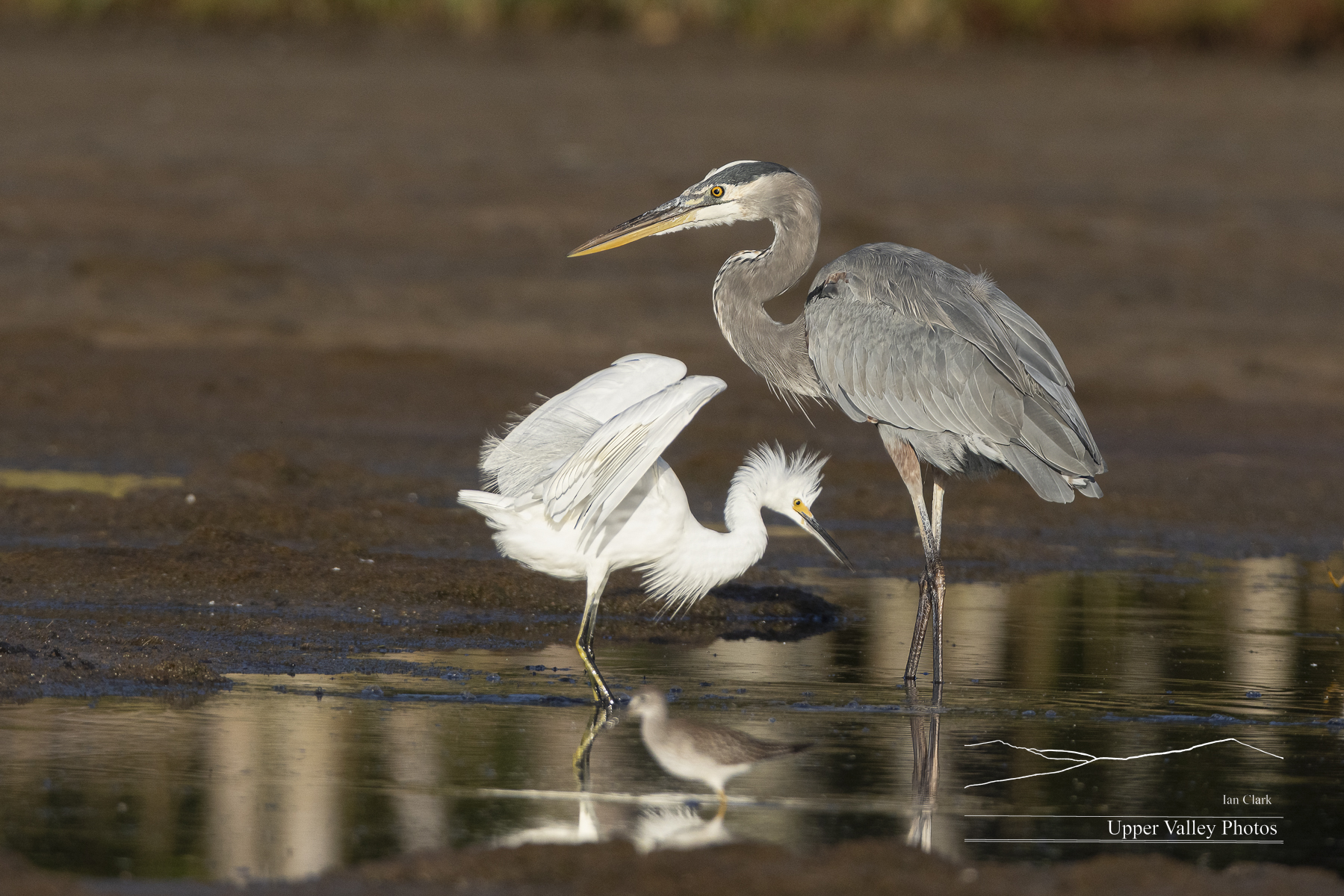
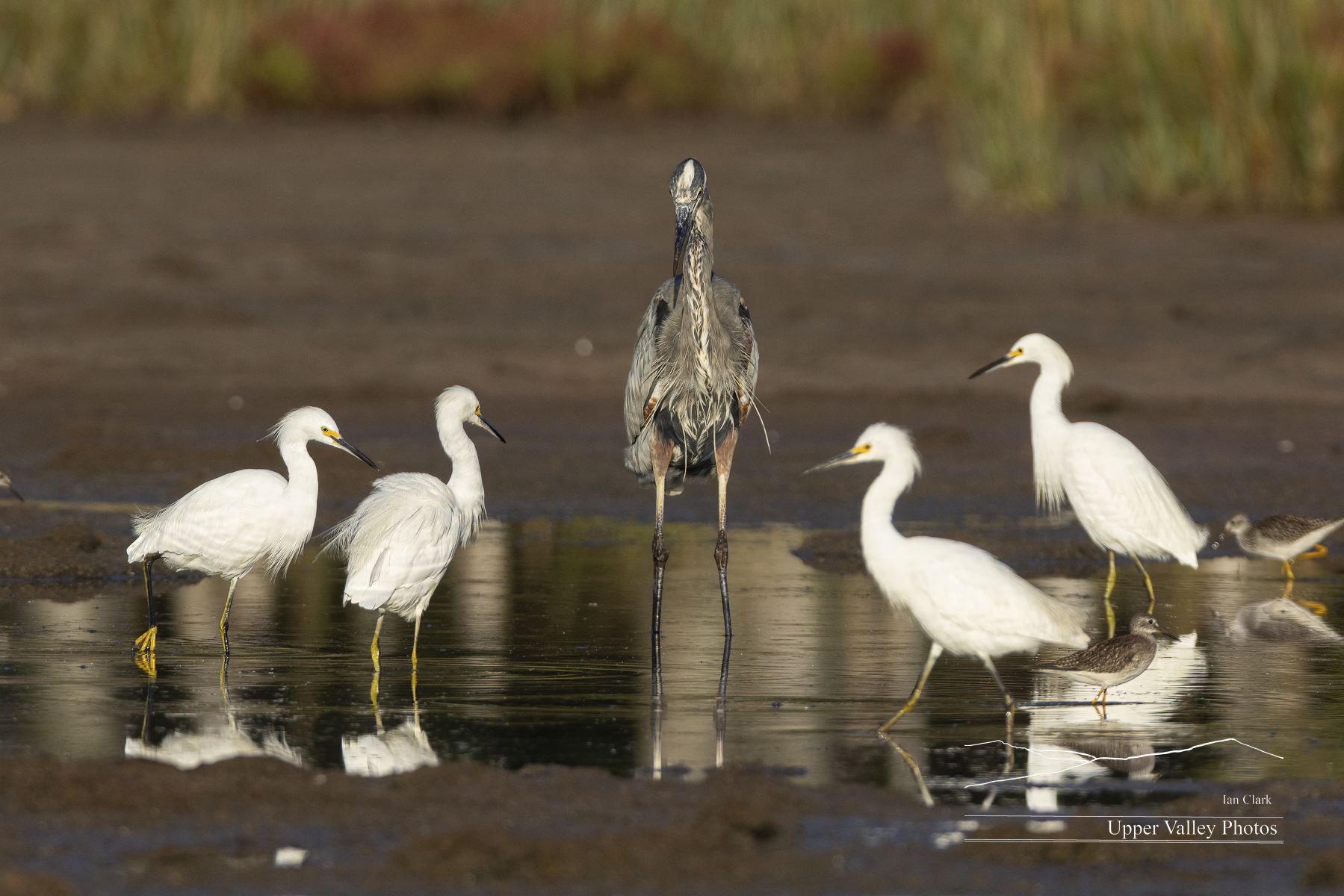
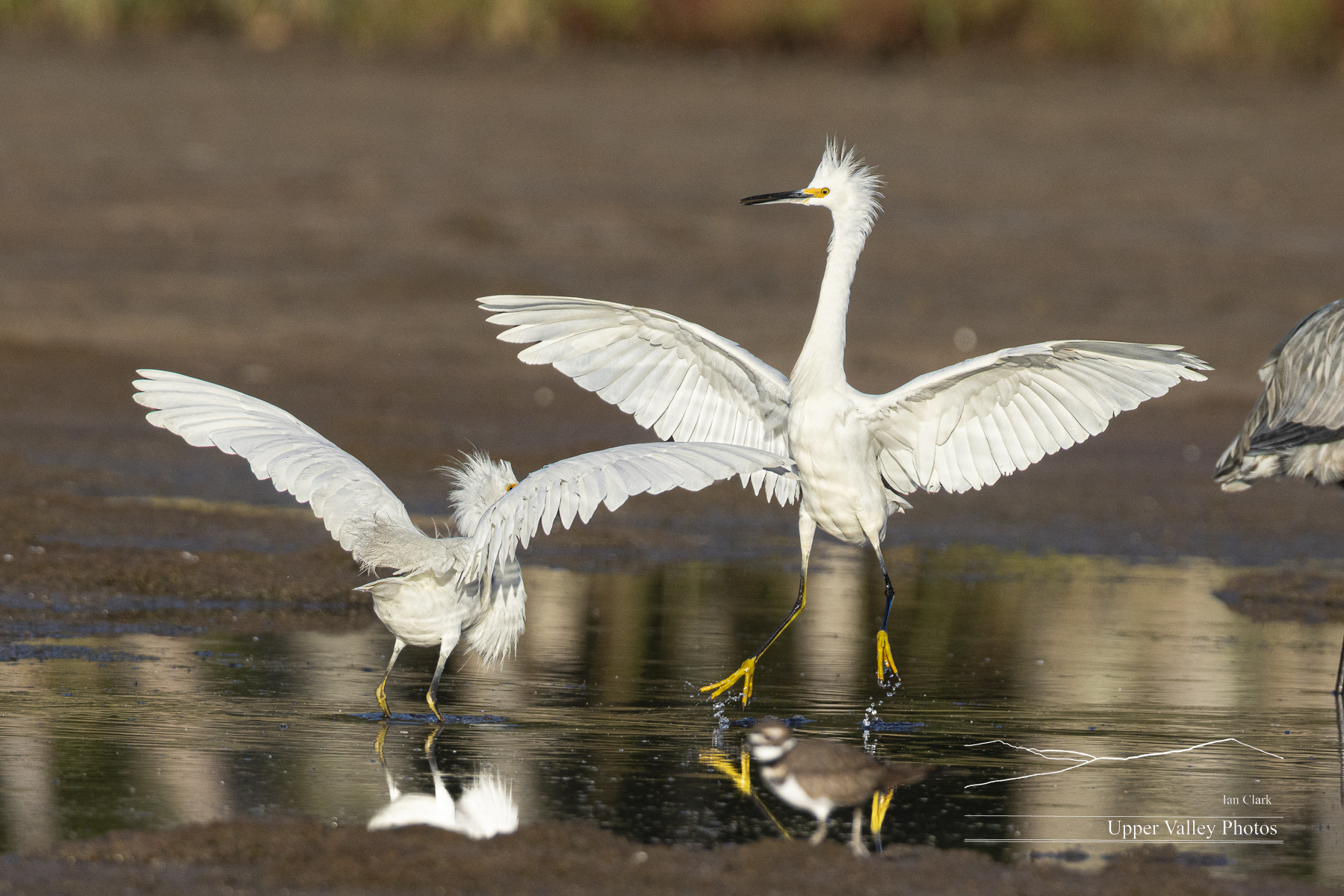
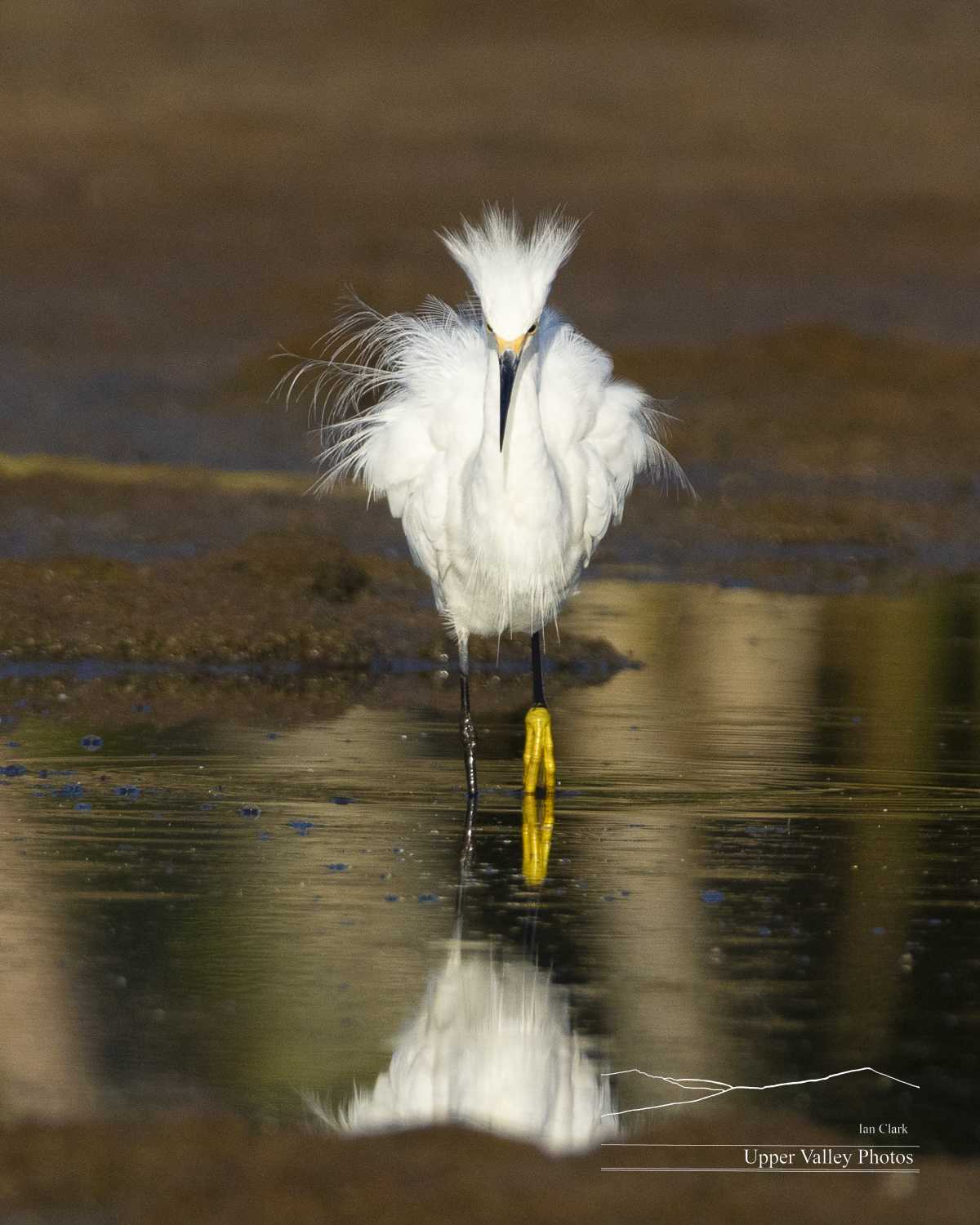
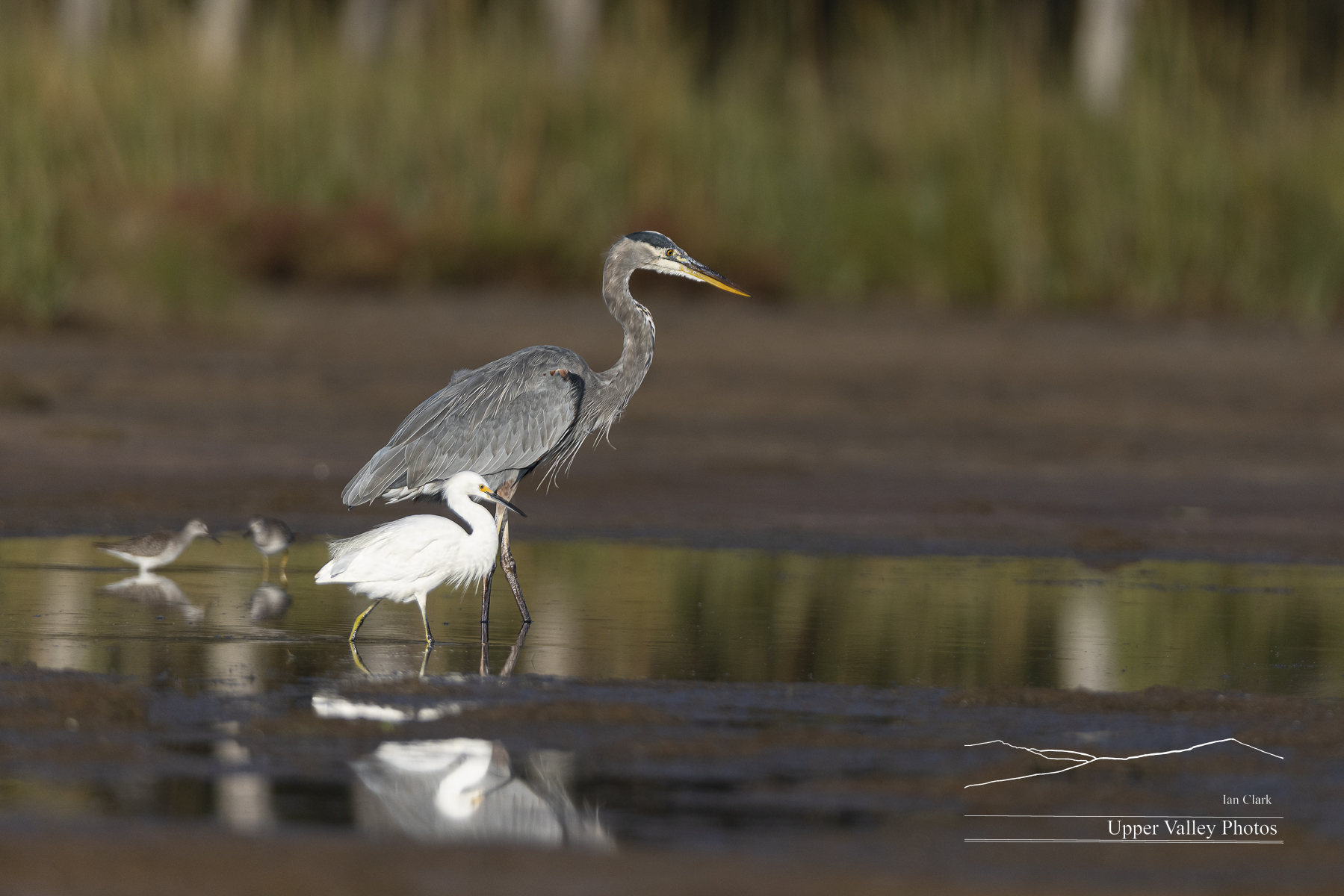
I spent over an hour on my belly in the marsh watching this group. And getting soggy. After a change of clothes, I continued on north then west to head home.
Last Tuesday checked in on the Eastons. The chicks were about 11 weeks old – time for them to be trying to fly. I’d been watching for them to try on my last few visits. They didn’t cooperate.
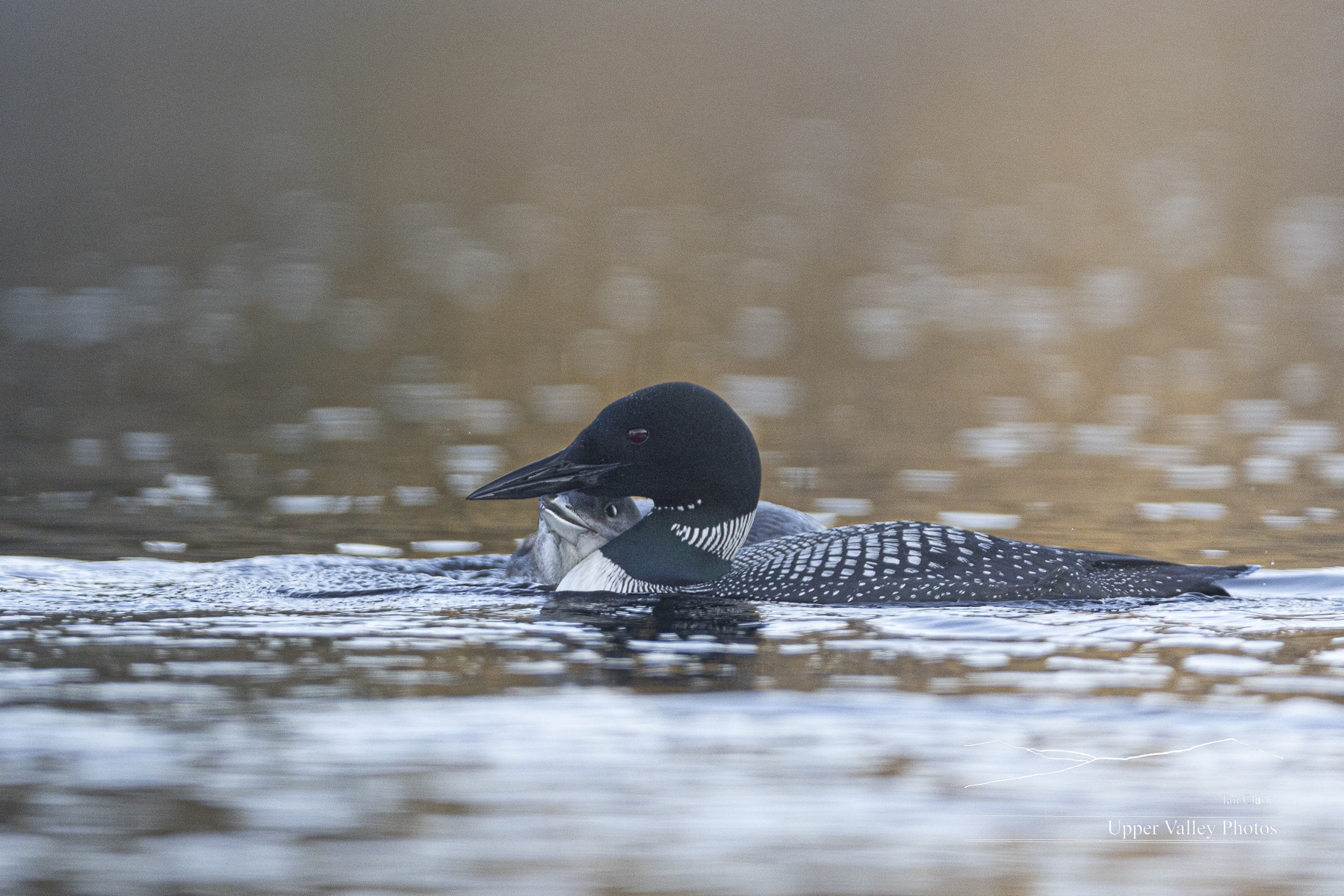
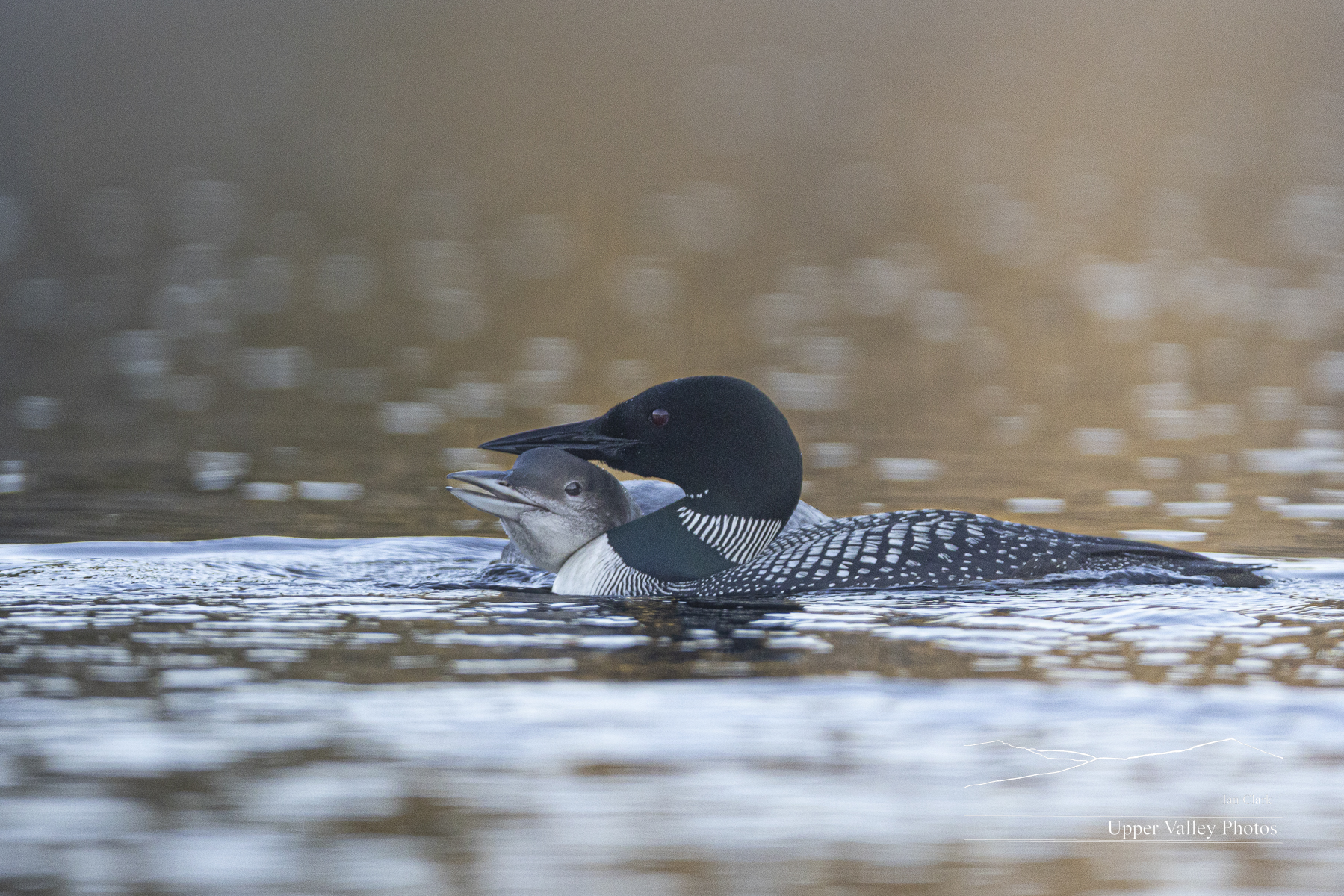
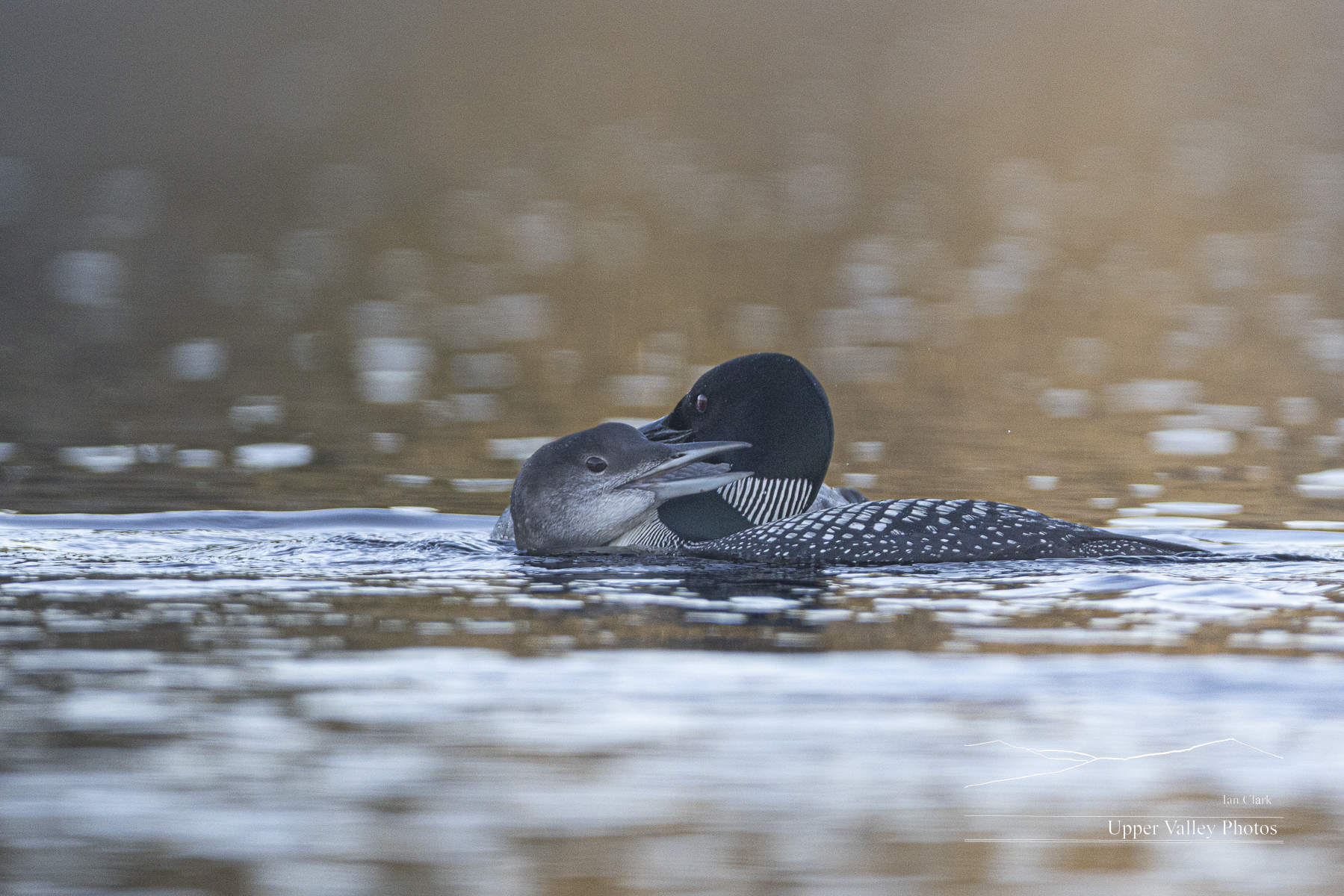
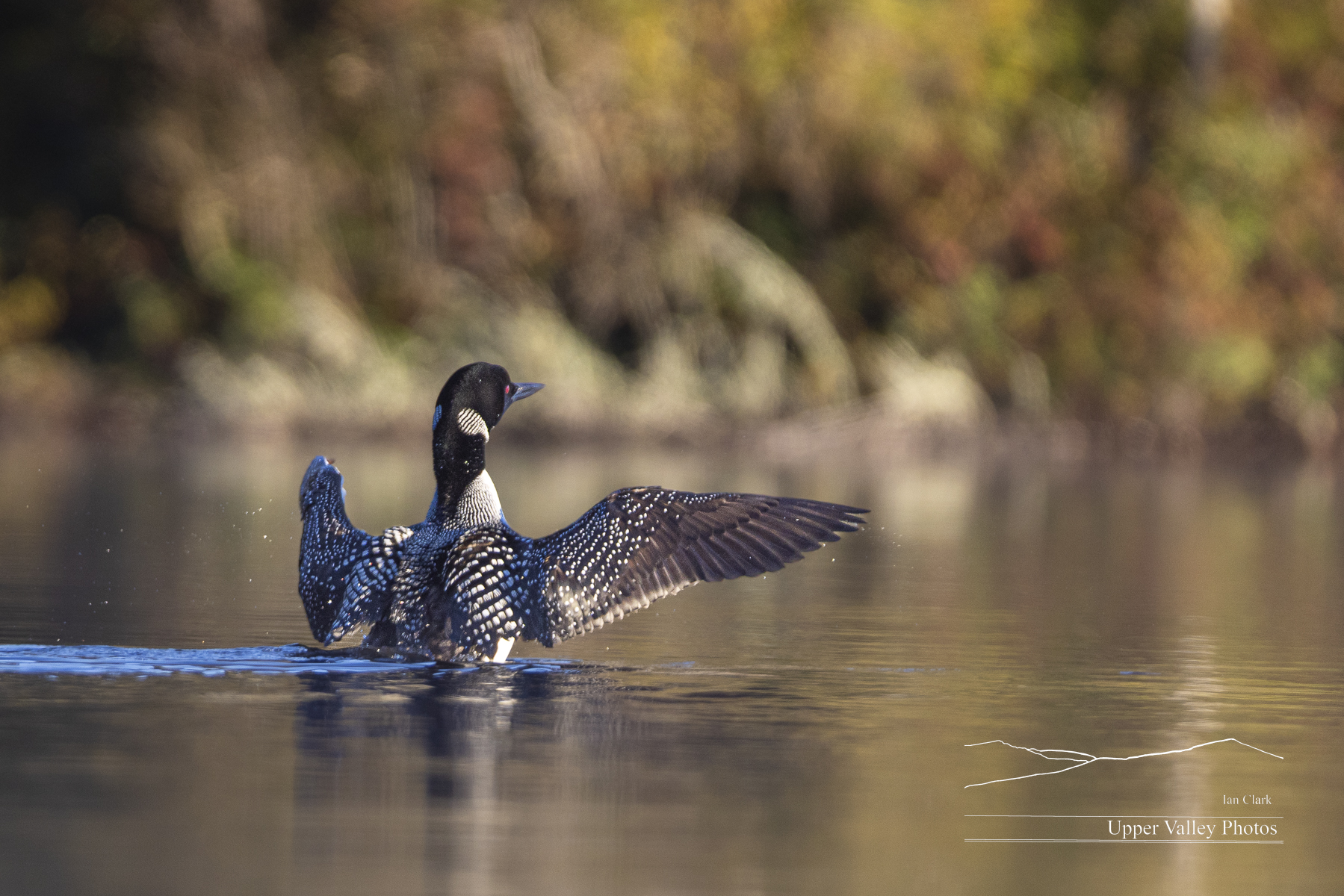
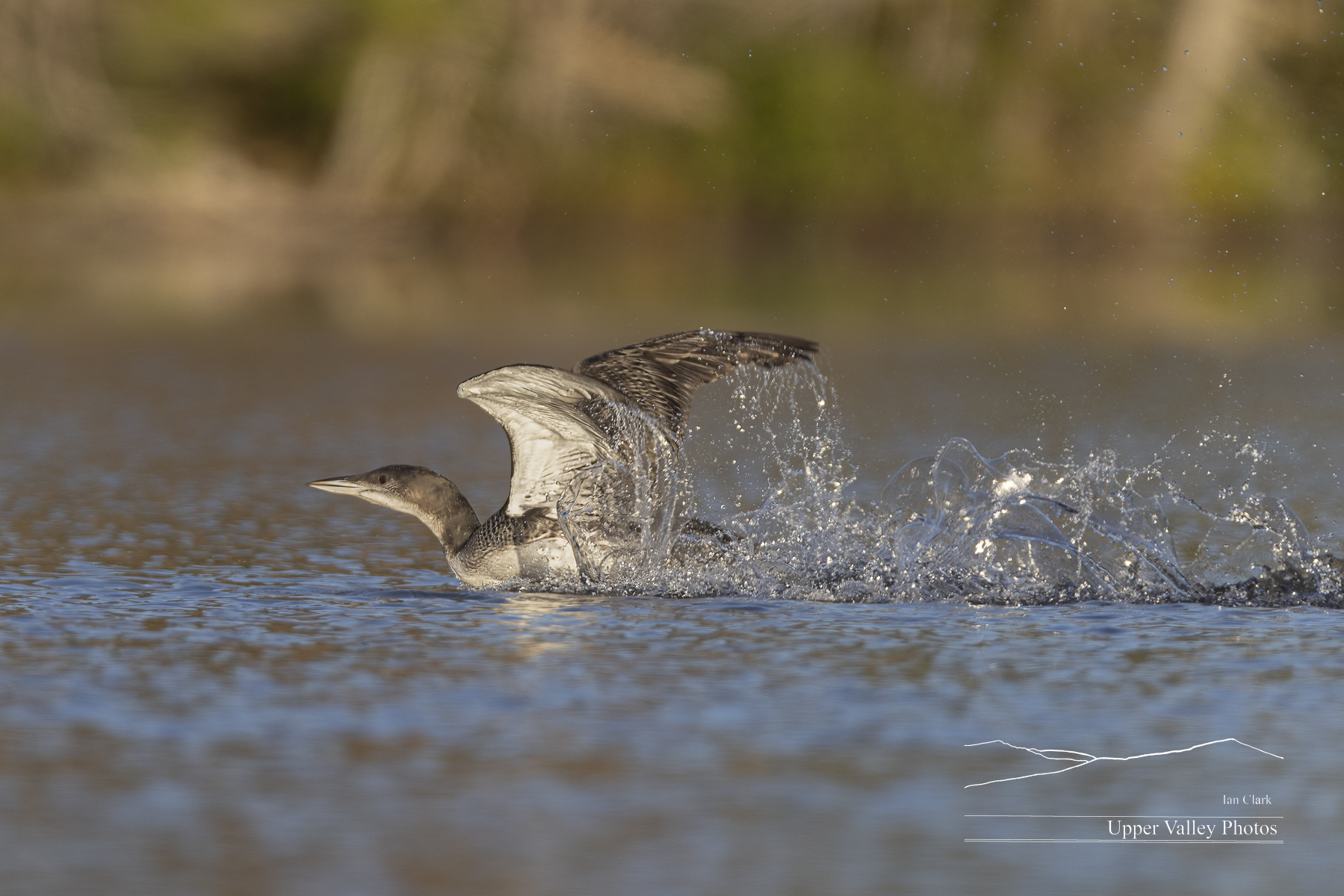
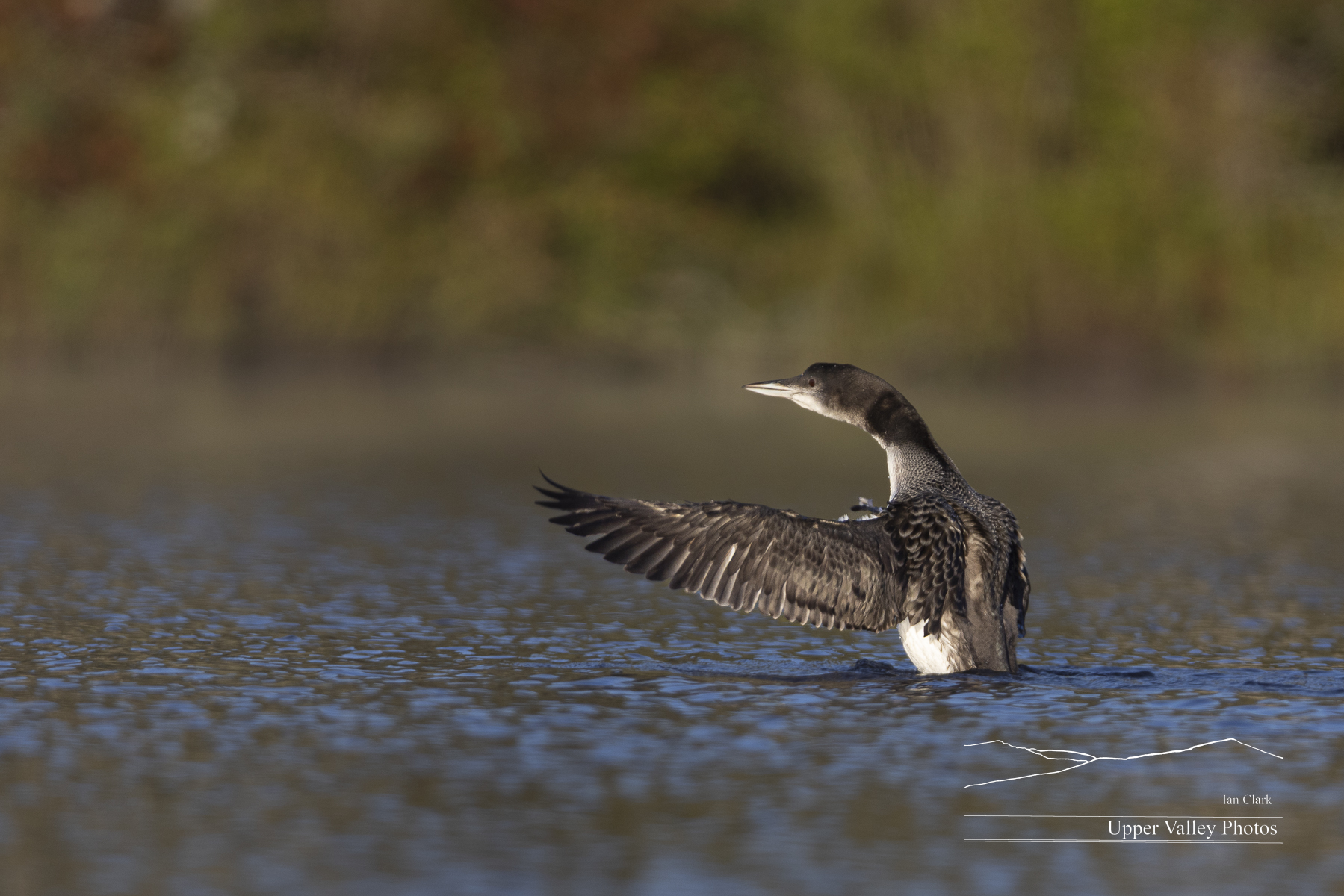
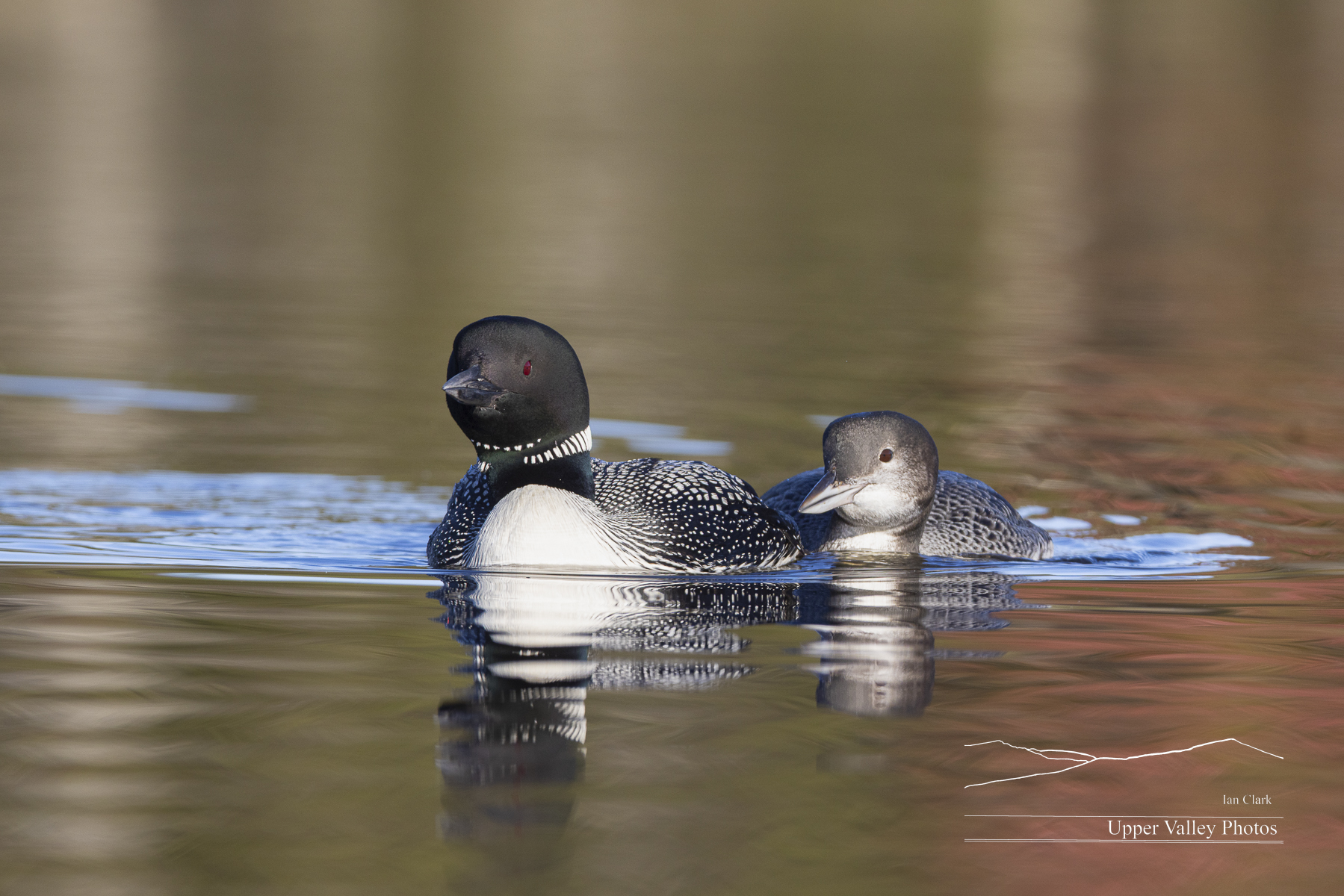
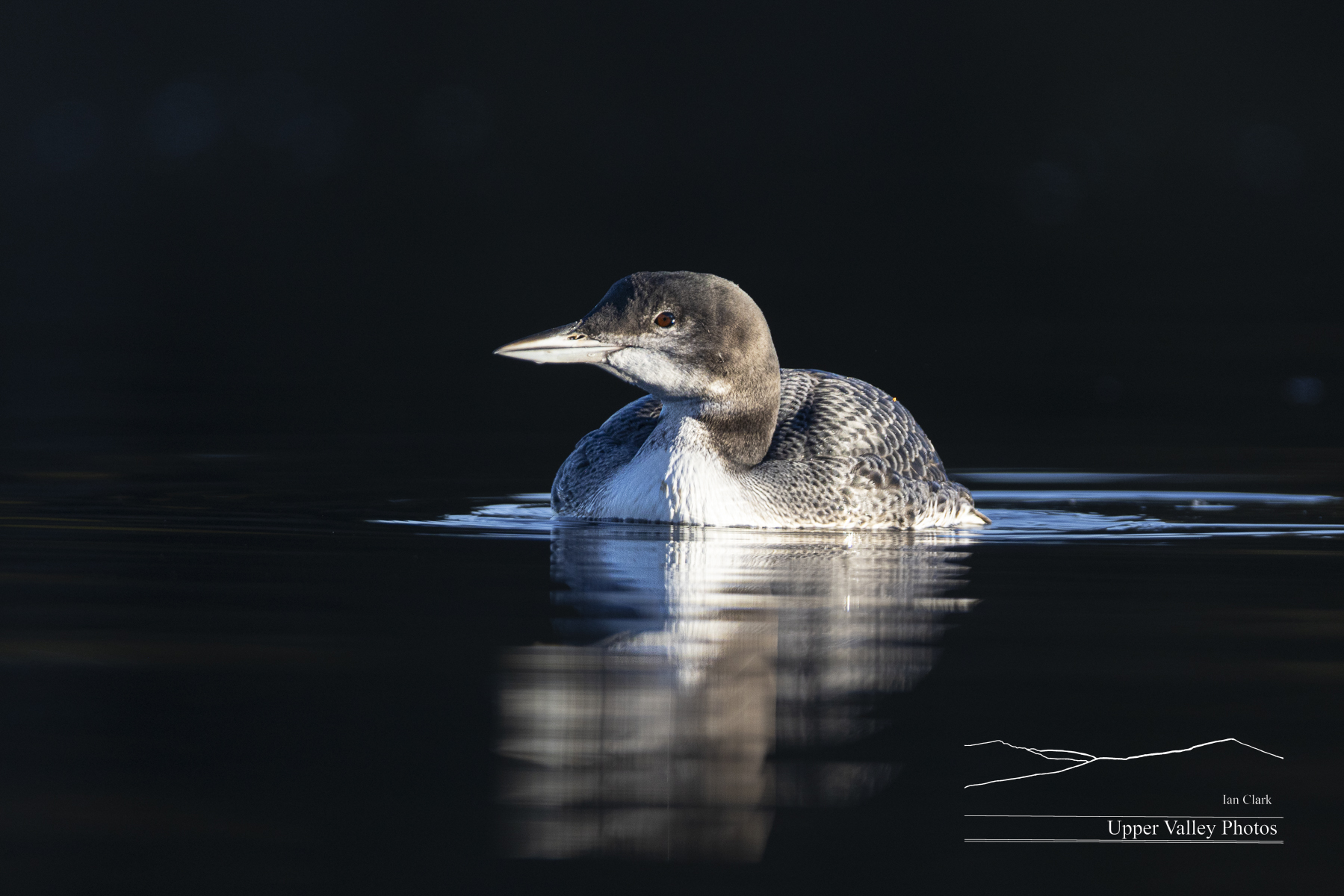
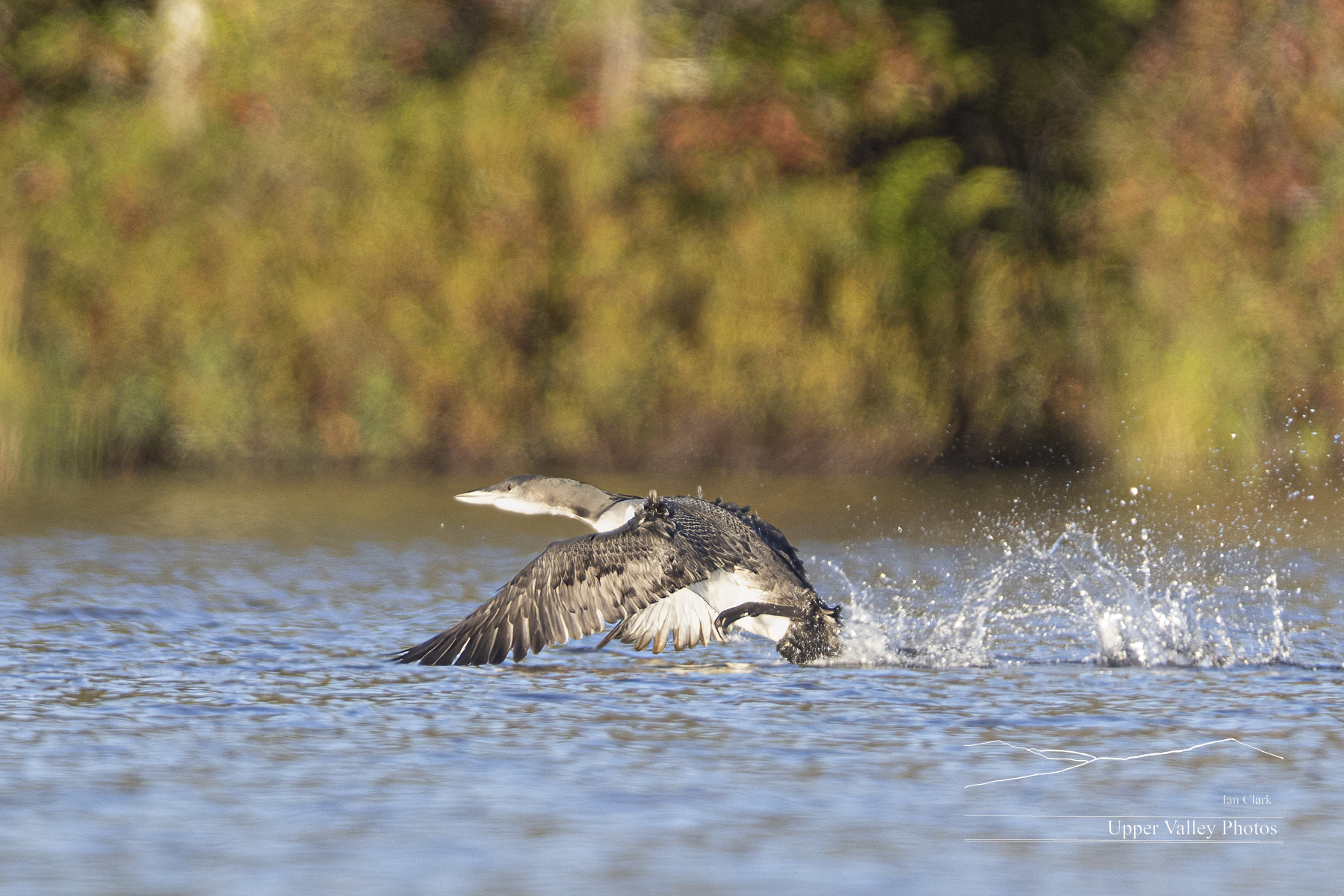
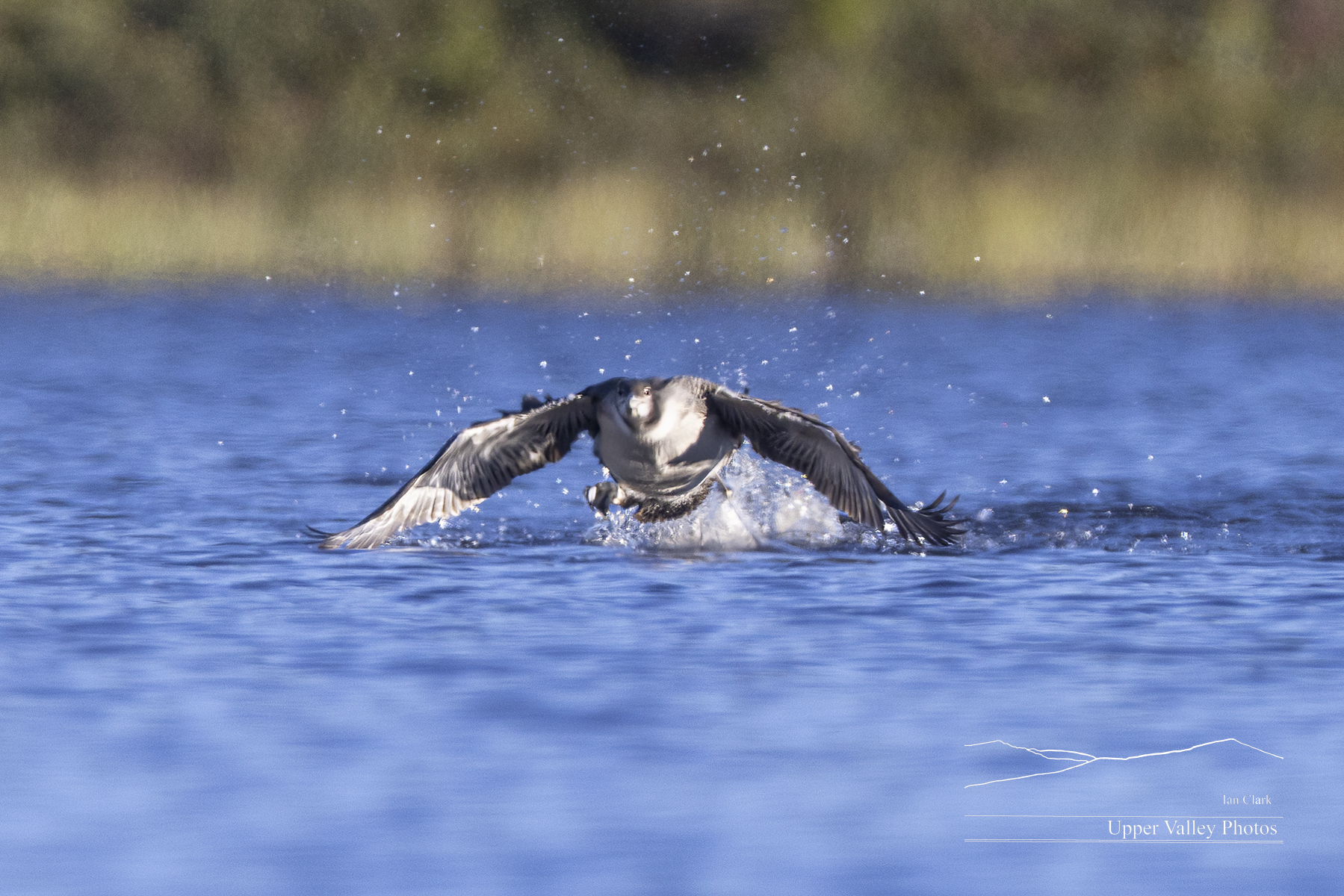
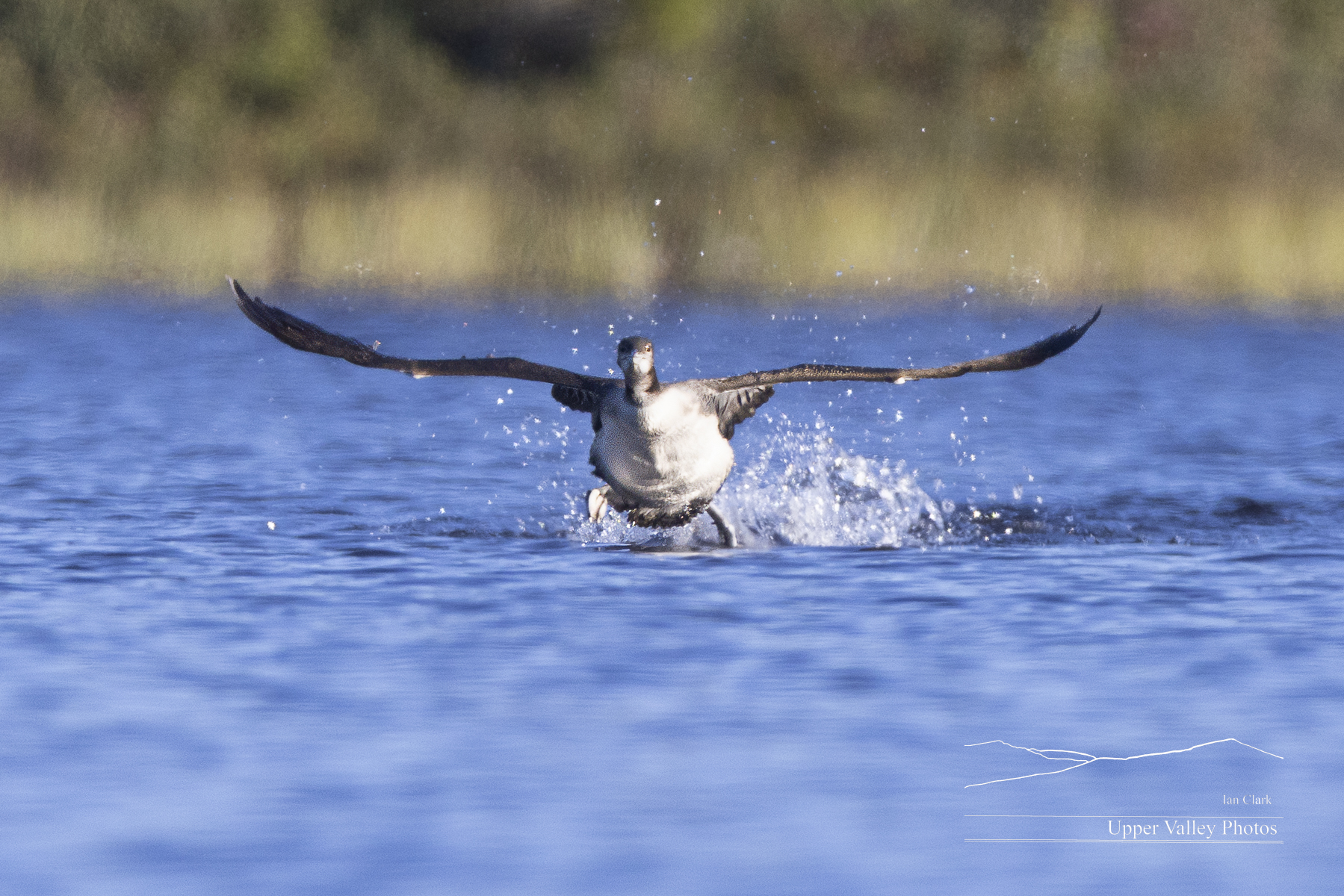
He took a break from trying to fly to practice his yodel. It was clearly a yodel, if a little squeaky. Biologists think the loon’s yodel gets deeper as the bird gets larger and older. That would be a good way to signal to a challenger that they’re big and tough and not to be messed with. This guy has a ways to go.
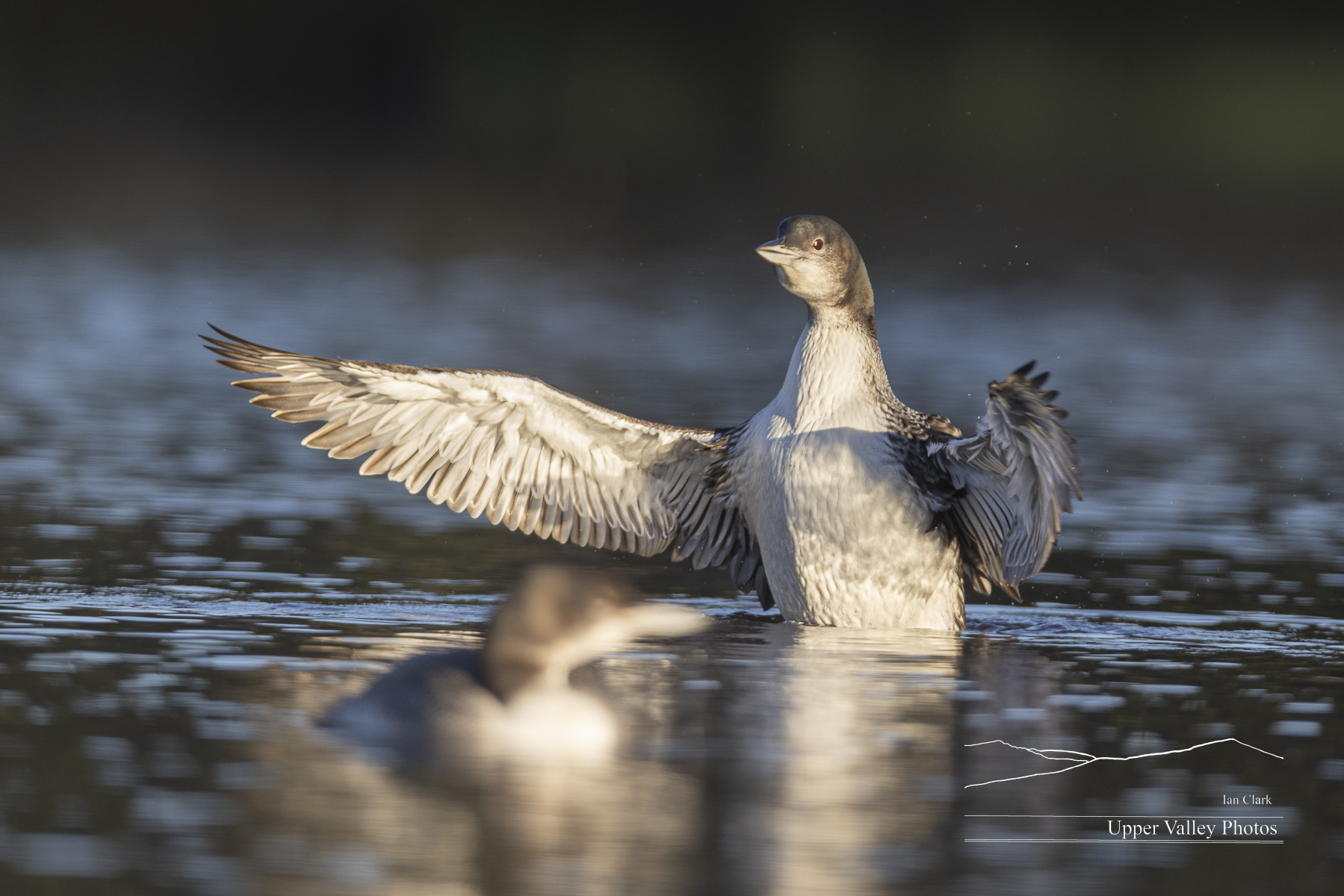
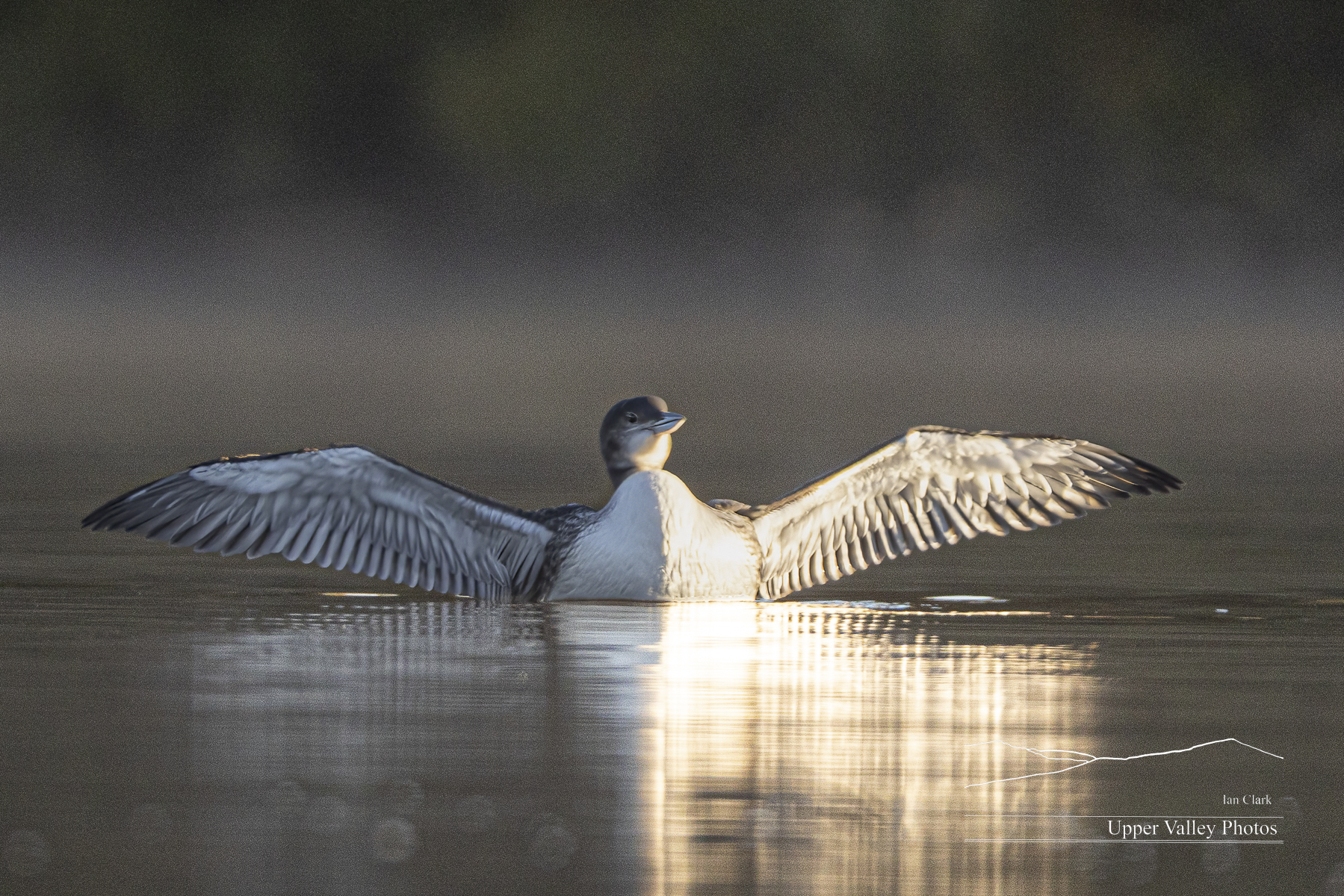
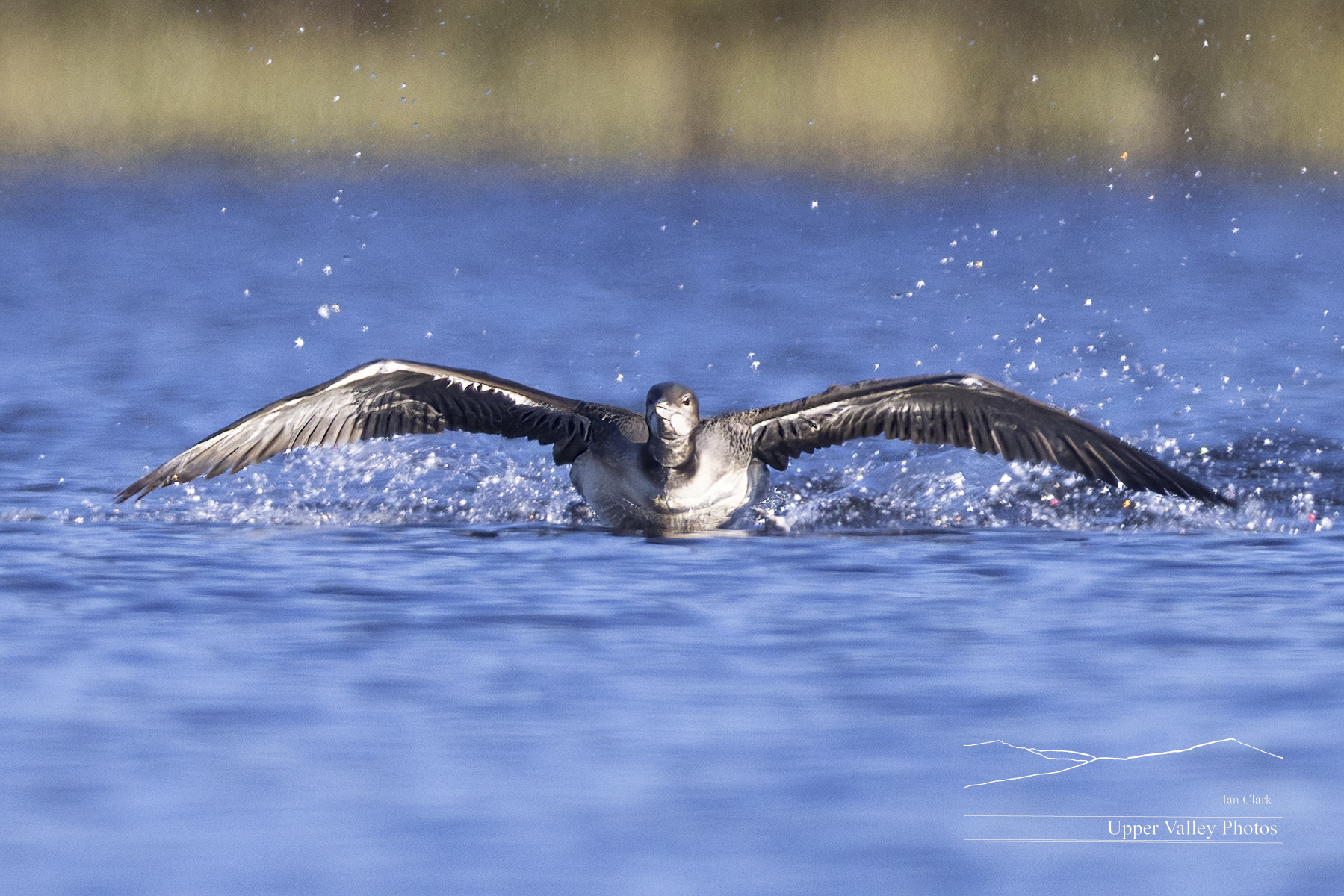
Yesterday, I went looking for Hank and the green herons in Bradford.
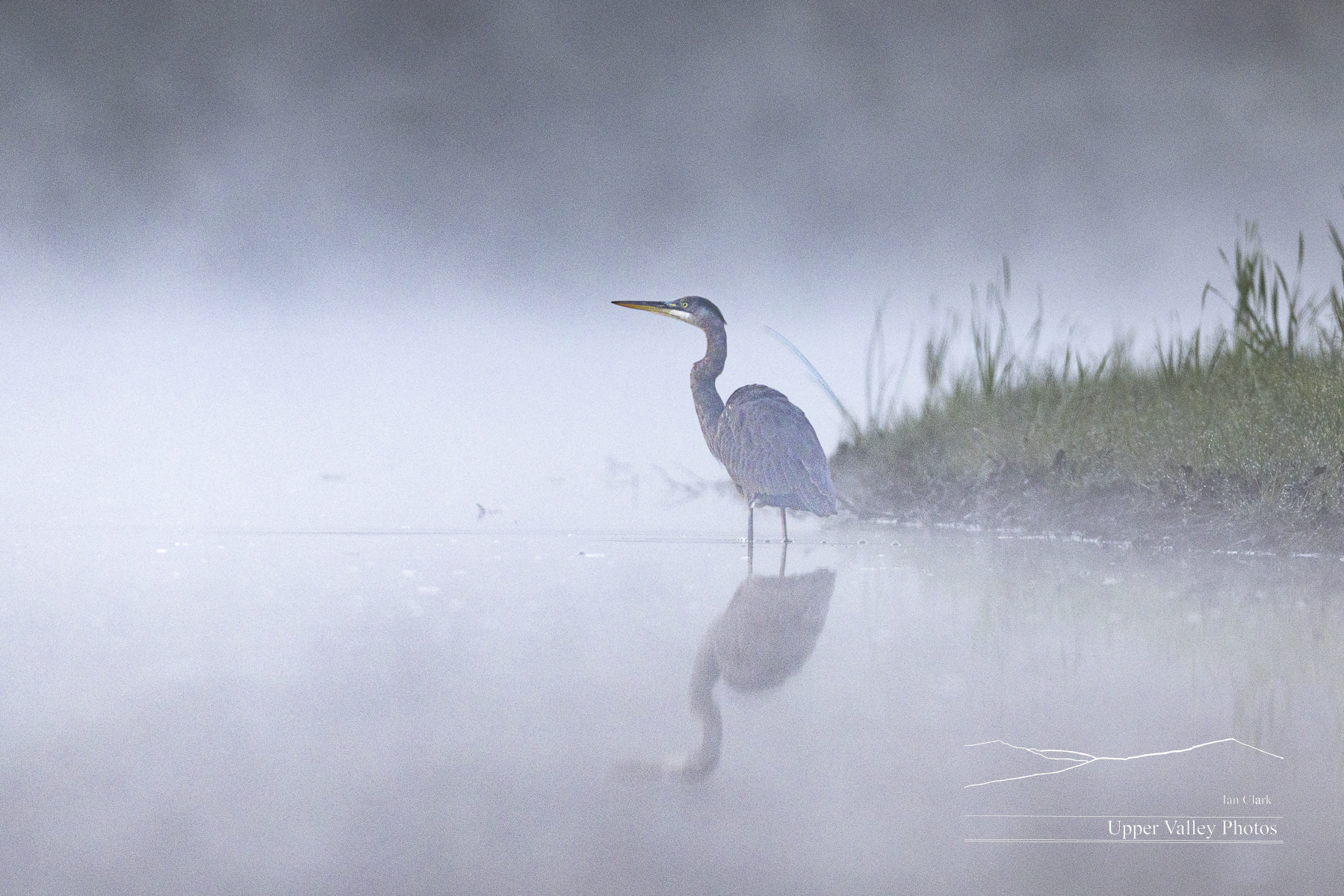
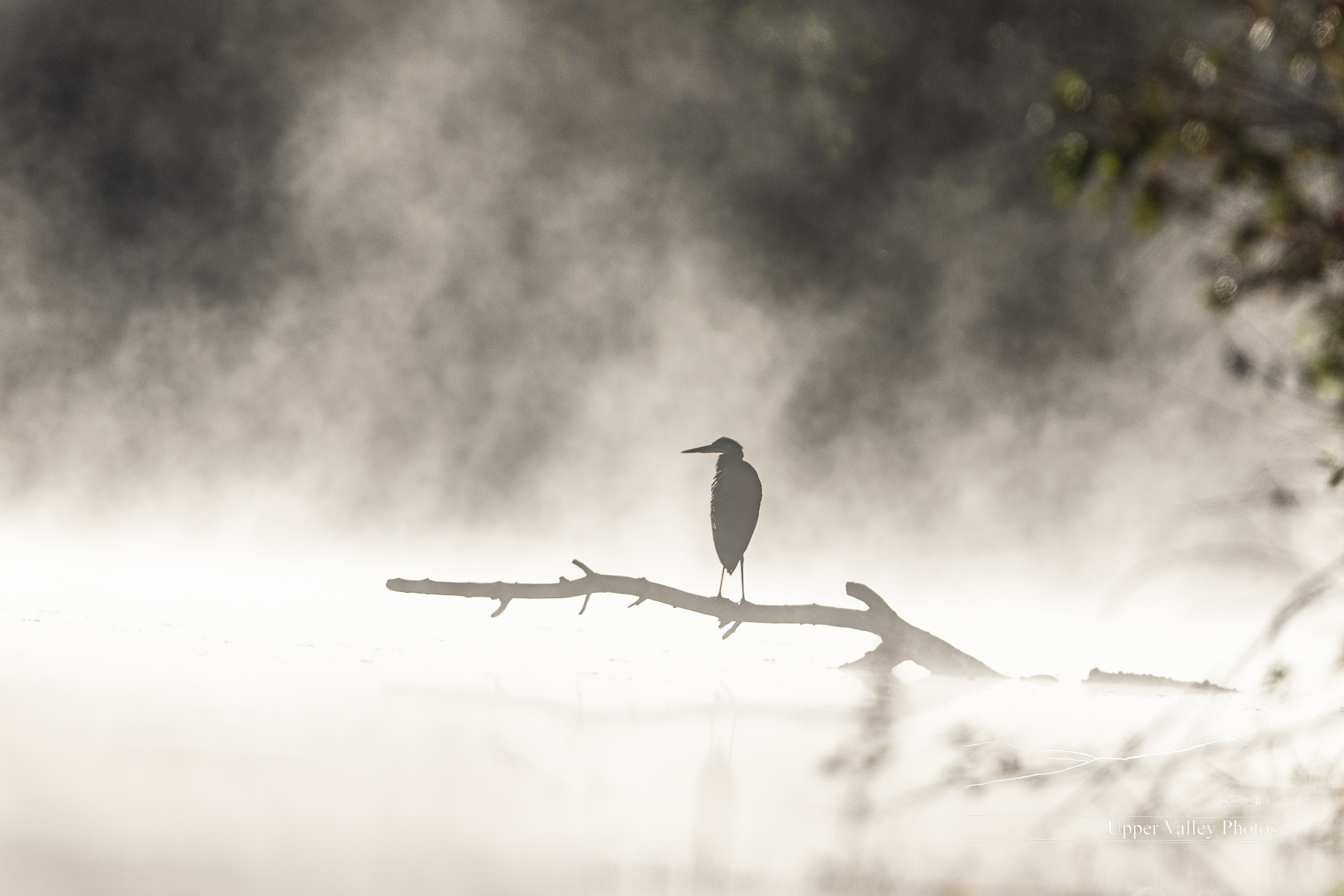
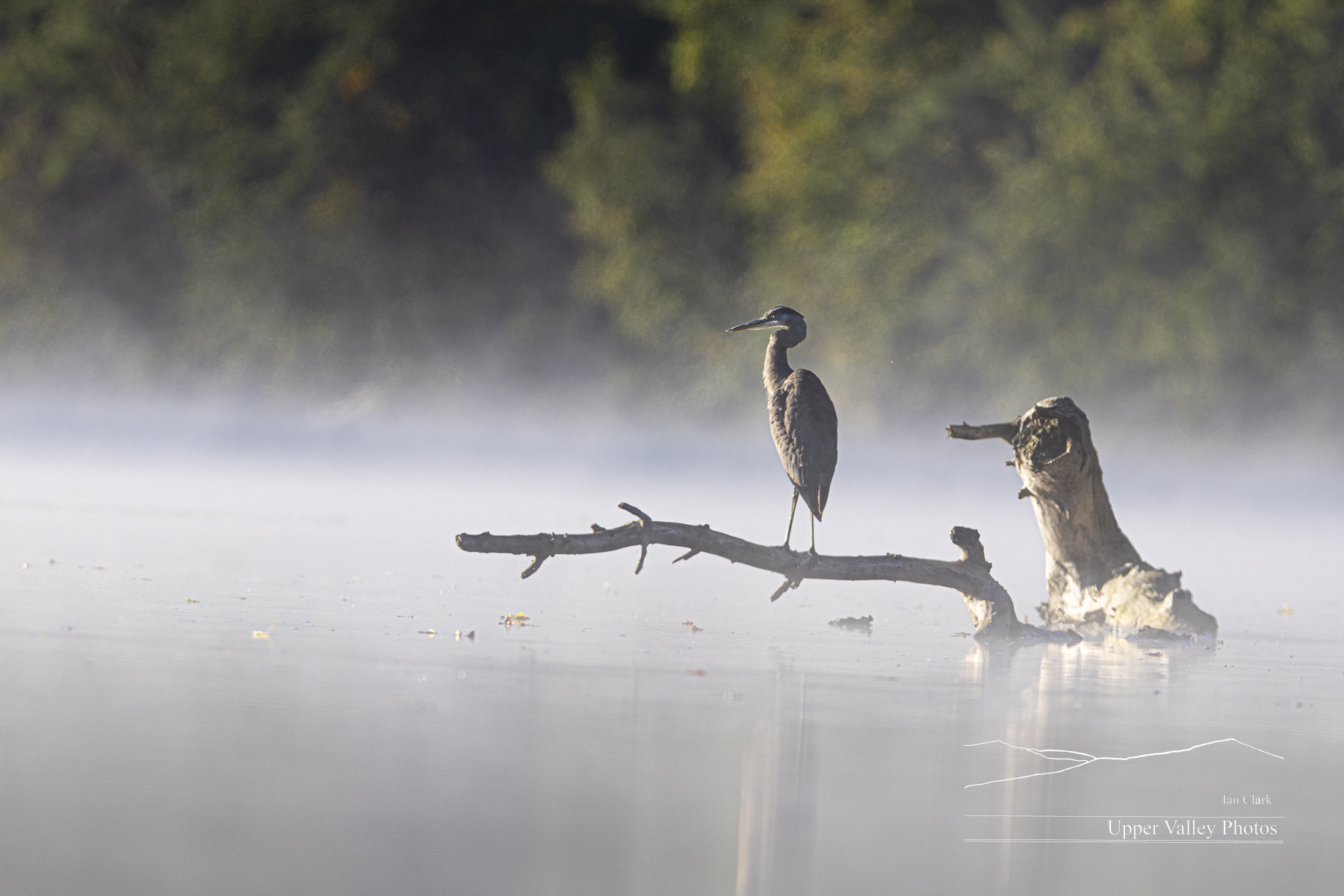
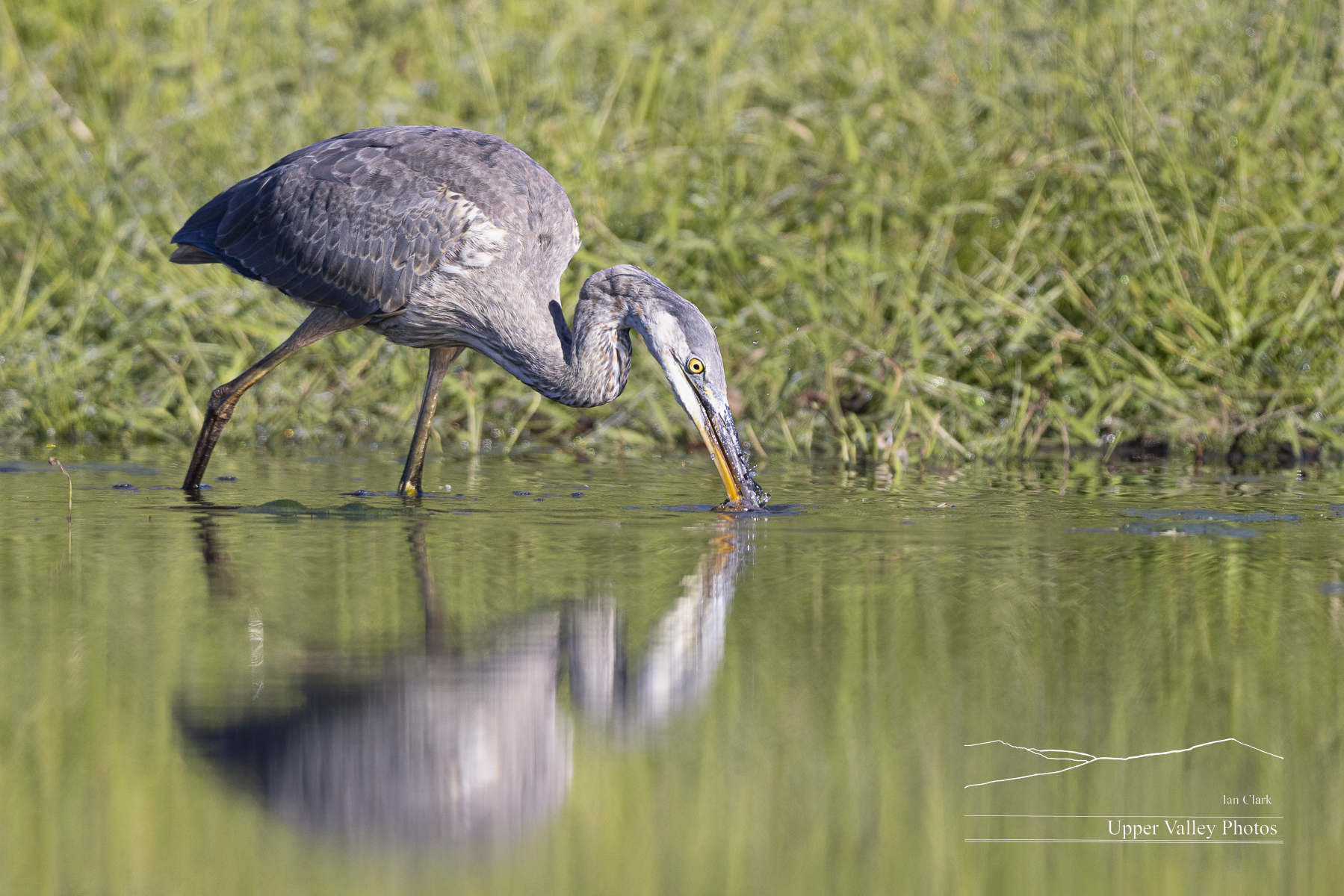
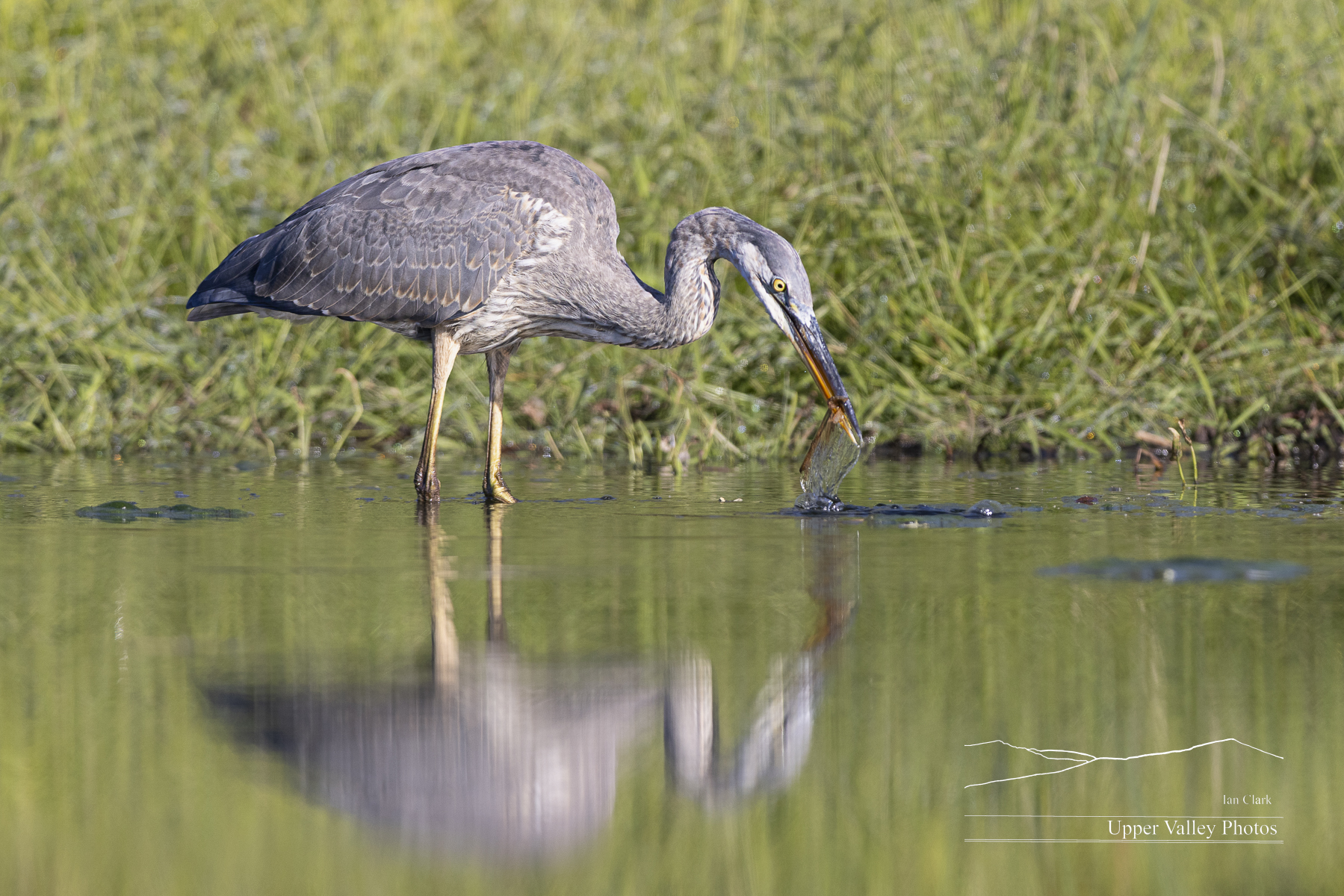
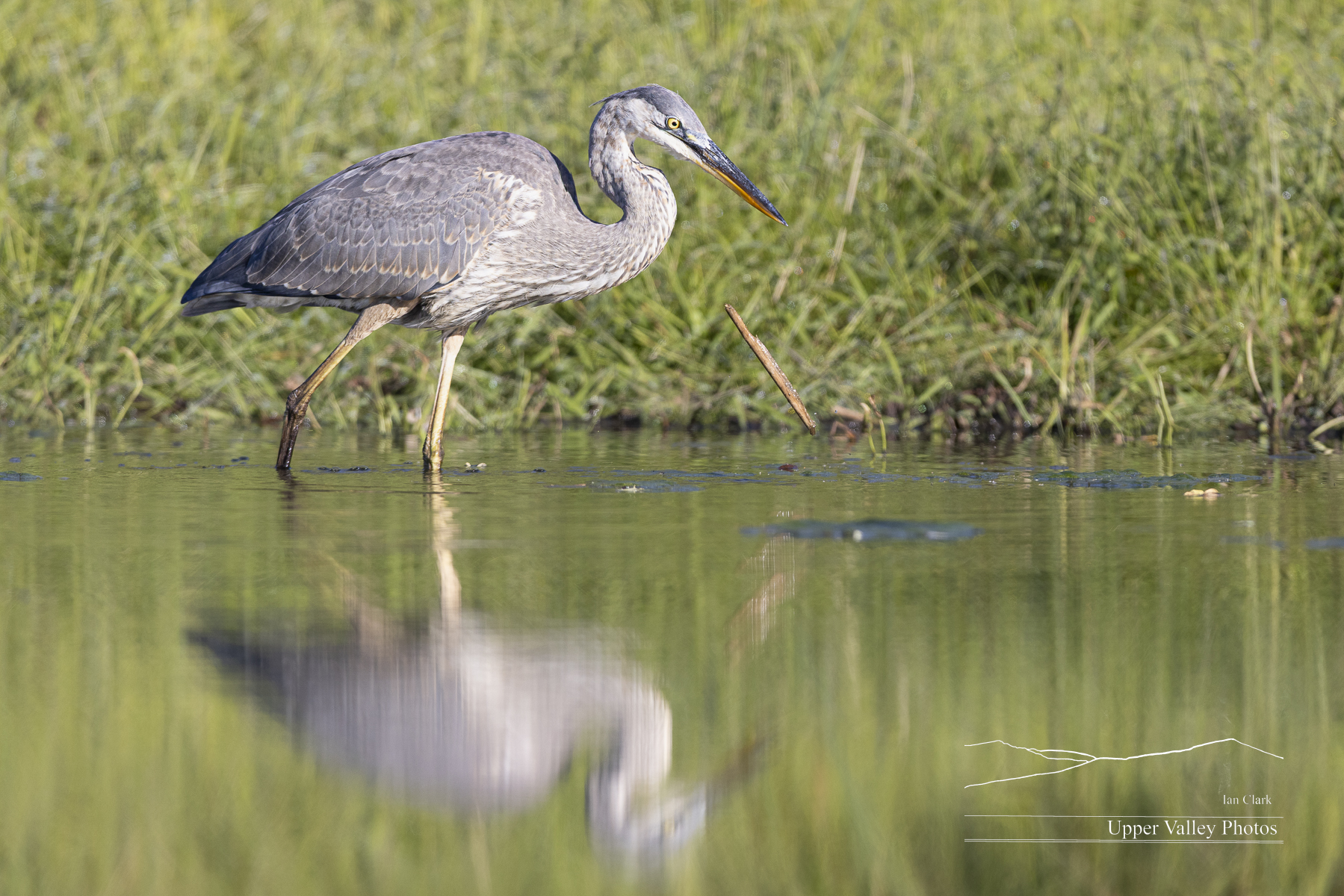
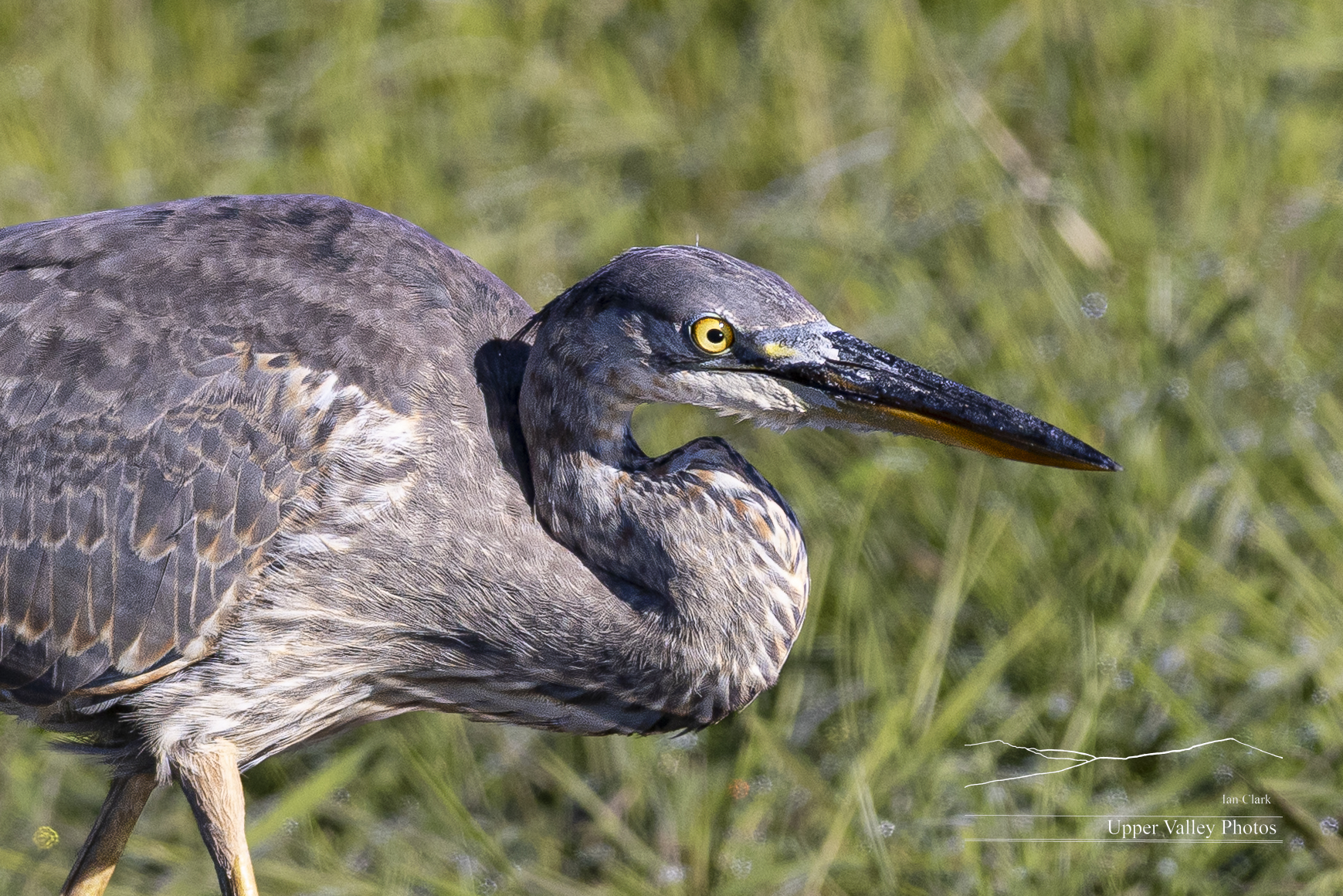
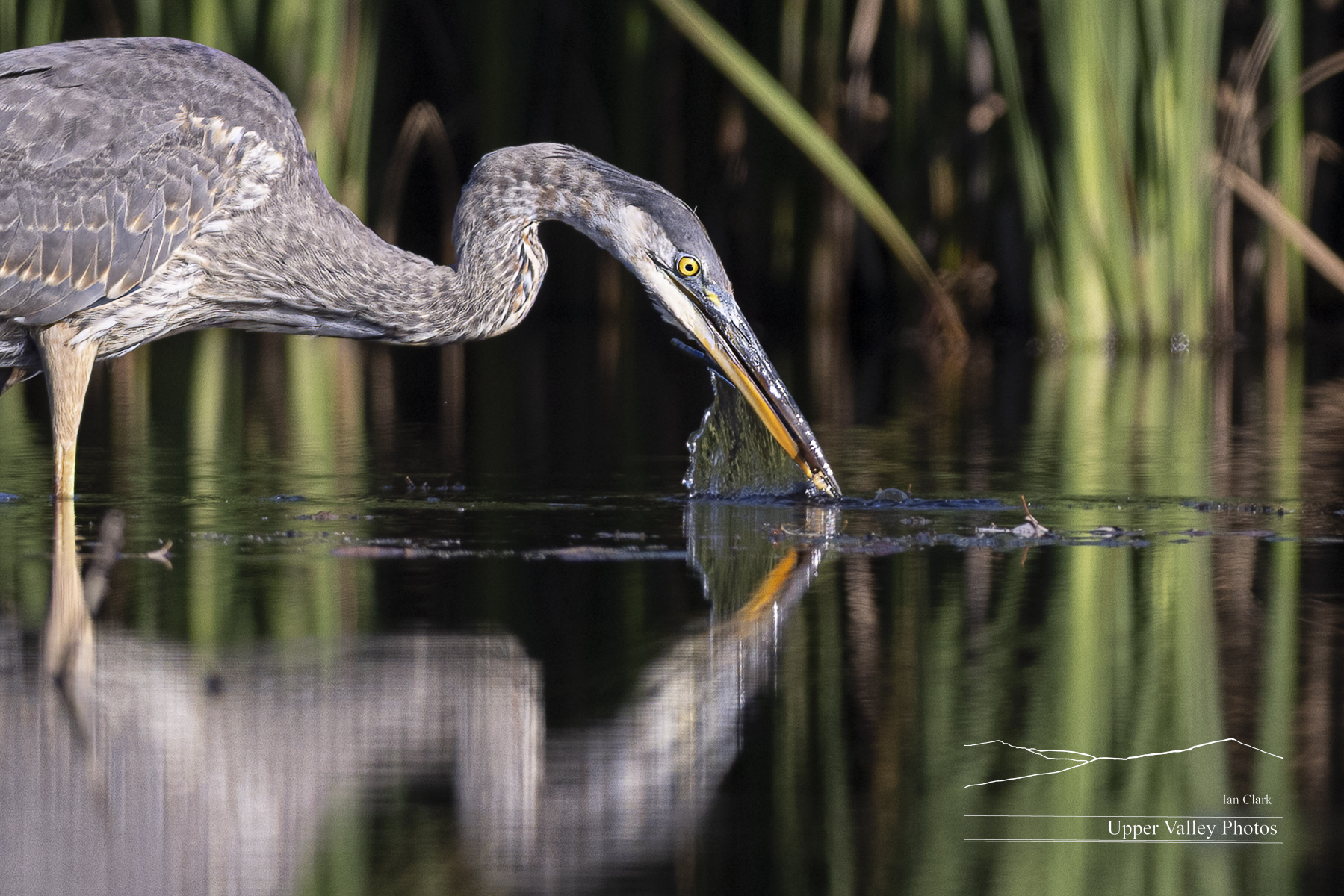
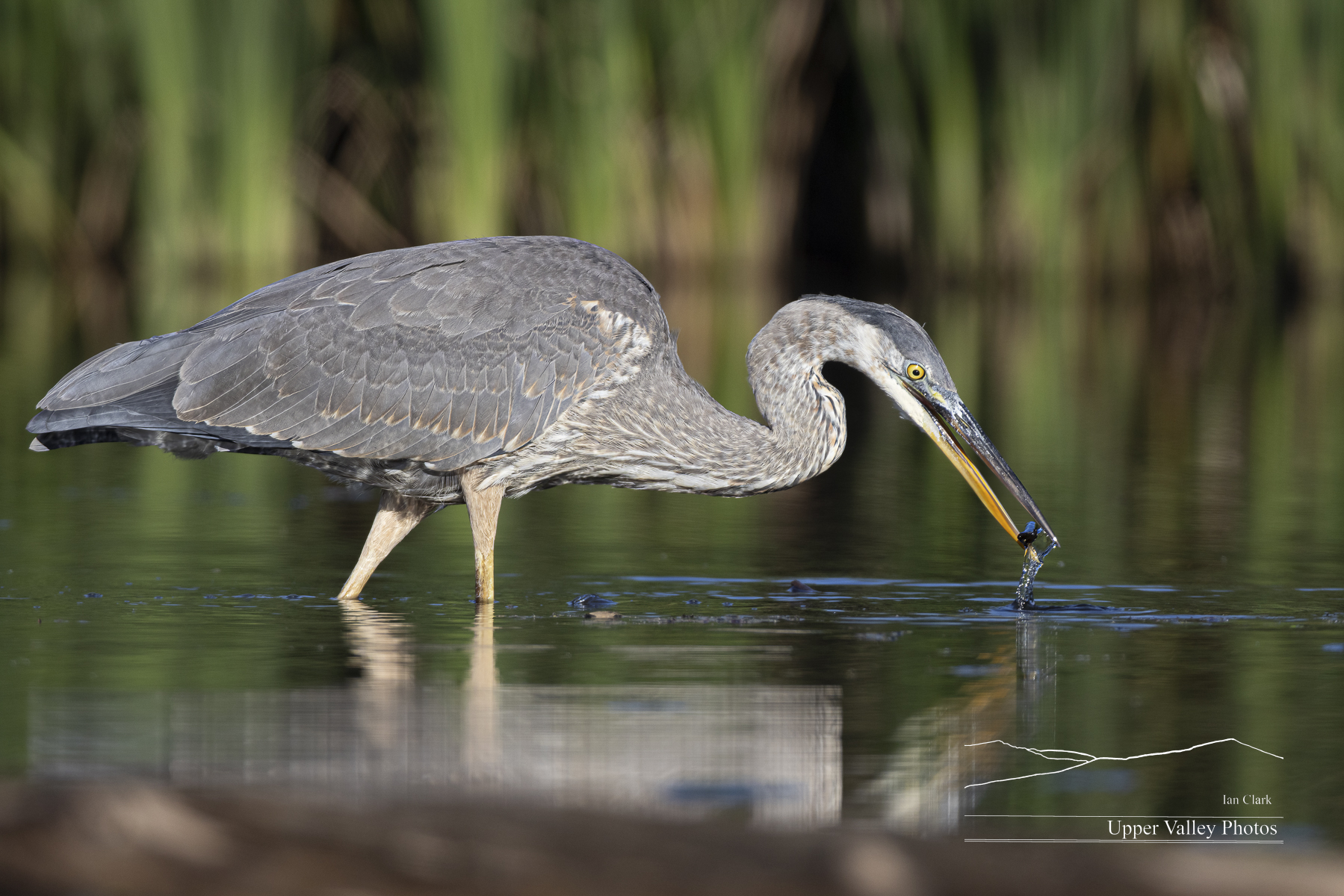
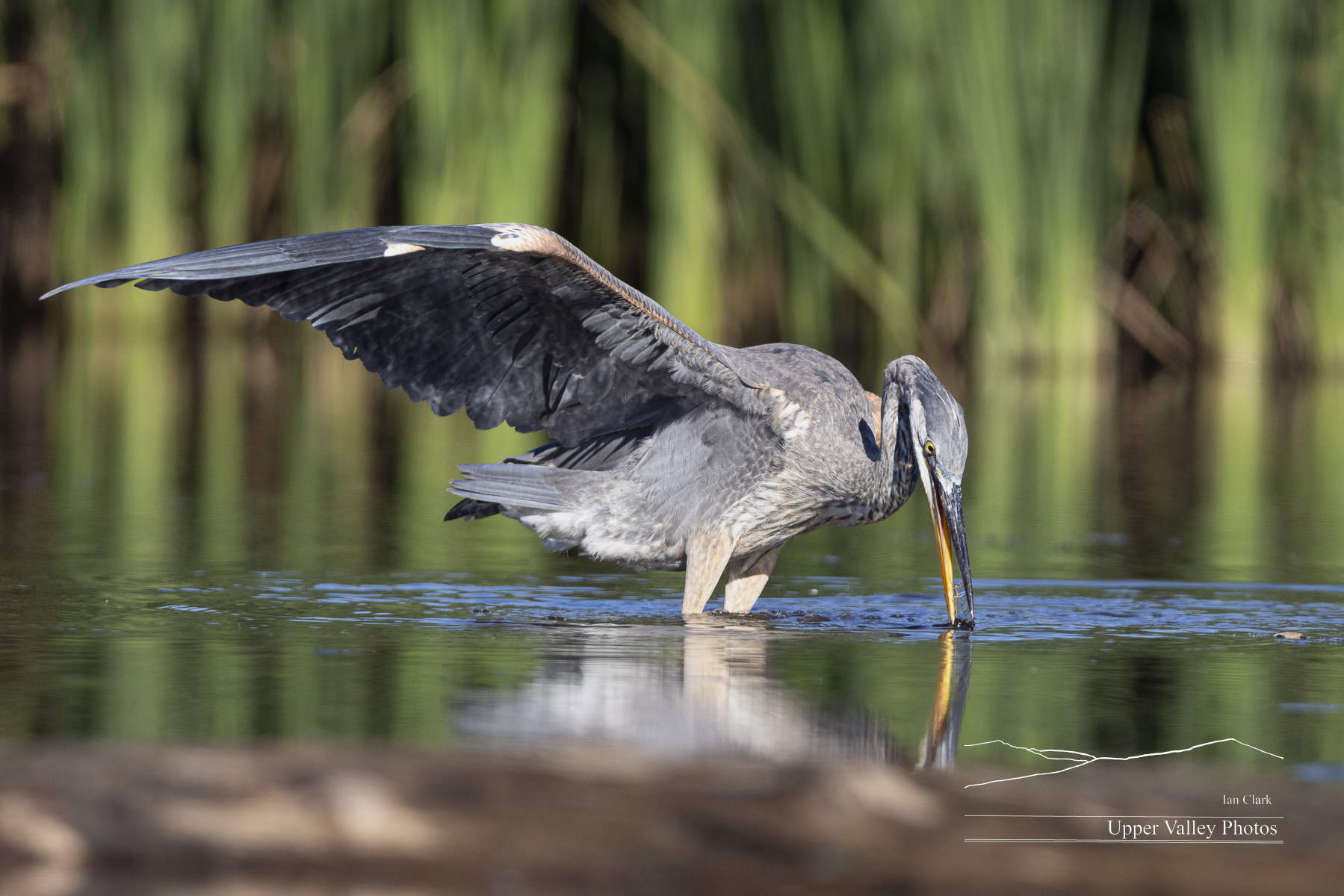
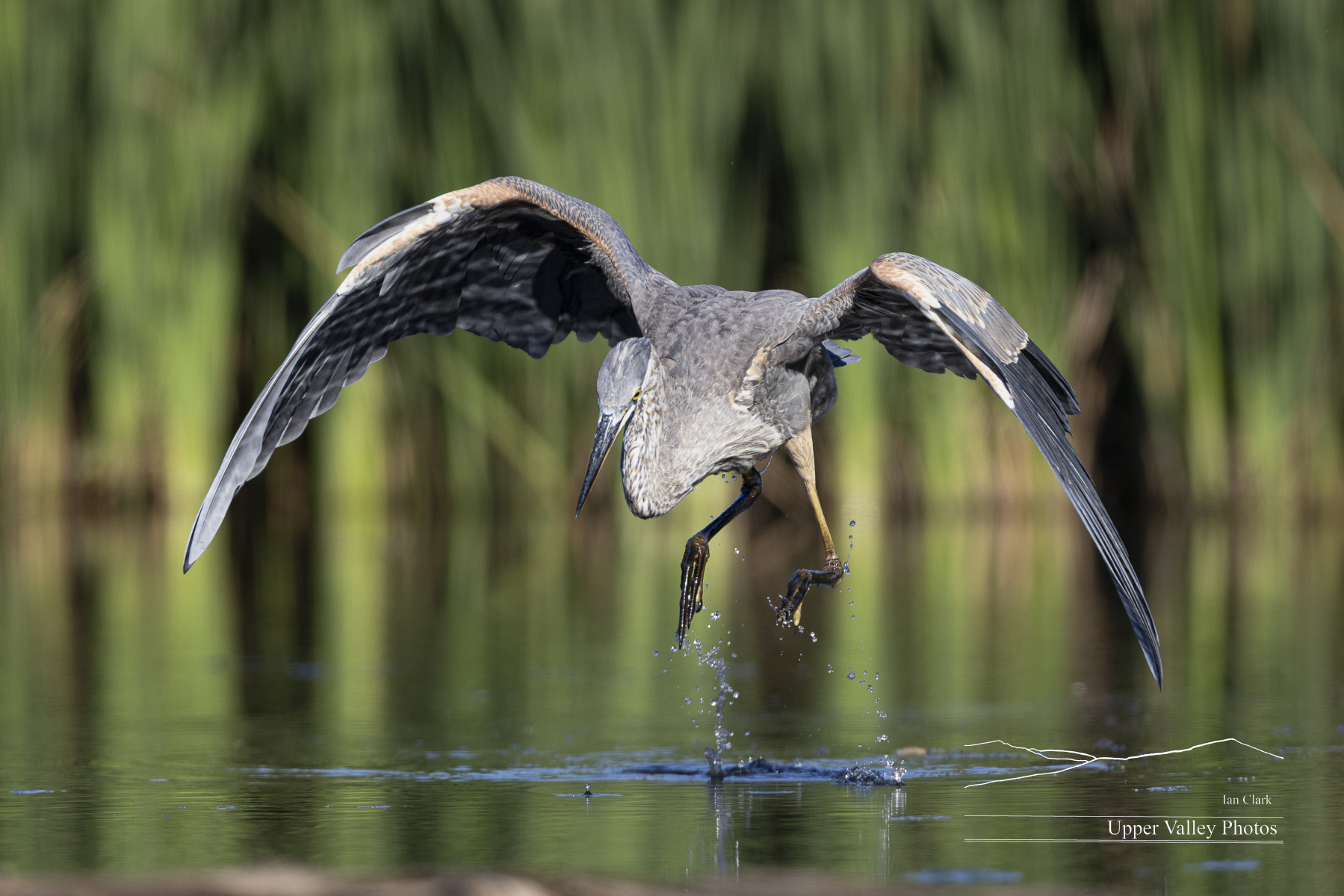
If you enjoyed this post, you can sign up with the form below to get an email when I add a new post. That’s all you’ll get, I won’t share or sell your info. And you can help me out by sharing my blog with your friends or on social media. Thanks!
More Herons, More Eastons
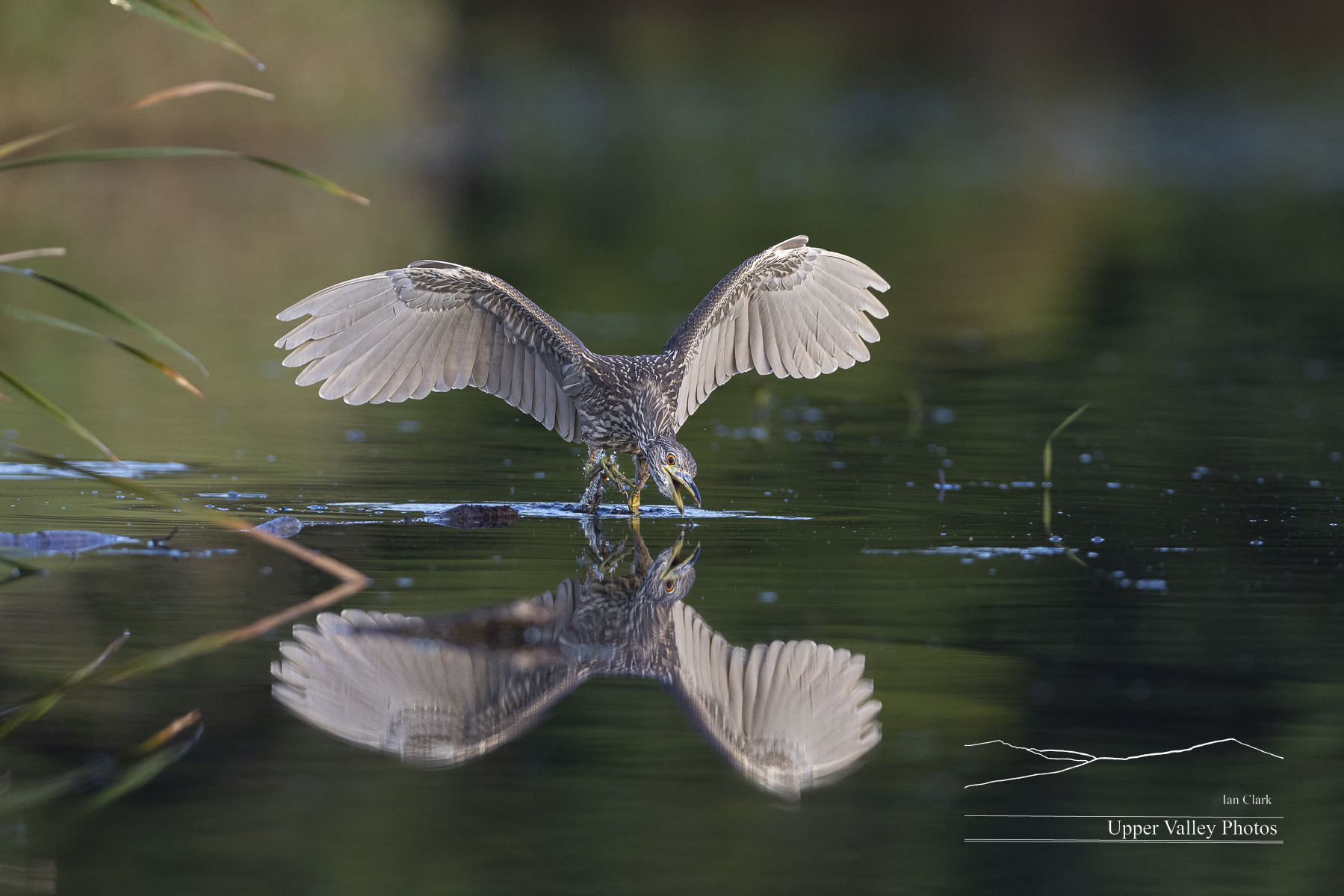
Edit – I originally identified one of the birds as a green heron. I’ve gotten a couple emails saying it is a juvenile black-crowned night heron. I’ve updated the captions. Thanks for the correction.
Two recent mornings found me on the Eastons’ pond and two evenings found me visiting the herons. The Easton chicks should be trying to fly by now, maybe even flying. I’ve yet to catch them in the act. The herons provided either feast or famine.
I’m getting ready for the Vermont North By Hand Open Studio Tour, October 10 & 11. Artists around the Upper Valley will be opening their studios and showing their work. Since I don’t have a studio, I’ll be at the Martin Farm. It doesn’t yet show on the online map, it is right on the Bradford-Fairlee town line on Route 5. Sue Martin will be showing her stained glass and Carole Kitchel Bellew will have her stoneware at the Farm as well.
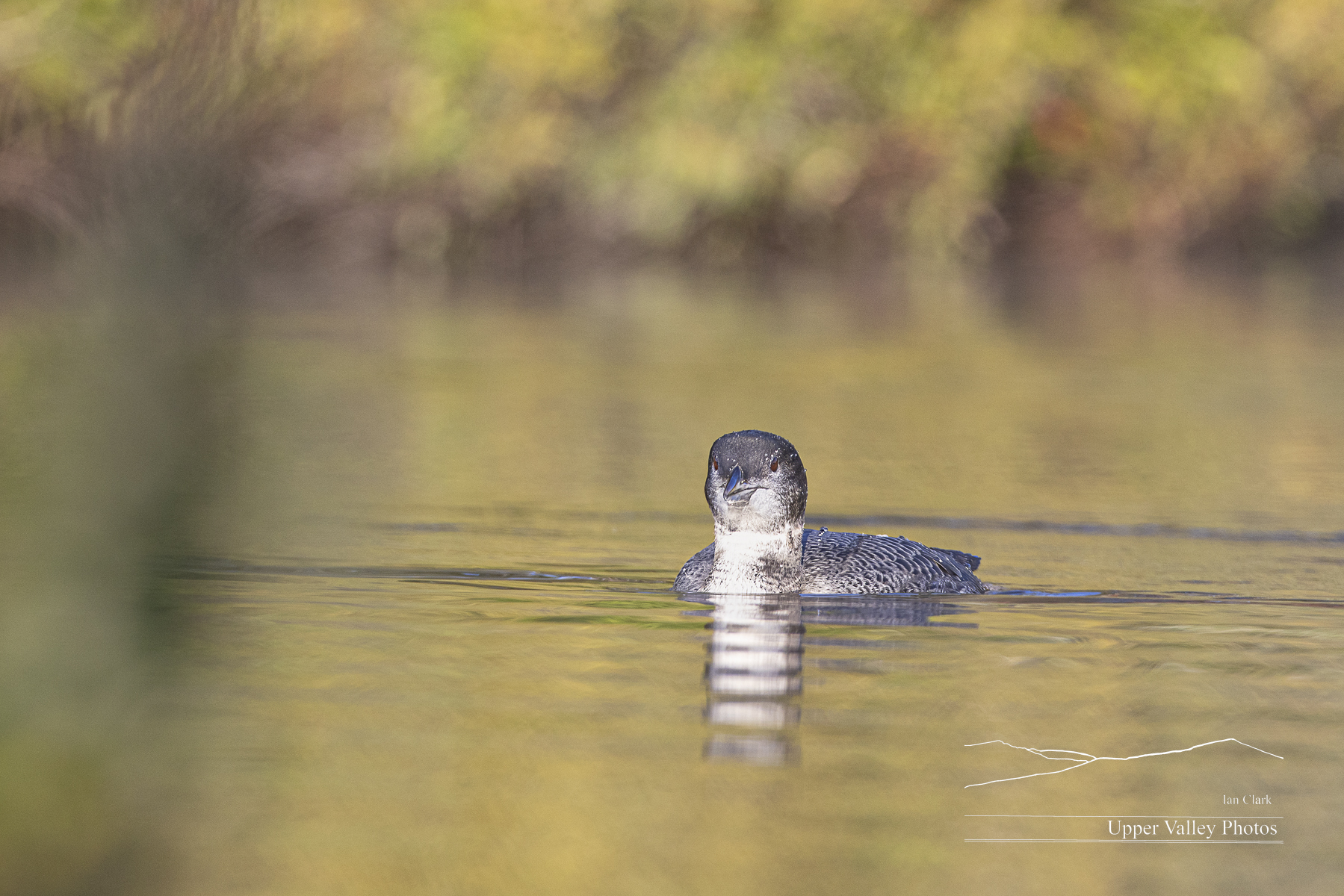
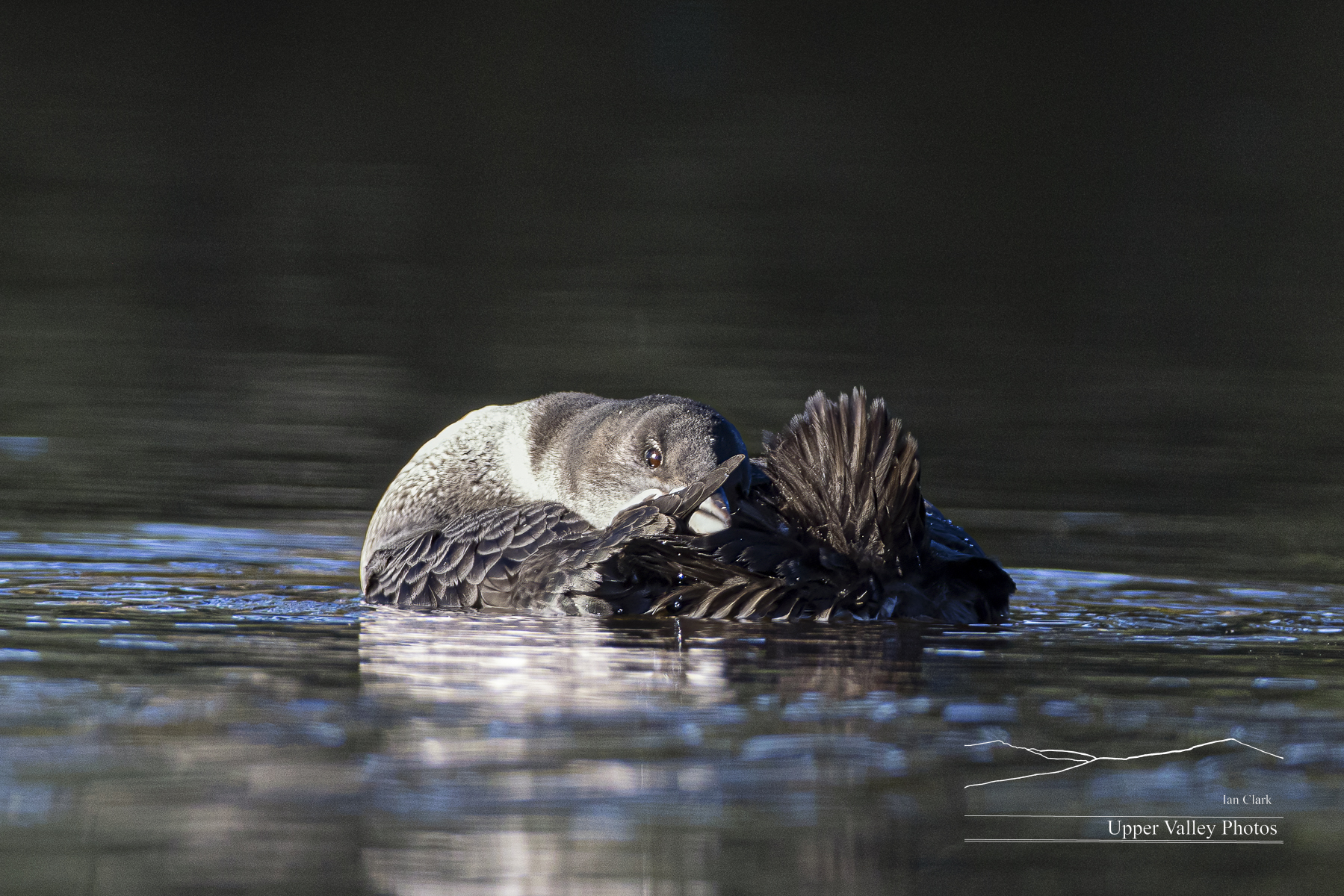
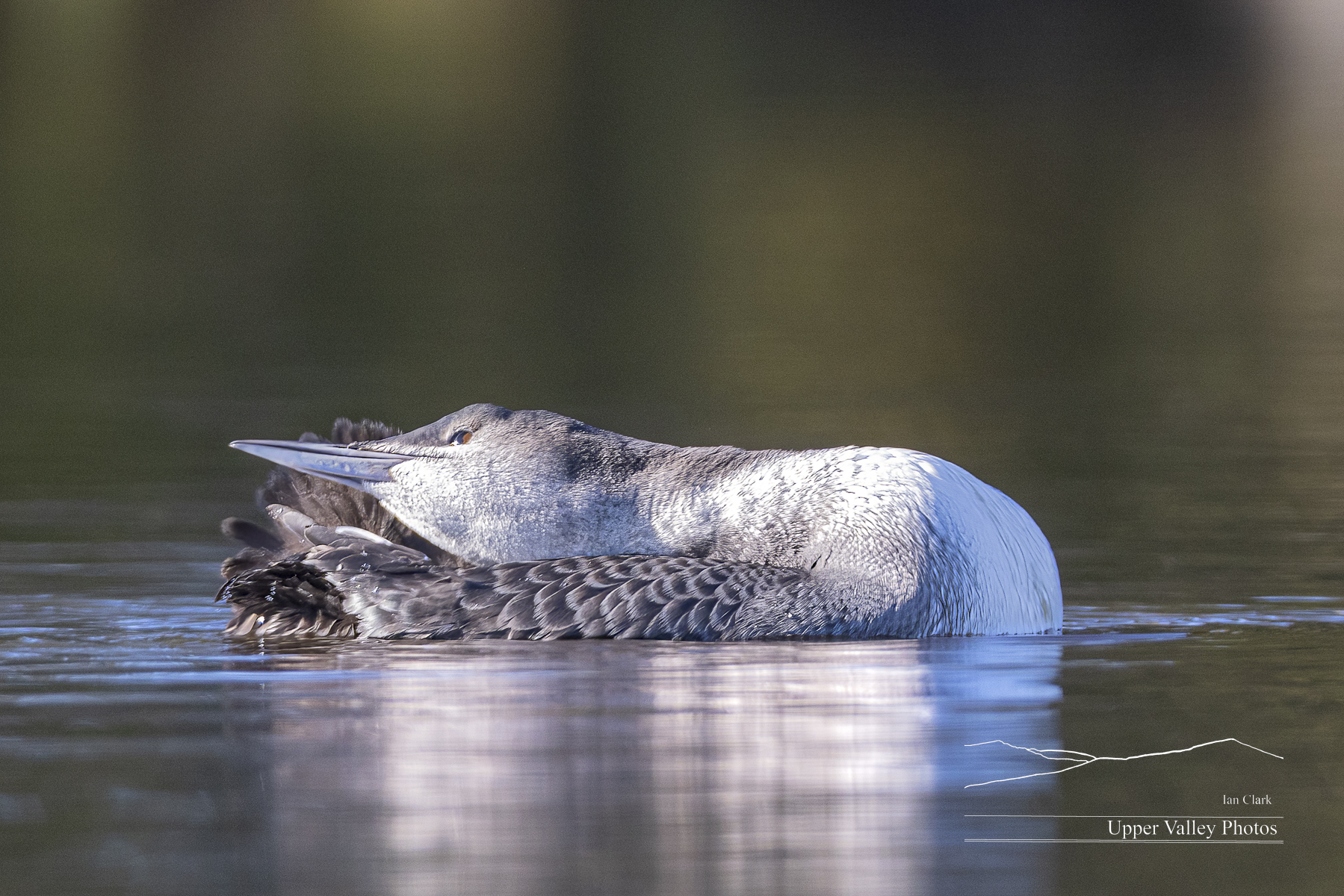
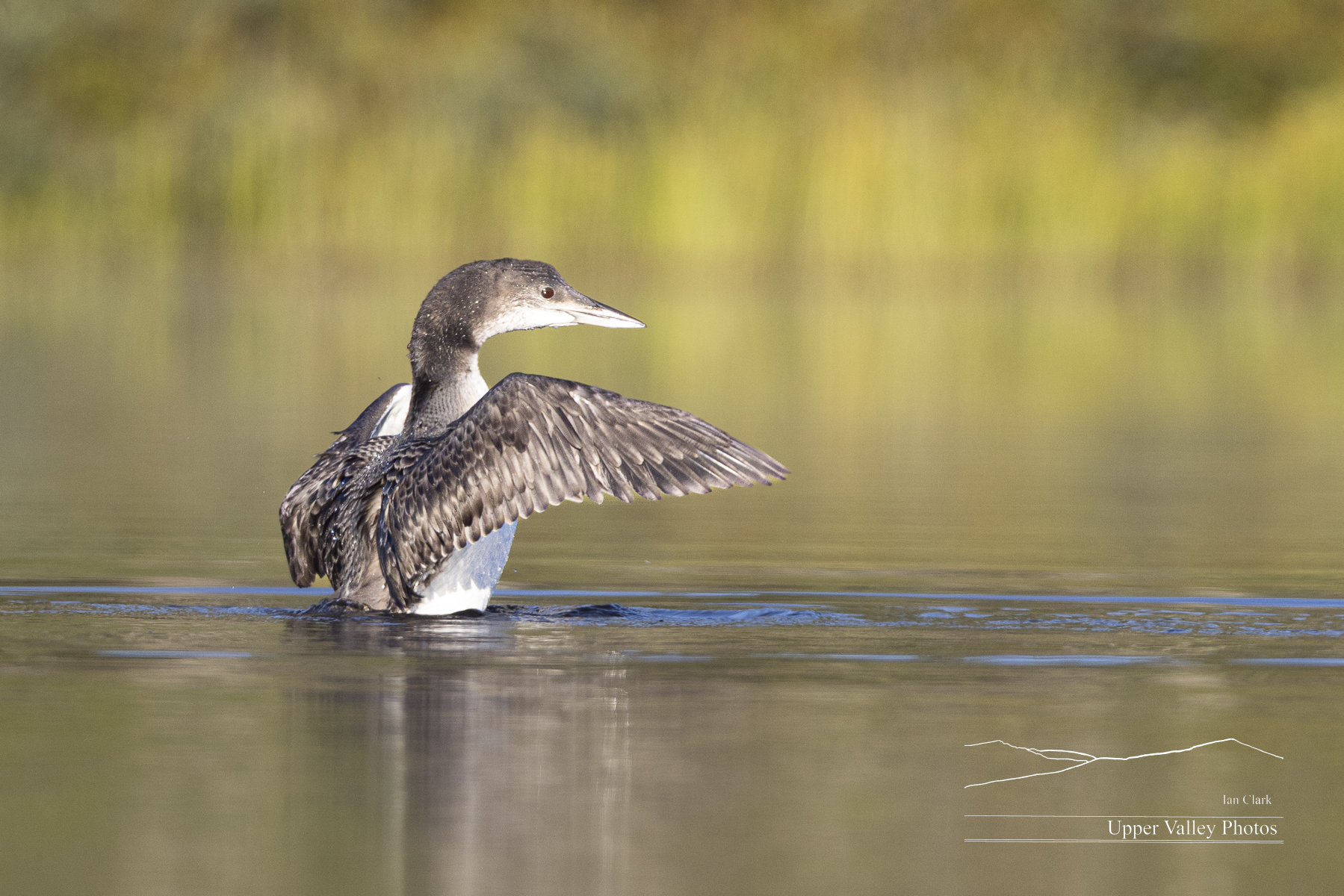
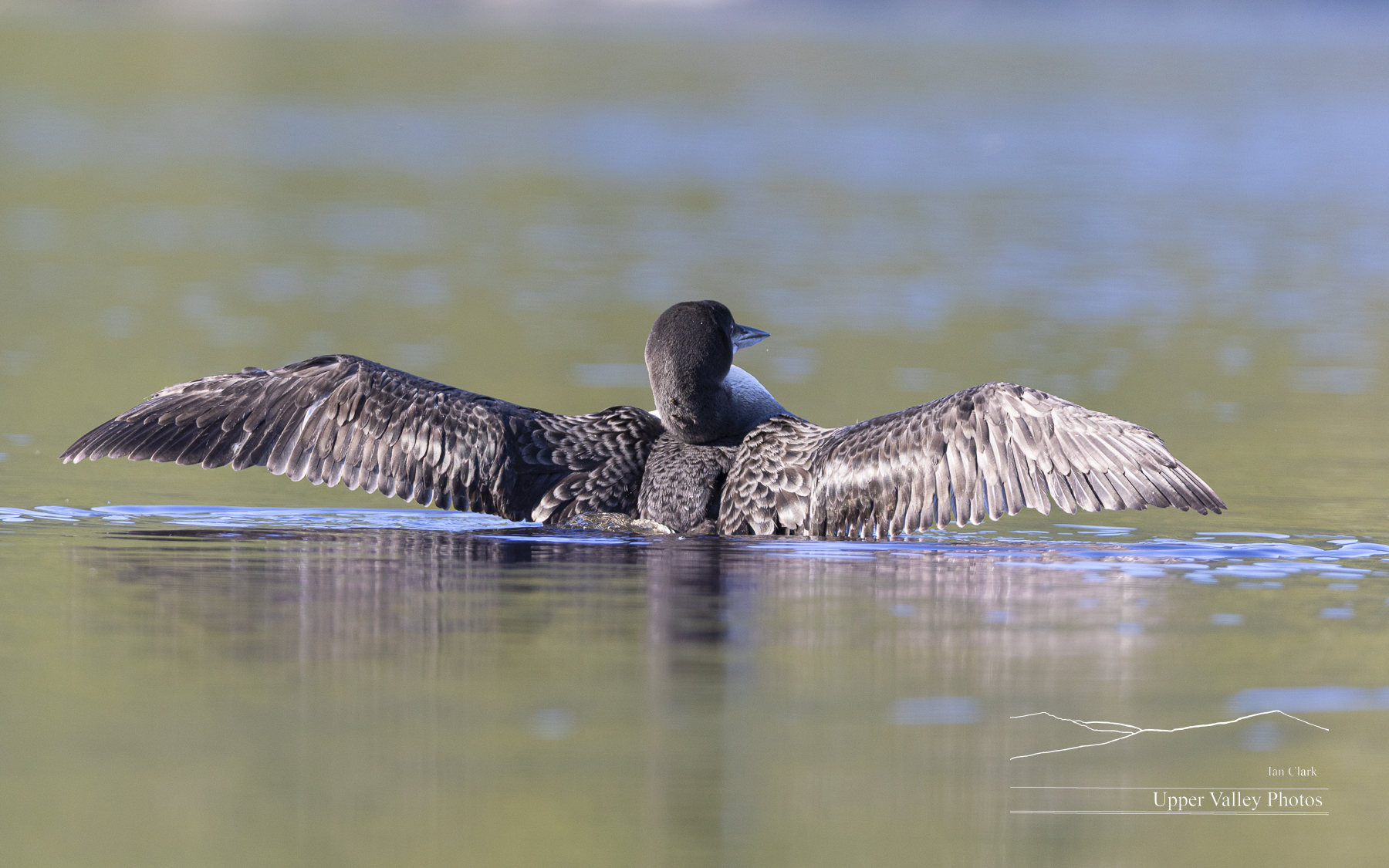
Fall had arrived when I made it to the Eastons’ pond on the 29th. When I got to the pond, it was still above the fog. A brisk 46° when I put in had me digging out a sweatshirt. Mom was tending the chicks. Dad was off the pond somewhere to start the morning. The chicks were off on their own – they’re old enough to take care of themselves. The otters were feeding and romping along the shore. They disappeared before the sun came up.
That evening, I headed down to the river to see if I could catch the heron in action.
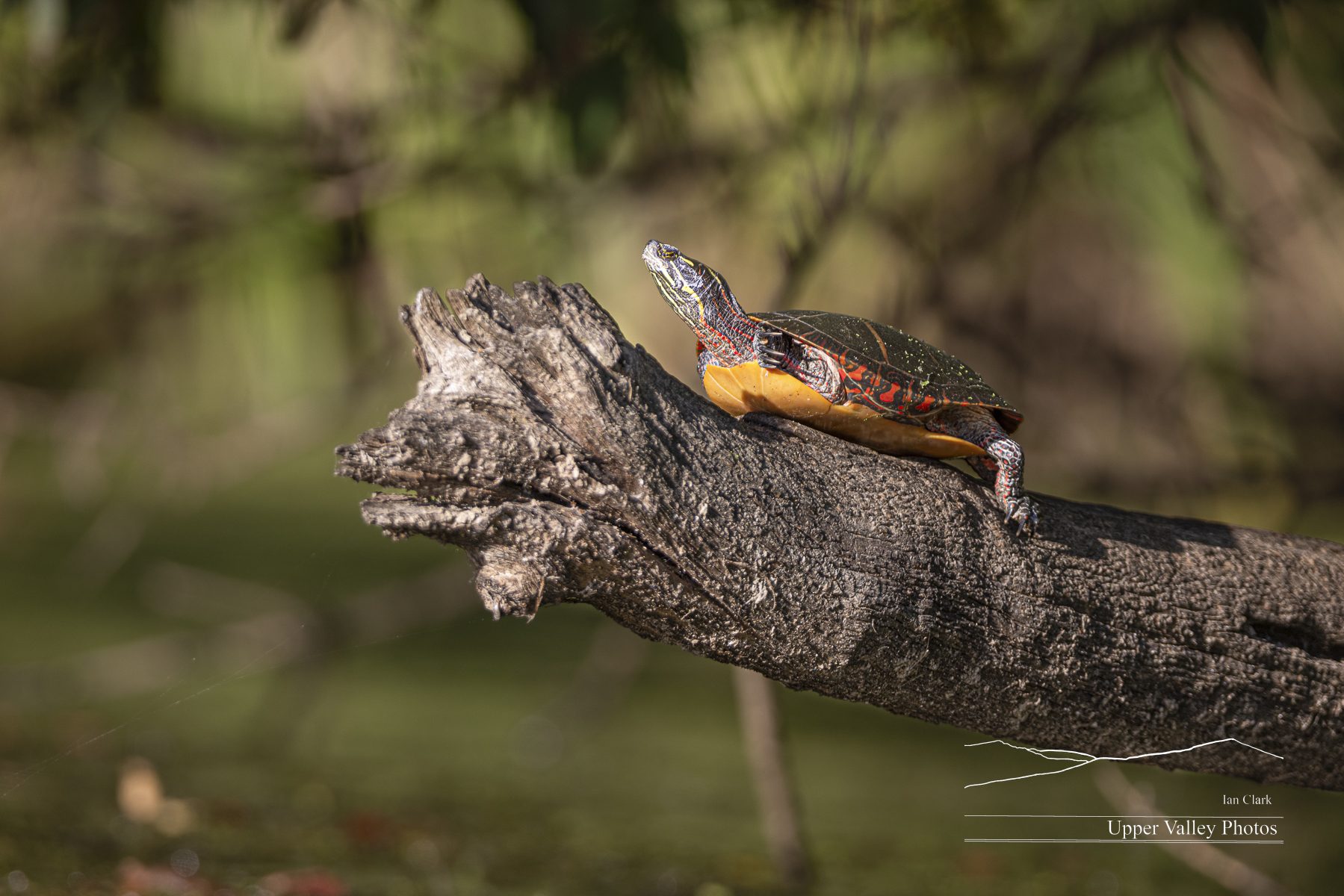
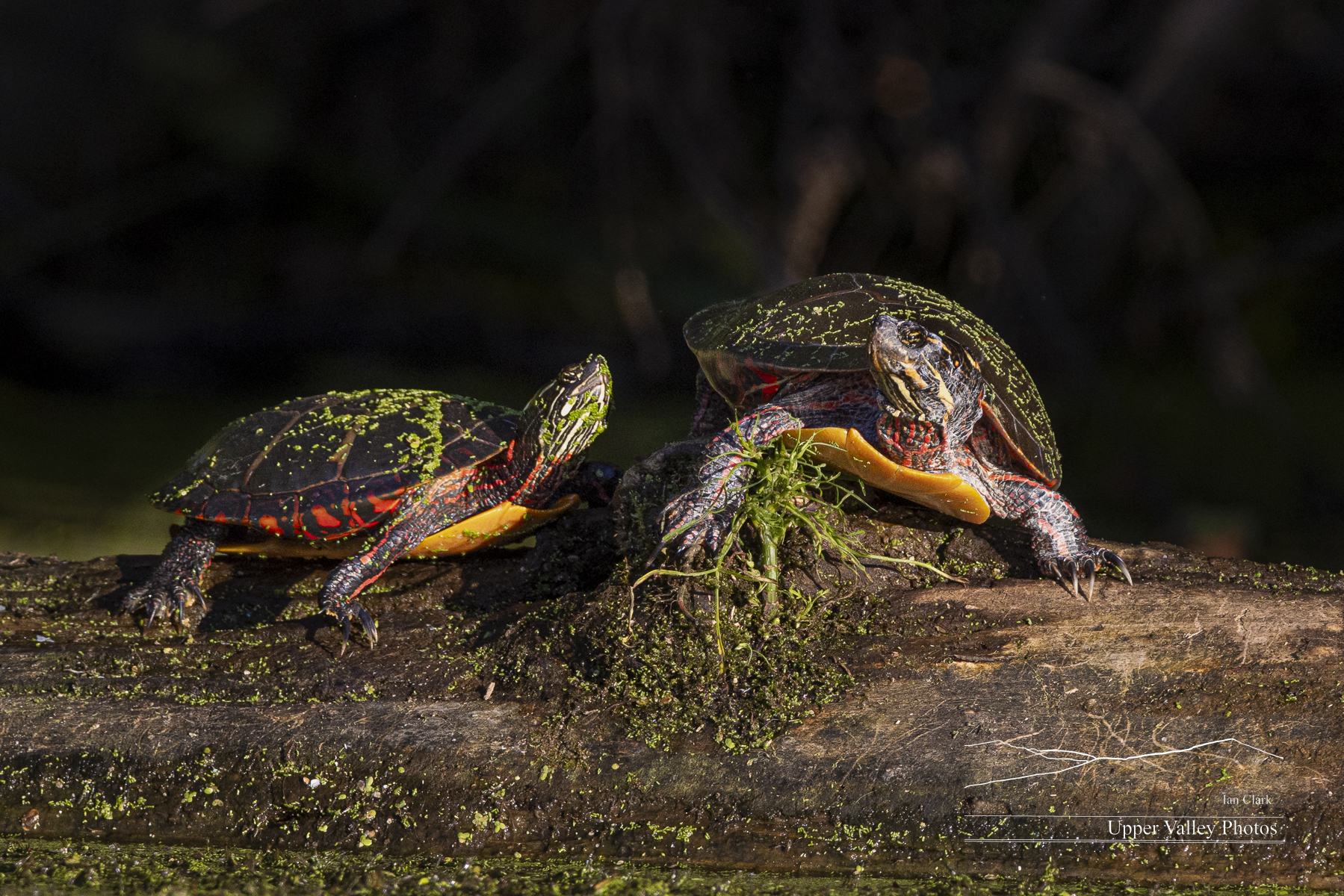
The next morning found me back on the Eastons’ pond. It was once again in the high 40s when I put in. The hill to the west of the pond has turned slightly rusty and there were a couple trees around the pond that have already turned. Once again, the otters were playing along the shore, but didn’t stick around for photos. Both loon parents were on the pond, but trying to leave the chicks to fend for themselves. They succeeded for a time.
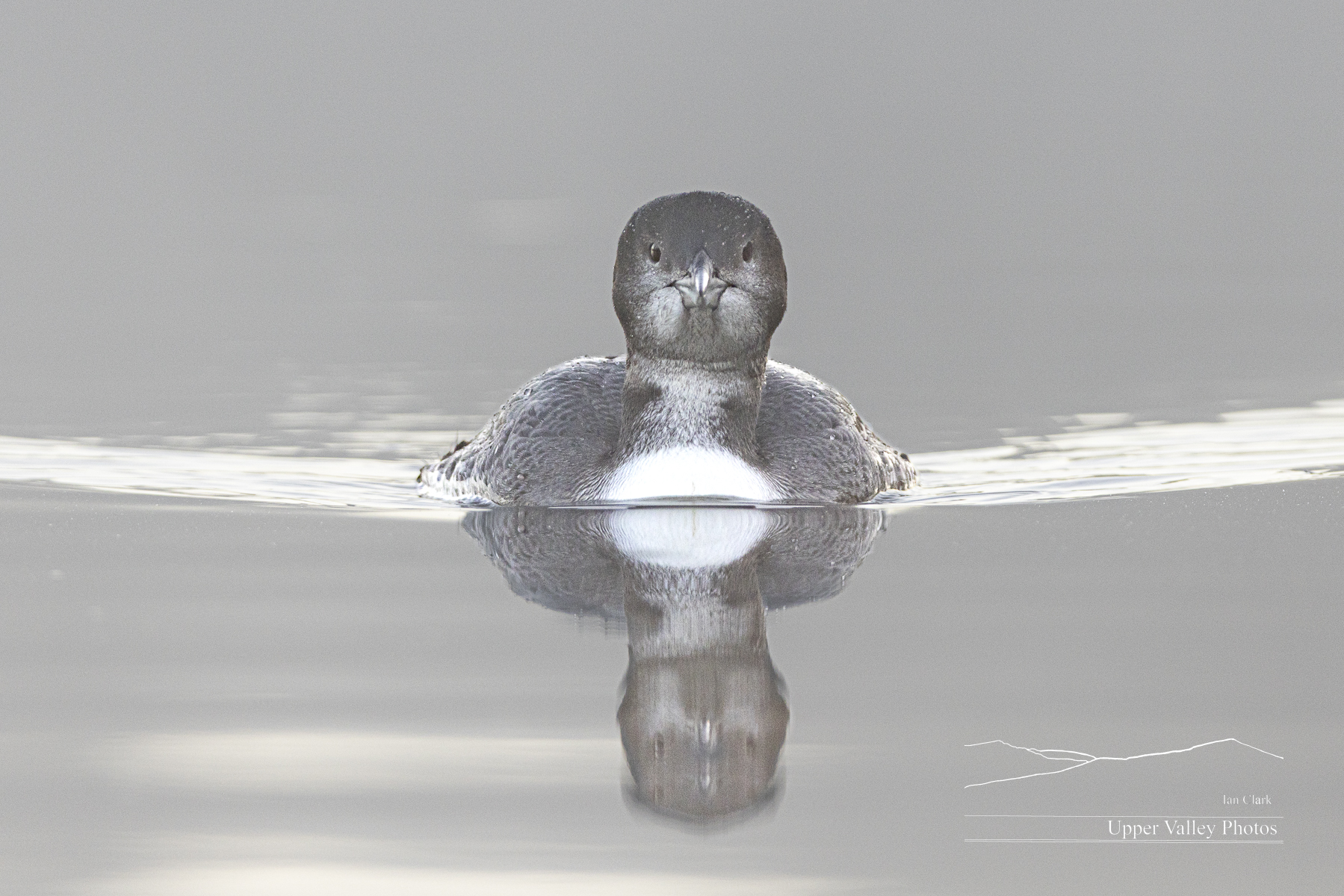
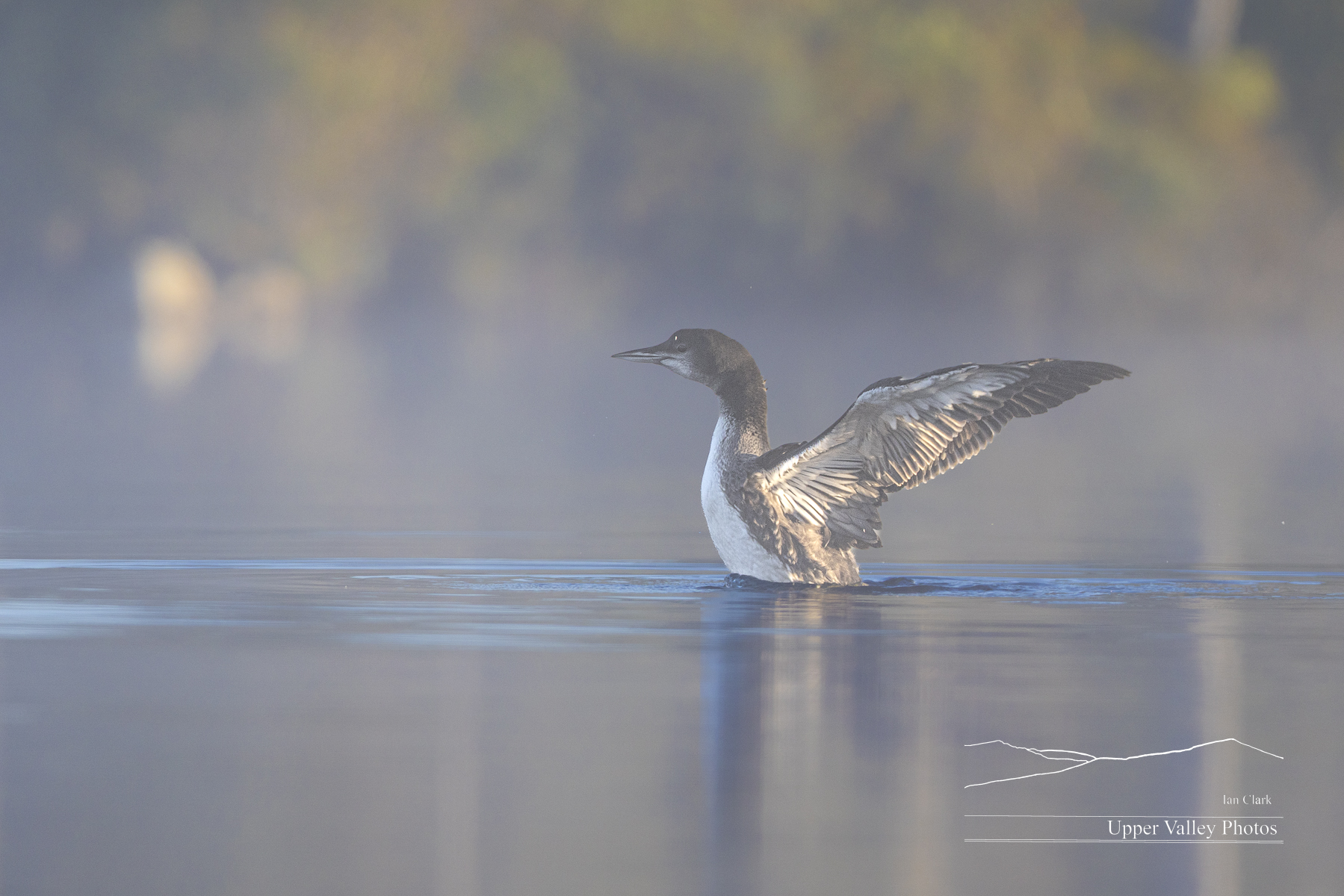
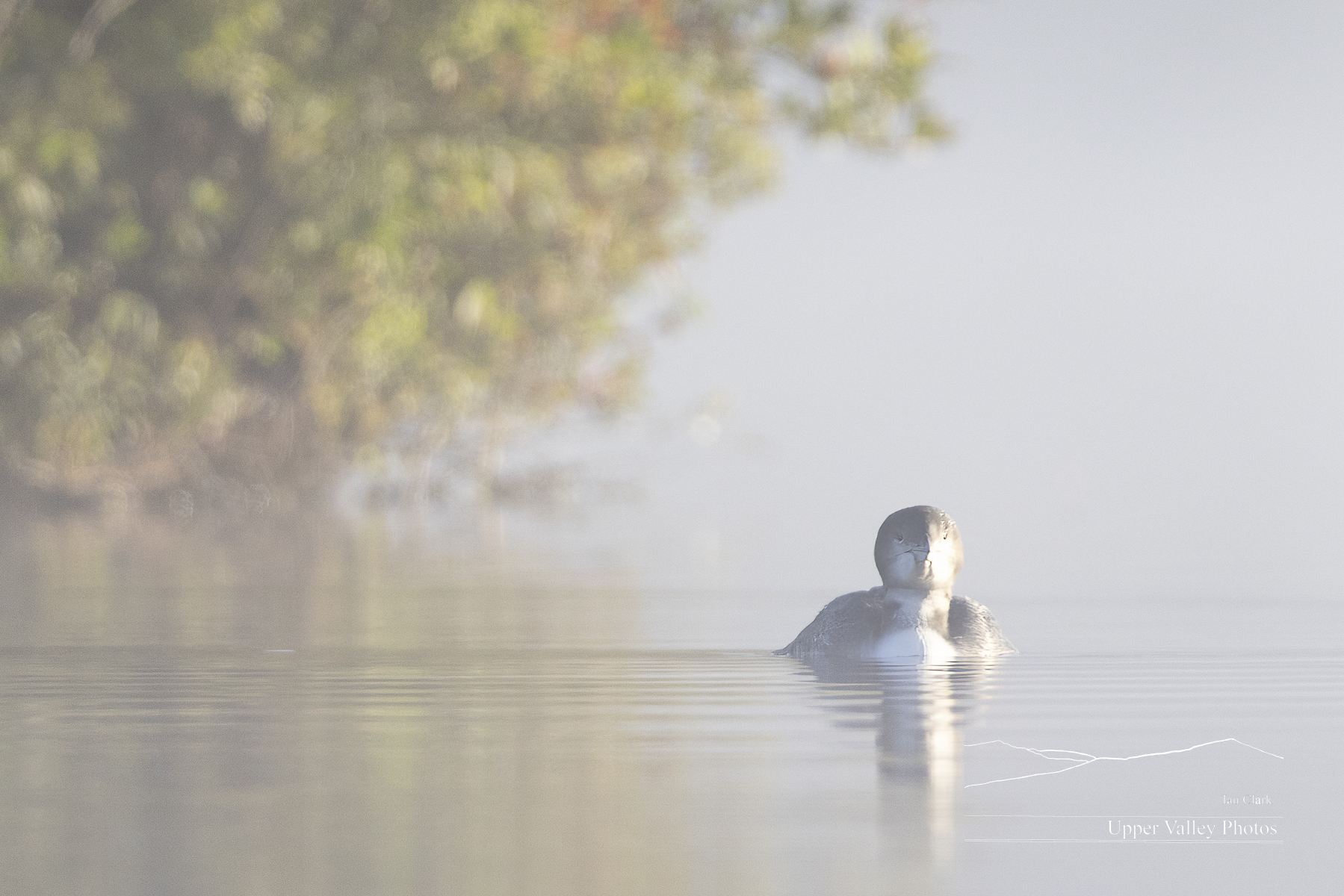
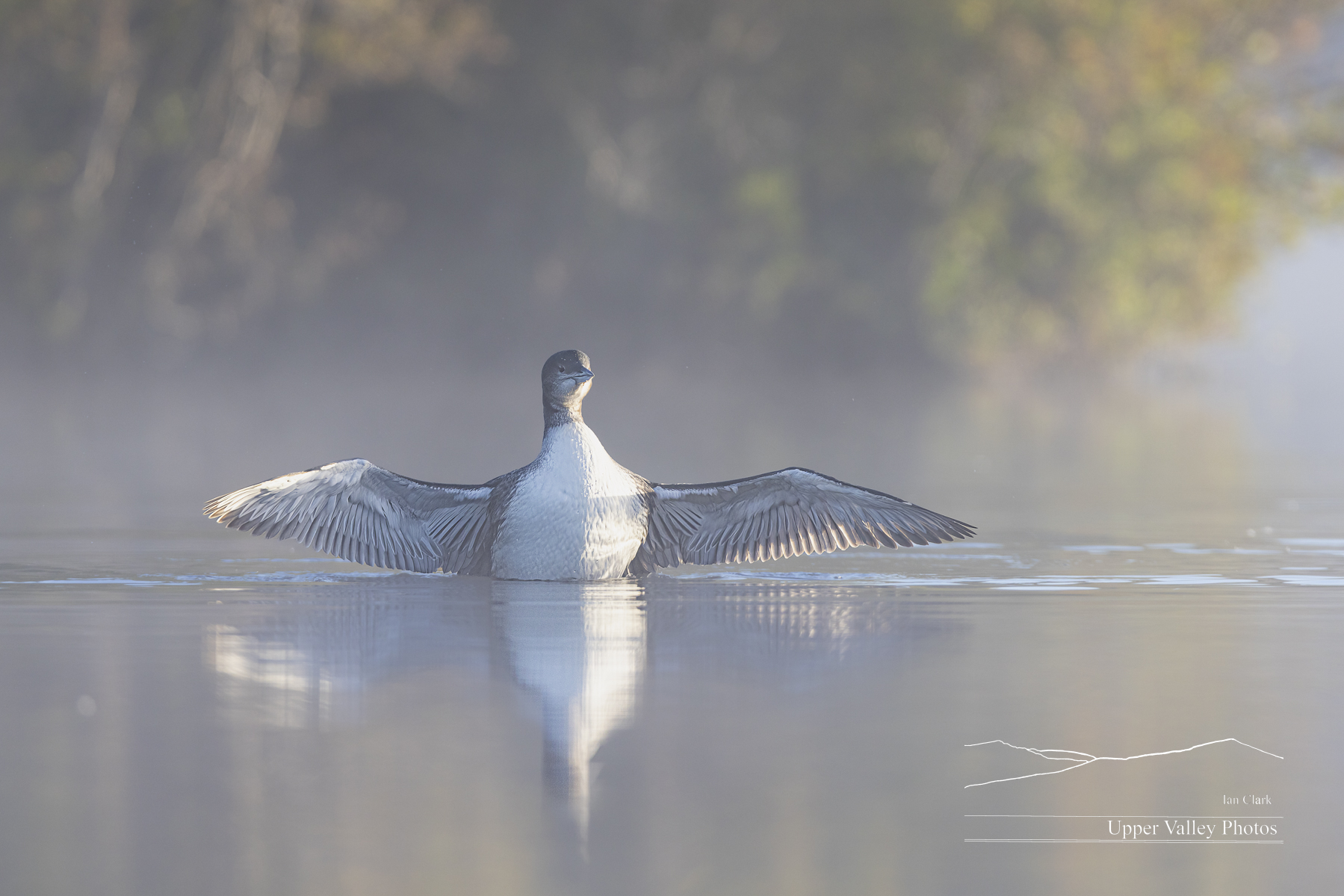
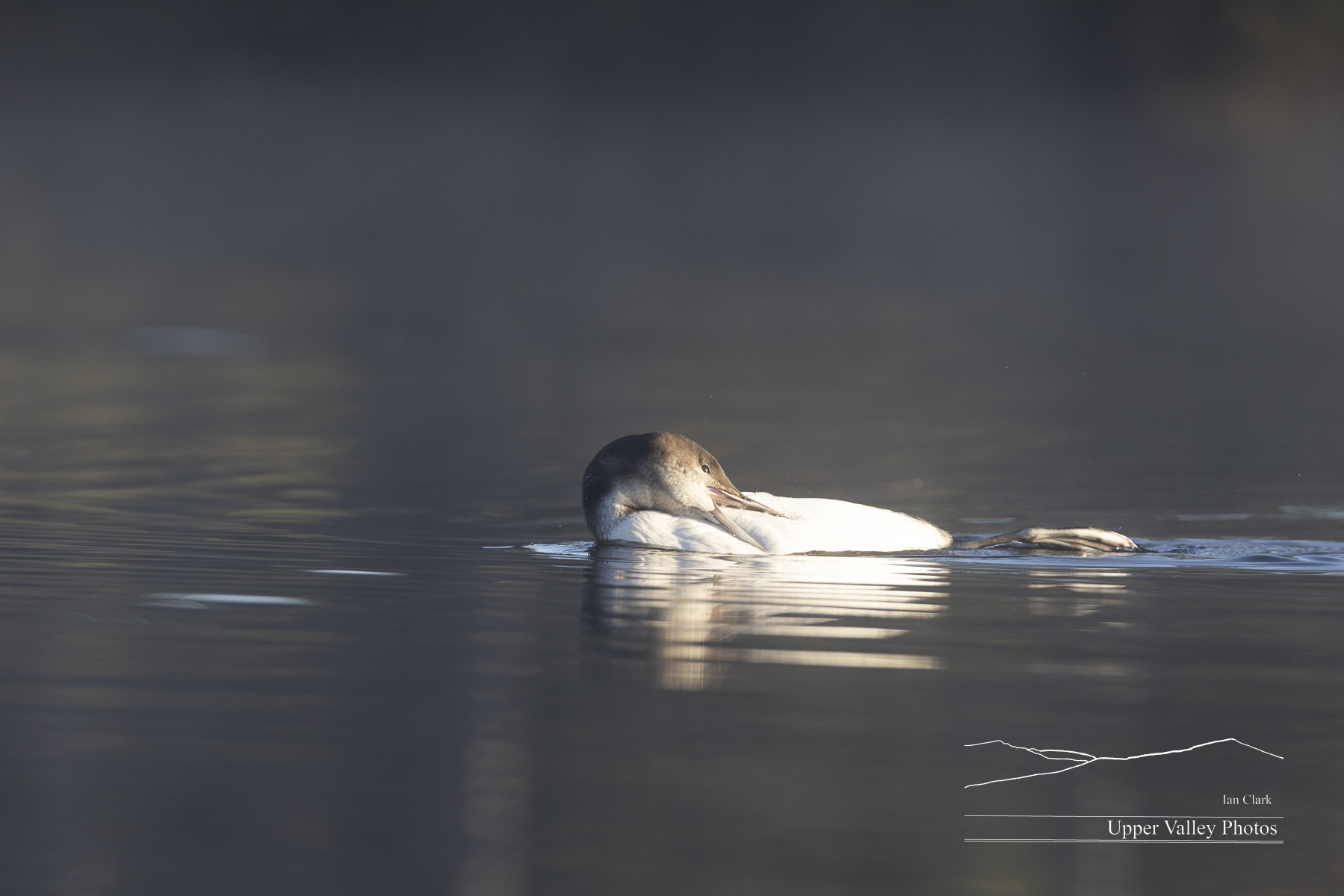
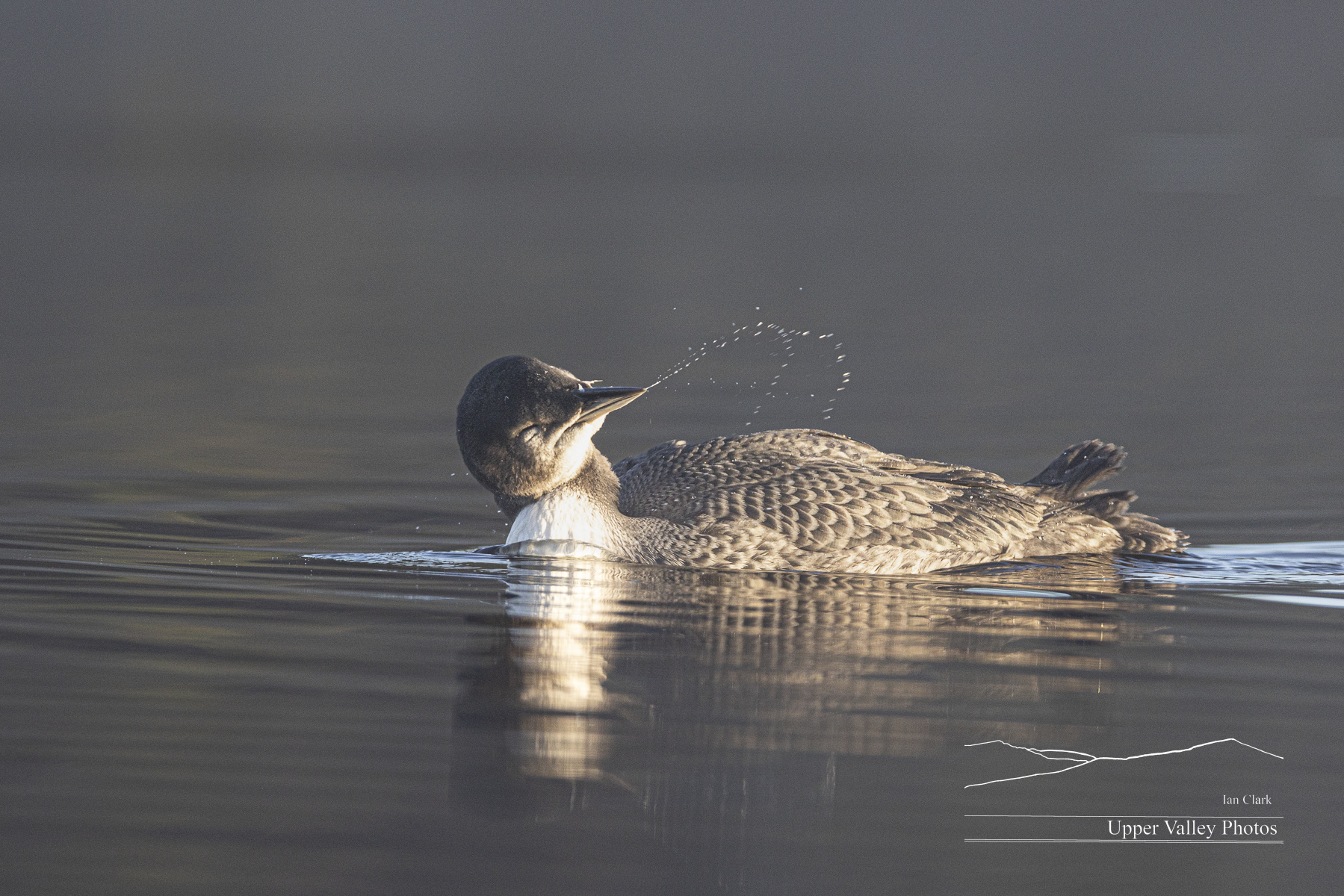
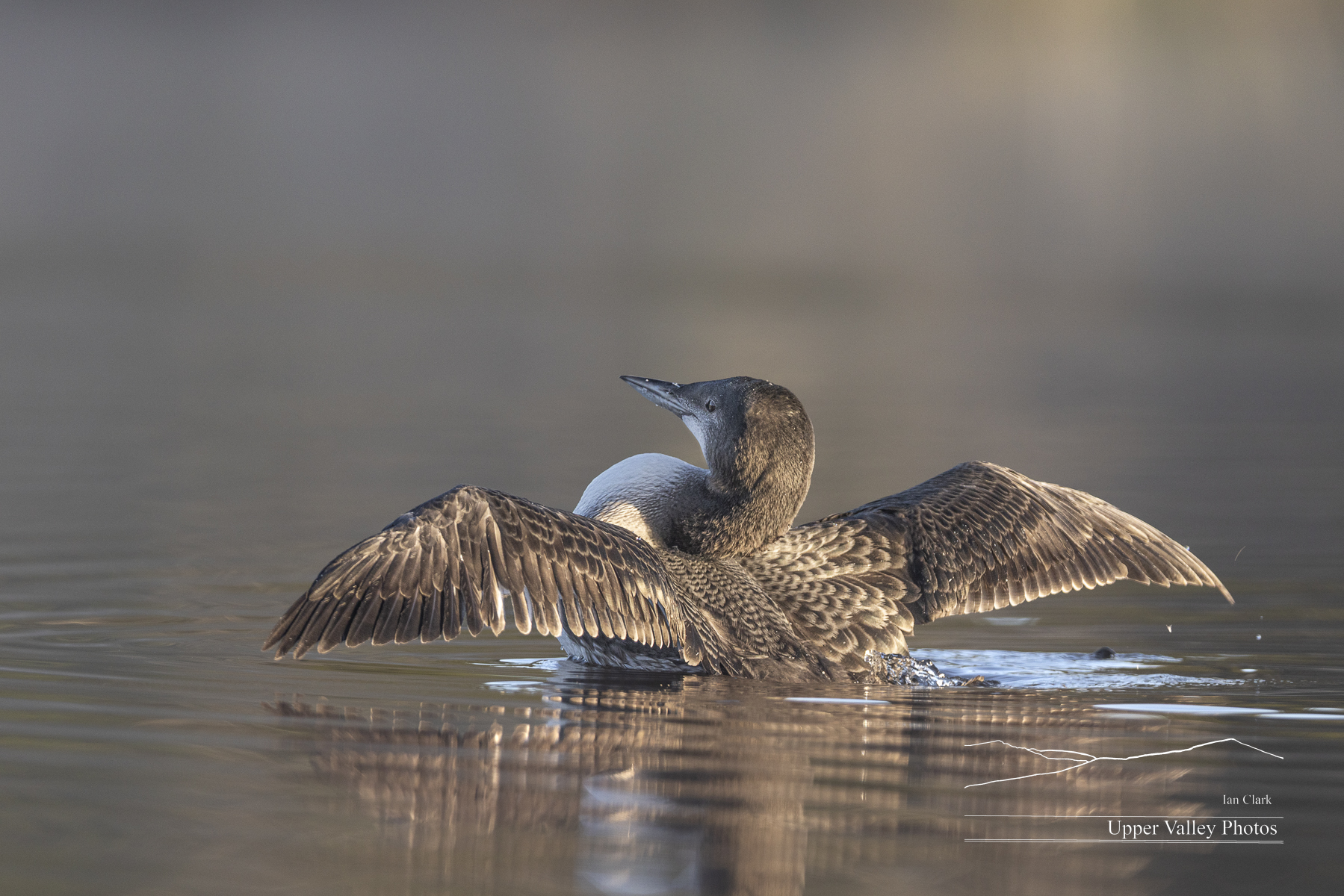
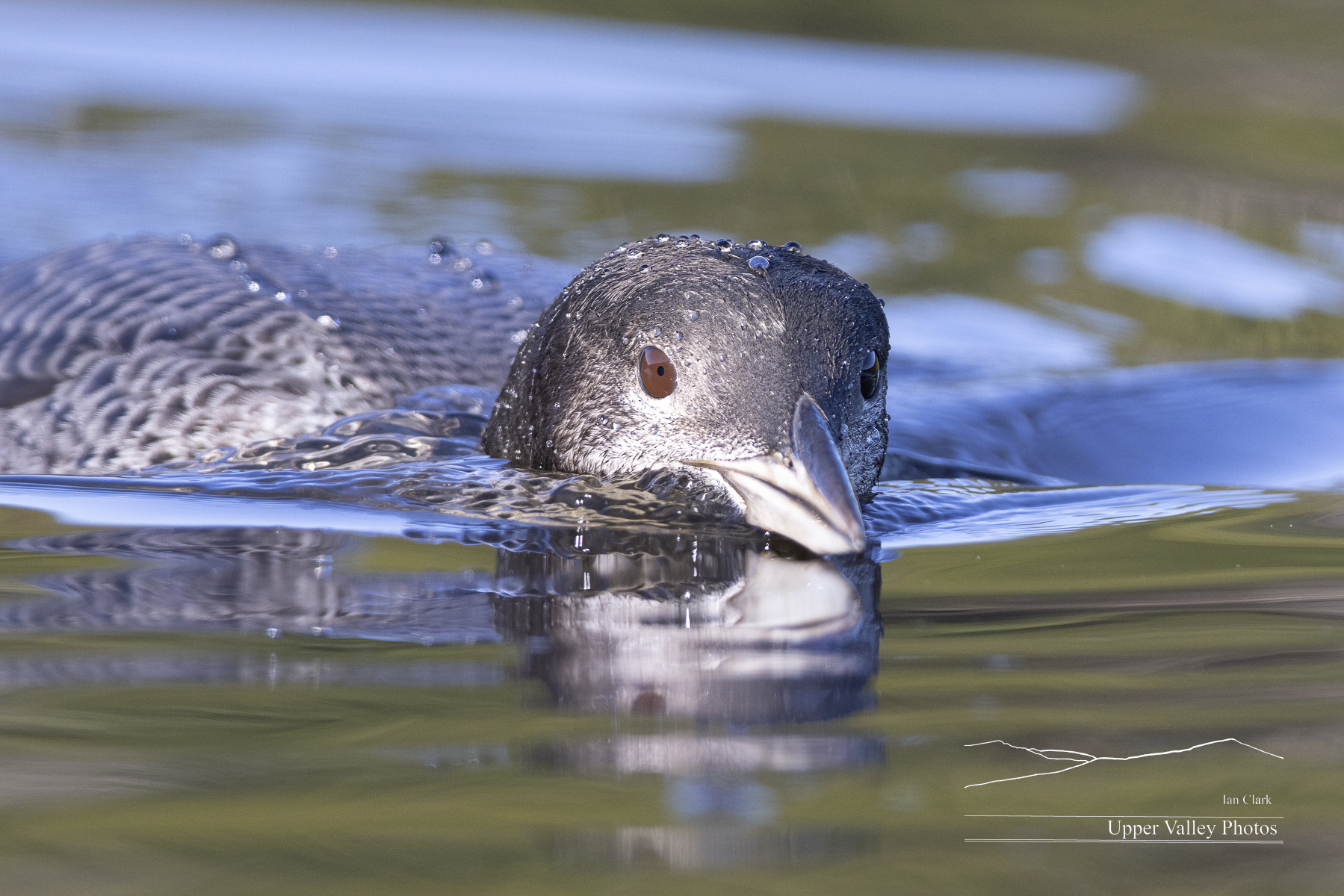
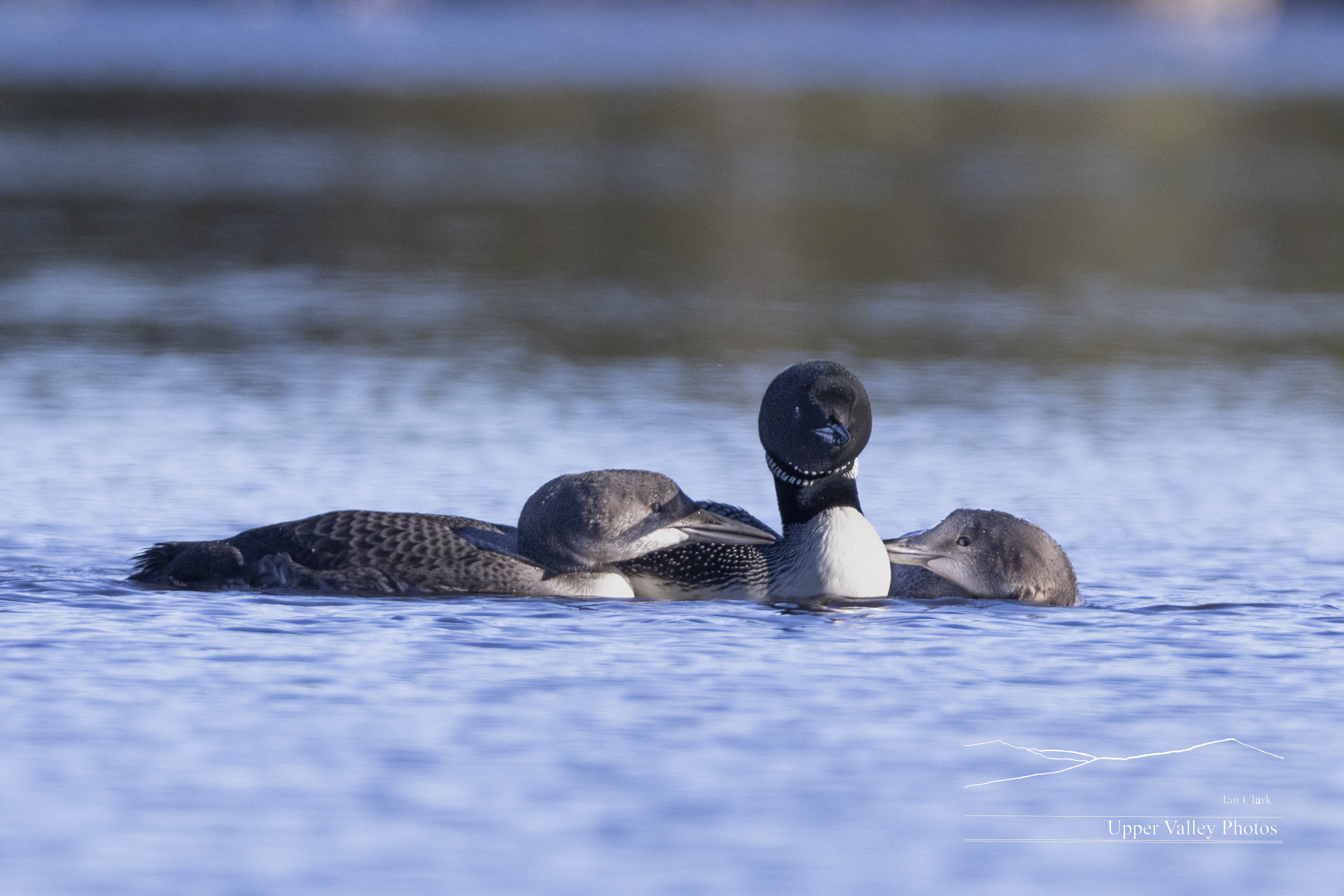
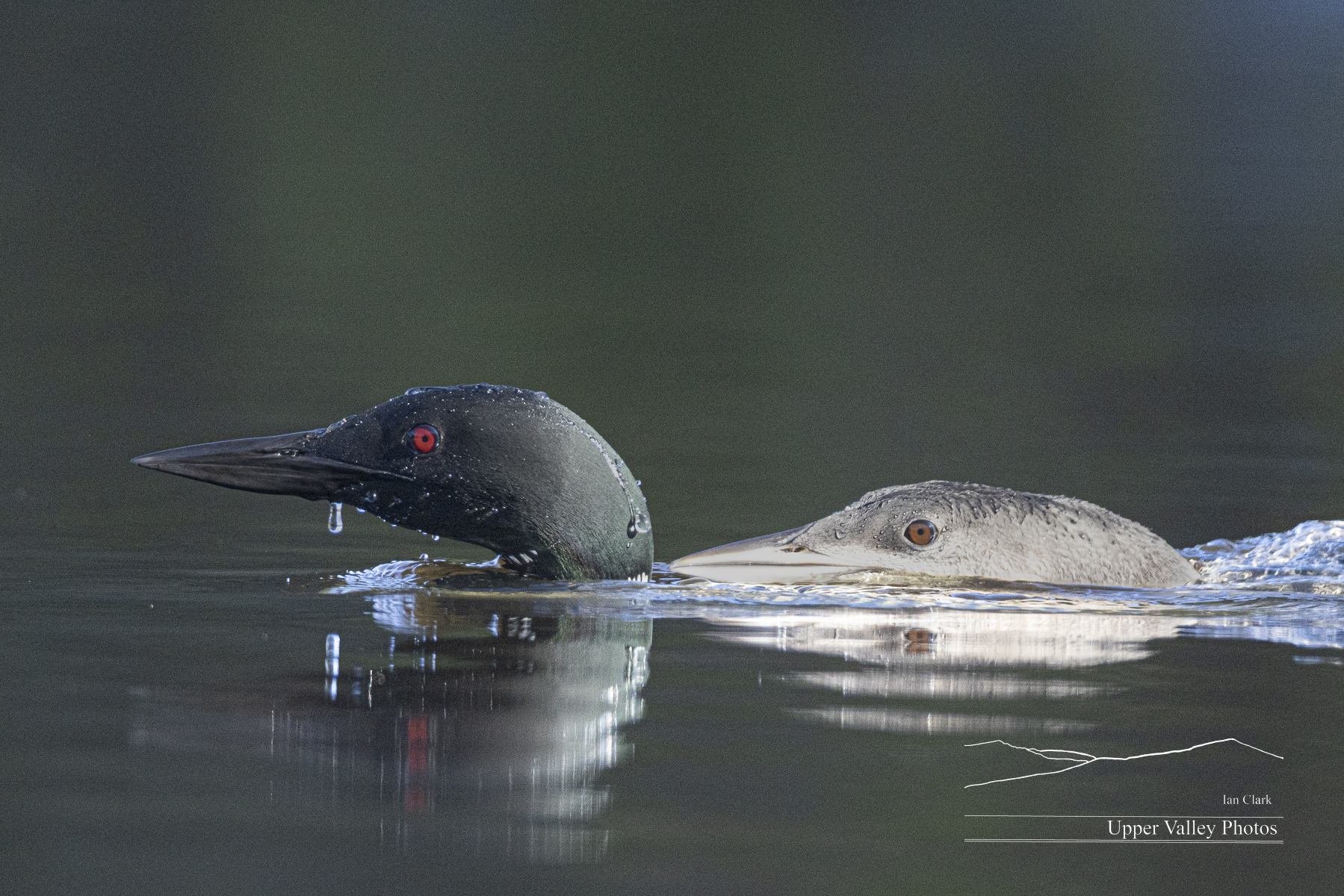
I waited a time after the wind picked up. Neither chick showed an inclination to try flying so I headed in.
That evening I headed back to the river to see if the green heron would cooperate this time.
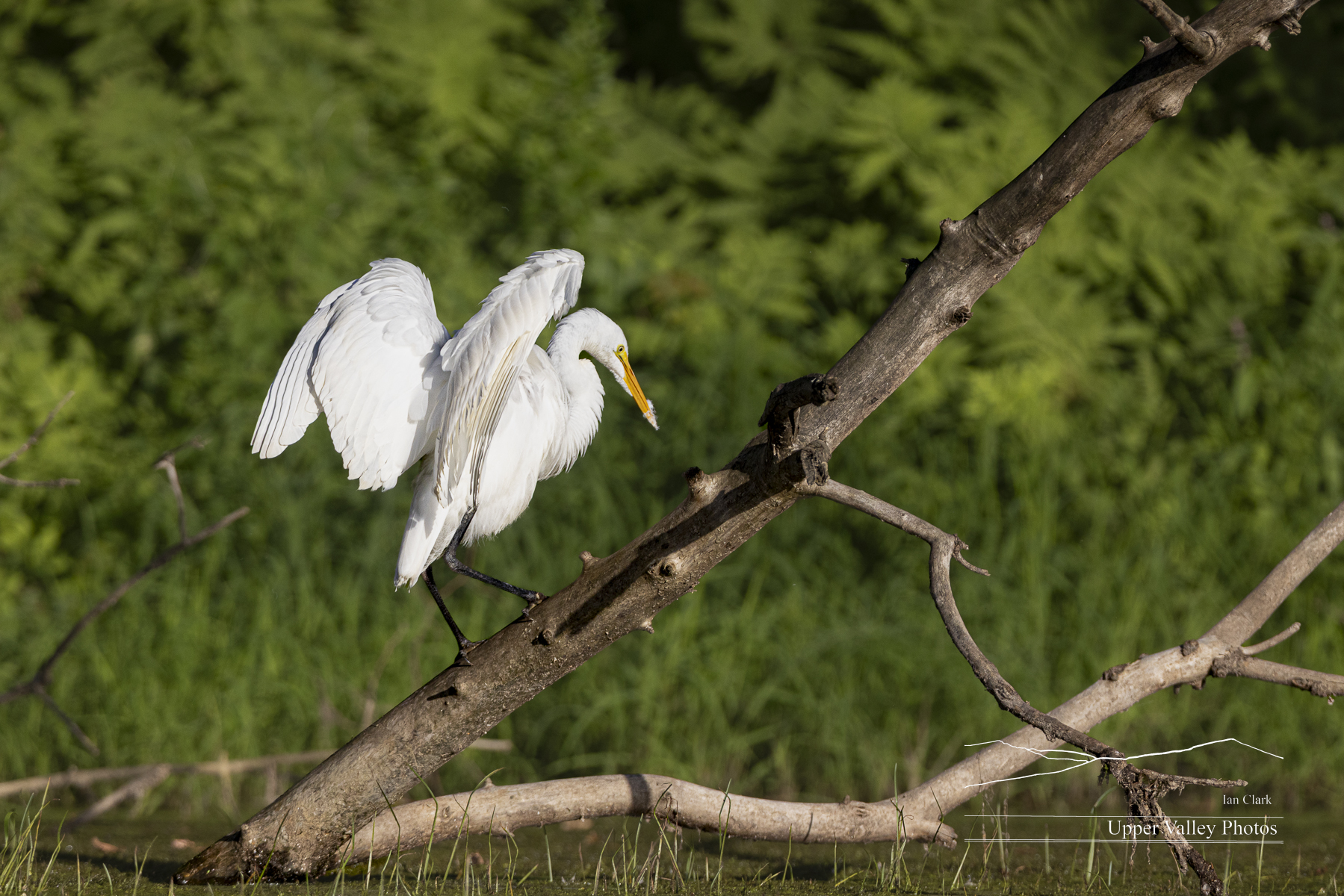
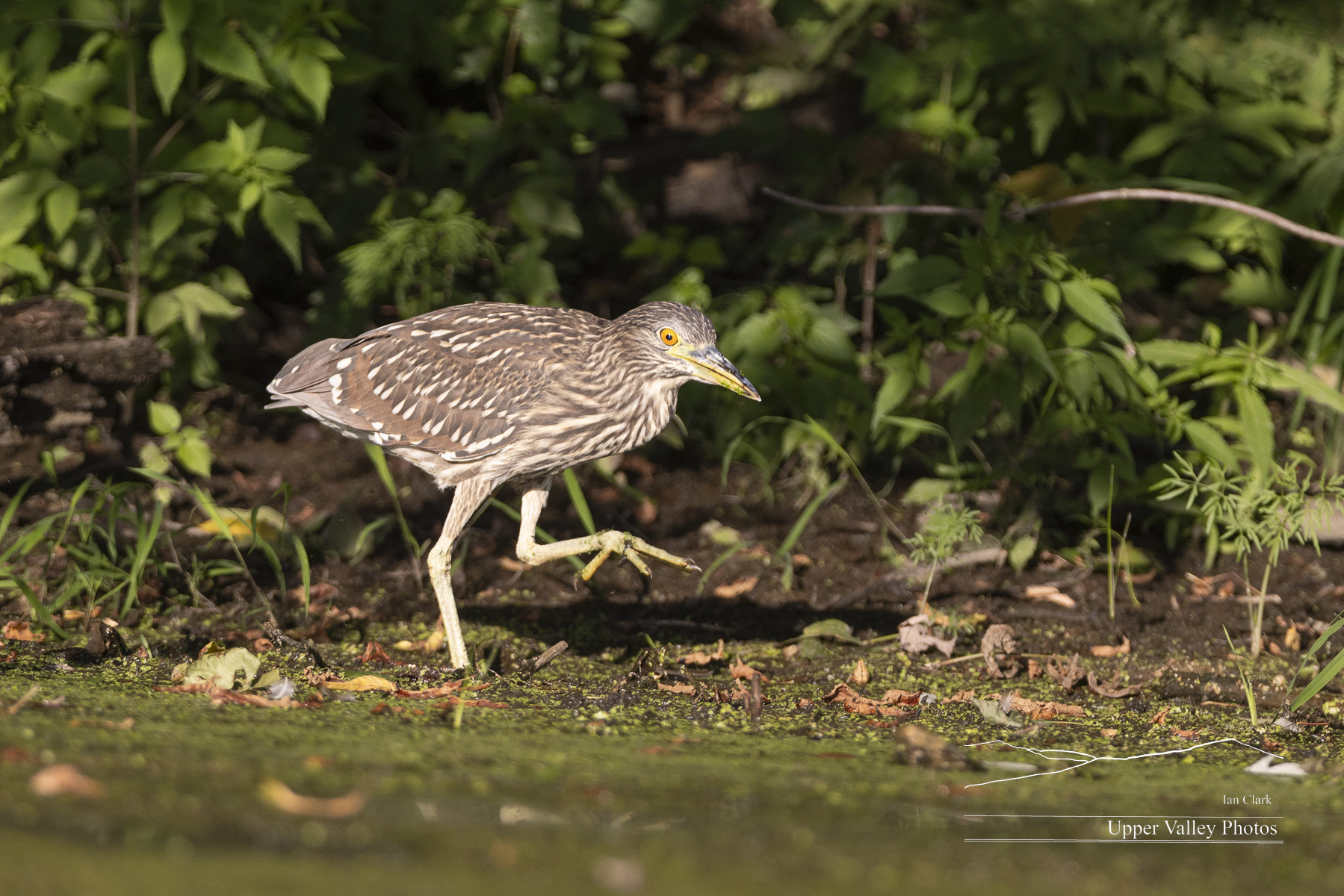
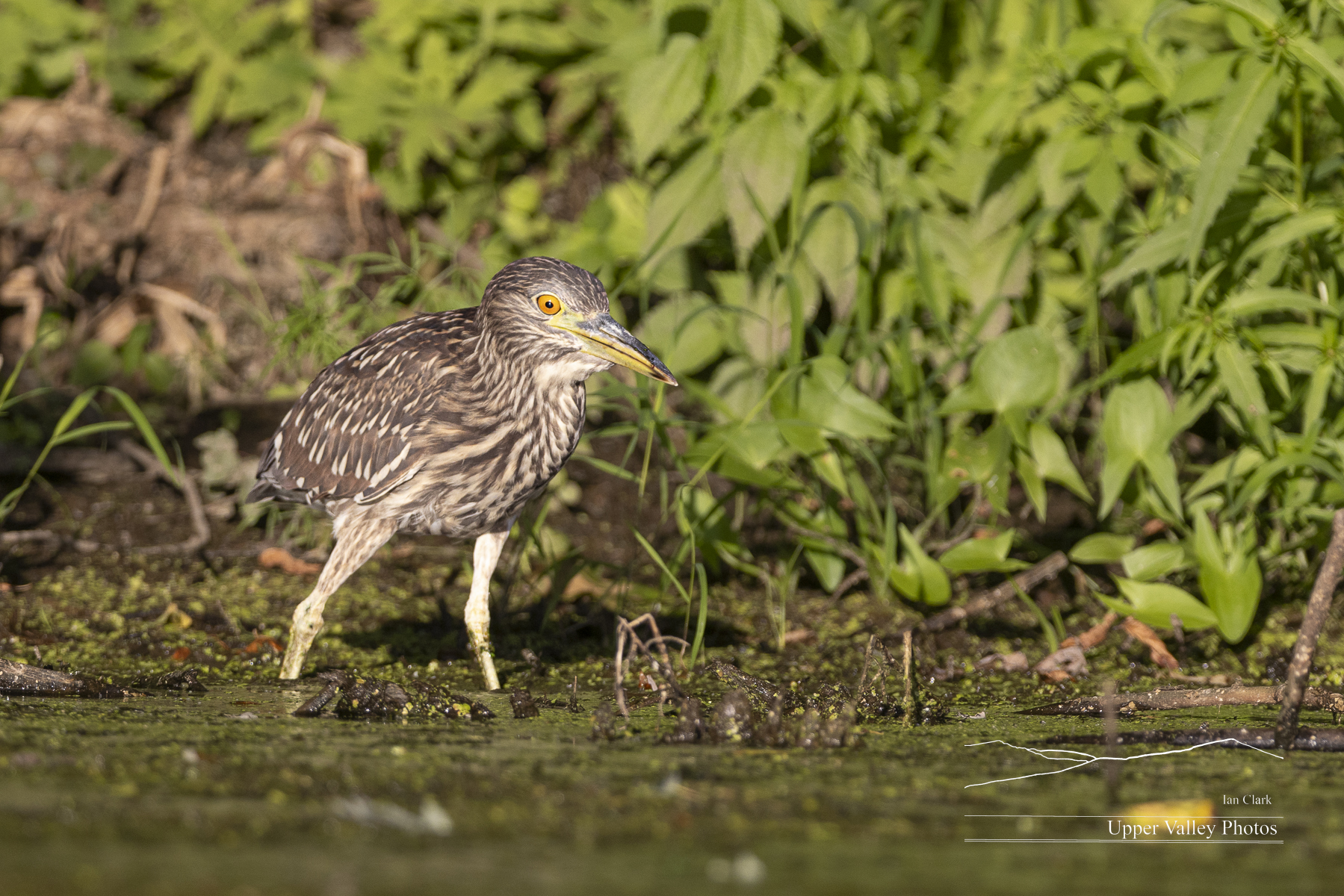
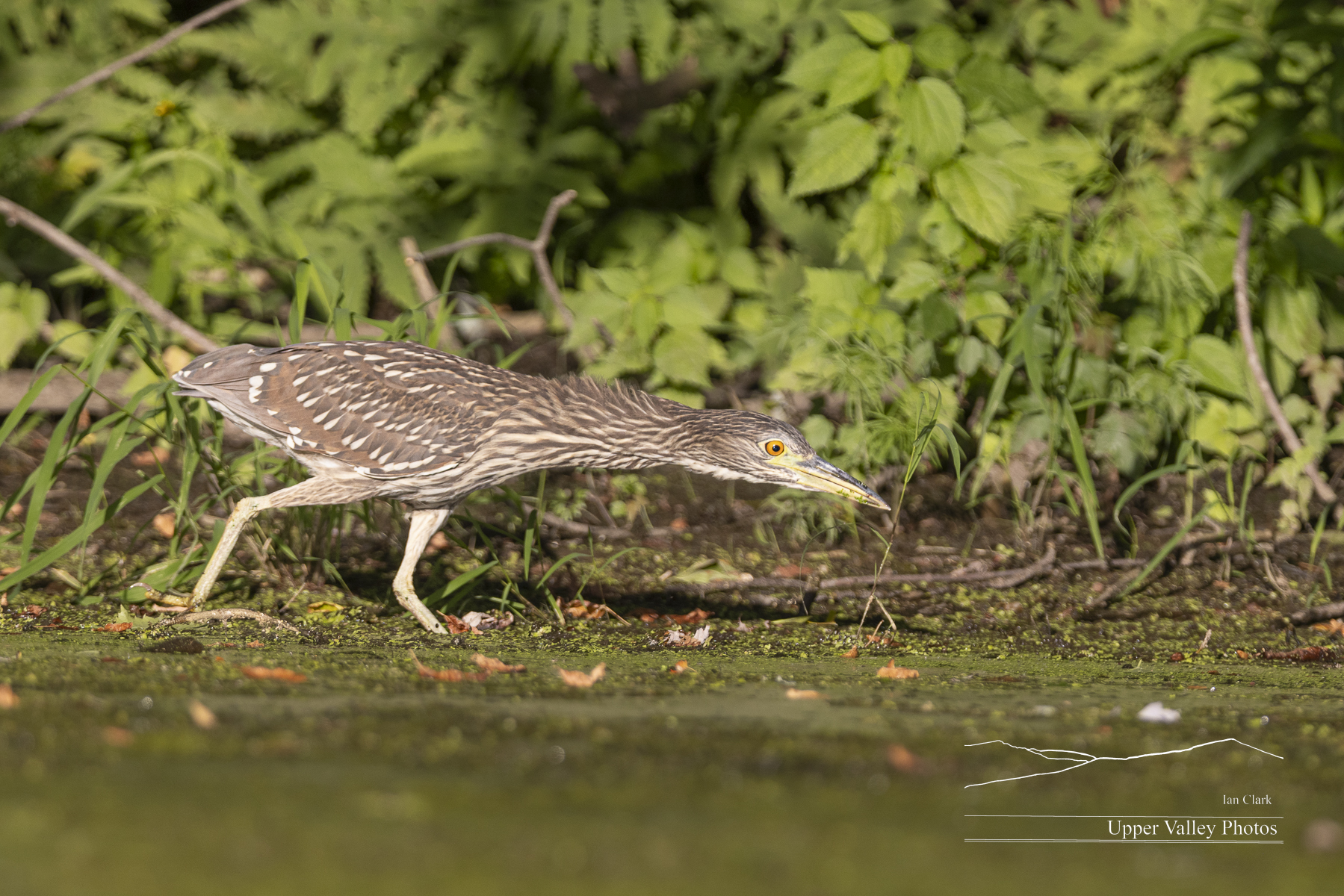
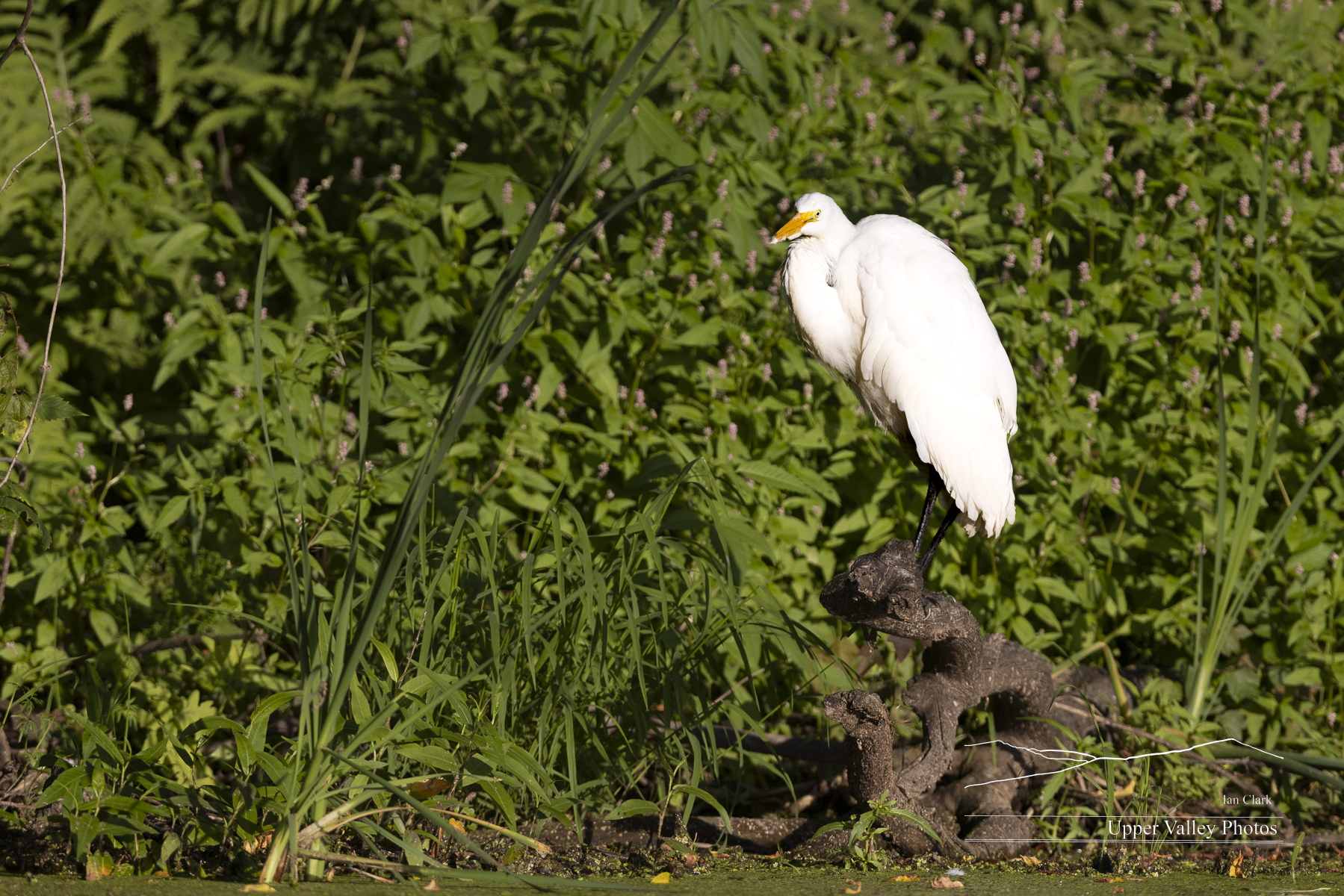
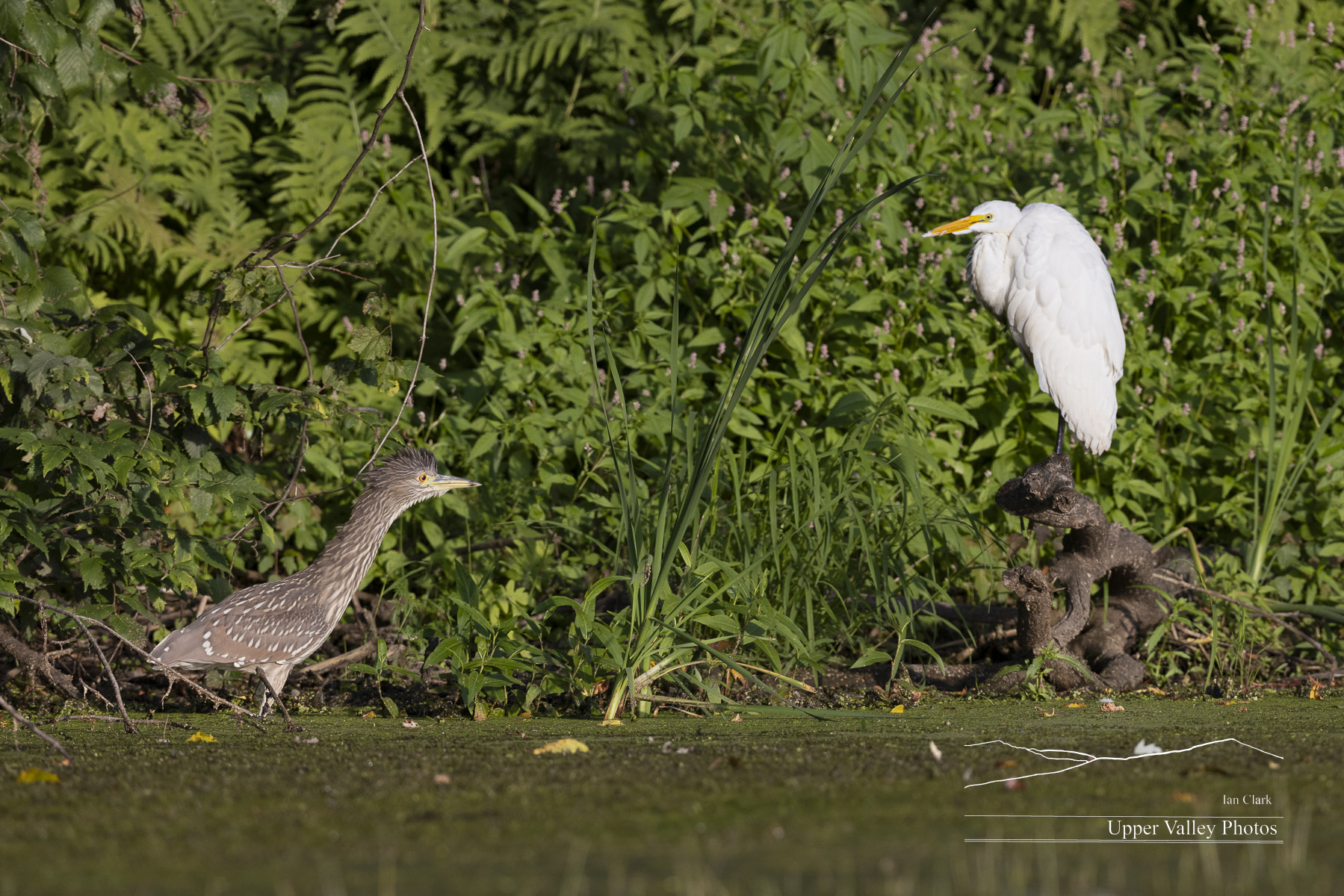
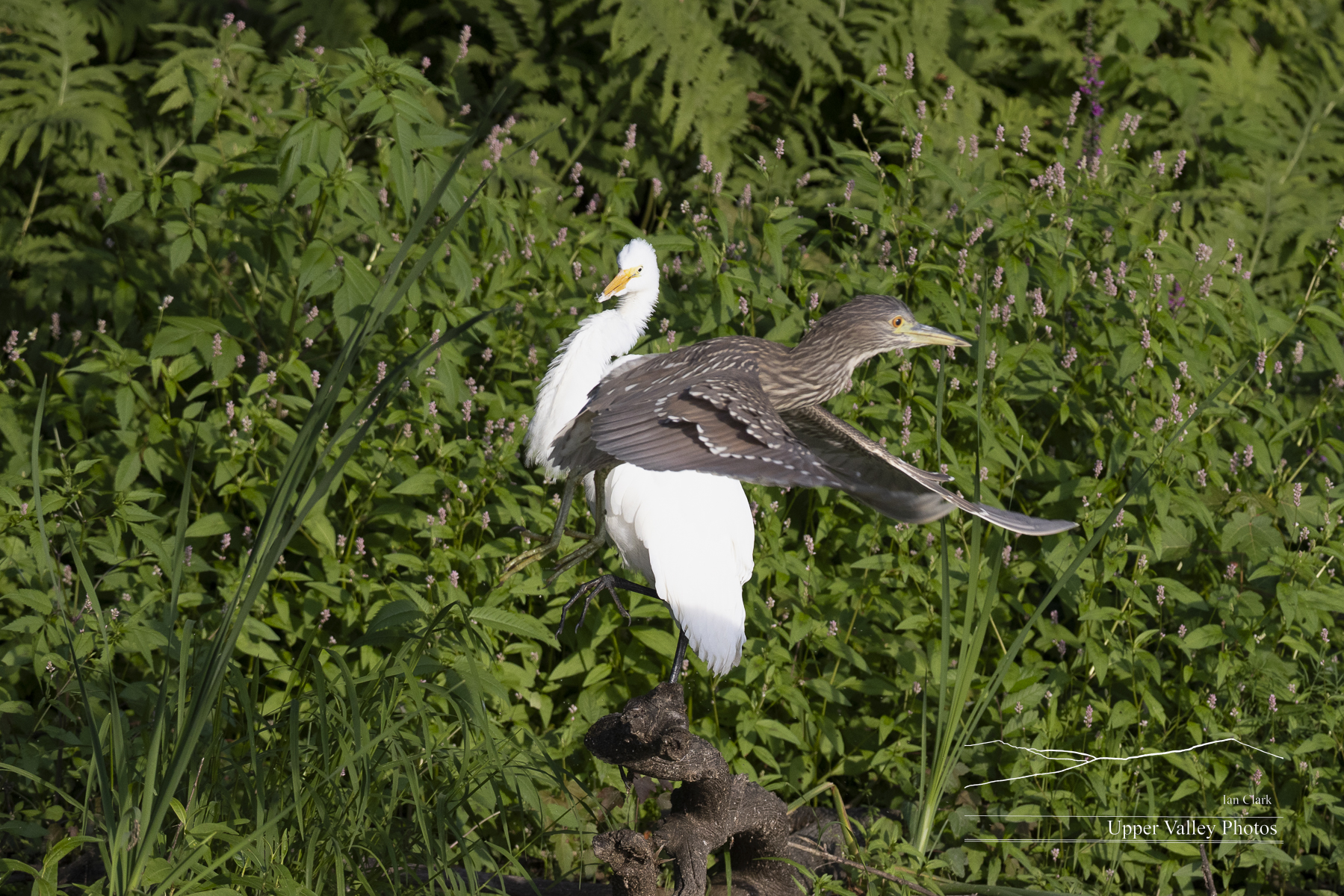
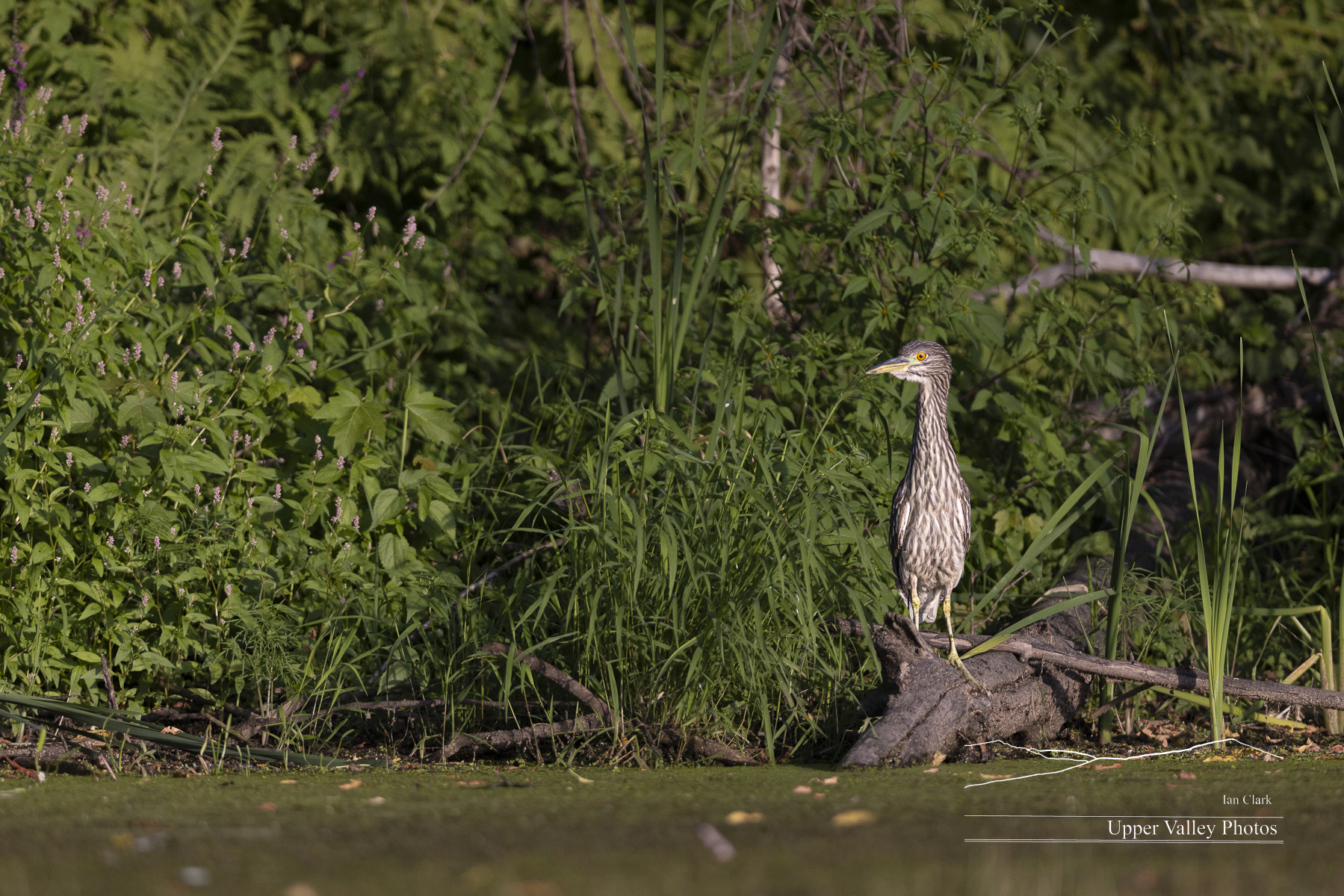
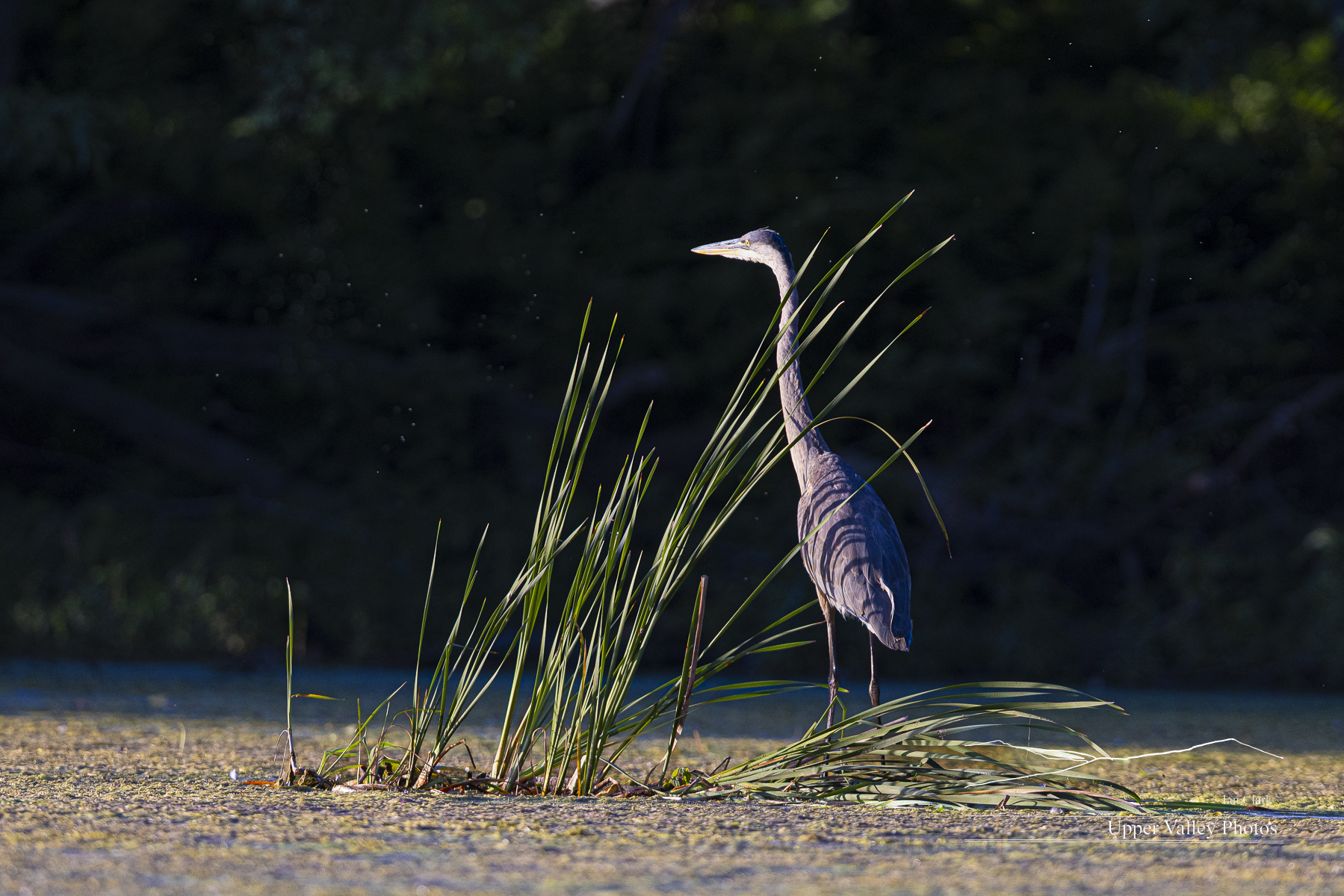
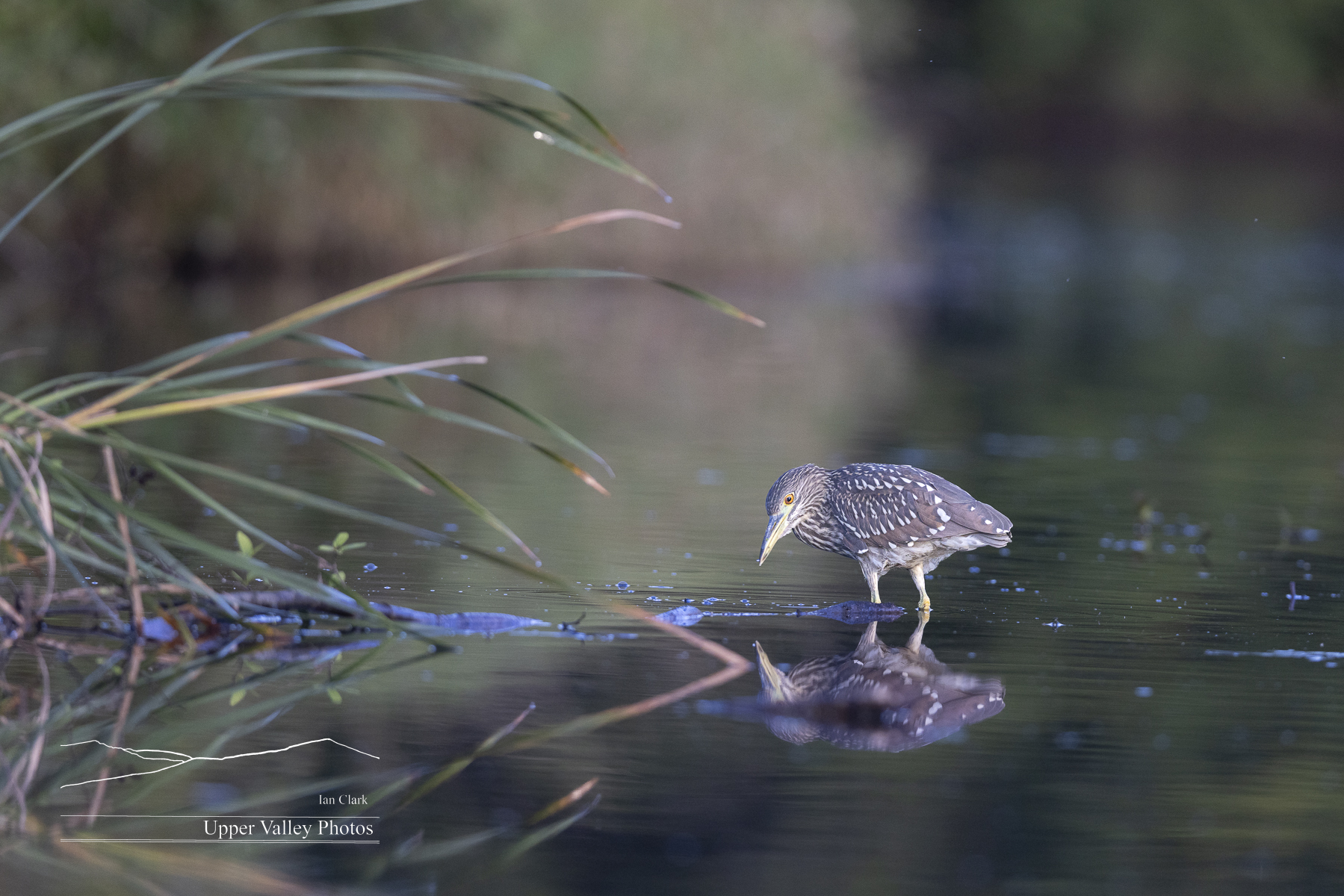
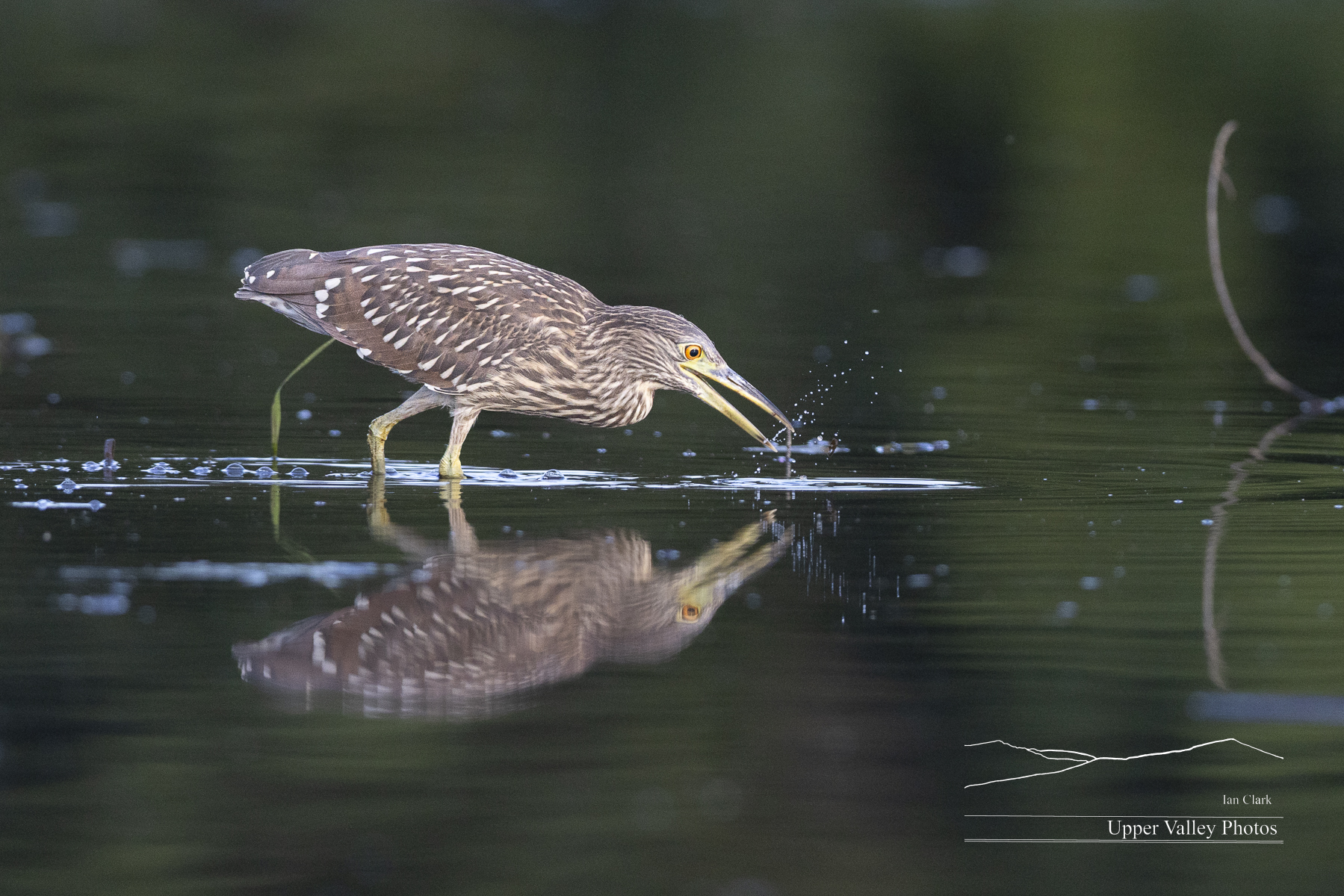
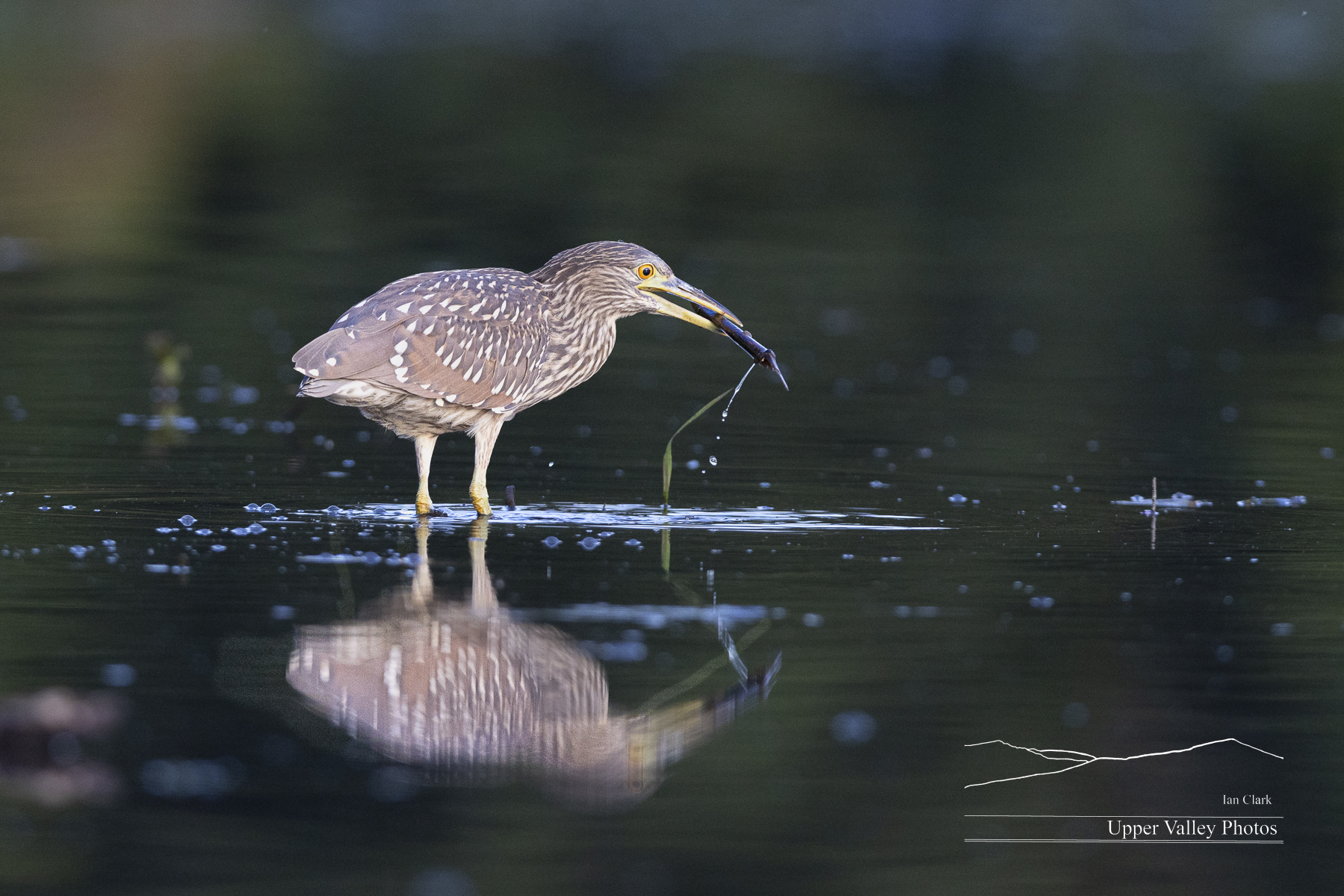
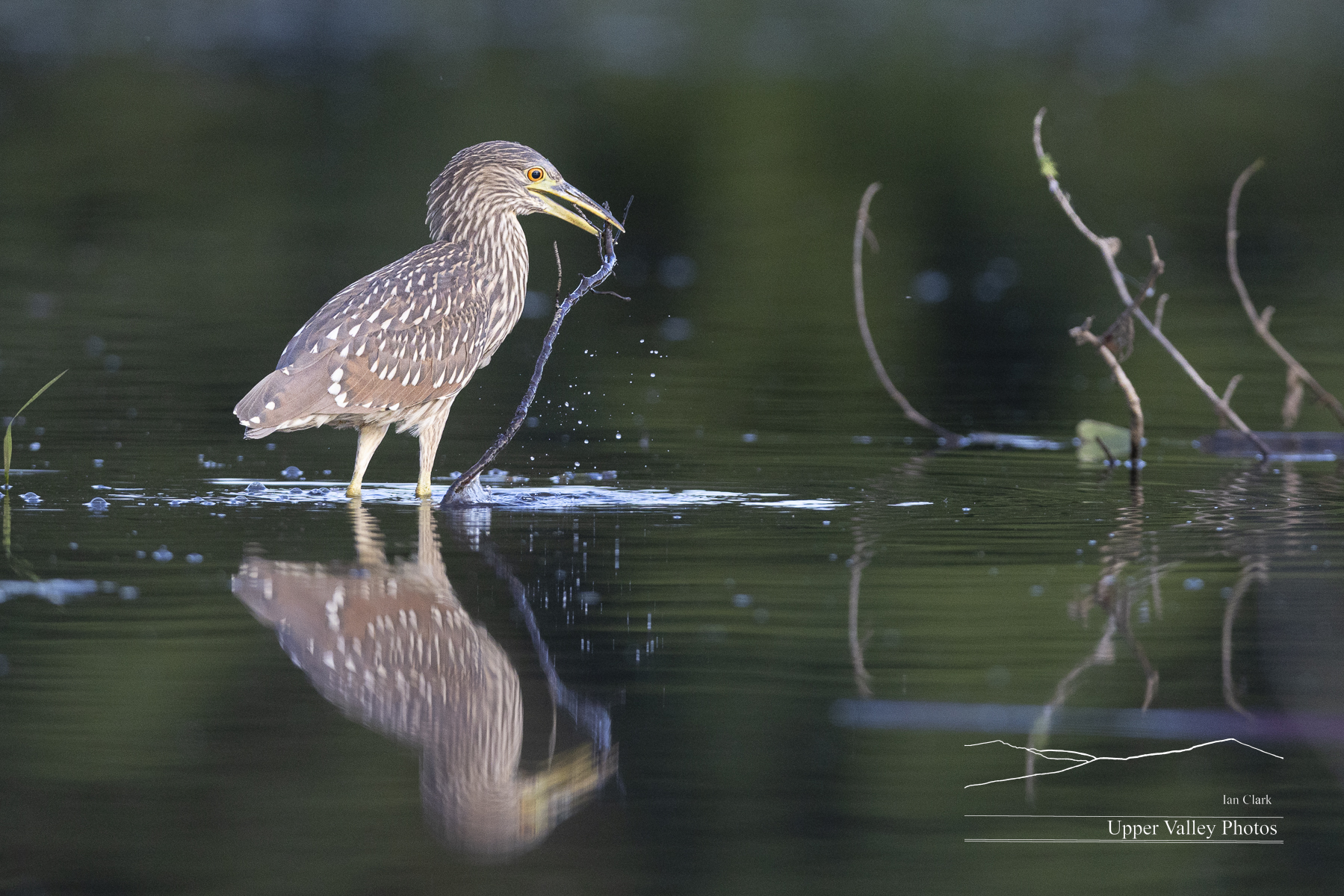
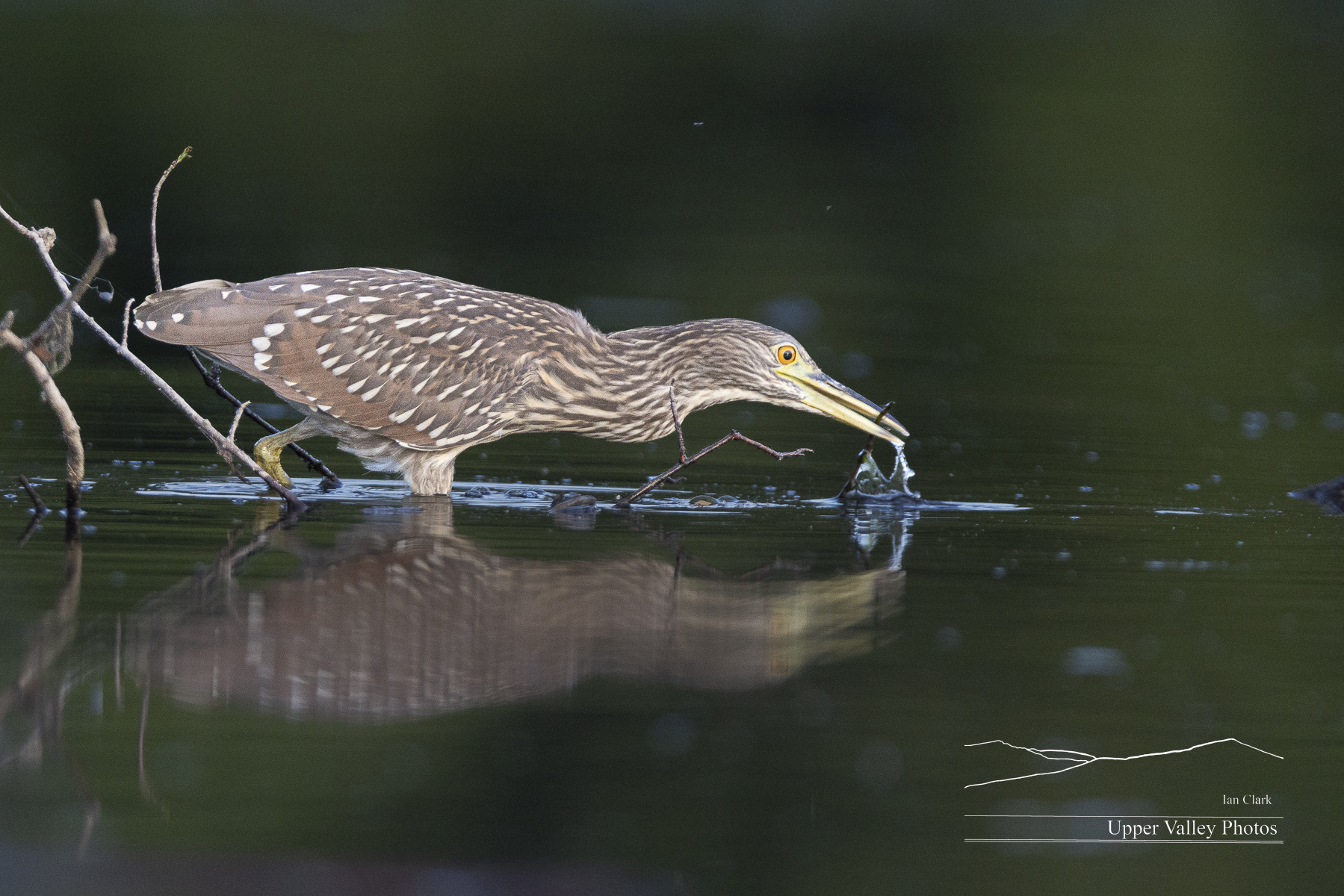
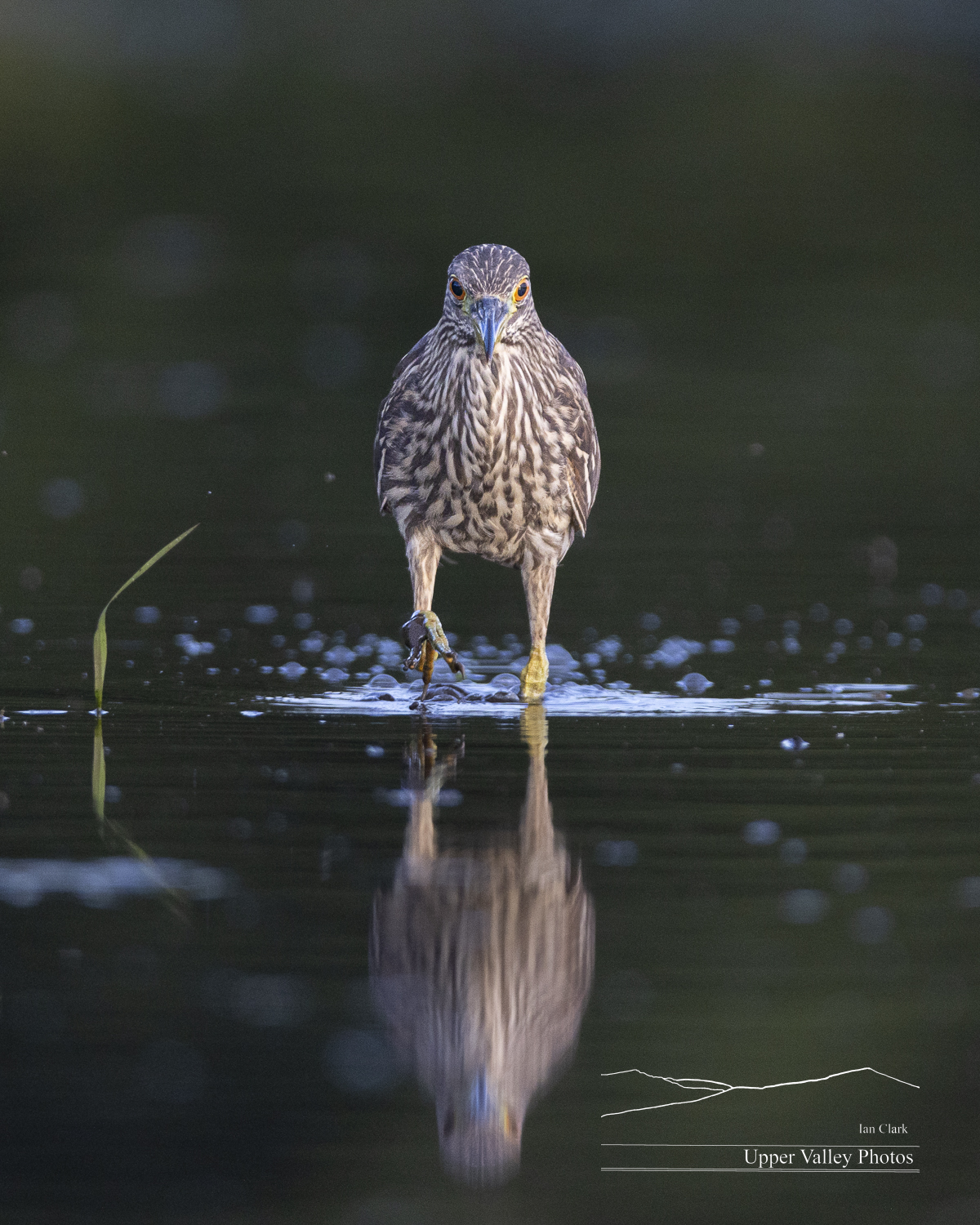
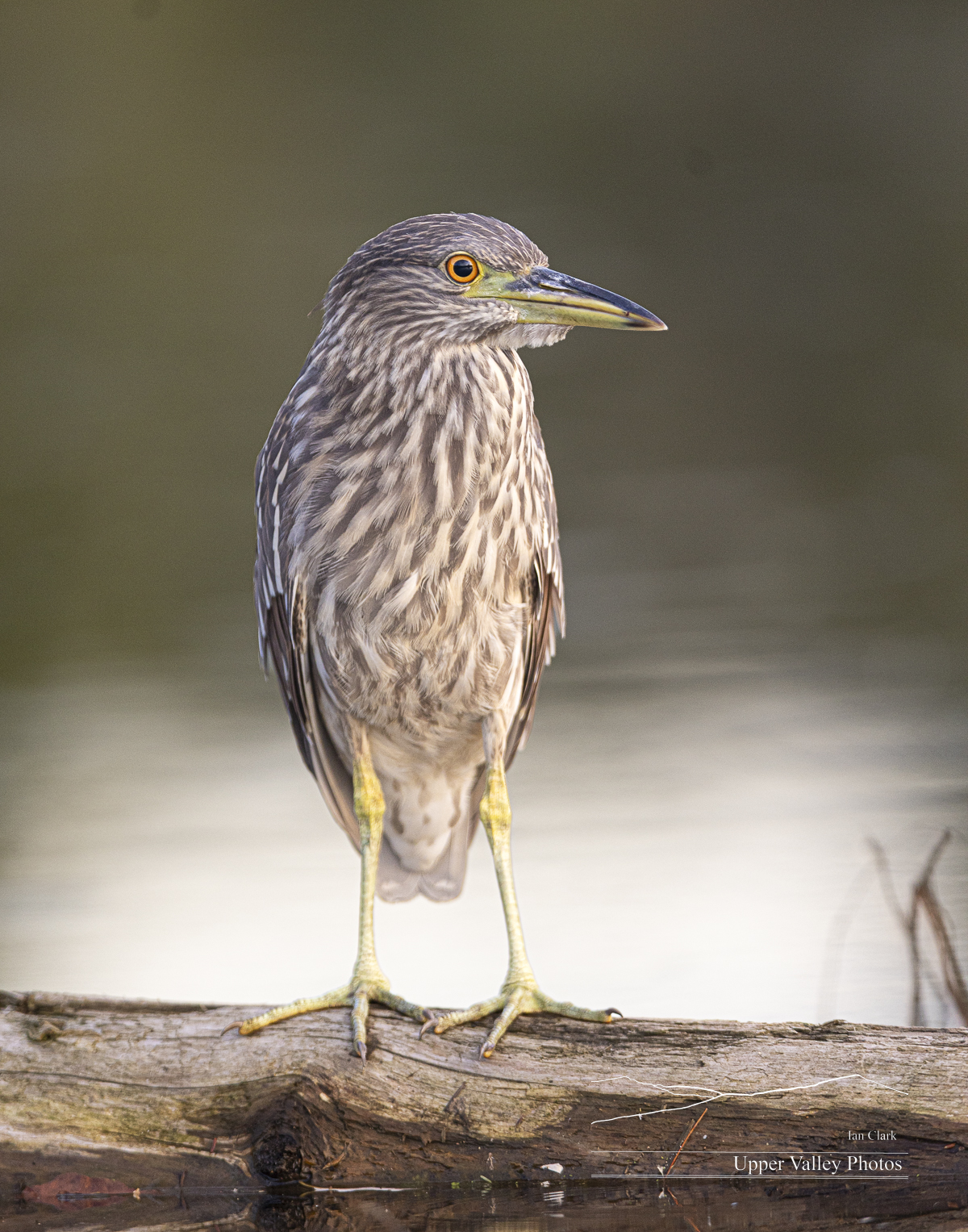
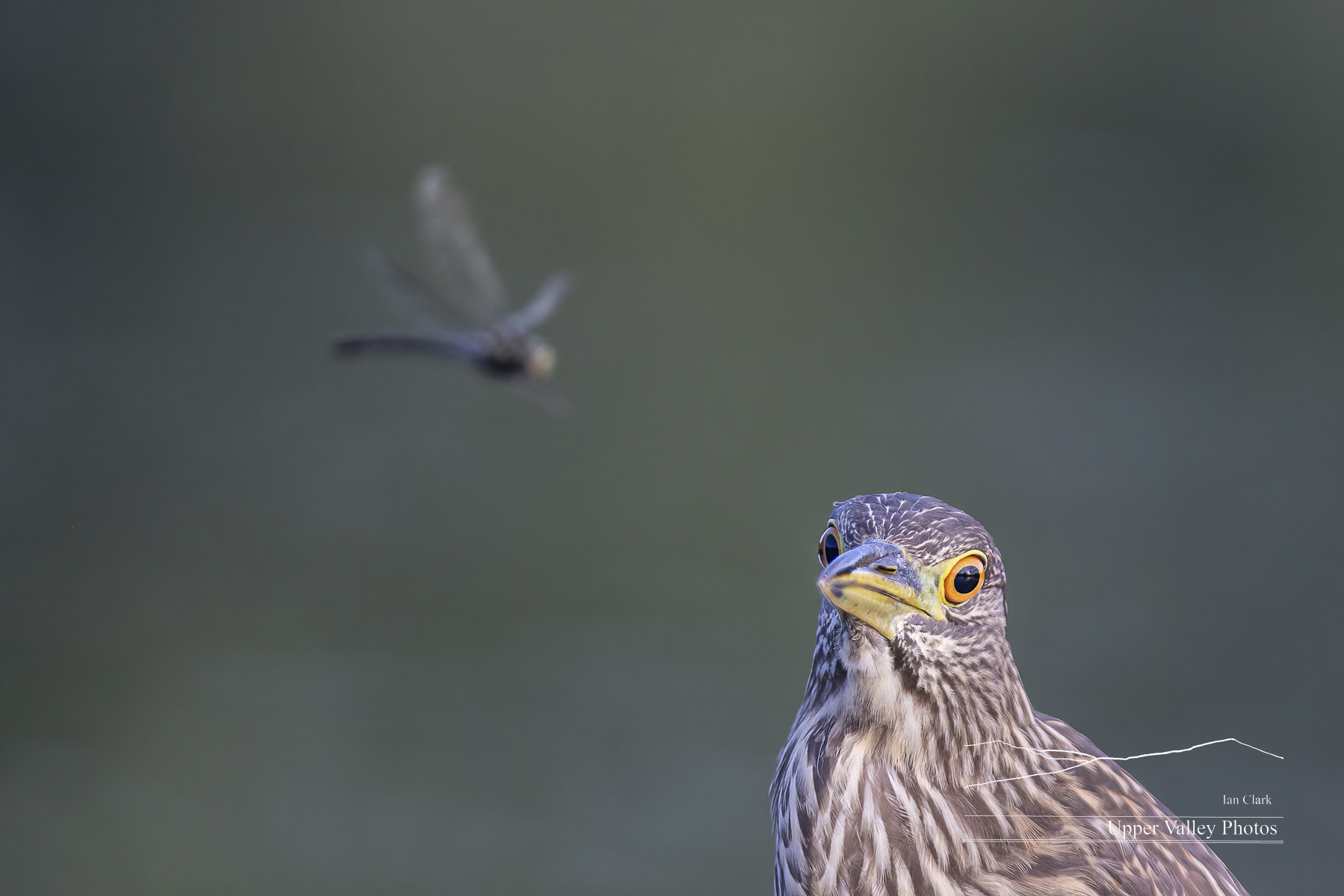
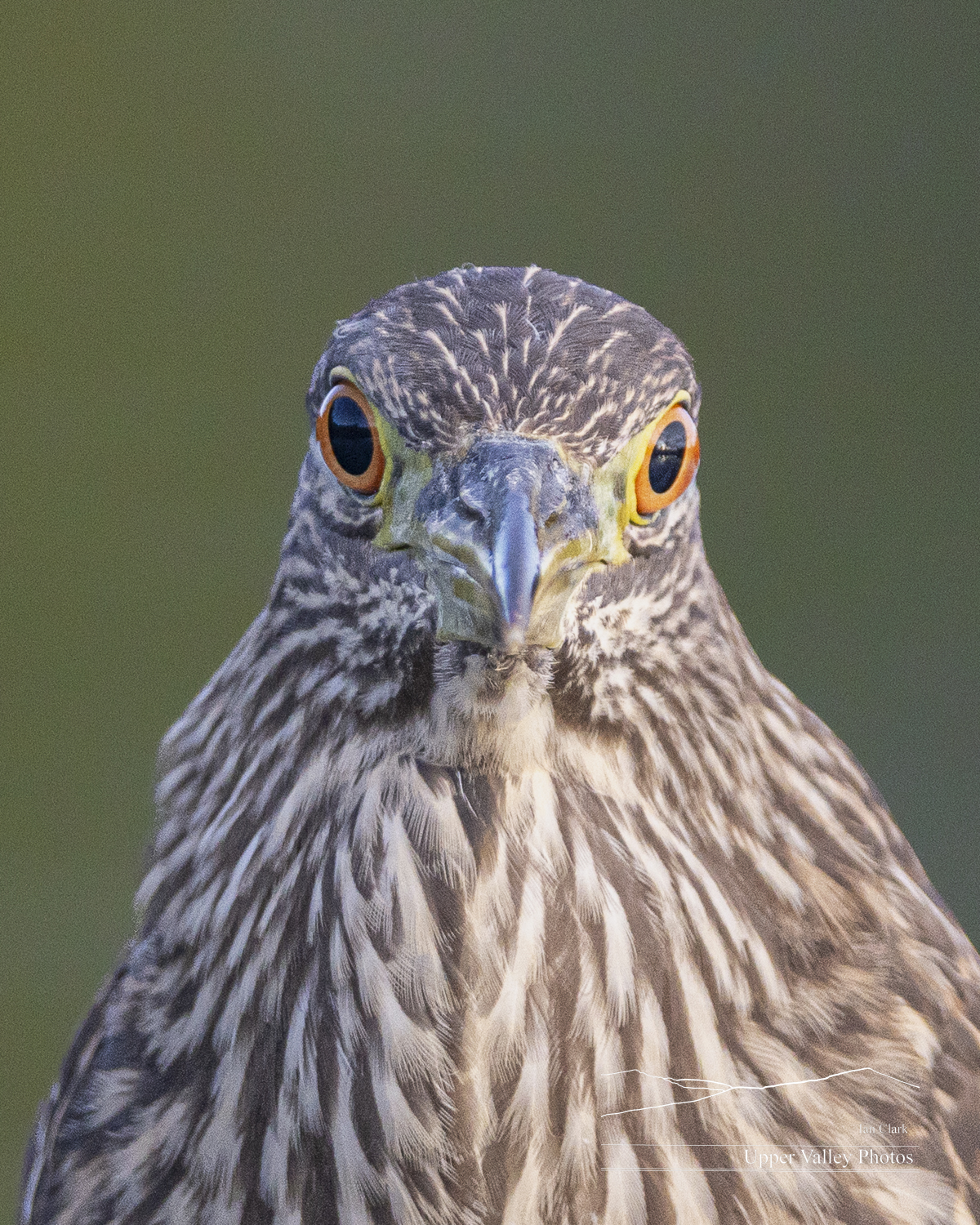
The sun was dipping below the hills to the west; I’d fed the mosquitoes their fill; it was time to head home.
Have a happy Labor Day!
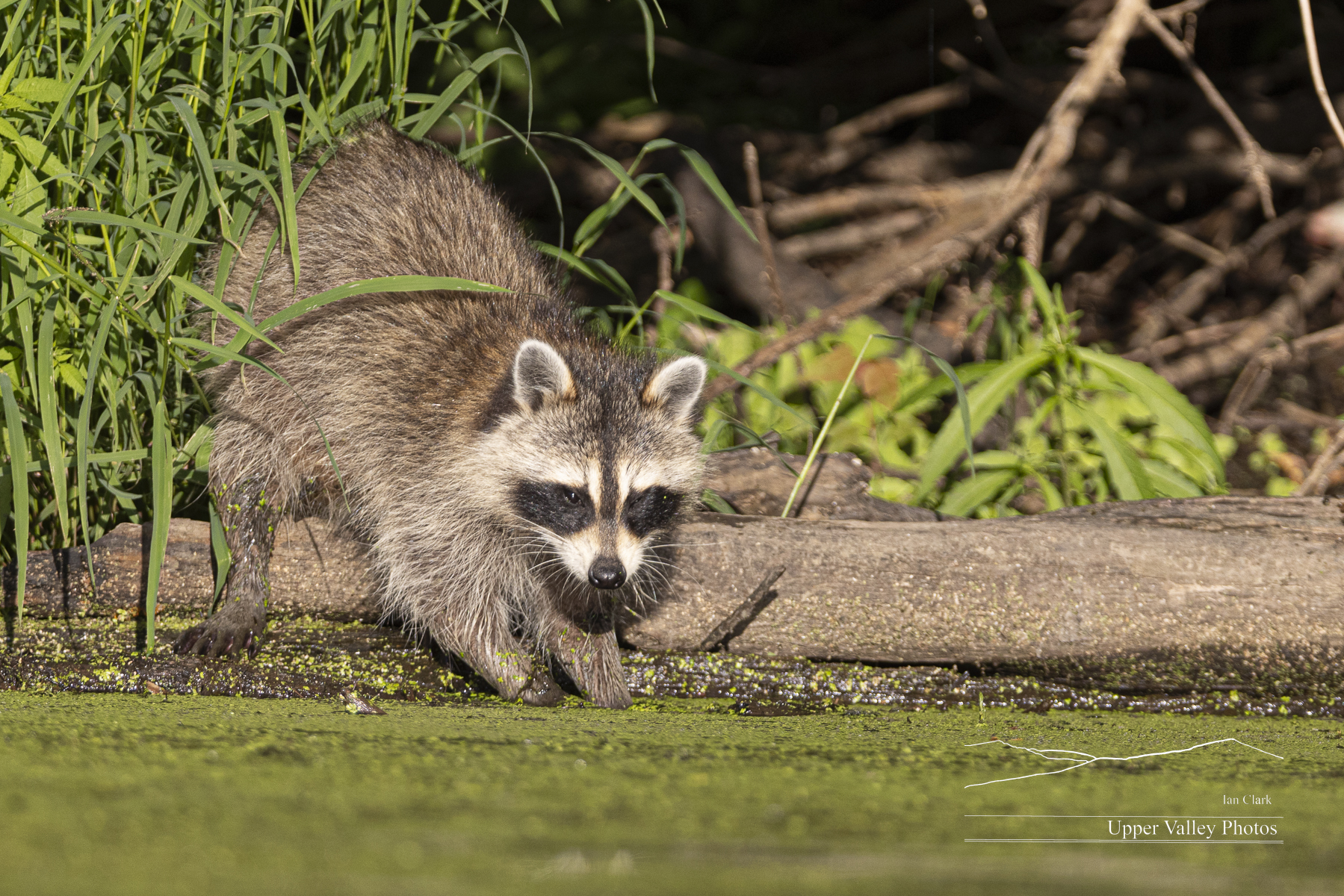
More Easton Kerfuffles, Hank and His Neighbors
The Eastons have a very productive territory – the loons on the pond have been very successful at fledging chicks. Other loons in the area have taken note. And want to take the territory over. Mrs. E has been fighting off an intruder that has repeatedly come in to try to force her off the pond. My previous visit found a male intruder also interested in the territory. I made it up to check on them last Friday. And I’ve made several trips to the Waits River to see what Hank Heron, et al, have been up to.
The Vermont Handcrafters have an exhibit opening at Court Street Arts in Haverhill, NH on Friday, August 28. The reception is from 5 to 8 pm at Court Street Arts (Alumni Hall). We’re getting ready for our Open Studio Tour over Columbus Day Weekend, October 10 & 11, 2026. I’ll have a couple pieces at Court Street Arts and will be set up at the Martin Farm right on the Bradford – Fairlee line for the open tour. Sue Martin, who creates beautiful stained glass is kindly letting me have space near her studio. Stop by to check us out.
Friday morning was a beautiful, if chilly morning. It was 48° when I put the boat in. I kinda wished I’d thought to bring a sweatshirt. The Eastons were feeding the chicks when I arrived before sunup. After watching a bit, Mr. E alerted to something. He lowered himself in the water and headed out stalking something.
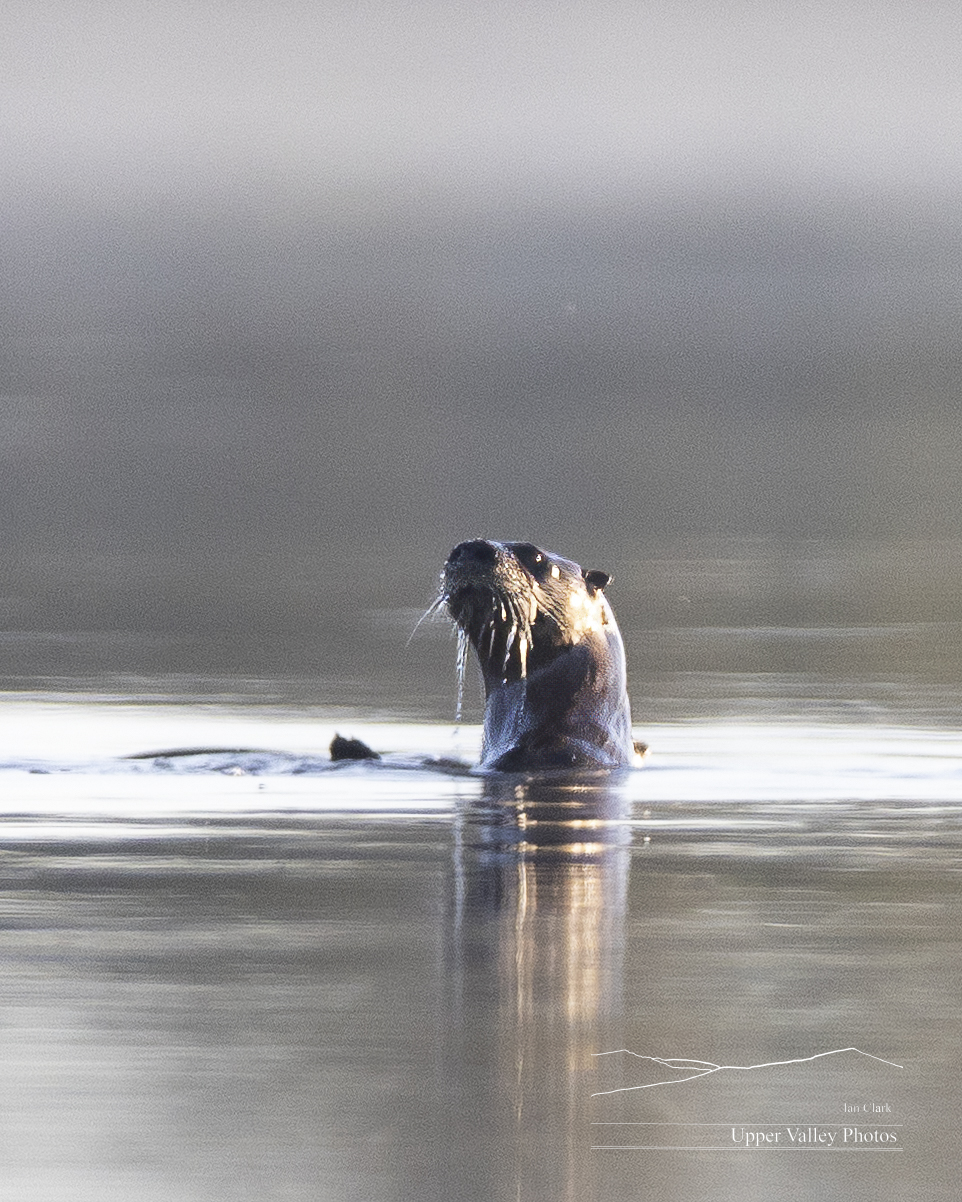
Just as the otters were convinced that they wouldn’t have any peace in the neighborhood, an intruder flew in.
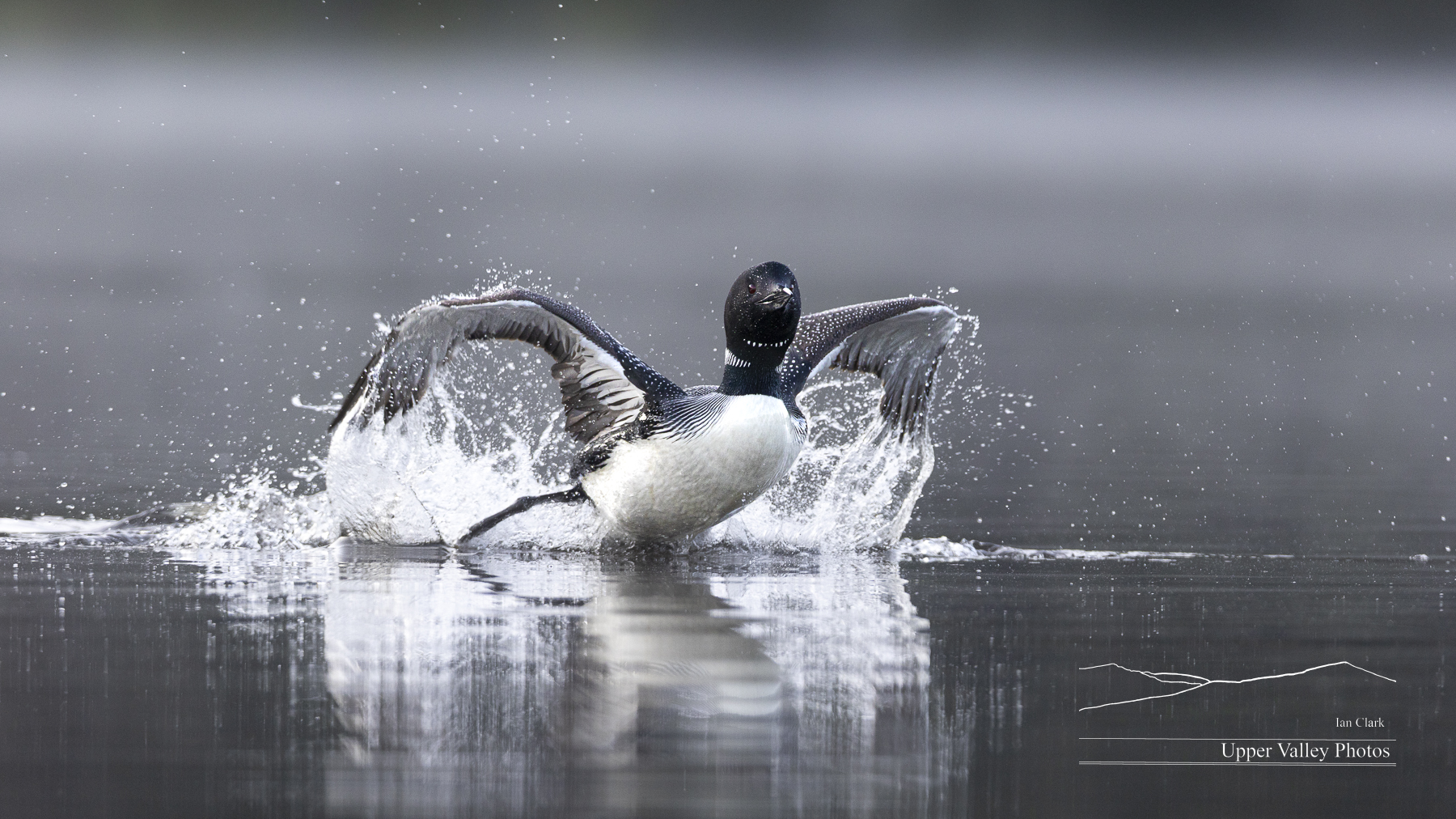
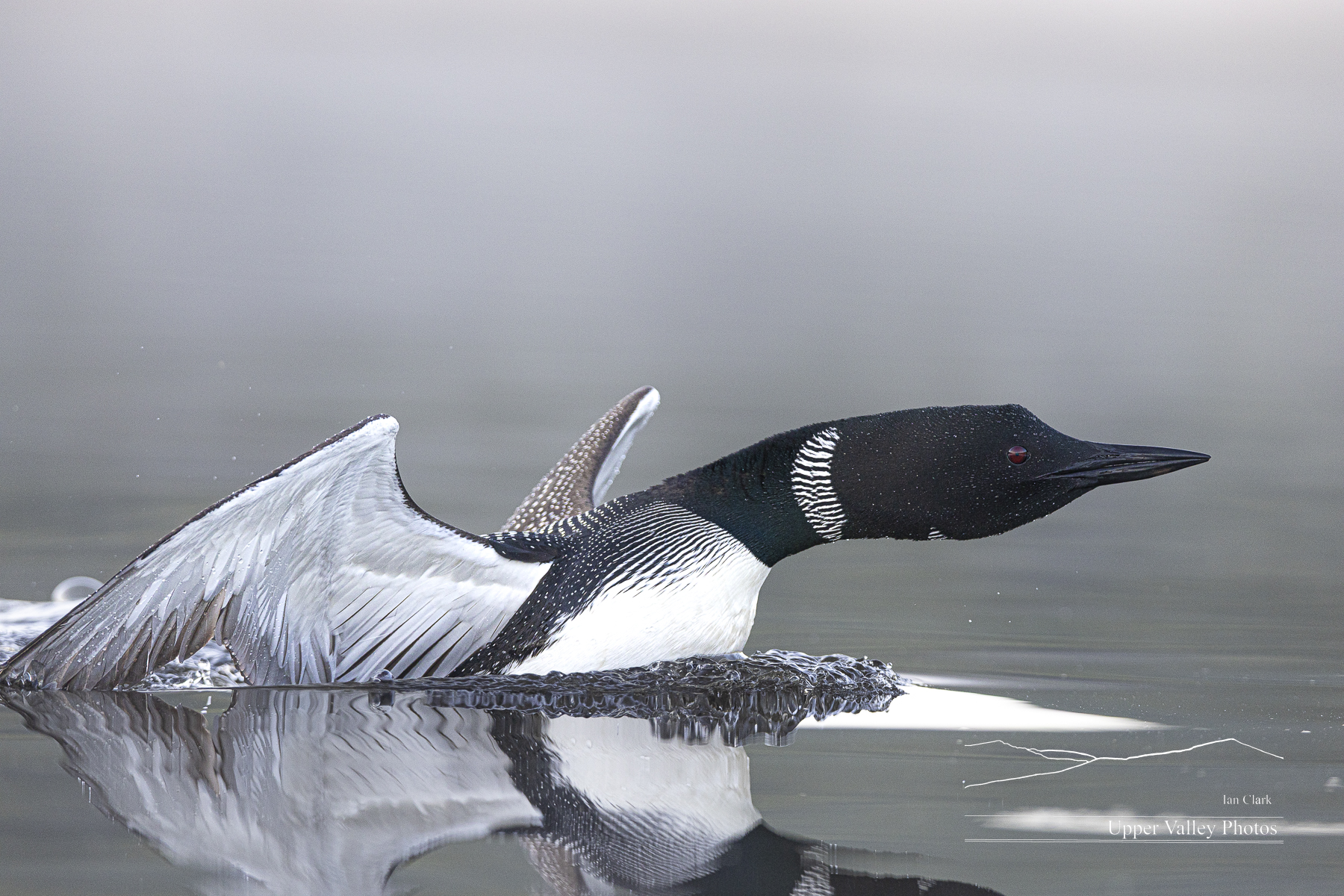
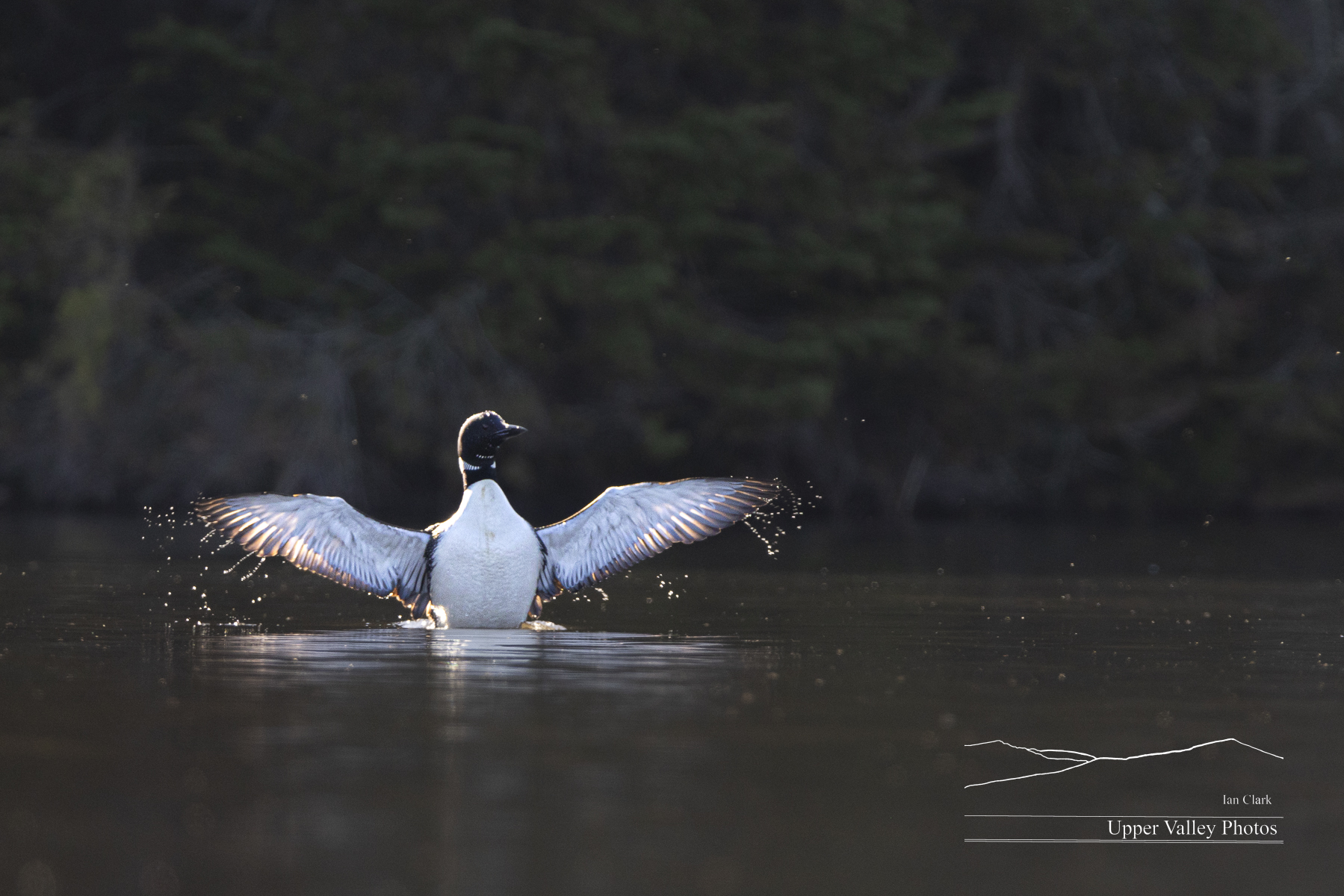
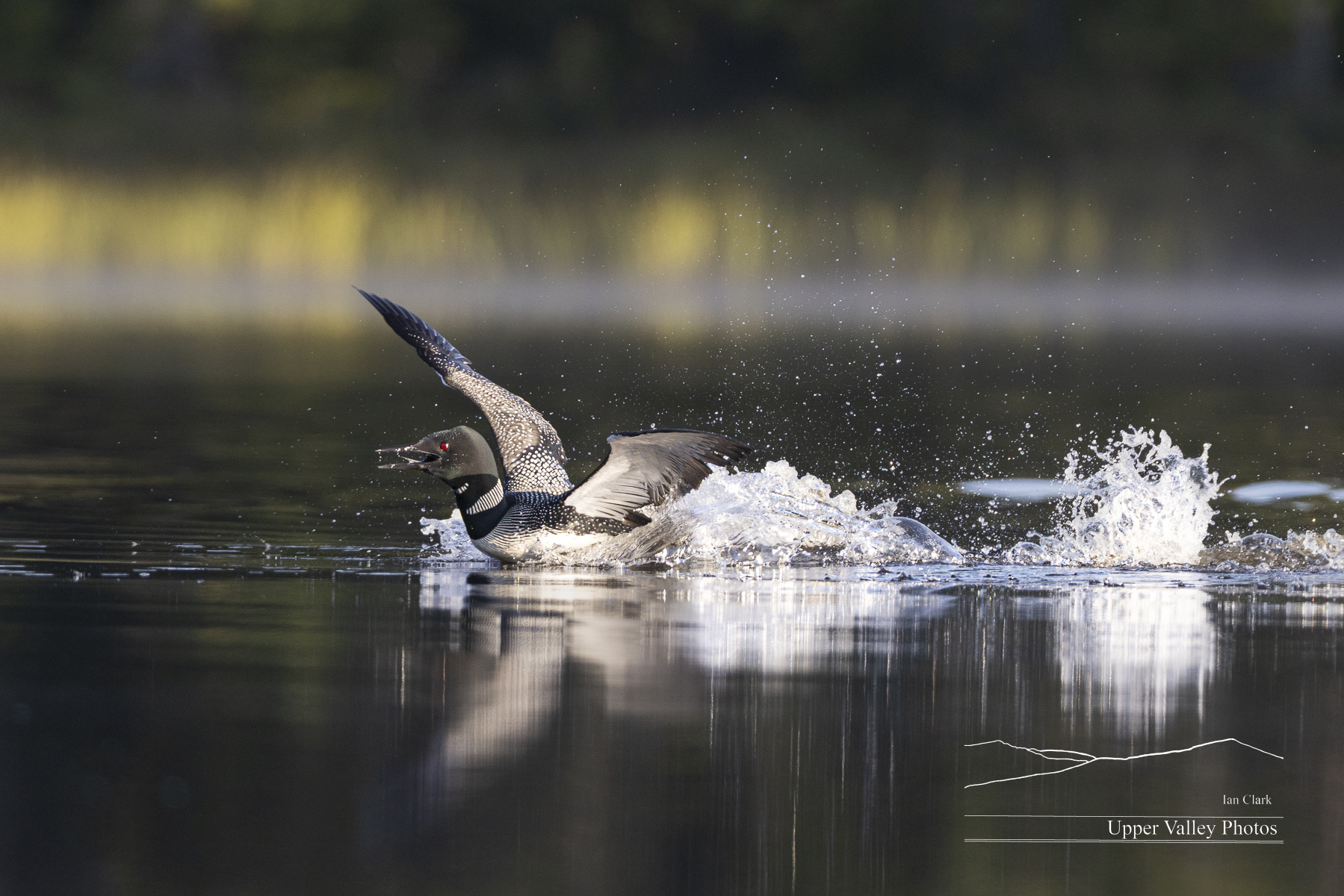
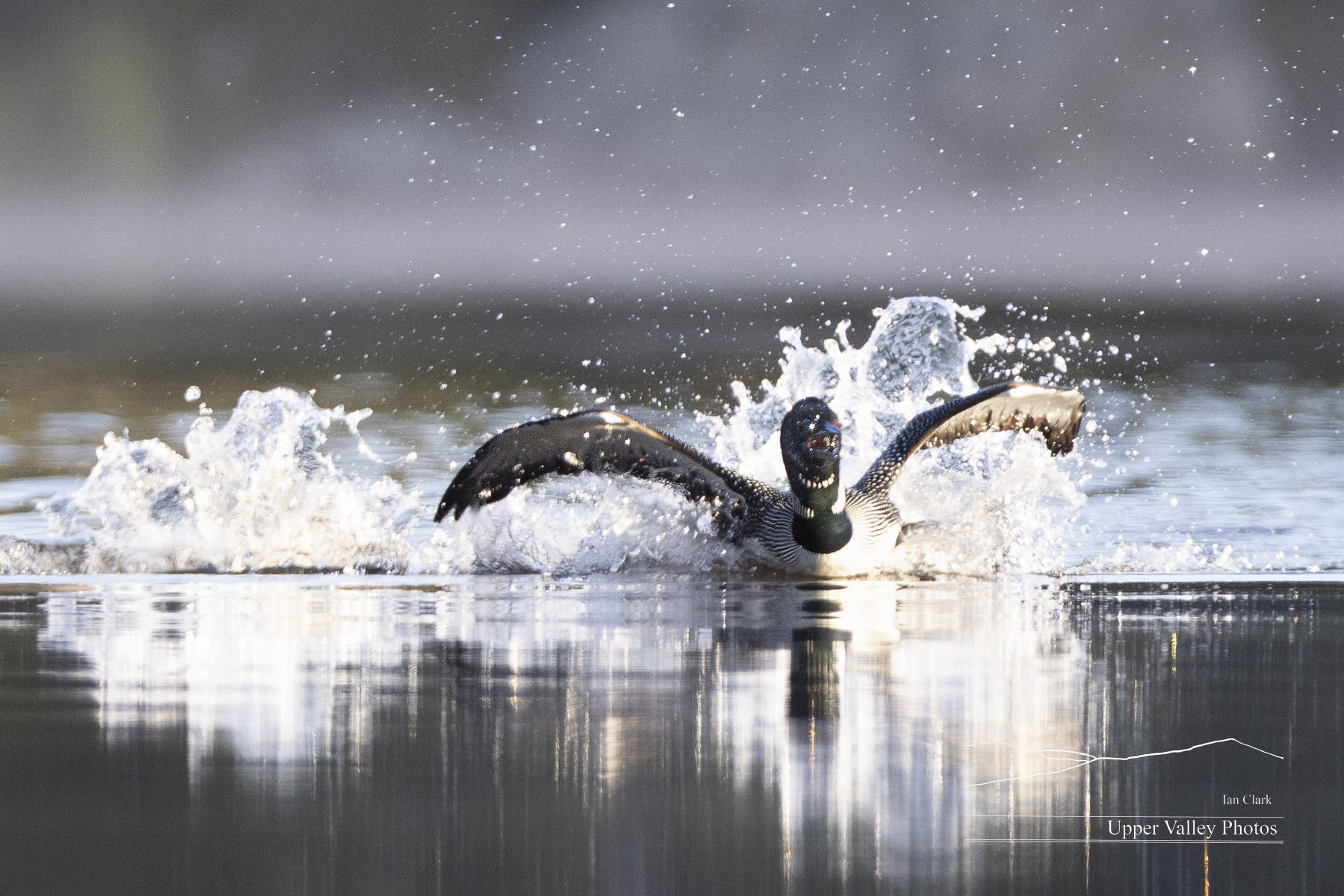
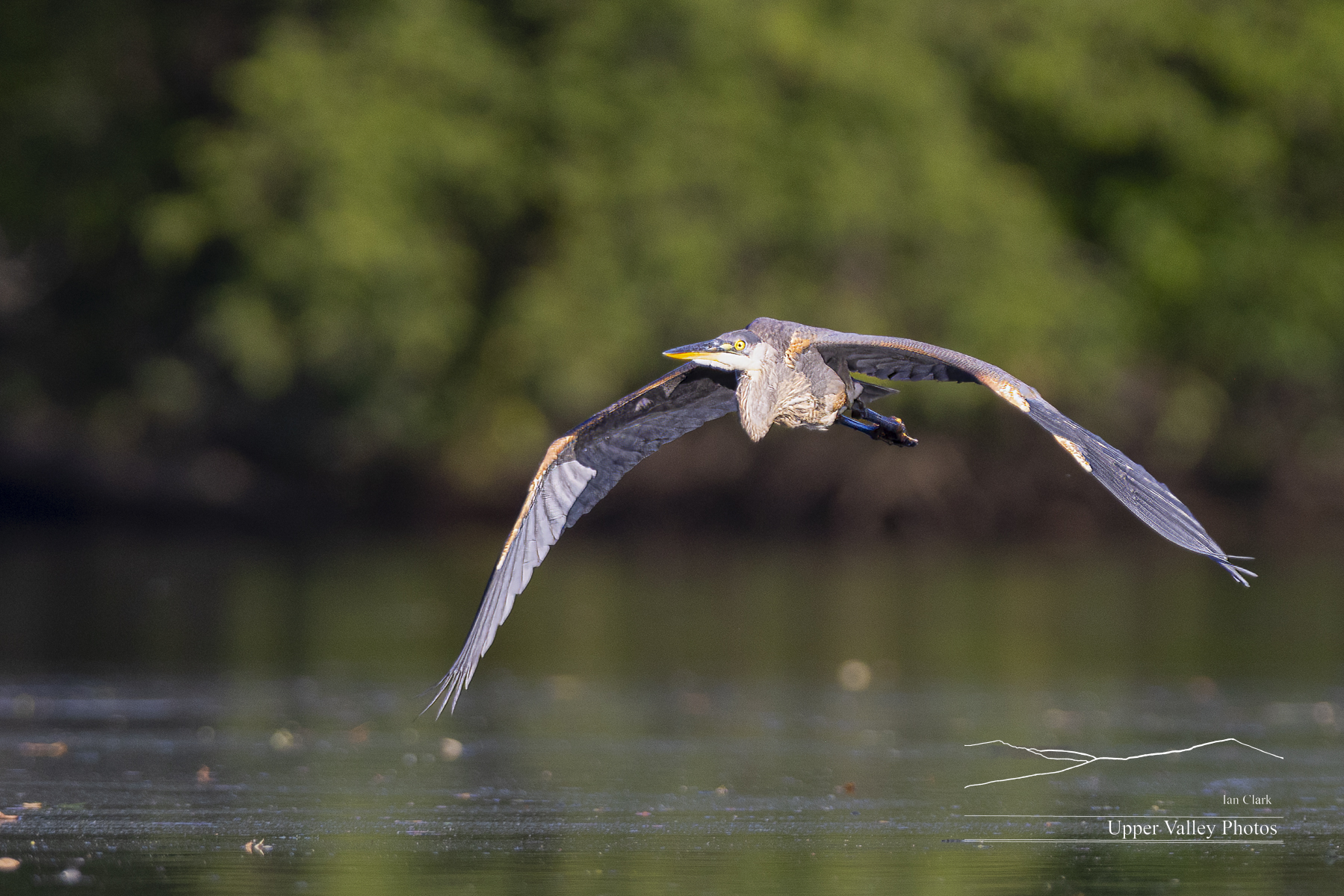
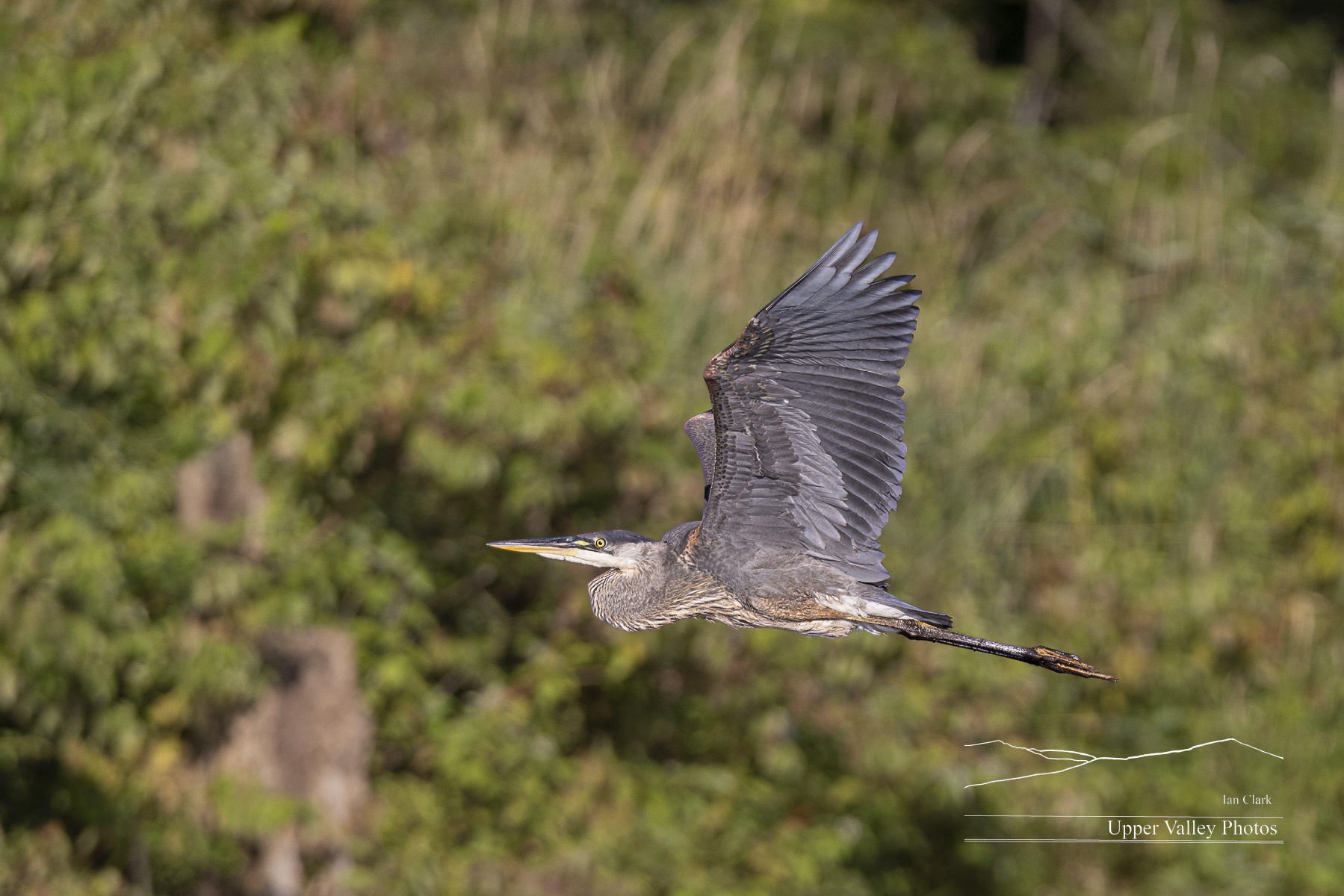
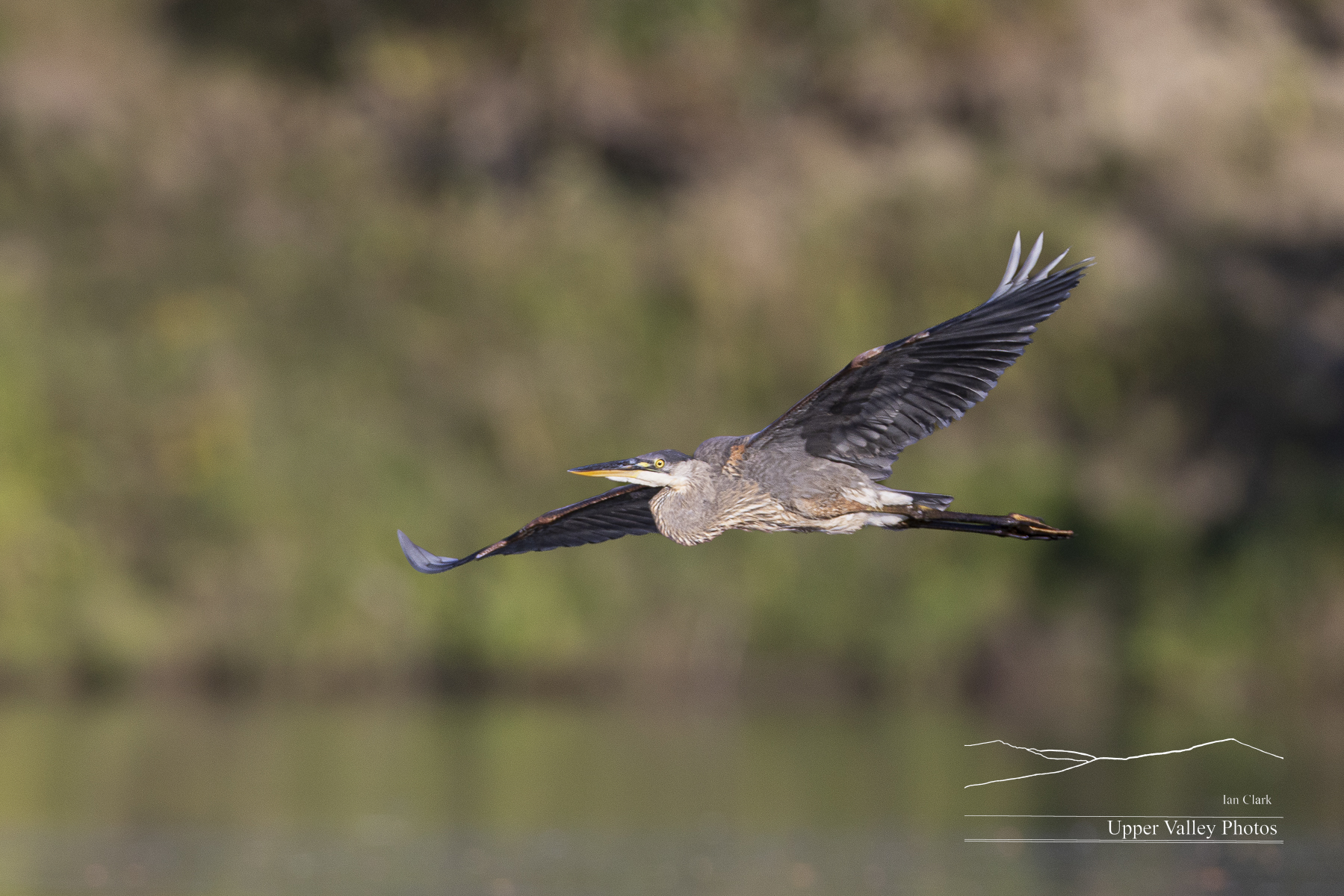
Friday evening, I went down to the Waits to see if I could get the herons without all the fog. I paddled downstream. As soon as I passed under the railroad, there were great blue herons flying everywhere.
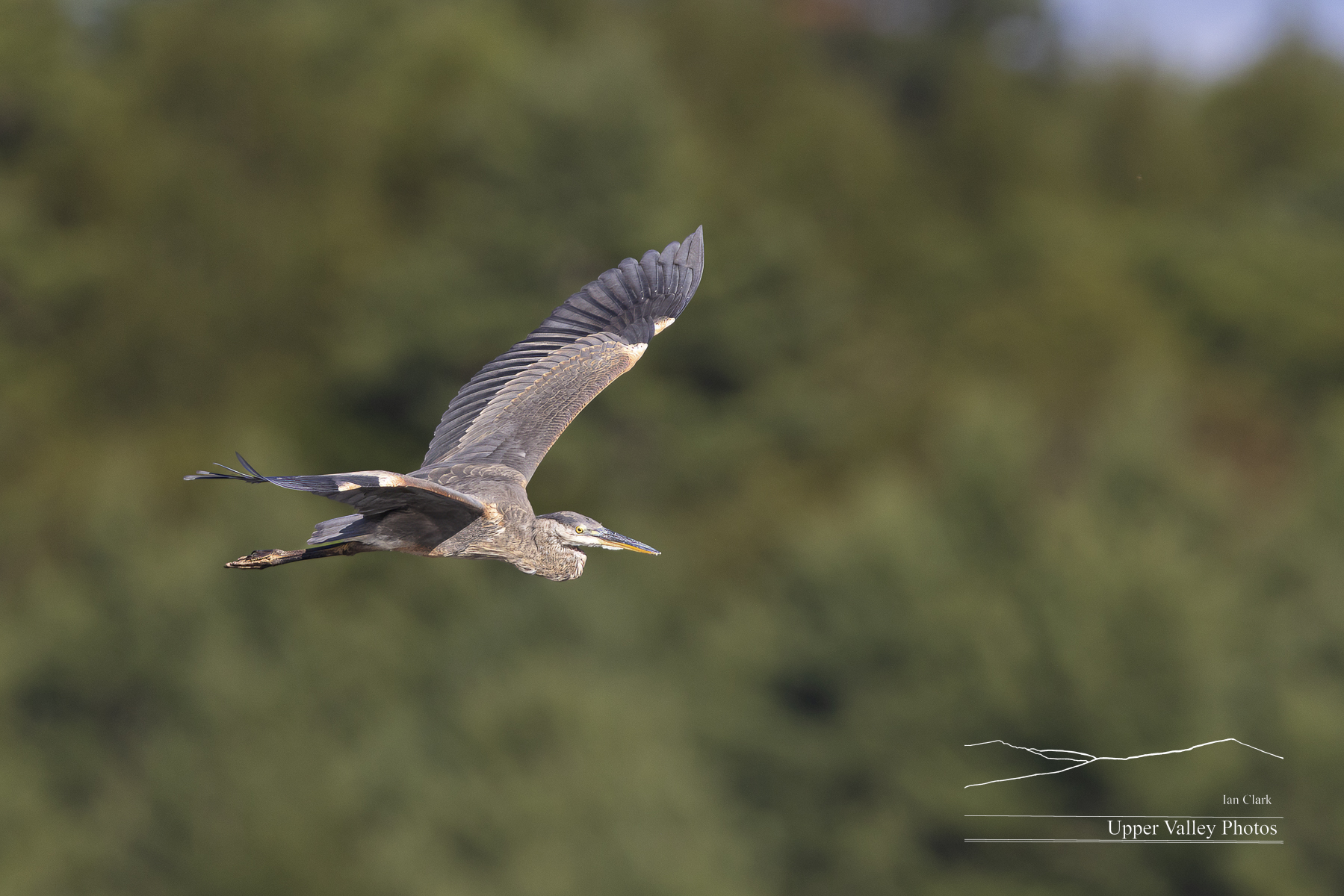
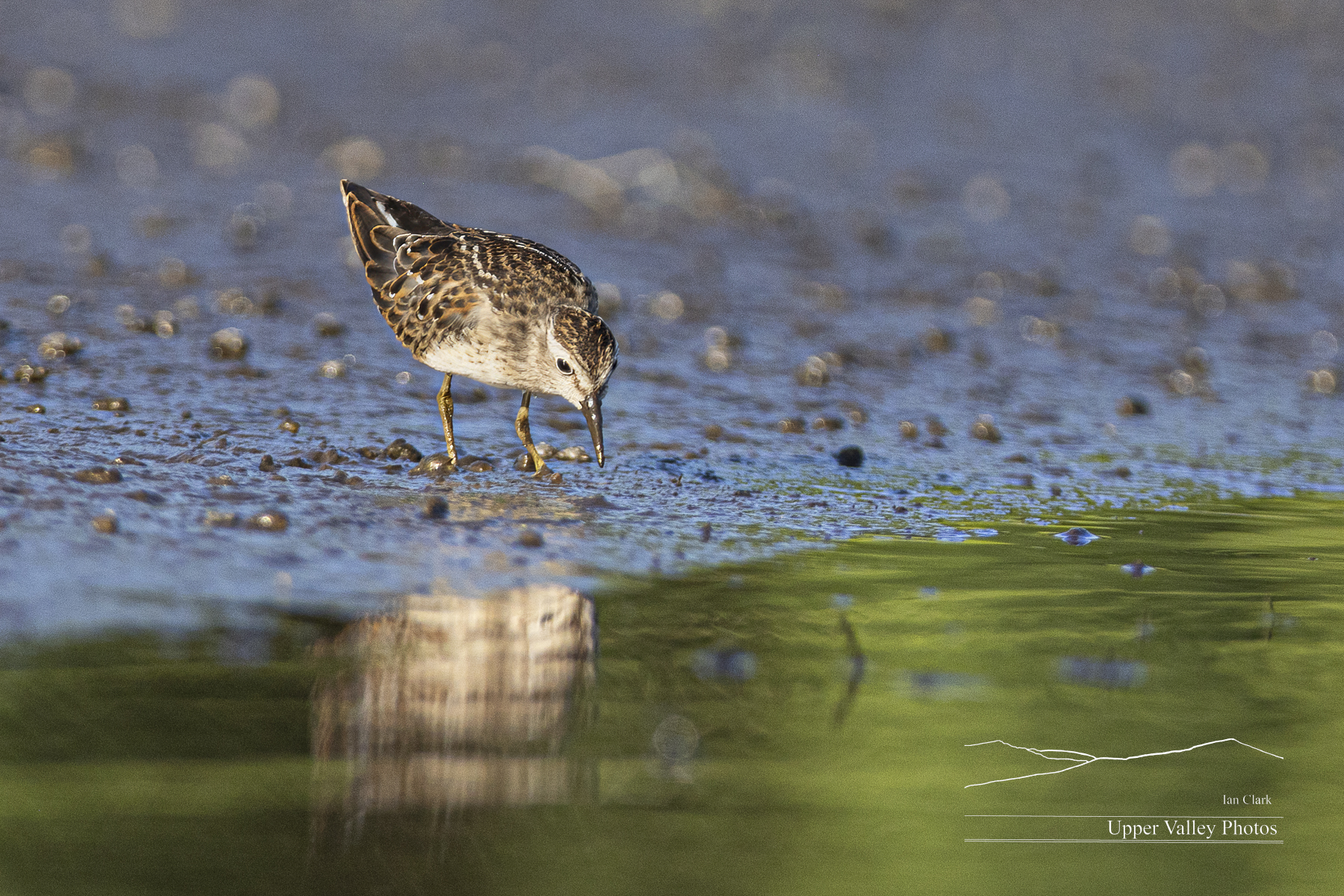
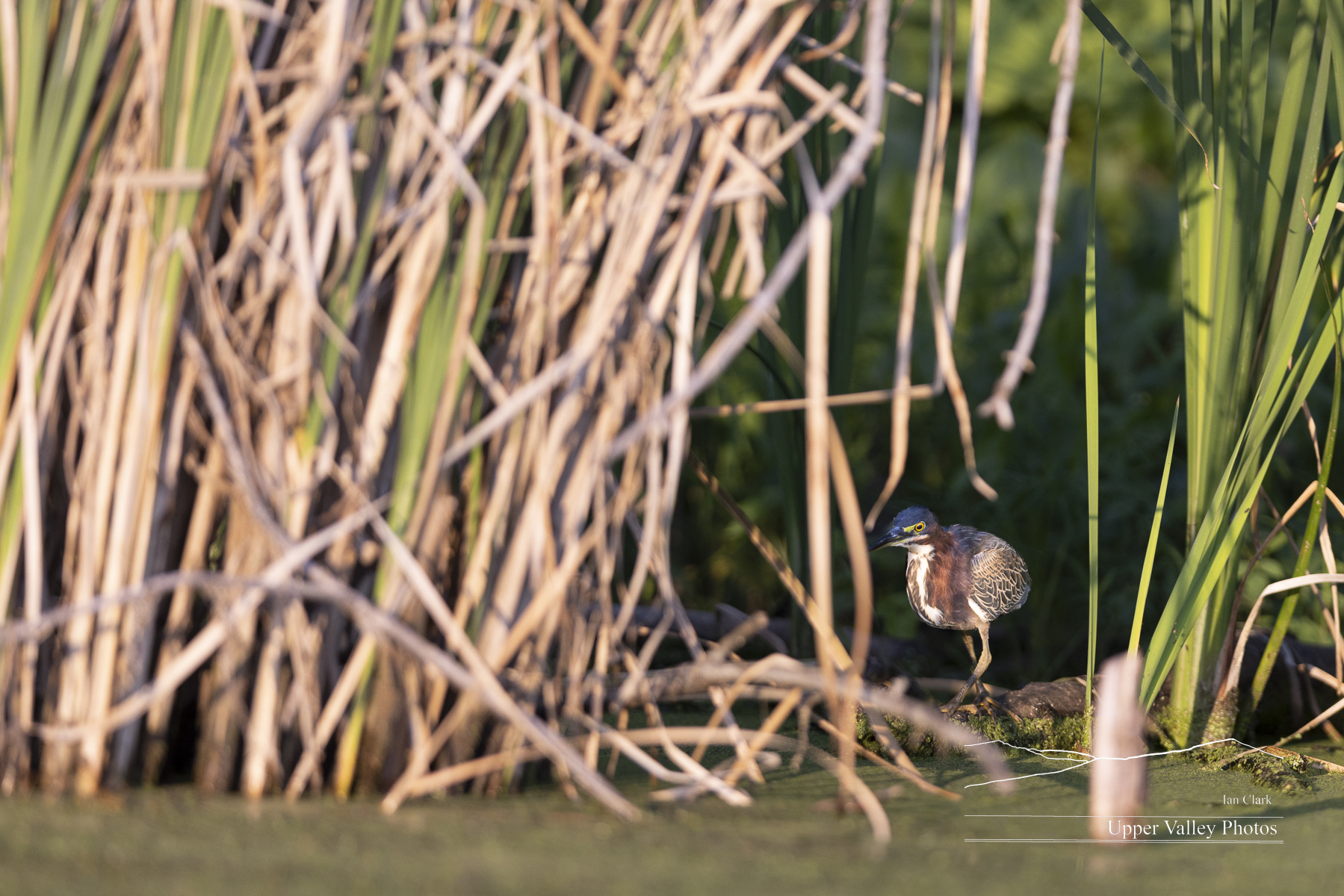
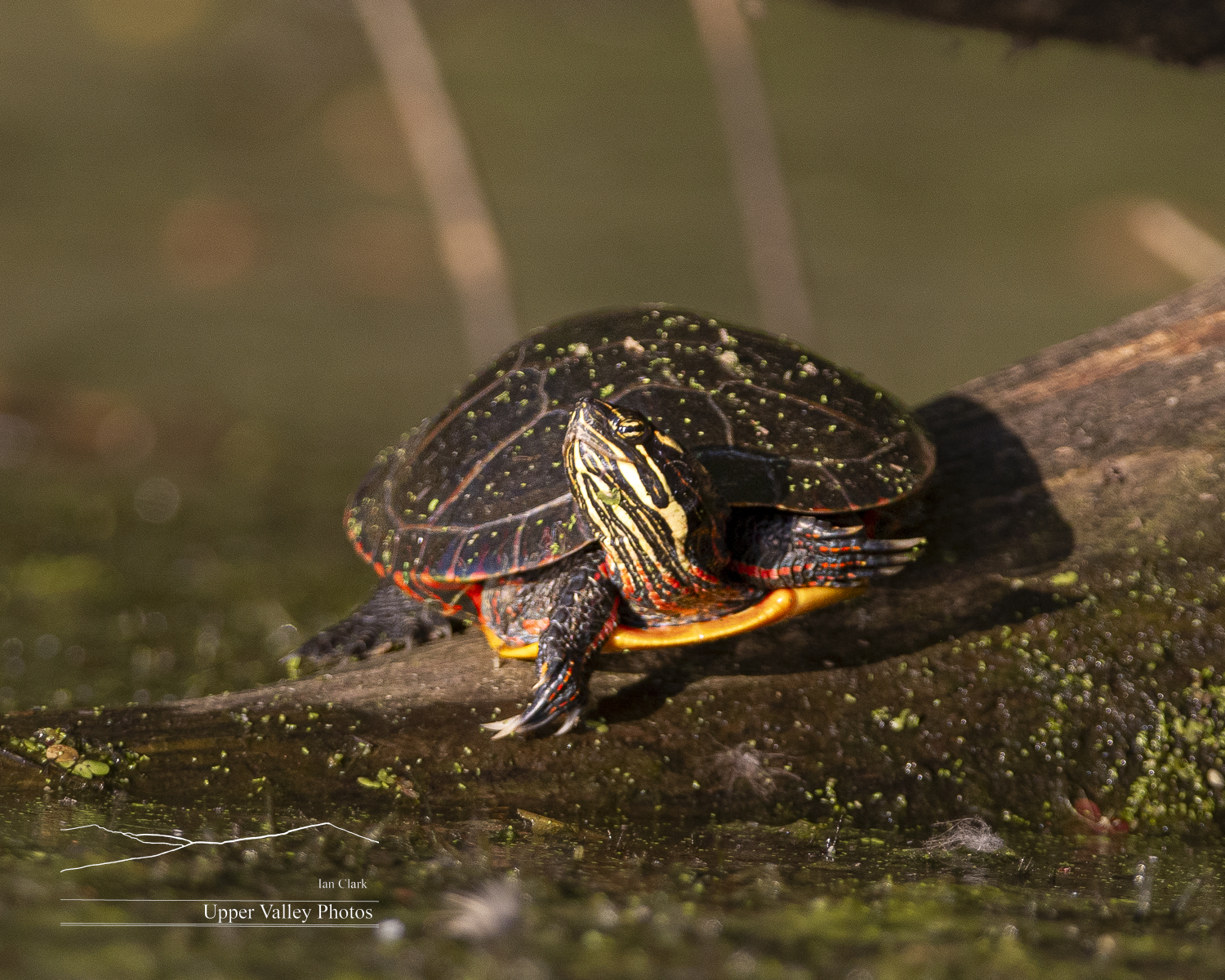
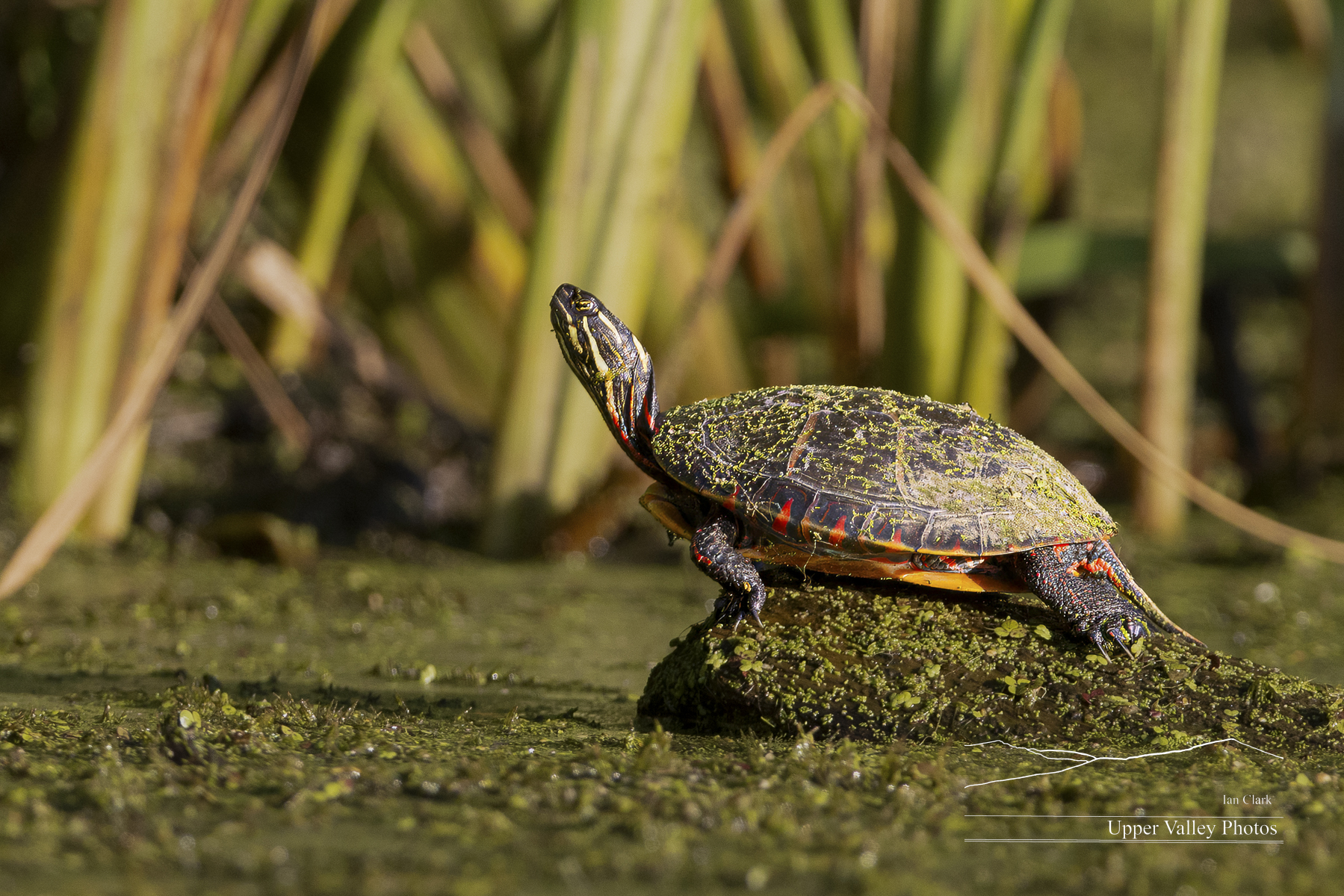
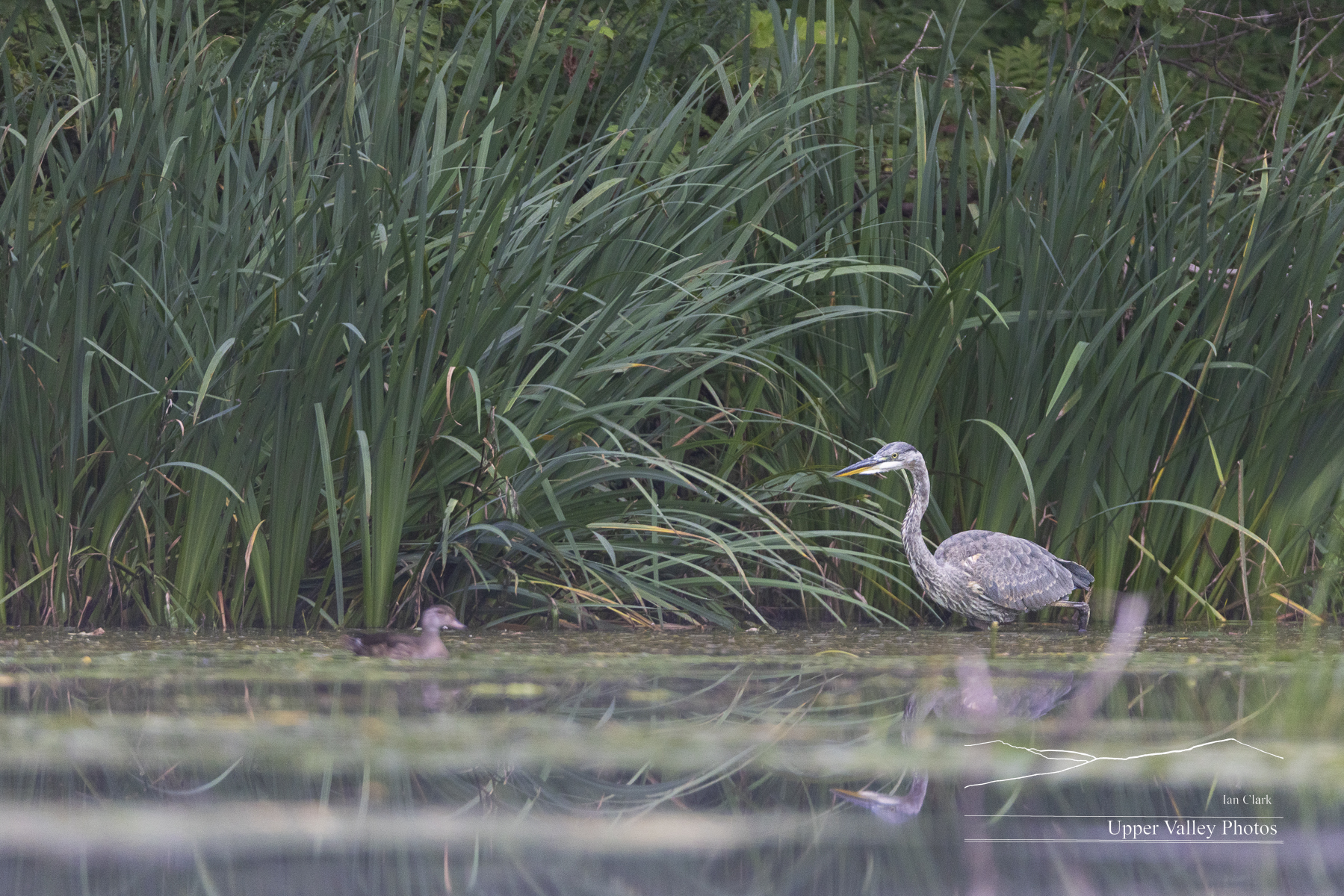
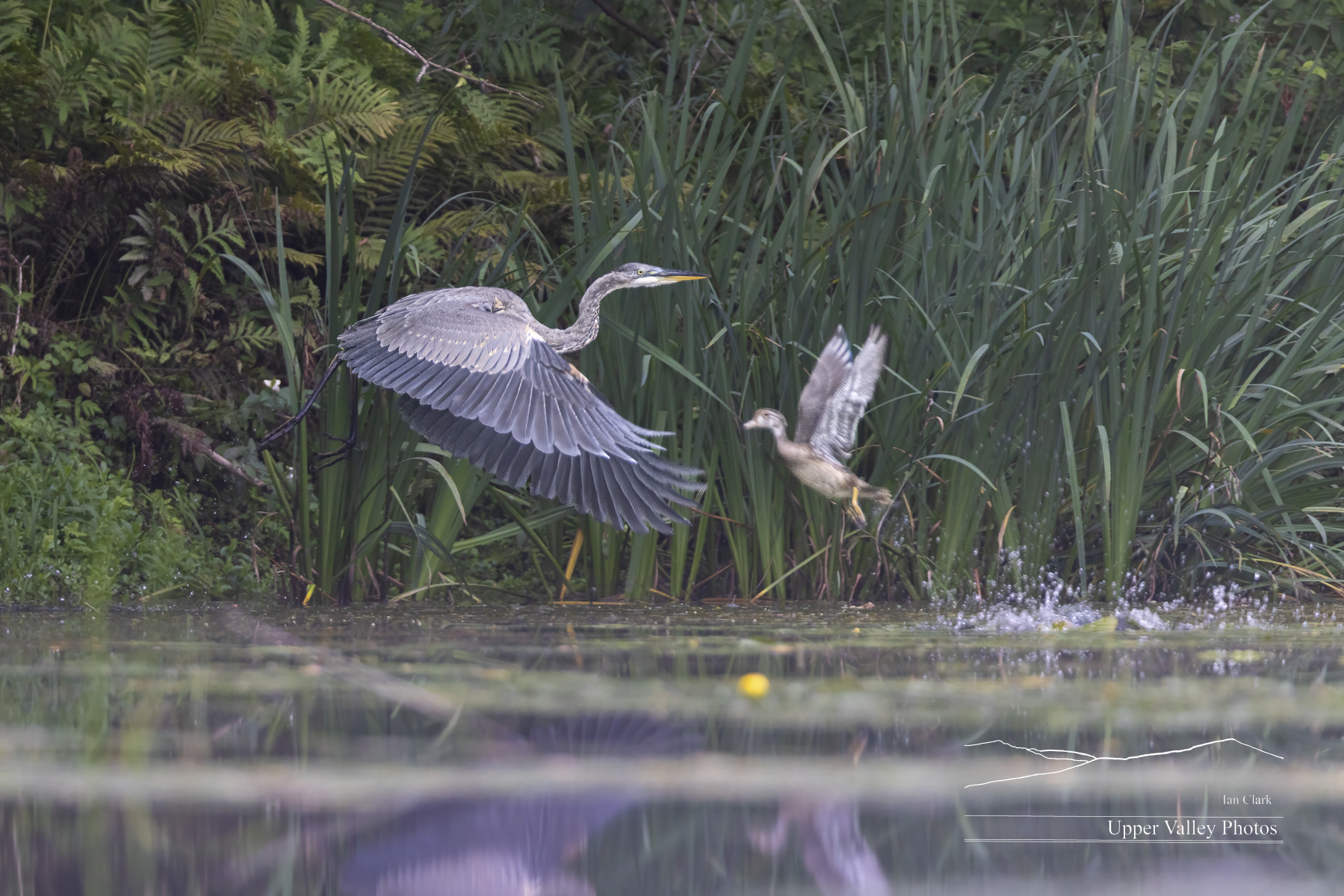
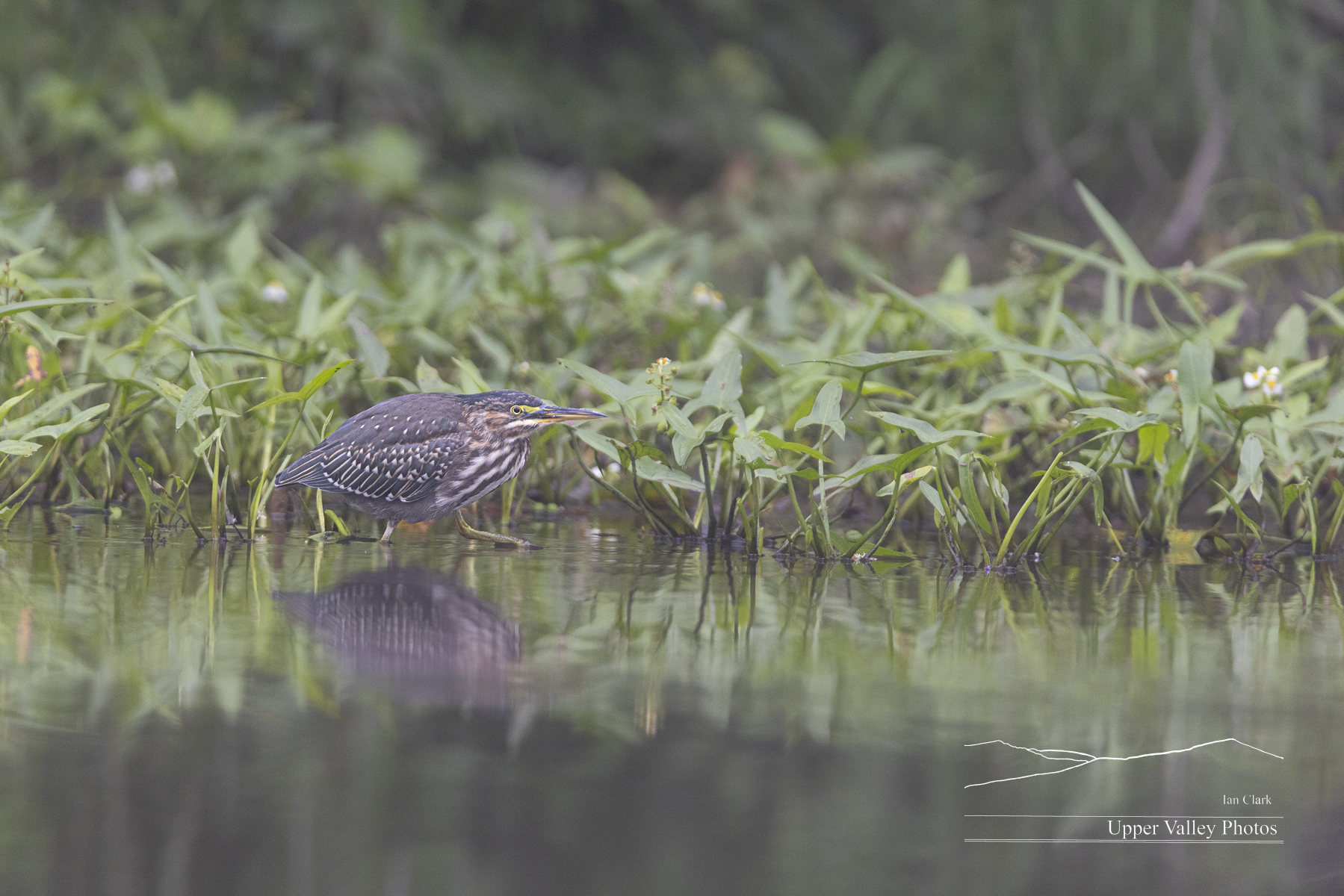
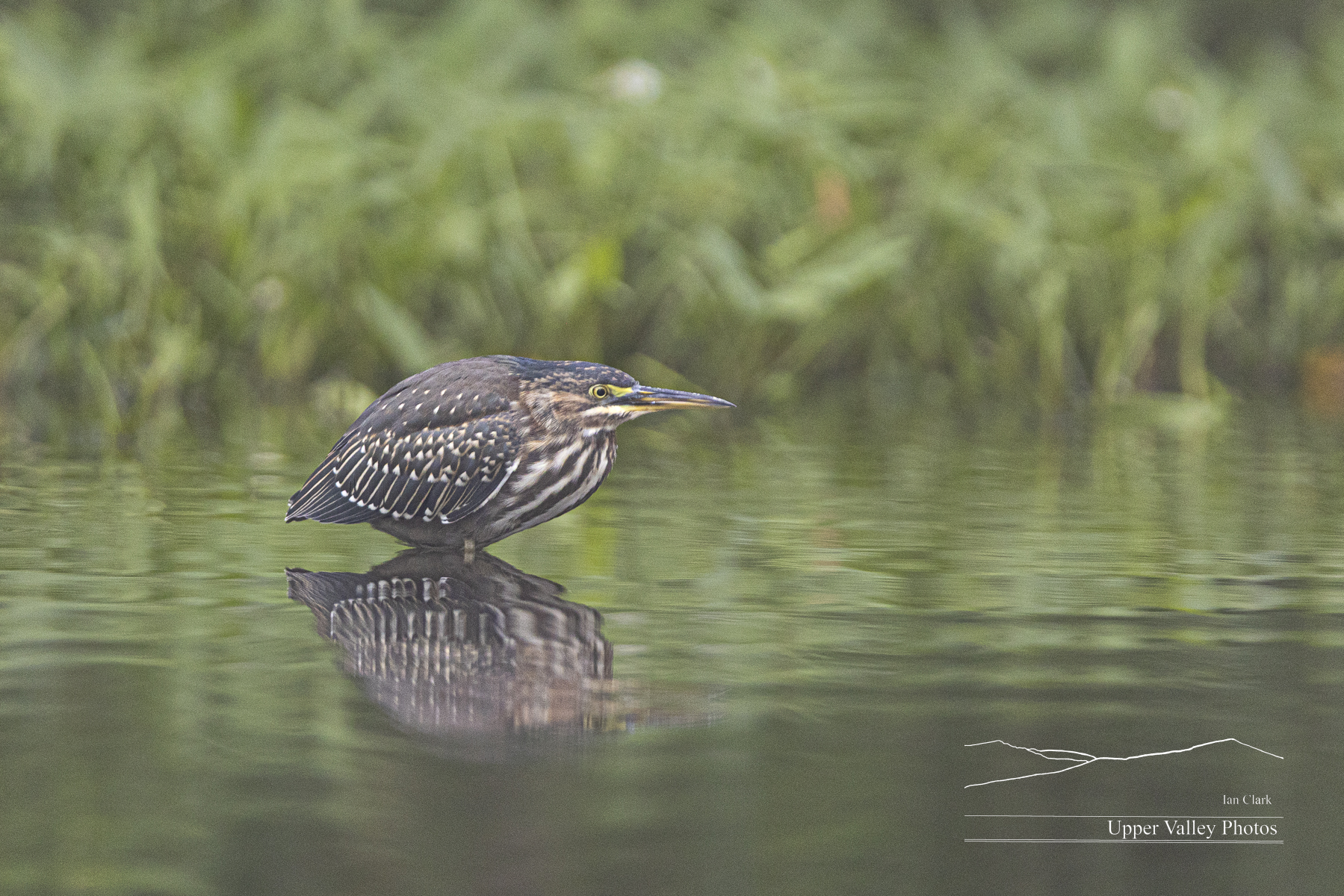
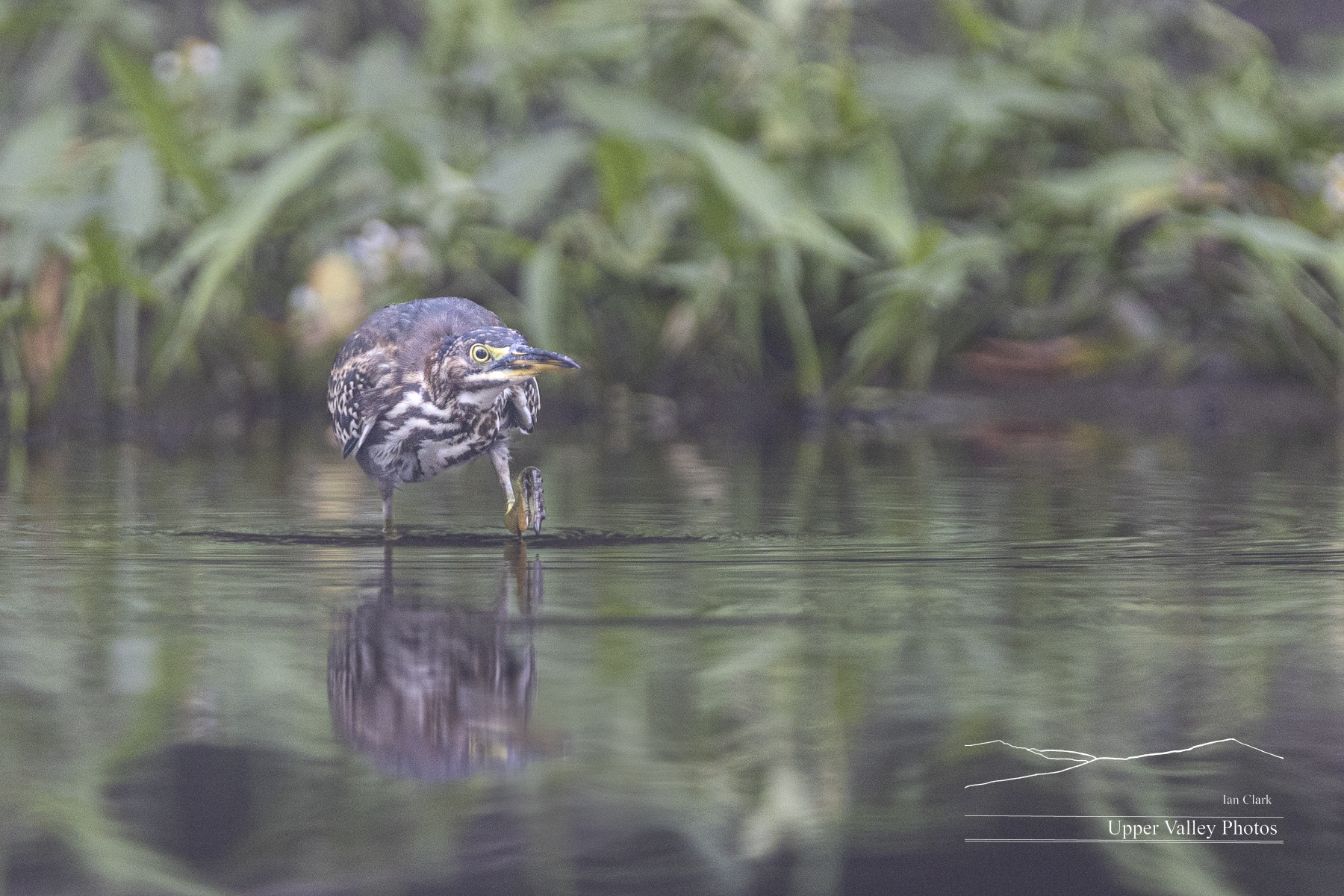
I went back Tuesday evening. The sky was clear of herons on my way downstream. After some looking, I found the green heron in the shadows under a tree. I settled in to wait for him to come out closer to the water – and hopefully into the light. He headed inland. After a few minutes, the heron and a wood duck hen I hadn’t seen both squawked and came hustling out of the brush. My guess was they’d surprised each other moving around.
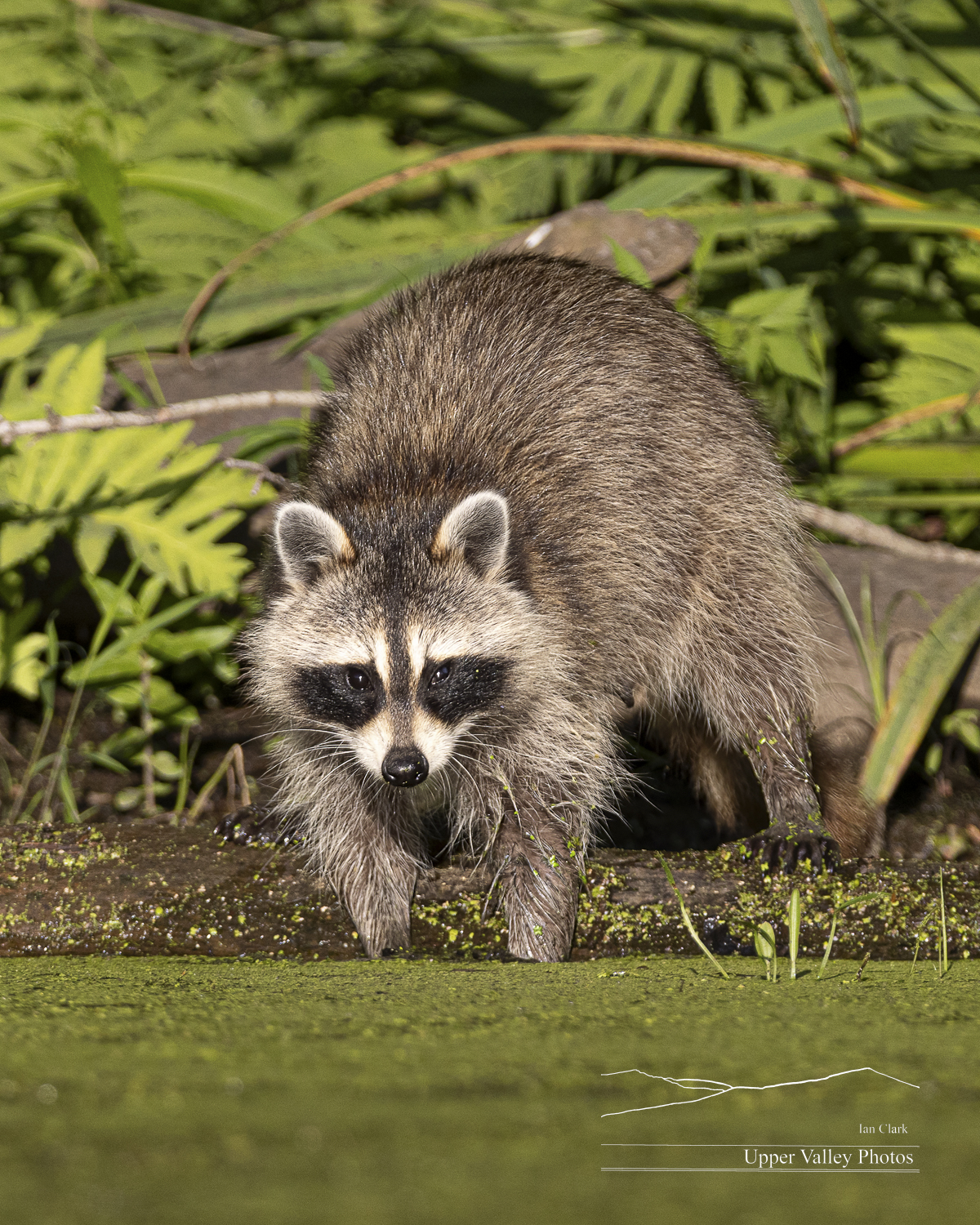
I went back twice yesterday. I was out in the thick fog before sunup and returned late in the afternoon.
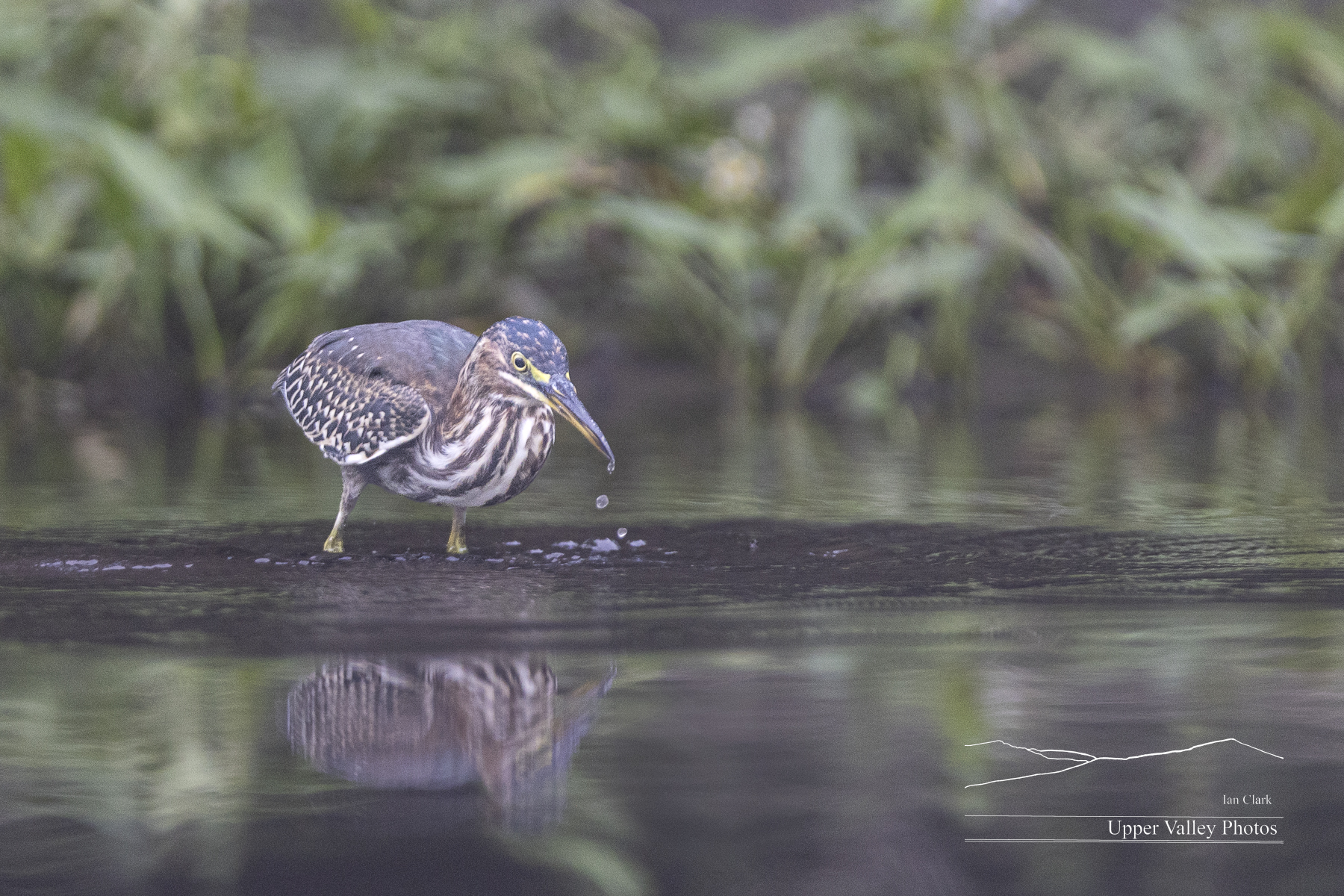
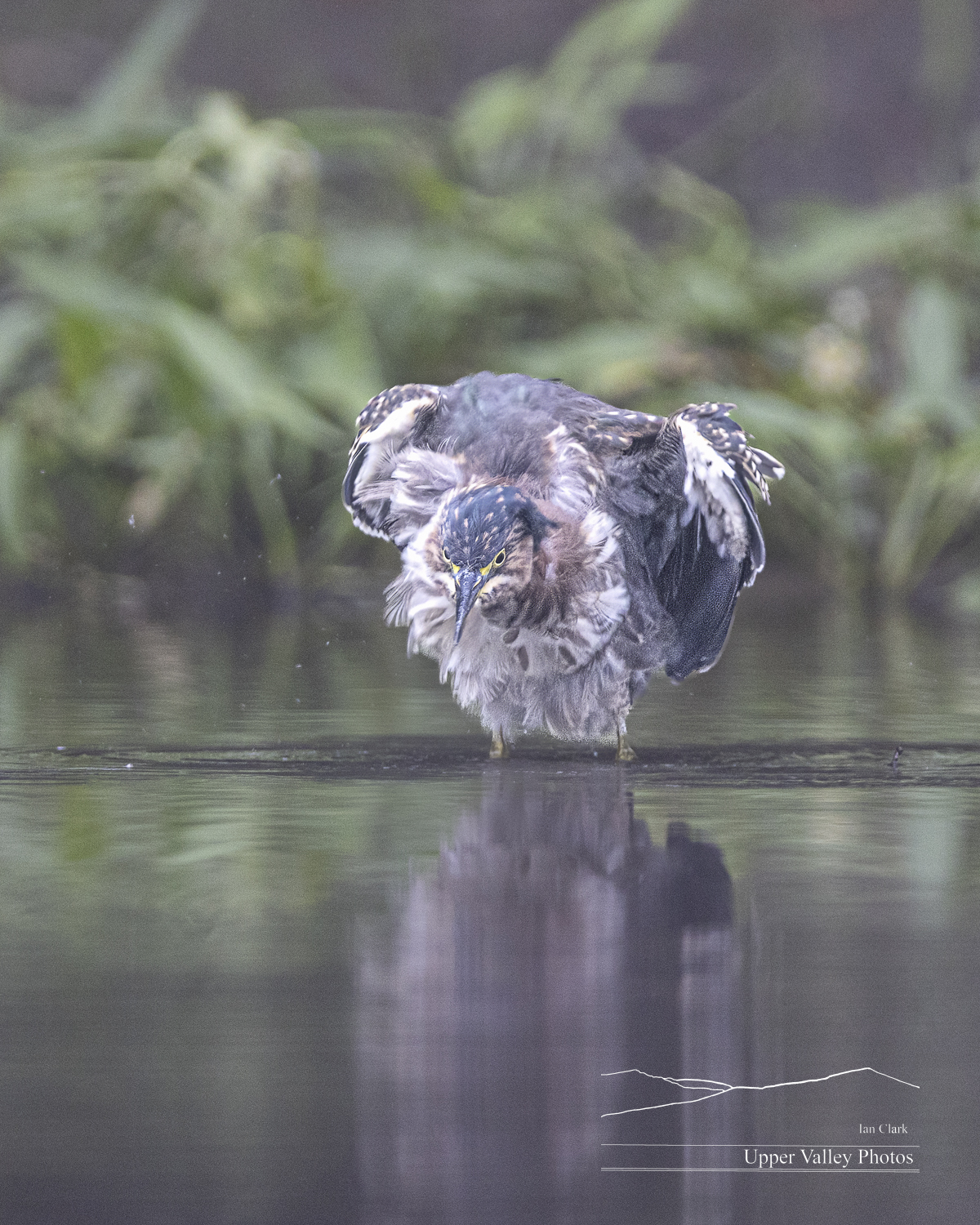
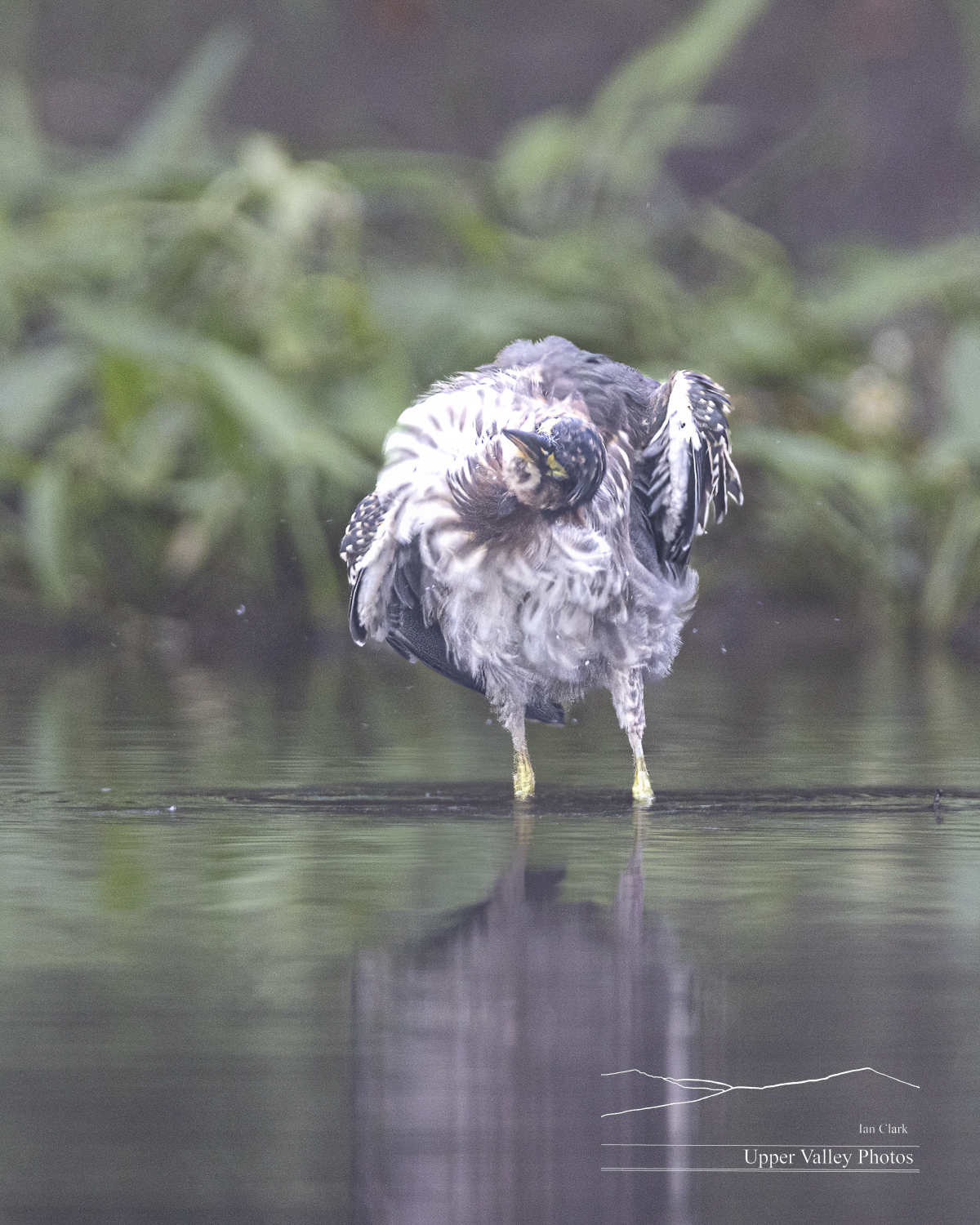
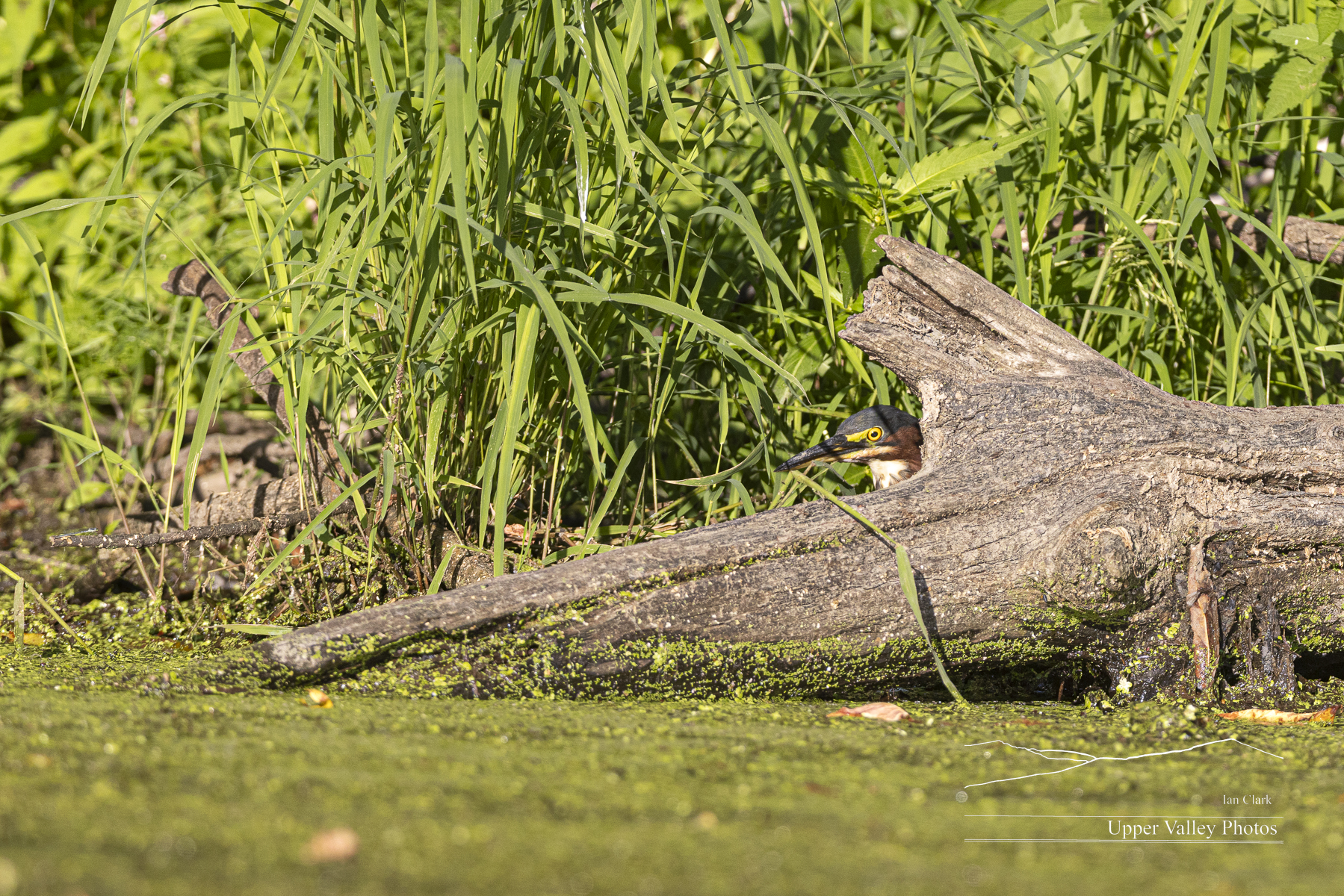
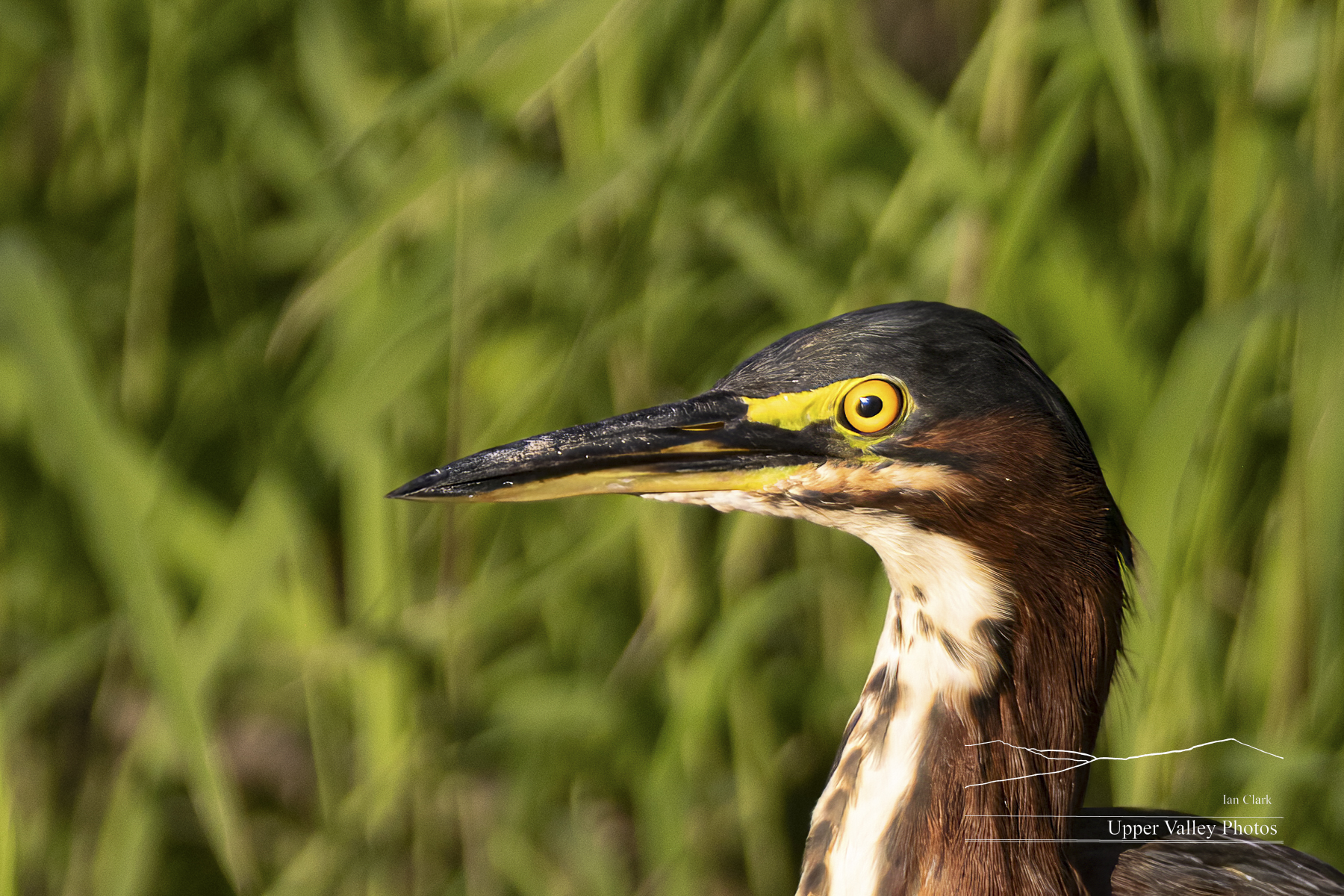
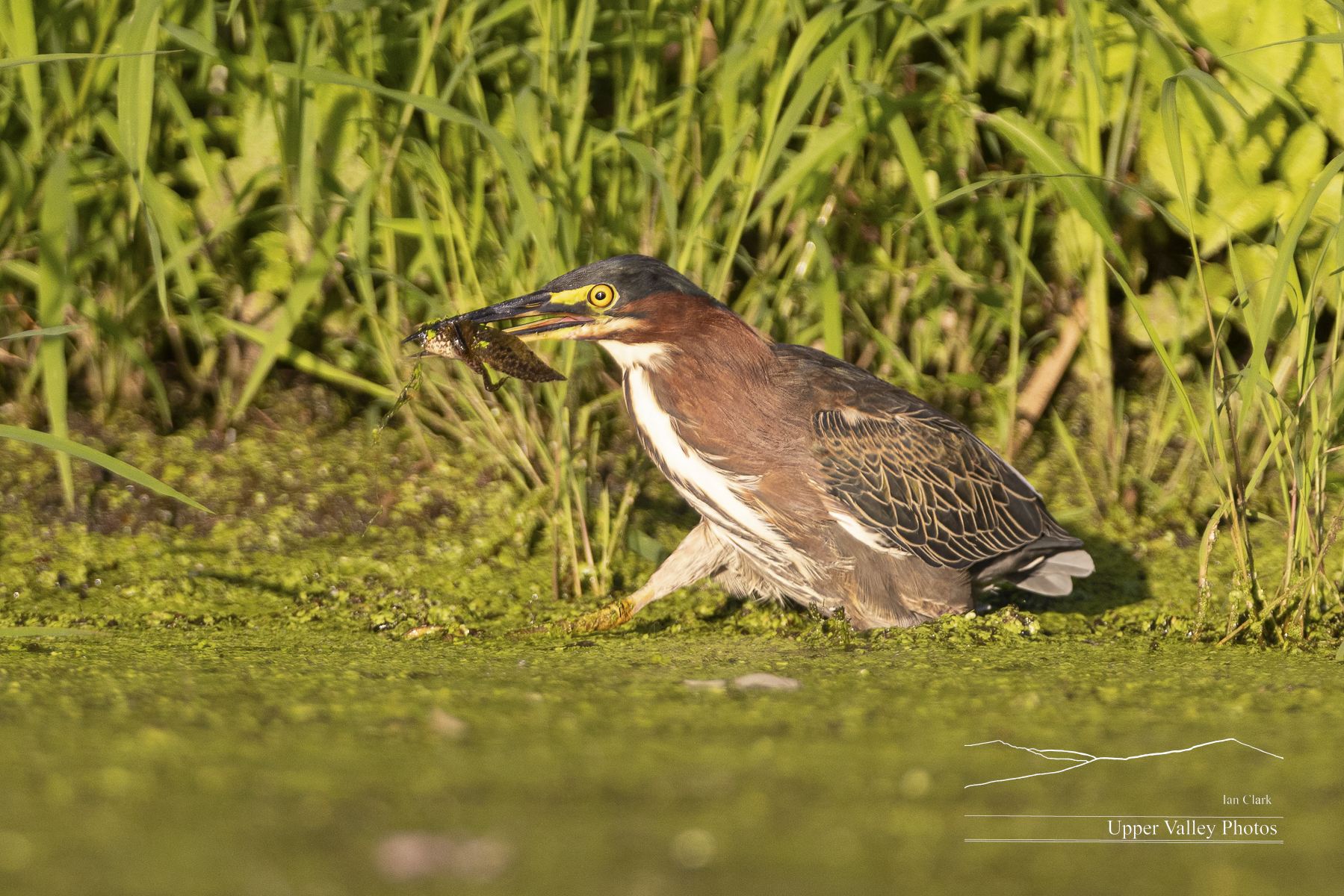
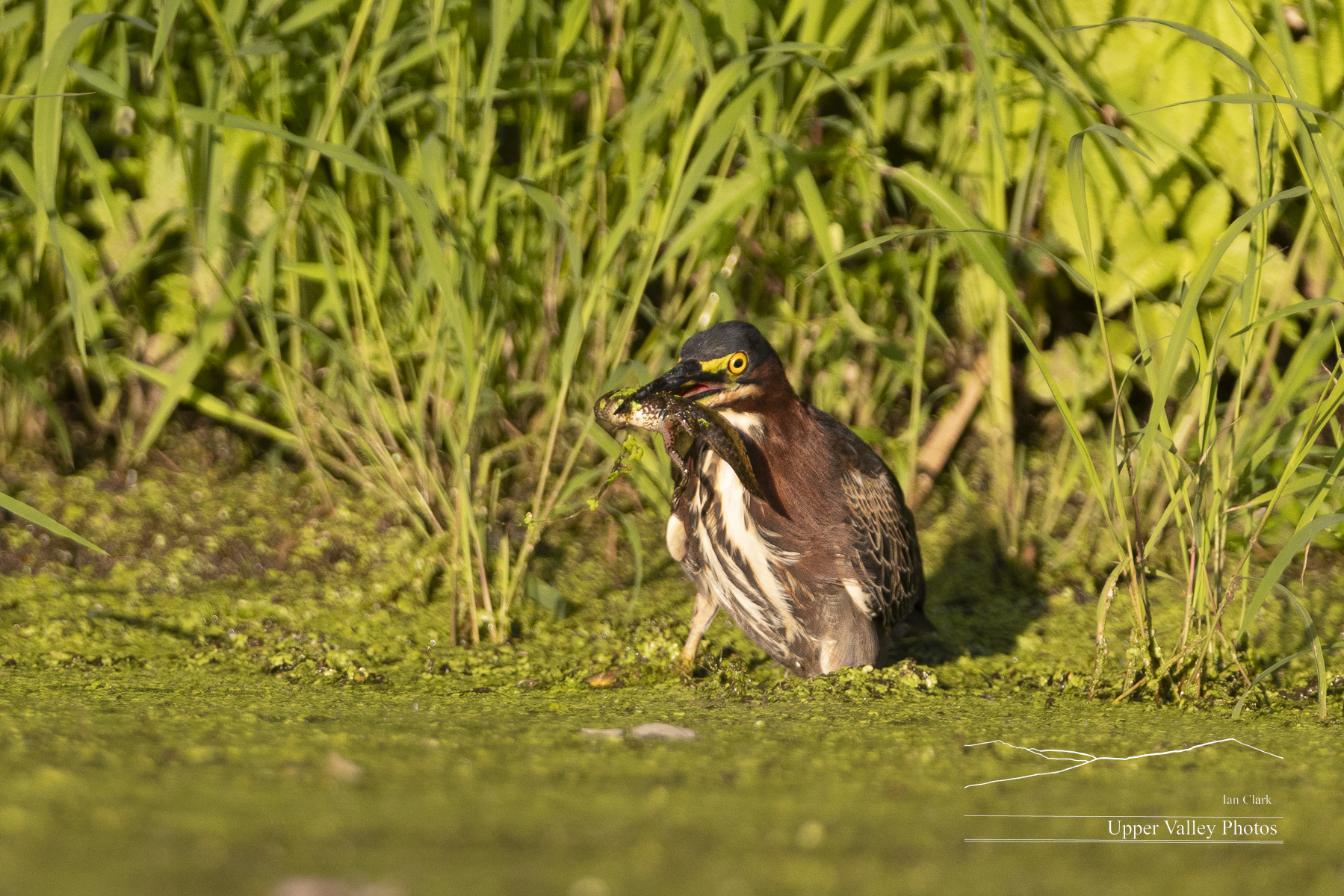
If you enjoy my blog, please help me out by sharing it with a friend or on social media. Thanks!
A Visit to the Eastons and Hank Finds a Friend
The weather let me get out three times last week. I had a visit with the Eastons and a change of pace took me to the Waits River where it looks like Hank has found a friend.
The Beaver Meadow Chapel at 1672 Beaver Meadow Road Norwich, VT will be hosting me to present my slideshow An Uncommon Look at the Common Loon Saturday August 22 at 7:00 p.m. Free and everyone welcome.
Thanks to everyone who stopped by my setup at the League of New Hampshire Craftsmen’s Fair. My next show is going to be local. I’ll be exhibiting in the Vermont North By Hand Open Studio Tour October 10-11, 2026. I’ll be set up at the Martin Farm on Route 5 right on the Bradford – Fairlee Town Line. Sue Martin is a very talented stained glass maker and has kindly offered me space to set up next to her. (I’d open my ‘studio,’ but my work at home is in a very cramped 6′ x 9′ office – mostly filled from floor to ceiling. There’s not much to see…) The map and details for the Open Studio Tour are here.
Last Tuesday, I made the trek up to check in on the Eastons. On my last several visits, Mrs. Easton had been facing a serious, ongoing challenge for the pond. On each of my visits, an intruding female arrived and a scuffle began.
When I arrived Tuesday, there was peace on the pond. Mom and Dad were foraging lazily. The chicks were sleeping in. Every so often, one of the parents would deliver a snack to the chicks, often having to wake them to make the delivery. The chicks would often take the snack, yawn then return to his nap.
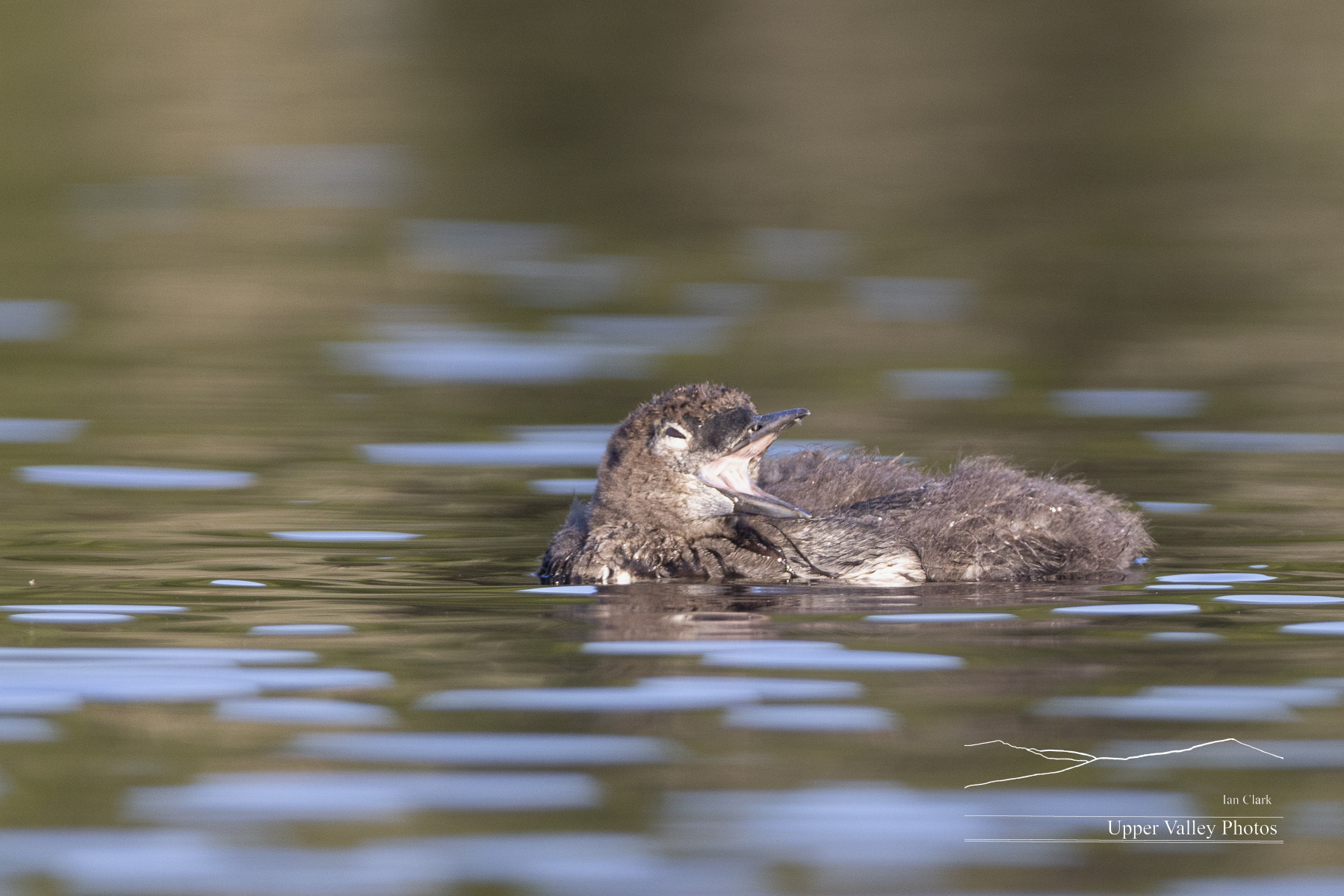
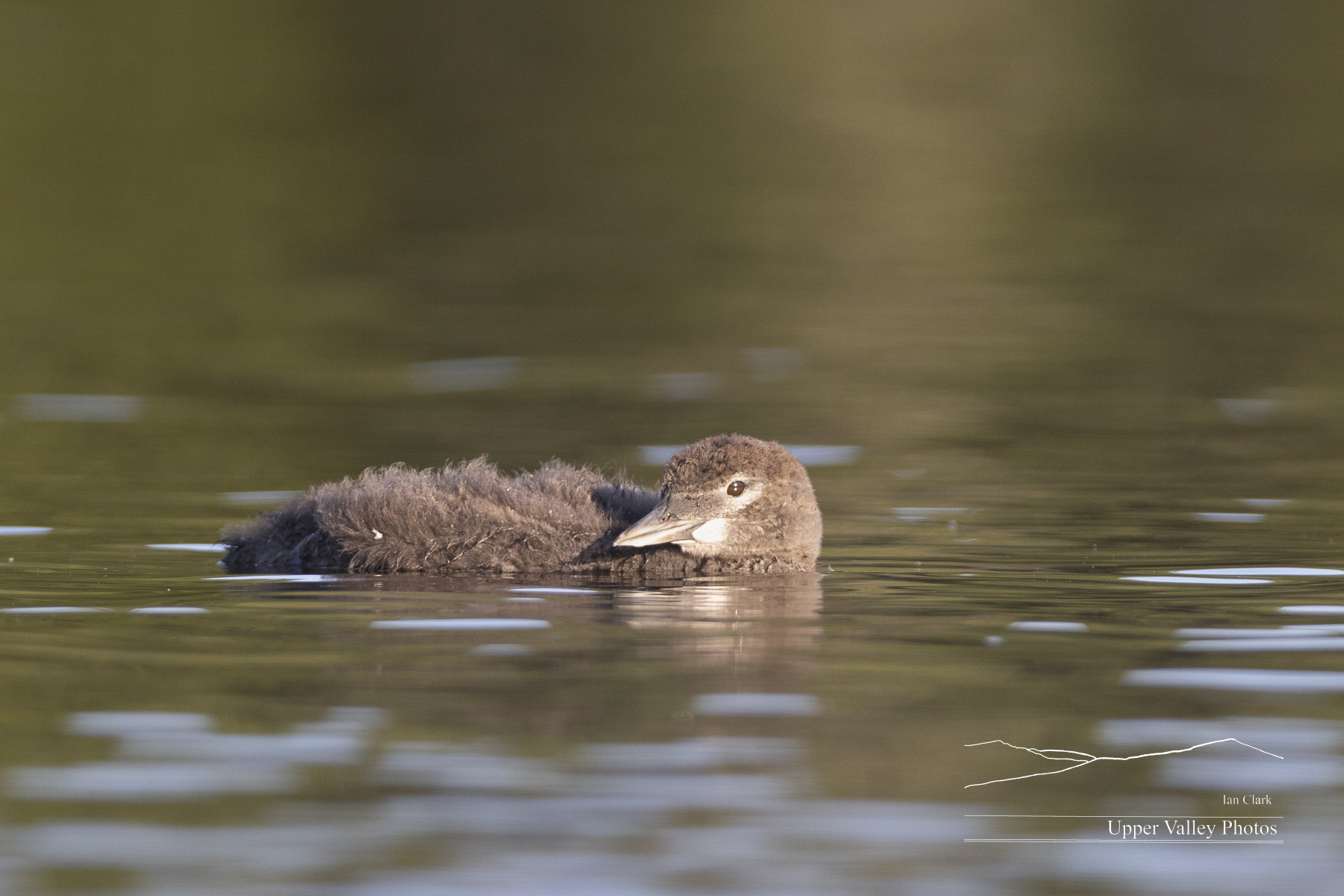
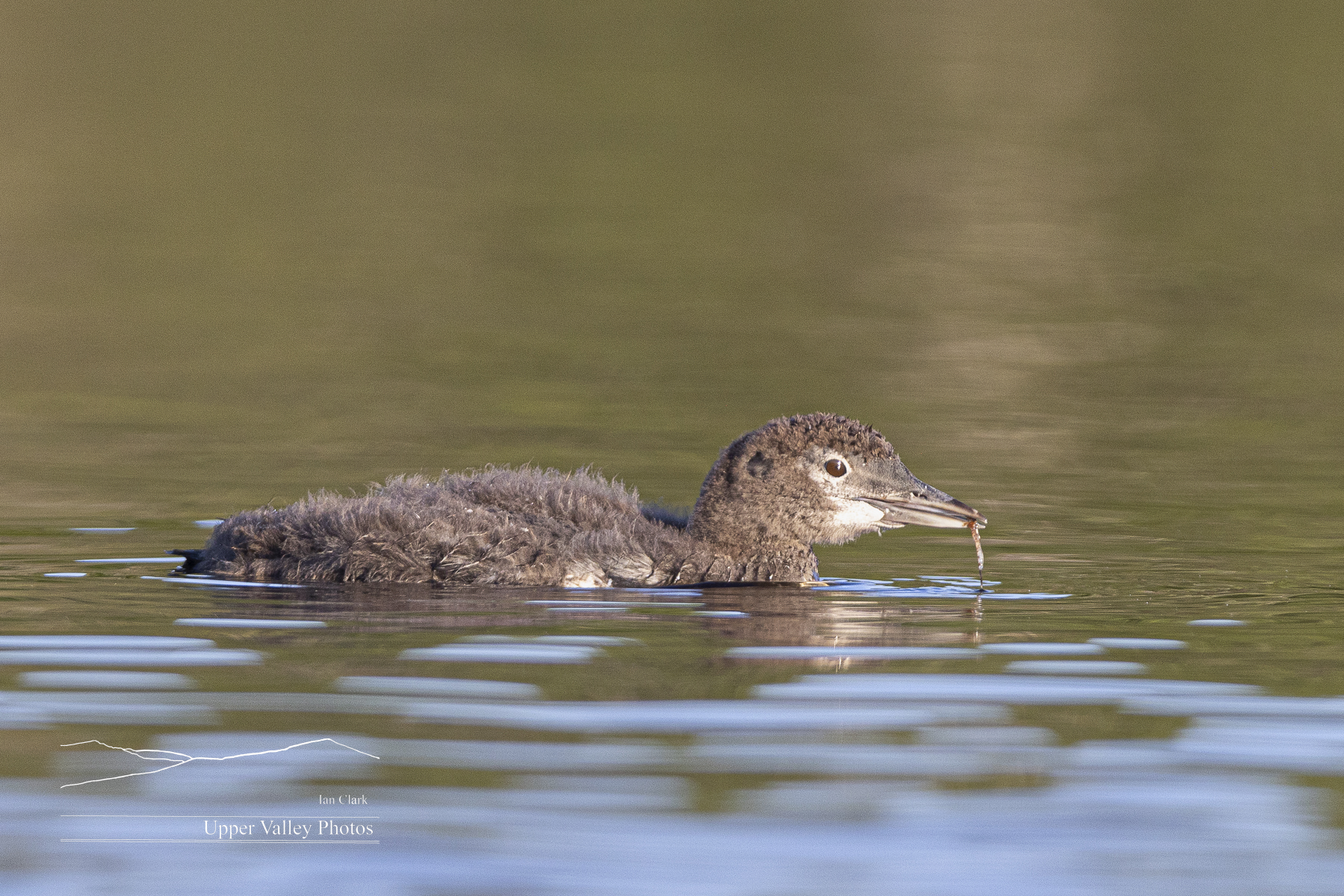
Dad took over babysitting and Mom headed up the pond on her own. I went looking for Hank. Before I could find him, an intruding loon flew in. He landed not too far from the chicks.
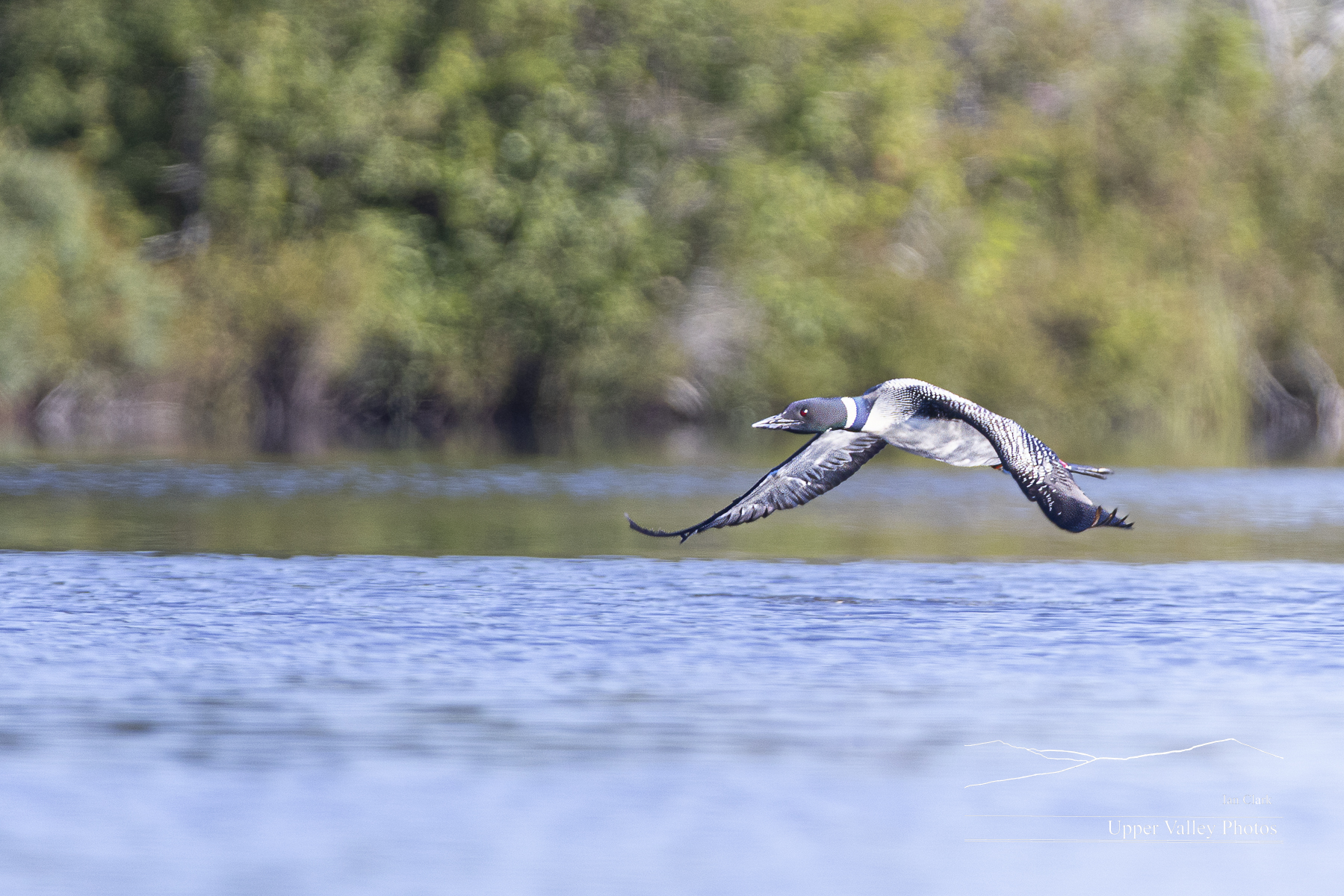
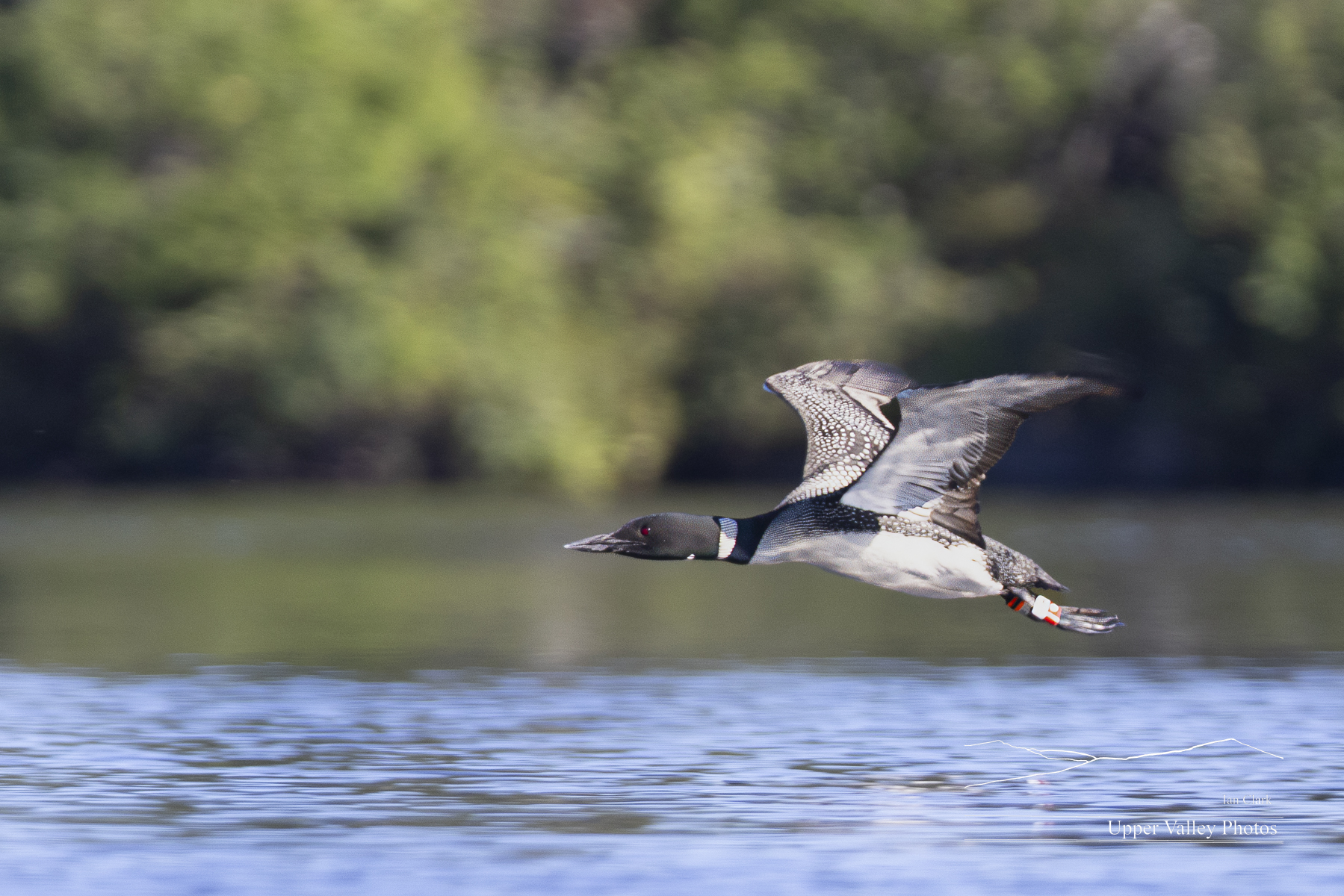
The intruder seemed more interested in breakfast than fighting. Dad went to face off with him repeatedly. The intruder would dive and cover a lot of water before resurfacing. Dad eventually put on a wing-rowing display and the intruder took the hint and departed.
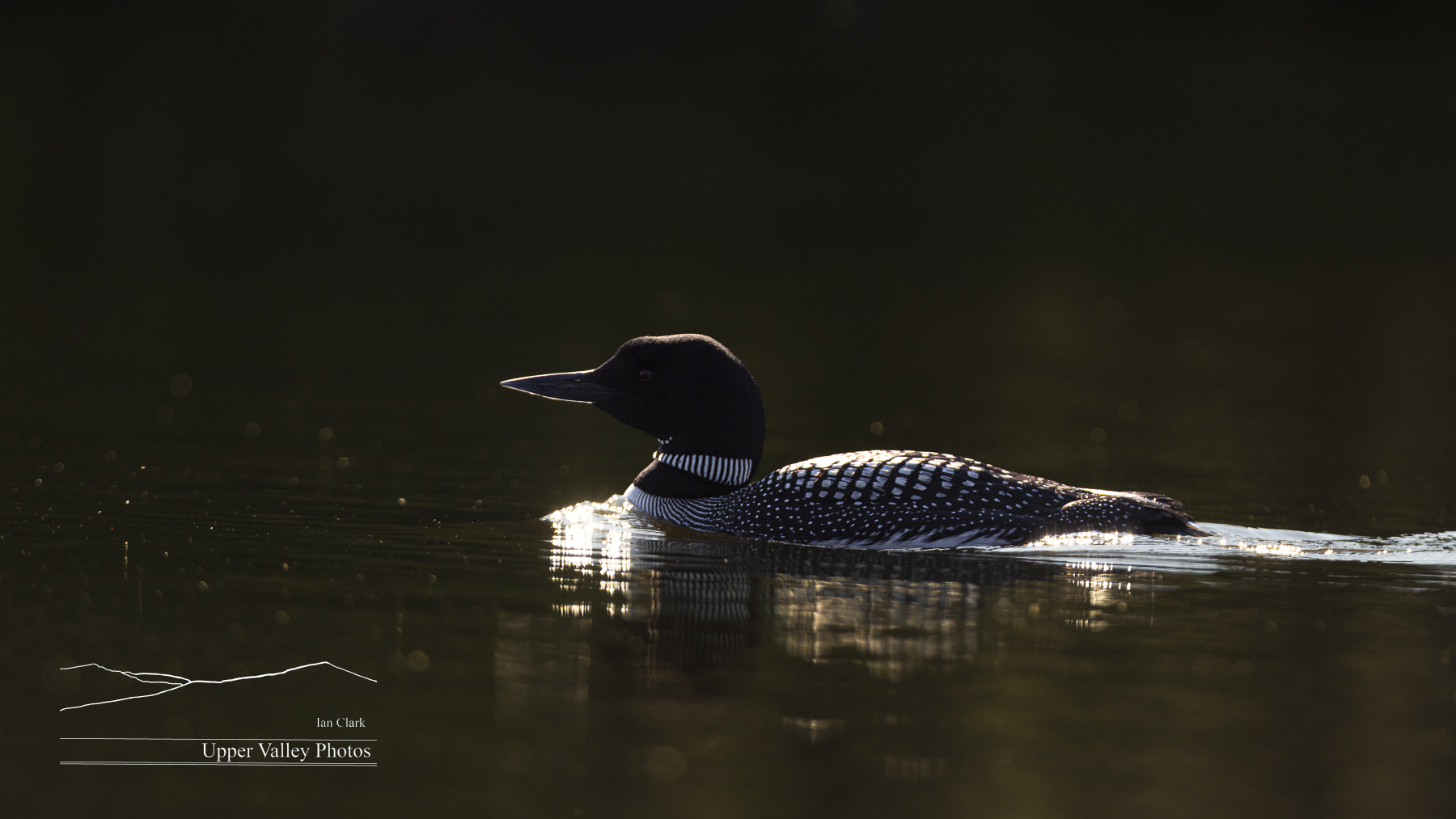
Peace returned to the pond. I poked around a bit more, without finding Hank. The female intruder didn’t show up while I was there.
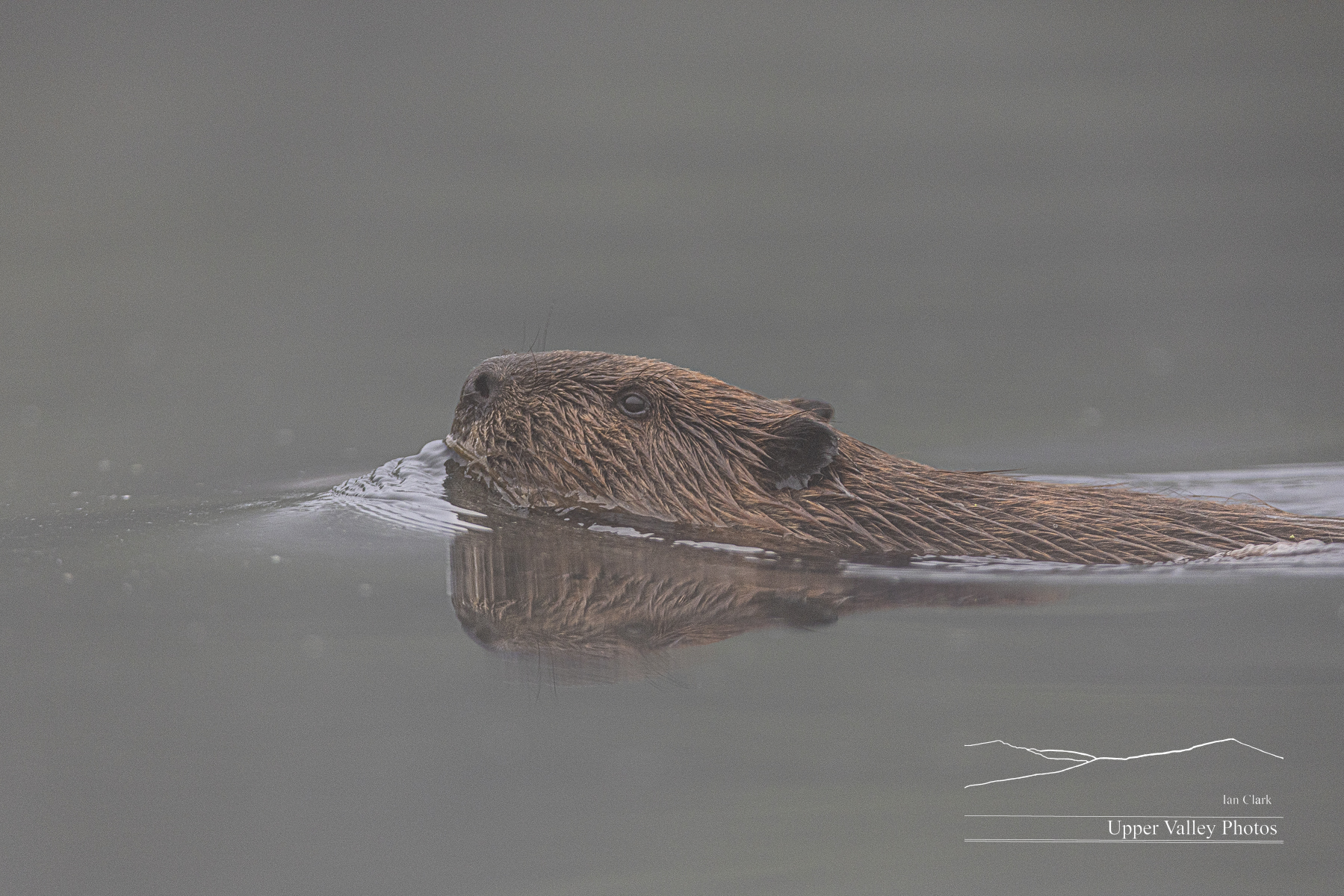
On Wednesday, I headed down to the Waits River. There have been black-crowned night herons nesting there for several years and a least bittern has been a regular in the marsh. There was a thick fog when I put in and it stubbornly refused to lift. I explored around the marsh.
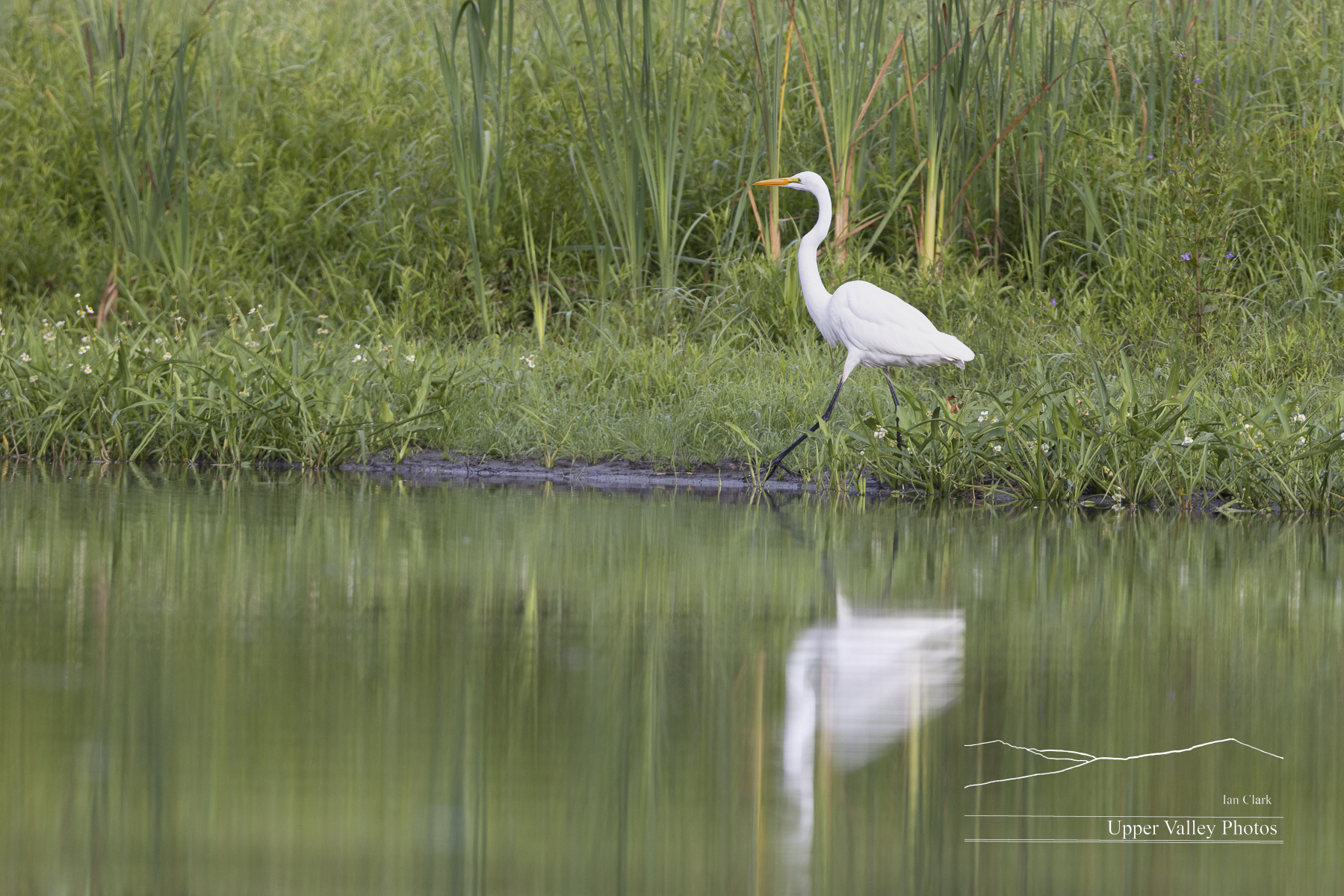
I was about to give up and head in. As I started upstream, a great egret flew in.
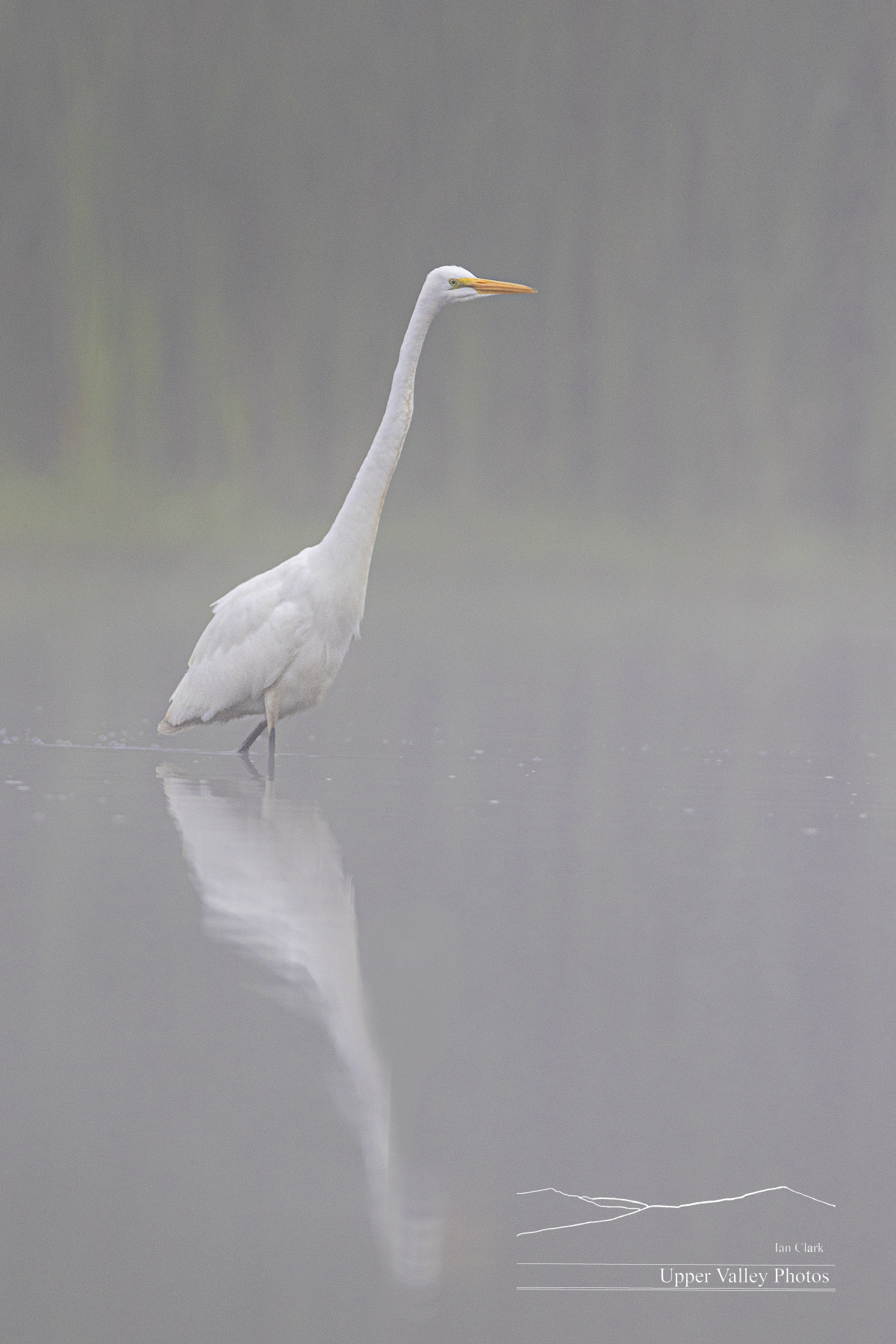
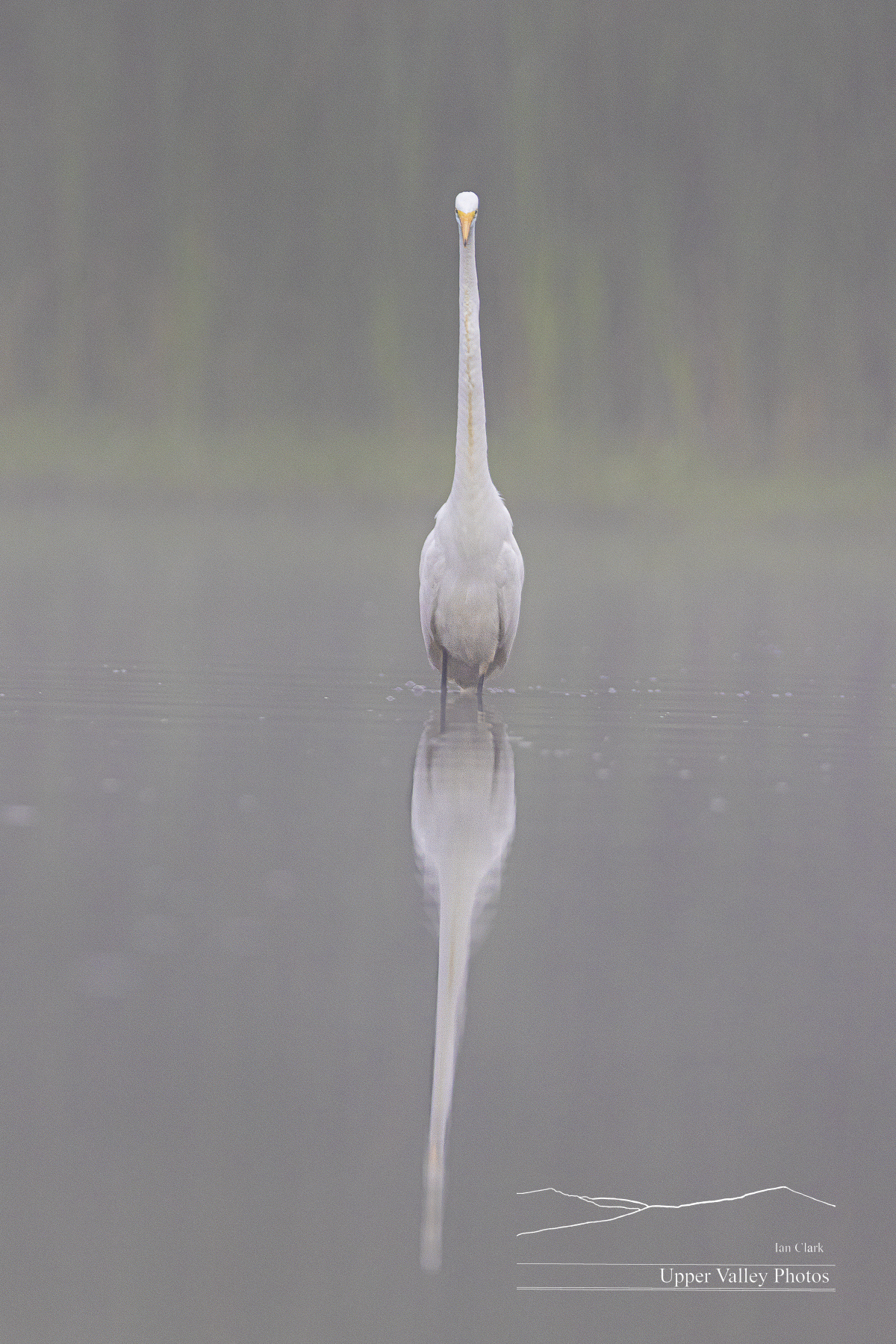
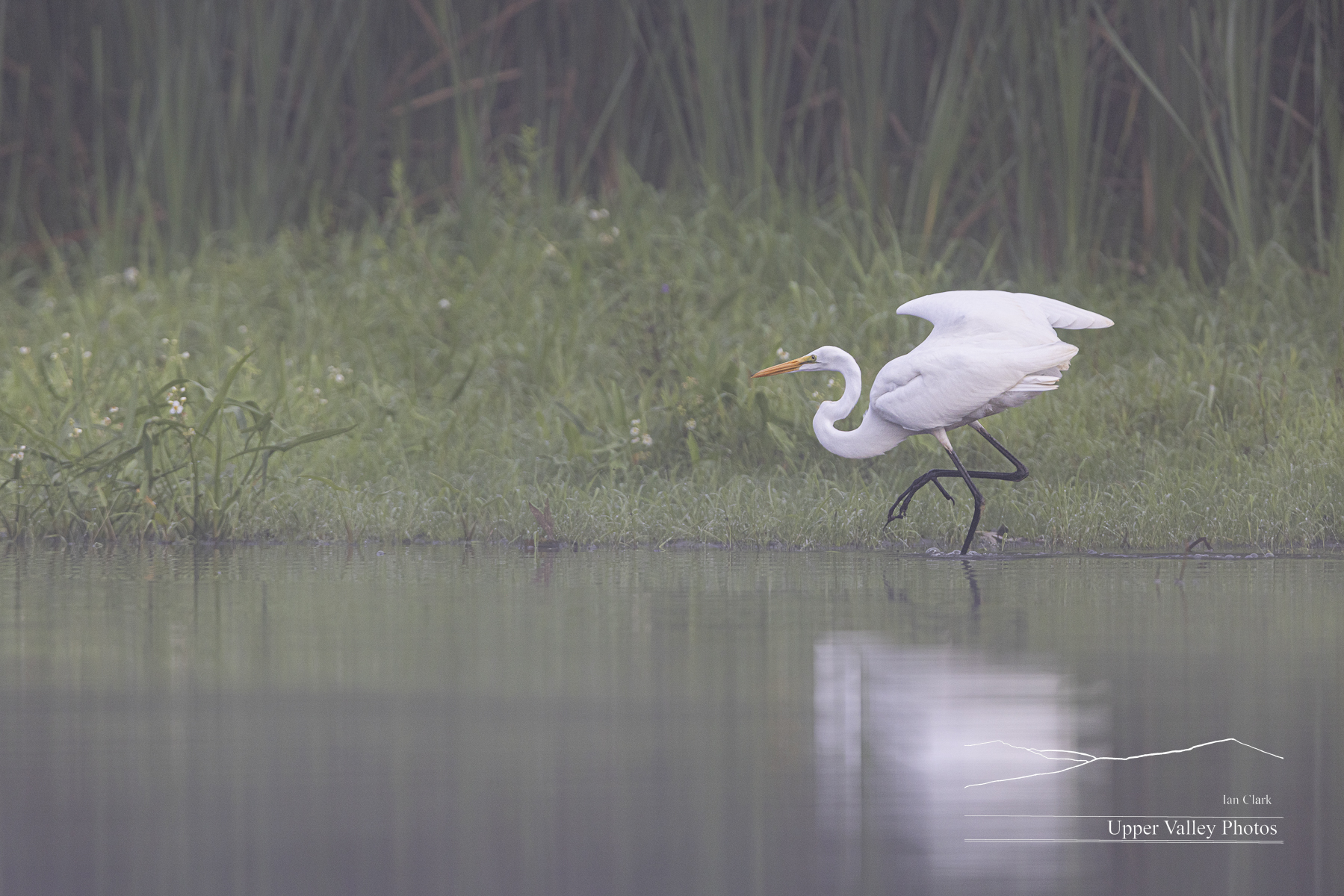
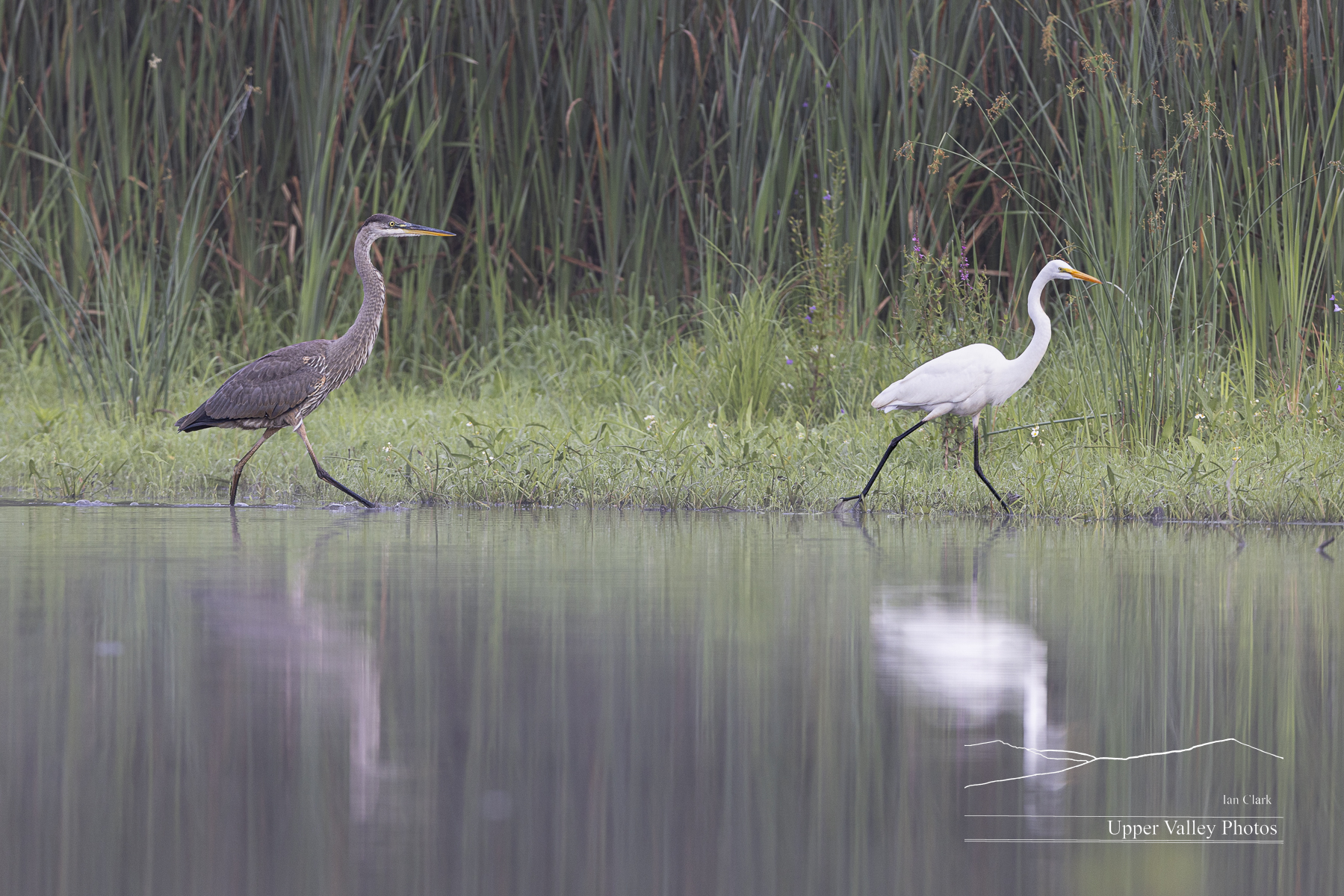
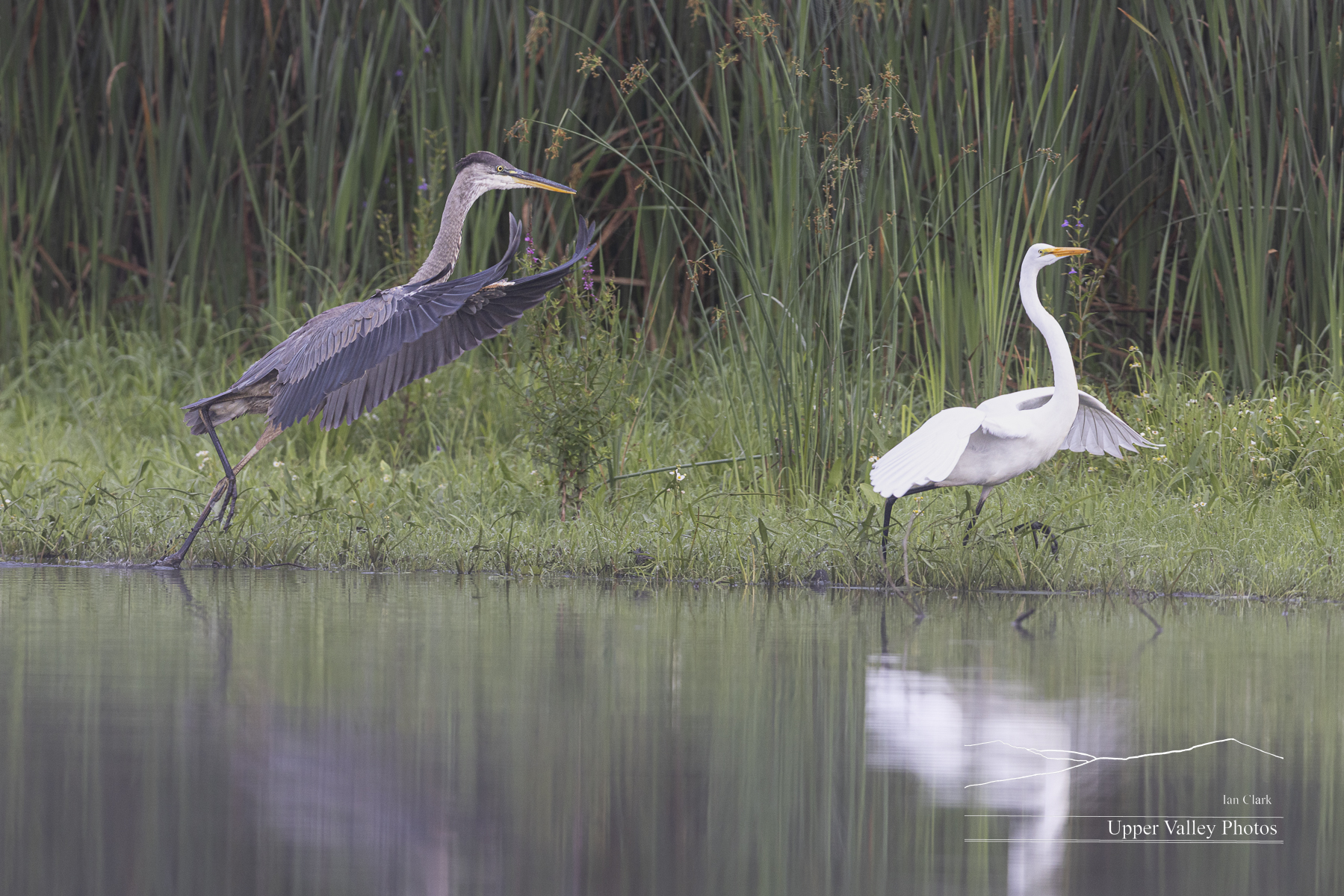
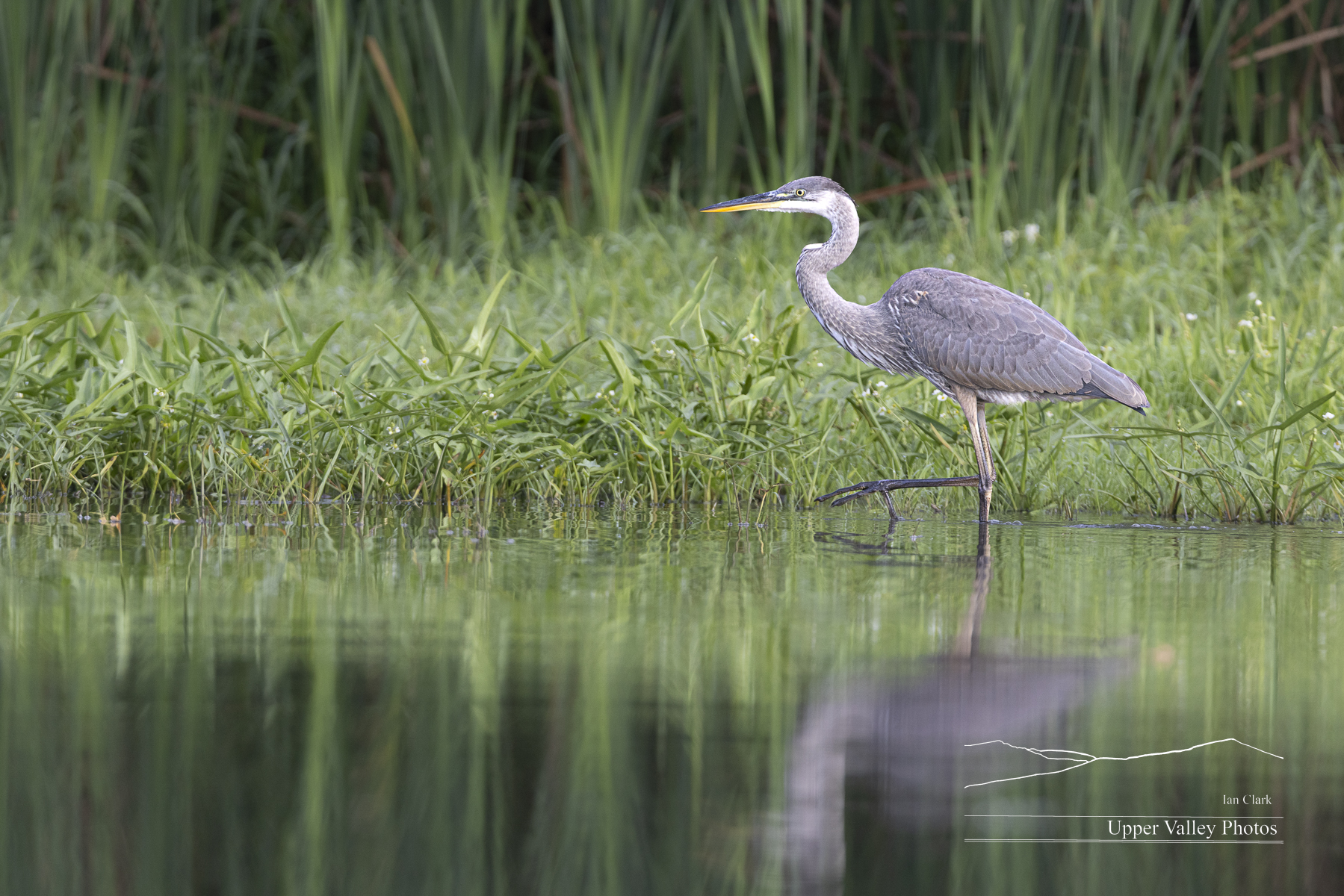
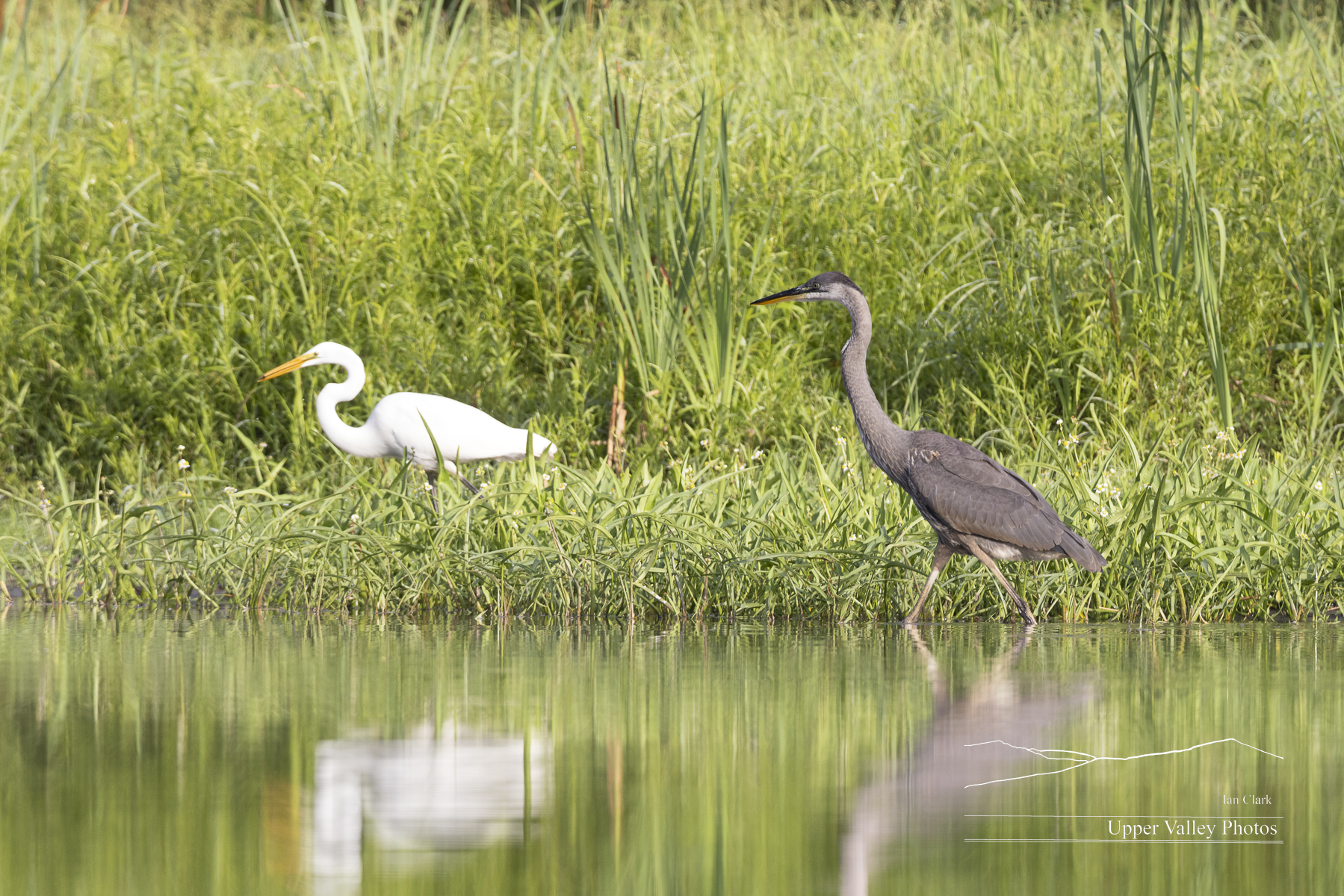
After a time, Hank flew a couple hundred yards upstream. The egret followed promptly and they went back to foraging near each other. They repeated this a couple more times.
I returned the next day and found them flying upstream together. They headed away from the River and I didn’t see them again that morning.
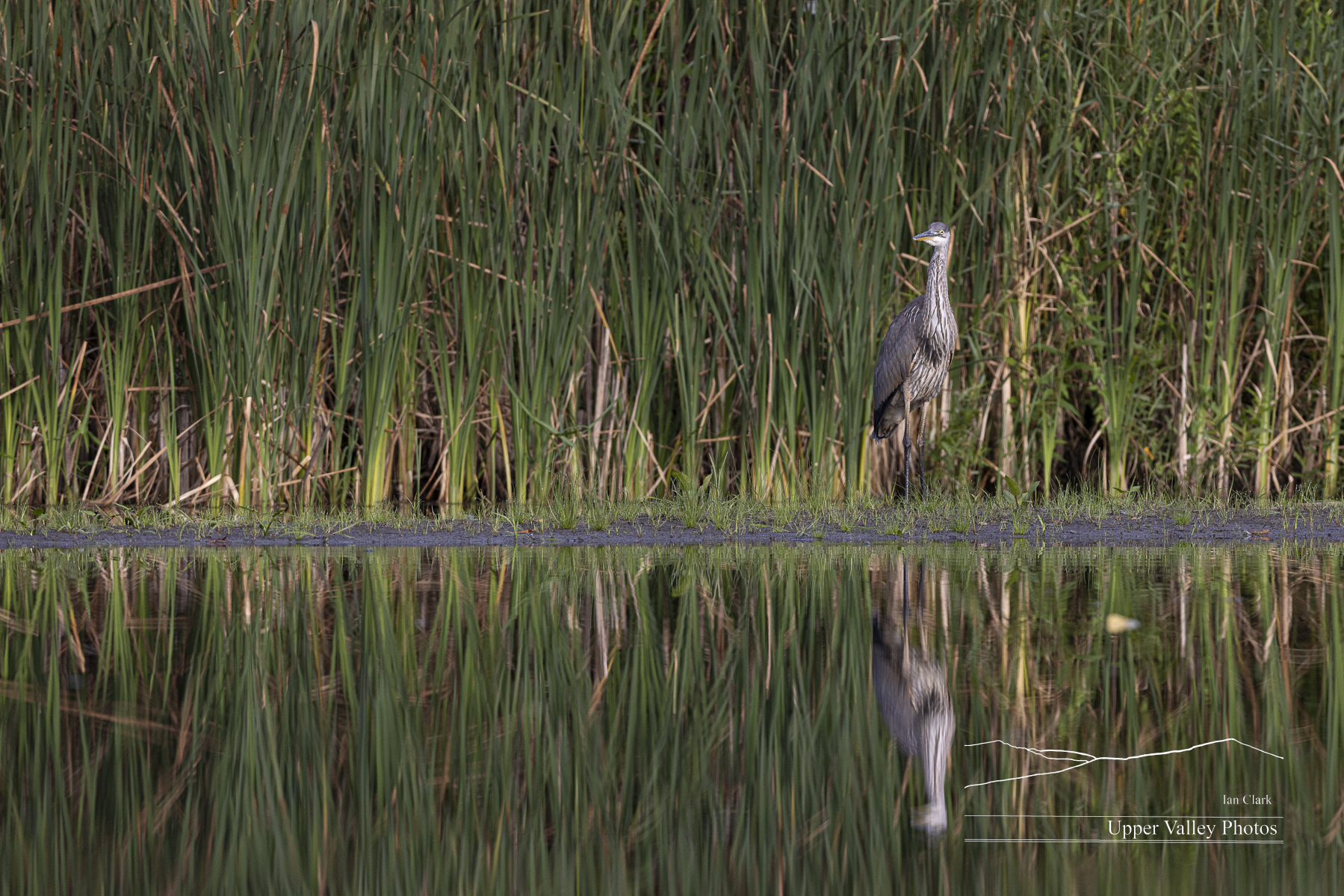
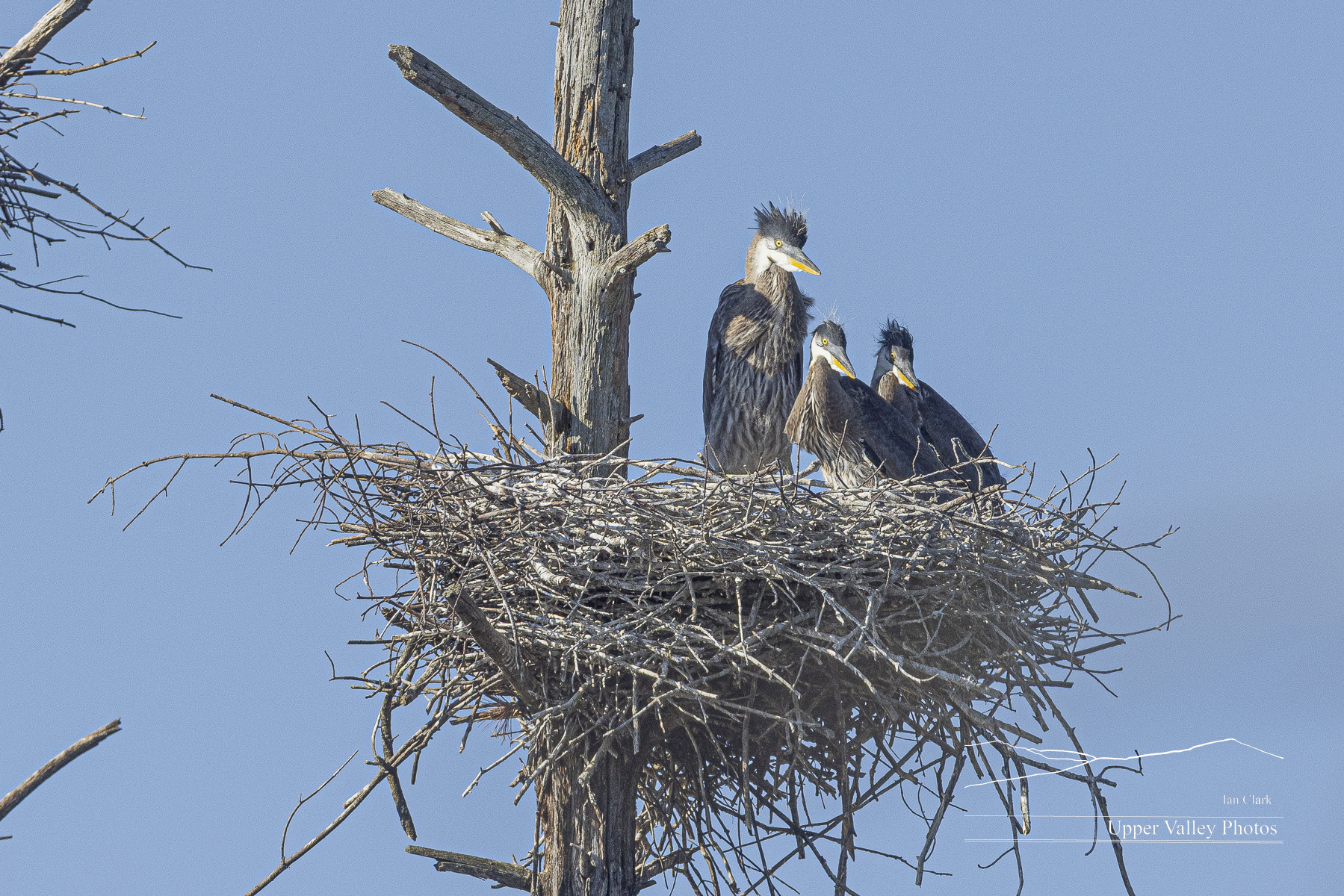
Both herons and egrets are solitary birds. The heron looks to be a juvenile, I have no idea how to spot a juvenile egret. I wonder if they’re used to having company in the nest and haven’t grown into the need for solitude.
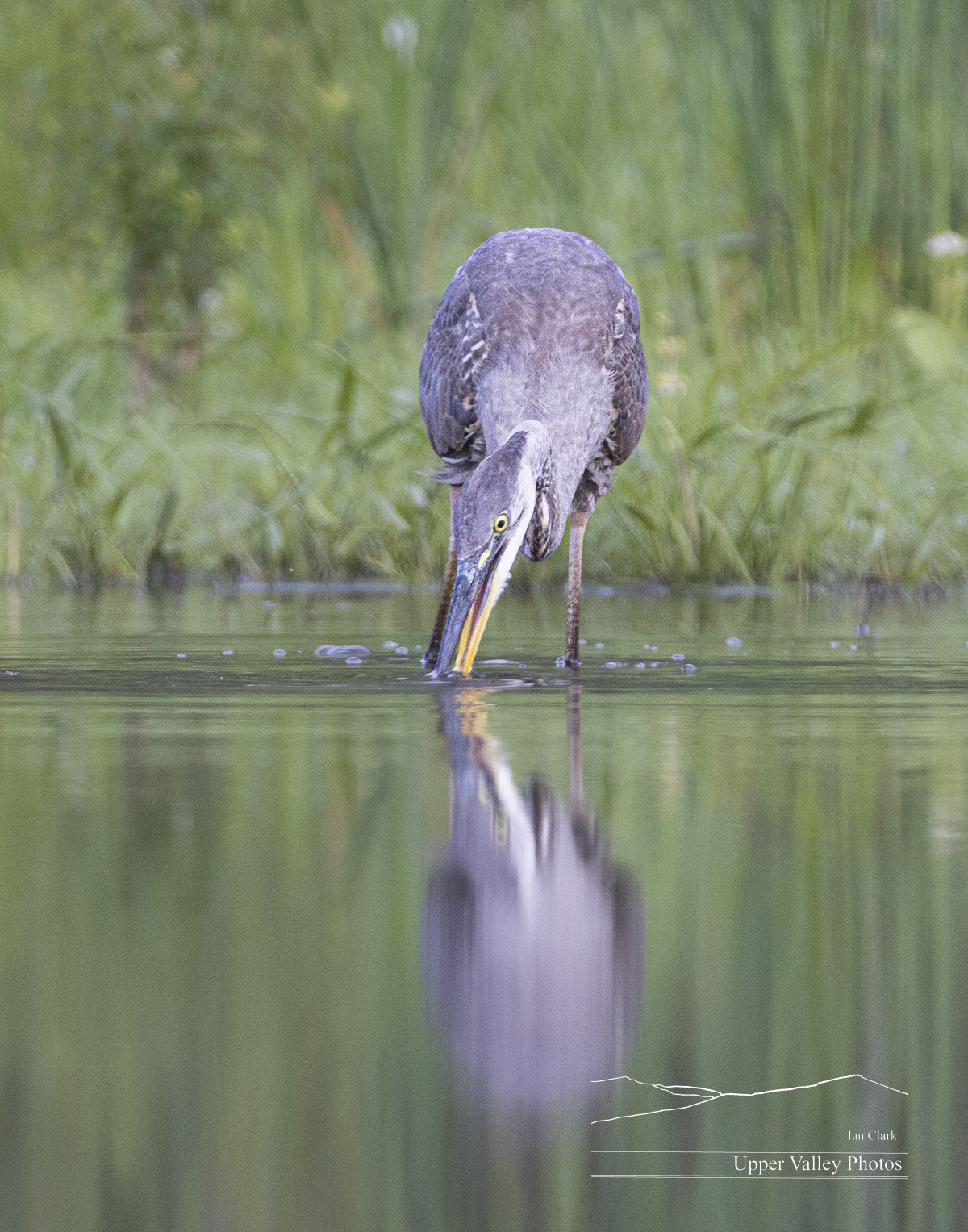
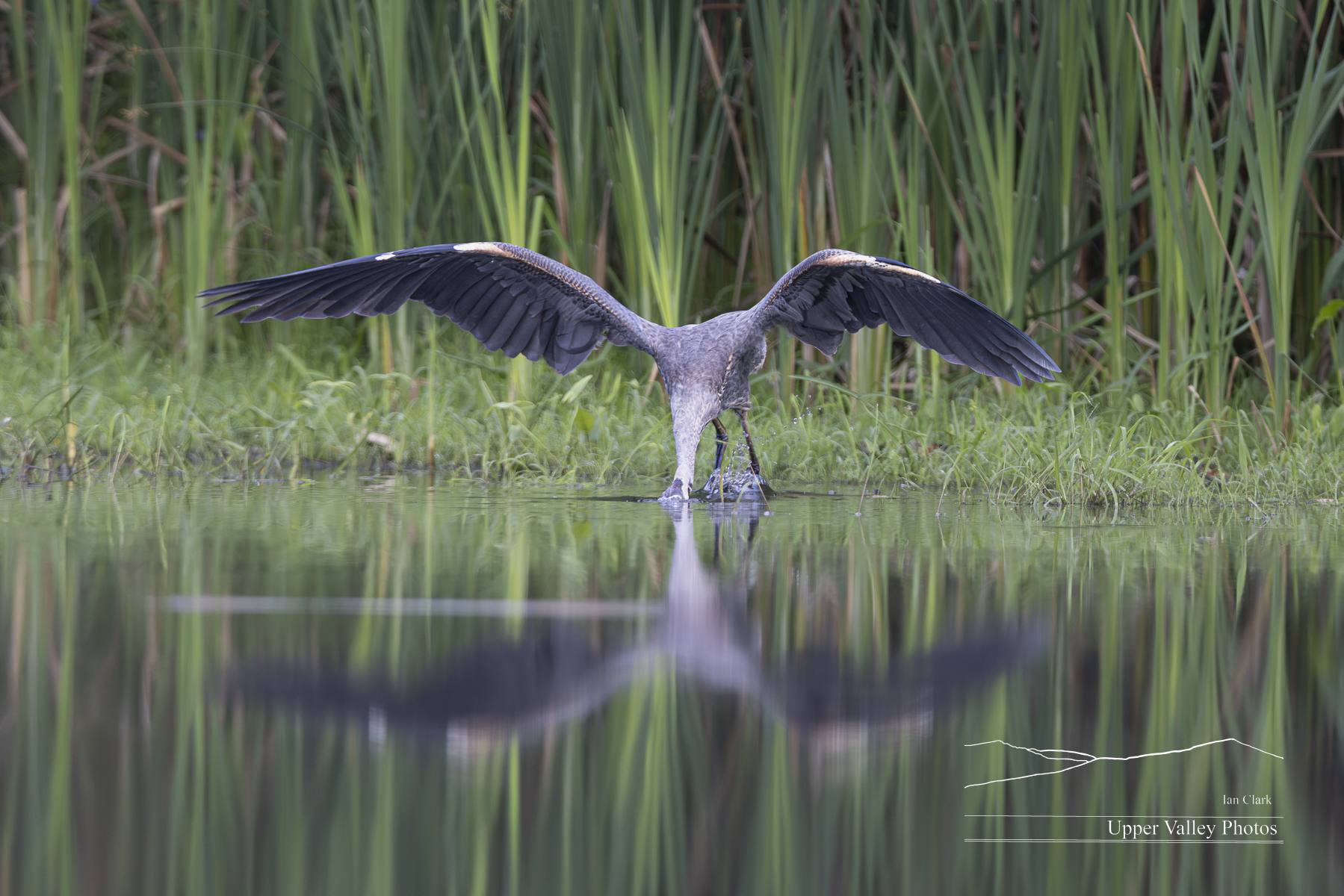
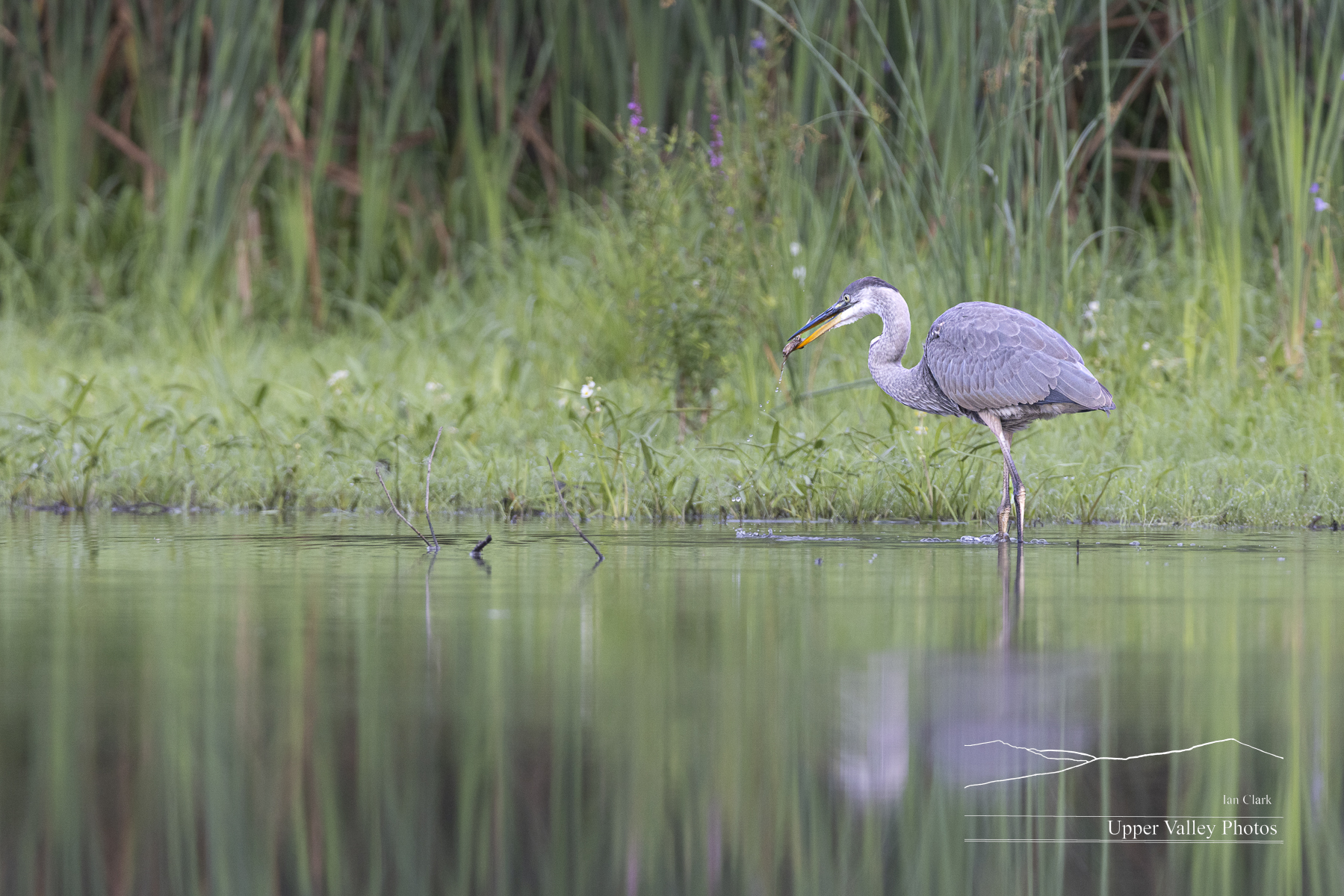
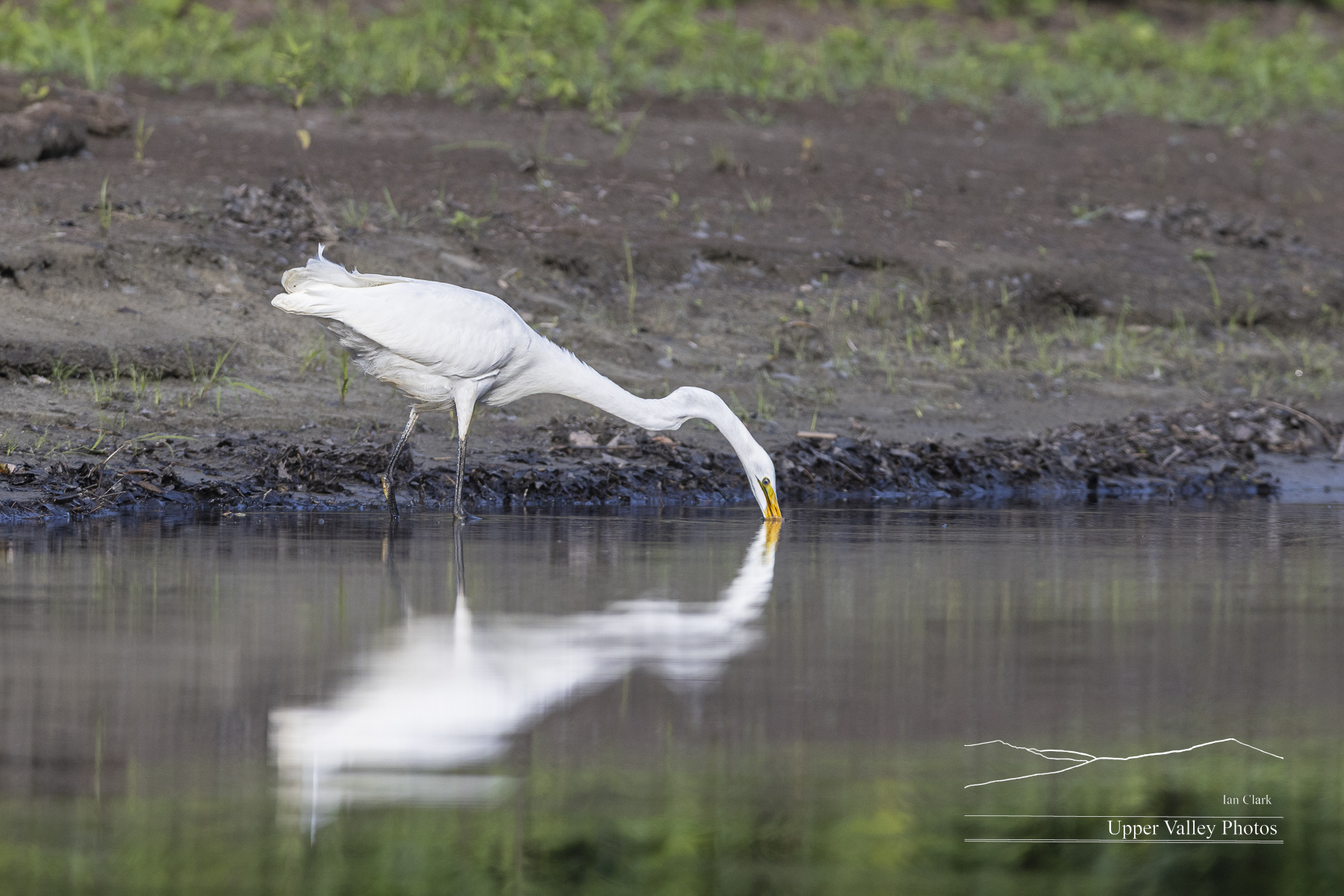
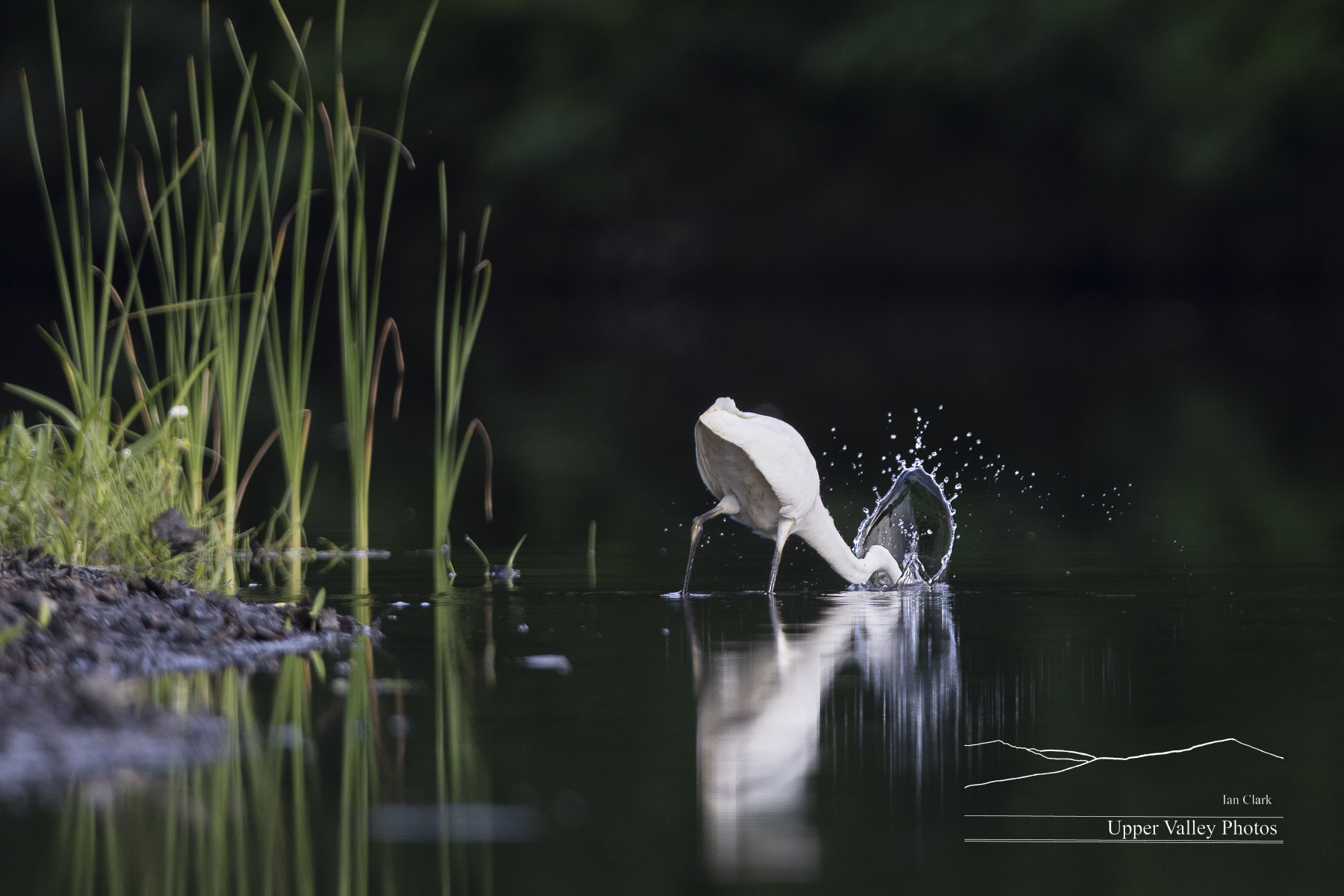
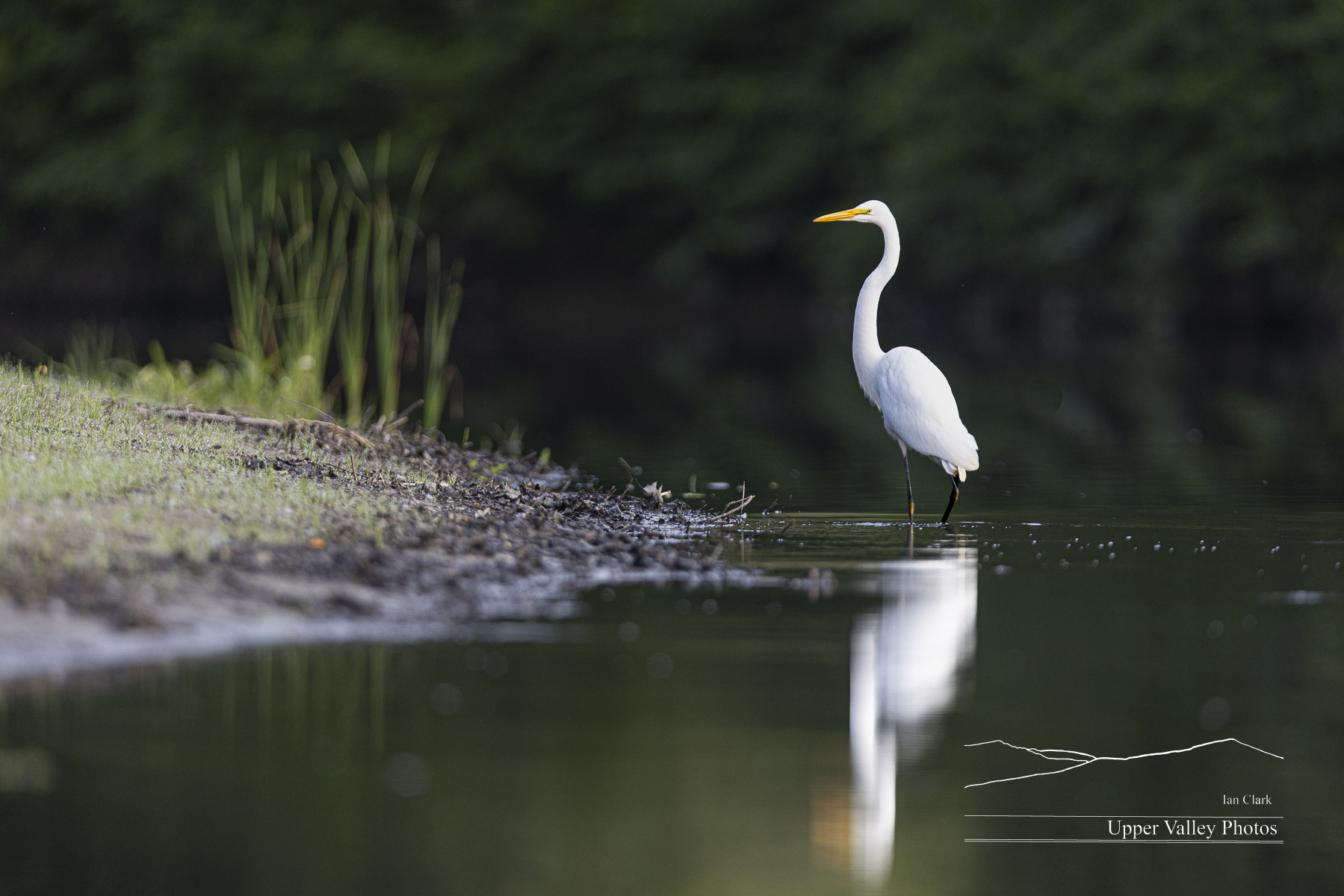
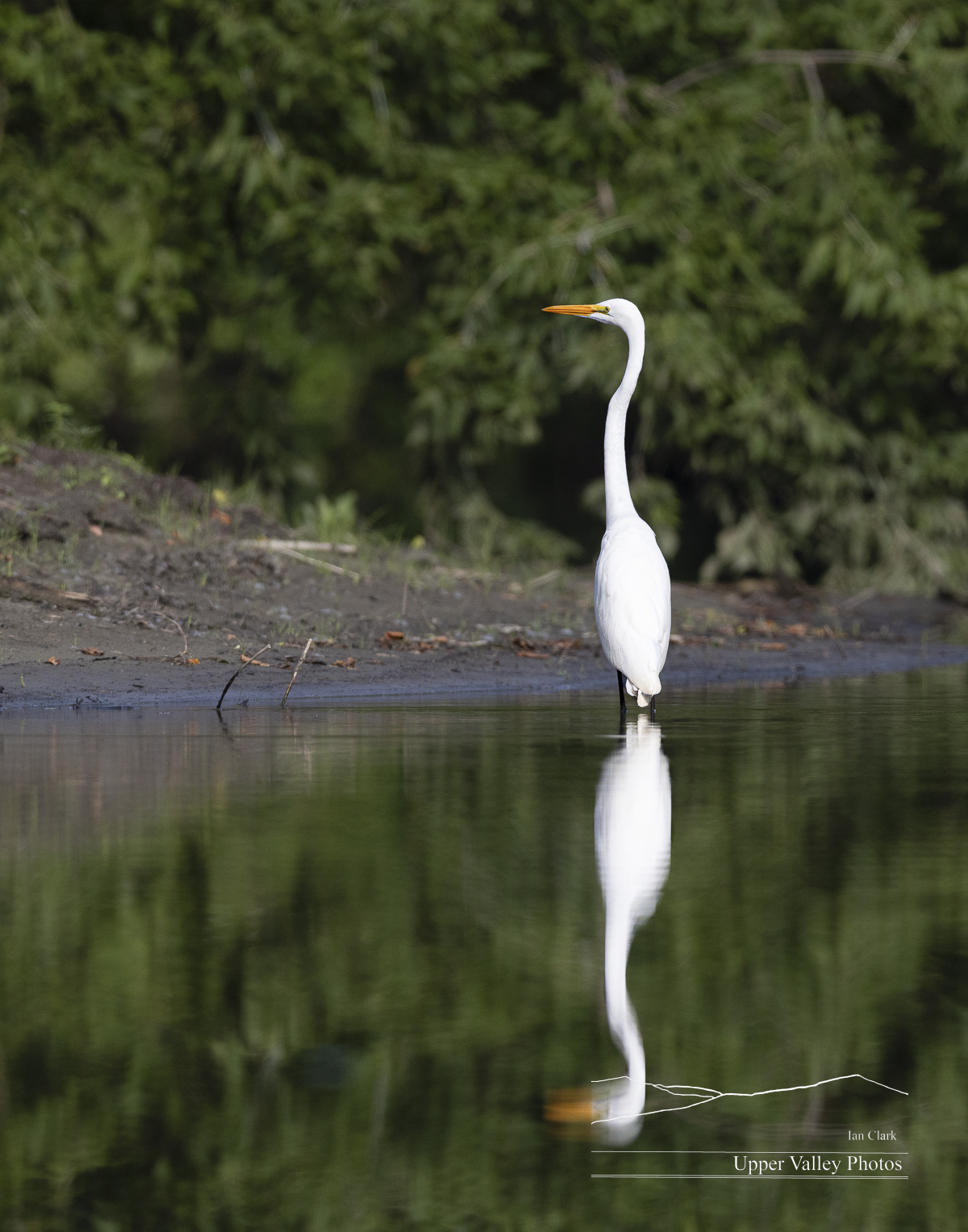
A note on the type, I’ve tried to increase the font size on both the text and photo captions. Is this an improvement?
And, as always if you’ve come to this post from a link elsewhere, you can subscribe with the form below. I’m just going to use your info to let you know when I’ve added a new post. I won’t share or sell your info. And, if you like the blog, please share it with a friend or two. Thanks!
We Have Loon Chicks, Heron Chicks Getting Big
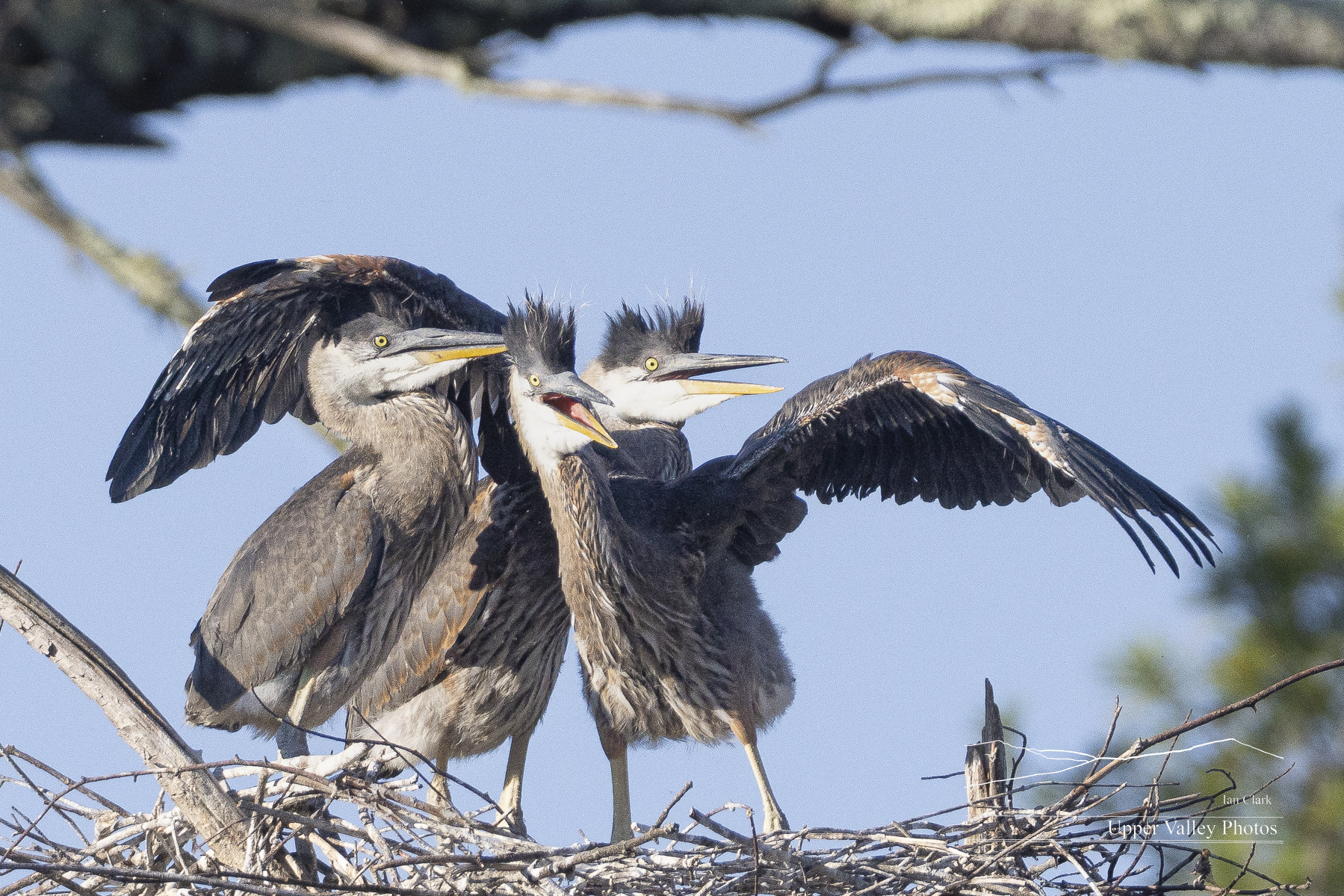
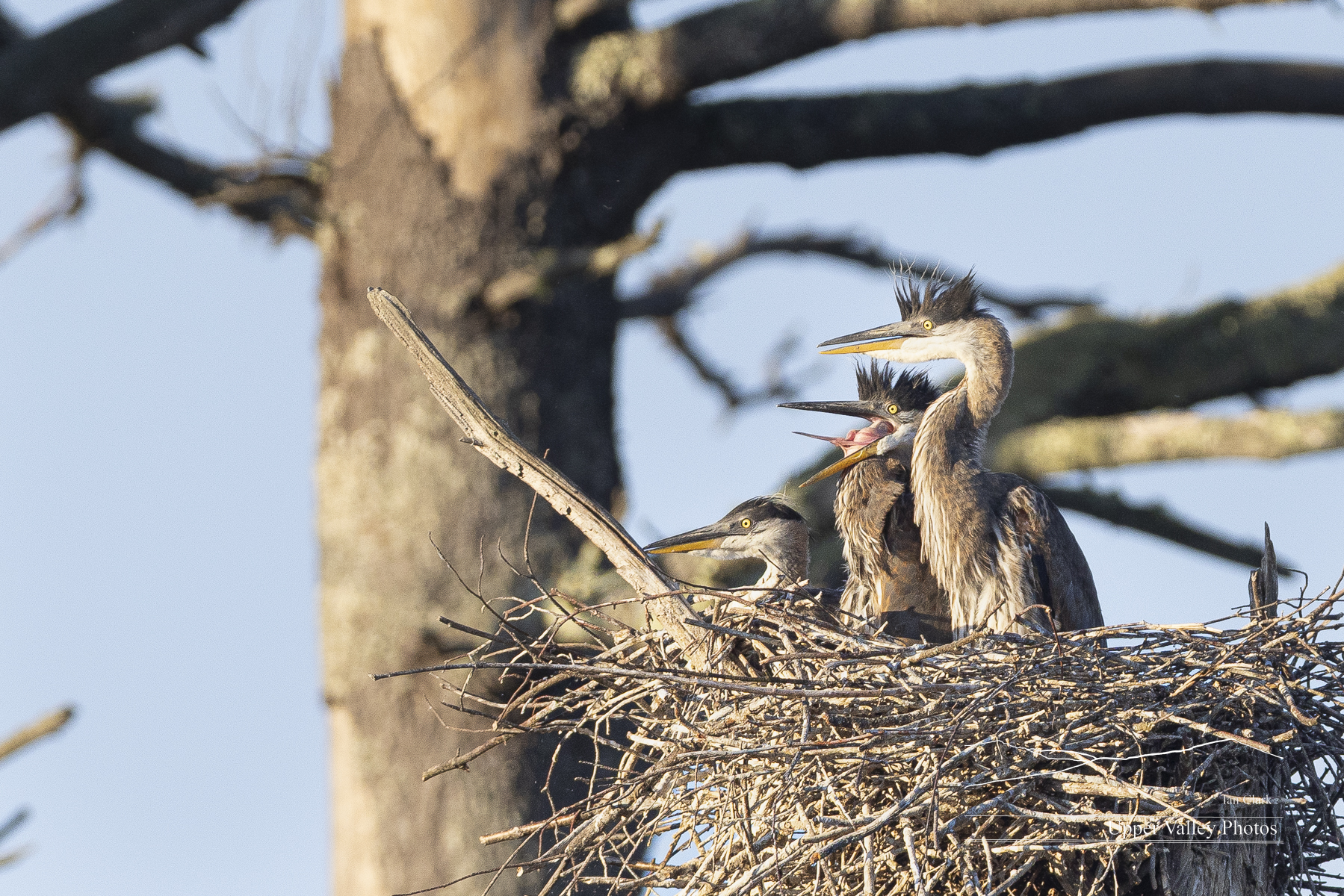
Another busy week visiting all three loon families and the heron rookery. The Westons’ chicks have hatched, the Eastons are sitting on their nest, the Middletons continue to look for a new spot. And the heron chicks are getting big. Very big.
The Berkshires Art Festival is coming up in Great Barrington, MA on July 3, 4 and 5. I’ll have note cards and prints large and small for sale. I’ll be in booth 212 in the Upper Lodge. Please come by and have a look. My 2027 Wildlife Calendar went to the printer. If all goes well, I’ll have them at the show.
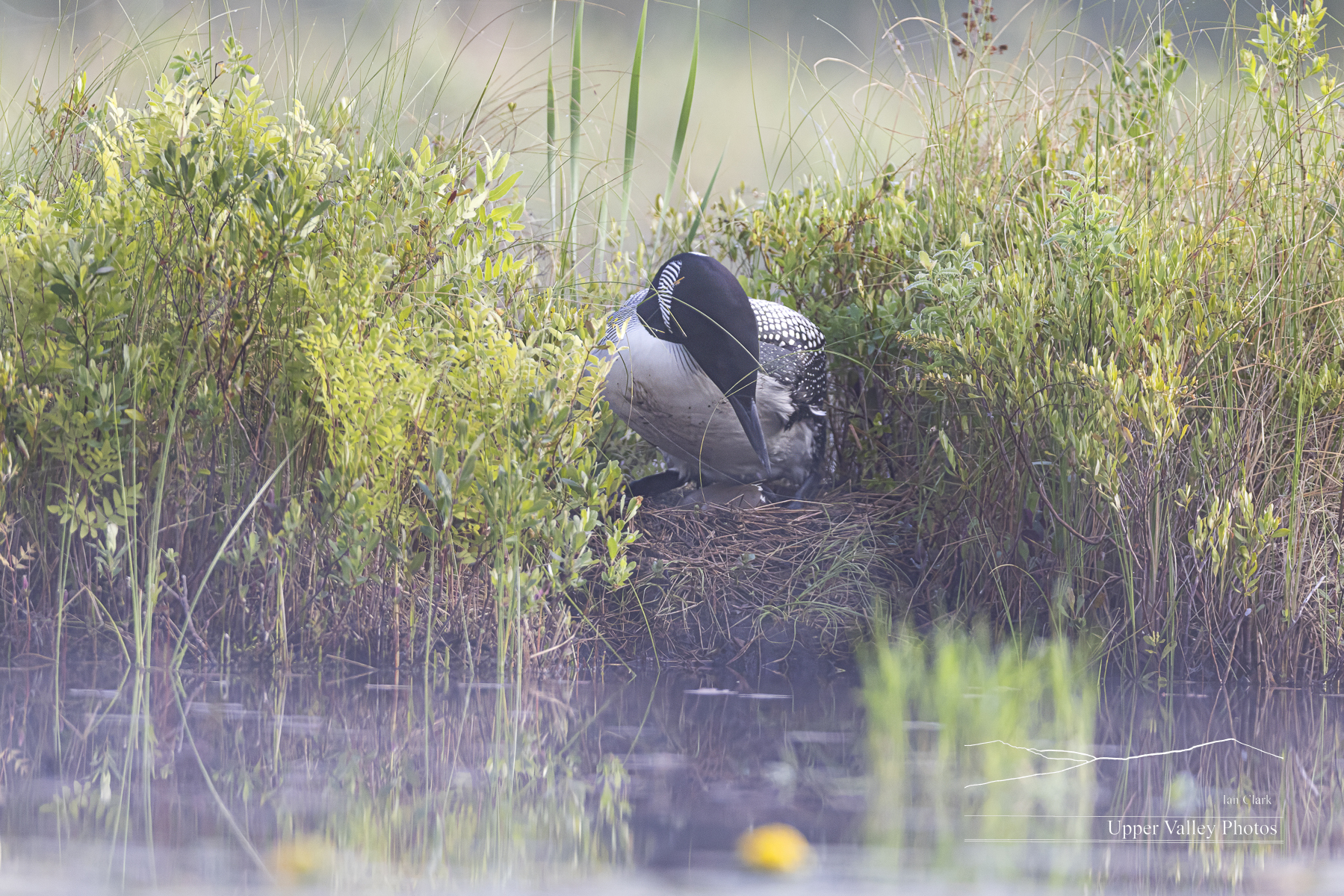
The Westons laid their eggs sometime during a week I couldn’t visit. I’d expected the eggs to hatch last weekend. Monday morning I headed out early and found the pond in thick fog. I paddled up the pond and back down before running into Mr. Weston on his own. Mrs. Weston was still on the nest. And squirming regularly. (Dad is banded in this pair. When I can see a leg, I can tell who is who.)
Every spring, I get questions about my camera gear. I’m using a Canon EOS R5 with an 800mm f5.6 lens. 800mm lets me sit well back from the loons – and most of the images in my posts are cropped.
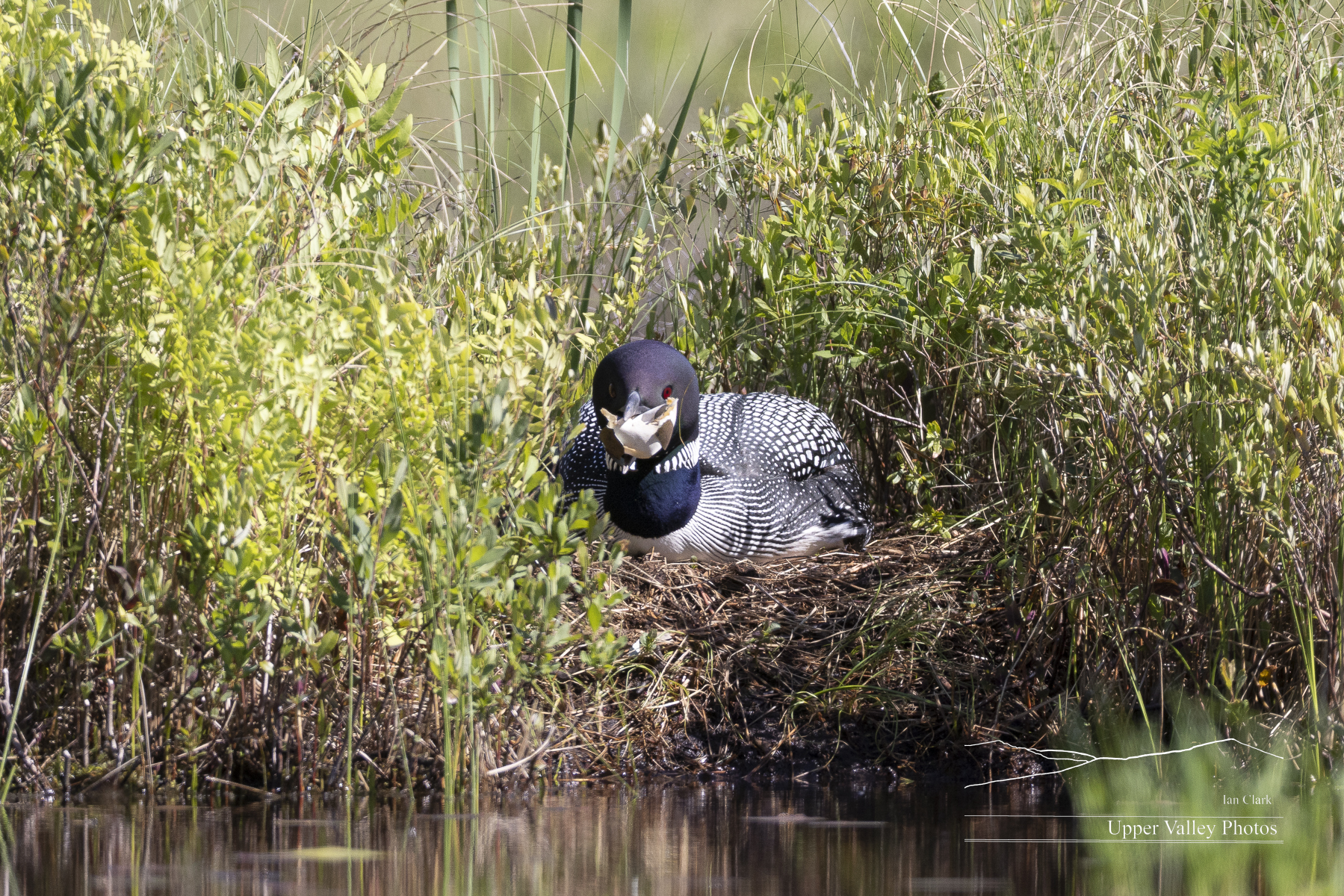
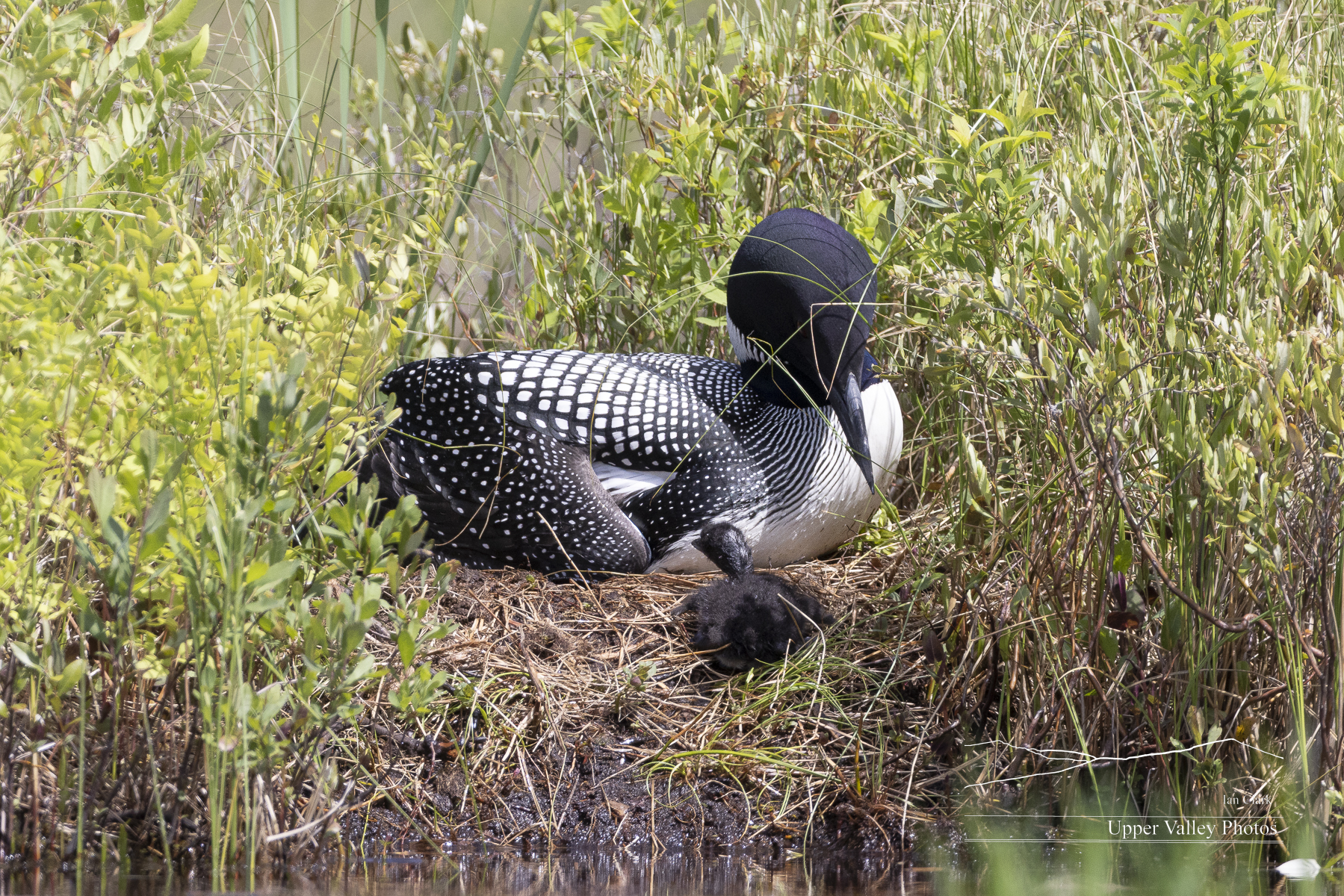
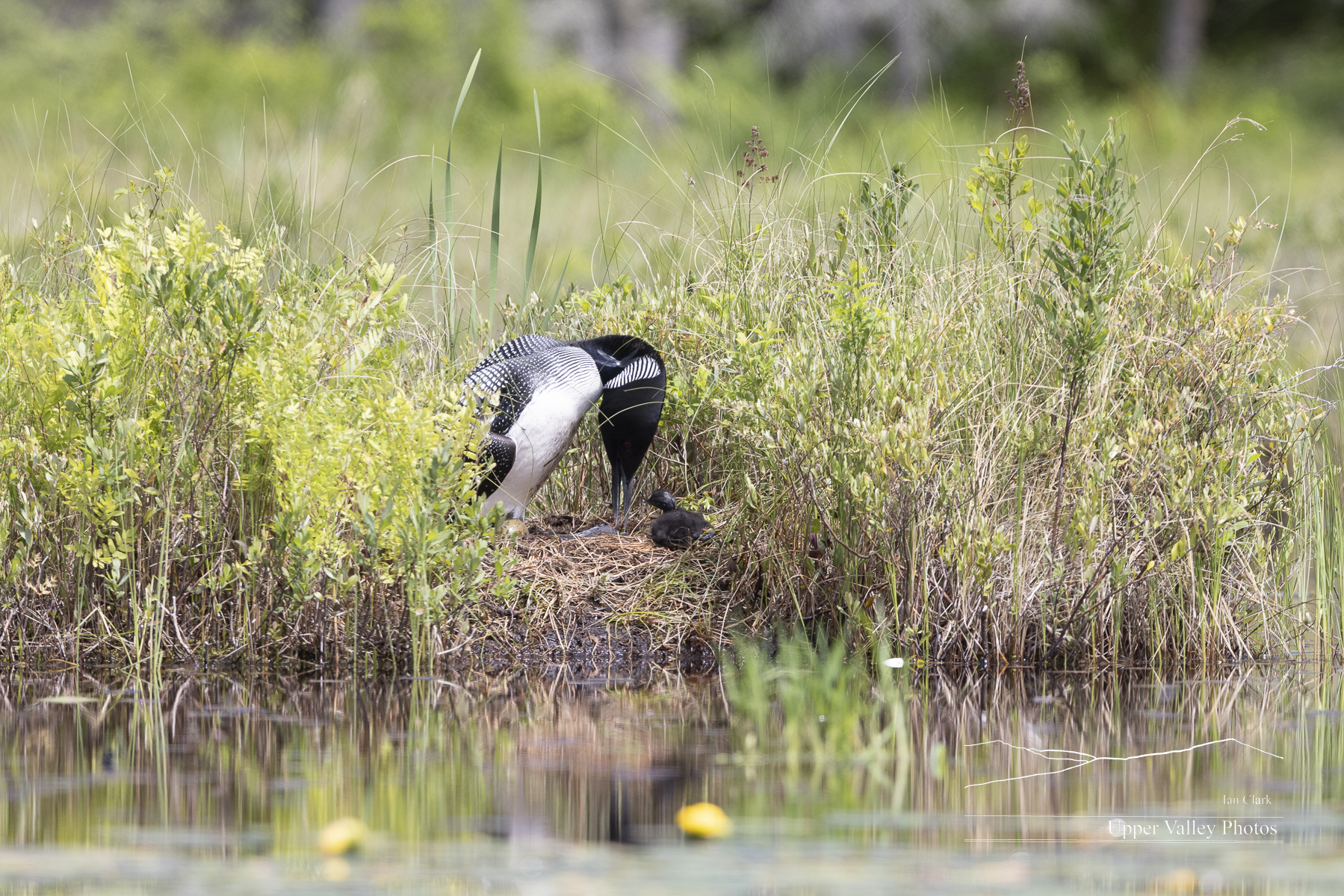
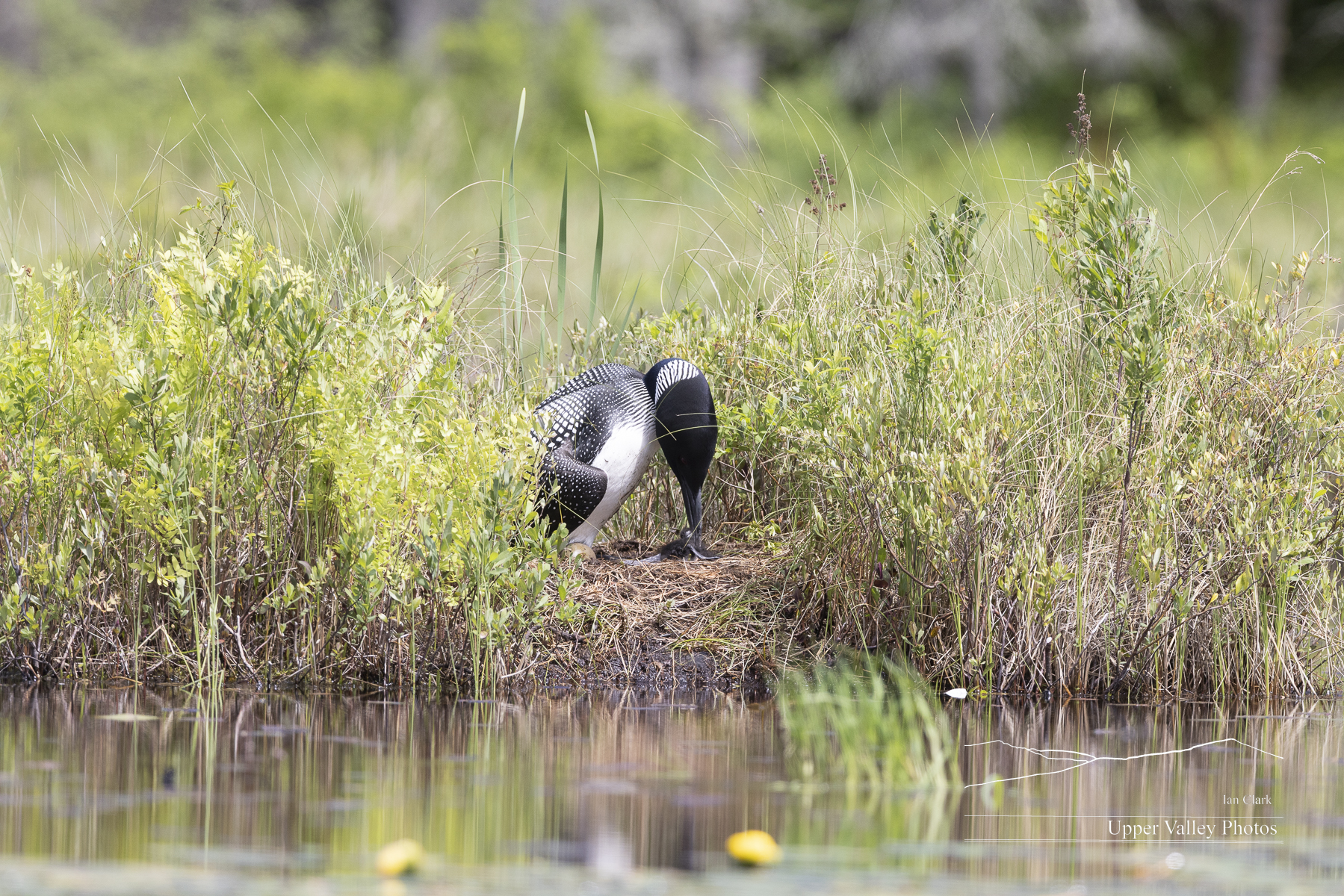
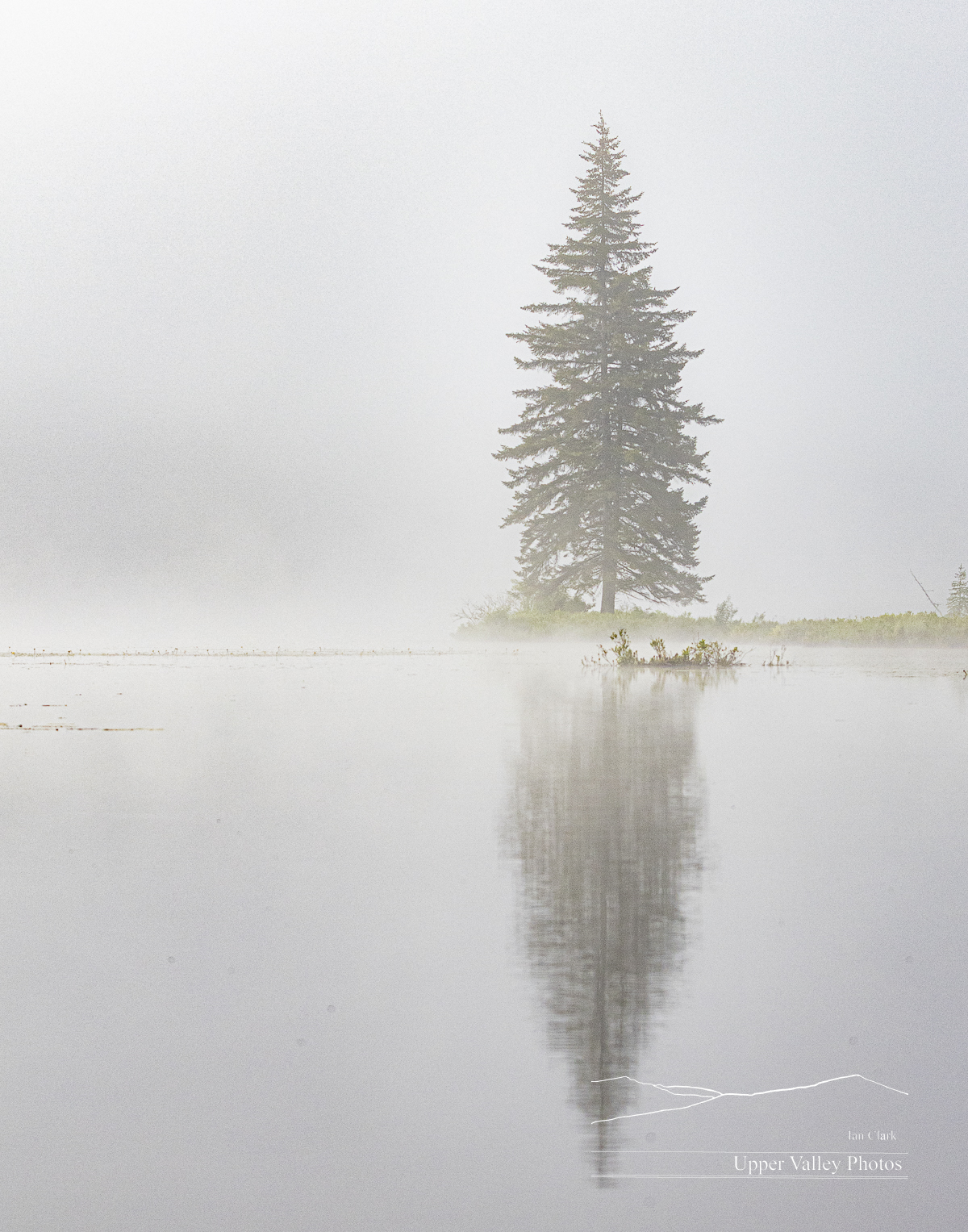
I went back Tuesday morning to see if I could meet the second chick. The fog was thicker than the day before.
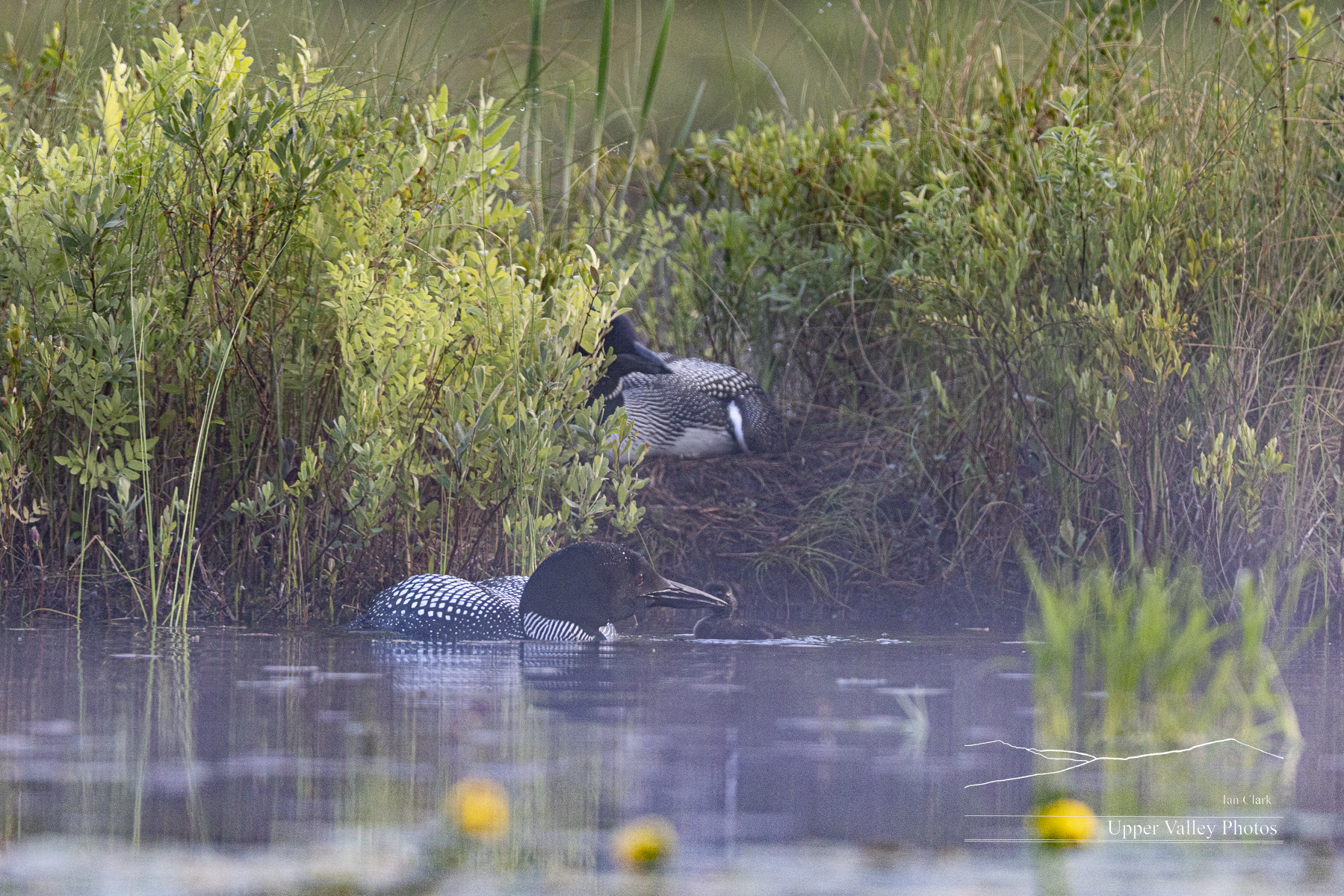
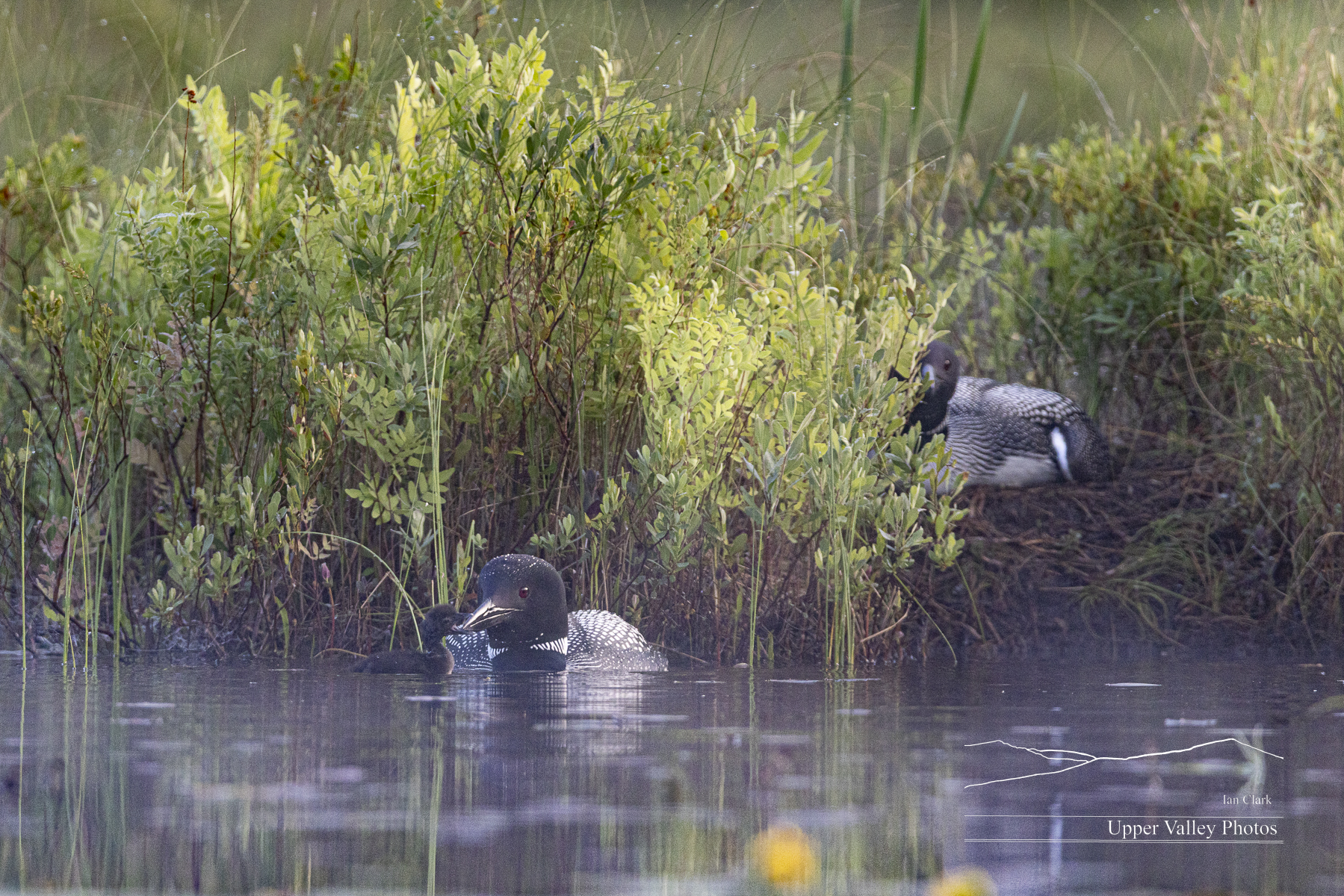
The Westons have always pretty much ignored me until about time for the chicks to hatch. Then, everyone has to go. They’ll wail at people, beavers, any large bird flying over and even lots of small birds in the brush along the pond.
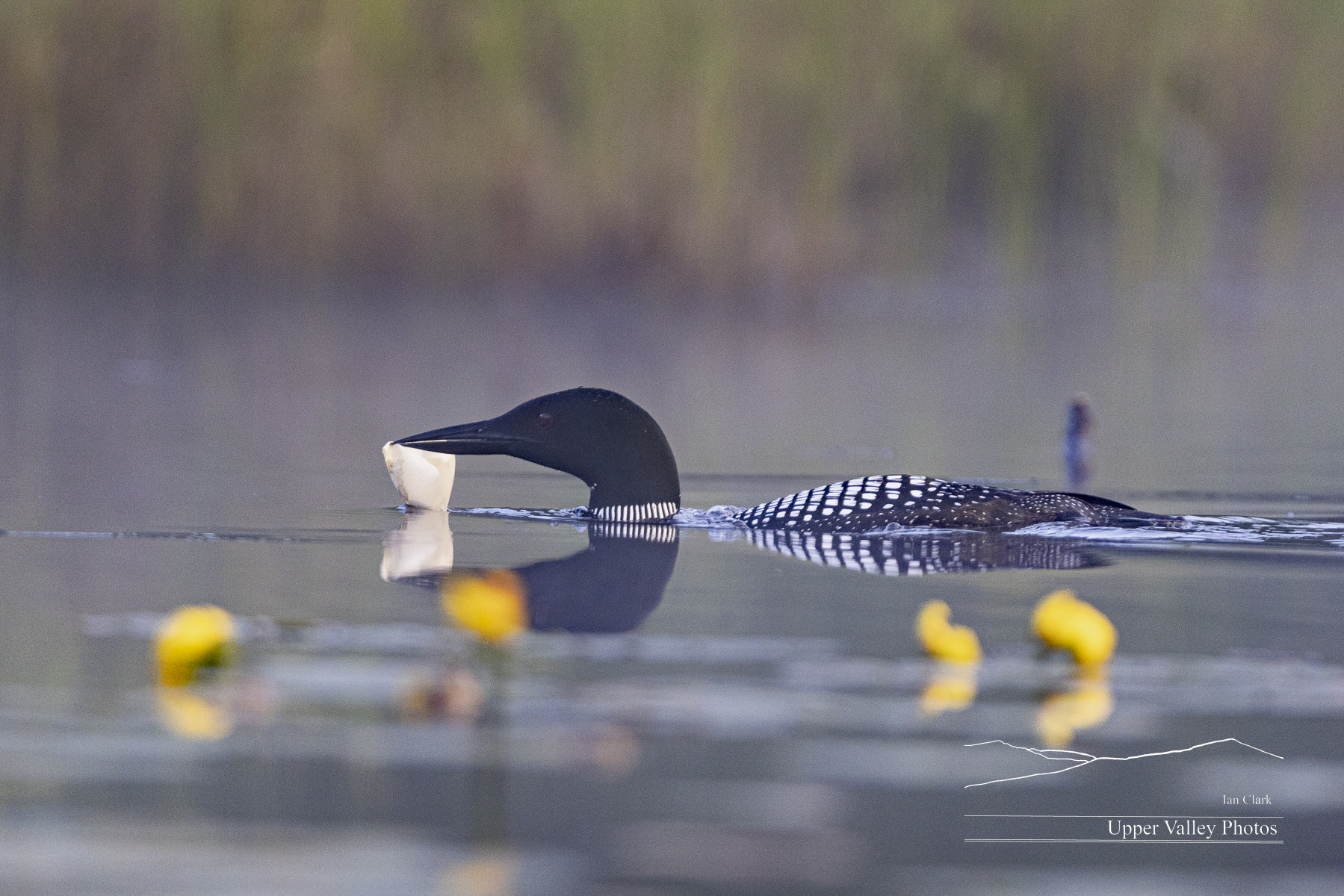
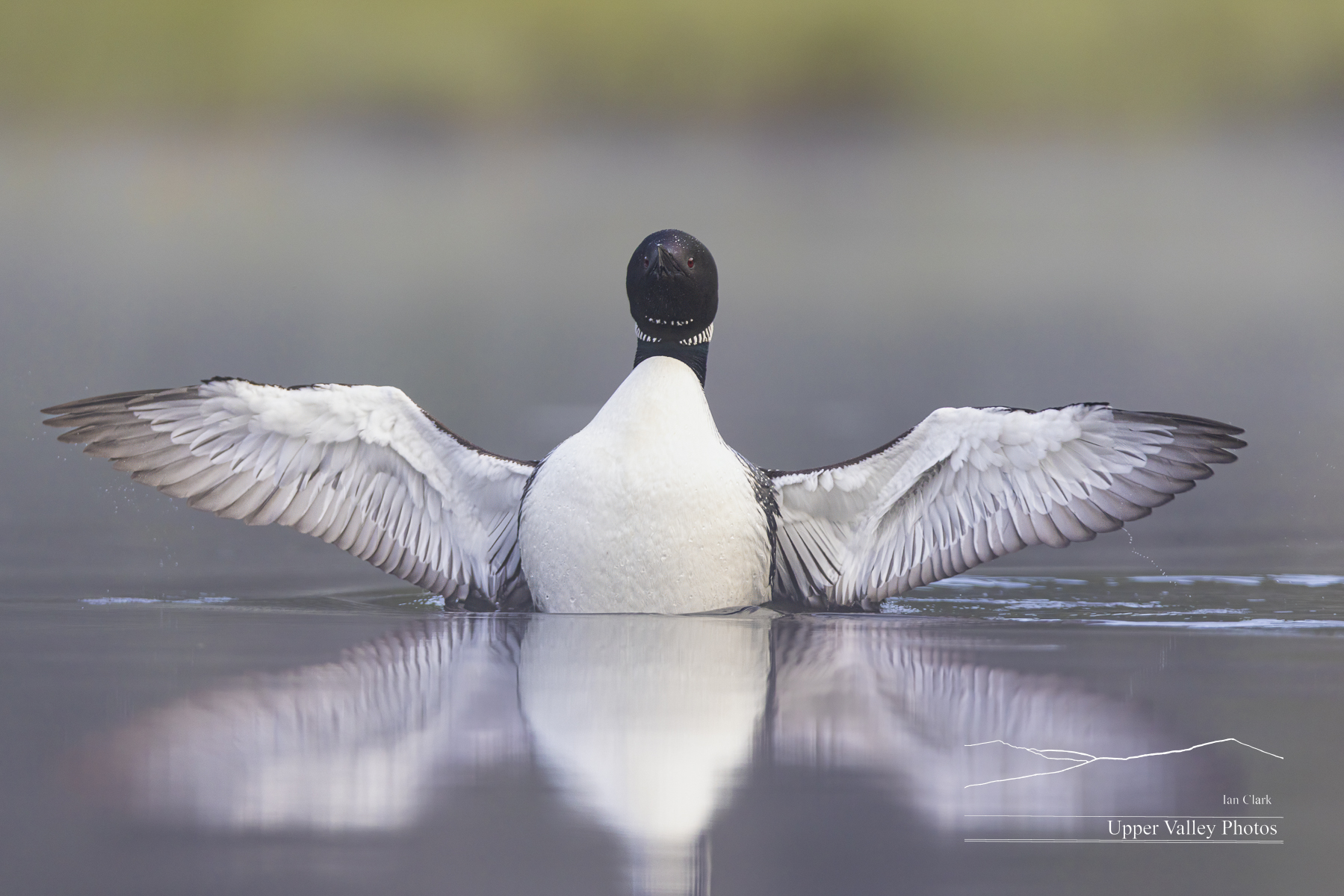
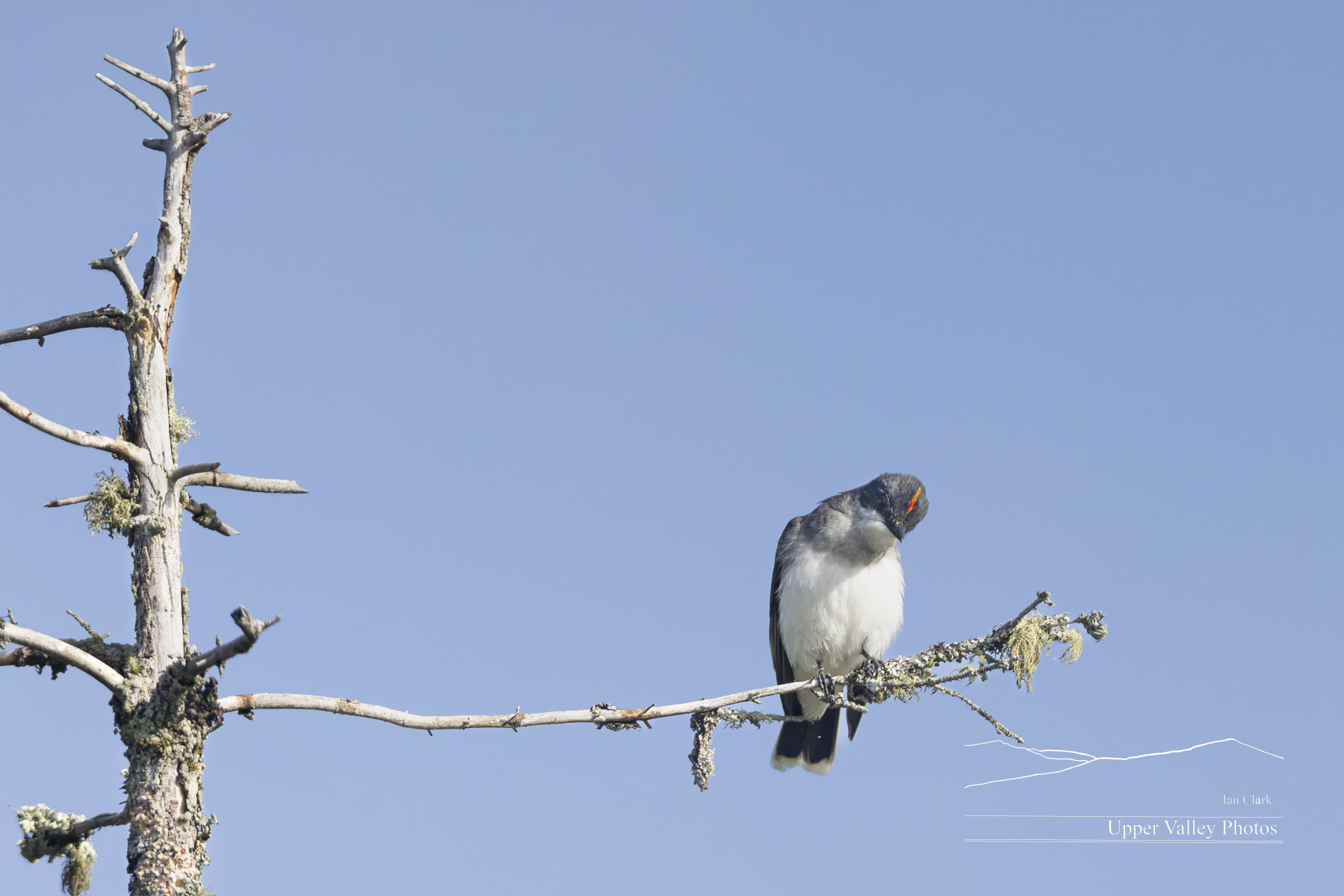
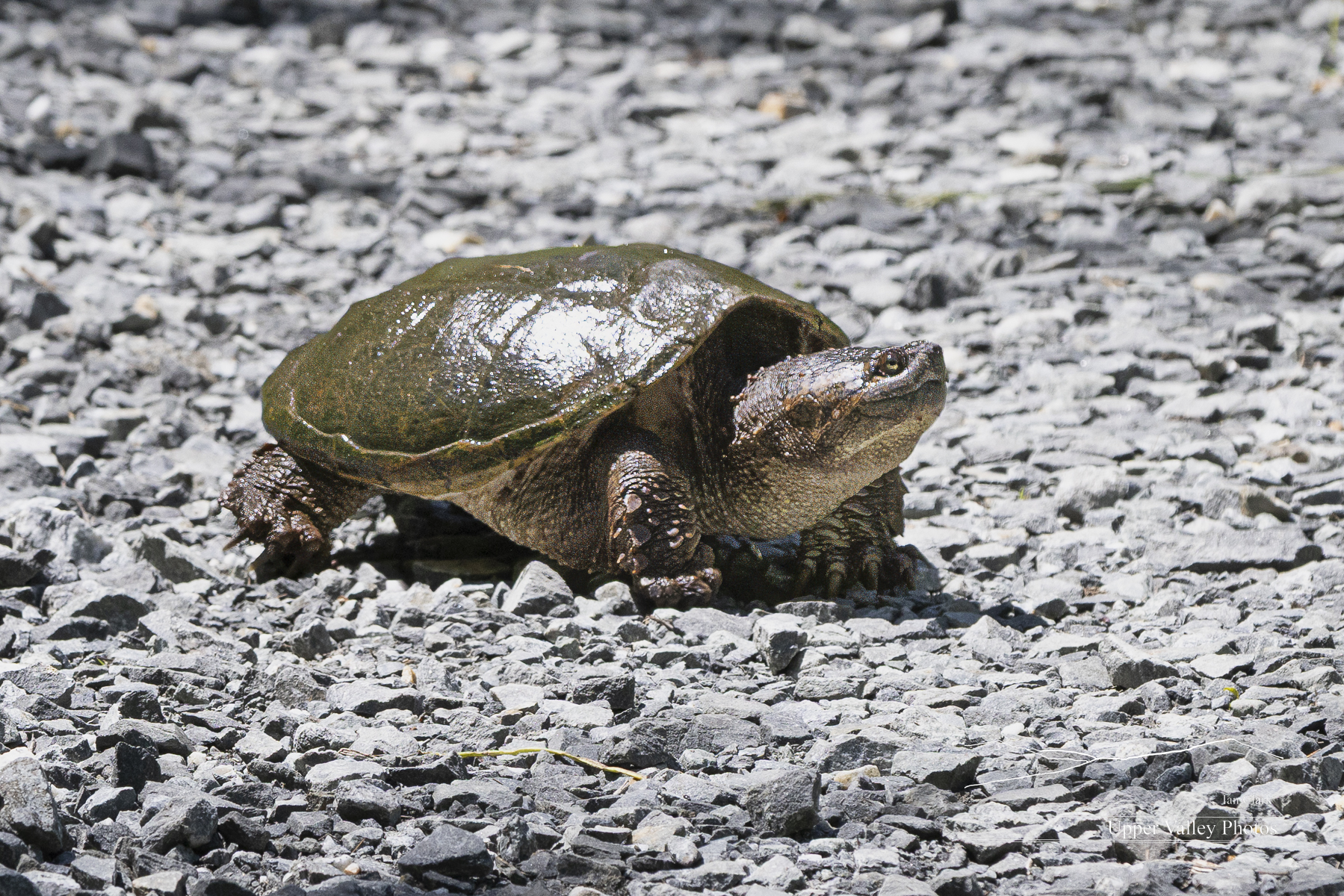
Wednesday morning I headed to visit the Middletons. On my last visit, I discovered they’d abandoned their first nest and were looking for a site to try again.
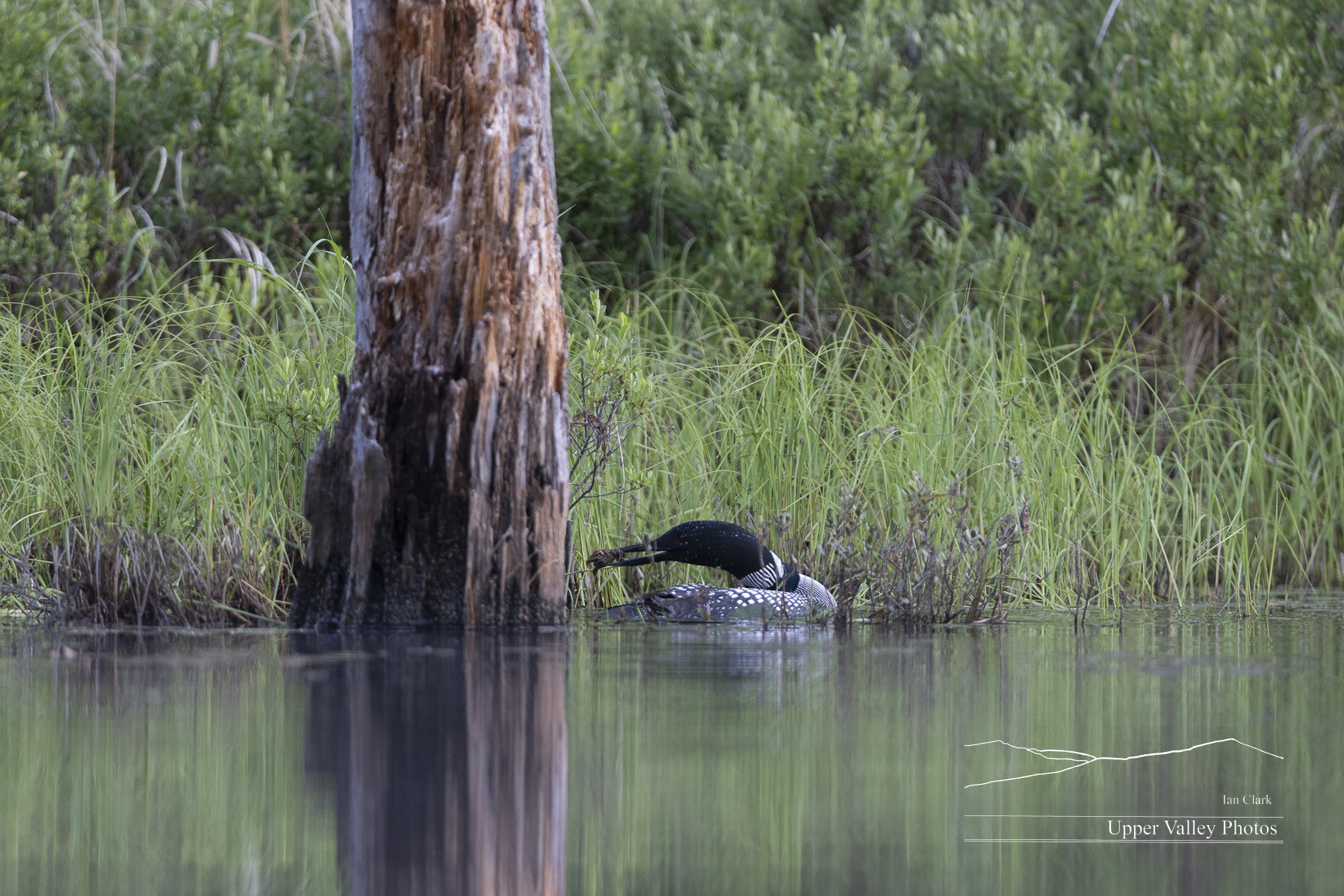
After a bit, he gave up and went to find a snack. Mrs. M tossed some vegetation herself before deciding a snack sounded good.
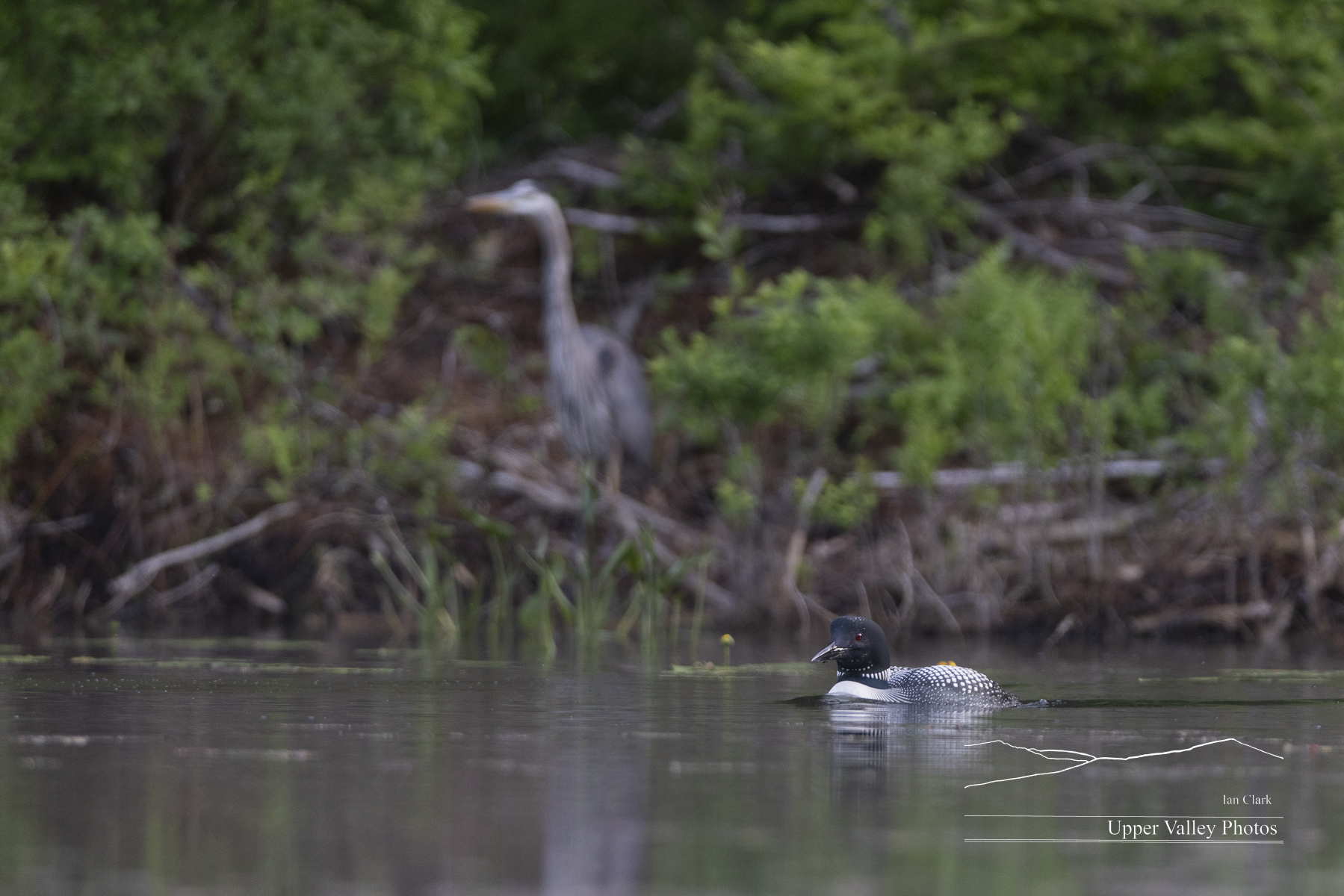
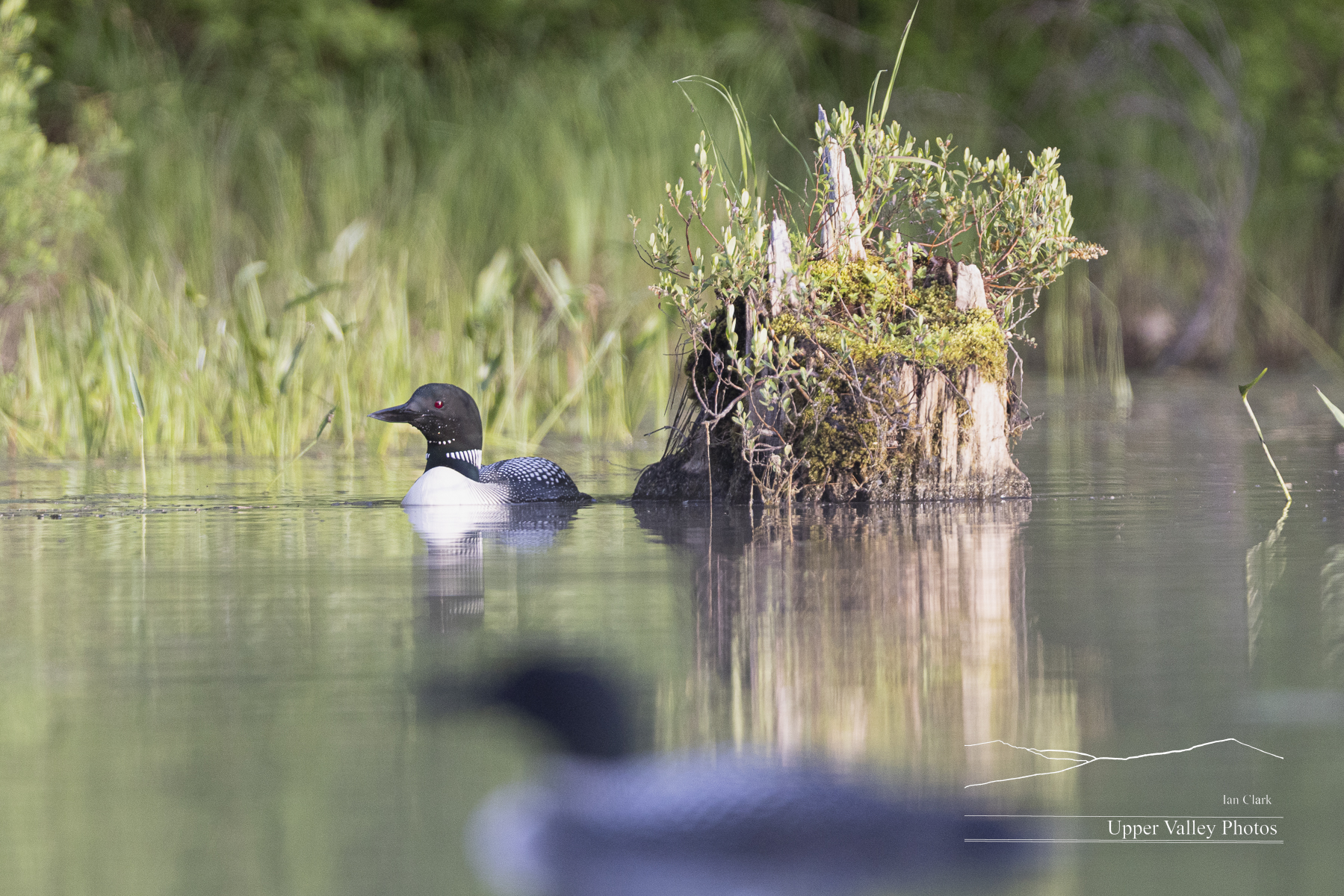
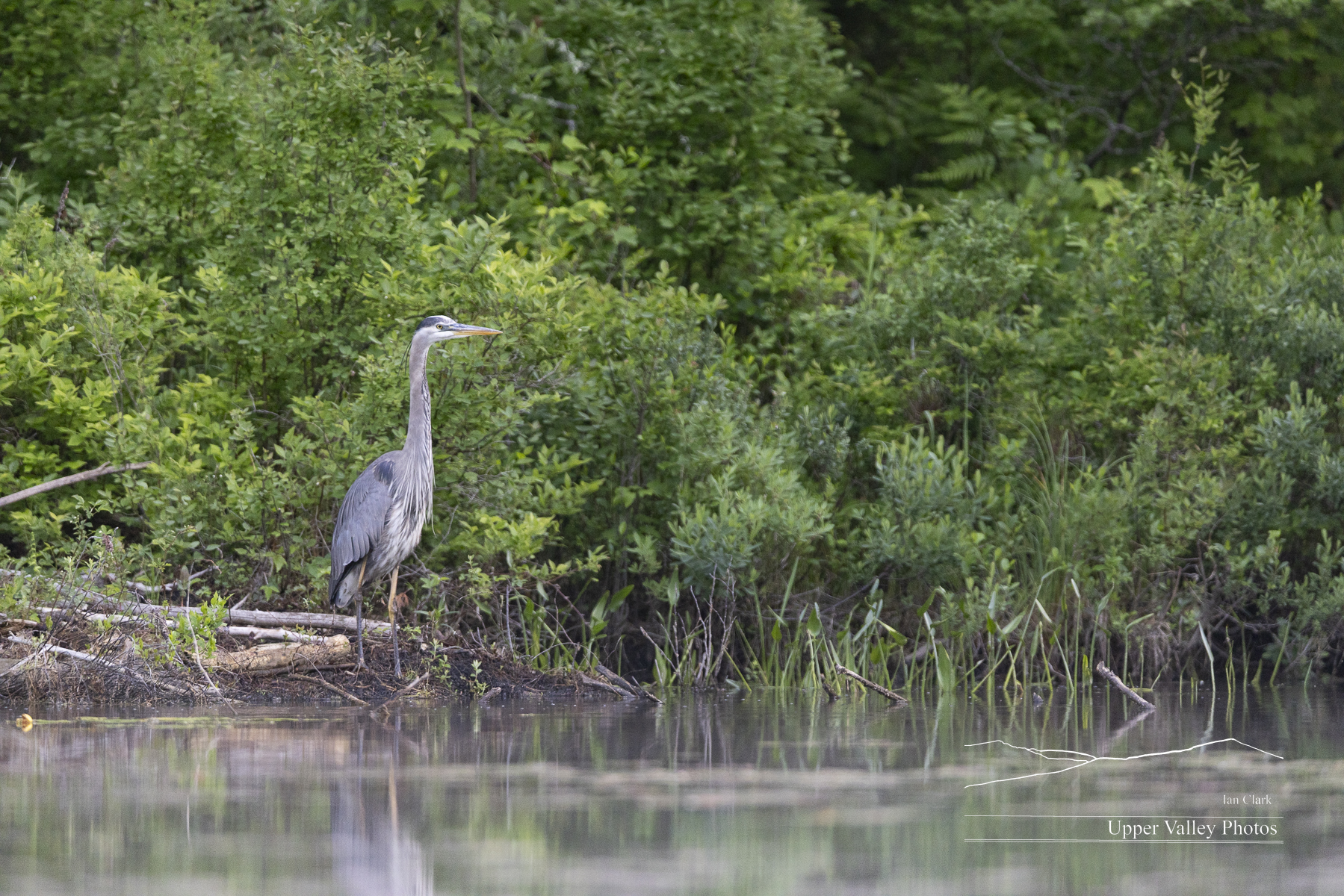
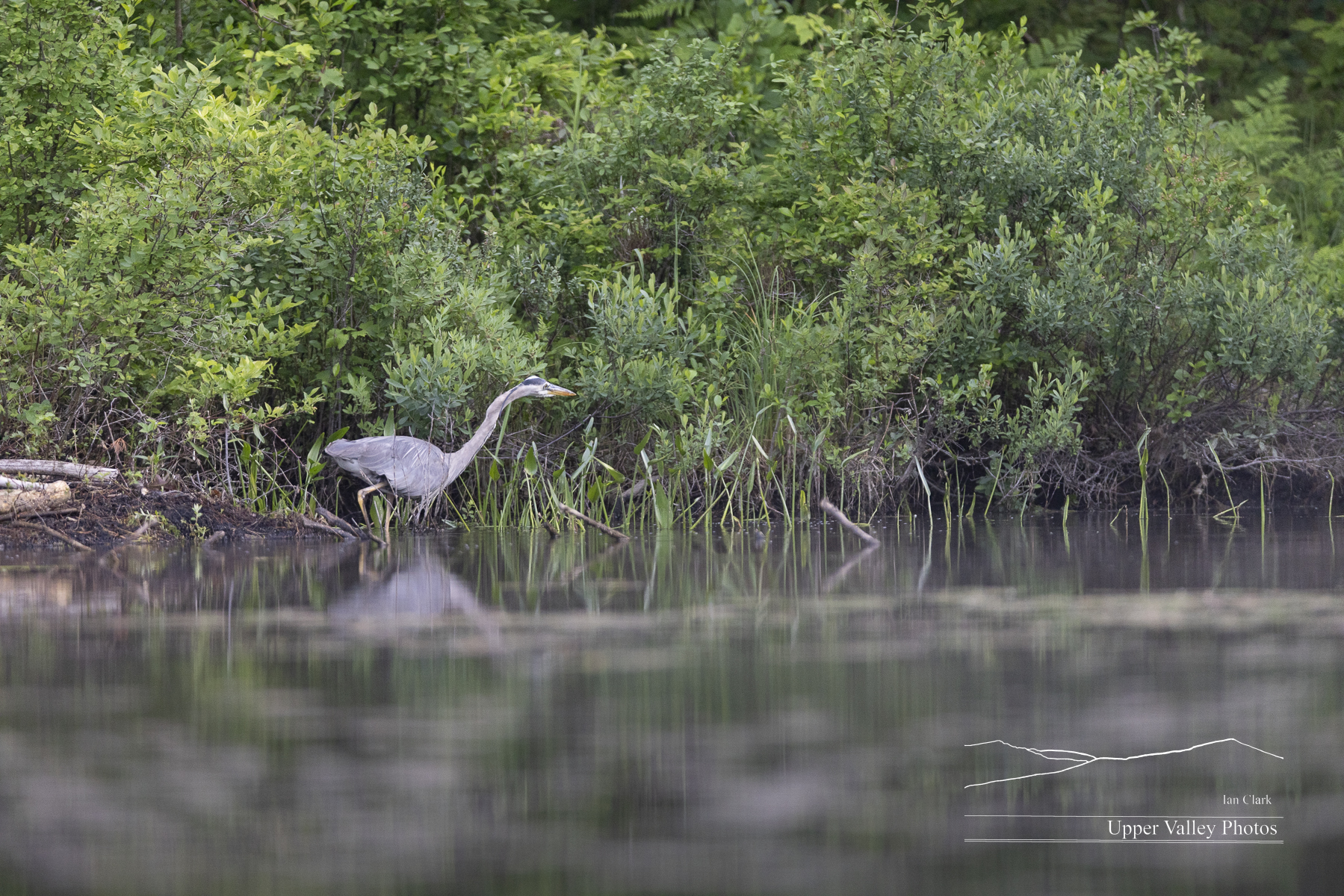
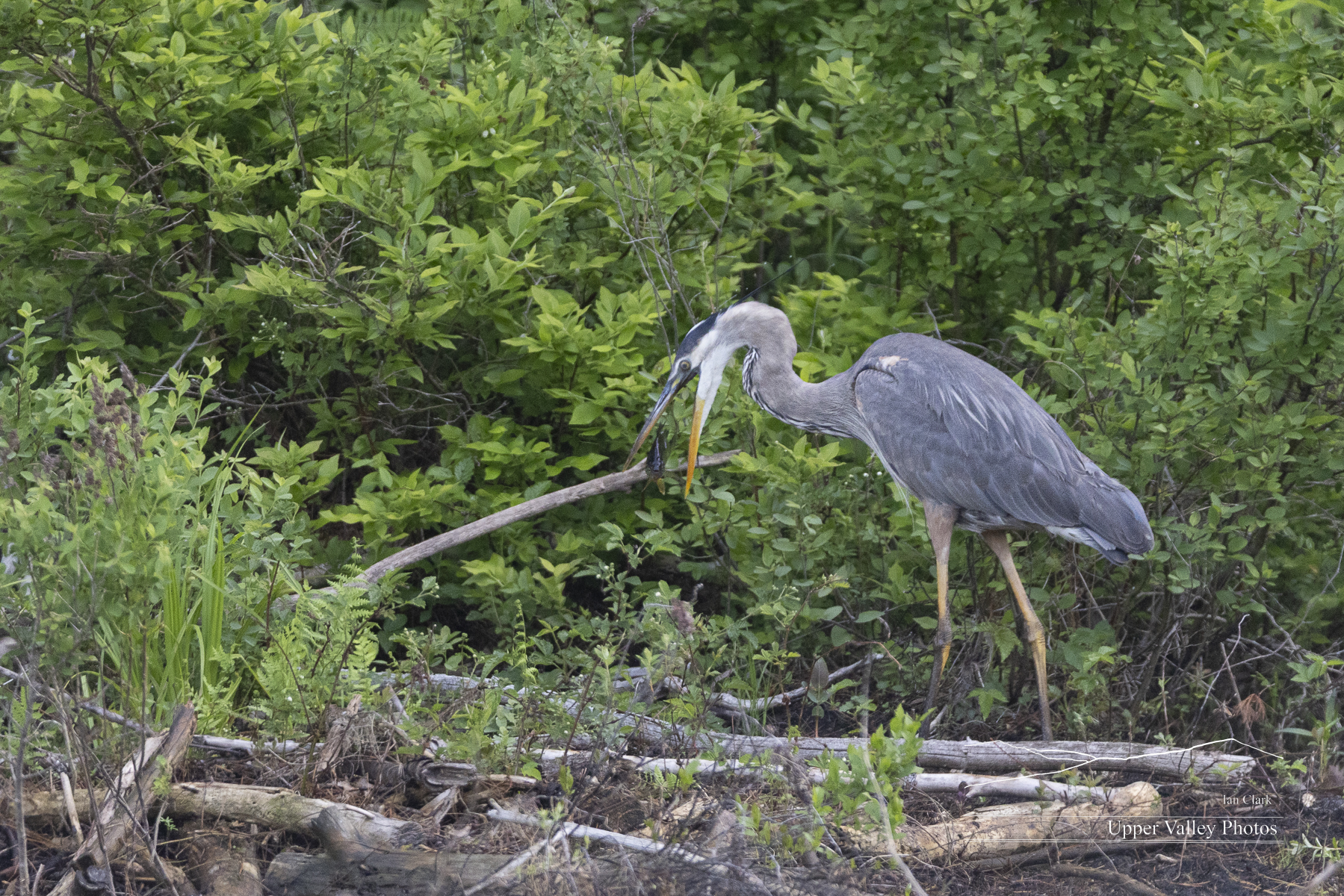
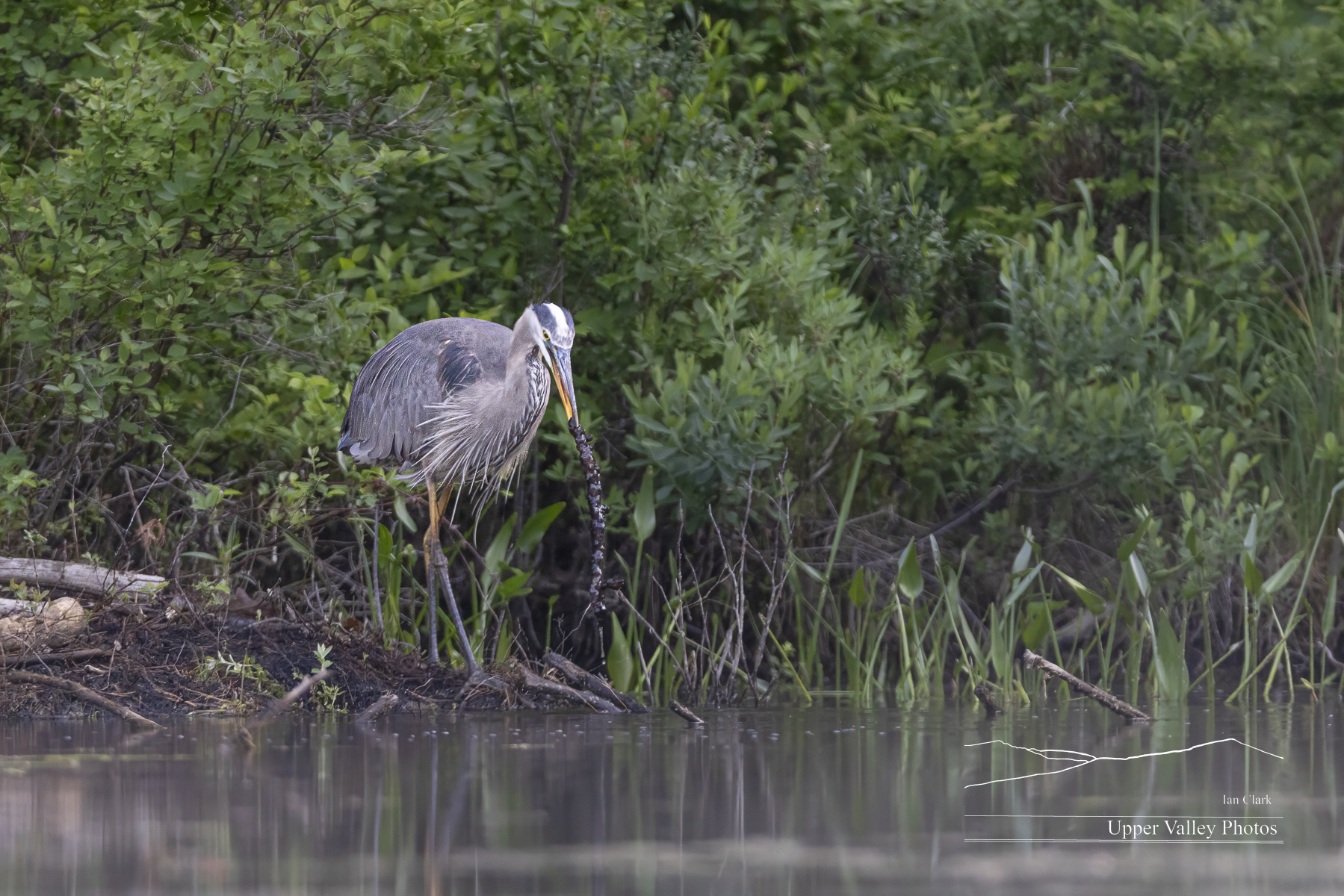
I went to check to see what the Middletons were up to.
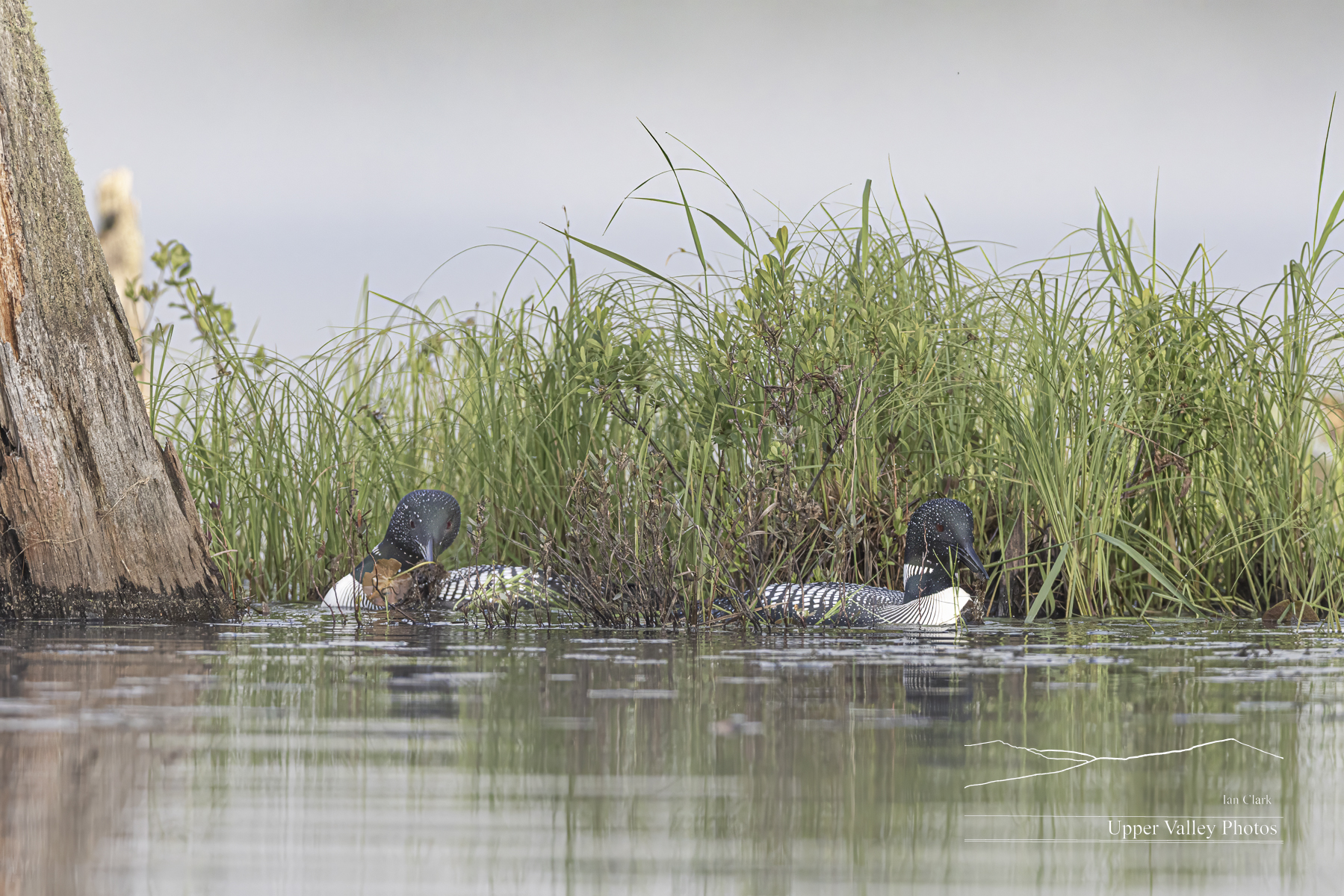
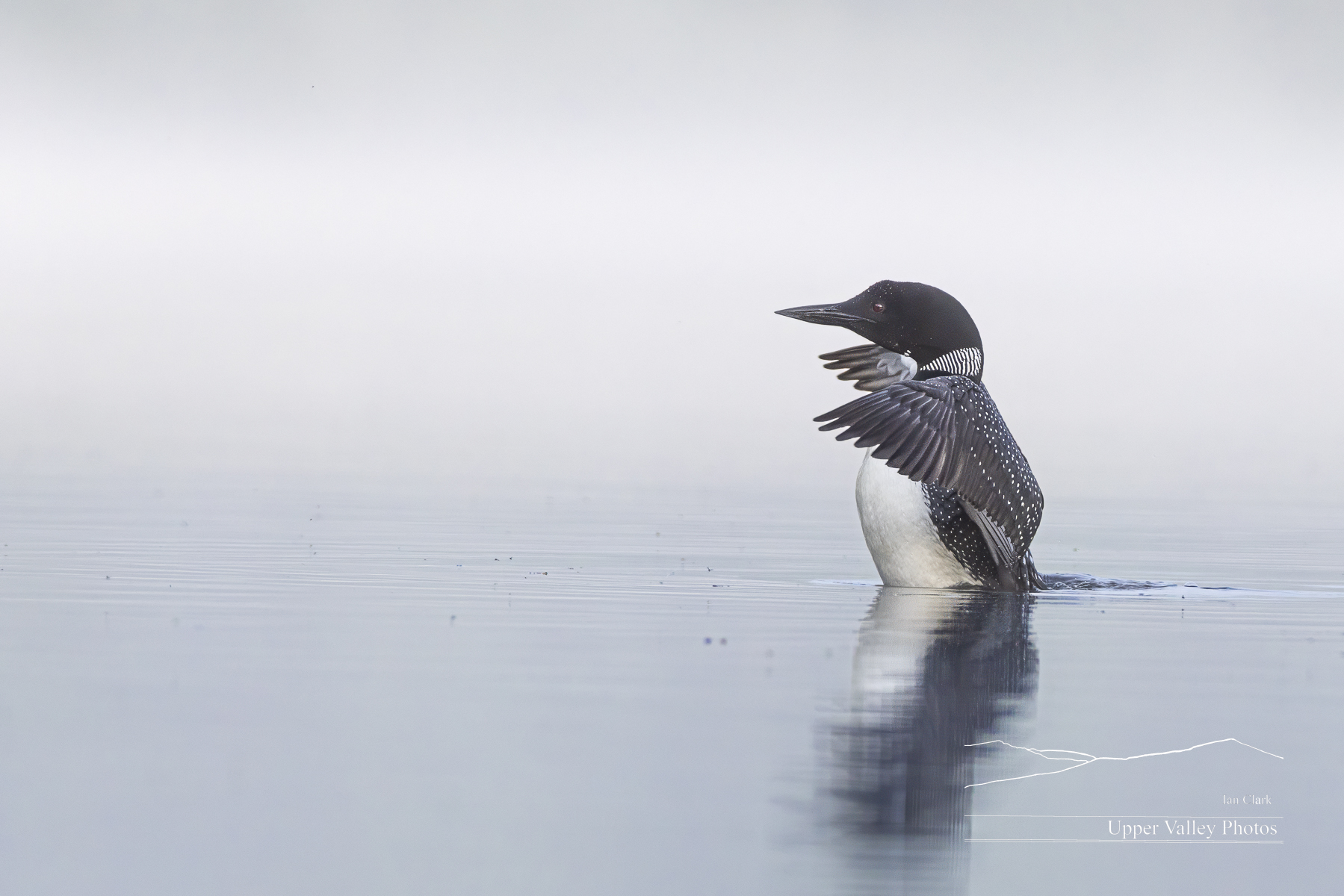
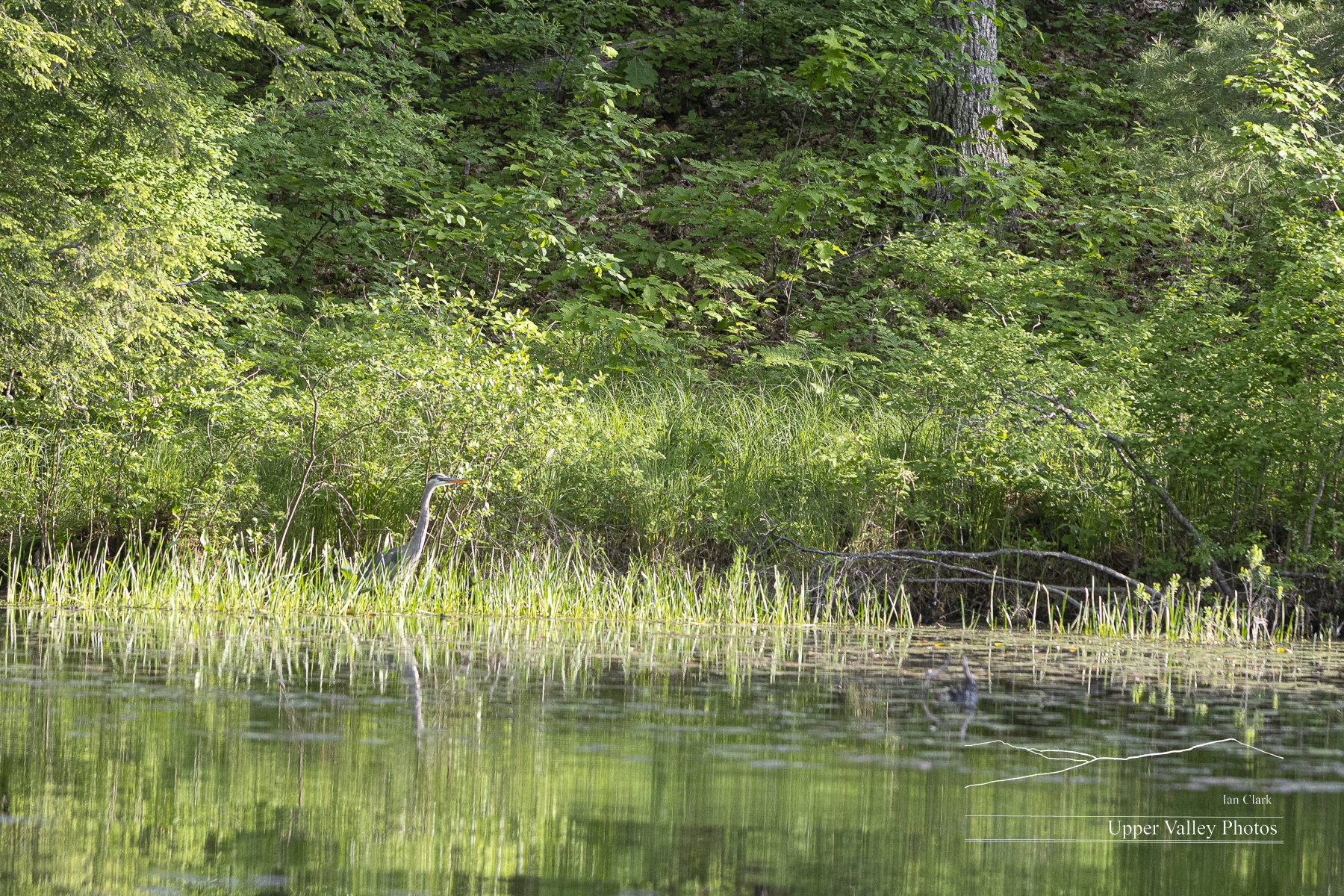
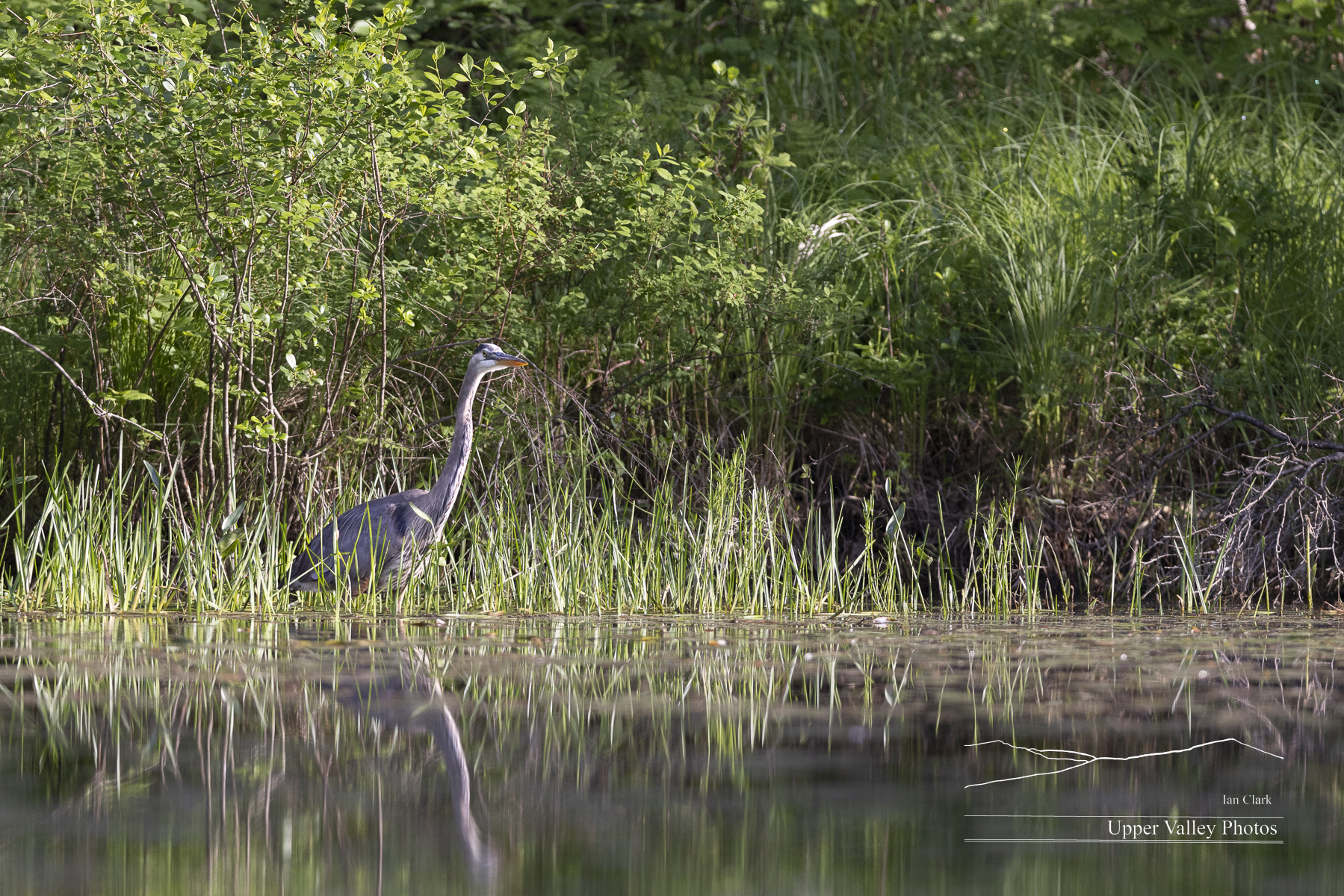
Yesterday morning I called on the Eastons. On my last visit there appeared to be a pair of loons defending a nesting spot with a banded loon challenging one of them for the territory. The Mr. Easton we’ve been following since 2019 wasn’t to be found. Mrs. Easton isn’t banded, she may be back.
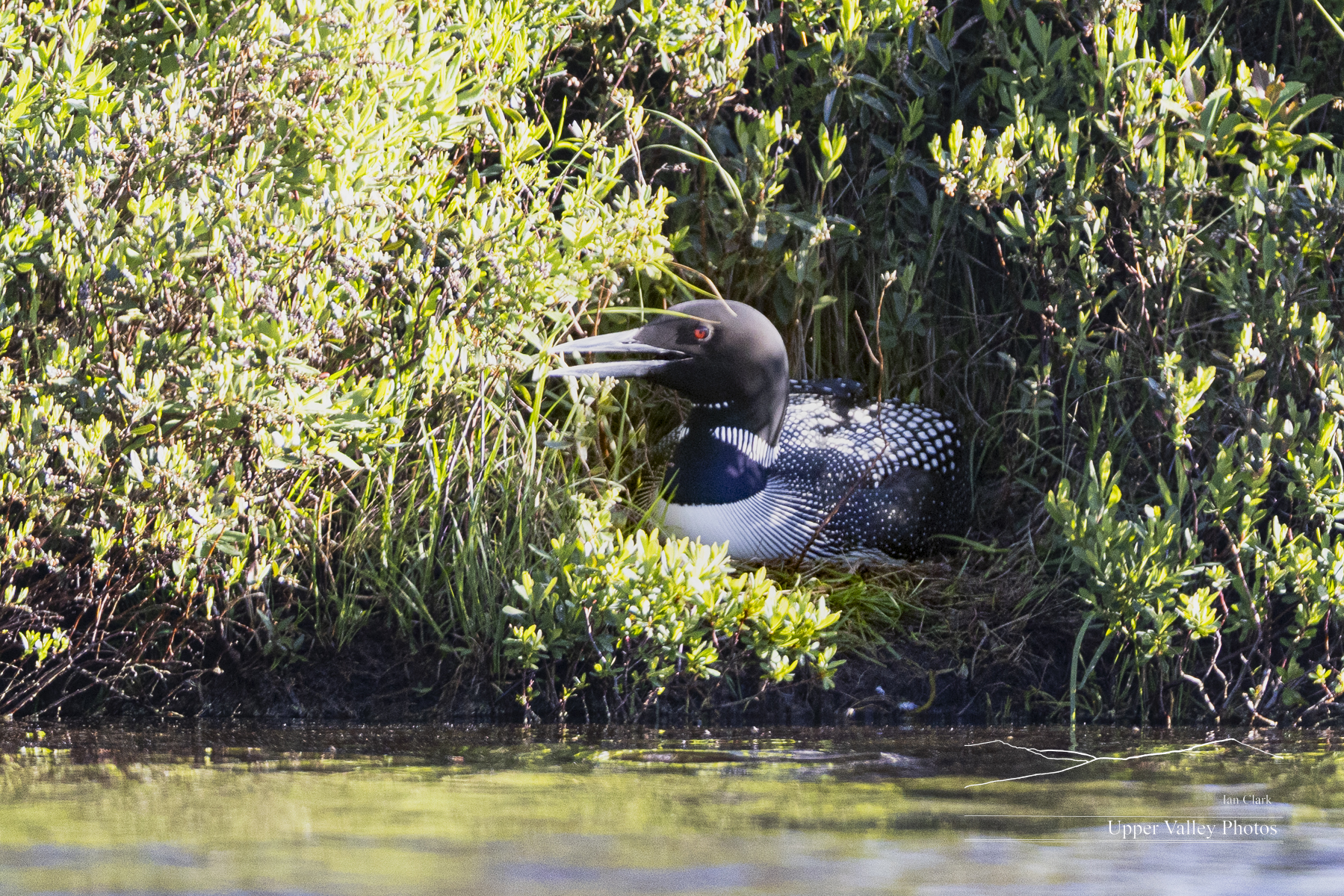
Saturday morning found a pair of loons with a nest. The banded loon I’d seen the last time has taken over the territory. There was at least one challenger on the pond. After a brief skirmish, the challenger departed.
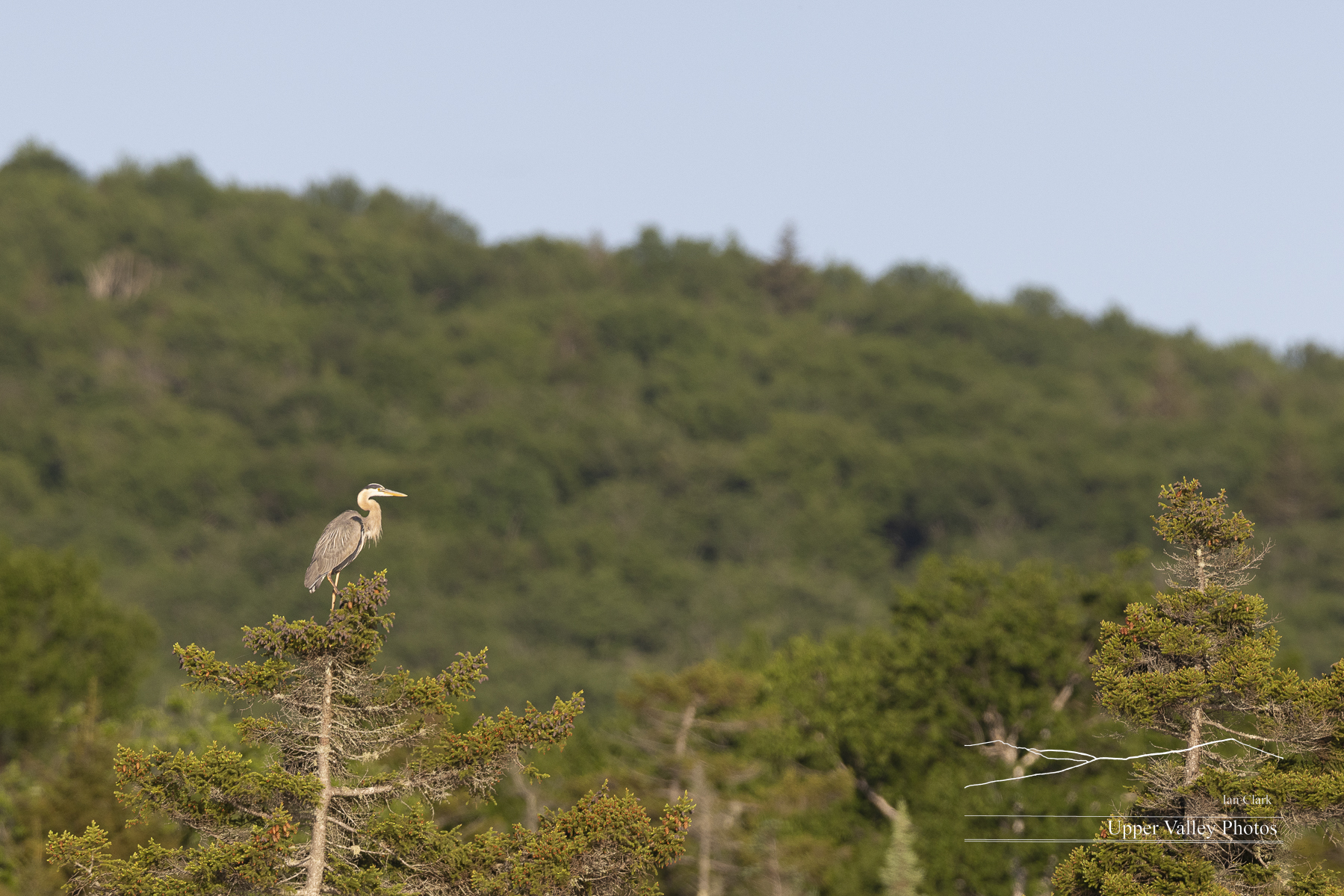
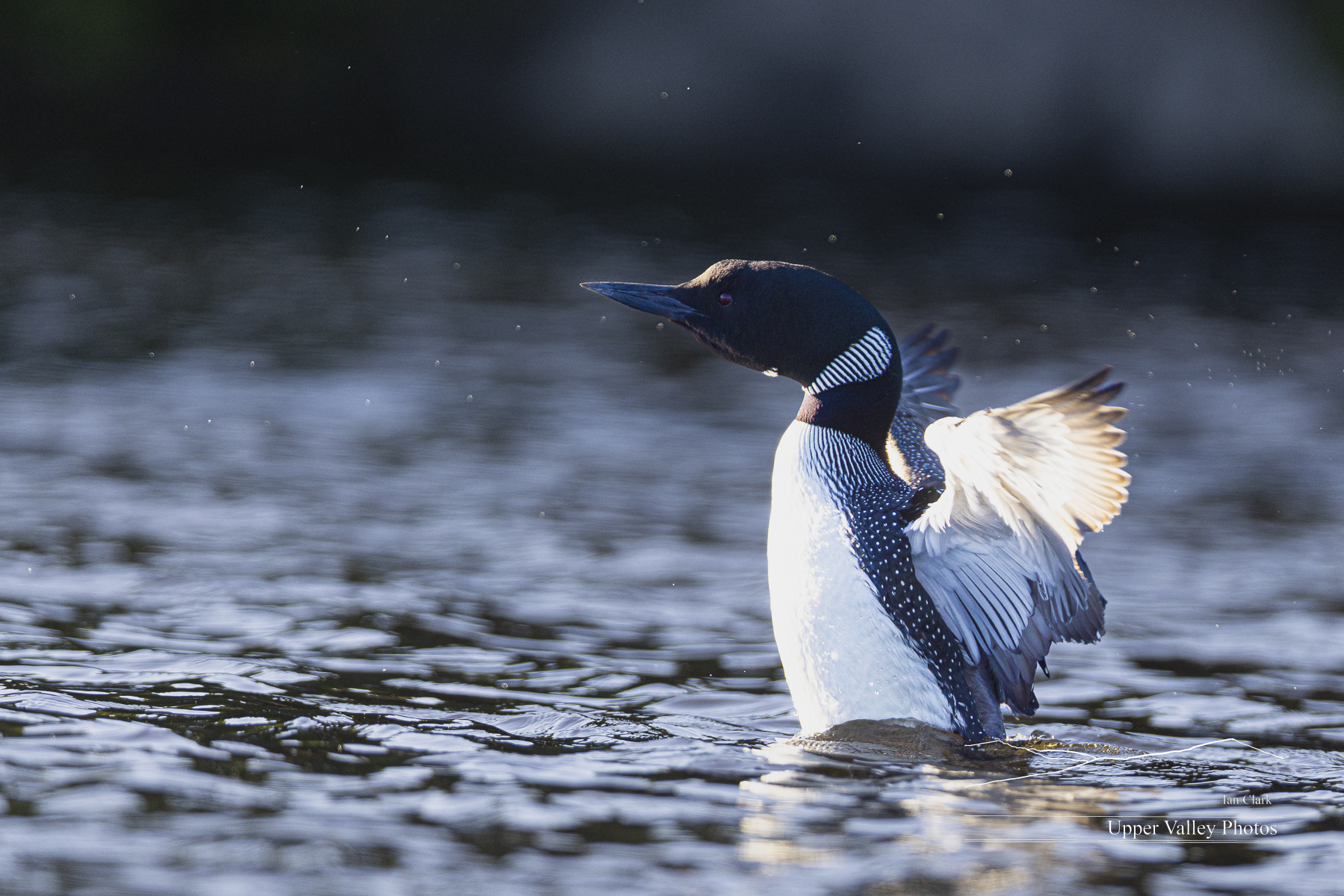
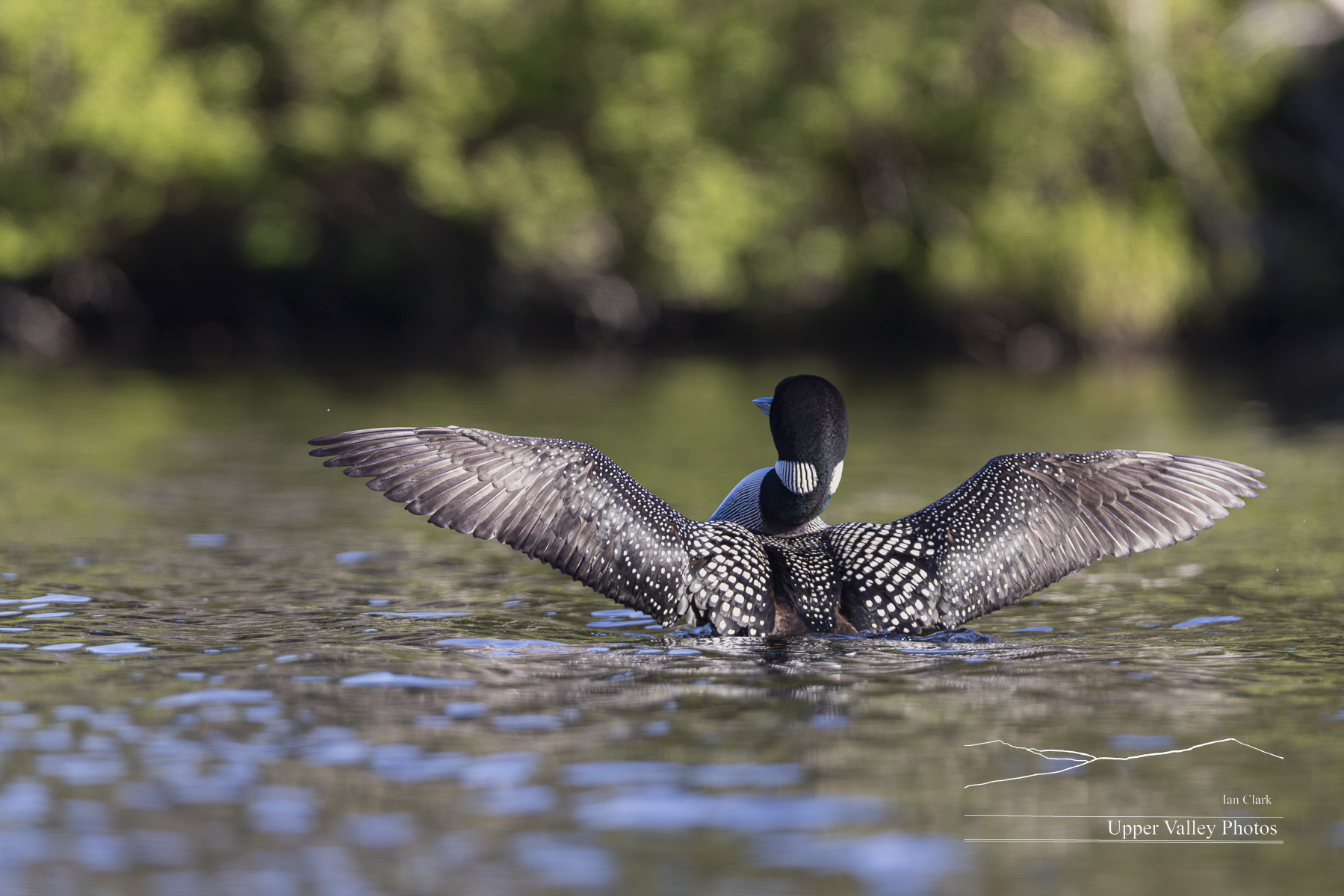
The intruder returned and drew both of the home team to the far end of the pond. I snuck a look at the nest with my binoculars and they’ve got two eggs.
The intruder promptly left the pond.
I expect to dodge wildlife on the road in the early hours. This past week, I’ve seen bears, foxes, a racoon and an opossum along with deer, more deer and even more deer. To change things up this morning, I met a horse trotting west as I was going east.
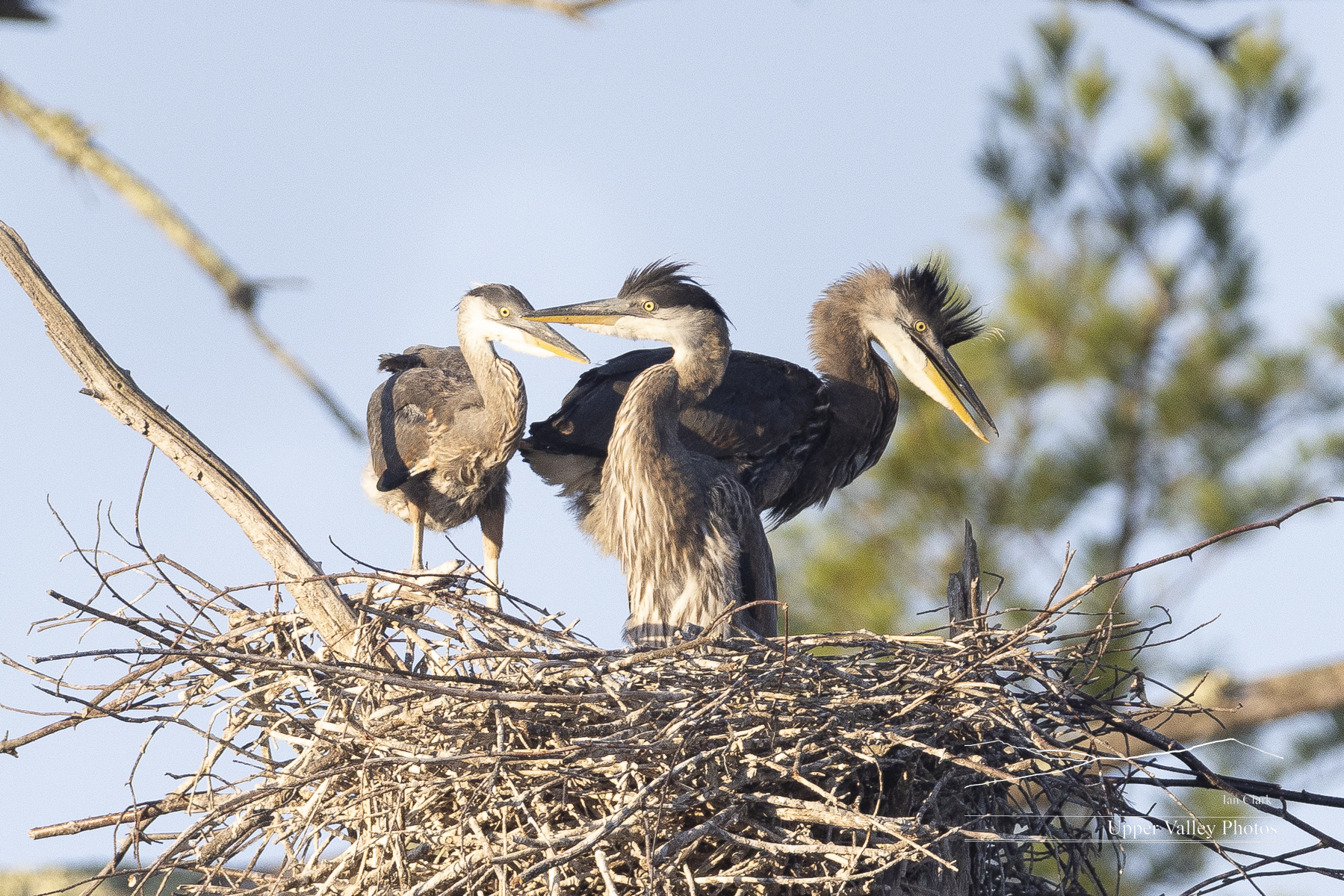
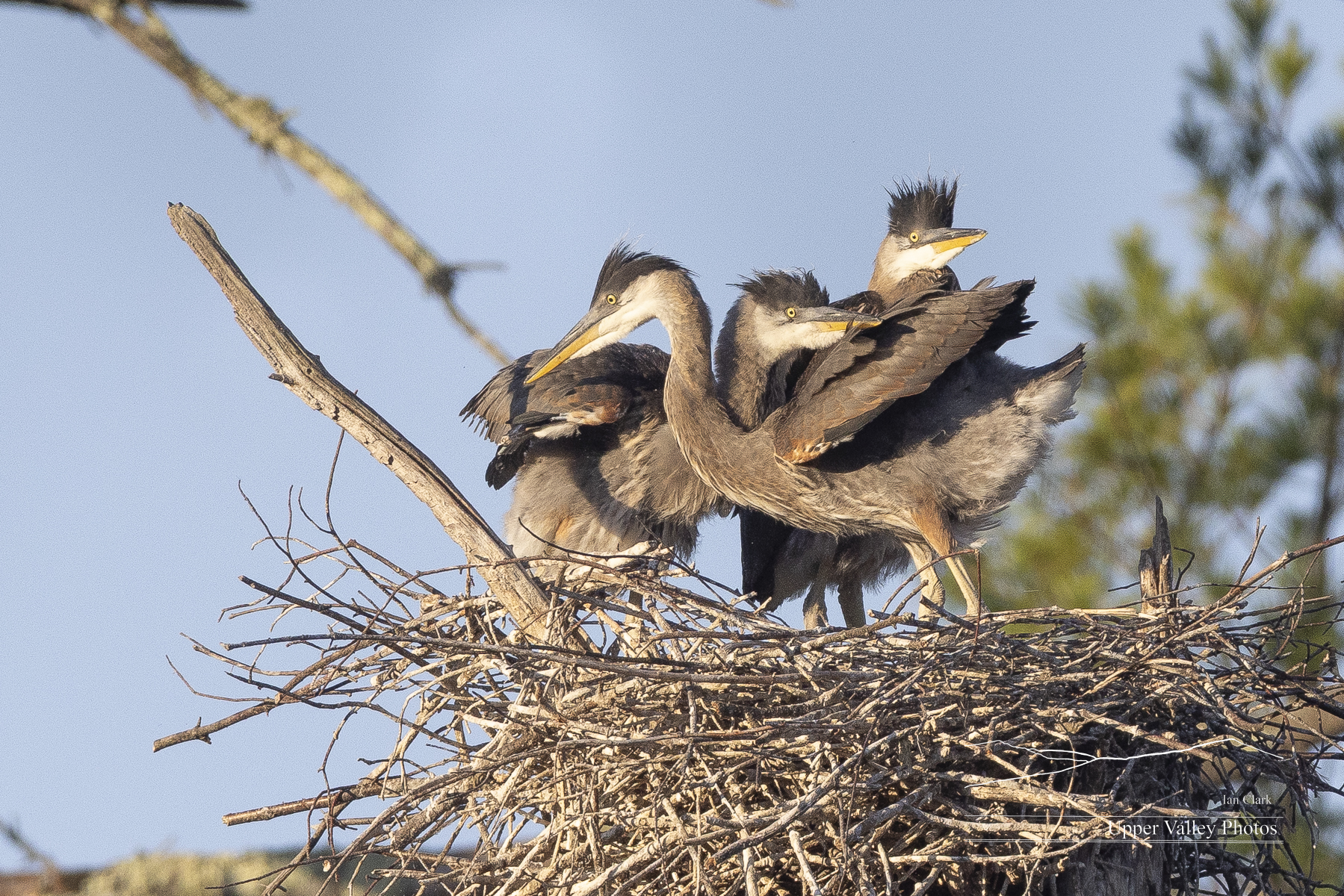
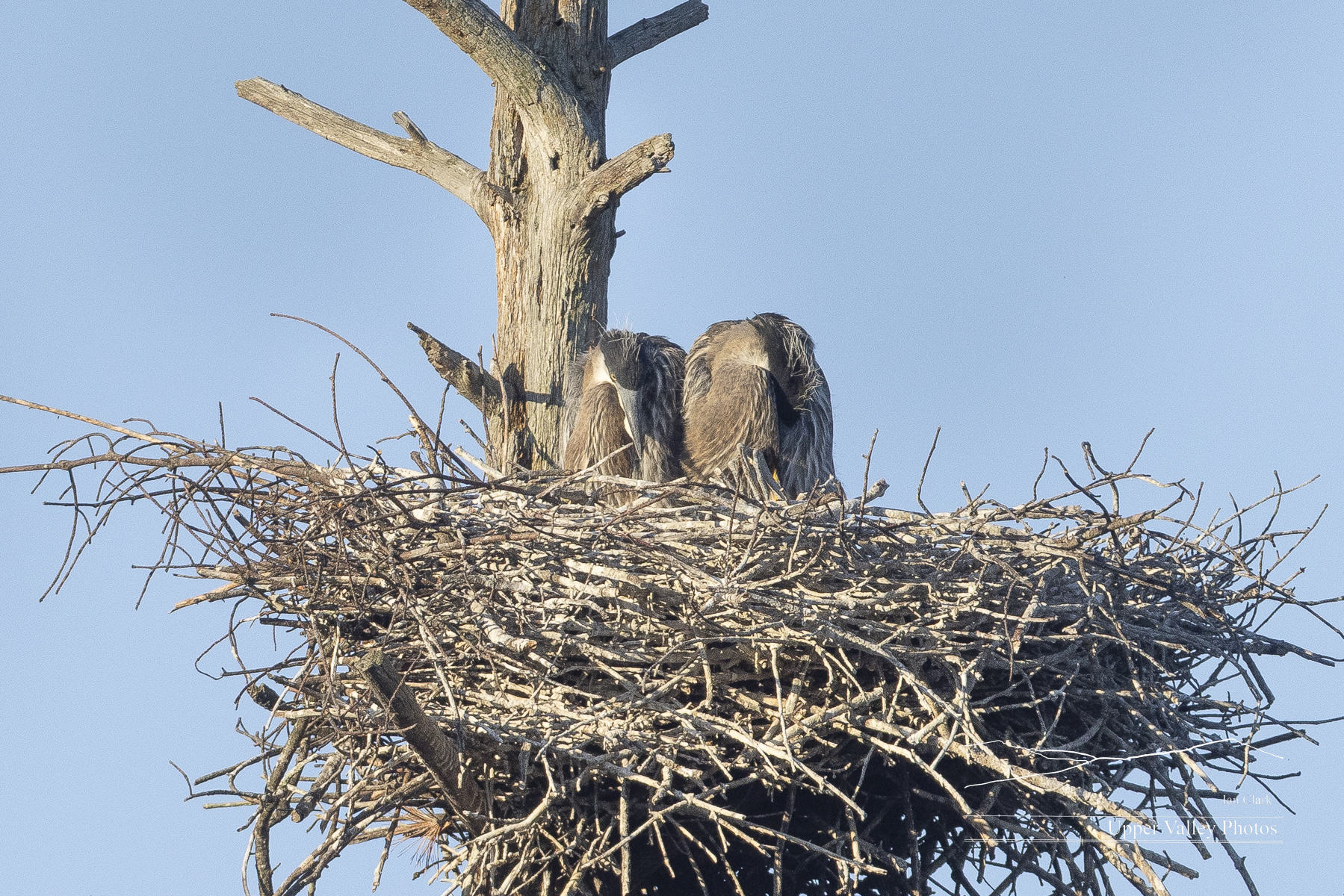
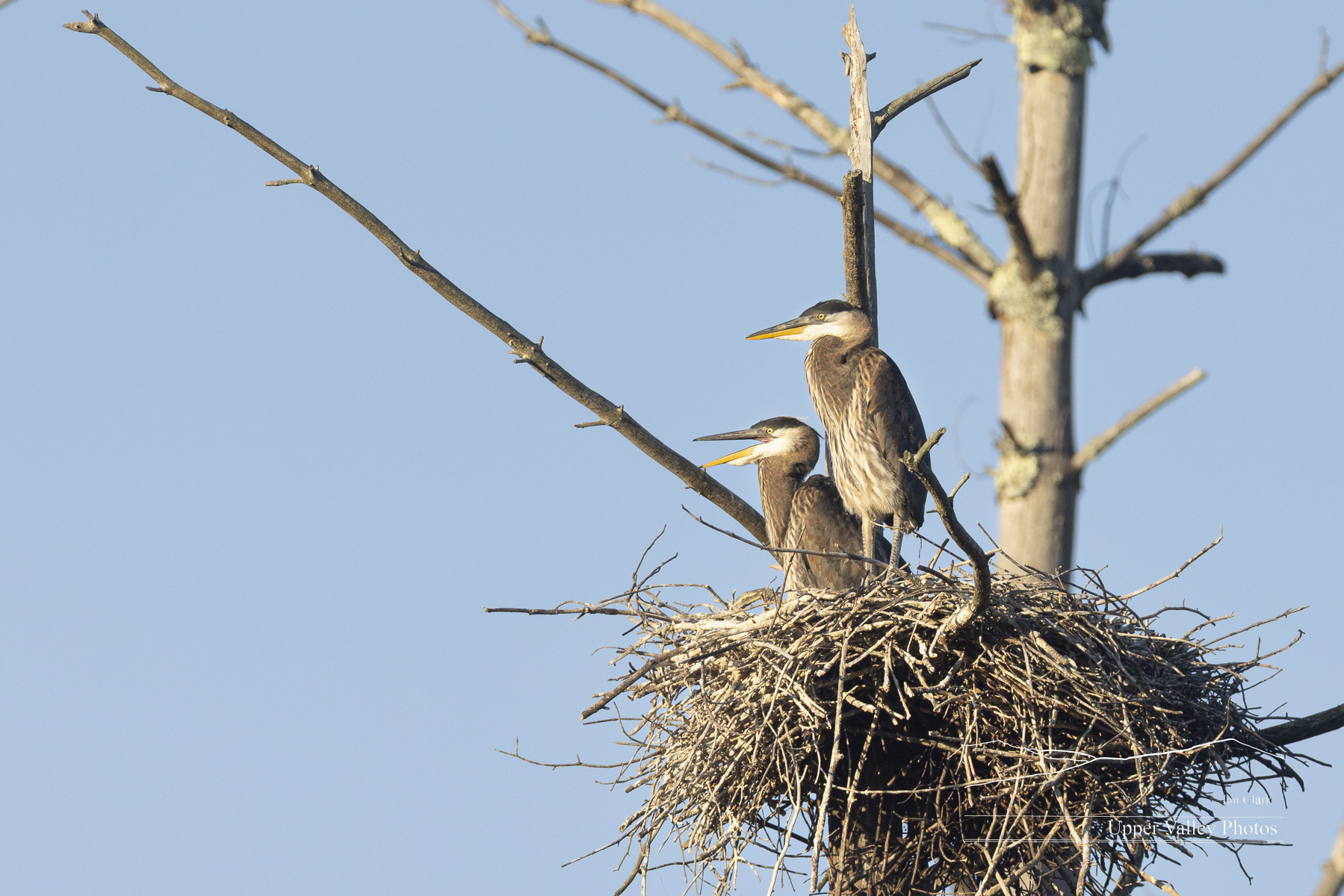
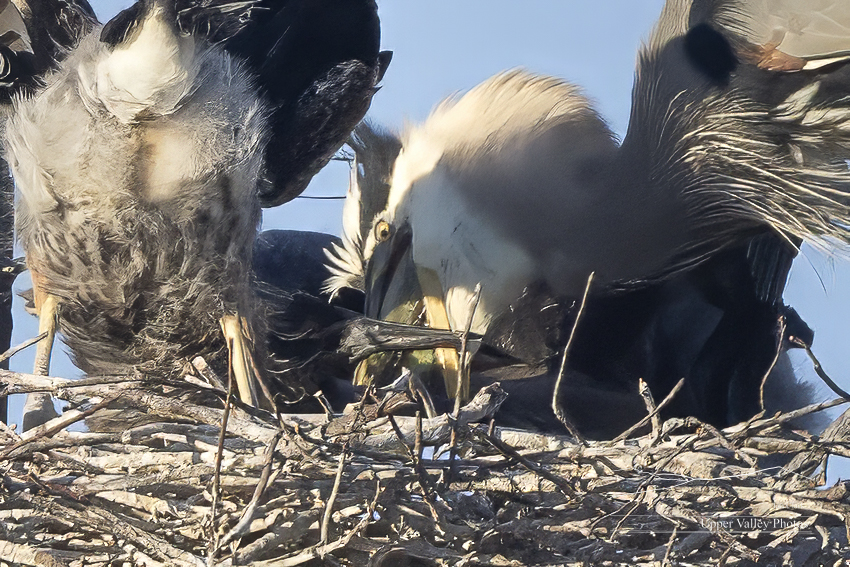
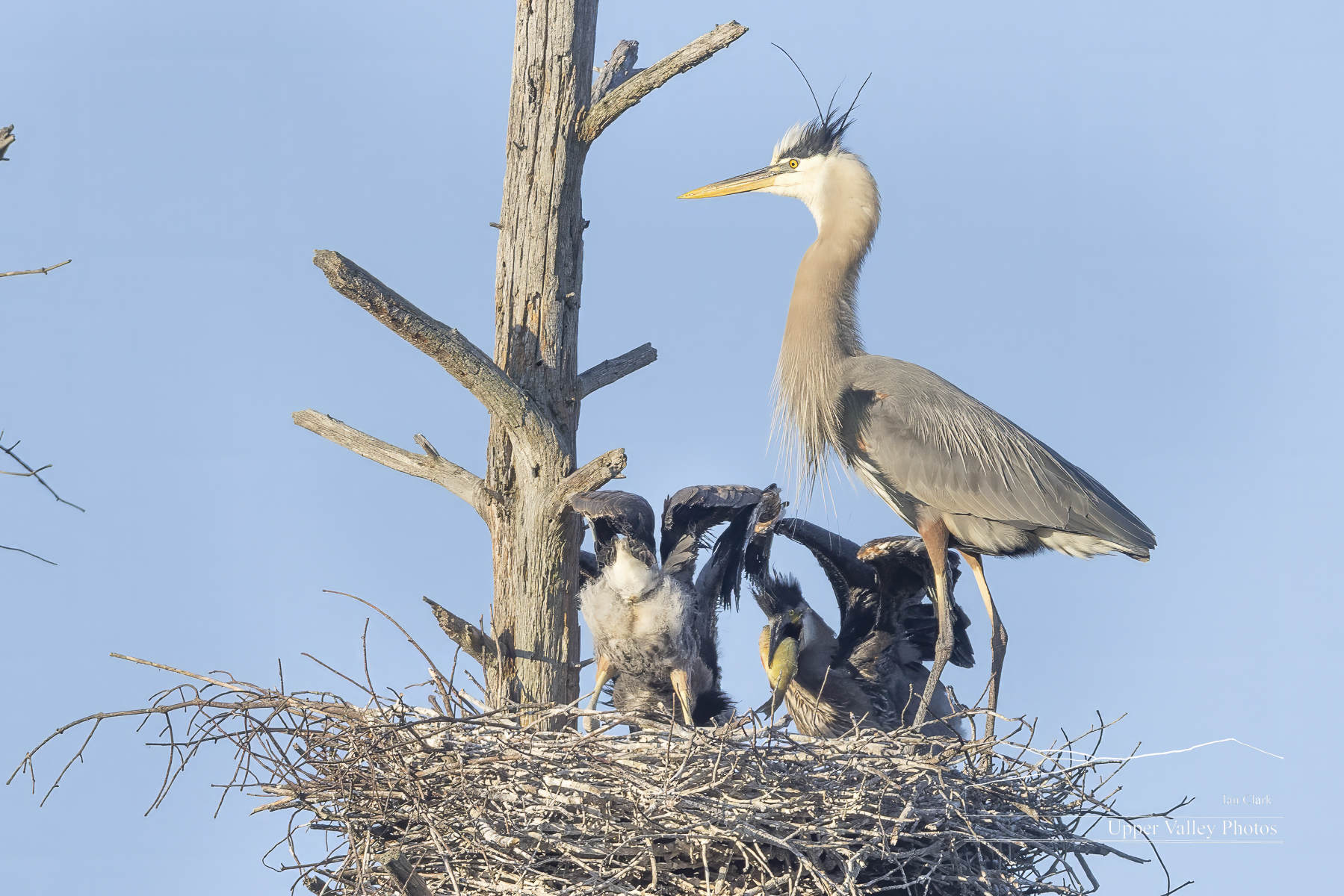
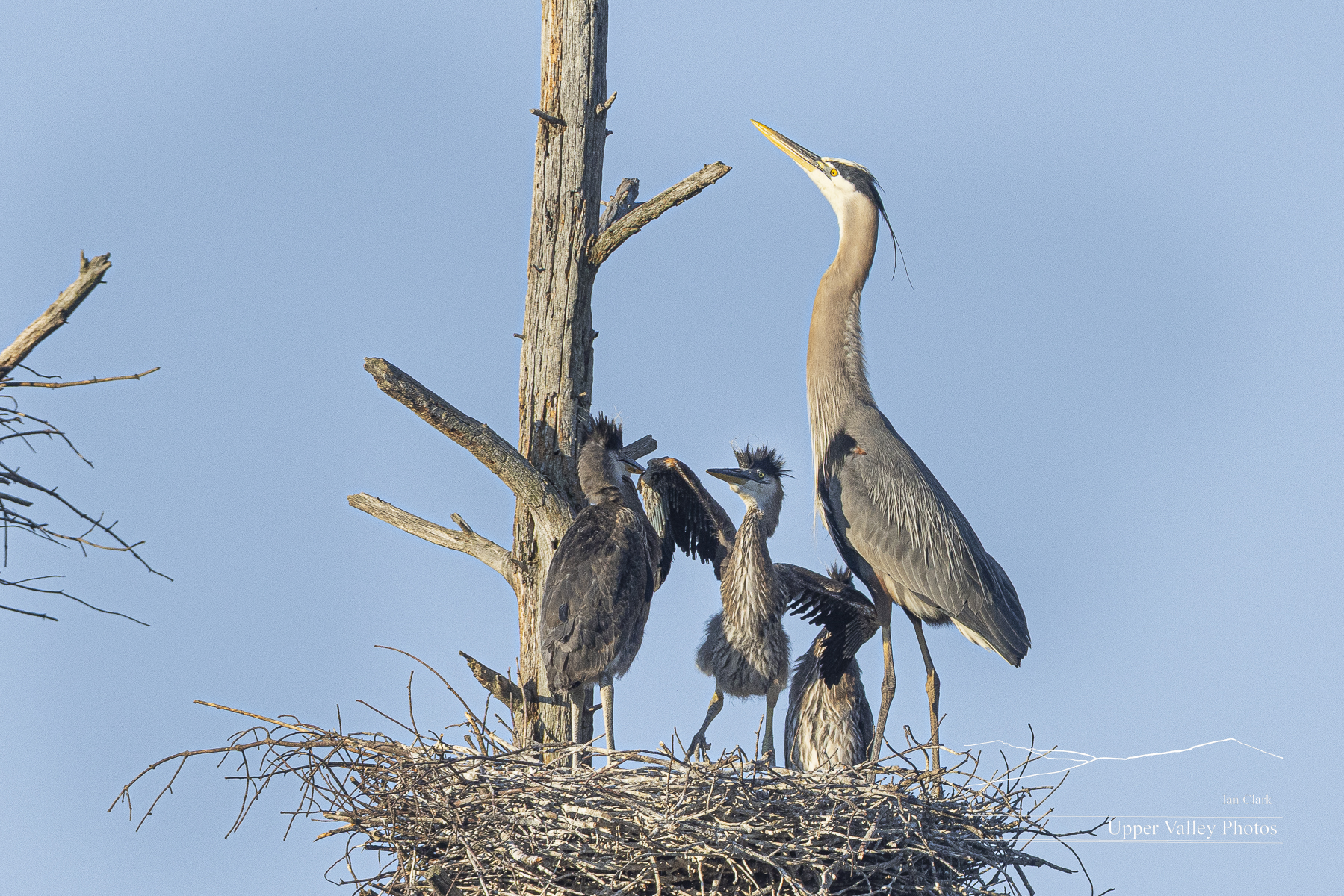
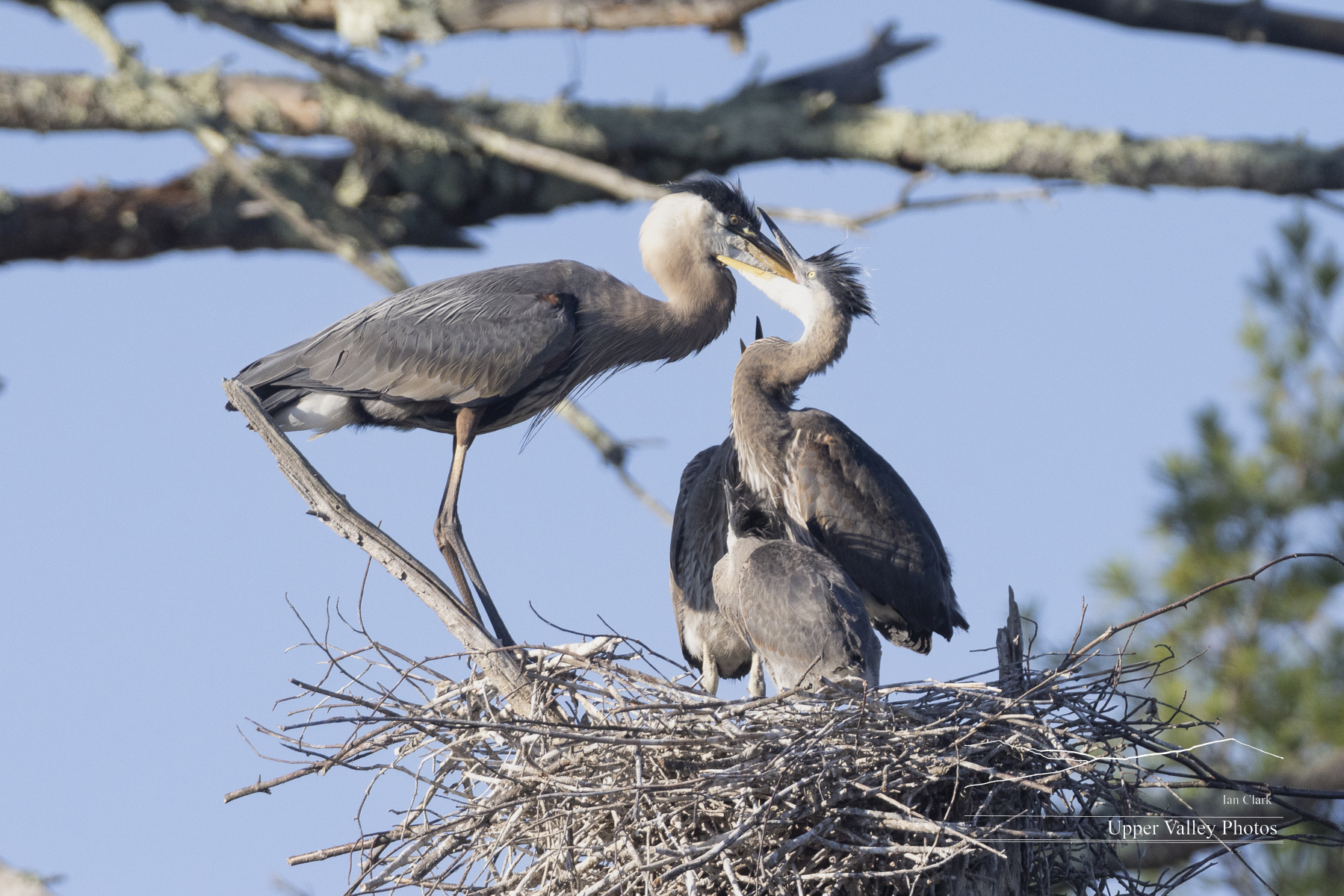
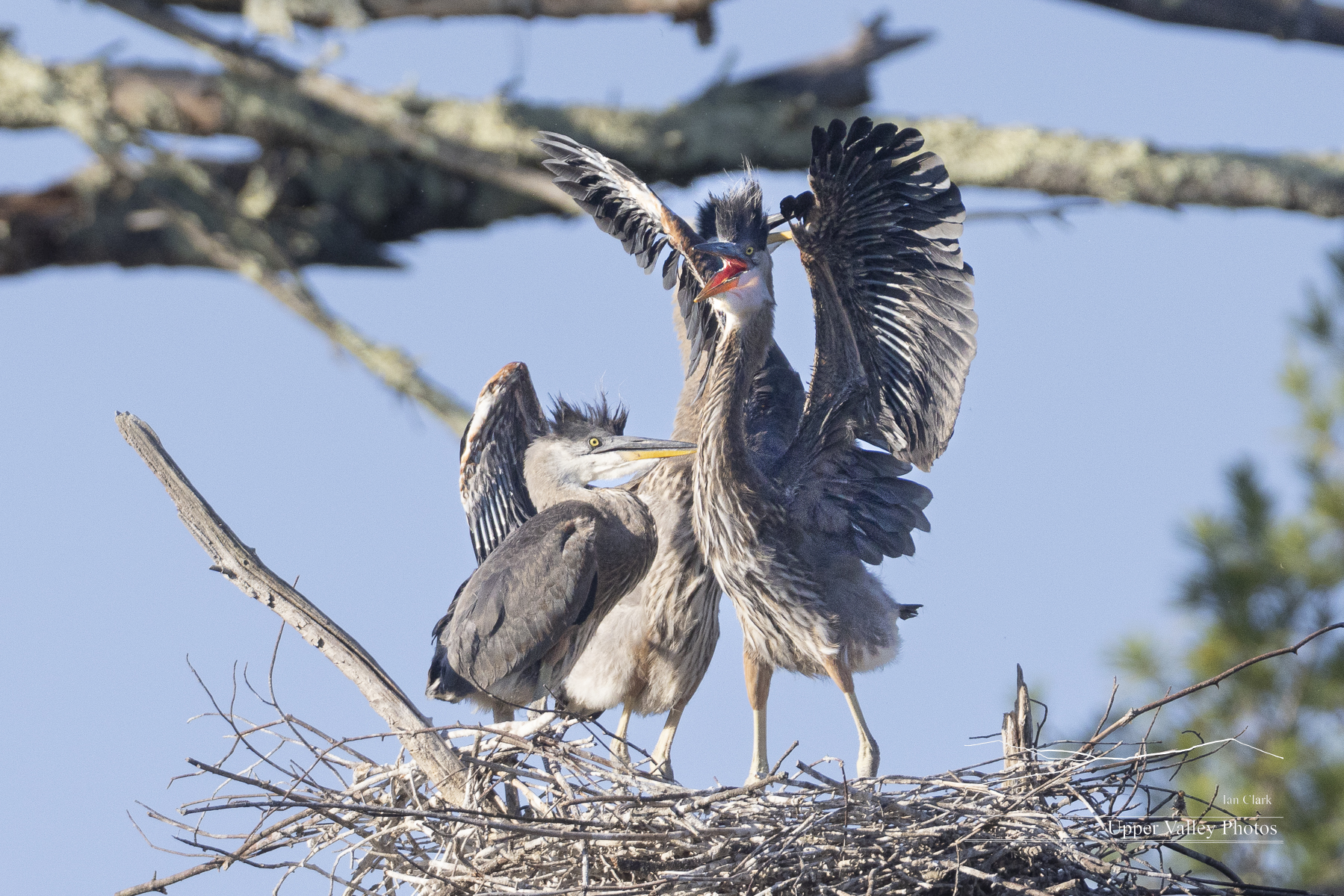
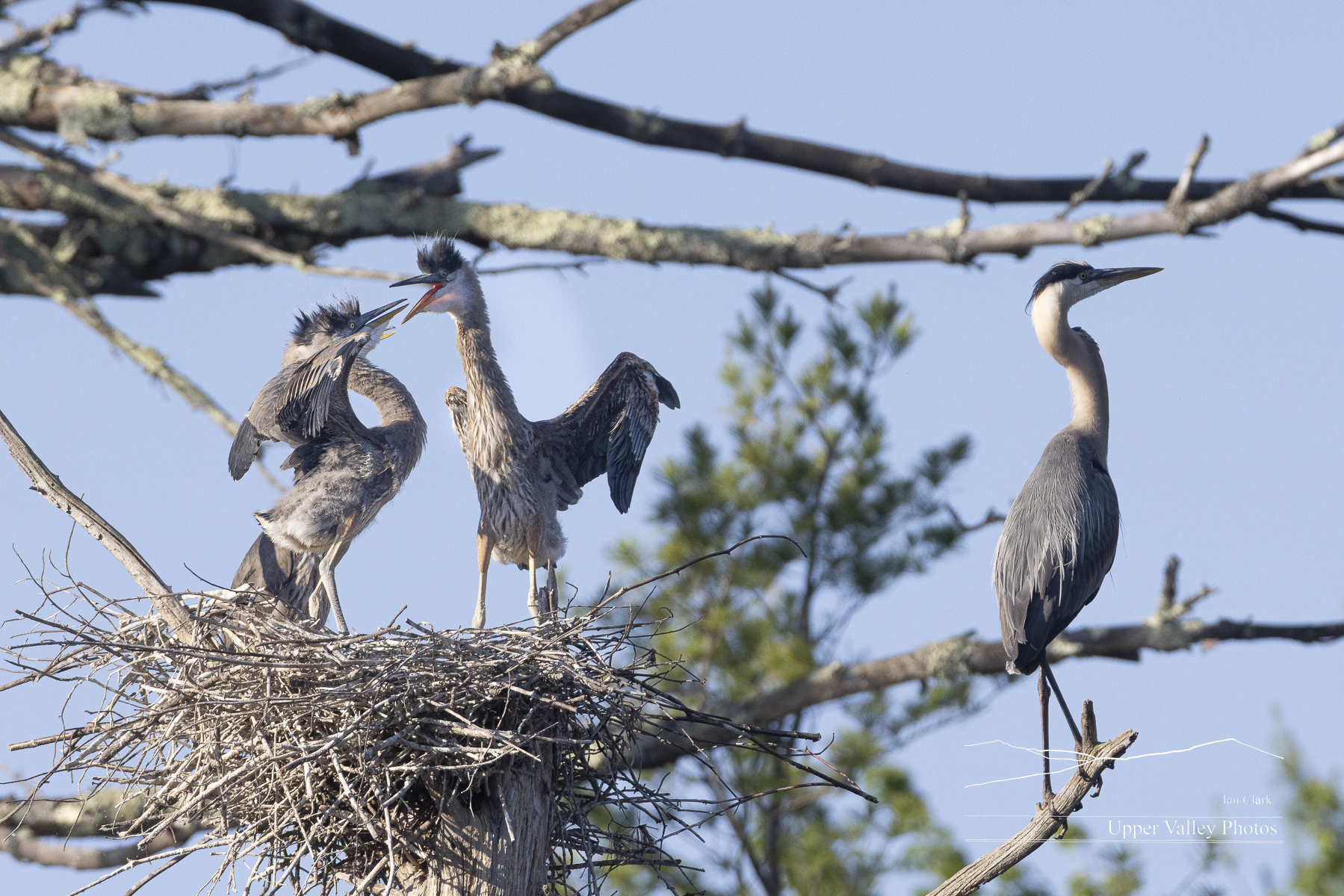
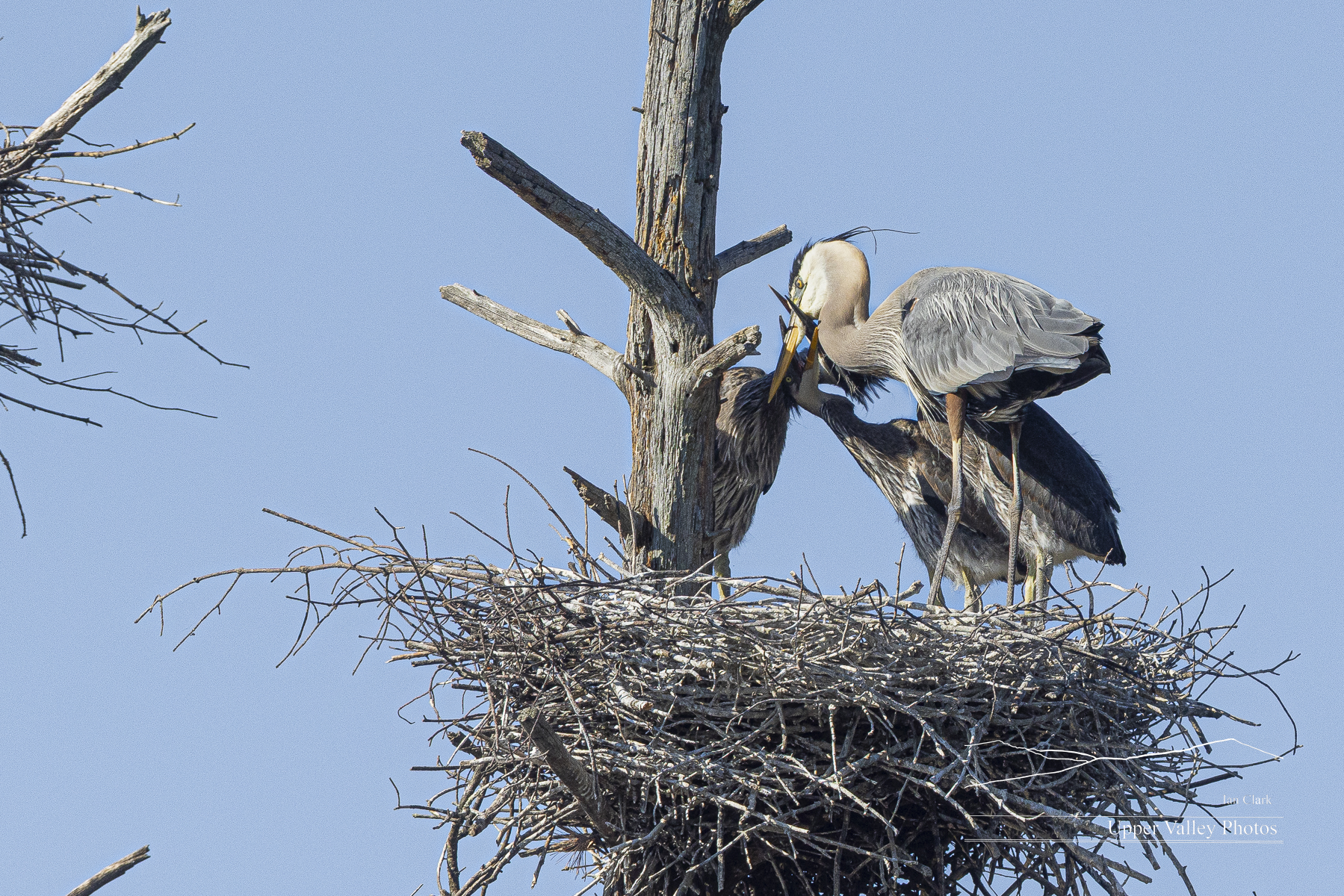
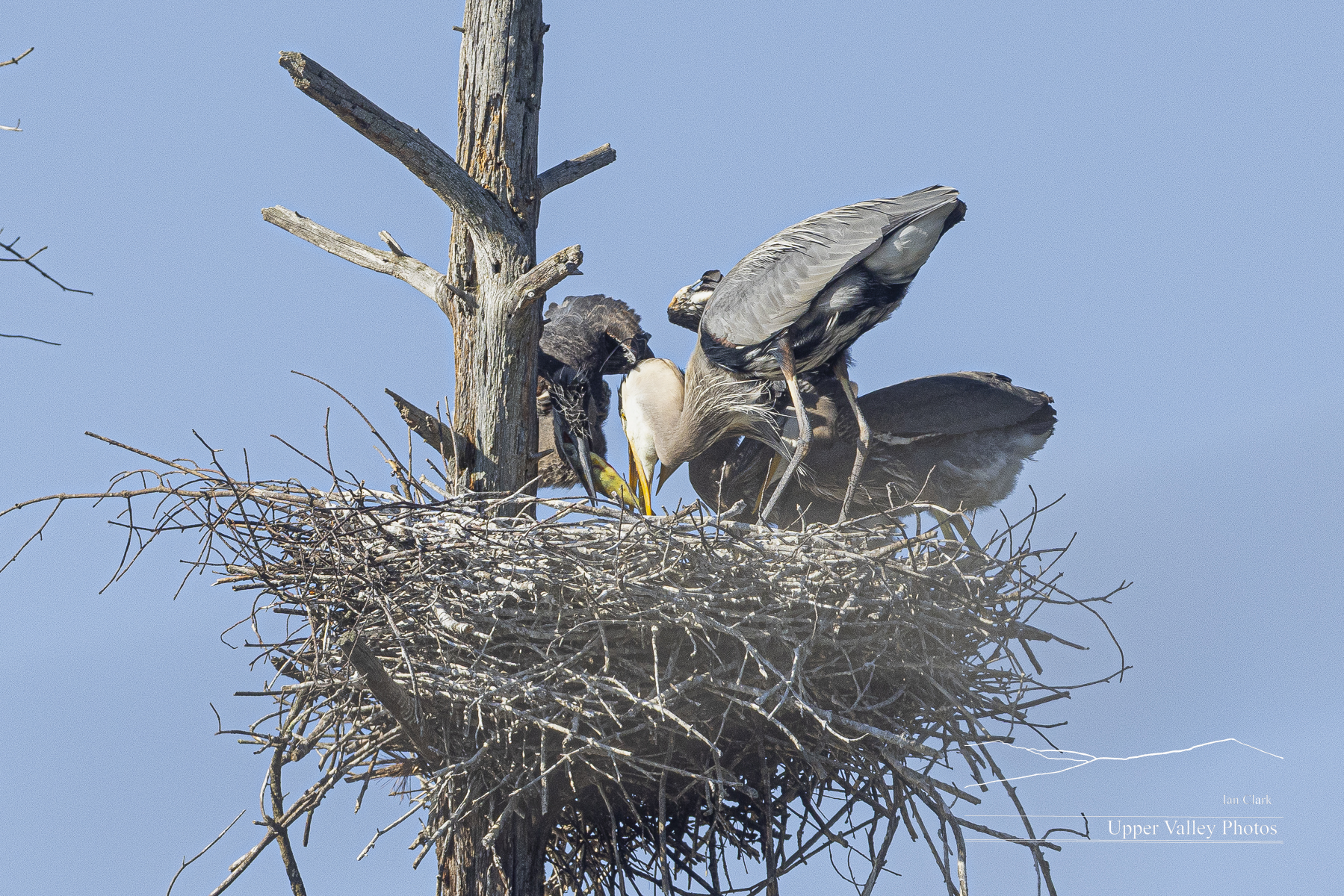
Last week, it looked like a wren had taken over the bluebird box where they raised a family earlier this year. In the last couple days, the bluebirds have reappeared. Ownership of the box appears undecided. I’m kinda rooting for the bluebirds. The wren’s song was cute the first couple days, but she over does it.
If you enjoyed this post, please subscribe to get notified of future posts with the form below. I won’t share or sell your info, you’ll just get an email when I add a post. And you can help me out by sharing this on social media or with your friends. Thanks!


Looking Back at the Herons
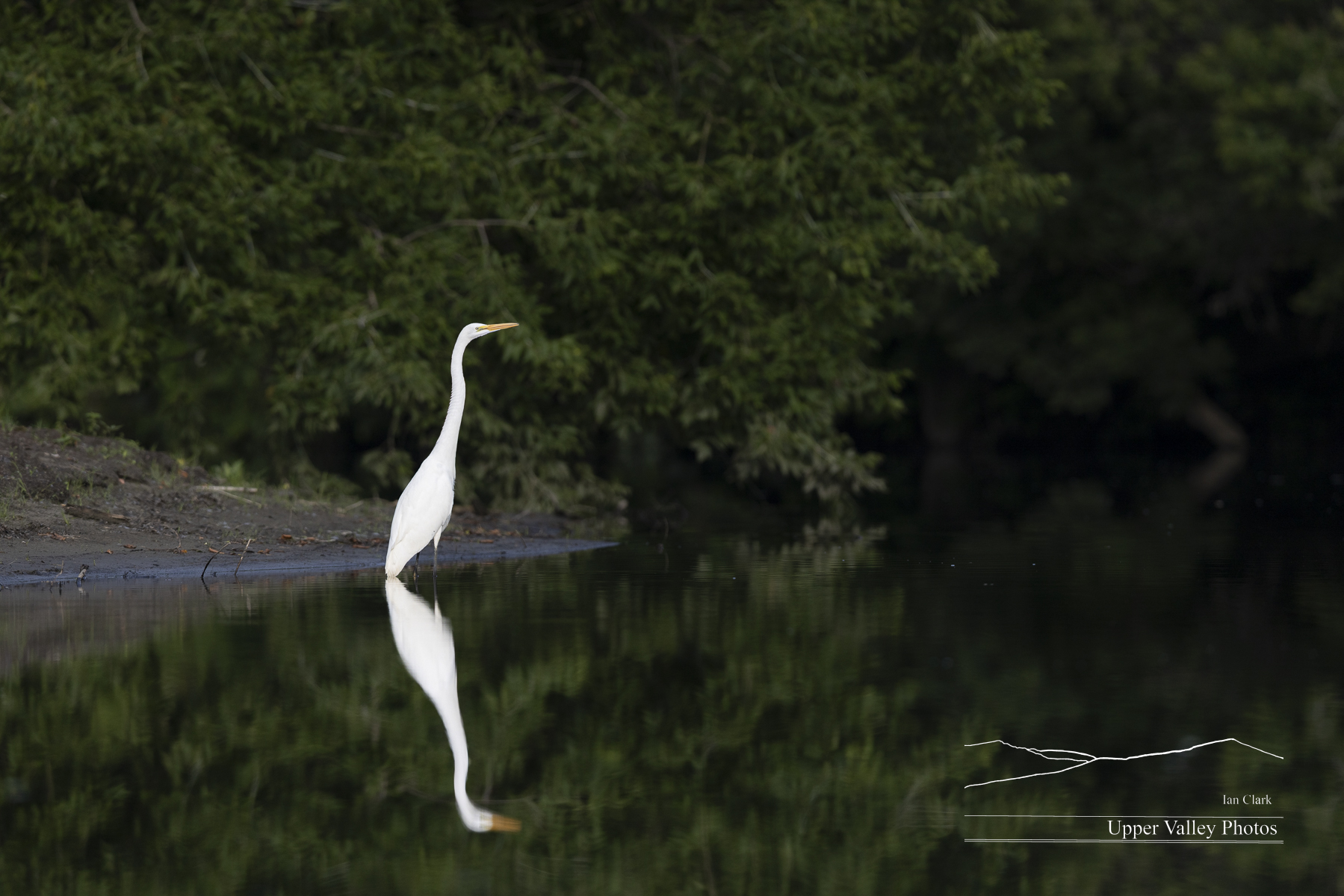
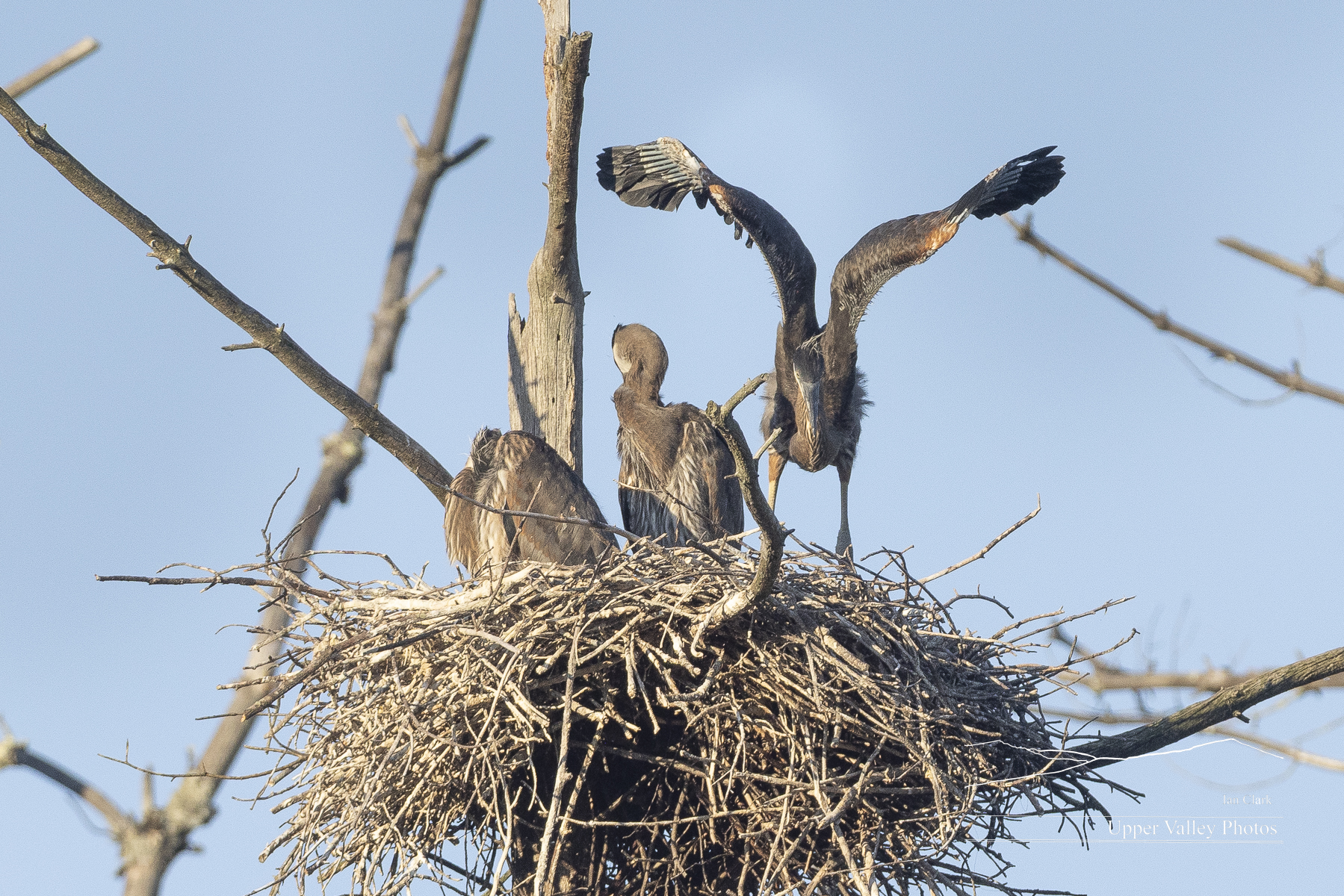
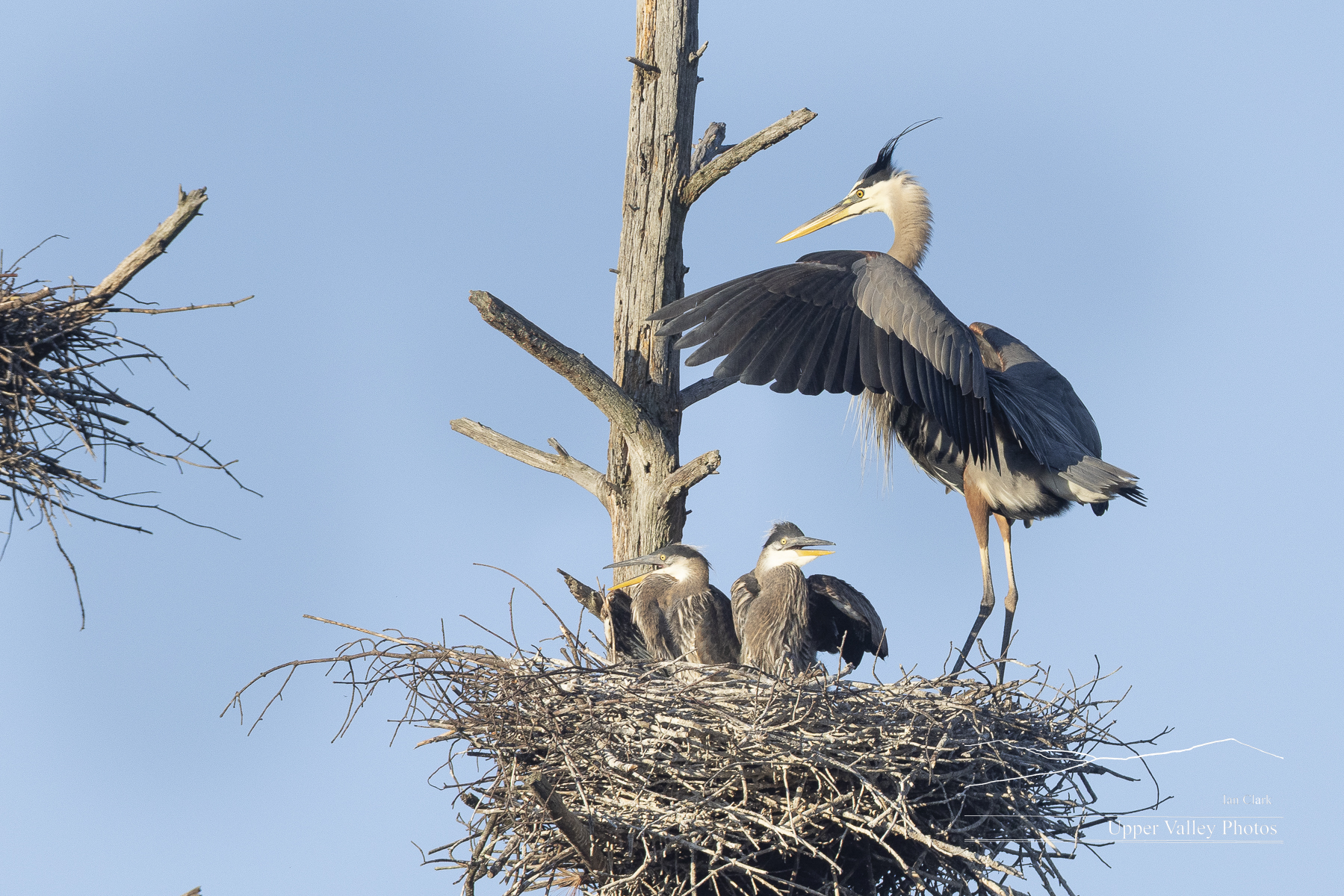
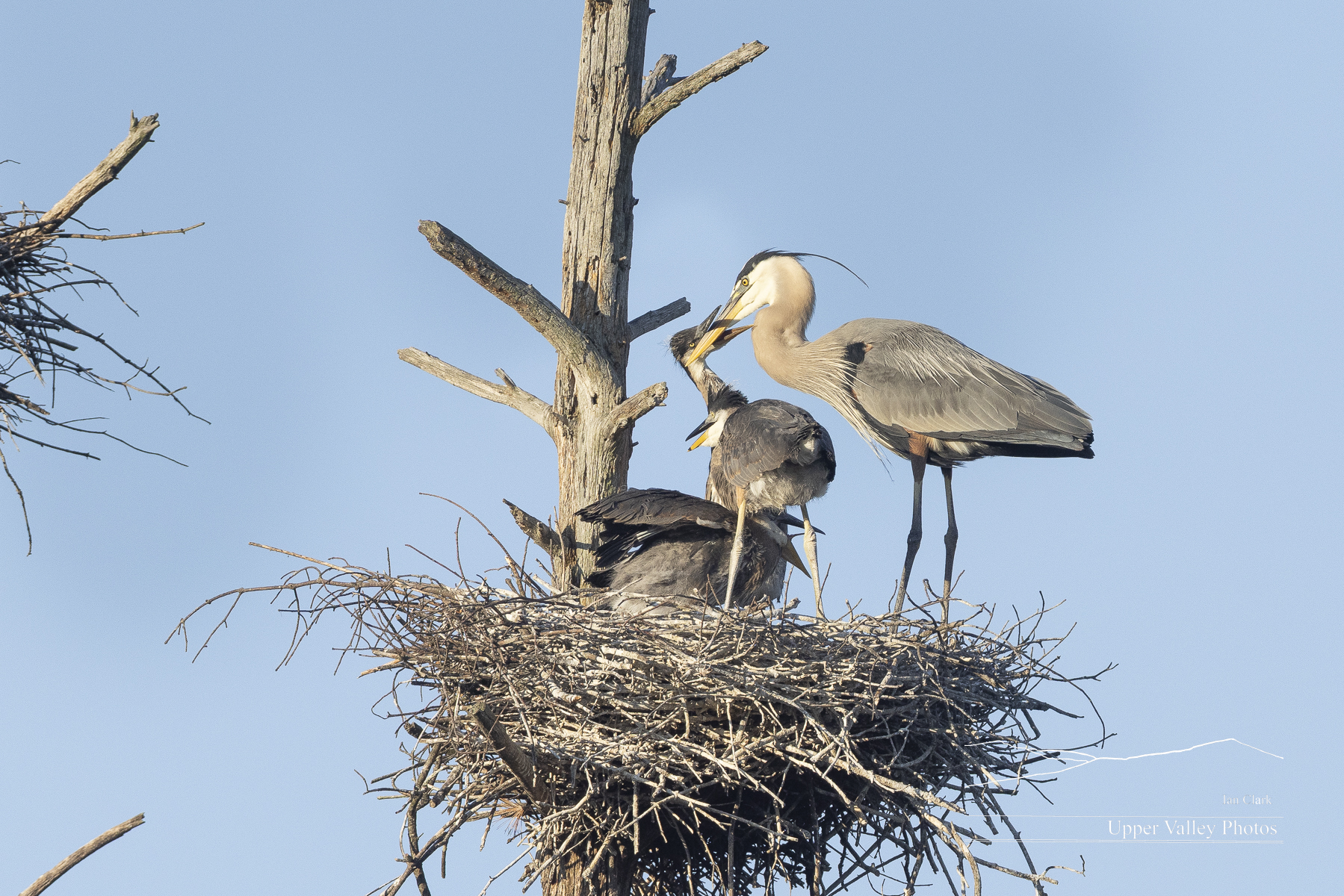
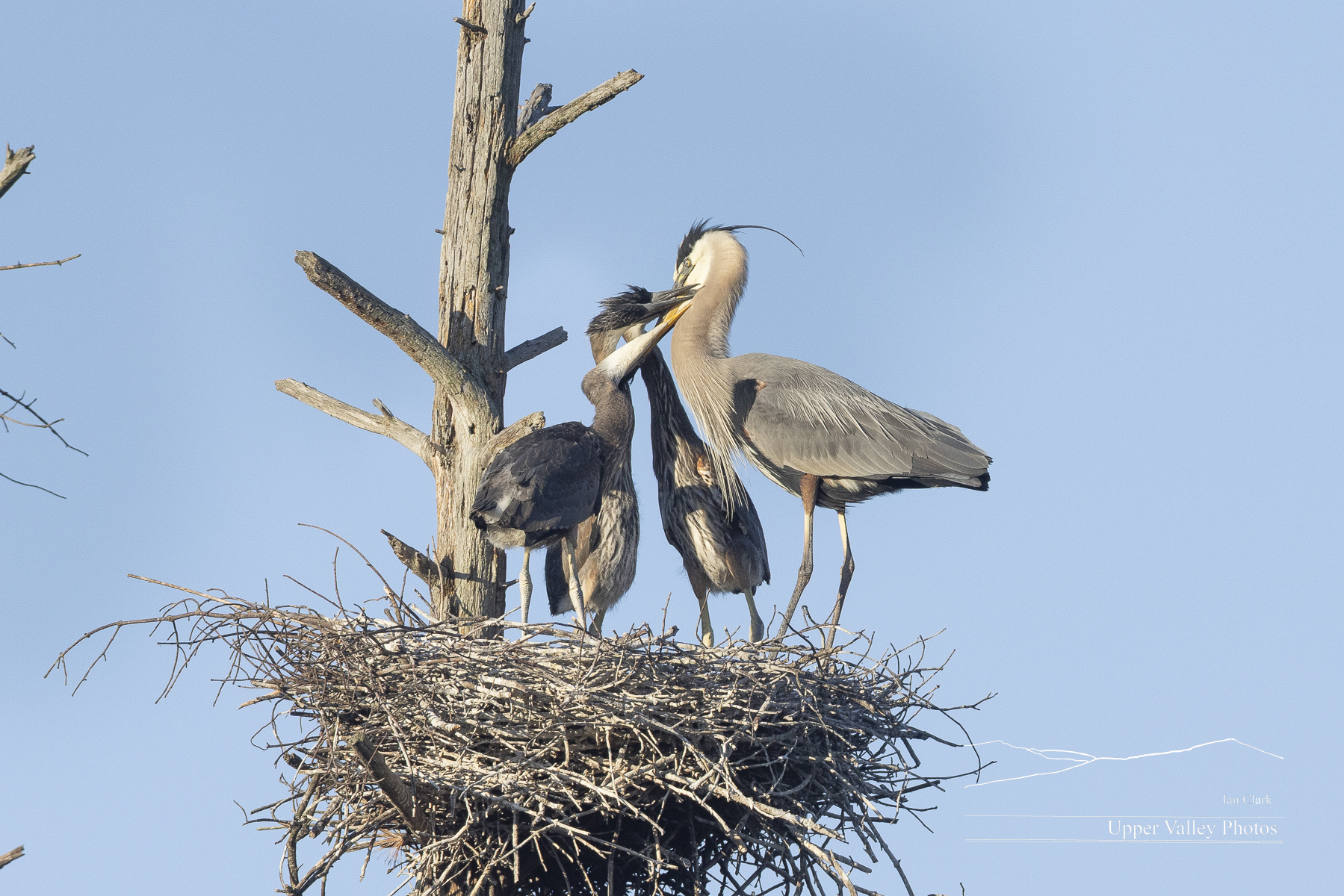
Great blue herons are pretty common around the Upper Valley. All three of the loons’ ponds host great blues each year. Over the years, I’ve gotten a number of good shots of them. I’m pondering a ‘Heronscapes’ exhibit and have been digging through the archives to see what I’ve got. Let’s take a look.
The Hartland, VT, Public Library will host me to present my slideshow, An Uncommon Look at the Common Loon, this Wednesday, November 6 at 6 p.m. Free and everyone welcome. My print exhibit of loons is hanging in the Library through the end of November.
And my 2025 calendar is available:

On to the herons.


