Posts Tagged: turtles

Update on the Usual Suspects

OK, this one will be a bit long as I try to catch up on all the loon families and the heron rookery. Please keep going, we’ll check in with the loons, Hank Heron, our moose returned and a few of our other friends.

Thanks to everyone for all the kind words on the Tall Ships post. Perhaps I should give up on the critters and take up marine photography?

I’m looking for a field of sunflowers to try to get some shots of indigo buntings. If you know of one relatively near Newbury, VT, I’d love to know about it.

It is time again for the The 93rd Annual League of New Hampshire Craftsmen’s Fair . It opens this Saturday, August 1 and runs through Sunday August 9. I won’t have a booth this year, nine days is just too much for me anymore. But, I’ll have note cards, my 2027 Wildlife Calendar and a few prints in The Shop At The Fair at the League Fair. And everything is available on my web site, www.IanClark.com. If you don’t see what you’re looking for, please send an email or give me a call. And, be sure to visit all the other craftspeople at the Fair – there’s lots of amazing work to see.
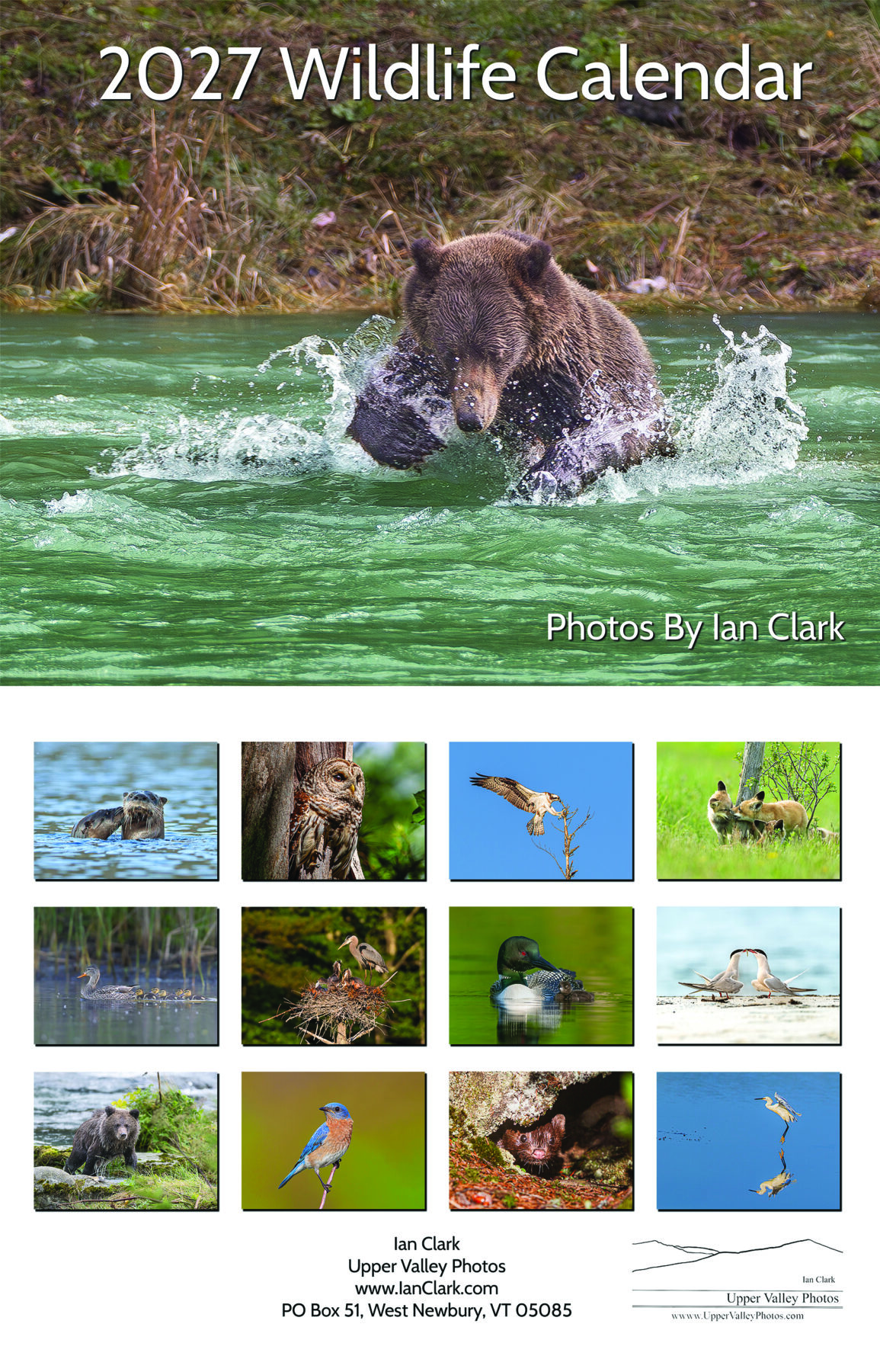

My 2027 Wildlife Calendar has arrived! They’re available on my site at www.IanClark.com. This year, I’ve added a couple photos of bears from my trip to Alaska last fall, including a cuddly-looking little first-year cub I wanted to bring home. But, while never specifically stated, I’m sure that would have broken at least one of my wife’s rules.

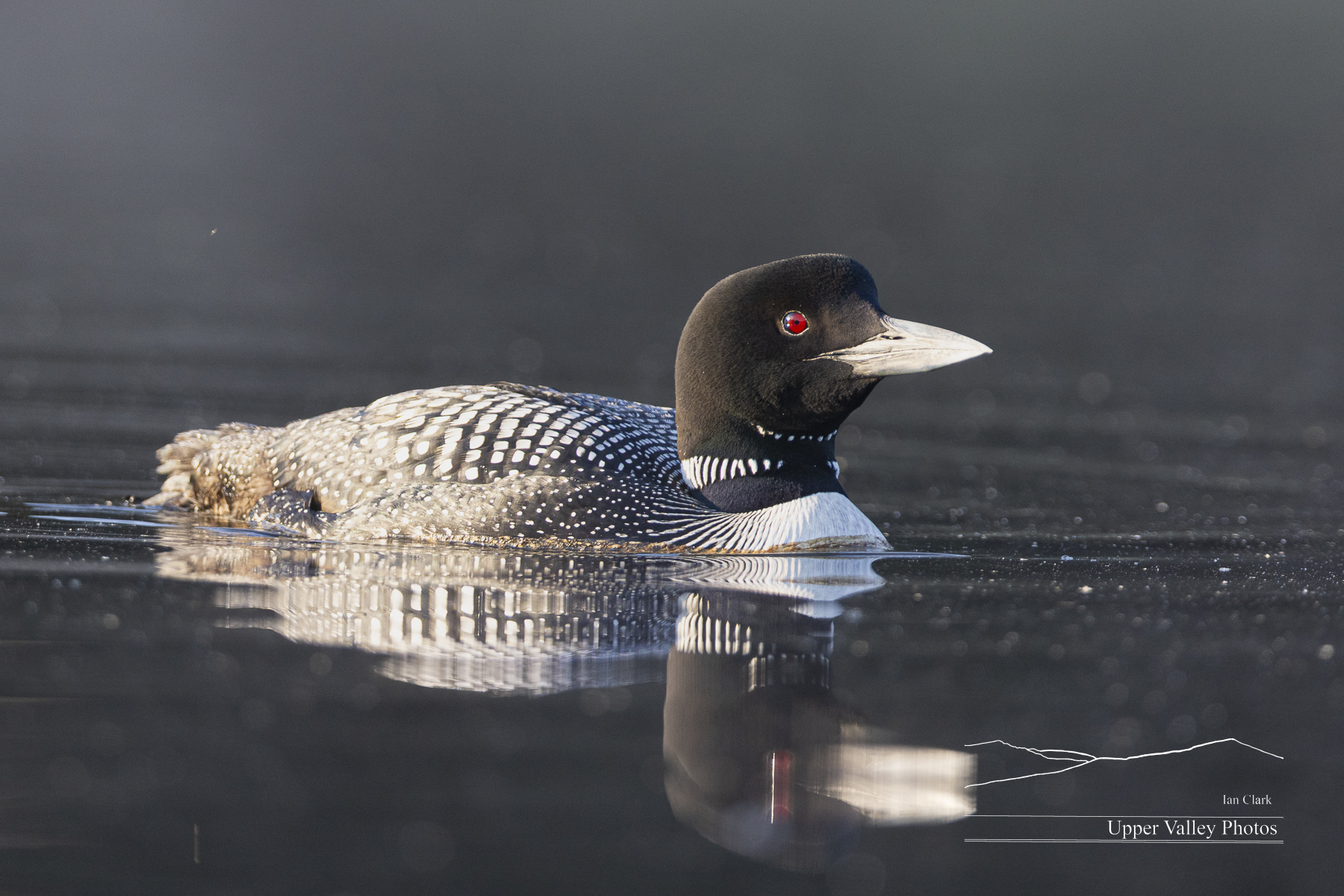
When we last checked on the loon families, the Westons had hatched two chicks, the Middletons had abandoned their first nest and were sitting on a second clutch and the Eastons’ chicks had hatched in the last days of June. The heron chicks were getting big.

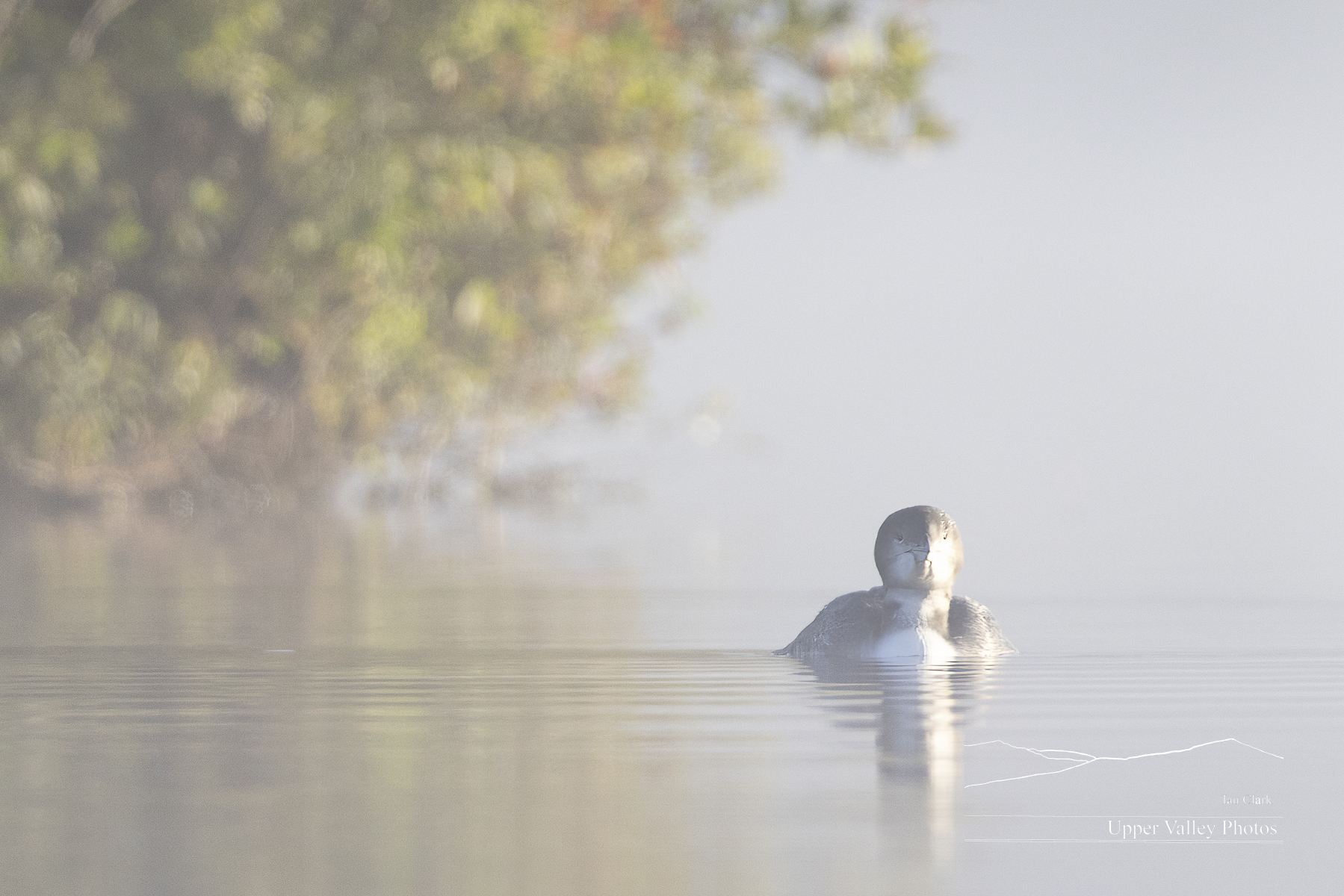
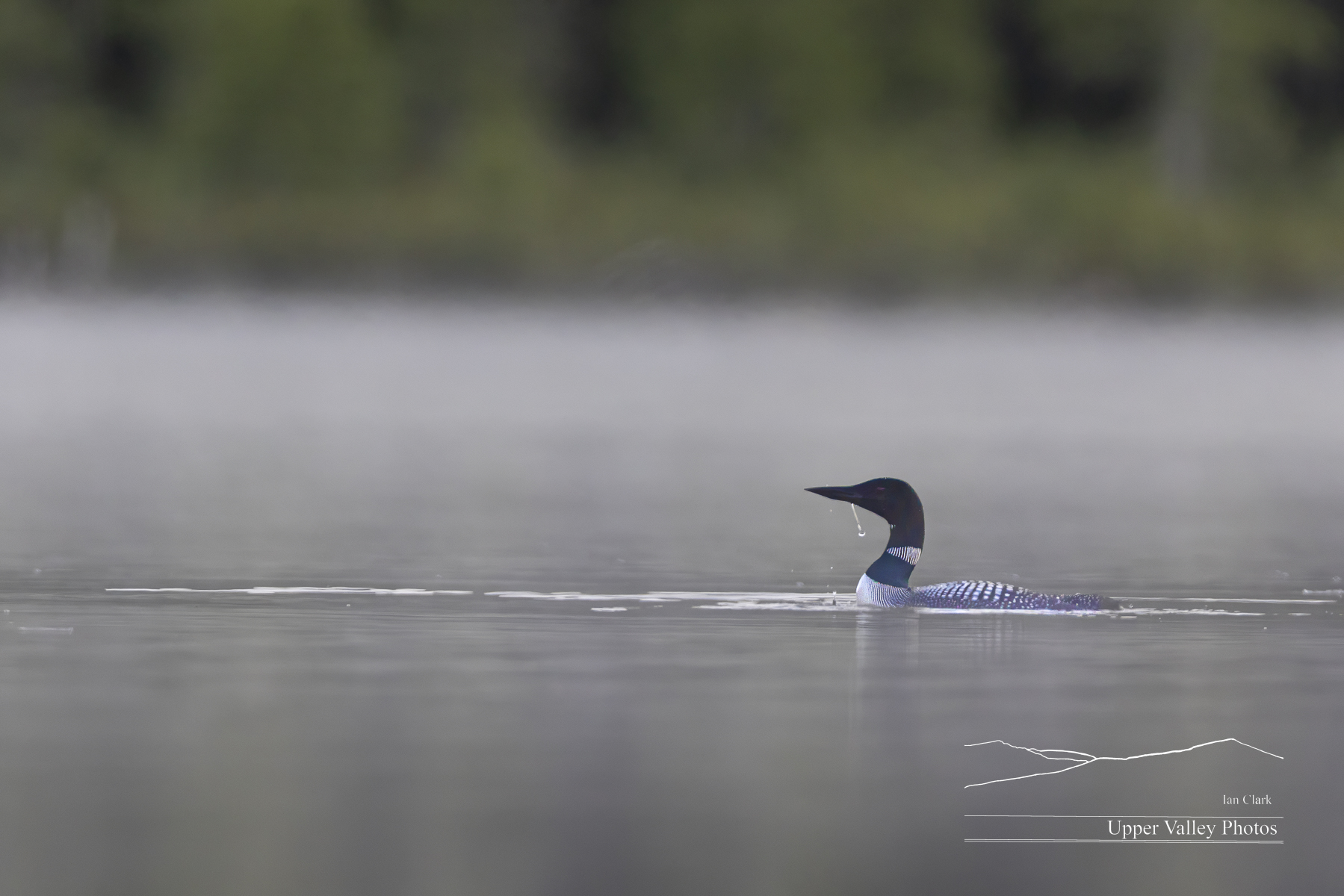
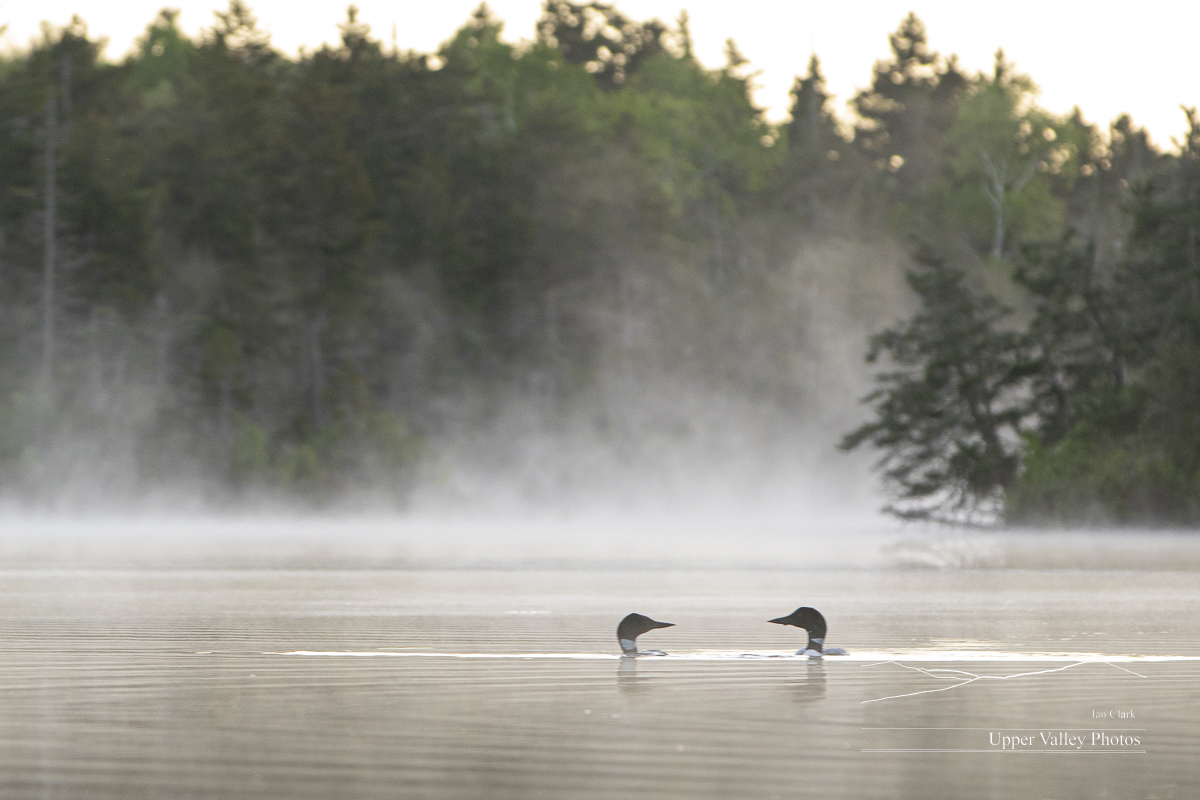
I went to check on the Middletons on July 8. It was a chilly morning with thick fog.
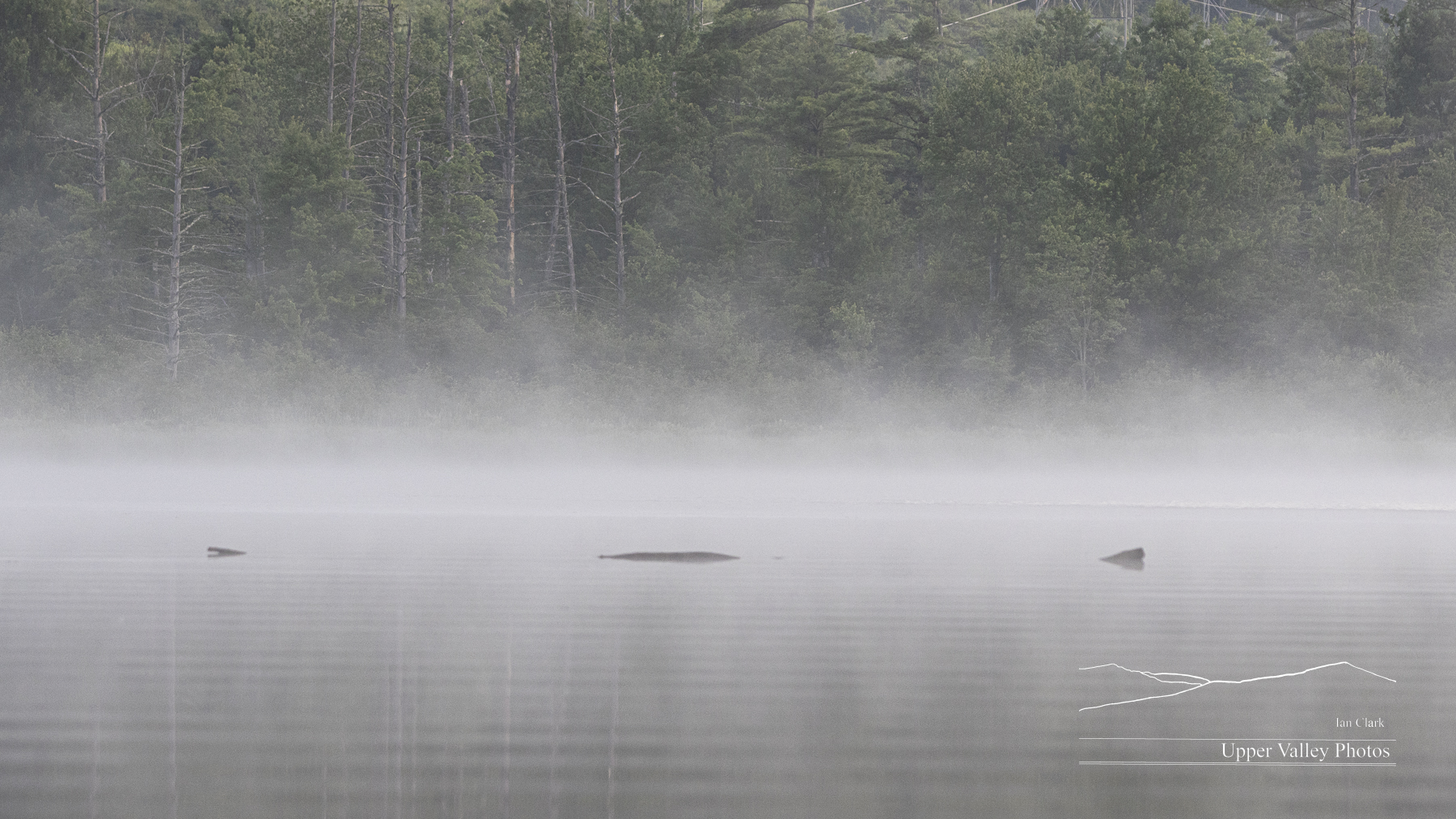
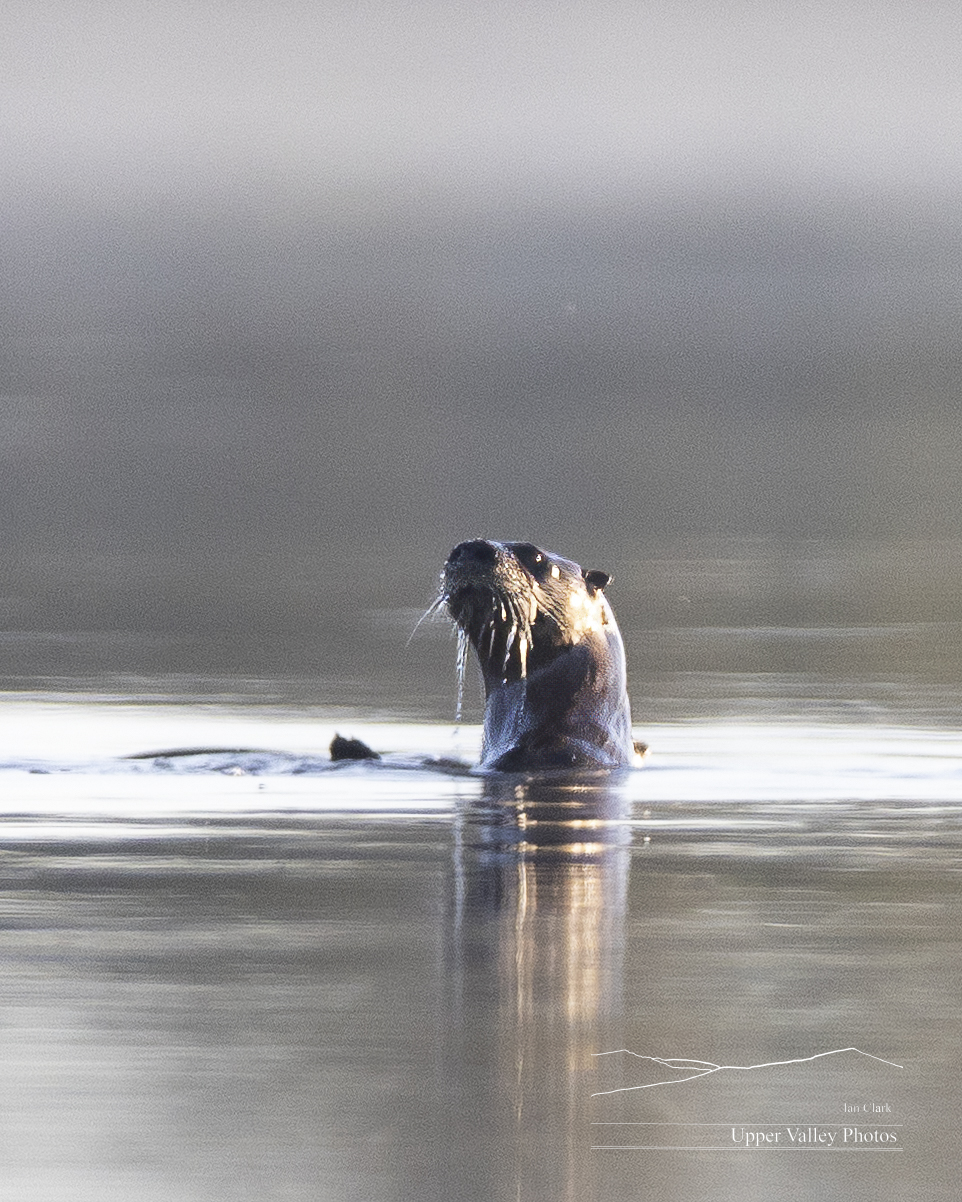
As I paddled out, I got a great look at Champ, one of the lake monsters that is supposed to live in Lake Champlain. Come on, this is the clearest photo of Champ yet!

Mrs. Middleton was on nest duty. And it was a quiet morning. I headed in early.

On the 9th, I headed up to check on the Eastons.
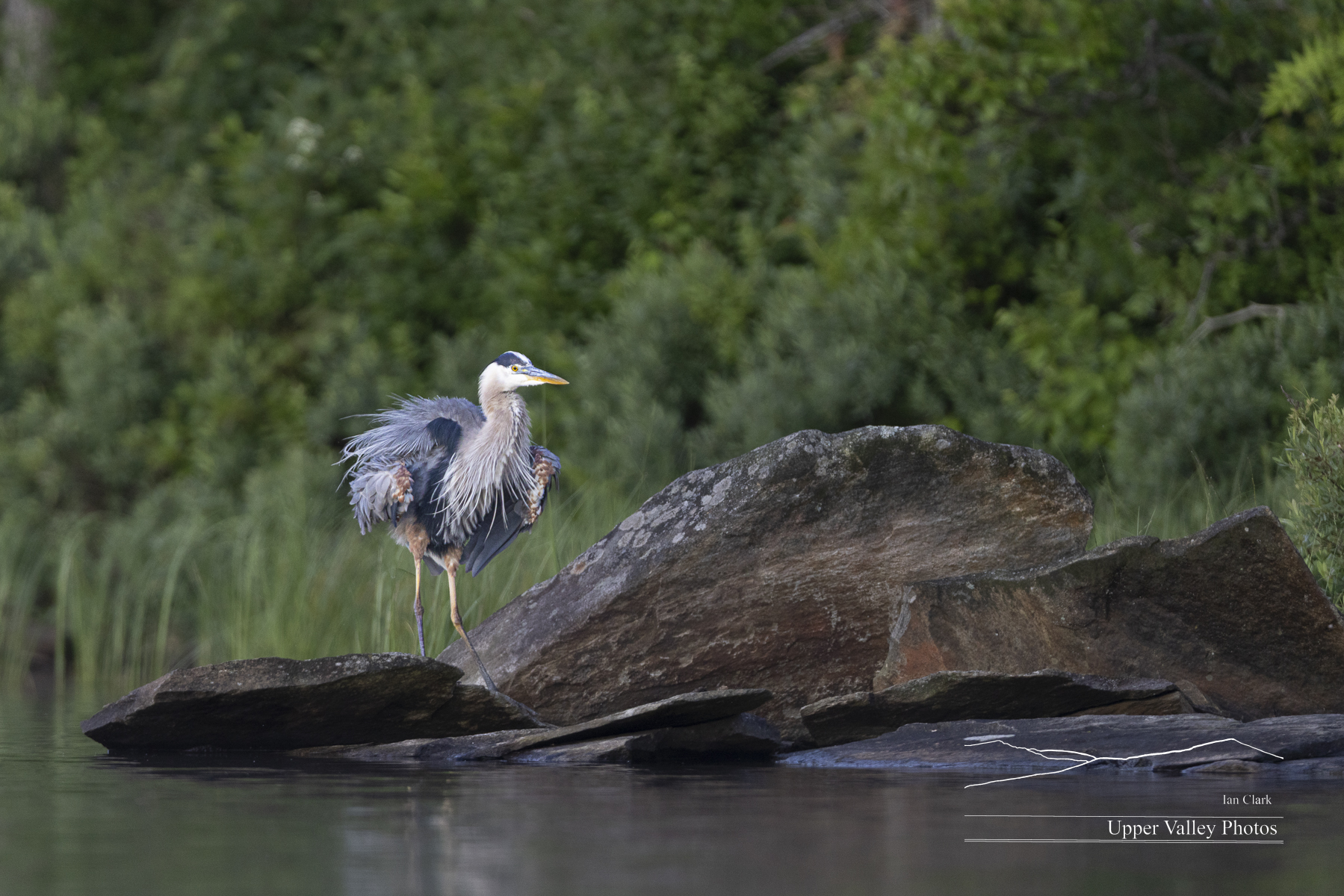

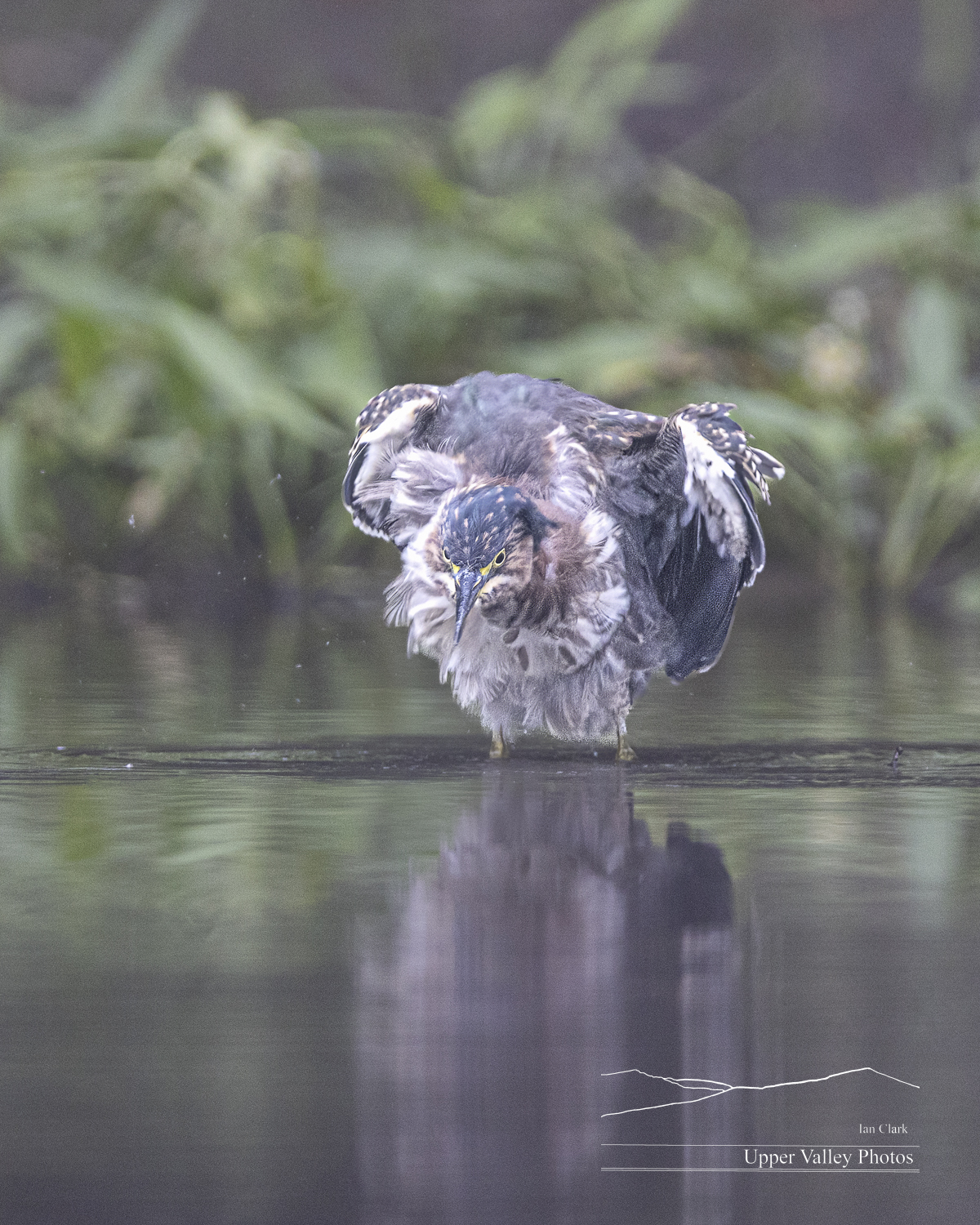
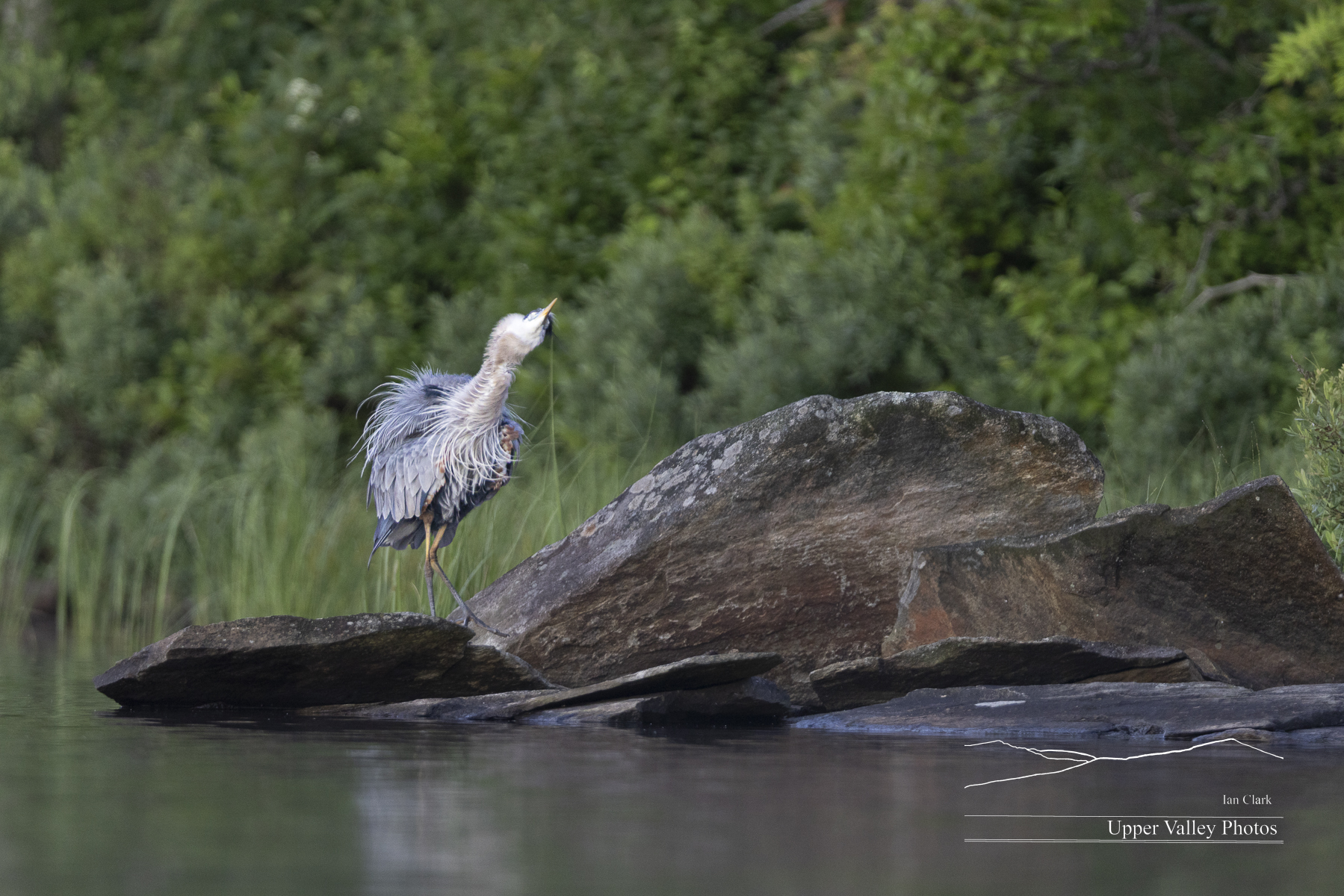
Hank was fluffed up pondside finishing up his ablutions.

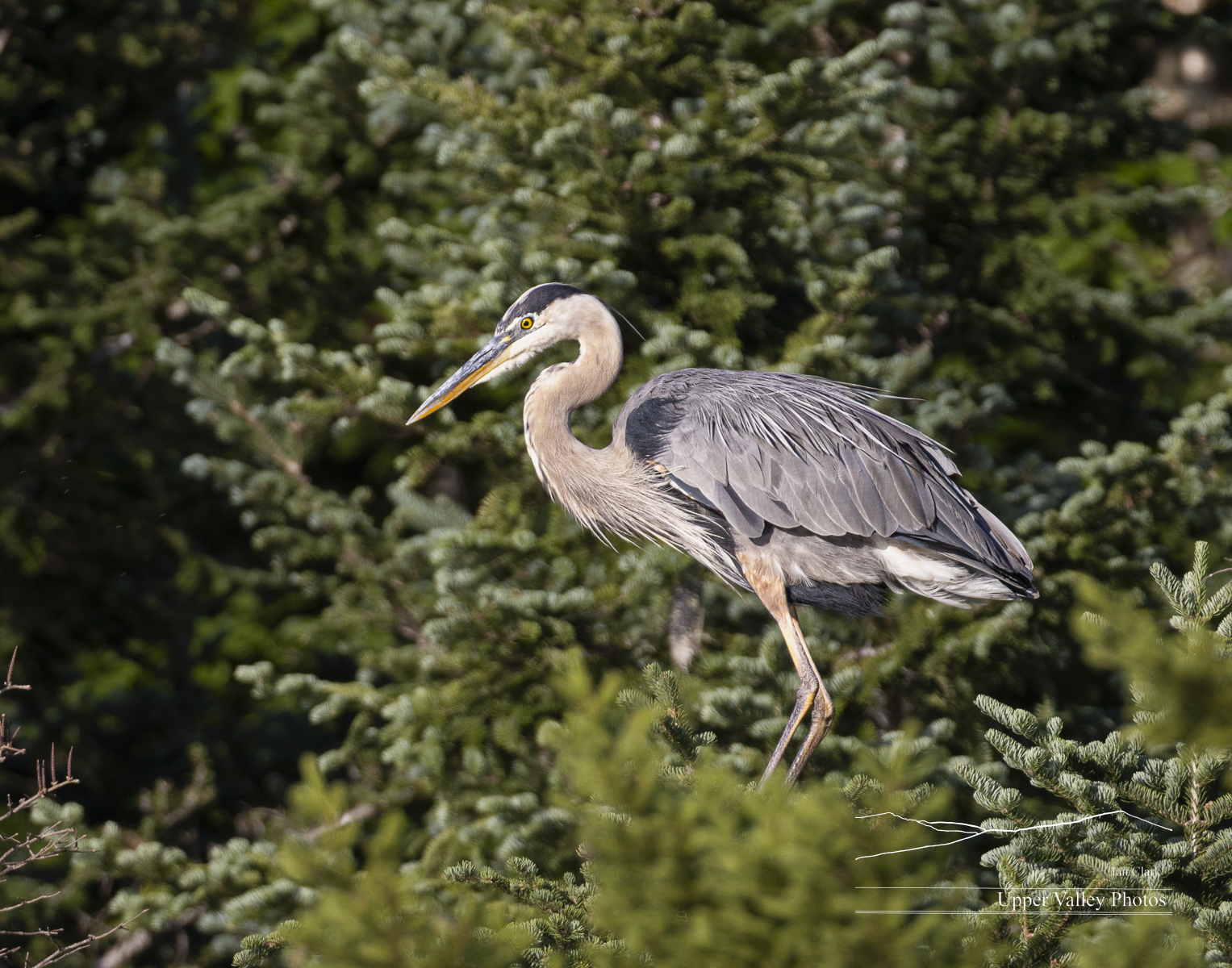
And finishing with a good shake before heading off to perch in a nearby tree.

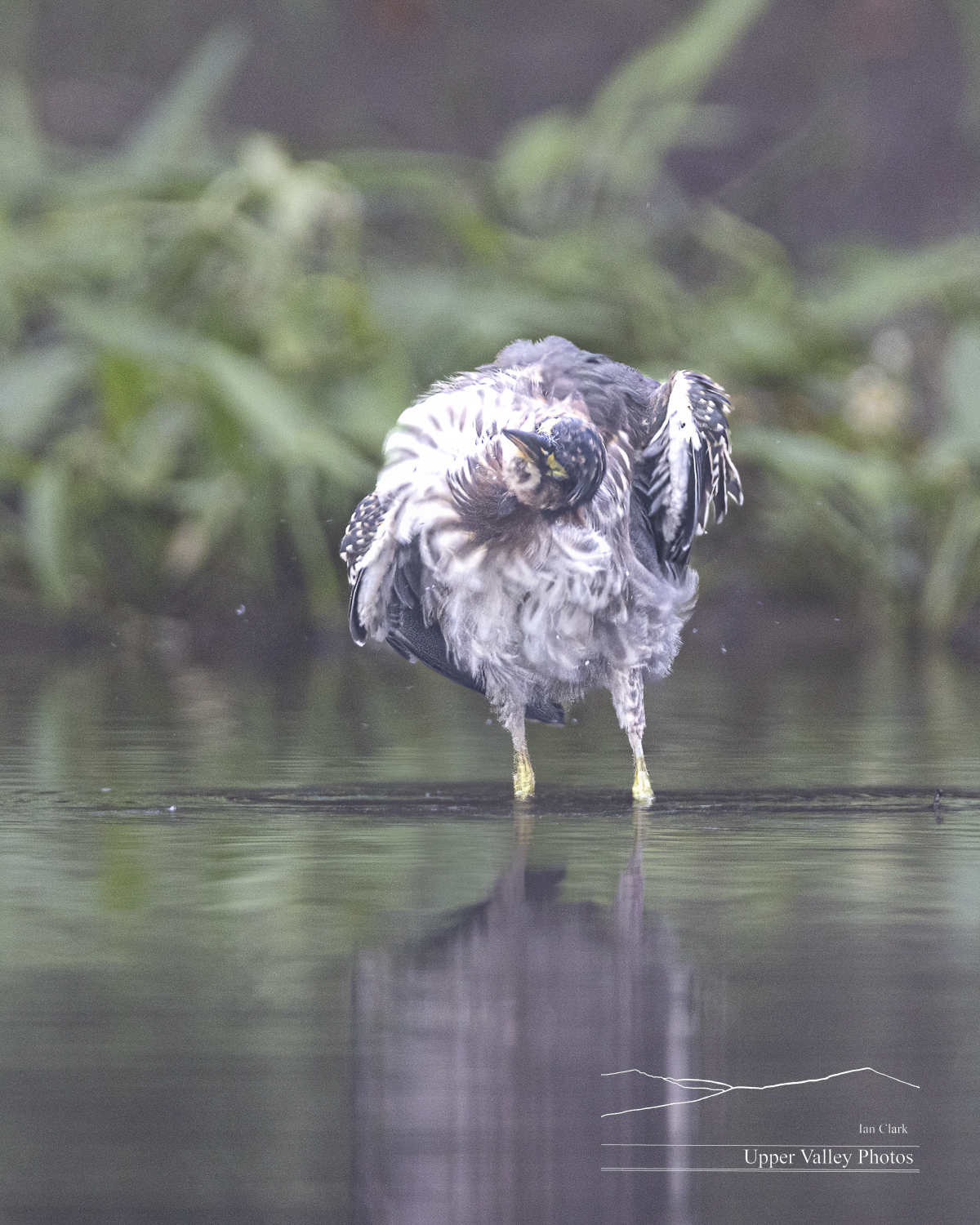
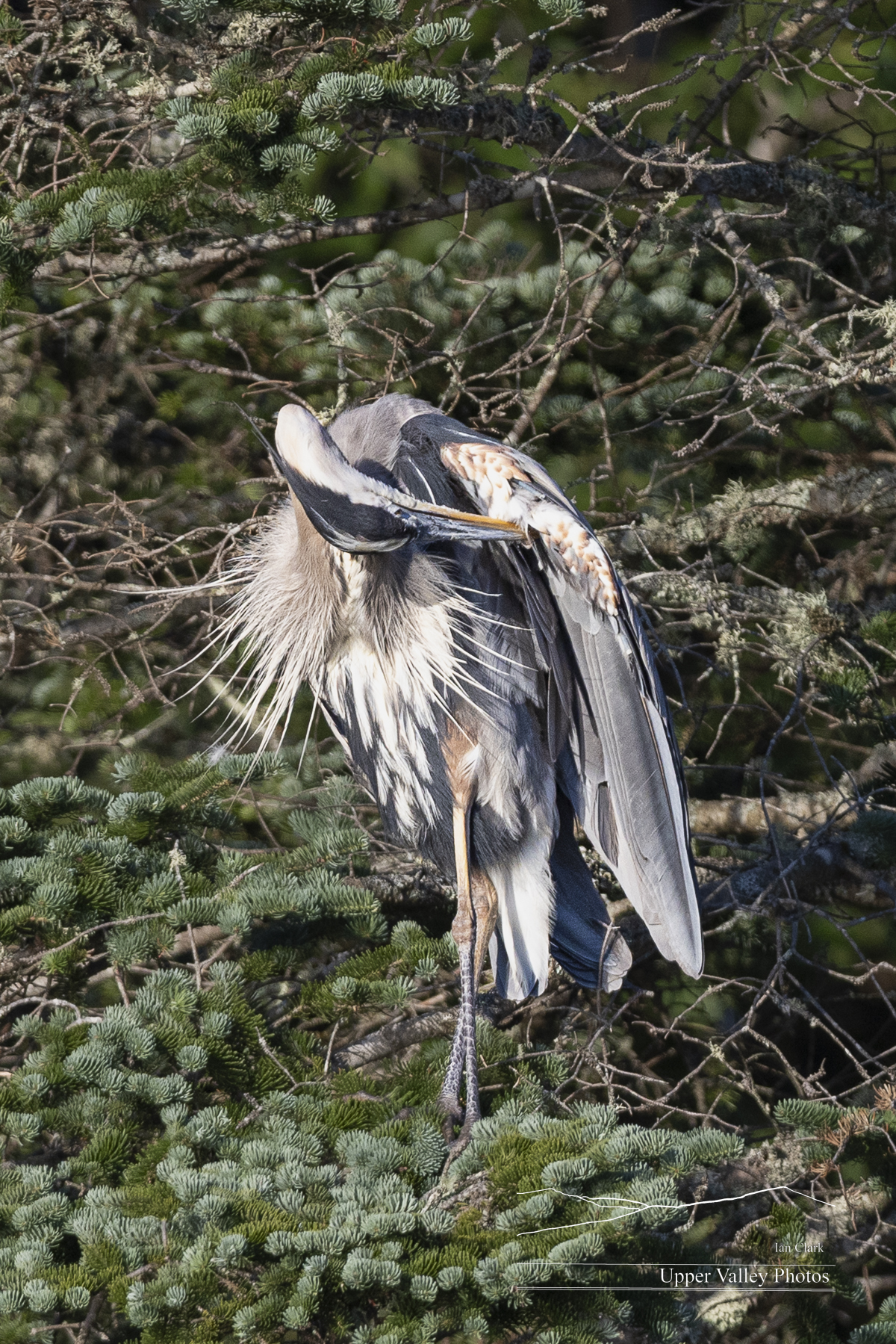
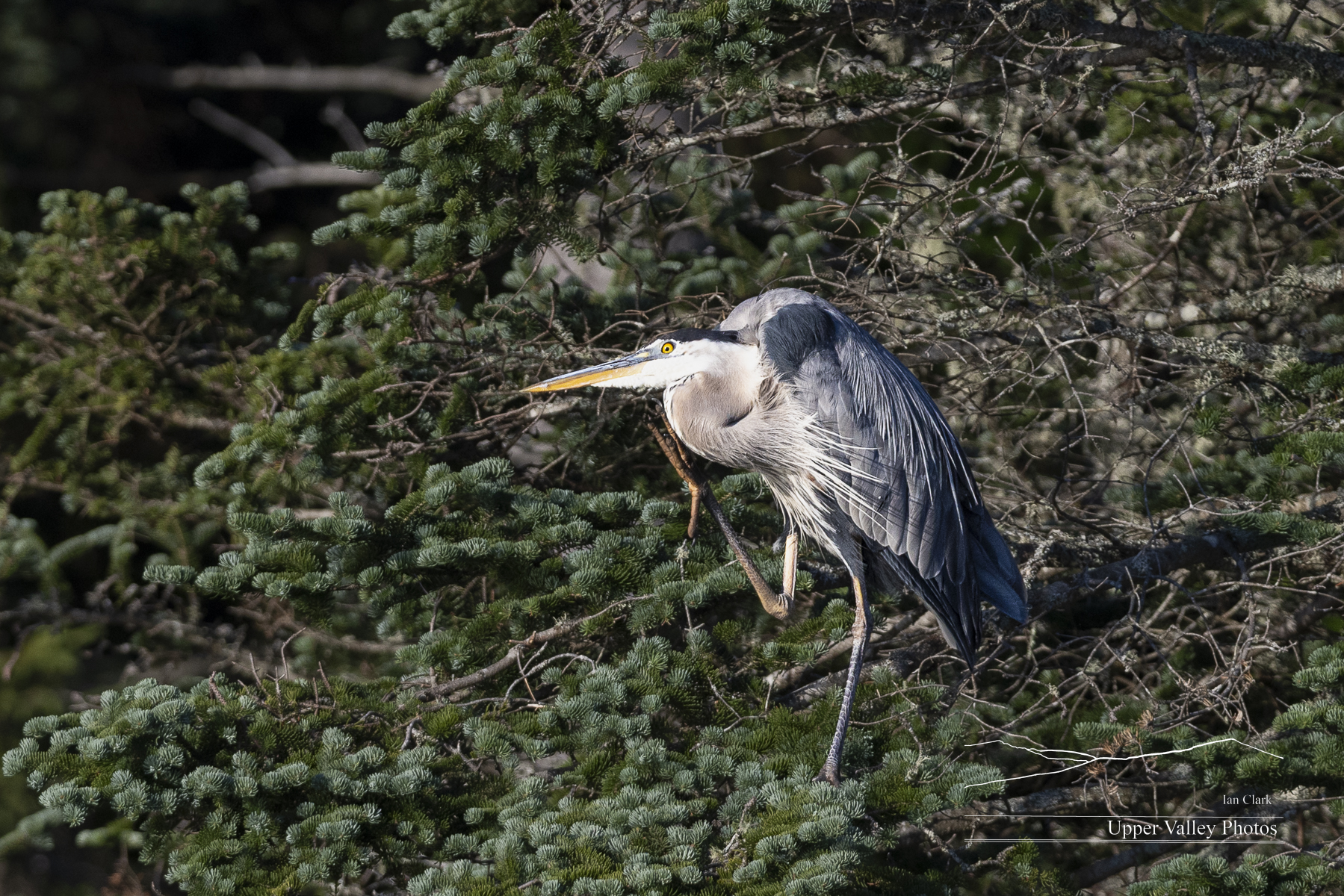
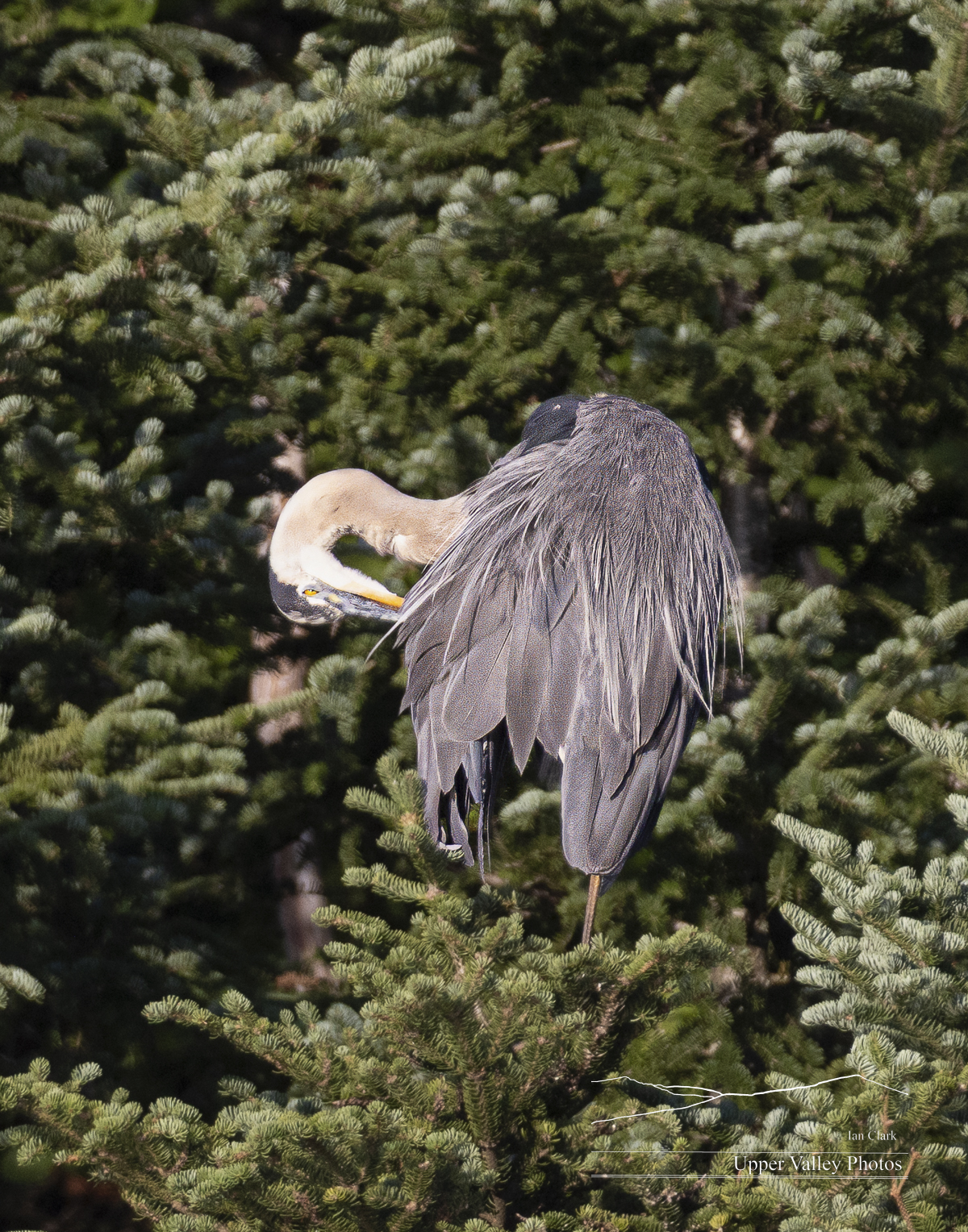
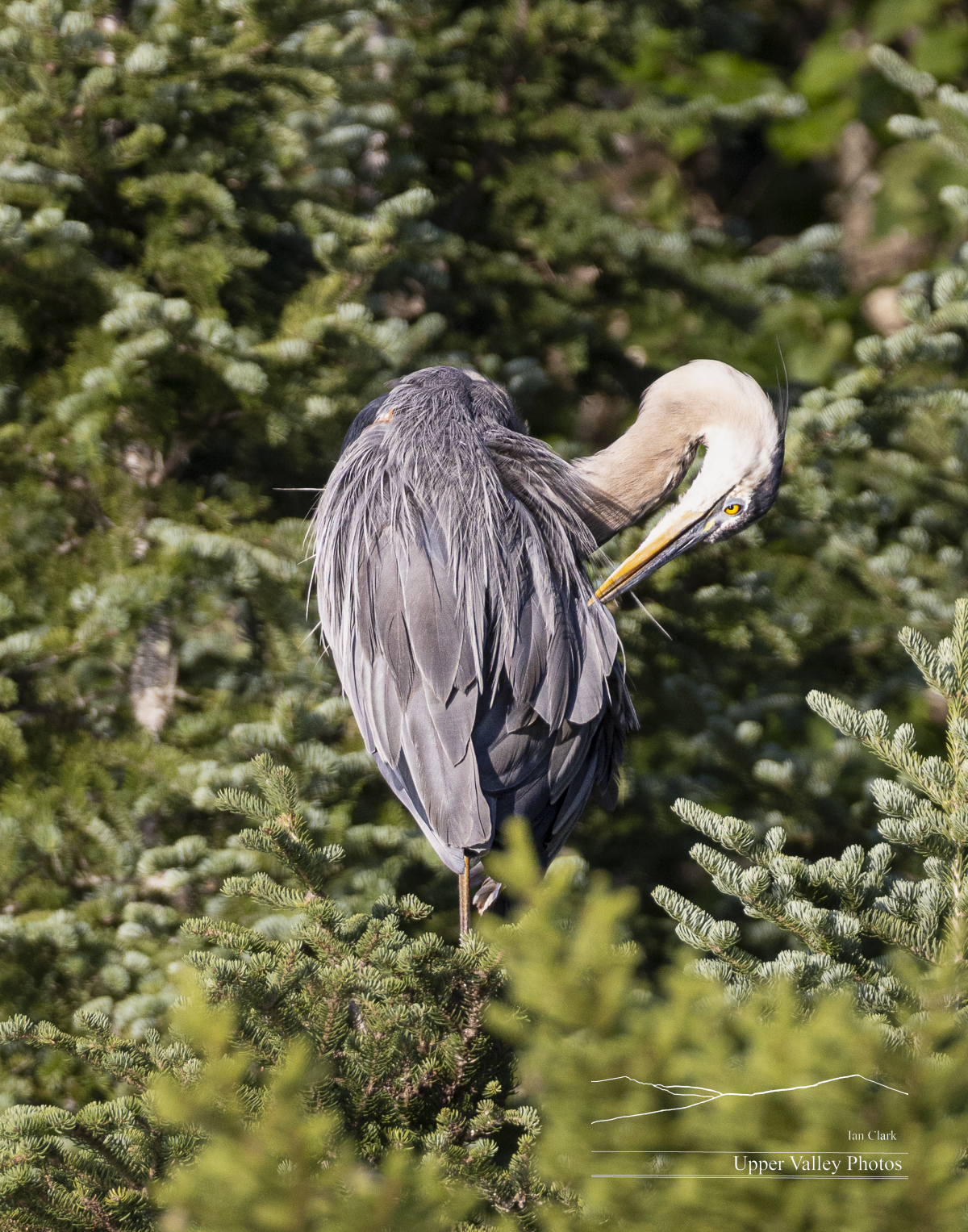
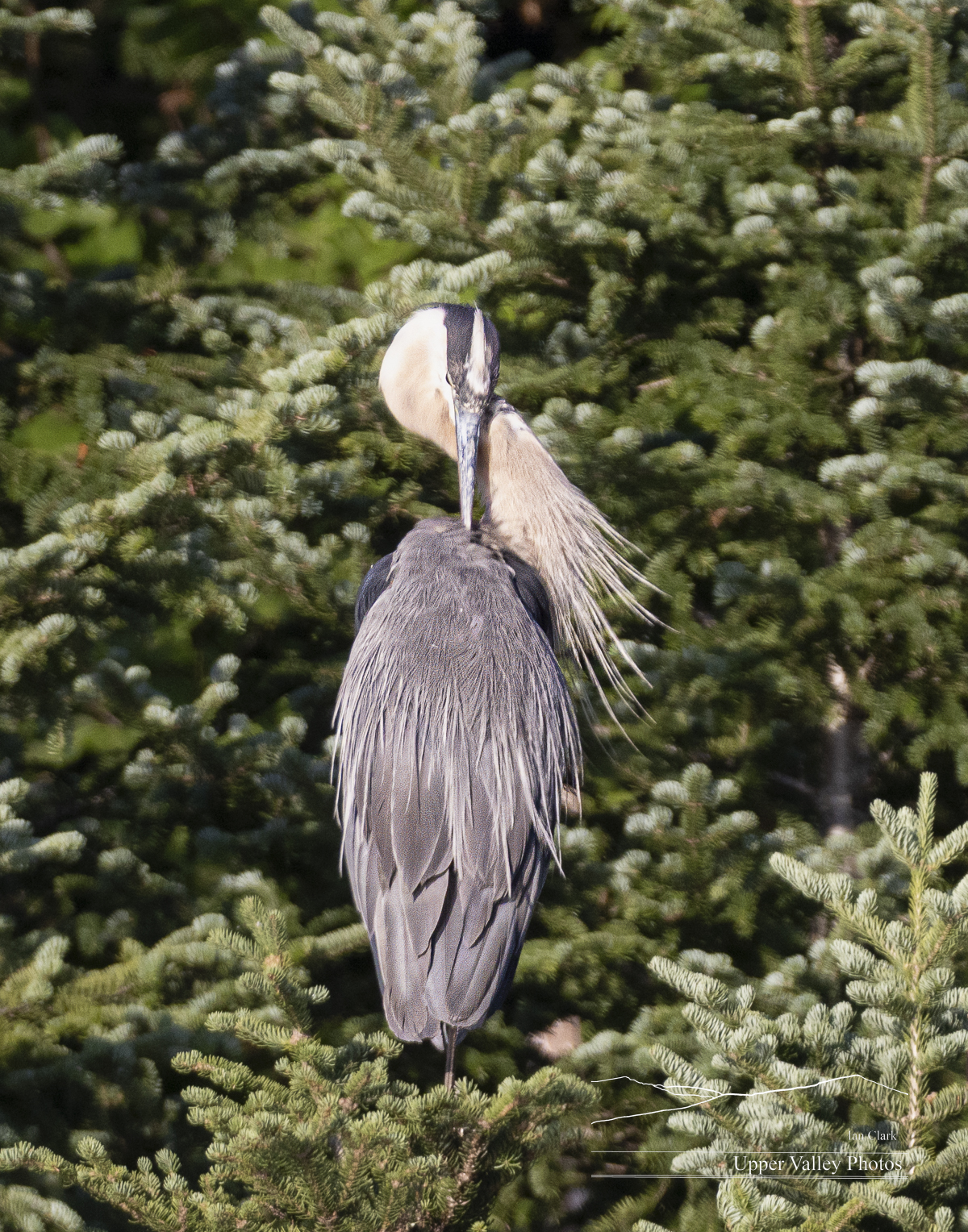
He decided he’d missed a few spots while preening and set about some touch ups.

If Auguste Rodin sculpted a heron…. what would Hank be thinking of? Tasty fish? I’ve always found herons trying to scratch their head an amazing feat of balance. I’m in awe of their being able to do it perched high in a tree.

Hey! Did you hear the one about the wildlife photographer that got up really early?

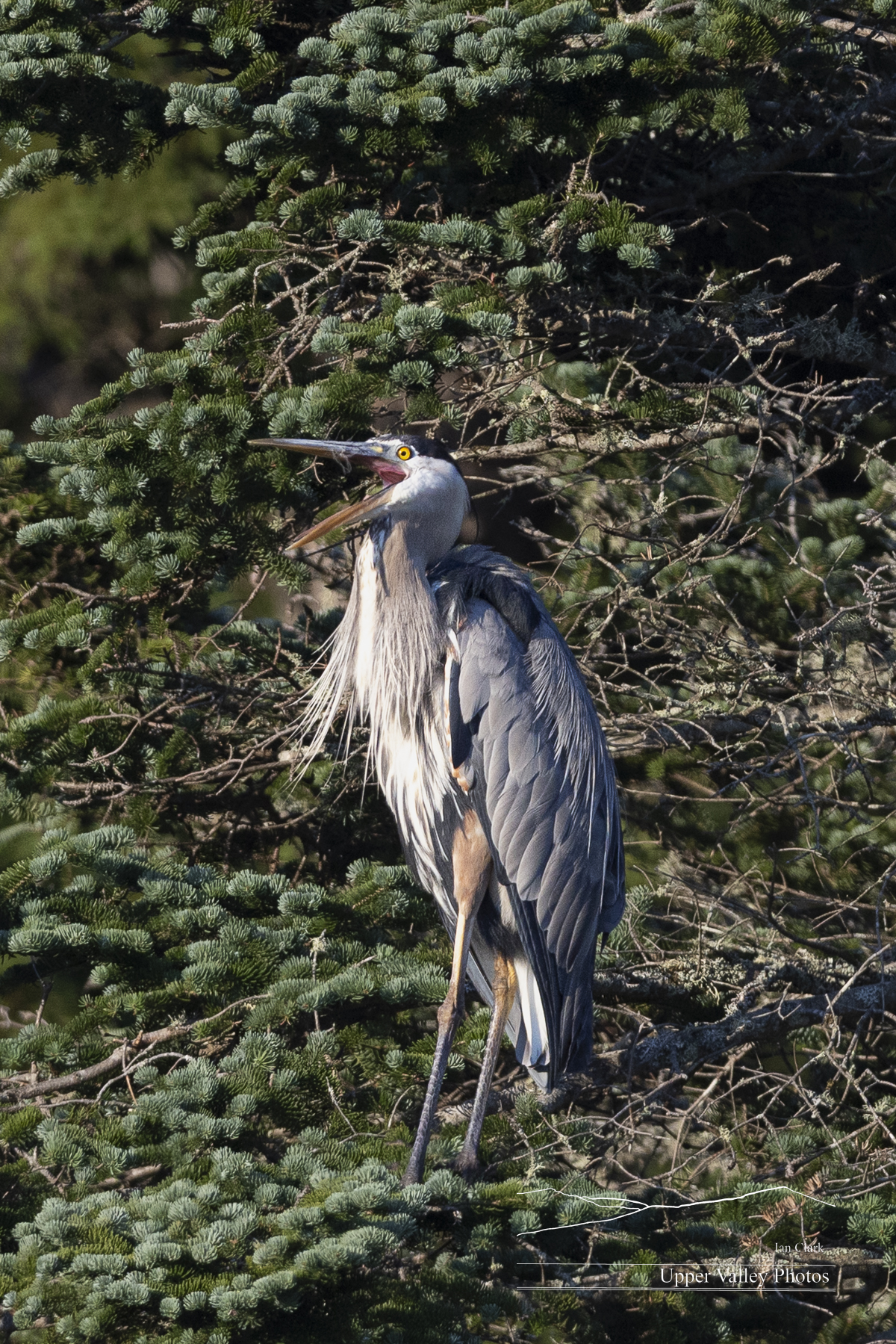
I’m not sure what herons are doing when they open wide. They often stretch their necks high up before doing it. I wonder if it is a burp or a stretch or maybe trying to reposition food in their gullet. Sometimes they stand with their mouths open when it is warm, that would seem to be panting to cool. But they’ll often open wide for a few seconds and then return to what they were doing. And wildlife photographer jokes aren’t that funny.
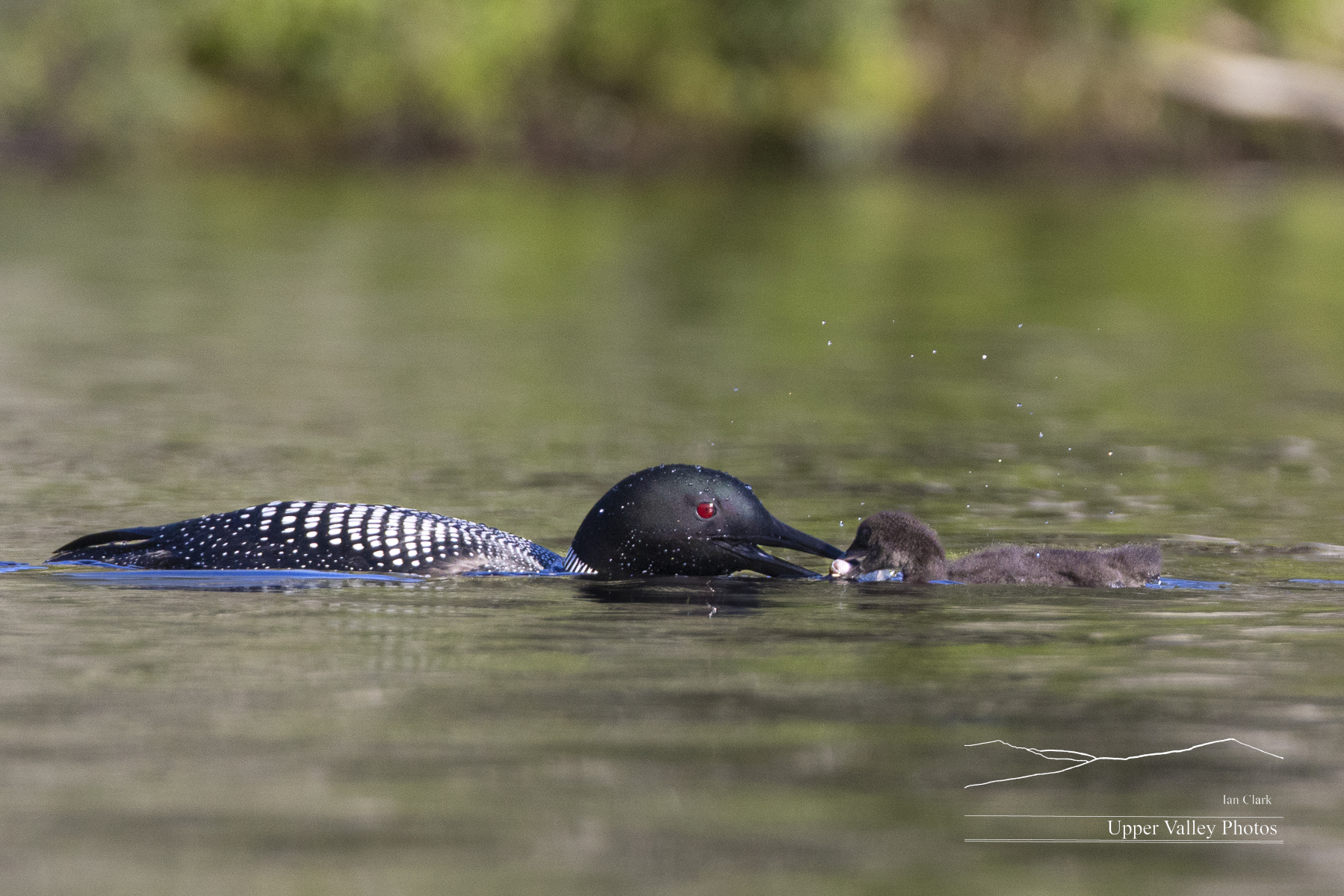
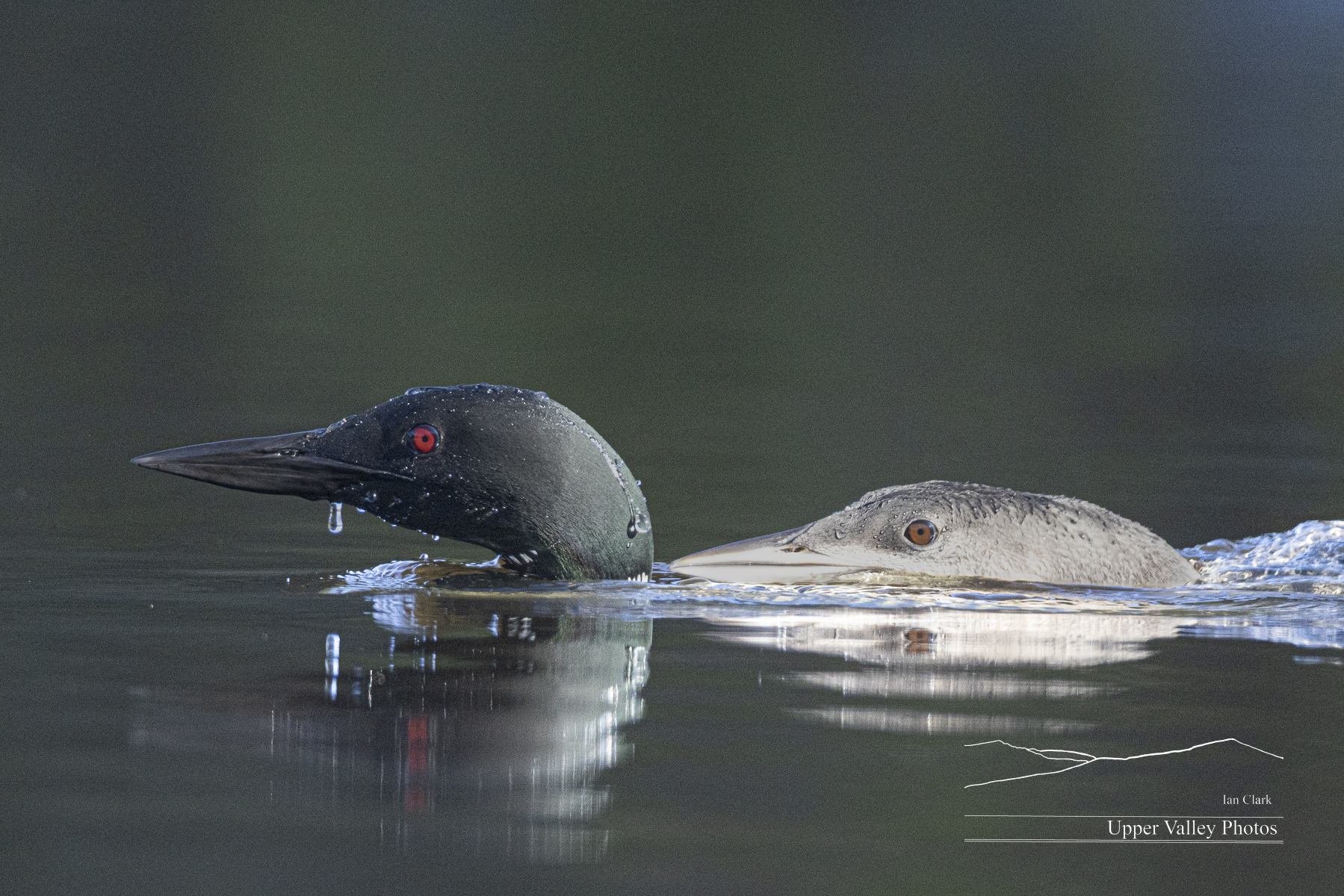
After Hank settled for a nap, I went to catch up with the Eastons. They were feeding the chicks. Here’s Dad for the handoff.

I’ve heard back from the Loon Preservation Committee’s intern. Our banded bird this year is last year’s Mrs. Easton. They banded her late in the season after I’d headed to Alaska.
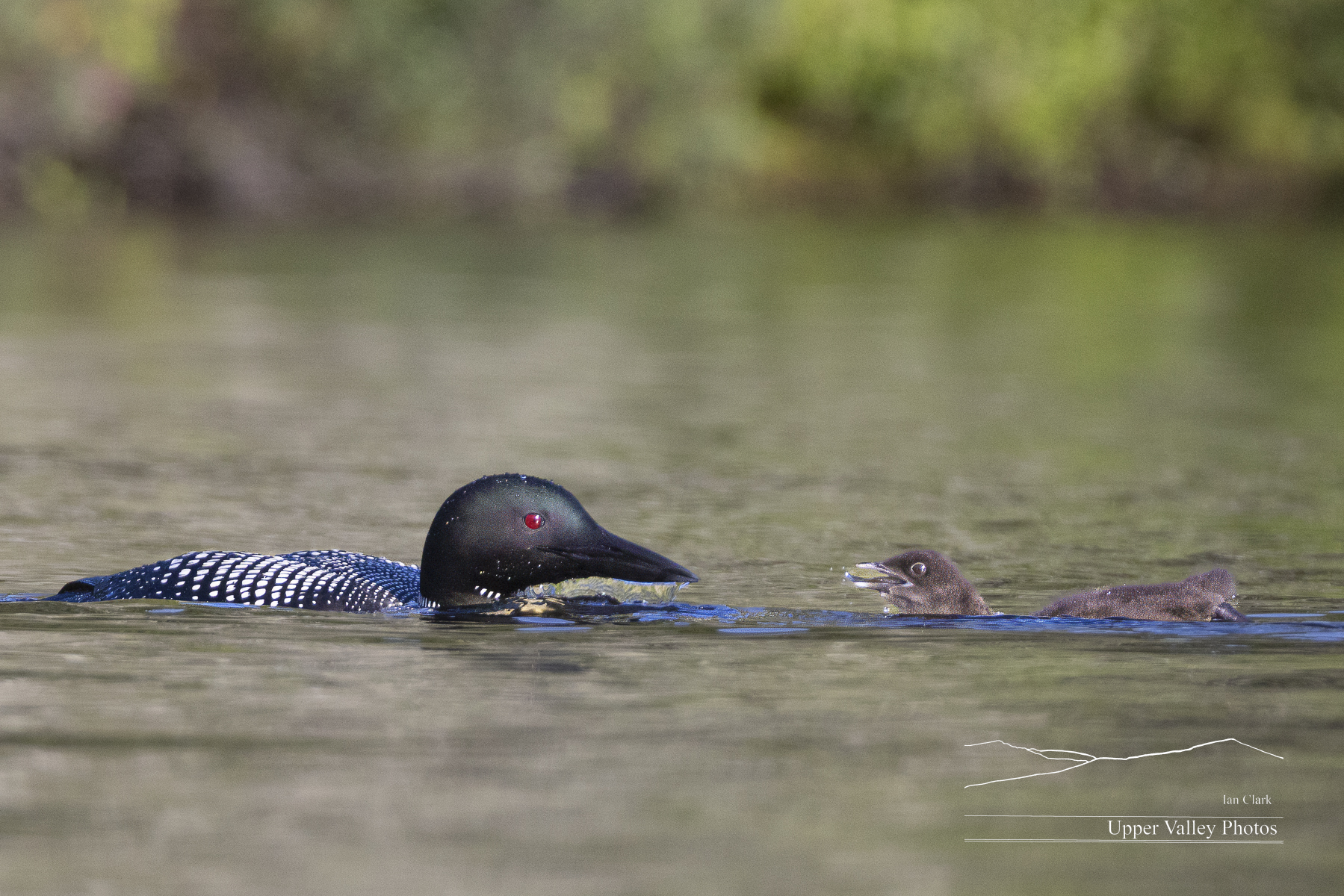
All gone but the tail… come on little guy! You can do it! Of course he can. And he’s instantly ready for the next meal.

Watching the Eastons I was interrupted when I noticed a visitor to the salad bar at the far end of the pond.
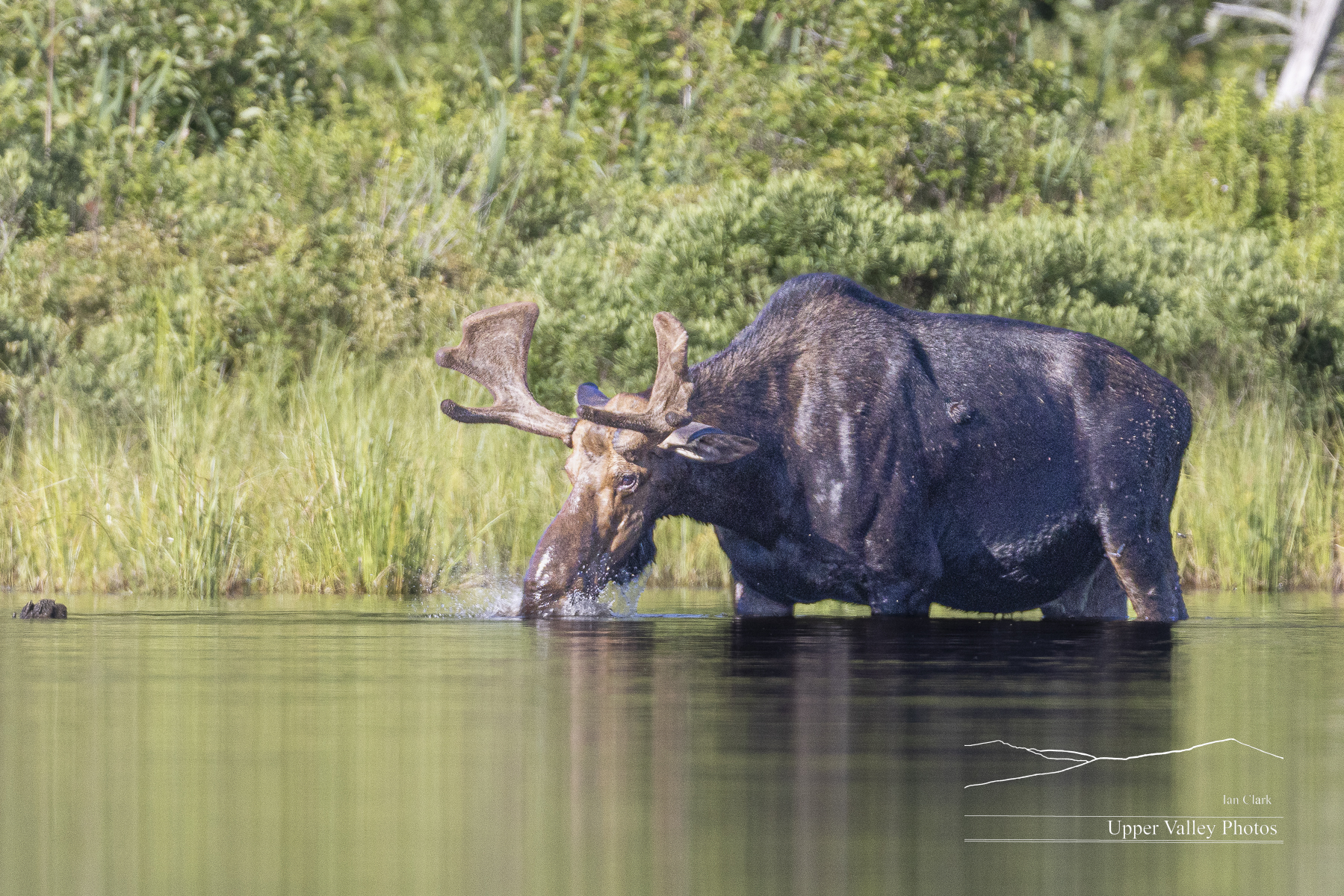
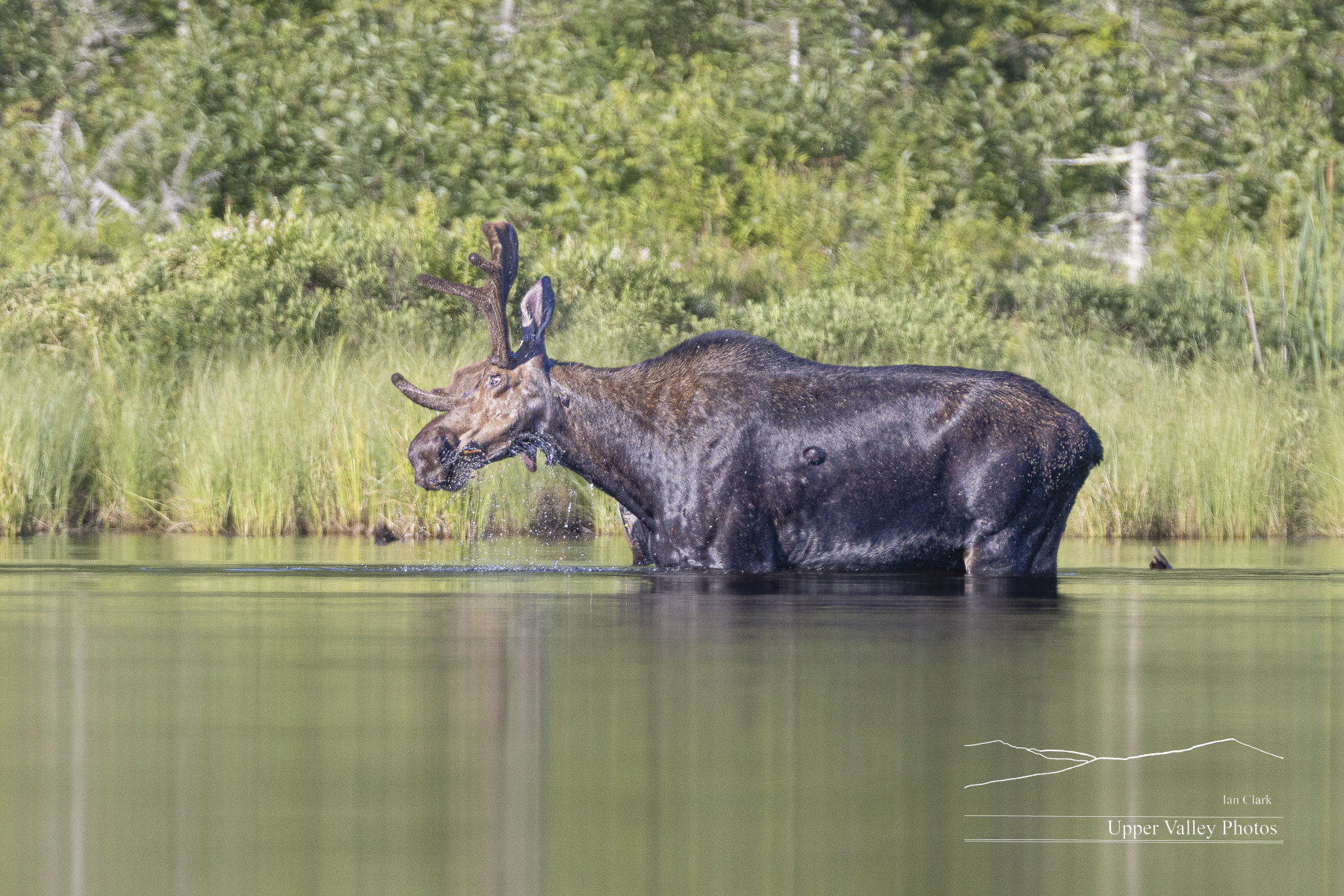
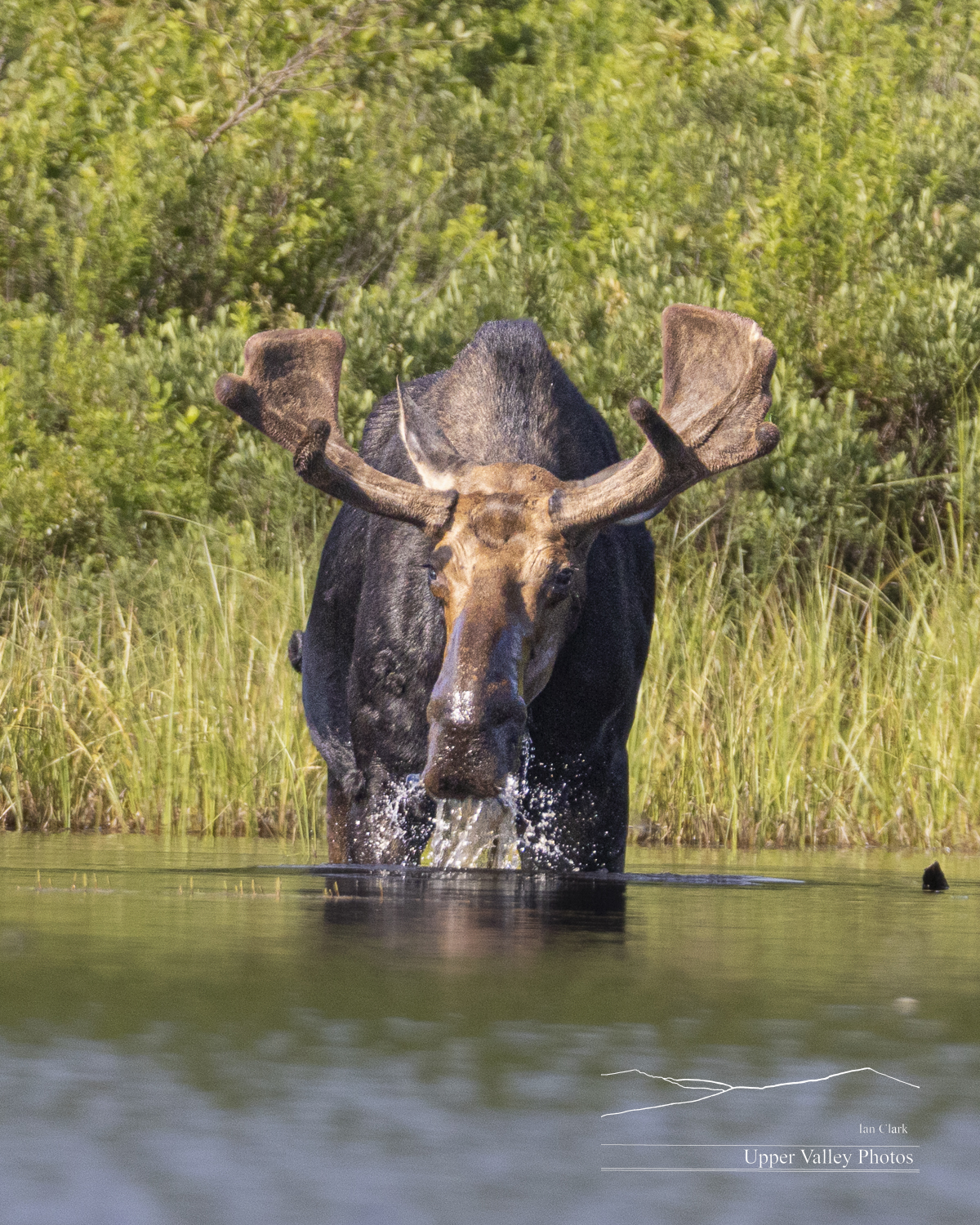
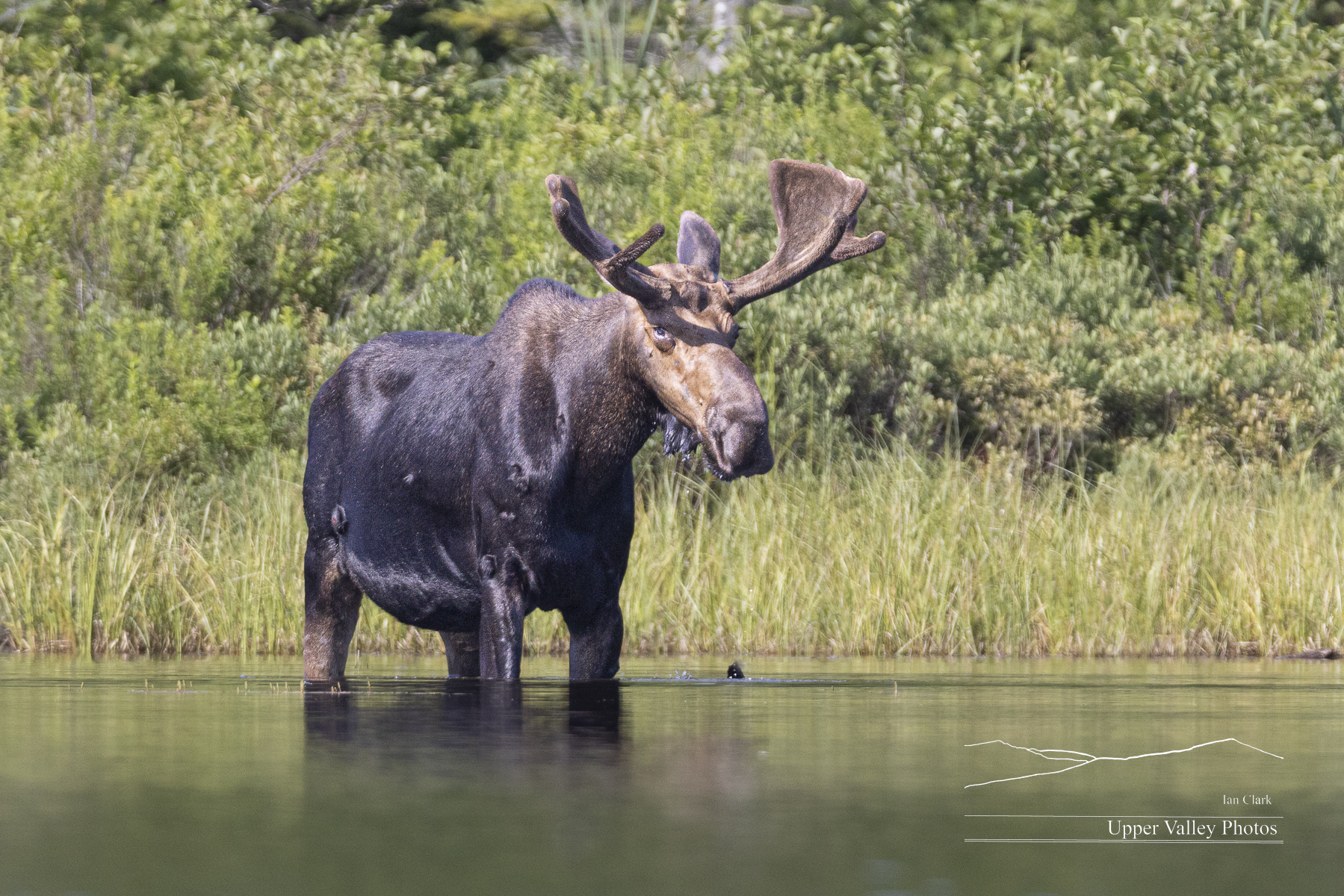
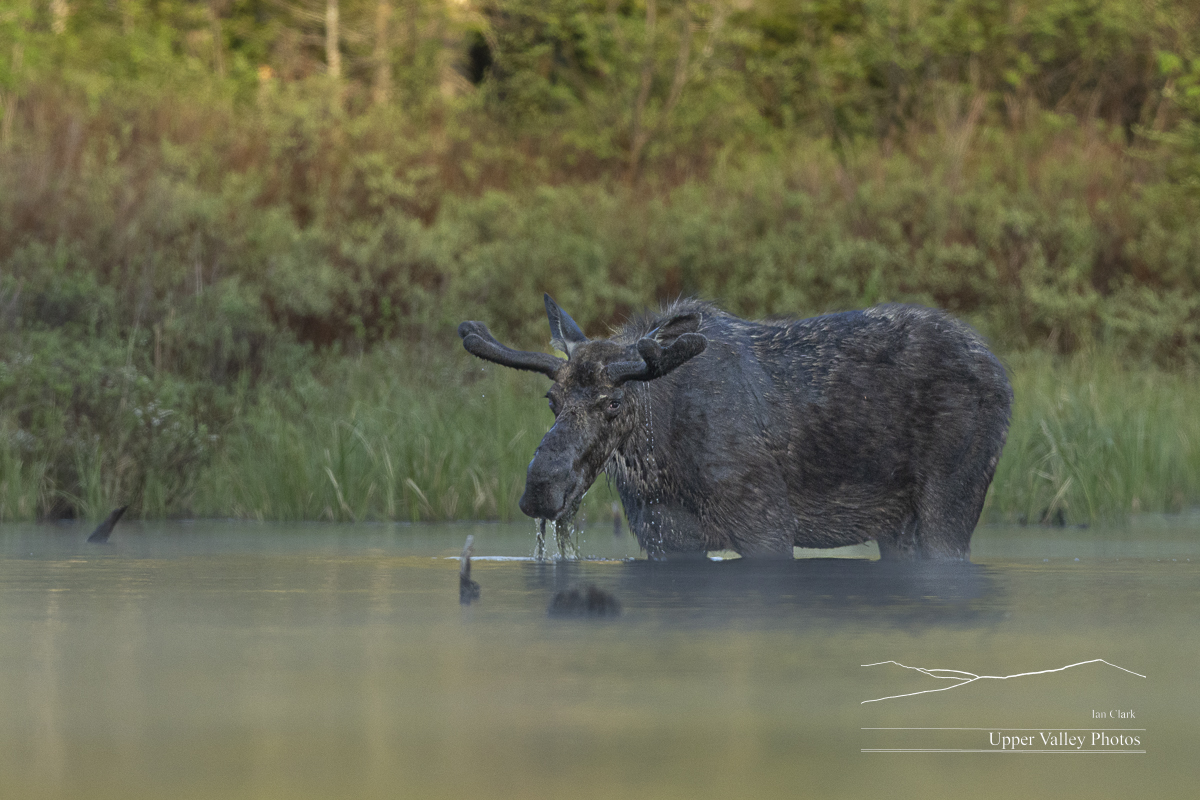
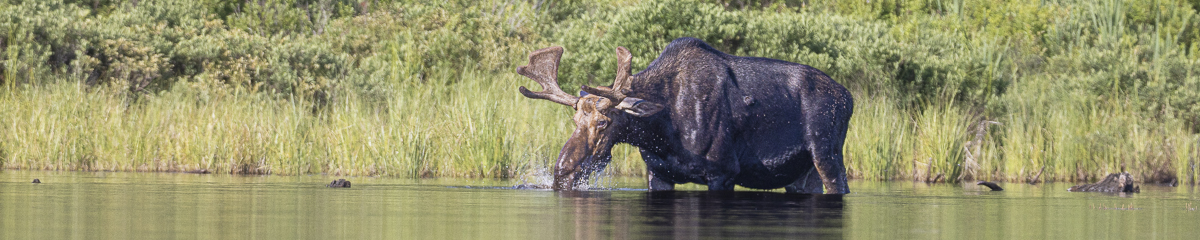
What looks like the moose I’d seen back in June returned – in daylight! There was another photographer out on the pond. We were able to hide in the deep shadows on the east side of the pond to watch. The moose stayed about 90 minutes. Plenty of time for us to go through a couple of camera batteries.

The moose was browsing in the shallow water. Occasionally he’d reach deep enough to get his head under, requiring a shake when he raised his head.

He took his time feeding, and moved around enough to let us get several angles.

This was a great opportunity for photos. I hope he’ll give me a repeat performance after he drops the velvet on his antlers.

I think the sores on his leg and flank are from botfly larvae. I wrote to NH Fish & Game’s Moose Biologist. I’ll update when I hear back.
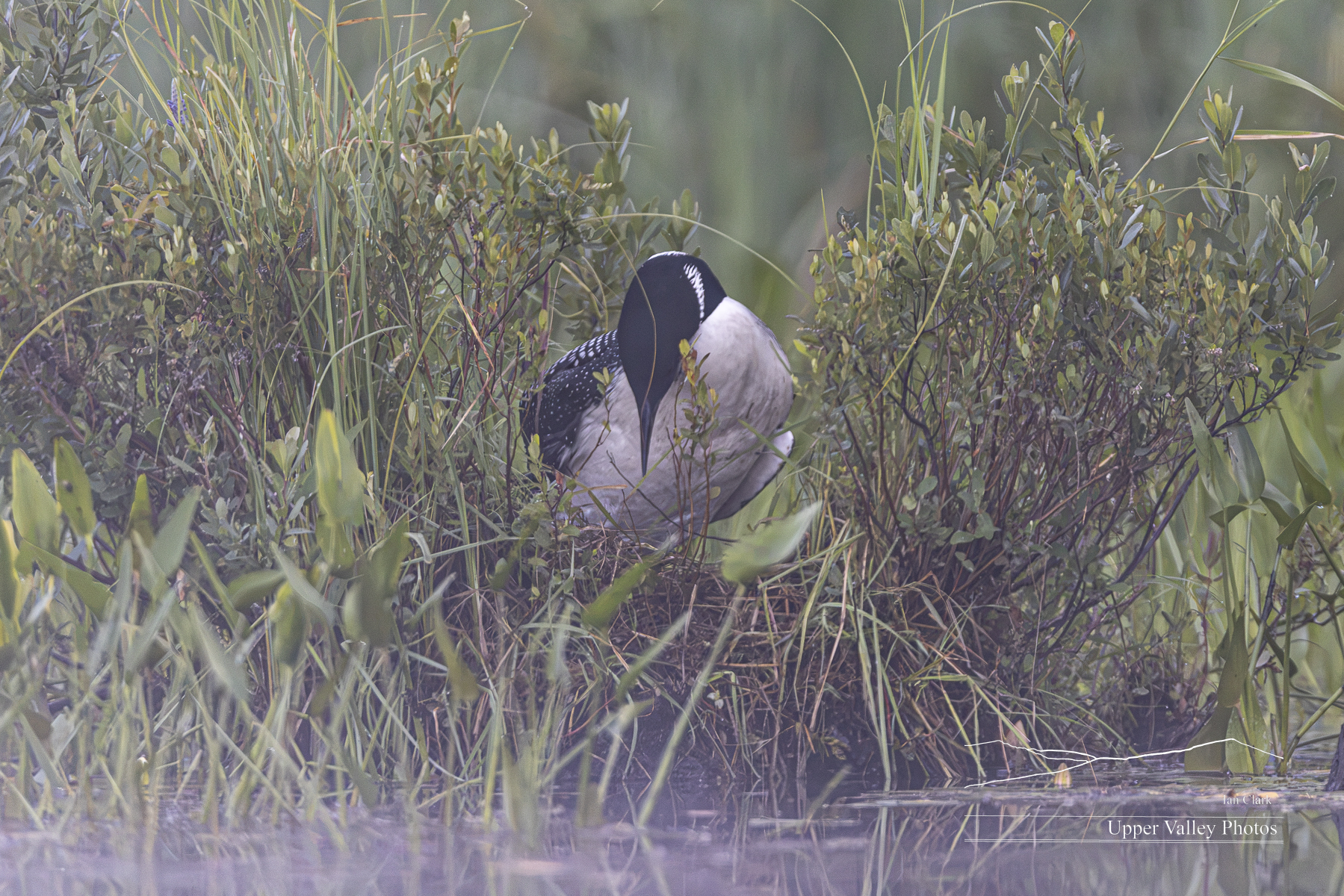
On the 12th, I went back to check on the Middletons on a foggy morning. Mrs. M was on the nest. She was fidgeting and checking the eggs regularly. I suspect one of the chicks was hatching. I paddled around to see who else might be around. Most of the marsh birds have moved on already. I found just a couple red-winged black birds and several kingbirds.

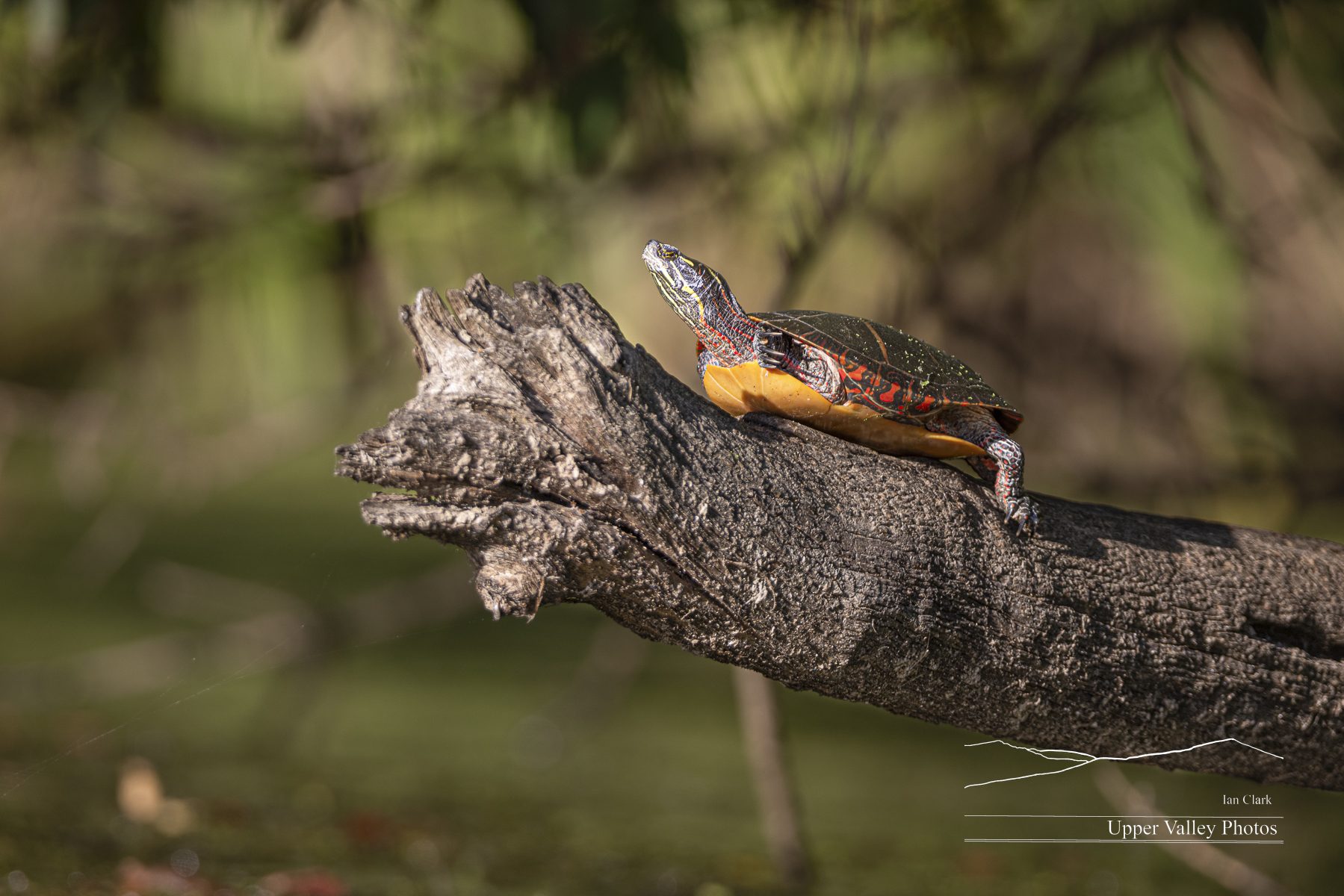
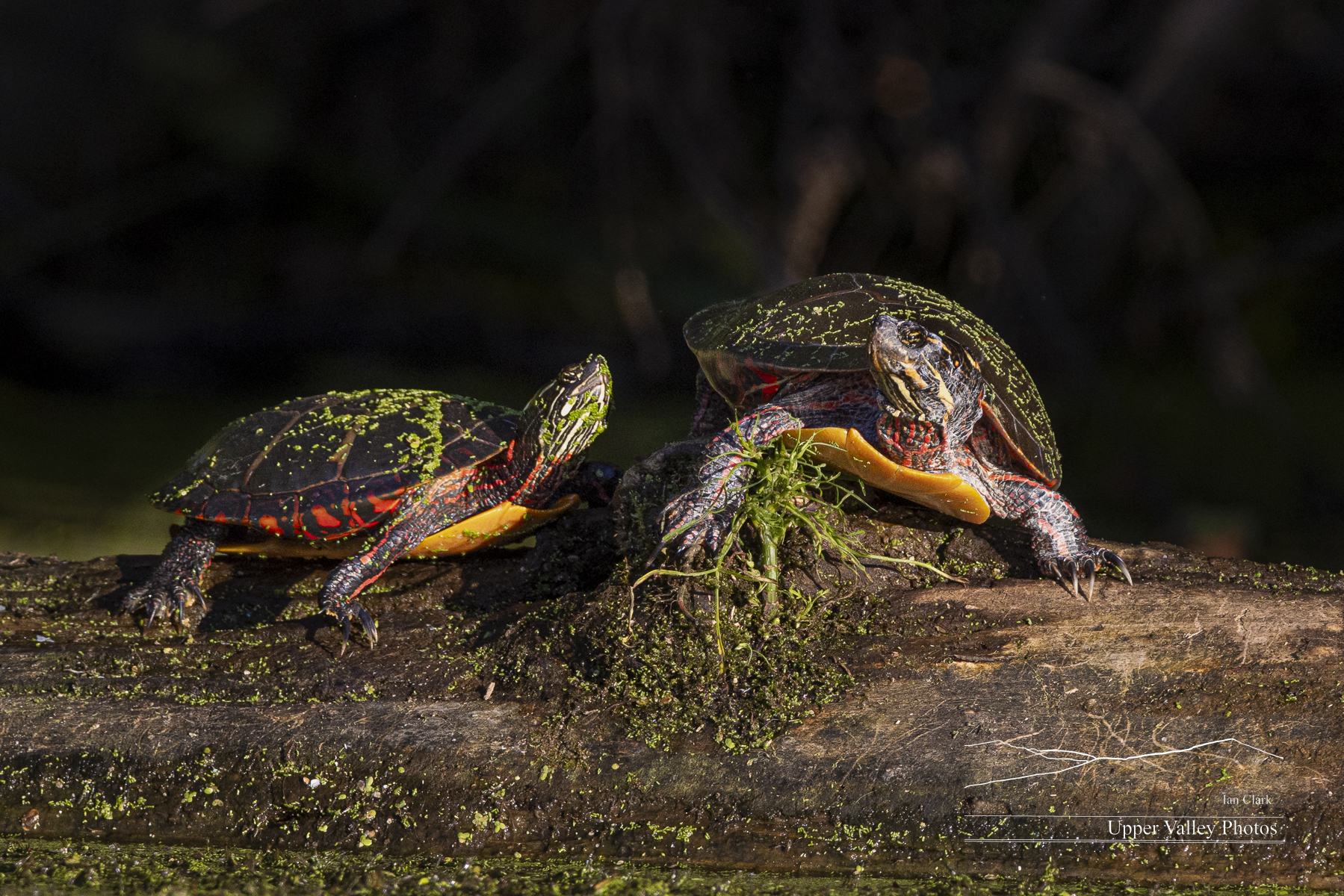
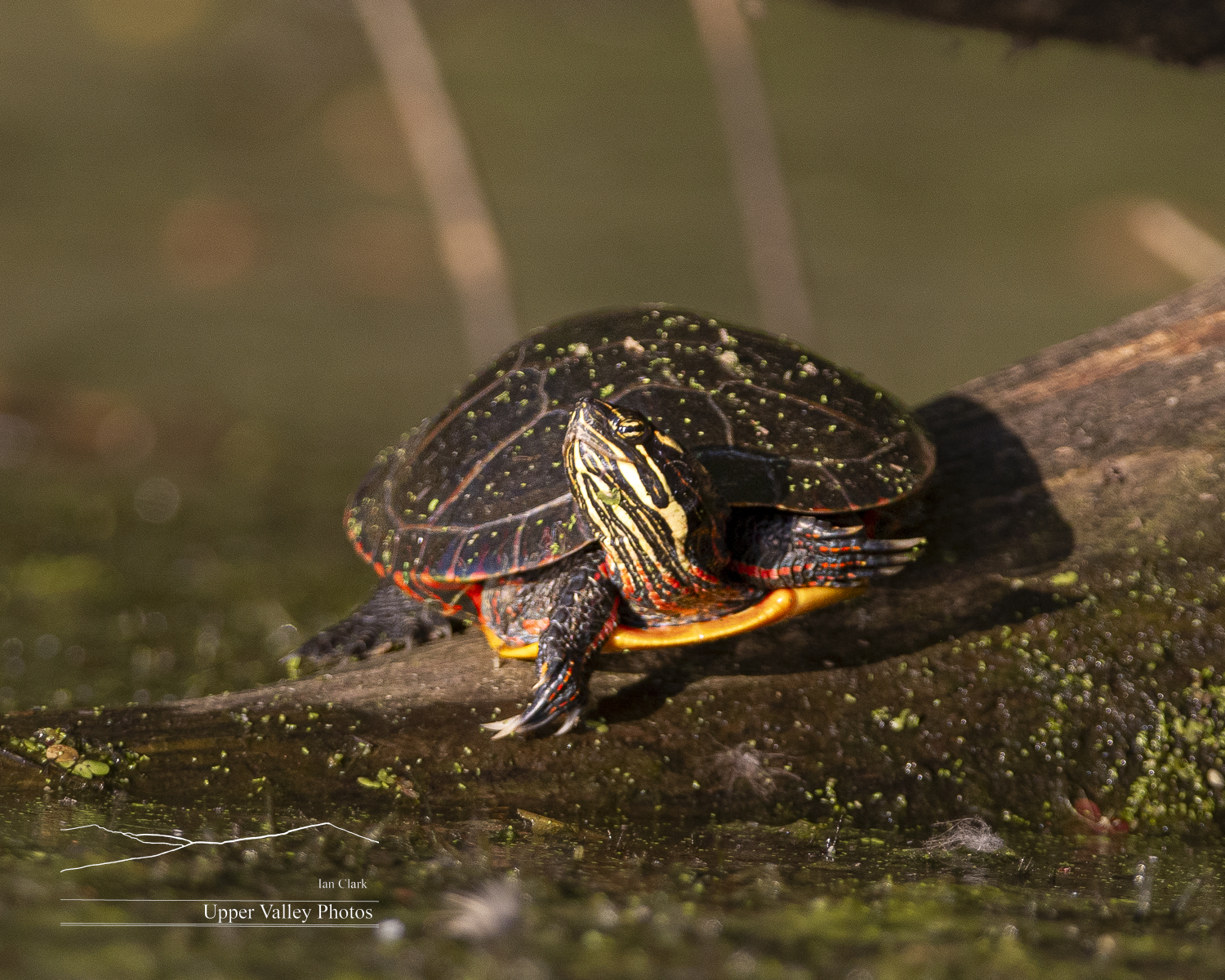
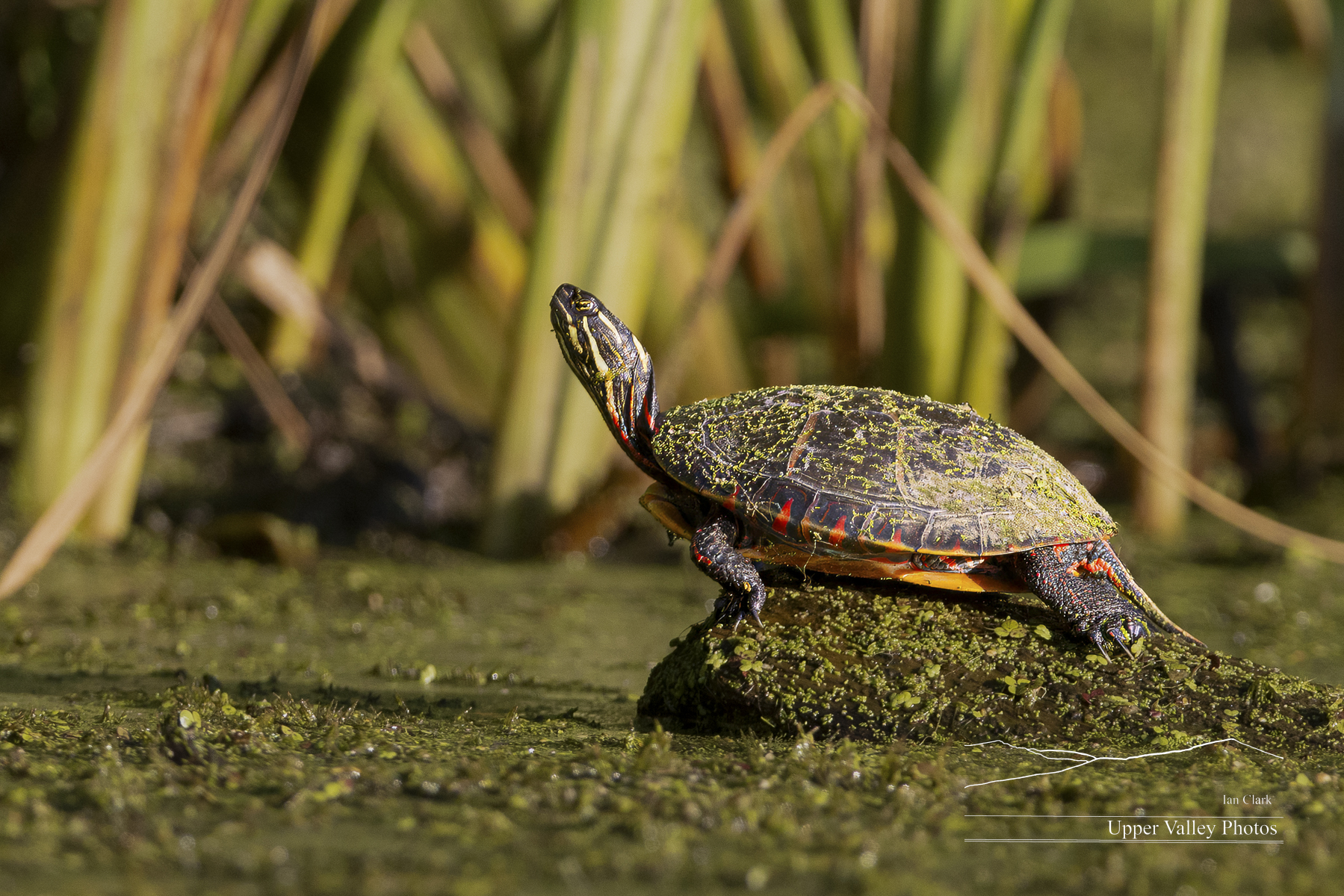
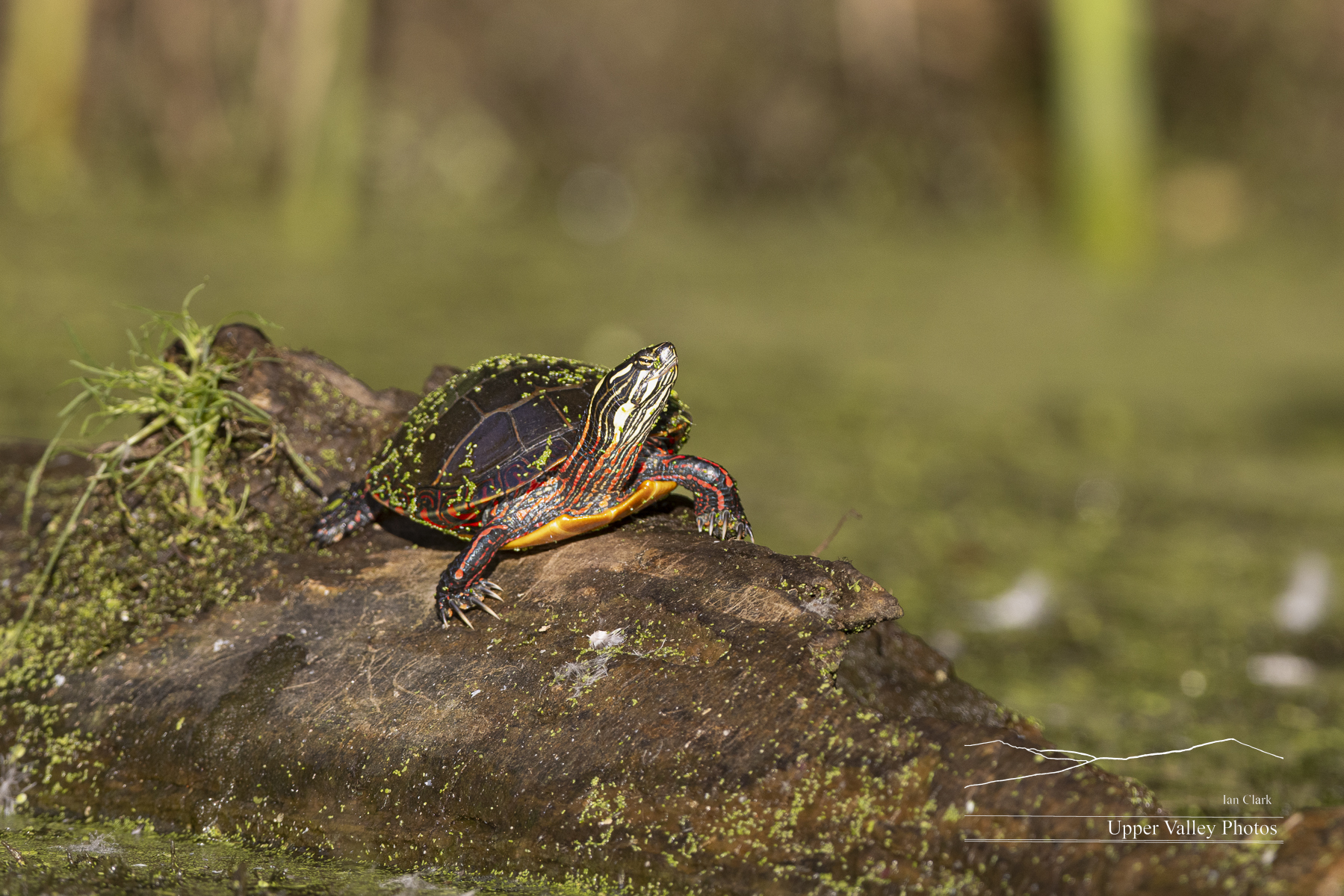
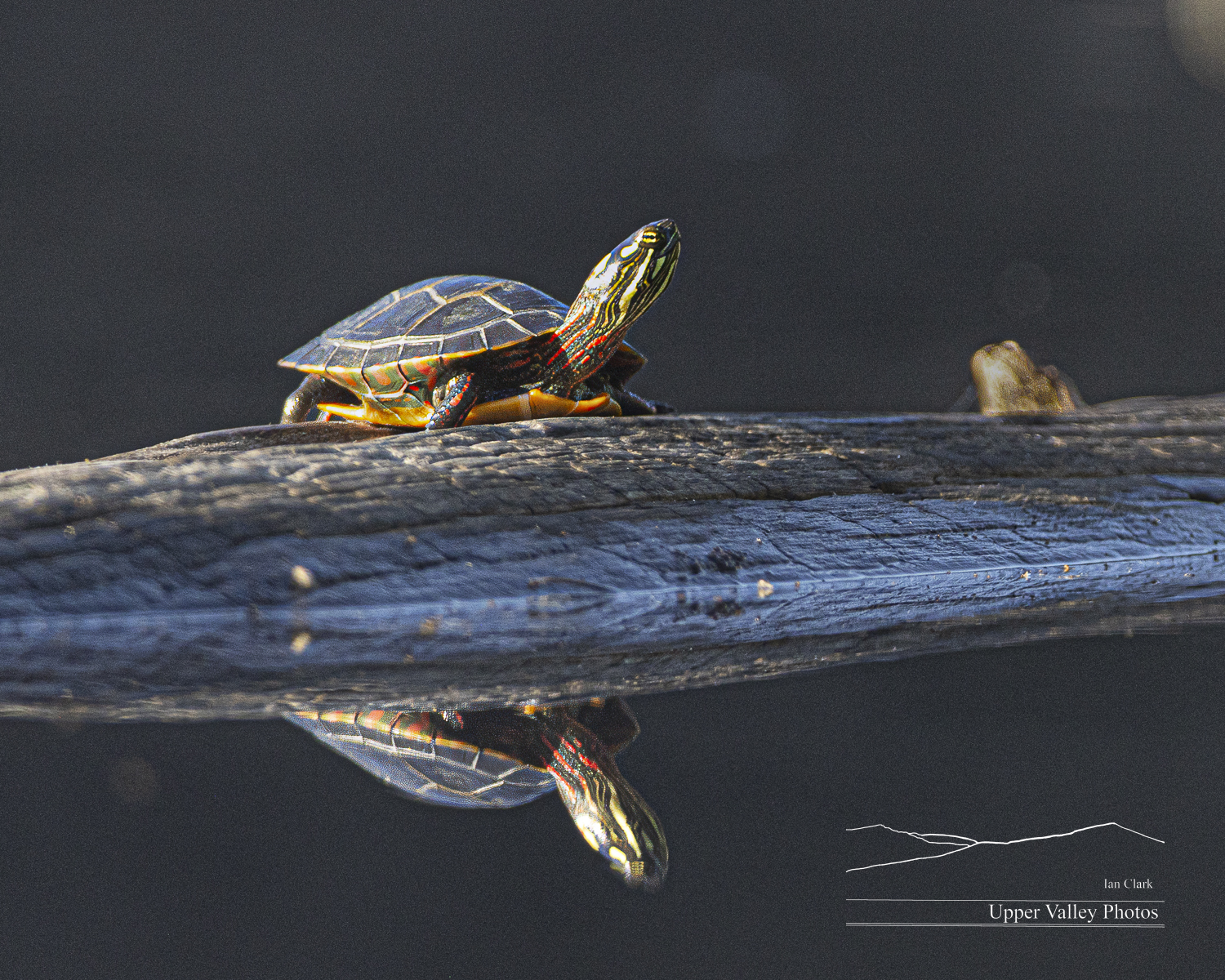
There were a few painted turtles out basking and looking good.

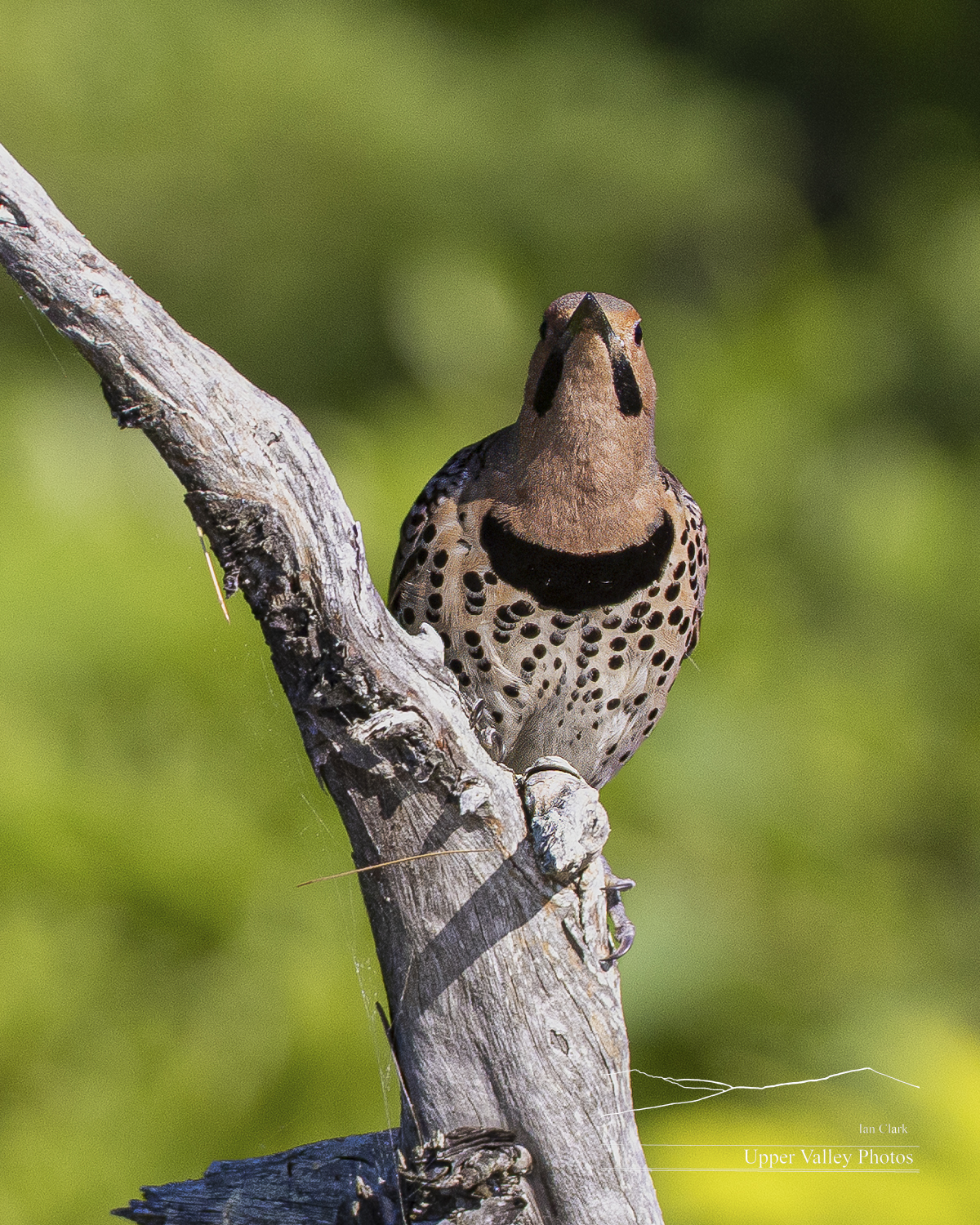
There were lots of northern flickers chattering in the brush. There must have been several fledglings in the flock. It turns out a flock of flickers is a guttering, a menorah, or a Peterson.

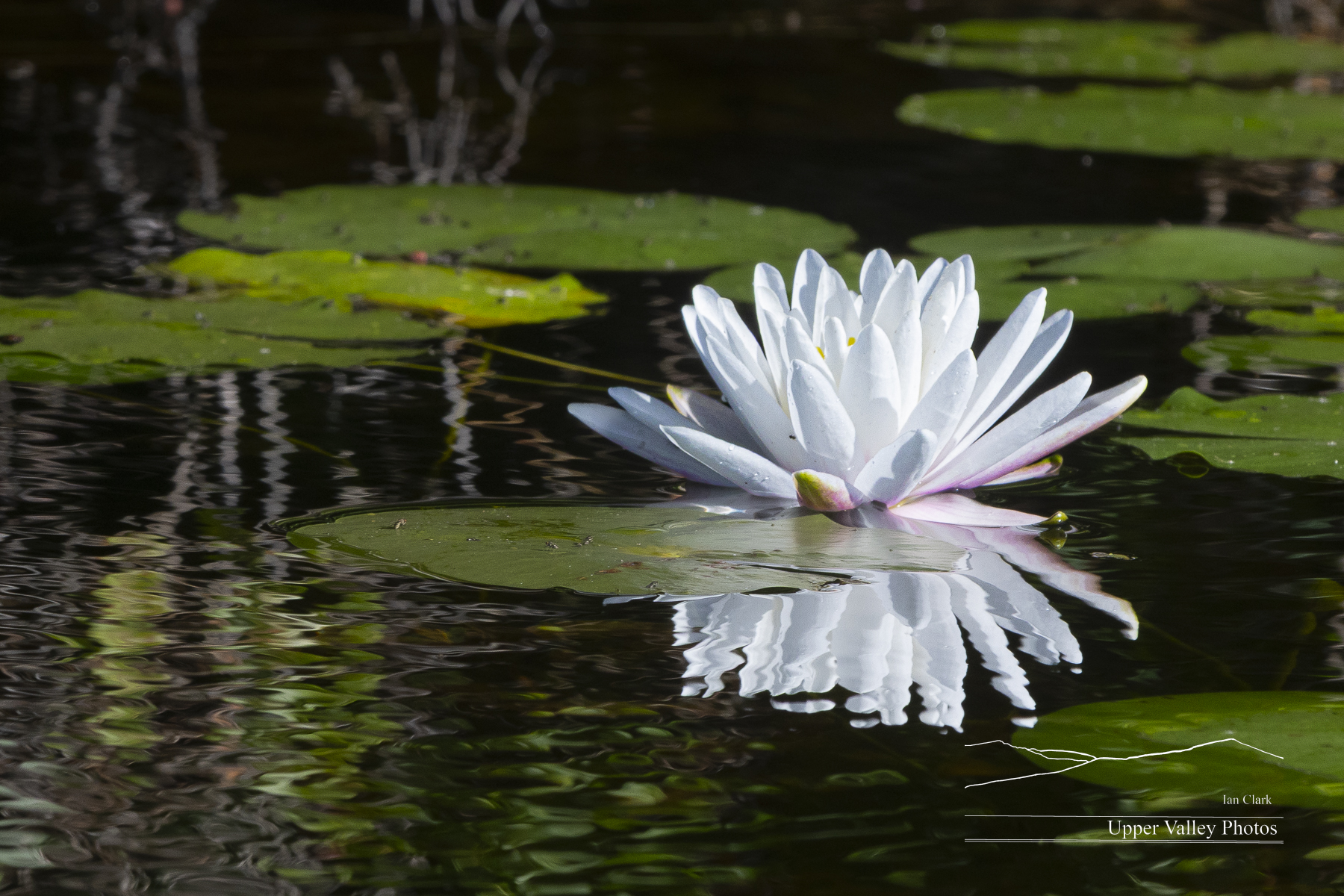
And while I waited for news of the loon chicks, I had time to channel my inner Monet with the water lilies.

There wasn’t any news from the nest by the time I had to head home. The next day, LPC emailed to tell me someone on the pond had spotted the Middletons with a chick.

All too early on the 13th I was up and driving two hours to check in on the heron rookery.
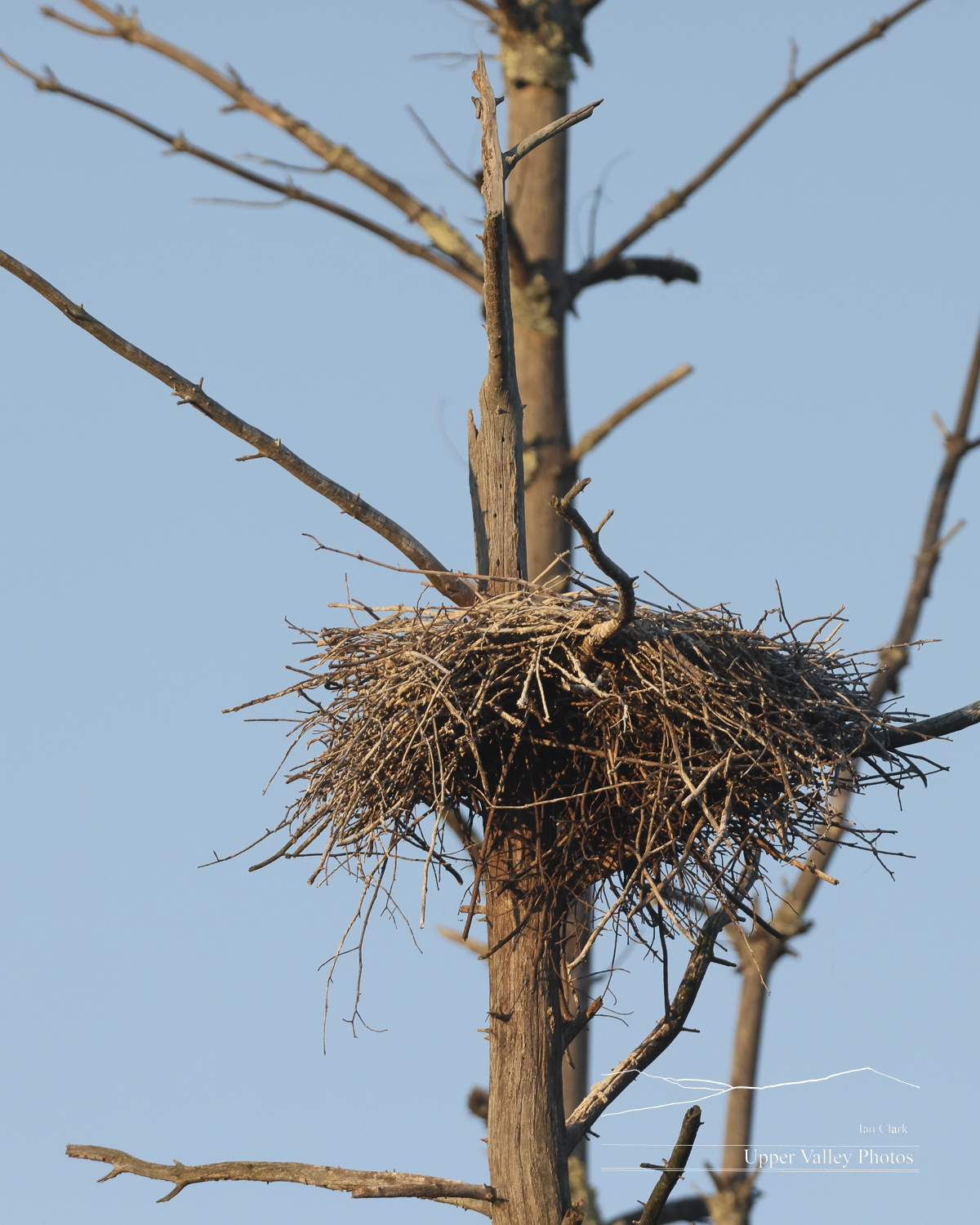
I found just empty nests. And, as birds are wont to do, they left no forwarding address. This was a fun project, hopefully I watch the rookery again next year.

I didn’t get a chance to get back to the Middletons until the 16th.
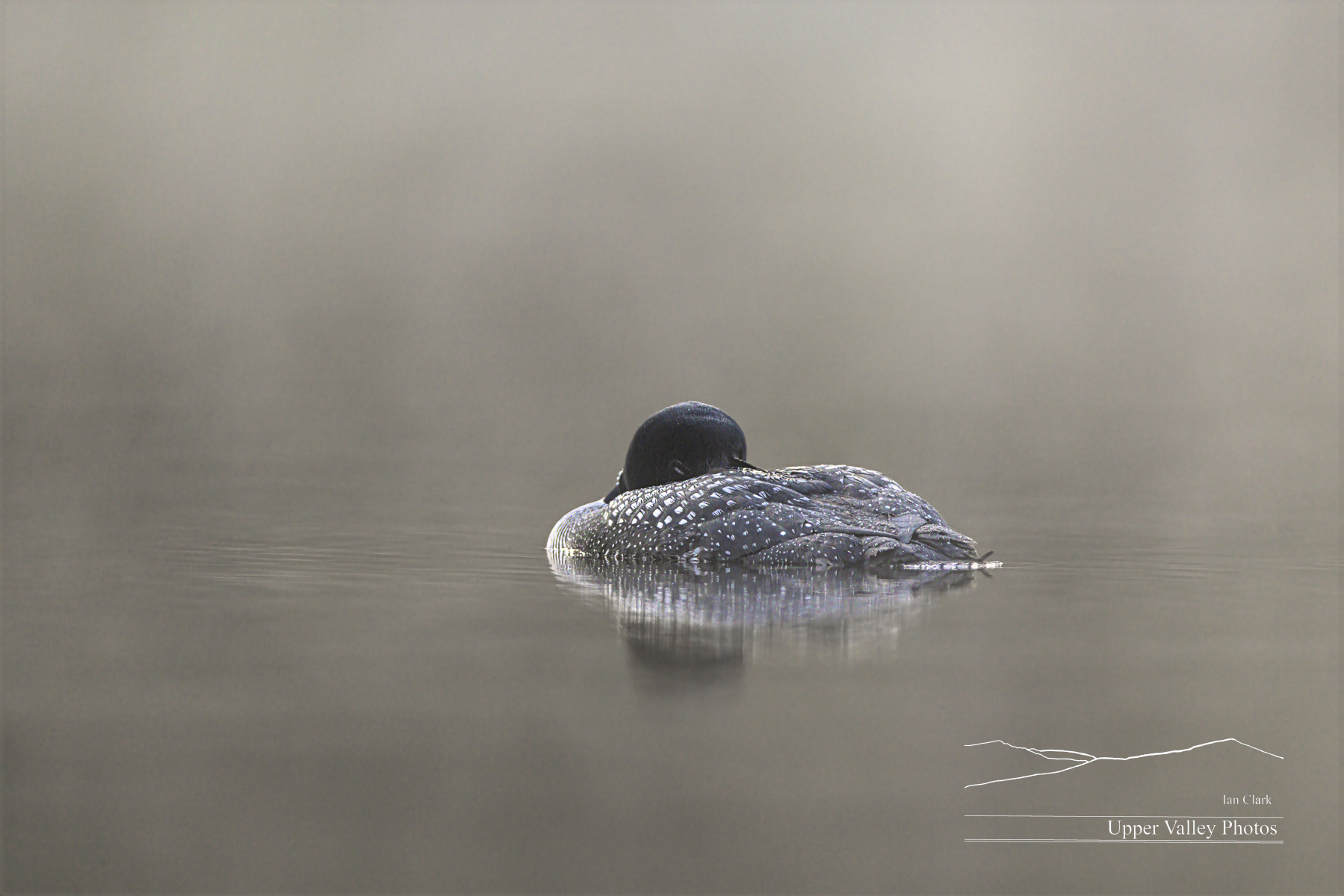
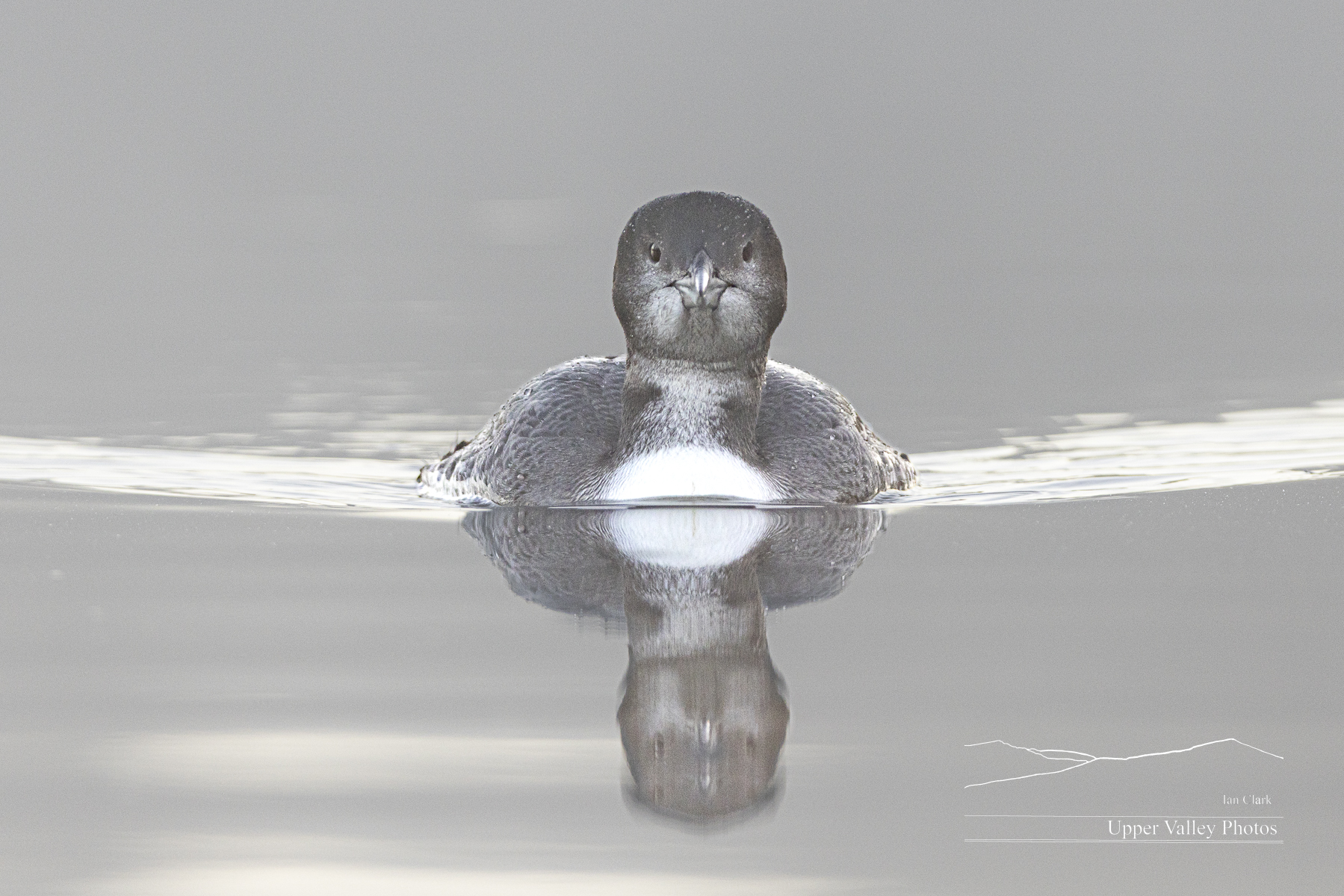
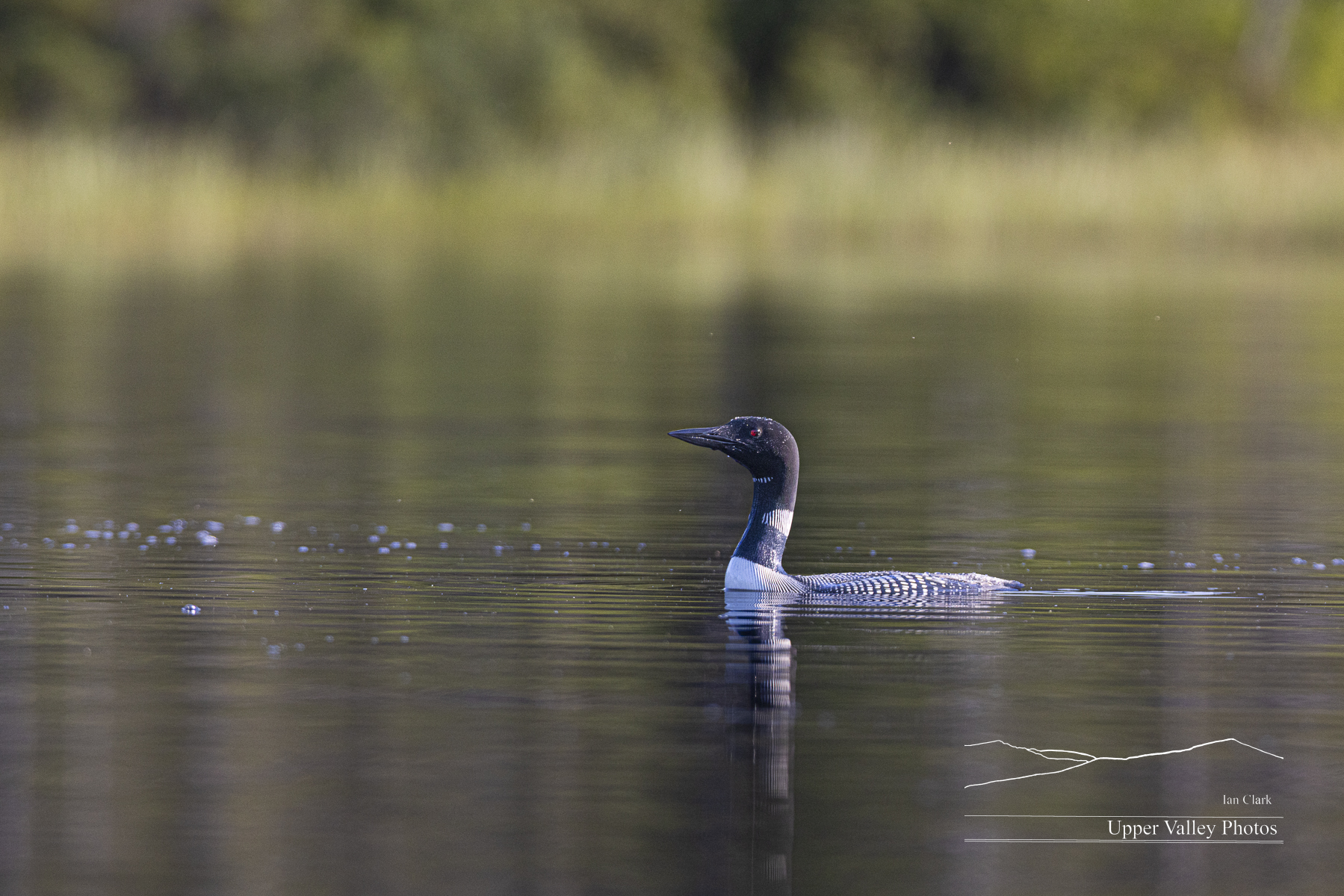
I found both parents sleeping and floating together. I watched for the chick….

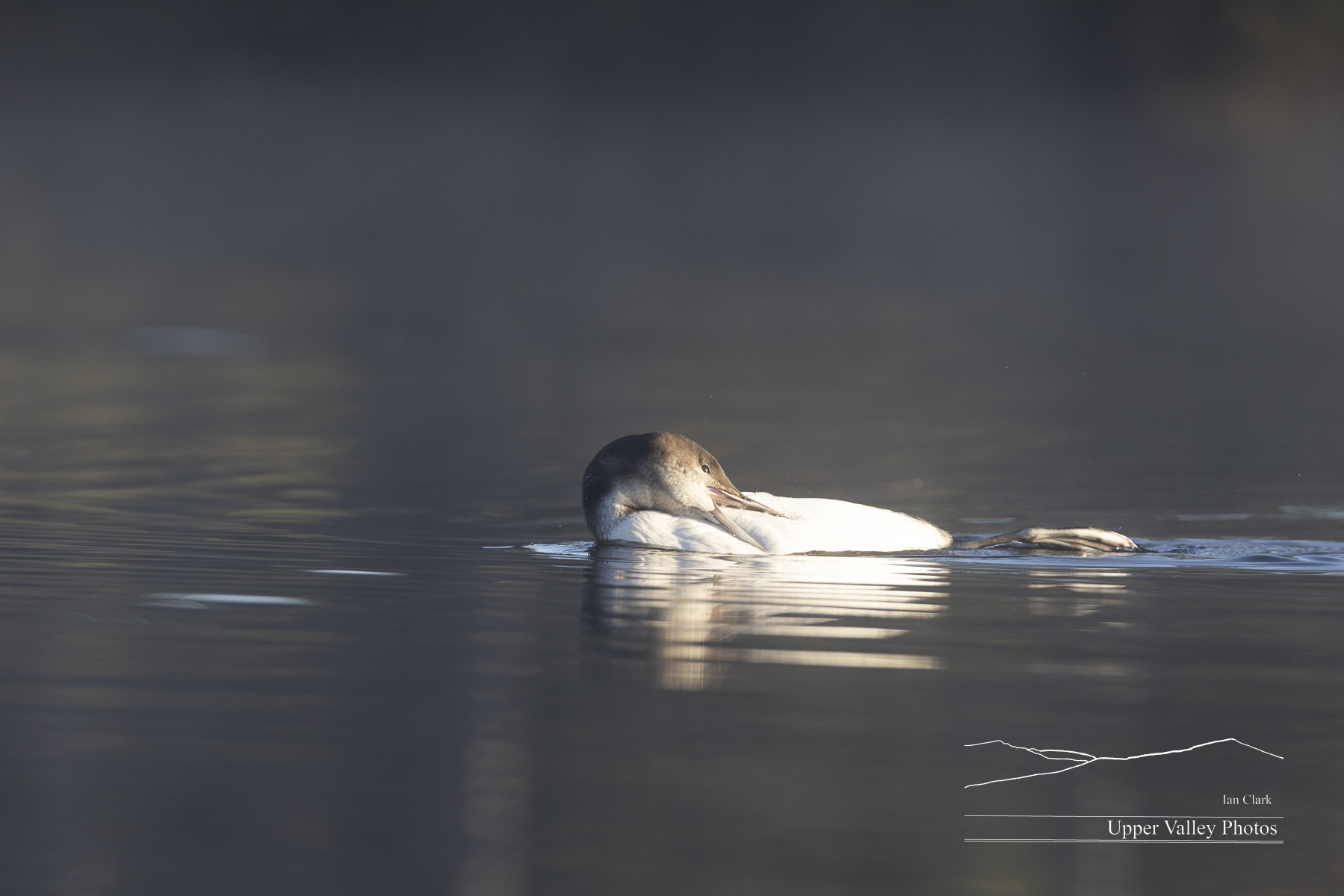
Dad woke and headed off to handle some loon affairs.

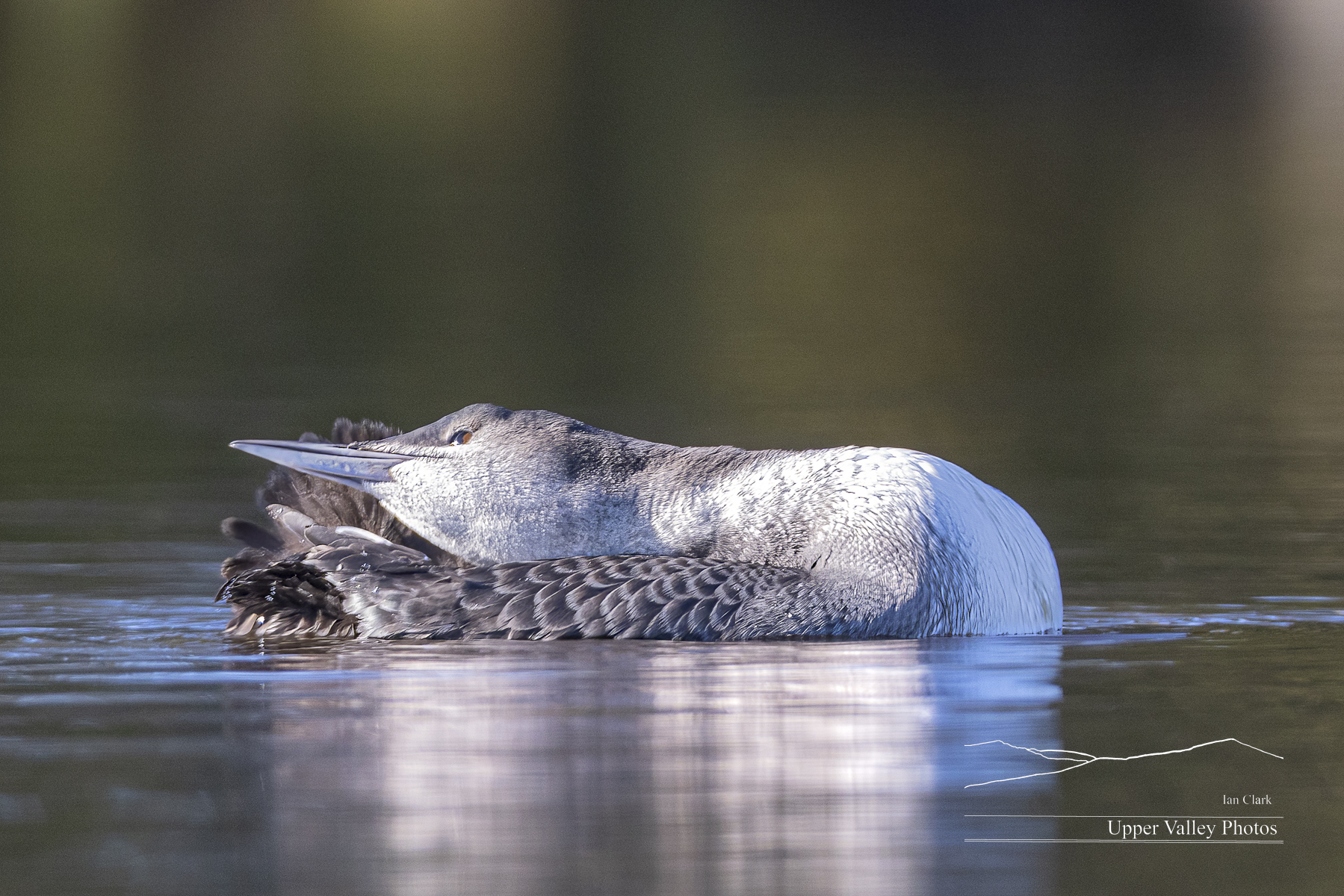
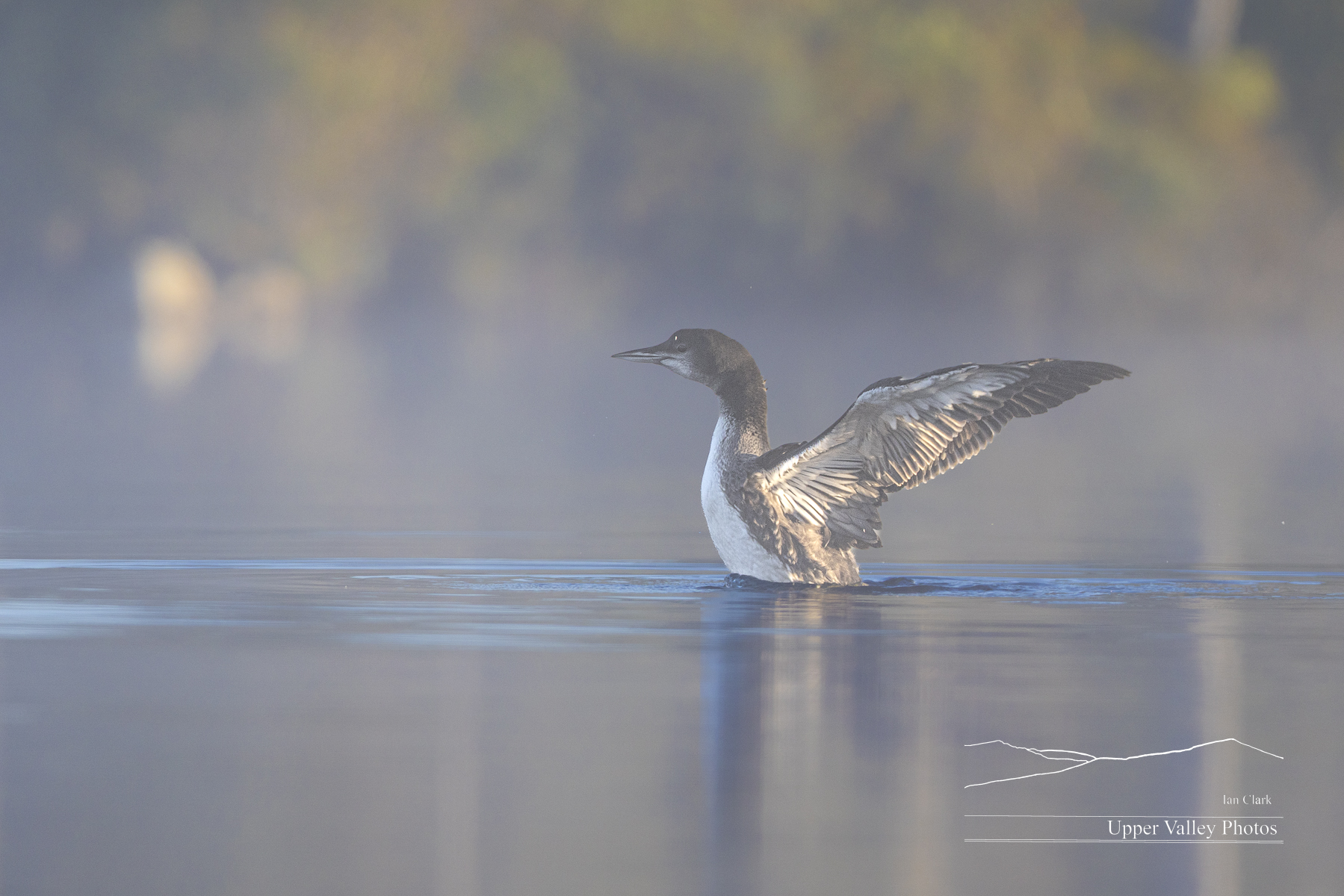
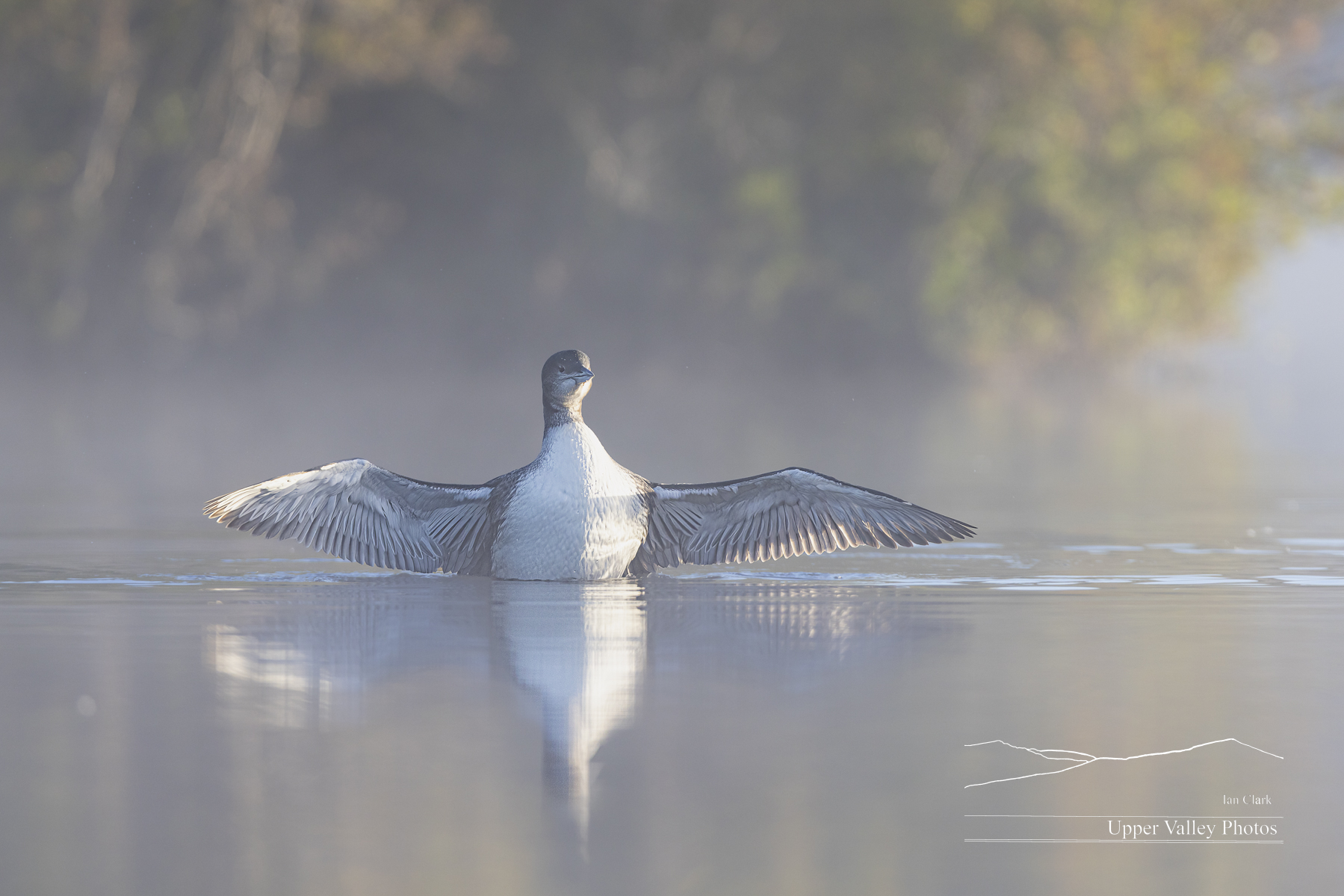
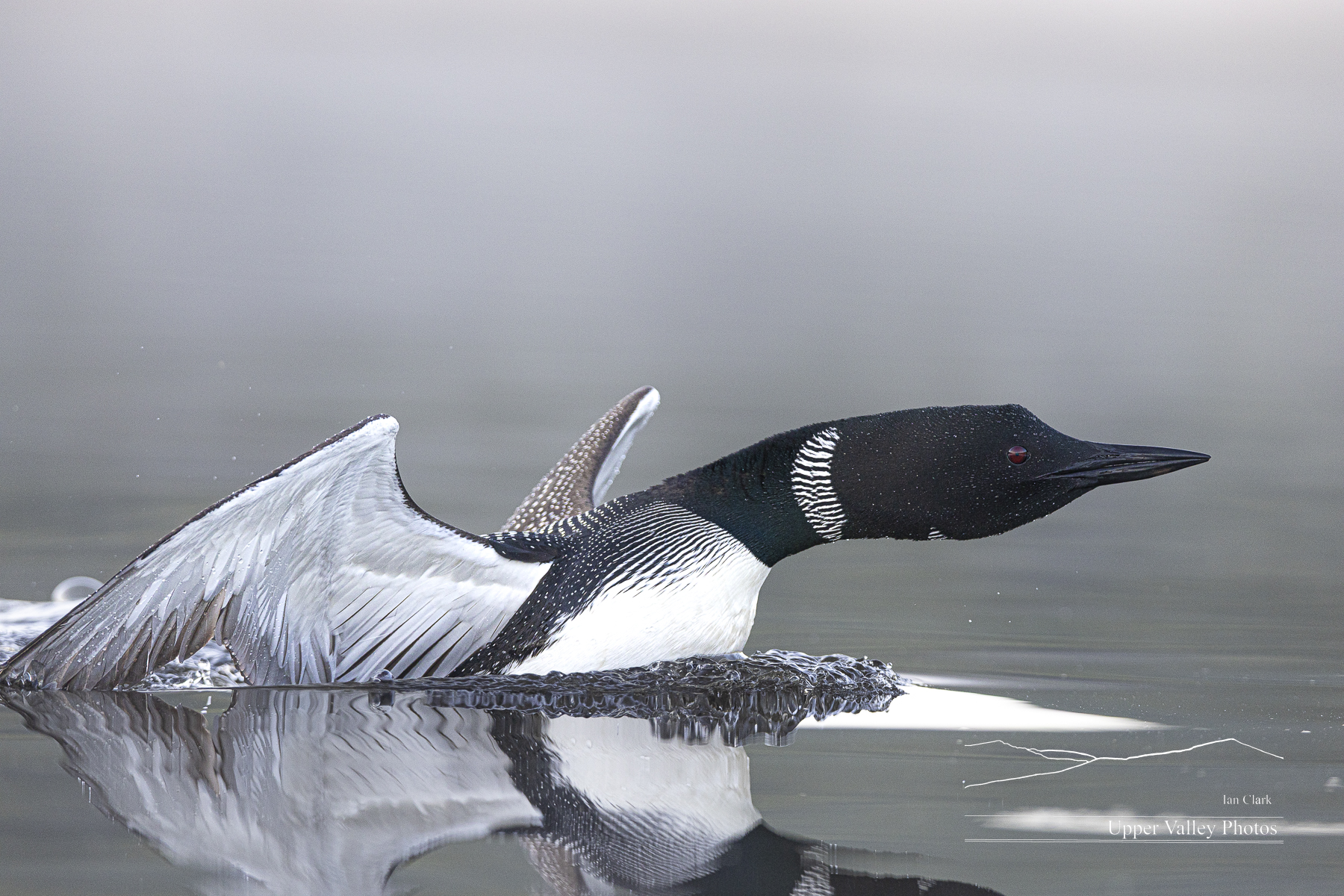
Mom awoke and stretched. Sadly, there wasn’t a chick.

On the 17th, I headed west to check on the Westons. A lone loon flew in as I was leaving the boat launch. The loon was feeding with determination and covering a lot of the pond. This was the only loon I saw that morning. On my last visit, the Westons had been at the very far end of the pond. I didn’t get all the way down there this trip. Friends on the pond emailed later to tell me the Westons and their chick had moved back to the main part of the pond.

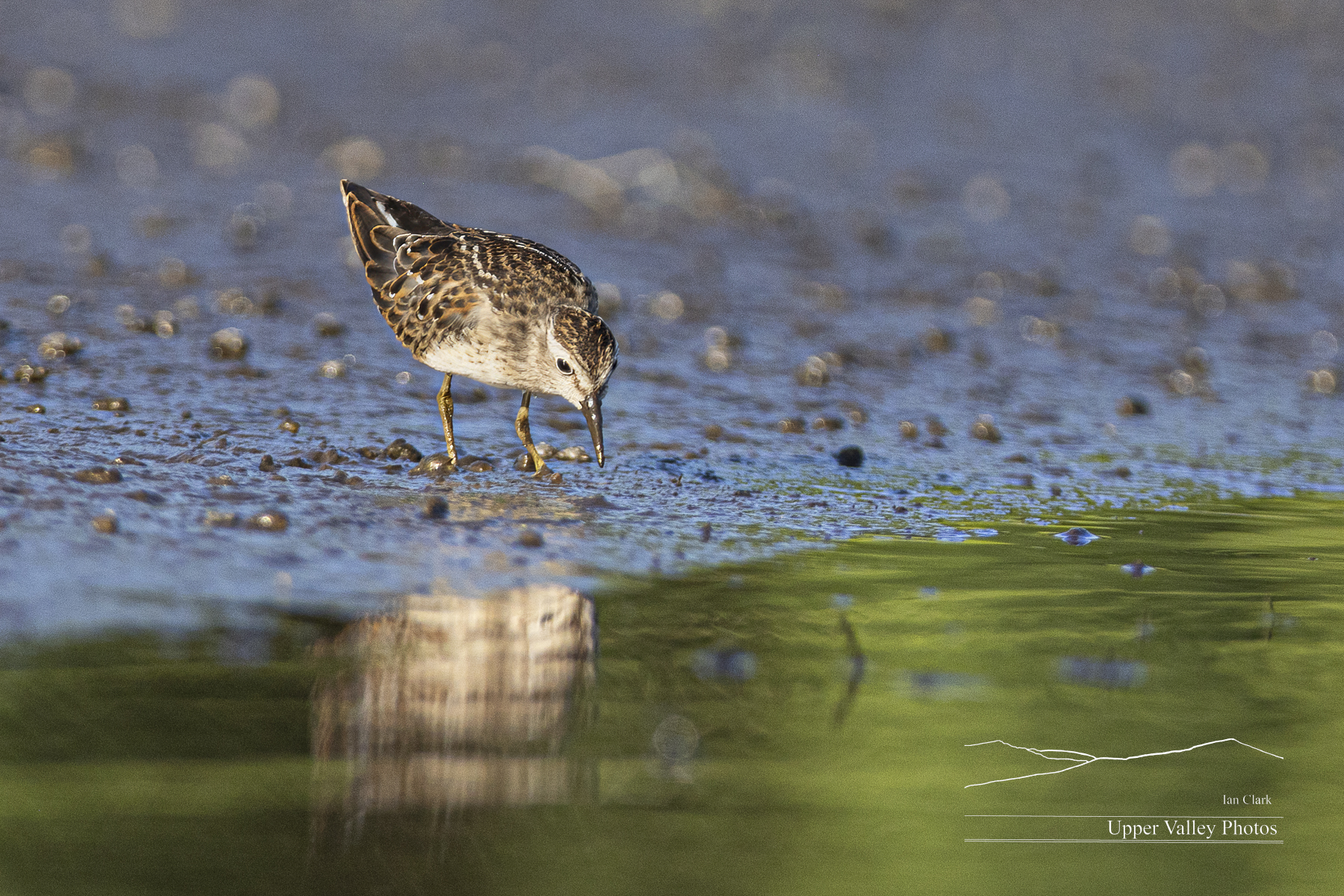
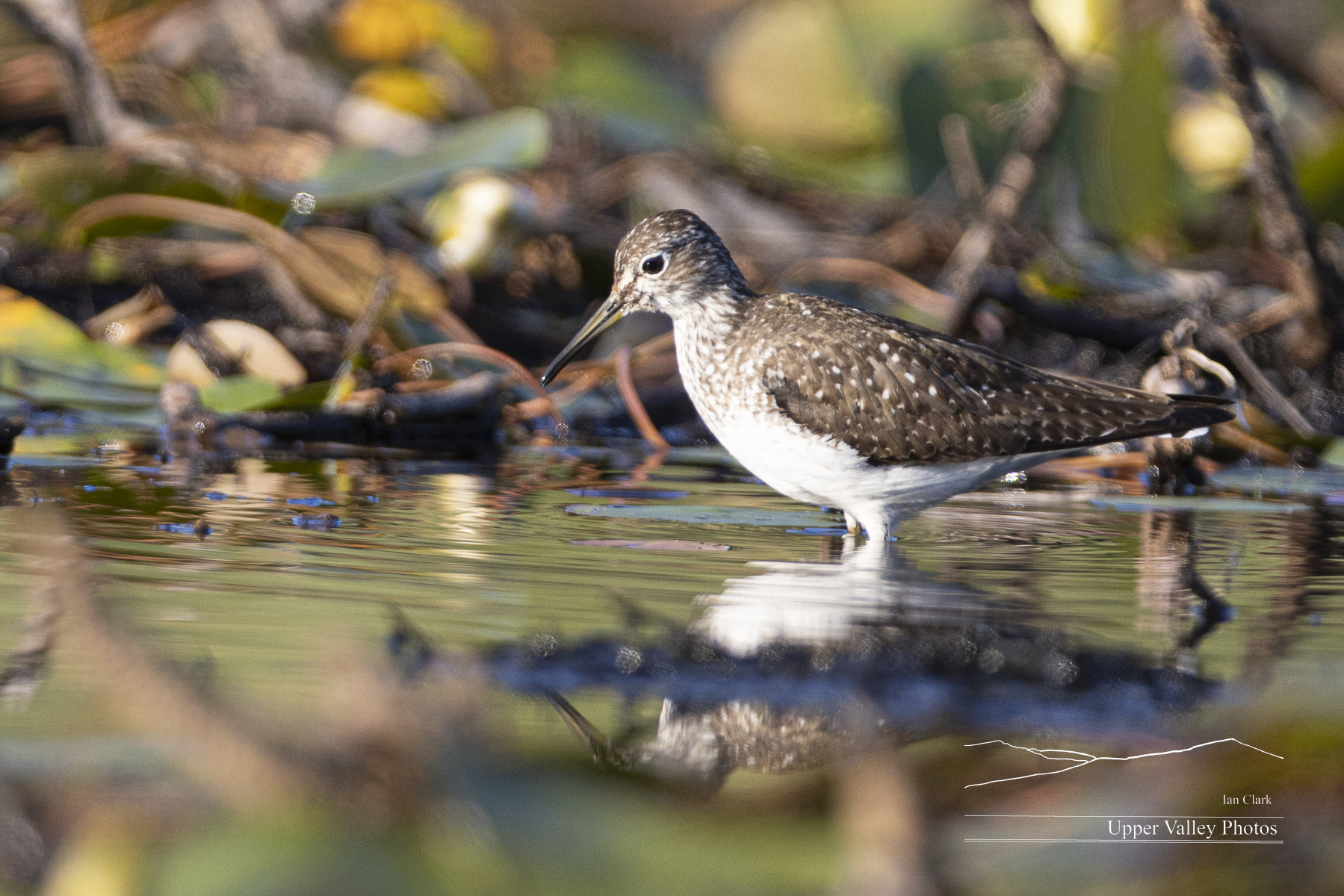
There was a handful of solitary sandpipers out feeding in the shallows. This one seemed to be doing quite well in the water lilies.

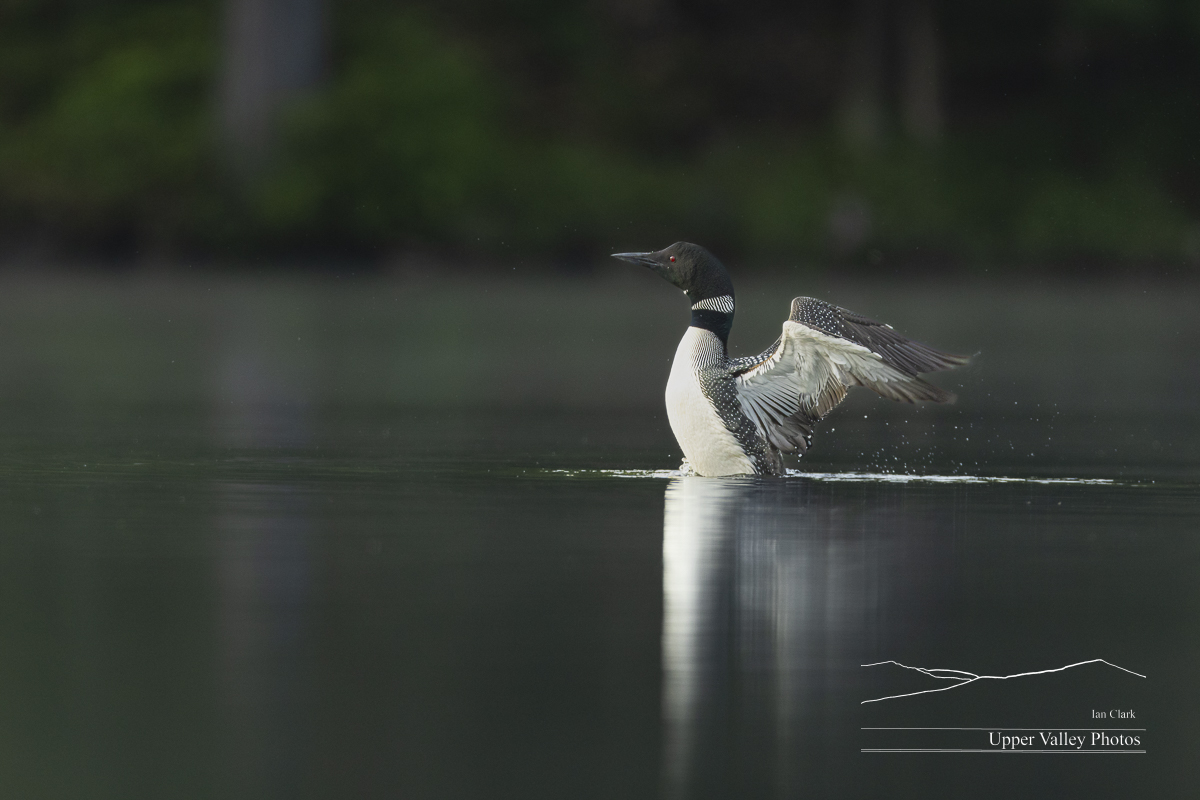
The 20th found me back on the Eastons’ pond. The morning started quietly, with the chicks getting breakfast and the adults preening and stretching.

But things soon took a turn for the worse.
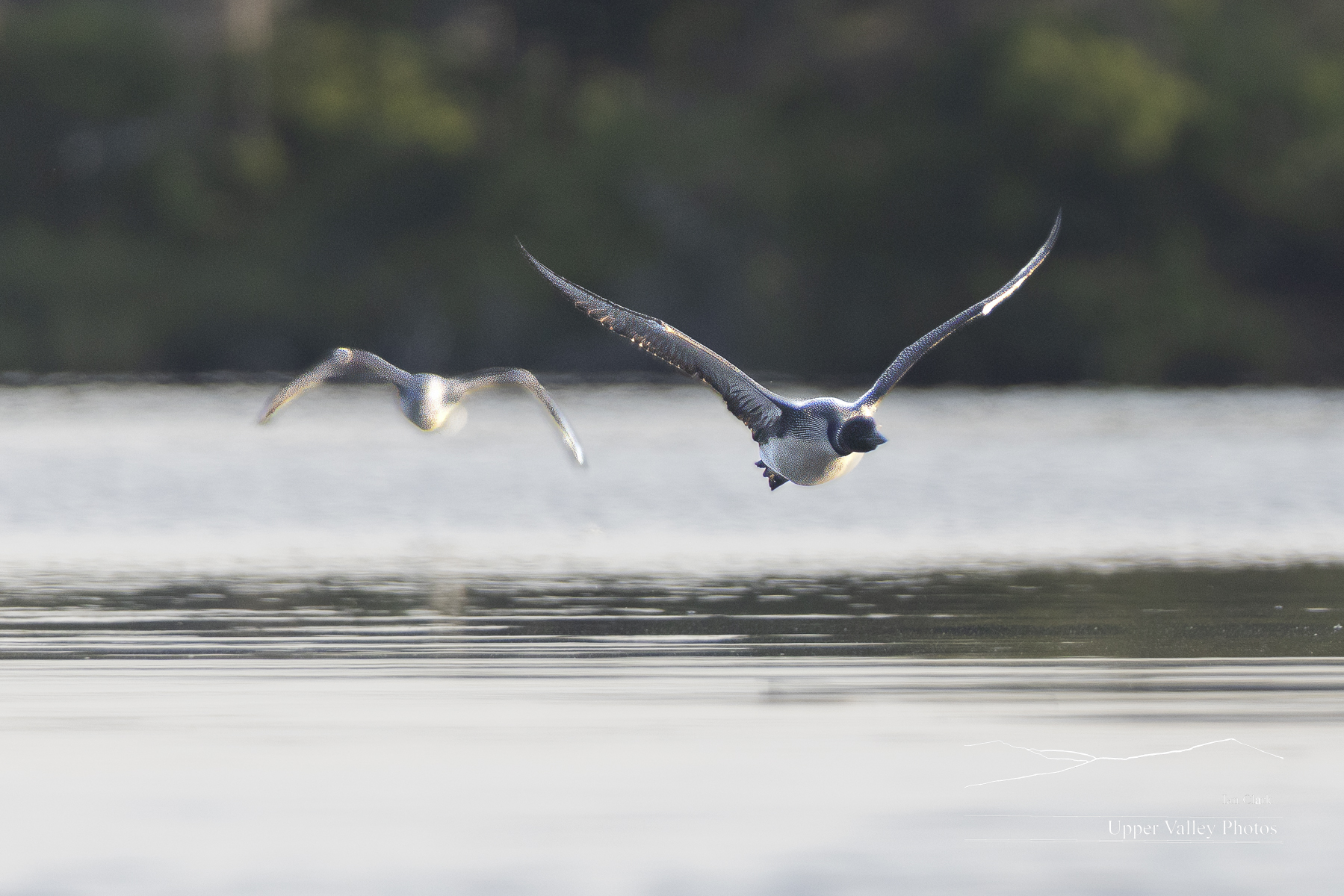
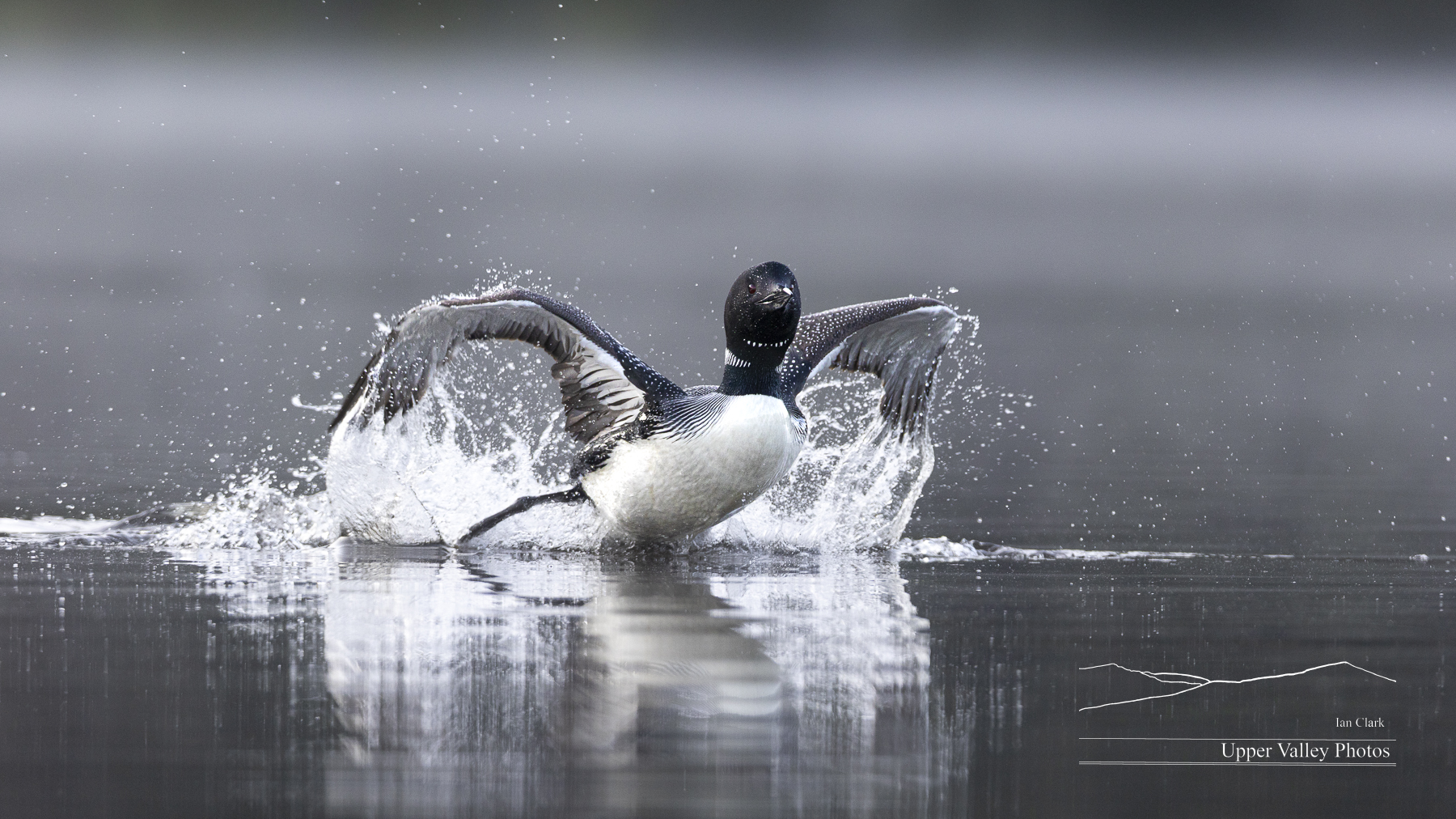
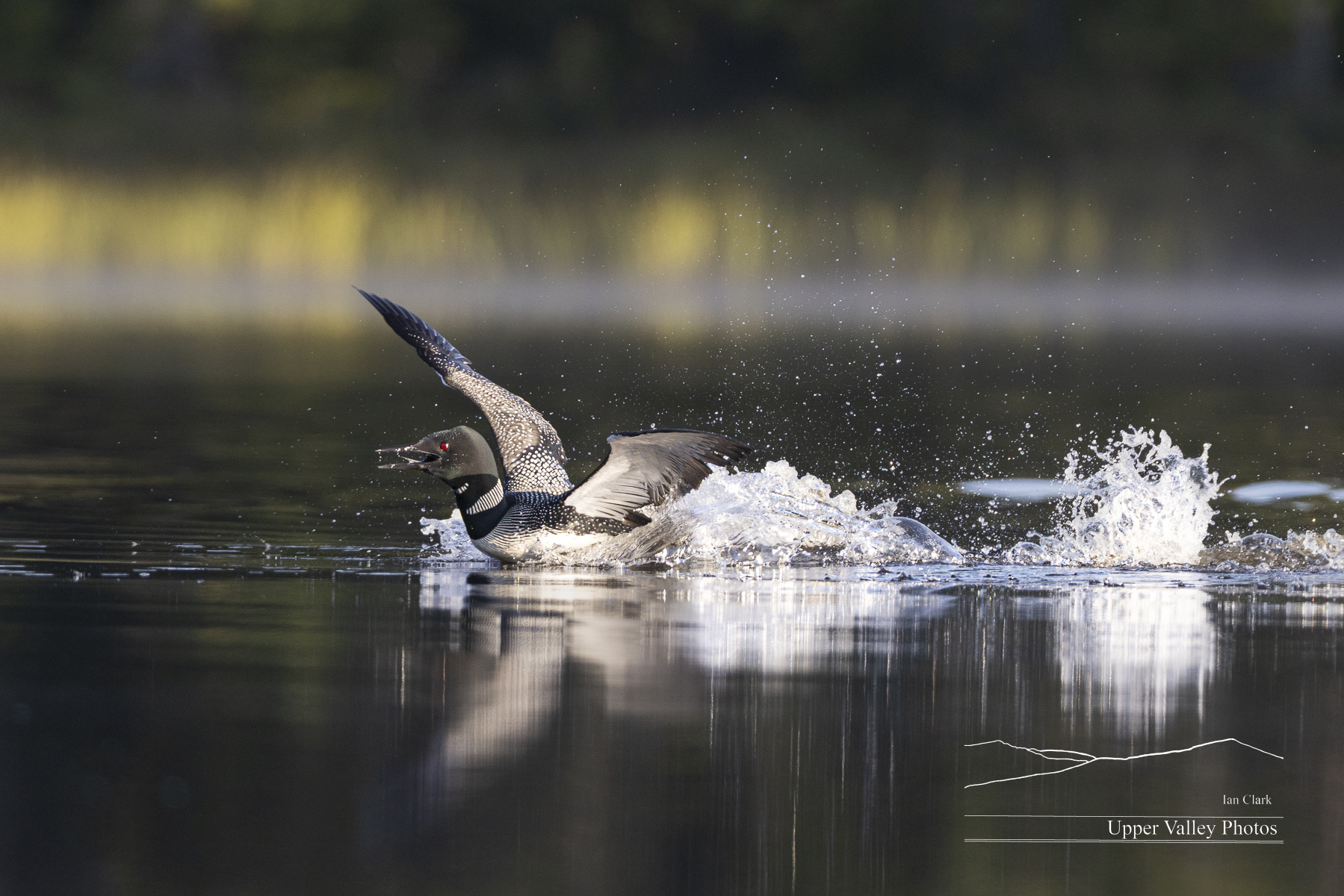
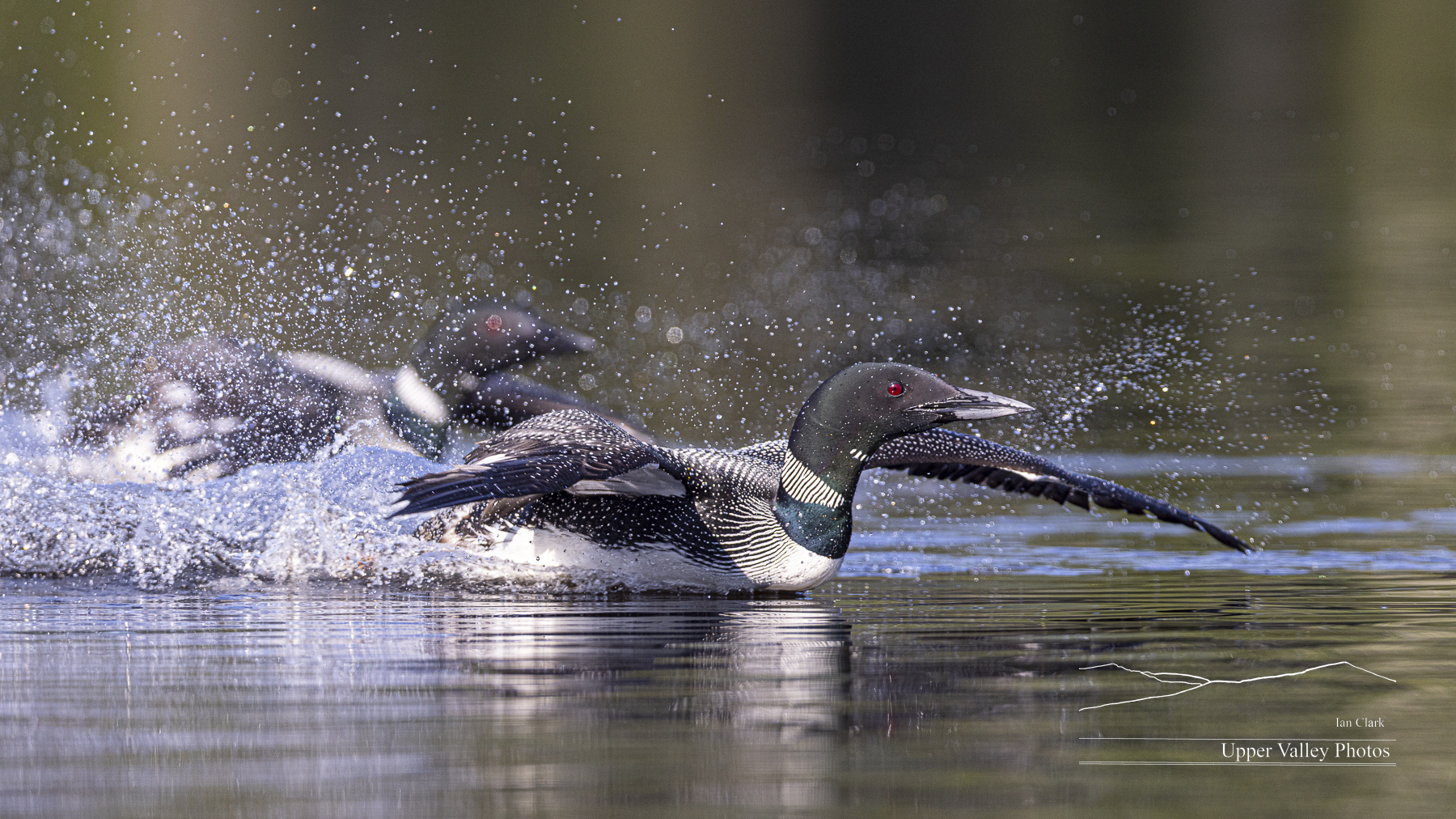
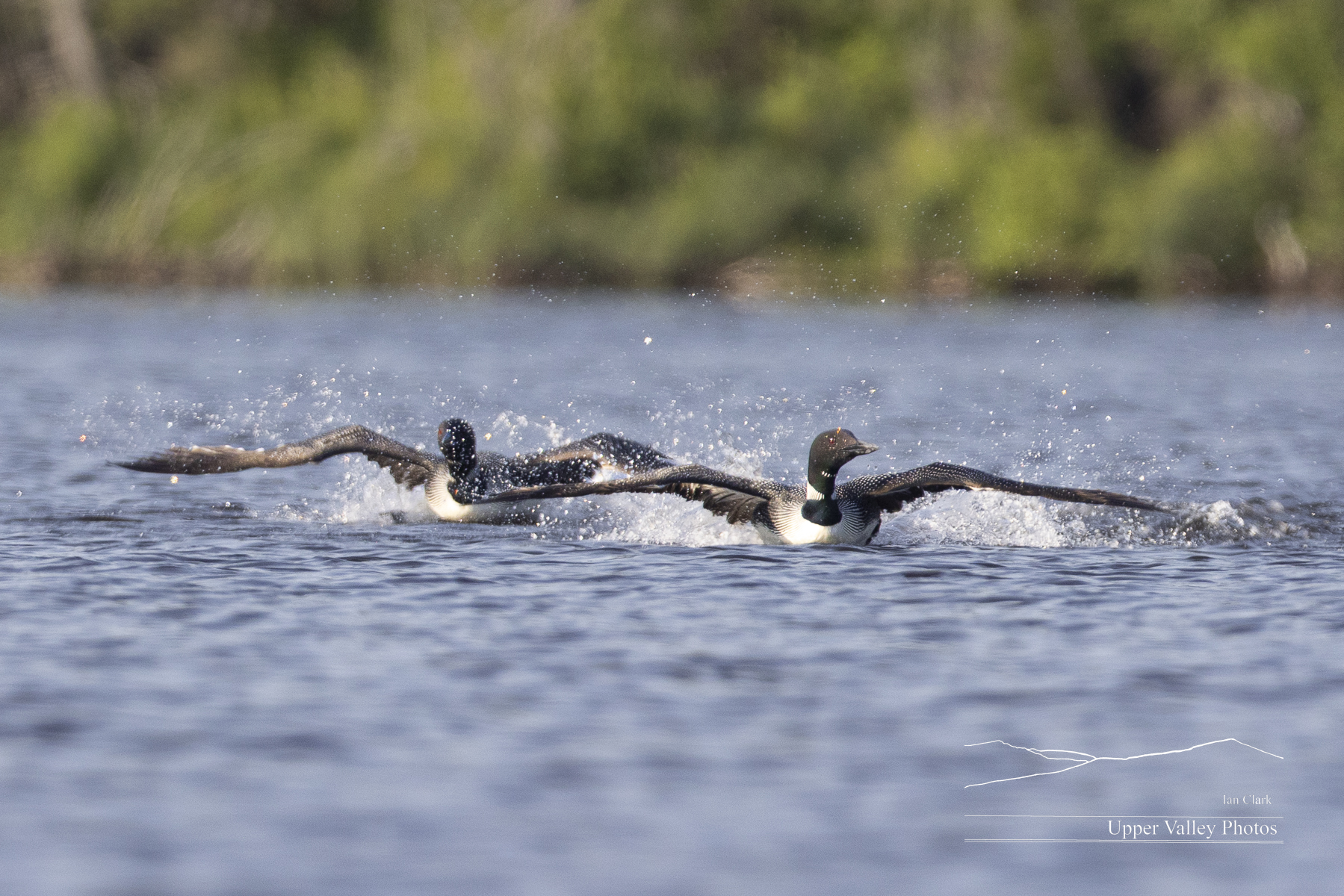
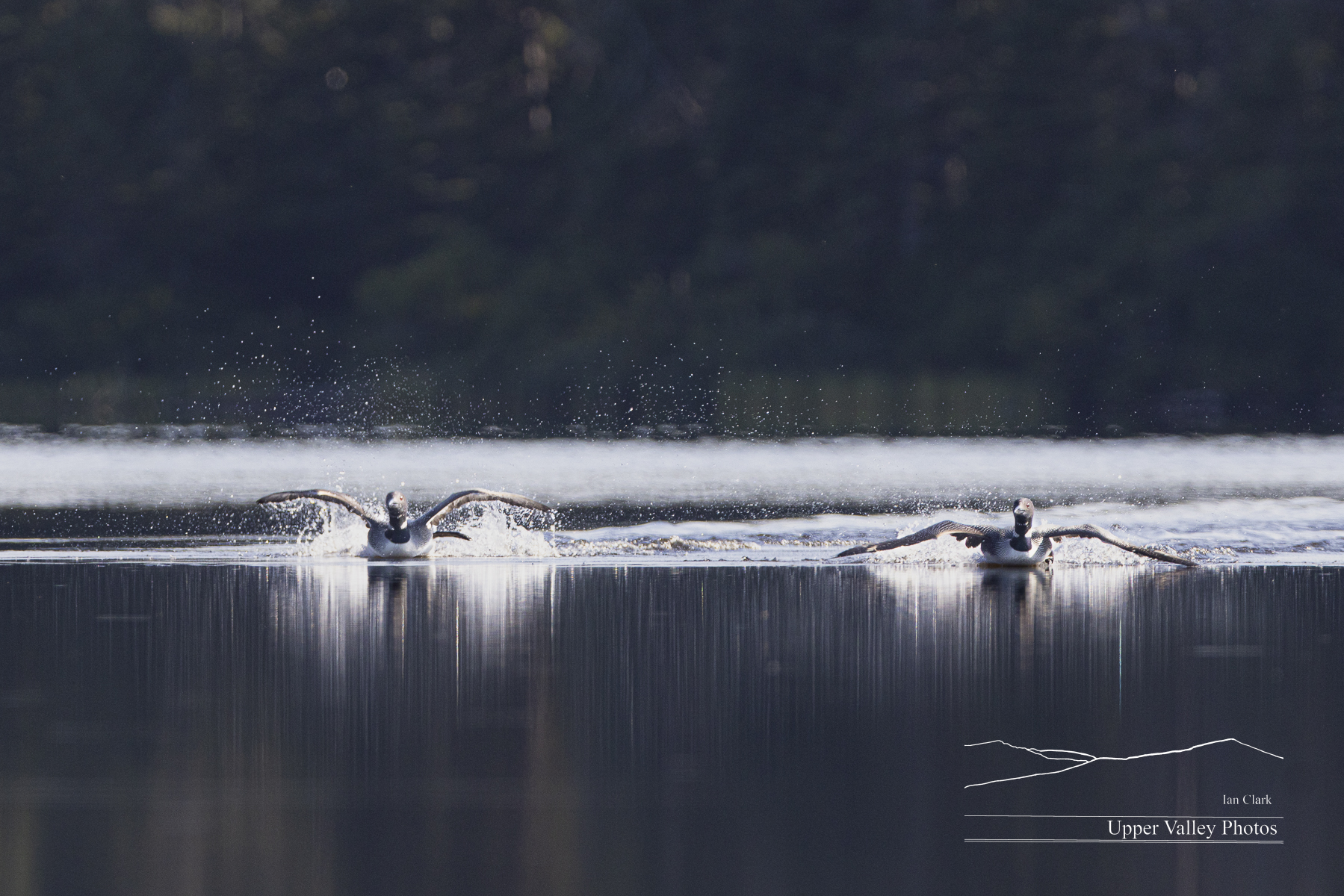
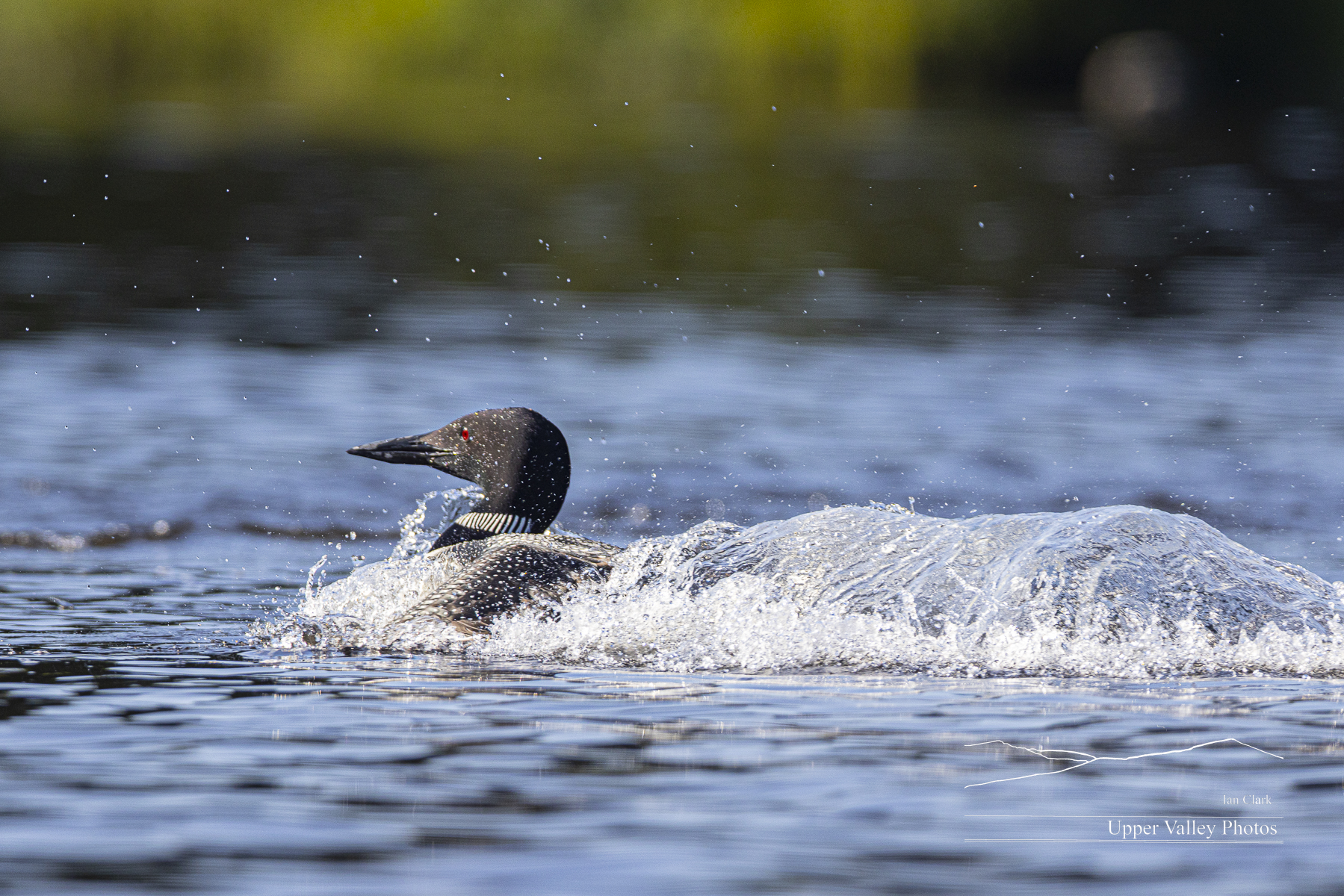
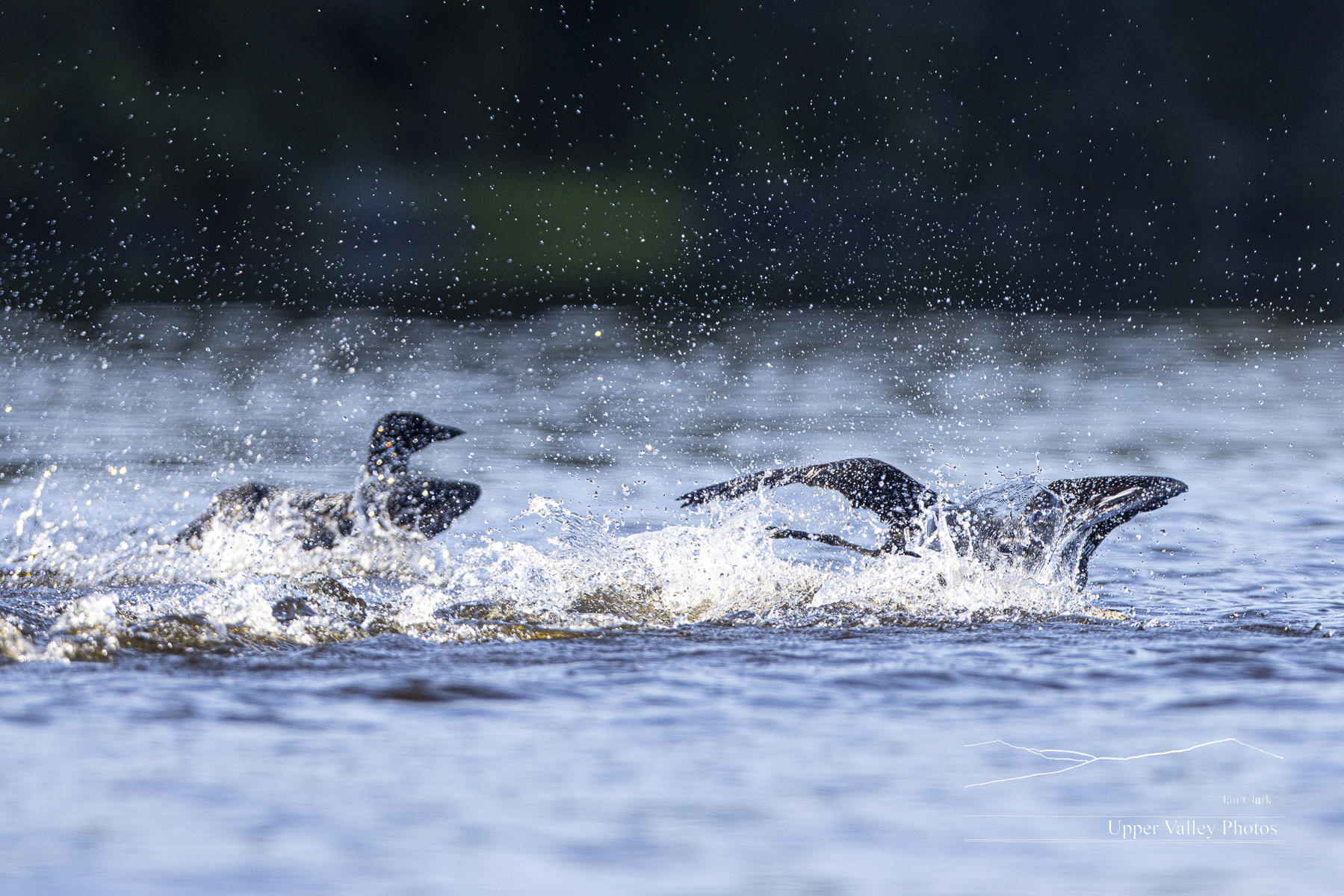
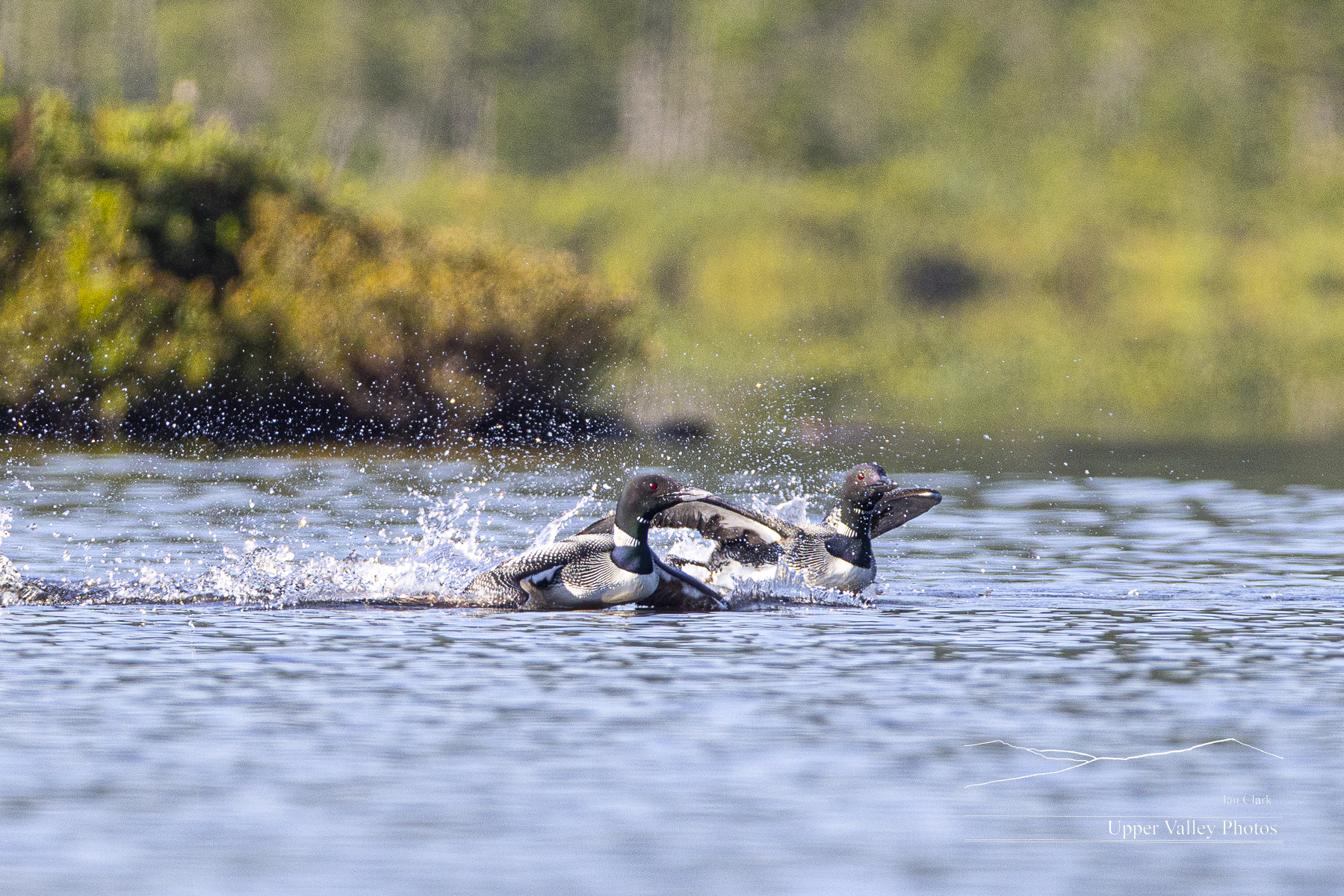
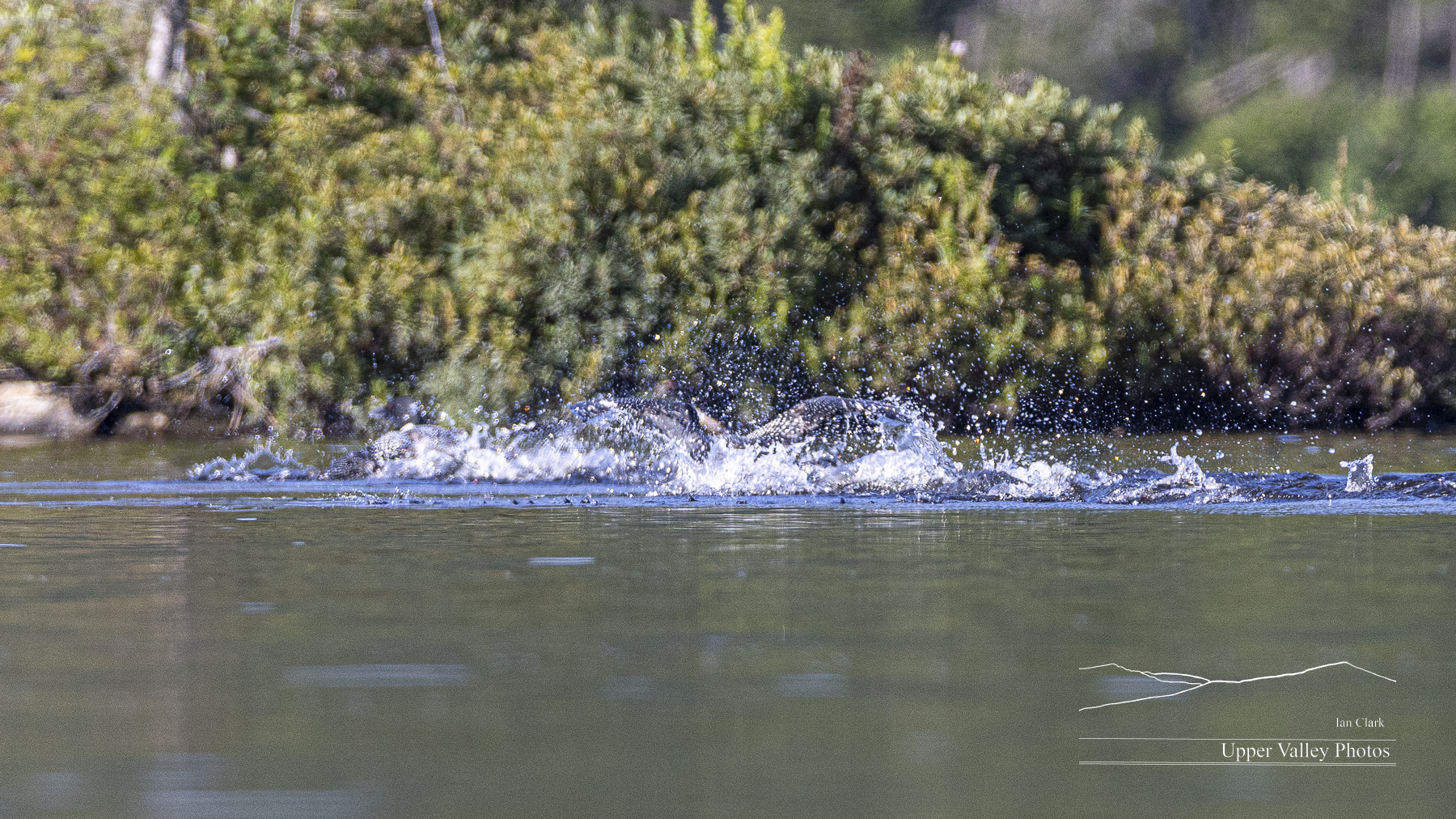
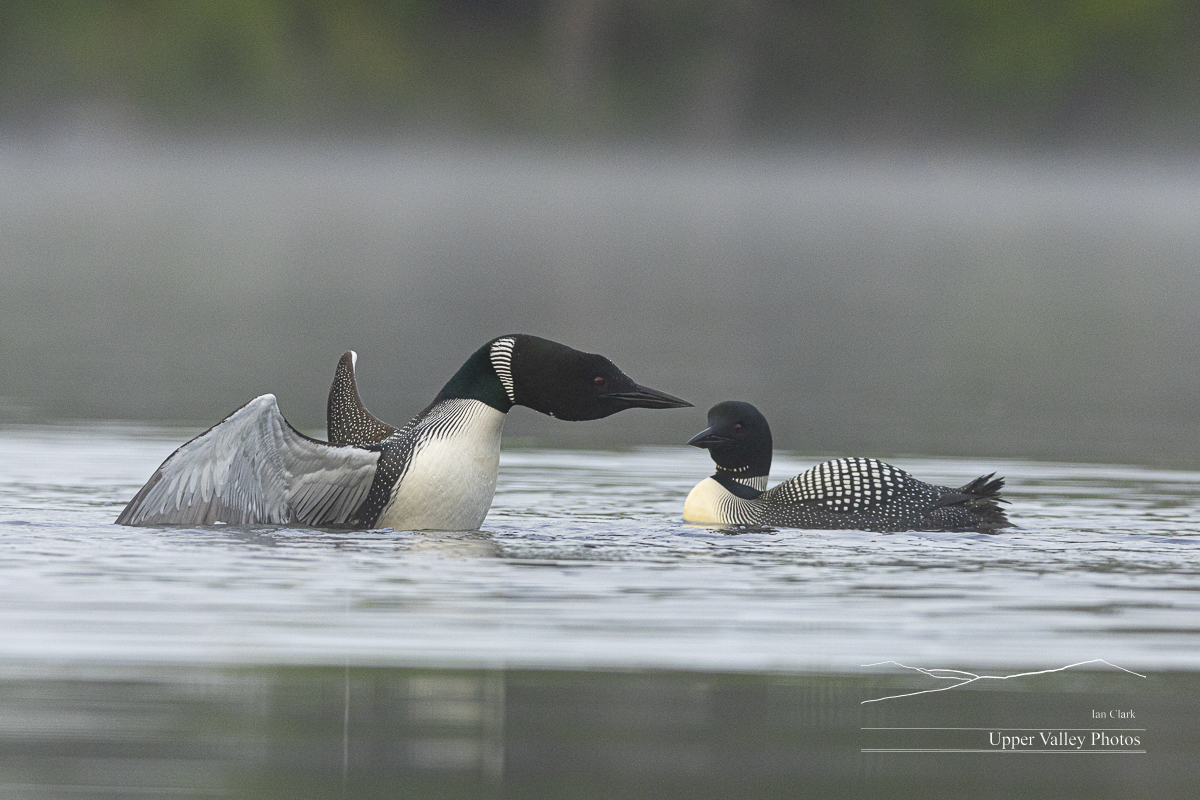
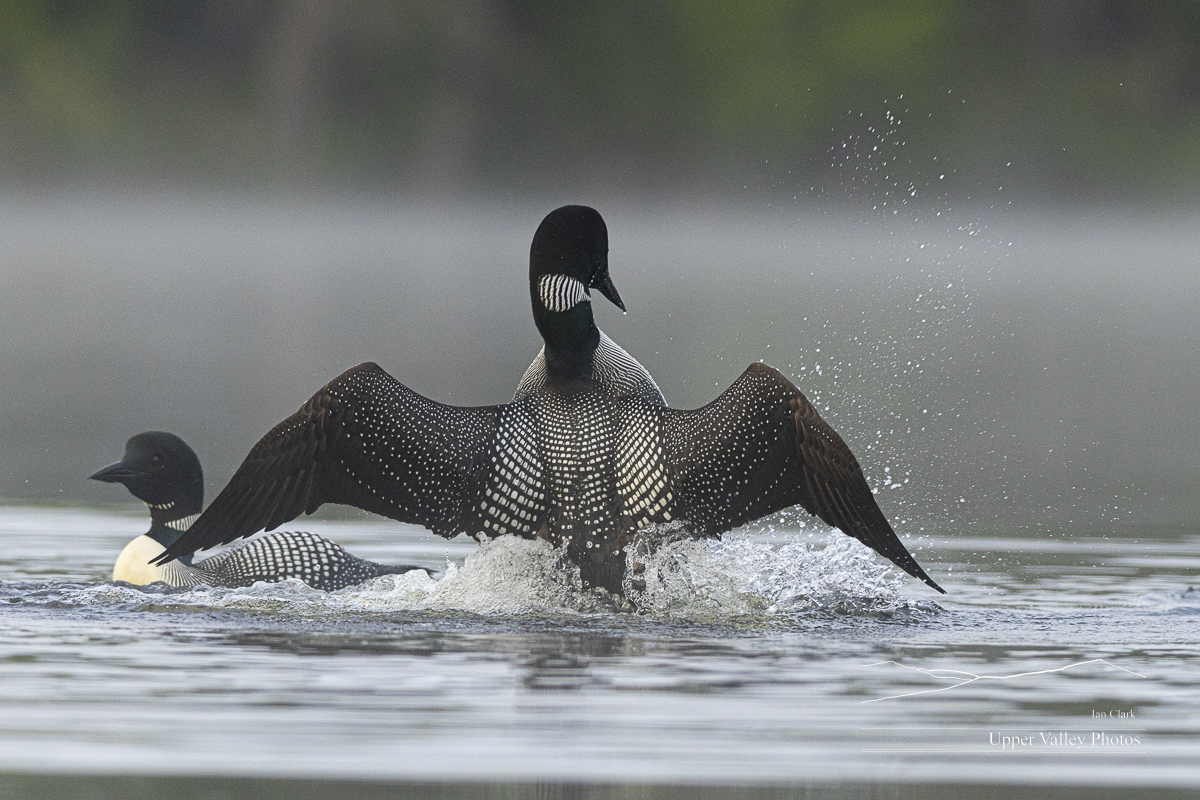
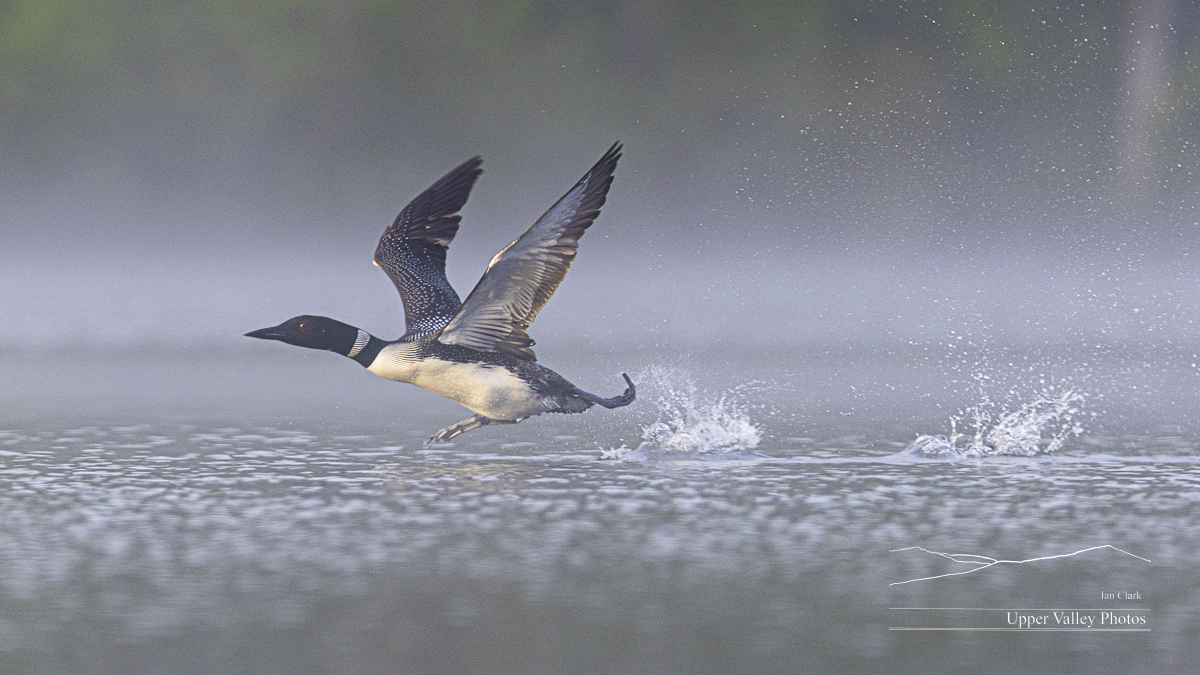
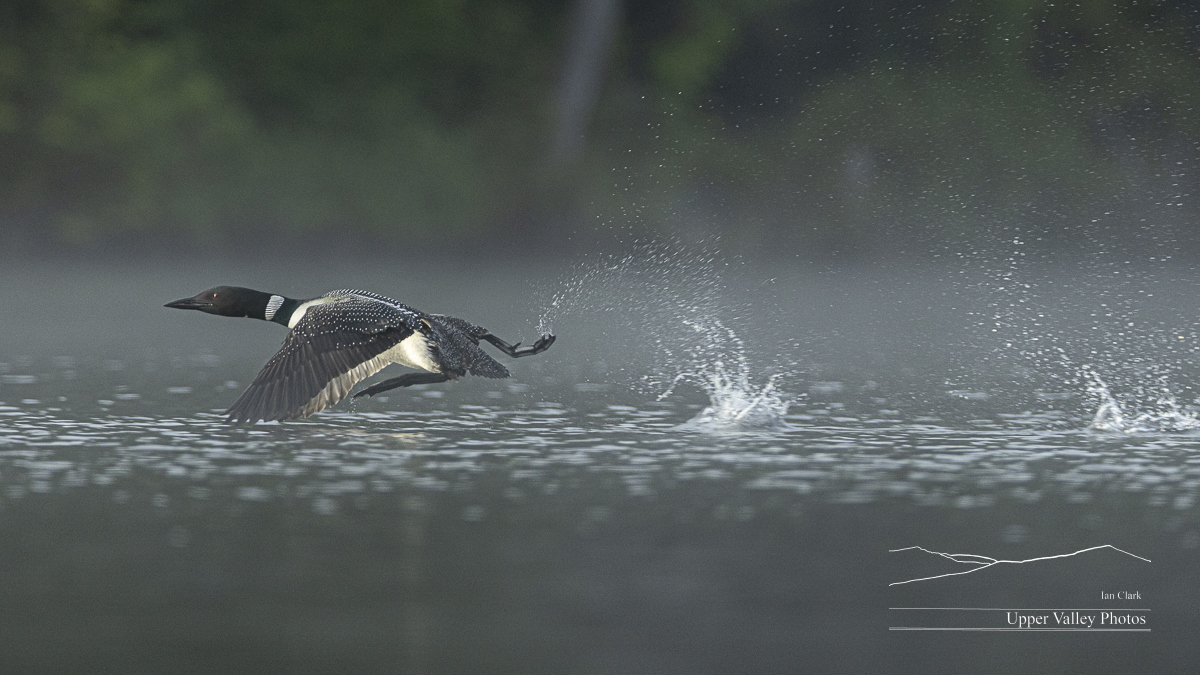
An intruder flew in. The confrontation escalated quickly, with lots of vocalizations and wing rowing. The dispute is between two females. Both went wing rowing up the pond out of sight. Shortly after, two loons came flying back down. I’ve never seen a dispute take to the air. I’m not sure if one of these is the intruder, or if it is the home team. The dispute soon resumed with lots of wing rowing. A couple times, the intruder dove and reappeared between the home team and the chicks. The home team didn’t approve of this and both would go after the intruder.

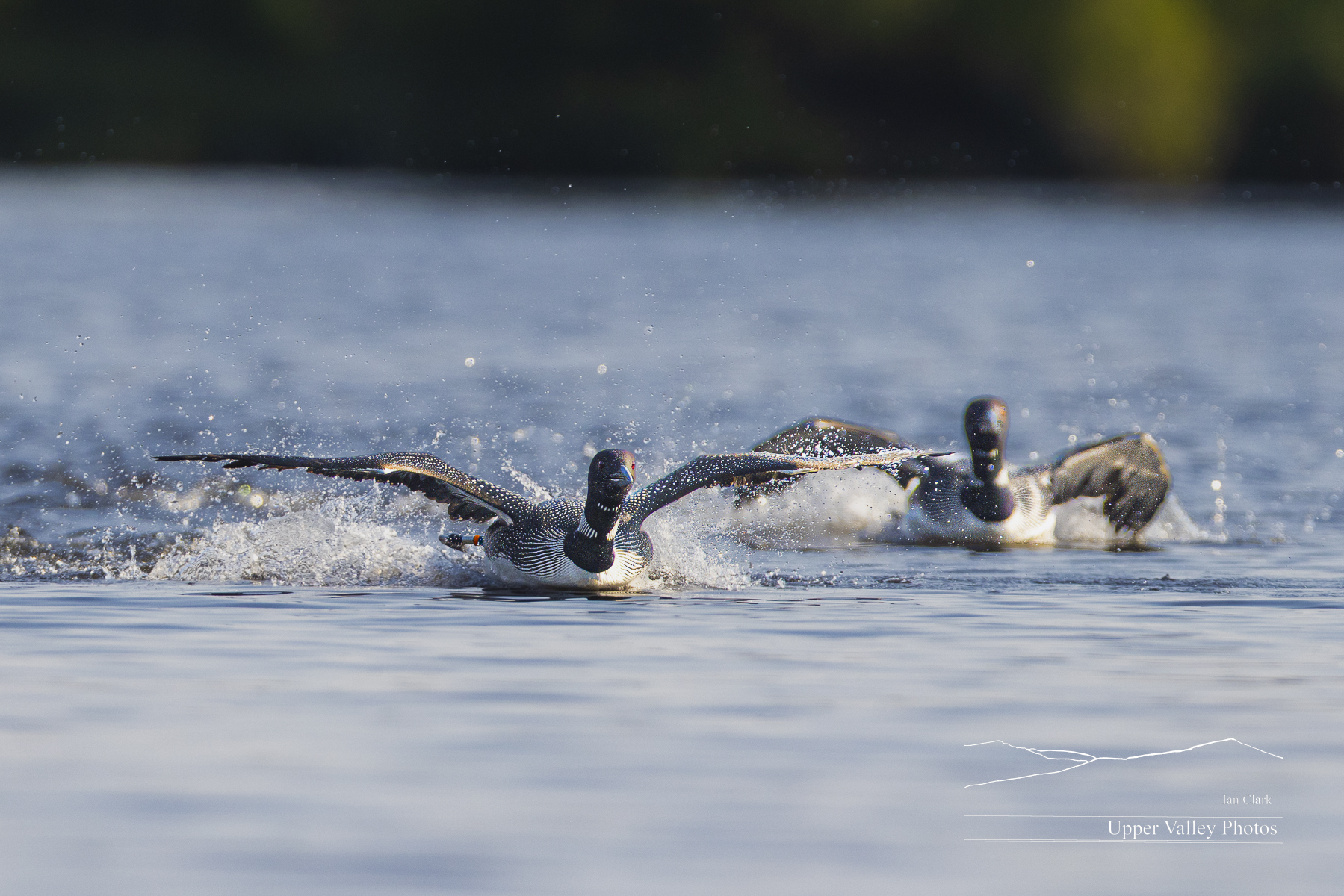
Here they come wing rowing back up the pond. That’s Mrs. Easton out front getting chased.

And back down the pond – this went on for about 45 minutes. You can see the bands on Mrs. E’s leg, she’s the loon on the left.

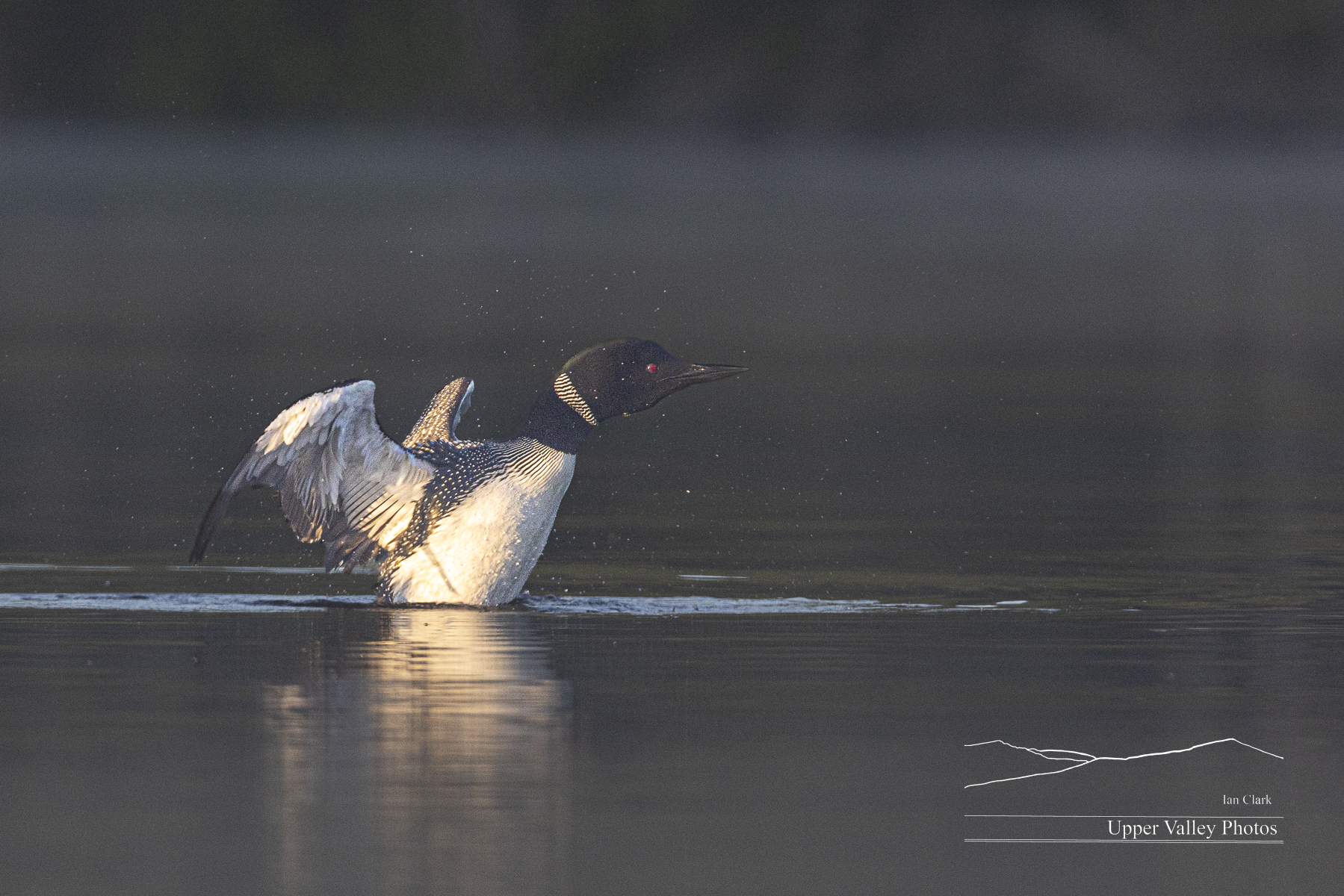
Eventually, the intruder departed, circling the pond several times tremoloing. The Eastons had some time to stretch and rest. I headed home.

I went back on the 25th. Once again, the morning started quietly with the parents providing breakfast for the chicks.


Hank was foraging nearby.

The chicks fed, one of the Eastons went off for some time alone. I didn’t see the bands to know who was who, but I’m betting it is Mrs. Easton – she always seemed to do the minimum needed with her chicks.

Hank relocated to a tree to preen.

First the left side…..

Then the right….

Finishing with the back.

The chicks settled in for a nap.

Dad has spotted a threat!

Mom has alerted and is looking for the threat. It was the intruding loon again. The confrontation soon escalated again.

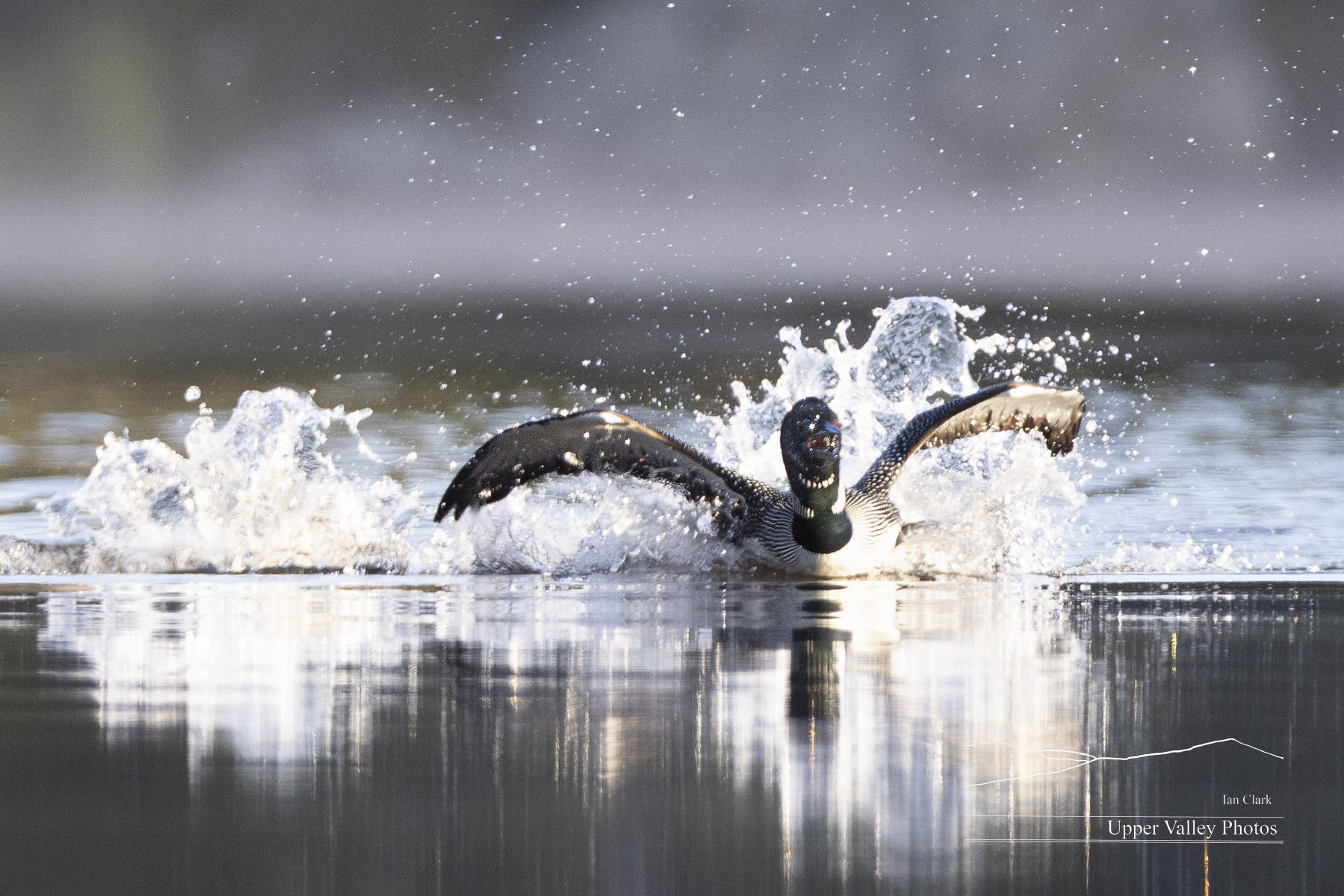
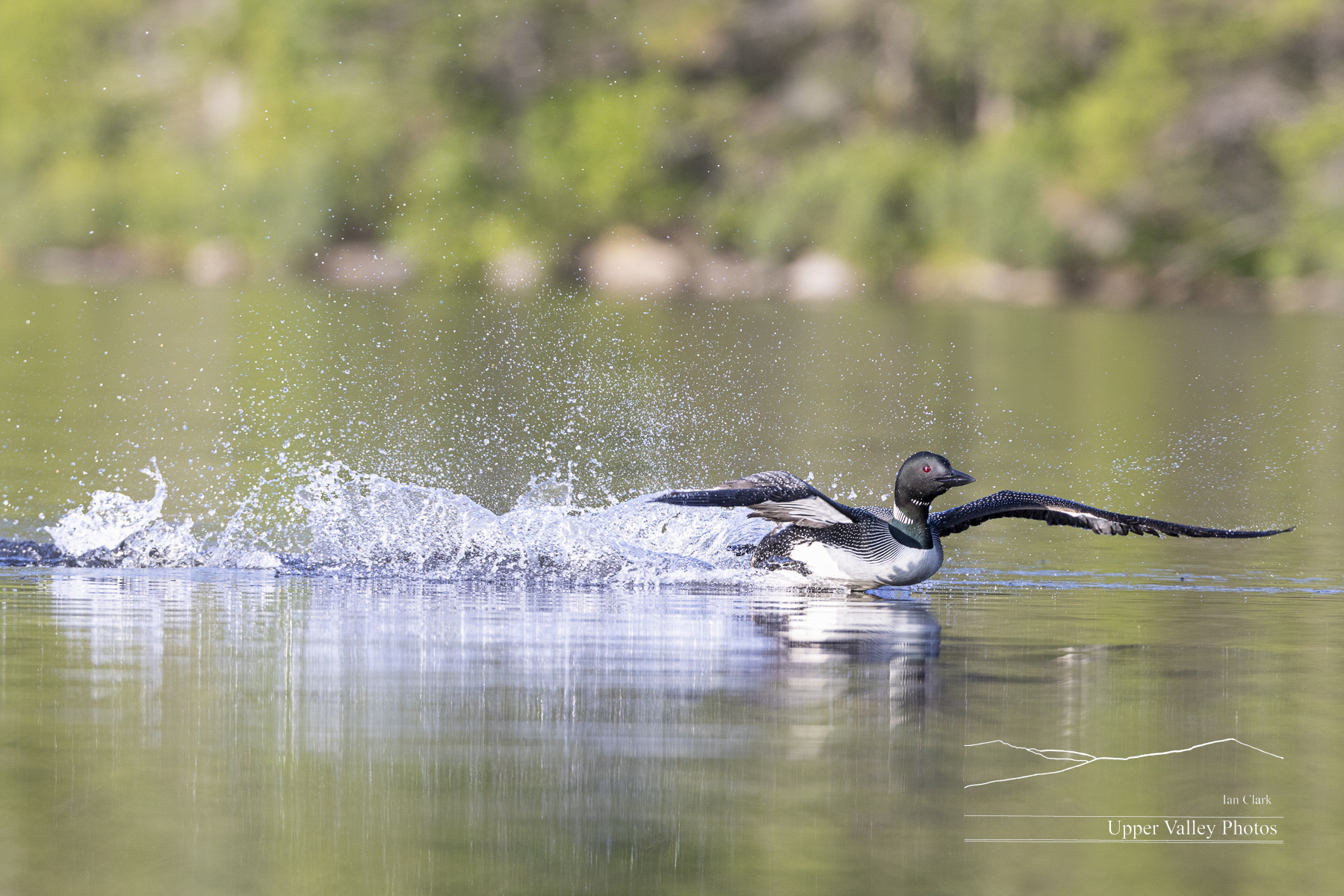
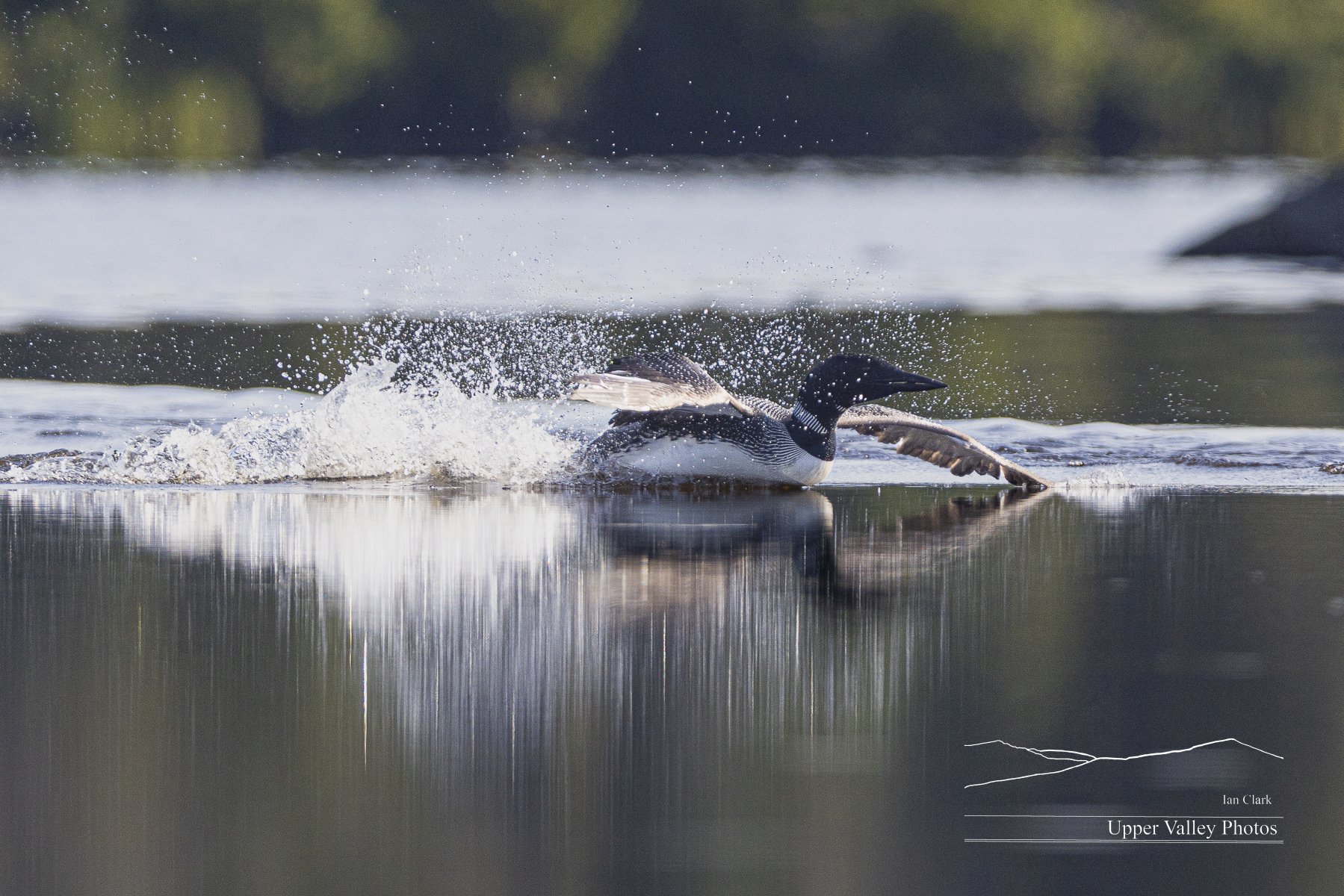
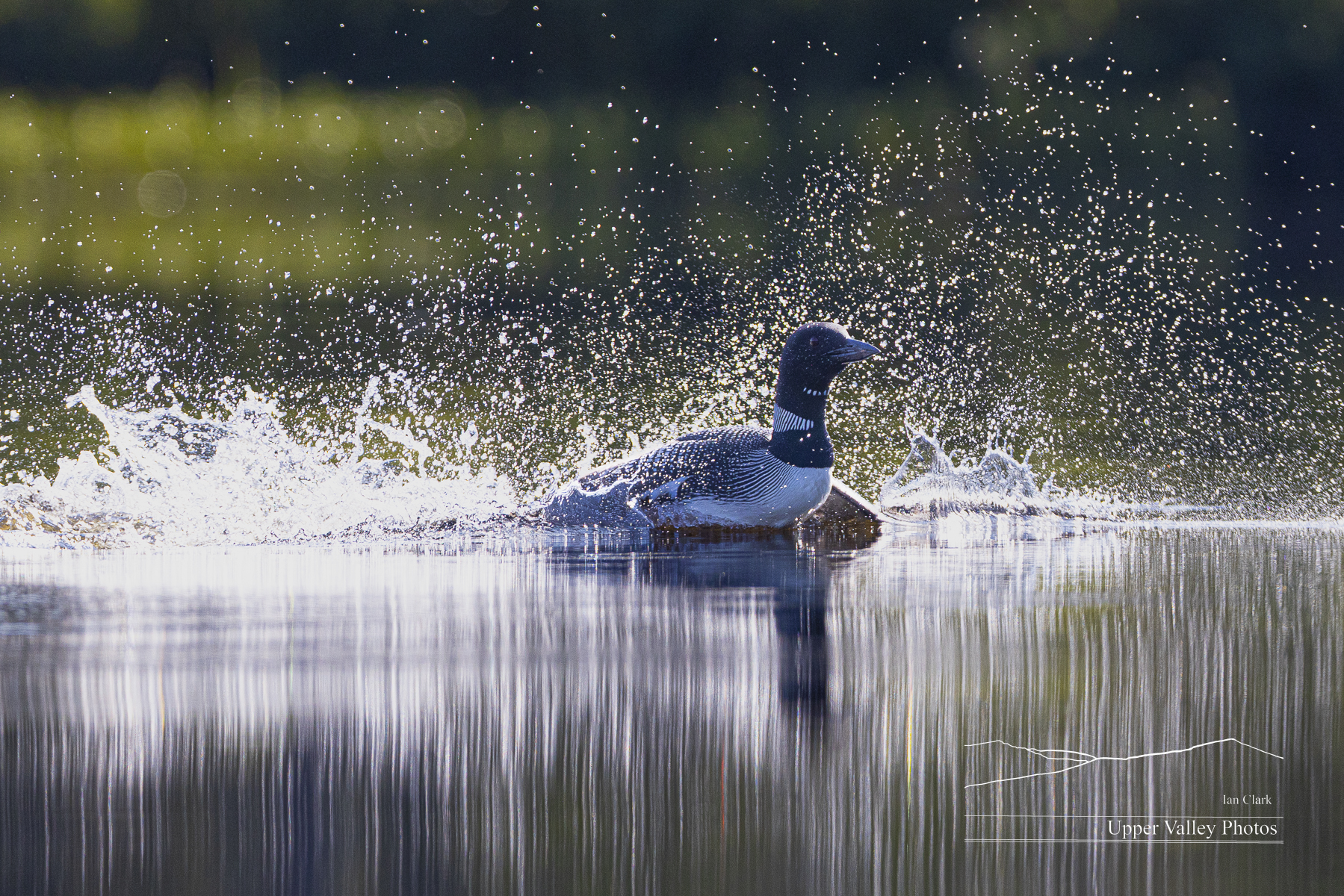
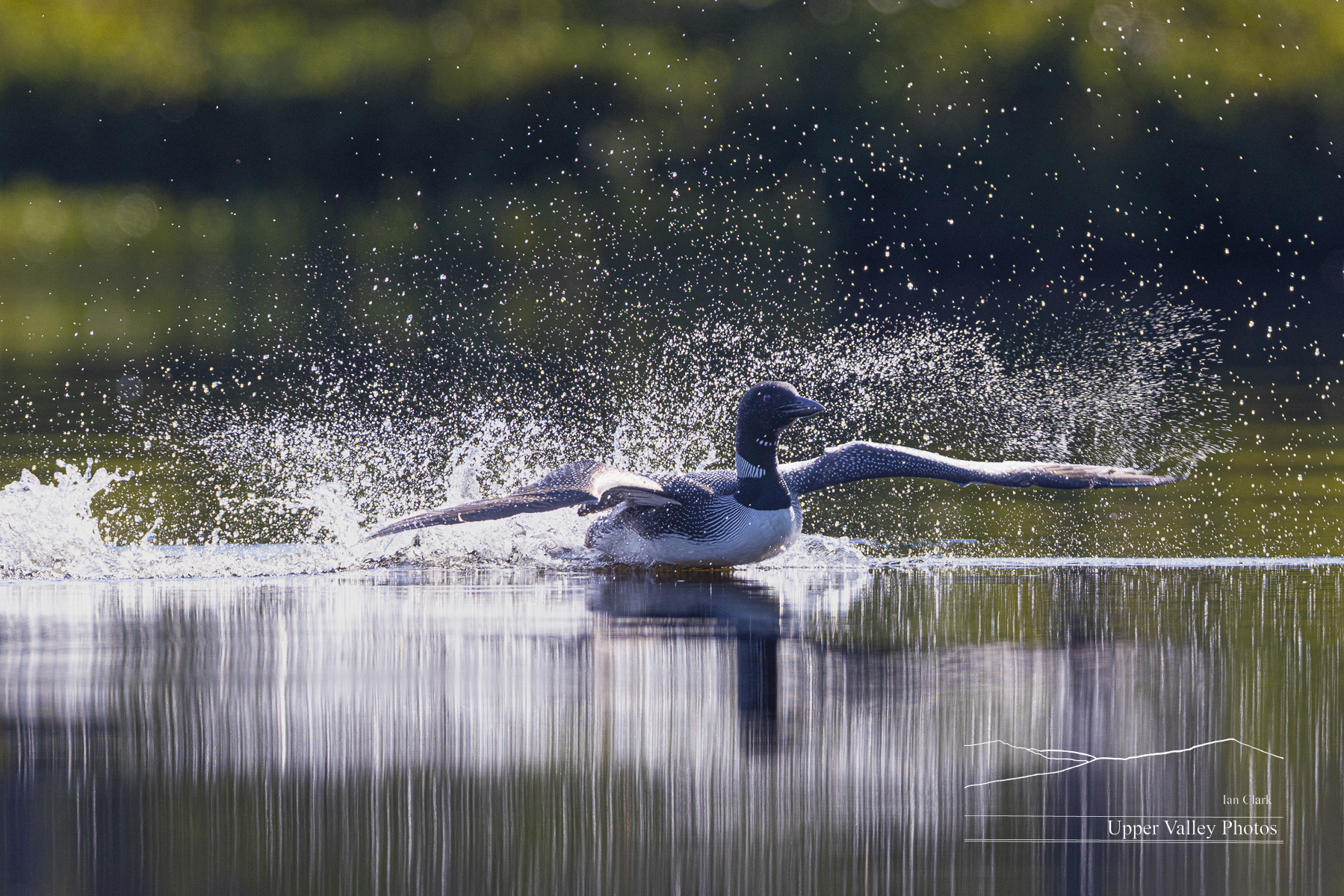
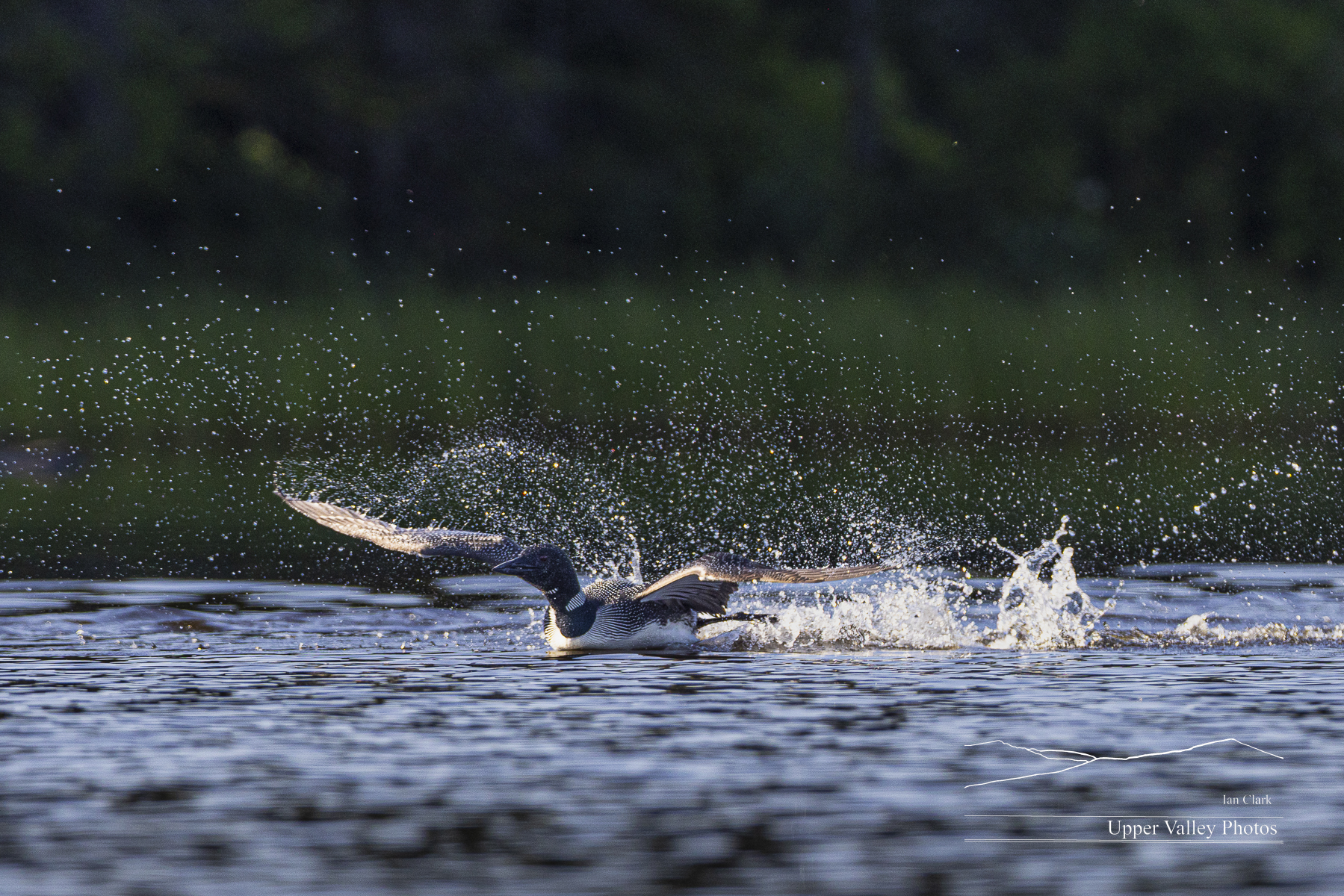
The intruder coming up the pond. I’d estimate loons get going about 25 mph when they’re wing rowing. This one was making good time.
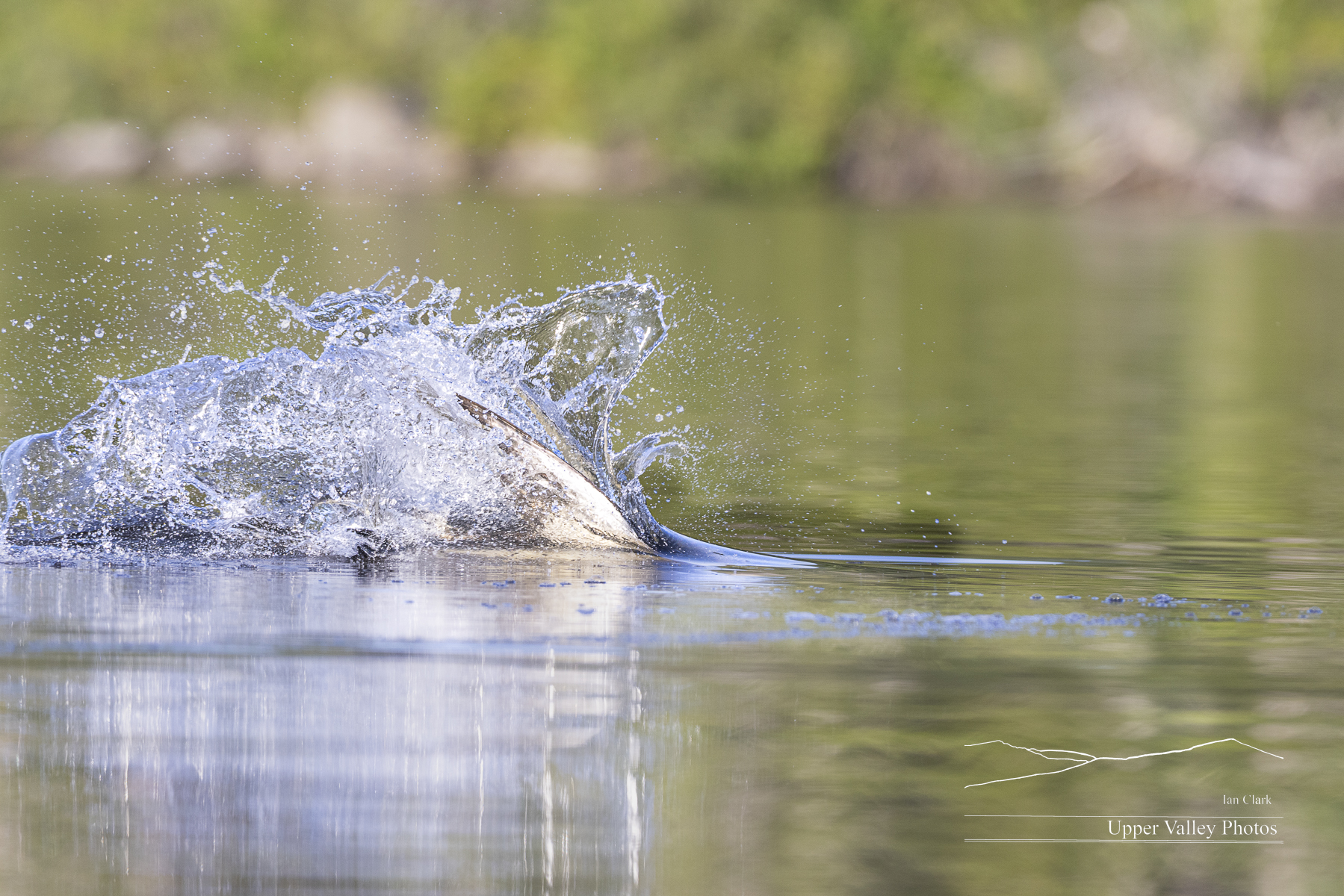
A change of tactics! The intruder dives! Mrs. Easton dove too and they resurfaced out of sight.

But soon came rowing back down the pond…

Mrs. E making time as she goes by.
With the intruder close behind!

The intruder again…..

They’ve turned around and are coming back down the pond. This is the intruder again.

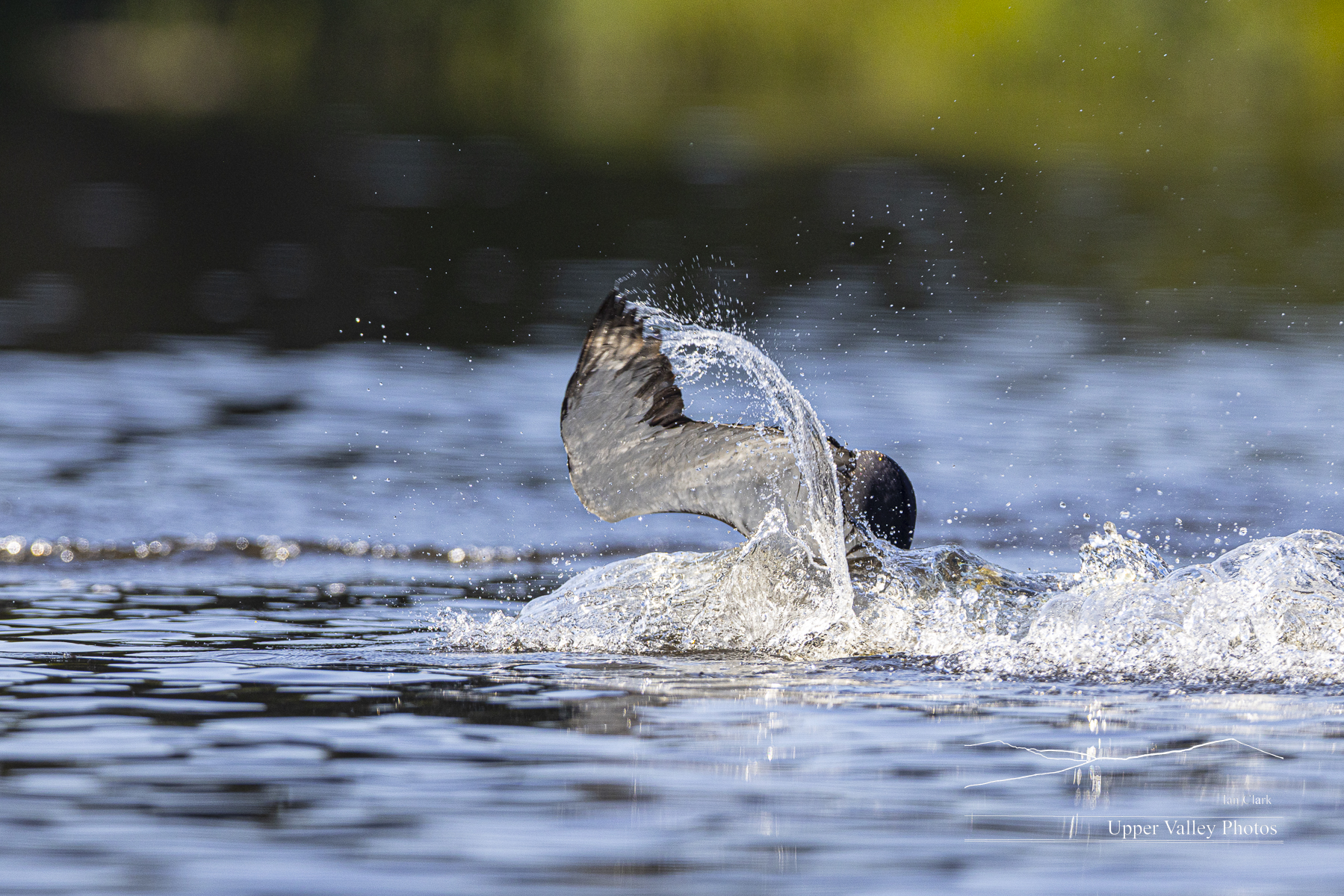
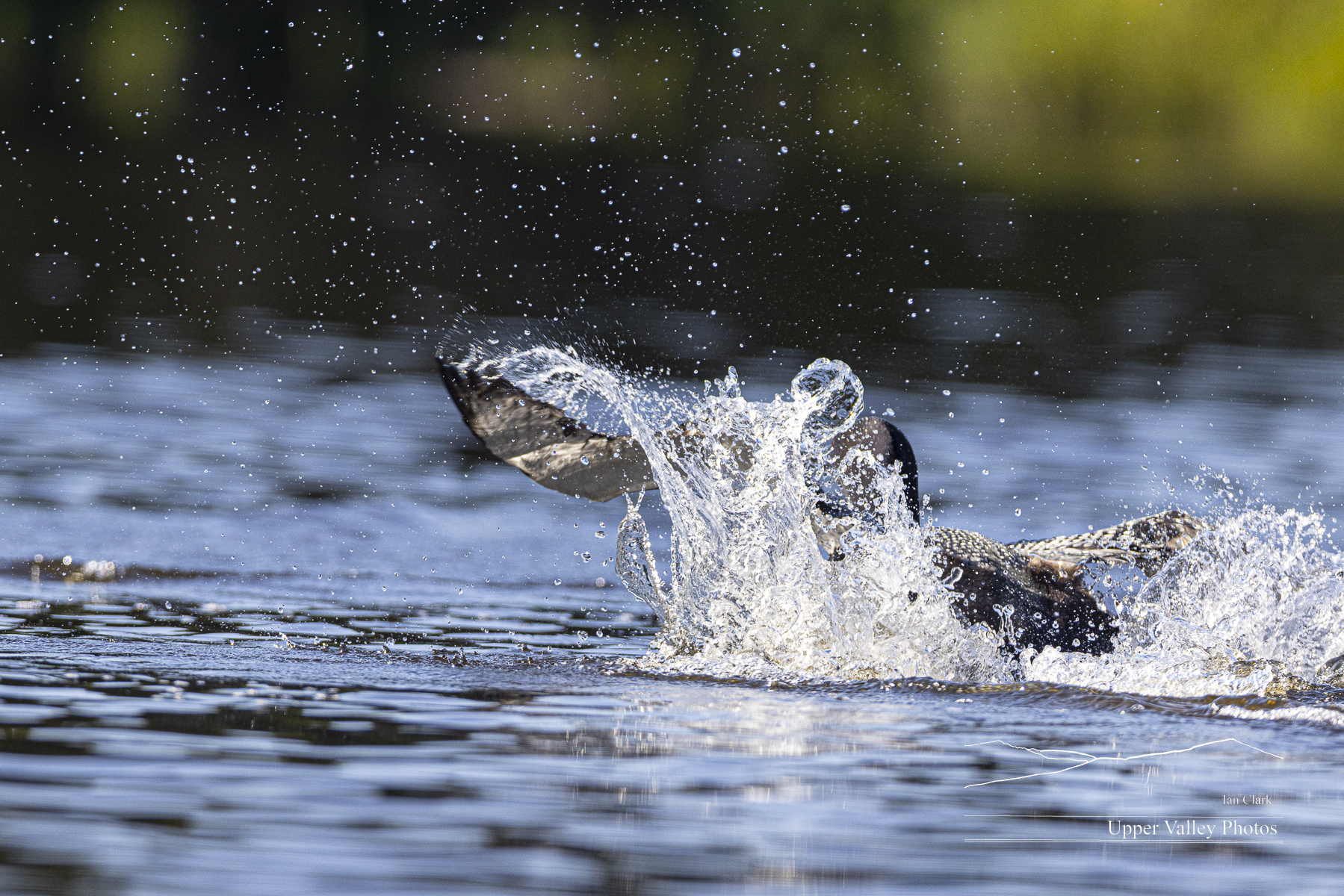
Mrs. E starts to turn. To turn, the loons put one wing into the water which quickly turns them towards that side.

Mrs. E has her right wing in the water, she’s lifting her left – probably for balance.

And off she goes about 75° off her original course.

With the intruder matching her turn and continuing the chase.

This was another extended fight, with them rowing up and down the pond.

Mrs. E is in the foreground – you can just barely see her orange band in the splashing water.

When the chasing loon catches up, they’ll attack with either their bill or by ‘punching’ with the joint in their wing. Here the intruder has caught Mrs. E and is hitting her with her wing. The fight still isn’t settled. They resumed rowing for a time before the intruder left for the day. I suspect she’ll be back until one of the loons is exhausted or dead. It is tough to watch, but we’ve got to let nature take its course. That doesn’t stop me from rooting for the home team.

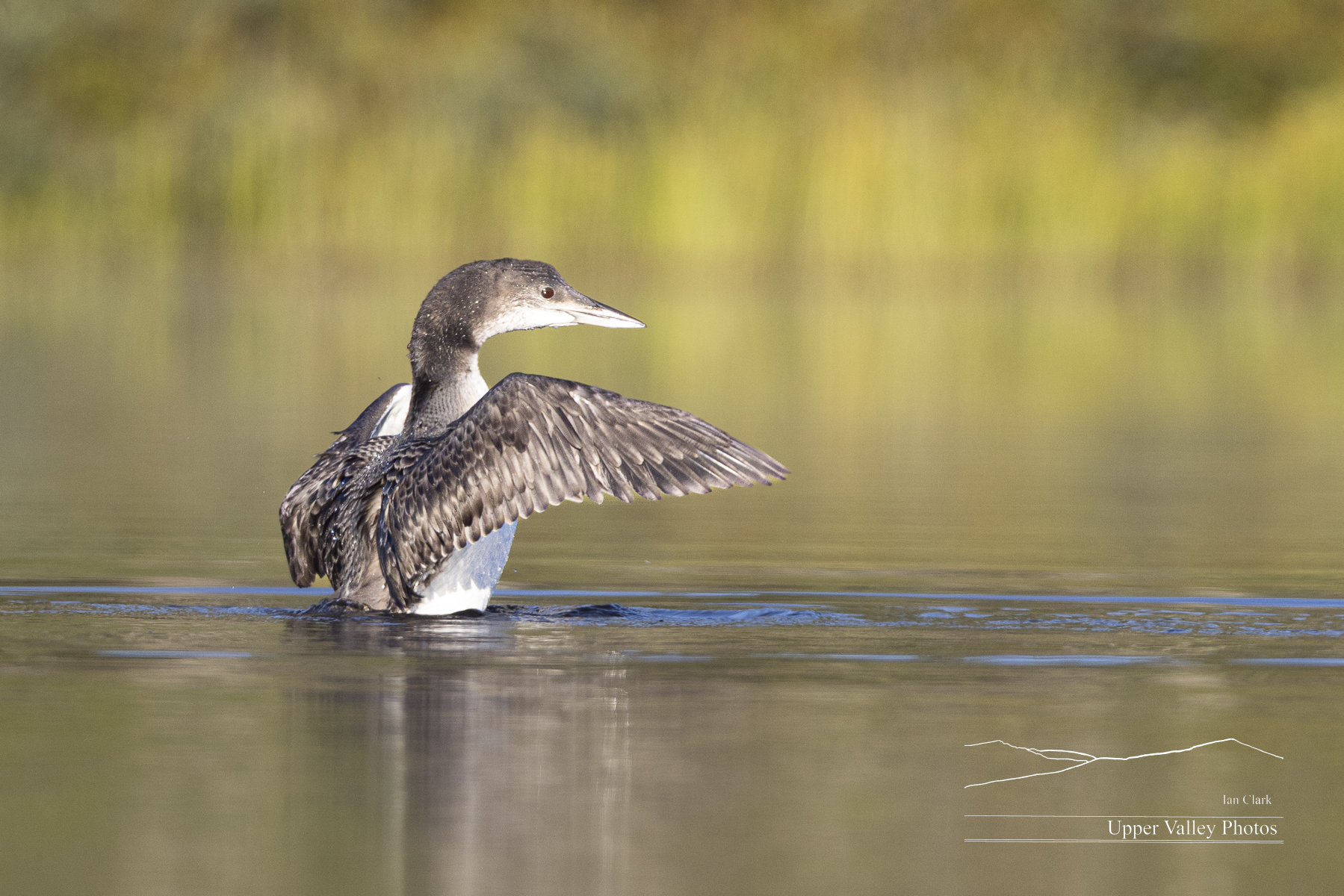
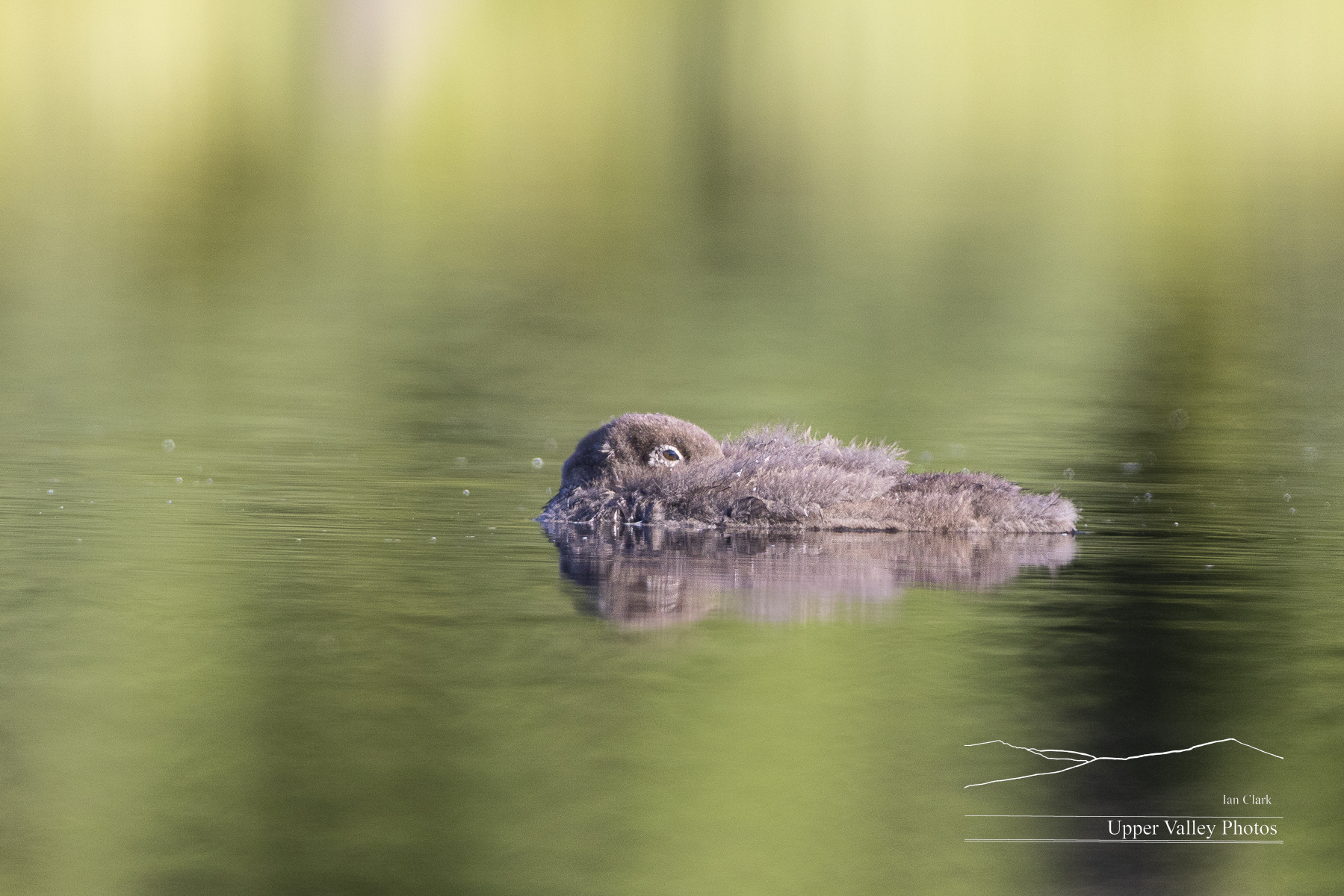
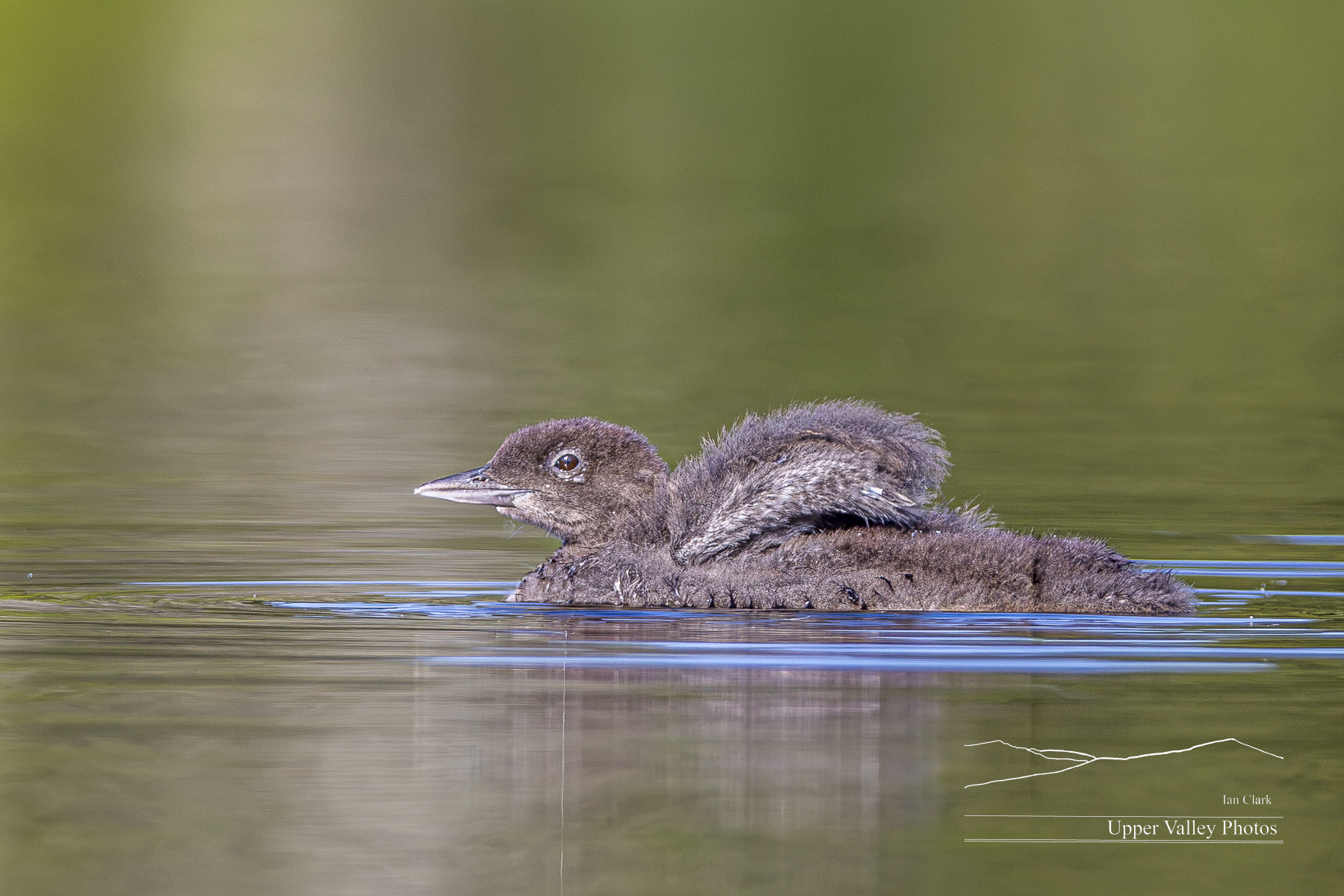
With the intruder gone, I went back to check on the chicks. One was sleeping, this one was flexing his wing.

Dad was keeping a sharp eye out to make sure the intruder didn’t return.

Mom didn’t trust the intruder either and was keeping watch too.

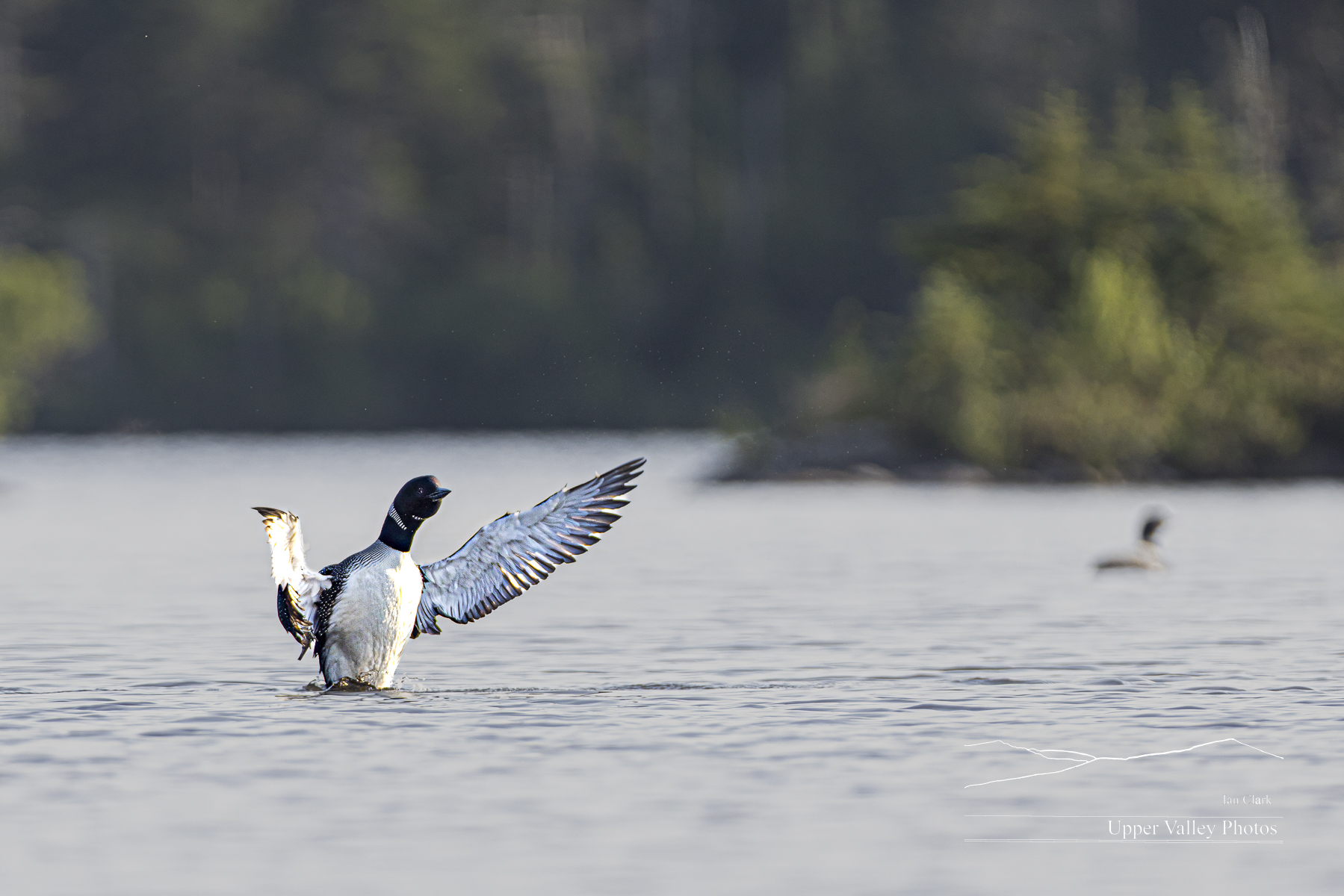
After several minutes, the home team relaxed and took time for a quick preening and a stretch. I had to head home. I’ll get back up when I can, looks like we won’t have good weather until the end of the week.

You can follow me on Facebook or @uppervalleyphotos on Instagram.

If you enjoyed this post, please subscribe to get notified of future posts with the form below. I won’t share or sell your info, you’ll just get an email when I add a post. And you can help me out by sharing this on social media or with your friends. Thanks!
Spring Brings Everyone Back to the Upper Valley

I’ve managed to get out a couple of times this spring, finding mixed success. Let’s see who’s out and about.

It is that time of year again where I ask for help finding critters. I’m always looking for mammals bigger than squirrels. I’m still looking for a fox den and would love to find coyote or bobcat dens. If you get a bear showing up daily when they get fully up and around, I’d love to know. Owls and a woodpecker nest are on my list too. If you’ve any of them showing up regularly where I can come and go without disturbing them or you, I’d love to know.

I’ll be giving my slideshow An Uncommon Look at the Common Loon at the Rockingham, Vermont, Library Saturday May 2, at 11 am. Free and everyone welcome. And I have prints of some of my favorite loon photos hanging in the Library now. Stop in and have a look.

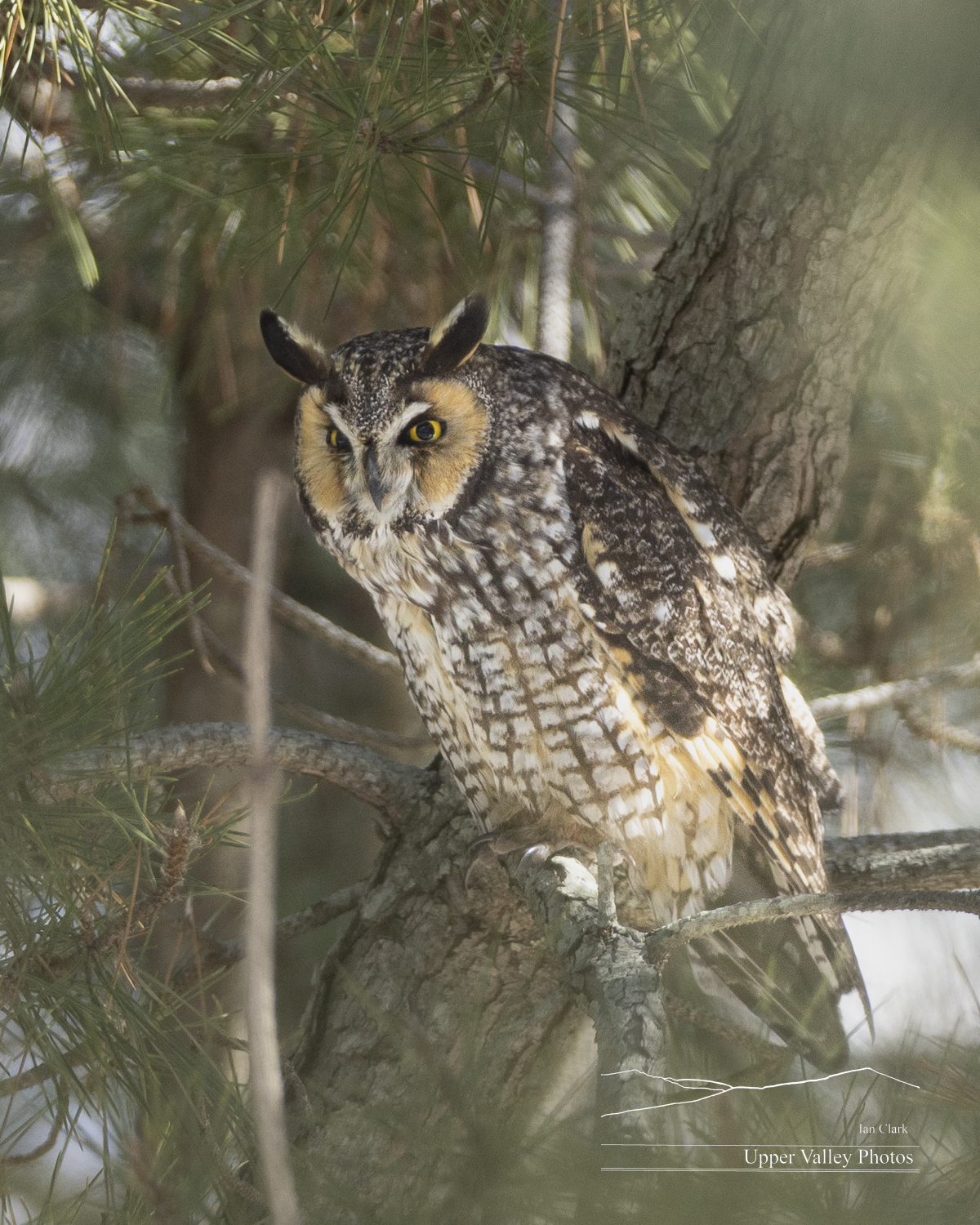
Regular readers will know that I’ve been trying to get a good shot of the long-eared owls down on the coast. There have been three of them wintering there for the last several years. They hang out in what can’t be more than half an acre of trees. I’ve made several trips down to try to catch them where they can be seen. To make things worse, every photographer east of the Mississippi seems to have a nice shot of all three posing nicely together in the clear – and they all stop by to show you their shot on their phone….. I tried again in March.
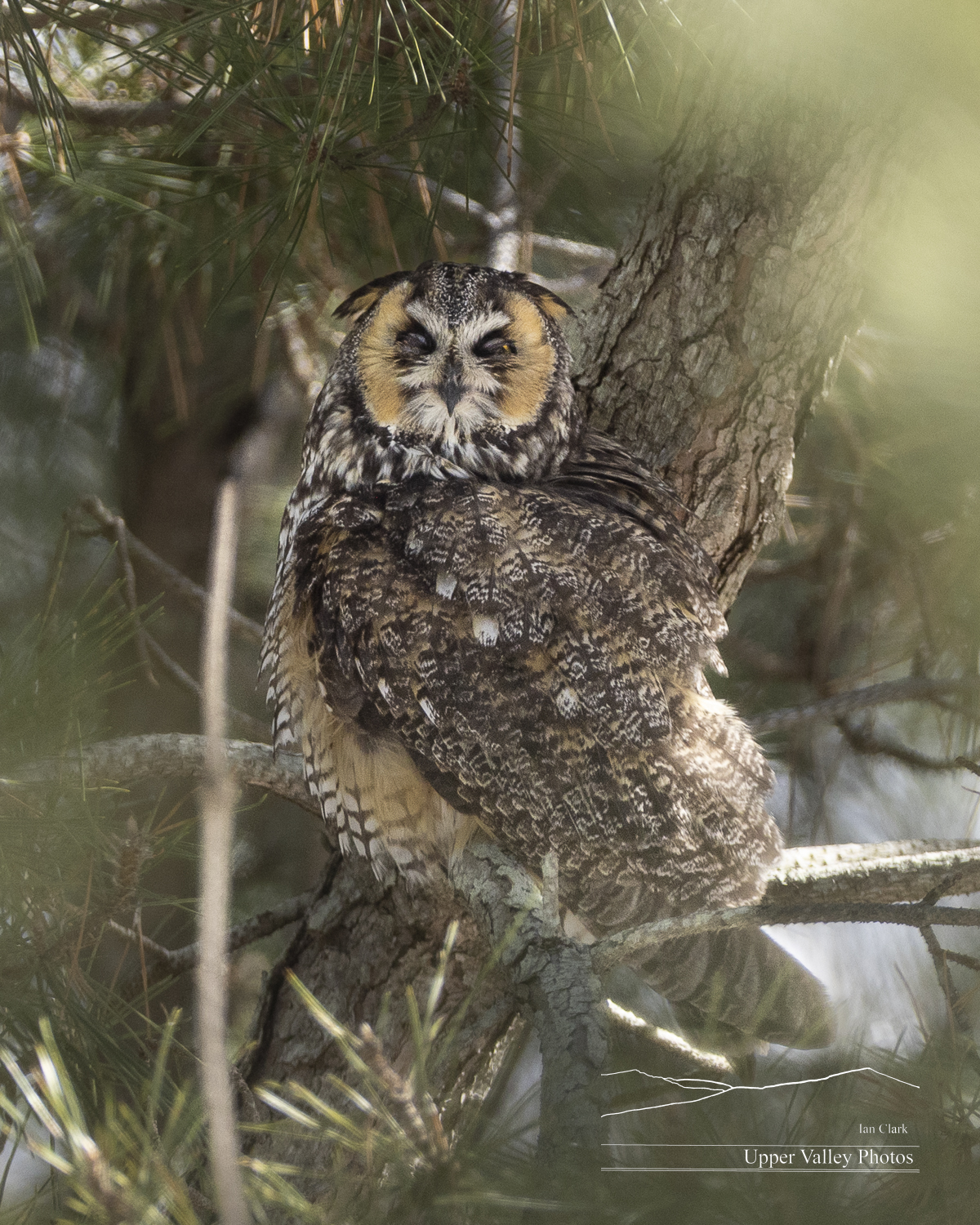
Success again eludes me… One owl was visible through a tiny gap in the trees. The queue of photographers were actually polite about sharing the one spot where you could see the owl. I waited for him to open his eyes…. no luck.

Success again eludes me... One owl was visible through a tiny gap in the trees. The queue of photographers were actually polite about sharing the one spot where you could see the owl. I waited for him to open his eyes.... no luck.
When he did open his eyes, he leaned forward – right behind that &%$@#$& branch….

There’s always next year….

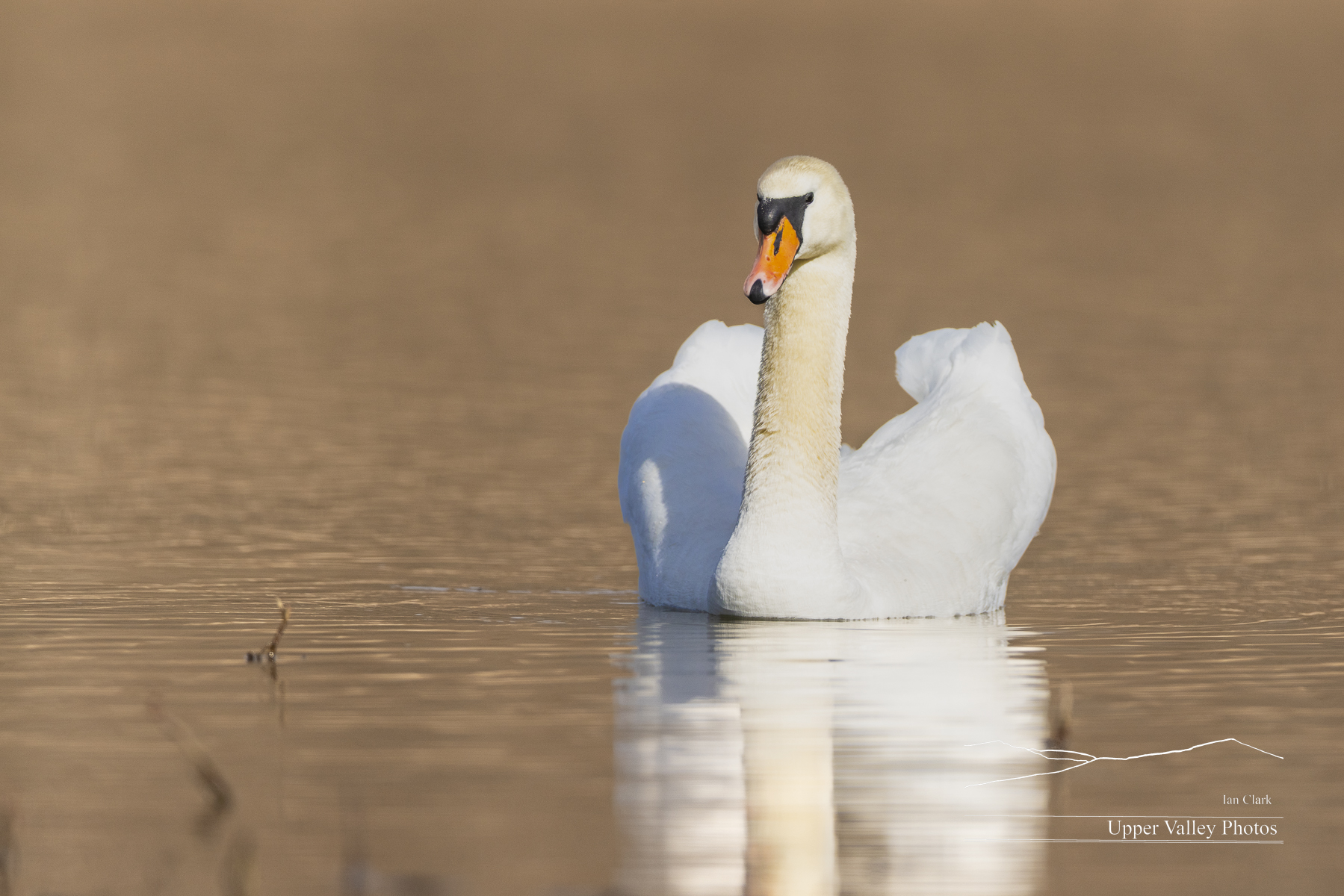
One of the projects I’d like to try is to follow a family of swans through the season. Yes, yes, I know they’re invasive. And aggressive. But they’re here. We either have to live with them or hunt them all down.

I went searching for a likely couple. I ventured down to the Fannie Stebbins Memorial Wildlife Refuge. They’ve hosted families the last few years. There were two swans to be found – and apparently not a couple.
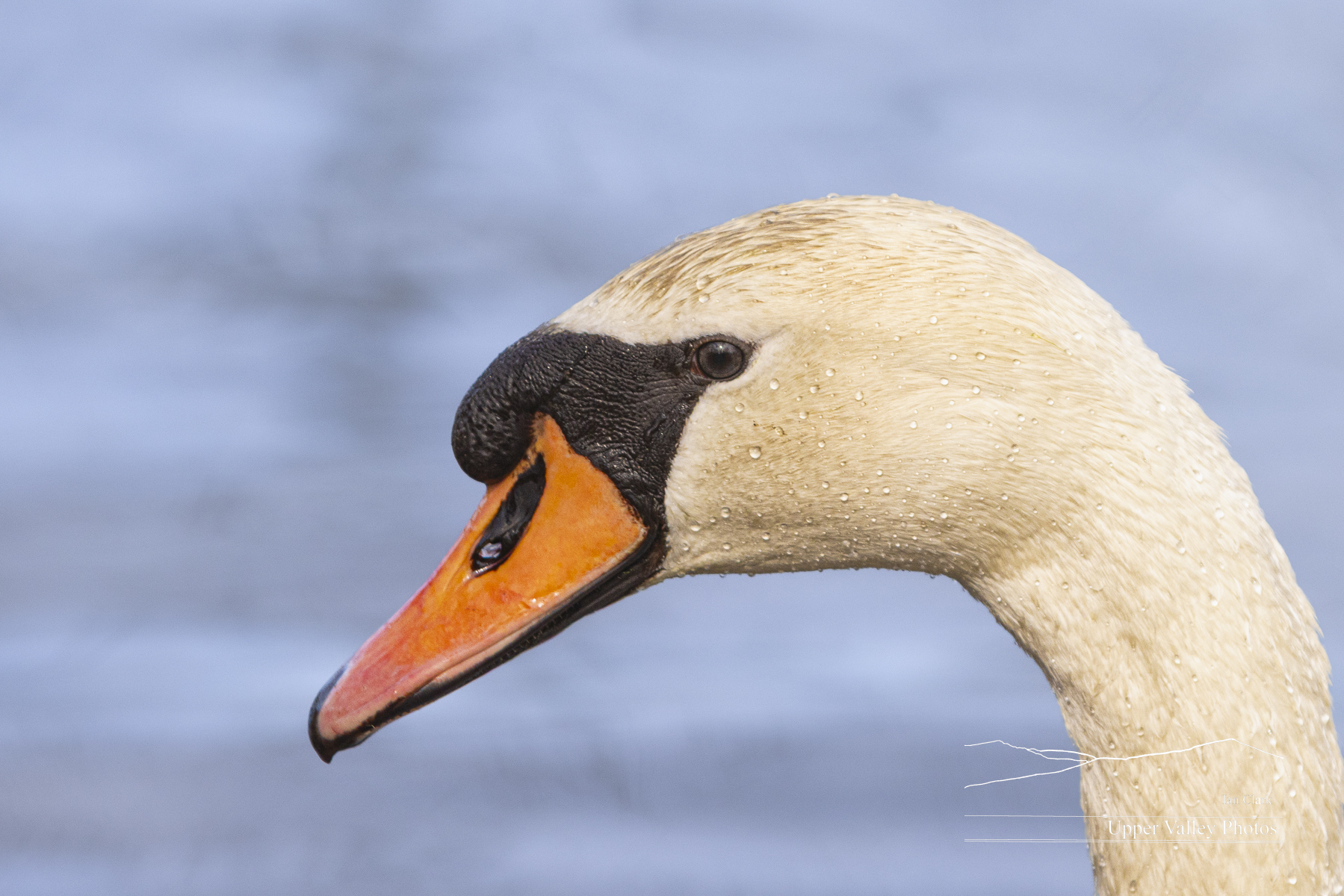
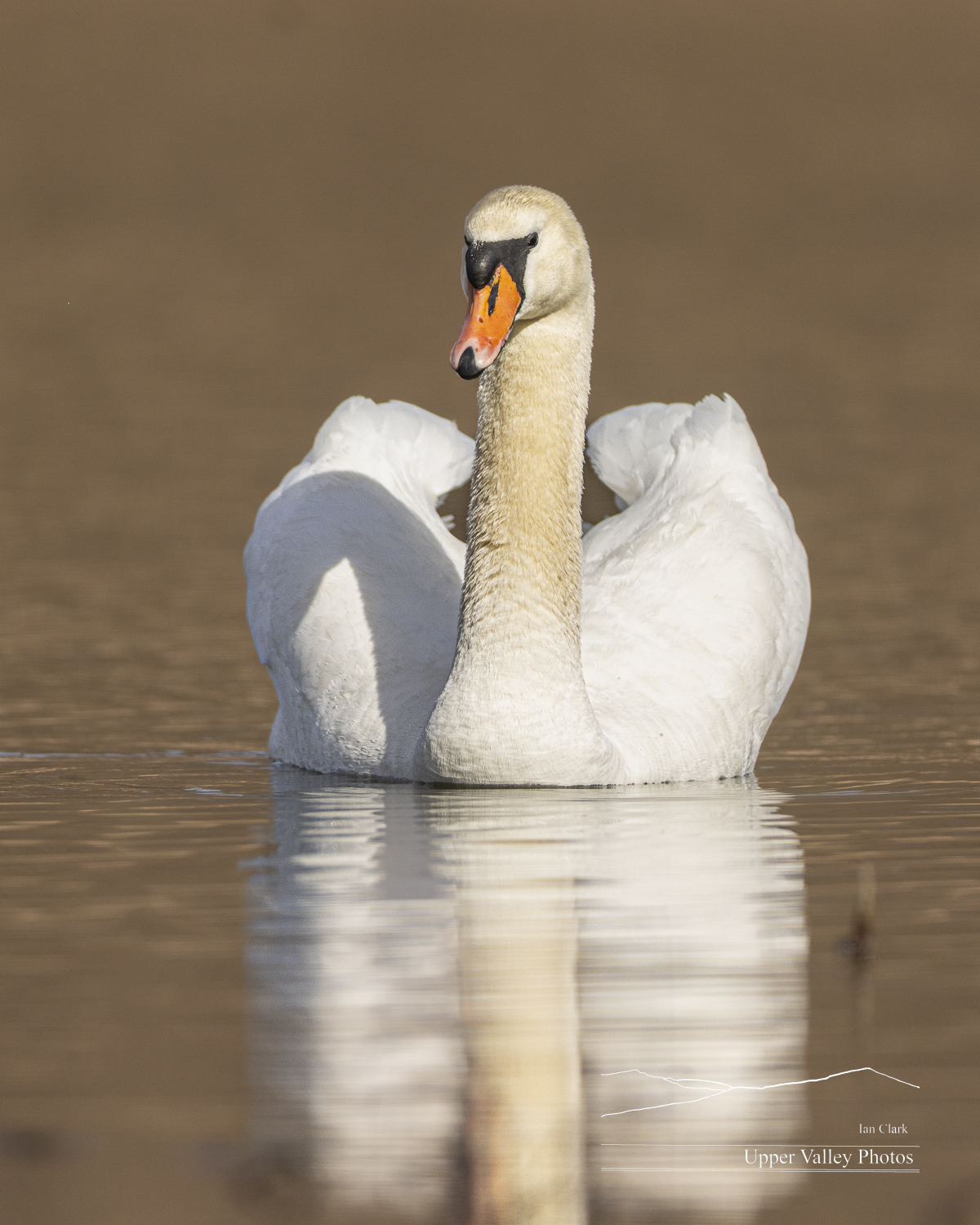
The first swan I found was looking for handouts and wouldn’t back up far enough to get a photo of all of him?

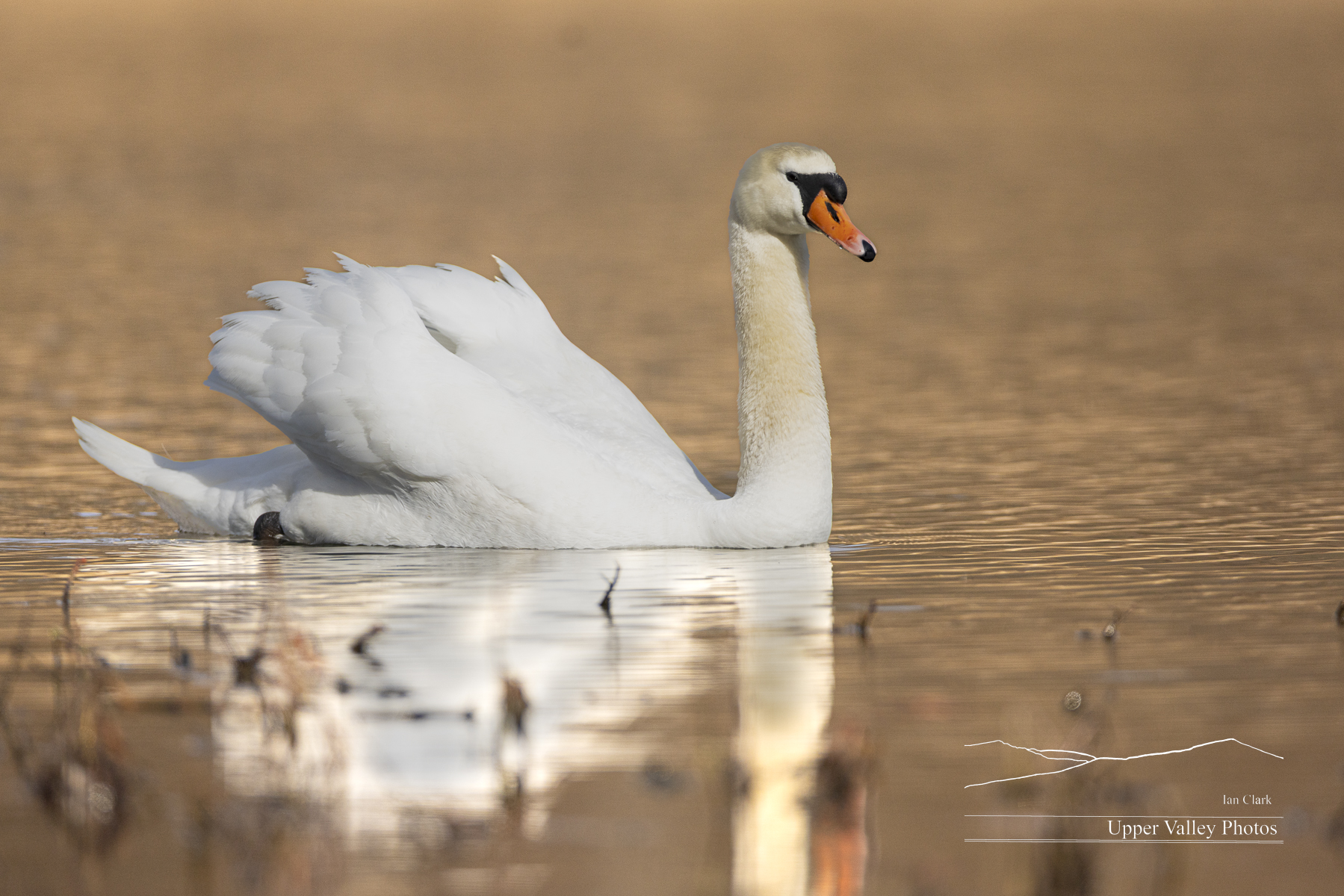
The other swan spent the afternoon swimming slowly around his pond, doing swan things.

Fannie Stebbins may not be where I find the family, I’ve got some other spots to check out.

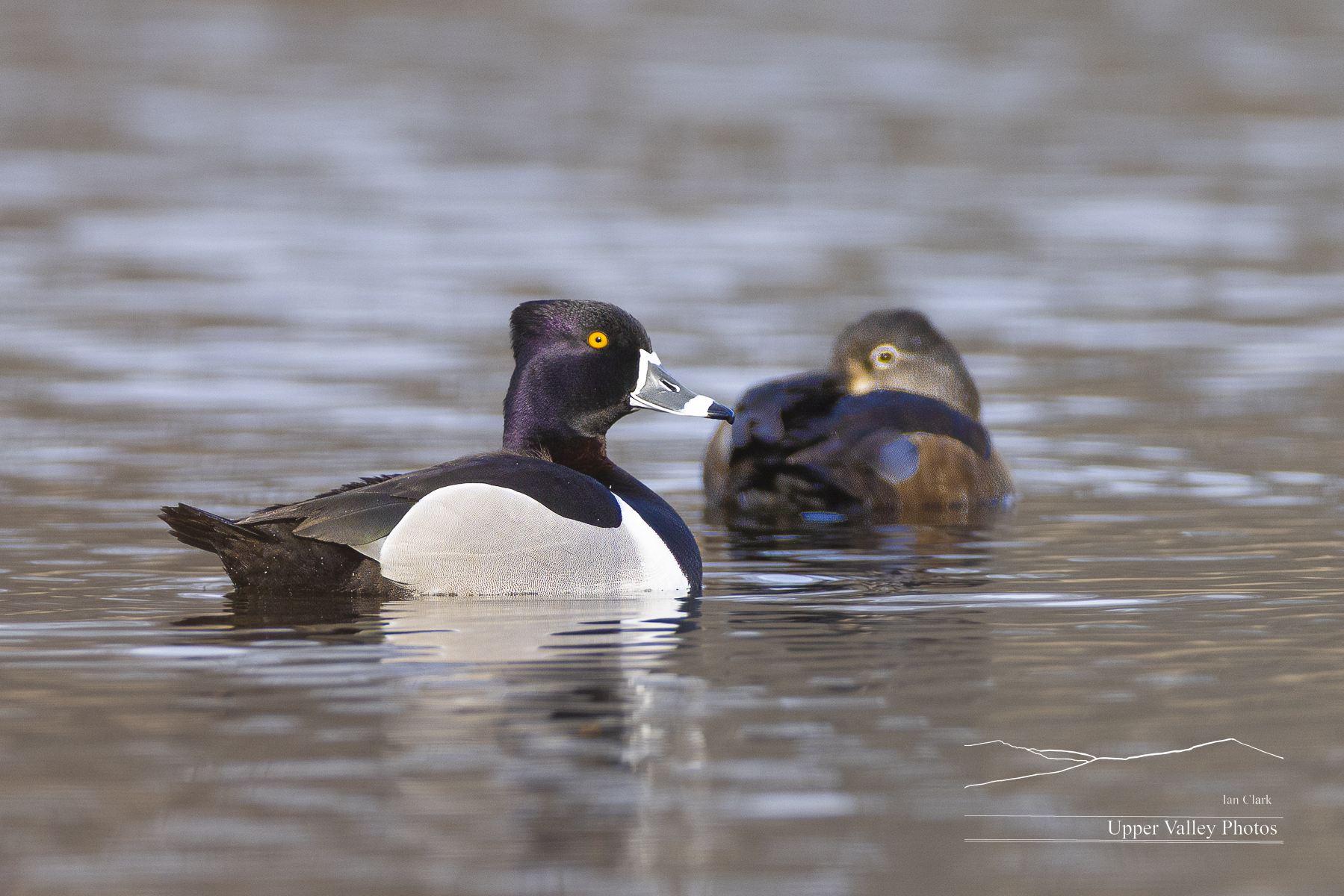
There was a good-sized flock of ring-necked ducks relaxing on the pond.

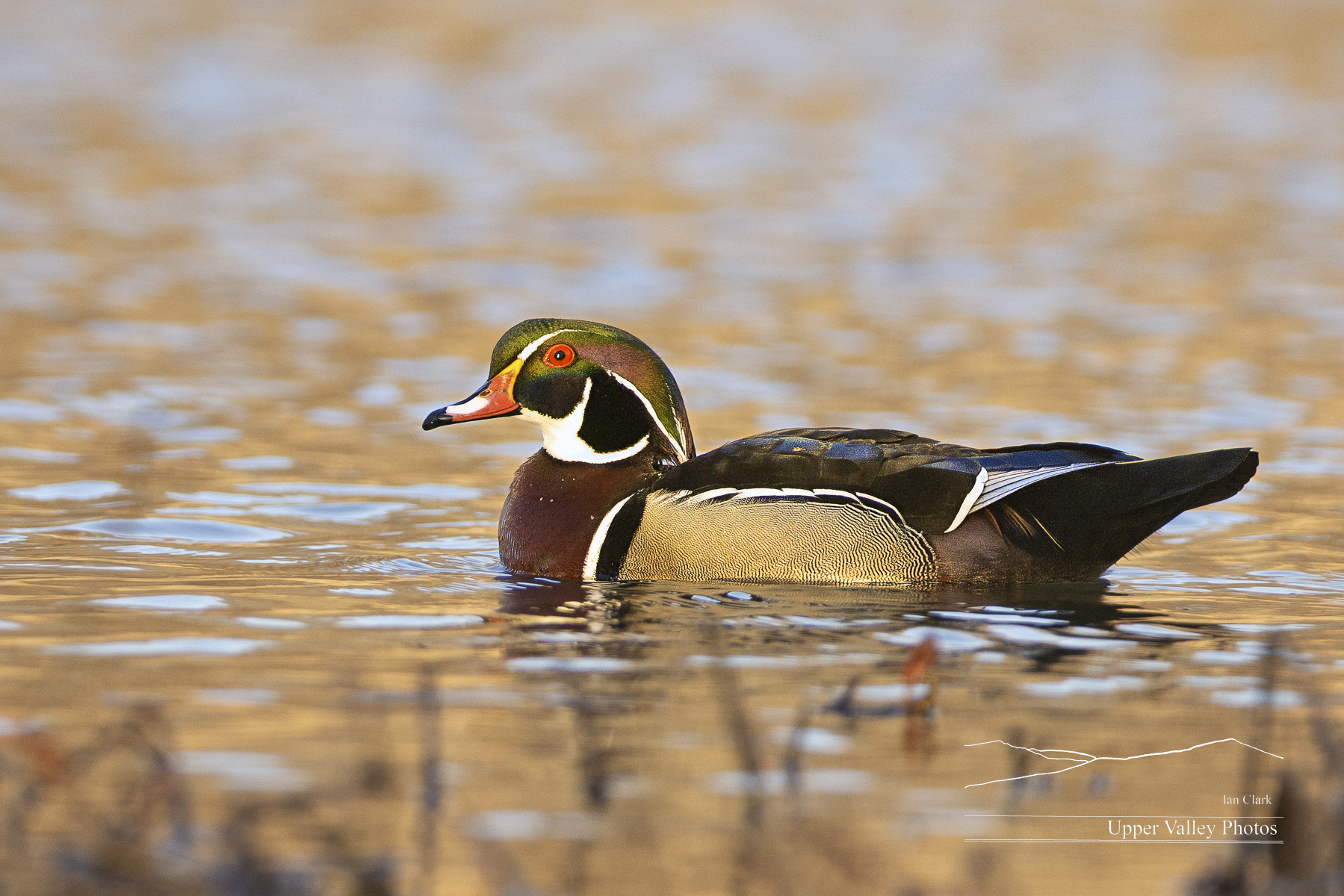
The male wood ducks were out paddling their stuff to impress the ladies.

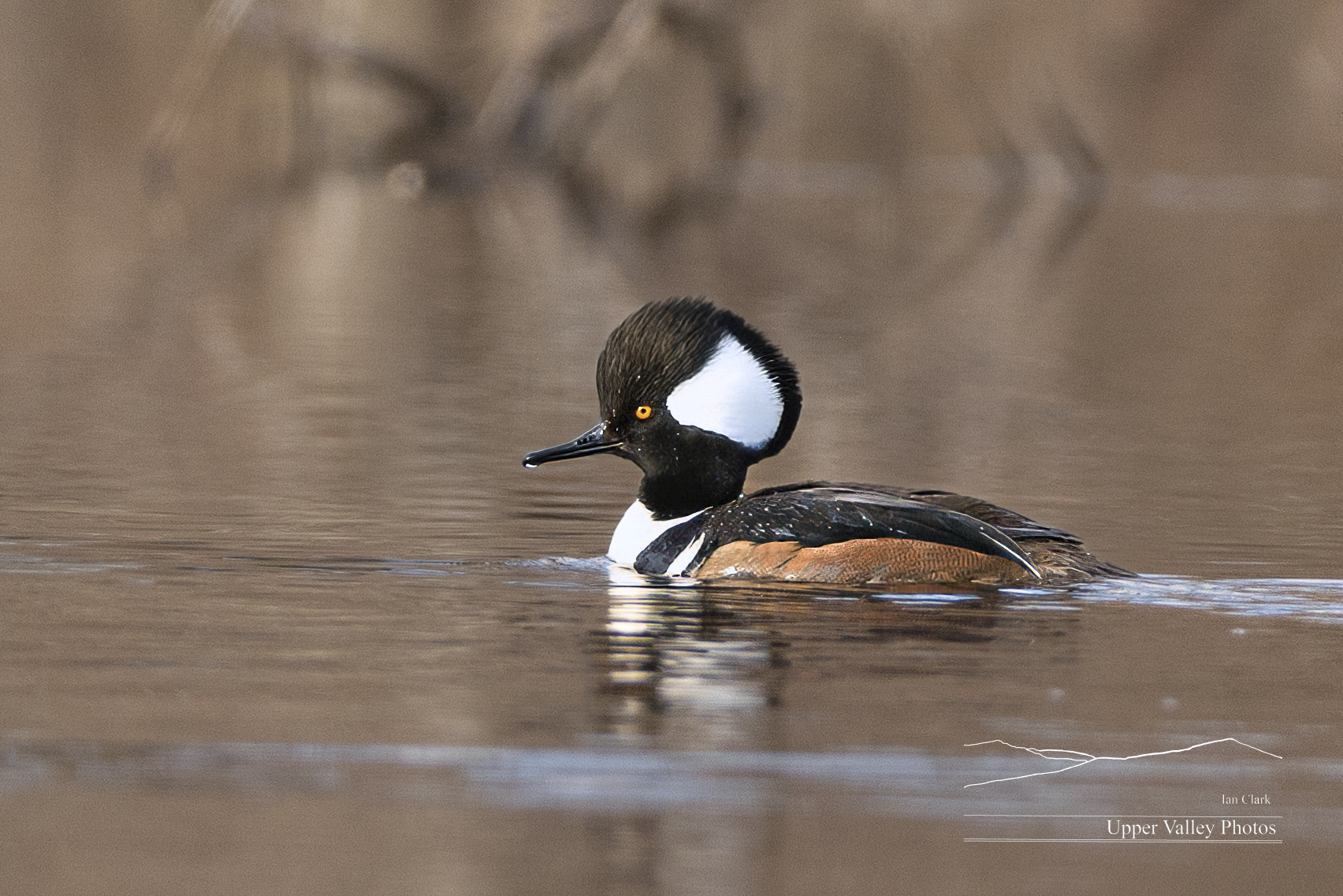
And there were several hooded mergansers, mostly swimming in pairs – but too far apart to get both in a shot.

On the way home, I found two loons on the Connecticut River, a hopeful sign.
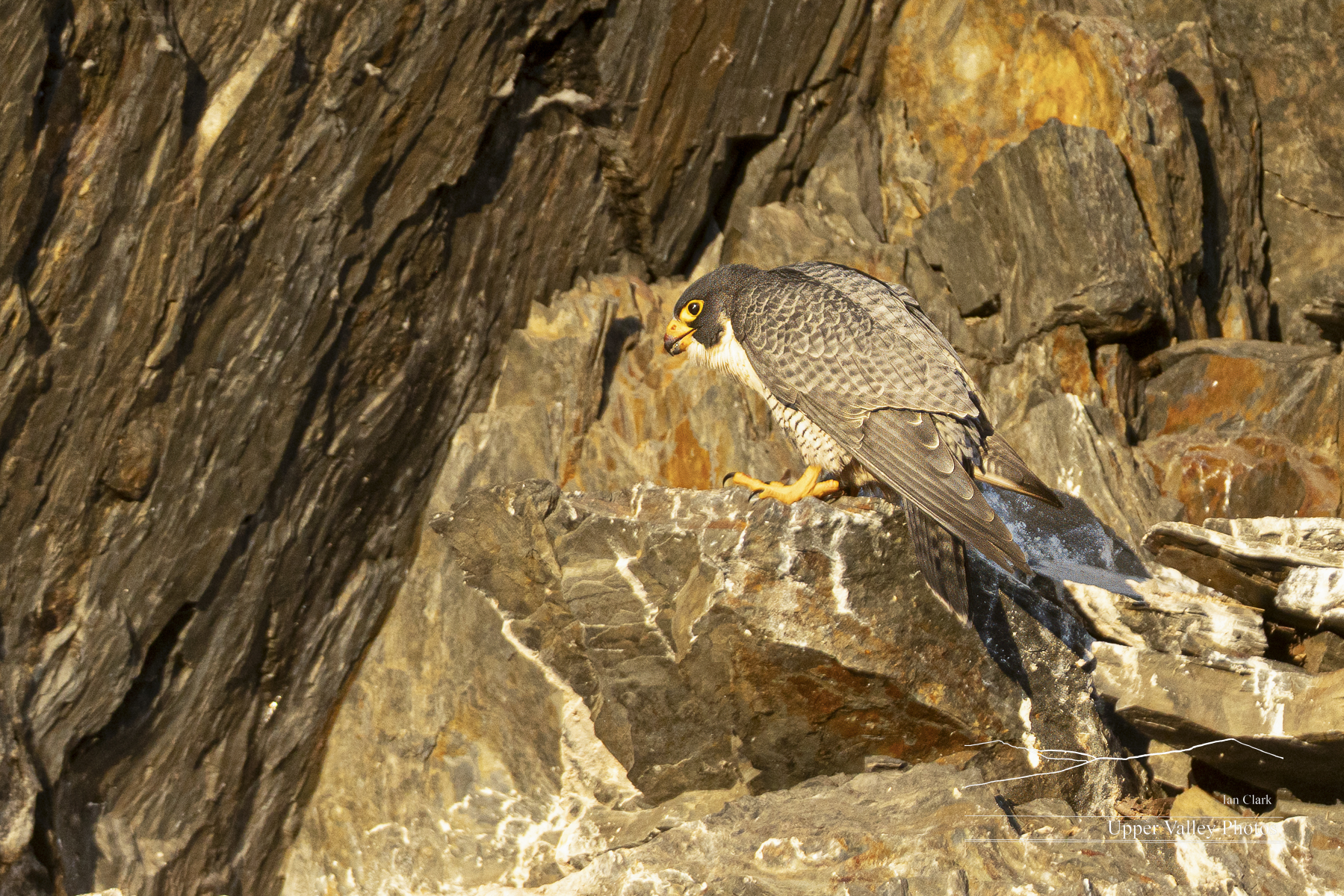
My next outing was to check on our local peregrine falcons. They spent most of their time away from the nest on my first visit.

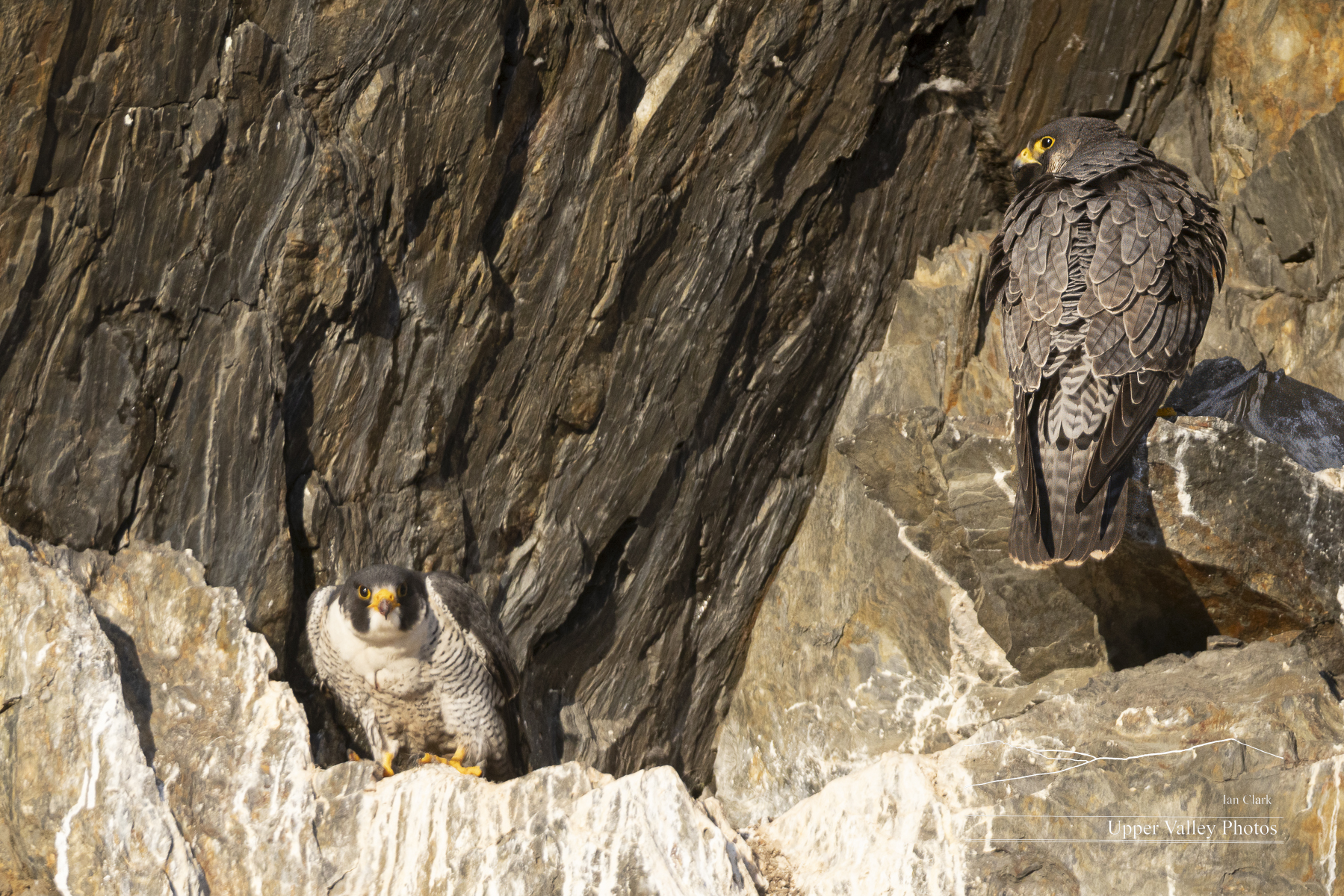
The next time I had a chance to visit, there was a falcon sitting on the nest. And one supervising.

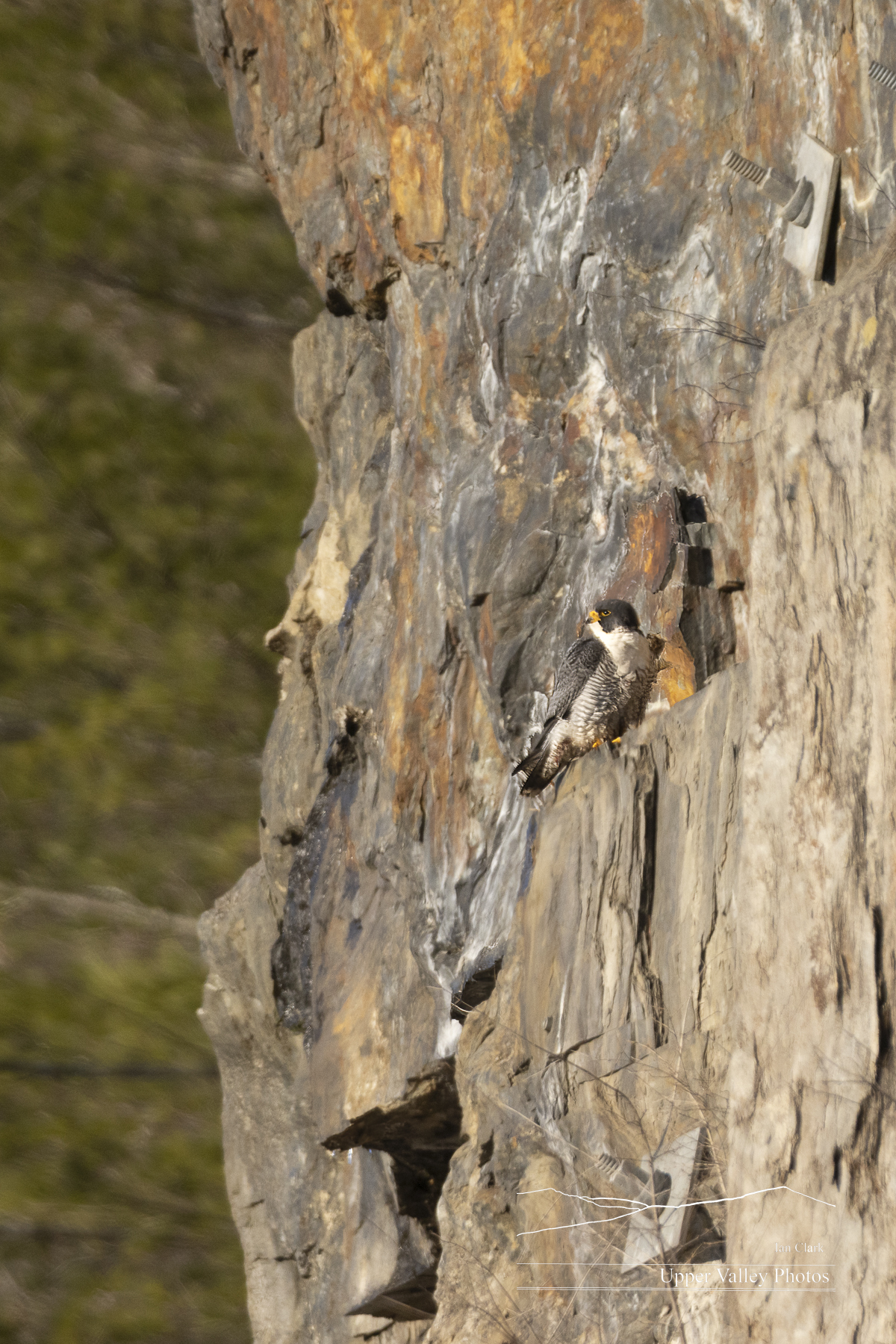
This gives a good idea of where falcons like to nest. Can I name this guy Cliff?

The bolts in the rocks are rock bolts drilled into the cliff to keep rocks from falling.
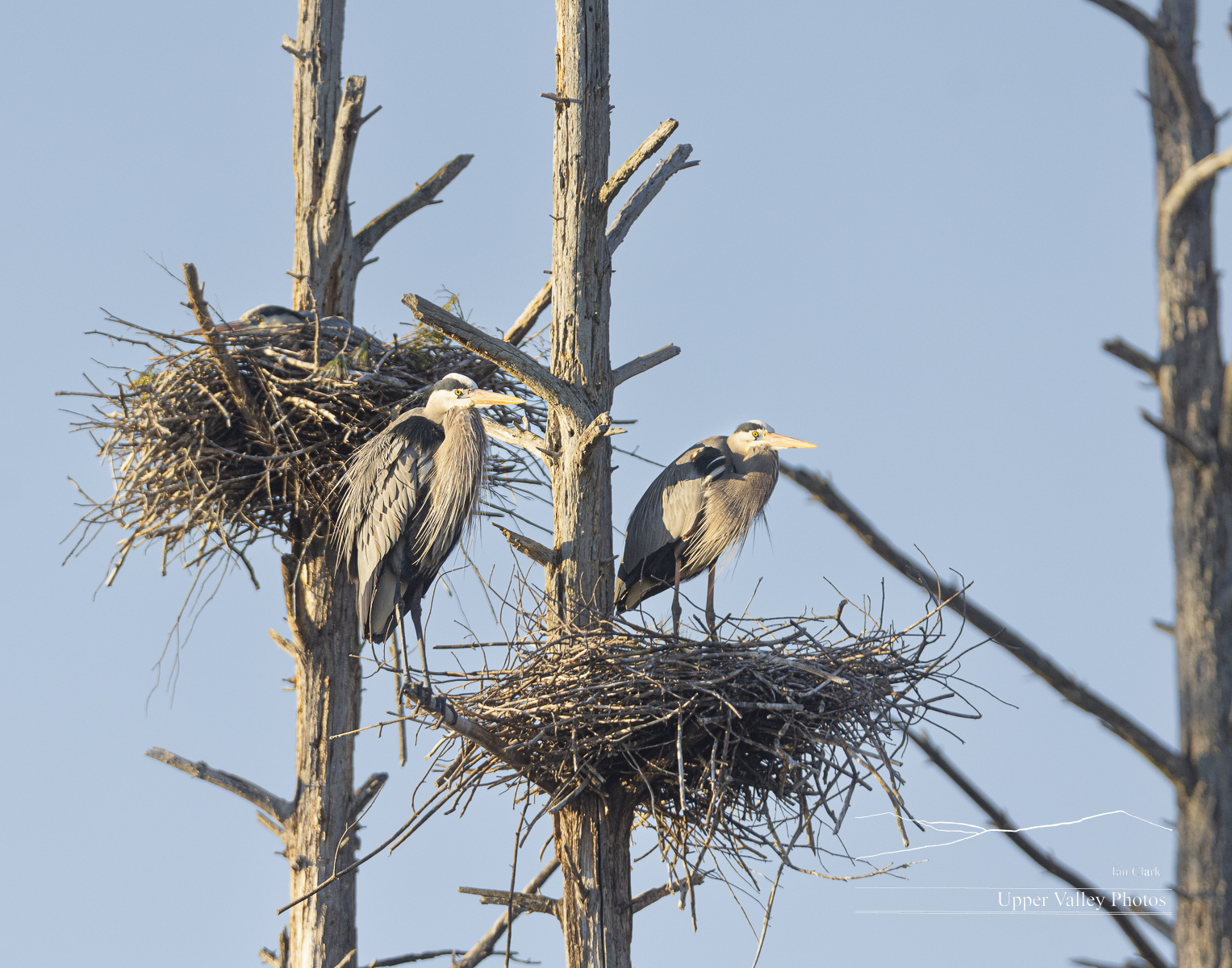
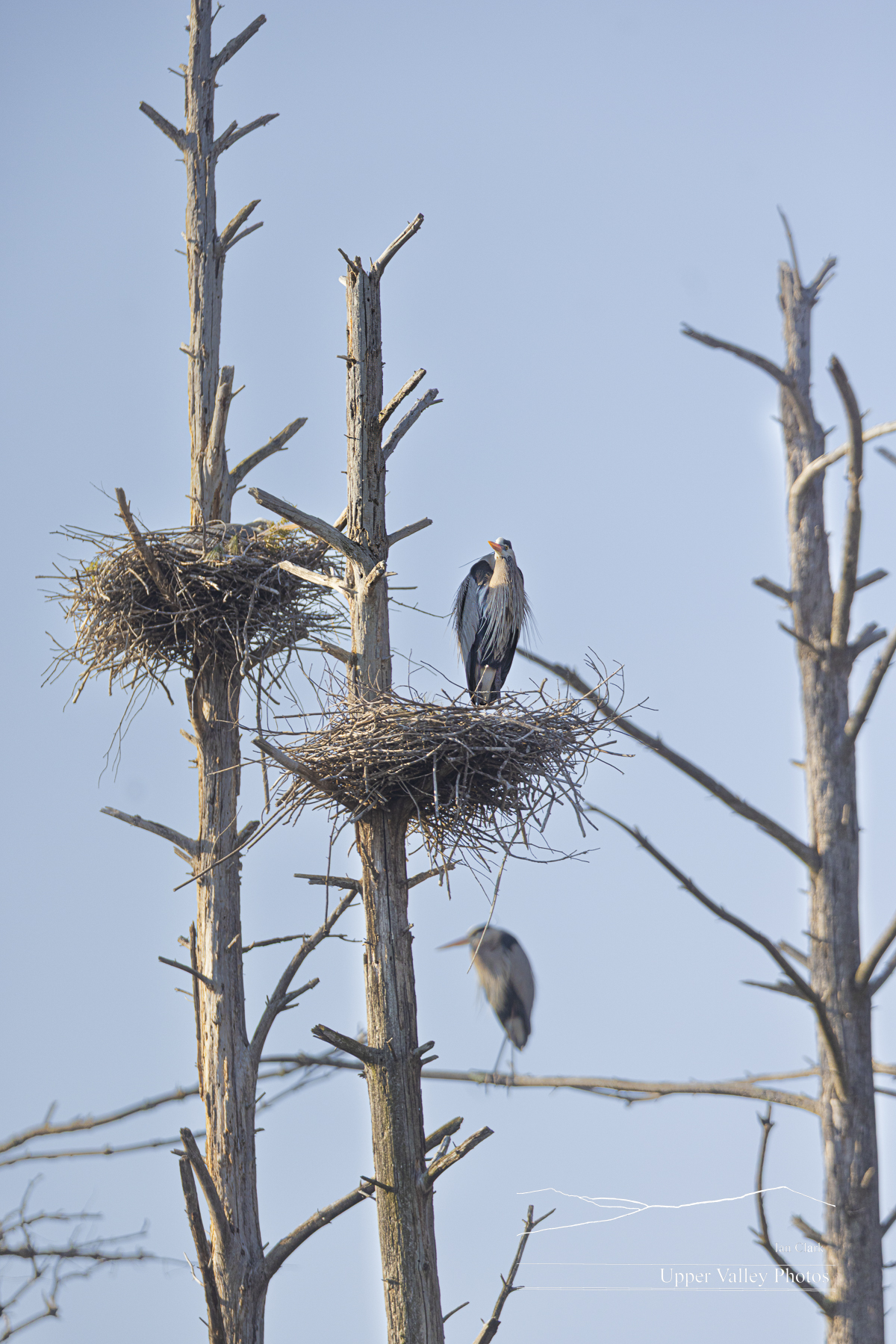
My next outing was to visit a great blue heron rookery. It is on the small side for a great blue heron rookery – only seven nests. The good news is they’re relatively low for heron nests, we should be able to see the chicks from the ground when the time comes.


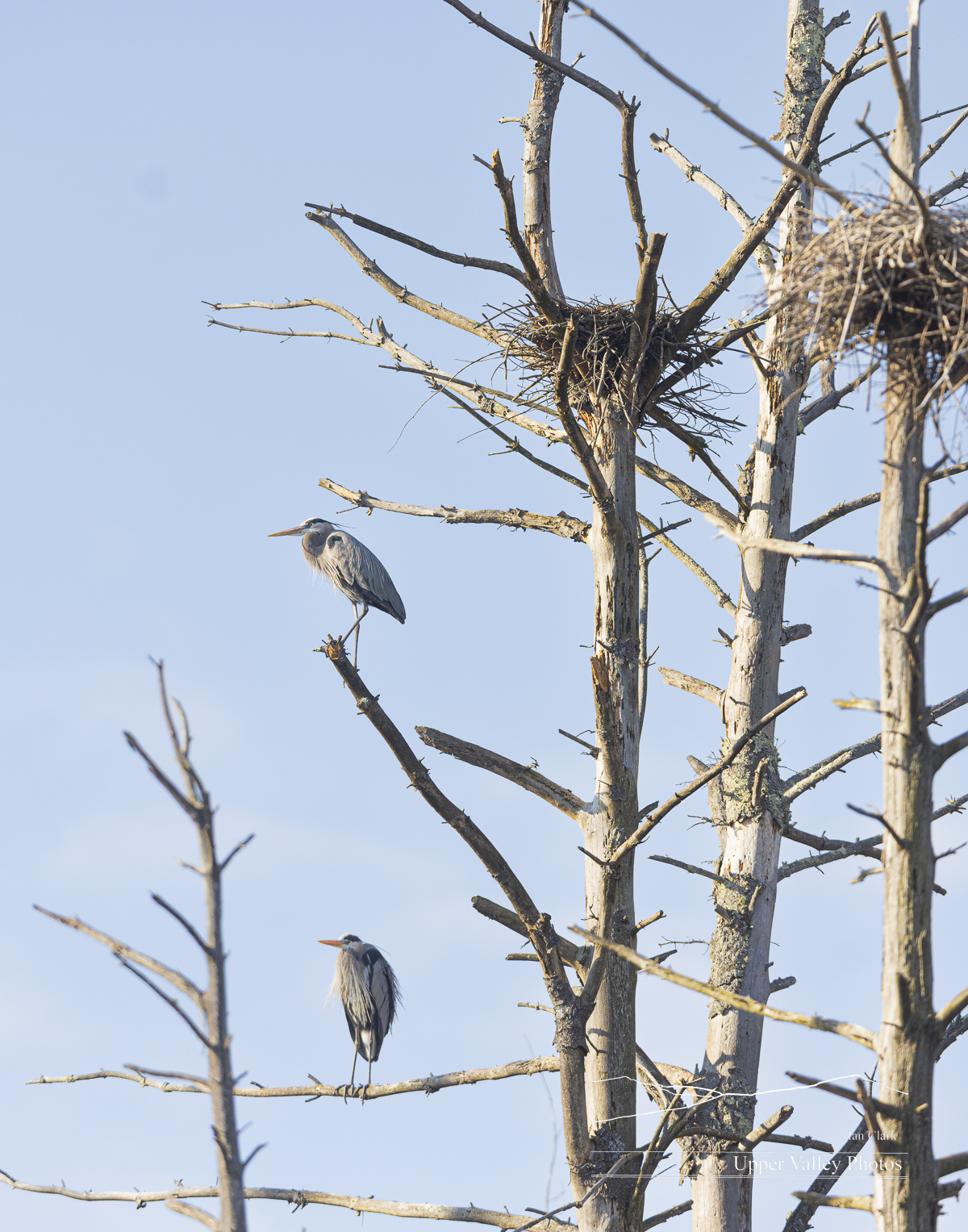
The nests are all in dead trees over a small pond.

Most of the herons spent their morning standing in the trees near the nests.

Sometimes they seemed to be chatting with the neighbors.

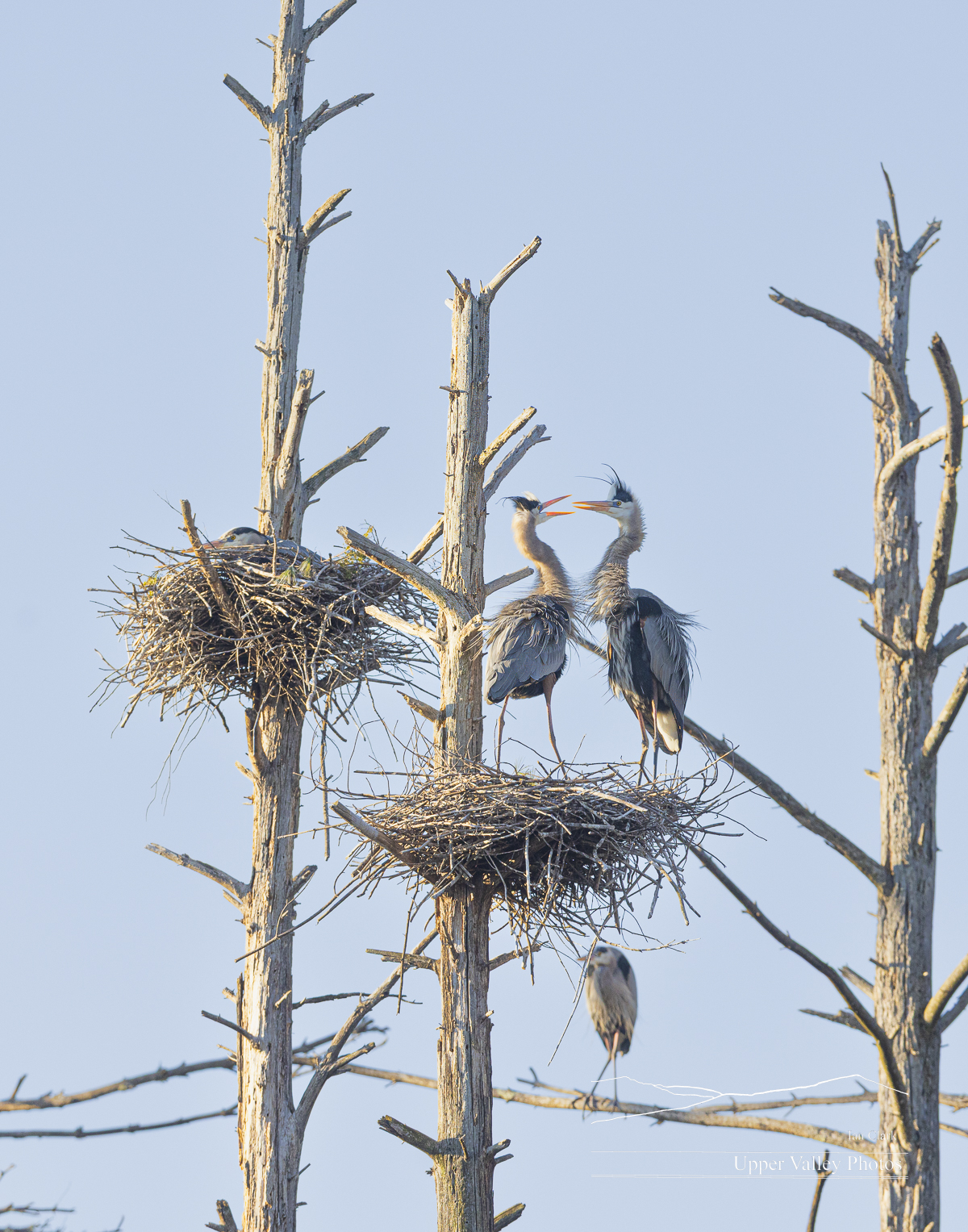
The heron on the right has just returned to the nest. The herons did some head bobbing and weaving in a quick courtship display.

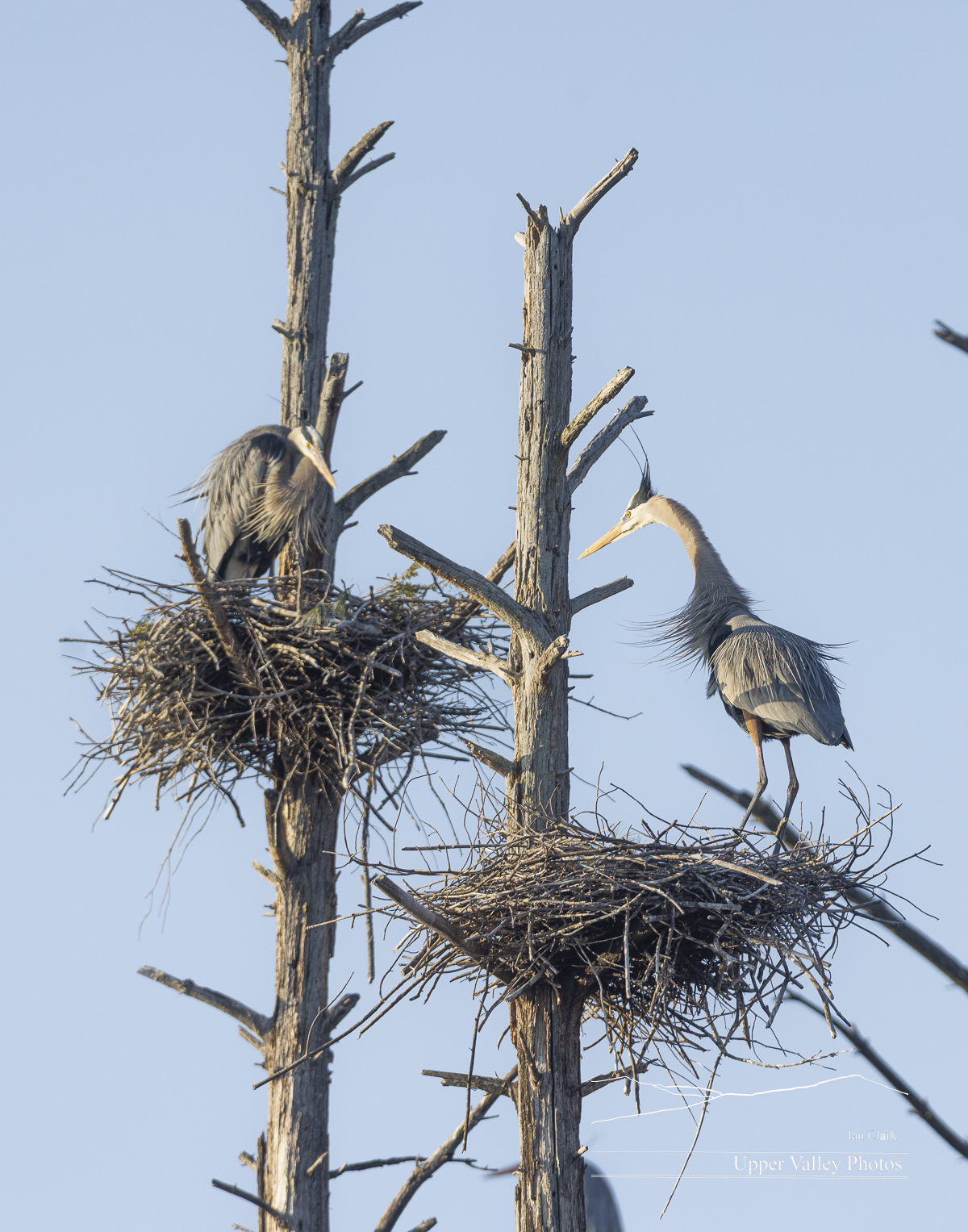
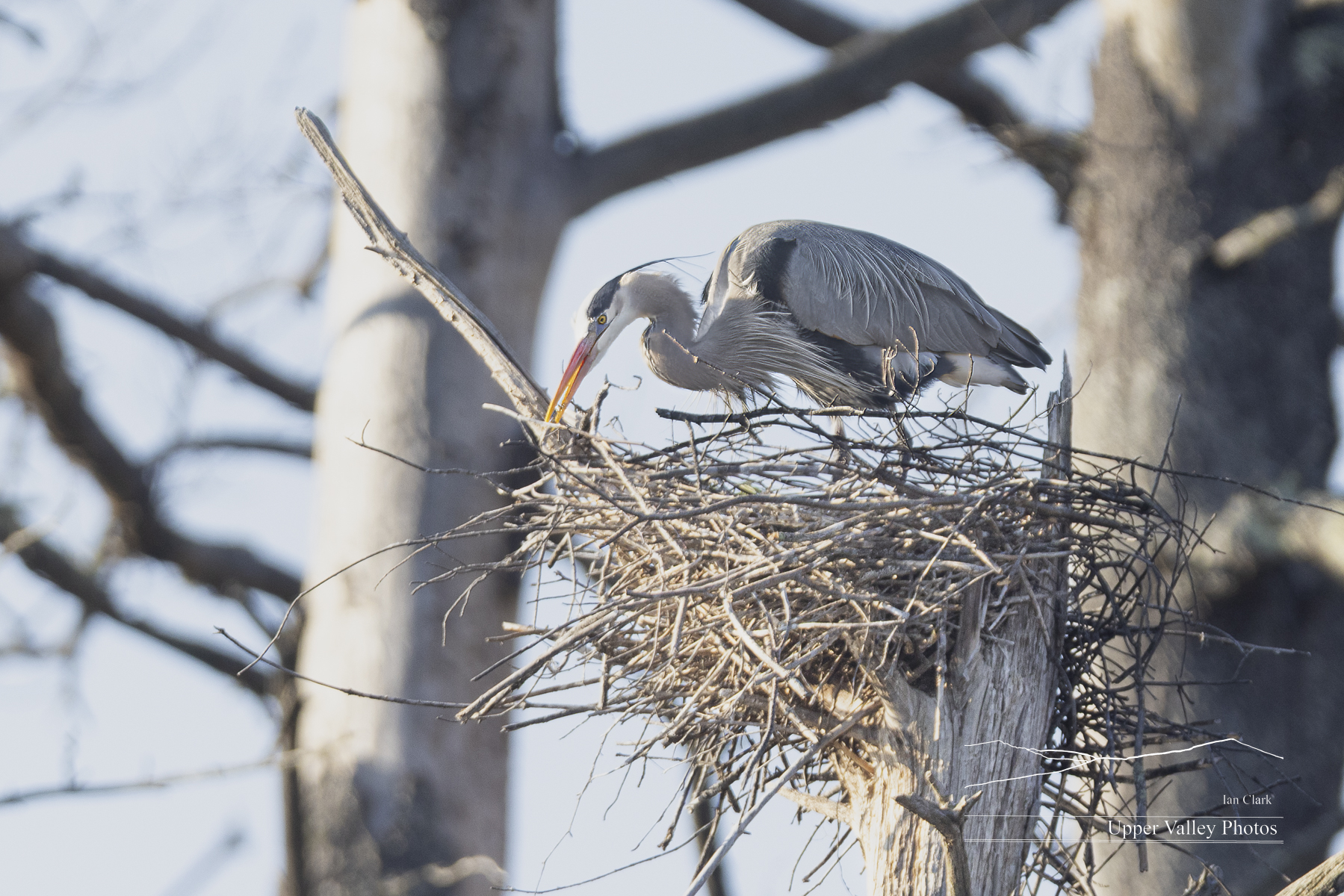
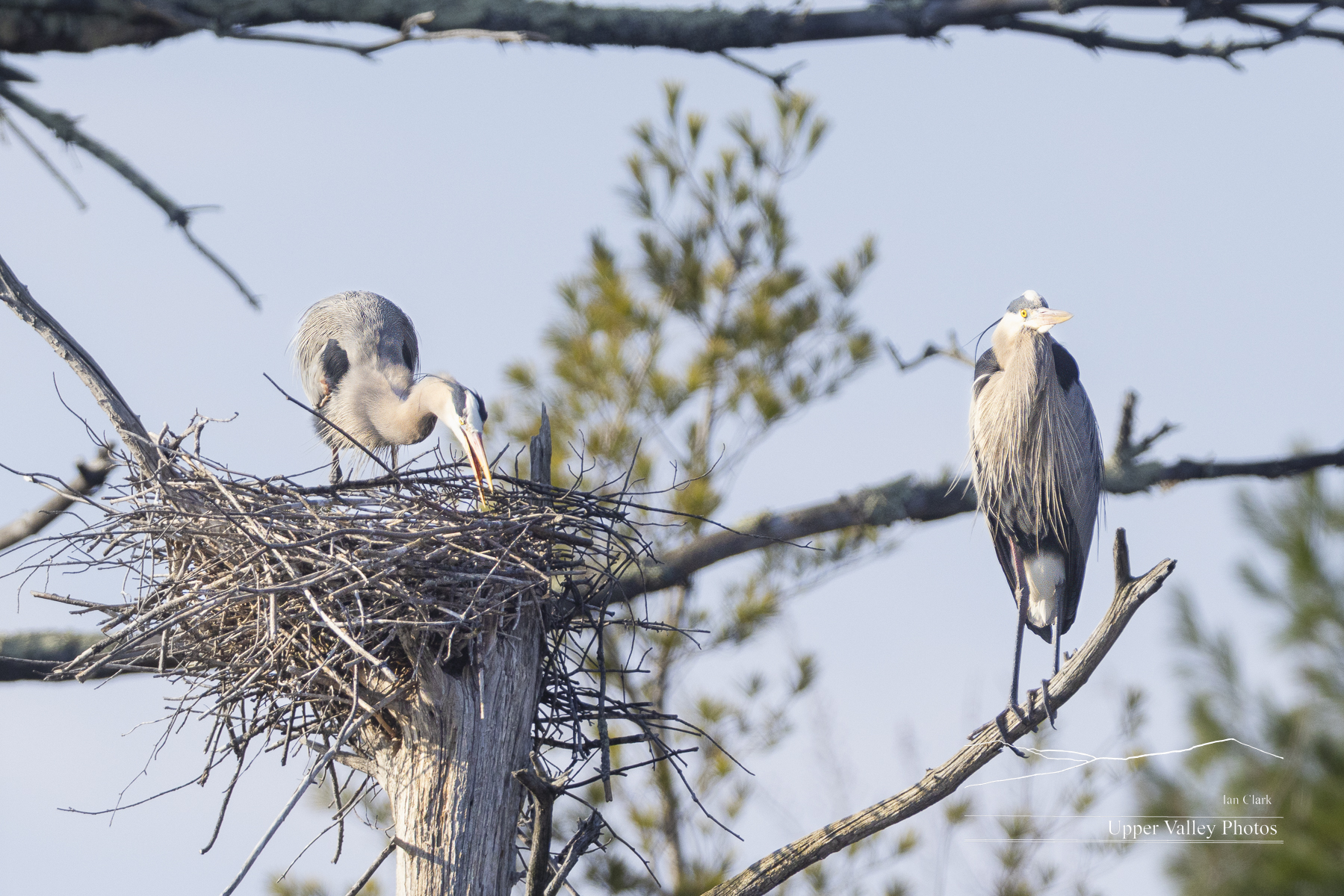
One bird found time to make some nest improvements.

While the mate sat nearby pretending to be busy.

I’ve been checking on the Middleton’s pond – usually the first to ice out in the spring. Last Saturday afternoon there was a loon snoozing on the pond. I went home and got the boat ready to go.

Dawn on Sunday found me on the pond. But no loon. It was probably on a scouting mission to see if his pond was open and he’d just stopped off to rest a bit. Other pond residents were out and about.
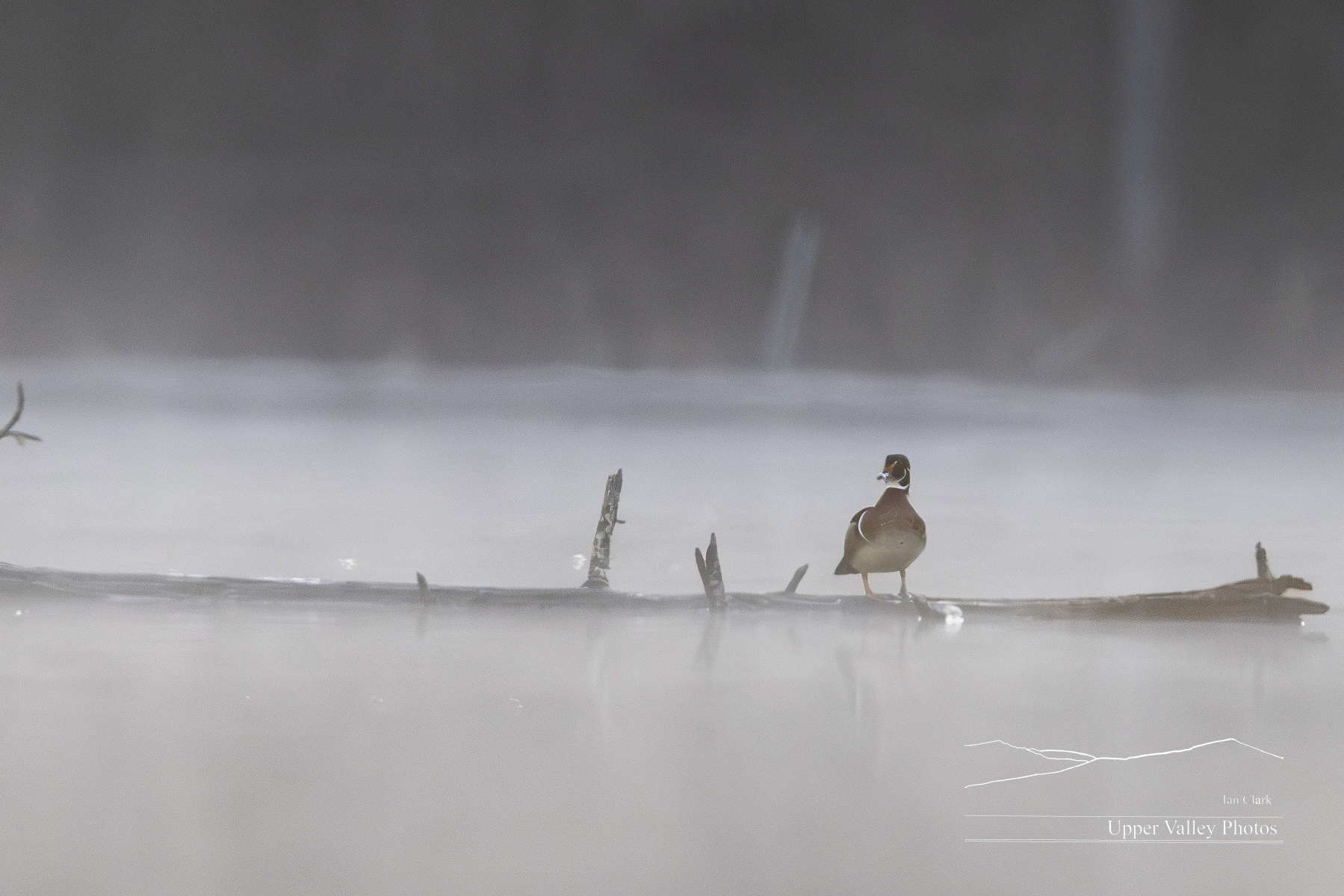
The morning started off foggy, but pleasantly warm for an April paddle – 28° when I launched. A wood duck posed as I headed down the pond.

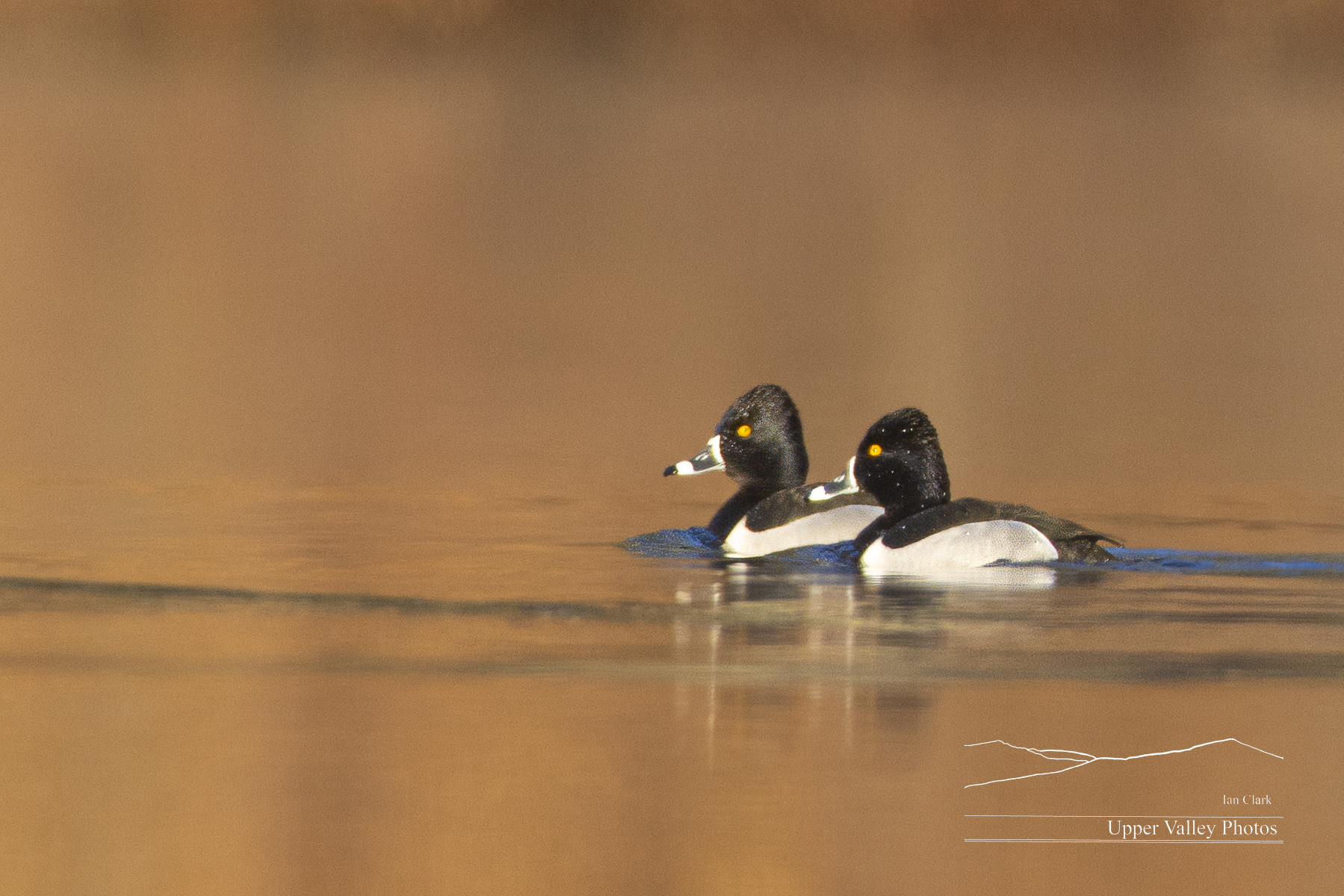
I did find several ring-necked ducks promenading on the pond.

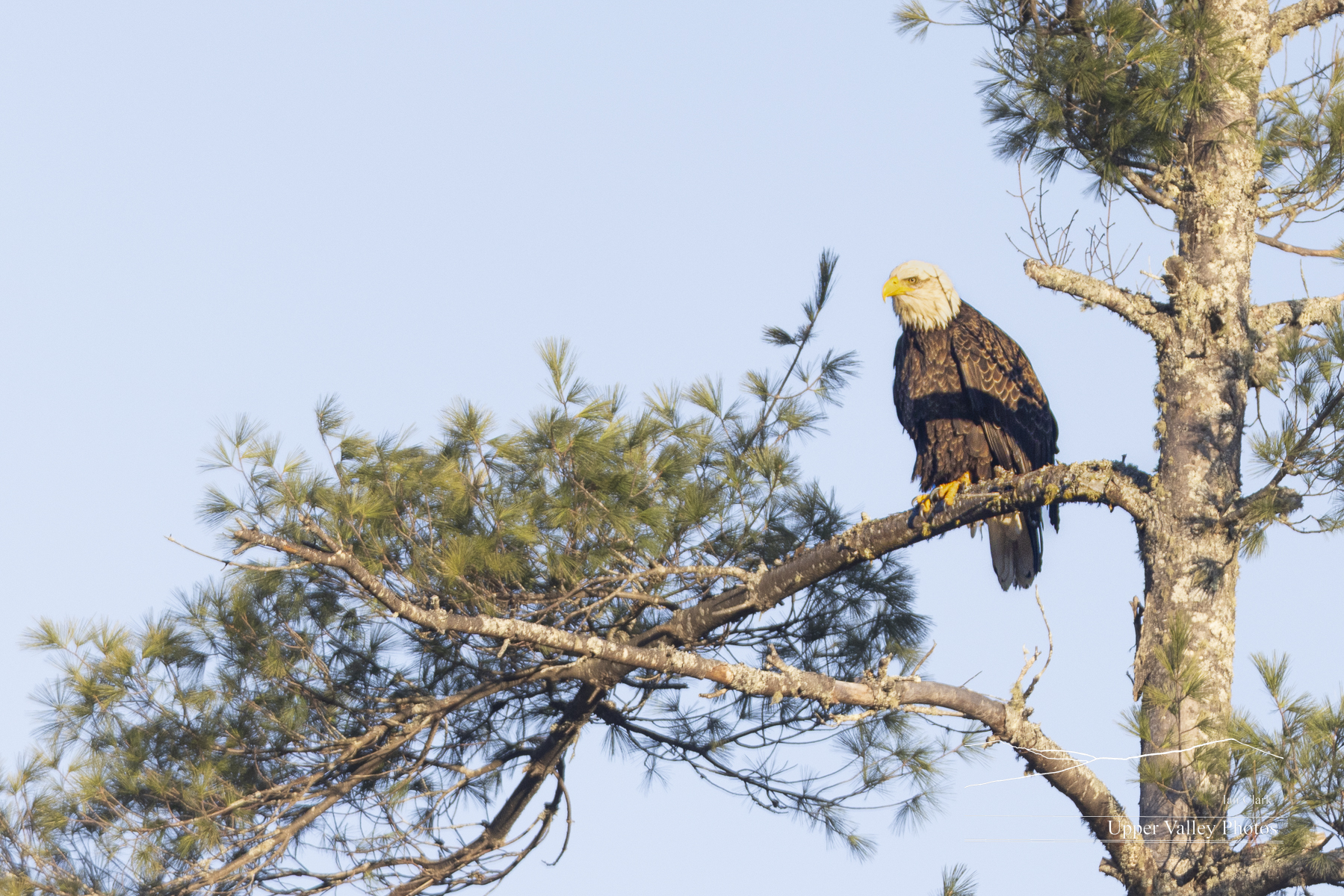
There was a pair of eagles that sat watching the pond. I suspect they were thinking that duck would make a good breakfast.

A loon showed up again on the Middleton’s pond on Wednesday. I made it out this morning.
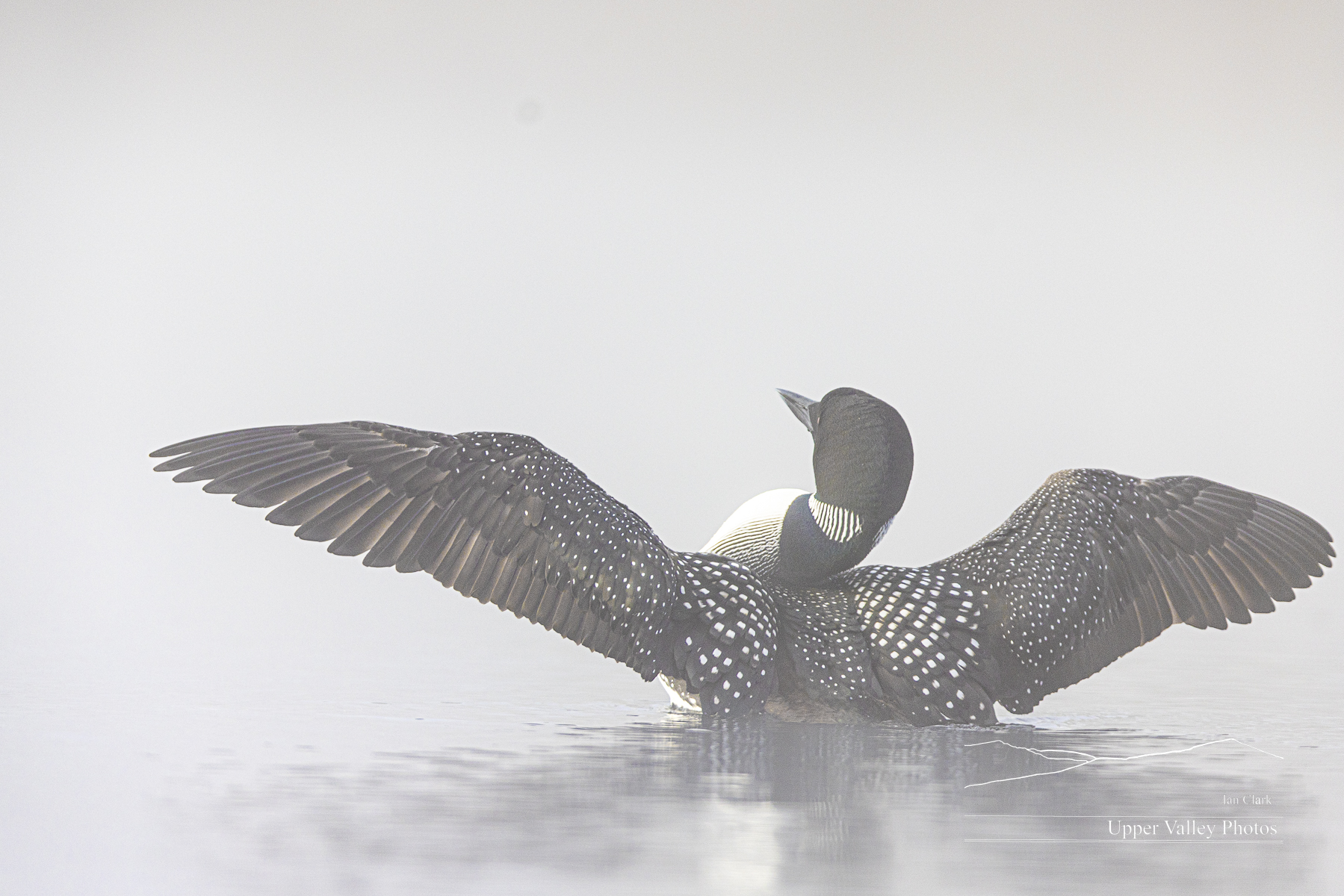
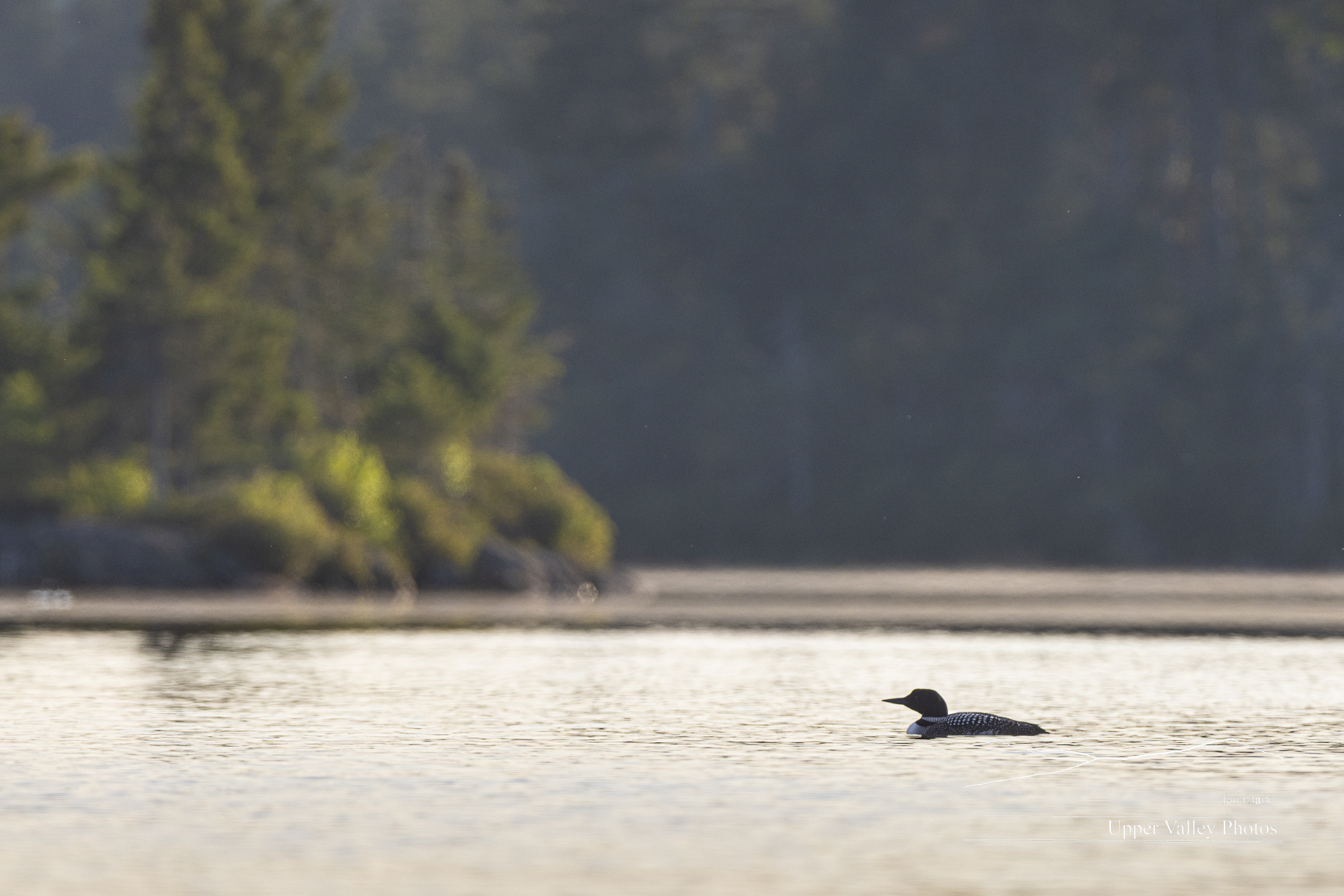
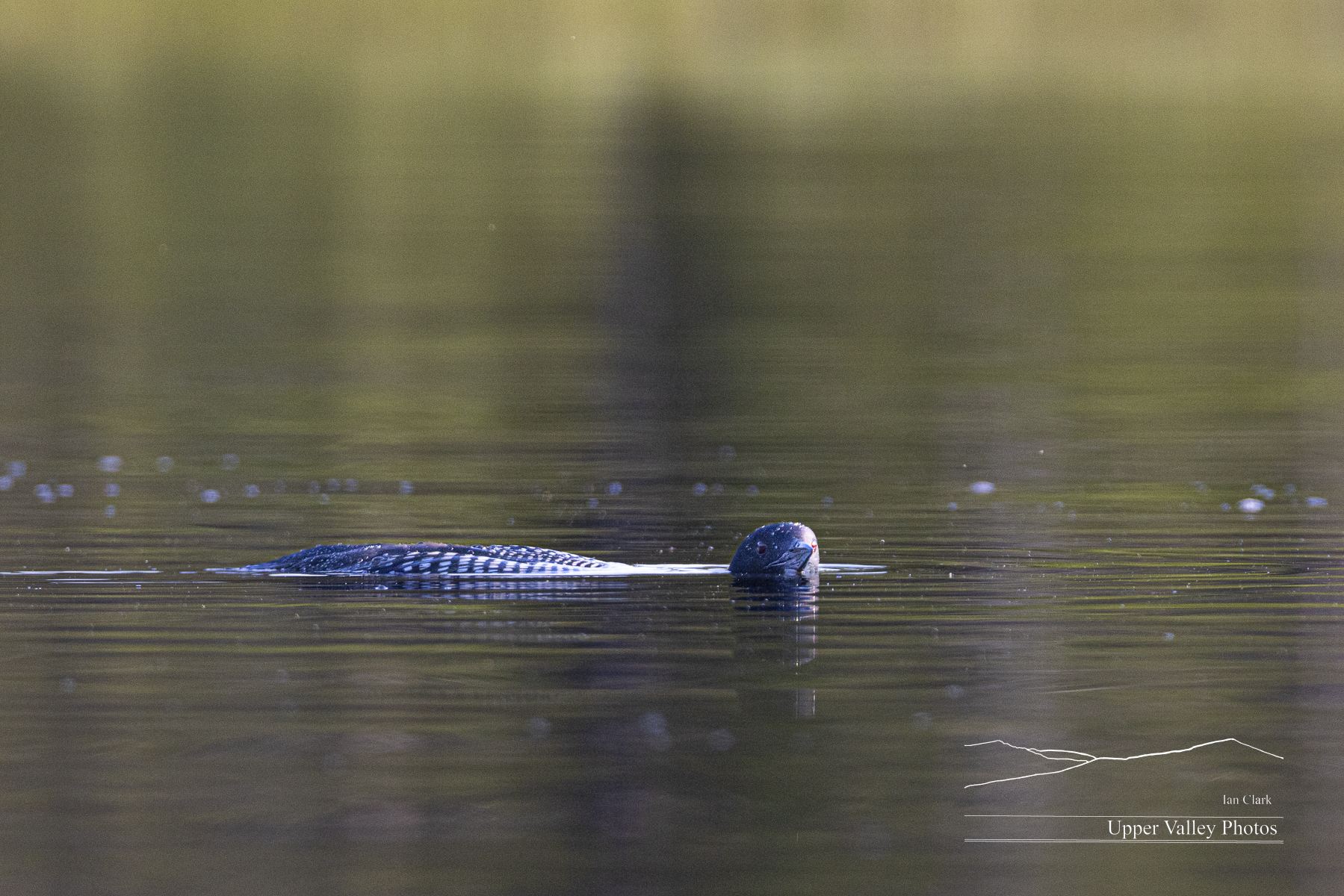
I soon found a lone loon on the pond. I think I saw a flash of color from his bands, but never got a really clear look at his legs. My guess is Mr. Middleton is back.

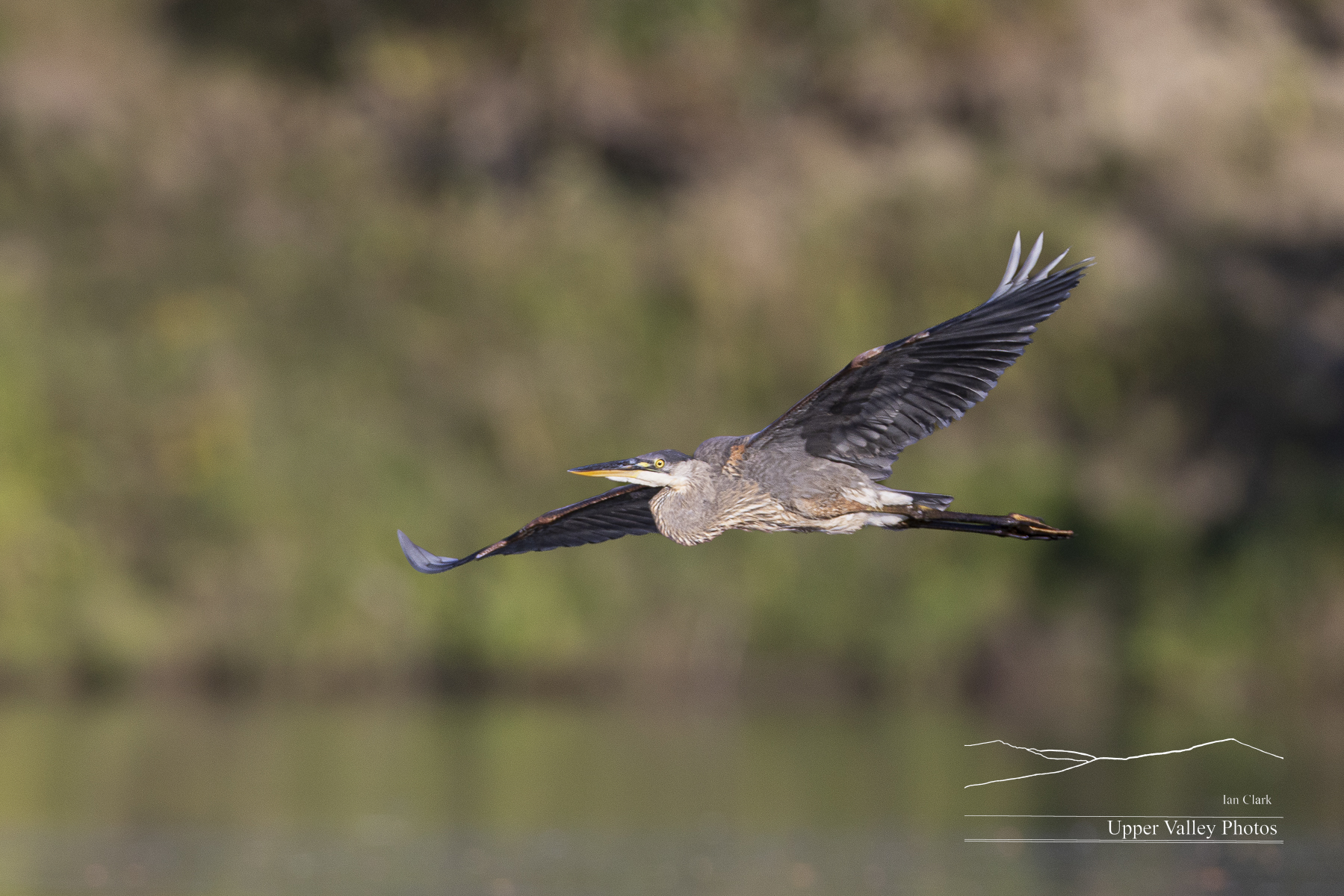
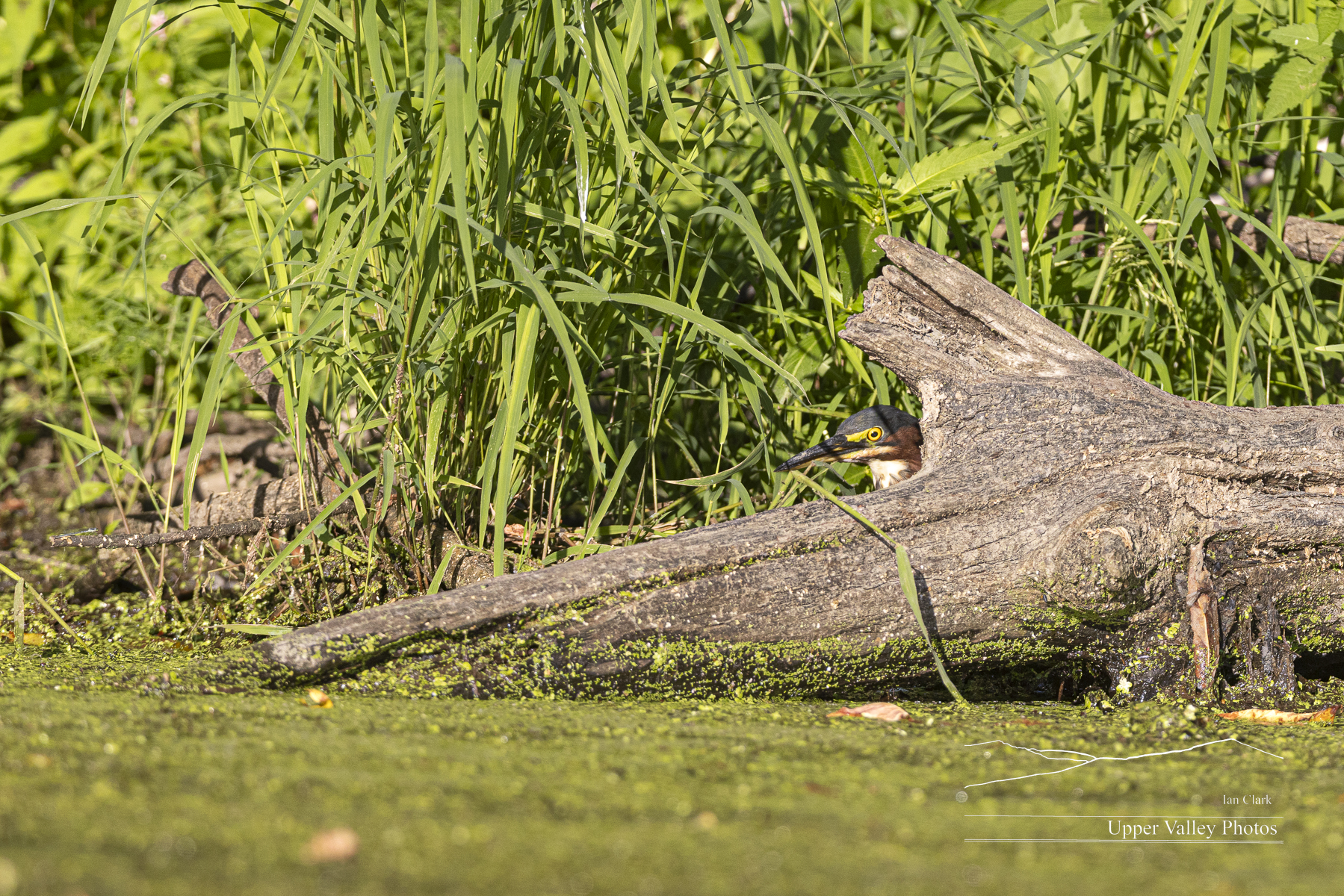
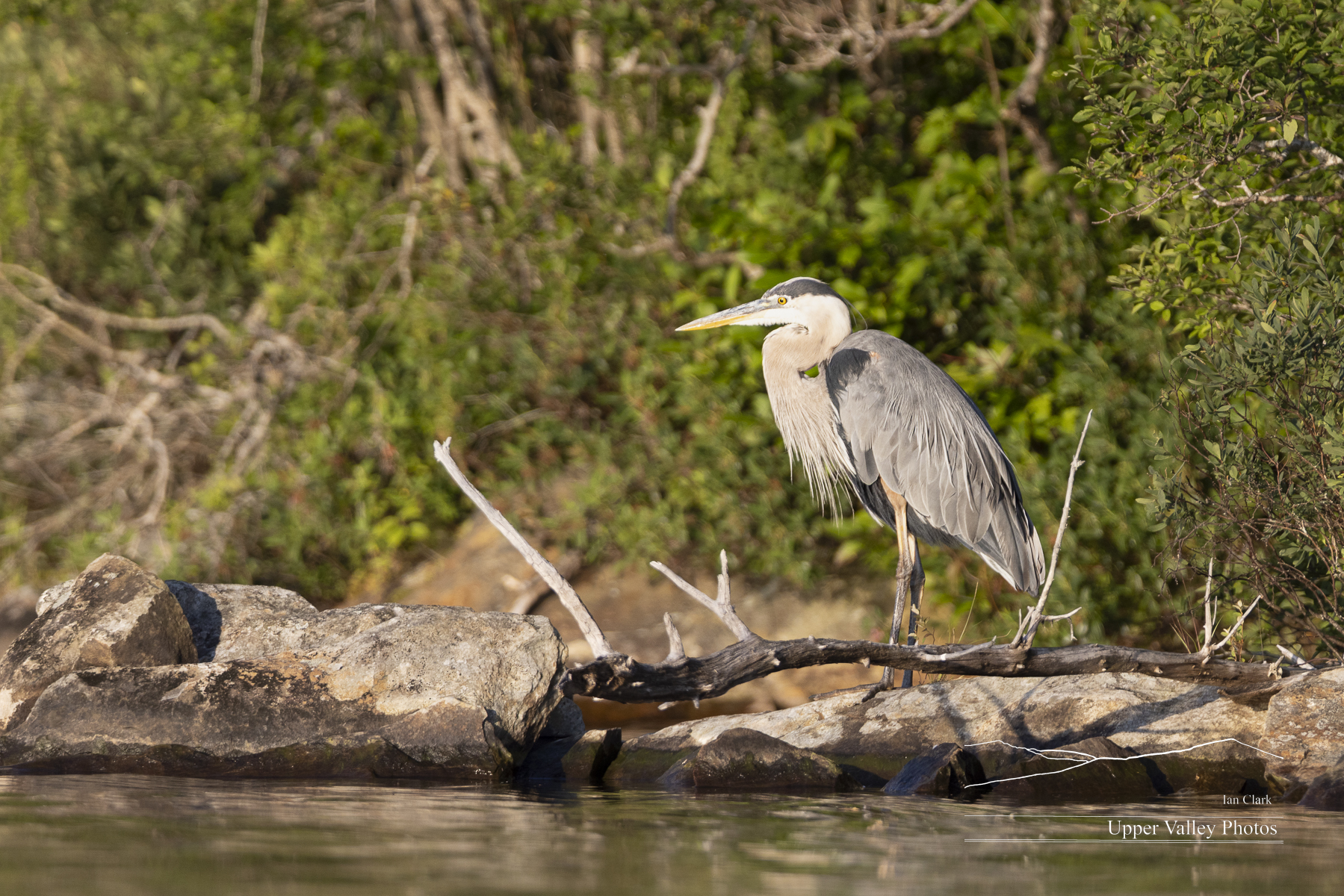
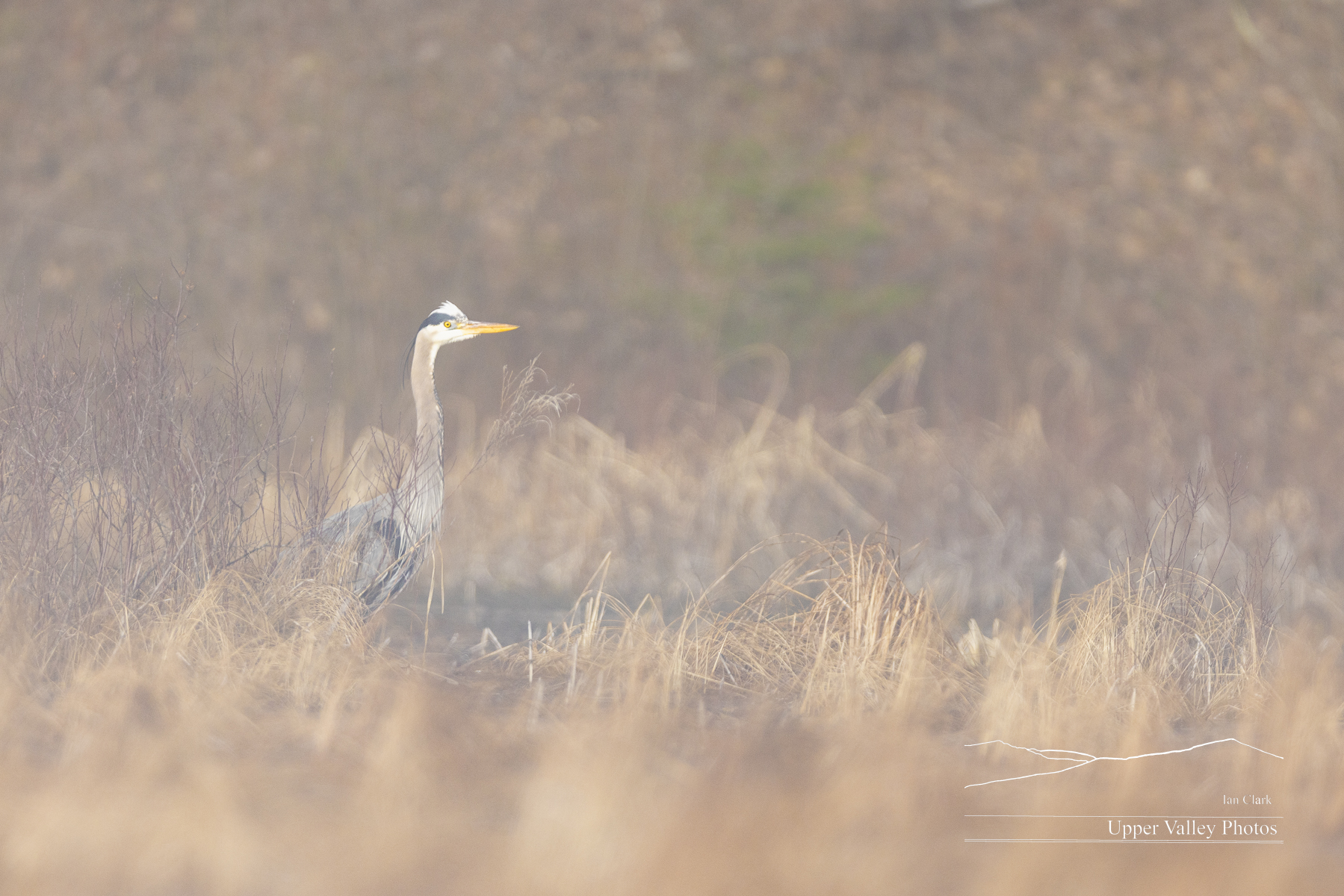
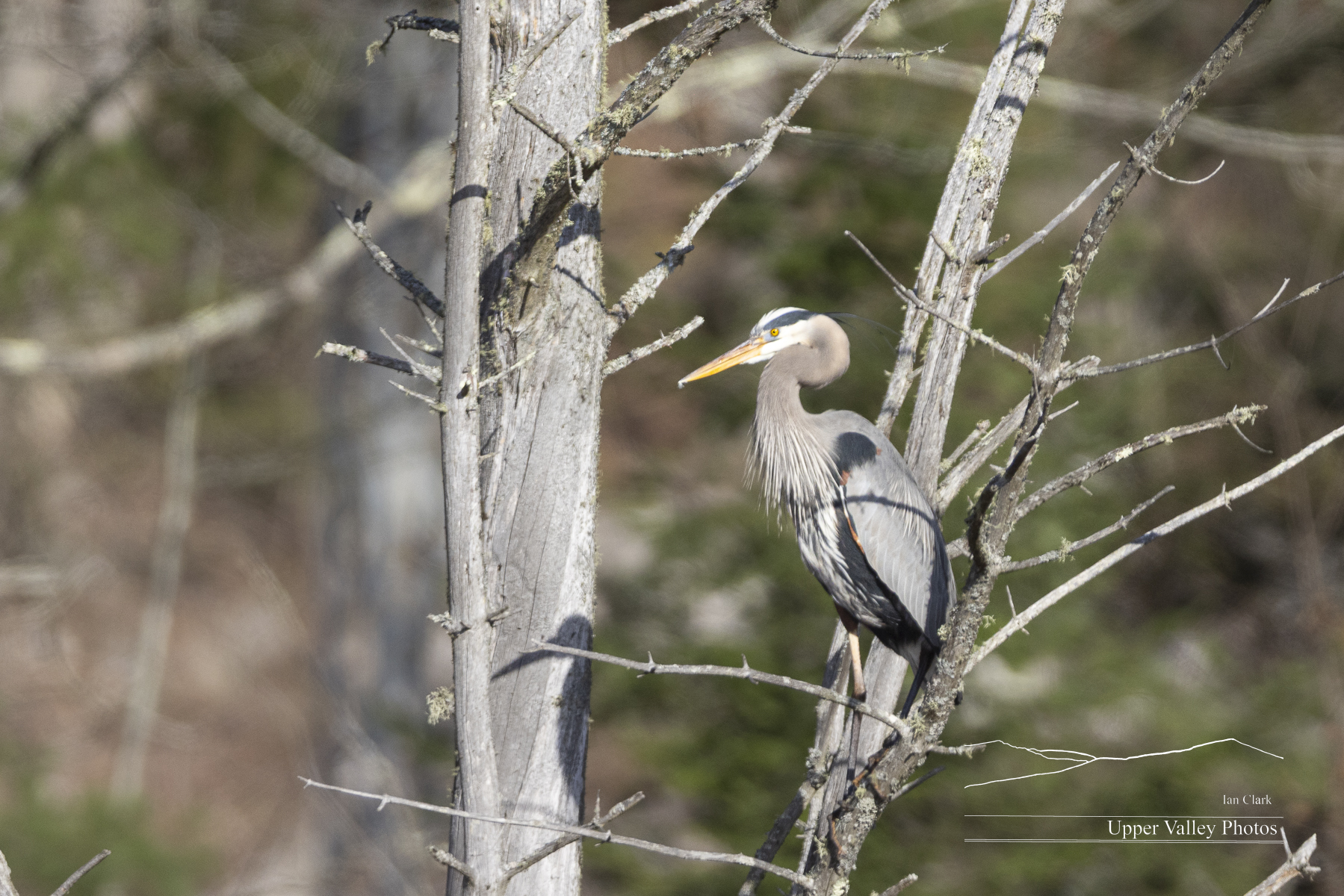
Hank the great blue heron was working the reeds for breakfast.

Before retreating to a tree.

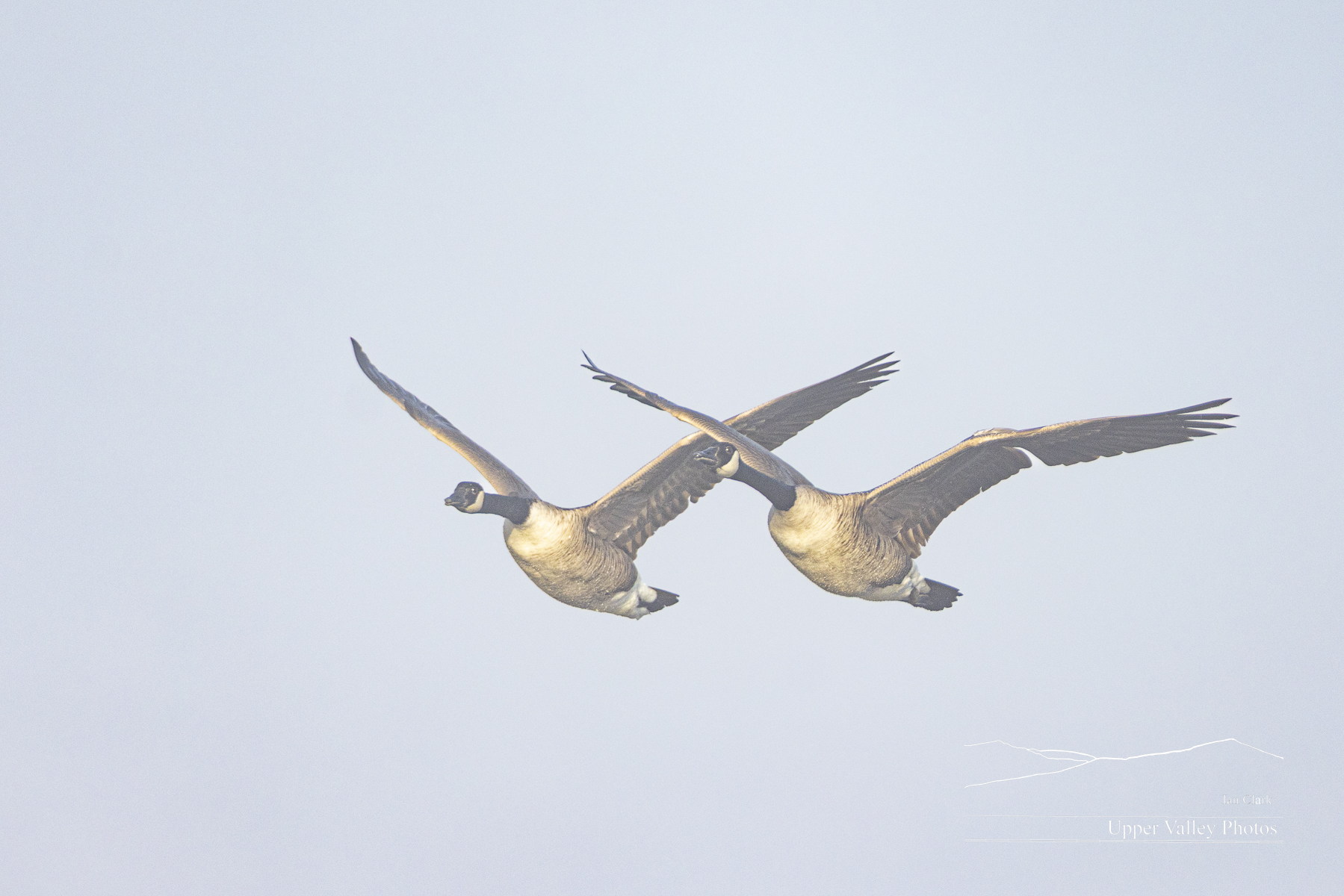
There seem to be fewer Canada geese on the pond this year. But the ones that were around were happy to make noise and fly around.

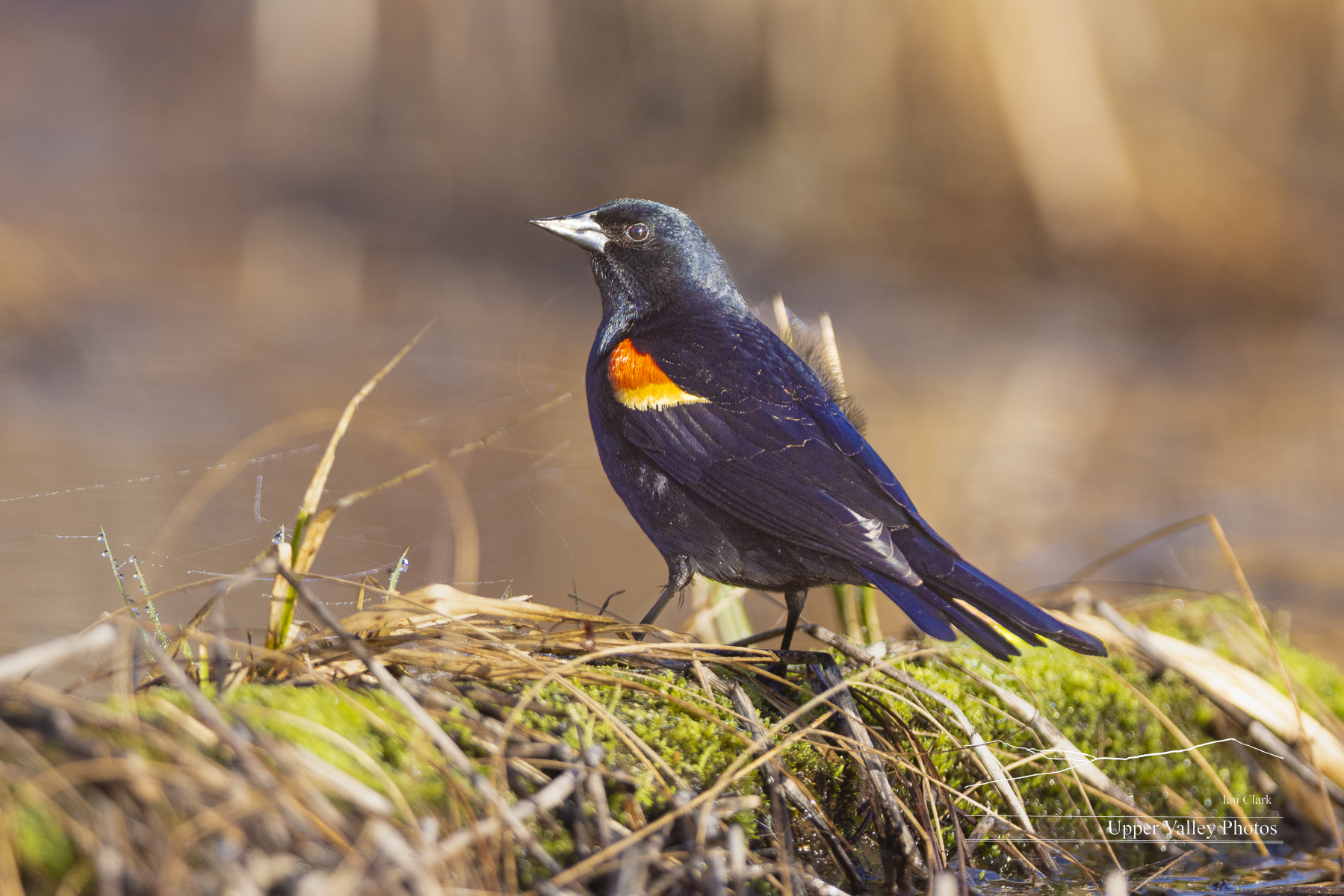
The red-winged black birds seem fewer also. There were several males and the first female I’ve seen this year out foraging.

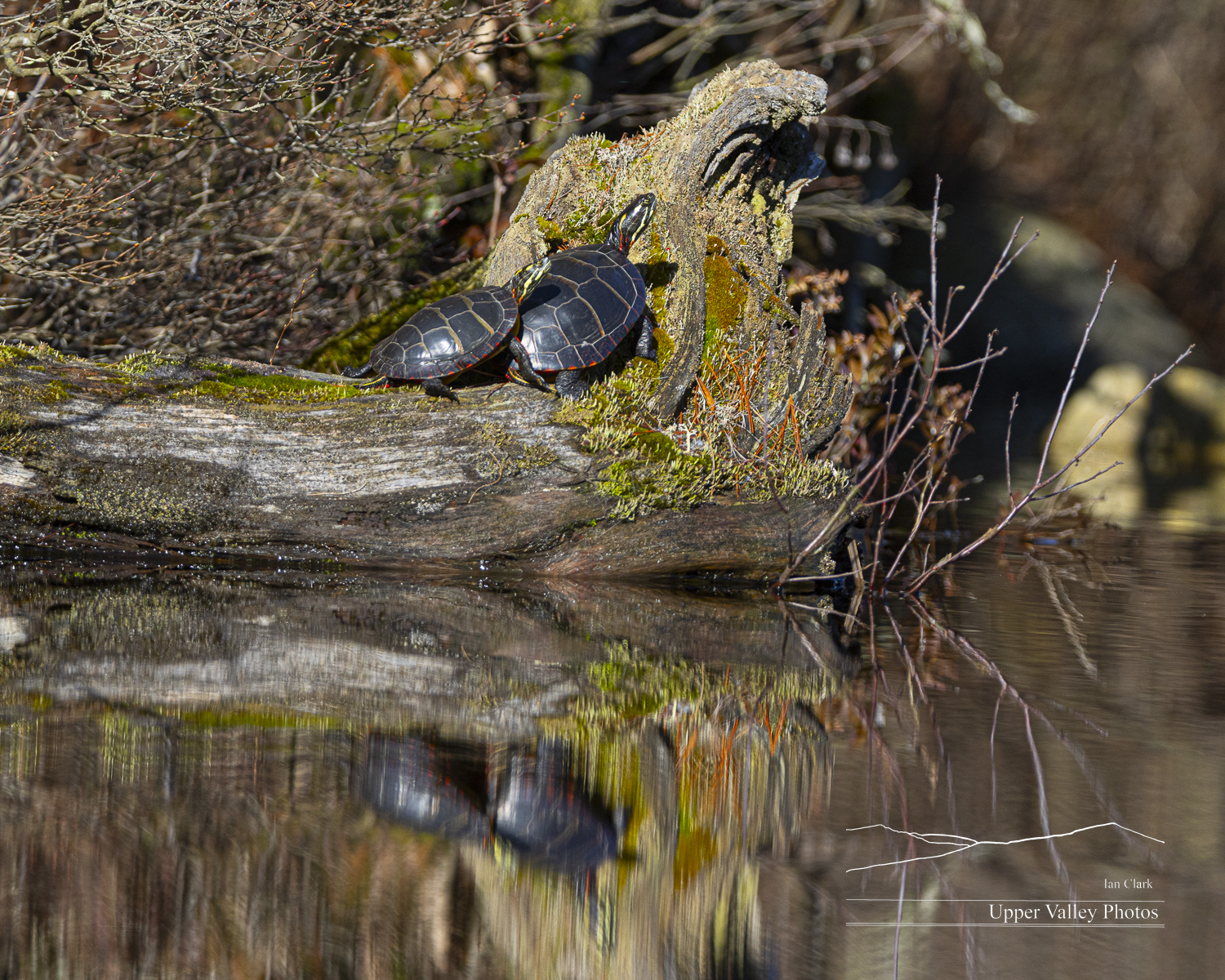
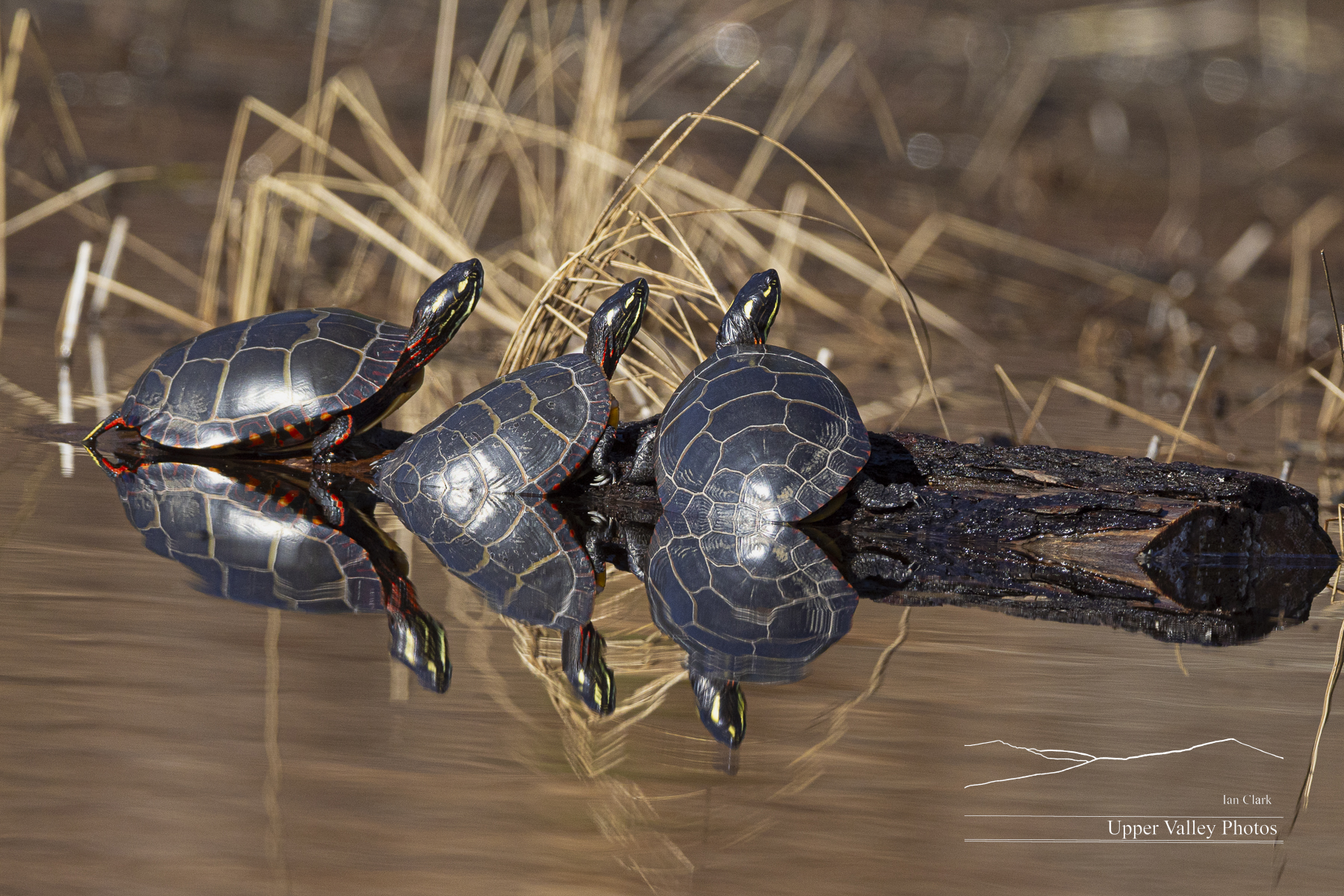
And as the fog lifted, painted turtles started appearing on every handy log along the shore.

This log is almost at capacity.

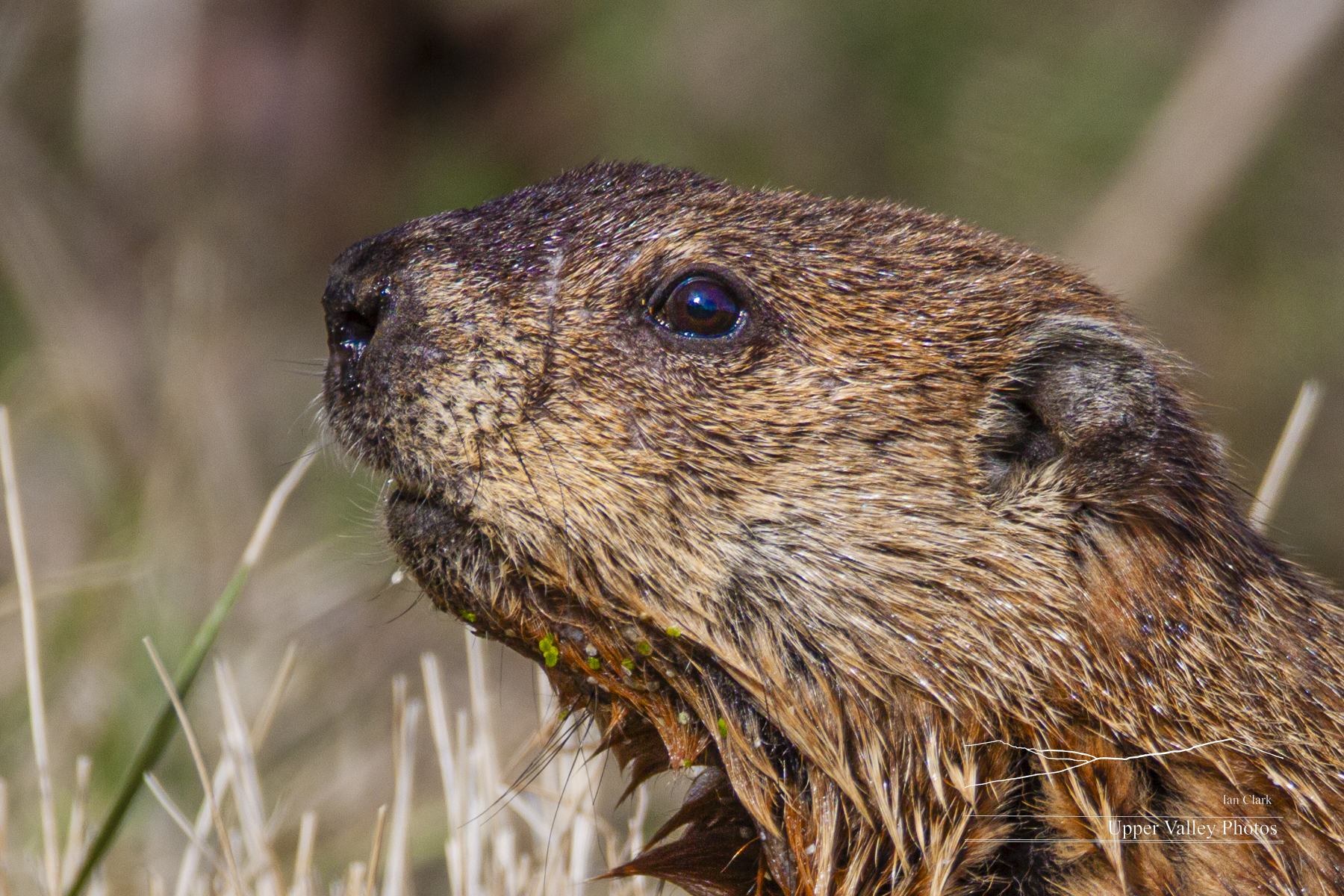
Back on the home front, Charles, our resident whistle pig has reported for pillaging duty.

You can sign up below to get notifications when I add a new post. I’ll never share your info, you’ll get the new post notifications and nothing else.

Along the Connecticut Shore

Back on July 3, Chris Roberts, who runs the great Vermont birding – PLUS Facebook group, offered to show me some of his favorite spots along the Connecticut Shore. They were all well west of what little Connecticut Shore I’d explored.

Chris is a serious, hardcore birder. Meaning he’s nuts. I offered to drive and asked how early we’d have to leave to get to the shore for sunrise. He was game for me to pick him up at 0300. That’s cool, unfortunately I was going to pick him up some 80 miles south of me. Hitting the road at 0130 to be on location for sunrise isn’t all it’s cracked up to be.

Along the way to pick him up, I got my closest ever look at a black bear. I didn’t get to enjoy it as much as I’d have liked, I was too busy standing up on the brake pedal. The bear sauntered onto route 91 and stopped in my lane to see what was coming. I managed to stop with 20 or 25 feet to spare. The bear had a good look at me and continued on his errand.

We arrived at the beach as the sun rose and set out to see what we could find.

There were a number of piping plovers with chicks ranging from just a few days old to near-adult sized juveniles. There is already at least one chick under this parent as two more tuck under.

We found seven northern diamondback terrapins out on the beach looking for a spot to lay their eggs or already laying eggs. They come ashore at high tide to make sure their nests will be well above water level. They’re listed as a vulnerable species and this was my first sighting of them. They live in the brackish tidal marshes along the east coast.

Another northern diamondback terrapin along the shore. I didn’t get close enough to tell if she was laying eggs or just sitting.

American oystercatchers were on my to-see list. I haven’t seen any since I got serious about wildlife photography, these are the first photos I’ve gotten of them.

Oystercatchers are cool looking birds. Their orange eye adds some pop to the photos. Whoever is in charge of banding Connecticut’s oystercatchers is doing an outstanding job. Almost all of the oystercatchers we saw were banded. Likely recently, we found several breeding pairs with consecutively numbered bands. Here’s ole N51 who, along with N52, had a nest on the beach.

As you’d guess from their name, they feed on oysters, along with mussels, clams and other invertebrates. They search for shellfish with their shells partly open. When they find one, they stick their bill inside and severe the muscle that lets the shellfish close their shell. (I had to go look up the difference between clams, muscles and oysters. They’re all ‘bivalves,’ meaning they have two half shells they can close to protect themselves. Learning maybe more than I needed, bivalve comes from the Latin “bis” – meaning two – and “valvae” from the leaves of a door. The differences are their shapes, their type of habitat and their flavor, which I didn’t take time to compare.
Watching the piping plovers, we saw a parent doing the ‘broken-wing’ display. They’re like killdeer and when they sense a threat to their chicks, they feign injury and make a big deal about it. The idea is to get the predator to chase them and lure the predator away from the chicks.

A small flock of gulls had landed on the beach near this bird’s chicks. The chicks had frozen in place and were hard to spot. The parent tried to draw the gulls’ attention away from the chicks. It worked this time.

This section of beach was covered in a few feet of abandoned shells. This proved to be very good camouflage for the plovers. When I’ve seen plover chicks on the sandy beaches in Maine, Massachusetts and New Hampshire, I’ve often wondered how any of the chicks survive, they seem to stand out clearly on the sand. They’re much, much harder to see against the shells.

The shells are several feet deep along the beach.

A parent and chick blending in nicely against the shells.

And the chicks are just adorable.

The plover chicks scoot along in short bursts, constantly changing direction.

Another chick, this time on a sandier spot.

And a chick just being cute.

This chick went right down to the water’s edge before heading back up the beach.

Our buddy N51 reappeared and started down to the water.

N51’s mate, N52, showed up and went foraging along side. I’ve reported the bands and when I get the confirmation, we may be able to tell who is who from that. There’s no way for people to tell by looking at them.

It was time to head on to the next location and we headed back to the parking lot. There were several horseshoe crabs in the shallow water. A flock of gulls had dragged this on up on the beach and were trying to flip it over as we approached. We spooked the gulls and the crab headed back to the water.

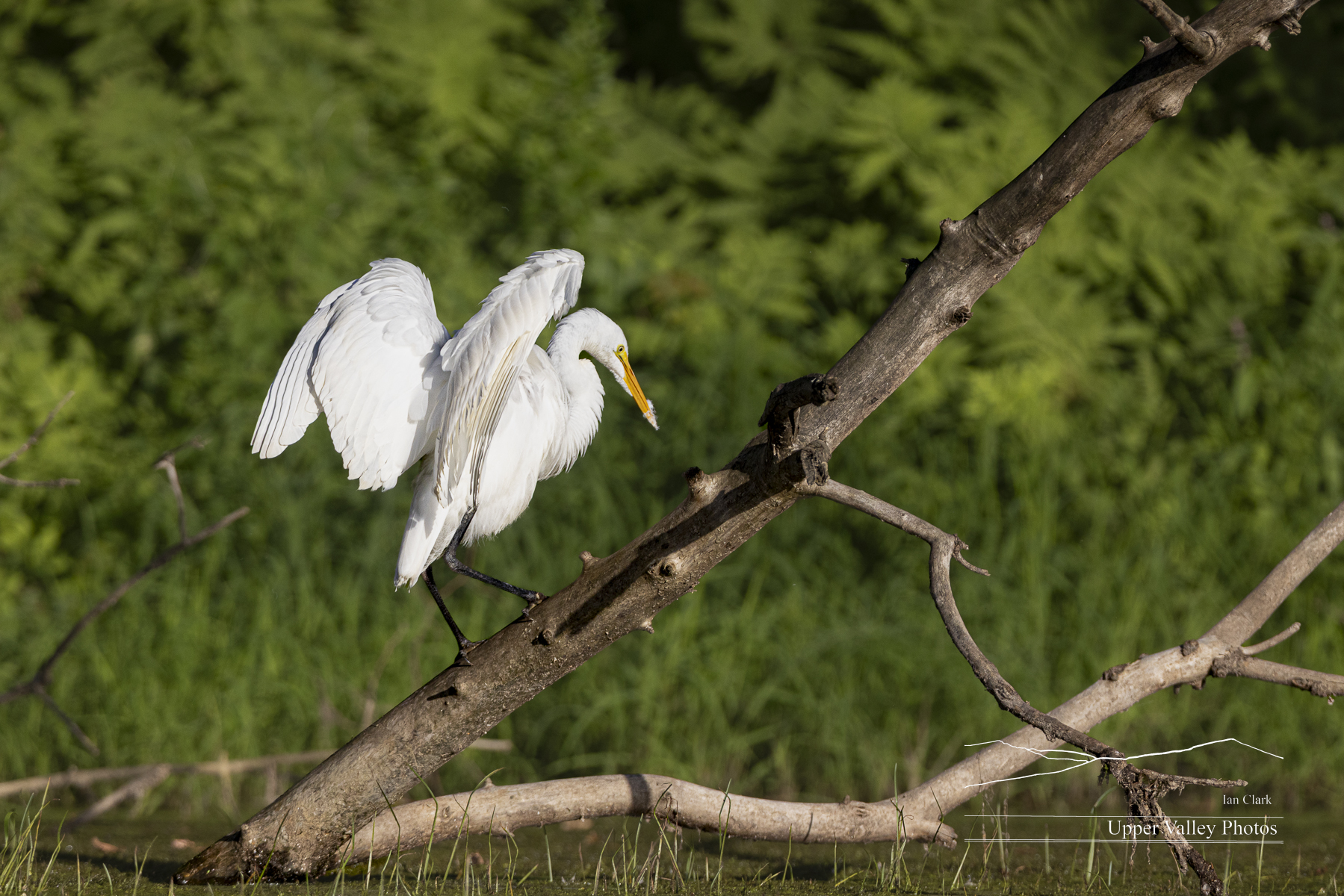
At the next spot, we found a pool with several herons and egrets. Chris spotted a tricolored heron, I saw a clump of brush. We moved on.

Next up was another oystercatcher. Meet N00. We soon found N99 and I suspect they were banded in relatively quick succession.

There were a few willets foraging in the shallow water.

Our timing was right to watch the Atlantic sand fiddler crabs emerge from their burrows. They live in colonies with each male claiming a territory. When the tide recedes, they come out of their burrows. And display their large claw – both to warn off neighboring males and to attract females. Only the males have the size difference between their claws, females have two similarly sized claws. There were several dozen males waiving their claws around.

They have interesting markings on their backs.

And they look like they mean business if you try to interfere with them.

There was also a colony of least terns along the beach. A small flock came down to the shallows to preen. And to have the guys carry fish around to impress the ladies.

Turning around from the last photo, I discovered a piping plover had crept up to me while my back was turned.

There were more piping plover chicks that couldn’t have been more than a week old out foraging on the beach.

Another plover chick that stopped briefly to look around.

Well above water level, the beach is roped off to protect the plovers and terns nesting spots.

This guy is a little late in the game. He was still looking for a lady to commit his entire season to. He was industriously displaying his fish to the passing ladies.

Here’s a tern stretching. I think. He might be showing off his disco moves to attract a lady.

We were able to spot a couple of young chicks. They were well hidden chicks hiding under some plants.

There were three juvenile oyster catchers foraging on the beach just above the waves.

And a parent delivering a meal to one of the juveniles.

Lots of interesting critters to watch and photograph. I’m looking forward to getting down there again for a longer stay.

Painted Turtle Snack – The Story Behind The Shot

Trying something different today; a story with some background on one of my favorite shots.

Since my last post, I’ve had more excitement than I need. The circus-style tent at the Stowe Foliage Art show came down and destroyed my booth. Thankfully, it collapsed early in the morning and no one was injured. I’ll be doing the Celebrate Vermont show at the Doubletree in Burlington November 22-24 2024 using a booth borrowed from one of my competitors, Jonathan Hart. Thanks Jonathan!

The circus-style tent in Stowe at the start of the show.

What we found when we came back for the second day of the show.


The remains of my set up. It will take awhile to figure out who’s insurance is going to cover what. I was luckier than many of the artists.

In happier news, my 2025 New England Wildlife Calendar is now available.

The calendars are large – 9″x12″ with 13 of my favorite wildlife images. They’re $25 and $3 shipping per order. You can get one on my site: www.IanClark.com/

Let’s go way back to 2013, the year after I met the loons. On a visit to the Middleton’s pond, I was exploring a cove where they like to breakfast. They were still off in the main part of the pond and I settled in to wait for them. While I waited, I noticed a painted turtle in the lily pads.

The turtle was cruising along with his head out of the water. He? must have seen me, but wasn’t concerned.

He swam over to one of the lilies. I missed the shot, but he took one – just one – bite out of the flower.

He continued on to another lily….. and again took one – just one – bite out of the flower.

He move on again. This lily was too high and he examined it for a bit before moving on to the next lily.

This one took a stretch, but up he went. And took a bite – just one bite – out of the flower.
The next lily was low to the water. He grabbed hold….

And moved around the flower before he took one – just one – bite out of the flower. Was it too hot? Was it too cold? I looked over my shoulder to make sure there weren’t three bears in the neighborhood.

Off he went to the next lily. Looks like his buddy already took his bite out of this one.
Could this be the one that’s just right? Nope, he took one – just one – bite out of the flower.
And here’s the shot I love. He’s found the lily that is just right! And I got the shot.

I’ve never seen a turtle take a bite out of a lily before or since. I’ve seen a couple that have taken insects from the flowers or lily pads, but never the flower.

Looking back at the files from this morning, I didn’t get any remarkable shots of the Middletons. But, I did photograph a cow moose and her calf, several turtles and eastern kingbird nestlings getting fed. But, I remember the turtle.
Catching Up with Life on the Ponds

With all the nice weather, I’ve had lots of time to shoot – but that leaves little for posting. One set of fox kits has moved on, the other den is surrounded by grass tall enough that the kits appear only at the top of their pounces. Let’s check in on our three loon families and their neighbors.

I’ll be giving my slideshow, An Uncommon Look at the Common Loon, locally a couple times in the near future. First is Thursday May 30 at 7:00 p.m. at the Lyme, NH, School. Then again on Sunday June 23 at 2:00 p.m. at the Tenney Memorial Library in Newbury, VT.

The Westons are sitting on at least one egg. Their nest is deep in the marsh, updates will have to wait until the chicks appear. (If you’re new to my blog, to protect the loons’ privacy, the families are the Eastons, Middletons and Westons, by the location of their ponds.)

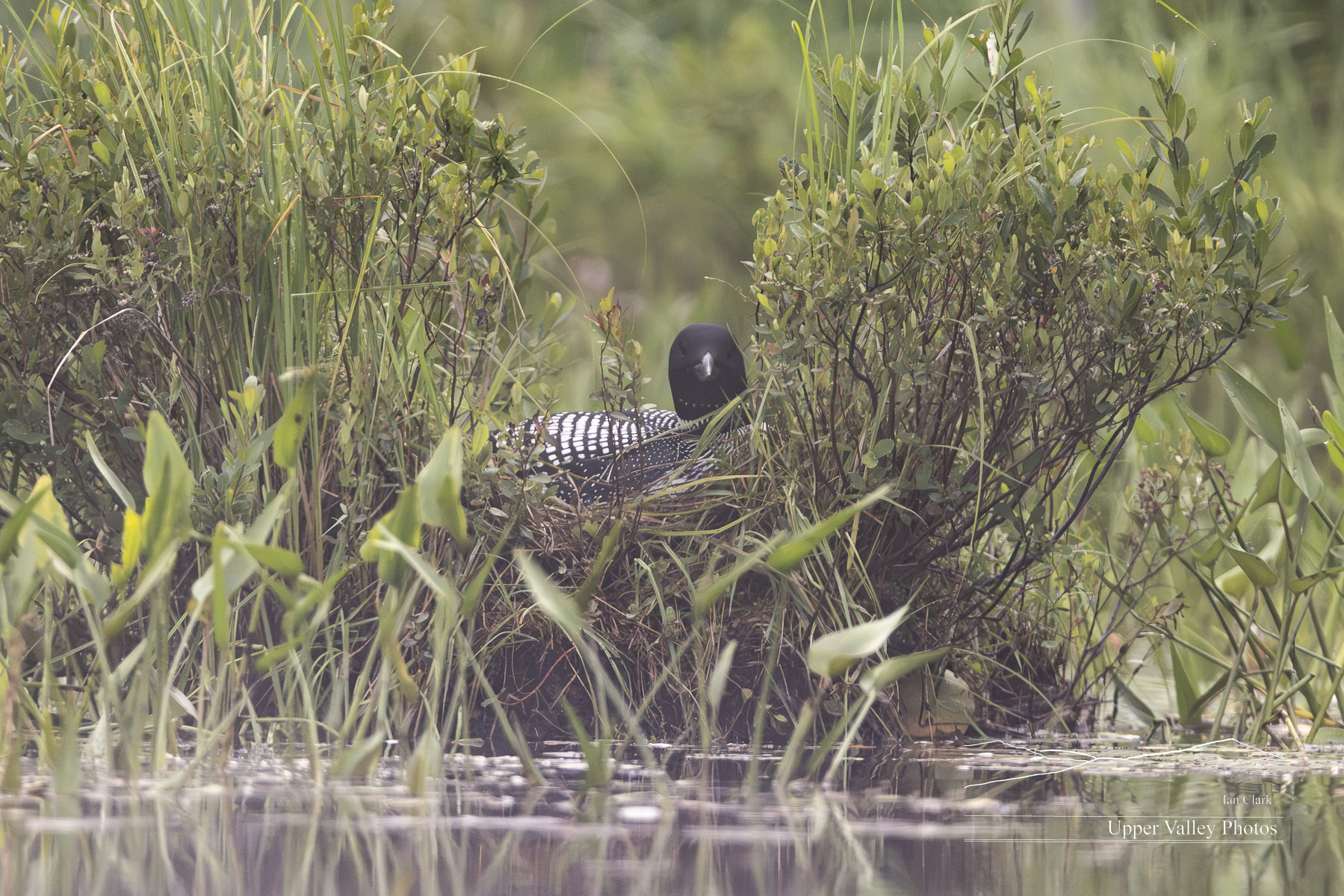
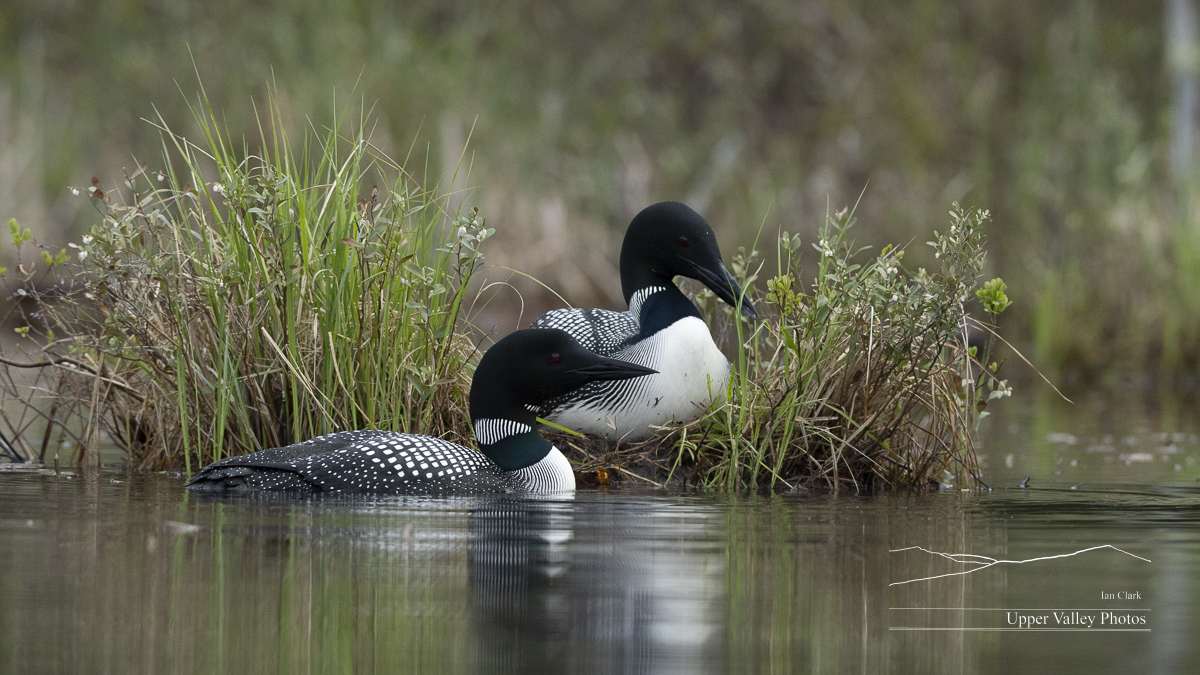
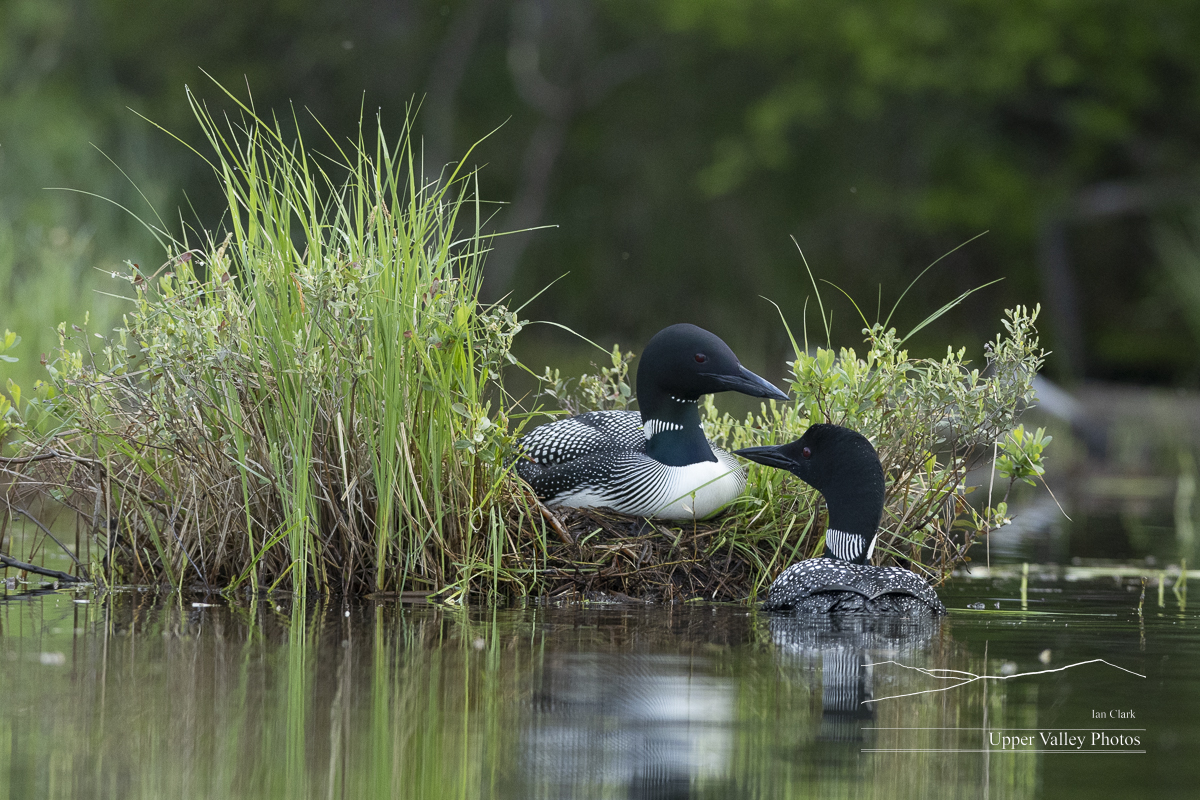
The hummock the Middletons have used for their nest the past couple years washed away in last July’s heavy rain. They toured the pond checking out potential nest sites before settling on a hummock just a few feet from the previous site. Here, they’re taking turns sitting on the site to decide if it will work.

Taking a quick break from inspecting nesting sites.

Back to checking the site. They decided this was the spot and she climbed up and he followed to mate.

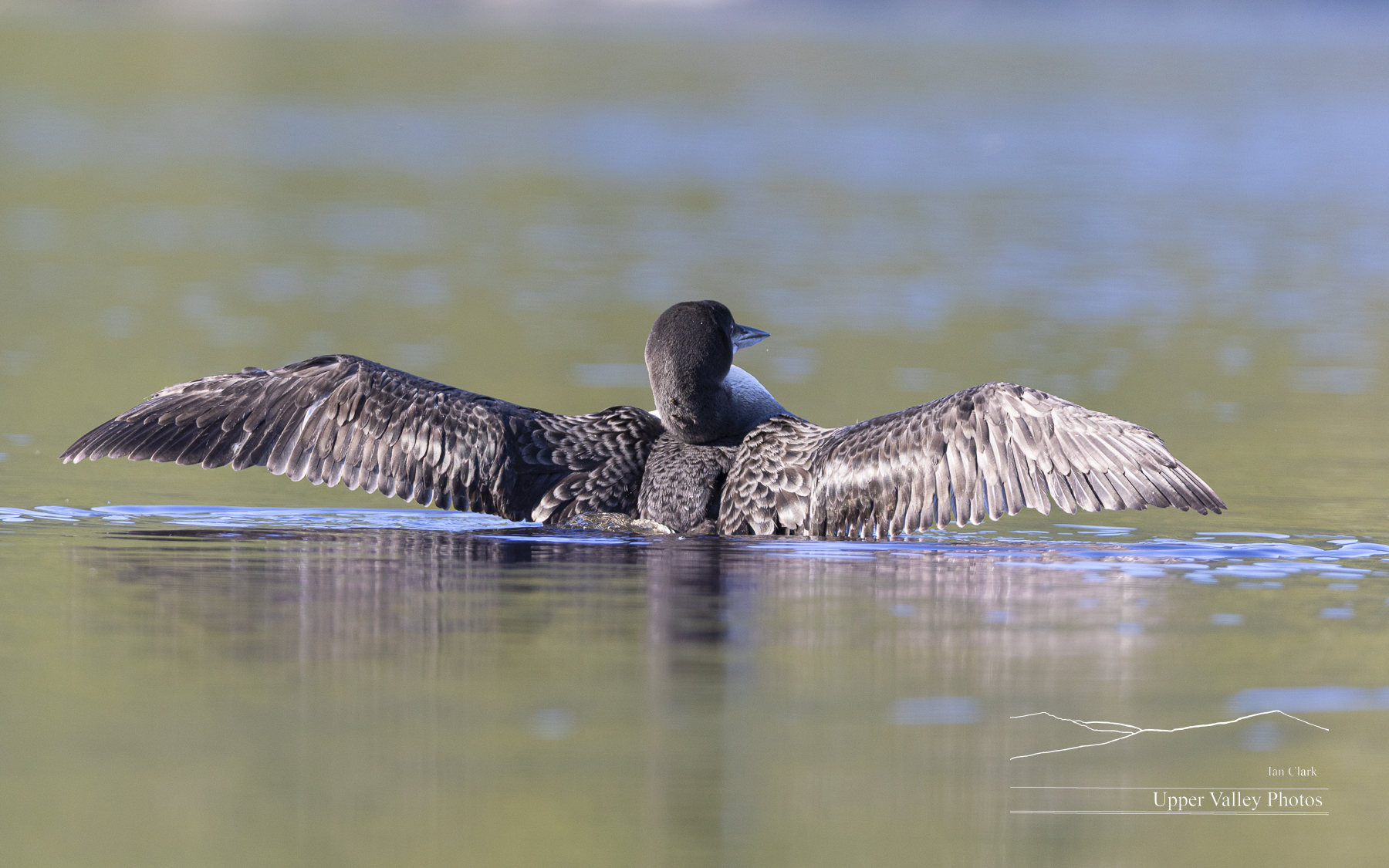
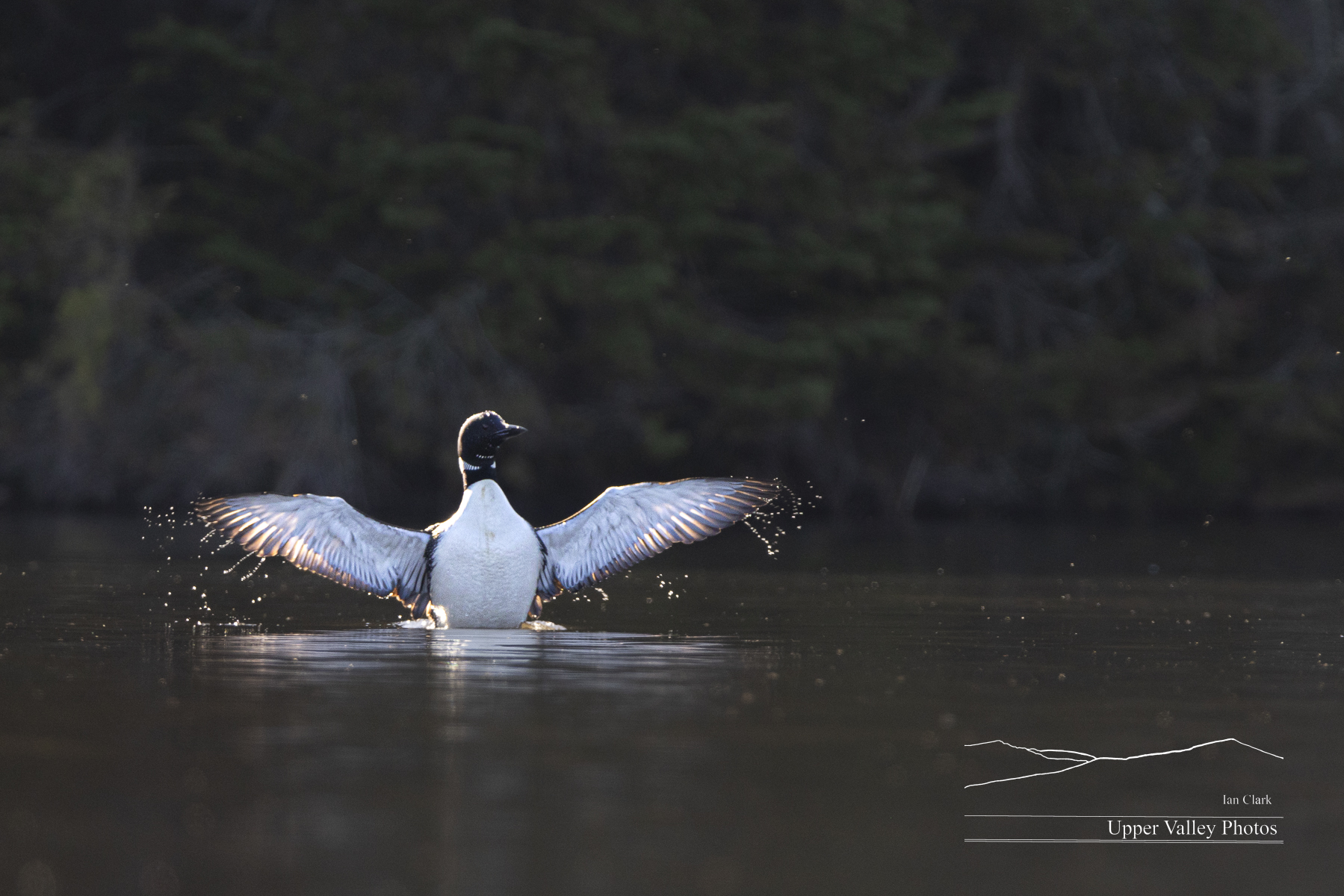
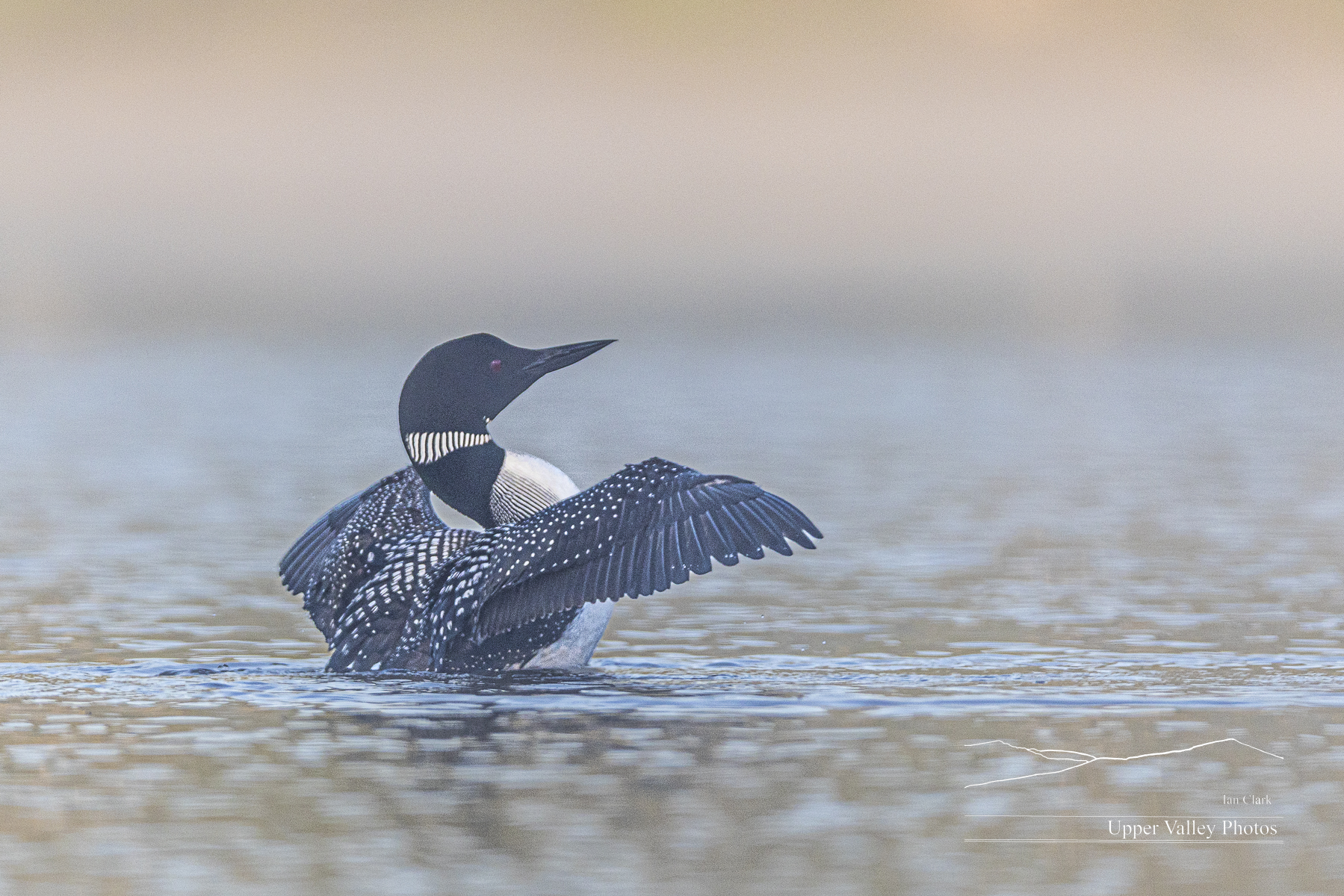
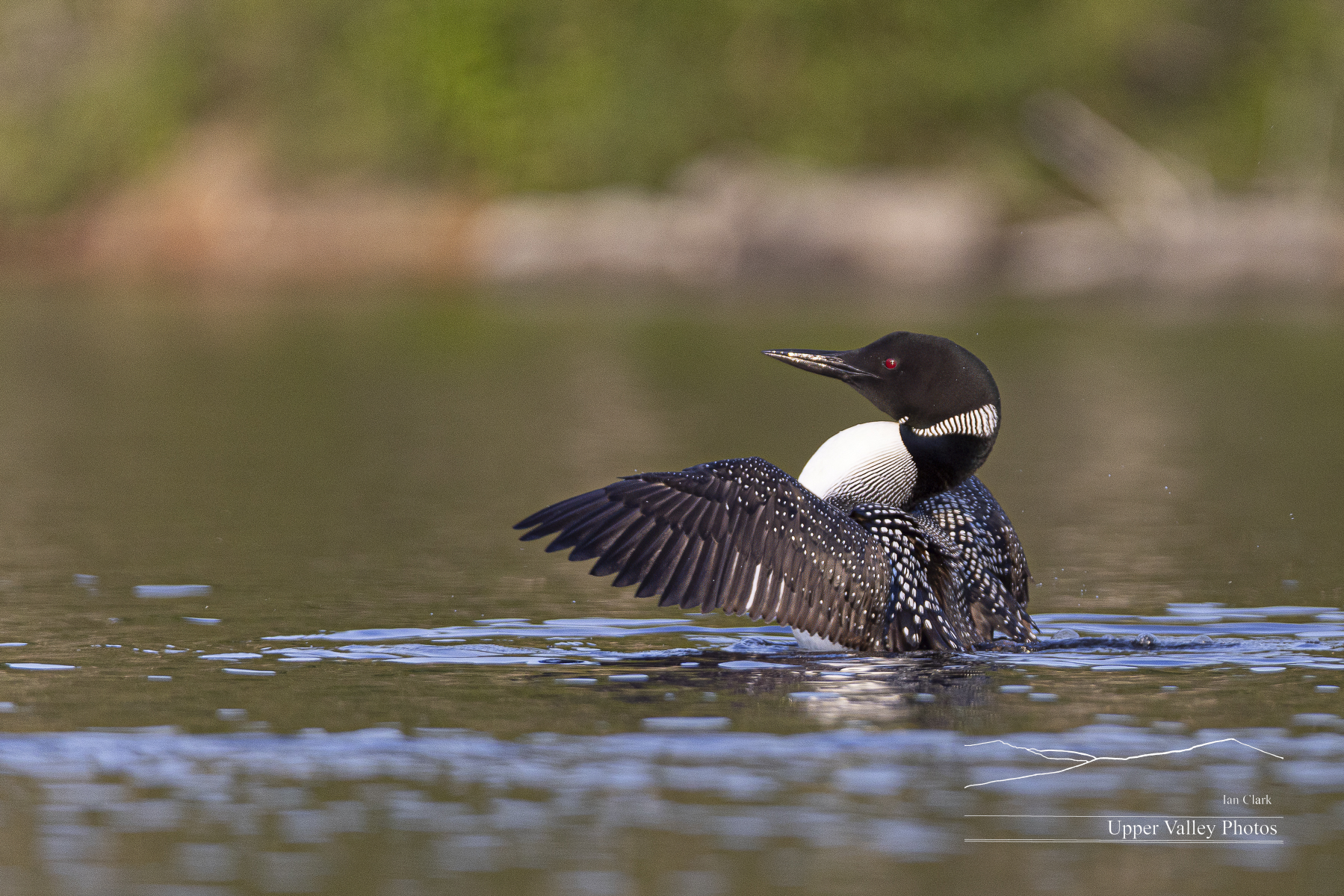
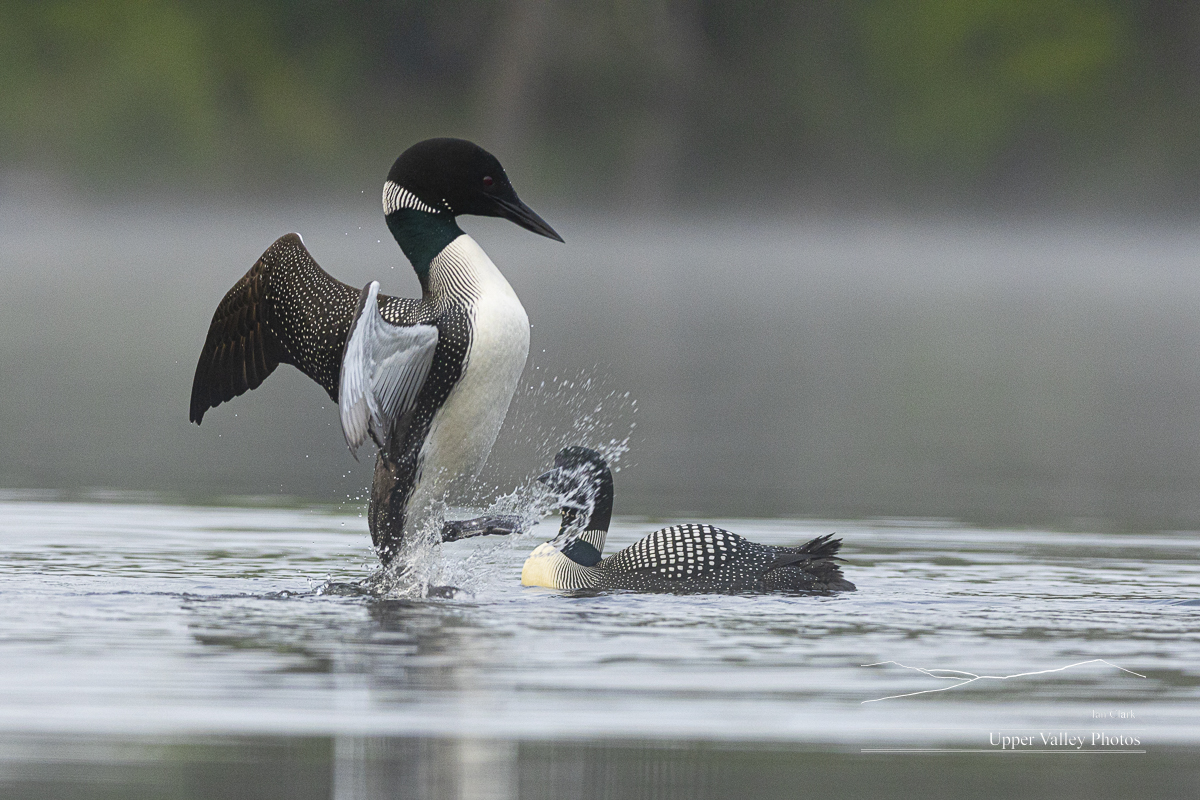
Afterwards, they headed off for breakfast, preening and a nice stretch.

Another nice stretch.

The first of the red-winged blackbird chicks must have hatched, the parents were foraging and returning to the tall grass with food.

There are several spotted sandpipers around the pond.

The sandpipers are fun to watch. As they forage, they bob their butts up and down. I haven’t seen a good explanation why.

And beautiful spring mornings bring the painted turtles out to bask.

I returned the next morning, just to find the loons had decided to sleep in.

While waiting for the loons to get up and at it. our friendly neighborhood beaver swam by to give me a
wave.
The beaver went about getting some breakfast of underwater plants and sitting on the shore to eat them.

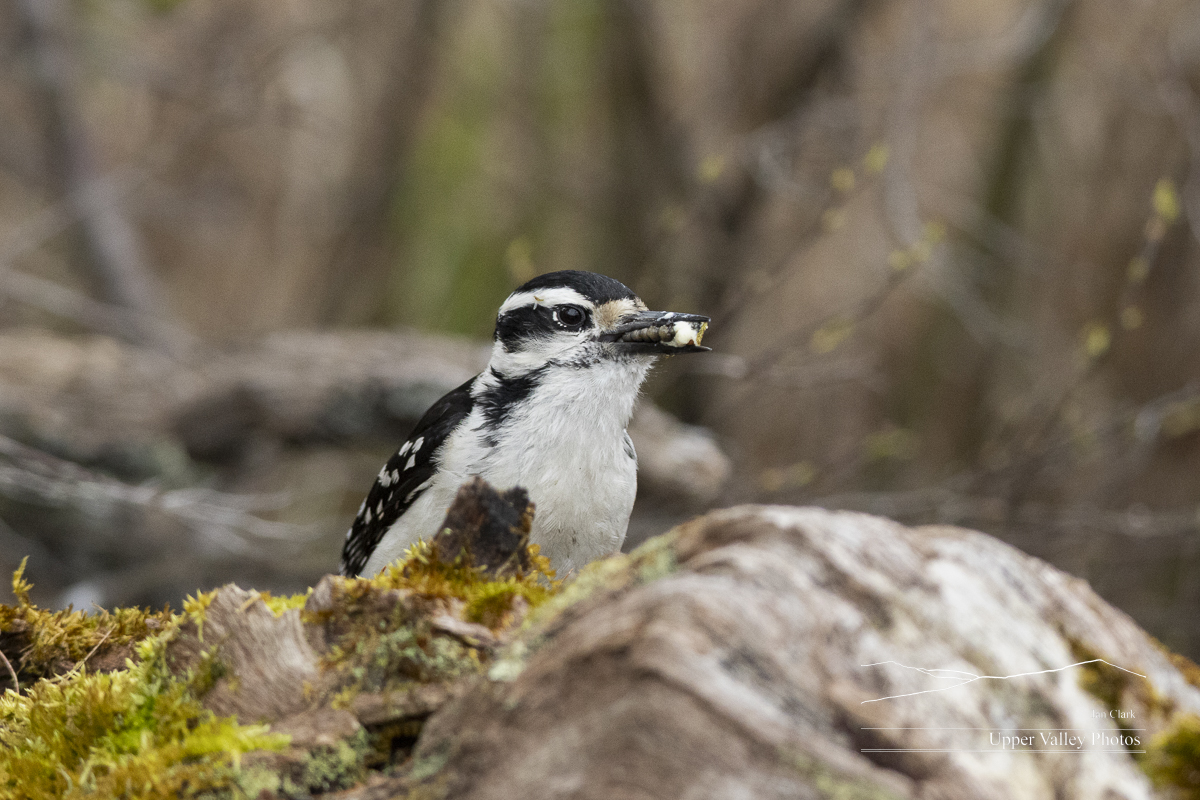
downy woodpecker with a grub
There was a hairy woodpecker foraging on a downed tree along the shore. She found several tasty grubs.
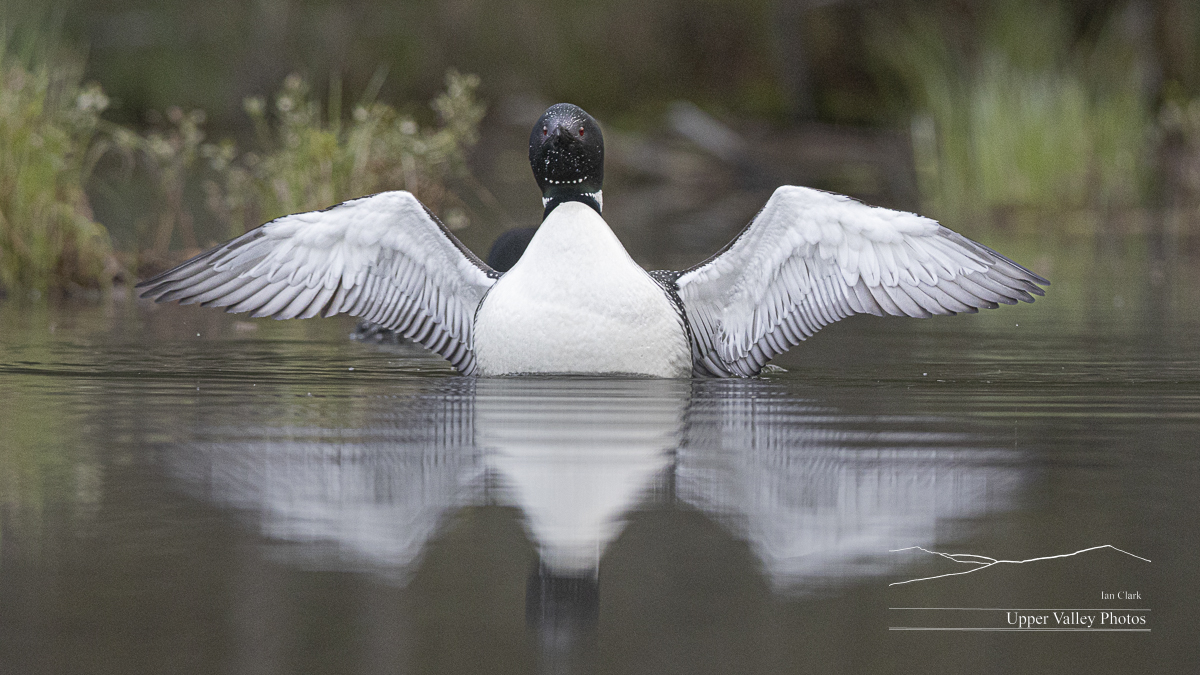
Common loon stretching
Eventually our loons got going with their day.
common loons on the nest
They returned to the nest site for one last check……
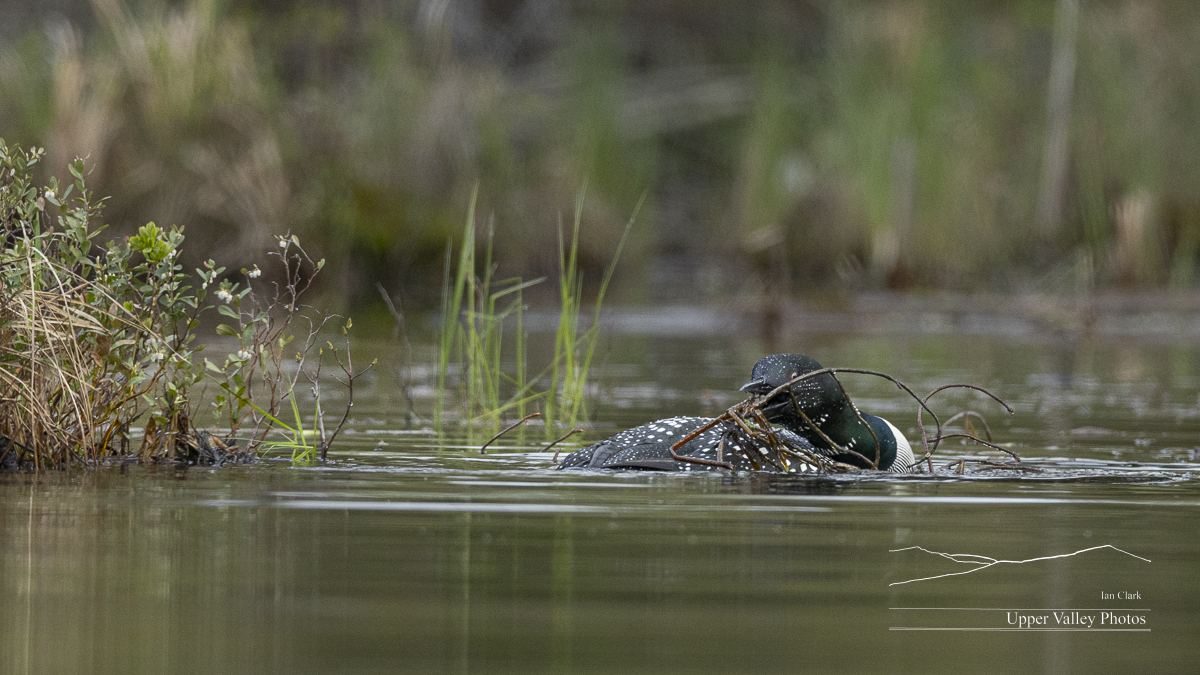
common loon gathering nesting materials to build a nest
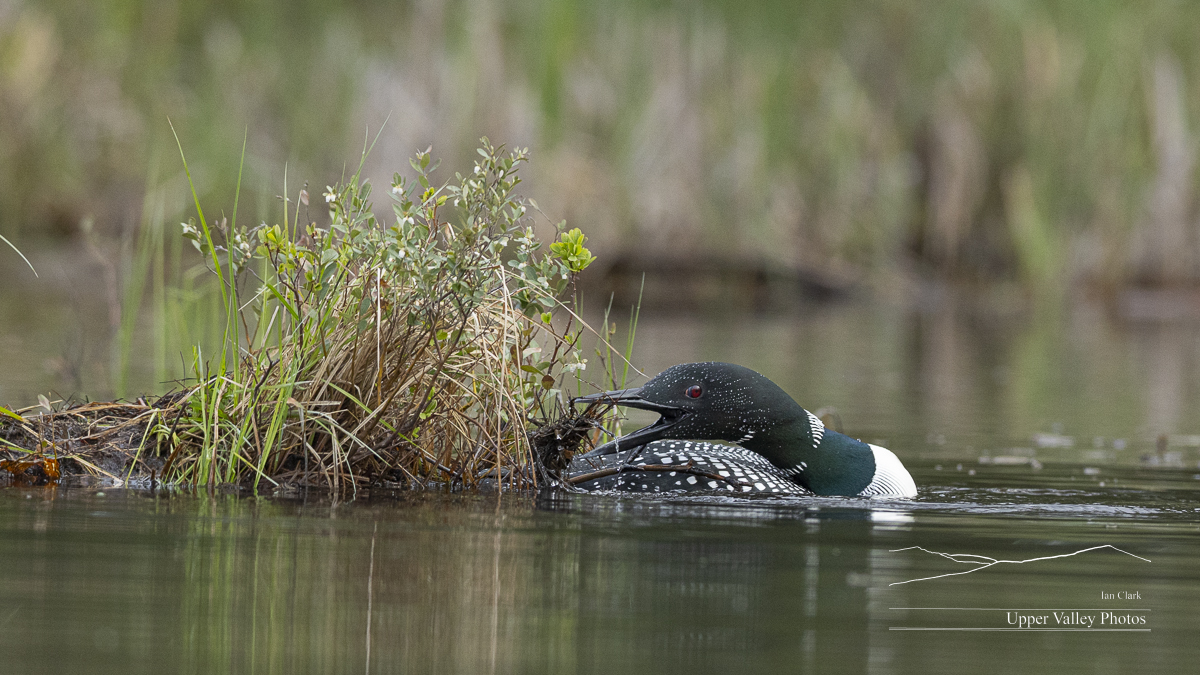
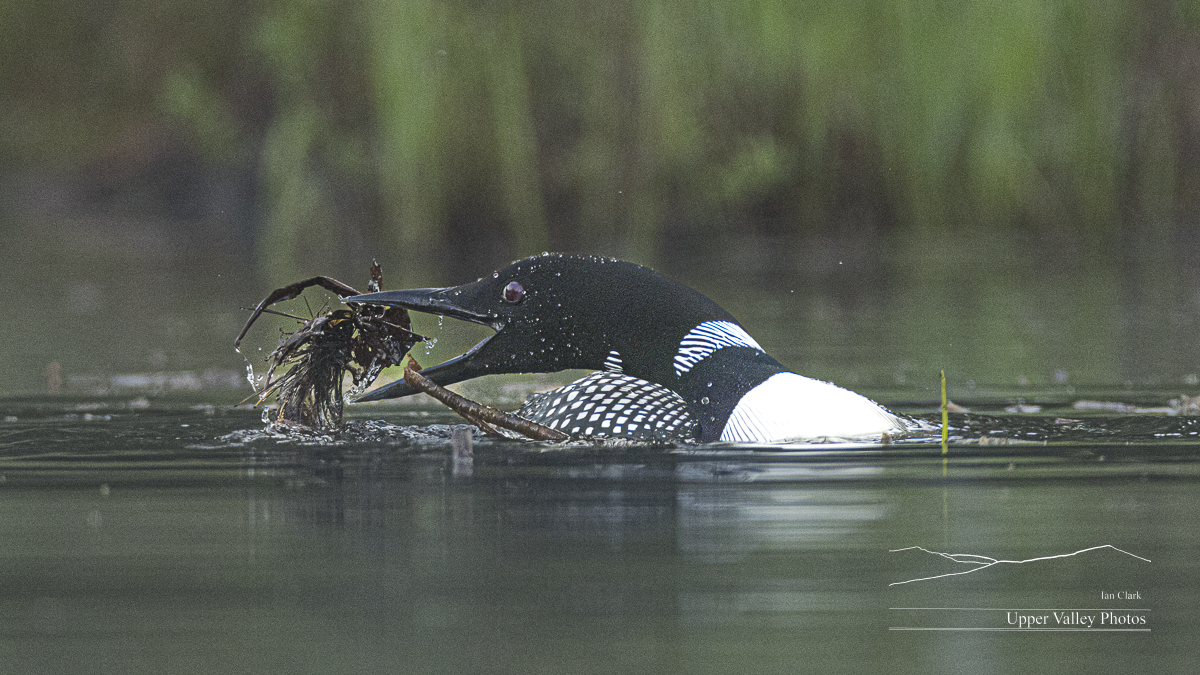
Ok, they’ve decided this is the place. But, it needs some improvements. They set about collecting a few sticks and lots of underwater vegetation to build the nest.
common loon building a nest
Sorting out the nesting materials.
common loon gathering nesting material
One more load…..
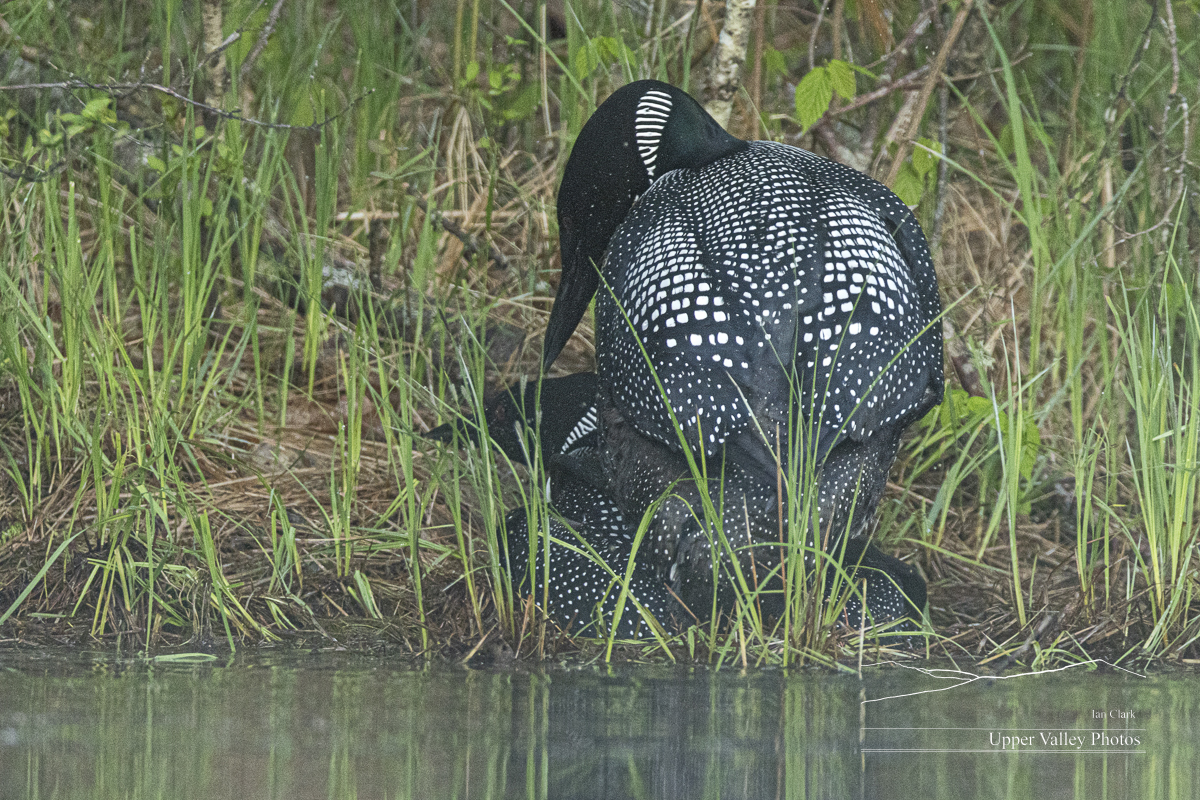
common loons mating
They set out to make sure they’re going to have little loons.

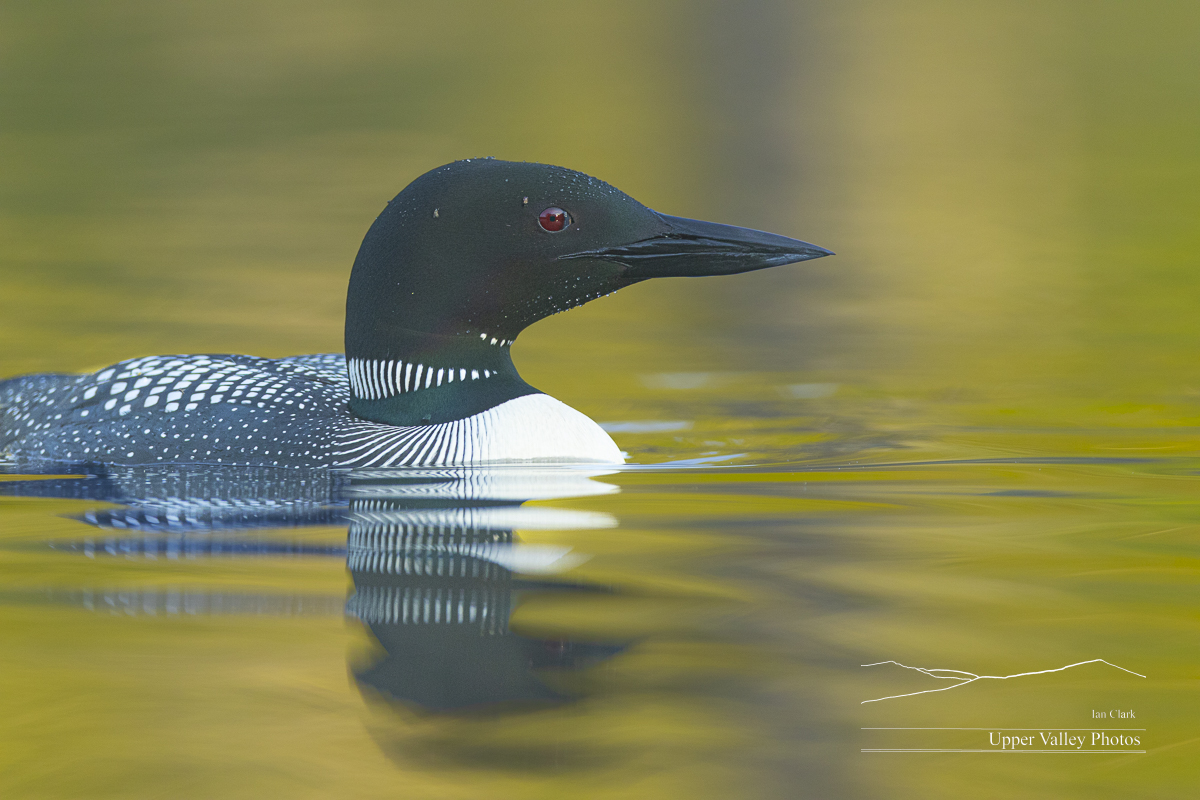
close up of a common loon
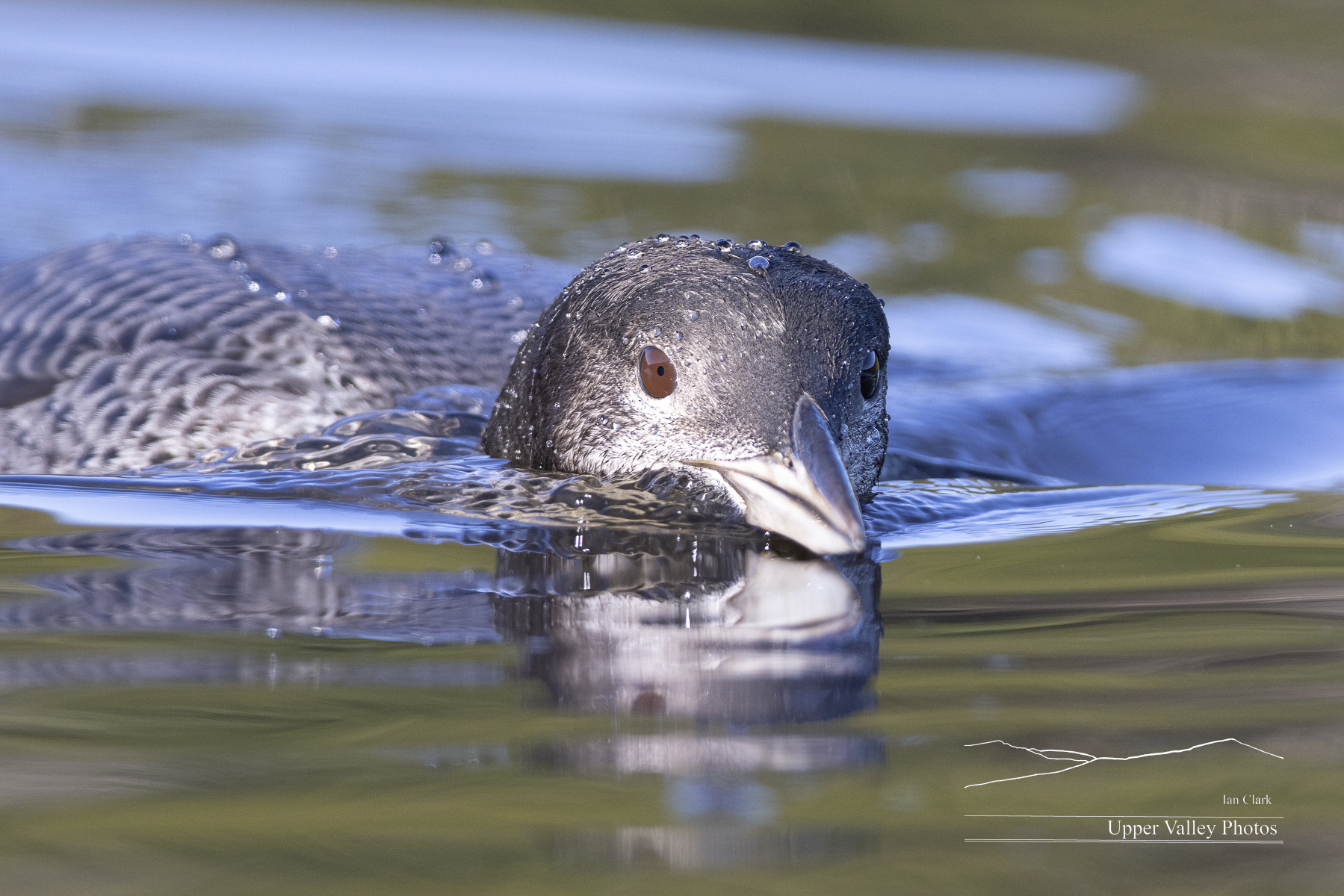
One of the pair swam by close in to my boat.
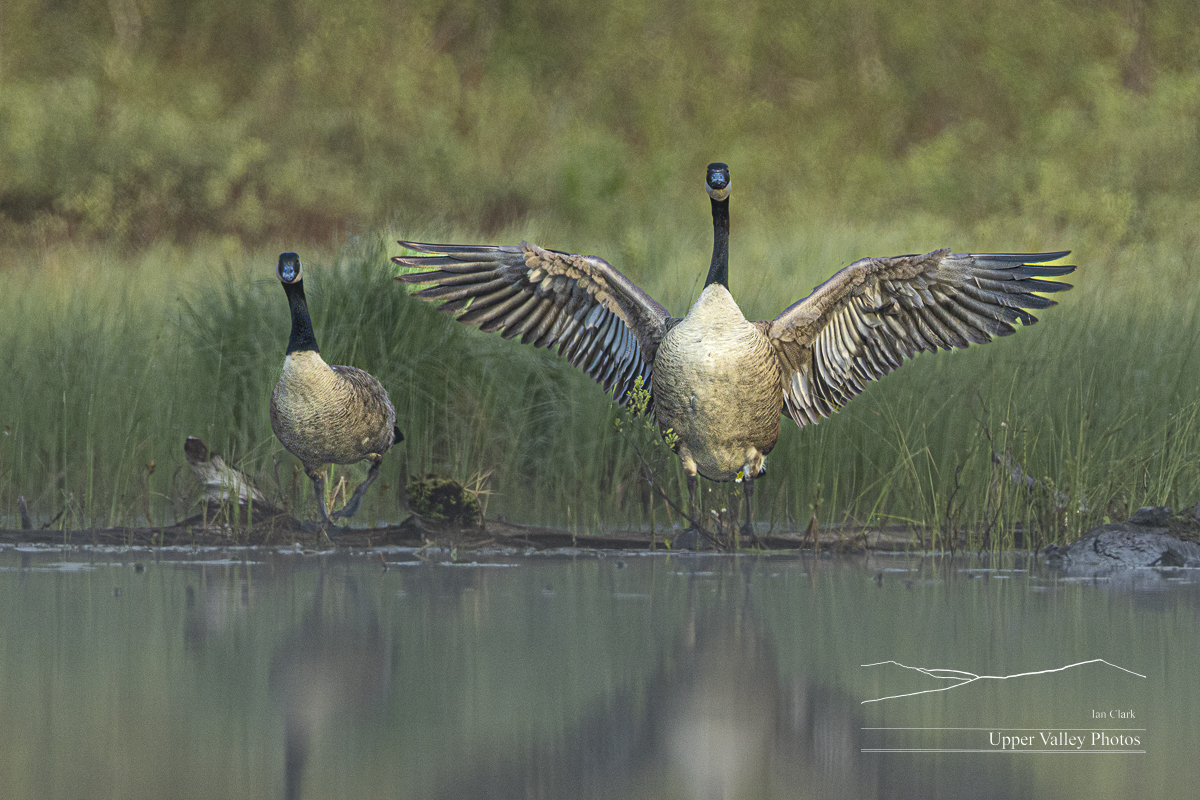
Canada geese on the side of the pond
A couple late nesting Canada geese were checking out spots near the loons’ nest. The loons strongly suggested they should move along and nest elsewhere.
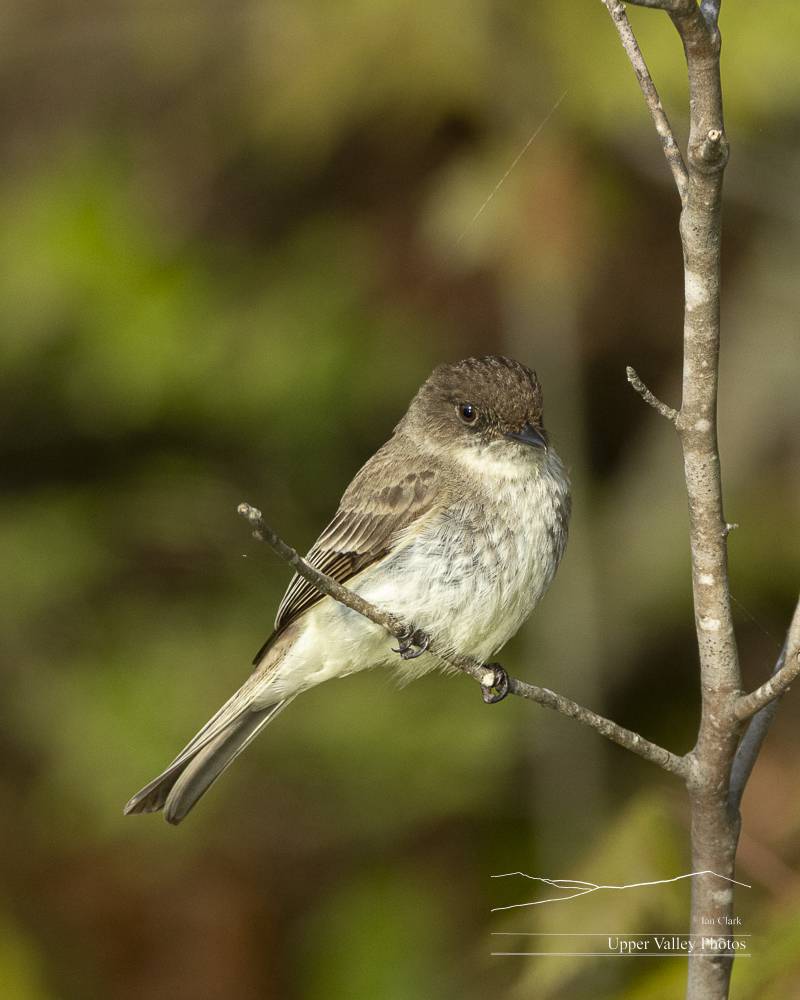
An eastern phoebe perched on a small tree
An eastern phoebe perched not far from the loons’ nest. The flycatchers are not keeping up with the black flies.

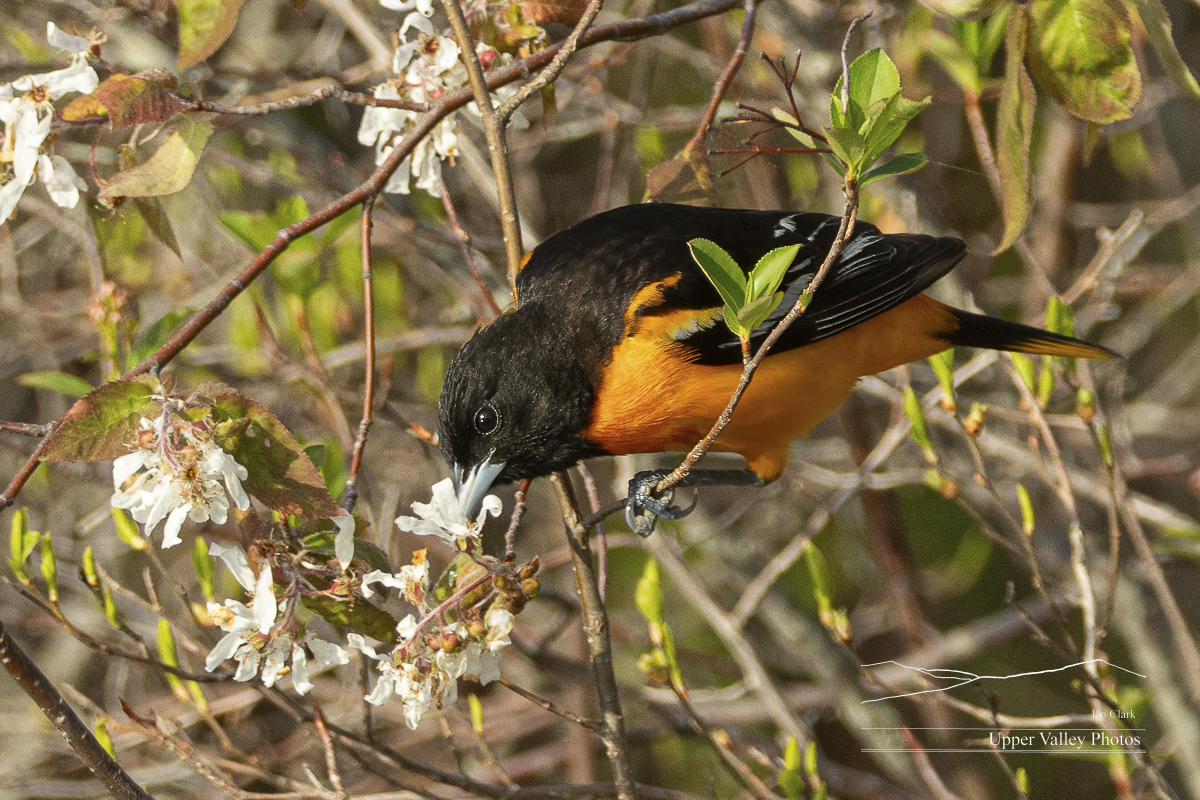
baltimore oriole feeding among flowers
Finding a Baltimore oriole feeding at eye level is a treat.
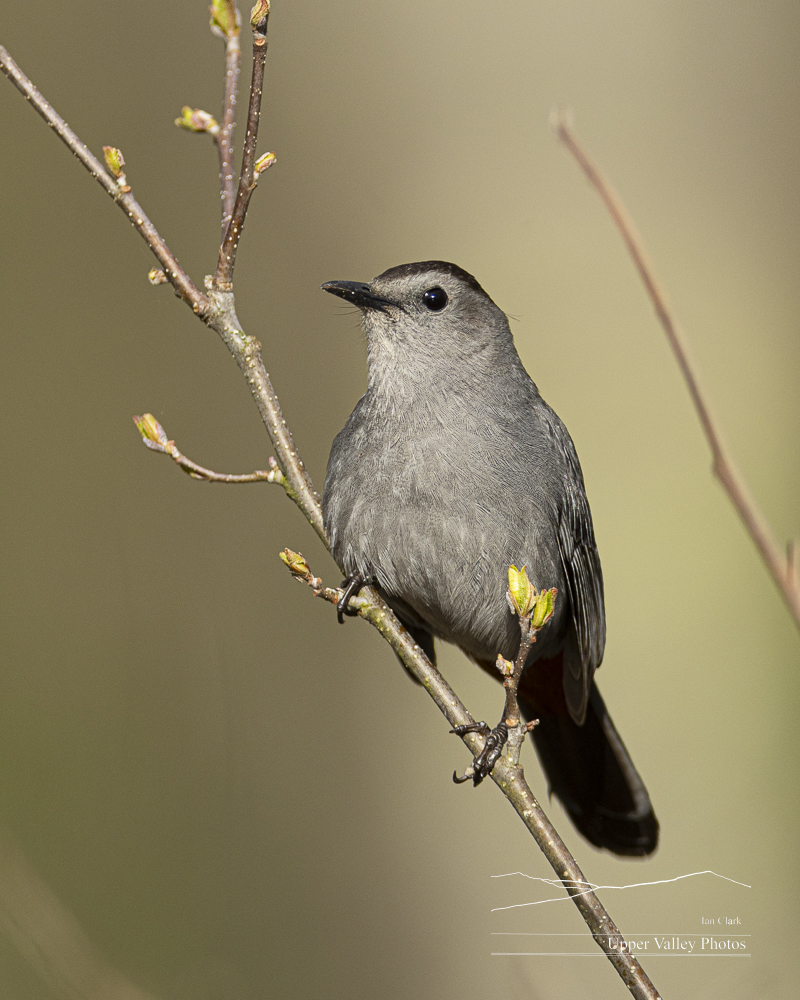
Gray catbird perched on a twig
Several gray catbirds live in the loons’ neighborhood.
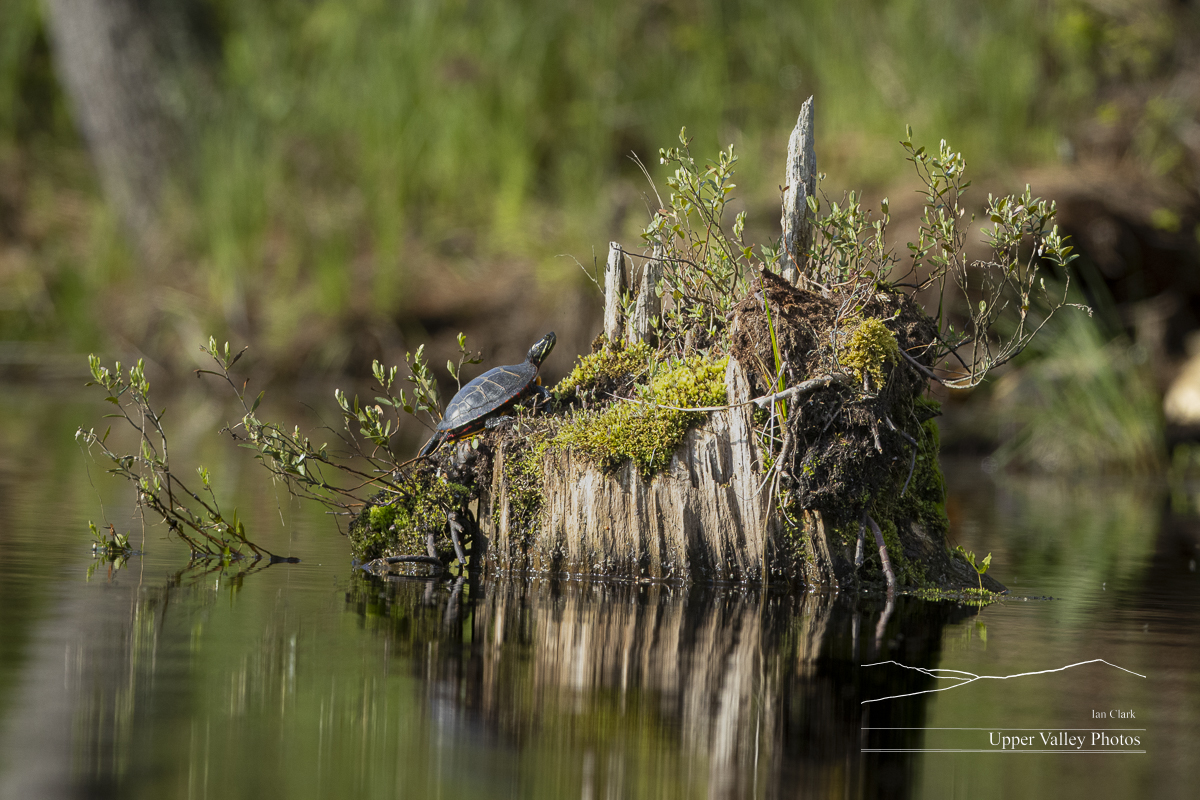
painted turtle basking
This painted turtle has claimed his own small island.
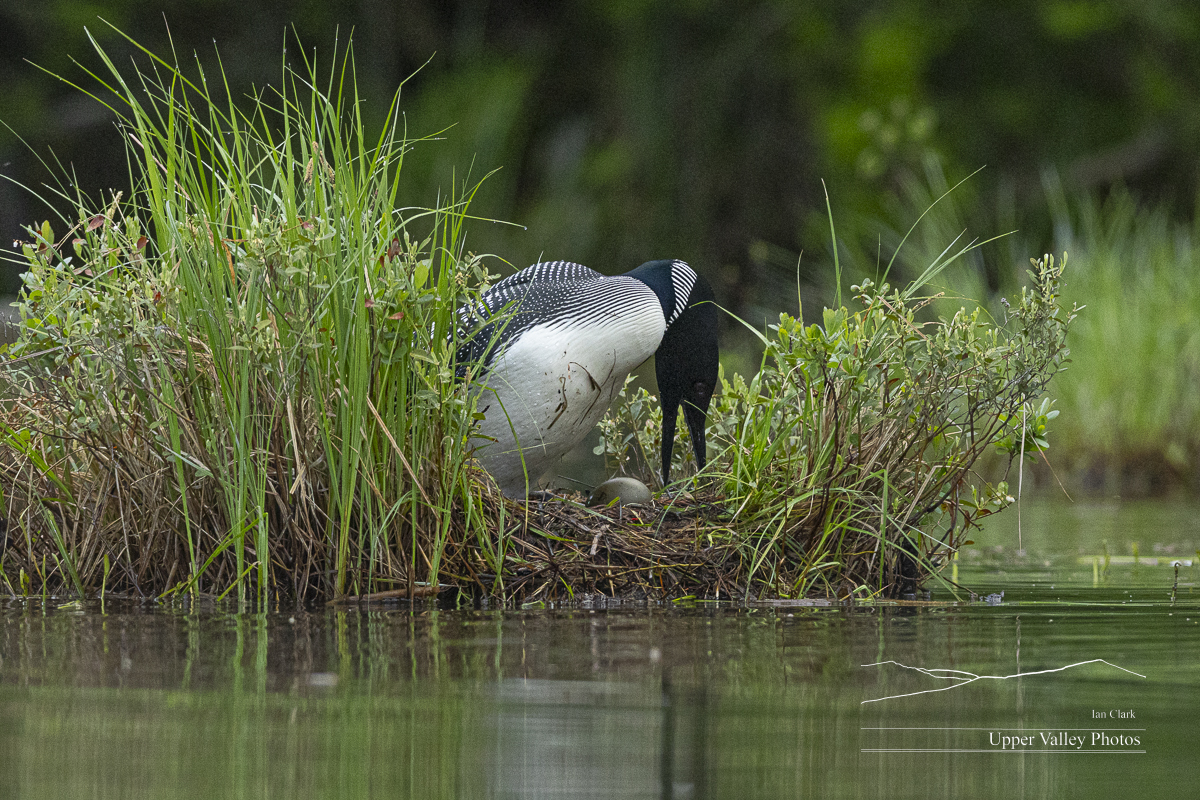
common loon in the nest, turning an egg
When I returned to the pond, the loons had an egg. Here, our male is turning it. Birds turn their eggs regularly. It is thought that turning the eggs helps keep the chick from adhering to the side of the egg and to distribute nutrients to the chick.

common loons in a territory dispute, the male is about to yodel
We know it was the male on the nest as an intruding loon arrived on the pond. The loon that had been on the nest came out to challenge the intruder and yodeled. Only males yodel. That’s the home team female watching in the background. This suggests the intruder was a male and wanted to displace the home team male.
common loon doing the 'penguin dance' during a territory dispute with another loon
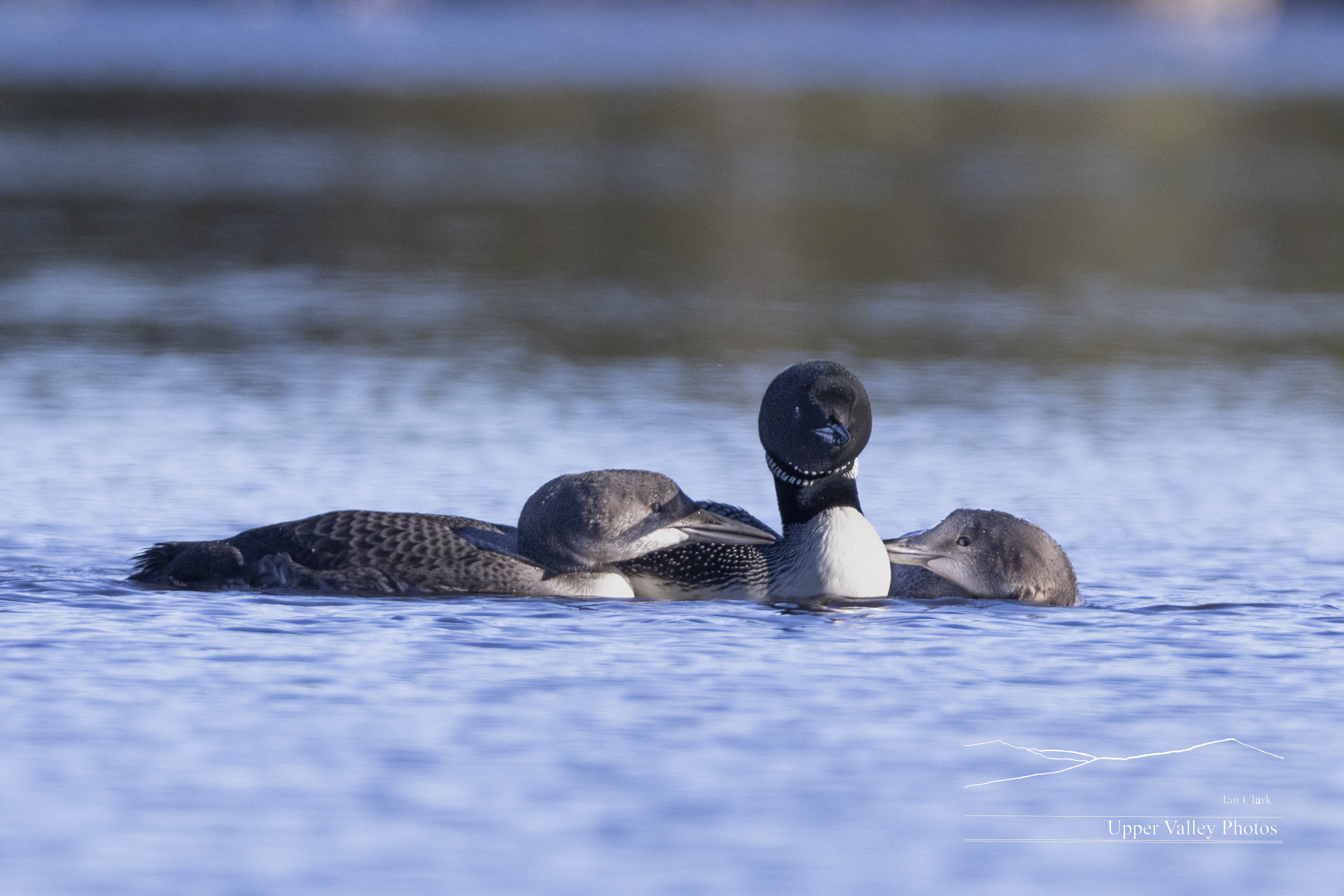
Things escalated quickly! This is the male doing the ‘penguin dance’ to threaten the intruder. Both males and females will dance, but it is thought the males do it more often.


common loon doing the 'penguin dance' during a territory dispute with another loon
A nice shot of the penguin dance. Notice how far back the loon’s legs are. And, great elevation from the home team male!

common loon running across the water to take off
The penguin dance display was enough to convince the intruder to retreat to the other side of the pond.
common loon running across the water to take off
After a few minutes of the home team wailing, the intruder left the pond.
Common loon stretching
The home team male takes a victory stretch.
Common loon on the nest with the mate nearby
And then he returns to the nest.

The road up to the Easton’s pond finally got some work and I was able to get up for a visit.
Dragonfly emerging from the nymph stage
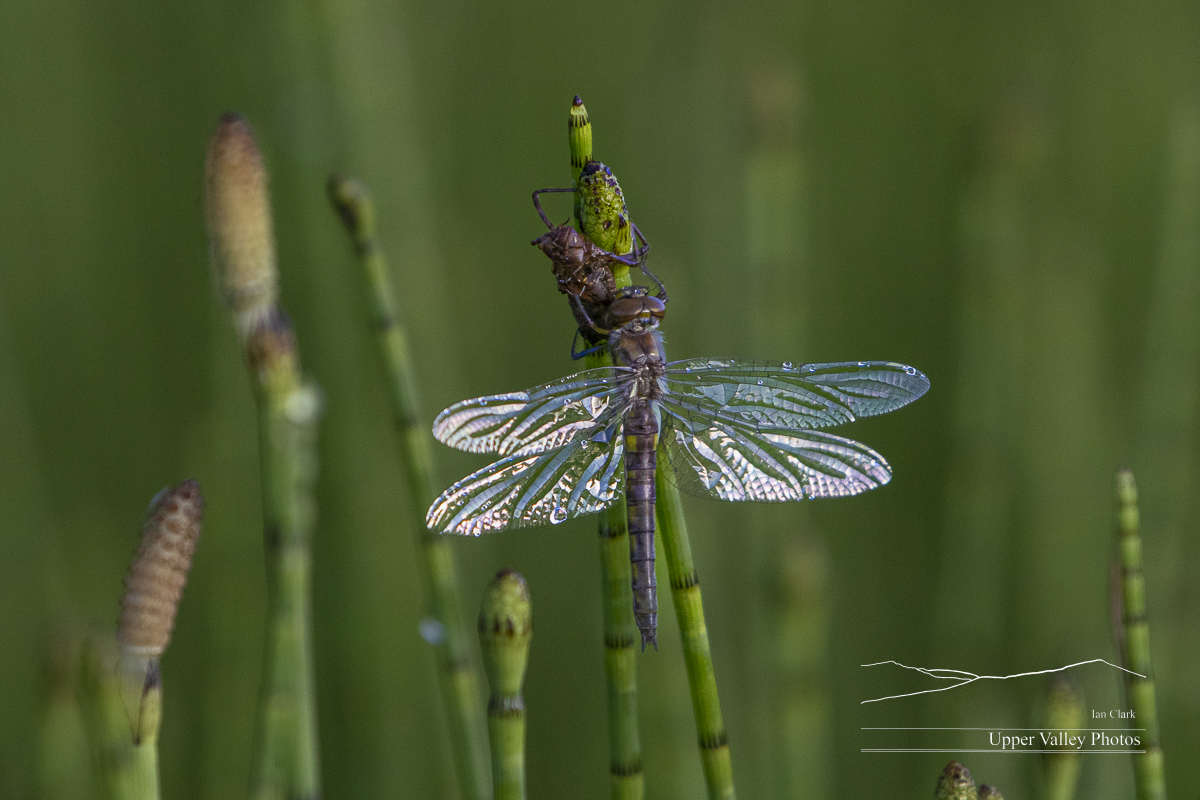
There were several dragonflies emerging from their nymph stage and drying their wings in the sunshine.
Scenic photo of a mated common loon pair
The water on the Easton’s pond is a few inches higher than last year, making the nest site unusable. They were scouting the pond for a new site. Here, they’ve stopped to discuss something on their search. We’ve got the same male back again this year. The Loon Preservation Committee banded him in Moultonborough, NH in 2015.
close up of a common loon
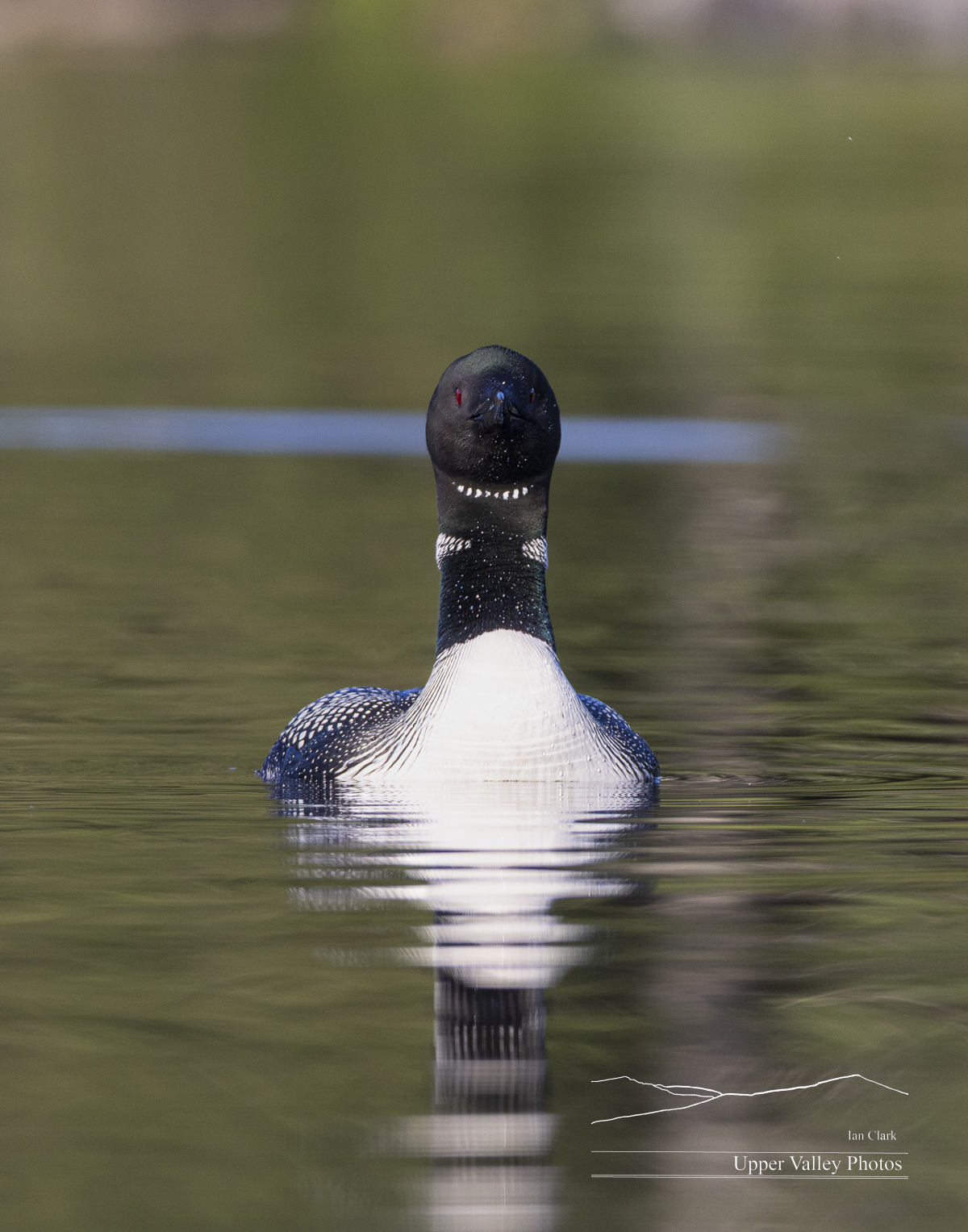
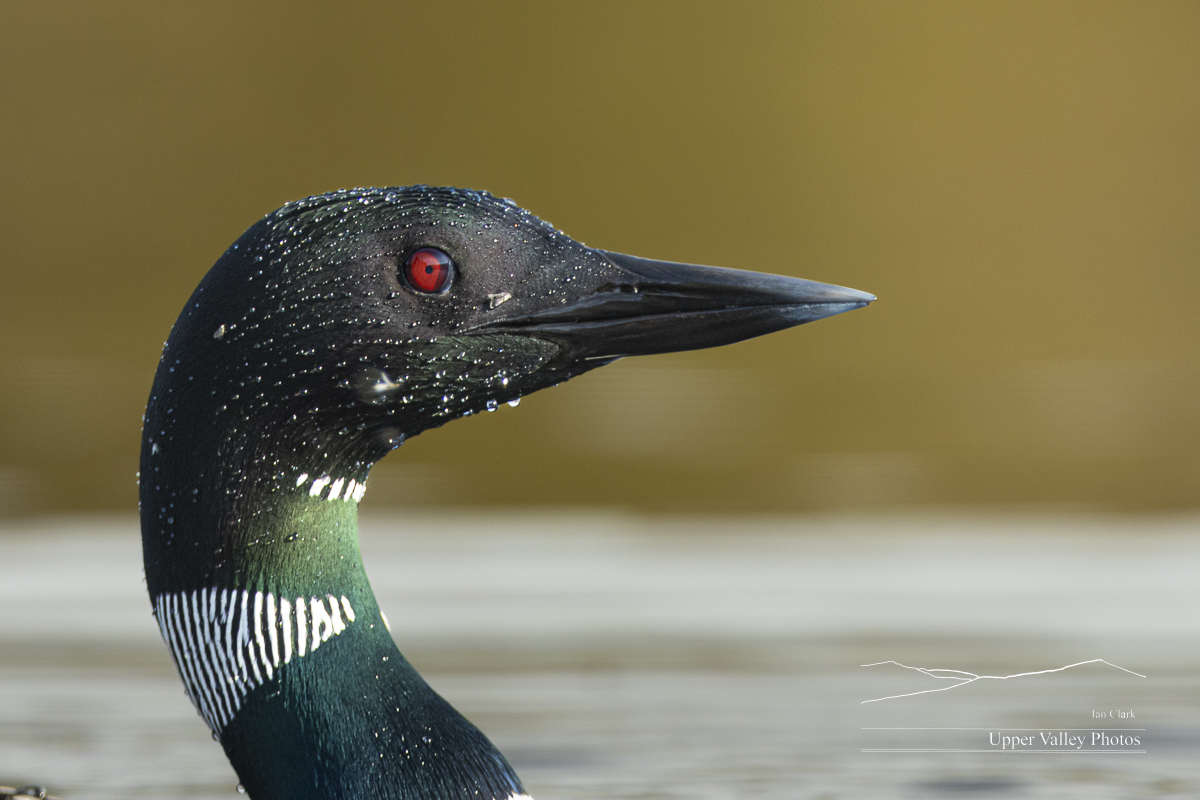
Mrs. Easton swam by close to the boat to have a good look at me. (Not as close as it looks, I’m using a 600mm lens and have cropped the image.) The loons checked out several spots and may have settled on one. They discussed it for a time before mating on the site.
bull moose feeding in the water
One of the loons’ neighbors was out enjoying breakfast.