Posts Tagged: moose

Checking in With The Gang

It’s been a busy couple of weeks since my last post. I’ve managed to visit the Eastons and Westons twice each, the Middletons once and the heron rookery once.

The trailer is all packed for an early morning departure to the Berkshires Arts Festival at Ski Butternut in Great Barrington, MA. We’ll be there Friday, Saturday & Sunday. I’d love to meet more of you, please stop by booth 212 in the air conditioned Upper Lodge.
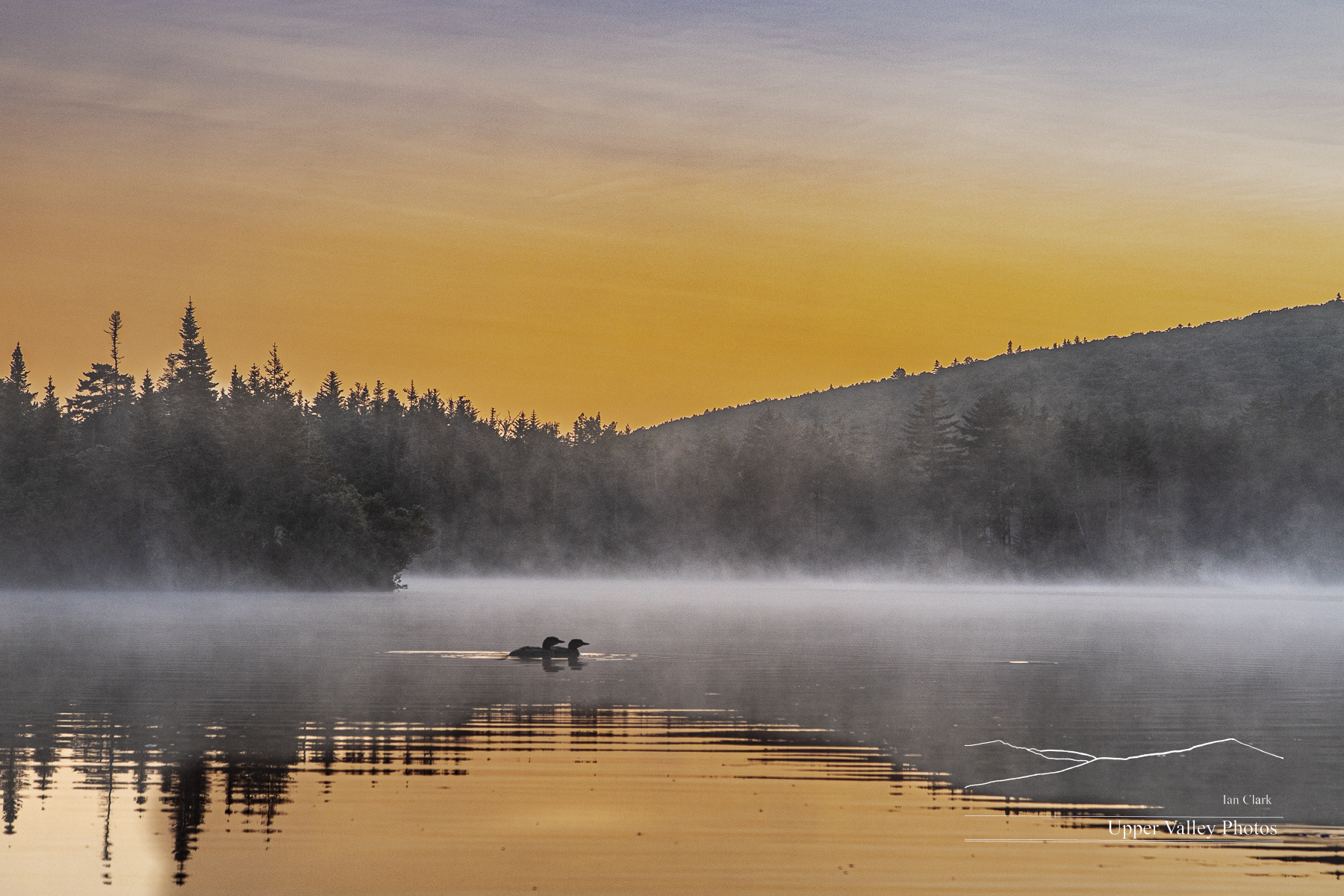
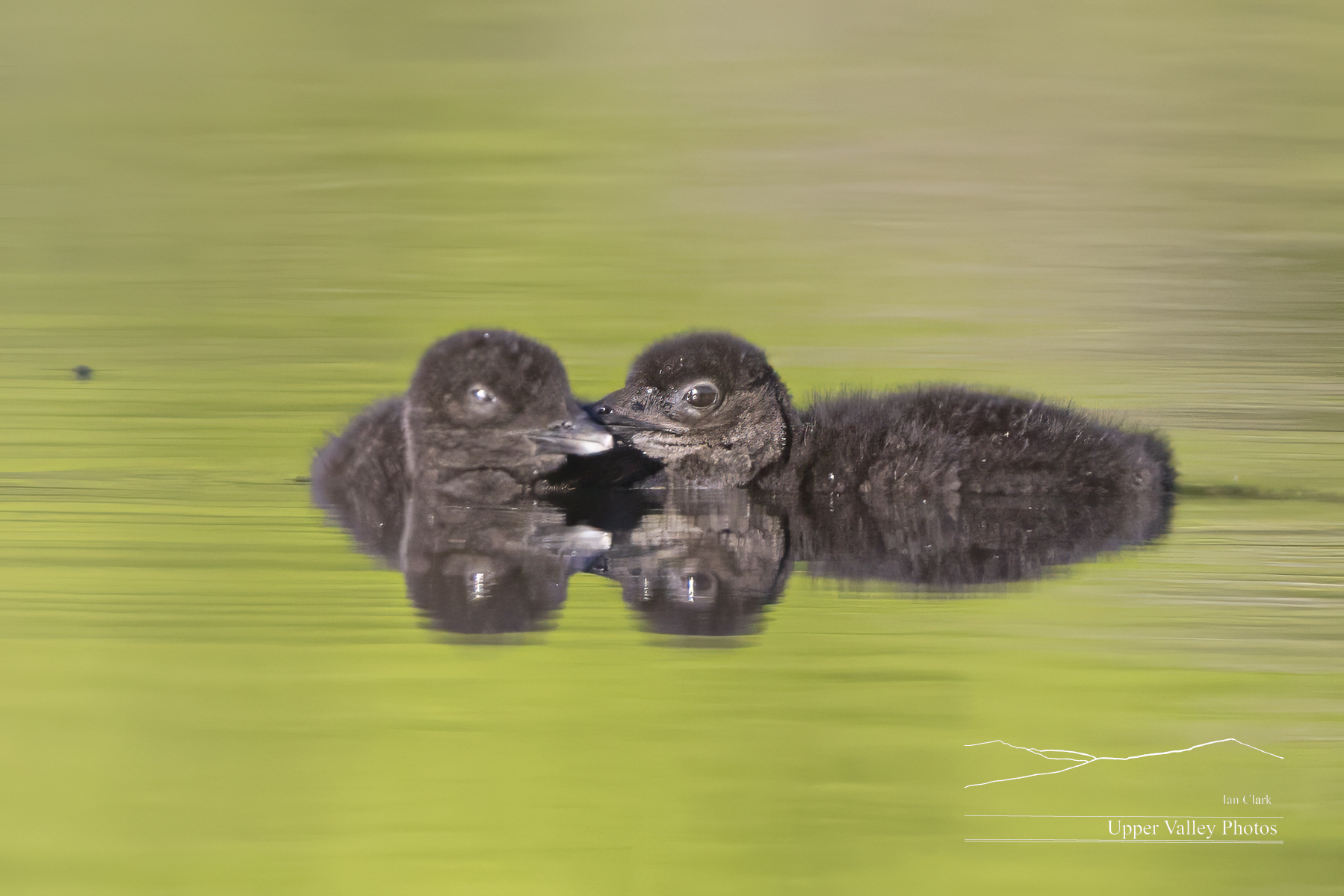
I’ll have lots of shots of the loons, along with lots of other critters and even a few of my steam locomotive images with me.
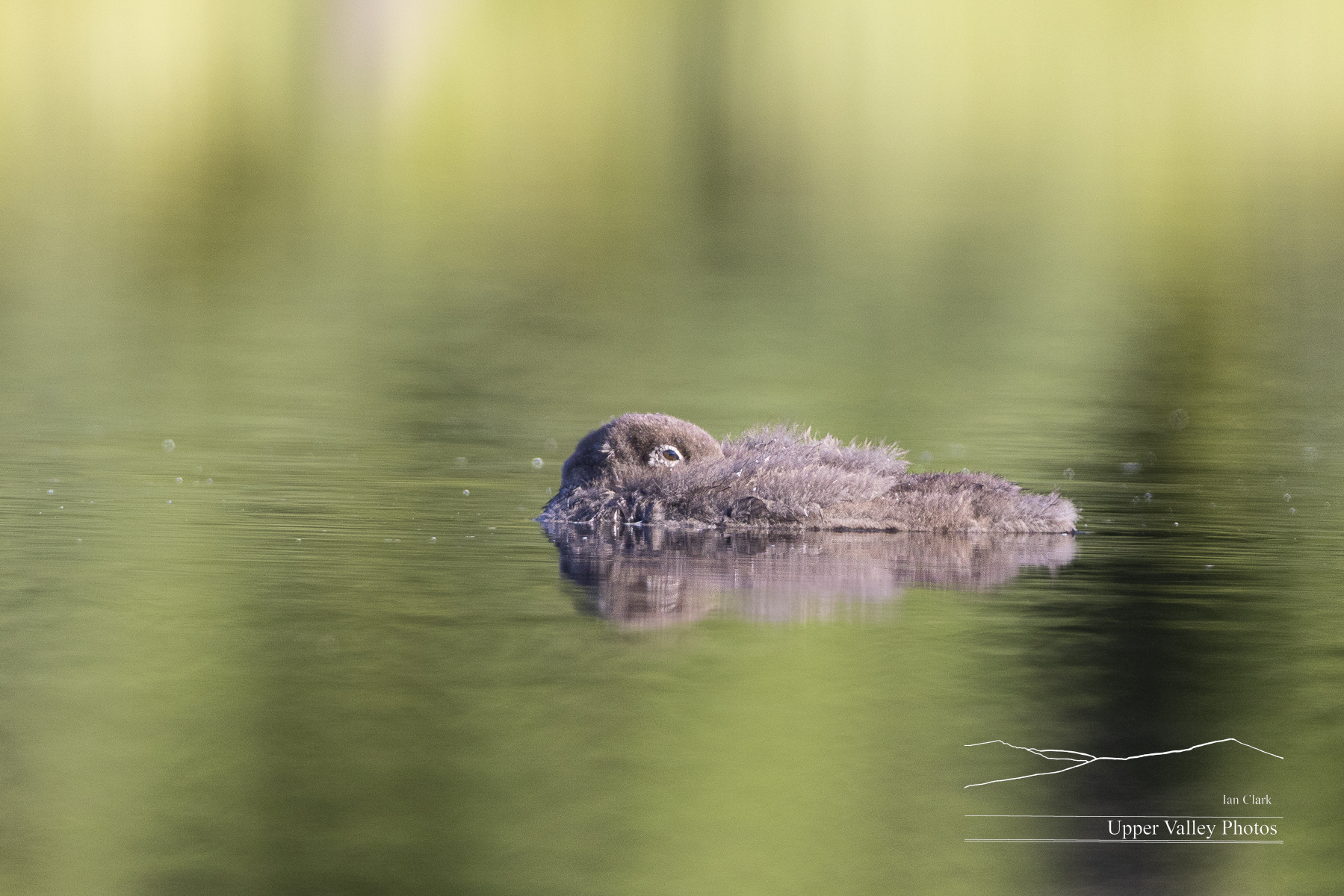
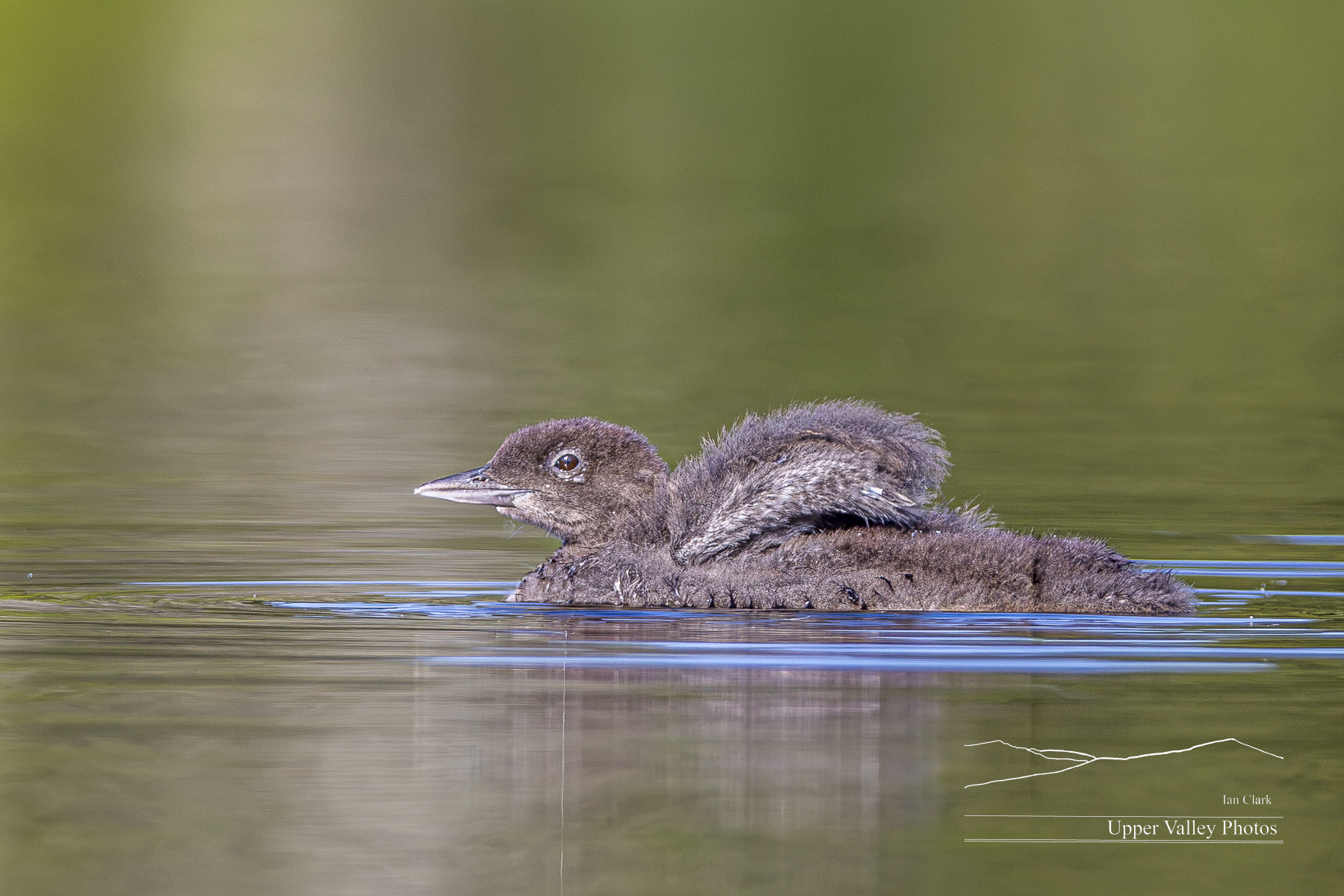
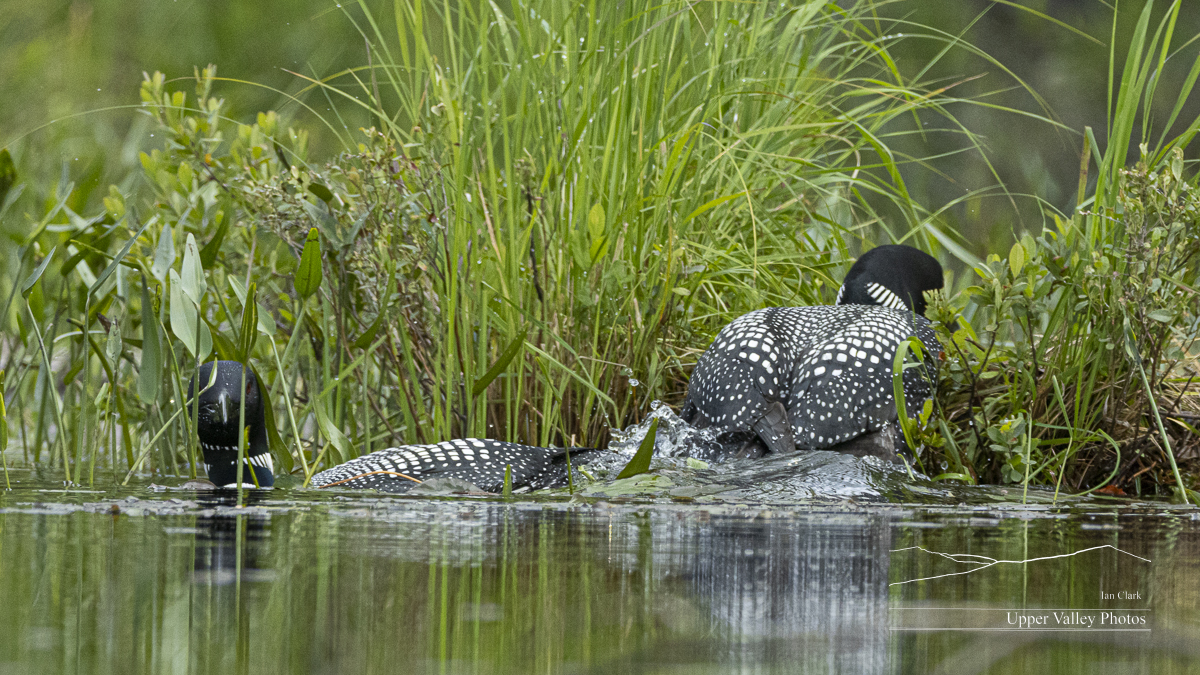
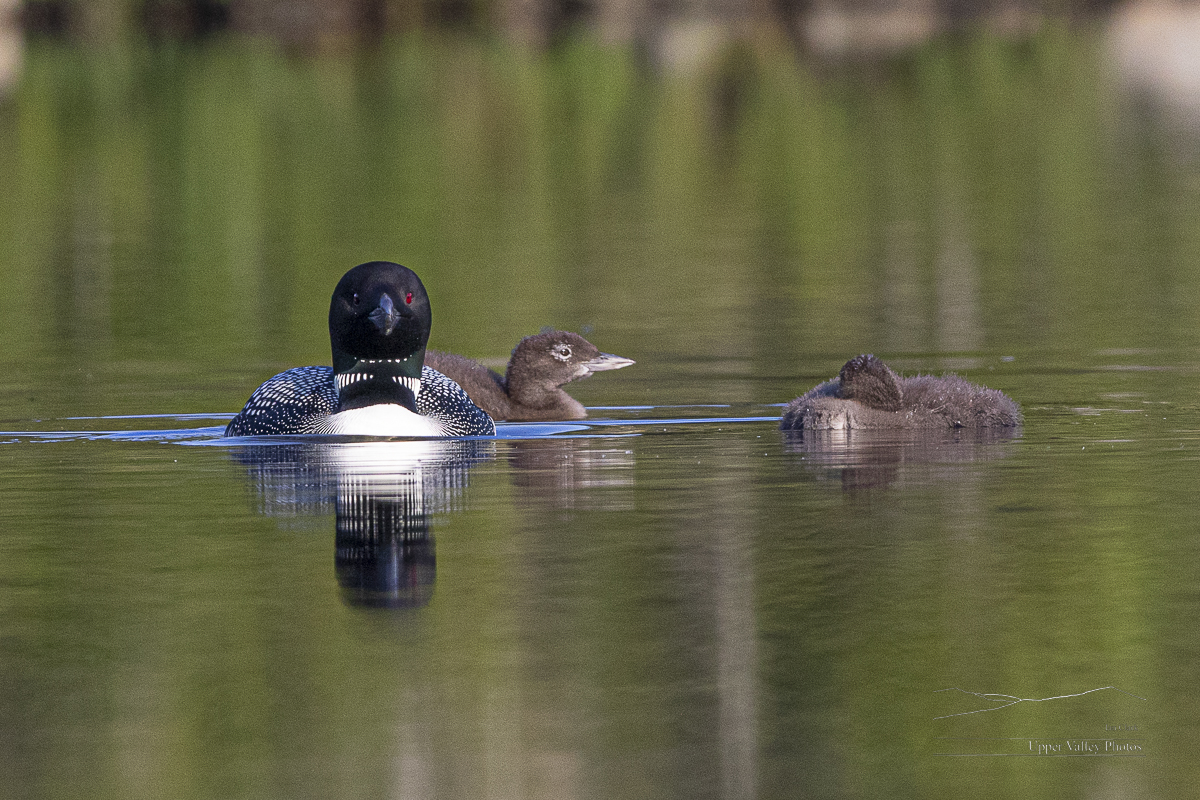
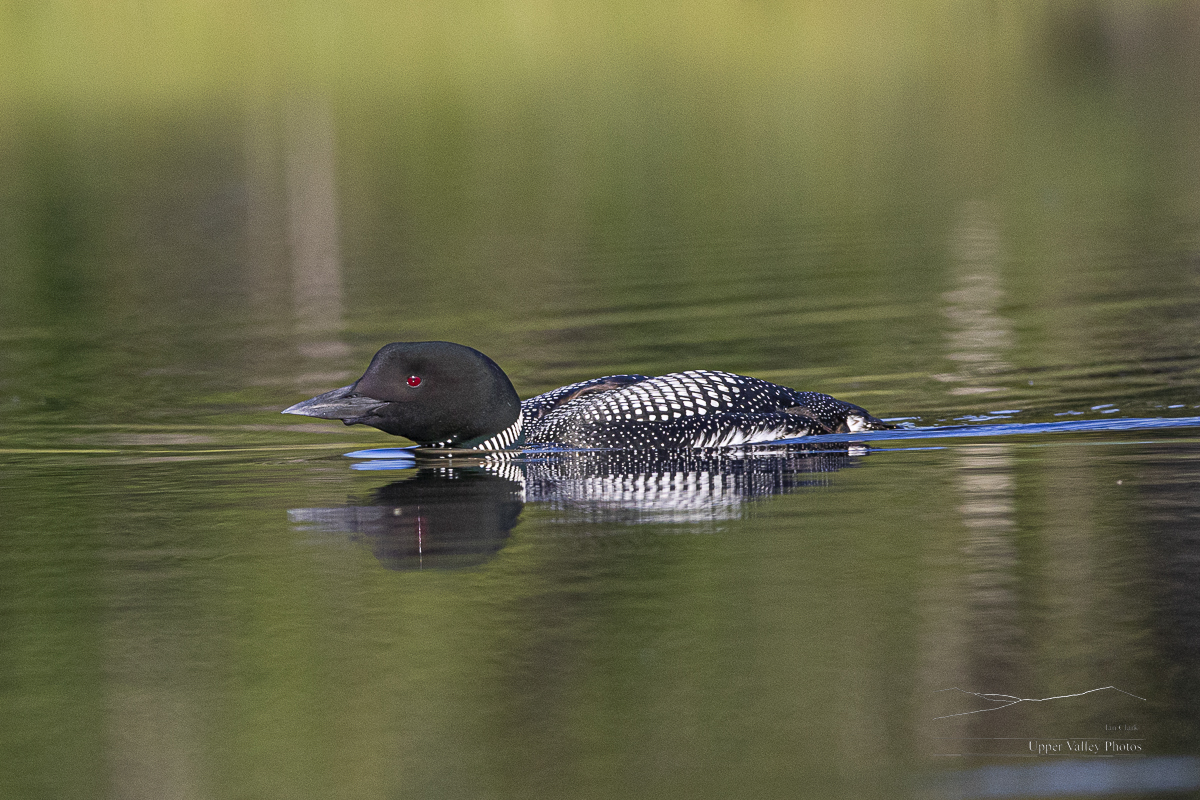
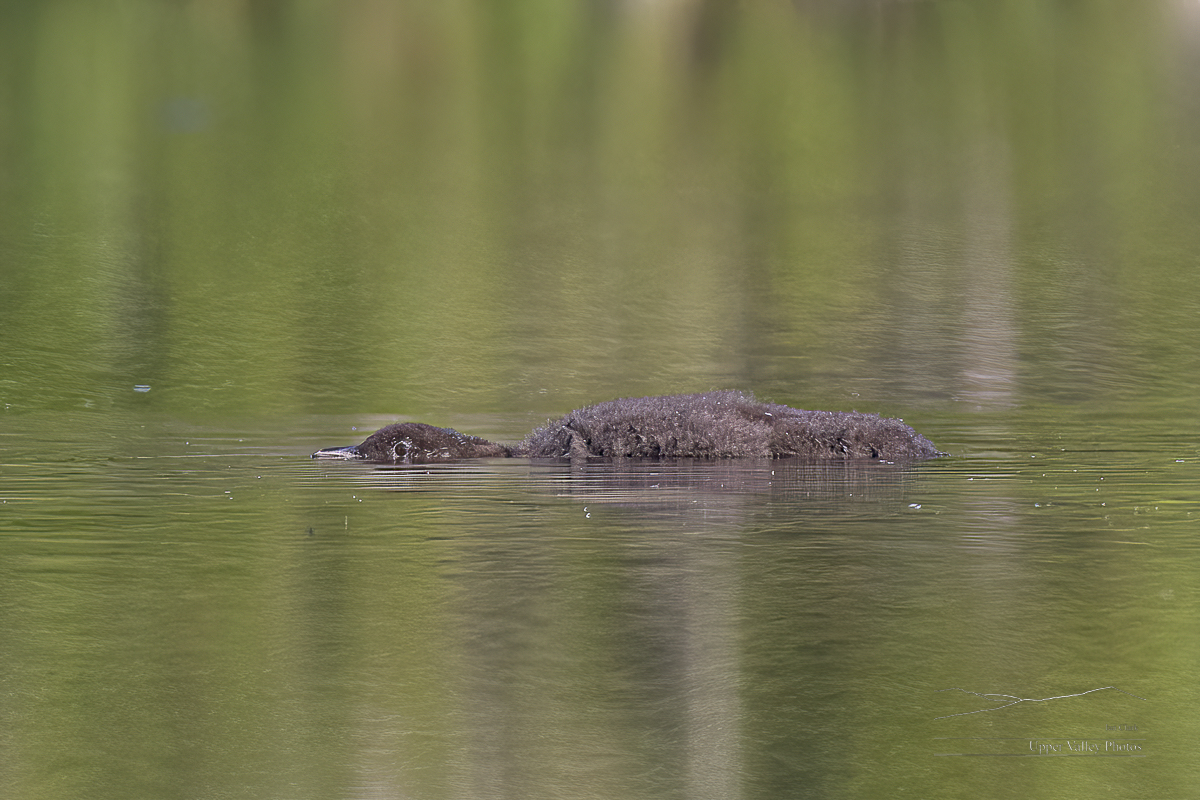
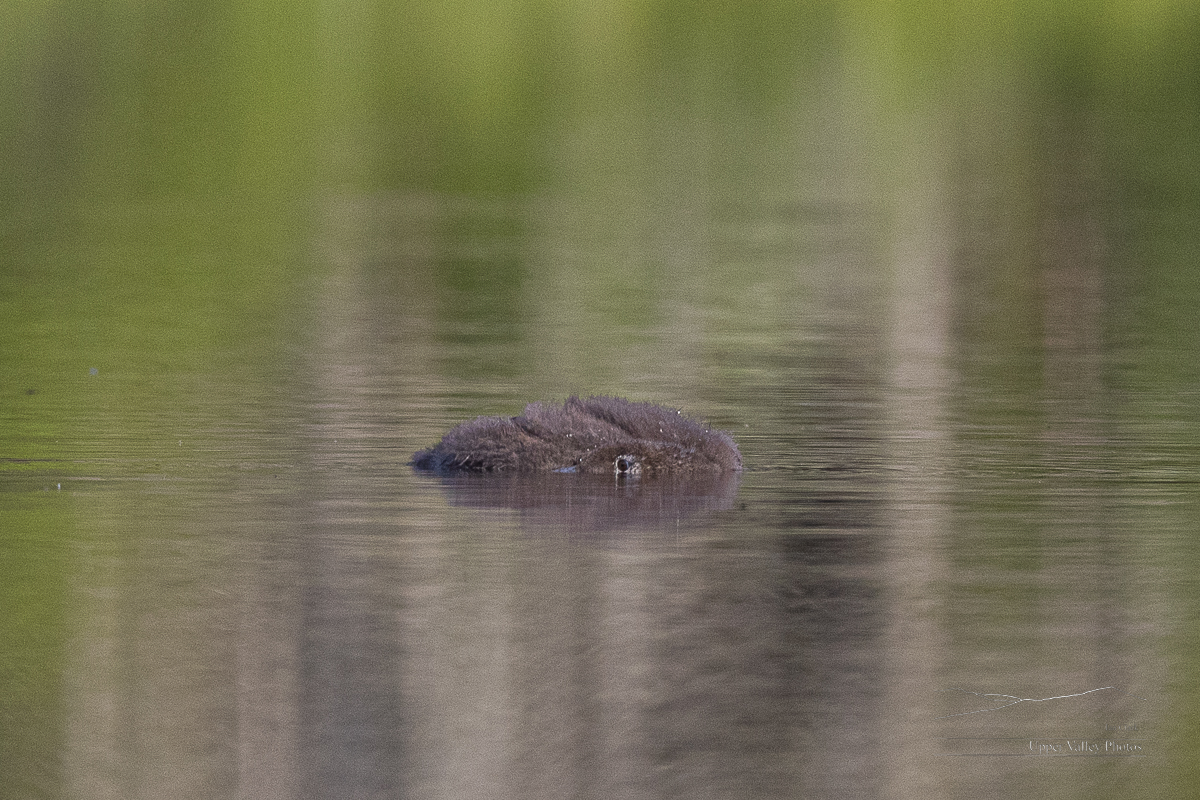
On the 16th, I had time for a quick call on the Westons to see how the chicks were doing. They were seven and eight days old when I visited. There was an intruder on the pond. Mom and Dad went to deal with the intruder. Young chicks’ only protection is to flatten on the water and hope not to be seen. This is very effective when the water is ruffed by the wind. Much less so on a calm day. The intruder was dealt with and the parents returned to collect the chicks. Other than the brief kerfuffle, it was a quiet morning and I headed home early.

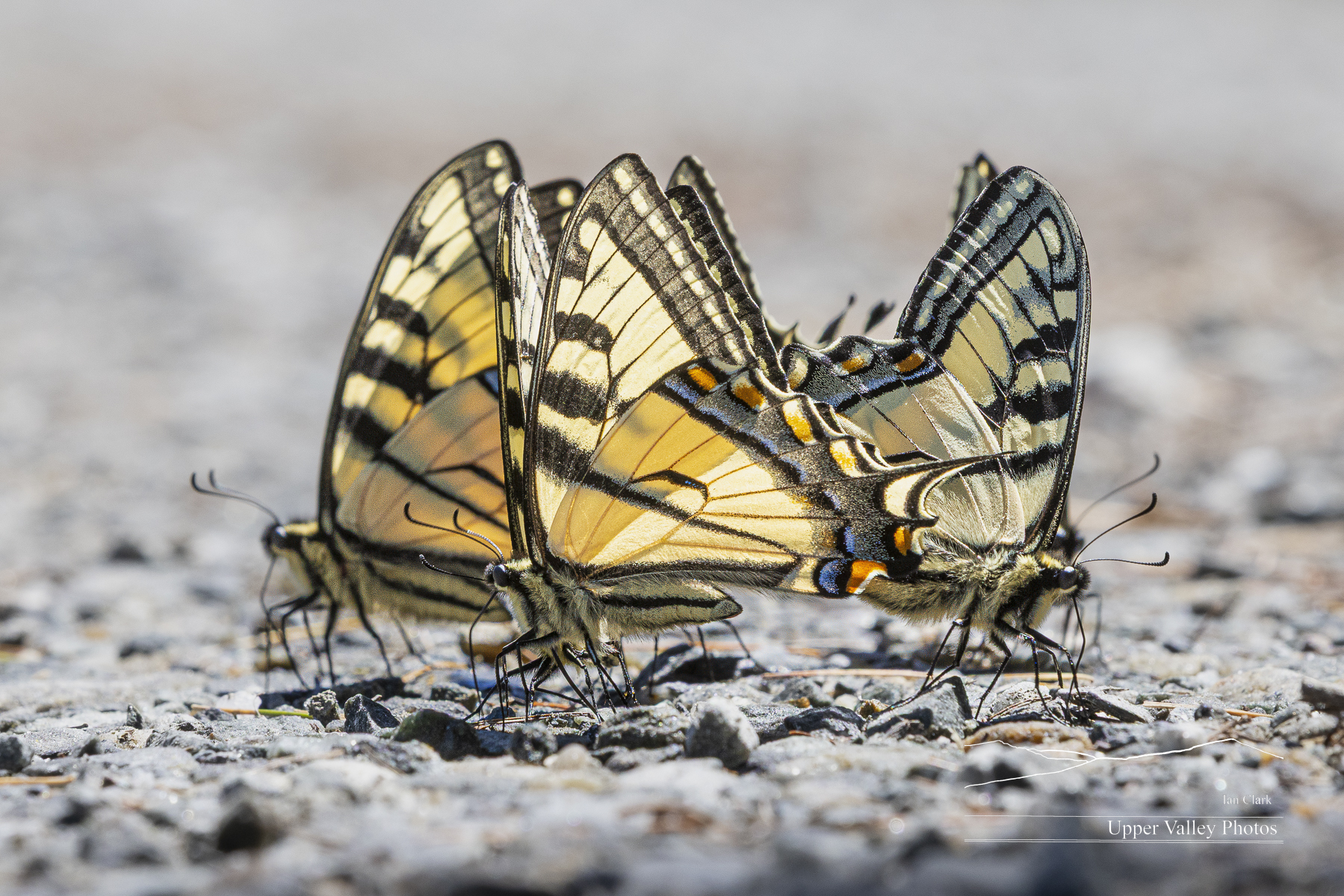
Leaving the Westons’ pond, I found a kaleidoscope of Canadian tiger swallowtail butterflies puddling in the road. Puddling is when the butterflies find something on the ground with nutrients they need. Often it is animal poop or urine. The butterflies gather to lick up the nutrients. And kaleidoscope is a great collective noun.

It took until the 24th for my schedule and a nice morning to coincide again. When I’d last visited the Middletons, they appeared to be looking for a new nest site after abandoning their first nest. It looked like they’d made their choice of spots and were tossing vegetation around to build a nest.

When I checked the spot they’d been building, I found an empty nest and no loons.
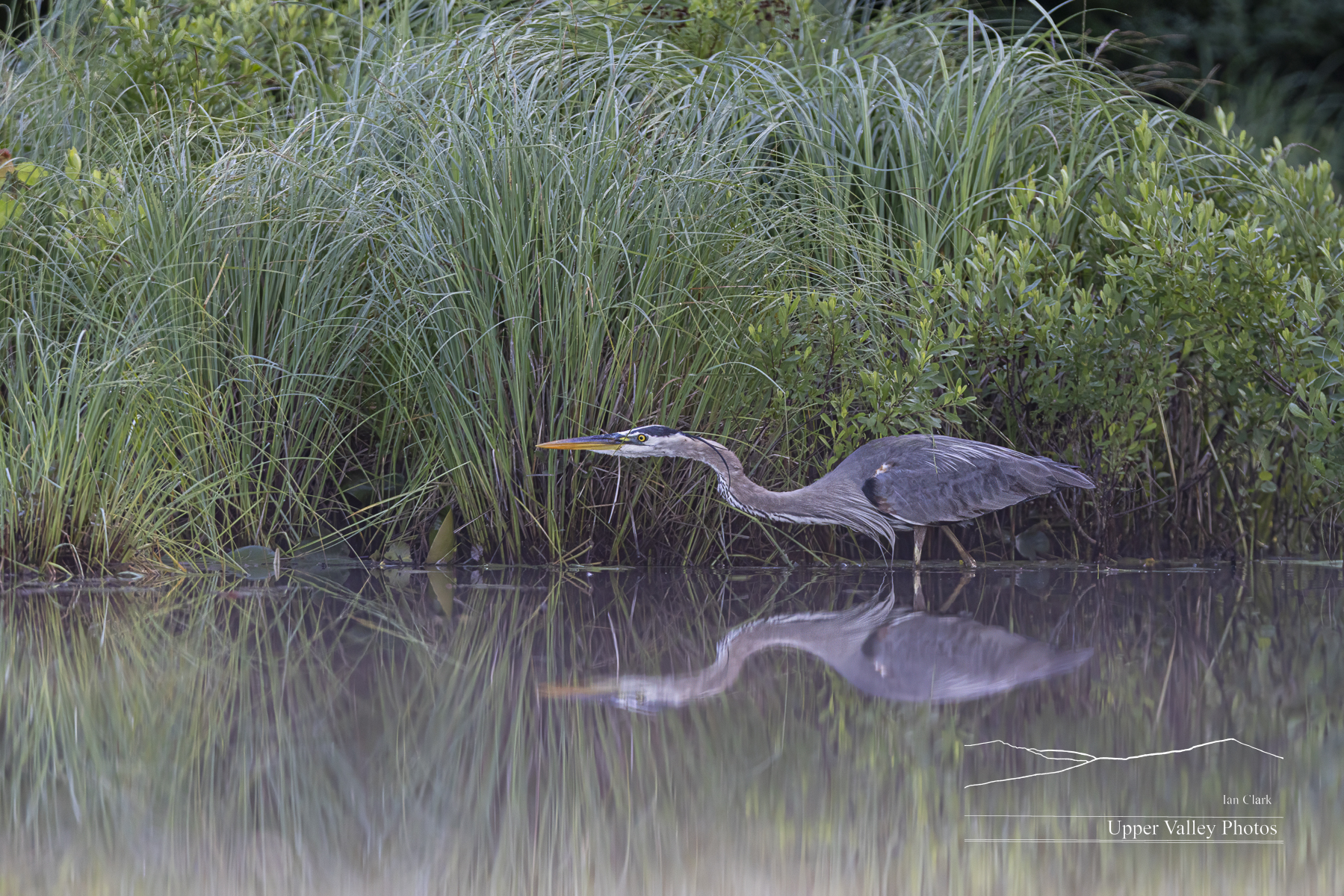

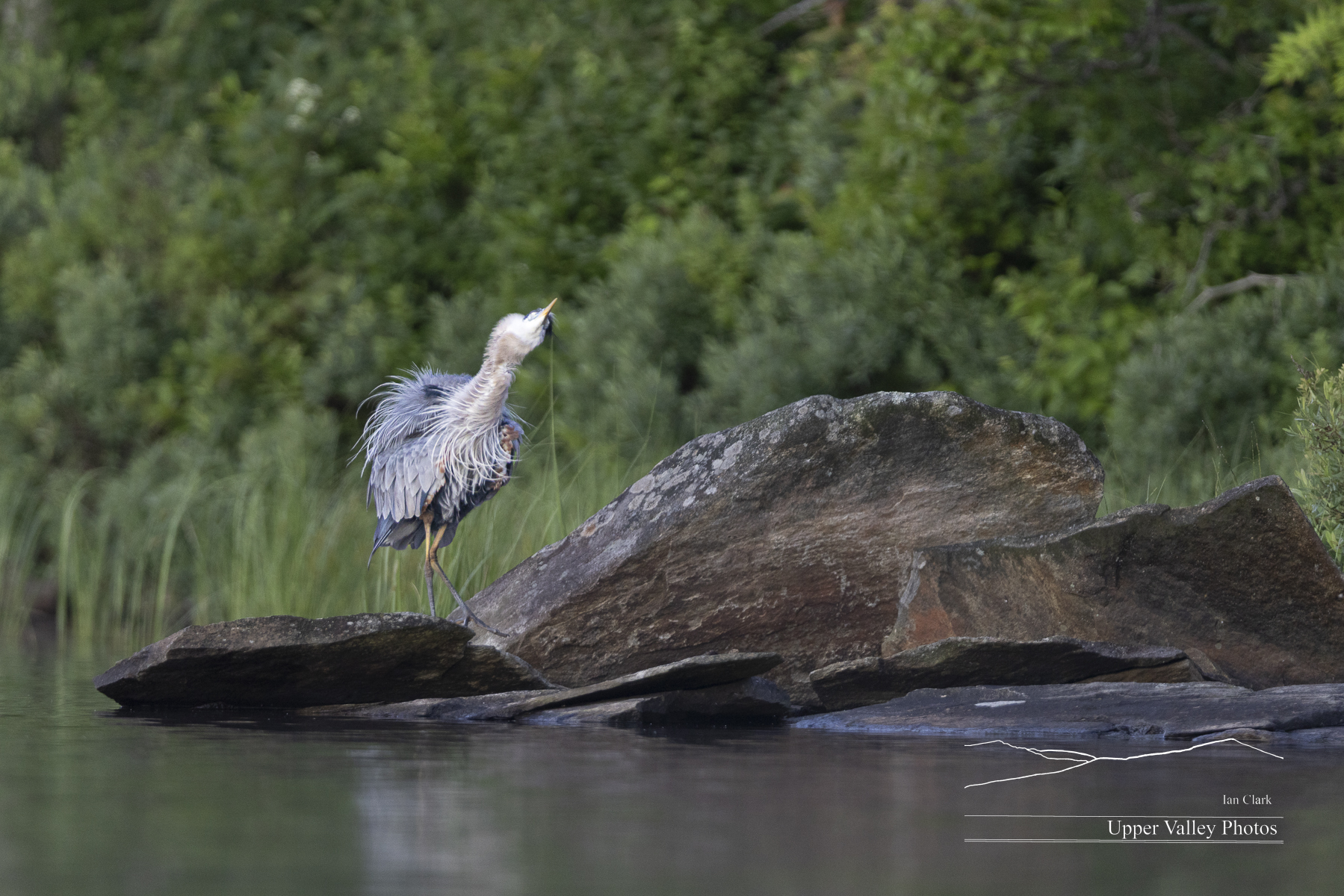
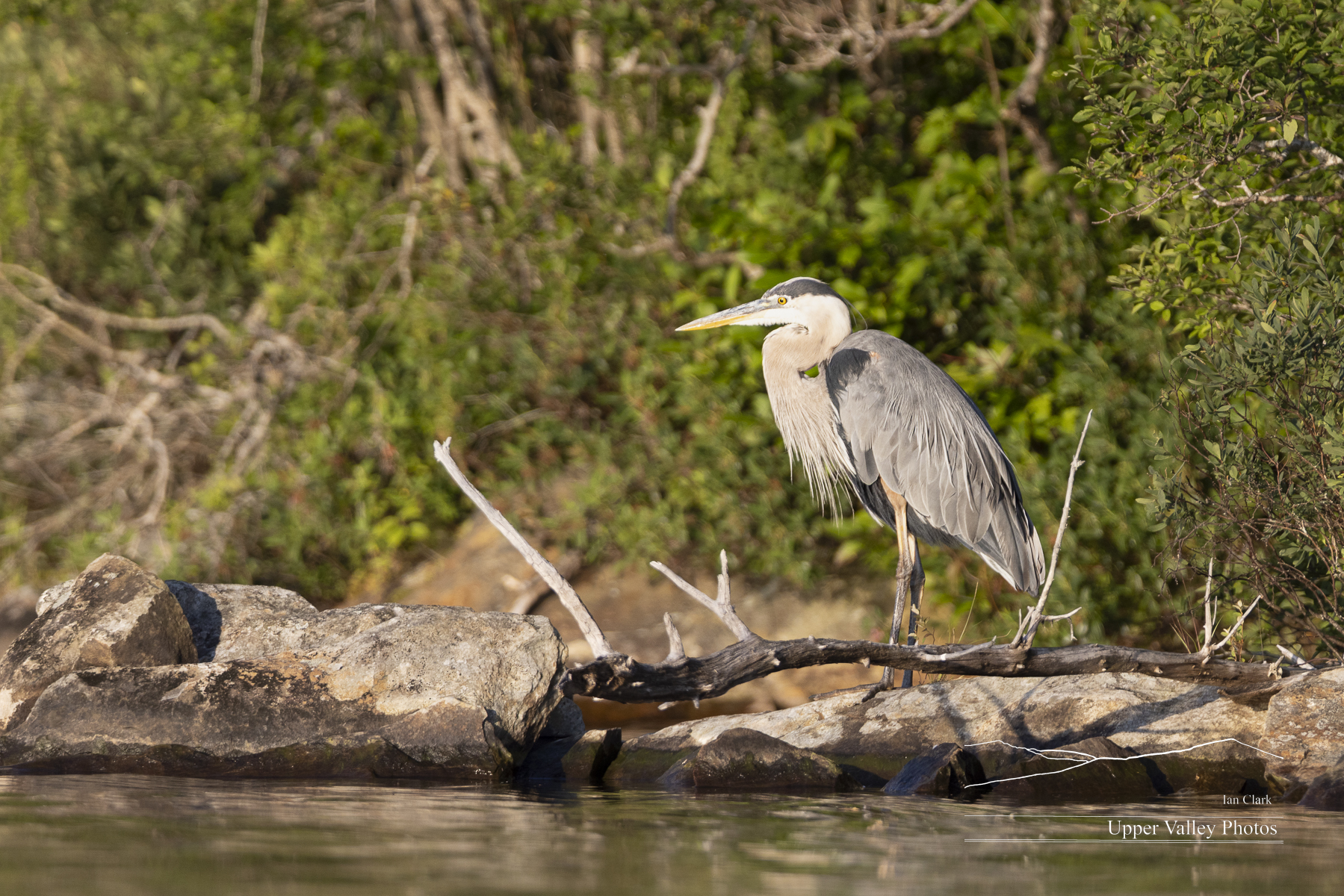
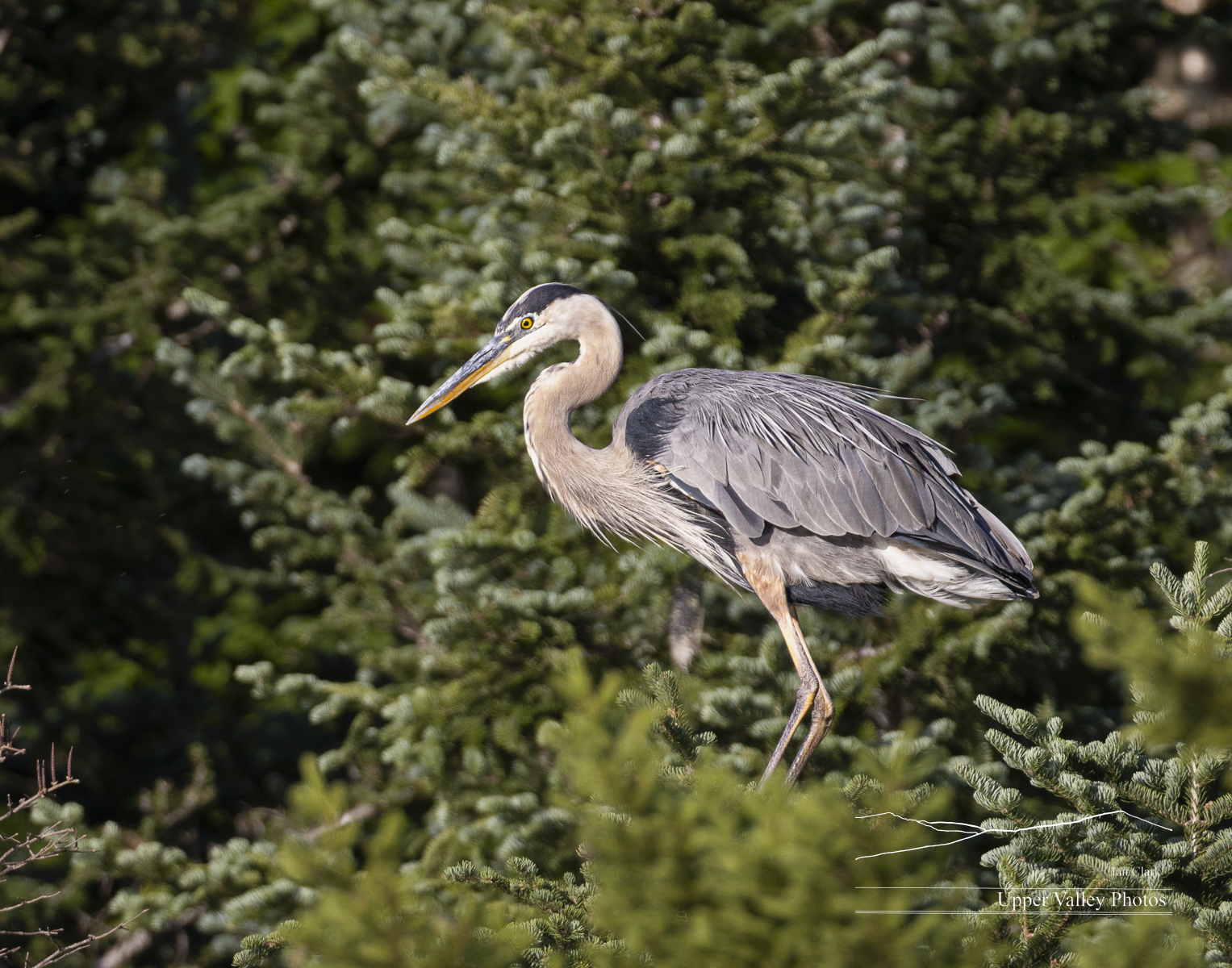
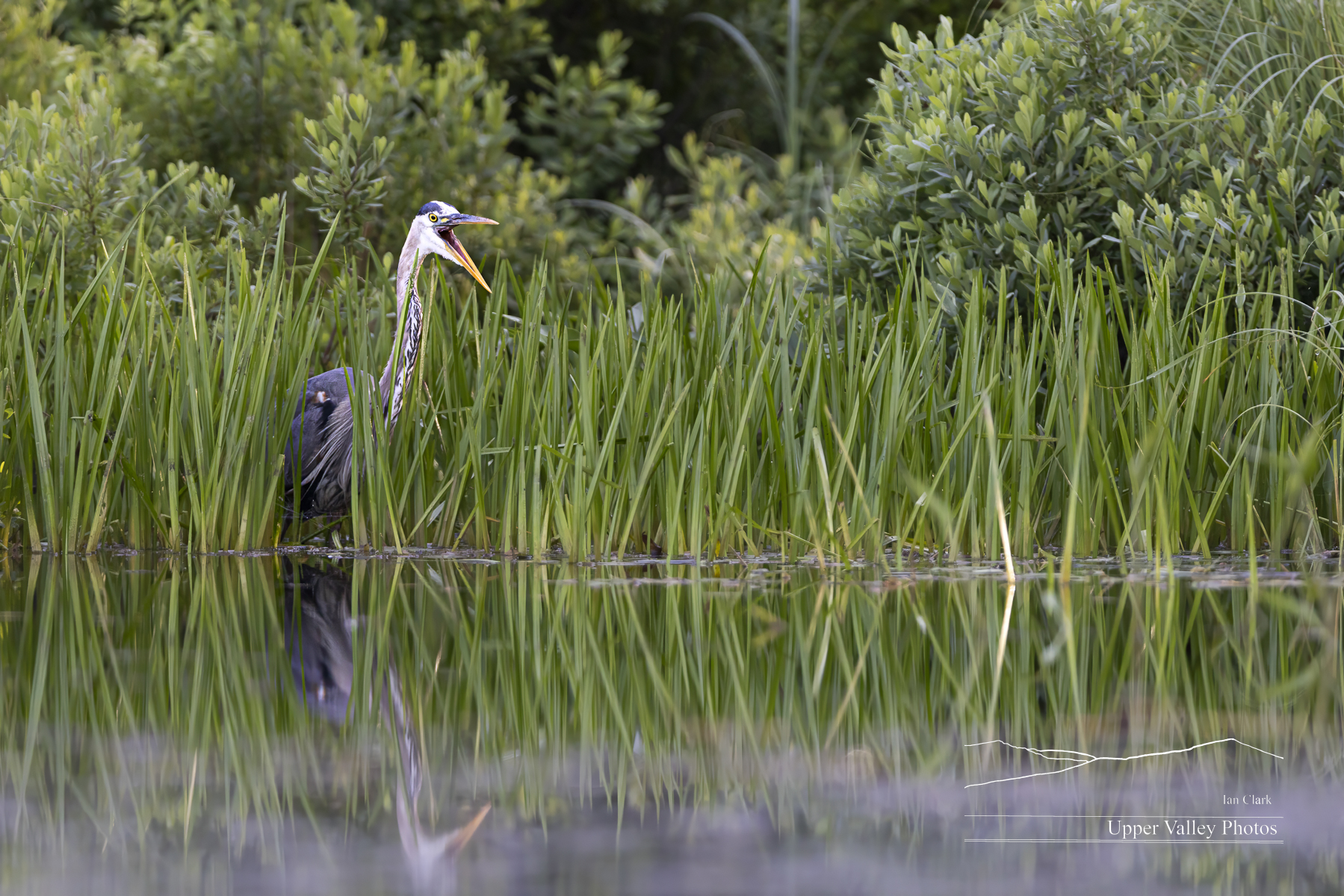
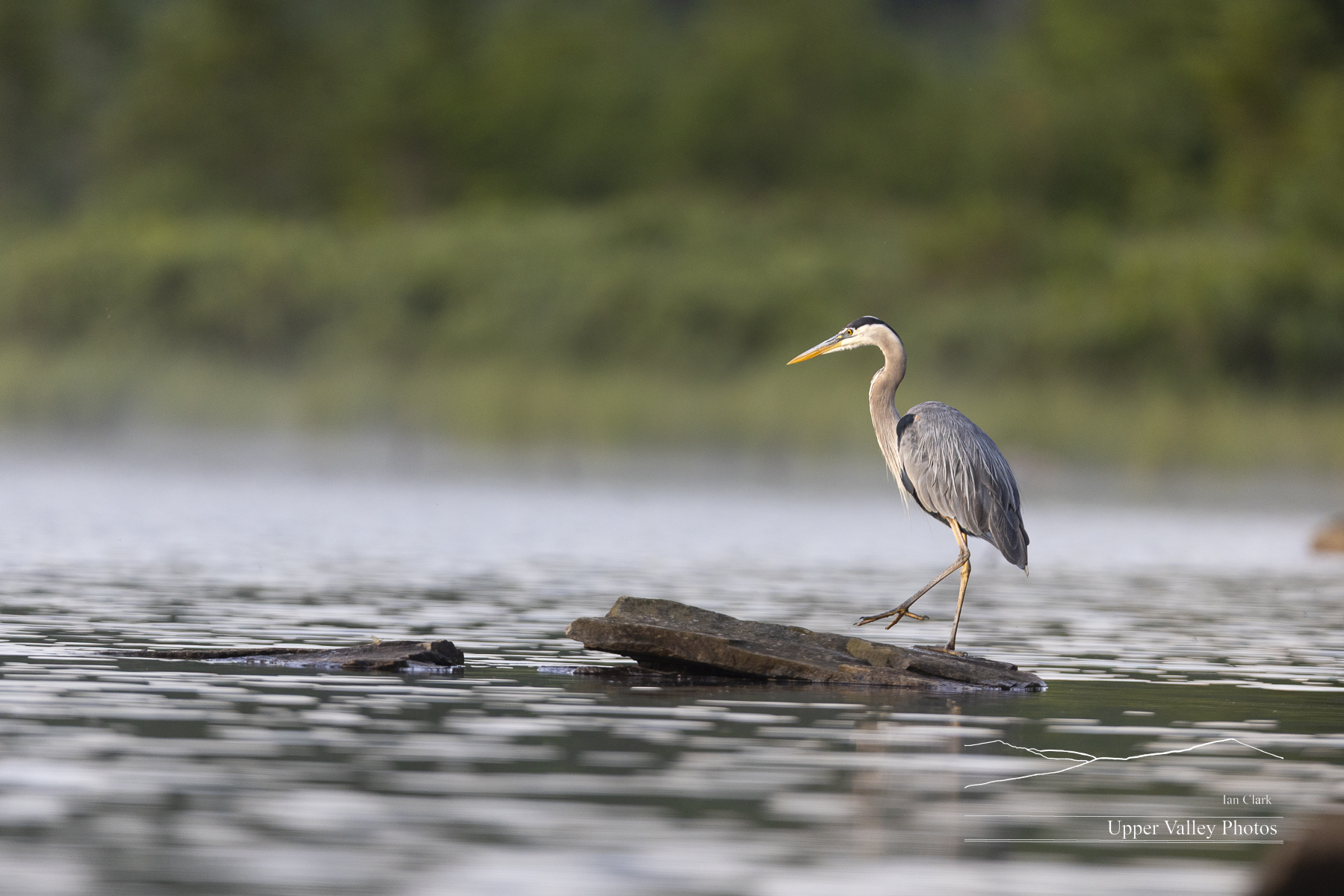
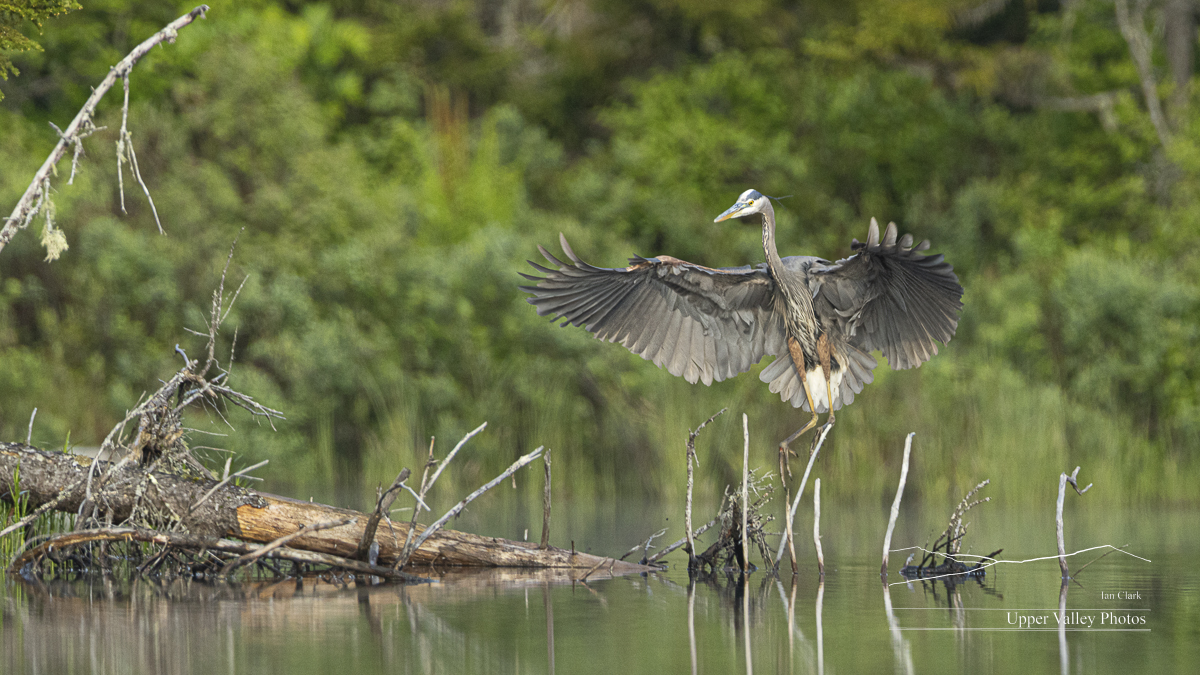
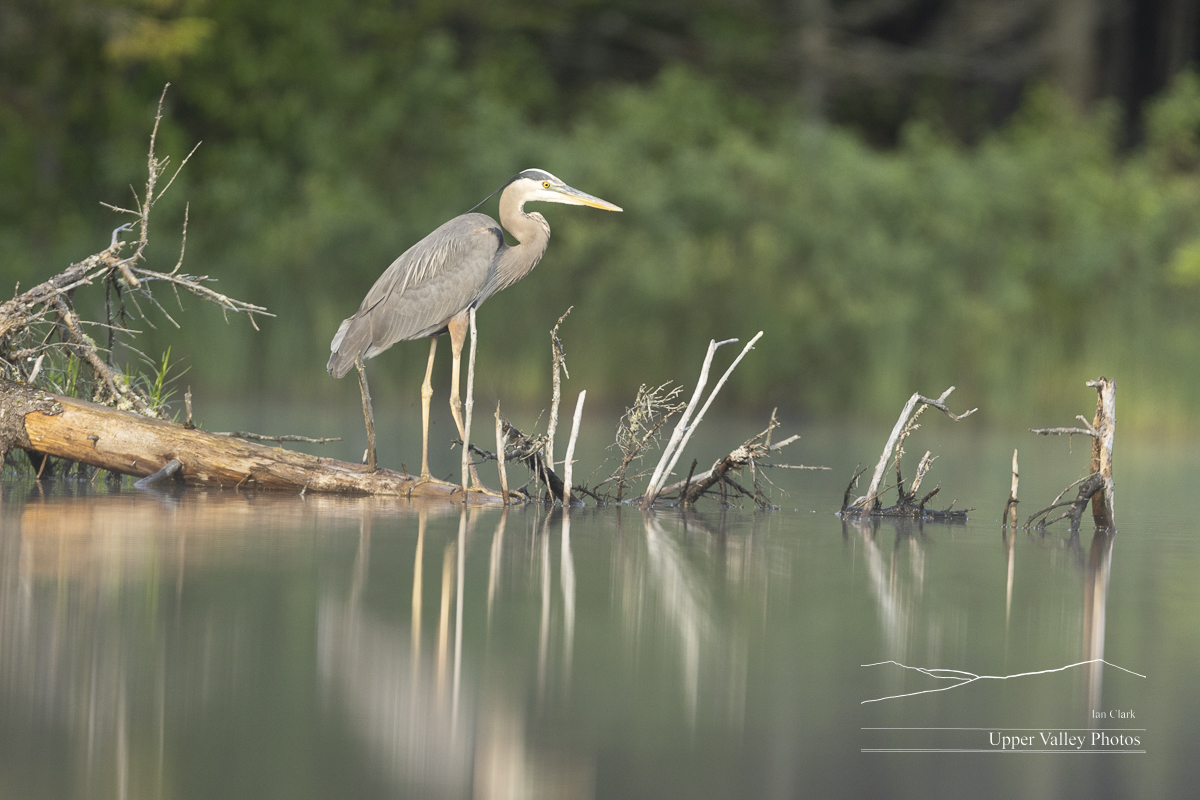
The great blue heron was foraging nearby, but he wasn’t helpful about giving me an update on the Middletons. Here he’s spotted a tasty meal far down the buffet and is slowly creeping closer before striking. He came up empty. Served him right for not telling me about the Middletons.

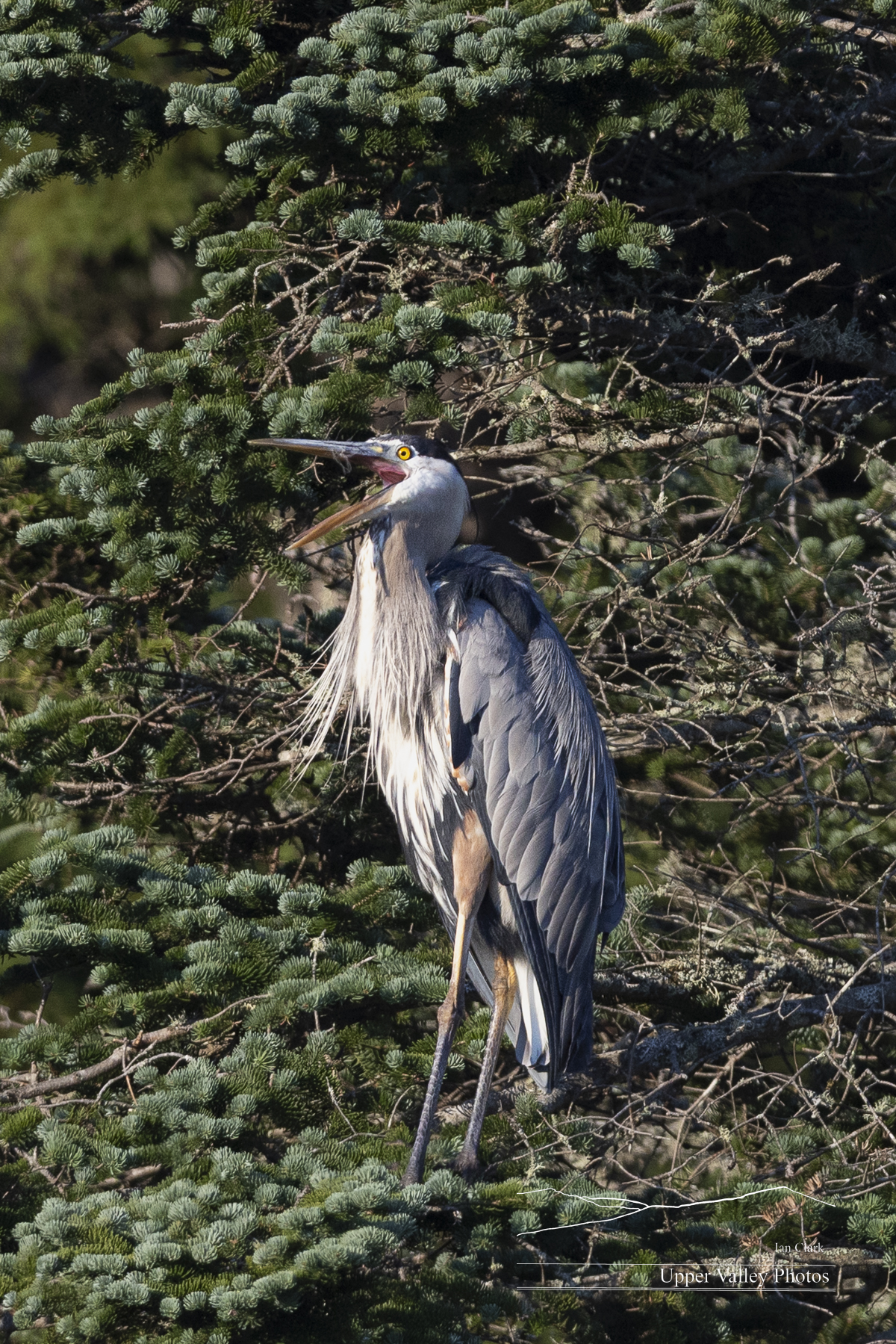
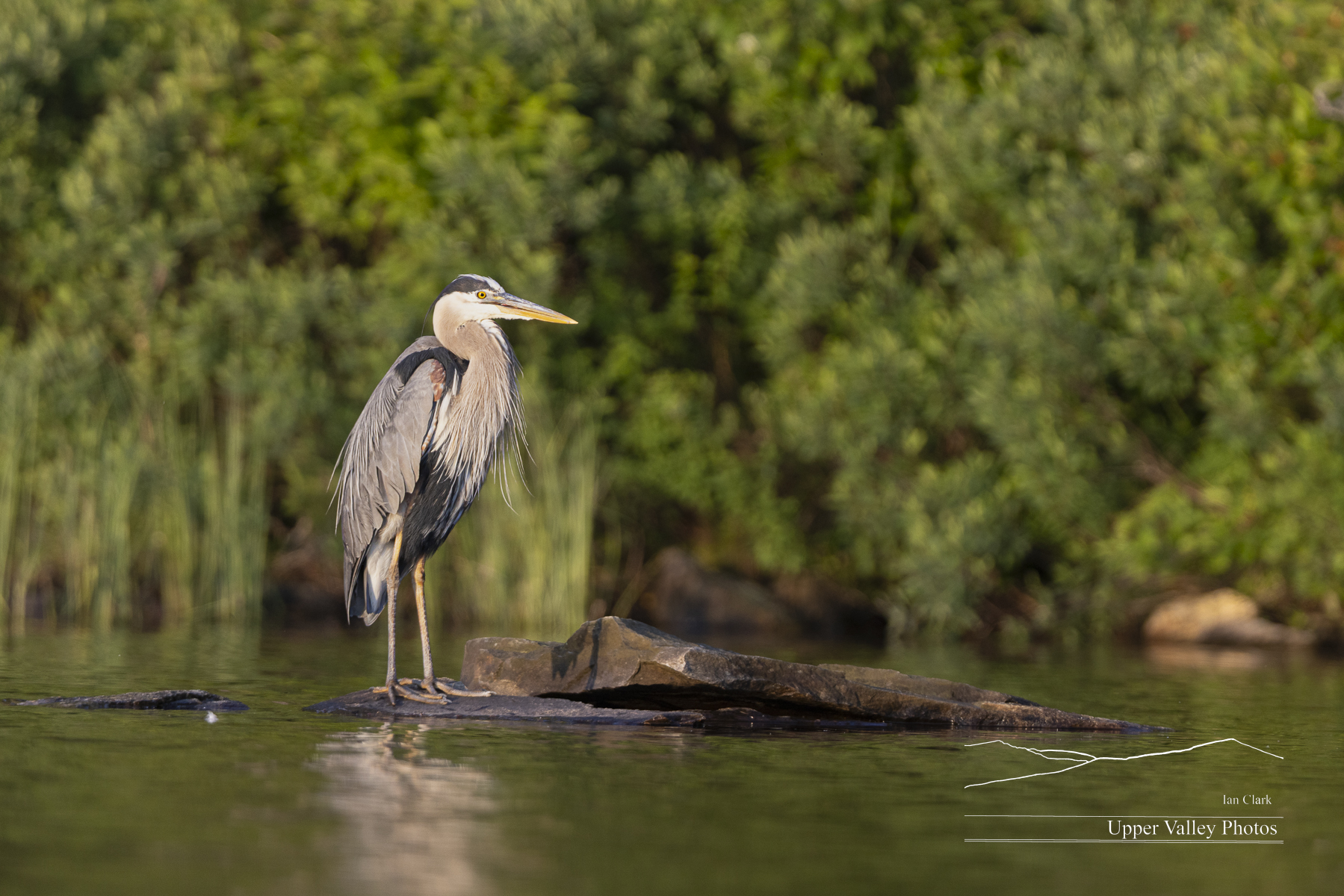
I went looking for the Middletons and found the other heron. This one was more talkative, but still no word about the Middletons.
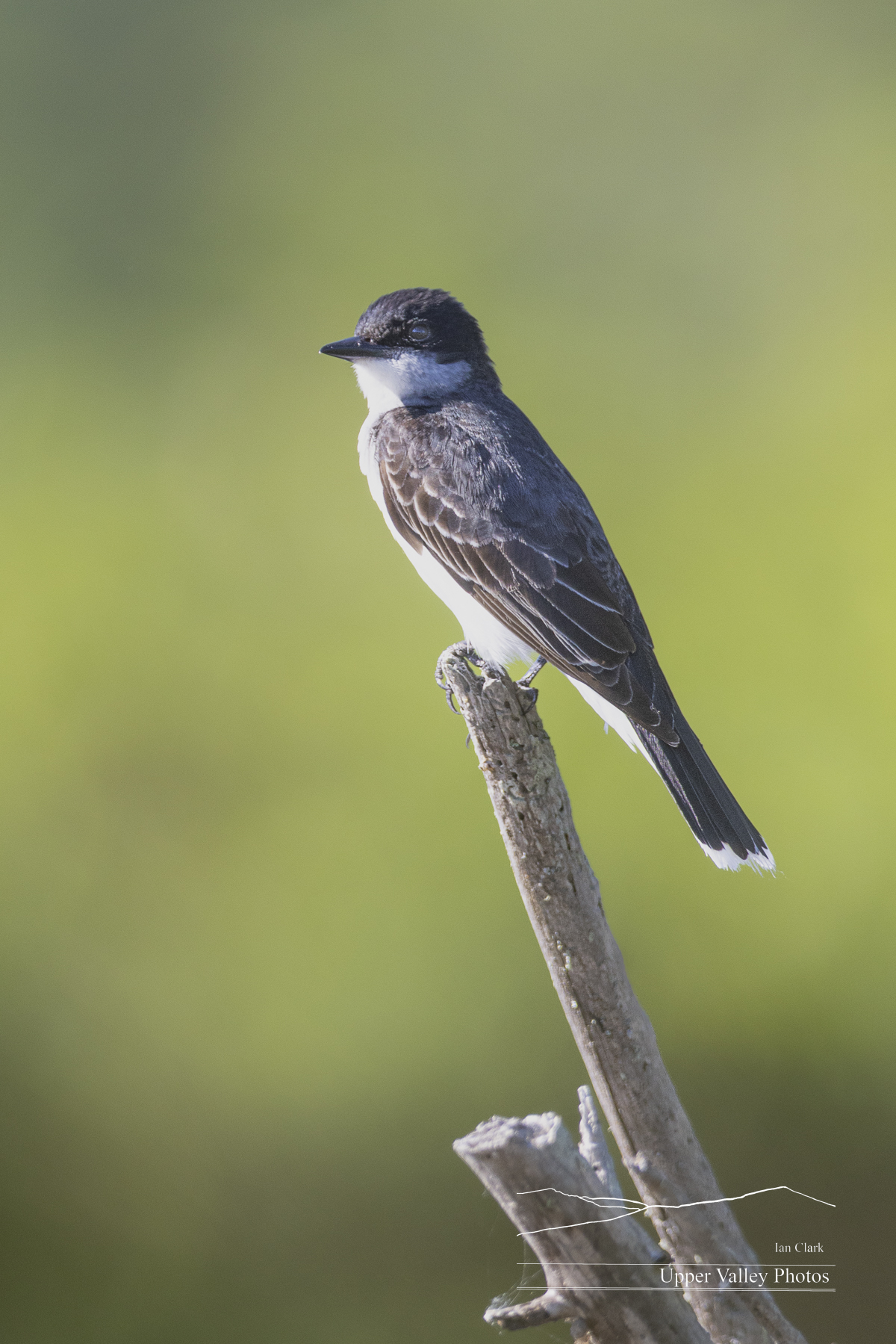
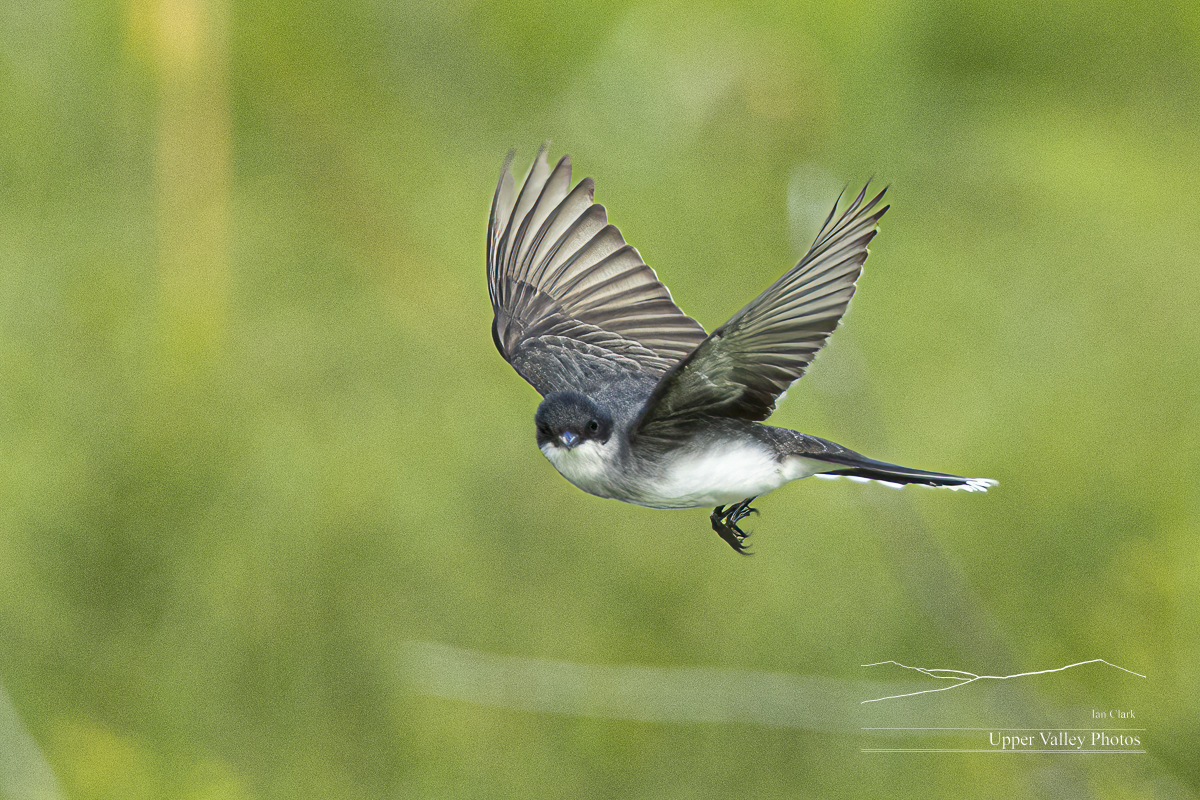
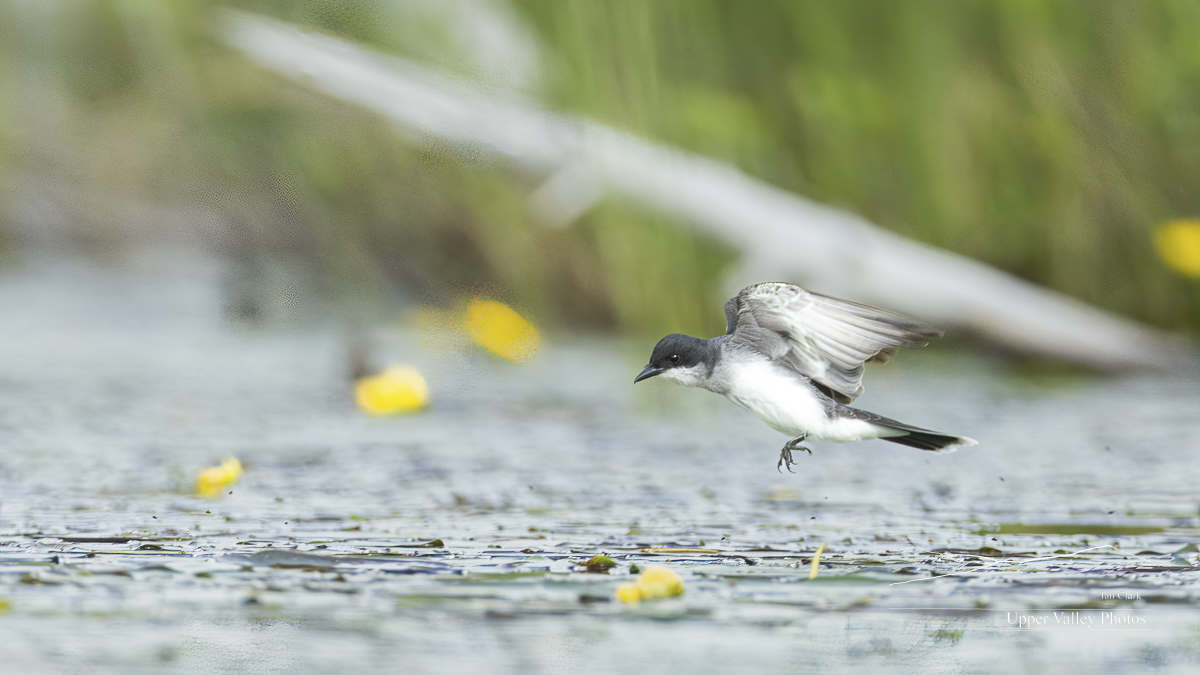
Elvis the Kingbird wasn’t gossiping about the Middletons either. Dragonflies and damselflies are finally plentiful on the ponds. The kingbirds started sitting on their eggs just about the time the dragonflies started showing up.

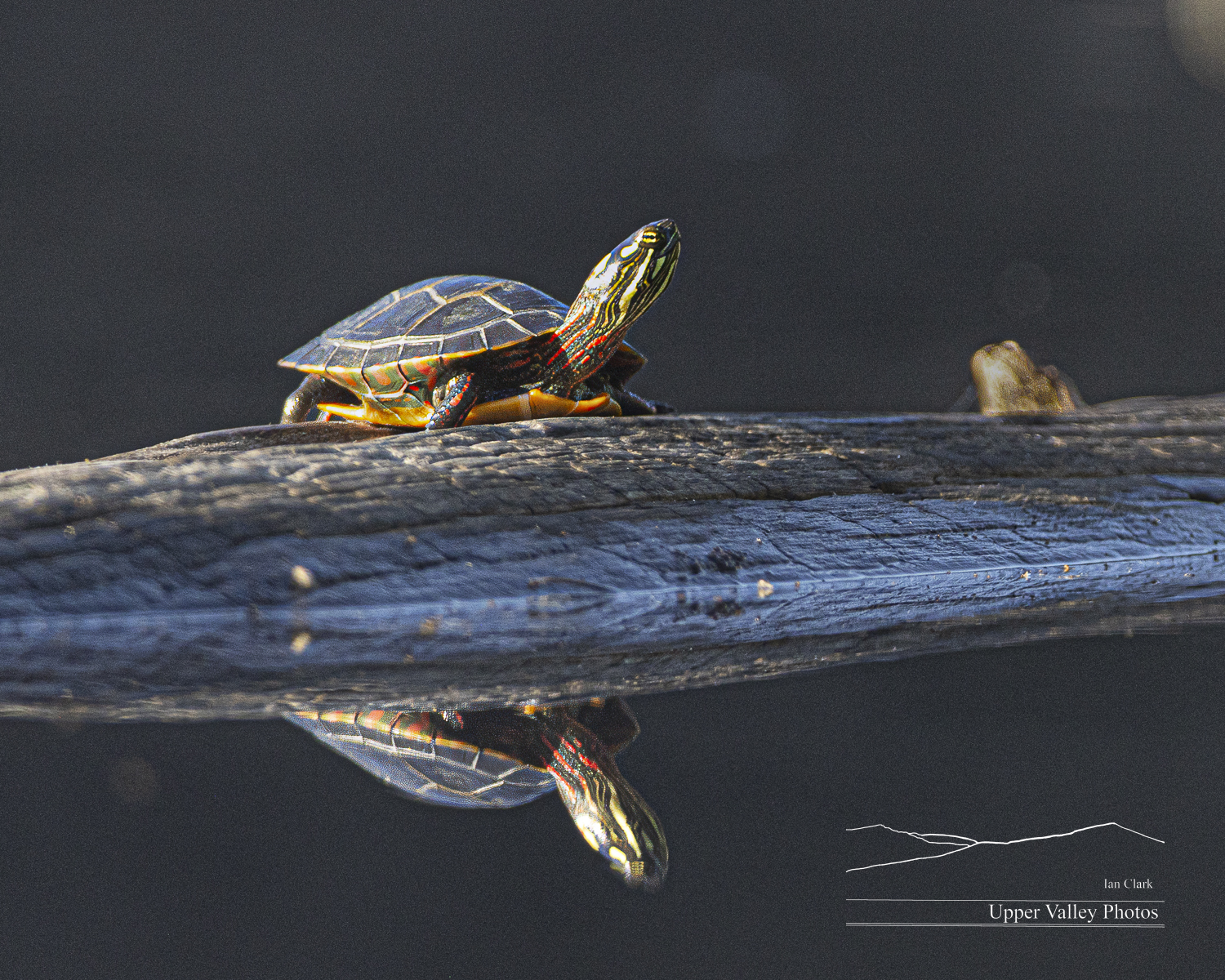
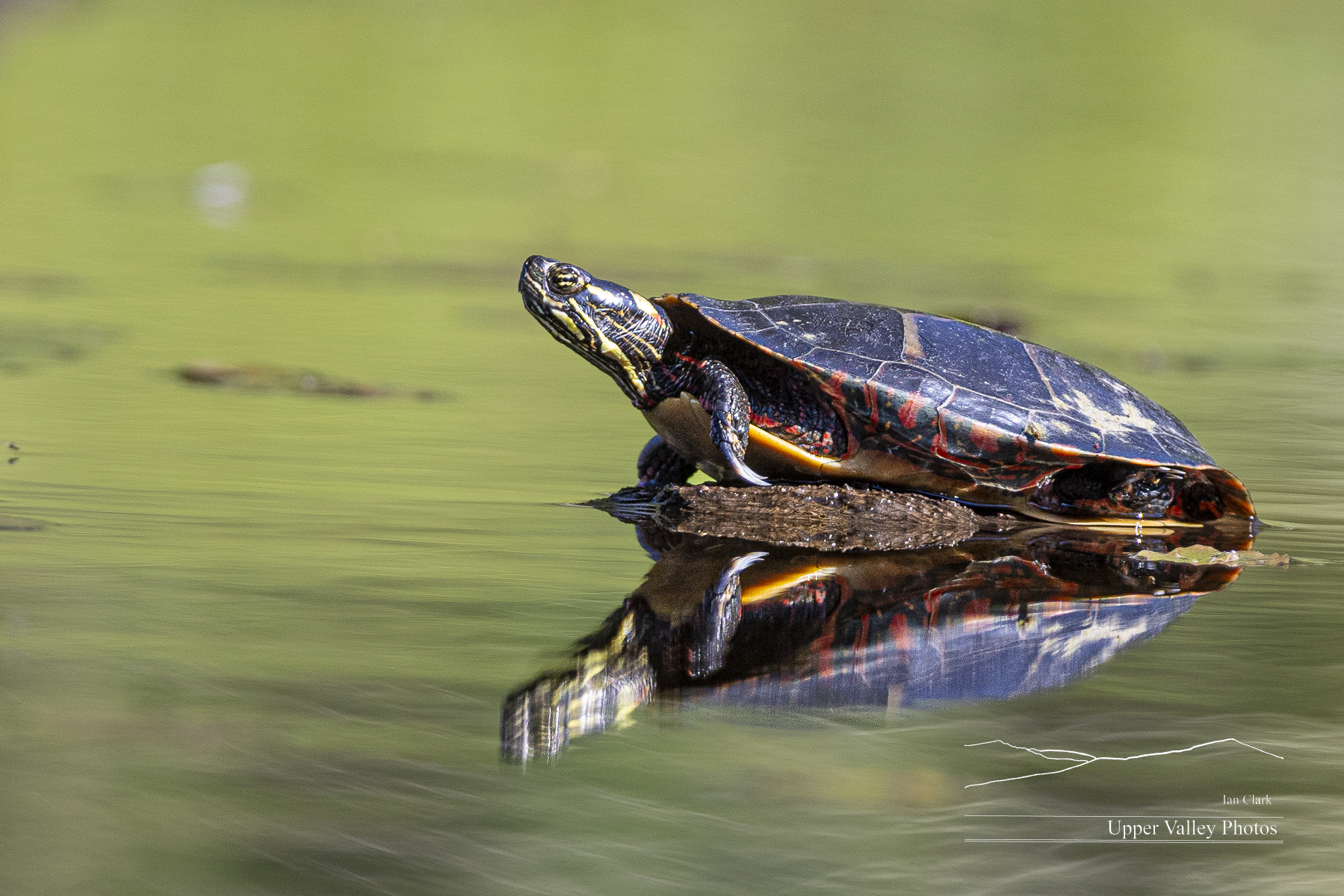
Turt Reynolds was just out for the sun. I kept looking for the Middletons.


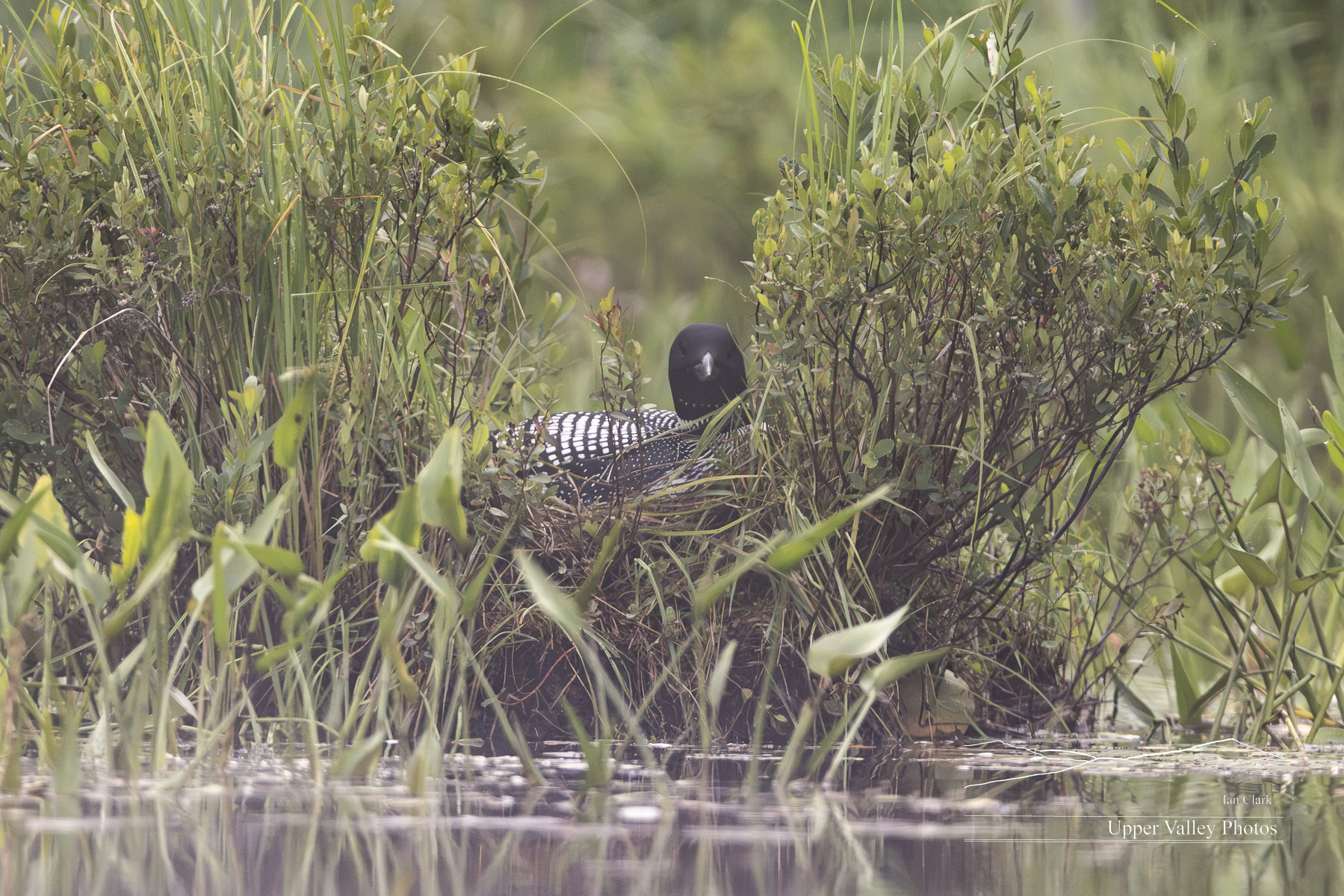
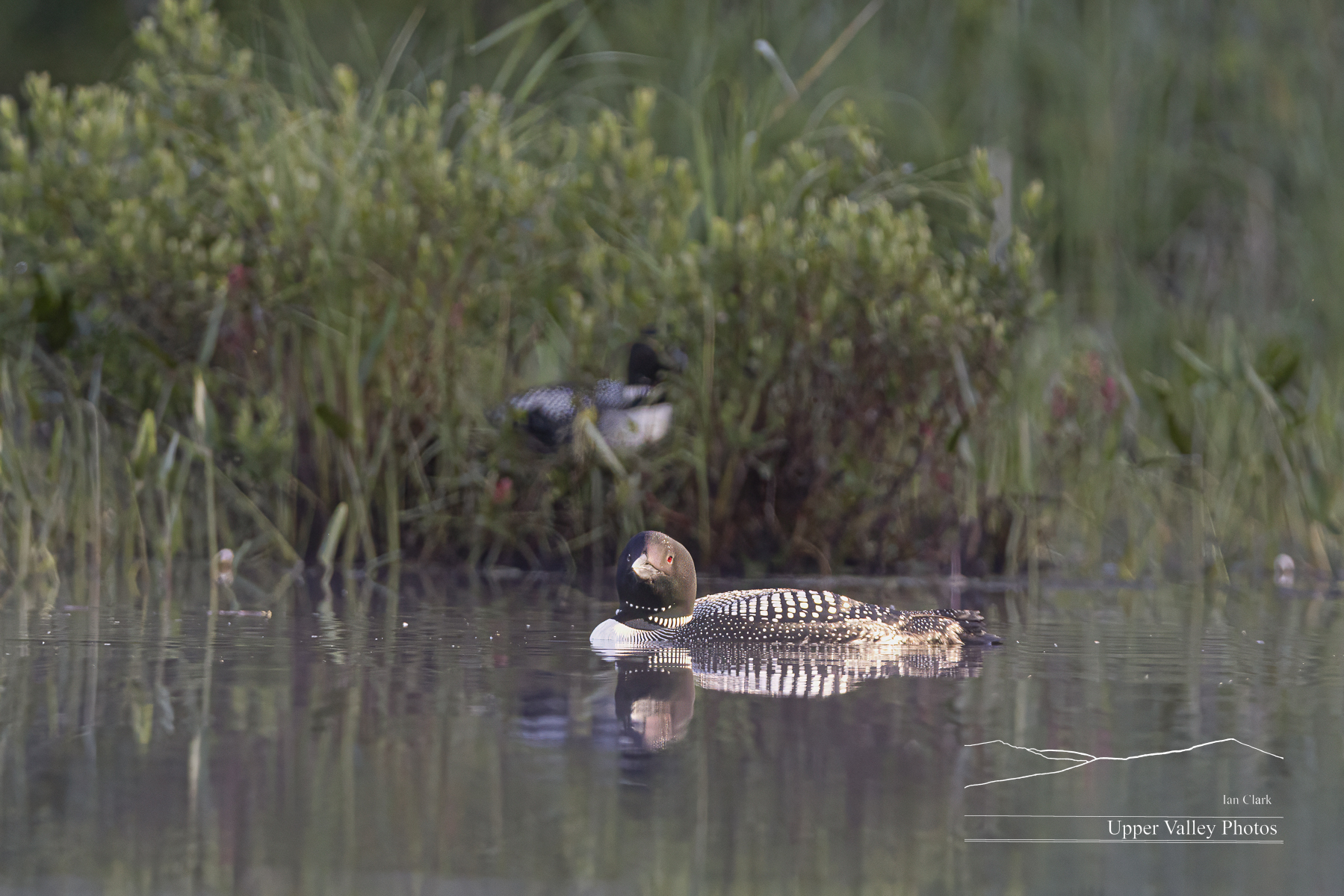
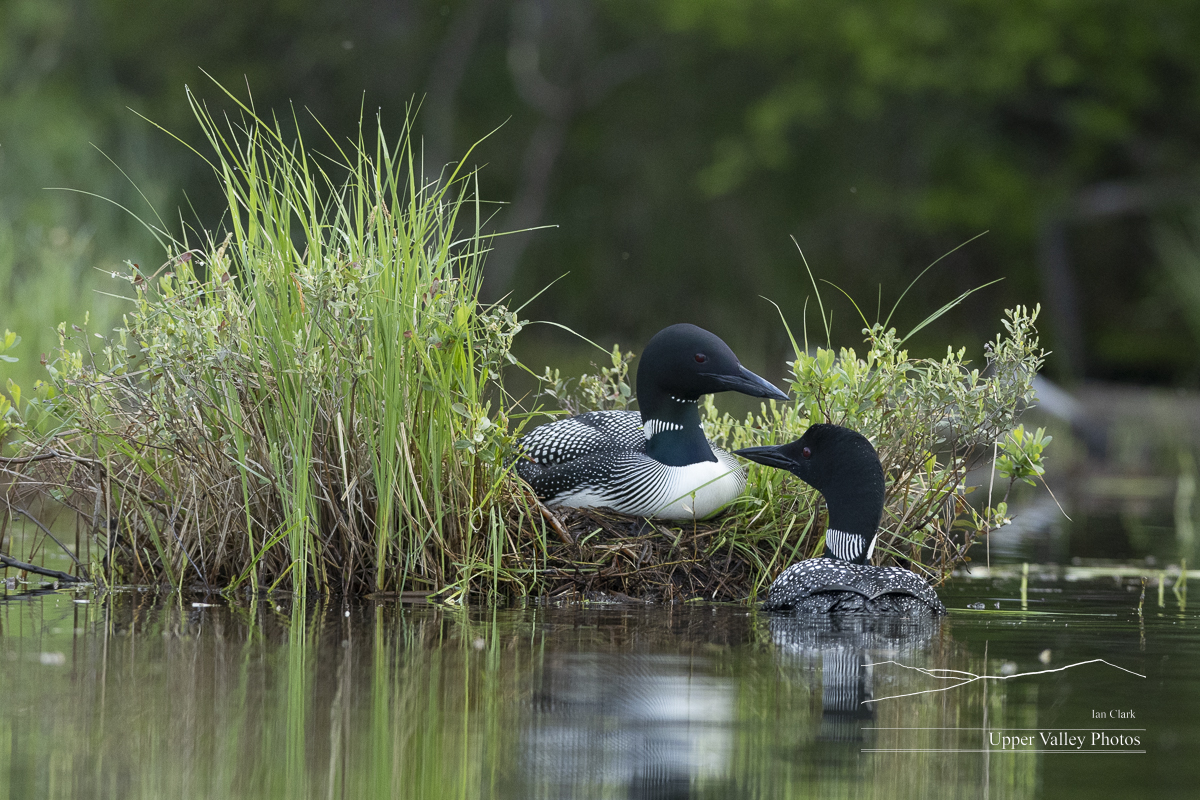
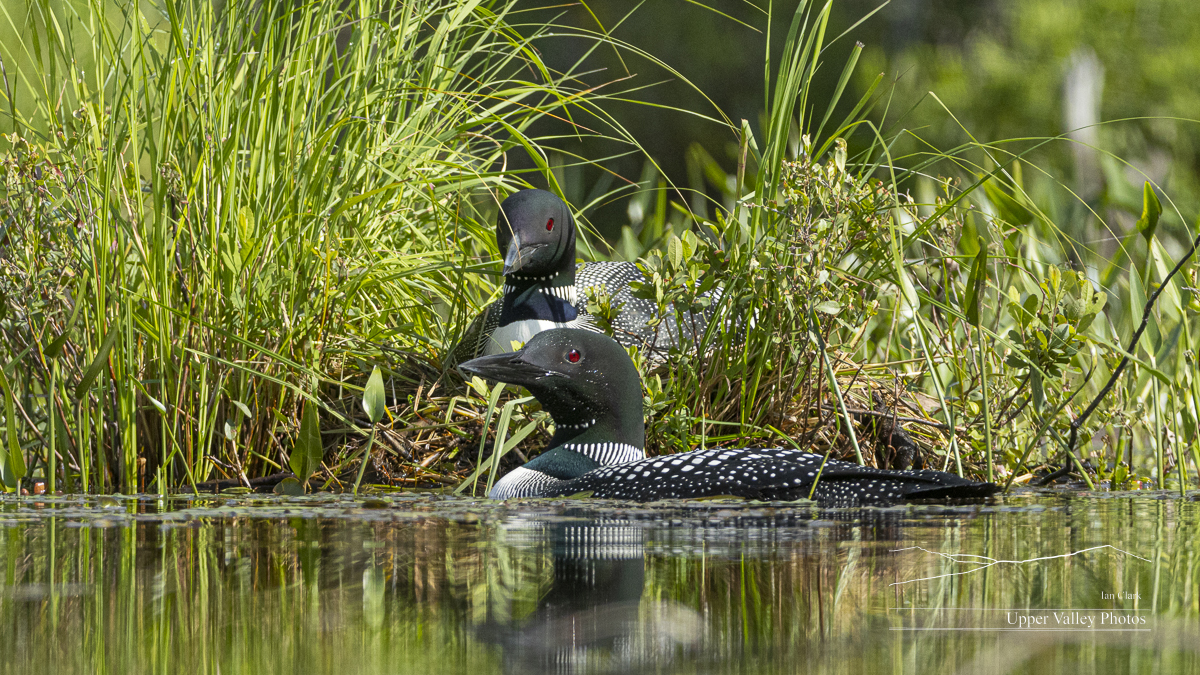
The Middletons decided to reuse the nest site the male has used for the last several years. We lost his mate last year and this will be the first time the new Mrs. Middleton tries the site. Mr. M had come in to see how Mrs. was doing and if it was time for a shift change. She was content to keep sitting. I put out the Loon Preservation Committee’s sign and headed home.

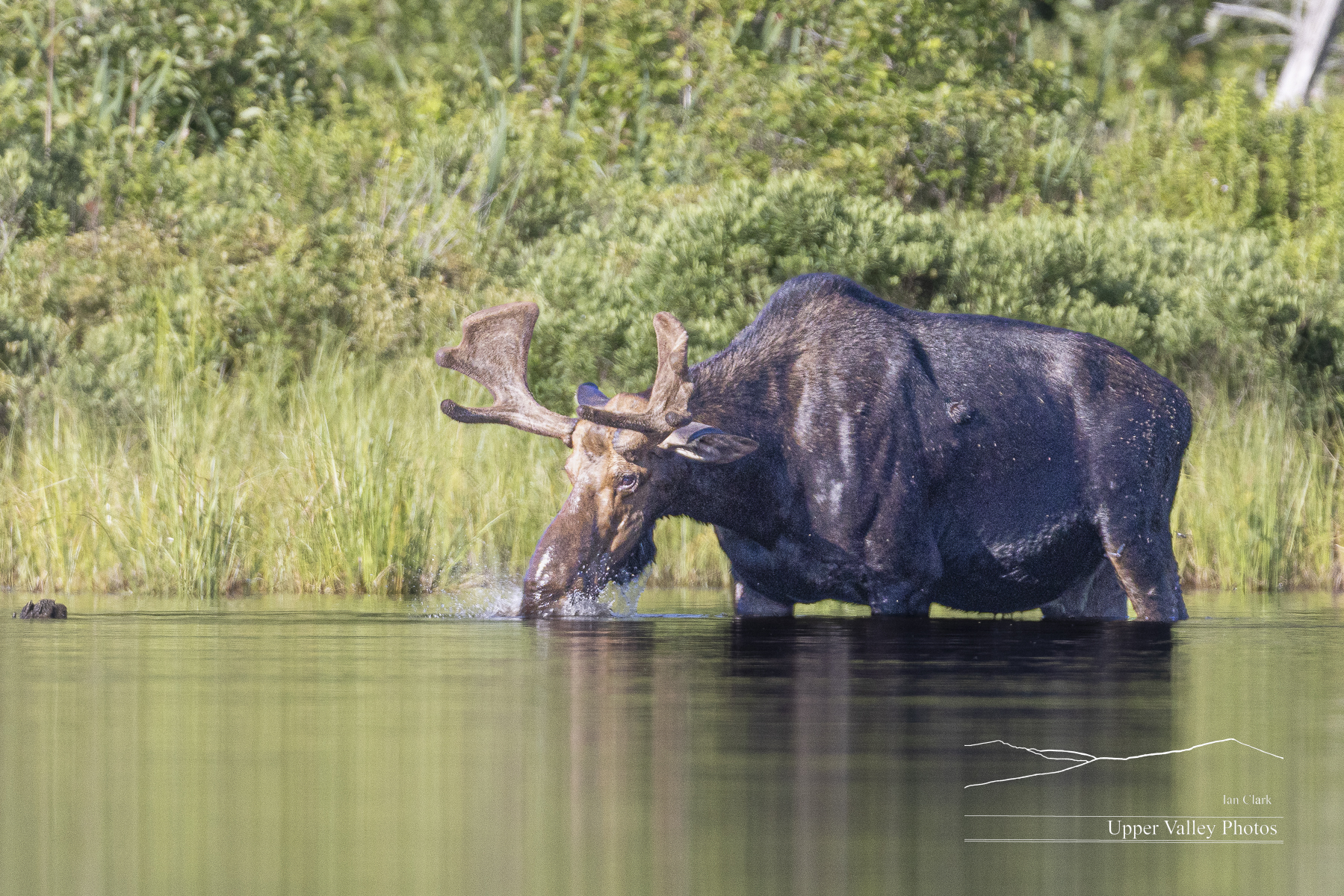
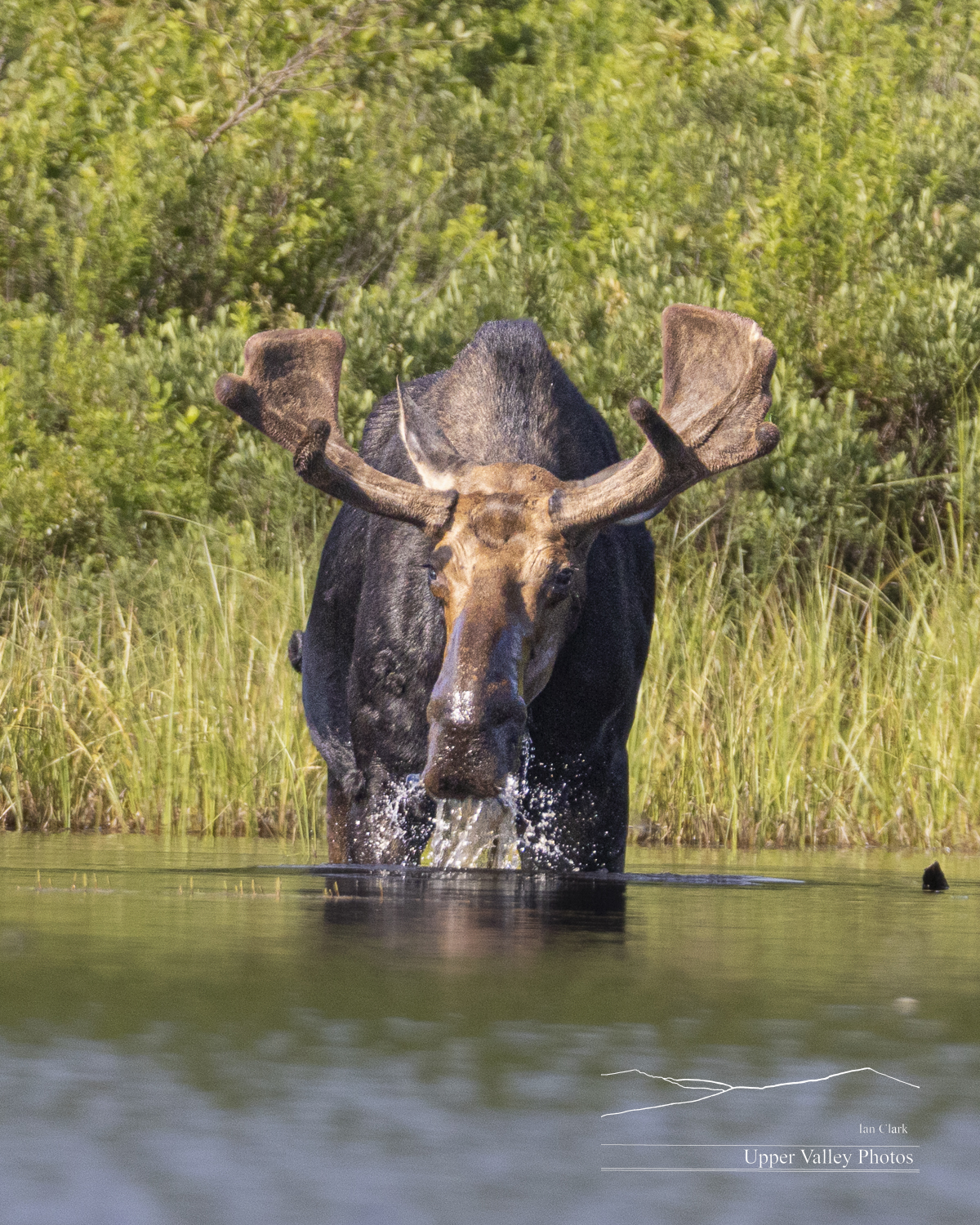
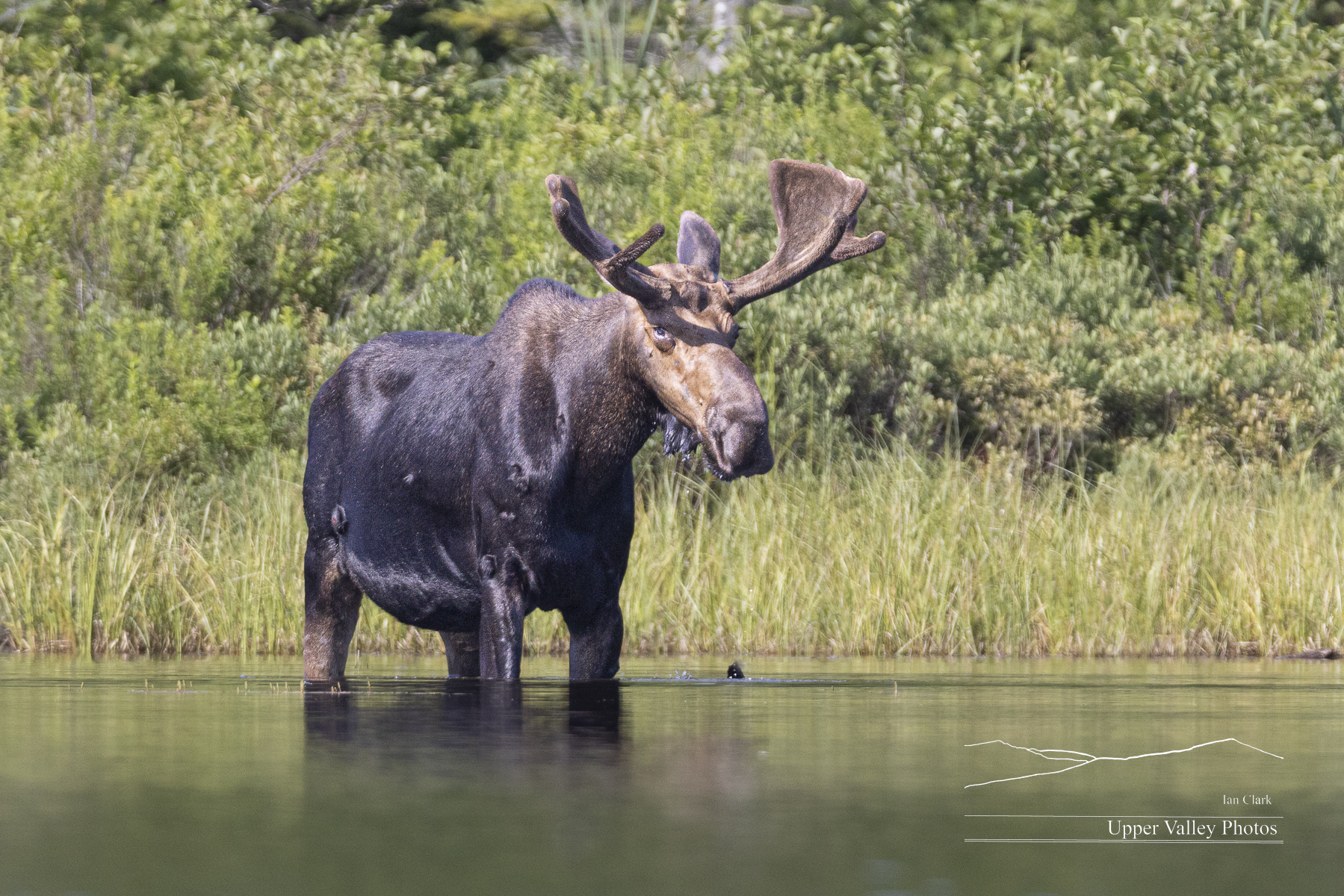
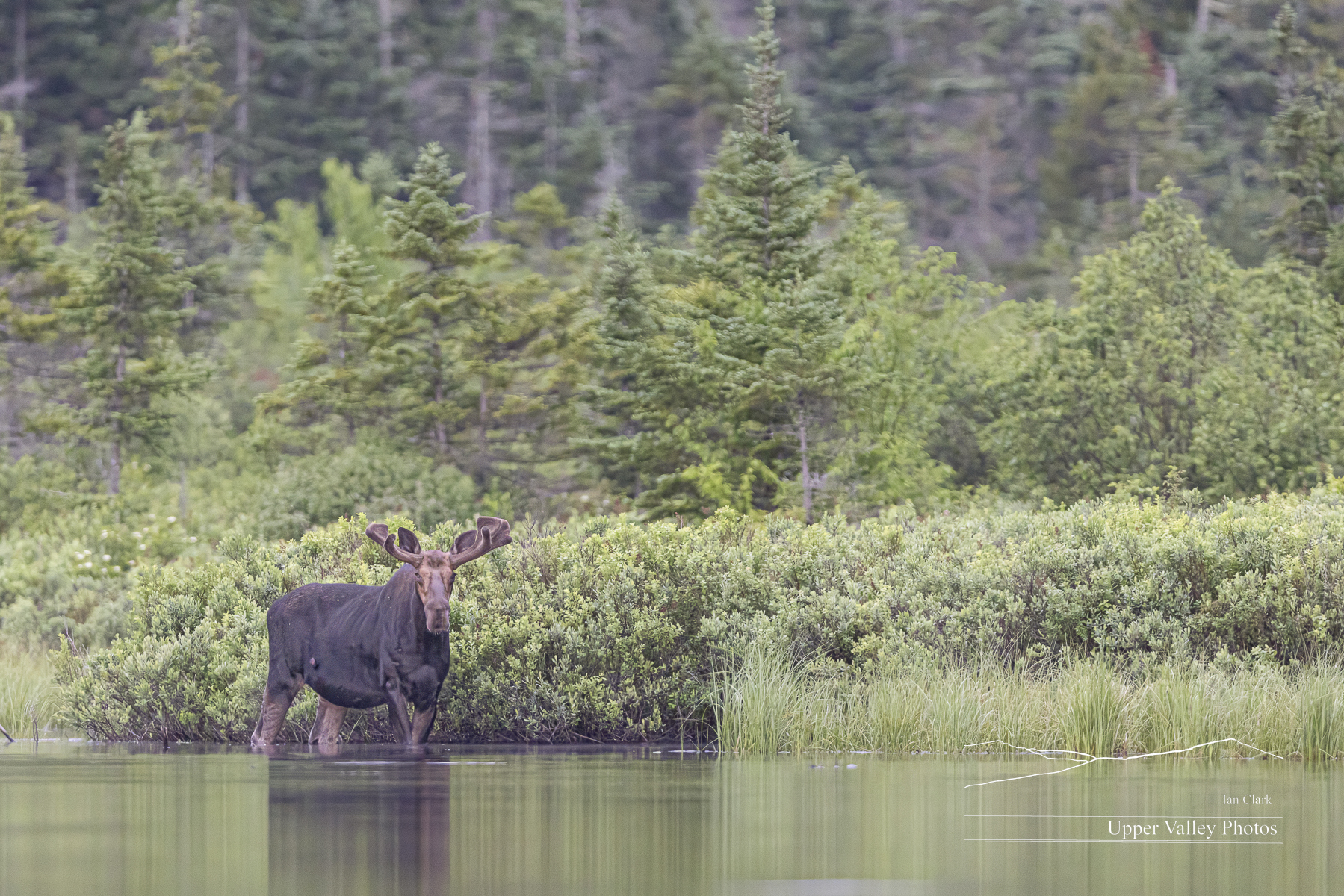
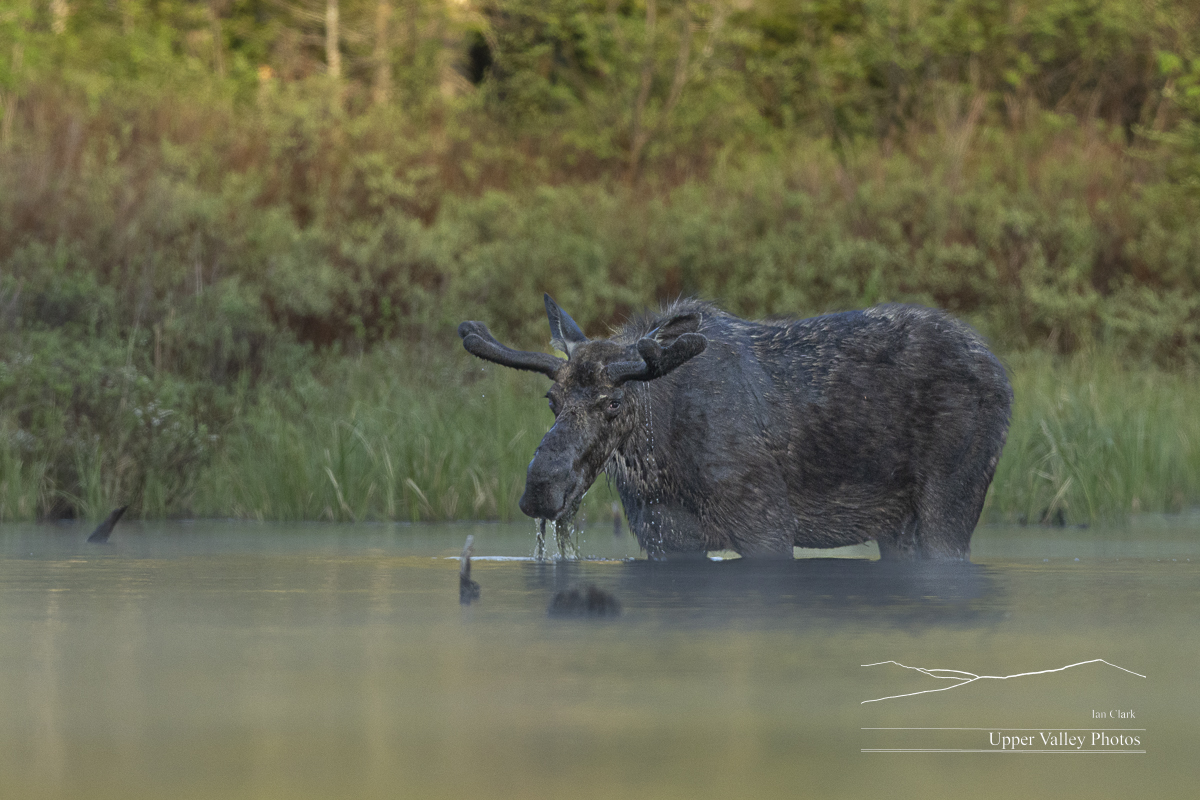
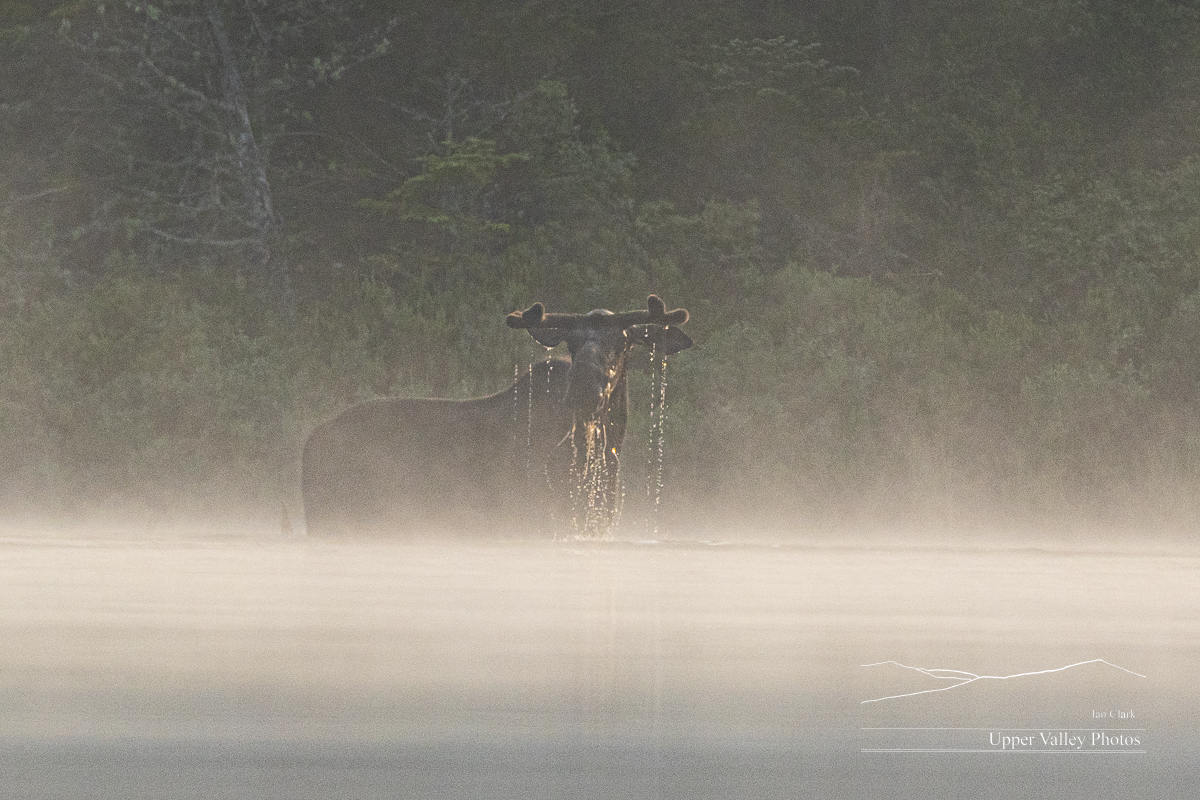
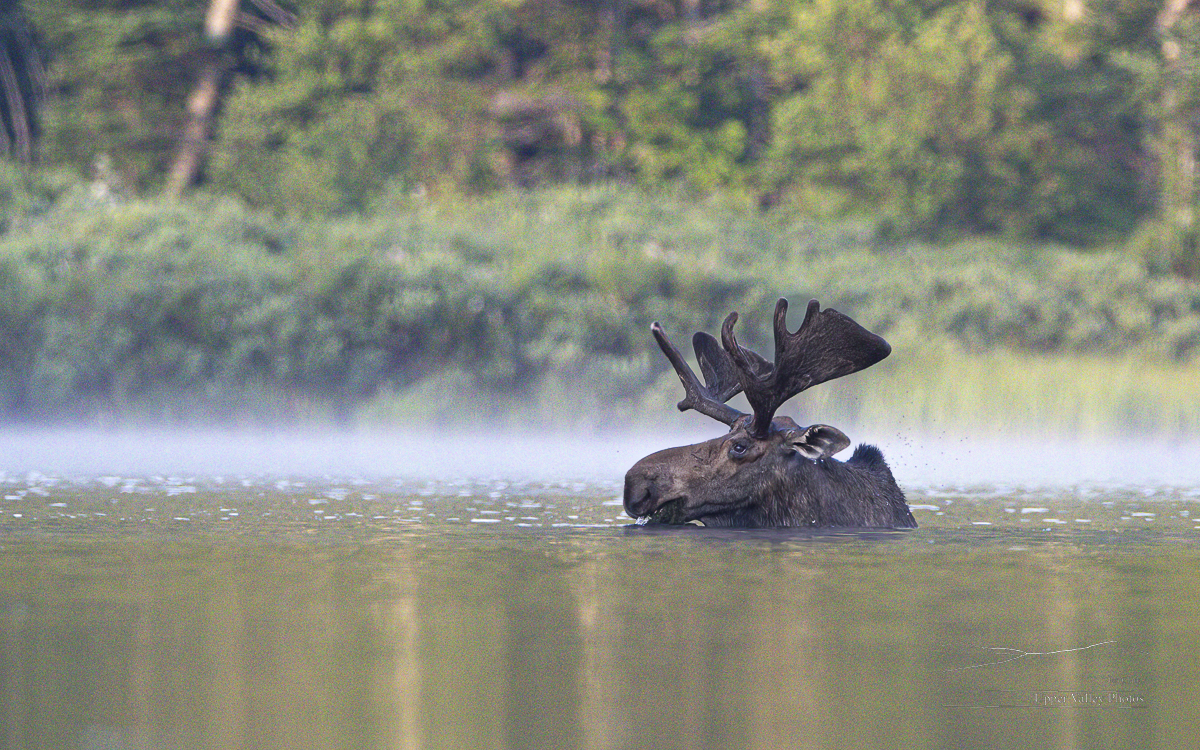
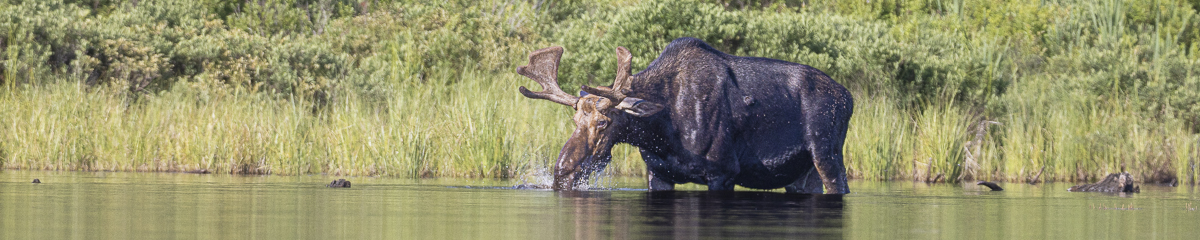
I got an early start on the 25th and headed east to visit the Eastons. It was a beautiful calm morning on the pond. I’d intended to drift down past the nest to see how they were doing. But this bull moose showed up to browse along the water’s edge. I got to watch him dine for about 40 minutes. Just as the sun was creeping towards the pond, he decided it was time to head back up the hill.

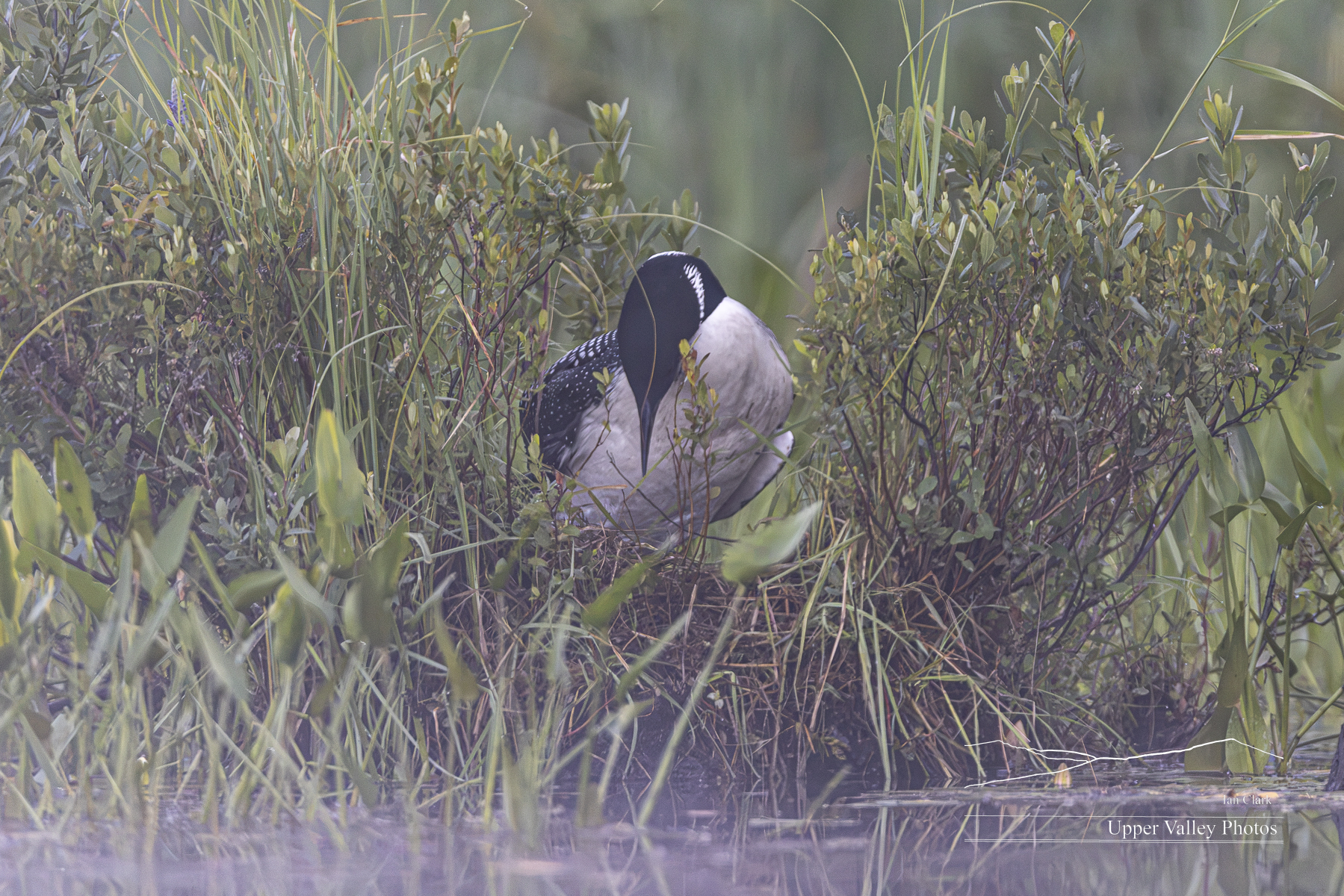
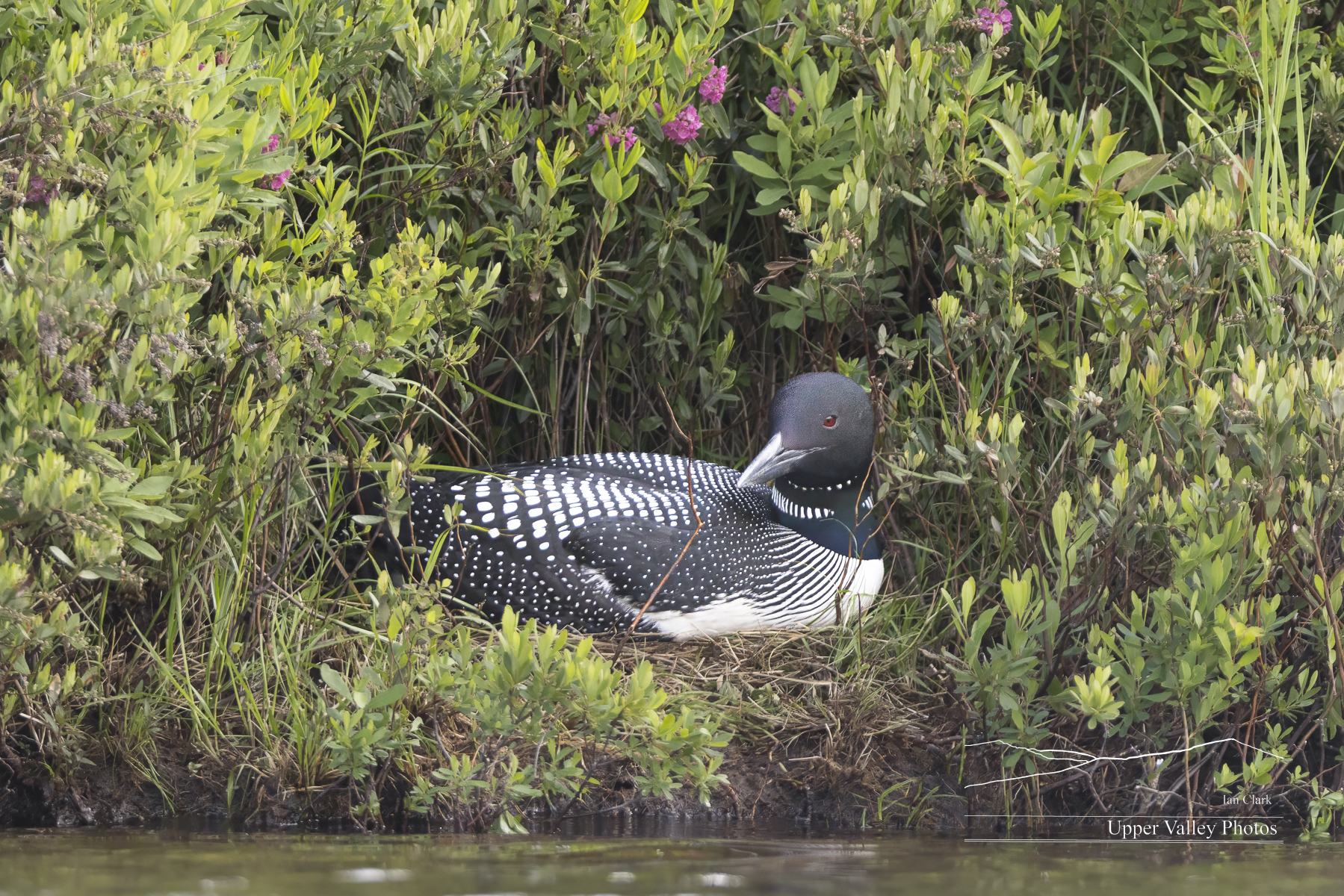
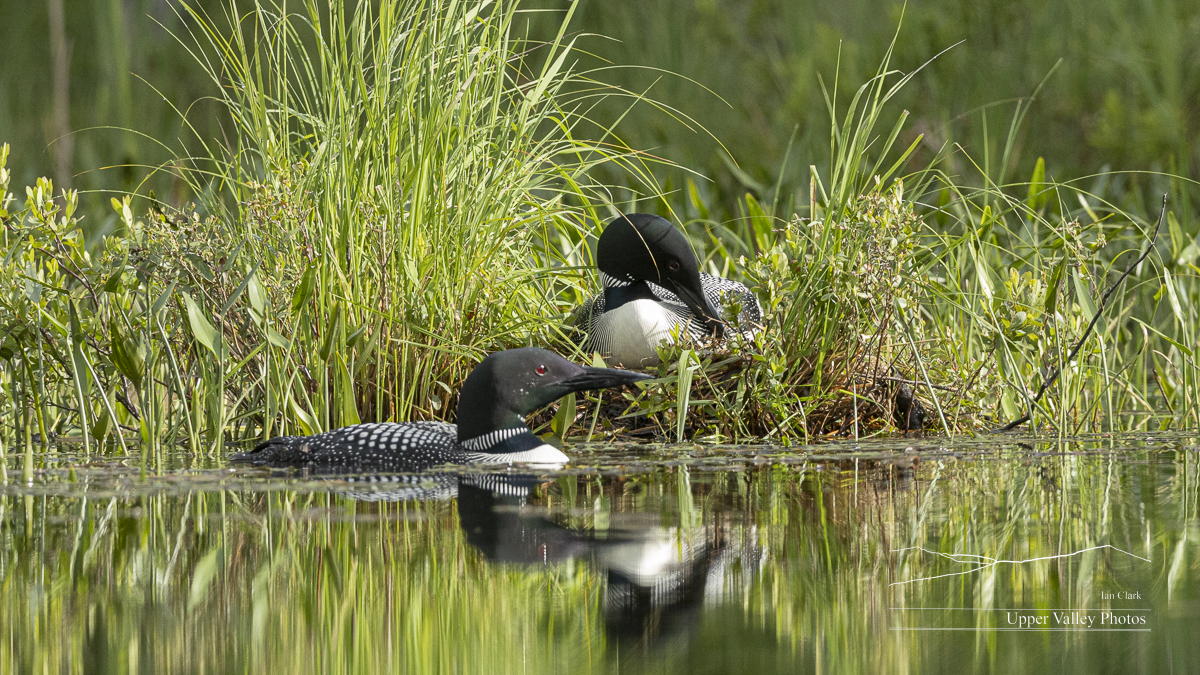
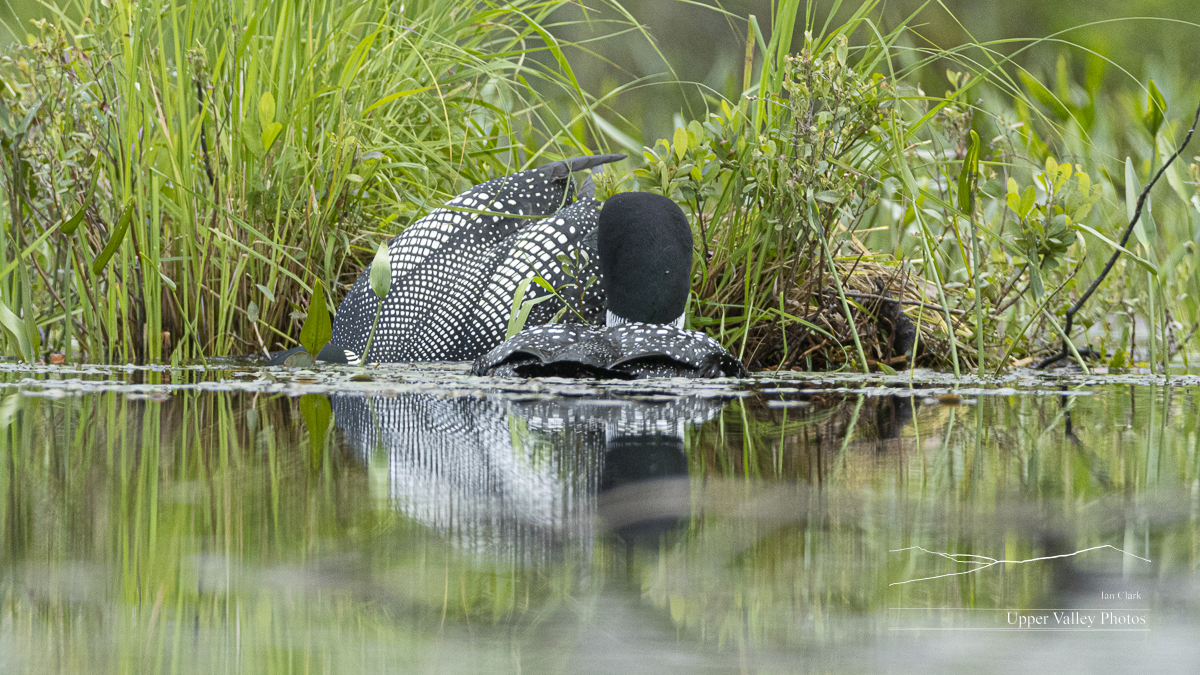
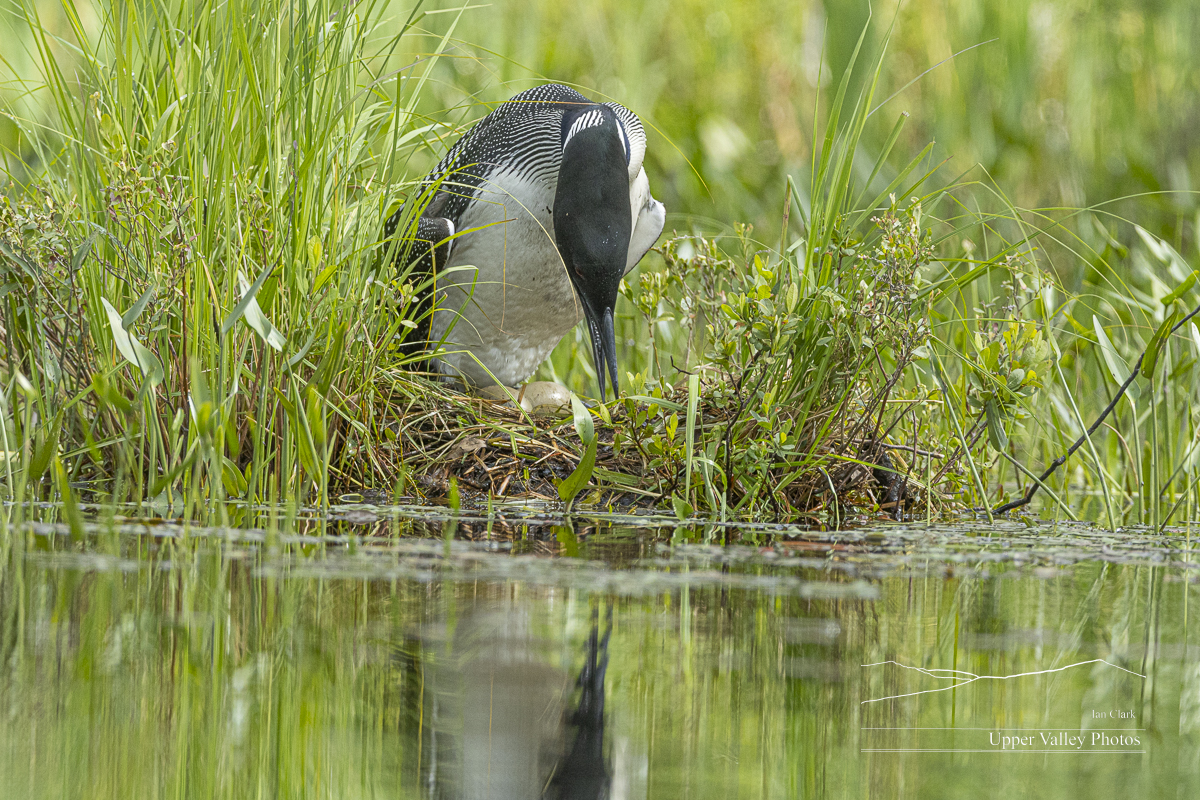
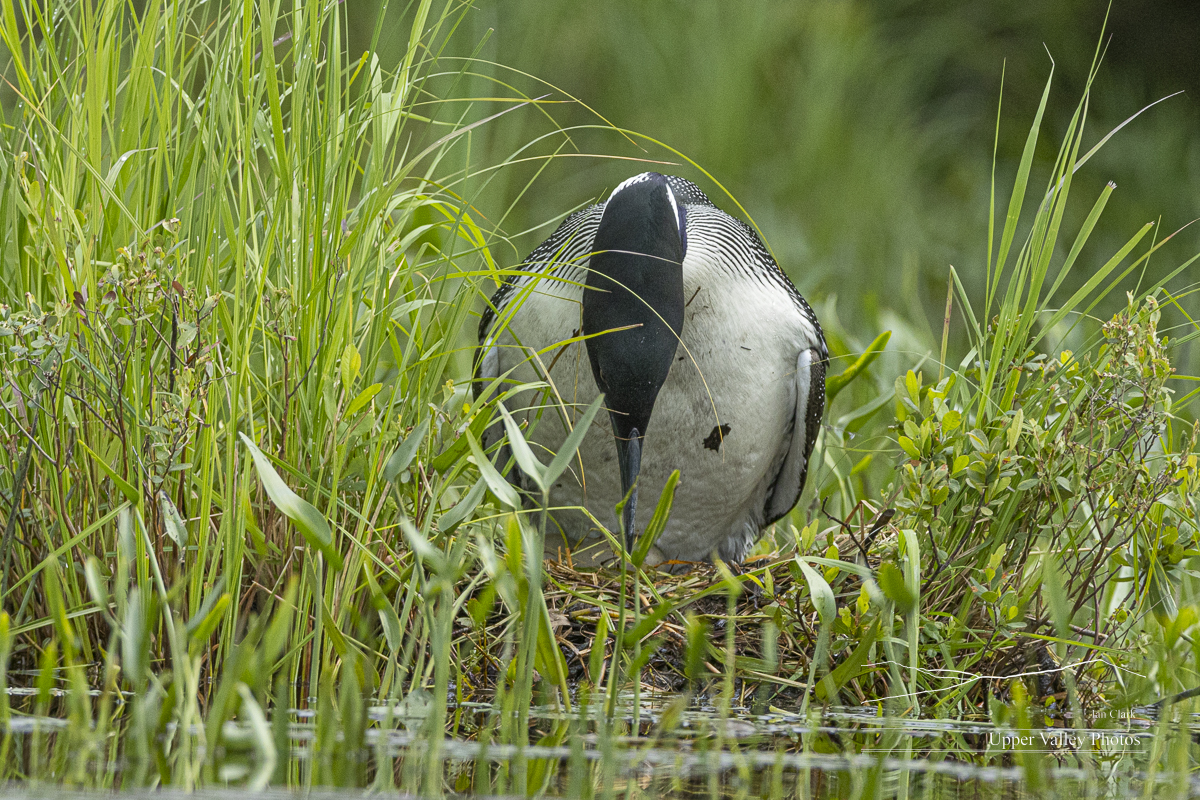
Heading back up the pond, I found one loon foraging and the other on the nest. One of them is banded, but I don’t know which one yet. I’ve reported the band to the Loon Preservation Committee. When their intern has time, he’ll let me know which of the pair is banded. Here’s the unbanded bird comfortable on the nest.

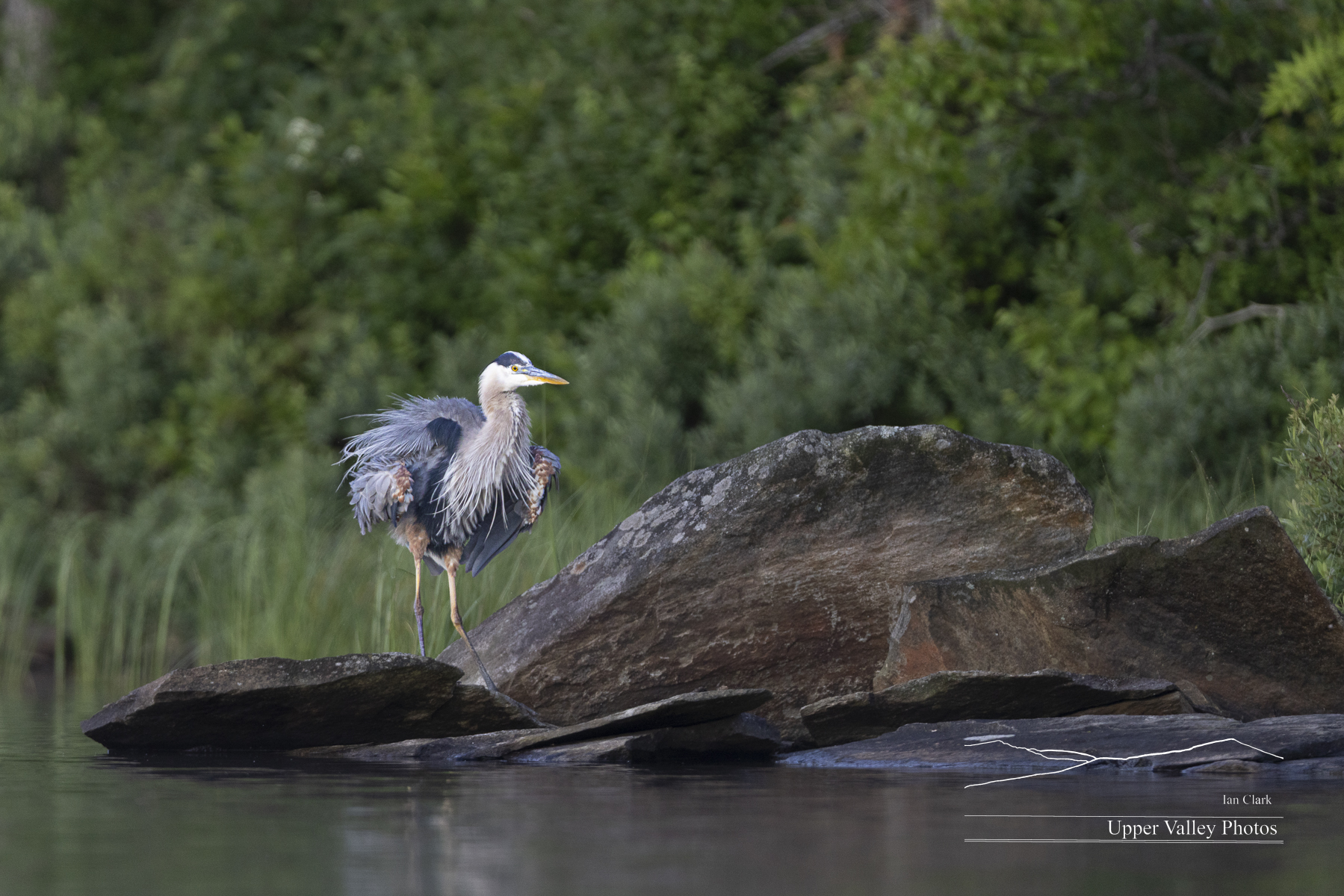
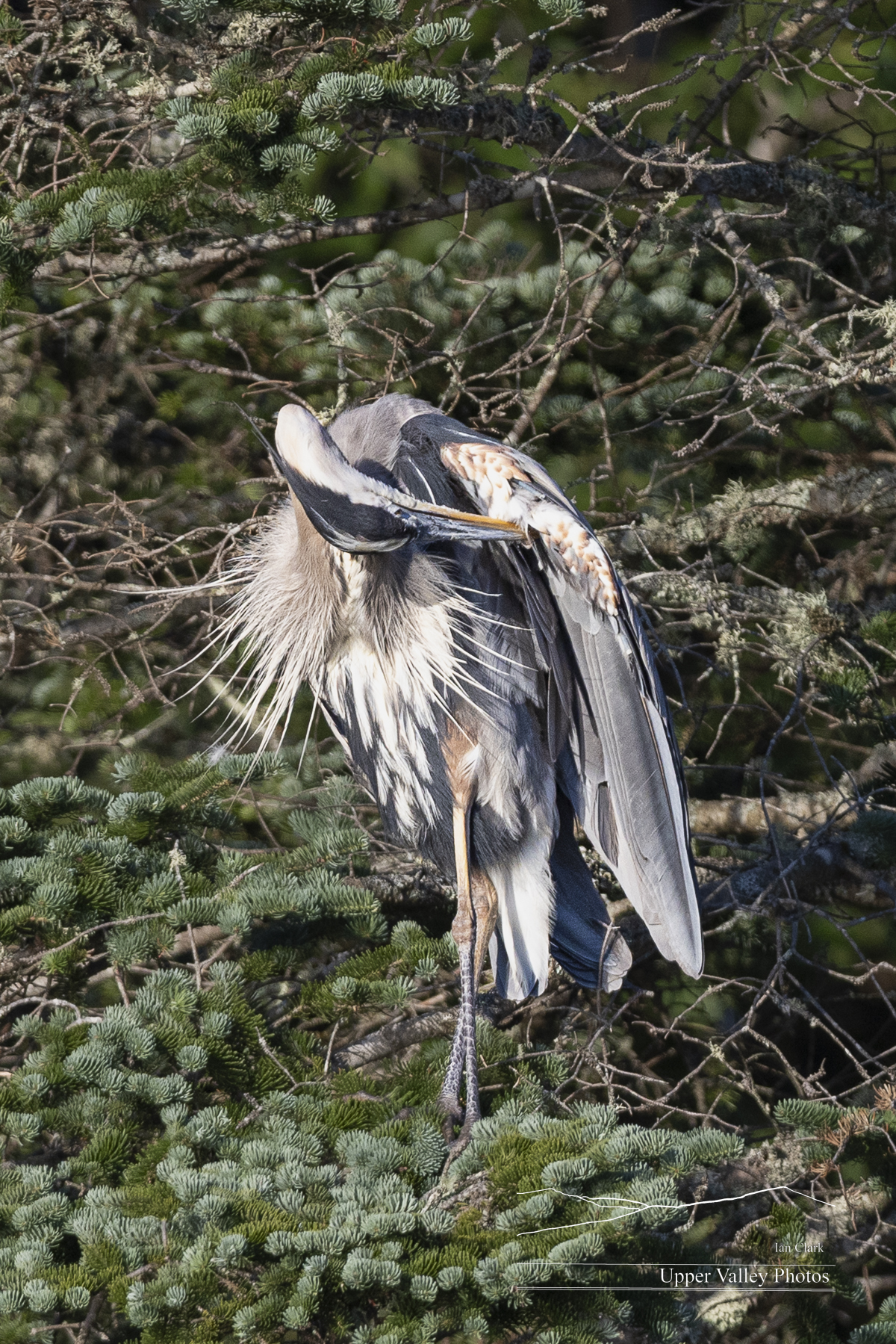
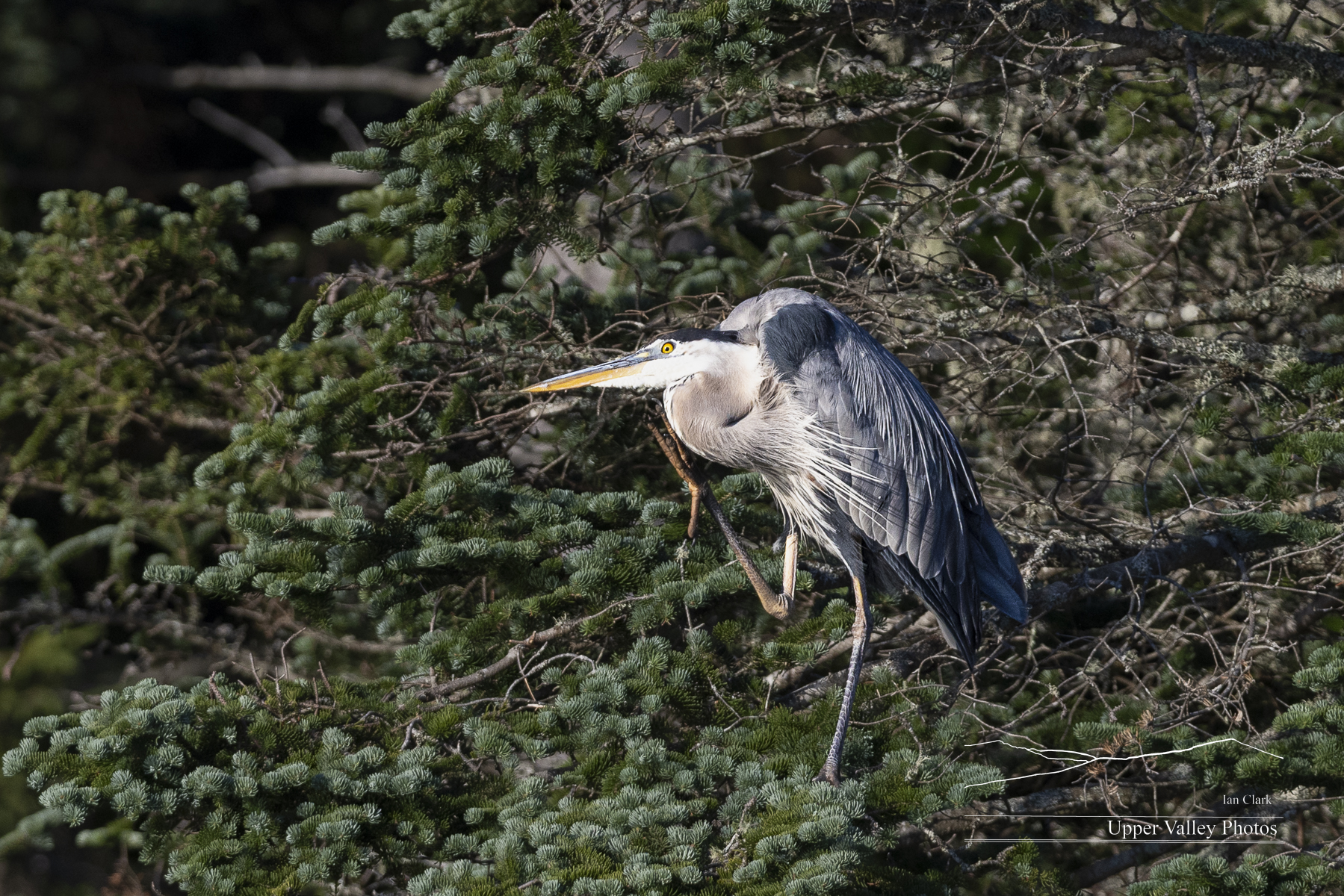
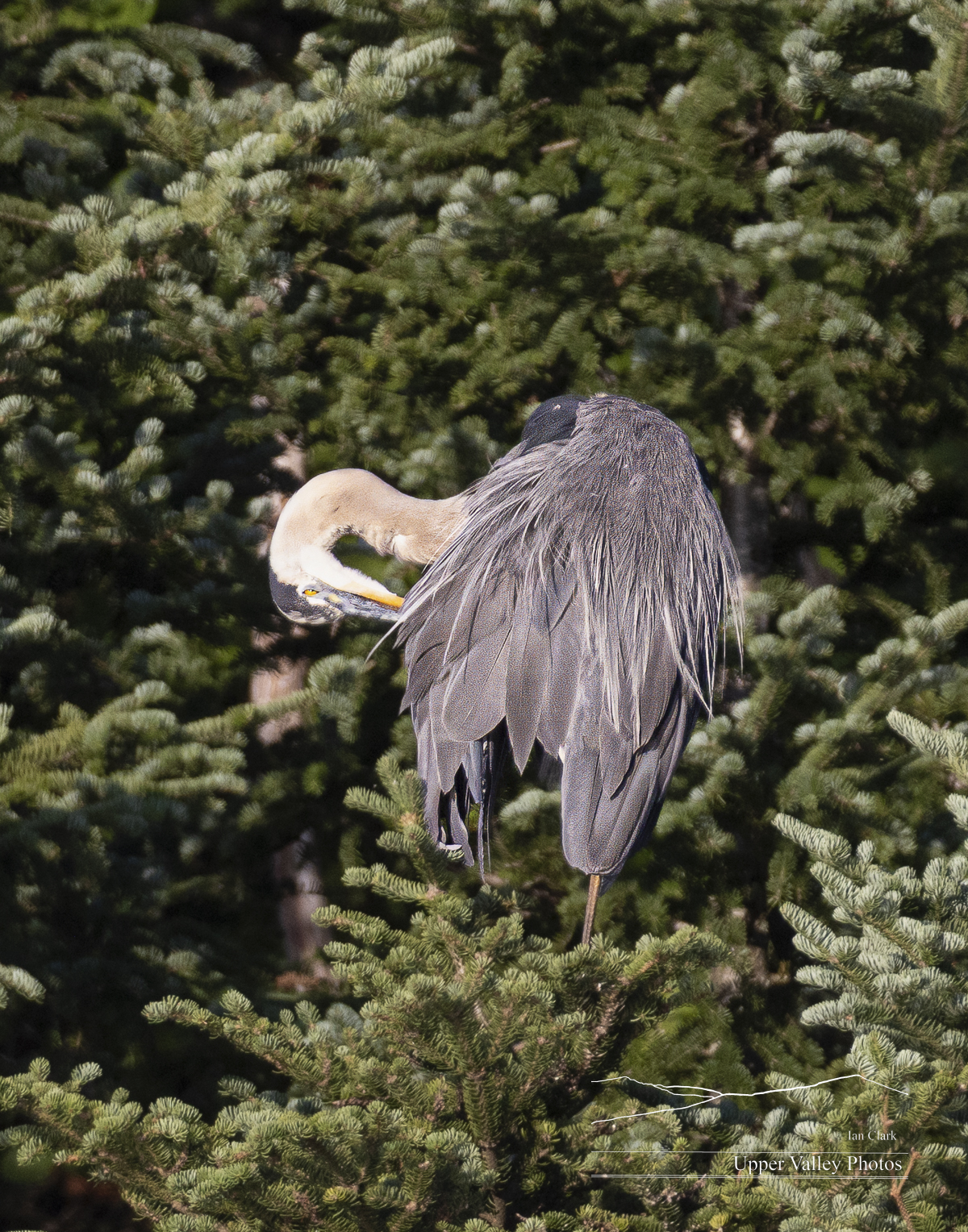
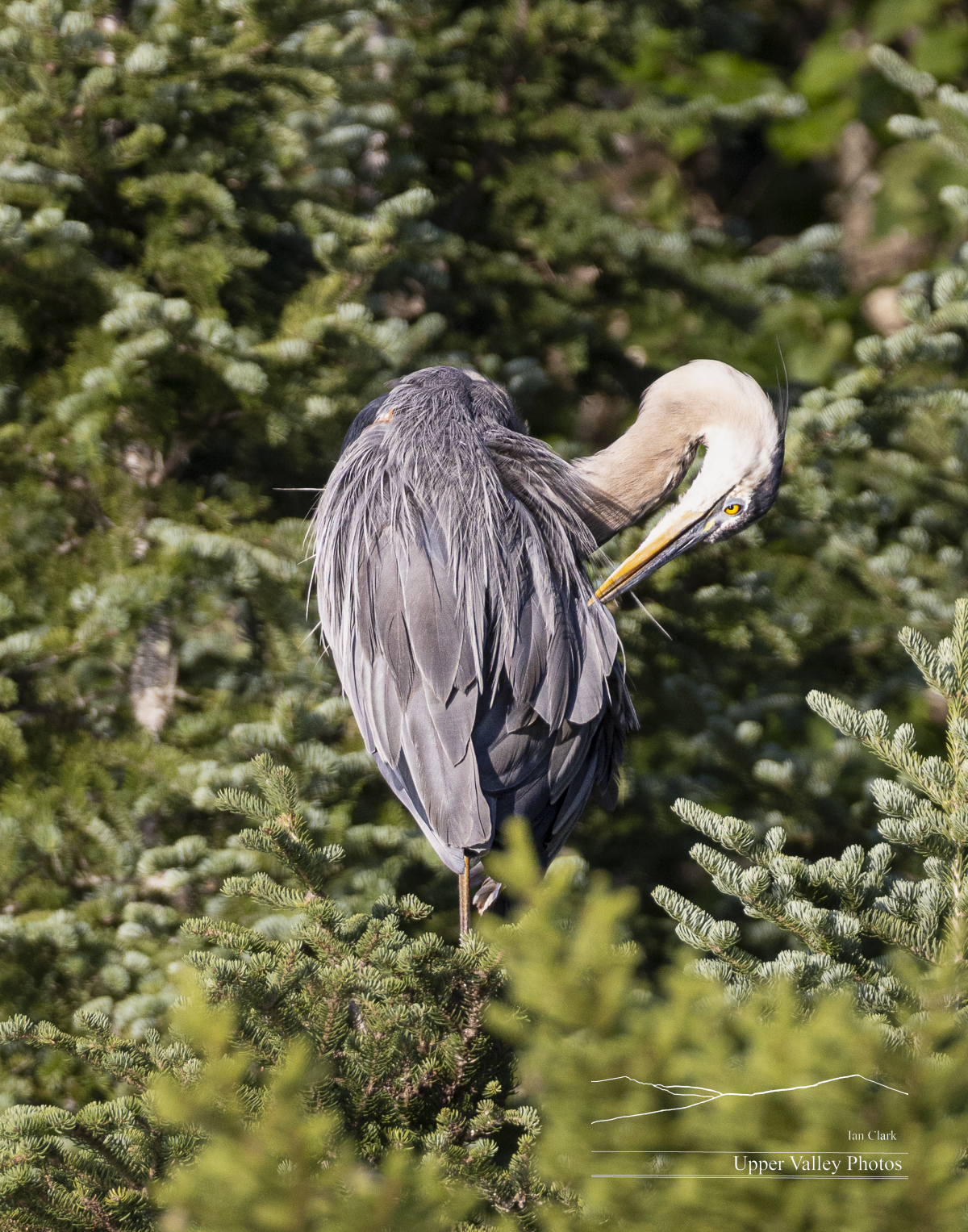
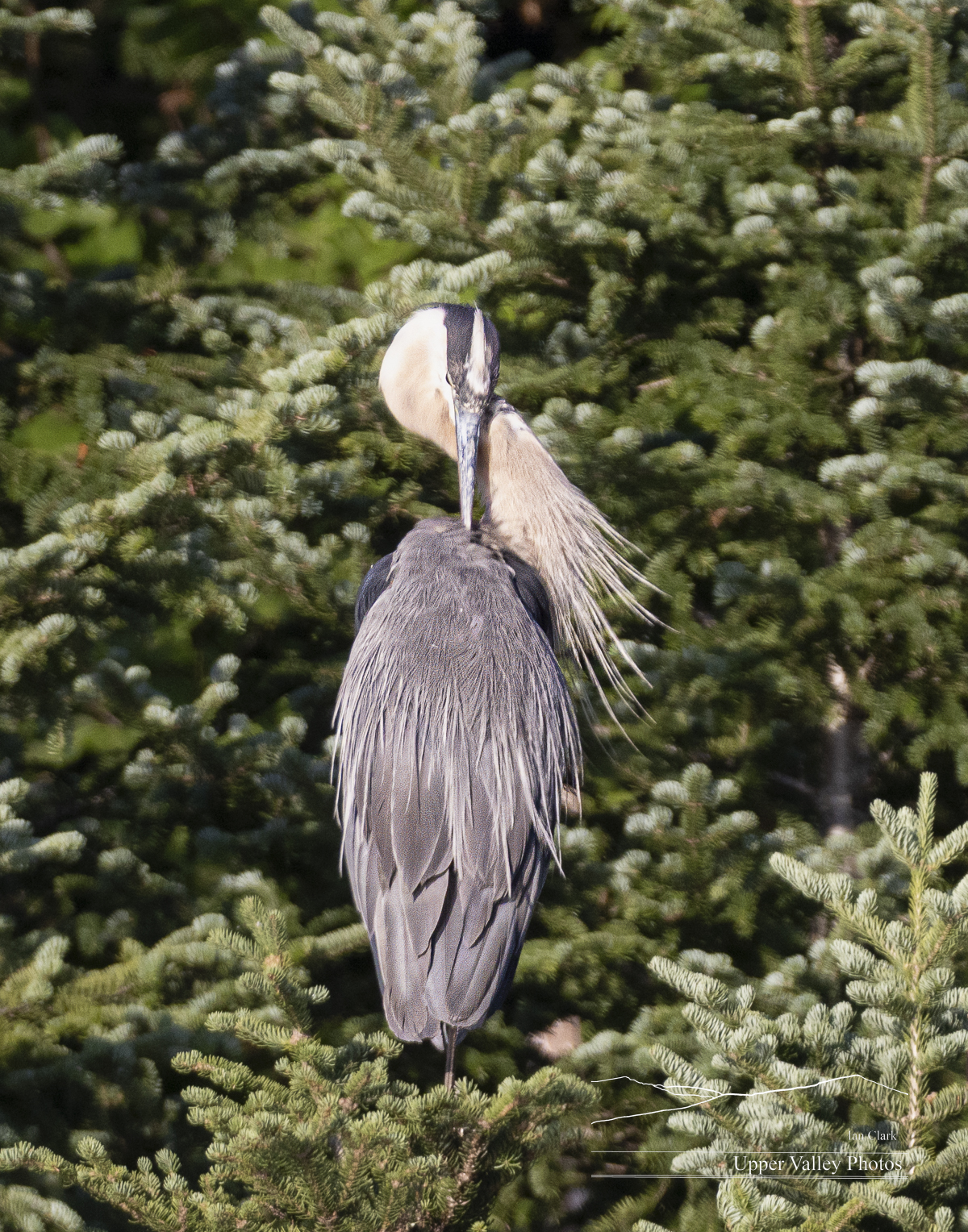
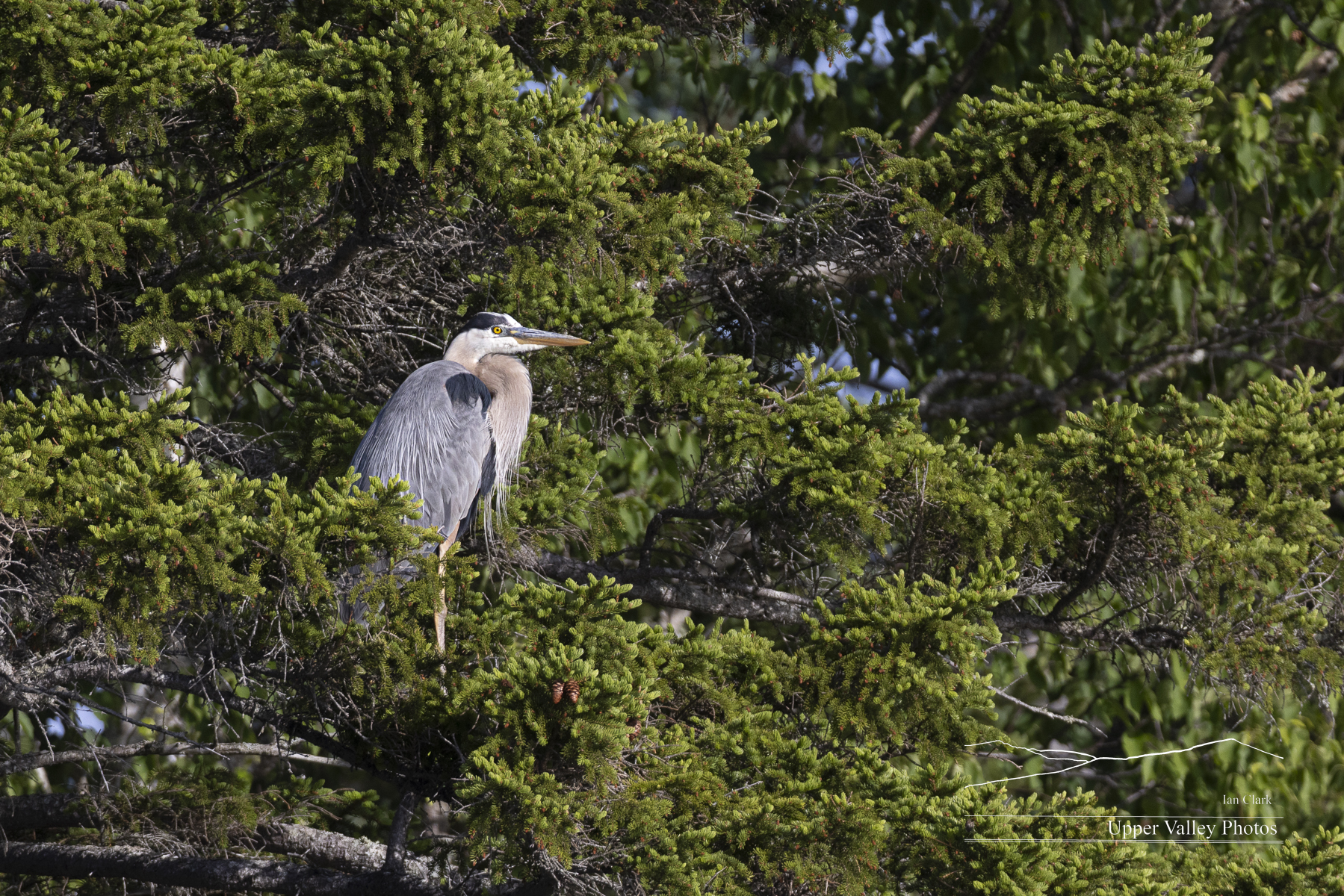
I had chores waiting and started to head in. Hank was watching over the boat launch. I stopped to watch him preen for a bit. Herons must have great balance and strong feet to twist and turn enough to preen in a tree. Hank has finished his ablutions and is looking fine.

I heard from another Weston Family watcher. She’d paddled the pond and couldn’t find the family. I headed up on the 28th to see what was up.
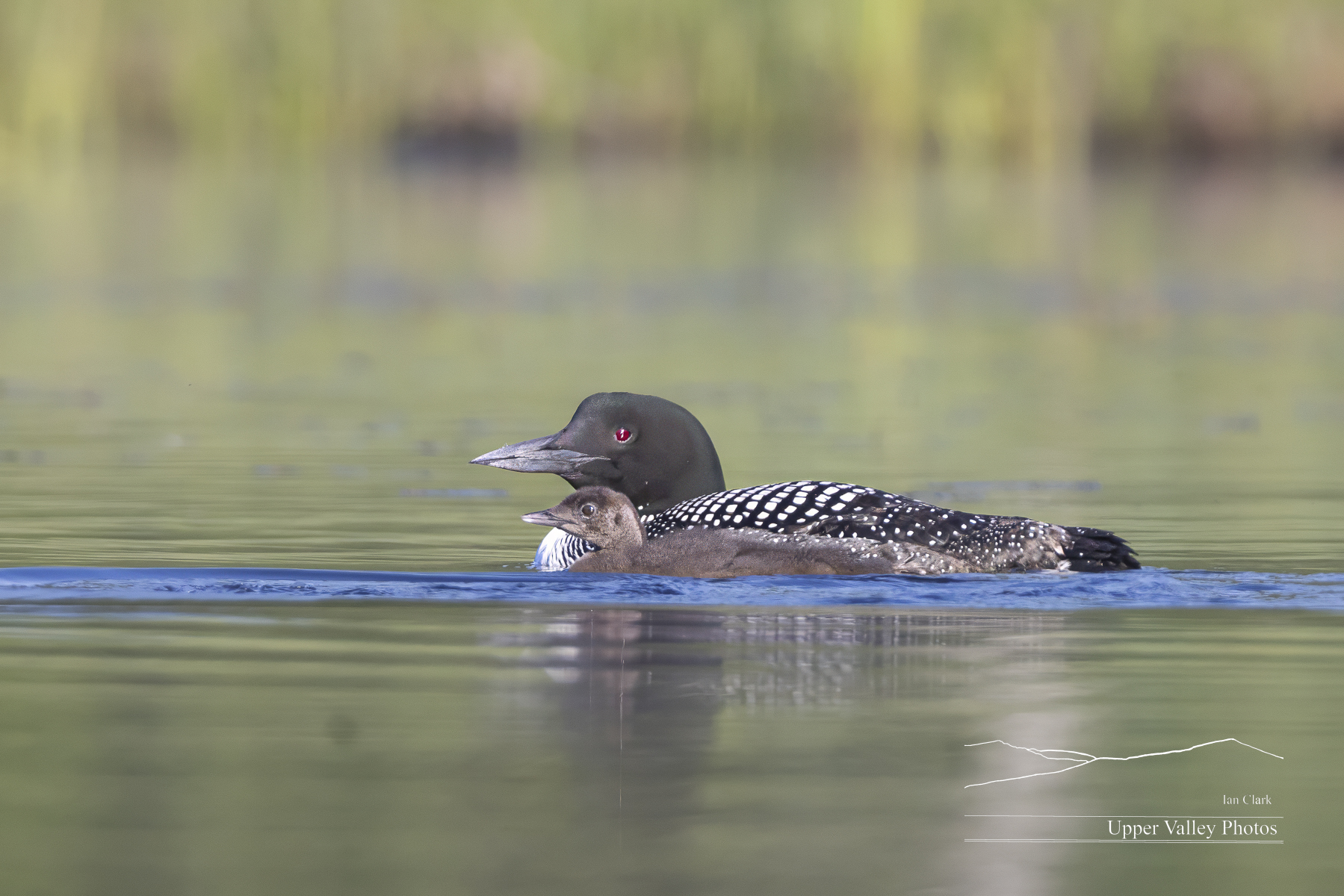
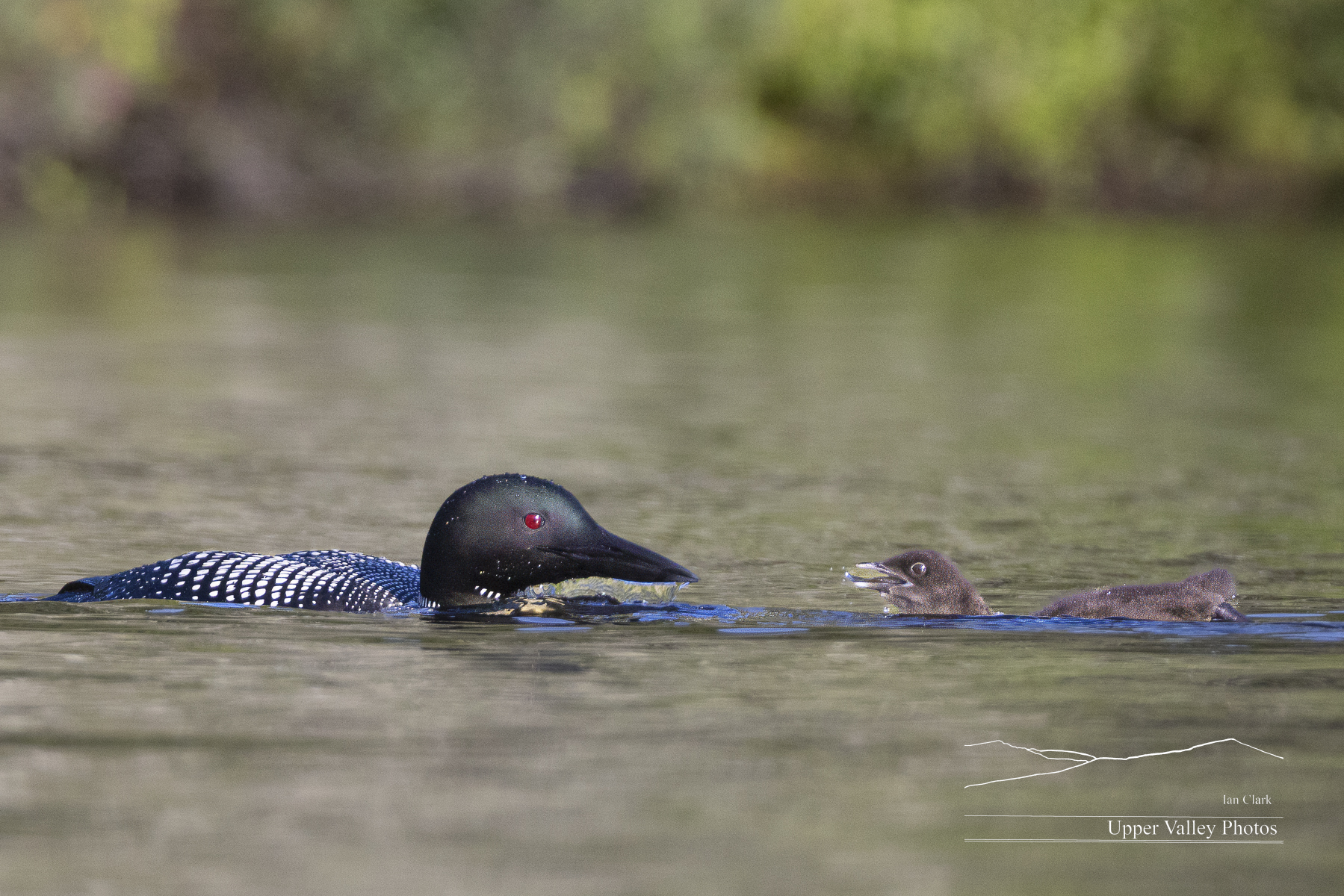
I found the family foraging peacefully at the far end of the pond. Sadly, I found only one chick. The chick spent some time swimming in close formation with Dad.

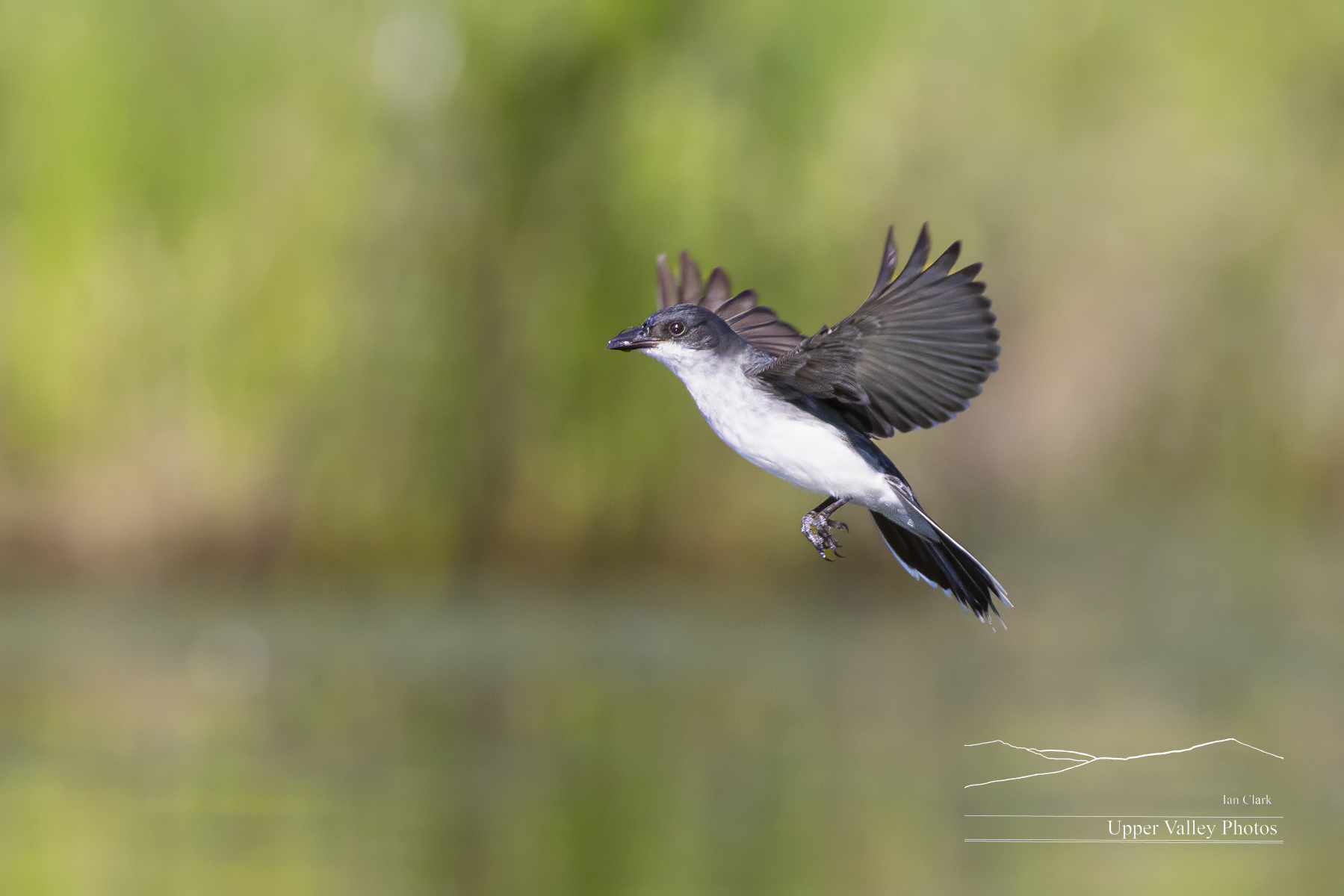
The kingbirds were hunting dragonflies close to the water. They often hovered for a time while looking for the next meal. This one has caught something, you can barely see it in his bill. There are several kingbird nests I’ve spotted nearby. All the builders were very talented about building where there was a branch blocking my view.

As I headed back to the boat launch, I found these guys. They told me parking had gone up to two bucks.

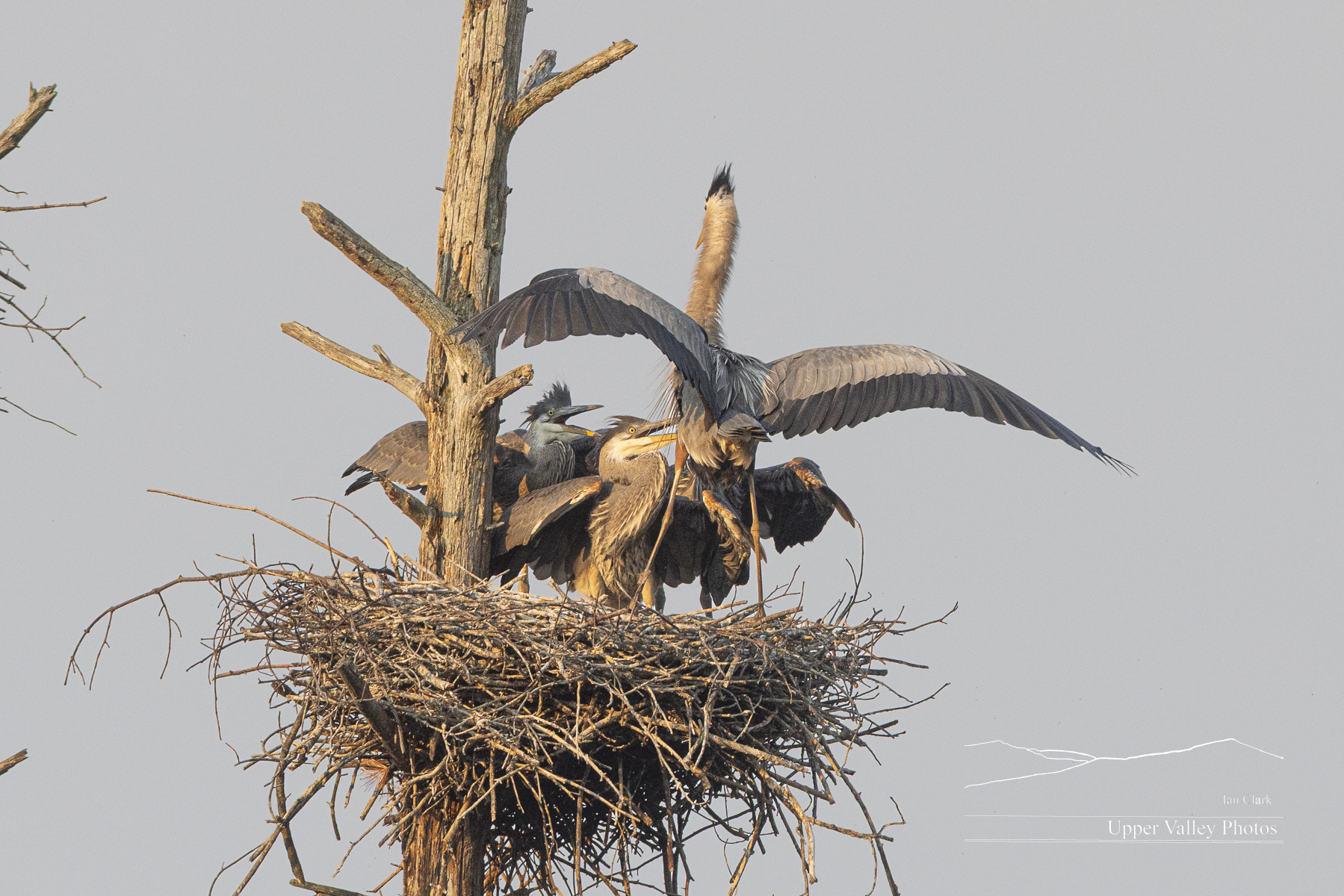
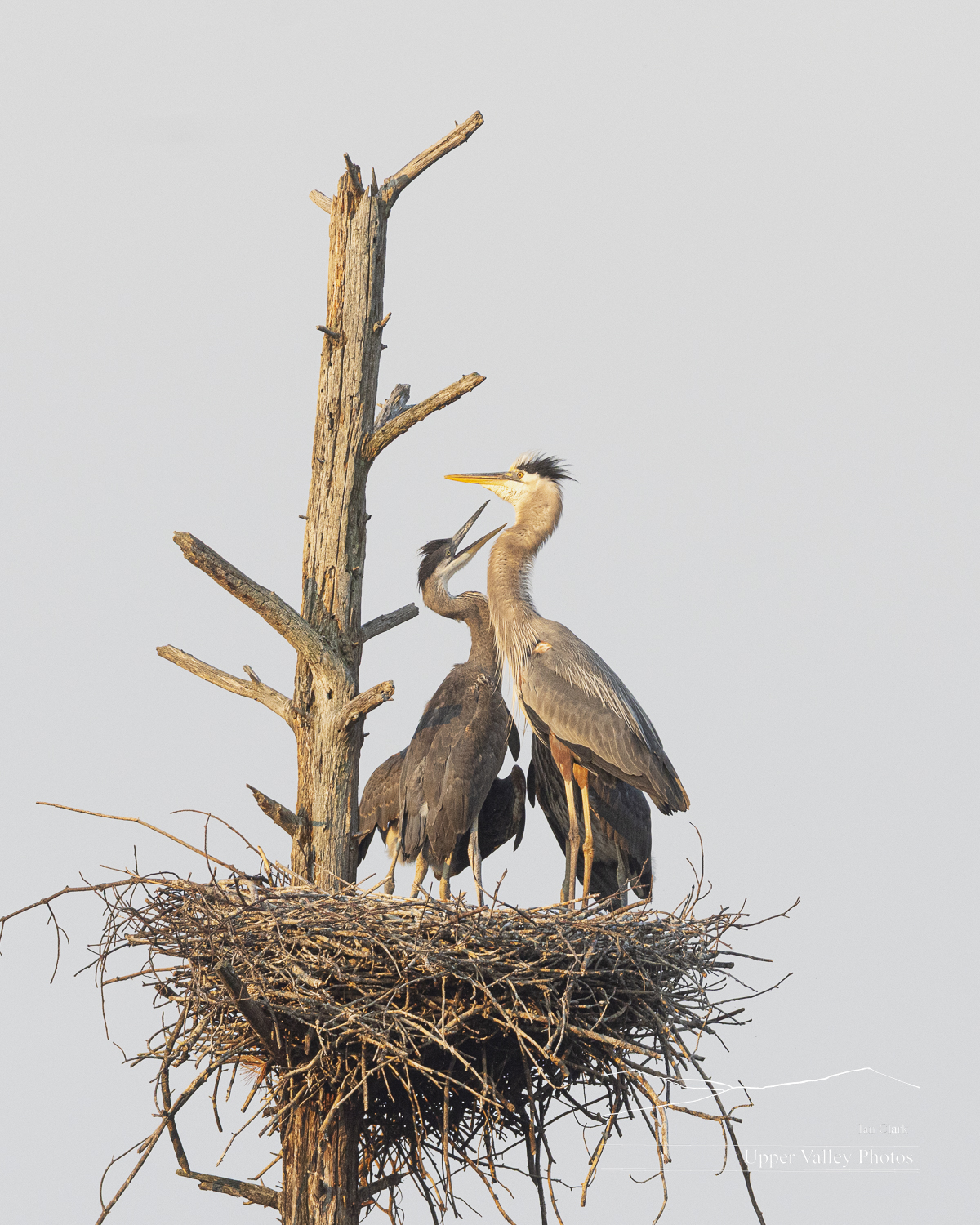
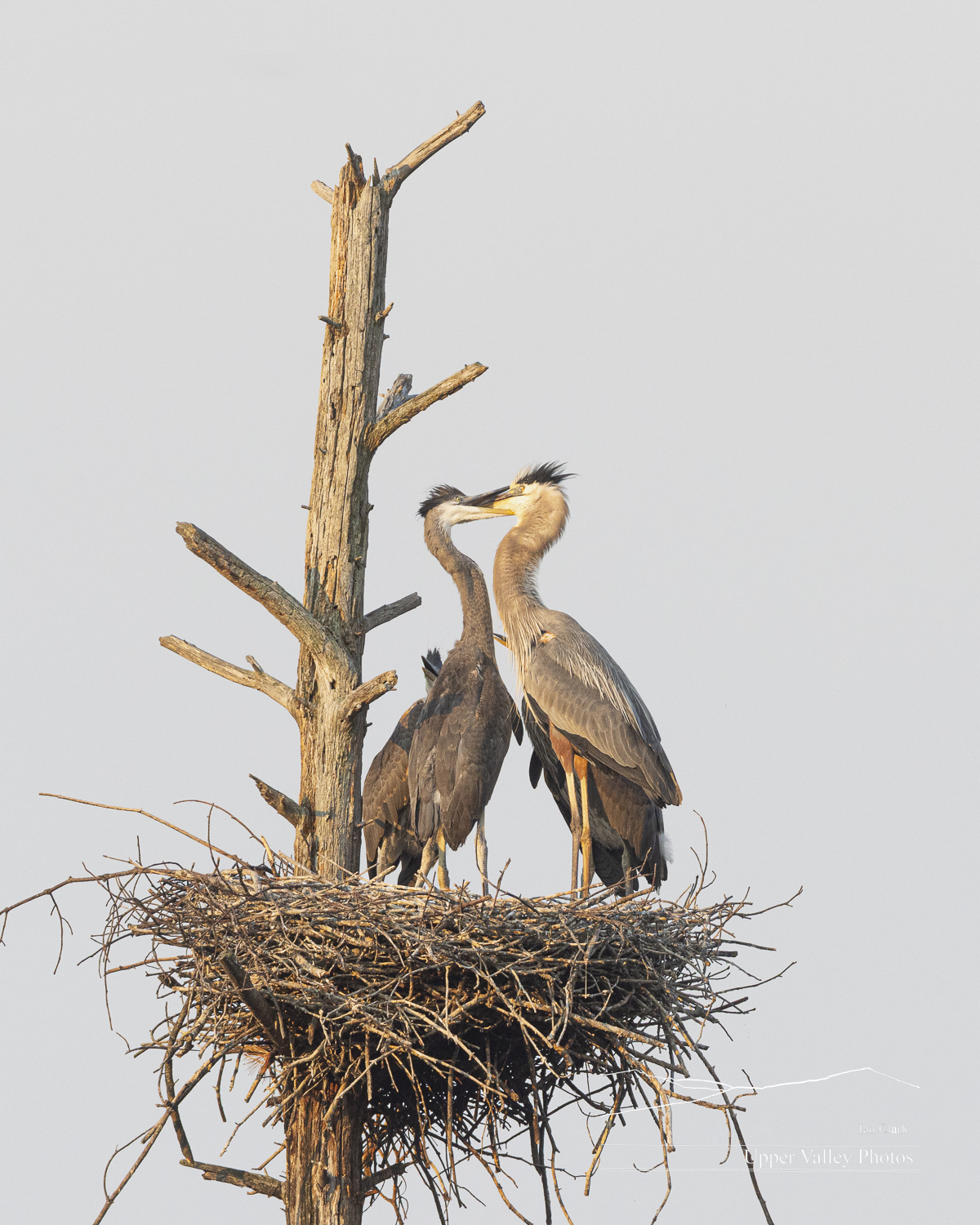
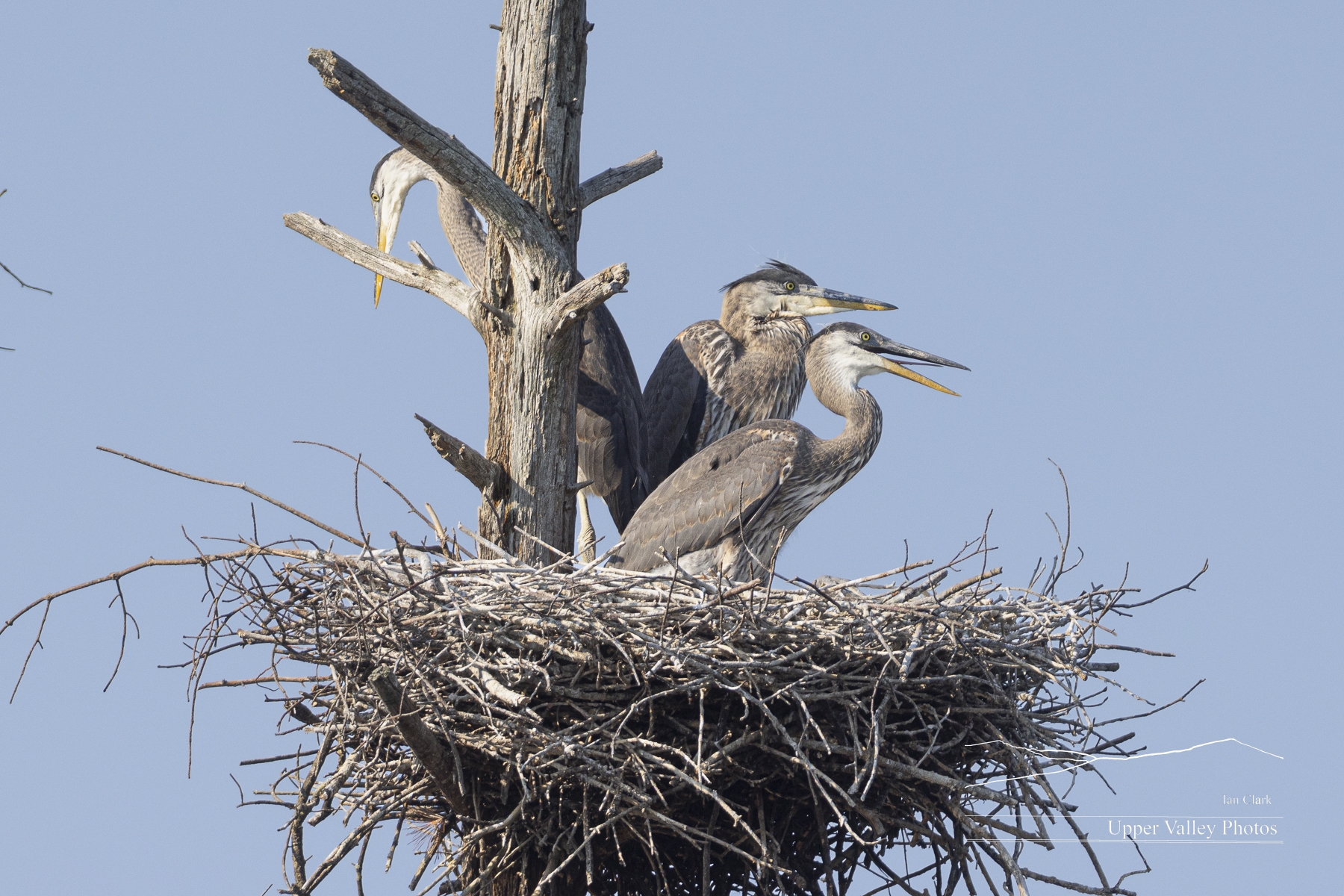
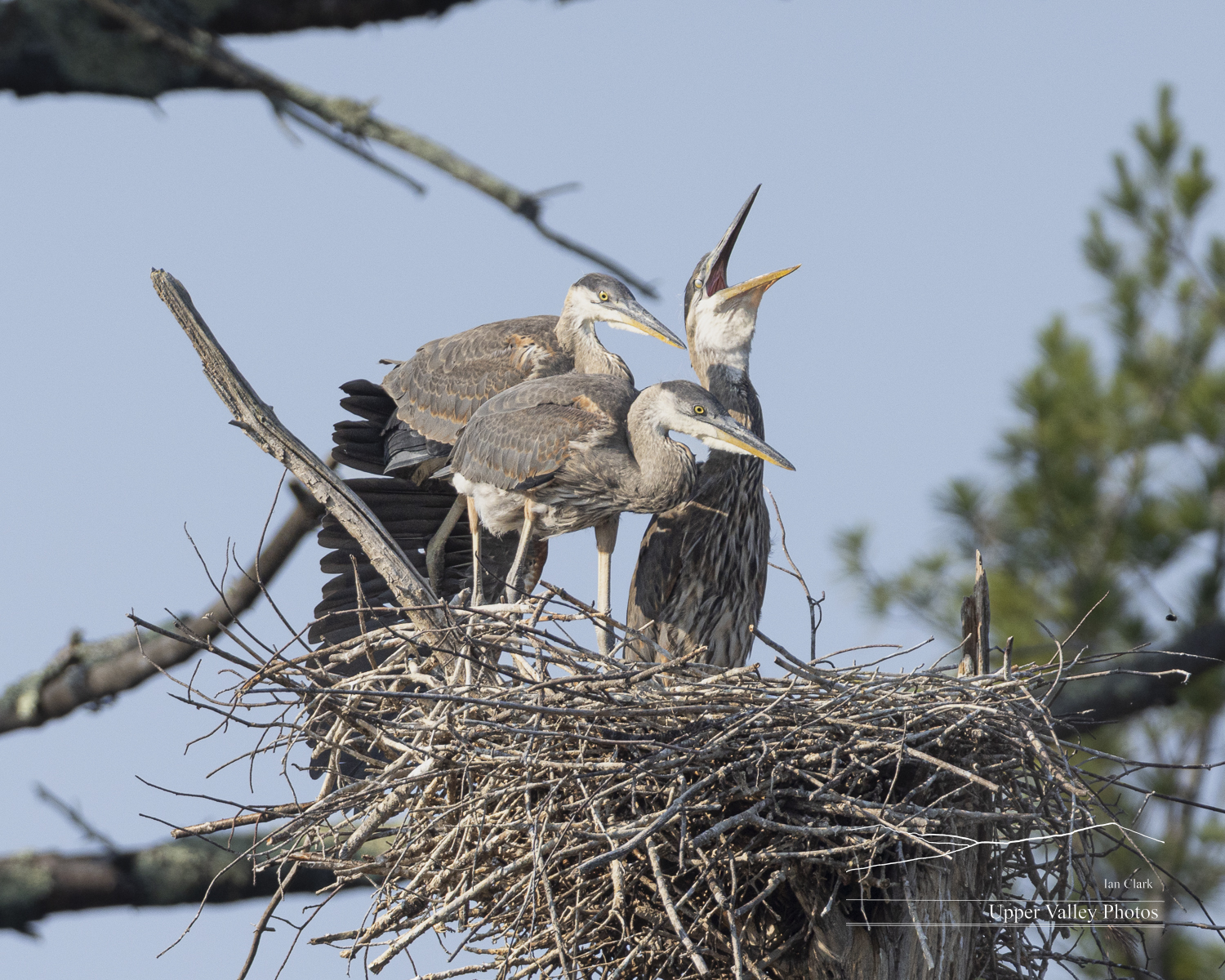
The next morning I was up and going at 0300 to drive down to the heron rookery. I arrived just after the sun lit the nests. And just in time to see a parent arrive with a meal. The chicks are getting big. And they’re insistent on being fed when the adult arrives. The chicks squawk and grab the parent’s bill. Both adults tend the chicks and people can’t tell them apart.

The chicks are not at all gentle about grabbing their parent’s bill. The parent looks like he’s bracing for it…

The chick is politely requesting the parent pay attention and feed him.

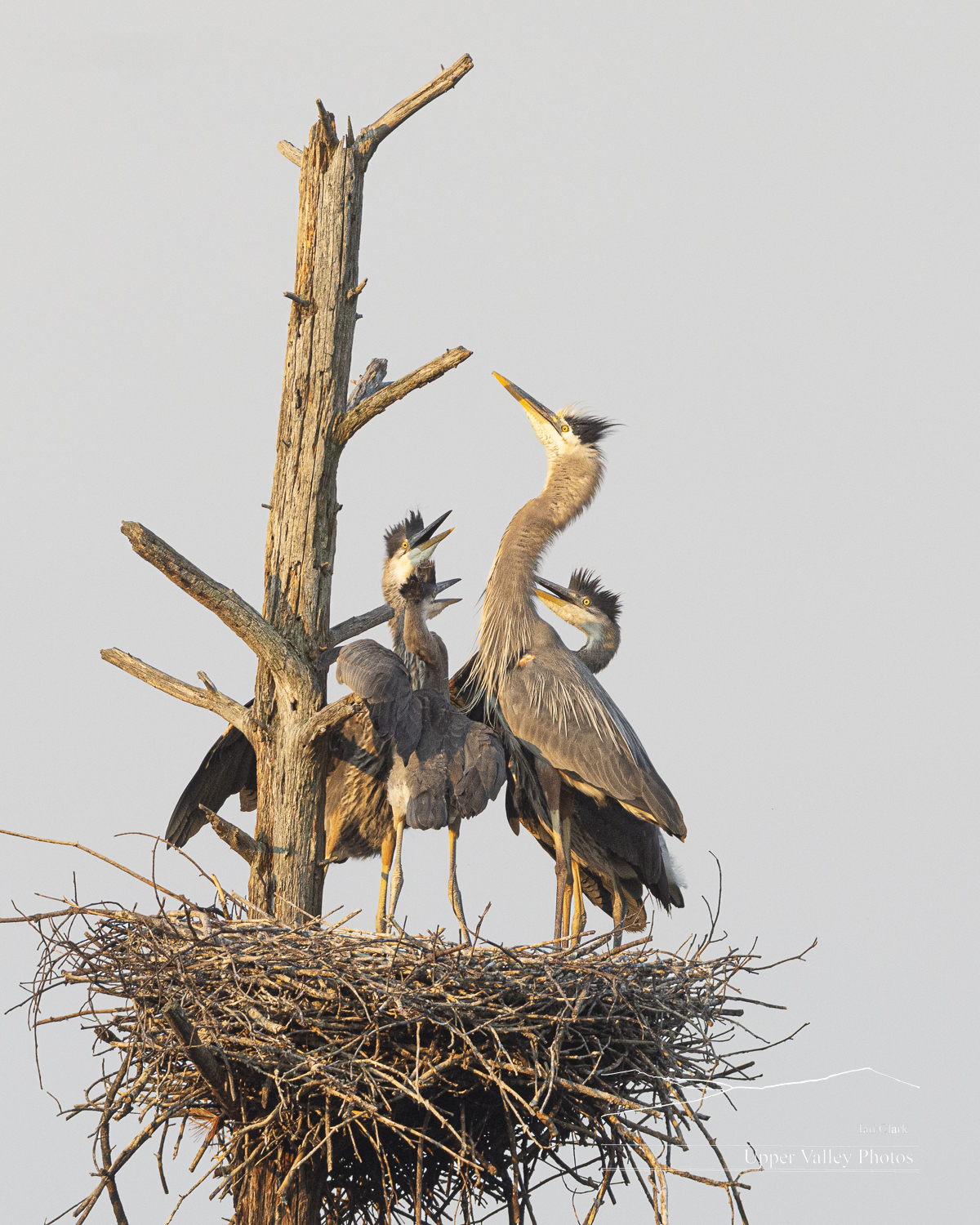
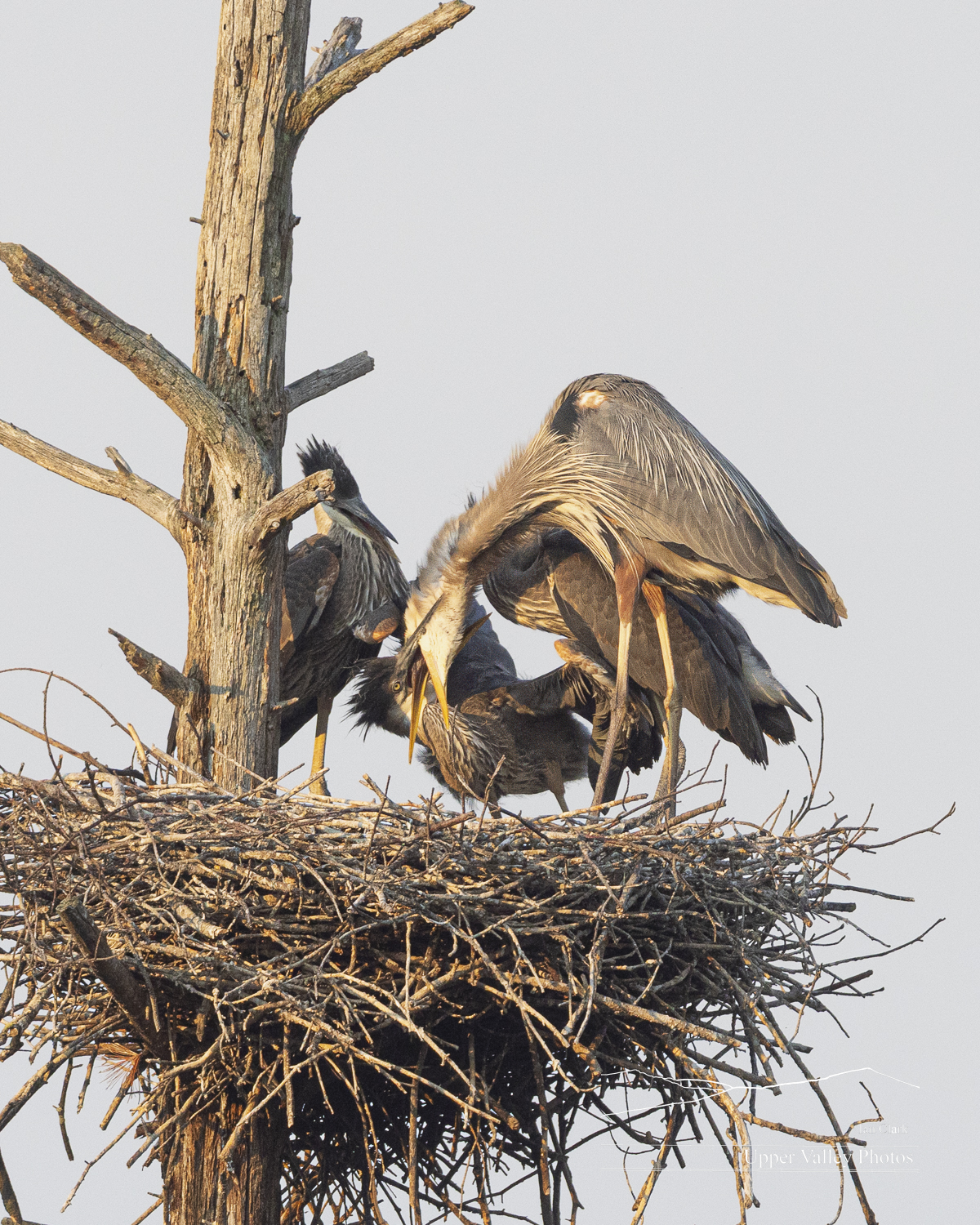
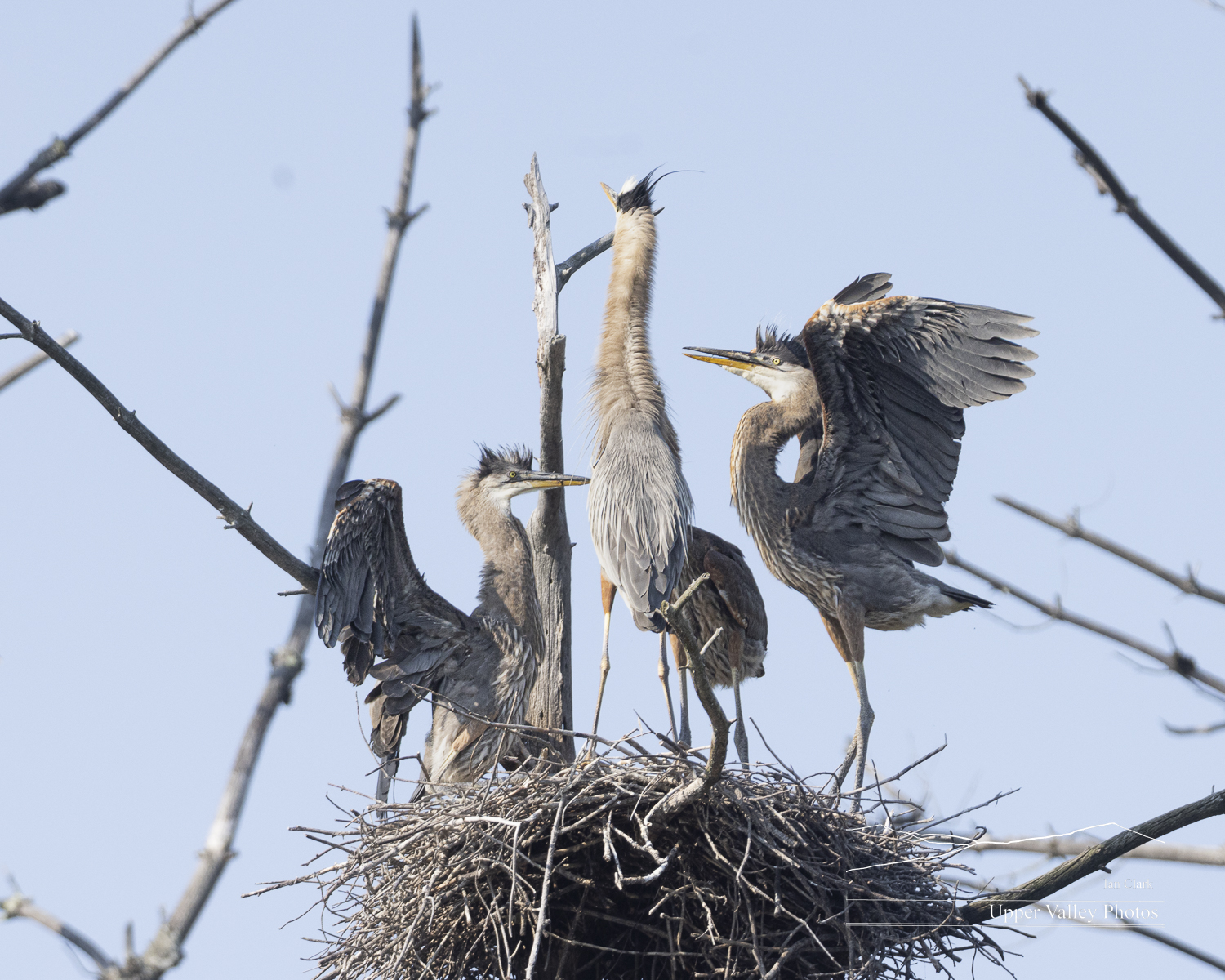
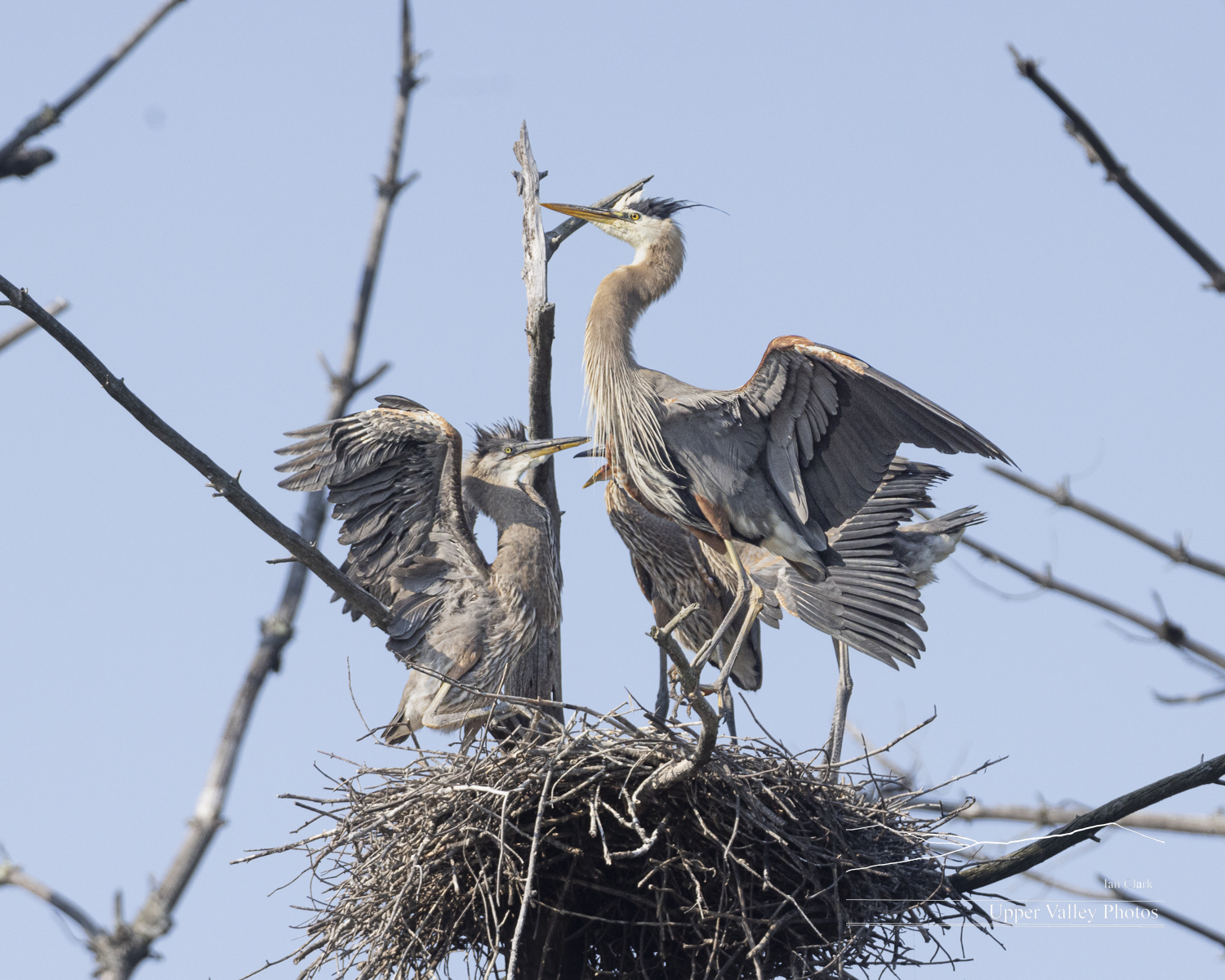
All three chicks were dancing and grabbing at the parent. I’m not sure if the parent is stretching to get away from the chicks or if stretching helps regurgitate the food.

The parent is bending down to cough up the food into the nest. One of the chicks makes a last grab at the parent’s bill to see if he can claim the meal. I think the parent coughed up two perch or sunfish. No idea which chick grabbed them.

Having delivered the meal, the parent headed back out to forage some more. Or just to find some peace and quiet. The chicks all settled down and watched their world.

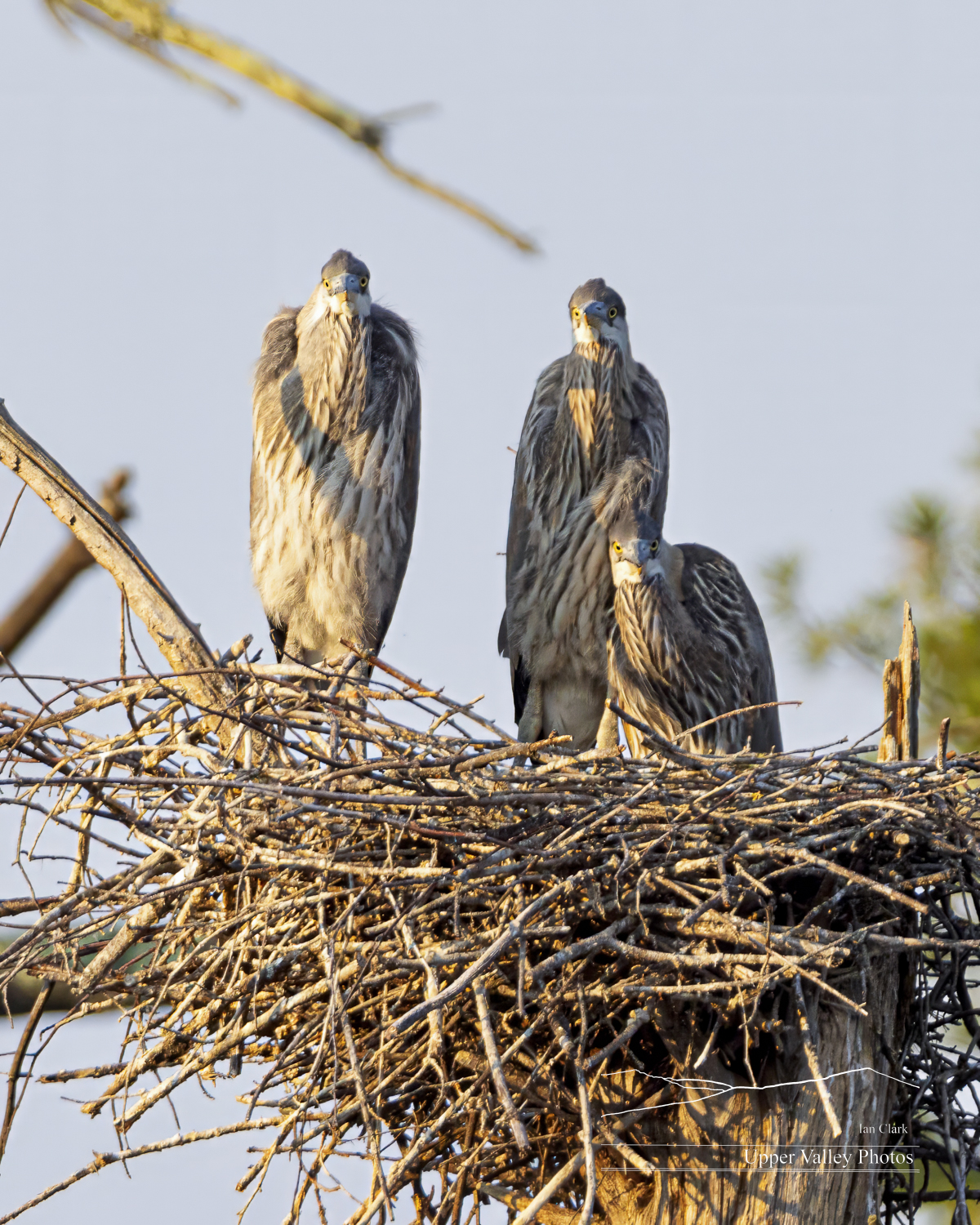
The chicks in another of the nests appeared to spend the morning judging me.

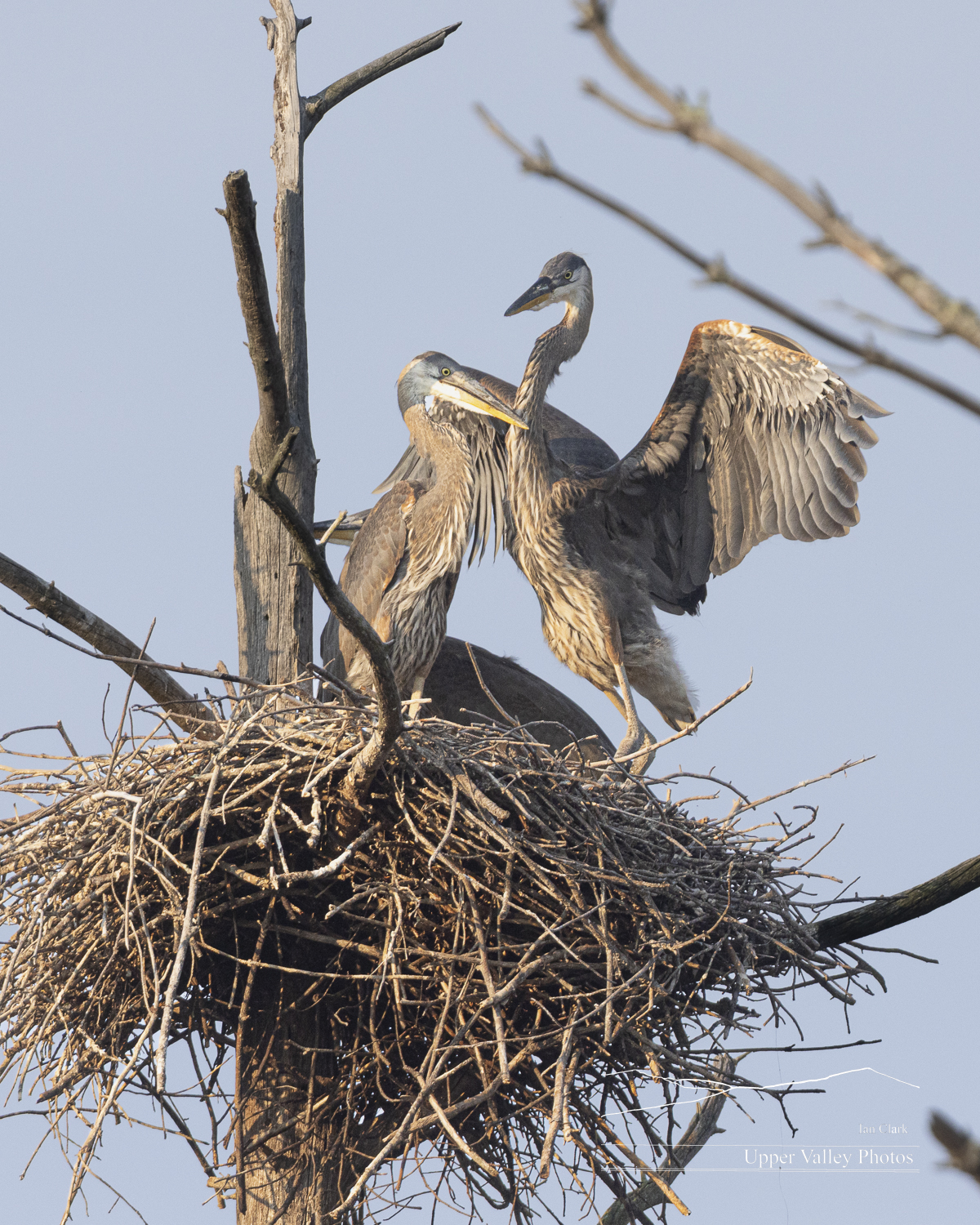
Back in the nest that had breakfast delivered, one of the chicks tried working his wings. He spent a few minutes flapping. I suspect this helps build up the muscles the chick will need when his feathers finish growing in.


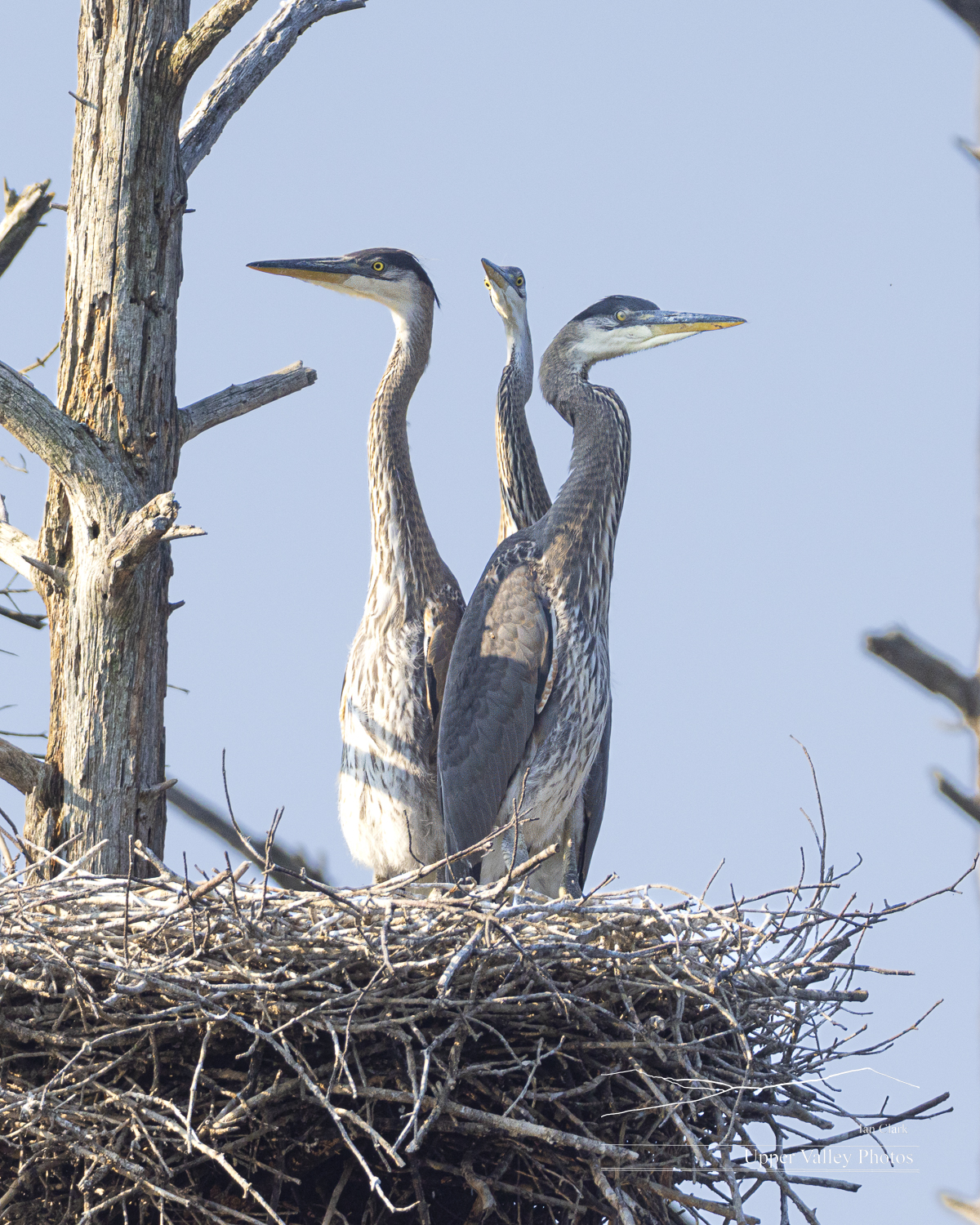
Flapping finished, the chicks struck up a Cerberus pose.

The nests are in direct sun most of the day. It was rapidly warming, it must have been approaching 75° degrees by this time. Herons pant like dogs. They hold their mouth open and breath rapidly to cool themselves.

Back with the judgmental chicks, they started stirring in the nest.


A parent returns to the nest that had the meal earlier. The chicks start acting up on arrival. The parent is the one facing away from the camera.

The meal delivered and snarfed, the chicks start dancing and squawking – apparently heron speak for “please, sir I want some more.” The sun was getting high and there were things to be done so I headed home.

Yesterday I headed up to feed the black and deer flies on the Eastons’ pond. I was successful.

I checked the Eastons’ nest. There was an eggshell in the bottom of the nest, but no one was home. I went looking for them.

Before I found them, I found Hank out strutting his stuff looking for breakfast.
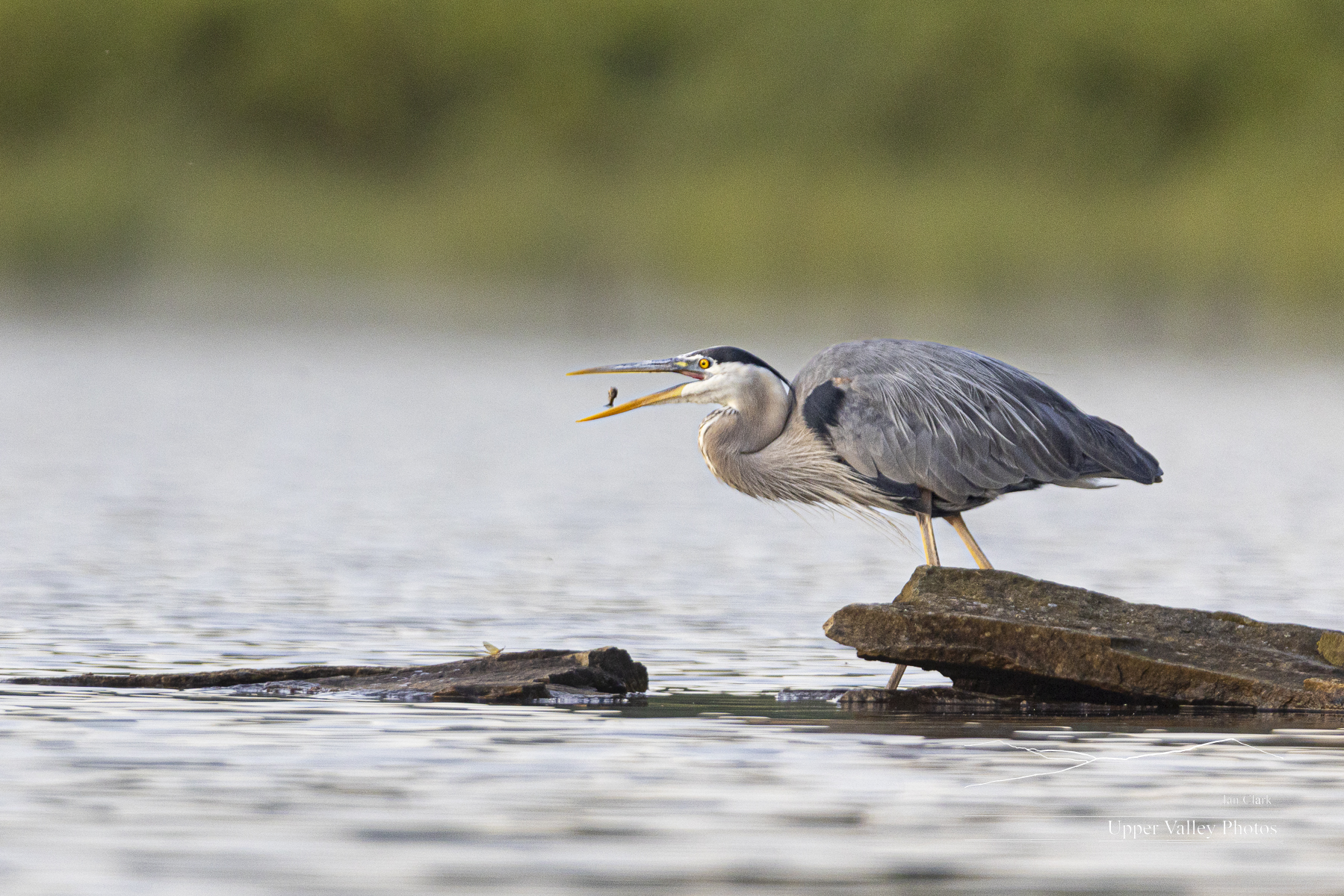
Hank found a school of fingerlings and made a meal of them. Herons swallow fish head first. Hank is rearranging one of the fish to go down properly.

After breakfast he preened for a bit to get him looking sharp for the day. Back to looking for the Eastons.

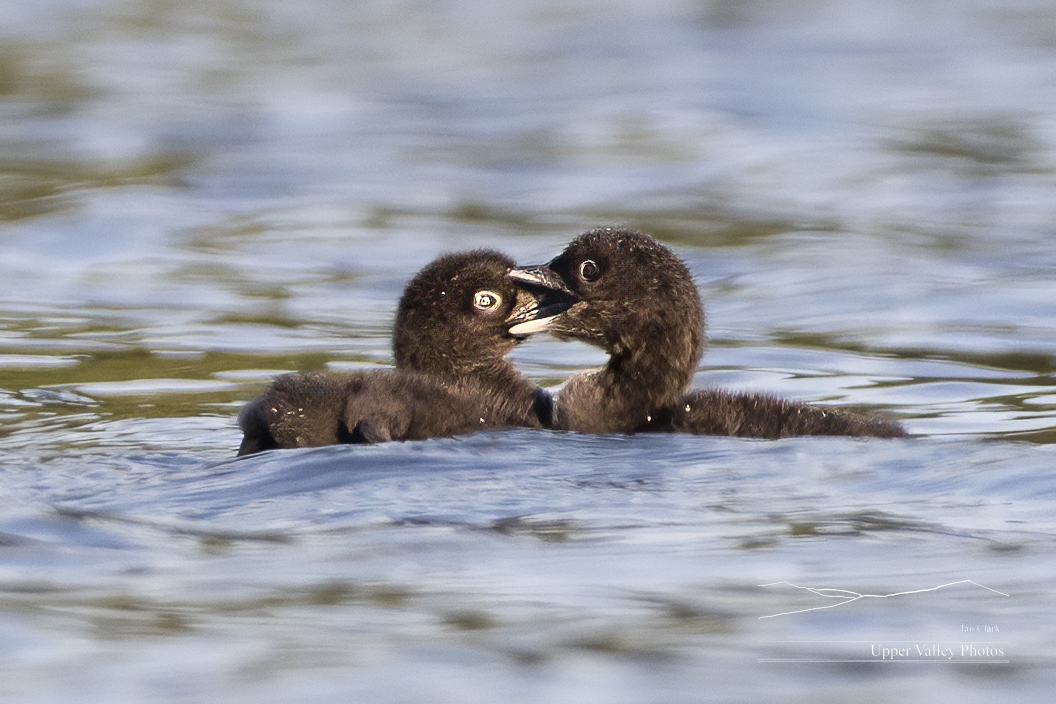
Mine! Mine! Mine! Mine! Mine! I found the loons with two hungry chicks. Both parents were busy foraging for them.

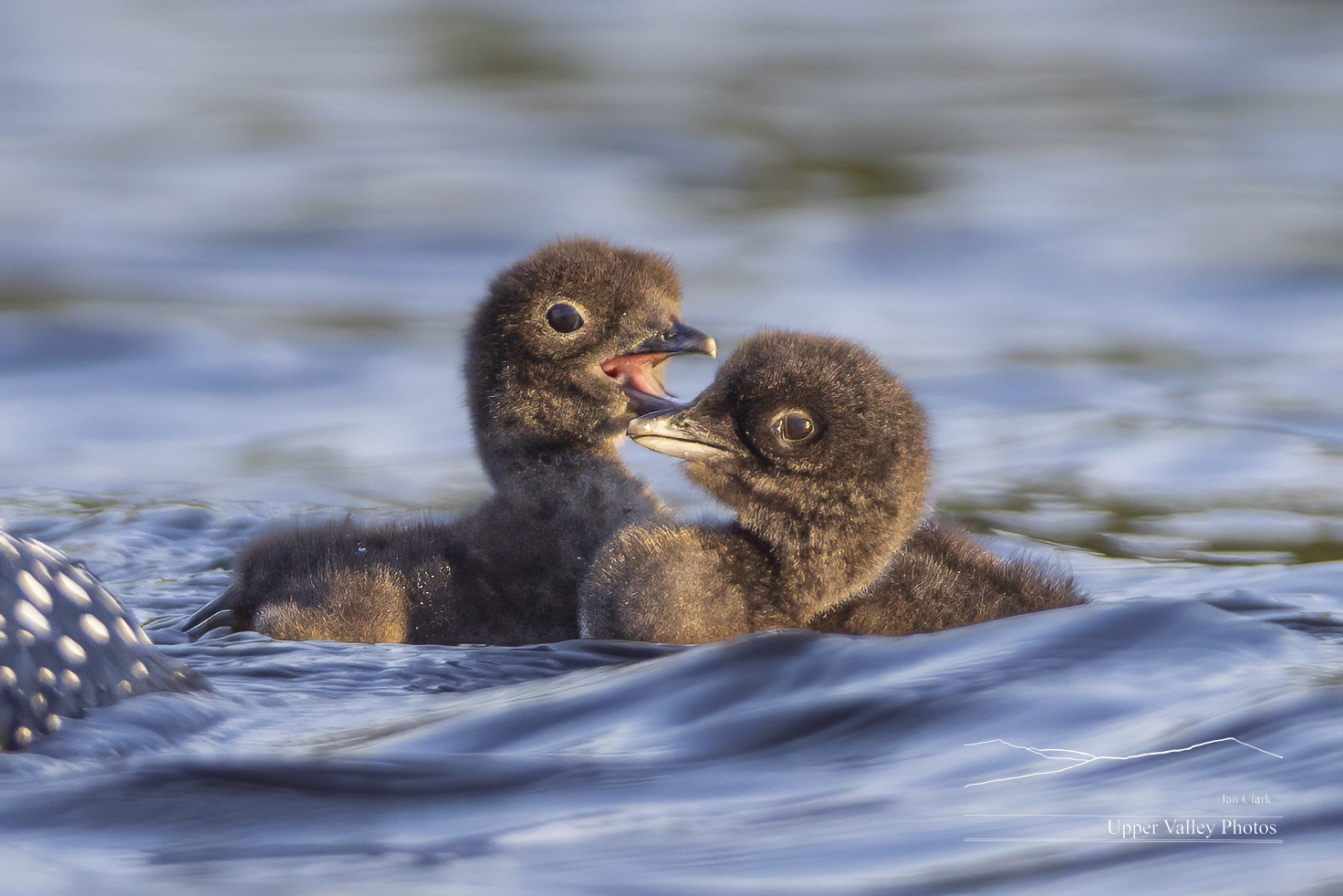
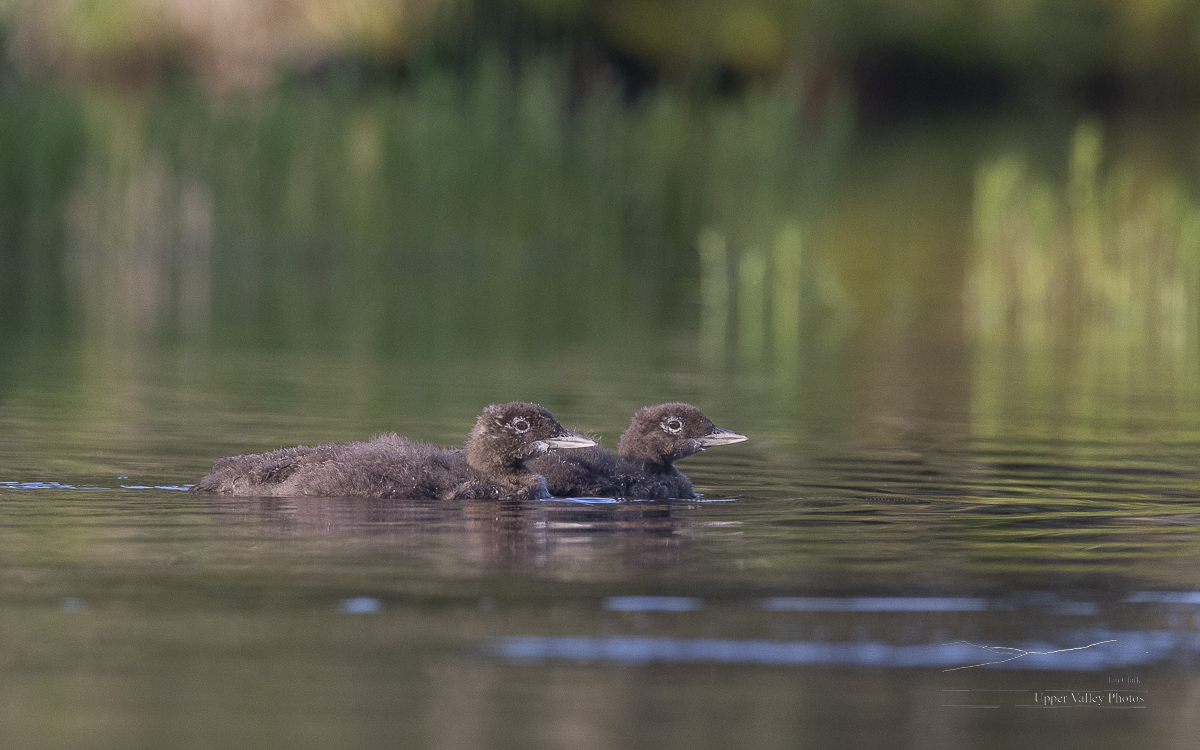
Loon chicks are competitors and there’s no cooperation between them. If one chick is strong enough, it will drive the weaker chick away from the family. This pair spent a fair bit of the morning squabbling.

Another shot of them squabbling. Even with an 800mm lens, this is an enormous crop.

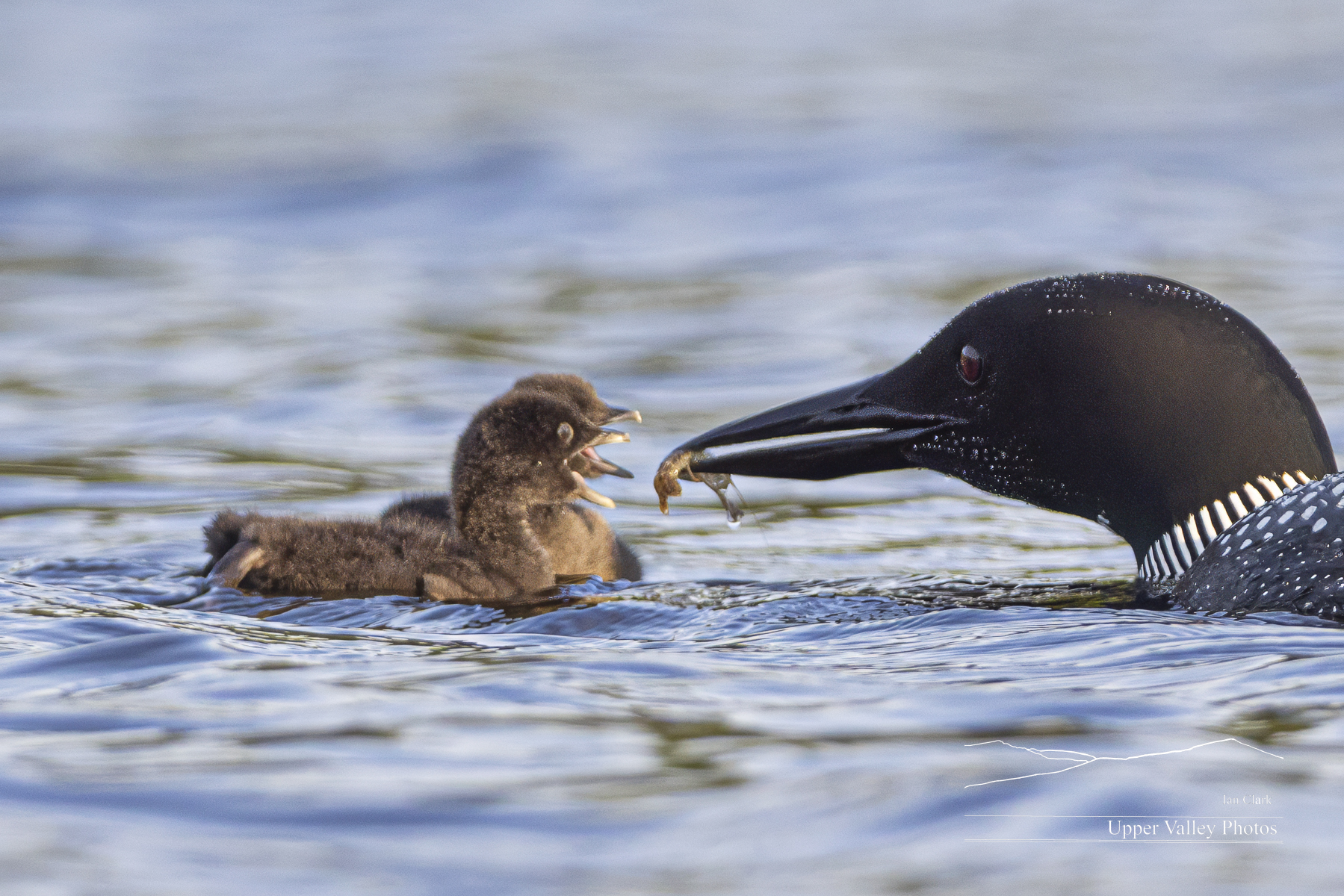
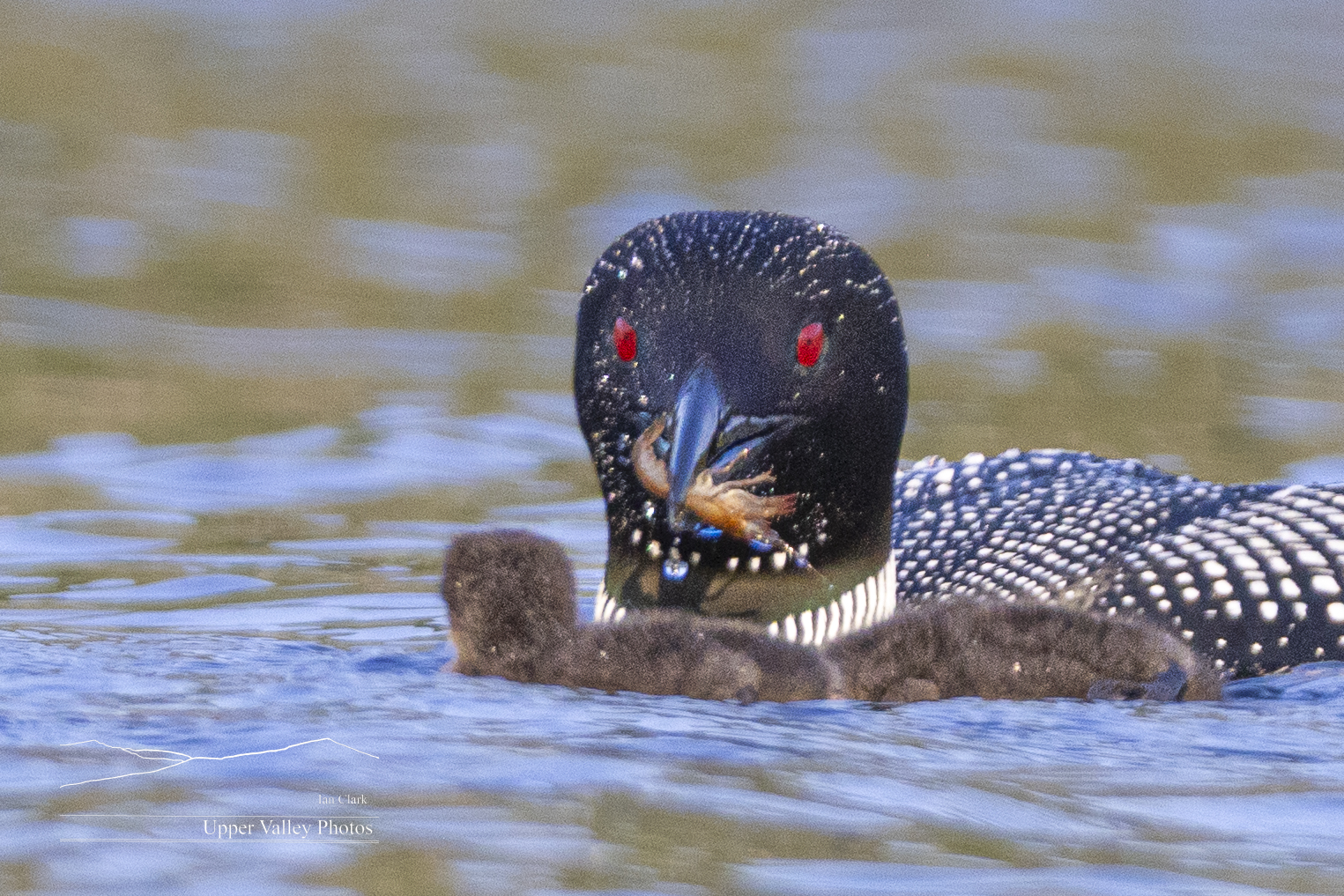
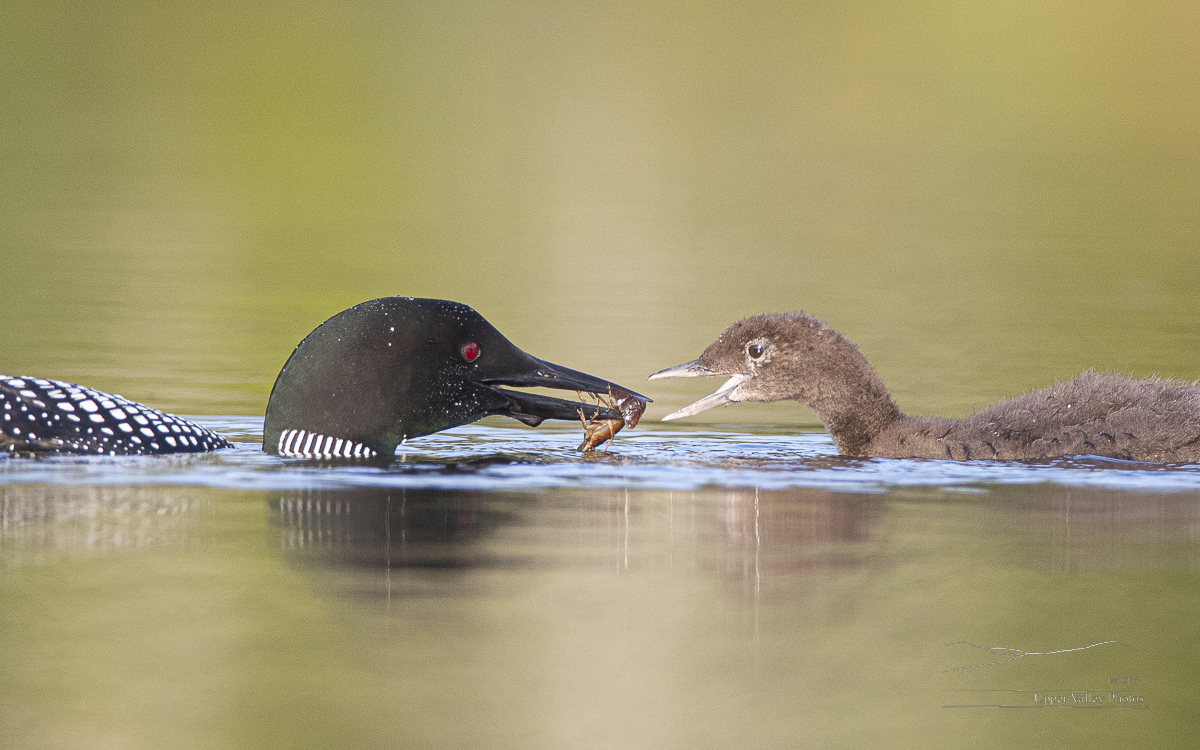
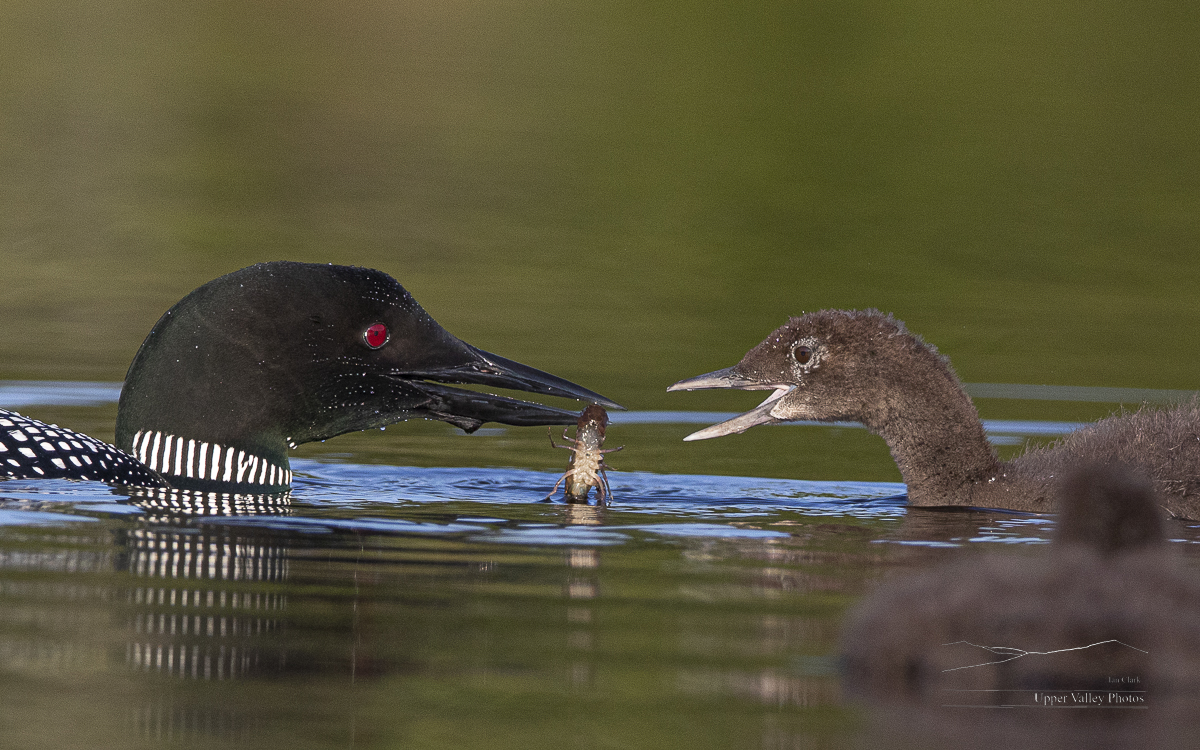
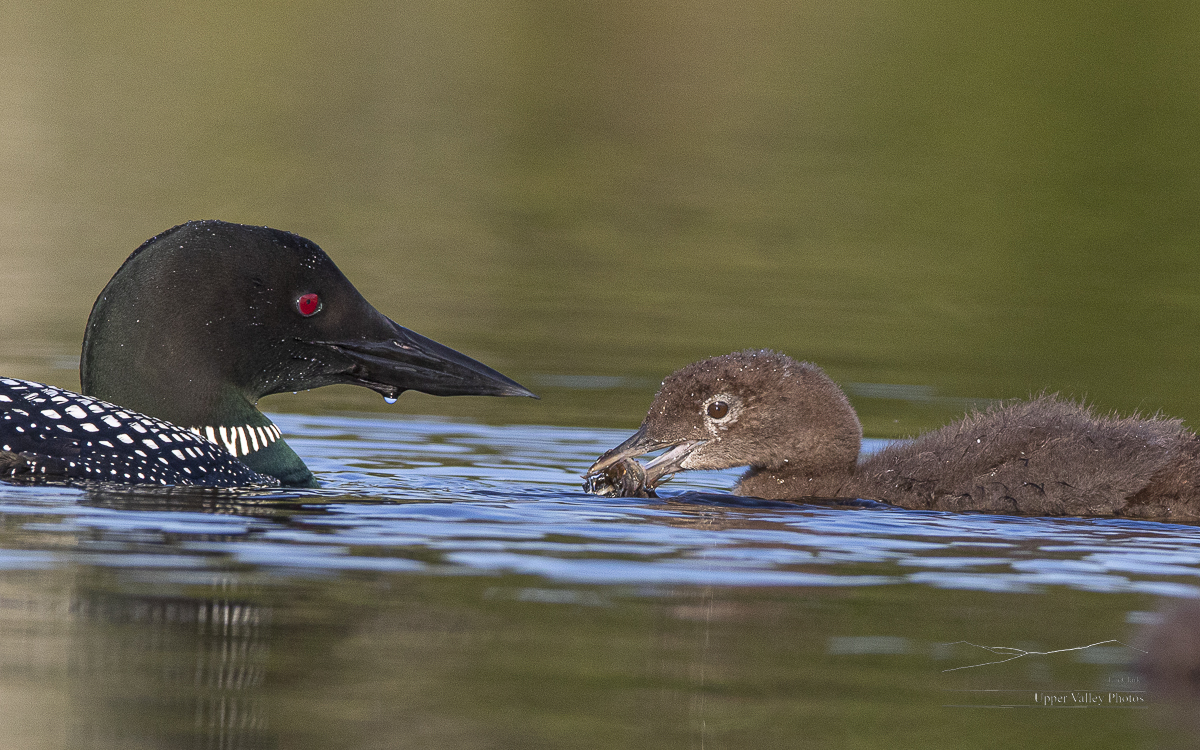
One of the parents delivering a crayfish. The loons that held the territory the last several years seemed partial to crayfish. All loons eat them, but on this pond it often seemed the most common meal. I’m curious if that was because they were abundant or if the loons just preferred them. We have at least one new loon in this year’s pair. The male that held the pond since 2019 did not return this year (he is banded). I suspect we have a new female too. The female that has been on the pond the last several years was a bit of a ditz. She wasn’t a particularly attentive parent, spending much of the time on her own while Dad tended the chicks. Both of this year’s loons were tending the chicks. I’m curious to see if crayfish is still the staple.

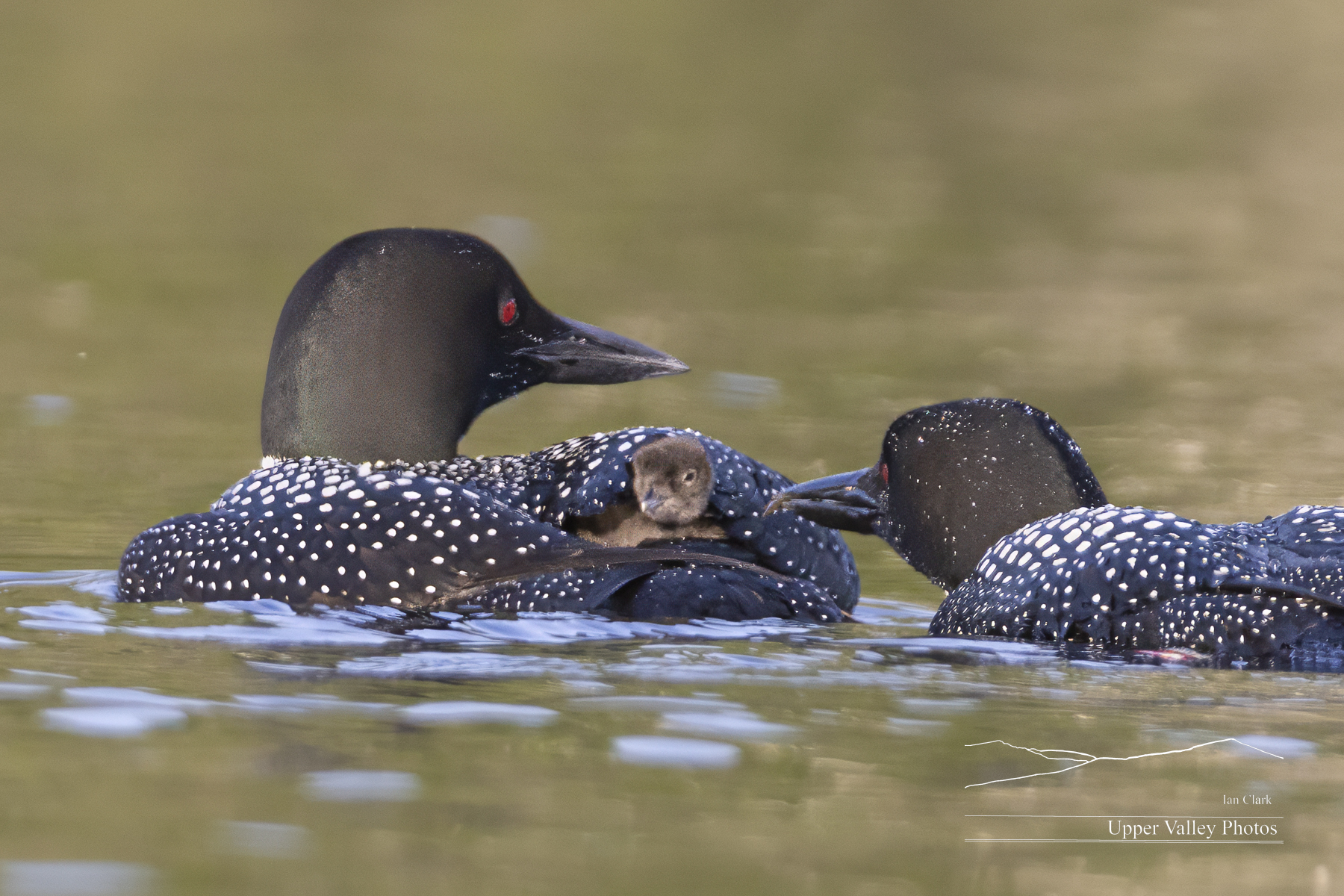
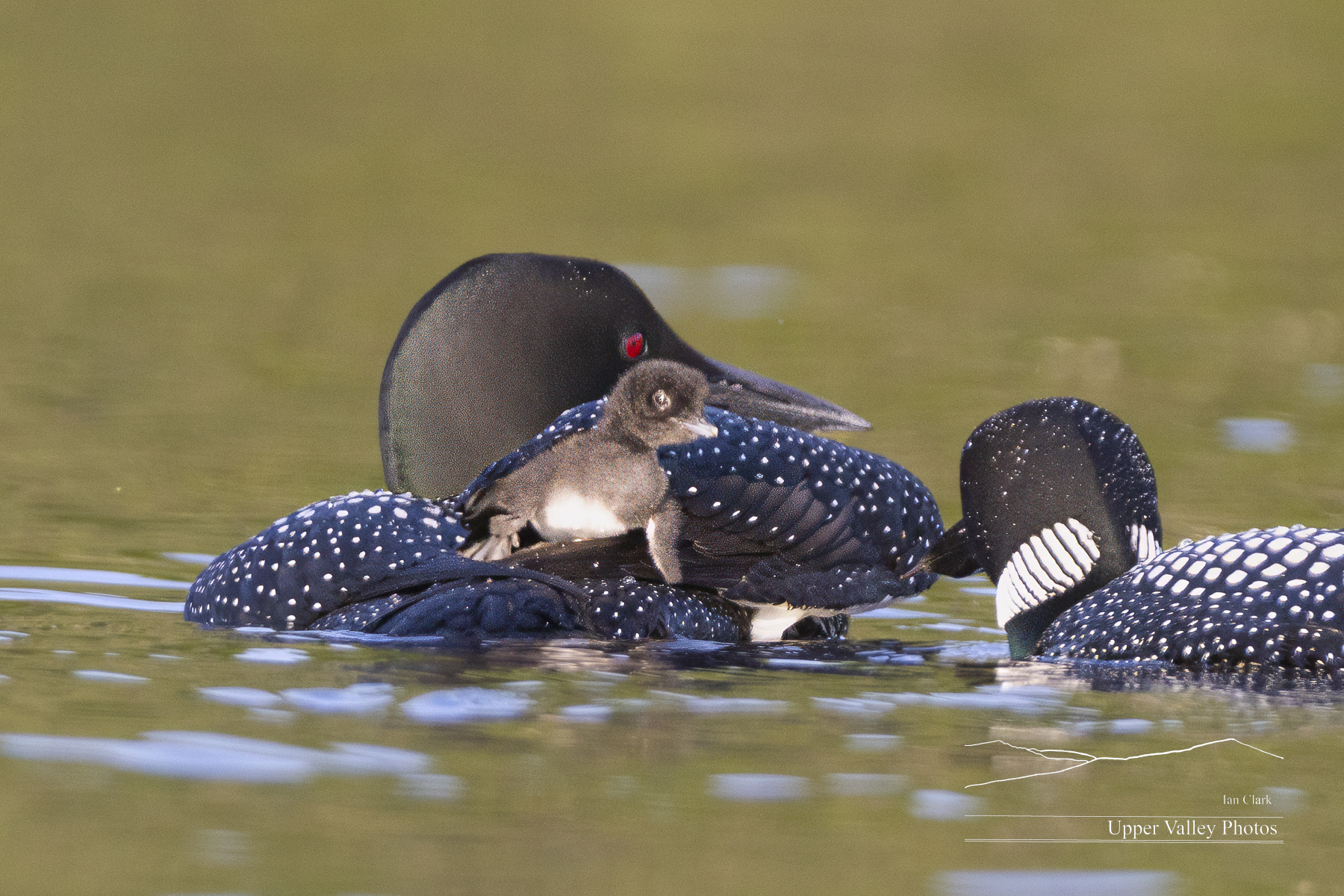
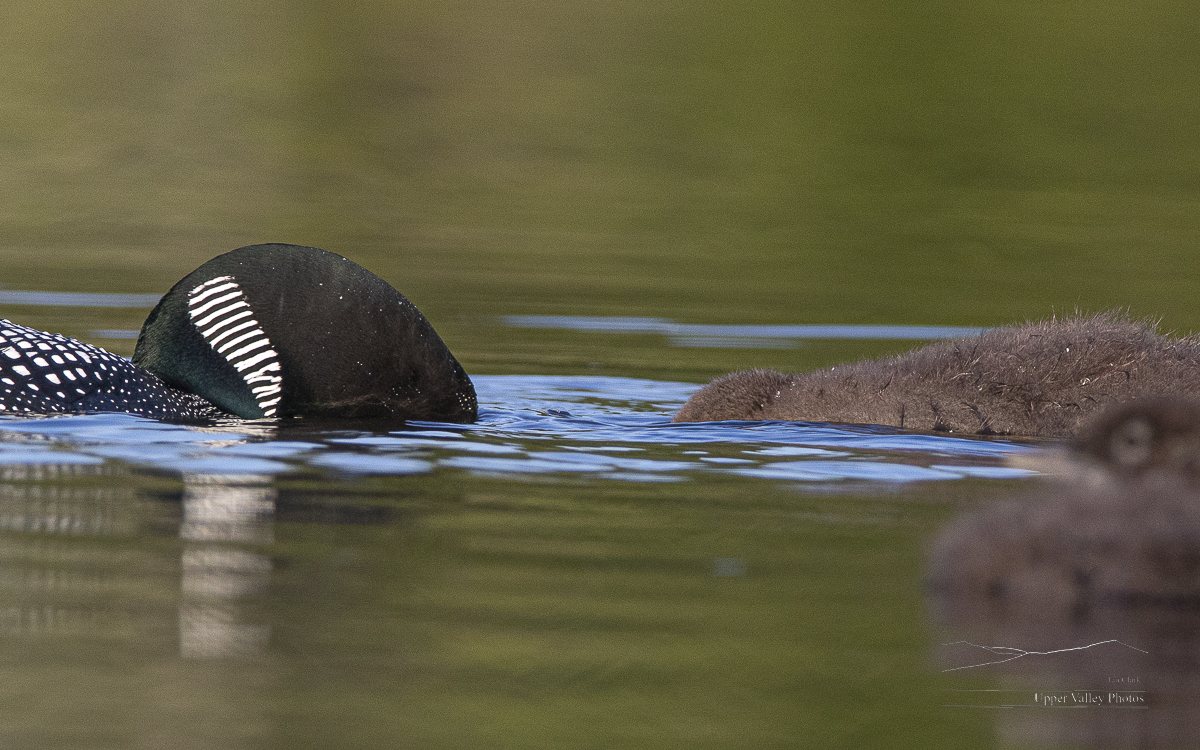
After several meals, the chicks climbed aboard one of the parents. The other took time to preen before foraging some more. The chick seemed ambivalent about the fish being offered.

Until the parent offering it turned away. The chick leapt into action to get the meal. The chicks soon settled in for a nap on a parent’s back.

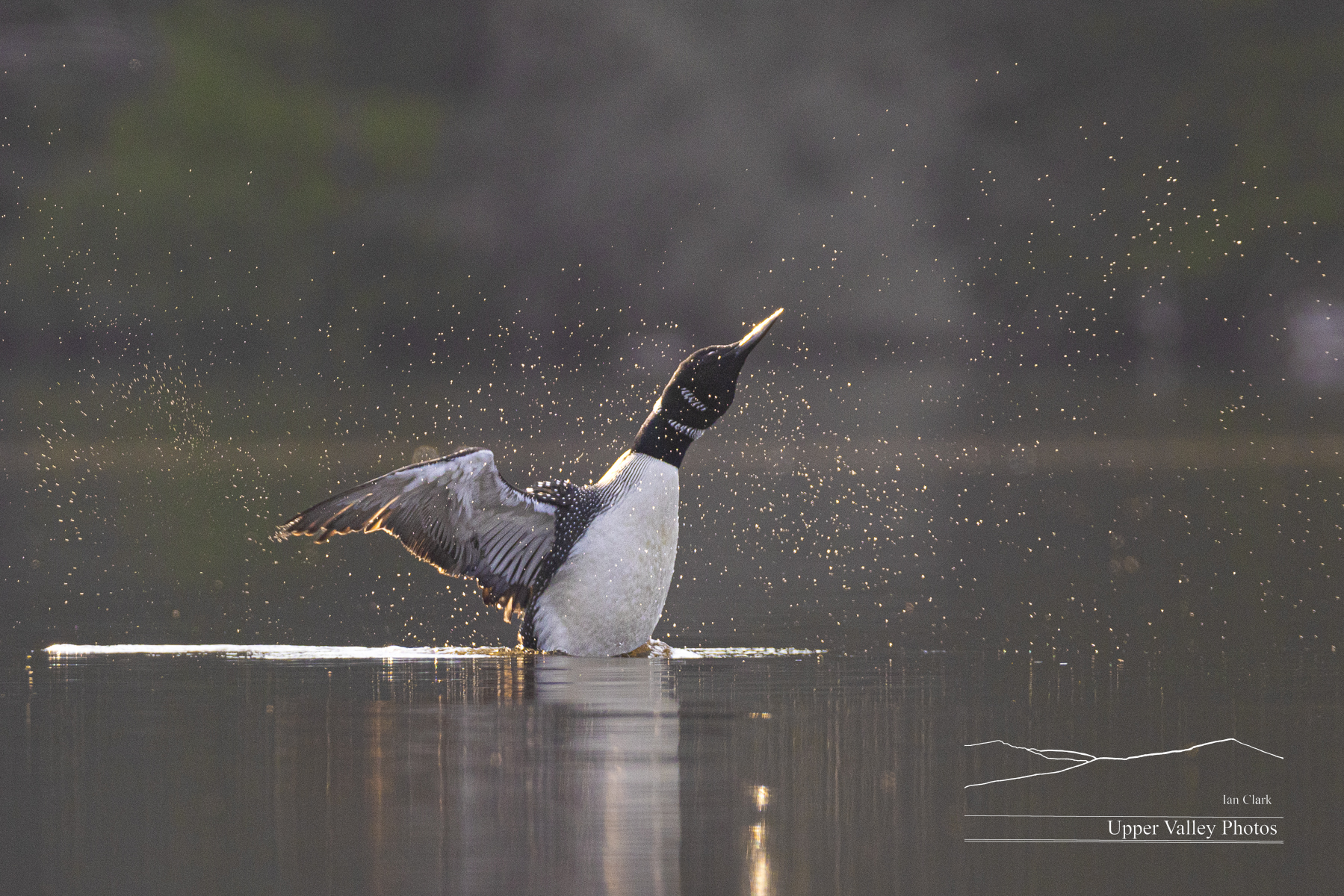
The other parent took the chance to find some breakfast for himself before preening and stretching. I had to head in.

It will be late next week before I have a chance to get out again. I’ll let you know how all the chicks are doing.

If you enjoyed this post, you can subscribe to get an email when I add a new post with the form below. And, you can help me out by sharing my blog with your friends or on your social media. Thanks!

Checking Up on the Loons, et al

Let’s catch up with the Middletons and the Eastons, I’ve been to visit them – and their pondmates – a couple of times.

Tuesday evening I’ll be at the Loch Lyme Lodge in Lyme, NH to show lots of nature photos and present An Uncommon Look at the Common Loon. For details, timing and prices, see LochLymeLodge.com.

And the League of New Hampshire Craftsmen’s Fair opens August 3 and runs through August 11. I’m in booth 718. I’ve got lots of new images and favorites from years past. Come on by to have a look. If you’ve never been to the Fair, you’re missing a real show. Besides having some of New England’s best looking photographers, there is amazing work by all sorts of craftsmen, the skill is simply amazing. All the details about the Fair on the League’s site: NHCrafts.org.

The Eastons were receiving visitors when I showed up on July 14. Mom was tending the nest and dad was enjoying a peaceful morning. For a time.

Dad took his time with a through preening, finishing with a nice stretch.

Trouble appeared in the form an intruding loon, a challenger for the pond. Dad went off to set him straight.

After a brief kerfuffle, the intruder decided he’d be better off elsewhere and departed.

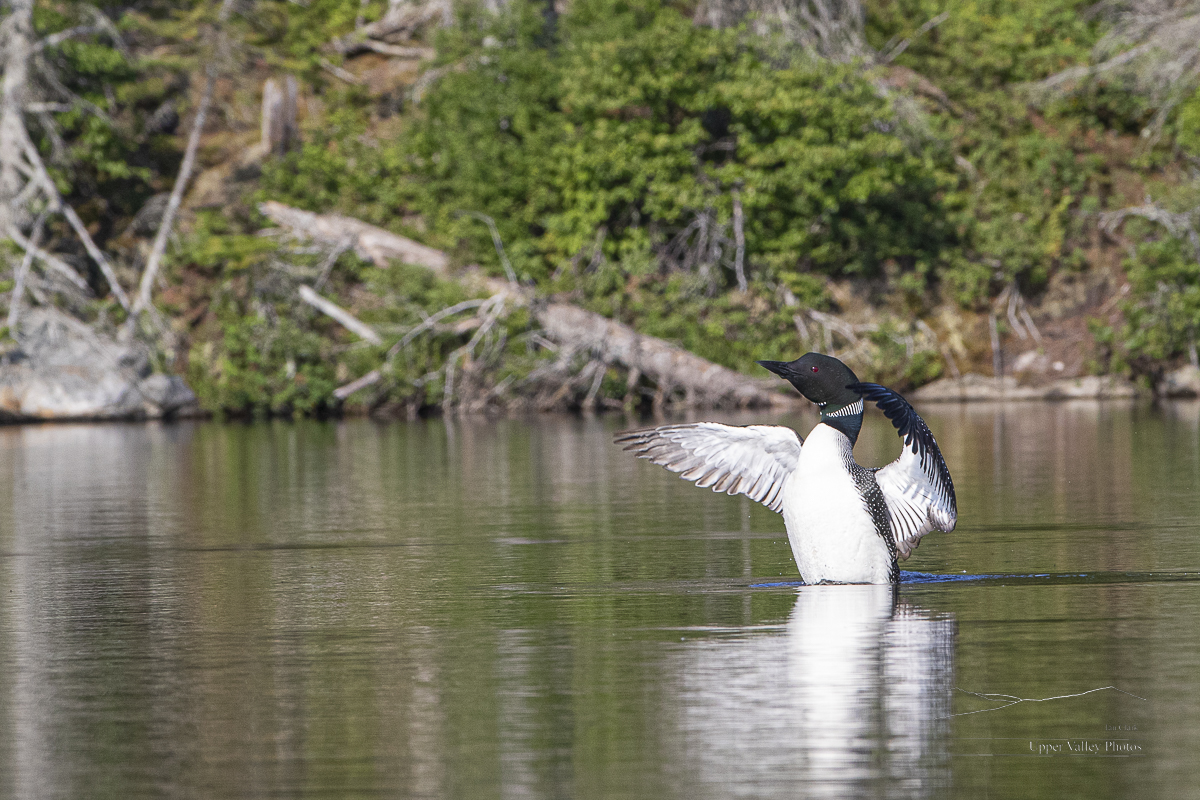
Dad took a victory wing stretch and headed back to check on mom still on the nest.

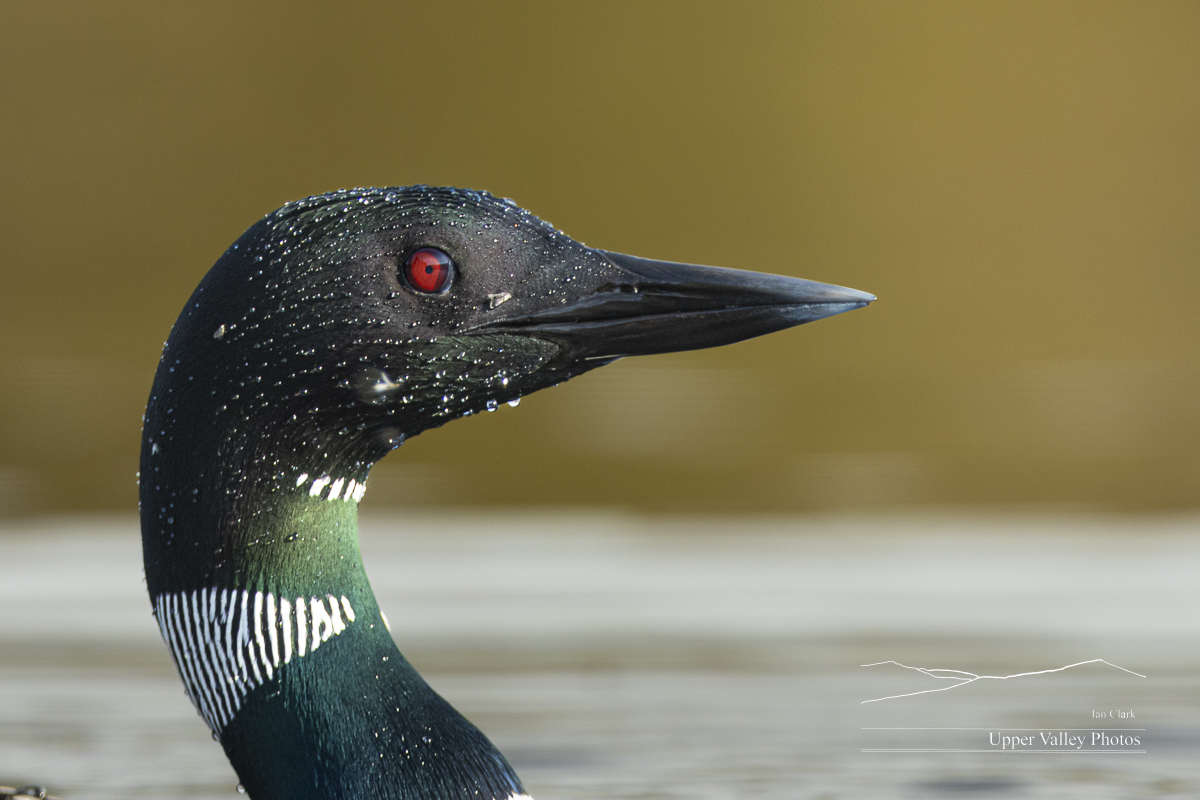
On his way back to the nest, he set a course that brought him very close to my boat, giving me a chance for a headshot. The growth under his bill is likely an abscess, possibly from getting poked with something sharp like a fish fin or fishing hook. It hasn’t changed noticeably in over a year and doesn’t seem to bother him.

Dad checked in on Mom and everything was peaceful when I left.

July 17 was the first day their eggs might have hatched. I went up to see how they were getting on. (They lost their first clutch, likely due to flooding.)

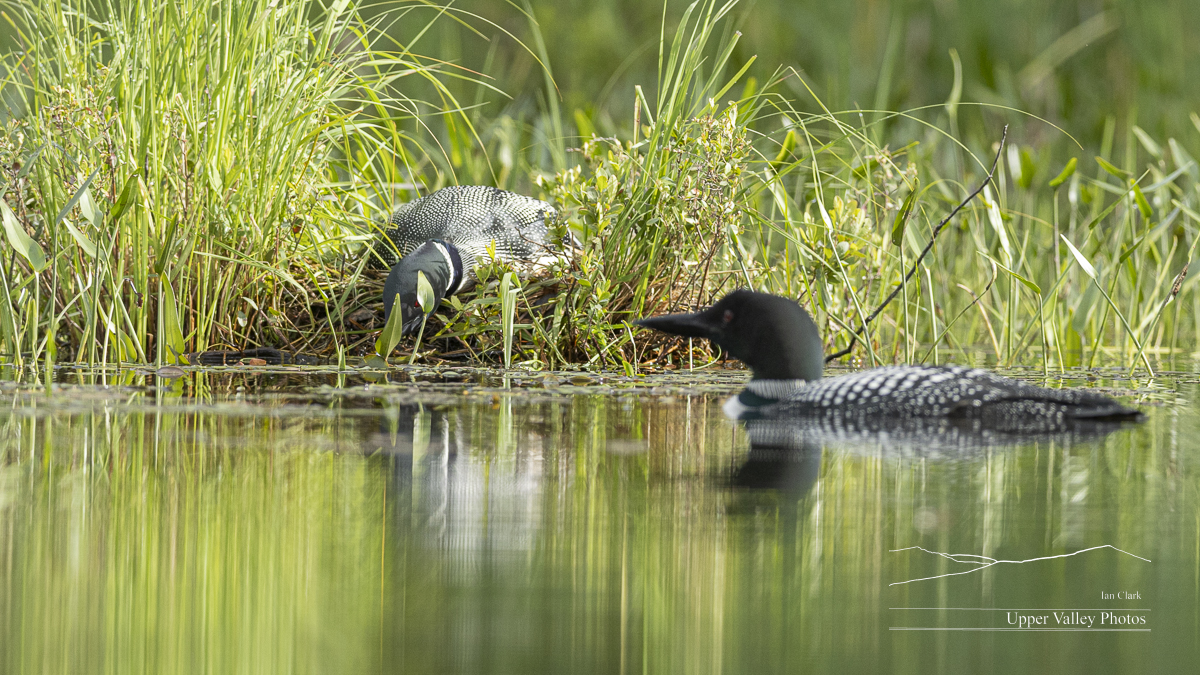
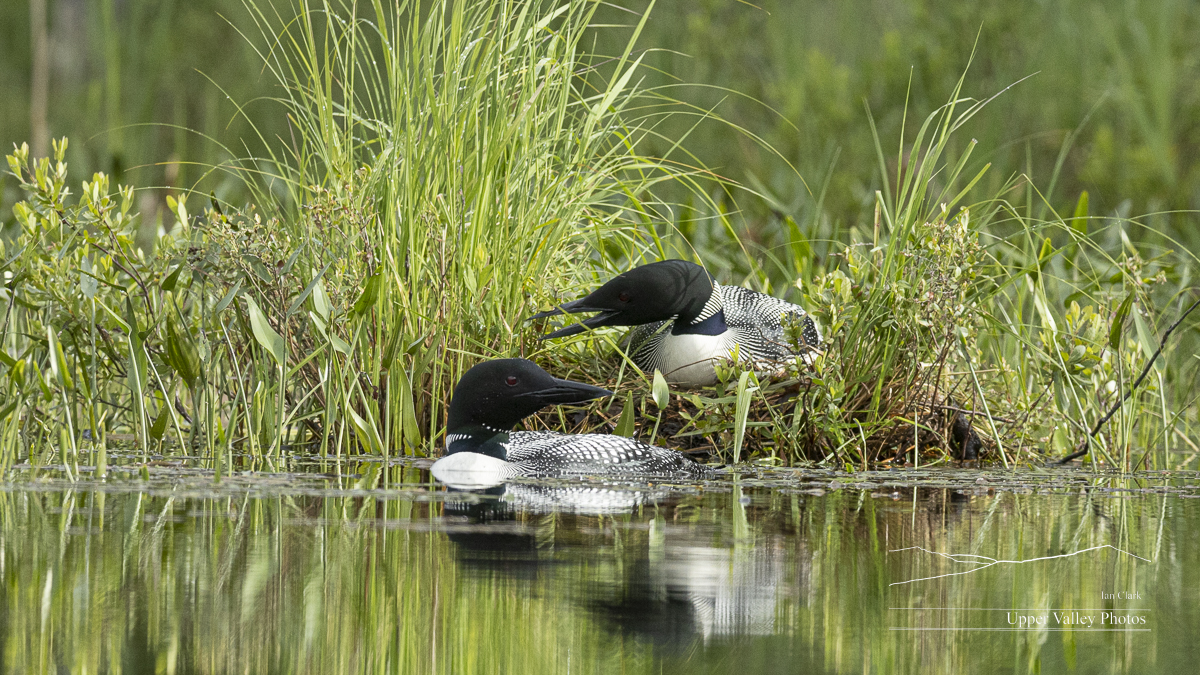
I caught a predawn nest exchange. Here’s dad checking in with mom to see if she wants to end her shift on the nest. She wanted a few more minutes before the exchange.

After a few minutes, mom decided she’d had enough and turned the nest over to dad. Dad climbed aboard and turned the eggs before settling in.

After a few minutes, dad alerted to some threat. This is the posture of a stressed loon – if you’re looking at a nest and see the loon flatten out without your seeing an obvious threat, you may be the threat.

Two intruding loons landed on the pond. Mom went to face them down. She wasted no time displaying how big and tough she was, trying to convince the intruders to go away.

Dad left the nest to join the fray. The loons did the circle dance – swimming around each other, sizing each other up. Loons appear to use the position of their head to communicate. Probably just as well we can’t translate what they’re saying here.

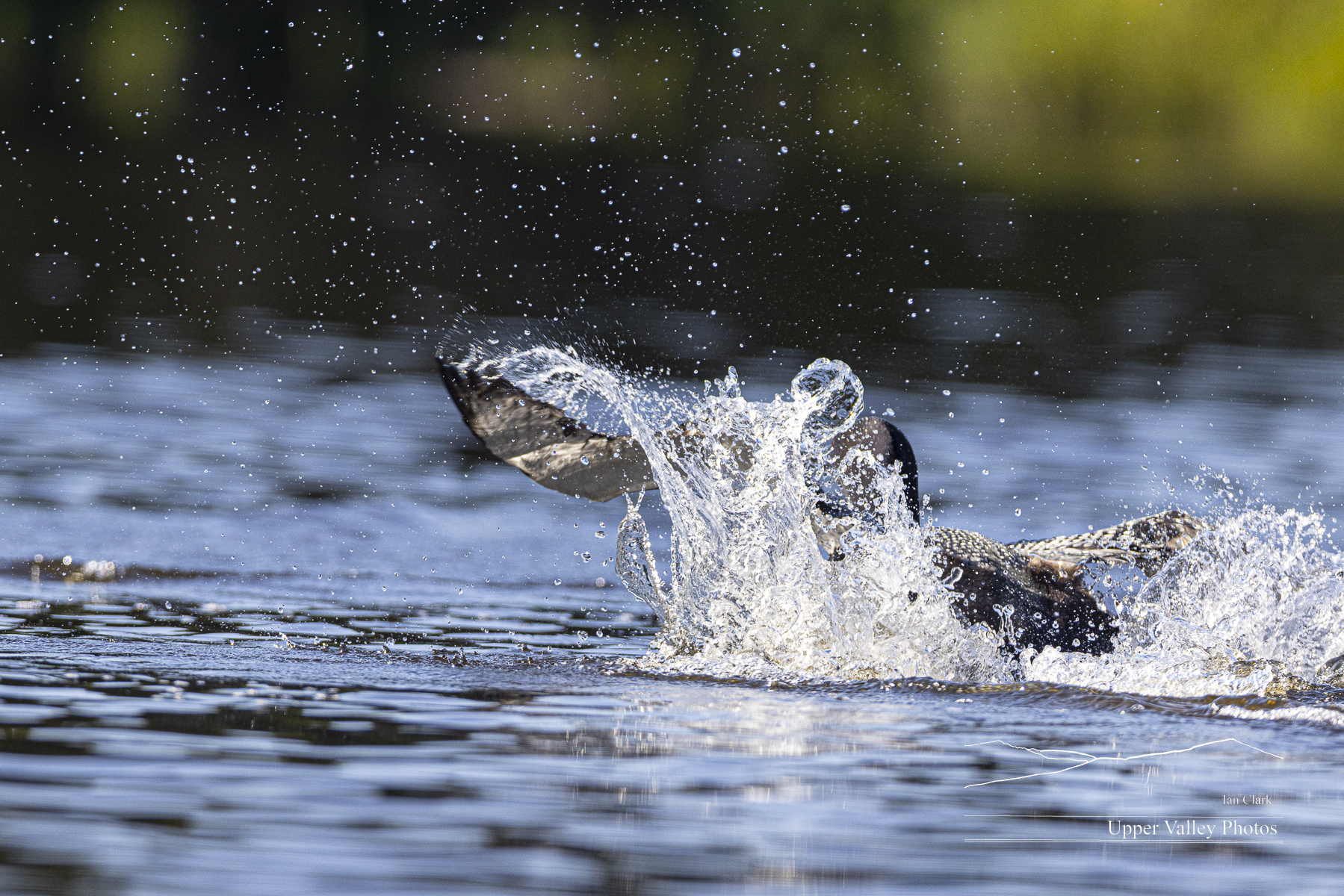
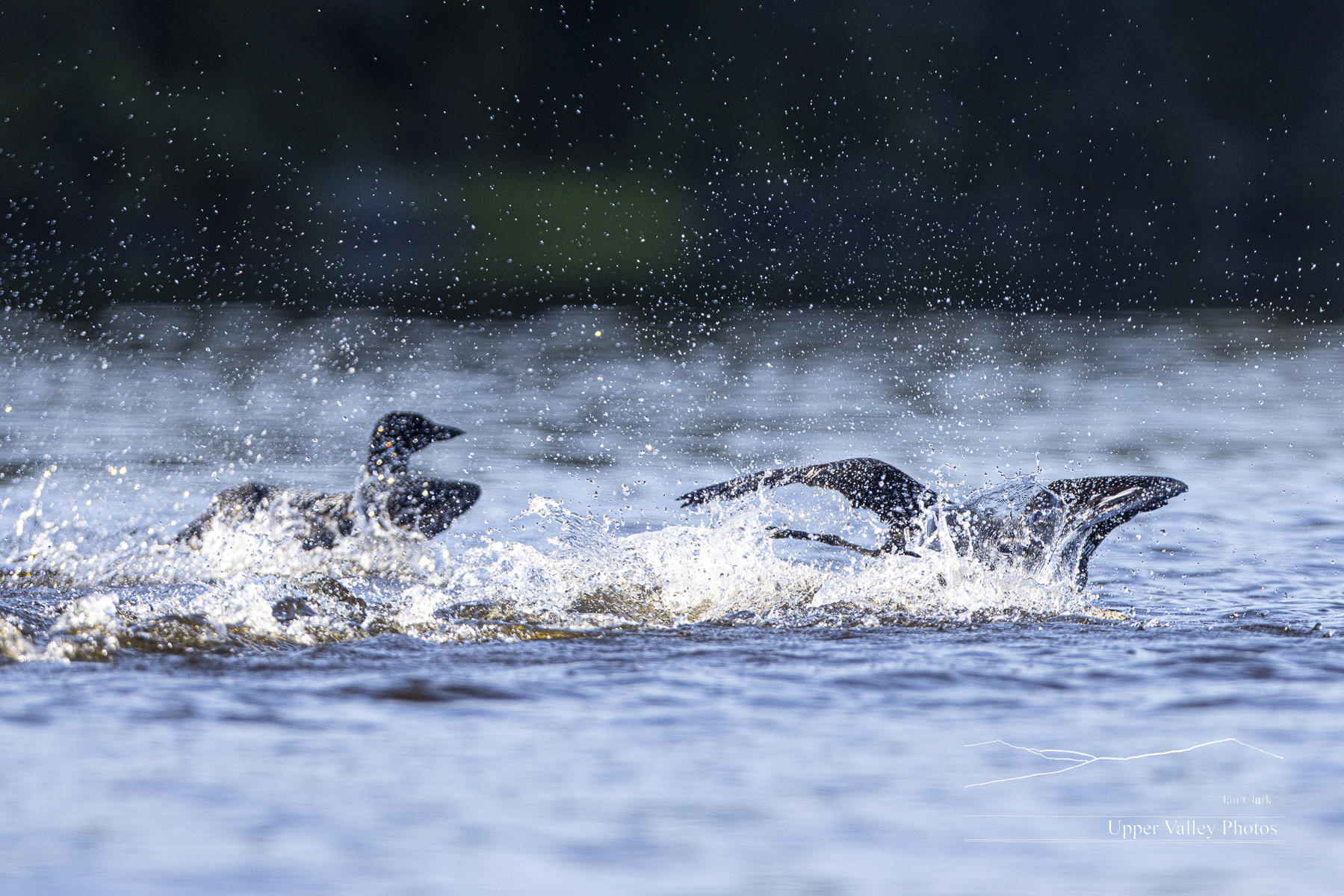
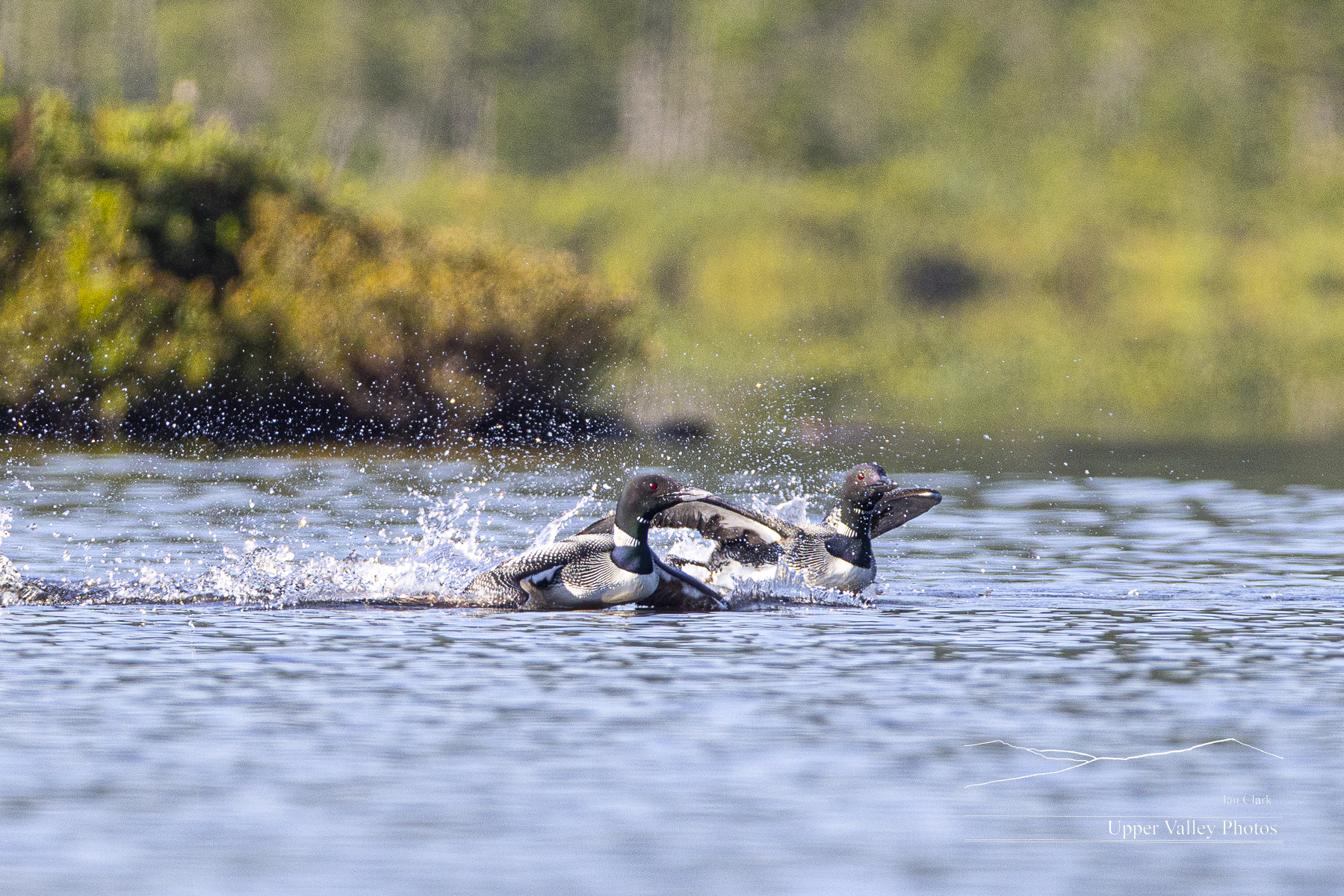
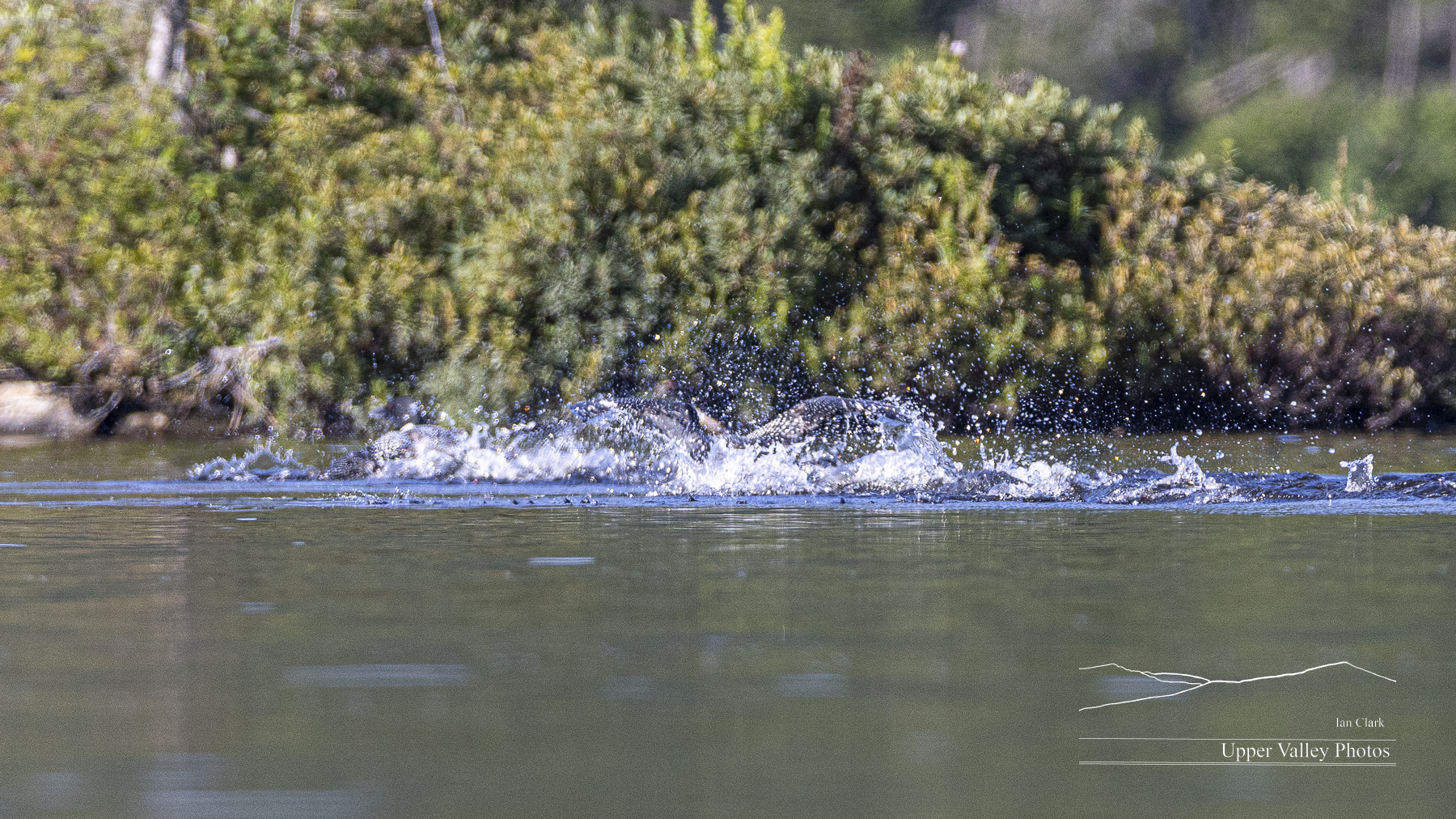
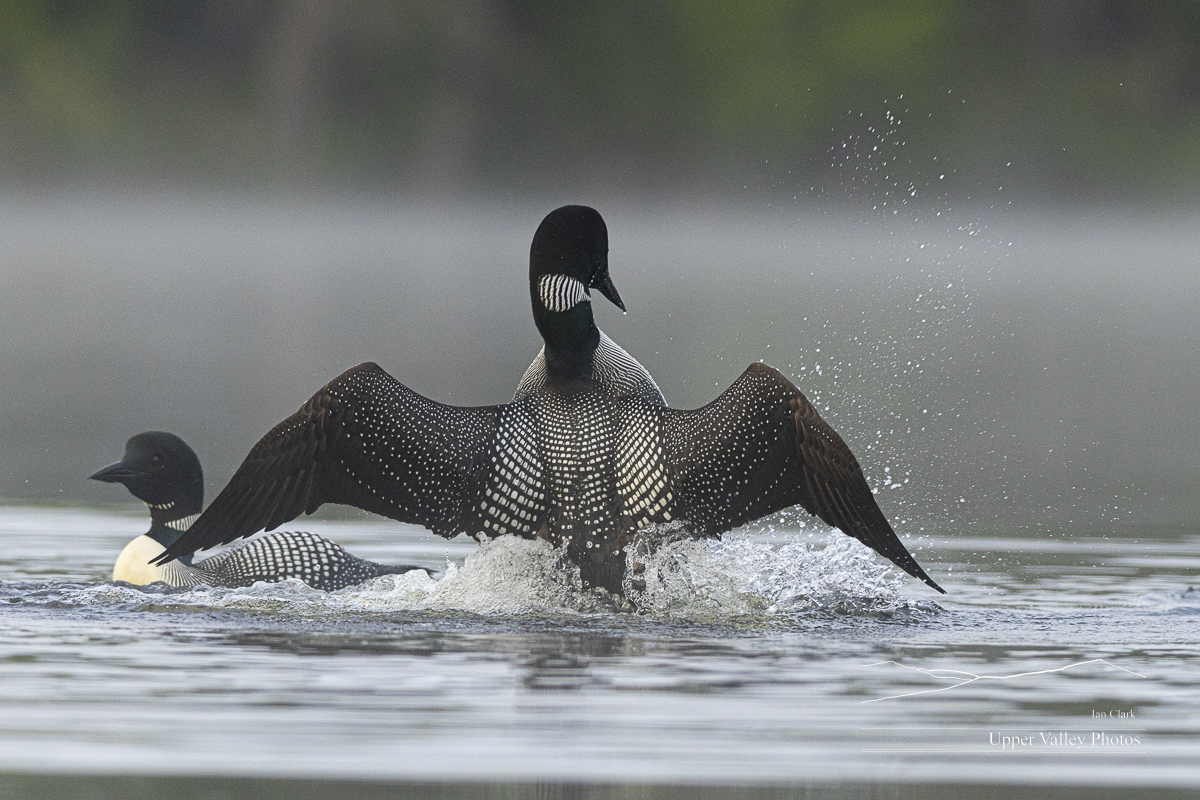
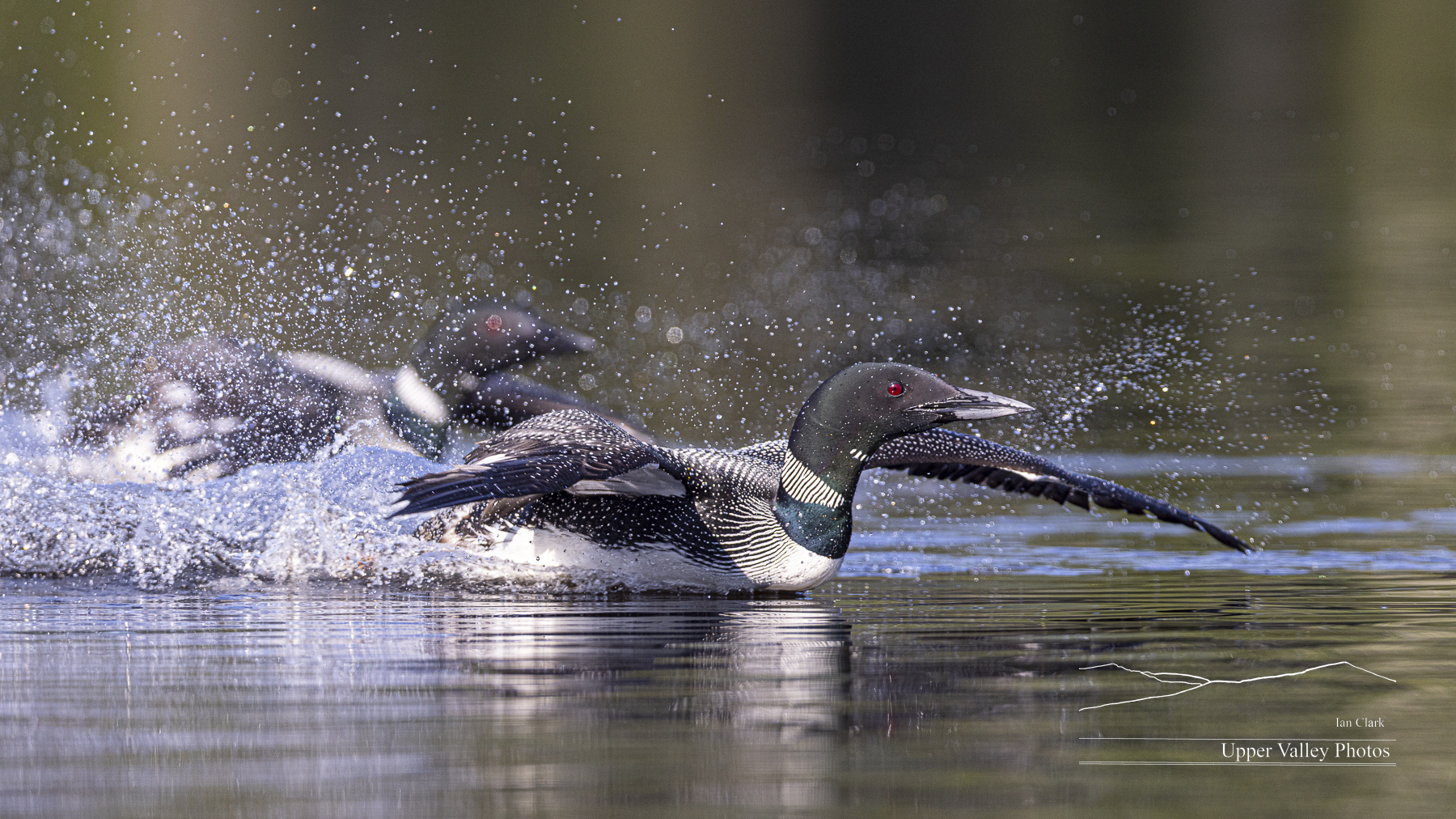
Shortly, there were loons wing rowing in every direction.

After several minutes, the intruders retreated to the far end of the pond. Dad headed back to the nest, mom went out for breakfast.

Dad returned to the nest and reclaimed his spot.

Oops, can’t settle in yet, have to turn the eggs again.

Intruders banished, eggs turned, dad can enjoy his shift. The intruders departed as I has heading to the boat launch.

I went back on July 19 to see if the chicks had hatched.

This time, dad had taken the overnight shift. Here’s mom checking in for the nest exchange. A steady wind came up and seeing we had no chicks, I headed home.

Paddling up the pond, I passed Hank, the great blue heron stretching on some rocks.

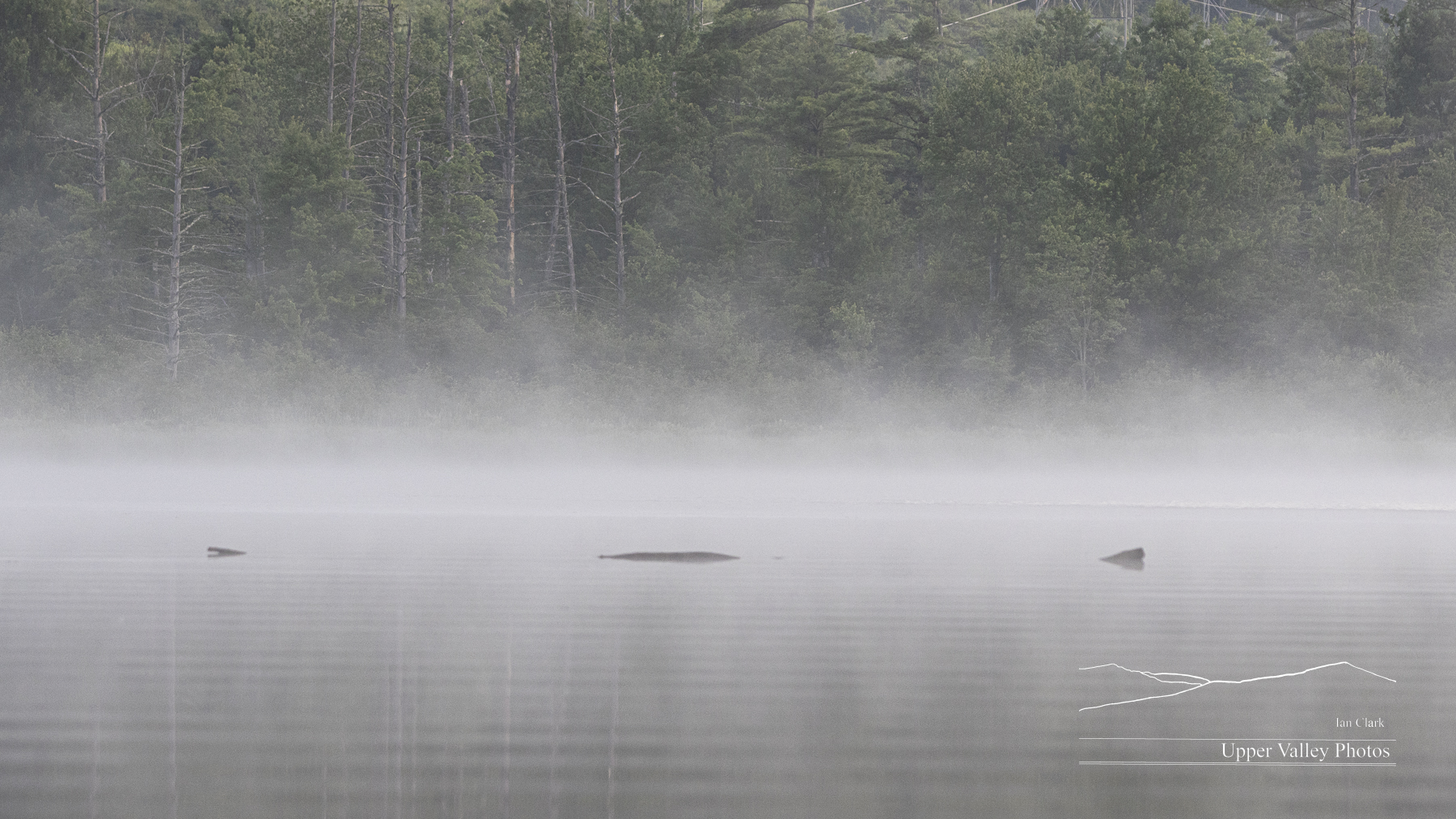
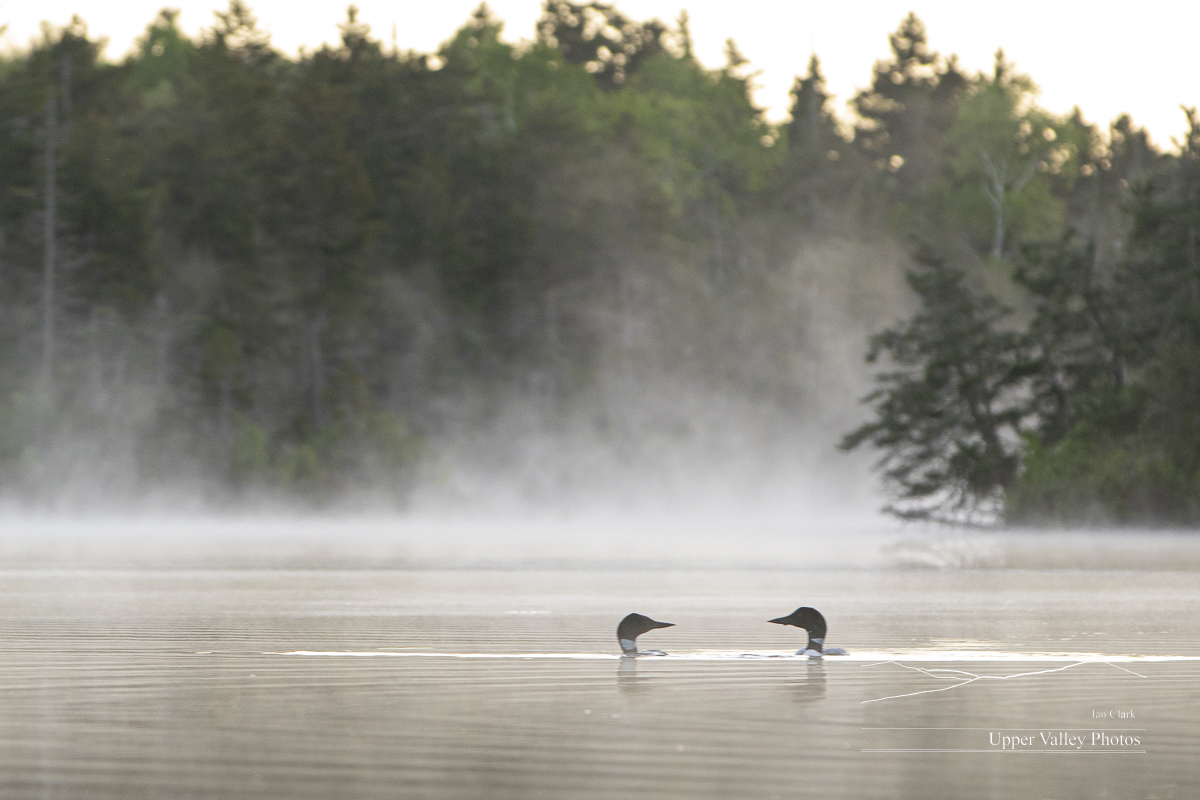
On the 20th, I checked in on the Middletons. There was a thick fog when I put in and finding the family was a challenge. Until they swam out of the fog right in front of me.

The last time I visited, I was a bit concerned about the smaller chick. The larger chick had been pecking at him? constantly when he was with the family. The smaller chick had been separating from the family far further than normal at this age. This time, both chicks were traveling with the parents and the sibling rivalry seemed under control.

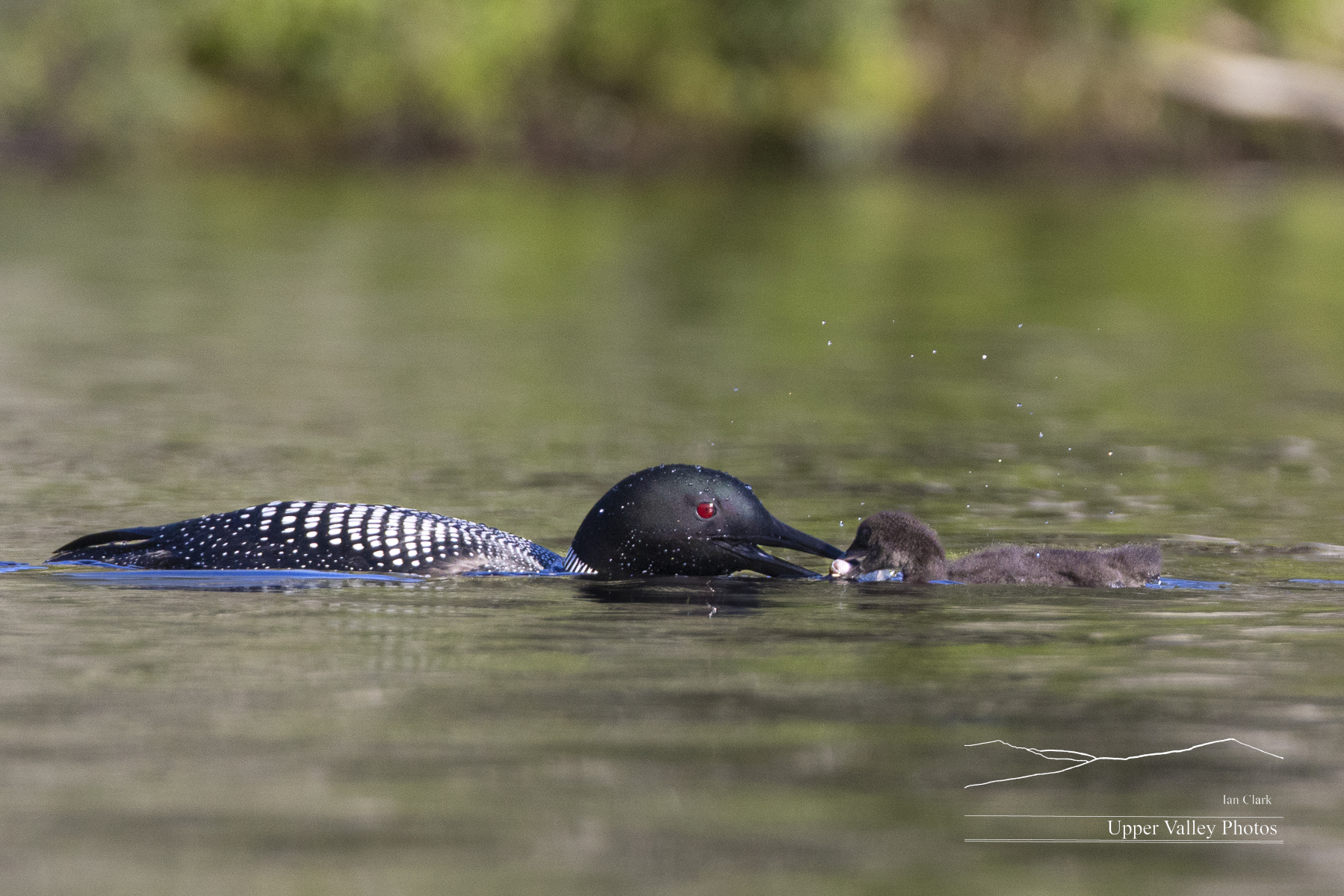
Mom and dad provided first breakfast for the chicks. This is mom popping up close to my boat with a snack. There’s a fish in all that salad somewhere.
Mom handing off the fish.

After first breakfast, the family headed out to deep water for some preening.

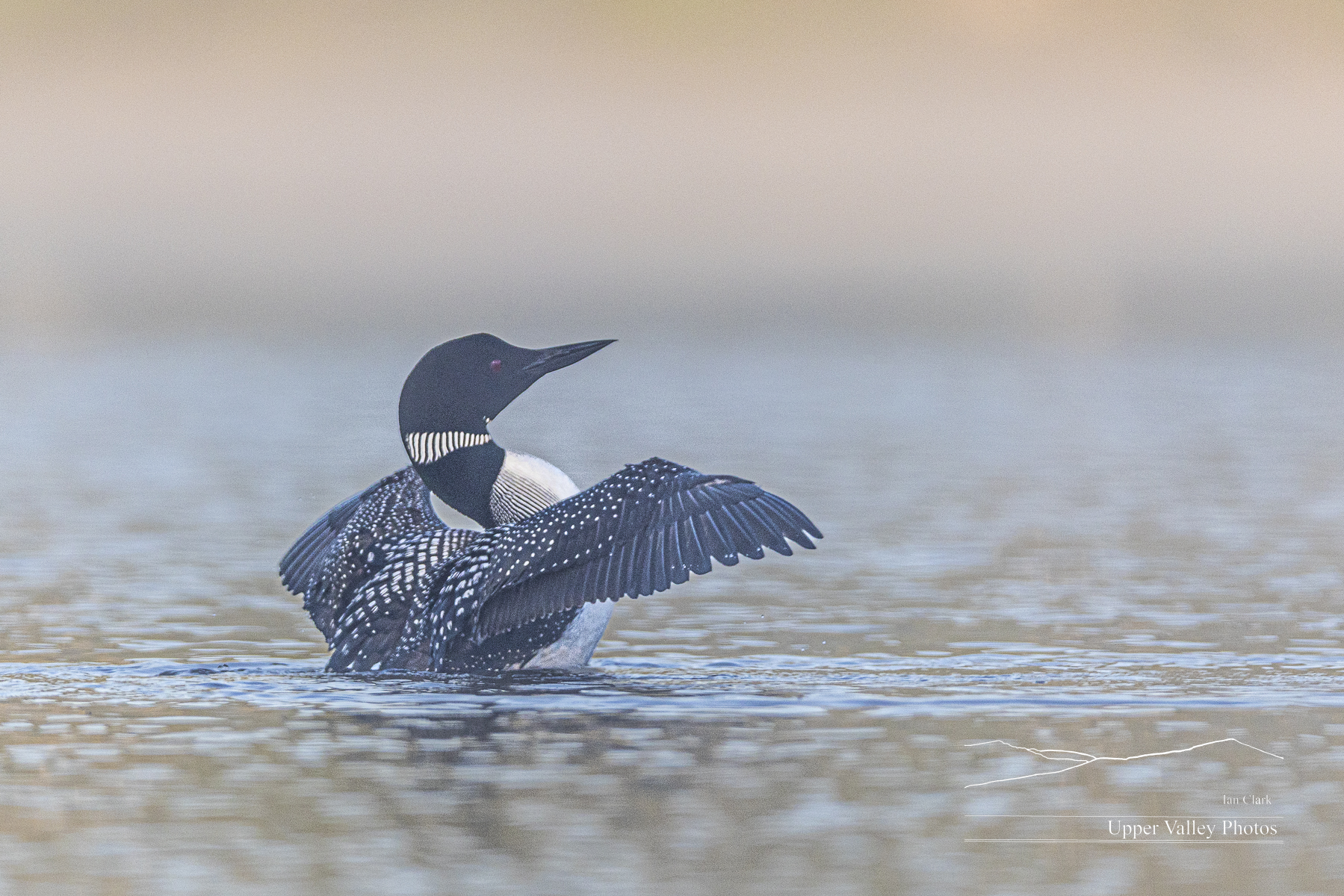
And the chicks have learned to finish preening with a nice stretch.

First breakfast having worn off, the chicks were ready for second breakfasts. Here’s mom wrestling with a sunfish – that’s a fin sticking out of the water on the left of the image.

The sunfish was very uncooperative. Mom struggled more with this fish than any other catch I’ve seen. Here she finally seems to have it under control.

She tried to hand it off to the chicks. But, since the fish was nearly as long as the chicks, it didn’t work. Mom eventually had a big meal for herself.
Mom and dad took the chicks back to shallow water in a cove to let them forage. This time, mom and dad supervised and made the chicks forage on their own.

The chicks are no longer little fluff balls, they’re growing rapidly. They’re roughly 2/3rds adult size.

This is probably the younger chick, he’s? just showing the first signs of losing his down.
The other chick is well along in losing his down.
Here’s dad – you can just barely see the band on his leg – supervising as the chicks forage.
If you sit very quietly, loons will sometimes swim under and around your boat. One of the shots I hope to get with the new GoPro is a loon swimming by the boat. Almost got it here.

This morning, I headed back to check on the Eastons. There were several deer and a nice bull moose out and about. When I arrived it was a very pleasant 56° with a dead calm wind leaving the water with almost perfect mirror reflections. There were just a few whisps of clouds above and it promised to be a great sunrise on the pond.

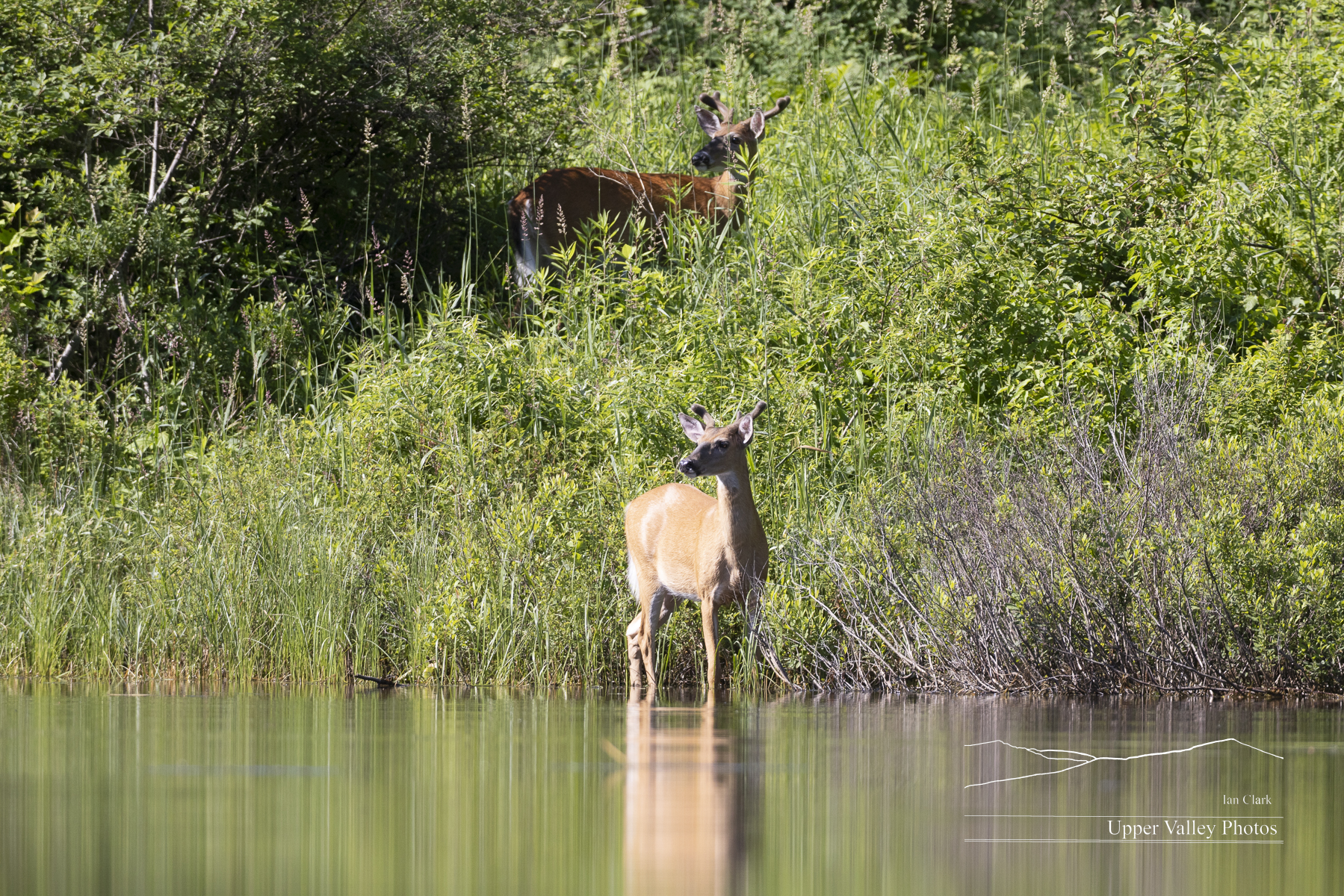
This doe isn’t afraid of me. Several times, she’s come down to the shore. When she sees me, she doesn’t retreat, she hisses and barks at me.
This moose was at the far end of the pond. I snuck slowly very close to the shore as I tried to get close enough for a photo. Just as I was getting into camera range, a steady wind came up. The moose quickly got my scent and headed into the brush. Need I add that the wind was pushing me away from the boat launch?
I went back to check on the loons. Mom was on the nest. I grounded the boat to watch. What had been a very pleasant morning went south as a thick fog rolled in making things cold and damp. Of course, I was in just a tee, there having been no need for a sweatshirt earlier. Mom was fidgeting more than usual, so I stayed to watch. And waited…. After a time, she raised her left wing – look very closely, the first chick has hatched.
Here’s a very severe crop of the image to show the chick. With the other chick yet to hatch and being cold and miserable I headed in. I’ll try to get out to visit them again in the next couple days.

A wren has claimed one of the boxes on our deck. She’s spending her morning alerting the world that this is her corner and she isn’t to be disturbed. For sheer volume of song per ounce of bird, there can’t be any noisier bird than a wren.
Catching Up with Life on the Ponds

With all the nice weather, I’ve had lots of time to shoot – but that leaves little for posting. One set of fox kits has moved on, the other den is surrounded by grass tall enough that the kits appear only at the top of their pounces. Let’s check in on our three loon families and their neighbors.

I’ll be giving my slideshow, An Uncommon Look at the Common Loon, locally a couple times in the near future. First is Thursday May 30 at 7:00 p.m. at the Lyme, NH, School. Then again on Sunday June 23 at 2:00 p.m. at the Tenney Memorial Library in Newbury, VT.

The Westons are sitting on at least one egg. Their nest is deep in the marsh, updates will have to wait until the chicks appear. (If you’re new to my blog, to protect the loons’ privacy, the families are the Eastons, Middletons and Westons, by the location of their ponds.)

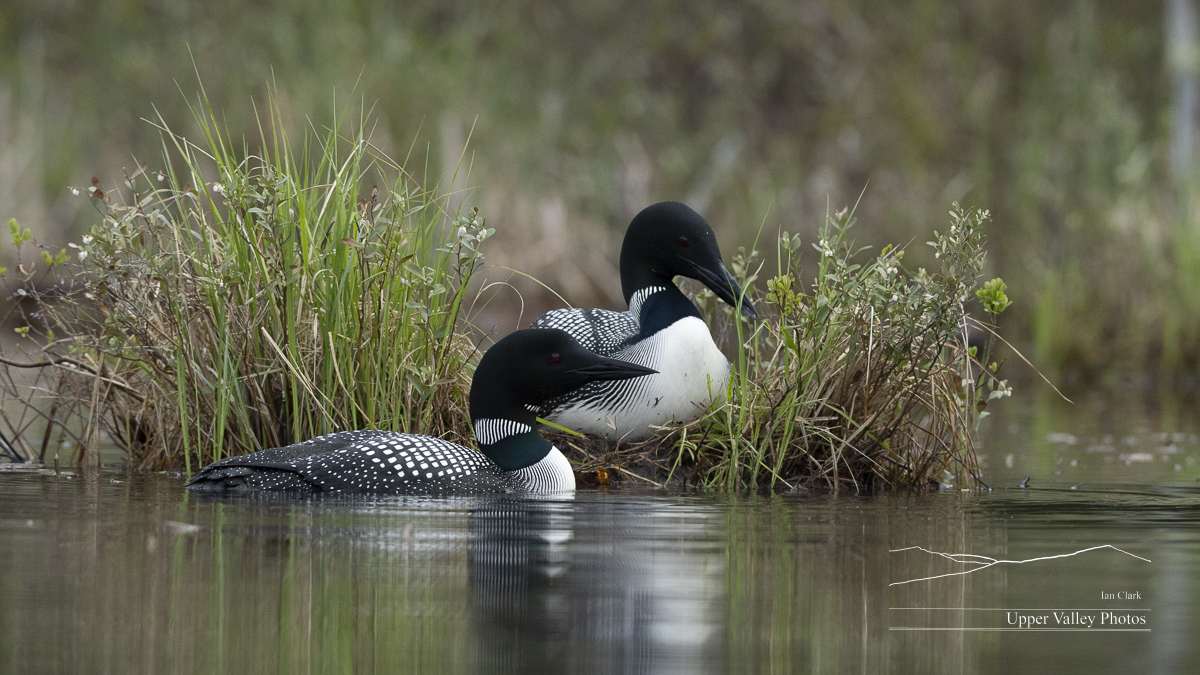
The hummock the Middletons have used for their nest the past couple years washed away in last July’s heavy rain. They toured the pond checking out potential nest sites before settling on a hummock just a few feet from the previous site. Here, they’re taking turns sitting on the site to decide if it will work.

Taking a quick break from inspecting nesting sites.

Back to checking the site. They decided this was the spot and she climbed up and he followed to mate.

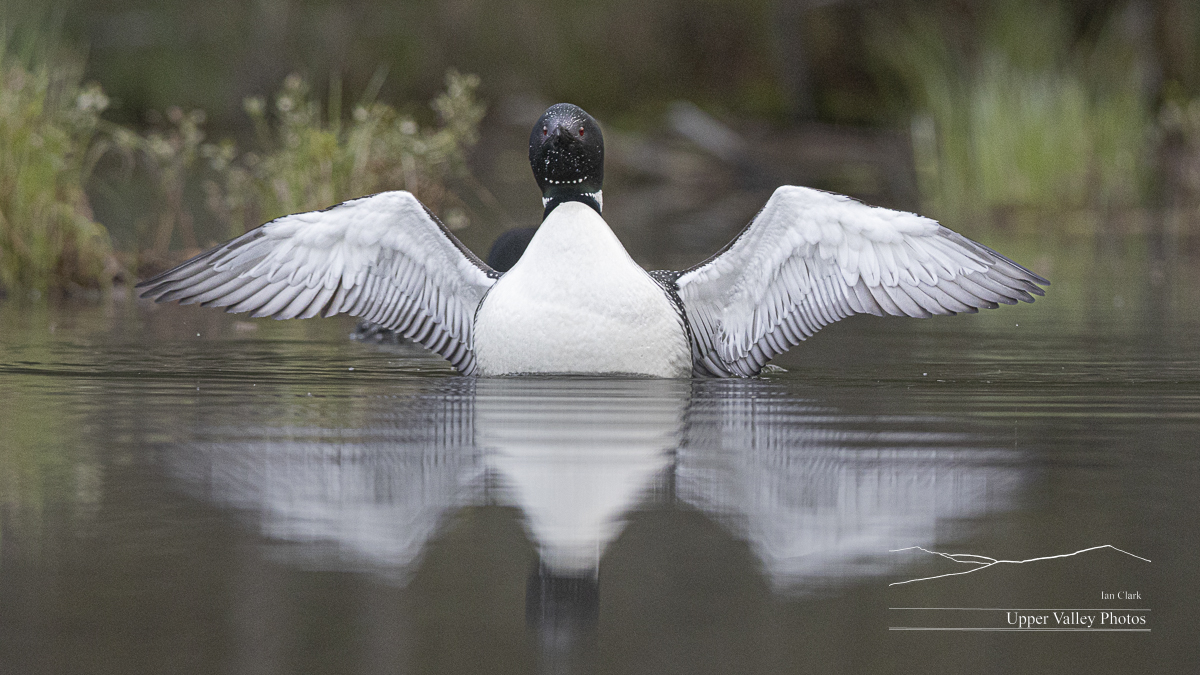
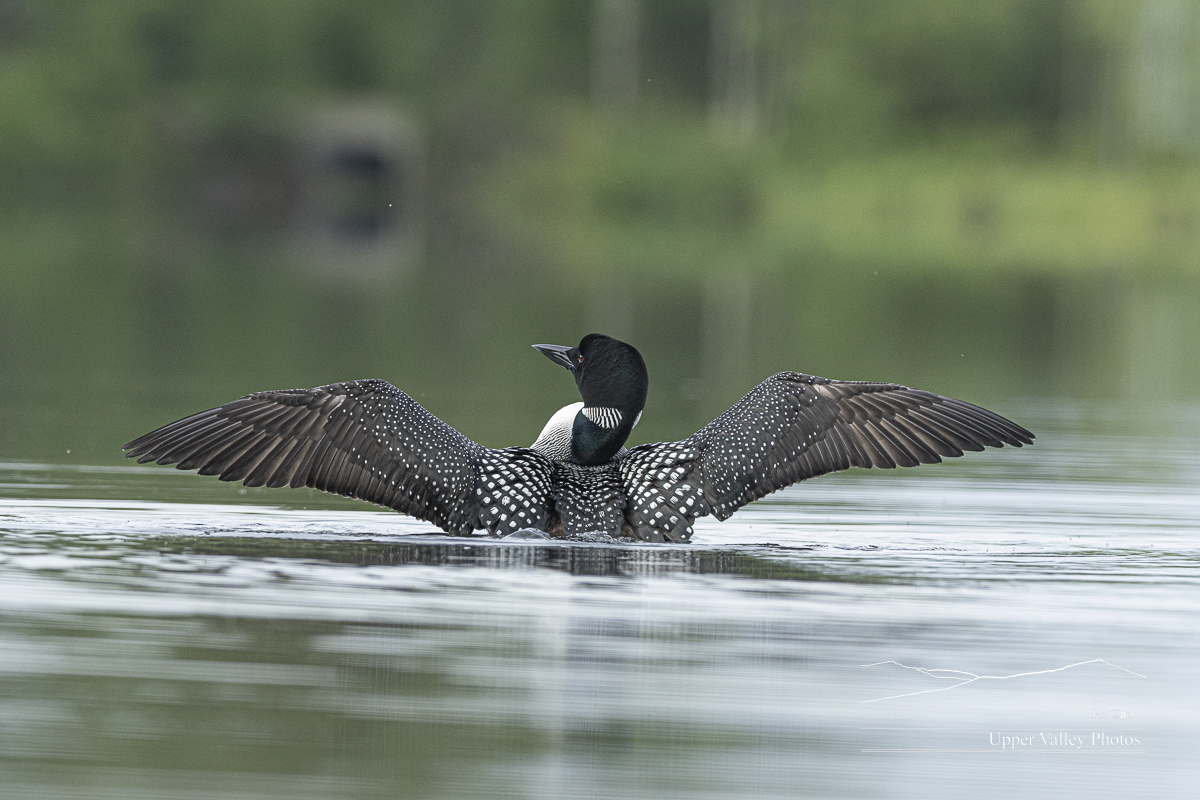
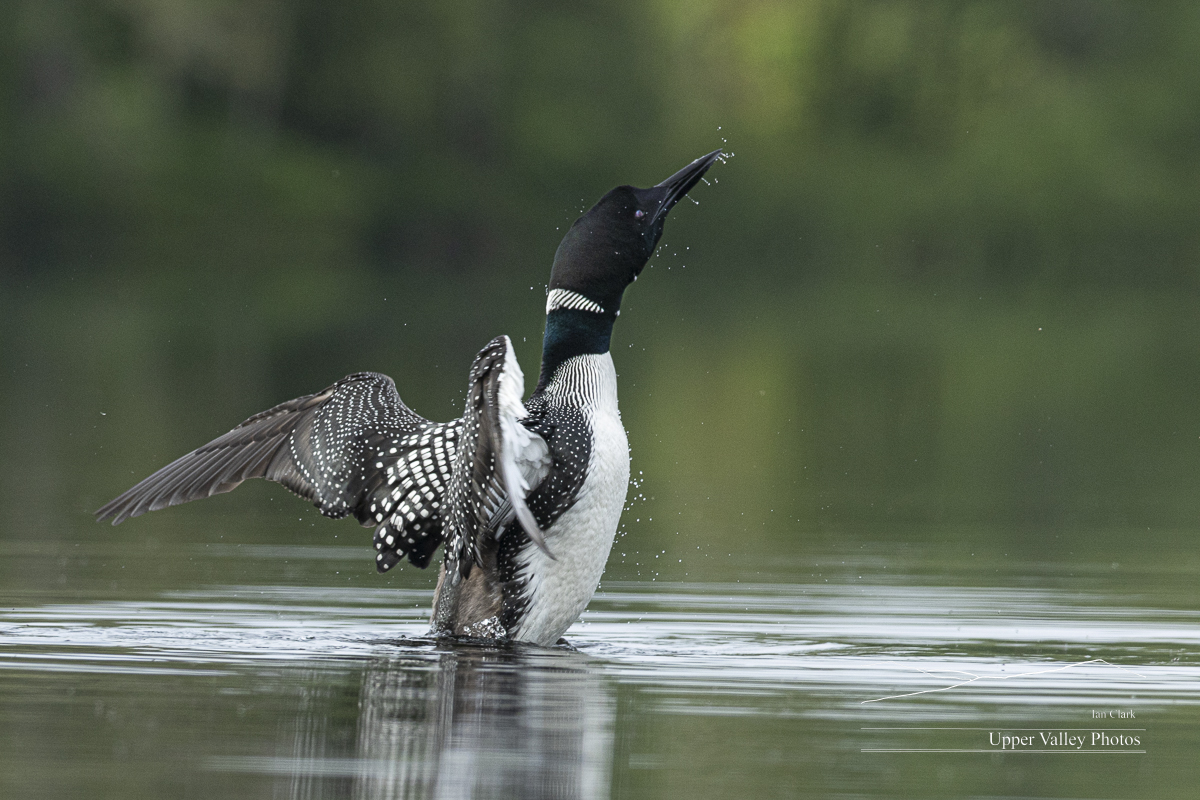
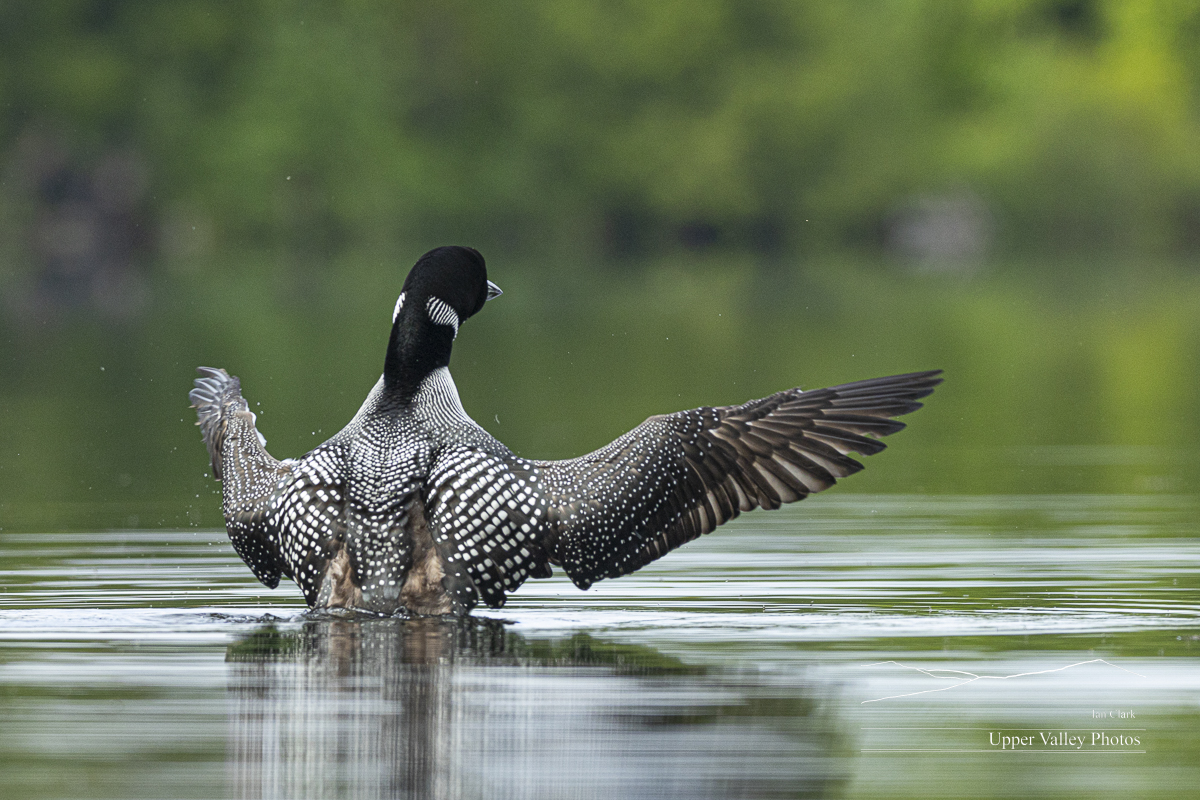
Afterwards, they headed off for breakfast, preening and a nice stretch.

Another nice stretch.

The first of the red-winged blackbird chicks must have hatched, the parents were foraging and returning to the tall grass with food.

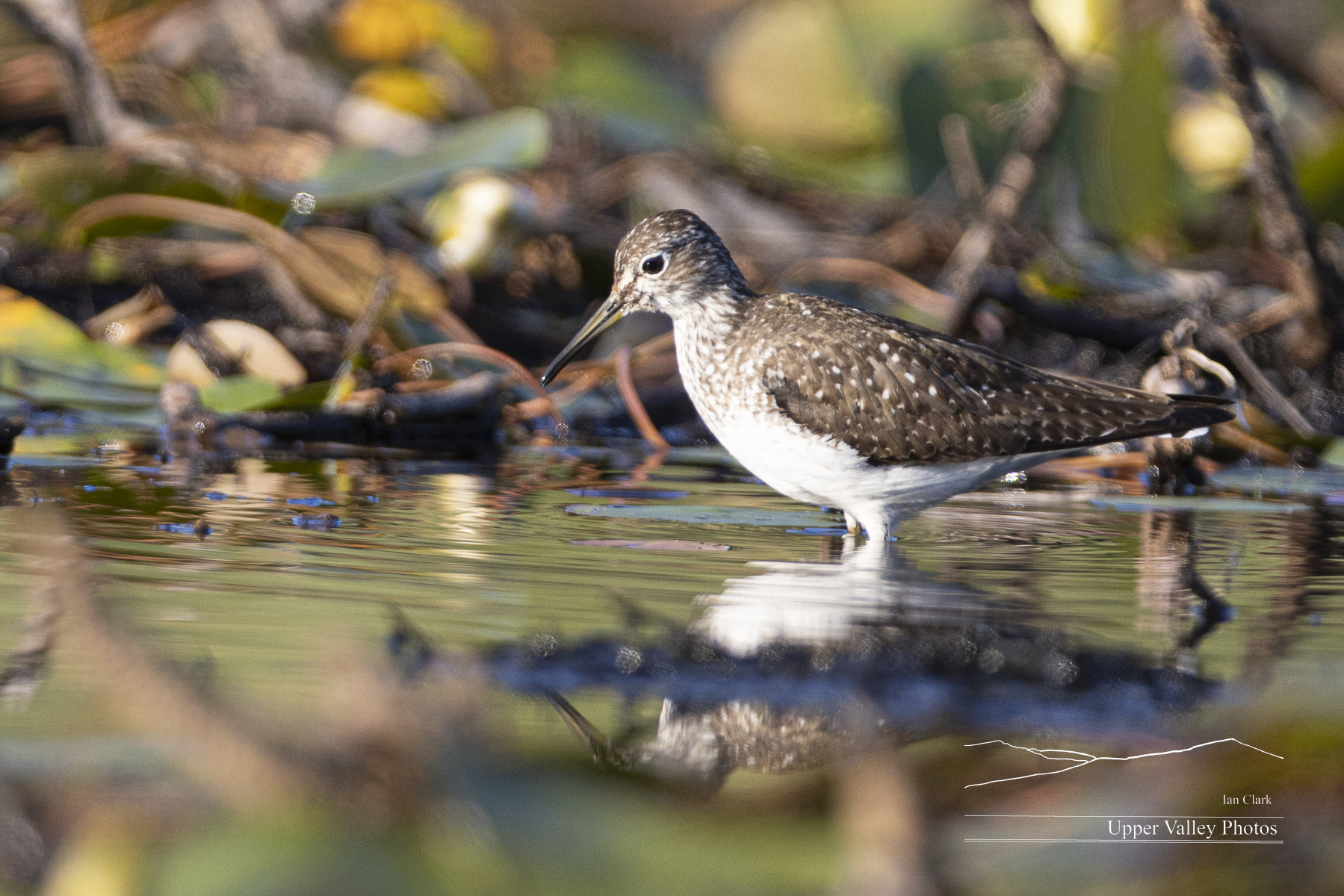
There are several spotted sandpipers around the pond.

The sandpipers are fun to watch. As they forage, they bob their butts up and down. I haven’t seen a good explanation why.

And beautiful spring mornings bring the painted turtles out to bask.

I returned the next morning, just to find the loons had decided to sleep in.

While waiting for the loons to get up and at it. our friendly neighborhood beaver swam by to give me a
wave.
The beaver went about getting some breakfast of underwater plants and sitting on the shore to eat them.

downy woodpecker with a grub
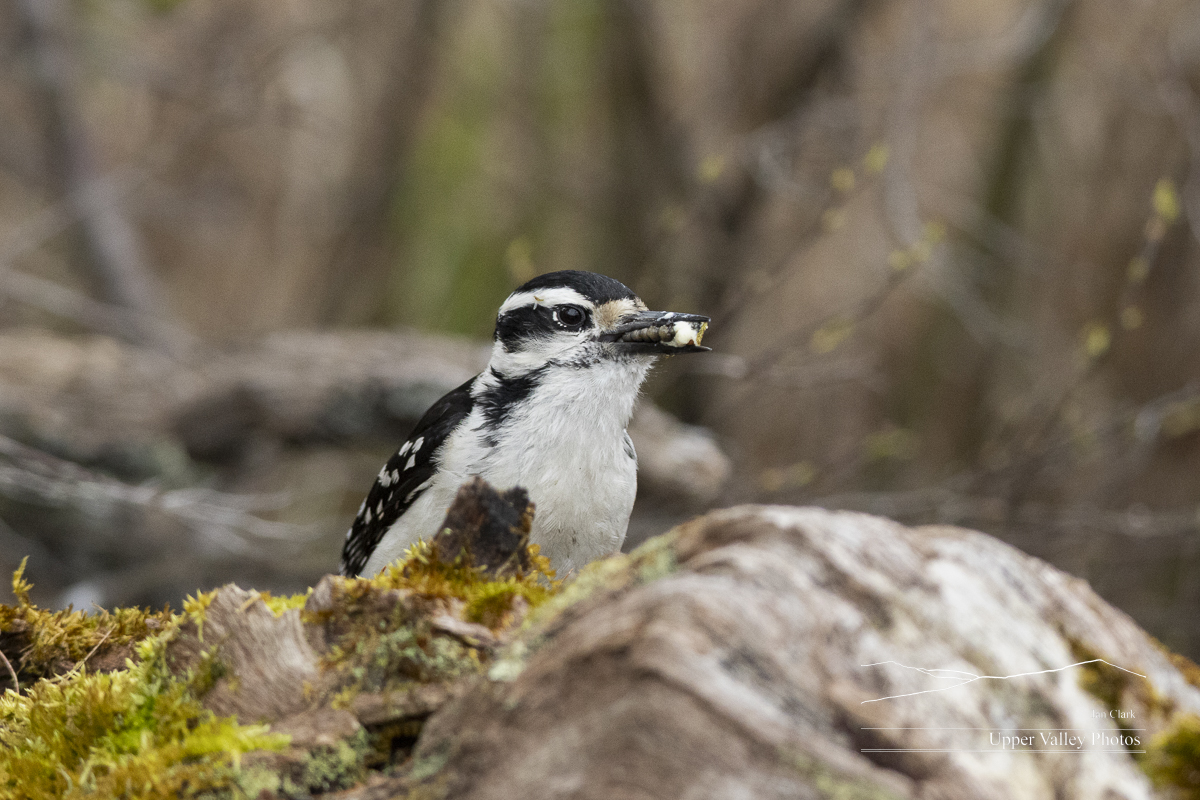
There was a hairy woodpecker foraging on a downed tree along the shore. She found several tasty grubs.
Common loon stretching
Eventually our loons got going with their day.
common loons on the nest
They returned to the nest site for one last check……
common loon gathering nesting materials to build a nest
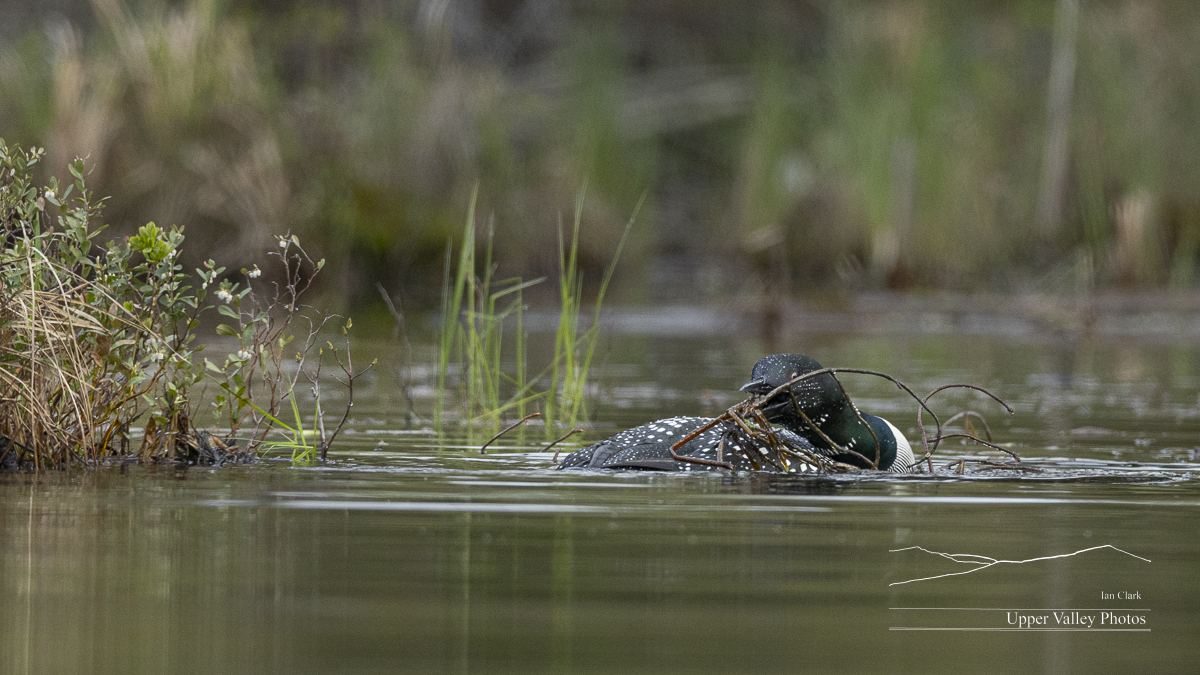
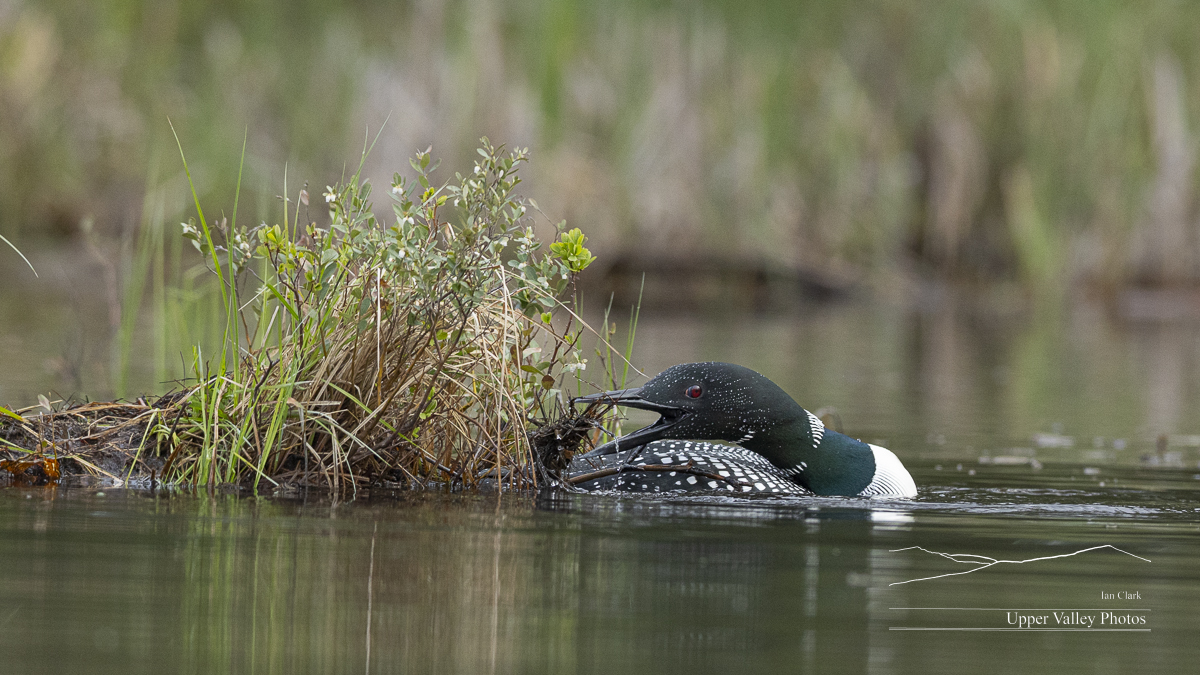
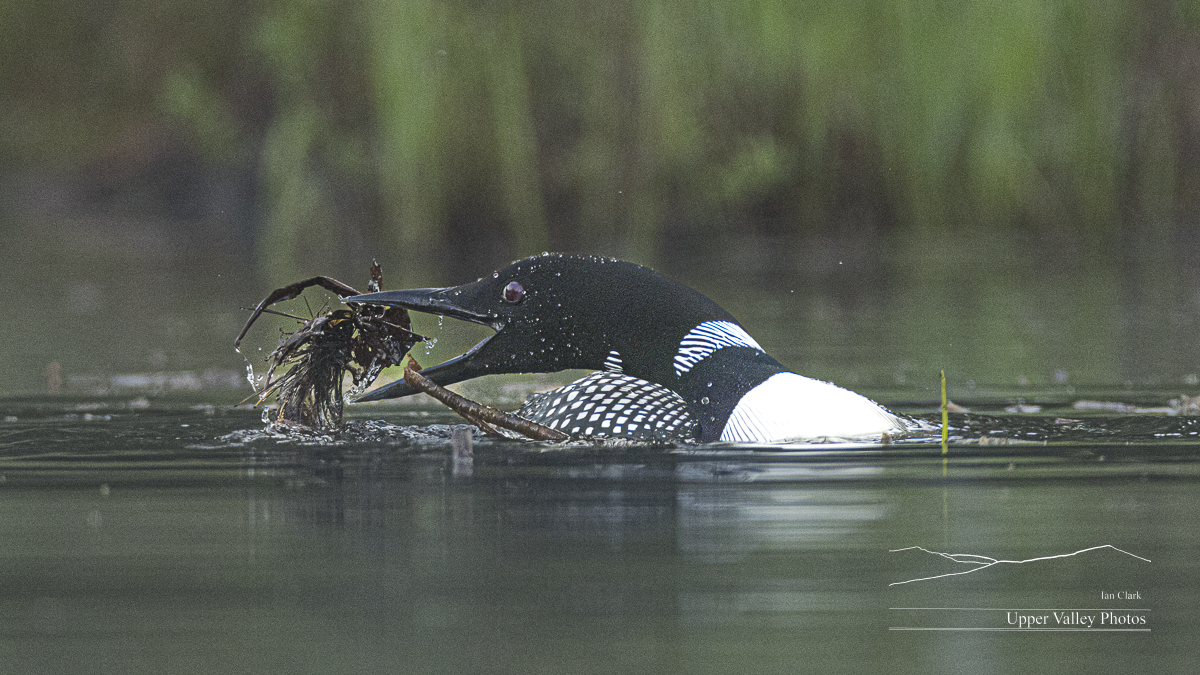
Ok, they’ve decided this is the place. But, it needs some improvements. They set about collecting a few sticks and lots of underwater vegetation to build the nest.
common loon building a nest
Sorting out the nesting materials.
common loon gathering nesting material
One more load…..
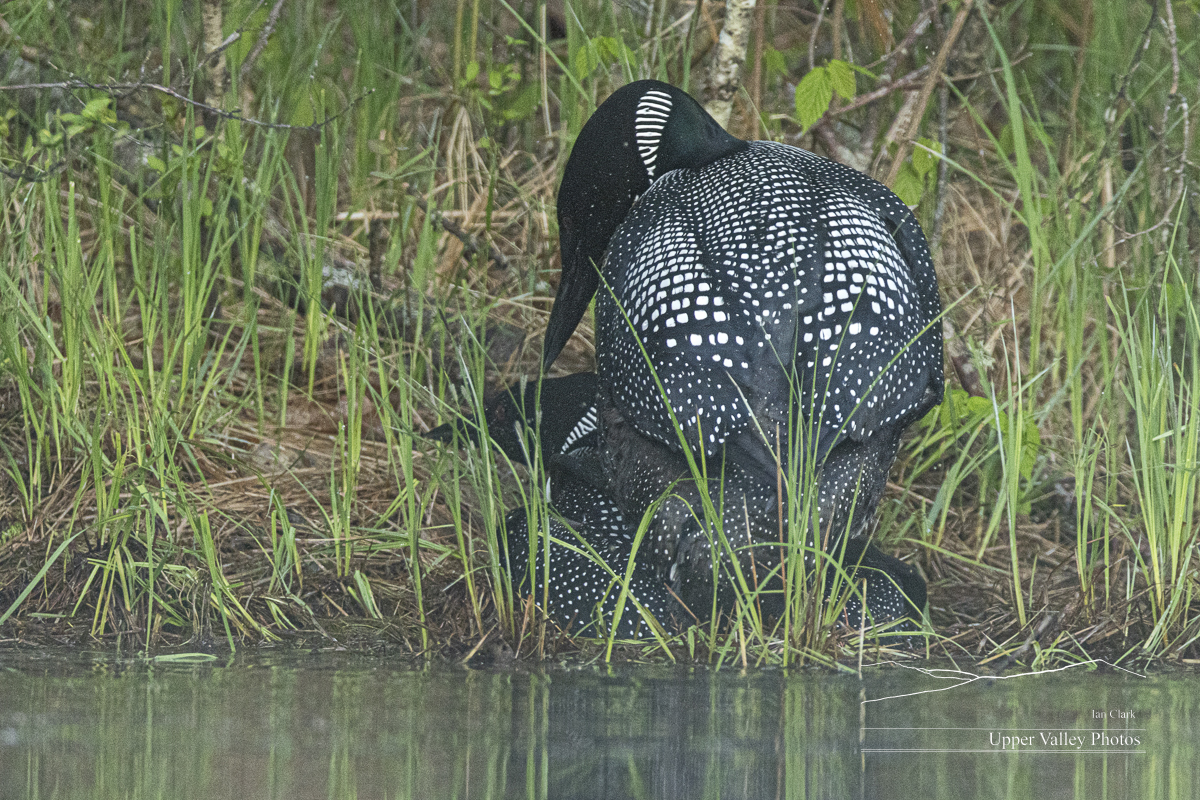
common loons mating
They set out to make sure they’re going to have little loons.

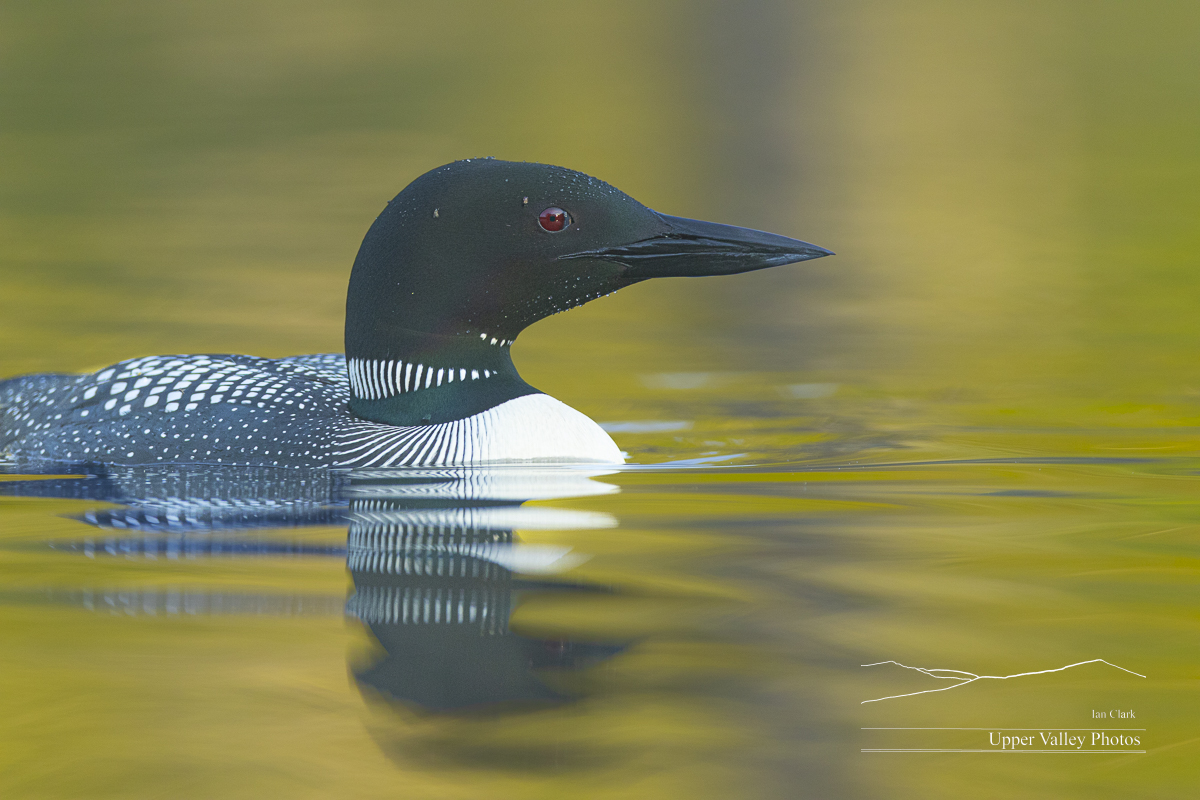
close up of a common loon
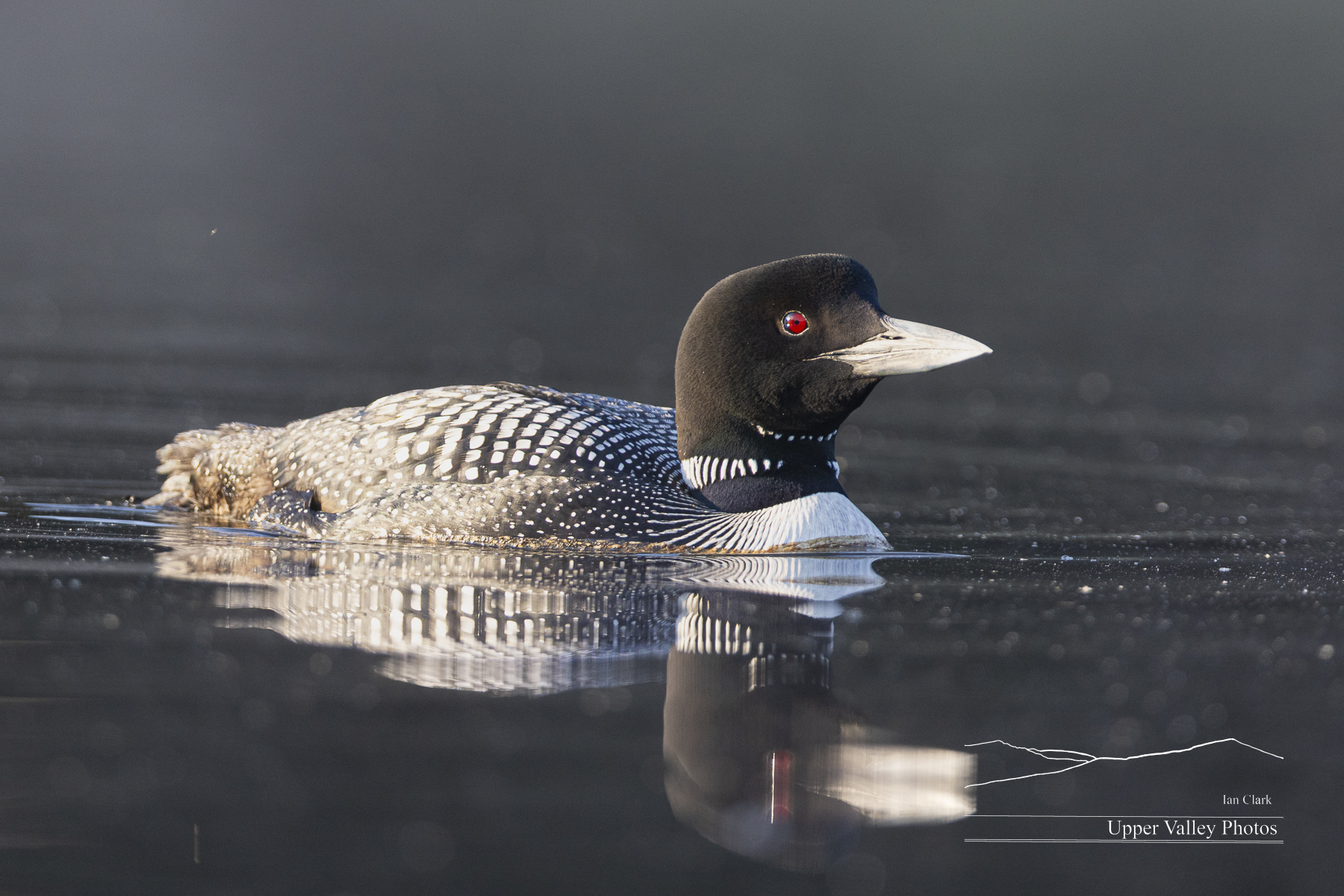
One of the pair swam by close in to my boat.
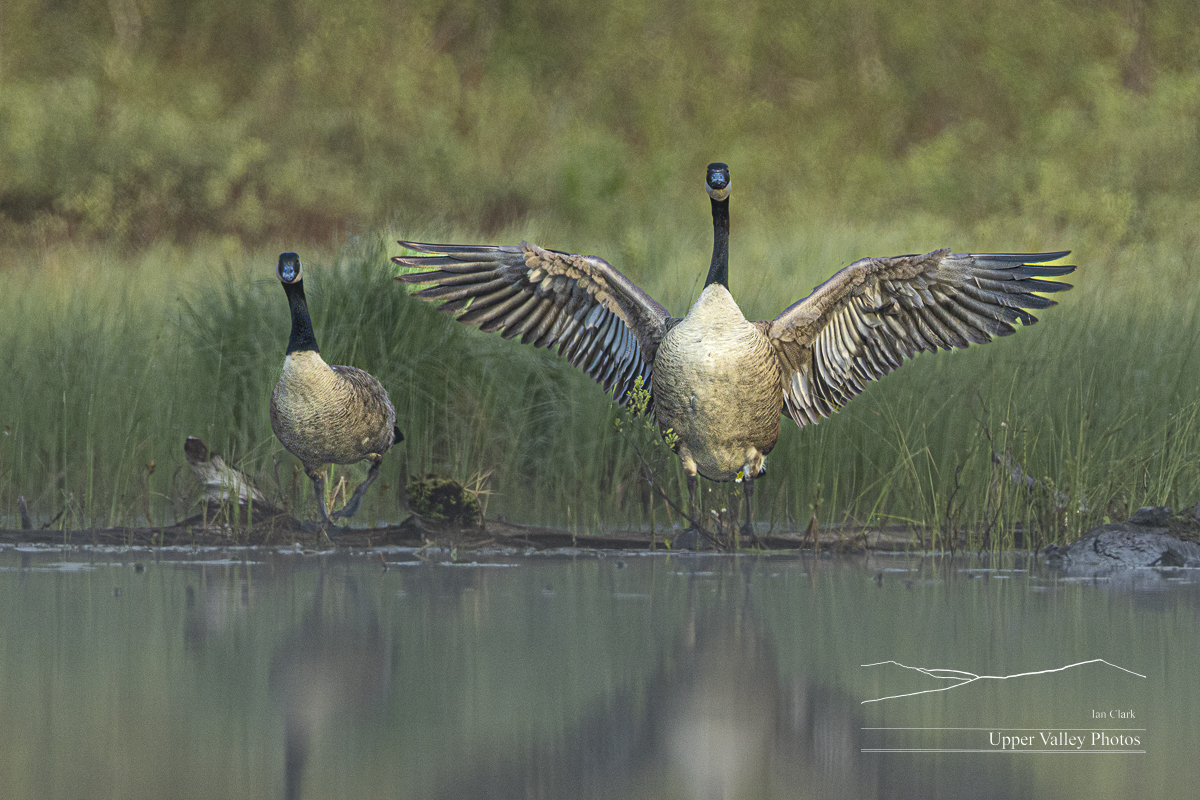
Canada geese on the side of the pond
A couple late nesting Canada geese were checking out spots near the loons’ nest. The loons strongly suggested they should move along and nest elsewhere.
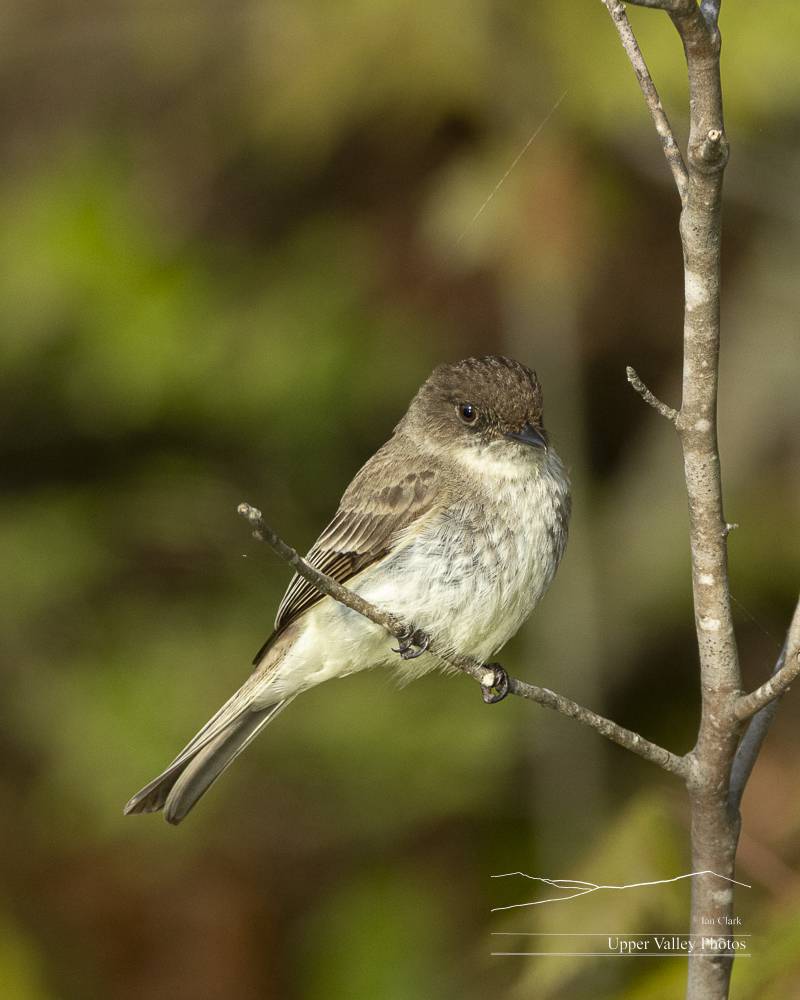
An eastern phoebe perched on a small tree
An eastern phoebe perched not far from the loons’ nest. The flycatchers are not keeping up with the black flies.

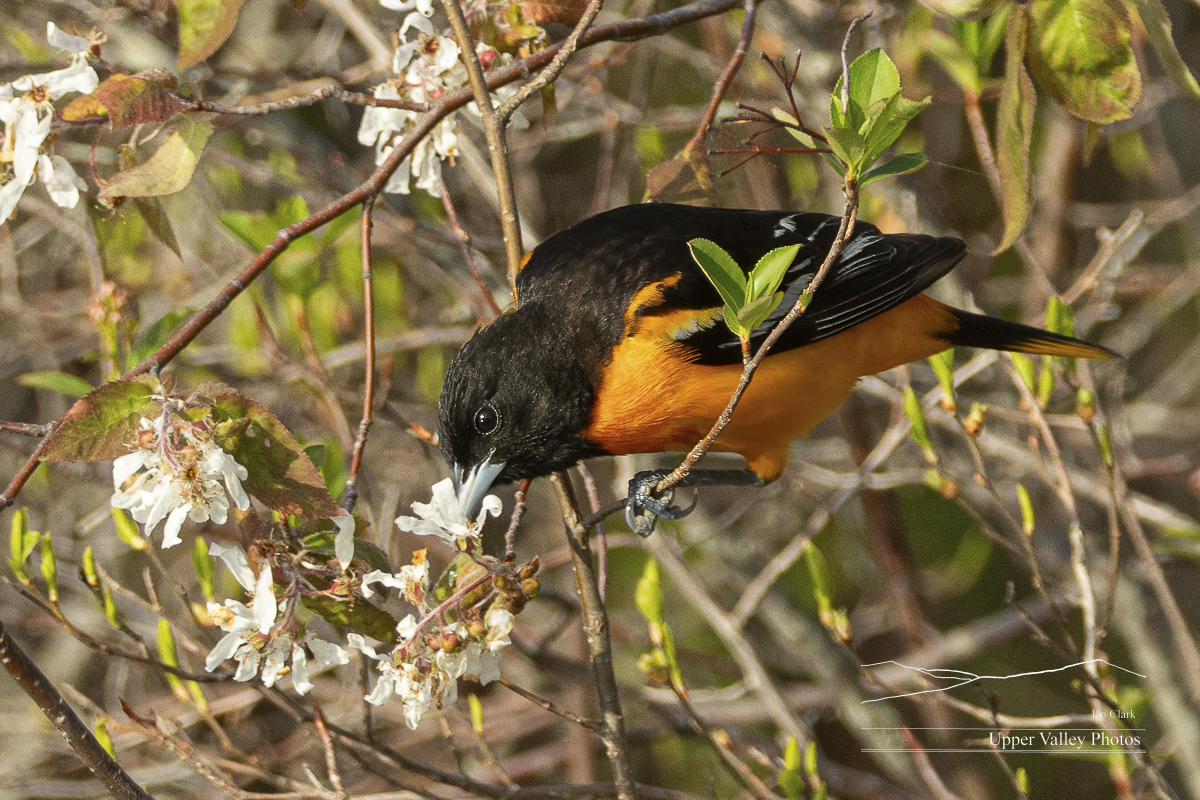
baltimore oriole feeding among flowers
Finding a Baltimore oriole feeding at eye level is a treat.
Gray catbird perched on a twig
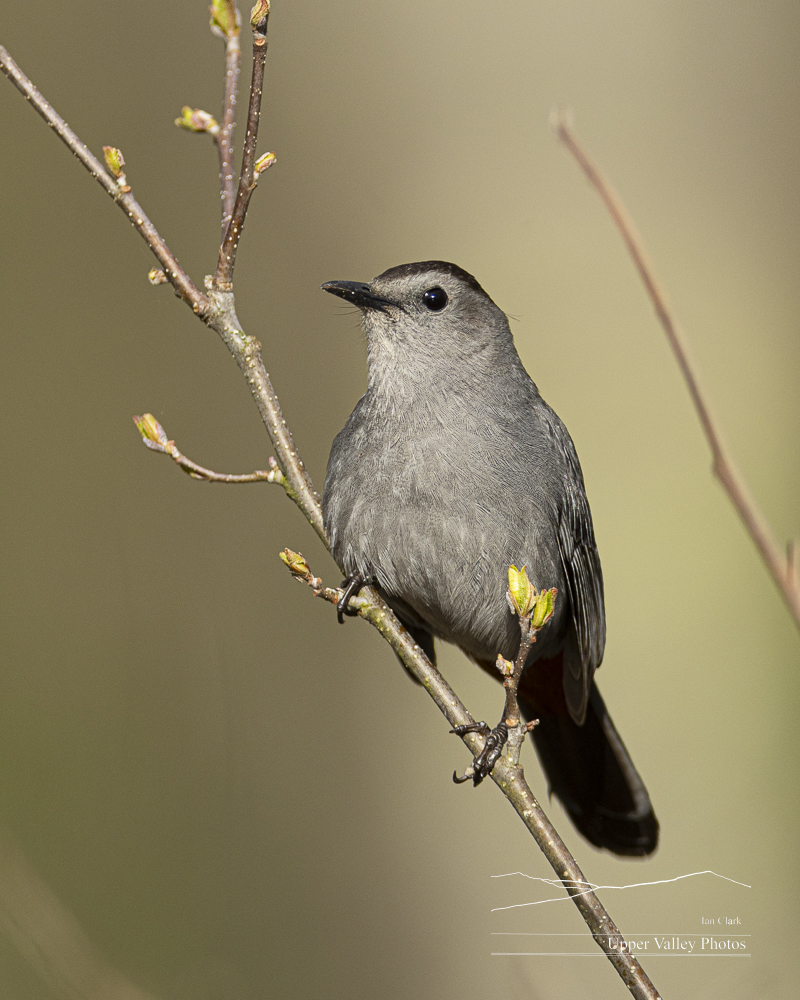
Several gray catbirds live in the loons’ neighborhood.
painted turtle basking
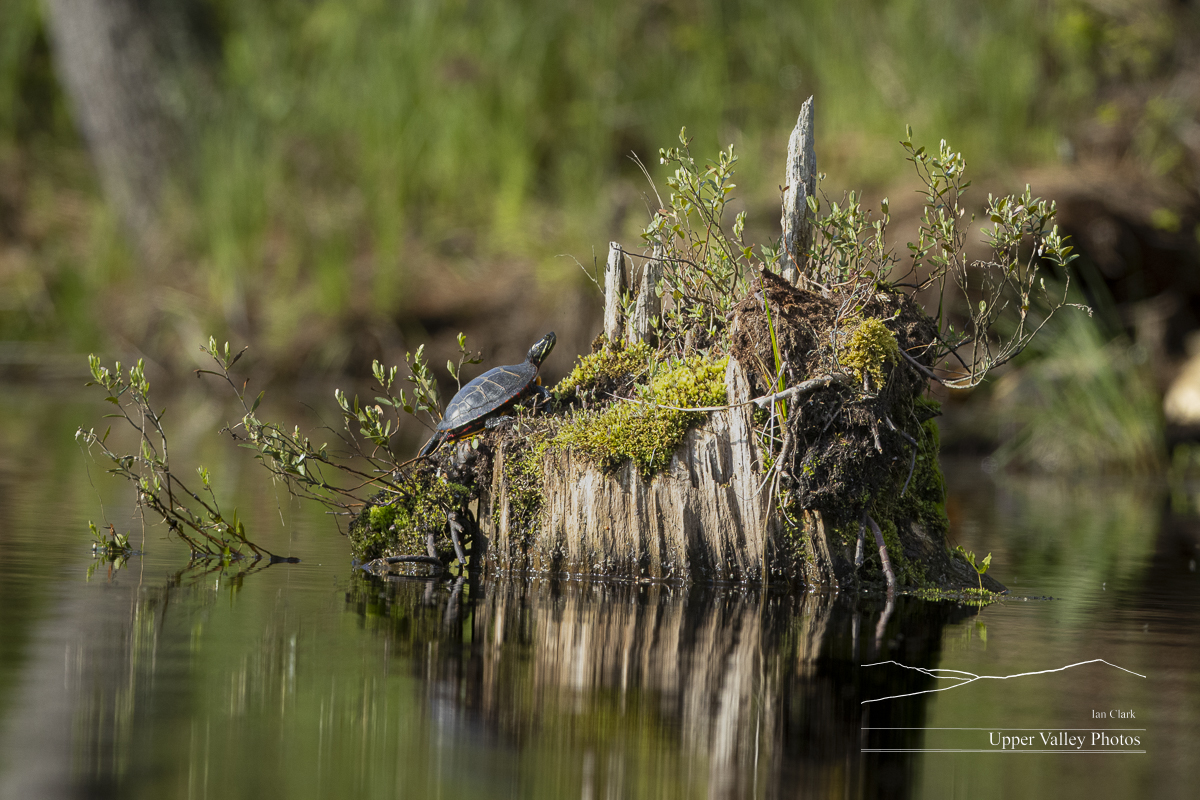
This painted turtle has claimed his own small island.
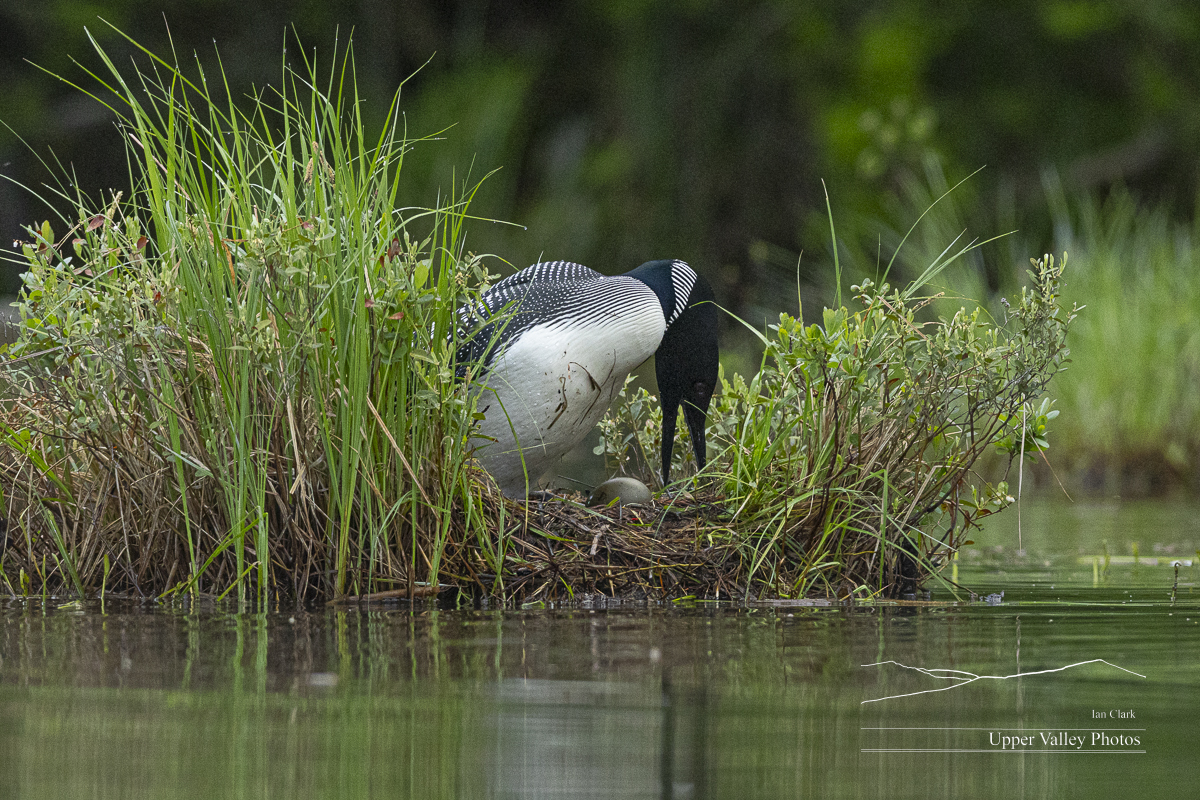
common loon in the nest, turning an egg
When I returned to the pond, the loons had an egg. Here, our male is turning it. Birds turn their eggs regularly. It is thought that turning the eggs helps keep the chick from adhering to the side of the egg and to distribute nutrients to the chick.

common loons in a territory dispute, the male is about to yodel
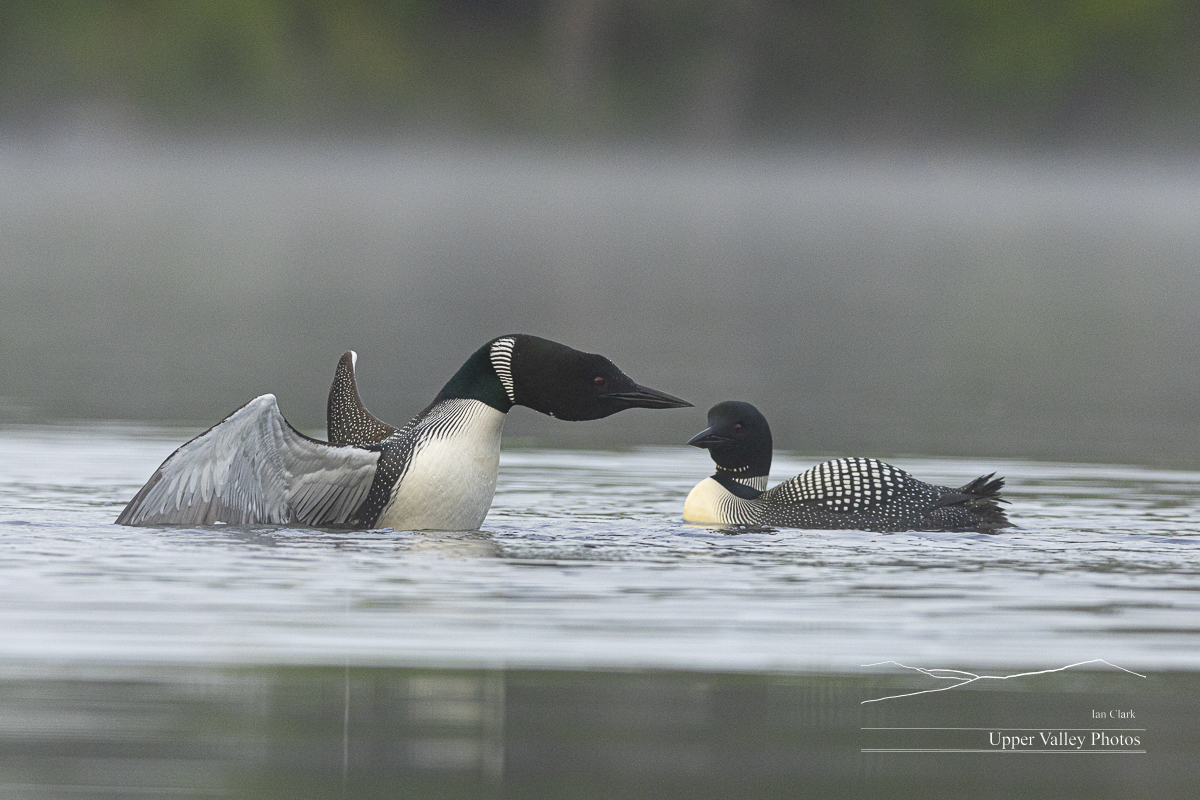
We know it was the male on the nest as an intruding loon arrived on the pond. The loon that had been on the nest came out to challenge the intruder and yodeled. Only males yodel. That’s the home team female watching in the background. This suggests the intruder was a male and wanted to displace the home team male.
common loon doing the 'penguin dance' during a territory dispute with another loon
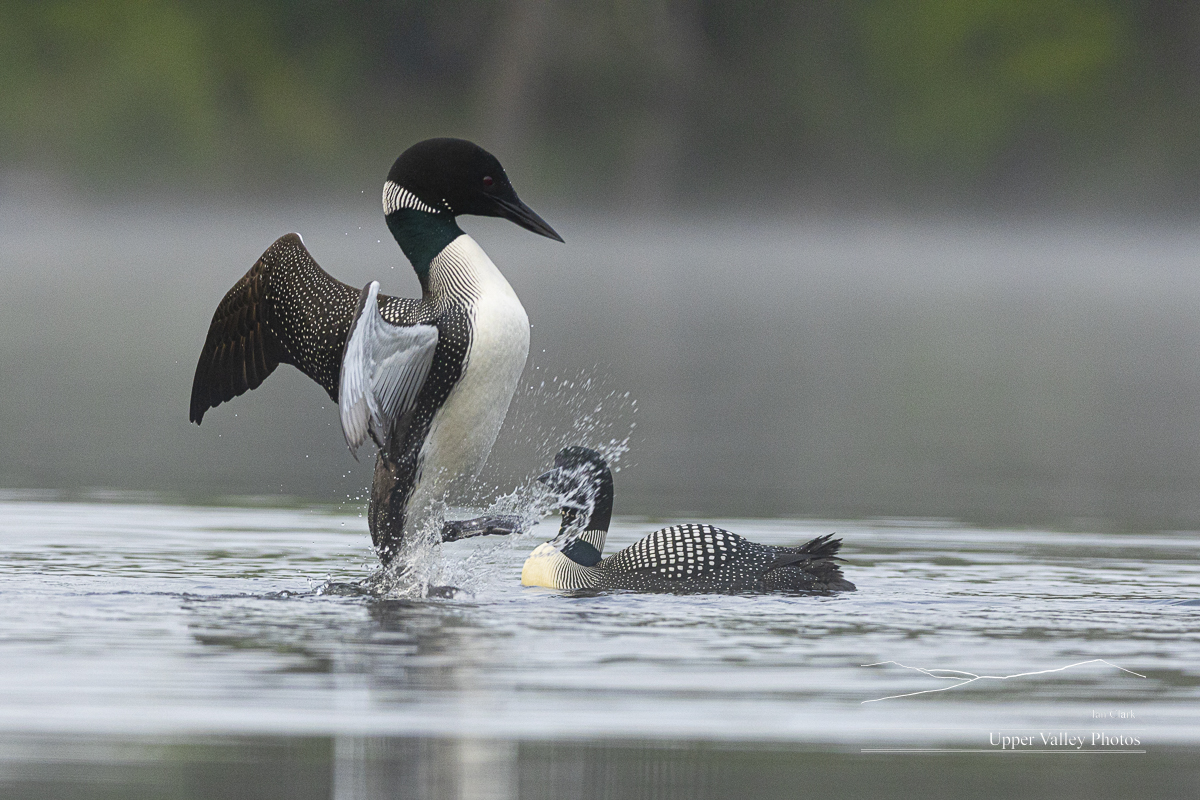
Things escalated quickly! This is the male doing the ‘penguin dance’ to threaten the intruder. Both males and females will dance, but it is thought the males do it more often.


common loon doing the 'penguin dance' during a territory dispute with another loon
A nice shot of the penguin dance. Notice how far back the loon’s legs are. And, great elevation from the home team male!

common loon running across the water to take off
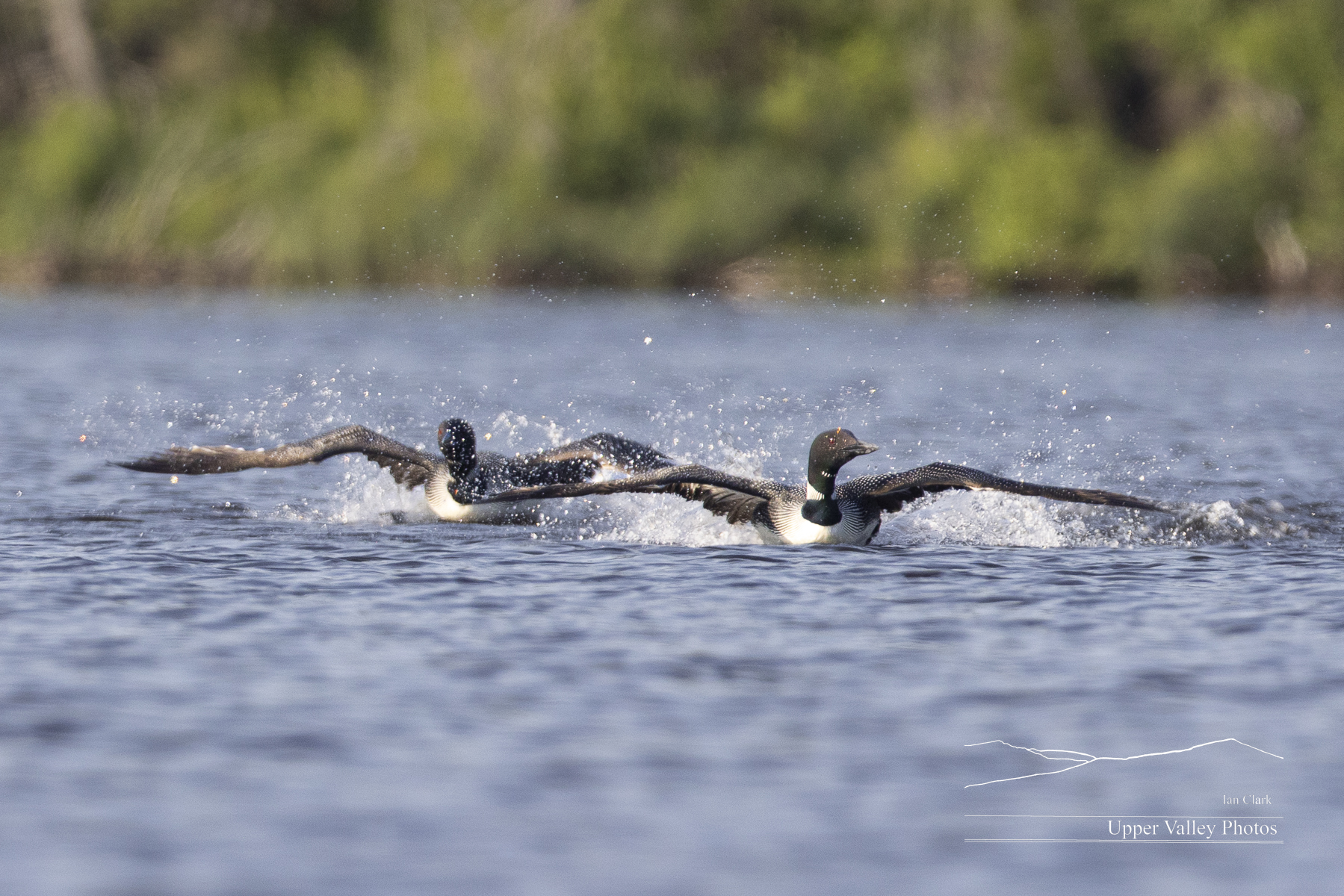
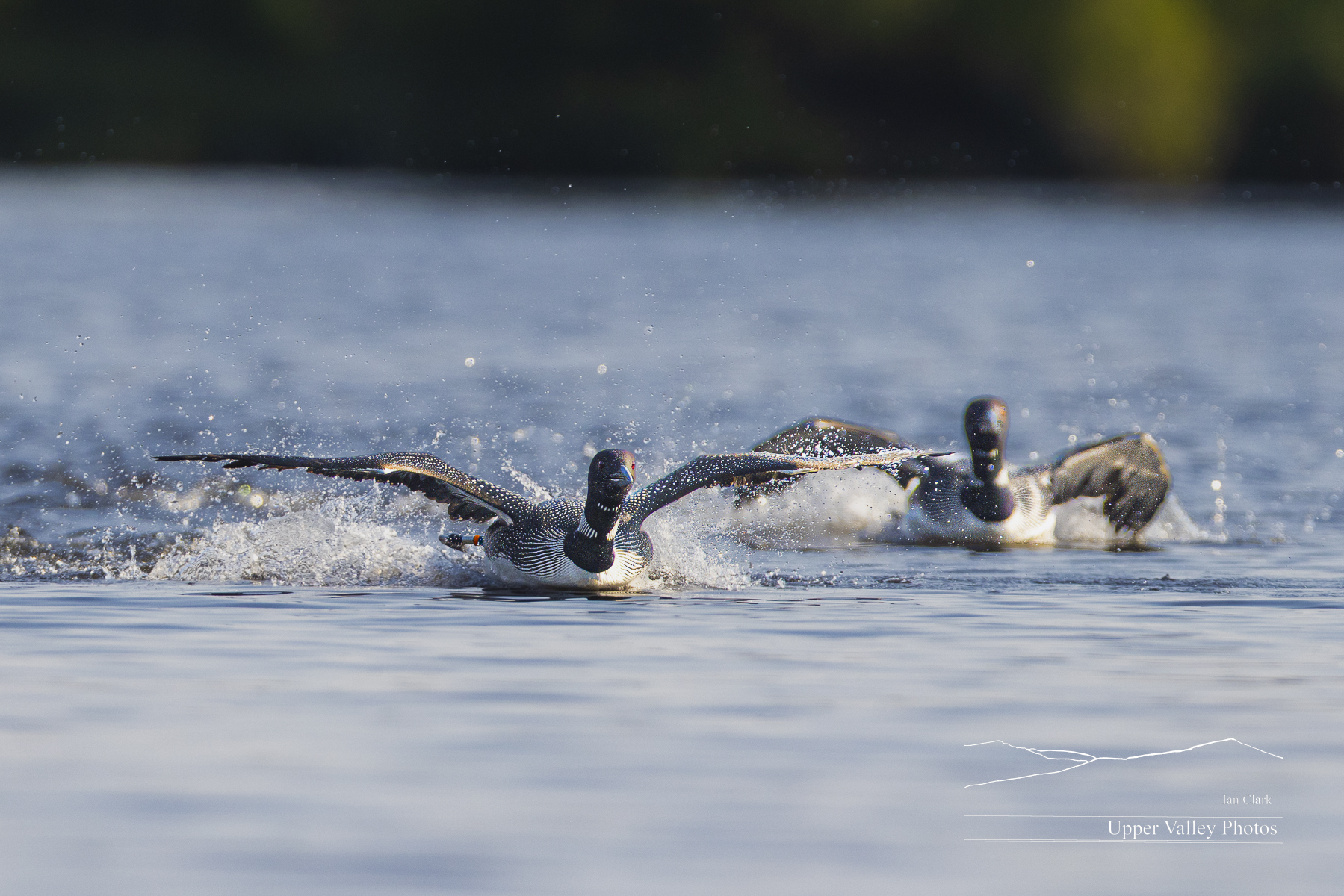
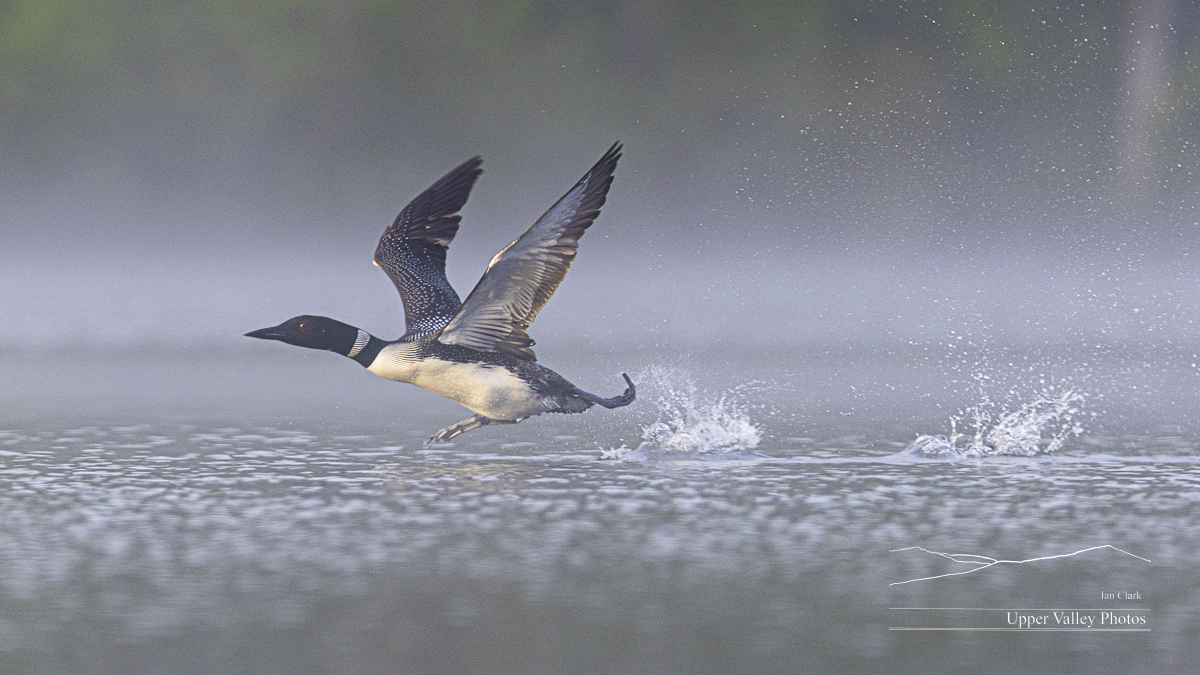
The penguin dance display was enough to convince the intruder to retreat to the other side of the pond.
common loon running across the water to take off
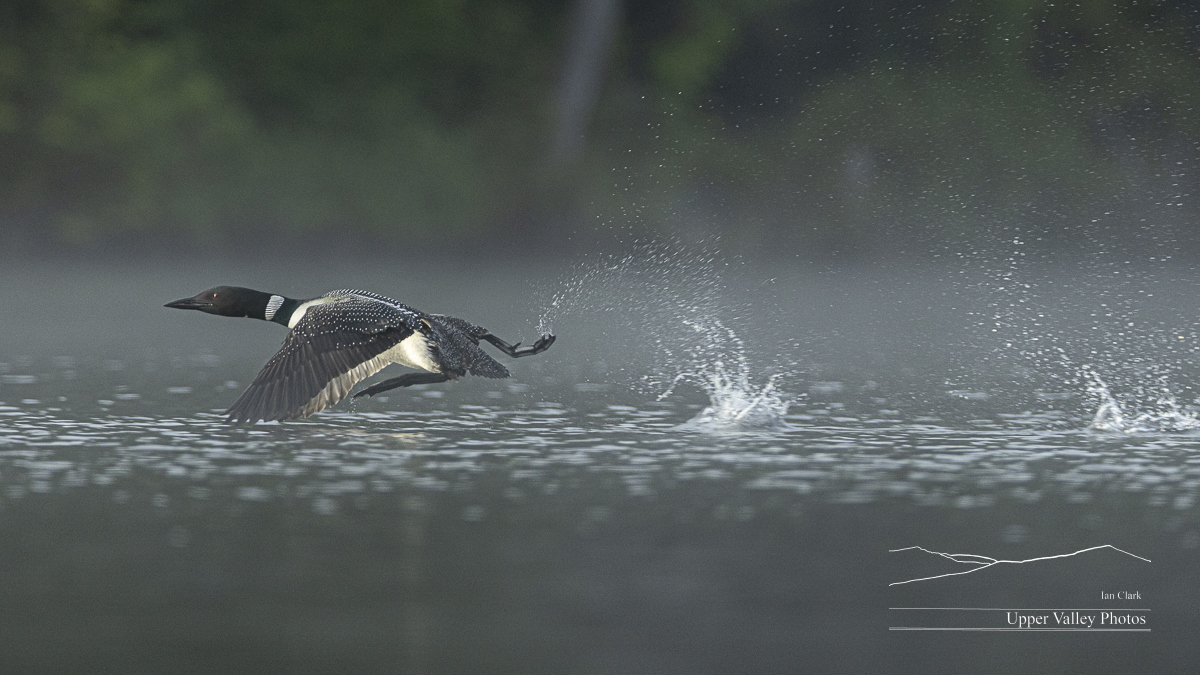
After a few minutes of the home team wailing, the intruder left the pond.
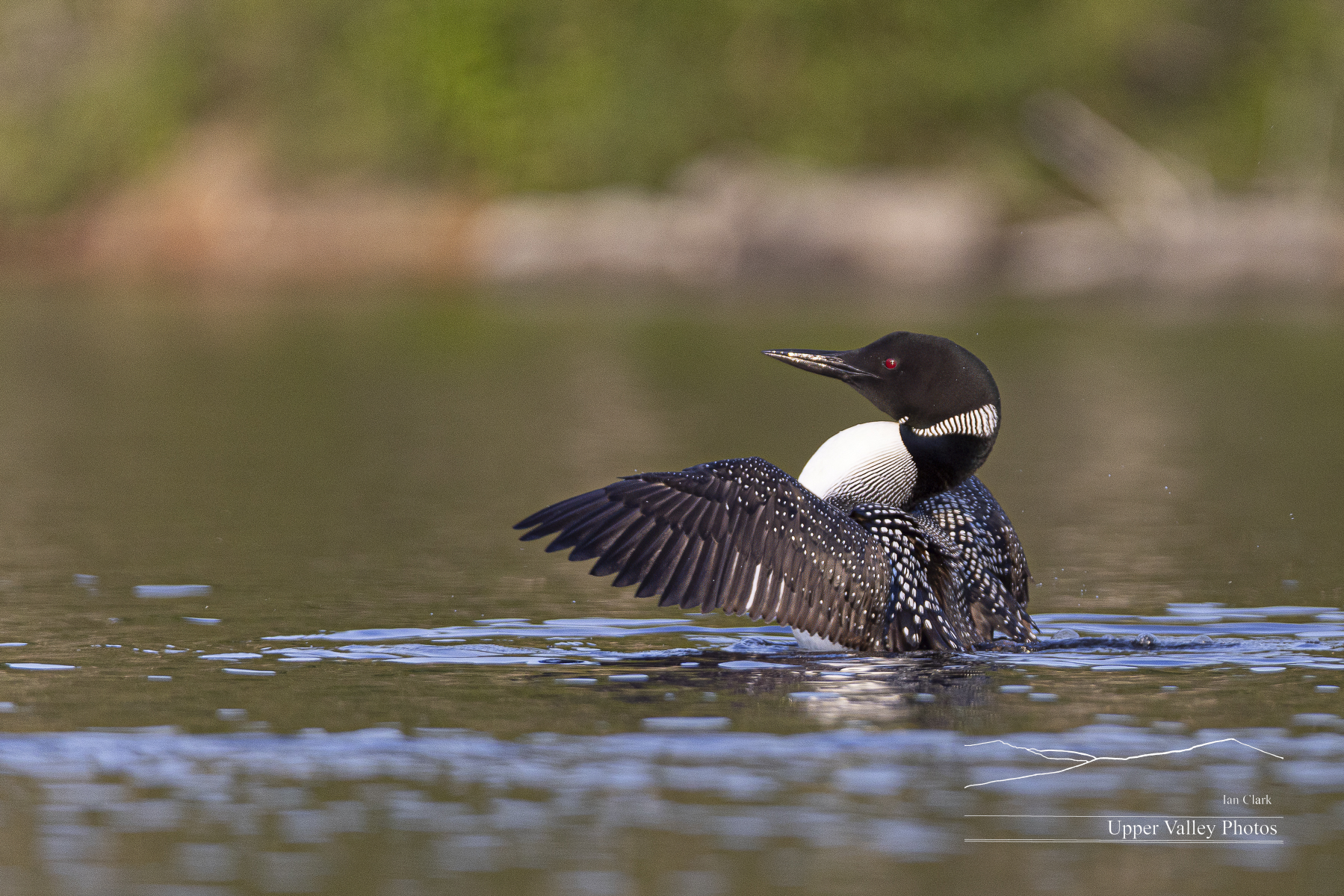
Common loon stretching
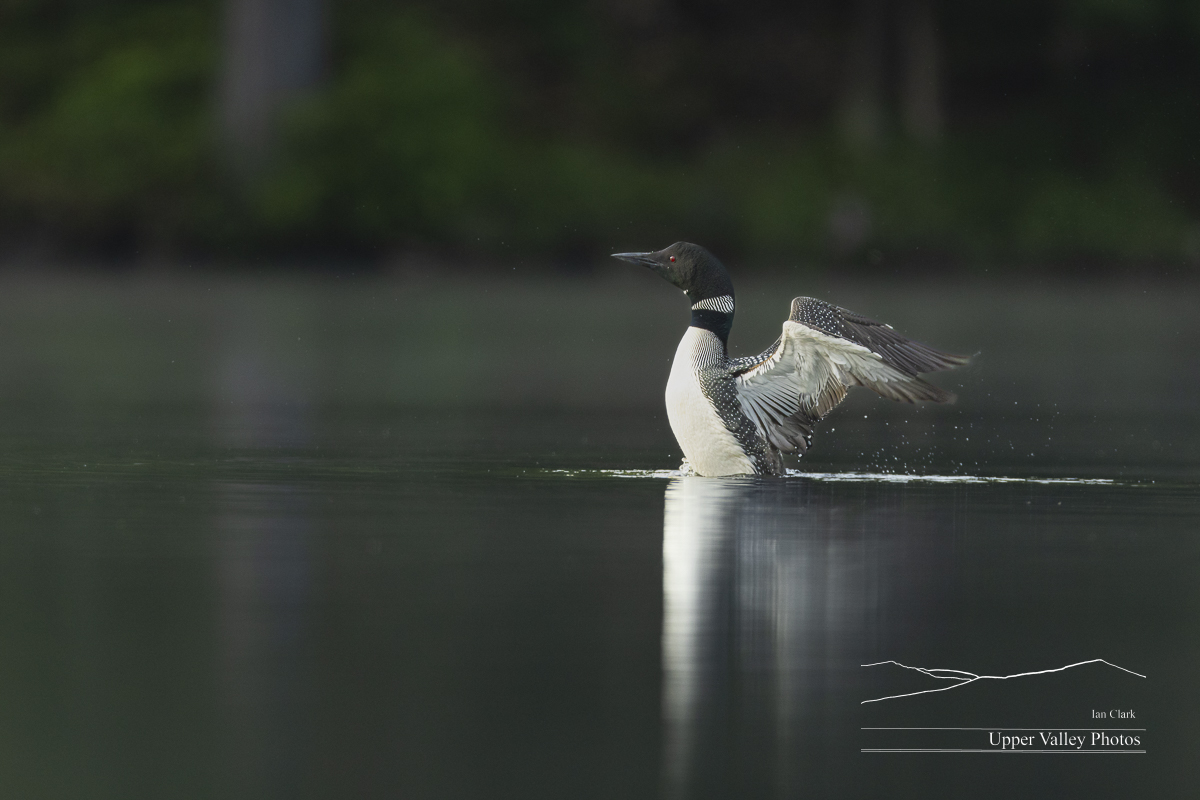
The home team male takes a victory stretch.
Common loon on the nest with the mate nearby
And then he returns to the nest.

The road up to the Easton’s pond finally got some work and I was able to get up for a visit.
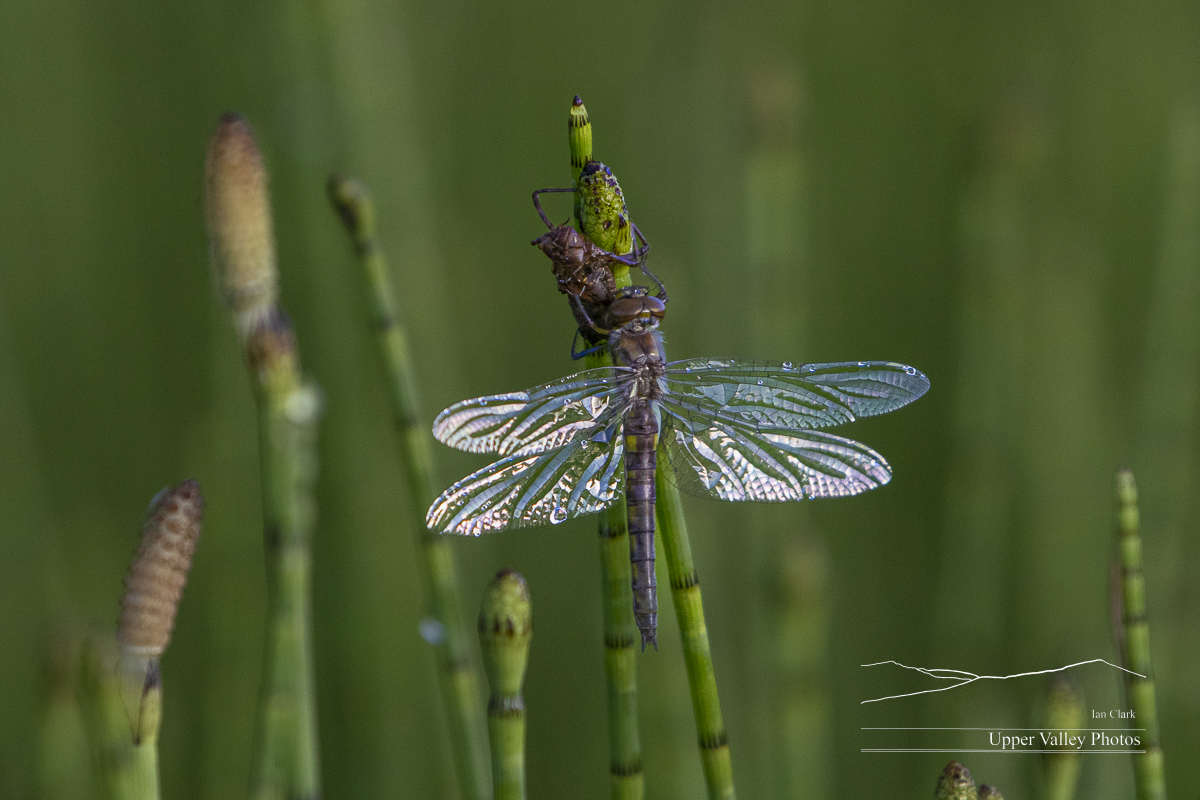
Dragonfly emerging from the nymph stage
There were several dragonflies emerging from their nymph stage and drying their wings in the sunshine.
Scenic photo of a mated common loon pair
The water on the Easton’s pond is a few inches higher than last year, making the nest site unusable. They were scouting the pond for a new site. Here, they’ve stopped to discuss something on their search. We’ve got the same male back again this year. The Loon Preservation Committee banded him in Moultonborough, NH in 2015.
close up of a common loon
Mrs. Easton swam by close to the boat to have a good look at me. (Not as close as it looks, I’m using a 600mm lens and have cropped the image.) The loons checked out several spots and may have settled on one. They discussed it for a time before mating on the site.
bull moose feeding in the water
One of the loons’ neighbors was out enjoying breakfast.

First Loon Chicks Have Arrived

UPDATE: We’ve got a second pair of chicks that have hatched since I posted this. Lots of pix in their own post at here.

The weather final cleared enough to let me get back out to check on our three loon families. Well, sort of. I got very wet the first evening and made it back to the car with seconds to spare the second.

First, there’s some sad news from Vermont, the oldest known loon in Vermont has died. His age was estimated at 31 years. VT Diggerhttps://vtdigger.org/2023/06/15/vermonts-oldest-loon-dies-at-the-estimated-age-of-31/ has a piece interviewing Eric Hanson, Lead Biologist at the Loon Conservation Project about the loon.

With loon chicks hatching it is once again time to request that you give them space if you go to see or photograph them. You may not intend them any harm, but you may distract the parents from seeing other threats. Our new loon chicks were greeted by a circling eagle on their first or second day out. The parents need to concentrate on the real threats, keep back and let them do their job. All the images of chicks here were with a 600mm lens and heavily cropped.

Tuesday evening I got a message from a friend on the Weston’s pond that the chicks had arrived. And that the eagle was eyeing them. Wednesday morning was wet and windy. It gradually cleared a bit through the day. I set out in the evening to check on the chicks. It was sunny when I left the house. On the way into the pond, I had to wait while a doe browsed from the road – with her fawn gamboling about in the road. By the time I had everything in the boat, there were a few sprinkles. Not enough to dissuade in intrepid photographer.
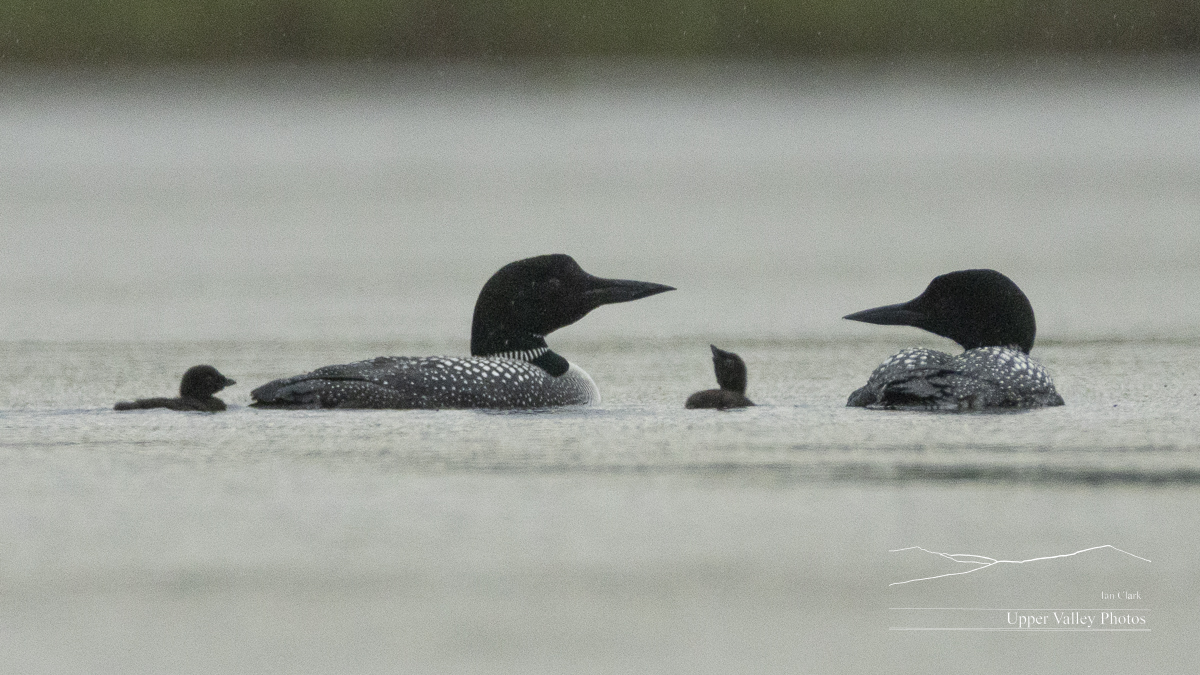
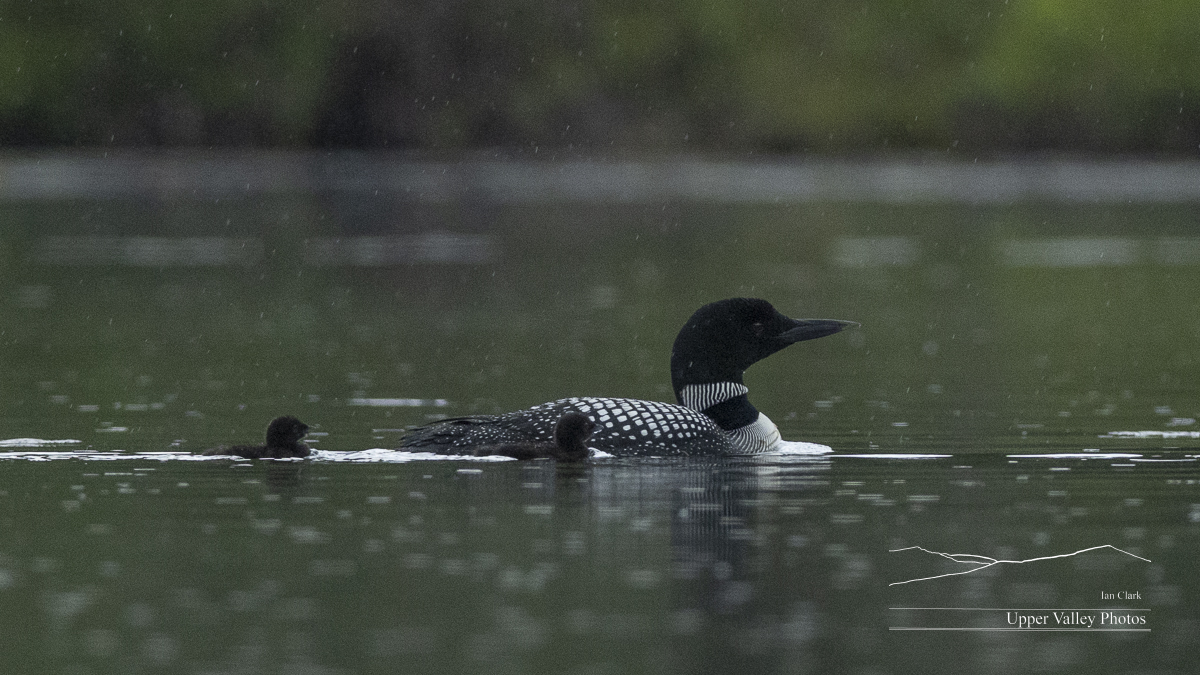
By the time I found the loon family, the rain was steady.
The rain got heavier, but I was already wet and wasn’t going to let it stop me. The lighting quickly changed my mind…..

When I got up at 0345 on Thursday ready to head out, it was raining heavily. Early morning is the most productive time in the office, almost no one calls before 0700 or 0800. I got a fair bit done. When the dogs finally got up, I noticed some breaks in the clouds when I let them out. Hoping it would clear a bit, I headed off to to check on the Middletons.
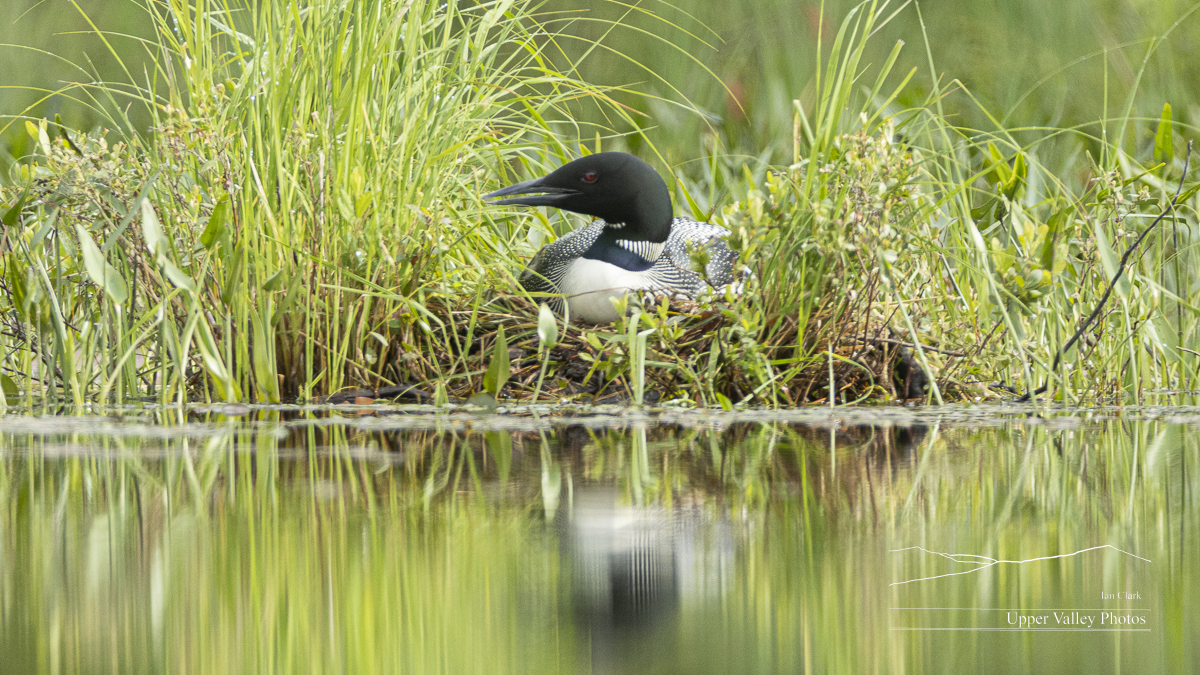
They’re still sitting on the eggs. I missed exactly when they laid the eggs, the earliest we can expect chicks is this weekend.
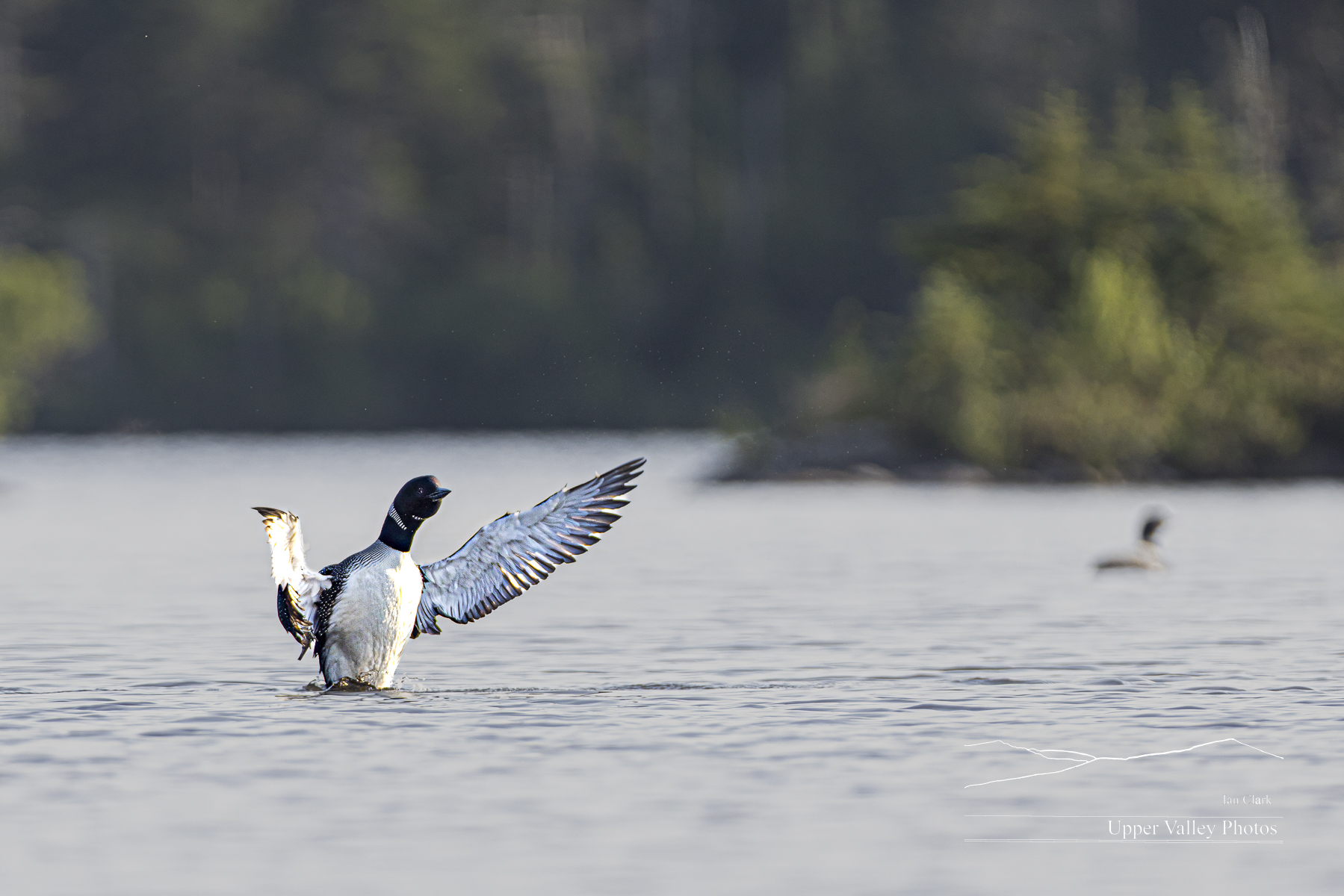
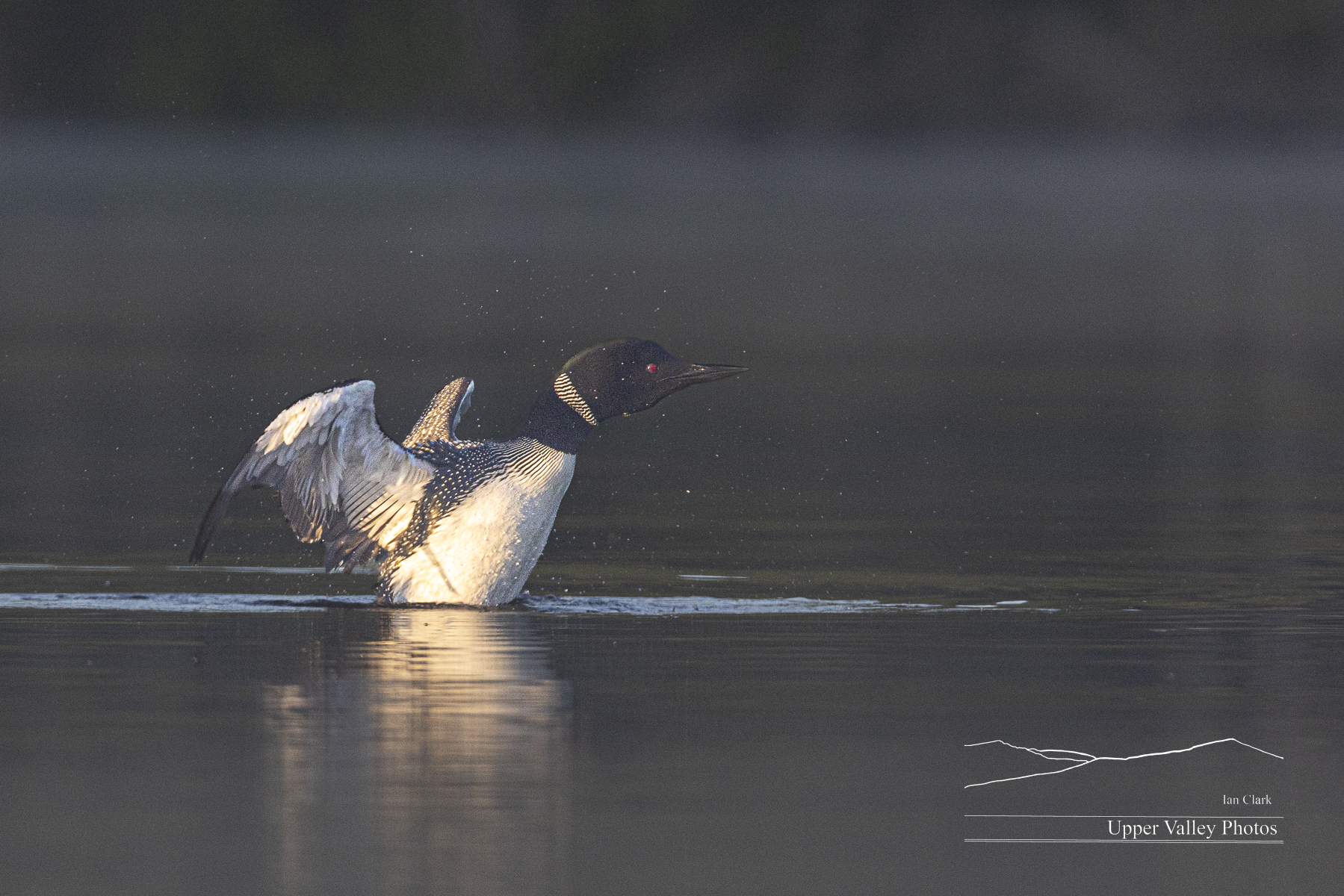
Our off duty parent had time to preen and gave several nice stretches.
Being a sucker for the stretching shot, I took full advantage.
The off duty loon approached the nest three times over a couple hours. The loons held a discussion each time, but the on duty loon stayed on duty. Interestingly, the on duty loon just sat and watched when alone. When the other loon approached, the on duty loon busied itself sorting out the brush around the nest and added material to the nest. When the other loon left, the on duty loon went back to sitting.
The off duty loon seemed to be checking in to see if it was shift change yet.
As the off duty loon approaches, the on duty loon starts making nest improvements.
Dredging up some vegetation when the off duty loon showed up.
One more shot of the on duty loon gathering material.
While I waited to catch the nest exchange, I amused myself watching several eastern kingbirds hunting dragonflies.
Kingbirds hunt from low perches along the water’s edge – frequently over lily pads. They make short, fast flights to grab dragonflies and damselflies out of the air.
Eventually, it came time for the loon to switch.
When doing a nest exchange, loons will often forage and preen together for a time before one returns to the nest. Not this time, The off duty loon wasted no time in climbing onto the nest.
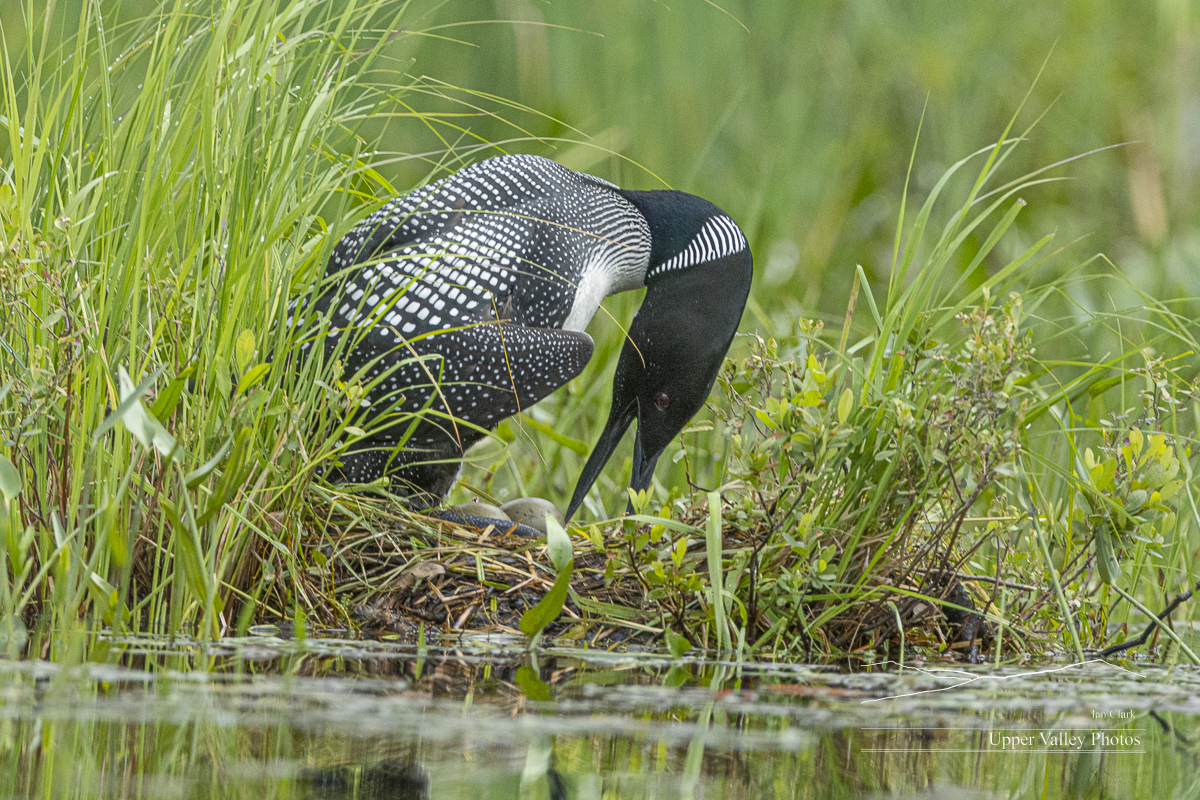
Before settling in for the shift, the now on duty loon takes time to turn the eggs.
It took three tries to get everything properly arraigned.
Third time is the charm! After this, the loon settle down and sat. I headed out, hopefully to get back this weekend.

Thursday evening, I went back to check on the Westons. This time with just a couple puffy clouds in the sky.
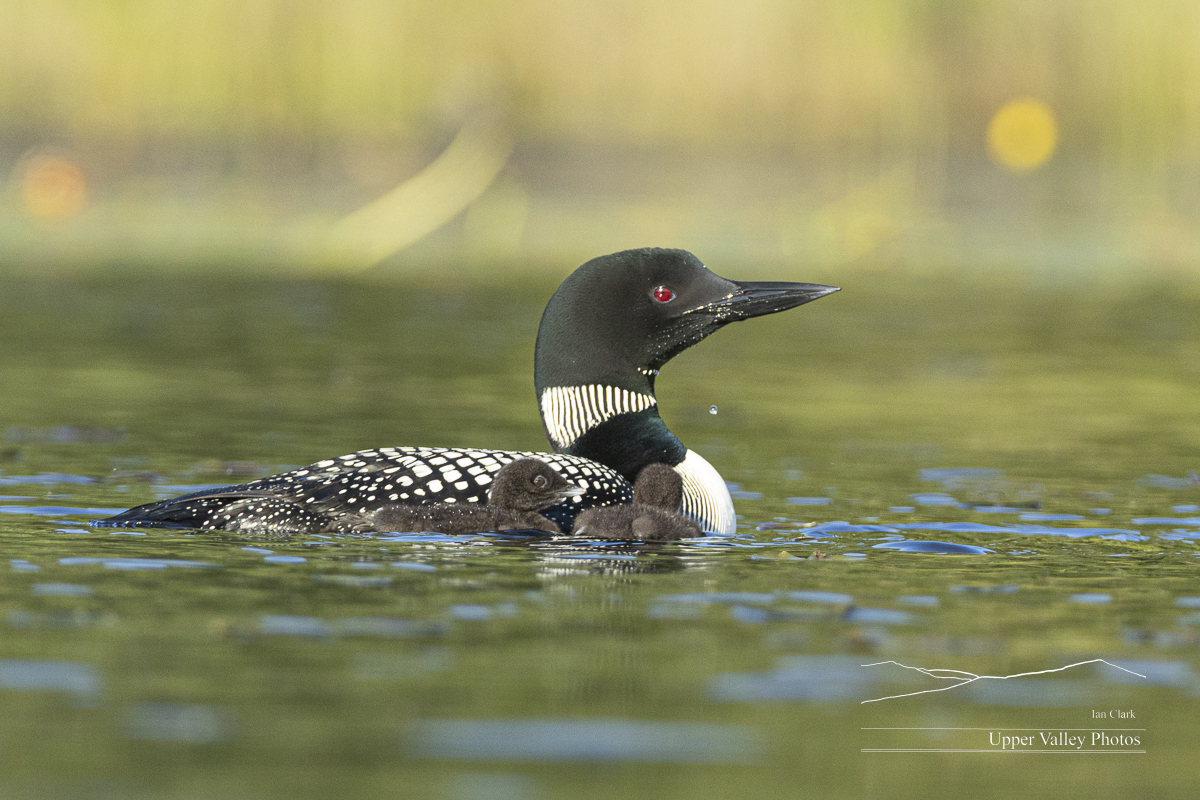
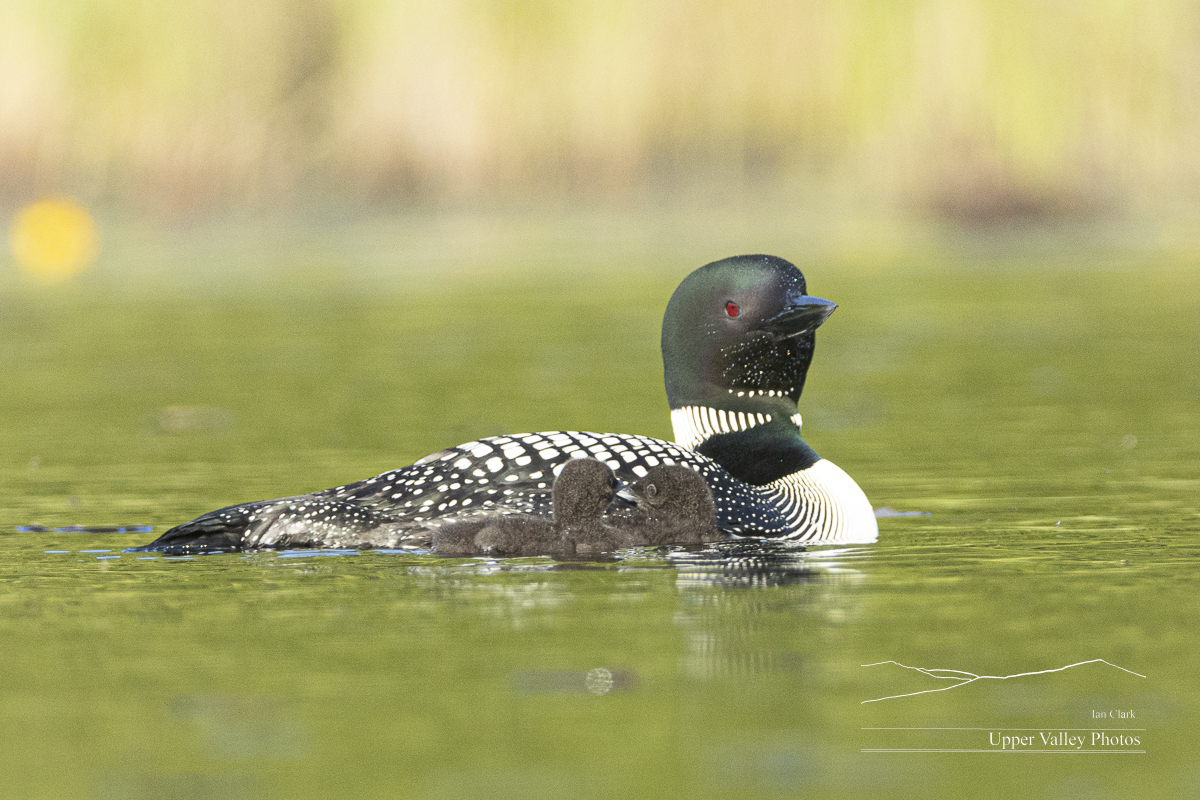
Both parents were foraging for the chicks near the nest.
This young, the chicks are rarely more than a couple feet away from a parent. Although, both parents may dive at the same time leaving the chicks briefly alone.

This morning, I was up and out by 0430, with clouds above and fog below me as I headed to see the Eastons. They’re up in the White Mountain National Forest, they were on their nest by the time the Forest Service got the road to the pond open, so we don’t know when to expect the chicks. But, the last three years, they’ve hatched in the third weekend of June, so soon…..
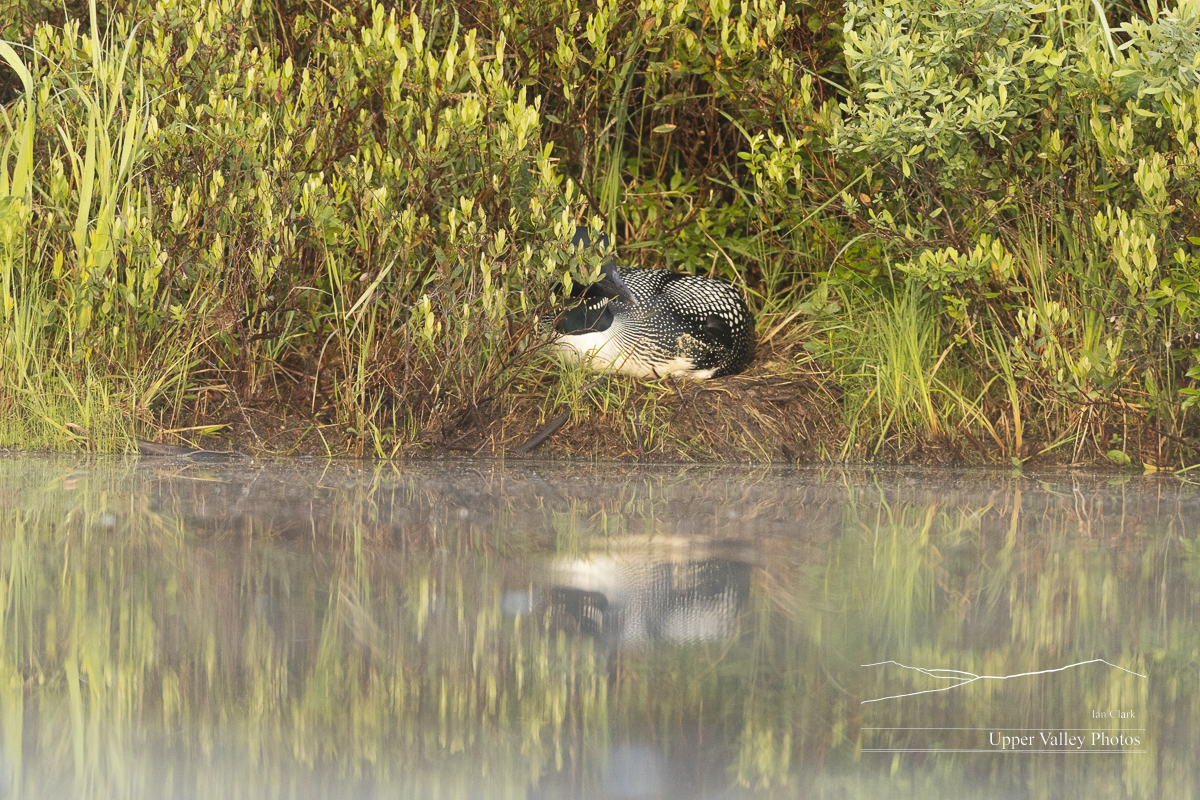
When I arrived, one loon was on nest duty. I had a bit of excitement as I looked through the lens. It looked like a chick peeking out from under the wing. No such luck, enlarging the image showed it to be a stray feather. This is the pair where the male is banded. If I can see a leg, I can tell mom from dad. I missed any nest exchange this morning, so I can’t say for sure. But, I’d bet it was dad on the overnight, he’s taken the last few overnights the past three years.
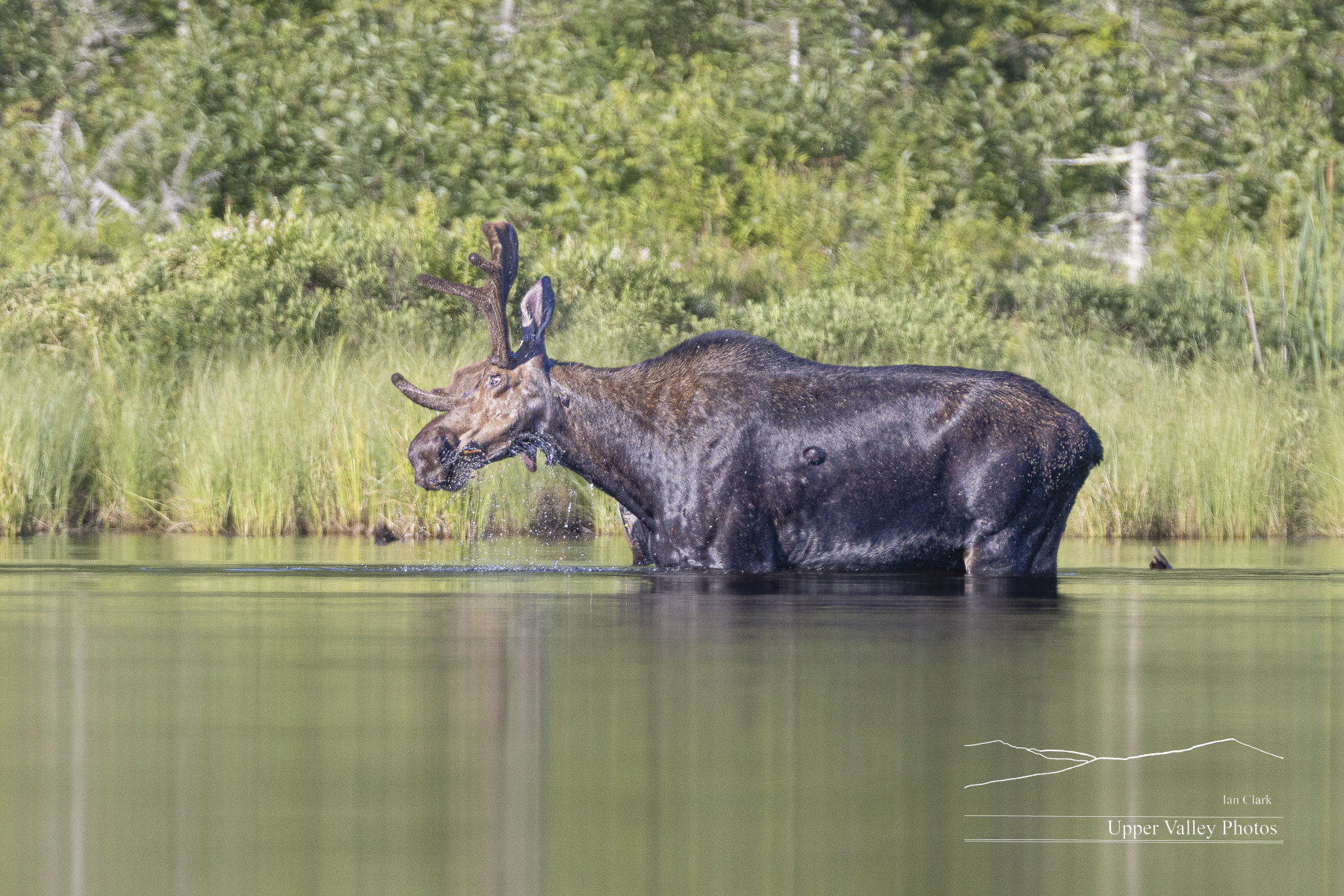
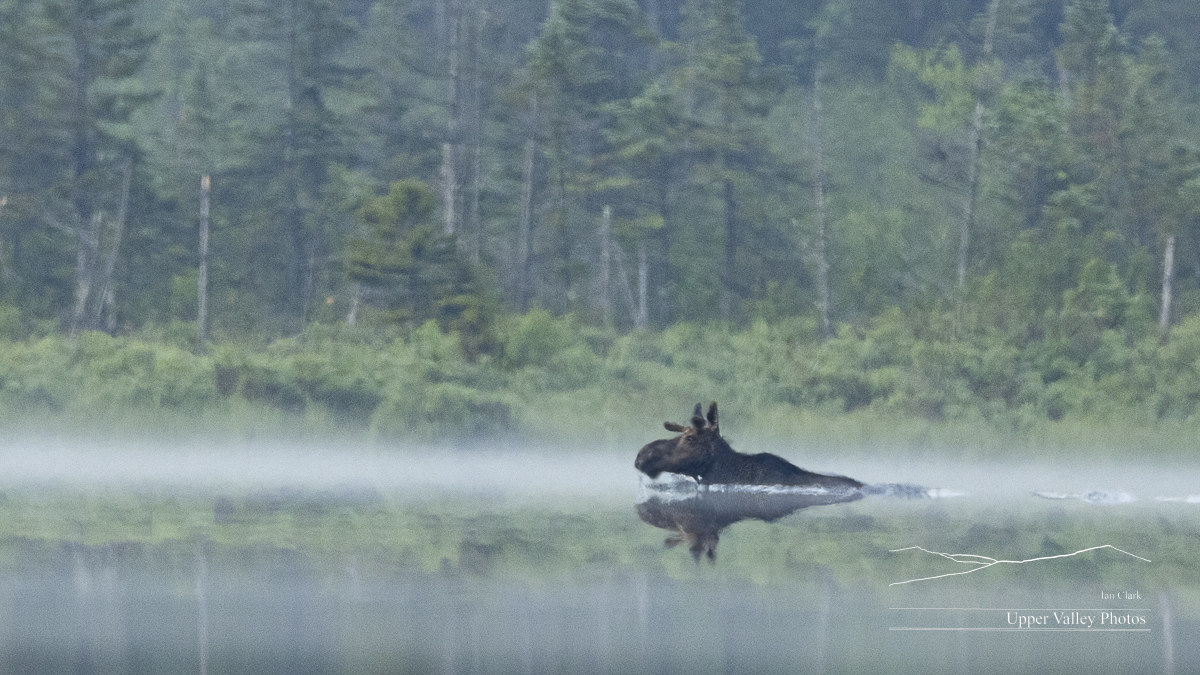
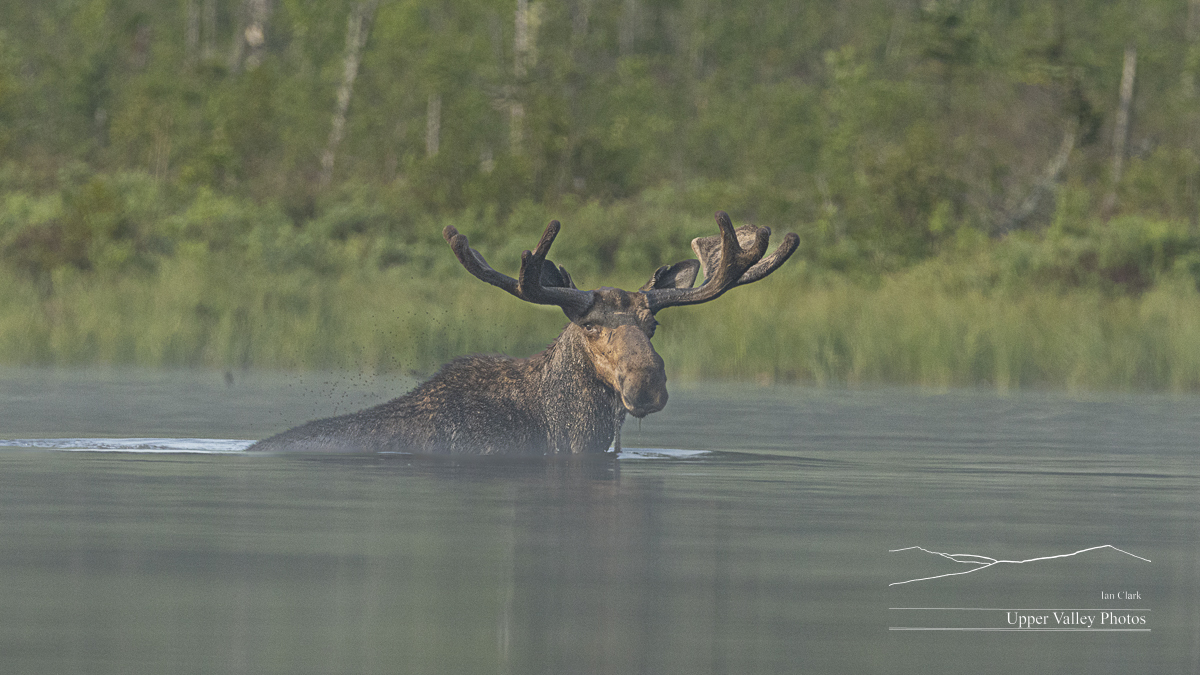
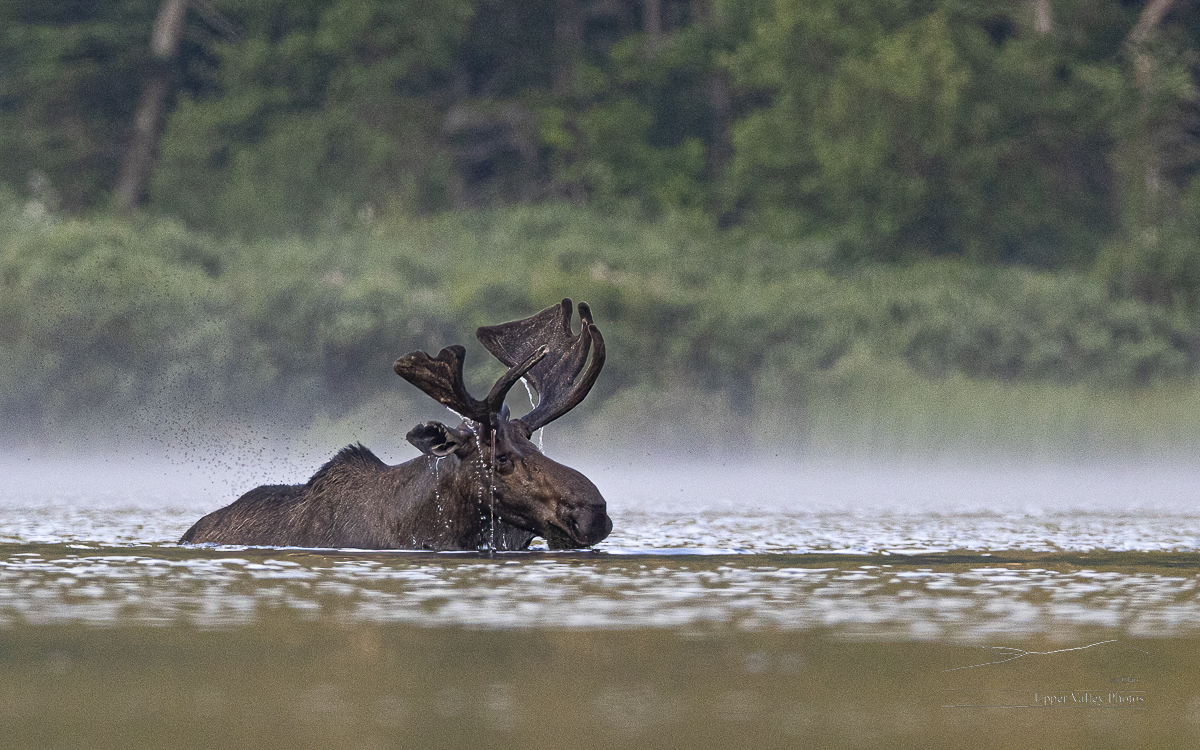
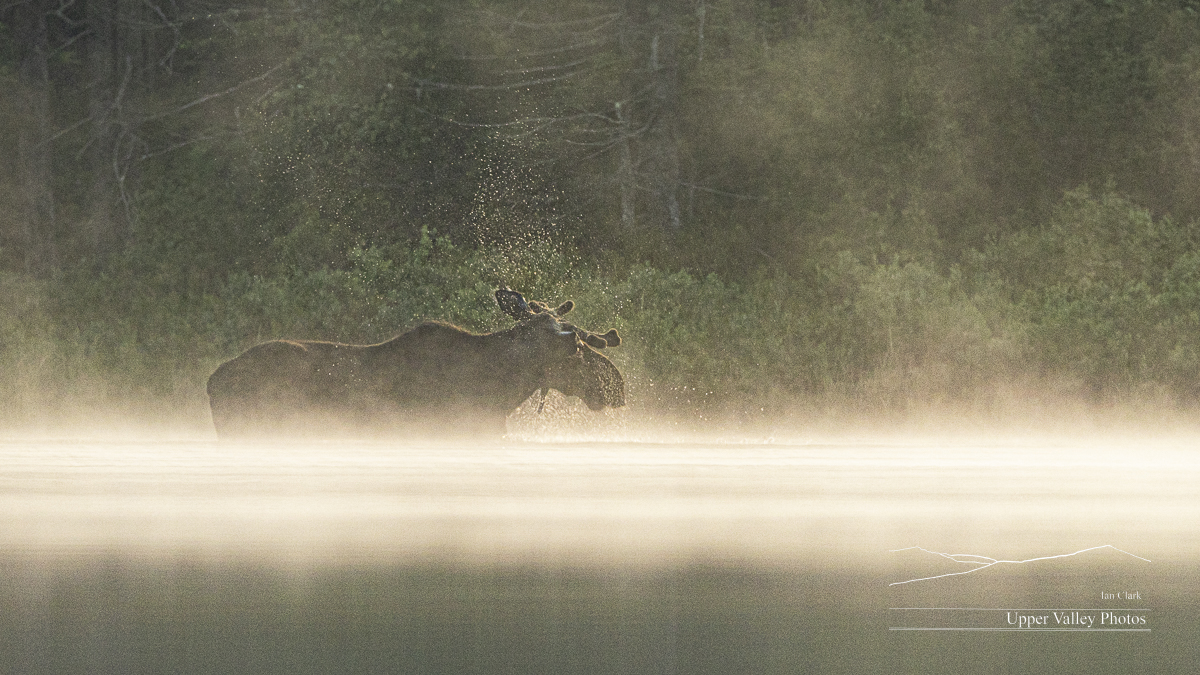
There as a surprising moose to loon ratio on the pond this morning at 1.5:1. This bull looks like the one I saw on June 2. He’s shaking his head after submerging it to get the tasty water plants.
Sometimes I’m convinced the critters know how to frustrate my photography. With the fog and the back light, I suspect this fellow knew he was frustrating me and enjoyed it as he had breakfast.
Our off duty loon was lazily cruising around the pond, occasionally diving to forage. I went looking for other photo opportunities. There seemed to be more herons on the pond this morning. There’s been a resident pair every year since I started visiting in 2012. Later in the season chicks from the nest join the parents. Most of the time, herons are content to stand or slowly stalk along the water’s edge. Occasionally, they’ll make short flight to a new hunting spot or to roost in a tree. This morning I saw about a dozen heron flights and the herons were more vocal than normal. Not sure if the resident pair was restless or if more have moved in.
This heron posed nicely. He kept me occupied by occasionally crouching as if about to strike – which kept me glued to the camera. Before I could get a pic, I was distract by two new visitors to the pond.
Mrs. moose was out and about. Seeing two moose in a day is a treat. But we weren’t done.
A second bull was foraging with the cow. I can remember just a couple days in my life that I’ve been lucky enough to see three moose in a day.

I’ll be out looking for the rest of our chicks as soon as we get a break in the weather.

Link to the newer post: https://blog.ianclark.com/photography/wildlife-photography/the-eastons-have-two-chicks/

Loon Chicks at Four Weeks And More

Sunday morning was a beautiful time to pay a visit to the Eastons – the loons in the eastern most pond I visit regularly. The chicks were four weeks old this weekend. Both seem to be doing well.

Our bluebirds have four chicks in their second brood, they should fledge this week. There are at least three chicks from the first brood still around. The like to hunt from the roof of the house, they come and go past my office window regularly.
I’ll be down at the League of New Hampshire Craftsmen’s Fair in August. I’ll have lots of prints of loons and other wildlife and more. Stop by to say hello.

The loons had another visitor before dawn.

A good-sized bull moose was feeding in the shallows of the pond.
The specs above him are flies – either horse or deer. I had impolite words for several that went after me.
His antlers are still in ‘velvet’ – sort of a skin that delivers nutrients to the growing antlers. He’ll scrape off the velvet in late summer, before the rut.
The chicks continue to grow rapidly.
Mom and dad took the chicks into shallow water and showed them how to forage. The chicks can’t dive yet, but can reach down. After a lesson, mom and dad went to work serving up a proper breakfast, mostly crayfish.
The parents will often show the chick the meal, then drop the meal in front of the chick. The chick has to learn how to grab food for itself. I think this is dad showing the chick a crayfish.
Dad dropped the crayfish and watched while the chick tried to catch it.
Success! The chick caught the crayfish.
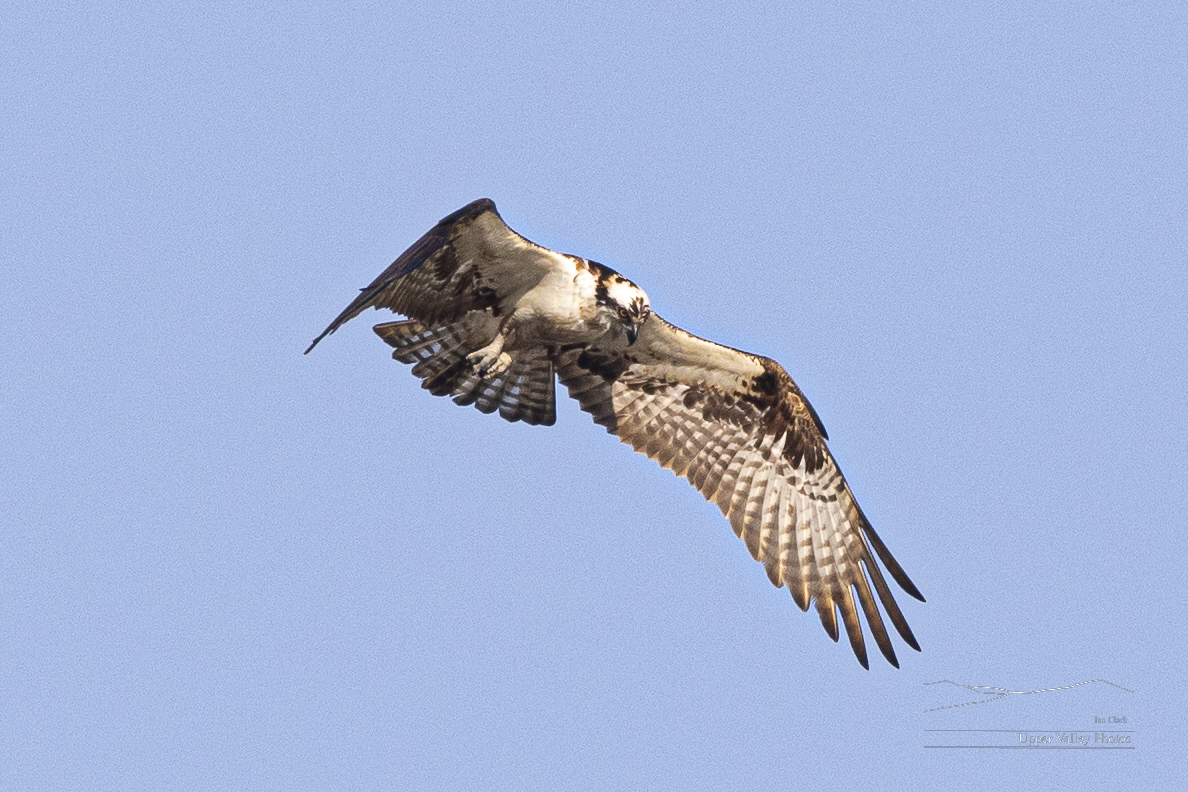
Our osprey had to work for breakfast. He made five dives without catching anything before heading off over the trees.
After breakfast mom and dad tried to nap.
The chicks gave them a short break before demanding second breakfasts.
I think I’m being chastised. I carry a supply of soda in the boat. When I finish a can, I toss it over my shoulder into the back of the boat. I tossed one and missed without realizing it. I’d padded about 50 yards when dad approached the boat, then veered off towards the can. I promptly went back for it.
Something spooked the loons. I couldn’t figure out what upset them. Mom and dad went off to deal with the threat and the chicks flattened out to be harder to see.
When there’s any sort of breeze that ruffles the water, the chick’s defense is very good. On flat water, they’re more obvious.
Mom on her way to help dad with the threat. They were close to shore of one of the islands in the pond. They made several aggressive dives without my seeing any threat.
The threat neutralized, they returned to delivering second breakfasts. Both parents were bringing food as quickly as they could catch it. Our chick is stretching his leg, they may do this to cool down. Looks like he has some more growing to do before those feet fit.
Second breakfasts finished, the parents took some time to preen. This is dad. He’s wearing bands put on by the Loon Preservation Committee. Banders put four bands on the birds. On the right leg is a silver band with a unique number from the United States Geological Survey. The number is next to impossible to read if you’re not holding the loon. So, banders put another colored band on the right leg and two colored bands on the left. The combination of colors let’s observers identify the loon without having to capture it.
Our osprey returned and made up for his earlier lack of success.
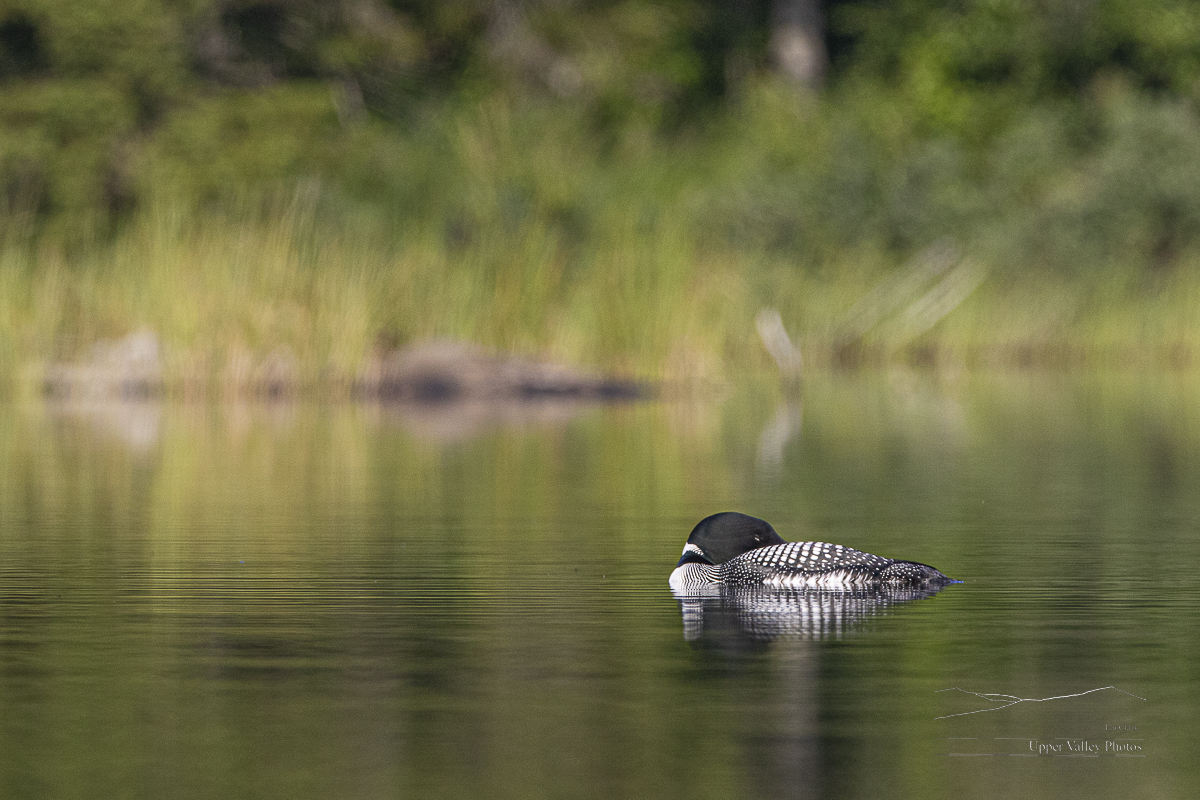
Mom finished preening and gave a good stretch before settling in for a nap.