Posts Tagged: shorebirds

Birds of May

A quick post with some of the birds I’ve found out and about in May.

I’ll be giving my slideshow, Travels with Ian 2025, of my favorite shots from 2025 twice before the end of the month. There’s lots of wildlife from around New England and shots from my trip to Alaska to see brown bears and the steam locomotive on the White Pass & Yukon Route Railway. Both are free and open to the public. The first show will be at the Bugbee Center in White River Jct. Wednesday May 27 at 1:30 pm. The second presentation will be at the Blake Memorial Library in Corinth, VT Friday May 29 at 6 pm. The Library would appreciate an RSVP sent to khotellingbml@gmail.com.

And I’ll be exhibiting at the Berkshires Art Festival in Great Barrington, MA on July 3, 4 and 5. All the details here: https://americanartmarketing.com/blogs/news/berkshires-arts-festi-val-2025. I’ll have note cards and prints large and small with me. Stop by and take a look.

Back on May 8, I went out to visit the Westons and their neighbors. The Westons slept in and I went looking to see who else might be around.
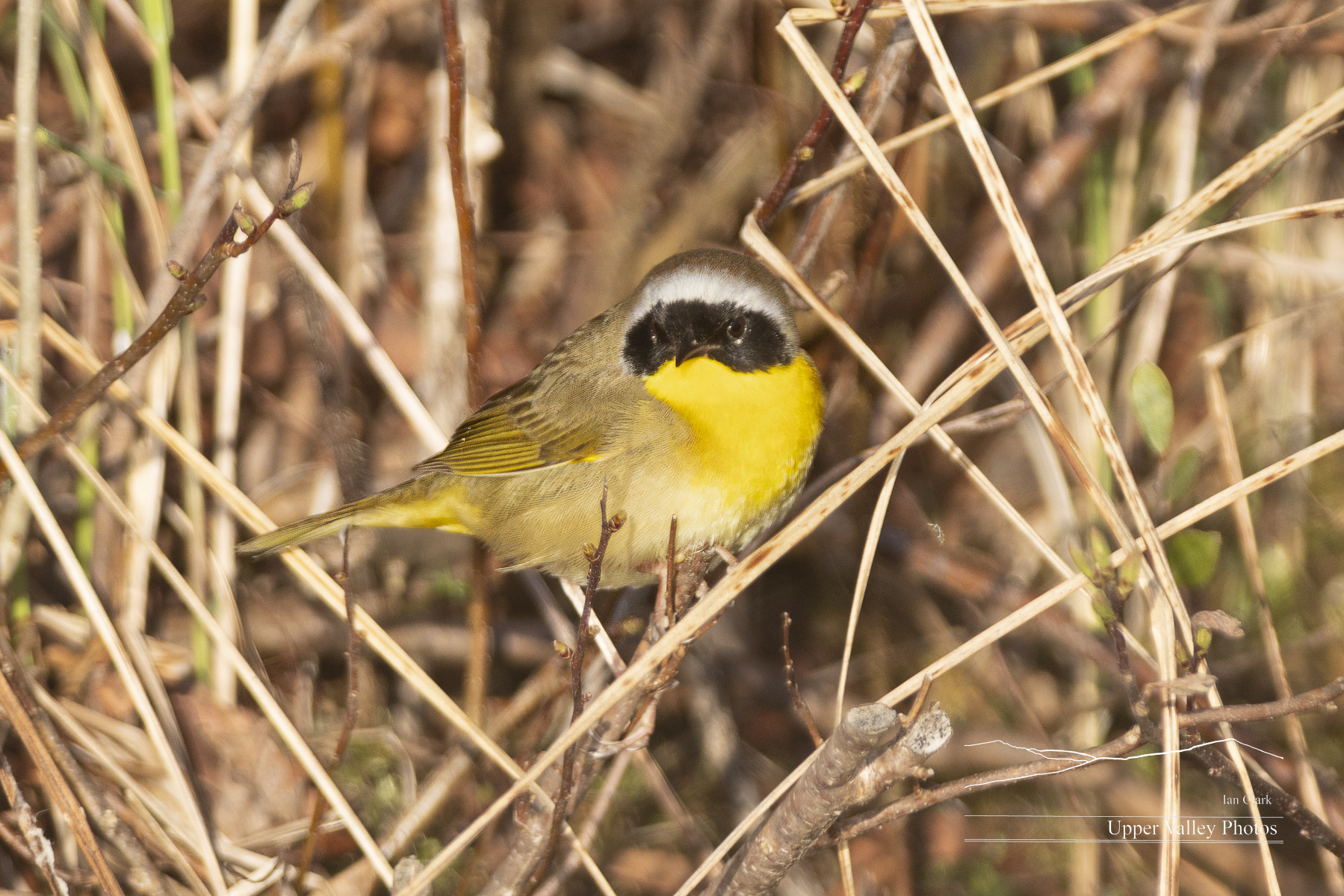
Warblers are back and there was a good-sized flock foraging along the shore. Most were too high in the trees for good shots, but this common yellowthroat was working just about water level.
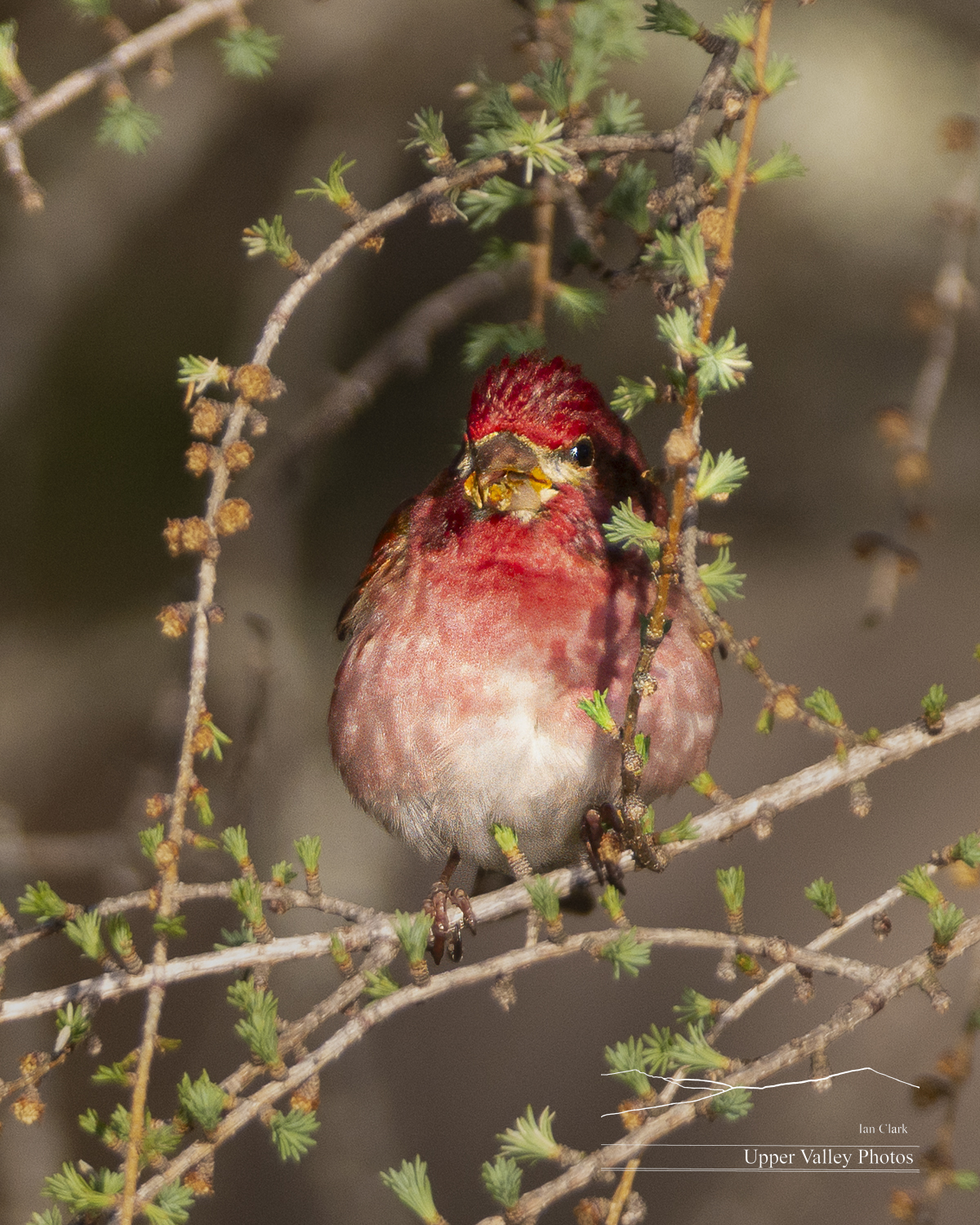
This purple finch (Harold, he says my number came up) was eating tamarack seeds.
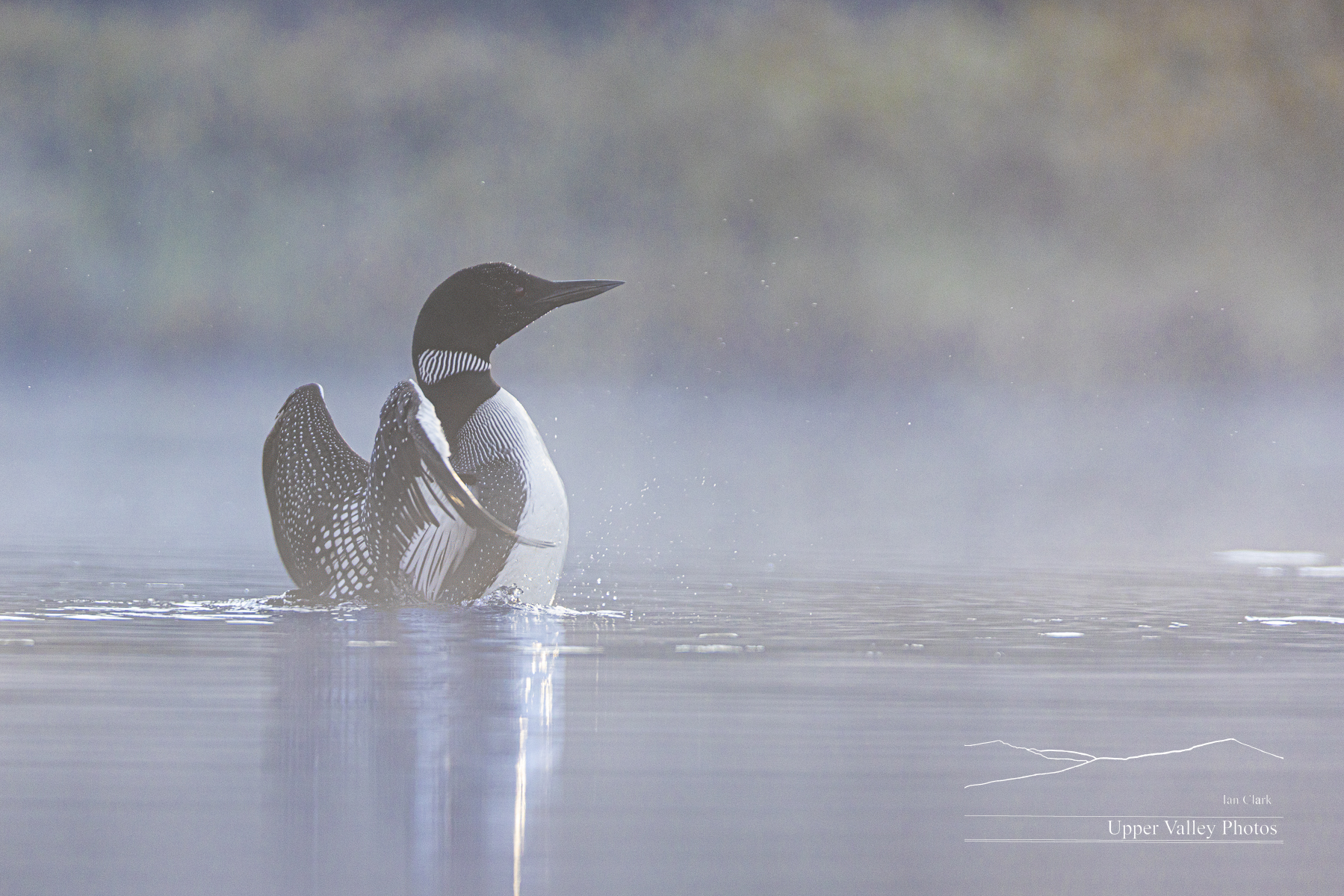
The Westons finally stirred and one gave a nice stretch before heading off to the far end of the pond for breakfast.

I went back to visit them again the next day.
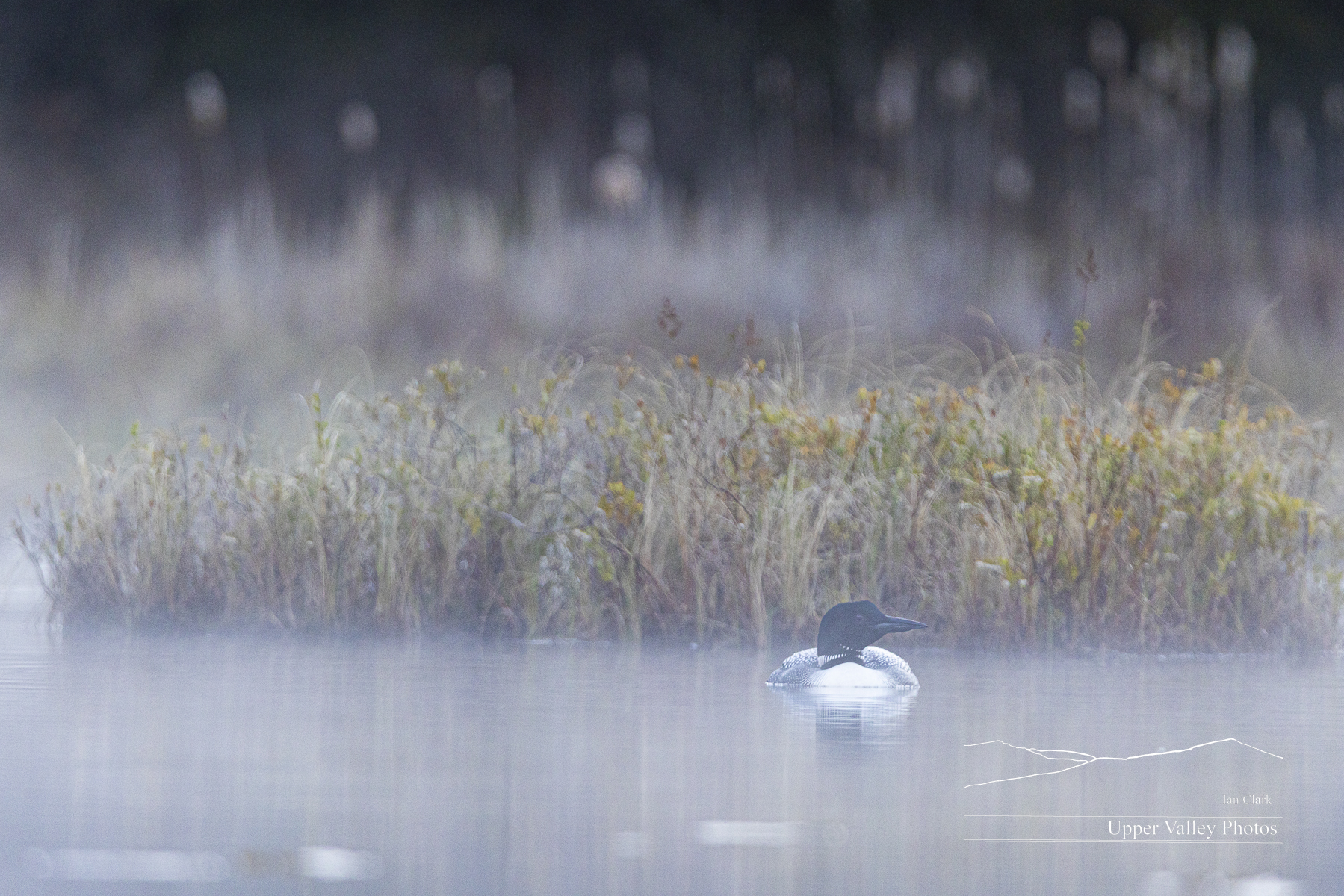
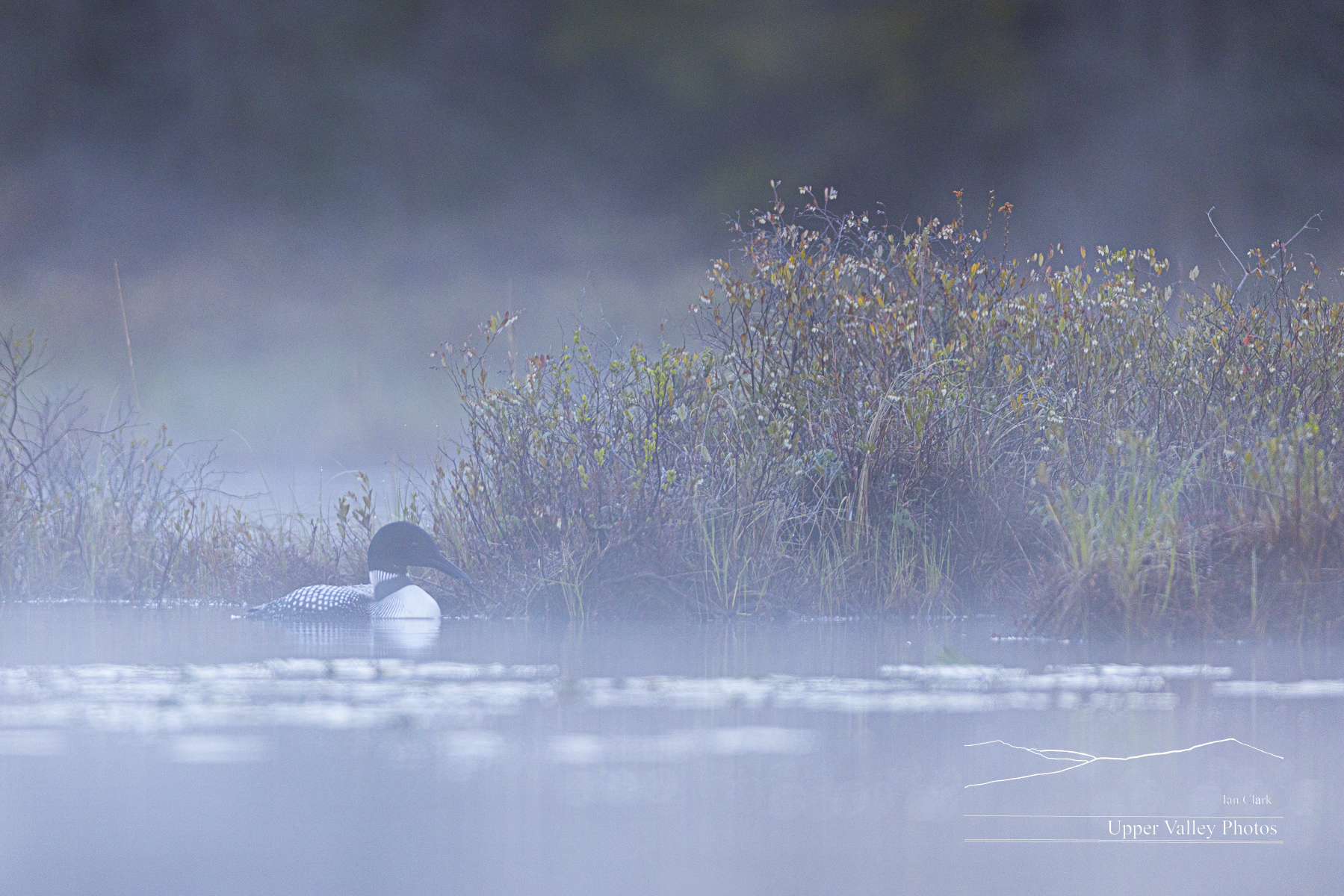
They were up before the dawn and checking out the real estate looking for a nesting site. They discussed the spot where the nest has been for the last several years but didn’t seem to come to a conclusion. The literature says the male picks the nesting site. But, watching it seems to be a joint decision. Much like how I decided on the colors to paint the kitchen.
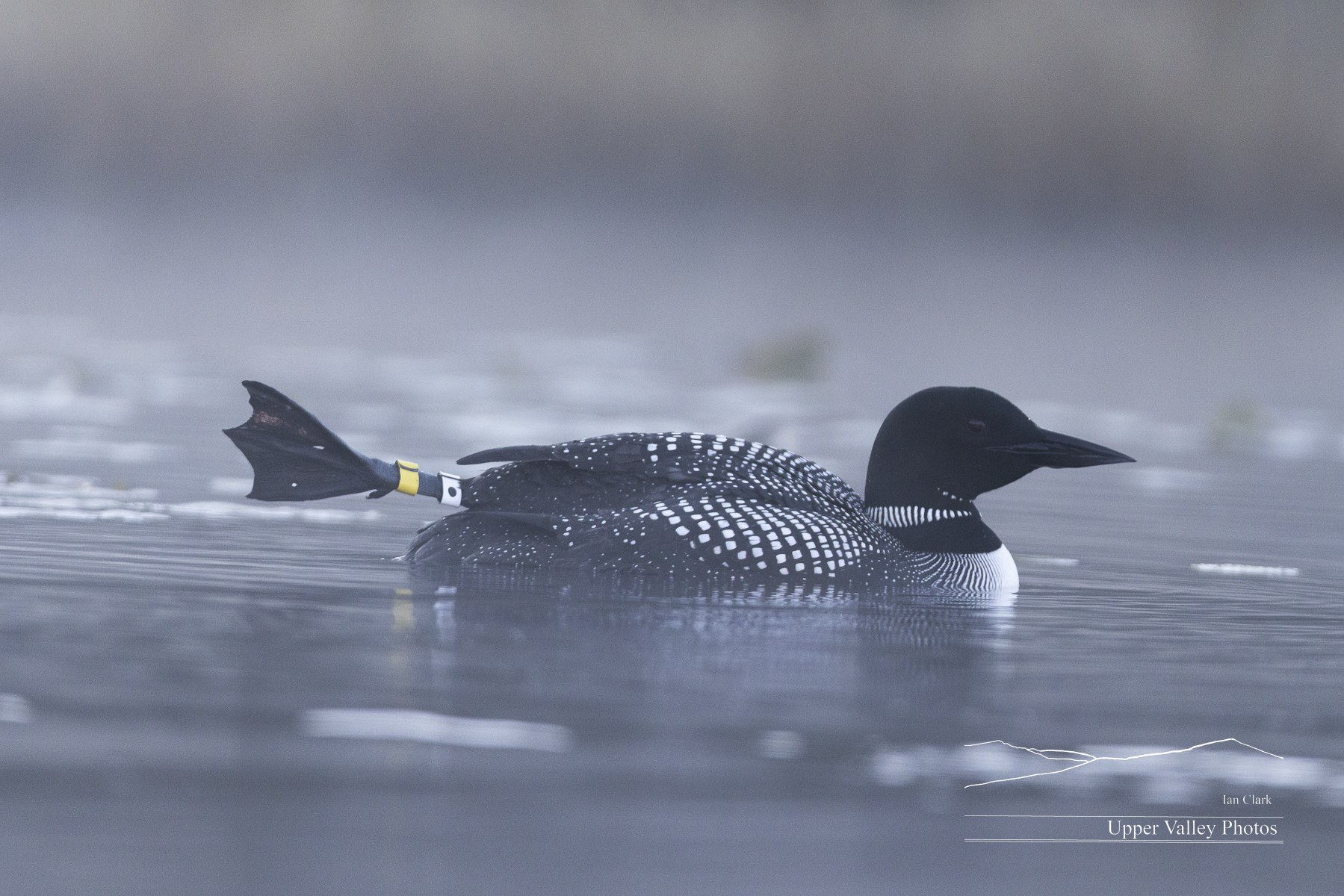
One of the birds stretched a leg and showed he was banded. Last year, the female disappeared from the pond in early August and wasn’t seen again. I suspect that wasn’t good news, that’s early for her to have left voluntarily. The male stayed on the pond and faced off against a challenger every time I visited. My first thought was we had a new female on the pond. I reported the banded bird to the Vermont Center for Ecostudies, Vermont’s loon researchers. They told me that the banded bird was a male that had landed in someone’s driveway. The Center sent someone to rescue the bird. They banded him and released him in a pond without a nesting pair of loons. We’ll never know if it was Mr. Weston or the challenger that was chased off the pond. I’m hoping this is the same bird that I’ve likely been watching for years.
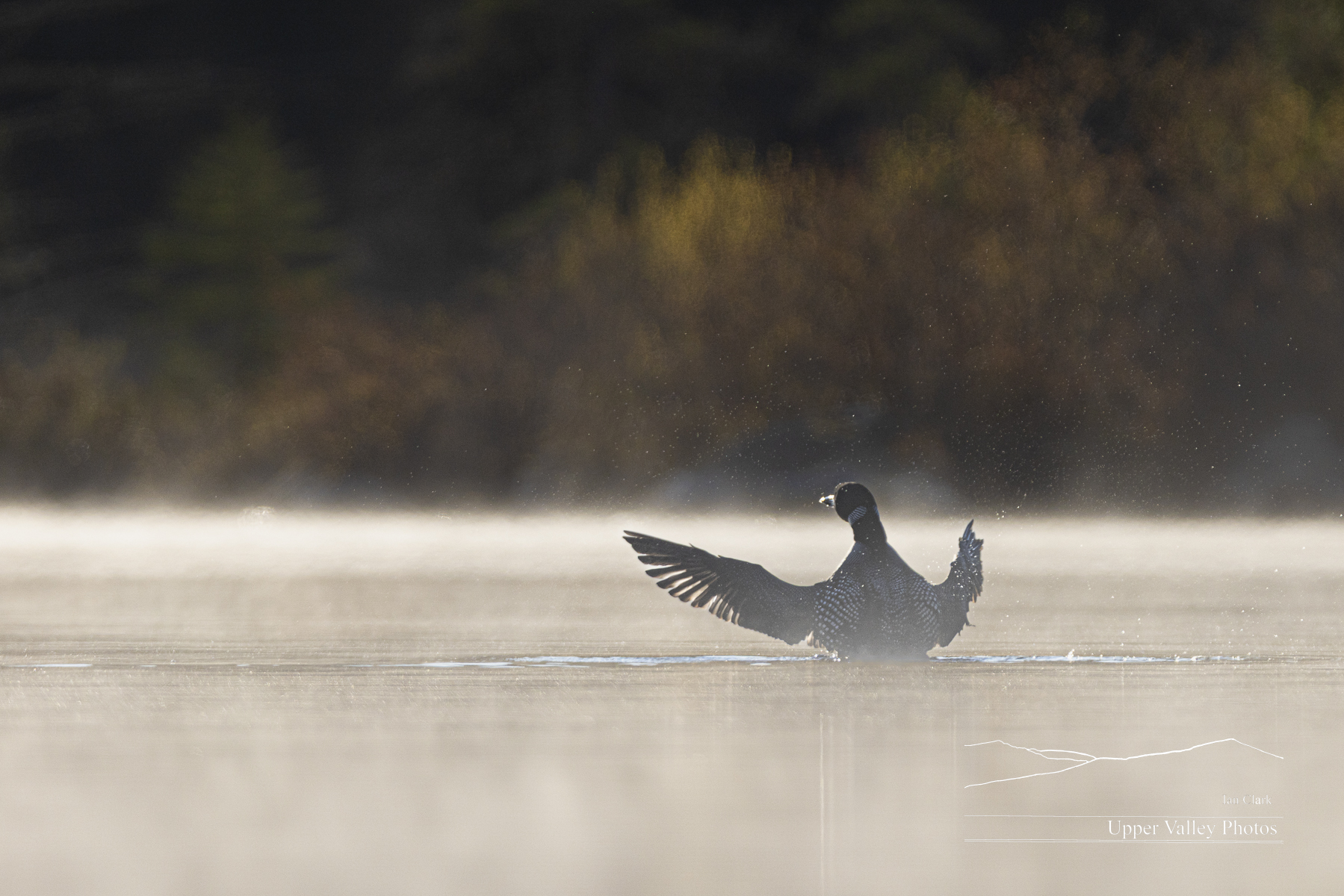
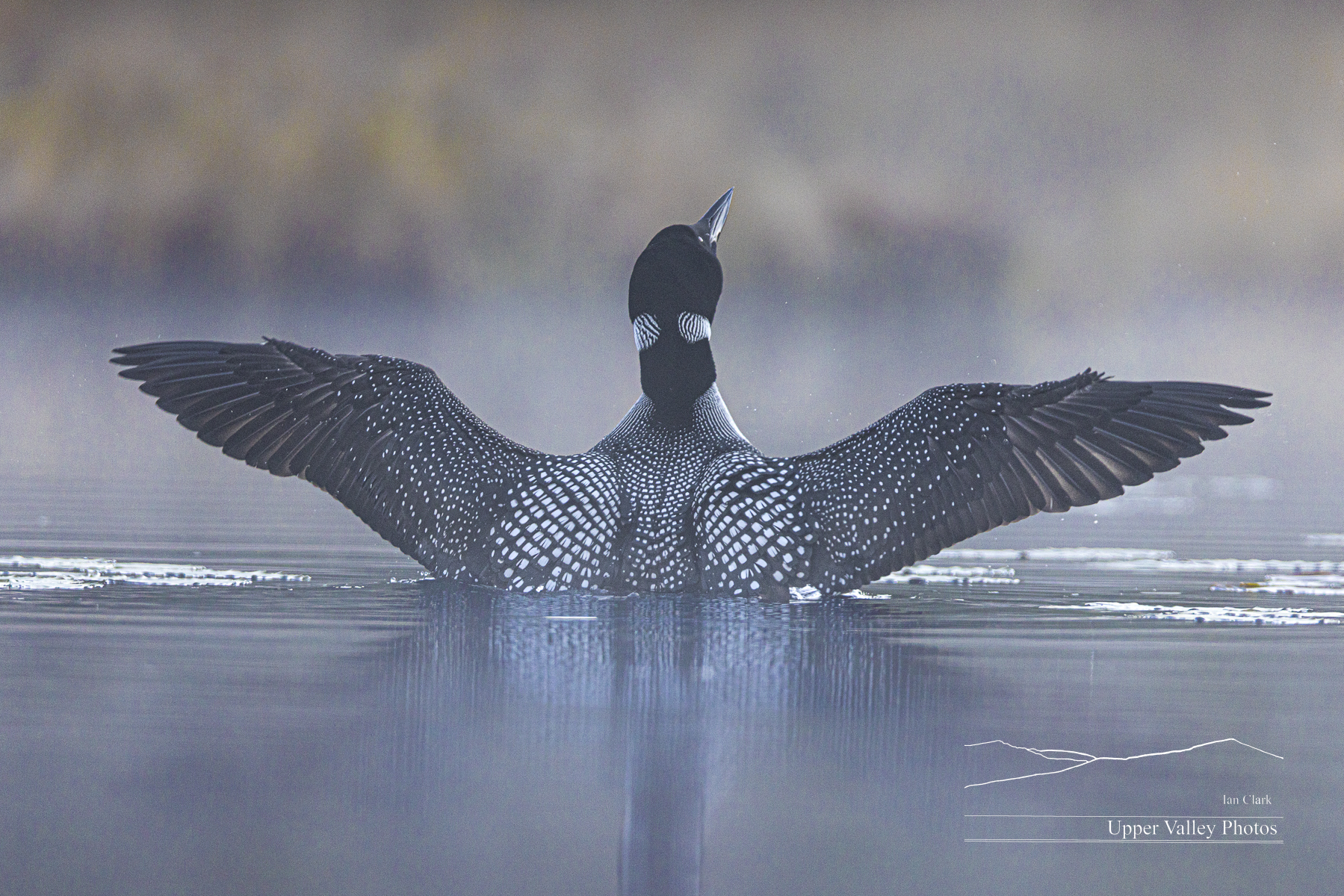
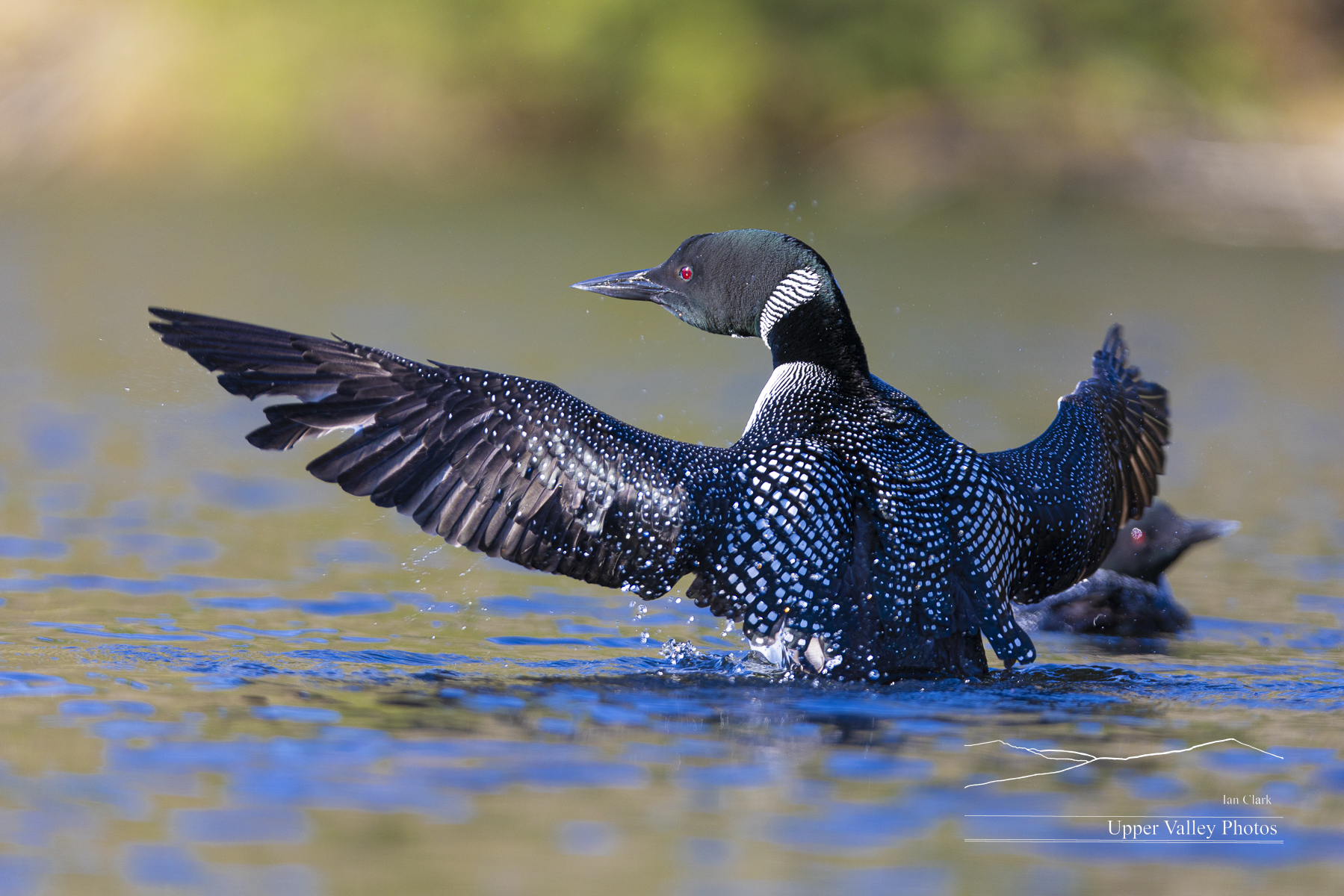
Mr. Weston gave me a nice stretch. Or he was throwing his wings up in frustration….
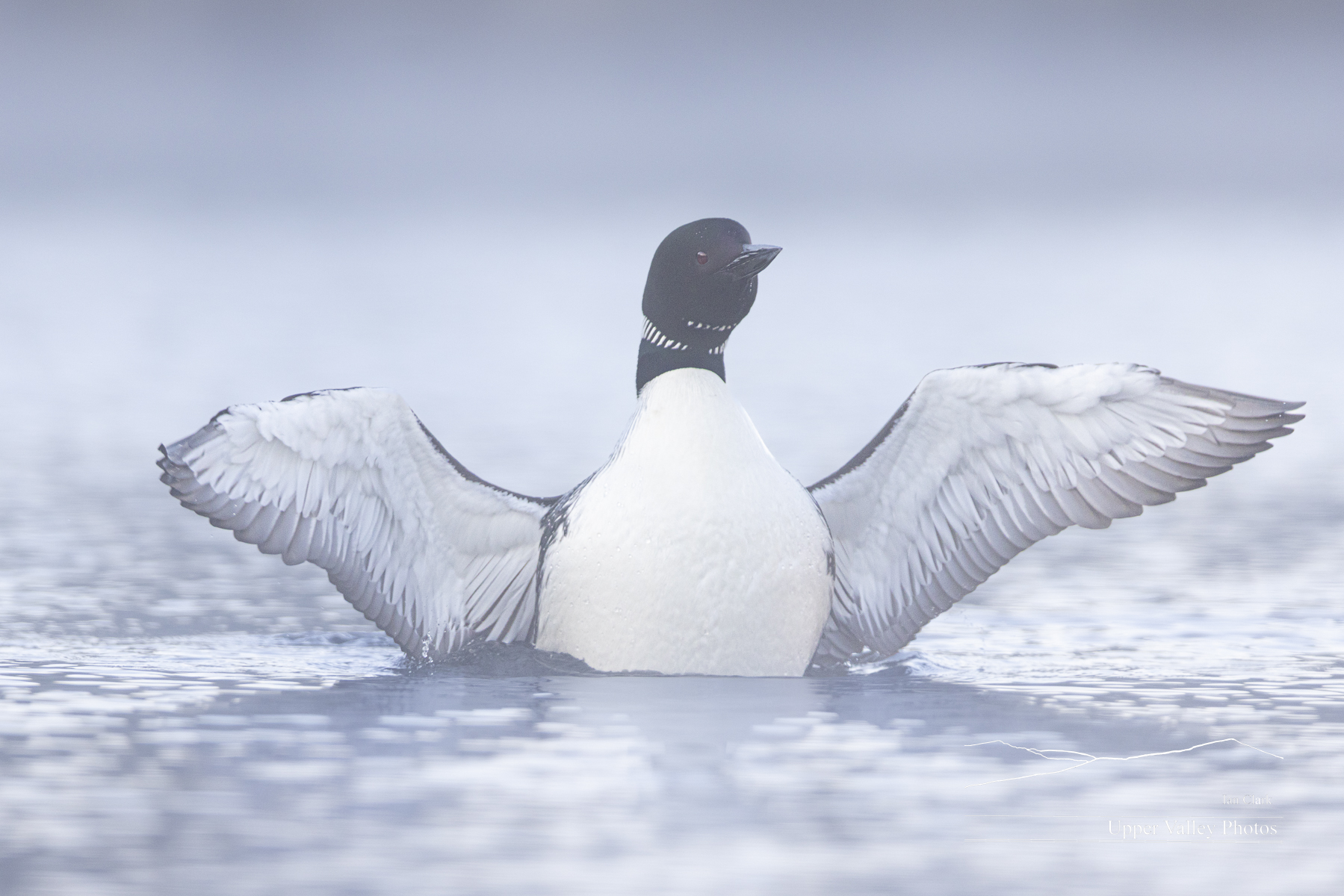
Mrs. Weston answered with her own stretch.
Then they resumed the search for a nest site.
It didn’t look like they came to a decision on where to nest. Mr. Weston stretched again and they headed out for breakfast.
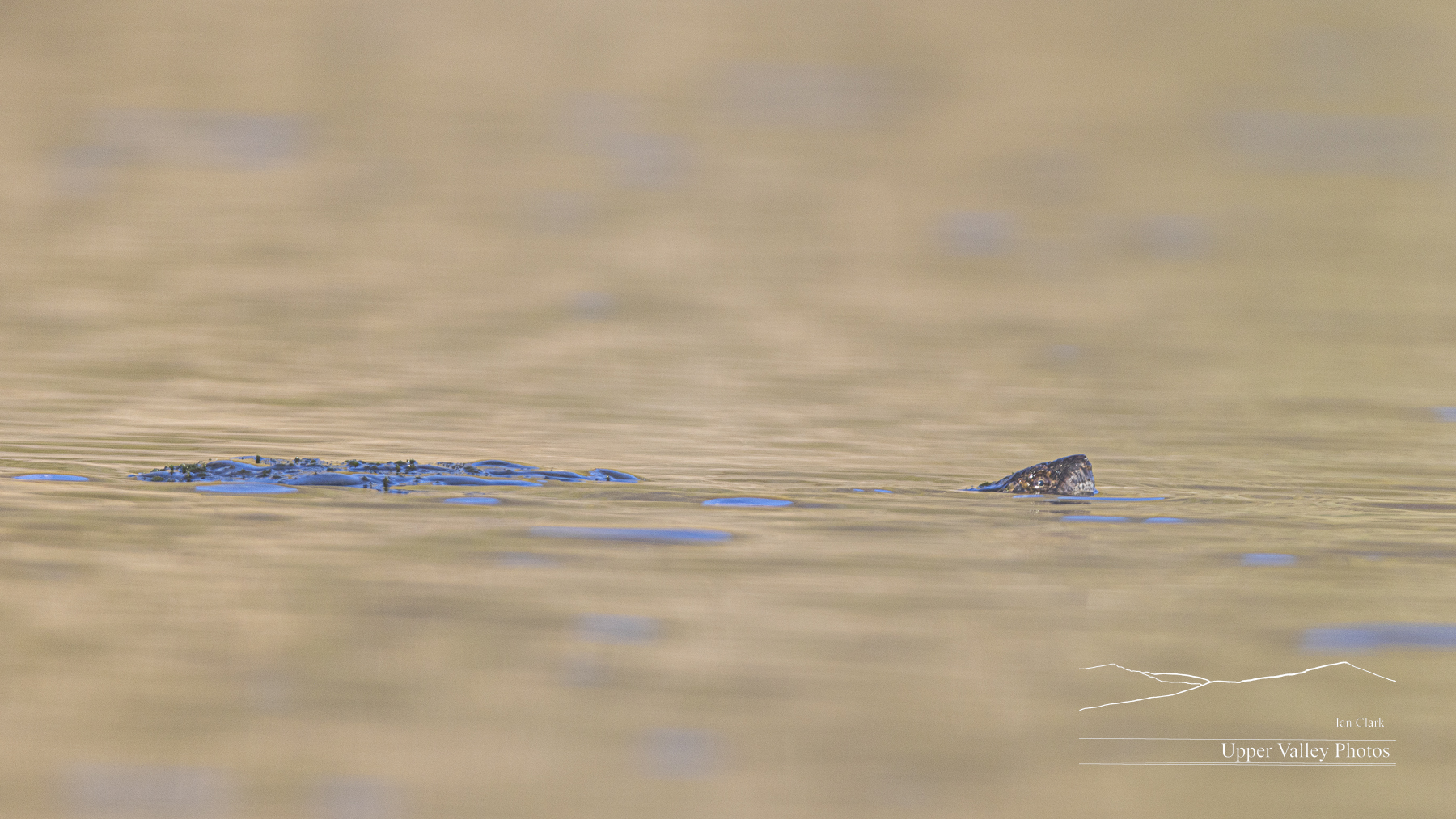
The Westons’ pond has a good population of snapping turtles. I’ve had three great looks at turtles in shallow water so far this year. All three turtles were large, but nowhere near the size people claim they’ve seen. They actually top out with a carapace – the upper part of the shell – about 20″. This turtle appears to be basking. Snappers like to stay in the water rather than climb out to bask. They’ll float along with their head and top of their shell exposed.
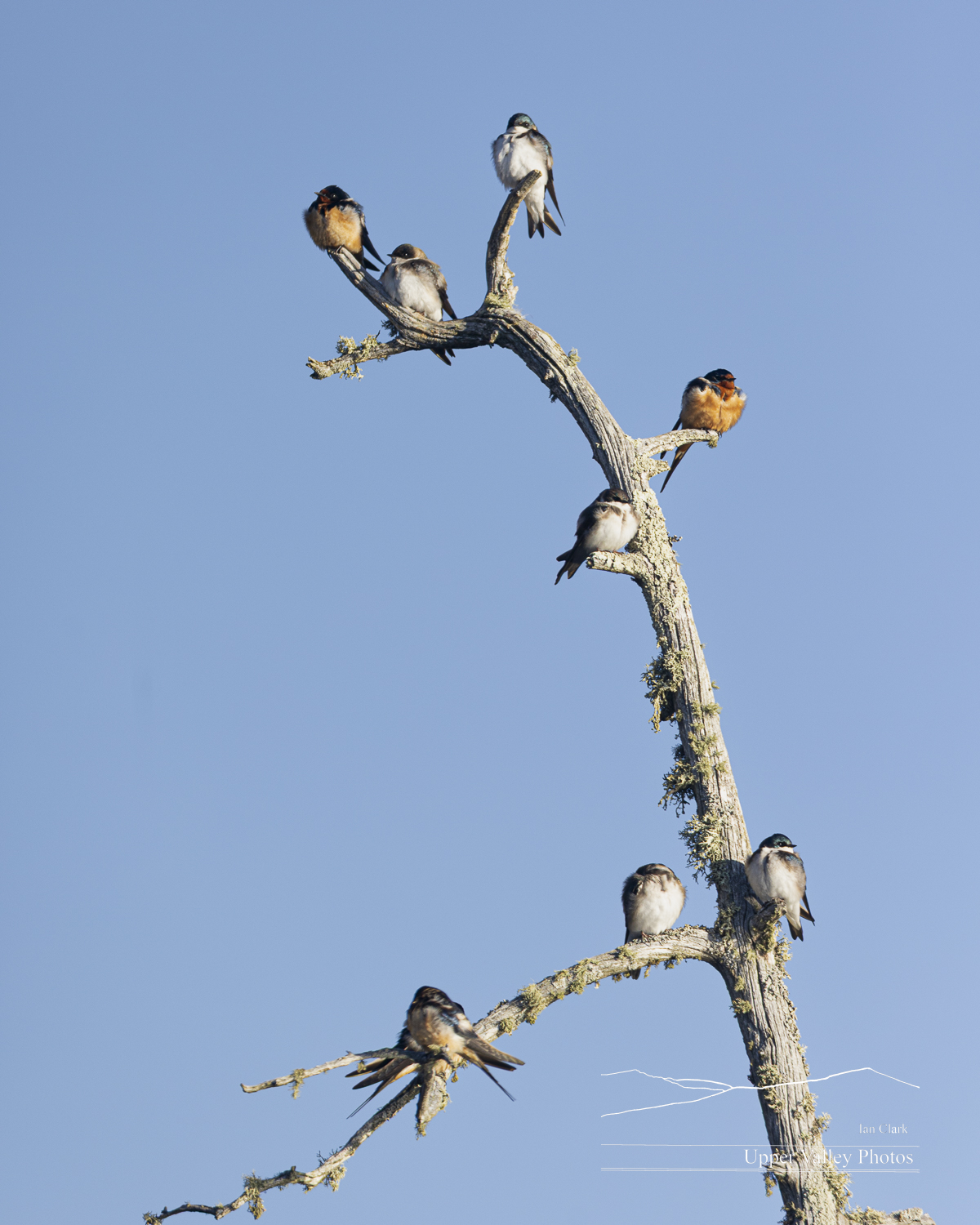
The tree swallows and barn swallows were back on their favorite perch, waiting for the insects to get out and about.
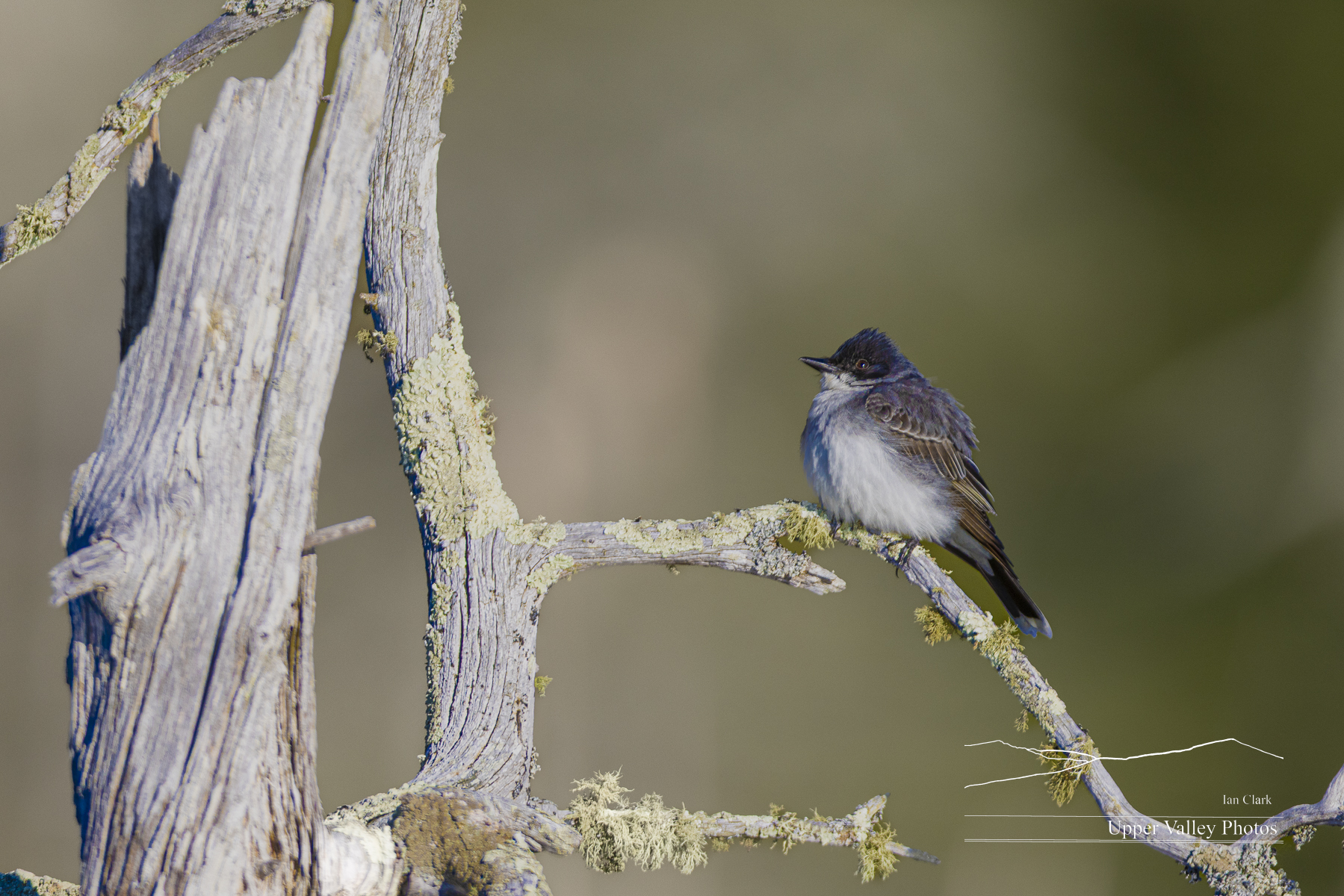
Eastern kingbirds (Elvis, the King) are back and paired up. They seem to prefer dragonflies for their diet. Dragonflies are scarce in the early spring, kingbirds feed on smaller insects until the dragonflies return or emerge. Some dragonflies migrate, in other species the adults die out in the fall leaving larvae to survive overwinter.
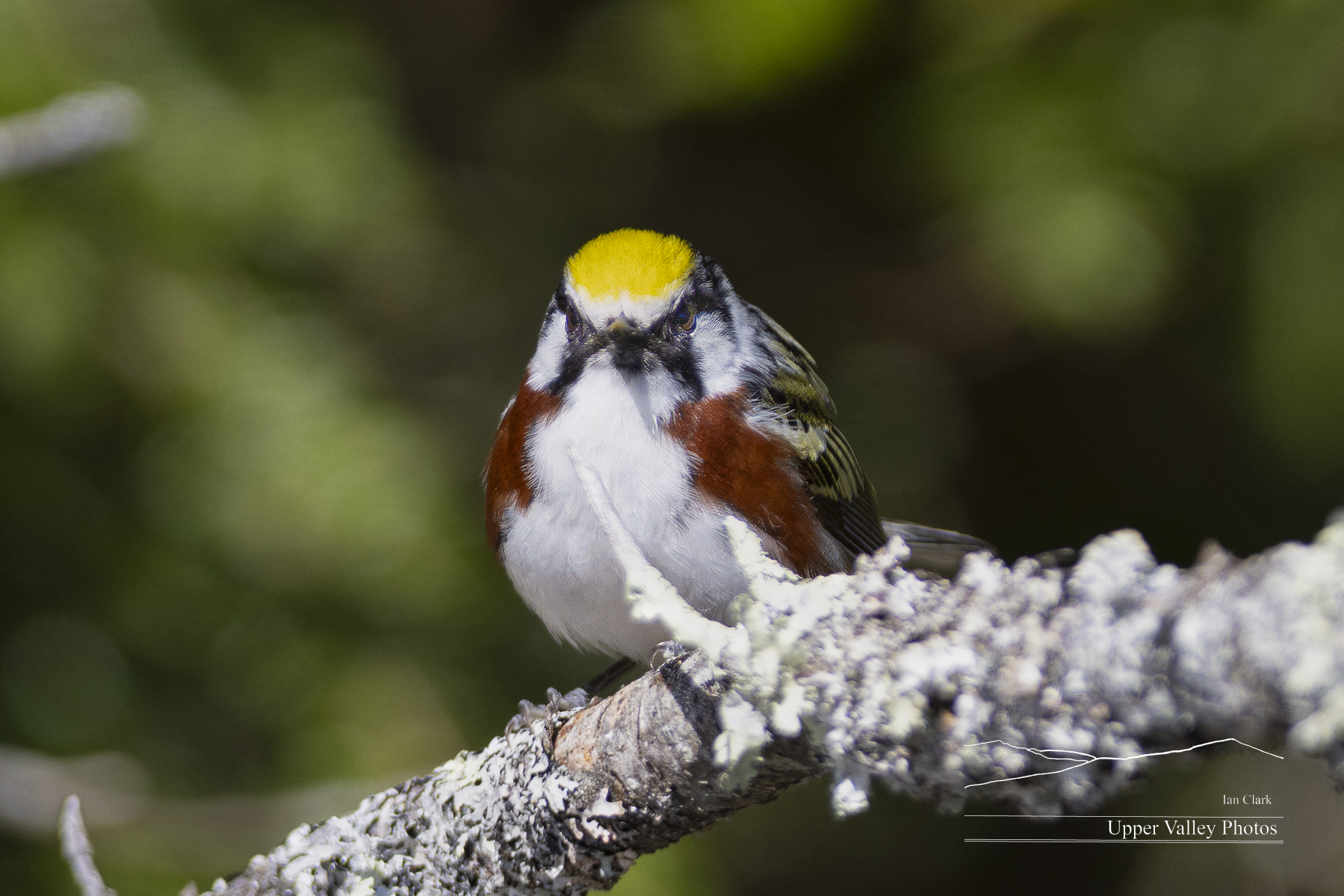
I spent some more time trying for the warblers. This chestnut-sided warbler teased me for several minutes before pausing in the open for his photo.
One of the Westons gave a stretch as I head out for the morning.

On May 11, I put the boat in the Waits River in Bradford, VT to see who might be around.
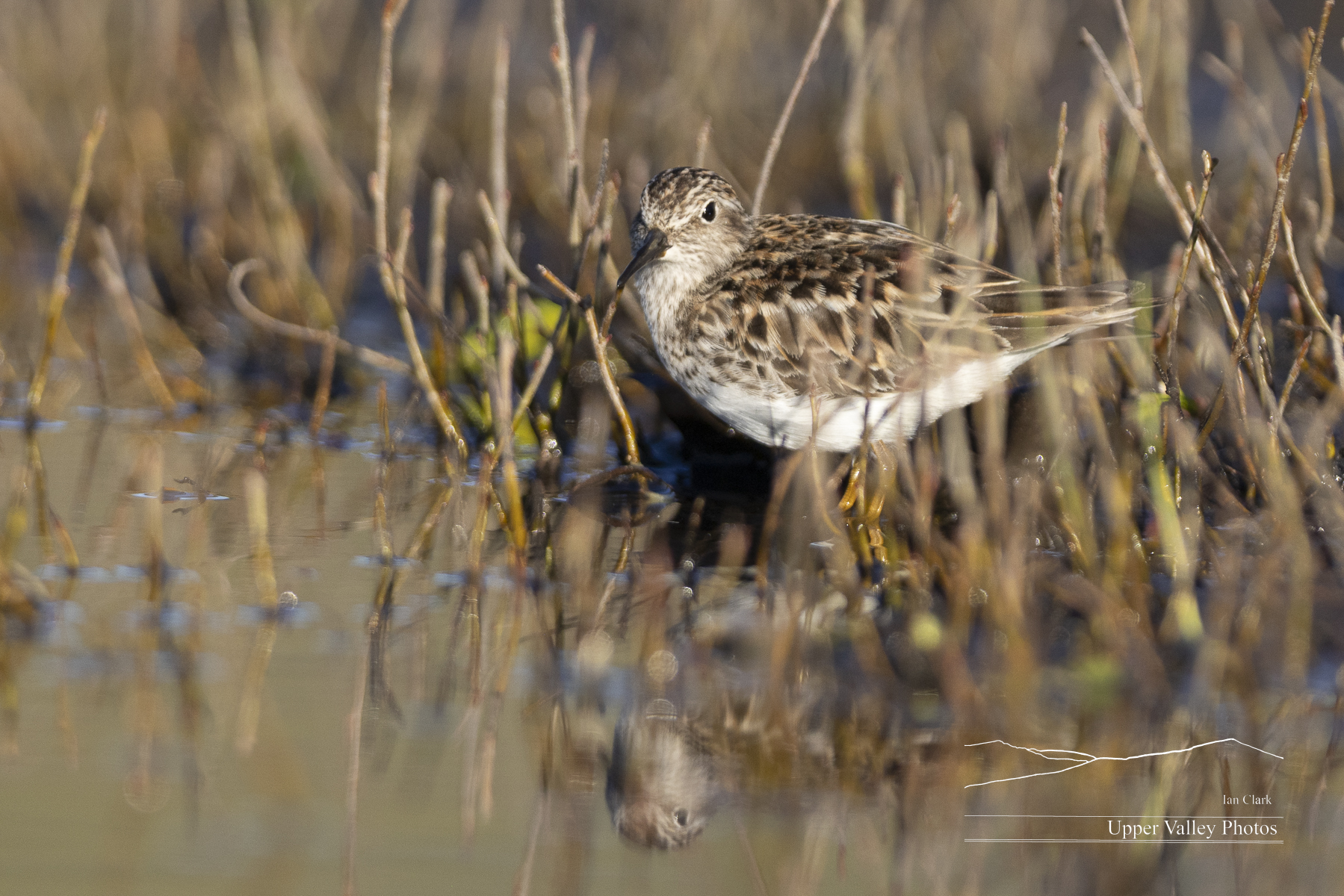
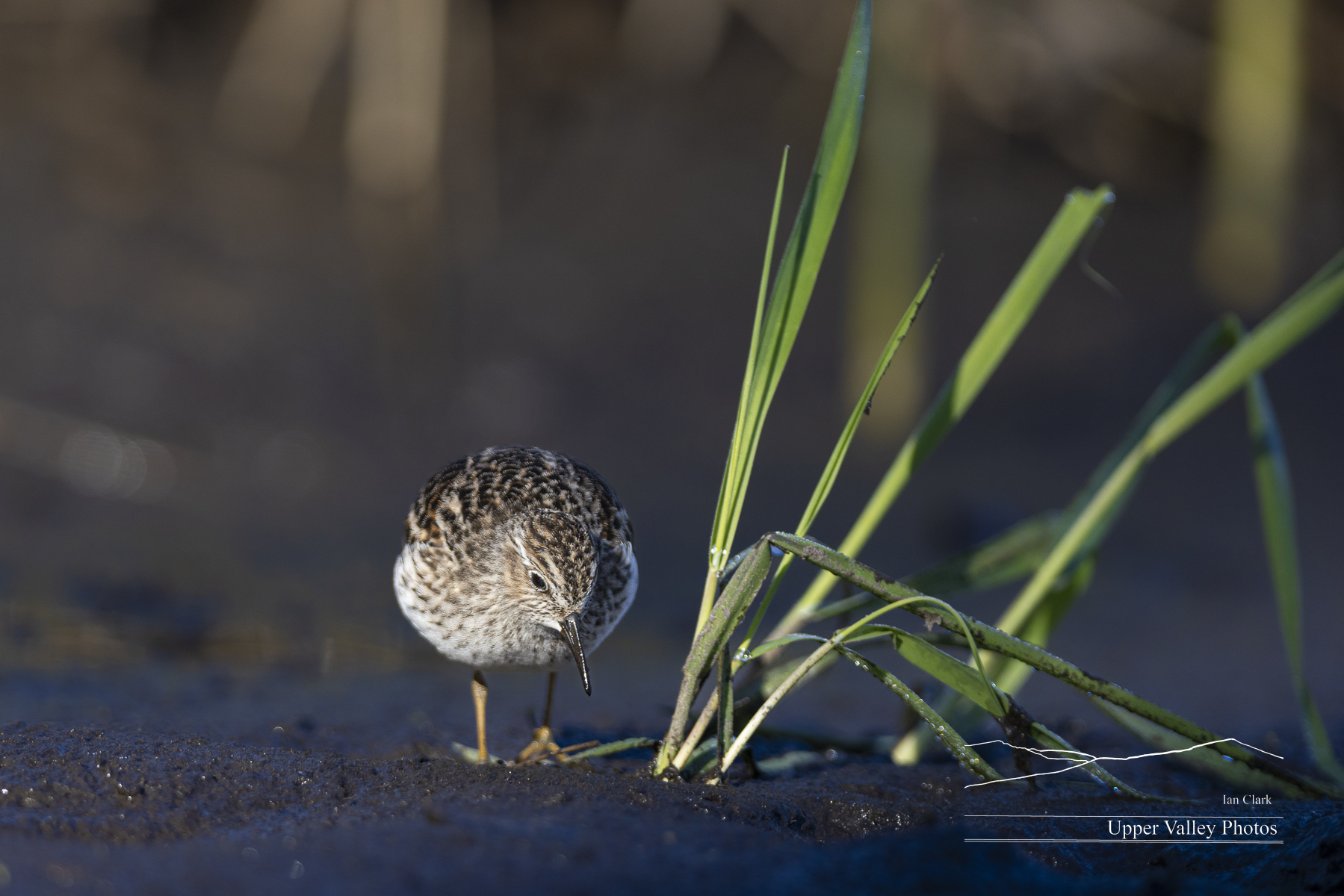
There were a couple dozen sandpipers around, this least sandpiper was foraging for breakfast in the reeds along the shore.
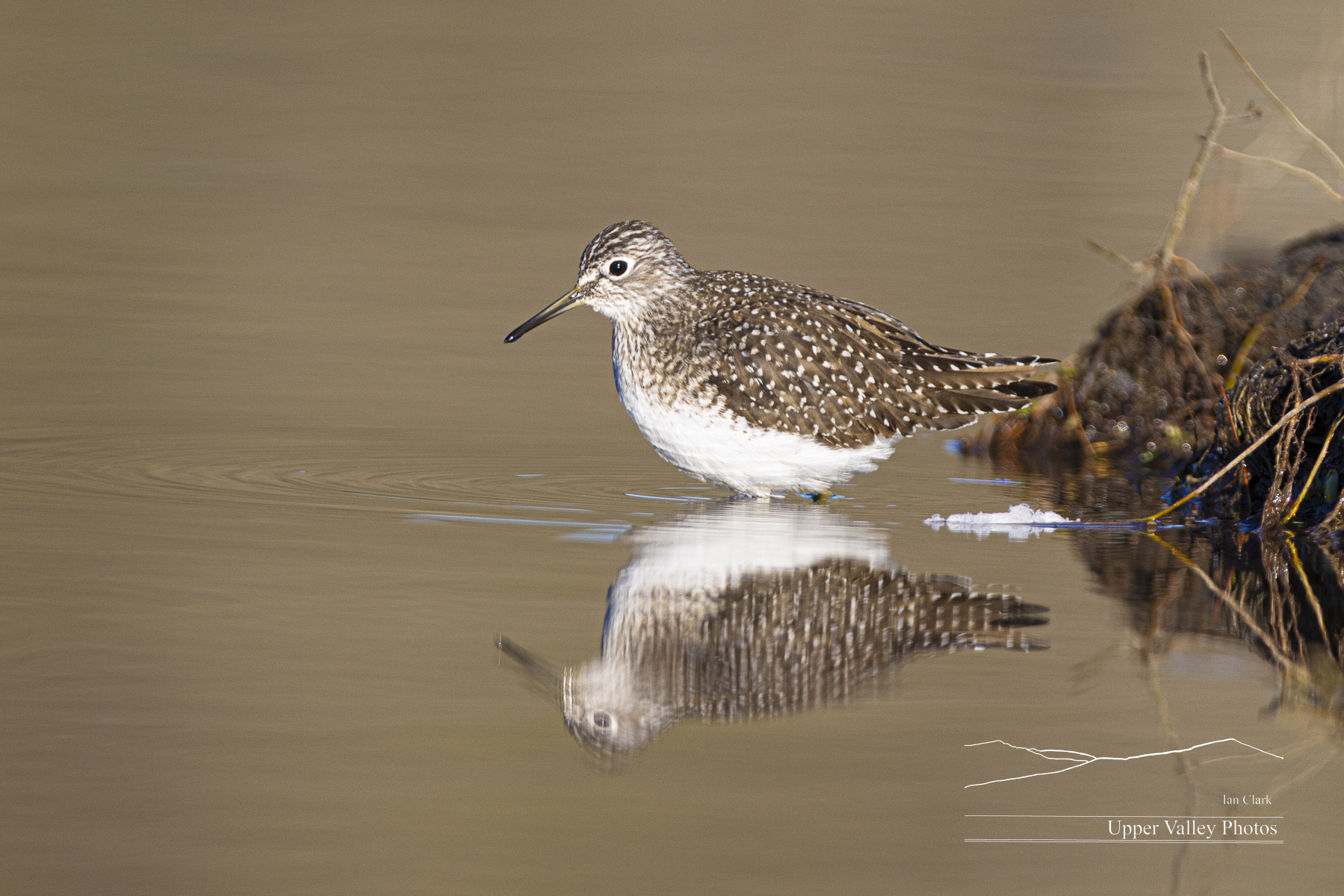
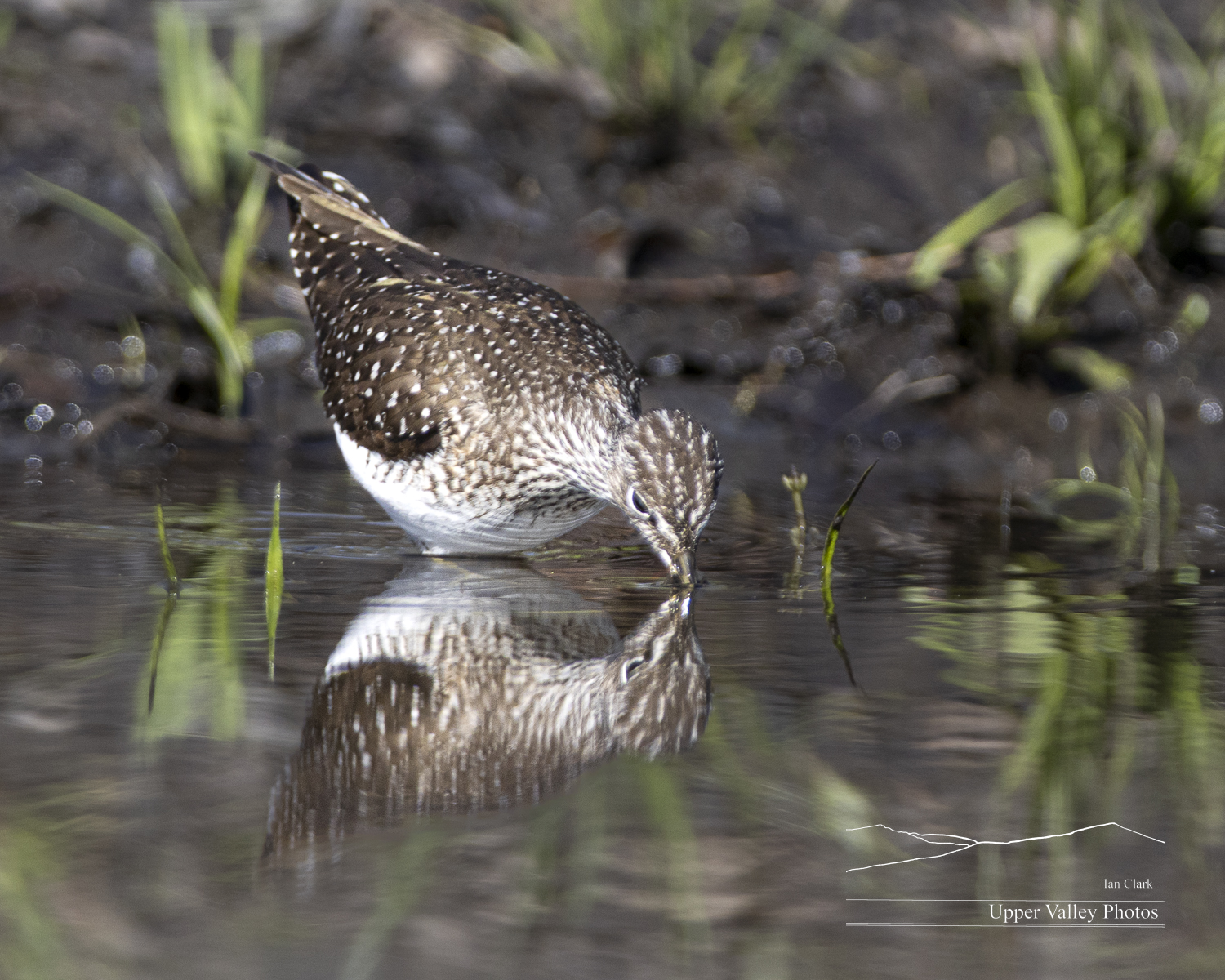
There were several solitary sandpipers foraging as well.
Another least sandpiper. Least sandpipers are allegedly the world’s smallest shorebirds. They’re often called ‘peeps’ for their size and call.
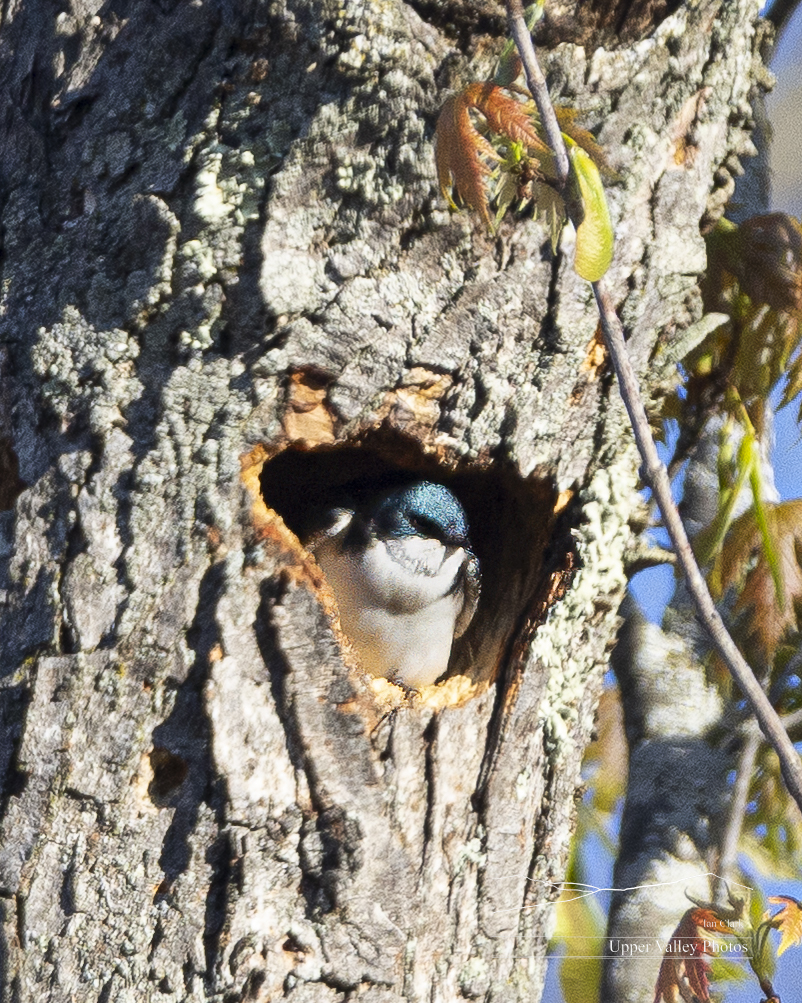
As I floated by, I checked to see how our northern flickers were doing. Only to be surprised to see a tree swallow in the nest the flickers had been working on. There were flickers calling in the area, but I don’t know where the couple from the last post settled.
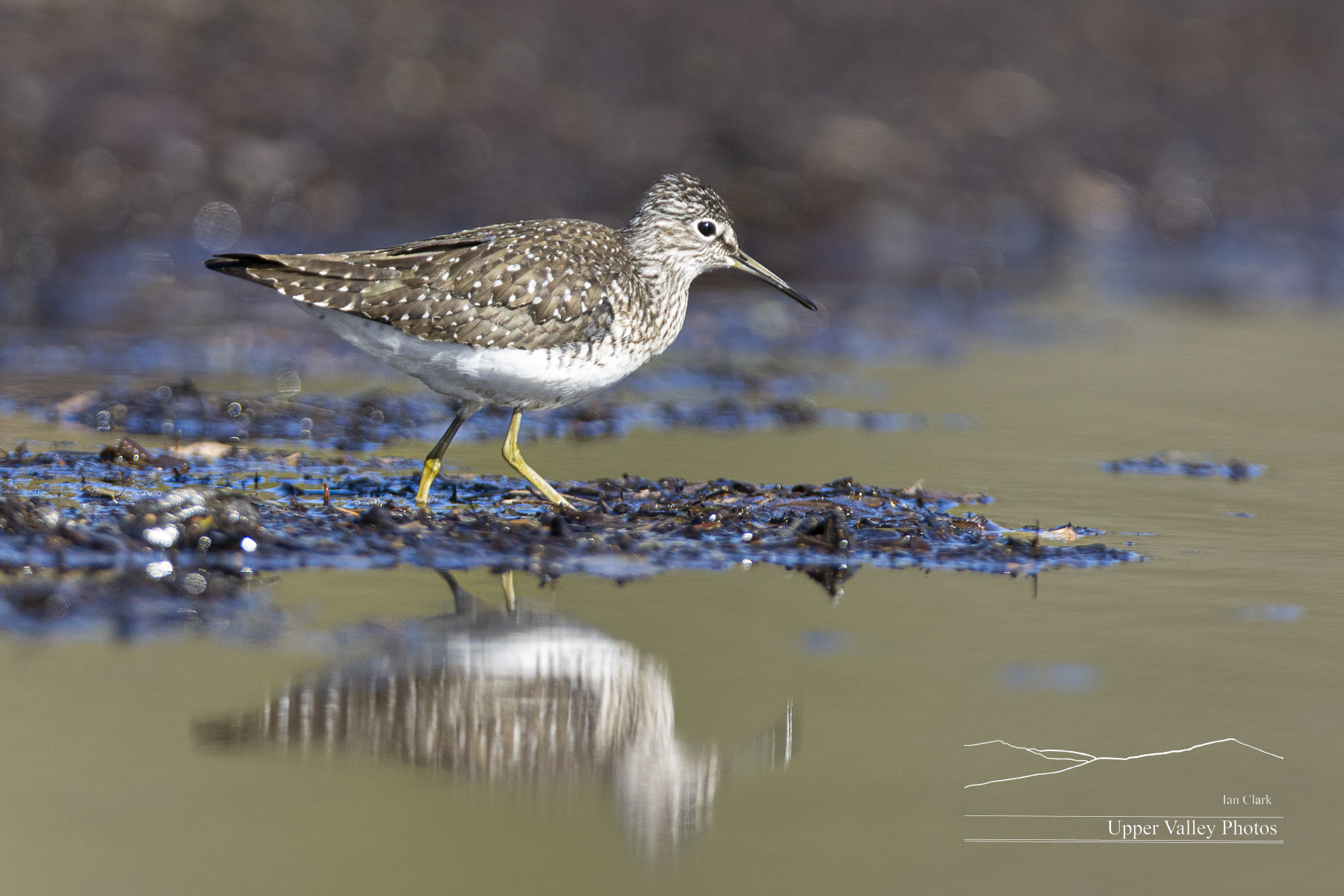
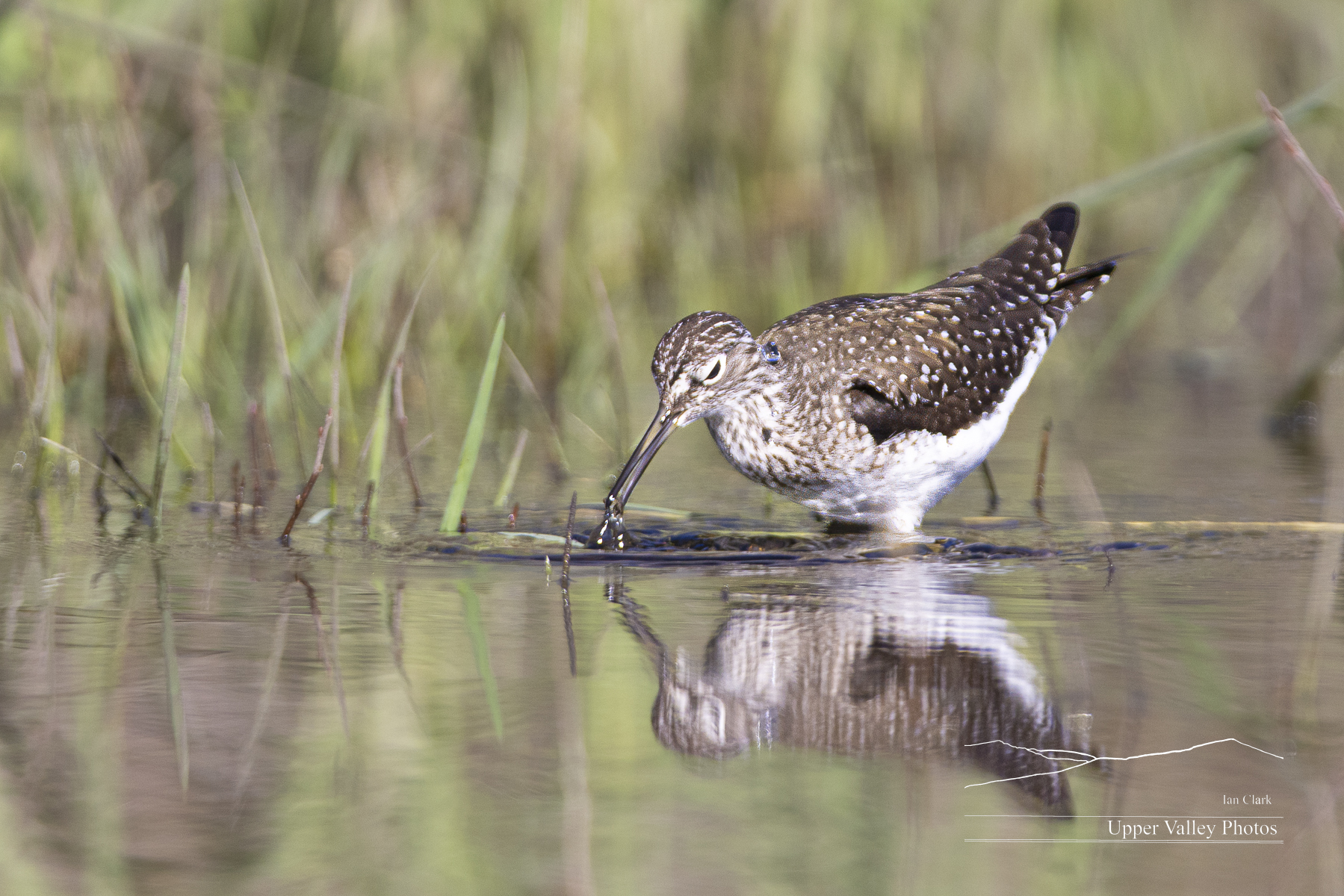
I beached the boat and watched this solitary sandpiper foraging for some time.
The same sandpiper finding a snack.
And the same bird with another catch.

I’m watching the weather, looks like we’re going to have a nice weekend, I’ll be back out early.

If you enjoy my posts, please sign up to get notified when I add a new post. I won’t sell or share your email, you’ll just get an email when I add a post. And you can do me a favor by sharing my blog with your friends by email or on social media. Thanks!

Shorebirds Courting, Nesting and Chicks

Early this past Tuesday morning, I again started questioning my sanity. Getting up and around to be on the road by 2:30 just doesn’t seem to have the thrill I once thought it might. At least traffic was light until I got into Massachusetts. I headed down to look for shorebirds and whatever else might appear. My timing proved to be pretty good.

A little housekeeping before we get to the photos. Several of you have emailed with tips or sightings. It looks like I’m having trouble getting messages through to Gmail addresses. I’m working on figuring out why. I try to answer all the messages I get. If you use Gmail and sent an email that didn’t get a reply, I’m sorry. I was able to track down a few people by phone, but couldn’t find numbers for everyone. If you didn’t get a reply, please send another email with a way to contact you that isn’t Gmail.

Want to learn to take your own wildlife photos? I’ll be speaking to the Upper Valley Camera Club at the AVA Gallery, 11 Bank Street, Lebanon, NH next Tuesday, June 10 at 6:30 pm. The talk is aimed at folks with a 35mm camera with interchangeable lenses. The wildlife we’re going to talk about is almost all within reach of a day trip from the Upper Valley. Sorry, no lions, tigers or elephants. Hopefully, I’ll have lots of useful tips. Free and everyone welcome, but they request you register beforehand at https://avagallery.org/event/june-monthly-meeting/.

And one more, I’ll be at the League of New Hampshire Craftsmen’s Fair a the Mount Sunapee Resort in Newbury, NH  August 2-10, 2025 with lots of new prints, cards and 2026 calendars. I’m planning on traveling for much of the fall and will miss many of the shows I usually do. The League has a number of amazingly talented craftspeople, the Fair is worth a visit just to gawk.

OK, OK, you want photos.

One of my goals for this spring is to get some cute photos of cygnets – baby swans. With all the rain, I’m ever more behind tracking critters down. I hoped to find some swan families on this trip.

I found two swan families that stubbornly stayed well out in the marsh. I’d left the boat at home, they seemed to know exactly how far to stand off to keep me from photographing them.

Next I went looking for piping plovers. Their chicks start hatching along the New England Coast early in June. I got lucky and found two families each with four chicks that had hatched the day before.

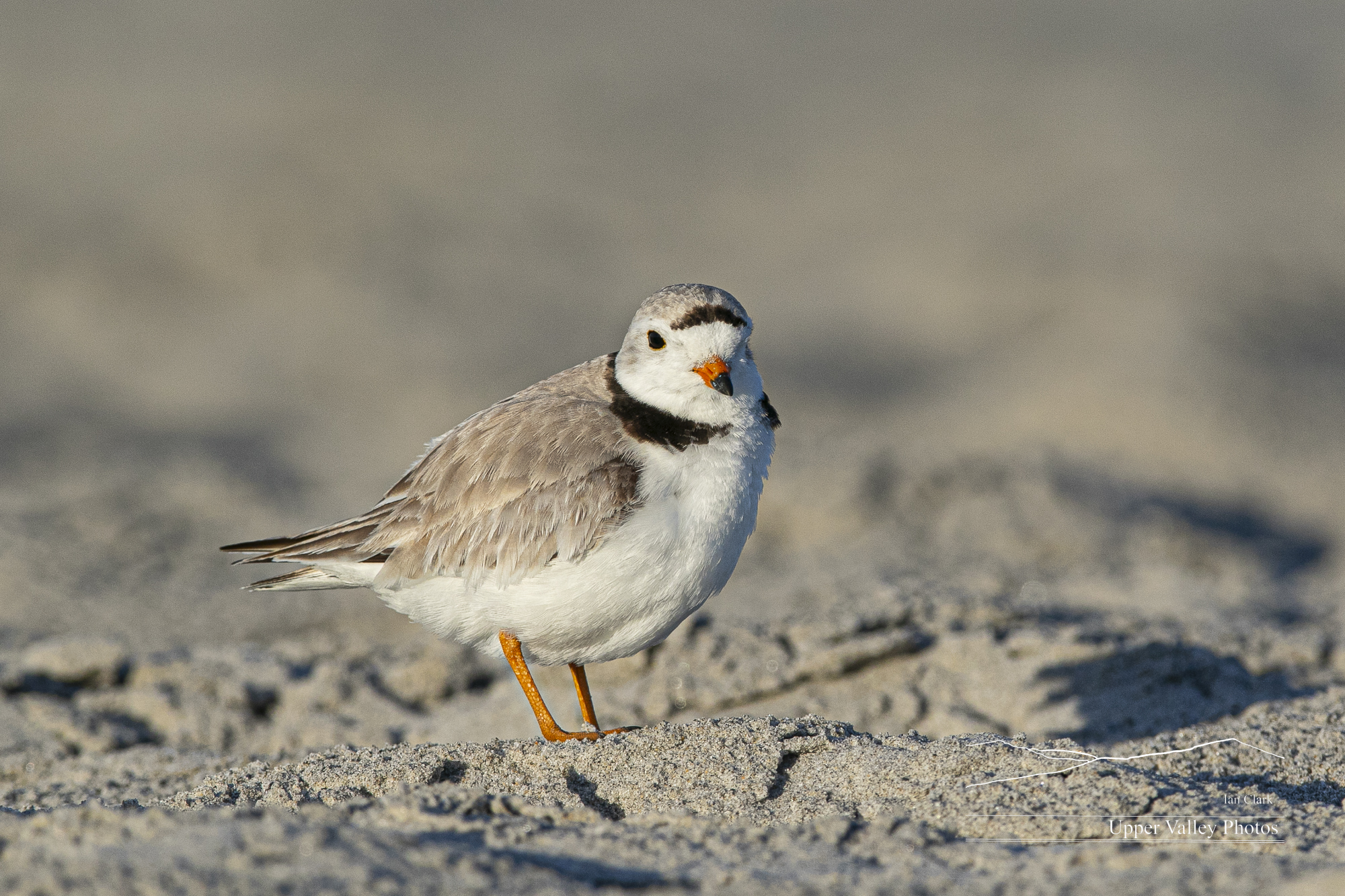
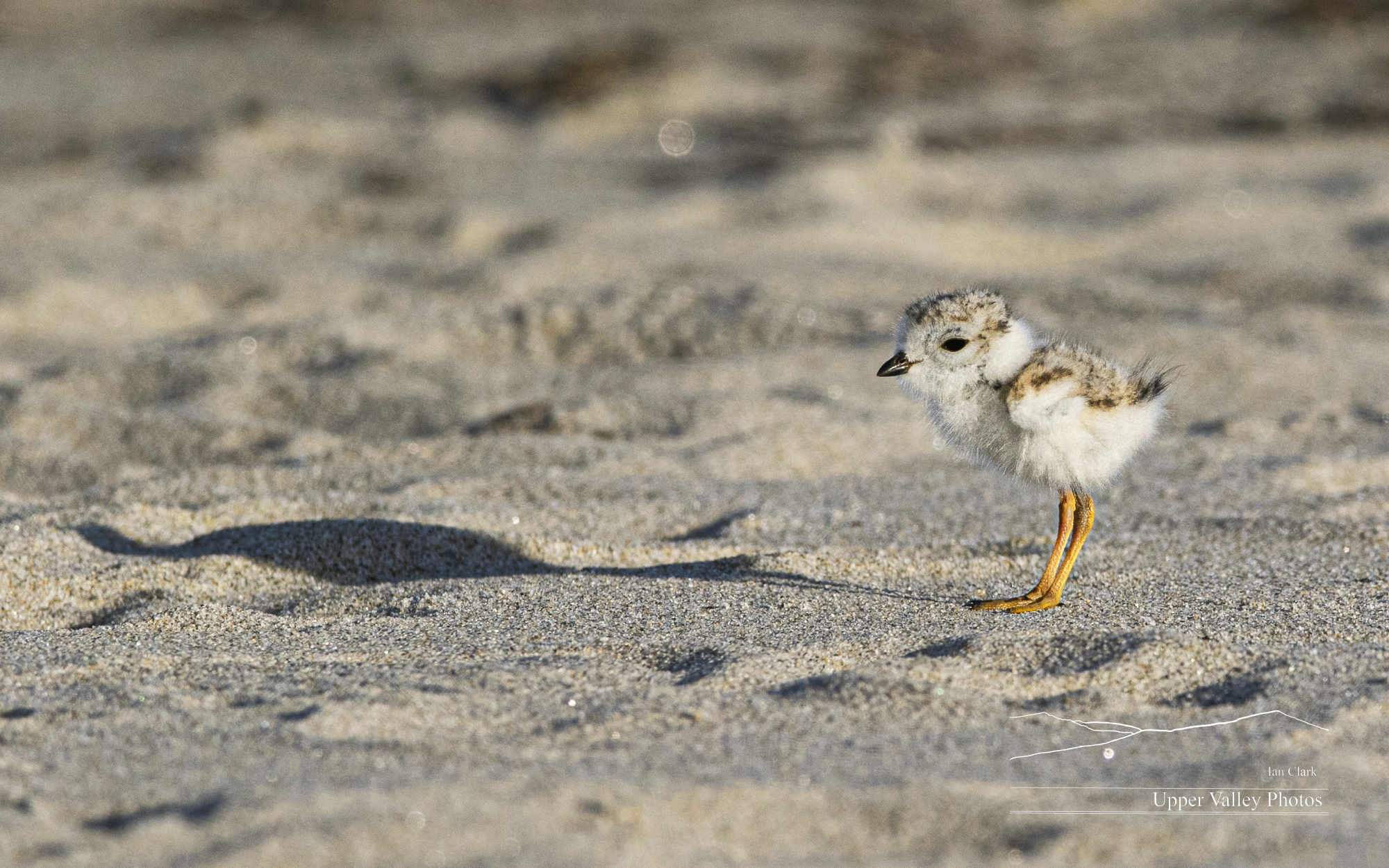
Piping plovers are handsome shorebirds, they’re roughly as big as bluebirds, albeit stockier. They’re endangered – estimates range from about 7,600 to 8,400 piping plovers left. They nest in the grass just above the sandy part of the beach and forage in the grass and along the beach. The chicks weigh something like one-fifth of an ounce (less than three dimes) when they hatch and stand about 2 inches tall – about the size of cotton ball. The little buggers are fully prepared to forage on their own. They scoot along the beach, stopping for just a couple seconds before scooting off several feet or yards in any direction at something like 25 mph.

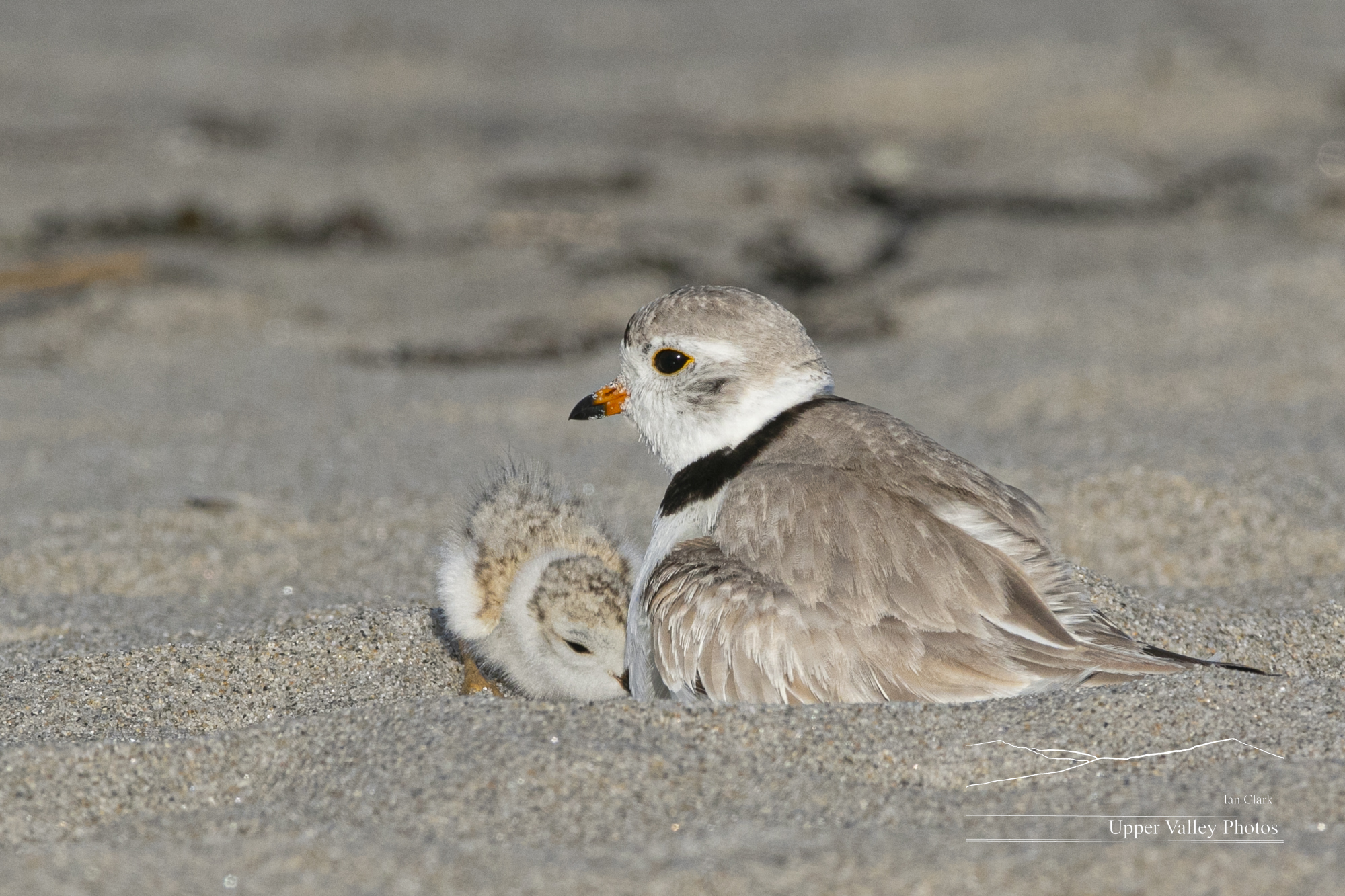
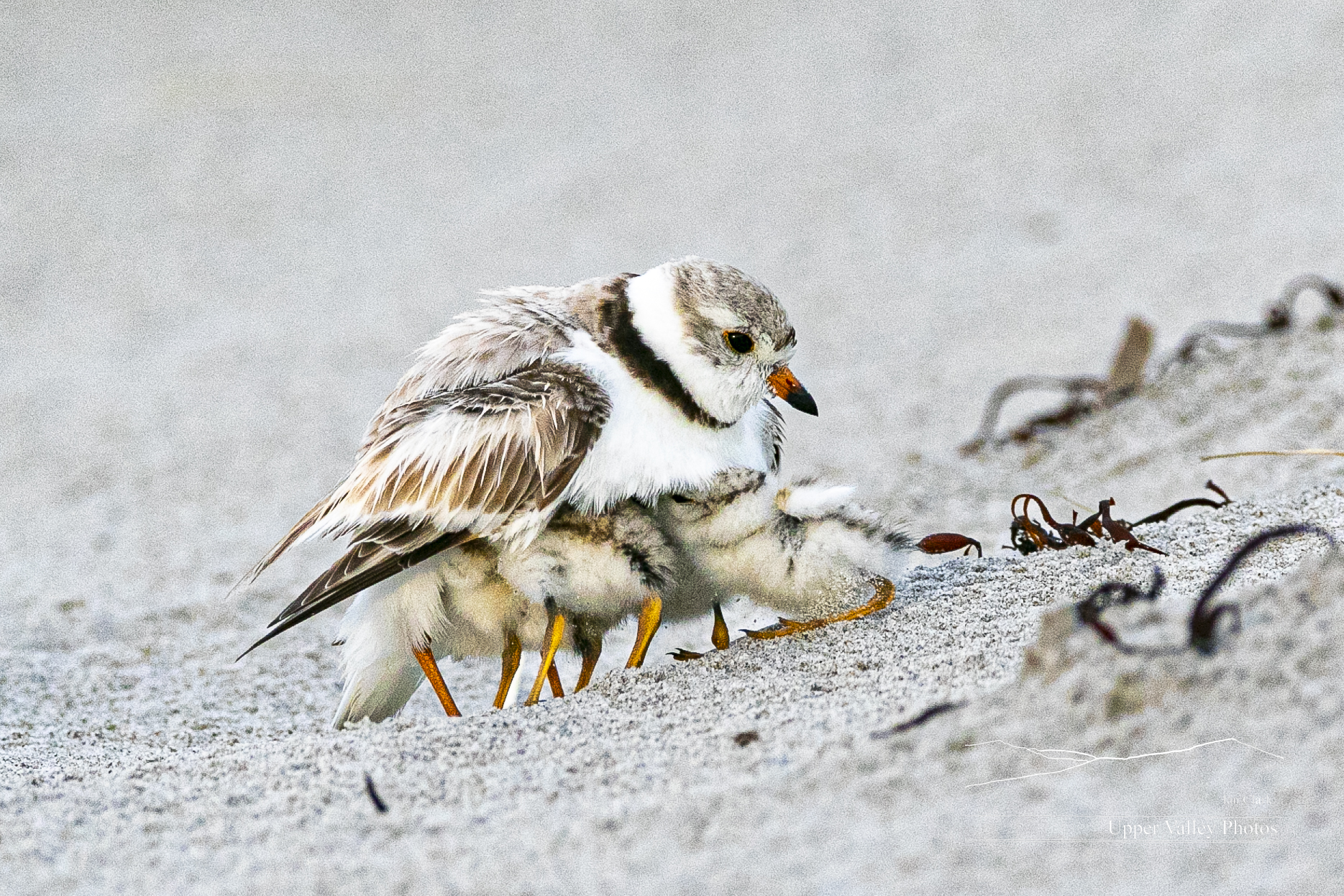
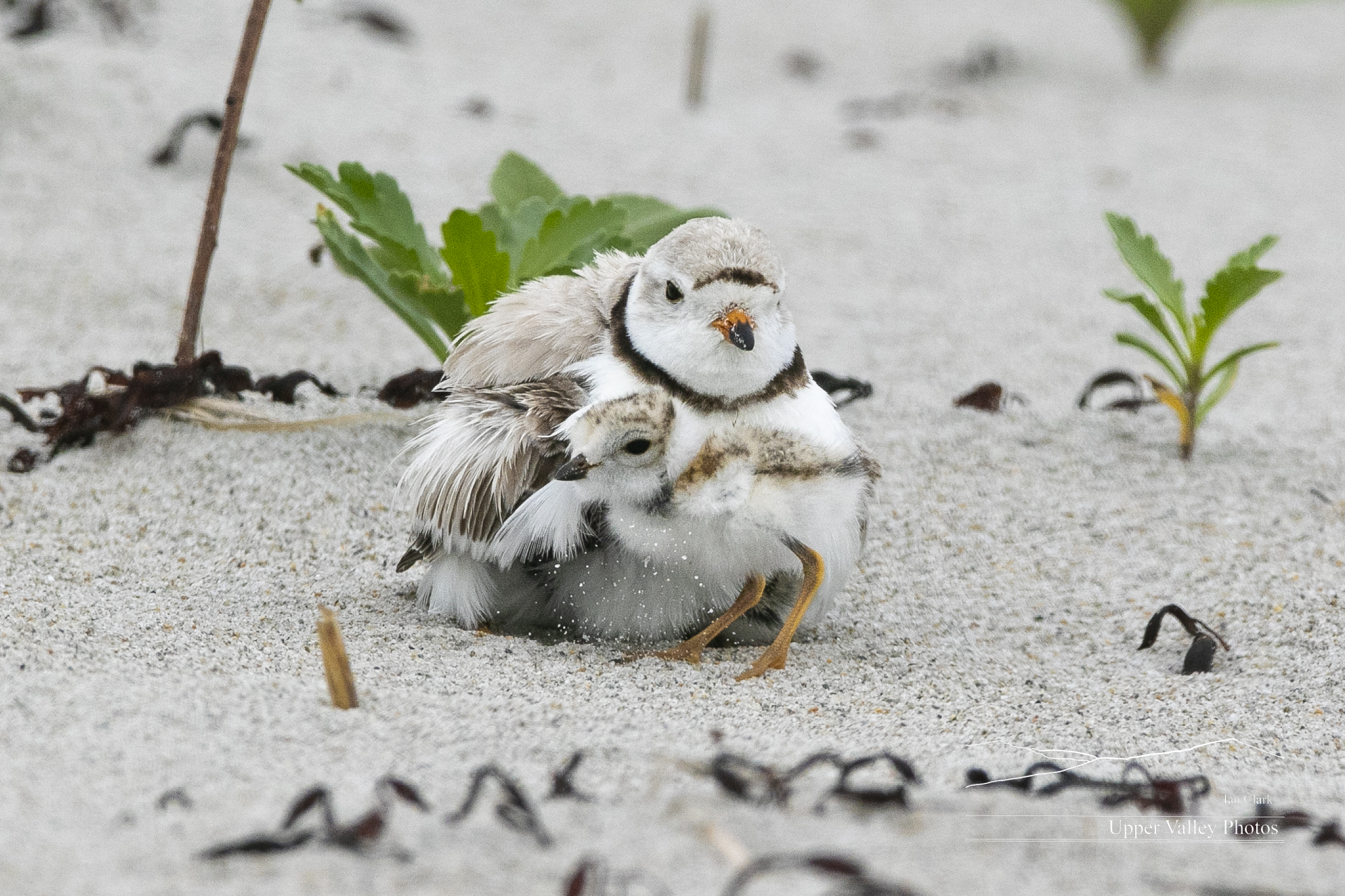
Both parents tend the chicks, such as they do. The parents watch the chicks as they scoot about and call them to take shelter under either parent for warmth or protection. If the chicks aren’t tucked under and the parent senses a threat, the parent will display like they’re injured. They flare their tail and walk clumsily while peeping to attract attention away from the chicks. This brood has four chicks and there are already at least two tucked under this parent.

This is a very rare photo of a chick taking cover under a parent. My extensive research has proven that 99.99% of the time, they disappear under the parent with their butt towards the photographer.

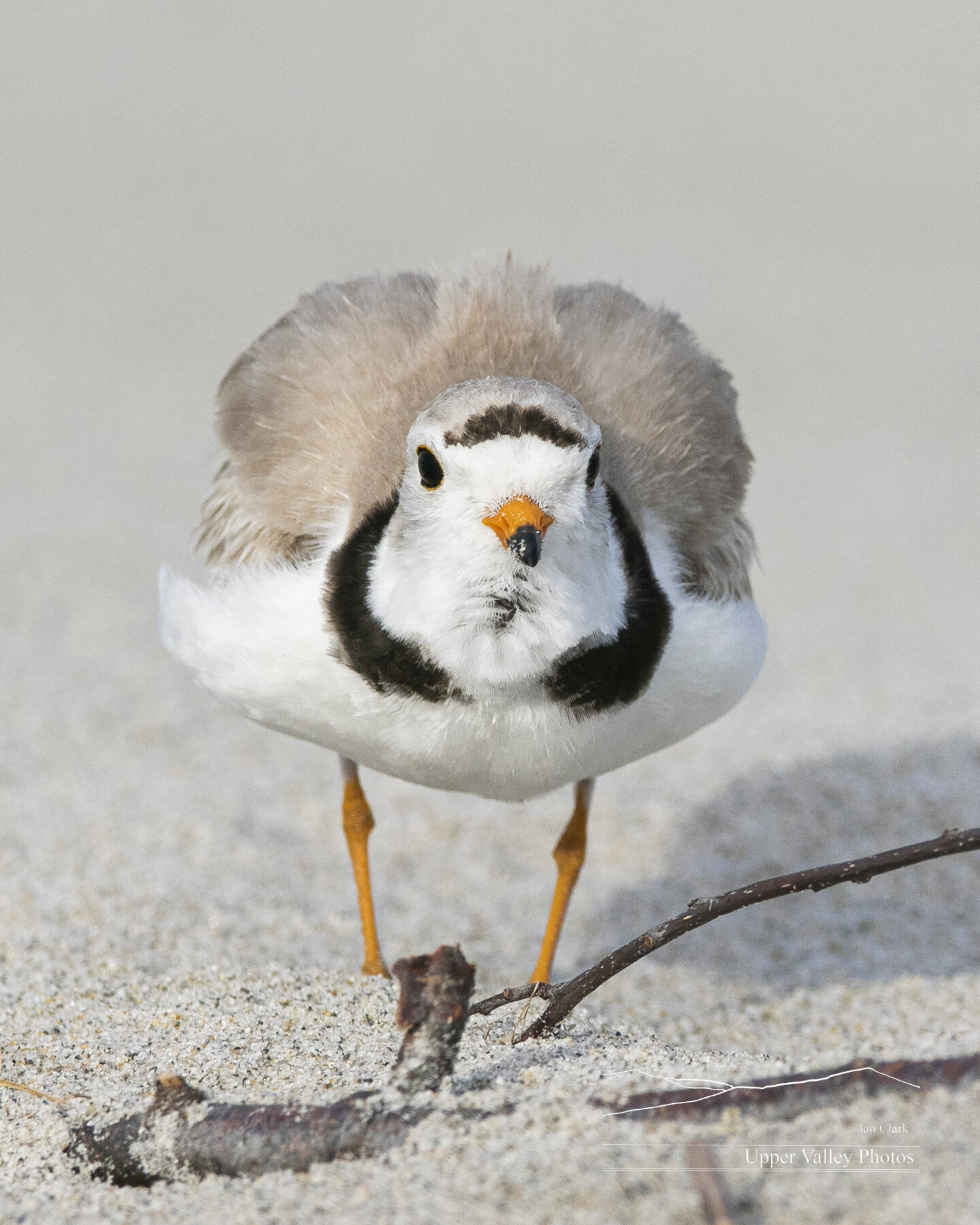
Some sources online suggest you can tell mom from dad by the size of the black stripe on their head, with the male’s being longer and thicker. Other sources suggest the female is drabber. Others say they’re indistinguishable. So, with that solid reference, this may be mom.

And this may be dad. Or I might have them backwards.

When the coast is clear – literally – the plovers will go down to the water’s edge to forage in the debris the tide left.

The chicks seem very tiny on the open beach. They’re easy to lose track of as they scurry about. Being flat on my belly trying to follow them with a long heavy lens is not the ideal way to keep track of them.

I’m amazed any of the chicks survive – they can travel better than 100′ from the parents and would seem to be an easy meal for anyone walking or flying by.

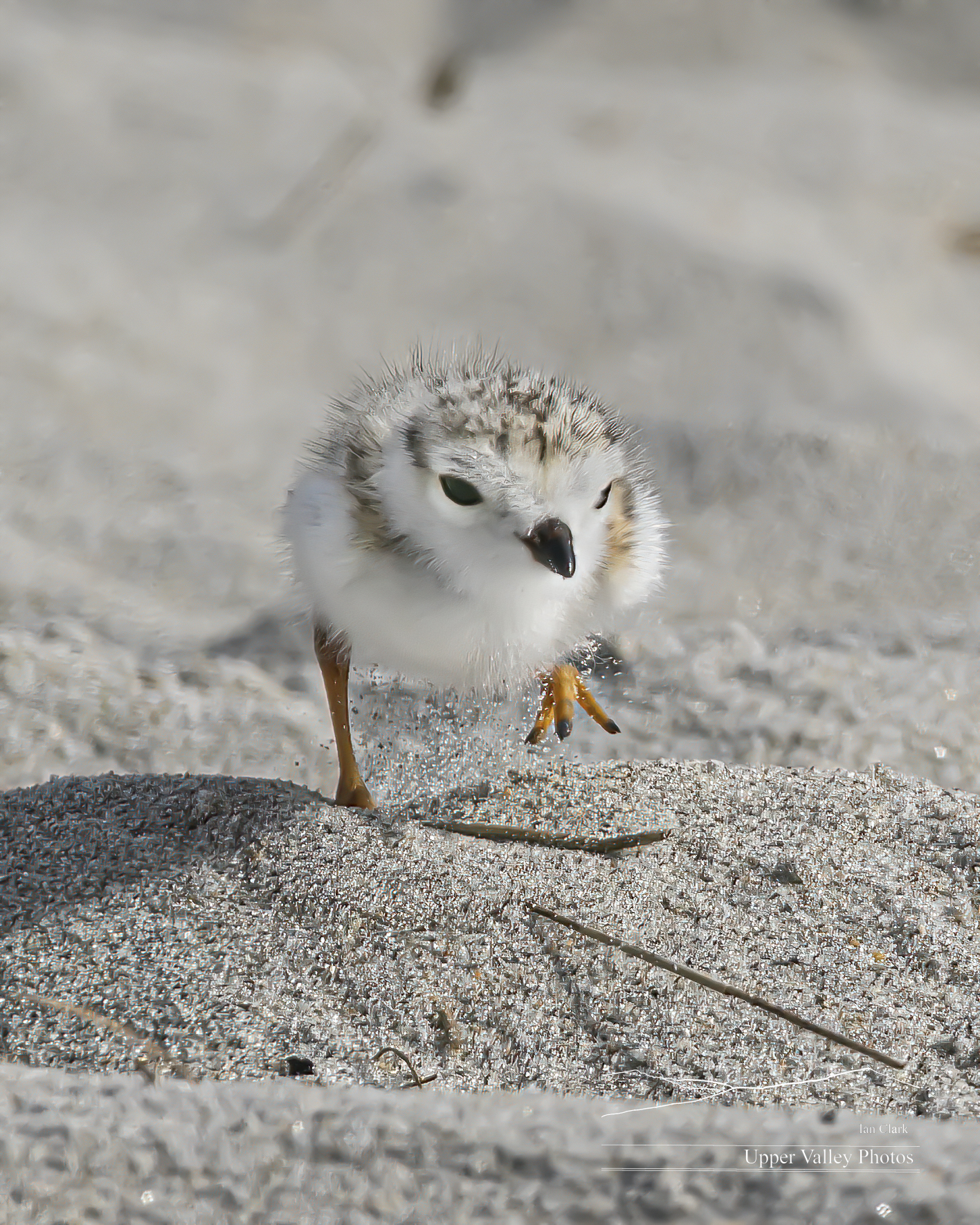
When they pop out from under a parent, they head out to explore the world. They’re smart enough to know they have to find their own food, but it takes a while before they learn what is and what isn’t edible. Dried reeds went in the not edible category.

Here our chick has scooped up a fly of some sort. This would seem to be in the edible category. But not so fast….

The fly manages a double-reverse back flip and gets out of the chick’s mouth…..

Our chick seems to be pondering this turn of events……

I think it was the fly’s lucky day. It was last seen riding the chick’s bill as the chick zipped away.

And a few more shots of the chicks as they explored, just because they’re adorable.

Exploring in the grass at the edge of the beach.

Pausing and plotting a new course.

Star Wars fans may see the design of the Empire’s walkers in the chick’s build.

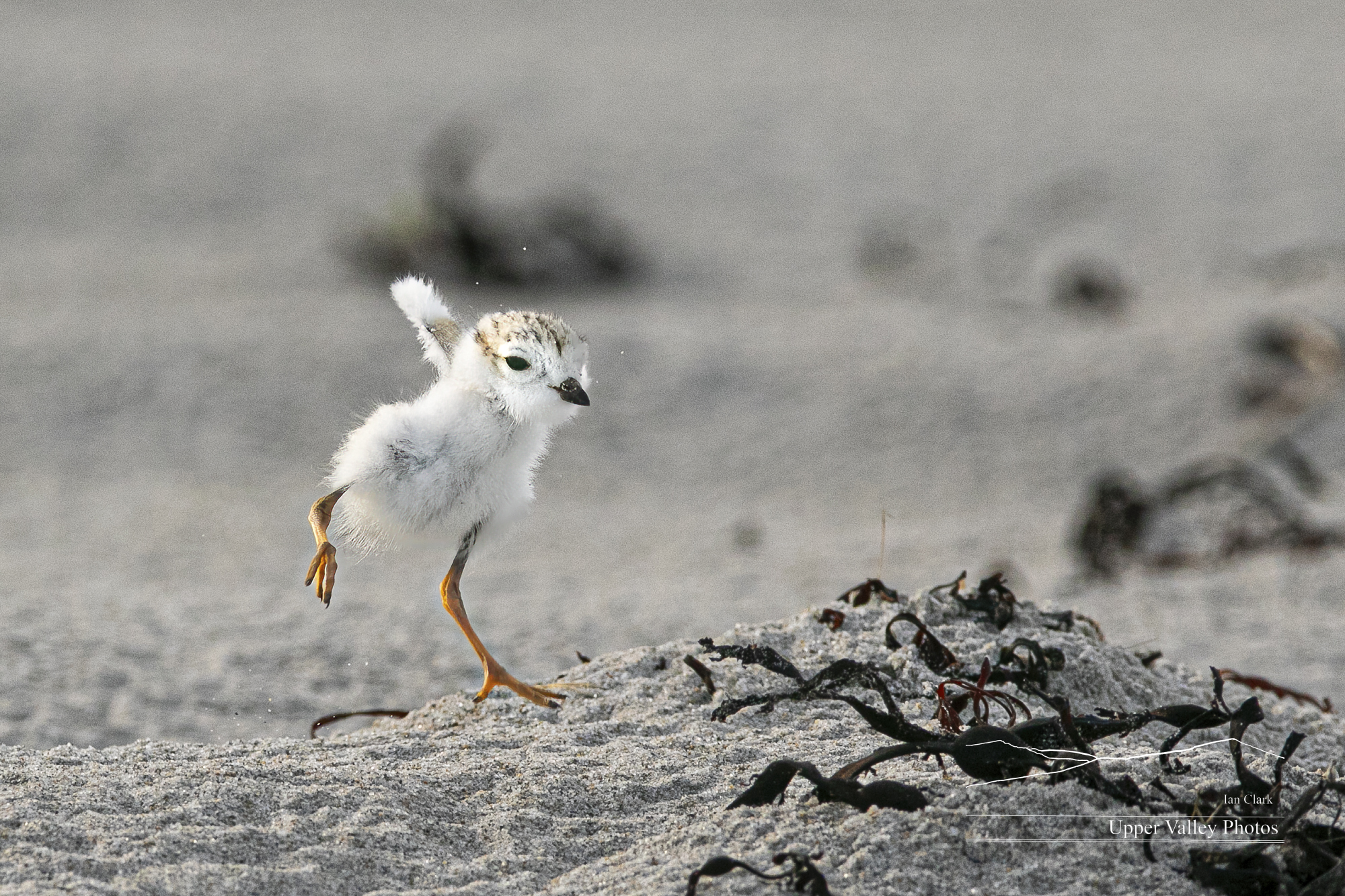
The long legs seem to take some learning before they’re mastered.

Still looking a bit wobbly.

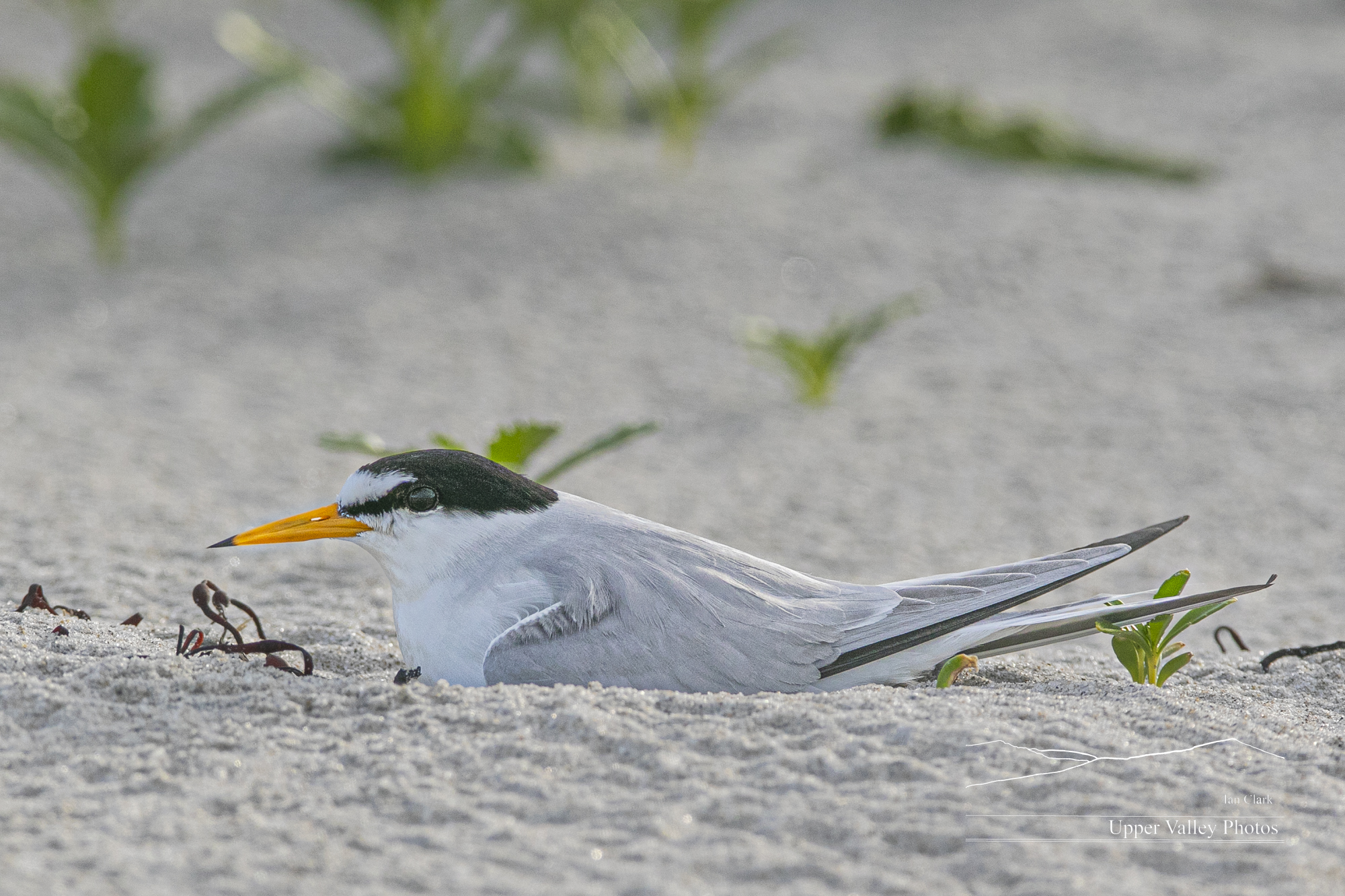
The plovers share their nesting area with least terns. They’re also handsome birds, longer and sleeker than the plovers. They’re inclined to go about their business directly up sun from photographers.

They aren’t great at building fancy nests. They lay their eggs in a shallow depression in the grass at the edge of the sand.

This nest was built about halfway between the high tide mark and the grass, out in the open on the beach. Audubon has volunteers that patrol the beaches trying to keep people away from nests and chicks. There were stakes and a rope fence set up around this nest and along the grass for protection.
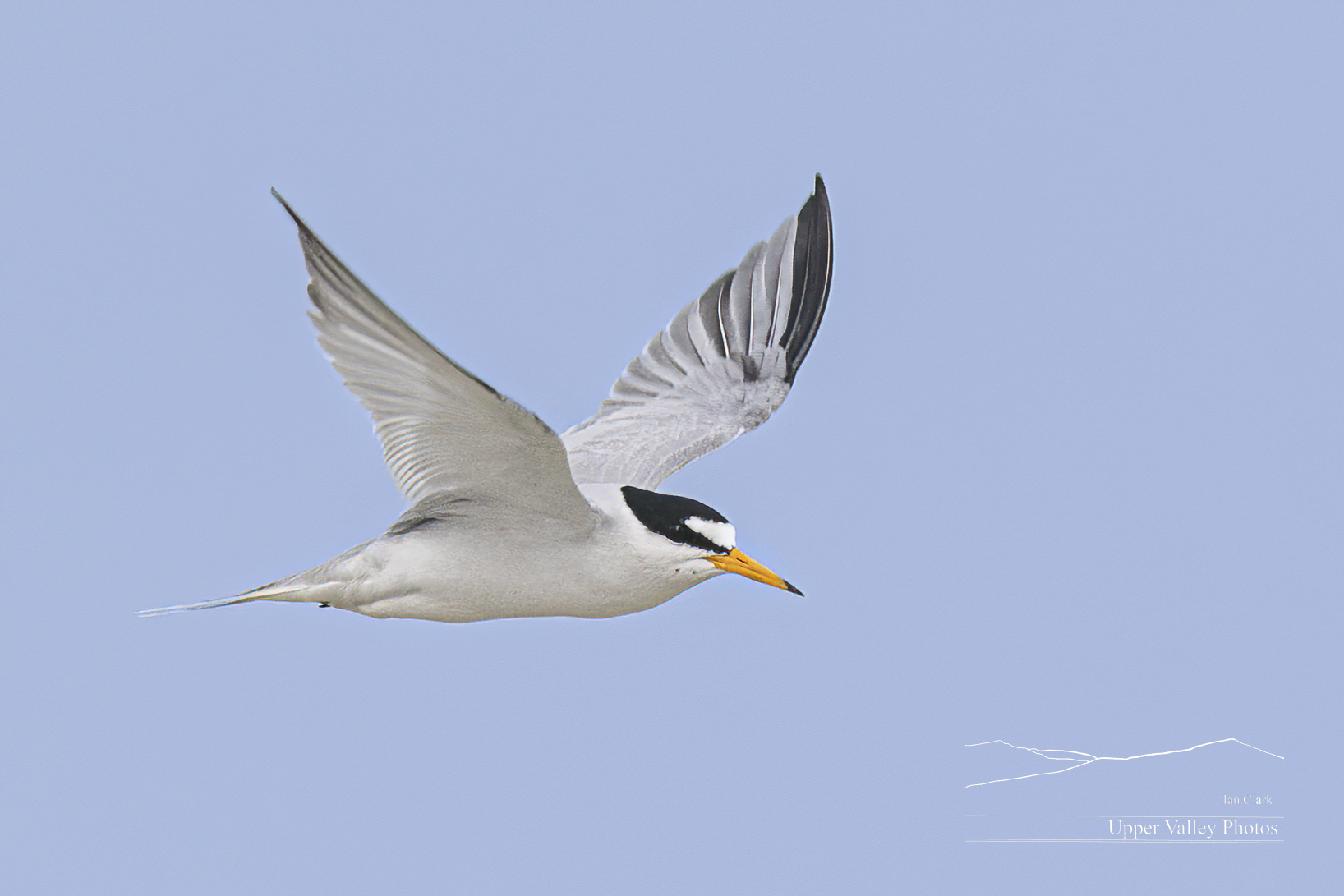
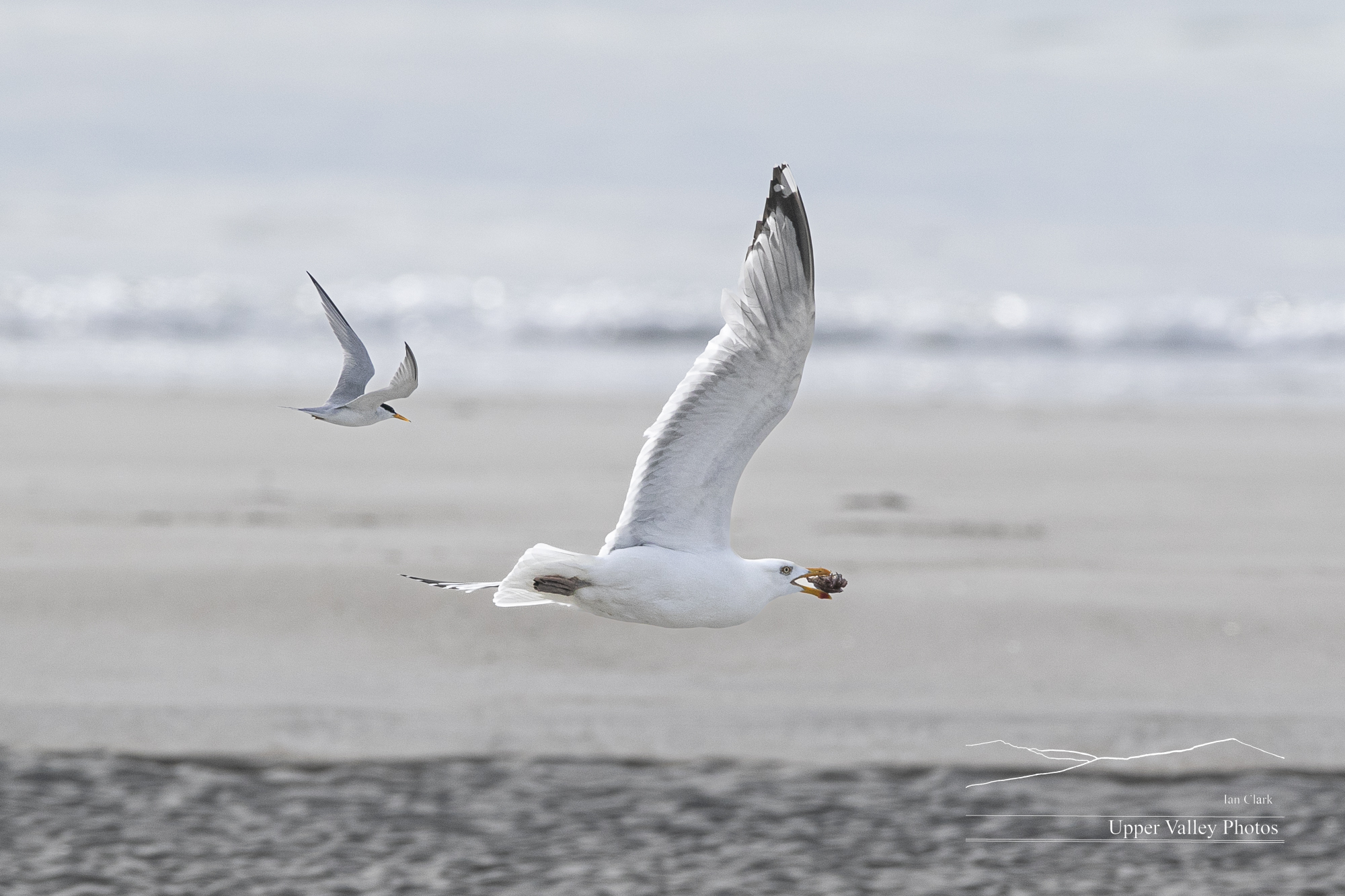
And, they’re fiercely protective of their territory – which seems to include all of New England according to them. They’re quick to dive at whatever they think is a threat. They’re fast and agile fliers. There are always a few in flight over the colony. They chatter constantly about whatever needs to be said.

Sometimes the colony comes to a consensus and many of the adults will fly off to the water’s edge together. There’s no way to tell how many remain hiding in the grass, but there were several dozen in flight several times.
Courtship consists of the males delivering fish to a lady. Meet Leroy, the world’s most socially awkward tern. He has a fish and has worked his courage up to present it to this pretty lady.

She finds him attractive and turns away from him to present – encouraging him to mate.

Leroy didn’t seem to have thought his plan through to the point of figuring out what do to should she accept him. He spent better than ten minutes waving the fish around while circling her. She patiently kept turning to urge him to get on with it.

He finally got the hint and got down to business.

He delivered the fish as they carried on with the matter at hand.

The guys don’t seem to have a lady in mind when they set out with their fish. They land near a lady and offer the fish. If the lady isn’t interested, she’ll rebuff him – often chasing him off. The guys seem undeterred and move along to the next lady. It turns out a lot of the chatter is actually ‘come here often? Can I buy you a fish?’

When the guys arrive to present the fish, they’ll often make a nifty swoop and fluttering landing.

This lady emphatically declared she was not interested, thank you very much. Buzz off creep!

Here, a couple of guys have spotted a pretty lady and are racing to get to her first.

They also do a little dance together while courting. They flare out their wings, circle each other and mirror each other’s posture.

And around we go….

And a fish for you, my dear.

There was also a small flock of semipalmated sandpipers that were traveling along a large stretch of beach.

Two more semipalmated sandpipers foraging in the debris.

Our tree swallows are holding onto the box the wrens drove the bluebirds from. Mom is sitting on five eggs. The wrens must be sitting on eggs too, but I don’t have a camera in their box. They enjoy perching just outside my window. Wrens never, ever, ever stop chattering. I’ll admit I’m not finding it as cute as it was a couple weeks ago. I’ve been collecting video of the swallow’s box and promise to get around to editing and posting some.

I got out to visit the Middleton loon family yesterday and will post an update on them shortly as well.

If you’re enjoying the blog, please consider passing the link along to some friends. Thanks!

Piping Plovers On The New Hampshire Coast

Piping plover chicks have hatched on the New Hampshire Coast. I visited last week. In the short section of beach I visited, I found two families with chicks, one with three and one with four chicks. There were also a number of common terns terrorizing the beach denizens, winged, armed or legged. 

What’s your vote for cutest bird? Piping plover chicks have to be on anyone’s list. 

Let’s start with the terns. They nest in the sand dunes not far above high tide. They make a shallow scrape for their eggs. And, they defend their territory with gusto! They’ll swoop, peck and sometimes poop on intruders. Once one tern gets upset about an intruder, it seems like all the terns on the beach join in the commotion and find some critter to drive off. 
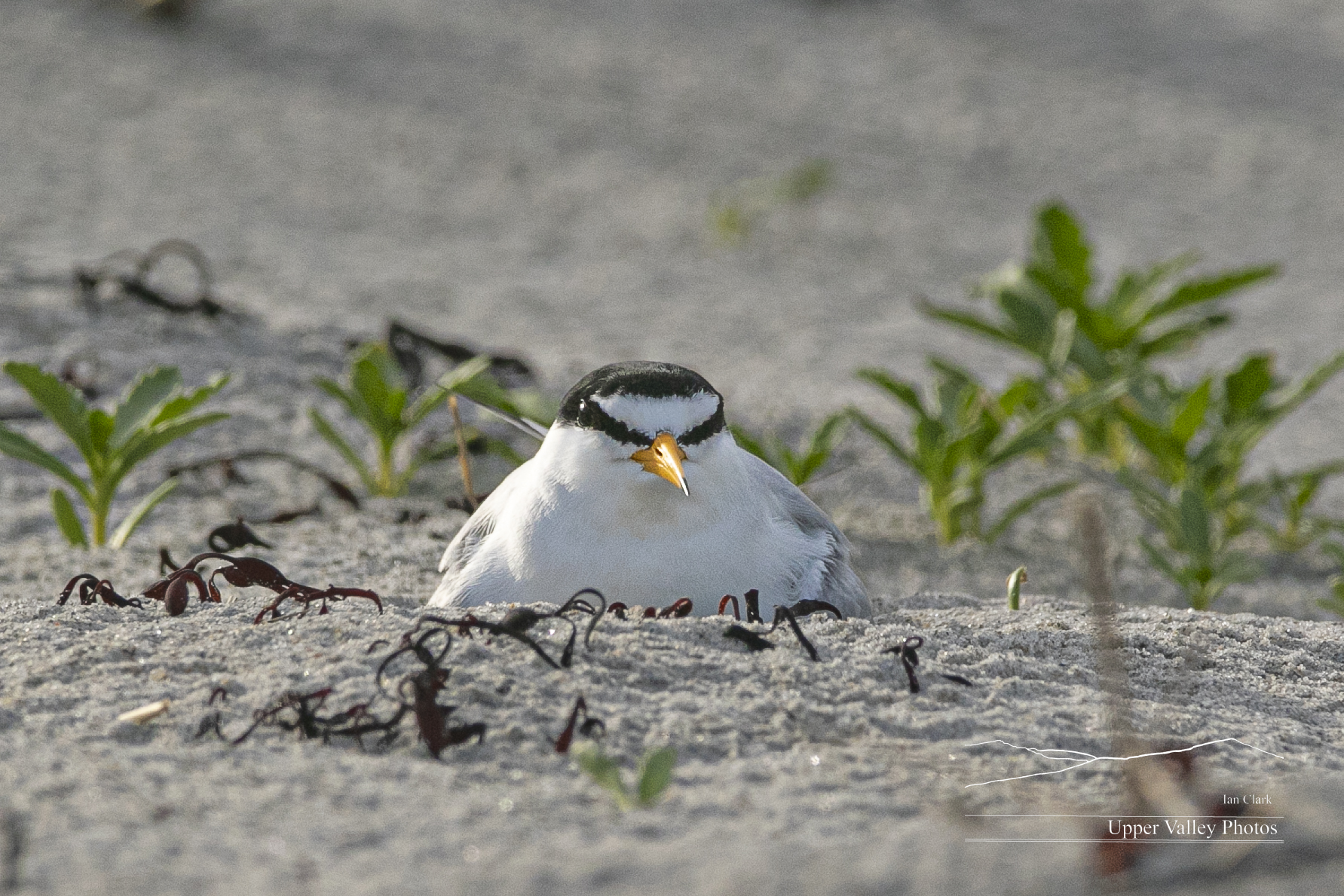
Here’s one sitting on a nest. 
Another tern on a nest.
A tern looking for someone to divebomb….
And a tern escorting a gull from the premises.
Adult piping plovers are handsome birds. They’re not very large, about 7″ long. They hunt for small crustaceans, worms and insects along the beach. You probably won’t see them until they move. They run – very fast – for short spurts. They live along the northeastern coast and in the Great Lakes. They’re endangered. I’ve seen the figure 6,100 individuals, but never with a citation. 

Here’s mom – or maybe dad, only they know – overseeing the chicks running about on the beach. 
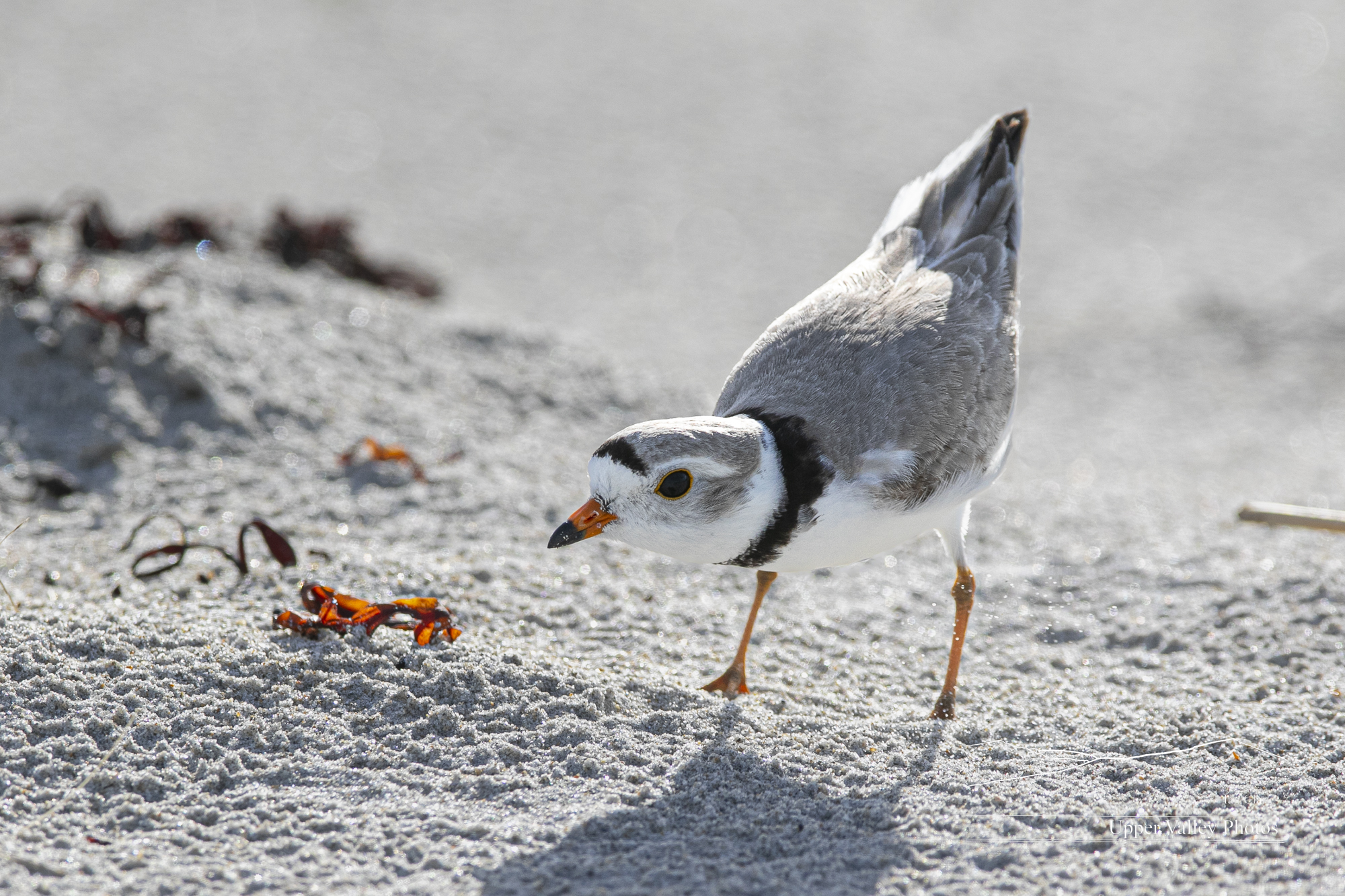
They seem to coexist with some of the other plovers, and drive others away from there territory. Perhaps they come to terms with their neighbors, but still view others as threats. This plover has spotted another plover it wishes would go away. 
Chicks are born ready to forage, the parents take turns supervising them as they run about the beach. The parents seem fairly laissez-faire about watching the chicks. They chicks are often well out of the parent’s sight. The parents call occasionally, probably to keep the kids relatively close. Every so often, the parent baby sitting decides the chicks are cold and calls them in and they duck under the adult and everyone sits for a few minutes. 
Calling the whole family in….
Tucking in….
This parent reacted to its mate returning to sit the kids by scrunching down and fluffing. 
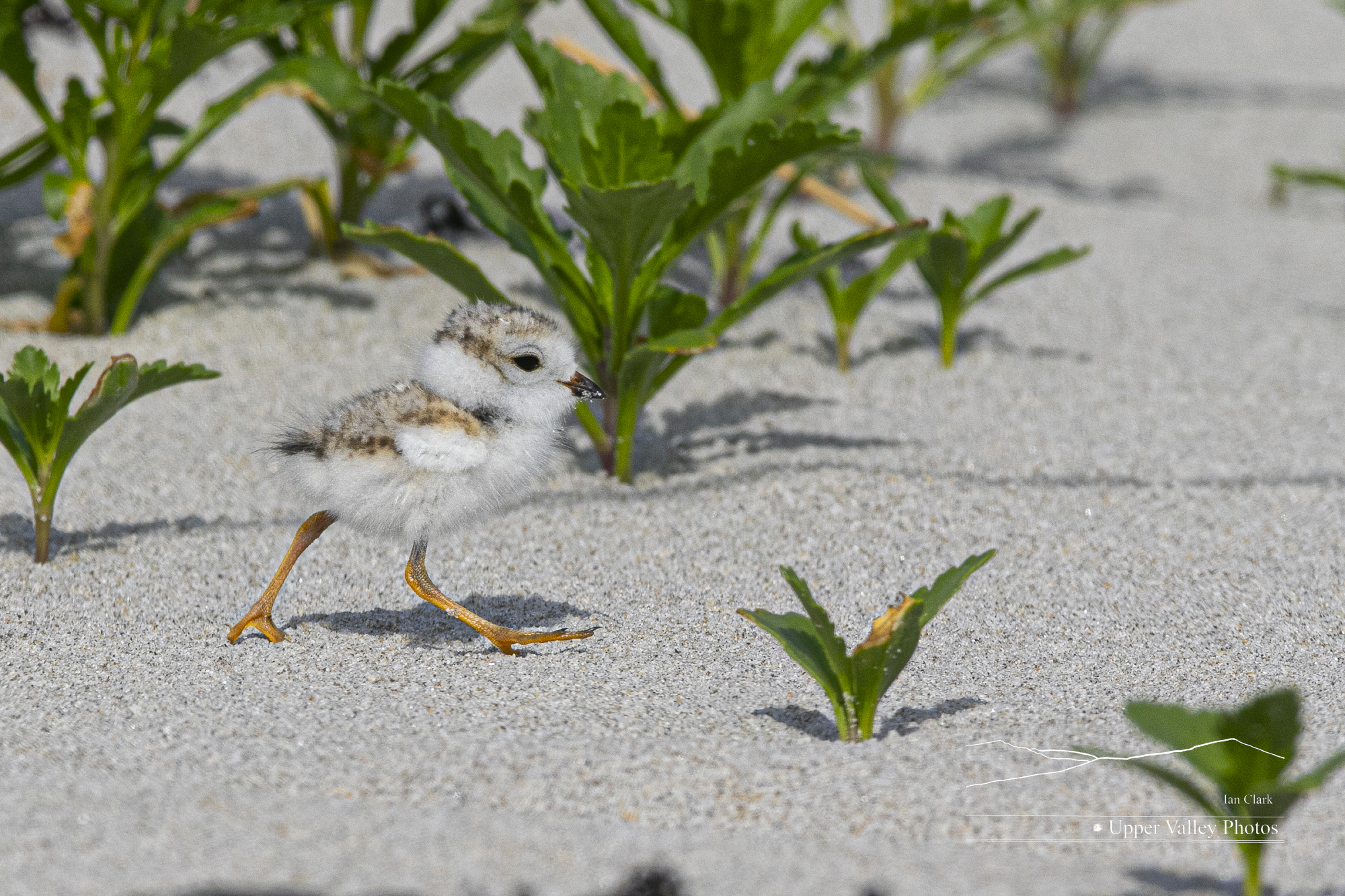
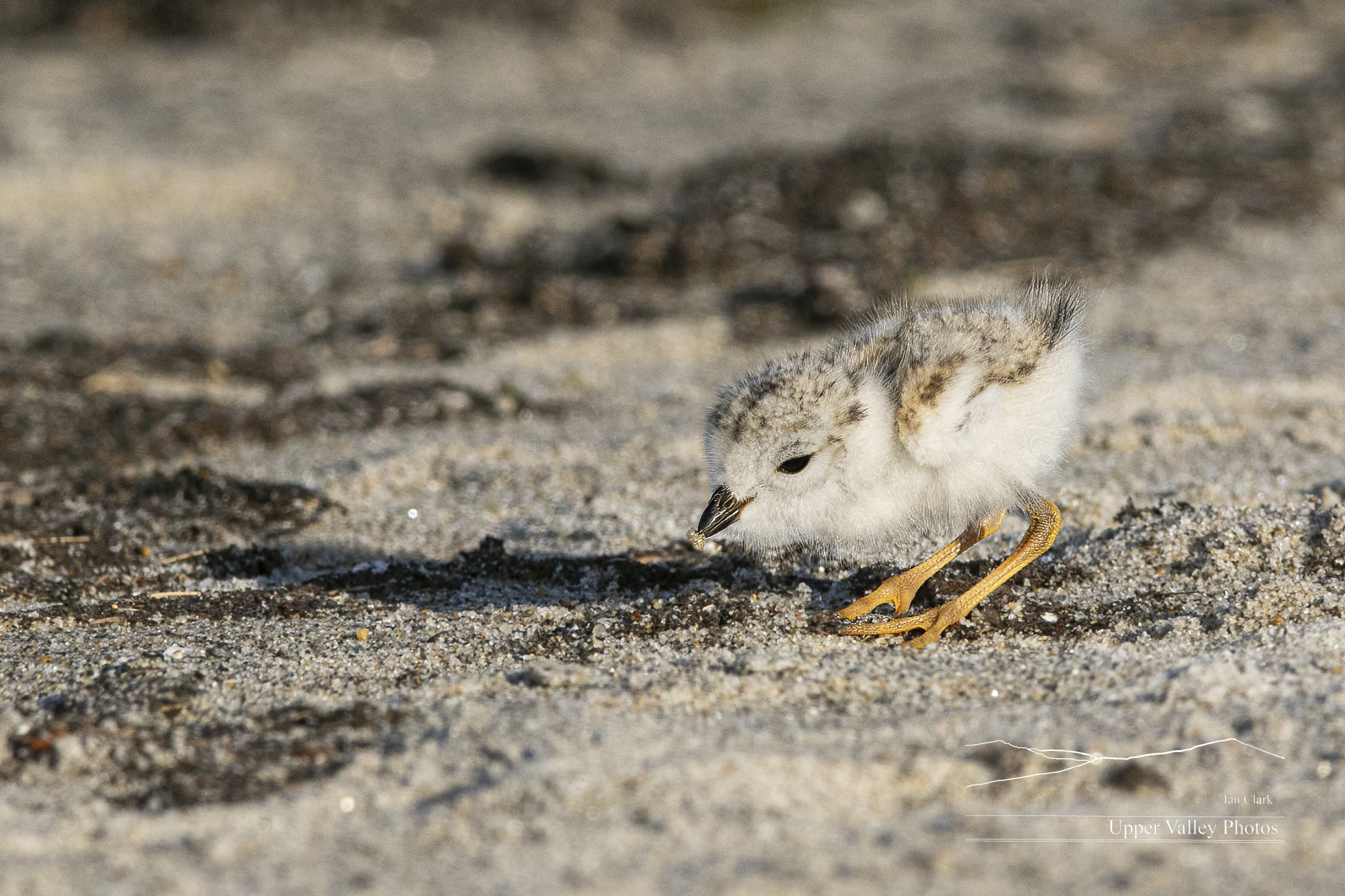
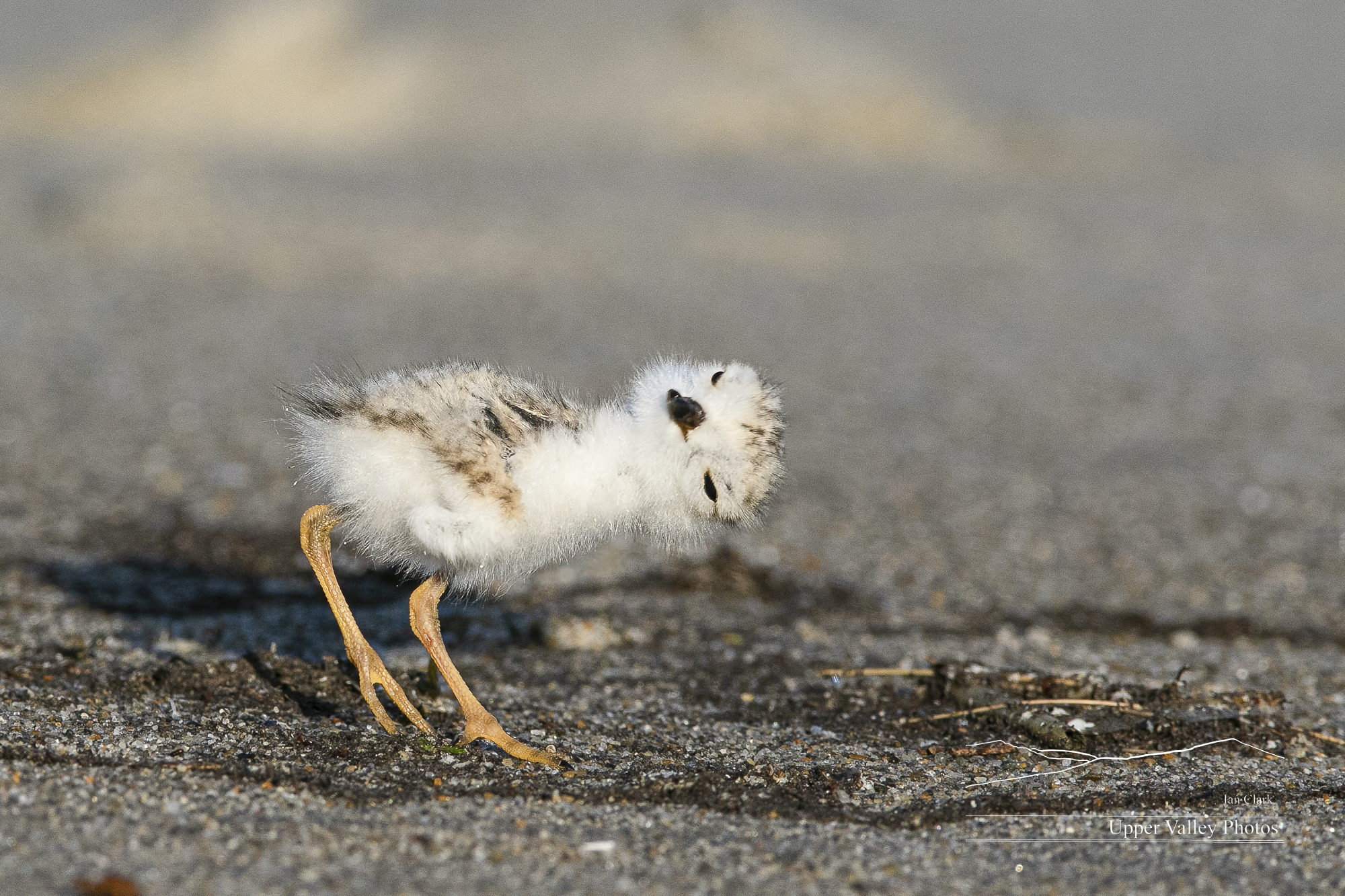
And the chicks are just darned cute. They run about the beach exploring, foraging, stretching and fluffing. They run in short spurts, changing direction on a whim.  

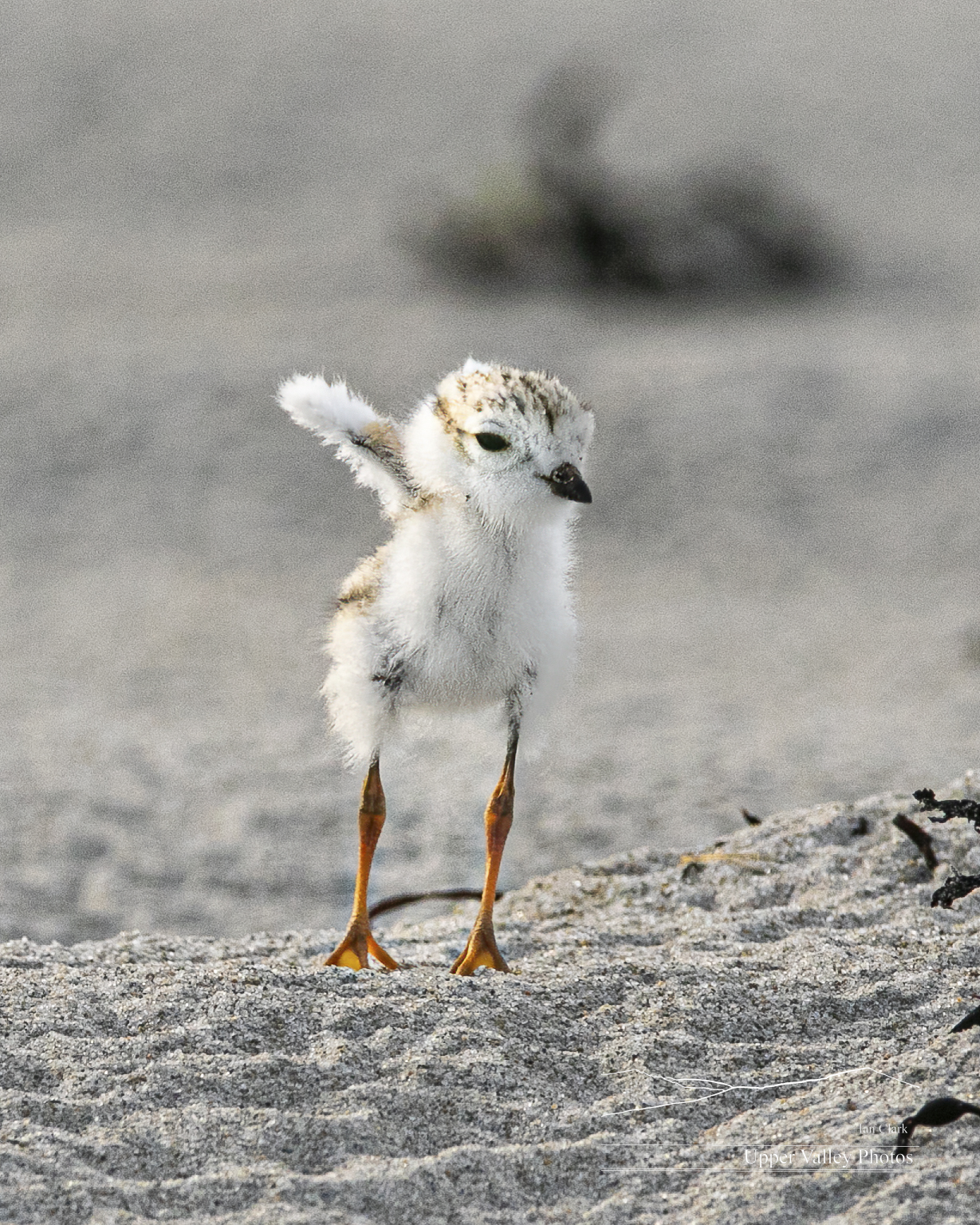
Here’s one practicing being cute. 
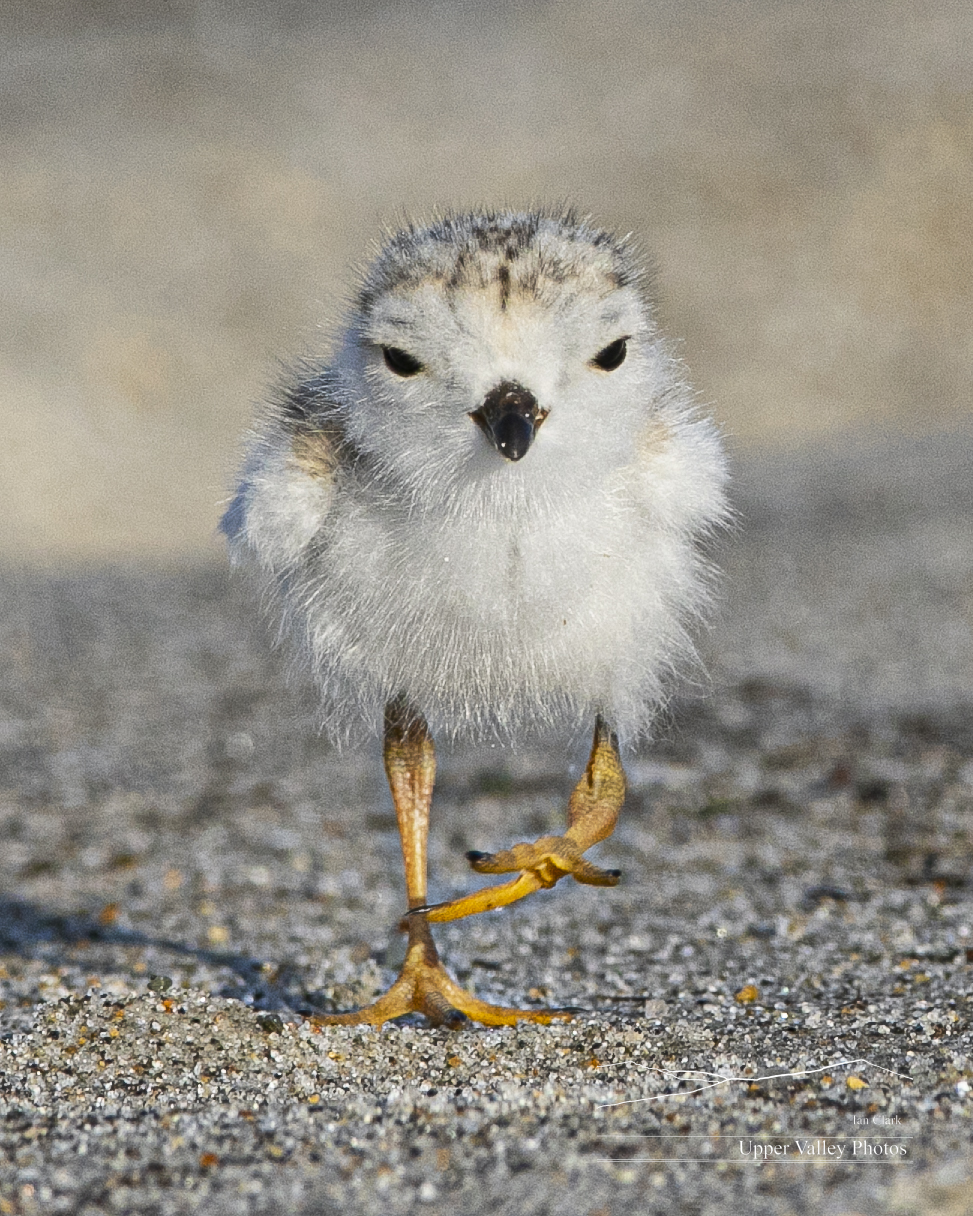
It takes them a while to grow into their feet. 
Watching them walk, I can’t help but wonder if they were the inspiration for the two-legged walkers in Star Wars. 
Exploring along above the high-tide mark.
With a tiny snack. 
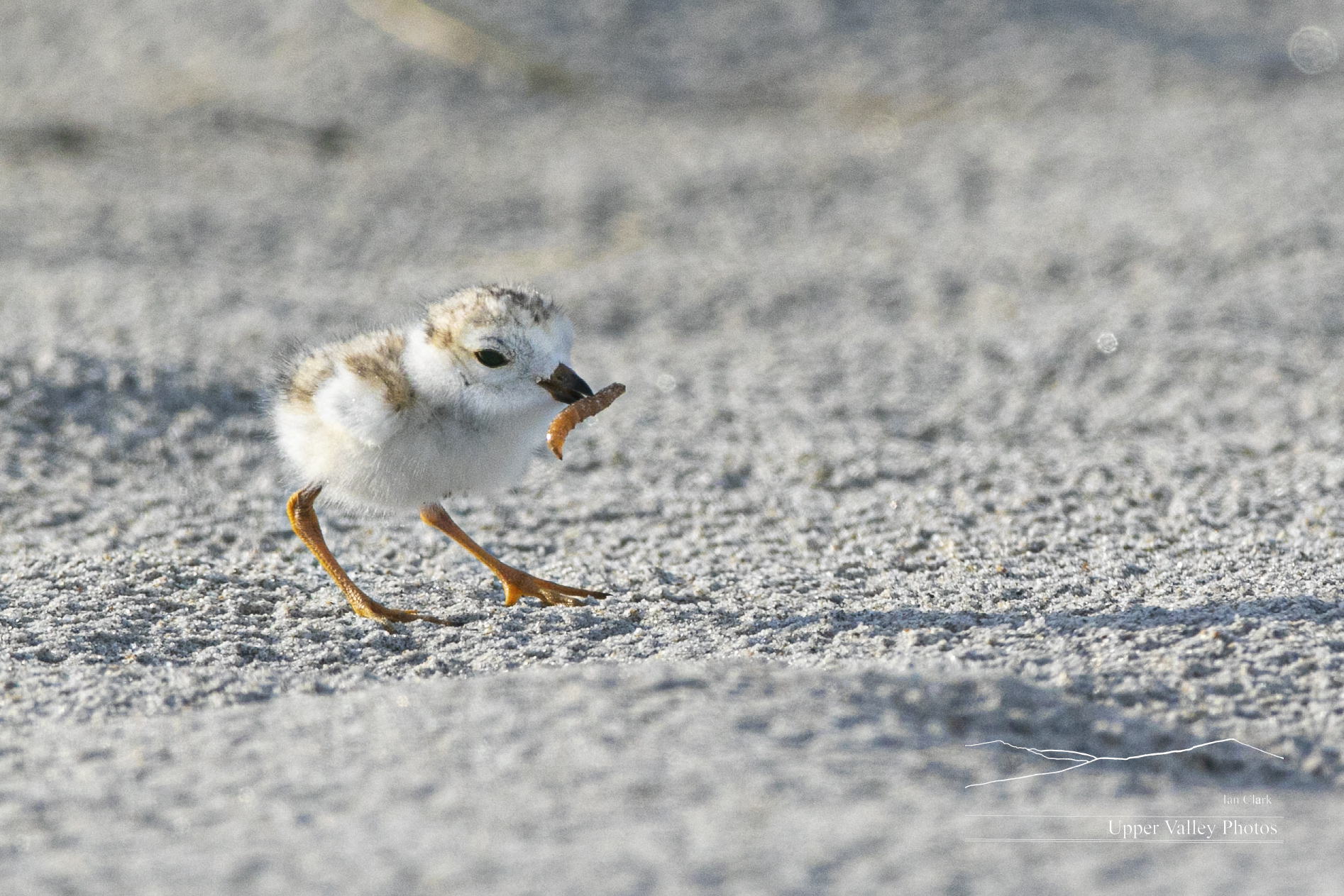
And a more substantial worm.
And, just learning how to be a bird.

This little guy may have some more learning to do….