With the warm weather we’ve been having, I’ve been refusing to concede that the end of the season for local great blue herons is over. But, I’m not going to be able to get out for a of couple weeks. I suspect by then our ponds will have at least a skim of ice. So, Hank is safe from paddling photographers. For now. I hope to follow him to the coast a few times this winter.
I’ve been invited to participate in a pop up show in Bradford, VT along with three other artists. We’ll be at 159 Main St in Bradford on Friday November 27 and Saturday November 28 from 10 to 4 each day. We’re going to have fun, we hope you stop in and have a look.
On to the herons.
Hank was all over the place this summer. I’m beginning to suspect he uses stunt doubles. And I’m sure some are actually Charlize T. Heron.
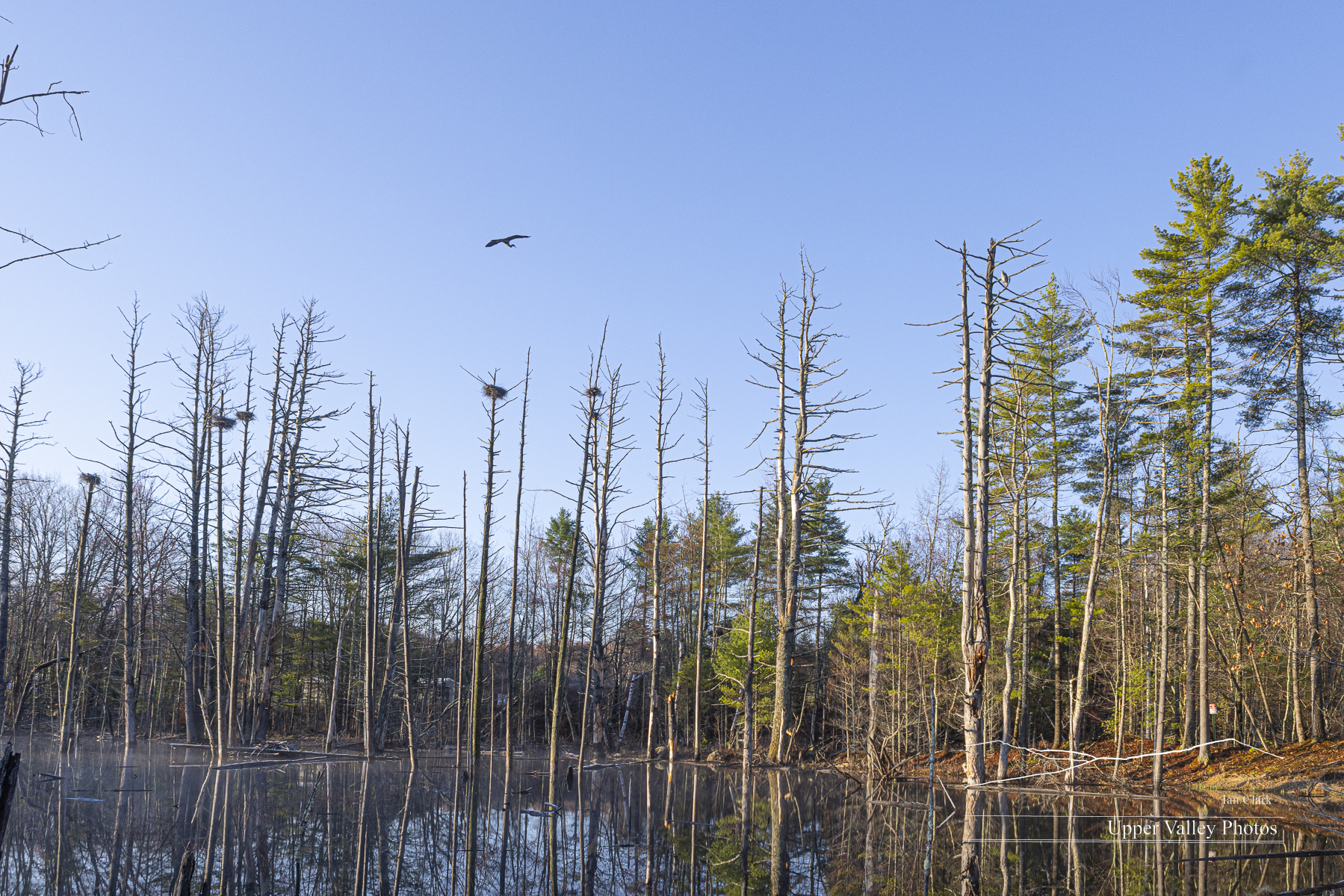
There were great blue herons on the three loon ponds and at least two on the Waits River. And a friend down by Lake Winnipesaukee found me a small rookery that I visited six times.
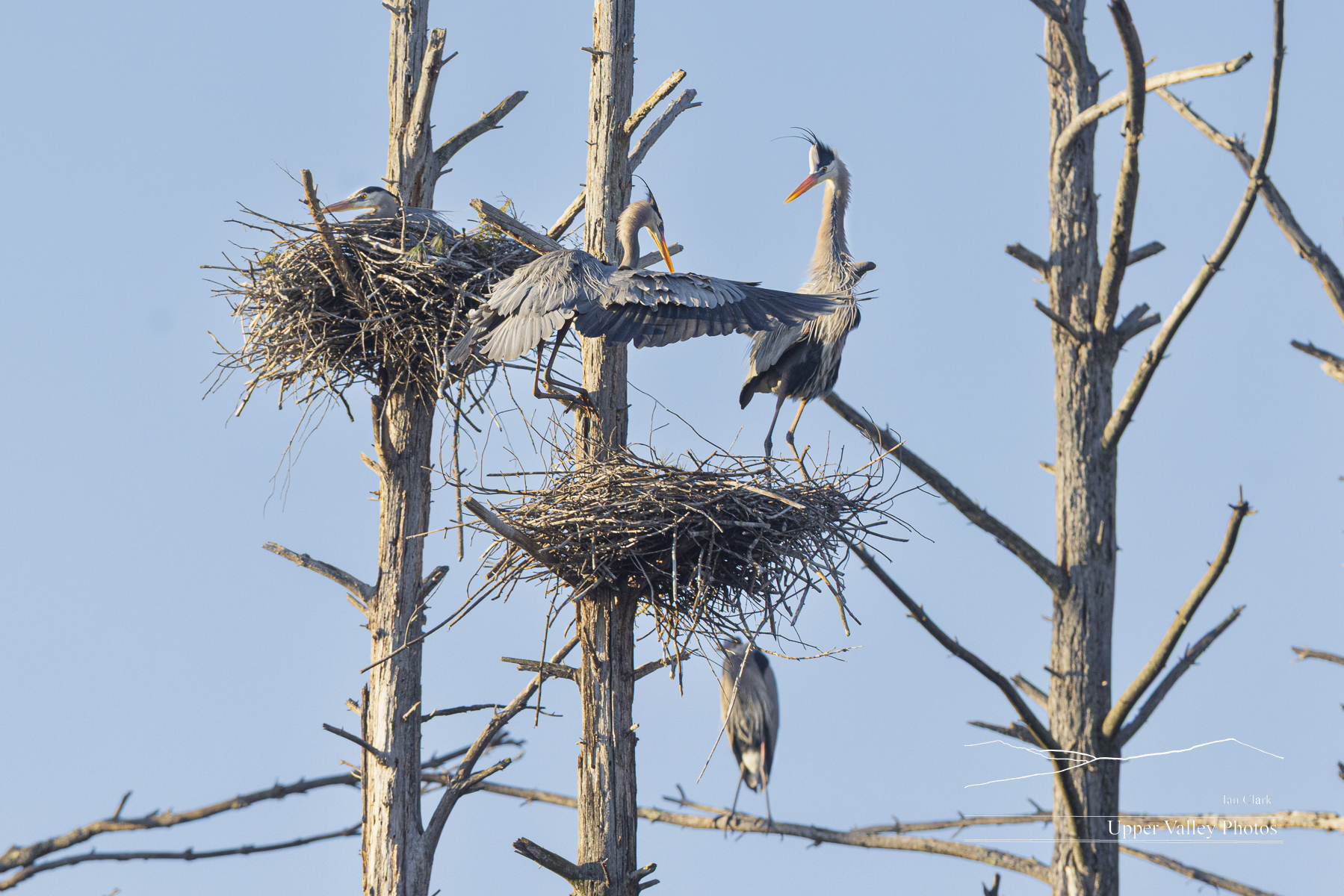
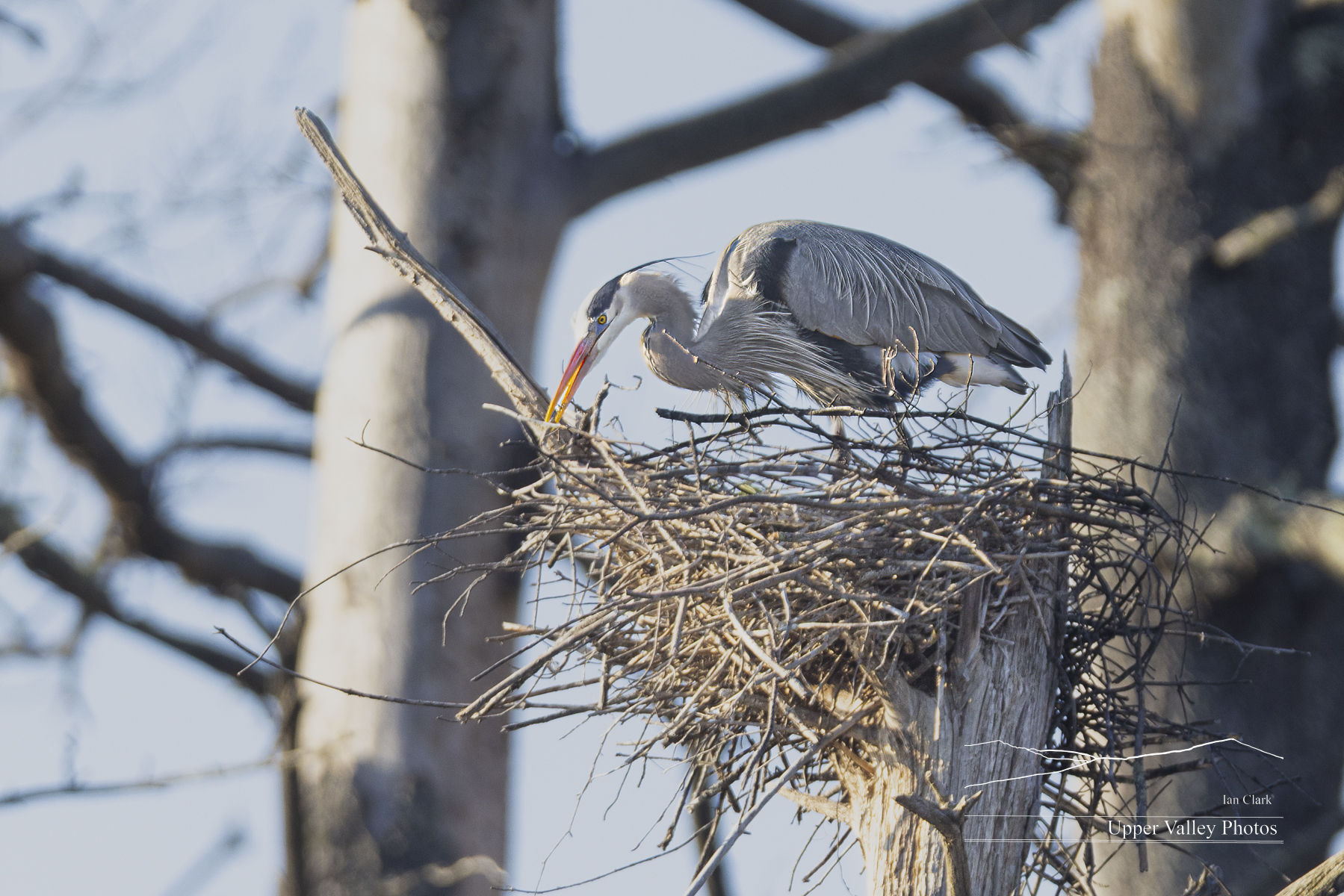
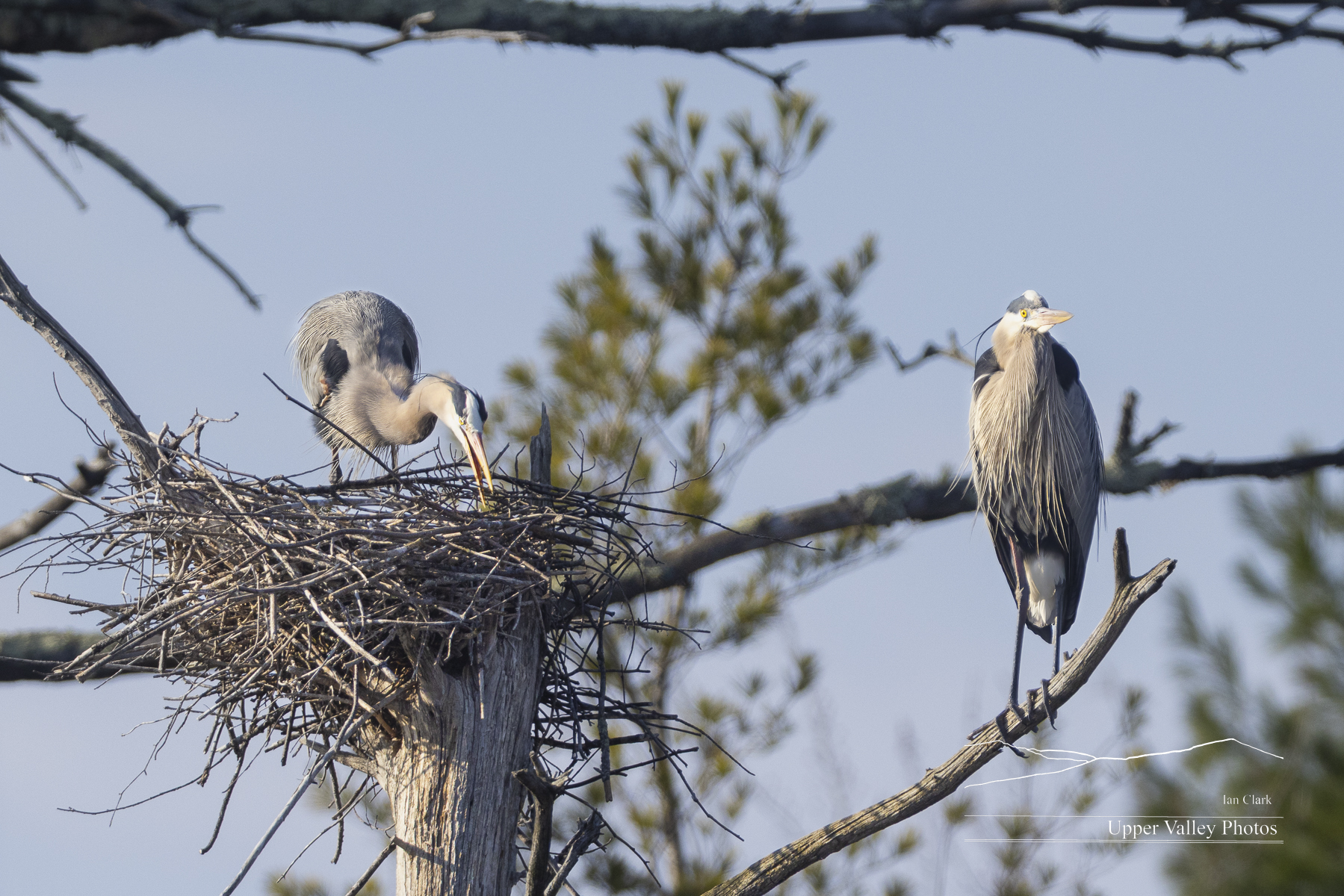
My first visit to the rookery was April 10. There were birds working on seven nests. Small by heron rookery standards, but there were enough birds getting nests built to keep things interesting. It was a little too late for serious courtship displays. It looks like the bird in the background is already sitting on eggs. The pair in the middle were still arranging sticks in the nest. I think the bird in back may have been the sitting heron’s mate.
The herons were very deliberate in placing the sticks into the nest.
In this pair, one bird would place a stick in the nest and head out for another. The second bird would sneak over to the nest and rearrange things while the other was away.
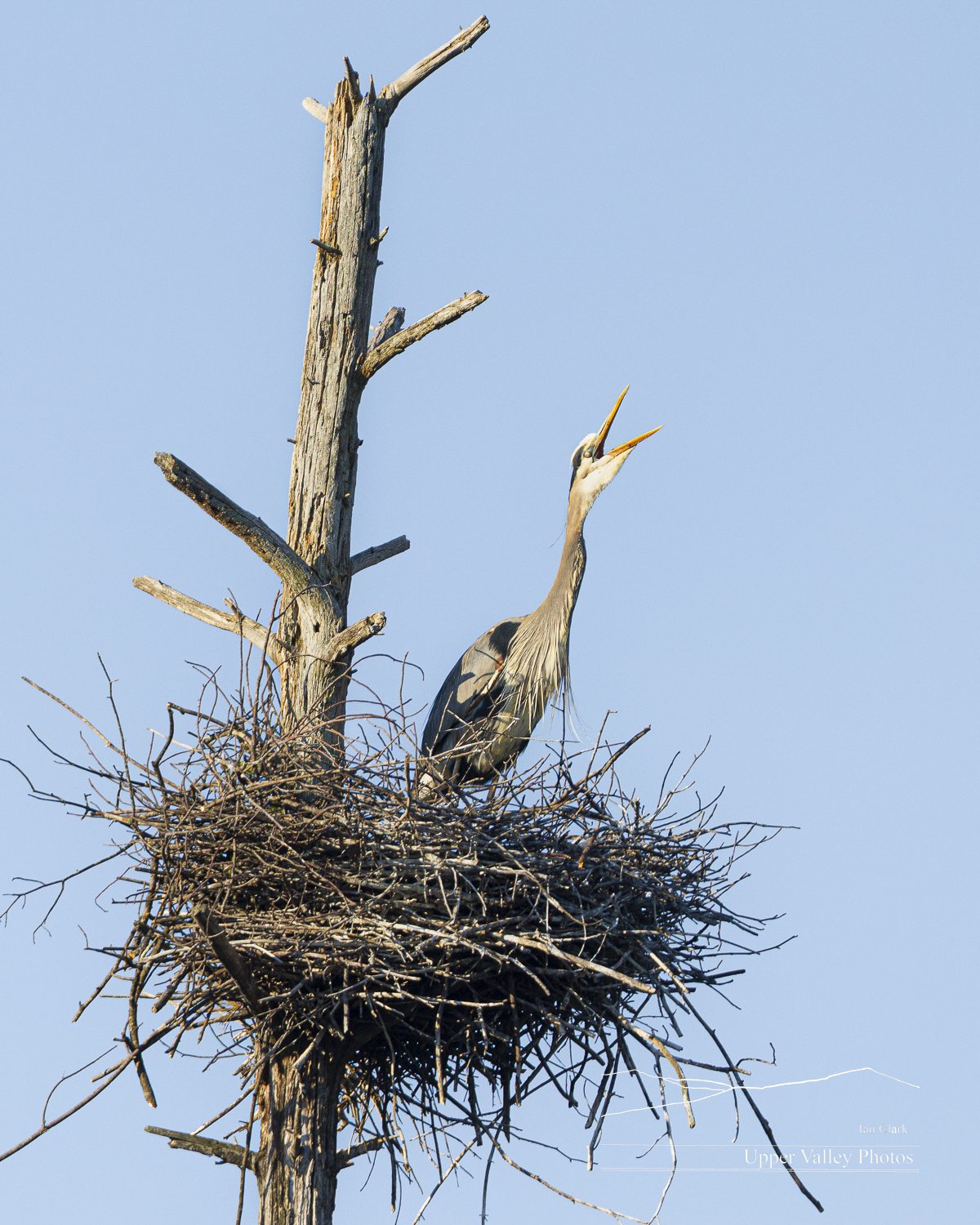
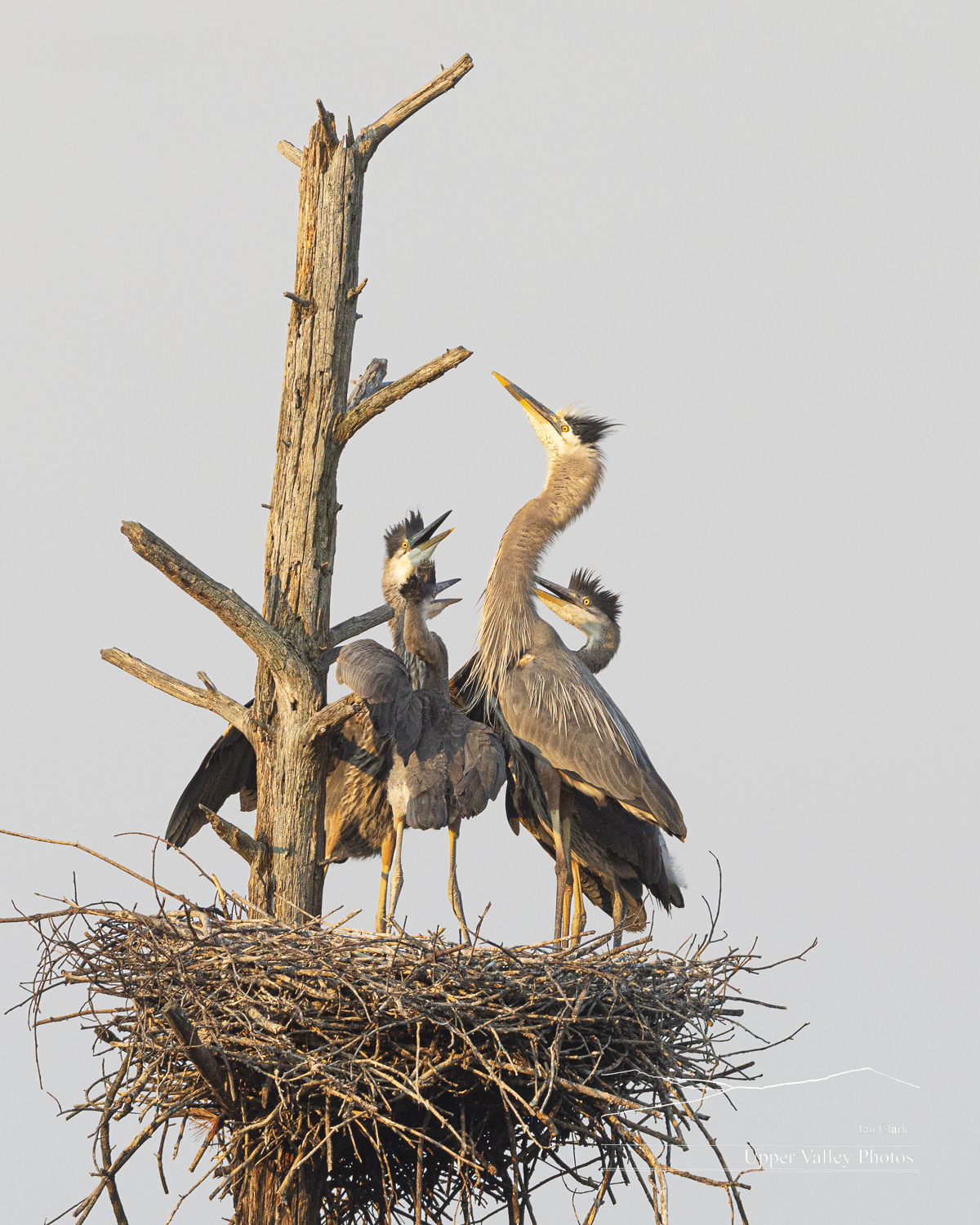
The rookery was over a small pond. Herons choose dead trees with a view of the surroundings for their nests.
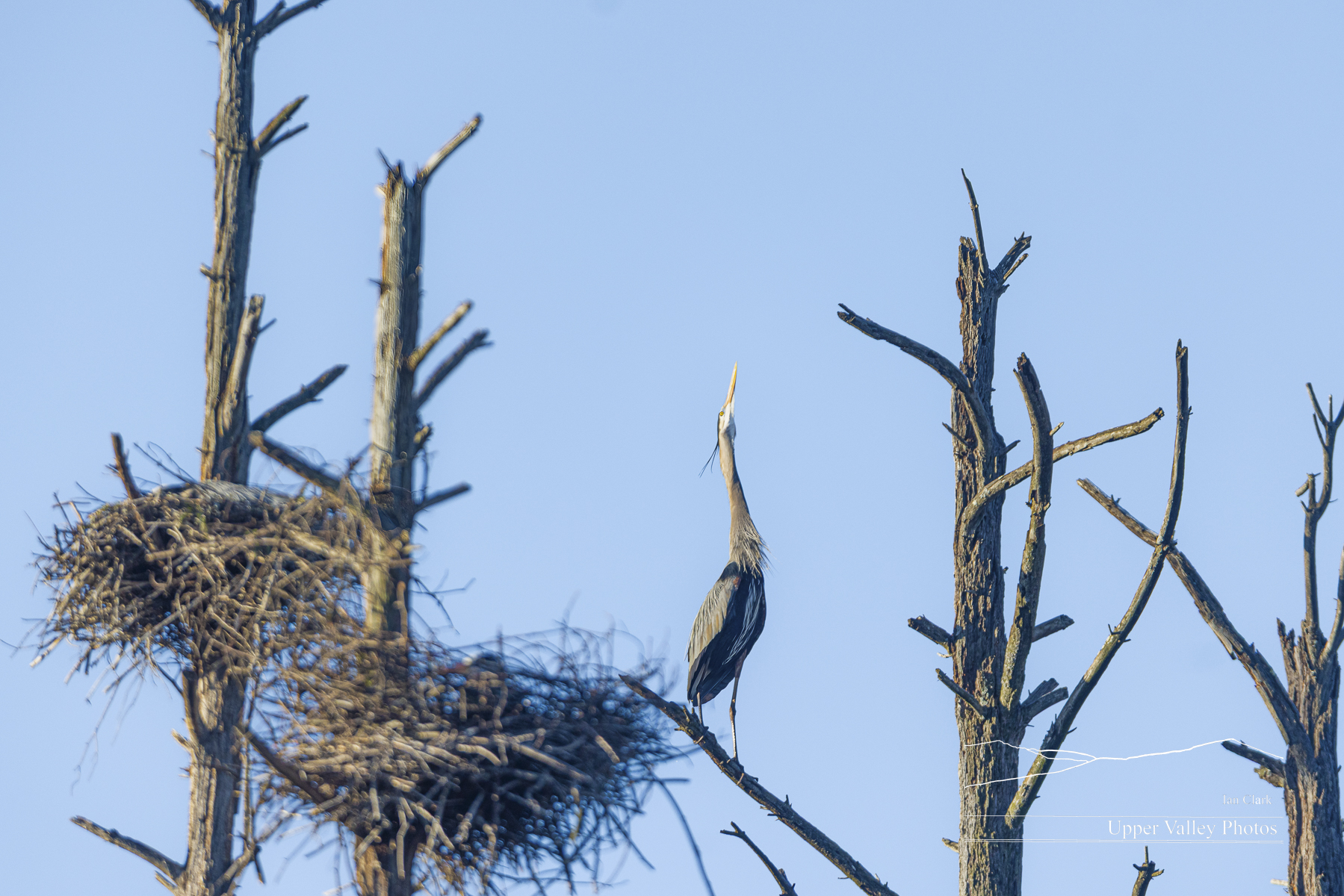
Part of herons’ courtship is stretching their necks up in a display.
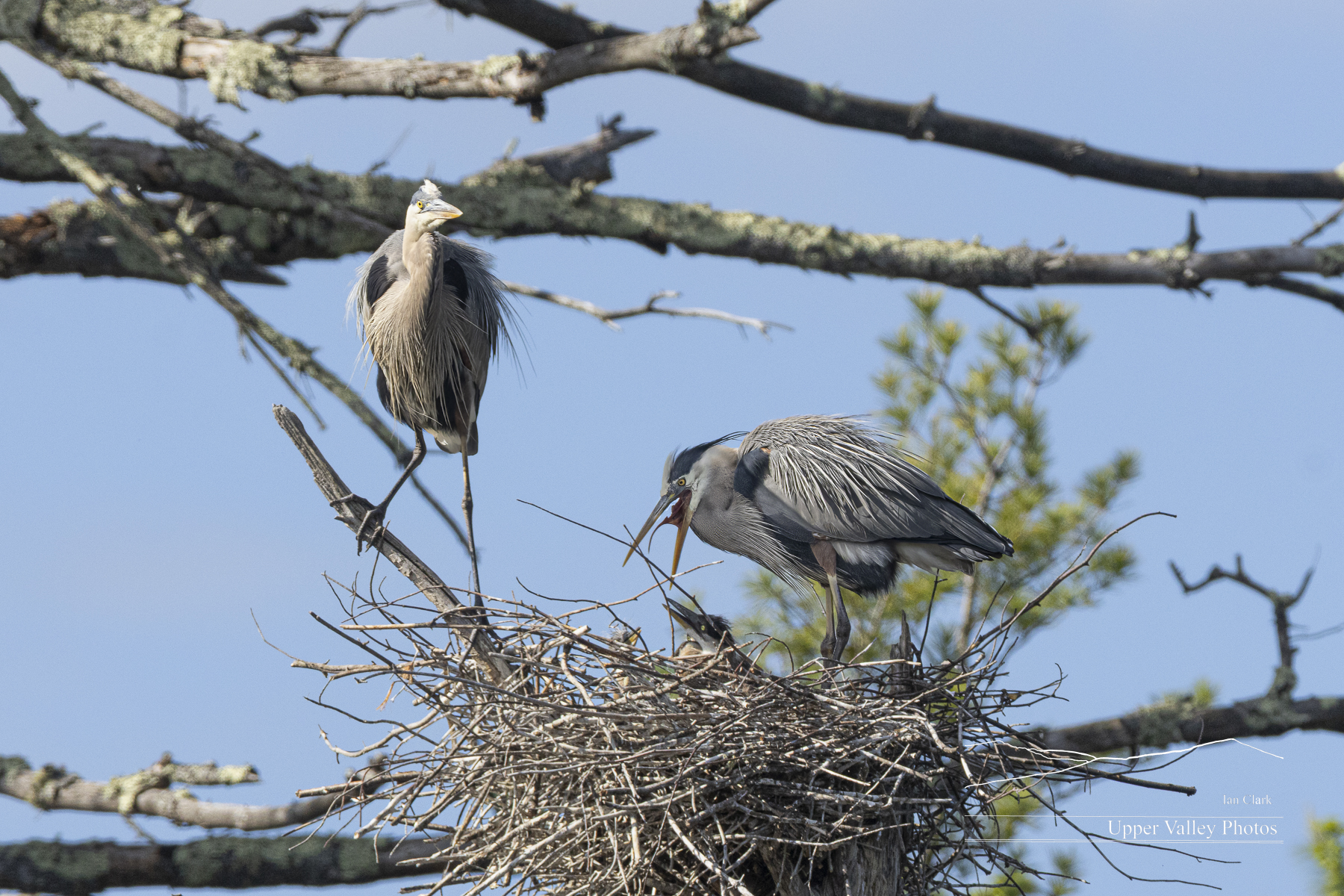
If a bird was on the nest when the mate returned they were greeted with loud calls as the mate approached.
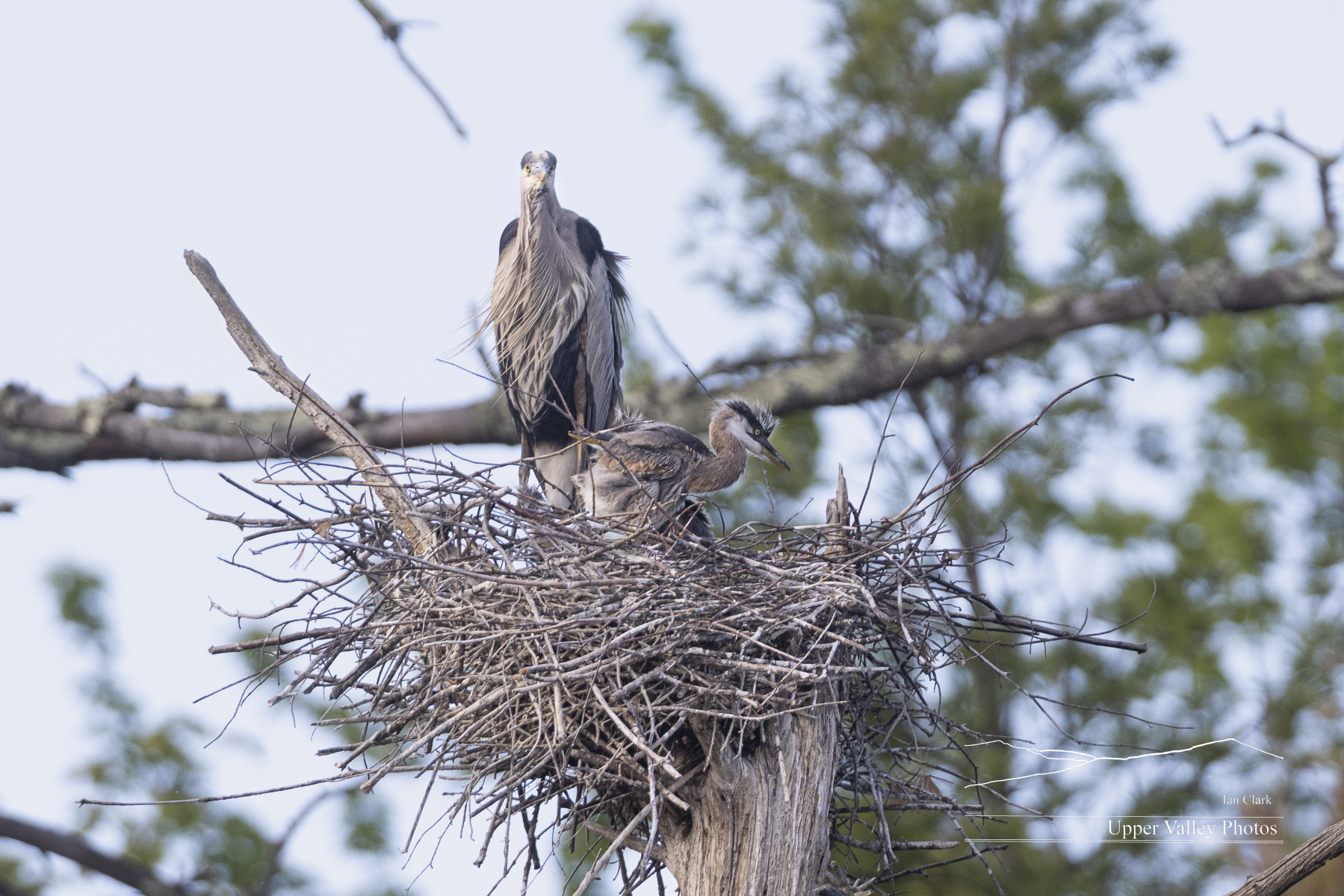
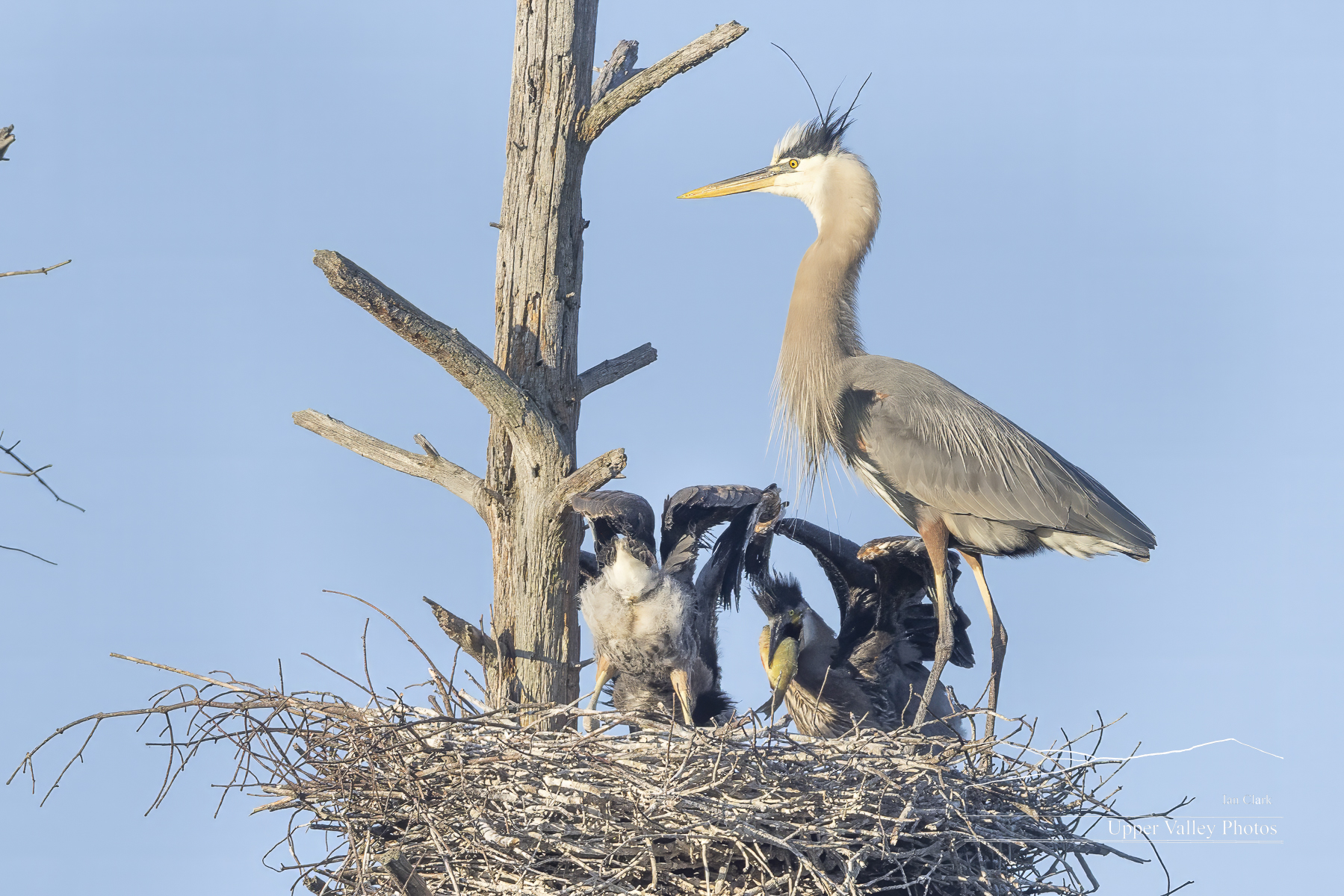
The chicks hatched in early May. The nests are high enough that the chicks couldn’t be seen for some time. Here’s the first morning I was able to get a look at the chicks.
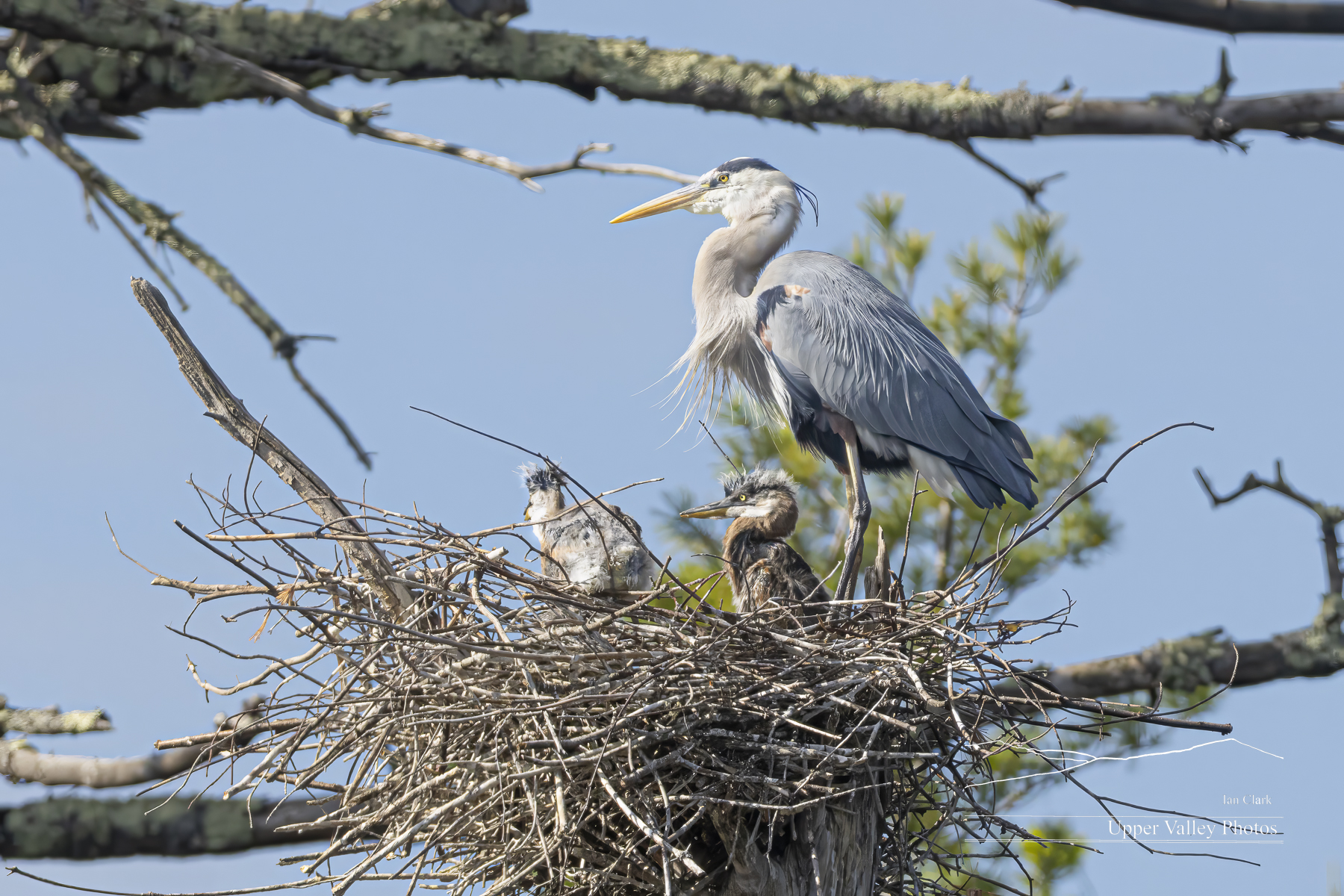
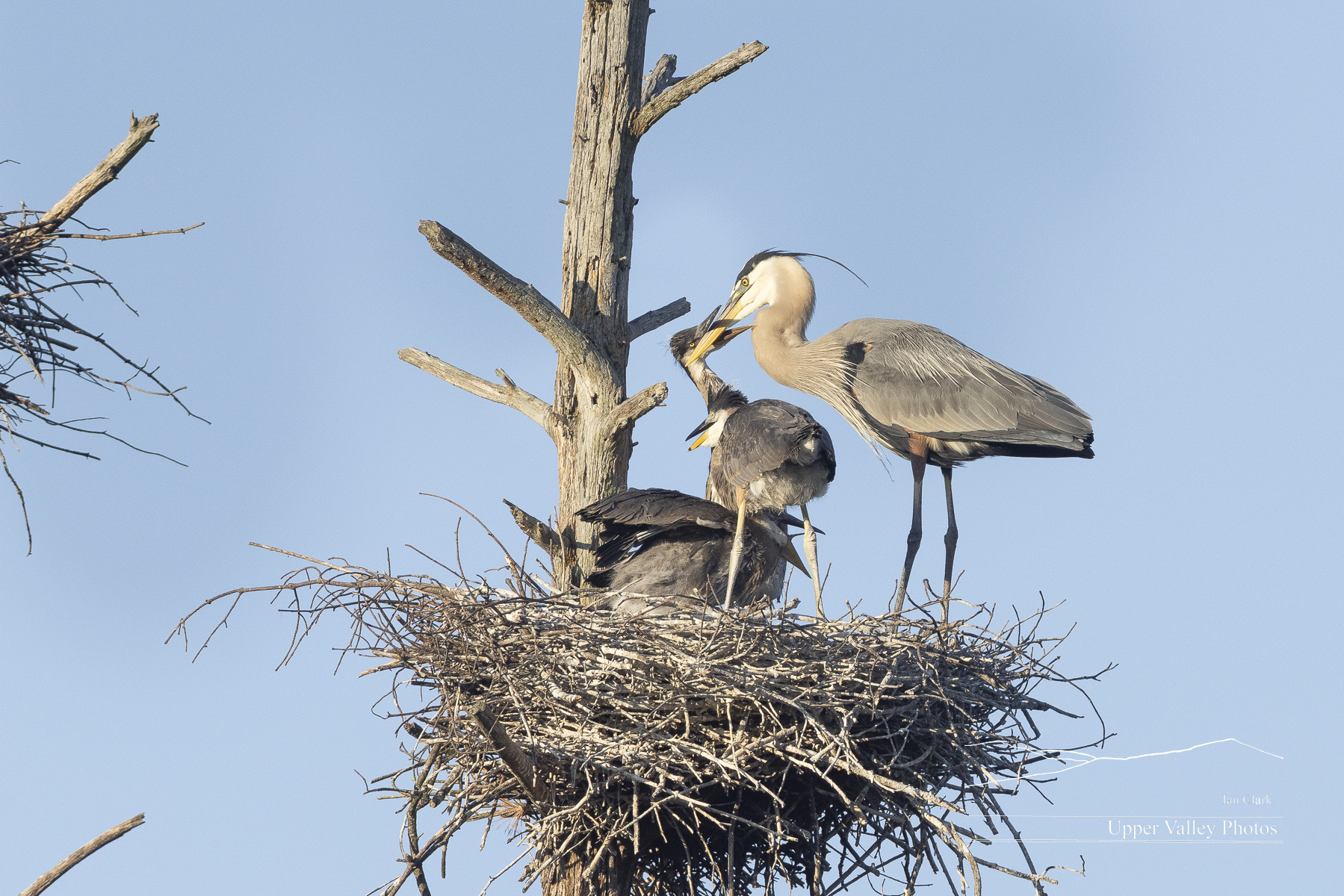
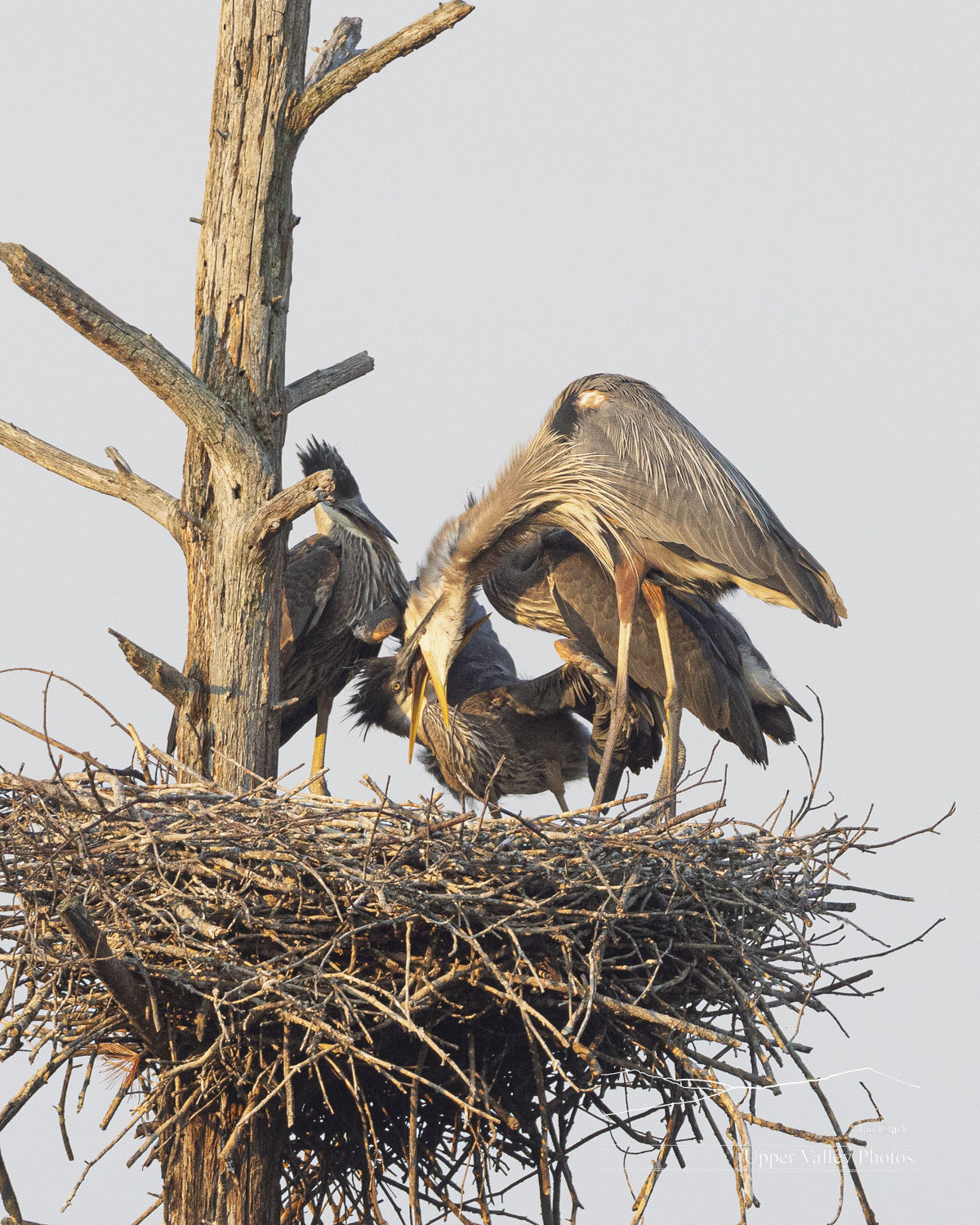
Both parents tend the chicks. Both will bring food back to the nest. The parents swallow the food when they catch it and regurgitate it when they return to the nest.
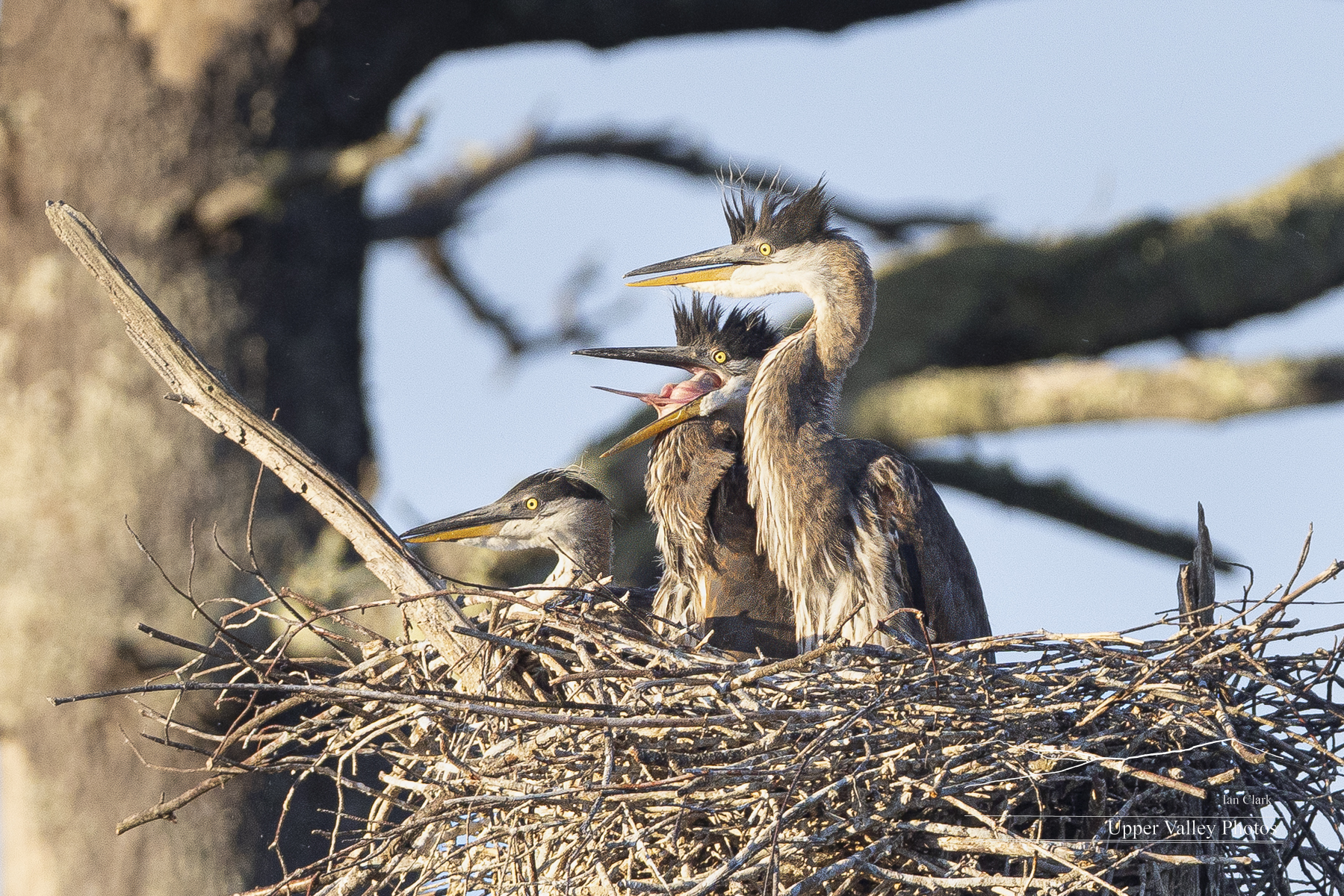
I’m convinced that Jim Henson designed heron chicks. This pair, and a third down in the nest have just finished a meal.
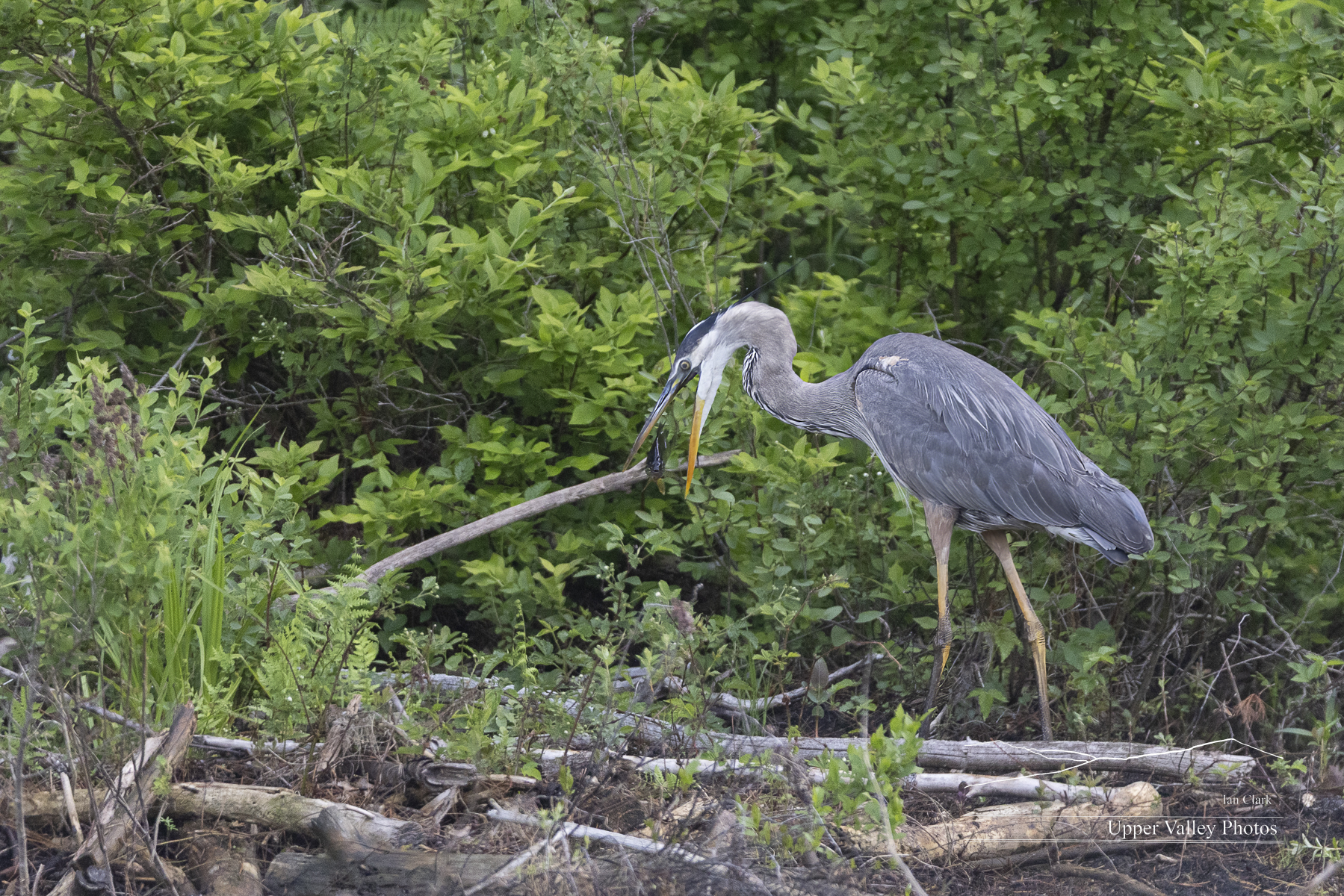
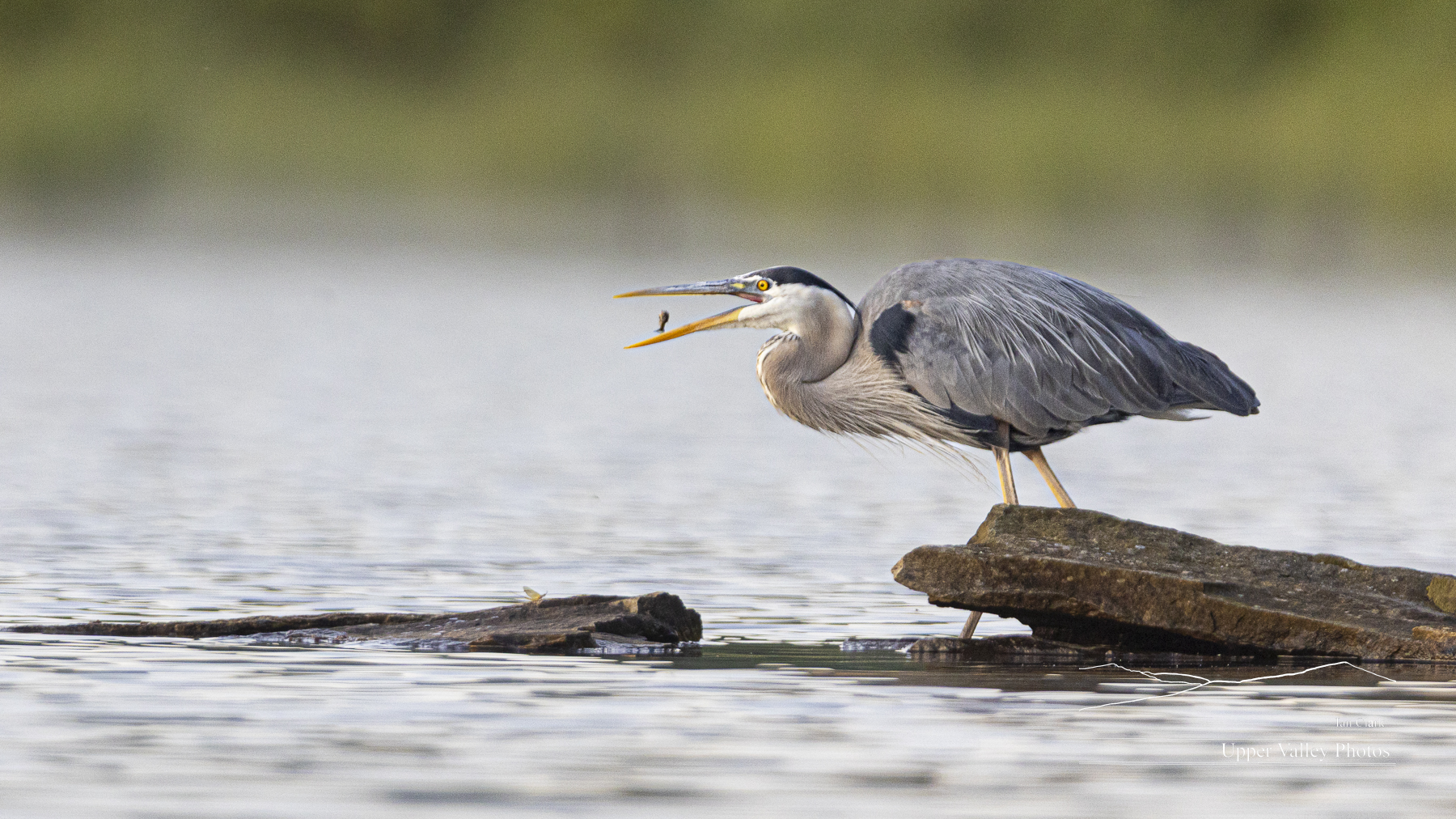
Closer to home, the heron on the Middletons’ Pond was a regular in the marsh. He’s caught a sunfish. They have to swallow fish head first to avoid getting poked by the spines. He’s flipping the fish to get it lined up.
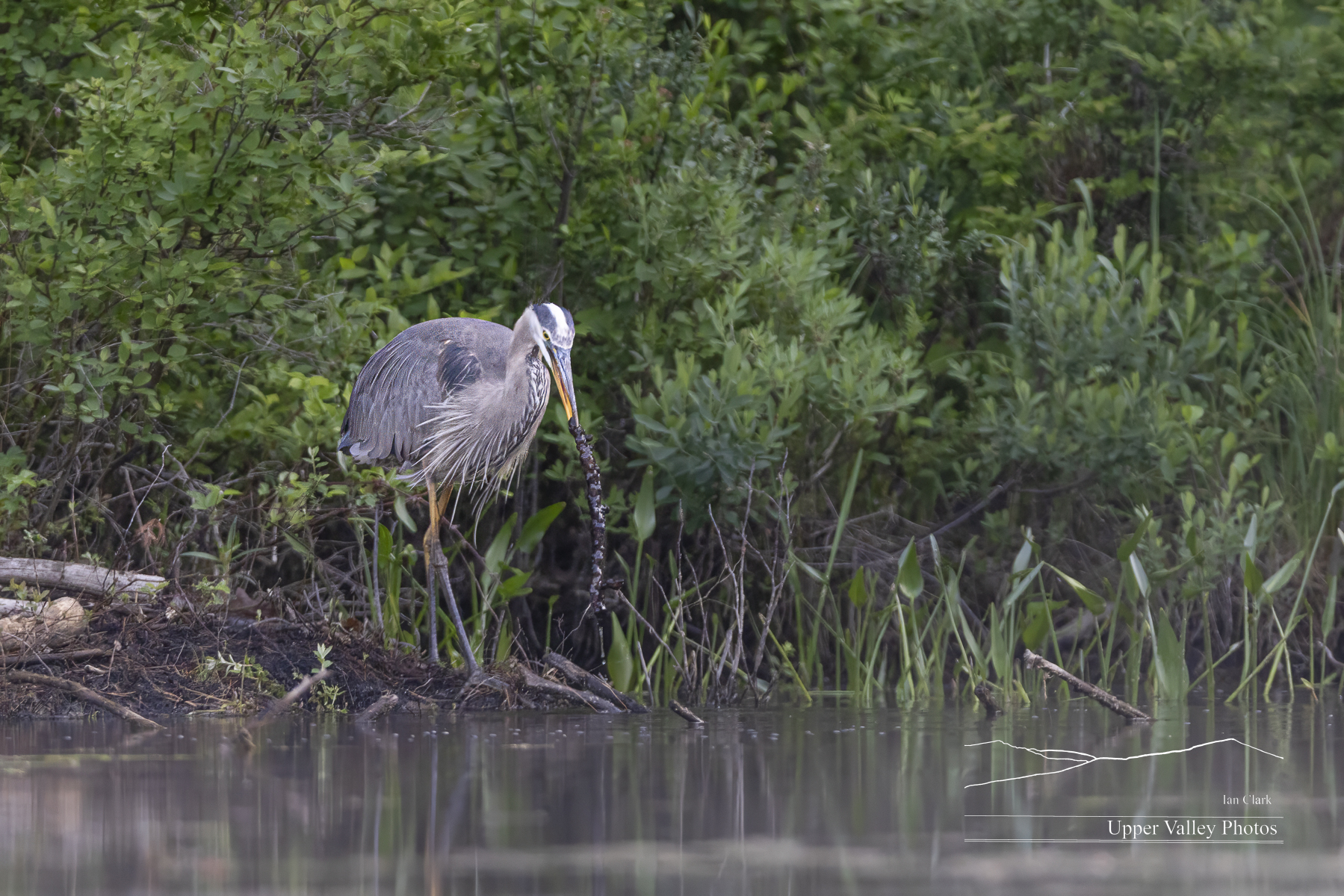
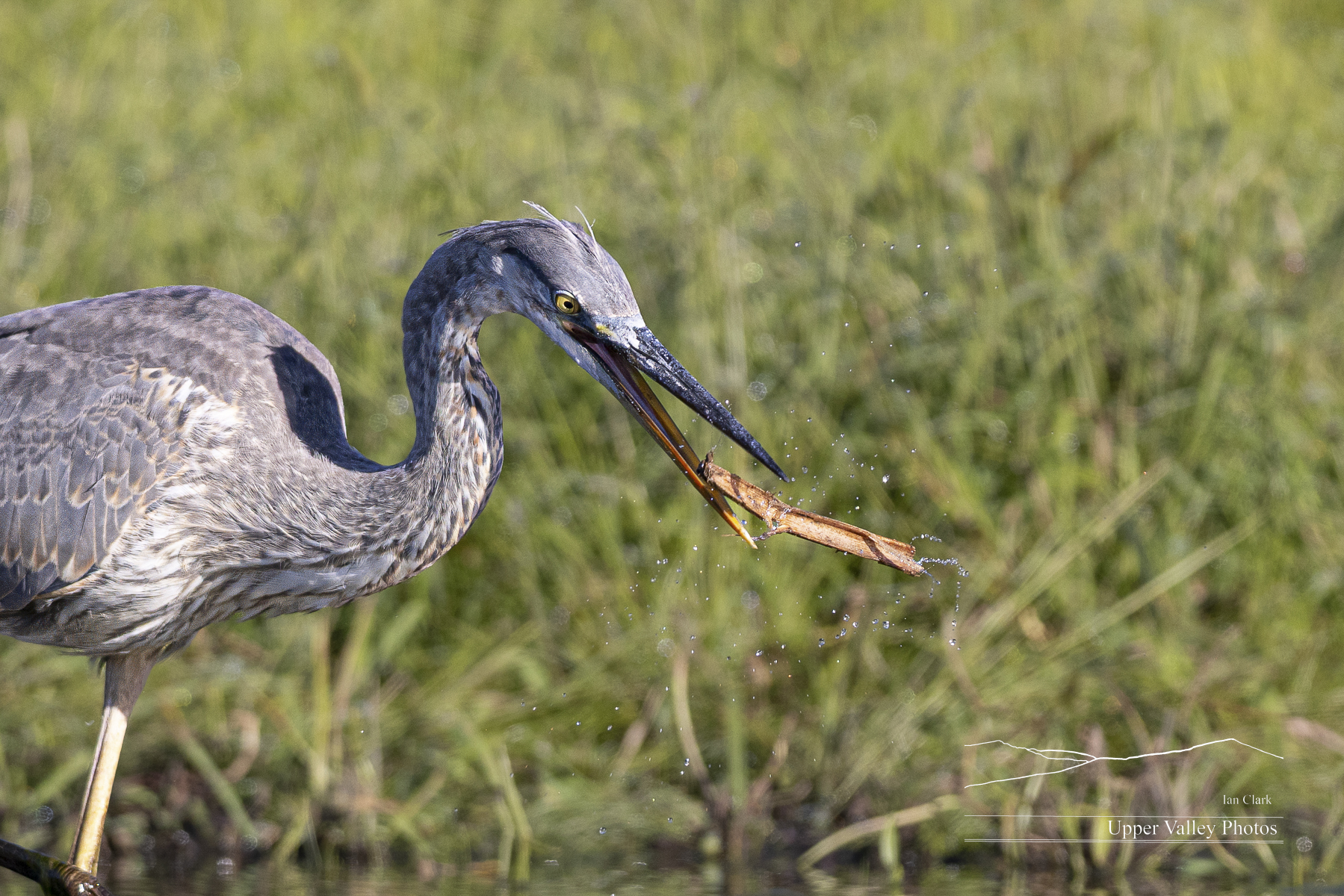
Herons seem to grab anything that might be food when they see it. Many times over the season I saw them come up with sticks. This looks like a waterlily root. Whatever it was, it was tossed aside.
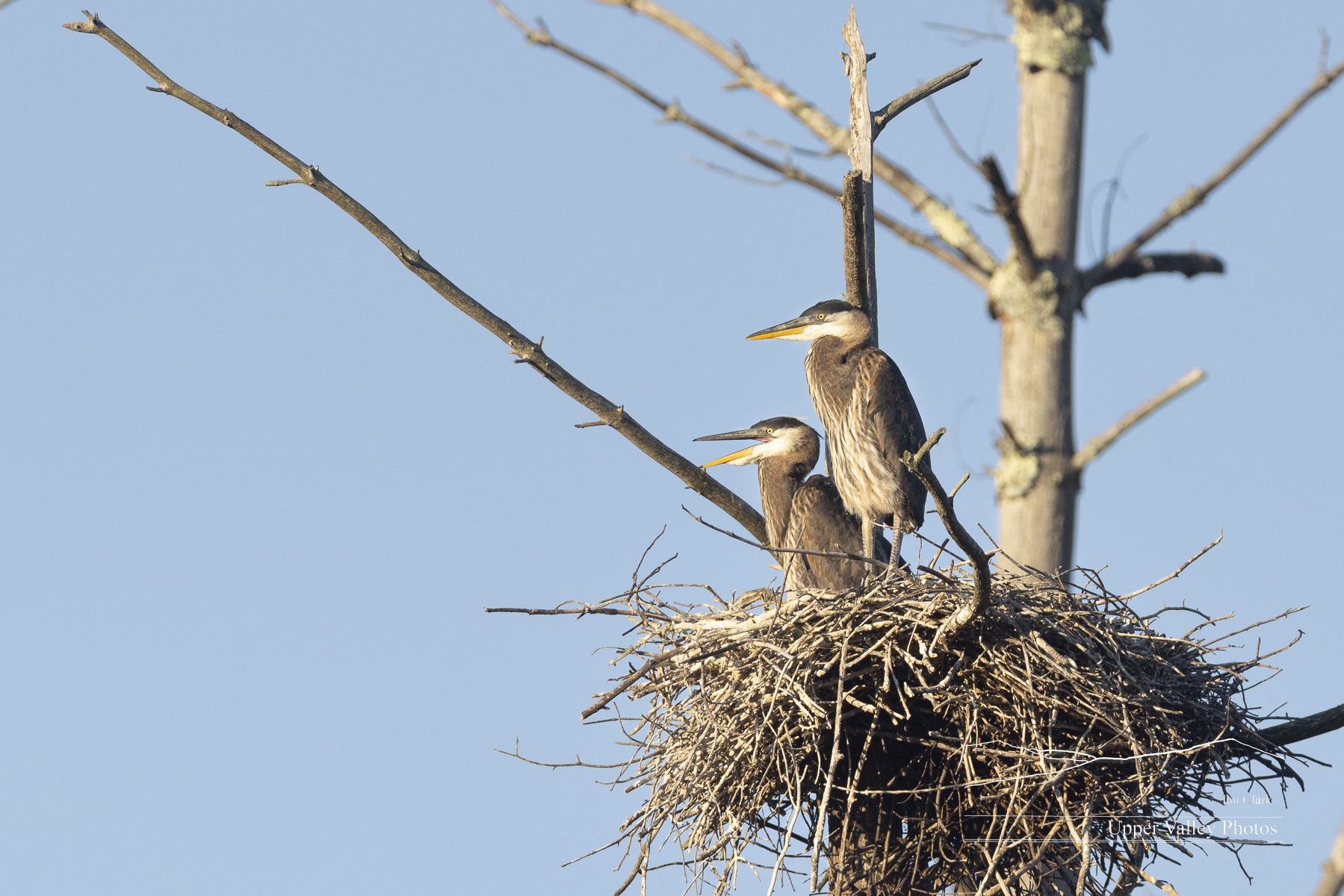
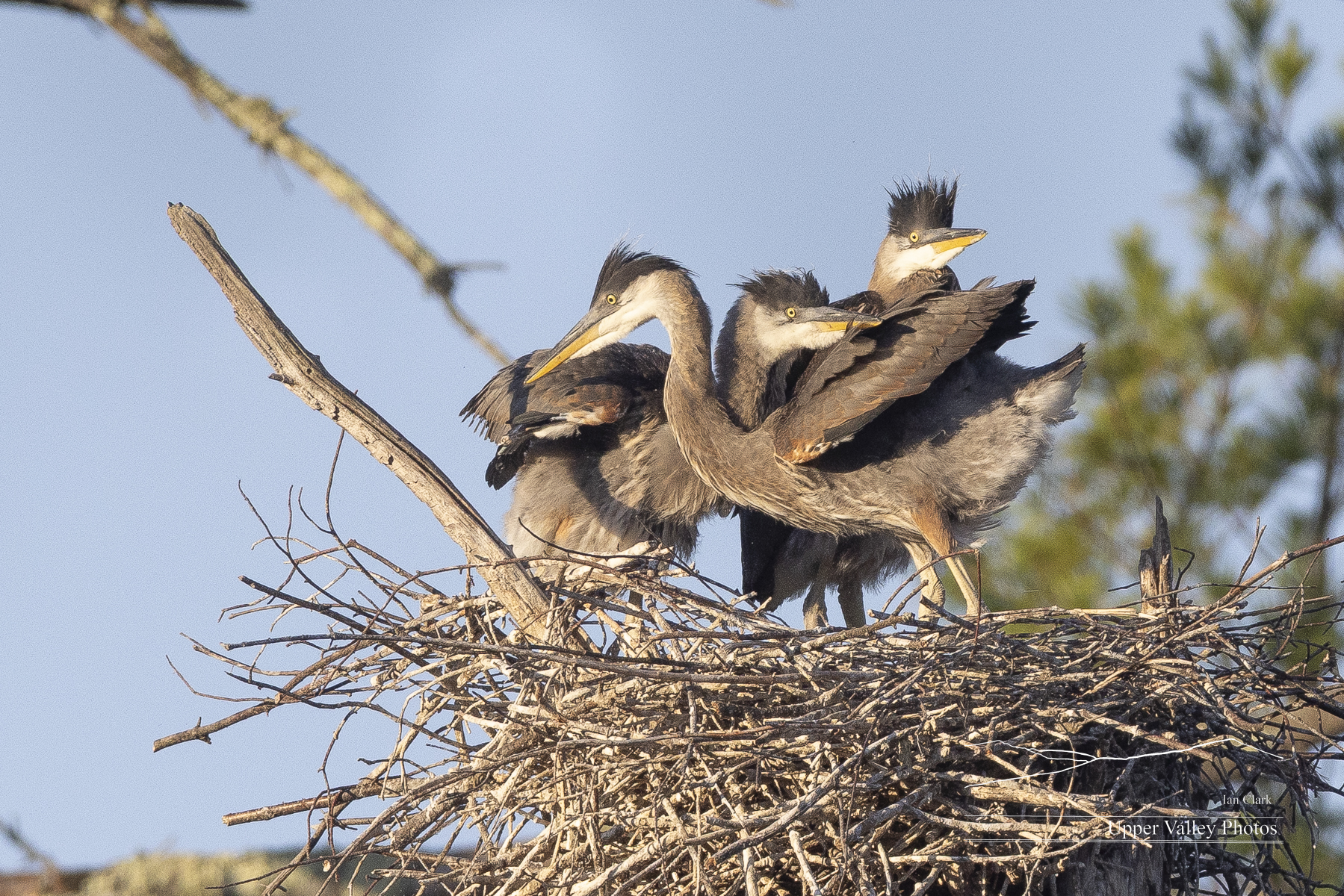
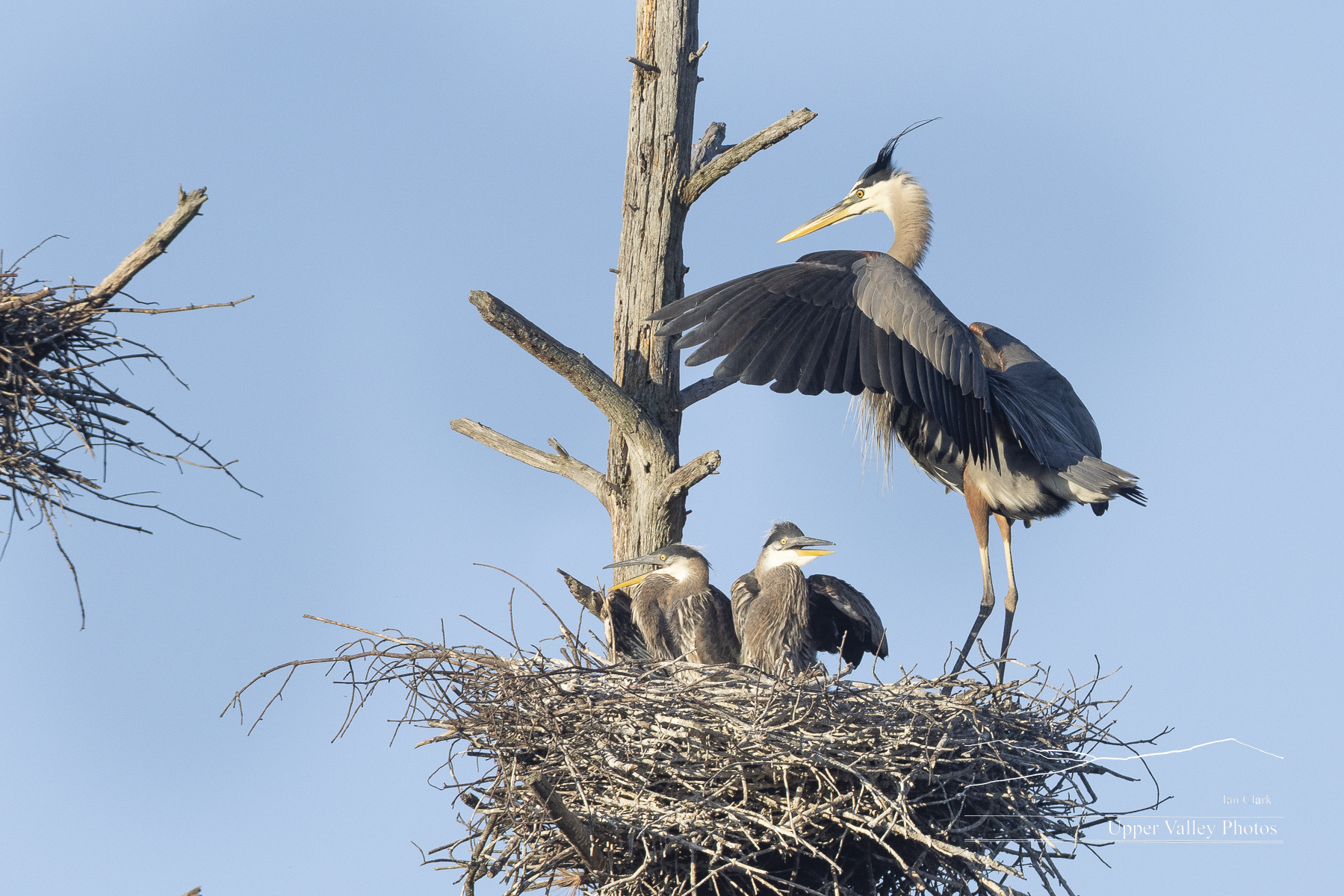
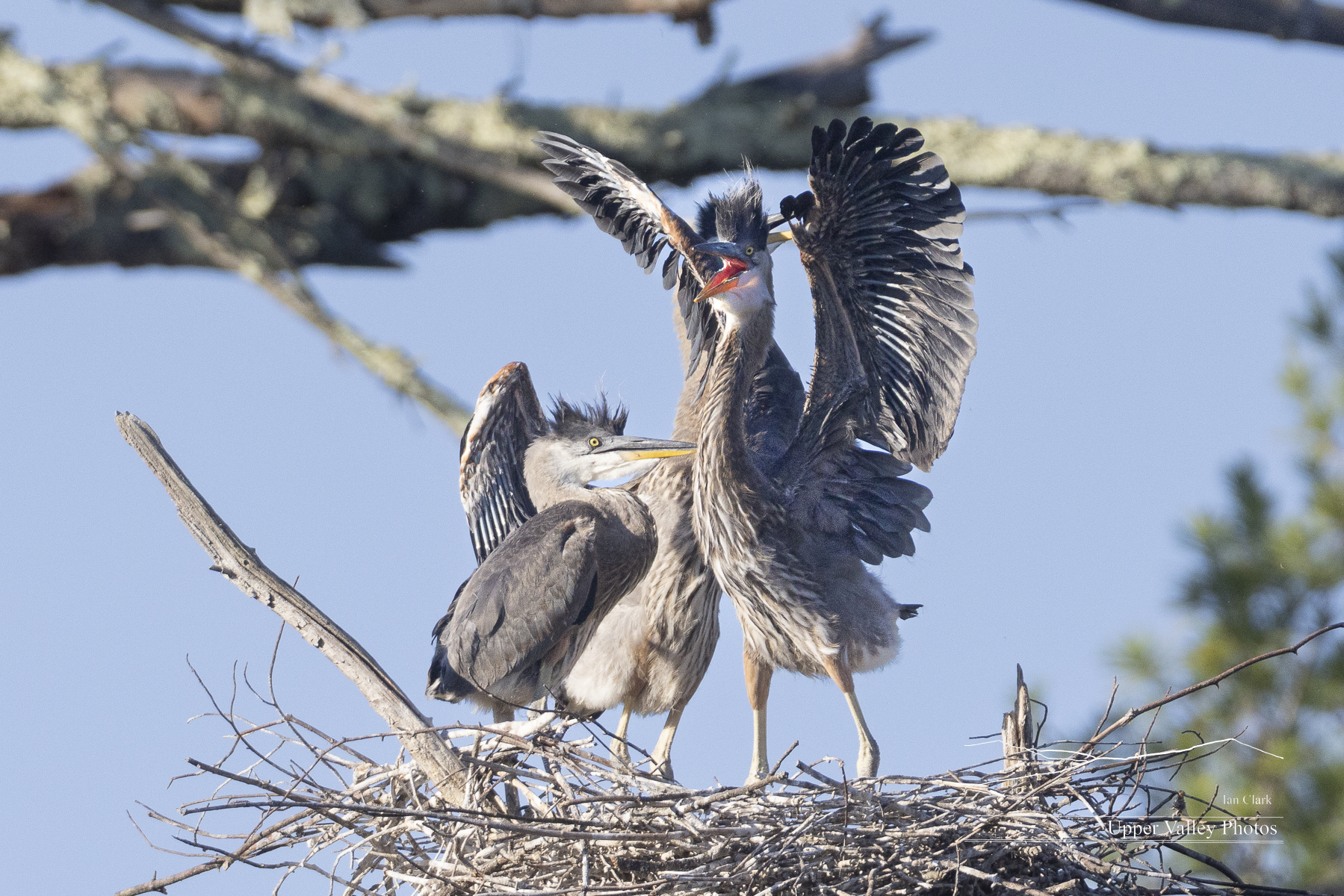
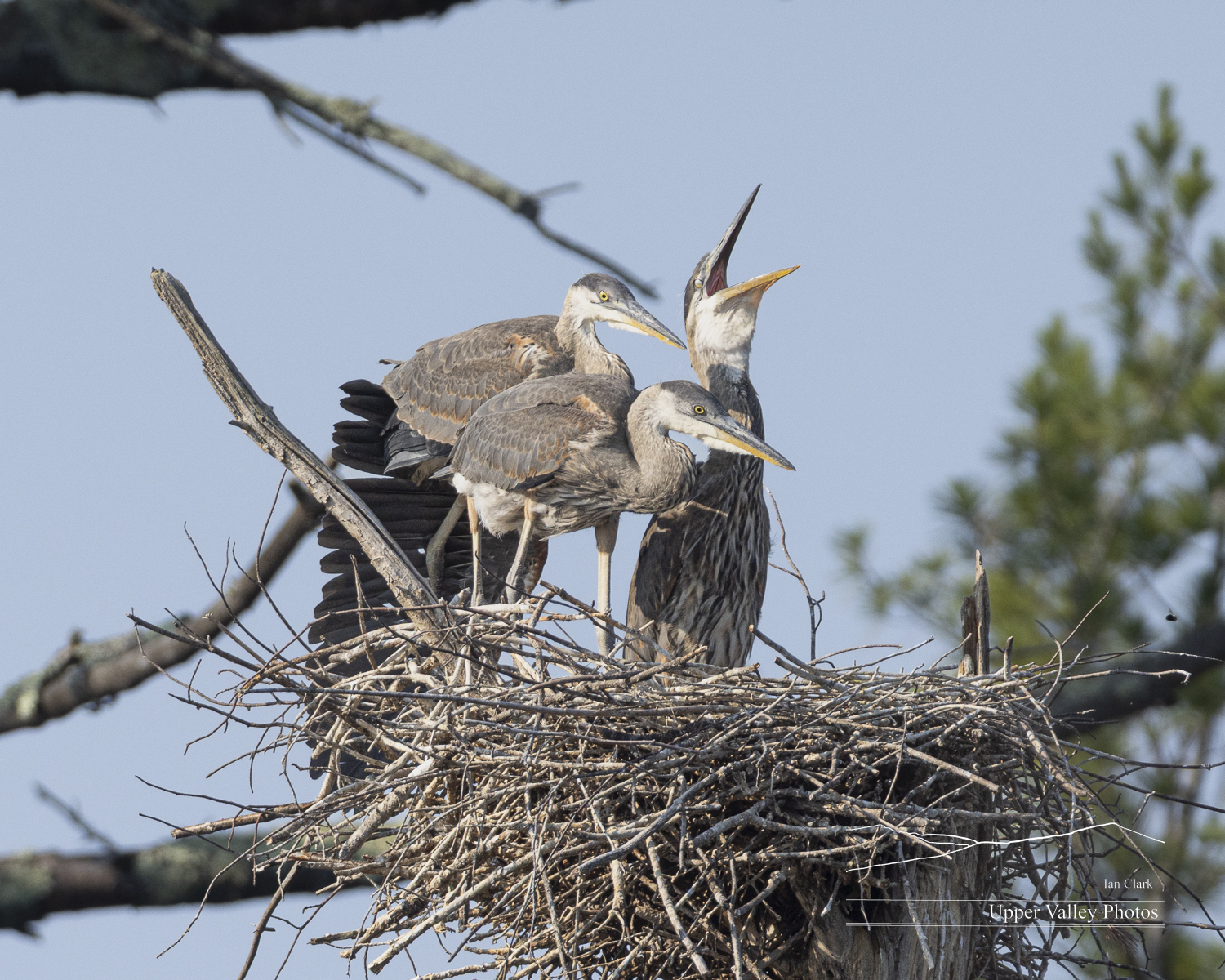
Nine days after my last visit to the rookery, the chicks have grown feathers. They’re too big to completely hide in the nest now – making life easier for photographers.
A parent with food has just been spotted as it approaches the nest. The chicks seem to want him to understand that they enjoy being fed. The parent fed them, then hopped out of the nest to perch on a branch about 10 feet away.
The chicks weren’t happy that there wasn’t more food and began calling, bobbing up and down and flapping their wings.
Next door, another parent arrived at another nest with a meal.
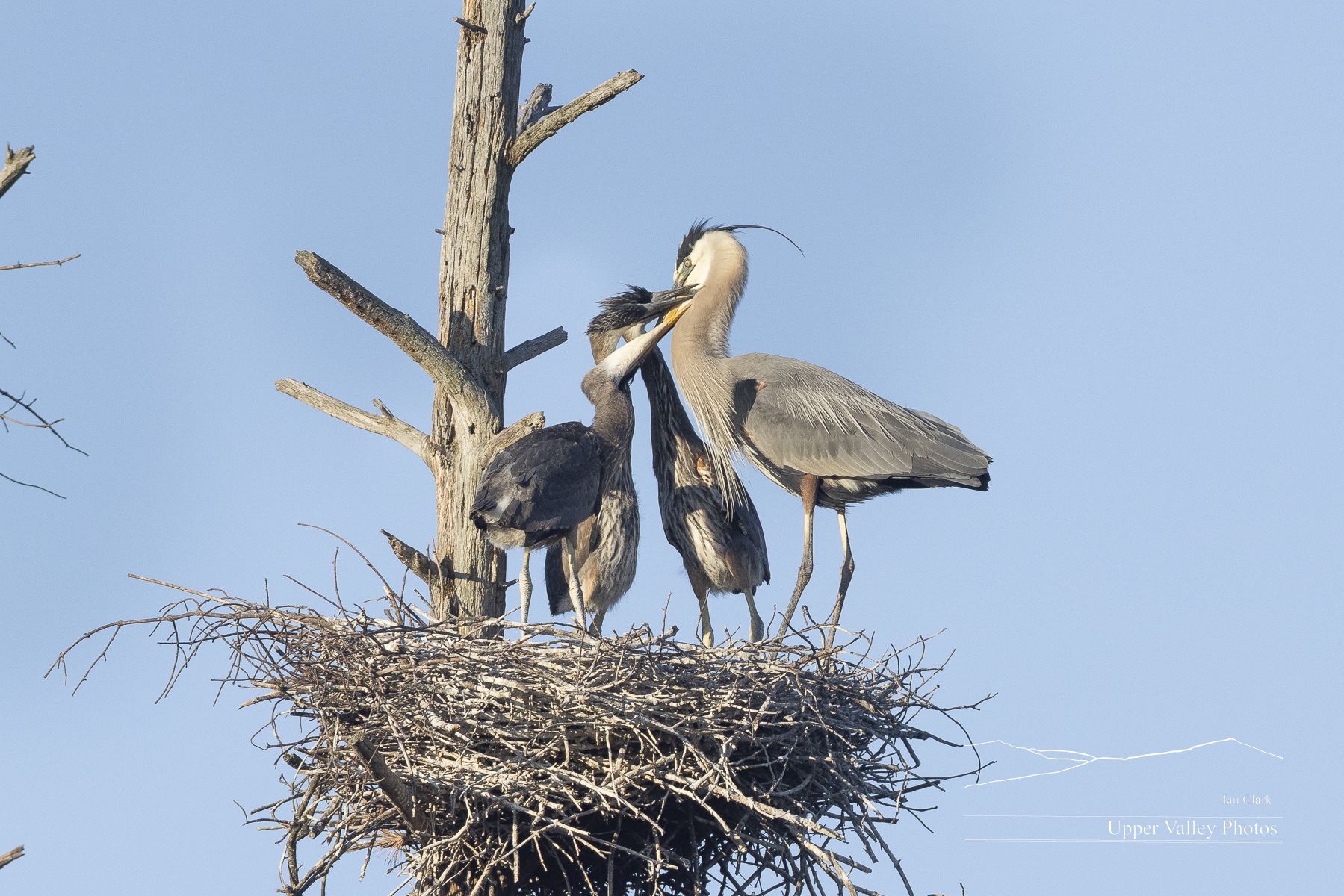
The parents try to regurgitate the food into the bottom of the nest. But the chicks want the first chance to grab it. They’re not gentle about grabbing the parent’s beak.
Beak grabbing is a family affair….
The parent delivered what looks like a good-size perch which the chick in the middle has claimed.
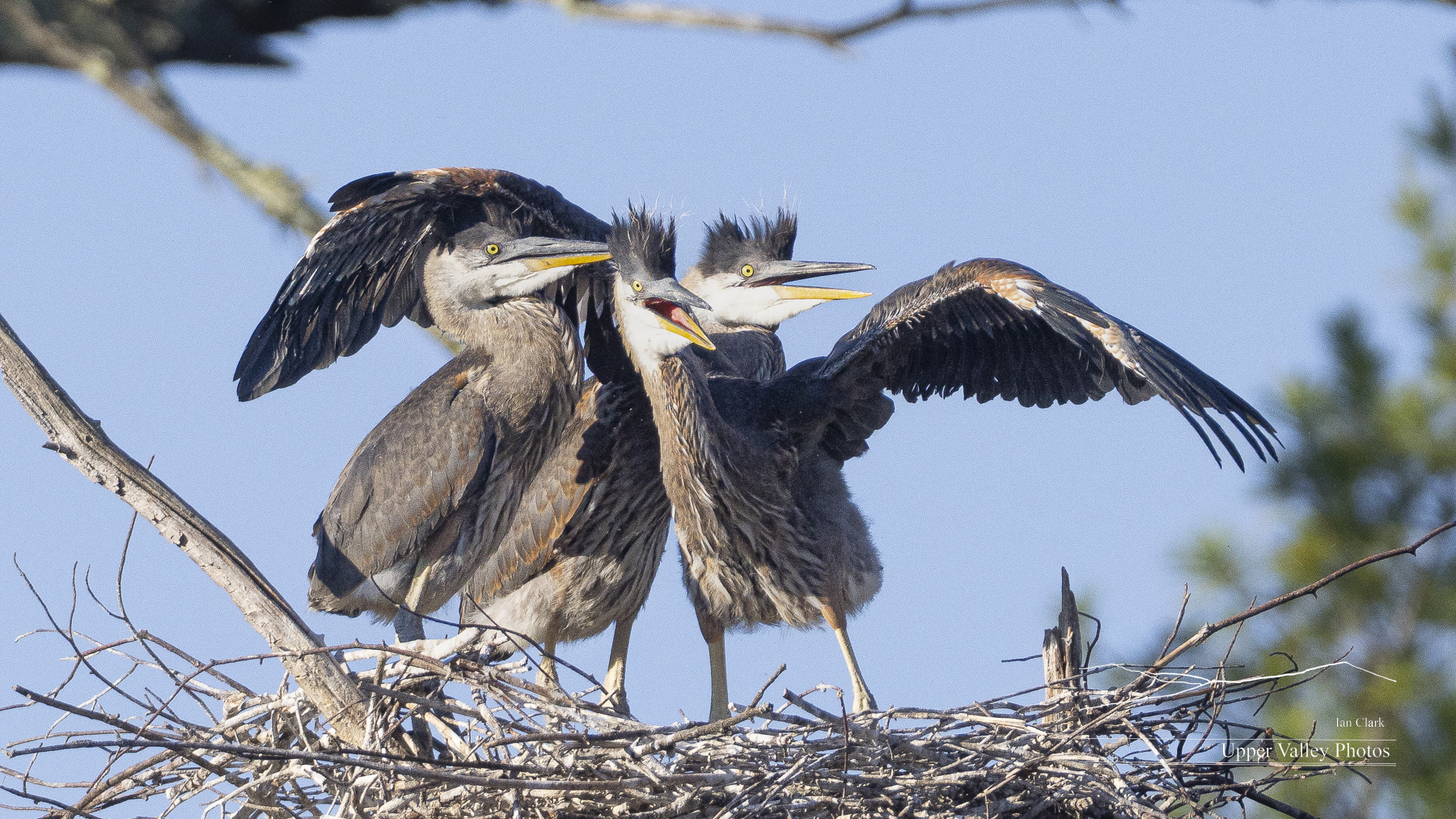
The chicks make a ruckus when the parents depart after delivering food. The parent has again perched about 10 feet from the nest.
The same chicks trying to convince the same parent they’re still hungry. This is my favorite shot of the chicks this year.
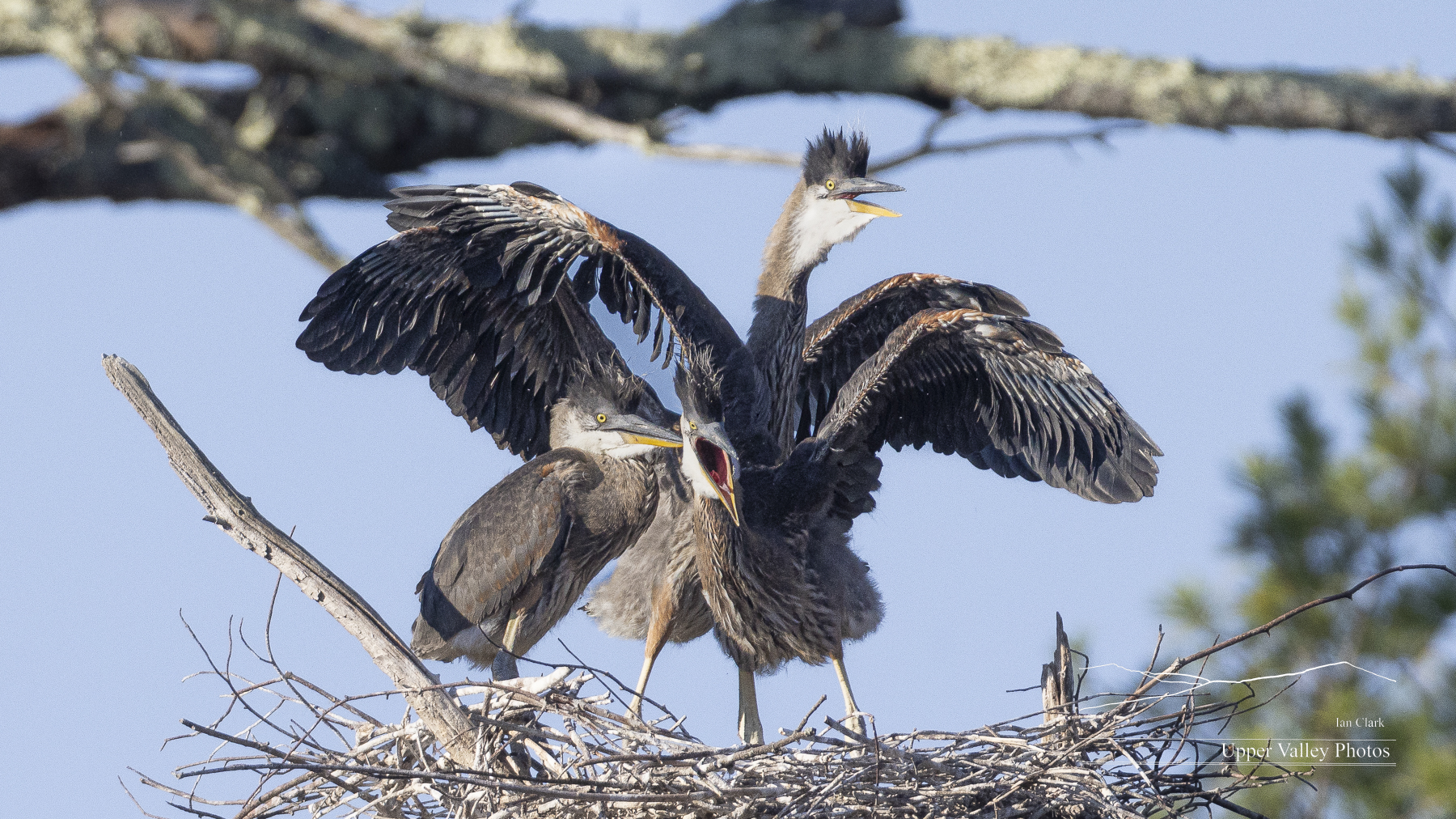
No! Seriously! We’re starving here! I didn’t get a chance to get back to the rookery for 10 days. The chicks are much bigger. This parent – in front on the right – is stretching to regurgitate the meal.
Ah! Vichyssoise! Again!
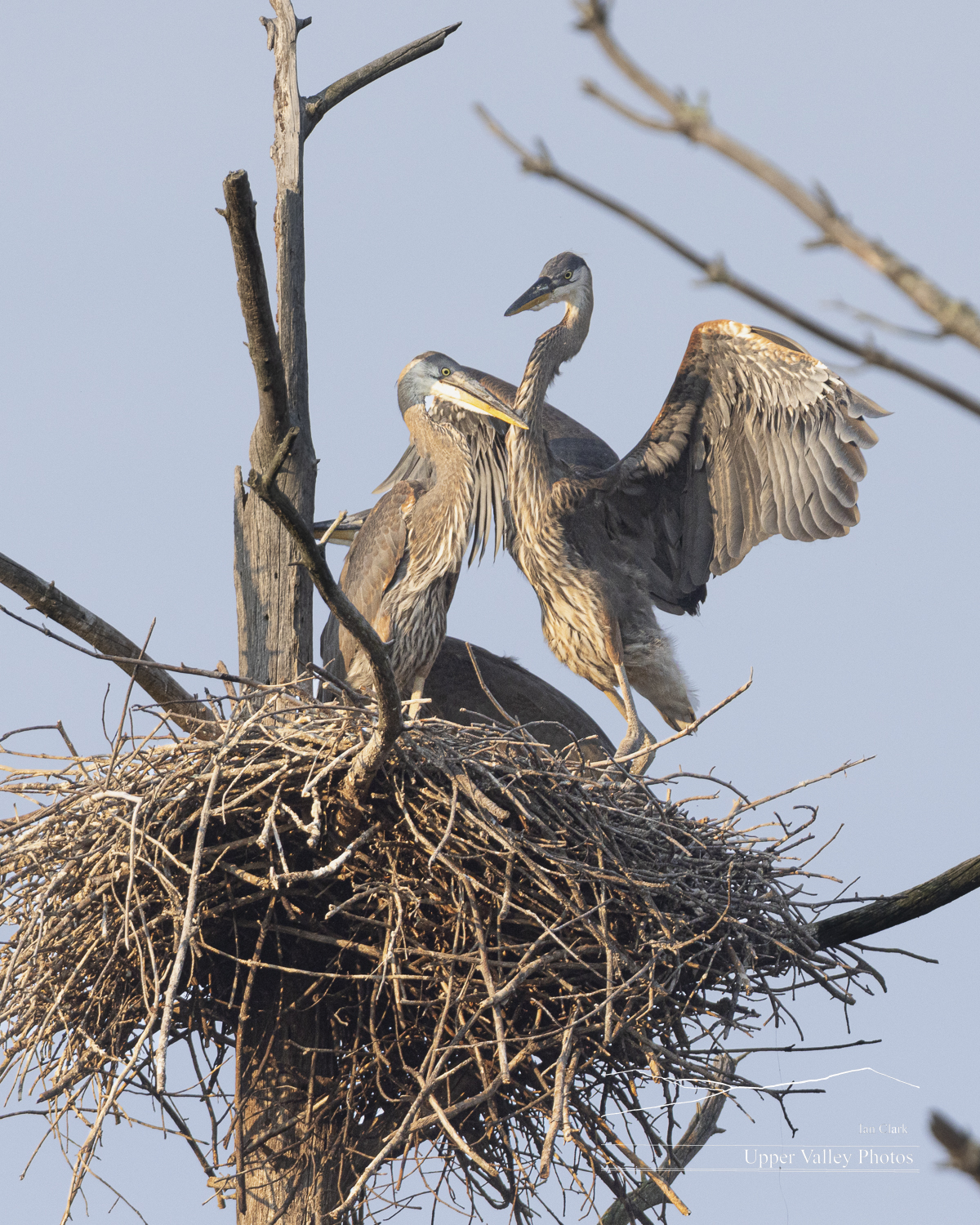
This visit, the chicks were beginning to get serious about testing their wings. There was a lot of flapping in all the nests.
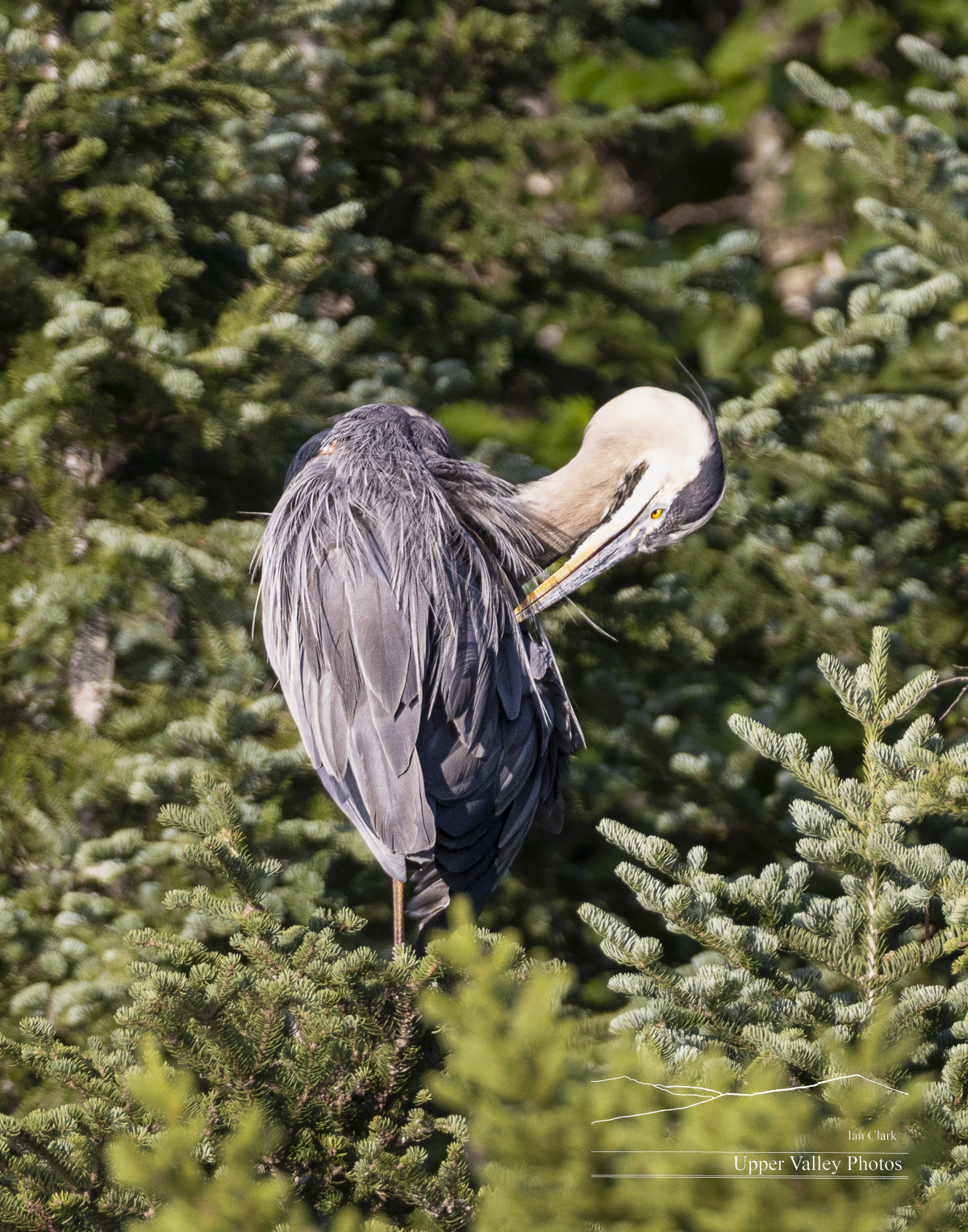
The flapping was regularly interrupted by meal delivery. These guys have spotted a parent returning to the nest. How can chicks tell their parents from the other adults in the rookery? Hank or his cousin was also a regular on the Eastons’ pond this spring. Even small fry are flipped around to go down head first. Preening herons seem to defy physics. Being able to preen while perched high in a tree seems far-fetched. At best.
The first week of June found me exploring the Waits River. Hank was busy finding breakfast.
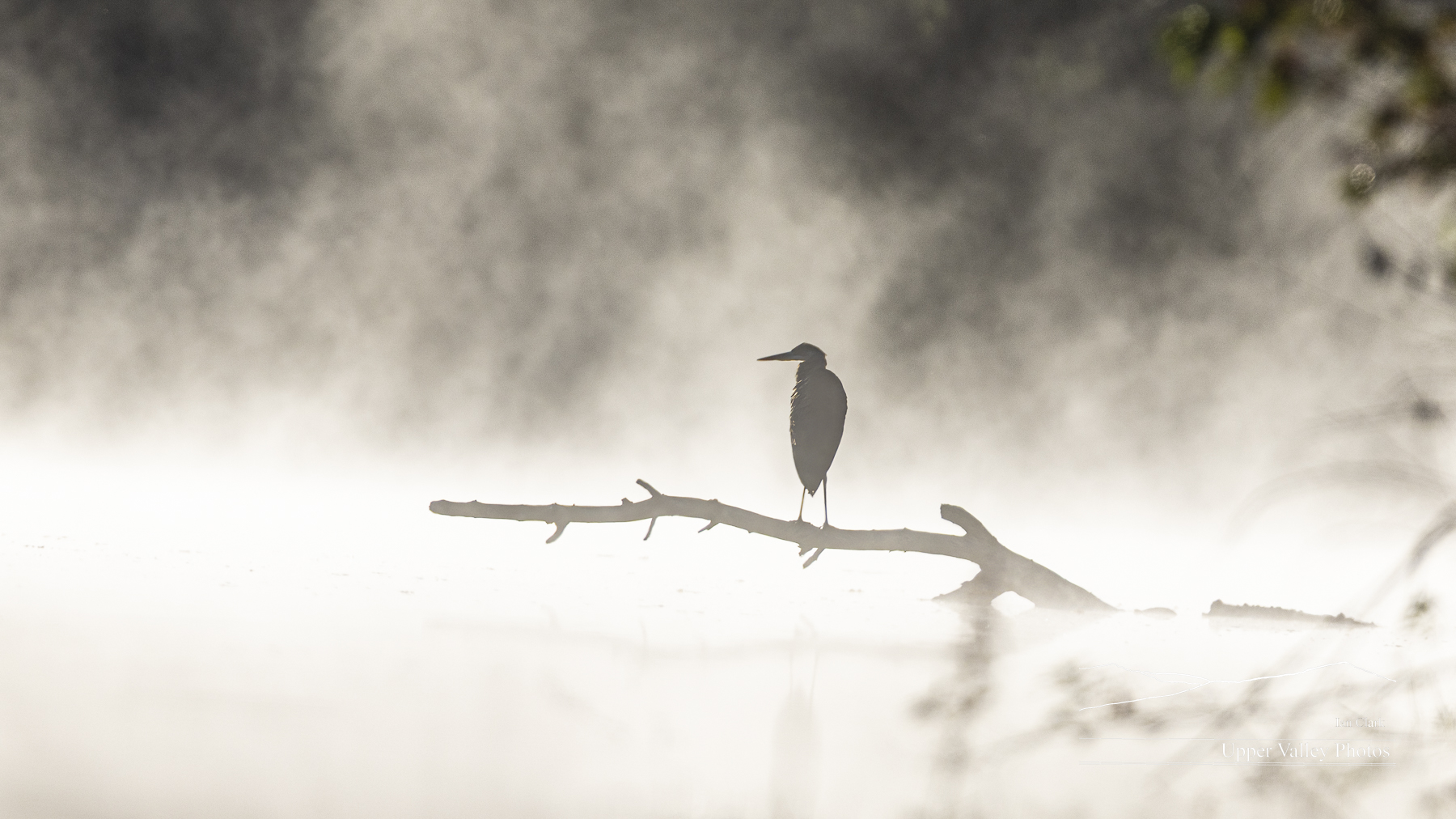
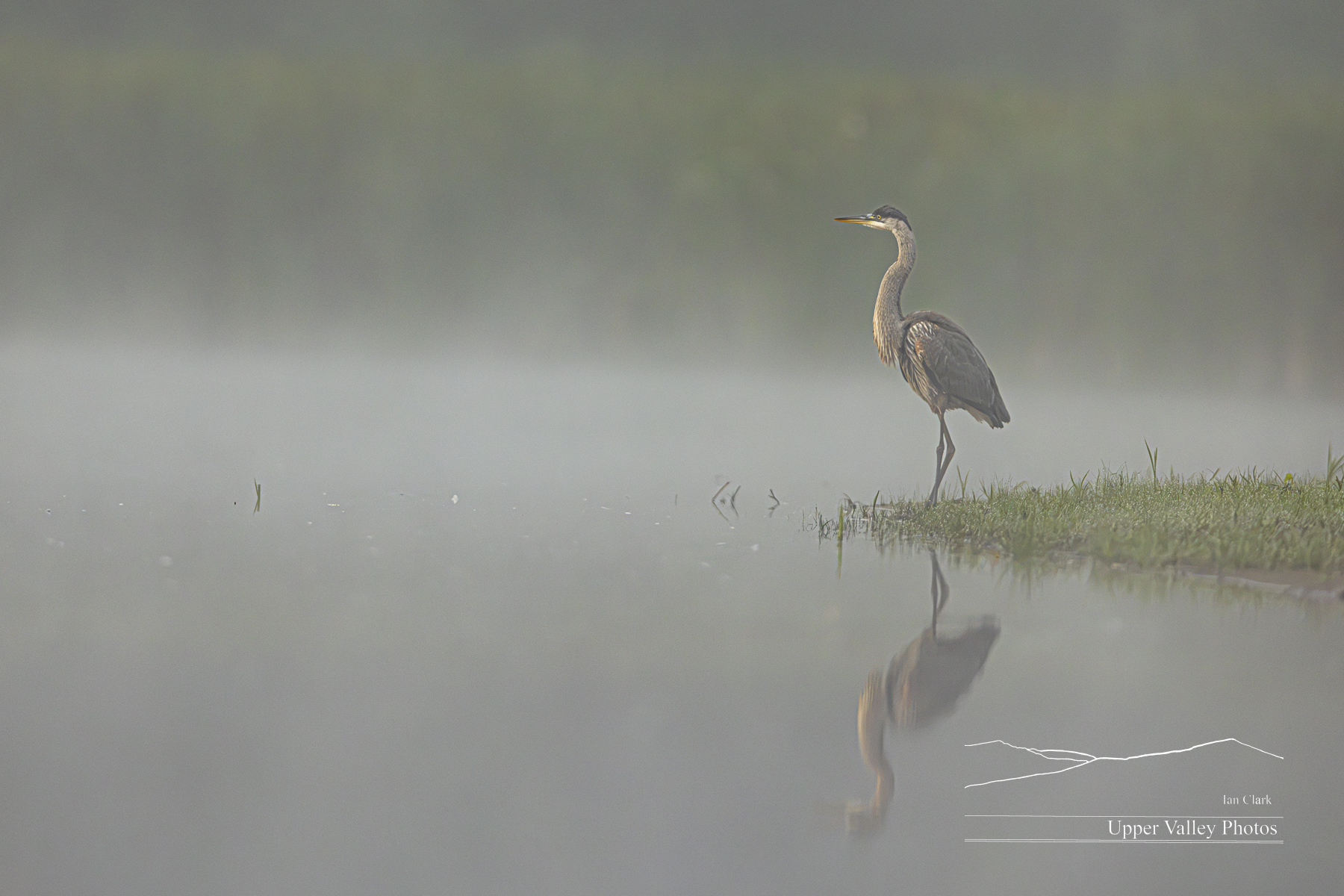
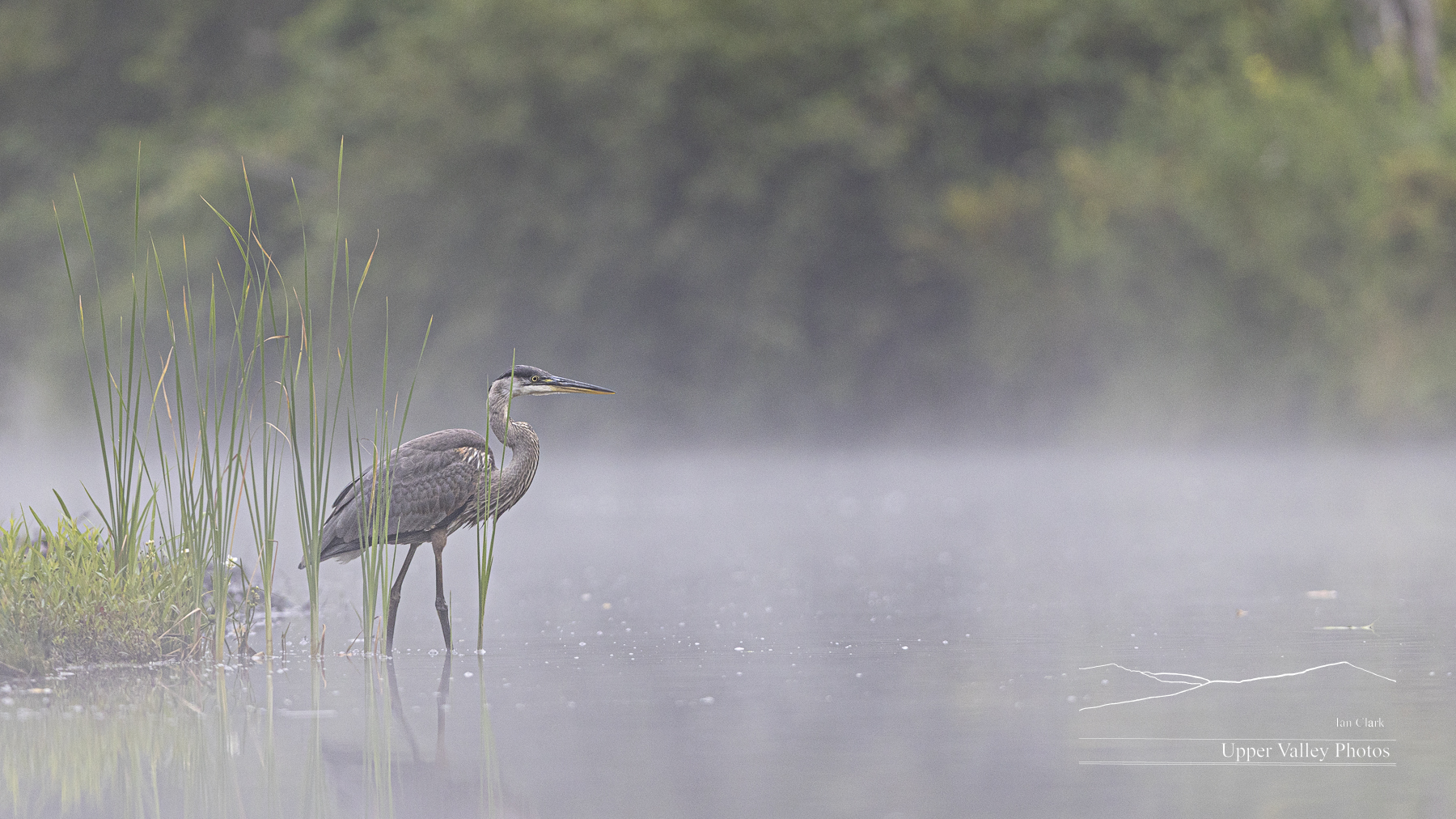
I had enough luck on my first visit to prompt me to try again a few days later. Hank was cooperative and posed nicely in the fog.
On a Sunday morning a few days later, I paddled the Waits from almost under Route 5 to the west down into the Connecticut and explored around the marsh without finding Hank, et al. I was giving up and heading home when I found Hank was getting a late start but posing nicely.
I stuck around for a time and Hank cooperated again. I went back several more mornings, finding Hank and at least two green herons and a great egret. But, the fog was so thick. I switched to calling on them in the evening.
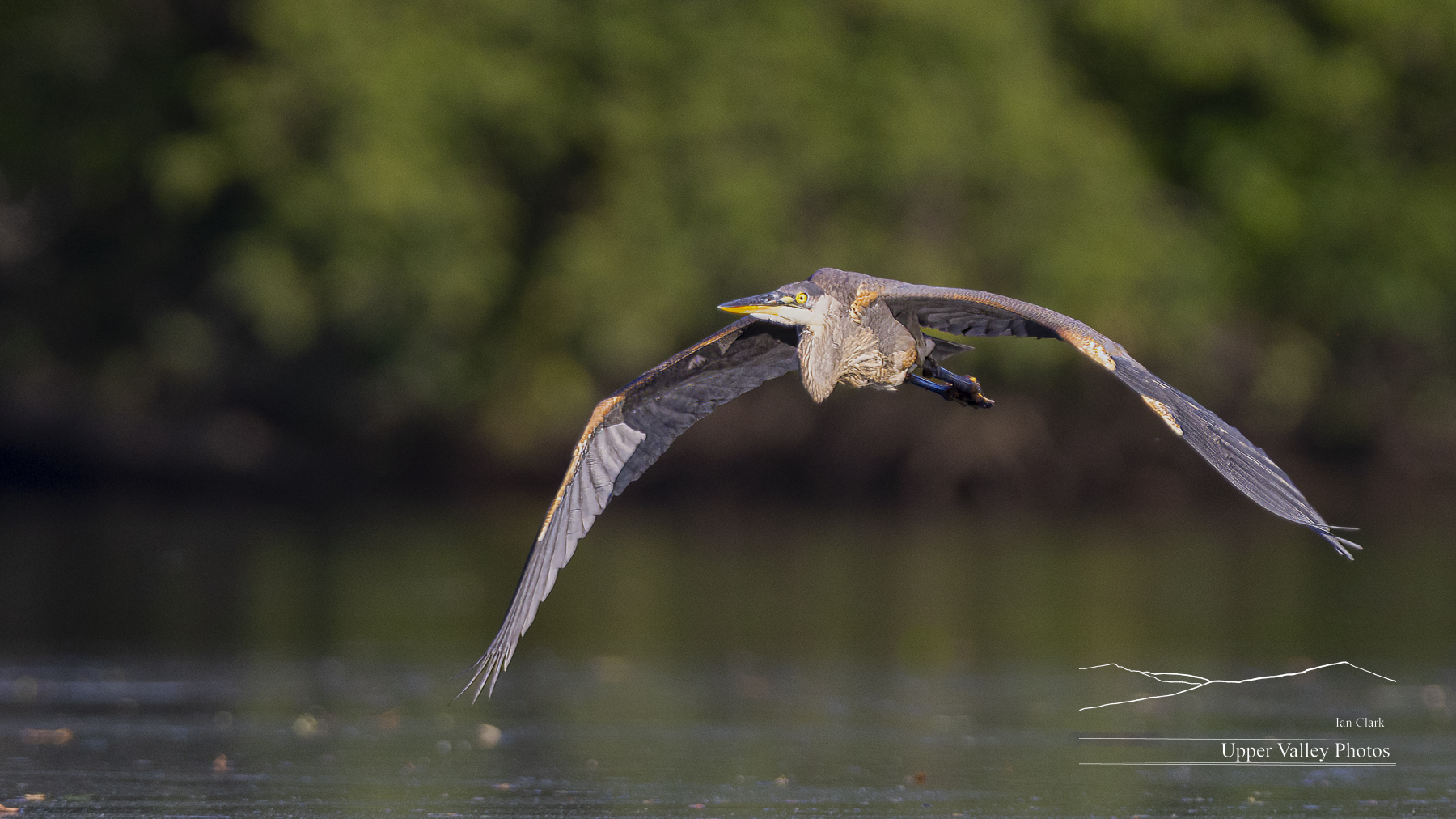
The first evening I visited, there were herons everywhere. The whole crew was out. The green herons – Heron Burr – were foraging and the great blue herons were flying to and fro.
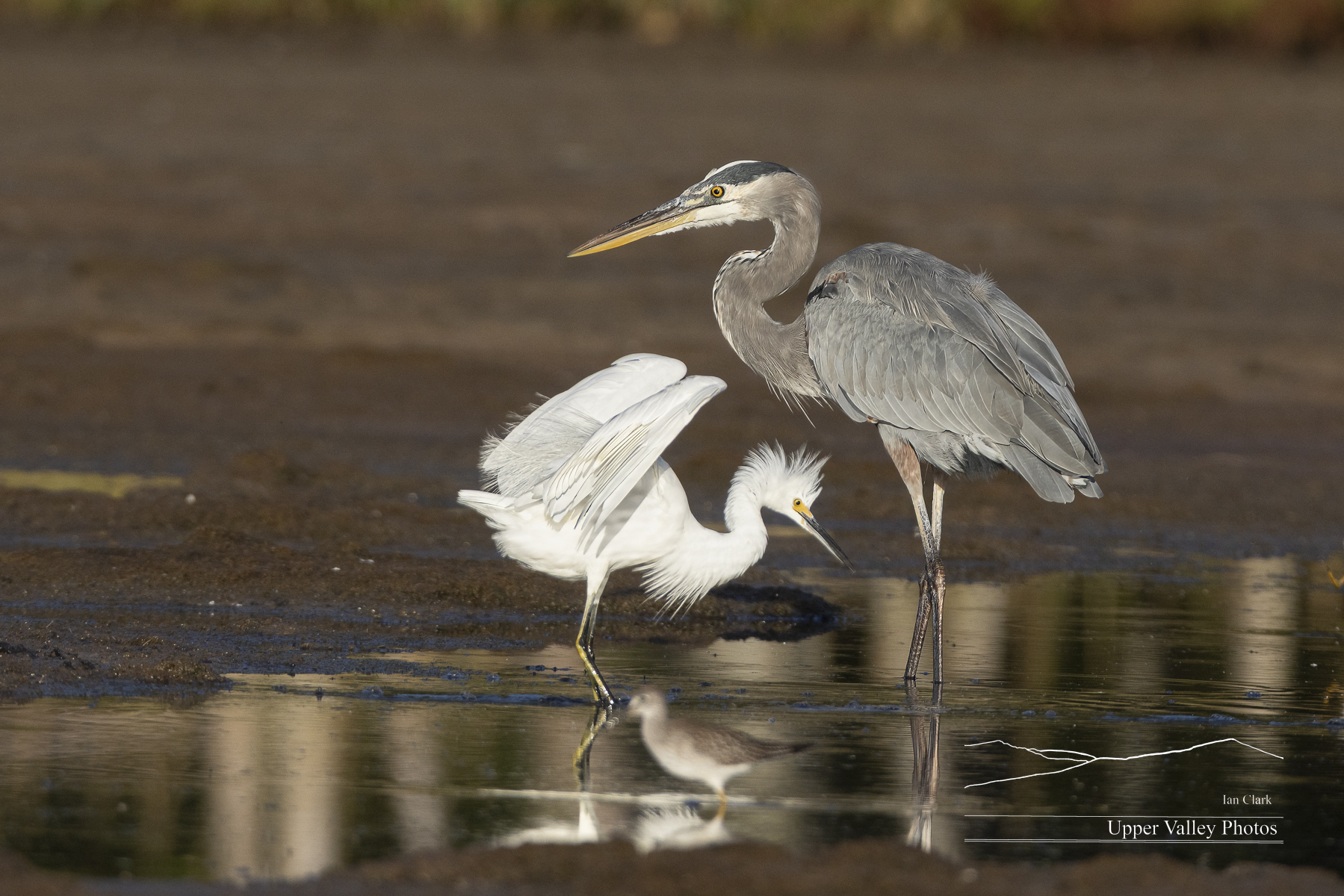
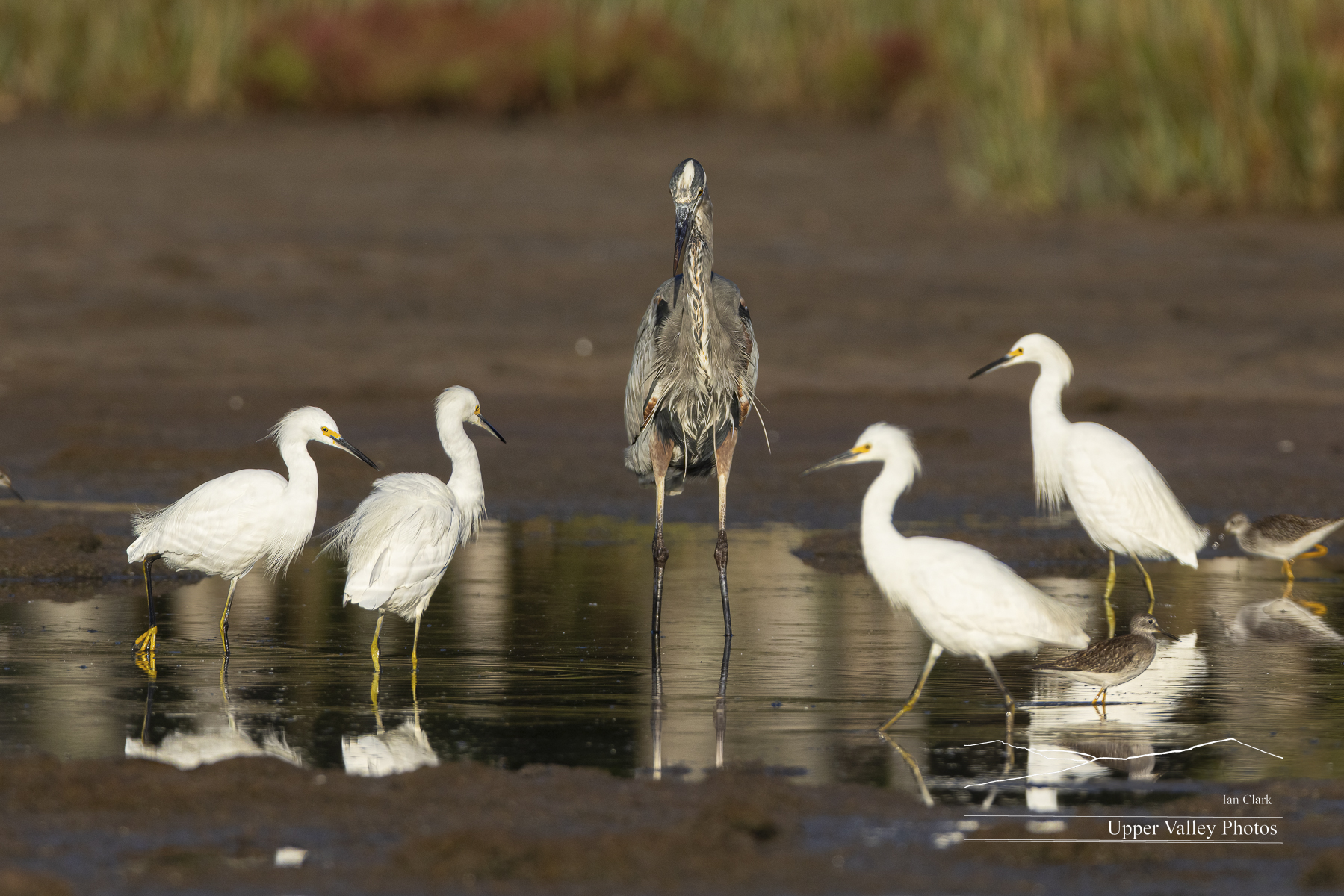
A couple of weeks later, I headed down to the coast to see if I could find more of Hank’s cousins. Here’s one sharing a tidal pool with a snowy egret.
It looks like Hank has called his flock together to deliver a sermon.
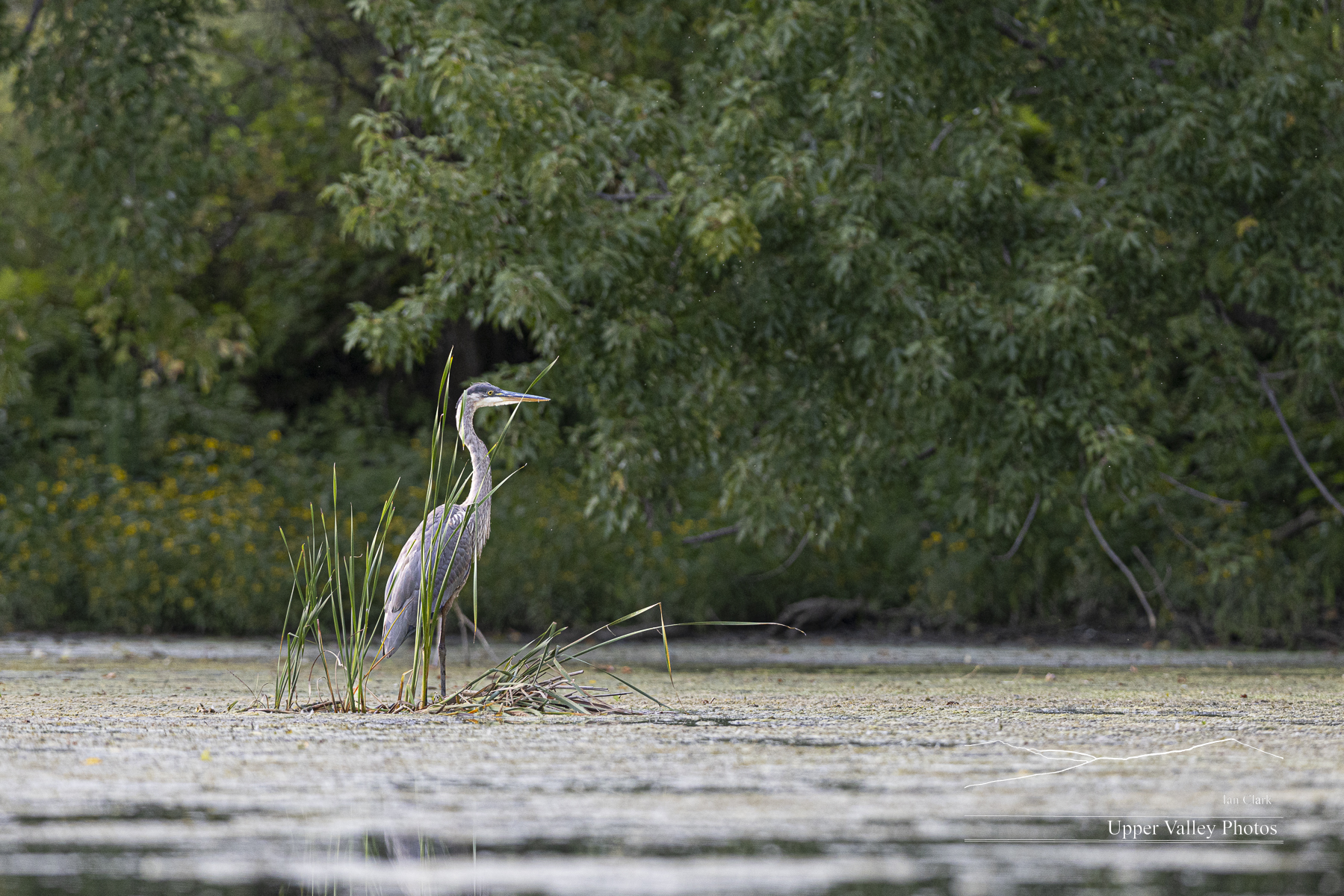
And a few days later, back in the marsh along the Waits, Hank was on duty. I didn’t have the heart to tell him I could see him after he took all that trouble to hide in the grass.
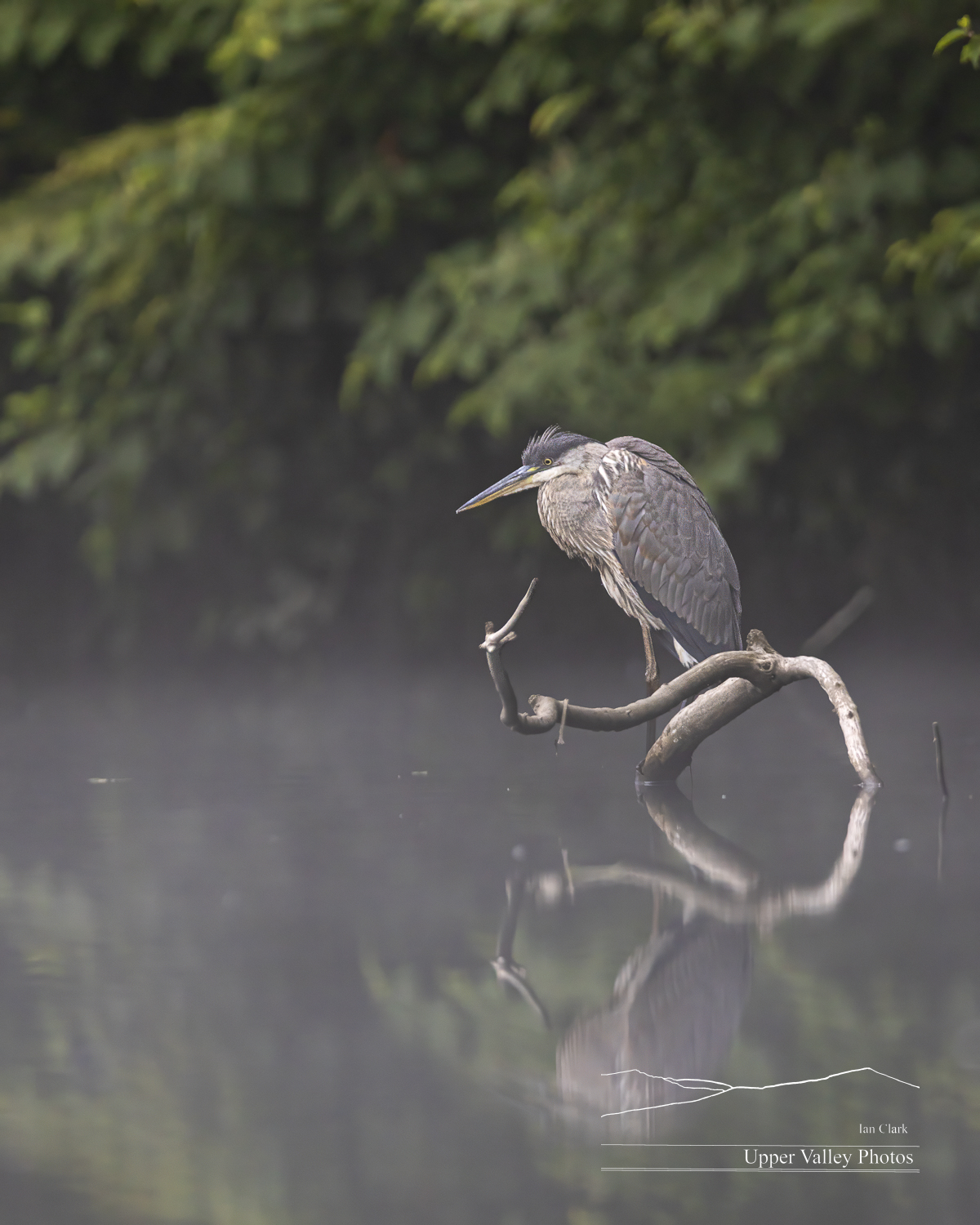
About a week later, I visited on another morning. I spooked Hank as I started downstream looking for him. He took off and eventually struck a pose on this downed tree.
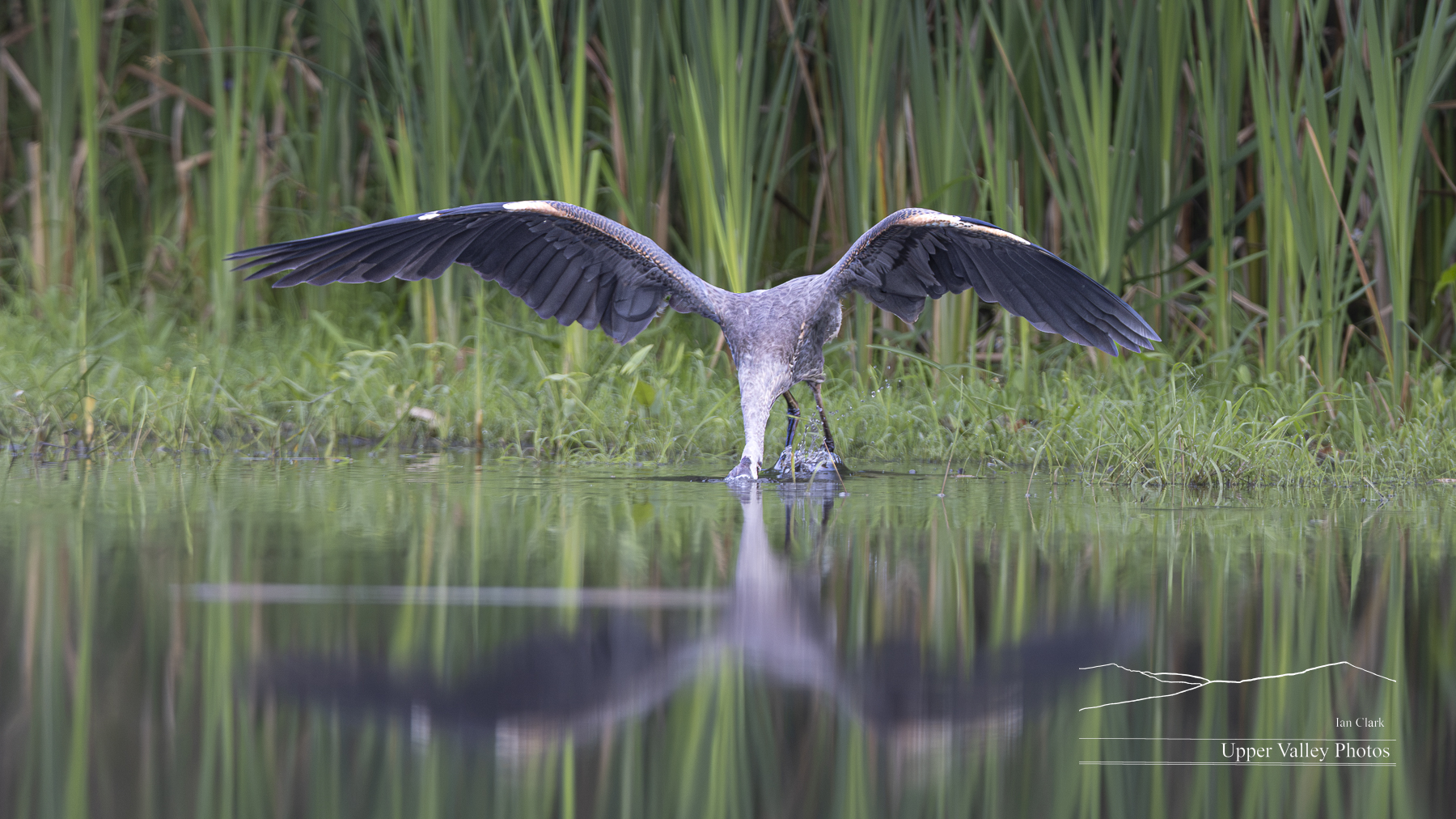
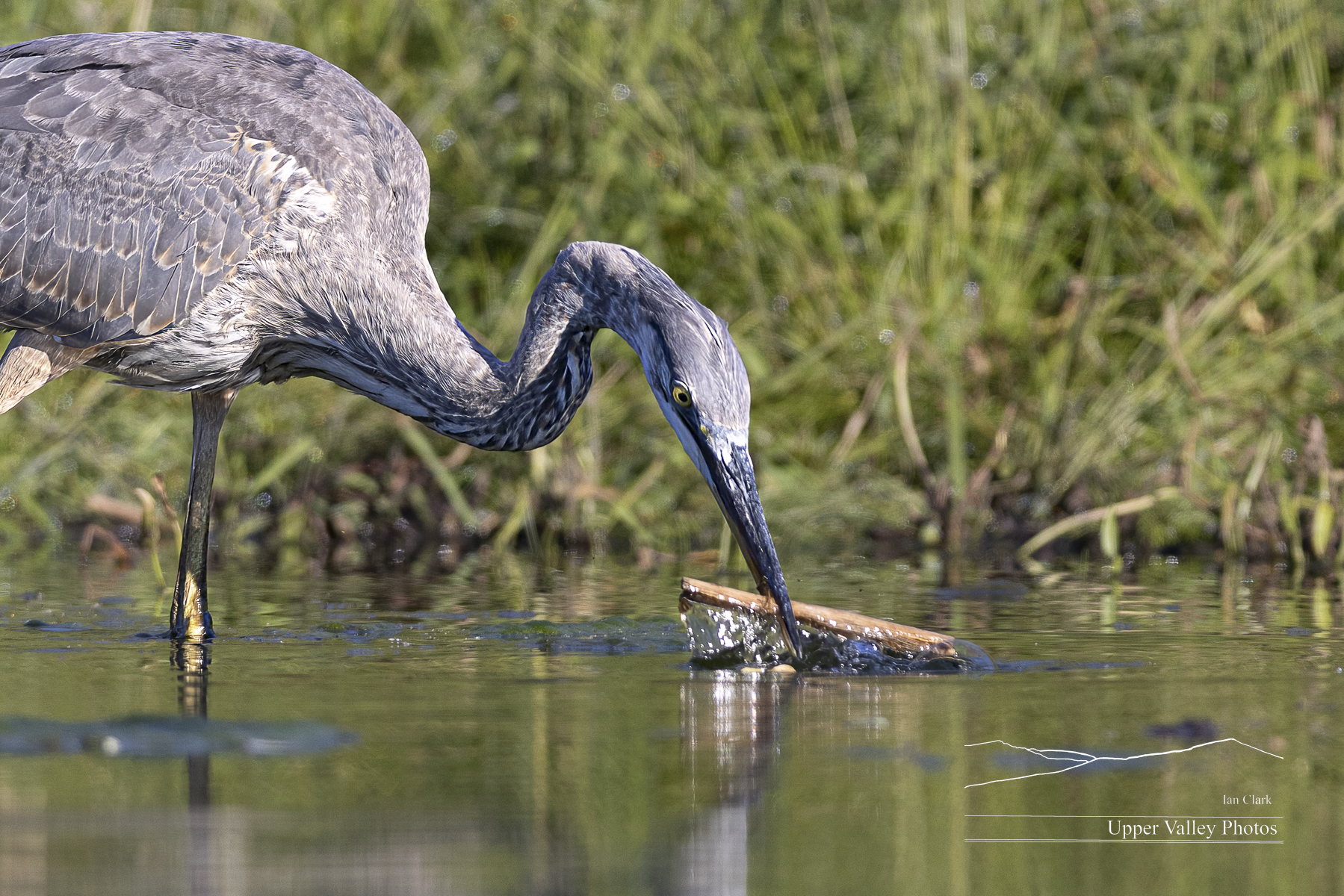
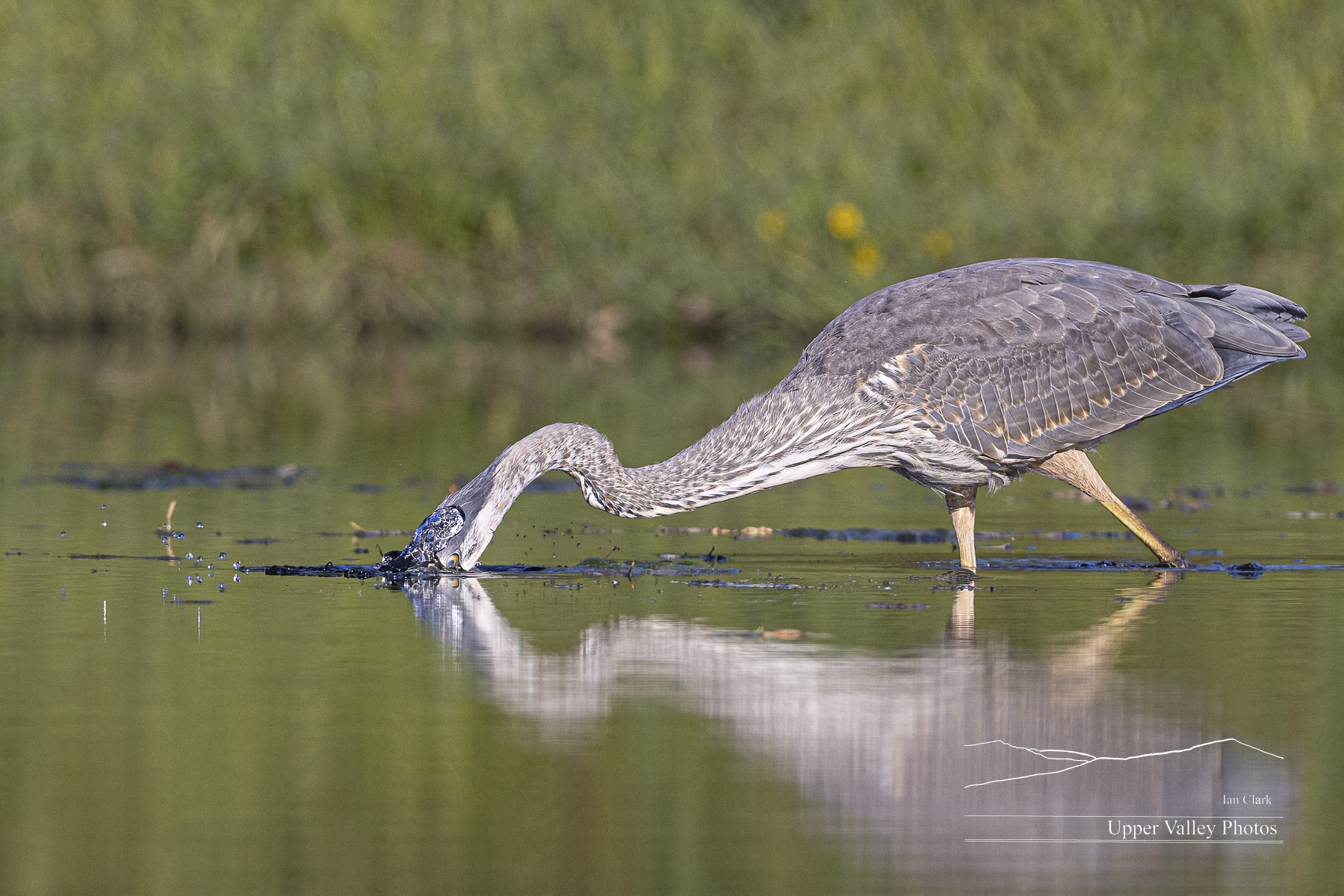
Not being smart enough not to, I returned that evening to visit with Hank again. He spent much of his evening playing pick-up sticks. When I’ve paddled through where he’s foraging, I’ve seen a number of pickerel (or a relative) that were five or six inches long. I wonder if Hank mistook the sticks for the pickerel – which were about the same size and color.
A few minutes later, another stick!
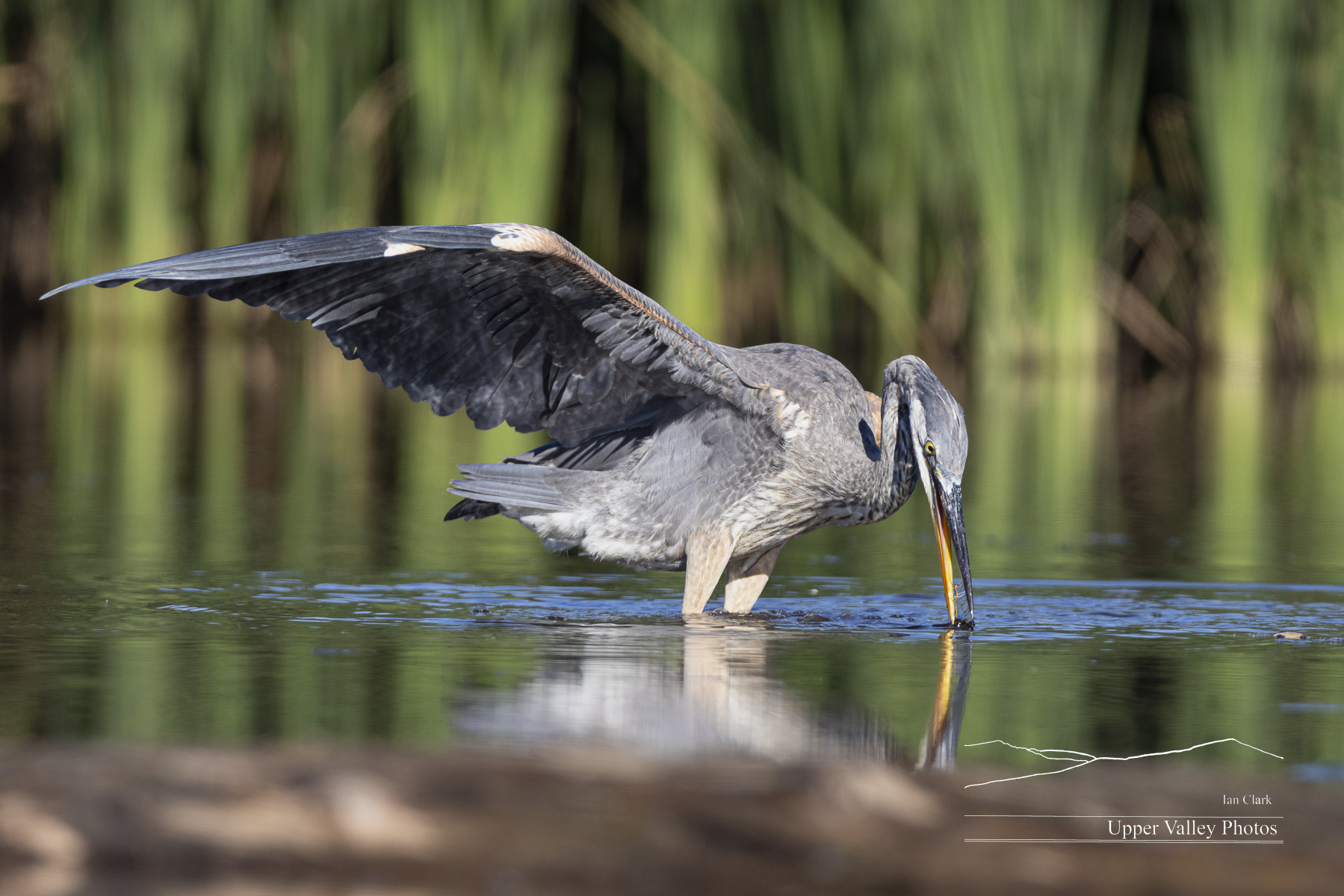
Another strike! This time he came up with what looked like a small beetle. Much better than a stick.
This time it looks like he’s come up with a dragonfly nymph.
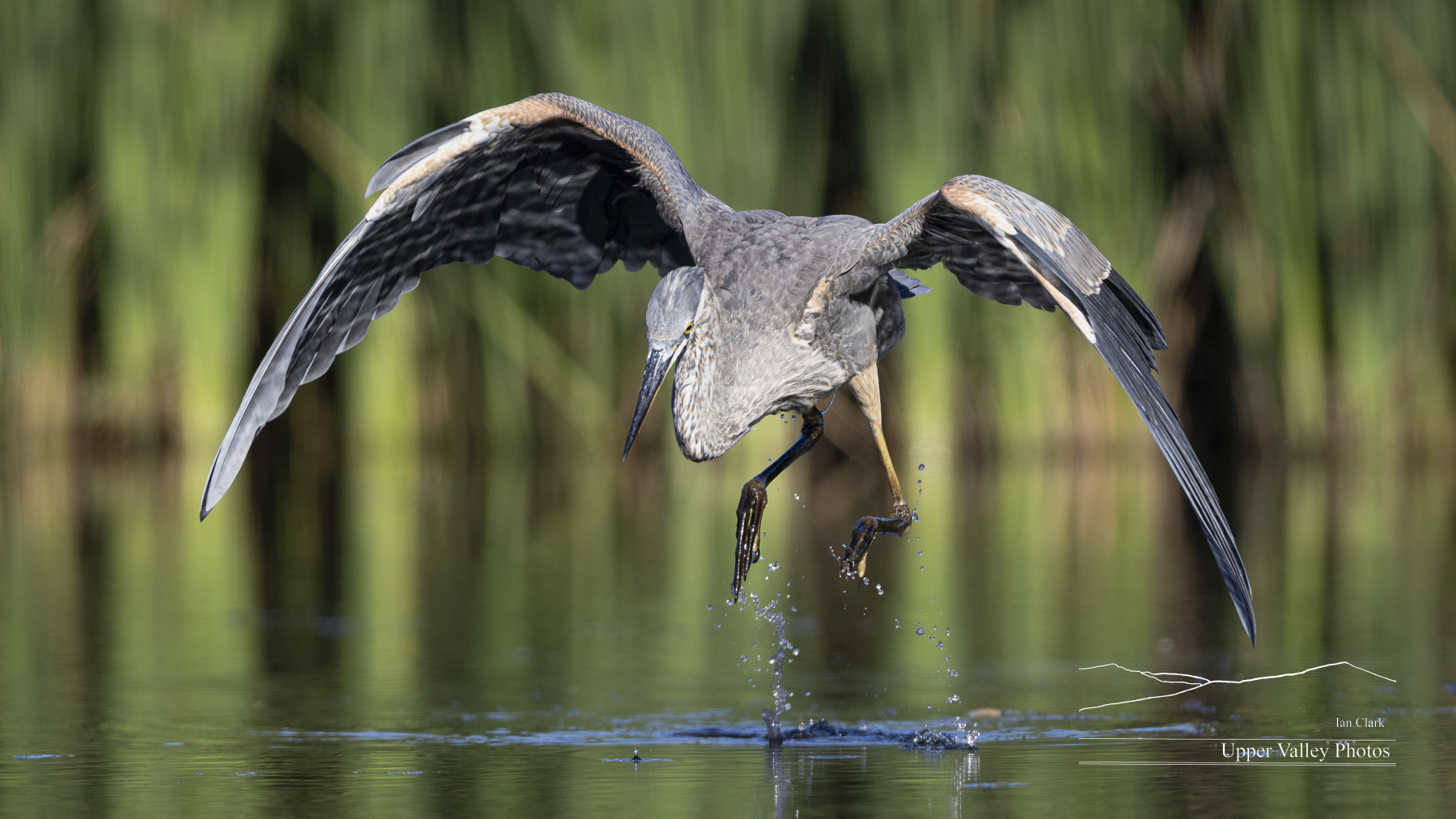
Hank was alert and appeared about to strike at something. I watched through the camera. Something must have startled him – rather than striking, he jumped clear of the water.
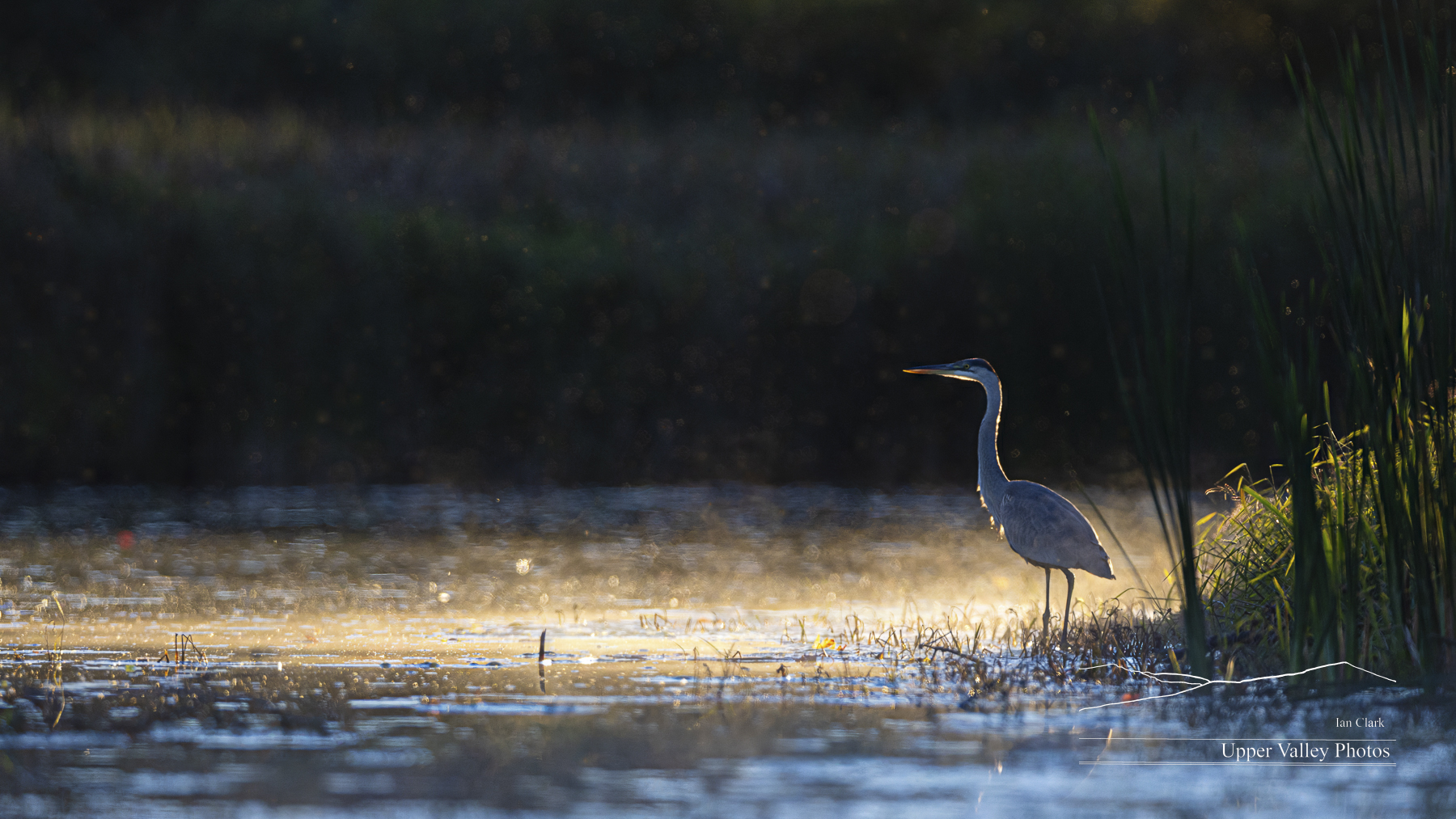
This was the last I saw of Hank on the Waits this season. I’d paddled downstream and around the marsh without finding him. The sun was getting low and I was heading back in. When I came out of the marsh, I found Hank on the bank of the Waits. In the shadows. There was a patch of sunlight in front of him and one behind him. It wasn’t going to be long before the sun dipped behind the hill. I watched as he slowly walked towards the light in front of him, He stopped just short of it. The sun got ever lower. He turned and headed away from the patch of sunlight. He worked his way back to the light behind him. I waited impatiently, urging him on. He took pity on me and stepped out into the light. I took a couple dozen shots of him before the sun set. The camera records the time for each shot. When I got home, I checked – it was 42 seconds from my first shot until the sun dropped behind the hill. Plenty of time! And my favorite image of the year.
I’ve made four more trips looking for Hank, et al, since the last shot. There weren’t any herons to be found. The dam in Wilder must be holding water back. The Waits is about 10 inches deeper than it was most of the season. Hank’s favorite haunts are underwater. I’m not sure if that was why I couldn’t find him or if he has headed out for the season.
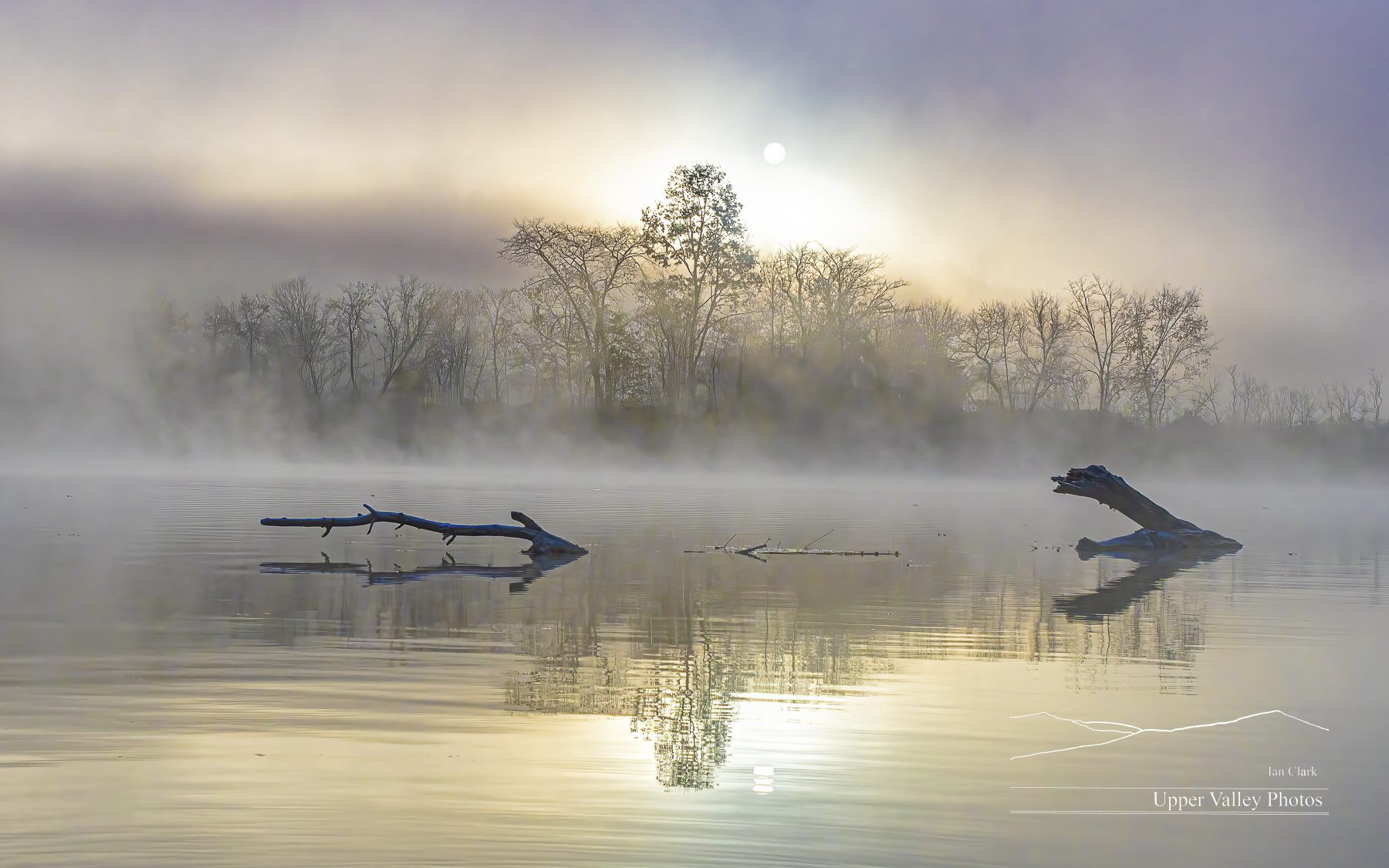
On my penultimate visit, I got a consolation prize. As I got to the confluence with the Connecticut River, I looked across to see the sun rising over Haverhill, NH. No herons, but a nice moody sunrise shot. My wife insisted it be printed, a 20×30 just arrived from the lab.
As always, if you enjoy my posts, please help me out by sharing the blog with your friends or posting on social media. Facebook has limited my ability to post links these days. They want serious money now. I’m working on new ways to get the word out.
It may be a bit before I have time to post again. Happy Thanksgiving everyone!

The last photo is a sure winner, calm and beautiful. Hank’s relatives are here in Florida for the season. :O)
Deligghtful! Thank you for sharing.