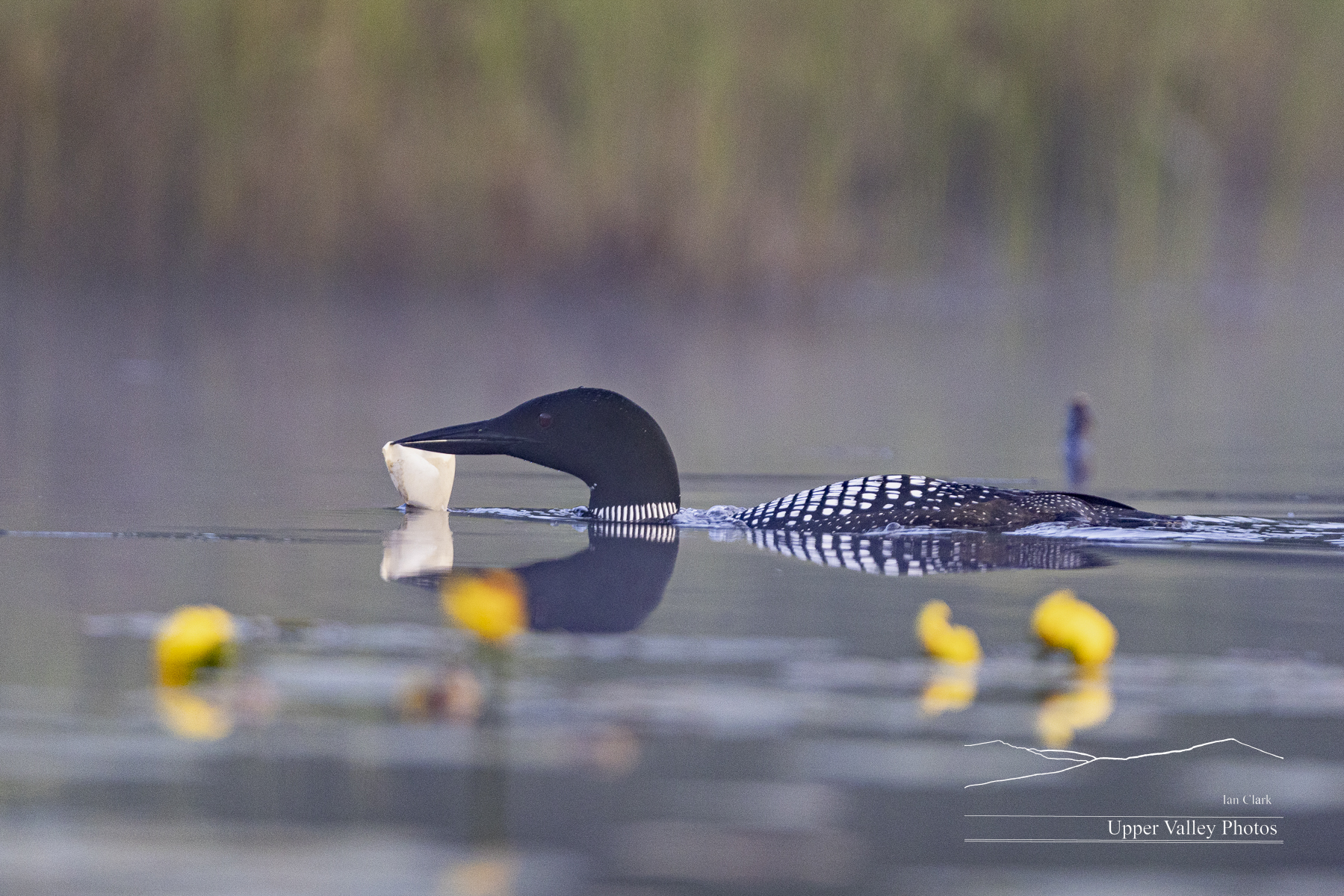
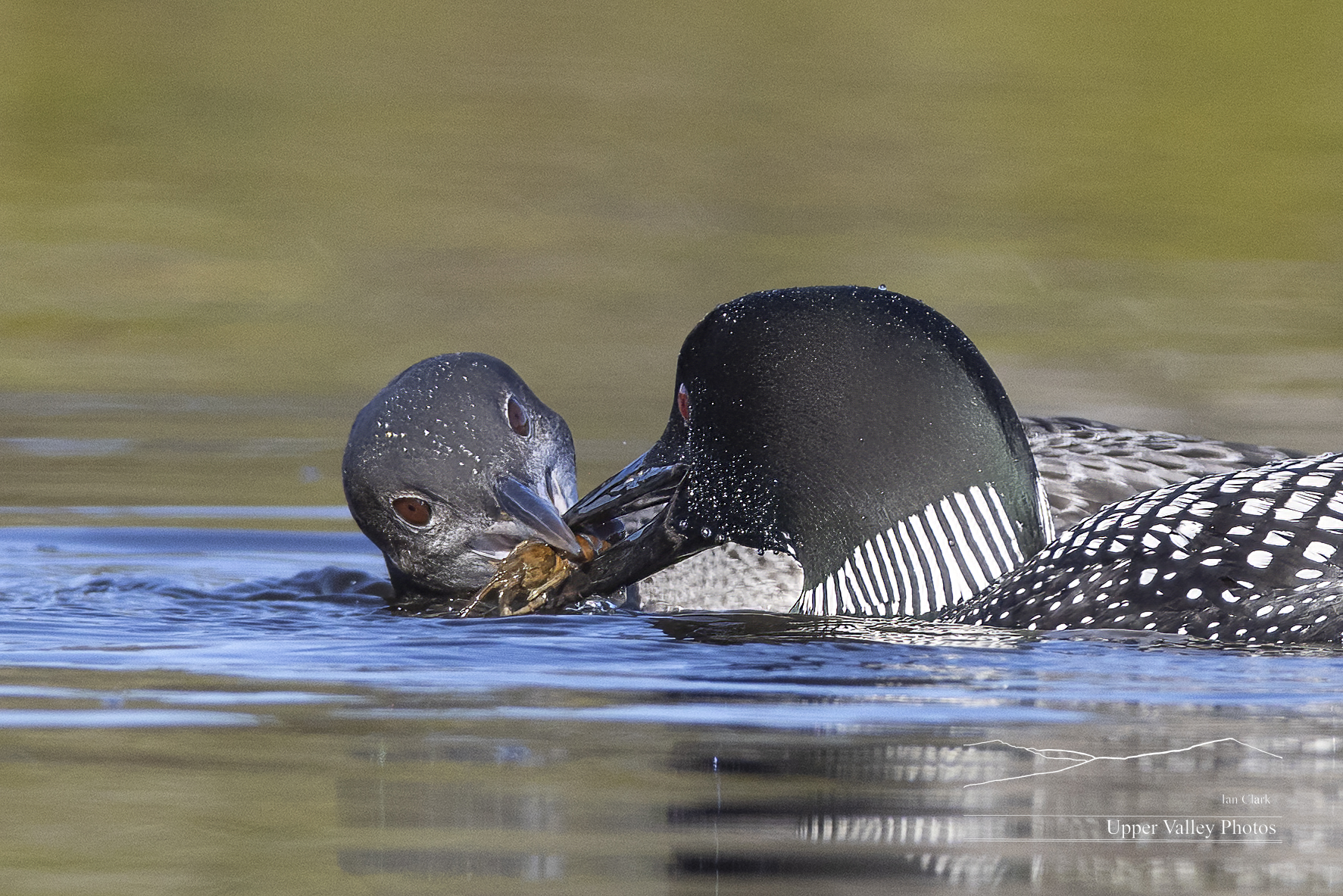
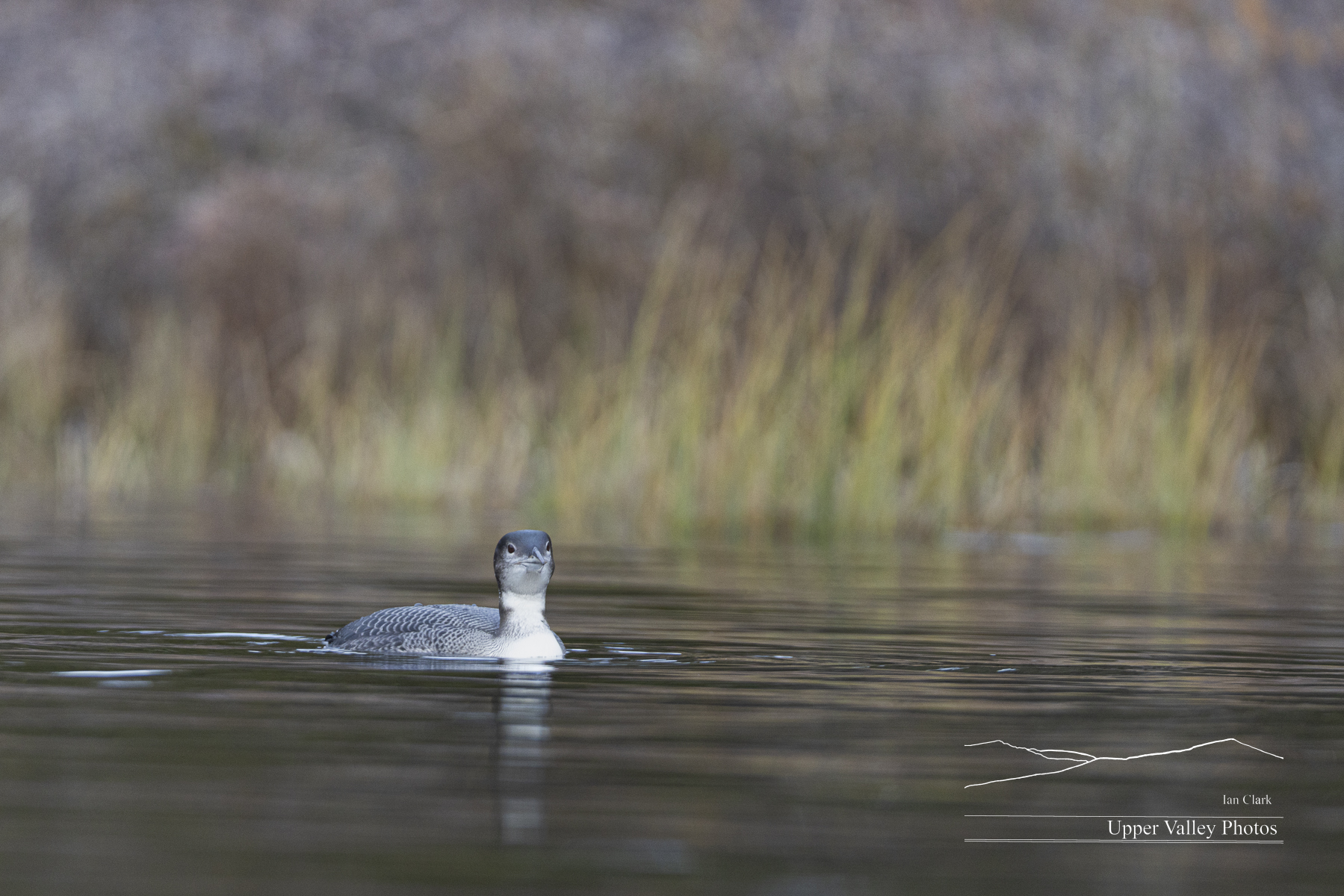
The loons’ breeding season is over, let’s look back to see how ‘my’ loon families fared in 2026.
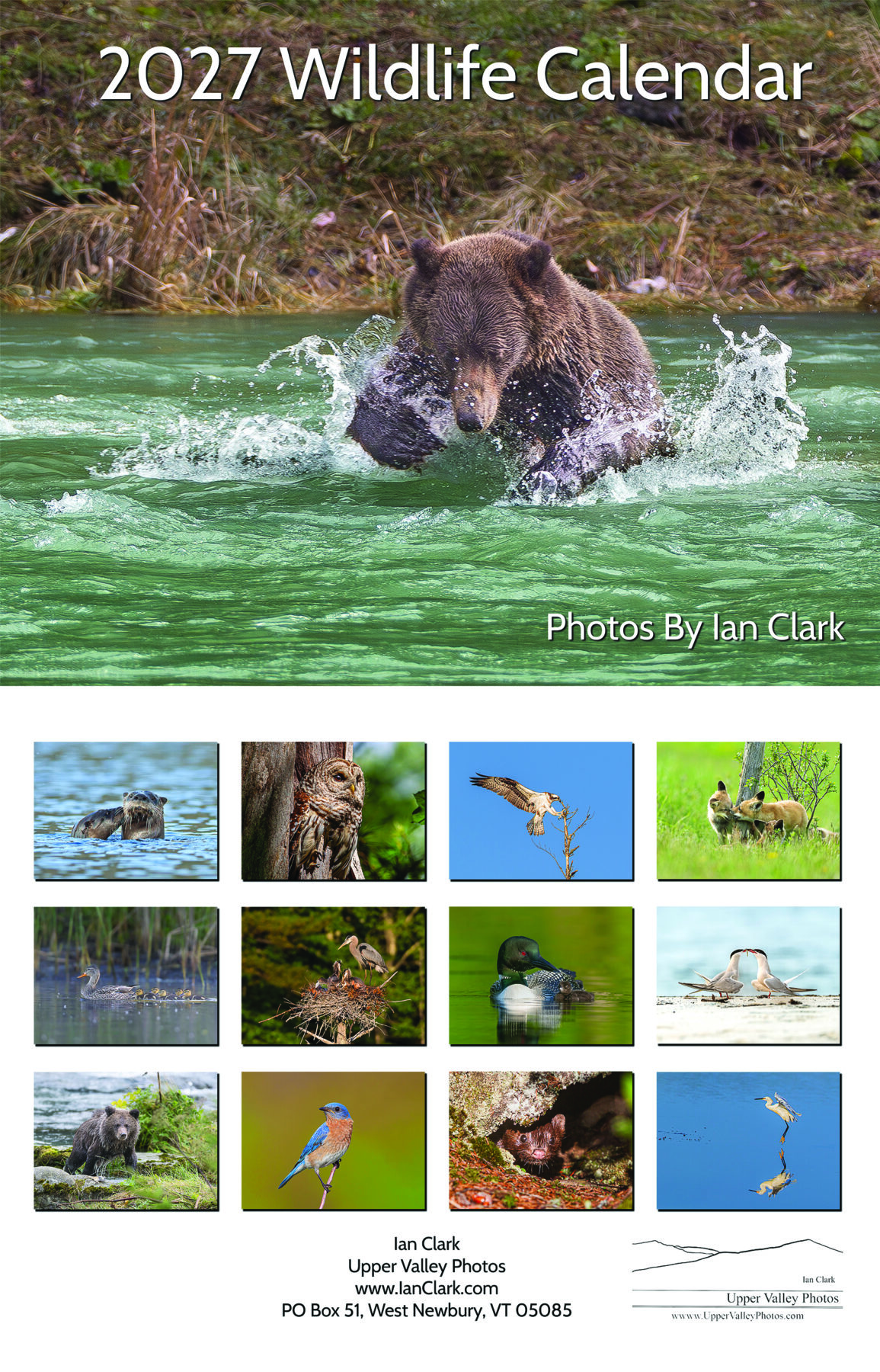
My 2027 Wildlife Calendar is available. They’re large – 9×12″ with 13 color images of my favorite wildlife shots.
I’m looking for a few relatively local stores to carry my cards and calendars. If you know of someone who might be interested, I’d love to know.
I’m going to have work in a pop up store in Bradford, VT Friday & Saturday November 27 & 28 – just after Thanksgiving. We’re still figuring the details out, but it looks like four local artists including Ann Peck from Topsham who does paintings on silk and Kathryn Price who does great weaving. It looks like our hours will be from 10 to 4 both days, but we may try to extend them. Stop by and have a look.
It was a mixed year for the loon families. The Weston’s fledged one chick, the Middleton’s hatched at least one and the Eastons fledged two. Let’s take a look back. If you’re new to the blog, welcome. I’ve given the families noms de plume to protect their privacy. The Westons live on a pond to my west, the Eastons on a pond to my east and the Middletons on a pond between the other two.
Late in the 2025 season Mr. Weston was found ashore – presumably after a fight. The Vermont Center for Ecostudies rescued him and banded him. He returned this spring along with an unbanded female.
The Westons had a relatively quiet spring. I saw only one half-hearted challenge for the territory early in the season.
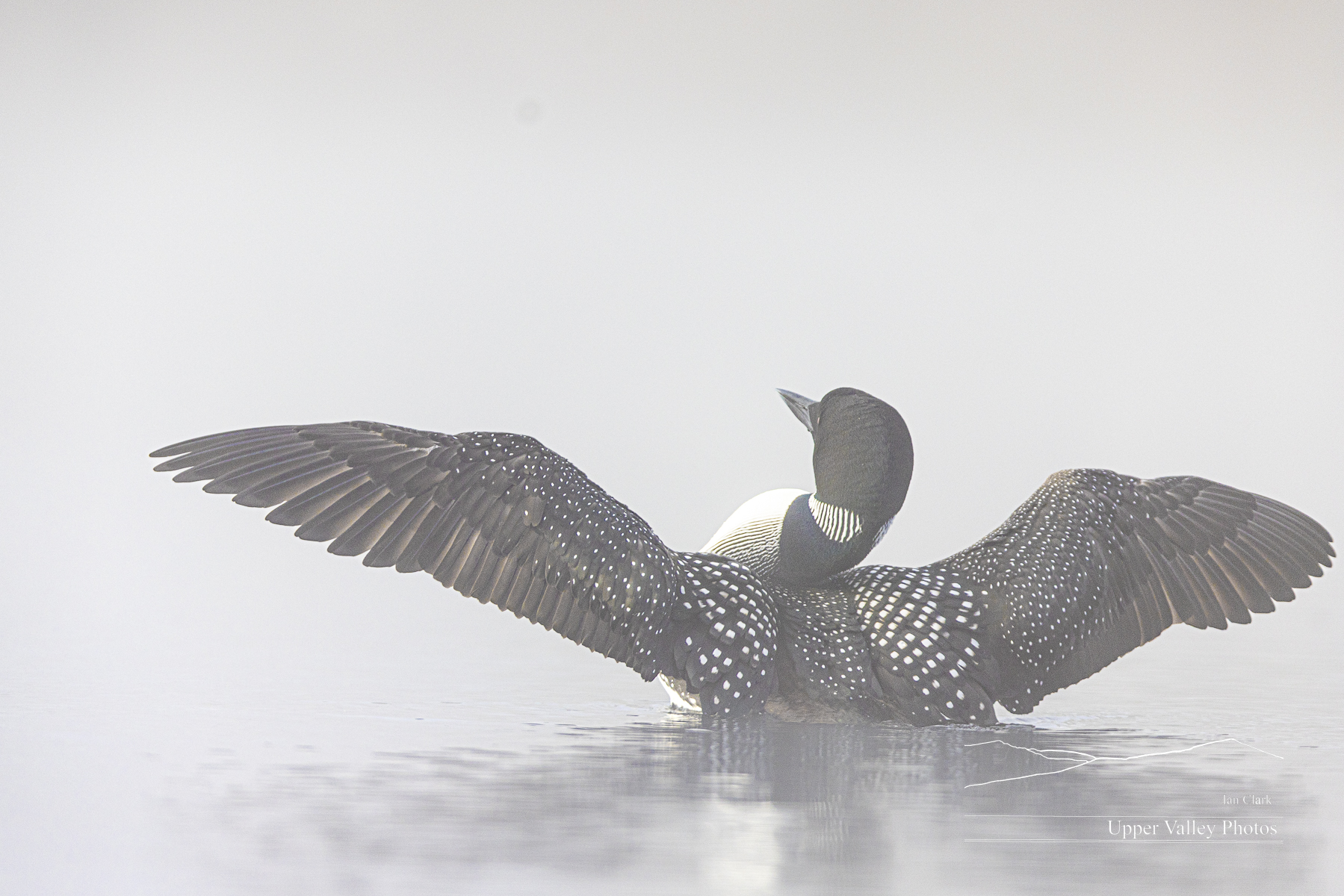
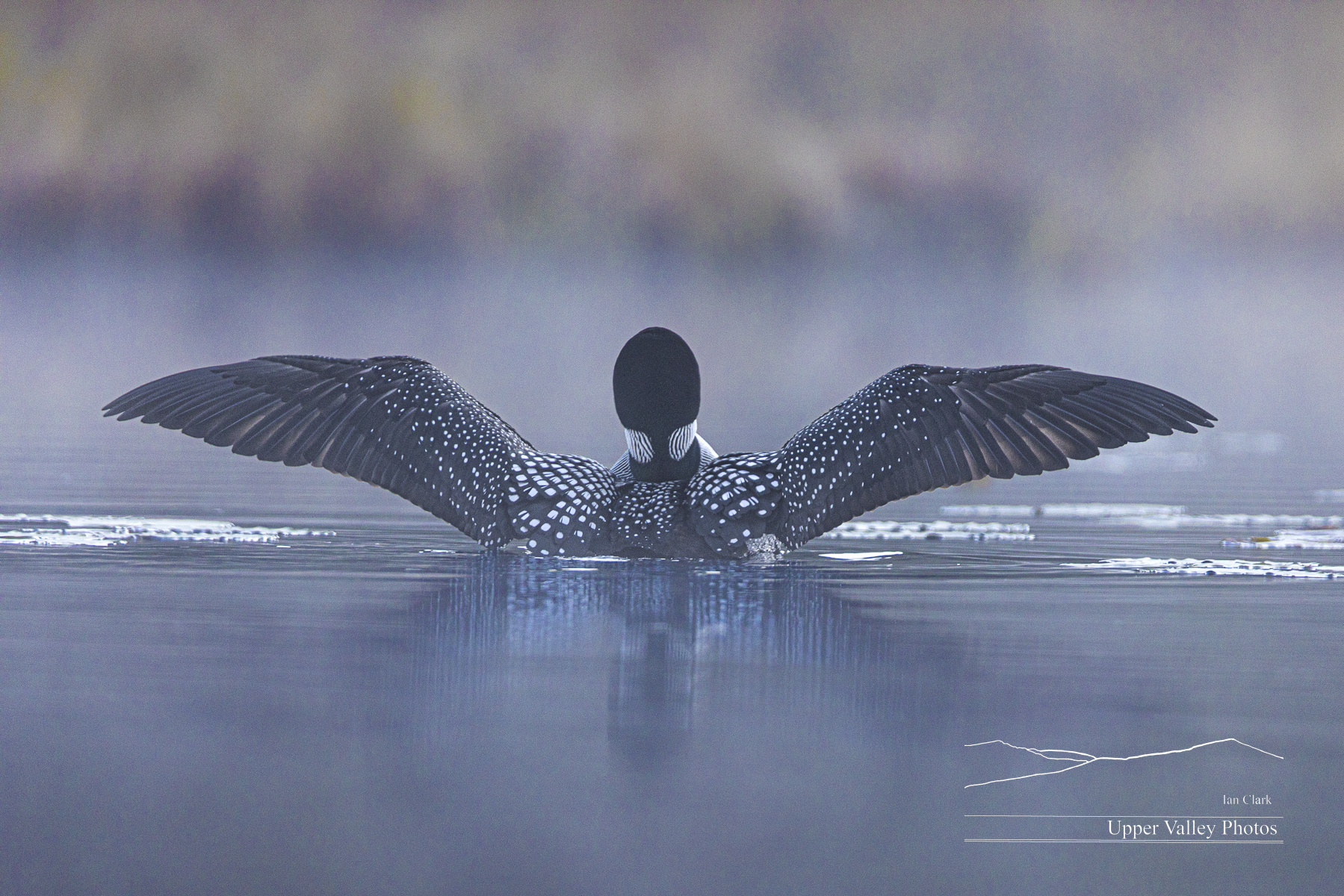
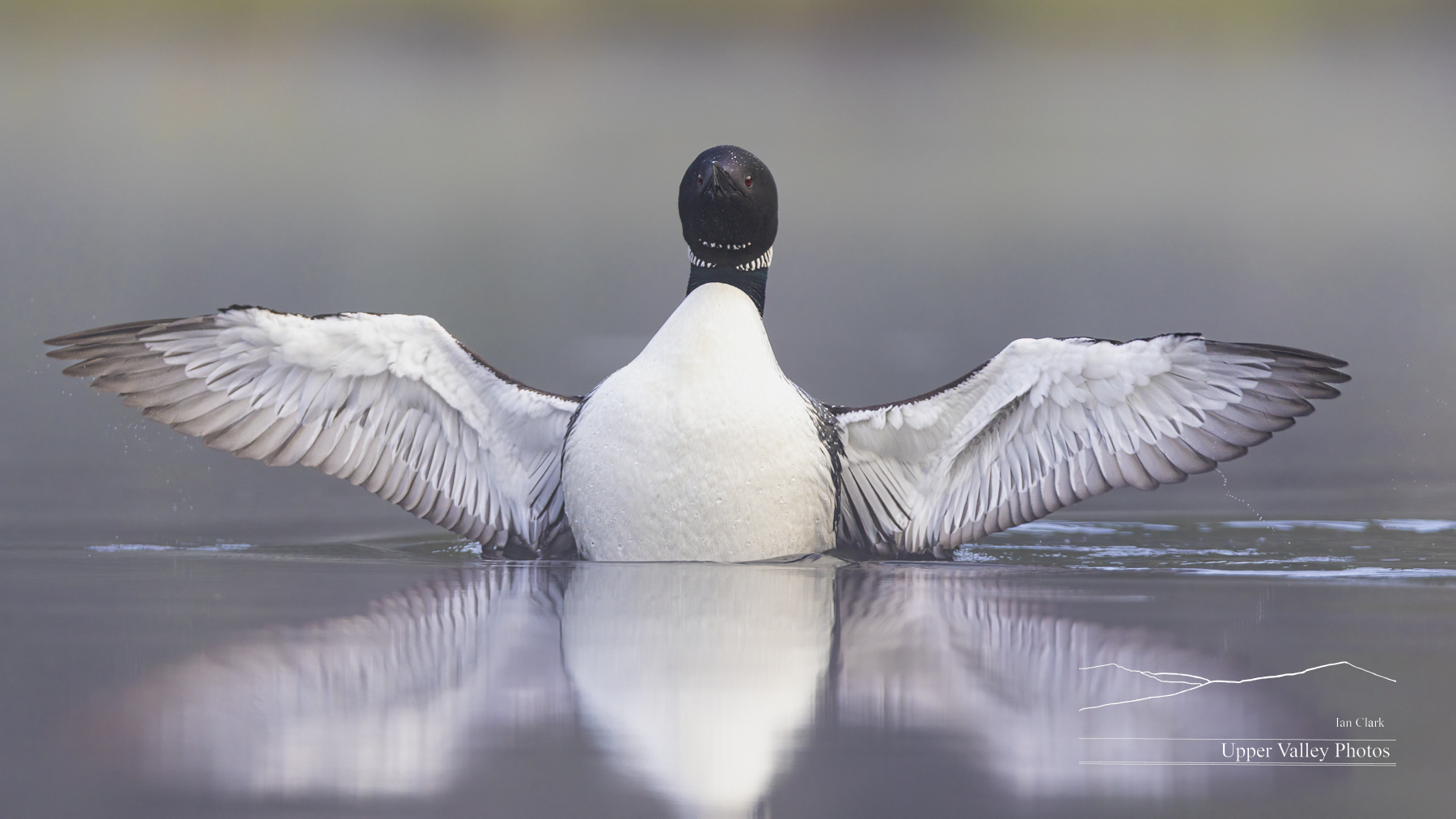
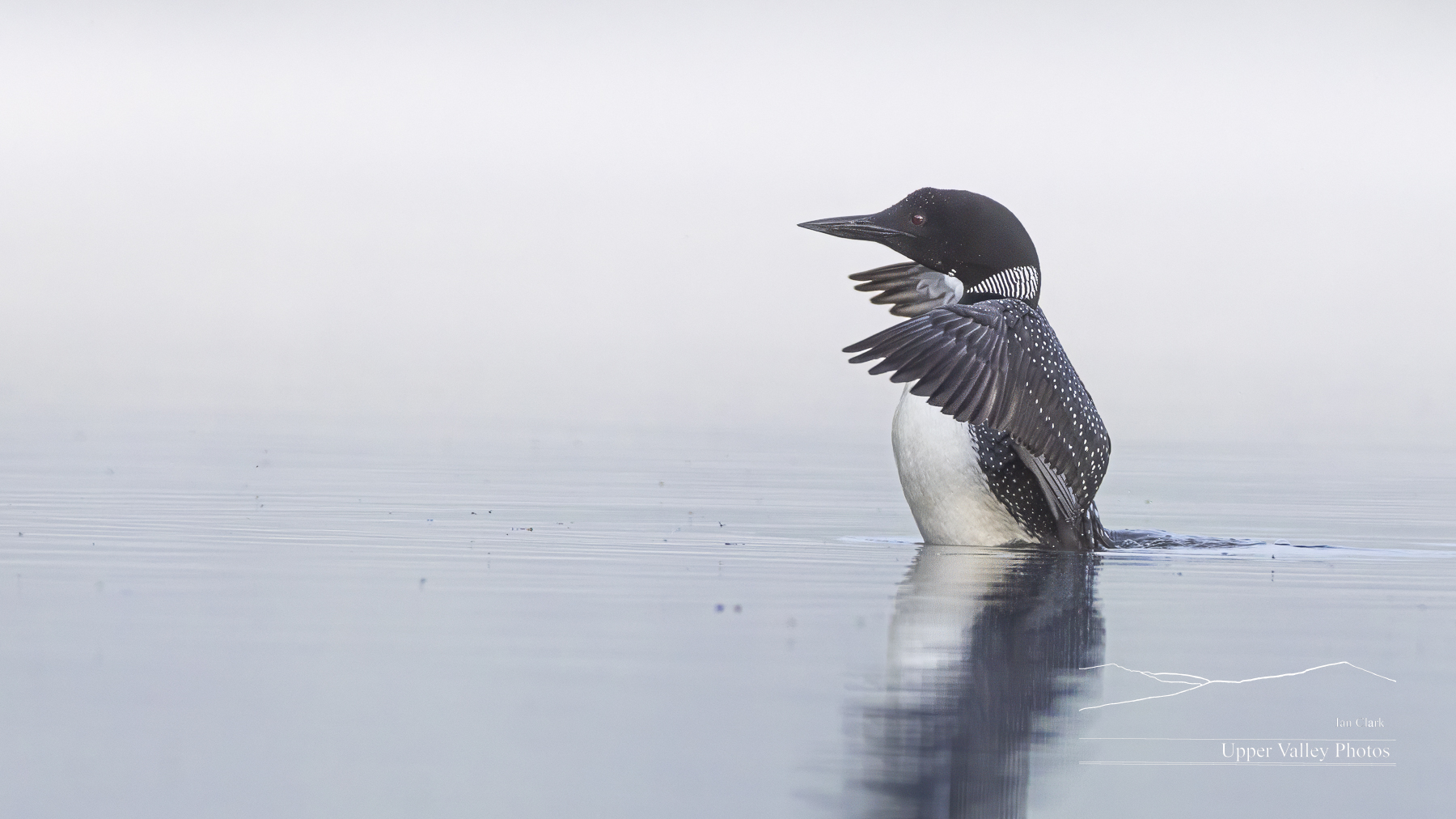
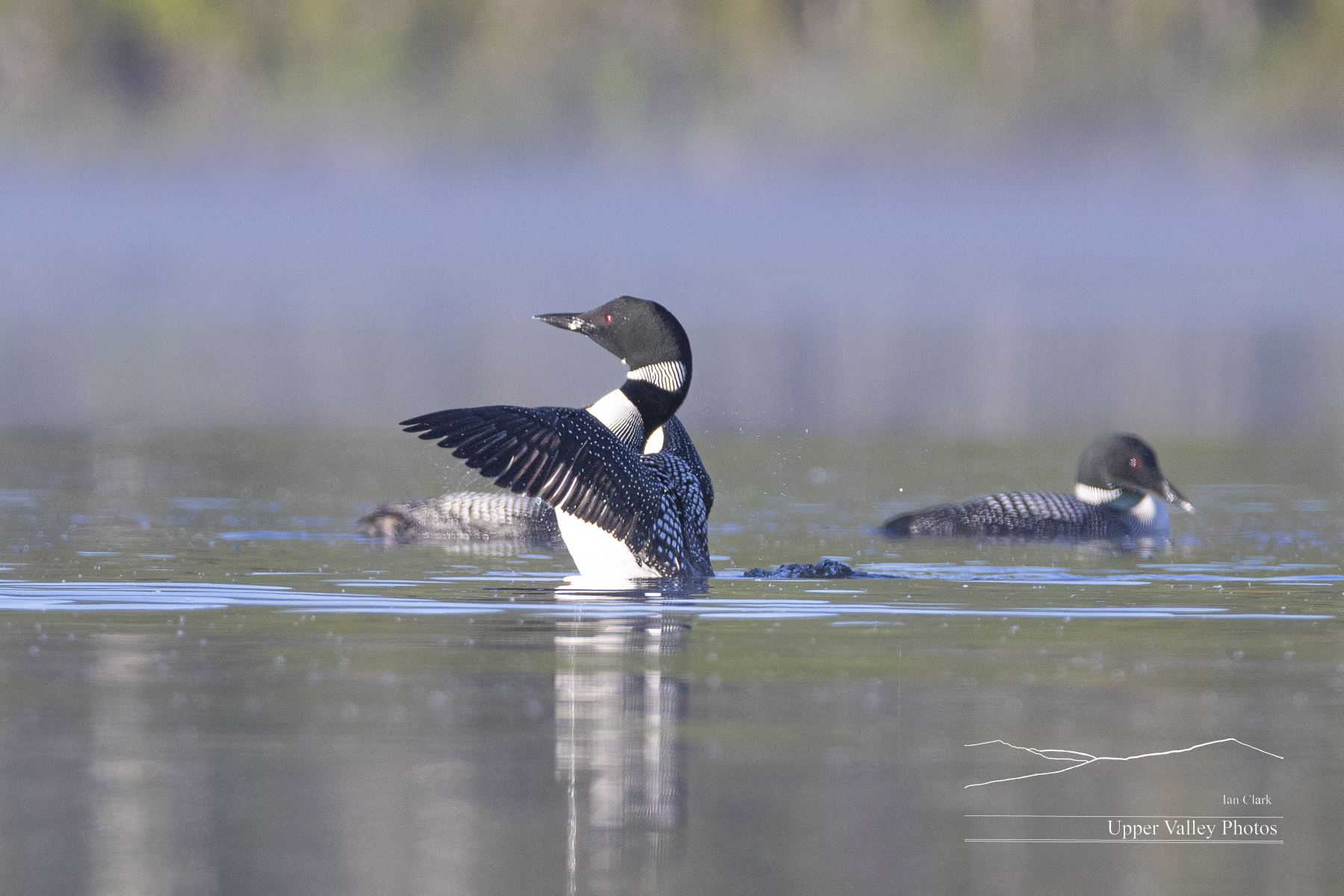
Most of my early season shots were of them stretching in the cove where they nest. And usually before dawn.
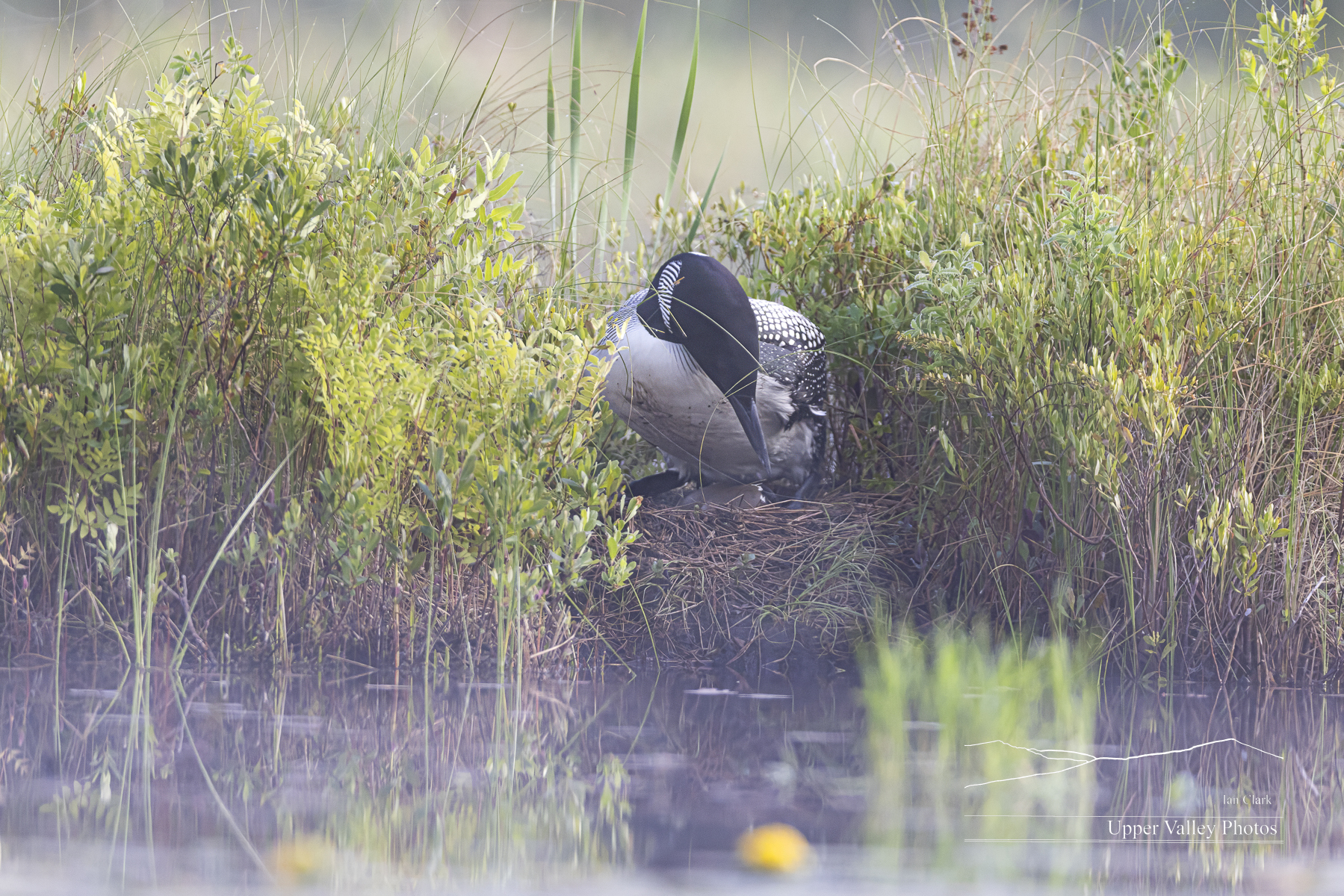
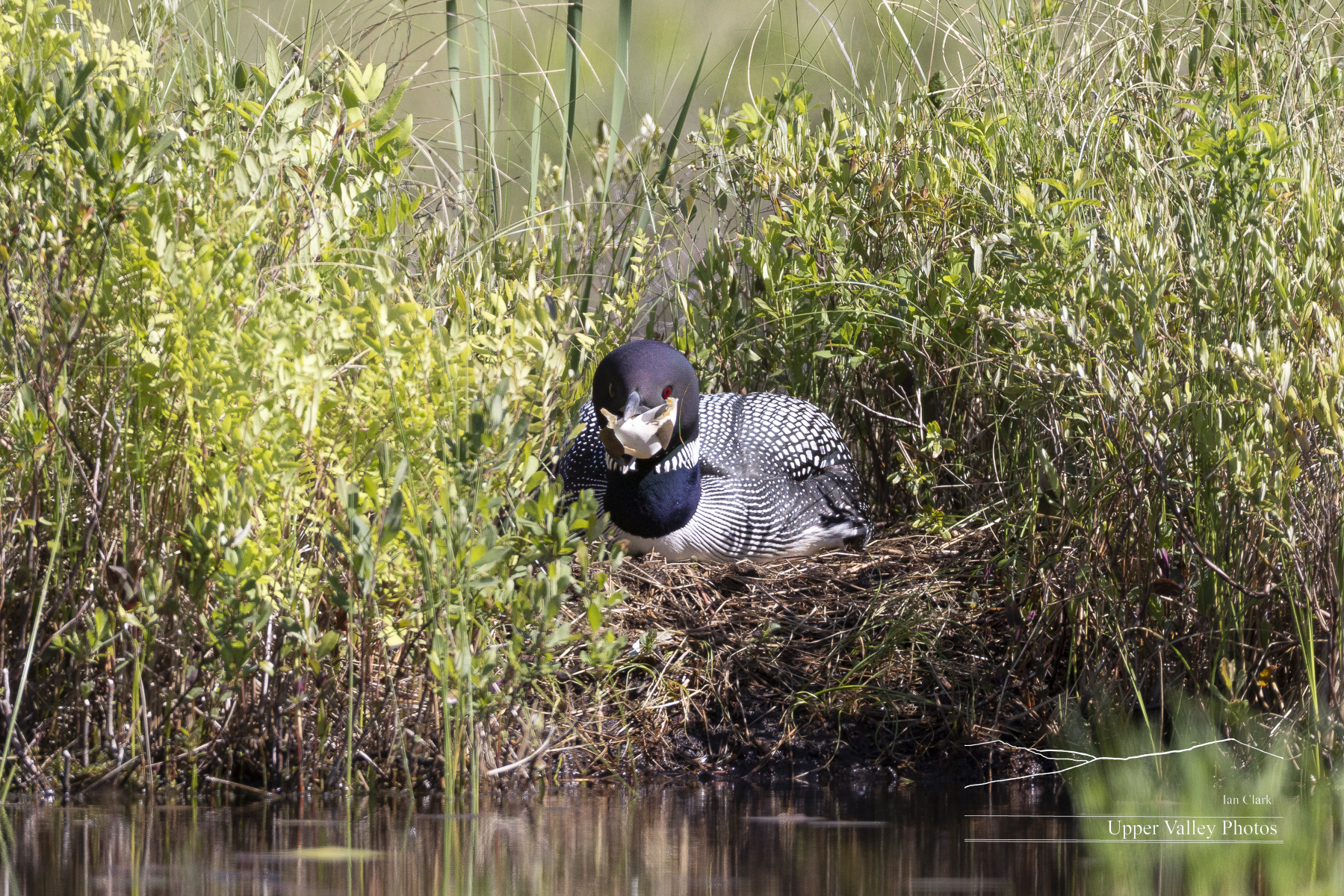
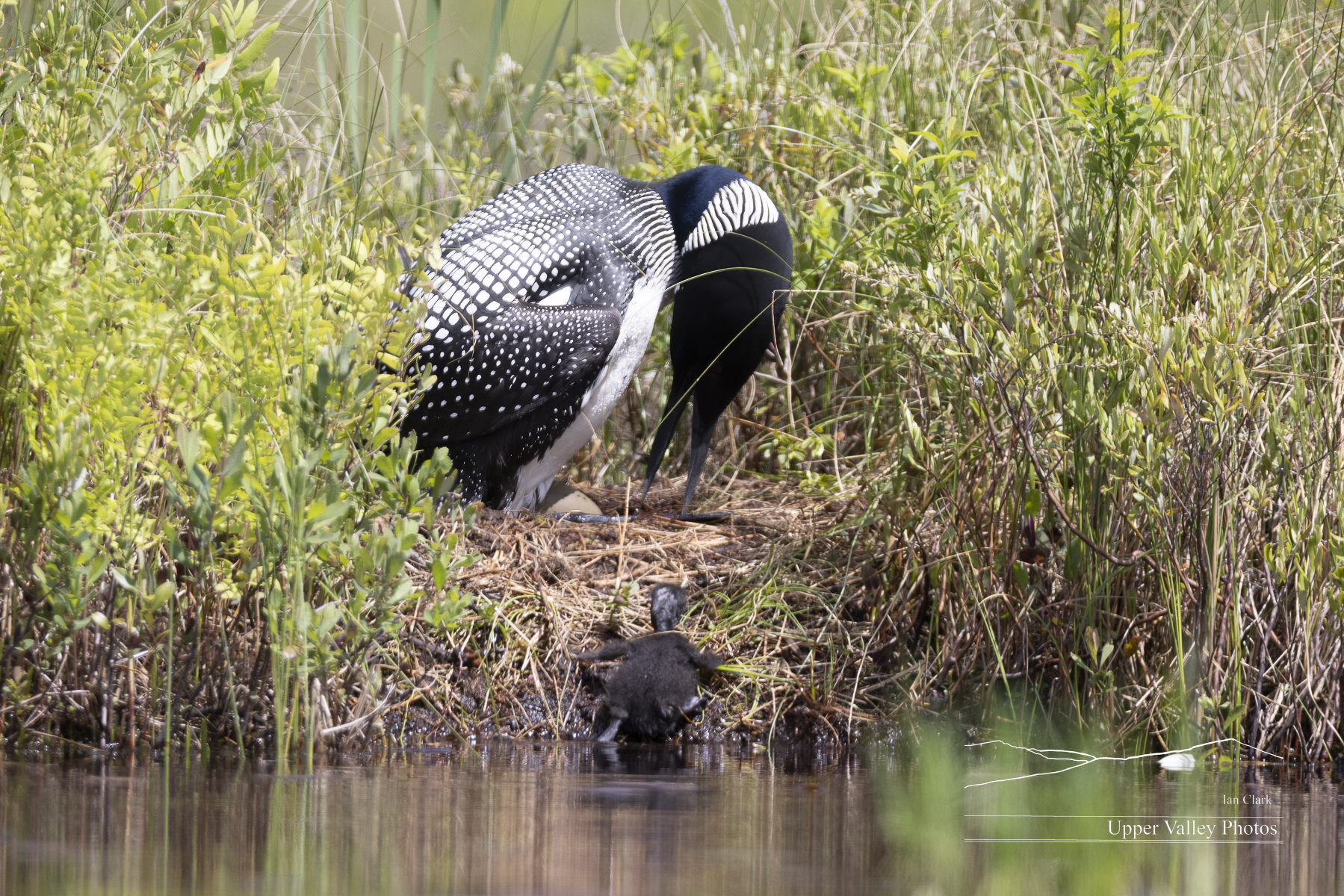
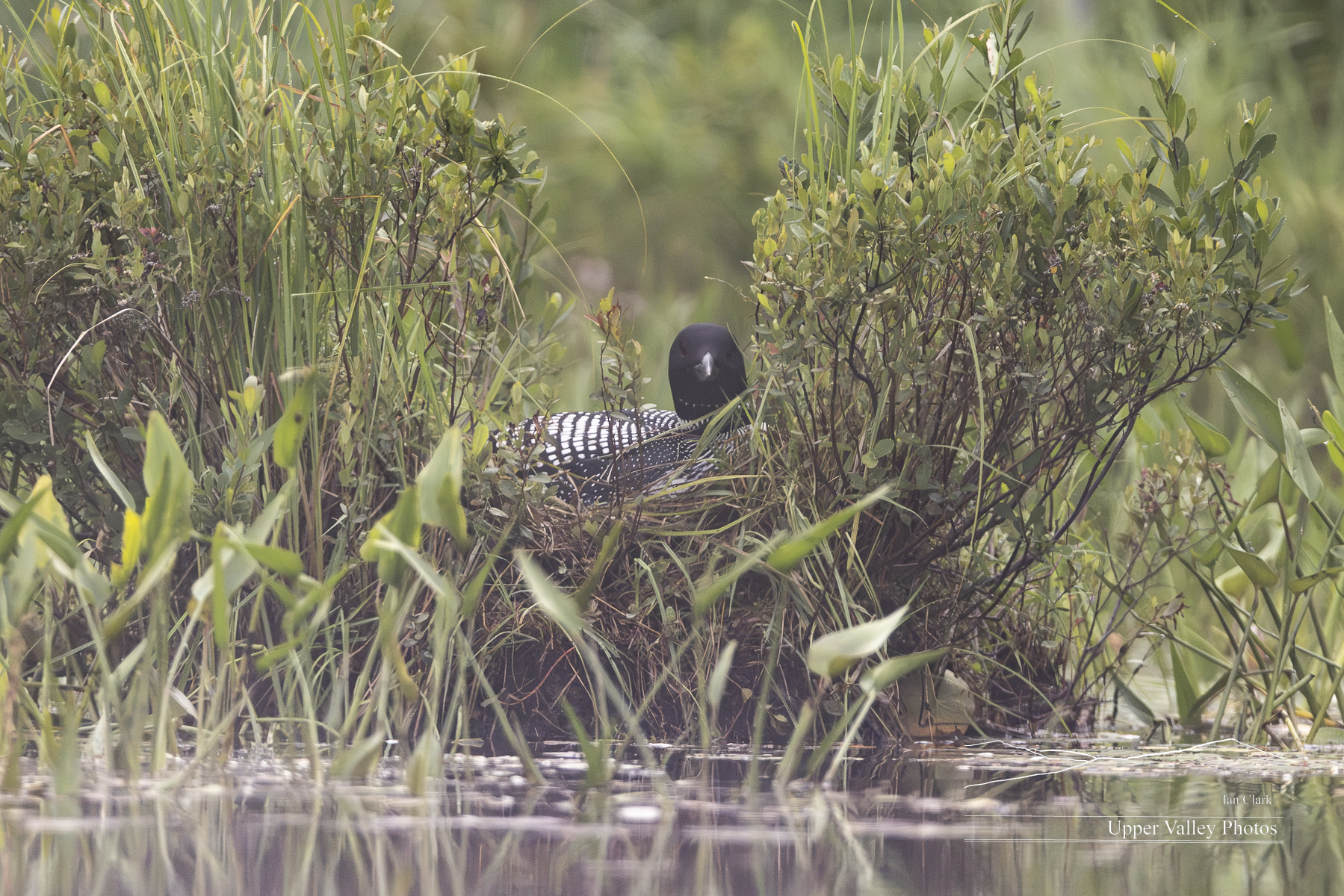
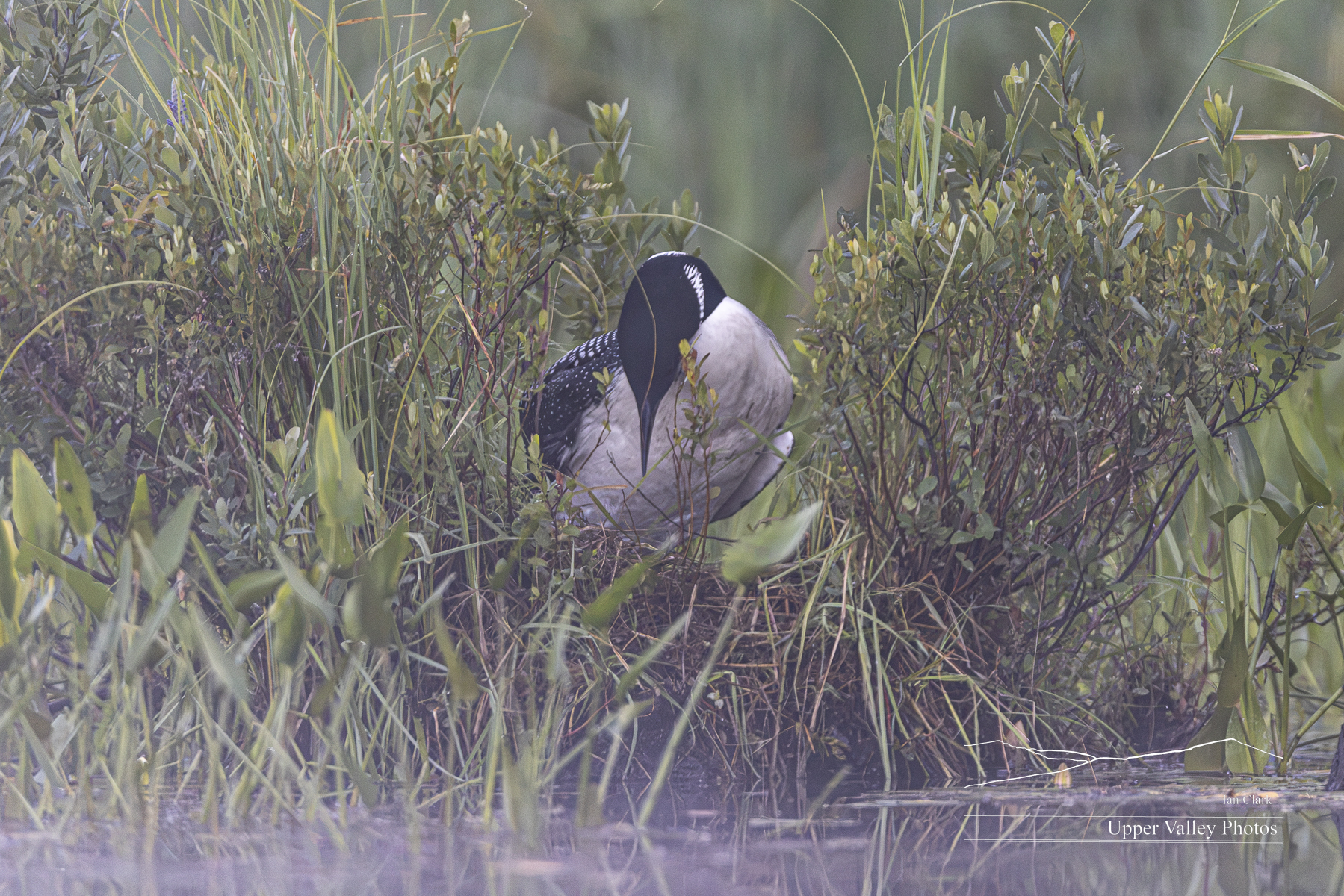
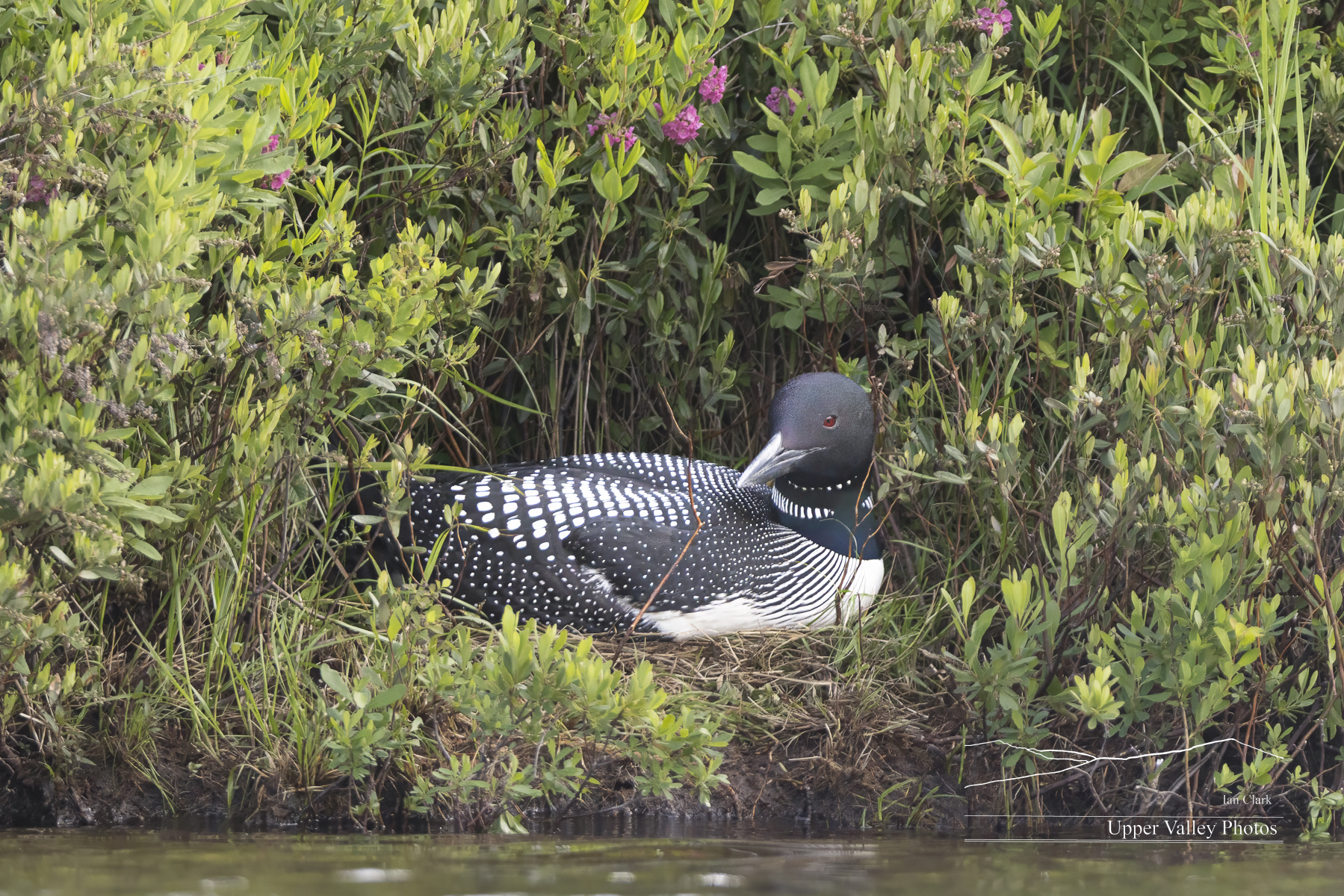
The Westons usually get their season going about a week before the other pairs. This year, they were about a week ahead of their usual schedule. They were setting up housekeeping in the second week of May. They selected the same small island in the marsh that they’ve used since I’ve been watching them. On June 8, I met the newest arrival. That’s Mom on the nest. Junior has broken the end off of the egg and is still working his way out of the egg. After junior hatched, Mom had to take out the trash. Loons dispose of the egg shells after the chicks hatch. The shell probably has a scent that would attract predators. Mom didn’t get up, she just tossed the shell overboard. It landed just in front of the nest.
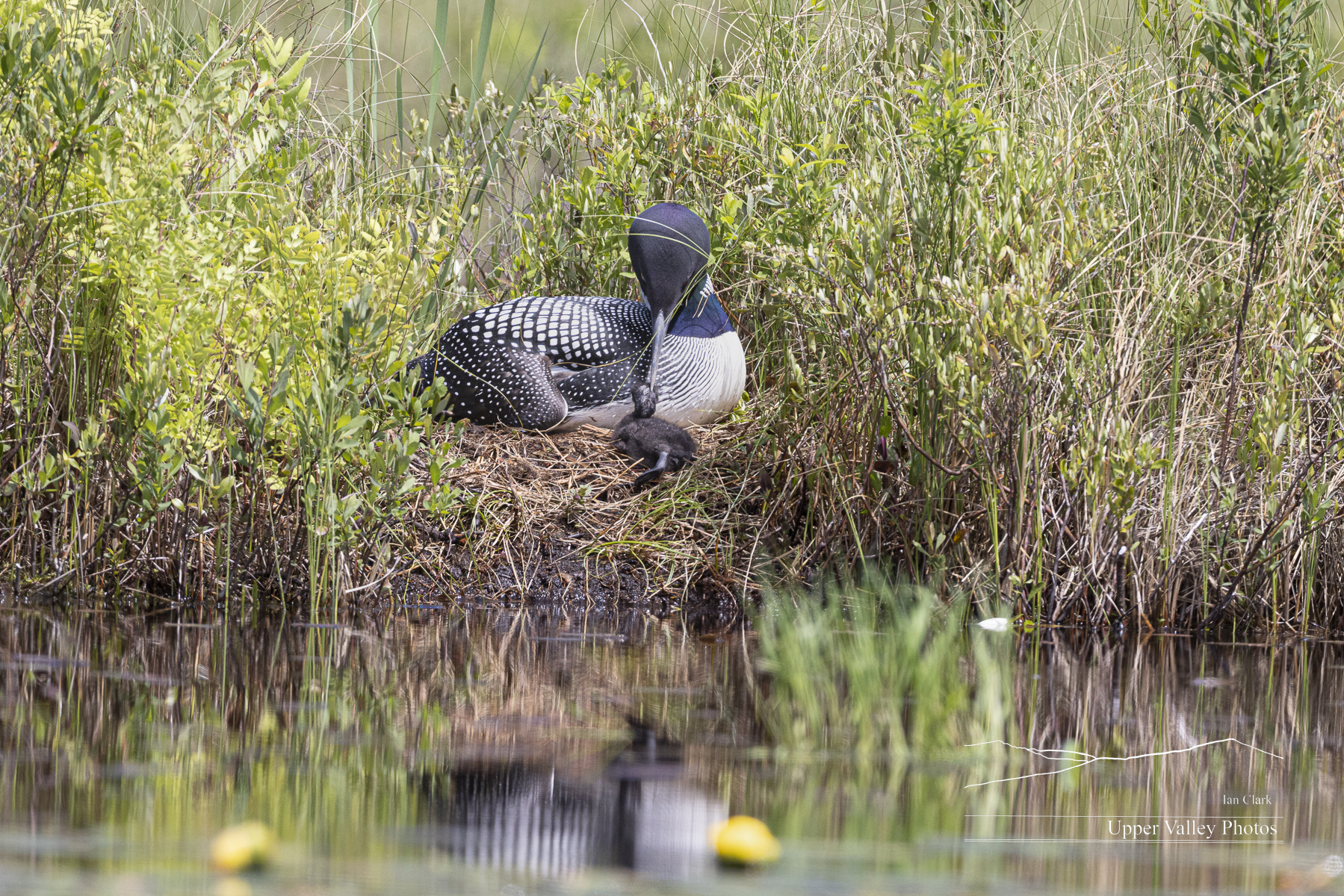
Junior took a quick visit to the pond. And decided he’d rather be hiding under Mom. He’s climbing back up to the nest while Mom turns his sibling.
OK, we’re not supposed to ascribe human emotions to the animals we observe. But, come on! That’s one proud Mom!
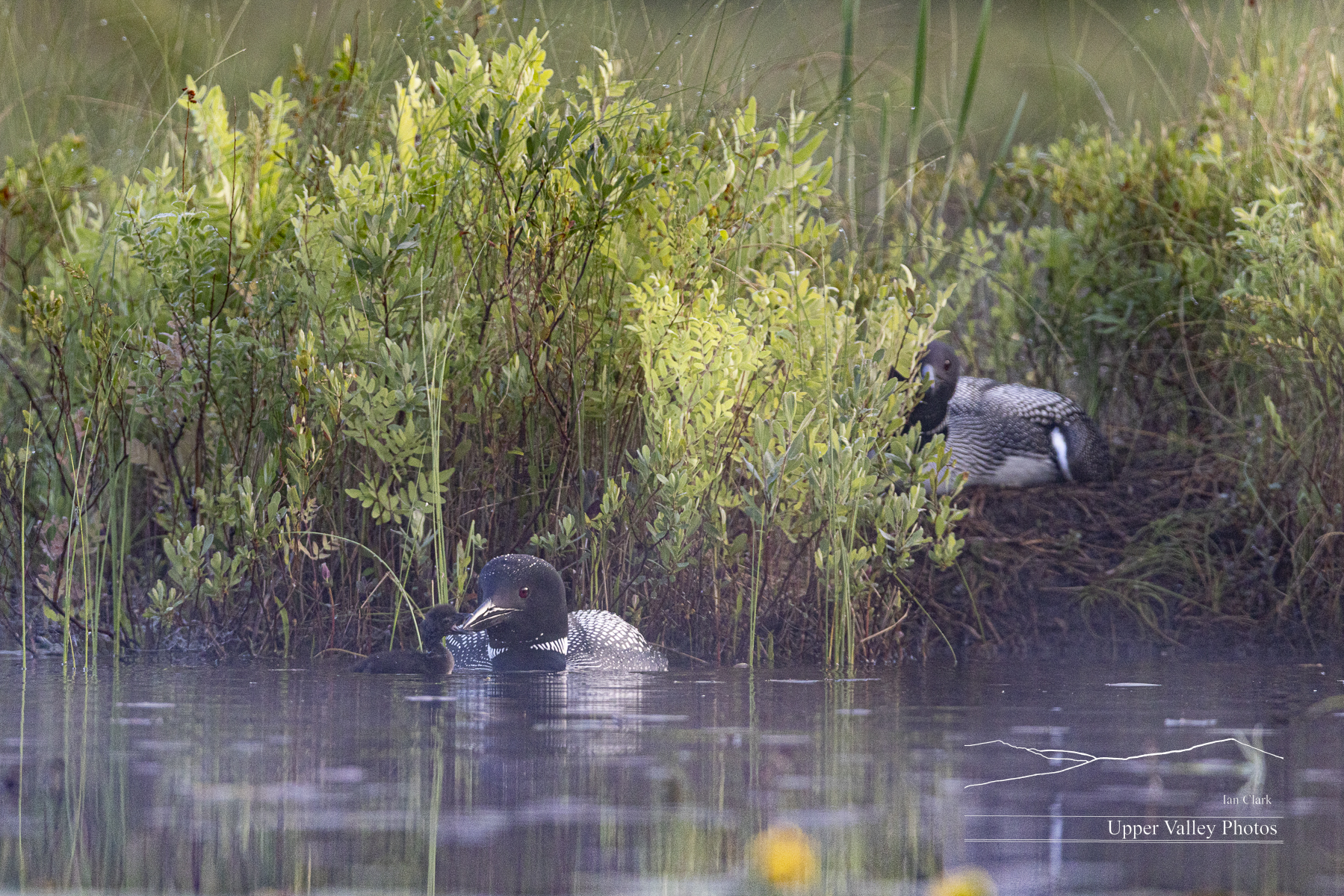
On the 9th, junior made his way into the water – after Dad tempted him with a meal. Mom is still sitting on the other egg. Junior’s shell was still sitting along the water’s edge in front of the nest. Dad took the trash out. He carried the shell across the cove and pushed it underwater.
Over the years, the Westons have pretty much ignored me before the chicks hatch. This year was no different. But Dad, after taking out the trash, came by and displayed at me. The season when mammals would be tolerated on his pond was closed. He seemed to be suggesting I’d be much better off being somewhere like Virginia.
Here’s a shot of the chicks at seven and eight days old. Sometime in the next couple of days, one of the chicks would disappear. Dad with the surviving chick at 23 or 24 days old.
The chick seemed to be doing well in late August, I’m counting him as fledged.
The Middletons had a tougher year. Mr. Middleton was banded in 2024 and he returned with an unbanded female this year.
The new Mrs. Middleton showing off her stuff.
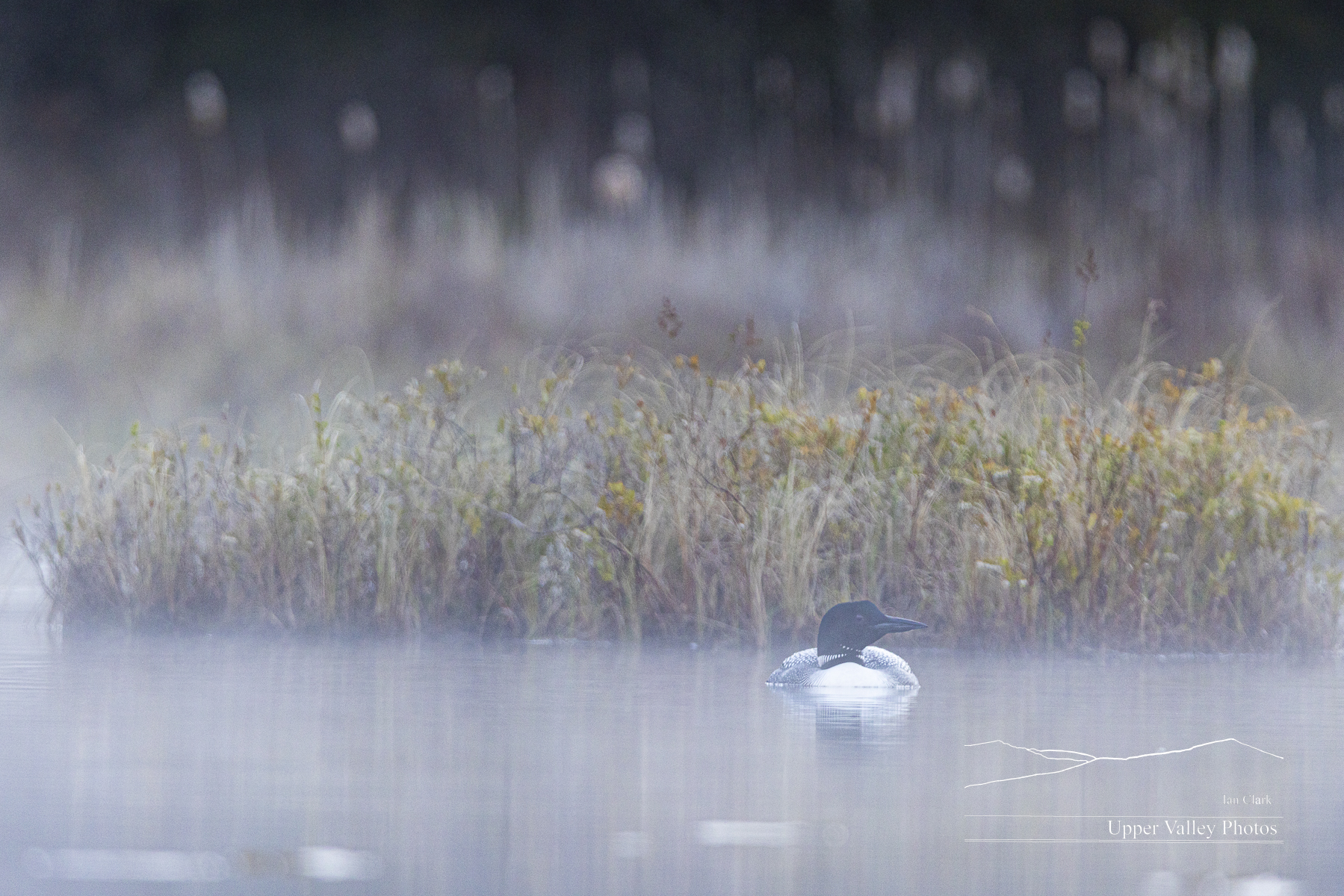
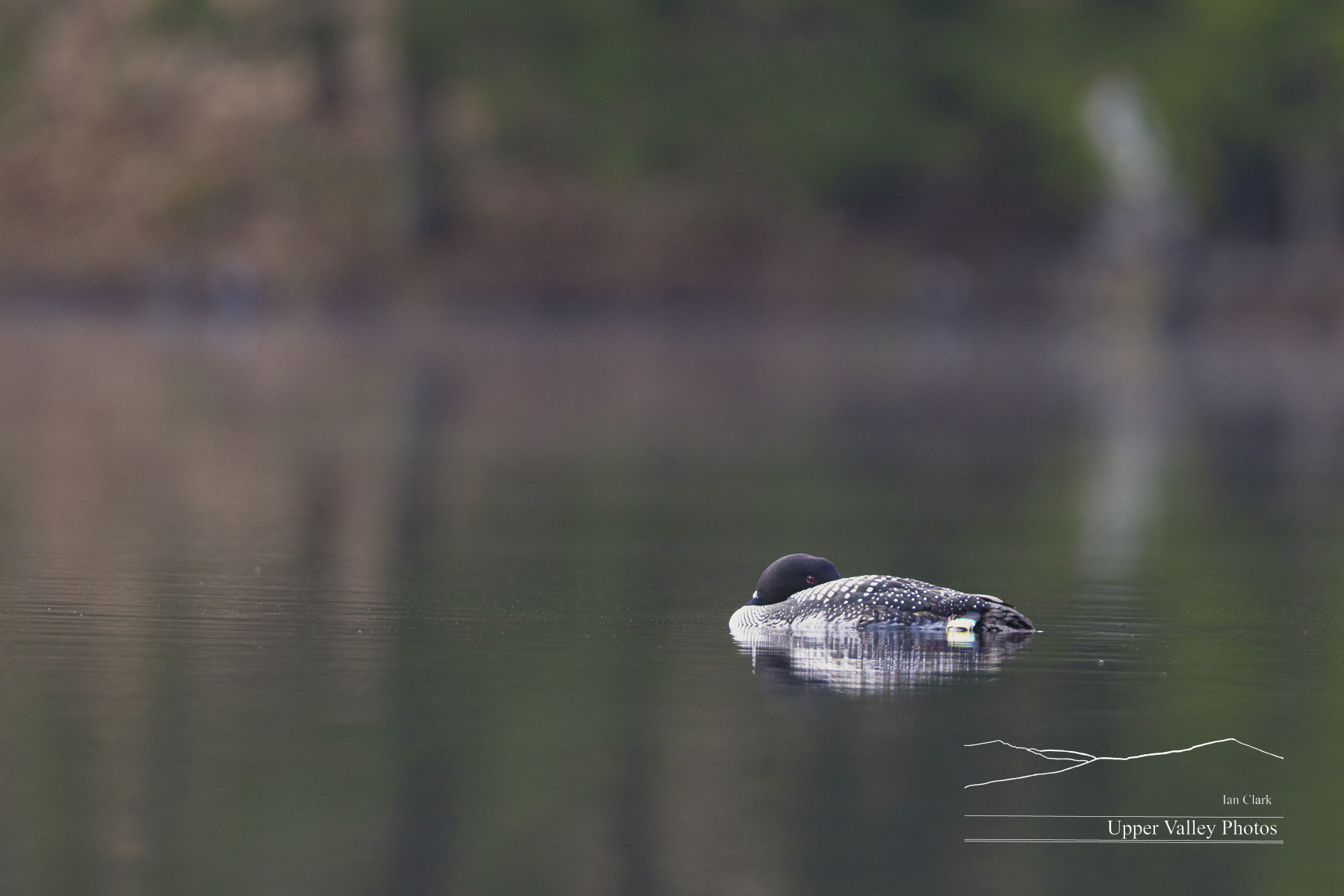
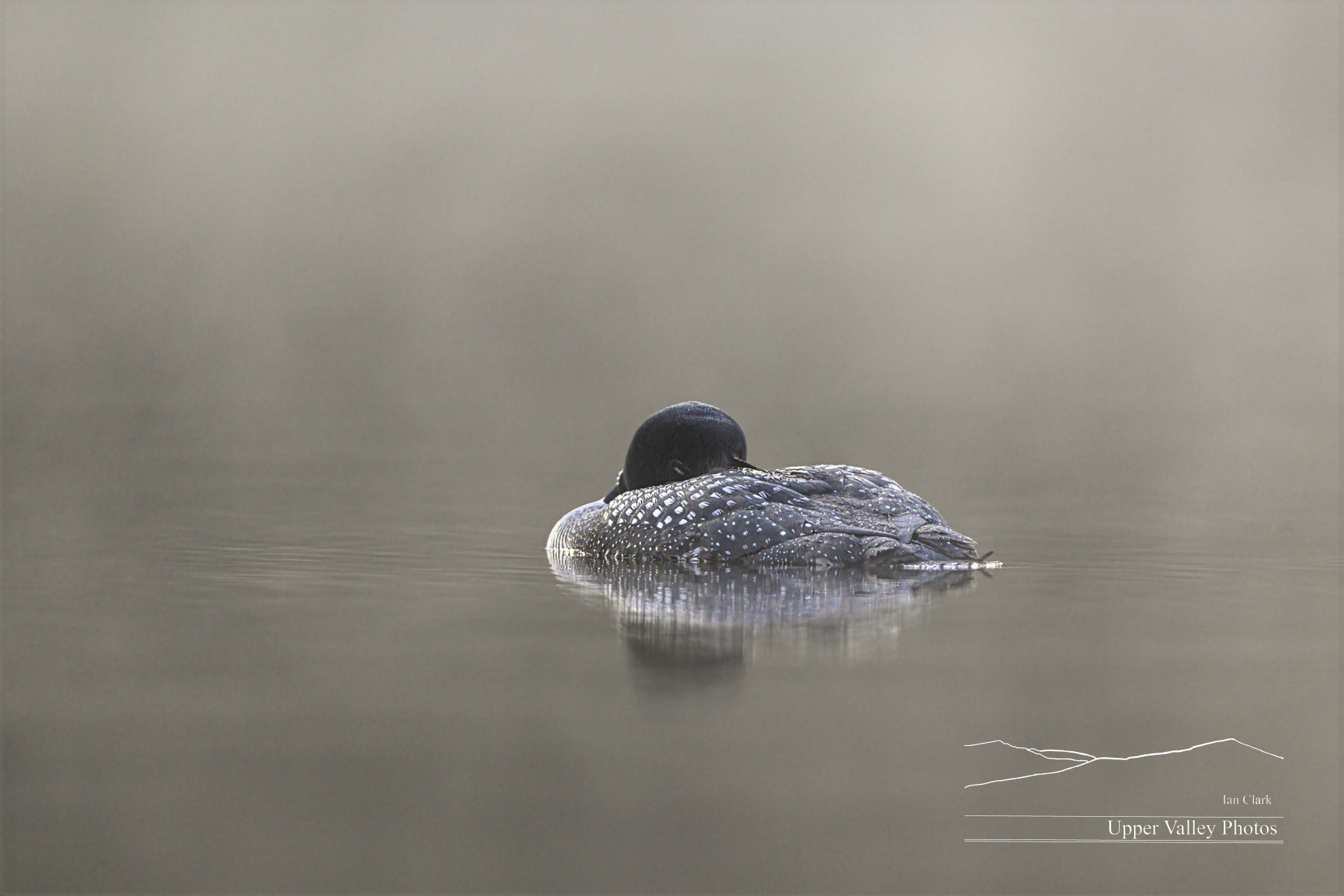
The Middletons also had a relatively quiet spring, without any serious challengers. Here’s Dad enjoying the peace and quiet and settling in for a nap. You can see his bands on his left leg.
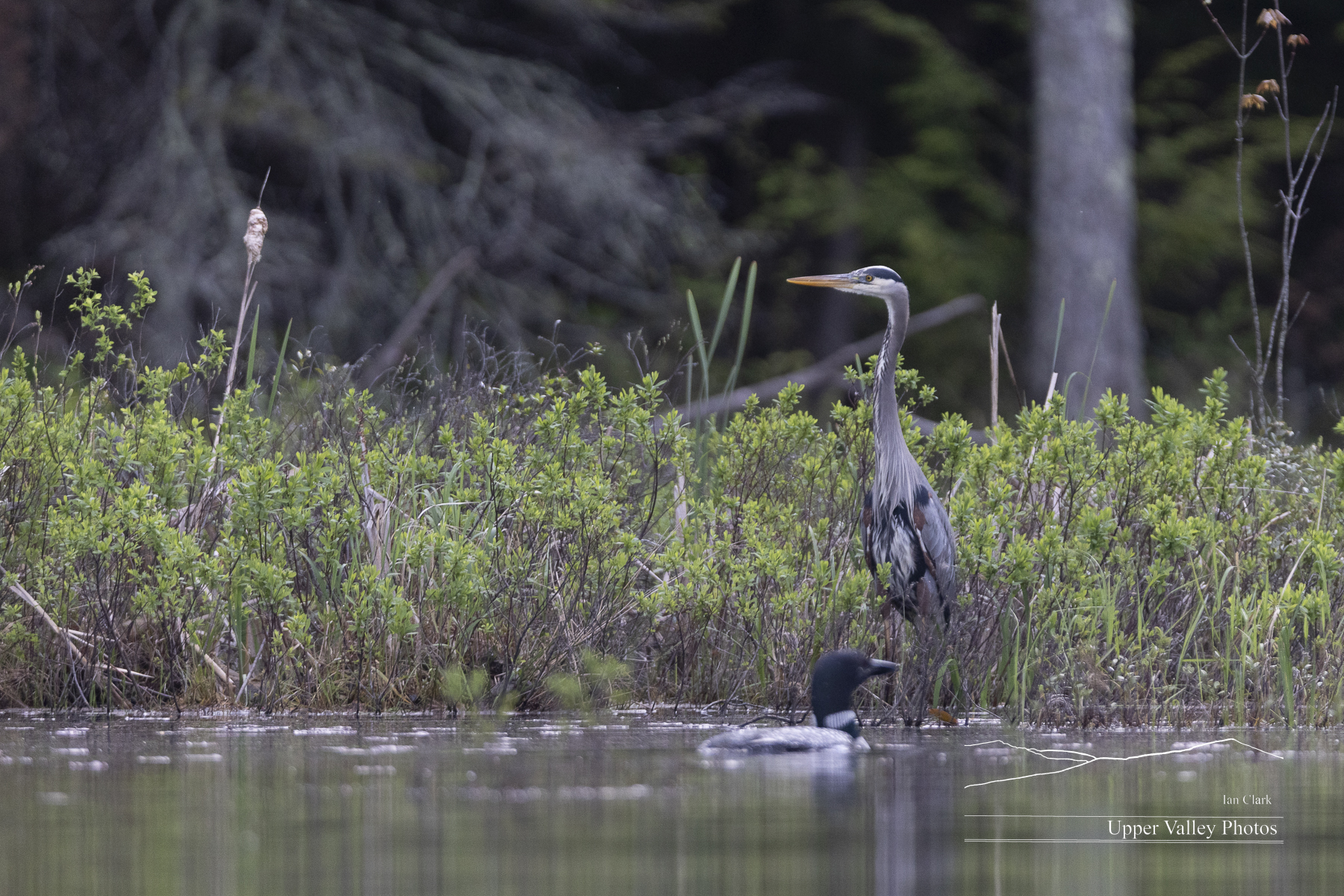
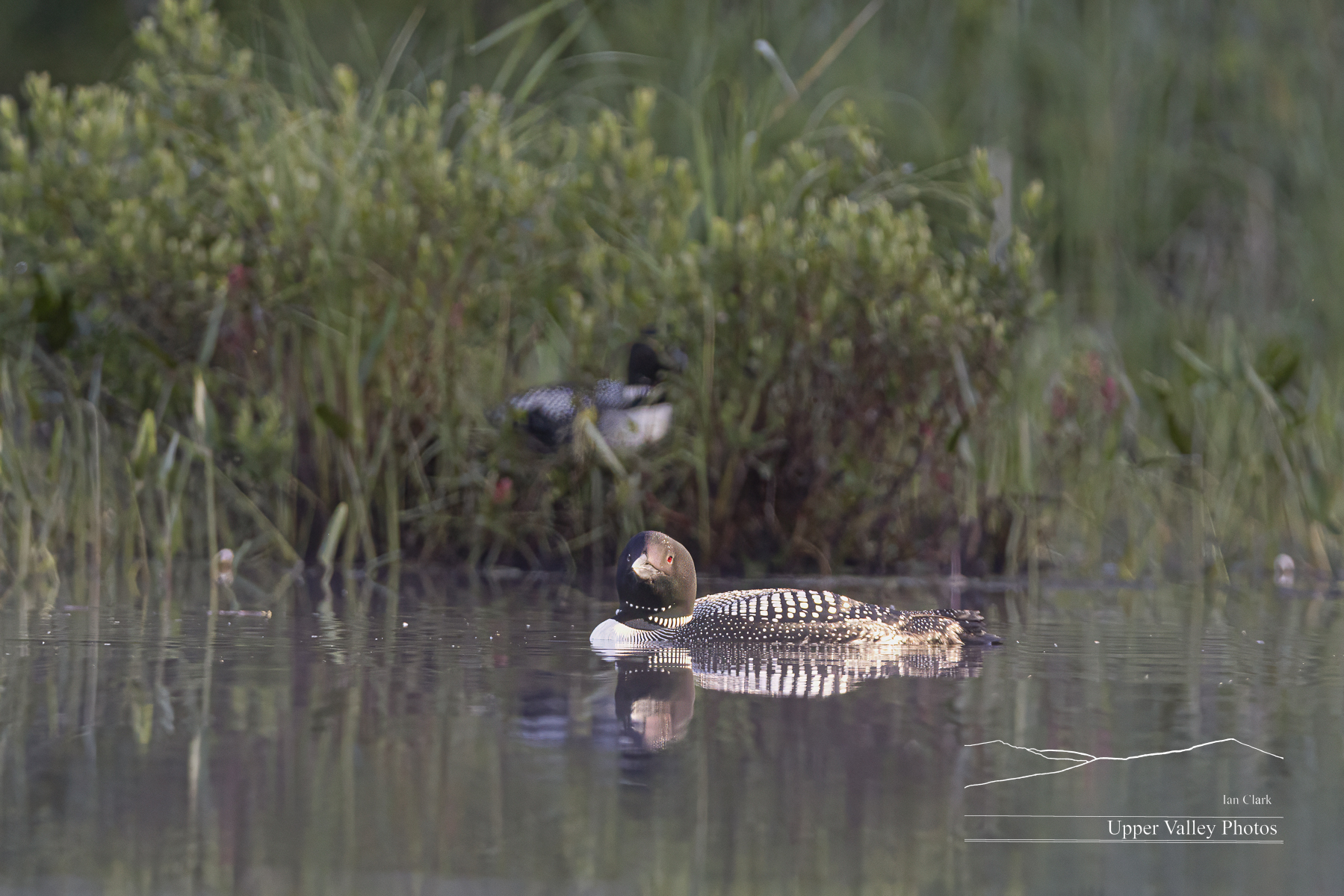
Hank Heron took up residence on the pond and spent a lot of time hanging around where the Middletons hoped to nest. This looks like Dad is going over to discuss Hank relocating.
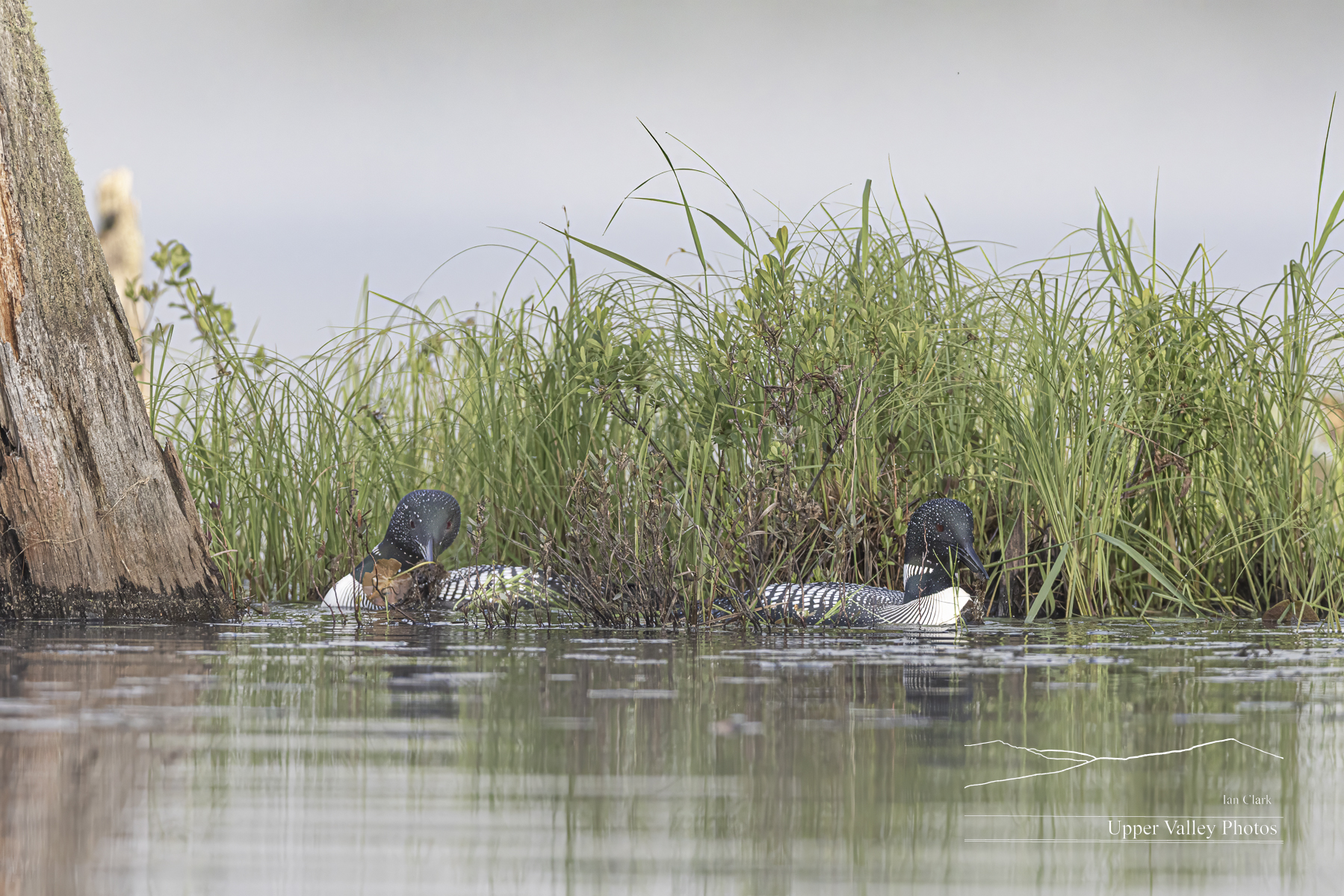
The Middletons built a nest in the marsh behind Hank. The water was very shallow approaching the nest. Their pond is drained through a stream that goes through an overpass. There was some brush and debris in front of the overpass when the Middletons built their nest. Someone cleaned the brush from the overpass and the water level on the pond dropped about four inches. Enough to make it impossible for the loons to come and go underwater to and from the nest and they abandoned it.
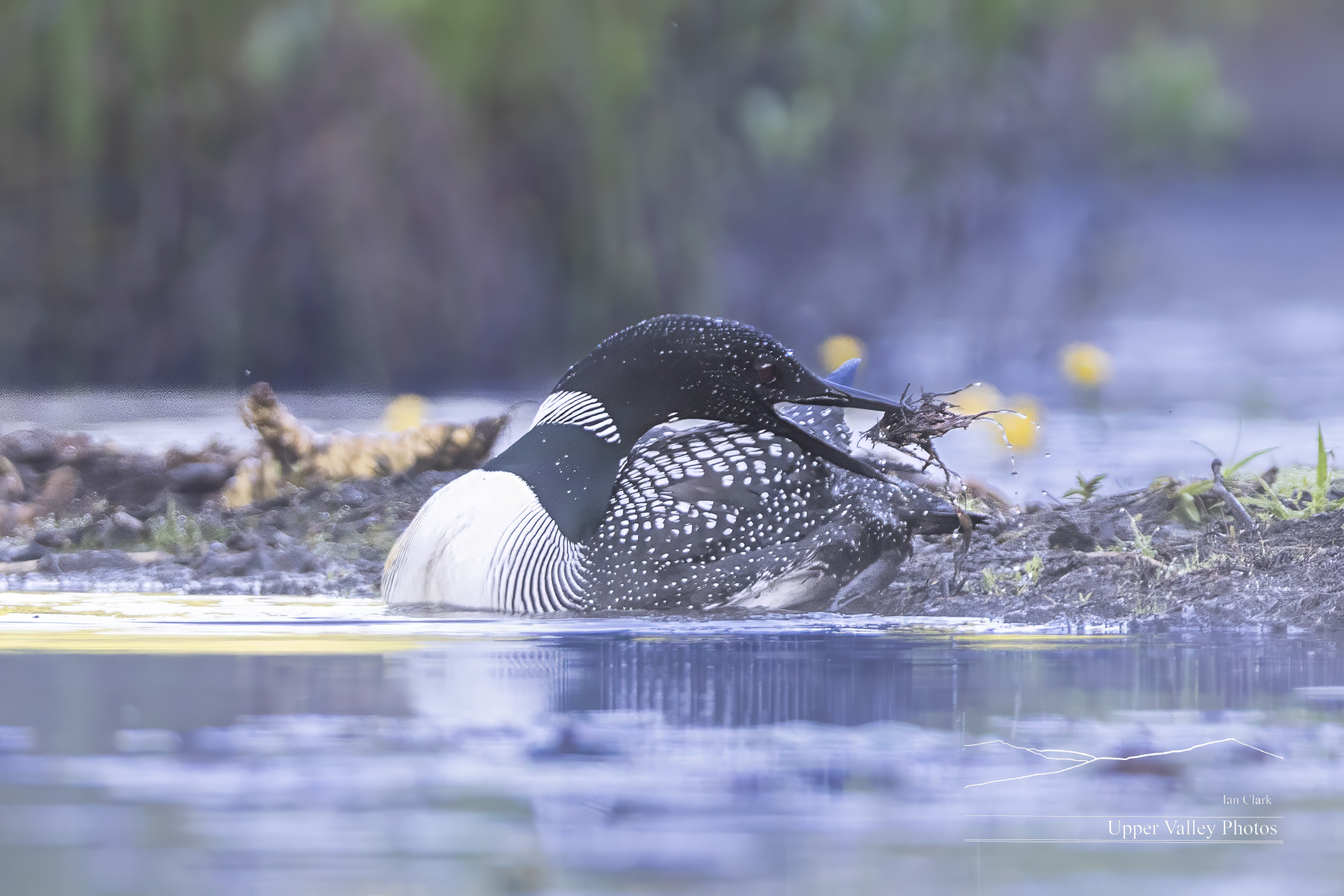
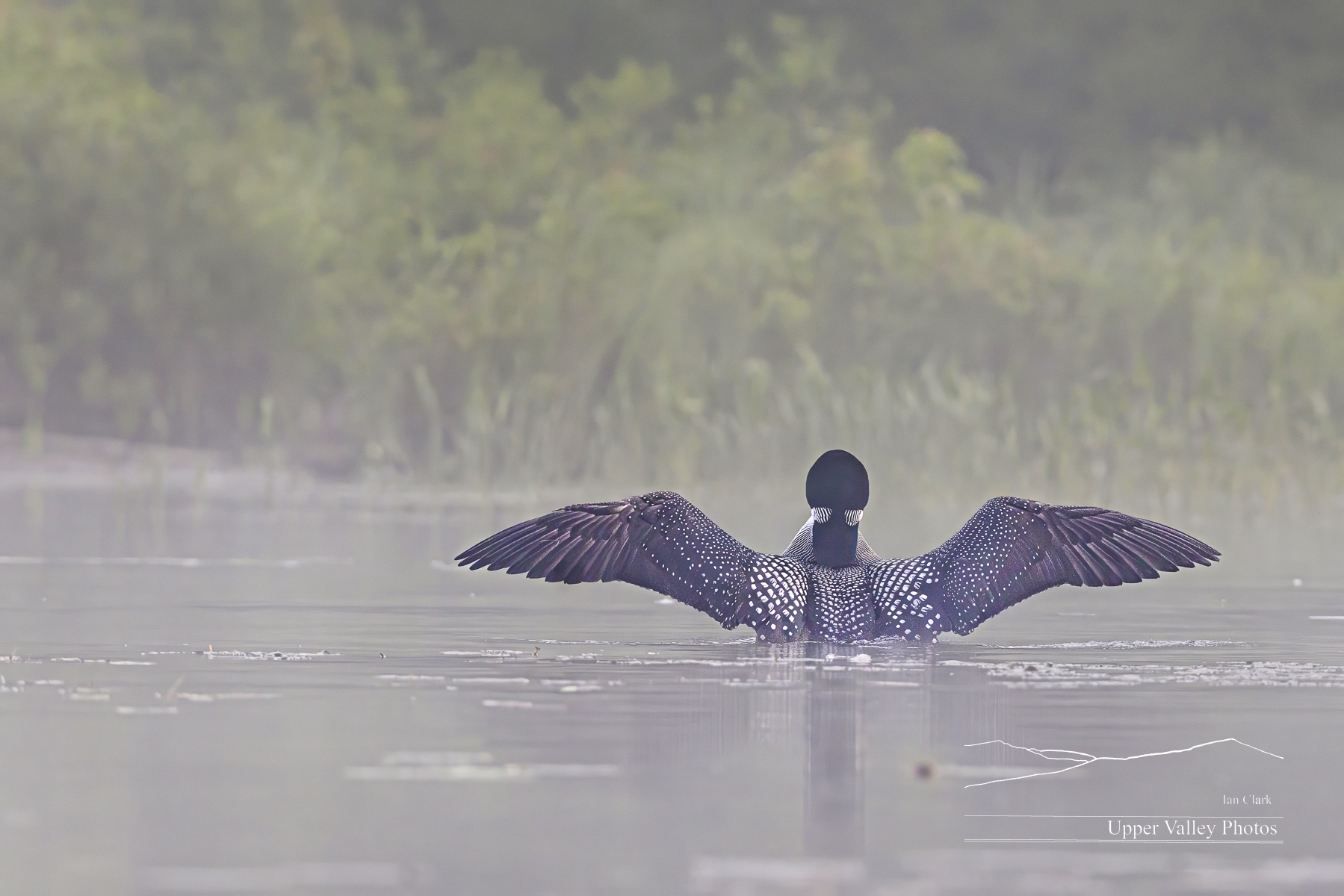
After a few days, they went to work building a new nest in a new spot. They spent several days working on the project before abandoning it for some reason I couldn’t see. Mr. M was ready for his close-up. Mrs. M stretching. The third try was the trick. They returned to where Mr. M has been nesting for several years and tried again. Mom taking an early morning shift sitting on the egg(s). Dad took advantage of a free morning to snooze. Mom turning the eggs.
At least one chick hatched around July 15. Sadly the chick(s), disappeared within a couple of days.
There was sad news from the Eastons to start the season. The banded male that’s been on the pond since at least 2019 did not return. He’d faced a repeated challenge for the pond in 2025. I thought he was getting the better of the challenger. The Loon Preservation Committee let me know that the Vermont Center for Ecostudies had recovered the male dead on Lake Memphremagog. The necropsy was inconclusive, but they suspect he died from injuries from another loon.
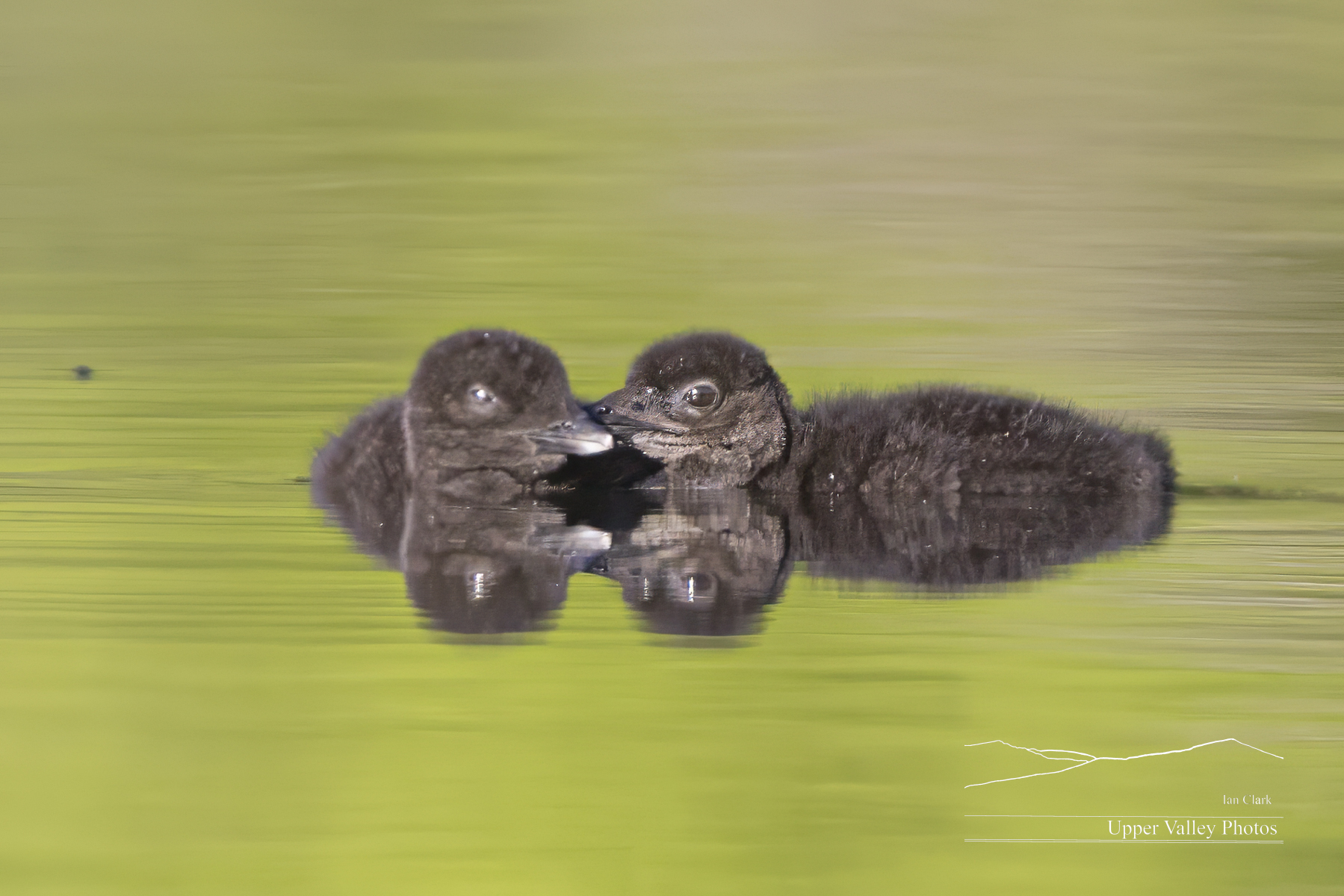
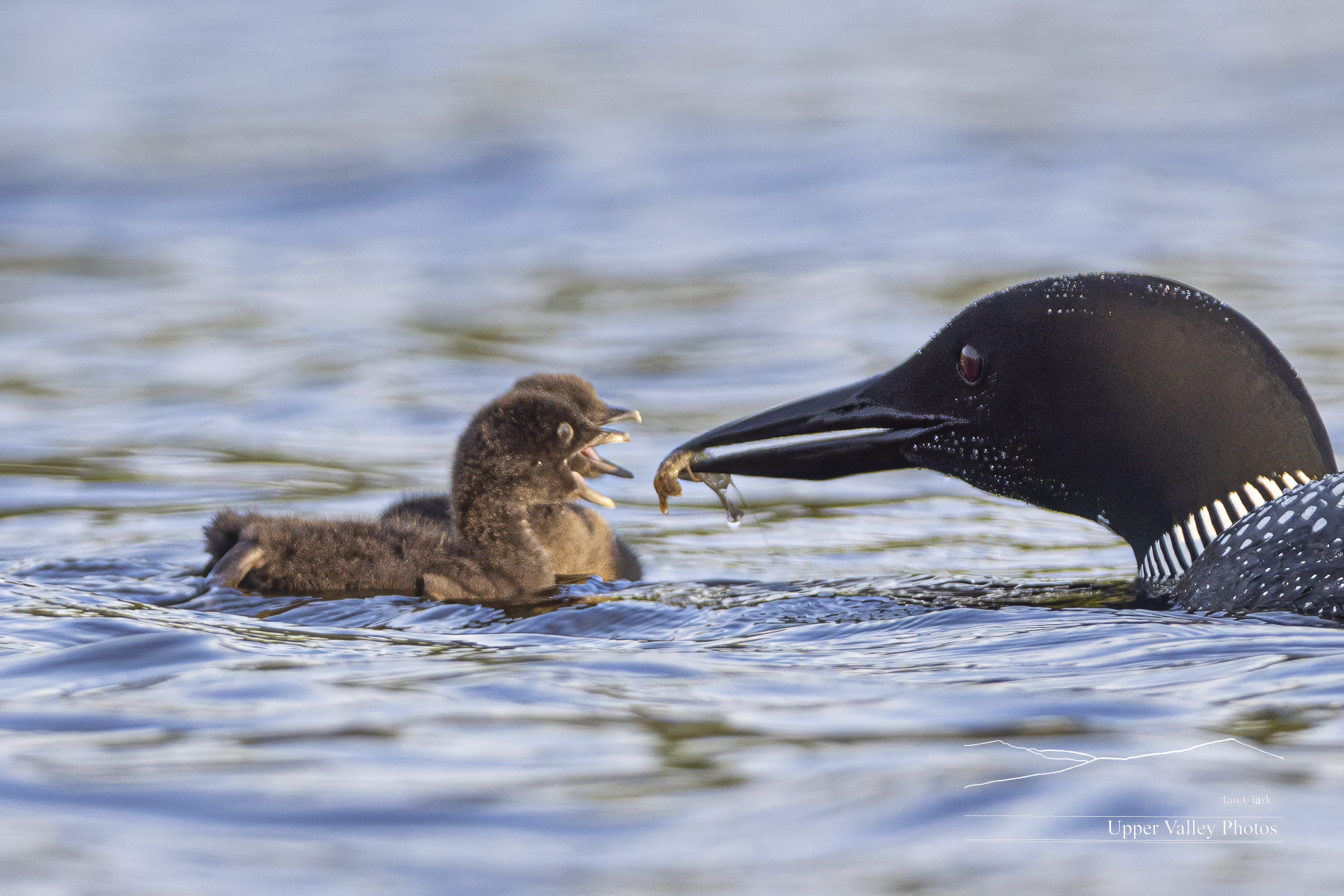
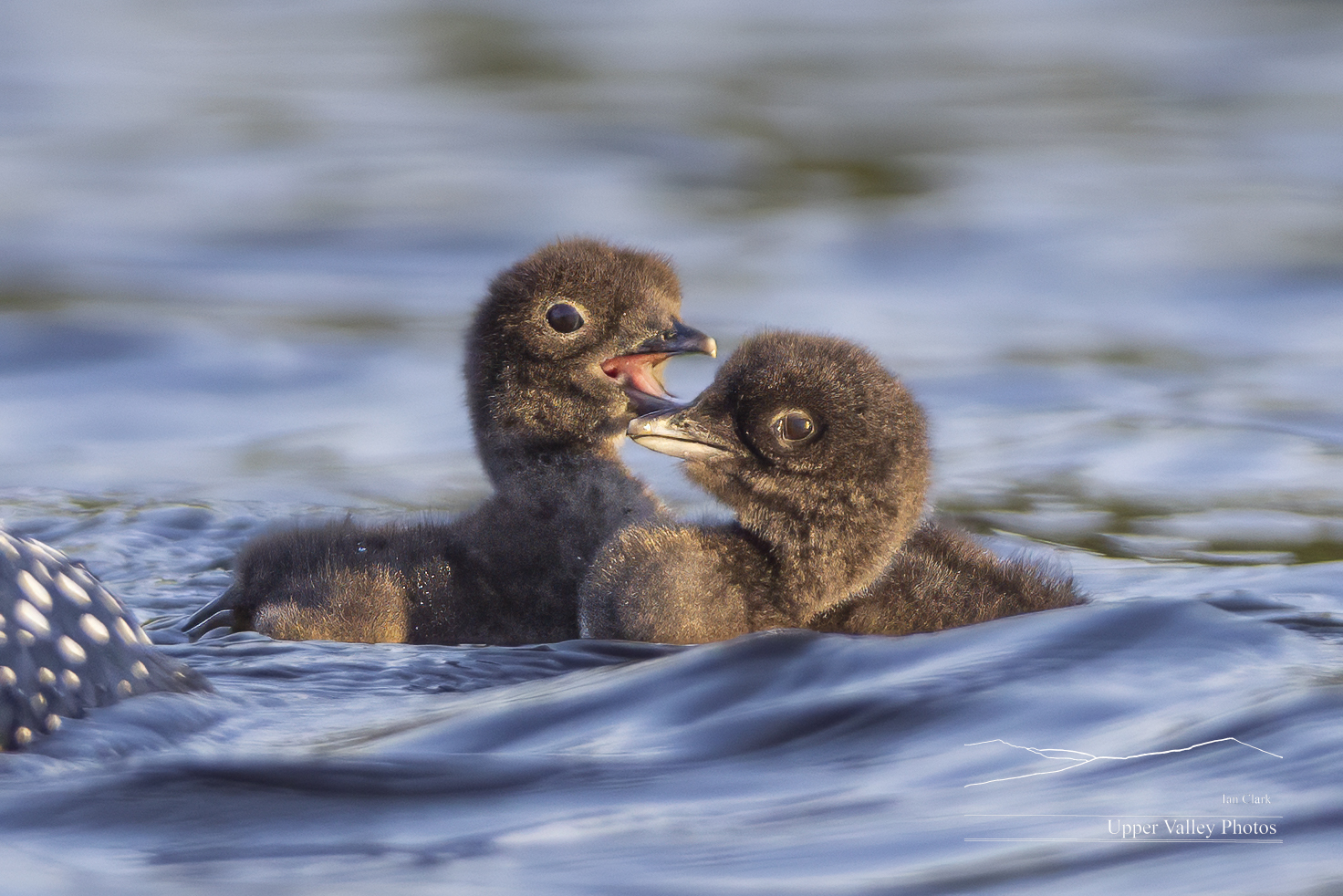
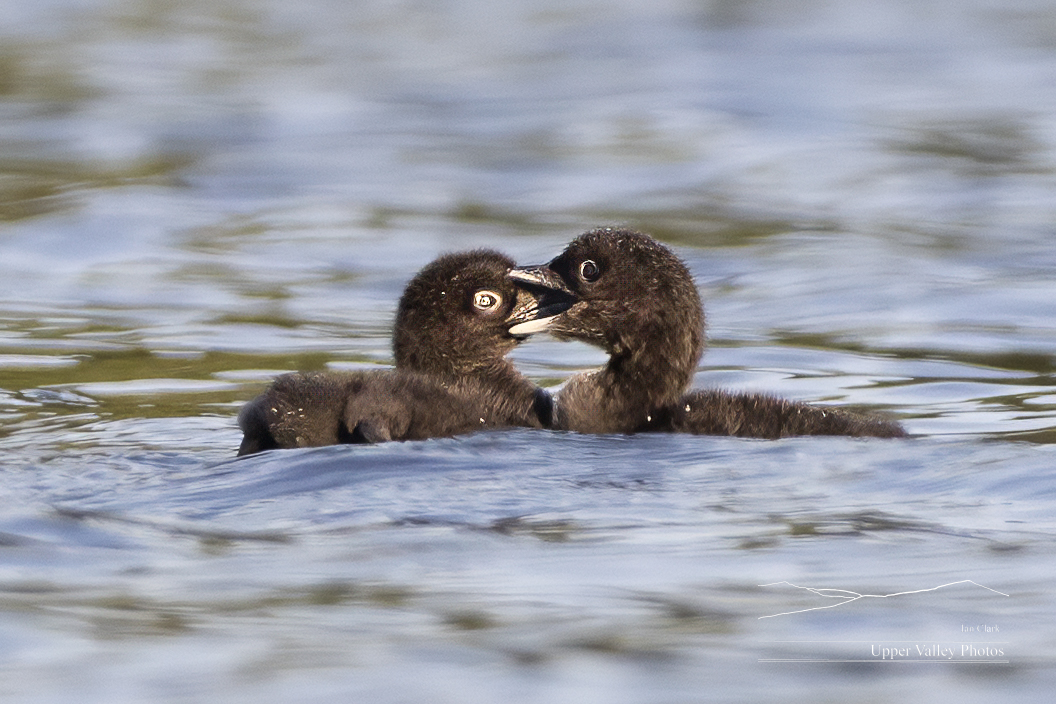
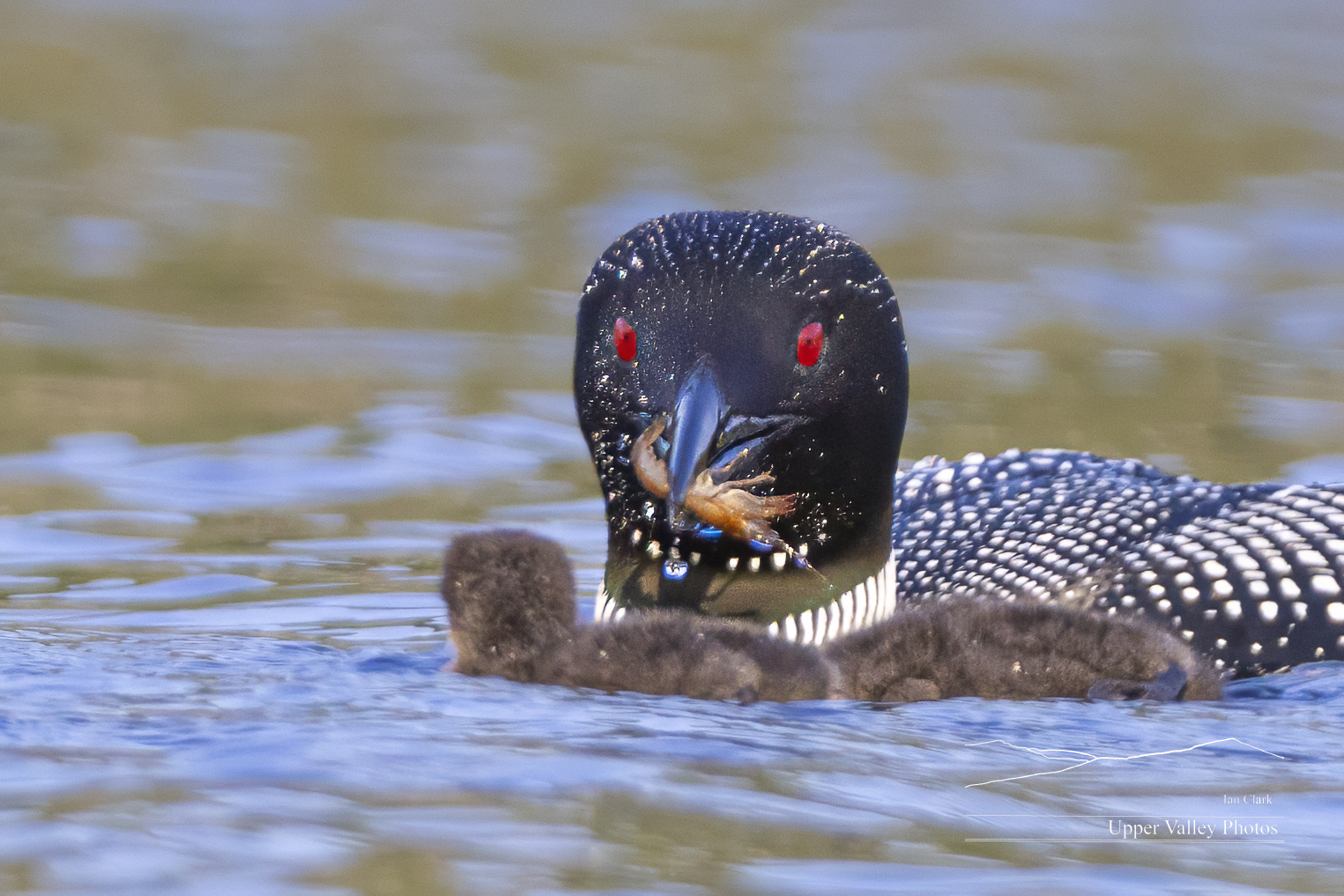
Mrs. Easton returned to the pond. She faced off against another banded female early in the season. The intruder was banded by LPC on Russell Pond in Woodstock in 2025. Mrs. E drove her away and she ended up nesting on Russell Pond again. Mrs. E patrolling her territory. It is thought that the male loon selects the nest site. From what I’ve seen, it may be the male that starts the work on the nest, but the female has at least a lot of input. With a new Mr. Easton, they moved from where they’ve nested for the last seven years to a new spot. This is Mrs. E babysitting. Two chicks hatched in the last week of June. And they promptly set to squabbling. Chicks are rivals. If one thrives and the other doesn’t, the stronger chick will often chase the weaker chick from the family. Mom bringing a meal.
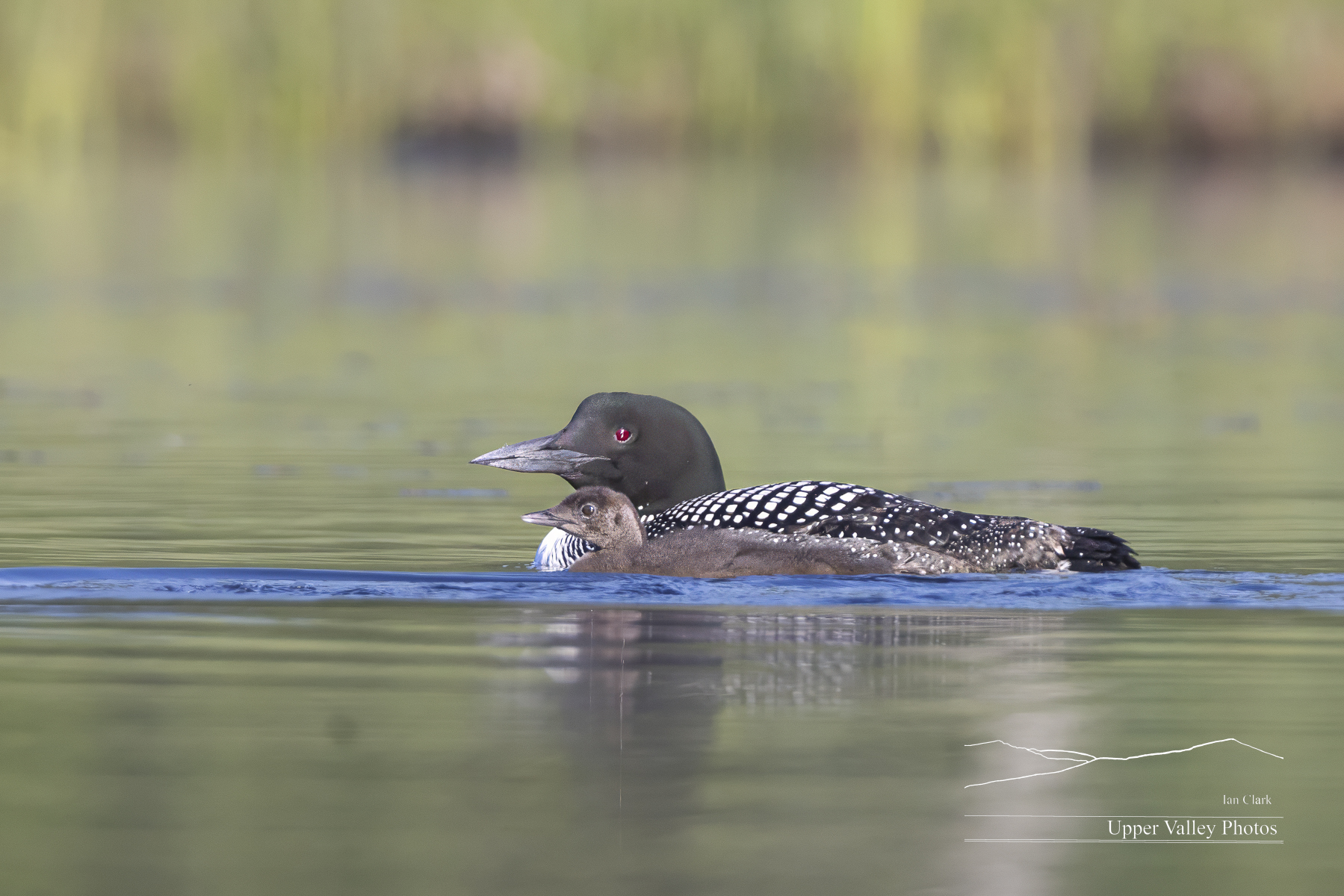
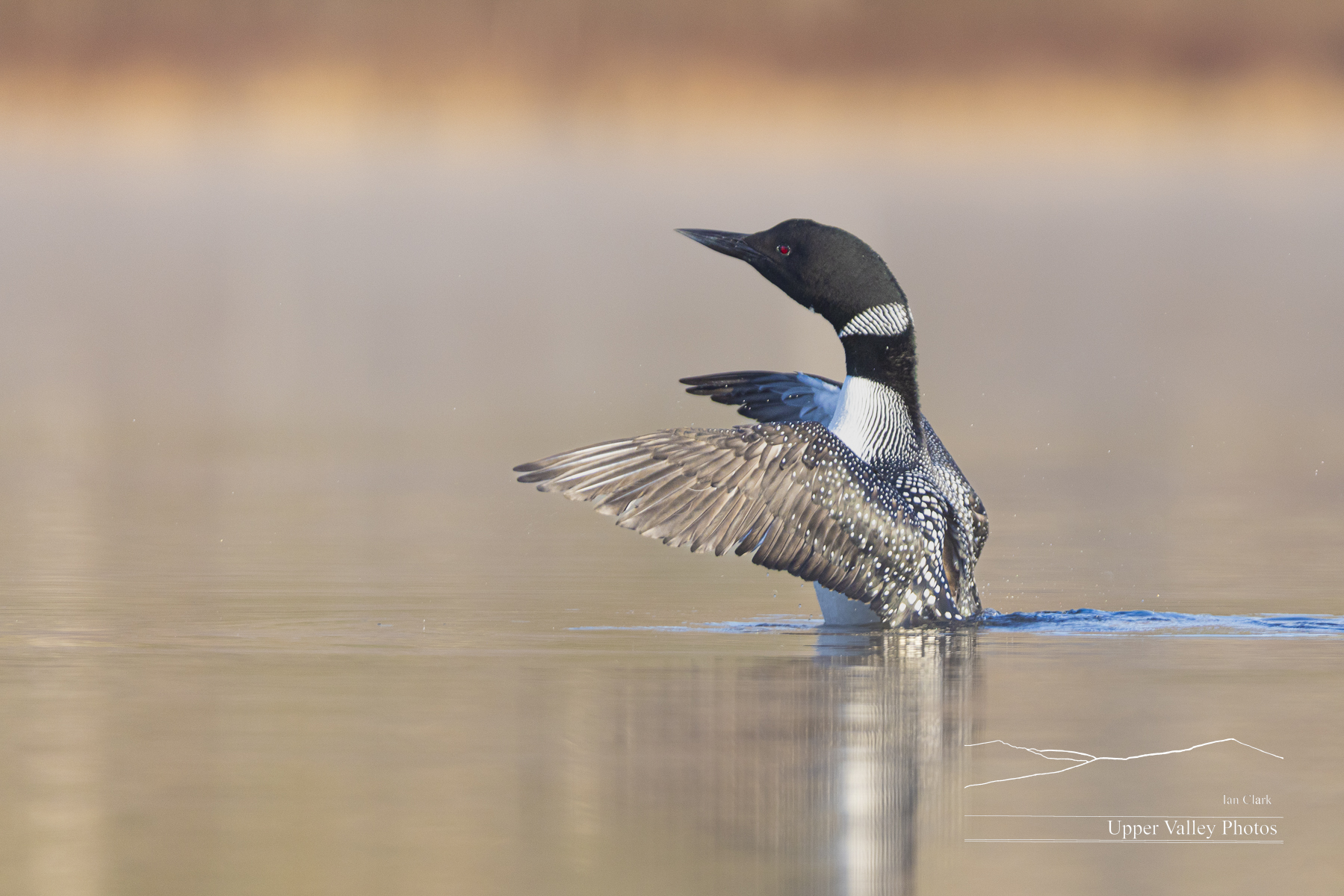
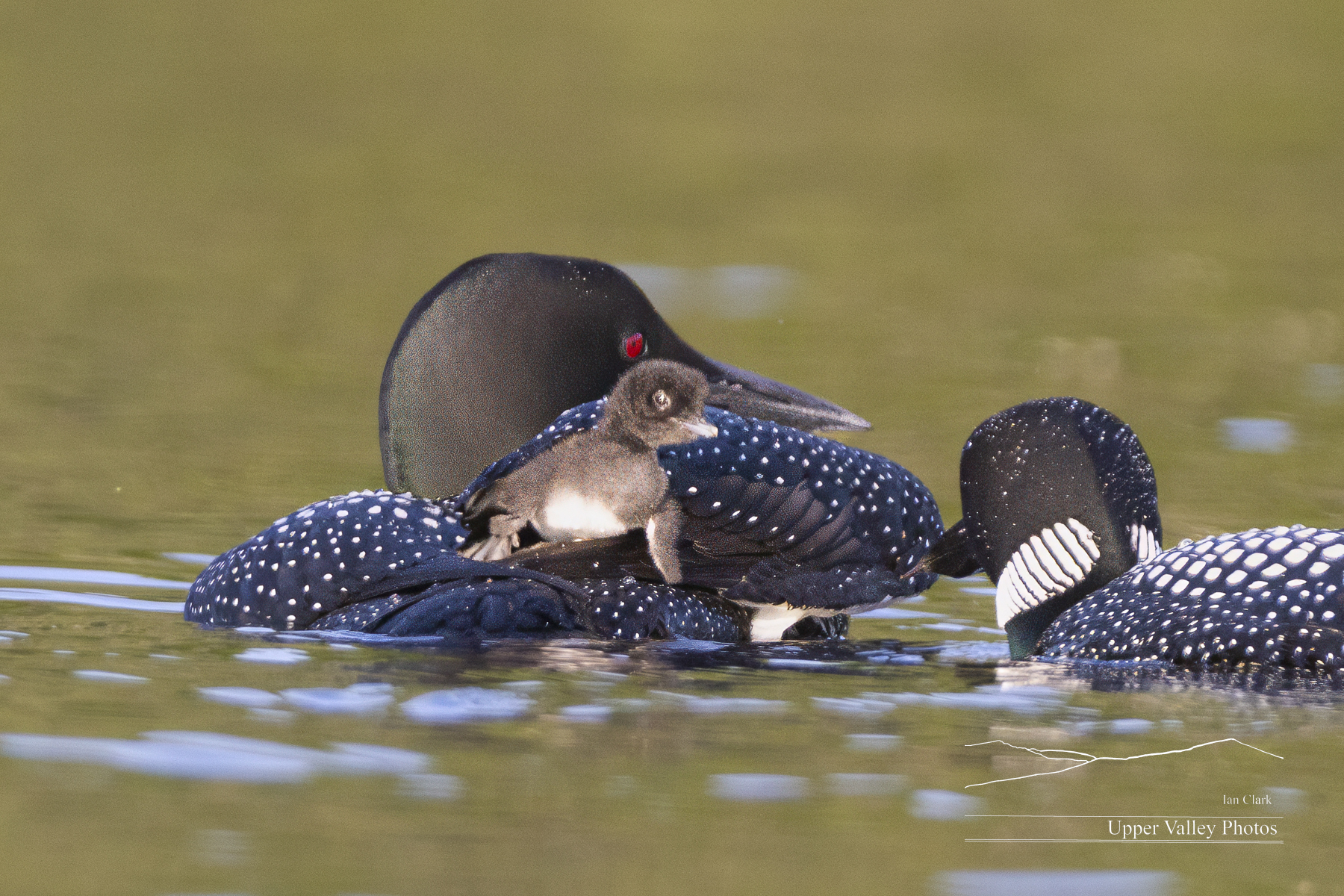
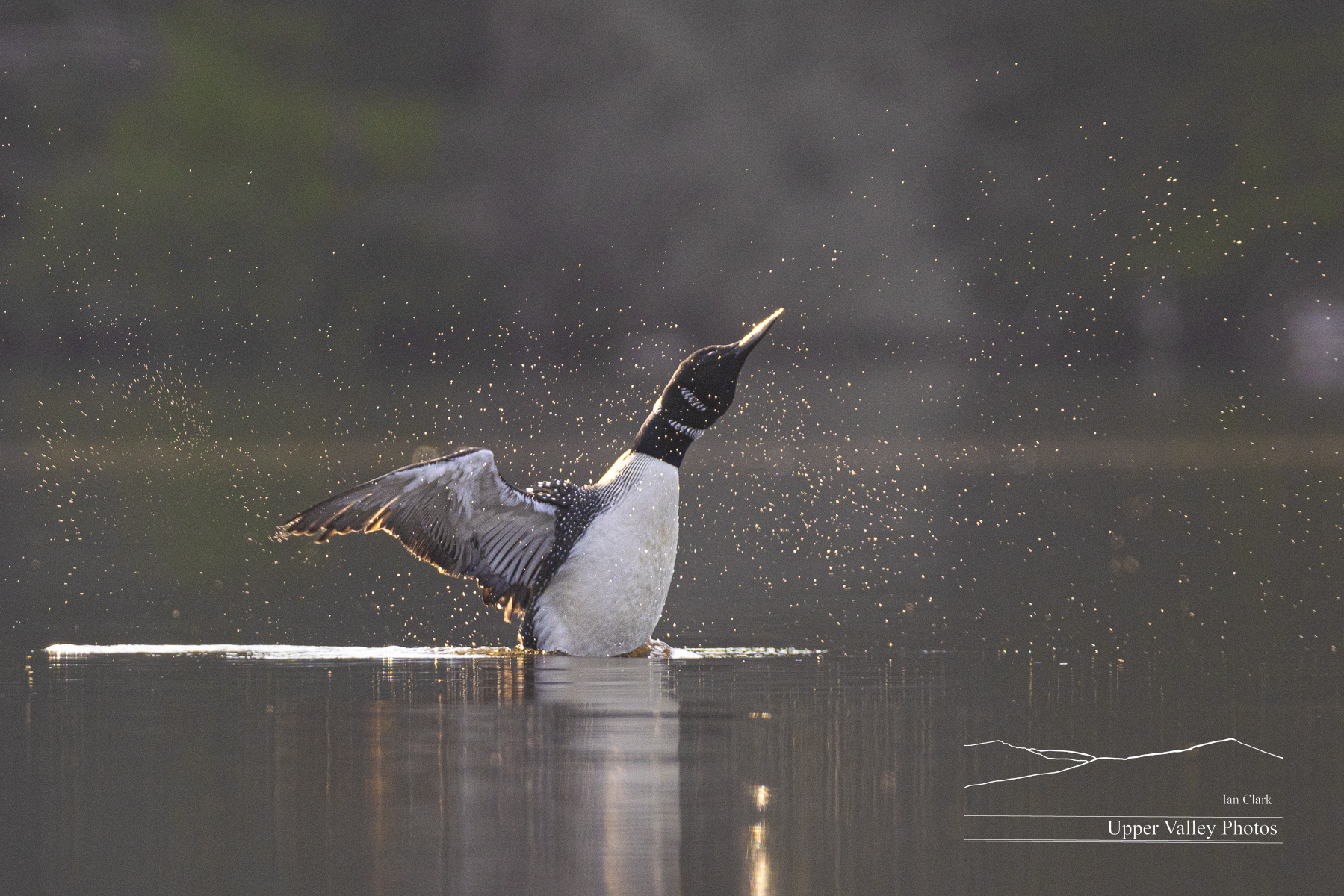
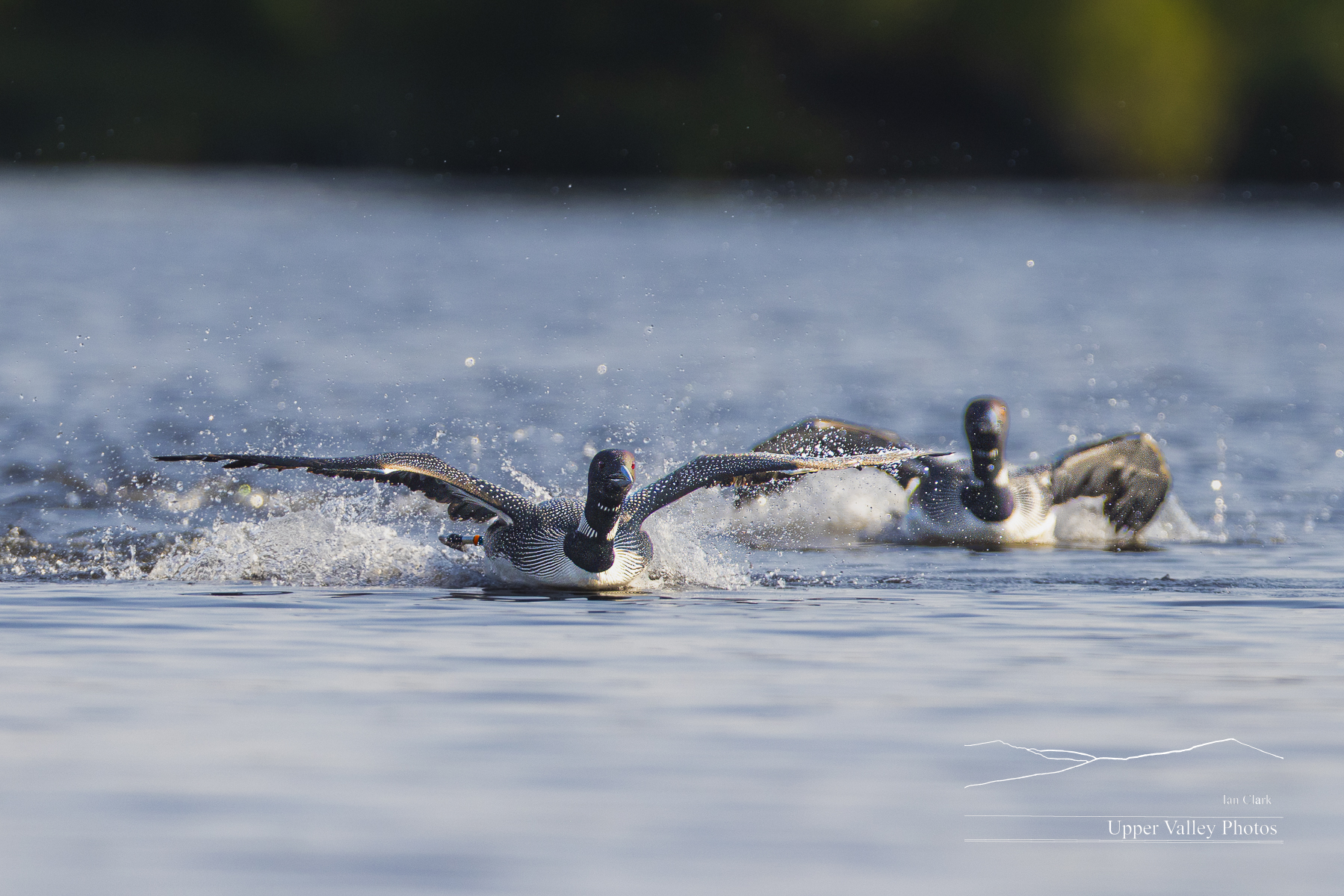
With the old Mr. Easton, Mom wasn’t a very diligent parent when I was around. If there was only one parent babysitting, it was almost always the male. Mom would wander off to let Dad do the work. This year, she was much more active in raising the chicks. The chicks are on Mom’s back – one is hidden by her wing. Dad is delivering a meal. Mom giving an early morning stretch and shake. There were serious, repeated challenges to both of the residents this season. Mom seemed to be getting the worst of her encounters. Here she is fleeing a challenger.
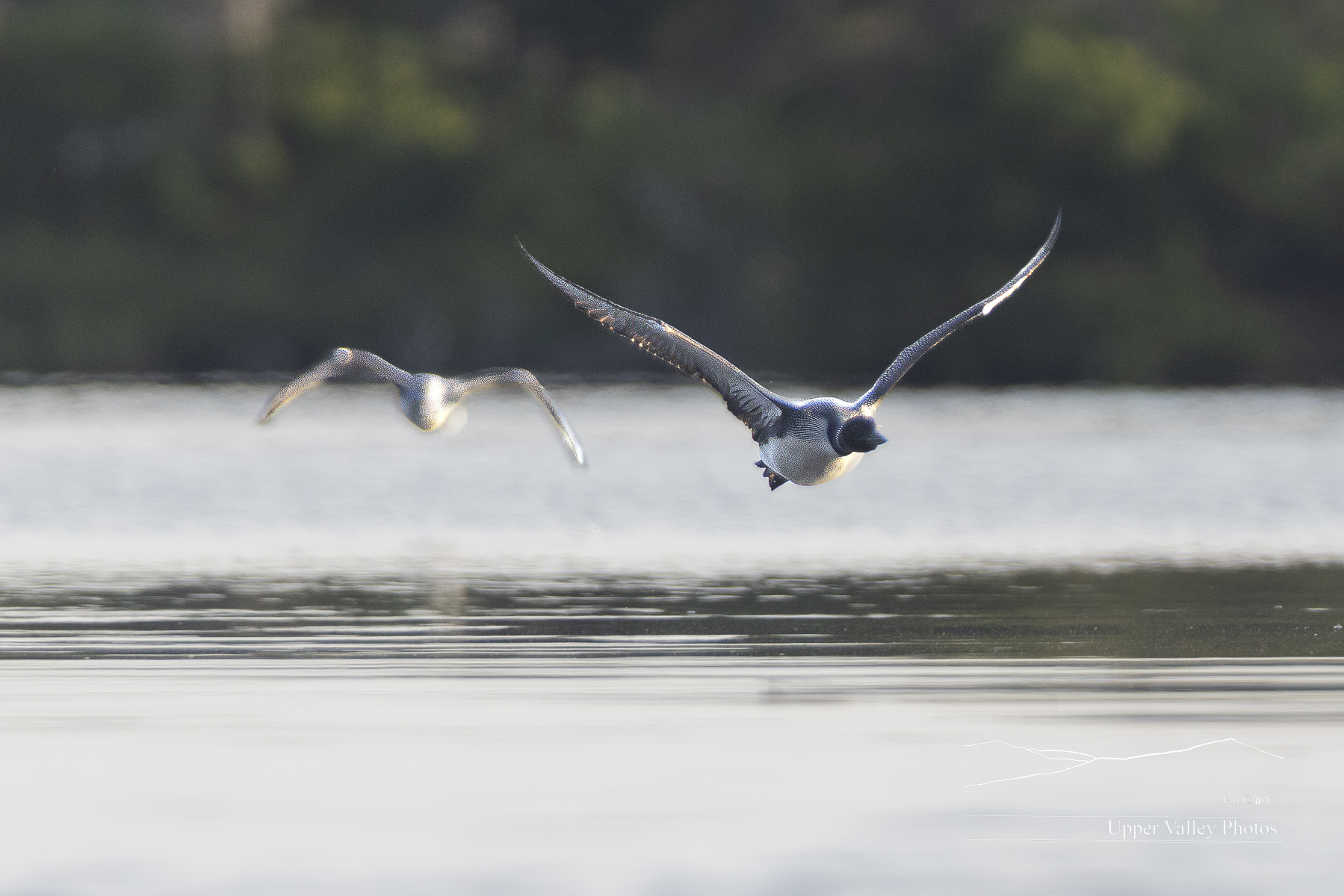
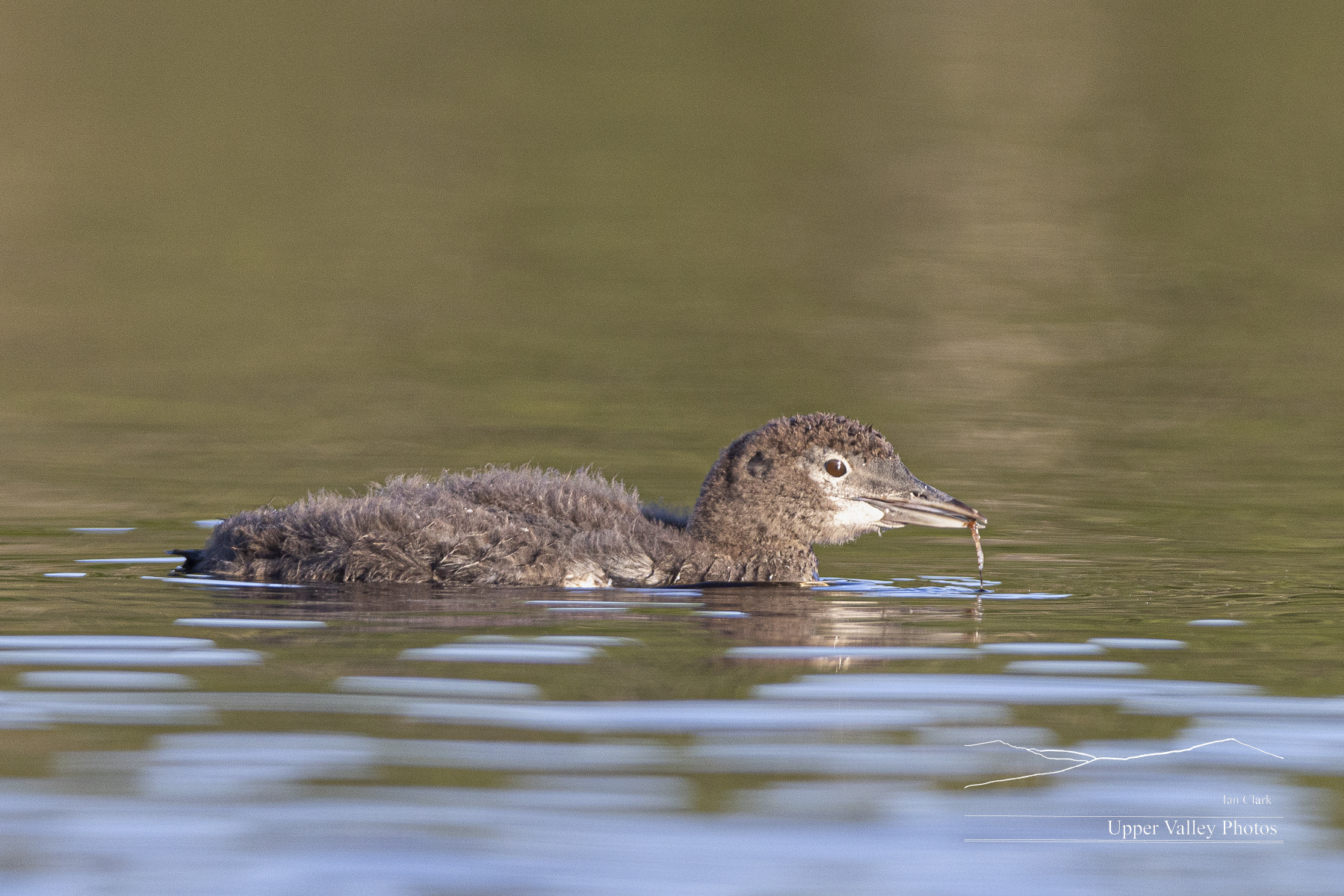
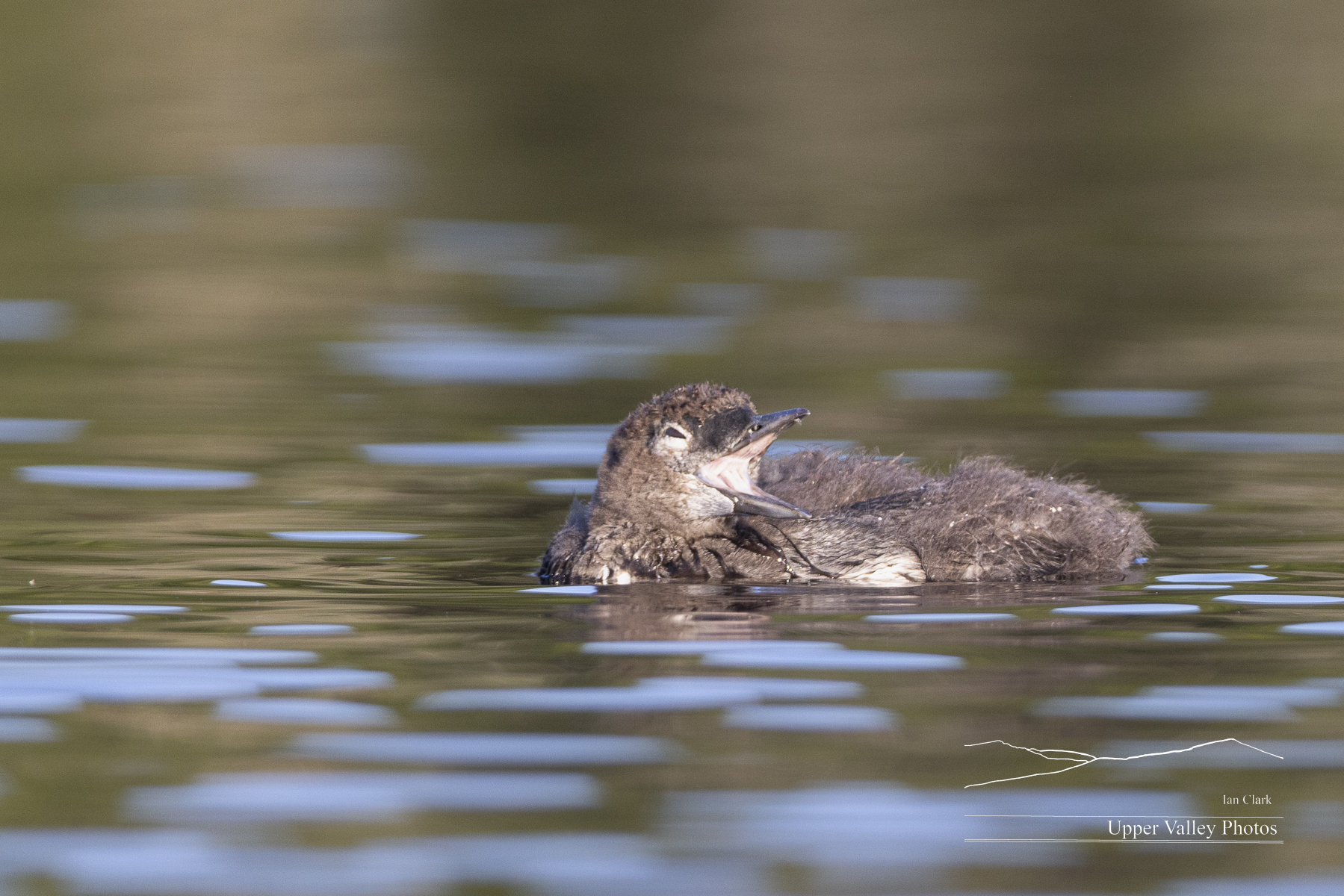
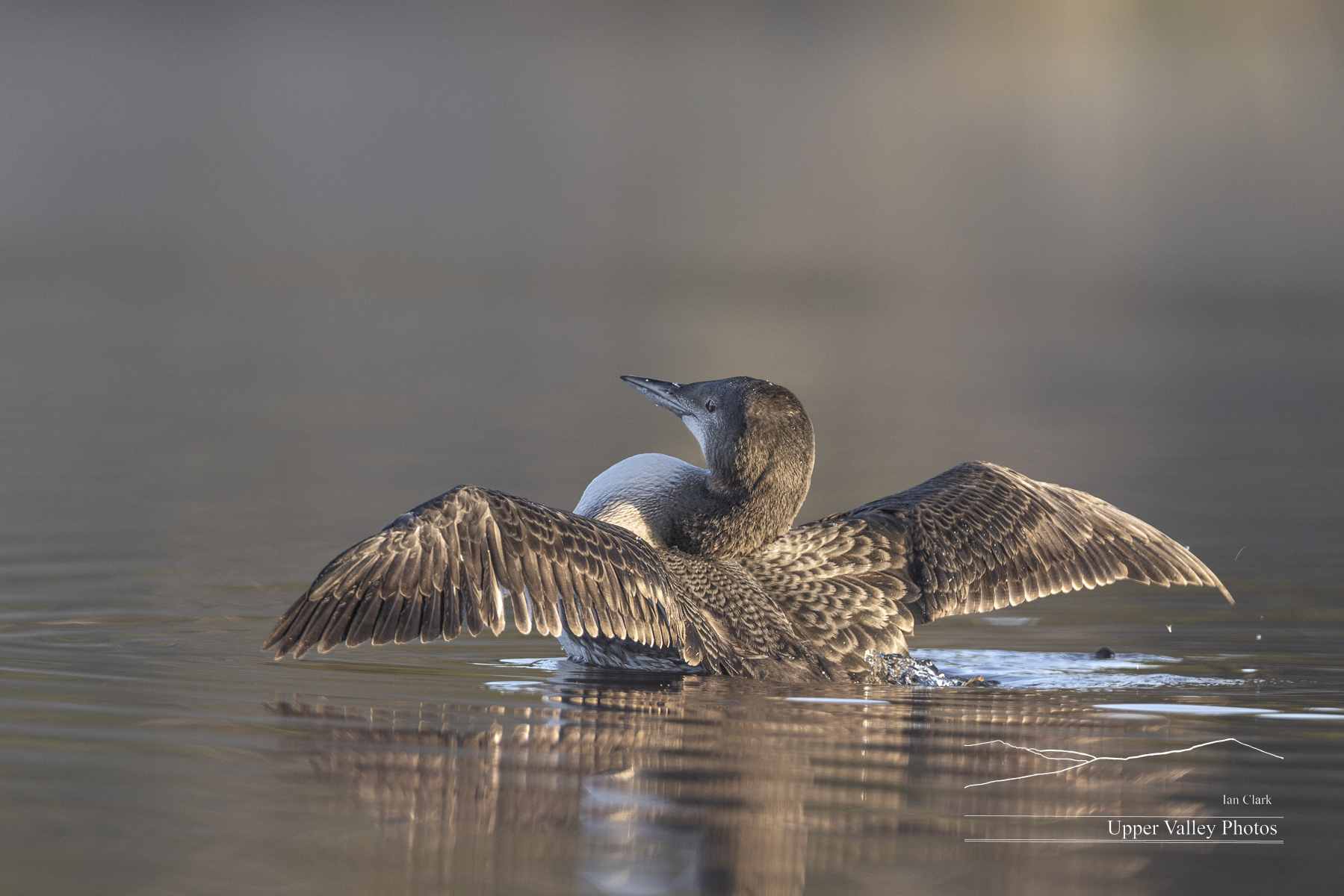
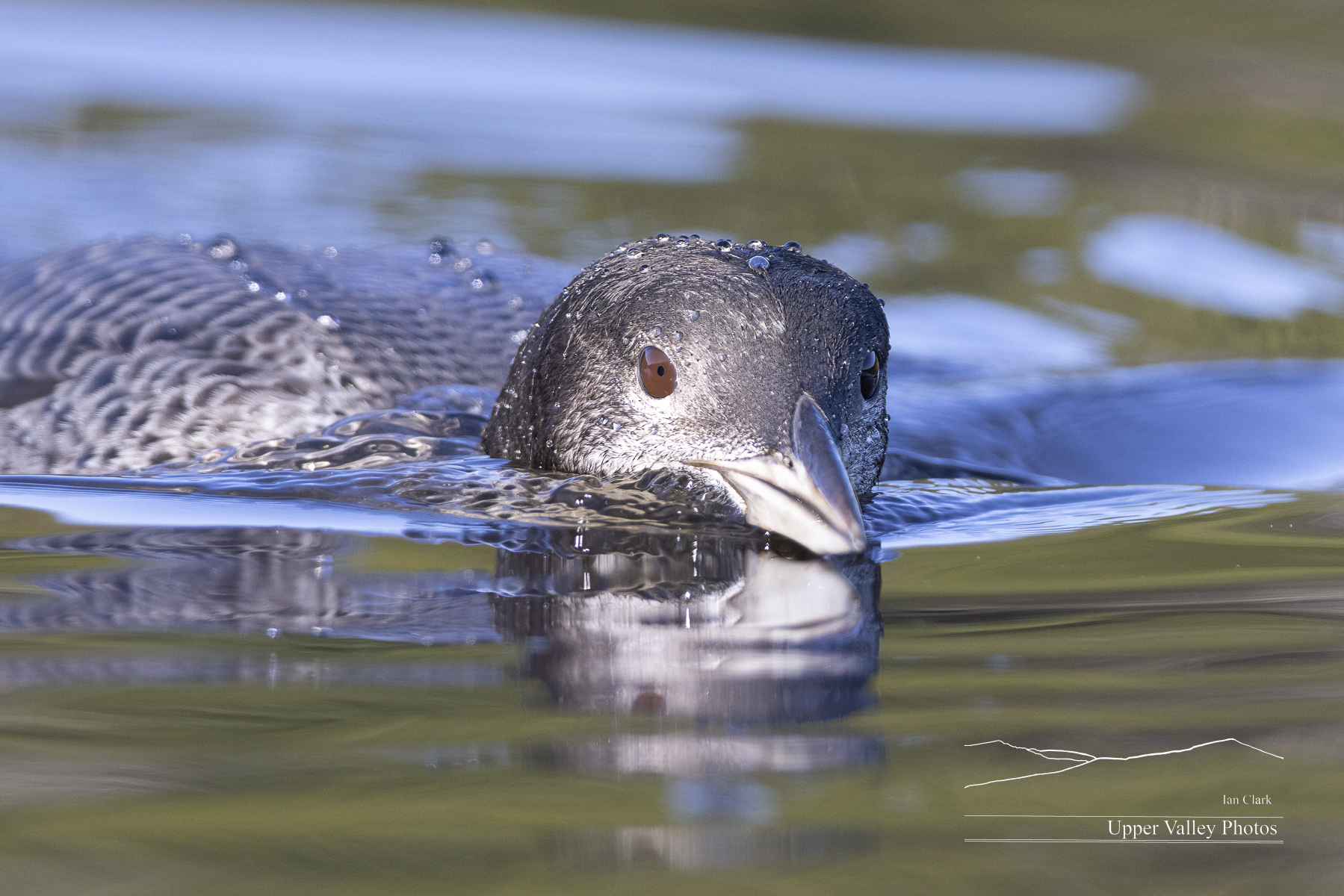
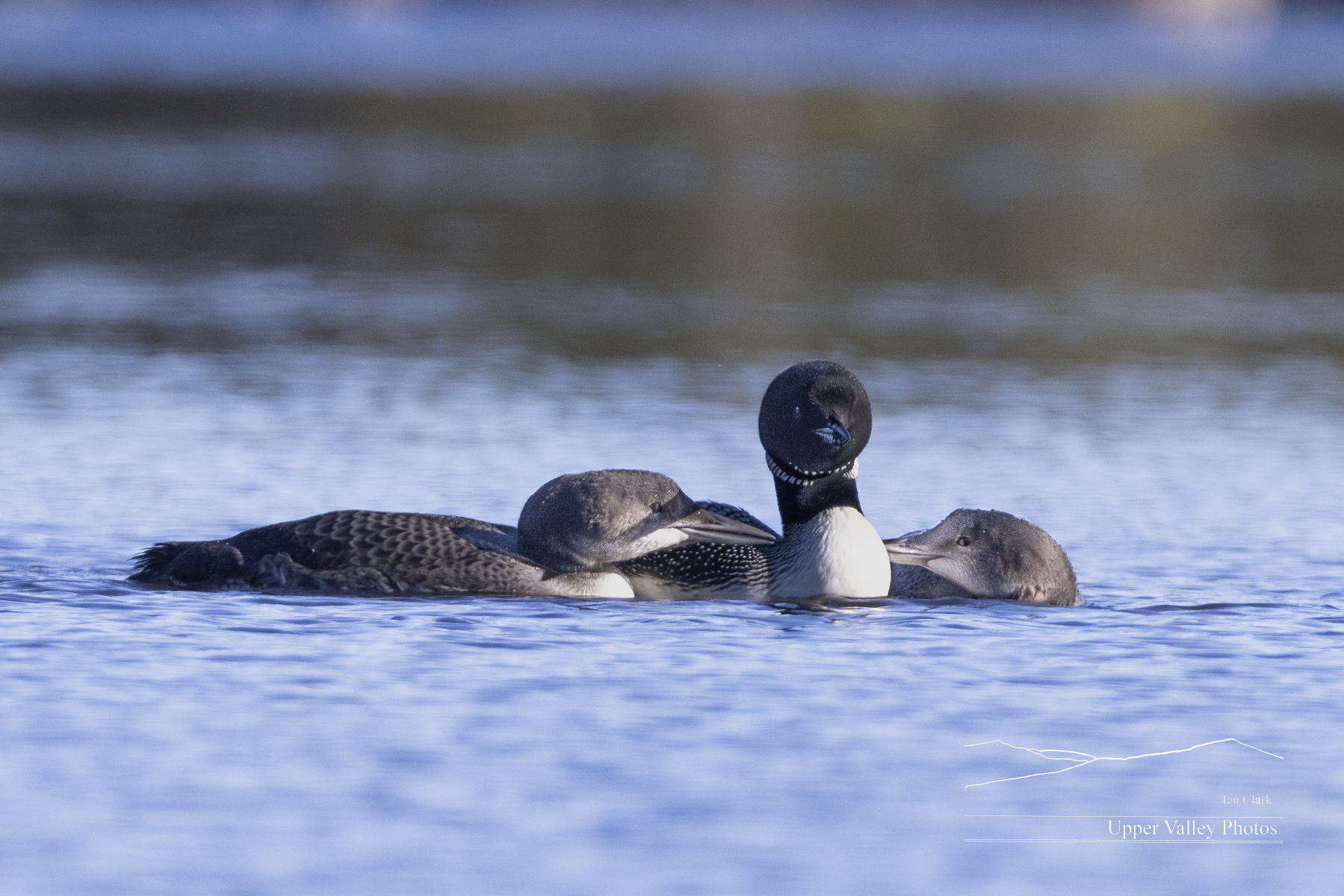
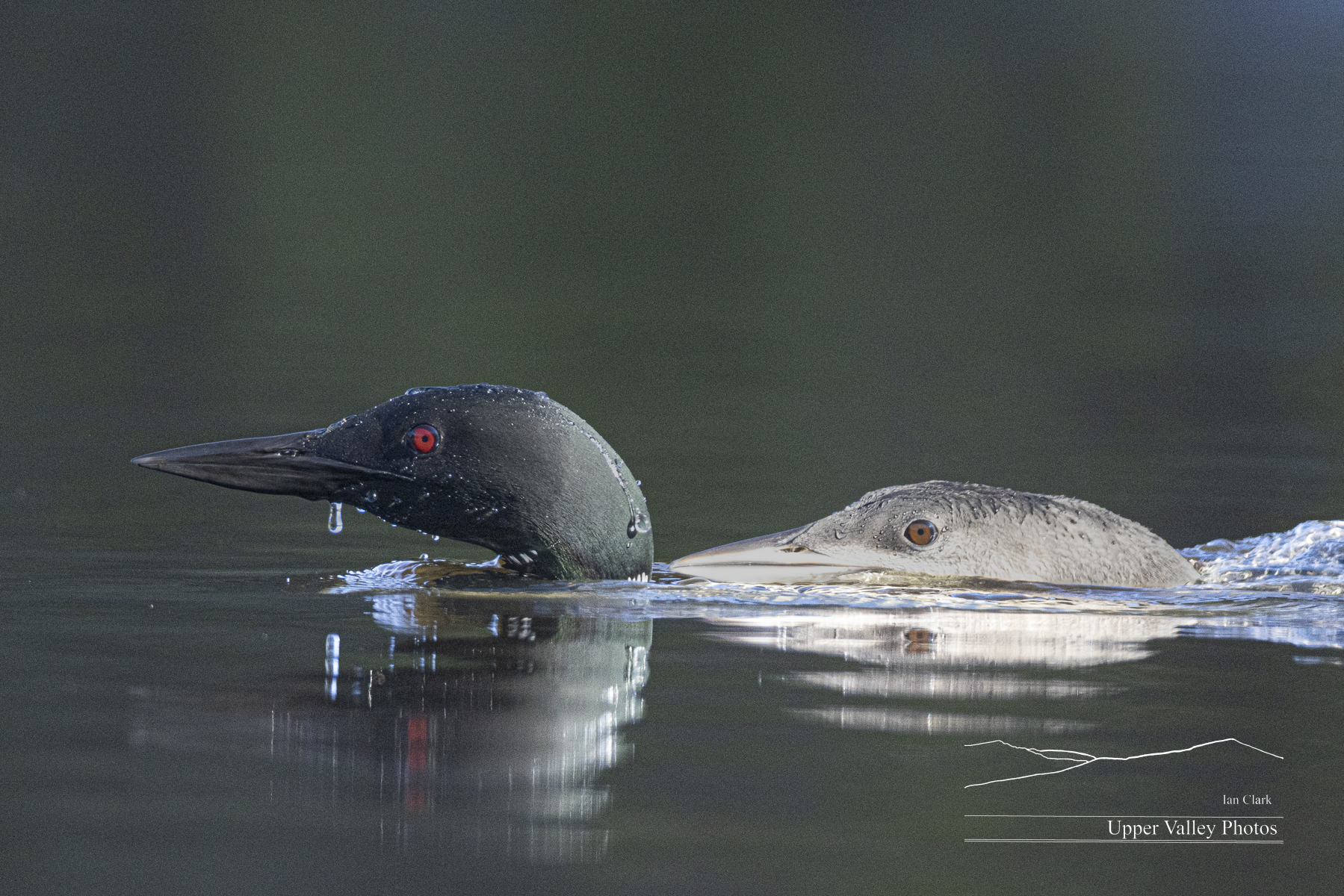
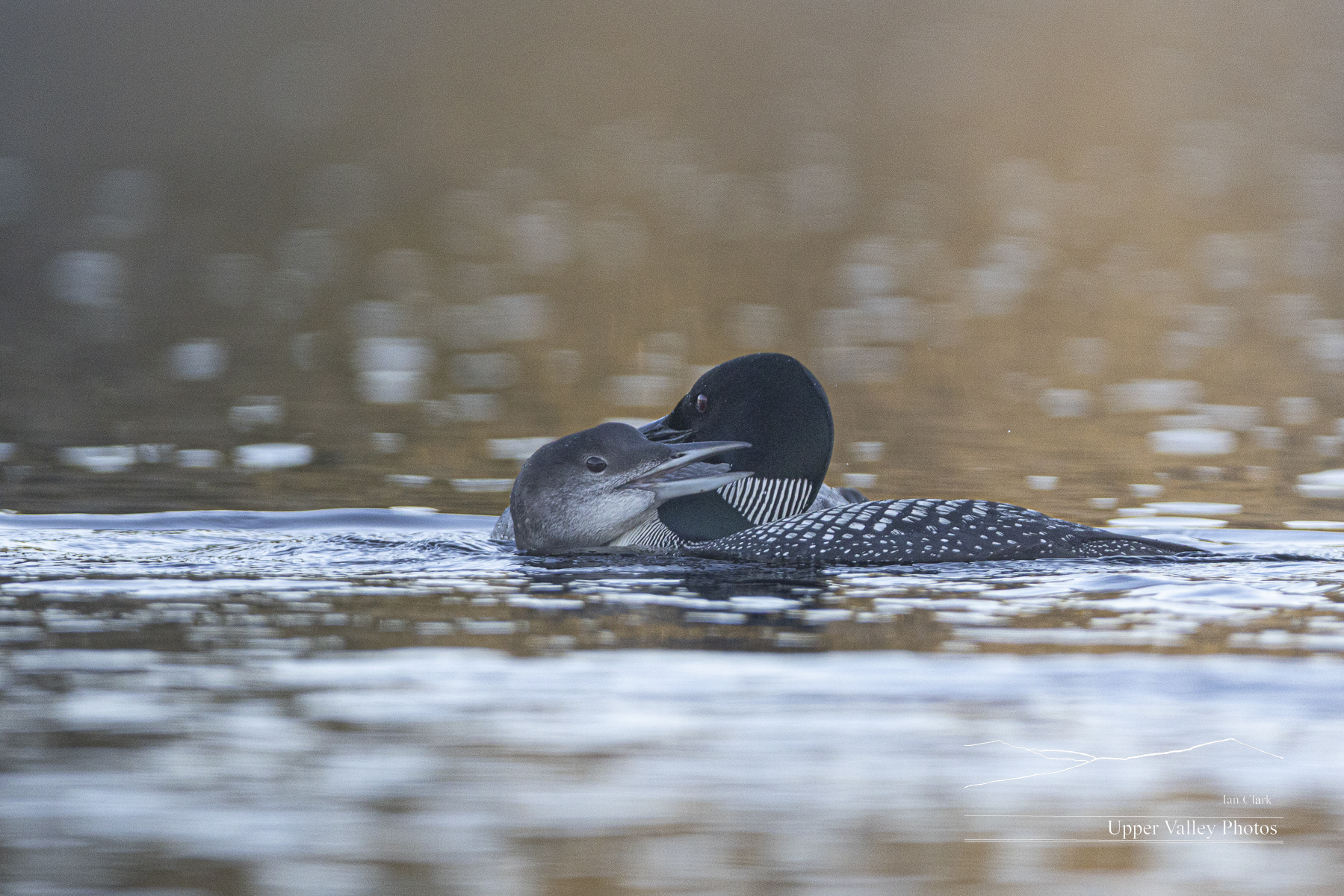
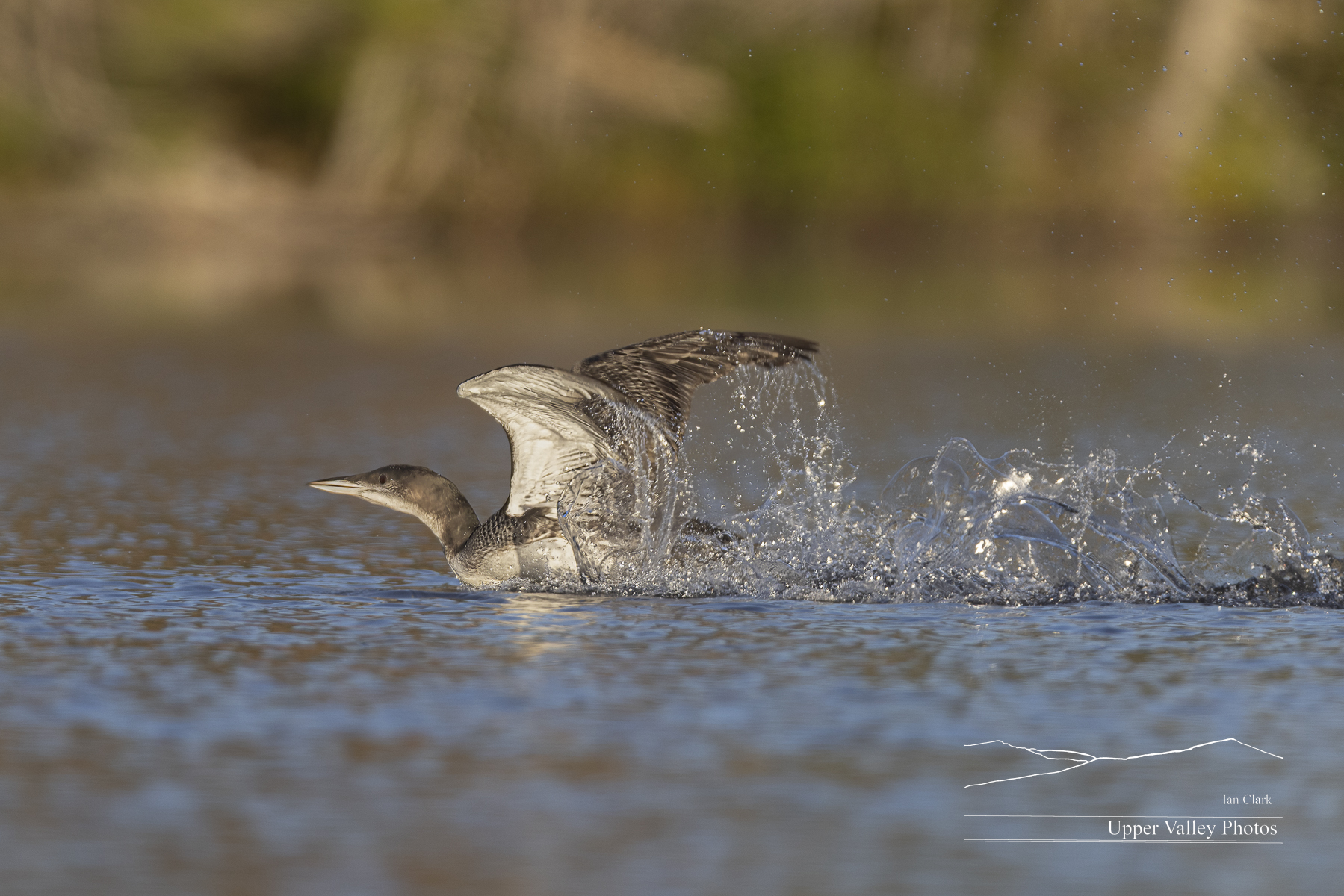
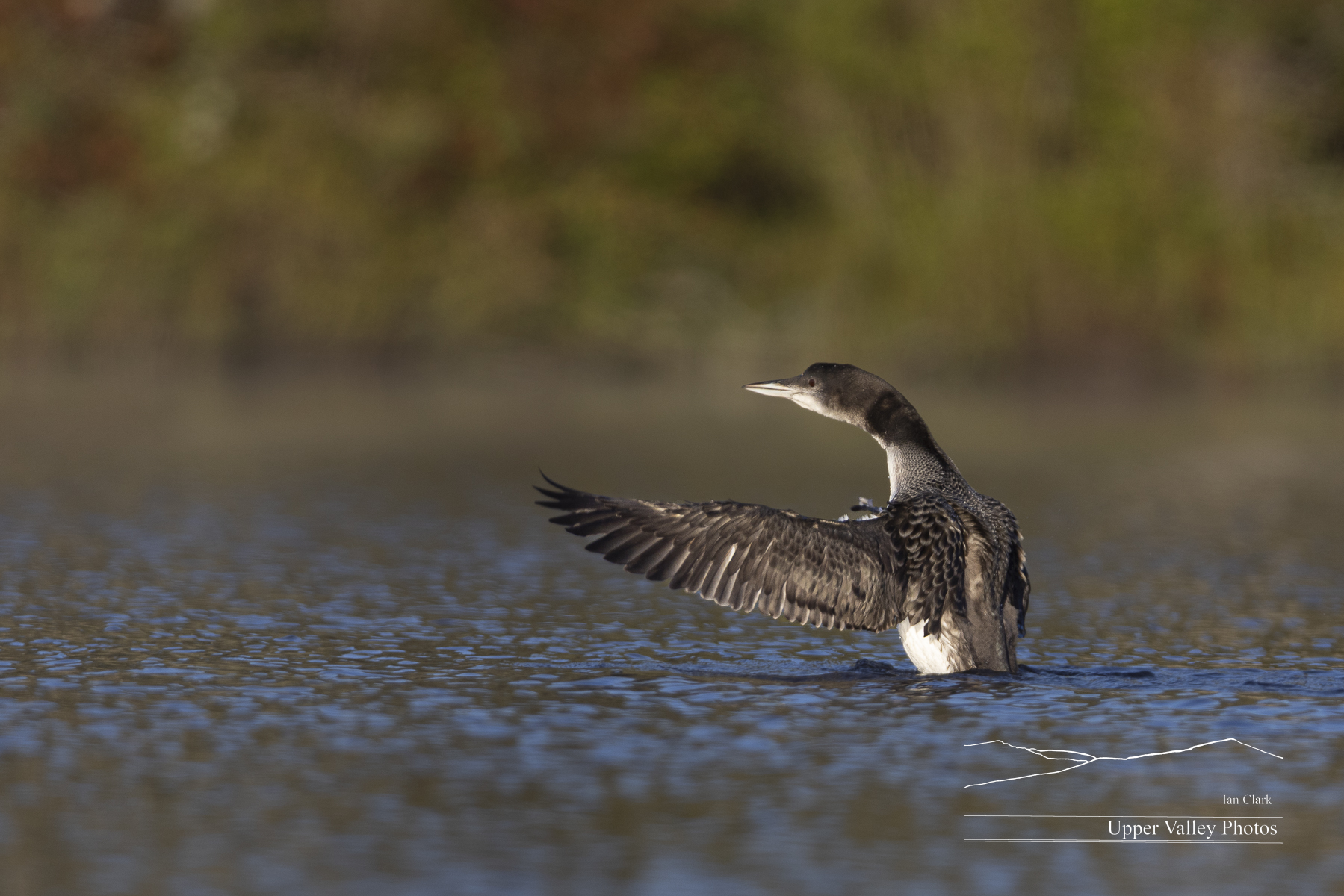
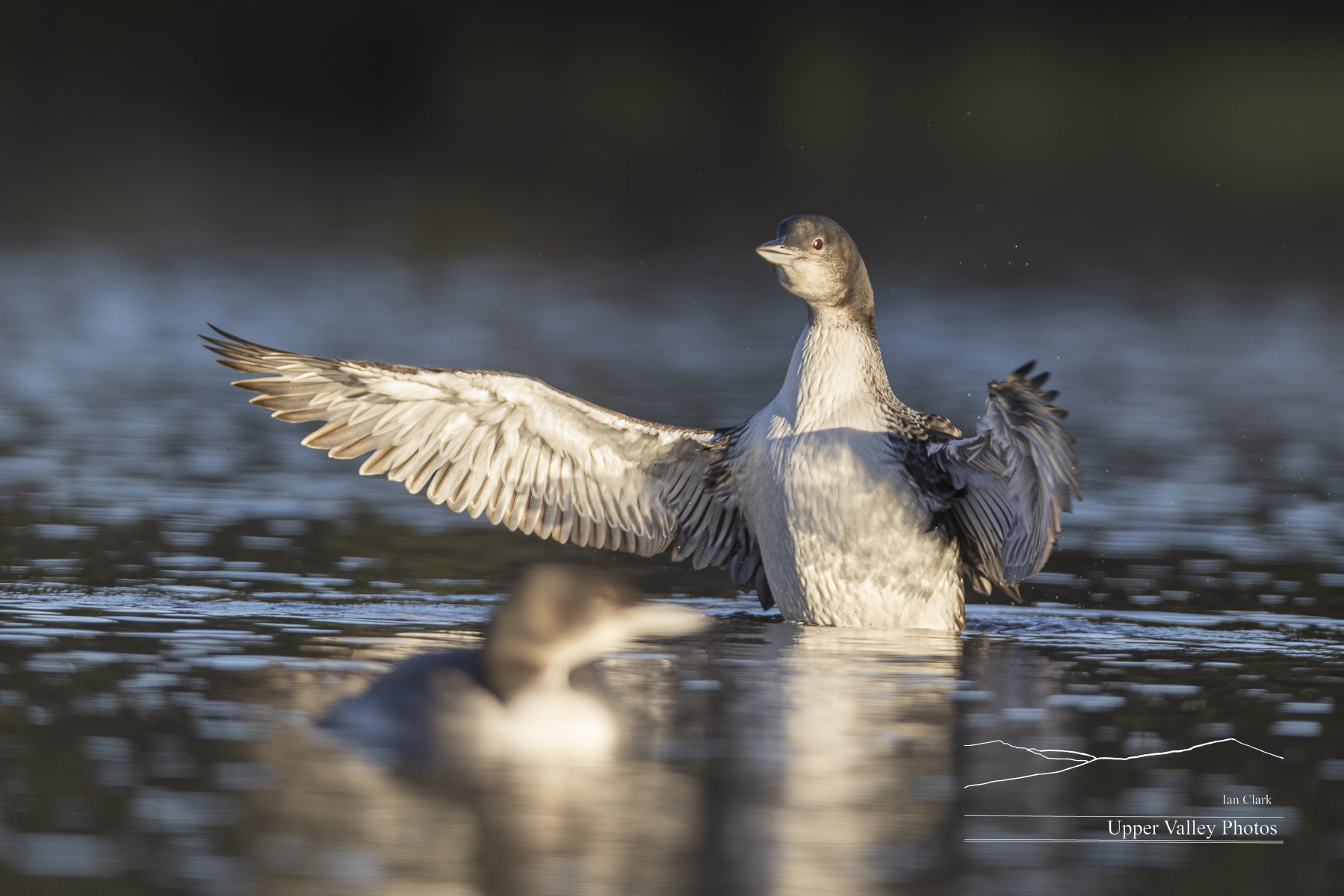
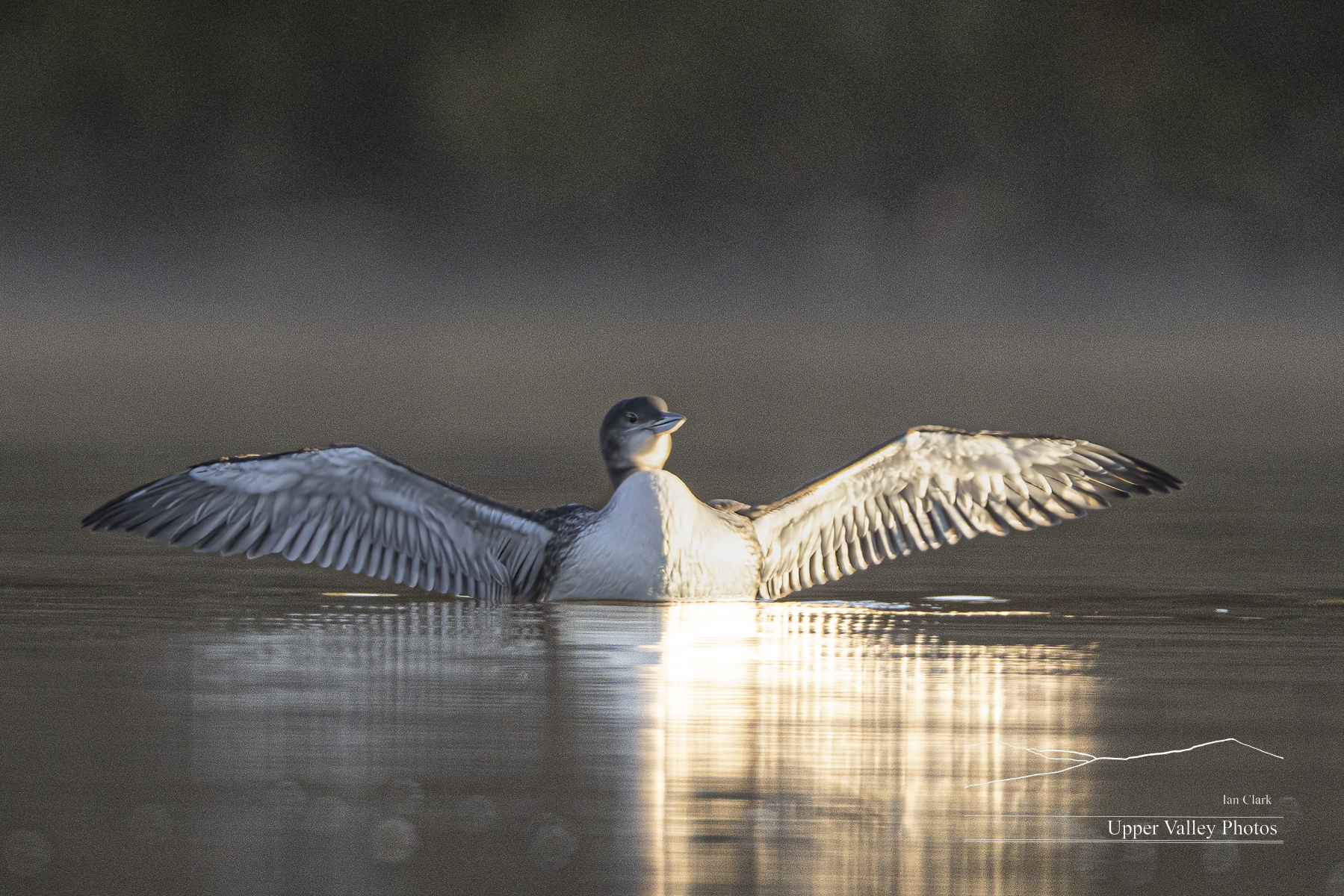
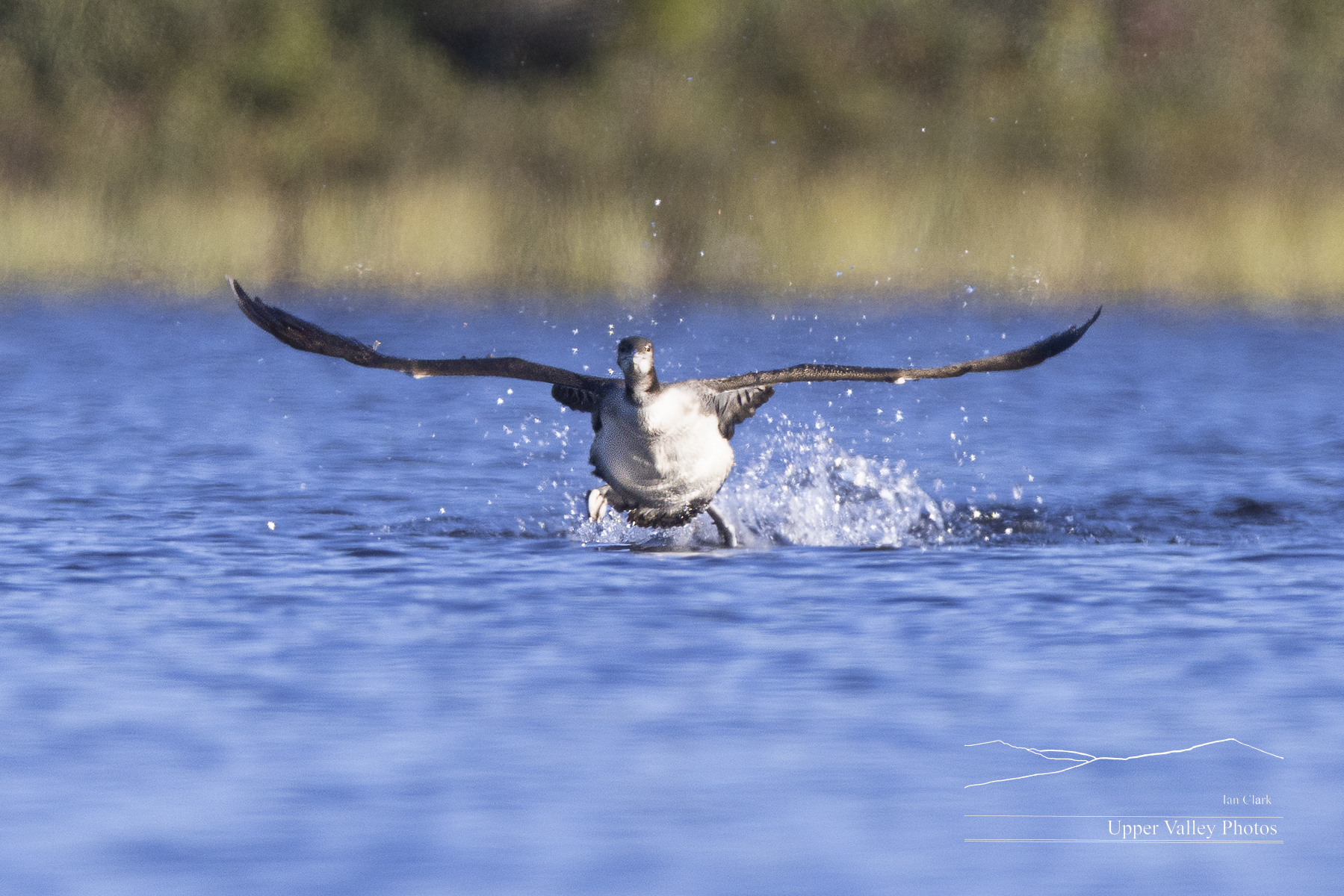
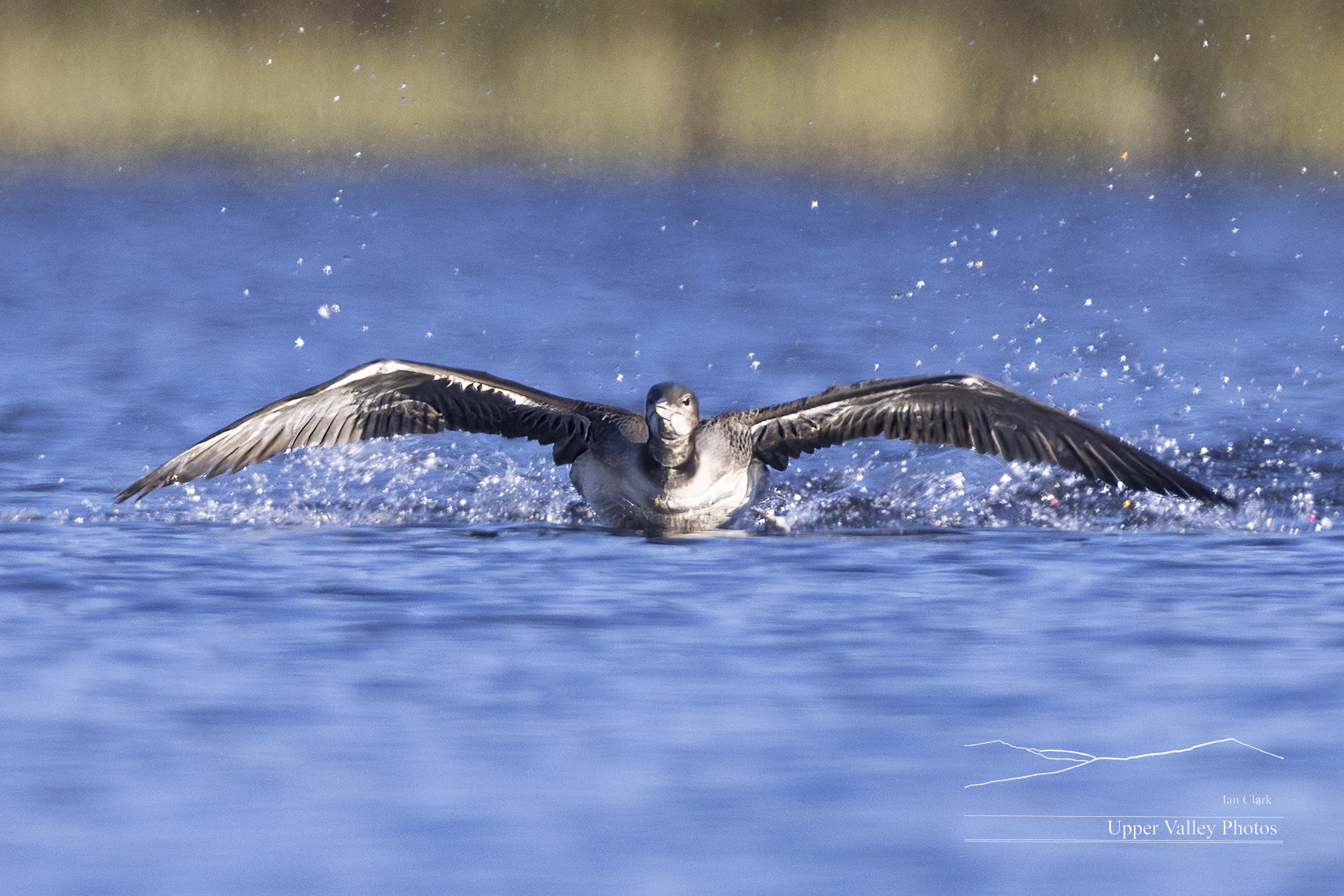
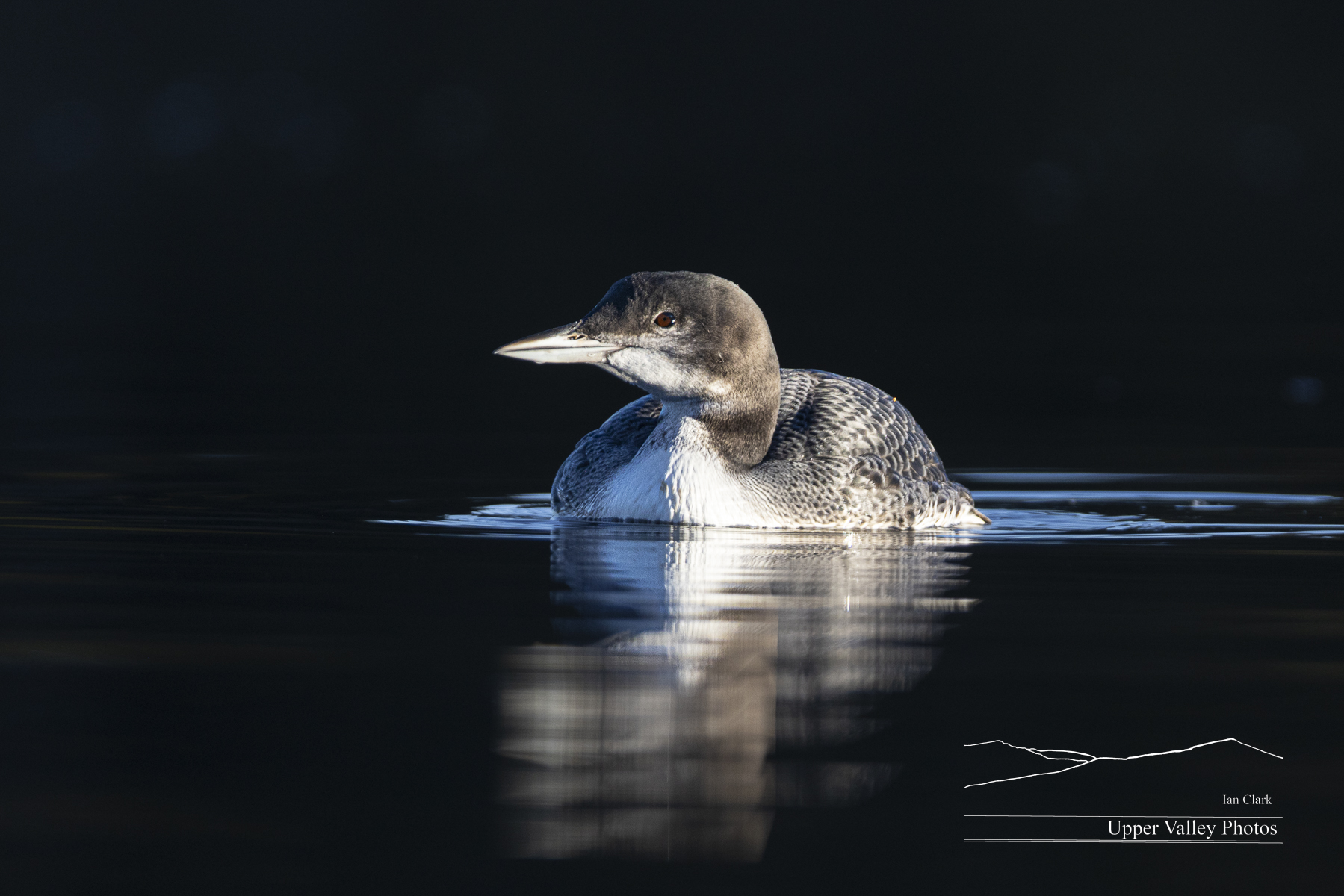
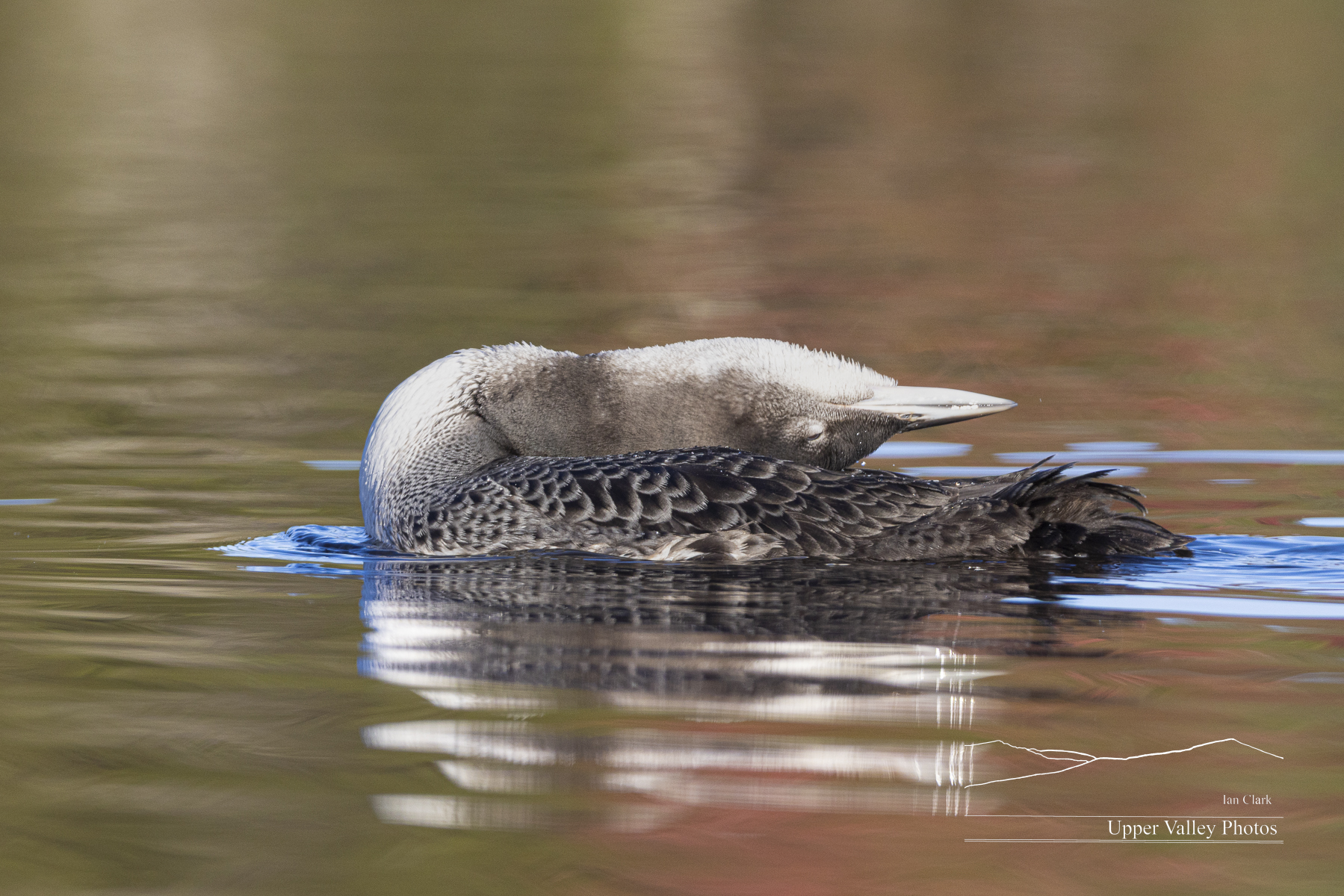
And she’s being chased by the challenger again. Loons will hit their opponent with the joint in their wing. Over several days, Mrs. E was caught and hit several times. The chicks grew quickly. The older chick grew faster than the sibling. Here he is with a meal he’s caught for himself. Being a loon chick is tiring business. We’re at the end of August now. The chicks didn’t attempt to fly while I was around until a week or 10 days after I expected. This is the bigger chick working his wings. Dad disappeared from the pond in late August. Late enough that he could have moved on. But, he too had faced a repeated challenger. With Dad gone, the chicks seemed to think it was my turn to feed them. When the chicks discovered I wasn’t going to feed them, they went back to working on Mom. Adolescent chicks are merciless about demanding food from their parents. They’ll hound the parents whenever the parent is close enough.This chick is just reminding Mom that he enjoys eating. By the second week of September, the chicks were determined to fly. He didn’t get airborne on that attempt, but it required a celebratory stretch anyways. On another morning, warming up to try for another attempt at flying. Showing off his wings. Making another run at it. He managed to get airborne for a few feet this time. Before settling back down for a smooth landing. He seems to want to make sure I’d caught all that. With adult feathers nearly grown in, chicks have to spend more time preening to keep them in shape.
The last meal I saw Mom deliver. This was September 25. The latest I’ve seen an adult on this pond was October 7, she likely left shortly after this was taken. My last shot of the chick. This was October 18. It was 24° when I put the boat in. I assumed the chick would be moving on shortly. With the warmer weather, I wonder how long he stuck around. If we get a couple nice days, I may try to get back for one last visit.
So, one chick for the Westons, none for the Middletons and two for the Eastons. Last time I checked the stats, New Hampshire had a survival rate of .51 chicks per territorial pair, Vermont has averaged something like .75 chicks per territorial pair. That puts this year right at the average for New Hampshire.
I’ll close with a plug for both Loon Preservation Committee and the Vermont Center for Ecostudies. Both organizations are doing great work helping the loons. If you donate to wildlife organizations, please consider supporting them.