Posts in Category: Wildlife Photography

Tips and advice for getting great wildlife photos
An Update on the Loons’ Ponds

The weather has kept me from getting out the last few days. The Westons should have chicks by now, the Middletons are due momentarily and the Eastons will be on their nest another couple weeks. Let’s see what else has been happening.

The Tenney Memorial Library will host me for my slideshow, An Uncommon Look at the Common Loon on Sunday, June 23, at 2:00 p.m. Free and open to the public.

Before we get to the ponds, take a look at what my game camera caught. This camera was set up in my blind watching one one of the fox dens. Guess I’m glad I took that morning off.

There’s less activity around the ponds. Most songbirds are on their nests or feeding chicks and not out and about to be photographed.
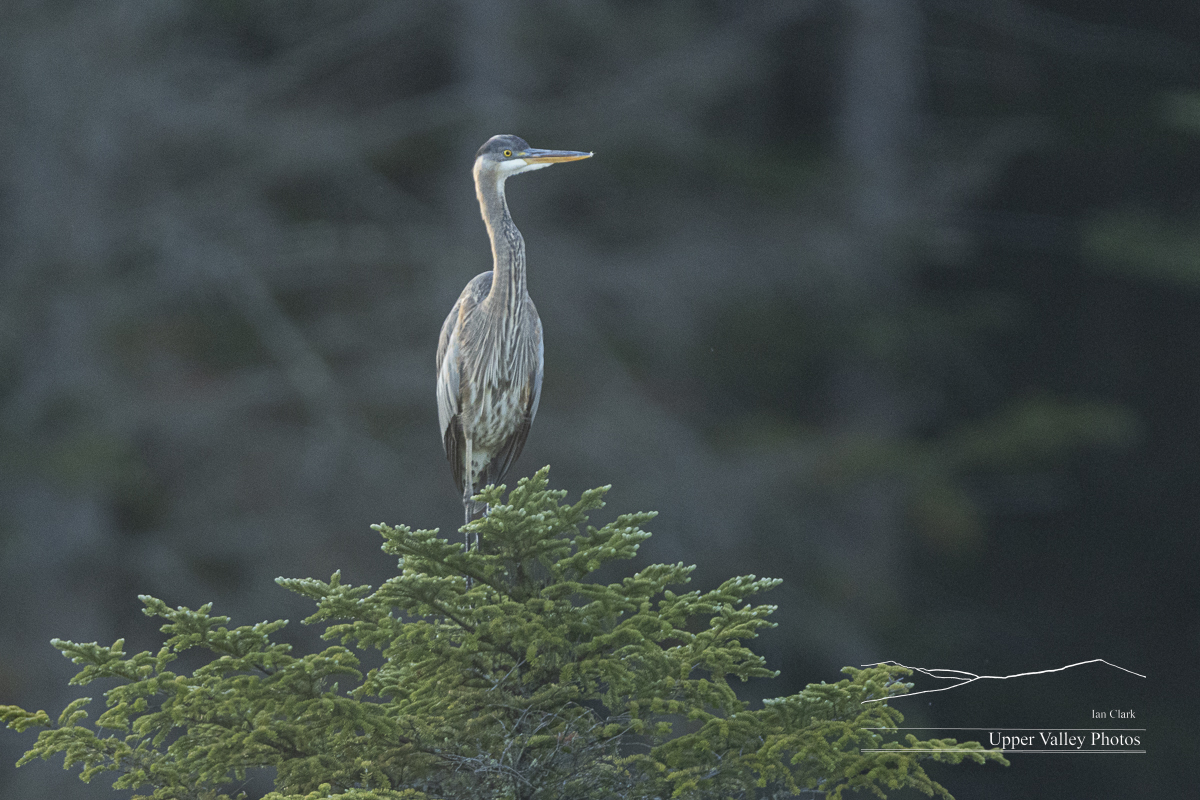
great blue heron perched on a tree
The great blue heron couple has returned to the Easton’s pond. This is the pair that is fairly skittish, but show up to give me two or three great photo ops for the year.
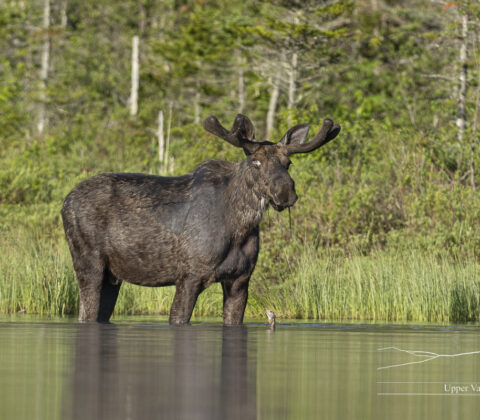
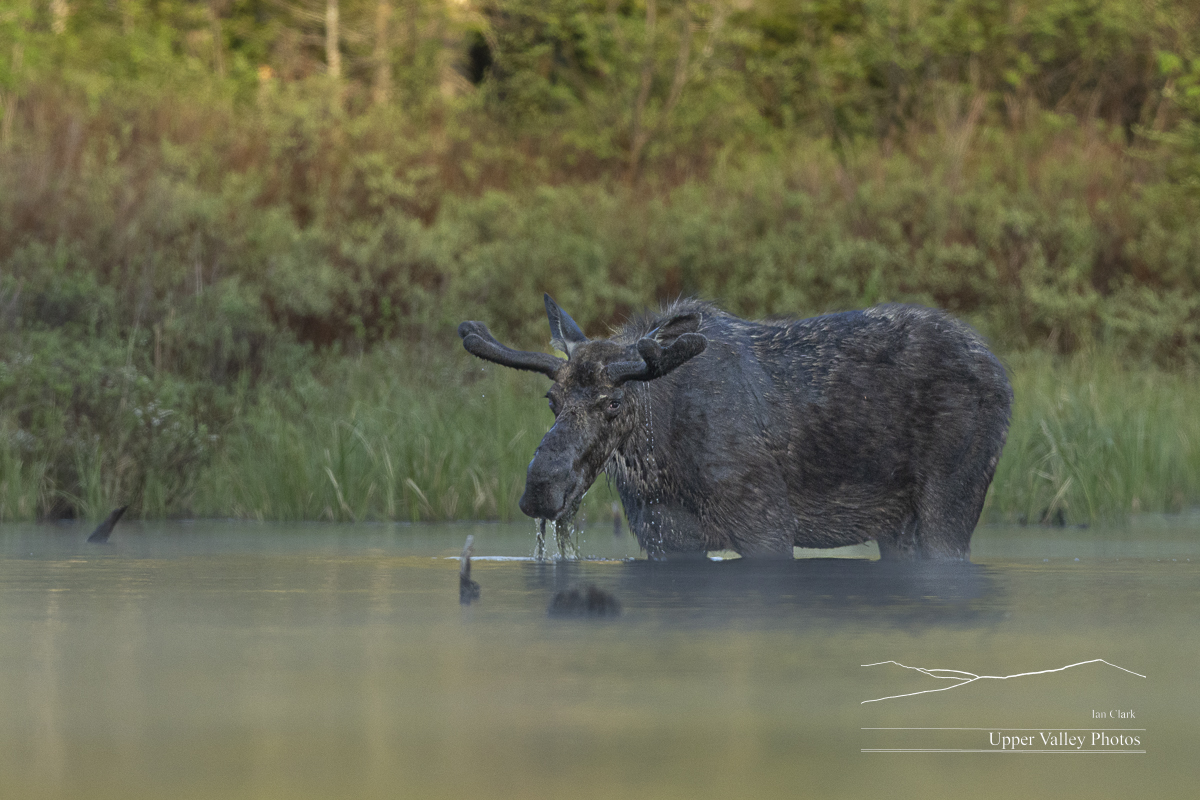
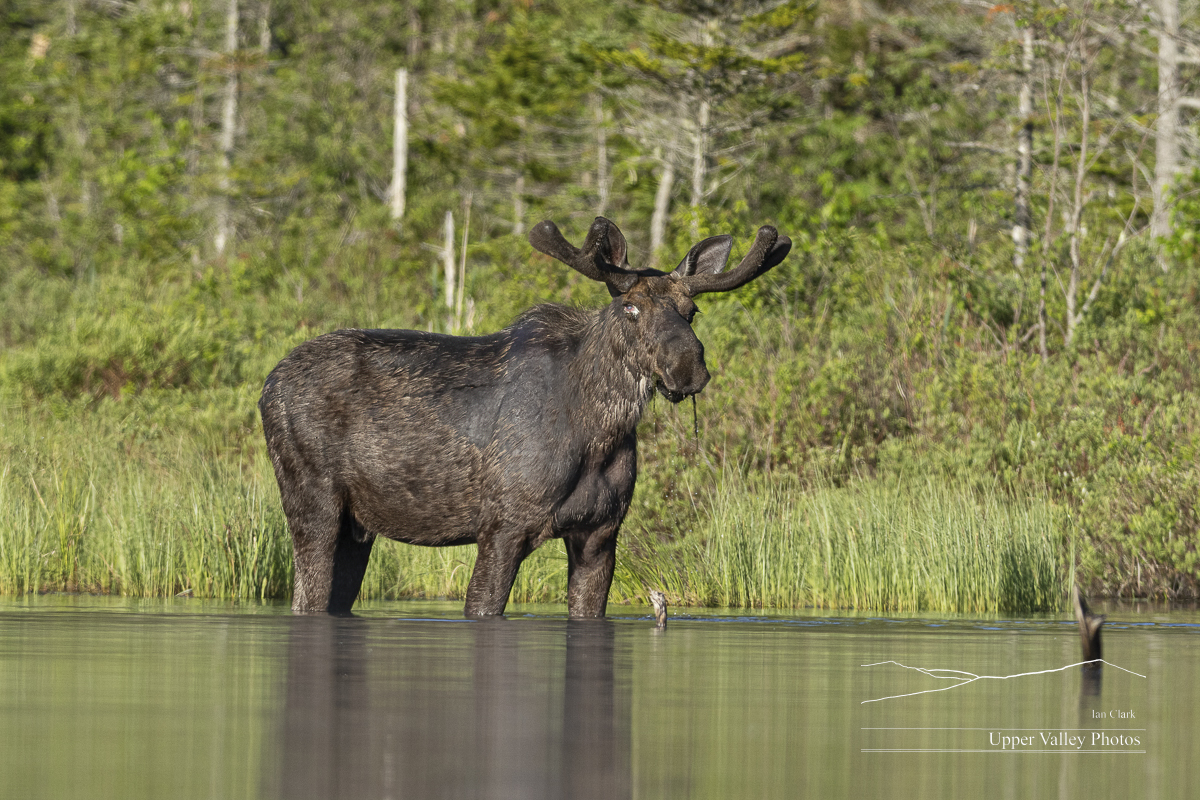
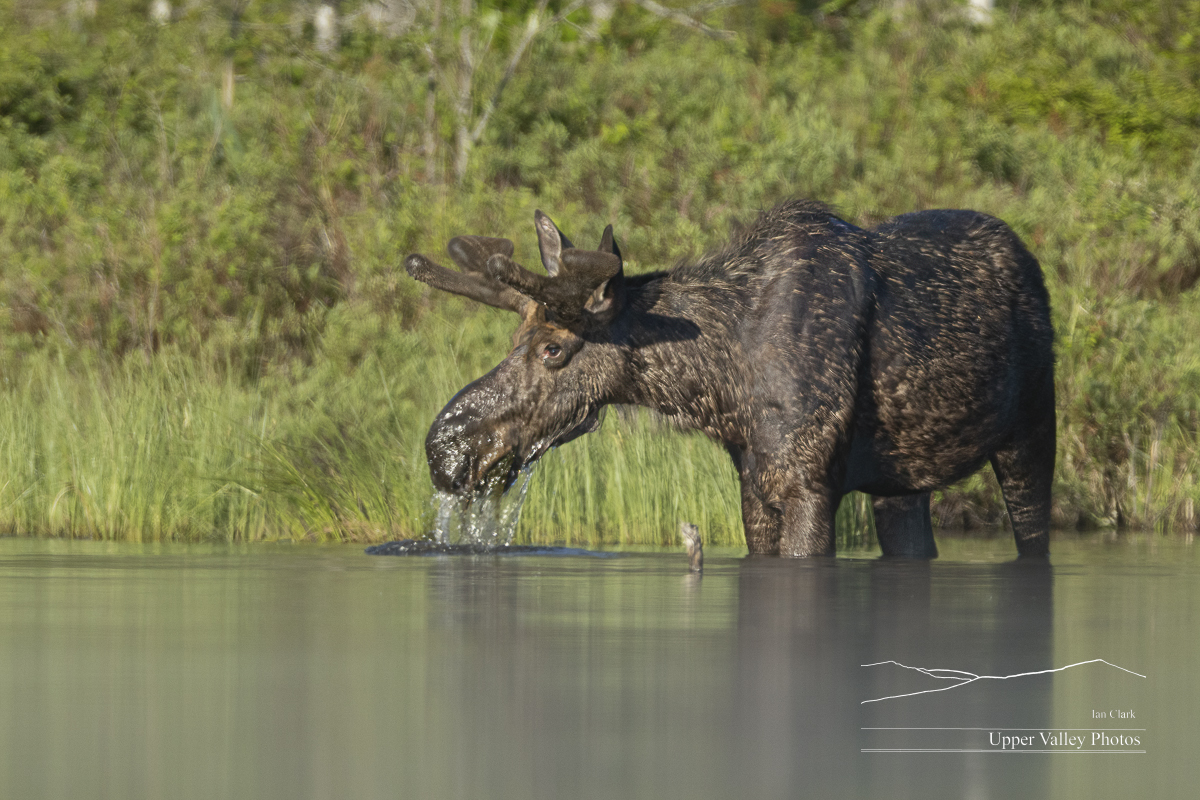
Bull moose feeding in shallow water
The highlight of my recent trips was this bull moose. He’s been in the area for several days. Usually he browses until just before the sun hits him. When he’s in danger of being nicely lit, he retreats to the woods. This time, he spent about 40 minutes browsing in bright sunlight. I may have taken more than one photo…..
Bull moose feeding in shallow water
Nice to see a good-sized bull in sunlight.
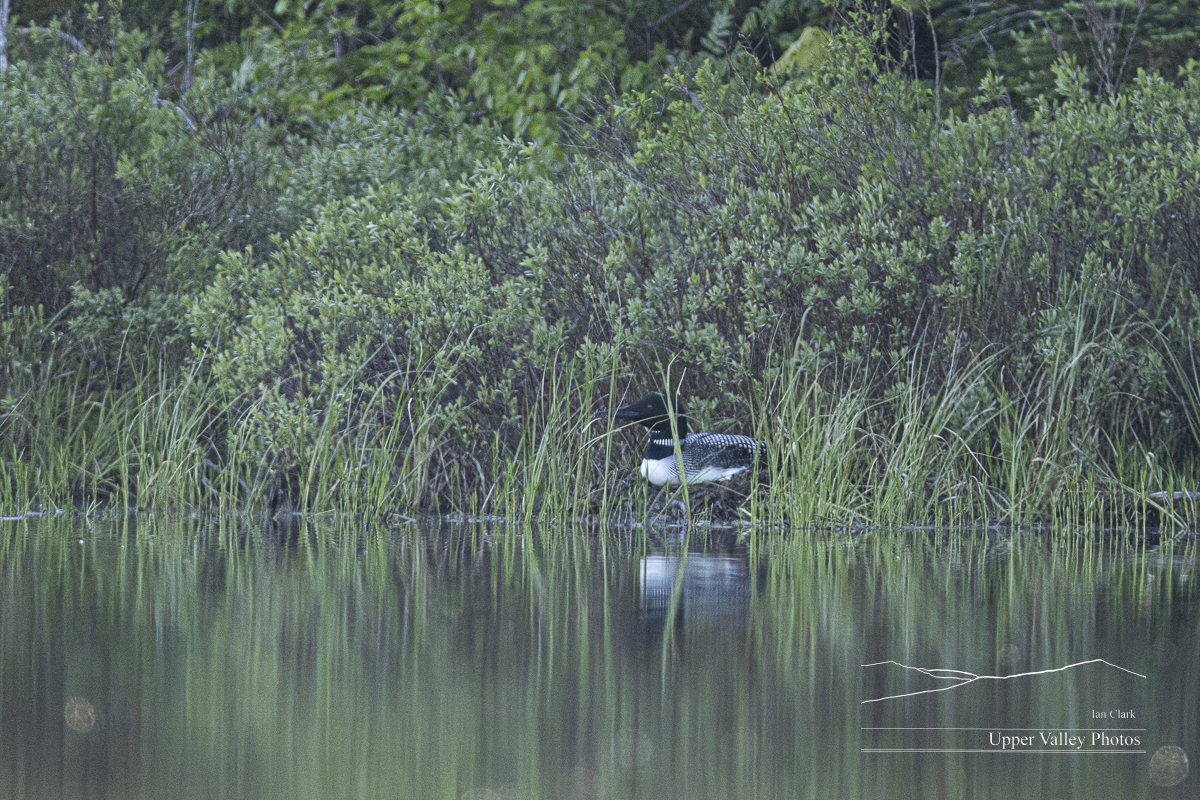
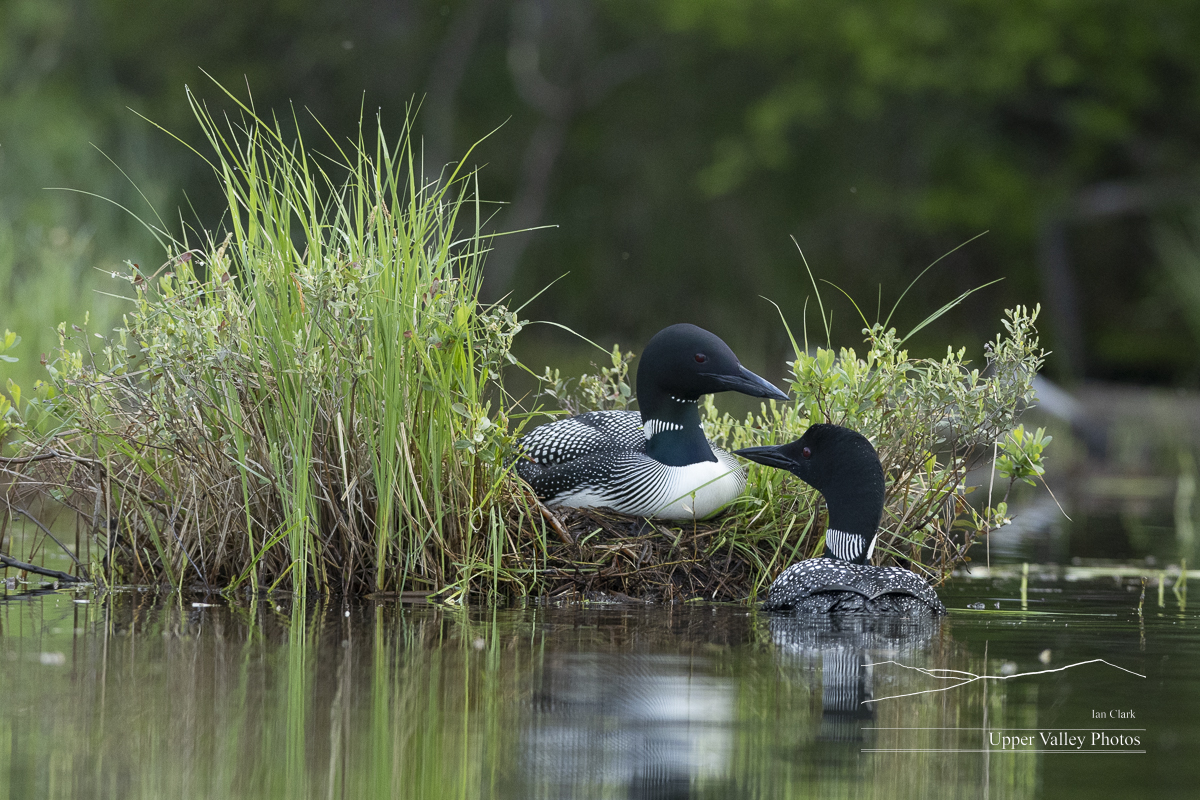
common loon sitting on nest
The Eastons have selected a new nest site – last year’s is just above water level this year. They’re in deep shadow all morning, guess I’ll have to get back a couple afternoons.

The resident osprey was interested in fishing in the relatively shallow water near the loons’ nest. The off-duty loon seemed to be moving out of the way for the osprey to dive. Professional courtesy or just not wanting to be nearby when the osprey dove? The osprey finally caught breakfast well down the pond.
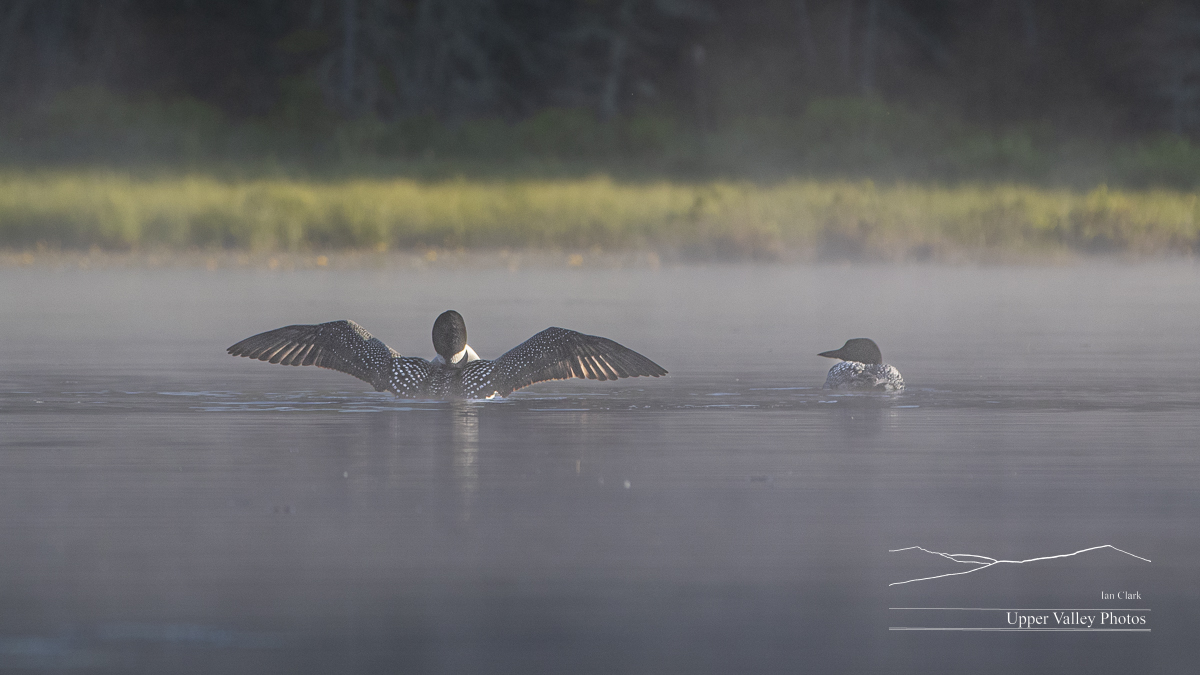
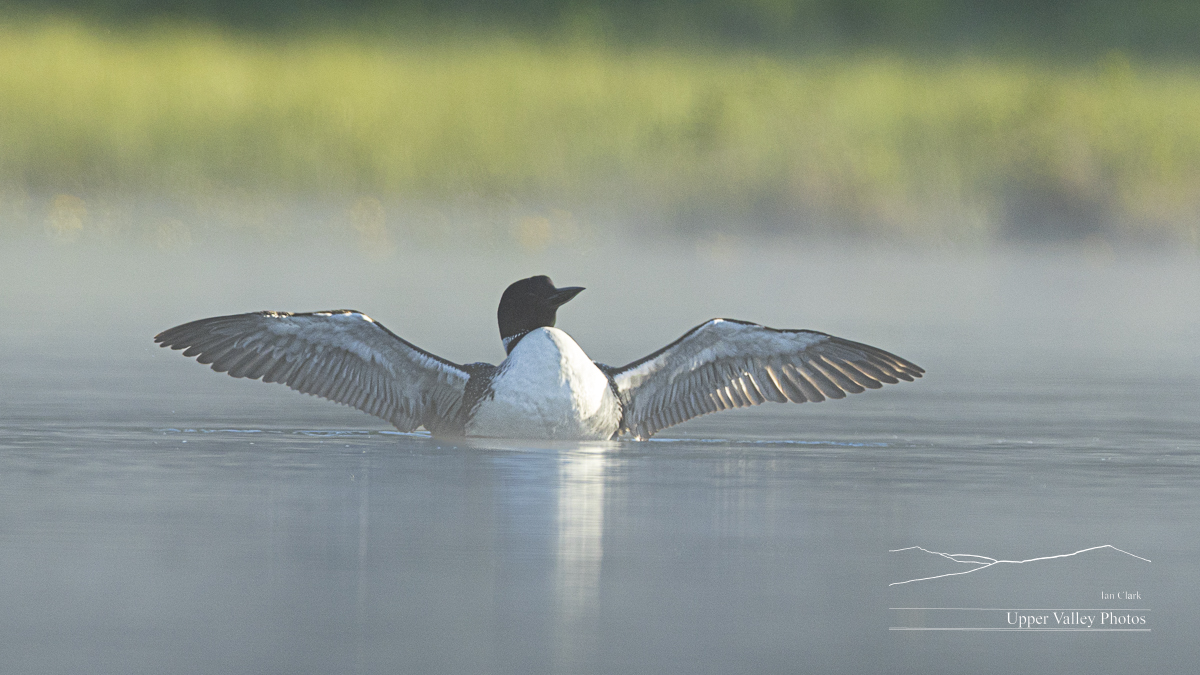
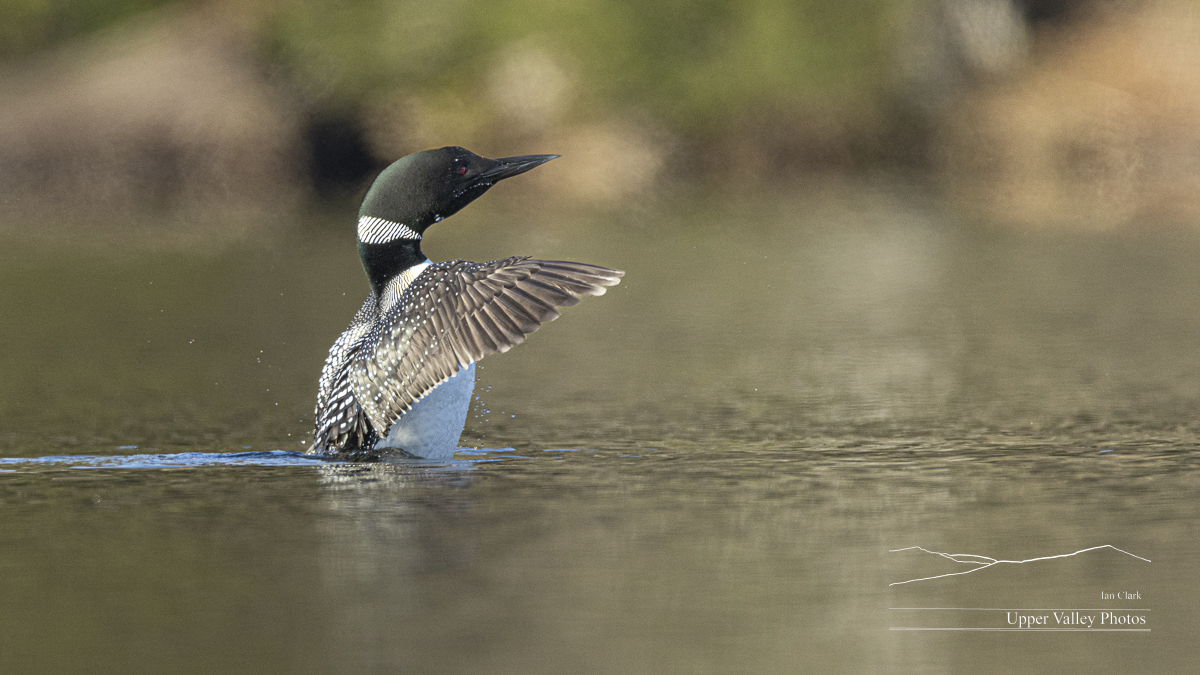
Common loon stretching on a foggy morning
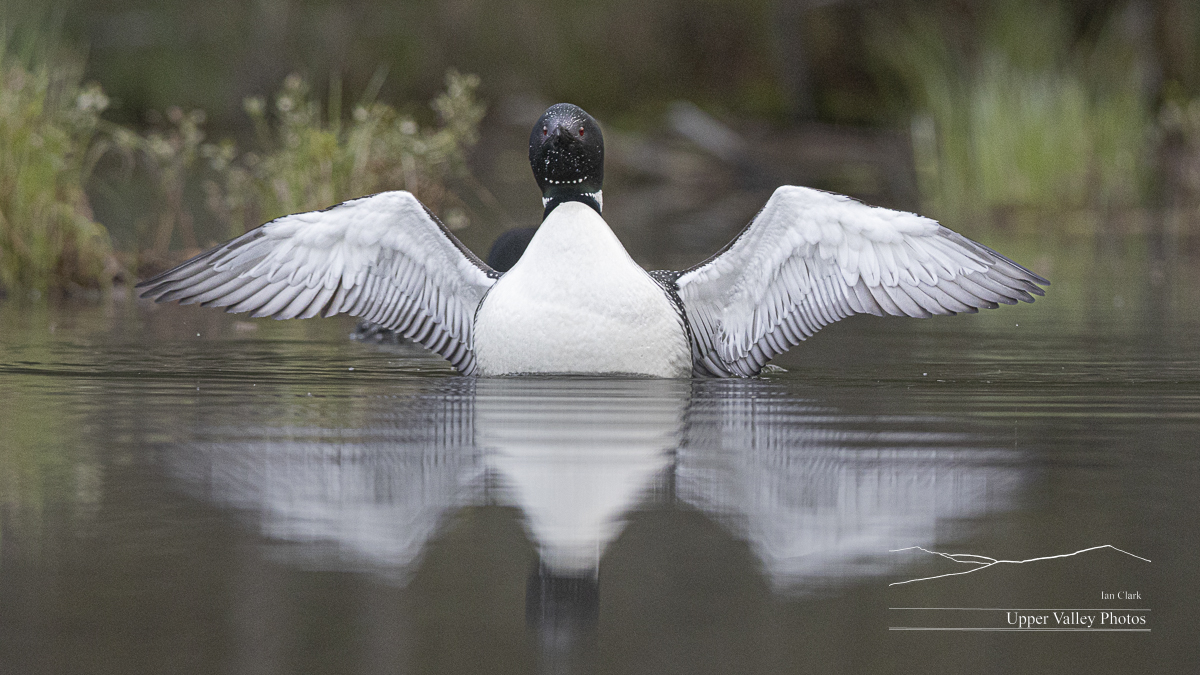
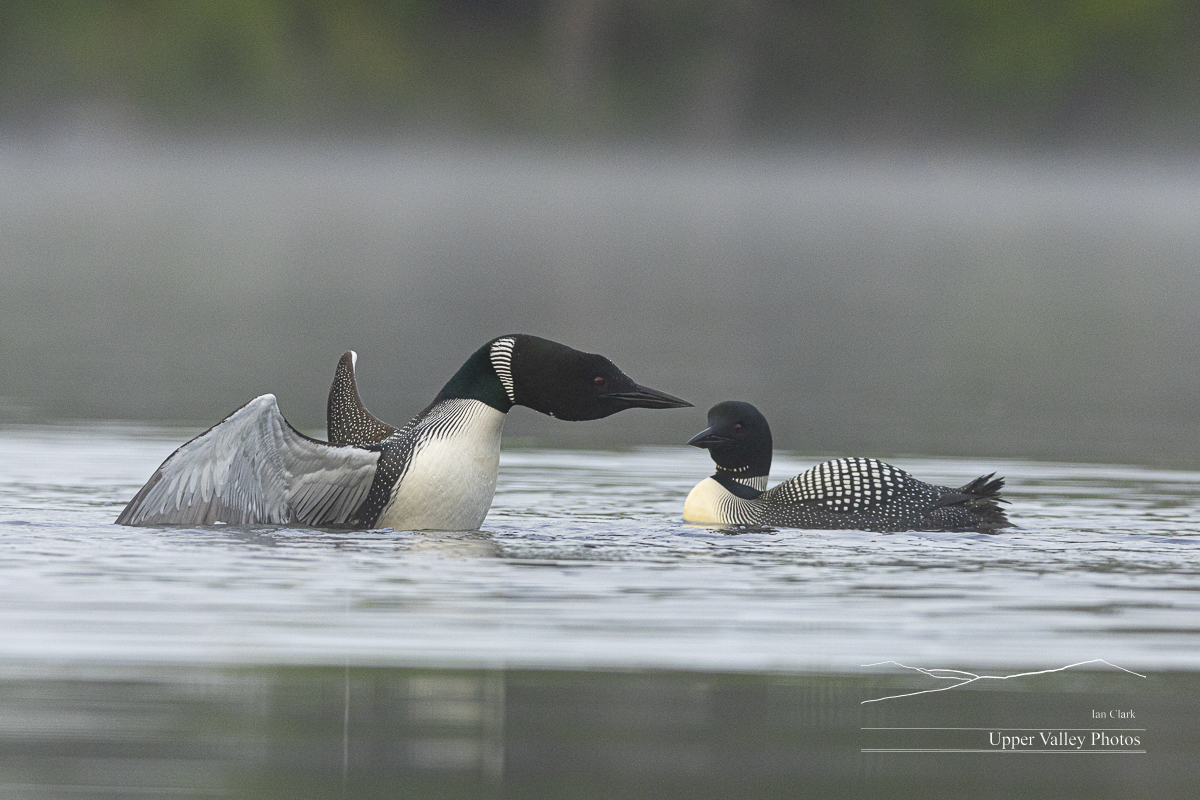
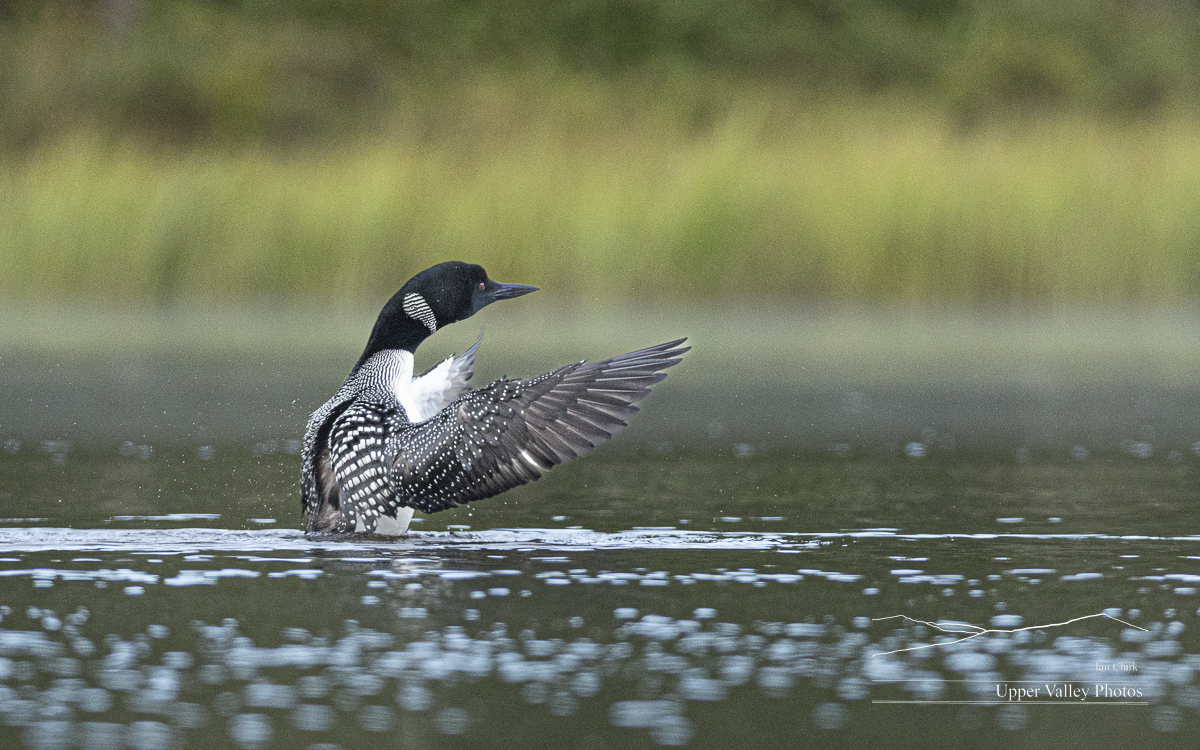
A check on the Westons found one loon settled on the nest and the other just hanging around. The highlight of the morning was a couple nice wing stretches.
common loon stretching on a foggy morning
Another nice stretch.
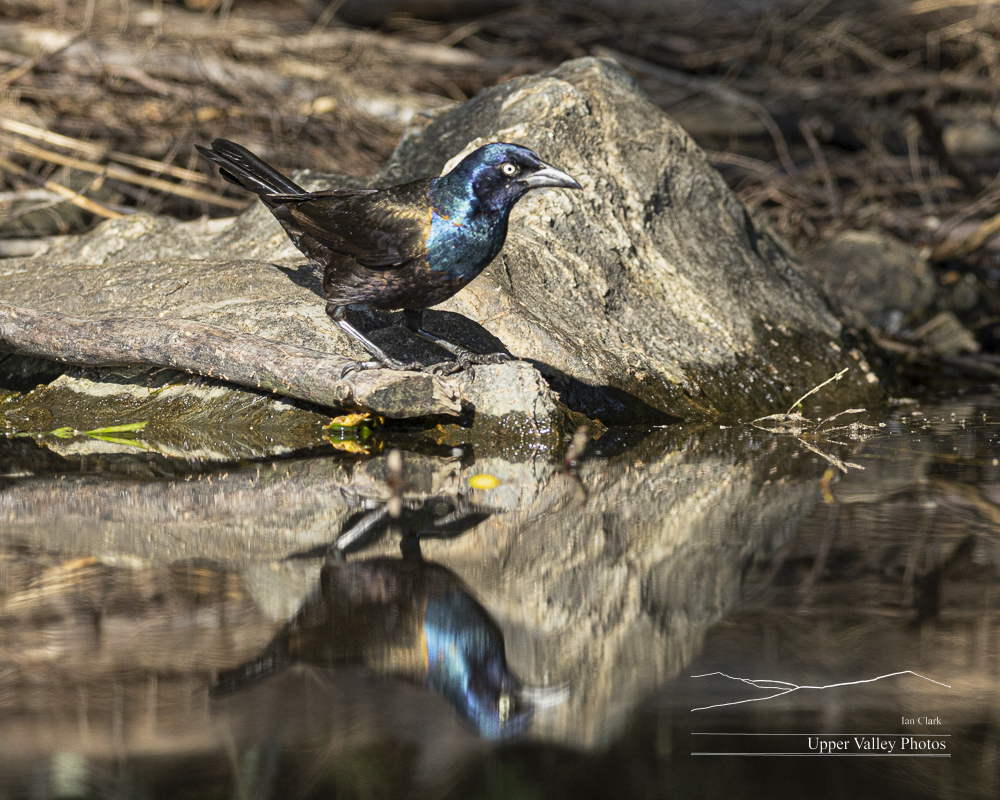
common grackle reflecting on a pond as it forages
It was such a beautiful spring morning, even the grackles looked good.
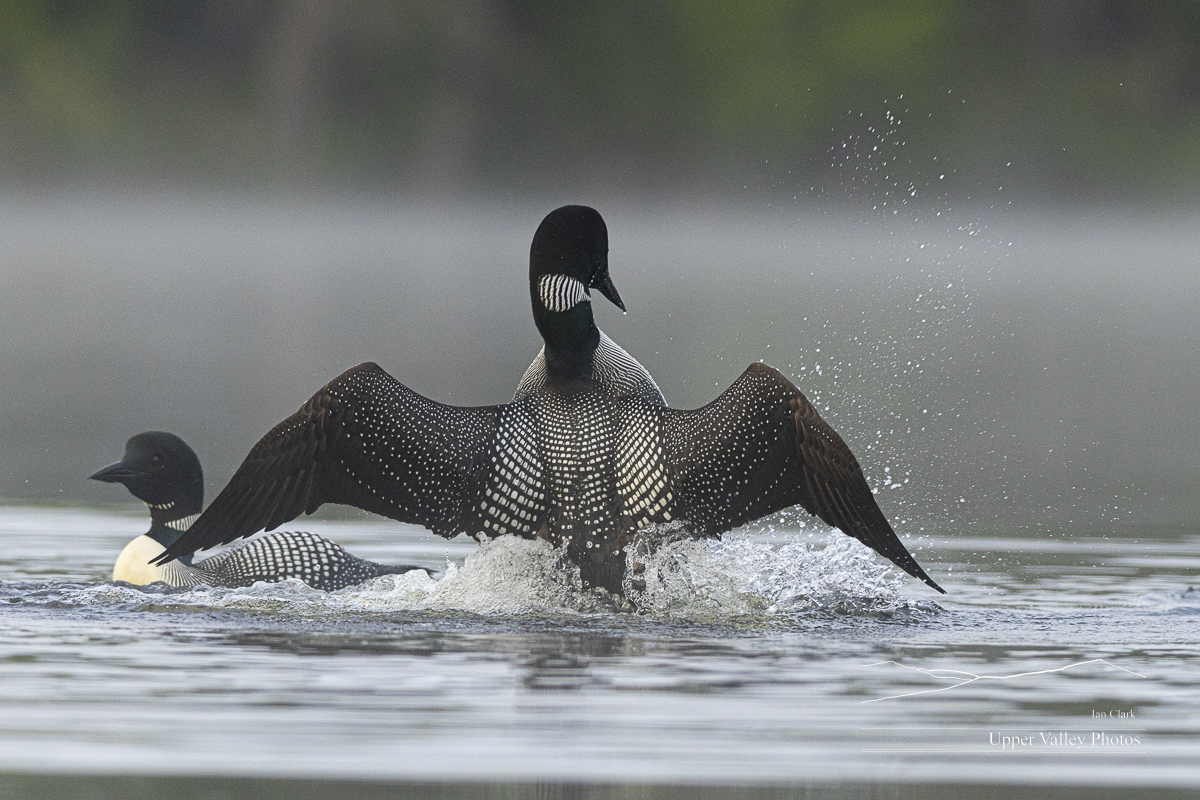
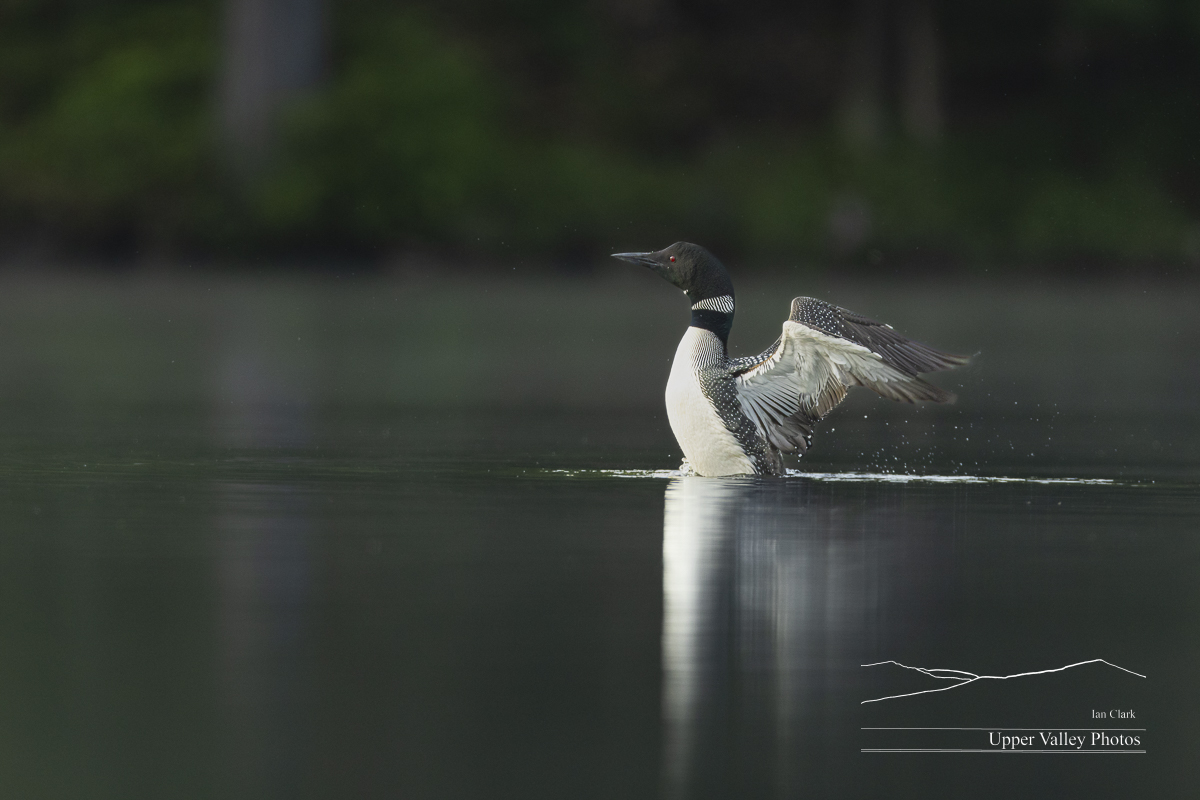
Common loon stretching  wings
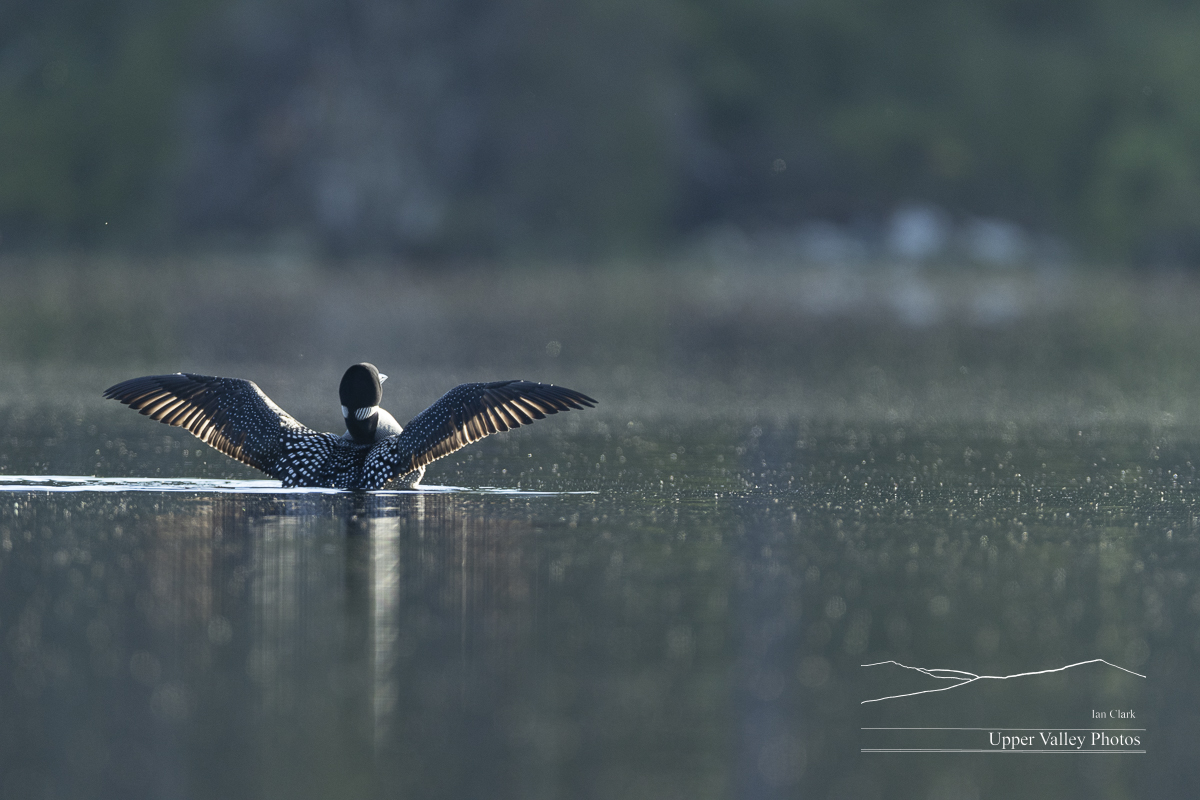
A visit to the Middletons found one loon on the nest, the other lazily cruising the pond, eventually giving a good wing stretch.
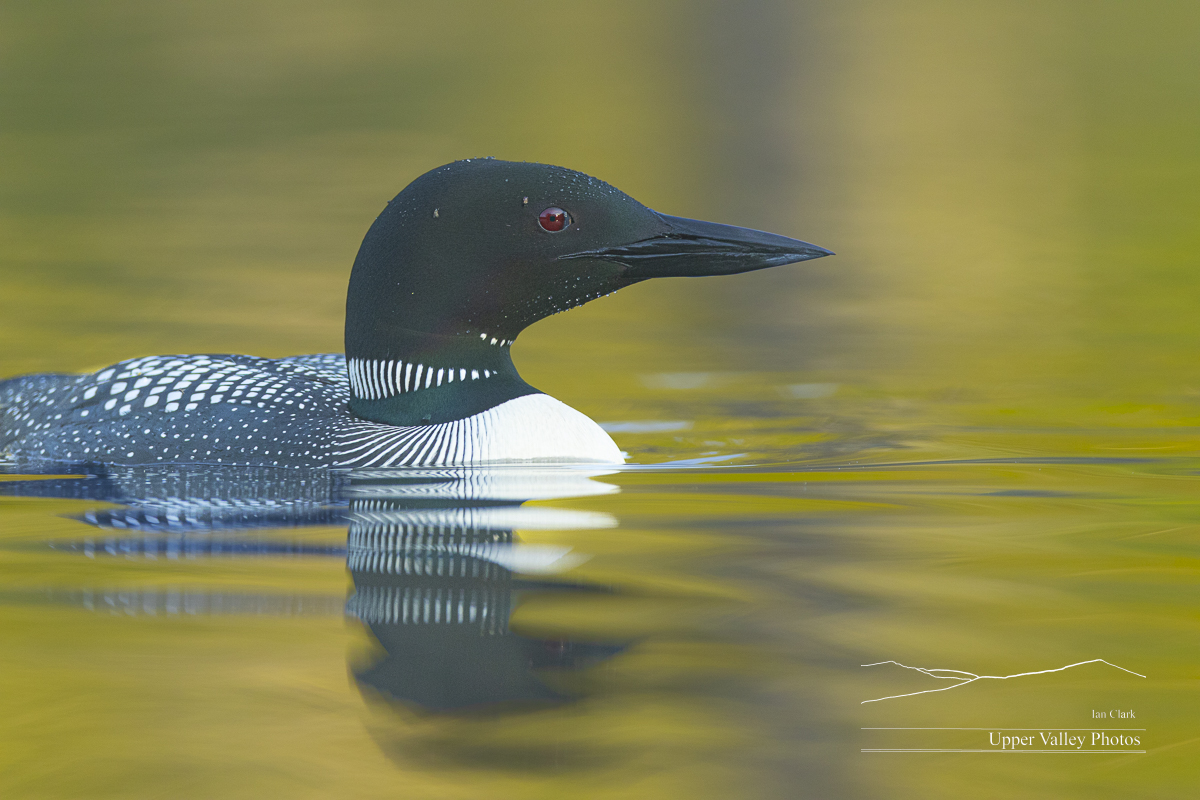
Common loon swimming  on a pond
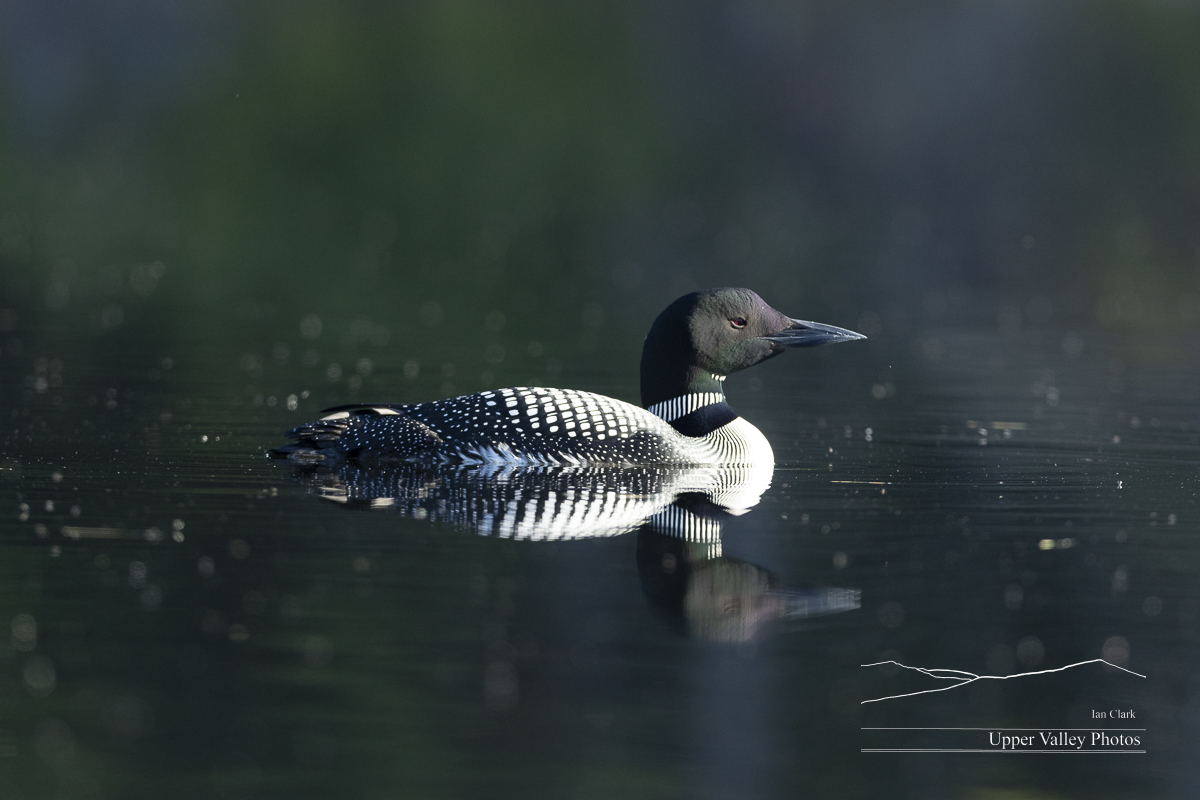
And a nice low-key shot as our loon cruised along the pond.

I’ll be out to check on the chicks as soon as the weather breaks. Check back soon to see how they’re doing.
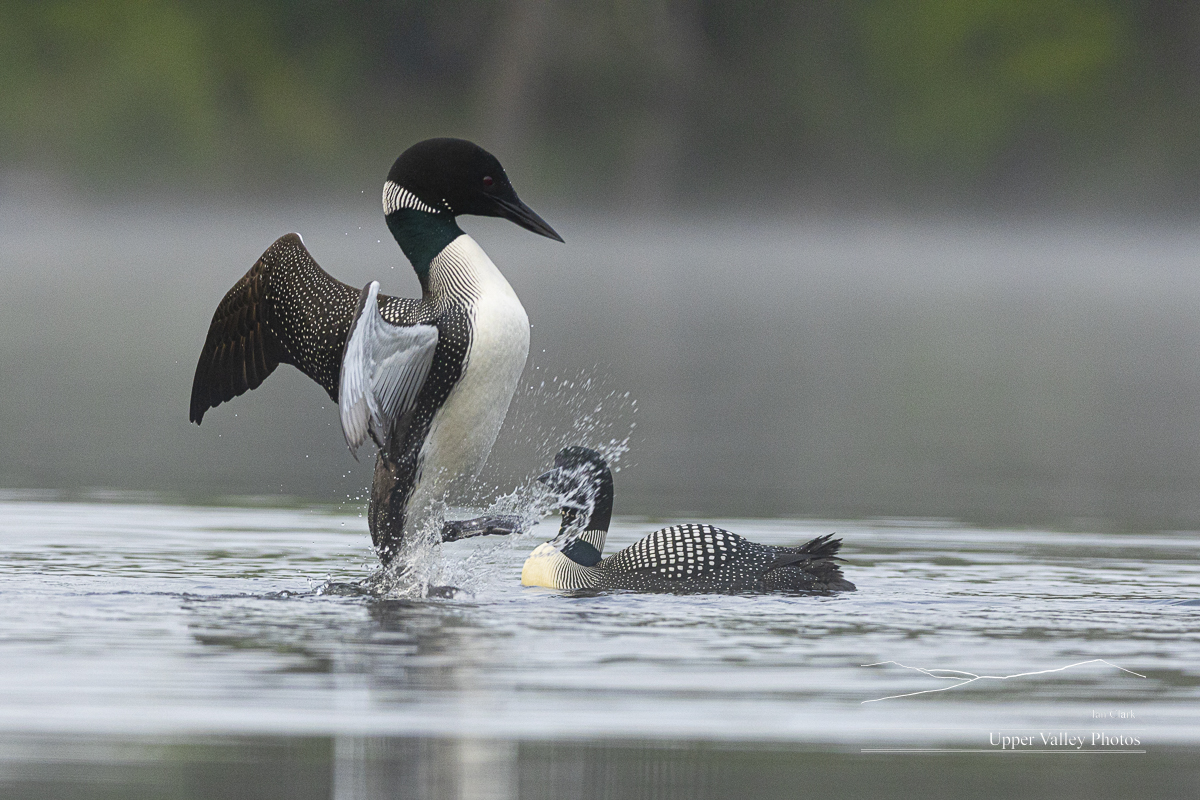
Catching Up with Life on the Ponds

With all the nice weather, I’ve had lots of time to shoot – but that leaves little for posting. One set of fox kits has moved on, the other den is surrounded by grass tall enough that the kits appear only at the top of their pounces. Let’s check in on our three loon families and their neighbors.

I’ll be giving my slideshow, An Uncommon Look at the Common Loon, locally a couple times in the near future. First is Thursday May 30 at 7:00 p.m. at the Lyme, NH, School. Then again on Sunday June 23 at 2:00 p.m. at the Tenney Memorial Library in Newbury, VT.

The Westons are sitting on at least one egg. Their nest is deep in the marsh, updates will have to wait until the chicks appear. (If you’re new to my blog, to protect the loons’ privacy, the families are the Eastons, Middletons and Westons, by the location of their ponds.)

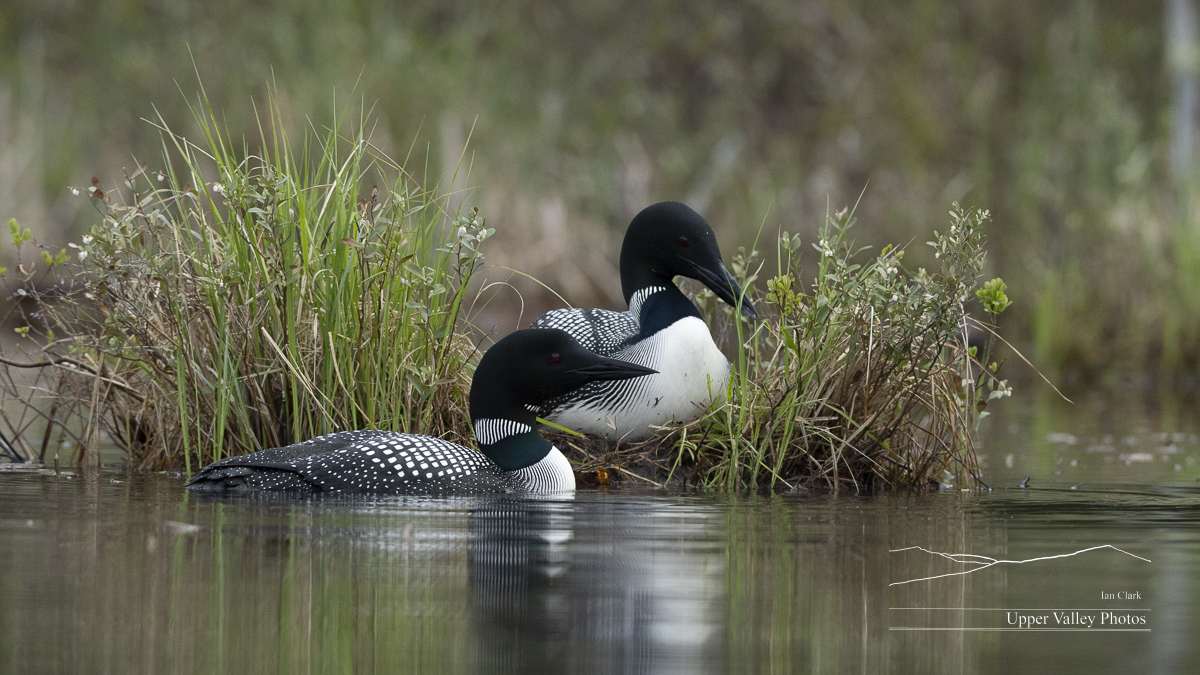
The hummock the Middletons have used for their nest the past couple years washed away in last July’s heavy rain. They toured the pond checking out potential nest sites before settling on a hummock just a few feet from the previous site. Here, they’re taking turns sitting on the site to decide if it will work.

Taking a quick break from inspecting nesting sites.

Back to checking the site. They decided this was the spot and she climbed up and he followed to mate.

Afterwards, they headed off for breakfast, preening and a nice stretch.

Another nice stretch.

The first of the red-winged blackbird chicks must have hatched, the parents were foraging and returning to the tall grass with food.

There are several spotted sandpipers around the pond.

The sandpipers are fun to watch. As they forage, they bob their butts up and down. I haven’t seen a good explanation why.

And beautiful spring mornings bring the painted turtles out to bask.

I returned the next morning, just to find the loons had decided to sleep in.

While waiting for the loons to get up and at it. our friendly neighborhood beaver swam by to give me a
wave.
The beaver went about getting some breakfast of underwater plants and sitting on the shore to eat them.

downy woodpecker with a grub
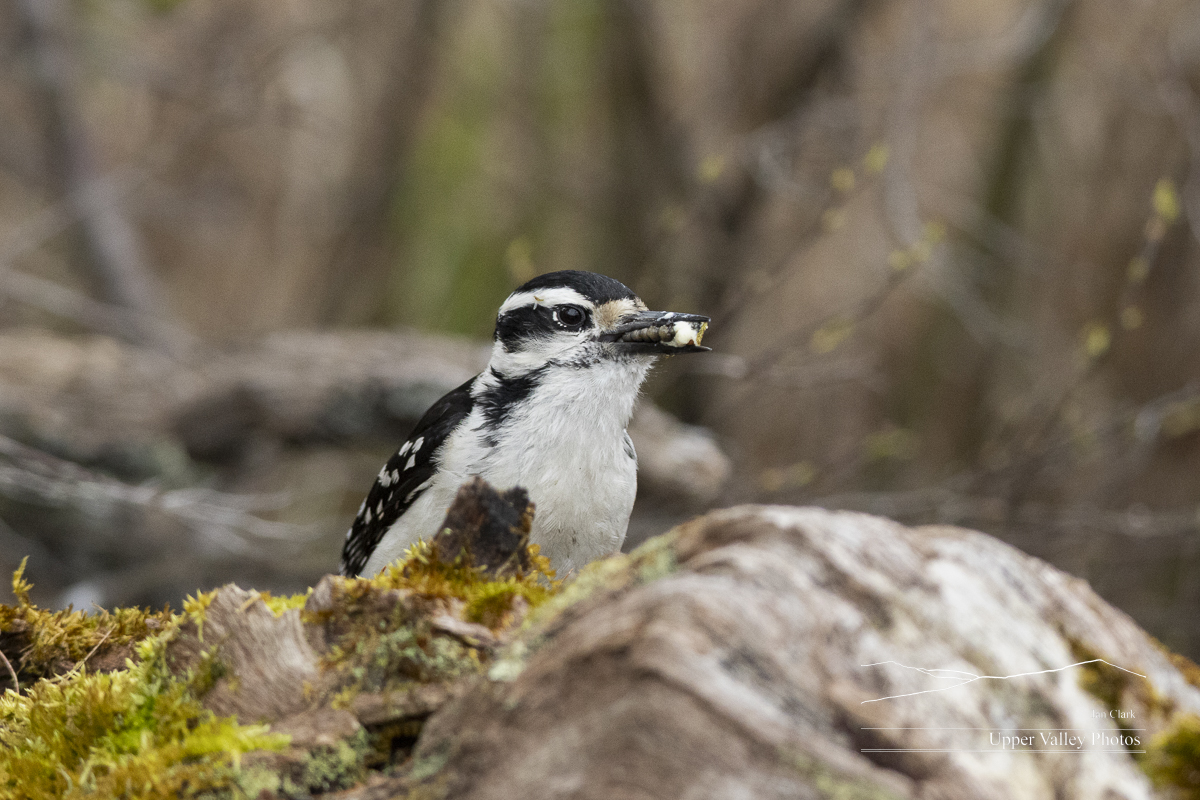
There was a hairy woodpecker foraging on a downed tree along the shore. She found several tasty grubs.
Common loon stretching
Eventually our loons got going with their day.
common loons on the nest
They returned to the nest site for one last check……
common loon gathering nesting materials to build a nest
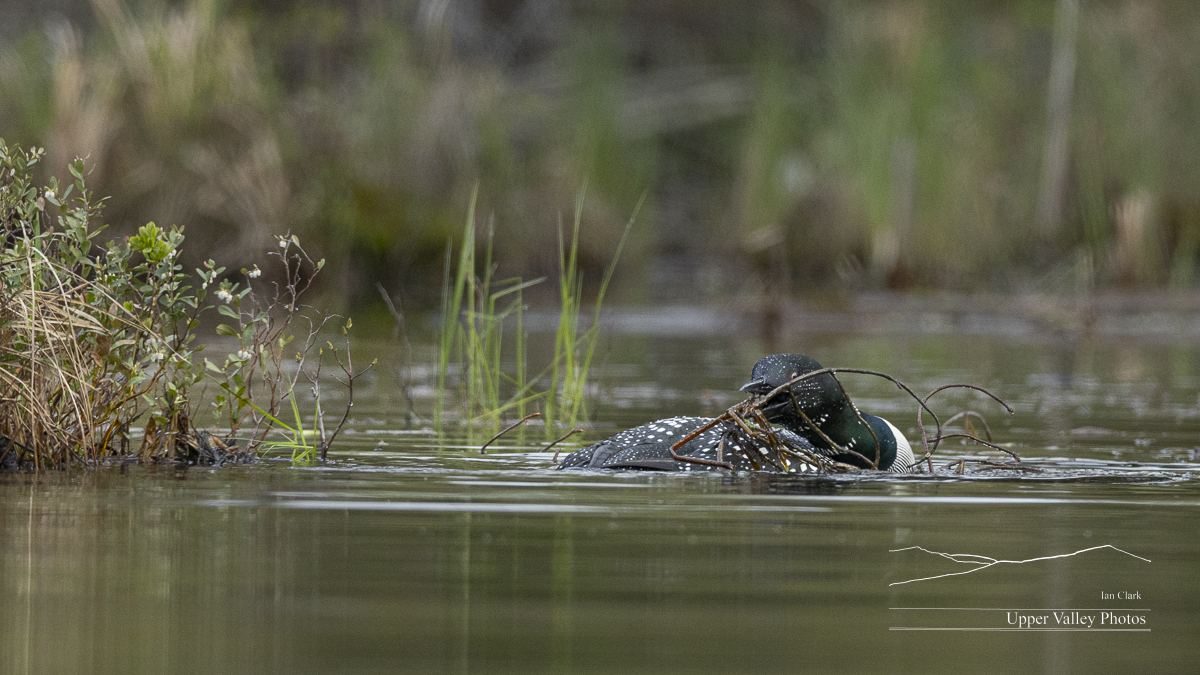
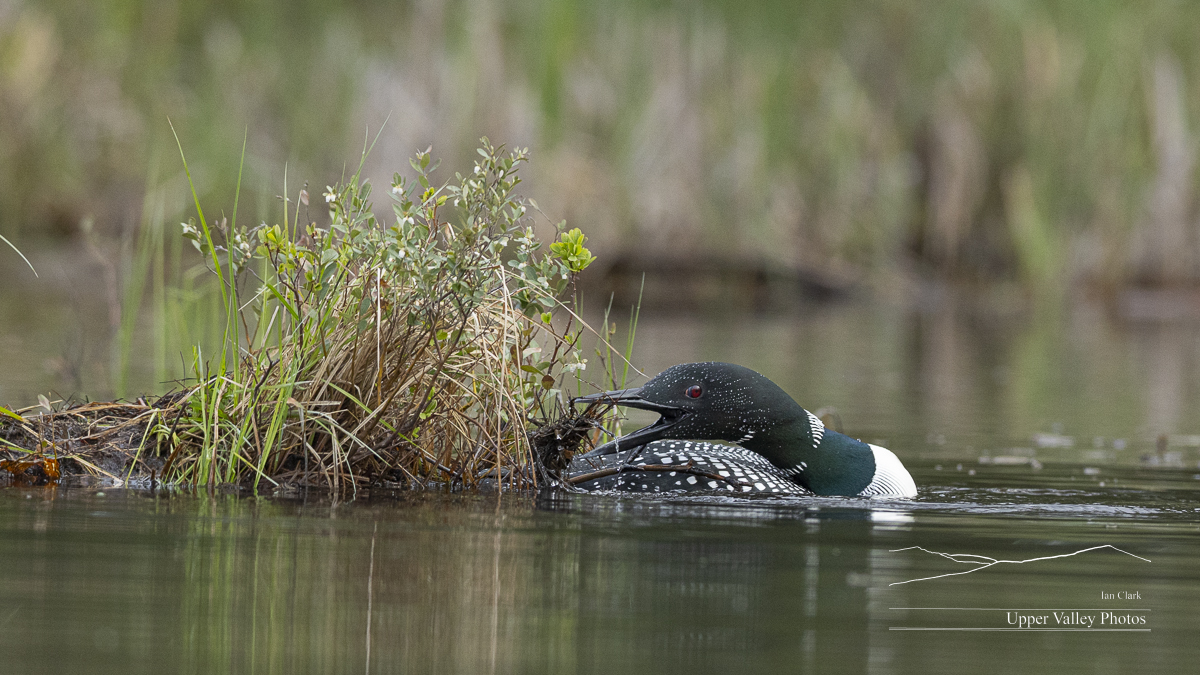
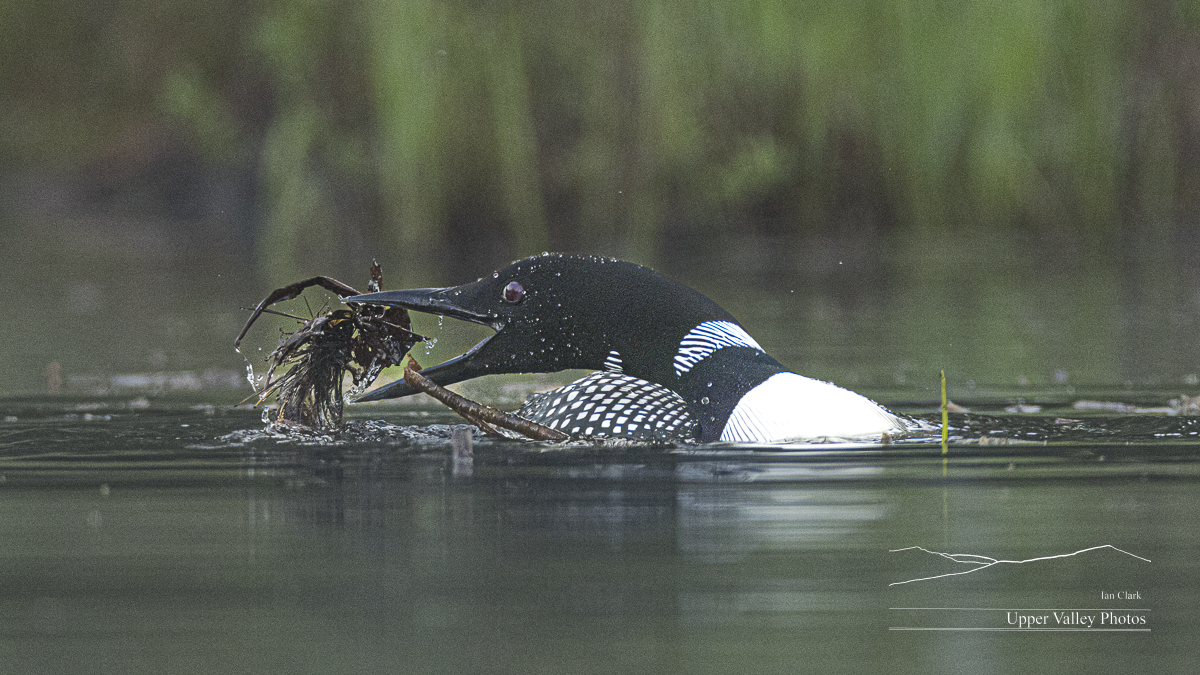
Ok, they’ve decided this is the place. But, it needs some improvements. They set about collecting a few sticks and lots of underwater vegetation to build the nest.
common loon building a nest
Sorting out the nesting materials.
common loon gathering nesting material
One more load…..
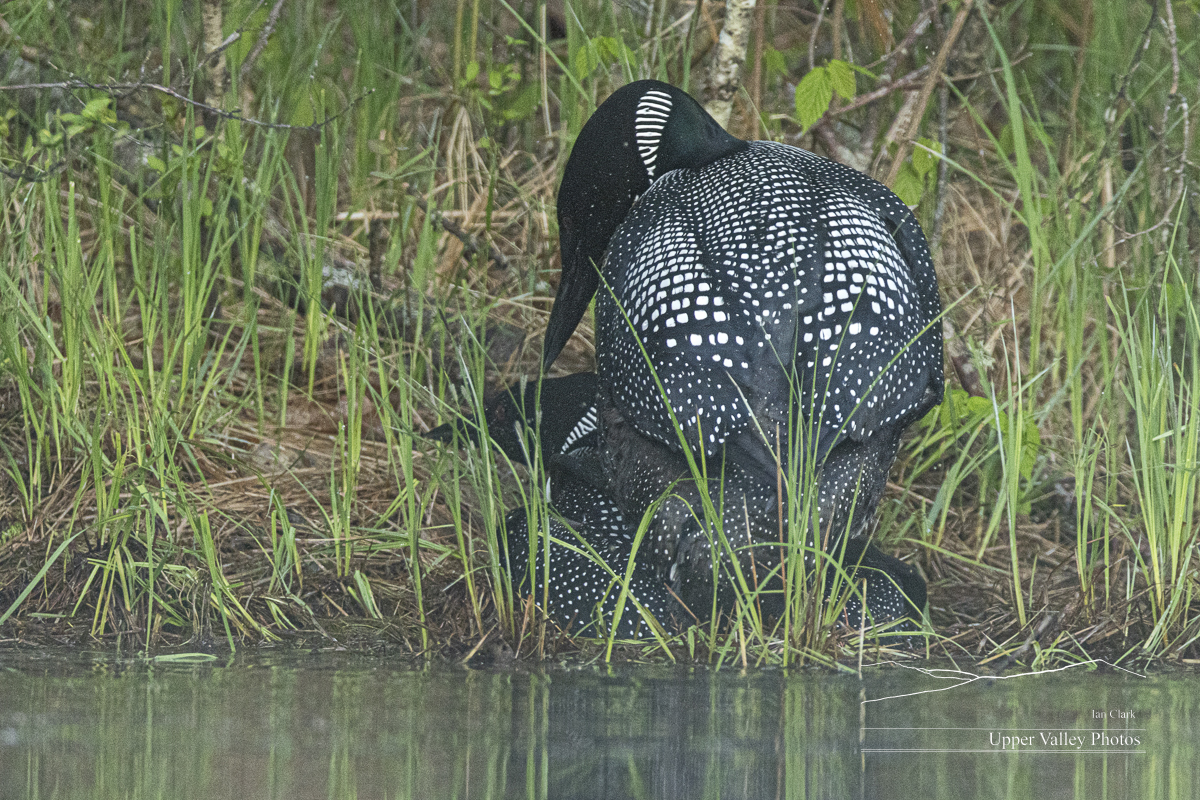
common loons mating
They set out to make sure they’re going to have little loons.

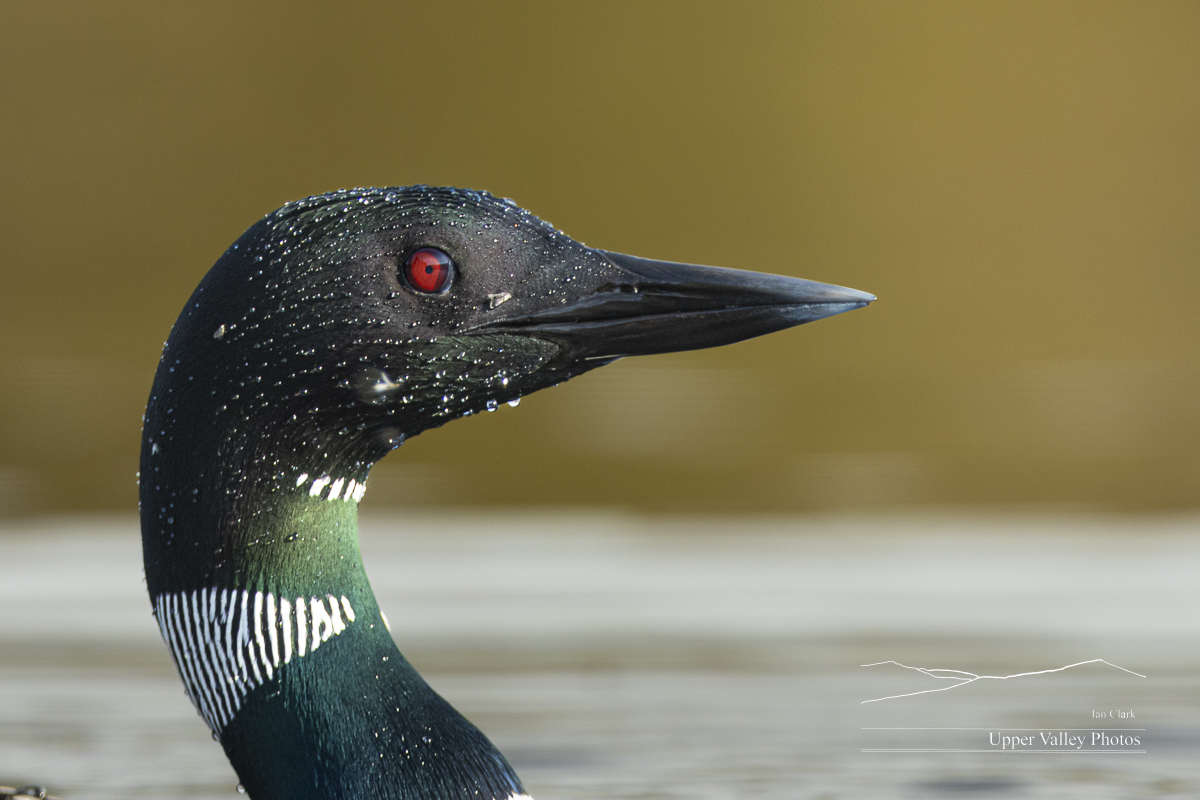
close up of a common loon
One of the pair swam by close in to my boat.
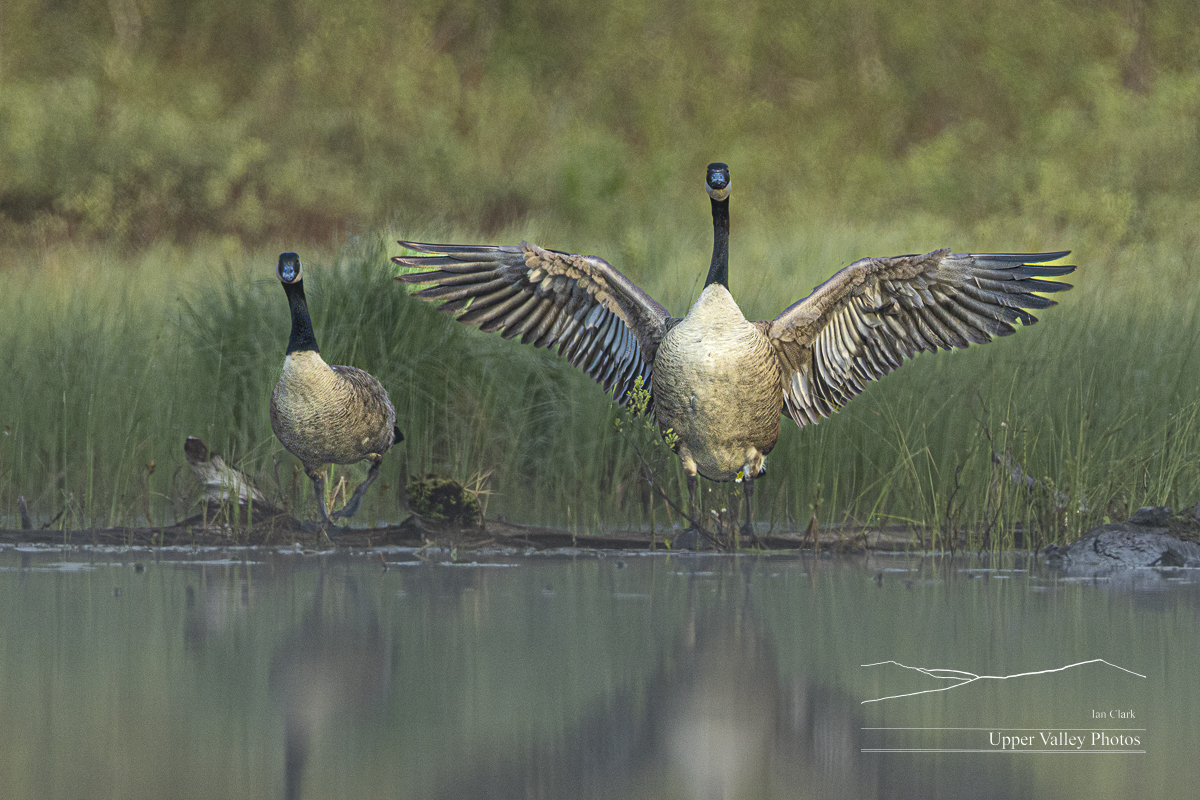
Canada geese on the side of the pond
A couple late nesting Canada geese were checking out spots near the loons’ nest. The loons strongly suggested they should move along and nest elsewhere.
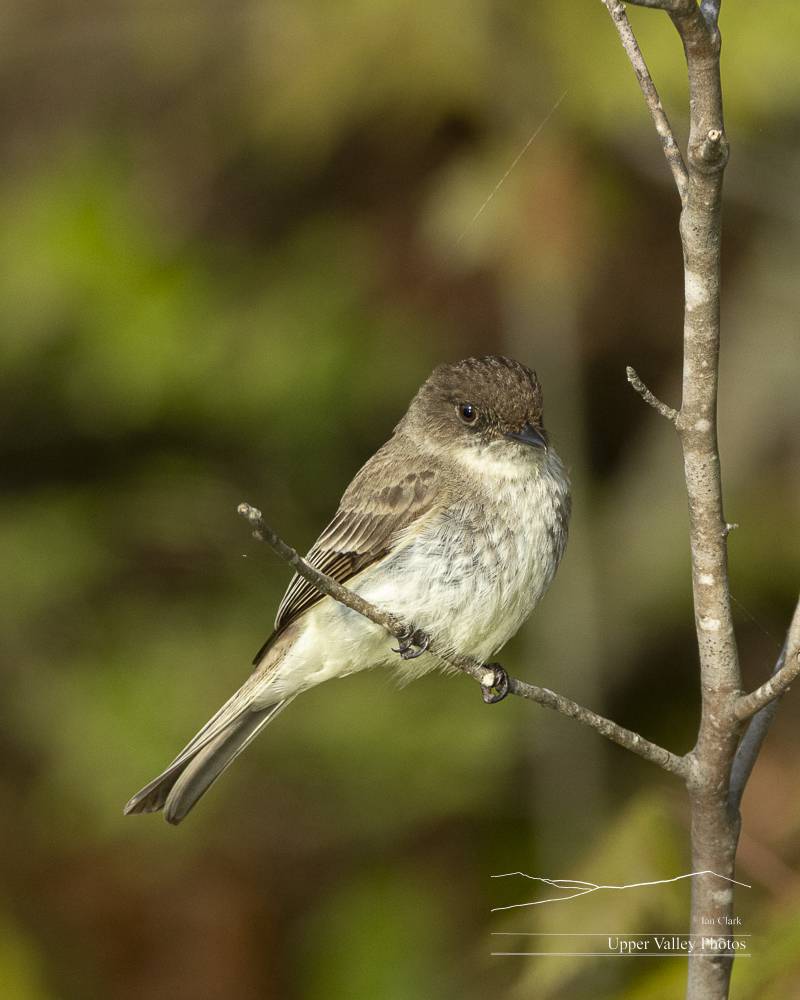
An eastern phoebe perched on a small tree
An eastern phoebe perched not far from the loons’ nest. The flycatchers are not keeping up with the black flies.

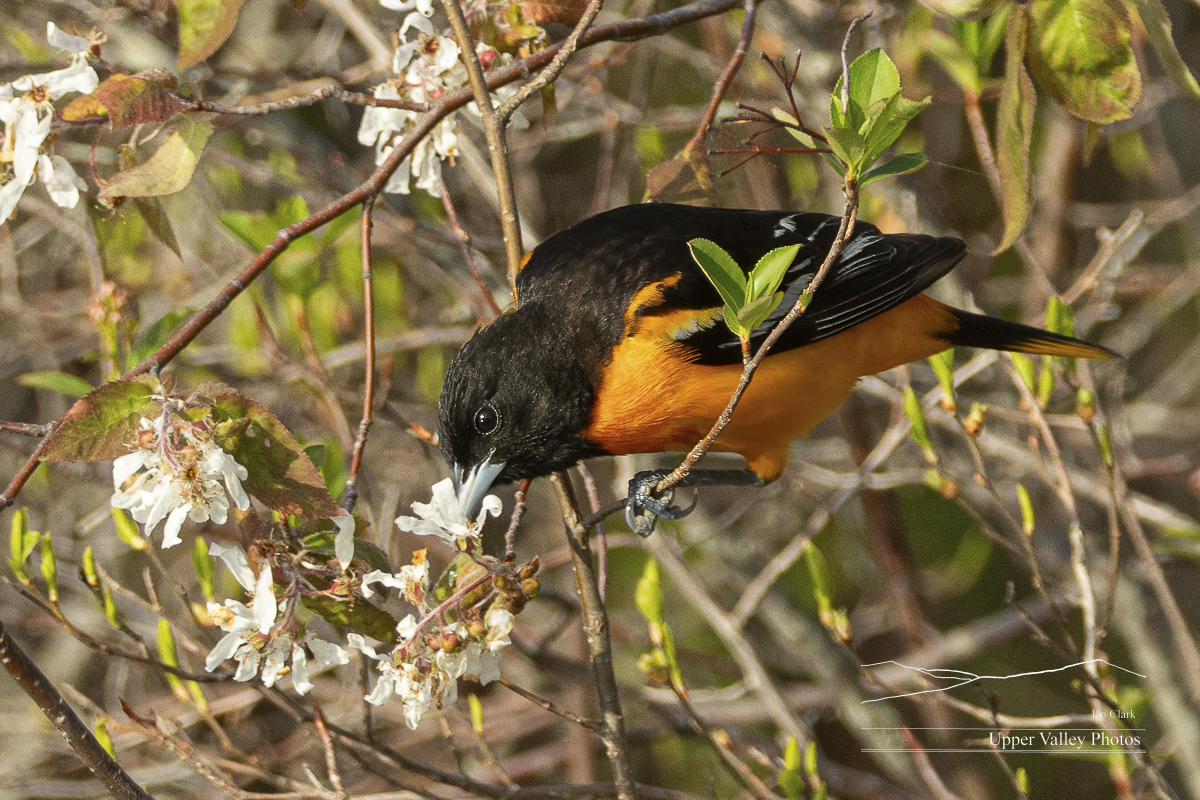
baltimore oriole feeding among flowers
Finding a Baltimore oriole feeding at eye level is a treat.
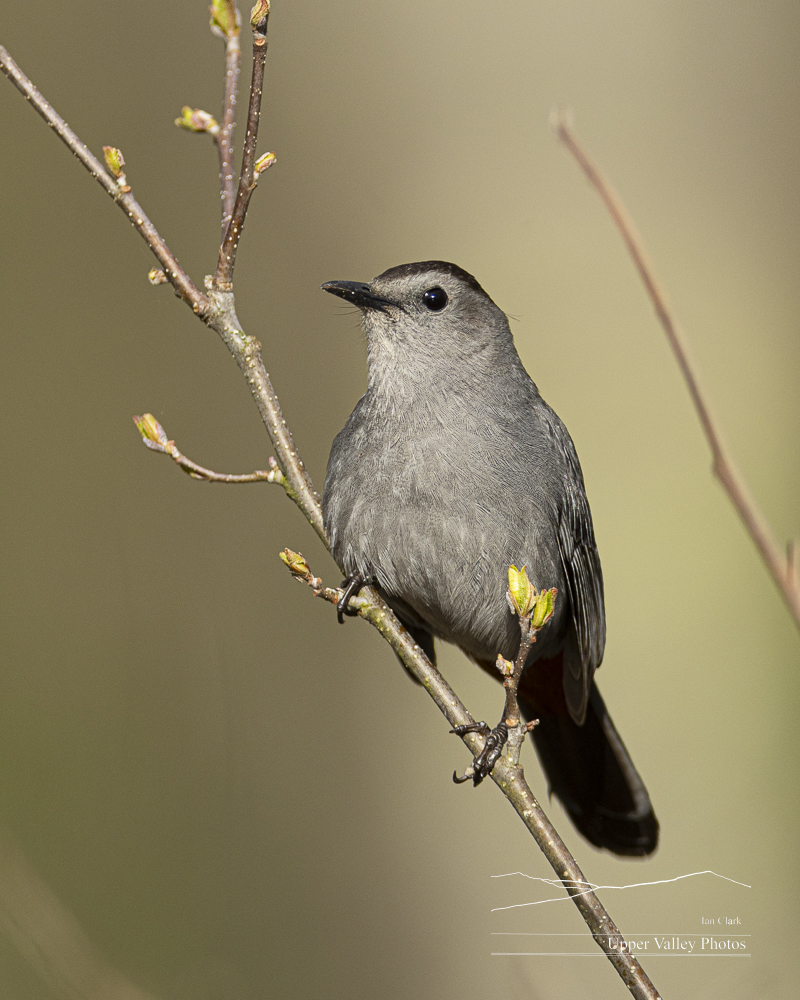
Gray catbird perched on a twig
Several gray catbirds live in the loons’ neighborhood.
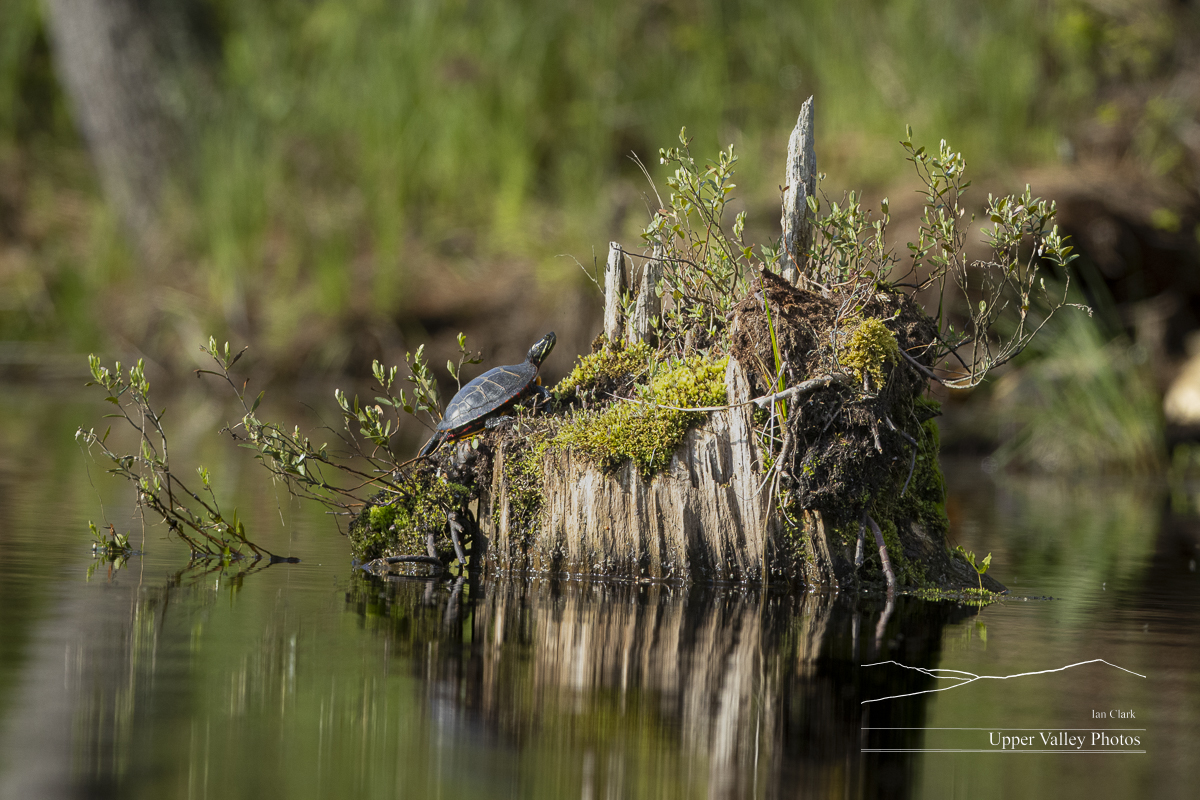
painted turtle basking
This painted turtle has claimed his own small island.
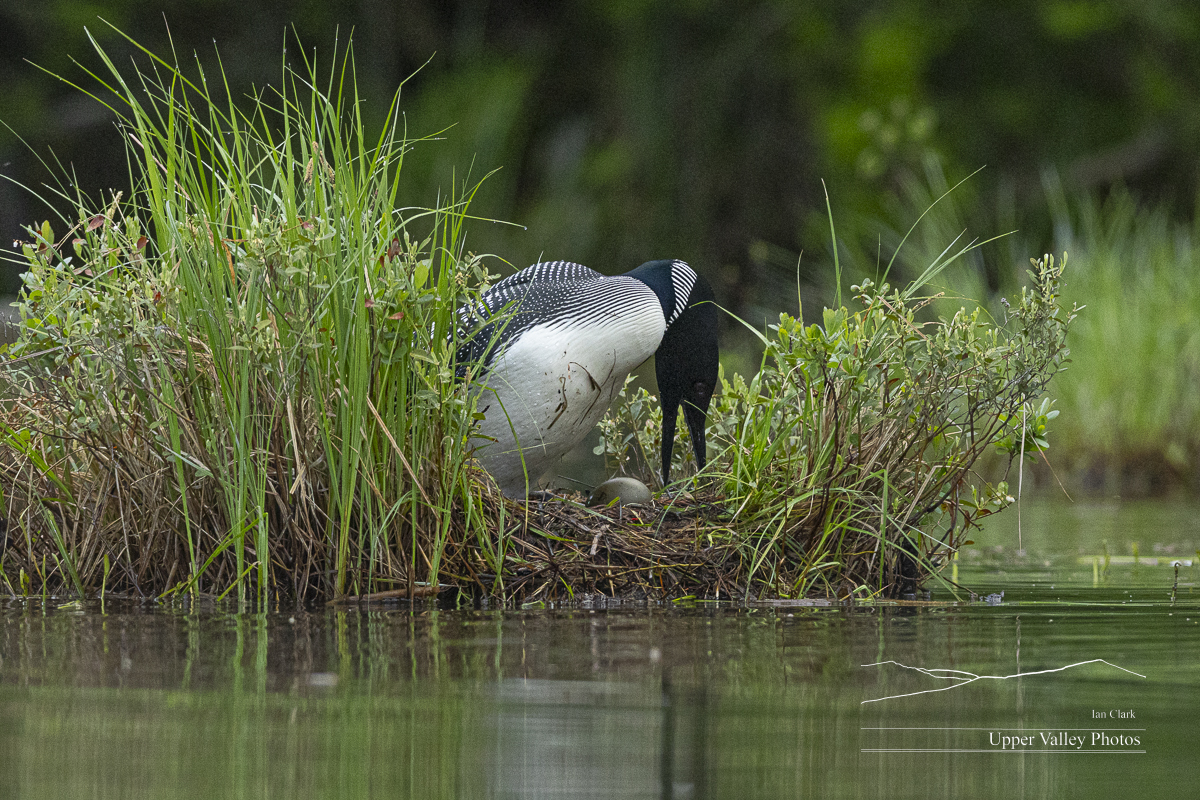
common loon in the nest, turning an egg
When I returned to the pond, the loons had an egg. Here, our male is turning it. Birds turn their eggs regularly. It is thought that turning the eggs helps keep the chick from adhering to the side of the egg and to distribute nutrients to the chick.

common loons in a territory dispute, the male is about to yodel
We know it was the male on the nest as an intruding loon arrived on the pond. The loon that had been on the nest came out to challenge the intruder and yodeled. Only males yodel. That’s the home team female watching in the background. This suggests the intruder was a male and wanted to displace the home team male.
common loon doing the 'penguin dance' during a territory dispute with another loon
Things escalated quickly! This is the male doing the ‘penguin dance’ to threaten the intruder. Both males and females will dance, but it is thought the males do it more often.


common loon doing the 'penguin dance' during a territory dispute with another loon
A nice shot of the penguin dance. Notice how far back the loon’s legs are. And, great elevation from the home team male!

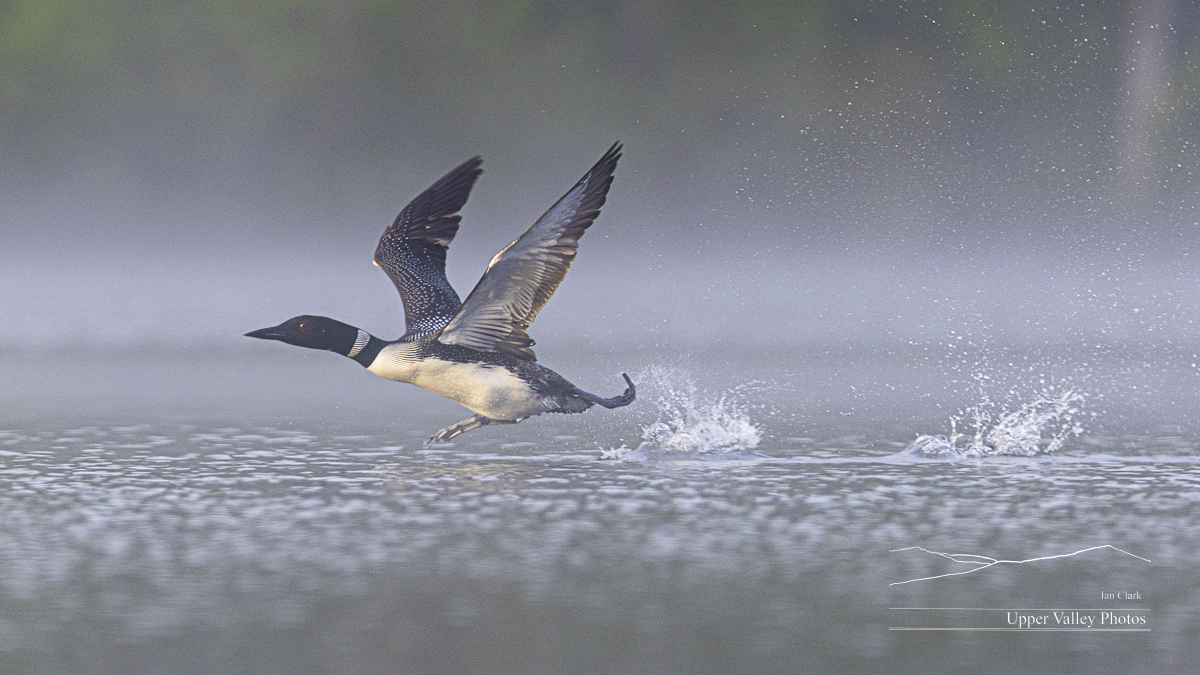
common loon running across the water to take off
The penguin dance display was enough to convince the intruder to retreat to the other side of the pond.
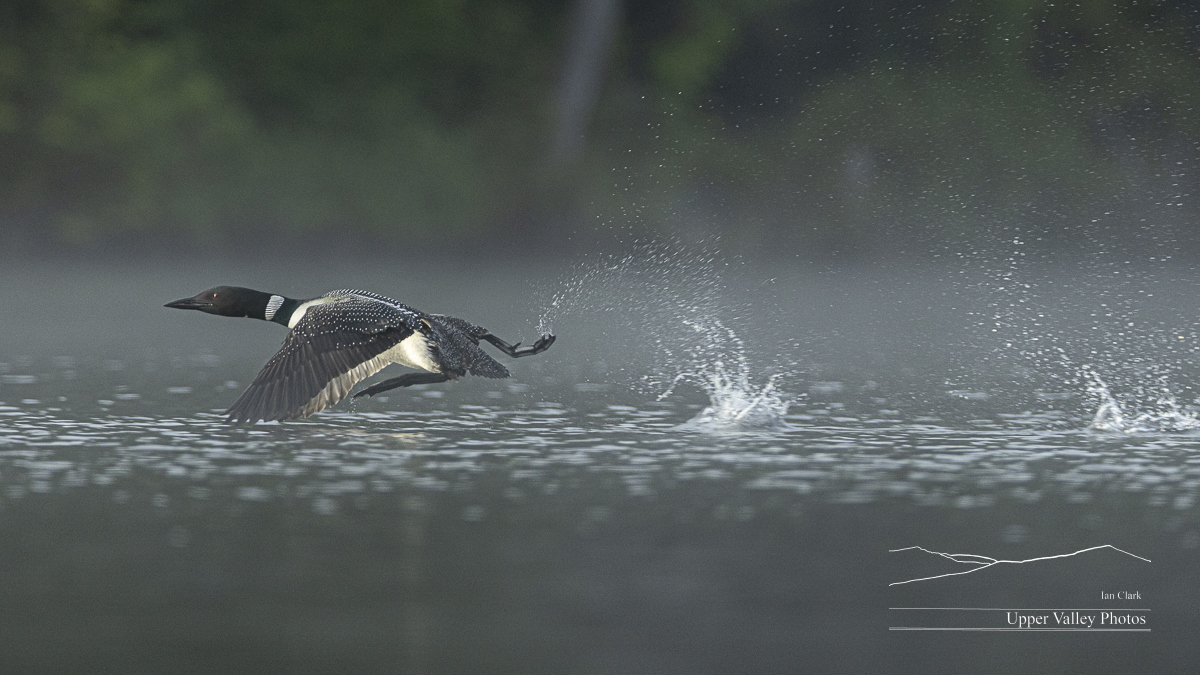
common loon running across the water to take off
After a few minutes of the home team wailing, the intruder left the pond.
Common loon stretching
The home team male takes a victory stretch.
Common loon on the nest with the mate nearby
And then he returns to the nest.

The road up to the Easton’s pond finally got some work and I was able to get up for a visit.
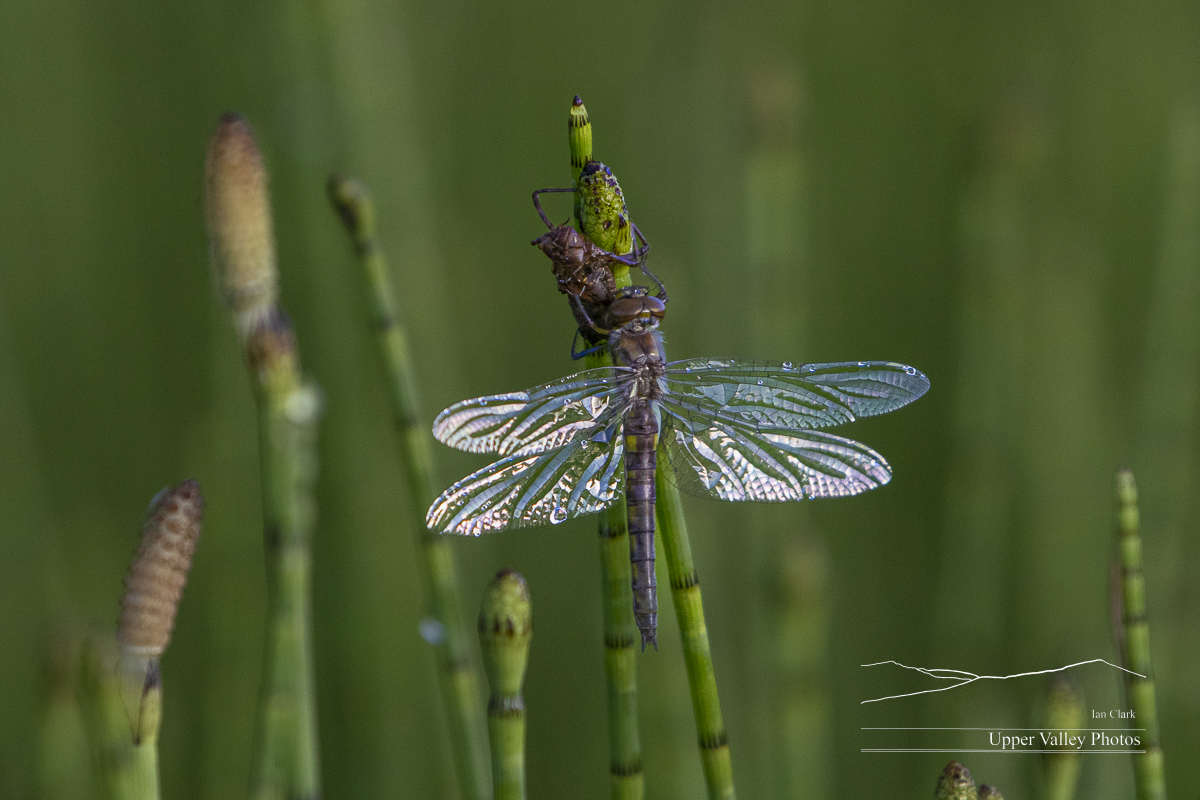
Dragonfly emerging from the nymph stage
There were several dragonflies emerging from their nymph stage and drying their wings in the sunshine.
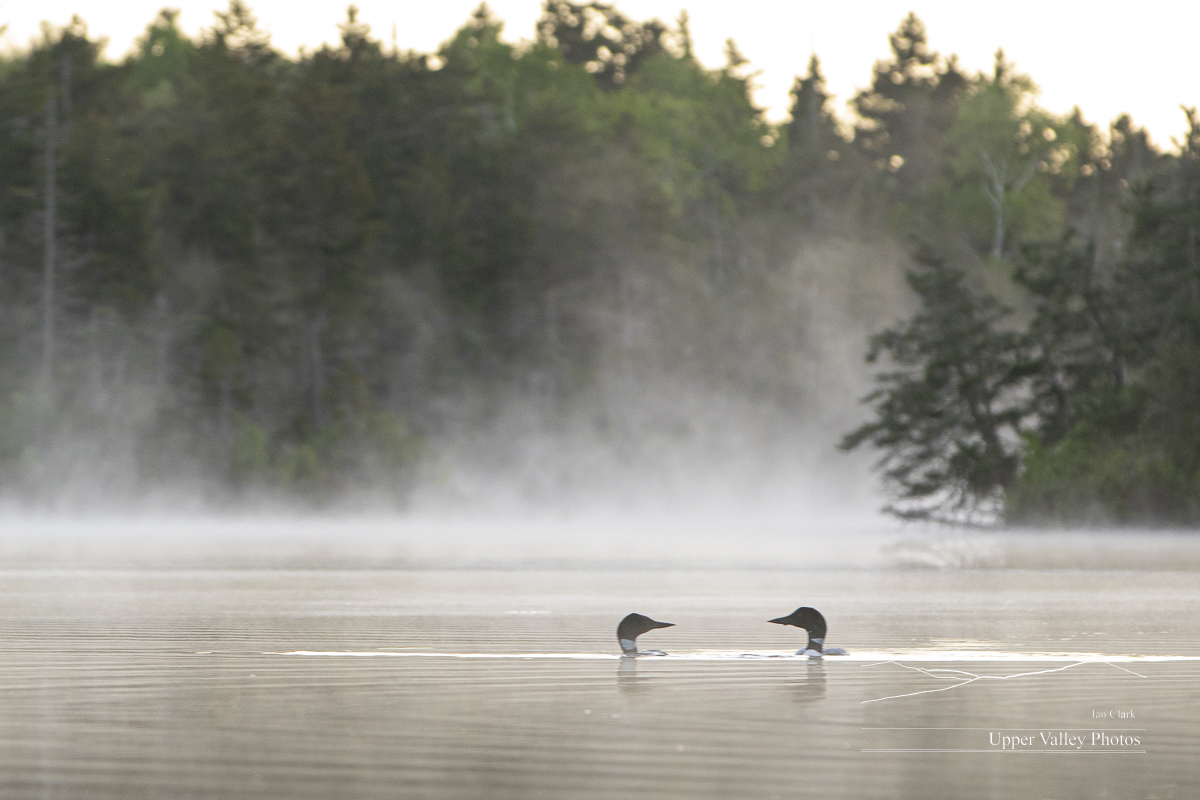
Scenic photo of a mated common loon pair
The water on the Easton’s pond is a few inches higher than last year, making the nest site unusable. They were scouting the pond for a new site. Here, they’ve stopped to discuss something on their search. We’ve got the same male back again this year. The Loon Preservation Committee banded him in Moultonborough, NH in 2015.
close up of a common loon
Mrs. Easton swam by close to the boat to have a good look at me. (Not as close as it looks, I’m using a 600mm lens and have cropped the image.) The loons checked out several spots and may have settled on one. They discussed it for a time before mating on the site.
bull moose feeding in the water
One of the loons’ neighbors was out enjoying breakfast.

Red Fox Kits

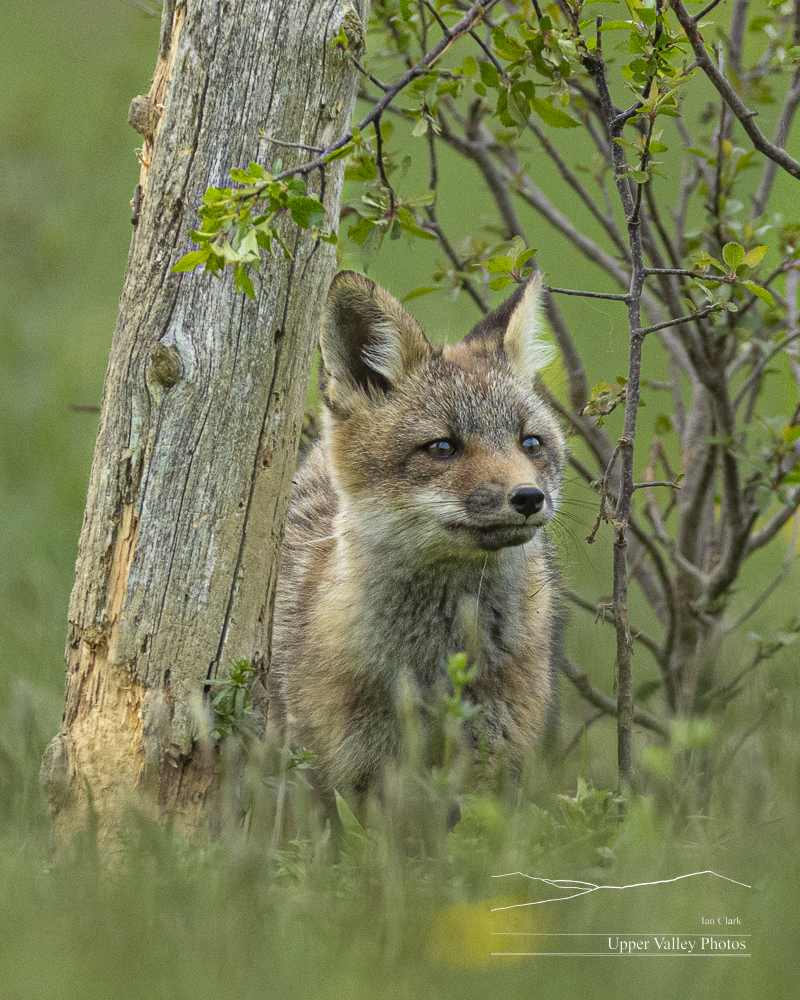
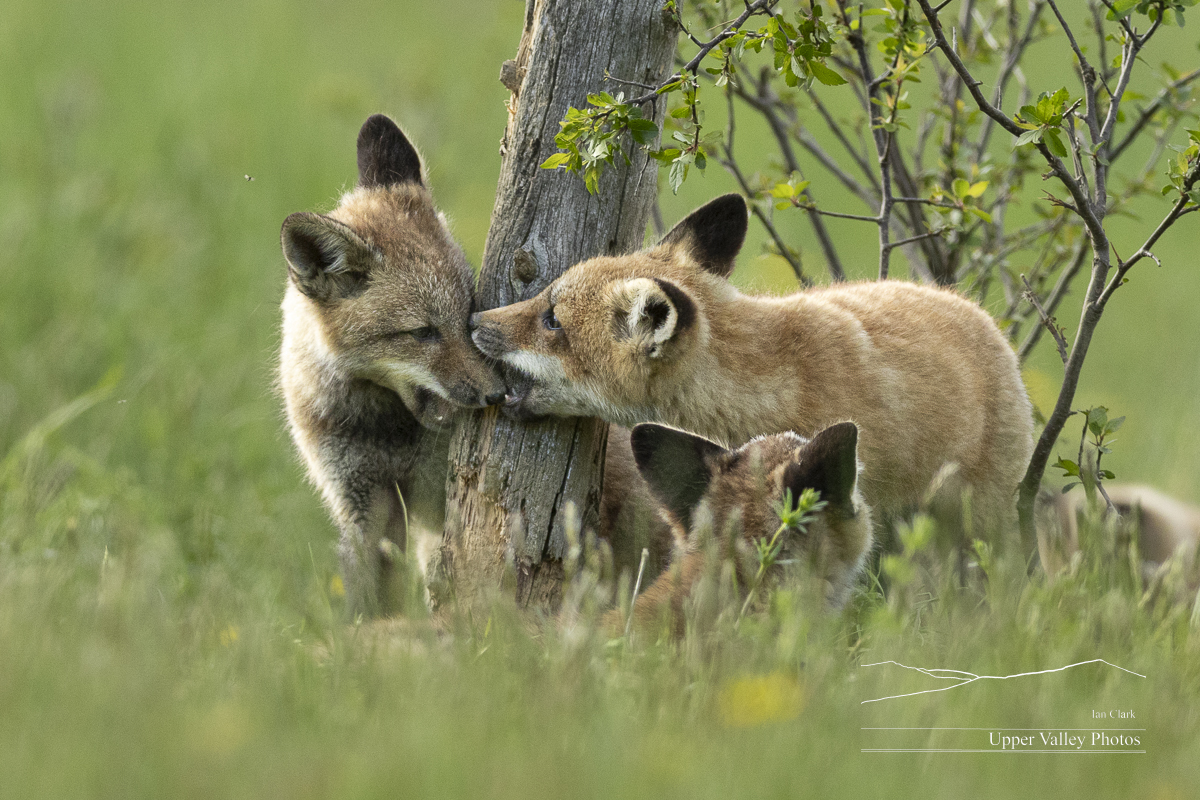
Friends in West Newbury helped me locate two red fox dens. One has four kits, the other five. All of the foxes look healthy with beautiful coats. And fox kits are just darned cute.

I’ll be giving my slideshow, An Uncommon Look at the Common Loon, twice in the near future. The first will be at the Lyme, NH, School at 7:00 p.m. on Thursday, May 30th. The second presentation will be at the Tenney Memorial Library in Newbury, VT, at 2:00 p.m. on Sunday June 23.

I’ll have another post with updates on the loons and their neighbors shortly. The Westons are sitting on their nest, we know they have at least one egg. The Middletons are building their nest, should lay their eggs any day now. The road to the Eastons has been repaired, I’ll get up to visit them as soon as I can.

Finding a fox den is a treat. But it means long hours in a blind waiting for the action. When I found the first den, I set up a blind and several game cameras to let me know what was up. The first morning it wasn’t raining, I snuck into the blind before dawn. And waited. Eventually, the kits appeared.

This cute little guy came out to enjoy a snooze in the sunshine.

Eventually, the siblings came out and spent time exploring around the den. And biting each other’s tails.

After a time, mom showed up and the kits eagerly nursed. Mom has the patience of a saint, the kits were squirming and kicking, trying to displace the others.


A good look at mom with one of her kits. Pretty sure she’s spotted me.

The second den is in a cow pasture. It looks like mom took over a woodchuck hole and enlarged it. Here two kits sit not far from the entrance to the den.

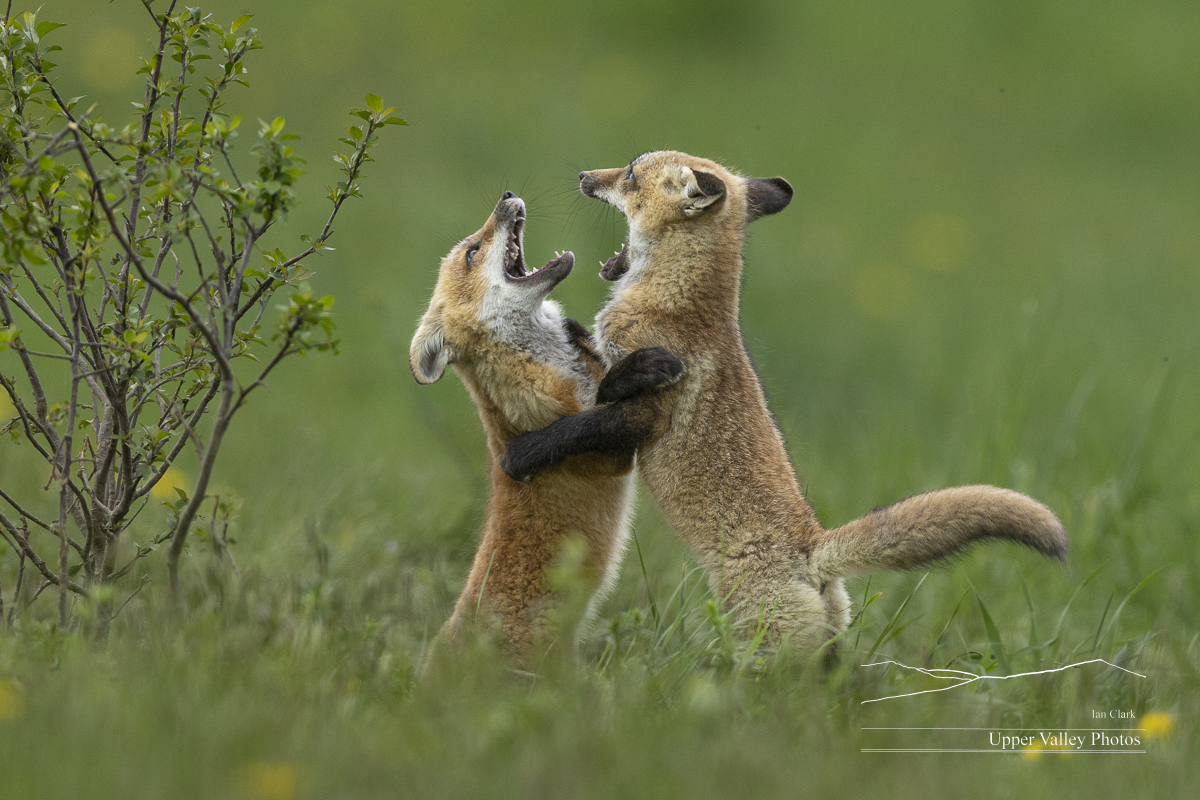
Kits spend a lot of time playing. The play helps them develop skills they’ll need as adults. They spend time stalking each other and pouncing. They’ll often wrestle. good practice for subduing prey and defending themselves. And it is just fun to watch. With five kits in the tall grass, it was hard to keep up with what was going on. They’d appear from behind the grass at a dead run, then disappear. While they were wrestling, I’d often get a view of just a paw or maybe some ears above the grass before they’d disappear again.

Lots of teeth and play biting, but no one gets hurt.

Looks like we have a winner for this round.

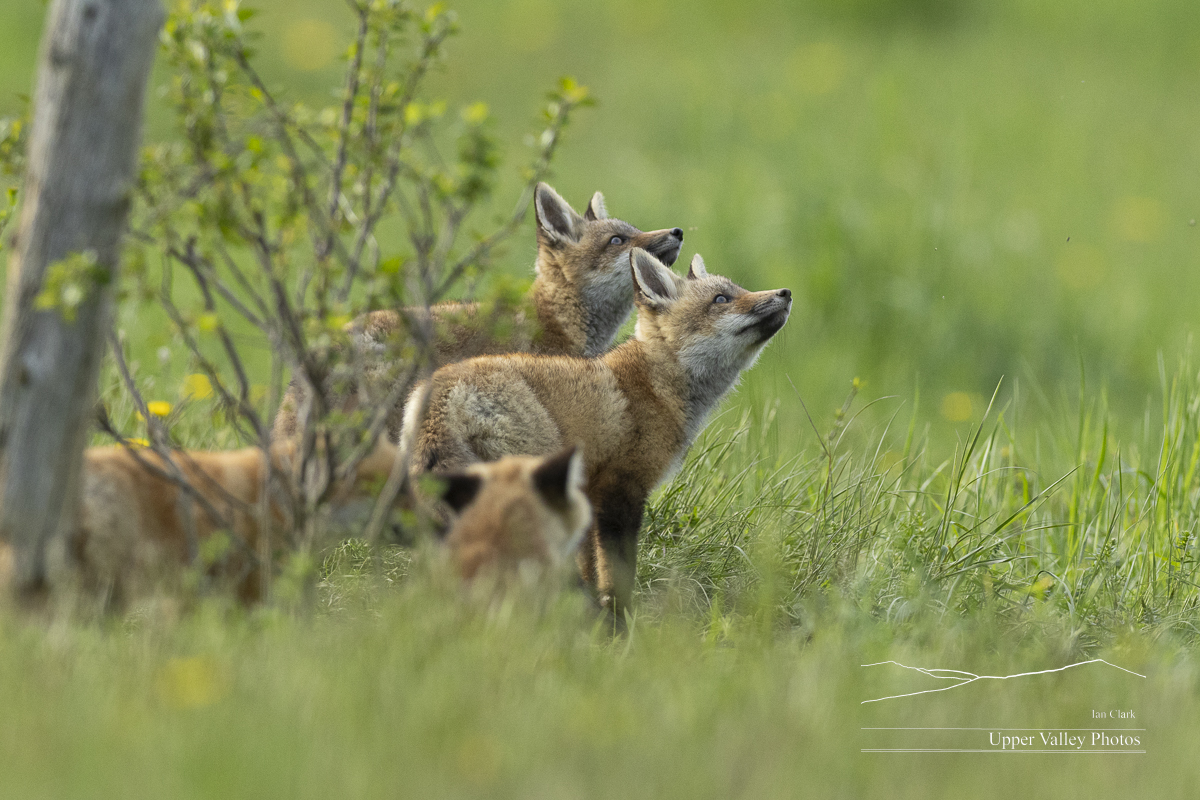
When they’re not sleeping or playing, they spend time watching the world, learning what is a threat and what could be the next meal.

Red fox kits
Foxes have to be wary of threats from above. These kits are getting big enough that they’re probably safe from hawks and eagles. But nature doesn’t favor those that take chances. And, a bird landing nearby would make a nice meal.

Red fox kit
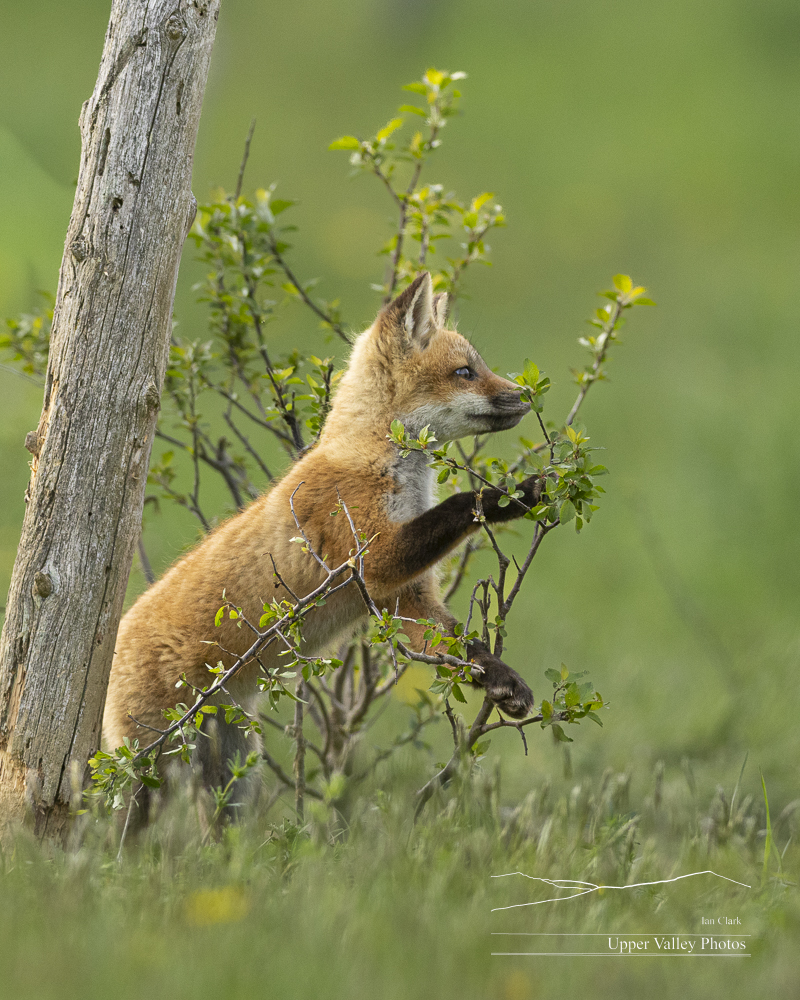
One of the entrances to the den is near the base of this post.

Red fox kits
Exploring the bush near the den.

Red fox kits
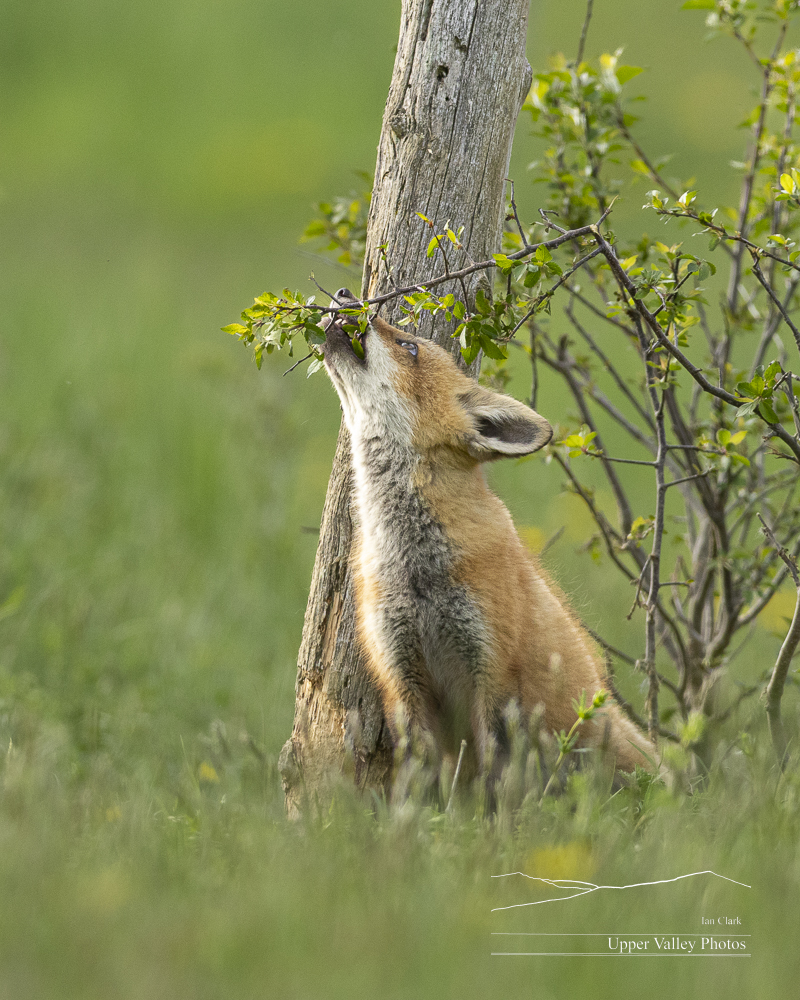
Chomping the bush…

Red fox kits
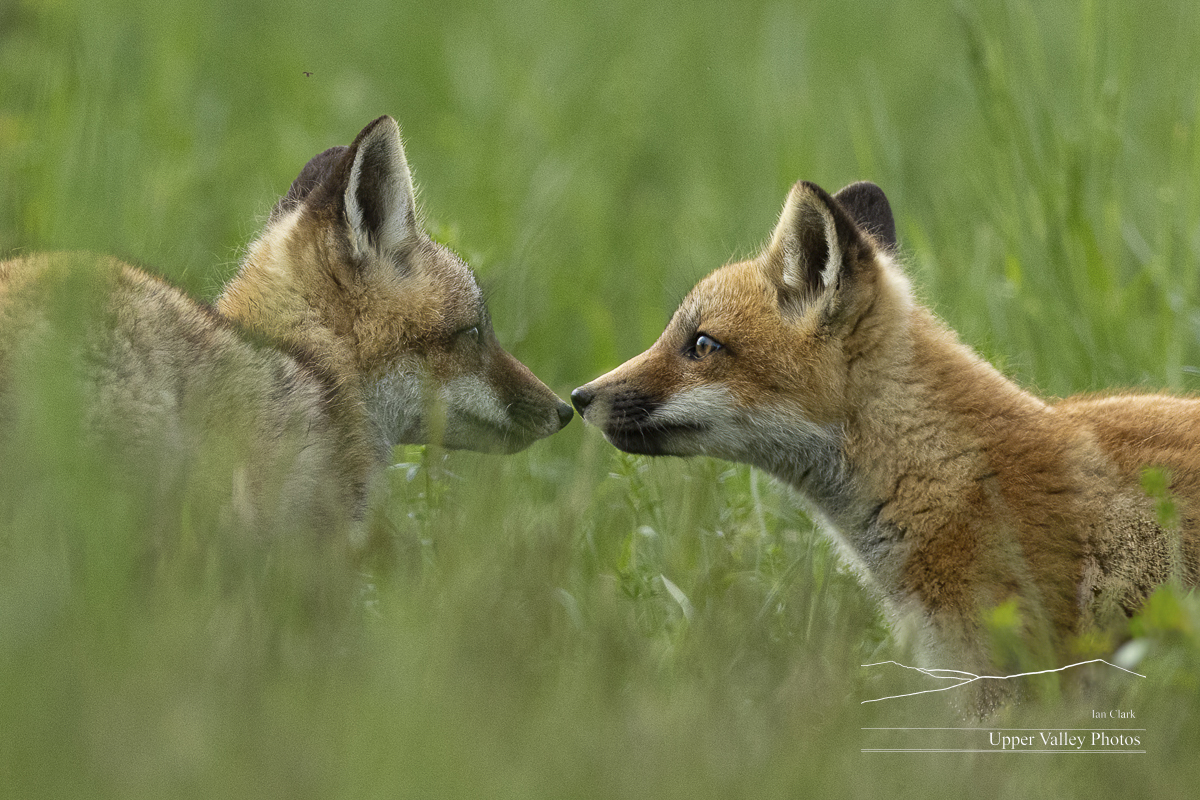
A cute moment as two kits size each other up.

Here’s one kit stalking another…

And the fight is on!


Red fox kits
A good view of two of the kits wrestling.

Red fox kits
Got your nose!

Check back soon for an update on the loons. Or you can sign up below to get an email when I add a new post. If you know someone who loves wildlife, please share the post with them.
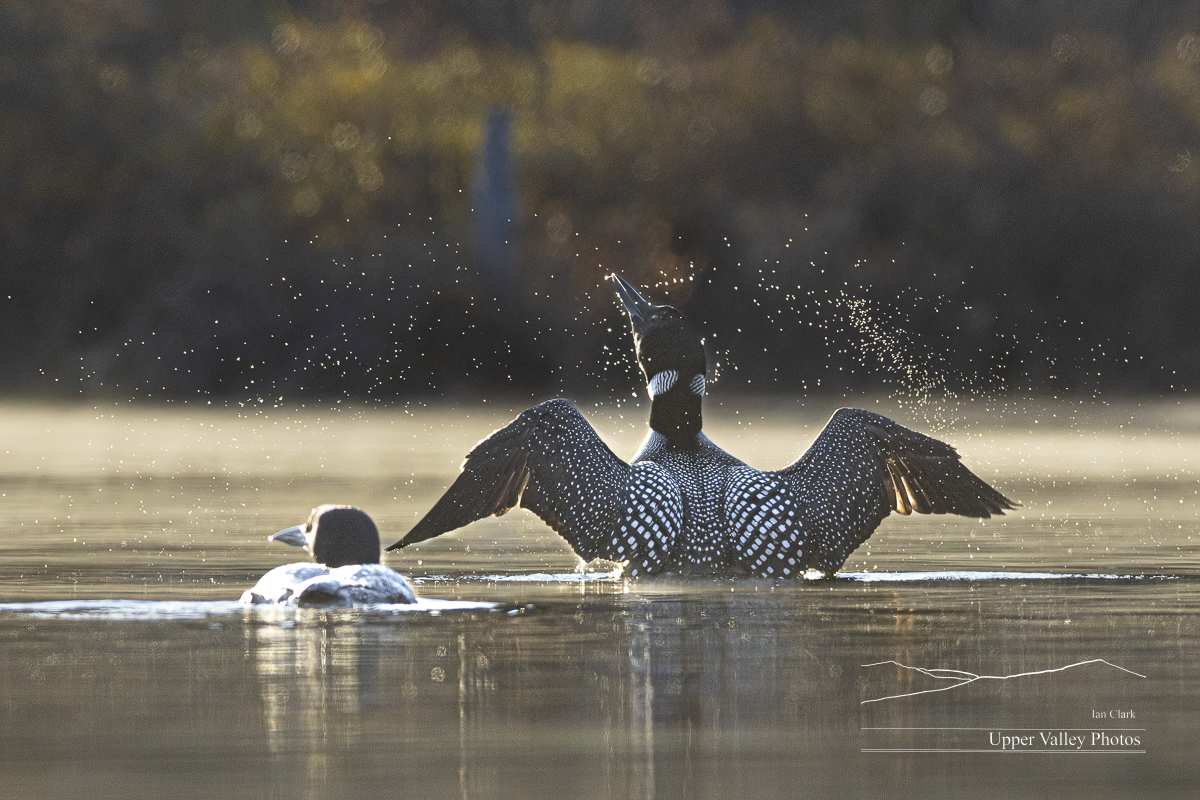
Catching Up with the Usual Suspects

I’ve been able to get out a few times to visit two of the loons’ ponds. The loons are out and about, along with the full cast of the usual suspects.

The Vermont Institute of Natural Science in Quechee is hosting my exhibit of loon prints through the end of July. There will be a reception where I show my slideshow, An Uncommon Look at the Common Loon, on Saturday, May 11 at 3 p.m. There are more details at https://vinsweb.org/event/artist-exhibition-ian-clark/ and https://www.facebook.com/events/454025283855444.

And, I’ll be presenting An Uncommon Loon again at the Lakes Region Art Association Gallery in Laconia, NH at 6 p.m. on May 20. The talk hasn’t been posted on their site yet, but details about the Association are at https://lraanh.org/.

Do you have critters around? While I do a lot of scouting on my own, tips for finding critters are always appreciated. I’m always looking for mammals, if you’ve got bobcats, coyotes, fishers or bears that show up more than once, I’d love a chance to photograph them. I’m also looking for owls, woodpecker nests and scarlet tanagers along with rarer species that may not visit feeders regularly. Places where I can come and go early in the morning or late in the evening without disturbing you or the critters are best.

And now, the critters. Here’s a skunk that doesn’t seem to appreciate my trail camera.


Last Friday, I caught up with some volunteers from the Loon Preservation Committee (LPC)
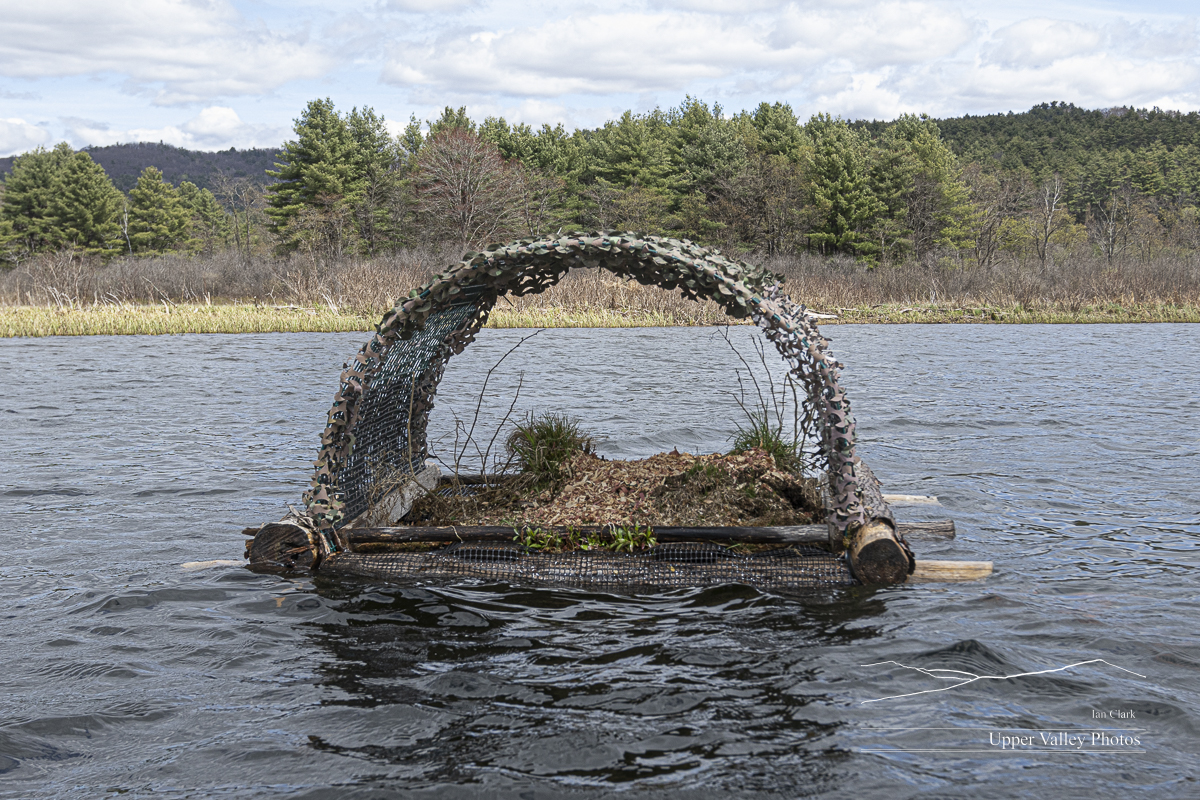
as they deployed their loon nesting platform on Post Pond in Lyme, NH.

Nesting platforms have been a huge success in helping restore the loon population. The LPC put out their first platform in 1977. Since then LPC volunteers and staff have floated loon nesting rafts on New Hampshire lakes 1,685 times – not including this year. Nesting loon pairs have used these rafts 917 times, and hatched 976 chicks on the platforms – an incredible one in four chicks hatched in New Hampshire. You can learn more about LPC at www.loon.org – and check out their loon cam watching a nest in the Lakes Region at https://loon.org/looncam/. Sign up for their newsletter to keep up with New Hampshire’s loons. Vermonter’s loons get assistance from the Vermont Center for Ecostudies, check out their site, https://vtecostudies.org/
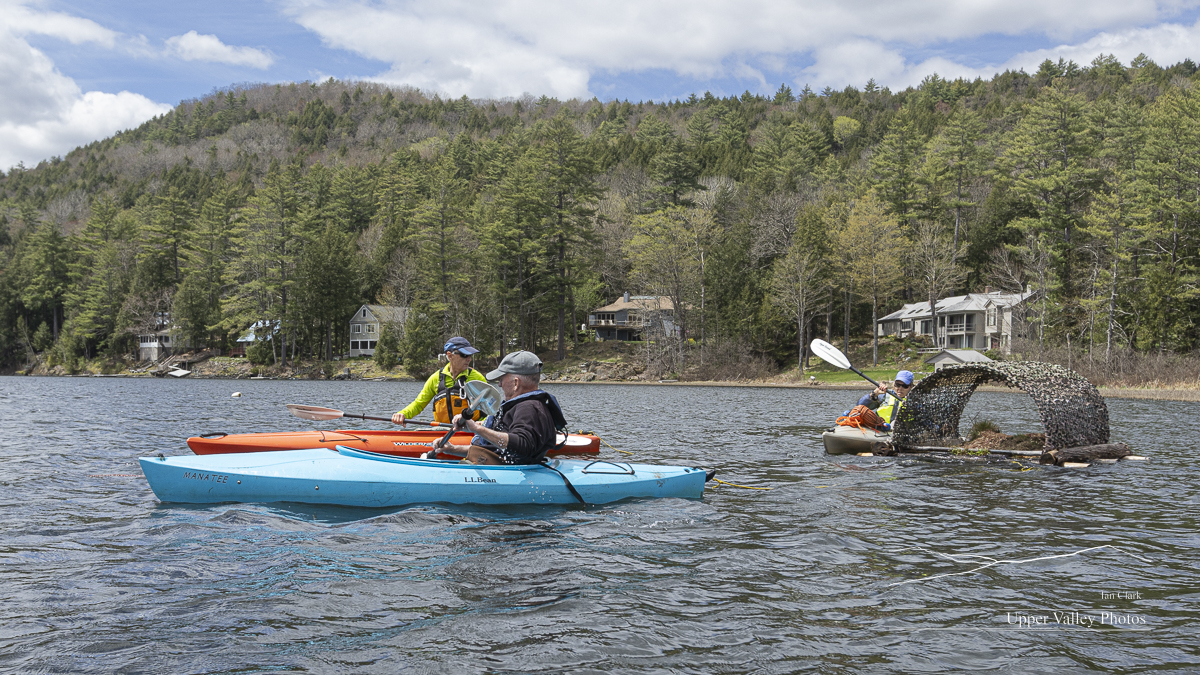
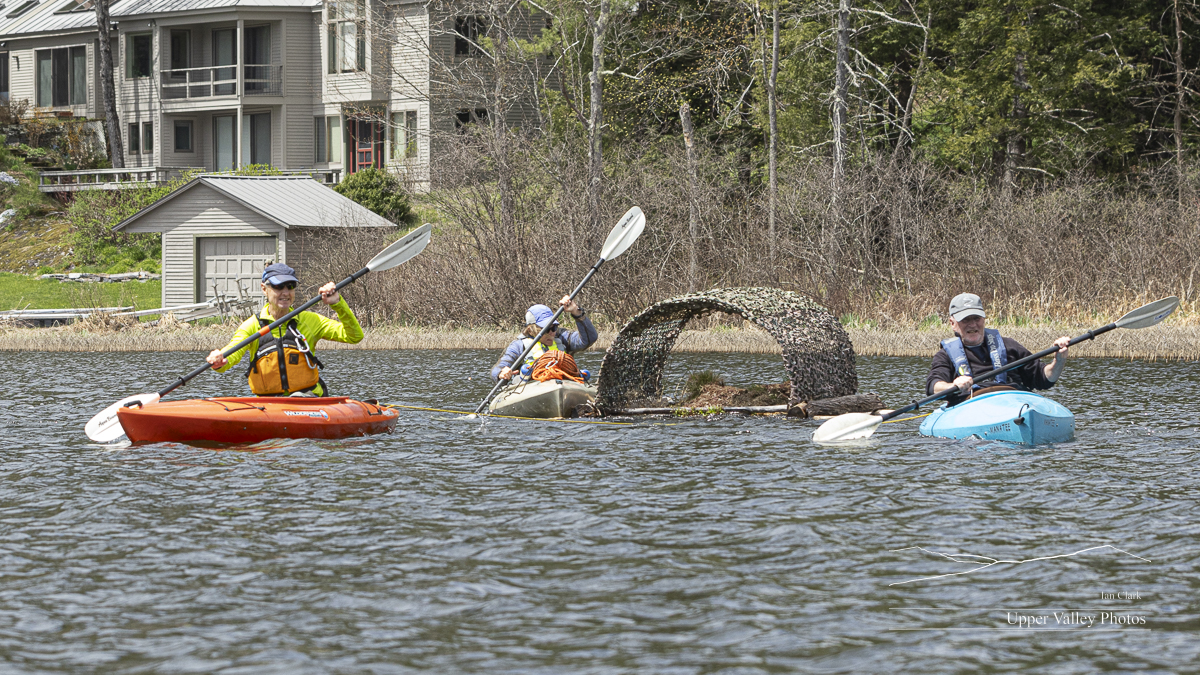
Volunteers Jim Mason (orange kayak), his wife Dayle Mason and Wayne Pushee (blue kayak) towing the loon nesting platform. Loons on Post Pond have used the platform for several years.
Wrestling the platform in to position.
The platform ready for the loons to move in.

On April 23, I made it out to check in with the Westons. (For new readers, to give the loons some privacy, I named the loons on the pond to my east the Eastons. The loons to my west are the Westons, and the pond in the middle hosts the Middletons.)
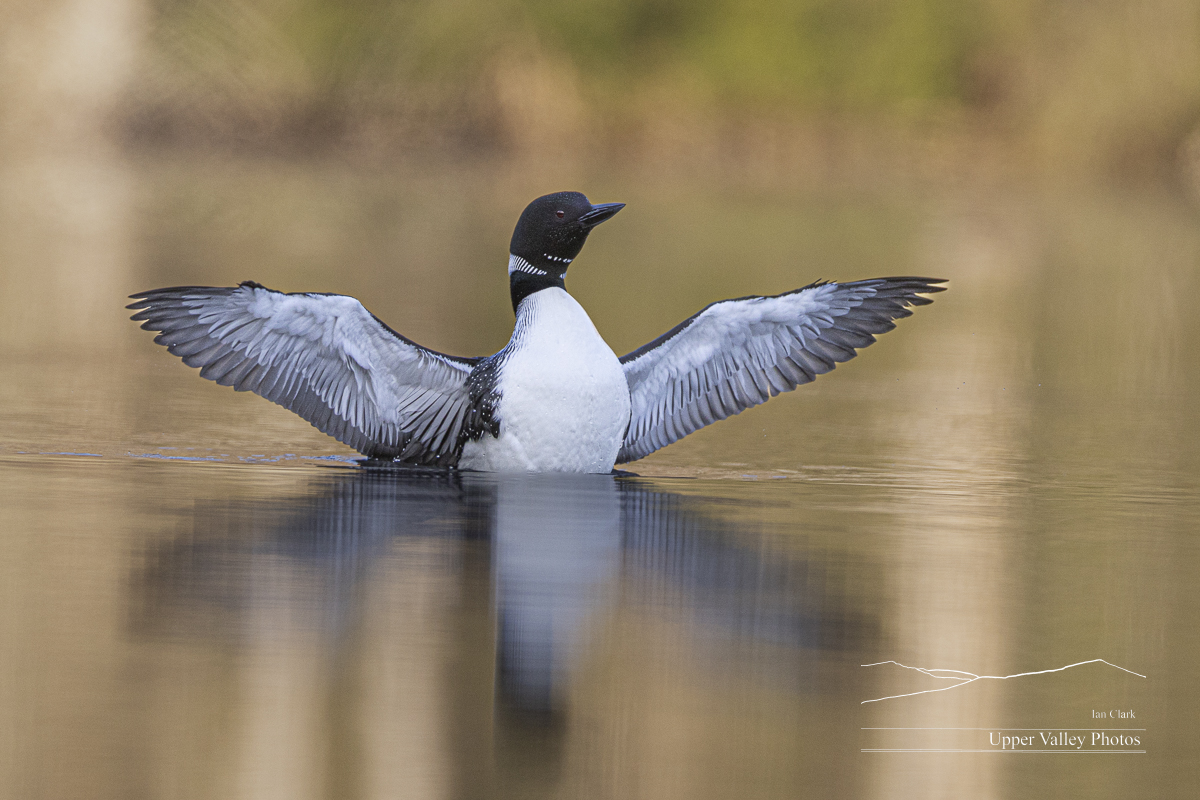
Getting ready for the day, both loons did some quick preening, ending with a stretch and a shake of the head.

And a stretch from the other loon.

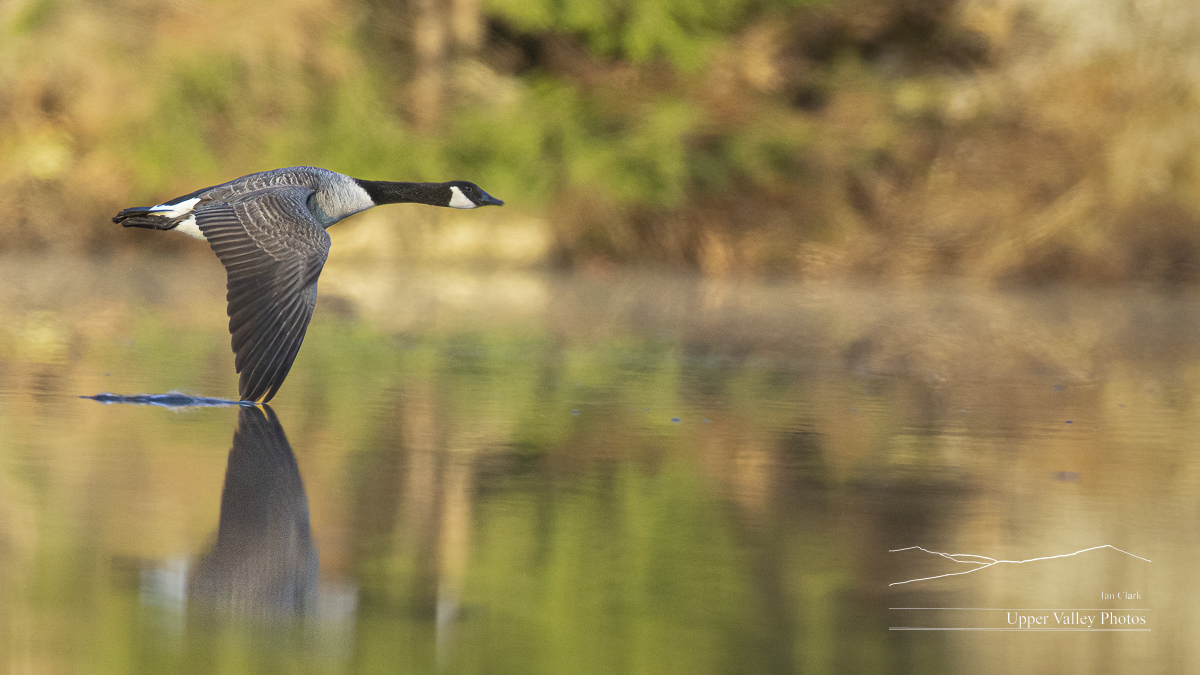
The Canada geese have – mostly – claimed their nesting sites and many of the females are sitting on their nests. This brings some peace and quiet to the pond. Here’s one of our geese heading out for the morning.

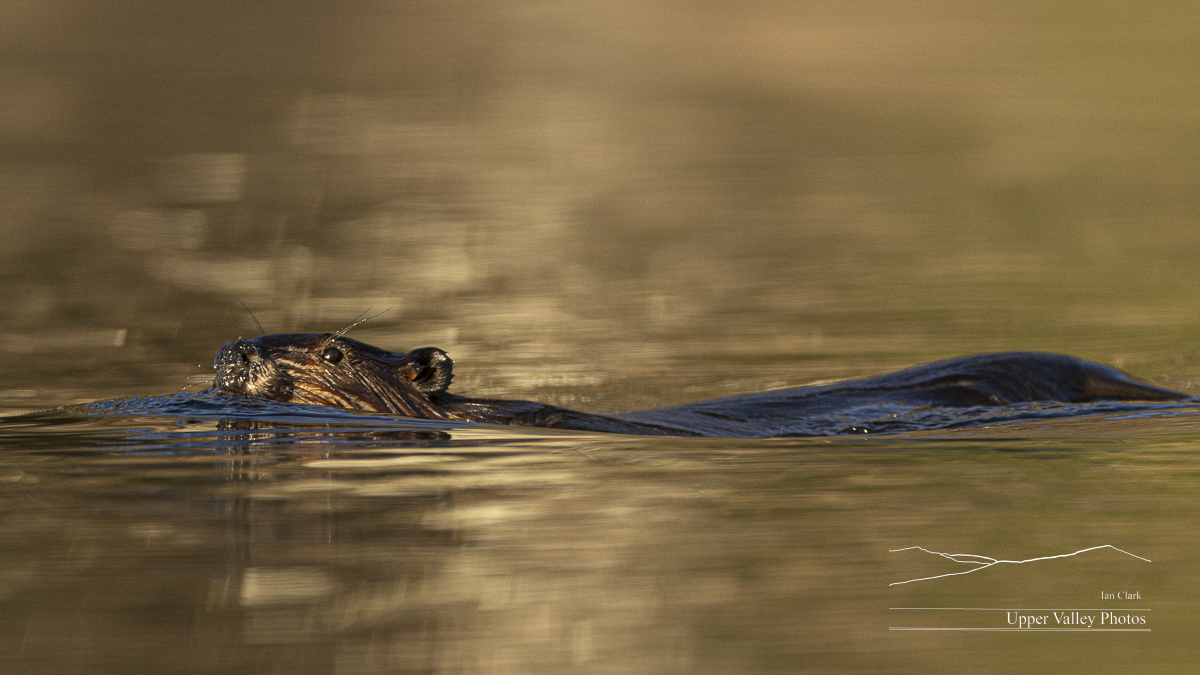
This pond hosts at least three pair of beaver. This fellow popped up in close to my boat.

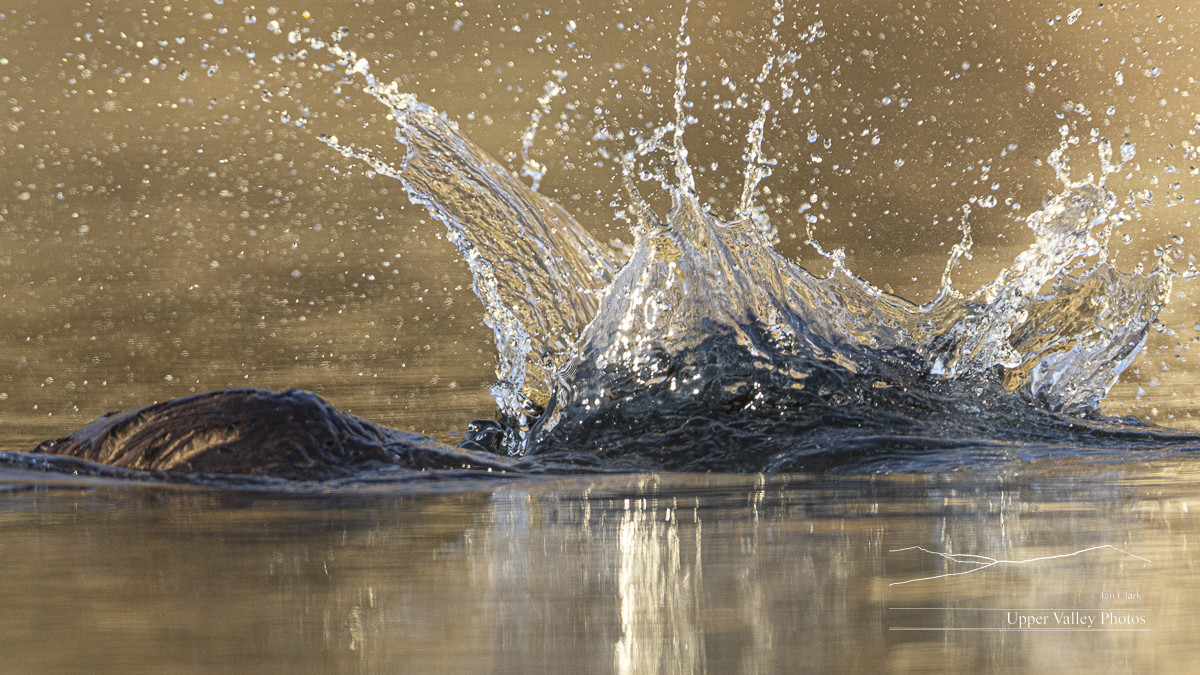
He was too close for me to get a good photo of his tail slap.

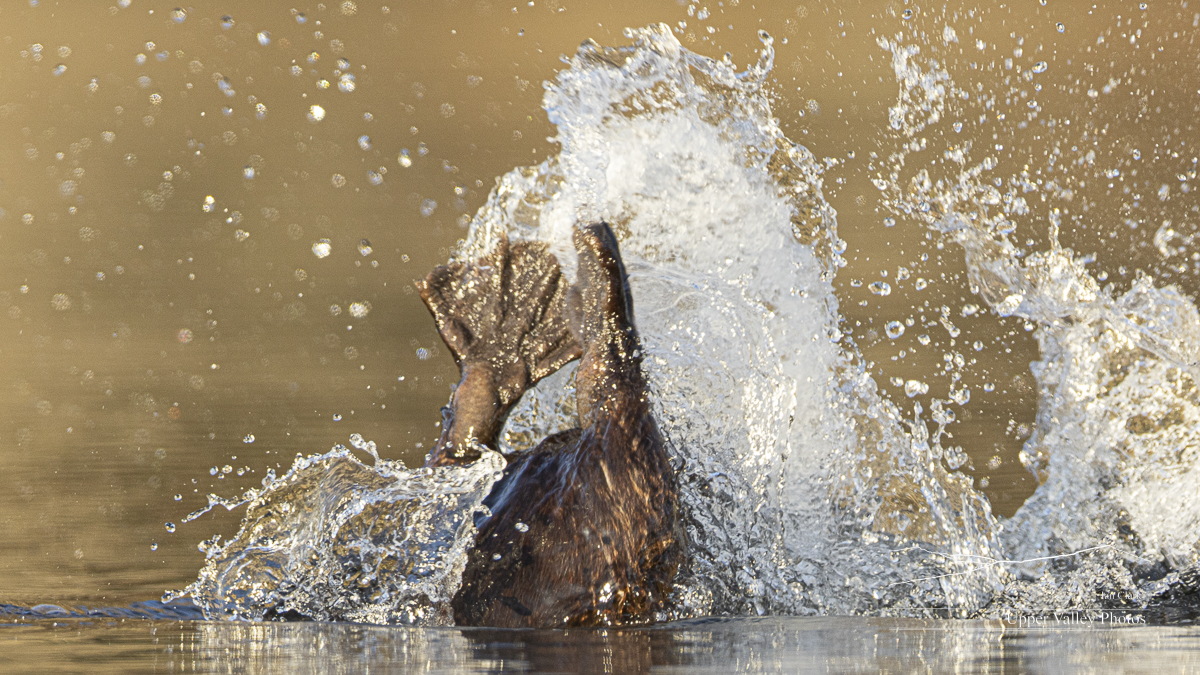
But, I got a great look at his back feet as he dove. They’re HUGE!

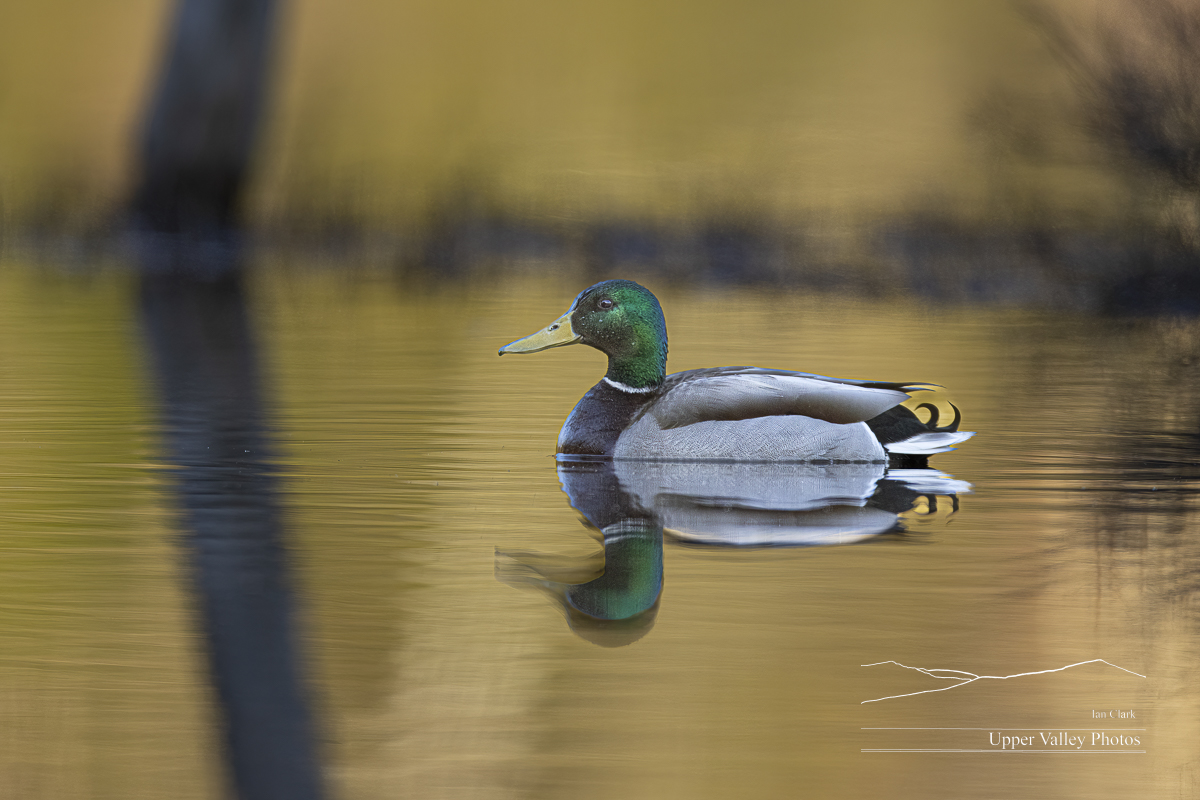
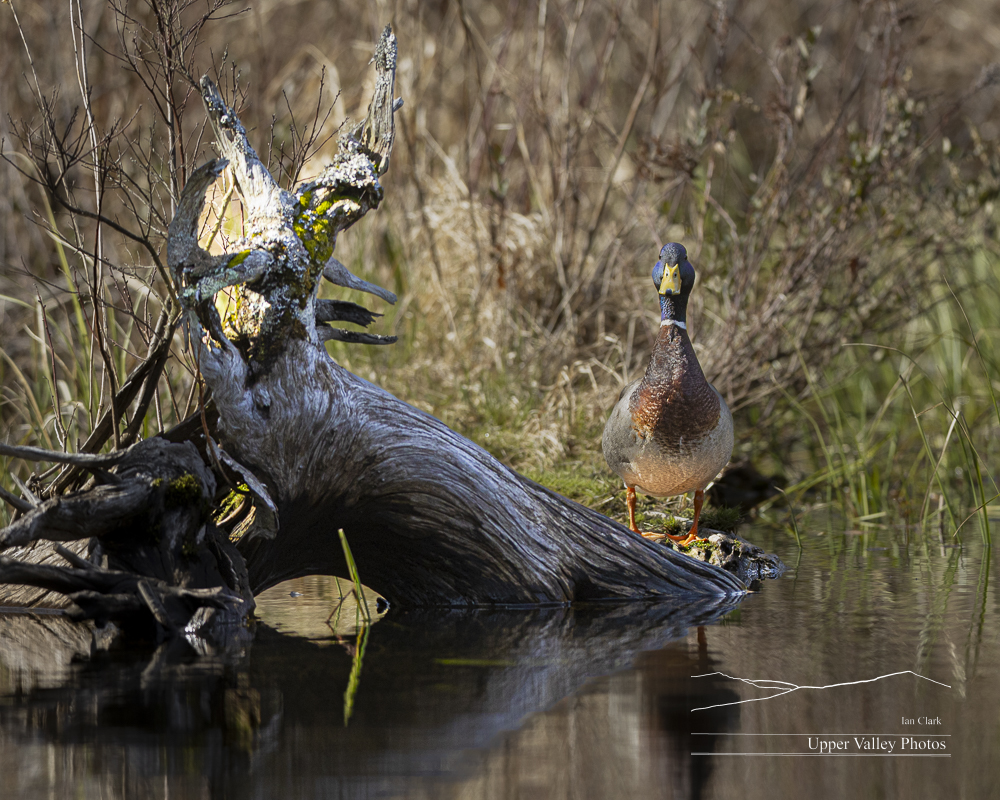
The pond also hosts a variety of ducks. Here’s Mr. Mallard posing nicely.

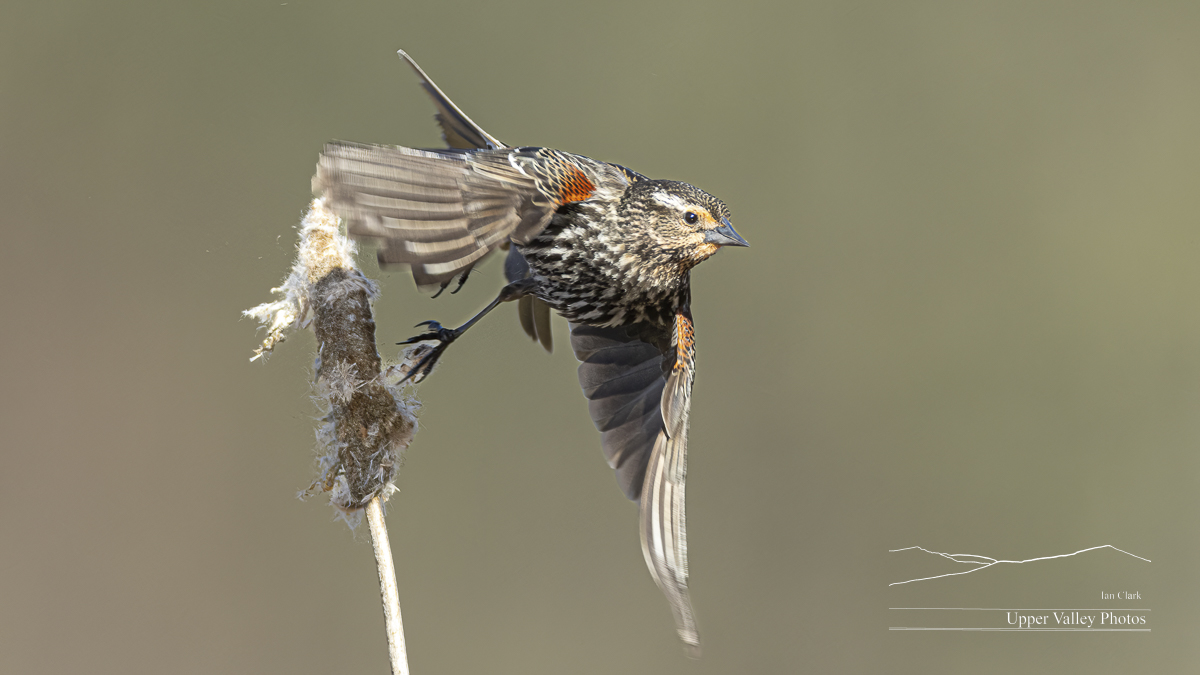
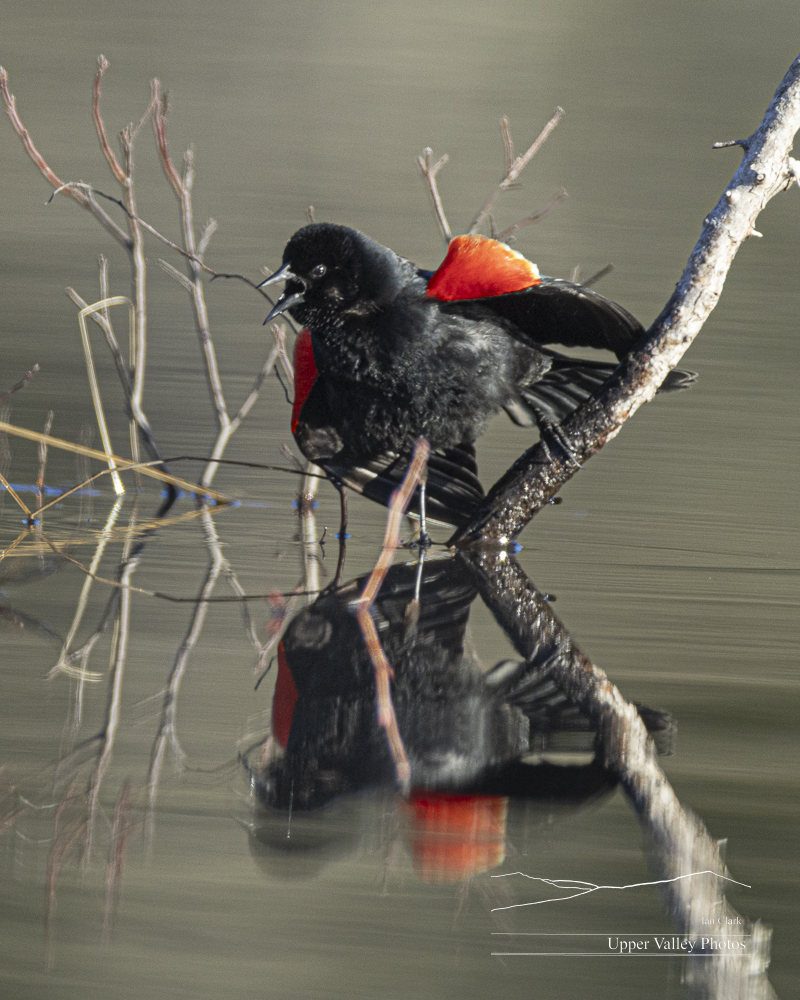
Female red-winged blackbirds have returned. Males have returned about three weeks ago to stake out territories to be ready for the ladies. This was the first female I saw this year. Her appearance had the males singing and displaying with gusto. The females are perfectly colored to blend into the reeds while they sit on the nest, they don’t have to be flashy like the males.

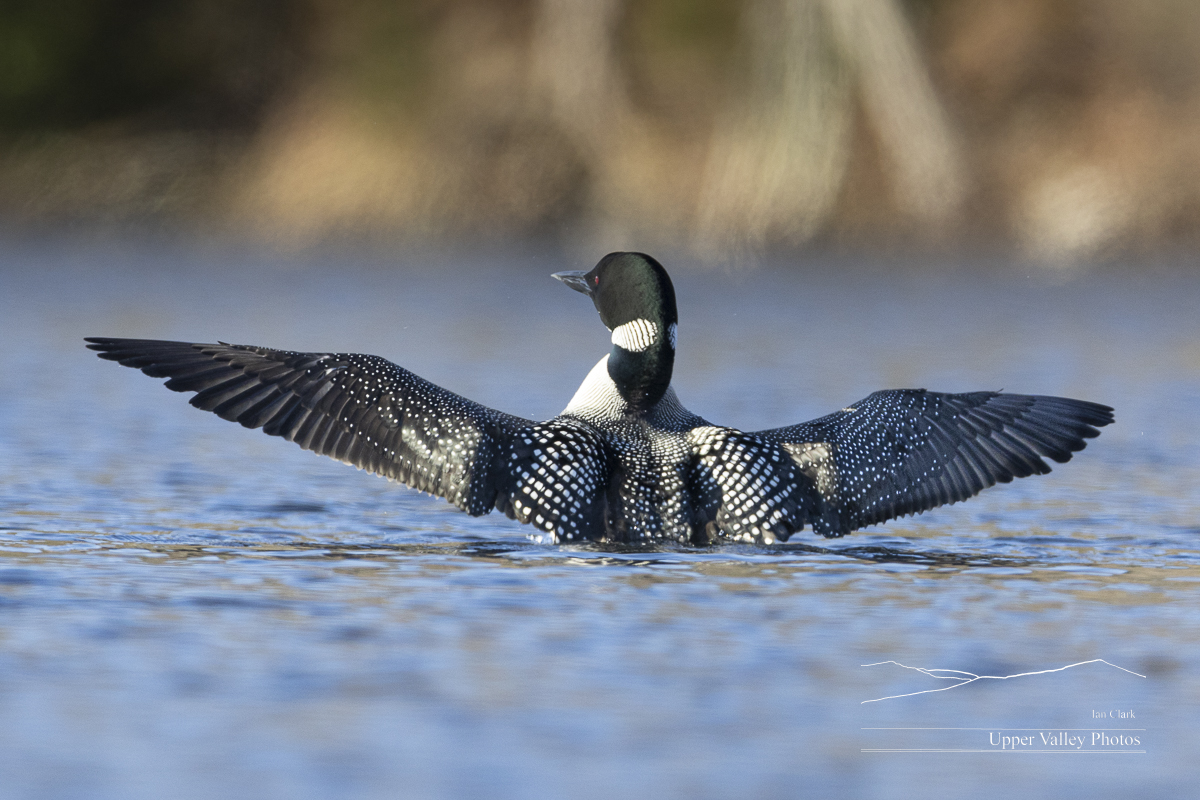
On my way out, the loons were doing a thorough preening. They usually finish with a wing stretch. I waited a few minutes and was rewarded when they both stretched.

A nice finish to the morning.

There was another mallard drake posing by the boat launch when I arrived. As I was putting my gear away, an immature eagle dove on him and his mate. The both dove and lived to quack another day.

Last Friday, I visited the Middletons. They were busy foraging, apparently having to work for dinner. They were making long dives and covering lots of territory underwater. I went to see who else might be around the pond.
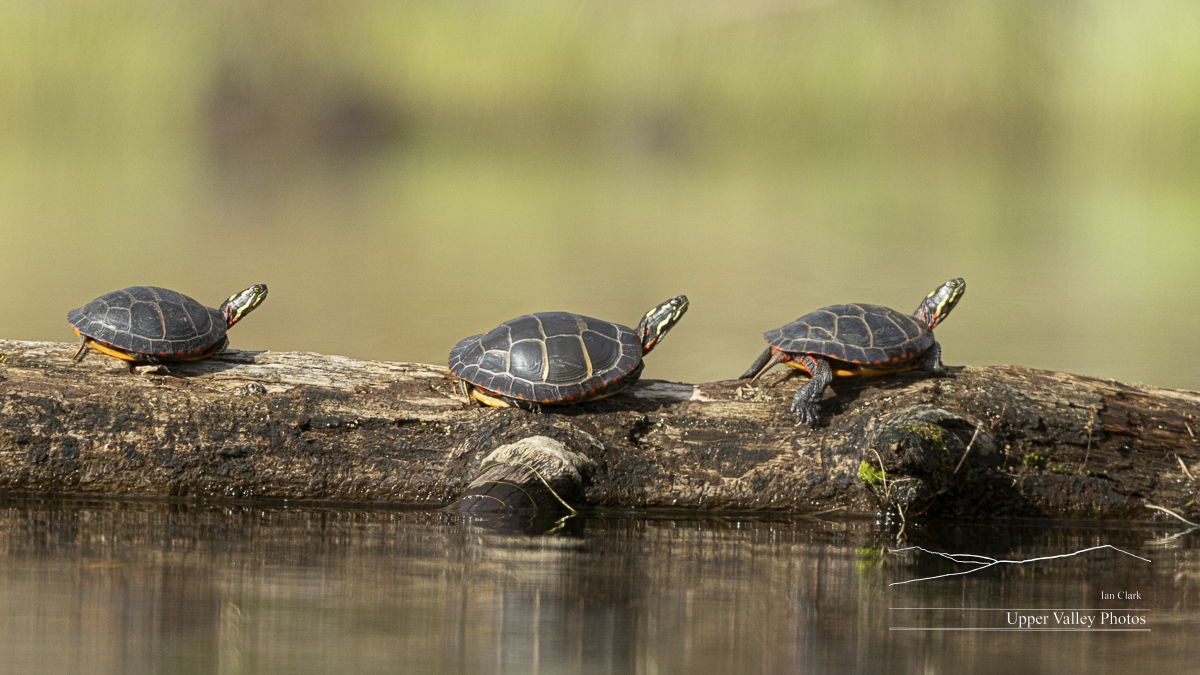
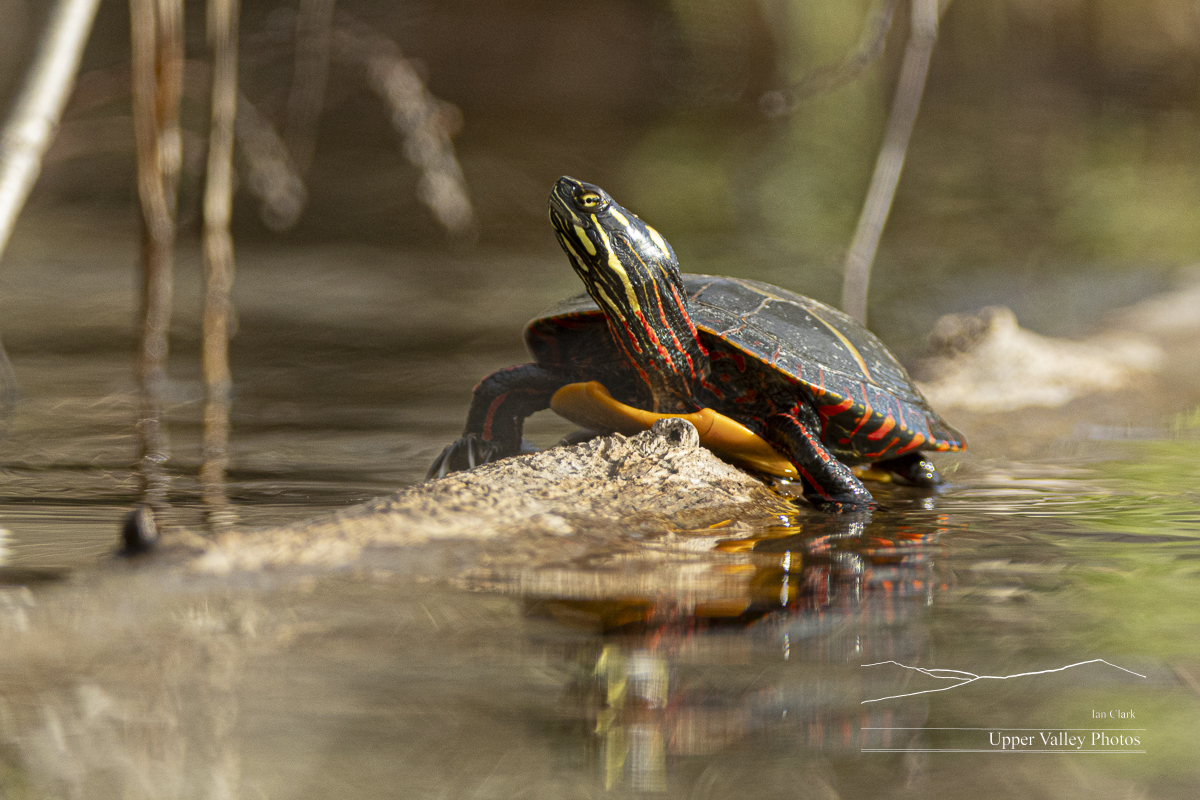
There was a large number of painted turtles basking around the pond.

This painted turtle seems to be giving me some attitude…..

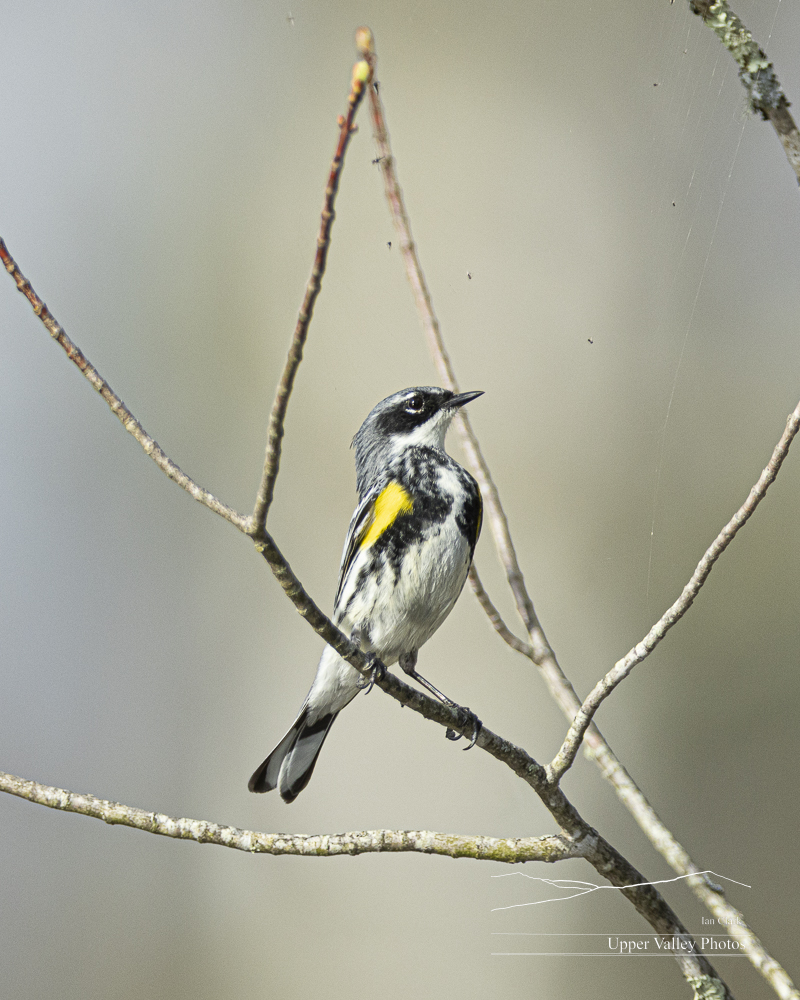
There was a small flock of warblers foraging for insects high in the trees. I tried to tell them that the black flies were available at my eye level, but they didn’t seem interested. This is a yellow-rumped warbler, known as a ‘butter butt’ to birders.

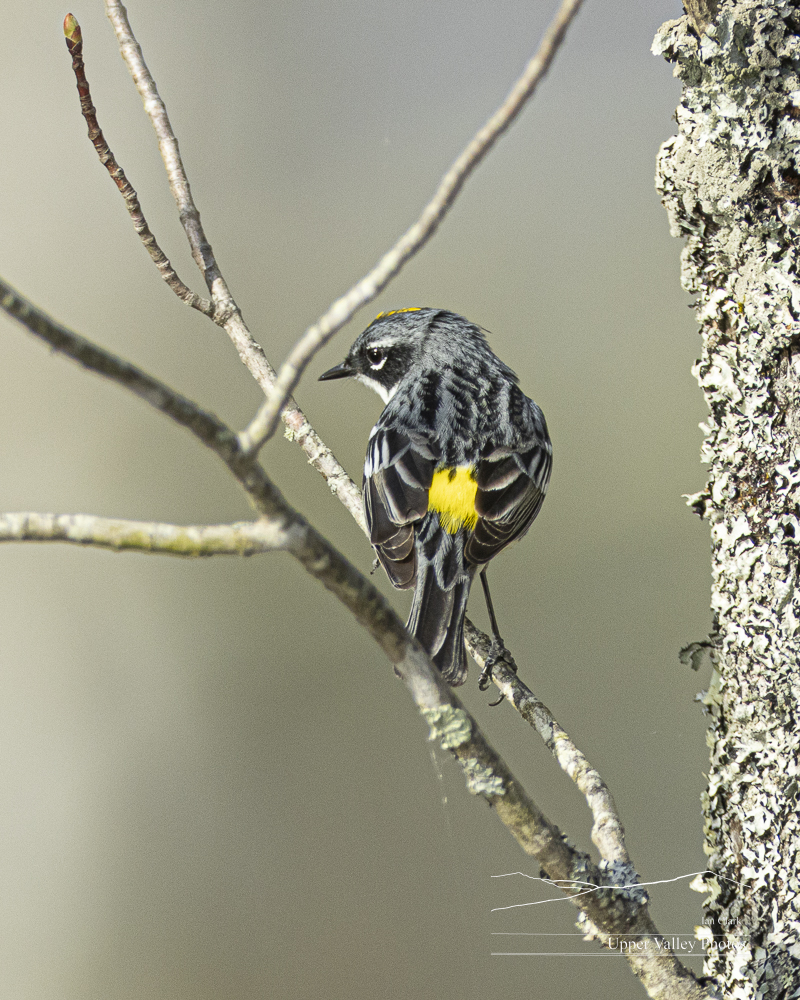
And this explains how they got their name.

There were several pine warblers in the flock. I’ve yet to get a good photo of one. They tend to forage deep in the brush, making it hard to get an unobstructed view of them. It turns out one of my skills is photographing branches on which pine warblers were very recently perched. (My other talent is stalking heron-shaped sticks.)
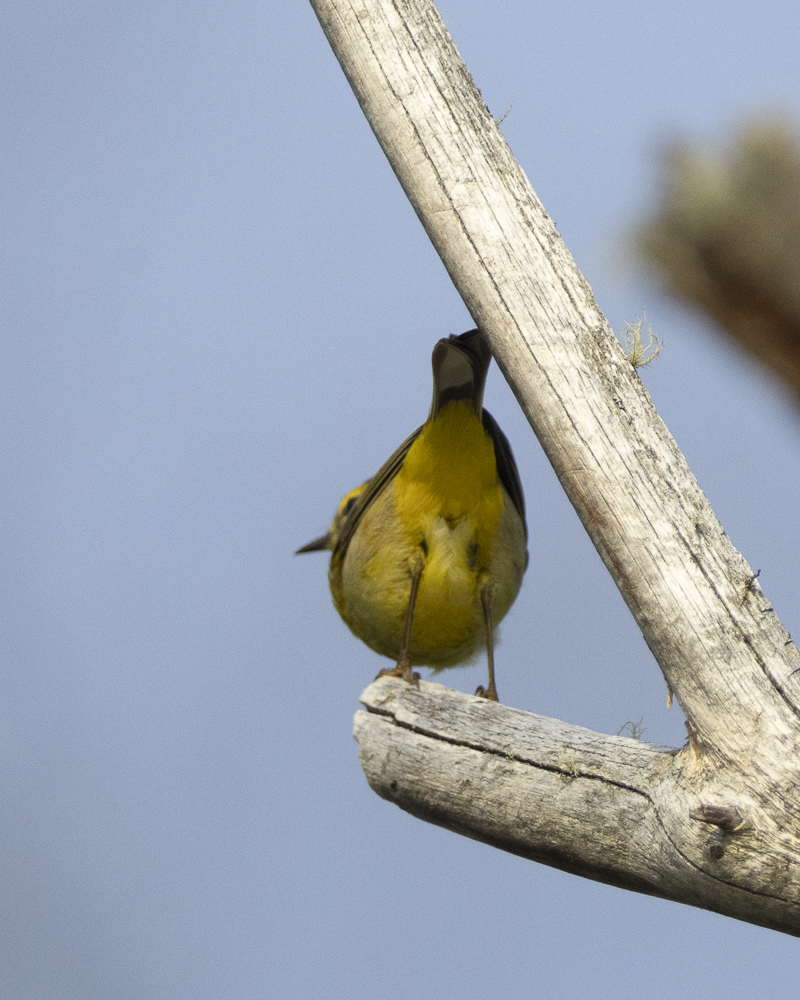
This time I got lucky enough to actually get the bird before it flew. Looks like I’ll have to keep trying…..
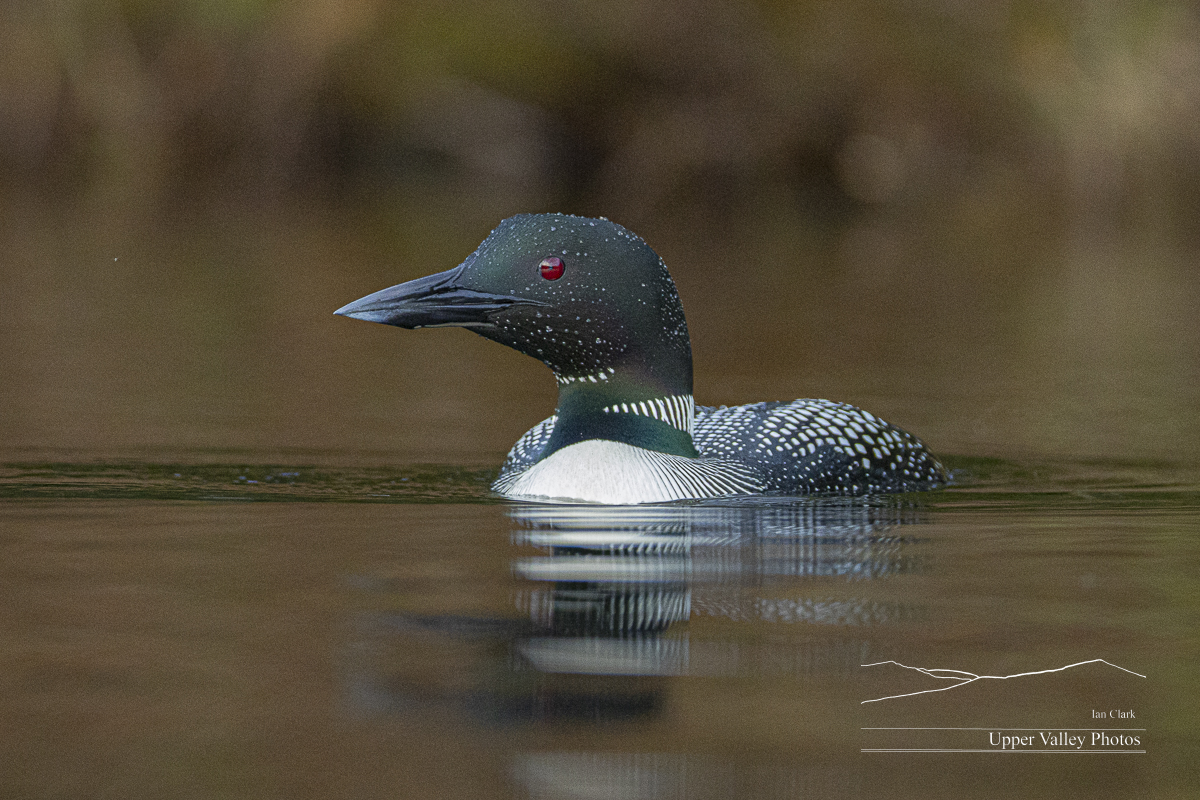
The Middletons finished dinner and cruised not far from the boat launch as I headed in. Once again, one beached and called – it looked like the female presenting, but the other loon did not respond. It is still a couple weeks early for them to be mating. I didn’t get a shot of her before she returned to the water, but here she is checking me out.

Saturday morning found me visiting the Westons once again. The weather went south rapidly and I left when it started raining.
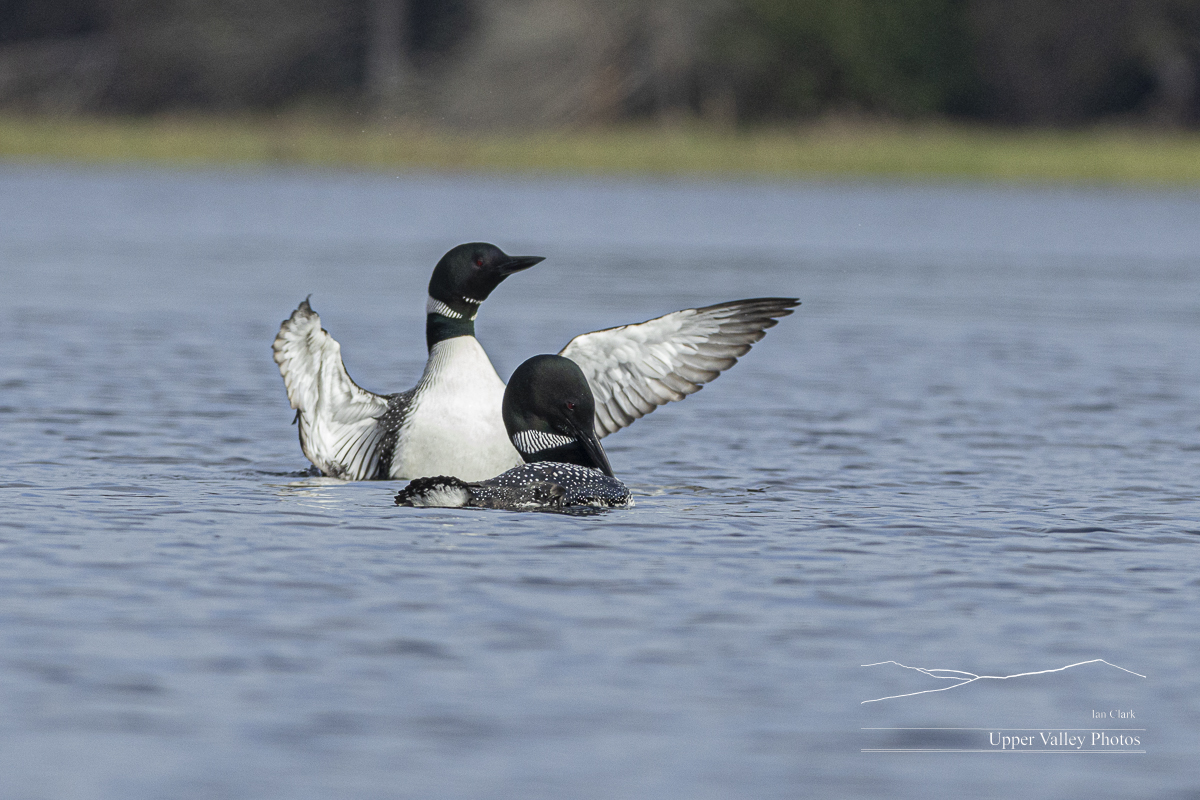
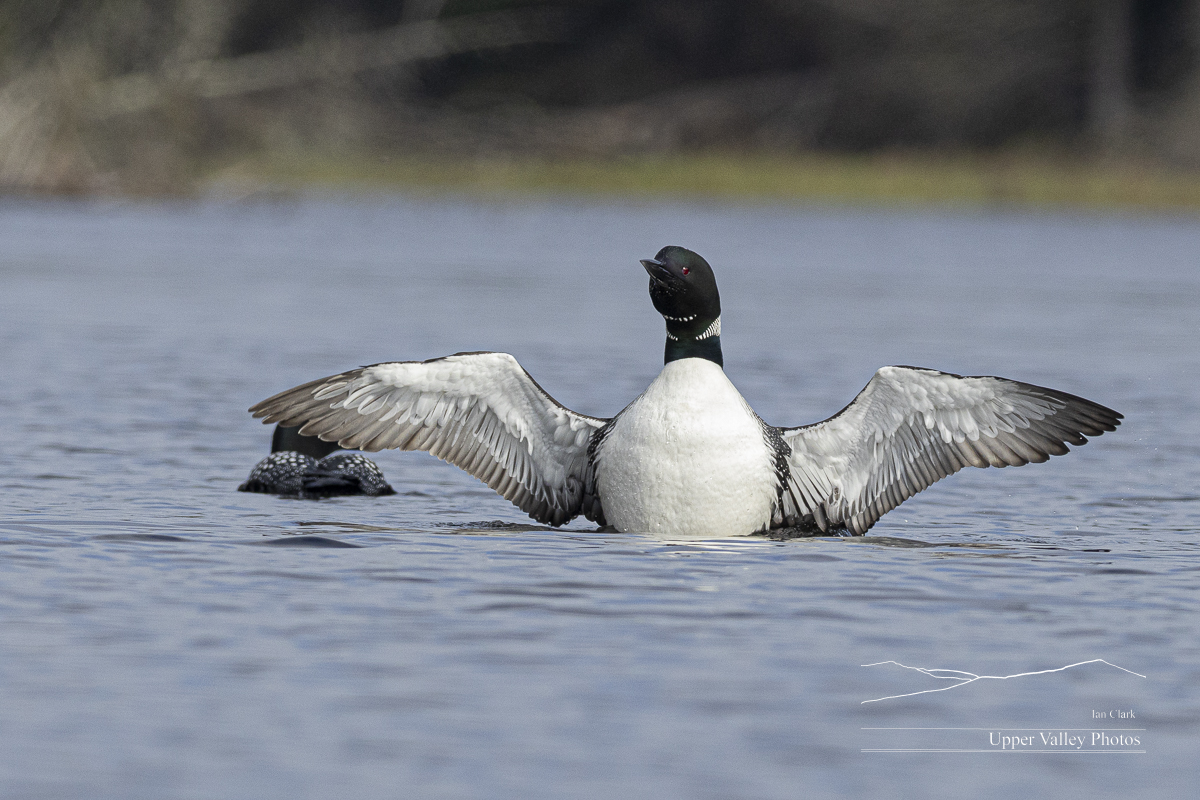
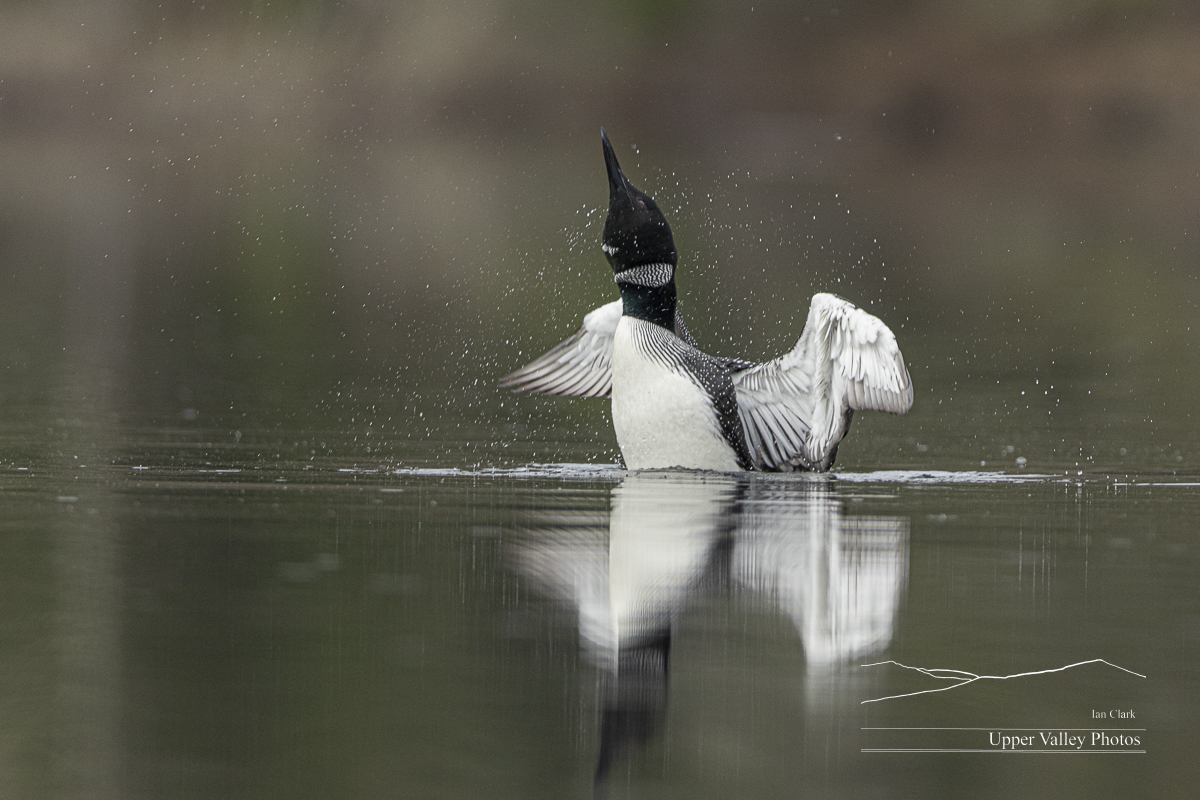
The loons were busy preening when I caught up with them, both ended with a big stretch.
And the other loon stretches…..

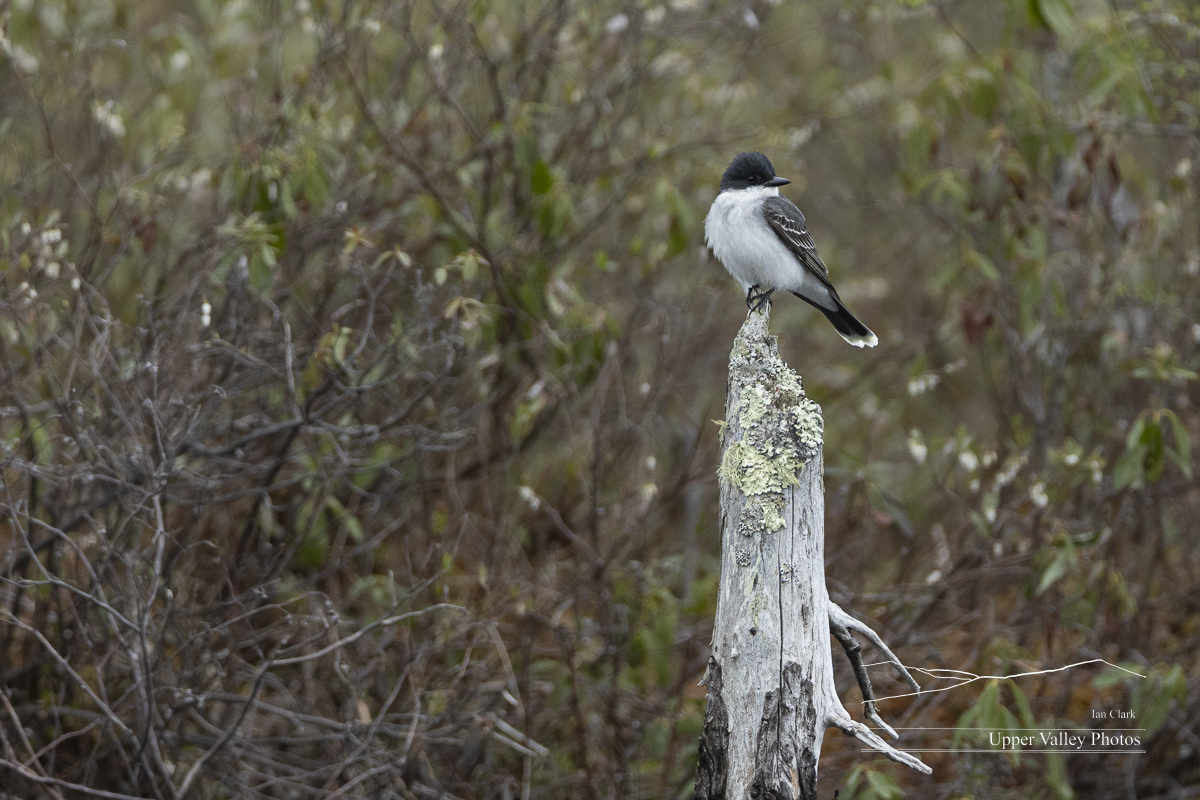
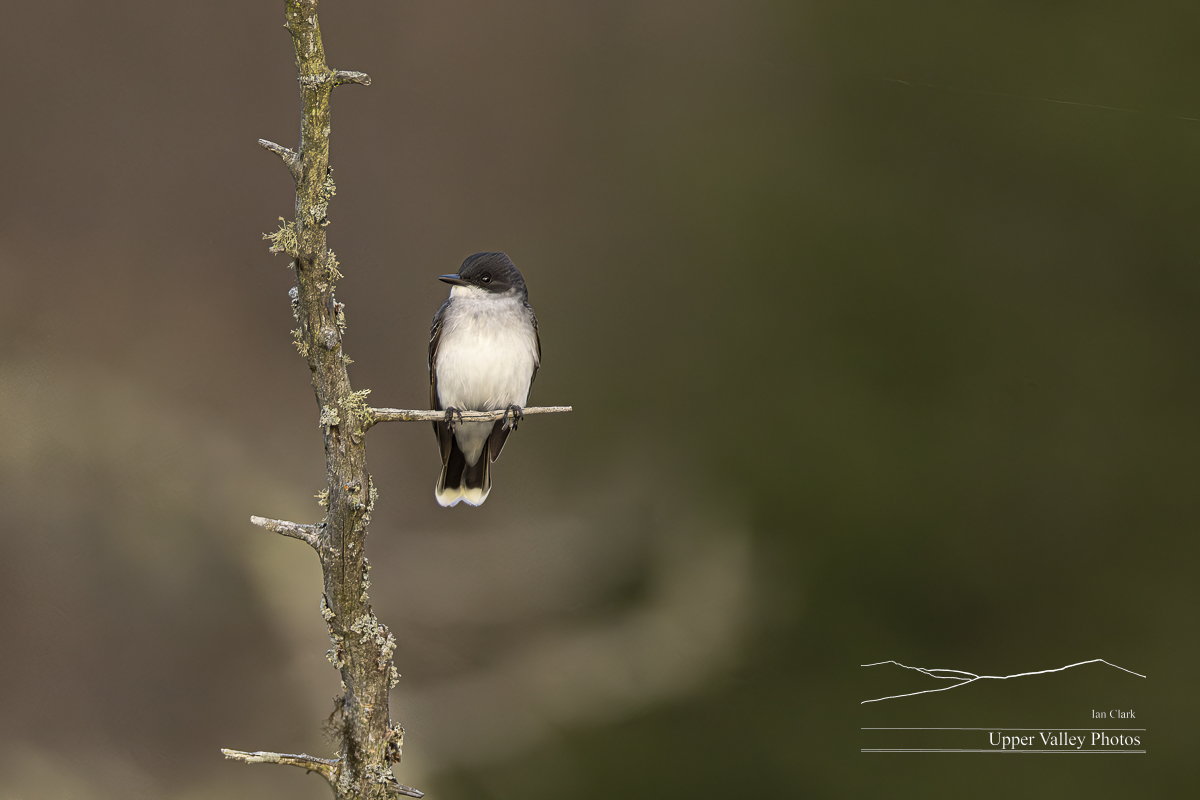
Eastern kingbirds were out in large numbers. They’re insect hunters – they love dragonflies in season. They perch just about eye level on the edge of the pond and dart out to nab insects passing by.
Another kingbird perched along the side of the pond.
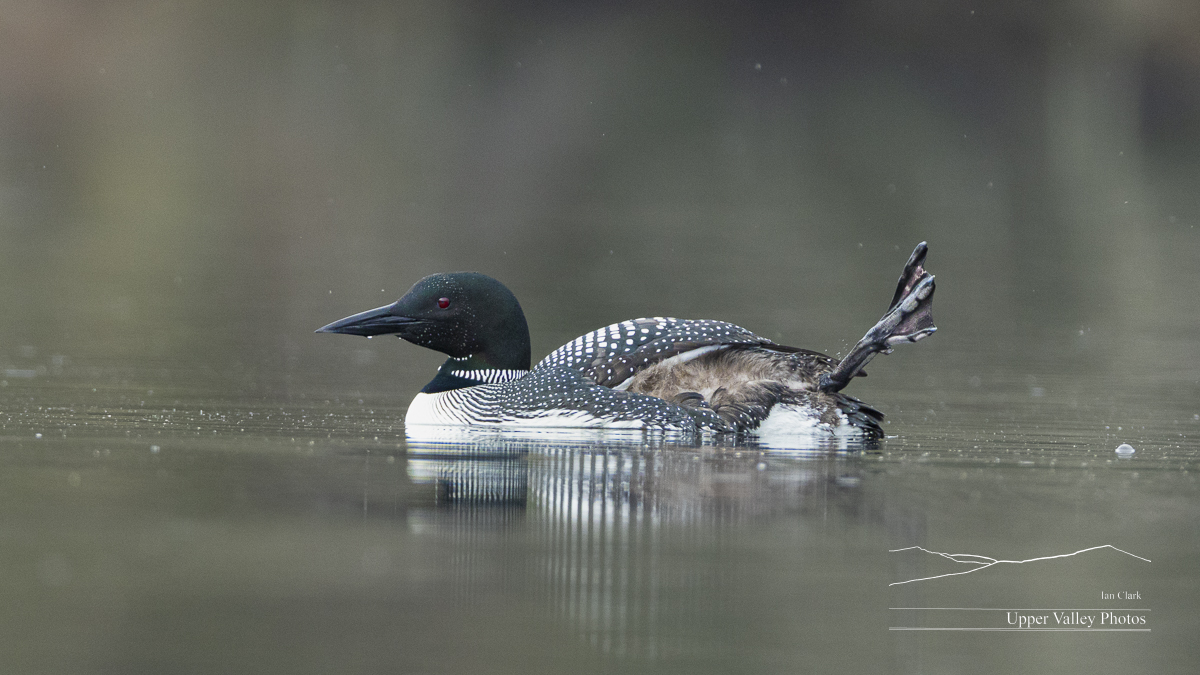
One of the loons stretching a leg. This gives a great look at how far back their legs are and the size of the foot.
Of course, I was willing to pause in the rain to get one last nice wing stretch….

Spring Has Arrived

After several false starts, it looks like spring has arrived to stay in the Upper Valley. Of course, I’m not taking the snow tires off until the second week of May.

Along with the ice going out, our summer residents are arriving back in droves. I spotted six loons on the Middleton’s pond on March 31. By the time I put the boat in the next day, they’d moved on. My bet is they’d been scouting the territory to see which ponds were open and just stopped for a rest and a meal before heading back south. But there were other critters out and about.
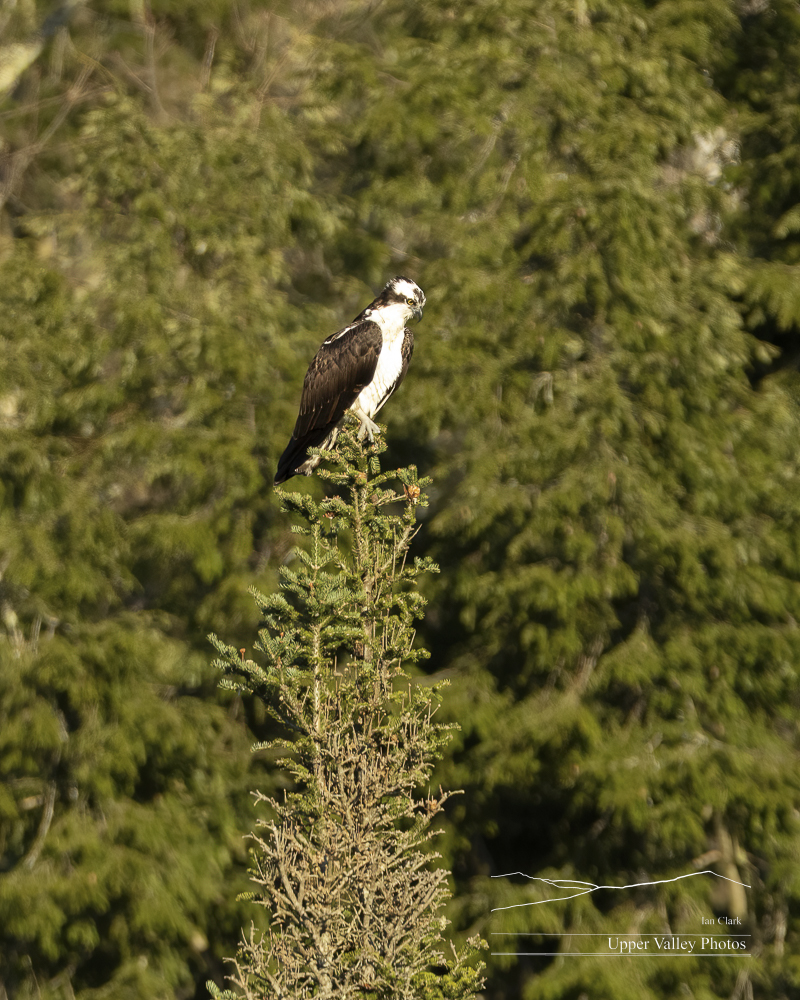
One of the resident osprey had a good perch overlooking the pond.

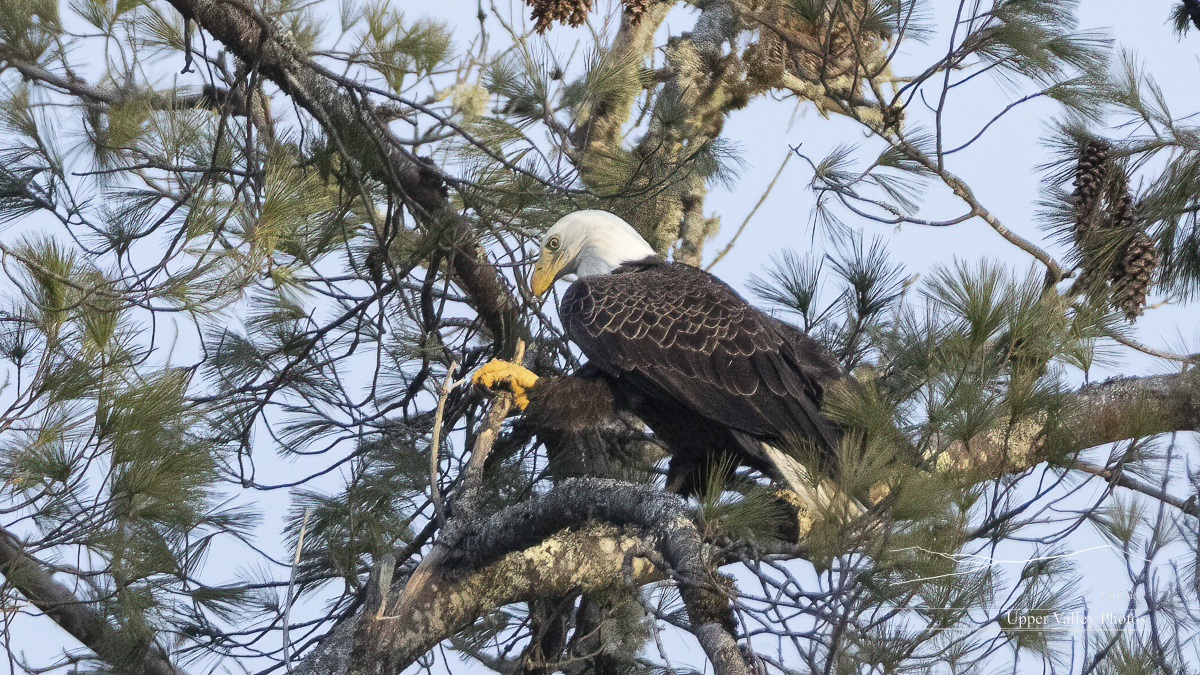
A bald eagle hauled several sticks into a tall pine that looks over the shore. I’m not sure what he? was up to – too late for this year’s nest and seems early to be starting on next year’s. When I check again yesterday, there didn’t seem to be any progress on a nest.

My next trip took me to the Weston’s pond last Sunday. A friend on the pond told me that one loon had arrived back on the April 9. There was still only one loon on the pond.
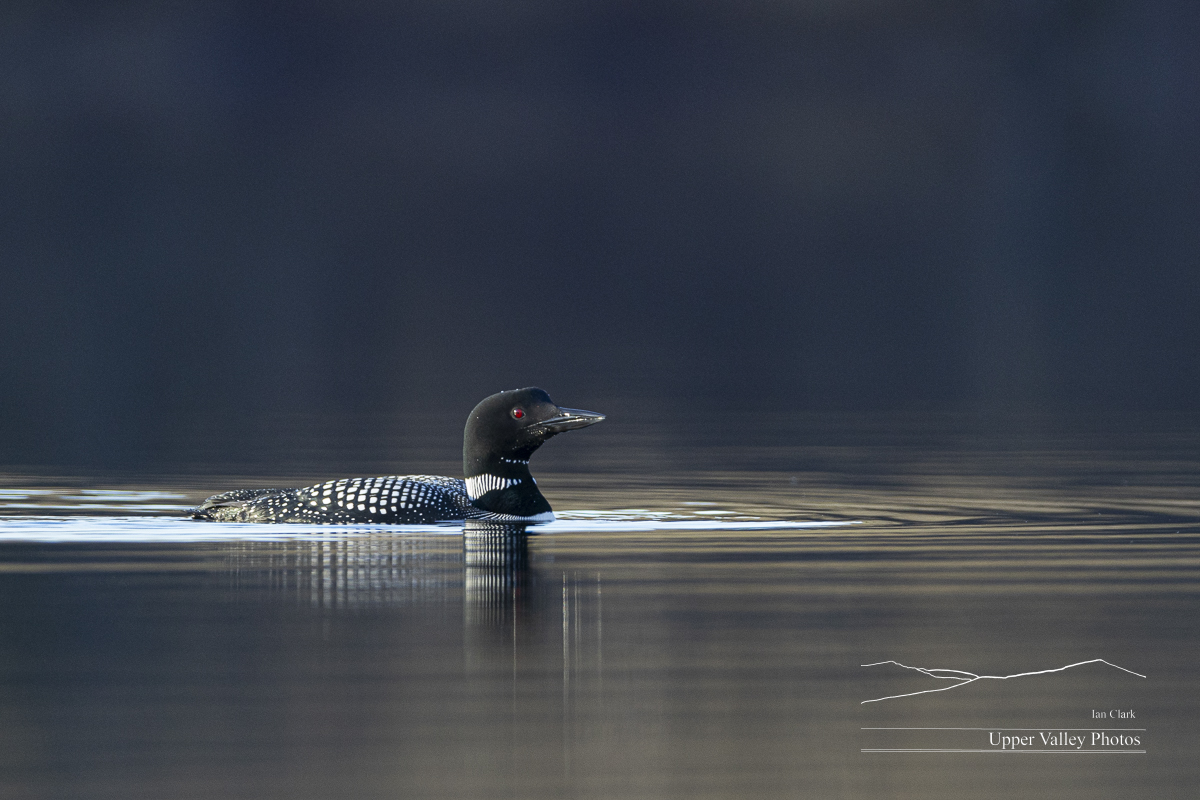
The first loon back on the Weston’s pond. He? spent the morning cruising lazily, occasionally foraging.

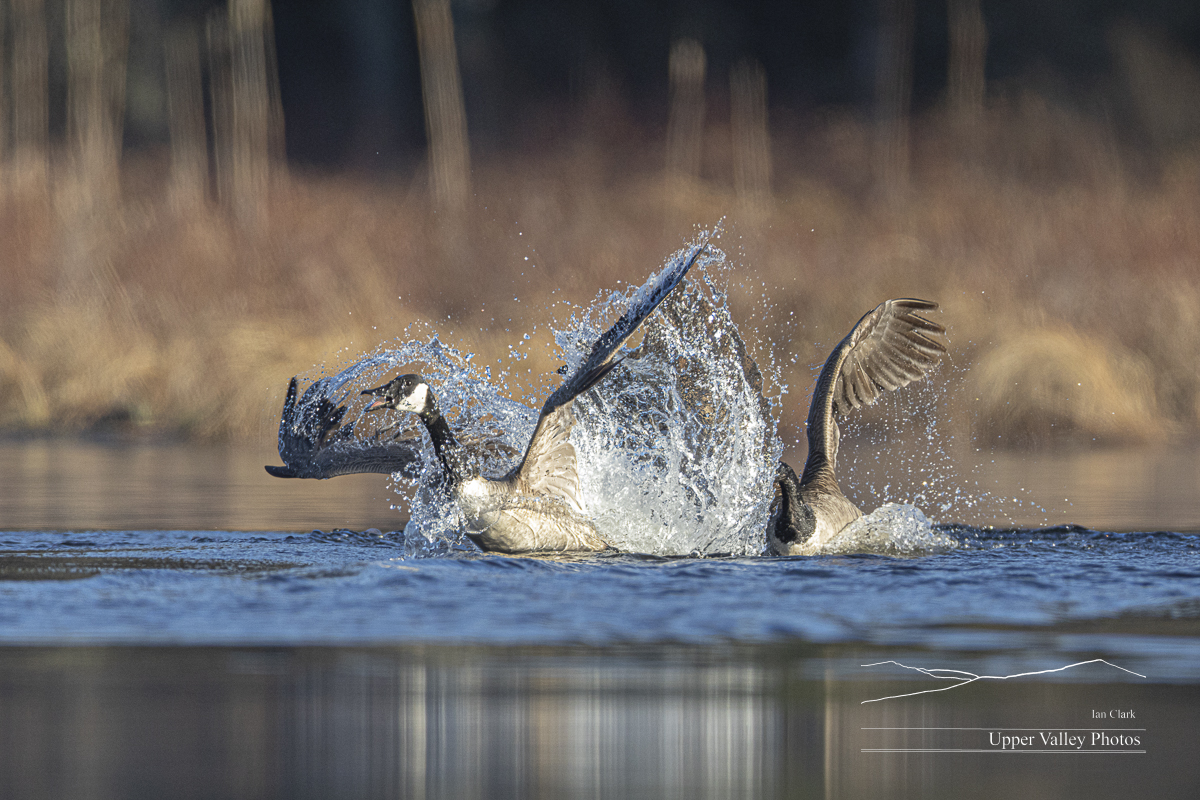
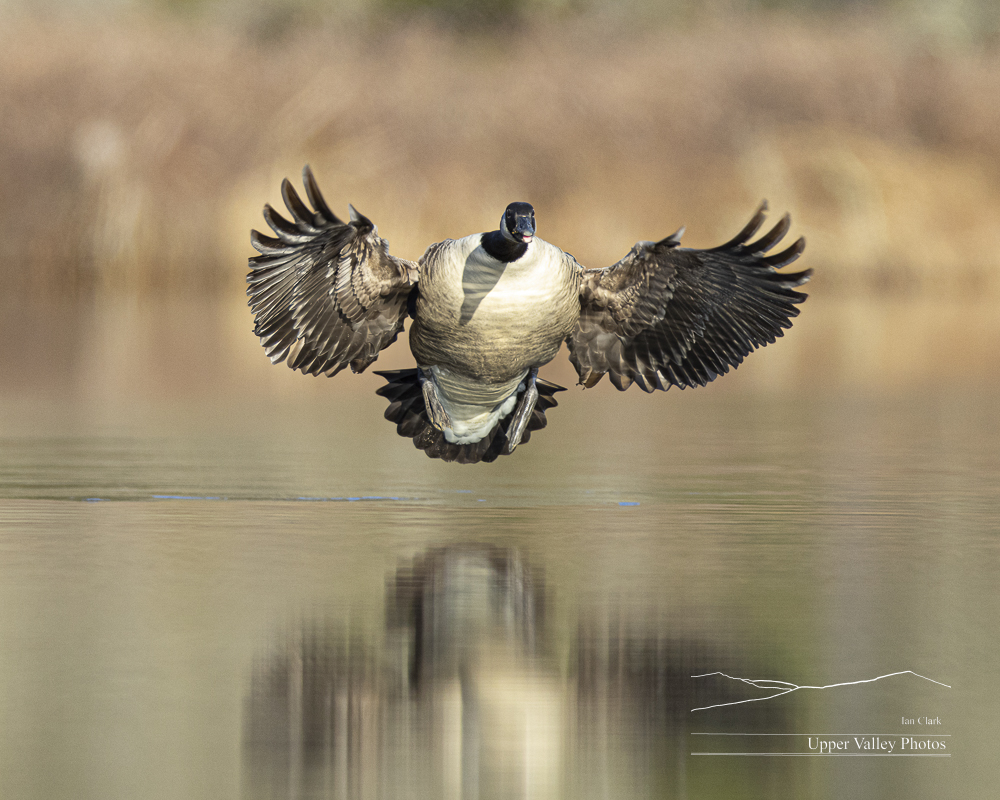
Most of the action on the pond was from the Canada geese. They’re sorting out territories. This requires lots of honking, hissing and wrestling. Here’s another coming to join the fray.

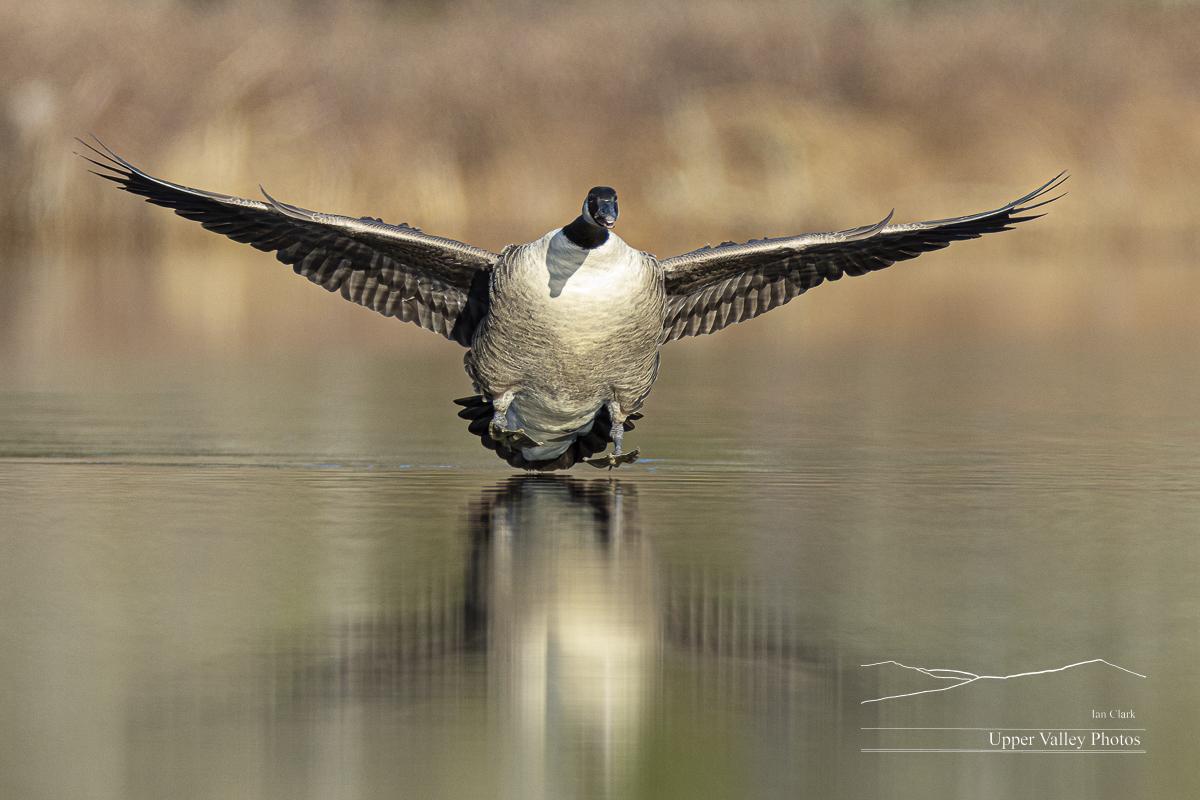
Just as the tail feathers touch the water…..

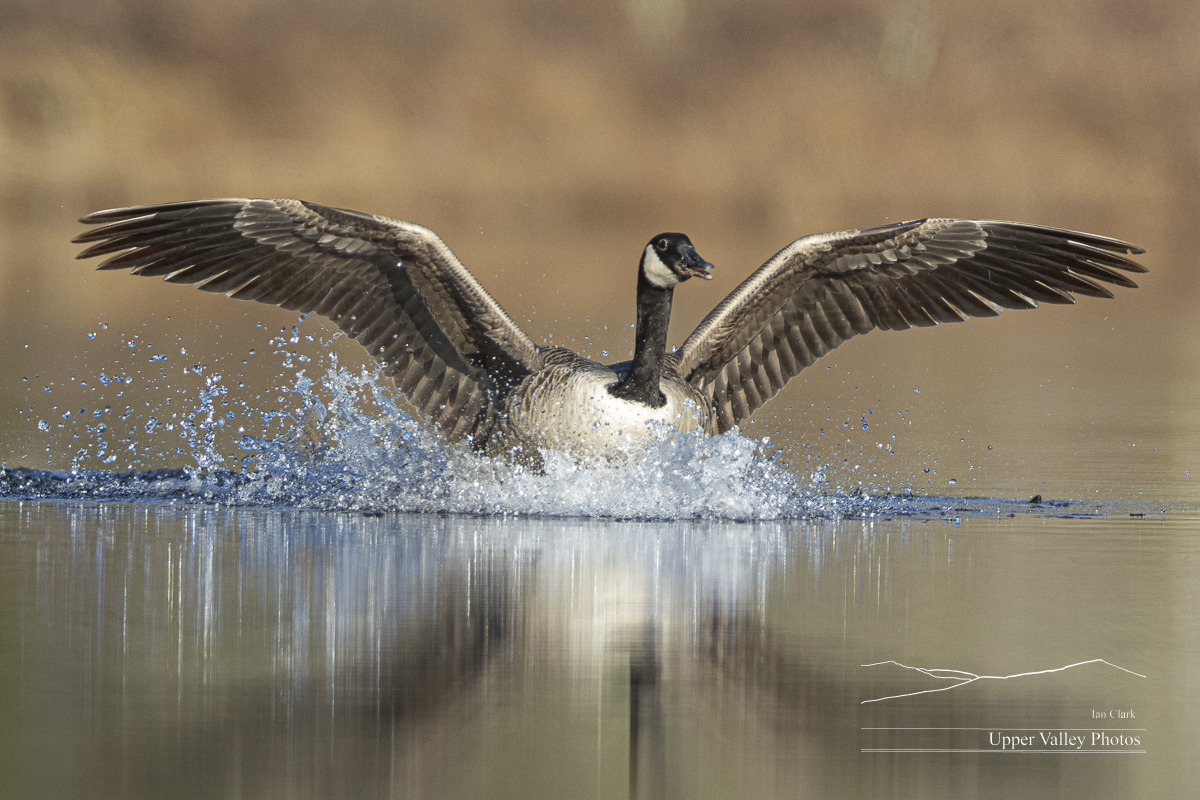
And splashdown!

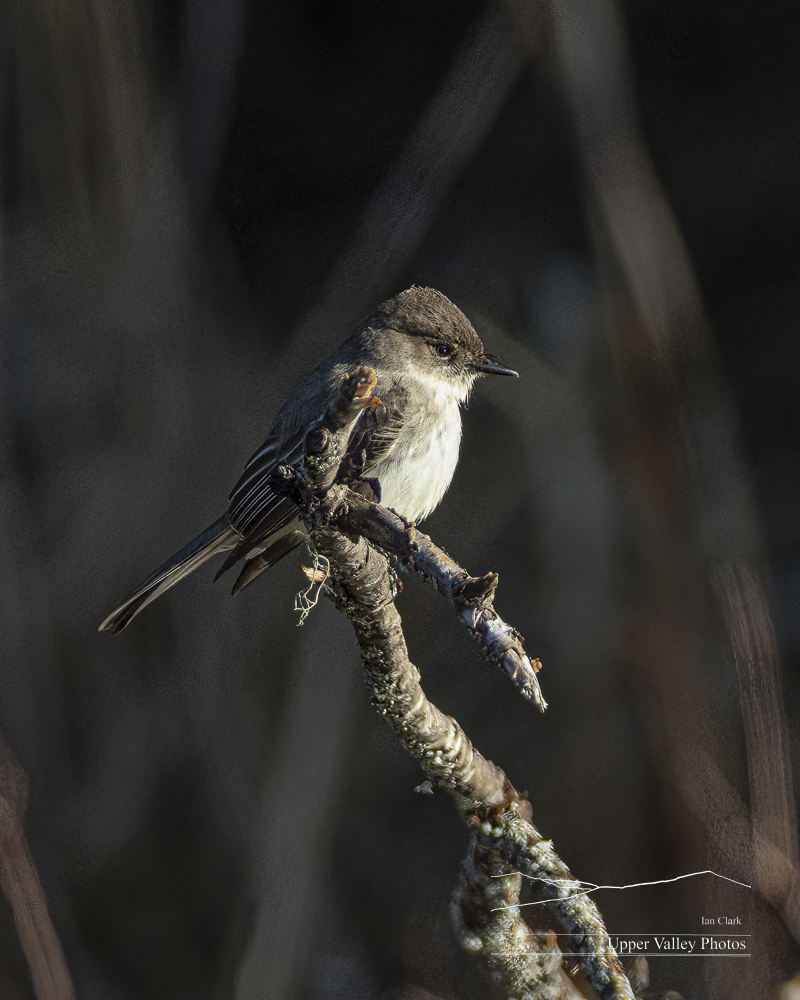
Eastern Phoebe
There were several eastern phoebes hunting along the edge of the pond and lots of tree swallows swooping over the pond.

I got back to the Weston’s pond on Tuesday for a brisk paddle – it was 39°F when I put the boat in. We still had only one loon and the geese were causing a ruckus.
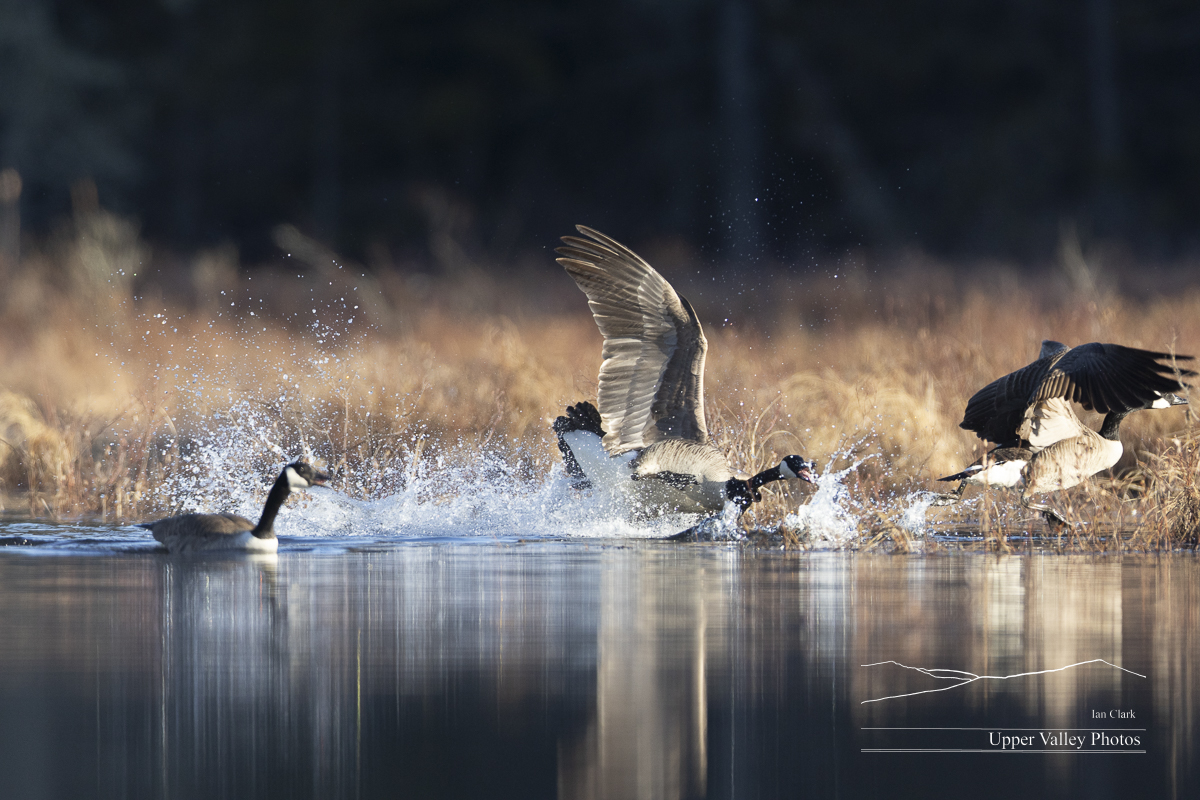
There was one hummock just off shore that was a treasured spot. It changed hands several times during the morning. The goose on the right has just abandoned it at the suggestion of the goose in the middle.

The fight wasn’t settled and moved out into the water. The goose being chased eventually conceded and moved off down the pond.
Male red-winged blackbirds are back and staking out territories. I haven’t seen a female yet, they usually wait a while after the males head north.

Wednesday morning found me back on the Middleton’s pond. And missing the balmy day before. It was a chilly 28°F as I pushed through a skim of ice to get on the pond. As soon as I cleared the ice, there were trout feeding at the surface. The osprey both made quick work of finding breakfast. And, there were loons.
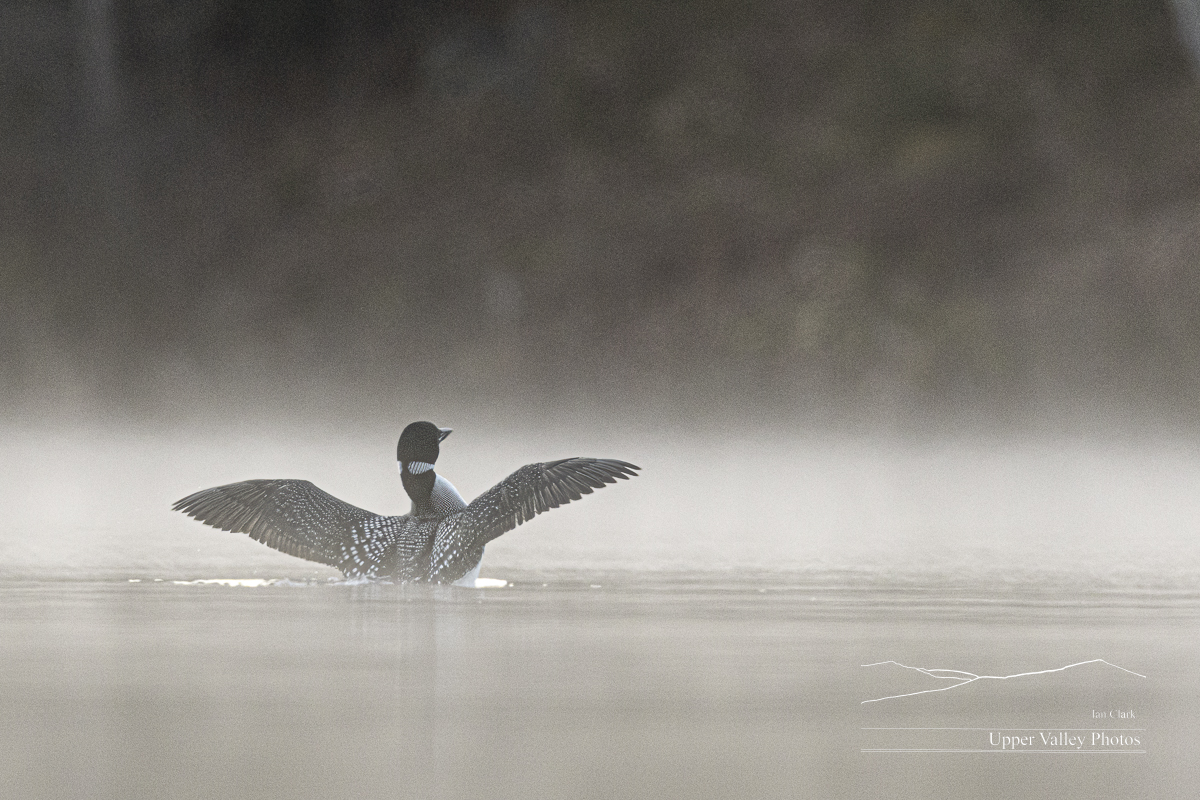
The loons slept in a bit before waking to face the day. They spent some time preening, ending with a nice stretch.. Then decided the day could wait and went back to sleep.

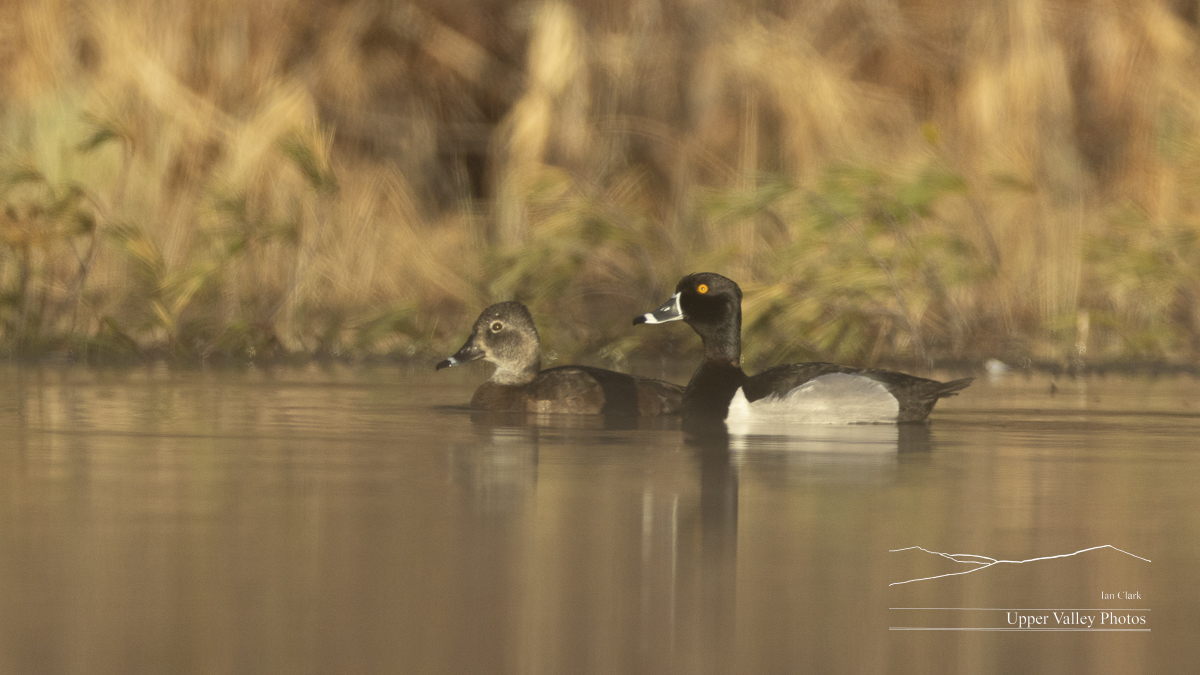
There were lots of ducks of several sorts around the lake. And what seemed an endless of mergansers suddenly flying around. Here’s a pair of ring-necked ducks, a nice catch.


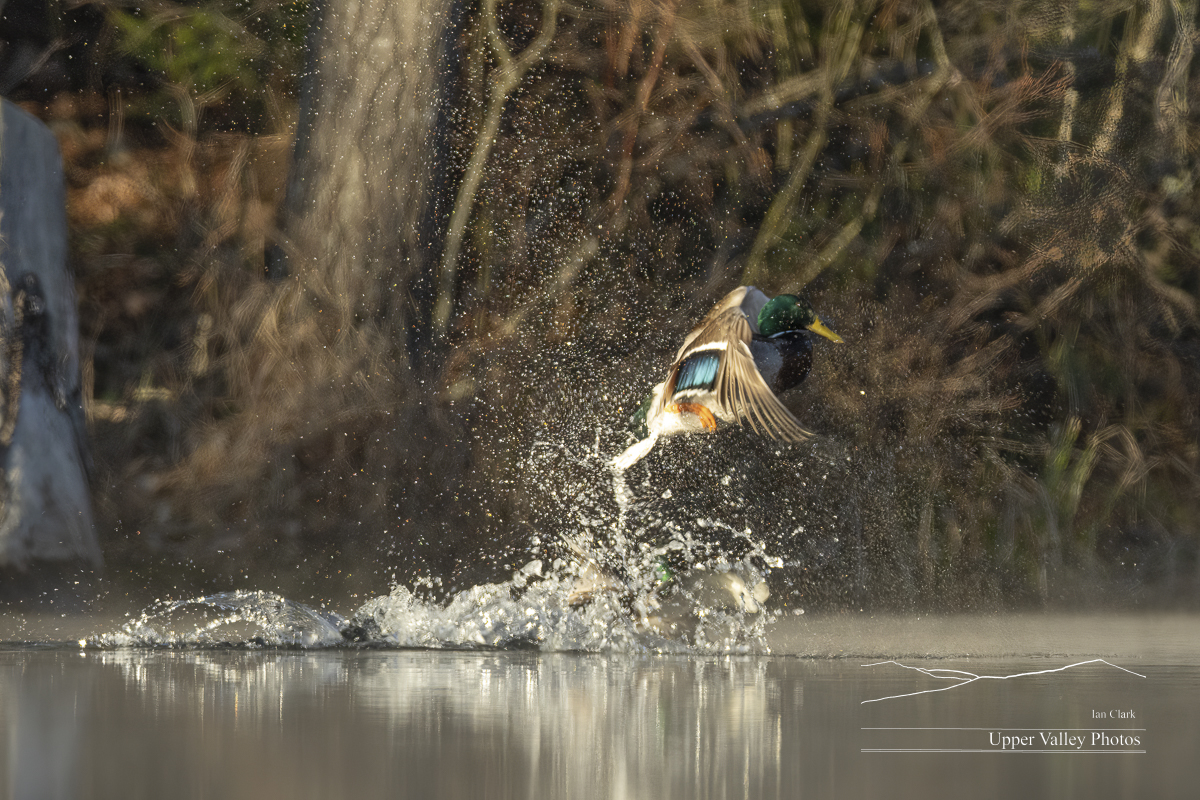
A pair of mallard drakes were swimming along the shore when something startled them. They took a very short flight – maybe 15 feet before settling and continuing on their way.
After a time, our loons reawakened and decided they’d face the day afterall. They headed out to forage a bit.

They also spent some time exploring along the shore. The hummock they’ve used for their nest site for several years washed away in the heavy rains last summer. They’ll have to find a new site.

At one point, one loon beached and almost seemed to be presenting. That would be about a month early. The second loon didn’t respond and they soon started off down the shoreline again.
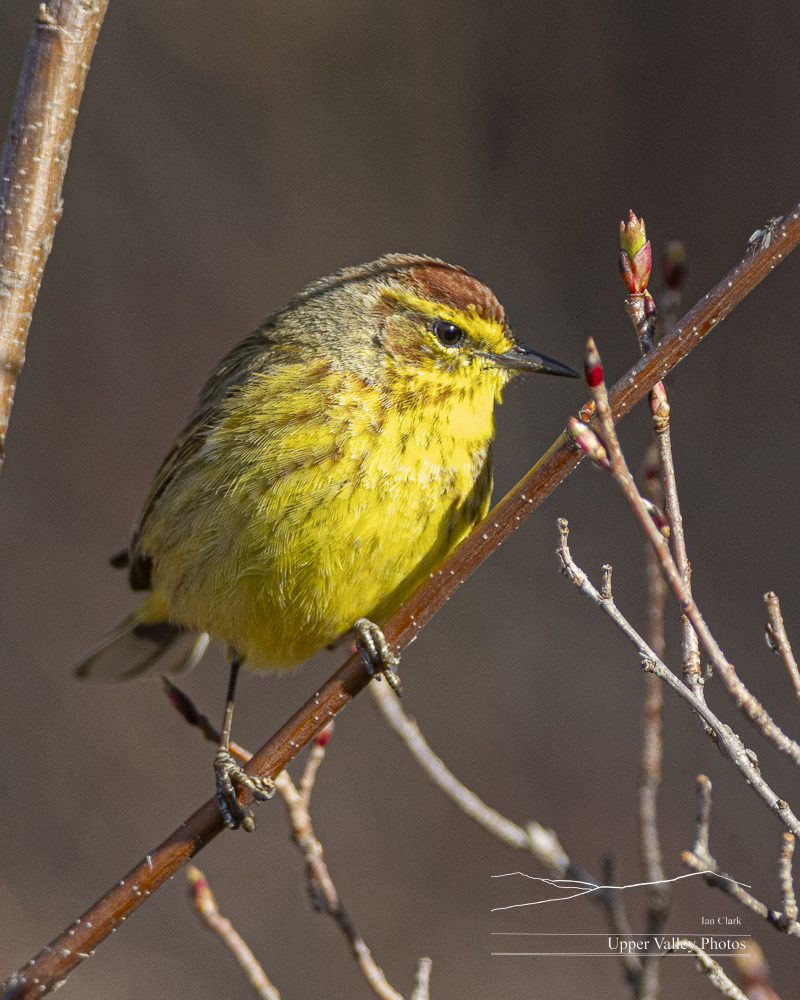
Another pretty good indication that spring is really here is the return of the warblers. Warblers are beautiful little birds. Emphasis on little. They’re devilishly hard to photograph. They’re in almost continuous motion while foraging through the underbrush. This palm warbler paused briefly in the clear.

This morning I headed to the Easton’s pond again. Our second loon has returned. As I was putting the boat in, another loon flew over and was challenged by the loons on the pond. A loon flew over the pond on two more occasions, both times flying off after being challenged. The home team spent the morning foraging and preening.

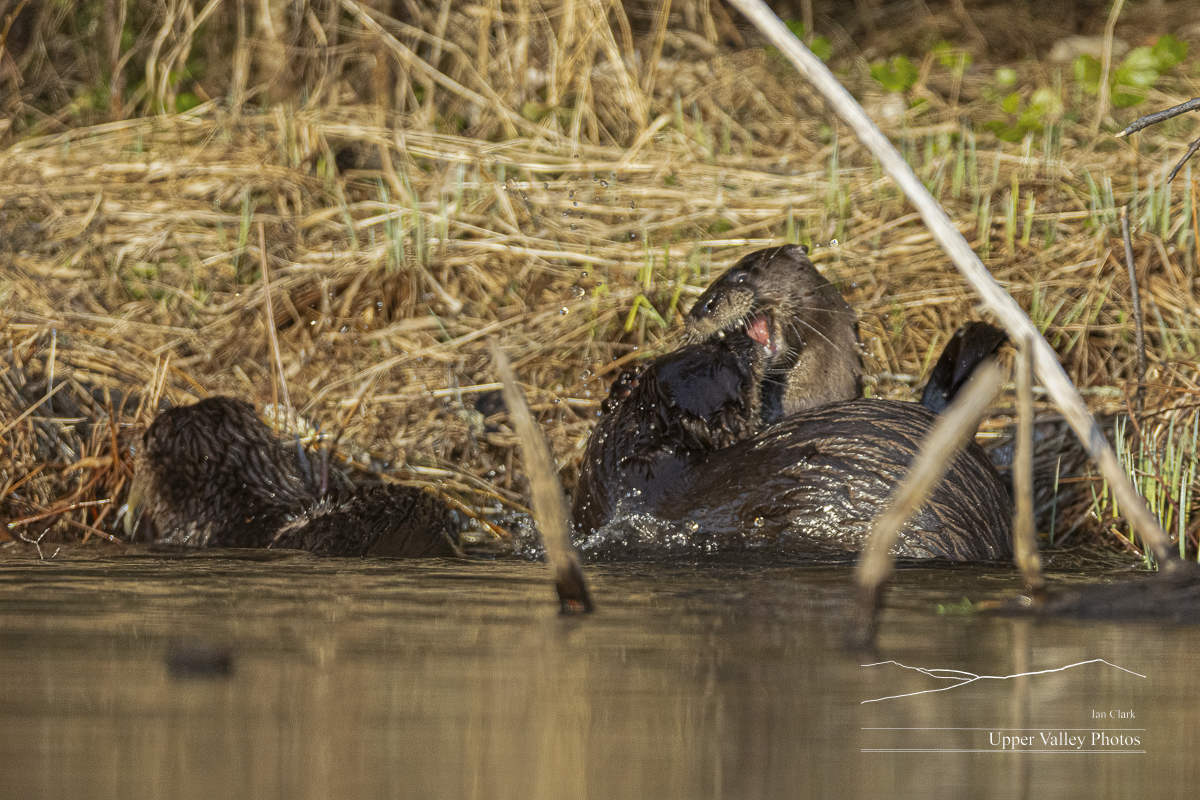
The highlight of the morning was finding three otters feeding and wrestling on the bank of the pond.
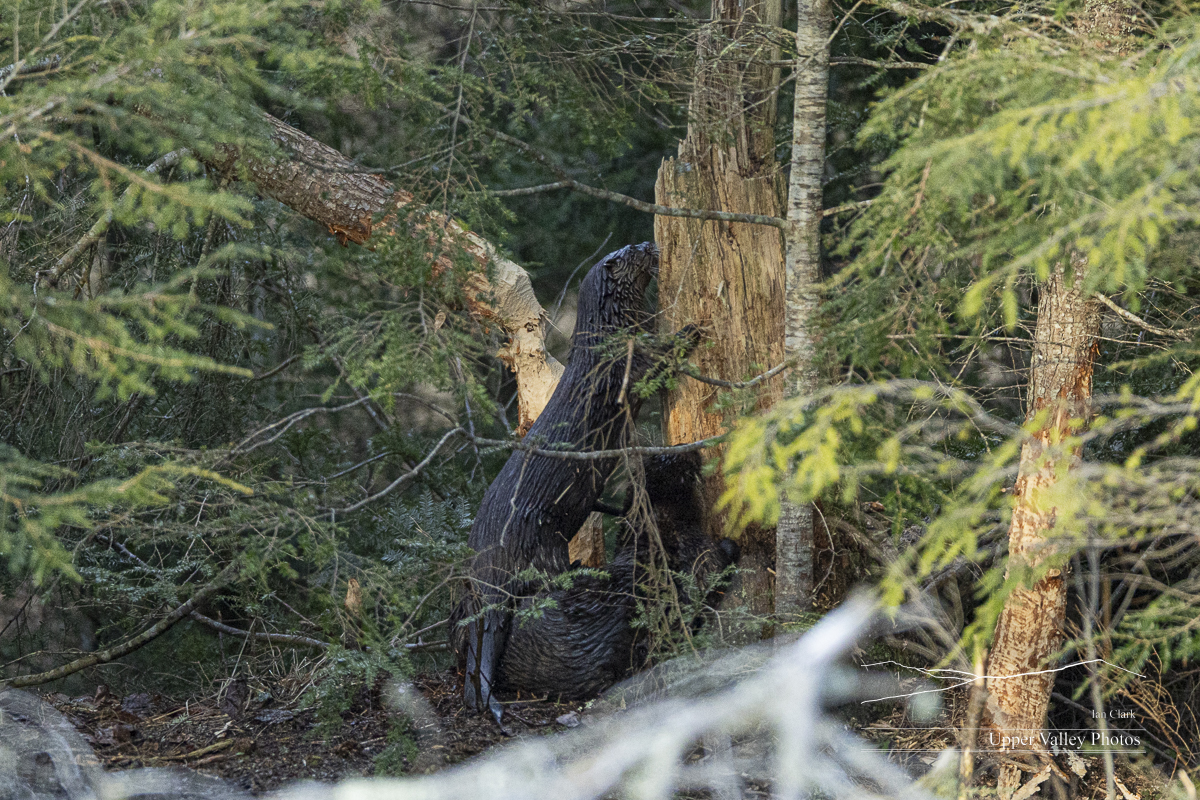
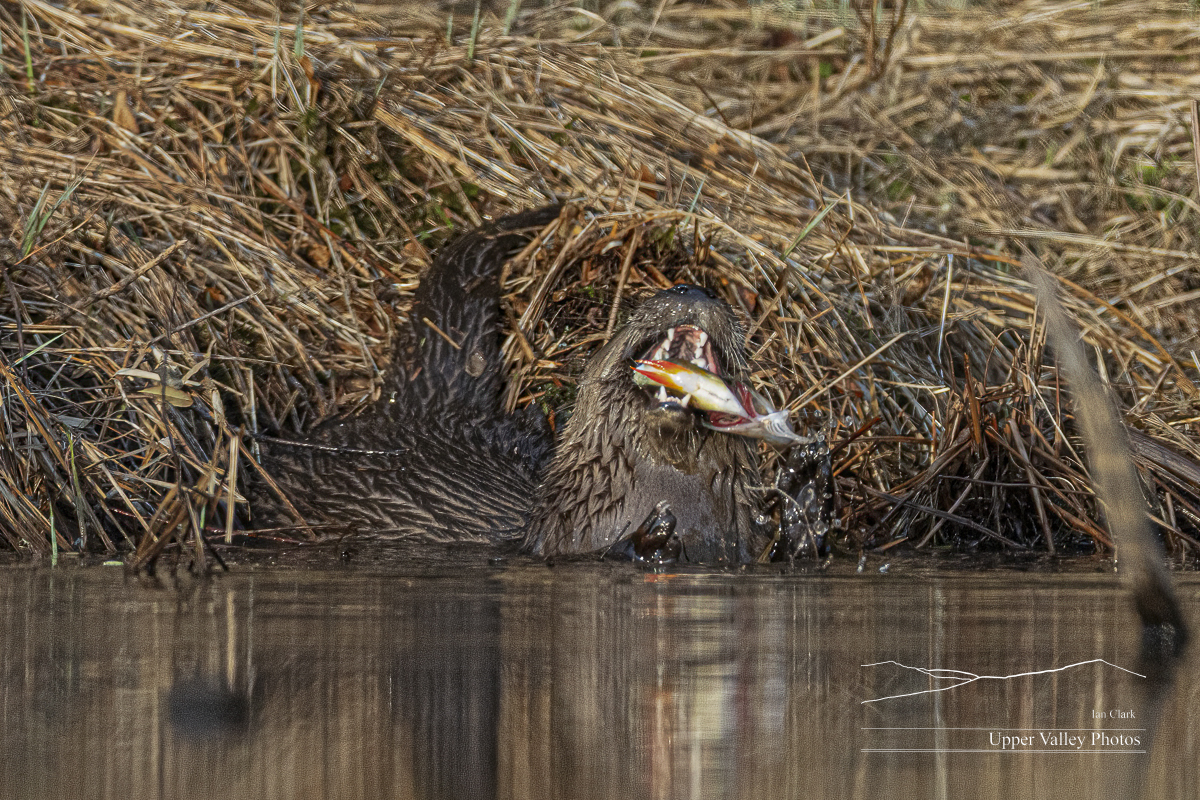
I don’t know that I’ve ever found a pair of otters. When I spot them, there are either one alone or a trio of them. Today there were three. This was the first time I’ve seen this behavior – they were clawing at a tree stump. They didn’t seem to be finding anything to eat and the scratching was interrupted by rounds of wrestling.
One of the trio broke off from the tree and grabbed a perch for breakfast.
The other two otters took time for a couple rounds of wrestling while the first ate.


As I was heading back to the boat launch, I passed the loons foraging together. One started preening, so I stuck around to get the stretch shot.
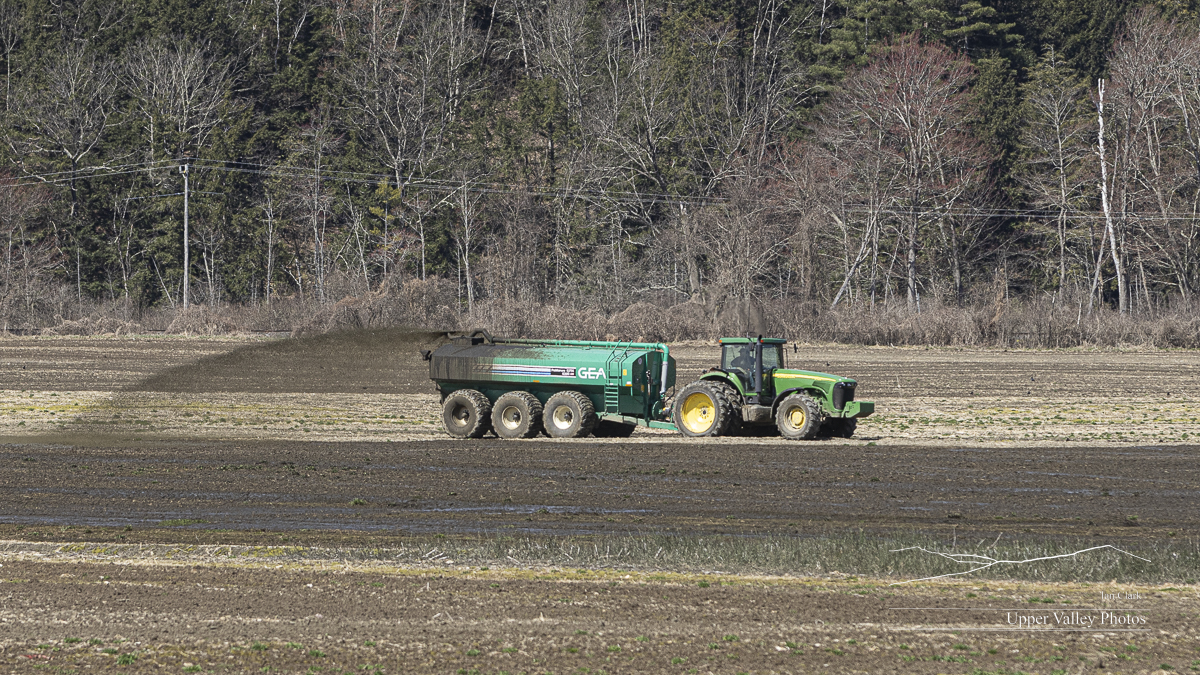
And, should you have any remaining doubts spring has returned to the Upper Valley, the honey wagons are flocking to the fields.

Our bluebirds are again building in our nesting box. I checked the cameras several weeks ago and all seemed fine. But now the camera in the box the birds are using isn’t working properly. We’ll have to skip watching the first brood – I’m not going to disturb the box to get at the camera until the the chicks fledge. Hopefully we’ll be back online for the second brood.

You can sign up to be updated when I add new posts, if you want to follow the loons through the season, go ahead and sign up. And, please share with your friends that might enjoy the wildlife.
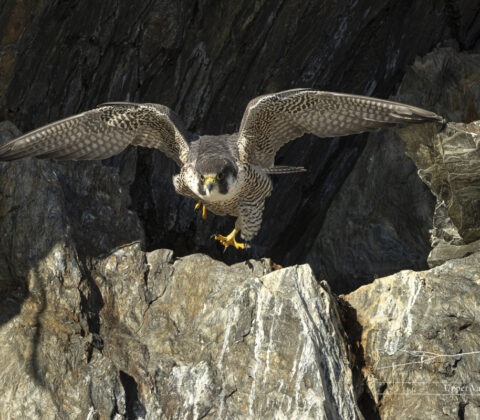
Peregrine Falcons Have Returned

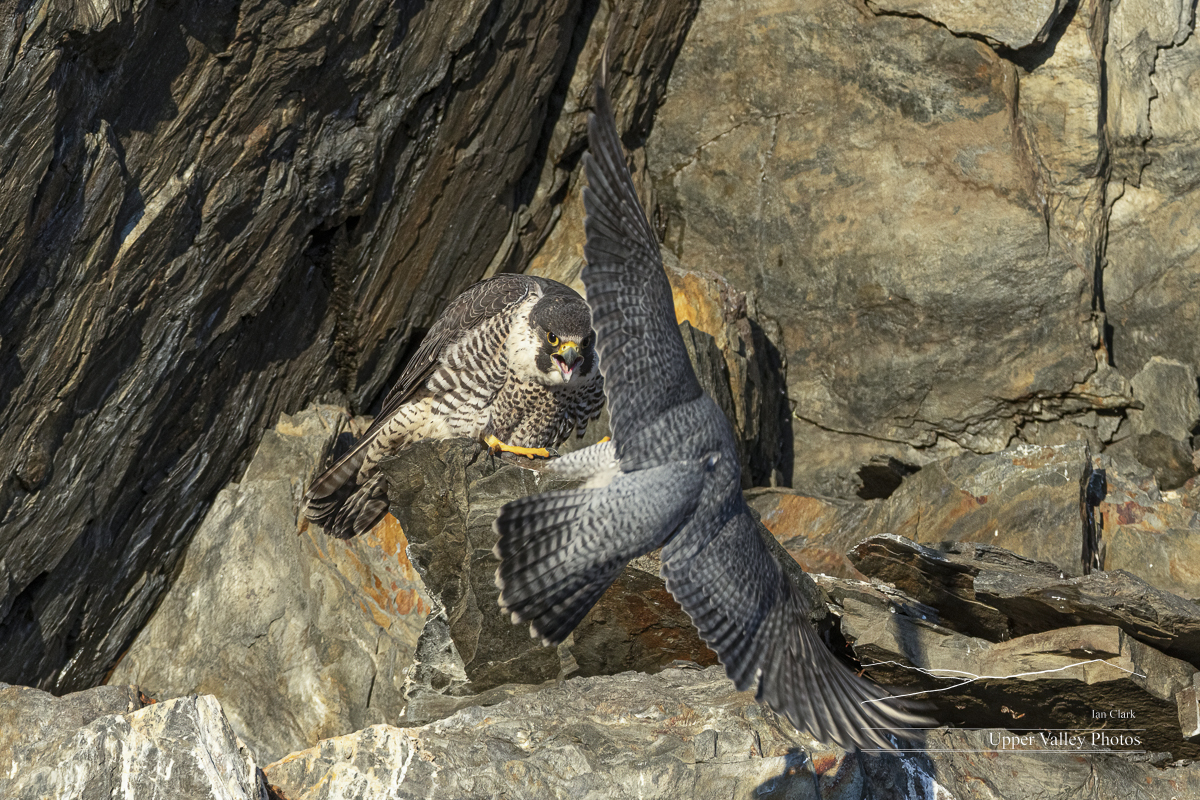
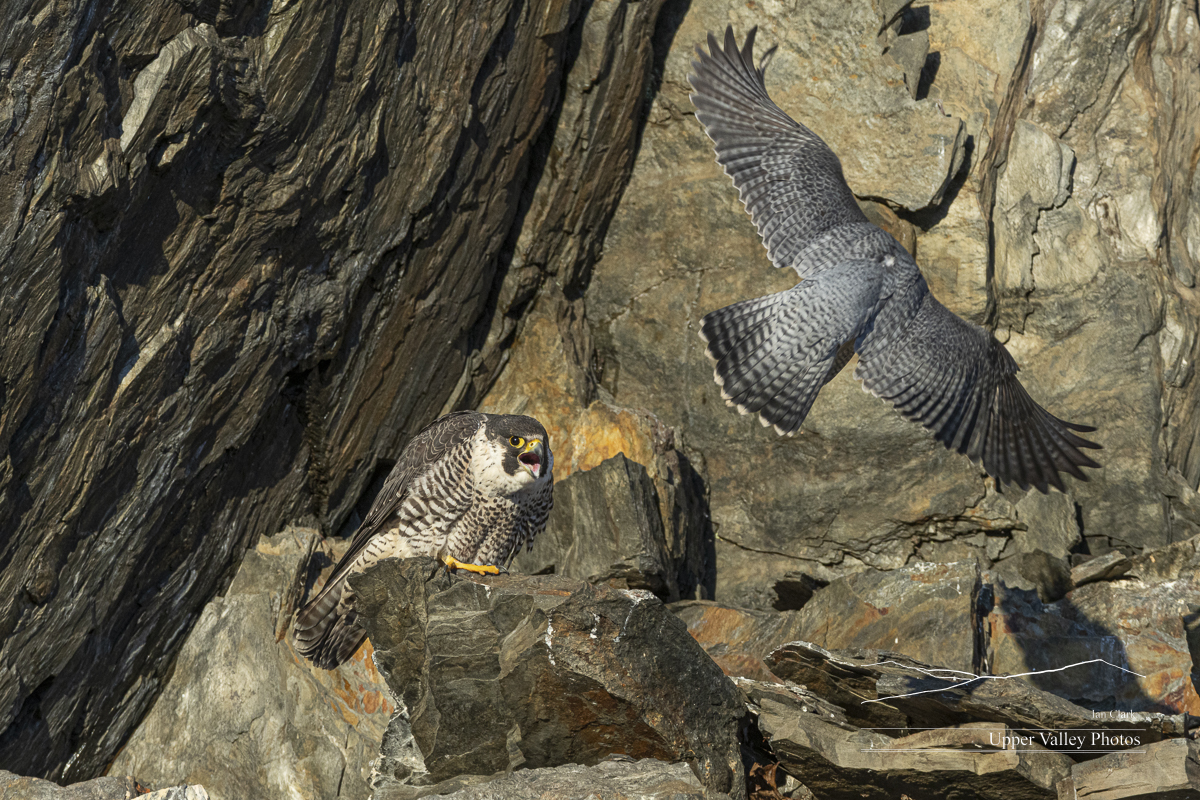
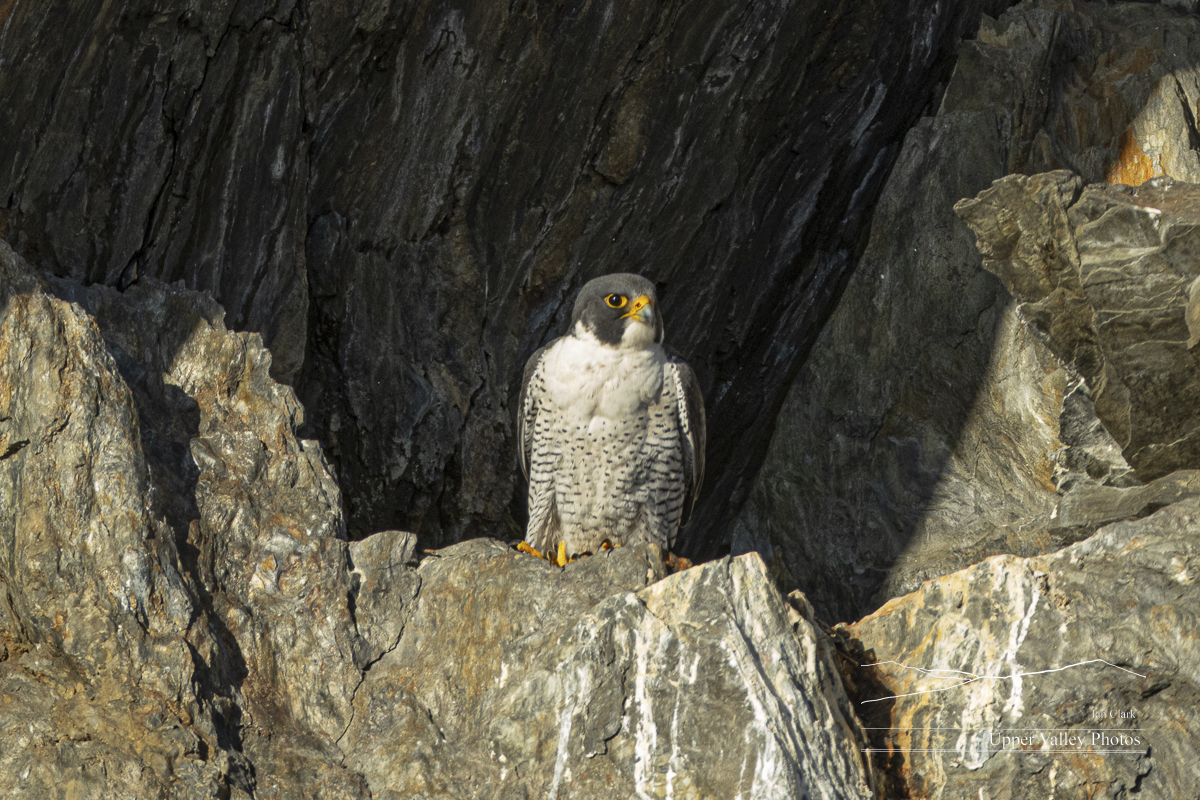
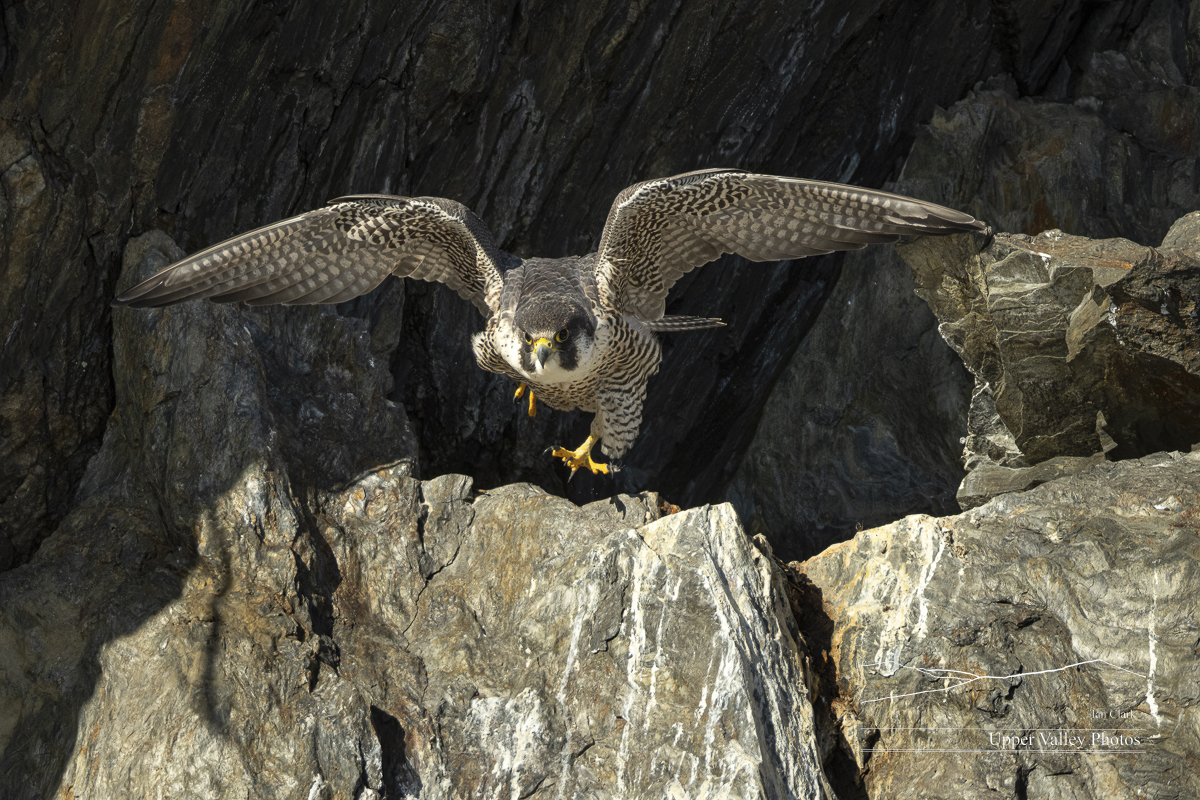
Peregrine falcons have returned to Vermont and are getting ready to nest. I was able to visit a pair in Caledonia County this morning. They spent some time seemingly discussing their nest site, with one promoting last year’s site, the other agitating for a ledge a couple dozen yards to the north. They interrupted the discussion to head out for a flying courtship display. Unfortunately, the display was out of camera range.

Peregrines were extirpated (locally extinct) in Vermont after the introduction of DDT. The state started a recovery effort in 1975 and the population is increasing again. The last year I could find figures for was 2022, when there were an estimated 60 pairs nesting in Vermont.

Peregrines are thought to be the fastest animal on earth. They can dive in flight. Estimates online range from 200 to 240 mph, without my finding anyone who claims to have actually clocked a flying falcon. But, seeing one dive is indeed impressive and the estimates are believable.
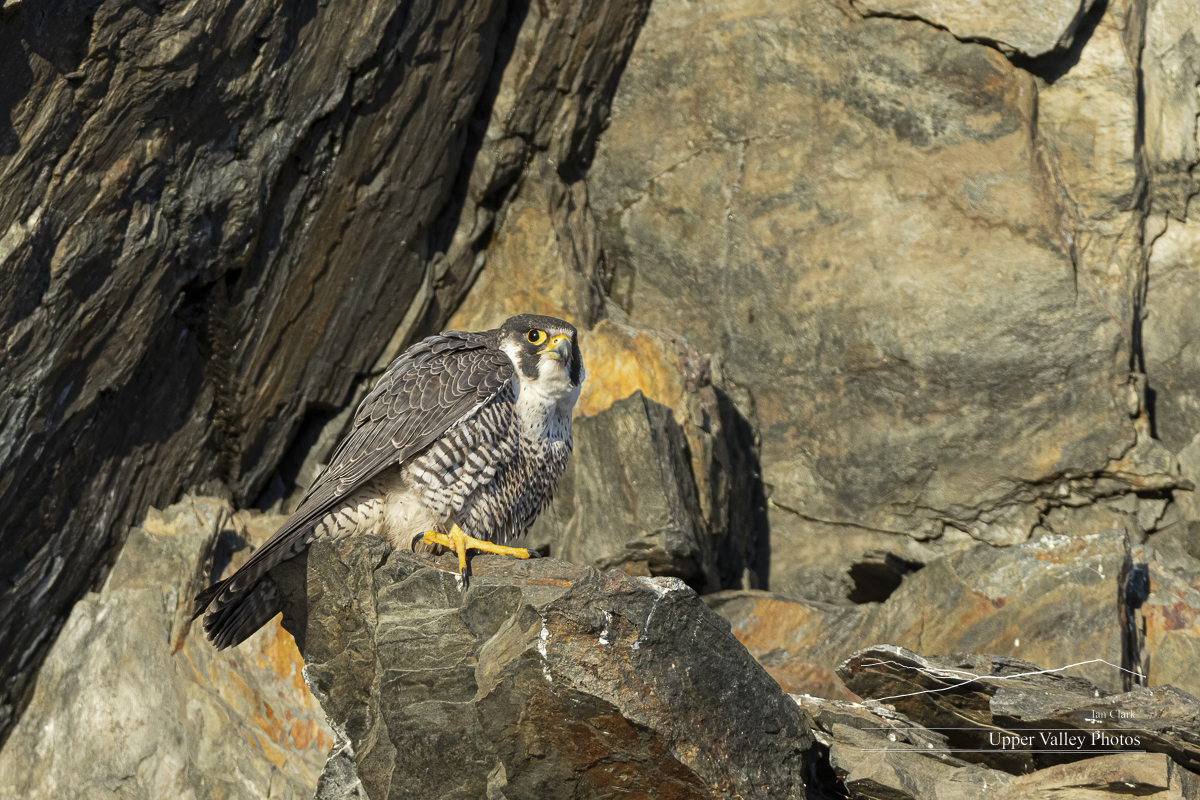
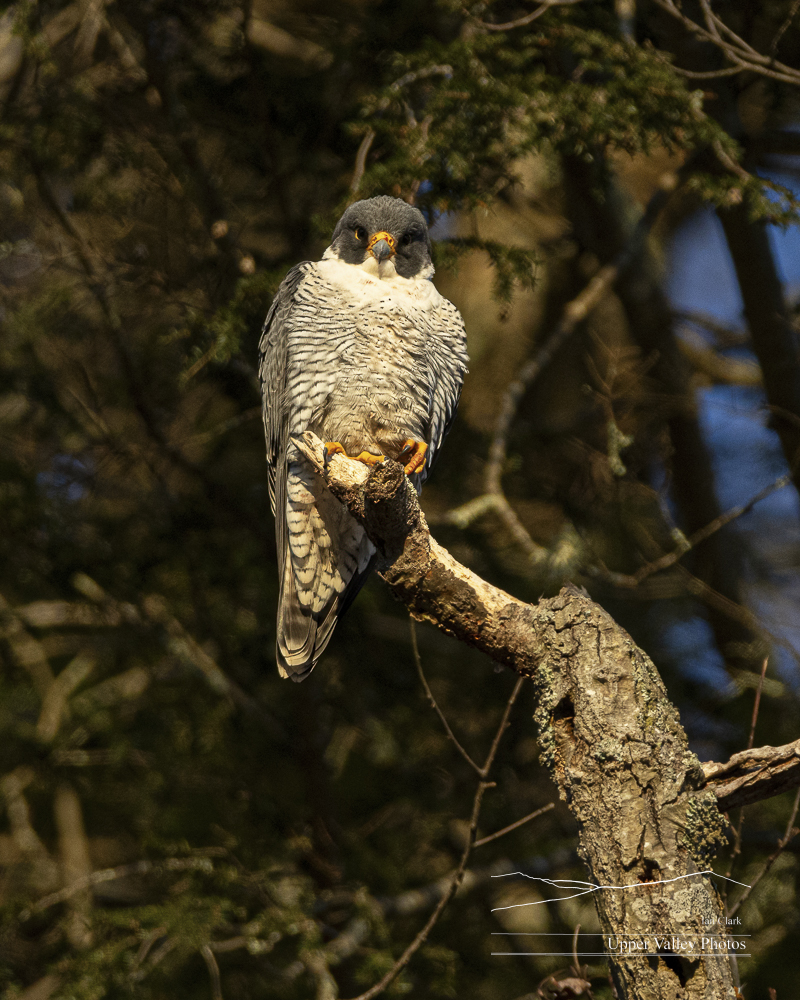
When I arrived before dawn, this bird was on last year’s nest site, the other was about 50 feet to the north on a different ledge. They repeatedly called to each other, seemingly promoting the benefits of each site.
The second bird moved up to a tree more or less over the old site and the discussion continued.
The second bird swooped the first while it was on the old nest, probably the beginning of his courtship display.
Another swoop. Both birds soon flew off to trees to the south where they repeatedly called and answered. After a bit they flew, with one somewhat lazily circling while the other swooped and rolled. Unfortunately, they were too far away for pix.
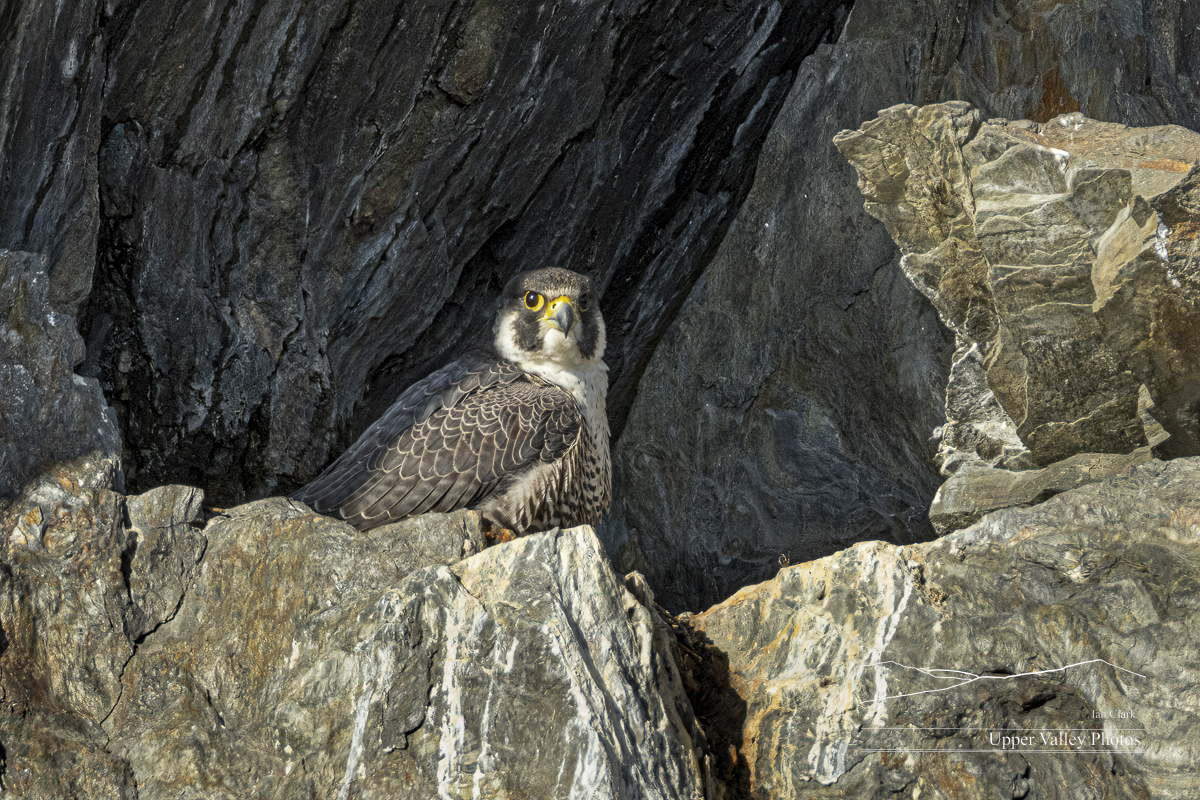
After the courtship, the both settled in trees for a bit before one headed out, probably for breakfast. After a time, the bird returned to last year’s nesting site and sat for a bit.
Still sitting on the old nest site, the mate was still in the trees to the south.
Time to fly some errands, the bird headed out and off to the east and I headed off to get my errands done.

Northern Hawk Owl

The Piermont, NH, Public Library will be hosting me to present my slideshow, An Uncommon Look at the Common Loon, next Sunday, March 3, at 2 p.m. in the Old Church Building in Piermont. That’s right across Route 10 from the Library, not far south of the Route 10 and 25 intersection. Free and everyone welcome.

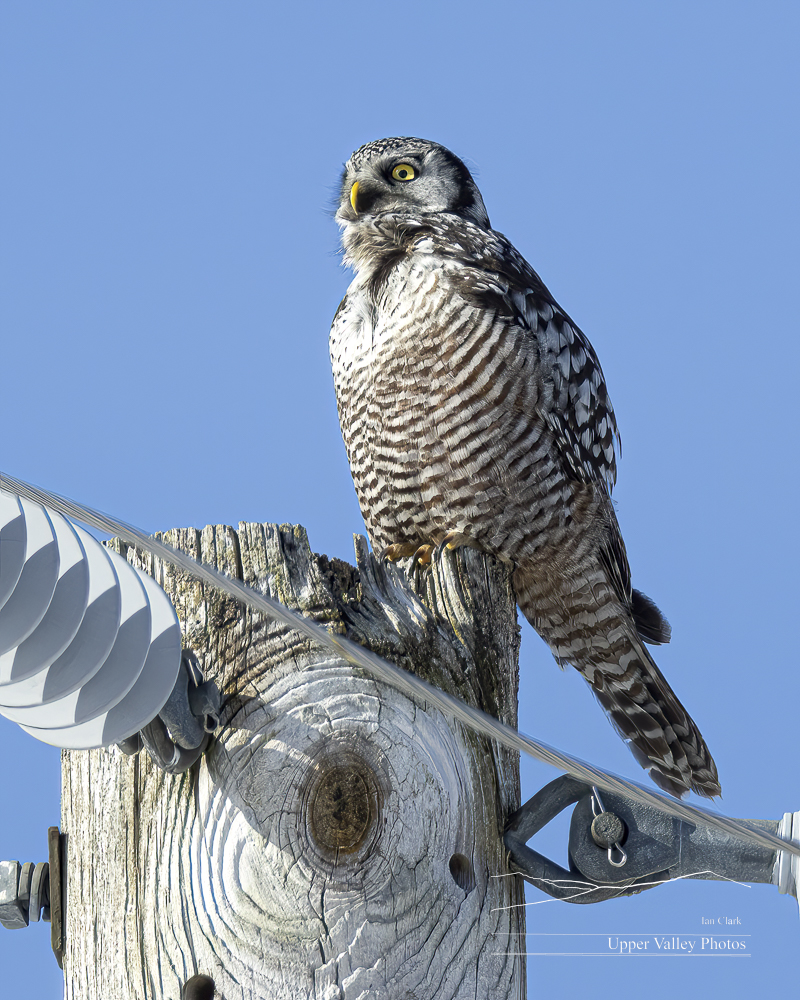
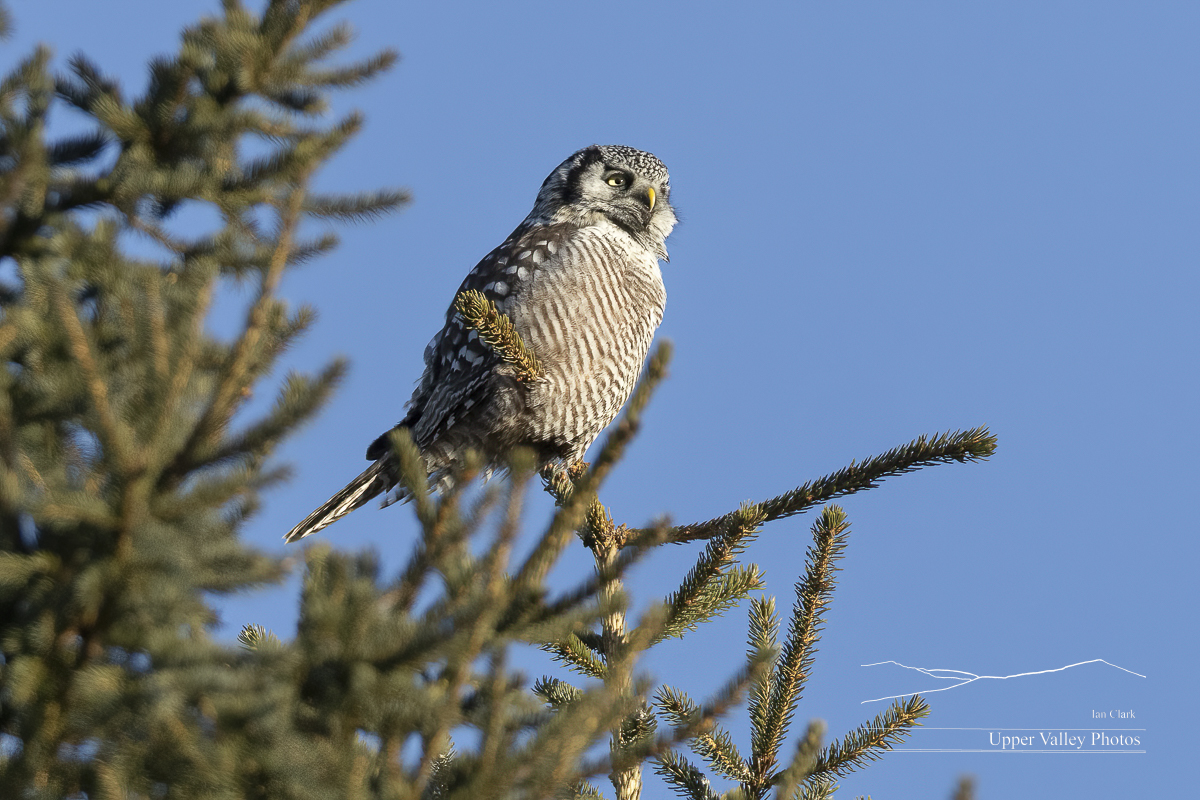
Northern hawk owls are small owls that live in the boreal forest, mostly north of the US. They’re occasional visitors to New England. I’ve heard of two in New England this winter. One has been persisting in Pittsburg, NH for the last couple of weeks. I went up to visit last Sunday.

Northern hawk owls are daytime hunters. Many owls have ears that are asymmetrical – they’re a bit offset from center on their heads. This allows them to pinpoint noises and allow them to hunt by ear. Northern hawk owls have symmetrical ears which lessen their ability to hunt by ear. They behave more like hawks and use exceptional eyesight – they seem to be able to see small rodents at half a mile. This means they’re out and about during the day, making photography much easier.

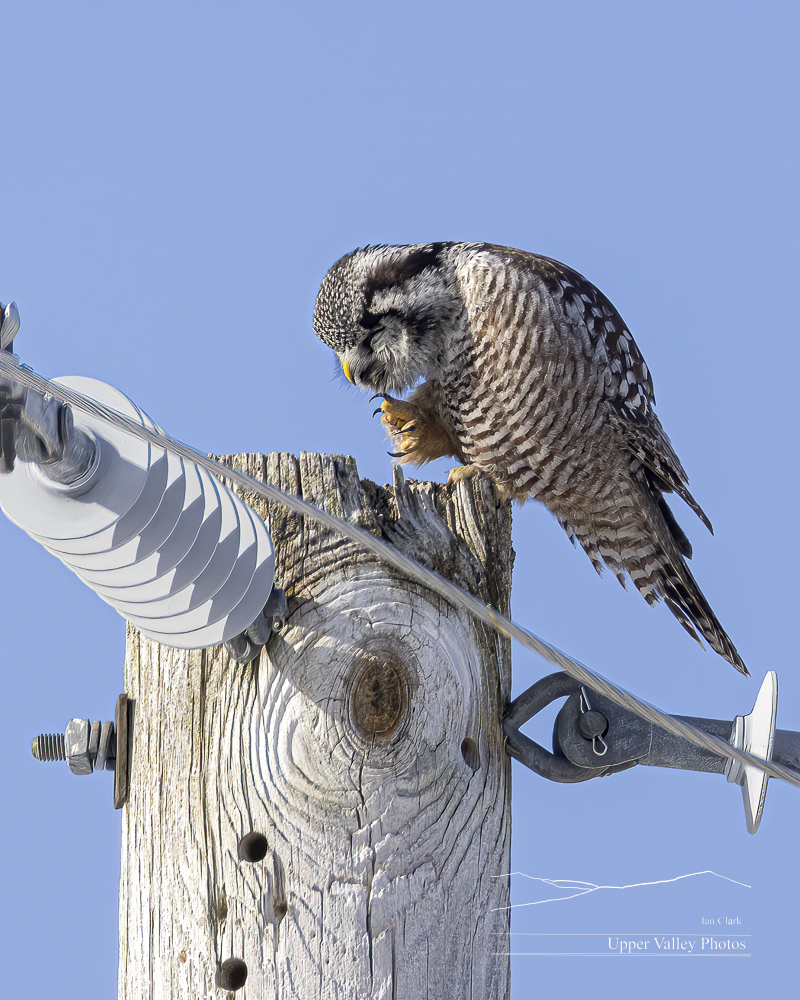
Easier, not easy. The owl visiting New Hampshire seems to prefer telephone poles and wires for perches – hardly photogenic.
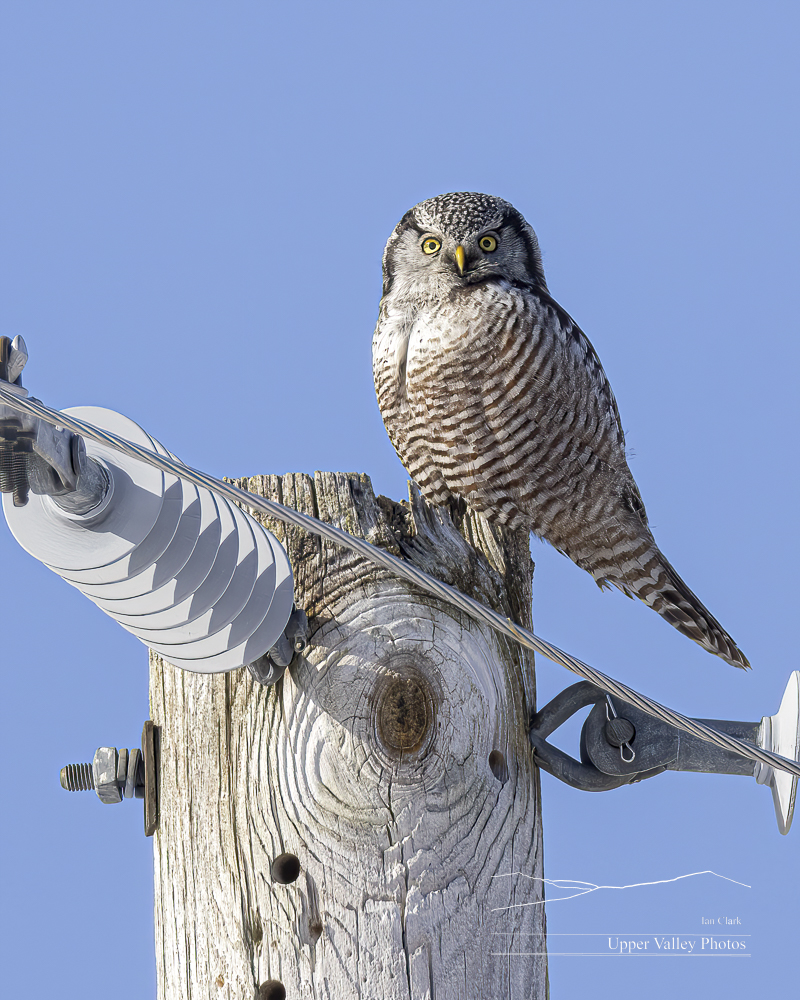
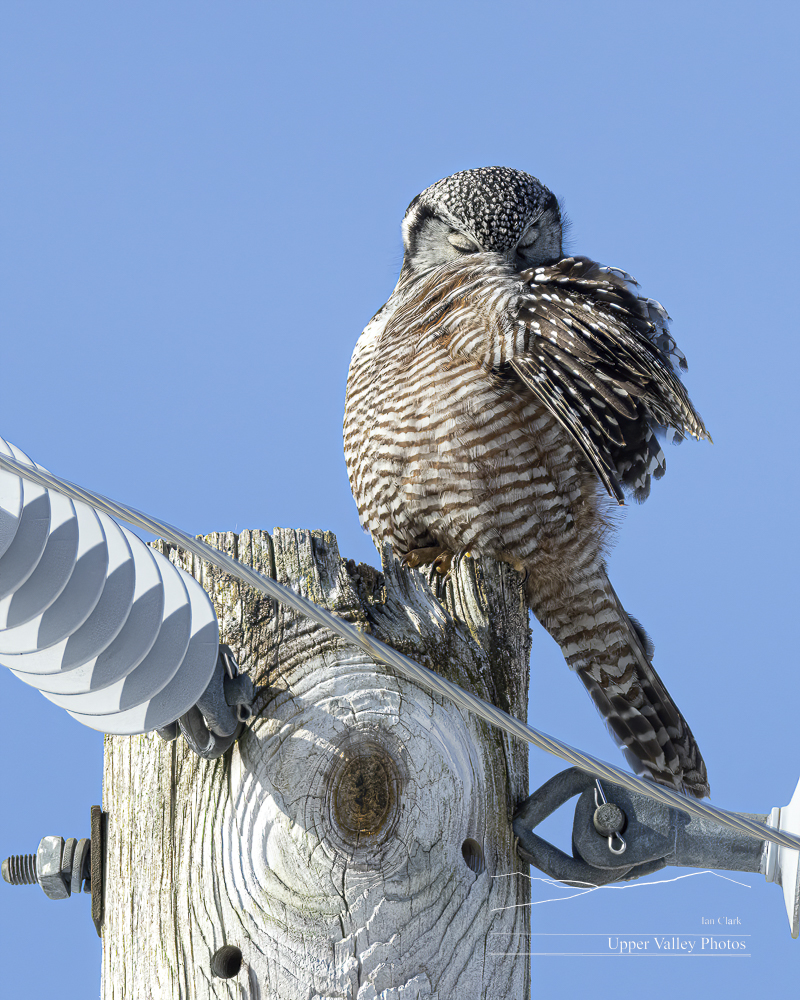
This seems to be one of the owl’s favorite perches. It allows a good view of fields on both sides of the road and isn’t very far from a thicket of trees should it need cover. The owl didn’t seem to care about the small group of photographers patiently waiting for him? to show up. He flew in with us standing around in the road.

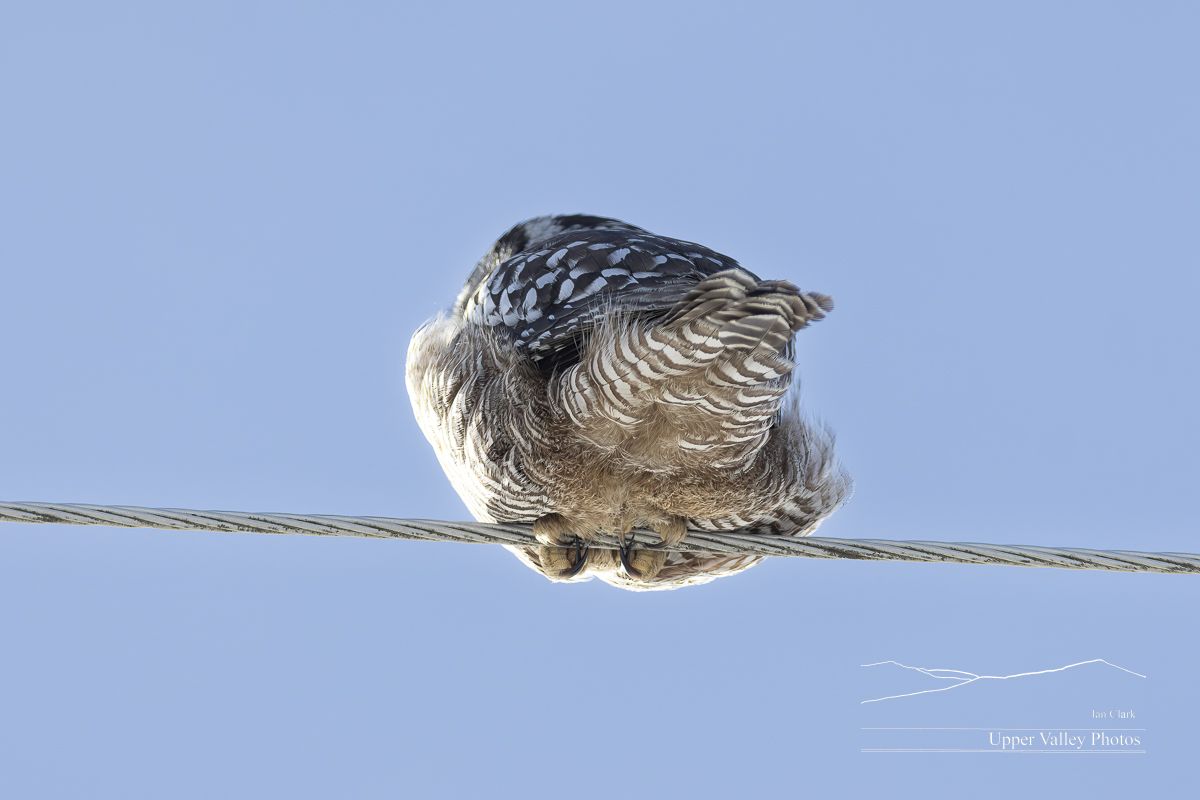
The owl went about his business while we waited. He took time to do some preening.

And cleaning his talons. Those are pretty big talons for a small bird.

Hawk owls stand up straight and try to make themselves skinny when there’s a predator in the air nearby. There were several eagles in the area, one flew by not far from the perch. I suspect that this helps hide the owl when perched at the top of the tree. A tall skinny shape may make the owl less conspicuous to predators.

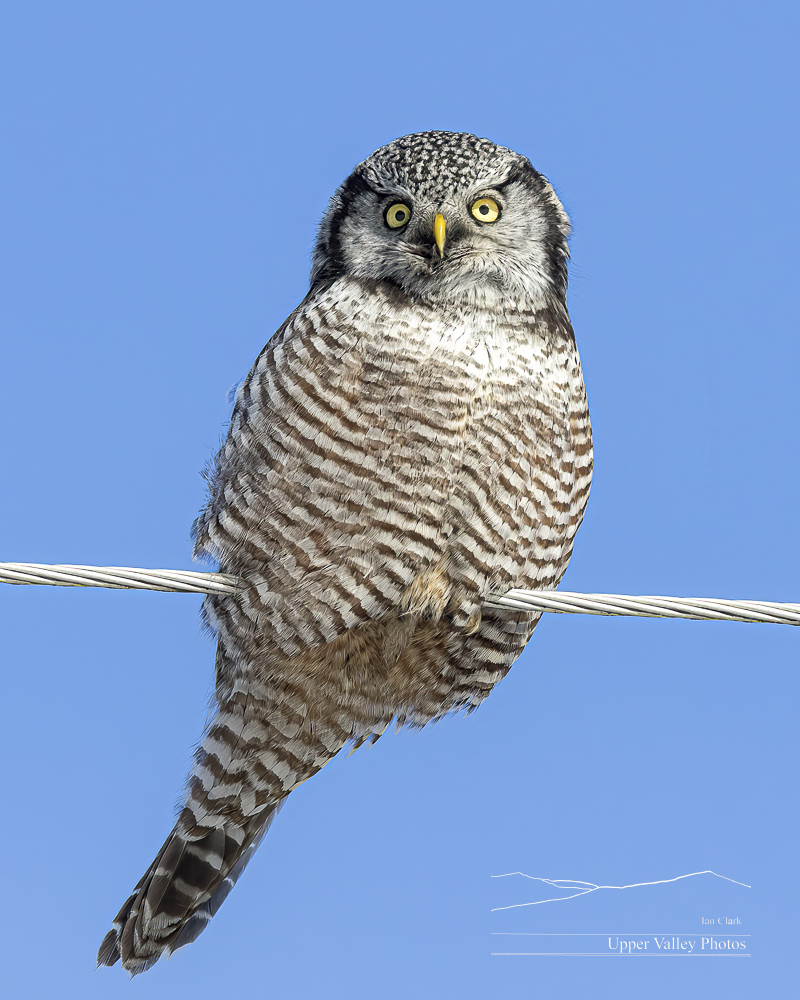
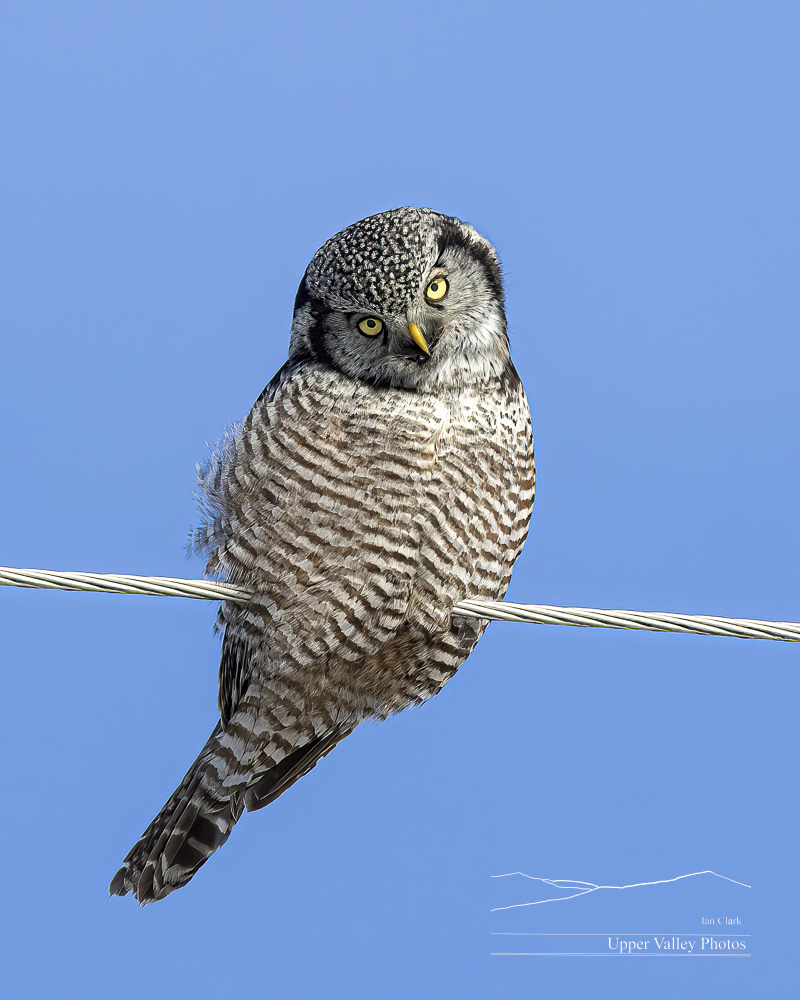
The owl seemed to be determined to taunt the photographers. After a time at the top of the telephone pole, he flew to the wire almost directly above me.

We got great looks at him perched on the wire.

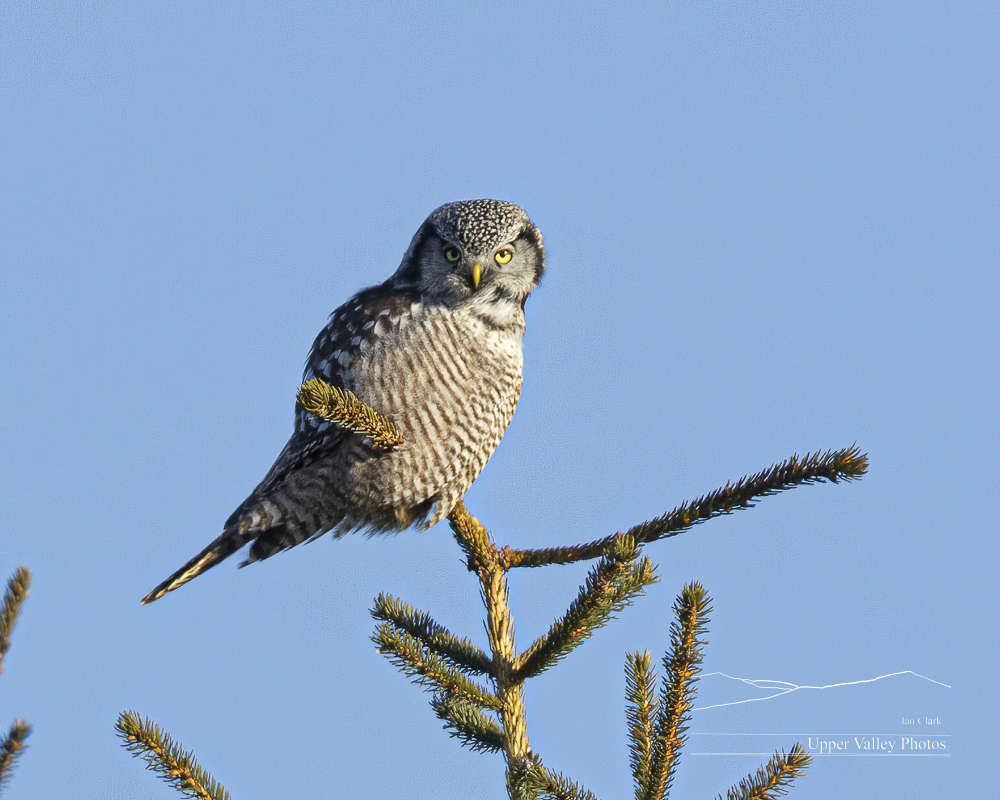
Late in the afternoon, he headed across the field to a row of evergreens and took up station at the top of one of them.

I suspect he’s spotted me.

There were a couple flights of ducks along the river in Pittsburg. And, the bluebirds have been busy inspecting our bird boxes, we’re hopeful we’ll host them again this spring.

Upcoming Events

I hope everyone had a wonderful Thanksgiving. Just a quick update to let you know about a couple upcoming evenings.

I’ve got a slideshow of great loon photos, An Uncommon Look at the Common Loon. The Walker Lecture Series will be hosting me in Concord on Wednesday, November 29, 2023, at 7:30 (I’m the second speaker, I should start closer to 8:30). Free and everyone welcome.

All the details on Walker’s site: https://www.walkerlecture.org/schedule.

And, I still have some 2024 Wildlife Calendars available.
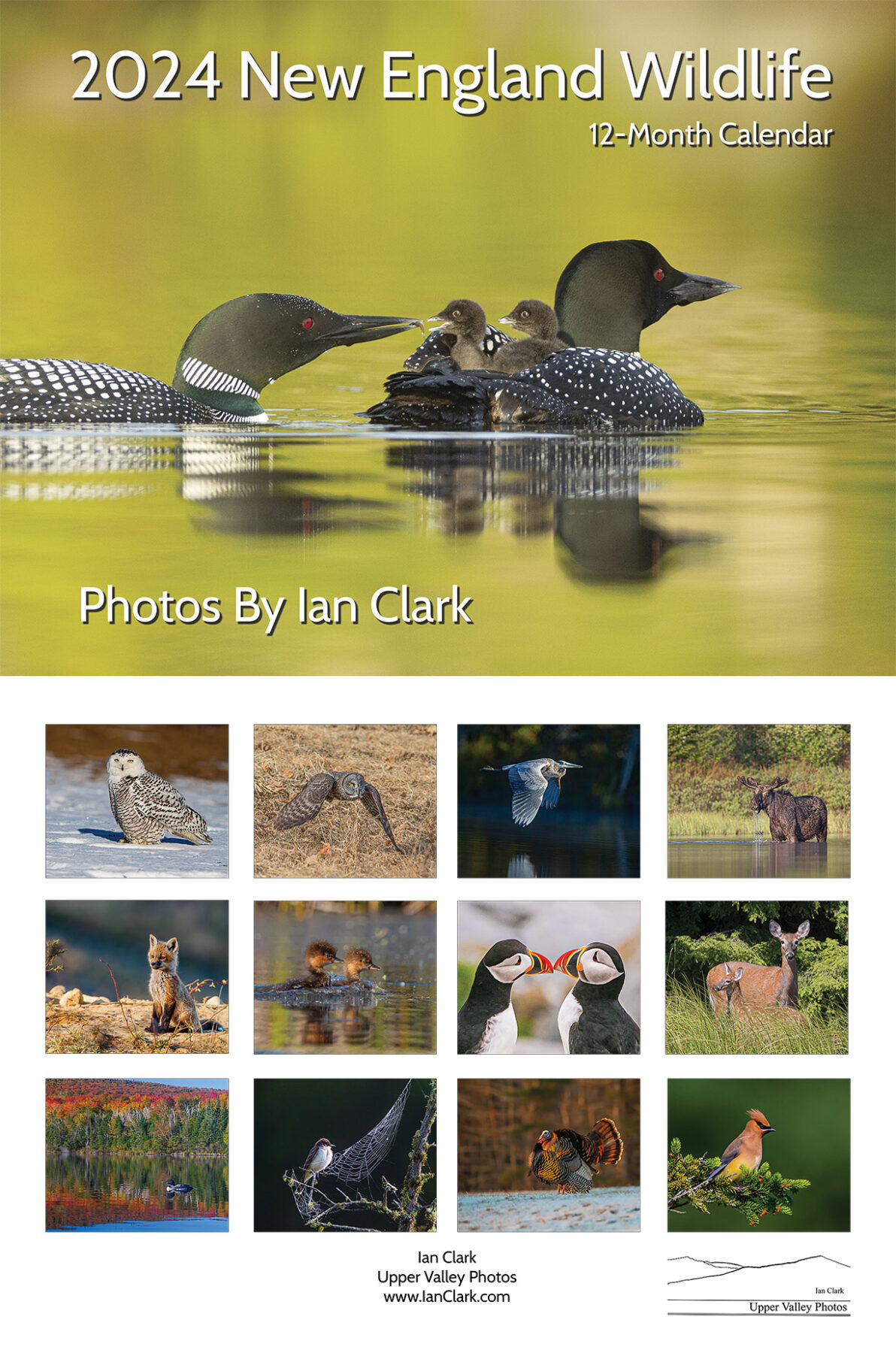
Calendars are $25 and $3 shipping per order. You can order them online at www.IansPhotos.com or email me at UpperValleyPhotos@gmx.com to order.

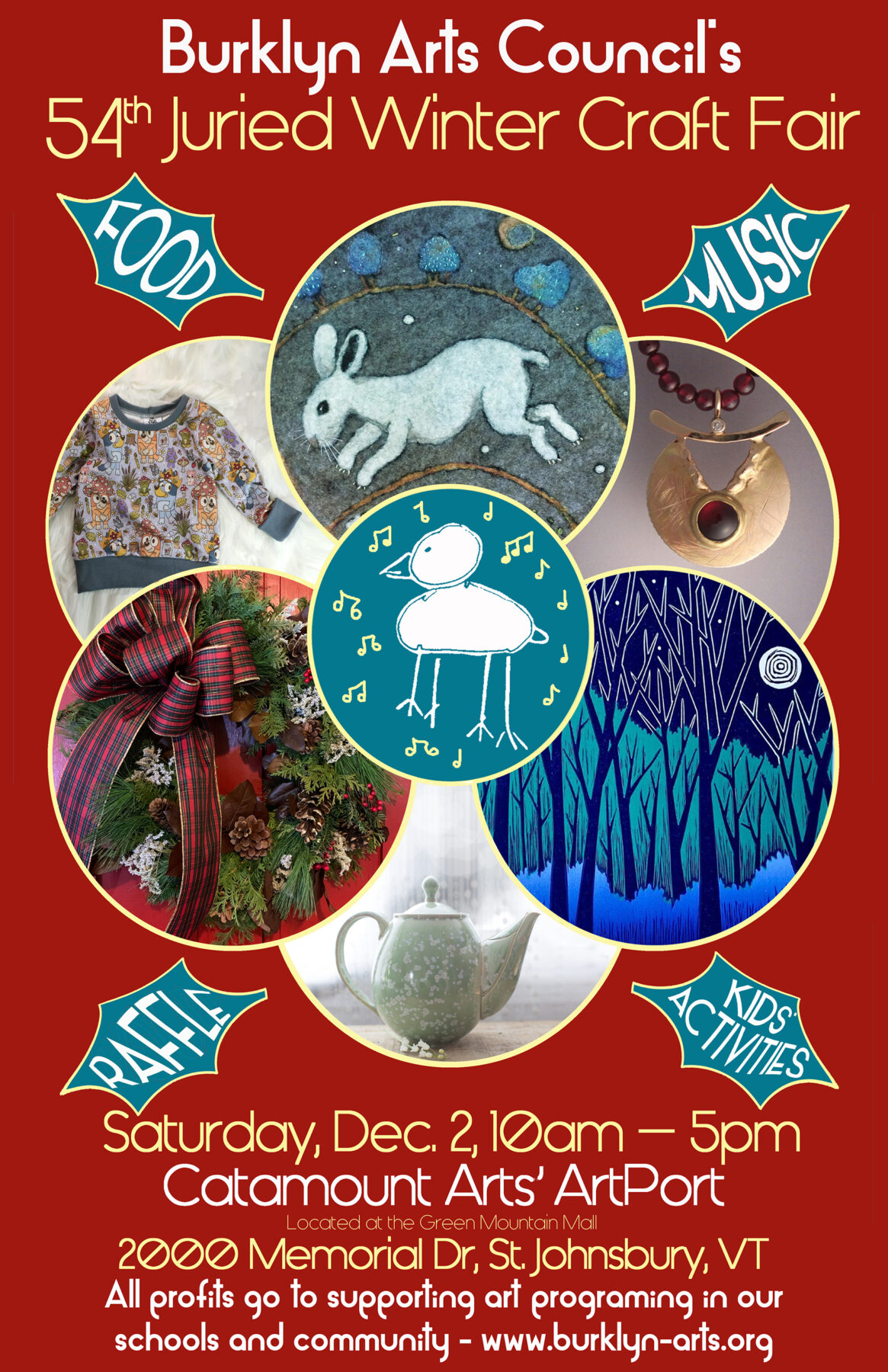
Last, I’ll be up at the Burklyn Arts Council’s Craft Fair in St. Johnsbury next Saturday. I’ll have calendars, lots of note cards and prints, large and small. Stop by and say hello.
One Loon Chick Left

Thursday morning, I headed up to check on the Eastons. When I las visited, the parents weren’t on the pond and the chicks were practicing takeoffs, but couldn’t quite get airborne.

The adults usually stick around this pond until the last week of September, with the chicks departing in the first week of October. Looks like the parents took an early leave this year, with one chick following.

The chick on the pond was foraging lazily when I arrived. I watched for a time before hearing a loon calling overhead. I was expecting one of our parents to drop in to check on things, but the loon appeared to fly over.
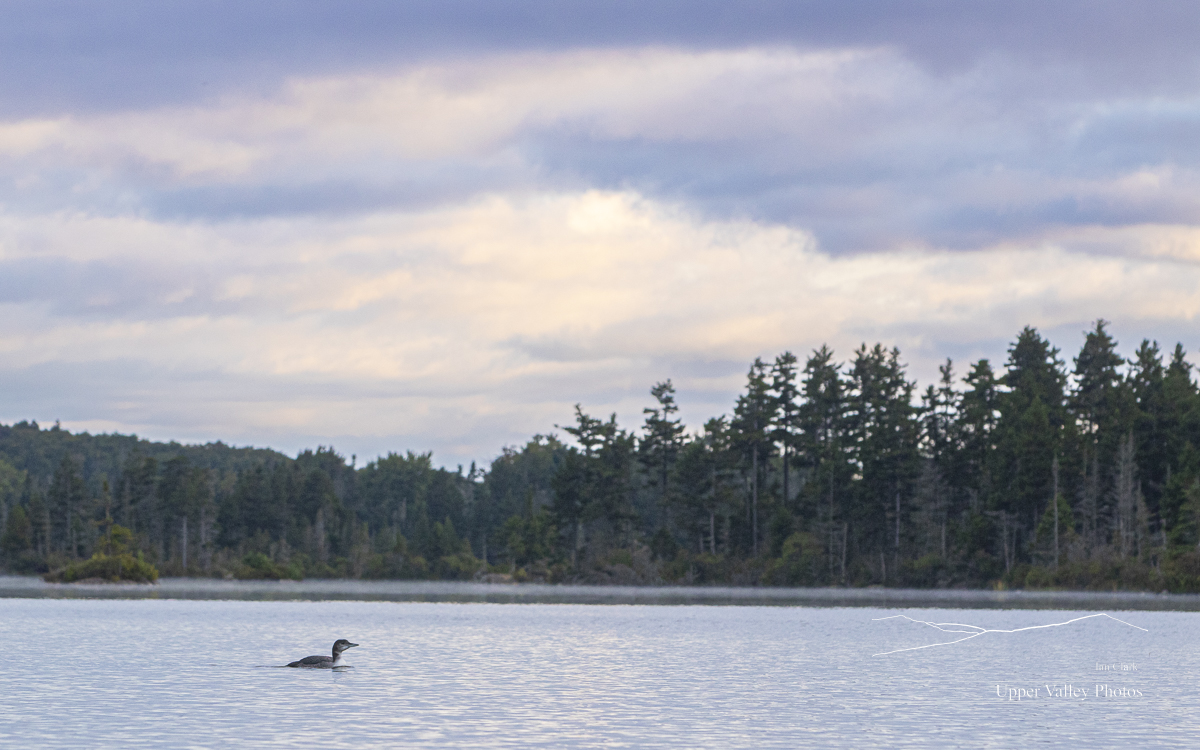
Our chick was foraging lazily and swimming, covering a good distance with each dive.

After a time, another loon was calling overhead – or maybe the same one that flew over before. Our chick tried to call. He’s first attempt sounded like someone stepped on a goose. But he quickly found his voice and yodeled.

That’s interesting for a couple reasons. First, only male loons yodel, so we know he’s a he. Second, that’s the response of an adult loon to an intruder. No longer is our chick hiding to protect himself.

The intruder landed at the far end of the pond. The exchanged wails and yodels for a time.
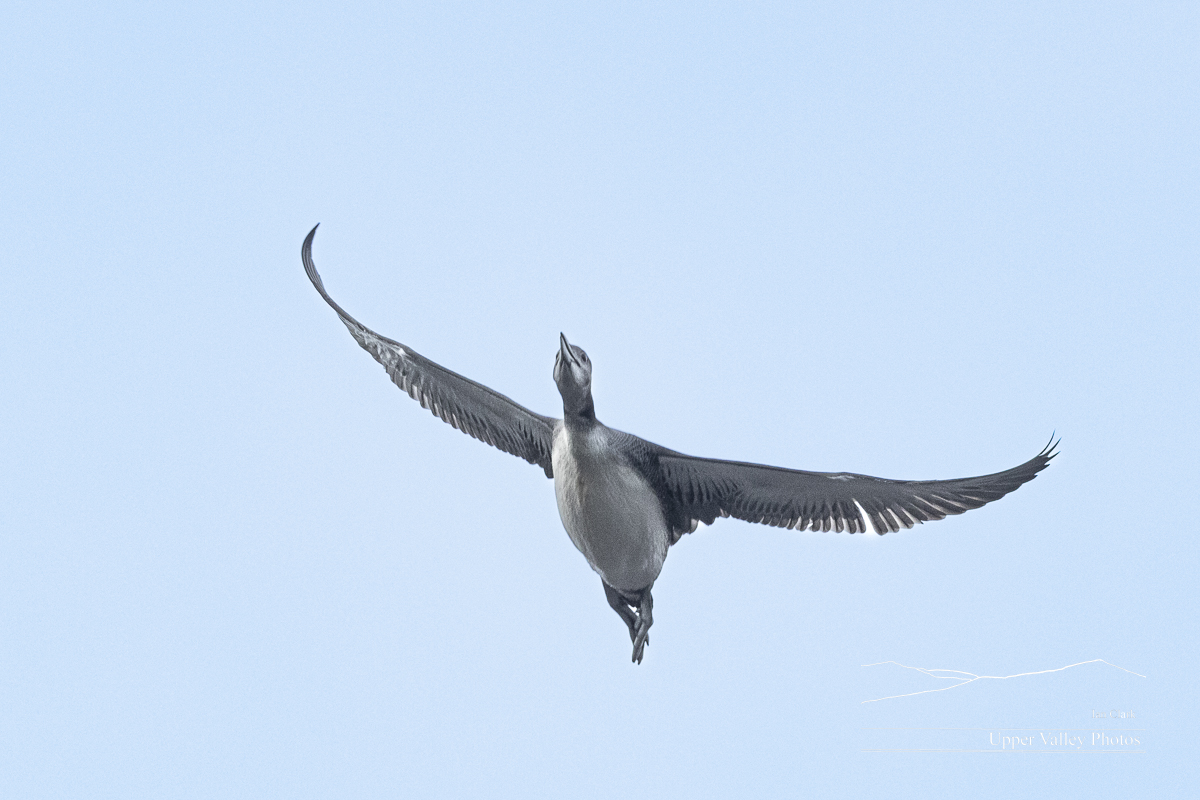
When the intruder came down the pond, our chick took to the air. He circled over the pond for about 20 minutes.
The intruder dove a few times, foraging. Then spent a couple minutes preening before stretching. Our chick continued to circle over head. Eventually the intruder took off and headed out.
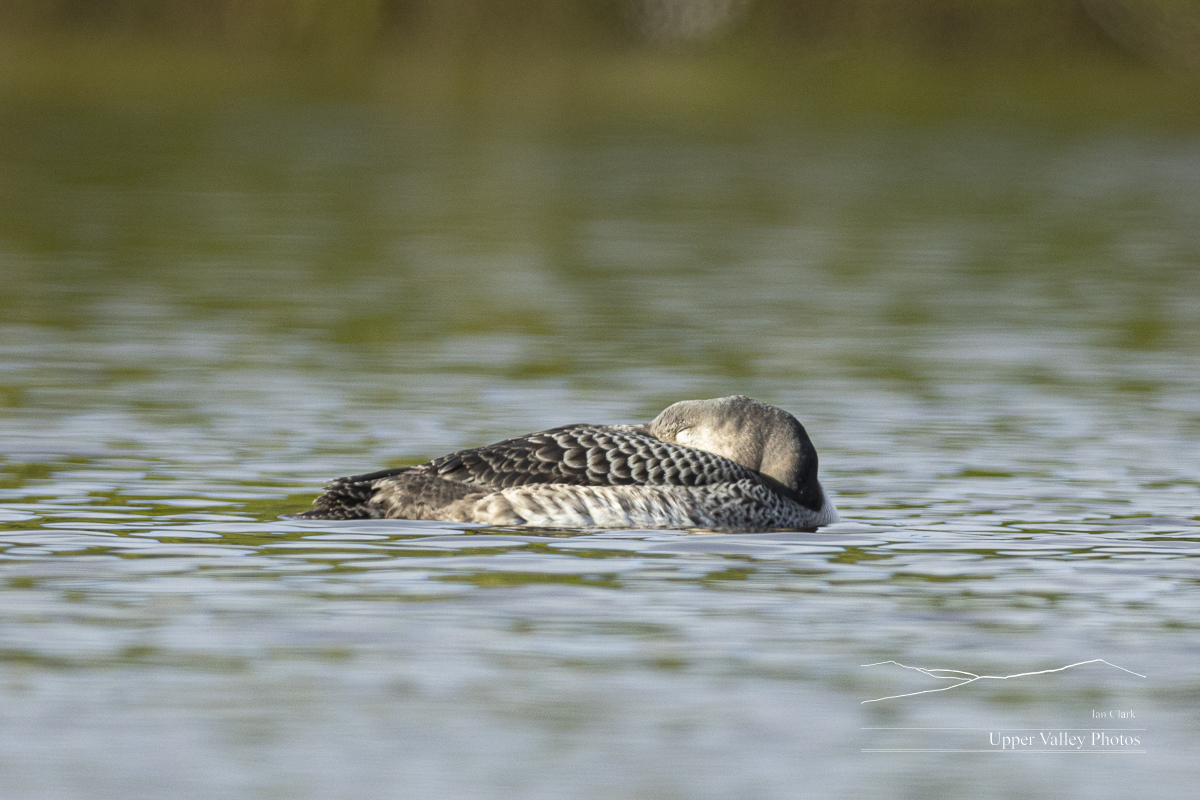
Our chick landed and went about his business.
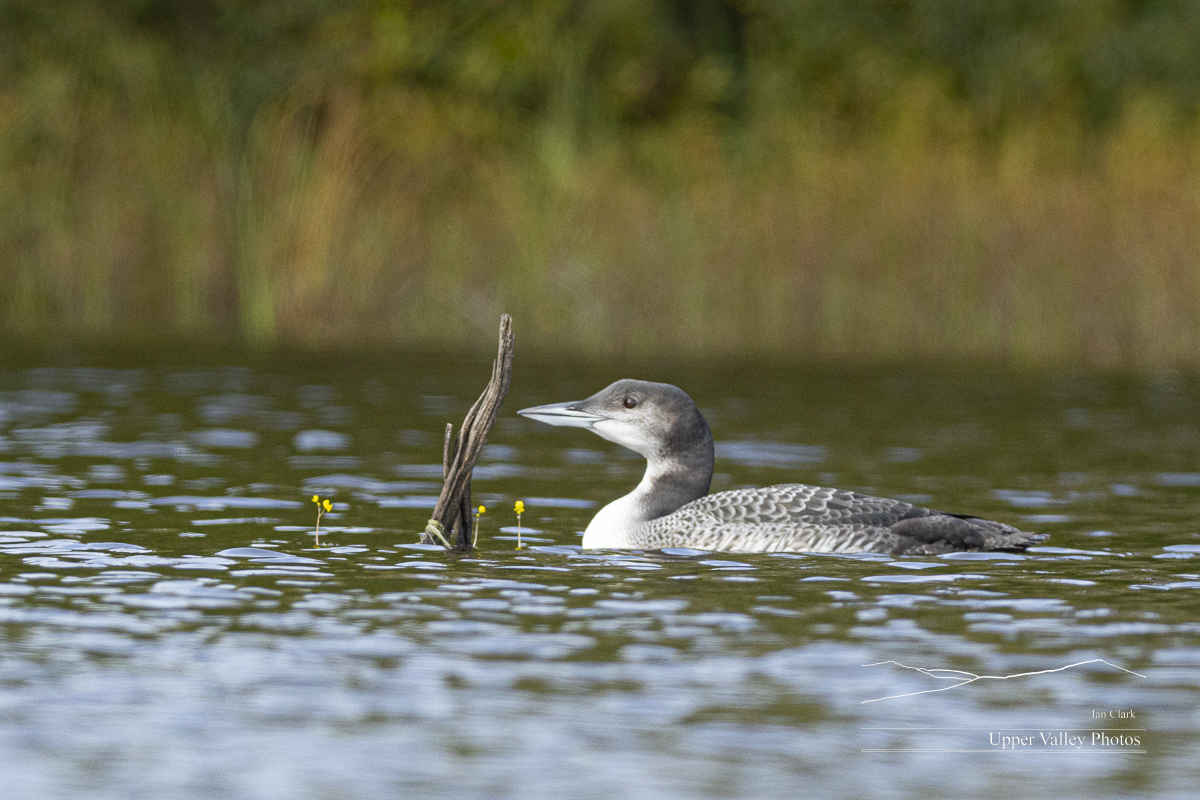
He found something to eat – probably insect larva – on this branch before getting to work diving for a proper meal.
Second breakfast completed, he settled in for a nap.
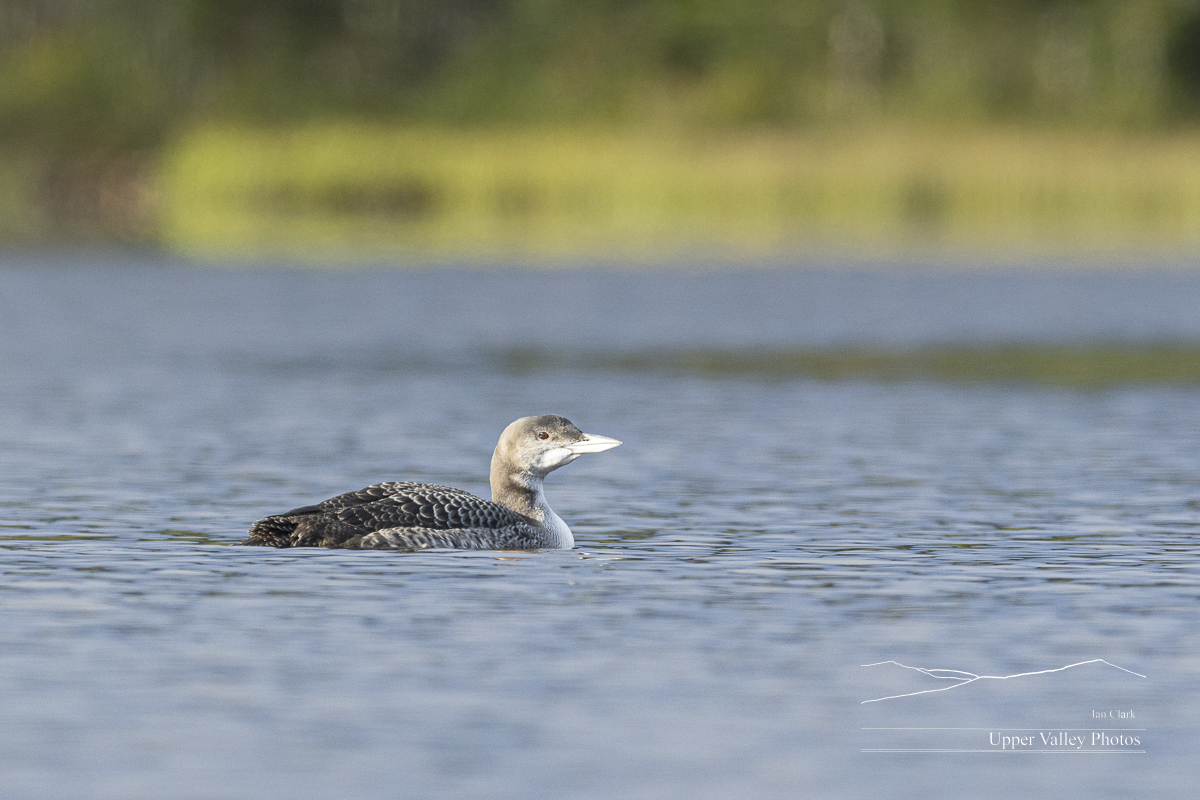
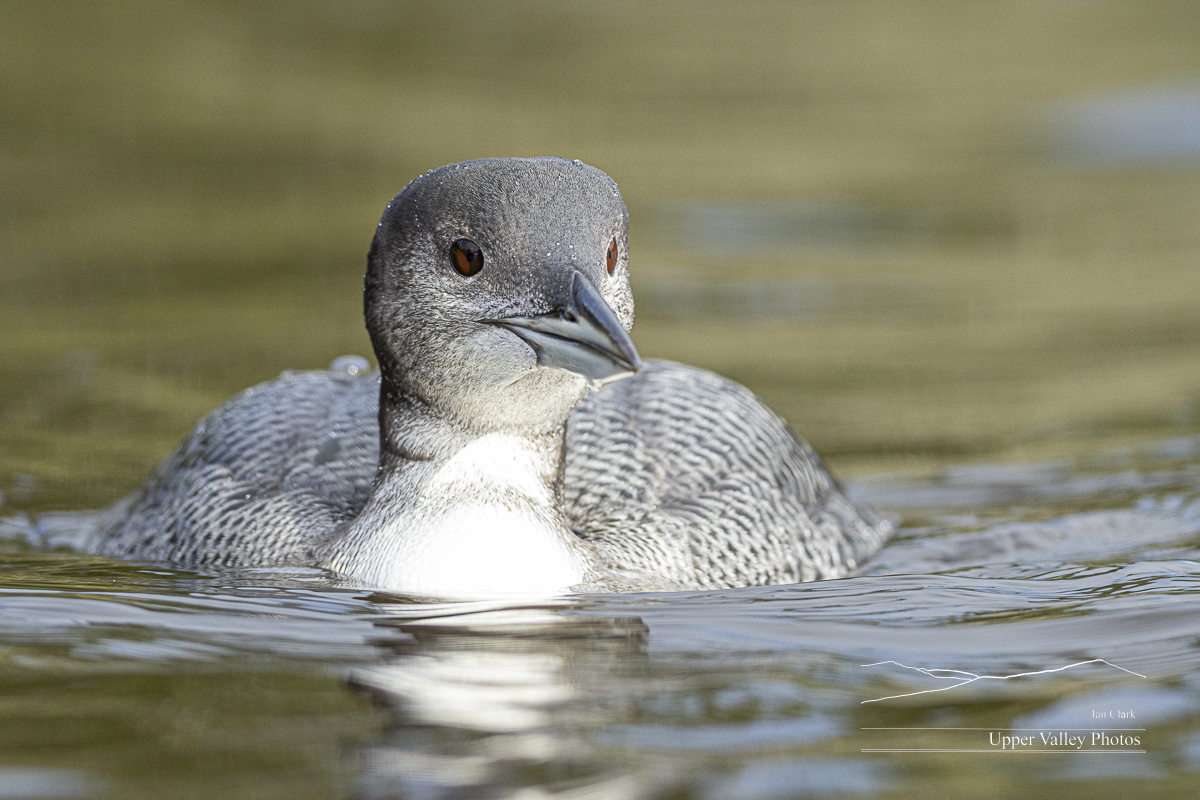
After a while, he woke up and swam over towards my boat. This may well be the last photo I get of him. With the rest of the family gone, I won’t be surprised if he follows. But, I’m hoping he sticks around to let me visit with him again.

Learning to Fly, Checking in on the Loons

Our loon chicks are now 12 weeks old. They’re almost ready to take care of themselves. This week, they’ve been practicing adult calls, postures and they’re trying to fly. I was able to visit the Eastons twice since the last post.

I’ll be down at the Fall Crafts at Lyndhurst Show in Tarrytown, NY this Friday, Saturday and Sunday. Stop by to check out all the new images in prints and note cards. All the show details here.

Last Friday, the Eastons’ pond was above most of the fog at sunup. As I headed down the pond I met one chick coming up.
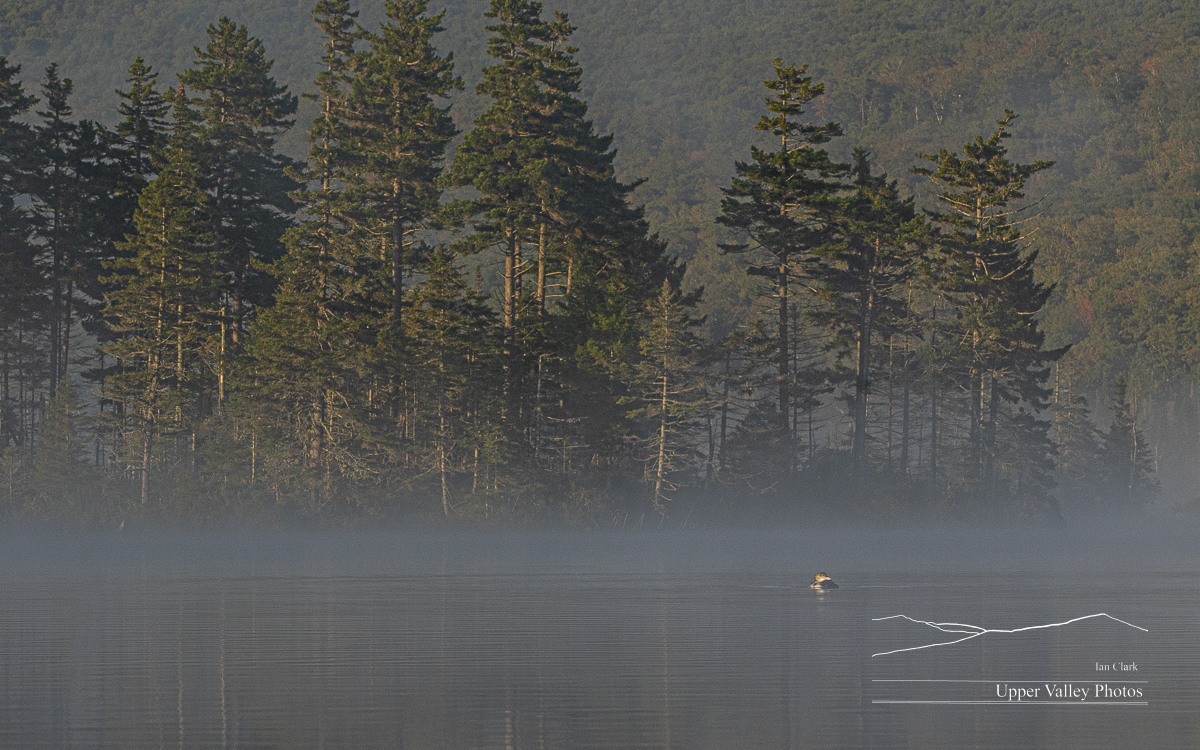
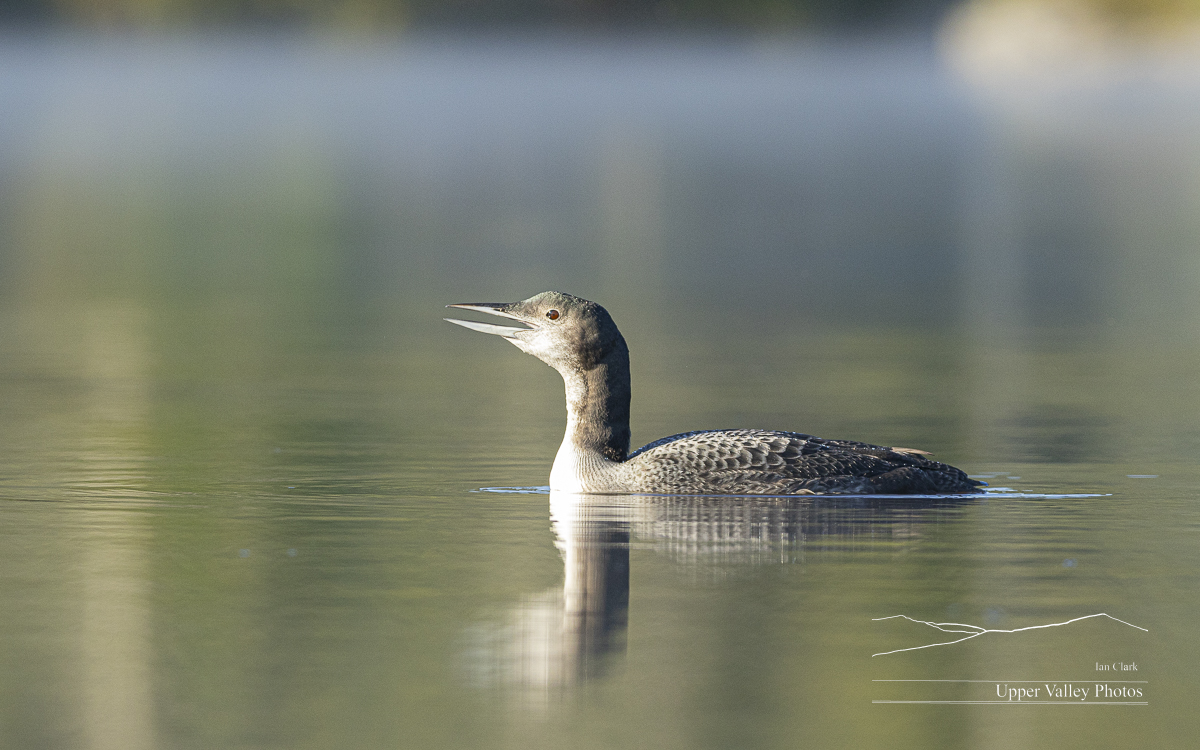
The chicks are ever more independent. They’re roaming the pond away from each other and mom and dad. Unless they’re hungry, then they’re looking for a parent to provide a handout.

The morning’s big project was working on adult calls. This chick attempted several wails – sounding sort of like a gull laughing and a distressed horse. After a time, the other chick started answering, without much improvement. One of them did get off a proper wail when it counted – a large hawk flew low over the pond. This chick is letting loose with a pretty impressive tremolo.

After a bit, our chicks joined up. They were lazily foraging and taking time to call.

Soon mom started calling back and all three joined up. This is the pond where dad is banded. Dad was nowhere to be found this morning. He may have been off for some R&R at another pond. The chicks were very aggressive in crowding and pinching mom to get fed.

Both chicks were sticking close to mom and would immediately close on her when she surfaced. She popped up on the far side of my boat – away from the chicks – several times throughout the morning. Maybe she needed a moment’s rest where the chicks couldn’t see her?

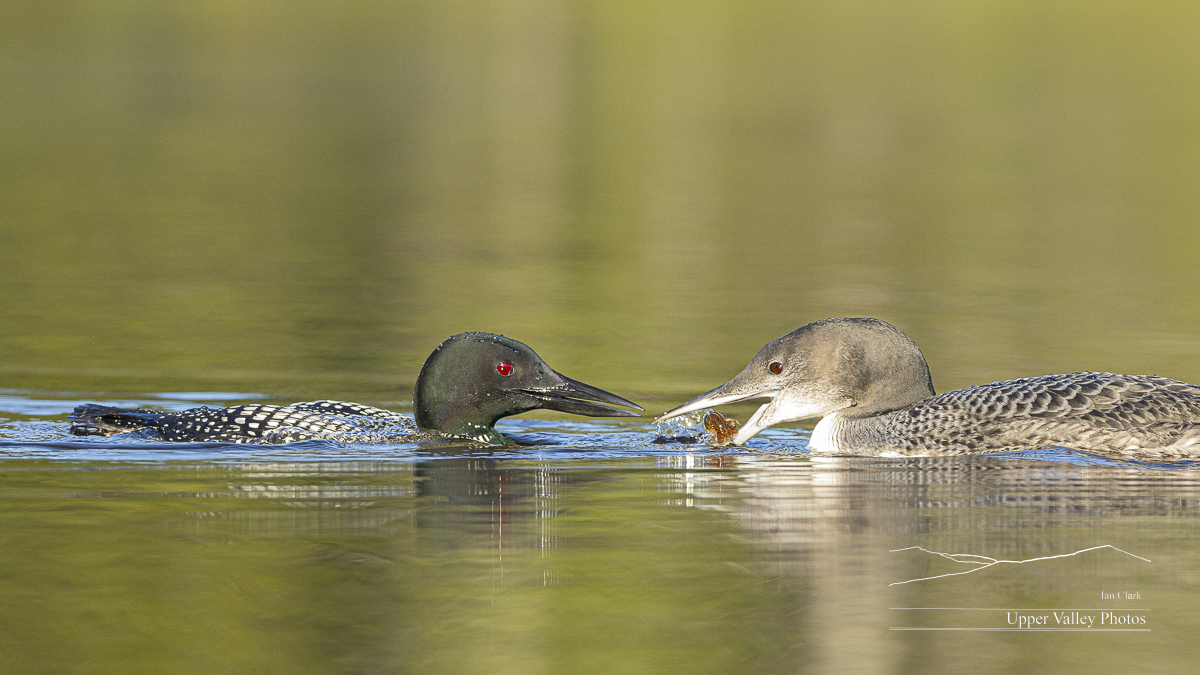
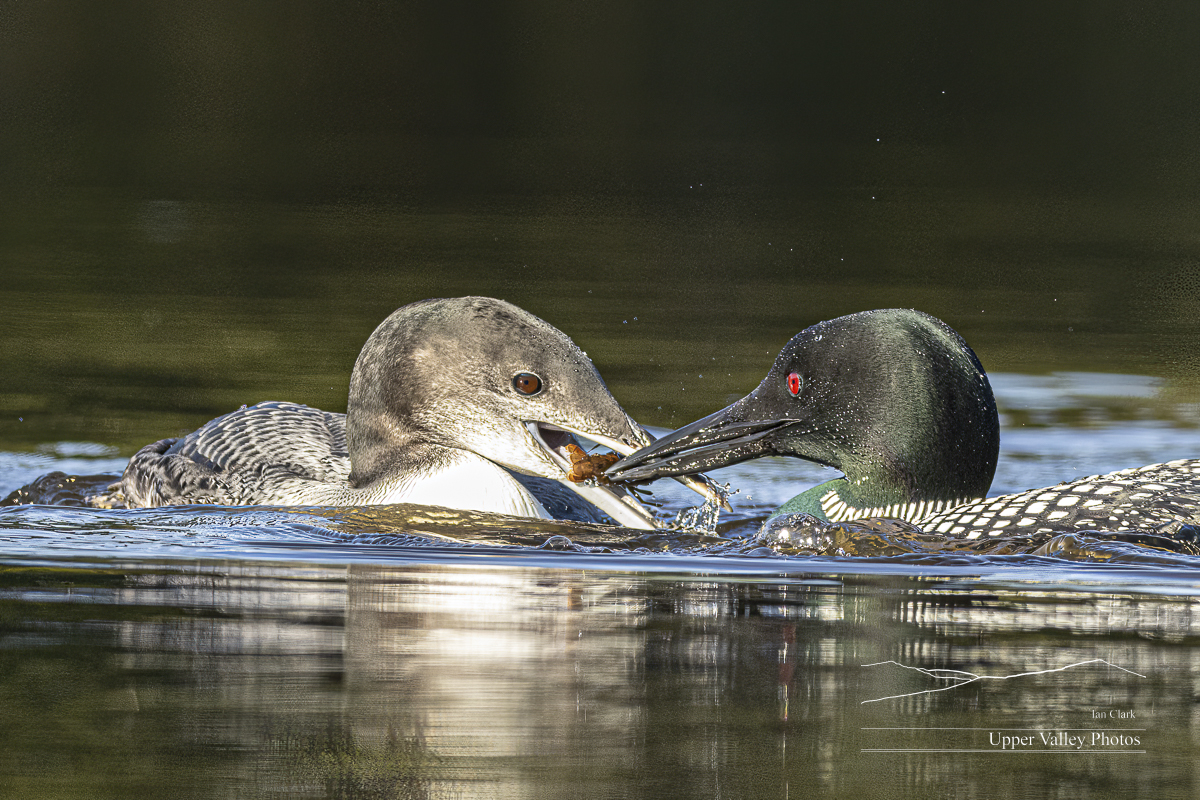
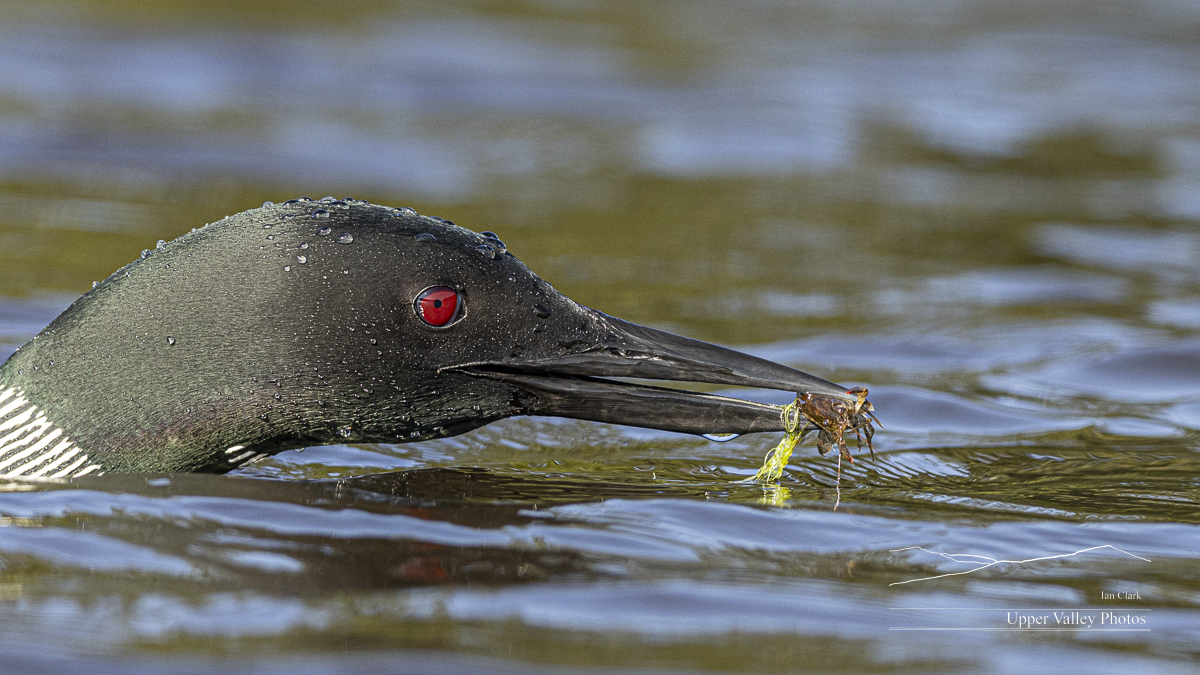
Mom inbound with another crayfish. The chick’s make very quick work of the crayfish now, no more fumbling with them.

The handoff.

And another crayfish.


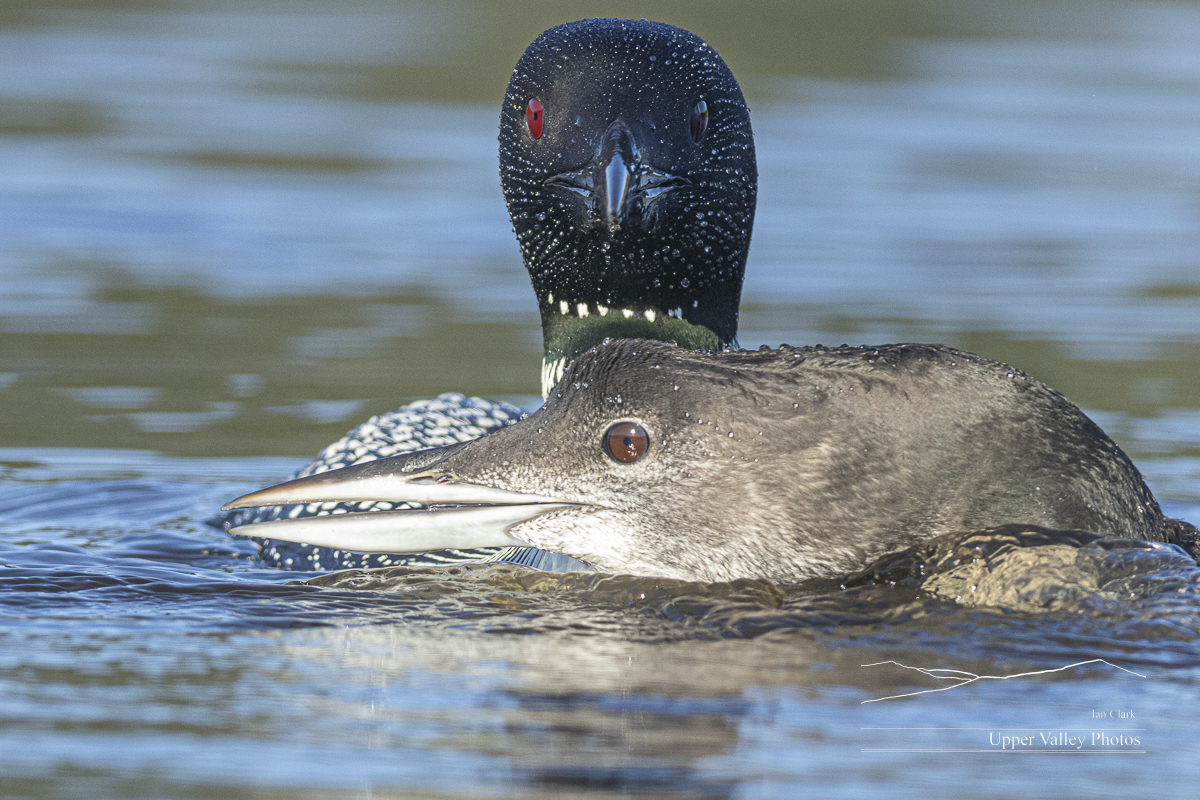
A chick crowding mom, just in case she didn’t know he might be hungry.

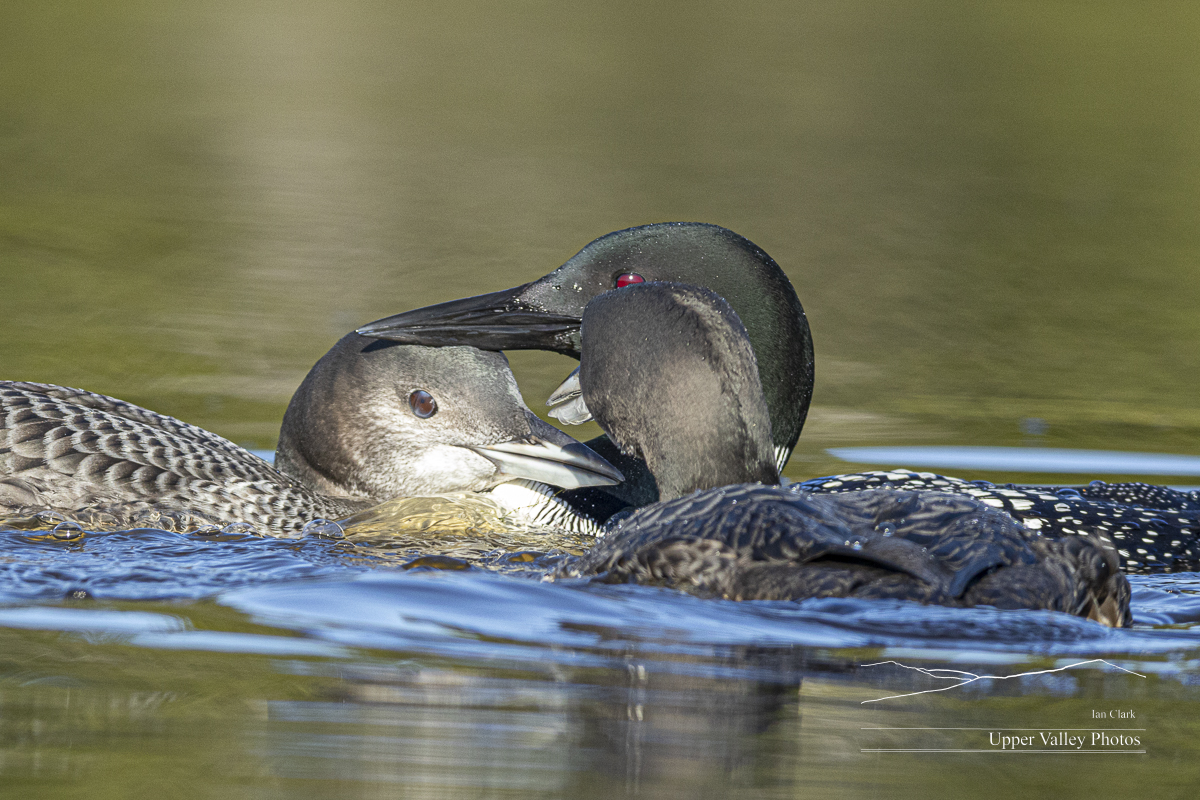
Both chicks crowding mom.

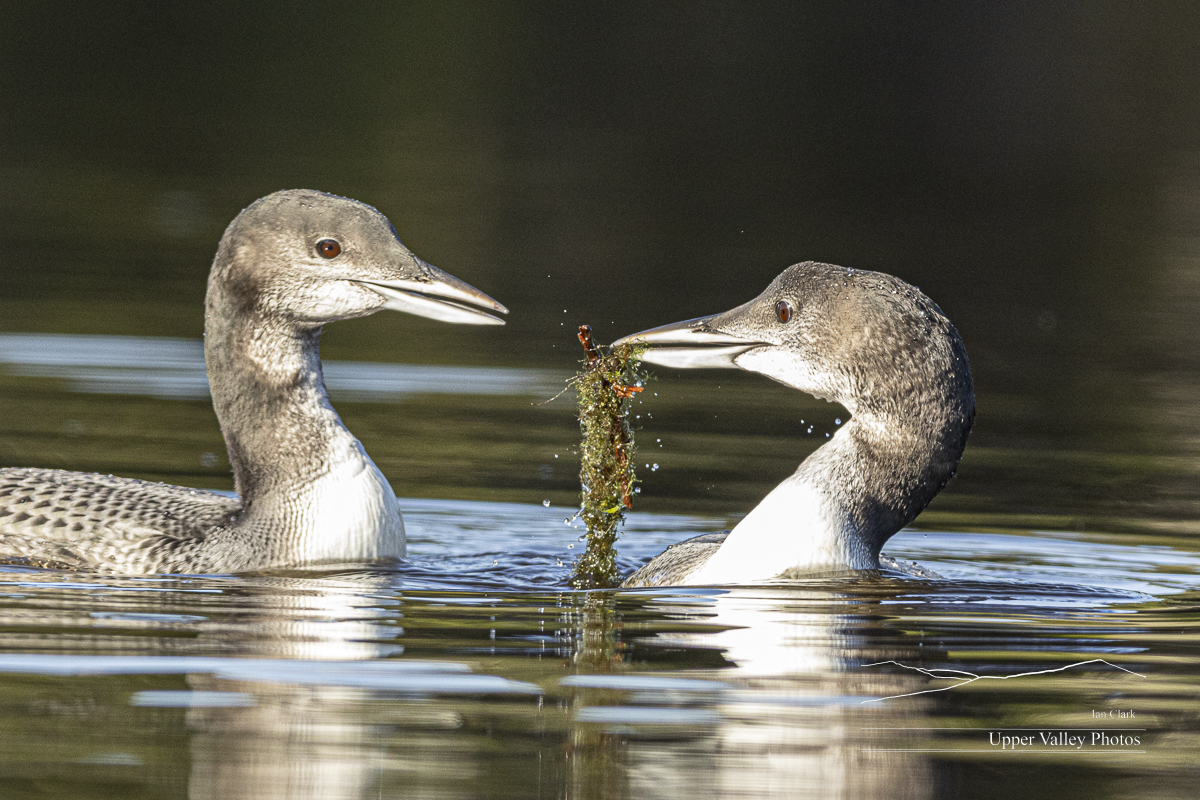
One of the chicks captured a stick covered in weeds. And, had to taught the sibling with it. The stick proved inedible and the chick dropped it. The second chick immediately picked it up to try it for himself.

One last crayfish delivery before I had to head out.

I returned to the pond Tuesday morning. The pond was mostly above the fog again. Beautiful blue skies and the hills to the west were in full sunlight. The pond was stuck in the shadow of one stubborn thick cloud.

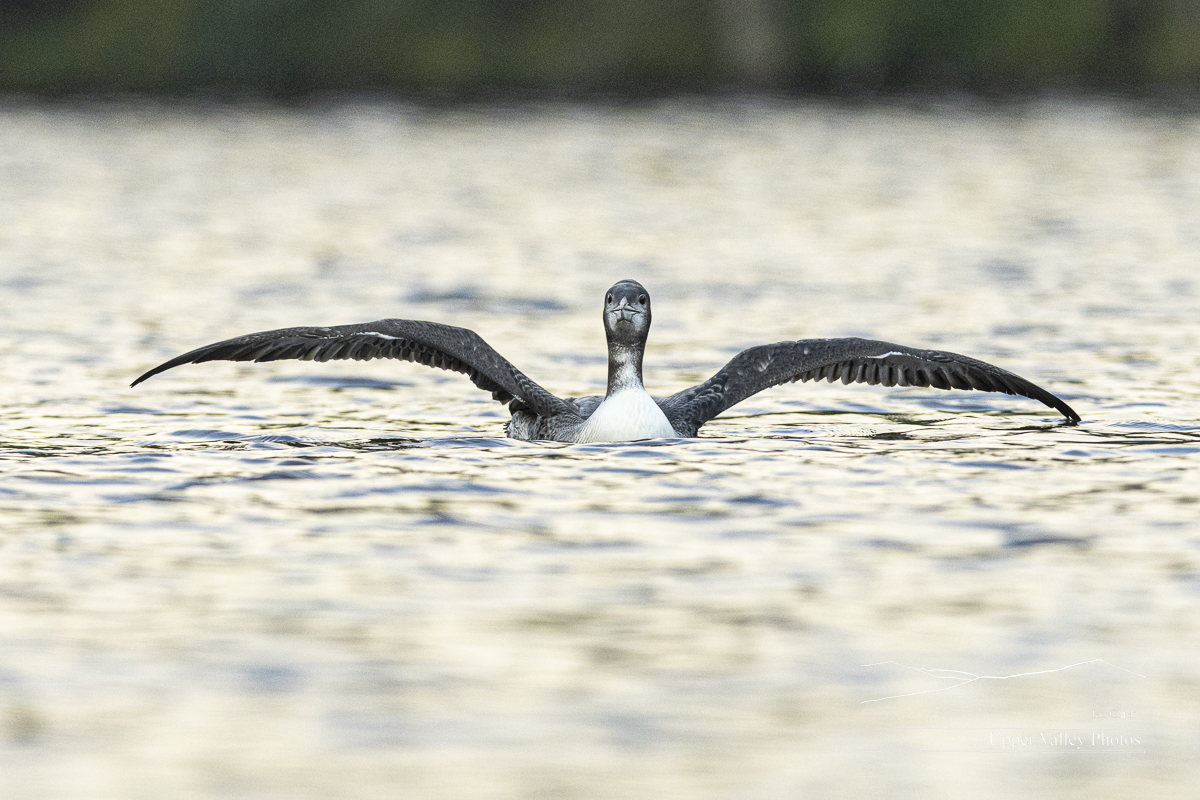
The chicks were alone on the pond, both parents were elsewhere. The chicks were foraging about two-thirds of a mile apart. Both successfully feeding themselves. As the sun came up, a breeze grew and the chicks took time to practice flying.
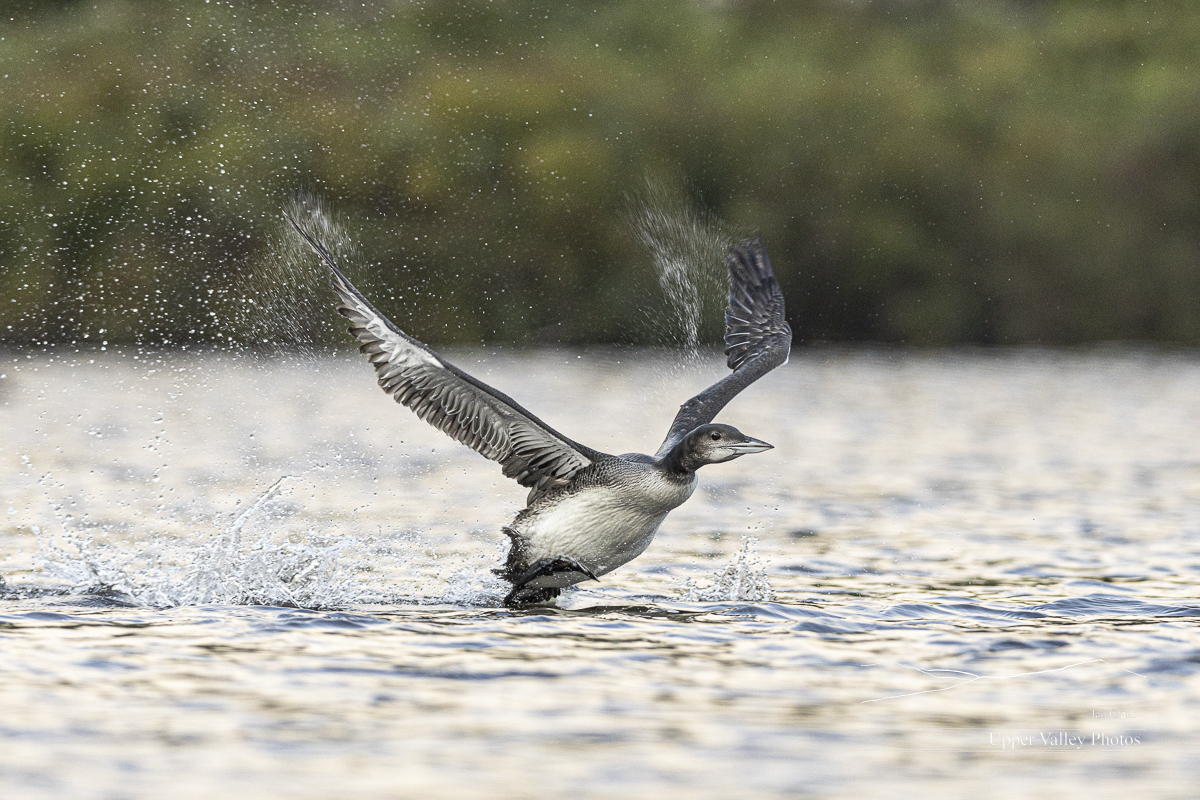
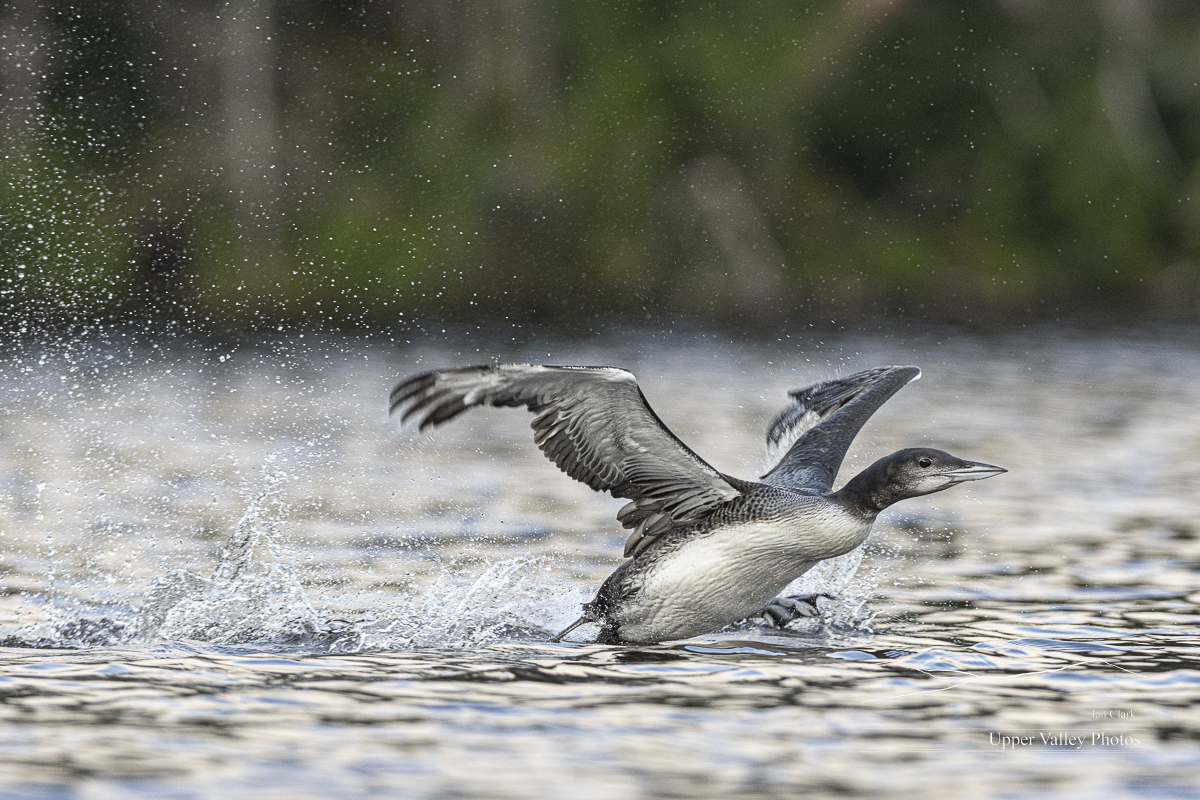
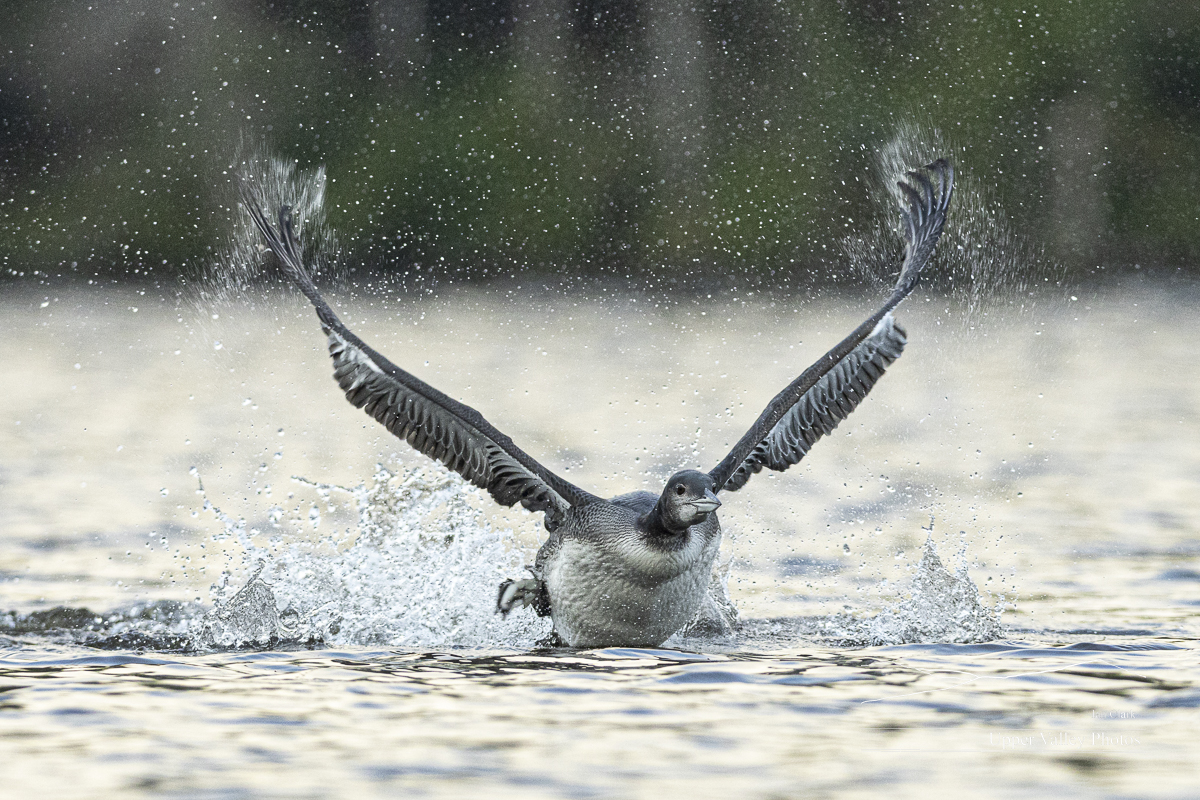
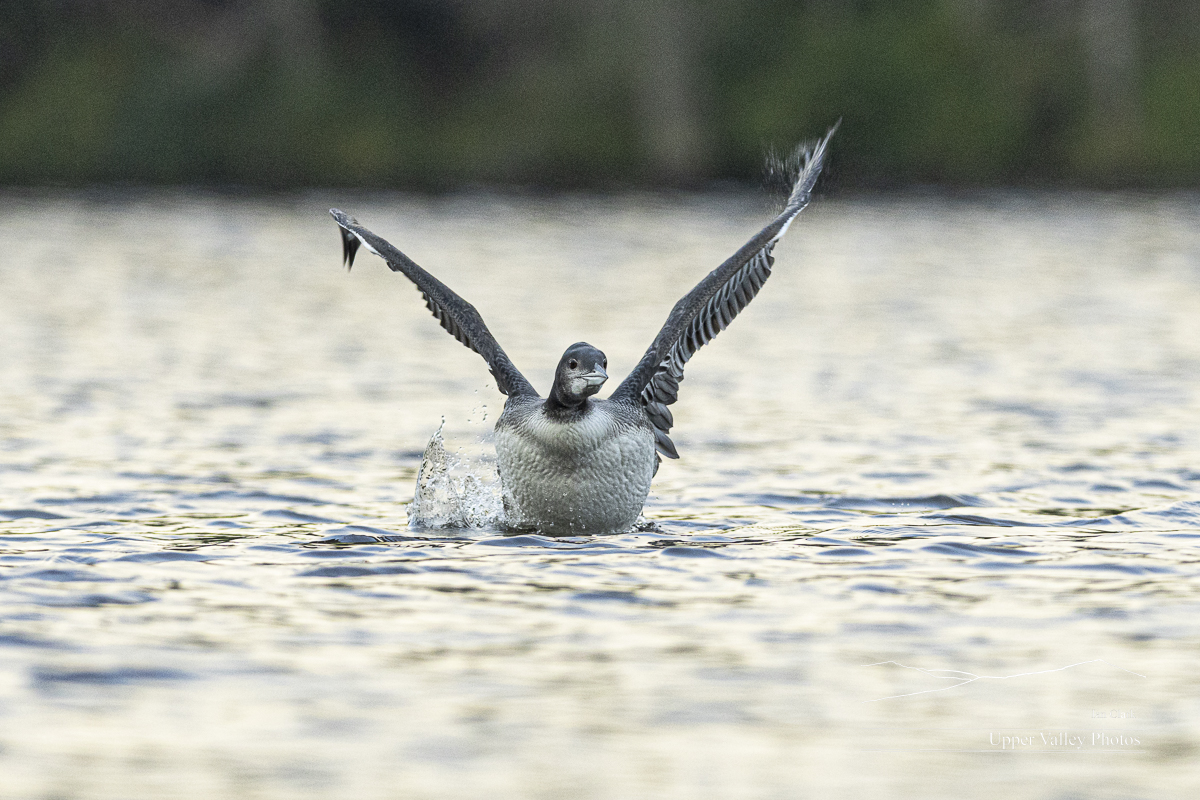
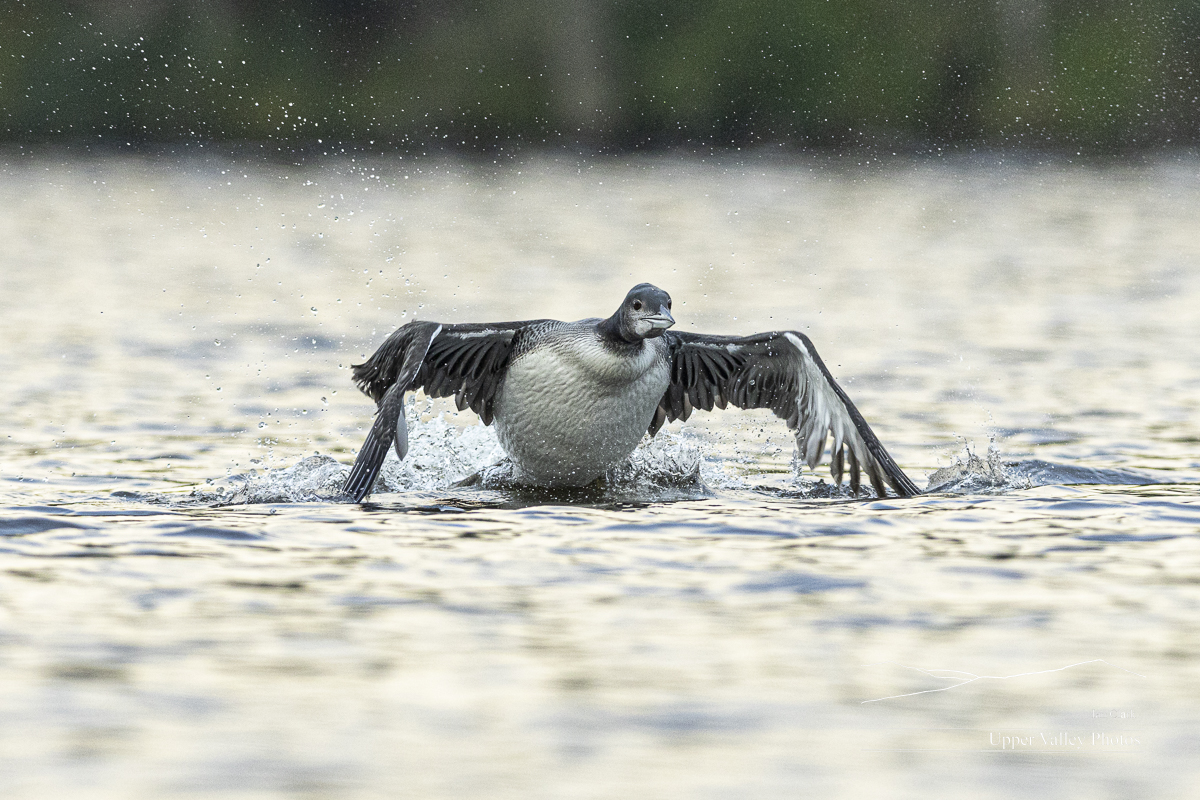
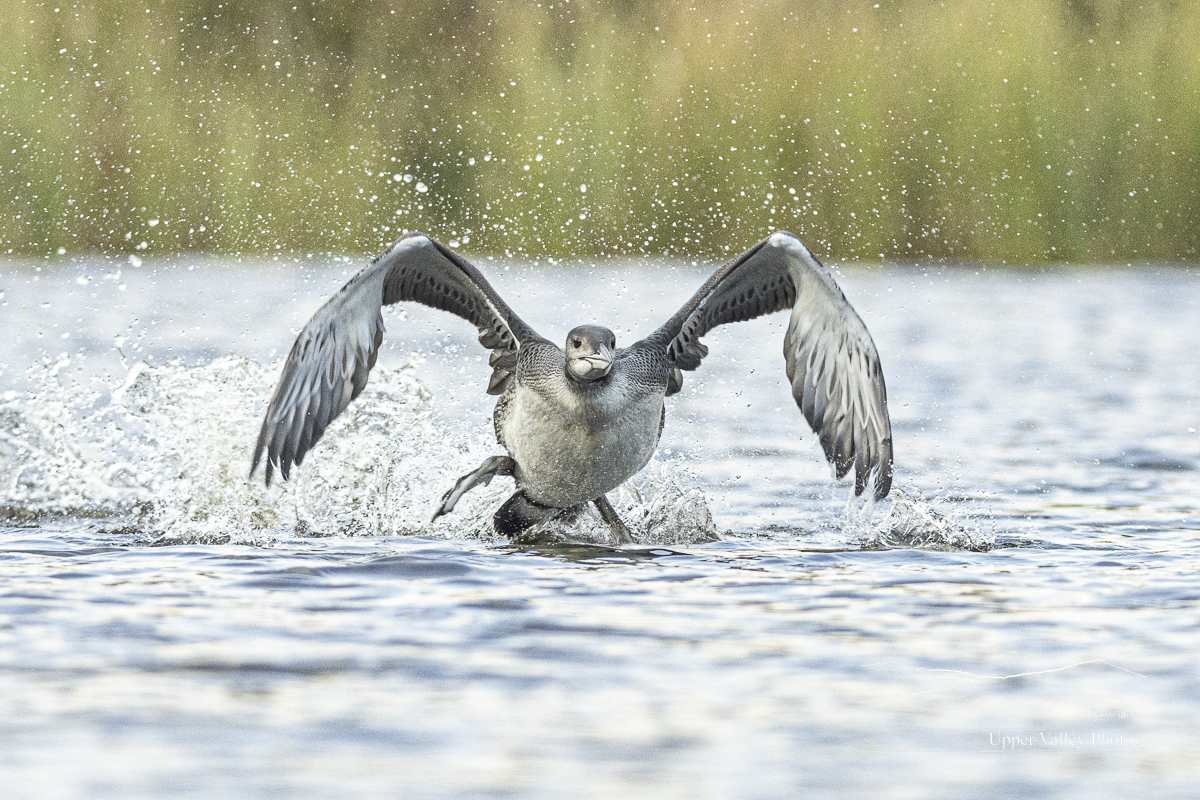
Loons have to run across the surface for some distance to build up speed to get enough lift for takeoff. This chick is giving it a good try.

Further into his run. He doesn’t yet have the strength to get his butt clear of the water.

Here’s the other chick preparing for an attempt.

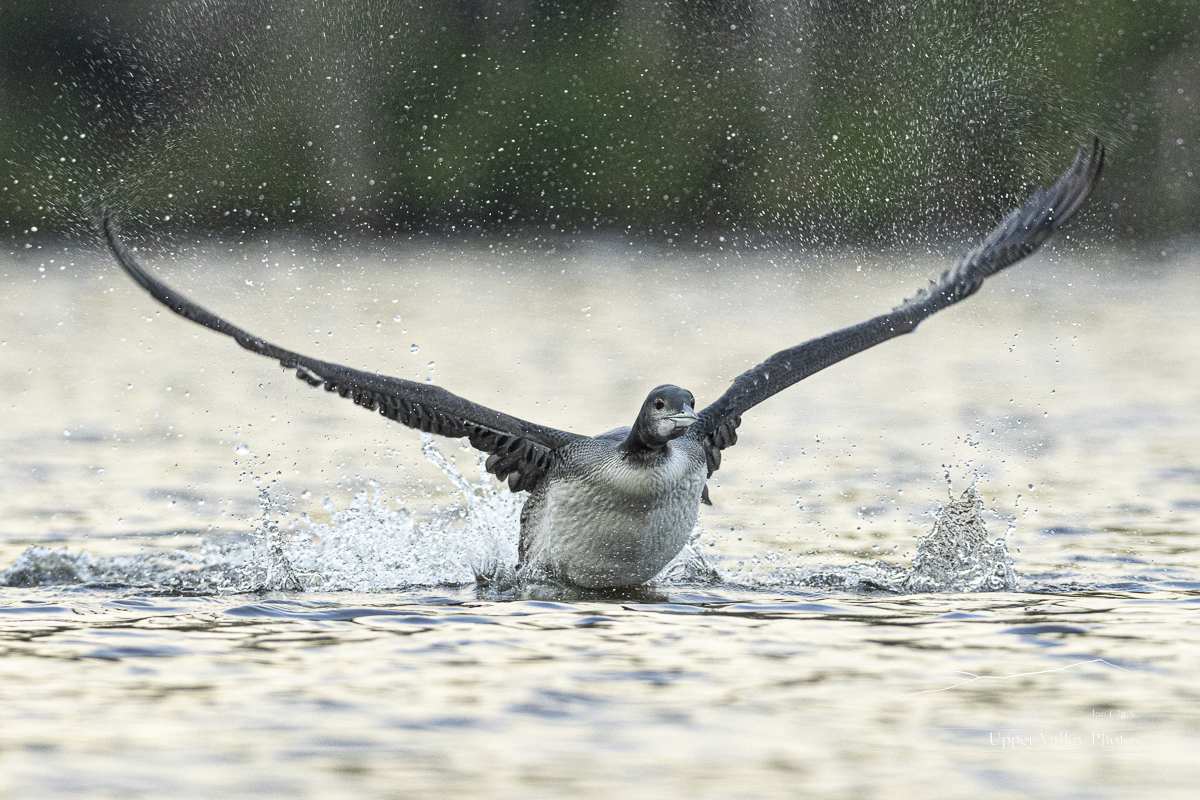
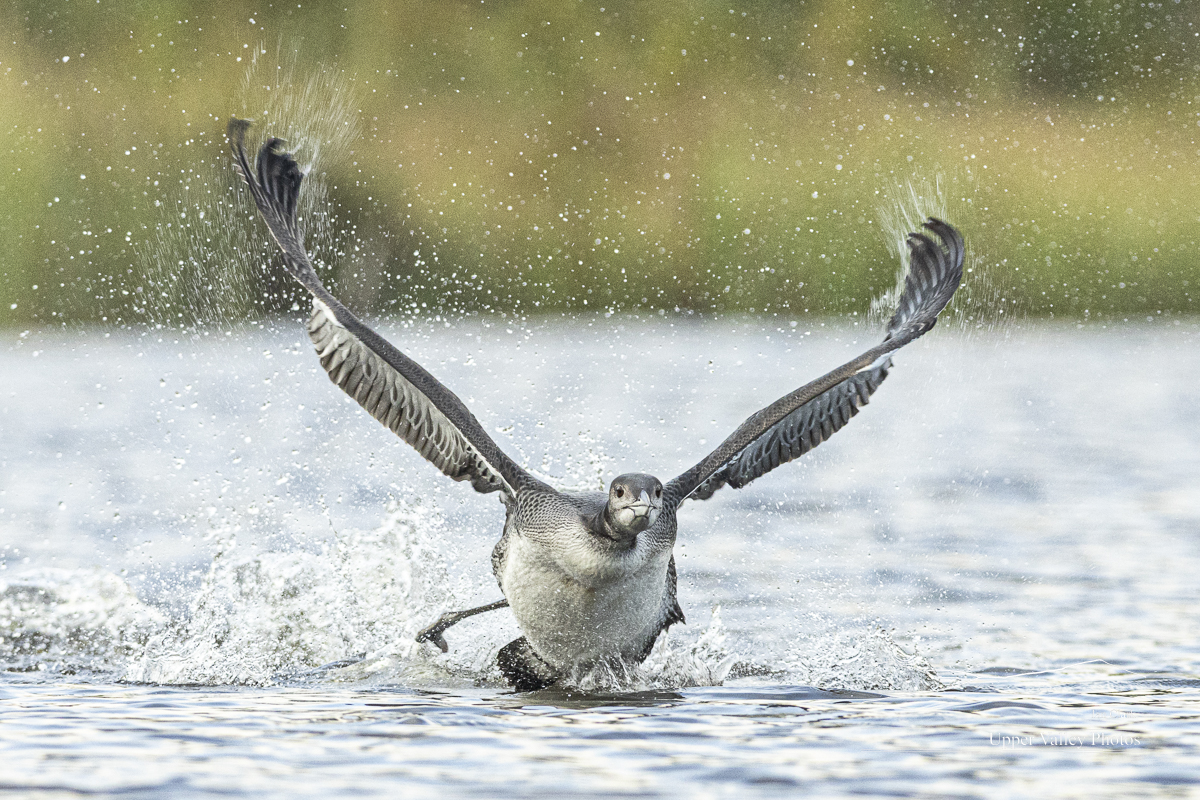
The first upstroke with the wings for his run.

And back down with the wings. Note how much water he’s kicking up already.

Full extension on the wings…. will it be enough?

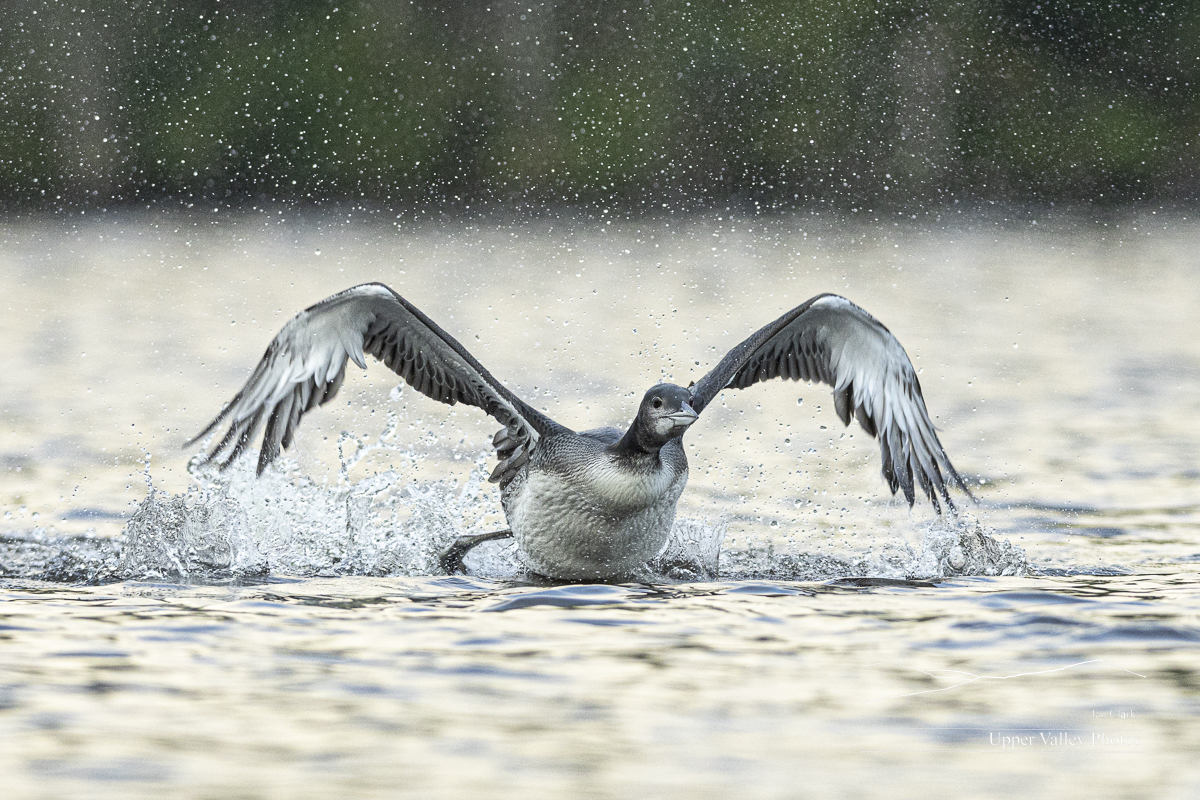
Reversing direction on the wings at the top of the stroke. This picture was taken with a shutter speed of 1/2000th of a second, not fast enough to stop the motion.

This attempt didn’t work, he’s slowing and lowering himself back down on the water.

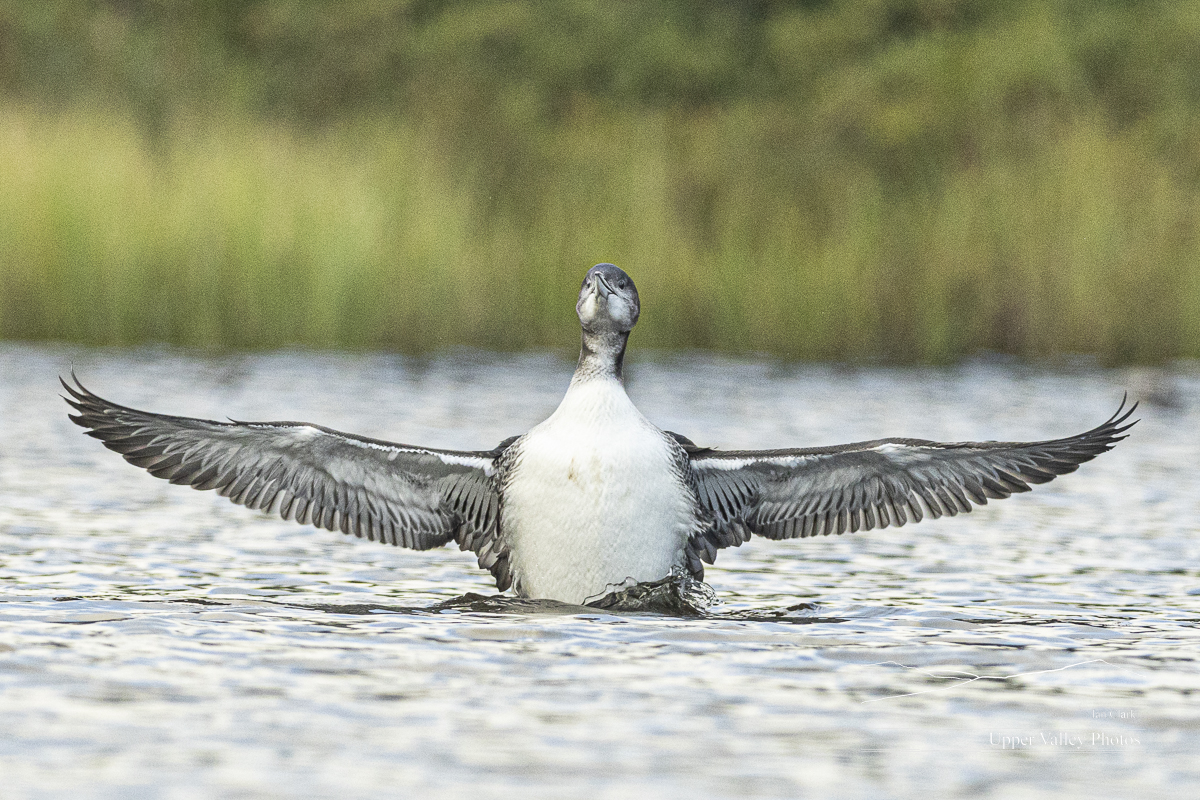
After a quick preen to get all the feathers back in place, he stoop up to stretch. Or his he taking a bow?

The second chick making a second attempt.

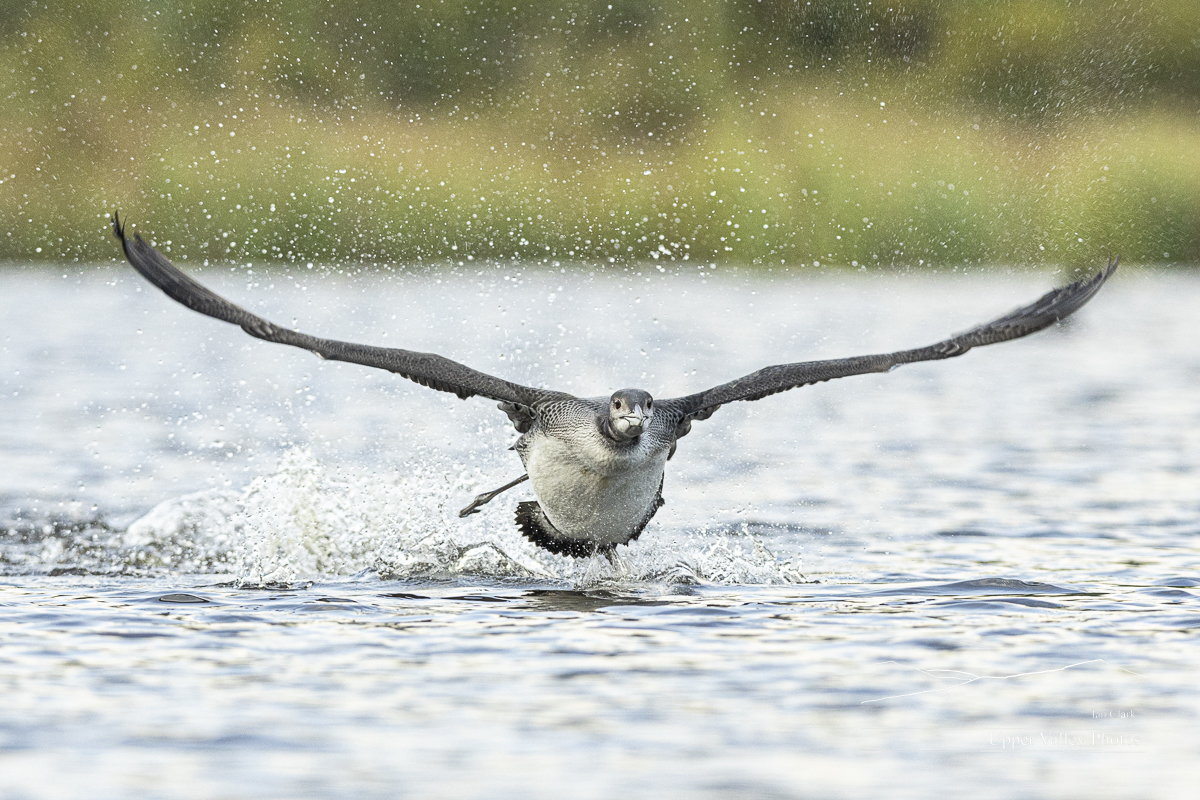
He’s really got his wings moving, his butt is nearly clear of the water. Could this be it?

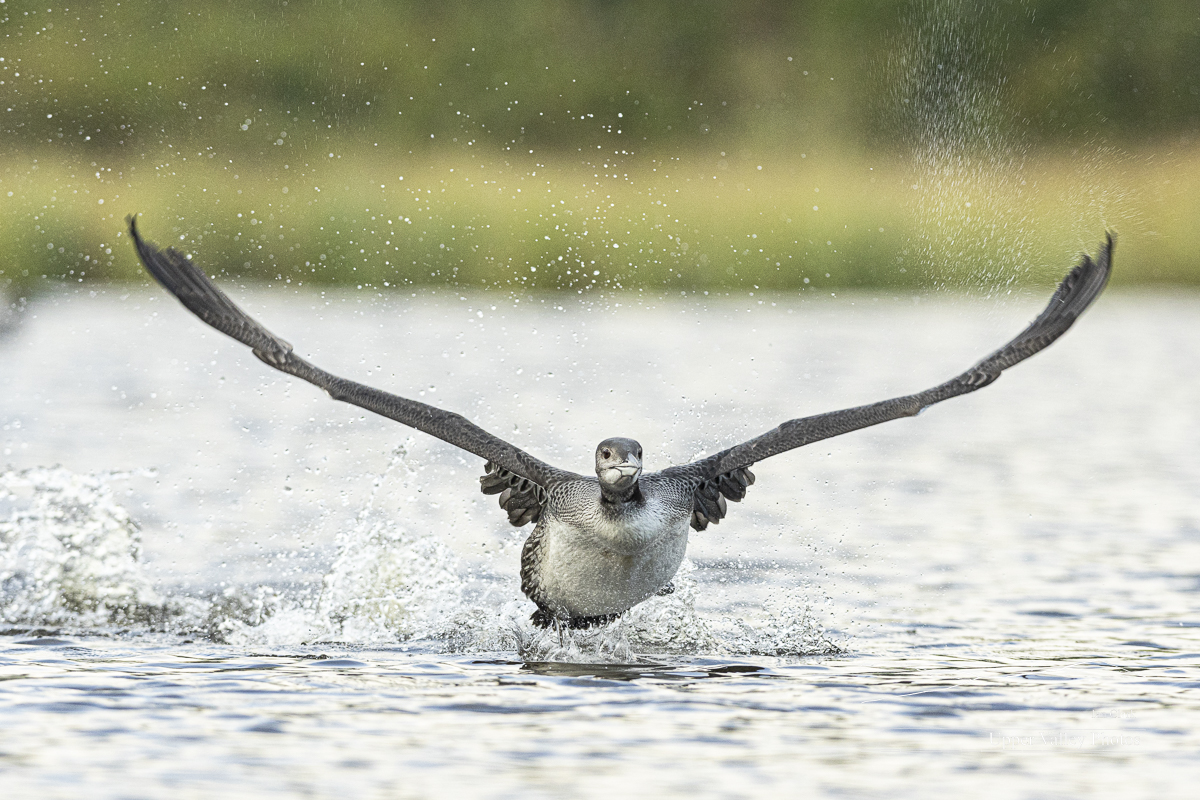
Oh so close! His body – including his butt are clear of the water. But, he’s still pushing off with his left leg.

Rats, not today…. Watching through the lens, I thought he’d made it airborne. Only on the monitor at home did I spot his right leg down. A great try. He’ll be airborne before I can get back to the pond.

The Middletons appear to have scooted from their pond, they haven’t been spotted in almost a week. The Westons were doing well as of this past weekend. Both chicks are growing and getting independent. I’m hoping to get a chance to visit them before they head out.

Pin It on Pinterest