First Loon Chicks of 2021

UPDATE: When I first posted this, I didn’t know which loon was banded. I contacted the Loon Preservation Committee with the band information. They wrote back that this bird was banded on Lee’s Pond in Moultonborough, NH, in 2017. The were unable to determine the sex while banding. I eventually observed the banded bird yodeling. Since only males yodel, that let us determine the banded bird is dad. I’ve updated this post to reflect that in the captions.

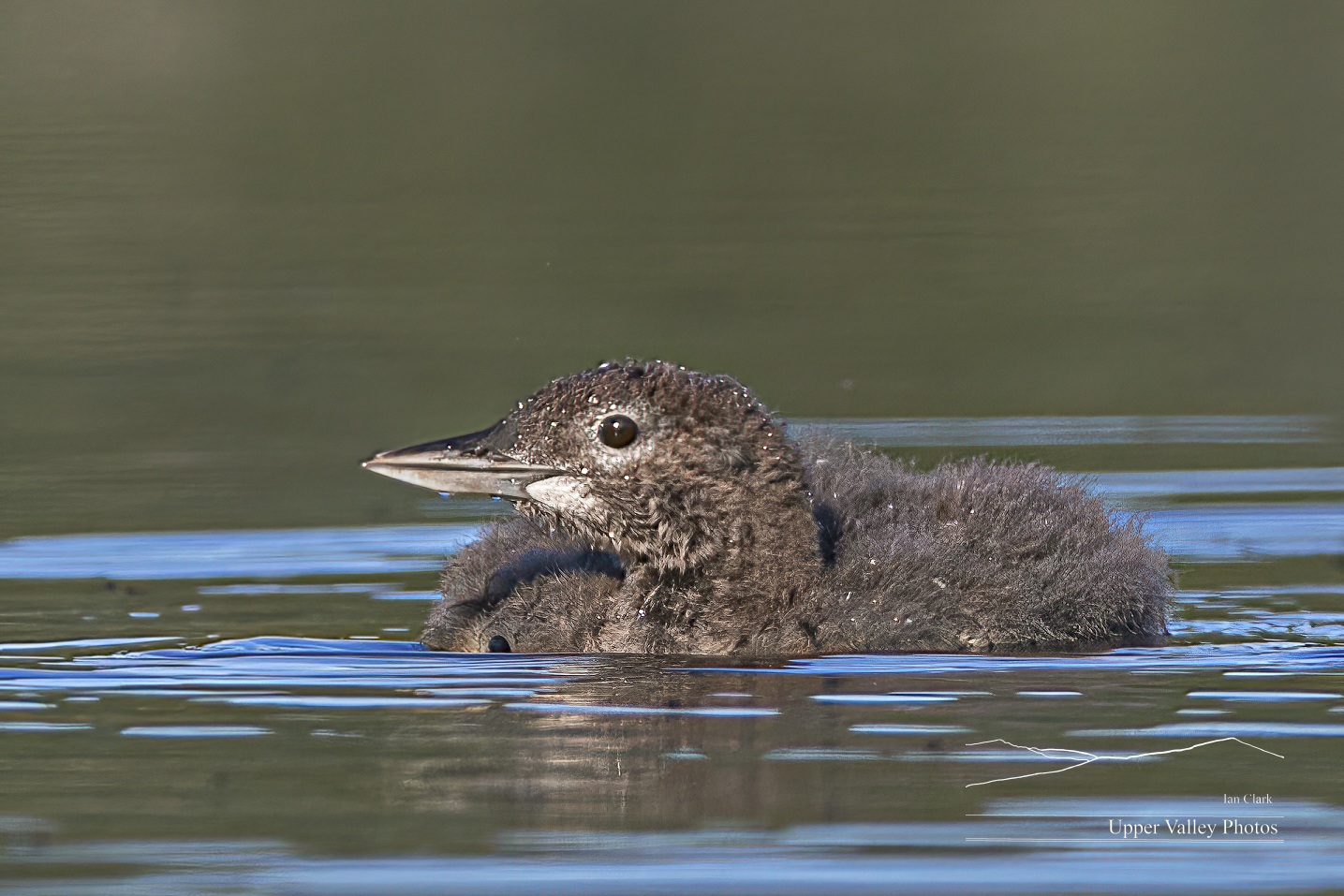
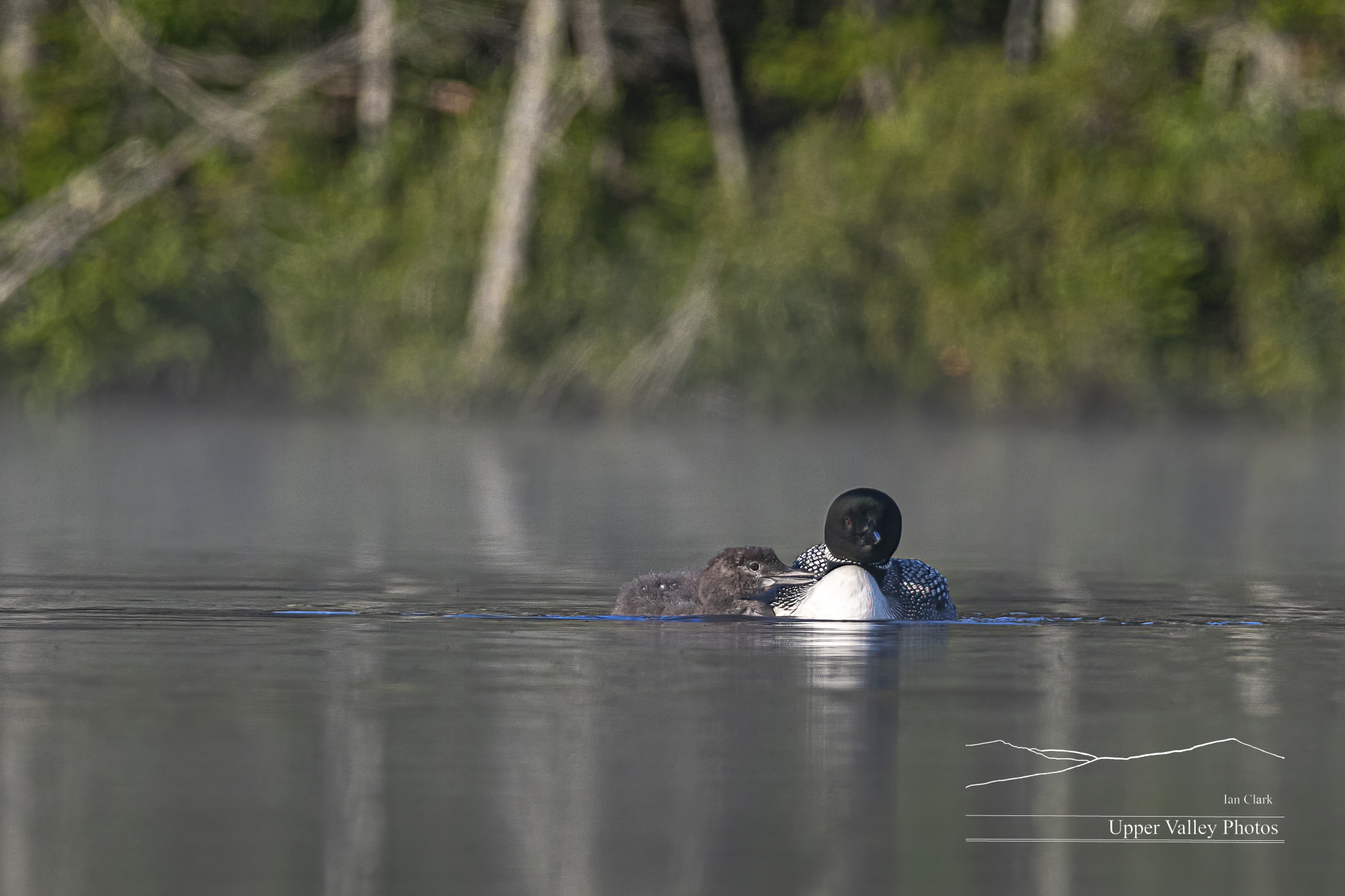
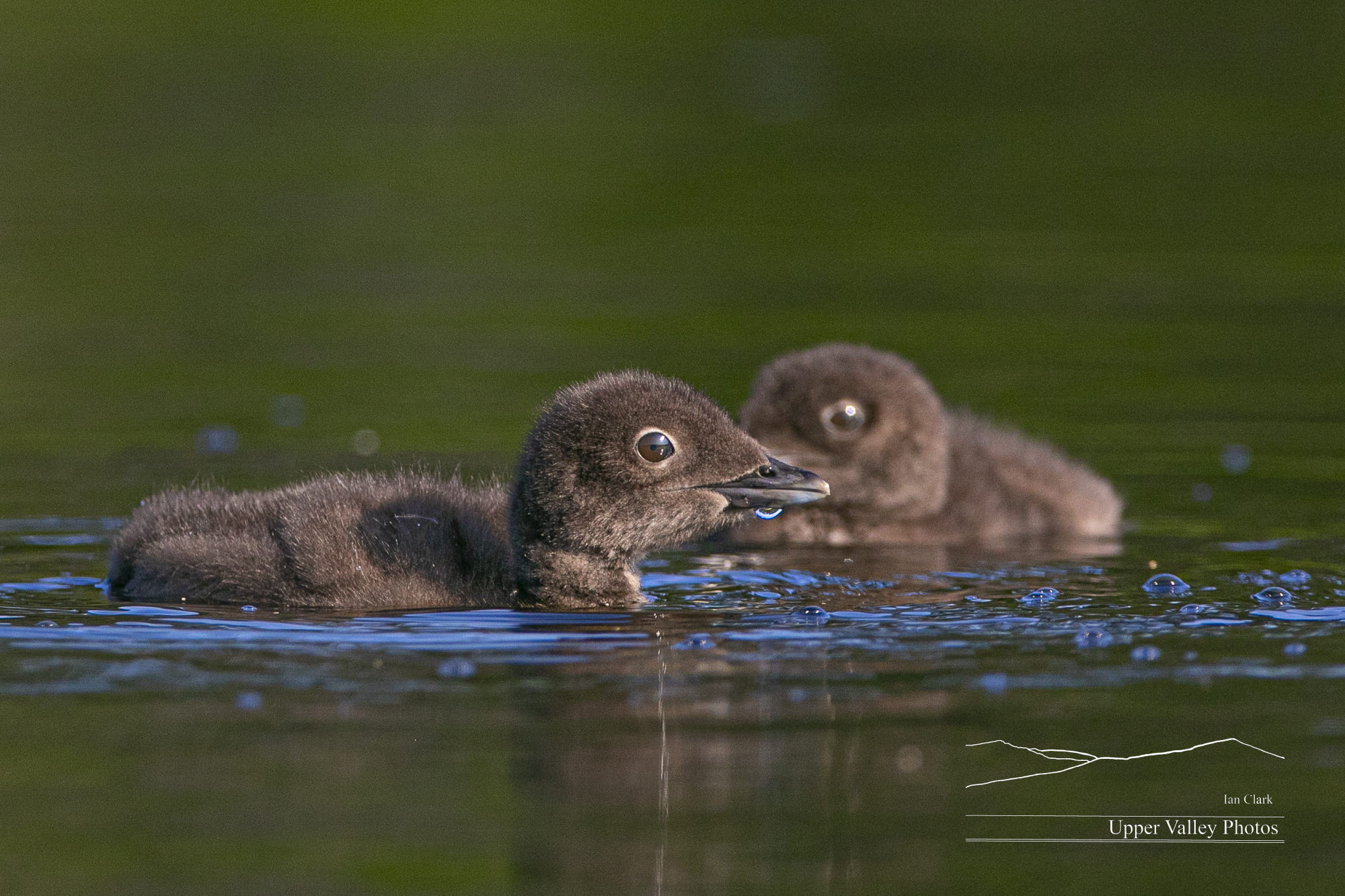
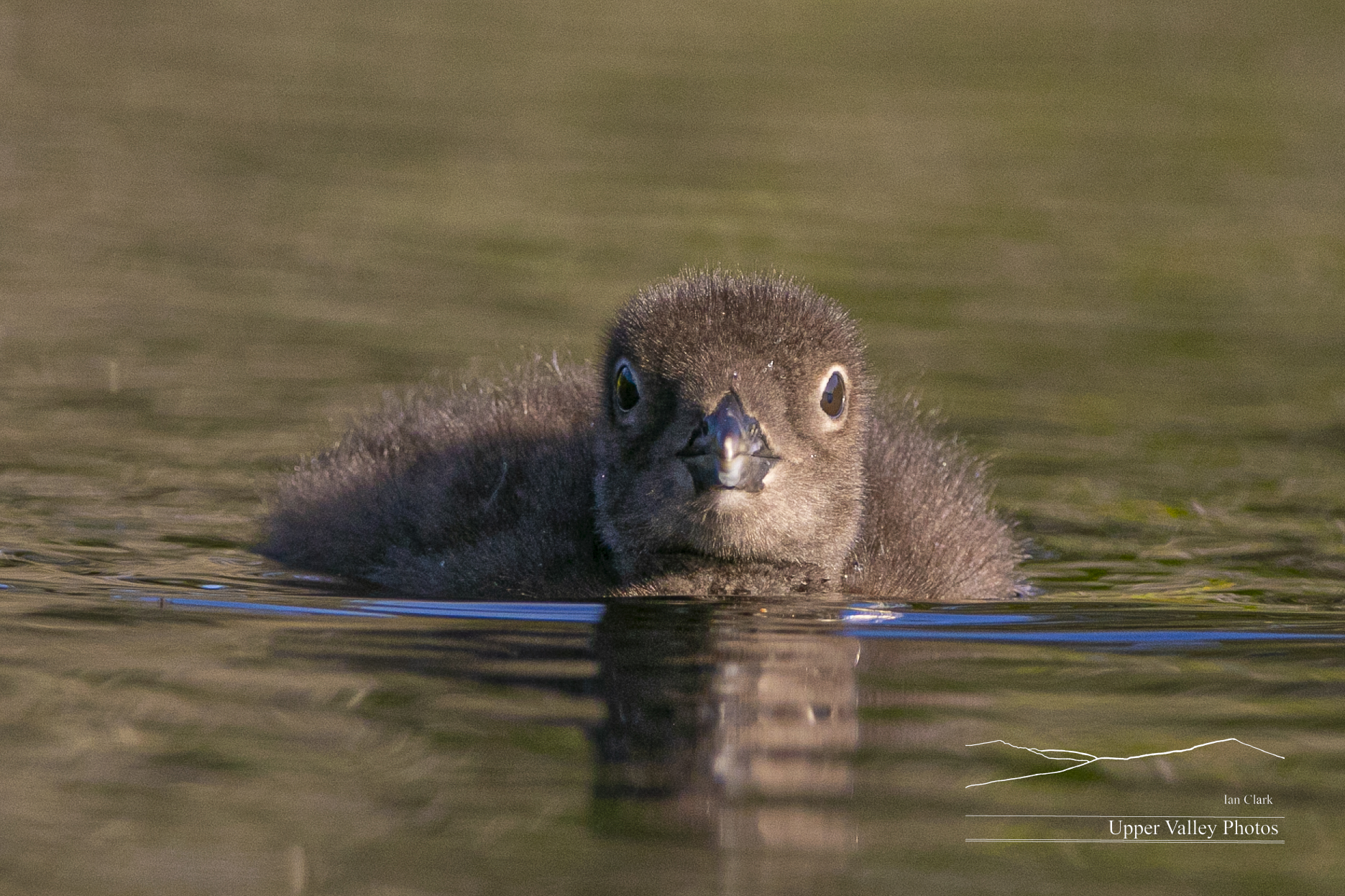
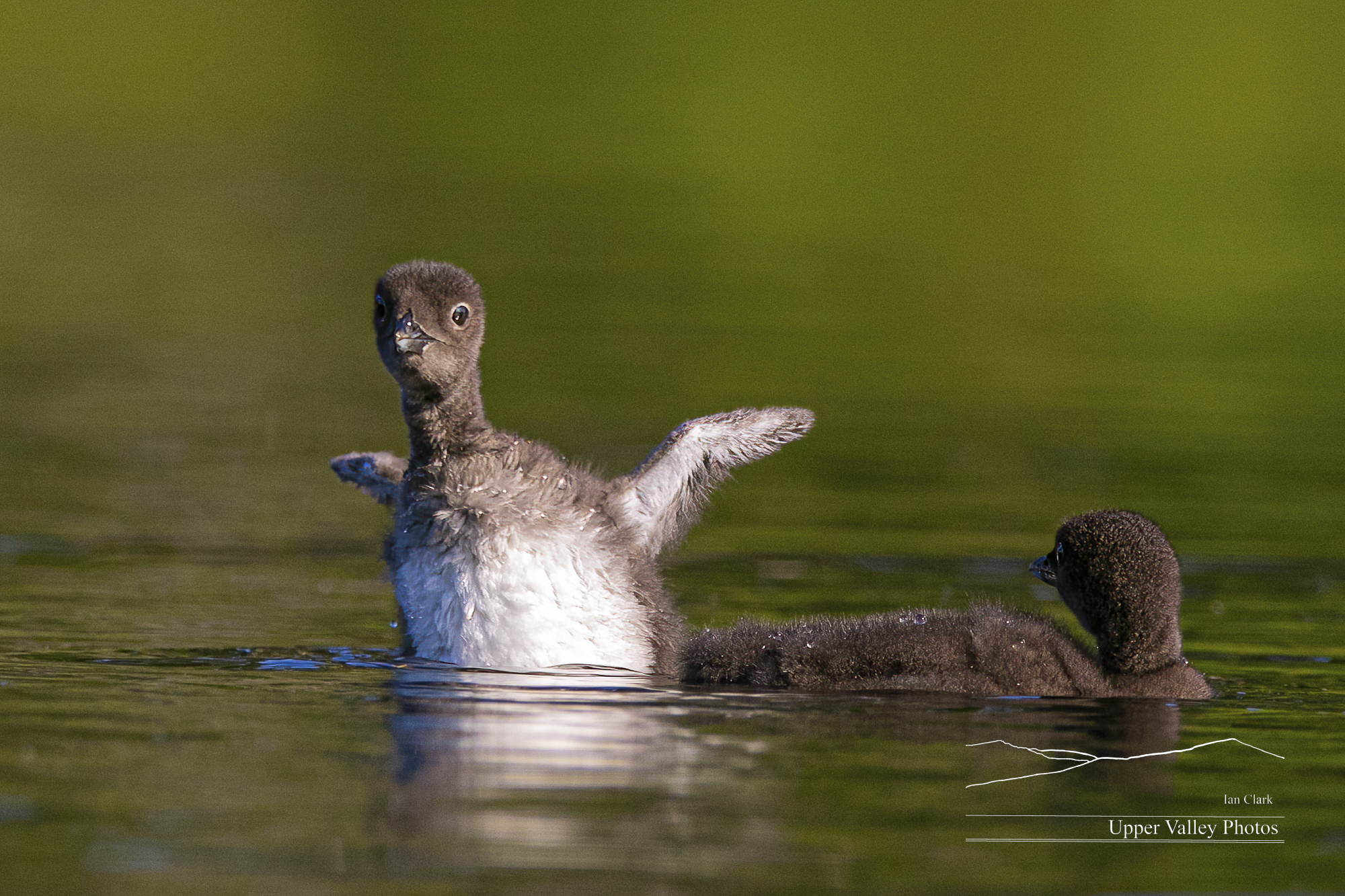
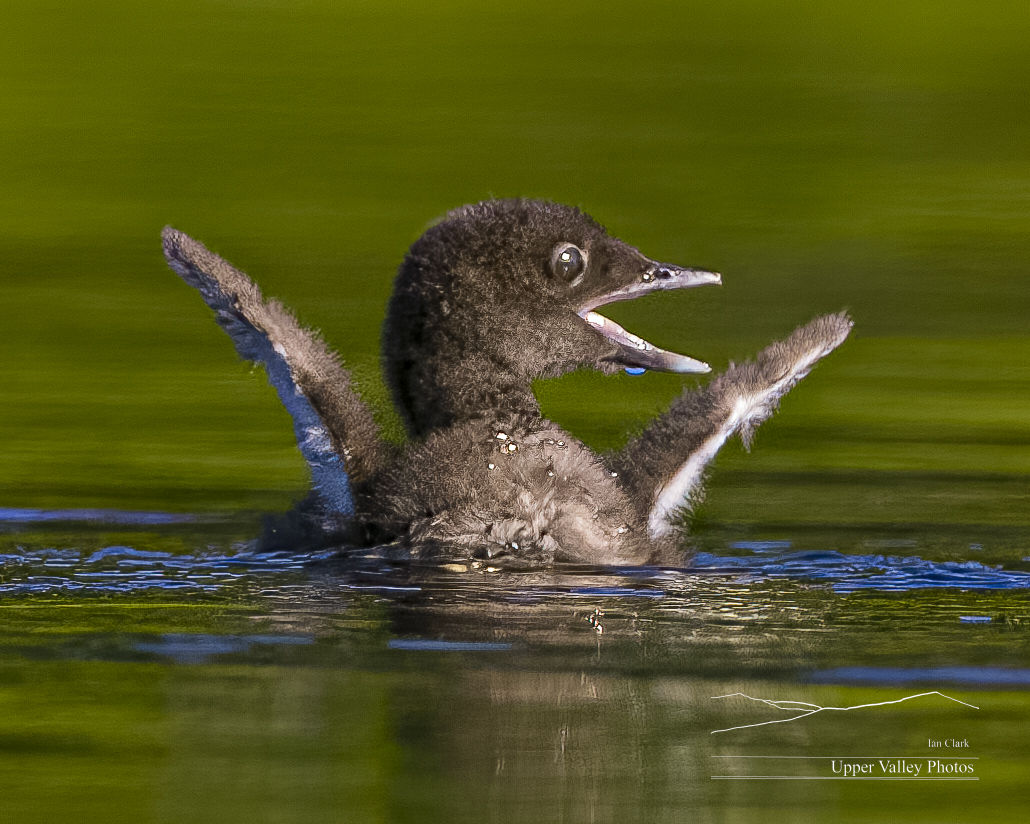
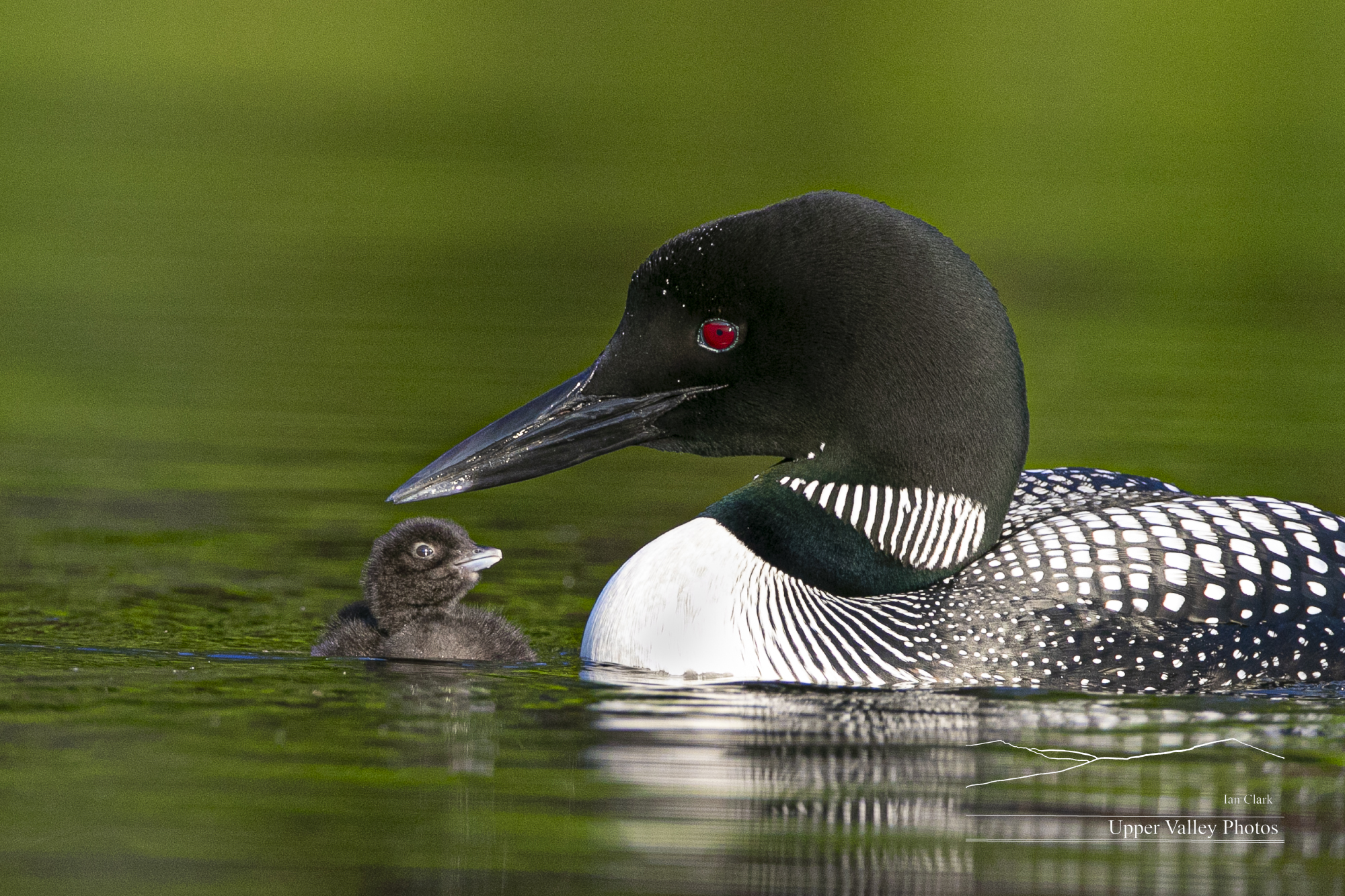
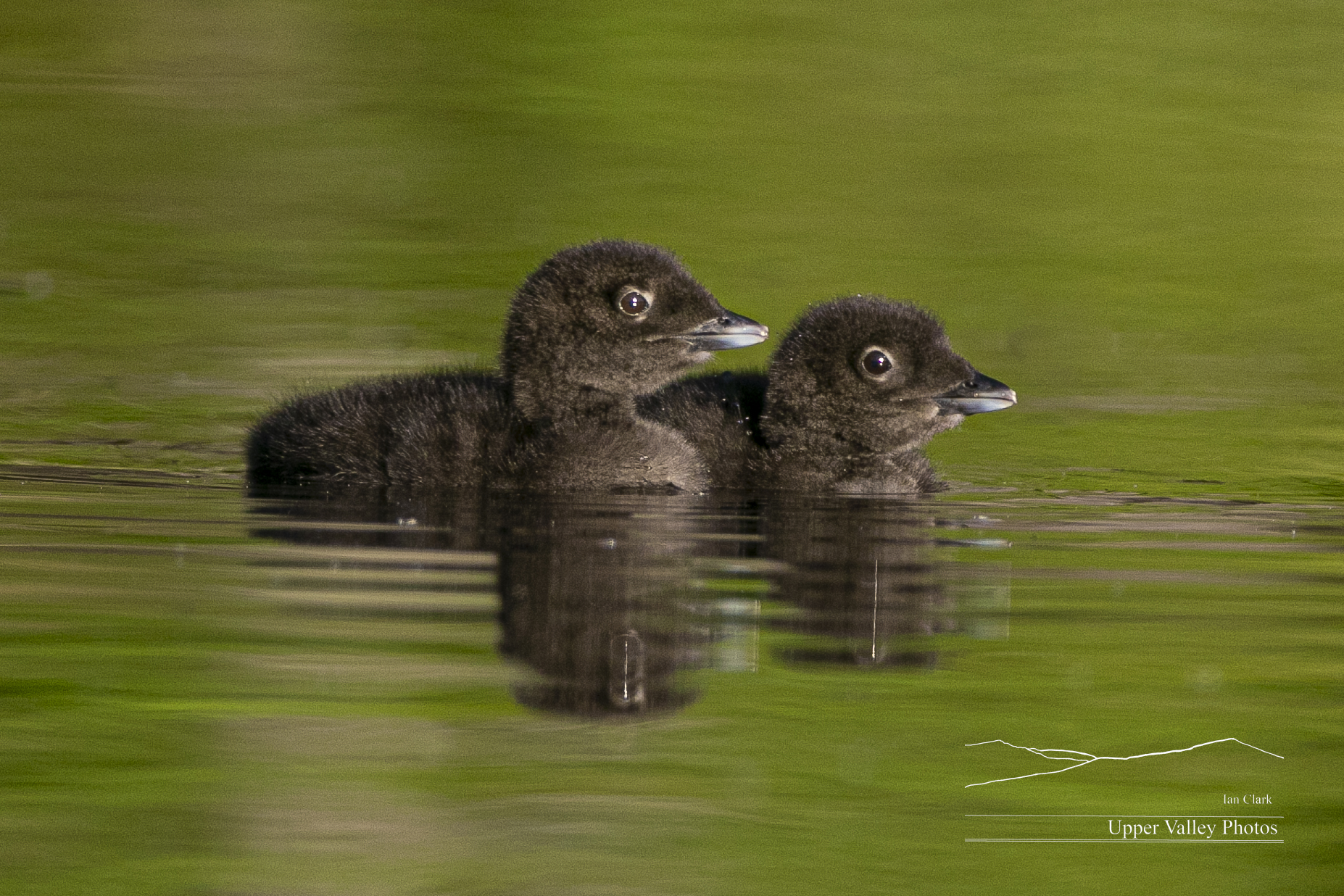
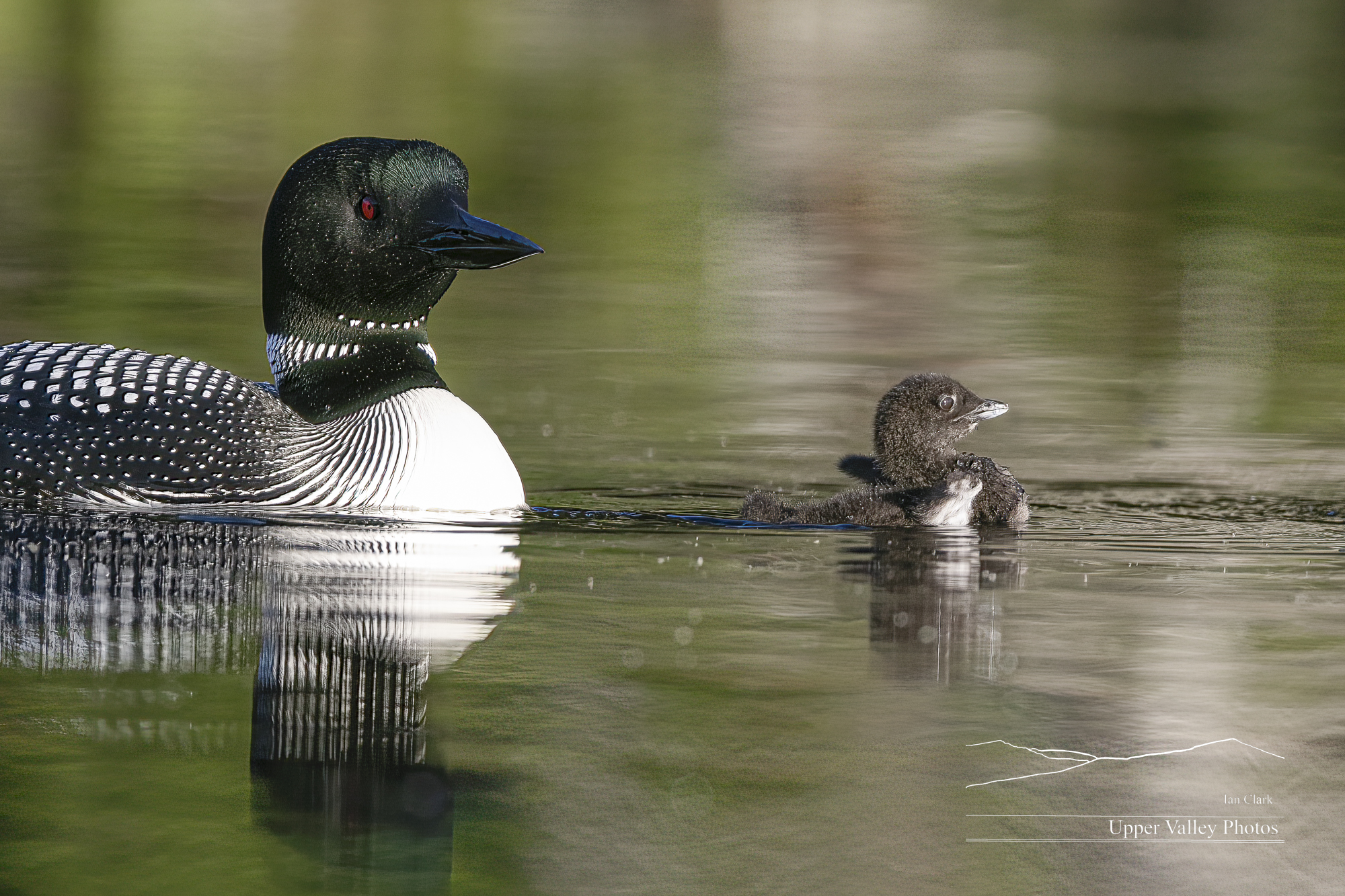
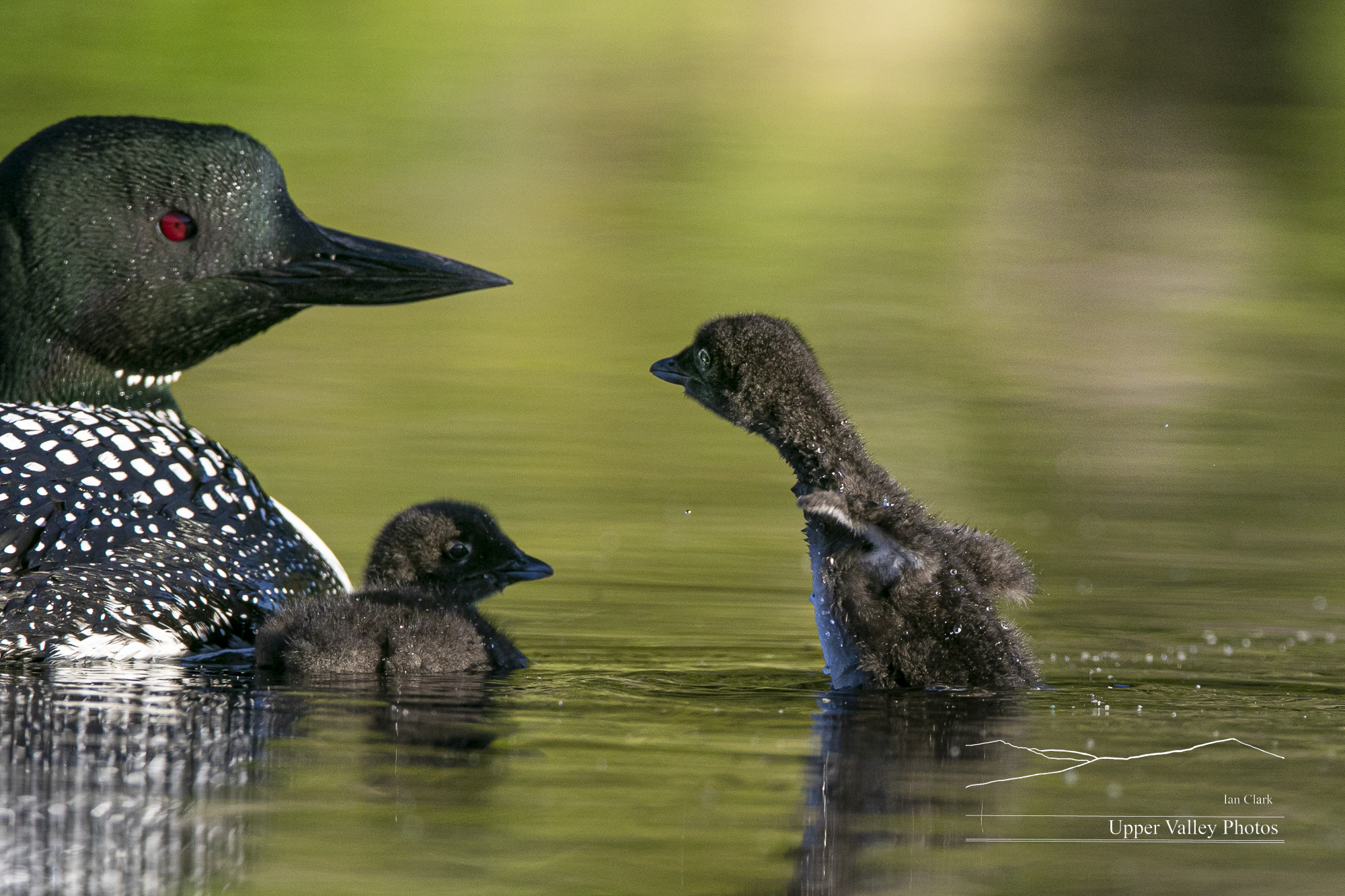
Loon chicks are hatching around the Upper Valley. One of the pairs I follow had two chicks last Sunday morning. They were still on the nest, the chicks probably hatched Friday and Saturday. They stayed on the nest for a bit Sunday morning, before heading out to tackle life. 

A note on photographing loons. Please give them their space – keep well back. Even if you aren’t a threat, you may distract the parents from something that is a danger to the chicks. Loon chicks face tough enough odds, don’t make it worse. These images were all taken with an 800mm lens on a crop 35mm body, comparable to a 1,280mm lens on a traditional 35mm camera – something like a 26x scope. And, they’re heavily cropped. You can get good images without crowding the loons. 

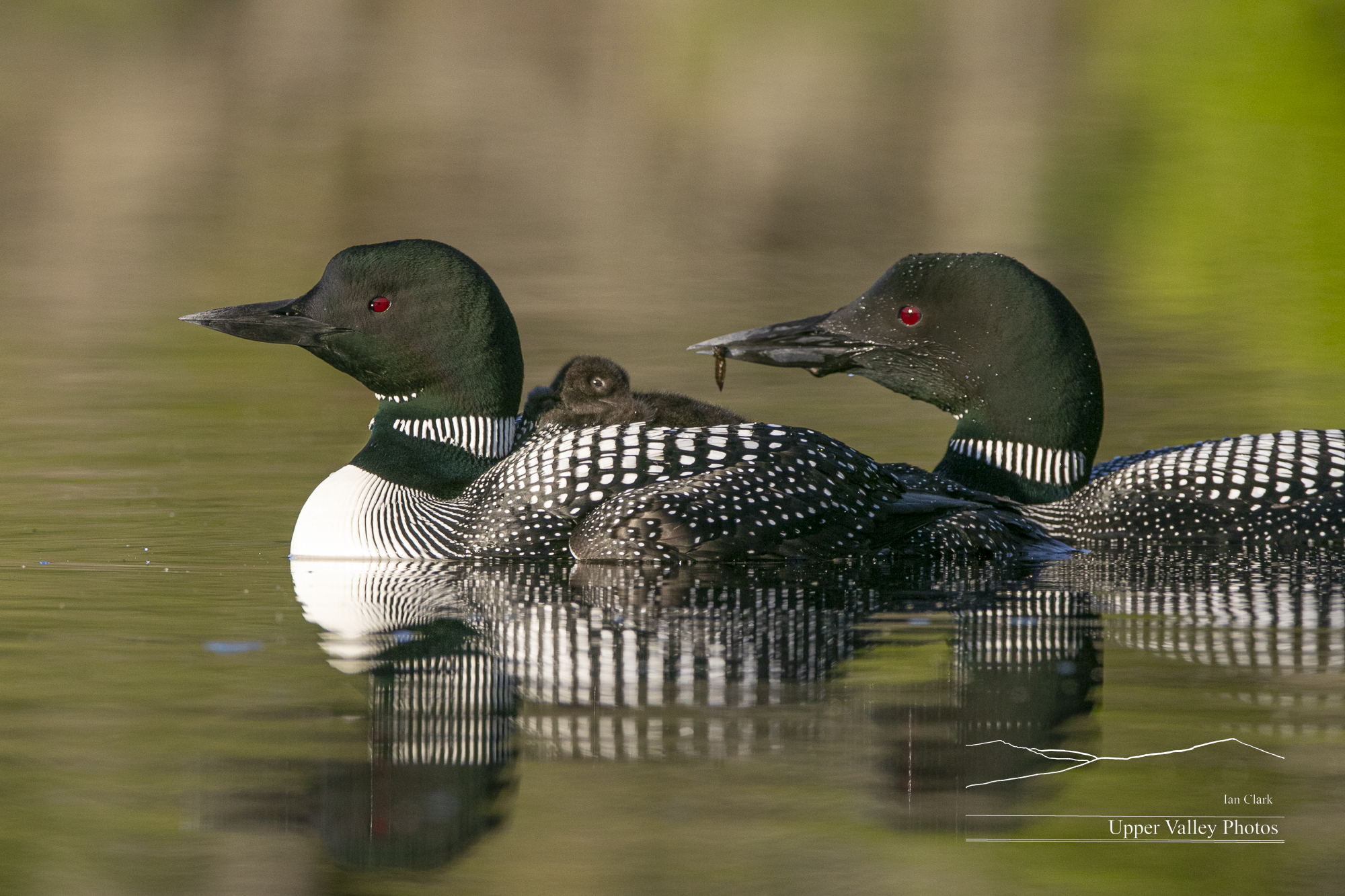
Here’s our little family, still on the nest. That’s dad with the chicks, we can one of his leg bands.
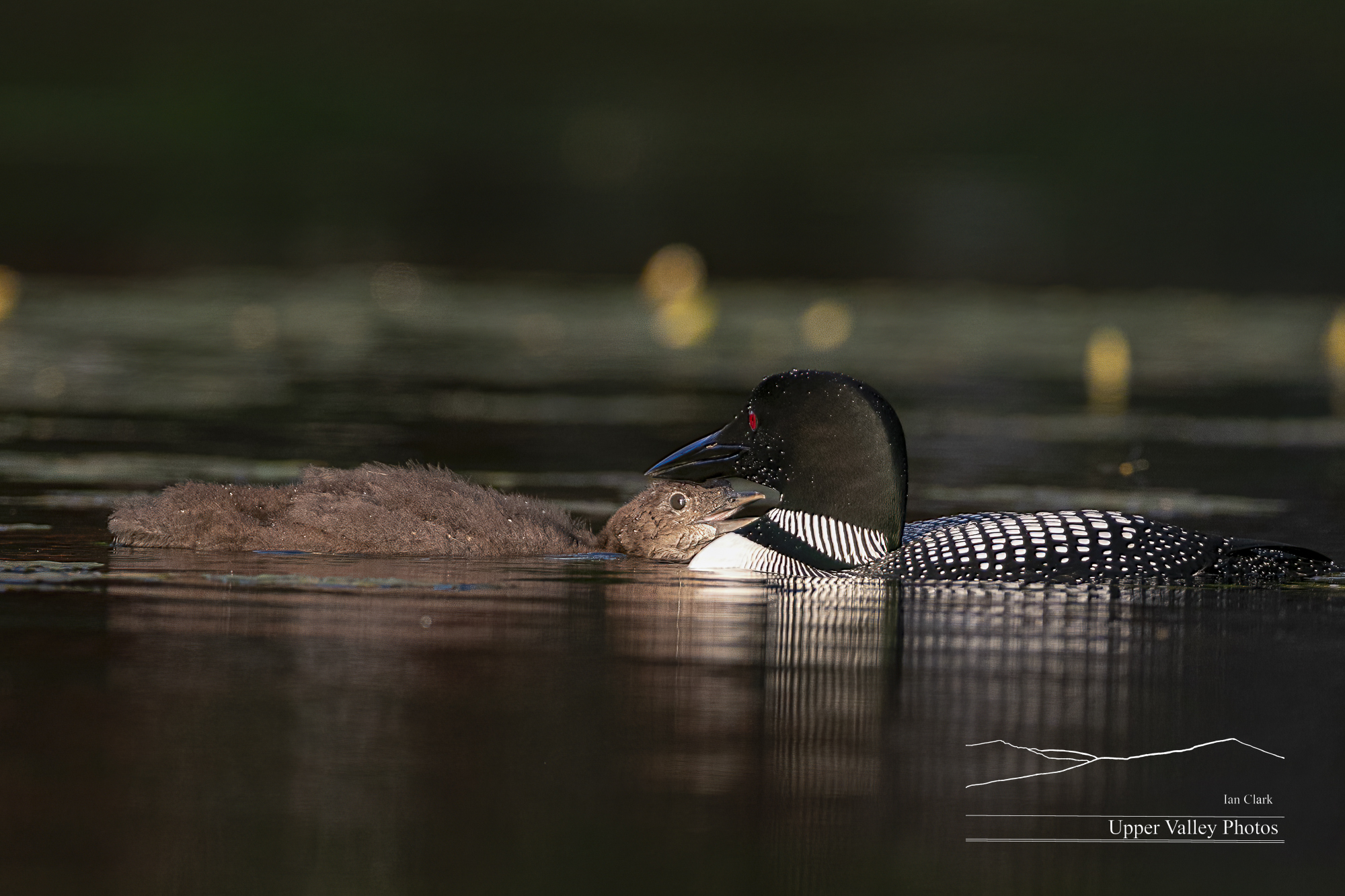
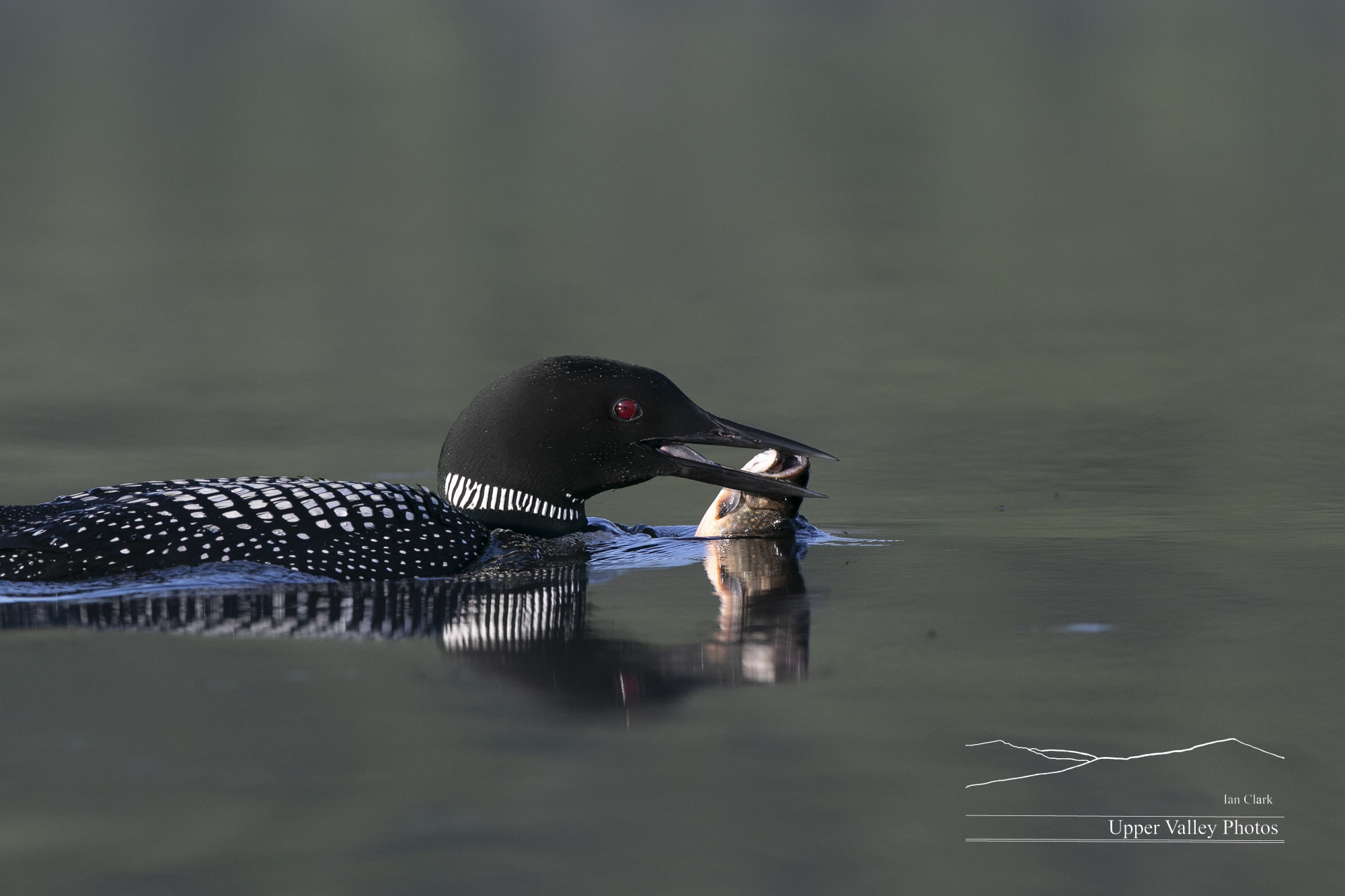
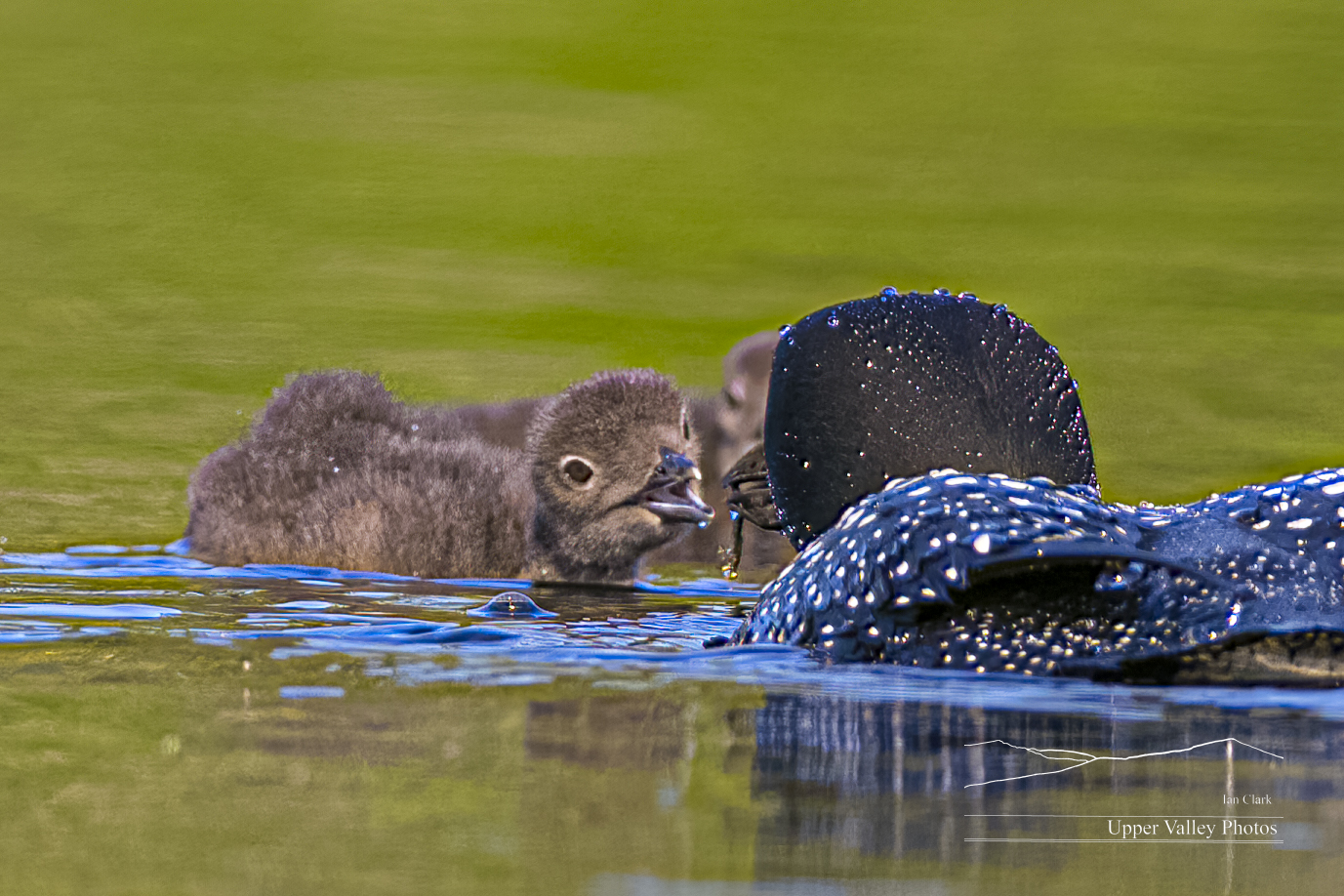
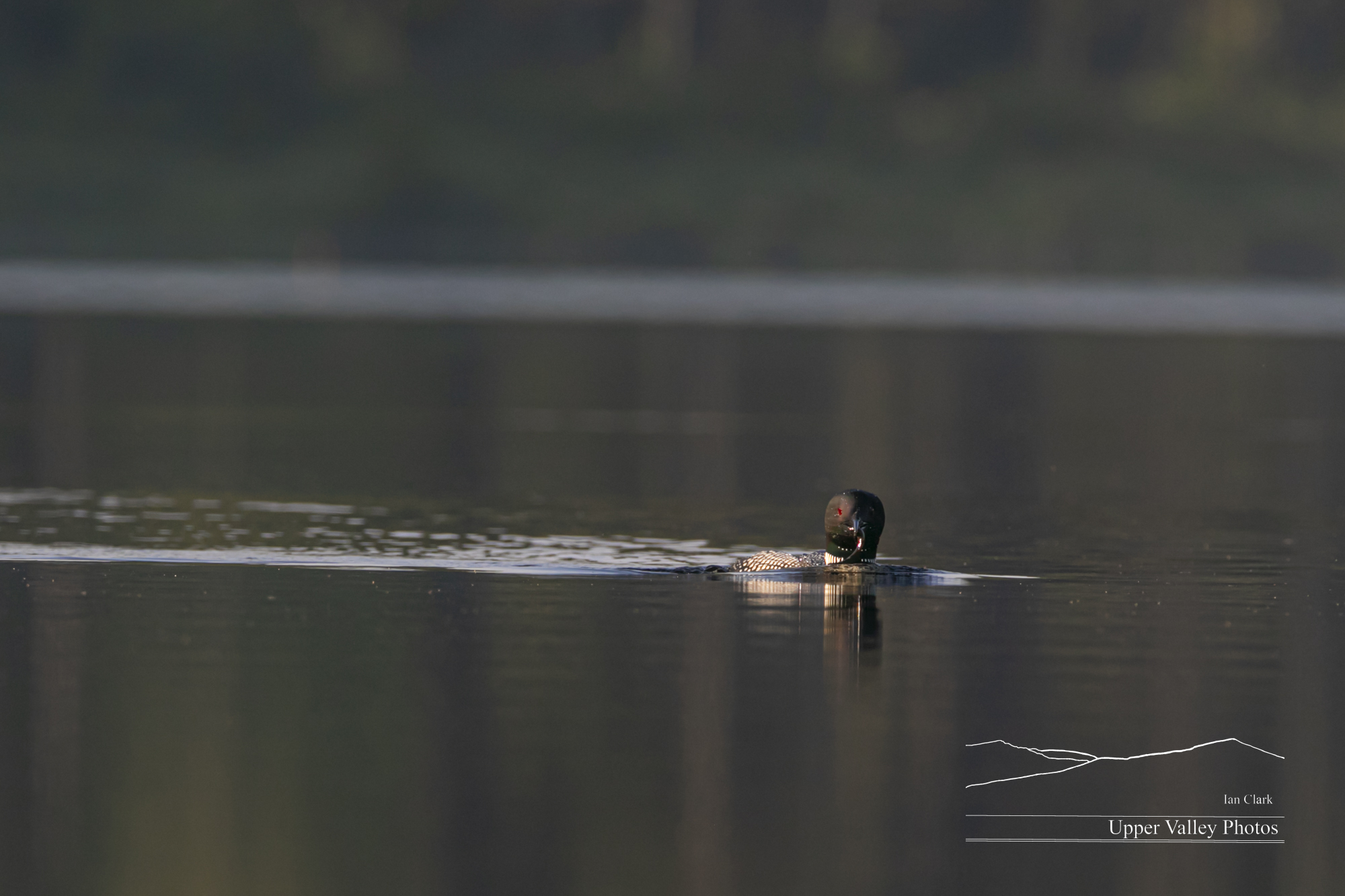
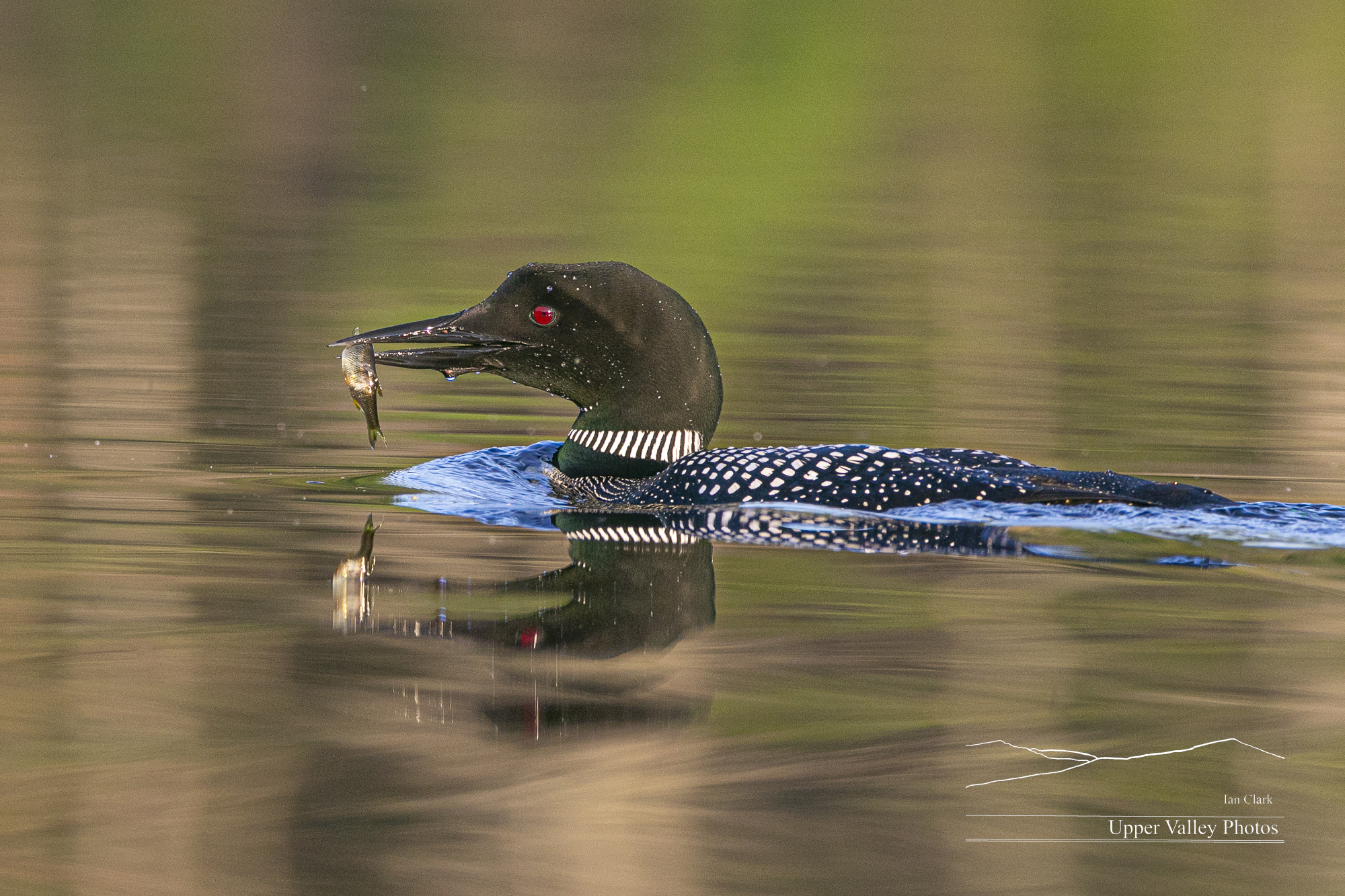
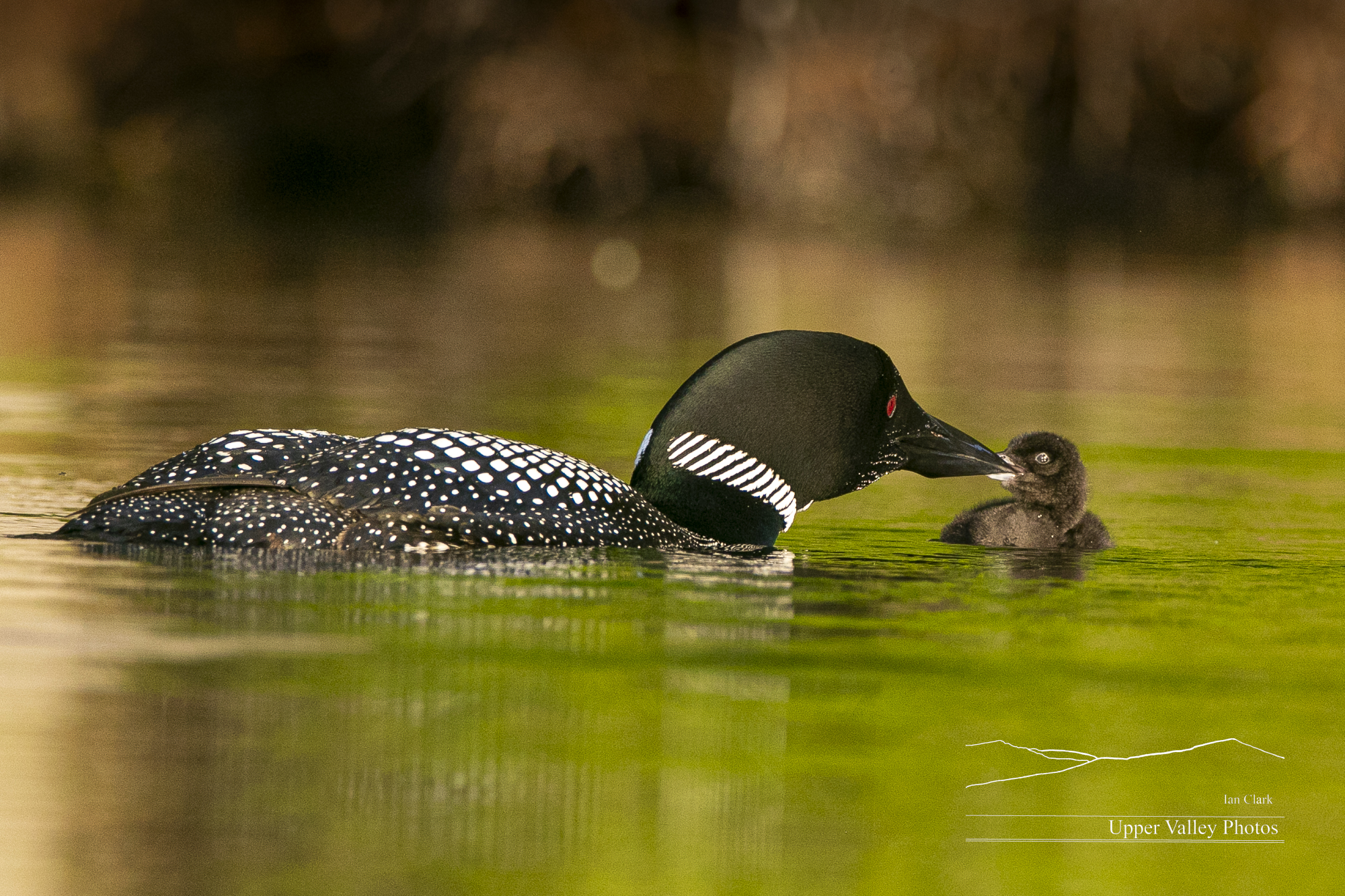
Mom returns with a small meal.
Getting the family ready for launch.
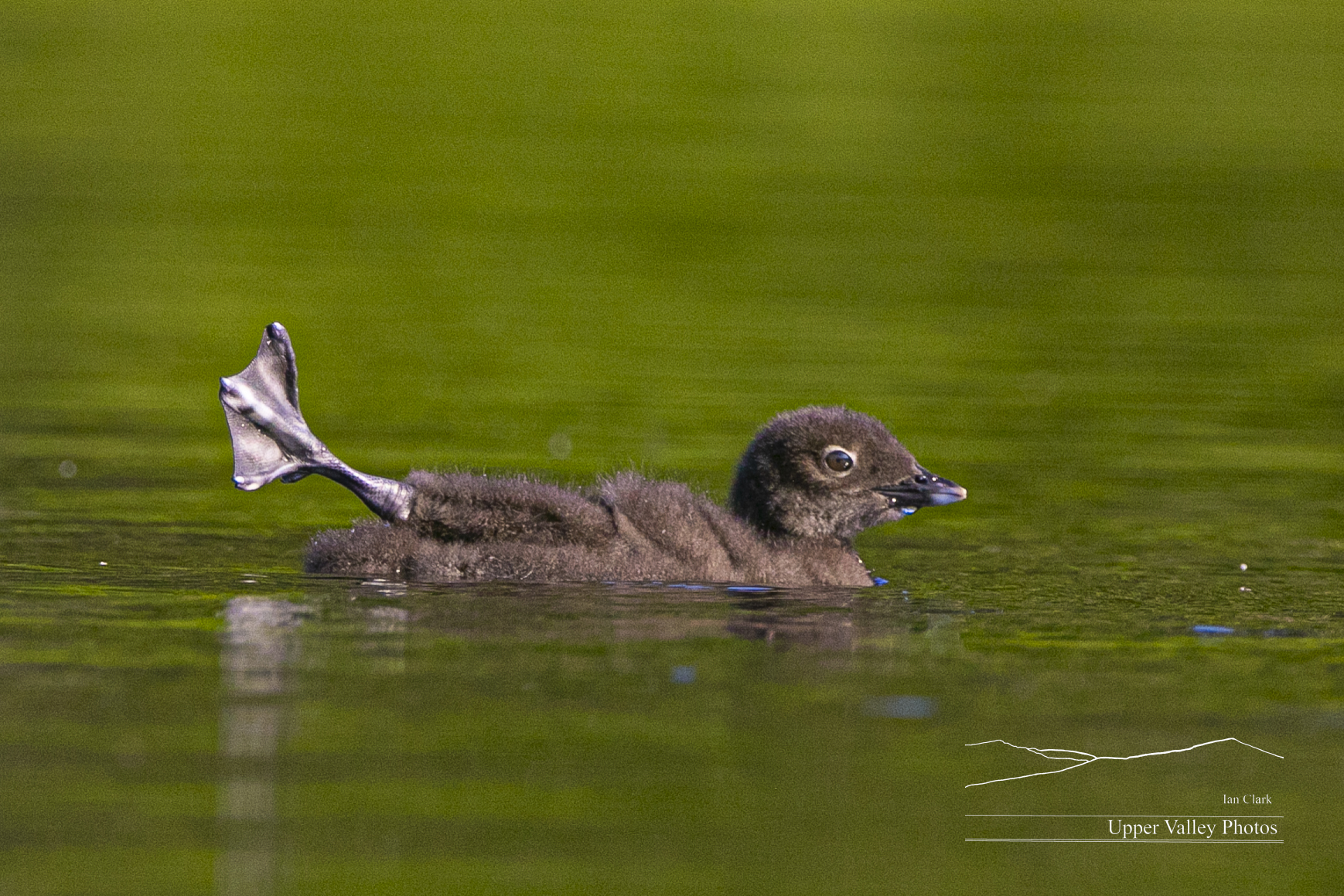
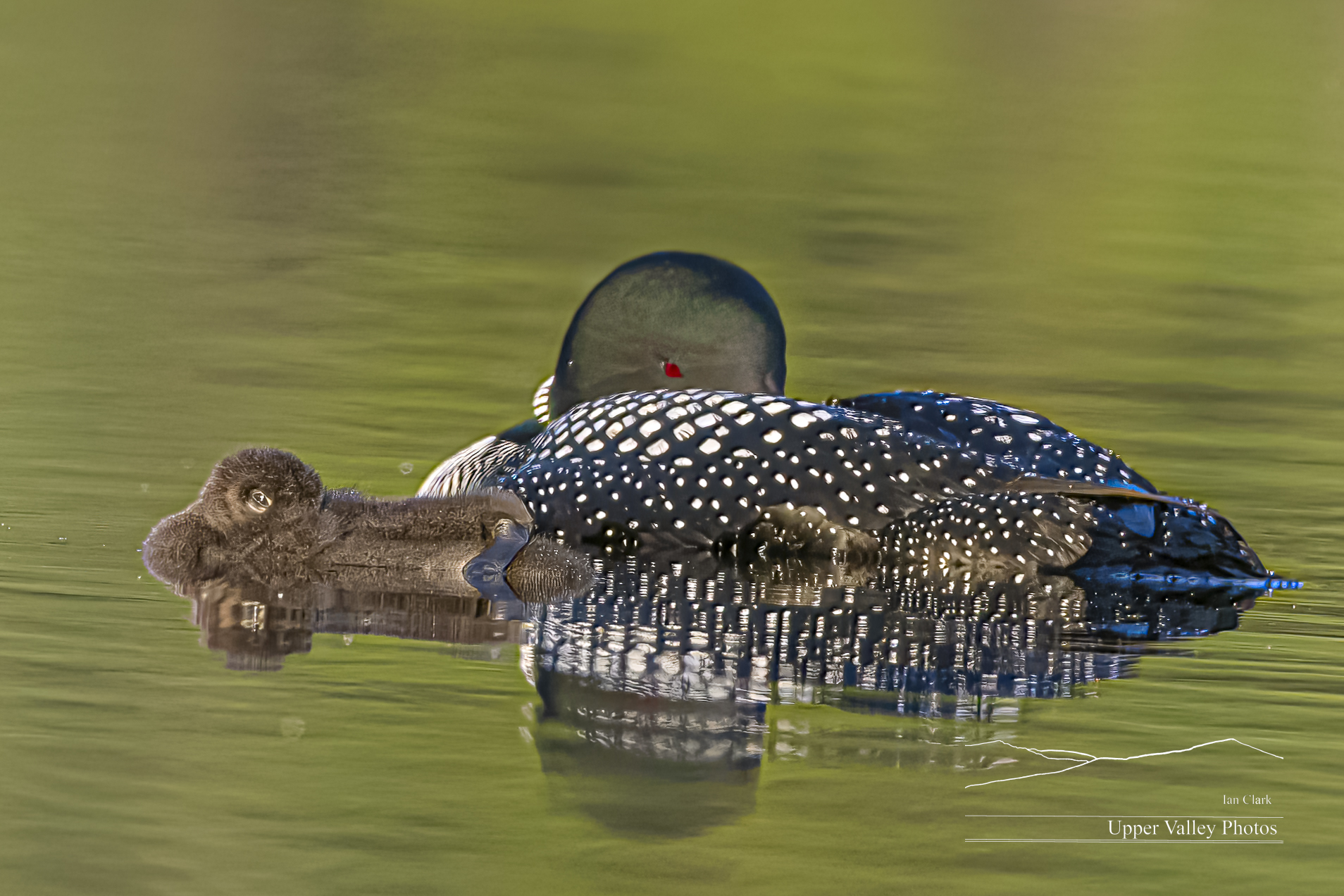
The chicks ventured into the water a few inches from the nest when the mom brought food. Here they’re working to climb back into the nest. Loons’ legs are placed far back on their bodies. Perfect for swimming and flying, but they have real trouble walking on land. This shot gives a good look at how far back their legs are. 
The loon sitting on the nest turns out to be dad, identified by his bands. The silver band on the close leg has a nine digit number to give the bird a unique identifier. But, it is next to impossible to read unless you catch the bird again. Loons are banded with two bands per leg, with different colors to increase the odds of being able to ID the bird without catching it. This bird has green over silver on the starboard side, yellow over green on the port side (way back on the left of the photo). Traditionally, loon banders put the silver band on the right leg if they band the bird as an adult, the left if they band a chick.
The chicks seemed to grow a bit restless, venturing further from the nest after each feeding. Eventually, the loon on the nest decided it was time to go. The family probably will not return to the nest. 
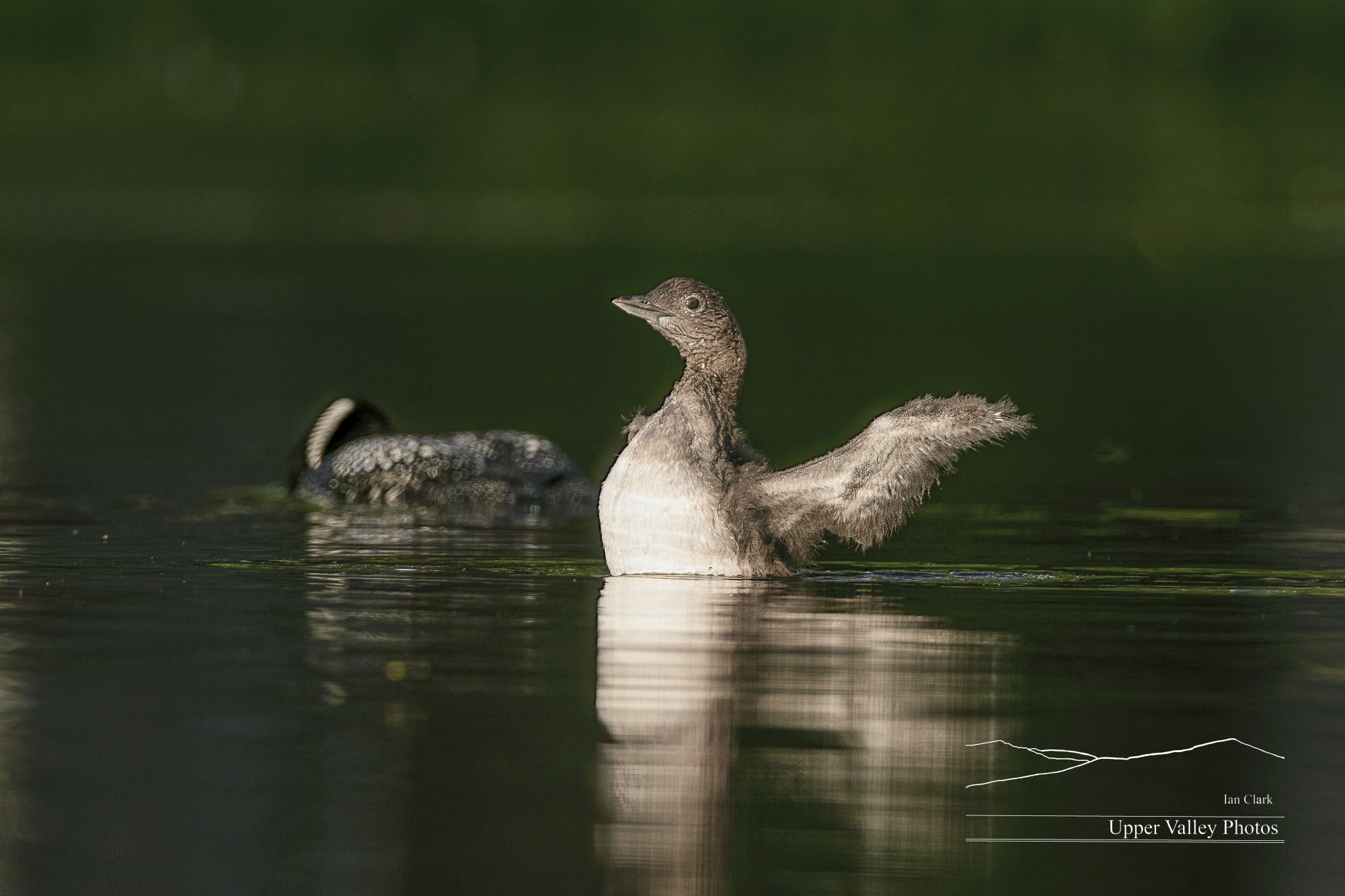
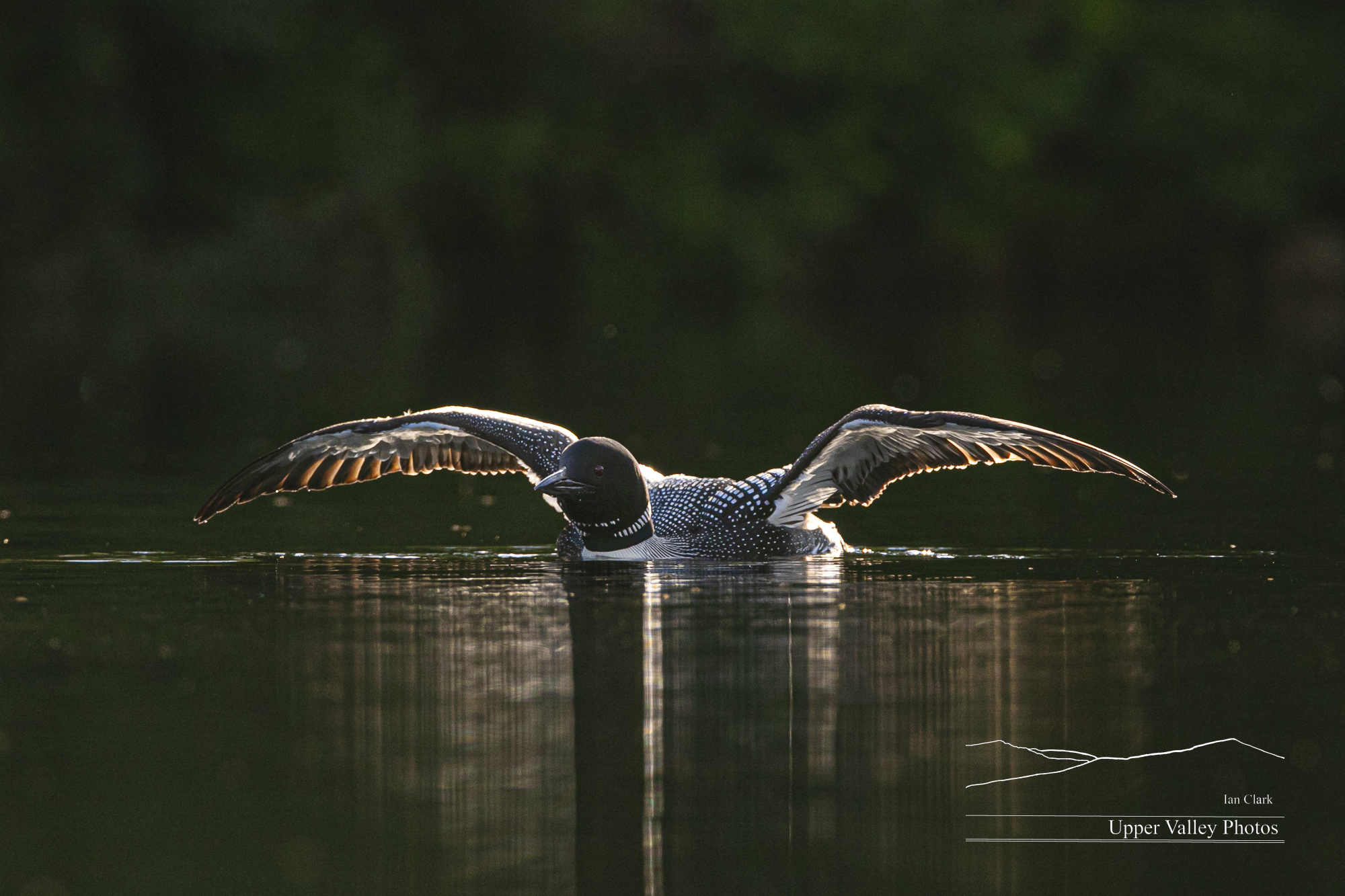
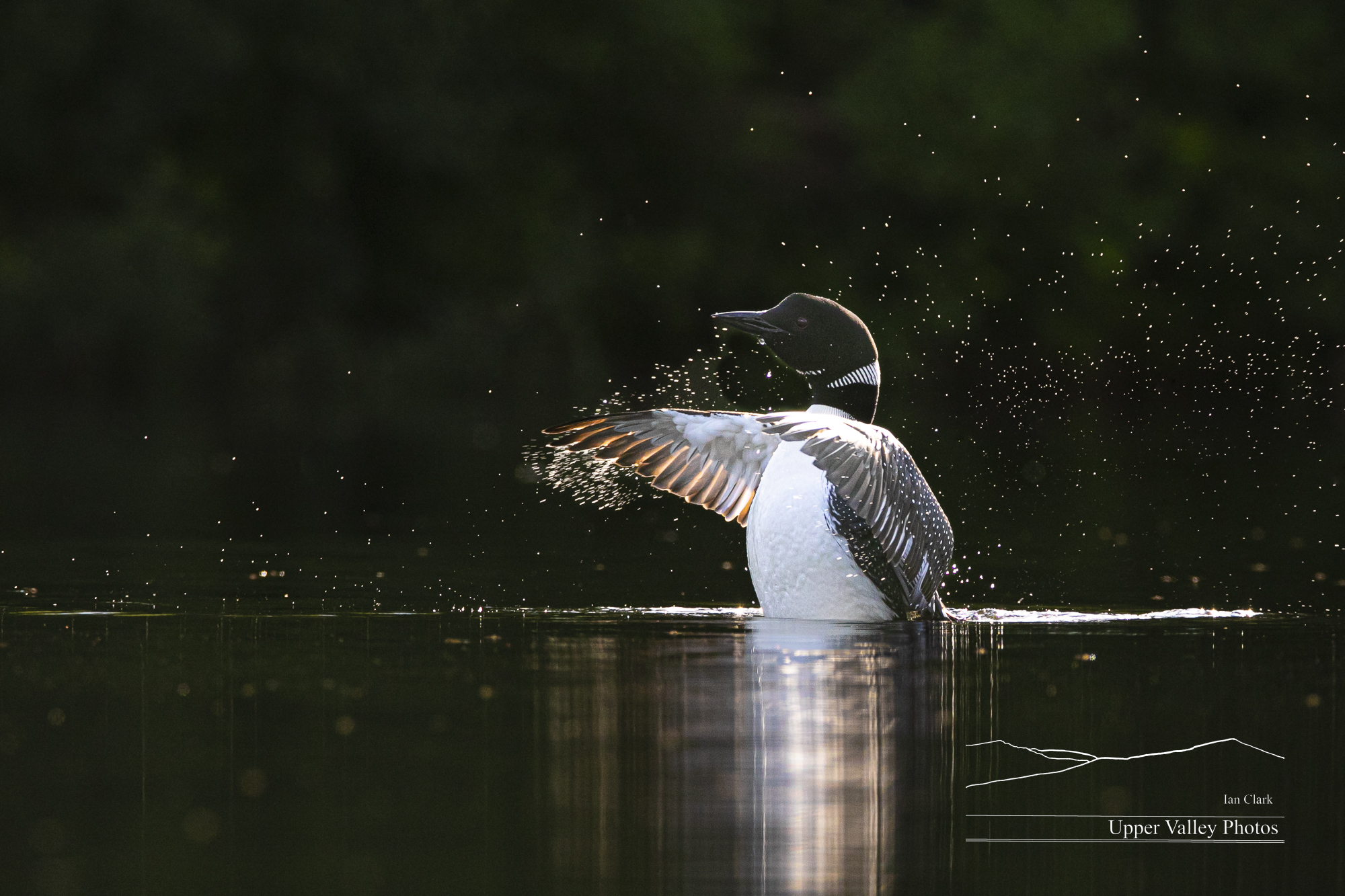
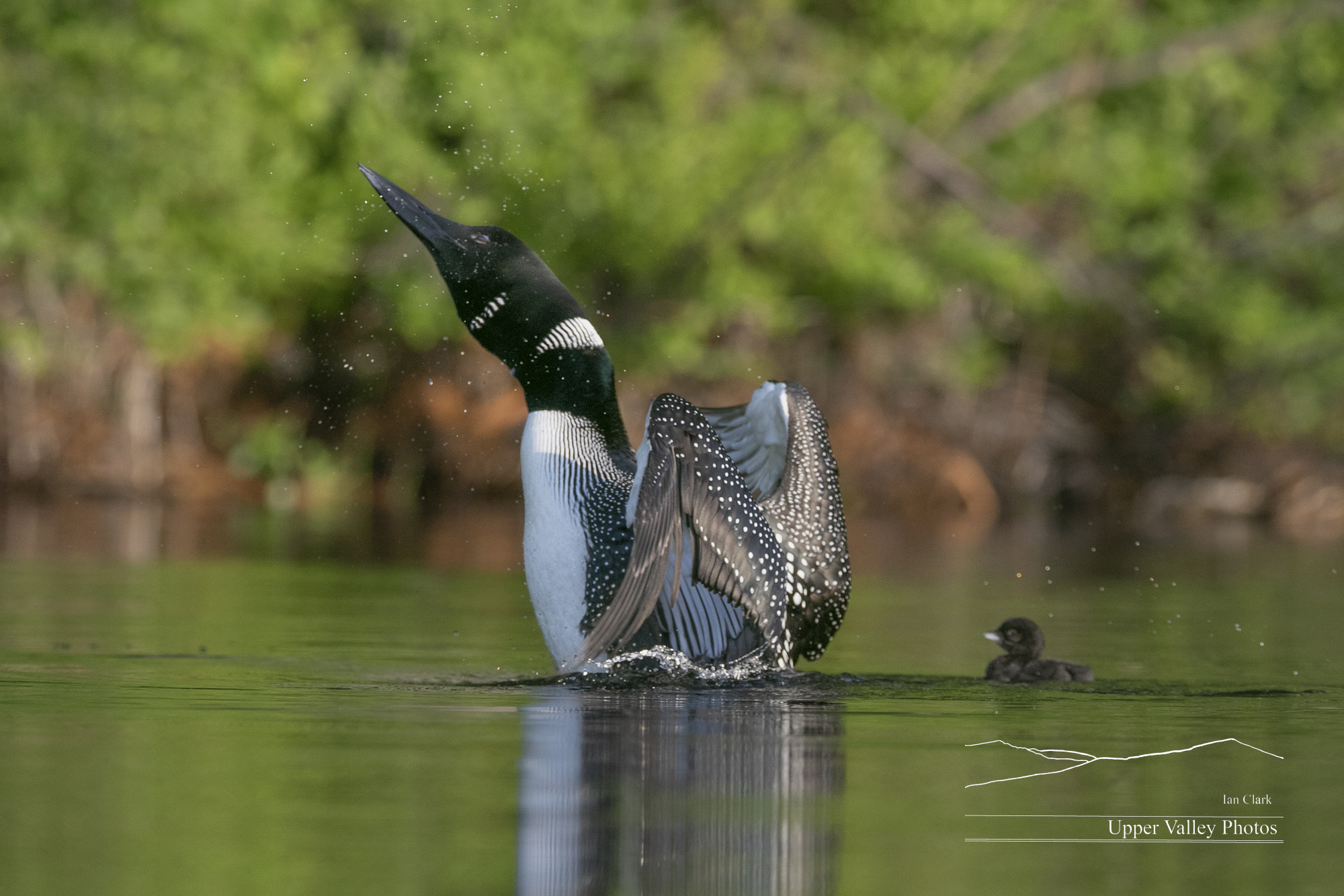
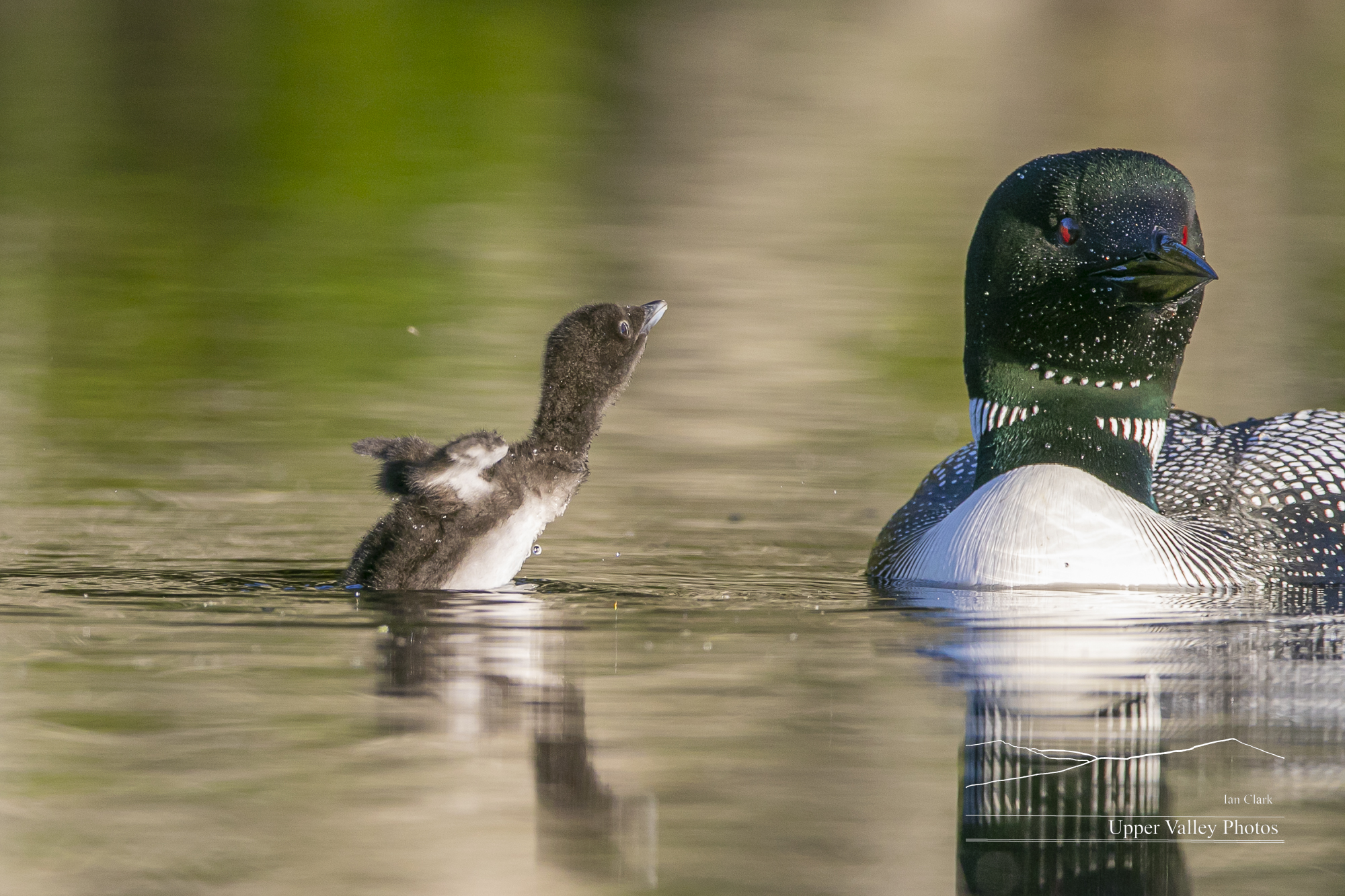
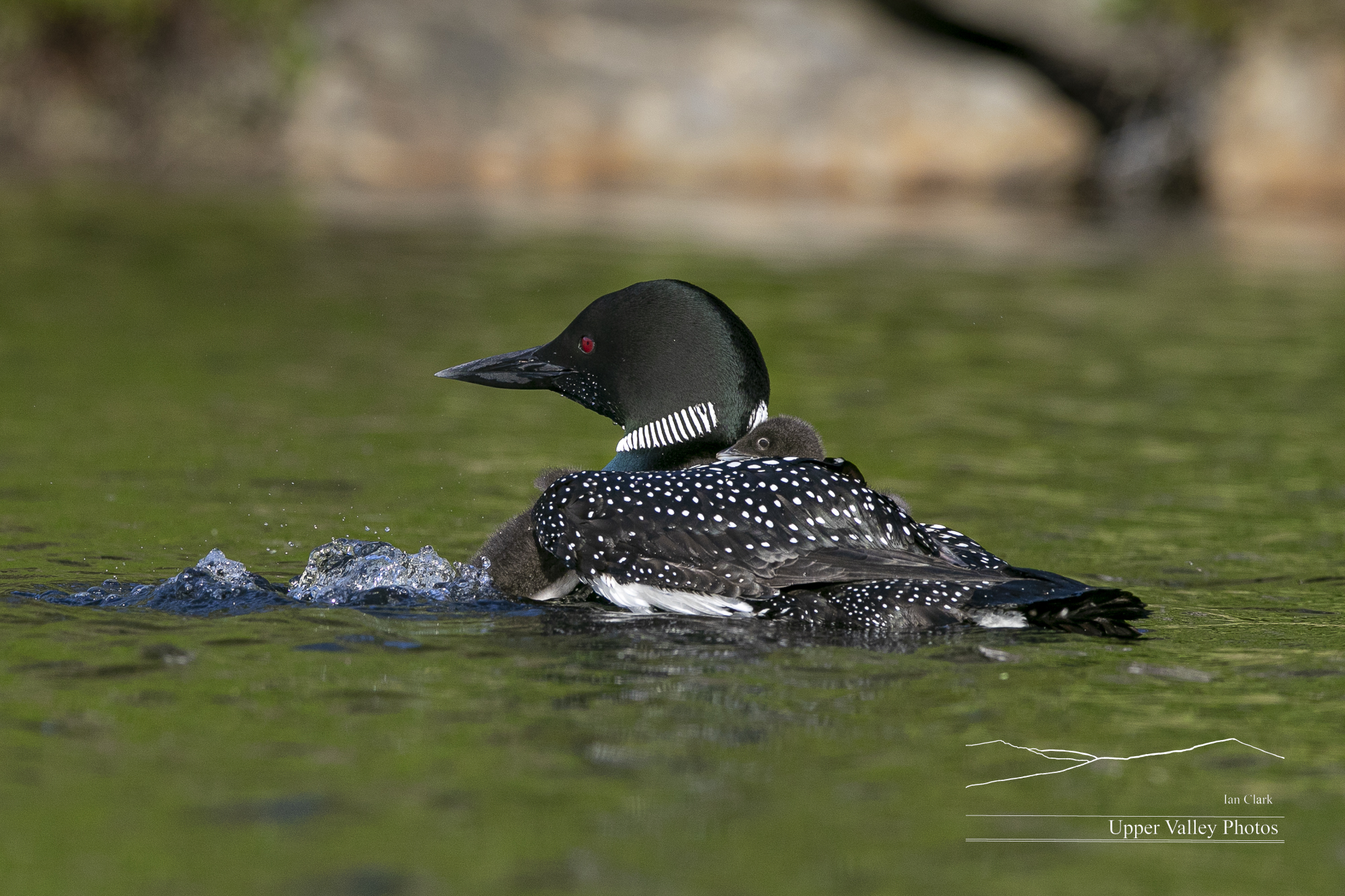
After leaving the nest, dad got a well-deserved stretch. 
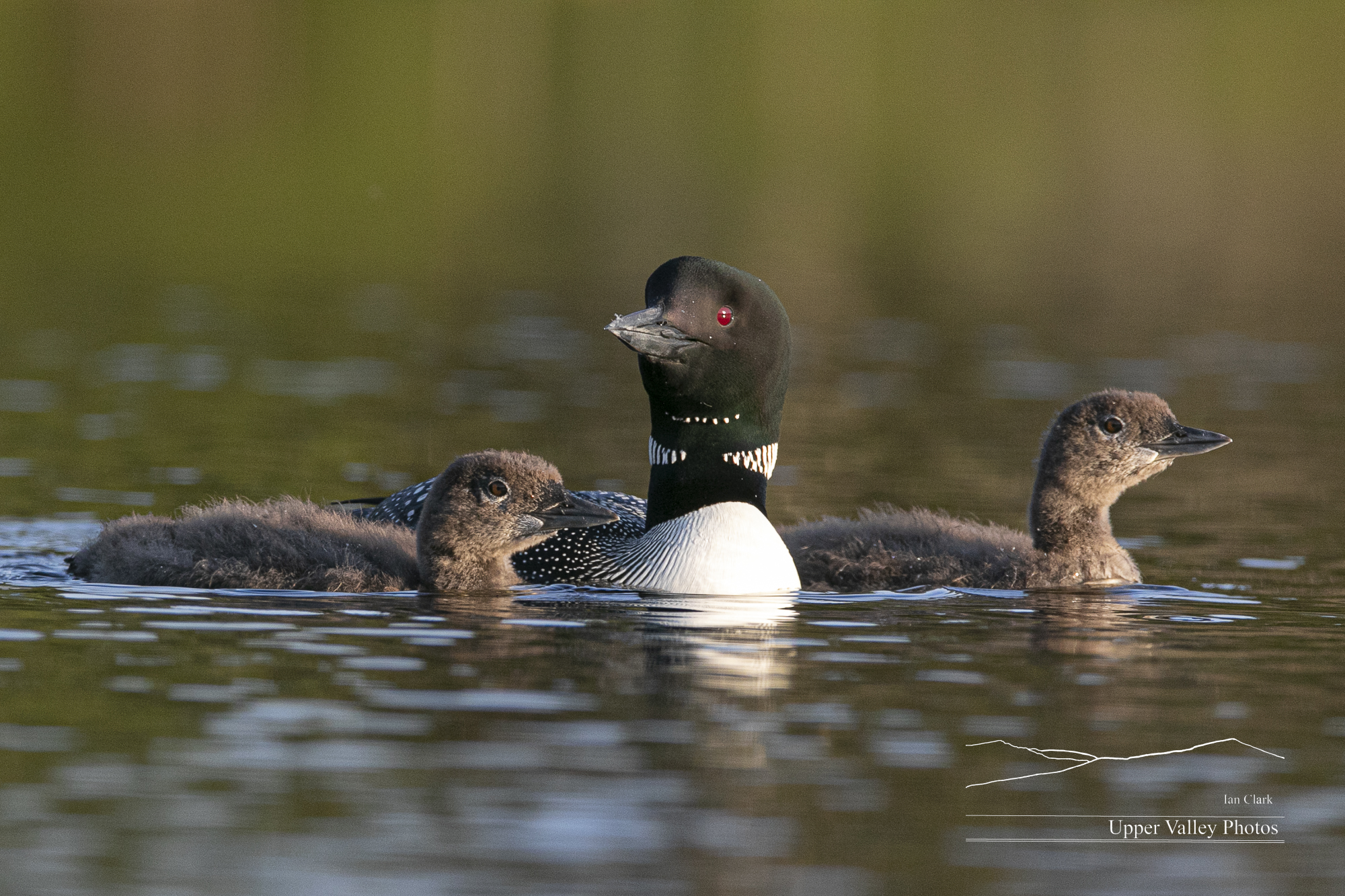
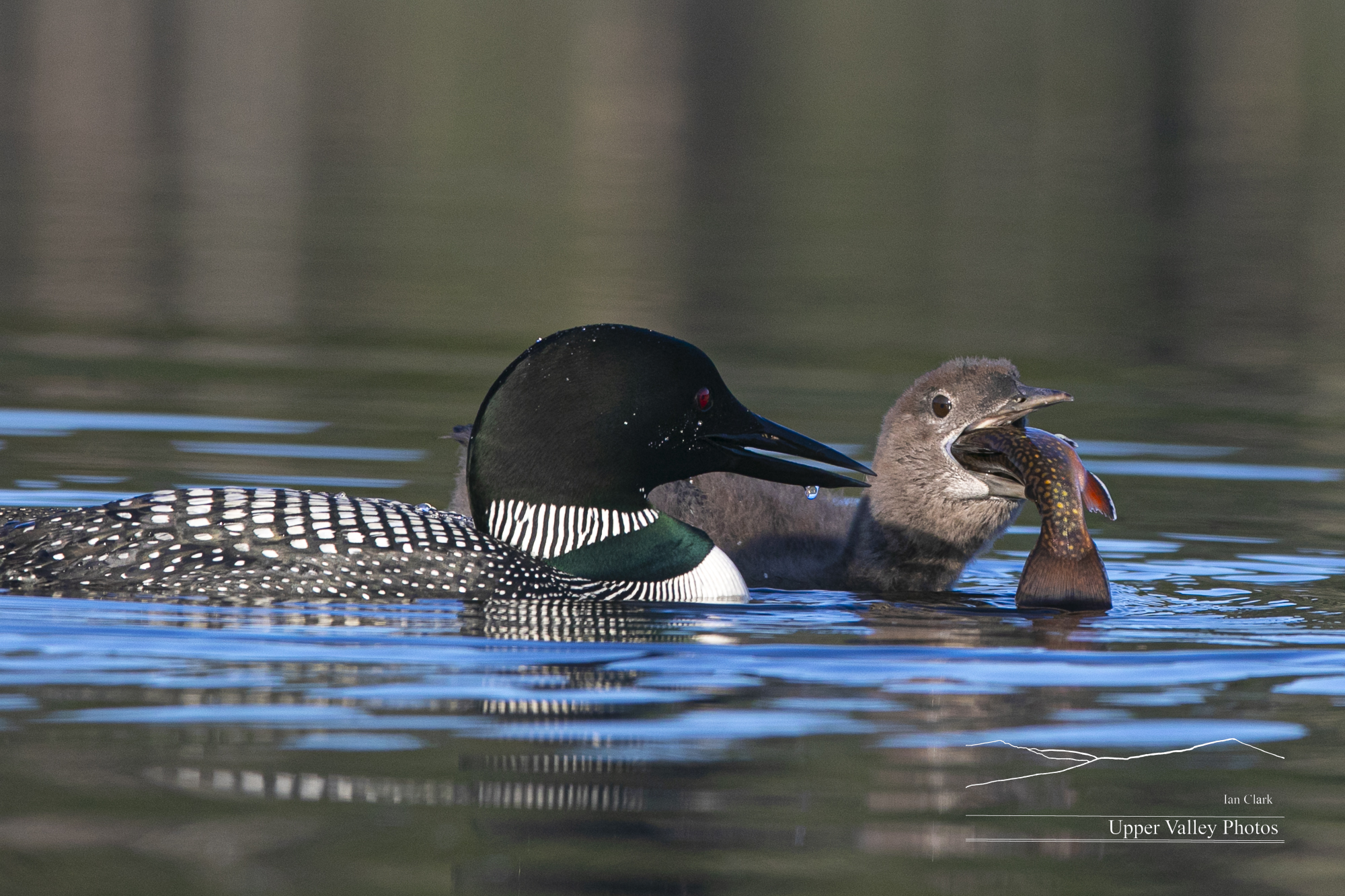
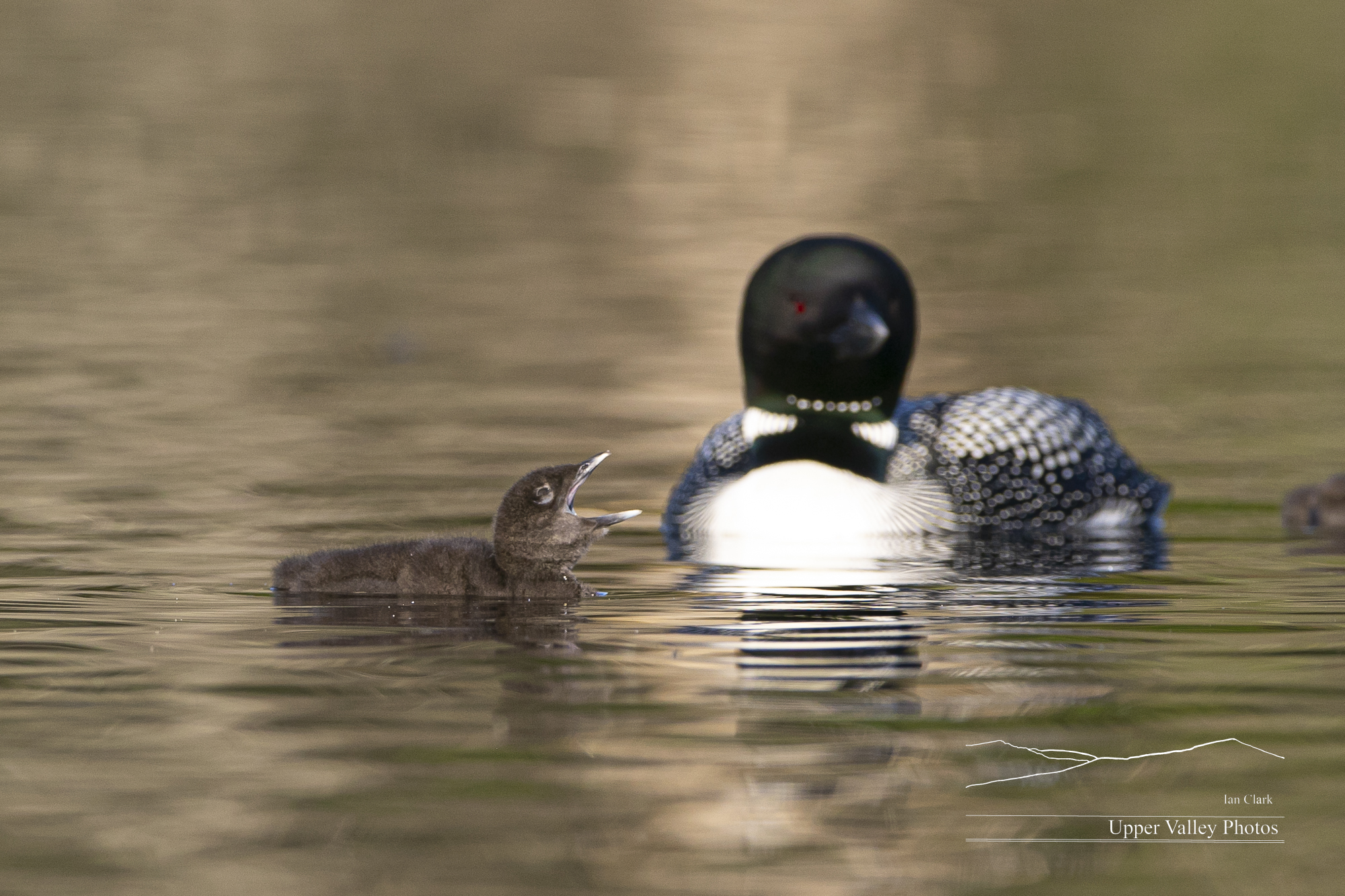
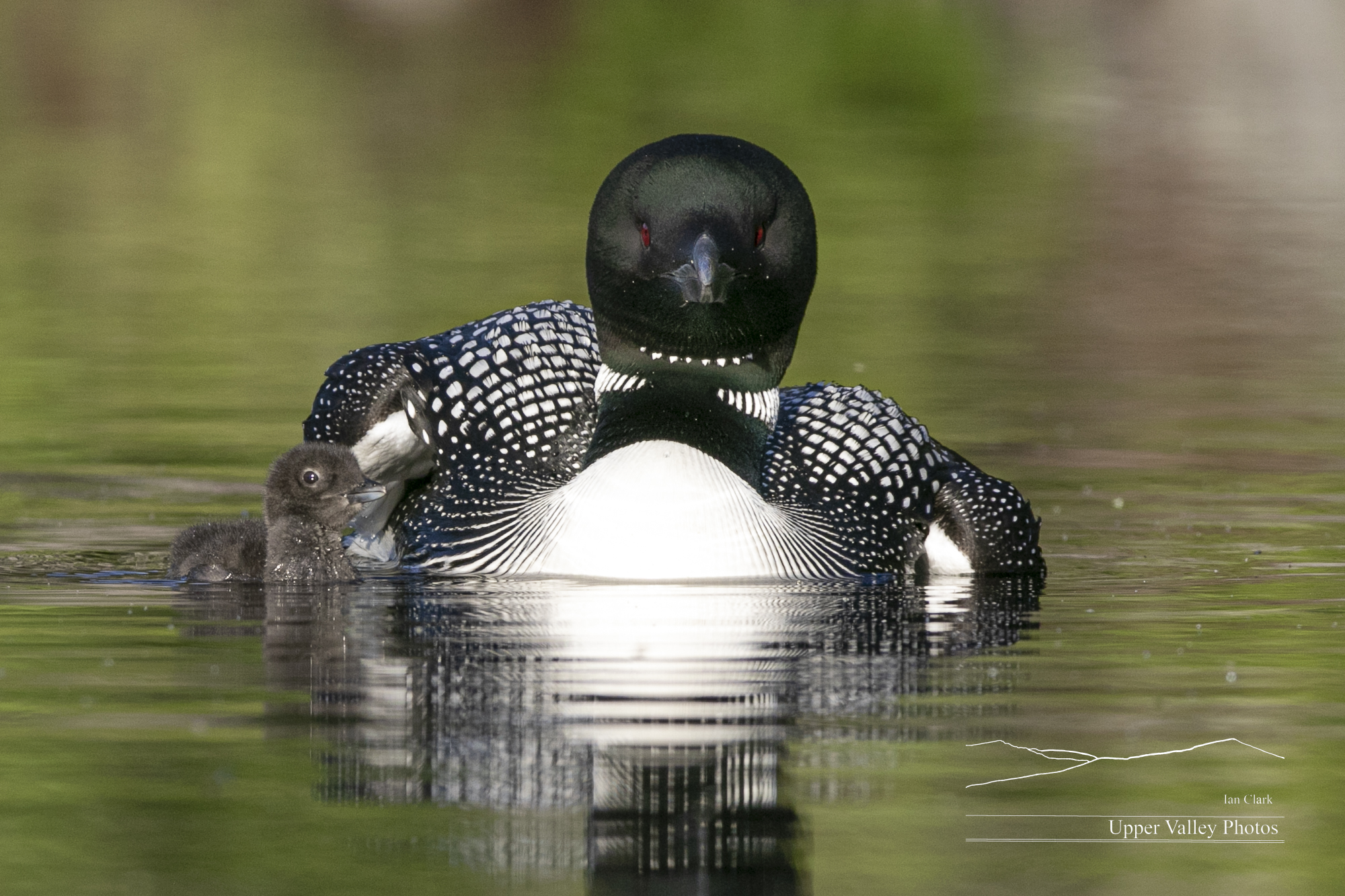
Loons are very attentive parents. Both loons will guard and feed the chicks. They spell each other, a few times a day one parent will wander off to forage, preen and occasionally fly a couple laps around the pond. 
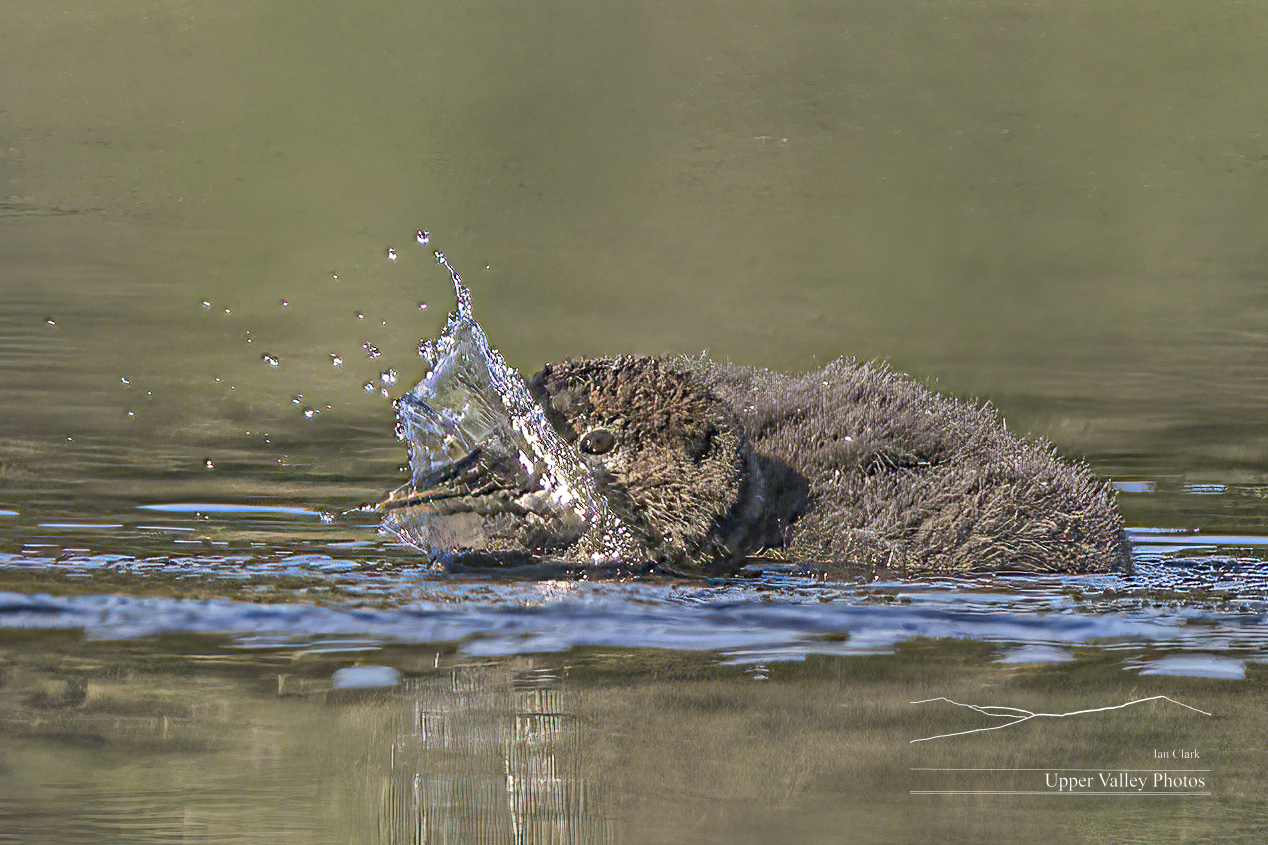
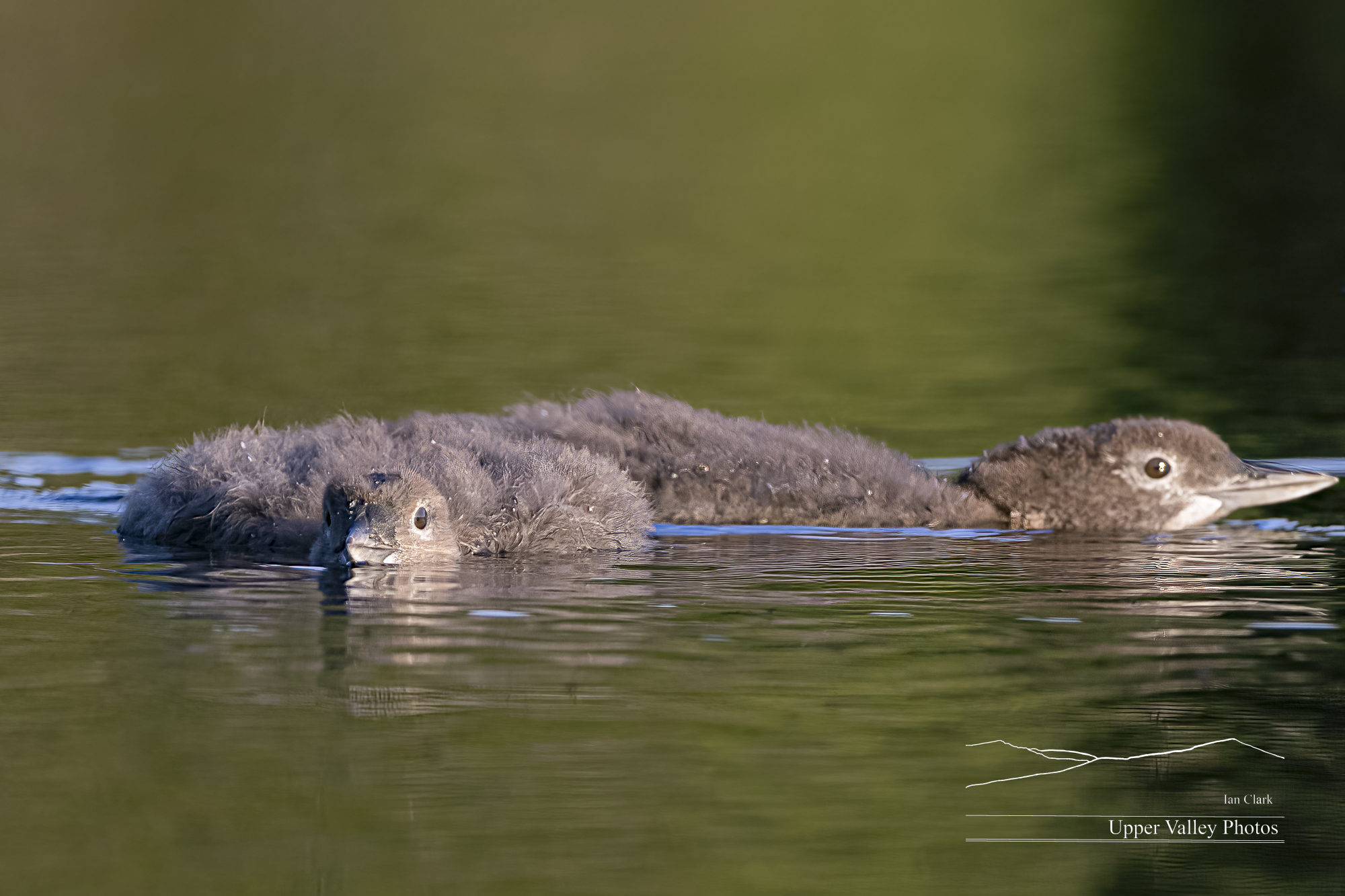
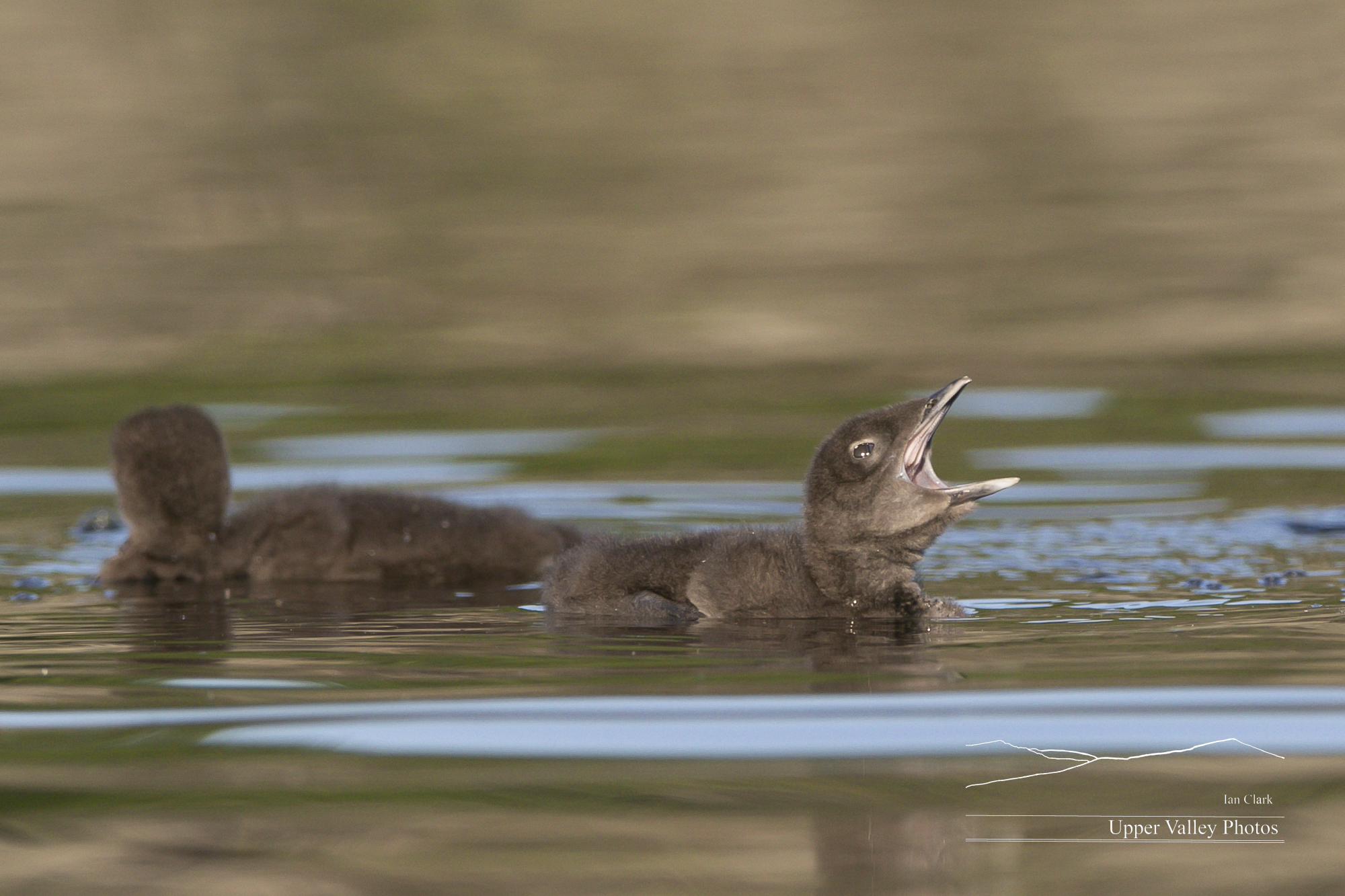
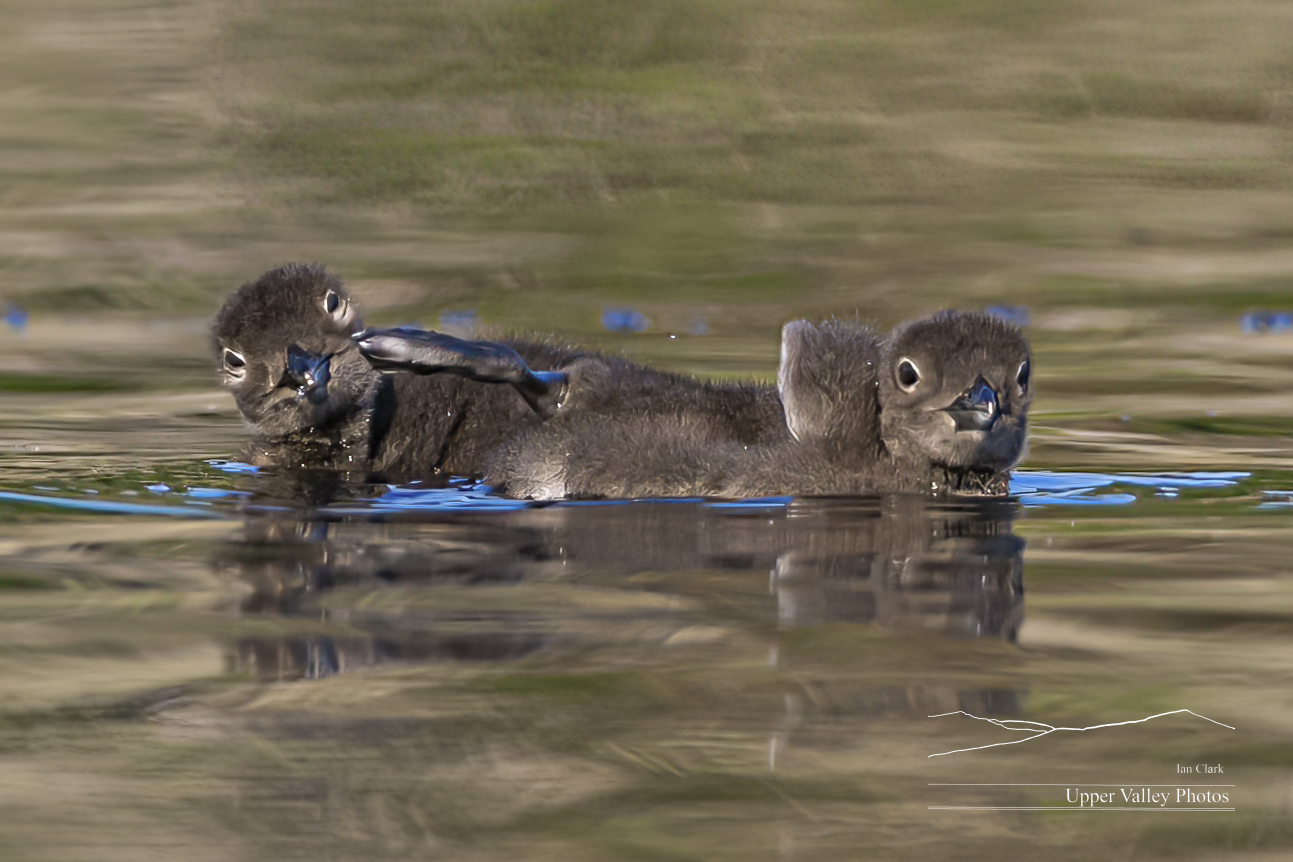
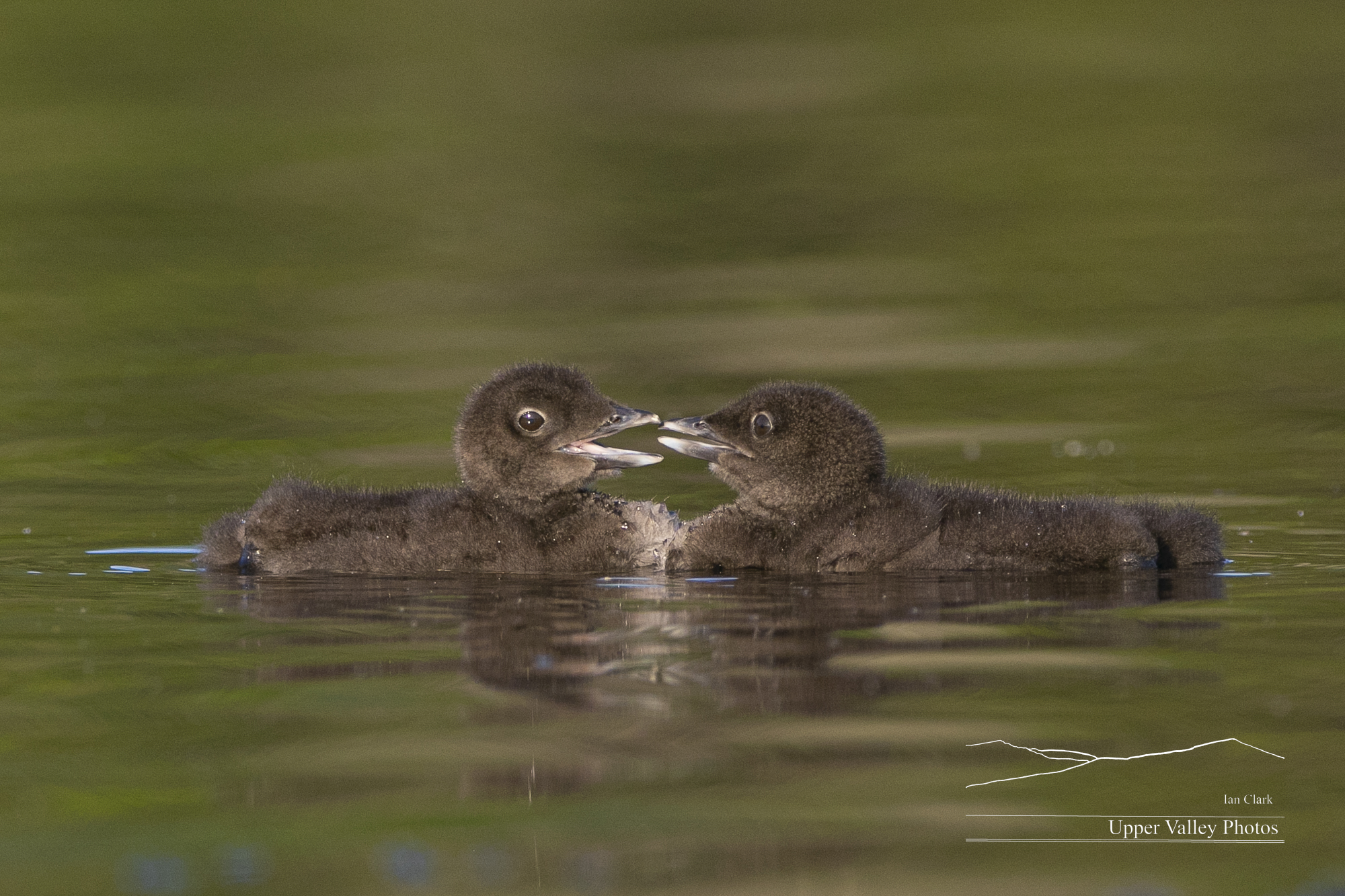
Loon chicks have some sibling rivalry and will occasionally squabble. 
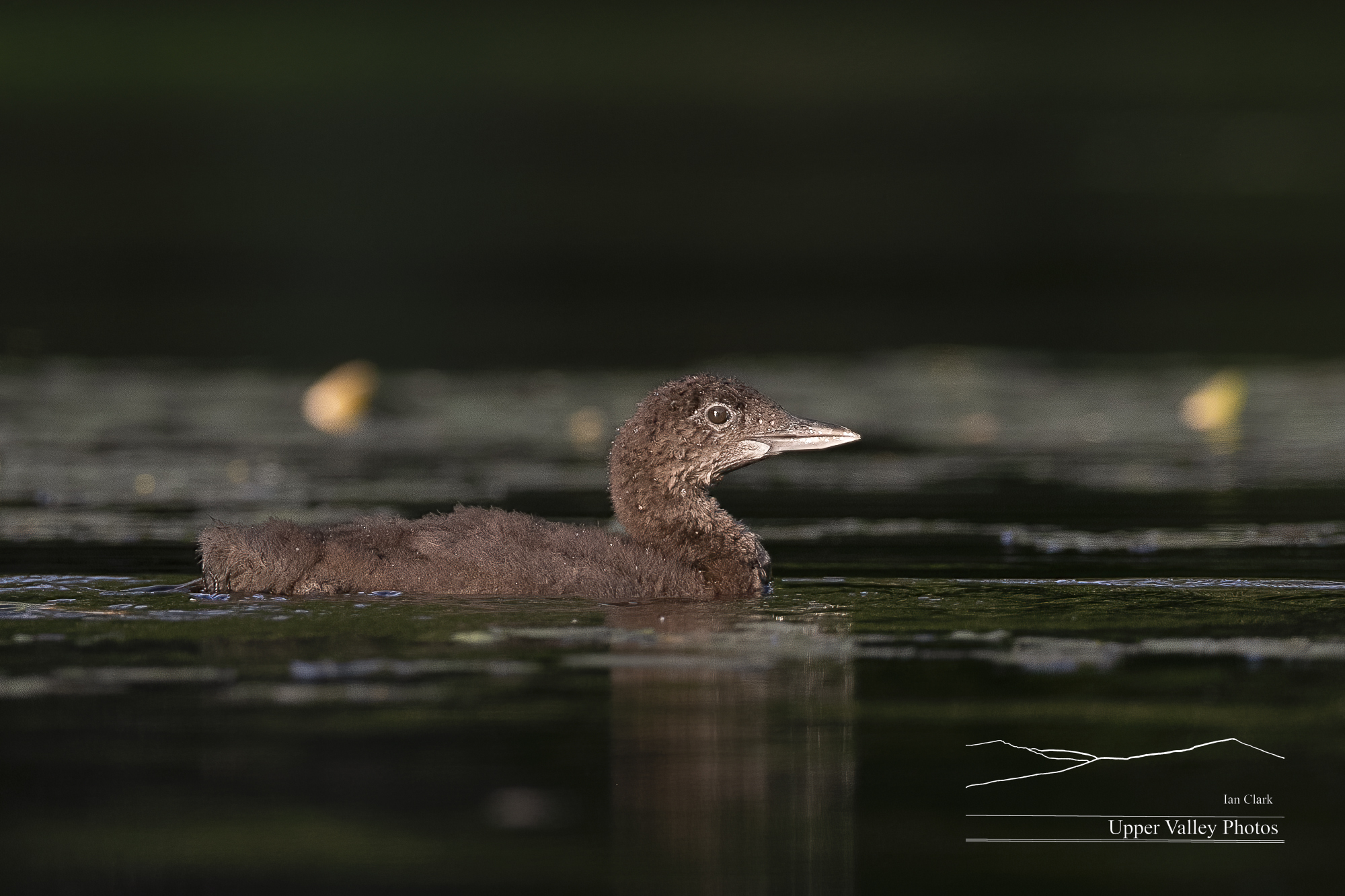
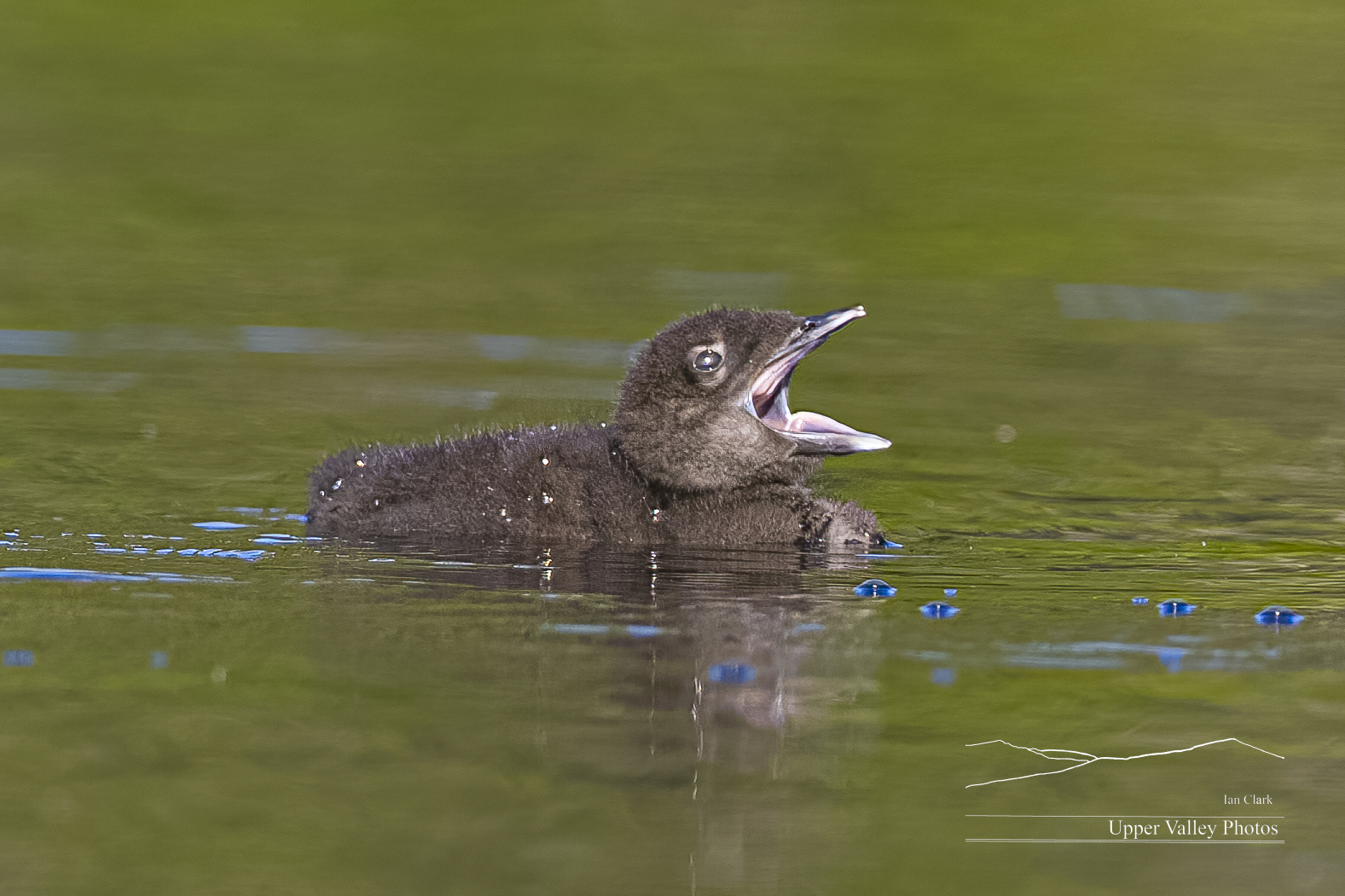
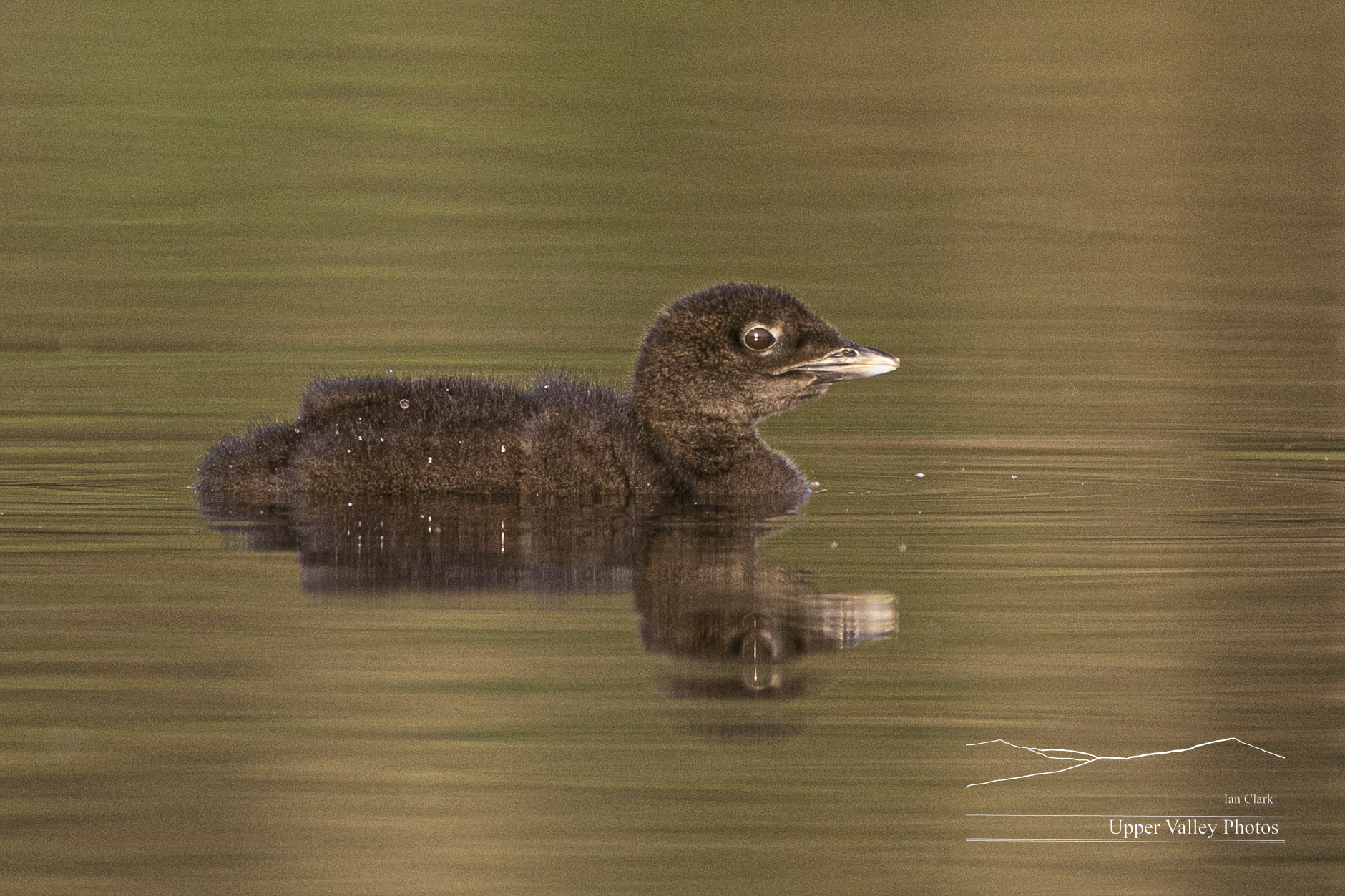
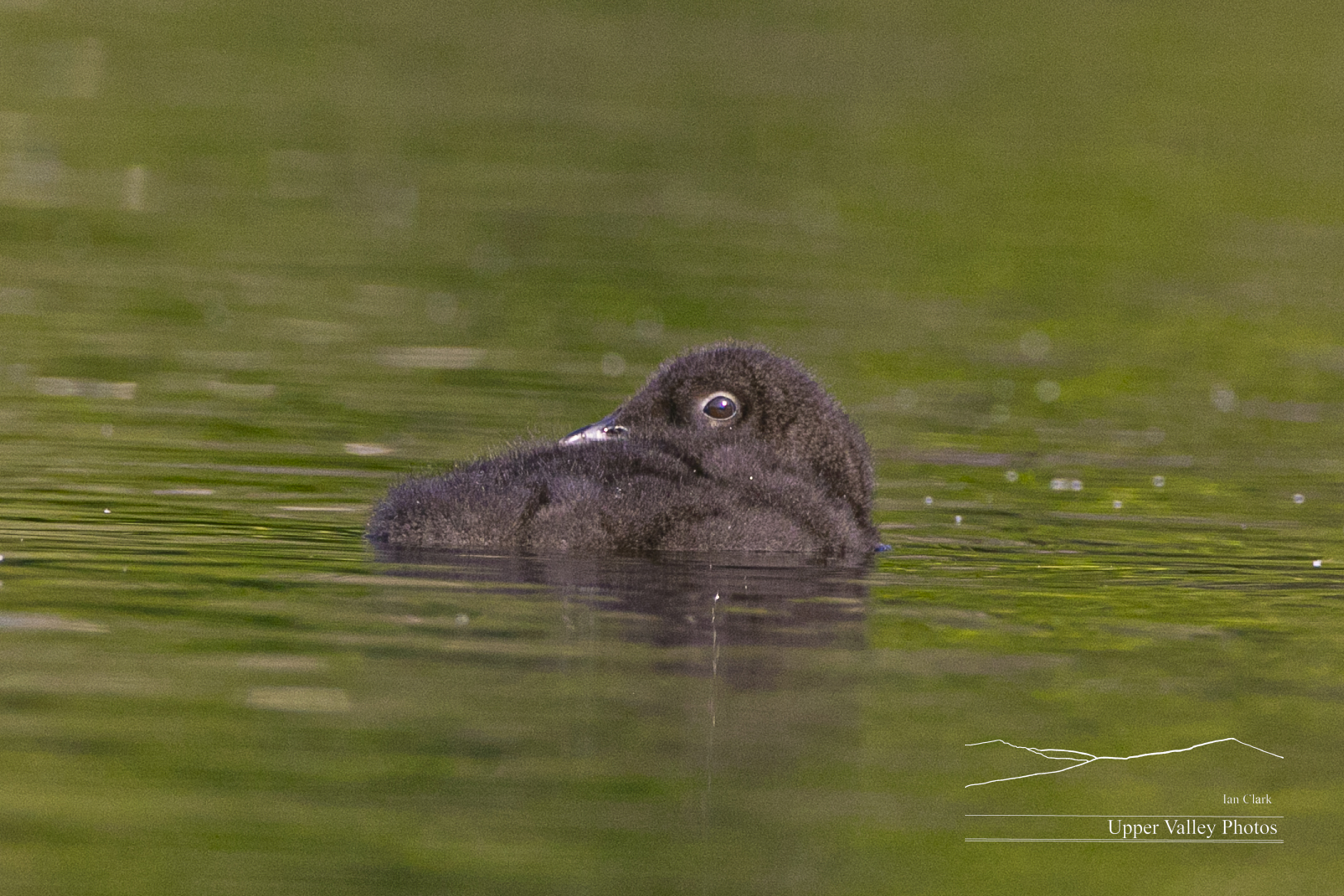
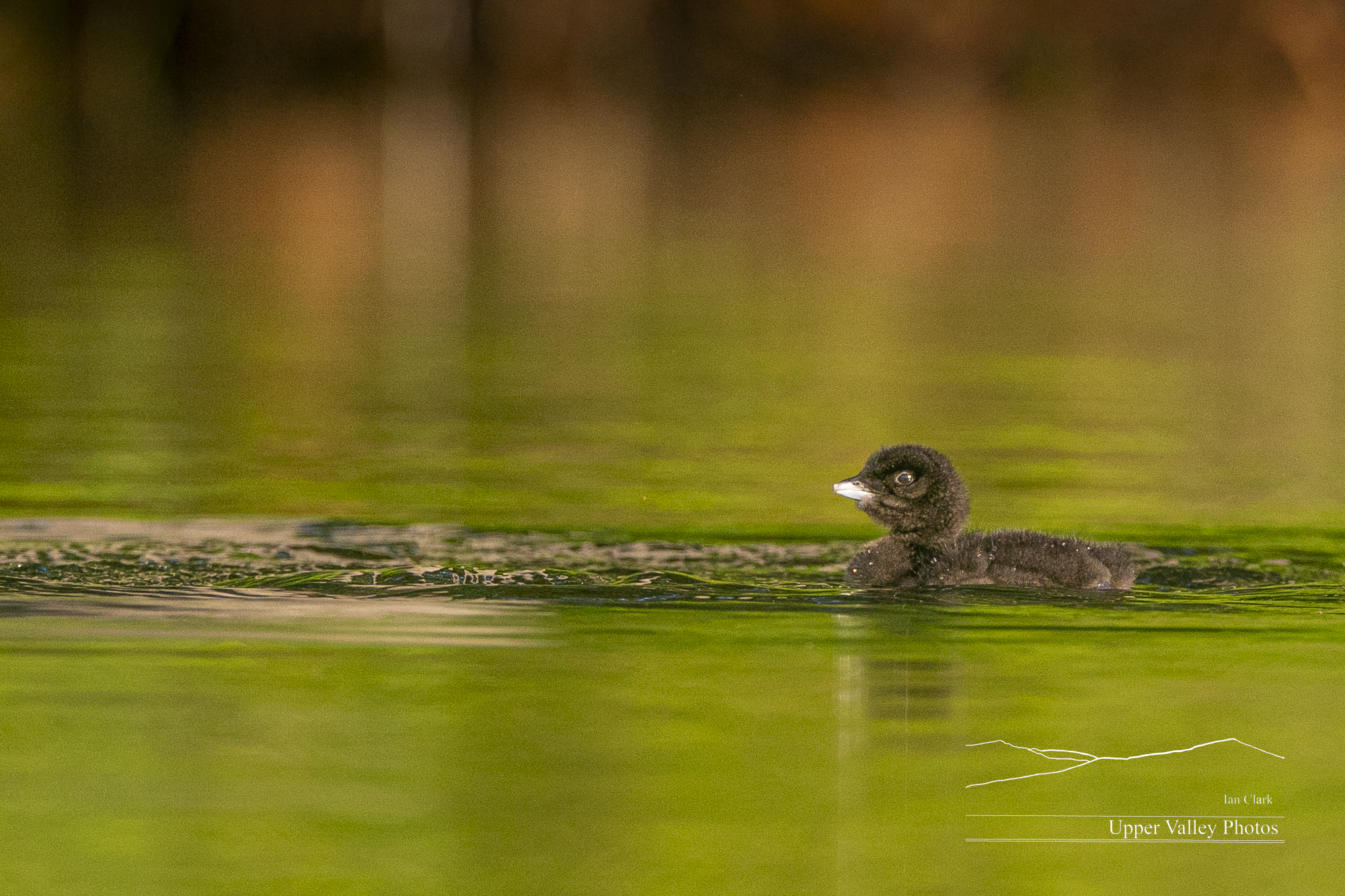
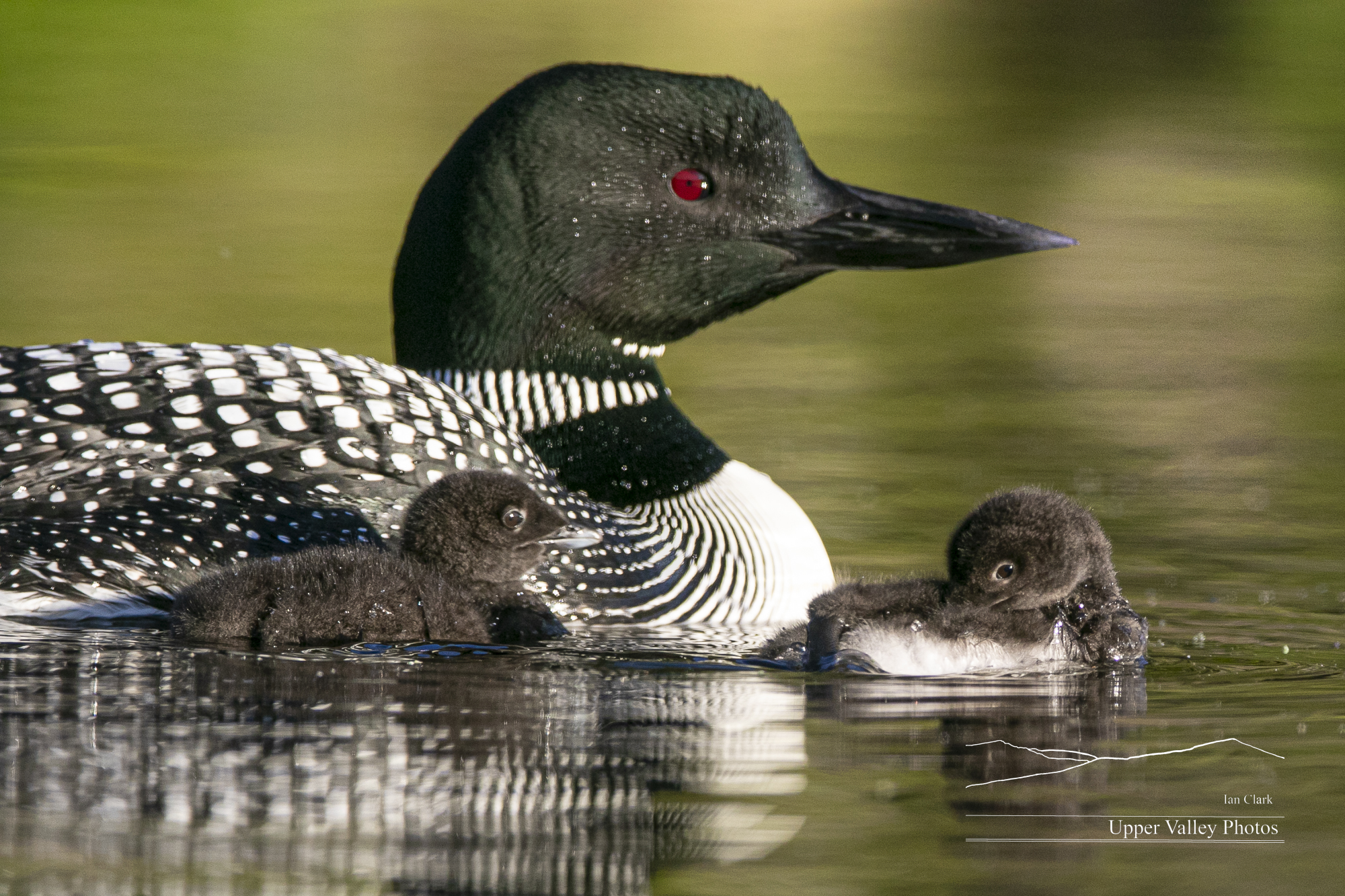
But, mostly they eat and look cute. 
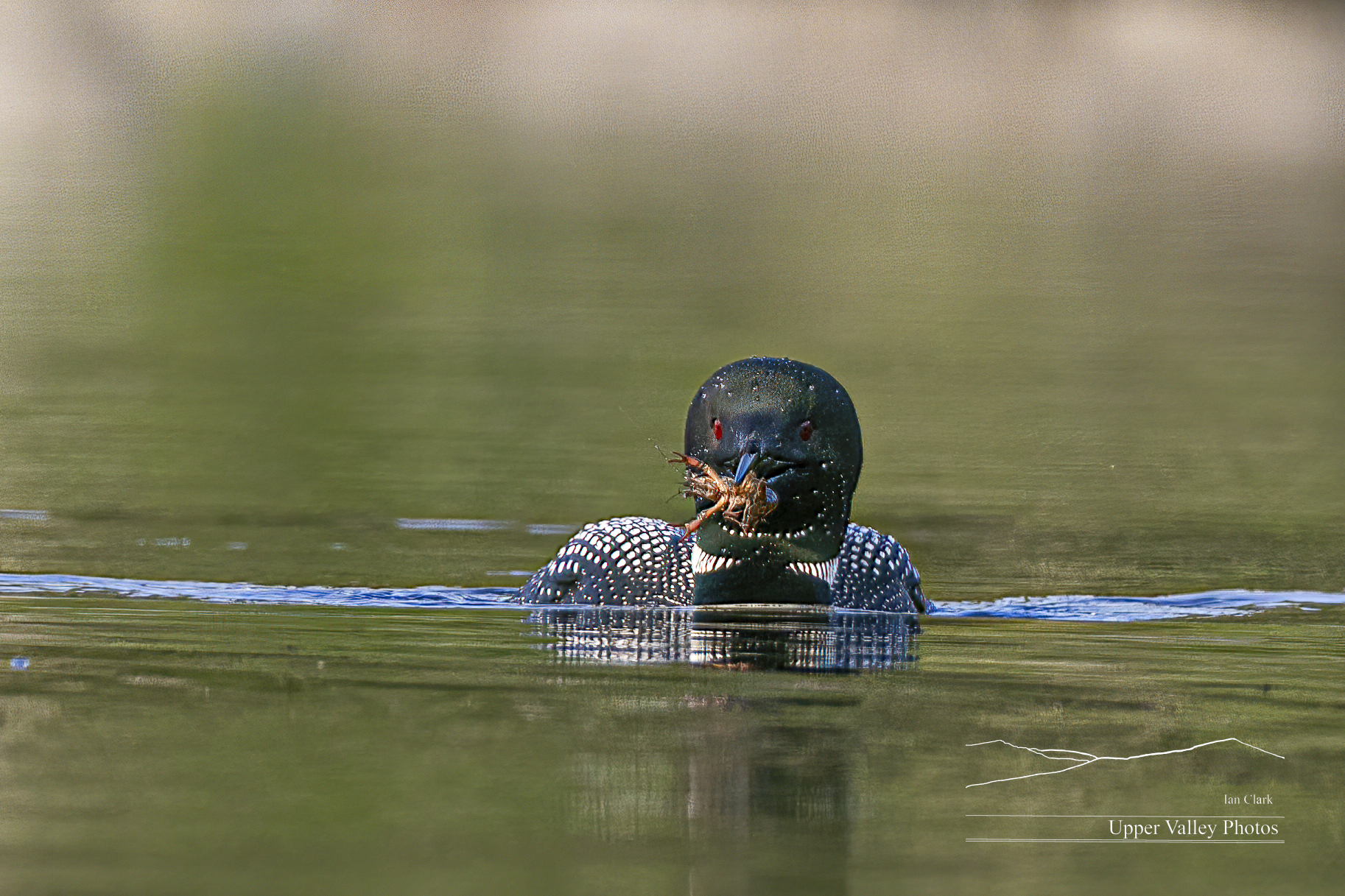
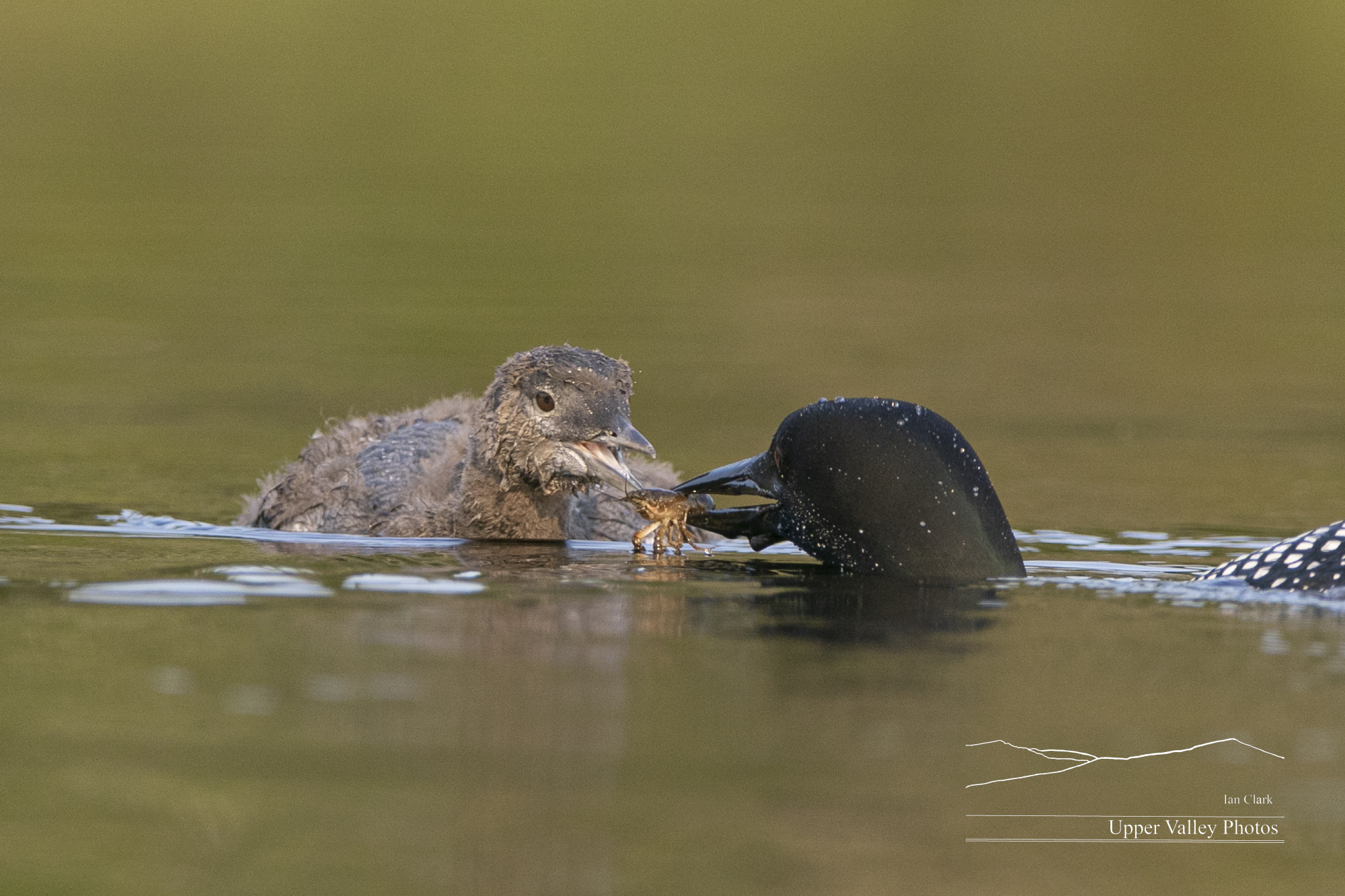
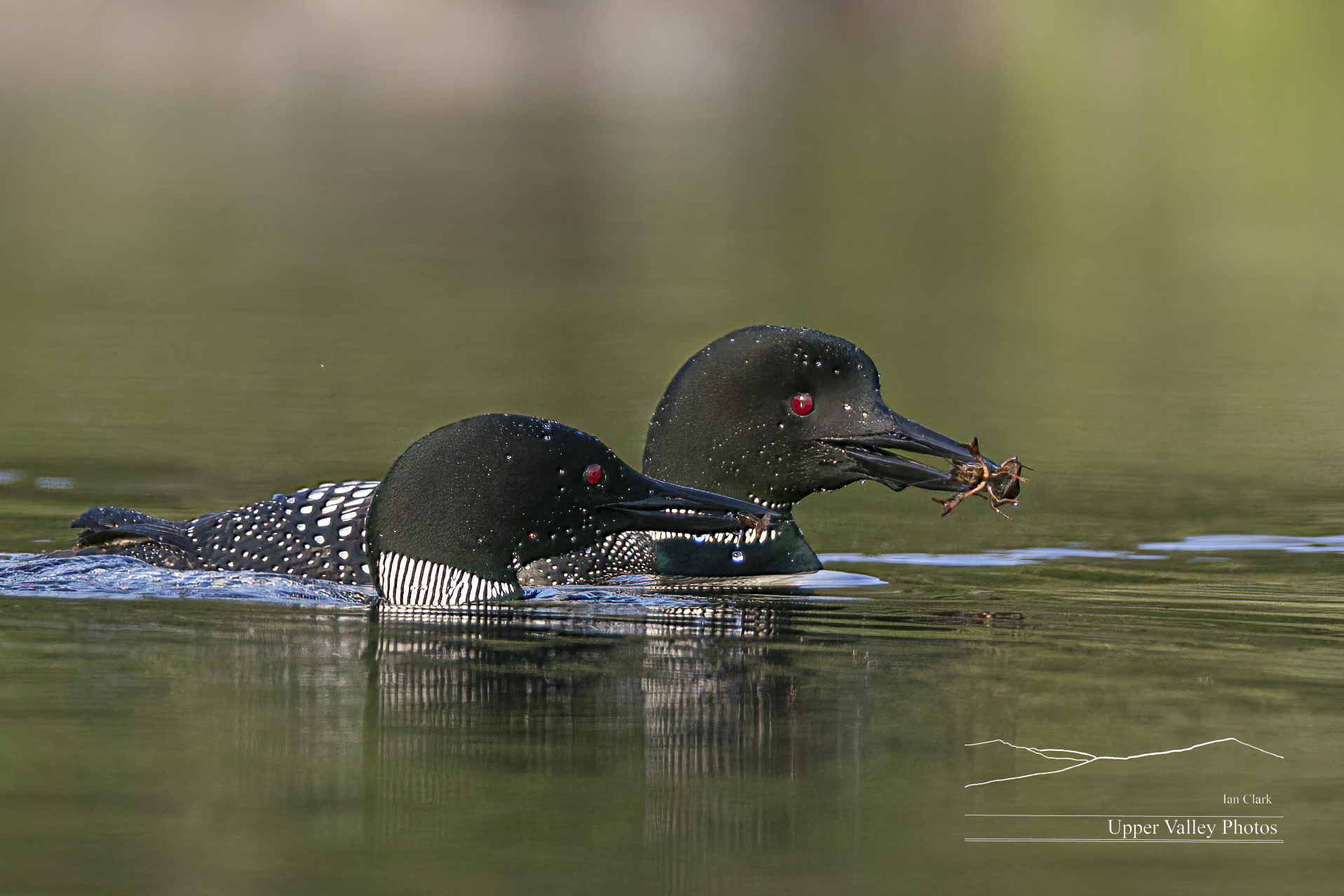
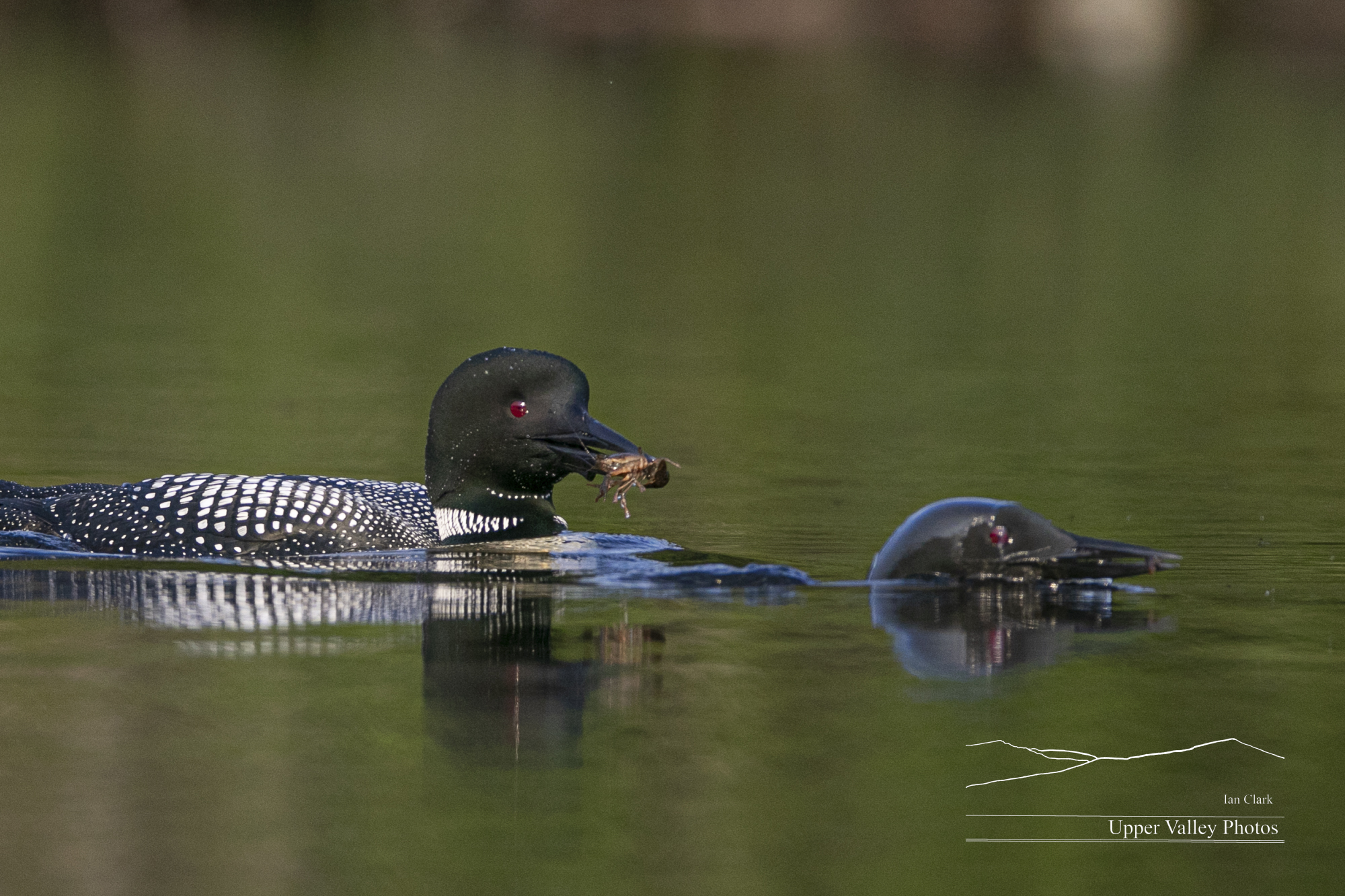
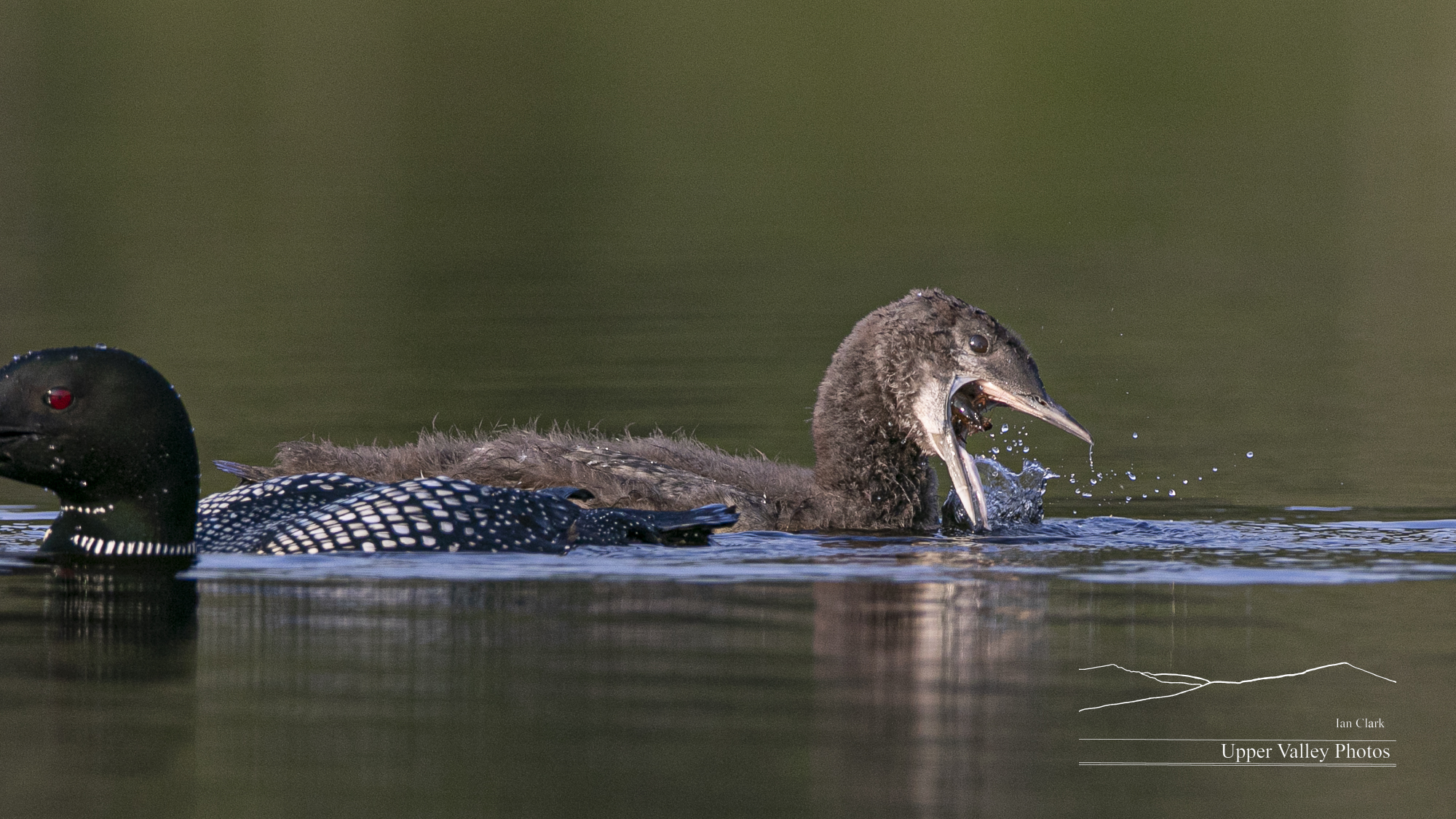
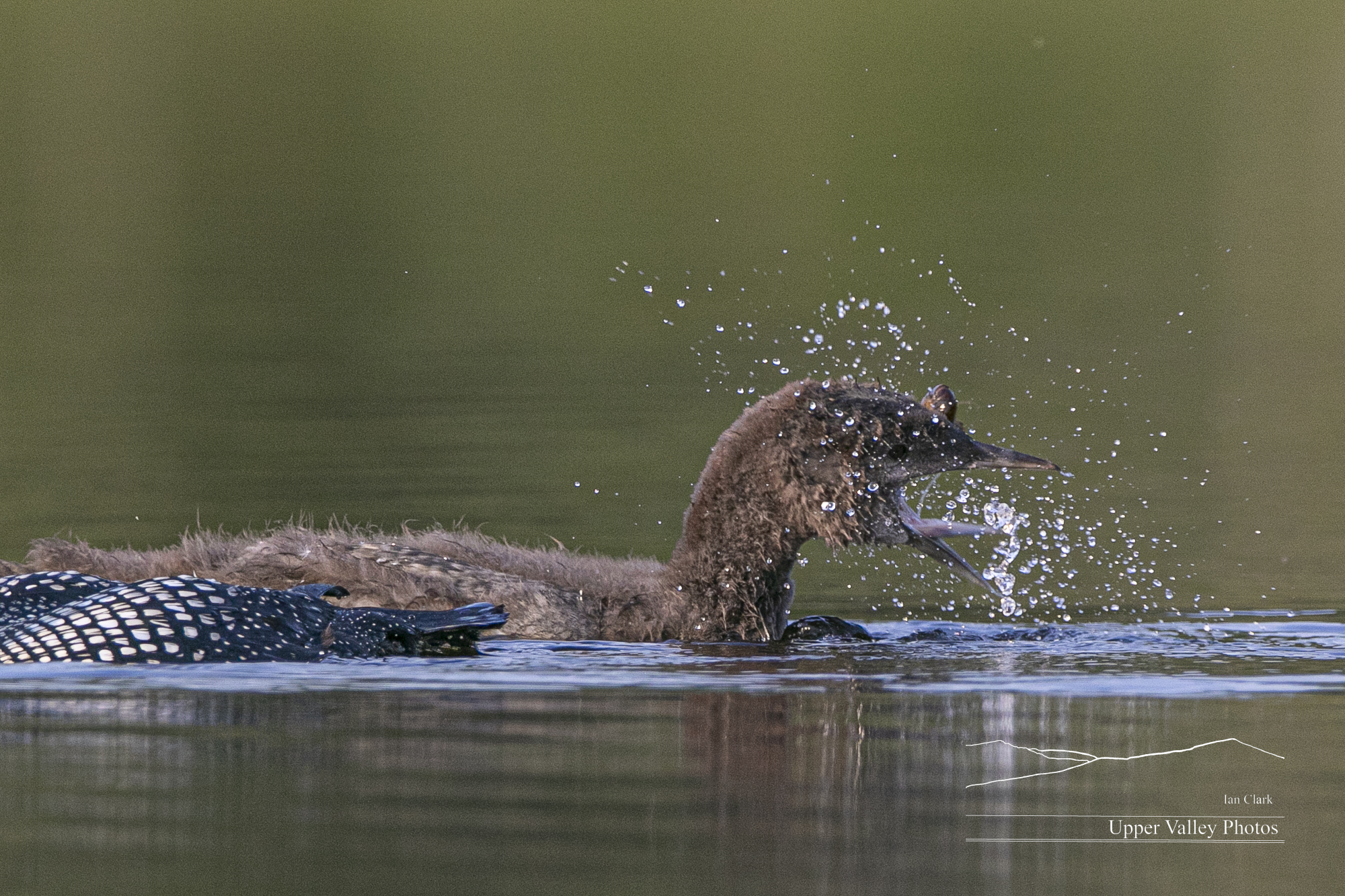
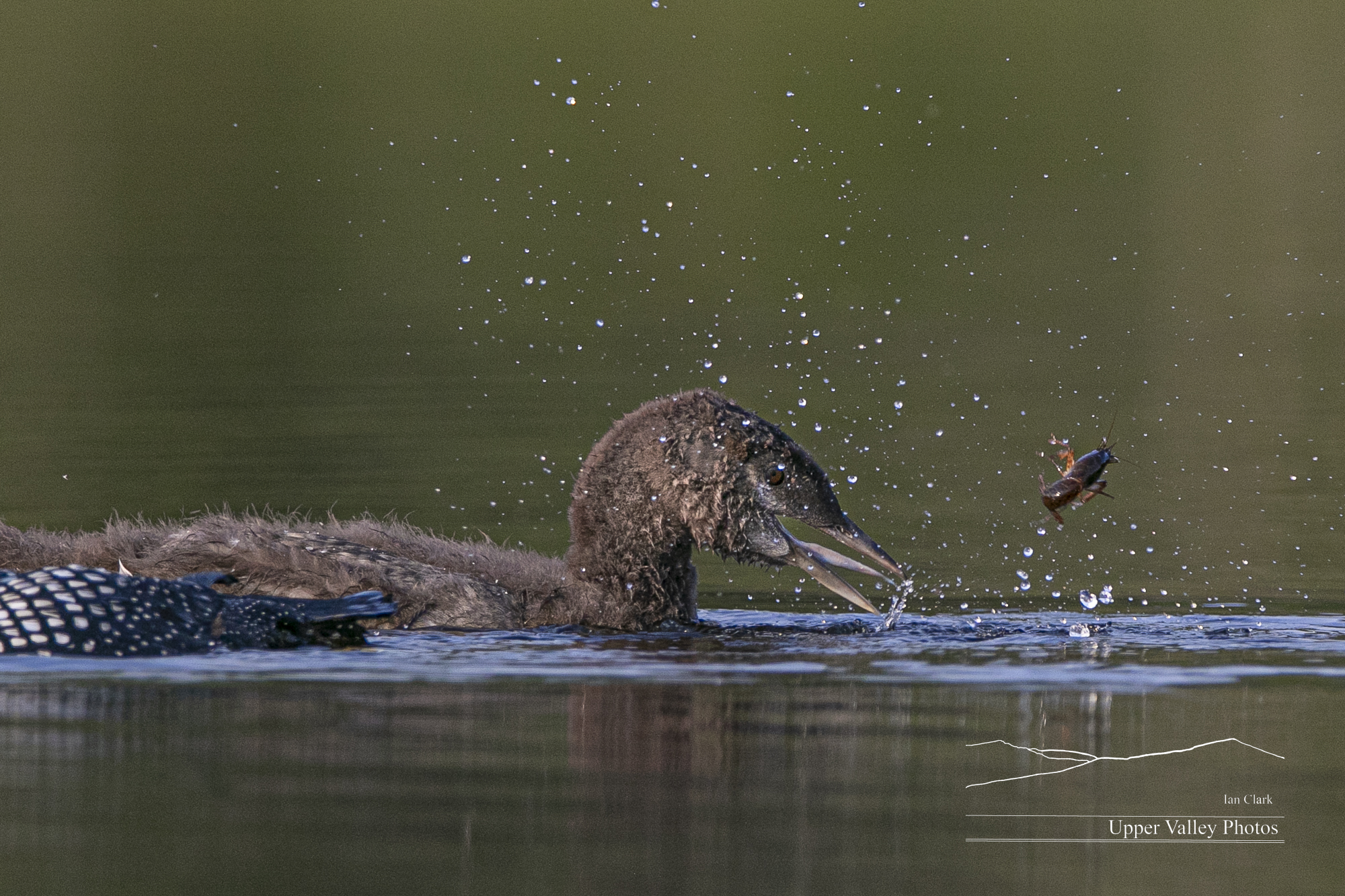
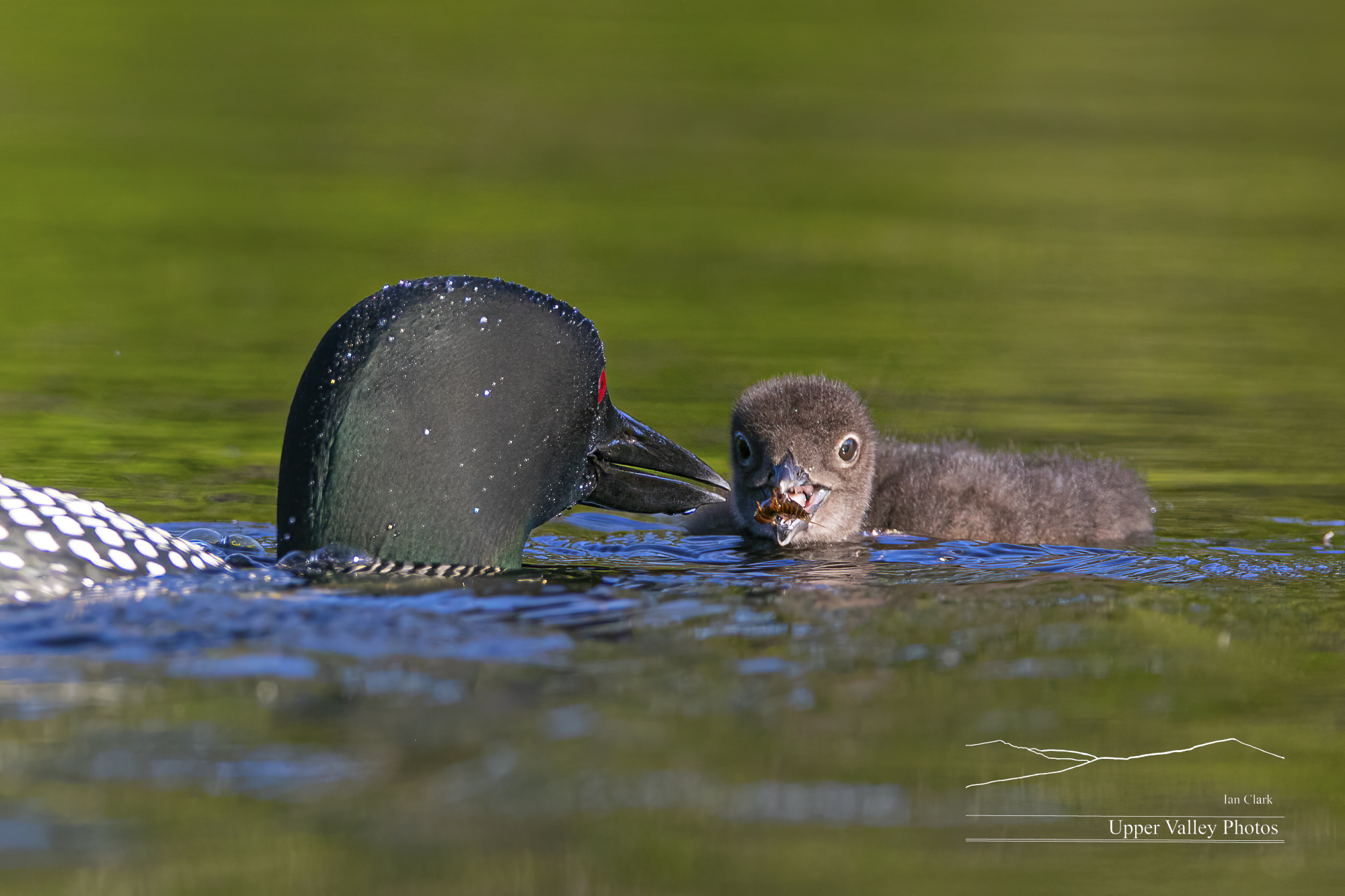
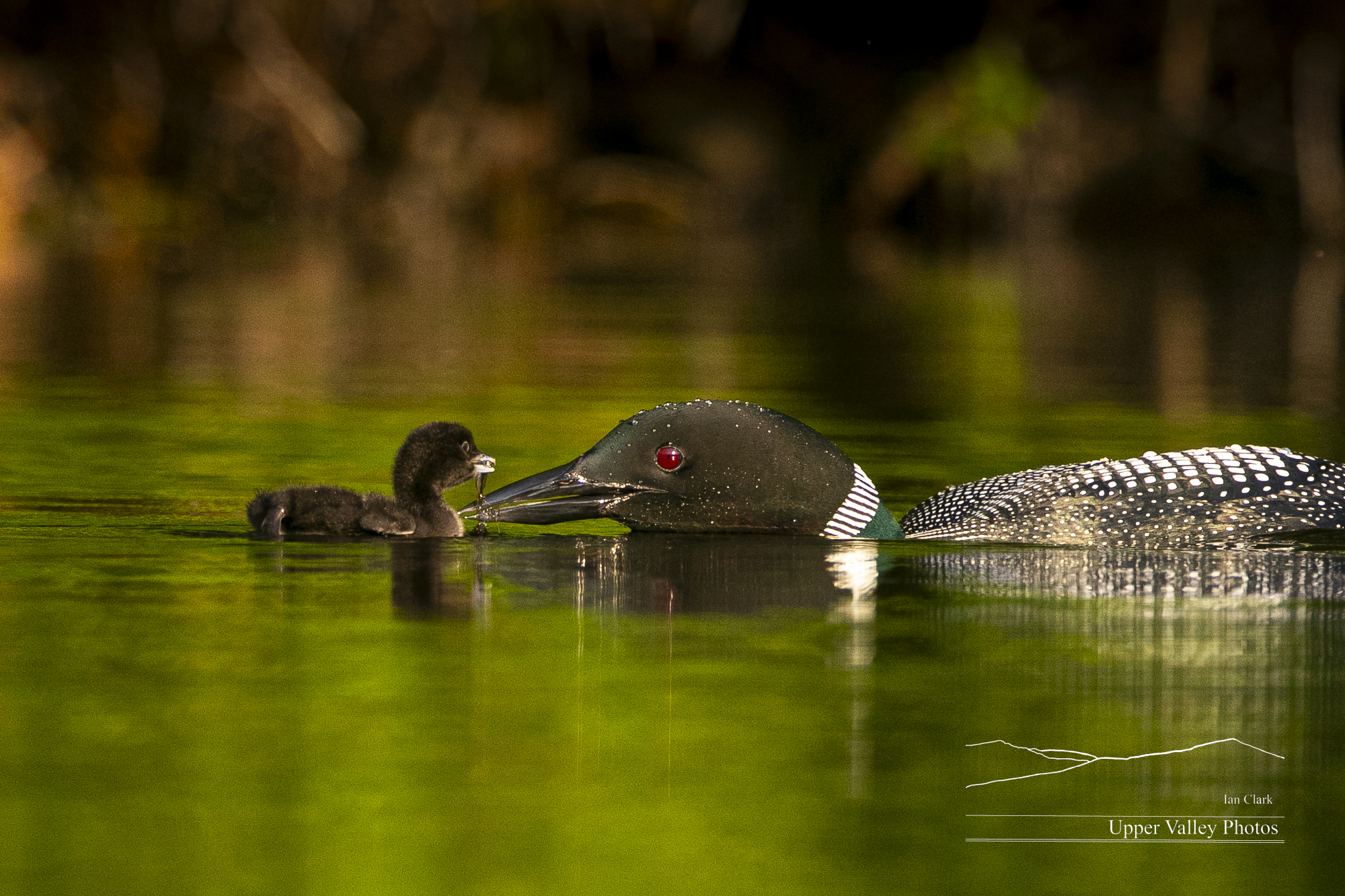
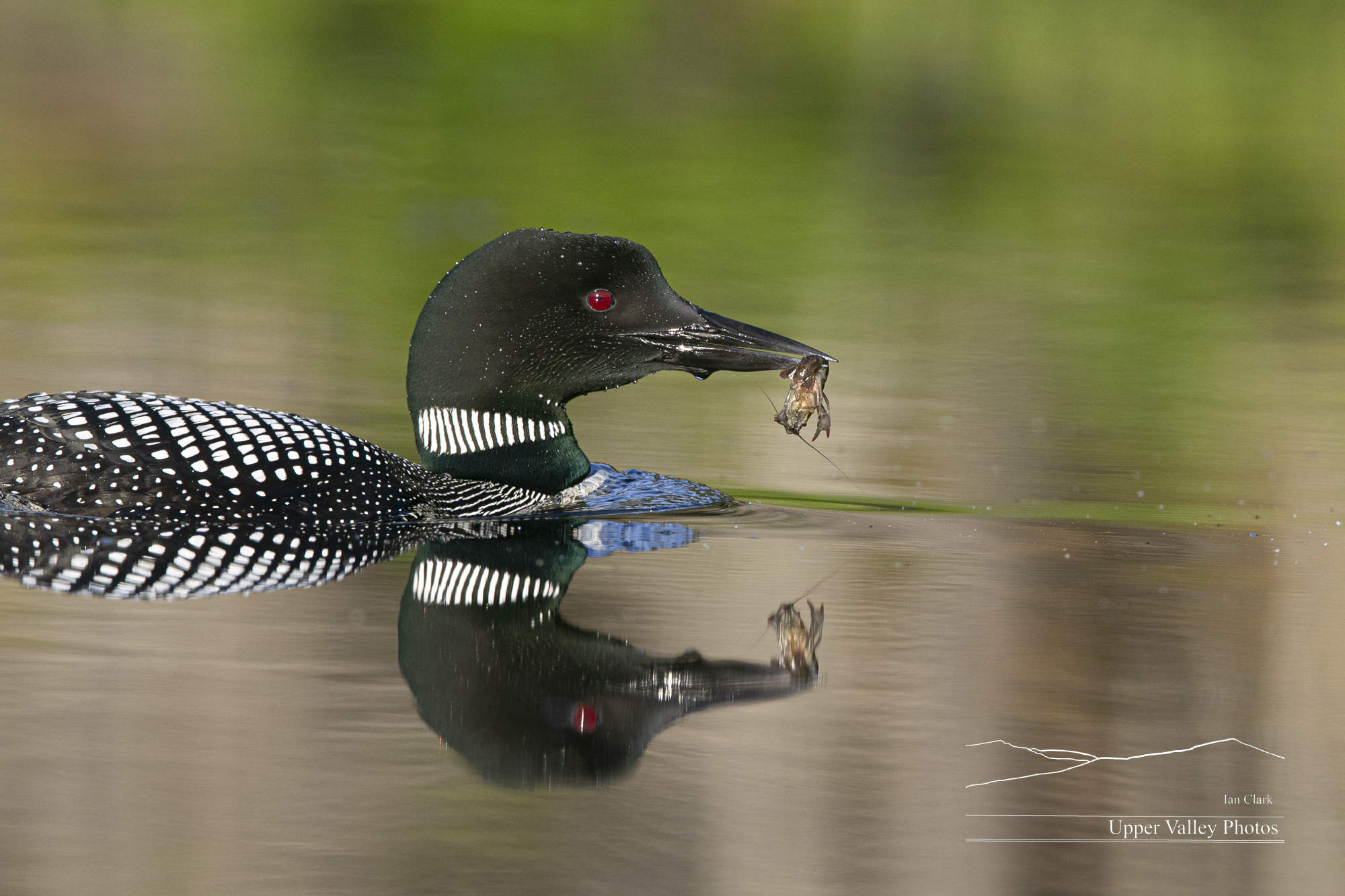
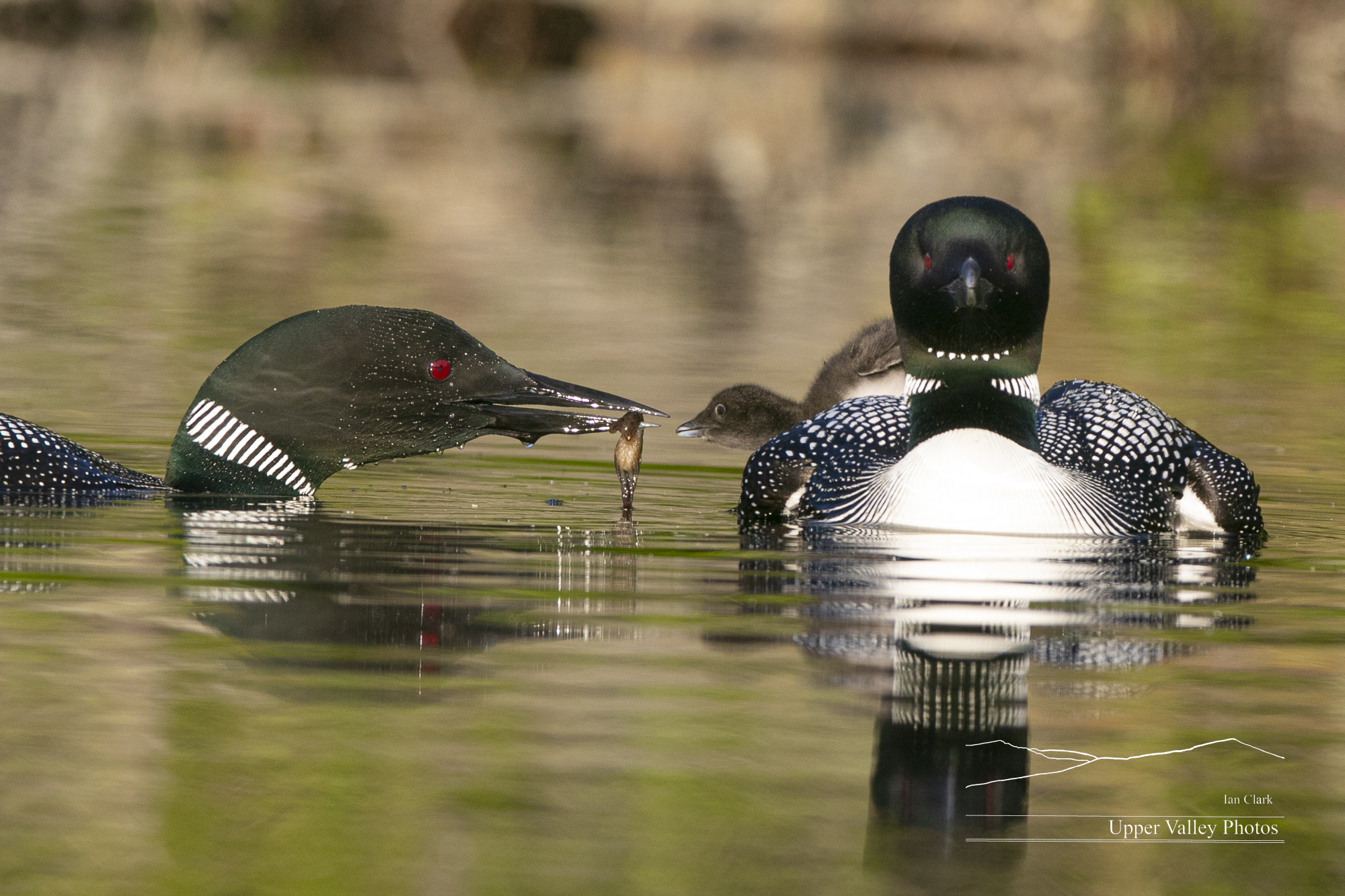
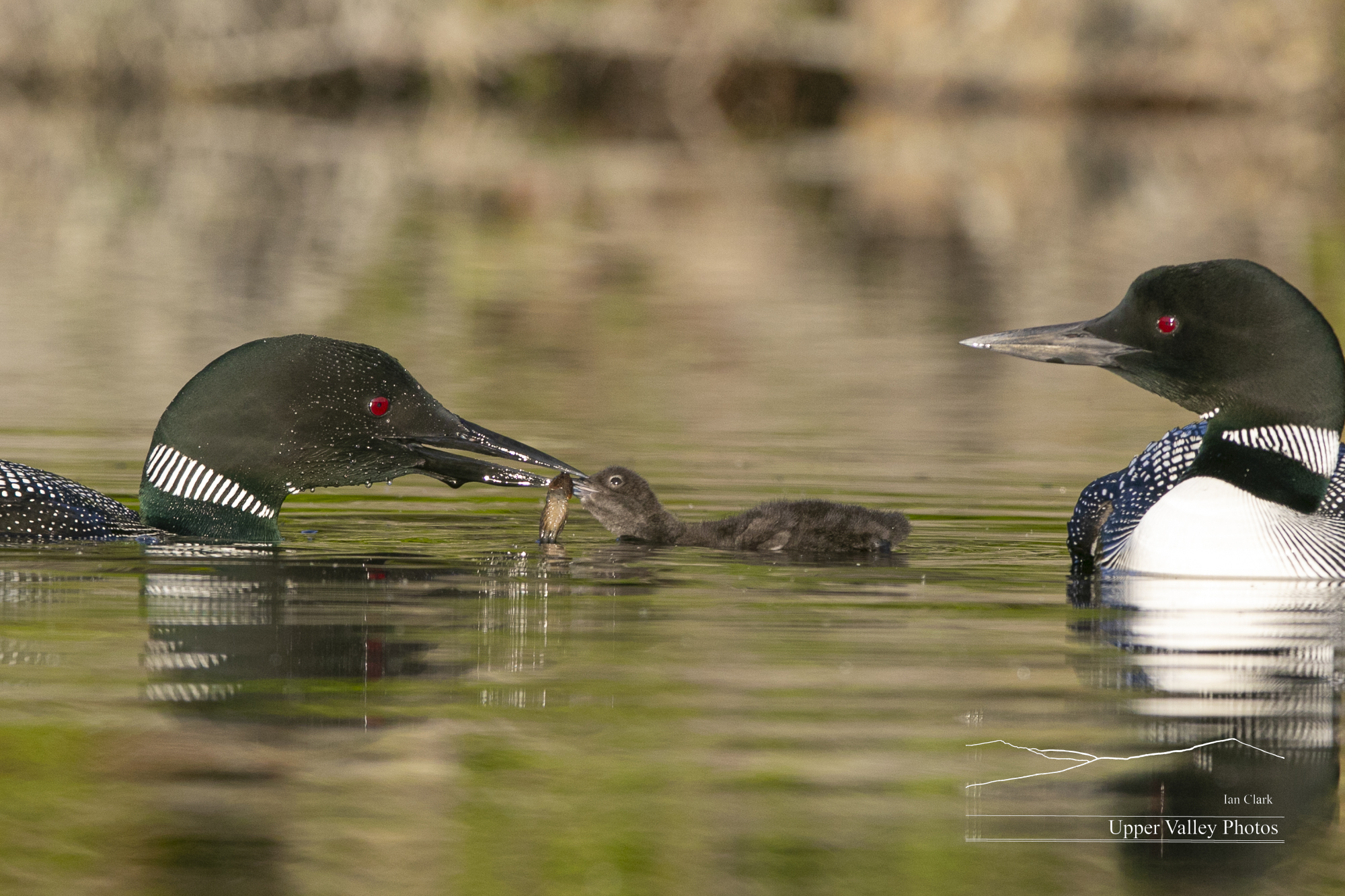
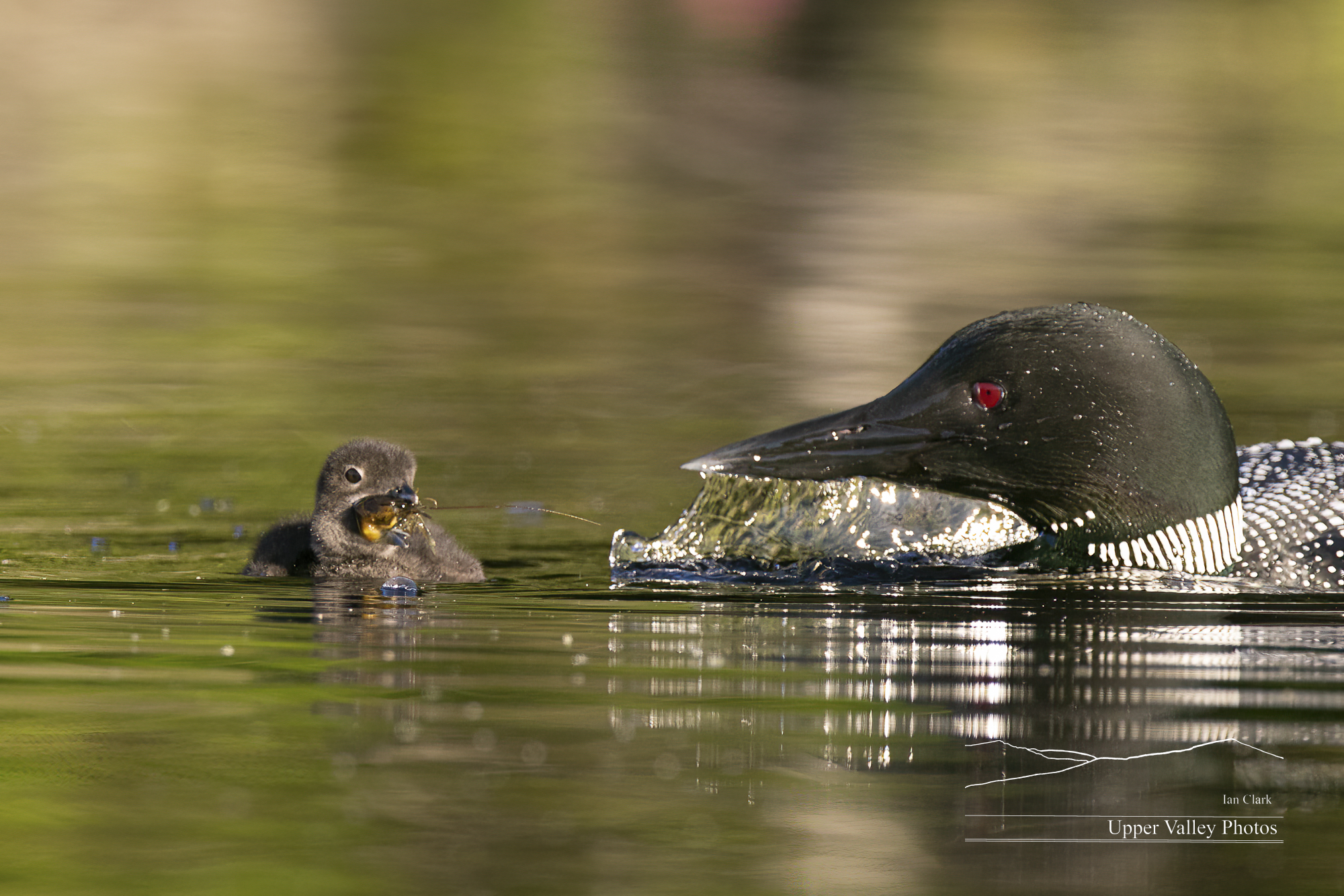
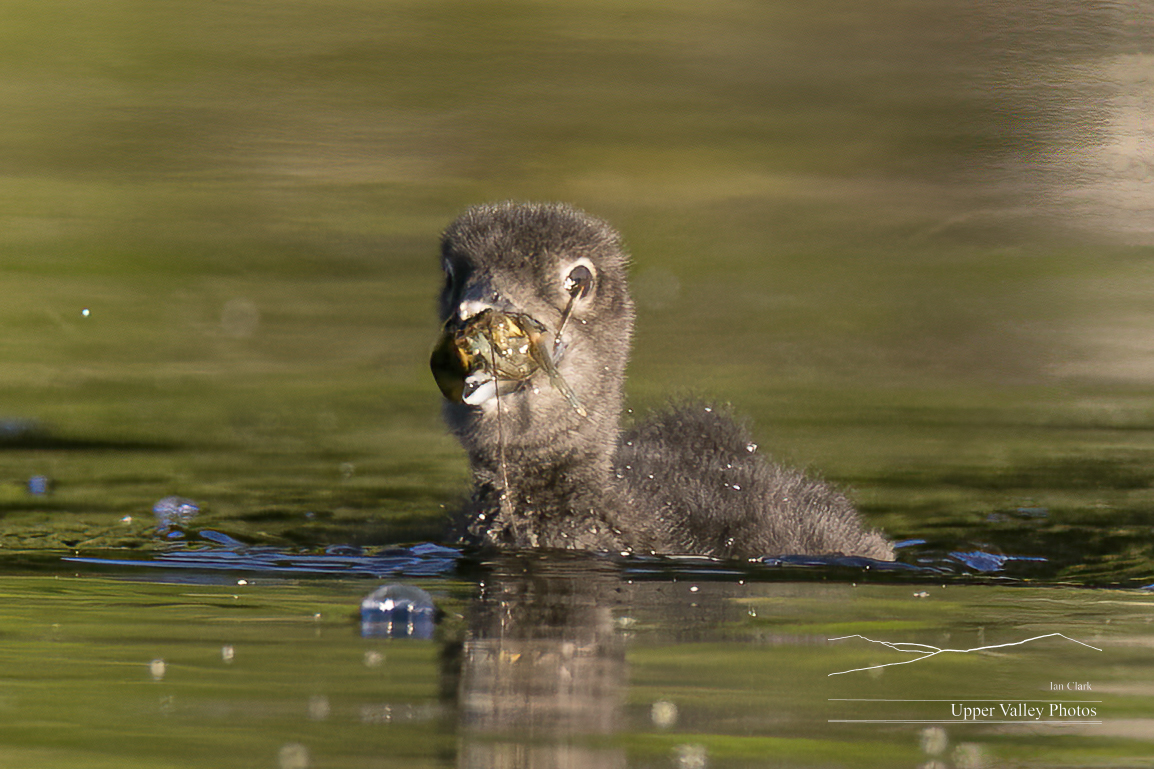
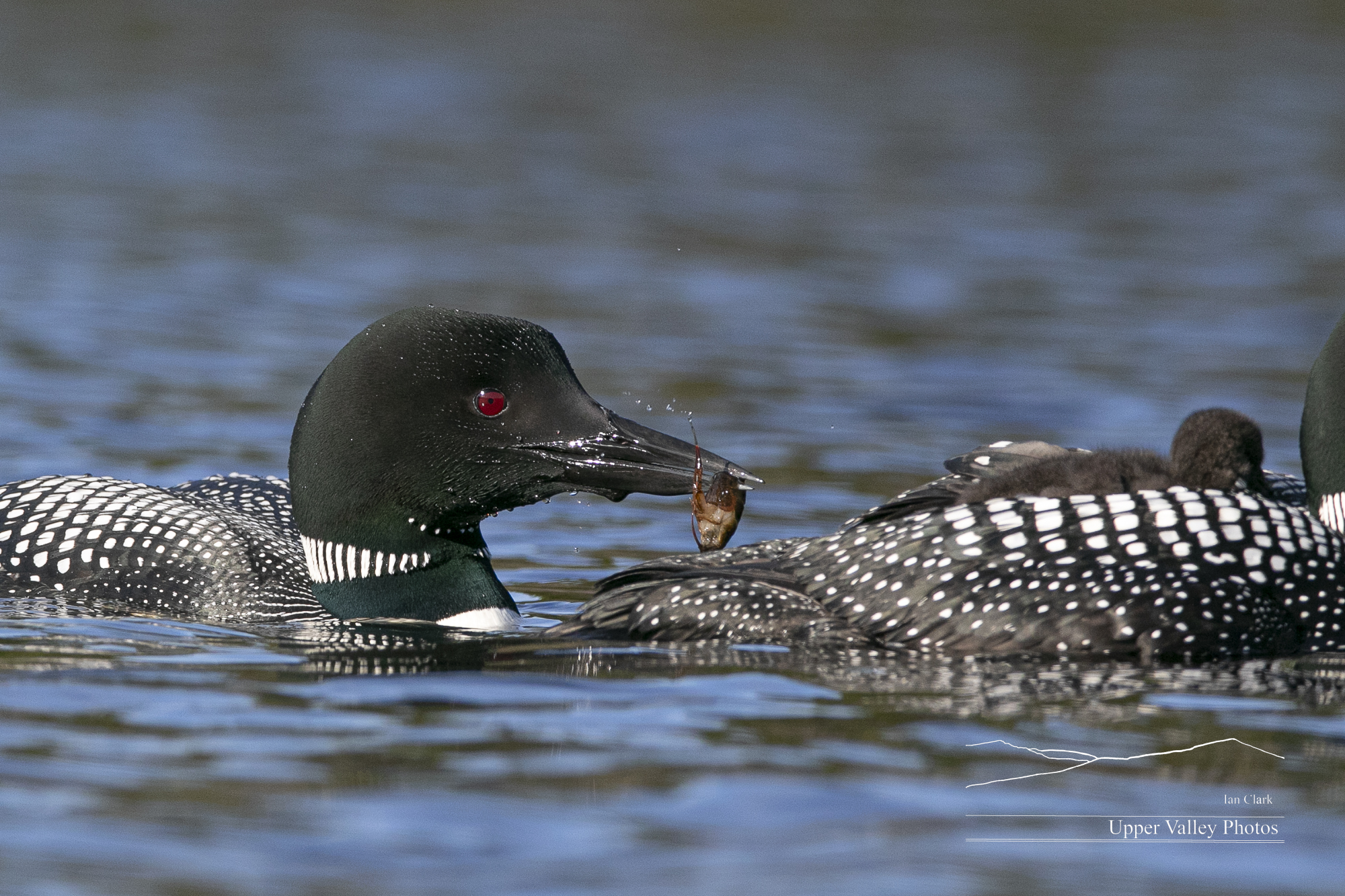
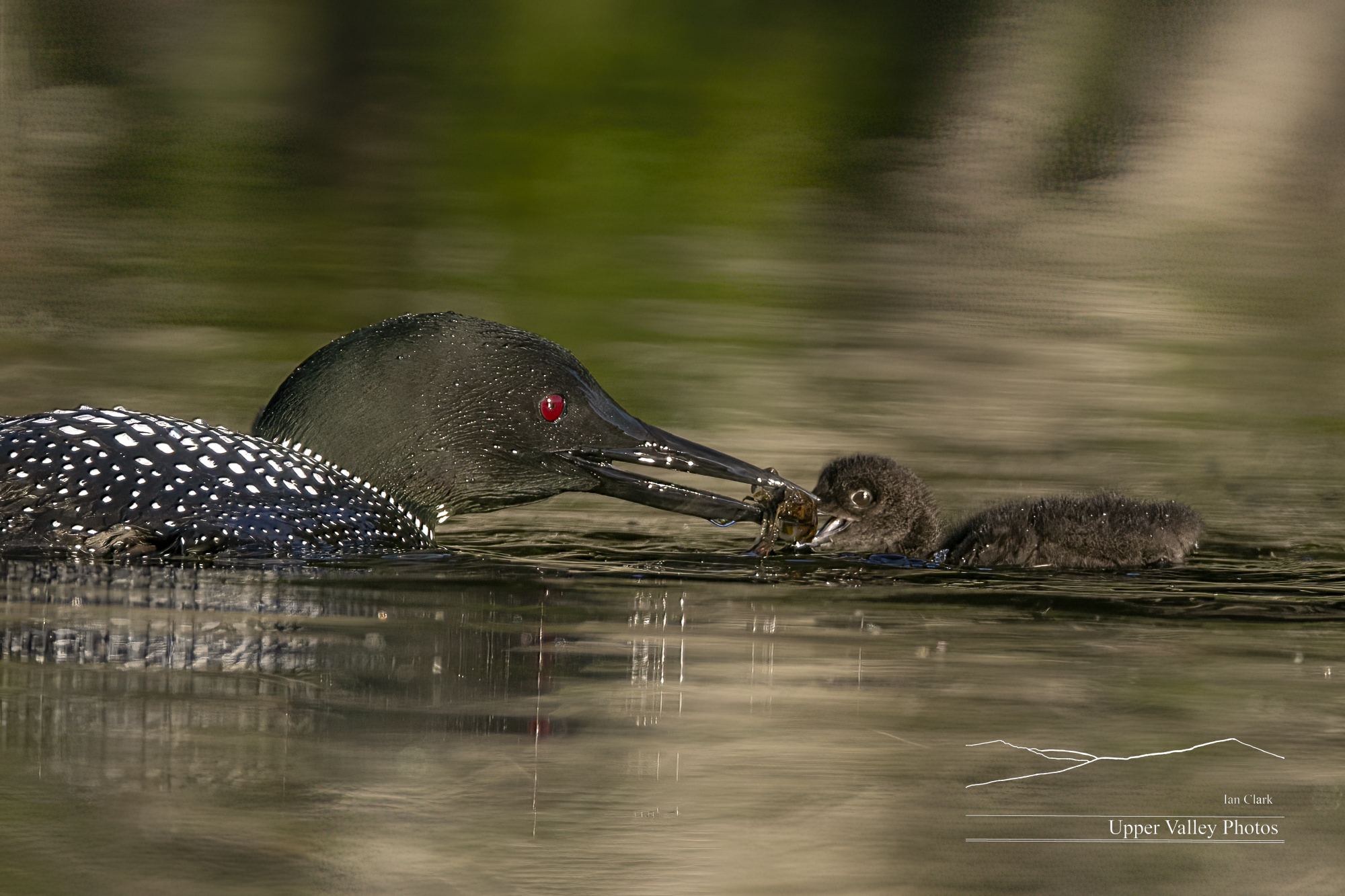
One of the parents bringing a crawfish to the chicks. This crawfish was too big for the chicks to handle. They both made valiant efforts to swallow it, but it was too big. They kept dropping it. The parent probably retrieved and offered again it 10 times before just eating it. 
After the crawfish, the parents tried what appeared to be damselfly and dragonfly larva. Which worked much better. 
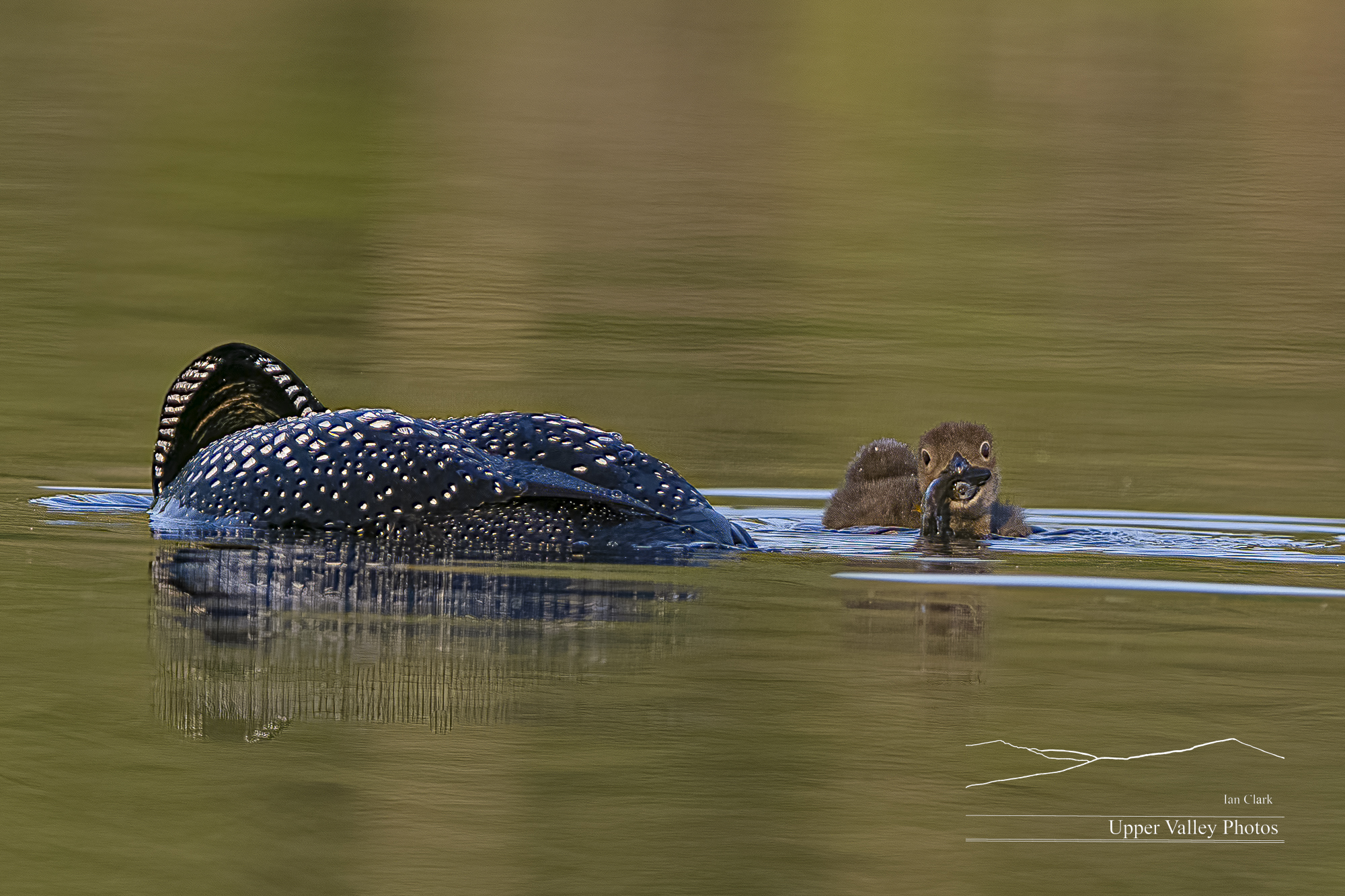
A more chick-sized morsel.

And another morsel…

It takes a long time to get a chick full on tiny tidbits.
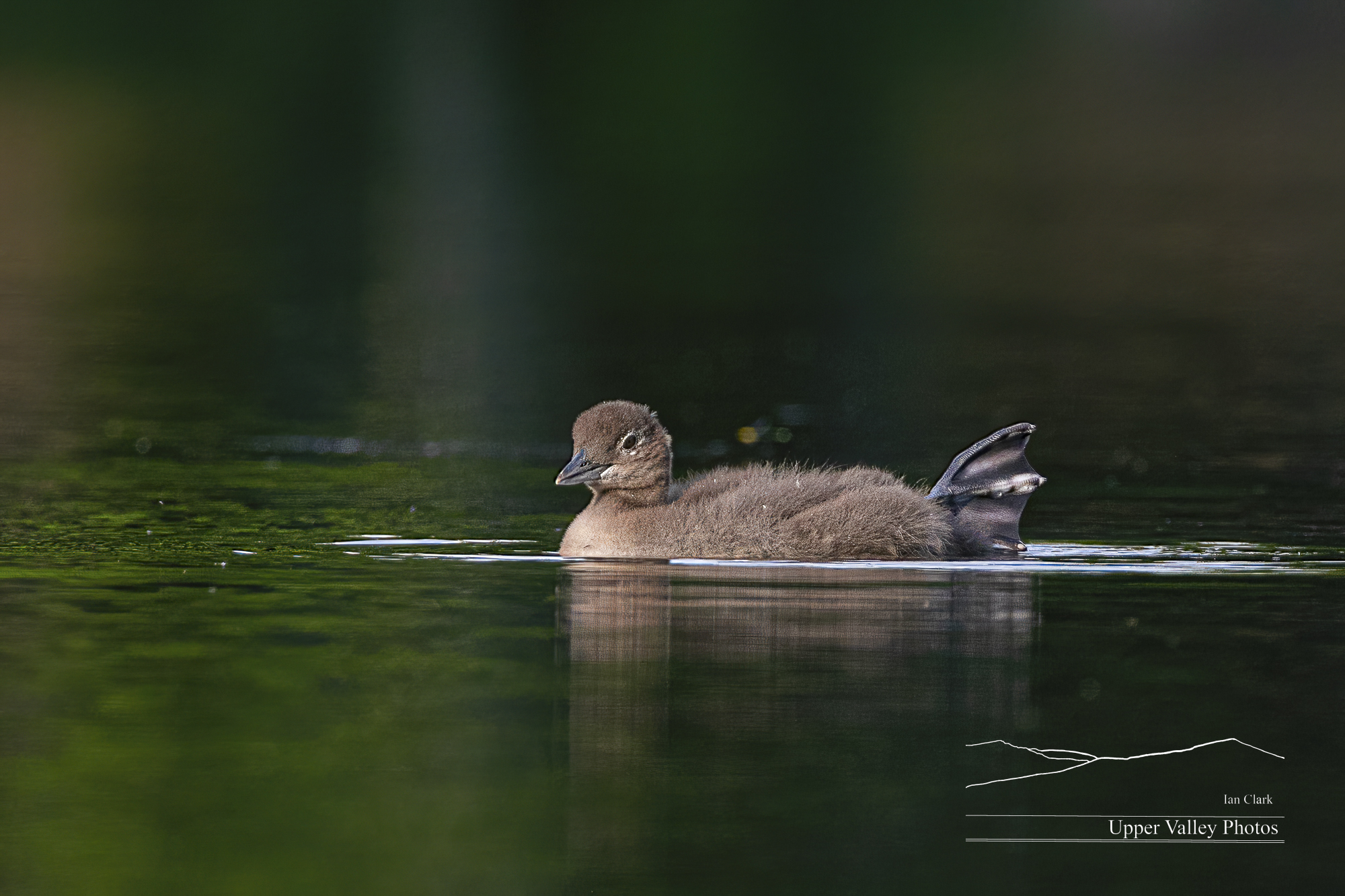
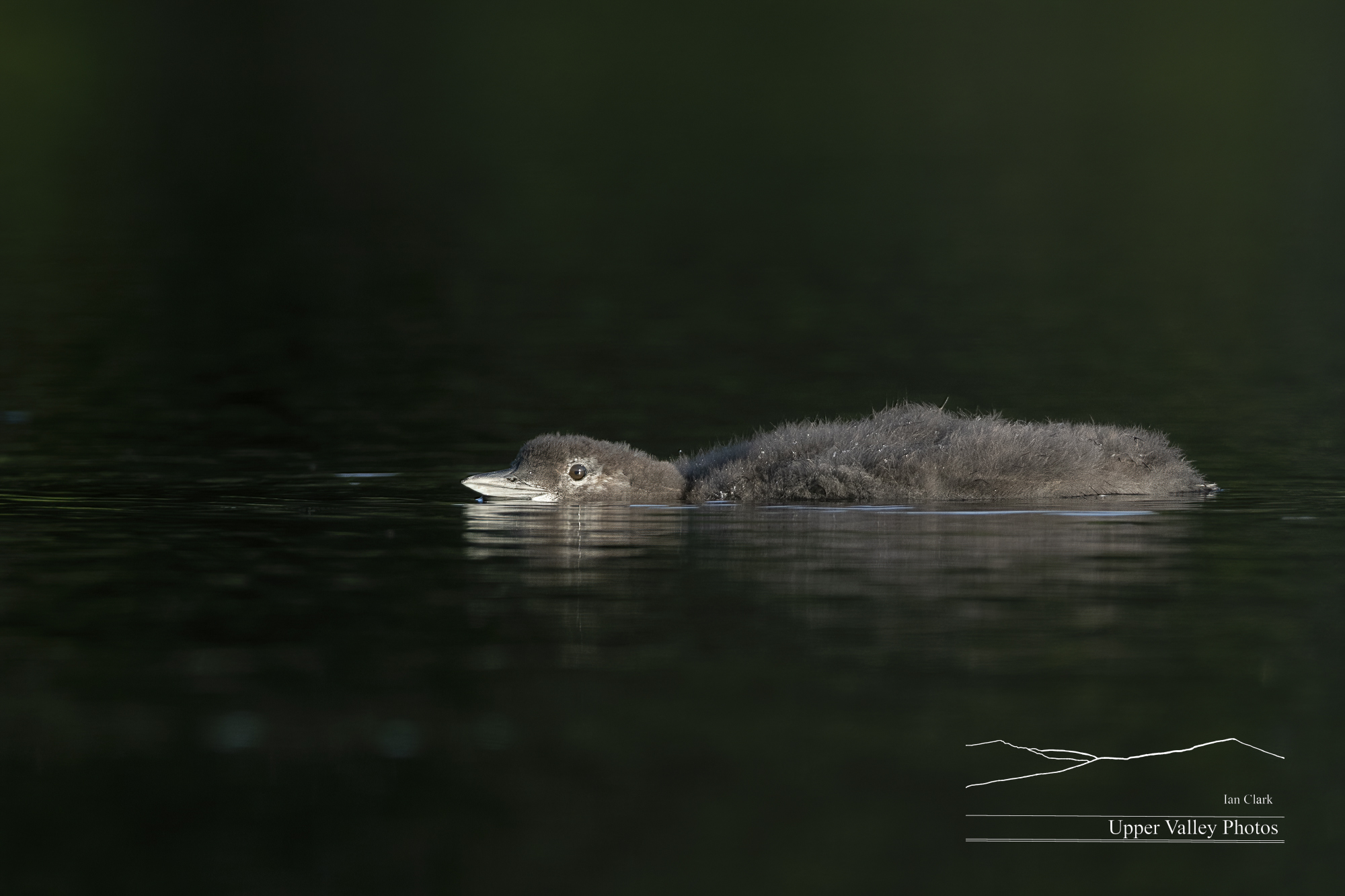
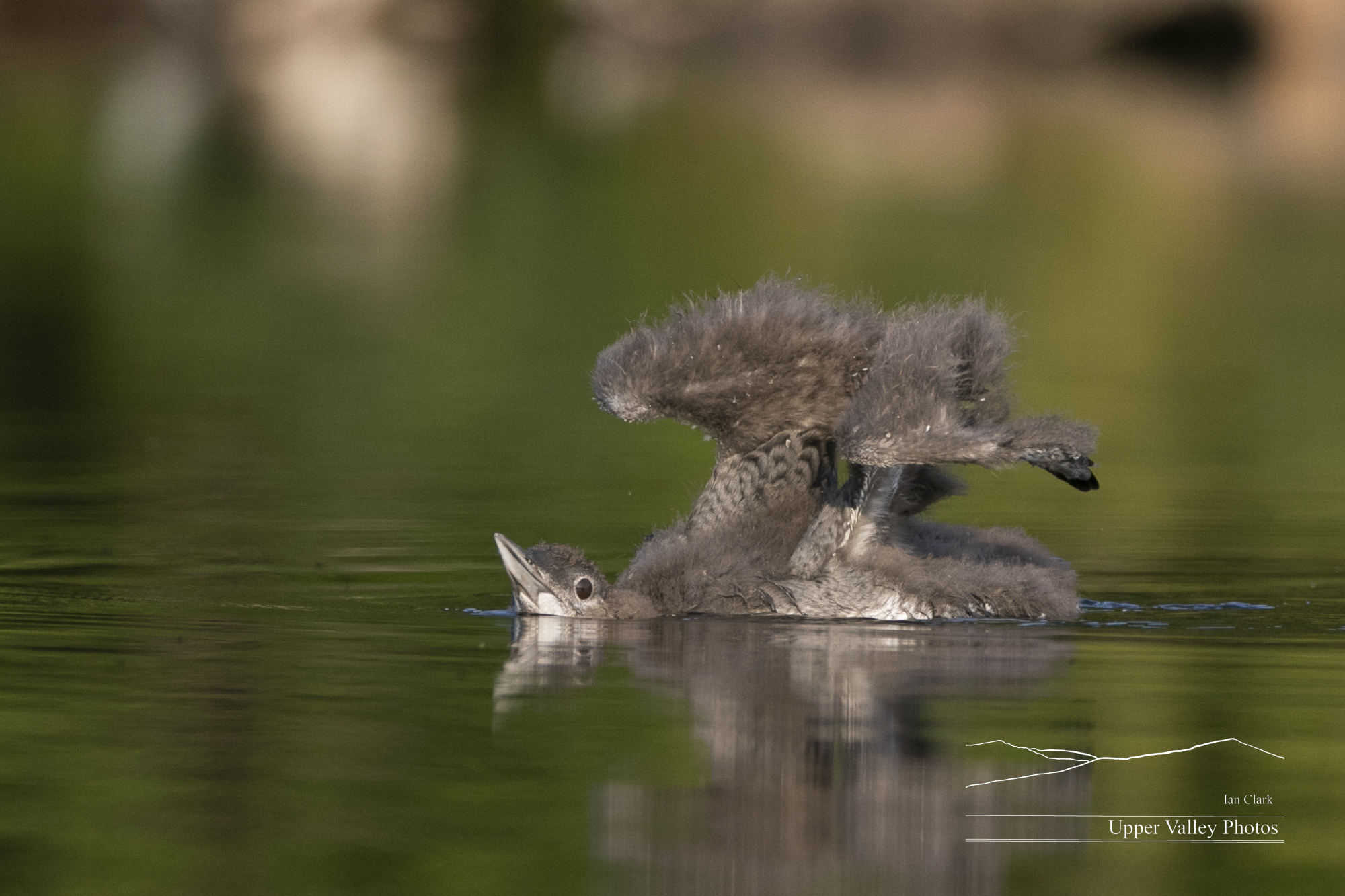
Stretching out a leg – notice how far back the chick’s legs are.
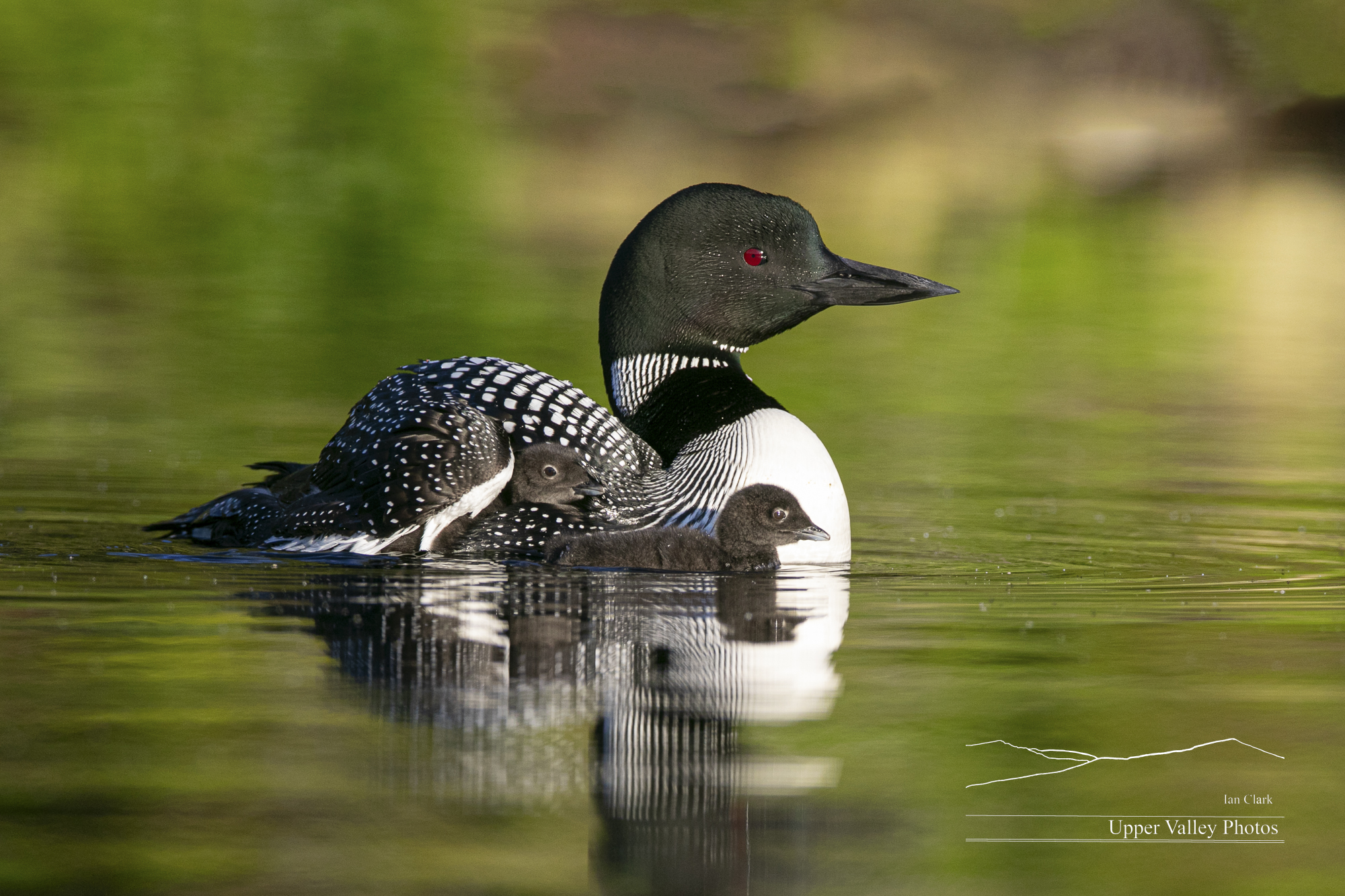
The parents keep a close eye on the chicks when they’re small, one of the parents is usually within a few feet of them. 
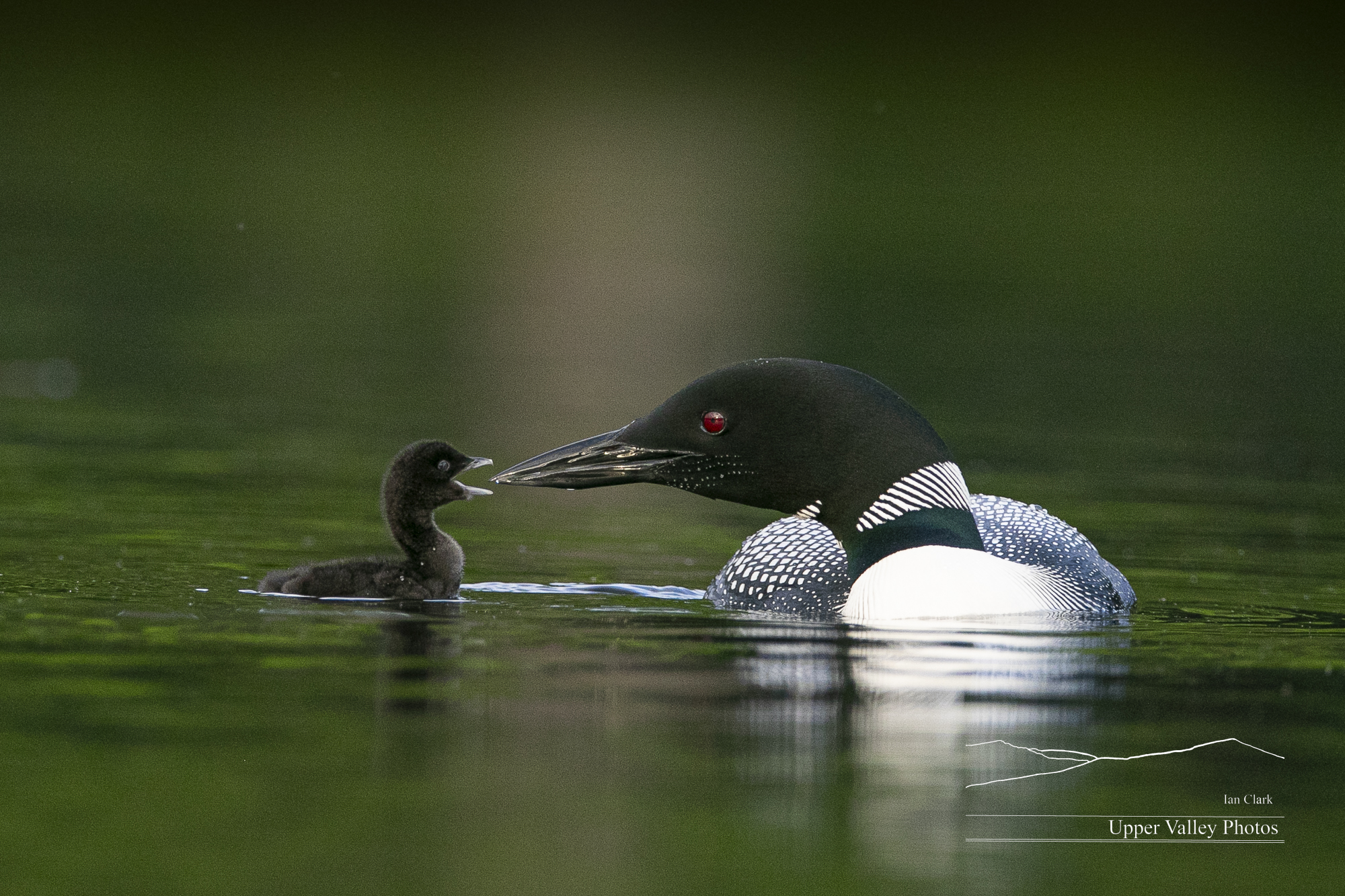
The chicks learn to be loons by mimicking their parents. You can often see the chicks at it, if a parent turns to look at something, the chicks are likely to turn as well.

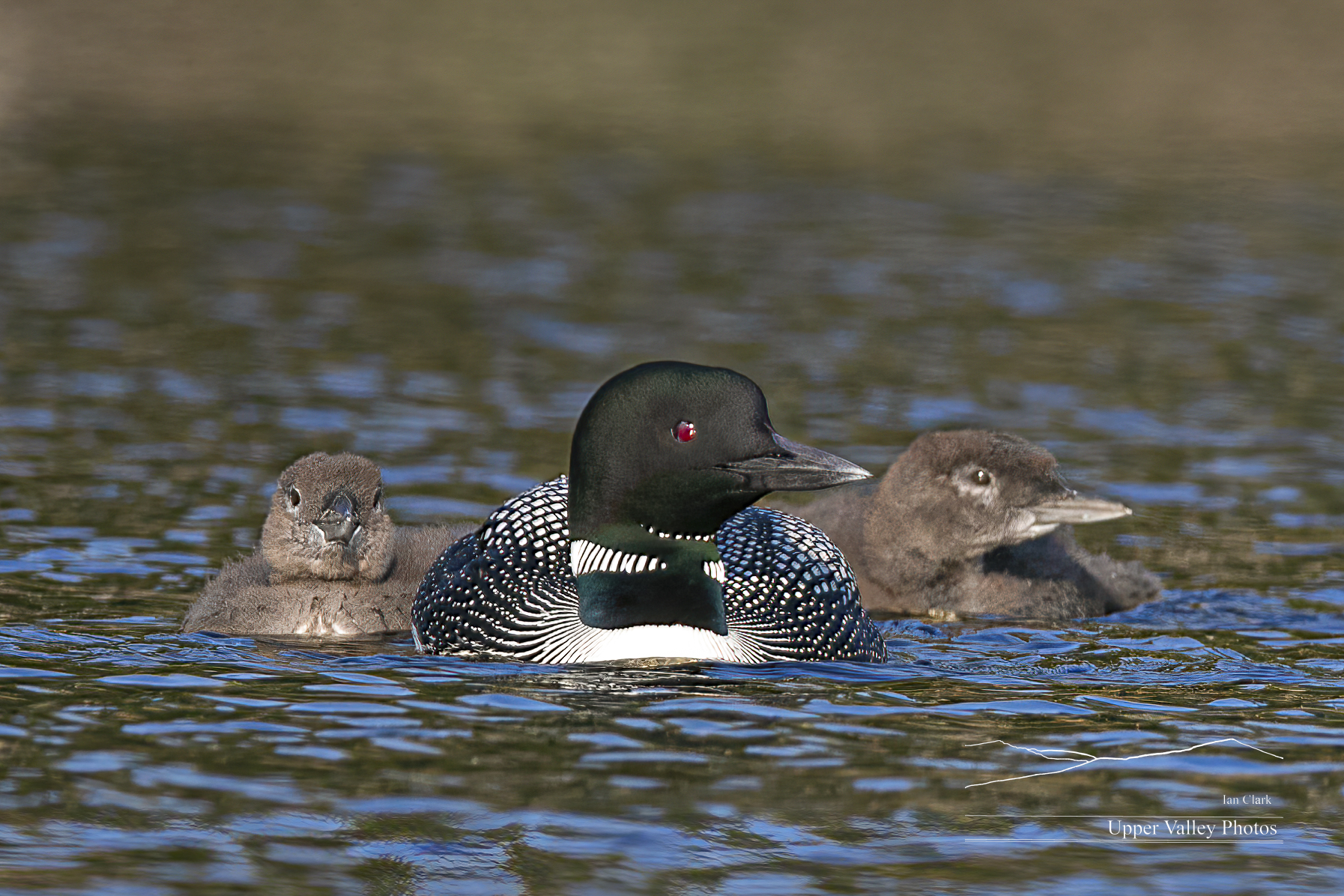
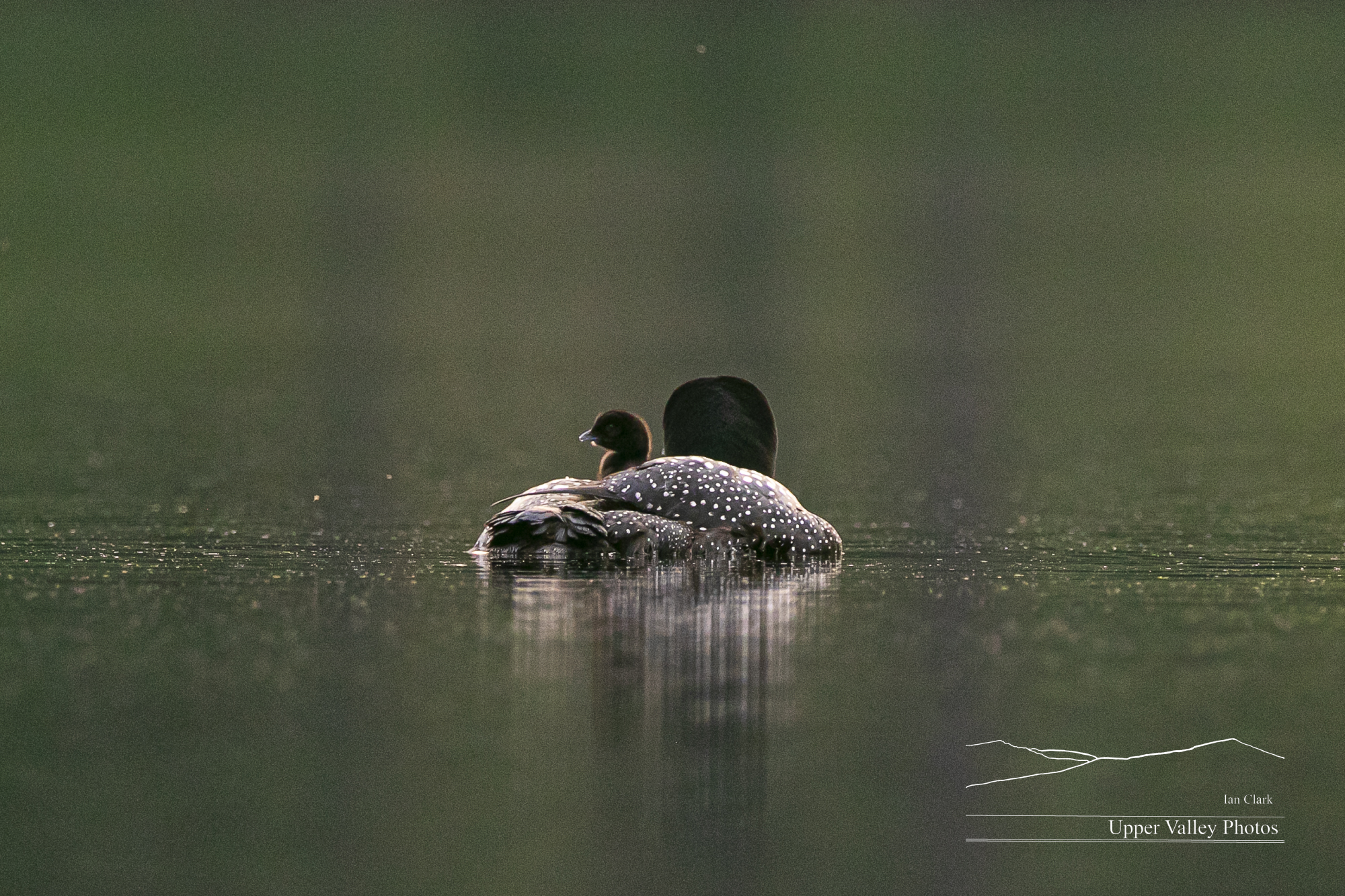
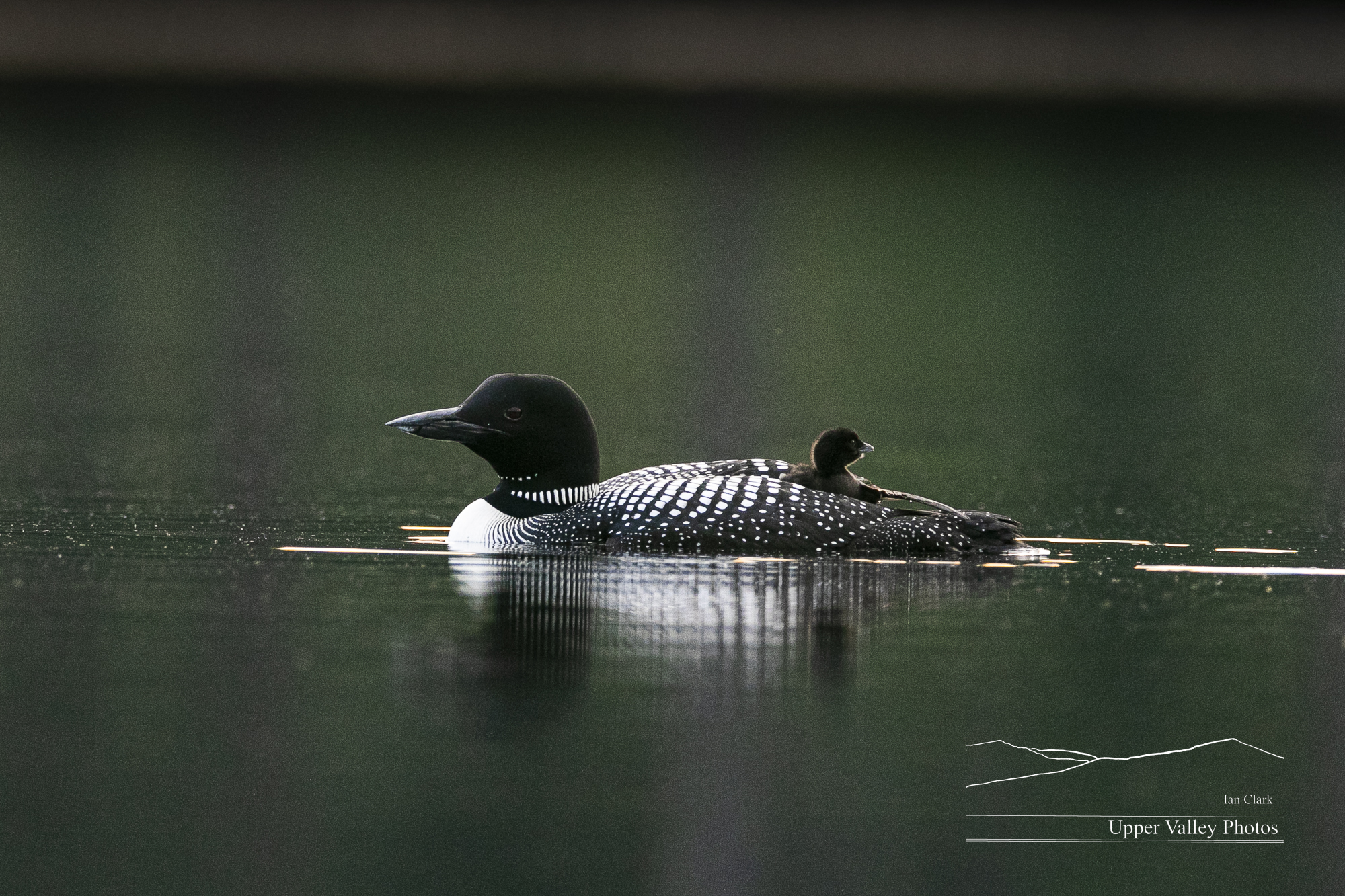
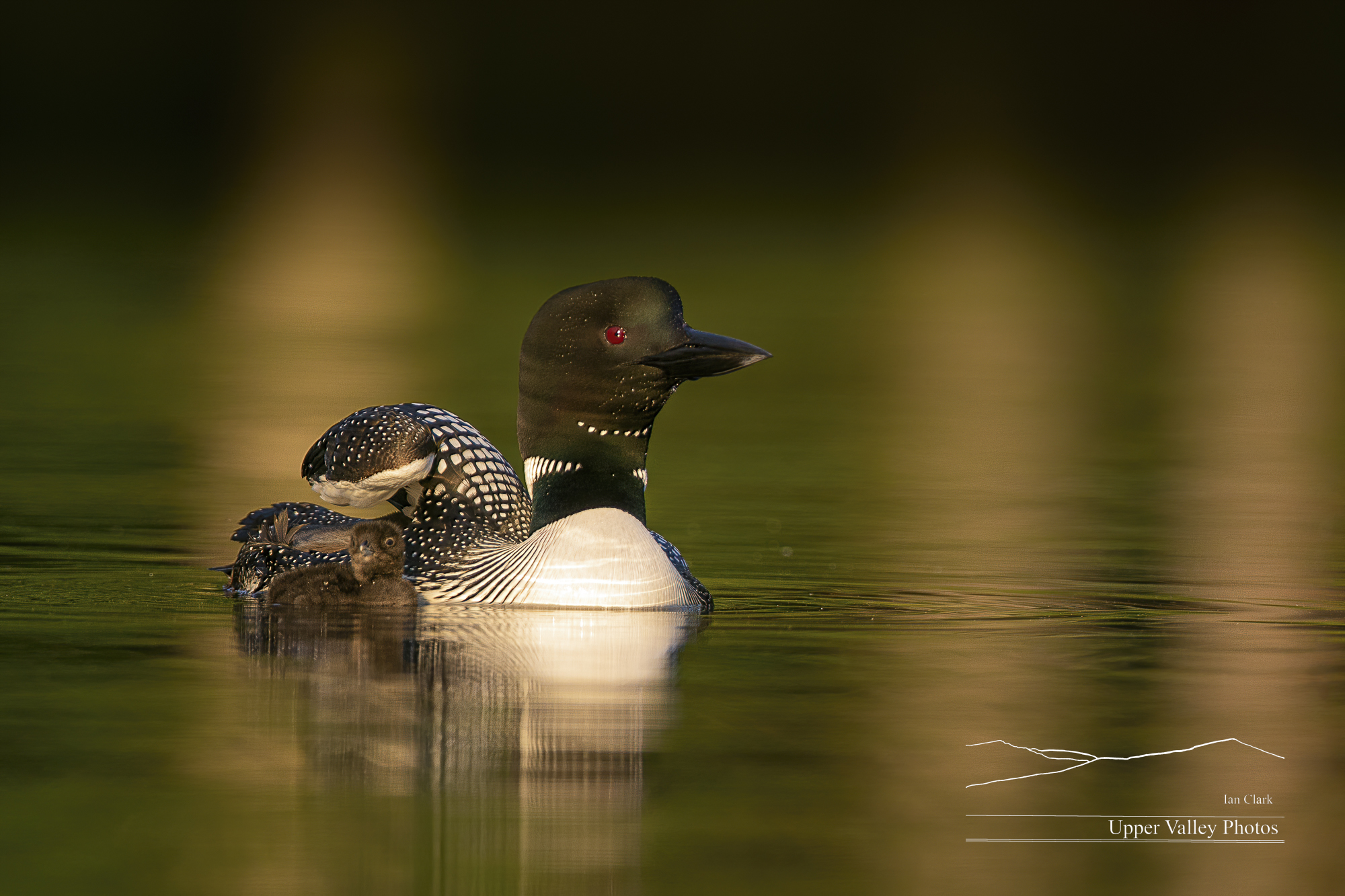
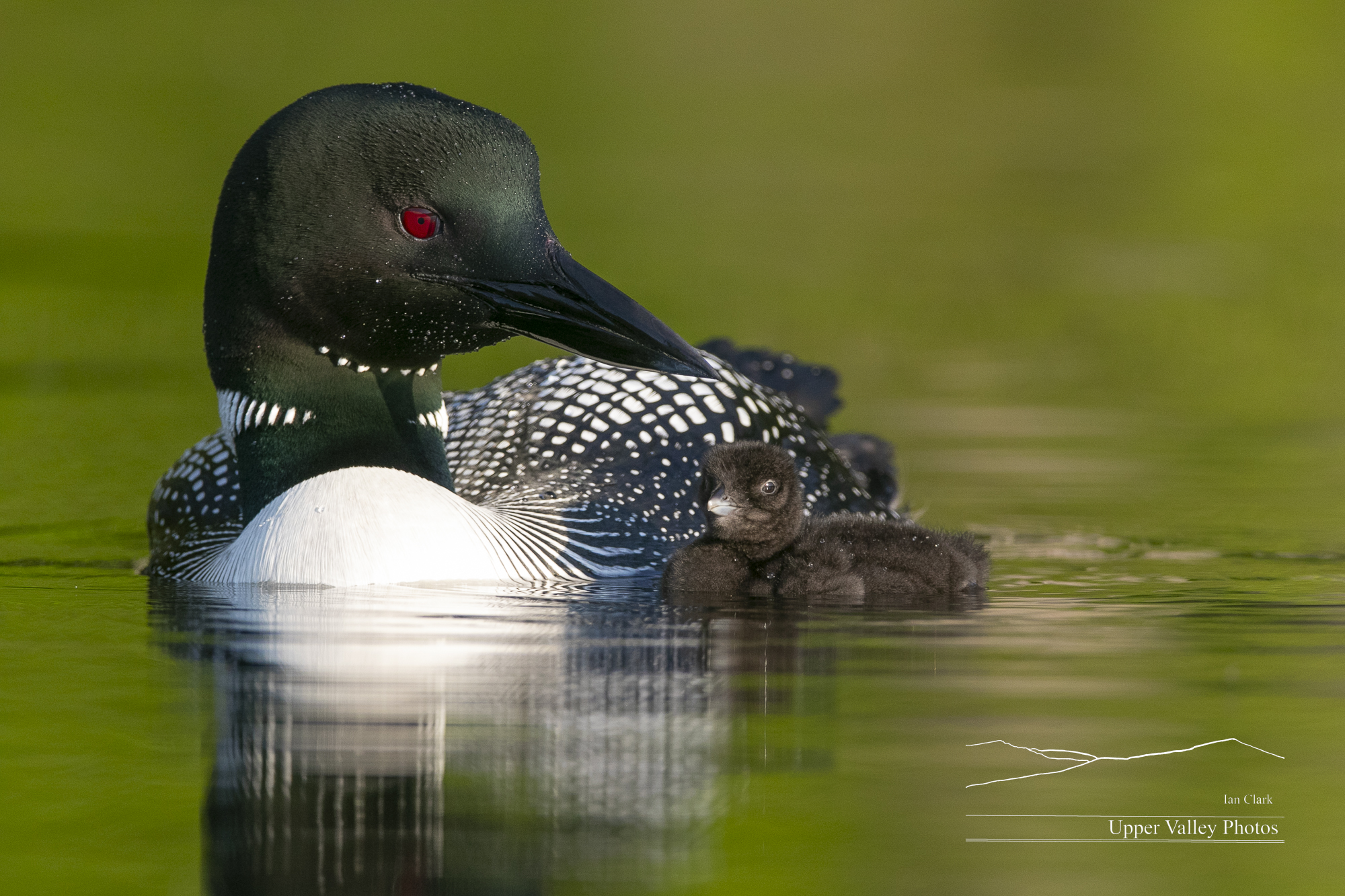
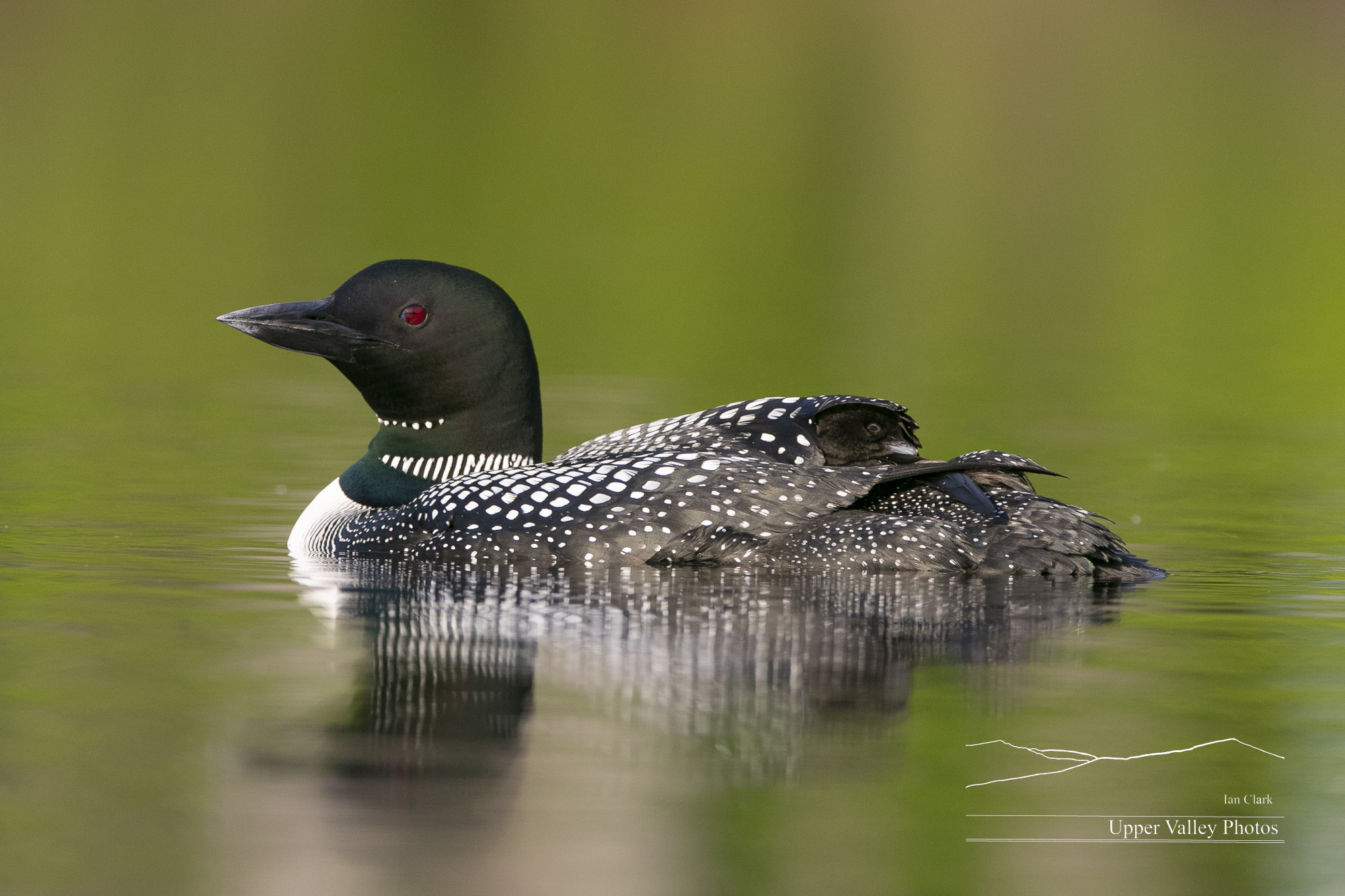
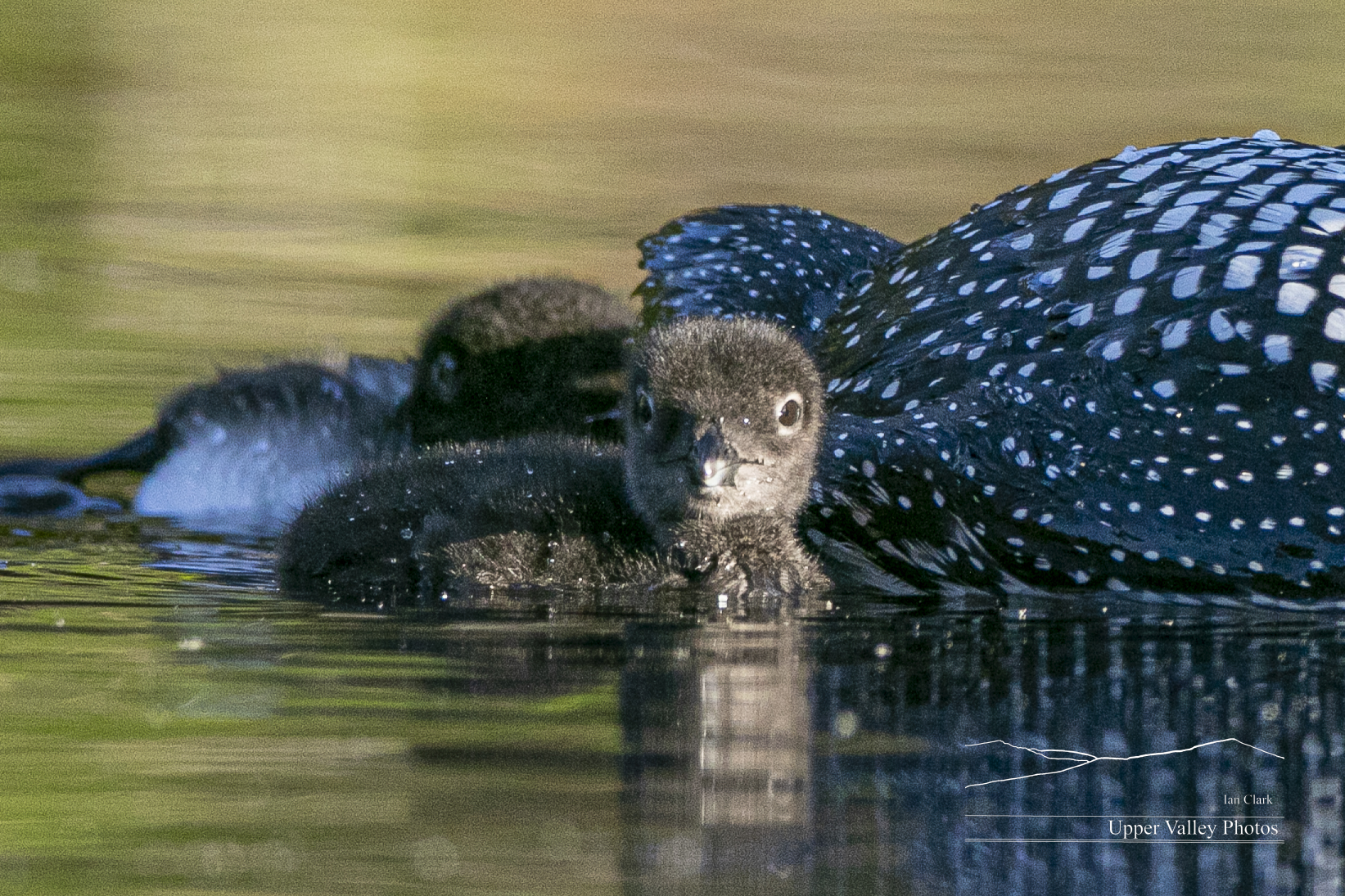
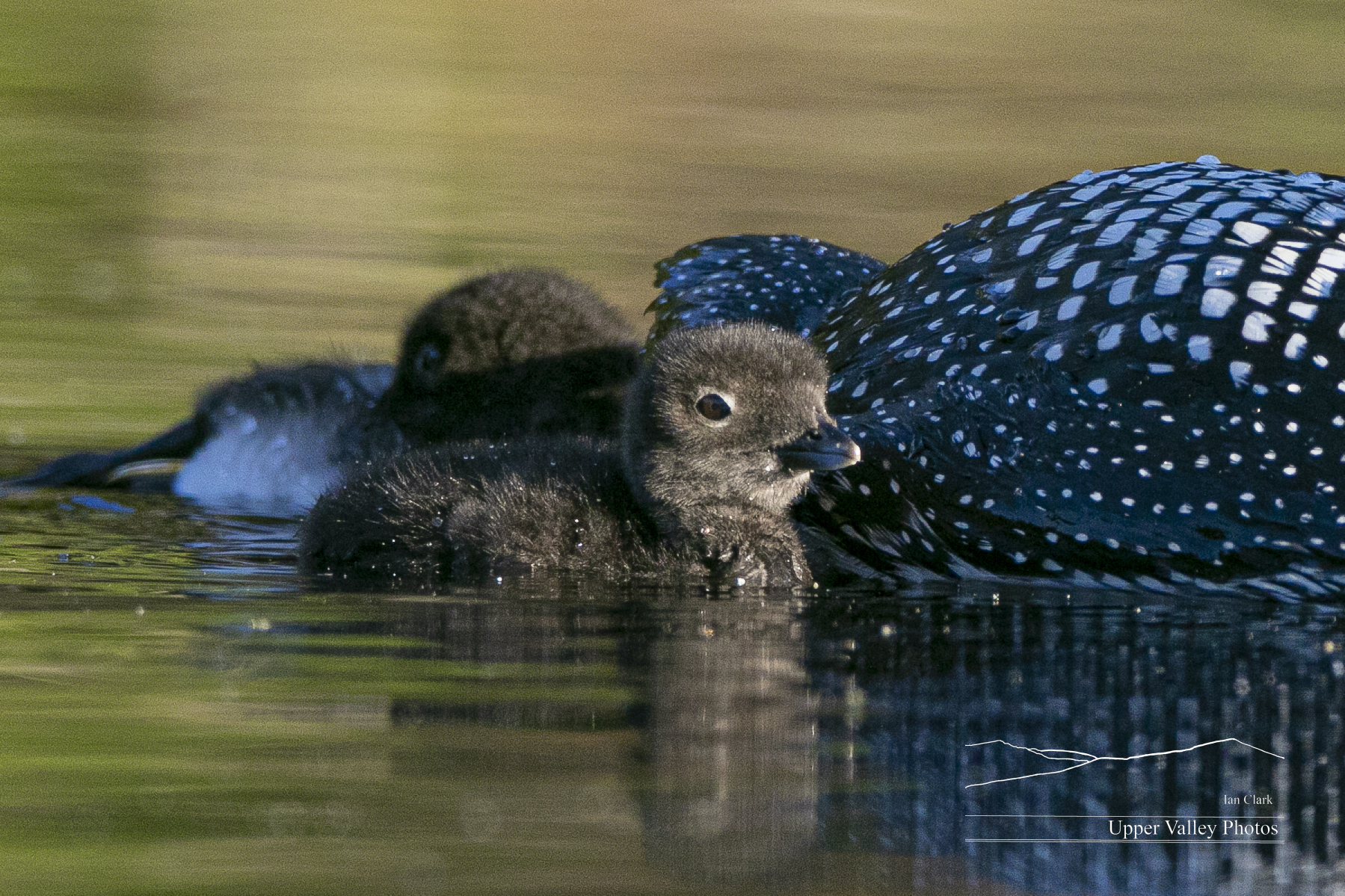
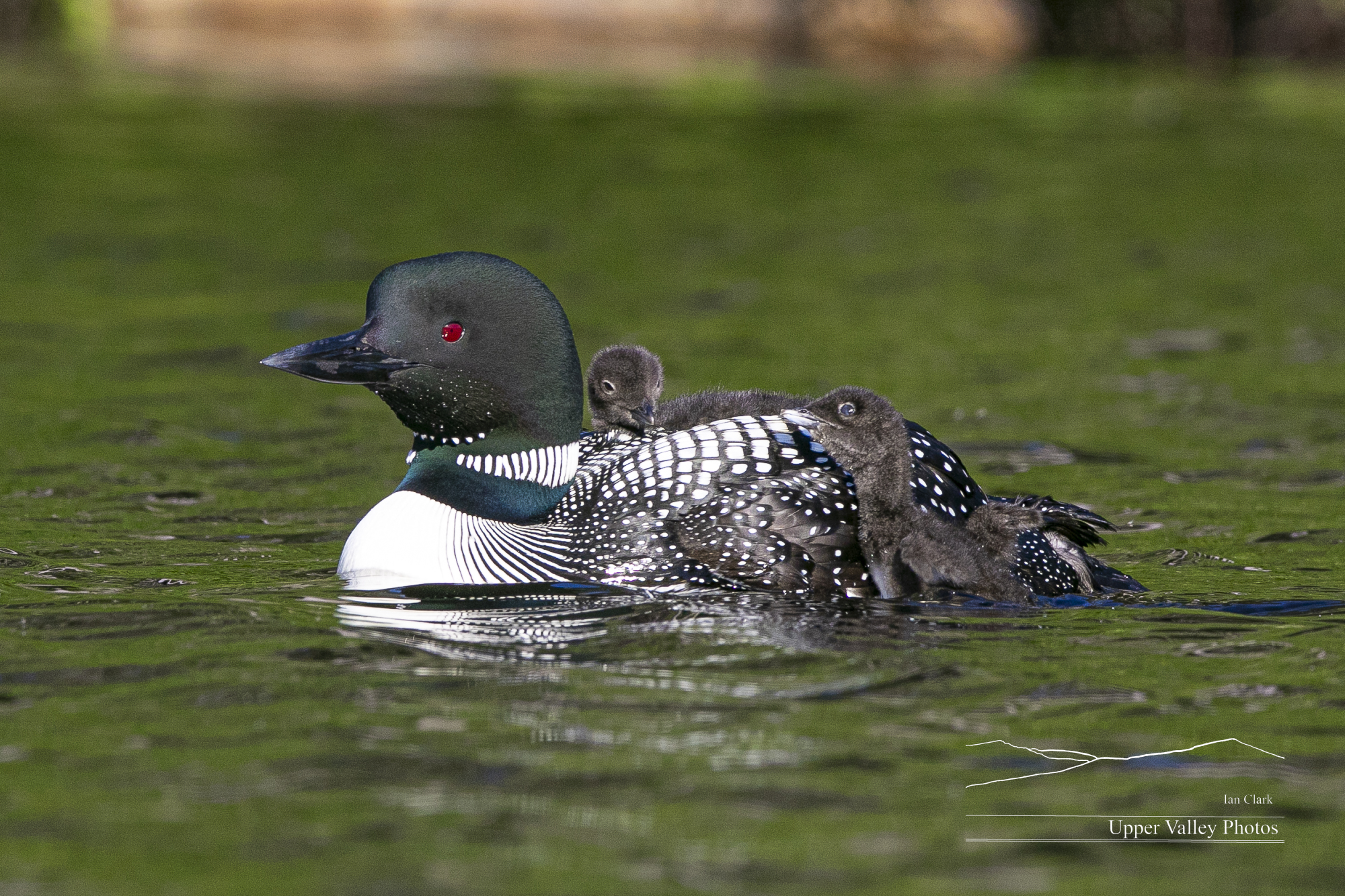
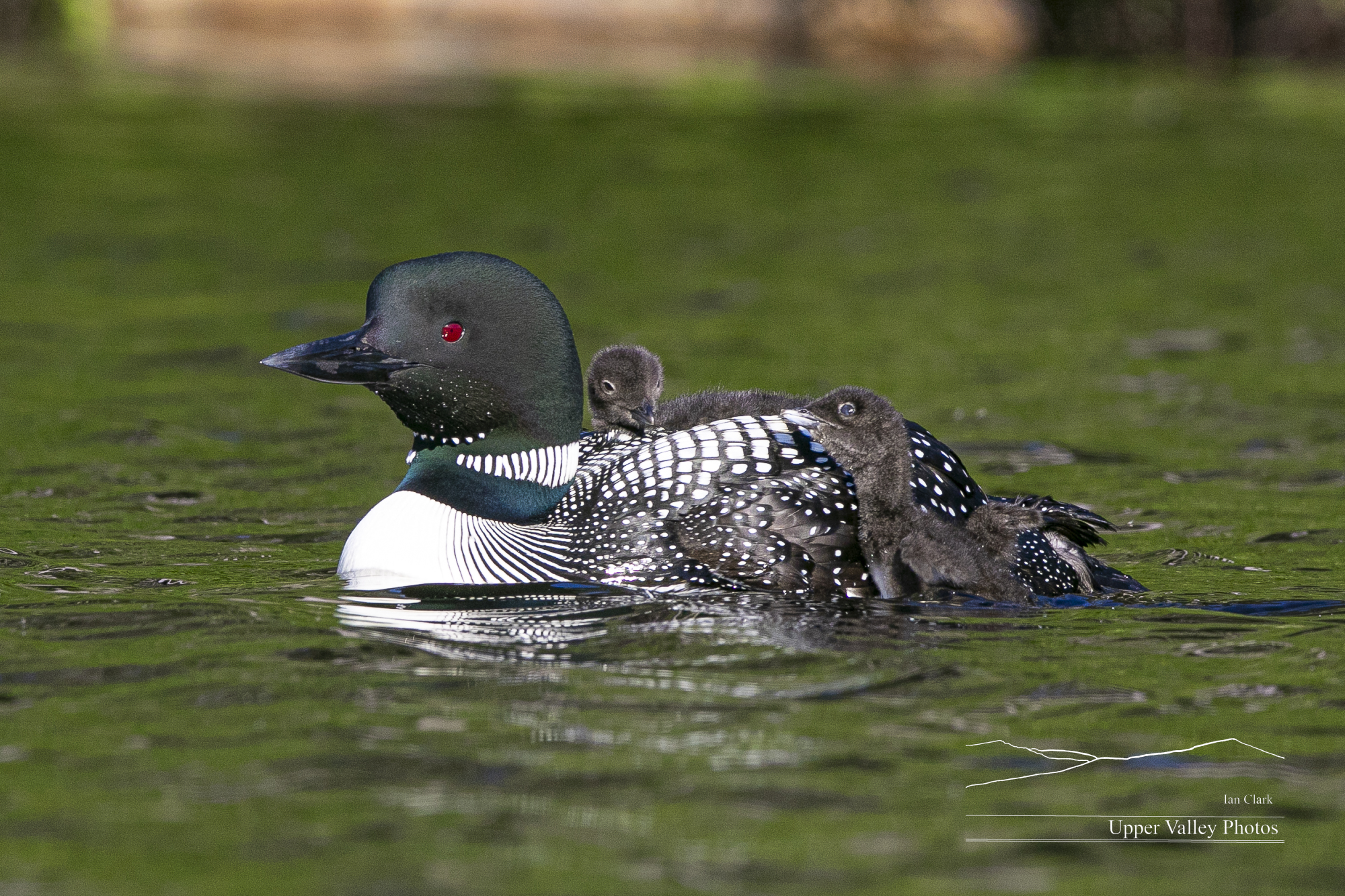
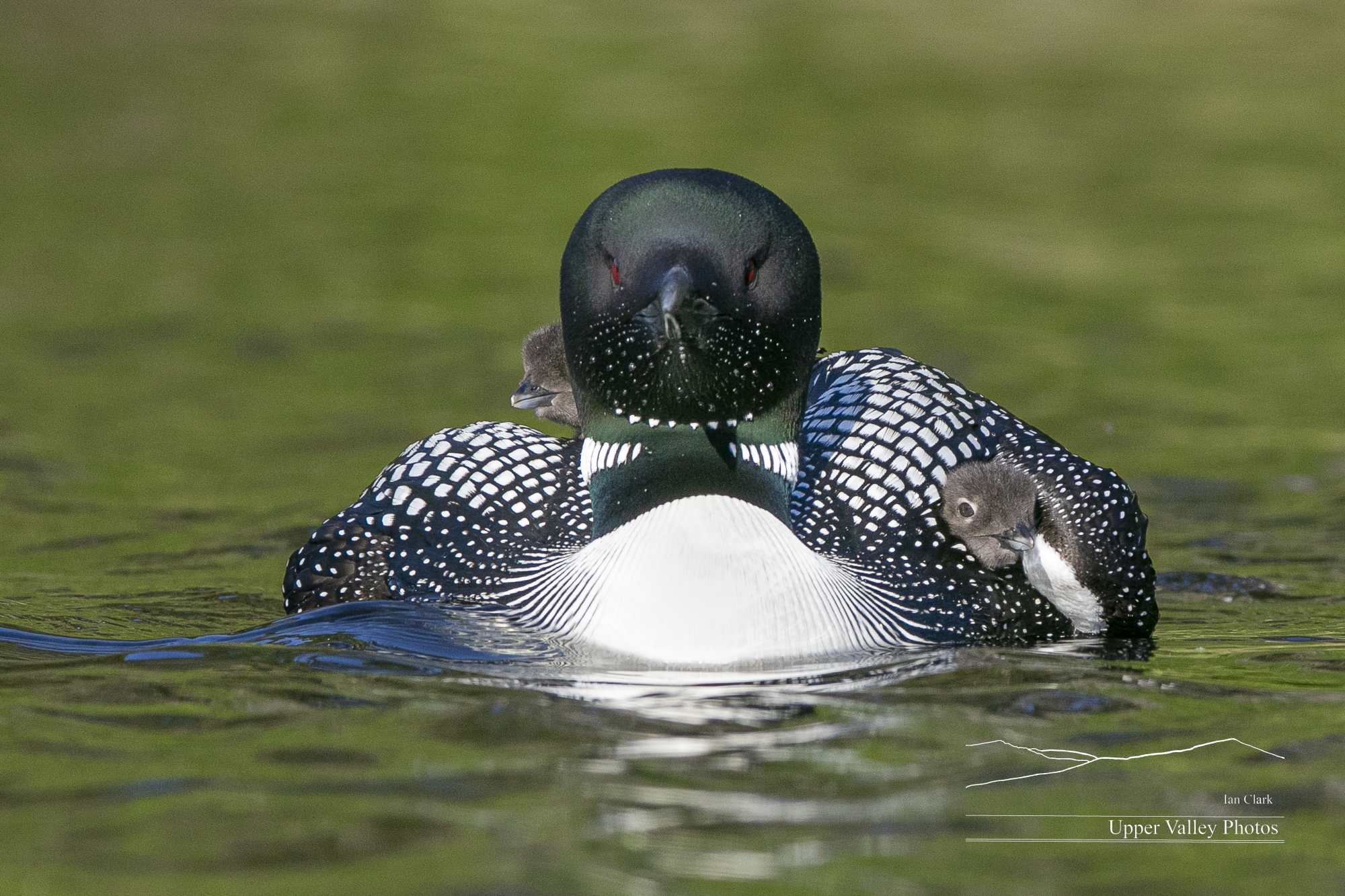
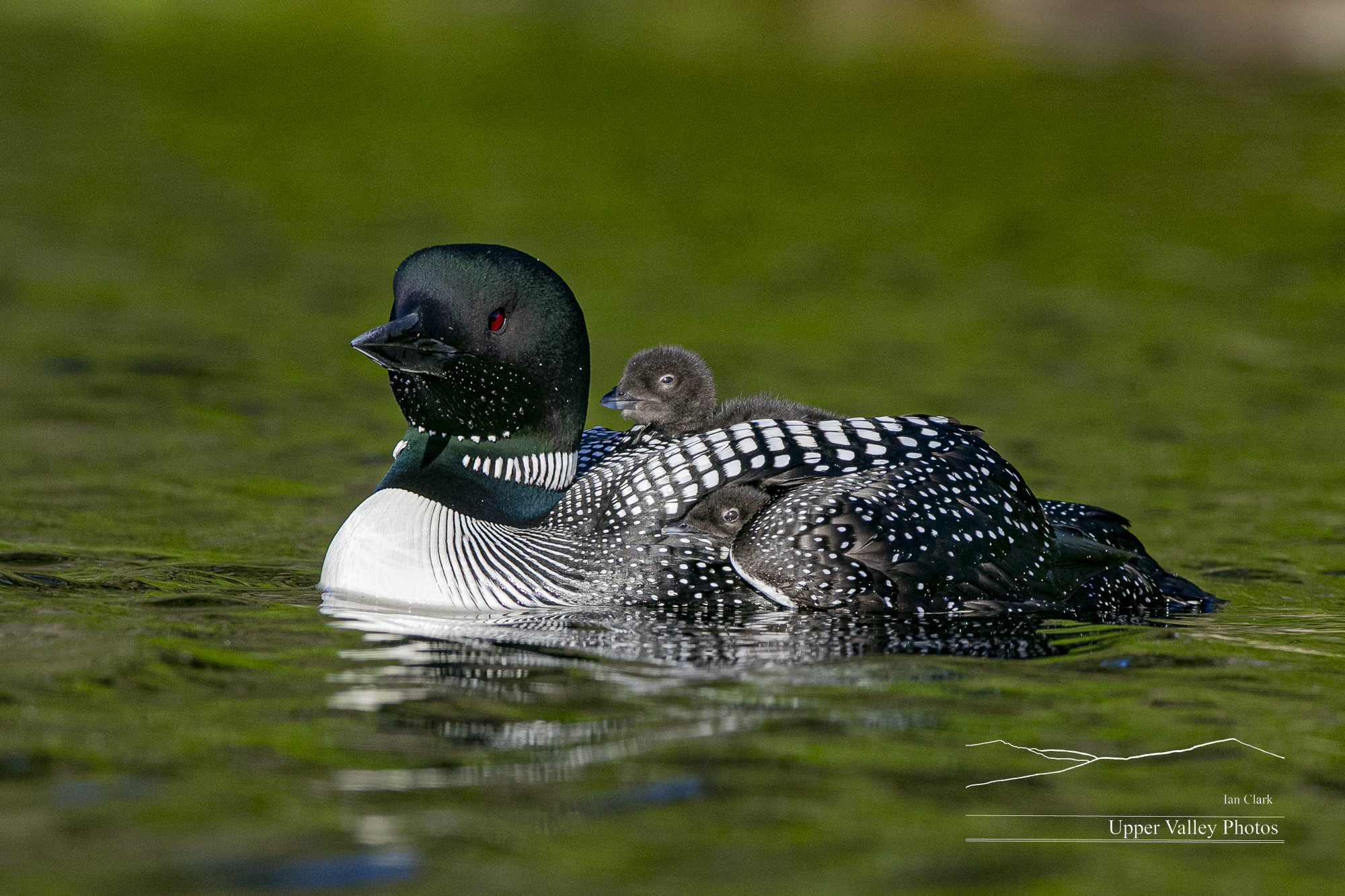
The chicks will hitch rides on both parents’ backs, often tucking in under the wings to keep warm.
And sometimes riding high to enjoy the view.

Swallow Update, June 21, 2021

A little hard to tell exactly what’s going on in our boxes. Both the swallow and the wren are sitting on their nests. But, I can’t get a good look to see how many eggs they’ve got. 

Mrs. Swallow has imported a number of feathers into the box. The last time we could see the eggs, there were four. Swallows usually lay five to seven, so your guess is as good as anyone’s. 

Round Up The Usual Suspects, June 21, 2021

Let’s round up the usual suspects once again. I’ve had some time in the kayak, exploring several local ponds and marshes. 

I’ve been keeping an eye on several pairs of loons. Most have two eggs, one pair doesn’t seem to have built a nest yet.

One of the loons I’ve been following was napping in nice light, I tried to drift into position for a peaceful shot of a sleeping loon. This otter had other ideas. 

The loon, which was not far from the nest, was not amused. It woke and dove after the otter several times.
It was a busy morning for this loon pair, while headed back to check on its mate on the nest, the loon found a snapping turtle which was encouraged to move along.
Shortly after, an eagle flew over their pond, causing the loon to flatten out to hide. 
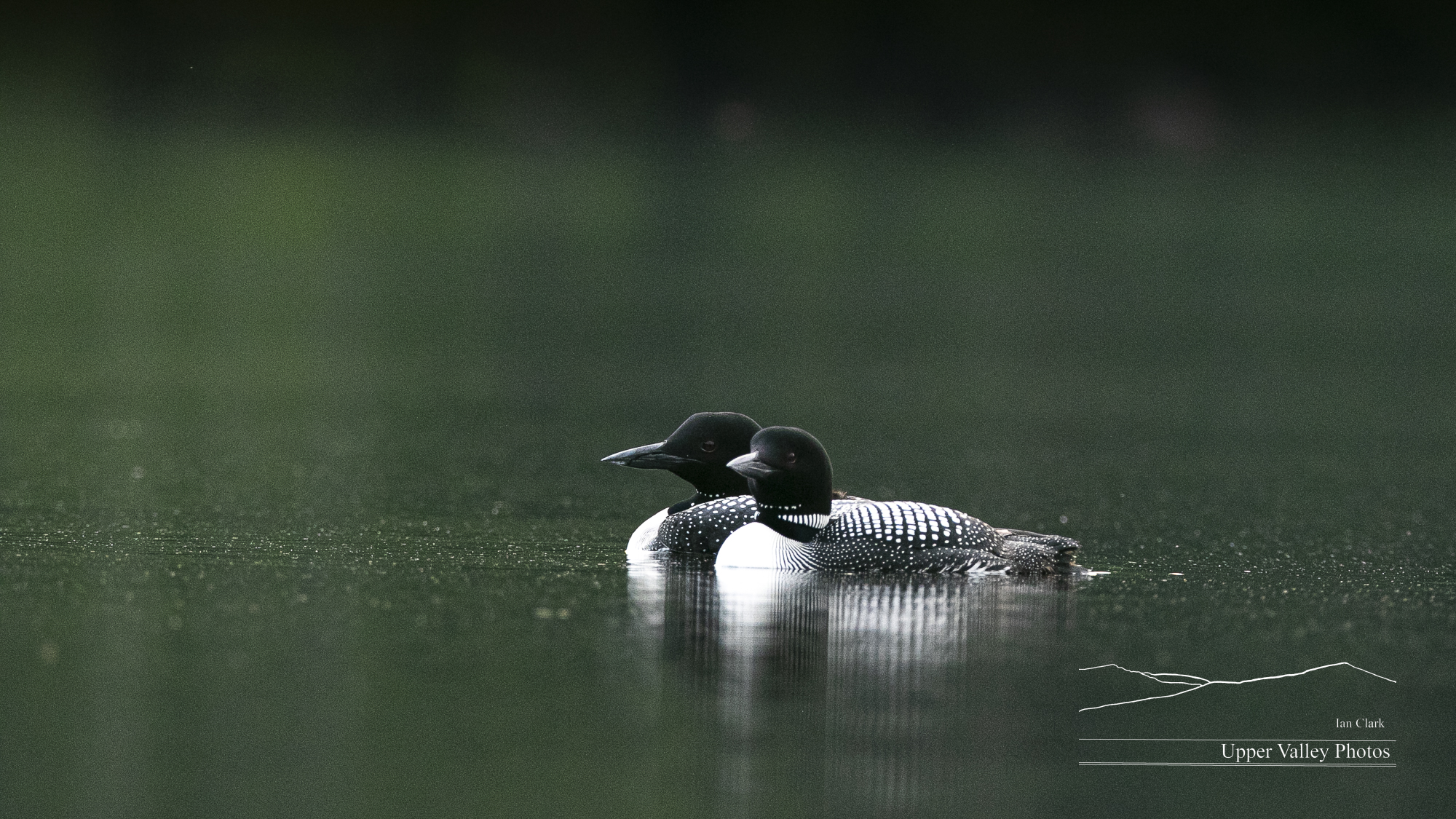
Another pond on another morning found a nice early morning scene with a pair of loons. 
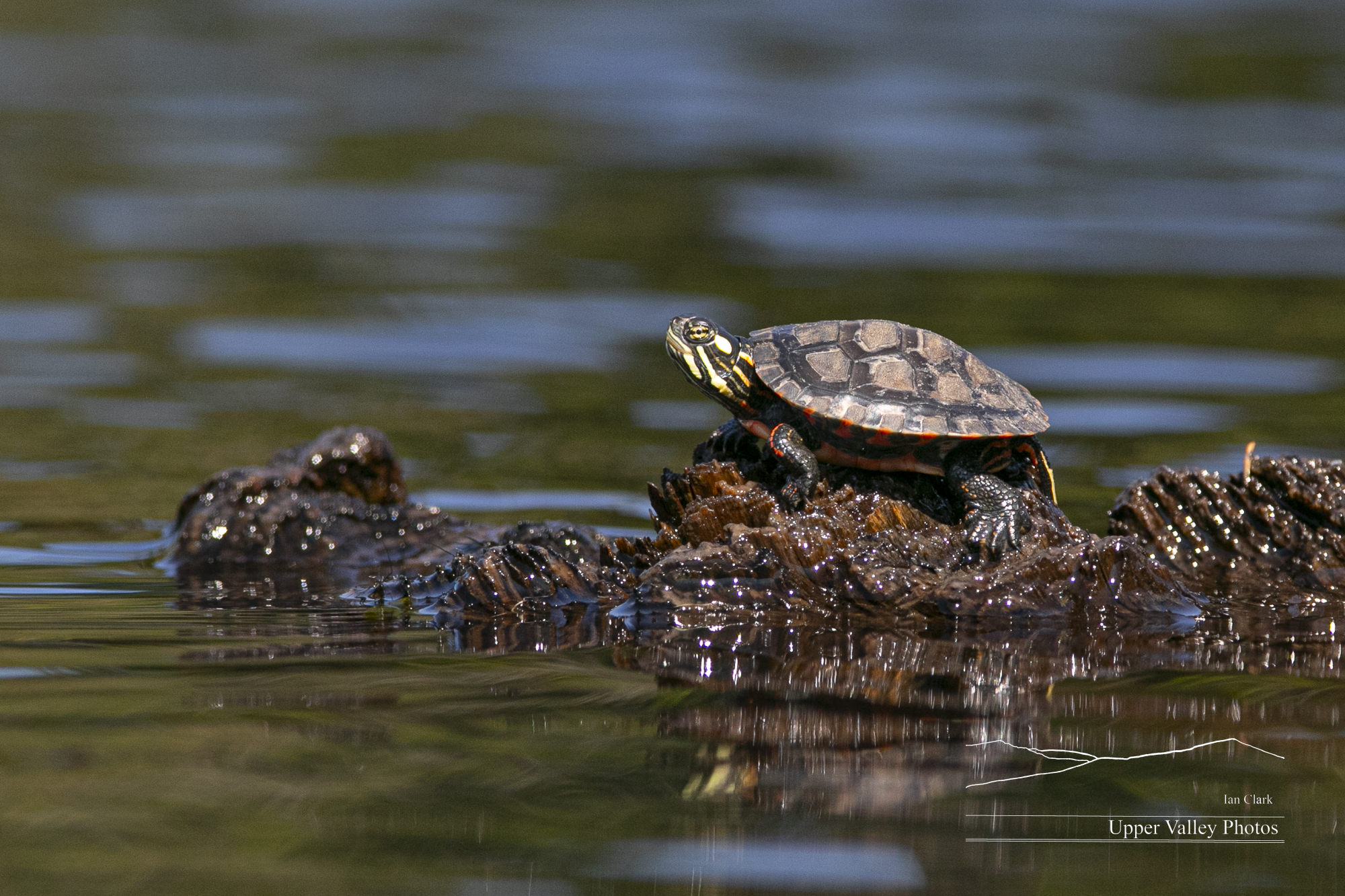
Spring time brings turtles out to lay their eggs. This pretty lady was laying eggs in West Newbury. That’s a snail hitching a ride. I asked him what was going on, he replied, “beats me. Its all happening so fast….”
Swamp police are on the lookout for this masked bandit, known as the common yellowthroat. They urge extreme caution, as he’s known to be winged and dangerous. 
He had a sidekick, known as cedar waxwing. 
Even our swamp sparrows are looking good this season. 
And they were busy singing.
This pair of kingbirds had a prolonged interaction that I couldn’t figure out. They were alternately perching near each other and swooping each other off their perches. There were several kingbird nests around the pond with birds still sitting on eggs, so it is probably too early for a fledgling. And, if they were courting, knocking your potential sweetheart off her perch repeatedly seems an odd way to win her favor. 
The orange crown is what gives kingbirds their name, it is rare to see it. 
Heading out to fly some errands.
This spotted sandpiper was kind enough to pose nicely several times throughout one morning. 
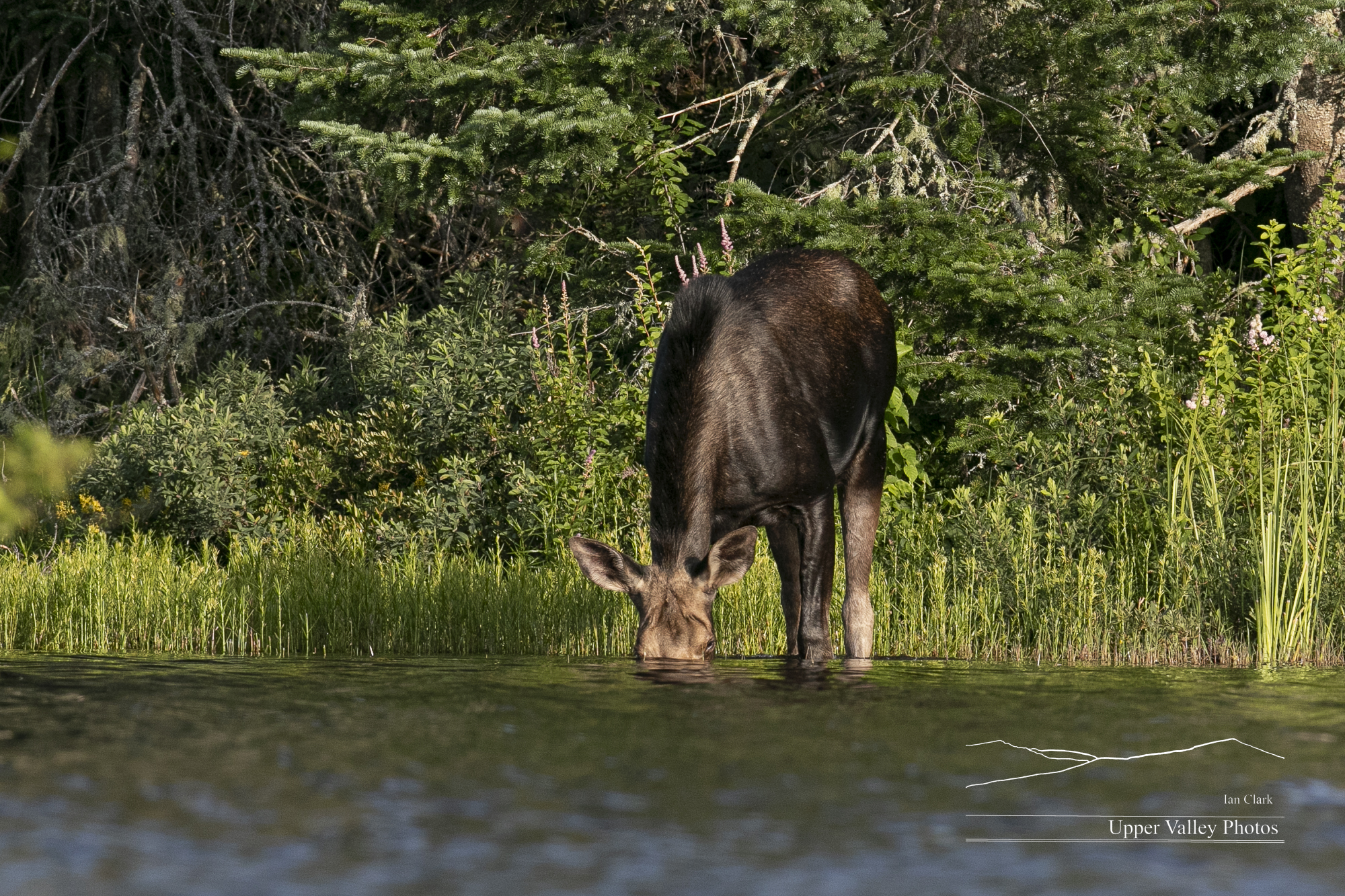
Oh! Deer! This doe popped out of the brush not far from where I was tied off. I’m not sure she approved of my being on her pond. 

Readers who don’t wish to see nature being nature may want to stop with this shot of the doe. Following are a pair of pictures of raptors with prey, including some gore. 
A broad-winged hawk gave me a fly by with some Vermont Flied Chicken. I can’t really tell what the prey is, we were a long ways from anyone keeping chickens, it may be a turkey poult. 
An osprey with a breakfast of catfish.

Swallow Update, June 16, 2021

Still haven’t gotten a good view of the swallow’s eggs. I think there are at least five, but can’t be certain. Mrs. Swallow spent much of the day in the box. There was some excitement this afternoon when at least one Eastern kingbird fledgling sheltered in the azaleas below the box. The kingbird parents and swallows had a brief discussion before the kingbirds moved on. Here’s Mrs. Swallow in the box.

Swallow Update June 15, 2021

Today is the sixth day since our tree swallow laid her first egg. Usually they lay one per day until they have five to seven eggs. Mrs. Swallow has imported a bunch of feathers and I can’t see how many eggs she has. I know she got to four. She’s spending most of her time in the box, often sitting looking out the door. Mr. Swallow perches on the stick clamped to the hummingbird feeder most of the day. 

Here’s what Mrs. was up to this afternoon.

Wood Ducklings

Sunday morning found this family of wood duck ducklings out and about. Mom was nowhere to be seen, but seven ducklings went about their business. 

They explored around the brush lining the edge of their pond. 
They foraged in the shallow water and picked insects off the brush.
We’ve nabbed some clear-winged insect….
They were finding a variety of insects along the way. Sometimes the insects are in easy reach…
…sometimes they’re on the top shelf. 
You can see the terrain their camouflage is designed for. 
Even ducklings have to put up with the flies. 
This little duckling tried some sort of salad, it chewed on it for a bit before deciding it wasn’t very good. 
Ducklings are masters of disguise. When they sense a threat, they rapidly disappear into and under the brush. 
After a bit, the ducklings crawled out on a log to preen and stretch. And I paddled off to see who else was out and about.

Piping Plovers On The New Hampshire Coast

Piping plover chicks have hatched on the New Hampshire Coast. I visited last week. In the short section of beach I visited, I found two families with chicks, one with three and one with four chicks. There were also a number of common terns terrorizing the beach denizens, winged, armed or legged. 

What’s your vote for cutest bird? Piping plover chicks have to be on anyone’s list. 

Let’s start with the terns. They nest in the sand dunes not far above high tide. They make a shallow scrape for their eggs. And, they defend their territory with gusto! They’ll swoop, peck and sometimes poop on intruders. Once one tern gets upset about an intruder, it seems like all the terns on the beach join in the commotion and find some critter to drive off. 

Here’s one sitting on a nest. 
Another tern on a nest.
A tern looking for someone to divebomb….
And a tern escorting a gull from the premises.
Adult piping plovers are handsome birds. They’re not very large, about 7″ long. They hunt for small crustaceans, worms and insects along the beach. You probably won’t see them until they move. They run – very fast – for short spurts. They live along the northeastern coast and in the Great Lakes. They’re endangered. I’ve seen the figure 6,100 individuals, but never with a citation. 

Here’s mom – or maybe dad, only they know – overseeing the chicks running about on the beach. 
They seem to coexist with some of the other plovers, and drive others away from there territory. Perhaps they come to terms with their neighbors, but still view others as threats. This plover has spotted another plover it wishes would go away. 
Chicks are born ready to forage, the parents take turns supervising them as they run about the beach. The parents seem fairly laissez-faire about watching the chicks. They chicks are often well out of the parent’s sight. The parents call occasionally, probably to keep the kids relatively close. Every so often, the parent baby sitting decides the chicks are cold and calls them in and they duck under the adult and everyone sits for a few minutes. 
Calling the whole family in….
Tucking in….
This parent reacted to its mate returning to sit the kids by scrunching down and fluffing. 
And the chicks are just darned cute. They run about the beach exploring, foraging, stretching and fluffing. They run in short spurts, changing direction on a whim.  

Here’s one practicing being cute. 
It takes them a while to grow into their feet. 
Watching them walk, I can’t help but wonder if they were the inspiration for the two-legged walkers in Star Wars. 
Exploring along above the high-tide mark.
With a tiny snack. 
And a more substantial worm.
And, just learning how to be a bird.

This little guy may have some more learning to do….

Tree Swallows Have Four Eggs, June 13, 2021

Another day, another egg for our tree swallows. 

Swallows Have Three Eggs, June 12, 2021

Our swallows now have three eggs. Mrs. Swallow spent much of her morning in the box. When she ventured out for brunch, dad popped in to count the eggs.

Dad spent much of his morning perched on his ‘deck’ – the perch I clamped to the hummingbird feeder for the hummers. We had a nice conversation while I had my breakfast this morning.  Here’s mom fidgeting in the box for a bit. 

Tree Swallows Have an Egg! June 10, 2021

Mrs. Swallow has spent most of the day in her box. She laid her first egg this morning.